EP0846166B1 - Method for the production of thrombin - Google Patents
Method for the production of thrombin Download PDFInfo
- Publication number
- EP0846166B1 EP0846166B1 EP96923783A EP96923783A EP0846166B1 EP 0846166 B1 EP0846166 B1 EP 0846166B1 EP 96923783 A EP96923783 A EP 96923783A EP 96923783 A EP96923783 A EP 96923783A EP 0846166 B1 EP0846166 B1 EP 0846166B1
- Authority
- EP
- European Patent Office
- Prior art keywords
- thrombin
- prothrombin
- fraction
- pcc
- actpcc
- Prior art date
- Legal status (The legal status is an assumption and is not a legal conclusion. Google has not performed a legal analysis and makes no representation as to the accuracy of the status listed.)
- Expired - Lifetime
Links
- 108090000190 Thrombin Proteins 0.000 title claims abstract description 55
- 229960004072 thrombin Drugs 0.000 title claims abstract description 55
- 238000000034 method Methods 0.000 title claims abstract description 24
- 238000004519 manufacturing process Methods 0.000 title description 12
- 108010094028 Prothrombin Proteins 0.000 claims abstract description 33
- 102100027378 Prothrombin Human genes 0.000 claims abstract description 33
- 229940039716 prothrombin Drugs 0.000 claims abstract description 33
- 229940024790 prothrombin complex concentrate Drugs 0.000 claims abstract description 27
- 238000002360 preparation method Methods 0.000 claims abstract description 12
- 239000000463 material Substances 0.000 claims abstract description 11
- 150000001768 cations Chemical class 0.000 claims abstract description 5
- UXVMQQNJUSDDNG-UHFFFAOYSA-L Calcium chloride Chemical compound [Cl-].[Cl-].[Ca+2] UXVMQQNJUSDDNG-UHFFFAOYSA-L 0.000 claims description 17
- 239000001110 calcium chloride Substances 0.000 claims description 17
- 229910001628 calcium chloride Inorganic materials 0.000 claims description 17
- 238000010828 elution Methods 0.000 claims description 7
- 102000004169 proteins and genes Human genes 0.000 claims description 7
- 108090000623 proteins and genes Proteins 0.000 claims description 7
- 230000001174 ascending effect Effects 0.000 claims description 6
- -1 Ca2+ ions Chemical class 0.000 claims description 5
- GUBGYTABKSRVRQ-WFVLMXAXSA-N DEAE-cellulose Chemical compound OC1C(O)C(O)C(CO)O[C@H]1O[C@@H]1C(CO)OC(O)C(O)C1O GUBGYTABKSRVRQ-WFVLMXAXSA-N 0.000 claims description 4
- 239000012461 cellulose resin Substances 0.000 claims description 4
- 108010035369 Cohn fraction I Proteins 0.000 claims description 3
- 239000003599 detergent Substances 0.000 claims description 3
- 239000002904 solvent Substances 0.000 claims description 3
- 230000002885 thrombogenetic effect Effects 0.000 claims description 3
- 230000002779 inactivation Effects 0.000 claims description 2
- 239000011347 resin Substances 0.000 description 13
- 229920005989 resin Polymers 0.000 description 13
- 230000004913 activation Effects 0.000 description 11
- 108010074860 Factor Xa Proteins 0.000 description 9
- 239000006228 supernatant Substances 0.000 description 8
- 108010000499 Thromboplastin Proteins 0.000 description 7
- 102000002262 Thromboplastin Human genes 0.000 description 7
- PGOHTUIFYSHAQG-LJSDBVFPSA-N (2S)-6-amino-2-[[(2S)-5-amino-2-[[(2S)-2-[[(2S)-2-[[(2S)-2-[[(2S)-4-amino-2-[[(2S)-2-[[(2S)-2-[[(2S)-2-[[(2S)-2-[[(2S)-5-amino-2-[[(2S)-5-amino-2-[[(2S)-2-[[(2S)-2-[[(2S)-2-[[(2S,3R)-2-[[(2S)-5-amino-2-[[(2S)-2-[[(2S)-2-[[(2S,3R)-2-[[(2S)-2-[[(2S)-2-[[(2S)-2-[[(2S)-2-[[(2S)-5-amino-2-[[(2S)-1-[(2S,3R)-2-[[(2S)-2-[[(2S)-2-[[(2R)-2-[[(2S)-2-[[(2S)-2-[[2-[[(2S)-2-[[(2S)-2-[[(2S)-2-[[(2S)-1-[(2S)-2-[[(2S)-2-[[(2S)-2-[[(2S)-2-amino-4-methylsulfanylbutanoyl]amino]-3-(1H-indol-3-yl)propanoyl]amino]-5-carbamimidamidopentanoyl]amino]propanoyl]pyrrolidine-2-carbonyl]amino]-3-methylbutanoyl]amino]-4-methylpentanoyl]amino]-4-methylpentanoyl]amino]acetyl]amino]-3-hydroxypropanoyl]amino]-4-methylpentanoyl]amino]-3-sulfanylpropanoyl]amino]-4-methylsulfanylbutanoyl]amino]-5-carbamimidamidopentanoyl]amino]-3-hydroxybutanoyl]pyrrolidine-2-carbonyl]amino]-5-oxopentanoyl]amino]-3-hydroxypropanoyl]amino]-3-hydroxypropanoyl]amino]-3-(1H-imidazol-5-yl)propanoyl]amino]-4-methylpentanoyl]amino]-3-hydroxybutanoyl]amino]-3-(1H-indol-3-yl)propanoyl]amino]-5-carbamimidamidopentanoyl]amino]-5-oxopentanoyl]amino]-3-hydroxybutanoyl]amino]-3-hydroxypropanoyl]amino]-3-carboxypropanoyl]amino]-3-hydroxypropanoyl]amino]-5-oxopentanoyl]amino]-5-oxopentanoyl]amino]-3-phenylpropanoyl]amino]-5-carbamimidamidopentanoyl]amino]-3-methylbutanoyl]amino]-4-methylpentanoyl]amino]-4-oxobutanoyl]amino]-5-carbamimidamidopentanoyl]amino]-3-(1H-indol-3-yl)propanoyl]amino]-4-carboxybutanoyl]amino]-5-oxopentanoyl]amino]hexanoic acid Chemical compound CSCC[C@H](N)C(=O)N[C@@H](Cc1c[nH]c2ccccc12)C(=O)N[C@@H](CCCNC(N)=N)C(=O)N[C@@H](C)C(=O)N1CCC[C@H]1C(=O)N[C@@H](C(C)C)C(=O)N[C@@H](CC(C)C)C(=O)N[C@@H](CC(C)C)C(=O)NCC(=O)N[C@@H](CO)C(=O)N[C@@H](CC(C)C)C(=O)N[C@@H](CS)C(=O)N[C@@H](CCSC)C(=O)N[C@@H](CCCNC(N)=N)C(=O)N[C@@H]([C@@H](C)O)C(=O)N1CCC[C@H]1C(=O)N[C@@H](CCC(N)=O)C(=O)N[C@@H](CO)C(=O)N[C@@H](CO)C(=O)N[C@@H](Cc1cnc[nH]1)C(=O)N[C@@H](CC(C)C)C(=O)N[C@@H]([C@@H](C)O)C(=O)N[C@@H](Cc1c[nH]c2ccccc12)C(=O)N[C@@H](CCCNC(N)=N)C(=O)N[C@@H](CCC(N)=O)C(=O)N[C@@H]([C@@H](C)O)C(=O)N[C@@H](CO)C(=O)N[C@@H](CC(O)=O)C(=O)N[C@@H](CO)C(=O)N[C@@H](CCC(N)=O)C(=O)N[C@@H](CCC(N)=O)C(=O)N[C@@H](Cc1ccccc1)C(=O)N[C@@H](CCCNC(N)=N)C(=O)N[C@@H](C(C)C)C(=O)N[C@@H](CC(C)C)C(=O)N[C@@H](CC(N)=O)C(=O)N[C@@H](CCCNC(N)=N)C(=O)N[C@@H](Cc1c[nH]c2ccccc12)C(=O)N[C@@H](CCC(O)=O)C(=O)N[C@@H](CCC(N)=O)C(=O)N[C@@H](CCCCN)C(O)=O PGOHTUIFYSHAQG-LJSDBVFPSA-N 0.000 description 6
- FAPWRFPIFSIZLT-UHFFFAOYSA-M Sodium chloride Chemical compound [Na+].[Cl-] FAPWRFPIFSIZLT-UHFFFAOYSA-M 0.000 description 6
- 239000000872 buffer Substances 0.000 description 6
- 239000012141 concentrate Substances 0.000 description 6
- 239000000203 mixture Substances 0.000 description 6
- 102000015081 Blood Coagulation Factors Human genes 0.000 description 4
- 108010039209 Blood Coagulation Factors Proteins 0.000 description 4
- 239000003114 blood coagulation factor Substances 0.000 description 4
- 230000015271 coagulation Effects 0.000 description 4
- 238000005345 coagulation Methods 0.000 description 4
- XLYOFNOQVPJJNP-ZSJDYOACSA-N heavy water Substances [2H]O[2H] XLYOFNOQVPJJNP-ZSJDYOACSA-N 0.000 description 4
- 239000000047 product Substances 0.000 description 4
- 108010012557 prothrombin complex concentrates Proteins 0.000 description 4
- 239000011734 sodium Substances 0.000 description 4
- 239000007858 starting material Substances 0.000 description 4
- 108010014173 Factor X Proteins 0.000 description 3
- 230000015572 biosynthetic process Effects 0.000 description 3
- 238000005119 centrifugation Methods 0.000 description 3
- 238000004587 chromatography analysis Methods 0.000 description 3
- 150000003904 phospholipids Chemical class 0.000 description 3
- 239000011780 sodium chloride Substances 0.000 description 3
- 238000005406 washing Methods 0.000 description 3
- BFSVOASYOCHEOV-UHFFFAOYSA-N 2-diethylaminoethanol Chemical compound CCN(CC)CCO BFSVOASYOCHEOV-UHFFFAOYSA-N 0.000 description 2
- 229920000936 Agarose Polymers 0.000 description 2
- 102100022641 Coagulation factor IX Human genes 0.000 description 2
- 102100023804 Coagulation factor VII Human genes 0.000 description 2
- 108010076282 Factor IX Proteins 0.000 description 2
- 108010023321 Factor VII Proteins 0.000 description 2
- 108010071289 Factor XIII Proteins 0.000 description 2
- 108010073385 Fibrin Proteins 0.000 description 2
- 102000009123 Fibrin Human genes 0.000 description 2
- 108010080379 Fibrin Tissue Adhesive Proteins 0.000 description 2
- BWGVNKXGVNDBDI-UHFFFAOYSA-N Fibrin monomer Chemical compound CNC(=O)CNC(=O)CN BWGVNKXGVNDBDI-UHFFFAOYSA-N 0.000 description 2
- 108010049003 Fibrinogen Proteins 0.000 description 2
- 102000008946 Fibrinogen Human genes 0.000 description 2
- 206010052428 Wound Diseases 0.000 description 2
- 208000027418 Wounds and injury Diseases 0.000 description 2
- 239000003153 chemical reaction reagent Substances 0.000 description 2
- KRKNYBCHXYNGOX-UHFFFAOYSA-N citric acid Chemical compound OC(=O)CC(O)(C(O)=O)CC(O)=O KRKNYBCHXYNGOX-UHFFFAOYSA-N 0.000 description 2
- 239000003814 drug Substances 0.000 description 2
- 230000006624 extrinsic pathway Effects 0.000 description 2
- 229960004222 factor ix Drugs 0.000 description 2
- 229940012413 factor vii Drugs 0.000 description 2
- 229940012444 factor xiii Drugs 0.000 description 2
- 229950003499 fibrin Drugs 0.000 description 2
- 229940012952 fibrinogen Drugs 0.000 description 2
- 238000001914 filtration Methods 0.000 description 2
- 238000009472 formulation Methods 0.000 description 2
- 238000007710 freezing Methods 0.000 description 2
- 230000008014 freezing Effects 0.000 description 2
- 238000000338 in vitro Methods 0.000 description 2
- 230000006623 intrinsic pathway Effects 0.000 description 2
- 238000012545 processing Methods 0.000 description 2
- 238000012360 testing method Methods 0.000 description 2
- 229940124597 therapeutic agent Drugs 0.000 description 2
- 230000001225 therapeutic effect Effects 0.000 description 2
- 239000003860 topical agent Substances 0.000 description 2
- 206010053567 Coagulopathies Diseases 0.000 description 1
- 241000271032 Daboia russelii Species 0.000 description 1
- 241000122860 Echis carinatus Species 0.000 description 1
- 108010048049 Factor IXa Proteins 0.000 description 1
- 108010054218 Factor VIII Proteins 0.000 description 1
- 102000001690 Factor VIII Human genes 0.000 description 1
- 108010061932 Factor VIIIa Proteins 0.000 description 1
- 108010054265 Factor VIIa Proteins 0.000 description 1
- 108010074105 Factor Va Proteins 0.000 description 1
- 108010000196 Factor XIIIa Proteins 0.000 description 1
- 241000282412 Homo Species 0.000 description 1
- 241000272115 Notechis scutatus Species 0.000 description 1
- 241000272102 Oxyuranus Species 0.000 description 1
- 239000012506 Sephacryl® Substances 0.000 description 1
- 229920002684 Sepharose Polymers 0.000 description 1
- 108010022999 Serine Proteases Proteins 0.000 description 1
- 102000012479 Serine Proteases Human genes 0.000 description 1
- 208000002847 Surgical Wound Diseases 0.000 description 1
- 208000007536 Thrombosis Diseases 0.000 description 1
- 241000700605 Viruses Species 0.000 description 1
- 239000003957 anion exchange resin Substances 0.000 description 1
- 238000013459 approach Methods 0.000 description 1
- 239000008280 blood Substances 0.000 description 1
- 210000004369 blood Anatomy 0.000 description 1
- 210000004204 blood vessel Anatomy 0.000 description 1
- 239000008364 bulk solution Substances 0.000 description 1
- 238000006243 chemical reaction Methods 0.000 description 1
- 239000003593 chromogenic compound Substances 0.000 description 1
- 230000035602 clotting Effects 0.000 description 1
- 239000012502 diagnostic product Substances 0.000 description 1
- 230000000694 effects Effects 0.000 description 1
- 230000007717 exclusion Effects 0.000 description 1
- 229940012414 factor viia Drugs 0.000 description 1
- 229960000301 factor viii Drugs 0.000 description 1
- 239000012467 final product Substances 0.000 description 1
- 238000005194 fractionation Methods 0.000 description 1
- 238000004108 freeze drying Methods 0.000 description 1
- 239000007788 liquid Substances 0.000 description 1
- 238000005259 measurement Methods 0.000 description 1
- 238000002156 mixing Methods 0.000 description 1
- 238000012544 monitoring process Methods 0.000 description 1
- 238000001728 nano-filtration Methods 0.000 description 1
- 210000002826 placenta Anatomy 0.000 description 1
- 230000003169 placental effect Effects 0.000 description 1
- 235000010482 polyoxyethylene sorbitan monooleate Nutrition 0.000 description 1
- 229920000053 polysorbate 80 Polymers 0.000 description 1
- 239000000843 powder Substances 0.000 description 1
- 238000003908 quality control method Methods 0.000 description 1
- 238000011084 recovery Methods 0.000 description 1
- 238000011160 research Methods 0.000 description 1
- 150000003839 salts Chemical class 0.000 description 1
- 239000003998 snake venom Substances 0.000 description 1
- 235000019980 sodium acid phosphate Nutrition 0.000 description 1
- 239000001509 sodium citrate Substances 0.000 description 1
- NLJMYIDDQXHKNR-UHFFFAOYSA-K sodium citrate Chemical compound O.O.[Na+].[Na+].[Na+].[O-]C(=O)CC(O)(CC([O-])=O)C([O-])=O NLJMYIDDQXHKNR-UHFFFAOYSA-K 0.000 description 1
- AJPJDKMHJJGVTQ-UHFFFAOYSA-M sodium dihydrogen phosphate Chemical compound [Na+].OP(O)([O-])=O AJPJDKMHJJGVTQ-UHFFFAOYSA-M 0.000 description 1
- 239000001488 sodium phosphate Substances 0.000 description 1
- 229910000162 sodium phosphate Inorganic materials 0.000 description 1
- 239000000243 solution Substances 0.000 description 1
- 241000894007 species Species 0.000 description 1
- 238000011146 sterile filtration Methods 0.000 description 1
- 238000001356 surgical procedure Methods 0.000 description 1
- 239000000725 suspension Substances 0.000 description 1
- RYFMWSXOAZQYPI-UHFFFAOYSA-K trisodium phosphate Chemical compound [Na+].[Na+].[Na+].[O-]P([O-])([O-])=O RYFMWSXOAZQYPI-UHFFFAOYSA-K 0.000 description 1
- 239000002435 venom Substances 0.000 description 1
- 210000001048 venom Anatomy 0.000 description 1
- 231100000611 venom Toxicity 0.000 description 1
- 239000002821 viper venom Substances 0.000 description 1
- XLYOFNOQVPJJNP-UHFFFAOYSA-N water Substances O XLYOFNOQVPJJNP-UHFFFAOYSA-N 0.000 description 1
Images


Classifications
-
- C—CHEMISTRY; METALLURGY
- C12—BIOCHEMISTRY; BEER; SPIRITS; WINE; VINEGAR; MICROBIOLOGY; ENZYMOLOGY; MUTATION OR GENETIC ENGINEERING
- C12N—MICROORGANISMS OR ENZYMES; COMPOSITIONS THEREOF; PROPAGATING, PRESERVING, OR MAINTAINING MICROORGANISMS; MUTATION OR GENETIC ENGINEERING; CULTURE MEDIA
- C12N9/00—Enzymes; Proenzymes; Compositions thereof; Processes for preparing, activating, inhibiting, separating or purifying enzymes
- C12N9/14—Hydrolases (3)
- C12N9/48—Hydrolases (3) acting on peptide bonds (3.4)
- C12N9/50—Proteinases, e.g. Endopeptidases (3.4.21-3.4.25)
- C12N9/64—Proteinases, e.g. Endopeptidases (3.4.21-3.4.25) derived from animal tissue
- C12N9/6421—Proteinases, e.g. Endopeptidases (3.4.21-3.4.25) derived from animal tissue from mammals
- C12N9/6424—Serine endopeptidases (3.4.21)
- C12N9/6429—Thrombin (3.4.21.5)
-
- C—CHEMISTRY; METALLURGY
- C12—BIOCHEMISTRY; BEER; SPIRITS; WINE; VINEGAR; MICROBIOLOGY; ENZYMOLOGY; MUTATION OR GENETIC ENGINEERING
- C12Y—ENZYMES
- C12Y304/00—Hydrolases acting on peptide bonds, i.e. peptidases (3.4)
- C12Y304/21—Serine endopeptidases (3.4.21)
- C12Y304/21005—Thrombin (3.4.21.5)
Definitions
- Thrombin prepared in accordance with this invention may be used in a fibrin glue kit, as a topical agent in its own right for therapeutic use in humans, or as a diagnostic reagent.
- Thrombin is a serine protease representing the active form of the coagulation factor, prothrombin. Its most studied role is its ability to convert soluble fibrinogen into an insoluble fibrin clot, thereby stemming the flow of blood from an injured blood vessel. Thrombin also cleaves and activates factor XIII to factor XIIIa which serves to stabilise the formed fibrin clot even further (Furie, 1991).
- prothrombin is converted to thrombin by coagulation factor Xa in the presence of cofactors factor Va, phospholipid and calcium chloride (Esmon, 1974).
- coagulation factor Xa cofactors factor Va
- phospholipid and calcium chloride cofactors factor Va
- phospholipid and calcium chloride cofactors factor Va
- phospholipid and calcium chloride cofactors factor Va
- phospholipid and calcium chloride cofactors factor Va, phospholipid and calcium chloride
- Various snake venoms also cleave prothrombin to form thrombin, examples being the venom of the Taipan snake Oxyuranus scutellus (Owen and Jackson, 1973), the Tiger snake Notechis scutatus (Jobin and Esnouf, 1966), and the saw-scaled viper Echis carinatus (Franza, 1975).
- none of these have been used commercially in the production of thrombin for clinical application.
- Factor Xa required for classic prothrombin activation, can be generated in many ways.
- the Intrinsic Pathway of Coagulation suggests that factor X is converted to factor Xa when incubated with factor IXa in the presence of cofactors factor VIIIa, phospholipid and calcium chloride.
- the Extrinsic Pathway of Coagulation is initiated by the exposure of tissue factor (containing thromboplastin) to factor VII in the presence of calcium chloride. This serves to activate factor VII to factor VIIa which in turn converts factor X to factor Xa. Both forms of factor Xa then activate prothrombin as described above (Furie, 1991).
- Factor Xa can also be formed by incubating factor X with Russell's Viper venom (RW) in the presence of calcium chloride (Kisiel, 1976). This approach has been used commercially (Bio-Products Laboratories) for the preparation of thrombin as a diagnostic reagent. However, the need to demonstrate the absence of soluble RW in the final product would pose difficulties with its registration as a therapeutic agent.
- a crude preparation of thrombin has been manufactured by the present applicant using thrombogenic discard fractions from the Prothrombin Complex Concentrate (PCC) manufacturing process, in which the prothrombin has been converted to thrombin by incubating the starting material with human placenta-derived thromboplastin in the presence of calcium chloride.
- PCC Prothrombin Complex Concentrate
- a limitation of this method has been controlling the quality control of the placental thromboplastin. As a diagnostic product, this has not posed such a problem, however, for clinical use, clinical registration requires strict safeguards which have not been practical to introduce.
- thrombin may be used to promote coagulation as a topical agent (in either liquid or powder form) or incorporated into wound dressings.
- thrombin may be used as a component of a fibrin glue kit in which, in use, thrombin and fibrinogen/factor XIII are combined for application to surgical incisions and other fresh wounds to replace the use of sutures, particularly during surgery on delicate tissues.
- the present inventors have developed a method of activation of prothrombin to thrombin which does not require the use of thromboplastin, either human or any other species. Furthermore, the method of the present invention is characterised by the use of a fraction from the Prothrombin Complete Concentrate (PCC) prepared by the published method of Middleton et al, 1973 which has normally been discarded. As a result, the present invention provides a thrombin product which can be produced economically on a commercial scale.
- PCC Prothrombin Complete Concentrate
- a method for the preparation of thrombin from a prothrombin-containing material characterised in that the prothrombin-containing material is an Activated Prothrombin Complex Concentrate (ActPCC) fraction obtained as the ascending or pre-peak material on elution of prothrombin complex concentrate (PCC) from a column and said ActPCC fraction is contacted with divalent cations in order to convert prothrombin in said fraction to thrombin.
- ActPCC Activated Prothrombin Complex Concentrate
- PCC prothrombin complex concentrate
- the "ActPCC fraction” which is used as the prothrombin-containing starting material in accordance with the invention comprises thrombogenic fractions in the ascending or pre-peak material produced during the preparation of Prothrombin Complex Concentrate (PCC) by elution of the bound proteins from Cohn fraction I supernatant from DEAE-cellulose resin. Further details of the ActPCC fraction, and the production thereof, are given in the detailed description and the Examples hereunder.
- the divalent cations used in the method of this invention are Ca 2+ ions, and conveniently CaCl 2 is used in the activation of the ActPCC fraction.
- the optimum concentration of Ca 2+ ions for production of thrombin in accordance with this invention is in the range of 25 to 50 mM, more preferably from 35 to 50 mM, and most preferably at a concentration of about 40 mM.
- the production of thrombin can be performed at temperatures in the range of 4°C to 37°C, the optimum temperature does vary with Ca 2+ concentration. In particular, the optimum and hence preferred temperature is in the range of 22°C to 25°C.
- the ActPCC fraction is treated with 40 ⁇ 5 mM CaCl 2 at 22-25°C for a period of 4-5 hours.
- the thrombin is recovered and purified by methods which are well-known in the art in order to produce a commercial concentrate which may, for example, be >90% pure thrombin.
- the further processing steps include a virus-inactivation step, such as a solvent/detergent treatment (for example by incubating the product with 0.3% TNBP/1% Tween 80 for 8-12 hours at 24°C - 26°C), in order to produce a virus-safe thrombin concentrate.
- the virus-inactivated product may then be further treated for recovery of the thrombin by chromatography, for example with Heparin-agarose (such as Heparin-Sepharose) at a pH in the range of 6-8 (preferably pH 7.5), with elution of thrombin by NaCl, preferably at a NaCl concentration above 350 mM.
- Table 1 A summary of an entire method of production of thrombin in accordance with the preferred aspects of the present invention is shown in Table 1.
- Table 1. Summary of Thrombin production Plasma ⁇ Cryosupernatant ⁇ Fraction I supernatant ⁇ PCC - Activated PCC fractions ⁇ Activation using CaCl 2 ⁇ Filtration/centrifugation ⁇ Virus inactivation (solvent/detergent) ⁇ pH/Conductivity adjustment ⁇ Heparin-agarose chromatography ⁇ Sephacryl S-100 chromatography ⁇ Nanofiltration ⁇ Formulation ⁇ Sterile filtration ⁇ Dispensing ⁇ Freezing ⁇ Freeze-drying
- a Prothrombin Complex Concentrate (PCC) is prepared according to the method as originally described by Middleton et al, 1973. Diluted Cohn fraction I supernatant is mixed batchwise with DEAE-cellulose resin, centrifuged and the resin transferred into a chromatographic column. Unbound proteins are washed through the resin with bound proteins (including prothrombin) eluted with a higher salt buffer. The proteins eluting from the column are traced by refractive index monitoring with the ascending peak material collected as the starting material for prothrombin activation in accordance with the present invention.
- PCC Prothrombin Complex Concentrate
- ActPCC Prothrombin Complex Concentrate
- the method of this invention has been based on the in vitro thrombogenicity test as originally described by Sas et al, 1975 and Farrugia et al, 1989, which is used to detect thrombogenicity (degree of activation of the clotting system) by adding 37 mM calcium chloride at 37°C and measuring the degree of thrombin generation.
- This Example describes one specific method of prothrombin activation to generate thrombin in accordance with this invention.
- Fraction I supernatant from the Cohn fractionation process is diluted to lower the ionic strength of the mixture. This is then mixed with DEAE-cellulose resin to adsorb Factor IX. The procedure is as follows:
- Unbound proteins are removed from the DEAE resin by washing with Buffer W (see Table 2). Less than 1.2 litres of buffer per kg of resin are used for slurrying and washing. This and subsequent steps are carried out at ambient temperatures of not more than 30°C.
- the Prothrombin containing fraction (ActPCC) is eluted from the resin by applying Buffer E (see Table 2) to the resin bed.
- Buffer E see Table 2
- Table 2 Formulation of Buffers Buffer Component W E Sodium acid phosphate BP 0.03 0.03 Sodium phosphate BP 0.03 0.03 Sodium citrate BP 0.03 0.03 Sodium chloride BP 0 0.2 pH 6.5-6.7 6.3-6.5
- the eluting proteins are monitored using a refractive index meter.
- the ascending peak (ActPCC) is collected and used as a source of prothrombin as it contains activated coagulation factors unsuitable for Prothrombin Complex Concentrate manufacture but ideal as a source for thrombin generation.
- the peak and descending fractions (PCC) are also pooled and used for Prothrombin Complex Concentrate production.
- the eluted pre-peak fractions may either by frozen and/or clarified as described below.
- the pre-peak eluate is frozen rapidly to below -30°C and stored at that temperature for not more than 6 months until required for further processing. Immediately before use the eluate is allowed to warm to room temperature (below 30°C). The purpose of this optional step is to allow the manufacturing process to be halted and to provide the option of bulking two or more lots of eluate for preparation of thrombin.
- the required volume of ActPCC has calcium chloride added to a final concentration of 40 ⁇ 5 mM whilst mixing optimally at 22°C-25°C for up to 5 hours.
- the crude thrombin solution is clarified by filtration/centrifugation, virus-inactivated and further processed into a thrombin concentrate as outlined in Table 1.
- the Example describes the optimal temperature of thrombin generation by measurement of the rate and extend of thrombin formation over time at three different temperatures: 4°C, 22-25°C and 37°C
- This Example describes the determination of the optimal calcium chloride concentration for PTX discard fraction activation of prothrombin to thrombin.
Landscapes
- Health & Medical Sciences (AREA)
- Chemical & Material Sciences (AREA)
- Life Sciences & Earth Sciences (AREA)
- Engineering & Computer Science (AREA)
- Organic Chemistry (AREA)
- Wood Science & Technology (AREA)
- Bioinformatics & Cheminformatics (AREA)
- Zoology (AREA)
- Genetics & Genomics (AREA)
- Biomedical Technology (AREA)
- Biochemistry (AREA)
- General Health & Medical Sciences (AREA)
- General Engineering & Computer Science (AREA)
- Medicinal Chemistry (AREA)
- Molecular Biology (AREA)
- Biotechnology (AREA)
- Microbiology (AREA)
- Medicines That Contain Protein Lipid Enzymes And Other Medicines (AREA)
- Enzymes And Modification Thereof (AREA)
- Preparation Of Compounds By Using Micro-Organisms (AREA)
- Peptides Or Proteins (AREA)
Abstract
Description
- This invention relates to the preparation of thrombin by the activation of prothrombin. Thrombin prepared in accordance with this invention may be used in a fibrin glue kit, as a topical agent in its own right for therapeutic use in humans, or as a diagnostic reagent.
- Thrombin is a serine protease representing the active form of the coagulation factor, prothrombin. Its most studied role is its ability to convert soluble fibrinogen into an insoluble fibrin clot, thereby stemming the flow of blood from an injured blood vessel. Thrombin also cleaves and activates factor XIII to factor XIIIa which serves to stabilise the formed fibrin clot even further (Furie, 1991).
- The conversion of prothrombin to thrombin can be performed in many different ways. According to the classic description of coagulation, prothrombin is converted to thrombin by coagulation factor Xa in the presence of cofactors factor Va, phospholipid and calcium chloride (Esmon, 1974). Various snake venoms also cleave prothrombin to form thrombin, examples being the venom of the Taipan snake Oxyuranus scutellus (Owen and Jackson, 1973), the Tiger snake Notechis scutatus (Jobin and Esnouf, 1966), and the saw-scaled viper Echis carinatus (Franza, 1975). However, none of these have been used commercially in the production of thrombin for clinical application.
- Factor Xa, required for classic prothrombin activation, can be generated in many ways. The Intrinsic Pathway of Coagulation suggests that factor X is converted to factor Xa when incubated with factor IXa in the presence of cofactors factor VIIIa, phospholipid and calcium chloride. The Extrinsic Pathway of Coagulation is initiated by the exposure of tissue factor (containing thromboplastin) to factor VII in the presence of calcium chloride. This serves to activate factor VII to factor VIIa which in turn converts factor X to factor Xa. Both forms of factor Xa then activate prothrombin as described above (Furie, 1991). There are no reports of commercial preparations of thrombin exploiting features of the Intrinsic Pathway for generation of factor Xa, however there are a number of reports of exploitation of the Extrinsic Pathway to generate sufficient factor Xa to subsequently activate prothrombin by adding thromboplastin to the prothrombin-containing starting material (see, for example,
Japanese Patent Publications Nos 63290829 2019400 European Patent Publication No. 443724 - A crude preparation of thrombin has been manufactured by the present applicant using thrombogenic discard fractions from the Prothrombin Complex Concentrate (PCC) manufacturing process, in which the prothrombin has been converted to thrombin by incubating the starting material with human placenta-derived thromboplastin in the presence of calcium chloride. A limitation of this method has been controlling the quality control of the placental thromboplastin. As a diagnostic product, this has not posed such a problem, however, for clinical use, clinical registration requires strict safeguards which have not been practical to introduce.
- Commercial preparations of thrombin are of particular value as therapeutic agents as well as in diagnostic applications. In particular, thrombin may be used to promote coagulation as a topical agent (in either liquid or powder form) or incorporated into wound dressings. Furthermore, thrombin may be used as a component of a fibrin glue kit in which, in use, thrombin and fibrinogen/factor XIII are combined for application to surgical incisions and other fresh wounds to replace the use of sutures, particularly during surgery on delicate tissues.
- In work leading to the present invention, the present inventors have developed a method of activation of prothrombin to thrombin which does not require the use of thromboplastin, either human or any other species. Furthermore, the method of the present invention is characterised by the use of a fraction from the Prothrombin Complete Concentrate (PCC) prepared by the published method of Middleton et al, 1973 which has normally been discarded. As a result, the present invention provides a thrombin product which can be produced economically on a commercial scale.
- According to the present invention, there is provided a method for the preparation of thrombin from a prothrombin-containing material, characterised in that the prothrombin-containing material is an Activated Prothrombin Complex Concentrate (ActPCC) fraction obtained as the ascending or pre-peak material on elution of prothrombin complex concentrate (PCC) from a column and said ActPCC fraction is contacted with divalent cations in order to convert prothrombin in said fraction to thrombin. As mentioned previously, it has been found that when thrombin is prepared from the ActPCC fraction in accordance with this invention, the presence of thromboplastin is not required.
- The "ActPCC fraction" which is used as the prothrombin-containing starting material in accordance with the invention comprises thrombogenic fractions in the ascending or pre-peak material produced during the preparation of Prothrombin Complex Concentrate (PCC) by elution of the bound proteins from Cohn fraction I supernatant from DEAE-cellulose resin. Further details of the ActPCC fraction, and the production thereof, are given in the detailed description and the Examples hereunder.
- Preferably, the divalent cations used in the method of this invention are Ca2+ ions, and conveniently CaCl2 is used in the activation of the ActPCC fraction.
- In another preferred aspect, it has been found that the optimum concentration of Ca2+ ions for production of thrombin in accordance with this invention is in the range of 25 to 50 mM, more preferably from 35 to 50 mM, and most preferably at a concentration of about 40 mM. Furthermore, it has also been found that although the production of thrombin can be performed at temperatures in the range of 4°C to 37°C, the optimum temperature does vary with Ca2+ concentration. In particular, the optimum and hence preferred temperature is in the range of 22°C to 25°C.
- In a particularly preferred embodiment of this invention, the ActPCC fraction is treated with 40±5 mM CaCl2 at 22-25°C for a period of 4-5 hours.
- Of course, after the treatment in accordance with this invention to convert the prothrombin to thrombin, the thrombin is recovered and purified by methods which are well-known in the art in order to produce a commercial concentrate which may, for example, be >90% pure thrombin.
- Preferably, the further processing steps include a virus-inactivation step, such as a solvent/detergent treatment (for example by incubating the product with 0.3% TNBP/1% Tween 80 for 8-12 hours at 24°C - 26°C), in order to produce a virus-safe thrombin concentrate. The virus-inactivated product may then be further treated for recovery of the thrombin by chromatography, for example with Heparin-agarose (such as Heparin-Sepharose) at a pH in the range of 6-8 (preferably pH 7.5), with elution of thrombin by NaCl, preferably at a NaCl concentration above 350 mM.
- Throughout this specification, unless the context requires otherwise, the word "comprise", or variations such as "comprises" or "comprising", will be understood to imply the inclusion of a stated integer or group of integers but not the exclusion of any other integer or group of integers.
- A summary of an entire method of production of thrombin in accordance with the preferred aspects of the present invention is shown in Table 1.
Table 1. Summary of Thrombin production Plasma ↓ Cryosupernatant ↓ Fraction I supernatant ↓ PCC - Activated PCC fractions ↓ Activation using CaCl2 ↓ Filtration/centrifugation ↓ Virus inactivation (solvent/detergent) ↓ pH/Conductivity adjustment ↓ Heparin-agarose chromatography ↓ Sephacryl S-100 chromatography ↓ Nanofiltration ↓ Formulation ↓ Sterile filtration ↓ Dispensing ↓ Freezing ↓ Freeze-drying - In general terms, in this preferred method a Prothrombin Complex Concentrate (PCC) is prepared according to the method as originally described by Middleton et al, 1973. Diluted Cohn fraction I supernatant is mixed batchwise with DEAE-cellulose resin, centrifuged and the resin transferred into a chromatographic column. Unbound proteins are washed through the resin with bound proteins (including prothrombin) eluted with a higher salt buffer. The proteins eluting from the column are traced by refractive index monitoring with the ascending peak material collected as the starting material for prothrombin activation in accordance with the present invention. These fractions (ActPCC) contain activated coagulation factors and are normally discarded when preparing a Prothrombin Complex Concentrate, however, as described above, it has been found that this fraction is an ideal source of prothrombin for generation of thrombin. The descending peak is collected and used to manufacture a Prothrombin Complex Concentrate (PCC). The elution of the ActPCC and PCC fractions is shown in Figure 1. Preferably, the ActPCC fraction is then incubated with an optimal level of calcium chloride at an optimal temperature range of 22-25°C. The method of this invention has been based on the in vitro thrombogenicity test as originally described by Sas et al, 1975 and Farrugia et al, 1989, which is used to detect thrombogenicity (degree of activation of the clotting system) by adding 37 mM calcium chloride at 37°C and measuring the degree of thrombin generation.
- Further features of the present invention are more fully described in the following Examples. It is to be understood, however, that this detailed description is included solely for the purposes of exemplifying the present invention, and should not be understood in any way as a restriction on the broad description of the invention as set out above.
- This Example describes one specific method of prothrombin activation to generate thrombin in accordance with this invention.
- Fraction I supernatant from the Cohn fractionation process is diluted to lower the ionic strength of the mixture. This is then mixed with DEAE-cellulose resin to adsorb Factor IX. The procedure is as follows:
- (i) To the Fraction I supernatant, sterilised resin suspension is added in a quantity (measured in terms of wet DEAE resin) of 20 to 40 grams per litre of Fraction I supernatant.
- (ii) Sufficient water is then added to adjust the temperature of the Fraction I supernatant/resin mixture to 2±2°C and to dilute the mixture to a final volume of between 1.3 and 1.4 times the original volume of the Fraction I supernatant.
- (iii) The resin mixture is stirred for not more than 2 hours at 2±2°C.
- (iv) The loaded resin is separated by centrifugation at 2±2°C.
- Unbound proteins are removed from the DEAE resin by washing with Buffer W (see Table 2). Less than 1.2 litres of buffer per kg of resin are used for slurrying and washing. This and subsequent steps are carried out at ambient temperatures of not more than 30°C.
- The Prothrombin containing fraction (ActPCC) is eluted from the resin by applying Buffer E (see Table 2) to the resin bed.
Table 2. Formulation of Buffers Buffer Component W E Sodium acid phosphate BP 0.03 0.03 Sodium phosphate BP 0.03 0.03 Sodium citrate BP 0.03 0.03 Sodium chloride BP 0 0.2 pH 6.5-6.7 6.3-6.5 - The eluting proteins are monitored using a refractive index meter. The ascending peak (ActPCC) is collected and used as a source of prothrombin as it contains activated coagulation factors unsuitable for Prothrombin Complex Concentrate manufacture but ideal as a source for thrombin generation. The peak and descending fractions (PCC) are also pooled and used for Prothrombin Complex Concentrate production.
- The eluted pre-peak fractions (ActPCC) may either by frozen and/or clarified as described below.
- The pre-peak eluate is frozen rapidly to below -30°C and stored at that temperature for not more than 6 months until required for further processing. Immediately before use the eluate is allowed to warm to room temperature (below 30°C). The purpose of this optional step is to allow the manufacturing process to be halted and to provide the option of bulking two or more lots of eluate for preparation of thrombin.
- The required volume of ActPCC has calcium chloride added to a final concentration of 40±5 mM whilst mixing optimally at 22°C-25°C for up to 5 hours. At the end of this period, the crude thrombin solution is clarified by filtration/centrifugation, virus-inactivated and further processed into a thrombin concentrate as outlined in Table 1.
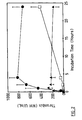
- The Example describes the optimal temperature of thrombin generation by measurement of the rate and extend of thrombin formation over time at three different temperatures: 4°C, 22-25°C and 37°C
- 1. Buffer: 3.3 g/l Na2HPO4.2H2O, pH 6.6
3.2 g/l NaH2PO4.12H2O
8.8 g/l Na3citrate.2H2O - 2. Conditions: Prothrombinex (PTX) discard fractions were incubated at 4°C (open squares), 22-25°C (closed circles) and 37°C (closed triangles) in the presence of 35 mM, 40 mM and 37 mM calcium chloride, respectively. The three different calcium chloride concentrations correspond to the optimal concentrations required for thrombin generation at the respective temperatures. Subsamples were removed over time and assessed for thrombin activity (chromogenic) and standardised against the International Standard for Thrombin (70/157).
- 3. Conclusion: The results shown in Figure 2 demonstrate that thrombin can be generated within the temperature range of 4°C to 37°C, however, for optimal thrombin formation 22-25°C should be used.
- This Example describes the determination of the optimal calcium chloride concentration for PTX discard fraction activation of prothrombin to thrombin.
- 1. Buffer: 3.3 g/l Na2HPO4.2H2O, pH 6.6
3.2 g/l NaH2PO4.12H2O
8.8 g/l Na3citrate.2H2O - 2. Conditions: PTX discard fractions were incubated in the presence of increasing concentrations of calcium chloride (25-50 mM f.c.) for 4 hours at 22-25°C. At the end of this period, samples were assessed for thrombin generation and results expressed as International Units/mL.
- 3. Conclusion: The results shown in Figure 3 demonstrate that thrombin can be generated in the presence of calcium chloride in the range of 25 to 50 mM final concentration, however, for
optimal thrombin formation 40 mM final concentration should be used. -
- Esmon, C.T., Owen, W.G., Jackson, C.M. The conversion of prothrombin to thrombin. V. The activation of prothrombin by factor Xa in the presence of phospholipid. J. Biol. Chem. 249: 24, 7798-7807,1974.
- Farrugia, A., Oates, A., Spiers, D., Young, L, Herrington, R. A microtitre plate test for assessment of in vitro thrombogenicity in factor IX concentrates using a chromogenic substrate. Thrombosis Research. 53: 191-196, 1989.
- Franza, R.B. Jnr, Aronson, D.L., Finlayson, J.B. Activation of human prothrombin by a procoagulant factor from the venom of Echis carinatus. Identification of a high molecular weight intermediate with thrombin activity. J. Biol. Chem. 250: 7056-7068, 1975.
- Furie, B., Furie, B.C. The Molecular Basis of Blood Coagulation. Chapter 93, p 1213-1231 in Haematology, Basic Principles and Practice. Churchill Livingstone Inc. 1991.
- Jobin, F., Esnouf, M.P. Coagulant activity of tiger snake (Notechis scutatus scutatus) venom. Nature 21: 873-875, 1966.
- Kisiel, W., Hermodson, M.A., Davie, E.W. Factor X Activating Enzyme from Russell's Viper Venom: Isolation and Characterisation. Biochemistry. 15: 22, 4901-4906, 1976.
- Middleton, S.M., Bennett, I.H., Smith, J.K A therapeutic concentrate of coagulation factors II, IX and X from citrated, factor VIII-depleted plasma. Vox. Sang. 24: 441-456, 1973.
- Owen, W.G., Jackson, C.M. Activation of Prothrombin with Oxyuranus scutellatus scutellatus (Taipan Snake) venom. Thrombosis Research. 3: 705-714, 1973.
- Sas, G., Owens, R.E., Smith, J.K., Middleton, S.M., Cash, J.D. In vitro spontaneous thrombin generation in human factor IX concentrates. Br. J. Haemotol. 31: 25-35, 1975.
Claims (8)
- A method for the preparation of thrombin from a prothrombin-containing material, characterised in that the prothrombin-containing material is an activated prothrombin complex concentrate (Act PCC) fraction obtained as the ascending or pre-peak material on elution of prothrombin complex concentrate (PCC) from a column, and said Act PCC fraction is contacted with divalent cations to convert prothrombin in said fraction to thrombin.
- A method according to claim 1, wherein said ActPCC fraction comprises at least some of the thrombogenic fractions in the ascending or pre-peak material produced during preparation of prothrombin complex concentrate (PCC) by elution of bound proteins from Cohn fraction I supernatent from DEAE-cellulose resin.
- A method according to claim 1, wherein the divalent cations are Ca2+ ions.
- A method according to claim 3, wherein the concentration of Ca2+ ions is in the range of from 25 to 50 mM, more preferably from 35 to 50 mM.
- A method according to claim 3 or claim 4, wherein said ActPCC fraction is contacted with Ca2+ ions at a temperature in the range of from 4°C to 37°C, more preferably from 22°C to 25°C.
- A method according to any of claims 3 to 5, wherein said ActPCC fraction is treated with 40±5 mM CaCl2 at 22-25°C for a period of 4-5 hours.
- A method according to any of claims I to 6, further comprising a virus- inactivation step, preferably a solvent/detergent treatment step.
- A method according to any of claims 1 to 7, further comprising the steps of recovering and purificating the thrombin.
Applications Claiming Priority (3)
| Application Number | Priority Date | Filing Date | Title |
|---|---|---|---|
| AUPN4369/95 | 1995-07-24 | ||
| AUPN4369A AUPN436995A0 (en) | 1995-07-24 | 1995-07-24 | Method for the production of thrombin |
| PCT/AU1996/000457 WO1997004081A1 (en) | 1995-07-24 | 1996-07-22 | Method for the production of thrombin |
Publications (3)
| Publication Number | Publication Date |
|---|---|
| EP0846166A1 EP0846166A1 (en) | 1998-06-10 |
| EP0846166A4 EP0846166A4 (en) | 2001-06-13 |
| EP0846166B1 true EP0846166B1 (en) | 2007-10-03 |
Family
ID=3788704
Family Applications (1)
| Application Number | Title | Priority Date | Filing Date |
|---|---|---|---|
| EP96923783A Expired - Lifetime EP0846166B1 (en) | 1995-07-24 | 1996-07-22 | Method for the production of thrombin |
Country Status (13)
| Country | Link |
|---|---|
| US (1) | US6168938B1 (en) |
| EP (1) | EP0846166B1 (en) |
| JP (1) | JP3810439B2 (en) |
| KR (1) | KR19990035874A (en) |
| AT (1) | ATE374812T1 (en) |
| AU (2) | AUPN436995A0 (en) |
| CA (1) | CA2227883C (en) |
| DE (1) | DE69637278D1 (en) |
| DK (1) | DK0846166T3 (en) |
| ES (1) | ES2294788T3 (en) |
| NZ (1) | NZ312625A (en) |
| WO (1) | WO1997004081A1 (en) |
| ZA (1) | ZA966192B (en) |
Families Citing this family (3)
| Publication number | Priority date | Publication date | Assignee | Title |
|---|---|---|---|---|
| JP2002514960A (en) | 1997-06-18 | 2002-05-21 | コヘージョン テクノロジーズ,インコーポレイテッド | Compositions comprising thrombin and microfibril collagen and methods for their preparation and use |
| US6274090B1 (en) * | 1998-08-05 | 2001-08-14 | Thermogenesis Corp. | Apparatus and method of preparation of stable, long term thrombin from plasma and thrombin formed thereby |
| SE1050124A1 (en) * | 2010-02-08 | 2011-08-09 | Linkoping Biocontrols Ab | Stable solution |
Family Cites Families (4)
| Publication number | Priority date | Publication date | Assignee | Title |
|---|---|---|---|---|
| DE3165600D1 (en) | 1980-01-28 | 1984-09-27 | Baxter Travenol Lab | Prothrombin-containing therapeutic compositions and methods of producing enzymatically active blood clotting factors from prothrombin-containing blood fractions |
| ES2131504T3 (en) * | 1990-02-20 | 1999-08-01 | Baxter Int | VIRICALLY SAFE PURIFIED HUMAN THROMBINE. |
| DE4137996A1 (en) * | 1991-11-19 | 1993-05-27 | Behringwerke Ag | METHOD FOR PRODUCING A VIRUS-SAFE THROMBINE CONCENTRATE |
| JPH07308190A (en) * | 1994-05-18 | 1995-11-28 | Green Cross Corp:The | Method for manufacturing thrombin |
-
1995
- 1995-07-24 AU AUPN4369A patent/AUPN436995A0/en not_active Abandoned
-
1996
- 1996-07-22 US US09/000,228 patent/US6168938B1/en not_active Expired - Lifetime
- 1996-07-22 JP JP50609597A patent/JP3810439B2/en not_active Expired - Fee Related
- 1996-07-22 AT AT96923783T patent/ATE374812T1/en active
- 1996-07-22 EP EP96923783A patent/EP0846166B1/en not_active Expired - Lifetime
- 1996-07-22 WO PCT/AU1996/000457 patent/WO1997004081A1/en not_active Ceased
- 1996-07-22 ES ES96923783T patent/ES2294788T3/en not_active Expired - Lifetime
- 1996-07-22 NZ NZ312625A patent/NZ312625A/en not_active IP Right Cessation
- 1996-07-22 KR KR1019980700535A patent/KR19990035874A/en not_active Ceased
- 1996-07-22 AU AU64095/96A patent/AU695396B2/en not_active Expired
- 1996-07-22 CA CA002227883A patent/CA2227883C/en not_active Expired - Lifetime
- 1996-07-22 ZA ZA966192A patent/ZA966192B/en unknown
- 1996-07-22 DK DK96923783T patent/DK0846166T3/en active
- 1996-07-22 DE DE69637278T patent/DE69637278D1/en not_active Expired - Lifetime
Also Published As
| Publication number | Publication date |
|---|---|
| AU695396B2 (en) | 1998-08-13 |
| ES2294788T3 (en) | 2008-04-01 |
| AUPN436995A0 (en) | 1995-08-17 |
| EP0846166A1 (en) | 1998-06-10 |
| ZA966192B (en) | 1997-03-17 |
| JPH11509101A (en) | 1999-08-17 |
| DE69637278D1 (en) | 2007-11-15 |
| NZ312625A (en) | 1999-01-28 |
| EP0846166A4 (en) | 2001-06-13 |
| HK1011549A1 (en) | 1999-07-16 |
| CA2227883C (en) | 2007-05-08 |
| KR19990035874A (en) | 1999-05-25 |
| WO1997004081A1 (en) | 1997-02-06 |
| DK0846166T3 (en) | 2008-02-04 |
| AU6409596A (en) | 1997-02-18 |
| JP3810439B2 (en) | 2006-08-16 |
| US6168938B1 (en) | 2001-01-02 |
| ATE374812T1 (en) | 2007-10-15 |
| CA2227883A1 (en) | 1997-02-06 |
Similar Documents
| Publication | Publication Date | Title |
|---|---|---|
| US5304372A (en) | Process for preparing a human thrombin concentrate intended for therapeutic use | |
| DK166587B1 (en) | BLOOD COAGULATOR INHIBITING PROTEINS, PROCEDURES FOR THEIR PREPARATION AND THEIR USE | |
| Østerud et al. | The effect of antithrombin III on the activity of the coagulation factors VII, IX and X | |
| NO148142B (en) | PROCEDURE FOR THE PREPARATION OF A BLOOD COAGULATING PROCEDURE FROM HUMAN BLOOD PLASMA | |
| CZ330992A3 (en) | Thrombin and process for preparing thereof | |
| Walker et al. | The effects of phospholipid and factor Va on the inhibition of factor Xa by antithrombin III | |
| US4501731A (en) | Treatment of disparate bleeding disorders with factor X zymogen | |
| CA2105282C (en) | Preparation of factor ix | |
| AU743102B2 (en) | Pharmaceutical substance containing various vitamin K-dependent factors | |
| CA2380844A1 (en) | Factor x analog with an improved ability to be activated | |
| Usharani et al. | Characterization of three abnormal factor IX variants (Bm Lake Elsinore, Long Beach, and Los Angeles) of hemophilia-B. Evidence for defects affecting the latent catalytic site. | |
| Yin | Kinetics of human blood coagulation induced by trypsin | |
| US6168938B1 (en) | Method for the production of thrombin | |
| JP3819935B2 (en) | Preparation of thrombin | |
| Modi et al. | The isolation of prothrombin, factor IX and factor X from human factor IX concentrates | |
| EP0823476B1 (en) | Method for activating prothrombin to thrombin | |
| Soons et al. | The effect of platelets in the activation of human blood coagulation factor IX by factor XIa | |
| He et al. | Rabbit plasma, unlike its human counterpart, contains no complex between protein S and C4b-binding protein | |
| KR100377279B1 (en) | How to make thrombin | |
| HK1011549B (en) | Method for the production of thrombin | |
| US6245548B1 (en) | Activation of pure prothrombin to thrombin with about 30% to about 40% sodium citrate | |
| Irwin et al. | Activation of factor IX by thrombin preparations in the absence of factor XI | |
| Bouton et al. | Role of the Thrombin Insertion Loop 144–155: Study of Thrombin Mutations W148G, K154E and a Thrombin‐Based Synthetic Peptide | |
| Andersson | Purification and studies of components of the haemostatic system by affinity chromatography | |
| Ofosu et al. | The factor VIII-independent activation of factor X by factors IXa and VII in plasma |
Legal Events
| Date | Code | Title | Description |
|---|---|---|---|
| PUAI | Public reference made under article 153(3) epc to a published international application that has entered the european phase |
Free format text: ORIGINAL CODE: 0009012 |
|
| 17P | Request for examination filed |
Effective date: 19980220 |
|
| AK | Designated contracting states |
Kind code of ref document: A1 Designated state(s): AT BE CH DE DK ES FI FR GB GR IE IT LI LU MC NL PT SE |
|
| RIC1 | Information provided on ipc code assigned before grant |
Free format text: 7C 12N 9/74 A, 7C 12Q 1/56 B |
|
| A4 | Supplementary search report drawn up and despatched |
Effective date: 20010426 |
|
| AK | Designated contracting states |
Kind code of ref document: A4 Designated state(s): AT BE CH DE DK ES FI FR GB GR IE IT LI LU MC NL PT SE |
|
| 17Q | First examination report despatched |
Effective date: 20040813 |
|
| GRAP | Despatch of communication of intention to grant a patent |
Free format text: ORIGINAL CODE: EPIDOSNIGR1 |
|
| GRAS | Grant fee paid |
Free format text: ORIGINAL CODE: EPIDOSNIGR3 |
|
| GRAA | (expected) grant |
Free format text: ORIGINAL CODE: 0009210 |
|
| AK | Designated contracting states |
Kind code of ref document: B1 Designated state(s): AT BE CH DE DK ES FI FR GB GR IE IT LI LU MC NL PT SE |
|
| REG | Reference to a national code |
Ref country code: GB Ref legal event code: FG4D |
|
| REG | Reference to a national code |
Ref country code: CH Ref legal event code: EP |
|
| REG | Reference to a national code |
Ref country code: IE Ref legal event code: FG4D |
|
| REF | Corresponds to: |
Ref document number: 69637278 Country of ref document: DE Date of ref document: 20071115 Kind code of ref document: P |
|
| REG | Reference to a national code |
Ref country code: SE Ref legal event code: TRGR |
|
| REG | Reference to a national code |
Ref country code: DK Ref legal event code: T3 |
|
| REG | Reference to a national code |
Ref country code: ES Ref legal event code: FG2A Ref document number: 2294788 Country of ref document: ES Kind code of ref document: T3 |
|
| REG | Reference to a national code |
Ref country code: CH Ref legal event code: PL |
|
| PG25 | Lapsed in a contracting state [announced via postgrant information from national office to epo] |
Ref country code: LI Free format text: LAPSE BECAUSE OF FAILURE TO SUBMIT A TRANSLATION OF THE DESCRIPTION OR TO PAY THE FEE WITHIN THE PRESCRIBED TIME-LIMIT Effective date: 20071003 Ref country code: CH Free format text: LAPSE BECAUSE OF FAILURE TO SUBMIT A TRANSLATION OF THE DESCRIPTION OR TO PAY THE FEE WITHIN THE PRESCRIBED TIME-LIMIT Effective date: 20071003 |
|
| REG | Reference to a national code |
Ref country code: HK Ref legal event code: GR Ref document number: 1011549 Country of ref document: HK |
|
| PG25 | Lapsed in a contracting state [announced via postgrant information from national office to epo] |
Ref country code: PT Free format text: LAPSE BECAUSE OF FAILURE TO SUBMIT A TRANSLATION OF THE DESCRIPTION OR TO PAY THE FEE WITHIN THE PRESCRIBED TIME-LIMIT Effective date: 20080303 |
|
| ET | Fr: translation filed | ||
| PLBE | No opposition filed within time limit |
Free format text: ORIGINAL CODE: 0009261 |
|
| STAA | Information on the status of an ep patent application or granted ep patent |
Free format text: STATUS: NO OPPOSITION FILED WITHIN TIME LIMIT |
|
| 26N | No opposition filed |
Effective date: 20080704 |
|
| PG25 | Lapsed in a contracting state [announced via postgrant information from national office to epo] |
Ref country code: DE Free format text: LAPSE BECAUSE OF FAILURE TO SUBMIT A TRANSLATION OF THE DESCRIPTION OR TO PAY THE FEE WITHIN THE PRESCRIBED TIME-LIMIT Effective date: 20080104 |
|
| PG25 | Lapsed in a contracting state [announced via postgrant information from national office to epo] |
Ref country code: GR Free format text: LAPSE BECAUSE OF FAILURE TO SUBMIT A TRANSLATION OF THE DESCRIPTION OR TO PAY THE FEE WITHIN THE PRESCRIBED TIME-LIMIT Effective date: 20080104 |
|
| PG25 | Lapsed in a contracting state [announced via postgrant information from national office to epo] |
Ref country code: MC Free format text: LAPSE BECAUSE OF NON-PAYMENT OF DUE FEES Effective date: 20080731 |
|
| PG25 | Lapsed in a contracting state [announced via postgrant information from national office to epo] |
Ref country code: IE Free format text: LAPSE BECAUSE OF NON-PAYMENT OF DUE FEES Effective date: 20080722 |
|
| PG25 | Lapsed in a contracting state [announced via postgrant information from national office to epo] |
Ref country code: FI Free format text: LAPSE BECAUSE OF FAILURE TO SUBMIT A TRANSLATION OF THE DESCRIPTION OR TO PAY THE FEE WITHIN THE PRESCRIBED TIME-LIMIT Effective date: 20071003 |
|
| PG25 | Lapsed in a contracting state [announced via postgrant information from national office to epo] |
Ref country code: LU Free format text: LAPSE BECAUSE OF NON-PAYMENT OF DUE FEES Effective date: 20080722 |
|
| REG | Reference to a national code |
Ref country code: FR Ref legal event code: PLFP Year of fee payment: 20 |
|
| PGFP | Annual fee paid to national office [announced via postgrant information from national office to epo] |
Ref country code: NL Payment date: 20150720 Year of fee payment: 20 |
|
| PGFP | Annual fee paid to national office [announced via postgrant information from national office to epo] |
Ref country code: GB Payment date: 20150728 Year of fee payment: 20 Ref country code: DK Payment date: 20150720 Year of fee payment: 20 Ref country code: ES Payment date: 20150720 Year of fee payment: 20 |
|
| PGFP | Annual fee paid to national office [announced via postgrant information from national office to epo] |
Ref country code: AT Payment date: 20150720 Year of fee payment: 20 Ref country code: SE Payment date: 20150720 Year of fee payment: 20 Ref country code: BE Payment date: 20150717 Year of fee payment: 20 Ref country code: FR Payment date: 20150731 Year of fee payment: 20 |
|
| PGFP | Annual fee paid to national office [announced via postgrant information from national office to epo] |
Ref country code: IT Payment date: 20150727 Year of fee payment: 20 |
|
| REG | Reference to a national code |
Ref country code: NL Ref legal event code: MK Effective date: 20160721 |
|
| REG | Reference to a national code |
Ref country code: DK Ref legal event code: EUP Effective date: 20160722 |
|
| REG | Reference to a national code |
Ref country code: GB Ref legal event code: PE20 Expiry date: 20160721 |
|
| REG | Reference to a national code |
Ref country code: AT Ref legal event code: MK07 Ref document number: 374812 Country of ref document: AT Kind code of ref document: T Effective date: 20160722 |
|
| REG | Reference to a national code |
Ref country code: ES Ref legal event code: FD2A Effective date: 20161028 |
|
| PG25 | Lapsed in a contracting state [announced via postgrant information from national office to epo] |
Ref country code: GB Free format text: LAPSE BECAUSE OF EXPIRATION OF PROTECTION Effective date: 20160721 |
|
| PG25 | Lapsed in a contracting state [announced via postgrant information from national office to epo] |
Ref country code: ES Free format text: LAPSE BECAUSE OF EXPIRATION OF PROTECTION Effective date: 20160723 |