EP0844564B1 - Speicherverwaltungssystem und Verfahren hierfür - Google Patents
Speicherverwaltungssystem und Verfahren hierfür Download PDFInfo
- Publication number
- EP0844564B1 EP0844564B1 EP97309477A EP97309477A EP0844564B1 EP 0844564 B1 EP0844564 B1 EP 0844564B1 EP 97309477 A EP97309477 A EP 97309477A EP 97309477 A EP97309477 A EP 97309477A EP 0844564 B1 EP0844564 B1 EP 0844564B1
- Authority
- EP
- European Patent Office
- Prior art keywords
- memory
- management
- blocks
- stack
- application
- Prior art date
- Legal status (The legal status is an assumption and is not a legal conclusion. Google has not performed a legal analysis and makes no representation as to the accuracy of the status listed.)
- Expired - Lifetime
Links
Images

Classifications
-
- G—PHYSICS
- G06—COMPUTING OR CALCULATING; COUNTING
- G06F—ELECTRIC DIGITAL DATA PROCESSING
- G06F12/00—Accessing, addressing or allocating within memory systems or architectures
- G06F12/02—Addressing or allocation; Relocation
- G06F12/0223—User address space allocation, e.g. contiguous or non contiguous base addressing
- G06F12/023—Free address space management
Definitions
- This invention relates to an arrangement and method for the management of a memory in a data processing system.
- Malloc uses sbrk or brk to change the size of the available process memory and then manages the memory as a list of allocated and free blocks of particular sizes. Malloc can provide an application on demand with a block of memory of any size. It does this by maintaining lists of free memory blocks and of their respective sizes so as to return a block which is at least as big as the block requested by the user. Therefore Malloc must choose from the available blocks which of those blocks is most appropriate for giving to the application.
- the implementation of the malloc family of functions is system dependant and is likely to vary from machine to machine.
- US-A-5 493 652 describes a memory manager arrangement for use within a memory, the arrangement including a memory management structure and a set of memory blocks in which data can be stored under the control of the management structure, wherein the memory management structure incorporates a first management pointer and a second management pointer.
- EP-A-0 439 920 discloses a system and method for managing memory in a microcomputer which dynamically allocates a pointer table of varying length at one end of a data memory area, and similarly allocates a data field, comprising data blocks, at the other end of the data memory area wherein data pointers within the pointer table point to the memory locations of the data blocks and as data blocks are added, the data field and the pointer table grow towards each other.
- An object of the invention is to minimise or to overcome the disadvantage discussed in the third preceding paragraph.
- a further object of the invention is to provide an improved arrangement and method for memory management and allocation of memory capacity.
- a memory manager arrangement for use within a memory, the arrangement including a memory management structure and a set of memory blocks of the same size in which data can be stored under the control of the management structure, wherein the memory management structure incorporates a first management pointer and a second management pointer, characterised in that the memory manager arrangement includes a stack of pointers to free memory blocks within the set of memory blocks and wherein said first management pointer points to said stack of pointers and said second management pointer points to a first memory block in the stack thus providing automatic allocation of memory blocks.
- a method of memory storage in a memory manager arrangement for use within a memory said method including a memory management structure and a set of memory block of the same size in which data can be stored under the control of the management structure, the method including providing from the memory management structure a first management pointer and a second management pointer, the method being characterised in providing the memory managemer arrangement with a stack of pointers to free memory blocks within the set of memory blocks and arraying the memory management structure such that the first management pointer points to said stack of pointers and said second management pointer points to a first memory block in the stack of pointers thus providing a method of automatically allocating memory blocks.
- a method of allocating sets of memory blocks for use by an application during execution of that application comprising creating via the application a memory manager arrangement comprising a memory management structure and a set of memory blocks of the same size in which data can be stored under the control of the management structure, the memory management structure incorporating a first management pointer and a second management pointer, the method being characterised in that the memory managemer arrangement is created to have a stack of pointers to free memory blocks within the set of memory blocks and is arranged such that said first management pointer points to said stack of pointers and said second management pointer points to a first memory block in the stack of pointers thus providing a method of automatically allocating memory blocks, the method being further characterised in that the application creates a plurality of memory managemer arrangements wherein said memory manager arrangements are created prior to running of said application, and wherein each said memory manager arrangement is provided with a memory capacity determined by the application at the time of creation of that manager arrangement.
- the memory manager arrangement manages memory blocks of the same size only. Therefore, it is not necessary to search available blocks to find one of the correct size.
- the arrangement allows an application to maintain a series of completely separate lists of memory of the same size and to rapidly access those blocks. Additionally the arrangement allows the application to allocate the memory it requires before it uses that memory rather than delaying allocation until the memory is actually required. The application thus determines the memory requirement prior to run time so that an appropriate memory capacity is made available to that application for use during execution of the application.
- the memory management arrangement benefits from improved performance due to the simplicity of its algorithm, reduced memory fragmentation (that is management of the memory as a collection of smaller and smaller blocks) and the ability to allocate the applications memory blocks before they are required, reducing the need to dynamically allocate memory whilst the application is executing.
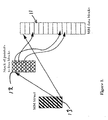
- the memory manager arrangement incorporates a memory which is sufficiently large to accommodate the data blocks 11 being managed.
- these data blocks will either be occupied or free, the free blocks being either unfilled or filled with data that is no longer required thus providing space for overwriting with new data.
- a stack of pointers 12 to those free blocks is maintained and the blocks are allocated via push and pop operations.
- a memory management structure 13 controls access to the data blocks 11 via the pointer stack 12.
- the memory management structure of figure 1 is represented in memory as a contiguous memory block as shown in figure 2 with the management structure 13 followed by the data blocks 11 and the pointer stack 12 at the end of the data blocks.
- the memory manager is represented in the C-programming language by the type ON_Mm. This is a pointer to the structure. ON_Mms are returned from an ON_mm_create function provided via the language.
- the size field is the number of blocks in the memory management structure, the blocksize field is the size of each individual block.
- the mm_grow field is used to determine the action which should be taken if the memory management structure has no available blocks on the stack.
- the mm_stack field of the structure is a void ** and will point to a piece of memory which contains pointers to currently unallocated data blocks.
- the mm_stack_index field is the offset into the stack area of the next free block.
- mm_base is the pointer to the memory block from which the data blocks will be allocated.
- the order of fields in the S_ON_Mm structure is critical.
- the mm_base field is assumed by the memory management structure module to be the last field in the structure. In this way the mm_base field is the address of the first data block in the memory management structure. Adding fields after the mm_base field is likely to result in segmentation violations and failure of the memory management structure algorithms to function correctly.
- the memory management structure design is based upon the performance benefits which can be gained,
- Each memory manager arrangement that is created has one fixed block size.
- the block size and number of blocks are specified at memory management structure create (ON_mm_create), along with the Boolean value grow which determines the behaviour of the memory management structure when it has exhausted its supply of available blocks.
- One final field to the ON_mm_create call is the name parameter, this is only used if the memory management structure module is compiled with the ON_MM_REPORT compile flags defined.
- the ON_MM_REPORTS conditional compilation flag is used to allow additional information to be collated and reported during RNI development. Additional fields are added to the S_ON_Mm structure to allow a memory management structure name, maximum size to be reached and current size information to be stored for reporting by the ON_mm_report function which dumps all the status information for existing memory management structures when called.
- ON_MM_REPORT compile flag when used ON_mm_pop and ON_mm_push are implemented as functions rather than macros, this is to aid debugging and code maintainability. However, it is important to note that this means that two versions of the push and pop functionality are being maintained.
- a memory block of size sizeof (struct S_ON_Mm) + (blocksize * no_of_nodes) + (sizeof (char*) * no_of_nodes - 1) is allocated, e.g. using malloc. This allows space for the S_ON_Mm data structure, the memory for the data blocks and room for the stack of free pointers which will be maintained. This is illustrated in figure 2.
- the sum no_of_nodes-1 is needed rather than no_of_nodes because the pointer mm_base points to the first node.
- a memory management structure is manipulated by ON_mm_pop and ON_mm_push . This functionality is implemented as macros for efficiency. The algorithms used are relatively simple.
- the memory manager provides a means to rapidly allocate and deallocate memory in a system.
- An application is able to create many memory managers each of which creates and maintains only memory blocks of one fixed size. The number and size of the memory blocks in a memory manager is configured by the application.
- the memory manager will allocate all of the memory blocks in one contiguous piece of memory when the memory manager is created, and the memory manager will then manage that piece of memory.
- the memory manager maintains a stack of pointers to its free memory blocks. These blocks can then be rapidly pushed and pulled from the stack of free blocks.
- the advantages that the memory manager offers are reduced system memory fragmentation, fast memory allocation, and allocation of memory at system initialisation time, ahead of the application using it.
- the memory manager can be used in any systems which require dynamic allocation of memory blocks of fixed size. Specifically the memory manager can be used in the provision of a real-time CORBA (Common Object Request Broker Architecture) implementation.
- CORBA Common Object Request Broker Architecture
Landscapes
- Engineering & Computer Science (AREA)
- Theoretical Computer Science (AREA)
- Physics & Mathematics (AREA)
- General Engineering & Computer Science (AREA)
- General Physics & Mathematics (AREA)
- Memory System (AREA)
- Devices For Executing Special Programs (AREA)
Claims (6)
- Speicherverwaltungsanordnung zur Verwendung in einem Speicher, wobei die Anordnung eine Speicherverwaltungsstruktur (13) und einen Satz von Speicherblöcken (11) mit der gleichen Größe einschließt, in denen Daten unter der Steuerung der Verwaltungsstruktur gespeichert werden können, wobei die Speicherverwaltungsstruktur (13) einen ersten Verwaltungszeiger und einen zweiten Verwaltungszeiger beinhaltet, dadurch gekennzeichnet, dass die Speicherverwaltungsanordnung einen Stapel von Zeigern (12) auf freie Speicherblöcke innerhalb des Satzes von Speicherblöcken (11) einschließt, und wobei der erste Verwaltungszeiger auf den Stapel von Zeigern (12) zeigt, und der zweite Verwaltungszeiger auf einen ersten Speicherblock in dem Stapel (12) zeigt, so dass sich eine automatische Zuteilung von Speicherblöcken ergibt.
- Speicherverwaltungsanordnung nach Anspruch 1, die Einrichtungen zur Definition der Kapazität der Speicherblöcke beinhaltet.
- Verfahren zur Datenspeicherung in einer Speicherverwaltungsanordnung zur Verwendung in einem Speicher, wobei das Verfahren eine Speicherverwaltungsstrukur (13) und einen Satz von Speicherblöcken (11) der gleichen Größe einschließt, in denen Daten unter der Steuerung der Verwaltungsstruktur gespeichert werden können, wobei das Verfahren die Bereitstellung eines ersten Verwaltungszeigers und eines zweiten Verwaltungszeigers durch die Verwaltungsstruktur einschließt, wobei das Verfahren dadurch gekennzeichnet ist, dass der Speicherverwaltungsanordnung ein Stapel von Zeigern (12) auf freie Speicherblöcke in dem Satz von Speicherblöcken (11) bereitgestellt wird, und die Speicherverwaltungsstruktur so angeordnet ist, dass der erste Verwaltungszeiger auf den Stapel von Zeigern (12) zeigt und der zweite Verwaltungszeiger auf einen ersten Speicherblock in dem Stapel von Zeigern (12) zeigt, wodurch ein Verfahren zur automatischen Zuteilung von Speicherblöcken bereitgestellt wird.
- Verfahren nach Anspruch 3, dadurch gekennzeichnet, dass die Speicherverwaltungsstruktur (13) einer Anwendung zugeordnet ist, und dass die Anzahl und Kapazität der Speicherblöcke durch diese Anwendung konfiguriert wird.
- Verfahren nach Anspruch 4, dadurch gekennzeichnet, dass die erforderliche Speicherkapazität durch die Anwendung bestimmt wird und ein entsprechender Satz von Speicherblöcken vor dem Ablaufen der Anwendung konfiguriert wird.
- Verfahren zur Zuteilung von Sätzen von Speicherblöcken (11) zur Verwendung durch eine Anwendung, wobei das Verfahren die Schaffung, über die Anwendung, einer Speicherverwaltungsanordnung umfasst, die eine Speicherverwaltungsstruktur (13) und einen Satz von Speicherblöcken (11) der gleichen Größe umfasst, in denen Daten unter der Steuerung der Verwaltungsstruktur (13) gespeichert werden können, wobei die Speicherverwaltungsstruktur einen ersten Verwaltungszeiger und einen zweiten Verwaltungszeiger beinhaltet, wobei das Verfahren dadurch gekennzeichnet ist, dass die Speicherverwaltungsanordnung so geschaffen wird, dass sie einen Stapel von Zeigern (12) auf freie Speicherblöcke in dem Satz von Speicherblöcken hat und so angeordnet ist, dass der erste Verwaltungszeiger auf den Stapel von Zeigern (12) zeigt und der zweite Verwaltungszeiger auf einen ersten Speicherblock in dem Stapel (12) zeigt, wodurch ein Verfahren zur automatischen Zuteilung von Speicherblöcken bereitgestellt wird, wobei das Verfahren weiterhin dadurch gekennzeichnet ist, dass die Anwendung eine Anzahl von Speicherverwaltungsanordnungen schafft, wobei die Speicherverwaltungsanordnungen vor dem Ablauf der Anwendung geschaffen werden, und wobei jede dieser Speicherverwaltungsanordnungen mit einer Speicherkapazität versehen wird, die durch die Anwendung zum Zeitpunkt der Schaffung der Verwaltungsanordnung bestimmt wird.
Applications Claiming Priority (2)
| Application Number | Priority Date | Filing Date | Title |
|---|---|---|---|
| US08/756,200 US5950231A (en) | 1996-11-25 | 1996-11-25 | Memory manager system |
| US756200 | 1996-11-25 |
Publications (3)
| Publication Number | Publication Date |
|---|---|
| EP0844564A2 EP0844564A2 (de) | 1998-05-27 |
| EP0844564A3 EP0844564A3 (de) | 1999-12-01 |
| EP0844564B1 true EP0844564B1 (de) | 2004-05-26 |
Family
ID=25042440
Family Applications (1)
| Application Number | Title | Priority Date | Filing Date |
|---|---|---|---|
| EP97309477A Expired - Lifetime EP0844564B1 (de) | 1996-11-25 | 1997-11-25 | Speicherverwaltungssystem und Verfahren hierfür |
Country Status (3)
| Country | Link |
|---|---|
| US (1) | US5950231A (de) |
| EP (1) | EP0844564B1 (de) |
| DE (1) | DE69729262T2 (de) |
Families Citing this family (15)
| Publication number | Priority date | Publication date | Assignee | Title |
|---|---|---|---|---|
| US6430665B1 (en) * | 1999-06-25 | 2002-08-06 | Sun Microsystems, Inc. | System and method for heuristically allocating memory |
| US7093263B1 (en) * | 1999-10-21 | 2006-08-15 | Oracle International Corporation | System and methodology for supporting a platform independent object format for a run-time environment |
| DE19951716A1 (de) * | 1999-10-27 | 2001-05-03 | Heidenhain Gmbh Dr Johannes | Verfahren zur dynamischen Speicherverwaltung |
| US6539464B1 (en) * | 2000-04-08 | 2003-03-25 | Radoslav Nenkov Getov | Memory allocator for multithread environment |
| US20020163913A1 (en) * | 2001-05-07 | 2002-11-07 | Jintae Oh | Pointer management and content matching packet classification |
| US7000087B2 (en) * | 2001-11-07 | 2006-02-14 | International Business Machines Corporation | Programmatically pre-selecting specific physical memory blocks to allocate to an executing application |
| US8060680B2 (en) * | 2002-09-16 | 2011-11-15 | Hewlett-Packard Development Company, L.P. | Method of allocating memory |
| JP3865748B2 (ja) * | 2003-01-20 | 2007-01-10 | 富士通株式会社 | ネットワークスイッチ装置およびネットワークスイッチ方法 |
| EP1489507A1 (de) | 2003-06-19 | 2004-12-22 | Texas Instruments Incorporated | Vorverteilung von Speicherplatz |
| BRPI0418554B1 (pt) * | 2004-02-19 | 2018-05-08 | Telefonaktiebolaget Lm Ericsson Publ | método e unidade para gerenciar uma memória de estado adaptada para armazenar informação de estado, e, unidade de comunicações adaptada para comunicação de mensagem com uma unidade de comunicações externa em um sistema de comunicações |
| US9601199B2 (en) | 2007-01-26 | 2017-03-21 | Intel Corporation | Iterator register for structured memory |
| CN103473181B (zh) * | 2007-01-26 | 2017-06-13 | 英特尔公司 | 分级式不可变内容可寻址存储器处理器 |
| DE102007026690A1 (de) * | 2007-06-08 | 2008-12-11 | Robert Bosch Gmbh | Verfahren und Steuergerät zum Betreiben eines nichtflüchtigen Speichers, insbesondere zum Einsatz in Kraftfahrzeugen |
| WO2009085253A1 (en) * | 2007-12-21 | 2009-07-09 | Hicamp Systems | Hierarchical block-identified data communication for unified handling of structured data and data compression |
| US7995596B2 (en) * | 2008-05-13 | 2011-08-09 | Netlogic Microsystems, Inc. | System and method for offloading packet protocol encapsulation from software |
Family Cites Families (9)
| Publication number | Priority date | Publication date | Assignee | Title |
|---|---|---|---|---|
| US5414826A (en) * | 1990-01-31 | 1995-05-09 | Hewlett-Packard Company | System and method for memory management in microcomputer |
| US5247634A (en) * | 1990-03-20 | 1993-09-21 | Hewlett-Packard Company | Method of managing memory allocation by association of memory blocks with a tree structure |
| US5577243A (en) * | 1994-03-31 | 1996-11-19 | Lexmark International, Inc. | Reallocation of returned memory blocks sorted in predetermined sizes and addressed by pointer addresses in a free memory list |
| US5493652A (en) * | 1994-04-29 | 1996-02-20 | International Business Machines Corporation | Management system for a buffer memory having buffers of uniform size in which the buffers are divided into a portion of contiguous unused buffers and a portion of contiguous buffers in which at least some are used |
| US5579452A (en) * | 1994-09-29 | 1996-11-26 | Xerox Corporation | Method of managing memory allocation in a printing system |
| US5625819A (en) * | 1995-04-26 | 1997-04-29 | Honeywell, Inc. | Methods and apparatus for performing heap management and protecting data structure integrity in non-volatile memory |
| US5835959A (en) * | 1995-12-01 | 1998-11-10 | Sand Technology Systems International, Inc. | Memory management system and method using dual indexing structures |
| US5721858A (en) * | 1995-12-12 | 1998-02-24 | International Business Machines Corporation | Virtual memory mapping method and system for memory management of pools of logical partitions for bat and TLB entries in a data processing system |
| US5835958A (en) * | 1996-10-29 | 1998-11-10 | Sun Microsystems, Inc. | Method and apparatus for dynamically sizing non-contiguous runtime stacks |
-
1996
- 1996-11-25 US US08/756,200 patent/US5950231A/en not_active Expired - Fee Related
-
1997
- 1997-11-25 DE DE69729262T patent/DE69729262T2/de not_active Expired - Fee Related
- 1997-11-25 EP EP97309477A patent/EP0844564B1/de not_active Expired - Lifetime
Also Published As
| Publication number | Publication date |
|---|---|
| US5950231A (en) | 1999-09-07 |
| DE69729262D1 (de) | 2004-07-01 |
| EP0844564A3 (de) | 1999-12-01 |
| EP0844564A2 (de) | 1998-05-27 |
| DE69729262T2 (de) | 2004-09-16 |
Similar Documents
| Publication | Publication Date | Title |
|---|---|---|
| KR100541174B1 (ko) | 로컬화된 메모리 재이용을 가진 데이터 처리기 | |
| US5809554A (en) | User control of multiple memory heaps | |
| US5742793A (en) | Method and apparatus for dynamic memory management by association of free memory blocks using a binary tree organized in an address and size dependent manner | |
| US5950231A (en) | Memory manager system | |
| US6868488B2 (en) | Binned remembered sets | |
| US6490670B1 (en) | Method and apparatus for efficiently allocating objects in object oriented systems | |
| EP0375188B1 (de) | Dateisystem | |
| US6529919B1 (en) | Incremental class unloading in a train-algorithm-based garbage collector | |
| US7587566B2 (en) | Realtime memory management via locking realtime threads and related data structures | |
| US6105040A (en) | Method and apparatus for managing stored objects | |
| US6105041A (en) | Using three-state references to manage garbage collection of referenced objects | |
| US6449626B1 (en) | Reduced-cost remembered-set processing in a train-algorithm-based garbage collector | |
| US6557091B2 (en) | Data processor with localized memory reclamation | |
| US7058670B2 (en) | Scalable, space-efficient, parallel remembered-sets | |
| US20040111445A1 (en) | Method and mechanism for finding references in a card in time linear in the size of the card in a garbage-collected heap | |
| US20080162863A1 (en) | Bucket based memory allocation | |
| JPH0695954A (ja) | コンサーバティブ・スタックとジェネレイショナル・ヒープガーベージ・コレクション用コンピュータシステム及び方法 | |
| EP1101167A1 (de) | Verfahren und vorrichtung zur durchführung einer deterministischen speicherzuordnungsantwort in einem computer-system | |
| KR20010082032A (ko) | 영구적이고 확실한 저장 할당을 위한 시스템 및 방법 | |
| US20100030994A1 (en) | Methods, systems, and computer readable media for memory allocation and deallocation | |
| US5963982A (en) | Defragmentation of stored data without pointer indirection | |
| US20040162861A1 (en) | Parallel non-contiguous allocation and card parsing | |
| US6999979B2 (en) | Efficient encoding of references into a collection set | |
| US7334104B2 (en) | Satisfying memory allocation requests from memory pool or lookaside lists based on memory size requested to be allocated | |
| US7620943B1 (en) | Using class properties to segregate objects in a generation managed by the train algorithm |
Legal Events
| Date | Code | Title | Description |
|---|---|---|---|
| PUAI | Public reference made under article 153(3) epc to a published international application that has entered the european phase |
Free format text: ORIGINAL CODE: 0009012 |
|
| AK | Designated contracting states |
Kind code of ref document: A2 Designated state(s): DE FR GB |
|
| AX | Request for extension of the european patent |
Free format text: AL;LT;LV;MK;RO;SI |
|
| RAP3 | Party data changed (applicant data changed or rights of an application transferred) |
Owner name: NORTEL NETWORKS CORPORATION |
|
| PUAL | Search report despatched |
Free format text: ORIGINAL CODE: 0009013 |
|
| AK | Designated contracting states |
Kind code of ref document: A3 Designated state(s): AT BE CH DE DK ES FI FR GB GR IE IT LI LU MC NL PT SE |
|
| AX | Request for extension of the european patent |
Free format text: AL;LT;LV;MK;RO;SI |
|
| 17P | Request for examination filed |
Effective date: 20000602 |
|
| AKX | Designation fees paid |
Free format text: DE FR GB |
|
| RAP1 | Party data changed (applicant data changed or rights of an application transferred) |
Owner name: NORTEL NETWORKS LIMITED |
|
| 17Q | First examination report despatched |
Effective date: 20020703 |
|
| RAP1 | Party data changed (applicant data changed or rights of an application transferred) |
Owner name: NORTEL NETWORKS LIMITED |
|
| RTI1 | Title (correction) |
Free format text: MEMORY MANAGER SYSTEM AND METHOD THEREFOR |
|
| GRAP | Despatch of communication of intention to grant a patent |
Free format text: ORIGINAL CODE: EPIDOSNIGR1 |
|
| RTI1 | Title (correction) |
Free format text: MEMORY MANAGER SYSTEM AND METHOD THEREFOR |
|
| GRAS | Grant fee paid |
Free format text: ORIGINAL CODE: EPIDOSNIGR3 |
|
| GRAA | (expected) grant |
Free format text: ORIGINAL CODE: 0009210 |
|
| AK | Designated contracting states |
Kind code of ref document: B1 Designated state(s): DE FR GB |
|
| REG | Reference to a national code |
Ref country code: GB Ref legal event code: FG4D |
|
| REF | Corresponds to: |
Ref document number: 69729262 Country of ref document: DE Date of ref document: 20040701 Kind code of ref document: P |
|
| PG25 | Lapsed in a contracting state [announced via postgrant information from national office to epo] |
Ref country code: GB Free format text: LAPSE BECAUSE OF NON-PAYMENT OF DUE FEES Effective date: 20041125 |
|
| ET | Fr: translation filed | ||
| PLBE | No opposition filed within time limit |
Free format text: ORIGINAL CODE: 0009261 |
|
| STAA | Information on the status of an ep patent application or granted ep patent |
Free format text: STATUS: NO OPPOSITION FILED WITHIN TIME LIMIT |
|
| 26N | No opposition filed |
Effective date: 20050301 |
|
| PG25 | Lapsed in a contracting state [announced via postgrant information from national office to epo] |
Ref country code: DE Free format text: LAPSE BECAUSE OF NON-PAYMENT OF DUE FEES Effective date: 20050601 |
|
| GBPC | Gb: european patent ceased through non-payment of renewal fee |
Effective date: 20041125 |
|
| PG25 | Lapsed in a contracting state [announced via postgrant information from national office to epo] |
Ref country code: FR Free format text: LAPSE BECAUSE OF NON-PAYMENT OF DUE FEES Effective date: 20050729 |
|
| REG | Reference to a national code |
Ref country code: FR Ref legal event code: ST |