EP0840776B1 - Method of laundering items and purifying waste water therefrom - Google Patents
Method of laundering items and purifying waste water therefrom Download PDFInfo
- Publication number
- EP0840776B1 EP0840776B1 EP96919322A EP96919322A EP0840776B1 EP 0840776 B1 EP0840776 B1 EP 0840776B1 EP 96919322 A EP96919322 A EP 96919322A EP 96919322 A EP96919322 A EP 96919322A EP 0840776 B1 EP0840776 B1 EP 0840776B1
- Authority
- EP
- European Patent Office
- Prior art keywords
- alkali metal
- ppm
- solution
- metal aluminate
- aluminate
- Prior art date
- Legal status (The legal status is an assumption and is not a legal conclusion. Google has not performed a legal analysis and makes no representation as to the accuracy of the status listed.)
- Expired - Lifetime
Links
- 238000000034 method Methods 0.000 title claims description 24
- 239000002351 wastewater Substances 0.000 title claims description 14
- 238000004900 laundering Methods 0.000 title claims description 8
- 239000000243 solution Substances 0.000 claims description 56
- 229910001388 sodium aluminate Inorganic materials 0.000 claims description 34
- 239000003599 detergent Substances 0.000 claims description 32
- ANBBXQWFNXMHLD-UHFFFAOYSA-N aluminum;sodium;oxygen(2-) Chemical compound [O-2].[O-2].[Na+].[Al+3] ANBBXQWFNXMHLD-UHFFFAOYSA-N 0.000 claims description 26
- -1 alkali metal aluminate Chemical class 0.000 claims description 22
- 239000004094 surface-active agent Substances 0.000 claims description 22
- 229910052783 alkali metal Inorganic materials 0.000 claims description 16
- PNEYBMLMFCGWSK-UHFFFAOYSA-N aluminium oxide Inorganic materials [O-2].[O-2].[O-2].[Al+3].[Al+3] PNEYBMLMFCGWSK-UHFFFAOYSA-N 0.000 claims description 16
- 229920000642 polymer Polymers 0.000 claims description 14
- 238000005406 washing Methods 0.000 claims description 14
- 239000003352 sequestering agent Substances 0.000 claims description 13
- 150000004645 aluminates Chemical class 0.000 claims description 11
- 229910052593 corundum Inorganic materials 0.000 claims description 10
- 229910001845 yogo sapphire Inorganic materials 0.000 claims description 10
- 239000004519 grease Substances 0.000 claims description 9
- 239000000203 mixture Substances 0.000 claims description 9
- 239000002736 nonionic surfactant Substances 0.000 claims description 8
- 238000000926 separation method Methods 0.000 claims description 6
- KKCBUQHMOMHUOY-UHFFFAOYSA-N Na2O Inorganic materials [O-2].[Na+].[Na+] KKCBUQHMOMHUOY-UHFFFAOYSA-N 0.000 claims description 5
- 229910019142 PO4 Inorganic materials 0.000 claims description 5
- 229920002125 Sokalan® Polymers 0.000 claims description 5
- NBIIXXVUZAFLBC-UHFFFAOYSA-K phosphate Chemical compound [O-]P([O-])([O-])=O NBIIXXVUZAFLBC-UHFFFAOYSA-K 0.000 claims description 4
- 239000010452 phosphate Substances 0.000 claims description 4
- 239000002253 acid Substances 0.000 claims description 3
- 239000004584 polyacrylic acid Substances 0.000 claims description 3
- KVOIJEARBNBHHP-UHFFFAOYSA-N potassium;oxido(oxo)alumane Chemical compound [K+].[O-][Al]=O KVOIJEARBNBHHP-UHFFFAOYSA-N 0.000 claims description 3
- 229920002134 Carboxymethyl cellulose Polymers 0.000 claims description 2
- KCXVZYZYPLLWCC-UHFFFAOYSA-N EDTA Chemical compound OC(=O)CN(CC(O)=O)CCN(CC(O)=O)CC(O)=O KCXVZYZYPLLWCC-UHFFFAOYSA-N 0.000 claims description 2
- 239000001768 carboxy methyl cellulose Substances 0.000 claims description 2
- 235000010948 carboxy methyl cellulose Nutrition 0.000 claims description 2
- 239000008112 carboxymethyl-cellulose Substances 0.000 claims description 2
- 229910052751 metal Inorganic materials 0.000 claims description 2
- 239000002184 metal Substances 0.000 claims description 2
- 229920000371 poly(diallyldimethylammonium chloride) polymer Polymers 0.000 claims description 2
- 229920003169 water-soluble polymer Polymers 0.000 claims description 2
- 239000012670 alkaline solution Substances 0.000 claims 1
- 229940105329 carboxymethylcellulose Drugs 0.000 claims 1
- 229920001444 polymaleic acid Polymers 0.000 claims 1
- XLYOFNOQVPJJNP-UHFFFAOYSA-N water Substances O XLYOFNOQVPJJNP-UHFFFAOYSA-N 0.000 description 38
- HEMHJVSKTPXQMS-UHFFFAOYSA-M Sodium hydroxide Chemical compound [OH-].[Na+] HEMHJVSKTPXQMS-UHFFFAOYSA-M 0.000 description 33
- 229920002401 polyacrylamide Polymers 0.000 description 21
- 239000002131 composite material Substances 0.000 description 11
- 239000000839 emulsion Substances 0.000 description 9
- 239000002689 soil Substances 0.000 description 9
- RUPBZQFQVRMKDG-UHFFFAOYSA-M Didecyldimethylammonium chloride Chemical compound [Cl-].CCCCCCCCCC[N+](C)(C)CCCCCCCCCC RUPBZQFQVRMKDG-UHFFFAOYSA-M 0.000 description 8
- 239000007787 solid Substances 0.000 description 7
- 239000003795 chemical substances by application Substances 0.000 description 6
- 239000002699 waste material Substances 0.000 description 6
- QAOWNCQODCNURD-UHFFFAOYSA-N Sulfuric acid Chemical compound OS(O)(=O)=O QAOWNCQODCNURD-UHFFFAOYSA-N 0.000 description 5
- 238000004140 cleaning Methods 0.000 description 5
- 230000001112 coagulating effect Effects 0.000 description 5
- 230000000694 effects Effects 0.000 description 5
- NLXLAEXVIDQMFP-UHFFFAOYSA-N Ammonia chloride Chemical compound [NH4+].[Cl-] NLXLAEXVIDQMFP-UHFFFAOYSA-N 0.000 description 4
- 125000000217 alkyl group Chemical group 0.000 description 4
- 239000002280 amphoteric surfactant Substances 0.000 description 4
- 230000008569 process Effects 0.000 description 4
- 239000000047 product Substances 0.000 description 4
- 229920000742 Cotton Polymers 0.000 description 3
- IAYPIBMASNFSPL-UHFFFAOYSA-N Ethylene oxide Chemical class C1CO1 IAYPIBMASNFSPL-UHFFFAOYSA-N 0.000 description 3
- DNIAPMSPPWPWGF-UHFFFAOYSA-N Propylene glycol Chemical compound CC(O)CO DNIAPMSPPWPWGF-UHFFFAOYSA-N 0.000 description 3
- 125000002877 alkyl aryl group Chemical group 0.000 description 3
- 239000003945 anionic surfactant Substances 0.000 description 3
- 150000001875 compounds Chemical class 0.000 description 3
- 239000007788 liquid Substances 0.000 description 3
- 239000003381 stabilizer Substances 0.000 description 3
- 239000003643 water by type Substances 0.000 description 3
- JRZJOMJEPLMPRA-UHFFFAOYSA-N 1-nonene Chemical compound CCCCCCCC=C JRZJOMJEPLMPRA-UHFFFAOYSA-N 0.000 description 2
- IEORSVTYLWZQJQ-UHFFFAOYSA-N 2-(2-nonylphenoxy)ethanol Chemical compound CCCCCCCCCC1=CC=CC=C1OCCO IEORSVTYLWZQJQ-UHFFFAOYSA-N 0.000 description 2
- ROSDSFDQCJNGOL-UHFFFAOYSA-N Dimethylamine Chemical compound CNC ROSDSFDQCJNGOL-UHFFFAOYSA-N 0.000 description 2
- LFQSCWFLJHTTHZ-UHFFFAOYSA-N Ethanol Chemical compound CCO LFQSCWFLJHTTHZ-UHFFFAOYSA-N 0.000 description 2
- IGFHQQFPSIBGKE-UHFFFAOYSA-N Nonylphenol Natural products CCCCCCCCCC1=CC=C(O)C=C1 IGFHQQFPSIBGKE-UHFFFAOYSA-N 0.000 description 2
- CDBYLPFSWZWCQE-UHFFFAOYSA-L Sodium Carbonate Chemical compound [Na+].[Na+].[O-]C([O-])=O CDBYLPFSWZWCQE-UHFFFAOYSA-L 0.000 description 2
- WNROFYMDJYEPJX-UHFFFAOYSA-K aluminium hydroxide Chemical compound [OH-].[OH-].[OH-].[Al+3] WNROFYMDJYEPJX-UHFFFAOYSA-K 0.000 description 2
- 235000019270 ammonium chloride Nutrition 0.000 description 2
- 125000004432 carbon atom Chemical group C* 0.000 description 2
- 239000000701 coagulant Substances 0.000 description 2
- 229940117927 ethylene oxide Drugs 0.000 description 2
- 238000009472 formulation Methods 0.000 description 2
- 150000002500 ions Chemical class 0.000 description 2
- 229920000847 nonoxynol Polymers 0.000 description 2
- SNQQPOLDUKLAAF-UHFFFAOYSA-N nonylphenol Chemical compound CCCCCCCCCC1=CC=CC=C1O SNQQPOLDUKLAAF-UHFFFAOYSA-N 0.000 description 2
- TWNQGVIAIRXVLR-UHFFFAOYSA-N oxo(oxoalumanyloxy)alumane Chemical compound O=[Al]O[Al]=O TWNQGVIAIRXVLR-UHFFFAOYSA-N 0.000 description 2
- 238000010979 pH adjustment Methods 0.000 description 2
- 235000021317 phosphate Nutrition 0.000 description 2
- 229920000867 polyelectrolyte Polymers 0.000 description 2
- 239000002244 precipitate Substances 0.000 description 2
- 238000000746 purification Methods 0.000 description 2
- 150000003839 salts Chemical class 0.000 description 2
- 239000000126 substance Substances 0.000 description 2
- 238000004065 wastewater treatment Methods 0.000 description 2
- DNIAPMSPPWPWGF-GSVOUGTGSA-N (R)-(-)-Propylene glycol Chemical compound C[C@@H](O)CO DNIAPMSPPWPWGF-GSVOUGTGSA-N 0.000 description 1
- KWKAKUADMBZCLK-UHFFFAOYSA-N 1-octene Chemical compound CCCCCCC=C KWKAKUADMBZCLK-UHFFFAOYSA-N 0.000 description 1
- VCCWZAQTNBYODU-UHFFFAOYSA-N CC(=C)CC(C)CCC(C)=C Chemical group CC(=C)CC(C)CCC(C)=C VCCWZAQTNBYODU-UHFFFAOYSA-N 0.000 description 1
- 239000004215 Carbon black (E152) Substances 0.000 description 1
- BRLQWZUYTZBJKN-UHFFFAOYSA-N Epichlorohydrin Chemical compound ClCC1CO1 BRLQWZUYTZBJKN-UHFFFAOYSA-N 0.000 description 1
- PIICEJLVQHRZGT-UHFFFAOYSA-N Ethylenediamine Chemical compound NCCN PIICEJLVQHRZGT-UHFFFAOYSA-N 0.000 description 1
- DGAQECJNVWCQMB-PUAWFVPOSA-M Ilexoside XXIX Chemical compound C[C@@H]1CC[C@@]2(CC[C@@]3(C(=CC[C@H]4[C@]3(CC[C@@H]5[C@@]4(CC[C@@H](C5(C)C)OS(=O)(=O)[O-])C)C)[C@@H]2[C@]1(C)O)C)C(=O)O[C@H]6[C@@H]([C@H]([C@@H]([C@H](O6)CO)O)O)O.[Na+] DGAQECJNVWCQMB-PUAWFVPOSA-M 0.000 description 1
- 229910004642 Na2O—Al2O3 Inorganic materials 0.000 description 1
- RVGRUAULSDPKGF-UHFFFAOYSA-N Poloxamer Chemical class C1CO1.CC1CO1 RVGRUAULSDPKGF-UHFFFAOYSA-N 0.000 description 1
- 229920003171 Poly (ethylene oxide) Polymers 0.000 description 1
- ZLMJMSJWJFRBEC-UHFFFAOYSA-N Potassium Chemical compound [K] ZLMJMSJWJFRBEC-UHFFFAOYSA-N 0.000 description 1
- 229920002359 Tetronic® Polymers 0.000 description 1
- 239000003929 acidic solution Substances 0.000 description 1
- 230000002378 acidificating effect Effects 0.000 description 1
- 150000001252 acrylic acid derivatives Chemical class 0.000 description 1
- 150000004996 alkyl benzenes Chemical class 0.000 description 1
- 229910021502 aluminium hydroxide Inorganic materials 0.000 description 1
- ILRRQNADMUWWFW-UHFFFAOYSA-K aluminium phosphate Chemical class O1[Al]2OP1(=O)O2 ILRRQNADMUWWFW-UHFFFAOYSA-K 0.000 description 1
- 235000011130 ammonium sulphate Nutrition 0.000 description 1
- 239000007864 aqueous solution Substances 0.000 description 1
- 230000015572 biosynthetic process Effects 0.000 description 1
- 239000003093 cationic surfactant Substances 0.000 description 1
- 239000007795 chemical reaction product Substances 0.000 description 1
- 239000012459 cleaning agent Substances 0.000 description 1
- 239000000084 colloidal system Substances 0.000 description 1
- 239000007859 condensation product Substances 0.000 description 1
- 239000000356 contaminant Substances 0.000 description 1
- 230000007423 decrease Effects 0.000 description 1
- 230000001419 dependent effect Effects 0.000 description 1
- 230000000368 destabilizing effect Effects 0.000 description 1
- 238000010790 dilution Methods 0.000 description 1
- 239000012895 dilution Substances 0.000 description 1
- 230000001804 emulsifying effect Effects 0.000 description 1
- 238000001914 filtration Methods 0.000 description 1
- 239000013505 freshwater Substances 0.000 description 1
- 229910001679 gibbsite Inorganic materials 0.000 description 1
- 229910001385 heavy metal Inorganic materials 0.000 description 1
- 229930195733 hydrocarbon Natural products 0.000 description 1
- 150000002430 hydrocarbons Chemical class 0.000 description 1
- YQNQTEBHHUSESQ-UHFFFAOYSA-N lithium aluminate Chemical compound [Li+].[O-][Al]=O YQNQTEBHHUSESQ-UHFFFAOYSA-N 0.000 description 1
- 229910044991 metal oxide Inorganic materials 0.000 description 1
- 150000004706 metal oxides Chemical class 0.000 description 1
- MGFYIUFZLHCRTH-UHFFFAOYSA-N nitrilotriacetic acid Chemical class OC(=O)CN(CC(O)=O)CC(O)=O MGFYIUFZLHCRTH-UHFFFAOYSA-N 0.000 description 1
- 239000003921 oil Substances 0.000 description 1
- 230000003287 optical effect Effects 0.000 description 1
- 239000002245 particle Substances 0.000 description 1
- 150000003013 phosphoric acid derivatives Chemical class 0.000 description 1
- 229920001983 poloxamer Polymers 0.000 description 1
- 229920000728 polyester Polymers 0.000 description 1
- 229910052700 potassium Inorganic materials 0.000 description 1
- 239000011591 potassium Substances 0.000 description 1
- 239000000843 powder Substances 0.000 description 1
- 230000005180 public health Effects 0.000 description 1
- 125000001453 quaternary ammonium group Chemical group 0.000 description 1
- 230000009467 reduction Effects 0.000 description 1
- 238000005070 sampling Methods 0.000 description 1
- 229910052708 sodium Inorganic materials 0.000 description 1
- 239000011734 sodium Substances 0.000 description 1
- 229910000029 sodium carbonate Inorganic materials 0.000 description 1
- 239000001509 sodium citrate Substances 0.000 description 1
- NLJMYIDDQXHKNR-UHFFFAOYSA-K sodium citrate Chemical compound O.O.[Na+].[Na+].[Na+].[O-]C(=O)CC(O)(CC([O-])=O)C([O-])=O NLJMYIDDQXHKNR-UHFFFAOYSA-K 0.000 description 1
- DZCAZXAJPZCSCU-UHFFFAOYSA-K sodium nitrilotriacetate Chemical compound [Na+].[Na+].[Na+].[O-]C(=O)CN(CC([O-])=O)CC([O-])=O DZCAZXAJPZCSCU-UHFFFAOYSA-K 0.000 description 1
- 229910001948 sodium oxide Inorganic materials 0.000 description 1
- DAJSVUQLFFJUSX-UHFFFAOYSA-M sodium;dodecane-1-sulfonate Chemical compound [Na+].CCCCCCCCCCCCS([O-])(=O)=O DAJSVUQLFFJUSX-UHFFFAOYSA-M 0.000 description 1
- 239000008234 soft water Substances 0.000 description 1
- 239000006104 solid solution Substances 0.000 description 1
- 230000003381 solubilizing effect Effects 0.000 description 1
- 238000010561 standard procedure Methods 0.000 description 1
- BDHFUVZGWQCTTF-UHFFFAOYSA-M sulfonate Chemical compound [O-]S(=O)=O BDHFUVZGWQCTTF-UHFFFAOYSA-M 0.000 description 1
- 150000003871 sulfonates Chemical class 0.000 description 1
- 150000003467 sulfuric acid derivatives Chemical class 0.000 description 1
- 239000008399 tap water Substances 0.000 description 1
- 235000020679 tap water Nutrition 0.000 description 1
- FBWNMEQMRUMQSO-UHFFFAOYSA-N tergitol NP-9 Chemical compound CCCCCCCCCC1=CC=C(OCCOCCOCCOCCOCCOCCOCCOCCOCCO)C=C1 FBWNMEQMRUMQSO-UHFFFAOYSA-N 0.000 description 1
- 239000010457 zeolite Chemical class 0.000 description 1
Images



Classifications
-
- C—CHEMISTRY; METALLURGY
- C11—ANIMAL OR VEGETABLE OILS, FATS, FATTY SUBSTANCES OR WAXES; FATTY ACIDS THEREFROM; DETERGENTS; CANDLES
- C11D—DETERGENT COMPOSITIONS; USE OF SINGLE SUBSTANCES AS DETERGENTS; SOAP OR SOAP-MAKING; RESIN SOAPS; RECOVERY OF GLYCEROL
- C11D3/00—Other compounding ingredients of detergent compositions covered in group C11D1/00
- C11D3/02—Inorganic compounds ; Elemental compounds
- C11D3/04—Water-soluble compounds
- C11D3/046—Salts
-
- C—CHEMISTRY; METALLURGY
- C11—ANIMAL OR VEGETABLE OILS, FATS, FATTY SUBSTANCES OR WAXES; FATTY ACIDS THEREFROM; DETERGENTS; CANDLES
- C11D—DETERGENT COMPOSITIONS; USE OF SINGLE SUBSTANCES AS DETERGENTS; SOAP OR SOAP-MAKING; RESIN SOAPS; RECOVERY OF GLYCEROL
- C11D3/00—Other compounding ingredients of detergent compositions covered in group C11D1/00
- C11D3/02—Inorganic compounds ; Elemental compounds
- C11D3/12—Water-insoluble compounds
- C11D3/1213—Oxides or hydroxides, e.g. Al2O3, TiO2, CaO or Ca(OH)2
-
- C—CHEMISTRY; METALLURGY
- C11—ANIMAL OR VEGETABLE OILS, FATS, FATTY SUBSTANCES OR WAXES; FATTY ACIDS THEREFROM; DETERGENTS; CANDLES
- C11D—DETERGENT COMPOSITIONS; USE OF SINGLE SUBSTANCES AS DETERGENTS; SOAP OR SOAP-MAKING; RESIN SOAPS; RECOVERY OF GLYCEROL
- C11D2111/00—Cleaning compositions characterised by the objects to be cleaned; Cleaning compositions characterised by non-standard cleaning or washing processes
- C11D2111/40—Specific cleaning or washing processes
- C11D2111/48—Regeneration of cleaning solutions
Definitions
- the purpose of the detergent composition is to remove this oil along with other dirt and soil from the items being laundered. This is accomplished by using a combination of surfactants, alkaline agents, as well as antiredeposition agents and various sequestrants to achieve maximum cleaning efficacy.
- the surfactants in particular function to keep the oily soils emulsified and suspended in the wash water. In general, the more stable the emulsion generated in the wash water, the better the cleaning performance of the detergent system.
- amphoteric surfactants have been used. At an alkaline pH these are effective surfactants for emulsifying oil, but at an acid pH, their ability to function as a surfactant is reduced. This effectively enables one to lower the oil and grease content of the waste water to several hundred ppm. But this is not adequate to meet most current standards. This application also increases the potential of solubilizing heavy metal contaminants in the acidic pH required to destabilize the emulsion.
- US-A-5 207 922 describes a system whereby only effluent from a laundry is treated with a demulsifier to break down the oil/water emulsion before the oil is separated.
- US-A-3 865 754 discloses a detergent composition
- a detergent composition comprising a non-ionic detergent system, sodium aluminate and a precipitate forming agent such as sodium carbonate which reacts with the sodium aluminate and free polyvalent ions in the wash solution.
- a wash solution which includes an effective amount of sodium aluminate measured as alumina in combination with one or more laundry detergent components including surfactants, antiredeposition agents and sequestrants.
- the aluminate is a source of alkalinity in the wash solution.
- the aluminate is added in sufficient quantity to establish the pH of the wash solution above 9.
- the wash solution after use is then collected and its pH reduced to below 9 whereby the colloids of the emulsion become entrapped as the Al(OH) 3 precipitant forms causing the oily soils to separate from the solution.
- the separation can be facilitated with the addition of common organic polyelectrolytes, such as polydimethyldiallyl ammonium chloride. If the concentration of aluminate is increased to above 75 ppm up to 4,000 ppm or more, the need for these polymers can be reduced or eliminated. According to the present invention, sodium aluminate can act both as an alkalinity source, as well as a coagulant for the treatment of the waste laundry solution.
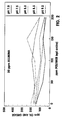
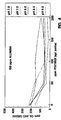
- Figures 1-5 are graphic representations of oil separation under varying concentration of alumina, pH and polymer concentrations.
- items are laundered in a alkaline laundry detergent solution. Subsequently, the pH of the waste wash solution is lowered causing the oily soils contained within the wash solution in the form of an emulsion to separate from the wash solution.
- the laundry solution is a combination of alkaline metal aluminate, a surfactant system and optionally antiredeposition agents and sequestrants.
- concentration of these components prior to introduction may vary widely and is largely a function of formulation and dispensing. In this description all percentages are percentages by weight in the wash water unless otherwise indicated. Likewise concentration in ppm refers to the wash water unless otherwise specified.
- the surfactant system used in the present invention can include anionic surfactants, nonionic surfactants, amphoteric surfactants or combinations of these surfactants.
- the nonionics that will be used will include the alkaline oxide adducts of polyhydric components, alkylaryl ethoxylates, alcohol ethoxylates and mixtures thereof.
- the useful nonionic surfactants typifying the alkaline oxide adducts of polyhydric components are the ethylene oxide adducts of ethylenediamine sold commercially under the name Tetronic, as well as the ethylene oxide propylene oxide adducts of propylene glycol sold commercially under the name Pluronic.
- alkylaryl ethoxylates are for example the polyethylene oxide condensates of alkylphenols.
- the alkyl substitutient in such compounds may be derived from polymerized propylene, diisobutylene, octene or nonene.
- Examples of compounds of this type include nonylphenol condensed with about two to about nine moles of ethyleneoxide per mole of nonylphenol.
- Commercially available nonionic surfactants of this type include Tergitol NP-9 sold by Union Carbide.
- the alcohol ethoxylates useful herein include the condensation products of aliphatic alcohols with ethylene oxide.
- the alkyl chain of the aliphatic alcohol may either be straight or branched and generally contains 8 to 22 carbon atoms.
- Examples of commercially available nonionic surfactants of this type include Tergitol 15-S-3, 15-S-5; Tergitol 25-L-3 and 25-L-5 marketed by Union Carbide Corporation.
- nonionic surfactants will be used at a concentration of about .01 % to about 1% by weight of the wash detergent evolution. This can be varied widely depending upon the nature of the item being washed, its soil conditions, and the like.
- anionic surfactants may also be employed.
- the useful anionic detergent compounds are the water soluble salts and particularly the alkali metal salts, of organic sulfuric acid reaction products, such as the sulfonates and sulfates of alkyl and alkylaryl moieties containing 8 to 22 carbon atoms in the alkyl portion of the radical.
- organic sulfuric acid reaction products such as the sulfonates and sulfates of alkyl and alkylaryl moieties containing 8 to 22 carbon atoms in the alkyl portion of the radical.
- linear alkyl sulfonate sodium salts such as sodium lauryl sulfonate and sodium and potassium alkylbenzene sulfonate.
- Anionic surfactants can be used in amounts ranging from 0 to about .5% preferably .001 % to .02% in the wash solution.
- Amphoteric surfactants can also be employed herein and are generally based on the alkyl imidazolines such as the Monaterics sold by Mona. Other amphoterics include the quaternary ammonium carboxylates and the quaternary ammonium sulfates. Amphoteric surfactants can be used in amounts ranging from 0 to about 1%.
- Cationic surfactants may also be used in the present invention but are generally less effective cleaning agents and therefore generally not employed in commercial laundry detergents.
- the laundry wash solution would generally include a sequestrant for hardness ions.
- sequestrants include salts of nitrilotriacetic acid, ethylenediaminetetraacetic acid, zeolites in powder form and sodium citrate. Phosphates are typically employed as sequestrants but these would react with the sodium aluminate to form insoluble aluminum phosphate compounds and therefore should not be employed in any significant amount in the present invention and preferably are not included whatsoever. Generally 0 to .5 % of the wash will be sequestrant depending on the sequestrant employed and the hardness of the wash water.
- the wash solution may include antiredeposition aids, such as water soluble polymers of polyacrylic acid and polymethylacrylic acid and carboxymethylcellulose.
- antiredeposition aids such as water soluble polymers of polyacrylic acid and polymethylacrylic acid and carboxymethylcellulose.
- the acrylates will have a molecular weight of 1,000 to about 10,000 with 4,500 being preferred.
- the concentration of these in the wash solution should be from about .001 to about .1% with .04% being preferred.
- the alkali metal aluminate can be any alkali metal aluminate, including sodium aluminate, potassium aluminate, and lithium aluminate.
- the aluminate will be either sodium aluminate or potassium aluminate with sodium aluminate being preferred because of its higher level of alkalinity.
- the amount of aluminate added to the system will vary depending upon the items being washed.
- the aluminate is preferably the sole or primary source of alkalinity in the wash solution.
- the concentration of the aluminate as measured in ppm of alumina should be at least 25 ppm. This can be increased significantly up to about 2,500 to 4,000 ppm or more in the wash water if a highly alkaline wash solution is desired. This would be particularly useful for cotton shop towels. More preferably, the concentration of sodium aluminate would be in the range of about 275 ppm to 1,100 ppm. The greater the amount of aluminate present, the easier it is to split from the wash solution during purification of the waste water. At the lower concentrations below about 100 ppm, a coagulating polymer may be required. Whereas, at the higher concentrations, particularly above 250 ppm, the need for this polymer is significantly reduced.
- Sodium aluminate can be purchased in a variety of different forms and molar ratios of sodium oxide/aluminum oxide. Generally the mole ratio of the alkaline metal oxide to aluminum oxide will be in the range of 1/1 to about 10/1 on a molar basis.
- the sodium aluminate can be added to the wash solution either as a solid or as a liquid. Two particular brands of liquid sodium aluminate are sold by Vinings Industries. The first is VSA45 which is a 45% solid solution of sodium aluminate. This has a Na 2 O-Al 2 O 3 ratio of 1.26/1 on a molar basis which is 25.5% Al 2 O 3 and 19.5% Na 2 O. The product becomes rather viscous at lower temperatures.
- VSA 38 also sold by Vinings which is a 38% solids solution having a mole ratio of 1.5/1 Na 2 O/Al 2 O 3 which is 18.3% Na 2 O and 19.9% Al 2 O 3 is preferred. It remains much less viscous at lower temperatures, less than 200 cps at 60°F and less than 900 at 25°F. Obviously, if one were adding sodium aluminate as a solid this would not be a significant concern.
- the sodium aluminate would be added to the wash solution as one component, i.e., the alkaline builder with a surfactant system added separately to the wash solution as a second component.
- the surfactant system can include the nonionic surfactants, antiredeposition aid and a non phosphate sequestrant.
- the alkaline builder would be an aqueous solution containing 10-100% sodium aluminate solution (having a solid content of 45% or less, preferably 38%) in combination with 0 to 5% antiredeposition aid and 0 to 10% sequestrant and water (by weight based on the total weight of the alkaline builder).
- the surfactant system can be any concentrated combination of surfactants, sequestrants and antiredeposition aids in solid or liquid form. Examples of formulations are disclosed in U.S. Patent 4,826,618 the disclosure of which is incorporated herein by reference.
- the washing conditions are dependent upon the individual launders' equipment, but generally is conducted at a temperature of 120°F to about 180°F for a period of about 10-20 minutes.
- the dirty wash solution referred to as the break which now includes the dirt and oil collected from the laundered items, is separated from the laundered items and subjected to filtration if desired to remove suspended solids.
- the laundry itself is subjected to repeated rinses with fresh water and treated with a laundry sour if desired.
- the pH of the waste wash solution or break is then adjusted to 9 or less by the addition of water which can be for example from the carryover or rinse water, or alternately the pH can be adjusted by adding an acidic solution such as sulfuric acid or both dilution and pH adjustment.
- water which can be for example from the carryover or rinse water, or alternately the pH can be adjusted by adding an acidic solution such as sulfuric acid or both dilution and pH adjustment.
- the pH of the wash solution is reduced below 9, the aluminate ion, Al(OH) 4 - or AlO 2 - converts from the soluble to the insoluble hydrous oxide Al(OH) 3 form.
- the precipitate forms the colloidal particles which include surfactant from detergent and oil and grease which were removed from laundry are enmeshed in the hydrous oxide floc which is formed, called "sweep floc.”
- coagulating polymers which are generally polyelectrolytes
- DDAC polydiallyldimethyl ammonium chloride
- EpiAmine epichlorohydrin dimethylamine
- Other well known coagulating polymers can be employed. Generally, 25 ppm to about 125 ppm of this polymer would be added depending on the soil and oil in the waste water.
- a flocculent such as water soluble polyacrylamides
- Other flocculents are well known and the selection of the particular flocculent is not significant. If the concentration of the alumina in the waste water is greater than 100ppm, less or no coagulant is required. However, the flocculent may still be preferred.
- the oil and surfactant separate from the waste water, it is collected by skimming or other well known techniques and the waste water is discharged generally into the sanitary sewer system.
- the sodium aluminate can be added to the waste water after the items have been laundered and the waste water separated from the laundered items. This is less preferred because it would require a separate source of alkalinity for the laundered items, and further this would make it more difficult to reduce the pH to less than 9 since the sodium aluminate is alkaline. This can effect the same result, but at a significantly higher cost and therefore is less preferred.
- the detergent included the following: Soft Water 29.7% Polyacrylic Acid (4500 MW) 5.8% Optical Brightener 0.1% Sodium Hydroxide (50%) 4.1% Emulsion Stabilizer 20.0% Nonylphenol Ethoxylate (6 mole EO) 23.0% Nonylphenol Ethoxylate (9 mole EO) 4.0% Trisodium Nitrilotriacetate 12.0% Linear Alkylbenzene Sulfonate (60%) 1.3% wherein the emulsion stabilizer is a stabilizer formed in accordance with the disclosure in U.S. Patent 4,826,618.
- the NaOH builder is 25.5% NaOH, NTA and PAA.
- the Na 2 Al 2 O 4 builder is a 38% solids solution of Na 2 Al 2 O 4 .
- the amounts added are per hundred weight of wash items.
- the waste water treatment dosages are listed below. These are identified by treatment and load type.
- the treatment is identified by the step in the wash process from which the waters were taken, break or composite. Break represents the operation of the wash cycle in which the detergents are added, and generally represents the step with the greatest concentration of soil.
- Composite represents a sampling of water from each step in the wash process in a ratio which is equivalent to the amount of water present in each step.
- the water samples after treatment were visually evaluated to determine relative success of each treatment.
- the waters were judged on floc formation (oil break or split) and water clarity (turbidity) and color. A grade was given based on the following scale: very poor, poor, fair, good, very good, excellent.
- each of these water samples was adjusted to a pH of 7.0, 7.5, 8.0, 8.5, and 9.0.
- Each of the samples with the differing pH was then treated with five differing levels of epiamine polymer 0, 50, 100, 150, 200 ppm.
- the resulting water was then collected and tested for oil and grease using method 5520B from the 17th Edition of the American Public Health Association Standard Methods Publication.
- Untreated water for each of the five alumina dosage tests was also collected and tested using the same method. Since the results for the original untreated waters varied, all the results were normalized so that all original untreated water results equaled 250 ppm oil/grease. Results for each alumina treatment are shown in the Figures 1-5. Results indicate that the greater the level of Al 2 O 3 in the solution being treated, the less the demand of polymer required, especially as the pH is reduced from 9 to 7. One hundred (100) ppm was the target acceptable oil and grease level since that is a typical effluent restriction as of today.
- the sodium aluminate as a substitute for the sodium hydroxide did not alter cleaning efficacy.
- the present invention provides both effective cleaning and effective oil and grease separation from the waste water.
- the sodium aluminate is not significantly more expensive than the sodium hydroxide, thus there is no significant increase in cost.
Landscapes
- Chemical & Material Sciences (AREA)
- Inorganic Chemistry (AREA)
- Life Sciences & Earth Sciences (AREA)
- Engineering & Computer Science (AREA)
- Chemical Kinetics & Catalysis (AREA)
- Oil, Petroleum & Natural Gas (AREA)
- Wood Science & Technology (AREA)
- Organic Chemistry (AREA)
- Detergent Compositions (AREA)
- Fats And Perfumes (AREA)
- Cleaning By Liquid Or Steam (AREA)
Description
| Soft Water | 29.7% |
| Polyacrylic Acid (4500 MW) | 5.8% |
| Optical Brightener | 0.1% |
| Sodium Hydroxide (50%) | 4.1% |
| Emulsion Stabilizer | 20.0% |
| Nonylphenol Ethoxylate (6 mole EO) | 23.0% |
| Nonylphenol Ethoxylate (9 mole EO) | 4.0% |
| Trisodium Nitrilotriacetate | 12.0% |
| Linear Alkylbenzene Sulfonate (60%) | 1.3% |
| PANTS - Control Wash | |||||
| OPERATION | TIME (MIN) | TEMP (°F) | WATER LEVEL (GAL) | SUPPLIES | SUPPLY AMOUNTS PER 100# SOILED LAUNDRY |
| Break | 15 | 145 | 9 | Detergent | 32 fl. oz. |
| NaOH builder | 12 fl. oz. | ||||
| Carryover | 5 | 145 | 9 | ||
| Rinse | 2 | Hot | 18 | ||
| Rinse | 2 | Hot/ Cold | 18 | ||
| Rinse | 2 | Cold | 1 8 | ||
| Sour | 5 | Cold | 9 | Sour | 2 fl. oz. |
| PANTS - Test Wash | |||||
| OPERATION | TIME (MIN) | TEMP (°F) | WATER LEVEL (GAL) | SUPPLIES | SUPPLY AMOUNTS PER 100# SOILED LAUNDRY |
| Break | 15 | 145 | 9 | Detergent | 32 fl. oz. |
| Na2Al2O4 builder | 12 fl. oz. | ||||
| Carryover | 5 | 145 | 9 | ||
| Rinse | 2 | Hot | 18 | ||
| Rinse | 2 | Hot/ Cold | 18 | ||
| Rinse | 2 | Cold | 18 | ||
| Sour | 5 | Cold | 9 | Sour | 2 fl. oz. |
| SHOP TOWELS - Control Wash | |||||
| OPERATION | TIME (MIN) | TEMP (°F) | WATER LEVEL (GAL) | SUPPLIES | SUPPLY AMOUNTS PER 100# SOILED LAUNDRY |
| Break | 20 | 170 | 9 | Detergent | 16 fl. oz. |
| NaOH builder | 64 fl. oz. | ||||
| Carryover | 5 | 170 | 9 | ||
| Rinse | 2 | Hot | 18 | ||
| Rinse | 2 | Hot | 18 | ||
| Rinse | 2 | Hot/Cold | 18 | ||
| Rinse | 5 | Cold | 1 8 |
| SHOP TOWELS - Test Wash | |||||
| OPERATION | TIME (MIN) | TEMP (°F) | WATER LEVEL (GAL) | SUPPLIES | SUPPLY AMOUNTS PER 100# SOILED LAUNDRY |
| Break | 20 | 170 | 9 | Detergent | 16 fl. oz. |
| Na2Al2O4 builder | 64 fl. oz. | ||||
| Carryover | 5 | 170 | 9 | ||
| Rinse | 2 | Hot | 18 | ||
| Rinse | 2 | Hot | 18 | ||
| Rinse | 2 | Hot/ Cold | 18 | ||
| Rinse | 5 | Cold | 18 |
- pH 8.7
- DDAC @ 600 ppm & polyacrylamide @ 10 ppm: good oil break, poor clarity
- 80%/20% (DDAC/EpiAmine) @ 600 ppm & polyacrylamide @ 10 ppm: exc. oil break
- pH 7.1
- Polyacrylamide @ 10 ppm: exc. clarity, good floc
- pH 7.5
- DDAC @ 50 ppm & polyacrylamide @ 10 ppm: excellent clarity and floc
- pH 8.0
- DDAC @ 25 ppm & polyacrylamide @ 10 ppm: excellent clarity and floc
- pH 8.5
- Polyacrylamide @ 10 ppm: good clarity and floc
- additional DDAC @ 50 ppm: same
- pH 7.1
- DDAC @ 25 ppm & polyacrylamide @ 20 ppm: excellent clarity and floc water
Claims (17)
- A method of laundering oily items in an aqueous based washing solution and treating said washing solution comprising;laundering said items in said washing solution wherein said washing solution comprises a surfactant system and at least 25 ppm an alkaline metal aluminate as Al2O3 at an alkaline pH;separating said washing solution from said items;reducing the pH of said washing solution to cause said alkali metal aluminate to separate from said washing solution; andseparating said oil and said alkali metal aluminate from said wash solution.
- The method claimed in claim 1 wherein said alkaline pH is at least nine.
- The method claimed in claim 2 wherein said washing solution includes an antiredeposition aid selected from the group consisting of carboxy methyl cellulose, water soluble polymers formed from polyacrylic acid, polymethylacrylic acid and polymaleic acid.
- The method claimed in claim 2 wherein said alkali metal aluminate is selected from the group consisting of sodium aluminate and potassium aluminate.
- The method claimed in claim 4 wherein said alkali metal aluminate is sodium aluminate having a mole ratio of Na2O/AlO3 of 1:1 to 10:1.
- The method claimed in claim 4 wherein said wash solution has a pH of from 9.5 to 12.5.
- The method claimed in claim 6 further comprising adding a flocculent to said wash solution after said pH has been lowered to below 9.
- The method claimed in claim 5 further comprising adding a separation polymer.
- The method claimed in claim 8 wherein said separation polymer is selected from the group consisting of tanin, polydiallyldimethyl ammonium chloride and epichlorohydrinamine.
- The method claimed in claim 4 wherein said washing solution includes up to 4,000 ppm alkali metal aluminate.
- The method claimed in claim 10 wherein said alkali metal aluminate is added to said washing solution in an amount effective to establish a pH greater than 9.5.
- The method claimed in claim 11 wherein said washing solution contains 250 to 1,100 ppm alkali metal aluminate.
- The method claimed in claim 2 wherein said washing solution includes a nonphosphate sequestrant.
- A method of laundering oily items and treating the resulting waste water, comprising laundering said items in an alkaline solution which includes a surfactant system whereby oil and grease contained in said items are suspended by said wash solution, separating said wash solution from said items, adding at least 25 ppm of alkali metal aluminate as Al2O3 to said wash solution, reducing the pH of said solution to less than 9 whereby oil and alkali metal aluminate came out of solution and separating said oil and alkali metal aluminate from said wash solution.
- A phosphate free detergent composition comprising a nonionic surfactant system, a non-phosphate sequesterant and a source of alkalinity wherein said source of alkalinity comprises alkali metal aluminate, and wherein the non-phosphate sequesterant is non-reactive with alkali metal aluminate.
- The detergent composition claimed in claim 15 further comprising an antiredeposition aid.
- The detergent composition claimed in claim 15 or 16 wherein said nonphosphate sequestrant is selected from the group consisting of NTA, EDTA and alkali metal citrates.
Applications Claiming Priority (3)
| Application Number | Priority Date | Filing Date | Title |
|---|---|---|---|
| US504777 | 1990-04-04 | ||
| US08/504,777 US5529696A (en) | 1995-07-20 | 1995-07-20 | Method of laundering items and purifying waste water therefrom |
| PCT/US1996/009904 WO1997004060A1 (en) | 1995-07-20 | 1996-06-11 | Method of laundering items and purifying waste water therefrom |
Publications (2)
| Publication Number | Publication Date |
|---|---|
| EP0840776A1 EP0840776A1 (en) | 1998-05-13 |
| EP0840776B1 true EP0840776B1 (en) | 1999-04-07 |
Family
ID=24007694
Family Applications (1)
| Application Number | Title | Priority Date | Filing Date |
|---|---|---|---|
| EP96919322A Expired - Lifetime EP0840776B1 (en) | 1995-07-20 | 1996-06-11 | Method of laundering items and purifying waste water therefrom |
Country Status (11)
| Country | Link |
|---|---|
| US (1) | US5529696A (en) |
| EP (1) | EP0840776B1 (en) |
| JP (1) | JP4208963B2 (en) |
| AR (1) | AR002877A1 (en) |
| AU (1) | AU719285B2 (en) |
| BR (1) | BR9609530A (en) |
| CA (1) | CA2231462C (en) |
| DE (1) | DE69602026T2 (en) |
| ES (1) | ES2130827T3 (en) |
| WO (1) | WO1997004060A1 (en) |
| ZA (1) | ZA965906B (en) |
Families Citing this family (9)
| Publication number | Priority date | Publication date | Assignee | Title |
|---|---|---|---|---|
| US5948270A (en) * | 1996-03-01 | 1999-09-07 | Calgon Corporation | Method for reducing turbidity in laundry waste water |
| US5853596A (en) * | 1996-12-09 | 1998-12-29 | Henkel Corporation | Method for reducing chemical oxygen demand of water containing organic material emulsified by a surfactant |
| US6042730A (en) * | 1997-03-03 | 2000-03-28 | Lahti; William J. | Car wash wastewater treatment |
| US6319412B1 (en) * | 1997-10-21 | 2001-11-20 | New Working Waters, Llc | Wastewater treatment process |
| US6240585B1 (en) | 1999-06-02 | 2001-06-05 | Washing Systems, Inc. | Method of treating wastewater from industrial laundries |
| JP3973570B2 (en) * | 2003-01-30 | 2007-09-12 | 新日本ウエックス株式会社 | Oil-containing wastewater treatment method |
| CA2735252A1 (en) * | 2008-08-28 | 2010-03-04 | The Procter & Gamble Company | Fabric care compositions, process of making, and method of use |
| US20100050346A1 (en) * | 2008-08-28 | 2010-03-04 | Corona Iii Alessandro | Compositions and methods for providing a benefit |
| JP6000514B2 (en) * | 2011-03-17 | 2016-09-28 | 株式会社Adeka | Oil stain cleaning composition |
Family Cites Families (15)
| Publication number | Priority date | Publication date | Assignee | Title |
|---|---|---|---|---|
| US3625902A (en) * | 1968-10-11 | 1971-12-07 | Stauffer Chemical Co | Method of preparing agglomerated detergent composition |
| US3865754A (en) * | 1972-10-27 | 1975-02-11 | Procter & Gamble | Crystallization seed-containing detergent composition |
| US3928195A (en) * | 1972-12-22 | 1975-12-23 | Kelmik Inc | Liquid purifying process |
| US4083793A (en) * | 1973-05-23 | 1978-04-11 | Henkel Kommanditgesellschaft Auf Aktien | Washing compositions containing aluminosilicates and nonionics and method of washing textiles |
| DE2502433A1 (en) * | 1974-01-28 | 1975-07-31 | Procter & Gamble Europ | DETERGENTS AND DETERGENTS, IN PARTICULAR FOR THE REMOVAL OF GREASE AND OIL STAINS |
| US3956117A (en) * | 1974-11-29 | 1976-05-11 | Nalco Chemical Company | Cationic polymers for breaking oil-in-water emulsions |
| US4059515A (en) * | 1975-08-26 | 1977-11-22 | Betz Laboratories, Inc. | Process for clarification of oil-containing waste |
| NZ188469A (en) * | 1977-10-06 | 1980-12-19 | Colgate Palmolive Co | Detergent composition comprising a univalent cation-exchanging zeolite a nonionic detergent and builder salts |
| CH636123A5 (en) * | 1978-06-07 | 1983-05-13 | Ciba Geigy Ag | METHOD FOR PRODUCING FOAM-REGULATED DETERGENTS. |
| US4248729A (en) * | 1978-12-13 | 1981-02-03 | The Procter & Gamble Company | Detergency booster |
| US4826618A (en) * | 1984-02-22 | 1989-05-02 | Diversey Corporation | Stable detergent emulsions |
| US5021167A (en) * | 1989-07-10 | 1991-06-04 | Nalco Chemical Company | Method for separating liquid from water using amine containing polymers |
| US5207922A (en) * | 1990-10-25 | 1993-05-04 | Diversey Corporation | Method for treating laundry waste water |
| DE4036116A1 (en) * | 1990-11-13 | 1992-05-14 | Beiersdorf Ag | Purifying waste water using flocculating agent system - comprises adding aluminium chloride, poly:aluminium chloride or poly:aluminium sulphate and aluminate to waste water |
| US5510037A (en) * | 1993-02-12 | 1996-04-23 | Tastayre; Gilles | Regeneration of used cleaning solution |
-
1995
- 1995-07-20 US US08/504,777 patent/US5529696A/en not_active Expired - Fee Related
-
1996
- 1996-06-11 WO PCT/US1996/009904 patent/WO1997004060A1/en not_active Ceased
- 1996-06-11 JP JP50666697A patent/JP4208963B2/en not_active Expired - Fee Related
- 1996-06-11 BR BR9609530A patent/BR9609530A/en not_active IP Right Cessation
- 1996-06-11 ES ES96919322T patent/ES2130827T3/en not_active Expired - Lifetime
- 1996-06-11 EP EP96919322A patent/EP0840776B1/en not_active Expired - Lifetime
- 1996-06-11 DE DE69602026T patent/DE69602026T2/en not_active Expired - Fee Related
- 1996-06-11 AU AU61688/96A patent/AU719285B2/en not_active Ceased
- 1996-06-11 CA CA002231462A patent/CA2231462C/en not_active Expired - Fee Related
- 1996-07-11 ZA ZA965906A patent/ZA965906B/en unknown
- 1996-07-18 AR AR10363796A patent/AR002877A1/en unknown
Also Published As
| Publication number | Publication date |
|---|---|
| AR002877A1 (en) | 1998-04-29 |
| WO1997004060A1 (en) | 1997-02-06 |
| DE69602026T2 (en) | 1999-08-05 |
| AU719285B2 (en) | 2000-05-04 |
| US5529696A (en) | 1996-06-25 |
| ZA965906B (en) | 1997-01-29 |
| CA2231462A1 (en) | 1997-02-06 |
| AU6168896A (en) | 1997-02-18 |
| BR9609530A (en) | 1999-02-23 |
| JP4208963B2 (en) | 2009-01-14 |
| EP0840776A1 (en) | 1998-05-13 |
| CA2231462C (en) | 2005-08-09 |
| ES2130827T3 (en) | 1999-07-01 |
| DE69602026D1 (en) | 1999-05-12 |
| JPH11509471A (en) | 1999-08-24 |
Similar Documents
| Publication | Publication Date | Title |
|---|---|---|
| CA2640682C (en) | Liquid membrane-compatible detergent composition | |
| EP1123371B1 (en) | Laundry pre-treatment or pre-spotting process | |
| US5529696A (en) | Method of laundering items and purifying waste water therefrom | |
| US4758353A (en) | Removal of heavy metals from waste streams | |
| EP0892848B1 (en) | Anti-etch bottle washing solution | |
| US5741768A (en) | Composition and improved PH driven method for wastewater separation using an amphoteric dicarboxylate and a cationic destabilizer composition | |
| JP3386471B2 (en) | Composition for Sewage Separation Using Amphoteric Carboxylate and Cationic Destabilizer Composition and Improvement of Separation Method with pH Manipulation | |
| JP2004230278A (en) | Method for treating oil-containing waste water | |
| US5259960A (en) | Regeneration and recycling of contaminated solutions from aluminum and tin washer processes | |
| EP2519623B1 (en) | Phosphate substitutes for membrane-compatible cleaning and/or detergent compositions | |
| US5368779A (en) | Detergent with cleaning and waste water treating capabilities containing polyacrylate and dimethylthiocarbamate | |
| AU627890B2 (en) | Heavy duty washing process | |
| EA036504B1 (en) | Water purification composition for clarifying greywater | |
| US6299780B1 (en) | Method for treatment of silicone emulsion waste by chemical addition | |
| EP0267662A2 (en) | Detersive systems and low foaming aqueous surfactant solutions containing a mono (C1-4 alkyl)-di (C6-20 alkyl)-amine oxide compound | |
| TW546379B (en) | Cleaning method for polyethylene terephthalate containers | |
| EP1217065B1 (en) | Lime soap dispersant, and detergent composition and cleaning composition comprising the same | |
| JP2002138300A (en) | How to clean blood contaminated cloth | |
| FI109916B (en) | Emulsion dissolving detergent | |
| JP2005187622A (en) | Alkaline cleaner | |
| US5843191A (en) | Process for bleaching fabrics | |
| JP4399091B2 (en) | Recycling method and washing system for cleaning wastewater from dust control products | |
| AU703570B2 (en) | Alkaline cleaning concentrate | |
| RU1778172C (en) | Detergent composition for hard surfaces | |
| CA1113829A (en) | Fabric washing compositions containing anionic and non-anionic surfactants |
Legal Events
| Date | Code | Title | Description |
|---|---|---|---|
| PUAI | Public reference made under article 153(3) epc to a published international application that has entered the european phase |
Free format text: ORIGINAL CODE: 0009012 |
|
| 17P | Request for examination filed |
Effective date: 19971216 |
|
| AK | Designated contracting states |
Kind code of ref document: A1 Designated state(s): CH DE ES FR GB IT LI NL SE |
|
| GRAG | Despatch of communication of intention to grant |
Free format text: ORIGINAL CODE: EPIDOS AGRA |
|
| 17Q | First examination report despatched |
Effective date: 19980619 |
|
| GRAG | Despatch of communication of intention to grant |
Free format text: ORIGINAL CODE: EPIDOS AGRA |
|
| GRAH | Despatch of communication of intention to grant a patent |
Free format text: ORIGINAL CODE: EPIDOS IGRA |
|
| GRAH | Despatch of communication of intention to grant a patent |
Free format text: ORIGINAL CODE: EPIDOS IGRA |
|
| RAP1 | Party data changed (applicant data changed or rights of an application transferred) |
Owner name: UNILEVER PLC Owner name: UNILEVER N.V. |
|
| GRAA | (expected) grant |
Free format text: ORIGINAL CODE: 0009210 |
|
| AK | Designated contracting states |
Kind code of ref document: B1 Designated state(s): CH DE ES FR GB IT LI NL SE |
|
| REG | Reference to a national code |
Ref country code: CH Ref legal event code: EP |
|
| REF | Corresponds to: |
Ref document number: 69602026 Country of ref document: DE Date of ref document: 19990512 |
|
| REG | Reference to a national code |
Ref country code: CH Ref legal event code: NV Representative=s name: E. BLUM & CO. PATENTANWAELTE |
|
| ET | Fr: translation filed | ||
| REG | Reference to a national code |
Ref country code: ES Ref legal event code: FG2A Ref document number: 2130827 Country of ref document: ES Kind code of ref document: T3 |
|
| NLV1 | Nl: lapsed or annulled due to failure to fulfill the requirements of art. 29p and 29m of the patents act | ||
| NLXE | Nl: other communications concerning ep-patents (part 3 heading xe) |
Free format text: A REQUEST FOR RESTORATION TO THE PRIOR STATE (ART. 23 OF THE PATENTS ACT 1995) HAS BEEN FILED ON 21.07.1999. |
|
| NLXE | Nl: other communications concerning ep-patents (part 3 heading xe) |
Free format text: THE REQUEST FOR RESTORATION TO THE PRIOR STATE AS PROVIDED FOR IN ART. 23 OF THE PATENTS ACT 1995 HAS BEEN GRANTED; THE RESTORATION OF THE PATENT HAS BEEN ENTERED IN THE PATENT REGISTER. |
|
| PLBE | No opposition filed within time limit |
Free format text: ORIGINAL CODE: 0009261 |
|
| STAA | Information on the status of an ep patent application or granted ep patent |
Free format text: STATUS: NO OPPOSITION FILED WITHIN TIME LIMIT |
|
| 26N | No opposition filed | ||
| REG | Reference to a national code |
Ref country code: GB Ref legal event code: IF02 |
|
| NLS | Nl: assignments of ep-patents |
Owner name: DIVERSEY IP INTERNATIONAL BV |
|
| REG | Reference to a national code |
Ref country code: CH Ref legal event code: PUE Owner name: UNILEVER N.V. TRANSFER- DIVERSEY IP INTERNATIONAL |
|
| REG | Reference to a national code |
Ref country code: FR Ref legal event code: TP |
|
| REG | Reference to a national code |
Ref country code: ES Ref legal event code: PC2A |
|
| REG | Reference to a national code |
Ref country code: CH Ref legal event code: PFA Owner name: DIVERSEY IP INTERNATIONAL BV Free format text: DIVERSEY IP INTERNATIONAL BV#WORLD HEADQUARTERS TOWER B, 8TH FLOOR SCHIPHOL BOULEVARD 209#1118 BH LUCHTHAVEN SCHIPHOL AIRPORT (NL) -TRANSFER TO- DIVERSEY IP INTERNATIONAL BV#WORLD HEADQUARTERS TOWER B, 8TH FLOOR SCHIPHOL BOULEVARD 209#1118 BH LUCHTHAVEN SCHIPHOL AIRPORT (NL) |
|
| PGFP | Annual fee paid to national office [announced via postgrant information from national office to epo] |
Ref country code: NL Payment date: 20090624 Year of fee payment: 14 Ref country code: ES Payment date: 20090626 Year of fee payment: 14 |
|
| PGFP | Annual fee paid to national office [announced via postgrant information from national office to epo] |
Ref country code: FR Payment date: 20090617 Year of fee payment: 14 |
|
| PGFP | Annual fee paid to national office [announced via postgrant information from national office to epo] |
Ref country code: CH Payment date: 20090625 Year of fee payment: 14 |
|
| PGFP | Annual fee paid to national office [announced via postgrant information from national office to epo] |
Ref country code: SE Payment date: 20090629 Year of fee payment: 14 Ref country code: GB Payment date: 20090625 Year of fee payment: 14 Ref country code: DE Payment date: 20090629 Year of fee payment: 14 |
|
| PGFP | Annual fee paid to national office [announced via postgrant information from national office to epo] |
Ref country code: IT Payment date: 20090627 Year of fee payment: 14 |
|
| REG | Reference to a national code |
Ref country code: NL Ref legal event code: V1 Effective date: 20110101 |
|
| REG | Reference to a national code |
Ref country code: CH Ref legal event code: PL |
|
| EUG | Se: european patent has lapsed | ||
| GBPC | Gb: european patent ceased through non-payment of renewal fee |
Effective date: 20100611 |
|
| REG | Reference to a national code |
Ref country code: FR Ref legal event code: ST Effective date: 20110228 |
|
| PG25 | Lapsed in a contracting state [announced via postgrant information from national office to epo] |
Ref country code: IT Free format text: LAPSE BECAUSE OF NON-PAYMENT OF DUE FEES Effective date: 20100611 |
|
| PG25 | Lapsed in a contracting state [announced via postgrant information from national office to epo] |
Ref country code: LI Free format text: LAPSE BECAUSE OF NON-PAYMENT OF DUE FEES Effective date: 20100630 Ref country code: DE Free format text: LAPSE BECAUSE OF NON-PAYMENT OF DUE FEES Effective date: 20110101 Ref country code: CH Free format text: LAPSE BECAUSE OF NON-PAYMENT OF DUE FEES Effective date: 20100630 |
|
| PG25 | Lapsed in a contracting state [announced via postgrant information from national office to epo] |
Ref country code: FR Free format text: LAPSE BECAUSE OF NON-PAYMENT OF DUE FEES Effective date: 20100630 Ref country code: NL Free format text: LAPSE BECAUSE OF NON-PAYMENT OF DUE FEES Effective date: 20110101 |
|
| REG | Reference to a national code |
Ref country code: ES Ref legal event code: FD2A Effective date: 20110715 |
|
| PG25 | Lapsed in a contracting state [announced via postgrant information from national office to epo] |
Ref country code: GB Free format text: LAPSE BECAUSE OF NON-PAYMENT OF DUE FEES Effective date: 20100611 Ref country code: ES Free format text: LAPSE BECAUSE OF NON-PAYMENT OF DUE FEES Effective date: 20110705 |
|
| PG25 | Lapsed in a contracting state [announced via postgrant information from national office to epo] |
Ref country code: ES Free format text: LAPSE BECAUSE OF NON-PAYMENT OF DUE FEES Effective date: 20100612 |
|
| PG25 | Lapsed in a contracting state [announced via postgrant information from national office to epo] |
Ref country code: SE Free format text: LAPSE BECAUSE OF NON-PAYMENT OF DUE FEES Effective date: 20100612 |