EP0840389A1 - Alkali metal electrochemical cell with improved energy density - Google Patents
Alkali metal electrochemical cell with improved energy density Download PDFInfo
- Publication number
- EP0840389A1 EP0840389A1 EP97306794A EP97306794A EP0840389A1 EP 0840389 A1 EP0840389 A1 EP 0840389A1 EP 97306794 A EP97306794 A EP 97306794A EP 97306794 A EP97306794 A EP 97306794A EP 0840389 A1 EP0840389 A1 EP 0840389A1
- Authority
- EP
- European Patent Office
- Prior art keywords
- cathode
- anode
- active material
- cell
- electrochemical cell
- Prior art date
- Legal status (The legal status is an assumption and is not a legal conclusion. Google has not performed a legal analysis and makes no representation as to the accuracy of the status listed.)
- Withdrawn
Links
Images



Classifications
-
- H—ELECTRICITY
- H01—ELECTRIC ELEMENTS
- H01M—PROCESSES OR MEANS, e.g. BATTERIES, FOR THE DIRECT CONVERSION OF CHEMICAL ENERGY INTO ELECTRICAL ENERGY
- H01M10/00—Secondary cells; Manufacture thereof
- H01M10/05—Accumulators with non-aqueous electrolyte
-
- H—ELECTRICITY
- H01—ELECTRIC ELEMENTS
- H01M—PROCESSES OR MEANS, e.g. BATTERIES, FOR THE DIRECT CONVERSION OF CHEMICAL ENERGY INTO ELECTRICAL ENERGY
- H01M10/00—Secondary cells; Manufacture thereof
- H01M10/05—Accumulators with non-aqueous electrolyte
- H01M10/058—Construction or manufacture
-
- H—ELECTRICITY
- H01—ELECTRIC ELEMENTS
- H01M—PROCESSES OR MEANS, e.g. BATTERIES, FOR THE DIRECT CONVERSION OF CHEMICAL ENERGY INTO ELECTRICAL ENERGY
- H01M6/00—Primary cells; Manufacture thereof
- H01M6/04—Cells with aqueous electrolyte
-
- H—ELECTRICITY
- H01—ELECTRIC ELEMENTS
- H01M—PROCESSES OR MEANS, e.g. BATTERIES, FOR THE DIRECT CONVERSION OF CHEMICAL ENERGY INTO ELECTRICAL ENERGY
- H01M6/00—Primary cells; Manufacture thereof
- H01M6/14—Cells with non-aqueous electrolyte
-
- Y—GENERAL TAGGING OF NEW TECHNOLOGICAL DEVELOPMENTS; GENERAL TAGGING OF CROSS-SECTIONAL TECHNOLOGIES SPANNING OVER SEVERAL SECTIONS OF THE IPC; TECHNICAL SUBJECTS COVERED BY FORMER USPC CROSS-REFERENCE ART COLLECTIONS [XRACs] AND DIGESTS
- Y02—TECHNOLOGIES OR APPLICATIONS FOR MITIGATION OR ADAPTATION AGAINST CLIMATE CHANGE
- Y02E—REDUCTION OF GREENHOUSE GAS [GHG] EMISSIONS, RELATED TO ENERGY GENERATION, TRANSMISSION OR DISTRIBUTION
- Y02E60/00—Enabling technologies; Technologies with a potential or indirect contribution to GHG emissions mitigation
- Y02E60/10—Energy storage using batteries
-
- Y—GENERAL TAGGING OF NEW TECHNOLOGICAL DEVELOPMENTS; GENERAL TAGGING OF CROSS-SECTIONAL TECHNOLOGIES SPANNING OVER SEVERAL SECTIONS OF THE IPC; TECHNICAL SUBJECTS COVERED BY FORMER USPC CROSS-REFERENCE ART COLLECTIONS [XRACs] AND DIGESTS
- Y02—TECHNOLOGIES OR APPLICATIONS FOR MITIGATION OR ADAPTATION AGAINST CLIMATE CHANGE
- Y02P—CLIMATE CHANGE MITIGATION TECHNOLOGIES IN THE PRODUCTION OR PROCESSING OF GOODS
- Y02P70/00—Climate change mitigation technologies in the production process for final industrial or consumer products
- Y02P70/50—Manufacturing or production processes characterised by the final manufactured product
-
- Y—GENERAL TAGGING OF NEW TECHNOLOGICAL DEVELOPMENTS; GENERAL TAGGING OF CROSS-SECTIONAL TECHNOLOGIES SPANNING OVER SEVERAL SECTIONS OF THE IPC; TECHNICAL SUBJECTS COVERED BY FORMER USPC CROSS-REFERENCE ART COLLECTIONS [XRACs] AND DIGESTS
- Y10—TECHNICAL SUBJECTS COVERED BY FORMER USPC
- Y10T—TECHNICAL SUBJECTS COVERED BY FORMER US CLASSIFICATION
- Y10T29/00—Metal working
- Y10T29/49—Method of mechanical manufacture
- Y10T29/49002—Electrical device making
- Y10T29/49108—Electric battery cell making
Definitions
- the present invention generally relates to the conversion of chemical energy to electrical energy, and more particularly, to an alkali metal electrochemical cell having an electrolyte-to-cathode (E/C) weight ratio and an anode-to-cathode (A/C) capacity ratio specifically balanced to improve the energy density of the cell.
- a preferred cathode includes a solid active material and a most preferred cathode active material is a carbonaceous material such as fluorinated carbon.
- Alkali metal/fluorinated carbon cells have been extensively discussed in the prior art. Examples include U.S. Patent Nos. 3,536,532 and 3,700,502 to Watanabe et al.; 4,091,188 to Dey; 5,246,795 to Megahed et al.; 5,114,811 to Ebel et al. and 5,250,373 to Muffoletto et al. The latter two patents are assigned to the assignee of the present invention and incorporated herein by reference.
- a prior art Li/fluorinated carbon cell particularly a Li/CF x cell constructed according to the Muffoletto et al. '373 patent is typically housed in a conductive casing having nominal dimensions of 45 mm x 23 mm x 8.6 mm.
- This Li/CF x cell is known to have an electrolyte-to-cathode (E/C) weight ratio of about 1.32 and an anode-to-cathode (A/C) capacity ratio of about 1.16. Both the E/C weight ratio and the A/C capacity ratio are based on the gram amount of cathode active material. In other words, the Muffoletto et al. cell has about 16% excess lithium (in terms of deliverable capacity).
- the amount of active component within the cathode determines the theoretical capacity of the cathode, and this prior art cell is a cathode-limited design.
- the presence of increased amounts of electrolyte with respect to the gram amount of cathode active material, i.e. the E/C weight ratio of 1.32 in the Muffoletto et al. cell was thought necessary to maintain the internal impedance of the cell low, especially as end-of-life is neared.
- the Muffoletto et al. cell has a theoretical capacity of 2.47 Ah and a rated capacity of 2.40 Ah to a 2V cutoff under a 10 Kohm load, as shown in Fig. 1.
- curve 10 was constructed from the discharge of the Muffoletto et al. cell under the stated load at 37°C and curve 12 was constructed from the cell impedance.
- the cell has a volumetric energy density of 866 Wh/L, a gravimetric energy density of 402 Wh/kg, an open circuit voltage of 3.0 to 3.3 volts and an estimated self-discharge rate of less than 1% per year. The cell will not rupture or leak when subjected to short circuit conditions at room temperature or at 37°C.
- the volumetric and the gravimetric energy densities are based on the internal volume and total weight of the active components, respectively.
- Such a cell is ideal as a power source for an implantable medical device.
- an alkali metal/fluorinated carbon electrochemical cell re-balanced to provide improved energy density and increased gravimetric energy over those of the prior art.
- the cell of the present invention fulfills this need by having a redesigned or re-balanced electrolyte-to-cathode weight ratio and a anode-to-cathode capacity ratio that optimize the electrochemical reactions at the electrodes.
- Fig. 1 is a graph constructed from the discharge of a Li/CF x cell built according to the prior art.
- Fig. 2 is a graph constructed from the discharge of a Li/CF x cell built according to the present invention.
- Figs. 3 and 4 are graphs constructed from the discharge of Li/CF x cells built according to the prior art.
- Fig. 5 is a graph constructed from the discharge of a Li/CF x cell built according to the present invention.
- Fig. 6 is a graph constructed from the discharge of a Li/CF x cell built according to the prior art.
- the electrochemical cell of the present invention comprises an anode of an anode active material
- suitable materials include metals selected from Groups IA, IIA and IIIB of the Periodic Table of the Elements, including lithium, sodium, potassium, etc., and their alloys and intermetallic compounds including, for example, Li-Si, Li-Al, Li-B and Li-Si-B alloys and intermetallic compounds.
- the preferred anode comprises lithium.
- An alternate anode comprises a lithium alloy such as a lithium-aluminum alloy. The greater the amount of aluminum present by weight in the alloy, however, the lower the energy density of the cell.
- the form of the anode may vary, but preferably the anode is a thin metal sheet or foil of the anode metal, pressed or rolled on a metallic anode current collector, i.e., preferably comprising titanium, titanium alloy or nickel, to form an anode component. Copper, tungsten and tantalum are also suitable materials for the anode current collector.
- the anode component has an extended tab or lead of the same material as the anode current collector, i.e., preferably nickel or titanium, integrally formed therewith such as by welding and contacted by a weld to a cell case of conductive metal in a case-negative electrical configuration.
- the anode may be formed in some other geometry, such as a bobbin shape, cylinder or pellet to allow an alternate low surface cell design.
- the electrochemical cell of the present invention further comprises a cathode of electronically conductive material which serves as the other electrode of the cell.
- the electrochemical reaction at the cathode involves conversion of ions which migrate from the anode to the cathode into atomic or molecular forms.
- the cathode of the present invention preferably comprises a solid active material such as fluorinated carbon represented by the formula (CF x ) n wherein x varies between about 0.1 to 1.9 and preferably between about 0.5 and 1.2 and (C 2 F) n wherein the n refers to the number of monomer units which can vary widely.
- These electrode active materials are composed of carbon and fluorine, and include graphitic and nongraphitic forms of carbon, such as coke, charcoal or activated carbon.
- the gravimetric and volumetric energy densities of the lithium/fluorinated carbon couple are increased over that known in the prior art by, in part, redesigning or re-balancing the anode-to-cathode (A/C) capacity ratio.
- A/C anode-to-cathode
- the lithium/fluorinated carbon cell described in U.S. Patent No. 5,250,373 to Muffoletto et al. has an A/C capacity ratio of about 1.16 (based on the gram amount of the electrode active material) providing the cell with about 16% excess lithium (in terms of delivered. capacity).
- the A/C capacity ratio of the present invention is preferably re-balanced to about 1.03 providing this cell with about 3% excess lithium (in terms of delivered capacity).
- the amount of active component within the cathode determines the theoretical capacity of the cathode, and in that respect both the Muffoletto et al. prior art cell and the cell of the present invention are cathode-limited designs.
- the re-balanced A/C capacity ratio together with a re-balanced electrolyte-to-cathode (E/C) weight ratio provides the present cell with improved discharge capacity over the prior art cell of Muffoletto et al.
- the fluorinated carbon active material is preferably mixed with a conductive additive.
- Suitable conductive additives include acetylene black, carbon black and/or graphite.
- Metals such as nickel, aluminum, titanium and stainless steel in powder form are also useful as conductive diluents when mixed with the above listed active materials.
- the electrode preferably further comprises a binder material which is preferably a fluoro-resin powder such as powdered polytetrafluoroethylene (PTFE) or powdered polyvinylidene fluoride (PVDF).
- PTFE powdered polytetrafluoroethylene
- PVDF powdered polyvinylidene fluoride
- Additional active materials which are useful in a re-balanced electrochemical cell according to the invention include silver vanadium oxide, copper-silver-vanadium oxide, manganese dioxide, lithium cobalt oxide, lithium nickel oxide, copper oxide, titanium disulfide, copper sulfide, iron sulfide, iron disulfide, copper vanadium oxide, and mixtures thereof.
- the preferred cathode active mixture comprises CF x combined with acetylene black and/or graphite; and PTFE.
- Cathode components for incorporation into the cell may be prepared by any suitable means including rolling, spreading or pressing the cathode active mixture of the present invention onto a suitable current collector which may be selected from the group consisting of stainless steel, titanium, tantalum, platinum and gold.
- the preferred current collector material is titanium, and most preferably the titanium cathode current collector has a thin layer of graphite/carbon paint applied thereto.
- Cathodes prepared as described above may be in the form of one or more plates operatively associated with at least one or more plates of anode material, or in the form of a strip wound with a corresponding strip of anode material in a structure similar to a "jellyroll".
- the cathode may be separated from the Group IA, IIA or IIIB anode material by a suitable separator material.
- the separator is of electrically insulative material, and the separator material also is chemically unreactive with the anode and cathode active materials and both chemically unreactive with and insoluble in the electrolyte.
- the separator material has a degree of porosity sufficient to allow flow therethrough of the electrolyte during the electrochemical reaction of the electrochemical cell.
- Illustrative separator materials include fabrics woven from fluoropolymeric fibers including polyvinylidine fluoride, polyethylenetetrafluoroethylene, and polyethylenechlorotrifluoroethylene used either alone or laminated with a fluoropolymeric microporous film, non-woven glass, polypropylene, polyethylene, glass fiber materials, ceramics, polytetrafluoroethylene membrane commercially available under the designation ZITEX (Chemplast Inc.), polypropylene membrane commercially available under the designation CELGARD (Celanese Plastic Company, Inc.) and a membrane commercially available under the designation DEXIGLAS (C.H. Dexter, Div., Dexter Corp.).
- fluoropolymeric fibers including polyvinylidine fluoride, polyethylenetetrafluoroethylene, and polyethylenechlorotrifluoroethylene used either alone or laminated with a fluoropolymeric microporous film, non-woven glass, polypropylene, polyethylene, glass fiber materials
- a preferred separator comprises a non-woven polypropylene separator and polypropylene membrane.
- the non-woven layer faces the cathode and the membrane faces the anode. That way, the non-woven layer acts as a wicking material to more effectively wet the cathode and as a barrier to puncture of the membrane from loose carbon particles.
- the electrochemical cell of the present invention further includes a nonagueous, ionically conductive electrolyte which serves as a medium for migration of ions between the anode and the cathode electrodes during the electrochemical reactions of the cell.
- the electrochemical reaction at the electrodes involves conversion of ions in atomic or molecular forms which migrate from the anode to the cathode.
- nonaqueous electrolytes suitable for the present invention are substantially inert to the anode and cathode materials, and they exhibit those physical properties necessary for ionic transport, namely, low viscosity, low surface tension and wettability.
- a suitable electrolyte has an inorganic, ionically conductive salt dissolved in a nonaqueous solvent, and more preferably, the electrolyte includes an ionizable alkali metal salt dissolved in a mixture of aprotic organic solvents comprising a low viscosity solvent and a high permittivity solvent.
- the inorganic, ionically conductive salt serves as the vehicle for migration of the anode ions to intercalate or react with the cathode active material.
- the ion-forming alkali metal salt is similar to the alkali metal comprising the anode.
- the ionically conductive salt preferably has the general formula MM'F 6 or MM'F 4 wherein M is an, alkali metal similar to the alkali metal comprising the anode and M' is an element selected from the group consisting of phosphorous, arsenic, antimony and boron.
- M'F 6 hexafluorophosphate
- AsF 6 hexafluoroarsenate
- SbF 6 hexafluoroantimonate
- BF 4 tetrafluoroborate
- the corresponding sodium or potassium salts may be used.
- a secondary salt containing the perchlorate anion such as lithium perchlorate (LiClO 4 ) and tetrabutyl ammonium perchlorate (NCH 3 (CH 2 ) 3 ClO 4 ) is added to the electrolyte.
- Other inorganic salts useful with the present invention include LiAlCl 4 , LiGaCl 4 , LiC(SO 2 CF 3 ) 3 , LiN(SO 2 CF 3 ) 2 , LiSO 3 F, LiB(C 6 H 5 ) 4 and LiCF 3 SO 3 , and mixtures thereof.
- Low viscosity solvents useful with the present invention include esters, linear and cyclic ethers and dialkyl carbonates such as tetrahydrofuran (THF), methyl acetate (MA), diglyme, trigylme, tetragylme, dimethyl carbonate (DMC), 1,2-dimethoxyethane (DME), diethyl carbonate and mixtures thereof, and high permittivity solvents include cyclic carbonates, cyclic esters and cyclic amides such as propylene carbonate (PC), ethylene carbonate (EC), acetonitrile, dimethyl sulfoxide, dimethyl formamide, dimethyl acetamide, ⁇ -valerolactone, ⁇ -butyrolactone (GBL) and N-methyl-pyrrolidinone (NMP) and mixtures thereof.
- the preferred anode is lithium metal and the preferred electrolyte is 1.OM to 1.4M LiBF 4 in ⁇ -butyrolactone (GBL) and
- the electrolyte-to-cathode (E/C) weight ratio (based on the gram amount of the electrode active material) is balanced to a range of about 0.94 to 0.96.
- the prior art cell of Muffoletto et al. is known to have an E/C weight ratio of about 1.32.
- typical Li/CF x cells were activated with increased amounts of electrolyte in terms of the electrolyte-to-cathode weight ratio.
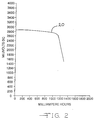
- the re-balanced E/C weight ratio of the present invention together with the previously discussed re-balanced A/C capacity ratio of about 1.03 results in the present cell having a theoretical capacity of 1.31 Ah and a rated capacity of 1.2 Ah to a 2V cutoff under a 10K load at 37°C, as shown in Fig. 2.
- curve 20 was constructed from the discharge of the present cell under the stated load.
- the cell had a volumetric energy density of 924 Wh/L and a gravimetric energy density of 450 Wh/kg. This is an improvement of about 6.7% in terms of volumetric energy density and about a 11.9% increase in terms of the gravimetric energy density over that of the state-of-the-art cells, such as shown by Muffoletto et al.
- the preferred form of the electrochemical cell is a case-negative design wherein the anode/cathode couple is inserted into a conductive metal casing such that the casing is connected to the anode current collector, as is well known to those skilled in the art.
- the casing has preferred nominal dimensions of 45 mm x 23 mm x 5 mm, which is 41.9% less voluminous than the prior art Muffoletto et al. cell.
- a preferred material for the casing is titanium although stainless steel, milled steel, nickel, nickel-plated milled steel and aluminum are also suitable.
- the casing header comprises a metallic lid having a sufficient number of openings to accommodate the glass-to-metal seal/terminal pin feedthrough for the cathode electrode.
- the anode electrode is preferably connected to the case or the lid.
- An additional opening is provided for electrolyte filling.
- the casing header comprises elements having compatibility with the other components of the electrochemical cell and is resistant to corrosion.
- the cell is thereafter filled with the electrolyte solution described hereinabove and hermetically sealed such as by close-welding a stainless steel plug over the fill hole, but not limited thereto.
- the cell of the present invention can also be constructed in a case-positive design.
- a case-negative cell according to the prior art described by the previously discussed U.S. Patent No. 5,250,373 to Muffoletto et al. was constructed housed in a stainless steel casing having nominal dimensions of 45 mm x 23 mm x 8.6 mm.
- the cathode weighed 3.15 ⁇ 0.01 grams and comprised, by total weight percent, 91% CF x , 5% carbon black and 4% PTFE.
- the cathode was fabricated by pressing the active material to an etched titanium screen, which in turn was welded to the molybdenum (Mo) pin of a stainless steel header via a titanium (Ti) couple.
- the anode comprised 0.76 ⁇ 0.02 grams of lithium divided into two equal portions and pressed to the wing-like, etched nickel (Ni) screen sections of an anode current collector, which was then spotwelded to the stainless steel header. Therefore, the electrode assembly consisted of a central cathode sandwiched between two halves of a butterfly anode. Two pieces of non-woven polypropylene separator (Tapyrus, Nichimen America) were heat-sealed around the cathode. The cell stack assembly was then welded into the stainless steel casing and 3.80 ⁇ 0.15 grams of 1.0M LiBF 4 in ⁇ -butyrolactone electrolyte was added to the cell via the fill hole in the header. The cell was then closed using a lower stainless steel ball and an upper stainless steel plug. The cell was hermetically sealed by close welding the upper plug into the header.
- This cell had an electrolyte-to-cathode (E/C) weight ratio of about 1.21 (based on the total gram amount of the cathode including the binder and conductive diluents) or 1.32 (based on the gram amount of CF x present) and an anode-to-cathode (A/C) capacity ratio of about 1.16 (based on the gram amount of CF x present).
- E/C electrolyte-to-cathode
- A/C anode-to-cathode
- this prior art Li/CF x cell delivered a nominal capacity of 2.26 Ah to a 2V cutoff, as shown in Fig. 3.
- curve 30 was constructed from the discharge of the prior art cell built according to this example and discharged under a 2 Kohm load at 37°C while curve 32 was constructed from the impedance of this cell.
- a cell of a similar design as that constructed according to Example I was built having a cathode weight of 3.52 ⁇ 0.01 grams, an anode weight of 0.76 ⁇ 0.02 grams in contact with a nickel current collector, and an electrolyte weight of 3.17 ⁇ 0.01 grams.
- the cathode comprised, by total weight percent, 91% CF x , 5% carbon black and 4% PTFE.
- the E/C weight ratio is within the preferred range for this parameter according to the present invention while the A/C capacity ratio is outside the preferred range of this ratio according to the present invention.
- a Li/CF x cell according to the present invention was constructed as a case-negative unit housed in a stainless steel casing having nominal dimensions of 45 mm x 23 mm x 5 mm. This is a 41.8% reduction in total cell volume in comparison to that of the prior art cells described in Examples I and II.
- the cathode weighed 1.68 ⁇ 0.01 grams and comprised, by total weight percent, 91% CF x , 5% carbon black and 4% PTFE.
- the cathode was fabricated by pressing the active mixture to an etched titanium screen which, in turn, was spotwelded to the Ti pin of a titanium header via a titanium couple.
- the anode comprised 0.353 ⁇ 0.006 grams of lithium pressed to the wing-like, etched titanium screen sections of an anode current collector, which was then spotwelded to the stainless steel header.
- One layer of non-woven polypropylene separator (Dynaweb WD902x, Web Dynamics) and one layer of polypropylene membrane (Celgard 3500, Hoechst Celanese) were heat-sealed around the cathode. The separators were placed such that the non-woven layer was in contact with the cathode and the film was in contact with the anode halves.
- the cell stack assembly was then welded onto the titanium case and about 1.45 grams of 1.0M LiBF 4 in ⁇ -butyrolactone electrolyte was added to the cell via the fill hole in the header.
- the fill hole was sealed with a lower stainless steel ball and an upper titanium plug.
- the cell was hermetically sealed by close welding the upper plug into the header.
- the cell constructed in this example according to the present invention utilized an E/C weight ratio of 0.94 to 0.96 and an A/C capacity ratio of 1.03 (both the E/C weight ratio and A/C capacity ratio are based on the gram amount of CF x ), and operated efficiently under a 1.4 mA drain (current density of 0.146 mA/cm 2 cathode).
- This is an unanticipated result attributable to the re-balancing of the electrolyte and the active components according to the present invention, especially considering the cell utilized a titanium screen as the anodic current collector. Titanium has a lower electrical conductivity than nickel, which was used as the anodic current collector in the prior art cells constructed in Examples I and II.
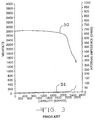
- the cell delivered a nominal capacity of 1.18 Ah to a 2V cutoff.
- curve 50 was constructed from the discharge of the present invention cell under a 2 Kohm load at 37°C while curve 52 was constructed from the cell impedance.
- the cell was constructed as a case-negative unit using a cathode weighing 1.347 ⁇ 0.001 grams comprised of, by total weight percent, 91% CF x , 5% carbon black and 4% PTFE.
- the cathode was fabricated by pressing the mixture to an etched titanium screen spotwelded to the molybdenum pin of a stainless steel header via a titanium couple.
- the anode comprised 0.321 ⁇ 0.001 grams of lithium pressed to the wing-like etched nickel screen sections of an anode current collector, which was then spotwelded to the stainless steel header.
- One layer of non-woven polypropylene separator (Dynaweb WD902x, Web Dynamics) and one layer of polypropylene film (Celgard 3500, Hoechst Celanese) were heat-sealed around the cathode.
- the separators were placed such that the non-woven layer was in contact with the cathode and the polypropylene film was in contact with the anode halves.
- the cell stack assembly was then welded into the stainless steel case and 1.63 ⁇ 0.01 g of 1.0M LiBF 4 in ⁇ -butyrolactone electrolyte was added via the fill hole in the header.
- the fill hole was sealed with a lower stainless steel ball and an upper stainless steel plug.
- the cell was hermetically sealed by close welding the upper plug into the header.
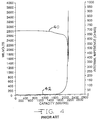
- This cell having an E/C weight ratio of 1.21 (based on the total gram amount of the cathode including the binder and conductive diluents) and an A/C capacity ratio of 1.16 (based on the gram amount of CF x present), both according to the prior art but housed in a casing having a reduced size according to the present invention, yielded a delivered capacity of 0.96 Ah to a 2V cutoff under a 2 kohm load under a current drain of 1.4 mA, as shown in Fig. 6.
- curve 60 was constructed from the discharge of the prior art cell built according to this example under a 2 Kohm load at 37°C while curve 62 was constructed from the cell impedance.
- the volumetric and gravimetric energy densities of the cell were 714 Wh/L and 259 Wh/kg, respectively.
- both the re-balanced E/C weight ratio and A/C capacity ratio of a Li/CF x electrochemical cell are critical parameters that provide this active couple with improved energy density in comparison to the prior art cell, and not necessarily the dimensions of the cell casing housing the active components.
- the re-balanced A/C capacity ratio of about 1.03 and the re-balanced E/C weight ratio of about 0.94 to 0.96 according to the present invention provided a Li/CF x cell with increased efficiency of available internal cell volume for the active components needed for cell discharge. This is brought about by using a minimum amount of excess lithium which is necessary for the shape of the discharge profile to be acceptable for the end-user to determine depth-of-discharge which can be used to calculate cell end-of-life.
- the requirement of an excess of electrolyte is reduced without compromising discharge efficiency.
- the thusly available internal volume previously occupied by the excess electrolyte is then utilized for the provision of increased cathode material.
Landscapes
- Engineering & Computer Science (AREA)
- Manufacturing & Machinery (AREA)
- Chemical & Material Sciences (AREA)
- Chemical Kinetics & Catalysis (AREA)
- Electrochemistry (AREA)
- General Chemical & Material Sciences (AREA)
- Cell Electrode Carriers And Collectors (AREA)
- Secondary Cells (AREA)
- Sealing Battery Cases Or Jackets (AREA)
- Cell Separators (AREA)
- Battery Electrode And Active Subsutance (AREA)
- Primary Cells (AREA)
Abstract
Description
- The present invention generally relates to the conversion of chemical energy to electrical energy, and more particularly, to an alkali metal electrochemical cell having an electrolyte-to-cathode (E/C) weight ratio and an anode-to-cathode (A/C) capacity ratio specifically balanced to improve the energy density of the cell. A preferred cathode includes a solid active material and a most preferred cathode active material is a carbonaceous material such as fluorinated carbon.
- Alkali metal/fluorinated carbon cells have been extensively discussed in the prior art. Examples include U.S. Patent Nos. 3,536,532 and 3,700,502 to Watanabe et al.; 4,091,188 to Dey; 5,246,795 to Megahed et al.; 5,114,811 to Ebel et al. and 5,250,373 to Muffoletto et al. The latter two patents are assigned to the assignee of the present invention and incorporated herein by reference.
- A prior art Li/fluorinated carbon cell, particularly a Li/CFx cell constructed according to the Muffoletto et al. '373 patent is typically housed in a conductive casing having nominal dimensions of 45 mm x 23 mm x 8.6 mm. This Li/CFx cell is known to have an electrolyte-to-cathode (E/C) weight ratio of about 1.32 and an anode-to-cathode (A/C) capacity ratio of about 1.16. Both the E/C weight ratio and the A/C capacity ratio are based on the gram amount of cathode active material. In other words, the Muffoletto et al. cell has about 16% excess lithium (in terms of deliverable capacity). The amount of active component within the cathode determines the theoretical capacity of the cathode, and this prior art cell is a cathode-limited design. Typically, in prior art Li/CFx cells, the presence of increased amounts of electrolyte with respect to the gram amount of cathode active material, i.e. the E/C weight ratio of 1.32 in the Muffoletto et al. cell, was thought necessary to maintain the internal impedance of the cell low, especially as end-of-life is neared.
- The Muffoletto et al. cell has a theoretical capacity of 2.47 Ah and a rated capacity of 2.40 Ah to a 2V cutoff under a 10 Kohm load, as shown in Fig. 1. In this figure,
curve 10 was constructed from the discharge of the Muffoletto et al. cell under the stated load at 37°C andcurve 12 was constructed from the cell impedance. The cell has a volumetric energy density of 866 Wh/L, a gravimetric energy density of 402 Wh/kg, an open circuit voltage of 3.0 to 3.3 volts and an estimated self-discharge rate of less than 1% per year. The cell will not rupture or leak when subjected to short circuit conditions at room temperature or at 37°C. The volumetric and the gravimetric energy densities are based on the internal volume and total weight of the active components, respectively. - Such a cell is ideal as a power source for an implantable medical device. However, in an application where a premium is placed on increased energy density, such as in power sources associated with implantable medical devices, there is a need for an alkali metal/fluorinated carbon electrochemical cell re-balanced to provide improved energy density and increased gravimetric energy over those of the prior art. The cell of the present invention fulfills this need by having a redesigned or re-balanced electrolyte-to-cathode weight ratio and a anode-to-cathode capacity ratio that optimize the electrochemical reactions at the electrodes.
- Fig. 1 is a graph constructed from the discharge of a Li/CFx cell built according to the prior art.
- Fig. 2 is a graph constructed from the discharge of a Li/CFx cell built according to the present invention.
- Figs. 3 and 4 are graphs constructed from the discharge of Li/CFx cells built according to the prior art.
- Fig. 5 is a graph constructed from the discharge of a Li/CFx cell built according to the present invention.
- Fig. 6 is a graph constructed from the discharge of a Li/CFx cell built according to the prior art.
- The electrochemical cell of the present invention comprises an anode of an anode active material, suitable materials include metals selected from Groups IA, IIA and IIIB of the Periodic Table of the Elements, including lithium, sodium, potassium, etc., and their alloys and intermetallic compounds including, for example, Li-Si, Li-Al, Li-B and Li-Si-B alloys and intermetallic compounds. The preferred anode comprises lithium. An alternate anode comprises a lithium alloy such as a lithium-aluminum alloy. The greater the amount of aluminum present by weight in the alloy, however, the lower the energy density of the cell.
- The form of the anode may vary, but preferably the anode is a thin metal sheet or foil of the anode metal, pressed or rolled on a metallic anode current collector, i.e., preferably comprising titanium, titanium alloy or nickel, to form an anode component. Copper, tungsten and tantalum are also suitable materials for the anode current collector. In the exemplary cell of the present invention, the anode component has an extended tab or lead of the same material as the anode current collector, i.e., preferably nickel or titanium, integrally formed therewith such as by welding and contacted by a weld to a cell case of conductive metal in a case-negative electrical configuration. Alternatively, the anode may be formed in some other geometry, such as a bobbin shape, cylinder or pellet to allow an alternate low surface cell design.
- The electrochemical cell of the present invention further comprises a cathode of electronically conductive material which serves as the other electrode of the cell. The electrochemical reaction at the cathode involves conversion of ions which migrate from the anode to the cathode into atomic or molecular forms. The cathode of the present invention preferably comprises a solid active material such as fluorinated carbon represented by the formula (CFx)n wherein x varies between about 0.1 to 1.9 and preferably between about 0.5 and 1.2 and (C2F)n wherein the n refers to the number of monomer units which can vary widely. These electrode active materials are composed of carbon and fluorine, and include graphitic and nongraphitic forms of carbon, such as coke, charcoal or activated carbon.
- According to one aspect of the present invention, the gravimetric and volumetric energy densities of the lithium/fluorinated carbon couple are increased over that known in the prior art by, in part, redesigning or re-balancing the anode-to-cathode (A/C) capacity ratio. As previously discussed, the lithium/fluorinated carbon cell described in U.S. Patent No. 5,250,373 to Muffoletto et al. has an A/C capacity ratio of about 1.16 (based on the gram amount of the electrode active material) providing the cell with about 16% excess lithium (in terms of delivered. capacity). The A/C capacity ratio of the present invention is preferably re-balanced to about 1.03 providing this cell with about 3% excess lithium (in terms of delivered capacity). Without wishing to be bound by any particular theory, it is believed that the amount of active component within the cathode determines the theoretical capacity of the cathode, and in that respect both the Muffoletto et al. prior art cell and the cell of the present invention are cathode-limited designs. As discussed hereinafter, the re-balanced A/C capacity ratio together with a re-balanced electrolyte-to-cathode (E/C) weight ratio provides the present cell with improved discharge capacity over the prior art cell of Muffoletto et al.
- Before fabrication into an electrode for incorporation into an electrochemical cell, the fluorinated carbon active material is preferably mixed with a conductive additive. Suitable conductive additives include acetylene black, carbon black and/or graphite. Metals such as nickel, aluminum, titanium and stainless steel in powder form are also useful as conductive diluents when mixed with the above listed active materials. The electrode preferably further comprises a binder material which is preferably a fluoro-resin powder such as powdered polytetrafluoroethylene (PTFE) or powdered polyvinylidene fluoride (PVDF). Additional active materials which are useful in a re-balanced electrochemical cell according to the invention include silver vanadium oxide, copper-silver-vanadium oxide, manganese dioxide, lithium cobalt oxide, lithium nickel oxide, copper oxide, titanium disulfide, copper sulfide, iron sulfide, iron disulfide, copper vanadium oxide, and mixtures thereof. The preferred cathode active mixture comprises CFx combined with acetylene black and/or graphite; and PTFE.
- Cathode components for incorporation into the cell may be prepared by any suitable means including rolling, spreading or pressing the cathode active mixture of the present invention onto a suitable current collector which may be selected from the group consisting of stainless steel, titanium, tantalum, platinum and gold. The preferred current collector material is titanium, and most preferably the titanium cathode current collector has a thin layer of graphite/carbon paint applied thereto. Cathodes prepared as described above may be in the form of one or more plates operatively associated with at least one or more plates of anode material, or in the form of a strip wound with a corresponding strip of anode material in a structure similar to a "jellyroll".
- In order to prevent internal short circuit conditions, the cathode may be separated from the Group IA, IIA or IIIB anode material by a suitable separator material. The separator is of electrically insulative material, and the separator material also is chemically unreactive with the anode and cathode active materials and both chemically unreactive with and insoluble in the electrolyte. In addition, the separator material has a degree of porosity sufficient to allow flow therethrough of the electrolyte during the electrochemical reaction of the electrochemical cell. Illustrative separator materials include fabrics woven from fluoropolymeric fibers including polyvinylidine fluoride, polyethylenetetrafluoroethylene, and polyethylenechlorotrifluoroethylene used either alone or laminated with a fluoropolymeric microporous film, non-woven glass, polypropylene, polyethylene, glass fiber materials, ceramics, polytetrafluoroethylene membrane commercially available under the designation ZITEX (Chemplast Inc.), polypropylene membrane commercially available under the designation CELGARD (Celanese Plastic Company, Inc.) and a membrane commercially available under the designation DEXIGLAS (C.H. Dexter, Div., Dexter Corp.).
- A preferred separator comprises a non-woven polypropylene separator and polypropylene membrane. Preferably the non-woven layer faces the cathode and the membrane faces the anode. That way, the non-woven layer acts as a wicking material to more effectively wet the cathode and as a barrier to puncture of the membrane from loose carbon particles.
- The electrochemical cell of the present invention further includes a nonagueous, ionically conductive electrolyte which serves as a medium for migration of ions between the anode and the cathode electrodes during the electrochemical reactions of the cell. The electrochemical reaction at the electrodes involves conversion of ions in atomic or molecular forms which migrate from the anode to the cathode. Thus, nonaqueous electrolytes suitable for the present invention are substantially inert to the anode and cathode materials, and they exhibit those physical properties necessary for ionic transport, namely, low viscosity, low surface tension and wettability.
- A suitable electrolyte has an inorganic, ionically conductive salt dissolved in a nonaqueous solvent, and more preferably, the electrolyte includes an ionizable alkali metal salt dissolved in a mixture of aprotic organic solvents comprising a low viscosity solvent and a high permittivity solvent. The inorganic, ionically conductive salt serves as the vehicle for migration of the anode ions to intercalate or react with the cathode active material. Preferably the ion-forming alkali metal salt is similar to the alkali metal comprising the anode.
- In a solid cathode/electrolyte system, the ionically conductive salt preferably has the general formula MM'F6 or MM'F4 wherein M is an, alkali metal similar to the alkali metal comprising the anode and M' is an element selected from the group consisting of phosphorous, arsenic, antimony and boron. Examples of salts yielding M'F6 are: hexafluorophosphate (PF6), hexafluoroarsenate (AsF6) and hexafluoroantimonate (SbF6) while tetrafluoroborate (BF4) is exemplary of salts yielding M'F4. Alternatively, the corresponding sodium or potassium salts may be used. If desired, a secondary salt containing the perchlorate anion such as lithium perchlorate (LiClO4) and tetrabutyl ammonium perchlorate (NCH3(CH2)3ClO4) is added to the electrolyte. Other inorganic salts useful with the present invention include LiAlCl4, LiGaCl4, LiC(SO2CF3)3, LiN(SO2CF3)2, LiSO3F, LiB(C6H5)4 and LiCF3SO3, and mixtures thereof.
- Low viscosity solvents useful with the present invention include esters, linear and cyclic ethers and dialkyl carbonates such as tetrahydrofuran (THF), methyl acetate (MA), diglyme, trigylme, tetragylme, dimethyl carbonate (DMC), 1,2-dimethoxyethane (DME), diethyl carbonate and mixtures thereof, and high permittivity solvents include cyclic carbonates, cyclic esters and cyclic amides such as propylene carbonate (PC), ethylene carbonate (EC), acetonitrile, dimethyl sulfoxide, dimethyl formamide, dimethyl acetamide, γ-valerolactone, γ-butyrolactone (GBL) and N-methyl-pyrrolidinone (NMP) and mixtures thereof. In the present invention, the preferred anode is lithium metal and the preferred electrolyte is 1.OM to 1.4M LiBF4 in γ-butyrolactone (GBL).
- According to the present invention, the electrolyte-to-cathode (E/C) weight ratio (based on the gram amount of the electrode active material) is balanced to a range of about 0.94 to 0.96. The prior art cell of Muffoletto et al. is known to have an E/C weight ratio of about 1.32. Before the present invention, typical Li/CFx cells were activated with increased amounts of electrolyte in terms of the electrolyte-to-cathode weight ratio. It is known that the amount of electrolyte present influences the cathode's discharge efficiency, and in typical prior art cells as exemplified by Muffoletto et al., the presence of increased amounts of electrolyte was thought to maintain the internal impedance of the cell at a low level, especially as end-of-life neared. However, an unexpected advantage of the present Li/CFx cell is that an excess of electrolyte is not needed. While not wanting to be bound to any one theory as to the reason for this, the present inventors believe that this may be partly due to the reduced internal volume of the cell. The reduced internal volume necessitated that the present cell stack be relatively tight, and the electrolyte is thought to be more efficiently utilized or "trapped" within the cell stack and/or within the separator design thus eliminating the need for an excess of electrolyte.
- Therefore, the re-balanced E/C weight ratio of the present invention together with the previously discussed re-balanced A/C capacity ratio of about 1.03 results in the present cell having a theoretical capacity of 1.31 Ah and a rated capacity of 1.2 Ah to a 2V cutoff under a 10K load at 37°C, as shown in Fig. 2. In this figure,
curve 20 was constructed from the discharge of the present cell under the stated load. The cell had a volumetric energy density of 924 Wh/L and a gravimetric energy density of 450 Wh/kg. This is an improvement of about 6.7% in terms of volumetric energy density and about a 11.9% increase in terms of the gravimetric energy density over that of the state-of-the-art cells, such as shown by Muffoletto et al. - The preferred form of the electrochemical cell is a case-negative design wherein the anode/cathode couple is inserted into a conductive metal casing such that the casing is connected to the anode current collector, as is well known to those skilled in the art. The casing has preferred nominal dimensions of 45 mm x 23 mm x 5 mm, which is 41.9% less voluminous than the prior art Muffoletto et al. cell. A preferred material for the casing is titanium although stainless steel, milled steel, nickel, nickel-plated milled steel and aluminum are also suitable. The casing header comprises a metallic lid having a sufficient number of openings to accommodate the glass-to-metal seal/terminal pin feedthrough for the cathode electrode. The anode electrode is preferably connected to the case or the lid. An additional opening is provided for electrolyte filling. The casing header comprises elements having compatibility with the other components of the electrochemical cell and is resistant to corrosion. The cell is thereafter filled with the electrolyte solution described hereinabove and hermetically sealed such as by close-welding a stainless steel plug over the fill hole, but not limited thereto. The cell of the present invention can also be constructed in a case-positive design.
- The following examples describe the manner and process of manufacturing an electrochemical cell according to the present invention, and they set forth the best mode contemplated by the inventors of carrying out the invention, but they are not to be construed as limiting.
- A case-negative cell according to the prior art described by the previously discussed U.S. Patent No. 5,250,373 to Muffoletto et al. was constructed housed in a stainless steel casing having nominal dimensions of 45 mm x 23 mm x 8.6 mm. The cathode weighed 3.15 ± 0.01 grams and comprised, by total weight percent, 91% CFx, 5% carbon black and 4% PTFE. The cathode was fabricated by pressing the active material to an etched titanium screen, which in turn was welded to the molybdenum (Mo) pin of a stainless steel header via a titanium (Ti) couple. The anode comprised 0.76 ± 0.02 grams of lithium divided into two equal portions and pressed to the wing-like, etched nickel (Ni) screen sections of an anode current collector, which was then spotwelded to the stainless steel header. Therefore, the electrode assembly consisted of a central cathode sandwiched between two halves of a butterfly anode. Two pieces of non-woven polypropylene separator (Tapyrus, Nichimen America) were heat-sealed around the cathode. The cell stack assembly was then welded into the stainless steel casing and 3.80 ± 0.15 grams of 1.0M LiBF4 in γ-butyrolactone electrolyte was added to the cell via the fill hole in the header. The cell was then closed using a lower stainless steel ball and an upper stainless steel plug. The cell was hermetically sealed by close welding the upper plug into the header.
- This cell had an electrolyte-to-cathode (E/C) weight ratio of about 1.21 (based on the total gram amount of the cathode including the binder and conductive diluents) or 1.32 (based on the gram amount of CFx present) and an anode-to-cathode (A/C) capacity ratio of about 1.16 (based on the gram amount of CFx present).
- Under a current drain of 1.4 mA (current density 0.12 mA/cm2 cathode), this prior art Li/CFx cell delivered a nominal capacity of 2.26 Ah to a 2V cutoff, as shown in Fig. 3. In this figure,
curve 30 was constructed from the discharge of the prior art cell built according to this example and discharged under a 2 Kohm load at 37°C whilecurve 32 was constructed from the impedance of this cell. - A cell of a similar design as that constructed according to Example I was built having a cathode weight of 3.52 ± 0.01 grams, an anode weight of 0.76 ± 0.02 grams in contact with a nickel current collector, and an electrolyte weight of 3.17 ± 0.01 grams. Again, the cathode comprised, by total weight percent, 91% CFx, 5% carbon black and 4% PTFE. This provided the cell with an E/C weight ratio of 0.96 and an A/C capacity ratio of 1.06, both based on the gram amount of CFx present. The E/C weight ratio is within the preferred range for this parameter according to the present invention while the A/C capacity ratio is outside the preferred range of this ratio according to the present invention.
- This re-balanced cell was inefficient under the 1.4 mA current drain and delivered a nominal capacity of 2.10 Ah to 2V as shown in Fig. 4, even though the theoretical capacity of the unit was 2.76 Ah. In this figure,
curve 40 was constructed from the discharge of the prior art cell built according to this example and discharged under a 2 Kohm load at 37°C andcurve 42 was constructed from the cell impedance. This is a reduction in delivered capacity of about 8.7% in comparison to the cell constructed according to Example I. The cell had a volumetric energy density of only 731 Wh/L and a gravimetric energy density of only 340 Wh/kg. - A Li/CFx cell according to the present invention was constructed as a case-negative unit housed in a stainless steel casing having nominal dimensions of 45 mm x 23 mm x 5 mm. This is a 41.8% reduction in total cell volume in comparison to that of the prior art cells described in Examples I and II. The cathode weighed 1.68 ± 0.01 grams and comprised, by total weight percent, 91% CFx, 5% carbon black and 4% PTFE. The cathode was fabricated by pressing the active mixture to an etched titanium screen which, in turn, was spotwelded to the Ti pin of a titanium header via a titanium couple. The anode comprised 0.353 ± 0.006 grams of lithium pressed to the wing-like, etched titanium screen sections of an anode current collector, which was then spotwelded to the stainless steel header. One layer of non-woven polypropylene separator (Dynaweb WD902x, Web Dynamics) and one layer of polypropylene membrane (Celgard 3500, Hoechst Celanese) were heat-sealed around the cathode. The separators were placed such that the non-woven layer was in contact with the cathode and the film was in contact with the anode halves. The cell stack assembly was then welded onto the titanium case and about 1.45 grams of 1.0M LiBF4 in γ-butyrolactone electrolyte was added to the cell via the fill hole in the header. The fill hole was sealed with a lower stainless steel ball and an upper titanium plug. The cell was hermetically sealed by close welding the upper plug into the header.
- The cell constructed in this example according to the present invention utilized an E/C weight ratio of 0.94 to 0.96 and an A/C capacity ratio of 1.03 (both the E/C weight ratio and A/C capacity ratio are based on the gram amount of CFx), and operated efficiently under a 1.4 mA drain (current density of 0.146 mA/cm2 cathode). This is an unanticipated result attributable to the re-balancing of the electrolyte and the active components according to the present invention, especially considering the cell utilized a titanium screen as the anodic current collector. Titanium has a lower electrical conductivity than nickel, which was used as the anodic current collector in the prior art cells constructed in Examples I and II. As shown in Fig. 5, the cell delivered a nominal capacity of 1.18 Ah to a 2V cutoff. In this figure,
curve 50 was constructed from the discharge of the present invention cell under a 2 Kohm load at 37°C whilecurve 52 was constructed from the cell impedance. - A test cell having active components activated with an electrolyte balanced according to the prior art but housed in a stainless steel casing having nominal dimensions of 45 mm x 23 mm x 5 mm, i.e., the casing having the reduced total volume according to the present invention, was constructed. This cell was built to determine if the improvements in discharge capacity are attributable to the re-balancing of the E/C weight ratio and the A/C capacity ratio according to the present invention, or to the reduced casing volume.
- The cell was constructed as a case-negative unit using a cathode weighing 1.347 ± 0.001 grams comprised of, by total weight percent, 91% CFx, 5% carbon black and 4% PTFE. The cathode was fabricated by pressing the mixture to an etched titanium screen spotwelded to the molybdenum pin of a stainless steel header via a titanium couple. The anode comprised 0.321 ± 0.001 grams of lithium pressed to the wing-like etched nickel screen sections of an anode current collector, which was then spotwelded to the stainless steel header. One layer of non-woven polypropylene separator (Dynaweb WD902x, Web Dynamics) and one layer of polypropylene film (Celgard 3500, Hoechst Celanese) were heat-sealed around the cathode. The separators were placed such that the non-woven layer was in contact with the cathode and the polypropylene film was in contact with the anode halves. The cell stack assembly was then welded into the stainless steel case and 1.63 ± 0.01 g of 1.0M LiBF4 in γ-butyrolactone electrolyte was added via the fill hole in the header. The fill hole was sealed with a lower stainless steel ball and an upper stainless steel plug. The cell was hermetically sealed by close welding the upper plug into the header.
- This cell, having an E/C weight ratio of 1.21 (based on the total gram amount of the cathode including the binder and conductive diluents) and an A/C capacity ratio of 1.16 (based on the gram amount of CFx present), both according to the prior art but housed in a casing having a reduced size according to the present invention, yielded a delivered capacity of 0.96 Ah to a 2V cutoff under a 2 kohm load under a current drain of 1.4 mA, as shown in Fig. 6. In this figure,
curve 60 was constructed from the discharge of the prior art cell built according to this example under a 2 Kohm load at 37°C whilecurve 62 was constructed from the cell impedance. The volumetric and gravimetric energy densities of the cell were 714 Wh/L and 259 Wh/kg, respectively. - It is apparent that both the re-balanced E/C weight ratio and A/C capacity ratio of a Li/CFx electrochemical cell are critical parameters that provide this active couple with improved energy density in comparison to the prior art cell, and not necessarily the dimensions of the cell casing housing the active components. Thus, the re-balanced A/C capacity ratio of about 1.03 and the re-balanced E/C weight ratio of about 0.94 to 0.96 according to the present invention provided a Li/CFx cell with increased efficiency of available internal cell volume for the active components needed for cell discharge. This is brought about by using a minimum amount of excess lithium which is necessary for the shape of the discharge profile to be acceptable for the end-user to determine depth-of-discharge which can be used to calculate cell end-of-life. Furthermore, since the cell stack is tightly configured, the requirement of an excess of electrolyte is reduced without compromising discharge efficiency. The thusly available internal volume previously occupied by the excess electrolyte is then utilized for the provision of increased cathode material.
- It is appreciated that various modifications to the inventive concepts described herein may be apparent to those skilled in the art without departing from the spirit and the scope of the present invention defined by the hereinafter appended claims.
Claims (22)
- An electrochemical cell, comprising:a) an anode comprising an anode active material;b) a cathode operatively associated with the anode, wherein the cathode comprises a cathode active material; andc) an electrolyte solution activating the anode and the cathode, wherein the anode active material and the cathode active material are present in the cell in an anode-to-cathode capacity ratio of about 1.03 and wherein the electrolyte and the cathode active material are present in the cell in an electrolyte-to-cathode weight ratio of about 0.94 to 0.96.
- An electrochemical cell, which comprises:a) an anode comprising an anode active material;b) a cathode operatively associated with the anode, wherein the cathode comprises a cathode active material; andc) an electrolyte solution activating the anode and the cathode, wherein there is an excess of the anode active material to the cathode active material in terms of delivered capacity so that the cell is cathode limited, and wherein the electrolyte and the cathode active material are present in the cell such that there is an excess of cathode active, material in terms of an electrolyte-to-cathode weight ratio.
- The electrochemical cell of Claim 1 or 2 wherein the cathode active material comprises fluorinated carbon.
- The electrochemical cell of Claim 3 wherein the fluorinated carbon is present in the cathode active mixture in about 80% to about 95%, by weight, remainder being at least one of a binder material and a conductive additive.
- The electrochemical cell of Claim 4 wherein the binder material is a fluoro-resin powder.
- The electrochemical cell of Claim 4 or 5 wherein the conductive additive is selected from carbon, graphite powder, acetylene black and metallic powder selected from titanium, aluminum, nickel, stainless steel and mixtures thereof.
- The electrochemical cell of any one of Claims 1 to 6 wherein the cathode further includes a current collector selected from titanium, stainless steel, tantalum, platinum and gold.
- The electrochemical cell of Claim 7 wherein the cathode current collector is provided with a layer of carbonaceous paint.
- The electrochemical cell of any one of Claims 1 to 8 wherein the anode comprises an alkali metal.
- The electrochemical cell of Claim 9 wherein the alkali metal is lithium.
- The electrochemical cell of any one of Claims 1 to 10 further includes a current collector selected from titanium, nickel, copper, tungsten and tantalum.
- The electrochemical cell of any one of Claims 1 to 11 wherein the anode contacts the casing in a case-negative configuration.
- The electrochemical cell of any one of Claims 1 to 12 wherein the electrolyte solution operatively associated with the anode and the cathode comprises an ion-forming alkali metal salt dissolved in a nonaqueous solvent, wherein the alkali metal of the salt is similar to the alkali metal comprising the anode.
- The electrochemical cell of Claim 13 wherein the alkali metal of the anode comprises lithium and the ion-forming alkali metal salt comprising the electrolyte solution is selected from the group consisting of LiPF6, LiAsF6, LiSbF6, LiBF4, LiClO4, LiAlCl4, LiGaCl4, LiC(SO2CF3)3 and LiCF3SO3 and mixtures thereof.
- The electrochemical cell of Claims 13 or 14 wherein the nonaqueous solvent comprises at least one organic solvent selected from tetrahydrofuran, methyl acetate, diglyme, triglyme, tetraglyme, dimethyl carbonate, 1,2-dimethoxyethane, diethyl carbonate, acetonitrile, dimethyl sulfoxide, dimethyl formamide, dimethyl acetamide, propylene carbonate, ethylene carbonate, γ-valerolactone, γ-bytyrolactone, N-methyl-pyrrolidinone and mixtures thereof.
- The electrochemical cell of any one of Claims 1 to 15 wherein a separator is provided between the anode and the cathode to prevent internal short circuit between them, and wherein the separator comprises a laminate of a non-woven material and a microporous membrane.
- The electrochemical cell of Claim 16 wherein the separator comprises a non-woven polypropylene layer and a polypropylene membrane.
- The electrochemical cell of Claim 17 wherein the non-woven polypropylene layer faces the cathode and the polypropylene membrane faces the anode.
- The electrochemical cell of any one of Claims 1 to 18 housed in a conductive casing comprising a material selected from titanium, stainless steel, milled steel, nickel, nickel-plated milled steel and aluminium.
- The electrochemical cell of any one of Claims 1 to 19 wherein the anode comprises lithium anode active material in electrical contact with a nickel current collector and the cathode comprises fluorinated cathode active material in electrical contact with a titanium current collector and wherein the anode and the cathode are activated with the electrolyte solution comprising 1.0M LiBF4 in γ-butyrolactone and housed in a conductive casing comprising titanium.
- A method of providing an electrochemical cell, comprising the steps of:a) providing a casing;b) providing an anode comprising an anode active material;c) providing a cathode comprised of a cathode active material;d) operatively associating the anode with the cathode housed inside the casing with the anode active material and the cathode active material in an anode-to-cathode capacity ratio of about 1.03 and wherein the anode and the cathode are connected to respective terminals; ande) activating the anode and the cathode with an electrolyte filled into the casing, wherein the electrolyte and the cathode active material are present in the cell in an electrolyte-to-cathode weight ratio of about 0.94 to 0.96.
- A method of providing an electrochemical cell, comprising the steps of:a) providing a casing;b) providing an anode comprising an anode active material;c) providing a cathode comprised of a cathode active material;d) operatively associating the anode with the cathode housed inside the casing with an excess of the anode active material to the cathode active material in terms of delivered capacity so that the cell is cathode limited, and wherein the anode and the cathode are connected to respective terminals; ande) activating the anode and the cathode with an electrolyte filled into the casing, wherein the electrolyte and the cathode active material are present in the cell such that there is an excess of cathode active material in terms of in an electrolyte-to-cathode weight ratio.
Applications Claiming Priority (2)
| Application Number | Priority Date | Filing Date | Title |
|---|---|---|---|
| US08/742,670 US5716728A (en) | 1996-11-04 | 1996-11-04 | Alkali metal electrochemical cell with improved energy density |
| US742670 | 1996-11-04 |
Publications (1)
| Publication Number | Publication Date |
|---|---|
| EP0840389A1 true EP0840389A1 (en) | 1998-05-06 |
Family
ID=24985767
Family Applications (1)
| Application Number | Title | Priority Date | Filing Date |
|---|---|---|---|
| EP97306794A Withdrawn EP0840389A1 (en) | 1996-11-04 | 1997-09-02 | Alkali metal electrochemical cell with improved energy density |
Country Status (4)
| Country | Link |
|---|---|
| US (1) | US5716728A (en) |
| EP (1) | EP0840389A1 (en) |
| JP (1) | JPH10144354A (en) |
| AU (1) | AU4366597A (en) |
Cited By (2)
| Publication number | Priority date | Publication date | Assignee | Title |
|---|---|---|---|---|
| EP0980105A1 (en) * | 1998-08-11 | 2000-02-16 | Wilson Greatbatch Ltd. | Magnetically compatible electrochemical cell |
| EP0930664A3 (en) * | 1998-01-02 | 2002-08-14 | Wilson Greatbatch Ltd. | Control of swelling in alkali metal electrochemical cells |
Families Citing this family (38)
| Publication number | Priority date | Publication date | Assignee | Title |
|---|---|---|---|---|
| US5902696A (en) * | 1997-06-02 | 1999-05-11 | Wilson Greatbatch Ltd. | Separator for nonaqueous electrochemical cells |
| US5905001A (en) * | 1997-08-13 | 1999-05-18 | Wilson Greatbatch Ltd. | Electrode edge design |
| JP3242878B2 (en) | 1998-03-23 | 2001-12-25 | 日本碍子株式会社 | Lithium secondary battery |
| US6451483B1 (en) * | 1999-09-27 | 2002-09-17 | Wilson Greatbatch Ltd. | Enhanced capacity Li/CFx electrochemical cell |
| US6653016B2 (en) | 2000-04-25 | 2003-11-25 | Rayovac Corporation | Extended temperature operating range electrochemical cells |
| KR100396491B1 (en) * | 2000-11-09 | 2003-09-02 | 삼성에스디아이 주식회사 | Lithium secondary battery |
| US6977124B2 (en) | 2001-07-19 | 2005-12-20 | Wilson Greatbatch Technologies, Inc. | Contoured casing for an electrochemical cell |
| ATE460753T1 (en) * | 2001-07-19 | 2010-03-15 | Greatbatch Ltd | CURVED HOUSING FOR AN IMPLANTABLE MEDICAL DEVICE |
| US7005214B2 (en) * | 2001-11-02 | 2006-02-28 | Wilson Greatbatch Technologies, Inc. | Noble metals coated on titanium current collectors for use in nonaqueous Li/CFx cells |
| US6767670B2 (en) * | 2001-11-14 | 2004-07-27 | Wilson Greatbatch Technologies, Inc. | Carbon-coated titanium current collectors for use in alkali metal electrochemical cells |
| US6849360B2 (en) * | 2002-06-05 | 2005-02-01 | Eveready Battery Company, Inc. | Nonaqueous electrochemical cell with improved energy density |
| US20070264564A1 (en) * | 2006-03-16 | 2007-11-15 | Infinite Power Solutions, Inc. | Thin film battery on an integrated circuit or circuit board and method thereof |
| US8404376B2 (en) * | 2002-08-09 | 2013-03-26 | Infinite Power Solutions, Inc. | Metal film encapsulation |
| US8445130B2 (en) * | 2002-08-09 | 2013-05-21 | Infinite Power Solutions, Inc. | Hybrid thin-film battery |
| US8236443B2 (en) * | 2002-08-09 | 2012-08-07 | Infinite Power Solutions, Inc. | Metal film encapsulation |
| US8431264B2 (en) * | 2002-08-09 | 2013-04-30 | Infinite Power Solutions, Inc. | Hybrid thin-film battery |
| US8394522B2 (en) * | 2002-08-09 | 2013-03-12 | Infinite Power Solutions, Inc. | Robust metal film encapsulation |
| US7993773B2 (en) * | 2002-08-09 | 2011-08-09 | Infinite Power Solutions, Inc. | Electrochemical apparatus with barrier layer protected substrate |
| US7068036B1 (en) | 2003-10-28 | 2006-06-27 | Wiwilson Greatbatch Technologies, Inc. | Lithium/carbon monofluoride (Li/CFx) electrochemical cell projection model |
| US20100196765A1 (en) * | 2004-10-26 | 2010-08-05 | Greatbatch, Inc. | Reducing DC Resistance In Electrochemical Cells By Increasing Cathode Basis Weight |
| US20060115738A1 (en) * | 2004-12-01 | 2006-06-01 | Sergiy Sazhin | Lithium-fluorinated carbon cells |
| US8241788B1 (en) | 2004-12-13 | 2012-08-14 | Greatbatch Ltd. | Method for making flat and high-density cathode for use in electrochemical cells |
| US7776470B2 (en) * | 2005-09-28 | 2010-08-17 | Greatbatch Ltd. | Anode-to-cathode capacity ratios for SVO/CF x hybrid cathode electrochemical cells |
| CN101903560B (en) * | 2007-12-21 | 2014-08-06 | 无穷动力解决方案股份有限公司 | Method for sputter targets for electrolyte films |
| US8268488B2 (en) * | 2007-12-21 | 2012-09-18 | Infinite Power Solutions, Inc. | Thin film electrolyte for thin film batteries |
| US8518581B2 (en) * | 2008-01-11 | 2013-08-27 | Inifinite Power Solutions, Inc. | Thin film encapsulation for thin film batteries and other devices |
| WO2009124191A2 (en) * | 2008-04-02 | 2009-10-08 | Infinite Power Solutions, Inc. | Passive over/under voltage control and protection for energy storage devices associated with energy harvesting |
| JP2012500610A (en) * | 2008-08-11 | 2012-01-05 | インフィニット パワー ソリューションズ, インコーポレイテッド | Energy device with integrated collector surface and method for electromagnetic energy acquisition |
| CN102150185B (en) * | 2008-09-12 | 2014-05-28 | 无穷动力解决方案股份有限公司 | Energy device with integral conductive surface for data communication via electromagnetic energy and method thereof |
| KR20110082035A (en) * | 2008-10-08 | 2011-07-15 | 인피니트 파워 솔루션스, 인크. | Foot-insertable sensor-transceiver powered by foot |
| WO2010042594A1 (en) * | 2008-10-08 | 2010-04-15 | Infinite Power Solutions, Inc. | Environmentally-powered wireless sensor module |
| CN102439778B (en) * | 2009-05-20 | 2016-02-10 | 萨普拉斯特研究有限责任公司 | For electrochemical device to be integrated within fixation means or on method |
| CN102576828B (en) | 2009-09-01 | 2016-04-20 | 萨普拉斯特研究有限责任公司 | Printed circuit board with integrated thin-film battery |
| EP2577777B1 (en) | 2010-06-07 | 2016-12-28 | Sapurast Research LLC | Rechargeable, high-density electrochemical device |
| KR20140090277A (en) * | 2012-12-06 | 2014-07-17 | 삼성전기주식회사 | Electrolyte and device for storaging energy with the same |
| US10193154B2 (en) * | 2013-01-31 | 2019-01-29 | Medtronic, Inc. | Cathode composition for primary battery |
| CN112635773A (en) * | 2020-12-21 | 2021-04-09 | 中国科学院长春应用化学研究所 | Positive pole piece for primary battery and primary battery |
| CN116093355B (en) * | 2023-02-13 | 2025-06-13 | 电子科技大学 | A high-rate lithium/carbon fluoride primary battery electrolyte and its application |
Citations (4)
| Publication number | Priority date | Publication date | Assignee | Title |
|---|---|---|---|---|
| EP0239410A2 (en) * | 1986-03-27 | 1987-09-30 | Sharp Kabushiki Kaisha | An electrode and a battery with the same |
| EP0532312A1 (en) * | 1991-09-10 | 1993-03-17 | Wilson Greatbatch Ltd. | Internal electrode and assembly method for electrochemical cells |
| US5458997A (en) * | 1994-08-19 | 1995-10-17 | Medtronic, Inc. | Rebalancing of lithium/silver vandium oxide (Li/SVO) cells for improved performance |
| EP0690520A1 (en) * | 1994-05-30 | 1996-01-03 | Canon Kabushiki Kaisha | Rechargeable batteries |
Family Cites Families (14)
| Publication number | Priority date | Publication date | Assignee | Title |
|---|---|---|---|---|
| IT500094A (en) * | 1968-04-12 | |||
| JPS4825566B1 (en) * | 1968-04-17 | 1973-07-30 | ||
| US3658592A (en) * | 1970-07-15 | 1972-04-25 | Mallory & Co Inc P R | Lithium-metal chromate organic electrolyte cell |
| US4080489A (en) * | 1976-03-08 | 1978-03-21 | P. R. Mallory & Co. Inc. | Means for improving contact between Li and the anode current collector |
| US4172927A (en) * | 1977-08-18 | 1979-10-30 | Matsushita Electric Industrial Co., Ltd. | Organic electrolyte battery |
| IL61085A (en) * | 1980-09-19 | 1983-07-31 | Univ Ramot | Nonaqueous sulfur cell |
| BG39778A1 (en) * | 1984-10-30 | 1986-08-15 | Mohhev | |
| US4830940A (en) * | 1986-01-14 | 1989-05-16 | Wilson Greatbatch Ltd. | Non-agueous lithium battery |
| US5114811A (en) * | 1990-02-05 | 1992-05-19 | W. Greatbatch Ltd. | High energy density non-aqueous electrolyte lithium cell operational over a wide temperature range |
| US5246795A (en) * | 1991-07-31 | 1993-09-21 | Rayovac Corporation | High temperature lithium solid cathode electrochemical cells |
| JP3191394B2 (en) * | 1992-04-10 | 2001-07-23 | 松下電器産業株式会社 | Manufacturing method of non-aqueous secondary battery and its negative electrode plate |
| US5322746A (en) * | 1992-10-02 | 1994-06-21 | Her Majesty The Queen In Right Of The Province Of British Columbia As Represented By The Minister Of Finance & Corporate Relations | Electrode composition and design for high energy density cells |
| JP3059842B2 (en) * | 1992-11-16 | 2000-07-04 | 三洋電機株式会社 | Non-aqueous electrolyte battery |
| FR2707426B1 (en) * | 1993-07-09 | 1995-08-18 | Accumulateurs Fixes | Rechargeable lithium electrochemical generator and its production method. |
-
1996
- 1996-11-04 US US08/742,670 patent/US5716728A/en not_active Expired - Lifetime
-
1997
- 1997-09-02 EP EP97306794A patent/EP0840389A1/en not_active Withdrawn
- 1997-10-31 AU AU43665/97A patent/AU4366597A/en not_active Abandoned
- 1997-10-31 JP JP9316320A patent/JPH10144354A/en not_active Withdrawn
Patent Citations (5)
| Publication number | Priority date | Publication date | Assignee | Title |
|---|---|---|---|---|
| EP0239410A2 (en) * | 1986-03-27 | 1987-09-30 | Sharp Kabushiki Kaisha | An electrode and a battery with the same |
| EP0532312A1 (en) * | 1991-09-10 | 1993-03-17 | Wilson Greatbatch Ltd. | Internal electrode and assembly method for electrochemical cells |
| US5250373A (en) * | 1991-09-10 | 1993-10-05 | Wilson Greatbatch Ltd. | Internal electrode and assembly method for electrochemical cells |
| EP0690520A1 (en) * | 1994-05-30 | 1996-01-03 | Canon Kabushiki Kaisha | Rechargeable batteries |
| US5458997A (en) * | 1994-08-19 | 1995-10-17 | Medtronic, Inc. | Rebalancing of lithium/silver vandium oxide (Li/SVO) cells for improved performance |
Cited By (2)
| Publication number | Priority date | Publication date | Assignee | Title |
|---|---|---|---|---|
| EP0930664A3 (en) * | 1998-01-02 | 2002-08-14 | Wilson Greatbatch Ltd. | Control of swelling in alkali metal electrochemical cells |
| EP0980105A1 (en) * | 1998-08-11 | 2000-02-16 | Wilson Greatbatch Ltd. | Magnetically compatible electrochemical cell |
Also Published As
| Publication number | Publication date |
|---|---|
| JPH10144354A (en) | 1998-05-29 |
| AU4366597A (en) | 1998-05-07 |
| US5716728A (en) | 1998-02-10 |
Similar Documents
| Publication | Publication Date | Title |
|---|---|---|
| US5716728A (en) | Alkali metal electrochemical cell with improved energy density | |
| US6451483B1 (en) | Enhanced capacity Li/CFx electrochemical cell | |
| US5667916A (en) | Mixed cathode formulation for achieving end-of-life indication | |
| EP0803924B1 (en) | Organic carbonate additives for nonaqueous electrolyte in alkali metal electrochemical cells | |
| AU700923B2 (en) | Medium and high discharge rate combination battery and method | |
| US6537698B2 (en) | Electrochemical cell having an electrode with a phosphonate additive in the electrode active mixture | |
| AU709614B2 (en) | Ternary solvent nonaqueous organic electrolyte for alkali metal electrochemical cells | |
| US6511772B2 (en) | Electrochemical cell having an electrode with a phosphate additive in the electrode active mixture | |
| AU728179B2 (en) | Electrochemical cell having multiplate and jellyroll electrodes with differing discharge rate regions | |
| EP0930664B1 (en) | Control of swelling in alkali metal electrochemical cells | |
| US6727022B2 (en) | Powder process for double current collector screen cathode preparation | |
| US6743547B2 (en) | Pellet process for double current collector screen cathode preparation | |
| US6641953B2 (en) | Secondary cell with high rate pulse capability | |
| US5616429A (en) | alkali metal electrochemical cell exhibiting reduced voltage delay and method of manufacture | |
| EP1244160A1 (en) | Electrochemical cell having an electrode with a carbonate additive in the electrode active mixture | |
| US10038220B2 (en) | Nonaqueous electrolyte for lithium battery safety | |
| US6623884B1 (en) | Electrochemical lithium ion secondary cell having multiplate and jellyroll electrodes with differing discharge rate regions | |
| US7108942B1 (en) | Efficient electrode assembly design for cells with alkali metal anodes | |
| EP1207570A2 (en) | Sandwich cathode design using chemically similar active materials for alkali metal electrochemical cells | |
| US8192867B2 (en) | Hybrid cathode design for an electrochemical cell | |
| US5667910A (en) | Electrochemical cell having a cathode comprising differing active formulations and method | |
| US20020136949A1 (en) | Electrochemical cell having an electrode with a dicarbonate additive in the electrode active mixture | |
| US20020094480A1 (en) | Electrochemical cell having an electrode with a nitrite additive in the electrode active mixture | |
| EP1324418A1 (en) | High energy density rechargeable cell for medical device applications | |
| EP1914823B1 (en) | Hybrid cathode design for an electrochemical cell |
Legal Events
| Date | Code | Title | Description |
|---|---|---|---|
| PUAI | Public reference made under article 153(3) epc to a published international application that has entered the european phase |
Free format text: ORIGINAL CODE: 0009012 |
|
| AK | Designated contracting states |
Kind code of ref document: A1 Designated state(s): DE FR GB IT NL SE |
|
| AX | Request for extension of the european patent |
Free format text: AL;LT;LV;RO;SI |
|
| 17P | Request for examination filed |
Effective date: 19980511 |
|
| AKX | Designation fees paid |
Free format text: DE FR GB IT NL SE |
|
| RBV | Designated contracting states (corrected) |
Designated state(s): DE FR GB IT NL SE |
|
| 17Q | First examination report despatched |
Effective date: 20030131 |
|
| STAA | Information on the status of an ep patent application or granted ep patent |
Free format text: STATUS: THE APPLICATION HAS BEEN WITHDRAWN |
|
| 18W | Application withdrawn |
Effective date: 20050909 |