EP0832230B1 - Menschliche neuronale acetylcholin-rezeptor verbindungen und methoden zu deren anwendung - Google Patents
Menschliche neuronale acetylcholin-rezeptor verbindungen und methoden zu deren anwendung Download PDFInfo
- Publication number
- EP0832230B1 EP0832230B1 EP96921440A EP96921440A EP0832230B1 EP 0832230 B1 EP0832230 B1 EP 0832230B1 EP 96921440 A EP96921440 A EP 96921440A EP 96921440 A EP96921440 A EP 96921440A EP 0832230 B1 EP0832230 B1 EP 0832230B1
- Authority
- EP
- European Patent Office
- Prior art keywords
- cells
- subunit
- nucleic acid
- sequence
- subunits
- Prior art date
- Legal status (The legal status is an assumption and is not a legal conclusion. Google has not performed a legal analysis and makes no representation as to the accuracy of the status listed.)
- Expired - Lifetime
Links
Images

Classifications
-
- G—PHYSICS
- G01—MEASURING; TESTING
- G01N—INVESTIGATING OR ANALYSING MATERIALS BY DETERMINING THEIR CHEMICAL OR PHYSICAL PROPERTIES
- G01N33/00—Investigating or analysing materials by specific methods not covered by groups G01N1/00 - G01N31/00
- G01N33/48—Biological material, e.g. blood, urine; Haemocytometers
- G01N33/50—Chemical analysis of biological material, e.g. blood, urine; Testing involving biospecific ligand binding methods; Immunological testing
- G01N33/5005—Chemical analysis of biological material, e.g. blood, urine; Testing involving biospecific ligand binding methods; Immunological testing involving human or animal cells
- G01N33/5008—Chemical analysis of biological material, e.g. blood, urine; Testing involving biospecific ligand binding methods; Immunological testing involving human or animal cells for testing or evaluating the effect of chemical or biological compounds, e.g. drugs, cosmetics
-
- C—CHEMISTRY; METALLURGY
- C07—ORGANIC CHEMISTRY
- C07K—PEPTIDES
- C07K14/00—Peptides having more than 20 amino acids; Gastrins; Somatostatins; Melanotropins; Derivatives thereof
- C07K14/435—Peptides having more than 20 amino acids; Gastrins; Somatostatins; Melanotropins; Derivatives thereof from animals; from humans
- C07K14/705—Receptors; Cell surface antigens; Cell surface determinants
- C07K14/70571—Receptors; Cell surface antigens; Cell surface determinants for neuromediators, e.g. serotonin receptor, dopamine receptor
-
- G—PHYSICS
- G01—MEASURING; TESTING
- G01N—INVESTIGATING OR ANALYSING MATERIALS BY DETERMINING THEIR CHEMICAL OR PHYSICAL PROPERTIES
- G01N33/00—Investigating or analysing materials by specific methods not covered by groups G01N1/00 - G01N31/00
- G01N33/48—Biological material, e.g. blood, urine; Haemocytometers
- G01N33/50—Chemical analysis of biological material, e.g. blood, urine; Testing involving biospecific ligand binding methods; Immunological testing
- G01N33/53—Immunoassay; Biospecific binding assay; Materials therefor
- G01N33/566—Immunoassay; Biospecific binding assay; Materials therefor using specific carrier or receptor proteins as ligand binding reagents where possible specific carrier or receptor proteins are classified with their target compounds
Definitions
- This invention relates to nucleic acid molecules encoding human neuronal nicotinic acetylcholine receptor protein subunits, as well as the encoded proteins.
- human neuronal nicotinic acetylcholine receptor ⁇ -subunit-encoding DNA and RNA, ⁇ -subunit proteins and combinations thereof with ⁇ -subunit-encoding DNA and RNA and ⁇ -subunit proteins are provided.
- Ligand-gated ion channels provide a means for communication between cells of the central nervous system. These channels convert a signal (e.g. , a chemical referred to as a neurotransmitter) that is released by one cell into an electrical signal that propagates along a target cell membrane.
- a signal e.g. , a chemical referred to as a neurotransmitter
- nAChRs nicotinic acetylcholine
- nAChRs The nicotinic acetylcholine receptors
- ACh neurotransmitter acetylcholine
- the nicotinic acetylcholine receptors expressed at the vertebrate neuromuscular junction, in vertebrate sympathetic ganglia and in the vertebrate central nervous system have been distinguished on the basis of the effects of various ligands that bind to different nAChR compositions.
- the elapid ⁇ -neurotoxins that block activation of nicotinic acetylcholine receptors at the neuromuscular junction do not block activation of some neuronal nicotinic acetylcholine receptors that are expressed on several different neuron-derived cell lines.
- Muscle nAChR is a glycoprotein composed of five subunits with the stoichimetry ( ⁇ ) 2 ⁇ ( ⁇ or ⁇ ) ⁇ . Each of the subunits has a mass of about 50-60 kilodaltons (kd) and is encoded by a different gene.
- the ( ⁇ ) 2 ⁇ ( ⁇ or ⁇ ) ⁇ complex forms functional receptors containing two ligand binding sites and a ligand-gated transmembrane channel.
- muscle nicotinic nAChRs conduct sodium ions.
- the influx of sodium ions rapidly short-circuits the normal ionic gradient maintained across the plasma membrane, thereby depolarizing the membrane.
- a chemical signal is transduced into an electrical signal at the neuromuscular junction that induces muscle contraction.
- Functional muscle nicotinic acetylcholine receptors have been formed with ⁇ subunits, ⁇ subunits, ⁇ subunits, ⁇ subunits, but not only with one subunit (see, e.g. , Kurosaki et al. (1987) FEBS Lett. 214 253-258; Comacho et al. (1993) J. Neuroscience 13 :605-613).
- functional neuronal nAChRs can be formed from ⁇ subunits alone or combinations of ⁇ end ⁇ subunits.
- the larger ⁇ subunit is generally believed to be a ACh-binding subunit and the lower molecular weight ⁇ subunit is generally believed to be the structural subunit, although it has not been definitely demonstrated that the ⁇ subunit does not have the ability to bind ACh or participate in the formation of the ACh binding site.
- Each of the subunits which participate in the formation of a functional ion channel are, to the extent they contribute to the structure of the resulting channel, "structural" subunits, regardless of their ability (or inability) to bind ACh.
- Neuronal nAChRs which are also ligand-gated ion channels, are expressed in ganglia of the autonomic nervous system and in the central nervous system (where they mediate signal transmission), and in pre- and extra-synaptic locations (where they modulate neurotransmission and may have additional functions; Wonnacott et al. (1990) In: progress in Brain Research , A. Nordberg et al. , Eds., Elsevier, Amsterdam) 157-163.
- nAChRs DNA encoding nAChRs has been isolated from several sources. Based on the information available from such work, it has been evident for some time that nAChRs expressed in muscle, in autonomic ganglia, and in the central nervous system are functionally diverse. This functional diversity could be due, at least in part, to the large number of different nAChR subunits which exist. There is an incomplete understanding, however, of how (and which) nAChR subunits combine to generate unique nAChR subtypes, particularly in neuronal cells. Indeed, there is evidence that only certain nAChR subtypes may be involved in disease such as Alzheimer's disease. Moreover, it is not clear whether nAChRs from analogous tissues or cell types are similar across species.
- nucleic acids, cells, receptor subunits and receptor compositions will eliminate the uncertainty of speculating as to human neuronal nAChR structure and function based on predictions drawn from non-human nAChR data, or human or non-human muscle or ganglia nAChR data.
- Isolated nucleic acid molecules encoding human alpha ( ⁇ ) subunits of neuronal nAChRs are provided.
- isolated DNA and RNA molecules encoding human ⁇ 6 subunits of neuronal nAChRs are provided.
- Messenger RNA and polypeptides encoded by the DNA are also provided.
- Recombinant human neuronal nicotinic nAChR subunits including ⁇ 6 subunits, as well as methods for the production thereof are also provided.
- recombinant human neuronal nicotinic acetylcholine receptors containing at least one human neuronal nicotinic nAChR subunit are also provided, as well as methods for the production thereof.
- recombinant neuronal nicotinic nAChRs that contain a mixture of one or more nAChR subunits encoded by a host cell, and one or more nAChR subunits encoded by heterologous DNA or RNA ( i.e. , DNA or RNA as described herein that has been introduced into the host cell), as well as methods for the production thereof.
- Plasmids containing DNA encoding the above-described subunits are also provided.
- Recombinant cells containing the above-described DNA, mRNA or plasmids are also provided herein. Such cells are useful, for example, for replicating DNA, for producing human nAChR subunits and recombinant receptors, and for producing cells that express receptors containing one or more human subunits.
- the DNA, RNA, vectors, receptor subunits, receptor subunit combinations and cells provided herein permit production of selected neuronal nicotinic nAChR receptor subtypes and specific combinations thereof, as well as antibodies to the receptor subunits.
- This provides a means to prepare synthetic or recombinant receptors and receptor subunits that are substantially free of contamination from many other receptor proteins whose presence can interfere with analysis of a single nAChR subtype.
- the availability of desired receptor subtypes makes it possible to observe the effect of a drug substance on a particular receptor subtype and to thereby perform initial in vitro screening of the drug substance in a test system that is specific for humans and specific for a human neuronal nicotinic nAChR subtype.
- single-stranded probes containing portions of the DNA molecules described herein and antibodies that specifically bind to proteins encoded by the DNA. Also disclosed herein is an isolated nucleic acid molecule containing nucleotides 98-21 1 of SEQ ID NO:15.
- Proteins encoded by the DNA are also provided.
- the proteins may be prepared by expressing the DNA in a suitable prokaryotic or eukaryotic host cell and isolating the resulting protein.
- Assays for identifying compounds that modulate the activity of human nicotinic acetylcholine receptors are also provided.
- the ability to screen drug substances in vitro to determine the effect of the drug on specific receptor compositions should permit the development and screening of receptor subtype-specific or disease-specific drugs.
- testing of single receptor subunits or specific receptor subtype combinations with a variety of potential agonists or antagonists provides additional information with respect to the function and activity of the individual subunits and should lead to the identification and design of compounds that are capable of very specific interaction with one or more of the receptor subunits or receptor subtypes.
- the resulting drugs should exhibit fewer unwanted side effects than drugs identified by screening with cells that express a variety of subtypes.
- RNA encoding human neuronal nAChR subunits provides a means for identification of any alterations in such genes (e.g. , mutations) that may correlate with the occurrence of certain disease states.
- the creation of animal models of such disease states becomes possible, by specifically introducing such mutations into synthetic DNA sequences which can then be introduced into laboratory animals or in vitro assay systems to determine the effects thereof.
- isolated (or substantially purified or pure) as a modifier of nucleic acid molecule, DNA, RNA, polypeptides or proteins means that the DNA, RNA, polypeptides or proteins so-designated have been separated from their in vivo cellular environments through the hand of man.
- isolated (or substantially pure) DNA refers to DNA fragments purified according to standard techniques employed by those skilled in the art (see, e.g. , Maniatis et al. (1982) Molecular Cloning: A Laboratory Manual , Cold Spring Harbor Laboratory Press, Cold Spring Harbor, NY).
- recombinant as a modifier of DNA, RNA, polypeptides or proteins means that the DNA, RNA, polypeptides or proteins so designated have been prepared by the efforts of human beings, e.g. , by cloning, recombinant expression, or such method.
- recombinant proteins for example, refers to proteins produced by a recombinant host expressing DNAs which have been added to that host through the efforts of human beings.
- vector refers to discrete elements that are used to introduce heterologous DNA into cells for either expression or replication thereof. Selection and use of such vehicles are well within the level of skill of the art.
- An expression vector includes vectors capable of expressing DNA that is operatively linked with regulatory sequences, such as promoter regions, that are capable of effecting expression of such DNA fragments.
- an expression vector refers to a recombinant DNA or RNA construct, such as plasmid, a phage, recombinant virus or other vector that, upon introduction to a host cell, allows expression of DNA cloned into the appropriate site on the vector.
- Appropriate expression vectors are well known to those of skill in the art and include those that are replicable in eukaryotic cells and/or prokaryotic cells and those that remain episomal or those which integrate into the host cell genome.
- Presently preferred plasmids for expression of the nAChR subunits in eukaryotic host cells, particularly mammalian cells include, but are not limited to, cytomegalovirus (CMV), Simian virus 40 (SV40) and mouse mammary tumor virus (MMTV) promoter-containing vectors such as pCMV, pcDNA1, pcDNA3, pZeoSV, pCEP4, pMAMneo and pMAMhyg.
- CMV cytomegalovirus
- SV40 Simian virus 40
- MMTV mouse mammary tumor virus
- a promoter region refers to a segment of DNA that controls transcription of DNA to which it is operatively linked.
- the promoter region includes specific sequences that are sufficient for RNA polymerase recognition, binding and transcription initiation. This portion of the promoter region is referred to as the promoter.
- the promoter region includes sequences that modulate this recognition, binding and transcription initiation activity of RNA polymerase. These sequences may be cis acting or may be responsive to trans acting factors. Promoters, depending upon the nature of the regulation, may be constitutive or regulated.
- Exemplary promoters contemplated for use herein include the SV40 early promoter, the cytomegalovirus (CMV) promoter, the mouse mammary tumor virus (MMTV) steroid-inducible promoter, and Moloney murine leukemia virus (MMLV) promoter, and other suitable promoters.
- CMV cytomegalovirus
- MMTV mouse mammary tumor virus
- MMLV Moloney murine leukemia virus
- operatively linked refers to the functional relationship of DNA with regulatory and effector sequences of nucleotides, such as promoters, enhancers, transcriptional and translational start and stop sites, and other signal sequences.
- operative linkage of DNA to a promoter refers to the physical and functional relationship between the DNA and the promoter such that the transcript of such DNA is initiated from the promoter by an RNA polymerase that specifically recognizes, binds to and transcribes the DNA.
- RNA polymerase that specifically recognizes, binds to and transcribes the DNA.
- start codons or other sequences that interfere with or reduce expression either at the level of transcription or translation.
- consensus ribosome binding sites see, for example, Kozak (1991) J. Biol. Chem. 266 :19867-19870) can be inserted immediately 5' of the start codon to enhance expression. The desirability of (or need for) such modification may be empirically determined.
- expression refers to the process by which polynucleic acids are transcribed into mRNA and translated into peptides, polypeptides, or proteins. If the polynucleic acid is derived from genomic DNA, expression may, if an appropriate eukaryotic host cell or organism is selected, include splicing of the mRNA.
- Particularly preferred vectors for transfection of mammalian cells are the SV40 promoter-based expression vectors, such as pZeoSV (Invitrogen, San Diego, CA), CMV promoter-based vectors such as pcDNA1, pcDNA3, pCEP4 (Invitrogen, San Diego, CA), and MMTV promoter-based vectors such as pMAMneo (Clontech, Inc.).
- SV40 promoter-based expression vectors such as pZeoSV (Invitrogen, San Diego, CA)
- CMV promoter-based vectors such as pcDNA1, pcDNA3, pCEP4 (Invitrogen, San Diego, CA)
- MMTV promoter-based vectors such as pMAMneo (Clontech, Inc.).
- a human alpha ( ⁇ ) subunit gene is a gene that encodes an alpha subunit of a human neuronal nicotinic acetylcholine receptor.
- Alpha subunits of human nAChRs typically exhibit a conservation of adjacent cysteine residues in the presumed extracellular domain of the subunit that are the homologs of cysteines 192 and 193 of the Torpedo alpha subunit (see Noda et al. (1982) Nature 299 :793-797).
- an alpha subunit subtype refers to a human neuronal nAChR subunit that is encoded by DNA that hybridizes under high stringency conditions to at least one of the neuronal nAChR alpha subunit-encoding DNA clones disclosed herein.
- An alpha subunit generally binds to ACh under physiological conditions and at physiological concentrations and, in the optional presence of a beta subunit ( i.e. , some alpha subunits are functional alone, while others require the presence of a beta subunit), generally forms a functional nAChR as assessed by methods described herein or known to those of skill in this art.
- a human beta ( ⁇ ) subunit gene is a gene that encodes a beta subunit of a human neuronal nicotinic acetylcholine receptor. Assignment of the name "beta" to a putative neuronal nAChR subunit has been based on the lack of adjacent cysteine residues (which residues are characteristic of alpha subunits). The beta subunit is frequently referred to as the structural nAChR subunit (although it is possible that beta subunits also have ACh binding properties). Combination of the appropriate beta subunit(s) with appropriate alpha subunit(s) leads to the formation of a functional receptor.
- a beta subunit subtype refers to a neuronal nAChR subunit that is encoded by DNA that hybridizes under high stringency conditions to at least one of the neuronal nAChR-encoding DNAs disclosed herein.
- a beta subunit may form a functional nAChR, as assessed by methods described herein or known to those of skill in this art, with appropriate alpha subunit subtype(s).
- a nAChR subtype refers to a nicotinic acetylcholine receptor containing a particular combination of ⁇ and/or ⁇ subunit subtypes, e.g., a receptor containing human nAChR ⁇ 6 and ⁇ 3 subunits.
- a splice variant refers to variant nAChR subunit-encoding nucleic acid(s) produced by differential processing of primary transcript(s) of genomic DNA, resulting in the production of more than one type of mRNA.
- cDNA derived from differentially processed genomic DNA will encode nAChR subunits that have regions of complete amino acid identify and regions having different amino acid sequences.
- the resulting mRNA and proteins are referred to as "splice variants”.
- heterologous or foreign DNA and RNA are used interchangeably and refer to DNA or RNA that does not occur naturally as part of the genome in which it is present or which is found in a location or locations in the genome that differ from that in which it occurs in nature. It is typically DNA or RNA that is not endogenous to the cell and has been artificially introduced into the cell.
- heterologous DNA include, but are not limited to, DNA that encodes a human nAChR subunit and DNA that encodes RNA or proteins that mediate or alter expression of endogenous DNA by affecting transcription, translation, or other regulatable biochemical processes.
- the cell that expresses the heterologous DNA such as DNA encoding a human-nAChR subunit, may contain DNA encoding the same or different nicotinic acetylcholine receptor subunits.
- the heterologous DNA need not be expressed and may be introduced in a manner such that it is integrated into the host cell genome or is maintained episomally.
- Stringency of hybridization is used herein to refer to conditions under which polynucleic acid hybrids are stable. As known to those of skill in the art, the stability of hybrids is reflected in the melting temperature (T m ) of the hybrids. T m can be approximated by the formula: 81.5°C - 16.6 (log 10 [Na + ]) + 0.41 (%G + C) - 600/l, where l is the length of the hybrids in nucleotides. T m decreases approximately 1-1.5°C with every 1% decrease in sequence homology. In general, the stability of a hybrid is a function of sodium ion concentration and temperature. Typically, the hybridization reaction is performed under conditions of lower stringency, followed by washes of varying, but higher, stringency. Reference to hybridization stringency relates to such washing conditions.
- Denhardt's solution and SSPE are well known to those of skill in the art as are other suitable hybridization buffers.
- SSPE is pH 7.4 phosphate-buffered 0.18M NaCl.
- SSPE can be prepared, for example, as a 20X stock solution by dissolving 175.3 g of NaCl, 27.6 g of NaH 2 PO 4 and 7.4 g EDTA in 800 ml of water, adjusting the pH to 7.4, and then adding water to 1 liter.
- Denhardt's solution see, Denhardt (1966) Biochem.
- Biohphys. Res. Commun. 23 :641) can be prepared, for example, as a 50X stock solution by mixing 5 g Ficoll (Type 400, Pharmacia LKB Biotechnology, INC., Piscataway NJ), 5 g of polyvinylpyrrolidone, 5 g bovine serum albumin (Fraction V; Sigma, St. Louis MO) water to 500 ml and filtering to remove particulate matter.
- Ficoll Type 400, Pharmacia LKB Biotechnology, INC., Piscataway NJ
- polyvinylpyrrolidone polyvinylpyrrolidone
- 5 g bovine serum albumin Fraction V; Sigma, St. Louis MO
- substantially sequence homology refers to two sequences of nucleotides that share at least about 90% identity, and amino acid sequences which typically share greater than 95% amino acid identity. It is recognized, however, that proteins (and DNA or mRNA encoding such proteins) containing less than the above-described level of homology arising as splice variants or that are modified by conservative amino acid substitutions (or substitution of degenerate codons) are contemplated herein.
- nucleotide sequence of DNA the ribonucleotide sequence of RNA, or the amino acid sequence or protein, that have slight and non-consequential sequence variations from the actual sequences disclosed herein. Species that are substantially the same are considered to be functionally equivalent to the disclosed sequences.
- functionally equivalent nucleic acid molecules or proteins are those that are sufficiently similar to function in substantially the same manner to achieve substantially the same results.
- sequences that are substantially the same as the DNA, RNA, or proteins disclosed and claimed herein are functionally equivalent to the human-derived sequences disclosed and claimed herein.
- Functionally equivalent sequences will function in substantially the same manner to produce substantially the same compositions as the human-derived nucleic acid and amino acid compositions disclosed and claimed herein.
- functionally equivalent DNA molecules encode human-derived proteins that are the same as those disclosed herein or that have conservative amino acid variations, such as substitution of a non-polar residue for another non-polar residue or a charged residue for a similarly charged residue (see, e.g. , Table 1). These changes include those recognized by those of skill in the art as those that do not substantially alter the tertiary structure of the protein.
- Suitable conservative substitutions of amino acids are known to those of skill in this art and may be made generally without altering the biological activity of the resulting molecule. Those of skill in this art recognize that, in general, single amino acid substitutions in non-essential regions of a polypeptide do not substantially alter biological activity (see, e.g. , Watson et al. Molecular Biology of the Gene, 4th Edition, 1987, The Benjamin/Cummings Pub. co., p.224).
- substitutions are preferably made in accordance with those set forth in TABLE 1 as follows: Original residue Conservative substitution Ala (A) Gly; Ser Arg (R) lys Asn (N) Gln; His Cys (C) Ser; neutral amino acids Gln (Q) Asn Glu (E) Asp Gly (G) Ala; Pro His (H) Asn; Gln Ile (I) Leu: Val Leu (L) lie; Val Lys (K) Arg; Glny; Glu Met (M) Leu; Tyr; Ile Phe (F) Met; Leu; Tyr Ser (S) Thr Thr (T) Ser Trp (W) Tyr Tyr (Y) Trp; Phe Val (V) Ile; Leu; Ser Arg (R) lys Asn (N) Gln; His Cys (C) Ser; neutral amino acids Gln (Q) Asn Glu (E) Asp Gly (G) Ala; Pro His (H) Asn; Gln Ile (I)
- activity of a human neuronal nAChR refers to any activity characteristic of an nAChR. Such activity can typically be measured by one or more in vitro methods, and frequently corresponds to an in vivo activity of a human neuronal nAChR. Such activity may be measured by any method known to those of skill in the art, such as, for example, measuring the amount of current which flows through the recombinant channel in response to a stimulus.
- Methods to determine the presence and/or activity of human neuronal nAChRs include, but are not limited to, assays that measure nicotine binding, 86 Rb ion-flux, Ca 2+ influx, the electrophysiological response of cells, the electrophysiological response of oocytes injected with RNA.
- methods are provided herein for the measurement or detection of an nAChR-mediated response upon contact of cells containing the DNA or mRNA with a test compound.
- a recombinant or heterologous human neuronal nAChR refers to a receptor that contains one or more subunits encoded by heterologous DNA that has been introduced into and expressed in calls capable of expressing receptor protein.
- a recombinant human neuronal nAChR may also include subunits that are produced by DNA endogenous to the host cell.
- recombinant or heterologous human neuronal nAChR may contain only subunits that are encoded by heterologous DNA.
- a functional neuronal nAChR is a receptor that exhibits an activity of neuronal nicotinic nAChRs as assessed by any in vitro or in vivo assay disclosed herein or known to those of skill in the art. Possession of any such activity that may be assessed by any methods known to those of skill in the art and provided herein is sufficient to designate a receptor as functional.
- Methods for detecting nAChR protein and/or activity include, but are not limited to, for example, assays that measure nicotine binding, 86 Rb ion-flux, Ca 2+ influx and the electrophysiological response of cells containing heterologous DNA or mRNA encoding one or more receptor subunit subtypes.
- nAChR neuronal nAChR-permeable ions
- ions such as, for example, Na + , K + , Ca 2+ or Ba 2+
- such human neuronal nAChR activity is distinguishable, such as by electrophysiological, pharmacological and other means known to those of skill in the art, from any endogenous nAChR activity that may be produced by the host cell.
- control cell or control is a cell or culture that is treated substantially the same as the cell or culture exposed to the test compound except that the -control culture is not exposed to the test compound.
- Another type of a "control" cell or “control” culture may be a cell or a culture of cells which are identical to the transfected cells except the cells employed for the control culture do not express functional nicotinic acetylcholine receptors.
- the response of test cell to the test compound is compared to the response (or lack of response) of the nicotinic acetylcholine receptor-negative cell to the test compound, when cells or cultures of each type of cell are exposed to substantially the same reaction conditions in the presence of the compound being assayed.
- a compound or signal that "modulates the activity of a neuronal nAChR” refers to a compound or signal that alters the activity of nAChR so that activity of the nAChR is different in the presence of the compound or signal than in the absence of the compound or signal.
- such compounds or signals include agonists and antagonists.
- the term agonist refers to a substance or signal, such as ACh, that activates receptor function; and the term antagonist refers to a substance that interferes with receptor function. Typically, the effect of an antagonist is observed as a blocking of activation by an agonist.
- Antagonists include competitive and non-competitive antagonists, a competitive antagonist (or competitive blocker) interacts with or near the site specific for the agonist (e.g. , ligand or neurotransmitter) for the same or closely situated site.
- a non-competitive antagonist or blocker inactivates the functioning of the receptor by interacting with a site other than the site that interacts with the agonist.
- DNA molecules encoding human alpha and beta subunits of neuronal nAChRs are provided. Specifically, isolated DNAs encoding ⁇ 6 and ⁇ 3 subunits of human neuronal nAChRs are described herein. Recombinant messenger RNA (mRNA) and recombinant polypeptides encoded by the above-described DNA are also provided.
- mRNA messenger RNA
- polypeptides encoded by the above-described DNA are also provided.
- ⁇ 6 subunit-encoding nucleic acid refers to DNA or RNA encoding a neuronal nicotinic acetylcholine receptor subunit of the same name.
- nucleic acid molecules can be characterized in a number of ways, for example the nucleotides of the DNA (or ribonucleotides of the RNA) may encode the amino acid sequence set forth in SEQ ID NO:10 or SEQ ID NO:20.
- Presently preferred ⁇ 6 -encoding nucleic acid includes DNA or RNA that hybridizes to the coding sequence set forth in SEQ ID NO:9 (preferably to substantially the entire coding sequence thereof, i.e. , nucleotides 143-1624) or SEQ-ID NO:19 (preferably to substantially the entire coding sequence thereof, i.e., nucleotides 143-1579) under high stringency conditions.
- Especially preferred ⁇ 6 -encoding nucleic acid molecules are those that encode a protein having substantially the same amino acid sequence (i.e. , with only conservative amino acid substitutions) as that set forth in SEQ ID NO:10 or SEQ ID NO:20.
- Most preferred molecules include a sequence of nucleotides (or ribonucleotides with U substituted for T) having substantially the same sequence of nucleotides as set forth in SEQ ID NO: 9 ( i.e. , particularly nucleotides 143-1624 thereof) or SEQ ID NO:19 (i.e., particularly nucleotides 143-1579 thereof).
- nucleic acids which include DNA or RNA molecules that encode a neuronal nicotinic acetylcholine receptor subunit of the same name.
- nucleic acid molecules can be characterized in a number of ways, for example, the nucleotides of the DNA (or ribonucleotides of the RNA) may encode the amino acid sequence set forth in SEQ ID NO:16.
- Presently preferred ⁇ 3 -encoding nucleic acid includes DNA or RNA that hybridizes under high stringency conditions to the coding sequence set forth in SEQ ID NO:15 (preferably to substantially the entire coding sequence thereof, i.e. , nucleotides 98-1471). More preferred are those nucleic acids that encode a protein that includes the sequence of amino acids (or substantially the sequence of amino acids with only conservative amino acid substitutions) set forth in SEQ ID NO:16. Especially preferred ⁇ 3 -encoding nucleic acid molecules disclosed herein have substantially the same nucleotide sequence as set forth in SEQ ID NO:15 ( i.e. , particularly nucleotides 98-1471 thereof).
- ⁇ 3 -encoding nucleic acid will share substantial sequence homology (greater than about 90%) with the ⁇ 3 -encoding nucleic acid molecules described herein.
- DNA encoding human neuronal nicotinic nAChR alpha and beta subunits may be isolated by screening suitable human cDNA or human genomic libraries under suitable hybridization conditions with the DNA disclosed herein (including nucleotides derived from SEQ ID NOs:9 or 15).
- Suitable libraries can be prepared from tissues such as neuronal tissue samples, basal ganglia, thalamus, and hypothalamus tissues.
- the library is preferably screened with a portion of DNA including the entire subunit-encoding sequence thereof, or the library may be screened with a suitable probe.
- probes are labeled with an identifiable tag, such as a radiolabel, enzyme or other such tag known to those of skill in the art.
- a probe for use in methods of isolating ⁇ 6 - encoding nucleic acids are also provided.
- a probe is a single-stranded DNA or RNA molecule that has a sequence of nucleotides that includes at at least 27 contiguous bases that are the same as (or the complement of) any 27 bases set forth in SEQ ID NO:9 or SEQ ID NO:19.
- a probe is single-stranded DNA or RNA that has a sequence of nucleotides that includes at least 28 contiguous bases that are the same as (or the complement of) any 28 bases derived from the first 105 nucleotides of signal sequence/coding sequence set forth in SEQ ID NO:15.
- probes include, but are not limited to, 5' and/or 3' coding sequences, regions containing sequences predicted to encode transmembrane domains, regions containing sequences predicted to encode a cytoplasmic loop, signal sequences, and acetylcholine (ACh) and ⁇ -bungarotoxin ( ⁇ -bgtx) binding sites.
- Amino acids that correspond to residues 190-198 of the Torpedo nAChR ⁇ subunit are typically involved in ACh and ⁇ -bgtx binding.
- Suitable libraries for obtaining DNA encoding each subunit include, but are not limited to: substantia nigra, thalamus or hypothalamus to isolate human ⁇ 6 -encoding DNA and substantia nigra or thalamus to isolate human ⁇ 3 -encoding DNA.
- positive clones are identified by detecting a hybridization signal; the identified clones are characterized by restriction enzyme mapping and/or DNA sequence analysis, and then examined, by comparison with the sequences set forth herein, to ascertain whether they include DNA encoding a complete alpha or beta subunit. If the selected clones are incomplete, the may be used to rescreen the same or a different library to obtain overlapping clones. If desired, the library can be rescreened with positive clones until overlapping clones that encode an entire alpha or beta subunit are obtained. If the library is a cDNA library, then the overlapping clones will include an open reading frame. If the library is genomic, then the overlapping clones may include exons and introns. Complete clones may be identified by comparison with the DNA and encoded proteins provided herein.
- DNA clones encoding various subtypes of human neuronal nAChR alpha and beta subunits have been isolated. Each subtype of the subunit appears to be encoded by a different gene.
- the DNA clones provided herein may be used to isolate genomic clones encoding each subtype and to isolate any splice variants by screening libraries prepared from different neural tissues.
- Nucleic acid amplification techniques which are well known in the art, can be used to locate splice variants of human neuronal nAChR subunits. This is accomplished by employing oligonucleotides based on DNA sequences surrounding divergent sequence(s) as primers for amplifying human RNA or genomic DNA.
- Size and sequence determinations of the amplification products can reveal the existence of splice variants. Furthermore, isolation of human genomic DNA sequences by hybridization can yield DNA containing multiple exons, separated by introns, that correspond to different splice variants of transcripts encoding human neuronal nAChR subunits.
- nucleic acid molecules encoding human nAChR subunits can be incorporated into vectors for further manipulation. Incorporation of cloned DNA into a suitable expression vector, transfection of eukaryotic cells with one or a combination of expression constructs encoding one or more distinct genes or with linear DNA, and selection of transfected cells are well known in the art (see, e.g. , Sambrook et al. (1989) Molecular Cloning: A Laboratory Manual, 2nd Ed., Cold Spring Harbor Laboratory Press, Cold Spring Harbor, NY).
- Heterologous DNA may be introduced into host cells by any method known to those of skill in the art, such as transfection with an expression construct encoding the heterologous DNA by CaPO 4 precipitation (see, e.g. , Wigler et al. (1979) Proc. Natl. Acad. Sci. U.S.A. 76: 1373-1376).
- Recombinant cells can then be cultured under conditions whereby the subunit(s) encoded by the DNA is (are) expressed.
- Preferred cells include, but are not limited to, mammalian cells (e.g. , HEK 293, CHO and Ltk cells), yeast cells ( e.g. , methylotrophic yeast cells, such as Pichia pastoris ) and bacterial cells ( e.g. , Escherichia coli ).
- nucleic acids encoding ⁇ 6 or ⁇ 3 subunits can be incorporated into vectors individually or in combination with nucleic acids encoding other nicotinic acetylcholine receptor subunits for further manipulation.
- Full-length DNA clones encoding human neuronal nAChR subunits have been inserted into vector pcDNA3, a pUC19-based mammalian cell expression vector containing the CMV promoter/enhancer, a polylinker downstream of the CMV promoter/enchancer, followed by the bovine growth hormone (BGH) polyadenylation signal.
- BGH bovine growth hormone
- Placement of nAChR subunit-encoding DNA between the CMV promoter and BGH polyadenylation signal provides for constitutive expression of the DNA in a mammalian host cell transfected with the construct.
- the DNA can be inserted into a plasmid such as pMAMneo.
- This plasmid contains the mouse mammary tumor virus (MMTV) promoter for steroid-inducible expression of operatively associated foreign DNA.
- MMTV mouse mammary tumor virus
- the host cell does not express endogenous glucocorticoid receptors required for uptake of glucocorticoids (i.e. , inducers of the MMTV promoter) into the cell, it is necessary to additionally transfect the cell with DNA encoding the glucocorticoid receptor (ATCC accession no. 67200).
- cells containing the above-described polynucleic acids i.e. , DNA or mRNA.
- Host cells such as bacterial, yeast and mammalian cells can be used for replicating DNA and producing nAChR subunit(s).
- Methods for constructing expression vectors, preparing in vitro transcripts, transfecting DNA into mammalian cells, injecting oocytes, and performing electrophysiological and other analyses for assessing receptor expression and function as described herein are also described in PCT Application Nos. PCT/US91/02311, PCT/US94i02447, PCT/US91/05625, and PCT/US92/11090, in U.S. Patent No. 5,369,028, and in co-pending U.S. Application Serial Nos. 07/563,751 and 07/812,254.
- DNA provided herein may be expressed in any eukaryotic cell, including yeast cells (such as, for example, Pichia, particularly Pichia pastoris (see U.S. Patent Nos. 4,882,279, 4,837,148, 4,929,555 and 4,855,231), Saccharomyces cerevisiae, Candida tropicalis, Hansenula polymorpha , and other yeast cells), mammalian expression systems, including commercially available systems and other such systems known to those of skill in the art, for expression of DNA encoding the human neuronal nicotinic nAChR subunits provided herein are presently preferred. Xenopus oocytes are preferred for expression of RNA transcripts of the DNA.
- Cloned full-length DNA encoding any of the subunits of human neuronal nicotinic nAChR may be introduced into a plasmid vector for expression in a eukaryotic cell.
- DNA may be genomic DNA or cDNA.
- Host cells may be transfected with one or a combination of plasmids, each of which encodes at least one human neuronal nAChR subunit.
- Heterologous DNA may be maintained in the cell as an episomal element or may be integrated into chromosomal DNA of the cell.
- Eukaryotic cells in which DNA or RNA may be introduced include any cells that are transfectable by such DNA or RNA or into which such DNA or RNA may be injected.
- Preferred cells are those that can be transiently or stably transfected and also express the DNA and RNA.
- Presently most preferred cells are those that can form recombinant or heterologous human neuronal nicotinic nAChRs containing one or more subunits encoded by the heterologous DNA. Such cells may be identified empirically or selected from among those known to be readily transfected or injected.
- Exemplary cells for introducing DNA include, but are not limited to, cells of mammalian origin (e.g. , COS cells, mouse L cells, Chinese hamster ovary (CHO) cells, human embryonic kidney (HEK) cells, GH3 cells and other such cells known to those of skill in the art, amphibian cells (e.g. , Xenopus laevis oöcytes) and yeast cells ( e.g. , Saccharomyces cerevisiae, Pichia pastoris ).
- Exemplary cells for expressing injected RNA transcripts include Xenopus laevis oöcytes.
- HEK 293 which are available from ATCC under accession #CRL 1573
- Ltk cells which are available from ATCC under accession #CCL1.3
- COS-7 cells which are available from ATCC under accession #CRL 1651
- GH3 cells which are available from ATCC under accession #CCL82.1.
- Presently preferred cells include GH3 cells and HEK 293 cells, particularly HEK 293 cells that have been adapted for growth in suspension and that can be frozen in liquid nitrogen and then thawed and regrown.
- HEK 293 cells are described, for example, in U.S. Patent No. 5,024,939 to Gorman (see, also, Stillman et al. (1985) Mol. Cell. Biol. 5 :2051-2060).
- DNA can be stably incorporated into cells or may be transiently introduced using methods known in the art.
- Stably transfected mammalian cells may be prepared by transfecting cells either with one or more expression constructs carrying DNA encoding nAChR subunits and a separate expression vector carrying a selectable marker gene (e.g. , but not limited to, the gene for neomycin resistance, zeocin resistance, or hygromycin resistance) or with one or more expression constructs which carry the DNA encoding nAChR subunit and the selectable marker, and growing the transfected cells under conditions selective for cells expressing the marker gene(s).
- a selectable marker gene e.g. , but not limited to, the gene for neomycin resistance, zeocin resistance, or hygromycin resistance
- the cells should be transfected with a sufficient concentration of subunit-encoding nucleic acids to form human neuronal nAChRs that contain the human subunits encoded by heterologous DNA.
- the precise amounts and ratios of DNA encoding the subunits may be empirically determined and optimized for a particular combination of subunits, cells and assay conditions.
- Recombinant cells that express neuronal nAChR containing subunits encoded only by the heterologous DNA or RNA are especially preferred.
- substantially pure human ⁇ 6 nAChR subunit proteins are also provided herein.
- recombinant nAChR containing at least ⁇ 6 human nAChR subunit proteins are also provided herein.
- a further embodiment provided herein contains methods of producing recombinant human nAChR subunits and receptors containing the subunits.
- DNA encoding human nAChR subunit(s), particularly human nAChR ⁇ 6 and optionally ⁇ 3 subunits is ligated into a vector, and the resulting construct is introduced into suitable host cells to produce transformed cell lines that express a specific human neuronal nAChR receptor subtype, or specific combinations of subtypes.
- the resulting cell lines can then be produced in quantity for reproducible quantitative analysis of the effects of drugs on receptor function.
- mRNA may be produced by in vitro transcription of DNA encoding each subunit.
- This mRNA can then be injected into Xenopus oocytes where the mRNA directs the synthesis of the human receptor subunits, which then form functional receptors.
- the subunit-encoding DNA can be directly injected into oocytes for expression of functional receptors.
- the transfected mammalian cells or injected oocytes may then be used in the methods of drug screening provided herein.
- the resulting recombinant cells may be cultured or subcultured (or passaged, in the case of mammalian cells) from such a culture or a subculture thereof. Methods for transfection, injection and culturing recombinant cells are known to the skilled artisan.
- the human neuronal nicotinic nAChR subunits may be purified using protein purification methods known to those of skill in the art. For example, antibodies or other ligands that specifically bind to one or more of the subunits may be used for affinity purification of the subunit or human neuronal nAChRs containing the subunits.
- methods for producing cells that express human neuronal nAChR subunits and functional receptors are also provided.
- host cells are transfected with DNA encoding at least one alpha subunit of a neuronal nAChR and at least one beta subunit of neuronal nAChR.
- transfected cells that contain alpha and/or beta subunit encoding DNA or RNA can be selected.
- Transfected cells are also analyzed to identify those that express nAChR protein.
- Analysis can be carried out, for example, by measuring the ability of cells to bind acetylcholine, nicotine, or a nAChR agonist, compared to the nicotine binding ability of untransfected host cells or other suitable control cells, or by electrophysiologicaly monitoring the currents through the cell membrane in response to a nAChR agonist.
- eukaryotic cells that contain heterologous DNA express such DNA and form recombinant functional neuronal nAChR(s) are provided.
- recombinant neuronal nAChR activity is readily detectable because it is a type that is absent from the untransfected host cell or is of a magnitude not exhibited in the untransfected cell.
- Such cells that contain recombinant receptors could be prepared, for example, by causing cells transformed with DNA encoding the human neuronal nicotinic nAChR ⁇ 6 and ⁇ 3 subunits to express the corresponding proteins in the presence or absence of one or more alpha and/or beta nAChR subunits.
- the resulting synthetic or recombinant receptor would contain the ⁇ 6 and ⁇ 3 nAChR subunits.
- a receptor would be useful for a variety of applications, e.g. , as part of an assay system free of the interferences frequently present in prior art assay systems employing non-human receptors or human tissue preparations.
- testing of single receptor subunits with a variety of potential agonists or antagonists would provide additional information with respect to the function and activity of the individual subunits. Such information may lead to the identification of compounds which are capable of very specific interaction with one or more of the receptor subunits. Such specificity may prove of great value in medical application.
- DNA encoding one or more human neuronal nAChR subunits may be introduced into suitable host cells (e.g. , eukaryotic or prokaryotic cells) for expression of individual subunits and functional nAChRs.
- suitable host cells e.g. , eukaryotic or prokaryotic cells
- alpha and beta subunits may be introduced into cells: such combinations include combinations of any one or more of ⁇ 2 , ⁇ 3 , ⁇ 4 , ⁇ 5 , ⁇ 6 and ⁇ 7 with ⁇ 2 , ⁇ 3 and/or ⁇ 4 .
- Sequence information for each of these subunits is presented in the Sequence Listing provided herewith. Sequence information for ⁇ 5 is also presented in Proc. Natl. Acad. Sci.
- ⁇ 2 , ⁇ 3 , ⁇ 4 , ⁇ 7 , ⁇ 2 and ⁇ 4 sequence information for ⁇ 2 , ⁇ 3 , ⁇ 4 , ⁇ 7 , ⁇ 2 and ⁇ 4 is also presented in PCT publication WO 94/20617.
- Presently preferred combinations of subunits include ⁇ 6 and optionally ⁇ 3 with any one or more of ⁇ 2 , ⁇ 3 , ⁇ 4 , ⁇ 5 , ⁇ 2 or ⁇ 4 .
- some of the subunits may have ion transport function in the absence of additional subunits, while others require a combination of two or more subunits in order to display ion transport function.
- the ⁇ 7 subunit is functional in the absence of any added beta subunit.
- some of the subunits may not form functional nAChRs alone or in combination, but instead may modulate the properties of other nAChR subunit combinations.
- eukaryotic cells with heterologous human neuronal nAChRs are produced by introducing into the cells a first composition, which contains at least one RNA transcript that is translated in the cell into a subunit of a human neuronal nAChR.
- the subunits that are translated include an alpha subunit of a human neuronal nAChR.
- the composition that is introduced contains a RNA transcript which encodes an alpha subunit and also contains a RNA transcript which encodes a beta subunit of a human neuronal nAChR.
- RNA transcripts can be obtained from cells transfected with DNAs encoding human neuronal nAChR subunits or by in vitro transcription of subunit-encoding DNAs. Methods for in vitro transcription of cloned DNA and injection of the resulting mRNA into eukaryotic cells are well known in the art. Amphibian oocytes are particularly preferred for expression of in vitro transcripts of the human neuronal nAChR DNA clones. See e.g. , Dascal (1989) CRC Crit. Rev. Biochem. 22 :317-387, for a review of the use of Xenopus oocytes to study ion channels.
- a stepwise introduction into cells of DNA or RNA encoding one or more alpha subtypes, and one or more beta subtypes is possible.
- the resulting cells may be tested by the methods provided herein or known to those of skill in the art to detect functional nAChR activity. Such testing will allow the identification of combinations of alpha and beta subunit subtypes that produce functional nAChRs, as well as individual subunits that produce functional nAChRs.
- Recombinant receptors on recombinant eukaryotic cell surfaces may contain one or more subunits encoded by the DNA or mRNA encoding human neuronal nAChR subunits, or may contain a mixture of subunits encoded by the host cell and subunits encoded by heterologous DNA or mRNA.
- Recombinant receptors may be homogeneous or may be a mixture of subtypes. Mixtures of DNA or mRNA encoding receptors from various species, such as rats and humans, may also be introduced into the cells.
- a cell may be prepared that expresses recombinant receptors containing only ⁇ 6 and ⁇ 3 subunits, or in combination with any other alpha and beta subunits provided herein.
- either or both of the ⁇ 6 and ⁇ 3 subunits provided herein can be co-expressed with ⁇ 2 , ⁇ 3 , ⁇ 4 , ⁇ 5 , ⁇ 7 , ⁇ 2 and/or ⁇ 4 receptor subunits.
- some of the neuronal nAChR subunits may be capable of forming functional receptors in the absence of other subunits, thus co-expression is not always required to produce functional receptors.
- some nAChR subunits may require co-expressien with two or more nAChR subunits to participate in functional receptors.
- recombinant human neuronal nAChR-expressing mammalian cells or oocytes can be contacted with a test compound, and the modulating effect(s) thereof can then be evaluated by comparing the nAChR-mediated response in the presence and absence of test compound, or by comparing the nAChR-mediated response of test cells, or control cells to the presence of the compound.
- control cell or control culture is a cell or culture that is treated substantially the same as the cell or culture exposed to the test compound, except the control culture is not expose to test compound.
- control cell can be tested in the presence and absence of test compound, by merely changing the external solution bathing the cell.
- control cell or control culture may be a cell or a culture of cells which are identical to the transfected cells, except the cells employed for the control culture do not express functional human neuronal nAChRs.
- the response of test cell to test compound is compared to the response (or lack of response) of receptor-negative (control) cell to test compound, when cells or cultures of each type of cell are exposed to substantially the same reaction conditions in the presence of compound being assayed.
- Functional recombinant human neuronal nAChRs include at least an alpha subunit, or at least an alpha subunit and a beta subunit of a human neuronal nAChR.
- Eukaryotic cells expressing these subunits have been prepared by injection of RNA transcripts and by transfection of DNA. Such cells have exhibited nAChR activity attributable to human neuronal nAChRs that contain one or more of the heterologous human neuronal nAChR subunits.
- endogenous nAChR activity and, if desired, activity of nAChRs that contain a mixture of endogenous host cell subunits and heterologous subunits should, if possible, be inhibited to a significant extent by chemical, pharmacological and electrophysiological means.
- antibodies generated against the above-desribed nAChR subunits or portions thereof may be employed for assessing receptor tissue localization, subtype composition, structure of functional domains, purification of receptors, as well as in diagnostic and therapeutic applications.
- the antibodies employed will be monoclonal antibodies.
- anti-peptide and anti-fusion protein antibodies can be prepared employing standard techniques, as are well known to those of skill in the art, using the nAChR subunit proteins, or portions thereof, described herein as antigens for antibody production. Both anti-peptide and anti-fusion protein antibodies can be used [see, for example, Bahouth et al. (1991) Trends Pharmacol. Sci. 12 :338-343; Current Protocols in Molecular Biology (Ausubel et al. , eds.), John Wiley and Sons, New York (1989)].
- Factors to consider in selecting portions of the nAChR subunits for use as immunogen include antigenicity, accessibility (i.e., extracellular and cytoplasmic domains), uniqueness to the particular subtype, and other factors known to those of skill in this art.
- subtype-specific antibodies makes possible the application of the technique of immunochemistry to monitor the distribution and expression density of various subtypes (e.g., in normal vs. diseased brain tissue).
- the antibodies produced using the human nAChR subunits as immunogens have, among other properties, the ability to specifically and preferentially bind to and/or cause the immunoprecipitation of human nAChR or a subunit thereof which may be present in a biological sample or a solution derived from such a sample.
- Such antibodies may also be used to selectively isolate cells that express human nAChR that contain the subunit for which the antibodies are specific.
- Such antibodies could also be employed for diagnostic and therapeutic applications.
- there are provided methods for modulating the ion channel activity of nAChRs by contacting the receptors with an effective amount of the above-described antibodies.
- the antibodies herein can be administered to a subject employing standard methods, such as, for example, by intraperitoneal, intramuscular, intravenous, or subcutaneous injection, implant or transdermal modes of administration.
- standard methods such as, for example, by intraperitoneal, intramuscular, intravenous, or subcutaneous injection, implant or transdermal modes of administration.
- One of skill in the art can readily determine dose forms, treatment regiments, etc., depending on the mode of administration employed.
- a human substantia nigra cDNA library (Clontech Laboratories, Inc.) was screened for hybridization to a fragment of the rat nAChR ⁇ 6 subunit cDNA. Isolated plaques were transferred to nitrocellulose filters and hybridization was performed in 5X Denhardt's, 5X SSPE, 50% formamide, 200 ⁇ g/ml denatured salmon sperm DNA and 0.2% SDS, at 42°C. Washes were performed in 0.2X SSPE, 0.2% SDS, at 60°C.
- the DNA sequence of the 5'- and 3' -ends of the cDNA inserts was determined using commercially available ⁇ gt10 forward and reverse oligonucleotide primers. Analysis of the DNA sequence of the five cDNA inserts revealed that three clones contained the translational initiation codon, a full-length ⁇ 6 open reading frame (nucleotides 143-1624 of SEQ ID NO:9), the translational stop codon and 142 additional nucleotides of 5'- and 116 nucleotides of 3'- flanking sequences.
- amino acid sequence deduced from the nucleotide sequence of the full-length clone has -82% identity with the amino acid sequence deduced from the rat nAChR as subunit DNA.
- regions of the deduced rat and human ⁇ 6 amino acid sequences are notably dissimilar:
- the insert DNA of a single clone, KE ⁇ 6.5 was determined to be missing 45 nucleotides of ⁇ 6 coding sequence, resulting in an in-frame deletion of 15 amino acid residues of the deduced amino acid sequence (residues 74 to 88 of SEQ ID NO:10).
- the nucleotide sequence of an ⁇ 6 subunit variant lacking this sequence is shown in SEQ ID NO:19 and the amino acid sequence deduced therefrom is shown in SEQ ID NO:20.
- the deduced amino acid sequence immediately downstream of the site of the deletion shares only ⁇ 58% amino acid identity with the deduced rat ⁇ 6 amino acid sequence (amino acids 89-100 of SEQ ID NO:10).
- a human substantia nigra cDNA library (Clontech Laboratories, Inc.) was screened for hybridization to synthetic oligonucleotides complementary to the human nicotinic nAChR ⁇ 3 subunit cDNA. Isolated plaques were transferred to nitrocellulose filters and hybridized under high stringency conditions with respect to oligonucleotides (washing conditions 1X SSPE, 0.2% SDS at 50°C) with synthetic oligonucleotides complementary to sequences of the human ⁇ 3 nAChR subunit cDNA that include nucleotides 212-230 and 1442-1469 of SEQ ID NO:15.
- Two hybridizing clones were plaque-purified and characterized by restriction endonuclease mapping.
- the DNA sequence of the 5'- and 3'-ends of the cDNA insert was determined using commercially available T7 and SP6 oligonucleotide primers.
- the complete sequence of clone KB ⁇ 3.2 was determined.
- Clone KB ⁇ 3.2 contains a 1927 bp cDNA insert that contains a 1,377-nucleotide open reading frame encoding a full-length ⁇ 3 nAChR subunit (nucleotides 98-1471 SEQ ID NO:15) as well as 97 nucleotides of 5'- and 454 nucleotides of 3'-untranslated sequence.
- amino acid sequence deduced from the nucleotide sequence of the full-length clone has ⁇ 81% identity with the amino acid sequence deduced from the rat nicotinic nAChR ⁇ 3 subunit DNA.
- regions of the deduced rat and human ⁇ 3 amino acid sequences are notably dissimilar:
- Isolated cDNAs encoding human neuronal nAChR subunits were incorporated into vectors for use in expressing the subunits in mammalian host cells and for use in generating in vitro transcripts from the DNAs to be expressed in Xenopus oöcytes.
- the following vectors were utilized in preparing the constructs.
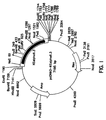
- Plasmid pcDNA3 (see Figure 1) is a pUC19-based vector that contains a CMV promoter/enhancer, a T7 bacteriophage RNA polymerase promoter positioned downstream of the CMV promoter/enhancer, a bovine growth hormone (BGH) polyadenylation signal downstream of the T7 promoter, and a polylinker between the T7 promoter and the BGH polyadenylation signal.
- BGH bovine growth hormone
- This vector thus contains all of the regulatory elements required for expression in a mammalian host cell of heterologous DNA which has been incorporated into the vector at the polylinker.
- this plasmid can be used for the synthesis of in vitro transcripts of heterologous DNA that has been subcloned into the vector at the polylinker.
- this plasmid contains a gene encoding neomycin resistance used as a selectable marker during transfection.
- Figure 1 also shows a partial restriction map of pcDNA3-KE ⁇ 6.3.
- the existing 5'-untranslated region was modified by PCR mutagenesis using the plasmid pcDNA3-KE ⁇ 6.3 as a DNA template and a complementary upstream oligonucleotide containing the appropriate nucleotide RBS substitutions as well as flanking 5' Hind III and Eco RI sites, and an oligonucleotide complementary to as coding sequences ⁇ 450 nucleotides downstream of the translational start codon.
- the resulting amplification product contained Hind lll and Eco Rl sites followed by the consensus RBS and nucleotides 1-459 of the human nAChR as coding sequence (nucleotides 143-602 of SEQ ID NO:9).
- the amplified DNA was digested with Hind lll and Bam HI; the 308-bp Hind lll- Bam HI fragment was isolated and ligated with the 5.3 kb Bam HI -Pvu l fragment of pcDNA3-KE ⁇ 6.3 and the 1.4-kb Pvu l to Hind III fragment from pcDNA3 to generate the ⁇ 7.0 kb plasmid pcDNA3-KE ⁇ 6RBS.
- the expression of the full-length human nicotinic nAChR ⁇ 3 subunit is optimized by the introduction of a consensus ribosome binding site (RBS) prior to the translational start codon.
- RBS consensus ribosome binding site
- the existing 5'-untranslated region is modified by PCR mutagenesis using a method similar to that described above for the ⁇ 6 nAChR subunit to generate pcDNA3-KB ⁇ 3RBS.
- Xenopus oöcytes are injected with in vitro transcripts prepared from constructs containing DNA encoding ⁇ 6 and ⁇ 3 subunits. Electrophysiological measurements of the oocyte transmembrane currents are made using the two-electrode voltage clamp technique (see, e.g. , Stuhmer (1992) Meth. Enzymol. 207 :310-339).
- Recombinant capped transcripts of pcDNA3-KE ⁇ RBS and pcDNA3-KB ⁇ 3RBS are synthesized from linearized plasmids using the mMessage and mMachine in vitro transcription kit according to the capped transcript protocol provided by the manufacturer (Catalog 1344 from AMBION, Inc., Austin, TX). The mass of the synthesized transcripts is determined by UV absorbance and the integrity of the transcripts is determined by electrophoresis through an agarose gel.
- Xenopus oöcytes are injected with either 12.5, 50 or 125 ng of one or more human nicotinic nAChR ⁇ and ⁇ subunit transcript per oocyte.
- the preparation and injection of oocytes is carried out as described by Dascal (1987) in Crit. Rev. Biochem. 22 :317-387.
- Two-to-six days following mRNA injection, the oocytes are examined using the two-electrode voltage clamp technique.
- the cells are bathed in Ringer's solution (115 mM NaCl, 2.5 mM KCI, 1.8 mM CaCl 2 , 10 mM HEPES, pH 7.3) containing 1 ⁇ M atropine with or without 100 ⁇ M d-tubocurarine.
- Cells are Voltage-clamped at -60 to -80 mV. Data are acquired with Axotape software at 2-5 Hz.
- the agonists acetylcholine (ACh), nicotine, and cytisine are added at concentrations ranging from 0.1 ⁇ M to 100 ⁇ M.
- Human embryonic kidney (HEK) 293 cells are transiently and stably transfected with DNA encoding human neuronal nicotinic nAChR ⁇ 6 and ⁇ 3 subunits.
- Transient transfectants are analyzed for expression of nicotinic nAChR using various assays, e.g. , electrophysiological methods, Ca 2 + -sensitive fluorescent indicator-based assays.
- HEK cells are transiently co-transfected with DNA encoding one or more ⁇ subunit and/or one or more ⁇ subunits.
- Approximately 2 X 10 6 HEK cells are transiently transfected with 18 ⁇ g of the indicated plasmid(s) according to standard CaPO 4 transfection procedures (Wigler et al. (1979) Proc. Natl. Acad. Sci. U.S.A. 76 :1373-1376) or using lipofectamine according to the manufacturer's instructions (Bethesda Research Laboratory (BRL), Gaithersburg, MD).
- plasmid pCMV ⁇ gal (Clontech Laboratories, Palo Alto, CA), which contains the Escherichia coli ⁇ - galactosidase gene fused to the CMV promoter, are co-transfected as a reporter gene for monitoring the efficiency of transfection.
- the transfectants are analyzed for ⁇ -galactosidase expression by measurement of ⁇ -galactosidase activity [Miller (1972) Experiments in Molecular Genetics , pp. 352-355, Cold Spring Harbor Press].
- Transfectants can also be analyzed for ⁇ -galactosidase expression by direct staining of the product of a reaction involving ⁇ -galactosidase and the X-gal substrate [Jones (1986) EMBO 5:3133-3142].
- HEK cells are transfected using the calcium phosphate transfection procedure [ Current Protocols in Molecular Biology, Vol. 1 , Wiley Inter-Science, Supplement 14, Unit 9.1.1-9.1.9 (1990)].
- HEK cells are transfected with 1 ml of DNA/calcium phosphate precipitate containing the DNA encoding the desired alpha and beta subunits and pSV2neo (as a selectable marker).
- Recombinant cell lines generated by transfection with DNA encoding human neuronal nAChR subunits, such as those described in EXAMPLE 5, can be further characterized using one or more of the following methods.
- RNA is isolated from ⁇ 1x10 7 cells and 10-15 ⁇ g of RNA from each cell type is used for Northern or slot blot hybridization analysis.
- the inserts from human neuronal nAChR-encoding plasmids can be nick-translated and used as probe.
- a fragment of the glyceraldehyde-3-phosphate dehyrodgenase (GAPD) gene sequence (Tso et al. (1985) Nucleic Acids Res.
- Cell lines generated by transfection with human neuronal nAChR ⁇ -or ⁇ - and ⁇ -subunit-encoding DNA can be analyzed for their ability to bind nicotine or other agonist, for example, as compared to control cell lines: e.g., neuronally-derived cell lines PC12 (Boulter et al . (1986) Nature 319 :368-374; ATCC #CRL1721) and IMR32 (Clementi, et al. (1986) Int. J. Neurochem. 47 :291-297; ATCC #CCL1-27), and muscle-derived cell line BC3H1 (Patrick, et al. (1977) J. Biol. Chem. 252 :2143-2153).
- Negative control cells i.e. , host cells from which the transfectants were prepared
- the assay is conducted as follows:
- the ability of nicotine or nAChR agonists and antagonists to mediate the influx of 86 Rb into transfected and control cells has been found to provide an indication of the presence of functional nAChRs on the cell surface.
- the 86 Rb ion-flux assay is conducted as follows:
- Electrophysiological measurements may be used to assess the activity of recombinant receptors or to assess the ability of a test compound to potentiate, antagonize or otherwise modulate the magnitude and duration of the flow of cations through the ligand-gated recombinant nAChR.
- the function of the expressed neuronal nAChR can be assessed by a variety of electrophysiological techniques, including two-electrode voltage clamp and patch clamp methods.
- the cation-conducting channel intrinsic to the nAChR opens in response to acetylcholine (ACh) or other nicotinic cholinergic agonists, permitting the flow of transmembrane current carried predominantly by sodium and potassium ions under physiological conditions. This current can be monitored directly by voltage clamp techniques.
- transfected mammalian cells or injected oocytes are analyzed electrophysiologically for the presence of nAChR agonist-dependent currents.
- Activation of the ligand-gated nAChR by agonists leads to an influx of cations, including Ca ++ , through the receptor channel.
- Ca ++ entry into the cell through the channel can induce release of calcium contained in intracellular stores.
- Monovalent cation entry into the cell through the channel can also result in an increase in cytoplasmic Ca ++ levels through depolarization of the membrane and subsequent activation of voltage-dependent calcium channels. Therefore, methods of detecting transient increases in intracellular calcium concentration can be applied to the analysis of functional nicotinic nAChR expression.
- One method for measuring intracellular calcium levels relies on calcium-sensitive fluorescent indicators.
- Calcium-sensitive indicators such as fluo-3 (Catalog No. F01241, Molecular Probes, Inc., Eugene, OR), are available as acetoxymethyl esters which are membrane permeable. When the acetoxymethyl ester form of the indicator enters a cell, the ester group is removed by cytosolic esterases, thereby trapping the free indicator in the cytosol. Interaction of the free indicator with calcium results in increased fluorescence of the indicator; therefore, an increase in the intracellular Ca 2+ concentration of cells containing the indicator can be expressed directly as an increase in fluorescence.
- An automated fluorescence detection system for assaying nicotinic nAChR has been described (see, U.S. Patent Application Serial Nos. 08/229,150, 08/244,985, 08/434,511, and 08/434,968 and corresponding published International PCT Patent Application No. US92/11090; see, also, published Internation PCT application No. 96/05488).
- HEK cells that are transiently or stably co-transfected with DNA encoding appropriate ⁇ and/or ⁇ subunits and ⁇ 6 and ⁇ 3 subunits are analyzed for expression of functional recombinant nAChR using the automated fluorescent indicator-based assay.
- the assay procedure is as follows.
- Untransfected HEK cells and HEK cells co-transfected with DNA encoding the appropriate ⁇ and ⁇ subunits are plated in the wells of a 96-well microtiter dish and loaded with fluo-3 by incubation for 2 hours at 20°C in a medium containing 20 ⁇ M fluo-3, 0.2% Pluronic F-127 in HBS (125 mM NaCl, 5 mM KCI, 1.8 mM CaCl 2 , 0.62 mM MgSO 4 , 6 mM glucose, 20 mM HEPES, pH 7.4). The cells are then washed with assay buffer (i.e. , HBS).
- assay buffer i.e. , HBS
- the antagonist d-tubocurarine is added to some of the wells at a final concentration of 10 ⁇ M.
- the microtiter dish is then placed into a fluorescence plate reader and the basal fluorescence of each well is measured and recorded before addition of agonist, e.g. , 200 ⁇ M nicotine, to the wells.
- the fluorescence of the wells is monitored repeatedly during a period of approximately 60 seconds following addition of nicotine.
- the fluorescence of the untransfected HEK cells does not change after addition of nicotine.
- the fluorescence of the co-transfected cells in absence of d-tubocurarine, increases dramatically after addition of nicotine to the wells. This nicotine-stimulated increase in fluorescence is not observed in co-transfected cells that had been exposed to the antagonist d-tubocurarine.
- Such results demonstrate that the co-transfected cells express functional recombinant nAChR that are activated by nicotine and blocked by d-tubocurarine.
- Sequence ID No. 1 is a nucleotide sequence encoding an ⁇ 2 subunit of a human neuronal nicotinic acetylcholine receptor, and the deduced amino acid sequence thereof.
- Sequence ID No. 2 is the amino acid sequence of the ⁇ 2 subunit of a human neuronal nicotinic acetylcholine receptor set forth in Sequence ID No. 1.
- Sequence ID No. 3 is a nucleotide sequence encoding a ⁇ 3 subunit of a human neuronal nicotinic acetylcholine receptor, and the deduced amino acid sequence thereof.
- Sequence ID No. 4 is the amino acid sequence of the ⁇ 3 subunit of a human neuronal nicotinic acetylcholine receptor set forth in Sequence ID No. 3.
- Sequence ID No. 5 is a nucleotide sequence encoding an ⁇ 4 subunit of a human neuronal nicotinic acetylcholine receptor, and the deduced amino acid sequence thereof.
- Sequence ID No. 6 is the amino acid sequence of the ⁇ 4 subunit of human neuronal nicotinic acetylcholine receptor set forth in Sequence ID No. 5.
- Sequence ID No. 7 is a nucleotide sequence encoding an ⁇ 5 subunit of a human neuronal nicotinic acetylcholine receptor, and the deduced amino acid sequence thereof.
- Sequence ID No. 8 is the amino acid sequence of the ⁇ 5 subunit of a human neuronal nicotinic acetylcholine receptor set forth in Sequence ID No. 7.
- Sequence ID No. 9 is a nucleotide sequence encoding an as subunit of a human neuronal nicotinic acetylcholine receptor, and the deduced amino acid sequence thereof.
- Sequence ID No. 10 is the amino acid sequence of the ⁇ 6 subunit of a human neuronal nicotinic acetylcholine receptor set forth in Sequence ID No. 9.
- Sequence ID No. 11 is a nucleotide sequence encoding an ⁇ 7 subunit of a human neuronal nicotinic acetylcholine receptor, and the deduced amino acid sequence thereof.
- Sequence ID No. 12 is the amino acid sequence of the ⁇ 7 subunit of a human neuronal nicotinic acetylcholine receptor set forth in Sequence ID No. 11.
- Sequence ID No. 13 is a nucleotide sequence encoding a ⁇ 2 subunit of a human neuronal nicotinic acetylcholine receptor, and the deduced amino acid sequence thereof.
- Sequence ID No. 14 is the amino acid sequence of the ⁇ 2 subunit of a human neuronal nicotinic acetylcholine receptor set forth in Sequence ID No. 13.
- Sequence ID No. 15 is a nucleotide sequence encoding a ⁇ 3 subunit of a human neuronal nicotinic acetylcholine receptor, and the deduced amino acid sequence thereof.
- Sequence ID No. 16 is the amino acid sequence of the ⁇ 3 subunit of a human neuronal nicotinic acetylcholine receptor set forth in Sequence ID No. 15.
- Sequence ID No. 17 is a nucleotide sequence encoding a ⁇ 4 subunit of a human neuronal nicotinic acetylcholine receptor, and the deduced amino acid sequence thereof.
- Sequence ID No. 18 is the amino acid sequence of the ⁇ 4 subunit of a human neuronal nicotinic acetylcholine receptor set forth in Sequence ID No. 17.
- Sequence ID No. 19 is a nucleotide sequence encoding a variant ⁇ 6 subunit of a human neuronal nicotinic acetylcholine receptor, and the deduced amino acid sequence thereof.
- Sequence ID No. 20 is the amino acid sequence of the ⁇ 6 subunit of a human neuronal nicotinic acetylcholine receptor set forth in Sequence ID No. 19.
Landscapes
- Health & Medical Sciences (AREA)
- Life Sciences & Earth Sciences (AREA)
- Engineering & Computer Science (AREA)
- Immunology (AREA)
- Chemical & Material Sciences (AREA)
- Biomedical Technology (AREA)
- Molecular Biology (AREA)
- Urology & Nephrology (AREA)
- Hematology (AREA)
- Biochemistry (AREA)
- Medicinal Chemistry (AREA)
- Cell Biology (AREA)
- General Health & Medical Sciences (AREA)
- Analytical Chemistry (AREA)
- Organic Chemistry (AREA)
- Food Science & Technology (AREA)
- Biotechnology (AREA)
- Physics & Mathematics (AREA)
- Microbiology (AREA)
- Toxicology (AREA)
- Pathology (AREA)
- General Physics & Mathematics (AREA)
- Proteomics, Peptides & Aminoacids (AREA)
- Bioinformatics & Cheminformatics (AREA)
- Zoology (AREA)
- Gastroenterology & Hepatology (AREA)
- Biophysics (AREA)
- Genetics & Genomics (AREA)
- Tropical Medicine & Parasitology (AREA)
- Neurology (AREA)
- Micro-Organisms Or Cultivation Processes Thereof (AREA)
- Peptides Or Proteins (AREA)
- Medicines That Contain Protein Lipid Enzymes And Other Medicines (AREA)
- Measuring Or Testing Involving Enzymes Or Micro-Organisms (AREA)
- Pharmaceuticals Containing Other Organic And Inorganic Compounds (AREA)
- Steroid Compounds (AREA)
Claims (33)
- Isoliertes Nukleinsäuremolekül, umfassend eine Sequenz von Nukleotiden, die für eine α6-Untereinheit eines humanen neuronalen nikotinergen Acetylcholin-Rezeptors, welche mindestens 90 % Identität mit der in SEQ-ID-NR. 10 oder 20 angegebenen Sequenz von Aminosäuren aufweist, kodiert.
- Nukleinsäuremolekül nach Anspruch 1, wobei die α6-Untereinheit die in SEQ-ID-NR. 10 angegebene Sequenz von Aminosäuren umfasst.
- Nukleinsäuremolekül nach Anspruch 1, wobei die α6-Untereinheit die in SEQ-ID-NR. 20 angegebene Sequenz von Aminosäuren umfasst.
- Nukleinsäuremolekül nach Anspruch 1, wobei die Sequenz von Nukleotiden mit den in SEQ-ID-NR. 9 angegebenen Nukleotiden 143-1624 unter Bedingungen hoher Stringenz hybridisiert oder die Sequenz von Nukleotiden unter Bedingungen hoher Stringenz mit den in SEQ-ID-NR. 19 angegebenen Nukleotiden 143-1579 hybridisiert.
- Nukleinsäuremolekül nach Anspruch 1, wobei die Sequenz von Nukleotiden, die für eine α6-Untereinheit kodiert, mindestens 90 % Identität mit den in SEQ-ID-NR. 9 angegebenen Nukleotiden 143-1624 aufweist.
- Nukleinsäuremolekül nach Anspruch 5, umfassend die in SEQ-ID-NR. 9 angegebenen Nukleotide 143-1624.
- Nukleinsäuremolekül nach Anspruch 1, wobei die Sequenz von Nukleotiden, die für eine α4-Untereinheit kodiert, mindestens 90 % Identität mit den in SEQ-ID-NR. 19 angegebenen Nukleotiden 143-1579 aufweist.
- Nukleinsäuremolekül nach Anspruch 7, umfassend die in SEQ-ID-NR. 19 angegebenen Nukleotide 143-1579.
- Einzelsträngiges Nukleinsäuremolekül von mindestens 27 Basen Länge, umfassend beliebige aufeinander folgende 27 Basen, die in SEQ-ID-NR. 9 oder SEQ-ID-NR. 19 angegeben sind, oder das Komplement davon.
- Nukleinsäuremolekül nach Anspruch 9, welches markiert ist.
- Nukleinsäuremolekül nach Anspruch 10, welches mit 32P markiert ist.
- Verfahren zur Isolierung von DNA, die für eine humane Untereinheit eines nikotinergen Acetylcholin-Rezeptors kodiert, umfassend das Screenen einer Bank mit dem Nukleinsäuremolekül nach Anspruch 11 und die Isolierung von Klonen, welche unter Bedingungen von mindestens niedriger Stringenz mit der Nukleinsäure von Anspruch 11 hybridisieren.
- Verfahren nach Anspruch 12, wobei die isolierten Klone unter Bedingungen hoher Stringenz hybridisieren.
- Verfahren nach Anspruch 12 oder Anspruch 13, ferner umfassend die Identifizierung derjenigen Klone, welche für eine α6-Untereinheit kodieren.
- Zellen, umfassend ein Nukleinsäuremolekül nach irgendeinem der Ansprüche 1 bis 8, wobei die Zellen prokaryotische Zellen oder eukaryotische Zellen sind und die Nukleinsäure für die Zellen heterolog ist.
- Zellen nach Anspruch 15, welche Säugerzellen oder Amphibien-Oozyten sind.
- Zellen nach Anspruch 15, ferner umfassend eine heterologe Nukleinsäure, die für eine β-Untereinheit eines humanen neuronalen nikotinergen Acetylcholin-Rezeptors kodiert.
- Zellen nach Anspruch 17, wobei die β-Untereinheit aus β2, β3 oder β4 ausgewählt ist.
- Zellen nach Anspruch 18, wobei die β-Untereinheit β3 ist.
- Zellen nach Anspruch 15, wobei die Zellen funktionelle neuronale nikotinerge Acetylcholin-Rezeptoren exprimieren, welche eine oder mehrere Untereinheit(en) enthalten, die von der heterologen Nukleinsäure kodiert wird/werden.
- Molekül nach irgendeinem der Ansprüche 1 bis 8, welches DNA ist.
- Molekül nach irgendeinem der Ansprüche 1 bis 8, welches RNA ist.
- Verfahren zum Screenen von Verbindungen für die Identifizierung von Verbindungen, welche die Aktivität von humanen neuronalen nikotinergen Acetylcholin-Rezeptoren modulieren, wobei das Verfahren das Feststellen der Wirkung einer Testverbindung auf die Aktivität eines neuronalen nikotinergen Acetylcholin-Rezeptors in Zellen nach Anspruch 15 im Vergleich zu der Wirkung auf Kontrollzellen oder auf die Aktivität eines neuronalen nikotinergen Acetylcholin-Rezeptors der Zellen in Abwesenheit der Verbindung umfasst.
- α6-Untereinheit eines im wesentlichen reinen humanen neuronalen nikotinergen Acetylcholin-Rezeptors, welche mindestens 90 % Homologie zu SEQ-ID-NR. 10 oder 20 aufweist.
- Im wesentlichen reiner rekombinanter humaner neuronaler nikotinerger Acetylcholin-Rezeptor, umfassend eine wie In Anspruch 24 definierte α0-Untereinheit eines humanen neuronalen nikotinergen Acetylcholin-Rezeptors.
- Nikotinerger Acetylcholin-Rezeptor nach Anspruch 25, ferner umfassend eine β-Untereinheit eines humanen neuronalen nikotinergen Acetylcholin-Rezeptors.
- Verfahren zur Identifizierung funktioneller Untereinheiten neuronaler nikotinerger Acetylcholin-Rezeptoren und Kombinationen davon, umfassend:(a) Einführen eines Nukleinsäuremoleküls nach irgendeinem der Ansprüche 1-8 in eukaryotische Zellen, und(b) Nachweisen von neuronaler nikotinerger Acetylcholin-Rezeptor-Aktivität in den Zellen von Schritt (a), wobei die Aktivität durch einen Rezeptor vermittelt wird, der eine von dem eingeführten Molekül kodierte Untereinheit enthält.
- Verfahren nach Anspruch 27, ferner umfassend das Einführen von Nukleinsäure, die für eine oder mehrere α-Untereinheit(en) eines humanen neuronalen nikotinergen Acetylcholin-Rezeptors kodiert.
- Nukleinsäure nach irgendeinem der Ansprüche 1 bis 8, welche mRNA ist.
- Verfahren nach Anspruch 27, ferner umfassend das Einführen eines Nukleinsäuremoleküls, das für eine oder mehrere β-Untereinheit(en) eines humanen neuronalen nikotinergen Acetylcholin-Rezeptors kodiert.
- Nukleinsäuremolekül nach Anspruch 1, umfassend die in SEQ-ID-NR. 9 angegebene Sequenz von Nukleotiden.
- Zellen nach Anspruch 15, welche neuronale nikotinerge Acetylcholin-Rezeptoren exprimieren.
- Nukleinsäuremolekül nach Anspruch 1, erhalten aus einer humanen cDNA-Bank.
Priority Applications (1)
| Application Number | Priority Date | Filing Date | Title |
|---|---|---|---|
| EP02078642A EP1295945A1 (de) | 1995-06-07 | 1996-06-07 | Verbindungen menschlicher neuronaler Acetylcholinrezeptoren und Verfahren zu deren Verwendung |
Applications Claiming Priority (3)
| Application Number | Priority Date | Filing Date | Title |
|---|---|---|---|
| US08/484,722 US6485967B1 (en) | 1995-06-07 | 1995-06-07 | Human neuronal nicotinic acetylcholine receptor α6 and β3 nucleic acid |
| US484722 | 1995-06-07 | ||
| PCT/US1996/009775 WO1996041876A1 (en) | 1995-06-07 | 1996-06-07 | Human neuronal nicotinic acetylcholine receptor compositions and methods employing same |
Related Child Applications (1)
| Application Number | Title | Priority Date | Filing Date |
|---|---|---|---|
| EP02078642A Division EP1295945A1 (de) | 1995-06-07 | 1996-06-07 | Verbindungen menschlicher neuronaler Acetylcholinrezeptoren und Verfahren zu deren Verwendung |
Publications (2)
| Publication Number | Publication Date |
|---|---|
| EP0832230A1 EP0832230A1 (de) | 1998-04-01 |
| EP0832230B1 true EP0832230B1 (de) | 2005-11-30 |
Family
ID=23925332
Family Applications (2)
| Application Number | Title | Priority Date | Filing Date |
|---|---|---|---|
| EP02078642A Withdrawn EP1295945A1 (de) | 1995-06-07 | 1996-06-07 | Verbindungen menschlicher neuronaler Acetylcholinrezeptoren und Verfahren zu deren Verwendung |
| EP96921440A Expired - Lifetime EP0832230B1 (de) | 1995-06-07 | 1996-06-07 | Menschliche neuronale acetylcholin-rezeptor verbindungen und methoden zu deren anwendung |
Family Applications Before (1)
| Application Number | Title | Priority Date | Filing Date |
|---|---|---|---|
| EP02078642A Withdrawn EP1295945A1 (de) | 1995-06-07 | 1996-06-07 | Verbindungen menschlicher neuronaler Acetylcholinrezeptoren und Verfahren zu deren Verwendung |
Country Status (9)
| Country | Link |
|---|---|
| US (5) | US6485967B1 (de) |
| EP (2) | EP1295945A1 (de) |
| JP (2) | JPH11509726A (de) |
| AT (1) | ATE311448T1 (de) |
| AU (1) | AU704927B2 (de) |
| CA (1) | CA2221311A1 (de) |
| DE (1) | DE69635517T2 (de) |
| ES (1) | ES2250993T3 (de) |
| WO (1) | WO1996041876A1 (de) |
Families Citing this family (15)
| Publication number | Priority date | Publication date | Assignee | Title |
|---|---|---|---|---|
| US6632823B1 (en) | 1997-12-22 | 2003-10-14 | Merck & Co., Inc. | Substituted pyridine compounds useful as modulators of acetylcholine receptors |
| DE19819829A1 (de) | 1998-05-04 | 1999-11-11 | Bayer Ag | Nukleinsäuren, die für Acetylcholinrezeptor-Untereinheiten von Insekten kodieren |
| GB9913248D0 (en) * | 1999-06-09 | 1999-08-04 | Babraham Inst | Recombinant nematode nicotinic receptor and uses |
| EP1090991A1 (de) * | 1999-09-29 | 2001-04-11 | Sanofi-Synthelabo | Nikotin-acetylcholin-Rezeptor, dessen Isolierung und Verwendung |
| DE19959582A1 (de) * | 1999-12-10 | 2001-06-13 | Bayer Ag | Nukleinsäuren, die für neue Acetylcholinrezeptor-beta-Untereinheiten von Insekten kodieren |
| CA2393538A1 (en) * | 1999-12-14 | 2001-06-21 | Pharmacia & Upjohn Company | Human ion channels |
| AU2001249650A1 (en) * | 2000-04-03 | 2001-10-15 | Anne Chew | Haplotypes of the chrnb3 gene |
| FR2813499B1 (fr) * | 2000-09-04 | 2004-11-26 | Pasteur Institut | Mammifere non-humain mutant pour l'expression de la sous- unite alpha6 du recepteur nicotinique de l'acetylcholine et utilisation pour le criblage de substances susceptibles d'interagir avec ce recepteur |
| US7700749B2 (en) | 2001-08-31 | 2010-04-20 | Agensys, Inc. | Nucleic acid and corresponding protein entitled 205P1B5 useful in treatment and detection of cancer |
| WO2005030145A2 (en) * | 2003-09-24 | 2005-04-07 | Targacept, Inc. | Composition and pharmacology of novel alpha-6-containing nicotinic acetylcholine receptors |
| US20070184656A1 (en) * | 2004-11-08 | 2007-08-09 | Tel Epion Inc. | GCIB Cluster Tool Apparatus and Method of Operation |
| US7799683B2 (en) * | 2004-11-08 | 2010-09-21 | Tel Epion, Inc. | Copper interconnect wiring and method and apparatus for forming thereof |
| WO2006091672A2 (en) * | 2005-02-23 | 2006-08-31 | Dow Agrosciences Llc | Novel assays utilizing nicotinic acetylcholine receptor subunits |
| US7879913B2 (en) * | 2005-06-28 | 2011-02-01 | Catholic Healthcare West | Iptakalim hydrochloride for decreasing nicotine use |
| US9005981B2 (en) * | 2008-12-30 | 2015-04-14 | Dow Agrosciences Llc | Assays utilizing nicotinic acetylcholine receptor subunits |
Family Cites Families (20)
| Publication number | Priority date | Publication date | Assignee | Title |
|---|---|---|---|---|
| US4703008A (en) | 1983-12-13 | 1987-10-27 | Kiren-Amgen, Inc. | DNA sequences encoding erythropoietin |
| US4855231A (en) | 1984-10-30 | 1989-08-08 | Phillips Petroleum Company | Regulatory region for heterologous gene expression in yeast |
| US4837148A (en) | 1984-10-30 | 1989-06-06 | Phillips Petroleum Company | Autonomous replication sequences for yeast strains of the genus pichia |
| US4882279A (en) | 1985-10-25 | 1989-11-21 | Phillips Petroleum Company | Site selective genomic modification of yeast of the genus pichia |
| US4859609A (en) | 1986-04-30 | 1989-08-22 | Genentech, Inc. | Novel receptors for efficient determination of ligands and their antagonists or agonists |
| US5071773A (en) | 1986-10-24 | 1991-12-10 | The Salk Institute For Biological Studies | Hormone receptor-related bioassays |
| US5024939A (en) | 1987-07-09 | 1991-06-18 | Genentech, Inc. | Transient expression system for producing recombinant protein |
| US4929555A (en) | 1987-10-19 | 1990-05-29 | Phillips Petroleum Company | Pichia transformation |
| US4981784A (en) | 1987-12-02 | 1991-01-01 | The Salk Institute For Biological Studies | Retinoic acid receptor method |
| US5449606A (en) | 1988-03-18 | 1995-09-12 | The Salk Institute For Biological Studies | DNA encoding neuronal nicotinic acetylcholine receptor compositions containing the beta 4 subunit |
| CA1341554C (en) | 1988-03-18 | 2007-10-09 | The Salk Institute For Biological Studies | Neuronal nicotinic acetylcholine receptor compositions and assay |
| US5386025A (en) | 1990-02-20 | 1995-01-31 | The Salk Institute Biotechnology/Industrial Associates | Calcium channel compositions and methods |
| EP0424397B1 (de) | 1988-04-04 | 1996-06-19 | The Salk Institute Biotechnology Industrial Associates, Inc. | Calciumkanal-zusammensetzungen und verfahren |
| DK0463064T3 (da) | 1989-03-14 | 1999-11-29 | Salk Inst For Biological Studi | Neuronale nicotinacethylcholinreceptorsammensætninger indeholdende beta-4-underenheden |
| EP0497894A4 (en) | 1989-10-25 | 1993-03-31 | The Salk Institute For Biological Studies | Receptor infection assay |
| US5091518A (en) | 1989-11-16 | 1992-02-25 | The Salk Institute For Biological Studies | Beta retinoic acid response elements compositions and assays |
| US5369028A (en) | 1990-04-03 | 1994-11-29 | The Salk Institute Biotechnology/Industrial Associates, Inc. | DNA and mRNA encoding human neuronal nicotinic acetylcholine receptor compositions and cells transformed with same |
| US5401629A (en) | 1990-08-07 | 1995-03-28 | The Salk Institute Biotechnology/Industrial Associates, Inc. | Assay methods and compositions useful for measuring the transduction of an intracellular signal |
| DE69434067T2 (de) | 1993-03-08 | 2006-03-02 | Merck & Co., Inc. | Menschliche neuronale nikotin-acetylcholin-rezeptor-verbindungen und methoden ihres einsatzes |
| WO1995013299A1 (en) | 1993-11-08 | 1995-05-18 | The Salk Institute Biotechnology/Industrial Associates, Inc. | Human neuronal nicotinic acetylcholine receptor compositions and methods employing same |
-
1995
- 1995-06-07 US US08/484,722 patent/US6485967B1/en not_active Expired - Fee Related
-
1996
- 1996-06-07 DE DE69635517T patent/DE69635517T2/de not_active Expired - Fee Related
- 1996-06-07 CA CA002221311A patent/CA2221311A1/en not_active Abandoned
- 1996-06-07 ES ES96921440T patent/ES2250993T3/es not_active Expired - Lifetime
- 1996-06-07 EP EP02078642A patent/EP1295945A1/de not_active Withdrawn
- 1996-06-07 WO PCT/US1996/009775 patent/WO1996041876A1/en not_active Ceased
- 1996-06-07 US US08/660,451 patent/US6524789B1/en not_active Expired - Fee Related
- 1996-06-07 AT AT96921440T patent/ATE311448T1/de not_active IP Right Cessation
- 1996-06-07 AU AU62664/96A patent/AU704927B2/en not_active Ceased
- 1996-06-07 JP JP9503220A patent/JPH11509726A/ja not_active Withdrawn
- 1996-06-07 EP EP96921440A patent/EP0832230B1/de not_active Expired - Lifetime
-
2002
- 2002-11-25 US US10/303,198 patent/US7169895B2/en not_active Expired - Fee Related
-
2003
- 2003-01-23 US US10/349,836 patent/US7119067B2/en not_active Expired - Fee Related
-
2007
- 2007-01-29 US US11/699,270 patent/US20070185313A1/en not_active Abandoned
-
2008
- 2008-10-03 JP JP2008258987A patent/JP2009050270A/ja active Pending
Also Published As
| Publication number | Publication date |
|---|---|
| EP1295945A1 (de) | 2003-03-26 |
| US6524789B1 (en) | 2003-02-25 |
| AU704927B2 (en) | 1999-05-06 |
| WO1996041876A1 (en) | 1996-12-27 |
| US7169895B2 (en) | 2007-01-30 |
| ES2250993T3 (es) | 2006-04-16 |
| DE69635517T2 (de) | 2006-08-10 |
| AU6266496A (en) | 1997-01-09 |
| US20070185313A1 (en) | 2007-08-09 |
| US7119067B2 (en) | 2006-10-10 |
| CA2221311A1 (en) | 1996-12-27 |
| EP0832230A1 (de) | 1998-04-01 |
| US20040002122A1 (en) | 2004-01-01 |
| US20030138911A1 (en) | 2003-07-24 |
| DE69635517D1 (de) | 2006-01-05 |
| ATE311448T1 (de) | 2005-12-15 |
| US6485967B1 (en) | 2002-11-26 |
| JP2009050270A (ja) | 2009-03-12 |
| JPH11509726A (ja) | 1999-08-31 |
Similar Documents
| Publication | Publication Date | Title |
|---|---|---|
| EP0688361B1 (de) | Menschliche neuronale nikotin-acetylcholin-rezeptor-verbindungen und methoden ihres einsatzes | |
| US20070185313A1 (en) | Human neuronal nicotinic acetylcholine receptor compositions and methods employing same | |
| EP0696320B1 (de) | Untereinheiten von menschlichen n-methyl-d-aspartat rezeptoren, diese kodierende nukleinsäure und dessen verwendung | |
| EP0701611B1 (de) | Menschliche metabotropische rezeptoren, diese kodierende nukleinsäure und ihre verwendung | |
| CA2215730A1 (en) | Human metabotropic glutamate receptor subtype mglur6 | |
| US5801232A (en) | DNA and mRNA encoding human neuronal nicotinic acetylcholine receptor alpha-2 subunit and cells transformed with same | |
| EP0606734A1 (de) | Menschliche ZNS-Rezeptoren der NMDA-R1-Familie | |
| US6936457B1 (en) | DNA ENCODING HUMAN α AND β SUBUNITS OF NEURONAL NICOTINIC ACETYLCHOLINE RECEPTOR, CELLS TRANSFORMED THEREWITH, AND RECOMBINANT CELL LINE EXPRESSING A HUMAN α AND β SUBUNIT OF NEURONAL NICOTINIC ACETYLCHOLINE RECEPTOR | |
| US6440681B1 (en) | Methods for identifying agonists and antagonists for human neuronal nicotinic acetylcholine receptors | |
| EP0674003A2 (de) | Proteine die menschliche CNS Rezeptoren modulieren | |
| GB2308121A (en) | Human neuronal nicotinic acetylcholine receptor compositions and methods employing same |
Legal Events
| Date | Code | Title | Description |
|---|---|---|---|
| PUAI | Public reference made under article 153(3) epc to a published international application that has entered the european phase |
Free format text: ORIGINAL CODE: 0009012 |
|
| 17P | Request for examination filed |
Effective date: 19971210 |
|
| AK | Designated contracting states |
Kind code of ref document: A1 Designated state(s): AT BE CH DE DK ES FI FR GB GR IE IT LI LU MC NL PT SE |
|
| AX | Request for extension of the european patent |
Free format text: AL PAYMENT 971210;LT PAYMENT 971210;LV PAYMENT 971210;SI PAYMENT 971210 |
|
| RAP1 | Party data changed (applicant data changed or rights of an application transferred) |
Owner name: MERCK & CO., INC. |
|
| 17Q | First examination report despatched |
Effective date: 20020206 |
|
| GRAP | Despatch of communication of intention to grant a patent |
Free format text: ORIGINAL CODE: EPIDOSNIGR1 |
|
| GRAS | Grant fee paid |
Free format text: ORIGINAL CODE: EPIDOSNIGR3 |
|
| GRAA | (expected) grant |
Free format text: ORIGINAL CODE: 0009210 |
|
| AK | Designated contracting states |
Kind code of ref document: B1 Designated state(s): AT BE CH DE DK ES FI FR GB GR IE IT LI LU MC NL PT SE |
|
| AX | Request for extension of the european patent |
Extension state: AL LT LV SI |
|
| PG25 | Lapsed in a contracting state [announced via postgrant information from national office to epo] |
Ref country code: NL Free format text: LAPSE BECAUSE OF FAILURE TO SUBMIT A TRANSLATION OF THE DESCRIPTION OR TO PAY THE FEE WITHIN THE PRESCRIBED TIME-LIMIT Effective date: 20051130 Ref country code: FI Free format text: LAPSE BECAUSE OF FAILURE TO SUBMIT A TRANSLATION OF THE DESCRIPTION OR TO PAY THE FEE WITHIN THE PRESCRIBED TIME-LIMIT Effective date: 20051130 Ref country code: BE Free format text: LAPSE BECAUSE OF FAILURE TO SUBMIT A TRANSLATION OF THE DESCRIPTION OR TO PAY THE FEE WITHIN THE PRESCRIBED TIME-LIMIT Effective date: 20051130 Ref country code: AT Free format text: LAPSE BECAUSE OF FAILURE TO SUBMIT A TRANSLATION OF THE DESCRIPTION OR TO PAY THE FEE WITHIN THE PRESCRIBED TIME-LIMIT Effective date: 20051130 |
|
| REG | Reference to a national code |
Ref country code: GB Ref legal event code: FG4D Ref country code: CH Ref legal event code: EP |
|
| REG | Reference to a national code |
Ref country code: IE Ref legal event code: FG4D |
|
| REF | Corresponds to: |
Ref document number: 69635517 Country of ref document: DE Date of ref document: 20060105 Kind code of ref document: P |
|
| REG | Reference to a national code |
Ref country code: CH Ref legal event code: NV Representative=s name: E. BLUM & CO. PATENTANWAELTE |
|
| PG25 | Lapsed in a contracting state [announced via postgrant information from national office to epo] |
Ref country code: SE Free format text: LAPSE BECAUSE OF FAILURE TO SUBMIT A TRANSLATION OF THE DESCRIPTION OR TO PAY THE FEE WITHIN THE PRESCRIBED TIME-LIMIT Effective date: 20060228 Ref country code: GR Free format text: LAPSE BECAUSE OF FAILURE TO SUBMIT A TRANSLATION OF THE DESCRIPTION OR TO PAY THE FEE WITHIN THE PRESCRIBED TIME-LIMIT Effective date: 20060228 Ref country code: DK Free format text: LAPSE BECAUSE OF FAILURE TO SUBMIT A TRANSLATION OF THE DESCRIPTION OR TO PAY THE FEE WITHIN THE PRESCRIBED TIME-LIMIT Effective date: 20060228 |
|
| REG | Reference to a national code |
Ref country code: ES Ref legal event code: FG2A Ref document number: 2250993 Country of ref document: ES Kind code of ref document: T3 |
|
| PG25 | Lapsed in a contracting state [announced via postgrant information from national office to epo] |
Ref country code: PT Free format text: LAPSE BECAUSE OF FAILURE TO SUBMIT A TRANSLATION OF THE DESCRIPTION OR TO PAY THE FEE WITHIN THE PRESCRIBED TIME-LIMIT Effective date: 20060502 |
|
| LTIE | Lt: invalidation of european patent or patent extension |
Effective date: 20051130 |
|
| NLV1 | Nl: lapsed or annulled due to failure to fulfill the requirements of art. 29p and 29m of the patents act | ||
| PG25 | Lapsed in a contracting state [announced via postgrant information from national office to epo] |
Ref country code: IE Free format text: LAPSE BECAUSE OF NON-PAYMENT OF DUE FEES Effective date: 20060607 |
|
| PG25 | Lapsed in a contracting state [announced via postgrant information from national office to epo] |
Ref country code: MC Free format text: LAPSE BECAUSE OF NON-PAYMENT OF DUE FEES Effective date: 20060630 |
|
| ET | Fr: translation filed | ||
| PLBE | No opposition filed within time limit |
Free format text: ORIGINAL CODE: 0009261 |
|
| STAA | Information on the status of an ep patent application or granted ep patent |
Free format text: STATUS: NO OPPOSITION FILED WITHIN TIME LIMIT |
|
| 26N | No opposition filed |
Effective date: 20060831 |
|
| REG | Reference to a national code |
Ref country code: IE Ref legal event code: MM4A |
|
| REG | Reference to a national code |
Ref country code: CH Ref legal event code: PFA Owner name: MERCK & CO., INC. Free format text: MERCK & CO., INC.#1 MERCK DRIVE, P.O. BOX 100#WHITE HOUSE STATION, NEW JERSEY 08889 (US) -TRANSFER TO- MERCK & CO., INC.#1 MERCK DRIVE, P.O. BOX 100#WHITE HOUSE STATION, NEW JERSEY 08889 (US) |
|
| PG25 | Lapsed in a contracting state [announced via postgrant information from national office to epo] |
Ref country code: LU Free format text: LAPSE BECAUSE OF NON-PAYMENT OF DUE FEES Effective date: 20060607 |
|
| PGFP | Annual fee paid to national office [announced via postgrant information from national office to epo] |
Ref country code: IT Payment date: 20090616 Year of fee payment: 14 |
|
| PGFP | Annual fee paid to national office [announced via postgrant information from national office to epo] |
Ref country code: ES Payment date: 20090709 Year of fee payment: 14 Ref country code: CH Payment date: 20090615 Year of fee payment: 14 |
|
| PGFP | Annual fee paid to national office [announced via postgrant information from national office to epo] |
Ref country code: GB Payment date: 20090603 Year of fee payment: 14 Ref country code: DE Payment date: 20090604 Year of fee payment: 14 |
|
| PGFP | Annual fee paid to national office [announced via postgrant information from national office to epo] |
Ref country code: FR Payment date: 20091117 Year of fee payment: 14 |
|
| REG | Reference to a national code |
Ref country code: CH Ref legal event code: PL |
|
| GBPC | Gb: european patent ceased through non-payment of renewal fee |
Effective date: 20100607 |
|
| REG | Reference to a national code |
Ref country code: FR Ref legal event code: ST Effective date: 20110228 |
|
| PG25 | Lapsed in a contracting state [announced via postgrant information from national office to epo] |
Ref country code: IT Free format text: LAPSE BECAUSE OF NON-PAYMENT OF DUE FEES Effective date: 20100607 |
|
| PG25 | Lapsed in a contracting state [announced via postgrant information from national office to epo] |
Ref country code: DE Free format text: LAPSE BECAUSE OF NON-PAYMENT OF DUE FEES Effective date: 20110101 Ref country code: CH Free format text: LAPSE BECAUSE OF NON-PAYMENT OF DUE FEES Effective date: 20100630 Ref country code: LI Free format text: LAPSE BECAUSE OF NON-PAYMENT OF DUE FEES Effective date: 20100630 |
|
| PG25 | Lapsed in a contracting state [announced via postgrant information from national office to epo] |
Ref country code: FR Free format text: LAPSE BECAUSE OF NON-PAYMENT OF DUE FEES Effective date: 20100630 |
|
| REG | Reference to a national code |
Ref country code: ES Ref legal event code: FD2A Effective date: 20110715 |
|
| PG25 | Lapsed in a contracting state [announced via postgrant information from national office to epo] |
Ref country code: GB Free format text: LAPSE BECAUSE OF NON-PAYMENT OF DUE FEES Effective date: 20100607 Ref country code: ES Free format text: LAPSE BECAUSE OF NON-PAYMENT OF DUE FEES Effective date: 20110705 |
|
| PG25 | Lapsed in a contracting state [announced via postgrant information from national office to epo] |
Ref country code: ES Free format text: LAPSE BECAUSE OF NON-PAYMENT OF DUE FEES Effective date: 20100608 |