EP0830430B1 - Polymers for antifouling coatings and a process for the preparation thereof - Google Patents
Polymers for antifouling coatings and a process for the preparation thereof Download PDFInfo
- Publication number
- EP0830430B1 EP0830430B1 EP96918929A EP96918929A EP0830430B1 EP 0830430 B1 EP0830430 B1 EP 0830430B1 EP 96918929 A EP96918929 A EP 96918929A EP 96918929 A EP96918929 A EP 96918929A EP 0830430 B1 EP0830430 B1 EP 0830430B1
- Authority
- EP
- European Patent Office
- Prior art keywords
- maleimide
- coor
- mol
- component
- methacrylate
- Prior art date
- Legal status (The legal status is an assumption and is not a legal conclusion. Google has not performed a legal analysis and makes no representation as to the accuracy of the status listed.)
- Expired - Lifetime
Links
- 0 *CC(N(*)CC(C(*)=C)=O)=O Chemical compound *CC(N(*)CC(C(*)=C)=O)=O 0.000 description 1
Classifications
-
- C—CHEMISTRY; METALLURGY
- C09—DYES; PAINTS; POLISHES; NATURAL RESINS; ADHESIVES; COMPOSITIONS NOT OTHERWISE PROVIDED FOR; APPLICATIONS OF MATERIALS NOT OTHERWISE PROVIDED FOR
- C09D—COATING COMPOSITIONS, e.g. PAINTS, VARNISHES OR LACQUERS; FILLING PASTES; CHEMICAL PAINT OR INK REMOVERS; INKS; CORRECTING FLUIDS; WOODSTAINS; PASTES OR SOLIDS FOR COLOURING OR PRINTING; USE OF MATERIALS THEREFOR
- C09D5/00—Coating compositions, e.g. paints, varnishes or lacquers, characterised by their physical nature or the effects produced; Filling pastes
- C09D5/16—Antifouling paints; Underwater paints
- C09D5/1656—Antifouling paints; Underwater paints characterised by the film-forming substance
- C09D5/1662—Synthetic film-forming substance
- C09D5/1668—Vinyl-type polymers
-
- C—CHEMISTRY; METALLURGY
- C08—ORGANIC MACROMOLECULAR COMPOUNDS; THEIR PREPARATION OR CHEMICAL WORKING-UP; COMPOSITIONS BASED THEREON
- C08F—MACROMOLECULAR COMPOUNDS OBTAINED BY REACTIONS ONLY INVOLVING CARBON-TO-CARBON UNSATURATED BONDS
- C08F22/00—Homopolymers and copolymers of compounds having one or more unsaturated aliphatic radicals each having only one carbon-to-carbon double bond, and at least one being terminated by a carboxyl radical and containing at least one other carboxyl radical in the molecule; Salts, anhydrides, esters, amides, imides or nitriles thereof
- C08F22/36—Amides or imides
- C08F22/40—Imides, e.g. cyclic imides
Definitions
- the present invention relates to tin-free, hydrolysable polymers for use in antifouling coatings and a process for the preparation of tin-free, slowly hydrolysable, polymerisable compounds which can be used for the preparation of binder systems for antifouling coatings to protect underwater surfaces against the growth of marine organisms.
- antifouling paints which prevent such growths are widely used to protect underwater surfaces against the settlement of these organisms.
- These paints generally consist of a biocidal or non-biocidal polymeric film-forming binder, together with cobiocides and pigments.
- Antifouling paints which have frequently been used in recent years not only prevent growths but also possess self-polishing film properties ("self-polishing" copolymers). In these systems, the self-polishing effect is obtained by the controlled hydrolysis of functional groups which cause the paint surface to become hydrophilic and hence erodible. These paints are for example described in EPA-0 289 481. Antifouling paints whose copolymers contain triorgano tin esters, in particular tri-n-butyl and triphenyl tin esters, are widely used. Examples are described in GB-A-1 457 590.
- N-substituted maleimides can show a growth-impeding effect.
- a disadvantage concerning these systems is however that the N-substituted maleimides either are only physically mixed into a polymeric binder or are chemically fixed into a highly cross-linked polymer system. This means that the N-substituted maleimide compounds are either leached out in water rapidly or, due to their strong fixation, show no or an insufficient slow hydrolysis.
- copolymers based upon N-(substituted aryl) maleimides and acrylic or methacrylic monomers can be hydrolysed in an alkaline environment (sea water pH: 8.1-8.3). This hydrolysis is a prerequisite firstly for the self-polishing properties and secondly for a growth-impeding effect of the paint as a result of the slow and continuous release of the hydrolysed compounds. Furthermore we have discovered that the use of N-(substituted aryl) maleimides and/or N-benzyl maleimide has several advantages in comparison to N-alkyl maleimides.
- the present invention accordingly relates to a polymer for use in antifouling coatings and it is characterized in that it comprises units corresponding to the following monomers
- the optionally substituted thiadiazolyl groups as R 1 in the general formula I can be 1,2,4-thiadiazolyl unsubstituted or substituted with halogen, alkyl with 1 - 4 C atoms or phenyl.
- the optionally substituted thiazofylsulfamyl groups as R 1 in the general formula I can be unsubstituted or substituted with halogen or alkyl with 1 - 4 C atoms.
- Another object of the invention is a process for the preparation of binders for use in antifouling coatings by homopolymerisation or copolymerisation of polymerisable monomer, characterized in that the polymerisable monomers which are polymerised consist of mixtures of one or more of component A) and one or more of component B).
- binders for antifouling coatings examples include
- N-(4-chlorophenyl) maleimide N-(2,4,6-trichlorophenyl) maleimide, N-(2,4,6-tribromophenyl) maleimide, N-(4-carboxyphenyl) maleimide, N-(4-acetoxyphenyl) maleimide, N-(4-ethyloxycarbonylphenyl) maleimide, N-(thiazolylsulfamylphenyl)maleimide, N-(4-chlorophenyl)-2,3-dichloromaleimide, N-(4-ethyloxycarbonylphenyl)-2,3-dichloromaleimide.
- ethylenically unsaturated compounds B which may also be used in conformity with the invention, are monomers such as:
- the preparation of antifouling binder systems can be effected by radical or ionic copolymerisation of the monomers A) of formula I, usually together with ethylenically unsaturated compounds B).
- Compounds containing conventional peroxide or azo groups may be used as the radical starter (initiator) e.g. dibenzoyl peroxide, bis-(a-,a-dimethyl benzyl) peroxide, tert-butyl hydroperoxide, potassium peroxo-disulphate, 2,2'-azobis isobutyronitrile and 2,2'-azobis-(2-methyl butyronitrile) normally in concentrations of 0.01 to 5 % by weight of the monomer mixture which is used.
- the copolymerisation is preferably carried out in suitable solvents by means of solution or precipitation polymerisation.
- suitable solvents such as toluene, xylene, hexane, heptane, petroleum ether; esters such as ethyl acetate, butyl acetate; ketones such as acetone, methyl ethyl ketone, methyl isobutyl ketone; ethers such as ethylene glycol dimethyl ether, diethylene glycol dimethyl ether (diglyme), dibutyl ether, 1,4-dioxane, tetrahydrofurane, 1-methoxy-2-propanol or solvents such as
- the monomer concentration can range between 5 and 80% by weight with reference to the total solution.
- the copolymerisation itself can be carried out by means of known techniques such as heating of the monomers with the initiators in the solvent or by dropping the monomers and initiators into the heated solvent.
- copolymers with varying composition and with average molecular weights in the 5000 to 200,000 range can be obtained.
- the antifouling binders which are prepared in this way can be mixed with auxiliary substances and additives such as pigments, biocides and stabilizers as described in US 5 332 430.
- pigments include titanium dioxide, activated carbon, iron oxide and blue pigments.
- biocidal agents include cuprous oxide, cuprous thiocyanate, zinc oxide, zinc pyrithion, zinc-bis(dimethyl-dithio carbamate) together with compounds which contain e.g. benzothiazols, dithiocarbamates, triazine, thiodiazine, thiadiazole, isothiazoline and quatemary ammonium salts.
- other additives include fillers such as silicon dioxide, kaolin, talcum and auxiliary substances such as bentonite, aerosil and similar compounds.
- a three-necked flask is charged with 0.7 mol maleic anhydride, 450 ml N,N-dimethyl formamide and 0.7 mol of the appropriate starting compound with a primary amino group.
- the mixture is stirred at room temperature under a nitrogen atmosphere for 5 h, then poured into a large amount of cold water to precipitate the corresponding maleamic acid.
- the crude maleamic acid is filtrated, washed with water and dried in a vacuum oven.
- a mixture of the maleamic acid, 300 ml acetic anhydride and 8.2 g sodium acetate is stirred at 60°C for 2 h.
- the resulting solution is poured into a large amount of cold water to obtain the crude N-substituted maleimide. After filtration, washing with water and drying in a vacuum oven the product is recrystallized from methanol / water (6:1, v/v) or cyclohexane.
- a three-necked flask is charged with 0.8 mol maleic anhydride and 50 ml of toluene.
- the mixture is slurried with vigorous stirring and a mixture of 0.8 mol of the appropriate starting compound with a primary amino group in 150 ml toluene is added slowly from a dropping funnel.
- the resulting solution is refluxed for 1 h and then filtrated warm to obtain the crude corresponding maleamic acid.
- a mixture of the vacuum dried maleamic acid, 500 ml acetic anhydride and 35 g sodium acetate is stirred at 70°C for 2 h, then poured into a large amount of cold water.
- the crude N-substituted maleimide is filtered off, washed with water and dried in a vacuum oven. For purification it is recrystallized from ethanol or cyclohexane.
- a three-necked flask, equipped with thermometer, water separator, dropping funnel and stirrer is charged with 0.5 mol maleic anhydride and 350 ml of xylene.
- a mixture of the appropriate starting compound with a primary amino group is added slowly from the dropping funnel at room temperature. Afterwards the mixture is stirred at 65°C for 2 h. Then, 2 g of sulphuric acid are added and the reaction is carried out with stirring at 135 -140°C, with the water formed during the reaction expelled out of the reaction system by azeotropic distillation with the help of the water separator. After the reaction, the mixture is poured into 750 ml cold water. The N-substituted maleimide is filtered off, washed with water and dried in a vacuum oven. The product is recrystallized from ethanol or cyclohexane.
- 300 ml of bidistilled and degassed water are set to a pH value of 12 in a three-necked flask, equipped with a stirrer, pH electrode (WTW, Type E50-1.5) and a conductivity electrode (WTW, Type LTA 1, cell constant 0.996) by adding NaOH pellets.
- the entire system is thermostatically set to 25 ⁇ 0.1°C (Haake Thermostat GH-D8).
- the measuring instruments which are used consist of a pH meter (WTW, Type pH 192) and a conductivity measuring instrument (WTW, Type LF 530).
- the monomer compounds shown in table 1 are introduced into an aqueous solution; in the case of the binder system in solution as shown in table 2, the substance is applied to glass beads with a diameter of 3 mm to achieve convenient layer thicknesses for practical use and the solvent is then removed with the aid of a vacuum pump.
- the quantity of the polymer binder system which is weighed in, is chosen in such a way that after theoretically complete hydrolysis a pH-value of 7 should be measured in the solution.
- the coated glass beads are introduced into the above solution.
- the pH value and conductivity changes are determined directly, as a function of time, in the solution which is stirred under a stream of nitrogen to ensure better mixing.
- the measuring period totals 24 hours.
- the calculation of the hydrolysis rate is based on the change in the pH-value, which decreases due to the hydrolysis of the polymeric binder system resulting in the formation of carboxylic groups as substituents on the polymer backbone. Measuring the pH-value after 24 h (starting pH: 12.00) and calculation of the functional groups based on the weighed copolymers enable a determination of the hydrolysis rate (%, based on the number of functional groups).
- All copolymers are precipitated in methanol or petroleum ether, separated from all solvents, washed with the precipitation agent and dried. Approx. 7 g of the precipitated copolymers (white to light yellow powders) are weighed exactly and suspended in 250 ml of sea water (starting pH:8.2). The suspensions are vigorously stirred for 14 days at room temperature with a permanent monitoring of the pH-values. The suspensions are filtered and the separated copolymer powders are washed intensively and dried.
- maleimide based copolymers show hydrolysis reactions with a release of hydrolysis products even in combination with long-chain, hydrophobic comonomers like dodecyl methacrylate.
- the hydrolysis rates of the copolymers can be adjusted by the amount of N-substituted maleimide and the type and amount of comonomers.
- the antifouling effectiveness of the maleimide based copolymers according to the invention against marine organisms was determined by exposure tests in the North Sea (Cuxhaven, Germany).
- test sheets of polyvinyl chloride (10 x 15 x 1.4 cm) were provided with antifouling paints which were prepared according to example 5.
- the PVC sheets were degreased and subsequently coated with the antifouling paint and dried for 48 hours.
- the dry film thickness was 100 - 150 ⁇ m.
- the PVC sheets are clamped in a plastic frame and immersed in sea water at a depth of 1 meter for 8 months (February to October).
- Table 7 clearly shows that the test sheets with the paints according to the invention were free from animal and algae fouling during this period.
- the test sheets without the compounds according to the invention (comparison example VP 2, polybutyl methacrylate) showed considerably fouling by algae, mussels and barnacles.
Landscapes
- Chemical & Material Sciences (AREA)
- Organic Chemistry (AREA)
- Life Sciences & Earth Sciences (AREA)
- Engineering & Computer Science (AREA)
- Materials Engineering (AREA)
- Wood Science & Technology (AREA)
- Health & Medical Sciences (AREA)
- Chemical Kinetics & Catalysis (AREA)
- Medicinal Chemistry (AREA)
- Polymers & Plastics (AREA)
- Paints Or Removers (AREA)
- Addition Polymer Or Copolymer, Post-Treatments, Or Chemical Modifications (AREA)
Description
- The present invention relates to tin-free, hydrolysable polymers for use in antifouling coatings and a process for the preparation of tin-free, slowly hydrolysable, polymerisable compounds which can be used for the preparation of binder systems for antifouling coatings to protect underwater surfaces against the growth of marine organisms.
- Under suitable conditions, surfaces which are permanently exposed to sea water such as ships, buoys, drilling platforms, underwater pipelines, fishing nets etc. very quickly become overgrown with marine organisms such as algae, sea grass, mussels, tube worms, sponges etc. This growth proves extremely troublesome in a lot of cases; it restricts, and is prejudicial to the characteristics pertaining to the use of many types of equipment. For example, the growth on underwater surfaces of ships results in a limitation of their manoeuvrability and a substantial additional consumption of fuel because of the increased frictional resistance in the water.
- For these reasons coatings known as antifouling paints which prevent such growths are widely used to protect underwater surfaces against the settlement of these organisms. These paints generally consist of a biocidal or non-biocidal polymeric film-forming binder, together with cobiocides and pigments.
- Antifouling paints which have frequently been used in recent years not only prevent growths but also possess self-polishing film properties ("self-polishing" copolymers). In these systems, the self-polishing effect is obtained by the controlled hydrolysis of functional groups which cause the paint surface to become hydrophilic and hence erodible. These paints are for example described in EPA-0 289 481. Antifouling paints whose copolymers contain triorgano tin esters, in particular tri-n-butyl and triphenyl tin esters, are widely used. Examples are described in GB-A-1 457 590. Because of the slow and controlled hydrolysis of the triorgano tin ester group, these systems have self-polishing properties and also excellent antifouling characteristics because of the biocidal effect of the tributyl/triphenyl-tin compound. This particularly favourable combination of properties has resulted in the widespread use of tin-based antifouling paints.
- In recent years the use of paints which contain tributyl/triphenyl-tin has been the subject of controversy as the strong biocidal effect of these systems does not appear to be necessary in all areas. In some countries, the use of antifouling paints which contain tributyl/triphenyl-tin on yachts and ships with a length of less than 25 m has been limited or even prohibited.
- There is therefore a need for effective, tin-free, slow and controlled hydrolysable antifouling paint systems.
- Various examples of antifouling paints characterized by groups which are hydrolysable in sea water are described in the relevant literature. For example, WO 84/02915 lists a large number of possible structures which are reported to form readily hydrolysable compounds with groups which contain carboxylic acid. Further tin-free antifouling coatings are described in EP-A-0 204 444, EP-A-0 331 147 and GB 2 152 947. However, all these systems have either not been used commercially or else require a multi-stage and relatively complex process of synthesis for their preparation.
- From WO 94/17126, US 4 111 879 and US 5 288 408 it is known that polymeric binders, which contain N-substituted maleimides, can show a growth-impeding effect. A disadvantage concerning these systems is however that the N-substituted maleimides either are only physically mixed into a polymeric binder or are chemically fixed into a highly cross-linked polymer system. This means that the N-substituted maleimide compounds are either leached out in water rapidly or, due to their strong fixation, show no or an insufficient slow hydrolysis.
- We have discovered that, unlike polymer systems which are structured solely on an acrylic or methacrylic basis with a corresponding slow and insufficient hydrolysis, copolymers based upon N-(substituted aryl) maleimides and acrylic or methacrylic monomers can be hydrolysed in an alkaline environment (sea water pH: 8.1-8.3). This hydrolysis is a prerequisite firstly for the self-polishing properties and secondly for a growth-impeding effect of the paint as a result of the slow and continuous release of the hydrolysed compounds. Furthermore we have discovered that the use of N-(substituted aryl) maleimides and/or N-benzyl maleimide has several advantages in comparison to N-alkyl maleimides. Especially the easier synthesis, leading to higher yields, their copolymerisability, film forming properties and mechanical film properties as well as their constant hydrolysis rates are worth mentioning. Special functional groups (substituents on the phenyl ring of the aryl maleimides) result in extraordinary favourable copolymers, especially compared with N-(substituted alkyl) maleimide based copolymers. In addition, a special advantage of the present invention is that the N-substituted maleimide monomers are chemically bond into a linear, nearly non-branched or non-cross-linked polymer chain. Thus a slow and controlled hydrolysis of the maleimide groups is possible which leads to a partial hydrophilic polymer surface that by this means becomes soluble and erodible.
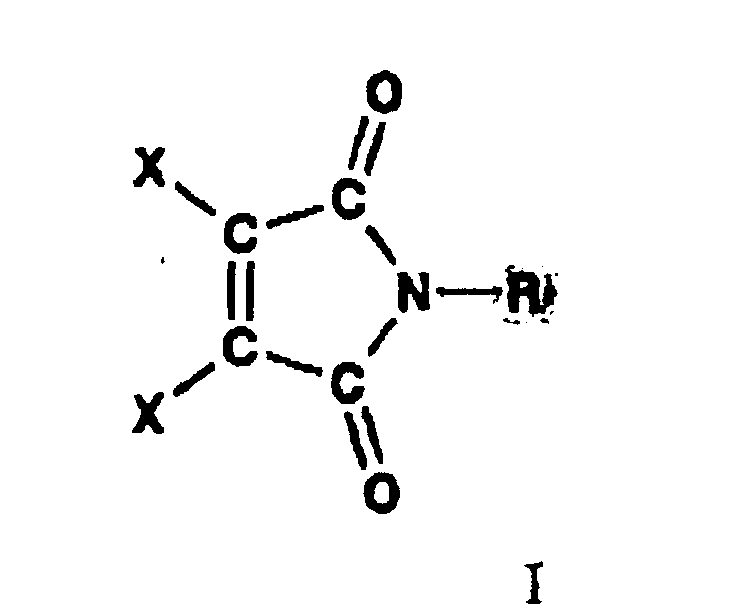
- The present invention accordingly relates to a polymer for use in antifouling coatings and it is characterized in that it comprises units corresponding to the following monomers
- A) 5 to 100 mol-% of one or more compounds of the general formula I
in which:

- X =
- H, Cl, Br or F
- R =
- Ph(R1)m or benzyl
- R1 =
- each independently selected from halogen, -C(O)H, -COOR2, -CH2-COOR2, -O-CO-R2, -NH-CO-R2, -NH-COOR2, -SO3H, and optionally substituted thiadiazolyl and thiazolylsulfamyl groups
- Ph =
- phenyl
- m =
- 1-3
- R2 =
- H or optionally halogen substituted alkyl, aryl, cycloalkyl, aralkyl groups - with 1 - 10 C atoms
- B) 0 to 95 mol-% of one or more other ethylenically unsaturated compound
-
- The optionally substituted thiadiazolyl groups as R1 in the general formula I can be 1,2,4-thiadiazolyl unsubstituted or substituted with halogen, alkyl with 1 - 4 C atoms or phenyl.
- The optionally substituted thiazofylsulfamyl groups as R1 in the general formula I can be unsubstituted or substituted with halogen or alkyl with 1 - 4 C atoms.
- Another object of the invention is a process for the preparation of binders for use in antifouling coatings by homopolymerisation or copolymerisation of polymerisable monomer, characterized in that the polymerisable monomers which are polymerised consist of mixtures of one or more of component A) and one or more of component B).
- Other features of the invention are as defined in the claims.
- Examples of the substances which may be used as component A) for the preparation of binders for antifouling coatings include
- substituted N-(phenyl) maleimides, such as N-(2-chlorophenyl) maleimide, N-(4-chlorophenyl)maleimide, N-(4-bromophenyl)maleimide, N-(2,3-dichlorophenyl) maleimlde, N-(2,4,6-trichlorophenyl) maleimide, N-(2,4,6-tribromophenyl) maleimide, N-(4-carboxypheryl) maleimide, N-(4-sulfophenyl) maleimide, N-(4-acetoxyphenyl) maleimide, N-(3-ethyloxycarbonylphenyl)maleimide, N-(4-methyloxycarbonylphenyl) maleimide, N-(4-ethyloxycarbonylphenyl)maleimide, N-(4-formylphenyl) maleimide, N-(4-acetylaminophenyl)maleimide, N-(4-carboxymethylphenyl)maleimide, N-(thiazolylsulfamylphenyl)maleimide;
- N-substituted 2,3-dichloromaleimides, such as N-(4-carboxyphenyl)-2,3-dichloromaleimide, N-(4-chlorophenyl)-2,3-dichloromaleimide, N-(4-ethyloxycarbonylphenyl)-2,3-dichloromaleimide.
-
- Preferred examples are N-(4-chlorophenyl) maleimide, N-(2,4,6-trichlorophenyl) maleimide, N-(2,4,6-tribromophenyl) maleimide, N-(4-carboxyphenyl) maleimide, N-(4-acetoxyphenyl) maleimide, N-(4-ethyloxycarbonylphenyl) maleimide, N-(thiazolylsulfamylphenyl)maleimide, N-(4-chlorophenyl)-2,3-dichloromaleimide, N-(4-ethyloxycarbonylphenyl)-2,3-dichloromaleimide.
- The ethylenically unsaturated compounds B) which may also be used in conformity with the invention, are monomers such as:
- 1) Compounds containing carboxylic groups, e.g. acrylic acid, methacrylic acid, maleic acid and itaconic acid,
- 2) C1-C18 esters of acrylic or methacrylic acid, such as e.g. methyl acrylate, ethyl
acrylate, propyl acrylate, n-butyl acrylate, n-hexyl acrylate, methyl
methacrylate, ethyl methacrylate, propyl methacrylate, i-propyl methacrylate, n-butyl
methacrylate, n-hexyl methacrylate or n-dodecyl methacrylate;
- C2-C18 alkoxy esters of acrylic acid or methacrylic acid such as methoxy ethyl acrylate, methoxy ethyl methacrylate, methoxy butyl acrylate, methoxy butyl methacrylate, ethoxy butyl acrylate or ethoxy butyl methacrylate;
- C2-C8 hydroxy alkyl acrylates or hydroxy alkyl methacrylates such as hydroxy ethyl acrylate, hydroxy ethyl methacrylate, hydroxy propyl acrylate or hydroxy propyl methacrylate;
- silicon containing esters of acrylic acid or methacrylic acid such as (3-methacryloyloxypropyl)-trimethoxysilane, (3-methacryloyloxypropyl)-triethoxy-silane, trimethylsilyl methacrylate.
- 3) Vinyl compounds such as styrene, α-methyl styrene, vinyl toluene, p-chlorostyrene, vinyl acetate, 4-vinyl pyridine or vinyl pyrrolidone.
-
- The preparation of antifouling binder systems can be effected by radical or ionic copolymerisation of the monomers A) of formula I, usually together with ethylenically unsaturated compounds B). Compounds containing conventional peroxide or azo groups may be used as the radical starter (initiator) e.g. dibenzoyl peroxide, bis-(a-,a-dimethyl benzyl) peroxide, tert-butyl hydroperoxide, potassium peroxo-disulphate, 2,2'-azobis isobutyronitrile and 2,2'-azobis-(2-methyl butyronitrile) normally in concentrations of 0.01 to 5 % by weight of the monomer mixture which is used. The copolymerisation is preferably carried out in suitable solvents by means of solution or precipitation polymerisation. The following are examples of which substances may be used for this purpose: aromatic or aliphatic hydrocarbons such as toluene, xylene, hexane, heptane, petroleum ether; esters such as ethyl acetate, butyl acetate; ketones such as acetone, methyl ethyl ketone, methyl isobutyl ketone; ethers such as ethylene glycol dimethyl ether, diethylene glycol dimethyl ether (diglyme), dibutyl ether, 1,4-dioxane, tetrahydrofurane, 1-methoxy-2-propanol or solvents such as
- N,N-dimethyl formamide, N-methylpyrrolidin-2-one, dimethyl sulphoxide, water or butanol, possibly as a mixture. Depending on the desired viscosity, the monomer concentration can range between 5 and 80% by weight with reference to the total solution. The copolymerisation itself can be carried out by means of known techniques such as heating of the monomers with the initiators in the solvent or by dropping the monomers and initiators into the heated solvent. Depending on the composition of the monomer mixture and the chosen copolymerisation conditions, copolymers with varying composition and with average molecular weights in the 5000 to 200,000 range can be obtained.
- The antifouling binders which are prepared in this way can be mixed with auxiliary substances and additives such as pigments, biocides and stabilizers as described in US 5 332 430. Examples of pigments include titanium dioxide, activated carbon, iron oxide and blue pigments. Examples of biocidal agents include cuprous oxide, cuprous thiocyanate, zinc oxide, zinc pyrithion, zinc-bis(dimethyl-dithio carbamate) together with compounds which contain e.g. benzothiazols, dithiocarbamates, triazine, thiodiazine, thiadiazole, isothiazoline and quatemary ammonium salts. Examples of other additives include fillers such as silicon dioxide, kaolin, talcum and auxiliary substances such as bentonite, aerosil and similar compounds.
- The present invention is described in more detail in the following examples.
- A three-necked flask is charged with 0.7 mol maleic anhydride, 450 ml N,N-dimethyl formamide and 0.7 mol of the appropriate starting compound with a primary amino group. The mixture is stirred at room temperature under a nitrogen atmosphere for 5 h, then poured into a large amount of cold water to precipitate the corresponding maleamic acid. The crude maleamic acid is filtrated, washed with water and dried in a vacuum oven. A mixture of the maleamic acid, 300 ml acetic anhydride and 8.2 g sodium acetate is stirred at 60°C for 2 h. The resulting solution is poured into a large amount of cold water to obtain the crude N-substituted maleimide. After filtration, washing with water and drying in a vacuum oven the product is recrystallized from methanol / water (6:1, v/v) or cyclohexane.
- A three-necked flask is charged with 0.8 mol maleic anhydride and 50 ml of toluene. The mixture is slurried with vigorous stirring and a mixture of 0.8 mol of the appropriate starting compound with a primary amino group in 150 ml toluene is added slowly from a dropping funnel. The resulting solution is refluxed for 1 h and then filtrated warm to obtain the crude corresponding maleamic acid. A mixture of the vacuum dried maleamic acid, 500 ml acetic anhydride and 35 g sodium acetate is stirred at 70°C for 2 h, then poured into a large amount of cold water. The crude N-substituted maleimide is filtered off, washed with water and dried in a vacuum oven. For purification it is recrystallized from ethanol or cyclohexane.
- A three-necked flask, equipped with thermometer, water separator, dropping funnel and stirrer is charged with 0.5 mol maleic anhydride and 350 ml of xylene. A mixture of the appropriate starting compound with a primary amino group is added slowly from the dropping funnel at room temperature. Afterwards the mixture is stirred at 65°C for 2 h. Then, 2 g of sulphuric acid are added and the reaction is carried out with stirring at 135 -140°C, with the water formed during the reaction expelled out of the reaction system by azeotropic distillation with the help of the water separator. After the reaction, the mixture is poured into 750 ml cold water. The N-substituted maleimide is filtered off, washed with water and dried in a vacuum oven. The product is recrystallized from ethanol or cyclohexane.



- To determine the hydrolysis rates of the binder systems in an alkaline environment, the conductivity or pH value changes are measured as a function of time. A direct measurement in sea water (pH: 8.1 to 8.3) is impossible for technical measurement reasons (high inherent conductivity because of the salt content).
- The measurements were performed as follows:
- 300 ml of bidistilled and degassed water are set to a pH value of 12 in a three-necked flask, equipped with a stirrer, pH electrode (WTW, Type E50-1.5) and a conductivity electrode (WTW, Type LTA 1, cell constant 0.996) by adding NaOH pellets. The entire system is thermostatically set to 25 ± 0.1°C (Haake Thermostat GH-D8). The measuring instruments which are used consist of a pH meter (WTW, Type pH 192) and a conductivity measuring instrument (WTW, Type LF 530).
- The monomer compounds shown in table 1 are introduced into an aqueous solution; in the case of the binder system in solution as shown in table 2, the substance is applied to glass beads with a diameter of 3 mm to achieve convenient layer thicknesses for practical use and the solvent is then removed with the aid of a vacuum pump. The quantity of the polymer binder system which is weighed in, is chosen in such a way that after theoretically complete hydrolysis a pH-value of 7 should be measured in the solution.
- To determine the hydrolysis rates, the coated glass beads are introduced into the above solution. The pH value and conductivity changes are determined directly, as a function of time, in the solution which is stirred under a stream of nitrogen to ensure better mixing. The measuring period totals 24 hours.
- The calculation of the hydrolysis rate is based on the change in the pH-value, which decreases due to the hydrolysis of the polymeric binder system resulting in the formation of carboxylic groups as substituents on the polymer backbone. Measuring the pH-value after 24 h (starting pH: 12.00) and calculation of the functional groups based on the weighed copolymers enable a determination of the hydrolysis rate (%, based on the number of functional groups).
- The following table 3 clearly shows that the polymer binder systems according to the invention undergo hydrolysis in an alkaline environment under the chosen conditions.
Hydrolysis of polymer binder systems Binder System Hydrolysis rate (24 h) P1 28.3 % P2 25.2 % P3 35.8 % P4 32.6 % P5 40.1% P6 21.4 % P7 31.6 % P8 26.5 % P9 22.3 % P10 31.9 % P11 33.9 % P12 21.8 % P13 23.0 % VP 1 (comparison) 30.9 % VP 2 (comparison) 3.2 % - Four different copolymers have been synthesised according to example 4 for a demonstration of hydrolysis and an investigation of hydrolysis products of the described maleimide copolymers. Dodecyl methacrylate (DMA) is used as a hydrophobic comonomer in all cases. A tri-n-butyl methacrylate (TBTMA) / methyl methacrylate (MMA) copolymer and a butyl methacrylate (BMA) polymer have been included for comparison. The copolymer composition is shown in table 4.
Composition of copolymers for hydrolysis tests Functional monomer Comonomer Molar Ratio Solvent Non-volatile-matter N-(4-Ethyloxycarbonylphenyl) maleimide [EPMI] n-Dodecyl methacrylate 1 : 1 methoxy propanol / xylene (1/1, v/v) 54.3 % N-(4-Bromophenyl) maleimide [BPMI] n-Dodecyl methacrylate 1 : 1 butyl acetate 27.7 % N-(4-Carboxyphenyl) maleimide [CPMI] n-Dodecyl methacrylate 1 : 1 methoxy propanol / xylene (1/1, v/v) 20.0 % N-(4-Acetoxyphenyl) maleimide [APMI] n-Dodecyl methacrylate 1 : 1 1,4-dioxane 29.7 % Tri-n-butyltin methacrylate [TBTMA] Methyl methacrylate 1: 2 xylene 49.0 % - n-Butyl methacrylate 1 xylene 49.7 % - All copolymers are precipitated in methanol or petroleum ether, separated from all solvents, washed with the precipitation agent and dried. Approx. 7 g of the precipitated copolymers (white to light yellow powders) are weighed exactly and suspended in 250 ml of sea water (starting pH:8.2). The suspensions are vigorously stirred for 14 days at room temperature with a permanent monitoring of the pH-values. The suspensions are filtered and the separated copolymer powders are washed intensively and dried.
- The filtrate and the washing water are extracted twice with chloroform. After drying of the organic solution (Na2SO4) the chloroform is removed in vacuum. The residues are weighed and analysed by 1H-NMR.
- The results of these determinations are given in tables 5 and 6.
Results of the hydrolysis tests Copolymer pH: Suspension after 7 d stirring pH: Suspension after 14 d stirring Weight of the extracted hydrolysis products [g] Weight of the extracted hydrolysis products [%] (based on total copolymer amount) EPMI/DMA 8 7.5 0.84 11.95 BPMI/DMA 7 6 0.75 12.21 CPMI/DMA 3 2 0.83 13.85 APMI/DMA 7 7 0.48 7.74 TBTMA/MMA 7 6 1.15 16.39 BMA 8 8 0.12 1.66 Results of the spectroscopic determinations of extracted hydrolysis products Copolymer Signals 1H-NMR [ppm] EPMI / DMA 7.5 (m, 2 H ar.) anilinic hydrolysis product 7.7 (m, 2 H ar.) anilinic hydrolysis product 4.25 (t, 2 H) and 0.8 - 1.8 (m) hydrolysis products from dodecyl methacrylate BPMI / DMA 7.5 (m, 2 H ar.) anilinic hydrolysis product 7.7 (m, 2 H ar.) anilinic hydrolysis product 4.3 (t, 2 H) and 0.8 - 1.8 (m) hydrolysis products from dodecyl methacrylate CPMI / DMA 7.55 (m, 2 H ar.) anilinic hydrolysis product 7.8 (m, 2 H ar.) anilinic hydrolysis product 4.35 (t, 2 H) and 0.8 - 1.8 (m) hydrolysis products from dodecyl methacrylate APMI / DMA 7.6 (m, 2 H ar.) anilinic hydrolysis product 7.8 (m, 2 H ar.) anilinic hydrolysis product 4.25 (t, 2 H) and 0.8 - 1.8 (m) hydrolysis products from dodecyl methacrylate - Anilinic hydrolysis products and hydrolysis products from dodecyl methacrylate (dodecanol) could be detected in all cases by 1H-NMR.
- The results prove that the maleimide based copolymers show hydrolysis reactions with a release of hydrolysis products even in combination with long-chain, hydrophobic comonomers like dodecyl methacrylate.
- The hydrolysis rates of the copolymers can be adjusted by the amount of N-substituted maleimide and the type and amount of comonomers.
- The antifouling effectiveness of the maleimide based copolymers according to the invention against marine organisms was determined by exposure tests in the North Sea (Cuxhaven, Germany).
- For this purpose, test sheets of polyvinyl chloride (10 x 15 x 1.4 cm) were provided with antifouling paints which were prepared according to example 5.
- The PVC sheets were degreased and subsequently coated with the antifouling paint and dried for 48 hours. The dry film thickness was 100 - 150 µm. The PVC sheets are clamped in a plastic frame and immersed in sea water at a depth of 1 meter for 8 months (February to October). Table 7 clearly shows that the test sheets with the paints according to the invention were free from animal and algae fouling during this period. The test sheets without the compounds according to the invention (comparison example VP 2, polybutyl methacrylate) showed considerably fouling by algae, mussels and barnacles.
Results of sea water exposure of test panels in the North Sea Antifouling Paint Example 4 months exposure 8 months exposure P1 0 0 P2 0 0 P3 0 5-10 P4 0 5 P5 0 0 P6 0 0 P7 0 5-10 P8 0 5 P9 0 0 P10 0 0 P11 0 5 P 12 0 0 P 13 0 0 VP1 0 0 VP 2 40 100 0 : no fouling
100 : complete fouling
Claims (8)
- Polymer for antifouling coatings characterized in that it comprises units corresponding to the following monomersA) 5 to 100 mol-% of one or more compounds of the general formula Iin which:
- X =
- H,Cl, Br or F
- R =
- Ph(R1)m or benzyl
- R1 =
- each independently selected from halogen, -C(O)H, -COOR2, -CH2-COOR2, -O-CO-R2, -NH-CO-R2, -NH-COOR2, -SO3H, and optionally substituted thiadiazolyl and thiazolylsulfamylgroups
- Ph =
- phenyl
- m =
- 1-3
- R2 =
- H or optionally halogen substituted alkyl, aryl, cycloalkyl, aralkyl groups with 1 - 10 C atoms
B) 0 to 95 mol-% of one or more other ethylenically unsaturated compounds. - Polymer in accordance with claim 1, characterized in that it comprises units corresponding to 30 to 60 mol-% of component A) and 40 to 70 mol-% of component B).
- Polymer in accordance with claim 2, characterized in that it comprises units corresponding to 40 to 55 mol-% of component A) and 45 to 60 mol-% of component B).
- Polymer in accordance with any of claims 1, 2 and 3 characterized in that it as component A comprises units corresponding to compounds of the general formula Iin which:

- X =
- H or Cl
- R =
- Ph(R1)m
- R1 =
- each independently selected from halogen, -COOR2, -O-CO-R2 and optionally substituted thiazolylsulfamylgroups
- Ph =
- phenyl
- m =
- 1-3
- R2 =
- H or alkyl groups with 1 - 10 C atoms
- Polymer in accordance with any of claims 1, 2 and 3 characterized in that it comprises units corresponding to monomers selected from:as component A): N-(4-chlorophenyl) maleimide, N-(2,4,6-trichlorophenyl) maleimide, N-(2,4,6-tribromophenyl) maleimide, N-(4-carboxyphenyl) maleimide, N-(4-acetoxyphenyl) maleimide, N-(4-ethyloxycarbonylphenyl) maleimide, N-(thiazolylsulfamylphenyl) maleimide, N-(4-chlorophenyl)-2,3-dichloromaleimide, N-(4-ethyloxycarbonylphenyl)-2, 3-dichloromaleimideand as component B): butyl acrylate, methyl methacrylate, butyl methacrylate, n-hexyl methacrylate, n-dodecyl methacrylate, 2-hydroxy ethyl methacrylate, methoxy ethyl acrylate, 3-methacryloyloxypropyl trimethoxy silane.
- Process for the preparation of binders for antifouling coatings by homopolymerisation or copolymerisation of polymerisable monomers, characterized in that, as polymerisable monomers, a mixture ofare polymerised in the presence of radical-forming initiators and inert solventsA) 5 to 100 mol-% of one or more compounds of the general formula Iin which:

- X =
- H, Cl, Br or F
- R =
- Ph(R1)m or benzyl
- R1 =
- each independently selected from halogen, -C(O)H, -COOR2, -CH2-COOR2, -O-CO-R2, -NH-CO-R2, -NH-COOR2, -SO3H, and optionally substituted thiadiazolyl and thiazolylsulfamyl groups
- Ph =
- phenyl
- m =
- 1-3
- R2 =
- H or optionally halogen substituted alkyl, aryl, cycloalkyl, aralkyl groups with 1 - 10 C atoms
B) 0 to 95 mol-% of one or more other ethylenically unsaturated compound - Antifouling paints containing polymers in conformity with any of claims 1-5, together, when appropriate, with auxiliary substances and additives such as pigments, anti-settling agents, solvents, biocides and stabilizers.
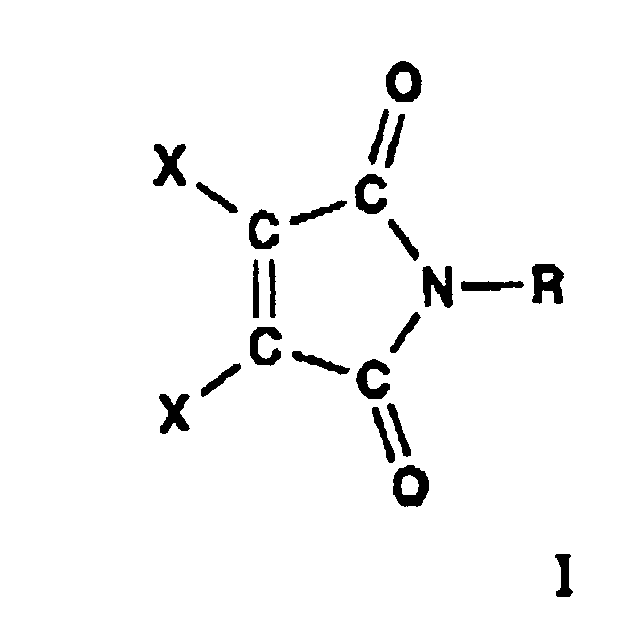
- The use of monomers of the general formula Iin which;
- X =
- H, Cl, Br or F
- R =
- Ph(R1)m or benzyl
- R1 =
- each independently selected from halogen, -C(O)H, -COOR2, -CH2COOR2, -O-COR2, -NH-CO-R2, -NH-COOR2, -SO3H, and optionally substituted thiadiazolyl and thiazolylsufamylgroups
- Ph =
- phenyl
- m =
- 1-3
- R2 =
- H or optionally halogen substituted alkyl, aryl, cycloalkyl, aralkyl groups with 1 - 10 C atoms
Applications Claiming Priority (3)
| Application Number | Priority Date | Filing Date | Title |
|---|---|---|---|
| NO952270 | 1995-06-08 | ||
| NO952270A NO952270D0 (en) | 1995-06-08 | 1995-06-08 | Polymers for antifouling paints and processes for their preparation |
| PCT/NO1996/000135 WO1996041841A1 (en) | 1995-06-08 | 1996-06-06 | Polymers for antifouling coatings and a process for the preparation thereof |
Publications (2)
| Publication Number | Publication Date |
|---|---|
| EP0830430A1 EP0830430A1 (en) | 1998-03-25 |
| EP0830430B1 true EP0830430B1 (en) | 1999-08-18 |
Family
ID=19898281
Family Applications (1)
| Application Number | Title | Priority Date | Filing Date |
|---|---|---|---|
| EP96918929A Expired - Lifetime EP0830430B1 (en) | 1995-06-08 | 1996-06-06 | Polymers for antifouling coatings and a process for the preparation thereof |
Country Status (7)
| Country | Link |
|---|---|
| EP (1) | EP0830430B1 (en) |
| AU (1) | AU6140496A (en) |
| DE (1) | DE69603856T2 (en) |
| DK (1) | DK0830430T3 (en) |
| ES (1) | ES2137705T3 (en) |
| NO (2) | NO952270D0 (en) |
| WO (1) | WO1996041841A1 (en) |
Families Citing this family (8)
| Publication number | Priority date | Publication date | Assignee | Title |
|---|---|---|---|---|
| DE19803564A1 (en) | 1998-01-30 | 1999-08-05 | Agfa Gevaert Ag | Polymers with units of N-substituted maleimide and their use in radiation-sensitive mixtures |
| EP2348077B1 (en) | 2010-01-26 | 2013-04-03 | Jotun A/S | Antifouling composition |
| EP2708594A1 (en) | 2012-09-18 | 2014-03-19 | Jotun A/S | Cleaning process |
| EP2912120B1 (en) | 2012-10-23 | 2017-12-20 | Jotun A/S | Antifouling coating composition |
| EP2725073B1 (en) | 2012-10-23 | 2016-08-03 | Jotun A/S | Antifouling coating composition |
| KR20150104114A (en) | 2012-12-19 | 2015-09-14 | 요툰 에이/에스 | Silyl ester copolymer |
| JP6228809B2 (en) * | 2013-10-31 | 2017-11-08 | 株式会社日本触媒 | Novel polymer, viscosity index improver, and lubricating oil composition |
| CN117801163B (en) * | 2023-12-28 | 2024-07-30 | 广东省科学院化工研究所 | A biomimetic zwitterionic polymer and its preparation method and application |
Family Cites Families (4)
| Publication number | Priority date | Publication date | Assignee | Title |
|---|---|---|---|---|
| JPS6017764B2 (en) * | 1976-07-10 | 1985-05-07 | イハラケミカル工業株式会社 | aquatic creature repellent |
| DK137491D0 (en) * | 1991-07-19 | 1991-07-19 | Hempel Skibsfarve Fab S J | PAINT COMPOSITION |
| DE4230955A1 (en) * | 1992-09-16 | 1994-03-17 | Witco Gmbh | Use of thiadiazole compounds as an antifouling active ingredient |
| US5318814A (en) * | 1993-04-05 | 1994-06-07 | Aristech Chemical Corporation | Inhibiting the settling of barnacles |
-
1995
- 1995-06-08 NO NO952270A patent/NO952270D0/en unknown
-
1996
- 1996-06-06 WO PCT/NO1996/000135 patent/WO1996041841A1/en not_active Ceased
- 1996-06-06 ES ES96918929T patent/ES2137705T3/en not_active Expired - Lifetime
- 1996-06-06 AU AU61404/96A patent/AU6140496A/en not_active Abandoned
- 1996-06-06 DK DK96918929T patent/DK0830430T3/en active
- 1996-06-06 EP EP96918929A patent/EP0830430B1/en not_active Expired - Lifetime
- 1996-06-06 DE DE69603856T patent/DE69603856T2/en not_active Expired - Fee Related
-
1997
- 1997-12-05 NO NO975735A patent/NO975735L/en not_active Application Discontinuation
Also Published As
| Publication number | Publication date |
|---|---|
| ES2137705T3 (en) | 1999-12-16 |
| AU6140496A (en) | 1997-01-09 |
| NO975735L (en) | 1998-02-05 |
| NO952270D0 (en) | 1995-06-08 |
| EP0830430A1 (en) | 1998-03-25 |
| DK0830430T3 (en) | 2000-02-07 |
| WO1996041841A1 (en) | 1996-12-27 |
| NO975735D0 (en) | 1997-12-05 |
| DE69603856T2 (en) | 2000-05-18 |
| DE69603856D1 (en) | 1999-09-23 |
Similar Documents
| Publication | Publication Date | Title |
|---|---|---|
| EP1487928B1 (en) | Film-forming polymer and antifouling paint | |
| US5302192A (en) | Anti-fouling coating compositions | |
| EP0833870B1 (en) | Polymers for antifouling coatings and a process for the preparation thereof | |
| US4426464A (en) | Marine paint | |
| KR101810774B1 (en) | Antifouling coating composition, antifouling coating film, antifouling substrate, and method for producing antifouling substrate | |
| US5891935A (en) | Process for preparing polymeric binders and their use for antifouling paint systems | |
| JP3451786B2 (en) | Paint composition | |
| WO1996041841A1 (en) | Polymers for antifouling coatings and a process for the preparation thereof | |
| CA2400816A1 (en) | Metal-free binders for self-polishing antifouling paints | |
| US5821300A (en) | Process for preparing polymeric binders and their use for antifouling paint systems | |
| EP1288234A1 (en) | Binders with low content in hydrolysable monomer suitable for selfpolishing antifouling paints | |
| AU2001246479B2 (en) | Improved paint compositions | |
| EP0596023B1 (en) | Paint composition | |
| US20030225230A1 (en) | Polymers for antifouling coatings and a process for the preparation thereof | |
| CA1205596A (en) | Anti-fouling agent | |
| JPH06211609A (en) | Stain-resistantly active substance and stain-resistant preparation containing said substance | |
| GB2273934A (en) | Improvements in and relating to polymeric resins and binders for antifouling paints | |
| KR960014883B1 (en) | Paints resistant to organisms and dirt present in waters, and process for their preparation | |
| US5472993A (en) | Anti-fouling paint | |
| JP2000302816A (en) | Polymer compound having antifouling activity and antifouling material containing the same | |
| KR19980042147A (en) | Manufacturing method of polymer binder and its use for antifouling paint system | |
| JPH05311110A (en) | Coating resin and antifouling coating | |
| JPH01131286A (en) | Resin composition for antifouling coating | |
| KR940001519B1 (en) | Manufacturing method of marine biological pollution prevention copolymer and antifouling coating composition containing same | |
| KR20010012753A (en) | Resins for antifouling agents against periphytons, process for the preparation of the resins, and antifouling agents against periphytons containing the same |
Legal Events
| Date | Code | Title | Description |
|---|---|---|---|
| PUAI | Public reference made under article 153(3) epc to a published international application that has entered the european phase |
Free format text: ORIGINAL CODE: 0009012 |
|
| 17P | Request for examination filed |
Effective date: 19971230 |
|
| AK | Designated contracting states |
Kind code of ref document: A1 Designated state(s): DE DK ES FR GB IT NL PT SE |
|
| RIN1 | Information on inventor provided before grant (corrected) |
Inventor name: DAHLING, MARIT Inventor name: NILSEN, MARIANNE, TERLAND Inventor name: UNDRUM, THORALV |
|
| GRAG | Despatch of communication of intention to grant |
Free format text: ORIGINAL CODE: EPIDOS AGRA |
|
| 17Q | First examination report despatched |
Effective date: 19980727 |
|
| GRAG | Despatch of communication of intention to grant |
Free format text: ORIGINAL CODE: EPIDOS AGRA |
|
| GRAH | Despatch of communication of intention to grant a patent |
Free format text: ORIGINAL CODE: EPIDOS IGRA |
|
| GRAH | Despatch of communication of intention to grant a patent |
Free format text: ORIGINAL CODE: EPIDOS IGRA |
|
| GRAH | Despatch of communication of intention to grant a patent |
Free format text: ORIGINAL CODE: EPIDOS IGRA |
|
| GRAA | (expected) grant |
Free format text: ORIGINAL CODE: 0009210 |
|
| AK | Designated contracting states |
Kind code of ref document: B1 Designated state(s): DE DK ES FR GB IT NL PT SE |
|
| REF | Corresponds to: |
Ref document number: 69603856 Country of ref document: DE Date of ref document: 19990923 |
|
| ITF | It: translation for a ep patent filed | ||
| PG25 | Lapsed in a contracting state [announced via postgrant information from national office to epo] |
Ref country code: PT Free format text: LAPSE BECAUSE OF FAILURE TO SUBMIT A TRANSLATION OF THE DESCRIPTION OR TO PAY THE FEE WITHIN THE PRESCRIBED TIME-LIMIT Effective date: 19991118 |
|
| ET | Fr: translation filed | ||
| REG | Reference to a national code |
Ref country code: ES Ref legal event code: FG2A Ref document number: 2137705 Country of ref document: ES Kind code of ref document: T3 |
|
| REG | Reference to a national code |
Ref country code: DK Ref legal event code: T3 |
|
| PG25 | Lapsed in a contracting state [announced via postgrant information from national office to epo] |
Ref country code: GB Free format text: LAPSE BECAUSE OF NON-PAYMENT OF DUE FEES Effective date: 20000606 Ref country code: DK Free format text: LAPSE BECAUSE OF NON-PAYMENT OF DUE FEES Effective date: 20000606 |
|
| PG25 | Lapsed in a contracting state [announced via postgrant information from national office to epo] |
Ref country code: SE Free format text: LAPSE BECAUSE OF NON-PAYMENT OF DUE FEES Effective date: 20000607 Ref country code: ES Free format text: LAPSE BECAUSE OF NON-PAYMENT OF DUE FEES Effective date: 20000607 |
|
| PLBE | No opposition filed within time limit |
Free format text: ORIGINAL CODE: 0009261 |
|
| STAA | Information on the status of an ep patent application or granted ep patent |
Free format text: STATUS: NO OPPOSITION FILED WITHIN TIME LIMIT |
|
| 26N | No opposition filed | ||
| PG25 | Lapsed in a contracting state [announced via postgrant information from national office to epo] |
Ref country code: NL Free format text: LAPSE BECAUSE OF NON-PAYMENT OF DUE FEES Effective date: 20010101 |
|
| GBPC | Gb: european patent ceased through non-payment of renewal fee |
Effective date: 20000606 |
|
| REG | Reference to a national code |
Ref country code: DK Ref legal event code: EBP |
|
| EUG | Se: european patent has lapsed |
Ref document number: 96918929.9 |
|
| NLV4 | Nl: lapsed or anulled due to non-payment of the annual fee |
Effective date: 20010101 |
|
| PG25 | Lapsed in a contracting state [announced via postgrant information from national office to epo] |
Ref country code: DE Free format text: LAPSE BECAUSE OF NON-PAYMENT OF DUE FEES Effective date: 20010403 |
|
| PG25 | Lapsed in a contracting state [announced via postgrant information from national office to epo] |
Ref country code: FR Free format text: LAPSE BECAUSE OF NON-PAYMENT OF DUE FEES Effective date: 20010831 |
|
| REG | Reference to a national code |
Ref country code: FR Ref legal event code: ST |
|
| REG | Reference to a national code |
Ref country code: ES Ref legal event code: FD2A Effective date: 20010712 |
|
| PG25 | Lapsed in a contracting state [announced via postgrant information from national office to epo] |
Ref country code: IT Free format text: LAPSE BECAUSE OF NON-PAYMENT OF DUE FEES Effective date: 20050606 |
|
| PG25 | Lapsed in a contracting state [announced via postgrant information from national office to epo] |
Ref country code: FR Free format text: LAPSE BECAUSE OF NON-PAYMENT OF DUE FEES Effective date: 20000630 |