EP0829725B1 - A method for the activation of blood coagulation factor XII - Google Patents
A method for the activation of blood coagulation factor XII Download PDFInfo
- Publication number
- EP0829725B1 EP0829725B1 EP97115720A EP97115720A EP0829725B1 EP 0829725 B1 EP0829725 B1 EP 0829725B1 EP 97115720 A EP97115720 A EP 97115720A EP 97115720 A EP97115720 A EP 97115720A EP 0829725 B1 EP0829725 B1 EP 0829725B1
- Authority
- EP
- European Patent Office
- Prior art keywords
- fxii
- factor xii
- activation
- receptor
- blood coagulation
- Prior art date
- Legal status (The legal status is an assumption and is not a legal conclusion. Google has not performed a legal analysis and makes no representation as to the accuracy of the status listed.)
- Expired - Lifetime
Links
- 108010080865 Factor XII Proteins 0.000 title claims abstract description 61
- 102000000429 Factor XII Human genes 0.000 title claims abstract description 61
- 238000000034 method Methods 0.000 title claims abstract description 41
- 230000020971 positive regulation of blood coagulation Effects 0.000 title claims 3
- 239000000126 substance Substances 0.000 claims description 15
- 108090000113 Plasma Kallikrein Proteins 0.000 claims description 13
- 239000000758 substrate Substances 0.000 claims description 11
- 108010000487 High-Molecular-Weight Kininogen Proteins 0.000 claims description 10
- PTFCDOFLOPIGGS-UHFFFAOYSA-N Zinc dication Chemical compound [Zn+2] PTFCDOFLOPIGGS-UHFFFAOYSA-N 0.000 claims description 8
- 230000004154 complement system Effects 0.000 claims description 5
- 230000020764 fibrinolysis Effects 0.000 claims description 5
- YZXBAPSDXZZRGB-DOFZRALJSA-M Arachidonate Chemical compound CCCCC\C=C/C\C=C/C\C=C/C\C=C/CCCC([O-])=O YZXBAPSDXZZRGB-DOFZRALJSA-M 0.000 claims description 4
- 229940114078 arachidonate Drugs 0.000 claims description 4
- 230000023555 blood coagulation Effects 0.000 claims description 4
- 108010071241 Factor XIIa Proteins 0.000 claims 4
- 238000003556 assay Methods 0.000 claims 2
- 102000002261 High-Molecular-Weight Kininogen Human genes 0.000 claims 1
- 230000004913 activation Effects 0.000 abstract description 25
- 230000000295 complement effect Effects 0.000 abstract description 7
- 238000004166 bioassay Methods 0.000 abstract 1
- 238000006243 chemical reaction Methods 0.000 description 34
- 102100035792 Kininogen-1 Human genes 0.000 description 14
- 102100034869 Plasma kallikrein Human genes 0.000 description 11
- 238000001727 in vivo Methods 0.000 description 11
- 238000012360 testing method Methods 0.000 description 11
- 102000001399 Kallikrein Human genes 0.000 description 8
- 108060005987 Kallikrein Proteins 0.000 description 8
- 239000003814 drug Substances 0.000 description 8
- 230000003213 activating effect Effects 0.000 description 7
- 108020003175 receptors Proteins 0.000 description 7
- 102000005962 receptors Human genes 0.000 description 7
- FAPWRFPIFSIZLT-UHFFFAOYSA-M Sodium chloride Chemical compound [Na+].[Cl-] FAPWRFPIFSIZLT-UHFFFAOYSA-M 0.000 description 6
- 229940079593 drug Drugs 0.000 description 6
- 230000000694 effects Effects 0.000 description 6
- JKMHFZQWWAIEOD-UHFFFAOYSA-N 2-[4-(2-hydroxyethyl)piperazin-1-yl]ethanesulfonic acid Chemical compound OCC[NH+]1CCN(CCS([O-])(=O)=O)CC1 JKMHFZQWWAIEOD-UHFFFAOYSA-N 0.000 description 5
- TYMLOMAKGOJONV-UHFFFAOYSA-N 4-nitroaniline Chemical compound NC1=CC=C([N+]([O-])=O)C=C1 TYMLOMAKGOJONV-UHFFFAOYSA-N 0.000 description 5
- 101800004538 Bradykinin Proteins 0.000 description 5
- QXZGBUJJYSLZLT-UHFFFAOYSA-N H-Arg-Pro-Pro-Gly-Phe-Ser-Pro-Phe-Arg-OH Natural products NC(N)=NCCCC(N)C(=O)N1CCCC1C(=O)N1C(C(=O)NCC(=O)NC(CC=2C=CC=CC=2)C(=O)NC(CO)C(=O)N2C(CCC2)C(=O)NC(CC=2C=CC=CC=2)C(=O)NC(CCCN=C(N)N)C(O)=O)CCC1 QXZGBUJJYSLZLT-UHFFFAOYSA-N 0.000 description 5
- 239000007995 HEPES buffer Substances 0.000 description 5
- QXZGBUJJYSLZLT-FDISYFBBSA-N bradykinin Chemical compound NC(=N)NCCC[C@H](N)C(=O)N1CCC[C@H]1C(=O)N1[C@H](C(=O)NCC(=O)N[C@@H](CC=2C=CC=CC=2)C(=O)N[C@@H](CO)C(=O)N2[C@@H](CCC2)C(=O)N[C@@H](CC=2C=CC=CC=2)C(=O)N[C@@H](CCCNC(N)=N)C(O)=O)CCC1 QXZGBUJJYSLZLT-FDISYFBBSA-N 0.000 description 5
- 230000002401 inhibitory effect Effects 0.000 description 5
- 238000004519 manufacturing process Methods 0.000 description 5
- 102000002397 Kinins Human genes 0.000 description 4
- 108010093008 Kinins Proteins 0.000 description 4
- 241001465754 Metazoa Species 0.000 description 4
- 230000009471 action Effects 0.000 description 4
- 210000004027 cell Anatomy 0.000 description 4
- 230000001419 dependent effect Effects 0.000 description 4
- 108090000623 proteins and genes Proteins 0.000 description 4
- JIAARYAFYJHUJI-UHFFFAOYSA-L zinc dichloride Chemical compound [Cl-].[Cl-].[Zn+2] JIAARYAFYJHUJI-UHFFFAOYSA-L 0.000 description 4
- 206010020751 Hypersensitivity Diseases 0.000 description 3
- 206010061218 Inflammation Diseases 0.000 description 3
- 108010052285 Membrane Proteins Proteins 0.000 description 3
- 210000004369 blood Anatomy 0.000 description 3
- 239000008280 blood Substances 0.000 description 3
- 210000000170 cell membrane Anatomy 0.000 description 3
- 210000002889 endothelial cell Anatomy 0.000 description 3
- 230000002255 enzymatic effect Effects 0.000 description 3
- 230000004054 inflammatory process Effects 0.000 description 3
- 238000011835 investigation Methods 0.000 description 3
- 238000005259 measurement Methods 0.000 description 3
- 230000001766 physiological effect Effects 0.000 description 3
- 239000000047 product Substances 0.000 description 3
- 230000001737 promoting effect Effects 0.000 description 3
- 238000000746 purification Methods 0.000 description 3
- 230000036454 renin-angiotensin system Effects 0.000 description 3
- 239000011780 sodium chloride Substances 0.000 description 3
- PMHUSCHKTSTQEP-UHFFFAOYSA-N (4-carbamimidoylphenyl)methanesulfonyl fluoride Chemical compound NC(=N)C1=CC=C(CS(F)(=O)=O)C=C1 PMHUSCHKTSTQEP-UHFFFAOYSA-N 0.000 description 2
- 108010088751 Albumins Proteins 0.000 description 2
- 102000009027 Albumins Human genes 0.000 description 2
- VEXZGXHMUGYJMC-UHFFFAOYSA-N Hydrochloric acid Chemical compound Cl VEXZGXHMUGYJMC-UHFFFAOYSA-N 0.000 description 2
- 208000002193 Pain Diseases 0.000 description 2
- WCUXLLCKKVVCTQ-UHFFFAOYSA-M Potassium chloride Chemical compound [Cl-].[K+] WCUXLLCKKVVCTQ-UHFFFAOYSA-M 0.000 description 2
- 238000002835 absorbance Methods 0.000 description 2
- 239000012190 activator Substances 0.000 description 2
- 239000000654 additive Substances 0.000 description 2
- 239000000730 antalgic agent Substances 0.000 description 2
- 239000002260 anti-inflammatory agent Substances 0.000 description 2
- 229940121363 anti-inflammatory agent Drugs 0.000 description 2
- 239000000043 antiallergic agent Substances 0.000 description 2
- 210000001772 blood platelet Anatomy 0.000 description 2
- 239000000872 buffer Substances 0.000 description 2
- 150000003943 catecholamines Chemical class 0.000 description 2
- 230000001112 coagulating effect Effects 0.000 description 2
- 239000000356 contaminant Substances 0.000 description 2
- 238000006911 enzymatic reaction Methods 0.000 description 2
- 210000003979 eosinophil Anatomy 0.000 description 2
- 210000002950 fibroblast Anatomy 0.000 description 2
- 239000003112 inhibitor Substances 0.000 description 2
- 230000000977 initiatory effect Effects 0.000 description 2
- 210000004698 lymphocyte Anatomy 0.000 description 2
- 210000002540 macrophage Anatomy 0.000 description 2
- 230000007246 mechanism Effects 0.000 description 2
- 150000004702 methyl esters Chemical class 0.000 description 2
- 210000001616 monocyte Anatomy 0.000 description 2
- 210000000440 neutrophil Anatomy 0.000 description 2
- 230000036407 pain Effects 0.000 description 2
- YBYRMVIVWMBXKQ-UHFFFAOYSA-N phenylmethanesulfonyl fluoride Chemical compound FS(=O)(=O)CC1=CC=CC=C1 YBYRMVIVWMBXKQ-UHFFFAOYSA-N 0.000 description 2
- 102000004169 proteins and genes Human genes 0.000 description 2
- 238000012216 screening Methods 0.000 description 2
- 238000000926 separation method Methods 0.000 description 2
- 210000002437 synoviocyte Anatomy 0.000 description 2
- 239000011592 zinc chloride Substances 0.000 description 2
- 235000005074 zinc chloride Nutrition 0.000 description 2
- KHLLRHIUKOJXLL-UHFFFAOYSA-N (4-carbamimidoylphenyl)methanesulfonyl fluoride;hydron;chloride Chemical compound Cl.NC(=N)C1=CC=C(CS(F)(=O)=O)C=C1 KHLLRHIUKOJXLL-UHFFFAOYSA-N 0.000 description 1
- QKNYBSVHEMOAJP-UHFFFAOYSA-N 2-amino-2-(hydroxymethyl)propane-1,3-diol;hydron;chloride Chemical compound Cl.OCC(N)(CO)CO QKNYBSVHEMOAJP-UHFFFAOYSA-N 0.000 description 1
- IVLXQGJVBGMLRR-UHFFFAOYSA-N 2-aminoacetic acid;hydron;chloride Chemical compound Cl.NCC(O)=O IVLXQGJVBGMLRR-UHFFFAOYSA-N 0.000 description 1
- 239000005995 Aluminium silicate Substances 0.000 description 1
- 108010039627 Aprotinin Proteins 0.000 description 1
- 241000894006 Bacteria Species 0.000 description 1
- 102000004506 Blood Proteins Human genes 0.000 description 1
- 108010017384 Blood Proteins Proteins 0.000 description 1
- 108091003079 Bovine Serum Albumin Proteins 0.000 description 1
- UXVMQQNJUSDDNG-UHFFFAOYSA-L Calcium chloride Chemical compound [Cl-].[Cl-].[Ca+2] UXVMQQNJUSDDNG-UHFFFAOYSA-L 0.000 description 1
- 102000008186 Collagen Human genes 0.000 description 1
- 108010035532 Collagen Proteins 0.000 description 1
- 102000004190 Enzymes Human genes 0.000 description 1
- 108090000790 Enzymes Proteins 0.000 description 1
- 108010074864 Factor XI Proteins 0.000 description 1
- 108010088842 Fibrinolysin Proteins 0.000 description 1
- WQZGKKKJIJFFOK-GASJEMHNSA-N Glucose Natural products OC[C@H]1OC(O)[C@H](O)[C@@H](O)[C@@H]1O WQZGKKKJIJFFOK-GASJEMHNSA-N 0.000 description 1
- 229920002683 Glycosaminoglycan Polymers 0.000 description 1
- 206010020772 Hypertension Diseases 0.000 description 1
- 102000018697 Membrane Proteins Human genes 0.000 description 1
- 102000035195 Peptidases Human genes 0.000 description 1
- 108091005804 Peptidases Proteins 0.000 description 1
- 206010057249 Phagocytosis Diseases 0.000 description 1
- 239000004365 Protease Substances 0.000 description 1
- VYPSYNLAJGMNEJ-UHFFFAOYSA-N Silicium dioxide Chemical compound O=[Si]=O VYPSYNLAJGMNEJ-UHFFFAOYSA-N 0.000 description 1
- 229920004890 Triton X-100 Polymers 0.000 description 1
- 239000013504 Triton X-100 Substances 0.000 description 1
- 208000027418 Wounds and injury Diseases 0.000 description 1
- HCHKCACWOHOZIP-UHFFFAOYSA-N Zinc Chemical compound [Zn] HCHKCACWOHOZIP-UHFFFAOYSA-N 0.000 description 1
- 230000002378 acidificating effect Effects 0.000 description 1
- 210000004404 adrenal cortex Anatomy 0.000 description 1
- 238000001042 affinity chromatography Methods 0.000 description 1
- 208000026935 allergic disease Diseases 0.000 description 1
- 208000030961 allergic reaction Diseases 0.000 description 1
- 230000007815 allergy Effects 0.000 description 1
- 235000012211 aluminium silicate Nutrition 0.000 description 1
- 210000004102 animal cell Anatomy 0.000 description 1
- 229960004405 aprotinin Drugs 0.000 description 1
- 230000001420 bacteriolytic effect Effects 0.000 description 1
- 230000004071 biological effect Effects 0.000 description 1
- 210000004204 blood vessel Anatomy 0.000 description 1
- 229940098773 bovine serum albumin Drugs 0.000 description 1
- 239000001110 calcium chloride Substances 0.000 description 1
- 229910001628 calcium chloride Inorganic materials 0.000 description 1
- 150000001720 carbohydrates Chemical class 0.000 description 1
- 229920001436 collagen Polymers 0.000 description 1
- 238000004040 coloring Methods 0.000 description 1
- 238000012790 confirmation Methods 0.000 description 1
- 230000008602 contraction Effects 0.000 description 1
- 238000007796 conventional method Methods 0.000 description 1
- 210000004748 cultured cell Anatomy 0.000 description 1
- 230000006378 damage Effects 0.000 description 1
- 239000003599 detergent Substances 0.000 description 1
- 238000011161 development Methods 0.000 description 1
- 229960000633 dextran sulfate Drugs 0.000 description 1
- 230000010339 dilation Effects 0.000 description 1
- 229940088598 enzyme Drugs 0.000 description 1
- 239000012467 final product Substances 0.000 description 1
- 239000011521 glass Substances 0.000 description 1
- 230000002949 hemolytic effect Effects 0.000 description 1
- 230000003301 hydrolyzing effect Effects 0.000 description 1
- 230000008105 immune reaction Effects 0.000 description 1
- ZPNFWUPYTFPOJU-LPYSRVMUSA-N iniprol Chemical compound C([C@H]1C(=O)NCC(=O)NCC(=O)N[C@H]2CSSC[C@H]3C(=O)N[C@@H](CCCCN)C(=O)N[C@@H](C)C(=O)N[C@@H](CCCNC(N)=N)C(=O)N[C@H](C(N[C@H](C(=O)N[C@@H](CCCNC(N)=N)C(=O)N[C@@H](CC=4C=CC(O)=CC=4)C(=O)N[C@@H](CC=4C=CC=CC=4)C(=O)N[C@@H](CC=4C=CC(O)=CC=4)C(=O)N[C@@H](CC(N)=O)C(=O)N[C@@H](C)C(=O)N[C@@H](CCCCN)C(=O)N[C@@H](C)C(=O)NCC(=O)N[C@@H](CC(C)C)C(=O)N[C@@H](CSSC[C@H](NC(=O)[C@H](CC(O)=O)NC(=O)[C@H](CCC(O)=O)NC(=O)[C@H](C)NC(=O)[C@H](CO)NC(=O)[C@H](CCCCN)NC(=O)[C@H](CC=4C=CC=CC=4)NC(=O)[C@H](CC(N)=O)NC(=O)[C@H](CC(N)=O)NC(=O)[C@H](CCCNC(N)=N)NC(=O)[C@H](CCCCN)NC(=O)[C@H](C)NC(=O)[C@H](CCCNC(N)=N)NC2=O)C(=O)N[C@@H](CCSC)C(=O)N[C@@H](CCCNC(N)=N)C(=O)N[C@@H]([C@@H](C)O)C(=O)N[C@@H](CSSC[C@H](NC(=O)[C@H](CC=2C=CC=CC=2)NC(=O)[C@H](CC(O)=O)NC(=O)[C@H]2N(CCC2)C(=O)[C@@H](N)CCCNC(N)=N)C(=O)N[C@@H](CC(C)C)C(=O)N[C@@H](CCC(O)=O)C(=O)N2[C@@H](CCC2)C(=O)N2[C@@H](CCC2)C(=O)N[C@@H](CC=2C=CC(O)=CC=2)C(=O)N[C@@H]([C@@H](C)O)C(=O)NCC(=O)N2[C@@H](CCC2)C(=O)N3)C(=O)NCC(=O)NCC(=O)N[C@@H](C)C(O)=O)C(=O)N[C@@H](CCC(N)=O)C(=O)N[C@H](C(=O)N[C@@H](CC=2C=CC=CC=2)C(=O)N[C@H](C(=O)N1)C(C)C)[C@@H](C)O)[C@@H](C)CC)=O)[C@@H](C)CC)C1=CC=C(O)C=C1 ZPNFWUPYTFPOJU-LPYSRVMUSA-N 0.000 description 1
- 208000014674 injury Diseases 0.000 description 1
- NLYAJNPCOHFWQQ-UHFFFAOYSA-N kaolin Chemical compound O.O.O=[Al]O[Si](=O)O[Si](=O)O[Al]=O NLYAJNPCOHFWQQ-UHFFFAOYSA-N 0.000 description 1
- 210000000265 leukocyte Anatomy 0.000 description 1
- 150000002617 leukotrienes Chemical class 0.000 description 1
- 239000012528 membrane Substances 0.000 description 1
- 238000013508 migration Methods 0.000 description 1
- 230000005012 migration Effects 0.000 description 1
- 238000012544 monitoring process Methods 0.000 description 1
- 239000006225 natural substrate Substances 0.000 description 1
- 230000001575 pathological effect Effects 0.000 description 1
- 229950000964 pepstatin Drugs 0.000 description 1
- 108010091212 pepstatin Proteins 0.000 description 1
- FAXGPCHRFPCXOO-LXTPJMTPSA-N pepstatin A Chemical compound OC(=O)C[C@H](O)[C@H](CC(C)C)NC(=O)[C@H](C)NC(=O)C[C@H](O)[C@H](CC(C)C)NC(=O)[C@H](C(C)C)NC(=O)[C@H](C(C)C)NC(=O)CC(C)C FAXGPCHRFPCXOO-LXTPJMTPSA-N 0.000 description 1
- 210000005259 peripheral blood Anatomy 0.000 description 1
- 239000011886 peripheral blood Substances 0.000 description 1
- 230000035699 permeability Effects 0.000 description 1
- 230000008782 phagocytosis Effects 0.000 description 1
- 239000008177 pharmaceutical agent Substances 0.000 description 1
- 229940012957 plasmin Drugs 0.000 description 1
- 230000033885 plasminogen activation Effects 0.000 description 1
- 239000001103 potassium chloride Substances 0.000 description 1
- 235000011164 potassium chloride Nutrition 0.000 description 1
- 238000002360 preparation method Methods 0.000 description 1
- 150000003180 prostaglandins Chemical class 0.000 description 1
- 238000004445 quantitative analysis Methods 0.000 description 1
- 230000035484 reaction time Effects 0.000 description 1
- 230000004648 relaxation of smooth muscle Effects 0.000 description 1
- 150000003839 salts Chemical class 0.000 description 1
- 230000000638 stimulation Effects 0.000 description 1
- RZWIIPASKMUIAC-VQTJNVASSA-N thromboxane Chemical compound CCCCCCCC[C@H]1OCCC[C@@H]1CCCCCCC RZWIIPASKMUIAC-VQTJNVASSA-N 0.000 description 1
- 210000001519 tissue Anatomy 0.000 description 1
- 210000003606 umbilical vein Anatomy 0.000 description 1
- 239000011701 zinc Substances 0.000 description 1
- 229910052725 zinc Inorganic materials 0.000 description 1
Images

Classifications
-
- C—CHEMISTRY; METALLURGY
- C07—ORGANIC CHEMISTRY
- C07K—PEPTIDES
- C07K14/00—Peptides having more than 20 amino acids; Gastrins; Somatostatins; Melanotropins; Derivatives thereof
- C07K14/435—Peptides having more than 20 amino acids; Gastrins; Somatostatins; Melanotropins; Derivatives thereof from animals; from humans
- C07K14/745—Blood coagulation or fibrinolysis factors
-
- G—PHYSICS
- G01—MEASURING; TESTING
- G01N—INVESTIGATING OR ANALYSING MATERIALS BY DETERMINING THEIR CHEMICAL OR PHYSICAL PROPERTIES
- G01N33/00—Investigating or analysing materials by specific methods not covered by groups G01N1/00 - G01N31/00
- G01N33/48—Biological material, e.g. blood, urine; Haemocytometers
- G01N33/50—Chemical analysis of biological material, e.g. blood, urine; Testing involving biospecific ligand binding methods; Immunological testing
- G01N33/86—Chemical analysis of biological material, e.g. blood, urine; Testing involving biospecific ligand binding methods; Immunological testing involving blood coagulating time or factors, or their receptors
-
- G—PHYSICS
- G01—MEASURING; TESTING
- G01N—INVESTIGATING OR ANALYSING MATERIALS BY DETERMINING THEIR CHEMICAL OR PHYSICAL PROPERTIES
- G01N33/00—Investigating or analysing materials by specific methods not covered by groups G01N1/00 - G01N31/00
- G01N33/48—Biological material, e.g. blood, urine; Haemocytometers
- G01N33/50—Chemical analysis of biological material, e.g. blood, urine; Testing involving biospecific ligand binding methods; Immunological testing
- G01N33/68—Chemical analysis of biological material, e.g. blood, urine; Testing involving biospecific ligand binding methods; Immunological testing involving proteins, peptides or amino acids
- G01N33/6872—Intracellular protein regulatory factors and their receptors, e.g. including ion channels
-
- G—PHYSICS
- G01—MEASURING; TESTING
- G01N—INVESTIGATING OR ANALYSING MATERIALS BY DETERMINING THEIR CHEMICAL OR PHYSICAL PROPERTIES
- G01N2333/00—Assays involving biological materials from specific organisms or of a specific nature
- G01N2333/90—Enzymes; Proenzymes
- G01N2333/914—Hydrolases (3)
- G01N2333/948—Hydrolases (3) acting on peptide bonds (3.4)
- G01N2333/95—Proteinases, i.e. endopeptidases (3.4.21-3.4.99)
- G01N2333/964—Proteinases, i.e. endopeptidases (3.4.21-3.4.99) derived from animal tissue
- G01N2333/96425—Proteinases, i.e. endopeptidases (3.4.21-3.4.99) derived from animal tissue from mammals
- G01N2333/96427—Proteinases, i.e. endopeptidases (3.4.21-3.4.99) derived from animal tissue from mammals in general
- G01N2333/9643—Proteinases, i.e. endopeptidases (3.4.21-3.4.99) derived from animal tissue from mammals in general with EC number
- G01N2333/96433—Serine endopeptidases (3.4.21)
- G01N2333/96441—Serine endopeptidases (3.4.21) with definite EC number
- G01N2333/96458—Factor XII (3.4.21.38)
Definitions
- the present invention relates to a novel method for the activation of a blood coagulation factor XII using a receptor for globular heads of Clq, one of complement components.
- a plasma kallikrein-kinin system is a series of reaction systems in vivo producing kinins which have various physiological activities.
- the plasma kallikrein-kinin system is deeply involved in controlling the functions of living organisms having a close relation with other various enzymatic reaction systems such as renin-angiotensin system, blood coagulating system, fibrinolysis system, complement system and arachidonate cascade mainly for prostaglandin, leukotriene and thromboxane or catecholamine.
- Kinins such as bradykinin, which are the products of kallikrein-kinin system have various physiological activities such as control of hypertension by dilation of peripheral blood vessels, increase in permeability of blood vessels, contraction and relaxation of smooth muscles, generation of pain, migration of leukocytes and liberation of catecholamine from adrenal cortex and, in addition, they are known as mediators for inflammation reactions including allergic reaction whereby their significance in living organisms is great. Accordingly, it is believed that the substances which suppress the actions of kinins or inhibit the production thereof are useful as pharmaceuticals such as anti-inflammatory agents, analgesic agents and antiallergic agents.
- FXII blood coagulation factor XII
- the activated FXII blood coagulation factor XII of an activated form; FXIIa
- FXIIa blood coagulation factor XII of an activated form
- FXIIa blood coagulation factor XII of an activated form
- HMWK high molecular weight kininogen
- FXII The activating reaction of FXII plays very important roles not only as a reaction for initiating the plasma kallikrein-kinin system but also as a reaction for controlling the initiating steps of various other function-controlling systems in living organisms such as the blood coagulating system, fibrinolysis system, renin-angiotensin system, complement system and arachidonate cascade.
- FXII has been known to be activated on a heterologous surface having negative charge and examples of such a heterologous surface are kaolin, glass, Celite, dextran sulfate, collagen and acidic mucopolysaccharides although substances which activate FXII in actual living organisms have not been identified yet.
- An object of the present invention is to offer a novel FXII-activating method which is different from the conventional method using a heterologous surface having negative charge and wherein a FXII-activating substance in living organisms is identified for a more faithful reproduction of actual FXII-activating reaction in living organisms.
- the present inventors have conducted an intensive study for an FXII-activating substance existing in living organisms and have found as a result thereof that a receptor protein for globular heads of Clq is a complement component existing on the cell membrane is a substance which activates the FXII whereupon the present invention has been accomplished.
- the present invention relates to a method for the activation of FXII using a receptor for globular heads of Clq (hereinafter, referred to as gClqR) and also to an activator for FXII consisting of said substance.
- "Complement” is a general name for about twenty kinds of serum protein and plays an important role as a mediator for various immune reactions and allergic reactions. It inherently exists in blood in an inactive form but, when activated by an antigen-antibody complex, membrane components of bacteria or animal cells, etc., it shows various biological activities such as hemolytic or bacteriolytic reaction, promotion of phagocytosis, promotion of inflammation, etc.
- Activation of the complement is initiated by contact with the above-mentioned activator whereby the complement component "Cl" is activated.
- Clq is one of the subcomponents of three kinds of Cl and, since it has an activity of binding to various cells such as lymphocytes, monocytes, macrophages, neutrophils, eosinophils, fibroblasts, platelets, endothelial cells and synovial cells, the presence of receptor on cell membranes of them has been suggested and isolated/identified.
- the present invention relates to a method for the activation of FXII using a receptor protein (gClqR) to the globular heads of the above-mentioned complement component "Clq".
- the method of the present invention is useful for giving more faithful reproduction and reflection of the actual FXII-activating reaction in living organisms.
- Joseph et al., PNAS, 1996, 93, 8552-8557 and Herwald et al., J. Biol. Chem., 1996, 271, 13040-13047 describe the binding, but not the activation, of FXII to gCl 2 R.
- the gClqR used in the present invention can be prepared by separation and purification from cells such as endothelial cells, lymphocytes, monocytes, macrophages, neutrophils, eosinophils, fibroblasts, platelets and synovial cells of various animals including human being.
- cells such as endothelial cells, lymphocytes, monocytes, macrophages, neutrophils, eosinophils, fibroblasts, platelets and synovial cells of various animals including human being.
- cells not only normal ones obtained from the components of living organisms but also cultured and proliferated cells or tumorigenically transformed cultured cells may be utilized.
- Separation from gClqR and succeeding purification may be conducted utilizing the means which have been commonly used for purification of membrane proteins. For example, a method wherein cell membrane is solubilized using detergents followed by purifying with various chromatographic means is a common one.
- Affinity chromatography using a carrier obtained by insolubilization of gClq, HMWK or the like is an especially effective method since it utilizes a biochemical affinity with gClqR whereby it has a highly separating ability and is capable of separating from other membrane proteins in a specific manner.
- a recombinant gClqR which is prepared by means of gene engineering may be used in the FXII-activating method of the present invention too.
- a product which is uniform and contains less contaminant proteins can be easily prepared.
- the recombinant gClqR may, for example, be manufactured by a method of B. Ghebrehiwet et al [J. Exp. Med., volume 179, pages 1809-1821 (1994)].
- the reaction system in the FXII-activating method of the present invention may be appropriately selected depending upon the object.
- a reaction system using common animal plasma containing FXII a reconstituted system wherein FXII, plasma prekallikrein and HMWK which are constituting components of plasma kallikrein-kinin system are combined, etc. may be exemplified as basic reaction systems in addition to a reaction system which substantially contains only FXII. It has been confirmed that the FXII-activating method of the present invention using gClqR is dependent on zinc and it is preferred that all of the above-mentioned reactions are conducted in the presence of zinc ion.
- reaction conditions which are commonly used in the related art such as albumin and saccharides may be appropriately added to the reaction system in addition to salts such as sodium chloride and buffers.
- concentrations of gClqR, FXII, other pure proteins, additives, etc., pH, reaction temperature and reaction time may be investigated and selected whereby the object of the operators can be duly achieved.
- the FXII-activating method using gClqR in accordance with the present invention is able to be conducted in various experimental systems.
- the reaction for activating the FXII plays a very important role as a reaction for controlling the initial stage of various controlling systems for functions in vivo such as plasma kallikrein-kinin system, blood coagulation system and fibrinolysis system and, therefore, many investigations for the FXII activation have been conducted already for elucidating the controlling mechanism in vivo.
- a substance which inhibits the plasma kallikrein-kinin system has an inhibitory action on the production of bradykinin which is a final product thereof and, therefore, such a substance is useful as a drug for suppressing pain, inflammation, allergy, etc. induced by bradykinin such as an analgesic agent, an anti-inflammatory agent, an antiallergic agent, etc.
- the method of the present invention having such a characteristic feature can be utilized for measuring the activity of the above-mentioned drugs and is very highly useful. Especially in measuring the activity of a drug which inhibits the FXII activation acting to gClqR, the method of the present invention is essential.
- Specific examples of the method for measuring the activity of the above-mentioned drugs are (1) a method of measuring the inhibiting activity of a test substance to the production of kallikrein using animal plasma (Examined Japanese Patent Publication Hei-04/14,000); (2) a method of measuring the inhibiting and promoting activities of a test substance to the production of FXIIa using animal plasma (Laid-Open Japanese Patent Publication Hei-07/51,097); and (3) a method of measuring the inhibiting and promoting activity of a test substance to the production of FXIIa, kallikrein or bradykinin by a reconstituted plasma kallikrein-kinin system (Laid-Open Japanese Patent Publication Hei-07/51,098).
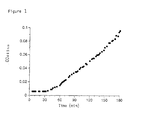
- Fig. 1 shows a result of the investigation where FXII and gClqR were mixed and made to react and the activation of FXII by gClqR was checked with a lapse of time.
- Fig. 2 shows a result of the investigation where activation of FXII by gClqR was checked in a plasma kallikrein-kinin system which was reconstituted from FXII, plasma prekallikrein and HMWK.
- gClqR which was separated/purified from endothelial cells derived from human umbilical vein (HUVEC) or recombinant gClqR was used.
- the recombinant gClqR used herein is a product prepared by the above-mentioned method by B. Ghebrehiwet, et al. [J. Exp. Med., volume 179, pages 1809-1821 (1994)].
- gClqR was purified from HUVEC as shown below and subjected to an FXII activating test.
- Solubilized HUVEC membrane protein fraction was dialyzed against a 10 mM HEPES buffer containing 159 mM of sodium chloride, 2 mM of phenylmethylsulfonyl fluoride, 1 ⁇ M of aprotinin, 1 ⁇ M of pepstatin, 0.1 % of Triton X-100 and 50 ⁇ M of zinc chloride and was added to a HMWK affinity column. After the column was well washed, it was eluted with 0.1 M glycine-HCl (pH: 2.5) and each 0.5 ml of eluates was taken out.
- Each of the eluates was adjusted to pH 7.0 with 1 M Tris-HCl buffer (pH: 9.0) and subjected to a dot blotting by means of protein-detecting monitor and biotinated HMWK of the eluate whereupon purified gClqR was obtained.
- FXII (20 ⁇ g/ml), 32 ⁇ g/ml of recombinant gClqR and 0.6 mM of S-2222 (synthetic substrate for FXIIa: N-benzoyl-L-isoleucyl-L-glutamyl-glycyl-L-arginyl p-nitroanilide hydrochloride and methyl ester) were made to react at 25°C in a HEPES buffer (consisting of 10 mM of HEPES, 137 mM of sodium chloride, 11 mM of D-glucose, 4 mM of potassium chloride, 1 mg/ml of bovine serum albumin, 1 mM of calcium chloride and 50 ⁇ M of zinc chloride; pH: 7.4).
- HEPES buffer consisting of 10 mM of HEPES, 137 mM of sodium chloride, 11 mM of D-glucose, 4 mM of potassium chloride, 1 mg/m
- the HEPES buffer was treated with (4-amidinophenyl)methanesulfonyl fluoride (APMSF) before use and the proteases contained as contaminants in albumin was inactivated for the sake of safety.
- p-Nitroaniline was liberated from the synthetic substrate S-2222 by an enzymatic action of FXIIa produced by activation of FXII and, therefore, the produced amount of FXIIa can be determined by measuring the liberated amount of p-nitroaniline.
- p-Nitroaniline emits yellow light which can be determined by measuring an absorbance at 405 nm and, therefore, said absorbance with lapse of time was monitored using a spectrophotometer to measure the amount of FXIIa produced.
- An example of the results is shown in Fig. 1.
- Recombinant gClqR of various concentrations 1 ⁇ g/ml of FXII, 1 ⁇ g/ml of HMWK, 1 ⁇ g/ml of plasma prekallikrein and 0.6 mM of S-2302 (a synthetic substrate to plasma kallikrein: H-D-prolyl-L-phenylalanyl-L-arginyl p-nitroanilide dihydrochloride) were made to react at 25°C in the same APMSF-treated HEPES buffer as mentioned above. In this test system, activation of FXII was measured using the amount of kallikrein produced as an index.
- FXIIa acts on plasma prekallikrein and converts it to plasma kallikrein having an enzymatic activity. Therefore, when the amount of kallikrein produced there is measured, it is possible to determine how much of the FXII is activated. Amount of the produced kallikrein was determined by monitoring the emission of yellow color of p-nitroaniline liberated from the synthetic substrate S-2303 by a hydrolyzing action of kallikrein using the spectrophotometer by the same manner as mentioned above. An example of the results is shown in Fig. 2.
- the test system of Example 2 is a result of the measurement of activation of FXII by the reaction of gClqR with pure FXII only and, as shown in the result of Fig. 1, the coloration p-nitroaniline liberated from the synthetic substrate which is an index for the amount of FXIIa produced increased with a lapse of time whereby it is clear that gClqR has an action of activating the FXII.
- said activation of FXII by gClqR was not noted at all.
- said FXII-activation was inhibited in a concentration-dependent manner by a Cl inhibitor which is known as an endogenous inhibitor existing in plasma.
- the test system of Example 3 is a reconstituted system of a plasma kallikrein-kinin system consisting of FXII, plasma kallikrein and HMWK and is a result where the activation of FXII was measured using the produced amount of kallikrein as an index.
- gClqR activated the FXII in a concentration-dependent manner and, like the reaction system of Example 2, the activation was not noted in the absence of zinc ion.
- concentration of FXII was varied in this FXII activation reaction system where the amount of gClqR was made constant, the amount of the produced kallikrein increased dependent on amount of the used FXII.
- the receptor to the globular heads of Clq(gClqR) has an action of activating the FXII and said receptor is one of the actual FXII-activating substances in vivo. Therefore, the FXII-activating method in accordance with the present invention reproduces and reflects the actual FXII-activating reaction in vivo in a more faithful manner, and said method is different from the conventional ones using heterologous surface having negative charges but is a novel method for activating the FXII.
- the FXII-activating method of the present invention is very highly useful as a method which is capable of conducting a reaction system nearer the system in vivo in various studies concerning the FXII-activating reaction and also in the FXII-activation as well as in the method of measuring the activity and of screening the pharmaceutical agents participating in the reaction systems in vivo such as a plasma kallikrein-kinin system using said FXII-activation as an initial stage.
Landscapes
- Health & Medical Sciences (AREA)
- Life Sciences & Earth Sciences (AREA)
- Hematology (AREA)
- Engineering & Computer Science (AREA)
- Chemical & Material Sciences (AREA)
- Molecular Biology (AREA)
- Immunology (AREA)
- Urology & Nephrology (AREA)
- Biomedical Technology (AREA)
- Cell Biology (AREA)
- General Health & Medical Sciences (AREA)
- Medicinal Chemistry (AREA)
- Biochemistry (AREA)
- Microbiology (AREA)
- Physics & Mathematics (AREA)
- Analytical Chemistry (AREA)
- Food Science & Technology (AREA)
- Biotechnology (AREA)
- General Physics & Mathematics (AREA)
- Pathology (AREA)
- Organic Chemistry (AREA)
- Proteomics, Peptides & Aminoacids (AREA)
- Genetics & Genomics (AREA)
- Biophysics (AREA)
- Gastroenterology & Hepatology (AREA)
- Zoology (AREA)
- Toxicology (AREA)
- Investigating Or Analysing Biological Materials (AREA)
- Measuring Or Testing Involving Enzymes Or Micro-Organisms (AREA)
- Medicines Containing Material From Animals Or Micro-Organisms (AREA)
- Medicines That Contain Protein Lipid Enzymes And Other Medicines (AREA)
- Compounds Of Unknown Constitution (AREA)
- Ceramic Products (AREA)
- Peptides Or Proteins (AREA)
- Enzymes And Modification Thereof (AREA)
Abstract
Description
- The present invention relates to a novel method for the activation of a blood coagulation factor XII using a receptor for globular heads of Clq, one of complement components.
- A plasma kallikrein-kinin system is a series of reaction systems in vivo producing kinins which have various physiological activities. The plasma kallikrein-kinin system is deeply involved in controlling the functions of living organisms having a close relation with other various enzymatic reaction systems such as renin-angiotensin system, blood coagulating system, fibrinolysis system, complement system and arachidonate cascade mainly for prostaglandin, leukotriene and thromboxane or catecholamine.
- Kinins, such as bradykinin, which are the products of kallikrein-kinin system have various physiological activities such as control of hypertension by dilation of peripheral blood vessels, increase in permeability of blood vessels, contraction and relaxation of smooth muscles, generation of pain, migration of leukocytes and liberation of catecholamine from adrenal cortex and, in addition, they are known as mediators for inflammation reactions including allergic reaction whereby their significance in living organisms is great. Accordingly, it is believed that the substances which suppress the actions of kinins or inhibit the production thereof are useful as pharmaceuticals such as anti-inflammatory agents, analgesic agents and antiallergic agents.
- An initial stage in the series of reaction systems of the plasma kallikrein-kinin system is activation of a blood coagulation factor XII (FXII). When FXII is activated in vivo by injury or by an invading stimulation to tissues or the like, a series of enzymatic reactions of plasma kallikrein-kinin system proceeds. Thus, the activated FXII (blood coagulation factor XII of an activated form; FXIIa) acts on the plasma prekallikrein existing in the same plasma converting it to plasma kallikrein which is an enzyme of an activated form, and then, the resulting plasma kallikrein acts on a high molecular weight kininogen (HMWK) in the plasma whereupon bradykinin having various physiological activities as mentioned above is produced and liberated.
- The activating reaction of FXII plays very important roles not only as a reaction for initiating the plasma kallikrein-kinin system but also as a reaction for controlling the initiating steps of various other function-controlling systems in living organisms such as the blood coagulating system, fibrinolysis system, renin-angiotensin system, complement system and arachidonate cascade. FXII has been known to be activated on a heterologous surface having negative charge and examples of such a heterologous surface are kaolin, glass, Celite, dextran sulfate, collagen and acidic mucopolysaccharides although substances which activate FXII in actual living organisms have not been identified yet.
- An object of the present invention is to offer a novel FXII-activating method which is different from the conventional method using a heterologous surface having negative charge and wherein a FXII-activating substance in living organisms is identified for a more faithful reproduction of actual FXII-activating reaction in living organisms.
- The present inventors have conducted an intensive study for an FXII-activating substance existing in living organisms and have found as a result thereof that a receptor protein for globular heads of Clq is a complement component existing on the cell membrane is a substance which activates the FXII whereupon the present invention has been accomplished.
- The present invention relates to a method for the activation of FXII using a receptor for globular heads of Clq (hereinafter, referred to as gClqR) and also to an activator for FXII consisting of said substance. "Complement" is a general name for about twenty kinds of serum protein and plays an important role as a mediator for various immune reactions and allergic reactions. It inherently exists in blood in an inactive form but, when activated by an antigen-antibody complex, membrane components of bacteria or animal cells, etc., it shows various biological activities such as hemolytic or bacteriolytic reaction, promotion of phagocytosis, promotion of inflammation, etc. Activation of the complement is initiated by contact with the above-mentioned activator whereby the complement component "Cl" is activated. Clq is one of the subcomponents of three kinds of Cl and, since it has an activity of binding to various cells such as lymphocytes, monocytes, macrophages, neutrophils, eosinophils, fibroblasts, platelets, endothelial cells and synovial cells, the presence of receptor on cell membranes of them has been suggested and isolated/identified.
- The present invention relates to a method for the activation of FXII using a receptor protein (gClqR) to the globular heads of the above-mentioned complement component "Clq". The method of the present invention is useful for giving more faithful reproduction and reflection of the actual FXII-activating reaction in living organisms. Joseph et al., PNAS, 1996, 93, 8552-8557 and Herwald et al., J. Biol. Chem., 1996, 271, 13040-13047 describe the binding, but not the activation, of FXII to gCl2R.
- The gClqR used in the present invention can be prepared by separation and purification from cells such as endothelial cells, lymphocytes, monocytes, macrophages, neutrophils, eosinophils, fibroblasts, platelets and synovial cells of various animals including human being. With respect to the cells, not only normal ones obtained from the components of living organisms but also cultured and proliferated cells or tumorigenically transformed cultured cells may be utilized. Separation from gClqR and succeeding purification may be conducted utilizing the means which have been commonly used for purification of membrane proteins. For example, a method wherein cell membrane is solubilized using detergents followed by purifying with various chromatographic means is a common one. Affinity chromatography using a carrier obtained by insolubilization of gClq, HMWK or the like is an especially effective method since it utilizes a biochemical affinity with gClqR whereby it has a highly separating ability and is capable of separating from other membrane proteins in a specific manner.
- Further, a recombinant gClqR which is prepared by means of gene engineering may be used in the FXII-activating method of the present invention too. In accordance with said gene engineering means, a product which is uniform and contains less contaminant proteins can be easily prepared. The recombinant gClqR may, for example, be manufactured by a method of B. Ghebrehiwet et al [J. Exp. Med., volume 179, pages 1809-1821 (1994)].
- The reaction system in the FXII-activating method of the present invention may be appropriately selected depending upon the object. Thus, a reaction system using common animal plasma containing FXII, a reconstituted system wherein FXII, plasma prekallikrein and HMWK which are constituting components of plasma kallikrein-kinin system are combined, etc. may be exemplified as basic reaction systems in addition to a reaction system which substantially contains only FXII. It has been confirmed that the FXII-activating method of the present invention using gClqR is dependent on zinc and it is preferred that all of the above-mentioned reactions are conducted in the presence of zinc ion. For selecting optimum reaction conditions, additives which are commonly used in the related art such as albumin and saccharides may be appropriately added to the reaction system in addition to salts such as sodium chloride and buffers. Each of the reaction conditions for the FXII-activating method of the present invention such as concentrations of gClqR, FXII, other pure proteins, additives, etc., pH, reaction temperature and reaction time may be investigated and selected whereby the object of the operators can be duly achieved.
- In order to measure the degree of activation of FXII by the FXII-activating method of the present invention, it goes without saying that confirmation can be done by determining the resulting FXIIa quantitatively and said quantitative determination may be conducted by the methods which are common in the related art. Such quantitative determination methods for FXIIa have been abundantly reported in literatures already and the most preferred method for the operator may be adopted. An example of the commonly used ones for determination of FXIIa is a method where the measurement is conducted utilizing the enzymatic activity of FXIIa. That is a method where the measurement is done using a substrate to FXIIa and the method using synthetic coloring substrates such as D-Pro-Phe-Arg-pNA, D-Leu-Gly-Arg-pNA and N-Benzoyl-Ile-Glu-Gly-Arg-pNA hydrochloride and methyl ester, and synthetic fluorescent substrates such as Boc-Glu(OBz)-Gly-Arg-MCA and Boc-Gln-Gly-Arg-MCA besides natural substrates such as plasma prekallikrein, blood coagulation factor XI and plasmin is simple and convenient and is commonly and widely used. The above descriptions on the constituting components of the reaction system, the reaction conditions, the measuring methods for determining the produced FXIIa, etc. concerning the present invention are mere examples for conducting the present invention and it is to be understood that the present invention is not limited thereto.
- The FXII-activating method using gClqR in accordance with the present invention is able to be conducted in various experimental systems. As mentioned already, the reaction for activating the FXII plays a very important role as a reaction for controlling the initial stage of various controlling systems for functions in vivo such as plasma kallikrein-kinin system, blood coagulation system and fibrinolysis system and, therefore, many investigations for the FXII activation have been conducted already for elucidating the controlling mechanism in vivo. For example, (1) elucidation for pathological and physiological significance of the FXII-activating reaction; (2) study of intrinsic substances existing in living organisms controlling the FXII-activating reaction; and (3) various studies for participation of the FXII activation in several reactions in vivo such as kinin liberation, intrinsic blood coagulation, plasminogen activation and complement system have been conducted. Method of the present invention whereby the actual FXII-activating reaction in vivo can be reproduced and reflexed in a more faithful manner in the above-mentioned testing and experimental systems is quite useful.
- Development of pharmaceuticals having an inhibiting or promoting action to plasma kallikrein-kinin system, blood coagulation system, fibrinolysis system, renin-angiotensin system, complement system, arachidonate cascade, etc. in which the FXII activation participates has been conducted as well. For example, a substance which inhibits the plasma kallikrein-kinin system has an inhibitory action on the production of bradykinin which is a final product thereof and, therefore, such a substance is useful as a drug for suppressing pain, inflammation, allergy, etc. induced by bradykinin such as an analgesic agent, an anti-inflammatory agent, an antiallergic agent, etc. In a method of measuring and screening the activity of such a drug, utilization of a reaction system which is nearer the system in vivo has a higher possibility of finding preferred drugs having a suitable action mechanism. Therefore, the method of the present invention having such a characteristic feature can be utilized for measuring the activity of the above-mentioned drugs and is very highly useful. Especially in measuring the activity of a drug which inhibits the FXII activation acting to gClqR, the method of the present invention is essential.
- Specific examples of the method for measuring the activity of the above-mentioned drugs are (1) a method of measuring the inhibiting activity of a test substance to the production of kallikrein using animal plasma (Examined Japanese Patent Publication Hei-04/14,000); (2) a method of measuring the inhibiting and promoting activities of a test substance to the production of FXIIa using animal plasma (Laid-Open Japanese Patent Publication Hei-07/51,097); and (3) a method of measuring the inhibiting and promoting activity of a test substance to the production of FXIIa, kallikrein or bradykinin by a reconstituted plasma kallikrein-kinin system (Laid-Open Japanese Patent Publication Hei-07/51,098).
- Fig. 1 shows a result of the investigation where FXII and gClqR were mixed and made to react and the activation of FXII by gClqR was checked with a lapse of time.
- Fig. 2 shows a result of the investigation where activation of FXII by gClqR was checked in a plasma kallikrein-kinin system which was reconstituted from FXII, plasma prekallikrein and HMWK.
- The present invention will be further illustrated by way of the following examples. It is to be understood that they are mere examples for a specific explanation of the present invention and that they do not have any limitative meaning.
- In the following FXII activating tests, gClqR which was separated/purified from endothelial cells derived from human umbilical vein (HUVEC) or recombinant gClqR was used. The recombinant gClqR used herein is a product prepared by the above-mentioned method by B. Ghebrehiwet, et al. [J. Exp. Med., volume 179, pages 1809-1821 (1994)]. In the meanwhile, gClqR was purified from HUVEC as shown below and subjected to an FXII activating test.
- Solubilized HUVEC membrane protein fraction was dialyzed against a 10 mM HEPES buffer containing 159 mM of sodium chloride, 2 mM of phenylmethylsulfonyl fluoride, 1 µM of aprotinin, 1 µM of pepstatin, 0.1 % of Triton X-100 and 50 µM of zinc chloride and was added to a HMWK affinity column. After the column was well washed, it was eluted with 0.1 M glycine-HCl (pH: 2.5) and each 0.5 ml of eluates was taken out. Each of the eluates was adjusted to pH 7.0 with 1 M Tris-HCl buffer (pH: 9.0) and subjected to a dot blotting by means of protein-detecting monitor and biotinated HMWK of the eluate whereupon purified gClqR was obtained.
- FXII (20 µg/ml), 32 µg/ml of recombinant gClqR and 0.6 mM of S-2222 (synthetic substrate for FXIIa: N-benzoyl-L-isoleucyl-L-glutamyl-glycyl-L-arginyl p-nitroanilide hydrochloride and methyl ester) were made to react at 25°C in a HEPES buffer (consisting of 10 mM of HEPES, 137 mM of sodium chloride, 11 mM of D-glucose, 4 mM of potassium chloride, 1 mg/ml of bovine serum albumin, 1 mM of calcium chloride and 50 µM of zinc chloride; pH: 7.4). The HEPES buffer was treated with (4-amidinophenyl)methanesulfonyl fluoride (APMSF) before use and the proteases contained as contaminants in albumin was inactivated for the sake of safety. p-Nitroaniline was liberated from the synthetic substrate S-2222 by an enzymatic action of FXIIa produced by activation of FXII and, therefore, the produced amount of FXIIa can be determined by measuring the liberated amount of p-nitroaniline. p-Nitroaniline emits yellow light which can be determined by measuring an absorbance at 405 nm and, therefore, said absorbance with lapse of time was monitored using a spectrophotometer to measure the amount of FXIIa produced. An example of the results is shown in Fig. 1.
- Recombinant gClqR of various concentrations, 1 µg/ml of FXII, 1 µg/ml of HMWK, 1 µg/ml of plasma prekallikrein and 0.6 mM of S-2302 (a synthetic substrate to plasma kallikrein: H-D-prolyl-L-phenylalanyl-L-arginyl p-nitroanilide dihydrochloride) were made to react at 25°C in the same APMSF-treated HEPES buffer as mentioned above. In this test system, activation of FXII was measured using the amount of kallikrein produced as an index. Thus, when FXII is activated and is converted to FXIIa, FXIIa acts on plasma prekallikrein and converts it to plasma kallikrein having an enzymatic activity. Therefore, when the amount of kallikrein produced there is measured, it is possible to determine how much of the FXII is activated. Amount of the produced kallikrein was determined by monitoring the emission of yellow color of p-nitroaniline liberated from the synthetic substrate S-2303 by a hydrolyzing action of kallikrein using the spectrophotometer by the same manner as mentioned above. An example of the results is shown in Fig. 2.
- The test system of Example 2 is a result of the measurement of activation of FXII by the reaction of gClqR with pure FXII only and, as shown in the result of Fig. 1, the coloration p-nitroaniline liberated from the synthetic substrate which is an index for the amount of FXIIa produced increased with a lapse of time whereby it is clear that gClqR has an action of activating the FXII. In the absence of zinc ion, said activation of FXII by gClqR was not noted at all. Further, said FXII-activation was inhibited in a concentration-dependent manner by a Cl inhibitor which is known as an endogenous inhibitor existing in plasma.
- The test system of Example 3 is a reconstituted system of a plasma kallikrein-kinin system consisting of FXII, plasma kallikrein and HMWK and is a result where the activation of FXII was measured using the produced amount of kallikrein as an index. As shown in the result of Fig. 2, gClqR activated the FXII in a concentration-dependent manner and, like the reaction system of Example 2, the activation was not noted in the absence of zinc ion. When the concentration of FXII was varied in this FXII activation reaction system where the amount of gClqR was made constant, the amount of the produced kallikrein increased dependent on amount of the used FXII. When gClqR purified from HUVEC was used in place of the recombinant gClqR, the same FXII activation was noted. Accordingly, it was suggested that the saccharized site in gClqR did not affect the activation of FXII.
- As mentioned herein above, it has now become clear that the receptor to the globular heads of Clq(gClqR) has an action of activating the FXII and said receptor is one of the actual FXII-activating substances in vivo. Therefore, the FXII-activating method in accordance with the present invention reproduces and reflects the actual FXII-activating reaction in vivo in a more faithful manner, and said method is different from the conventional ones using heterologous surface having negative charges but is a novel method for activating the FXII. As mentioned in detail above, the FXII-activating method of the present invention is very highly useful as a method which is capable of conducting a reaction system nearer the system in vivo in various studies concerning the FXII-activating reaction and also in the FXII-activation as well as in the method of measuring the activity and of screening the pharmaceutical agents participating in the reaction systems in vivo such as a plasma kallikrein-kinin system using said FXII-activation as an initial stage.
Claims (7)
- A method for the activation of blood coagulation factor XII using a receptor for globular heads of Clq, comprising mixing factor XII with a receptor to globular heads of Clq in the presence of zinc ions.
- A method for determination of activated factor XII by a receptor for globular heads of Clq, comprising the following steps:(a) mixing factor XII, a receptor for globular heads of Clq and a substrate for activated factor XII in the presence of zinc ions, and(b) detecting the presence of activated factor XII.
- A method according to claim 2, wherein a synthetic substrate for FXIIa is added.
- A method according to claim 2, wherein prekallikrein is the substrate for activated factor XII (FXIIa) and prekallikrein and HMWK are further added.
- Use of a receptor for globular heads of Clq and zinc ion for the activation of blood coagulation factor XII.
- Use of a receptor for globular heads of Clq and zinc ion in an assay to identify substances which inhibit or promote blood coagulation factor XII.
- Use of a receptor for globular heads of Clq in an assay comprising blood coagulation factor XII and zinc ion to identify substances which inhibit or promote the kallikrein-kinin system, blood coagulation system, fibrinolysis system, rennin-angiotensin system, complement system, or arachidonate cascade.
Applications Claiming Priority (3)
| Application Number | Priority Date | Filing Date | Title |
|---|---|---|---|
| JP26531896 | 1996-09-12 | ||
| JP8265318A JPH1084995A (en) | 1996-09-12 | 1996-09-12 | Activation of blood coagulation factor xii |
| JP265318/96 | 1996-09-12 |
Publications (3)
| Publication Number | Publication Date |
|---|---|
| EP0829725A2 EP0829725A2 (en) | 1998-03-18 |
| EP0829725A3 EP0829725A3 (en) | 1998-06-10 |
| EP0829725B1 true EP0829725B1 (en) | 2003-03-05 |
Family
ID=17415534
Family Applications (1)
| Application Number | Title | Priority Date | Filing Date |
|---|---|---|---|
| EP97115720A Expired - Lifetime EP0829725B1 (en) | 1996-09-12 | 1997-09-10 | A method for the activation of blood coagulation factor XII |
Country Status (8)
| Country | Link |
|---|---|
| US (1) | US6117648A (en) |
| EP (1) | EP0829725B1 (en) |
| JP (1) | JPH1084995A (en) |
| KR (1) | KR100497951B1 (en) |
| CN (1) | CN1138002C (en) |
| AT (1) | ATE233898T1 (en) |
| DE (1) | DE69719425T2 (en) |
| TW (1) | TW521089B (en) |
Families Citing this family (5)
| Publication number | Priority date | Publication date | Assignee | Title |
|---|---|---|---|---|
| US6913900B2 (en) * | 2001-08-29 | 2005-07-05 | Nippon Zoki Pharmaceutical Co., Ltd. | Plasma prekallikrein activation and kallikrein production assay |
| WO2014113712A1 (en) | 2013-01-20 | 2014-07-24 | Dyax Corp. | Evaluation and treatment of bradykinin-mediated disorders |
| KR20250066486A (en) | 2013-10-21 | 2025-05-13 | 다케다 파머수티컬 컴패니 리미티드 | Assays for determining plasma kallikrein system biomarkers |
| PL3060908T3 (en) | 2013-10-21 | 2021-10-25 | Takeda Pharmaceutical Company Limited | Diagnosis and treatment of autoimmune diseases |
| CA3002747A1 (en) * | 2015-10-19 | 2017-04-27 | Dyax Corp. | Immunoassay to detect cleaved high molecular weight kininogen |
Family Cites Families (5)
| Publication number | Priority date | Publication date | Assignee | Title |
|---|---|---|---|---|
| KR960009766B1 (en) * | 1986-09-10 | 1996-07-24 | 니혼 소오끼 세이야꾸 가부시기가이샤 | Method of assaying kallikrein formation substances |
| JPH0414000A (en) * | 1990-05-07 | 1992-01-17 | Fujitsu Ltd | Radiation device |
| JP3213832B2 (en) * | 1993-08-06 | 2001-10-02 | 日本臓器製薬株式会社 | Test substance activity measurement method |
| JP3213831B2 (en) * | 1993-08-06 | 2001-10-02 | 日本臓器製薬株式会社 | Test substance activity measurement method |
| JP2594222B2 (en) * | 1993-09-28 | 1997-03-26 | 日本臓器製薬株式会社 | New physiologically active substance-KF |
-
1996
- 1996-09-12 JP JP8265318A patent/JPH1084995A/en active Pending
-
1997
- 1997-09-06 TW TW086112901A patent/TW521089B/en not_active IP Right Cessation
- 1997-09-08 US US08/925,167 patent/US6117648A/en not_active Expired - Fee Related
- 1997-09-10 KR KR1019970046510A patent/KR100497951B1/en not_active Expired - Fee Related
- 1997-09-10 AT AT97115720T patent/ATE233898T1/en not_active IP Right Cessation
- 1997-09-10 EP EP97115720A patent/EP0829725B1/en not_active Expired - Lifetime
- 1997-09-10 DE DE69719425T patent/DE69719425T2/en not_active Expired - Fee Related
- 1997-09-11 CN CNB971184275A patent/CN1138002C/en not_active Expired - Fee Related
Also Published As
| Publication number | Publication date |
|---|---|
| EP0829725A2 (en) | 1998-03-18 |
| US6117648A (en) | 2000-09-12 |
| TW521089B (en) | 2003-02-21 |
| CN1182137A (en) | 1998-05-20 |
| EP0829725A3 (en) | 1998-06-10 |
| DE69719425T2 (en) | 2003-12-18 |
| CN1138002C (en) | 2004-02-11 |
| ATE233898T1 (en) | 2003-03-15 |
| KR100497951B1 (en) | 2005-09-30 |
| DE69719425D1 (en) | 2003-04-10 |
| JPH1084995A (en) | 1998-04-07 |
| KR19980024488A (en) | 1998-07-06 |
Similar Documents
| Publication | Publication Date | Title |
|---|---|---|
| JP3137261B2 (en) | Method for measuring endogenous thrombin potential in plasma and blood and kits used in the method | |
| JP2562000B2 (en) | Method for diagnosing blood coagulation disorders | |
| US5443960A (en) | Method for the diagnosis of blood coagulation disorders | |
| EP0203509B1 (en) | Method for the quantitative determination of protein-C and an activating preparation for its implementation. | |
| US4188264A (en) | Process for determining bacterial endotoxin and reagents used therefor | |
| US4563420A (en) | Process for assaying the activity of tissue plasminogen activator, and kit suitable for use in said process | |
| JP4361980B2 (en) | Method for measuring the potential anticoagulant potential of a sample | |
| Schwartz et al. | Increased release of plasminogen activator inhibitor type 2 accompanies the human mononuclear cell tissue factor response to lipopolysaccharide | |
| Bertina et al. | Spectrophotometric assays of prothrombin in plasma of patients using oral anticoagulants | |
| JP3533012B2 (en) | Method for detecting protein C / protein S system failure | |
| US20030124622A1 (en) | Procedure for the determination of the activity of the protease which activates factor VII from protein solutions | |
| Michiels et al. | Laboratory diagnosis of hereditary thrombophilia | |
| EP0829725A2 (en) | A method for the activation of blood coagulation factor XII | |
| EP0440775B1 (en) | Factor ix chromogenic assay | |
| RU2121690C1 (en) | Method of determining plasminogen and plasmin inhibitors levels in blood plasma | |
| US5529905A (en) | Method of assaying plasma proteins with prothrombin fragments | |
| Stocker | Laboratory use of hirudin | |
| JPH07135973A (en) | Enzymes derived from periodontopathic bacteria, methods for measuring the same, and antibodies to the enzymes | |
| Gaspar et al. | Detection of alpha 2-macroglobulin-associated proteases in the plasma of patients with rheumatoid arthritis. | |
| Junaid et al. | Specific substrate for CLN2 proteaseltripeptidylpeptidaseI assay | |
| JP2670618B2 (en) | Method for producing chemically modified enzyme inhibitor | |
| AU666484C (en) | Method for the diagnosis of blood coagulation disorders | |
| US7691641B2 (en) | Polysaccharide-peptide conjugates for use as thrombin substrates | |
| RU2195673C2 (en) | Method of assay of antithrombin iii activity | |
| Sas | Biology of Antithrombins |
Legal Events
| Date | Code | Title | Description |
|---|---|---|---|
| PUAI | Public reference made under article 153(3) epc to a published international application that has entered the european phase |
Free format text: ORIGINAL CODE: 0009012 |
|
| AK | Designated contracting states |
Kind code of ref document: A2 Designated state(s): AT BE CH DE DK ES FR GB IT LI NL SE |
|
| AX | Request for extension of the european patent |
Free format text: AL;LT;LV;RO;SI |
|
| PUAL | Search report despatched |
Free format text: ORIGINAL CODE: 0009013 |
|
| AK | Designated contracting states |
Kind code of ref document: A3 Designated state(s): AT BE CH DE DK ES FI FR GB GR IE IT LI LU MC NL PT SE |
|
| AX | Request for extension of the european patent |
Free format text: AL;LT;LV;RO;SI |
|
| 17P | Request for examination filed |
Effective date: 19981020 |
|
| AKX | Designation fees paid |
Free format text: AT BE CH DE DK ES FR GB IT LI NL SE |
|
| RBV | Designated contracting states (corrected) |
Designated state(s): AT BE CH DE DK ES FR GB IT LI NL SE |
|
| 17Q | First examination report despatched |
Effective date: 20011029 |
|
| GRAG | Despatch of communication of intention to grant |
Free format text: ORIGINAL CODE: EPIDOS AGRA |
|
| GRAG | Despatch of communication of intention to grant |
Free format text: ORIGINAL CODE: EPIDOS AGRA |
|
| GRAG | Despatch of communication of intention to grant |
Free format text: ORIGINAL CODE: EPIDOS AGRA |
|
| GRAH | Despatch of communication of intention to grant a patent |
Free format text: ORIGINAL CODE: EPIDOS IGRA |
|
| GRAH | Despatch of communication of intention to grant a patent |
Free format text: ORIGINAL CODE: EPIDOS IGRA |
|
| GRAA | (expected) grant |
Free format text: ORIGINAL CODE: 0009210 |
|
| AK | Designated contracting states |
Designated state(s): AT BE CH DE DK ES FR GB IT LI NL SE |
|
| PG25 | Lapsed in a contracting state [announced via postgrant information from national office to epo] |
Ref country code: NL Free format text: LAPSE BECAUSE OF FAILURE TO SUBMIT A TRANSLATION OF THE DESCRIPTION OR TO PAY THE FEE WITHIN THE PRESCRIBED TIME-LIMIT Effective date: 20030305 Ref country code: LI Free format text: LAPSE BECAUSE OF FAILURE TO SUBMIT A TRANSLATION OF THE DESCRIPTION OR TO PAY THE FEE WITHIN THE PRESCRIBED TIME-LIMIT Effective date: 20030305 Ref country code: IT Free format text: LAPSE BECAUSE OF FAILURE TO SUBMIT A TRANSLATION OF THE DESCRIPTION OR TO PAY THE FEE WITHIN THE PRE;WARNING: LAPSES OF ITALIAN PATENTS WITH EFFECTIVE DATE BEFORE 2007 MAY HAVE OCCURRED AT ANY TIME BEFORE 2007. THE CORRECT EFFECTIVE DATE MAY BE DIFFERENT FROM THE ONE RECORDED.SCRIBED TIME-LIMIT Effective date: 20030305 Ref country code: CH Free format text: LAPSE BECAUSE OF FAILURE TO SUBMIT A TRANSLATION OF THE DESCRIPTION OR TO PAY THE FEE WITHIN THE PRESCRIBED TIME-LIMIT Effective date: 20030305 Ref country code: BE Free format text: LAPSE BECAUSE OF FAILURE TO SUBMIT A TRANSLATION OF THE DESCRIPTION OR TO PAY THE FEE WITHIN THE PRESCRIBED TIME-LIMIT Effective date: 20030305 Ref country code: AT Free format text: LAPSE BECAUSE OF FAILURE TO SUBMIT A TRANSLATION OF THE DESCRIPTION OR TO PAY THE FEE WITHIN THE PRESCRIBED TIME-LIMIT Effective date: 20030305 |
|
| REG | Reference to a national code |
Ref country code: GB Ref legal event code: FG4D |
|
| REG | Reference to a national code |
Ref country code: CH Ref legal event code: EP |
|
| REF | Corresponds to: |
Ref document number: 69719425 Country of ref document: DE Date of ref document: 20030410 Kind code of ref document: P |
|
| PG25 | Lapsed in a contracting state [announced via postgrant information from national office to epo] |
Ref country code: SE Free format text: LAPSE BECAUSE OF FAILURE TO SUBMIT A TRANSLATION OF THE DESCRIPTION OR TO PAY THE FEE WITHIN THE PRESCRIBED TIME-LIMIT Effective date: 20030605 Ref country code: DK Free format text: LAPSE BECAUSE OF FAILURE TO SUBMIT A TRANSLATION OF THE DESCRIPTION OR TO PAY THE FEE WITHIN THE PRESCRIBED TIME-LIMIT Effective date: 20030605 |
|
| NLV1 | Nl: lapsed or annulled due to failure to fulfill the requirements of art. 29p and 29m of the patents act | ||
| ET | Fr: translation filed | ||
| REG | Reference to a national code |
Ref country code: CH Ref legal event code: PL |
|
| PG25 | Lapsed in a contracting state [announced via postgrant information from national office to epo] |
Ref country code: ES Free format text: LAPSE BECAUSE OF FAILURE TO SUBMIT A TRANSLATION OF THE DESCRIPTION OR TO PAY THE FEE WITHIN THE PRESCRIBED TIME-LIMIT Effective date: 20030930 |
|
| PLBE | No opposition filed within time limit |
Free format text: ORIGINAL CODE: 0009261 |
|
| STAA | Information on the status of an ep patent application or granted ep patent |
Free format text: STATUS: NO OPPOSITION FILED WITHIN TIME LIMIT |
|
| 26N | No opposition filed |
Effective date: 20031208 |
|
| PGFP | Annual fee paid to national office [announced via postgrant information from national office to epo] |
Ref country code: FR Payment date: 20060831 Year of fee payment: 10 |
|
| PGFP | Annual fee paid to national office [announced via postgrant information from national office to epo] |
Ref country code: GB Payment date: 20060920 Year of fee payment: 10 |
|
| PGFP | Annual fee paid to national office [announced via postgrant information from national office to epo] |
Ref country code: DE Payment date: 20060921 Year of fee payment: 10 |
|
| GBPC | Gb: european patent ceased through non-payment of renewal fee |
Effective date: 20070910 |
|
| PG25 | Lapsed in a contracting state [announced via postgrant information from national office to epo] |
Ref country code: DE Free format text: LAPSE BECAUSE OF NON-PAYMENT OF DUE FEES Effective date: 20080401 |
|
| REG | Reference to a national code |
Ref country code: FR Ref legal event code: ST Effective date: 20080531 |
|
| PG25 | Lapsed in a contracting state [announced via postgrant information from national office to epo] |
Ref country code: FR Free format text: LAPSE BECAUSE OF NON-PAYMENT OF DUE FEES Effective date: 20071001 |
|
| PG25 | Lapsed in a contracting state [announced via postgrant information from national office to epo] |
Ref country code: GB Free format text: LAPSE BECAUSE OF NON-PAYMENT OF DUE FEES Effective date: 20070910 |