EP0817824B1 - Process for extracting and purifying lignans and cinnamic acid derivatives from flaxseed - Google Patents
Process for extracting and purifying lignans and cinnamic acid derivatives from flaxseed Download PDFInfo
- Publication number
- EP0817824B1 EP0817824B1 EP96907972A EP96907972A EP0817824B1 EP 0817824 B1 EP0817824 B1 EP 0817824B1 EP 96907972 A EP96907972 A EP 96907972A EP 96907972 A EP96907972 A EP 96907972A EP 0817824 B1 EP0817824 B1 EP 0817824B1
- Authority
- EP
- European Patent Office
- Prior art keywords
- sdg
- extract
- alcohol
- resin
- process according
- Prior art date
- Legal status (The legal status is an assumption and is not a legal conclusion. Google has not performed a legal analysis and makes no representation as to the accuracy of the status listed.)
- Expired - Lifetime
Links
Images




Classifications
-
- C—CHEMISTRY; METALLURGY
- C07—ORGANIC CHEMISTRY
- C07H—SUGARS; DERIVATIVES THEREOF; NUCLEOSIDES; NUCLEOTIDES; NUCLEIC ACIDS
- C07H1/00—Processes for the preparation of sugar derivatives
- C07H1/06—Separation; Purification
- C07H1/08—Separation; Purification from natural products
Definitions
- This invention relates to an improved process for extracting lignans and cinnamic acid derivatives from flaxseed.
- Flaxseed is presently grown for its oil content for use primarily as an industrial oil.
- flax is a rich source of fatty acids and has increasing uses in foods.
- Flaxseed suffers from the fact that the level of fatty acid unsaturation in the triglyceride oil is high and is subject to oxidative polymerization.
- the scientific literature contains an abundance of reports on the chemistry and physical properties of various components derived from flaxseed. For example, much is known about the feed value of expeller cake meal and its solvent extracted version.
- the industrial properties of linseed oil are legendary for use in linoleum and paint products.
- the lignans are generally cinnamic acid dimers containing a dibenzylbutane skeleton. When part of the human diet, certain lignans are believed to be converted into mammalian lignans known as enterolactone and enterodiol. In a study carried out by Thompson et al. (1991) "Mammalian lignan production form various foods", Nutr. Cancer 16: 43-52, 68 different primary foodstuffs were surveyed for their ability to produce mammalian lignans.
- Flaxseed also contains cinnamic acid derivatives which are distinct from the SDG.
- the principal cinnamic acid derivatives found in flaxseed are glycosides of p-coumaric acid, ferulic and caffeic acid.
- lignans exhibit broad spectrum biological activities that include antitumor, antimitotic, antioxidant, antiviral, weak estrogenic and anti-estrogenic activities.
- Studies within the chemotherapy program of the National Cancer Institute in the United States indicate that certain of the lignans prevent the growth of tumors. Cinnamic acids have known antioxidant properties.
- Harris and Haggerty in an article in Cereal Foods World 38: 147-151 (1993) describe the extraction of SDG from defatted flaxseed powder using supercritical fluid carbon dioxide or pure methanol as extraction medium.
- the present invention in its broadest aspect relates to a process for extracting lignans (SDG), cinnamic acid glycosides and related derivatives from flaxseed in which a substantially oil-free flaxseed is contacted with a solvent to extract phenolics into the solvent and the phenolic-rich extract obtained is further processed to liberate the lignans and cinnamic acid derivatives therefrom,characterised in that the solvent to extract phenolics comprising secoisolariciresinol diglycoside (SDG) and/or cinnamic acid derivatives is an aqueous aliphatic alcohol solvent, residual solids are separated from the phenolic-rich solvent extract and the phenolic-rich solvent extract obtained is subjected to a base-catalysed hydrolysis to liberate SDG and cinnamic acid derivatives therefrom in a non-complexed form, fractionating the hydrolysed extract into a fraction containing SDG and a fraction containing cinn
- the phenolic-rich solvent may be subjected to the base-catalyzed hydrolysis in an anhydrous alcohol system.
- An aqueous alcohol system has been found to be particularly advantageous because it is easier and cheaper to operate. It also has the additional unexpected advantage that it destroys the unwanted cyanogenic glycosides present in the flaxseed.
- the hydrolyzed extract obtained from the dry alcohol is subjected to a liquid/liquid partition to further enrich the phenolics.
- the phenolic-rich solution from the aqueous hydrolysis is subjected to contact with an anion exchange resin, or a C-18 solid phase extraction resin, to further separate and enrich the phenolics (lignans and cinnamic acid derivatives).
- the thus enriched fractions are finally subjected to chromatographic separation to isolate SDG and cinnamic acid derivatives in powdered forms at purities of greater than 95%.
- the aliphatic alcohols for the initial extraction which are used in form of an aqueous aliphatic alcohol solvant may be selected from the group consisting of methanol, ethanol, propanol, isopropanol and butanol.
- a mixture of alcohol and water is surprisingly superior in its extraction capability when compared to the alcohols themselves. Alcohol mixed with up to 50% water gives the best blend for extraction.
- the minimum alcohol concentration is preferably at least 50% with an alcohol content of 55 to 75% being particularly preferred.
- Methanol has been found to be the most effective solvent in terms of extraction efficiency.
- Aqueous ethanol is also highly effective and is preferred from considerations of safety to health and handling.
- the alcohol solvent is preferably mixed with the flaxseed meal in a liquid to solids ratio in the range 2:1 to 50:1, with a range of 4 - 30:1 being particularly preferred.
- the contact time between the meal and the solvent system is typically in the range of 1 to 24 hours, with a range of 1 to 6 hours being preferred and a range of 1 to 4 hours being most preferred.
- the extraction temperature is not critical, it is most commonly carried out at a temperature between 0°C and a temperature not exceeding the boiling point of the solvent system of choice. It has been found particularly convenient to carry out the extraction at temperatures between about 20° and 60°C
- the slurry obtained is subjected to any suitable means of liquid/solid separation as known to those skilled in the art, such as centrifugation, screening, decantation, etc.
- the residual solids may be further washed with fresh solvent to maximize extraction and the combined liquors may then be filtered by means known to those skilled in the art to produce a liquor free of any suspended solids.
- the extract is concentrated to remove solvent by any of a variety of means known to those skilled in the art, e.g. evaporation under reduced pressure, and dried to a generally anhydrous state which may be a thick, syrupy material, e.g. by a technique such as rotary evaporation, freeze-drying, drum drying, spray drying, etc.
- the hydrolysis may then be carried out using a dry alcohol, e.g. dry ethanol or methanol together with a hydrolyzing agent such as sodium methoxide and possibly barium methoxide. This hydrolyzing agent may be added in a typical amount of 0.06-2.5% w/v based on the total volume of liquid.
- triethylamine may be effectively used for hydrolysis, e.g. in amounts up to 1.25% w/v based on the total volume of liquid. While it may be possible to use organic amines other than triethylamine, it has been found that triethylamine has important advantages. Thus, it is a medium strength base with a boiling point sufficiently high as not to cause volatility problems during hydrolysis while still being sufficiently low to be removed by traditional evaporative procedures following hydrolysis.
- the anhydrous alcohol hydrolysate is subjected to liquid/liquid partitioning and this can be conveniently carried out in a continuous extractor using an ethyl acetate/water solvent system with the ethyl acetate and water preferably being in a ratio in the range of about 1:1 to 7:1.
- Ethyl acetate is particularly preferred for this purpose because of its polarity.
- solvents with polarity below ethyl acetate are unable to effectively remove non-lignan substances from aqueous solutions, which is essential for effective subsequent chromatographic purification of SDG.
- the non-lignan substances removed in the ethyl acetate fraction may include valuable products including derivatives of cinnamic acid glycosides; e.g. methyl-coumarate 4-glycoside, methyl caffeate 4-glycoside, and methyl ferulate 4-glycoside.
- the SDG-rich fraction from the liquid/liquid partitioning may be further purified by contacting a reverse-phase resin, e.g. a slurry or column of C-18 or C-8 reverse phase packing.
- a reverse-phase resin e.g. a slurry or column of C-18 or C-8 reverse phase packing.
- C-18 and C-8 reverse phase packing include Radial-Pak® C-18, Bondapak® C-18, Bondapak® C-B and Nova-Pak® C-18, all available from Waters.
- the resin is washed with a dilute acid, e.g. 1% acetic acid, to remove organic and inorganic substances and then eluted with acidic aqueous alcohol, e.g. 1% acetic acid in aqueous methanol, to provide an enriched SDG fraction.
- the extract does not need to be in an anhydrous form and may be used in the form of a concentrated syrupy residue.
- the hydrolysis may also be performed in the aqueous alcohol extract without prior concentration of the extract.
- the base is usually selected from ammonium hydroxide, sodium hydroxide and potassium hydroxide, with sodium or potassium hydroxide being preferred.
- the concentration of the base is typically about 1 normal and it is preferably used in an amount of about 3-7% w/v.
- the hydrolysis is normally carried out over about 4 to 24 hours with the shortest possible hydrolysis time preferred.
- An additional benefit of this process is the destruction of the cyanogenic glycosides yielding an extract free of cyanogenic glycosides or free cyanide.
- the aqueous base hydrolysate contains the SDG, together with other components including cinnamic acid derivatives, and this hydrolysate is contacted with an anion exchange resin. It is necessary to adjust the pH of the hydrolysate to the acidic range, e.g. about pH 3-7, preferably pH 4-6, before contacting the anion exchange resin. This can be done using any suitable inorganic or organic acid, such as hydrochloric acid, sulphuric acid, acetic acid, etc. However, acetic acid is preferred for this purpose.
- the anion exchange is preferably carried out in an anion exchange chromatography column prepared in the acetate counterion form.
- Many different commercially available resins may be used, e.g. A-25 QAE Sephadex® , Q-Sepharose® , DEAE Sephadex® , or Dowex 1® .
- the acidified hydrolsate is applied to the column and then the column is eluted with water to elute the SDG and some organic and inorganic materials. Further elution of the column with acid, e.g. 50% acetic acid in 15% ethanol elutes acid components which may include valuable products, such as glycosides of cinnamic acids and other cinnamic acid derivatives, e.g.
- the column may be conveniently regenerated for use by means of aqueous sodium hydroxide followed by aqueous acetic acid and finally by water.
- Isolation of SDG at high purity is accomplished by reverse-phase chromatography as described above for the liquid/liquid partitioning fraction.
- the aqueous eluate from the anion exchange column is further purified by contacting a reverse-phase resin, e.g. a slurry or column of C-18 or C-8 reverse phase packing as described above.
- a reverse-phase resin e.g. a slurry or column of C-18 or C-8 reverse phase packing as described above.
- the resin is washed with a dilute acid, e.g. 1% acetic acid, to remove organic and inorganic substances and then eluted with acidic aqueous alcohol, e.g. 1% acetic acid in aqueous methanol, to provide an enriched SDG fraction.
- the aqueous base hydrolysate is purified by solid phase extraction chromatography on C-18 reverse-phase resin.
- the solid phase extraction chromatography is preferably carried out on C-18 reverse-phase resin prepared in dilute aqueous organic acid at a pH of about 3-6, preferably about pH 3-4. This can be done with any organic acid, such as acetic acid, formic acid, etc; however, 1% acetic acid is preferred for this purpose.
- Preparative C-18 125 ⁇ resin available from Waters has been found to work well in the process, it is recognized that there are other commercial sources of C-18 resins that work equally well.
- the acidified hydrolysate is applied to the column and the column eluted with dilute organic acid.
- the SDG can be further separated from the other valuable products in the solid phase extraction alcohol eluate by an additional solid phase extraction chromatography step.
- the alcohol eluate is concentrated to the aqueous phase by any of a variety of means known to those skilled in the art, e.g. evaporation under reduced pressure.
- This weakly acidic residue is adjusted to pH 7 with base, e.g. sodium hydroxide and contacted with solid phase extraction C-18 reverse-phase resin equilibrated in water.
- the column or resin slurry is washed with water and dilute aqueous alcohol e.g. less than 10% aqueous methanol or ethanol, to yield a fraction rich in cinnamic acid glycosides.
- the column or resin slurry is further washed with alcohol, e.g. greater than 50% methanol or ethanol, with greater than 80% alcohol being preferred, to yield a fraction rich in SDG.
- the enriched SDG solutions including the SDG rich alcohol fraction from the solid phase extraction chromatography, may then be further processed by preparative high pressure liquid chromatography (HPLC), for example using a C-18 reverse-phase column support and an elution system consisting of water/acidic acid/methanol under gradient conditions of 100% aqueous acidic acid to 40% aqueous acidic acid/60% methanol.
- HPLC high pressure liquid chromatography
- the cinnamic acid glycoside methyl ester rich fraction from the liquid/liquid partitioning, and the cinnamic acid glycoside rich fractions from anion exchange and solid phase extraction processes may be further processed by preparative HPLC on reverse-phase resin using aqueous acetic acid/methanol gradients as for SDG, to obtain eluates with purity levels greater than 95%.
- aqueous base hydrolysis strategy As a screening tool, it has been possible to detect the flaxseed lignan, SDG, in amounts of up to 30 mg per gram of defatted flaxseed. This represents up to a 10 fold increase in concentration over previously known techniques as described in the published literature.
- a supply of flaxseed 10 is mechanically broken down by grinding, flaking or pressing 11 and oil is removed 12.
- the oil-free meal is then fed to an extraction vessel 13 where it is contacted with aqueous alcohol.
- the extract obtained is then either fed via line 14a to an anhydrous system or via line 14b to an aqueous system.
- the extract 14a is preferably concentrated by removing alcohol to a generally anhydrous state and then fed to a hydrolysis vessel 15 where it is hydrolyzed with triethylamine in dry alcohol.
- the hydrolyzate obtained is subjected to liquid/liquid separation in a separation vessel 16 using an organic/water solvent system.
- An organic fraction 17 is obtained containing cinnamic acid derivatives and an aqueous fraction 18 is obtained containing SDG.
- This SDG-containing fraction is further purified by contacting a reverse phase resin 19 followed by high pressure liquid chromatography (HPLC) 20.
- the eluate 21 contains SDG at a purity of greater than 95%.
- the extract 14b is fed to a hydrolysis vessel 22 where it is hydrolyzed with sodium hydroxide in aqueous alcohol.
- the hydrolyzate obtained is passed through an anion exchange chromatography column 23.
- This column 23 is eluted with water to remove an SDG-containing eluate 24.
- This eluate was then passed through a reversed phase chromatography column 19 followed by HPLC 20.
- the eluate 21 contains SDG at a purity of greater than 95%.
- the column 23 is also eluted with alcohol to obtain an alcohol eluate 25 containing cinnamic acid glycosides at a purity of greater than 95%.
- FIG 2 shows an alternative flow sheet in which the initial steps including the extraction 13 are carried in the same manner as in Figure 1.
- the extract obtained is fed to a hydrolysis vessel 26 in which it is hydrolyzed with sodium hydroxide in aqueous alcohol.
- the aqueous-base hydrolyzate is contacted with C-18 reverse phase resin 27. Salts and sugars 28 are removed from the resin by elution with an acid solution.
- the resin is also eluted with alcohol to obtain an alcohol eluate 29.
- This eluate 29, which is reduced to the aqueous phase is then contacted with a further C-18 reverse-phase resin column 30, which is eluted with water and dilute alcohol.
- the aqueous eluate is passed through a C-18 HPLC 35 and an eluate 36 is obtained containing cinnamic acid glycosides.
- the alcohol eluate 31 is passed through a C-18 HPLC 33 and eluate 34 is obtained containing SDG at a purity of greater than 95%.
- the invention is further illustrated by the following non-limiting examples.
- Substantially oil-free flaxseed meal was obtained from CanAmera Foods (Attona, MB.). This meal had been commercially crushed and solvent extracted. A 0.5 kg sample of meal was extracted at room temperature by intermittent slurrying with a mixture of 70% methanol and 30% water in a liquid:solids ratio of 6:1. After 24 hours the suspension was filtered and the extract was evaporated under reduced pressure to produce a syrupy concentrate which was further dried to form a dry extract. The dried extract was then subjected to a base-catalyzed hydrolysis using triethylamine in anhydrous methanol in a ratio of 1:100.
- the hydrolysate that was obtained from triethylamine catalysis was then subjected to liquid/liquid partitioning using ethyl acetate/water in the ratio 4:1.
- the ethyl acetate phase containing methyl esters and other ethyl acetate solubles was concentrated under reduced pressure, and the aqueous phase containing SDG was freed of ethyl acetate by concentration under reduced pressure.
- the SDG containing fraction was further purified by contacting C-18 reverse-phase resin packed in a low pressure column. After the SDG containing fraction had contacted the resin, the column was washed with an aqueous solution of 1% acetic acid in 30% methanol to remove a SDG enriched fraction that was concentrated under reduced pressure.
- the purity of SDG as greater than 60% by weight.
- the SDG separated fraction was then subjected to preparative scale high pressure liquid chromatography (HPLC) using a column packed with C-18 reverse phase resin, e.g. Radial-Pak® C-18 packing (Waters Chromatography).
- HPLC high pressure liquid chromatography
- the eluting system consisted of water/acetic acid/methanol under gradient conditions of 100% aqueous acetic acid to 40% aqueous acetic acid/60% methanol.
- the eluants contained SDG at a purity of greater than 95%.
- the SDG was recovered from the eluate by concentration under reduced pressure and finally obtained as a dry powder by freeze-drying.
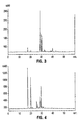
- Fig. 3 shows a chromatogram for a triethylamine hydrolyzate
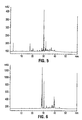
- Fig. 5 shows a chromatogram of the aqueous phase after ethyl acetate extraction
- Fig. 6 shows the ethyl acetate phase of the extraction
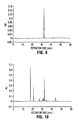
- Fig. 9 shows a chromatogram of the purified SDG
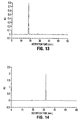
- Fig. 14 shows a chromatogram of purified methyl coumarate 4-glycoside
- Fig. 16 shows a chromatogram of purified methyl ferulate 4-glycoside recovered from the ethyl acetate fraction.
- Substantially oil-free flaxseed meal was obtained from CanAmera Foods (Attona, MB.). This meal had been commercially crushed and solvent extracted. A 0.5 kg sample of meal was extracted at room temperature by intermittent slurrying with a mixture of 70% methanol and 30% water in a liquid:solids ratio of 6:1. After 24 hours the suspension was filtered and the extract was evaporated under reduced pressure to produce a syrupy concentrate.
- the concentrate was then subjected to base-catalyzed hydrolysis using sodium hydroxide in water in a ratio of 5:100.
- the pH of the hydrolysate that was obtained from sodium hydroxide hydrolysis was adjusted to 5 using acetic acid and the aqueous phase so obtained contacted A-25 QAE Sephadex anion exchange resin in a column prepared in the acetate counterion form. Thereafter, the column was eluted with water to elute the SDG and unspecified organic and inorganic substances.
- the column was then further eluted with 50% acetic acid in 15% ethanol, to obtain an eluate containing acid components, including the glycosides of caffeic, ferulic acid and p-coumaric acid, and other cinnamic acid derivatives.
- the SDG containing fraction was further purified using C-18 reverse-phase resin in the same manner as in Example 1.
- the SDG enriched fraction thus obtained was then subjected to preparative scale high pressure liquid chromatography using a column packed with C-18 reverse-phase resin in the same manner as in Example 1, to obtain eluates containing SDG at a purity of greater than 95%.
- Fig. 4 shows a chromatogram for an aqueous sodium hydroxide hydrolysate
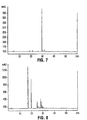
- Fig. 7 shows a chromatogram of the aqueous (SDG) wash after anion exchange chromatography of the sodium hydroxide hydrolysate
- Fig. 9 shows a chromatogram of the purified SDG after HPLC purification
- Fig. 13 shows a chromatogram of purified p-coumaric acid 4-glycoside
- Fig. 15 shows a chromatogram of purified ferulic acid 4-glycoside.
- Substantially oil-free flaxseed meal was obtained from CanAmera Foods (Attona, MB.). This meal had been commercially crushed and solvent extracted. A 2 kg sample of meal was extracted at room temperature with stirring with a mixture of 50% ethanol (w/v) in a liquid:solids ratio of 6.25:1. After 4 hours the suspension was filtered and the solids re-extracted with an additional 15L of 50% ethanol (w/v). The combined extract was evaporated under reduced pressure to produce a syrupy concentrate.
- the concentrate was then subjected to base-catalyzed hydrolysis using sodium hydroxide in water in a ratio of 5:100.
- the pH of the hydrolysate was adjusted to 3 to 4 using acetic acid and the aqueous phase so obtained was contacted with a reverse-phase C-18 resin, e.g. Preparative C-18 125 ⁇ (Waters Corporation), equilibrated in 1% acetic acid. Thereafter the resin was washed with 1% acetic acid to remove sugars, salts and unspecified organic and inorganic substances.
- the resin was further eluted with methanol or ethanol to recover a fraction enriched in SDG and cinnamic acid glycosides.
- the SDG containing fraction was further purified by neutralizing the fraction to pH 6-7 with sodium hydroxide pellets or 50% w/v sodium hydroxide, and concentrating the fraction to the aqueous phase.
- the SDG containing fraction was contacted with a reverse-phase C-18 resin, e.g. Preparative C-18 125 ⁇ (Waters Corporation), equilibrated in water. Thereafter the resin was washed sequentially with water and dilute aqueous alcohol to recover the cinnamic acid glycosides. The resin was further eluted with methanol or ethanol to recover a fraction enriched in SDG.
- a reverse-phase C-18 resin e.g. Preparative C-18 125 ⁇ (Waters Corporation)
- the SDG enriched fraction thus obtained was then subjected to preparative scale high pressure liquid chromatography using a column packed with C-18 reverse-phase resin in the same manner as in Example 1, to obtain eluates containing SDG at a purity of greater than 95%.
- Fig. 10 shows a chromatogram of the alcohol eluate recovered from the first solid phase extraction treatment of an aqueous sodium hydroxide hydrolysate
- Fig. 11 shows a chromatogram of the cinnamic acid glycosides present in the water wash of the second solid phase extraction treatment
- Fig. 12 shows the SDG enriched alcohol fraction from the second solid phase extraction treatment
- Fig. 8 shows a chromatogram of the purified SDG after HPLC purification.
- Fig. 13 shows chromatogram of purified p-coumaric acid 4-glycoside
- Fig. 15 shows a chromatogram of purified ferulic acid 4-glycoside.
- the invention can be used as a large scale industrial process for extracting valuable components from flaxseed in commercial quantities.
Landscapes
- Chemical & Material Sciences (AREA)
- Organic Chemistry (AREA)
- Engineering & Computer Science (AREA)
- Health & Medical Sciences (AREA)
- Biochemistry (AREA)
- Biotechnology (AREA)
- General Health & Medical Sciences (AREA)
- Genetics & Genomics (AREA)
- Molecular Biology (AREA)
- Life Sciences & Earth Sciences (AREA)
- Medicines Containing Plant Substances (AREA)
- Organic Low-Molecular-Weight Compounds And Preparation Thereof (AREA)
- Saccharide Compounds (AREA)
Description
Claims (18)
- A process for extracting lignans and cinnamic acid derivatives from flaxseed wherein a substantially oil-free flaxseed meal is contacted with a solvent to extract phenolics into the solvent and the phenolic-rich extract obtained is further processed to liberate the lignans and cinnamic acid derivatives therefrom,characterised in that the solvent to extract phenolics comprising secoisolariciresinol diglycoside (SDG) and/or cinnamic acid derivatives is an aqueous aliphatic alcohol solvent, residual solids are separated from the phenolic-rich solvent extract and the phenolic-rich solvent extract obtained is subjected to a base-catalysed hydrolysis to liberate SDG and cinnamic acid derivatives therefrom in a non-complexed form, fractionating the hydrolysed extract into a fraction containing SDG and a fraction containing cianamic acid derivatives and subjecting either or both said fractions to chromatographic separation to thereby obtain SDG and/or cinnamic acid derivatives at a purity of greater than 95%.
- A process according to claim 1 wherein the aqueous aliphatic alcohol solvent contains at least 50% by weight of alcohol.
- A process according to claim 2, wherein the alcohol is methanol or ethanol.
- A process according to claim 1 or 2, wherein the phenolic-rich alcohol solvent is concentrated by removal of solvent so as to obtain a phenolic extract in dry form.
- A process according to claim 4, wherein the base-catalysed hydrolysis is carried out by slurrying the dried extract in anhydrous ethanol or methanol and in the presence of sodium alkoxide or triethylamine.
- A process according to claim 4, wherein the phenolic extract in anhydrous form is subjected to liquid/liquid partition, e.g. using an ethyl acetate/water system.
- A process according to claim 6, wherein the lignan-rich fraction from the liquid/liquid partition is further enriched in SDG by contacting with a reverse phase resin.
- A process according to claim 1, wherein the phenolic-rich alcohol extract is concentrated by removal of solvent to form a syrupy concentrate.
- A process according to claim 8, wherein the base-catalyzed hydrolysis is carried out by mixing the concentrate with aqueous alkali metal hydroxide, e.g. sodium or potassium hydroxide, or ammonium hydroxide.
- A process according to claim 9, wherein the aqueous base hydrolysate obtained containing SDG is contacted with an anion exchange resin, after which the resin is eluted with water to elute the SDG together with some organic and inorganic materials.
- A process according to claim 10, wherein the aqueous base hydrolysate is neutralised to a pH in the range 3-7, preferably 4-6, before contacting the anion exchange resin.
- A process according to claim 11, wherein the eluate containing SDG is further enriched in SDG by contacting with a reverse-phase resin, after which the resin is eluted with a dilute acid/alcohol gradient to obtain SDG at a purity greater than 95%
- A process according to claim 6, wherein a separate product containing cinnamic acid glycosides and other cinnamic acid derivatives is removed in the ethyl acetate fraction.
- A process according to claim 10 wherein after the resin is eluted with water to elute the SDG, it is further eluted with dilute acid to remove a separate product containing cinnamic acid glycosides and other cinnamic acid derivatives.
- A process according to claim 9, wherein the aqueous base hydrolysate obtained containing SDG is contacted with a C-18 reverse-phase solid phase extraction resin, after which the resin is washed with dilute acid, e.g. acetic acid, and eluted with alcohol, e.g. methanol or ethanol to elute the SDG together with some organic materials.
- A process according to claim 15 wherein the alcohol eluate from the C- 18 reverse-phase solid phase extraction resin is further contacted with a C-18 reverse-phase solid phase extraction resin equilibrated in water, after which the resin is washed with water and dilute alcohol, e.g methanol or ethanol, to recover the cinnamic acid glycosides, and the resin eluted with alcohol or an alcohol water mixture to recover the SDG.
- A hydrolysed extract of flaxseed meal comprising SDG and cinnamic acid glycosides in a non-complexed form, obtainable by contacting substantially oil-free flaxseed meal with an aqueous aliphatic alcohol solvent to extract phenolics into the solvent, separating residual solids from the phenolic-rich solvent extract and subjecting said phenolic-rich solvent extract to a base-catalysed hydrolysis.
- A hydrolysed extract of flaxseed meal as claimed in claim 17 additionally free of cyanogenic glycosides.
Applications Claiming Priority (3)
| Application Number | Priority Date | Filing Date | Title |
|---|---|---|---|
| US415050 | 1995-03-31 | ||
| US08/415,050 US5705618A (en) | 1995-03-31 | 1995-03-31 | Process for extracting lignans from flaxseed |
| PCT/CA1996/000192 WO1996030468A2 (en) | 1995-03-31 | 1996-03-29 | Process for extracting and purifying lignans and cinnamic acid derivatives from flaxseed |
Publications (2)
| Publication Number | Publication Date |
|---|---|
| EP0817824A2 EP0817824A2 (en) | 1998-01-14 |
| EP0817824B1 true EP0817824B1 (en) | 2001-11-21 |
Family
ID=23644159
Family Applications (1)
| Application Number | Title | Priority Date | Filing Date |
|---|---|---|---|
| EP96907972A Expired - Lifetime EP0817824B1 (en) | 1995-03-31 | 1996-03-29 | Process for extracting and purifying lignans and cinnamic acid derivatives from flaxseed |
Country Status (6)
| Country | Link |
|---|---|
| US (1) | US5705618A (en) |
| EP (1) | EP0817824B1 (en) |
| AU (1) | AU702410B2 (en) |
| CA (1) | CA2216979C (en) |
| DE (1) | DE69617219T2 (en) |
| WO (1) | WO1996030468A2 (en) |
Cited By (2)
| Publication number | Priority date | Publication date | Assignee | Title |
|---|---|---|---|---|
| CN102914601A (en) * | 2012-09-03 | 2013-02-06 | 内蒙古大学 | Method for detecting useful and harmful ingredients in flaxseed product |
| US11155513B2 (en) | 2017-04-20 | 2021-10-26 | Spero Renewables, Llc | Extraction of natural ferulate and coumarate from biomass |
Families Citing this family (39)
| Publication number | Priority date | Publication date | Assignee | Title |
|---|---|---|---|---|
| DE59506314D1 (en) * | 1994-08-16 | 1999-08-05 | Frische Gmbh | METHOD FOR OBTAINING NON-WATER-SOLUBLE, NATURAL PRODUCTS FROM NATURAL MIXTURES WITH THE AID OF THE CENTRIFUGAL FORCE |
| FI100089B (en) * | 1995-01-20 | 1997-09-30 | Markku Anttila | Linen product, its use and manufacture |
| US5846944A (en) * | 1996-04-04 | 1998-12-08 | The University Of Saskatchewan | Purified SDG as an antioxidant |
| US6264853B1 (en) * | 1999-06-21 | 2001-07-24 | Agriculture And Agri-Food Canada | Complex containing lignan, phenolic and aliphatic substances from flax and process for preparing |
| EP1307113A4 (en) * | 2000-08-11 | 2005-01-19 | Natura Holdings Pty Ltd | Oil seed processing |
| FI110868B (en) * | 2001-01-22 | 2003-04-15 | Maa Ja Elintarviketalouden Tut | Procedure for the separation and purification of secoisolarisiresinol diglycoside (SDG) from flax seeds |
| US6767565B2 (en) * | 2001-03-22 | 2004-07-27 | Archer Daniels Midland Company | Process for obtaining lignan |
| EP1420779B1 (en) | 2001-07-24 | 2012-01-18 | Cargill, Incorporated | Process for isolating phenolic compounds |
| US20030131737A1 (en) * | 2001-12-13 | 2003-07-17 | Wuwei Cui | Process and apparatus for flaxseed component separation |
| EP1491099B1 (en) * | 2002-03-11 | 2012-05-02 | Suntory Holdings Limited | Process for producing sdg |
| US7048960B2 (en) * | 2002-03-22 | 2006-05-23 | Glenn Roy Pizzey | High lignan flaxseed product and product by process |
| WO2003084974A1 (en) * | 2002-04-02 | 2003-10-16 | Wiley Organics, Inc. | A process for recovering secoisolariciresinol diglycoside from de-fatted flaxseed |
| US7357951B2 (en) * | 2002-04-12 | 2008-04-15 | Ajinomoto Co., Inc. | Composition for preventing atherosclerosis |
| WO2004043945A1 (en) * | 2002-11-12 | 2004-05-27 | Wiley Organics, Inc. | Method for purifying and separating soy isoflavones |
| EP1575375A1 (en) * | 2002-12-24 | 2005-09-21 | Her Majesty The Queen in Right of Canada, as represented by The Minister of Agriculture and Agri-Food Canada | Ace inhibitory peptides from plant materials |
| KR100909206B1 (en) * | 2002-12-28 | 2009-07-23 | (주)아모레퍼시픽 | A method for preparing secoisolariciresinol(SECO) and cosmetic composition containing the secoisolariciresinol |
| EP1471070A1 (en) * | 2003-04-22 | 2004-10-27 | Royal Schouten Group N.V. | Method for recovering a secondary plant metabolite |
| DE10333858A1 (en) * | 2003-07-24 | 2005-02-24 | Hans Jackeschky | Process for the preparation of glycoside-containing vegetable oils and process for the pretreatment of glycoside-containing oilseeds |
| FR2875701B1 (en) * | 2004-09-30 | 2008-08-08 | Lm Cosmetics Sarl | NOVEL COSMETIC OR DERMATOLOGICAL USE OF LIGNANS |
| US7595078B2 (en) * | 2005-03-15 | 2009-09-29 | Glanbia Nutritionals Ireland Limited | Methods of increasing flaxseed hull recovery and resultant flax products |
| US7943190B2 (en) * | 2005-05-13 | 2011-05-17 | Her Majesty the Queen in Right in Canada as Represented by the Minister of Agriculture and Agri-Food Canada | Extraction of phytochemicals |
| EP2130544A2 (en) | 2005-12-02 | 2009-12-09 | Archer-Daniels-Midland Company | Processes for obtaining lignan extracts and compositions containing the lignan extracts |
| CN100365005C (en) * | 2006-03-02 | 2008-01-30 | 江南大学 | A method for extracting and purifying secoisolariciresinol diglucoside from linseed |
| CN100395253C (en) * | 2006-05-12 | 2008-06-18 | 中国科学院山西煤炭化学研究所 | A method for preparing secoisolaricresinol diglucoside from flaxseed |
| US8569036B2 (en) * | 2006-07-12 | 2013-10-29 | E I Du Pont De Nemours And Company | Immobilized TAL biocatalyst for production of para-hydroxycinnamic acid |
| WO2008012106A1 (en) * | 2006-07-28 | 2008-01-31 | Bioriginal Food & Science Corporation | Fat containing composition |
| DE102008039103A1 (en) * | 2007-10-31 | 2009-05-07 | Fraunhofer-Gesellschaft zur Förderung der angewandten Forschung e.V. | Process for obtaining a proteinaceous food ingredient from linseed meal |
| CN101239995B (en) * | 2008-03-13 | 2010-09-15 | 成都圆大生物科技有限公司 | A kind of preparation method of flax lignans |
| CN102276665A (en) * | 2011-06-21 | 2011-12-14 | 晨光生物科技集团天津有限公司 | Method of extracting flax lignin from flax seed cake |
| CN102796148A (en) * | 2012-09-13 | 2012-11-28 | 上海红马饲料有限公司 | Method for extracting, separating and purifying flax lignans from flax cakes |
| US20150272190A1 (en) * | 2014-04-01 | 2015-10-01 | International Dehydrated Foods, Inc. | Composition Prepared From Flax Seeds And Methods Of Their Use |
| CN104004034B (en) * | 2014-05-14 | 2016-02-03 | 中国科学院华南植物园 | One prepares the method for Secoisolariciresinol 9 '-O-β-xyloside |
| US9163197B1 (en) * | 2014-05-28 | 2015-10-20 | Milex Corporation | Methods of extracting phytochemicals from sorghum bran |
| US9702868B1 (en) | 2014-05-28 | 2017-07-11 | Milo Insulation, LLC | Method of measuring polyphenol antioxidants in sorghum and other plant matter and method of selection of specific sorghum varieties for extrusion purposes |
| US11197876B2 (en) | 2014-05-30 | 2021-12-14 | The Trusiees Of The University Of Pennsylvania | Effects of LGM2605 on a primate model of asthma |
| MA45191A (en) | 2016-06-07 | 2019-04-10 | Univ Pennsylvania | COMPOSITIONS AND METHODS INTENDED TO PROTECT THE ORGANS AGAINST ISCHEMIA / REPERFUSION DAMAGES ASSOCIATED WITH A TRANSPLANT |
| CN108902441A (en) * | 2018-07-20 | 2018-11-30 | 广州利众生物科技有限公司 | A kind of flaxseed meal deep working method |
| CA3121157A1 (en) | 2018-11-26 | 2020-06-04 | Board Of Trustees Of Michigan State University | Lignin extraction with volatile trialkylamines |
| CN113527385B (en) * | 2020-04-15 | 2026-03-03 | 天水雪陆鱼生物科技有限责任公司 | Method for simultaneously producing five components in flaxseeds |
Citations (1)
| Publication number | Priority date | Publication date | Assignee | Title |
|---|---|---|---|---|
| US5484595A (en) * | 1988-08-09 | 1996-01-16 | Tsumura & Co. | Process for preparation of dibenzocyclooctadiene type lignan |
Family Cites Families (2)
| Publication number | Priority date | Publication date | Assignee | Title |
|---|---|---|---|---|
| CA2013190C (en) * | 1990-03-27 | 2000-06-06 | F. William Collins | Method of producing stable bran and flour products from cereal grains |
| US5485595A (en) * | 1993-03-26 | 1996-01-16 | Cirrus Logic, Inc. | Flash memory mass storage architecture incorporating wear leveling technique without using cam cells |
-
1995
- 1995-03-31 US US08/415,050 patent/US5705618A/en not_active Expired - Lifetime
-
1996
- 1996-03-29 EP EP96907972A patent/EP0817824B1/en not_active Expired - Lifetime
- 1996-03-29 DE DE69617219T patent/DE69617219T2/en not_active Expired - Lifetime
- 1996-03-29 AU AU51402/96A patent/AU702410B2/en not_active Ceased
- 1996-03-29 WO PCT/CA1996/000192 patent/WO1996030468A2/en not_active Ceased
- 1996-03-29 CA CA002216979A patent/CA2216979C/en not_active Expired - Fee Related
Patent Citations (1)
| Publication number | Priority date | Publication date | Assignee | Title |
|---|---|---|---|---|
| US5484595A (en) * | 1988-08-09 | 1996-01-16 | Tsumura & Co. | Process for preparation of dibenzocyclooctadiene type lignan |
Cited By (3)
| Publication number | Priority date | Publication date | Assignee | Title |
|---|---|---|---|---|
| CN102914601A (en) * | 2012-09-03 | 2013-02-06 | 内蒙古大学 | Method for detecting useful and harmful ingredients in flaxseed product |
| CN102914601B (en) * | 2012-09-03 | 2014-05-21 | 内蒙古大学 | A detection method for beneficial and harmful components in flaxseed products |
| US11155513B2 (en) | 2017-04-20 | 2021-10-26 | Spero Renewables, Llc | Extraction of natural ferulate and coumarate from biomass |
Also Published As
| Publication number | Publication date |
|---|---|
| DE69617219T2 (en) | 2002-07-25 |
| WO1996030468A3 (en) | 1997-02-20 |
| US5705618A (en) | 1998-01-06 |
| AU5140296A (en) | 1996-10-16 |
| EP0817824A2 (en) | 1998-01-14 |
| AU702410B2 (en) | 1999-02-18 |
| CA2216979C (en) | 2000-12-26 |
| DE69617219D1 (en) | 2002-01-03 |
| CA2216979A1 (en) | 1996-10-03 |
| WO1996030468A2 (en) | 1996-10-03 |
Similar Documents
| Publication | Publication Date | Title |
|---|---|---|
| CA2216979C (en) | Process for extracting and purifying lignans and cinnamic acid derivatives from flaxseed | |
| Struijs et al. | The flavonoid herbacetin diglucoside as a constituent of the lignan macromolecule from flaxseed hulls | |
| US8236993B2 (en) | Process and apparatus for the production of hydroxytyrosol containing extract from olives and solids containing residues of olive oil extraction | |
| WO1999053933A1 (en) | Process for recovery and purification of saponins and sapogenins from quinoa (chenopodium quinoa) | |
| JP7781785B2 (en) | Animal feed composition for reducing ammonia production | |
| EP1192167B1 (en) | A complex containing lignan, phenolic and aliphatic substances from flax and process for preparing | |
| US20200181060A1 (en) | Extraction of natural ferulate and coumarate from biomass | |
| EP3412679B1 (en) | Baicalin magnesium, preparation method thereof and application of same | |
| Dhamole et al. | Extraction of p-coumaric acid from agricultural residues and separation using ‘sugaring out’ | |
| WO2002077003A1 (en) | Process for obtaining lignan, pharmaceutical compositions and uses thereof | |
| Li et al. | Preparation of pure ellagic acid from waste pomegranate peel by supramolecular solvent based heat assisted extraction followed by liquid–liquid extraction and antisolvent precipitation | |
| EP1054008B1 (en) | Process for the preparation of isoflavone compounds | |
| US6316032B1 (en) | Barley malt oil containing vegetable ceramide-associated substances and process for producing the same | |
| JP6703562B2 (en) | Method for producing polyphenol composition from bagasse | |
| US6806356B2 (en) | Process for recovering secoisolariciresinol diglycoside from de-fatted flaxseed | |
| Quek et al. | Commercial extraction of vitamin E from food sources | |
| RU2352554C1 (en) | Method of obtaining 2,3,5,7,8-pentahydroxy-6-ethyl-1,4-naphtoquinone | |
| Thao et al. | Recovering bioactive compounds from cane sugar wastes | |
| Cairone et al. | Valorisation of Side Stream Products through Green Approaches: The Rapeseed Meal Case. Foods 2023, 12, 3286 | |
| Tikhomirova et al. | Synthesis of glycyrrhetinic acid by hydrolysis of licorice root extract in subcritical water | |
| Khodwe et al. | RESEARCH ARTICLE SEPARATION OF GOSSYPOL FROM COTTONSEED AND PREPARATION OF GOSSYPOL-FREE COTTONSEED CAKE | |
| CN102380034A (en) | Preparation of composition containing sesquiterpene glucoside and flavonoid components |
Legal Events
| Date | Code | Title | Description |
|---|---|---|---|
| PUAI | Public reference made under article 153(3) epc to a published international application that has entered the european phase |
Free format text: ORIGINAL CODE: 0009012 |
|
| 17P | Request for examination filed |
Effective date: 19971015 |
|
| AK | Designated contracting states |
Kind code of ref document: A2 Designated state(s): BE CH DE FI FR GB IT LI NL SE |
|
| 17Q | First examination report despatched |
Effective date: 19990727 |
|
| GRAG | Despatch of communication of intention to grant |
Free format text: ORIGINAL CODE: EPIDOS AGRA |
|
| GRAG | Despatch of communication of intention to grant |
Free format text: ORIGINAL CODE: EPIDOS AGRA |
|
| GRAG | Despatch of communication of intention to grant |
Free format text: ORIGINAL CODE: EPIDOS AGRA |
|
| GRAH | Despatch of communication of intention to grant a patent |
Free format text: ORIGINAL CODE: EPIDOS IGRA |
|
| GRAH | Despatch of communication of intention to grant a patent |
Free format text: ORIGINAL CODE: EPIDOS IGRA |
|
| GRAA | (expected) grant |
Free format text: ORIGINAL CODE: 0009210 |
|
| AK | Designated contracting states |
Kind code of ref document: B1 Designated state(s): BE CH DE FI FR GB IT LI NL SE |
|
| REG | Reference to a national code |
Ref country code: CH Ref legal event code: EP |
|
| REG | Reference to a national code |
Ref country code: GB Ref legal event code: IF02 |
|
| REF | Corresponds to: |
Ref document number: 69617219 Country of ref document: DE Date of ref document: 20020103 |
|
| REG | Reference to a national code |
Ref country code: CH Ref legal event code: NV Representative=s name: A. BRAUN, BRAUN, HERITIER, ESCHMANN AG PATENTANWAE |
|
| ET | Fr: translation filed | ||
| PLBE | No opposition filed within time limit |
Free format text: ORIGINAL CODE: 0009261 |
|
| STAA | Information on the status of an ep patent application or granted ep patent |
Free format text: STATUS: NO OPPOSITION FILED WITHIN TIME LIMIT |
|
| 26N | No opposition filed | ||
| REG | Reference to a national code |
Ref country code: CH Ref legal event code: PFA Owner name: HER MAJESTY IN RIGHT OF CANADA, REPRESENTED BY TH Free format text: HER MAJESTY IN RIGHT OF CANADA, REPRESENTED BY THE MINISTER OF AGRICULTURE AND AGRI-FOOD CANADA#930 CARLING AVENUE#OTTAWA, ONTARIO K1A OC5 (CA) -TRANSFER TO- HER MAJESTY IN RIGHT OF CANADA, REPRESENTED BY THE MINISTER OF AGRICULTURE AND AGRI-FOOD CANADA#930 CARLING AVENUE#OTTAWA, ONTARIO K1A OC5 (CA) |
|
| PGFP | Annual fee paid to national office [announced via postgrant information from national office to epo] |
Ref country code: CH Payment date: 20100215 Year of fee payment: 15 |
|
| PGFP | Annual fee paid to national office [announced via postgrant information from national office to epo] |
Ref country code: IT Payment date: 20100222 Year of fee payment: 15 Ref country code: FR Payment date: 20100311 Year of fee payment: 15 Ref country code: FI Payment date: 20100319 Year of fee payment: 15 |
|
| PGFP | Annual fee paid to national office [announced via postgrant information from national office to epo] |
Ref country code: GB Payment date: 20100205 Year of fee payment: 15 |
|
| PGFP | Annual fee paid to national office [announced via postgrant information from national office to epo] |
Ref country code: NL Payment date: 20100223 Year of fee payment: 15 Ref country code: DE Payment date: 20100301 Year of fee payment: 15 Ref country code: BE Payment date: 20100330 Year of fee payment: 15 |
|
| PGFP | Annual fee paid to national office [announced via postgrant information from national office to epo] |
Ref country code: SE Payment date: 20100217 Year of fee payment: 15 |
|
| BERE | Be: lapsed |
Owner name: *HER MAJESTY IN RIGHT OF CANADA REPRESENTED BY THE Effective date: 20110331 |
|
| REG | Reference to a national code |
Ref country code: NL Ref legal event code: V1 Effective date: 20111001 |
|
| REG | Reference to a national code |
Ref country code: CH Ref legal event code: PL |
|
| REG | Reference to a national code |
Ref country code: SE Ref legal event code: EUG |
|
| GBPC | Gb: european patent ceased through non-payment of renewal fee |
Effective date: 20110329 |
|
| PG25 | Lapsed in a contracting state [announced via postgrant information from national office to epo] |
Ref country code: FI Free format text: LAPSE BECAUSE OF NON-PAYMENT OF DUE FEES Effective date: 20110329 |
|
| REG | Reference to a national code |
Ref country code: FR Ref legal event code: ST Effective date: 20111130 |
|
| PG25 | Lapsed in a contracting state [announced via postgrant information from national office to epo] |
Ref country code: BE Free format text: LAPSE BECAUSE OF NON-PAYMENT OF DUE FEES Effective date: 20110331 |
|
| PG25 | Lapsed in a contracting state [announced via postgrant information from national office to epo] |
Ref country code: NL Free format text: LAPSE BECAUSE OF NON-PAYMENT OF DUE FEES Effective date: 20111001 Ref country code: CH Free format text: LAPSE BECAUSE OF NON-PAYMENT OF DUE FEES Effective date: 20110331 Ref country code: DE Free format text: LAPSE BECAUSE OF NON-PAYMENT OF DUE FEES Effective date: 20111001 Ref country code: LI Free format text: LAPSE BECAUSE OF NON-PAYMENT OF DUE FEES Effective date: 20110331 Ref country code: FR Free format text: LAPSE BECAUSE OF NON-PAYMENT OF DUE FEES Effective date: 20110331 |
|
| REG | Reference to a national code |
Ref country code: DE Ref legal event code: R119 Ref document number: 69617219 Country of ref document: DE Effective date: 20111001 |
|
| PG25 | Lapsed in a contracting state [announced via postgrant information from national office to epo] |
Ref country code: IT Free format text: LAPSE BECAUSE OF NON-PAYMENT OF DUE FEES Effective date: 20110329 Ref country code: GB Free format text: LAPSE BECAUSE OF NON-PAYMENT OF DUE FEES Effective date: 20110329 |
|
| PG25 | Lapsed in a contracting state [announced via postgrant information from national office to epo] |
Ref country code: SE Free format text: LAPSE BECAUSE OF NON-PAYMENT OF DUE FEES Effective date: 20110330 |