BACKGROUND OF THE INVENTION
a) Field of the Invention
The present invention relates to a skin-contact type
medical treatment apparatus particularly effective for remedying
unidentified complaint syndrome such as shoulder stiffness and
waist pains.
b) Description of the Related Art
With recent change in life styles and increase in
elders, patients suffering from chronic body stiffness or pains
are increasing in number. The main causes of these diseases are
generally said to be local fatigue of muscles or nerves.
Causes which bring about fatigue of muscles and nerves
differ from one person to another, and the degree of fatigue
also varies. If fatigue is not temporal, such as muscle fatigue
caused by sports, but is caused by usual daily life, it may lead
to chronic disease. If stiffness or pains are acute, remedy
must rely on physical treatment or acupuncture/moxibustion
treatment at hospital. Even if stiffness or pains are
relatively minor, a patient feels uncomfortable (has
unidentified complaint) in daily life, and simple treatments
have long been desired.
Household treatment apparatus or methods for stiffness
or pains conventionally developed and commercially available
include pap medicament, indirect moxibustion, metal grains,
magnetic treatment apparatus, low frequency treatment apparatus,
and other apparatus and methods. These all have been developed
aiming at enhancing blood circulation in and out of an affected
part to thereby purify locally stagnant effete material.
Of theses, the pap medicament, indirect moxibustion,
and magnetic treatment apparatus seek for the effects of blood
vessel dilation, the low frequency treatment apparatus seeks for
the physical treatment effects of regular muscle tonus and
relaxation, and the metal grains seek for the treatment through
meridian and acupuncture points of Oriental medicine.
The present inventor has developed ion permeating
devices (Japanese Patent No. 1388949, 1427360, and 1631137, and
Japanese Utility Model Registration No. 1922166, and etc.)
capable of remedying fatigue of muscles and nerves through
electric stimulation by a weak d.c. electromotive force
generated by a biogalvanic battery when the device is in contact
with skin.
These ion permeating devices have proved more
effective for the remedy of stiffness or pains than the above
enumerated household treatment apparatus and methods.
A treatment apparatus aiming at formation of a
biogalvanic battery like the above ion permeating devices was
disclosed (e.g., Utility Model Laid-open Publication No. Sho 57-103743)
which is of an external short-circuit type using a
combination of different metals.
The ion permeating device developed by the present
inventor is a skin-contact type apparatus in which semiconductor
crystal and metal having a higher standard single electrode
potential than the semiconductor crystal are electrically
connected. This device is different both in its structure and
effects, from the skin-contact type apparatus using a
combination of different metals.
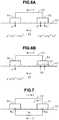
Figs. 6A and 6B are diagrams illustrating differences
between these two types of skin-contact type apparatus.
Fig. 6A illustrates a principle of a biogalvanic
battery (cell) using a combination of a metal electrode 50
forming the positive pole of the cell and a semiconductor
electrode 51 forming the negative pole of the cell. The metal
electrode 50 and semiconductor electrode 51 are both in contact
with the surface of a skin 52 at one side of each electrode, and
are electrically shorted at another side of each electrode by a
conductive member 53. The metal electrode 50 is made of metal
having a standard single electrode potential higher than the
semiconductor electrode 51. A closed circuit is formed by the
skin 52, semiconductor electrode 51, conductive member 53, and
metal electrode 50, and electrons start to flow from the
semiconductor electrode 51 to the metal electrode 50 through the
conductive member 53.
Electrons flowed from the semiconductor electrode 51
to the metal electrode 50 enter the electrolytic skin 52, and
induce a reduction reaction (e.g., for iron ions in tissues,
Fe3+ + e- → Fe2+).
At the same time, holes generated in the
semiconductor electrode 51 with insufficient electrons drift by
an internal electric field of a Schottky barrier generated at
the skin contact surface and concentrate upon the skin contact
surface of the semiconductor crystal to ionize atoms of the
semiconductor electrode 51 at this surface. Since the internal
electric field functions to move positive ions and holes out of
the semiconductor electrode 51, and the dissociated
semiconductor ions together with holes permeate through the
skin. Holes in the skin 52 induce an oxidation reaction (e.g.,
Fe3+ ← h+ + Fe2+).
The Schottky barrier at the interface between the
semiconductor electrode 51 and skin 52 functions to prevent both
electrons and negative ions from flowing from the skin 52 into
the semiconductor electrode 51. Accordingly, removal of
positive ions and drainage of holes, thus the oxidation reaction
reliably continues at the skin and an electromotive force is
retained for a long period of time.
In the skin-contact type apparatus using a combination
of different metals (e.g., Cu and Zn) shown in Fig. 6B, in place
of the semiconductor electrode 51 shown in Fig. 6A, a metal
electrode 54 forming the negative pole of the cell (e.g., Zn) is
used which is made of metal having a smaller electron affinity χ
than the metal electrode 50 forming the positive pole of the
cell (e.g., Cu), and the other structures are the same as Fig.
6A. Since electrons outflow from the metal electrode 54 through
the conductive member 53 into the metal electrode 50 having a
larger electron affinity χ, the metal electrode 54 becomes short
of electrons and must be charged positive. The metal electrode
54 does not form a Schottky barrier at the skin contact surface,
water-derived negative ions OH- distributed at or near the skin
surface enter the surface layer of the metal electrode 54 and
are adsorbed and chemically reacted with the surface layer. As
a result, the skin contact surface of the metal electrode 54 is
covered with a hydroxide layer 55.
For example, with a combination of Cu and Zn, the
following reaction occurs at the skin contact surface of the Zn
metal electrode 54.
Zn + 2OH- → Z(OH)2 + 2e-.
Such base metal hydroxide is generally insulative.
The surface of the metal electrode 54 therefore increases its
resistance and the electromotive force becomes unstable. As the
hydroxide layer 55 becomes thicker, generation of electricity
eventually stops. This is a surface passivation phenomenon.
Still further, with the combination of the metal
electrode 50 and semiconductor electrode 51 shown in Fig. 6A,
ions (e.g., Fe2+) generated through reduction under the
electrode 50 and ions (e.g., Fe3+) generated through oxidation
under the electrode 51 both diffuse in counter directions, as a
result forming a net charge flow 55 of positive ions in the
skin, from the semiconductor electrode 51 toward the metal
electrode 50. These counter flows of the ions compensates for
losses of ions caused by the reduction and oxidation reactions
under the metal electrode 50 and semiconductor electrode 51, so
that a so-called back electromotive force of a battery is hard
to be generated.
In contrast, with the combination of different metals
such as shown in Fig. 6B, the loss of ions (e.g., Fe3+) which
are used for generating ions (e.g., Fe2+) through reduction
under the metal electrode 50 cannot be compensated for from the
region under the metal electrode 54. Therefore, the ions to be
reduced gradually becomes insufficient in number and a back
electromotive force is likely to be generated.
As described above, a biogalvanic battery of a metal
positive pole - semiconductor negative pole type with an
external short-circuit maintains a stable electromotive force
after skin-contact because of stable reduction/oxidation
reactions. Accordingly, the medical treatment apparatus for
stiffness and pains has shown a high score of remedy results in
practical use with less degradation even after a long period of
skin-contact.
SUMMARY OF THE INVENTION
It is an object of the present invention to provide a
skin-contact type medical treatment apparatus suitable for long
term continuous use.
According to one aspect of the present invention,
there is provided a skin-contact type medical treatment
apparatus comprising: a first conductive member having a first
skin-contact surface in contact with a first surface of skin
when in use, the first skin-contact surface being made of metal
or its alloy; a second conductive member having a second skin-contact
surface in contact with a second surface of skin
different from the first surface when in use together with the
first conductive member, the second skin-contact surface being
made of n-type semiconductor material having a standard
single electrode potential higher than that of the first skin-contact
surface; and a protective resistor having a resistance
value in the range of from 0.1 to 50 MΩ for electrically
connecting the first and second conductive members at an area
different from the first and second skin-contact surfaces.
As the skin-contact surfaces of the first and second
conductive members are made in contact with the surface of skin,
a biogalvanic battery is formed because of a difference of
standard electrode potential between the two types of materials
constituting the skin-contact surfaces. An electrical close
circuit is formed along a passage from the first conductive
member, protective resistor, second conductive member, and skin
to thereby flow current through the close circuit. This
generates stimulations of electricity conduction so that
stiffness or pains can be effectively alleviated.
As skin is physiologically activated by electricity
conduction stimulations, the skin impedance lowers. The
protective resistor inserted into the close circuit suppresses
an excessive increase of current which is otherwise caused by
the lowered skin impedance. Accordingly, skin troubles such as
flushness and itching can be suppressed even during a long term
use of the apparatus.
BRIEF DESCRIPTION OF THE DRAWINGS
Fig. 1 is a cross sectional view of a skin-contact
type medical treatment apparatus according to a first embodiment
of the invention.
Figs. 2A and 2B are a plan view and a side view of a
skin-contact type medical treatment apparatus according to a
second embodiment of the invention.
Fig. 3 is a cross sectional view of a skin-contact
type medical treatment apparatus according to a third embodiment
of the invention.
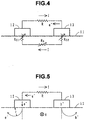
Fig. 4 is an equivalent circuit diagram of a skin-contact
type medical treatment apparatus according to an
embodiment of the invention.
Fig. 5 is a diagram illustrating an operation
principle of a skin-contact type medical treatment apparatus
according to a modification of the embodiment.
Figs. 6A and 6B are diagrams illustrating the
operation principles of conventional biogalvanic electricity
generation, skin-contact type medical treatment apparatus.
Fig. 7 is an equivalent circuit diagram of a
conventional biogalvanic electricity generation, skin-contact
type medical treatment apparatus.
DETAILED DESCRIPTION OF THE PREFERRED EMBODIMENTS
First, phenomena discovered during treatments by using
the skin-contact type medical treatment apparatus developed by
the inventor and shown in Fig. 6a will be described.
A biogalvanic battery using the metal electrode 50
forming the positive pole of the cell and semiconductor
electrode 51 forming the negative pole of the cell can generate
a stable electromotive force and continuously apply electrical
stimulation to muscle and nerve tissues so that stiffness or
pains can be remedied effectively. The reason of chronic
stiffness or pains is generally attributable to the way how each
patient goes through each daily life. Therefore, even if
temporary remedy effects are present, stiffness or pains may
often return if a treatment is terminated. The biogalvanic
battery is therefore desired to continue to operate for a long
time for the long term treatment.
A theoretical electromotive force to be generated by
the biogalvanic battery shown in Fig. 6A is determined by a
combination of materials of the metal electrode 50 and
semiconductor electrode 51 and a total chemical reaction energy
of various oxidation (under the negative pole of the cell) and
reduction (under the positive pole of the cell) reactions in the
skin 52. Accordingly, the electromotive force or electric
stimulation value can be adjusted by the combination of
materials on the assumption that the same patient uses the skin-contact
type apparatus at the same skin position.
Representing in voltage a theoretical electromotive
force by ET and assuming a skin-contact closed circuit as shown
in Fig. 7, then an external electromotive force which can be
picked up across the metal electrode 50 and semiconductor
electrode 51 is given by:
E ≃ (Rc1 + Rc2) x I = ET - Rs x I
where Rs is an impedance in skin between the electrodes, i.e.,
an internal resistance (hereinafter merely called a "skin
impedance") of the biogalvanic battery, Rc1 and Rc2 are contact
resistances between the skin 52 and respective electrodes 50 and
51, and I is a circuit current.
Remedy effects for stiffness and pains presumably
result from current stimulation by a biogalvanic battery so that
in order to ensure intensive remedy effects, the current is
required to be set large.
The current I is given by:
I = ET/(Rs + Rc1 + Rc2)
where Rc2 >> Rc1 generally stands.
Elders generally have a low skin water content so that
the total contact resistance Rc (= Rc1 + Rc2) and skin impedance
Rs are both high.
The skin impedance Rs can be reduced by shortening the
distance between the metal electrode 50 and semiconductor
electrode 51. For elders and serious patients, it is therefore
effective to set a material combination which gives a high
theoretical electromotive force ET and to devise the device
shape of a skin-contact type medical treatment apparatus
(devising in order to reduce the skin impedance Rs and the total
contact resistance Rc).
The invivo skin impedance Rs has a nature of changing
it greatly.
The inventor has discovered by himself during
experiments of biogalvanic batteries that the skin impedance Rs
lowers considerably when muscle or nerve tissues are
physiologically activated by electricity conduction by a
biogalvanic battery in a skin-contact state.
Generally, a skin impedance between two points spaced
apart by 1 cm is 10 to 50 MΩ, and the total contact resistance
Rc of both the electrodes is 1 to 15 MΩ. It has been found that
the skin impedance Rs and total contact resistance Rc at the
skin-contact area of a patient with alleviated stiffness or
pains lower by about 50 to 95 % of those before alleviation.
This is attributable to a local rise in ion conductivity of the
skin 52 due to activated metabolism such as skin respiration.
Since the theoretical electromotive force ET does not
change basically, physiological activation leads to an
unexpected increase (increase by 2 to twentyfold) in the in-skin
current I, as seen from the equation (2) above. Such a current
increase may apply excessive stimulation to skin tissues.
Therefore, a patient with weak skins is likely to suffer allergy
and may have their skin flushed or feel itching. Some patients
had light skin damages although stiffness or pains were
remedied.
This problem can be solved simply by selecting a
combination of positive and negative electrode materials having
a small theoretical electromotive force ET. However, with a
combination generating a small theoretical electromotive force
ET, the remedy effects through electricity conduction are
limited and may be degraded for elders or serious patients.
An increase in in-skin current after a long term
continuous use has been discovered by the inventor himself.
Embodiments of the skin-contact type medical treatment apparatus
are suitable for a long term continuous use and prevents a large
current increase even during a long term continuous use.
Fig. 4 is an equivalent circuit of a skin-contact type
medical treatment apparatus according to an embodiment of the
invention. Electrodes 12 and 13 are made in contact with the
surface of a skin 11 and connected together via a protective
resistor R. The electrode 13 is made of material having a
standard single electrode potential lower (electron affinity x
smaller) than the material of the electrode 12. The contact
resistance between the electrode 12 and skin 11 is represented
by Rc1, the contact resistance between the electrode 13 and skin
11 is represented by Rc2, and the skin impedance is represented
by Rs.
A closed circuit is formed by the skin 11, electrode
12, protective resistor R, and electrode 13, and current I flows
through this closed circuit by a difference between standard
electrode potentials of the electrodes 12 and 13. The current I
is given by the following equations (3) and (4):
(R + Rc1 + Rc2) x I = ET - Rs x I I = ET/(R + Rs + Rc1 + Rc2)
where the skin impedance Rs and contact resistances Rc1 and Rc2
are variable, and generally Rs >> Rc2 >> Rc1 stands.
If the protective resistance R is selected to be about
the skin impedance Rs, then even if the skin impedance Rs lowers
by about one digit due to physiological activation, an increase
in the current I can be suppressed as high as about a twofold at
the most, as seen from the equation (4). It is therefore
possible to prevent skin damages by conduction of excessive
current.
Fig. 5 is a schematic diagram illustrating a motion of
electrons and holes when the skin-contact type medical treatment
apparatus shown in Fig. 4 is applied with a magnetic field H
having an intensity sufficient for influencing the motion of
electrons and holes injected into the skin.
Referring to Fig. 5, a magnetic field H of uniform
intensity is applied to the skin near the electrodes 12 and 13
in the direction indicated in Fig. 5 (in the direction from the
front to back of the drawing sheet). In this case, electrons e-injected
into the skin under the electrode 12 and holes h+
injected into the skin under the electrode 13 undergo an action
of electromagnetic force and move circularly in the directions
indicated in Fig. 5. The radius of this circular motion is in
inverse proportion to the magnetic field intensity H and in
proportion to the in-skin permeation speed and electron mass (or
hole mass). This circular motion propagates the electron
reduction reaction and hole oxidation reaction outward of the
electrodes. Accordingly, local densities of ions generated
through reduction and oxidation are lowered so that an inverse
electromotive force (depolarization action) of the battery
becomes difficult to be generated.
Next, various embodiments realizing the equivalent
circuits shown in Figs. 1 and 2 will be described.
Fig. 1 is a cross sectional view of a skin-contact
type medical treatment apparatus of the first embodiment in a
skin-contact state. The skin-contact type medical treatment
apparatus of the first embodiment is constituted by a electrode
member 1 made of brass, an epoxy-containing resin film 3, a
electrode member 2 made of zinc, and an adhesive tape 4.
The electrode member 1 is of a disk shape with a
diameter of 6 mm and a thickness of 2 mm and has a projection 1r
of 3 mm high at the central area thereof. Part or the whole of
the surface of the electrode member 1 on the projection 1r side
is plated with gold.
The electrode member 2 is of a ring shape having an
outer diameter of 6 mm, an inner diameter of 2.5 mm, and a
thickness of 1 mm, the surface thereof being formed with a zinc
oxide film about 0.5 µm thick through acidification.
The epoxy containing resin film 3 is formed by coating
epoxy containing resin which also contains carbon particles, on
the flat surface with the projection 1r of the electrode member
1 to a thickness of about 1 mm. After the electrode member 2 is
placed on the resin film 3 before the resin constituting the
resin film 3 dries, the electrode member 2 and resin film 3 are
bonded together by the resin.
The surface of the electrode member 1 opposite to the
surface with the projection 1r is adhered to the adhesive
surface of the adhesive tape 4. As the adhesive tape 4 covering
the electrode member 1 is attached to the skin 5, the gold film
plated on the tip of the projection 1r and the zinc oxide film
formed on the surface of the electrode member 2 contact the
surface of the skin 5.
The gold film on the tip of the projection 1r
functions as the metal electrode 12 forming the positive pole of
the cell shown in Fig. 4, the zinc oxide film on the surface of
the electrode member 4 functions as the semiconductor electrode
13 forming the negative pole of the cell shown in Fig. 4, and
the epoxy containing resin film 3 functions as the protective
resistor R shown in Fig. 4.
A thickness of a high electric field region (a
depletion layer region formed by a Schottky barrier) in the
semiconductor region formed on the skin contact area of the
electrode member 2 is generally 1 to 3 µm. Therefore, in the
first embodiment, the zinc oxide film on the surface of the
electrode member 2 is depleted over the whole thickness of the
film. Electrons flow from the electrode member 2 to the
electrode member 1, and holes formed in the zinc oxide film on
the surface of the electrode member 2 are injected very fast
into the skin by the internal electric field generated in the
depletion layer.
As different from the skin-contact type medical
treatment apparatus shown in Fig. 6A, an ion bonding force
between zinc and oxygen atoms of zinc oxide is strong, so that
semiconductor ions in the electrode member 2 are not injected
into the skin. Rather, since electrons are outflowed, the
electrode member 2 becomes chemically active and the oxidation
reaction between zinc and zinc oxide film at the interface
therebetween is enhanced. As a result, the zinc oxide film
rapidly thickens to 1 to 3 µm which is the thickness of the
expected high electric field region. Oxidation at the interface
gradually progresses thereafter so that it is supposed that
semiconductor ions hardly move out of the skin contact surface,
as opposed to covalent semiconductor.
The resistance value of the protective resistor R
between the projection 1r and electrode member 2 measured before
skin contact was about 10 MΩ.
The treatment results of the first embodiment will be
described.
The efficacy was investigated by tightly attaching,
with adhesive tapes, skin-contact type medical treatment
apparatus of the first embodiment to the
skins 5 of patients
having pains in shoulders. Treatments were performed by
attaching three skin-contact type medical treatment apparatus
per one patient for three days. The treatment results,
including very effective persons, effective persons, ineffective
persons, and skin damaged persons among 75 male and female
inspected persons.
| Table of Treatment Results |
| | Ages | No. of Very Effective Persons | No. of Effective Persons | No. of Ineffective Persons | No. of Skin Troubled Persons |
| Male |
| | 50 | 12 | 10 | 1 | 1 |
| 40 | 3 | 3 | 3 | 1 |
| 30 | 3 | 1 | 0 | 0 |
| 20 | 0 | 3 | 2 | 0 |
| Sub-total | 18 | 17 | 6 | 2 |
| Female | 50 8 | | 4 | 2 | 1 |
| 40 | 2 | 6 | 0 | 0 |
| 30 | 2 | 2 | 2 | 2 |
| 20 | 1 | 2 | 3 | 0 |
| Sub-total | 13 | 14 | 7 | 3 |
| | Total | 31 | 31 | 13 | 5 |
As seen from Table, the effective treatment
percentage, i.e., a value of the sum of very effective and
effective persons divided by the total number of inspected
persons, was 82.7 %. The percentage of skin troubled persons
such as flushness or itching of skin was 6.7 %.
First comparison examples for comparing with the
treatment results of the first embodiment will be described.
For the comparison with the first embodiment, the
electrode member 1 and electrode member 2 shown in Fig. 2 were
directly adhered with conductive paste without interposing the
epoxy containing resin film 3 (i.e., with the external circuit
being almost short-circuited), and similar treatment tests were
conducted.
The effective treatment percentage of the comparison
examples was about 85 % slightly higher than the first
`embodiment. However, the number of skin troubles increased to
about 17 %.
The skin troubles shown in Table 1 although not so
many were inspected in detail. Most of these skin troubles were
apparently light contact type dermatitis, and troubles near the
electrode by electricity conduction was less. In contrast, more
than a half (70 % or more of inspected persons) of skin troubles
of the first comparison examples were recognized as caused by
electricity conduction.
In the first embodiment, incorporation of the resin
film 3 functioning as the protective resistor enabled to reduce
the skin troubles by electricity conduct ion by about 1/4 to 1/5
as compared to not using the resin film. Although the
electromotive force appearing at the skin contact area of the
skin-contact type medical treatment apparatus is 0.6 to 1.2 V,
it can be considered that the resistance value R of the resin
film 3, e.g., about 10 MΩ (approximately corresponding to the
skin impedance at the start of skin contact) suppresses the
generation of excessive current after physiological activation.
Figs. 2A and 2B show the structure of a skin-contact
type medical treatment apparatus of the second embodiment, Fig.
2A is a plan view of the apparatus, and Fig. 2B is a side view
thereof.
A polyimide film 8 is adhered to the area other than a
peripheral adhesive surface of an adhesive cloth 9. For
example, the size of the adhesive cloth 9 is 50 x 50 mm2, and
the thickness of the polyimide film 8 is about 0.5 mm. The
peripheral adhesive surface is adhered to skin. Indium oxide
(In2O3) is dispersed and contained in the polyimide film 8.
Electrode members 6 and electrode members 7
respectively made of oblong films regularly spaced are
alternately disposed on the surface of the polyimide film 8 in a
stripe pattern. For example, the widths of the electrode
members 6 and 7 are 2 mm, and the distance between adjacent
electrode members 6 and 7 is 1 mm. The electrode members 6 and
7 are attached to the surface of the polyimide film 8 before the
monomer source material of the polyimide film 8 is polymerized,
to thereafter adhere to the polyimide film 8 because the monomer
source material is polymerized into the polyimide film.
The electrode member 6, forming the positive pole of
the cell, is made of a tin stripe film on the surface of which a
rhodium film of 2 µm thick is covered. The electrode member 7,
forming the negative pole of the cell, is made of a tin stripe
film on the surface of which a tin oxide thin film is vapor
deposited to about 0.5 µm thick.
The rhodium film plated on the surface of the
electrode member 6 functions as the metal electrode 12 shown in
Fig. 4, the tin oxide thin film vapor deposited on the surface
of the electrode member 7 functions as the semiconductor
electrode 13 shown in Fig. 4, and the polyimide film 8 functions
as the protective resistor R. The resistance value of the
protective resistor R with the structure shown in Figs.2A and 2B
is, for example, about 0.5 MΩ.
The treatment results of the second embodiment will be
described.
The skin-contact type medical treatment apparatus is
attached to a diseased area of stiffness or pains by adhering
the peripheral adhesive area of the adhesive cloth 9 to the
skin. In this state, an electrically closed circuit is formed
along a passage of electrode member 7 covered with an n-type tin
oxide thin film → polyimide film 8 → electrode member 6 covered
with a rhodium film → skin → electrode member 7. Therefore, a
biogalvanic battery generates electricity to apply stimulation
of electricity conduction to subcutaneous tissues.
In the second embodiment, the electromotive force
appearing at the skin contact area is 0.3 to 0.7 V considerably
lower than the first embodiment. Therefore, even if the
resistance value of the protective resistor R was lower by one
digit than the first embodiment, skin troubles by treatments was
confirmed to be about 5 % of all inspected patients.
Since the skin-contact type medical treatment
apparatus of the second embodiment is broad and flexible, it
features that a single sheet of apparatus can cover a broad
diseased area. The effective treatment percentage of this skin-contact
type medical treatment apparatus applied to patients
having pains in waists was in excess of 70 %.
Second comparison examples for comparing with the
treatment results of the second embodiment will be described.
For the comparison with the second embodiment, the
polyimide film 8 shown in Figs. 2A and 2B was removed and
electrode members 6 and 7 were attached with conductive paste to
the place where the polyimide film was formed. This led to
direct electrical connection between 6 and 7. With this
apparatus, the second comparison examples were obtained.
With treatments by this apparatus, the skin troubles
increased to 20 % of inspected patients.
In the second embodiment, incorporation of the
polyimide film 8 functioning as the protective resistor enabled
to reduce the skin troubles by electricity conduction by about
1/4 as compared to not using the polyimide film.
Fig. 3 is a cross sectional view of a skin-contact
type medical treatment apparatus of the third embodiment.
The skin-contact type medical treatment apparatus of
the third embodiment uses an electrode member 1A made of
sintered ferrite in place of the electrode member 1 made of
brass of the apparatus shown in Fig. 1. Similar to Fig. 1, a
projection 1Ar is formed on one surface of the electrode member
1A. Gold (18 K) is plated to a thickness of about 3 µm on the
surface with the projection 1Ar of the electrode member 1A. The
other structures are the same as the apparatus shown in Fig. 1.
The electrode member 1A is magnetized in the radial
direction, with a pair of magnetic poles being formed at
opposing circumferential areas. The magnetic flux density near
a magnetic pole is about 1200 gausses.
As this skin-contact type medical treatment apparatus
is made in contact with skin, a biogalvanic battery is formed
having a gold film plated on the tip surface of the projection
1Ar as its metal electrode functioning the positive pole of the
cell and a zinc oxide thin film formed on the surface of the
electrode member 2 as its semiconductor electrode functioning
the negative pole of the cell. A magnetic field H is applied to
the inside of the skin 5 in the direction from the N pole to S
pole of the electrode member 1A (in the direction from left to
right as viewed in Fig. 3).
The magnetic flux density of 1200 gausses supplies a
magnetic field intensity sufficiently large for applying an
electromagnetic force, to electrons e- injected into the skin 5
from the gold film (18 K) of the metal electrode of the
biogalvanic battery, and to holes h+ injected into the skin 5
from the n-type zinc oxide film of the semiconductor electrode
of the battery.
Therefore, electrons injected from the metal electrode
in a skin-contact state move circularly from the back of the
drawing sheet to the front thereof as shown in Fig. 3, whereas
the holes injected from the semiconductor electrode move
circularly in the opposite direction. A carrier concentration
under the metal and semiconductor electrodes lowers therefore
and the oxidation/reduction area correspondingly expands outward
of the electrodes. Accordingly, polarization by oxidized and
reduced ions accumulated under the electrodes becomes small so
that the electromotive force can be advantageously prevented
from being lowered by a long time skin contact.
The treatment results of the third embodiment will be
described.
Treatments were conducted for a number of male and
female persons (75 persons in total) at each generation having
stiffness in their shoulders, by using skin-contact type medical
treatment apparatus of the third embodiment. Similar to the
first embodiment, three apparatus per each person were attached
for three days. The effective treatment percentage was
calculated by dividing the sum of very effective and effective
persons by the total number of inspected persons.
The effective treatment percentage was about 89 %.
The skin troubles was at a low level of about 5 % similar to the
second embodiment. The reason of a higher effective treatment
percentage than the first embodiment may be attributable to an
efficacy of applied magnetic field. Physical stimulations
remedying stiffness or pains are supposedly a multiplication of
acupuncture point pressure efficacy (finger pressing efficacy),
electricity conduction efficacy, and magnetic field efficacy.
For the comparison among these of efficacy, the same
persons having stiffness in shoulders were treated with
commercially available magnetic treatment apparatus (magnetic
flux density of 1200 gausses). Also in this case, the treatment
results were inspected under the same conditions of three
apparatus per one person and three-day attachment. The
effective treatment percentage was about 37 %.
Assuming that the remedy is achieved by a simple
coupling of the three physical stimulations, a contribution of
each physical stimulation to the treatment results is 34.5 % for
finger pressing, 58.4 % for electricity conduction, and 7.1 %
for magnetic field, according to the above treatment data.
In the first and third embodiments shown in Figs. 1
and 3, the positive pole of the cell is a gold film plated on
the tip of the projection formed on one surface of the electrode
member made of conductive material. The negative pole of the
cell is an oxide semiconductor thin film formed on the surface
of the electrode member adhered to the resin film on the flat
surface of the positive pole of the cell on the projection side.
In generalizing the shape of the positive pole having a
projection, the positive pole of the cell may be constituted by
a skin-contact portion and a conductive portion wherein a step
is formed between a skin-contact surface of the skin-contact
portion and the surface of the conductive portion continuous
with the skin-contact surface. In this generalized case, the
conductive portion of a positive pole of the cell, a resin film
functioning as the protective resistor, and a negative pole of
the cell having an oxide semiconductor thin film on the surface
thereof are stacked in this order and mechanically and
electrically coupled together.
The structures of the positive and negative poles of
the cell may be reversed. Specifically, the negative pole of
the cell may be constituted by a skin-contact portion and a
conductive portion wherein a step is formed between a skin-contact
surface of the skin-contact portion and the surface of
the conductive portion continuous with the skin-contact surface.
The positive pole of the cell is adhered to the resin film
formed on the surface of the conductive portion of the negative
pole of the cell. The skin-contact surface of the negative pole
is formed with, for example, a zinc oxide thin film, and the
surface of the positive pole is formed with, for example, a gold
film.
In the first to third embodiments, since a protective
resistor is loaded into an external circuit of a biogalvanic
battery, skin troubles such as flushness or itching can be
suppressed which might otherwise be caused by a rapid fall of a
skin impedance during treatment of stiffness or pains. A
combination of materials of the positive and negative poles of
the cell generating a high electromotive force is therefore
possible and stiffness or pains can be remedied more
effectively.
The negative pole covered with an oxide semiconductor
thin film is formed through acidification of the metal surface.
Therefore, a skin-contact type medical treatment apparatus which
is disposable and inexpensive can be provided.
Next, modifications of the first to third embodiments
will be described.
At least the skin-contact surface of the electrode
member forming the positive pole of the cell may use, in
addition to gold (Au), gold alloy, and rhodium (Rh) used in the
first to third embodiments, platinum (Pt), iridium (Ir),
palladium (Pd), silver (Ag), and alloy of these.
Although a metal having a high standard electrode
potential such as copper (Cu) may be theoretically used other
than noble metals, it is easy to be oxidized and is not durable
for a long term use.
As the skin-contact surface of the electrode member
functioning to the negative pole of the cell, oxide
semiconductors other than zinc oxide (ZnO) and tin oxide (SnO)
used in the first to third embodiments, such as indium oxide
(In2O3), bismuth oxide (Bi2O3), and oxygen deficient aluminum
oxide (Al2O3-x) may be used. Non-oxidizing n-type
semiconductors, such as n-type Ge and n-type SiC may also be
used.
Instead of a conductive filler dispersion resin film
serving as the protective resistor, a conductive high polymer
layer or an inorganic resistor may be used. Material whose
resistance varies with a voltage applied across both ends may be
used. For example, conductive liquid crystal sandwiched between
electrode panels may be used. With such a variable resistor,
its resistance value can be made large as the voltage of a
biogalvanic battery appearing at the external circuit rises when
subcutaneous tissues are physiologically activated by the
operation of the battery and the skin impedance Rs or the sum Rc
of contact resistances rapidly lower. While the subcutaneous
tissues are inactive (stiffness or pains still existing), the
variable resistor lowers its resistance and allows a large
current to flow, whereas while the stiffness or pains are
alleviated, it raises its resistance to suppress a current flow.
Therefore, this variable resistor is more preferable as the
protective resistor.
Although a proper resistance value R of a protective
resistor depends upon a combination of positive and negative
pole materials, it may be selected in the range of from 0.1 to
50 MΩ. This range has been empirically determined from the
range of skin impedance and skin-contact treatment data.
The present invention has been described in connection
with the preferred embodiments. The invention is not limited
only to the above embodiments. It is apparent to those skilled
in the art that various modifications, improvements,
combinations and the like can be made.