EP0813420B1 - Treatment of cerebral ischemia and cerebral damage with neuroprotective agent - Google Patents
Treatment of cerebral ischemia and cerebral damage with neuroprotective agent Download PDFInfo
- Publication number
- EP0813420B1 EP0813420B1 EP96901587A EP96901587A EP0813420B1 EP 0813420 B1 EP0813420 B1 EP 0813420B1 EP 96901587 A EP96901587 A EP 96901587A EP 96901587 A EP96901587 A EP 96901587A EP 0813420 B1 EP0813420 B1 EP 0813420B1
- Authority
- EP
- European Patent Office
- Prior art keywords
- brain barrier
- nervous
- cyclosporin
- treatment
- blood brain
- Prior art date
- Legal status (The legal status is an assumption and is not a legal conclusion. Google has not performed a legal analysis and makes no representation as to the accuracy of the status listed.)
- Expired - Lifetime
Links
- 238000011282 treatment Methods 0.000 title claims description 80
- 239000004090 neuroprotective agent Substances 0.000 title description 8
- 208000029028 brain injury Diseases 0.000 title description 2
- 201000006474 Brain Ischemia Diseases 0.000 title 1
- 206010008120 Cerebral ischaemia Diseases 0.000 title 1
- 206010008118 cerebral infarction Diseases 0.000 title 1
- 239000003814 drug Substances 0.000 claims description 122
- 229940079593 drug Drugs 0.000 claims description 113
- 230000008499 blood brain barrier function Effects 0.000 claims description 60
- 210000001218 blood-brain barrier Anatomy 0.000 claims description 60
- 229930182912 cyclosporin Natural products 0.000 claims description 49
- 108010036941 Cyclosporins Proteins 0.000 claims description 41
- PMATZTZNYRCHOR-CGLBZJNRSA-N Cyclosporin A Chemical compound CC[C@@H]1NC(=O)[C@H]([C@H](O)[C@H](C)C\C=C\C)N(C)C(=O)[C@H](C(C)C)N(C)C(=O)[C@H](CC(C)C)N(C)C(=O)[C@H](CC(C)C)N(C)C(=O)[C@@H](C)NC(=O)[C@H](C)NC(=O)[C@H](CC(C)C)N(C)C(=O)[C@H](C(C)C)NC(=O)[C@H](CC(C)C)N(C)C(=O)CN(C)C1=O PMATZTZNYRCHOR-CGLBZJNRSA-N 0.000 claims description 32
- 150000001875 compounds Chemical class 0.000 claims description 32
- 210000001519 tissue Anatomy 0.000 claims description 32
- 229930105110 Cyclosporin A Natural products 0.000 claims description 29
- 108010036949 Cyclosporine Proteins 0.000 claims description 29
- 229960001265 ciclosporin Drugs 0.000 claims description 29
- 210000004556 brain Anatomy 0.000 claims description 27
- 239000000126 substance Substances 0.000 claims description 20
- 230000006378 damage Effects 0.000 claims description 17
- 208000006011 Stroke Diseases 0.000 claims description 16
- 238000002347 injection Methods 0.000 claims description 16
- 239000007924 injection Substances 0.000 claims description 16
- 239000000654 additive Substances 0.000 claims description 15
- 230000000324 neuroprotective effect Effects 0.000 claims description 14
- 239000000243 solution Substances 0.000 claims description 14
- 239000003795 chemical substances by application Substances 0.000 claims description 13
- 238000000034 method Methods 0.000 claims description 13
- 238000004113 cell culture Methods 0.000 claims description 12
- 230000000302 ischemic effect Effects 0.000 claims description 12
- 208000028867 ischemia Diseases 0.000 claims description 11
- 239000000203 mixture Substances 0.000 claims description 11
- 239000008177 pharmaceutical agent Substances 0.000 claims description 11
- 206010021143 Hypoxia Diseases 0.000 claims description 9
- 239000003085 diluting agent Substances 0.000 claims description 8
- 238000004519 manufacturing process Methods 0.000 claims description 8
- 230000002503 metabolic effect Effects 0.000 claims description 8
- 230000001537 neural effect Effects 0.000 claims description 8
- FBPFZTCFMRRESA-KVTDHHQDSA-N D-Mannitol Chemical compound OC[C@@H](O)[C@@H](O)[C@H](O)[C@H](O)CO FBPFZTCFMRRESA-KVTDHHQDSA-N 0.000 claims description 7
- 229930195725 Mannitol Natural products 0.000 claims description 7
- 108010047230 Member 1 Subfamily B ATP Binding Cassette Transporter Proteins 0.000 claims description 7
- 150000001413 amino acids Chemical class 0.000 claims description 7
- 210000001175 cerebrospinal fluid Anatomy 0.000 claims description 7
- 238000007917 intracranial administration Methods 0.000 claims description 7
- 239000000594 mannitol Substances 0.000 claims description 7
- 235000010355 mannitol Nutrition 0.000 claims description 7
- 239000002207 metabolite Substances 0.000 claims description 7
- 210000000278 spinal cord Anatomy 0.000 claims description 7
- 102100033350 ATP-dependent translocase ABCB1 Human genes 0.000 claims description 6
- 201000010099 disease Diseases 0.000 claims description 6
- 208000037265 diseases, disorders, signs and symptoms Diseases 0.000 claims description 6
- 239000000819 hypertonic solution Substances 0.000 claims description 6
- 229940021223 hypertonic solution Drugs 0.000 claims description 6
- 230000007954 hypoxia Effects 0.000 claims description 6
- 210000004498 neuroglial cell Anatomy 0.000 claims description 6
- 238000004806 packaging method and process Methods 0.000 claims description 6
- 150000003839 salts Chemical class 0.000 claims description 6
- 230000001225 therapeutic effect Effects 0.000 claims description 6
- 206010047163 Vasospasm Diseases 0.000 claims description 5
- 208000026106 cerebrovascular disease Diseases 0.000 claims description 5
- 230000001268 conjugating effect Effects 0.000 claims description 5
- 230000007246 mechanism Effects 0.000 claims description 5
- 230000002093 peripheral effect Effects 0.000 claims description 5
- 230000005855 radiation Effects 0.000 claims description 5
- 238000001356 surgical procedure Methods 0.000 claims description 5
- 208000030507 AIDS Diseases 0.000 claims description 4
- WQZGKKKJIJFFOK-GASJEMHNSA-N Glucose Natural products OC[C@H]1OC(O)[C@H](O)[C@@H](O)[C@@H]1O WQZGKKKJIJFFOK-GASJEMHNSA-N 0.000 claims description 4
- 208000030886 Traumatic Brain injury Diseases 0.000 claims description 4
- WQZGKKKJIJFFOK-VFUOTHLCSA-N beta-D-glucose Chemical compound OC[C@H]1O[C@@H](O)[C@H](O)[C@@H](O)[C@@H]1O WQZGKKKJIJFFOK-VFUOTHLCSA-N 0.000 claims description 4
- 230000000903 blocking effect Effects 0.000 claims description 4
- 230000008878 coupling Effects 0.000 claims description 4
- 238000010168 coupling process Methods 0.000 claims description 4
- 238000005859 coupling reaction Methods 0.000 claims description 4
- 230000003111 delayed effect Effects 0.000 claims description 4
- 230000003228 microsomal effect Effects 0.000 claims description 4
- 230000004770 neurodegeneration Effects 0.000 claims description 4
- 231100000572 poisoning Toxicity 0.000 claims description 4
- 230000000607 poisoning effect Effects 0.000 claims description 4
- 230000008569 process Effects 0.000 claims description 4
- 230000009291 secondary effect Effects 0.000 claims description 4
- 238000012546 transfer Methods 0.000 claims description 4
- ZMKGDQSIRSGUDJ-VSROPUKISA-N (3s,6s,9s,12r,15s,18s,21s,24s,30s,33s)-33-[(e,1r,2r)-1-hydroxy-2-methylhex-4-enyl]-1,4,7,10,12,15,19,25,28-nonamethyl-6,9,18,24-tetrakis(2-methylpropyl)-3,21-di(propan-2-yl)-30-propyl-1,4,7,10,13,16,19,22,25,28,31-undecazacyclotritriacontane-2,5,8,11,14,1 Chemical compound CCC[C@@H]1NC(=O)[C@H]([C@H](O)[C@H](C)C\C=C\C)N(C)C(=O)[C@H](C(C)C)N(C)C(=O)[C@H](CC(C)C)N(C)C(=O)[C@H](CC(C)C)N(C)C(=O)[C@@H](C)NC(=O)[C@H](C)NC(=O)[C@H](CC(C)C)N(C)C(=O)[C@H](C(C)C)NC(=O)[C@H](CC(C)C)N(C)C(=O)CN(C)C1=O ZMKGDQSIRSGUDJ-VSROPUKISA-N 0.000 claims description 3
- 108010078791 Carrier Proteins Proteins 0.000 claims description 3
- 241000282412 Homo Species 0.000 claims description 3
- 208000001953 Hypotension Diseases 0.000 claims description 3
- 206010028570 Myelopathy Diseases 0.000 claims description 3
- 102000007327 Protamines Human genes 0.000 claims description 3
- 108010007568 Protamines Proteins 0.000 claims description 3
- 230000008859 change Effects 0.000 claims description 3
- 230000003073 embolic effect Effects 0.000 claims description 3
- 206010015037 epilepsy Diseases 0.000 claims description 3
- 210000003743 erythrocyte Anatomy 0.000 claims description 3
- 230000036543 hypotension Effects 0.000 claims description 3
- 230000001146 hypoxic effect Effects 0.000 claims description 3
- 230000000642 iatrogenic effect Effects 0.000 claims description 3
- 208000015181 infectious disease Diseases 0.000 claims description 3
- 238000001990 intravenous administration Methods 0.000 claims description 3
- 210000003061 neural cell Anatomy 0.000 claims description 3
- 229940048914 protamine Drugs 0.000 claims description 3
- 210000004116 schwann cell Anatomy 0.000 claims description 3
- JTOKYIBTLUQVQV-QRVTZXGZSA-N (3s,6s,9s,12r,15s,18s,21s,24s,30s,33s)-30-[(1r)-1-hydroxyethyl]-33-[(e,1r,2r)-1-hydroxy-2-methylhex-4-enyl]-1,4,7,10,12,15,19,25,28-nonamethyl-6,9,18,24-tetrakis(2-methylpropyl)-3,21-di(propan-2-yl)-1,4,7,10,13,16,19,22,25,28,31-undecazacyclotritriacontan Chemical compound C\C=C\C[C@@H](C)[C@@H](O)[C@@H]1N(C)C(=O)[C@H](C(C)C)N(C)C(=O)[C@H](CC(C)C)N(C)C(=O)[C@H](CC(C)C)N(C)C(=O)[C@@H](C)NC(=O)[C@H](C)NC(=O)[C@H](CC(C)C)N(C)C(=O)[C@H](C(C)C)NC(=O)[C@H](CC(C)C)N(C)C(=O)CN(C)C(=O)[C@H]([C@@H](C)O)NC1=O JTOKYIBTLUQVQV-QRVTZXGZSA-N 0.000 claims description 2
- ZNVBEWJRWHNZMK-SYOLRUPNSA-N (3s,6s,9s,12r,15s,18s,21s,24s,30s,33s)-33-[(e,1r,2r)-1-hydroxy-2-methylhex-4-enyl]-1,4,7,10,12,15,19,25,28-nonamethyl-6,9,18,24-tetrakis(2-methylpropyl)-3,21,30-tri(propan-2-yl)-1,4,7,10,13,16,19,22,25,28,31-undecazacyclotritriacontane-2,5,8,11,14,17,20,2 Chemical compound C\C=C\C[C@@H](C)[C@@H](O)[C@@H]1N(C)C(=O)[C@H](C(C)C)N(C)C(=O)[C@H](CC(C)C)N(C)C(=O)[C@H](CC(C)C)N(C)C(=O)[C@@H](C)NC(=O)[C@H](C)NC(=O)[C@H](CC(C)C)N(C)C(=O)[C@H](C(C)C)NC(=O)[C@H](CC(C)C)N(C)C(=O)CN(C)C(=O)[C@H](C(C)C)NC1=O ZNVBEWJRWHNZMK-SYOLRUPNSA-N 0.000 claims description 2
- 208000018652 Closed Head injury Diseases 0.000 claims description 2
- 206010053567 Coagulopathies Diseases 0.000 claims description 2
- JTOKYIBTLUQVQV-UHFFFAOYSA-N Cyclosporin C Natural products CC=CCC(C)C(O)C1N(C)C(=O)C(C(C)C)N(C)C(=O)C(CC(C)C)N(C)C(=O)C(CC(C)C)N(C)C(=O)C(C)NC(=O)C(C)NC(=O)C(CC(C)C)N(C)C(=O)C(C(C)C)NC(=O)C(CC(C)C)N(C)C(=O)CN(C)C(=O)C(C(C)O)NC1=O JTOKYIBTLUQVQV-UHFFFAOYSA-N 0.000 claims description 2
- 206010015719 Exsanguination Diseases 0.000 claims description 2
- 102000001554 Hemoglobins Human genes 0.000 claims description 2
- 108010054147 Hemoglobins Proteins 0.000 claims description 2
- ZMKGDQSIRSGUDJ-UHFFFAOYSA-N NVa2 cyclosporine Natural products CCCC1NC(=O)C(C(O)C(C)CC=CC)N(C)C(=O)C(C(C)C)N(C)C(=O)C(CC(C)C)N(C)C(=O)C(CC(C)C)N(C)C(=O)C(C)NC(=O)C(C)NC(=O)C(CC(C)C)N(C)C(=O)C(C(C)C)NC(=O)C(CC(C)C)N(C)C(=O)CN(C)C1=O ZMKGDQSIRSGUDJ-UHFFFAOYSA-N 0.000 claims description 2
- 230000005856 abnormality Effects 0.000 claims description 2
- 230000032683 aging Effects 0.000 claims description 2
- 208000007502 anemia Diseases 0.000 claims description 2
- 208000015294 blood coagulation disease Diseases 0.000 claims description 2
- 125000004122 cyclic group Chemical group 0.000 claims description 2
- 108010019248 cyclosporin C Proteins 0.000 claims description 2
- 108010019594 cyclosporin D Proteins 0.000 claims description 2
- 108010019249 cyclosporin G Proteins 0.000 claims description 2
- 239000003792 electrolyte Substances 0.000 claims description 2
- 230000002518 glial effect Effects 0.000 claims description 2
- 239000008103 glucose Substances 0.000 claims description 2
- 239000003112 inhibitor Substances 0.000 claims description 2
- 238000001361 intraarterial administration Methods 0.000 claims description 2
- 201000009941 intracranial hypertension Diseases 0.000 claims description 2
- 238000003402 intramolecular cyclocondensation reaction Methods 0.000 claims description 2
- 230000007257 malfunction Effects 0.000 claims description 2
- 230000000926 neurological effect Effects 0.000 claims description 2
- 239000002581 neurotoxin Substances 0.000 claims description 2
- 231100000618 neurotoxin Toxicity 0.000 claims description 2
- 230000009518 penetrating injury Effects 0.000 claims description 2
- 239000008194 pharmaceutical composition Substances 0.000 claims description 2
- 208000028591 pheochromocytoma Diseases 0.000 claims description 2
- 231100000614 poison Toxicity 0.000 claims description 2
- 239000002574 poison Substances 0.000 claims description 2
- 108090000765 processed proteins & peptides Proteins 0.000 claims description 2
- 102000004196 processed proteins & peptides Human genes 0.000 claims description 2
- 210000004129 prosencephalon Anatomy 0.000 claims description 2
- 230000000241 respiratory effect Effects 0.000 claims description 2
- 210000003594 spinal ganglia Anatomy 0.000 claims description 2
- 210000000331 sympathetic ganglia Anatomy 0.000 claims description 2
- 238000002560 therapeutic procedure Methods 0.000 claims description 2
- 239000003053 toxin Substances 0.000 claims description 2
- 231100000765 toxin Toxicity 0.000 claims description 2
- 108700012359 toxins Proteins 0.000 claims description 2
- 238000002054 transplantation Methods 0.000 claims description 2
- 230000009529 traumatic brain injury Effects 0.000 claims description 2
- 230000000472 traumatic effect Effects 0.000 claims description 2
- 210000004881 tumor cell Anatomy 0.000 claims description 2
- 239000011782 vitamin Substances 0.000 claims description 2
- 229940088594 vitamin Drugs 0.000 claims description 2
- 229930003231 vitamin Natural products 0.000 claims description 2
- 235000013343 vitamin Nutrition 0.000 claims description 2
- 150000003722 vitamin derivatives Chemical class 0.000 claims description 2
- 208000024827 Alzheimer disease Diseases 0.000 claims 1
- 208000023105 Huntington disease Diseases 0.000 claims 1
- XQFRJNBWHJMXHO-RRKCRQDMSA-N IDUR Chemical compound C1[C@H](O)[C@@H](CO)O[C@H]1N1C(=O)NC(=O)C(I)=C1 XQFRJNBWHJMXHO-RRKCRQDMSA-N 0.000 claims 1
- 208000012902 Nervous system disease Diseases 0.000 claims 1
- 208000025966 Neurological disease Diseases 0.000 claims 1
- 208000018737 Parkinson disease Diseases 0.000 claims 1
- 238000007675 cardiac surgery Methods 0.000 claims 1
- 230000002439 hemostatic effect Effects 0.000 claims 1
- 230000002458 infectious effect Effects 0.000 claims 1
- 208000020431 spinal cord injury Diseases 0.000 claims 1
- 238000007631 vascular surgery Methods 0.000 claims 1
- 238000002483 medication Methods 0.000 description 14
- 239000007788 liquid Substances 0.000 description 11
- 239000002775 capsule Substances 0.000 description 10
- 230000002490 cerebral effect Effects 0.000 description 9
- -1 N-demethylates Chemical class 0.000 description 8
- 230000030833 cell death Effects 0.000 description 8
- 210000004027 cell Anatomy 0.000 description 7
- 230000006870 function Effects 0.000 description 7
- 208000014674 injury Diseases 0.000 description 7
- 210000002569 neuron Anatomy 0.000 description 7
- 239000000843 powder Substances 0.000 description 7
- 230000008733 trauma Effects 0.000 description 7
- LFQSCWFLJHTTHZ-UHFFFAOYSA-N Ethanol Chemical compound CCO LFQSCWFLJHTTHZ-UHFFFAOYSA-N 0.000 description 6
- 239000001828 Gelatine Substances 0.000 description 6
- 229920000159 gelatin Polymers 0.000 description 6
- 235000019322 gelatine Nutrition 0.000 description 6
- 230000004112 neuroprotection Effects 0.000 description 6
- 239000000725 suspension Substances 0.000 description 6
- 239000003826 tablet Substances 0.000 description 6
- 229940024606 amino acid Drugs 0.000 description 5
- 210000002889 endothelial cell Anatomy 0.000 description 5
- 206010008190 Cerebrovascular accident Diseases 0.000 description 4
- UQSXHKLRYXJYBZ-UHFFFAOYSA-N Iron oxide Chemical compound [Fe]=O UQSXHKLRYXJYBZ-UHFFFAOYSA-N 0.000 description 4
- GWEVSGVZZGPLCZ-UHFFFAOYSA-N Titan oxide Chemical compound O=[Ti]=O GWEVSGVZZGPLCZ-UHFFFAOYSA-N 0.000 description 4
- 238000007792 addition Methods 0.000 description 4
- 230000000747 cardiac effect Effects 0.000 description 4
- 231100000858 damage to nervous tissue Toxicity 0.000 description 4
- 230000034994 death Effects 0.000 description 4
- 150000002632 lipids Chemical class 0.000 description 4
- 230000008774 maternal effect Effects 0.000 description 4
- 210000000056 organ Anatomy 0.000 description 4
- 210000004291 uterus Anatomy 0.000 description 4
- 241001465754 Metazoa Species 0.000 description 3
- DNIAPMSPPWPWGF-UHFFFAOYSA-N Propylene glycol Chemical compound CC(O)CO DNIAPMSPPWPWGF-UHFFFAOYSA-N 0.000 description 3
- FAPWRFPIFSIZLT-UHFFFAOYSA-M Sodium chloride Chemical compound [Na+].[Cl-] FAPWRFPIFSIZLT-UHFFFAOYSA-M 0.000 description 3
- 239000002285 corn oil Substances 0.000 description 3
- 235000005687 corn oil Nutrition 0.000 description 3
- 239000006071 cream Substances 0.000 description 3
- 230000000694 effects Effects 0.000 description 3
- 239000011521 glass Substances 0.000 description 3
- 239000008187 granular material Substances 0.000 description 3
- 210000000653 nervous system Anatomy 0.000 description 3
- 230000037361 pathway Effects 0.000 description 3
- 210000001428 peripheral nervous system Anatomy 0.000 description 3
- 239000011780 sodium chloride Substances 0.000 description 3
- 230000002792 vascular Effects 0.000 description 3
- 210000005166 vasculature Anatomy 0.000 description 3
- 239000003981 vehicle Substances 0.000 description 3
- XLYOFNOQVPJJNP-UHFFFAOYSA-N water Substances O XLYOFNOQVPJJNP-UHFFFAOYSA-N 0.000 description 3
- AHQFCPOIMVMDEZ-UNISNWAASA-N (e,2s,3r,4r)-3-hydroxy-4-methyl-2-(methylamino)oct-6-enoic acid Chemical compound CN[C@H](C(O)=O)[C@H](O)[C@H](C)C\C=C\C AHQFCPOIMVMDEZ-UNISNWAASA-N 0.000 description 2
- OIQOAYVCKAHSEJ-UHFFFAOYSA-N 2-[2,3-bis(2-hydroxyethoxy)propoxy]ethanol;hexadecanoic acid;octadecanoic acid Chemical compound OCCOCC(OCCO)COCCO.CCCCCCCCCCCCCCCC(O)=O.CCCCCCCCCCCCCCCCCC(O)=O OIQOAYVCKAHSEJ-UHFFFAOYSA-N 0.000 description 2
- PEDCQBHIVMGVHV-UHFFFAOYSA-N Glycerine Chemical compound OCC(O)CO PEDCQBHIVMGVHV-UHFFFAOYSA-N 0.000 description 2
- 208000032843 Hemorrhage Diseases 0.000 description 2
- 229930006000 Sucrose Natural products 0.000 description 2
- CZMRCDWAGMRECN-UGDNZRGBSA-N Sucrose Chemical compound O[C@H]1[C@H](O)[C@@H](CO)O[C@@]1(CO)O[C@@H]1[C@H](O)[C@@H](O)[C@H](O)[C@@H](CO)O1 CZMRCDWAGMRECN-UGDNZRGBSA-N 0.000 description 2
- 241001149960 Tolypocladium inflatum Species 0.000 description 2
- XSQUKJJJFZCRTK-UHFFFAOYSA-N Urea Chemical compound NC(N)=O XSQUKJJJFZCRTK-UHFFFAOYSA-N 0.000 description 2
- 238000010171 animal model Methods 0.000 description 2
- 239000003963 antioxidant agent Substances 0.000 description 2
- 235000006708 antioxidants Nutrition 0.000 description 2
- 238000013459 approach Methods 0.000 description 2
- 210000004369 blood Anatomy 0.000 description 2
- 239000008280 blood Substances 0.000 description 2
- 230000037396 body weight Effects 0.000 description 2
- 210000000133 brain stem Anatomy 0.000 description 2
- 210000005252 bulbus oculi Anatomy 0.000 description 2
- 210000004004 carotid artery internal Anatomy 0.000 description 2
- 239000000969 carrier Substances 0.000 description 2
- 210000003169 central nervous system Anatomy 0.000 description 2
- 210000001627 cerebral artery Anatomy 0.000 description 2
- 210000004289 cerebral ventricle Anatomy 0.000 description 2
- 210000003679 cervix uteri Anatomy 0.000 description 2
- 238000007906 compression Methods 0.000 description 2
- 230000006835 compression Effects 0.000 description 2
- 235000008504 concentrate Nutrition 0.000 description 2
- 239000012141 concentrate Substances 0.000 description 2
- DHYRUKVBFYZAJH-LBKIHLNRSA-N cyclosporin A metabolite M16 Chemical compound CC[C@@H]1NC(=O)[C@H]([C@H](O)[C@H](C)C\C=C\C)N(C)C(=O)[C@H](C(C)C)N(C)C(=O)[C@H](CC(C)C)N(C)C(=O)[C@H](CC(C)(C)O)N(C)C(=O)[C@@H](C)NC(=O)[C@H](C)NC(=O)[C@H](CC(C)(C)O)N(C)C(=O)[C@@H](NC(=O)[C@H](CC(C)C)N(C)C(=O)CN(C)C1=O)C(C)C DHYRUKVBFYZAJH-LBKIHLNRSA-N 0.000 description 2
- OPQZHVFVHOLQNE-JFGKHBSWSA-N cyclosporin A metabolite M18 Chemical compound CC[C@@H]1NC(=O)[C@H]([C@@H]2OC(CCO)C[C@H]2C)N(C)C(=O)[C@H](C(C)C)N(C)C(=O)[C@H](CC(C)C)N(C)C(=O)[C@H](CC(C)C)N(C)C(=O)[C@@H](C)NC(=O)[C@H](C)NC(=O)[C@H](CC(C)C)N(C)C(=O)[C@@H](NC(=O)[C@H](CC(C)C)N(C)C(=O)CN(C)C1=O)C(C)C OPQZHVFVHOLQNE-JFGKHBSWSA-N 0.000 description 2
- YIRMXRJTZYYXFH-DCMUSGNWSA-N cyclosporin A metabolite M25 Chemical compound CC[C@@H]1NC(=O)[C@H]([C@H](O)[C@H](C)C\C=C\CO)N(C)C(=O)[C@H](C(C)C)N(C)C(=O)[C@H](CC(C)C)N(C)C(=O)[C@H](CC(C)C)N(C)C(=O)[C@@H](C)NC(=O)[C@H](C)NC(=O)[C@H](CC(C)C)N(C)C(=O)[C@@H](NC(=O)[C@H](CC(C)C)NC(=O)CN(C)C1=O)C(C)C YIRMXRJTZYYXFH-DCMUSGNWSA-N 0.000 description 2
- JAMYKWXSCJFSSX-OKJSGIQHSA-N cyclosporin A metabolite M26 Chemical compound CC[C@@H]1NC(=O)[C@H]([C@@H]2OC(CCO)C[C@H]2C)N(C)C(=O)[C@H](C(C)C)N(C)C(=O)[C@H](CC(C)C)N(C)C(=O)[C@H](CC(C)(C)O)N(C)C(=O)[C@@H](C)NC(=O)[C@H](C)NC(=O)[C@H](CC(C)C)N(C)C(=O)[C@@H](NC(=O)[C@H](CC(C)C)N(C)C(=O)CN(C)C1=O)C(C)C JAMYKWXSCJFSSX-OKJSGIQHSA-N 0.000 description 2
- 239000008121 dextrose Substances 0.000 description 2
- 210000003027 ear inner Anatomy 0.000 description 2
- 210000000959 ear middle Anatomy 0.000 description 2
- 210000002388 eustachian tube Anatomy 0.000 description 2
- 210000001508 eye Anatomy 0.000 description 2
- 210000003754 fetus Anatomy 0.000 description 2
- 239000006260 foam Substances 0.000 description 2
- 235000003599 food sweetener Nutrition 0.000 description 2
- 239000000499 gel Substances 0.000 description 2
- 230000002440 hepatic effect Effects 0.000 description 2
- 230000013632 homeostatic process Effects 0.000 description 2
- 238000001802 infusion Methods 0.000 description 2
- 238000007918 intramuscular administration Methods 0.000 description 2
- 238000007912 intraperitoneal administration Methods 0.000 description 2
- 239000004407 iron oxides and hydroxides Substances 0.000 description 2
- 238000002690 local anesthesia Methods 0.000 description 2
- 238000009593 lumbar puncture Methods 0.000 description 2
- 230000001926 lymphatic effect Effects 0.000 description 2
- 210000001161 mammalian embryo Anatomy 0.000 description 2
- 210000001595 mastoid Anatomy 0.000 description 2
- 239000000463 material Substances 0.000 description 2
- 210000003463 organelle Anatomy 0.000 description 2
- 238000007911 parenteral administration Methods 0.000 description 2
- 230000010412 perfusion Effects 0.000 description 2
- 230000009984 peri-natal effect Effects 0.000 description 2
- 230000000144 pharmacologic effect Effects 0.000 description 2
- 210000002826 placenta Anatomy 0.000 description 2
- 239000004033 plastic Substances 0.000 description 2
- 239000003755 preservative agent Substances 0.000 description 2
- 230000001681 protective effect Effects 0.000 description 2
- 210000003625 skull Anatomy 0.000 description 2
- 210000001323 spiral ganglion Anatomy 0.000 description 2
- 238000007920 subcutaneous administration Methods 0.000 description 2
- 229960004793 sucrose Drugs 0.000 description 2
- 235000000346 sugar Nutrition 0.000 description 2
- 150000008163 sugars Chemical class 0.000 description 2
- 239000000829 suppository Substances 0.000 description 2
- 239000003765 sweetening agent Substances 0.000 description 2
- 239000006188 syrup Substances 0.000 description 2
- 235000020357 syrup Nutrition 0.000 description 2
- 239000002562 thickening agent Substances 0.000 description 2
- 239000004408 titanium dioxide Substances 0.000 description 2
- 238000011200 topical administration Methods 0.000 description 2
- 231100000331 toxic Toxicity 0.000 description 2
- 230000002588 toxic effect Effects 0.000 description 2
- 210000003454 tympanic membrane Anatomy 0.000 description 2
- 210000001644 umbilical artery Anatomy 0.000 description 2
- 210000003954 umbilical cord Anatomy 0.000 description 2
- 210000003606 umbilical vein Anatomy 0.000 description 2
- 210000001215 vagina Anatomy 0.000 description 2
- 210000003462 vein Anatomy 0.000 description 2
- UIAGMCDKSXEBJQ-IBGZPJMESA-N 3-o-(2-methoxyethyl) 5-o-propan-2-yl (4s)-2,6-dimethyl-4-(3-nitrophenyl)-1,4-dihydropyridine-3,5-dicarboxylate Chemical compound COCCOC(=O)C1=C(C)NC(C)=C(C(=O)OC(C)C)[C@H]1C1=CC=CC([N+]([O-])=O)=C1 UIAGMCDKSXEBJQ-IBGZPJMESA-N 0.000 description 1
- HTHPJMCQQNKDHH-UHFFFAOYSA-N 33-(1,6-dihydroxy-2-methylhexyl)-30-ethyl-1,4,7,10,12,15,19,25,28-nonamethyl-6,9,18,24-tetrakis(2-methylpropyl)-3,21-di(propan-2-yl)-1,4,7,10,13,16,19,22,25,28,31-undecazacyclotritriacontane-2,5,8,11,14,17,20,23,26,29,32-undecone Chemical compound CCC1NC(=O)C(C(O)C(C)CCCCO)N(C)C(=O)C(C(C)C)N(C)C(=O)C(CC(C)C)N(C)C(=O)C(CC(C)C)N(C)C(=O)C(C)NC(=O)C(C)NC(=O)C(CC(C)C)N(C)C(=O)C(C(C)C)NC(=O)C(CC(C)C)N(C)C(=O)CN(C)C1=O HTHPJMCQQNKDHH-UHFFFAOYSA-N 0.000 description 1
- XDHBIXMGTCHICW-UHFFFAOYSA-N 5,6-dimethylcyclohex-2-ene-1-carboxylic acid Chemical class C1(C(C(CC=C1)C)C)C(=O)O XDHBIXMGTCHICW-UHFFFAOYSA-N 0.000 description 1
- 108010082694 8-hydroxy-6,7-dihydro-(4-(2-butenyl)-4,N-dimethylthreonine)cyclosporin Proteins 0.000 description 1
- 108010056567 AM 19 Proteins 0.000 description 1
- 108010088751 Albumins Proteins 0.000 description 1
- 102000009027 Albumins Human genes 0.000 description 1
- 206010002329 Aneurysm Diseases 0.000 description 1
- 208000022211 Arteriovenous Malformations Diseases 0.000 description 1
- 241000416162 Astragalus gummifer Species 0.000 description 1
- 102000004506 Blood Proteins Human genes 0.000 description 1
- 108010017384 Blood Proteins Proteins 0.000 description 1
- 208000003174 Brain Neoplasms Diseases 0.000 description 1
- 229940127291 Calcium channel antagonist Drugs 0.000 description 1
- 206010051290 Central nervous system lesion Diseases 0.000 description 1
- 108010069514 Cyclic Peptides Proteins 0.000 description 1
- 102000001189 Cyclic Peptides Human genes 0.000 description 1
- 102000002004 Cytochrome P-450 Enzyme System Human genes 0.000 description 1
- 108010015742 Cytochrome P-450 Enzyme System Proteins 0.000 description 1
- 241001269524 Dura Species 0.000 description 1
- 241000792859 Enema Species 0.000 description 1
- 229940123457 Free radical scavenger Drugs 0.000 description 1
- 108010010234 HDL Lipoproteins Proteins 0.000 description 1
- 102000015779 HDL Lipoproteins Human genes 0.000 description 1
- 206010019973 Herpes virus infection Diseases 0.000 description 1
- 108010007622 LDL Lipoproteins Proteins 0.000 description 1
- 102000007330 LDL Lipoproteins Human genes 0.000 description 1
- 240000007472 Leucaena leucocephala Species 0.000 description 1
- 235000010643 Leucaena leucocephala Nutrition 0.000 description 1
- FQISKWAFAHGMGT-SGJOWKDISA-M Methylprednisolone sodium succinate Chemical compound [Na+].C([C@@]12C)=CC(=O)C=C1[C@@H](C)C[C@@H]1[C@@H]2[C@@H](O)C[C@]2(C)[C@@](O)(C(=O)COC(=O)CCC([O-])=O)CC[C@H]21 FQISKWAFAHGMGT-SGJOWKDISA-M 0.000 description 1
- 208000003926 Myelitis Diseases 0.000 description 1
- 208000008457 Neurologic Manifestations Diseases 0.000 description 1
- 229920002690 Polyoxyl 40 HydrogenatedCastorOil Polymers 0.000 description 1
- 206010039897 Sedation Diseases 0.000 description 1
- 206010041549 Spinal cord compression Diseases 0.000 description 1
- QAOWNCQODCNURD-UHFFFAOYSA-L Sulfate Chemical compound [O-]S([O-])(=O)=O QAOWNCQODCNURD-UHFFFAOYSA-L 0.000 description 1
- 229920001615 Tragacanth Polymers 0.000 description 1
- 208000032109 Transient ischaemic attack Diseases 0.000 description 1
- 108010062497 VLDL Lipoproteins Proteins 0.000 description 1
- 206010057469 Vascular stenosis Diseases 0.000 description 1
- 238000010521 absorption reaction Methods 0.000 description 1
- 239000002253 acid Substances 0.000 description 1
- 230000009056 active transport Effects 0.000 description 1
- 230000001154 acute effect Effects 0.000 description 1
- 150000001299 aldehydes Chemical class 0.000 description 1
- 230000003466 anti-cipated effect Effects 0.000 description 1
- 230000000454 anti-cipatory effect Effects 0.000 description 1
- 239000002246 antineoplastic agent Substances 0.000 description 1
- PYMYPHUHKUWMLA-WDCZJNDASA-N arabinose Chemical compound OC[C@@H](O)[C@@H](O)[C@H](O)C=O PYMYPHUHKUWMLA-WDCZJNDASA-N 0.000 description 1
- PYMYPHUHKUWMLA-UHFFFAOYSA-N arabinose Natural products OCC(O)C(O)C(O)C=O PYMYPHUHKUWMLA-UHFFFAOYSA-N 0.000 description 1
- 230000005744 arteriovenous malformation Effects 0.000 description 1
- 210000001367 artery Anatomy 0.000 description 1
- 230000004888 barrier function Effects 0.000 description 1
- SRBFZHDQGSBBOR-UHFFFAOYSA-N beta-D-Pyranose-Lyxose Natural products OC1COC(O)C(O)C1O SRBFZHDQGSBBOR-UHFFFAOYSA-N 0.000 description 1
- 230000002146 bilateral effect Effects 0.000 description 1
- 210000000941 bile Anatomy 0.000 description 1
- 239000011230 binding agent Substances 0.000 description 1
- 230000015572 biosynthetic process Effects 0.000 description 1
- 210000000988 bone and bone Anatomy 0.000 description 1
- 210000004781 brain capillary Anatomy 0.000 description 1
- 230000006931 brain damage Effects 0.000 description 1
- 231100000874 brain damage Toxicity 0.000 description 1
- 210000005013 brain tissue Anatomy 0.000 description 1
- 239000000480 calcium channel blocker Substances 0.000 description 1
- 239000004202 carbamide Substances 0.000 description 1
- 150000007942 carboxylates Chemical class 0.000 description 1
- 210000001715 carotid artery Anatomy 0.000 description 1
- 238000013172 carotid endarterectomy Methods 0.000 description 1
- 239000004359 castor oil Substances 0.000 description 1
- 235000019438 castor oil Nutrition 0.000 description 1
- 230000015556 catabolic process Effects 0.000 description 1
- 230000005779 cell damage Effects 0.000 description 1
- 208000037887 cell injury Diseases 0.000 description 1
- 230000003833 cell viability Effects 0.000 description 1
- 230000010001 cellular homeostasis Effects 0.000 description 1
- 238000007385 chemical modification Methods 0.000 description 1
- 238000006243 chemical reaction Methods 0.000 description 1
- 229940044683 chemotherapy drug Drugs 0.000 description 1
- 239000003086 colorant Substances 0.000 description 1
- 238000004891 communication Methods 0.000 description 1
- 239000007891 compressed tablet Substances 0.000 description 1
- 238000002591 computed tomography Methods 0.000 description 1
- 239000002872 contrast media Substances 0.000 description 1
- 238000013270 controlled release Methods 0.000 description 1
- MKDBJZSSZKCAQL-AKQVMVHGSA-N cyclosporin A metabolite M13 Chemical compound CC[C@@H]1NC(=O)[C@H]([C@H](O)[C@H](C)C\C=C\C)N(C)C(=O)[C@H](C(C)C)N(C)C(=O)[C@H](CC(C)C)N(C)C(=O)[C@H](CC(C)(C)O)N(C)C(=O)[C@@H](C)NC(=O)[C@H](C)NC(=O)[C@H](CC(C)C)N(C)C(=O)[C@H](C(C)C)NC(=O)[C@H](CC(C)C)NC(=O)CN(C)C1=O MKDBJZSSZKCAQL-AKQVMVHGSA-N 0.000 description 1
- BEDOPNJARNLRIQ-ZGBBRUJZSA-N cyclosporin A metabolite M1A Chemical compound CC[C@@H]1NC(=O)[C@H]([C@H](O)[C@H](C)C\C=C\C(O)=O)N(C)C(=O)[C@H](C(C)C)N(C)C(=O)[C@H](CC(C)C)N(C)C(=O)[C@H](CC(C)C)N(C)C(=O)[C@@H](C)NC(=O)[C@H](C)NC(=O)[C@H](CC(C)C)N(C)C(=O)[C@H](C(C)C)NC(=O)[C@H](CC(C)C)N(C)C(=O)CN(C)C1=O BEDOPNJARNLRIQ-ZGBBRUJZSA-N 0.000 description 1
- WTDYXGYWROEPQE-FQYNWTTGSA-N cyclosporin A metabolite M9 Chemical compound CC[C@@H]1NC(=O)[C@H]([C@H](O)[C@H](C)C\C=C\C)N(C)C(=O)[C@H](C(C)C)N(C)C(=O)[C@H](CC(C)C)N(C)C(=O)[C@H](CC(C)(C)O)N(C)C(=O)[C@@H](C)NC(=O)[C@H](C)NC(=O)[C@H](CC(C)(C)O)N(C)C(=O)[C@@H](NC(=O)[C@H](CC(C)C)NC(=O)CN(C)C1=O)C(C)C WTDYXGYWROEPQE-FQYNWTTGSA-N 0.000 description 1
- PMATZTZNYRCHOR-UHFFFAOYSA-N cyclosporine a Chemical compound CCC1NC(=O)C(C(O)C(C)CC=CC)N(C)C(=O)C(C(C)C)N(C)C(=O)C(CC(C)C)N(C)C(=O)C(CC(C)C)N(C)C(=O)C(C)NC(=O)C(C)NC(=O)C(CC(C)C)N(C)C(=O)C(C(C)C)NC(=O)C(CC(C)C)N(C)C(=O)CN(C)C1=O PMATZTZNYRCHOR-UHFFFAOYSA-N 0.000 description 1
- GVJHHUAWPYXKBD-UHFFFAOYSA-N d-alpha-tocopherol Natural products OC1=C(C)C(C)=C2OC(CCCC(C)CCCC(C)CCCC(C)C)(C)CCC2=C1C GVJHHUAWPYXKBD-UHFFFAOYSA-N 0.000 description 1
- 230000017858 demethylation Effects 0.000 description 1
- 238000010520 demethylation reaction Methods 0.000 description 1
- 230000001419 dependent effect Effects 0.000 description 1
- 230000001627 detrimental effect Effects 0.000 description 1
- 238000003745 diagnosis Methods 0.000 description 1
- 235000013681 dietary sucrose Nutrition 0.000 description 1
- 238000009792 diffusion process Methods 0.000 description 1
- 210000002249 digestive system Anatomy 0.000 description 1
- 239000002270 dispersing agent Substances 0.000 description 1
- 238000009826 distribution Methods 0.000 description 1
- 239000008298 dragée Substances 0.000 description 1
- 238000012377 drug delivery Methods 0.000 description 1
- 239000003995 emulsifying agent Substances 0.000 description 1
- 239000000839 emulsion Substances 0.000 description 1
- 210000003989 endothelium vascular Anatomy 0.000 description 1
- 239000007920 enema Substances 0.000 description 1
- 229940079360 enema for constipation Drugs 0.000 description 1
- 230000010235 enterohepatic circulation Effects 0.000 description 1
- 150000002118 epoxides Chemical class 0.000 description 1
- 238000011156 evaluation Methods 0.000 description 1
- 239000003925 fat Substances 0.000 description 1
- 210000003608 fece Anatomy 0.000 description 1
- 210000001105 femoral artery Anatomy 0.000 description 1
- 230000001605 fetal effect Effects 0.000 description 1
- 238000005755 formation reaction Methods 0.000 description 1
- 238000009472 formulation Methods 0.000 description 1
- 229930182480 glucuronide Natural products 0.000 description 1
- 150000008134 glucuronides Chemical class 0.000 description 1
- ZEMPKEQAKRGZGQ-XOQCFJPHSA-N glycerol triricinoleate Natural products CCCCCC[C@@H](O)CC=CCCCCCCCC(=O)OC[C@@H](COC(=O)CCCCCCCC=CC[C@@H](O)CCCCCC)OC(=O)CCCCCCCC=CC[C@H](O)CCCCCC ZEMPKEQAKRGZGQ-XOQCFJPHSA-N 0.000 description 1
- 230000001279 glycosylating effect Effects 0.000 description 1
- 244000005709 gut microbiome Species 0.000 description 1
- 210000003128 head Anatomy 0.000 description 1
- 230000023597 hemostasis Effects 0.000 description 1
- 210000001320 hippocampus Anatomy 0.000 description 1
- 230000003284 homeostatic effect Effects 0.000 description 1
- 230000033444 hydroxylation Effects 0.000 description 1
- 238000005805 hydroxylation reaction Methods 0.000 description 1
- 230000001506 immunosuppresive effect Effects 0.000 description 1
- 239000003018 immunosuppressive agent Substances 0.000 description 1
- 229940124589 immunosuppressive drug Drugs 0.000 description 1
- 239000003701 inert diluent Substances 0.000 description 1
- 230000003993 interaction Effects 0.000 description 1
- 230000003834 intracellular effect Effects 0.000 description 1
- 230000002427 irreversible effect Effects 0.000 description 1
- 210000003734 kidney Anatomy 0.000 description 1
- 238000002372 labelling Methods 0.000 description 1
- 150000002605 large molecules Chemical class 0.000 description 1
- 210000000265 leukocyte Anatomy 0.000 description 1
- 239000002502 liposome Substances 0.000 description 1
- 210000004185 liver Anatomy 0.000 description 1
- 239000006210 lotion Substances 0.000 description 1
- 239000007937 lozenge Substances 0.000 description 1
- 239000000314 lubricant Substances 0.000 description 1
- 229920002521 macromolecule Polymers 0.000 description 1
- 230000001404 mediated effect Effects 0.000 description 1
- 230000004060 metabolic process Effects 0.000 description 1
- 229960004584 methylprednisolone Drugs 0.000 description 1
- 239000004530 micro-emulsion Substances 0.000 description 1
- 210000001589 microsome Anatomy 0.000 description 1
- 238000000465 moulding Methods 0.000 description 1
- 239000002324 mouth wash Substances 0.000 description 1
- 239000007923 nasal drop Substances 0.000 description 1
- 229940100662 nasal drops Drugs 0.000 description 1
- 239000007922 nasal spray Substances 0.000 description 1
- 229940097496 nasal spray Drugs 0.000 description 1
- 208000015122 neurodegenerative disease Diseases 0.000 description 1
- 230000007971 neurological deficit Effects 0.000 description 1
- 231100000189 neurotoxic Toxicity 0.000 description 1
- 230000002887 neurotoxic effect Effects 0.000 description 1
- 229960000715 nimodipine Drugs 0.000 description 1
- 239000007764 o/w emulsion Substances 0.000 description 1
- 239000003921 oil Substances 0.000 description 1
- 235000019198 oils Nutrition 0.000 description 1
- 239000002674 ointment Substances 0.000 description 1
- 239000003605 opacifier Substances 0.000 description 1
- 230000000399 orthopedic effect Effects 0.000 description 1
- 239000002357 osmotic agent Substances 0.000 description 1
- 230000003204 osmotic effect Effects 0.000 description 1
- 230000003647 oxidation Effects 0.000 description 1
- 238000007254 oxidation reaction Methods 0.000 description 1
- 239000006072 paste Substances 0.000 description 1
- 235000010603 pastilles Nutrition 0.000 description 1
- 239000002304 perfume Substances 0.000 description 1
- 230000035699 permeability Effects 0.000 description 1
- 239000002831 pharmacologic agent Substances 0.000 description 1
- 239000006187 pill Substances 0.000 description 1
- 125000002924 primary amino group Chemical group [H]N([H])* 0.000 description 1
- 230000004224 protection Effects 0.000 description 1
- 239000002516 radical scavenger Substances 0.000 description 1
- 108091006082 receptor inhibitors Proteins 0.000 description 1
- 230000008439 repair process Effects 0.000 description 1
- 210000004761 scalp Anatomy 0.000 description 1
- 230000036280 sedation Effects 0.000 description 1
- 210000000813 small intestine Anatomy 0.000 description 1
- 239000007787 solid Substances 0.000 description 1
- 239000002904 solvent Substances 0.000 description 1
- 239000007921 spray Substances 0.000 description 1
- 208000005809 status epilepticus Diseases 0.000 description 1
- 150000003431 steroids Chemical class 0.000 description 1
- 239000005720 sucrose Substances 0.000 description 1
- 150000003467 sulfuric acid derivatives Chemical class 0.000 description 1
- 230000003319 supportive effect Effects 0.000 description 1
- 230000002123 temporal effect Effects 0.000 description 1
- 229940126585 therapeutic drug Drugs 0.000 description 1
- 229960002898 threonine Drugs 0.000 description 1
- 210000001578 tight junction Anatomy 0.000 description 1
- RBKASMJPSJDQKY-RBFSKHHSSA-N tirilazad Chemical compound O=C([C@@H]1[C@@]2(C)CC=C3[C@@]4(C)C=CC(=O)C=C4CC[C@H]3[C@@H]2C[C@H]1C)CN(CC1)CCN1C(N=1)=CC(N2CCCC2)=NC=1N1CCCC1 RBKASMJPSJDQKY-RBFSKHHSSA-N 0.000 description 1
- 229960005155 tirilazad Drugs 0.000 description 1
- 229960001295 tocopherol Drugs 0.000 description 1
- 229930003799 tocopherol Natural products 0.000 description 1
- 235000010384 tocopherol Nutrition 0.000 description 1
- 239000011732 tocopherol Substances 0.000 description 1
- 239000000196 tragacanth Substances 0.000 description 1
- 229940116362 tragacanth Drugs 0.000 description 1
- 235000010487 tragacanth Nutrition 0.000 description 1
- 208000019553 vascular disease Diseases 0.000 description 1
- 230000001720 vestibular Effects 0.000 description 1
- 230000000007 visual effect Effects 0.000 description 1
- 239000007762 w/o emulsion Substances 0.000 description 1
- GVJHHUAWPYXKBD-IEOSBIPESA-N α-tocopherol Chemical compound OC1=C(C)C(C)=C2O[C@@](CCC[C@H](C)CCC[C@H](C)CCCC(C)C)(C)CCC2=C1C GVJHHUAWPYXKBD-IEOSBIPESA-N 0.000 description 1
Images
Classifications
-
- A—HUMAN NECESSITIES
- A61—MEDICAL OR VETERINARY SCIENCE; HYGIENE
- A61K—PREPARATIONS FOR MEDICAL, DENTAL OR TOILETRY PURPOSES
- A61K38/00—Medicinal preparations containing peptides
- A61K38/04—Peptides having up to 20 amino acids in a fully defined sequence; Derivatives thereof
- A61K38/12—Cyclic peptides, e.g. bacitracins; Polymyxins; Gramicidins S, C; Tyrocidins A, B or C
- A61K38/13—Cyclosporins
-
- A—HUMAN NECESSITIES
- A61—MEDICAL OR VETERINARY SCIENCE; HYGIENE
- A61P—SPECIFIC THERAPEUTIC ACTIVITY OF CHEMICAL COMPOUNDS OR MEDICINAL PREPARATIONS
- A61P25/00—Drugs for disorders of the nervous system
-
- A—HUMAN NECESSITIES
- A61—MEDICAL OR VETERINARY SCIENCE; HYGIENE
- A61P—SPECIFIC THERAPEUTIC ACTIVITY OF CHEMICAL COMPOUNDS OR MEDICINAL PREPARATIONS
- A61P25/00—Drugs for disorders of the nervous system
- A61P25/28—Drugs for disorders of the nervous system for treating neurodegenerative disorders of the central nervous system, e.g. nootropic agents, cognition enhancers, drugs for treating Alzheimer's disease or other forms of dementia
-
- A—HUMAN NECESSITIES
- A61—MEDICAL OR VETERINARY SCIENCE; HYGIENE
- A61P—SPECIFIC THERAPEUTIC ACTIVITY OF CHEMICAL COMPOUNDS OR MEDICINAL PREPARATIONS
- A61P9/00—Drugs for disorders of the cardiovascular system
- A61P9/10—Drugs for disorders of the cardiovascular system for treating ischaemic or atherosclerotic diseases, e.g. antianginal drugs, coronary vasodilators, drugs for myocardial infarction, retinopathy, cerebrovascula insufficiency, renal arteriosclerosis
-
- Y—GENERAL TAGGING OF NEW TECHNOLOGICAL DEVELOPMENTS; GENERAL TAGGING OF CROSS-SECTIONAL TECHNOLOGIES SPANNING OVER SEVERAL SECTIONS OF THE IPC; TECHNICAL SUBJECTS COVERED BY FORMER USPC CROSS-REFERENCE ART COLLECTIONS [XRACs] AND DIGESTS
- Y02—TECHNOLOGIES OR APPLICATIONS FOR MITIGATION OR ADAPTATION AGAINST CLIMATE CHANGE
- Y02A—TECHNOLOGIES FOR ADAPTATION TO CLIMATE CHANGE
- Y02A50/00—TECHNOLOGIES FOR ADAPTATION TO CLIMATE CHANGE in human health protection, e.g. against extreme weather
- Y02A50/30—Against vector-borne diseases, e.g. mosquito-borne, fly-borne, tick-borne or waterborne diseases whose impact is exacerbated by climate change
Definitions
- the present invention relates to the use of cyclosporin for the manufacture of a medicament for the treatment of nervous insult and an article of manufacture comprising a pharmaceutical agent comprising cyclosporin for preventing or reducing nervous damage caused by neural insult.
- Neuroprotective agent Current treatment of nervous damage is limited. Supportive measures are taken in hospital during the period after nervous insult, such as stroke or trauma. Several medications have met with differing but incomplete success as agents to protect nervous function from insult. Nimodipine, a calcium channel blocker, is used clinically to treat vasospasm after subararchnoid hemorrhage. Methylprednisolone, a steroid, in very high doses is helpful in spinal cord compression. Tirilazad, a 21-aminosteroid linked to a free radical scavenger, is undergoing clinical trials to decrease the damage caused by stroke. The high rate of disability from nervous insult, & current lack of a truely effective neuroprotective agent demonstrates the need for such a discovery.
- cyclosporin A having the formula: is a useful & effective neuroprotective agent.
- cyclosporin A is an immunosuppressive drug.
- treatment medication has already been described, in United States Pat. No. 4,117,118 & numerous patents since, which relate to its production, formulation & immunosuppressive properties.
- Cyclosporin A is a product of the fungus Tolypocladium Inflatum Gams. It is a cyclic poly-amino add molecule, consisting of 11 amino acids. One of the amino acids is unique for cyclosporin A, a ⁇ -hydroxyamino acid called butenyl-methyl-threonin (MeBmt). The molecular weight is 1202.6 & the chemical composition is C 62 H 111 N 11 O 12 .
- the molecule is highly lipophilic, & virtually insoluble in water.
- the bioavailability after an oral dose varies between 8 & 60% depending in part on the bile flow.
- the drug is absorbed mainly in the small intestine.
- the drug is transported in the blood within red blood cells to about 58%, & the remaining approximately 10-20% in leukocytes, & 33% bound to plasma proteins.
- cyclosporin A is bound to high-density lipoproteins & low-density lipoproteins & very-low density lipoproteins, & a small fraction to albumin. A very small fraction is free in the plasma.
- the drug undergoes extensive metabolism, mainly in the liver by the cytochrome P450 system.
- cytochrome P450 system There are at least 30 known metabolites of cyclosporin A, with various chemical modifications, such as hydroxylation, demethylation, oxidation & epoxide formations.
- cyclosporin A differing for example in one amino acid, which have similar pharmacological properties.
- cyclosporins This entire family of cyclosporins, all derivatives, variants, amino acid variants, metabolites, including variations of mono-, di- & trihydroxylates, N-demethylates, aldehydes, carboxylates, conjugates, sulfates, glucuronides, intramolecular cyclizations & those without a cyclic structure as well as shorter peptides & amino acids & their derivatives & salts will hereinafter be referred to as cyclosporins.
- Pharmacologically acceptable forms of cyclosporins will hereinafter be referred to as treatment medication or treatment medications.
- the present invention relates to treatment medications of the family of cyclosporins & all known salts, variants, amino add variants, derivatives, metabolites & their salts & derivatives for use in treatments of the conditions listed below, as well as the use of such treatment medications for the treatment of such conditions.
- Some known metabolites of cyclosporin A include the following: (according to Hawk's Cay nomenclature) AM1, AM9, AM1c, AM4N, AM19, AM1c9, AM1c4N9, AM1A, AM1A4N, AM1Ac, AM1AL, AM11d, AM69, AM4N9, AM14N, AM14N9, AM4N69, AM99N, Dihydro-CsA M17, AM1c-GLC, sulfate conjugate of cyclosporin, unfdl, BH11a, BH15a, B, G, E, (and with come overlap with the Hawk's above, according to Maurer's nomenclature) M1, M2, M3, M4, M5, M6, M7, M8, M9, M10, M11, M12, M13, M14, M15, M16, M17, M18, M19; M20, M21, M22, M23, M24, M25, M26,
- the nervous system compromises many structures, which includes the following components. These components are neurons, neural support cells, glia, Schwann cells, vasculature contained within & supplying these structures, the central nervous system, the brain, the brain stem, the spinal cord, the junction of the central nervous system with the peripheral nervous system, the peripheral nervous system, & allied structures all of which are defined herein as nervous tissue.
- Function of the nervous system & its parts, are manifest in sensing the environment, awareness of it, homeostasis to it & interaction with it.
- Function of the nervous system is manifest, by example, in the ability to perform activities of daily living, work, cogitation, & speech.
- These functions of the nervous tissue are defined herein as nervous function.
- Damage to nervous tissue can occur in many ways & come from many sources, with many different sequelae, which includes the following. Damage to nervous tissue & death of nervous tissue, brain damage & brain destruction, in whole or part, &'resultant morbidity, disability, neurologic deficit & death are defined herein as nervous insult.
- Nervous insult can be from various origins including ischemia, hypoxia, cerebrovascular accident, metabolic, toxic, neurotoxic, trauma, surgery, iatrogenic, pressure, mass effect, hemorrhage, thermal, chemical, radiation, vasospasm, neurodegenerative disease, neurodegenerative process, infection, epilepsy & their secondary effects.
- Neuroprotective is defined herein as an effect which reduces, arrests, or ameliorates nervous insult & is protective, resuscitative or revivative for nervous tissue that has suffered nervous insult.
- Neuroprotective agent a is herein defined as treatment medication, or formulary drug containing a nervous insult treatment dose of treatment medication effective in reducing, arresting, or ameliorating nervous insult & provides protection, resuscitation or revival to nervous tissue that has suffered nervous insult.
- the object of the present invention is to provide improved means for treating nervous insult.
- a solution to this problem is achieved by using a compound of the class of cyclosporins for the manufacture of a medicament for the treatment of a human with nervous insult, in whom the blood brain barrier has been opened, or where said compound is able to cross the blood brain barrier, or where said compound comes into contact with nervous tissue by the use of mechanical, thermal, chemical or energy disruption of the blood brain-barrier.
- the present invention provides a pharmaceutical composition
- a pharmaceutical agent said pharmaceutical agent being therapeutically effective for reducing or preventing nervous damage caused by traumatic, metabolic, ischemic or hypoxic neural insult when the pharmaceutical agent is able to cross the blood brain barrier to contact the nervous tissue in a therapeutically effective quantity
- said pharmaceutical agent comprising cyclosporin A or a compound of the class of cyclosporins, or functional derivatives, metabolites, variants or salts thereof, or combination thereof
- a second pharmaceutical agent comprising one or several compounds that open the blood brain barrier including hyperosmotic mannitol solution, positively charged protamine and inhibitors of the P-glycoprotein multidrug transporter-system, whether alone or in admixture with diluents or additives, through one or several mechanisms including blocking or poisoning agents of the P-glycoprotein multidrug transporter, hypertonic solutions, charged chemicals, microsomal packaging, or altering the cyclosporin chemically to change its lipophilicity, or by coupling or
- Cyclosporins are neuroprotective by the mechanism of protecting the intracellular biochemistry, form, function & organelles from irreversible damage during the period of loss of cellular homeostasis. The pathway from cell damage to cell death is blocked by this neuroprotective agent, so that once the physiologic disruption passes, the cell is able to re-establish equilibrium & repair the damage, instead of dying. No treatment medication blocks the nervous tissue cell death as well as cyclosporins. Cyclosporins blocks either the final common pathway to cell death, or blocks several crucial sequential steps, or parallel biochemical & organelle failure pathways leading to cell death. This powerful cerebral neuroprotective action has not hitherto been disclosed from any of the known cerebral therapeutic medications from the state of the art.
- the present invention relates to a novel & completely new application for the cyclosporins.
- Cyclosporins as cyclic peptides, are a completely new class of substances than those before found useful as neuroprotective.
- Cyclosporins are neuroprotective agents for treating cerebral disturbances & insufficiencies of various origins. Cyclosporins are neuroprotective agents at acceptable physiologic & pharmacologic doses. Cyclosporins are particularly suited for treating nervous insults from cerebral vascular diseases & insufficiencies, hypoxias & traumatic brain damage.
- the invention is based on the general neuroprotective effect of cyclosporins, in all conditions compromising the cellular viability of nervous tissue.
- the invention teaches the use of cyclosporins for obtaining a treatment medicine and formulary drug intended for the therapeutic neuroprotective use of treating the following conditions, situations & diseases in which nervous insult occur: Trauma (such as penetrating injury, closed head injury, intracranial mass & raised intracranial pressure, surgery & iatrogenic damage), physiologic abnormalities (such as electrolyte, glucose, vitamin, metabolic, homeostatic), poisons (such as metabolic, toxins, neurotoxins), radiation (including acute & delayed effects) & vasospasm & for each of the above, their secondary & delayed effects: To special systems including visual & optic, auditory, vestibular, & olfactory: To regions of special interest in addition to the brain including nervous tissues of the brain stem, spinal cord (such as myelitis & myelopathy), & the peripheral nervous system: From the diseases & processes of neurodegeneration (such as Alzheimer's, Parkinson's, Huntington's etc.), epilepsy (including status epileptic
- Cyclosporins are suited for the neuroprotective treatment of nervous insult to embryonic & fetal nervous tissue for cell culture, production, & clinical transplantation therapies in humans.
- Cyclosporins are suited for the neuroprotective treatment of neural cell cultures, glial cell cultures, neural & glial cell cultures, both neural & glial origin tumor cell cultures, tranfected, genetically engineered cell cultures, including those of peripheral origin such as sympathetic ganglia, dorsal root ganglia, pheochromocytomas & Schwann cells.
- the invention relates to the use of cyclosporins for obtaining a treatment medication and formulary drug intended for the therapeutic neuroprotective use of treating the following conditions, situations & diseases in which nervous insult occur: from cerebrovascular accidents, stroke & ischemic damage.
- causes & sources of cerebrovascular accident include intracranial sources, pressure related ischemia, extracranial sources, embolic sources, vasculopathy, & coagulopathy.
- causes & sources of hypoxia include respiratory compromise & full body hypoxia, anemia, red blood cell & hemoglobin malfunction, & hypotension.
- the use according to the present invention provides medicaments for the administration of cyclosporins both before, or during & after a nervous insult has occurred as neuroprotection for nervous tissue & nervous function. This is a new treatment of nervous insult.
- cyclosporins are neuroprotective in conditions, situations & methods wherein the blood-brain barrier has been opened, disrupted, bypassed, transgressed, obviated or crossed so that cyclosporins can come into contact with nervous tissue.
- the blood-brain barrier is present in the endothelial cells lining the capillaries of the brain. Between these special endothelial cells are dose knit connections called zonulae occludentes which prevent the diffusion of larger molecules from the vascular space into the brain. There is an electrostatic charge on the vascular surface of the capillaries, which repels charged molecules & blocks their entry. There is a mechanism of active transport of certain molecules into the brain, & others out. Highly lipid soluble drugs usually cross the blood-brain barrier easily.
- Methods for breaching this barrier are well known in the art, & include administration of hypertonic solutions intra-arterially & intravenously, administration of charged chemicals, mechanical disruption, trauma, packaging the treatment medication within microsomes, altering the treatment medication to make it more lipophilic or conjugating it to another substance which crosses easily.
- the agent to open the blood-brain barrier & treatment medications might be administered one after the other, or together.
- Cyclosporins could be administered via venous route, while the drug to open the blood-brain barrier could be administered by arterial route.
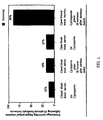
- mice were subjected to hypotension by exsanguination, and forebrain ischemia by clamping the bilateral carotid arteries for 10 minutes.
- the neurons of the CA1 area of the hippocampus are highly sensitive to ischemic insult, with their resultant cell death.
- Animals that received vehicle with or without opening the blood-brain barrier had more than 80 % cell death.
- Animals that received cyclosporin A but without opening the blood-brain barrier had more than 80% cell death.
- Animals that received cyclosporin A with the opening of the blood-brain barrier had only 11% cell death. This dramatic neuroprotection is much greater than for any other known neuroprotective agent.
- cyclosporins are unable to cross the blood-brain barrier. While they are lipophilic substances, they are thought to be blocked by the endothelial cell tight junctions. Interestingly, once the blood-brain barrier is disrupted, such as in culture, cyclosporins are specifically taken up & accumulated in neurons, achieving a high neuron to solution ratio of 20 after 25 minutes. This suggests, that if the blood-brain barrier where opened for even a short time, significant quantities could be actively taken into the brain neurons. Once the blood-brain barrier reclosed, the cyclosporins would remain trapped in the brain.
- the endothelial cells of the brain capillaries also have an ATP dependent active efflux mechanism for cyclosporins on their luminal surface mediated by the "multidrug transporter" P-glycoprotein. If cyclosporins were able to enter the endothelial cells, then their lipophilic nature would probably allow them ready access to the adjoining glia & neurons. Short term blocking or "poisoning" of this P-glycoprotein with medications or antibodies might provide an elegant & simple entry of cyclosporins across the blood-brain barrier during the crucial early hours after ischemia.
- Cyclosporins can cross the blood-brain barrier in a number of ways: After cerebrovascular accident, the ischemia itself disrupts the blood-brain barrier within 6 hours, & molecules such as cyclosporins are able to enter the brain: Osmotic agents such as hypertonic radiocontrast agents, mannitol, urea, arabinose & saccharose solutions are able to temporarily disrupt the blood-brain barrier which can allow therapeutic drug delivery to the brain. These are typically given as hypertonic solution infused for 30 seconds through a major cerebral artery. The increased permeability can begin immediately & lasts between 20 minutes to 2 hours, with blockage of large molecules before small ones.
- the blood-brain barrier could be opened by the less invasive & more convenient intravenous route (through standard intravenous line in the antebrachial vein of the arm) with a mannitol solution: Chemicals such as positively charged protamine, disrupt the negative repulsing charge on the brain vascular endothelium, temporarily opening the blood-brain barrier.
- Cyclosporins could be altered in their composition chemically to better cross the blood-brain barrier by making it more lipid soluble, by (de)glycosylating, by canonizing, by liposome entrapping or by coupling or conjugating with a substance or carrier that facilitates transfer across the blood-brain barrier.
- Administration of the treatment medication may be by any suitable route including oral, sublingual, buccal, nasal, inhalation, parenteral (including intraperitoneal, intraorgan, subcutaneous, intradermal, intramuscular, intra-articular, venous (central, hepatic or peripheral), lymphatic, cardiac, arterial, including selective or superselective cerebral arterial approach, retrograde perfusion through cerebral venous system, via catheter into the brain parenchyma or ventricles), direct exposure or under pressure onto or through the brain or spinal tissue, or any of the cerebrospinal fluid ventricles, injections into the subarachnoid, brain cistemal, subdural or epidural spaces, via brain cisterns or lumbar puncture, intra & peri-ocular instillation including application by injection around the eye, within the eyeball, its structures & layers, the ear, including the Eustachian tube, mastoid air cells, external & internal auditory canals, tympanic membrane, middle ear, inner ear
- the preferred route may vary depending on the condition of the patient.
- the medicament prepared according to the present invention is suitable for the administration of the treatment medication via any means with purposeful disruption of brain or spinal parenchyma, or disrupting the blood-brain barrier via mechanical, thermal, cryogenic, chemical, toxic, receptor inhibitor or augmentor, osmotic, charge altering, radiation, photon, electrical or other energy or process.
- the medicament prepared according to the present invention is suitable for all methods of administering treatment medications along with all methods of opening, bypassing or disrupting the blood-brain barrier in combination, simultaneously or in sequence to get the treatment medication in contact with nervous tissues.
- the medicament prepared according to the present invention is suitable for the timing & sequence of delivery of treatment medications to include pretreatment;
- the treatment medications For the treatment medications to have the best opportunity to protect nervous tissue from nervous insult, it needs to be available as soon as possible within the affected cells. This would include administration before the nervous ischemic insult in situations of increased likelihood of ischemia or stroke.
- vascular endarterectomy cardiac, vascular, aortic, orthopedic
- endovascular procedures such as any type of arterial catheterization (carotid, vertebral, aortic, cardiac, renal, spinal, Adamkiewicz & others) for diagnostic or therapeutic purposes including evaluation & treatment of vascular stenosis, aneurysm or arteriovenous malformation &/or injection of embolic agents, coils or balloons for hemostasis, interruption of vascularity or treatment of brain lesions, predisposing medical conditions, including crescendo transient ischemic attacks, anticipated emboli or sequential strokes: Post-treatment; For stroke, or ischemia that has occurred prior to the administration of cyclosporins, it is important to get the drug to the affected cells as quickly as possible during or after the event.
- the time between stroke, diagnosis & treatment should be reduced to its minimum to save the ischemic cells from damage & death.
- the ideal temporal relation would be the simultaneous opening of the blood-brain barrier & availability of cyclosporins to enter the brain & ischemic tissue as soon after the stroke as possible.
- the formulary drug of this invention comprises at least one administered treatment medication as defined above together with one or several appropriate carriers thereof & possibly other pharmaceutical treatment medications.
- the carriers must be appropriate in that they can readily coexist with the other agents of the formulary drug & are not detrimental to the receiver thereof.
- This treatment medication combined, as described in this paragraph, with other appropriate agents common to the art, is defined herein as the formulary drug.
- the formulary drug includes those suitable for administration by the routes including oral, sublingual, buccal, nasal, inhalation, parenteral (including intraperitoneal, intraorgan, subcutaneous, intradermal, intramuscular, intra-articular, venous (central, hepatic or peripheral), lymphatic, cardiac, arterial, including selective or superselective cerebral arterial approach, retrograde perfusion through cerebral venous system, via catheter into the brain parenchyma or ventricles), direct exposure or under pressure onto or through the brain or spinal tissue, or any of the cerebrospinal fluid ventricles, injections into the subarachnoid, brain cisternal, subdural or epidural spaces, via brain cisterns or lumbar puncture, intra & peri-ocular instillation including application by injection around the eye, within the eyeball, its structures & layers, the ear, including the Eustachian tube, mastoid air cells, external & internal auditory canals, tympanic membrane, middle ear, inner
- the formulary drug may be distributed and made available in convenient unit dose form such as capsules & ampoules, containing the treatment medication of the invention, & may be manufactured & distributed by any of the methods known to the pharmaceutical arts.
- the formulary drug can also contain other usual agents of the art relating to the type of formulary drug produced.
- the formulary drug may, by example, take the configuration of suspensions, solutions & emulsions of the treatment medication in lipid, non-aqueous or aqueous diluents, solvents, dissolving agents, emulsifiers, syrups, granulates or powders, or mixtures of these.
- the formulary drug can also contain coloring agents, preservatives, perfumes, flavoring additions & sweetening agents.
- the formulary drug can also contain other pharmaceutically active medications.
- the manufacture and distribution of the formulary drug is carried out by techniques known to the art, such as, evenly & intimately bringing together the treatment medication with liquids or fine solids or both, & then if needed, forming the formulary drug into a dose unit form.
- the discrete dose, portion & carrier vehicle constituting the formulary drug will generally be adapted by virtue of shape or packaging for medical administration and distributed for this purpose.
- the formulary drug acceptable for oral administration may be manufactued and distributed as individual dosage units such as capsules, pills, tablets, dragees, dissolvable powders, or cachets, each containing a known dose of the treatment medication; as powder or granules; as solution or suspension in syrups, elixirs as a lipid, aqueous liquid or a non-aqueous liquid; or as an oil-in-water emulsion or as a water-in-oil emulsion.
- individual dosage units such as capsules, pills, tablets, dragees, dissolvable powders, or cachets, each containing a known dose of the treatment medication; as powder or granules; as solution or suspension in syrups, elixirs as a lipid, aqueous liquid or a non-aqueous liquid; or as an oil-in-water emulsion or as a water-in-oil emulsion.
- Tablets can be manufactured & distributed by compression or mould, from treatment medication possibly with one or more additional pharmaceutically active compounds.
- Compressed tablets can be manufactured & distributed through compression in a machine typical to the art a known quantity of the treatment medication in a dispersible configuration such as powder or granules, possibly mixed with other agents including binders, lubricants, inert diluents, preservatives, & dispersing agents.
- Moulded tablets can be manufactured & distributed by moulding in a machine typical to the art a mix of known quantity of treatment medication addition pharmaceutically active compounds & other additives moistened with a liquid diluent.
- the tablets can possibly be coated, enveloped or covered, with substances including protective matrices, which can contain opacifiers or sweeteners & can be formulated to allow slow or controlled release, or also release within a certain part of the digestive system of the contained treatment medications.
- Capsules can be manufactured & distributed by placement of a known quantity of treatment medication, additional pharmaceutically active compounds & additives within a two part or sealed capsule of gelatine or other aqueous dissolvable substance.
- the treatment medication can also be manufactured & distributed as formulary drug in microencapsulated, microsomal, micellar and microemulsion forms.
- the formulary drug containing the treatment medication acceptable for oral topical administration can be manufactured & distributed as lozenges containing the treatment medications, other pharmaceutically active compounds, & additives in a flavored basis, such as acacia & tragacanth; Pastilles containing the active treatment medication with other pharmaceutically active compounds, & additives in an inert base such as gelatine & sucrose: Mouthwashes or rinses containing the treatment medication with other pharmaceutically active compounds, & additives in an acceptable liquid.
- the formulary drug containing the treatment medication acceptable for skin topical administration can be manufactured & distributed as ointments, oils, creams, lotions, gels, pastes & transdermal patch containing the treatment medication, other pharmaceutically active compounds, additives & an acceptable carrier medium.
- the formulary drug containing the treatment medication acceptable for nasal administration can be manufactured & distributed with other pharmaceutically active compounds & additives as a powder for inhalation, or as an oily, aqueous or non-aqueous liquid for nasal spray or drops.
- the formulary drug containing the treatment medication acceptable for rectal administration can be manufactured & distributed as suppositories, creams, foams, douches or enemas with other pharmaceutically active compounds, suitable bases of the usual water-soluble diluents, fats, & additives known to practitioners of the art.
- the formulary drug containing the treatment medication acceptable for vaginal administration can be manufactured & distributed as pessaries, suppositories, creams, gels, foams, douches or sprays with other pharmaceutically active compounds, suitable bases & additives known to practitioners of the art.
- the formulary drug containing the treatment medication acceptable for parenteral administration can be manufactured & distributed from aqueous & non-aqueous sterile injection solutions, other pharmaceutically active compounds, additives including anti-oxidants, bacteriostats & solutes & sugars such as mannitol to make the formulary drug isotonic, hypotonic or hypertonic with the blood of the recipient; & also aqueous & non-aqueous sterile suspensions which can include suspenders & thickeners.
- the formulary drug can be manufactured & distributed in unit-dose or multi-dose containers, such as sealed glass or plastic ampoules, vials, bottles & bags as a liquid, & in a dry state requiring only the addition of sterile liquid, for example water, saline or dextrose solutions, immediately prior to use.
- sterile liquid for example water, saline or dextrose solutions
- Extemporaneous solutions & suspensions for injection can be prepared from powders & tablets of the kind above described.
- the formulary drug containing the treatment medication acceptable for administration into the brain & related structures, spinal cord & related structures, ventricular system & cerebrospinal fluid spaces can be manufactured & distributed from aqueous & non-aqueous sterile injection solutions, other pharmaceutically active compounds, additives including anti-oxidants, bacteriostats & solutes & sugars such as mannitol to make the formulary drug isotonic, hypotonic or hypertonic with the cerebrospinal fluid; & also aqueous & non-aqueous sterile suspensions which can include suspenders & thickeners.
- the formulary drug can be manufactured & distributed in unit-dose or multi-dose containers, such as sealed glass or plastic ampoules, vials, bottles & bags as a liquid, & in a dry state requiring only the addition of sterile liquid, for example water, saline or dextrose solutions, immediately prior to use.
- sterile liquid for example water, saline or dextrose solutions
- Extemporaneous solutions & suspensions for injection can be prepared from powders & tablets of the kind above described.
- the desired unit dose of formulary drug are those containing a daily dose or nervous insult treatment dose or an appropriate fraction thereof, of the administered treatment medication.
- Unit dose forms of the invention may also include more complex systems such as double barrelled syringes, syringes with sequential compartments one of which may contain the treatment medication, & the other any necessary diluents or vehicles, or agents for opening the blood-brain barrier.
- the agents in the syringes would be released sequentially or as a mixture or combination of the two after the triggering of the syringe plunger.
- Such systems are known in the art.
- the formulary drug generally contains from 0.1 to 90% of the treatment medication by weight of the total composition. Amounts of from 0.0001 mg to 50 mg/kg, or preferably 0.001 to 25 mg/kg, of body weight per day for parenteral administration & 0.001 to 100 mg/kg, preferably 0.01 to 60mg/kg, of body weight per day for enteral administration, can be given to achieve neuroprotection. Nevertheless, it could be necessary to alter those dosage rates, depending on the condition, weight , and individual reaction of the subject to the treatment, the type of formulary drug in which the treatment medication is administered & the mode in which the administration is carried out, & the stage of the disease process or interval of administration. It may thus be sometimes adequate to use less than the before stated minimum dose, while in other instances the upper limit must be surpassed to obtain therapeutic results.
- the invention relates to the use of the treatment medication in the conditions described throughout the application.
- the invention thus also relates to all advertising, labelling, packaging, informational materials, inserts, product descriptions, advertising materials, the written word, including letter, pamphlet, brochures, magazines & books, as well as other medium of communication including the spoken word, fax, phone, photos, radio, video, television, film, internet, e-mail or computer based, & proposals for clinical trials and study protocols for clinical trials using the treatment medication for its neuroprotective effect.
- Examples 1 through 6 illustrate conditions & situations wherein can be gotten, & which are means to getting, the treatment medication of the invention in contact with nervous tissue, that is, when the blood brain barrier is disrupted or open.
- a catheter is inserted percutaneously in the femoral artery & then passed cephalad into one of the internal carotid arteries.
- a volume of 270 ml of hypertonic solution of 20 % mannitol is infused at a rate of 9 ml per second for 30 seconds into the internal carotid artery to produce blood-brain barrier disruption & opening.
- the extent of blood-brain barrier opening can be seen with MRI or contrast CAT scan.
- incision is made through the scalp, exposing the bone of the skull.
- a drill is used to make a hole through the skull.
- the dura is opened.
- a catheter is placed through the brain parenchyma, disrupting & opening the blood-brain barrier. The catheter tip will rest within the ventricular system.
- a patient has had a cerebrovascular accident with breakdown & opening of the blood-brain barrier.
- a patient has had trauma to the head, with disruption of brain tissue & disruption & opening of the blood-brain barrier.
- a patient has had trauma to the spinal cord, with disruption of spinal cord tissue & disruption & opening of the blood-brain barrier in the spinal cord.
- a patient has had surgery of the brain, with disruption & opening of the blood-brain barrier.
- the formulary drug is sterilized by heat or radiation & then placed in a sealed container such as glass in doses of 1 or 5 ml.
- Sterile injectable concentrate formulary drug is diluted 1 ml in 20 ml saline so that it may be administered by infusion or by injection into artery, vein, brain, spine or cerebrospinal fluid spaces.
- a one or two part capsule is prepared by placing the formulary drug in a one or two part gelatine capsule.
- a one or two part capsule is prepared by placing the formulary drug in a one or two part gelatine capsule.
- Liquid Oral Formulary Drug Containing per 1 ml Cyclosporin A 100 mg Ethanol 100 mg Corn oil 430 mg Labrafil 300 mg
Landscapes
- Health & Medical Sciences (AREA)
- Engineering & Computer Science (AREA)
- Bioinformatics & Cheminformatics (AREA)
- Life Sciences & Earth Sciences (AREA)
- Chemical & Material Sciences (AREA)
- Pharmacology & Pharmacy (AREA)
- Veterinary Medicine (AREA)
- Public Health (AREA)
- General Health & Medical Sciences (AREA)
- Animal Behavior & Ethology (AREA)
- Medicinal Chemistry (AREA)
- Nuclear Medicine, Radiotherapy & Molecular Imaging (AREA)
- Biomedical Technology (AREA)
- Organic Chemistry (AREA)
- Neurosurgery (AREA)
- General Chemical & Material Sciences (AREA)
- Chemical Kinetics & Catalysis (AREA)
- Neurology (AREA)
- Gastroenterology & Hepatology (AREA)
- Immunology (AREA)
- Proteomics, Peptides & Aminoacids (AREA)
- Epidemiology (AREA)
- Heart & Thoracic Surgery (AREA)
- Hospice & Palliative Care (AREA)
- Vascular Medicine (AREA)
- Urology & Nephrology (AREA)
- Psychiatry (AREA)
- Cardiology (AREA)
- Medicines That Contain Protein Lipid Enzymes And Other Medicines (AREA)
Description

| Sterile Injectable Concentrate Formulary Drug | |
| Containing per ml: | |
| |
50 mg |
| Spiritus fortis | 280 mg |
| Polyoxyethylated castor oil | 650 mg |
| Capsule Formulary | |
| Cyclosporin A | |
| 100 mg | |
| Iron oxide E172 | 1 mg |
| Titanium dioxide | 3 |
| Ethanol | |
| 100 mg | |
| Corn oil | 415 mg |
| Gelatine | 280 mg |
| Labrafil | 300 mg |
| Andrisorb | 105 mg |
| Glycerol 85% | 3 mg |
| Capsule Enhanced Absorption Formulary | |
| Cyclosporin A | |
| 100 mg | |
| Iron oxide E172 | 1 mg |
| Titanium dioxide | 2 mg |
| Propylene glycol | 150 mg |
| Tocopherol | 1 |
| Ethanol | |
| 100 mg | |
| Corn oil | 345 mg |
| Gelatine | 300 mg |
| Glycerol 85% | 40 mg |
| Polyoxyl 40 hydrogenated castor oil | 405 mg |
| Liquid Oral Formulary Drug | |
| Containing per 1 ml: | |
| |
100 |
| Ethanol | |
| 100 mg | |
| Corn oil | 430 mg |
| Labrafil | 300 mg |
Claims (18)
- The use of a compound of the class of cyclosporins for the manufacture of a medicament for the treatment of a human with nervous insult, in whom the blood brain barrier has been opened, or where said compound is able to cross the blood brain barrier, or where said compound comes into contact with nervous tissue by the use of mechanical, thermal, chemical or energy disruption of the blood brain-barrier.
- The use according to claim 1 for the treatment of a human with nervous ischemic insult in whom the blood brain barrier has been opened or where said compound is able to cross the blood brain barrier, or where said compound comes into contact with nervous tissue by the use of mechanical, thermal, chemical or energy disruption of the blood brain-barrier.
- The use as claimed in claim 1 or 2, wherein the cyclosporin is cyclosporin A, cyclosporin C, cyclosporin D, cyclosporin G or amino acid variants, intramolecular cyclizations or without cyclic structure, as well as shorter peptides and amino acids, and their conjugates, metabolites, derivatives and salts thereof.
- The use as in claim 1 or 2 or 3, wherein the blood brain barrier has been opened or where said compound is able to cross the blood brain barrier or said compound comes into contact with nervous tissue by the use of intra-arterial or intra-venous hypertonic solutions, charged chemicals, microsomal packaging, or altering the cyclosporin chemically to change its lipophilicity, or by coupling or conjugating it to another substance or carrier that facilitates transfer across the blood brain barrier.
- The use as in claim 1 or 2 or 3, wherein the blood brain barrier has been opened or where said compound is able to cross the blood brain barrier or come into contact with nervous tissue by the use of blocking or poisoning agents of the P-glycoprotein multidrug transporter.
- The use as in claim 1 or 2 or 3, wherein the blood brain barrier has been opened or where said compound is able to cross the blood brain barrier or come into contact with nervous tissue by the use of injection into or onto nervous tissue, or into cerebrospinal fluid spaces.
- The use as claimed in claims 2 to 6, for the treatment of the following conditions, situations and diseases in which nervous ischemic insult occur: from cerebrovascular accidents, cerebrovascular disease, stroke, ischemic damage and intracranial damage and intracranial sources, pressure related ischemia, extracranial sources, embolic sources, vasculopathy, vasospasm, coagulopathy, respiratory compromise, full body hypoxias, anemia, red blood cell and hemoglobin malfunction, hypotension, exsanguination, forebrain ischemia, intracranial and extracranial vascular surgery, cardiac surgery, endovascular arterial catheterization for diagnostic and therapeutic intracranial and extracranial interventions.
- The use as claimed in claims 1 to 6 for the treatment of traumatic brain injury nervous insult including closed head injury, penetrating injury, spinal cord injury, intracranial mass, raised intracranial pressure, surgery and iatrogenic damage, and for each of the above their secondary and delayed effects.
- The use as claimed in claims 1 to 6 for the treatment of nervous insult from electrolyte, glucose, vitamin, metabolic and hemostatic physiologic abnormalities, epilepsy, metabolic poisons, toxins, neurotoxins, radiation and vasospasm, and for each of the above their secondary and delayed effects.
- The use as claimed in claims 1 to 6 for the treatment of nervous insult from diseases and processes of neurodegeneration and their secondary effects, including Alzheimer's disease, Parkinson's disease, Huntington's disease, and ageing.
- The use as claimed in claims 1 to 6 for the treatment of infectious neurological diseases including AIDS-related neurological sequelae, AIDS myelopathy, and herpes.
- The use as claimed in claims 1 to 6, for the neuroprotective treatment of nervous insult to embryonic and foetal nervous tissue for cell culture, and production and clinical transplantation therapies in humans.
- The use as claimed in claims 1 to 6, for the neuroprotective treatment of neural cell cultures, glial cell cultures, neural and glial cell cultures, both neural and glial origin tumor cell cultures, transfected, genetically engineered cell cultures, including those of peripheral origin, sympathetic ganglia, dorsal root ganglia, pheochromocytomas and Schwann cells.
- A pharmaceutical composition comprising a pharmaceutical agent said pharmaceutical agent being therapeutically effective for reducing or preventing nervous damage caused by traumatic, metabolic, ischemic or hypoxic neural insult when the pharmaceutical agent is able to cross the blood brain barrier to contact the nervous tissue in a therapeutically effective quantity, said pharmaceutical agent comprising cyclosporin A or a compound of the class of cyclosporins, or functional derivatives, metabolites, variants or salts thereof, or combination thereof, and a second pharmaceutical agent comprising one or several compounds that open the blood brain barrier including hyperosmotic mannitol solution, positively charged protamine and inhibitors of the P-glycoprotein multidrug transportersystem, whether alone or in admixture with diluents or additives, through one or several mechanisms including blocking or poisoning agents of the P-glycoprotein multidrug transporter, hypertonic solutions, charged chemicals, microsomal packaging, or altering the cyclosporin chemically to change its lipophilicity, or by coupling or conjugating it to another substance or carrier that facilitates transfer across the blood brain barrier, whether alone or in admixture with diluents or additives.
- The composition as claimed in claim 14, wherein said medication containing cyclosporin A or a compound of the class of cyclosporins in a form for being administered orally.
- The composition as claimed in claim 14, wherein said medication containing cyclosporin A or a compound of the class of cyclosporins is in a form for being administered intra-arterially or intra-venously as a sterile, injectable formulary drug.
- The composition as claimed in claim 14, wherein said medication containing cyclosporin A or a compound of the class of cyclosporin in a form for being administered parentally as a sterile injectable formulary drug.
- The composition as claimed in claim 14, wherein said medication containing cyclosporin A or a compound of the class of cyclosporins is in a form for being administered into or adjacent to the brain, cerebrospinal fluids or spinal cord as a sterile formulary drugs.
Priority Applications (1)
| Application Number | Priority Date | Filing Date | Title |
|---|---|---|---|
| SI9630476T SI0813420T1 (en) | 1995-01-20 | 1996-01-18 | Treatment of cerebral ischemia and cerebral damage with neuroprotective agent |
Applications Claiming Priority (3)
| Application Number | Priority Date | Filing Date | Title |
|---|---|---|---|
| SE9500209A SE520730C2 (en) | 1995-01-20 | 1995-01-20 | Treatment of brain ischemia and brain damage with a neuroprotective drug |
| SE9500209 | 1995-01-20 | ||
| PCT/SE1996/000036 WO1996022104A1 (en) | 1995-01-20 | 1996-01-18 | Treatment of cerebral ischemia and cerebral damage with neuroprotective agent |
Publications (2)
| Publication Number | Publication Date |
|---|---|
| EP0813420A1 EP0813420A1 (en) | 1997-12-29 |
| EP0813420B1 true EP0813420B1 (en) | 2002-06-05 |
Family
ID=20396911
Family Applications (1)
| Application Number | Title | Priority Date | Filing Date |
|---|---|---|---|
| EP96901587A Expired - Lifetime EP0813420B1 (en) | 1995-01-20 | 1996-01-18 | Treatment of cerebral ischemia and cerebral damage with neuroprotective agent |
Country Status (18)
| Country | Link |
|---|---|
| US (1) | US5972924A (en) |
| EP (1) | EP0813420B1 (en) |
| JP (1) | JP3643380B2 (en) |
| CN (1) | CN1123359C (en) |
| AP (1) | AP734A (en) |
| AT (1) | ATE218360T1 (en) |
| AU (1) | AU712974B2 (en) |
| CA (1) | CA2210241C (en) |
| CZ (1) | CZ291233B6 (en) |
| DE (1) | DE69621603T2 (en) |
| DK (1) | DK0813420T3 (en) |
| ES (1) | ES2176432T3 (en) |
| MX (1) | MX9706362A (en) |
| NZ (1) | NZ300699A (en) |
| PT (1) | PT813420E (en) |
| RU (1) | RU2194527C2 (en) |
| SE (1) | SE520730C2 (en) |
| WO (1) | WO1996022104A1 (en) |
Cited By (1)
| Publication number | Priority date | Publication date | Assignee | Title |
|---|---|---|---|---|
| US10123969B2 (en) | 2015-10-15 | 2018-11-13 | Wisconsin Alumni Research Foundation | Osmotic enhancement of drug/therapeutic delivery to the brain following infusion or injection into the cerebrospinal fluid |
Families Citing this family (50)
| Publication number | Priority date | Publication date | Assignee | Title |
|---|---|---|---|---|
| DE19711795C2 (en) * | 1997-03-21 | 2001-03-08 | Apogepha Arzneimittel Gmbh | Use of cyclosporin for the treatment of myocardial infarctions and their consequences |
| US20030220234A1 (en) | 1998-11-02 | 2003-11-27 | Selvaraj Naicker | Deuterated cyclosporine analogs and their use as immunodulating agents |
| US20040202645A1 (en) * | 2003-04-08 | 2004-10-14 | Khan Nisar Ahmed | Administration of gene-regulatory peptides |
| EP1138692A1 (en) | 2000-03-29 | 2001-10-04 | Erasmus Universiteit Rotterdam | Fragments of human chorionic gonadotropin (hcg) as immunoregulator |
| US20050227925A1 (en) * | 2004-04-08 | 2005-10-13 | Robbert Benner | Compositions capable of reducing elevated blood urea concentration |
| US6844315B2 (en) | 1998-05-20 | 2005-01-18 | Erasmus Universiteit Rotterdam | Immunoregulator |
| US8680059B2 (en) * | 1998-05-20 | 2014-03-25 | Biotempt B.V. | Oligopeptide acetate and formulations thereof |
| US20030220258A1 (en) | 2001-12-21 | 2003-11-27 | Robbert Benner | Treatment of ischemic events |
| US6921751B1 (en) * | 1998-05-20 | 2005-07-26 | Erasmus Universiteit Rotterdam | Immunoregulator |
| AP1040A (en) * | 1998-09-17 | 2002-01-30 | Panacea Biotec Ltd | A novel composition containing cyclosporin. |
| WO2000016794A1 (en) * | 1998-09-23 | 2000-03-30 | Marcus Keep | Neuroimmunophilins for selective neuronal radioprotection |
| DE19857609A1 (en) | 1998-12-14 | 2000-06-15 | Hannelore Ehrenreich | Use of erythropoietin for the treatment of human cerebral ischemia |
| EP1191845A4 (en) * | 1999-04-13 | 2002-07-17 | Long Island Jewish Res Inst | PREVENTION OF CEREBRAL INJURIES LINKED TO VASCULAR ACCIDENTS |
| WO2001017953A1 (en) | 1999-09-08 | 2001-03-15 | Guilford Pharmaceuticals Inc. | Non-peptidic cyclophilin binding compounds and their use |
| DE19961733A1 (en) * | 1999-12-21 | 2001-06-28 | Ciclomulsion Ag | Oil-in-water emulsion comprising cyclosporin, is useful for treating neurological disease and as a neuroprotectant, comprises triglyceride, natural emulsifier and a hypertonicity agent |
| KR20010069066A (en) * | 2000-01-12 | 2001-07-23 | 이종원 | Culturing Method Which Allows Growth of Animal Cells Under Hypoxic Condition |
| US7358330B2 (en) * | 2001-03-29 | 2008-04-15 | Biotempt B.V. | Immunoregulatory compositions |
| EP1274377A2 (en) * | 2000-04-07 | 2003-01-15 | The General Hospital Corporation doing business as Massachusetts General Hospital | Methods and apparatus for thermally affecting tissue |
| US6899726B2 (en) | 2000-10-05 | 2005-05-31 | Seacoast Technologies, Inc. | Expandable device for thermal therapy including spiral element |
| MXPA03006666A (en) | 2001-01-25 | 2004-05-31 | Guilford Pharm Inc | Trisubstituted carbocyclic cyclophilin binding compounds and their use. |
| US6936589B2 (en) * | 2001-09-28 | 2005-08-30 | Albert T. Naito | Parenteral delivery systems |
| HRP20070058B1 (en) | 2001-10-19 | 2014-05-23 | Isotechnika Inc. | Synthesis of cyclosporin analogs |
| US20080318871A1 (en) * | 2001-12-21 | 2008-12-25 | Khan Nisar A | Treatment of neurological disorders |
| US20030220260A1 (en) * | 2001-12-21 | 2003-11-27 | Khan Nisar Ahmed | Peptide compositions |
| US20030220257A1 (en) * | 2001-12-21 | 2003-11-27 | Robbert Benner | Treatment of trauma |
| US7786084B2 (en) * | 2001-12-21 | 2010-08-31 | Biotempt B.V. | Treatment of burns |
| US20030220261A1 (en) * | 2001-12-21 | 2003-11-27 | Khan Nisar Ahmed | Treatment of iatrogenic disease |
| US20040013661A1 (en) * | 2001-12-21 | 2004-01-22 | Gert Wensvoort | Stratification |
| US20030224995A1 (en) * | 2001-12-21 | 2003-12-04 | Khan Nisar Ahmed | Treatment of burns |
| US7501391B2 (en) * | 2001-12-21 | 2009-03-10 | Biotempt B.V. | Treatment of transplant survival |
| US20080242837A1 (en) * | 2001-12-21 | 2008-10-02 | Khan Nisar A | Peptide compositions |
| US7560433B2 (en) | 2001-12-21 | 2009-07-14 | Biotempt B.V. | Treatment of multiple sclerosis (MS) |
| JP2006521405A (en) * | 2003-03-27 | 2006-09-21 | ジヤンセン・フアーマシユーチカ・ナームローゼ・フエンノートシヤツプ | Use of erythropoietin in seizure recovery |
| RU2265415C2 (en) * | 2003-05-19 | 2005-12-10 | Челябинский государственный институт лазерной хирургии | Method for revascularization of cerebral infarction foci |
| RU2275195C2 (en) * | 2003-06-19 | 2006-04-27 | Наталья Борисовна Кармен | Method for protecting brain against hypoxic ischemic injuries |
| RU2255739C2 (en) * | 2003-07-14 | 2005-07-10 | Оренбургская государственная медицинская академия | Method for treatment of ischemic insult in critical severe period |
| US20090227505A1 (en) * | 2004-01-07 | 2009-09-10 | Biotempt B.V. | Methods and uses for protein breakdown products |
| ES2339790T3 (en) * | 2004-08-30 | 2010-05-25 | Seo Hong Yoo | NEUOPROTECTOR EFFECT OF UDCA SOLUBILIZED IN FOCAL ISCHEMICAL MODEL. |
| US7074775B2 (en) * | 2004-09-14 | 2006-07-11 | Miller Landon C G | Aminobutyramide conjugate and a pharmaceutical composition for treatment of neuronal disorders |
| US8420602B2 (en) * | 2004-09-14 | 2013-04-16 | Landon C. G. Miller | Endocannabinoid conjugate and a pharmaceutical composition for treatment of neuronal disorders |
| WO2007004869A2 (en) * | 2005-07-05 | 2007-01-11 | Biotempt B.V. | Treatment of tumors |
| EP1864692A1 (en) | 2006-06-07 | 2007-12-12 | Biotempt B.V. | Use of peptides for the control of radiation injury |
| JP5243428B2 (en) * | 2006-08-23 | 2013-07-24 | ザ ユニヴァーシティ オブ モンタナ | Pharmaceutical composition for reducing neuronal damage |
| DK2120991T3 (en) * | 2007-02-12 | 2014-04-28 | Biotempt Bv | TREATMENT OF TRAUMATIC BLEEDING WITH SHORT OLEGOPEPTIDES |
| EP2808029A3 (en) * | 2010-03-15 | 2015-04-01 | Stealth Peptides International, Inc. | Combination therapies using cyclosporine and aromatic cationic peptides |
| RU2475233C2 (en) * | 2010-12-01 | 2013-02-20 | Учреждение Российской академии наук Институт кристаллографии им. А.В. Шубникова РАН | Pharmacological composition for intranasal introduction for cerebral delivery of pharmacologically active component, and method for preparing it |
| AU2011342284C1 (en) | 2010-12-15 | 2017-07-13 | Contravir Pharmaceuticals, Inc. | Cyclosporine analogue molecules modified at amino acid 1 and 3 |
| CN102784102A (en) * | 2012-08-28 | 2012-11-21 | 赵继红 | Tetraodotoxin oral liquid state preparation and preparation method thereof |
| US11745029B2 (en) | 2018-05-30 | 2023-09-05 | Zap Surgical Systems, Inc. | Radiosurgical neuromodulation close to critical structures |
| WO2021048871A1 (en) | 2019-09-15 | 2021-03-18 | Celagenex Research (India) Pvt. Ltd. | Synergistic bioactive compositions for treating neurological disorders |
Family Cites Families (3)
| Publication number | Priority date | Publication date | Assignee | Title |
|---|---|---|---|---|
| SU1138164A1 (en) * | 1963-04-25 | 1985-02-07 | Shadurskij Konstantin S | Antihistamine agent "dimebon" |
| US4117118A (en) * | 1976-04-09 | 1978-09-26 | Sandoz Ltd. | Organic compounds |
| US5273754A (en) * | 1992-03-27 | 1993-12-28 | Mann Morris A | Appetite suppressant composition and method relating thereto |
-
1995
- 1995-01-20 SE SE9500209A patent/SE520730C2/en not_active IP Right Cessation
-
1996
- 1996-01-18 RU RU97114608/14A patent/RU2194527C2/en active
- 1996-01-18 JP JP52220296A patent/JP3643380B2/en not_active Expired - Lifetime
- 1996-01-18 US US08/860,898 patent/US5972924A/en not_active Expired - Lifetime
- 1996-01-18 AT AT96901587T patent/ATE218360T1/en active
- 1996-01-18 DE DE69621603T patent/DE69621603T2/en not_active Expired - Lifetime
- 1996-01-18 EP EP96901587A patent/EP0813420B1/en not_active Expired - Lifetime
- 1996-01-18 CA CA002210241A patent/CA2210241C/en not_active Expired - Lifetime
- 1996-01-18 CZ CZ19972336A patent/CZ291233B6/en not_active IP Right Cessation
- 1996-01-18 ES ES96901587T patent/ES2176432T3/en not_active Expired - Lifetime
- 1996-01-18 AU AU45924/96A patent/AU712974B2/en not_active Expired
- 1996-01-18 NZ NZ300699A patent/NZ300699A/en not_active IP Right Cessation
- 1996-01-18 WO PCT/SE1996/000036 patent/WO1996022104A1/en not_active Ceased
- 1996-01-18 CN CN96192572A patent/CN1123359C/en not_active Expired - Lifetime
- 1996-01-18 DK DK96901587T patent/DK0813420T3/en active
- 1996-01-18 AP APAP/P/1997/001049A patent/AP734A/en active
- 1996-01-18 PT PT96901587T patent/PT813420E/en unknown
-
1997
- 1997-08-20 MX MX9706362A patent/MX9706362A/en unknown
Non-Patent Citations (1)
| Title |
|---|
| "Rote Liste, 50 075", 1991, BUNDESVERBAND DER PHARMAZEUTISCHEN INDUSTRIE * |
Cited By (1)
| Publication number | Priority date | Publication date | Assignee | Title |
|---|---|---|---|---|
| US10123969B2 (en) | 2015-10-15 | 2018-11-13 | Wisconsin Alumni Research Foundation | Osmotic enhancement of drug/therapeutic delivery to the brain following infusion or injection into the cerebrospinal fluid |
Also Published As
| Publication number | Publication date |
|---|---|
| CZ233697A3 (en) | 1998-07-15 |
| CA2210241C (en) | 2000-06-20 |
| SE520730C2 (en) | 2003-08-19 |
| AP734A (en) | 1999-02-15 |
| DE69621603T2 (en) | 2002-09-19 |
| CA2210241A1 (en) | 1996-07-25 |
| ES2176432T3 (en) | 2002-12-01 |
| JP3643380B2 (en) | 2005-04-27 |
| SE9500209L (en) | 1996-07-21 |
| DE69621603D1 (en) | 2002-07-11 |
| ATE218360T1 (en) | 2002-06-15 |
| NZ300699A (en) | 1998-05-27 |
| CN1178469A (en) | 1998-04-08 |
| EP0813420A1 (en) | 1997-12-29 |
| CN1123359C (en) | 2003-10-08 |
| PT813420E (en) | 2002-10-31 |
| DK0813420T3 (en) | 2002-09-30 |
| US5972924A (en) | 1999-10-26 |
| CZ291233B6 (en) | 2003-01-15 |
| MX9706362A (en) | 1998-07-31 |
| JPH11504617A (en) | 1999-04-27 |
| AU4592496A (en) | 1996-08-07 |
| AP9701049A0 (en) | 1997-10-31 |
| AU712974B2 (en) | 1999-11-18 |
| RU2194527C2 (en) | 2002-12-20 |
| SE9500209D0 (en) | 1995-01-20 |
| WO1996022104A1 (en) | 1996-07-25 |
Similar Documents
| Publication | Publication Date | Title |
|---|---|---|
| US5972924A (en) | Treatment of cerebral ischemia and cerebral damage with neuroprotective agents | |
| US6796966B2 (en) | Apparatus, and kits for preventing of alleviating vasoconstriction or vasospasm in a mammal | |
| US6358536B1 (en) | Nitric oxide donor compositions, methods, apparatus, and kits for preventing or alleviating vasoconstriction or vasospasm in a mammal | |
| Nagano et al. | Beneficial effects of intrathecal IGF-1 administration in patients with amyotrophic lateral sclerosis | |
| JP2534998B2 (en) | Pharmaceutical composition containing peptides of the cholecystokinin-cererulein group for treating symptoms of respiratory tract, respiratory dysfunction and cardiovascular dysfunction | |
| EP1142903A9 (en) | BRAIN CELL OR NERVE CELL-PROTECTIVE AGENTS COMPRISING GINSENOSIDE Rb 1? | |
| US7446093B1 (en) | Cerebrospinal and vascular pharmaceutical composition and process for preparing the same | |
| CA2446160A1 (en) | Combination comprising a p-gp inhibitor and an anti-epileptic drug | |
| AU766095B2 (en) | Neuroimmunophilins for selective neuronal radioprotection | |
| RU2212890C2 (en) | Infusion solution "bravinton" for improvement of cerebral circulation | |
| CN115151266B (en) | Vasodilator composition and kit thereof, and pharmaceutical composition and kit using the same | |
| Ballard et al. | Midtrimester abortion with intramuscular injection of 15-methyl-prostaglandin E2 | |
| Kumari et al. | Drug Delivery Factors | |
| US10272107B2 (en) | Method for treating inflammatory brain disorders and traumatic brain injury | |
| MXPA01003029A (en) | Neuroimmunophilins for selective neuronal radioprotection | |
| NZ510739A (en) | Neuroimmunophilins for selective neuronal radioprotection | |
| CN121714621A (en) | Application of moldavica dragonhead total flavone in preparing medicament for preventing or treating autoimmune demyelinating diseases | |
| HK1064278B (en) | Combination comprising a p-gp inhibitor and an anti-epileptic drug |
Legal Events
| Date | Code | Title | Description |
|---|---|---|---|
| PUAI | Public reference made under article 153(3) epc to a published international application that has entered the european phase |
Free format text: ORIGINAL CODE: 0009012 |
|
| 17P | Request for examination filed |
Effective date: 19970804 |
|
| AK | Designated contracting states |
Kind code of ref document: A1 Designated state(s): AT BE CH DE DK ES FR GB GR IE IT LI LU MC NL PT SE |
|
| AX | Request for extension of the european patent |
Free format text: LT PAYMENT 970804;LV PAYMENT 970804;SI PAYMENT 970804 |
|
| 17Q | First examination report despatched |
Effective date: 19990120 |
|
| RAP1 | Party data changed (applicant data changed or rights of an application transferred) |
Owner name: MAAS BIOLAB, LLC |
|
| GRAG | Despatch of communication of intention to grant |
Free format text: ORIGINAL CODE: EPIDOS AGRA |
|
| GRAG | Despatch of communication of intention to grant |
Free format text: ORIGINAL CODE: EPIDOS AGRA |
|
| GRAH | Despatch of communication of intention to grant a patent |
Free format text: ORIGINAL CODE: EPIDOS IGRA |
|
| GRAH | Despatch of communication of intention to grant a patent |
Free format text: ORIGINAL CODE: EPIDOS IGRA |
|
| GRAA | (expected) grant |
Free format text: ORIGINAL CODE: 0009210 |
|
| AK | Designated contracting states |
Kind code of ref document: B1 Designated state(s): AT BE CH DE DK ES FR GB GR IE IT LI LU MC NL PT SE |
|
| AX | Request for extension of the european patent |
Free format text: LT PAYMENT 19970804;LV PAYMENT 19970804;SI PAYMENT 19970804 |
|
| REF | Corresponds to: |
Ref document number: 218360 Country of ref document: AT Date of ref document: 20020615 Kind code of ref document: T |
|
| REG | Reference to a national code |
Ref country code: GB Ref legal event code: FG4D |
|
| REG | Reference to a national code |
Ref country code: CH Ref legal event code: NV Representative=s name: BOVARD AG PATENTANWAELTE Ref country code: CH Ref legal event code: EP |
|
| REG | Reference to a national code |
Ref country code: IE Ref legal event code: FG4D |
|
| REF | Corresponds to: |
Ref document number: 69621603 Country of ref document: DE Date of ref document: 20020711 |
|
| REG | Reference to a national code |
Ref country code: DK Ref legal event code: T3 |
|
| ET | Fr: translation filed | ||
| REG | Reference to a national code |
Ref country code: PT Ref legal event code: SC4A Free format text: AVAILABILITY OF NATIONAL TRANSLATION Effective date: 20020816 |
|
| REG | Reference to a national code |
Ref country code: GR Ref legal event code: EP Ref document number: 20020402747 Country of ref document: GR |
|
| REG | Reference to a national code |
Ref country code: ES Ref legal event code: FG2A Ref document number: 2176432 Country of ref document: ES Kind code of ref document: T3 |
|
| PLBE | No opposition filed within time limit |
Free format text: ORIGINAL CODE: 0009261 |
|
| STAA | Information on the status of an ep patent application or granted ep patent |
Free format text: STATUS: NO OPPOSITION FILED WITHIN TIME LIMIT |
|
| 26N | No opposition filed |
Effective date: 20030306 |
|
| REG | Reference to a national code |
Ref country code: SI Ref legal event code: IF |
|
| PG25 | Lapsed in a contracting state [announced via postgrant information from national office to epo] |
Ref country code: IT Free format text: LAPSE BECAUSE OF NON-PAYMENT OF DUE FEES;WARNING: LAPSES OF ITALIAN PATENTS WITH EFFECTIVE DATE BEFORE 2007 MAY HAVE OCCURRED AT ANY TIME BEFORE 2007. THE CORRECT EFFECTIVE DATE MAY BE DIFFERENT FROM THE ONE RECORDED. Effective date: 20050118 |
|
| REG | Reference to a national code |
Ref country code: CH Ref legal event code: PFA Owner name: MAAS BIOLAB, LLC Free format text: MAAS BIOLAB, LLC#2228 LILIHA STREET, SUITE 208#HONOLULU, HAWAII 96817 (US) -TRANSFER TO- MAAS BIOLAB, LLC#1155 UNIVERSITY BOULEVARD, SE#ALBUQUERQUE NM 87106 (US) |
|
| REG | Reference to a national code |
Ref country code: PT Ref legal event code: TE4A Owner name: MAAS BIOLAB,LLC, US Effective date: 20060710 |
|
| PGRI | Patent reinstated in contracting state [announced from national office to epo] |
Ref country code: IT Effective date: 20091201 |
|
| REG | Reference to a national code |
Ref country code: CH Ref legal event code: PFA Owner name: MAAS BIOLAB, LLC Free format text: MAAS BIOLAB, LLC#1155 UNIVERSITY BOULEVARD, SE#ALBUQUERQUE NM 87106 (US) -TRANSFER TO- MAAS BIOLAB, LLC#1155 UNIVERSITY BOULEVARD, SE#ALBUQUERQUE NM 87106 (US) |
|
| BECA | Be: change of holder's address |
Owner name: MEDICON VILLAGE,SCHEELEVAEGEN 2, 223 81 LUND Effective date: 20120913 Owner name: NEUROVIVE PHARMACEUTICAL A.B. Effective date: 20120913 |
|
| REG | Reference to a national code |
Ref country code: NL Ref legal event code: SD Effective date: 20121219 |
|
| REG | Reference to a national code |
Ref country code: FR Ref legal event code: PLFP Year of fee payment: 20 |
|
| PGFP | Annual fee paid to national office [announced via postgrant information from national office to epo] |
Ref country code: LU Payment date: 20150127 Year of fee payment: 20 Ref country code: PT Payment date: 20141218 Year of fee payment: 20 |
|
| PGFP | Annual fee paid to national office [announced via postgrant information from national office to epo] |
Ref country code: NL Payment date: 20150120 Year of fee payment: 20 |
|
| PGFP | Annual fee paid to national office [announced via postgrant information from national office to epo] |
Ref country code: MC Payment date: 20150123 Year of fee payment: 20 Ref country code: CH Payment date: 20150114 Year of fee payment: 20 Ref country code: DE Payment date: 20150126 Year of fee payment: 20 Ref country code: IT Payment date: 20150130 Year of fee payment: 20 Ref country code: ES Payment date: 20150123 Year of fee payment: 20 Ref country code: DK Payment date: 20150126 Year of fee payment: 20 Ref country code: IE Payment date: 20150121 Year of fee payment: 20 |
|
| REG | Reference to a national code |
Ref country code: DE Ref legal event code: R082 Ref document number: 69621603 Country of ref document: DE Representative=s name: GRUENECKER PATENT- UND RECHTSANWAELTE PARTG MB, DE |
|
| REG | Reference to a national code |
Ref country code: GB Ref legal event code: 732E Free format text: REGISTERED BETWEEN 20150423 AND 20150430 |
|
| PGFP | Annual fee paid to national office [announced via postgrant information from national office to epo] |
Ref country code: FR Payment date: 20150202 Year of fee payment: 20 Ref country code: GR Payment date: 20150123 Year of fee payment: 20 Ref country code: AT Payment date: 20150123 Year of fee payment: 20 Ref country code: GB Payment date: 20150126 Year of fee payment: 20 Ref country code: SE Payment date: 20150123 Year of fee payment: 20 |
|
| REG | Reference to a national code |
Ref country code: DE Ref legal event code: R082 Ref document number: 69621603 Country of ref document: DE Representative=s name: GRUENECKER PATENT- UND RECHTSANWAELTE PARTG MB, DE Effective date: 20150512 Ref country code: DE Ref legal event code: R081 Ref document number: 69621603 Country of ref document: DE Owner name: MAAS BIOLAB, LLC, ALBUQUERQUE, US Free format text: FORMER OWNER: MAAS BIOLAB, LLC, ALBUQUERQUE, N.MEX., US Effective date: 20150512 Ref country code: DE Ref legal event code: R081 Ref document number: 69621603 Country of ref document: DE Owner name: NEUROVIVE PHARMACEUTICAL AB, SE Free format text: FORMER OWNER: MAAS BIOLAB, LLC, ALBUQUERQUE, N.MEX., US Effective date: 20150512 |
|
| PGFP | Annual fee paid to national office [announced via postgrant information from national office to epo] |
Ref country code: BE Payment date: 20150120 Year of fee payment: 20 |
|
| REG | Reference to a national code |
Ref country code: CH Ref legal event code: PUEA Owner name: MAAS BIOLAB, LLC, SE Free format text: FORMER OWNER: MAAS BIOLAB, LLC, US |
|
| REG | Reference to a national code |
Ref country code: SI Ref legal event code: SP73 Owner name: MAAS BIOLAB, LLC; SE Effective date: 20150826 |
|
| REG | Reference to a national code |
Ref country code: DE Ref legal event code: R071 Ref document number: 69621603 Country of ref document: DE |
|
| REG | Reference to a national code |
Ref country code: NL Ref legal event code: MK Effective date: 20160117 |
|
| REG | Reference to a national code |
Ref country code: DK Ref legal event code: EUP Effective date: 20160118 |
|
| REG | Reference to a national code |
Ref country code: PT Ref legal event code: MM4A Free format text: MAXIMUM VALIDITY LIMIT REACHED Effective date: 20160118 |
|
| REG | Reference to a national code |
Ref country code: FR Ref legal event code: TQ Owner name: NEUROVIVE PHARMACEUTICAL AB, SE Effective date: 20151228 Ref country code: FR Ref legal event code: TQ Owner name: MAAS BIOLAB, LLC Effective date: 20151228 Ref country code: CH Ref legal event code: PL |
|
| REG | Reference to a national code |
Ref country code: GB Ref legal event code: PE20 Expiry date: 20160117 |
|
| REG | Reference to a national code |
Ref country code: IE Ref legal event code: MK9A |
|
| REG | Reference to a national code |
Ref country code: SE Ref legal event code: EUG |
|
| REG | Reference to a national code |
Ref country code: AT Ref legal event code: MK07 Ref document number: 218360 Country of ref document: AT Kind code of ref document: T Effective date: 20160118 |
|
| REG | Reference to a national code |
Ref country code: ES Ref legal event code: FD2A Effective date: 20160426 |
|
| PG25 | Lapsed in a contracting state [announced via postgrant information from national office to epo] |
Ref country code: IE Free format text: LAPSE BECAUSE OF EXPIRATION OF PROTECTION Effective date: 20160118 Ref country code: GB Free format text: LAPSE BECAUSE OF EXPIRATION OF PROTECTION Effective date: 20160117 |
|
| PG25 | Lapsed in a contracting state [announced via postgrant information from national office to epo] |
Ref country code: PT Free format text: LAPSE BECAUSE OF EXPIRATION OF PROTECTION Effective date: 20160126 |
|
| REG | Reference to a national code |
Ref country code: GR Ref legal event code: MA Ref document number: 20020402747 Country of ref document: GR Effective date: 20160119 |
|
| PG25 | Lapsed in a contracting state [announced via postgrant information from national office to epo] |
Ref country code: ES Free format text: LAPSE BECAUSE OF EXPIRATION OF PROTECTION Effective date: 20160119 |