EP0807351B1 - Verfahren und gerät für anrufabfang in fernsprechnetzwerken - Google Patents
Verfahren und gerät für anrufabfang in fernsprechnetzwerken Download PDFInfo
- Publication number
- EP0807351B1 EP0807351B1 EP96939780A EP96939780A EP0807351B1 EP 0807351 B1 EP0807351 B1 EP 0807351B1 EP 96939780 A EP96939780 A EP 96939780A EP 96939780 A EP96939780 A EP 96939780A EP 0807351 B1 EP0807351 B1 EP 0807351B1
- Authority
- EP
- European Patent Office
- Prior art keywords
- subscriber
- numbers
- profile
- switching unit
- call
- Prior art date
- Legal status (The legal status is an assumption and is not a legal conclusion. Google has not performed a legal analysis and makes no representation as to the accuracy of the status listed.)
- Expired - Lifetime
Links
Images


Classifications
-
- H—ELECTRICITY
- H04—ELECTRIC COMMUNICATION TECHNIQUE
- H04M—TELEPHONIC COMMUNICATION
- H04M15/00—Arrangements for metering, time-control or time indication ; Metering, charging or billing arrangements for voice wireline or wireless communications, e.g. VoIP
-
- H—ELECTRICITY
- H04—ELECTRIC COMMUNICATION TECHNIQUE
- H04Q—SELECTING
- H04Q3/00—Selecting arrangements
- H04Q3/0016—Arrangements providing connection between exchanges
-
- H—ELECTRICITY
- H04—ELECTRIC COMMUNICATION TECHNIQUE
- H04Q—SELECTING
- H04Q2213/00—Indexing scheme relating to selecting arrangements in general and for multiplex systems
- H04Q2213/13096—Digital apparatus individually associated with a subscriber line, digital line circuits
-
- H—ELECTRICITY
- H04—ELECTRIC COMMUNICATION TECHNIQUE
- H04Q—SELECTING
- H04Q2213/00—Indexing scheme relating to selecting arrangements in general and for multiplex systems
- H04Q2213/13097—Numbering, addressing
-
- H—ELECTRICITY
- H04—ELECTRIC COMMUNICATION TECHNIQUE
- H04Q—SELECTING
- H04Q2213/00—Indexing scheme relating to selecting arrangements in general and for multiplex systems
- H04Q2213/13103—Memory
-
- H—ELECTRICITY
- H04—ELECTRIC COMMUNICATION TECHNIQUE
- H04Q—SELECTING
- H04Q2213/00—Indexing scheme relating to selecting arrangements in general and for multiplex systems
- H04Q2213/13109—Initializing, personal profile
-
- H—ELECTRICITY
- H04—ELECTRIC COMMUNICATION TECHNIQUE
- H04Q—SELECTING
- H04Q2213/00—Indexing scheme relating to selecting arrangements in general and for multiplex systems
- H04Q2213/13204—Protocols
-
- H—ELECTRICITY
- H04—ELECTRIC COMMUNICATION TECHNIQUE
- H04Q—SELECTING
- H04Q2213/00—Indexing scheme relating to selecting arrangements in general and for multiplex systems
- H04Q2213/13256—Call screening
-
- H—ELECTRICITY
- H04—ELECTRIC COMMUNICATION TECHNIQUE
- H04Q—SELECTING
- H04Q2213/00—Indexing scheme relating to selecting arrangements in general and for multiplex systems
- H04Q2213/13349—Network management
-
- H—ELECTRICITY
- H04—ELECTRIC COMMUNICATION TECHNIQUE
- H04Q—SELECTING
- H04Q2213/00—Indexing scheme relating to selecting arrangements in general and for multiplex systems
- H04Q2213/13405—Dual frequency signaling, DTMF
Definitions
- the invention relates to a method and apparatus for screening calls in telecommunications networks and, in particular, for determining whether or not a call to a particular destination is a local call.
- call screening usually is performed by software which accesses a table listing 3- to 6-digit numbers determining destination numbers to which, for all subscribers in that particular area, calls will constitute local calls.
- the extent of the Local Calling Area is determined by the telephone company. A particular subscriber may frequently make calls to locations which are outside the Local Calling Area yet closer geographically than some locations which are within the Local Calling Area. Because they are outside the Local Calling Area, however, they incur toll charges. This can be a source of annoyance to the subscriber.
- Some telephone companies may extend the Local Calling Area to include one or more additional exchanges, providing a majority of subscribers approve of the extension and agree to pay the higher basic local rates to compensate for the toll charges which otherwise would have been charged.
- the present invention seeks to mitigate these disadvantages.
- a telephone network having provision for local call screening using personalized local calling areas comprises a plurality of switching units, each of the switching units having a plurality of access lines for an associated plurality of subscribers, storage means storing a plurality of profiles, each profile being associated with a respective one of the subscribers and comprising data defining an individual local calling area personal to that particular subscriber and call screening means comprising detector means for detecting a subscriber identifier and a destination number dialled by a subscriber setting up a call, selection means for accessing the storage means and selecting the profile corresponding to the detected subscriber identifier, and comparator means for comparing at least some digits of the detected destination number with numbers defined by the selected profile and determining the call to be local or long distance in dependence upon such comparison.
- profile refers to data, typically in a table, which defines an individual local calling area for a particular subscriber.
- the subscriber identifier may conveniently be the calling number of the corresponding access line.
- the network further comprises a database unit remote from, and accessible by, each of the switching units.
- the database unit comprises storage means storing, for each of the switching units, a said plurality of profiles, means for communicating with callers via the switching units and enabling a caller to determine content of the profile associated with a particular subscriber identifier, and means for transferring to each of the switching units copies of the plurality of profiles for that switching unit, each profile copy identified with the corresponding subscriber.
- Each switching unit may then have means for substituting such copy profile for any existing profile stored for that subscriber identifier.
- the database unit has means for identifying the switching unit with which the subscriber is associated and restricting the selection to numbers previously determined to be available to said plurality of subscribers associated with that switching unit.
- the database unit may have means for transferring a copy of the profile from the database unit to the switching units via an operation, administration, maintenance and provisioning network.
- Each of the profiles may comprise numbers having between three and ten digits.
- the comparing means may compare most significant digits first. Typically, for North America, limiting cases would be three digits identifying numbering plan areas (NPAs) and ten digits identifying individual directory numbers (DNs).
- Each profile may include one or more set identifiers each identifying a selected one of a plurality of predefined sets of three to ten digit numbers, such sets being available to all of the plurality of subscribers.
- the profile may also include one or more group identifiers each identifying a selected one of a plurality of groups of such sets.
- the database unit may store data identifying, for each switching unit, a plurality of predefined sets of said numbers available to subscribers associated with that switching unit.
- the storage means at the switching unit may then store said plurality of predefined sets of numbers, the communicating means be arranged to enable the subscriber to make a selection from said plurality of predefined sets of numbers, and the means for transferring be arranged to incorporate the selection of sets in the profile for transfer to the switching unit.
- the means for communicating with the subscriber may then be arranged to enable the subscriber to select said group by selecting said group identifier, and the means for transferring be arranged to incorporate the selection of groups in the profile for transfer to the switching unit.
- a method of personalized local call screening in a telephone network comprising a plurality of switching units, each of the switching units having a plurality of access lines for an associated plurality of subscribers and storage means for a plurality of profiles, each profile being associated with a respective one of the subscribers and comprising data defining an individual local calling area personal to that particular subscriber, the method comprising the steps of
- the subscriber may establish the content of the personalized local calling area by accessing the database unit and selecting numbers for inclusion in the profile for that subscriber.
- the database unit will then transfer a copy of the profile to the corresponding switching unit, which will store the profile for use in screening subsequent calls by that subscriber.
- a voice activated response system or other menu-driven interactive computer program for conversing with the subscriber is used when the subscriber is defining the profile.
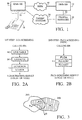
- Figure 1 illustrates a portion of a telephone network comprising a plurality of interconnected switching units.
- Figure 1 shows only two central office switching units 10 and 12, for example DMS-100 (Trademark) stored program switches manufactured by Northern Telecom Limited, interconnected by the public switched telephone network (PSTN) as indicated at 14.
- PSTN public switched telephone network
- Multiple access lines 16 connect subscribers to switch 10, the station apparatus of one subscriber 18 being illustrated, by way of example, by a telephone set.
- a profile manager 20 is shown connected to switch 12 by line 22 and to switch 10 by way of the standard operations, administration, maintenance and provisioning system (OAM&P) as indicated at 24.
- the profile manager 20 is a software entity residing in a database unit, for example, at a central location, such as an operations centre of the network.
- the profile manager 20 communicates, by way of the PSTN 14, with subscribers accessing it via switch 10 and downloads their current profiles to switch 10 via the OAM & P systems 24.
- the service provider will make available various optional services, known as "features", which a subscriber may obtain by specifically requesting and paying for them.
- features which a subscriber may obtain by specifically requesting and paying for them.
- the software and data for providing the features are stored in a data store at each central office switch or, in the case of Advanced Intelligent Networks, stored at a remote location and queried by the switch as required.
- the facility to establish a Personalized Local Calling Area (PLCA) will be provided to subscriber 18 as such a "feature”.
- the switch will store "profiles" for those of its subscribers who subscribe to PLCA.
- the profile manager 20 stores such PLCA profiles for subscribers throughout the network who subscribe to a Personalized Local Calling Area feature and has software enabling the subscribers to create and/or update their profiles.
- Each subscriber's profile includes a listing of individual destination numbers, sets of destination numbers and groups of such sets of destination numbers which are selected by the subscriber.
- the subscriber will create the Personalized Local Calling Area by modifying the standard local calling area listing, in particular by adding or deleting individual numbers or groups of numbers having the same area code or exchange. The result is illustrated in Figure 3, the original standard local calling area being referenced 26A and the Personalized Local Calling Area being referenced 26B.
- destinations A which were within the Standard Local Calling Area 26A and are in the Personalized Local Calling Area 26B are still treated as local calls.
- Destination numbers C are numbers which previously were toll or long distance calls but now are within the personalized local calling area and hence are local calls.
- Destinations B are numbers which previously were local i.e. were in the original local calling area 26A, but are now long distance calls because they were deleted by the subscriber.
- Destinations D are outside both the original local calling area and the personalized local calling area and so remain as long distance calls.
- the subscriber X may set up or modify a Personalized Local Calling Area by accessing the profile manager 20 using a feature "Access to PLCA Profile Manager".
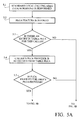
- the subscriber dials an access code, for example "*48", as in step 4.1.
- the switch 10 performs a standard validity check upon the access code, as translated. If it is not valid, step 4.3 routes the call for "vacant” (VACT) treatment which will generate a suitable announcement or tone for transmission to the subscriber. If the access code is valid, step 4.4 invokes the feature Access to PLCA Profile Manager, whereupon the feature program checks, in step 4.5, that the Line Class Code of the subscriber's line is supported by the PLCA feature. If it is not, step 4.7 sends the call to Feature Not Allowed (FNAL) treatment.
- FNAL Feature Not Allowed
- the PLCA feature retrieves the subscriber's PLCA provider from table PLCA ( Figure 2B) which is stored at switch 10 as part of the subscriber's profile and, in step 4.8, looks up the table SPINFO in the subscriber's profile to retrieve the PLCA provider's destination number and related information to route the call to the provider's profile manager 20. If table SPINFO has no PLCA provider for the subscriber, because the subscriber has not selected a provider previously, the feature may prompt the subscriber to select a provider from a list; or select a PRIMARY PLCA provider from table SPINFO by default. Reverse translation is used to determine the destination number to be dialled to reach the provider's profile manager 20 and, in step 4.9, the switch 10 routes the call to the profile manager 20 via the PSTN 14 and switch 12.
- the profile manager 20 On receipt of the call, in step 4.10, the profile manager 20 invokes a menu-driven routine or "interactive voice response" system, which advises the caller about options, prices, and so on, and prompts the caller to give information as to the destination number, and/or groups and sets of destination numbers to be added to, or deleted from, the subscriber's profile.
- the additions and deletions are made with reference to a standard local calling area, i.e. common to all of the subscribers at that switch.
- Table PLCA lists individual 3- to 10-digit destination numbers and identifiers for entries in table PLCASET and table PLCAGRP.
- Table PLCASET lists sets of 3- to 10-digit destination numbers. For example, one set might be the numbers beginning (514) 696 22 and the numbers beginning (514) 765. Each set may have a name, for example a district name, enabling the subscriber to select such a set from a list of names of districts to add all of the numbers of the set to his profile.
- Table PLCAGRP contains groups of such sets.
- a group might be all of the various exchanges which comprise Greater Montreal and which, for convenience, can be invoked by the subscriber selecting the group rather than by selecting every exchange within the group individually. Hence, the subscriber might select "Montreal" to add all of the numbers in the group to his profile.
- the profile manager 20 downloads the new/updated profile to the subscriber's switch 10 which substitutes it for the profile presently in its data store.
- the profile manager 20 may download the new/updated profile via the OAM&P system 24 or any other convenient way.
- the subscriber's Personalized Local Calling Area can then be used.
- FIG. 6A An example of one subscriber's entry in PLCA table is shown in Figure 6A. There would be an entry for each subscriber. Beginning with the leftmost column, the entry specifies that: 6138211234 is the DN of the PLCA subscriber Y indicates that PLCA is enabled on the subscriber's line The service provider for this subscriber is BELL, whose particulars are data-filled in table SPINFO (see Figure 6B)
- the next three fields represent selections included in the subscriber's Personal Local Calling Area:
- the subscriber's profile in table PLCA uses references to groups or sets that are defined in the new tables PLCAGRP and PLCASET respectively.
- Sample entries for table PLCAGRP are as follows: KEY GRPNAME SET OTTAWA (12571 14234) $ HULL (65210 65211) $ MONTREAL (51400 51401) $
- each entry in column KEY SETID is identifiers, each associated with a set of numbers; each of the entries in column COMMENT is a string providing information on the set; and each entry in column NUMBER is the list making up the set. For example:
- FIG. 6B shows a sample entry in the table SPINFO for the PLCA feature as follows:
- numbers in fields LOCALNUM and TOLLNUM are selected by the subscriber and, although 6 - digit numbers are shown in the example, 10-digit numbers may be selected, if desired.
- the subscriber may choose the particular sets entered into fields LOCALSET and TOLLSET; and may choose the particular groups entered into fields LOCALGRP and TOLLGRP, the 3-to 10-digit numbers which constitute the actual content of each set and each group will have been predefined by the telephone company and stored in the data store of switch 10.
- the profile manager 20 will store, or have access to, data identifying which predefined sets and groups are available to subscribers connected to a particular switch.
- the profile manage During creation or updating of the subscriber's profile, the profile manage will use the calling number to determine what sets and groups are available to the subscriber and will present only those sets and groups to the subscriber with an invitation to make a selection.
- the subscriber's selection is entered in the table PLCA.
- Standard Local Calling Area screening is performed first. This entails accessing a LINE TABLE (see Figure 2), in dependence upon the type of the originating line. From the LINE TABLE, a key is found to the line attributes table LINEATTR. As indicated in Figure 2A, the correspondence between the calling number and this key is M:1, i.e. a relatively large set of calling DNs may have the same key in table LINEATTR. From this point, the screening result is obtained on the basis of this set of calling numbers and not for a specific calling number. Hence, the result will be the same for all of the set of calling numbers.
- Standard Local Calling Area screening is performed for all calling destination numbers because its results are used by various applications, such as basic call processing, and because it is preferred that the Personalized Local Calling Area be created by amending the standard local calling area. Otherwise it would be necessary to have a relatively large body of data defining the personalized local calling area for every individual subscriber. Regardless of which application or feature invokes the Local Calling Area screening procedure, the Personalized Local Calling Area screening will have precedence over the standard local calling area screening to determine whether or not the call is a "local" call or a "toll" call.
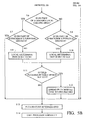
- step 5.2 invokes the Personalized Local Calling Area screening feature, whereupon decision step 5.3 checks that there is an entry in table PLCA (see Figure 2B) for the subscriber. This entry is that made when the subscriber's profile in profile manager 20 ( Figure 1) has been set up with the subscriber's Personalized Local Calling Area, as described above. If decision step 5.3 indicates that there is no entry in table PLCA for the subscriber, the program goes to step 5.13 and terminates the PLCA feature, following which the call proceeds as in step 5.14.
- table PLCA see Figure 2B
- step 5.4 retrieves the identity of the caller's PLCA provider from table PLCA. It should be appreciated that, in this particular example, the telephone company providing the basic call connection service is not necessarily the same as the company which provides the PLCA feature, and perhaps other services.
- decision step 5.5 the program checks for a flag inside the subscriber's table to determine whether or not PLCA has been enabled for the PLCA provider identified in step 5.4. If the result of decision step 5.5 is negative, the program once again goes to step 5.13 and terminates the PLCA feature.
- decision step 5.5 determines whether or not the dialled destination number is within the Standard Local Calling Area, as determined in step 5.1. If the destination number is within Standard Local Calling Area 26A, decision step 5.7 determines whether or not the dialled destination number is within the caller's Personalized Local Calling Area 26B.
- Such determination entails using the caller's number to retrieve the caller's Personalized Local Calling Area profile from the data store which, in this example, is at the switch 10 but which, in an Advanced Intelligent Network, for example, might be at a remote location.
- the screening result is specific to the caller's destination number.
- step 5.4 and 5.5 could be omitted.
- step 5.13 terminates the PCLA feature and the call proceeds as a "normal" local call.
- step 5.9 sets to "NO" a Local Determination flag in the call attributes information. This is despite the fact that decision step 5.6 indicated that the dialled DN was within the Standard Local Calling Area. This situation corresponds to a destination number B in Figure 3 which was previously "local" but now is long distance.
- decision step 5.6 indicates that the dialled destination number is outside the Standard Local Calling Area 26A
- decision step 5.8 determines whether the dialled destination number is within the caller's Personalized Local Calling Area 26B. If it is not, the call was, and still is, a long distance call, corresponding to destination D of Figure 3. Step 5.13 terminates the PLCA feature and the call proceeds as a toll call.
- step 5.10 set the Local Determination flag to "YES", indicating that, whereas the destination was previously long distance, now it is a local call, corresponding to destination C of Figure 3.
- the program accesses a service provider information table SPINFO and determines, in step 5.11, whether a field PLCAAMA in that table SPINFO is set to "YES", indicating that for this service provider a PLCA module is to be appended to Automatic Message Accounting (AMA) records generated on previously-local and previously-toll calls.
- AMA Automatic Message Accounting
- the profiles are stored and updated at a central profile manager. It would be possible, however, to make provision for a subscriber to update the subscriber's profile stored at the switch. Moreover, although, for purpose of illustration, only one profile manager 20 is shown in Figure 1, it is likely that there will be one profile manager for each service provider, though this does not preclude several service providers sharing a profile manager.
- Figure 3 shows the Standard Local Calling Area 26A and Personalized Local Calling Area 26B as overlapping and with non-overlapping parts contiguous this does not represent a geographical relationship where the added destination numbers are within adjacent districts. It should be appreciated that PLCA could add not only parts of geographically-adjacent calling areas but also distant destination numbers or areas. For example, a subscriber in Ottawa might add frequently-called destination numbers in Montreal, if regulations permit.
- the database unit may be arranged to prevent subscriber deleting certain individual numbers, such as 911 or other emergency numbers, or adding certain individual numbers, such as numbers which involve special fees, for example, 1-600 or 976 (in North America).
- Standard Local Calling Area screening is limited to a maximum of six digits, i.e. the pattern NPA-NXX
- Personalized Local Calling Area screening advantageously uses any pattern of 3 digits or more. For a particular numbering plan, for example North America, up to ten digits might suffice. For international calls, however, more than ten digits might be required.
- each switching unit is local to that switching unit, it could be remote from the switch and accessed by it as required, such as in an Advanced Intelligent Network.
- An advantage of embodiments of the present invention is that, once a previously-toll destination number has been added to the subscriber's personalized Local Calling Area, the subscriber no longer needs to dial the digit "1" and the area code, but need only dial the seven-digit destination number or, in some areas, ten-digit destination number.
Landscapes
- Engineering & Computer Science (AREA)
- Computer Networks & Wireless Communication (AREA)
- Signal Processing (AREA)
- Telephonic Communication Services (AREA)
- Meter Arrangements (AREA)
- Exchange Systems With Centralized Control (AREA)
Claims (23)
- Verfahren zum personalisierten Ortsgesprächs-Abfangen in einem Telefonnetz, wobei das Netz eine Vielzahl von Vermittlungseinheiten (10, 12) aufweist, wobei jede der Vermittlungseinheiten eine Vielzahl von Zugangsleitungen (16) für eine zugehörige Vielzahl von Teilnehmern (18) aufweist, und wobei das Verfahren die folgenden Schritte umfaßt:Speichern einer Vielzahl von Profilen, wobei jedes Profil einem jeweiligen der Teilnehmer zugeordnet ist und Daten umfaßt, die einen individuellen Ortsgesprächsbereich definieren, der für diesen speziellen Teilnehmer personenbezogen ist,Überwachen der Zugangsleitungen und Feststellen einer Teilnehmer-Identifikation und einer Zielnummer, die von dem das Gespräch aufbauenden Teilnehmer gewählt wurde,Ausführen eines Zugriffs auf das persönliche Profil dieses Teilnehmers in Abhängigkeit von der Teilnehmer-Identifikation,Vergleichen zumindest einiger der Ziffern der festgestellten Zielnummer mit den Nummern, die durch das Profil definiert sind, undBestimmen, ob das Gespräch ein Ortsgespräch oder ein Ferngespräch ist, in Abhängigkeit von diesem Vergleich.
- Verfahren nach Anspruch 1, wobei das Netz weiterhin Datenbank-Einrichtungen aufweist, die mit jeder der Vermittlungseinheiten verbunden sind und einen Speicher aufweisen, der für jede der Vermittlungseinheiten die Vielzahl von Profilen speichert, wobei der Inhalt des personalisierten Ortsgesprächsbereiches durch den vorhergehenden Schritt festgelegt wird, in dem der Teilnehmer einen Zugriff auf die Datenbank-Einheit ausführt und Nummern auswählt, die in das Profil für diesen Teilnehmer eingefügt werden sollen, wobei die Datenbank-Einheit eine Kopie des Profils an die entsprechende Vermittlungseinheit überführt, und wobei an der Vermittlungseinheit das Profil zur Verwendung bei dem Abfangen nachfolgender Gespräche von diesem Teilnehmer gespeichert wird.
- Verfahren nach Anspruch 2, bei dem die Datenbank-Einheit die Vielzahl von Profilen für jede der Vielzahl von Vermittlungseinheiten speichert, wobei das Verfahren weiterhin an der Datenbank-Einheit den Schritt der Identifikation der Vermittlungseinheit, der der Teilnehmer zugeordnet ist, und die Beschränkung der Auswahl auf Nummern einschließt, die vorher als für die Vielzahl von Teilnehmern, die dieser Vermittlungseinheit zugeordnet sind, als verfügbar bestimmt wurden.
- Verfahren nach Anspruch 2, bei dem die Datenbank-Einheit sich an einer von der Vermittlungseinheit entfernten Stelle befindet, wobei der Verfahrensschritt der Übertragung einer Kopie des Profils von der Datenbankeinheit zu der Vermittlungseinheit, der der Teilnehmer zugeordnet ist, über ein Betriebs-, Verwaltungs-, Wartungs- und Zuteilungsnetz bewirkt wird.
- Verfahren nach Anspruch 1, bei dem jedes der Profile Nummern umfaßt, die jeweils bis zu zehn Ziffern aufweisen, und bei dem der Vergleichsschritt die Ziffern der festgestellten Zielnummer mit den durch das ausgewählte Profil definierten Nummern aufeinanderfolgend beginnend mit den höchstbewerteten Ziffern vergleicht.
- Verfahren nach Anspruch 2, bei dem der Auswahlschritt effektiv Nummern zu einer Standard-Ortsgesprächsbereichs-Aufstellung hinzufügt oder aus dieser entfernt, die Zielnummern definiert, die für alle der Vielzahl von Teilnehmern zur Verfügung stehen.
- Verfahren nach Anspruch 2, das weiterhin die vorhergehenden Schritte des Speicherns von Daten an der Datenbank-Einheit, die für jede Vermittlungseinheit eine Vielzahl von vordefinierten Sätzen der Nummern identifizieren, die für dieser Vermittlungseinheit zugeordnete Teilnehmer verfügbar sind, und des Speicherns der Vielzahl von vordefinierten Sätzen von Nummern an der Vermittlungseinheit umfaßt, wobei der Schritt der Kommunikation mit dem Teilnehmer den Schritt einschließt, daß es dem Teilnehmer ermöglicht wird, Sätze aus der Vielzahl von vordefinierten Sätzen von Nummern auszuwählen.
- Verfahren nach Anspruch 7, bei dem zumindest einige der vordefinierten Sätze in einer Gruppe angeordnet sind, die durch eine Gruppen-Identifikation identifiziert ist, und bei dem der Teilnehmer in die Lage versetzt wird, die Gruppe von Sätzen durch Auswählen der Gruppen-Identifikation auszuwählen.
- Verfahren nach Anspruch 7, bei dem die Profilnummern ein oder mehrere individuelle Nummern, die bis zu zehn Ziffern aufweisen, zusätzlich zu den Sätzen umfassen.
- Verfahren nach Anspruch 1, bei dem die Profilnummern bis zu zehn Ziffern umfassen.
- Verfahren nach Anspruch 1, bei dem die Profilnummern zumindest drei Ziffern umfassen.
- Telefonnetz mit Vorkehrungen für ein Abfangen von Ortsgesprächen unter Verwendung personalisierter Ortsgesprächsbereiche, wobei das Netz folgendes umfaßt:Eine Vielzahl von Vermittlungseinheiten (10, 12), wobei jede der Vermittlungseinheiten folgendes aufweist:Eine Vielzahl von Zugangsleitungen (16) für eine zugehörige Vielzahl von Teilnehmern (18),Speichereinrichtungen, die eine Vielzahl von Profilen speichern, wobei jedes Profil einem jeweiligen der Teilnehmer zugeordnet ist und Daten umfaßt, die einen individuellen Ortsgesprächsbereich definieren, der für diesen speziellen Teilnehmer personenbezogen ist, undGesprächsabfangeinrichtungen, die folgendes umfassen:Detektoreinrichtungen zur Feststellung einer Teilnehmer-Identifikation und einer von einem ein Gespräch aufbauenden Teilnehmer gewählten Zielnummer,Auswahleinrichtungen für den Zugriff auf die Speichereinrichtungen und zur Auswahl des Profils, das der festgestellten Teilnehmer-Identifikation entspricht, und Vergleichereinrichtungen zum Vergleich zumindest einiger Ziffern der festgestellten Zielnummer mit Nummern, die von dem ausgewählten Profil definiert sind, und zum Bestimmen, daß Gespräch ein Ortsgespräch oder ein Ferngespräch ist, in Abhängigkeit von diesem Vergleich.
- Netz nach Anspruch 12, das weiterhin eine Datenbank-Einheit (20) einschließt, auf die jede der Vermittlungseinheiten einen Zugriff ausführen kann, wobei die Datenbank-Einheit folgendes aufweist:wobei jede Vermittlungseinheit Einrichtungen aufweist, die jede derartige Profilkopie an die Stelle irgendeines vorhandenen Profils setzen, das für diese Teilnehmer-Identifikation gespeichert ist.Einen Speicher, der für jede der Vermittlungseinheiten die Vielzahl von Profilen speichert,Einrichtungen, die mit den Teilnehmern über die Vermittlungseinheiten kommunizieren und es einem Teilnehmer ermöglichen, den Inhalt des Profils zu bestimmen, der einer speziellen Teilnehmer-Identifikation zugeordnet ist, und Einrichtungen, die an jede der Vermittlungseinheiten Kopien der Vielzahl von Profilen für diese Vermittlungseinheit übertragen, wobei jede Profilkopie durch den entsprechenden Teilnehmer identifiziert ist,
- Netz nach Anspruch 13, bei dem die Datenbank-Einheit (20) weiterhin Einrichtungen zur Identifikation der Vermittlungseinheit, der der Teilnehmer zugeordnet ist, und zur Beschränkung der Auswahl auf Nummern umfaßt, die vorher als für die Vielzahl von Teilnehmer verfügbar bestimmt wurde, die dieser Vermittlungseinheit zugeordnet sind.
- Netz nach Anspruch 13, bei dem sich die Datenbank-Einheit an einer von den Vermittlungseinheiten entfernten Stelle befindet und bei dem die Einrichtungen zur Übertragung einer Kopie des Profils von der Datenbank-Einheit zu den Vermittlungseinheiten so ausgebildet sind, daß sie die Übertragung über ein Betriebs-, Verwaltungs-, Wartungs- und Zuteilungsnetz (24) bewirken.
- Netz nach Anspruch 12, bei dem jedes der Profile Nummern aufweist, die bis zu zehn Ziffern haben, und bei dem die Vergleichseinrichtung so angeordnet ist, daß sie die Ziffern der festgestellten Zielnummer mit den durch das ausgewählte Profil definierten Nummern aufeinanderfolgend mit den höchstbewerteten Ziffern vergleicht.
- Netz nach Anspruch 12, bei dem jedes der Profile Nummern definiert, die zu einer Standard-Ortsgesprächsbereichs-Aufstellung hinzuzufügen oder aus dieser zu entfernen sind, die Zielnummern definiert, die für alle der Vielzahl von Teilnehmern verfügbar sind.
- Netz nach Anspruch 13, bei dem der Speicher an den Datenbankeinrichtungen Daten speichert, die für jede Vermittlungseinheit eine Vielzahl von vordefinierten Sätzen von Nummern identifiziert, die für dieser Vermittlungseinheit zugeordnete Teilnehmer verfügbar sind, wobei die Speichereinrichtung an der Vermittlungseinheit die Vielzahl von vordefinierten Sätzen von Nummern speichert, wobei die Kommunikationseinrichtung so ausgebildet ist, daß sie es dem Teilnehmer ermöglicht, eine Auswahl aus der Vielzahl von vordefinierten Sätzen von Nummern durchzuführen und die Einrichtung zur Übertragung so ausgebildet ist, daß sie die Auswahl von Sätzen in das Profil zur Übertragung an die Vermittlungseinheit einfügt.
- Netz nach Anspruch 18, bei dem die Anzahl von vordefinierten Sätzen zumindest eine Gruppe von vordefinierten Sätzen mit einer Gruppen-Identifikation umfaßt, und bei dem die Einrichtung zur Kommunikation mit dem Teilnehmer so ausgebildet ist, daß sie es dem Teilnehmer ermöglicht, diese Gruppe durch Auswahl der Gruppen-Identifikation auszuwählen.
- Netz nach Anspruch 18, bei dem die Speichereinrichtung eine oder mehrere individuelle Nummern, die bis zu zehn Ziffern aufweisen, zusätzlich zu den Sätzen speichert.
- Netz nach Anspruch 12, bei dem die Nummern in dem Profil bis zu zehn Ziffern umfassen.
- Netz nach Anspruch 12, bei die Nummern zumindest drei Ziffern umfassen.
- Telefonnetz mit:wobei das Netz weiterhin Datenbank-Einrichtungen (20) umfaßt, auf die jede der Vermittlungseinheiten einen Zugriff ausführen kann und die folgendes aufweisen:Einer Vielzahl von Vermittlungseinheiten (10, 12), wobei jede der Einheiten folgendes aufweist:Eine Vielzahl von Zugangsleitungen (16) für eine zugehörige Vielzahl von Teilnehmern (18),Speichereinrichtungen, die eine Vielzahl von Profilen speichern, wobei jedes Profil einem jeweiligen der Teilnehmer zugeordnet ist und Daten umfaßt, die einen individuellen Ortsgesprächsbereich für diesen speziellen Teilnehmer definieren, wobei die Daten Nummern umfassen, die zwischen drei und 10 Ziffern aufweisen, undGesprächs-Abfangeinrichtungen, die folgendes umfassen:Einrichtungen zur Feststellung einer von einem ein Gespräch aufbauenden Teilnehmer gewählten Zielnummer und zur Feststellung einer Teilnehmer-Anrufnummer,Einrichtungen für einen Zugriff auf die Speichereinrichtungen und zur Auswahl des Profils, das der festgestellten Teilnehmer-Anrufnummer entspricht, undEinrichtungen zum Vergleich von zumindest einigen der Ziffern der festgestellten Zielnummern mit den durch das ausgewählte Profil definierten Nummern beginnend mit den höchstbewerteten Ziffern, und, wenn zumindest ein Teil der Zielnummer unter den Nummern des Profils gefunden wird, feststellen, daß der Anruf ein Ortsgespräch ist,undEinen Speicher, der für jede der Vermittlungseinheiten die Vielzahl von Profilen speichert,Einrichtungen, die mit einem Teilnehmer in Kommunikation treten und es dem Teilnehmer ermöglichen, den Inhalt des Profils zu bestimmen, das einer speziellen Teilnehmer-Anrufnummer zugeordnet ist,
Einrichtungen, die an jede der Vermittlungseinheiten Kopien der Profile für die Vielzahl von Teilnehmern übertragen, die dieser Vermittlungseinheit zugeordnet sind,
wobei der Süeicher an den Datenbank-Einrichtungen Daten speichert, die für jede Vermittlungseinheit eine Vielzahl von vordefinierten Sätzen der Nummern identifizieren, die für die dieser Verrmittlungseinheit zugeordnete Teilnehmer verfügbar sind, wobei die Vielzahl von vordefinierten Sätzen zumindest eine Gruppe von vordefinierten Sätzen mit einer zugehörigen Gruppen-Identifikation umfaßt, wobei die Speichereinrichtung an der Vermittlungseinheit die Vielzahl von vordefinierten Sätzen von Nummern speichert, die Kommunikationseinrichtung so ausgebildet ist, daß sie es dem Teilnehmer ermöglicht, die Auswahl durch Auswählen einzelner vordefinierter Sätze von Gruppen hiervon durchzuführen, und wobei die Einrichtung zur Übertragung so ausgebildet ist, daß sie die Auswahl von Sätzen in das Profil vor der Übertragung der Kopie an die Vermittlungseinheit einfügt.
Applications Claiming Priority (5)
| Application Number | Priority Date | Filing Date | Title |
|---|---|---|---|
| US781895P | 1995-11-30 | 1995-11-30 | |
| US7818P | 1995-11-30 | ||
| US601608 | 1996-02-14 | ||
| US08/601,608 US5966433A (en) | 1995-11-30 | 1996-02-14 | Method and apparatus for screening calls in telephone networks |
| PCT/CA1996/000801 WO1997020425A1 (en) | 1995-11-30 | 1996-11-29 | Method and apparatus for screening calls in telephone networks |
Publications (2)
| Publication Number | Publication Date |
|---|---|
| EP0807351A1 EP0807351A1 (de) | 1997-11-19 |
| EP0807351B1 true EP0807351B1 (de) | 2001-01-03 |
Family
ID=26677406
Family Applications (1)
| Application Number | Title | Priority Date | Filing Date |
|---|---|---|---|
| EP96939780A Expired - Lifetime EP0807351B1 (de) | 1995-11-30 | 1996-11-29 | Verfahren und gerät für anrufabfang in fernsprechnetzwerken |
Country Status (6)
| Country | Link |
|---|---|
| US (1) | US5966433A (de) |
| EP (1) | EP0807351B1 (de) |
| JP (1) | JPH10513624A (de) |
| CA (1) | CA2211624C (de) |
| DE (1) | DE69611434T2 (de) |
| WO (1) | WO1997020425A1 (de) |
Families Citing this family (9)
| Publication number | Priority date | Publication date | Assignee | Title |
|---|---|---|---|---|
| US7260203B2 (en) | 1992-08-26 | 2007-08-21 | Bellsouth Intellectual Property Corporation | Method and apparatus for routing calls based on identification of the calling party or calling line |
| US6567671B2 (en) * | 1997-08-11 | 2003-05-20 | At&T Wireless Services, Inc. | Wireless communication device with call screening |
| US6668050B1 (en) * | 1999-09-07 | 2003-12-23 | Lucent Technologies Inc. | Common access code routing using subscriber directory number |
| US6891942B1 (en) * | 1999-09-16 | 2005-05-10 | Mci, Inc. | Method and system for using caller preferences to direct special call handling |
| US7194080B2 (en) | 2001-06-29 | 2007-03-20 | Bellsouth Intellectual Property Corporation | Automatically sequentially ringing alternative telephone numbers |
| DE10138852A1 (de) * | 2001-08-07 | 2003-02-27 | Deutsche Telekom Ag | Verfahren zur Nutzung der eigenen Rufnummer für weitere Dienste |
| US20060211453A1 (en) * | 2005-03-15 | 2006-09-21 | Schick Andrew N | System for dialing a telephone number stored in a mobile electronic device when the device is away from its home calling area |
| WO2010031425A1 (en) * | 2008-09-03 | 2010-03-25 | Telefonaktiebolaget Lm Ericsson (Publ) | Tel uri handling method and apparatus |
| EP3576396A1 (de) * | 2018-05-29 | 2019-12-04 | Mehmet Hanefi Isik | Verfahren zur zuweisung einer telefonnummer an eine fernsprechleitung und netzwerk von telefonleitungen |
Family Cites Families (10)
| Publication number | Priority date | Publication date | Assignee | Title |
|---|---|---|---|---|
| US4791665A (en) * | 1987-01-30 | 1988-12-13 | American Telephone And Telegraph Company, At&T Information Systems | Inter-exchange carrier access selection feature for a PBX user |
| US4757267A (en) * | 1987-06-17 | 1988-07-12 | Applied Telematics, Inc. | Telephone system for connecting a customer to a supplier of goods |
| US5157719A (en) * | 1990-03-12 | 1992-10-20 | Advanced Cellular Telcom Corp. | Automatic area code dialing apparatus and methods particularly adapted for cellular or other types of telephone systems |
| US5276731A (en) * | 1991-04-26 | 1994-01-04 | Rolm Company | Method and apparatus for handling incoming telephone calls |
| US5222125A (en) * | 1991-09-03 | 1993-06-22 | At&T Bell Laboratories | System for providing personalized telephone calling features |
| US5327486A (en) * | 1993-03-22 | 1994-07-05 | Bell Communications Research, Inc. | Method and system for managing telecommunications such as telephone calls |
| US5533107A (en) * | 1994-03-01 | 1996-07-02 | Bellsouth Corporation | Method for routing calls based on predetermined assignments of callers geographic locations |
| US5515427A (en) * | 1994-07-19 | 1996-05-07 | At&T Corp. | Completion of intelligent network telephone calls |
| US5550910A (en) * | 1994-11-18 | 1996-08-27 | Lucent Technologies Inc. | End-User communications device with automatic carrier selection capability for intraLATA toll calls |
| US5748724A (en) * | 1995-06-30 | 1998-05-05 | Siemens Stomberg-Carlson | Method for transferring a subscriber to a new local service provider |
-
1996
- 1996-02-14 US US08/601,608 patent/US5966433A/en not_active Expired - Lifetime
- 1996-11-29 JP JP9520034A patent/JPH10513624A/ja not_active Ceased
- 1996-11-29 CA CA002211624A patent/CA2211624C/en not_active Expired - Lifetime
- 1996-11-29 WO PCT/CA1996/000801 patent/WO1997020425A1/en not_active Ceased
- 1996-11-29 EP EP96939780A patent/EP0807351B1/de not_active Expired - Lifetime
- 1996-11-29 DE DE69611434T patent/DE69611434T2/de not_active Expired - Lifetime
Also Published As
| Publication number | Publication date |
|---|---|
| DE69611434D1 (de) | 2001-02-08 |
| WO1997020425A1 (en) | 1997-06-05 |
| DE69611434T2 (de) | 2001-04-19 |
| US5966433A (en) | 1999-10-12 |
| EP0807351A1 (de) | 1997-11-19 |
| CA2211624A1 (en) | 1997-06-05 |
| JPH10513624A (ja) | 1998-12-22 |
| CA2211624C (en) | 2002-08-06 |
Similar Documents
| Publication | Publication Date | Title |
|---|---|---|
| US5764745A (en) | Apparatus and method for local number portability using nongeographic subscriber numbers | |
| US6574316B1 (en) | Method and system for preserving telephone numbers | |
| US5793857A (en) | Method of using dynamic database to improve telephone number portability | |
| US6445785B1 (en) | Methods and apparatus for local number portability in telecommunication systems | |
| US4791665A (en) | Inter-exchange carrier access selection feature for a PBX user | |
| US5771282A (en) | Method for billing multiple services on a single account | |
| US5583926A (en) | Method and apparatus for routing a call to a number corresponding to a virtual public dial plan or to an existing dial plan | |
| EP0663128B1 (de) | Fernmelde- anrufleitungsdienst | |
| US5781620A (en) | Method and system for toll carrier selection | |
| EP0932984B1 (de) | Fernmeldenetz mit teilnehmernummerverschiebbarkeit | |
| US7106846B2 (en) | System and method for caller control of a distinctive ring | |
| JPH0323751A (ja) | クレジット・カード通信発呼を制約する方法及び装置 | |
| JP2002528000A (ja) | 個人電話番号のダイアリングリスト及びダイアリング性能をコントロールするシステム及び方法 | |
| US6078657A (en) | Method and system for providing local telephone number portability using geographic unit building blocks | |
| NZ269310A (en) | Completing telephone calls via multiple providers | |
| US6292557B1 (en) | Apparatus and method to insert the default local area code into a dialed telephone number | |
| US6343215B1 (en) | ANSI 41 dialed number validation | |
| EP0767568A2 (de) | Verfahren und Gerät zur Verarbeitungs von Fernsprechanrufen | |
| US5673311A (en) | Hierarchical switch support of services for subscribers directly served by local exchange carriers | |
| US5724409A (en) | Speed forwarding system for personal number communications system | |
| CA2227658C (en) | Call routing based on prior telephone calls | |
| EP0807351B1 (de) | Verfahren und gerät für anrufabfang in fernsprechnetzwerken | |
| EP0872107B1 (de) | Verfahren und system zur anrufherstellung | |
| US6327349B1 (en) | Method and apparatus for identifying a rate center using a location routing number | |
| US5903638A (en) | Telecommunications system for international call routing using traffic allocation |
Legal Events
| Date | Code | Title | Description |
|---|---|---|---|
| PUAI | Public reference made under article 153(3) epc to a published international application that has entered the european phase |
Free format text: ORIGINAL CODE: 0009012 |
|
| AK | Designated contracting states |
Kind code of ref document: A1 Designated state(s): DE FR GB SE |
|
| 17P | Request for examination filed |
Effective date: 19971205 |
|
| GRAG | Despatch of communication of intention to grant |
Free format text: ORIGINAL CODE: EPIDOS AGRA |
|
| RAP1 | Party data changed (applicant data changed or rights of an application transferred) |
Owner name: STENTOR RESOURCE CENTRE INC. Owner name: BELL CANADA Owner name: NORTEL NETWORKS CORPORATION |
|
| RIN1 | Information on inventor provided before grant (corrected) |
Inventor name: TOUGAS, MICHEL Inventor name: SAMSON, LUC Inventor name: KELLY, RON Inventor name: TREPANIER, GILLES Inventor name: COURVILLE, BERNARD |
|
| 17Q | First examination report despatched |
Effective date: 20000323 |
|
| GRAG | Despatch of communication of intention to grant |
Free format text: ORIGINAL CODE: EPIDOS AGRA |
|
| GRAG | Despatch of communication of intention to grant |
Free format text: ORIGINAL CODE: EPIDOS AGRA |
|
| GRAH | Despatch of communication of intention to grant a patent |
Free format text: ORIGINAL CODE: EPIDOS IGRA |
|
| GRAH | Despatch of communication of intention to grant a patent |
Free format text: ORIGINAL CODE: EPIDOS IGRA |
|
| RAP1 | Party data changed (applicant data changed or rights of an application transferred) |
Owner name: STENTOR RESOURCE CENTRE INC. Owner name: BELL CANADA Owner name: NORTEL NETWORKS LIMITED |
|
| GRAA | (expected) grant |
Free format text: ORIGINAL CODE: 0009210 |
|
| AK | Designated contracting states |
Kind code of ref document: B1 Designated state(s): DE FR GB SE |
|
| PG25 | Lapsed in a contracting state [announced via postgrant information from national office to epo] |
Ref country code: SE Free format text: LAPSE BECAUSE OF FAILURE TO SUBMIT A TRANSLATION OF THE DESCRIPTION OR TO PAY THE FEE WITHIN THE PRESCRIBED TIME-LIMIT Effective date: 20010103 |
|
| ET | Fr: translation filed | ||
| REF | Corresponds to: |
Ref document number: 69611434 Country of ref document: DE Date of ref document: 20010208 |
|
| PLBE | No opposition filed within time limit |
Free format text: ORIGINAL CODE: 0009261 |
|
| STAA | Information on the status of an ep patent application or granted ep patent |
Free format text: STATUS: NO OPPOSITION FILED WITHIN TIME LIMIT |
|
| REG | Reference to a national code |
Ref country code: GB Ref legal event code: IF02 |
|
| 26N | No opposition filed | ||
| REG | Reference to a national code |
Ref country code: DE Ref legal event code: R082 Ref document number: 69611434 Country of ref document: DE Representative=s name: WUESTHOFF & WUESTHOFF, PATENTANWAELTE PARTG MB, DE Ref country code: DE Ref legal event code: R082 Ref document number: 69611434 Country of ref document: DE Representative=s name: WUESTHOFF & WUESTHOFF PATENT- UND RECHTSANWAEL, DE |
|
| REG | Reference to a national code |
Ref country code: FR Ref legal event code: PLFP Year of fee payment: 20 |
|
| PGFP | Annual fee paid to national office [announced via postgrant information from national office to epo] |
Ref country code: DE Payment date: 20151201 Year of fee payment: 20 Ref country code: GB Payment date: 20151202 Year of fee payment: 20 |
|
| PGFP | Annual fee paid to national office [announced via postgrant information from national office to epo] |
Ref country code: FR Payment date: 20151130 Year of fee payment: 20 |
|
| REG | Reference to a national code |
Ref country code: DE Ref legal event code: R071 Ref document number: 69611434 Country of ref document: DE |
|
| REG | Reference to a national code |
Ref country code: GB Ref legal event code: PE20 Expiry date: 20161128 |
|
| PG25 | Lapsed in a contracting state [announced via postgrant information from national office to epo] |
Ref country code: GB Free format text: LAPSE BECAUSE OF EXPIRATION OF PROTECTION Effective date: 20161128 |