EP0806734B1 - Verfahren zur Modellierung eines Prozessablaufs nach Zeitzwangsbedingungen - Google Patents
Verfahren zur Modellierung eines Prozessablaufs nach Zeitzwangsbedingungen Download PDFInfo
- Publication number
- EP0806734B1 EP0806734B1 EP96107106A EP96107106A EP0806734B1 EP 0806734 B1 EP0806734 B1 EP 0806734B1 EP 96107106 A EP96107106 A EP 96107106A EP 96107106 A EP96107106 A EP 96107106A EP 0806734 B1 EP0806734 B1 EP 0806734B1
- Authority
- EP
- European Patent Office
- Prior art keywords
- time
- state
- time bound
- new
- bound
- Prior art date
- Legal status (The legal status is an assumption and is not a legal conclusion. Google has not performed a legal analysis and makes no representation as to the accuracy of the status listed.)
- Expired - Lifetime
Links
Images

Classifications
-
- G—PHYSICS
- G06—COMPUTING OR CALCULATING; COUNTING
- G06F—ELECTRIC DIGITAL DATA PROCESSING
- G06F30/00—Computer-aided design [CAD]
- G06F30/30—Circuit design
- G06F30/32—Circuit design at the digital level
- G06F30/33—Design verification, e.g. functional simulation or model checking
- G06F30/3323—Design verification, e.g. functional simulation or model checking using formal methods, e.g. equivalence checking or property checking
Definitions
- a further object of the invention is to provide a Method for modelling a process flow according to time constraints on a computer, which leads to smaller and more user transparent Process-models.
- a further object of the invention is to omit "ticks" as time units.
- a further object of the invention is to provide a modelling method which is easily adaptable to process-control of technical processes.
- the invention has the advantage, that it delivers automatically computer generated complete models of complex process flows, which are compact and can be adapted to be used for further implementation of process control strategies.
- the invention has the further advantage, that it provides a new treatment of time constraints, which enables the modelling method to deal with activities instead of dealing with "ticks" and thus provides an inproved amount of compaction as compared to the state of the art.
- the invention has the further advantage, that it can be easily used to model process flows in any of the above mentioned technical fields and other similar fields known to a person skilled in the art.
- the invention has the further advantage, that it provides a suitable way for the modelling method to be implemented as a very efficient computer executable process .
- the invention has the further advantage, that it delivers the computer generated data in such fashion, that they can be automatically converted into activity transition graphs.
- the invention has the further advantage, that it enables automated coding of process-controls.
- the invention has the further advantage, that it reduces the necessary amount of work to establish a process controller.
- the invention has the advantage, that for the first time it enables the modelling and analysis of very complex processes.
- a and B be arbitrary sets. Let a be an element of A . a ⁇ A denotes a is in A . A ⁇ B denotes the Cartesian product of A and B .
- A denotes the cardinality of A, i.e. the number of objects in A.
- A be an arbitrary set of indexed objects a i , i ⁇ I , with I denoting the corresponding index set.
- ⁇ i ⁇ I a i denotes the Cartesian product of the objects a i ⁇ A over the index set I .
- a and B be two arbitrary subsets of a set C of objects.
- a ⁇ C denotes set inclusion, and A ⁇ C denotes strict set inclusion.
- a ⁇ B denotes set union
- a ⁇ ⁇ B denotes the union of disjoint sets.
- ⁇ denote the logical disjunction operator (or)
- ⁇ denote the logical disjunction operator (and)
- ⁇ denote the logical negation operator (not)
- ⁇ x denote the universal quantifier
- ⁇ x denote the existential quantifier.
- the transition function ⁇ Q ⁇ ⁇ ⁇ Q be defined at each q ⁇ Q only for a subset of the elements ⁇ ⁇ ⁇ ; namely ⁇ is a partial function. The notation ⁇ ( ⁇ , q )!
- ⁇ ( ⁇ , q ) is defined.
- the events in a state based process modeled by the automaton G constitute the alphabet ⁇ , and are state transitions from a state q i ⁇ Q to a state q j ⁇ Q for which ⁇ is defined.
- G ( ⁇ , Q, ⁇ , q 0 , Q m ) be an automaton.
- Such a graph is a state transition graph for G .
- G we attach to q 0 an entering arrow as in ⁇ o q 0 , and marker states q ⁇ Q m are represented as in q • .
- r ⁇ will be called the lower-bound timer of ⁇ in the timed activity e
- t ⁇ will be called the upper-bound timer of ⁇ in the timed activity e .
- r ⁇ represents the delay to the earliest possible occurrence of ⁇ from the activity a .
- t ⁇ represents the delay to the latest possible occurrence of ⁇ from the activity a (possibly infinity).
- the marker timed activity subset will be taken to be of the form
- the events ⁇ ⁇ ⁇ are divided in uncontrollable, controllable and forcible events.
- the subset of uncontrollable events is denoted ⁇ u . These are events which occur spontaneously within the corresponding time interval, and whose occurrence may not be disabled through control.
- the subset of controllable events is denoted ⁇ c . These are events which may be preempted indefinitely from occurring through control, i.e. their occurrence may be disabled through control. Their upper time bounds is therefore always infinity. If not disabled, controllable events will occur within the corresponding time interval.
- the subset of forcible events is denoted ⁇ f . Forcible events may either be uncontrollable or controllable. These are events that may be forced to occur through control any time during the corresponding time interval.
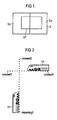
- Figure 1 illustrates the relation between ⁇ , ⁇ u , ⁇ c , and ⁇ f .
- Sections 2 and 3 define the timed behavior E of given timed state based processes modeled by a number of automata A i , i 1,..., n and the corresponding event default lower and upper time bounds
- a 1 ( ⁇ 1 , A 1 , ⁇ A 1 , a o ,1 , A m ,1 )
- Modeling example 2 A two-machine manufacturing cell
- a 1 ( ⁇ 1 , A 1 , ⁇ A 1 , a o ,1 , A m ,1 )
Landscapes
- Engineering & Computer Science (AREA)
- Computer Hardware Design (AREA)
- Physics & Mathematics (AREA)
- Theoretical Computer Science (AREA)
- Evolutionary Computation (AREA)
- Geometry (AREA)
- General Engineering & Computer Science (AREA)
- General Physics & Mathematics (AREA)
- Management, Administration, Business Operations System, And Electronic Commerce (AREA)
- Feedback Control In General (AREA)
Claims (5)
- Verfahren zur Modellierung eines Prozeßflusses gemäß zeitlichen Nebenbedingungen auf einem Computer mit den folgenden Merkmalen:a) mindestens ein erster und ein zweiter teilweiser Prozeß des Prozeßflusses werden in Art eines ersten und eines zweiten Automaten beschrieben, und jeder wird jeweils mit einer in Zeiteinheiten gemessenen oberen und unteren Zeitschranke versehen, wohingegen die untere Zeitschranke den frühestmöglichen Zeitpunkt und die obere Zeitschranke den spätesten Zeitpunkt definiert, an dem der Zustandsübergang stattfinden kann, und die Zeiteinheiten gezählt werden, sobald ein Zustand eines Automaten erreicht ist, von wo aus der Zustandsübergang definiert wird;b) das Modellieren wird mit mindestens einem Zustandsübergang als initialtransition gestartet, der die niedrigste Zeitschranke aufweist;c) ein erster Modellzustand wird erzeugt, durch Bereitstellung aller möglichen Zustandsübergänge, die von diesem Modellzustand aus starten können, der furtherstatetransitions, mit Ausnahme des initialtransition, mit neuen Zeitschranken, durch Subtraktion der oberen Zeitschranke des initialtransition von der ehemaligen unteren Zeitschranke des jeweiligen Zustandsübergangs, um dessen neue untere Zeitschranke aufzubauen, und durch Subtraktion der unteren Zeitschranke des initialtransition von der ehemaligen oberen Zeitschranke des jeweiligen Zustandsübergangs, um dessen neue obere Zeitschranke aufzubauen;d) negative Zeitwerte werden auf Null gesetzt.
- Verfahren nach Anspruch 1 mit den folgenden Merkmalen:a) ein weiterer Modellzustand wird erzeugt, durch Voranschreiten mit einem furtherstatetransition und durch Bereitstellung aller möglichen Zustandsübergänge, die von diesem Modellzustand aus starten können, mit Ausnahme des furtherstatetransition, mit neuen Zeitschranken, durch Subtraktion der oberen Zeitschranke des furtherstatetransition von der ehemaligen unteren Zeitschranke des jeweiligen Zustandsübergangs, um dessen neue untere Zeitschranke aufzubauen, und durch Subtraktion der unteren Zeitschranke des initialtransition von der ehemaligen oberen Zeitschranke des jeweiligen Zustandsübergangs, um dessen neue obere Zeitschranke aufzubauen;b) Merkmal a) wird für alle furtherstatetransitions ausgeführt, bis zum Starten von dem jeweiligen Modellzustand, und wobei falls notwendig schrittweise über andere Modellzustände bei der Durchführung von furtherstatetransitions fortgefahren wird, wobei jedes furtherstatetransitions durch Zwang stattgefunden haben muß, weil seine untere Zeitschranke oder ein Modellzustand erreicht wird, der bereits untersucht wurde.
- Verfahren nach einem der vorhergehenden Ansprüche,a) wobei in einem ersten Initialisierungsschritt vier Mengen, die neue Menge, die letzte Menge, die Markierermenge und die Übergangsmenge, die alle, anfangs leer, mit der folgenden anfänglichen zeitgesteuerten Aktivität definiert werden:und mit
 und wobei e zu der neuen Menge hinzugefügt wird, und wenn alle Aktivitäten ai, i = 1, ..., n, aus denen a besteht, Markiereraktivitäten sind, d.h. ai ∈ Am,i, i = 1, ..., n, gilt, e zu der Markierermenge hinzugefügt wird,
 b) wobei füre aus der neuen Menge entfernt und in die letzte Menge gebracht wird,
 c) wobei für alle Ereignisse σ ∈ Σ, für die δA(a,σ) definiert ist, die entsprechende zeitgesteuerte Aktivität e' = δA(a,σ), die von e aus durch σ erreicht wird, folgendermaßen berechnet wird:a' für i = 1, ..., n folgendermaßen berechnet wird:
 und für τ ≠ σ die untere und die obere Zeitschranke (r'τ,t'τ), r ∈ Σ, folgendermaßen berechnet werden:
 und für τ = σ folgendermaßen berechnet werden:
 d) wobei die Schritte b) und c) wiederholt werden, bis die neue Menge leer ist.
 - Verfahren nach Anspruch 3, wobei eine graphische Ausgabe erzeugt wird, durch Plazieren aller Elemente in der Übergangsmenge zusammen mit den entsprechenden Modellzuständen auf einer Anzeige.
- Verfahren nach Anspruch 4, wobei die entsprechenden Verbindungen zwischen den Modellzuständen aus der Übergangsmenge deduziert und entsprechend etabliert werden.
Priority Applications (3)
| Application Number | Priority Date | Filing Date | Title |
|---|---|---|---|
| AT96107106T ATE235715T1 (de) | 1996-05-06 | 1996-05-06 | Verfahren zur modellierung eines prozessablaufs nach zeitzwangsbedingungen |
| EP96107106A EP0806734B1 (de) | 1996-05-06 | 1996-05-06 | Verfahren zur Modellierung eines Prozessablaufs nach Zeitzwangsbedingungen |
| DE69626963T DE69626963T2 (de) | 1996-05-06 | 1996-05-06 | Verfahren zur Modellierung eines Prozessablaufs nach Zeitzwangsbedingungen |
Applications Claiming Priority (1)
| Application Number | Priority Date | Filing Date | Title |
|---|---|---|---|
| EP96107106A EP0806734B1 (de) | 1996-05-06 | 1996-05-06 | Verfahren zur Modellierung eines Prozessablaufs nach Zeitzwangsbedingungen |
Publications (2)
| Publication Number | Publication Date |
|---|---|
| EP0806734A1 EP0806734A1 (de) | 1997-11-12 |
| EP0806734B1 true EP0806734B1 (de) | 2003-03-26 |
Family
ID=8222757
Family Applications (1)
| Application Number | Title | Priority Date | Filing Date |
|---|---|---|---|
| EP96107106A Expired - Lifetime EP0806734B1 (de) | 1996-05-06 | 1996-05-06 | Verfahren zur Modellierung eines Prozessablaufs nach Zeitzwangsbedingungen |
Country Status (3)
| Country | Link |
|---|---|
| EP (1) | EP0806734B1 (de) |
| AT (1) | ATE235715T1 (de) |
| DE (1) | DE69626963T2 (de) |
Family Cites Families (2)
| Publication number | Priority date | Publication date | Assignee | Title |
|---|---|---|---|---|
| US5483470A (en) * | 1990-03-06 | 1996-01-09 | At&T Corp. | Timing verification by successive approximation |
| US5163016A (en) * | 1990-03-06 | 1992-11-10 | At&T Bell Laboratories | Analytical development and verification of control-intensive systems |
-
1996
- 1996-05-06 DE DE69626963T patent/DE69626963T2/de not_active Expired - Lifetime
- 1996-05-06 AT AT96107106T patent/ATE235715T1/de active
- 1996-05-06 EP EP96107106A patent/EP0806734B1/de not_active Expired - Lifetime
Also Published As
| Publication number | Publication date |
|---|---|
| DE69626963D1 (de) | 2003-04-30 |
| DE69626963T2 (de) | 2003-11-13 |
| ATE235715T1 (de) | 2003-04-15 |
| EP0806734A1 (de) | 1997-11-12 |
Similar Documents
| Publication | Publication Date | Title |
|---|---|---|
| Merlin | Specification and validation of protocols | |
| Baier et al. | Approximative symbolic model checking of continuous-time Markov chains | |
| Jensen | A brief introduction to coloured petri nets | |
| Nets | Petri nets for dynamic event-driven system modeling | |
| Bochmann et al. | A survey of formal methods | |
| Courtiat et al. | Petri nets are good for protocols | |
| Overkamp | Supervisory control using failure semantics and partial specifications | |
| EP0806734B1 (de) | Verfahren zur Modellierung eines Prozessablaufs nach Zeitzwangsbedingungen | |
| Bauderon et al. | A unified framework for designing, implementing and visualizing distributed algorithms | |
| Dubacq | How to simulate Turing machines by invertible one-dimensional cellular automata | |
| EP0806735B1 (de) | Verfahren zur Steuerung eines Prozessablaufs nach von einem Rechner spezifizierten Verhalten | |
| Chao | A graphic-algebraic computation of elementary siphons of BS 3 PR | |
| Gong | Smoothed perturbation analysis algorithm for a G/G/1 routing problem | |
| Okawa et al. | Symbolic computation tree logic model checking of time Petri nets | |
| Delzanno | A Logic-based Approach to Verify Distributed Protocols. | |
| Valmari | Composition and abstraction | |
| Sathaye et al. | Supervisor synthesis for real-time discrete event systems | |
| Lin et al. | Counterexample-guided assume-guarantee synthesis through learning | |
| Karaata | A self-stabilizing algorithm for finding articulation points | |
| Vangheluwe | Discrete event modelling and simulation | |
| Huget | Model checking agent UML protocol diagrams | |
| Narahari et al. | Discrete event simulation of distributed systems using stochastic Petri nets | |
| Pelz et al. | Compositional high level Petri nets with timing constraints-a comparison | |
| Trčka et al. | Branching bisimulation congruence for probabilistic systems | |
| Nepomniaschy et al. | Petri net modelling of Estelle-specified communication protocols |
Legal Events
| Date | Code | Title | Description |
|---|---|---|---|
| PUAI | Public reference made under article 153(3) epc to a published international application that has entered the european phase |
Free format text: ORIGINAL CODE: 0009012 |
|
| AK | Designated contracting states |
Kind code of ref document: A1 Designated state(s): AT CH DE FR GB IT LI |
|
| 17P | Request for examination filed |
Effective date: 19971218 |
|
| RBV | Designated contracting states (corrected) |
Designated state(s): AT CH DE FR GB IT LI |
|
| GRAH | Despatch of communication of intention to grant a patent |
Free format text: ORIGINAL CODE: EPIDOS IGRA |
|
| GRAH | Despatch of communication of intention to grant a patent |
Free format text: ORIGINAL CODE: EPIDOS IGRA |
|
| GRAA | (expected) grant |
Free format text: ORIGINAL CODE: 0009210 |
|
| AK | Designated contracting states |
Designated state(s): AT CH DE FR GB IT LI |
|
| REG | Reference to a national code |
Ref country code: GB Ref legal event code: FG4D |
|
| REG | Reference to a national code |
Ref country code: CH Ref legal event code: EP |
|
| REG | Reference to a national code |
Ref country code: CH Ref legal event code: NV Representative=s name: SIEMENS SCHWEIZ AG |
|
| REF | Corresponds to: |
Ref document number: 69626963 Country of ref document: DE Date of ref document: 20030430 Kind code of ref document: P |
|
| ET | Fr: translation filed | ||
| PLBE | No opposition filed within time limit |
Free format text: ORIGINAL CODE: 0009261 |
|
| STAA | Information on the status of an ep patent application or granted ep patent |
Free format text: STATUS: NO OPPOSITION FILED WITHIN TIME LIMIT |
|
| 26N | No opposition filed |
Effective date: 20031230 |
|
| REG | Reference to a national code |
Ref country code: CH Ref legal event code: PCAR Free format text: SIEMENS SCHWEIZ AG;INTELLECTUAL PROPERTY FREILAGERSTRASSE 40;8047 ZUERICH (CH) |
|
| PGFP | Annual fee paid to national office [announced via postgrant information from national office to epo] |
Ref country code: FR Payment date: 20110530 Year of fee payment: 16 |
|
| PGFP | Annual fee paid to national office [announced via postgrant information from national office to epo] |
Ref country code: GB Payment date: 20110512 Year of fee payment: 16 Ref country code: AT Payment date: 20110408 Year of fee payment: 16 |
|
| PGFP | Annual fee paid to national office [announced via postgrant information from national office to epo] |
Ref country code: IT Payment date: 20110525 Year of fee payment: 16 |
|
| PGFP | Annual fee paid to national office [announced via postgrant information from national office to epo] |
Ref country code: CH Payment date: 20110809 Year of fee payment: 16 |
|
| PGFP | Annual fee paid to national office [announced via postgrant information from national office to epo] |
Ref country code: DE Payment date: 20110718 Year of fee payment: 16 |
|
| REG | Reference to a national code |
Ref country code: CH Ref legal event code: PL |
|
| REG | Reference to a national code |
Ref country code: AT Ref legal event code: MM01 Ref document number: 235715 Country of ref document: AT Kind code of ref document: T Effective date: 20120506 |
|
| GBPC | Gb: european patent ceased through non-payment of renewal fee |
Effective date: 20120506 |
|
| PG25 | Lapsed in a contracting state [announced via postgrant information from national office to epo] |
Ref country code: CH Free format text: LAPSE BECAUSE OF NON-PAYMENT OF DUE FEES Effective date: 20120531 Ref country code: AT Free format text: LAPSE BECAUSE OF NON-PAYMENT OF DUE FEES Effective date: 20120506 Ref country code: LI Free format text: LAPSE BECAUSE OF NON-PAYMENT OF DUE FEES Effective date: 20120531 |
|
| PG25 | Lapsed in a contracting state [announced via postgrant information from national office to epo] |
Ref country code: IT Free format text: LAPSE BECAUSE OF NON-PAYMENT OF DUE FEES Effective date: 20120506 |
|
| REG | Reference to a national code |
Ref country code: FR Ref legal event code: ST Effective date: 20130131 |
|
| REG | Reference to a national code |
Ref country code: DE Ref legal event code: R119 Ref document number: 69626963 Country of ref document: DE Effective date: 20121201 |
|
| PG25 | Lapsed in a contracting state [announced via postgrant information from national office to epo] |
Ref country code: GB Free format text: LAPSE BECAUSE OF NON-PAYMENT OF DUE FEES Effective date: 20120506 Ref country code: FR Free format text: LAPSE BECAUSE OF NON-PAYMENT OF DUE FEES Effective date: 20120531 |
|
| PG25 | Lapsed in a contracting state [announced via postgrant information from national office to epo] |
Ref country code: DE Free format text: LAPSE BECAUSE OF NON-PAYMENT OF DUE FEES Effective date: 20121201 |