EP0805399B1 - Verfahren zur Erzeugung eines einzelnen binären virtuellen Gerätetreibers für ein Betriebssystem mit Fenstern - Google Patents
Verfahren zur Erzeugung eines einzelnen binären virtuellen Gerätetreibers für ein Betriebssystem mit Fenstern Download PDFInfo
- Publication number
- EP0805399B1 EP0805399B1 EP97201082A EP97201082A EP0805399B1 EP 0805399 B1 EP0805399 B1 EP 0805399B1 EP 97201082 A EP97201082 A EP 97201082A EP 97201082 A EP97201082 A EP 97201082A EP 0805399 B1 EP0805399 B1 EP 0805399B1
- Authority
- EP
- European Patent Office
- Prior art keywords
- operating system
- windows
- virtual device
- device driver
- providing
- Prior art date
- Legal status (The legal status is an assumption and is not a legal conclusion. Google has not performed a legal analysis and makes no representation as to the accuracy of the status listed.)
- Expired - Lifetime
Links
Images


Classifications
-
- G—PHYSICS
- G06—COMPUTING OR CALCULATING; COUNTING
- G06F—ELECTRIC DIGITAL DATA PROCESSING
- G06F13/00—Interconnection of, or transfer of information or other signals between, memories, input/output devices or central processing units
- G06F13/10—Program control for peripheral devices
- G06F13/102—Program control for peripheral devices where the program performs an interfacing function, e.g. device driver
Definitions
- This invention relates to non-volatile caching systems for data processing systems, and methods for implementing such systems.
- Caching has long been employed to increase performance of a relatively slow computer memory resource when a faster memory resource, which typically has a higher cost per stored bit, is available.
- a temporary memory block within the faster memory resource i.e., a cache
- a cache is established for storing only a portion of the information stored within the slower memory resource.
- certain algorithms are employed to determine which portions of the program or data file are most likely to be accessed.
- CPU central processing unit
- the cache if completely filled
- the cache must be at least partially overwritten with the required data from the slower memory resource.
- data in both the cache and the slower memory resource must be updated to reflect that change.
- LANs generally use a twisted wire pair or a coaxial cable to interconnect individual user computer systems to a server system.
- the interconnection of LANs is accomplished via telephone lines, special dedicated data lines, fiber optic lines, microwave, or satellite links.
- acoustic links each end of the link generally requires a modem.
- the other links typically utilize a "bridge” and a "router" at each end.
- Distributed data processing networks and the LANs within those distributed networks can often benefit from caching.
- links between LANs of a distributed processing network are slower than the interconnections between the nodes (i.e., individual computers) of a LAN.
- a distant memory resource e.g. a disk drive on a distant server system
- long distance interconnections over a data link can dramatically slow access time to that distant resource.
- each data link has a given bandwidth which will permit only a finite amount of data to be simultaneously transferred over the link.
- bandwidth is exceeded, as for example when more than a certain number of users are attempting to communicate over the same link (whether between LANs or within a LAN), response time over that link typically degrades as each user's request is delayed in order to evenly accommodate all competing requests. Consequently, caching of data read over a network can generally increase system performance both by reducing data link loading and by providing the end user with a cache of rapidly accessible data.
- CD-ROMs compact disc read-only-memory devices
- drives inexpensive CD-ROM readers
- current CD-ROM media are capable of storing approximately 450-500 megabytes of data, access to that data is considerably slower than data stored on a modern hard disk drive.
- a high-performance CD-ROM drive known as a "6X" drive is capable of reading, at most, about 600 kilobytes of data per second.
- a modern high-speed IDE hard disk drive is capable of reading about six megabytes per second--roughly ten times the speed of a 6X CD-ROM drive.
- CD-ROM drive performance may also be greatly enhanced through caching.
- GUI graphical user interface
- Microsoft Windows ver. 3.X is far and away the most used operating system, having been bundled with nearly every personal computer sold between 1989 and mid-1995.
- Microsoft Windows 95 operating system from Microsoft Corporation has been bundled with most new, high-performance personal computers. In less than a year, it has become the operating system of choice for most business applications, and is expected to rapidly supplant Windows 3.X as the most used operating system for personal computers.
- US-5,459,867-A describes how descripion tables can be linked to a kernel to form a device driver.
- the description tables can be device description tables and adapter description tables.
- the kernel is operating system dependent.
- the description tables are operating system independent and can be linked to other kernels for other operating systems.
- a library of kernels for different operating systems can share a common set of kernel requests.
- WO 96/07136 describes a system and method for providing support in a target operating system for new devices based on device drivers from an existing operating system.
- Development of a bootable image of a particular operating system utilizes the following steps.
- a trace facility is utilized to initiate an interrupt call to a particular BIOS routine requesting initialisation of a target hardware device.
- the BIOS contains appropriate setup instructions for the device, instructions are non-obvious and not well documented.
- the trace facility is piped though a simple filter, which extracts all OUT instructors, and the contents of the DX and AX registers at the time of the OUT instruction.
- the resultant OUT instructions are converted to "C" code, and the resulting "C” code is compiled utilising a compiler for the target computer system to generate a device driver for the target hardware device which is compatible with the target operating system support for the target computer system.
- VxDs Virtual Device Drivers
- the present invention provides a method for creating a virtual device driver that is compatible with both first and second operating systems in accordance with Claims 1 to 3, which follows, as well as a computer program storage medium according to claim 4.
- Microsoft Windows 3.x and Windows 95 operating system platforms include compiled, 32-bit program components, each of which runs at Ring-0 and which is called a Virtual Device Driver or VxD, for short.
- Windows 95 incorporates a VxD known as the Installable File System Manager (IFSMGR). All file system input/output requests received by Windows 95 are "hooked" to the IFSMGR VxD.
- IFSMGR Installable File System Manager
- Sun Microsystems, Inc. set about to create a network and CD-ROM caching product that runs under both Windows 3.X and Windows 95, is completely transparent to end-users, and works with a wide variety of file systems running under both Windows 3.X and Windows 95.
- Sun utilizes the services provided by the IFSMGR VxD and effectively "layers" its product between the IFSMGR VxD and the generic file system of Windows 95.
- Sun's new caching product which also fits the definition of a virtual device driver, is named “Solstice PC-CacheFS" (hereinafter "PC-CacheFS").
- a virtual device driver is typically written to achieve optimum performance with only a particular version of Windows (e.g., either 3.x or 95).
- Each VxD incorporates a Device Descriptor Block (DDB) which includes a version number, in addition to other descriptive information.
- DDB Device Descriptor Block
- the DDB of each device driver is read by a Windows operating system at boot-time initialization. Although, because of the need for backward compatibility, the Windows 95 operating system will load a Windows 3.x driver, the reverse is not true.
- This invention includes a method for creating a virtual device driver that runs under both Windows 3.x and Windows 95 operating systems.
- the invention was developed in connection with the provision of a caching VxD, the process is applicable to any virtual device driver. The following steps are taken to build the driver, before it is loaded and executed on a data processing system under the Windows operating system:
- the embodiments of the invention described herein may be implemented as logical operations in a distributed processing system having client and server computing systems.
- the logical operations of the present invention are implemented (1) as a sequence of computer implemented steps running on the computing system and (2) as interconnected machine modules within the computing system.
- the implementation is a matter of choice that is dependent on the performance requirements of the computing system implementing the invention. Accordingly, the logical operations making up the embodiments of the invention described herein are referred to variously as operations, steps or modules.
- the operating environment in which the present invention is used encompasses the general distributed computing system, wherein general purpose computers, workstations, or personal computers (hereinafter local nodes) are connected via communication links of various types, in a client-server arrangement, wherein programs and data, many in the form of objects, are made available by various members of the system.
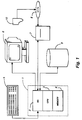
- Some of the elements of a general purpose workstation computer are shown in Figure 1, wherein a processor 1 is shown, the processor having an input/output (I/O) section, a central processing unit (CPU) 3 and a memory section 4.
- the I/O section 2 is connected to a keyboard 5, a display unit 6, a disk storage unit 9 and a CD-ROM drive unit 7.
- the CD-ROM unit 7 can read a CD-ROM medium 8 which typically contains programs 10 and data.
- the computer program products containing mechanisms to effectuate the apparatus and methods of the present invention may reside in the memory section 4, or on a disk storage unit 9, or on the CD-ROM 8 of such a system. Examples of such systems include SPARC systems offered by Sun Microsystems, Inc., personal computers offered by IBM Corporation and by other manufacturers of IBM-compatible personal computers, and systems running the UNIX operating system.
- the first obstacle is that of identificational incompatibility.
- the second obstacle is that of partial functional incompatibility.
- a Windows 95 VxD has a file name such as "drvrname.vxd". That is to say, a name of up to eight characters followed by a period and the three-character file extension "vxd".
- a Windows 3.x VxD has the same format, but with the three-character extension "386".
- the second identificational incompatibility occurs because each VxD--whether for Windows 3.x or for Windows 95--incorporates a Device Descriptor Block (DDB) which includes a version number, in addition to other descriptive information.
- DDB Device Descriptor Block
- the Windows 95 operating system may be viewed as a super set of Windows 3.x. This, of course, accounts for the partial functional incompatibility of Windows 95 virtual device drivers with Windows 3.x.
- VxD virtual device driver
- Sun's development team began by writing a VxD that fully complies with Windows 95 specifications.
- the obstacle of identificational incompatibility is cured by disguising the Windows 95 compatible VxD as a Windows 3.x compatible driver. This is done by renaming the Windows 95 VxD with the three-character extension "386".
- the version number within the Device Descriptor Block must also be changed in order to effect a total disguise. A number of third-party software tools are available for this purpose.
- Vireo Software, Inc. produces a "VtoolsD” product which is marketed as a software tool for building virtual device drivers. This product incudes a "sethdr.exe” program which can be used to modify information in the Device Descriptor Block of a VxD.
- Figure 2 depicts the sequence utilized for disguising a Windows 95 compatible VxD as a Windows 3.x compatible VxD.
- Windows 3.x will load the Windows 95 VxD. Loading of the driver, of course, does not insure code compatibility of the Windows 95 VxD with Windows 3.x. Functional compatibility is achieved by additional logic and supplementary Windows 3.x emulation routines to the Windows 95 compatible VxD.
- the logic works in the following manner: Whenever a Windows 3.x operating system call is made to the VxD, the standard Windows 95 VxD interface is granted control whenever the interface is compatible with Windows 3.x. However, whenever the standard Windows 95 VxD interface is incompatible with or simply non-existent in Windows 3.x, the Windows 3.x VxD interface is emulated by the supplementary routines.
- Figure 3 provides an operational logic flow diagram for the cross-platform compatible virtual device driver. When the driver is loaded and executed, the operational stepwise flow is as follows:
- cross-platform compatibility of virtual device drivers can apply only to the internal coding of the driver, and cannot extend to the identificational aspects of a driver.
- the cross-platform-compatible virtual device drivers created in accordance with the present invention must be renamed for use under the various versions of Windows.
- the invention has been disclosed in the context of a method for building and running a cross-platform-compatible virtual device driver for use in a caching product, the invention is certainly not limited to virtual device drivers used in a caching product.
Landscapes
- Engineering & Computer Science (AREA)
- Theoretical Computer Science (AREA)
- Physics & Mathematics (AREA)
- General Engineering & Computer Science (AREA)
- General Physics & Mathematics (AREA)
- Stored Programmes (AREA)
- Information Retrieval, Db Structures And Fs Structures Therefor (AREA)
Claims (4)
- Verfahren zur Erzeugung eines virtuellen Gerätetreibers, der sowohl mit einem ersten als auch mit einem zweiten Betriebssystem kompatibel ist, wobei das erste und zweite Betriebssystem eine erste bzw. zweite Aufrufmenge erkennt, wobei nur ein Teil Aufrufe der zweiten Menge mit dem ersten Betriebssystem vollständig kompatibel ist, wobei das Verfahren folgende Schritte aufweist:Bereitstellung eines primären virtuellen Gerätetreibers mit primären Routinen, die Betriebssystem-Aufrufe machen, die vollständig kompatibel mit dem zweiten Betriebssystem sind;Anfügen von zusätzlichen Logik- und Emulationsroutinen an den primären virtuellen Gerätetreiber;wobei die zusätzliche Logik betreibbar ist, der Ausführung des primären virtuellen Gerätetreibers unter entweder dem ersten oder dem zweiten Betriebssystem zu folgen, undwobei die zusätzliche Logik eine Bestimmung (304) liefert, unter welchem der beiden Betriebssysteme der virtuelle Gerätetreiber ausgeführt wird,Sicherstellung, dass die primären Routinen (307) funktionieren,wenn der primäre virtuelle Gerätetreiber unter dem zweiten Betriebssystem ausgeführt wird, undwenn der primäre virtuelle Gerätetreiber unter dem ersten Betriebssystem ausgeführt wird und ein Betriebssystem-Aufruf entsprechend dem Teil der Aufrufe der zweiten Menge gemacht wird, undSicherstellung (305), dass die Emulationsroutinen (306) funktionieren, wenn der primäre virtuelle Gerätetreiber unter dem ersten Betriebssystem ausgeführt wird und ein Betriebssystem-Aufruf nicht entsprechend dem Teil der Aufrufe der zweiten Menge gemacht wird.
- Verfahren nach Anspruch 1, wobei der virtuelle Gerätetreiber mit dem ersten Betriebssystem und dem zweiten Betriebssystem auf der Ebene des Quellcodes kompatibel ist.
- Verfahren nach Anspruch 1 oder 2, bei dem die zusätzliche Logik bestimmt, welches Betriebssystem läuft, wobei die folgenden Schritte angewendet werden:(a) Bestimmung (301), ob eine eine Treiber-Aktivität benötigende Instanz eine Boot-Zeit-Initialisierungsinstanz ist oder nicht, wenn es sich um eine Boot-Zeit-Initialisierungsinstanz handelt, folgt Schritt (b), wenn es sich nicht um eine Boot-Zeit-Initialisierungsinstanz handelt, folgt Schritt (d);(b) Bestimmung (302), unter welchem Betriebssystem der Treiber läuft;(c) Setzen (303) eines Systemidentifizierers auf einen Sollwert, wenn das erste Betriebssystem läuft;(d) Bestimmung anhand des Systemidentifizierers (304), welches Betriebssystem läuft.
- Computerprogramm-Speichermedium, das Befehle zur Implementierung eines virtuellen Gerätetreibers liefert, der sowohl mit einem ersten als auch mit einem zweiten Betriebssystem auf der Ebene des Quellcodes kompatibel ist, wobei das erste und zweite Betriebssystem erste bzw. zweite Aufrufmengen erkennt, wobei nur ein Teil der Aufrufe der zweiten Menge vollständig kompatibel mit dem ersten Betriebssystem ist, wobei die Befehle als ein Vorgang von einem Computersystem lesbar und ausführbar sind, und wobei das Speichermedium eine unerlässliche Komponente des Computersystems darstellt, wobei das Verfahren folgende Schritte aufweist:(a) Bestimmung (301), ob eine eine Treiberaktivität benötigende Instanz eine Boot-Zeit-lnitialisierungsinstanz ist oder nicht, wenn es sich um eine Boot-Zeit Initialisierungsinstanz handelt, folgt Schritt (b), wenn es sich nicht um eine Boot-Zeit Initialisierungsinstanz handelt, folgt Schritt (d);(b) Bestimmung (302), unter welchem Betriebssystem der Treiber läuft;(c) Setzen (303) des Systemidentifizierers auf einen Sollwert, wenn das erste Betriebssystem läuft;(d) Bestimmung (304), ob der Systemidentifizierer gleich dem Sollwert ist oder nicht, wenn der Systemidentifizierer gleich dem Sollwert ist, folgt Schritt (e), wenn der Systemidentifizierer ungleich dem Sollwert ist, folgt Schritt (g);(e) Bestimmung (305), ob sich ein spezieller Aufruf zwischen dem ersten und zweiten Betriebssystem unterscheidet, wenn der Aufruf sich nicht unterscheidet, folgt Schritt (f), wenn der Aufruf sich unterscheidet, folgt Schritt (g);(f) Starten (307) eines Aufrufs, der sowohl mit dem ersten als auch mit dem zweiten Betriebssystem kompatibel ist;(g) Emulieren (306) eines unterschiedlichen Aufrufs in einer mit dem ersten Betriebssystem kompatiblen Art und Weise.
Applications Claiming Priority (2)
| Application Number | Priority Date | Filing Date | Title |
|---|---|---|---|
| US08/640,670 US5940613A (en) | 1996-05-01 | 1996-05-01 | Method for creating a single binary virtual device driver for a windowing operating system |
| US640670 | 1996-05-01 |
Publications (2)
| Publication Number | Publication Date |
|---|---|
| EP0805399A1 EP0805399A1 (de) | 1997-11-05 |
| EP0805399B1 true EP0805399B1 (de) | 2000-03-08 |
Family
ID=24569223
Family Applications (1)
| Application Number | Title | Priority Date | Filing Date |
|---|---|---|---|
| EP97201082A Expired - Lifetime EP0805399B1 (de) | 1996-05-01 | 1997-04-11 | Verfahren zur Erzeugung eines einzelnen binären virtuellen Gerätetreibers für ein Betriebssystem mit Fenstern |
Country Status (4)
| Country | Link |
|---|---|
| US (2) | US5940613A (de) |
| EP (1) | EP0805399B1 (de) |
| JP (1) | JPH10124336A (de) |
| DE (1) | DE69701365T2 (de) |
Families Citing this family (9)
| Publication number | Priority date | Publication date | Assignee | Title |
|---|---|---|---|---|
| WO1998024025A1 (en) * | 1996-11-27 | 1998-06-04 | 1Vision Software, L.L.C. | File directory and file navigation system |
| US6978439B2 (en) * | 2002-01-10 | 2005-12-20 | Microsoft Corporation | Cross-platform software development with a software development peripheral |
| US7558723B2 (en) * | 2003-12-12 | 2009-07-07 | Microsoft Corporation | Systems and methods for bimodal device virtualization of actual and idealized hardware-based devices |
| US8818066B2 (en) * | 2004-06-29 | 2014-08-26 | Siemens Medical Solutions Usa, Inc. | Grid computing on radiology network |
| US8285826B2 (en) * | 2004-06-29 | 2012-10-09 | Siemens Medical Solutions Usa, Inc. | Grid computing on radiology network |
| US20060005190A1 (en) * | 2004-06-30 | 2006-01-05 | Microsoft Corporation | Systems and methods for implementing an operating system in a virtual machine environment |
| US8635612B2 (en) * | 2005-04-29 | 2014-01-21 | Microsoft Corporation | Systems and methods for hypervisor discovery and utilization |
| US20070011444A1 (en) * | 2005-06-09 | 2007-01-11 | Grobman Steven L | Method, apparatus and system for bundling virtualized and non-virtualized components in a single binary |
| US9329887B2 (en) * | 2011-10-19 | 2016-05-03 | Hob Gmbh & Co. Kg | System and method for controlling multiple computer peripheral devices using a generic driver |
Family Cites Families (7)
| Publication number | Priority date | Publication date | Assignee | Title |
|---|---|---|---|---|
| US4649479A (en) * | 1985-02-28 | 1987-03-10 | International Business Machines Corp. | Device driver and adapter binding technique |
| CA2010591C (en) * | 1989-10-20 | 1999-01-26 | Phillip M. Adams | Kernels, description tables and device drivers |
| US5265252A (en) * | 1991-03-26 | 1993-11-23 | International Business Machines Corporation | Device driver system having generic operating system interface |
| US5664195A (en) * | 1993-04-07 | 1997-09-02 | Sequoia Systems, Inc. | Method and apparatus for dynamic installation of a driver on a computer system |
| WO1996007136A1 (en) * | 1994-09-01 | 1996-03-07 | Taligent, Inc. | Operating system device driver autogeneration |
| US5732282A (en) * | 1995-06-30 | 1998-03-24 | Sun Microsystems, Inc. | Virtual device driver registry having a globally unique identifier supplying virtual driver call information to the requesting program |
| US6009476A (en) * | 1995-11-21 | 1999-12-28 | Diamond Multimedia Systems, Inc. | Device driver architecture supporting emulation environment |
-
1996
- 1996-05-01 US US08/640,670 patent/US5940613A/en not_active Expired - Lifetime
-
1997
- 1997-04-11 EP EP97201082A patent/EP0805399B1/de not_active Expired - Lifetime
- 1997-04-11 DE DE69701365T patent/DE69701365T2/de not_active Expired - Fee Related
- 1997-05-01 JP JP9113960A patent/JPH10124336A/ja active Pending
-
1998
- 1998-11-10 US US09/189,499 patent/US6269408B1/en not_active Expired - Fee Related
Also Published As
| Publication number | Publication date |
|---|---|
| JPH10124336A (ja) | 1998-05-15 |
| EP0805399A1 (de) | 1997-11-05 |
| DE69701365D1 (de) | 2000-04-13 |
| US6269408B1 (en) | 2001-07-31 |
| DE69701365T2 (de) | 2000-11-09 |
| US5940613A (en) | 1999-08-17 |
Similar Documents
| Publication | Publication Date | Title |
|---|---|---|
| US7913226B2 (en) | Interposing a virtual machine monitor and devirtualizing computer hardware at runtime | |
| EP2622460B1 (de) | Verfahren zum streaming virtueller maschinen von einem server zu einem host | |
| Hildebrand | An Architectural Overview of QNX. | |
| US8832692B2 (en) | Cluster-based operating system-agnostic virtual computing system | |
| US10824716B2 (en) | Executing native-code applications in a browser | |
| KR100361635B1 (ko) | 논리적 분할부 관리기 및 방법 | |
| US7793287B2 (en) | Runtime virtualization and devirtualization of I/O devices by a virtual machine monitor | |
| US10042661B1 (en) | Method for creation of application containers inside OS containers | |
| US11256534B2 (en) | System and method for trapping system calls for remote execution | |
| KR100861641B1 (ko) | 비고유 프로그램 모듈을 위한 에뮬레이터, 컴퓨터 판독 가능 매체 상의 운영 시스템, 데이터 정렬 시스템, 비고유 프로그램 모듈 및 고유 환경의 상호 운영 가능성 및 호환성을 용이하게 하는 방법, 컴퓨터 및 컴퓨터 판독 가능 매체 | |
| US8539214B1 (en) | Execution of a program module within both a PEI phase and a DXE phase of an EFI firmware | |
| US6216216B1 (en) | Method and apparatus for providing processor partitioning on a multiprocessor machine | |
| EP0805399B1 (de) | Verfahren zur Erzeugung eines einzelnen binären virtuellen Gerätetreibers für ein Betriebssystem mit Fenstern | |
| WO2011064616A1 (en) | Method and system for enabling access to functionality provided by resources outside of an operating system environment | |
| CN114090171A (zh) | 虚拟机创建方法、迁移方法及计算机可读介质 | |
| US11928214B2 (en) | Enabling SPI firmware updates at runtime | |
| EP1429246A1 (de) | Vorrichtung und Verfahren zum Moduswechsel in einem Computer System | |
| US7558724B2 (en) | Operation region describing a virtual device | |
| EP0805397B1 (de) | Verfahren zum Einrichten eines nicht flüchtigen Cache-Systems für Netzwerke und CD-Roms | |
| CN118331687B (zh) | 用户态半虚拟化数据路径加速方法、设备、集群以及介质 | |
| US7484083B1 (en) | Method, apparatus, and computer-readable medium for utilizing BIOS boot specification compliant devices within an extensible firmware interface environment | |
| CN120011001B (zh) | 一种轻量化的虚拟化实现方法及装置 | |
| CN119938159A (zh) | 一种软件加载方法、云管理平台及集群 | |
| Meza | Hand held workstation: a guide to embedding the Linux kernel | |
| Stevens et al. | “El Torito” Bootable CD-ROM Format Specification |
Legal Events
| Date | Code | Title | Description |
|---|---|---|---|
| PUAI | Public reference made under article 153(3) epc to a published international application that has entered the european phase |
Free format text: ORIGINAL CODE: 0009012 |
|
| AK | Designated contracting states |
Kind code of ref document: A1 Designated state(s): DE FR GB NL SE |
|
| 17P | Request for examination filed |
Effective date: 19971124 |
|
| 17Q | First examination report despatched |
Effective date: 19980220 |
|
| GRAG | Despatch of communication of intention to grant |
Free format text: ORIGINAL CODE: EPIDOS AGRA |
|
| RAP1 | Party data changed (applicant data changed or rights of an application transferred) |
Owner name: SUN MICROSYSTEMS, INC. |
|
| GRAG | Despatch of communication of intention to grant |
Free format text: ORIGINAL CODE: EPIDOS AGRA |
|
| GRAH | Despatch of communication of intention to grant a patent |
Free format text: ORIGINAL CODE: EPIDOS IGRA |
|
| GRAH | Despatch of communication of intention to grant a patent |
Free format text: ORIGINAL CODE: EPIDOS IGRA |
|
| GRAA | (expected) grant |
Free format text: ORIGINAL CODE: 0009210 |
|
| AK | Designated contracting states |
Kind code of ref document: B1 Designated state(s): DE FR GB NL SE |
|
| PGFP | Annual fee paid to national office [announced via postgrant information from national office to epo] |
Ref country code: SE Payment date: 20000406 Year of fee payment: 4 |
|
| ET | Fr: translation filed | ||
| REF | Corresponds to: |
Ref document number: 69701365 Country of ref document: DE Date of ref document: 20000413 |
|
| PLBE | No opposition filed within time limit |
Free format text: ORIGINAL CODE: 0009261 |
|
| STAA | Information on the status of an ep patent application or granted ep patent |
Free format text: STATUS: NO OPPOSITION FILED WITHIN TIME LIMIT |
|
| 26N | No opposition filed | ||
| PG25 | Lapsed in a contracting state [announced via postgrant information from national office to epo] |
Ref country code: SE Free format text: LAPSE BECAUSE OF NON-PAYMENT OF DUE FEES Effective date: 20011031 |
|
| REG | Reference to a national code |
Ref country code: GB Ref legal event code: IF02 |
|
| PGFP | Annual fee paid to national office [announced via postgrant information from national office to epo] |
Ref country code: NL Payment date: 20030429 Year of fee payment: 7 |
|
| PG25 | Lapsed in a contracting state [announced via postgrant information from national office to epo] |
Ref country code: NL Free format text: LAPSE BECAUSE OF NON-PAYMENT OF DUE FEES Effective date: 20041101 |
|
| NLV4 | Nl: lapsed or anulled due to non-payment of the annual fee |
Effective date: 20041101 |
|
| PGFP | Annual fee paid to national office [announced via postgrant information from national office to epo] |
Ref country code: DE Payment date: 20050407 Year of fee payment: 9 |
|
| PGFP | Annual fee paid to national office [announced via postgrant information from national office to epo] |
Ref country code: FR Payment date: 20050408 Year of fee payment: 9 |
|
| PG25 | Lapsed in a contracting state [announced via postgrant information from national office to epo] |
Ref country code: DE Free format text: LAPSE BECAUSE OF NON-PAYMENT OF DUE FEES Effective date: 20061101 |
|
| REG | Reference to a national code |
Ref country code: FR Ref legal event code: ST Effective date: 20061230 |
|
| PG25 | Lapsed in a contracting state [announced via postgrant information from national office to epo] |
Ref country code: FR Free format text: LAPSE BECAUSE OF NON-PAYMENT OF DUE FEES Effective date: 20060502 |
|
| PG25 | Lapsed in a contracting state [announced via postgrant information from national office to epo] |
Ref country code: SE Free format text: LAPSE BECAUSE OF NON-PAYMENT OF DUE FEES Effective date: 20000308 |
|
| PGFP | Annual fee paid to national office [announced via postgrant information from national office to epo] |
Ref country code: GB Payment date: 20160406 Year of fee payment: 20 |
|
| REG | Reference to a national code |
Ref country code: GB Ref legal event code: PE20 Expiry date: 20170410 |
|
| PG25 | Lapsed in a contracting state [announced via postgrant information from national office to epo] |
Ref country code: GB Free format text: LAPSE BECAUSE OF EXPIRATION OF PROTECTION Effective date: 20170410 |