EP0804477B1 - Use of a peptide fragment derived from pban(1-33)nh2 for the design of pban antagonists for controlling moths - Google Patents
Use of a peptide fragment derived from pban(1-33)nh2 for the design of pban antagonists for controlling moths Download PDFInfo
- Publication number
- EP0804477B1 EP0804477B1 EP95917331A EP95917331A EP0804477B1 EP 0804477 B1 EP0804477 B1 EP 0804477B1 EP 95917331 A EP95917331 A EP 95917331A EP 95917331 A EP95917331 A EP 95917331A EP 0804477 B1 EP0804477 B1 EP 0804477B1
- Authority
- EP
- European Patent Office
- Prior art keywords
- pban
- activity
- cooh
- fragments
- derived
- Prior art date
- Legal status (The legal status is an assumption and is not a legal conclusion. Google has not performed a legal analysis and makes no representation as to the accuracy of the status listed.)
- Expired - Lifetime
Links
Images

Classifications
-
- C—CHEMISTRY; METALLURGY
- C07—ORGANIC CHEMISTRY
- C07K—PEPTIDES
- C07K14/00—Peptides having more than 20 amino acids; Gastrins; Somatostatins; Melanotropins; Derivatives thereof
- C07K14/435—Peptides having more than 20 amino acids; Gastrins; Somatostatins; Melanotropins; Derivatives thereof from animals; from humans
- C07K14/43504—Peptides having more than 20 amino acids; Gastrins; Somatostatins; Melanotropins; Derivatives thereof from animals; from humans from invertebrates
- C07K14/43563—Peptides having more than 20 amino acids; Gastrins; Somatostatins; Melanotropins; Derivatives thereof from animals; from humans from invertebrates from insects
-
- A—HUMAN NECESSITIES
- A01—AGRICULTURE; FORESTRY; ANIMAL HUSBANDRY; HUNTING; TRAPPING; FISHING
- A01N—PRESERVATION OF BODIES OF HUMANS OR ANIMALS OR PLANTS OR PARTS THEREOF; BIOCIDES, e.g. AS DISINFECTANTS, AS PESTICIDES OR AS HERBICIDES; PEST REPELLANTS OR ATTRACTANTS; PLANT GROWTH REGULATORS
- A01N63/00—Biocides, pest repellants or attractants, or plant growth regulators containing microorganisms, viruses, microbial fungi, animals or substances produced by, or obtained from, microorganisms, viruses, microbial fungi or animals, e.g. enzymes or fermentates
- A01N63/50—Isolated enzymes; Isolated proteins
-
- Y—GENERAL TAGGING OF NEW TECHNOLOGICAL DEVELOPMENTS; GENERAL TAGGING OF CROSS-SECTIONAL TECHNOLOGIES SPANNING OVER SEVERAL SECTIONS OF THE IPC; TECHNICAL SUBJECTS COVERED BY FORMER USPC CROSS-REFERENCE ART COLLECTIONS [XRACs] AND DIGESTS
- Y10—TECHNICAL SUBJECTS COVERED BY FORMER USPC
- Y10S—TECHNICAL SUBJECTS COVERED BY FORMER USPC CROSS-REFERENCE ART COLLECTIONS [XRACs] AND DIGESTS
- Y10S530/00—Chemistry: natural resins or derivatives; peptides or proteins; lignins or reaction products thereof
- Y10S530/855—Proteins from animals other than mammals or birds
- Y10S530/858—Proteins from animals other than mammals or birds insects; venom
Definitions
- PBAN pheromone biosynthesis activating neuropeptide
- These peptide fragments serve as a basis for the design of insecticides aimed at the disruption of pheromone production, melanization and other activities controlled by PBAN 1-33 NH 2 and derived fragments.
- Said invention further relates to a method for controlling adult female moths and insects by applying the above mentioned peptide fragments or peptidomimetic compounds derived from their sequence to any agricultural produce to inhibit pheromone production.
- Neuropeptides play a key role in the regulation of a variety of physiological functions in insects. These endocrine cues are involved in embryonic and post-embryonic developmental processes (such as molting, diapause and metamorphosis), in homeostasis, osmoregulation, diuresis and digestion. Insect neuropeptides are also known to control essential behavioral patterns such as migration, mating and oviposition. In recent years, the development of improved chemical, biochemical and molecular techniques has facilitated the identification of insect neuropeptides and resulted in the isolation and characterization of over fifty compounds.
- insect neuropeptides Due to their substantial involvement in a variety of physiological processes, studies of insect neuropeptides introduce a new insight into basic life processes which may serve as an excellent basis for comparative neuroendocrine studies aimed to understand the evolutionary history of basic biological events.
- insect neuropeptides provide new targets for pest control which are based on the interference with their activity. This strategy requires a better understanding of the cascade of events common to the neuroendocrine regulation, namely: biosynthesis, release, transport, binding and activation of the target organ. So far, our understanding of these events for most insect neuropeptides is very limited.
- the present invention concentrates on some of these aspects comprising the activity of peptide fragments derived from PBAN, which is known to regulate sex-pheromone biosynthesis and melanization in moths.
- Sex pheromones are synthesized and secreted by the female moth from the pheromone gland which is located at the intersegmental membrane between the eighth and the ninth abdominal segments.
- the inability of the female moth to produce sex pheromones results in a marked decrease in mating and thus, a significant reduction in the size of the population. Due to their important role in mating, sex pheromones have been studied intensively. In the past 30 years more than two hundred sex pheromones were isolated and identified.
- moths sex pheromones consist of blends of C10-C18 aliphatic compounds, most of which have one or more double bonds.
- the diversity between pheromones of different species is indicated by differences in the chain length, the position and configuration of the olefinic bonds, and by the chemical nature of the functional group.
- Most pheromones are aldehydes, alcohols or acetates.
- PBAN Since its discovery PBAN was characterized as a linear C-terminally amidated peptide containing 33 amino acids. The primary structure of PBAN has been fully identified in two moth species: Helicoverpa zea and Bombyx mori and its gene and cDNA have been cloned from the same two insects. PBAN is synthesized in the subesophageal ganglion and is transported to its target organ via the hemolymph and/or the ventral nerve cord. It is present in both male and female moth and its biological activity is mediated by cAMP and depends on the presence of Ca ++ ions.
- PBAN has been studied for almost ten years, the understanding of its activity is quite limited, and most of the studies concentrate on: A) its release and transport; B) identification of its target organ; and C) its cellular activity.
- PBAN is the binding site of PBAN.
- Such an inhibition can be acquired by antagonists, which are selective inhibitors capable of locking the receptor site of the neuropeptide, and thus, preventing from the endogenous peptide to bind to the receptor and exert its biological activity.
- PBAN antagonists are, therefore, specific inhibitors for the production of sex pheromones.
- the present invention provides peptide fragments and analogs derived from the amino acid sequence of Hez-PBAN 1-33 NH 2 showing stimulatory (agonistic) and inhibitory (antagonistic) biological activities at doses similar to those of PBAN 1-33 (10-100 pmol) for use as a basis for the design of insecticides aimed at the disruption of pheromone production, melanization and other activities controlled by PBAN 1-33 NH 2 and derived fragments.
- Said invention further provides a method for controlling adult female Heliothis, moths and insects by applying the above mentioned peptide fragments or peptidomimetic compounds derived from their sequence to any agricultural produce to inhibit pheromone production. More specifically, the preferred peptide fragments according to the invention are as follows:
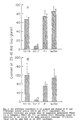
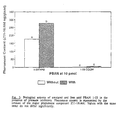
- Pheromonotropic activity was determined by injecting the peptides, dissolved in buffer phosphate to 3.5-4.5 days old females during daylight for two hours. Pheromone content is represented by the amount of the major pheromone component Z11-16:Ald. Values with the same letter do not differ significantly.
- the hexapeptide contains the essential sequences required for the onset of the pheromonotropic activity and that within that sequence the C-terminally amide has a most important structural role.
- the hexapeptide can be useful as an excellent bases for the design of an antagonists lead compound for PBAN.
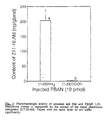
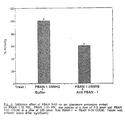
- PBAN (9-18) COOH is a competitive inhibitor for PBAN and serves as a partial antagonist for its activity. This sequence will serve as a basis for the design of additional antagonists which will fully inhibit the pheromonotropic activity of PBAN. Pheromonotropic activity of PBAN (1-33) NH 2 in the presence of free acid PBAN derived fragments.
- PBAN (1-33) NH 2 was injected at 1 pmol and the C-terminally free acid fragments at 10 pmol.
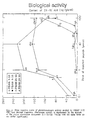
- Pigmented and non-pigmented areas were determined by a computerized optical density scanner as described by Altstein et al., (Peptides, submitted, 1994).
Landscapes
- Life Sciences & Earth Sciences (AREA)
- Health & Medical Sciences (AREA)
- Zoology (AREA)
- Chemical & Material Sciences (AREA)
- General Health & Medical Sciences (AREA)
- Proteomics, Peptides & Aminoacids (AREA)
- Organic Chemistry (AREA)
- Engineering & Computer Science (AREA)
- Genetics & Genomics (AREA)
- Agronomy & Crop Science (AREA)
- Tropical Medicine & Parasitology (AREA)
- Gastroenterology & Hepatology (AREA)
- Medicinal Chemistry (AREA)
- Molecular Biology (AREA)
- Insects & Arthropods (AREA)
- Biochemistry (AREA)
- Toxicology (AREA)
- Biophysics (AREA)
- Biotechnology (AREA)
- Microbiology (AREA)
- Pest Control & Pesticides (AREA)
- Plant Pathology (AREA)
- Virology (AREA)
- Dentistry (AREA)
- Wood Science & Technology (AREA)
- Environmental Sciences (AREA)
- Peptides Or Proteins (AREA)
- Agricultural Chemicals And Associated Chemicals (AREA)
Description


| Pheromonotropic activity of PBAN (1-33) NH2 and derived peptides. | ||
| Pheromone content Z11-16:Ald ng/gland ± SE | ||
| Injected peptide | Dose of 1 pmol | Dose of 10 pmol |
| PBAN (1-33) NH2 | 200.7 ± 40.7 a | 225.2 ± 51.4 a' |
| PBAN (9-33) NH2 | 143.7 ± 29.6 a | 168.0 ± 9.2 a' |
| PBAN (13-33) NH2 | 4.1 ± 3.0 d | 180.2 ± 47.3 a' |
| PBAN (17-33) NH2 | 24.1 ± 5.7 c | 196.9 ± 40.7 a' |
| PBAN (19-33) NH2 | 52.7 ± 21.0 b | 133.8 ± 15.7 b' |
| PBAN (26-33) NH2 | 8.9 ± 3.5 d | 12.2 ± 3.1 c' |
| PBAN (28-33) NH2 | 5.6 ± 1.7 d | 12.7 ± 4.9 c' |
| Pheromonotropic activity of C-terminally fee acid peptides. | |
| Injected peptide (10 pmol) | Pheromone content Z11-16:Ald(ng/gland) ± SE |
| PBAN (1-33) COOH | 1.4 ± 0.76 |
| PBAN (9-33) COOH | <1 |
| PBAN (19-33) COOH | <1 |
| PBAN (9-18) COOH | <1 |
| Pheromonotropic activity of PBAN (1-33) NH2 in the presence of free acid PBAN derived fragments. | ||
| Injected peptide | Pheromone content Z11-16:Ald(ng/gland) ± SE | Inhibition (% of cont) |
| PBAN(1-33)NH2 (control) | 165.0 ± 21.0 | - |
| PBAN(1-33)NH2 + PBAN(1-33)COOH | 170.2 ± 24.2 | 0 |
| PBAN(1-33)NH2 + PBAN(9-33)COOH | 154.7 ± 22.2 | 7 |
| PBAN(1-33)NH2 + PBAN(19-33)COOH | 120.4 ± 29.2 | 27 |
| PBAN(1-33)NH2 + PBAN(9-18)COOH | 108.1 ± 18.0 | 35 |
| Melanotropic activity of amidated and free acid PBAN 1-33. | ||
| Injected material (10 pmol) | Pigmented area | Non pigmented area |
| None (untreated control) | 93% | 7% |
| Buffer (control) | 85% | 15% |
| PBAN (1-33) NH2 | 96% | 4% |
| PBAN (9-18) COOH | 75% | 25% |
Claims (3)
- Use of a peptide fragment which is derived from the amino acid sequence of pheromone biosynthesis activating neuropeptide [PBAN (1-33) NH2], which peptide fragment is of the formulawherein R represents H, Ac, Bz, Bzl or Et,

having PBAN agonistic activities at doses of 10 to 100 pmol,
for the design of a derivative of (I) which is an inhihitory PBAN-antagonist with 10 amino acids or less which inhibits pheromone production in female moths and melanin production in moth larvae and other activities controlled by PBAN (1-33) NH2,
for the preparation of insecticides or insect control agents. - Use according to Claim 1 for preparing an insecticide or insect control agent which is directed against adult female moths.
- Use according to Claim 1 for preparing an insecticide or insect control agent which is directed against Spodoptera larvae.
Applications Claiming Priority (3)
| Application Number | Priority Date | Filing Date | Title |
|---|---|---|---|
| IL10940594A IL109405A0 (en) | 1994-04-24 | 1994-04-24 | Peptide fragments and analogs derived from pban 1-33 nh2 for controlling moths |
| IL10940594 | 1994-04-24 | ||
| PCT/EP1995/001448 WO1995029191A1 (en) | 1994-04-24 | 1995-04-18 | Peptide fragments and analogs derived from pban 1-33 nh2 for controlling moths |
Publications (2)
| Publication Number | Publication Date |
|---|---|
| EP0804477A1 EP0804477A1 (en) | 1997-11-05 |
| EP0804477B1 true EP0804477B1 (en) | 2002-10-23 |
Family
ID=11066053
Family Applications (1)
| Application Number | Title | Priority Date | Filing Date |
|---|---|---|---|
| EP95917331A Expired - Lifetime EP0804477B1 (en) | 1994-04-24 | 1995-04-18 | Use of a peptide fragment derived from pban(1-33)nh2 for the design of pban antagonists for controlling moths |
Country Status (8)
| Country | Link |
|---|---|
| US (1) | US6358927B1 (en) |
| EP (1) | EP0804477B1 (en) |
| JP (1) | JPH09512527A (en) |
| CN (1) | CN1071335C (en) |
| AU (1) | AU2344995A (en) |
| DE (1) | DE69528667D1 (en) |
| IL (1) | IL109405A0 (en) |
| WO (1) | WO1995029191A1 (en) |
Families Citing this family (11)
| Publication number | Priority date | Publication date | Assignee | Title |
|---|---|---|---|---|
| AU1254299A (en) * | 1997-12-02 | 1999-06-16 | State Of Israel - Ministry Of Agriculture | Backbone cyclic peptide fragments and their analogs derived from pban 1-33, use ful as insecticides |
| US8575328B2 (en) * | 2010-12-14 | 2013-11-05 | The United States Of America, As Represented By The Secretary Of Agriculture | Formicidae (ant) control using double-stranded RNA constructs |
| IL228768A0 (en) * | 2013-10-07 | 2014-09-30 | Israel State | Novel neuropeptides useful as insecticides |
| CN114577878B (en) * | 2022-03-04 | 2022-08-02 | 东北林业大学 | A sex pheromone receptor-derived peptide and its biosensor for effective monitoring of cotton bollworm |
| GB202215797D0 (en) | 2022-10-25 | 2022-12-07 | Solasta Bio Ltd | Insect neuropeptide analogues |
| US12356995B2 (en) | 2023-10-23 | 2025-07-15 | Solasta Bio Limited | Insect neuropeptides 9 |
| US12279621B1 (en) | 2023-10-23 | 2025-04-22 | Solasta Bio Limited | Insect neuropeptides 3 |
| US12245596B1 (en) | 2023-10-23 | 2025-03-11 | Solasta Bio Limited | Insect neuropeptides 8 |
| US12302908B2 (en) | 2023-10-23 | 2025-05-20 | Solasta Bio Limited | Insect neuropeptides 4 |
| US12245588B1 (en) | 2023-10-23 | 2025-03-11 | Solasta Bio Limited | Insect neuropeptides 2 |
| US12281143B1 (en) | 2023-10-23 | 2025-04-22 | Solasta Bio Limited | Insect neuropeptides 1 |
Family Cites Families (4)
| Publication number | Priority date | Publication date | Assignee | Title |
|---|---|---|---|---|
| US4423037A (en) * | 1982-05-13 | 1983-12-27 | The General Hospital Corporation | Inhibitors of peptide hormone action |
| US5032576A (en) | 1989-05-19 | 1991-07-16 | The United States Of America As Represented By The Secretary Of Agriculture | Method for controlling female moths using a peptide |
| US5183891A (en) * | 1989-11-09 | 1993-02-02 | Orsan | Method for the preparation of substituted 1,4-dihydro-4-oxo-cinnoline-3-carboxylic acid, esters and salts thereof, and intermediates used in their preparation |
| JPH04208300A (en) | 1990-11-30 | 1992-07-29 | Japan Tobacco Inc | New peptide |
-
1994
- 1994-04-24 IL IL10940594A patent/IL109405A0/en unknown
-
1995
- 1995-04-18 DE DE69528667T patent/DE69528667D1/en not_active Expired - Lifetime
- 1995-04-18 CN CN95192659A patent/CN1071335C/en not_active Expired - Fee Related
- 1995-04-18 EP EP95917331A patent/EP0804477B1/en not_active Expired - Lifetime
- 1995-04-18 WO PCT/EP1995/001448 patent/WO1995029191A1/en not_active Ceased
- 1995-04-18 AU AU23449/95A patent/AU2344995A/en not_active Abandoned
- 1995-04-18 US US08/727,488 patent/US6358927B1/en not_active Expired - Fee Related
- 1995-04-18 JP JP7527332A patent/JPH09512527A/en not_active Ceased
Also Published As
| Publication number | Publication date |
|---|---|
| DE69528667D1 (en) | 2002-11-28 |
| IL109405A0 (en) | 1994-07-31 |
| CN1071335C (en) | 2001-09-19 |
| AU2344995A (en) | 1995-11-16 |
| JPH09512527A (en) | 1997-12-16 |
| WO1995029191A1 (en) | 1995-11-02 |
| EP0804477A1 (en) | 1997-11-05 |
| CN1146771A (en) | 1997-04-02 |
| US6358927B1 (en) | 2002-03-19 |
Similar Documents
| Publication | Publication Date | Title |
|---|---|---|
| Greenberg et al. | Relationships among the FMRFamide-like peptides | |
| King et al. | Evolutionary aspects of gonadotropin-releasing hormone and its receptor | |
| Schoofs et al. | Isolation, identification and synthesis of locustamyoinhibiting peptide (LOM-MIP), a novel biologically active neuropeptide from Locusta migratoria | |
| Gäde et al. | Insect peptide hormones: a selective review of their physiology and potential application for pest control | |
| EP0804477B1 (en) | Use of a peptide fragment derived from pban(1-33)nh2 for the design of pban antagonists for controlling moths | |
| Nachman et al. | Aib-containing analogues of the insect kinin neuropeptide family demonstrate resistance to an insect angiotensin-converting enzyme and potent diuretic activity | |
| Nachman et al. | Enhanced in vivo activity of peptidase-resistant analogs of the insect kinin neuropeptide family | |
| Cerstiaensa et al. | Led-NPF-1 stimulates ovarian development in locusts | |
| Lange et al. | The effects of SchistoFLRFamide on contractions of locust midgut | |
| US9951110B2 (en) | Neuropeptides useful as insecticides | |
| Fónagy et al. | Isolation, primary structure and synthesis of neomyosuppressin, a myoinhibiting neuropeptide from the grey fleshfly, Neobellieria bullata | |
| US5739276A (en) | Conotoxin peptides | |
| Salzet et al. | The angiotensin system elements in invertebrates | |
| Altstein | Novel insect control agents based on neuropeptide antagonists: The PK/PBAN family as a case study | |
| Peeff et al. | The effects of FMRFamide-related peptides on an insect (Locusta migratoria) visceral muscle | |
| DE69426270T2 (en) | HGH-RH (1-29) NH2 ANALOG WITH ANTAGONISTIC ACTIVITY | |
| Halton et al. | Regulatory peptides in parasitic platyhelminths | |
| Kimber et al. | FMRFamide-related peptides in potato cyst nematodes | |
| US20250257098A1 (en) | Novel sst4 selective agonists as non-opioid analgesics | |
| Orchard et al. | Contractions associated with the salivary glands of the blood-feeding bug, Rhodnius prolixus: evidence for both a neural and neurohormonal coordination | |
| Rebers et al. | Modulation of glycoprotein hormone α-and gonadotropin IIβ-subunit mRNA levels in the pituitary gland of mature male African catfish, Clarias gariepinus | |
| Predel et al. | Isolation and structural elucidation of eight kinins from the retrocerebral complex of the American cockroach, Periplaneta americana | |
| Saito et al. | The core and complementary sequence responsible for biological activity of the diapause hormone of the silkworm, Bombyx mori | |
| Fuse et al. | The muscular contractions of the midgut of the cockroach, Diploptera punctata: effects of the insect neuropeptides proctolin and leucomyosuppressin | |
| GÄDE | Allatoregulatory peptides—molecules with multiple functions |
Legal Events
| Date | Code | Title | Description |
|---|---|---|---|
| PUAI | Public reference made under article 153(3) epc to a published international application that has entered the european phase |
Free format text: ORIGINAL CODE: 0009012 |
|
| 17P | Request for examination filed |
Effective date: 19961015 |
|
| AK | Designated contracting states |
Kind code of ref document: A1 Designated state(s): CH DE FR GB LI |
|
| 17Q | First examination report despatched |
Effective date: 19981001 |
|
| GRAG | Despatch of communication of intention to grant |
Free format text: ORIGINAL CODE: EPIDOS AGRA |
|
| RTI1 | Title (correction) |
Free format text: USE OF A PEPTIDE FRAGMENT DERIVED FROM PBAN(1-33)NH2 FOR THE DESIGN OF PBAN ANTAGONISTS FOR CONTROLLING MOTHS |
|
| GRAG | Despatch of communication of intention to grant |
Free format text: ORIGINAL CODE: EPIDOS AGRA |
|
| GRAG | Despatch of communication of intention to grant |
Free format text: ORIGINAL CODE: EPIDOS AGRA |
|
| GRAH | Despatch of communication of intention to grant a patent |
Free format text: ORIGINAL CODE: EPIDOS IGRA |
|
| GRAH | Despatch of communication of intention to grant a patent |
Free format text: ORIGINAL CODE: EPIDOS IGRA |
|
| GRAA | (expected) grant |
Free format text: ORIGINAL CODE: 0009210 |
|
| AK | Designated contracting states |
Kind code of ref document: B1 Designated state(s): CH DE FR GB LI |
|
| PG25 | Lapsed in a contracting state [announced via postgrant information from national office to epo] |
Ref country code: LI Free format text: LAPSE BECAUSE OF FAILURE TO SUBMIT A TRANSLATION OF THE DESCRIPTION OR TO PAY THE FEE WITHIN THE PRESCRIBED TIME-LIMIT Effective date: 20021023 Ref country code: FR Free format text: LAPSE BECAUSE OF FAILURE TO SUBMIT A TRANSLATION OF THE DESCRIPTION OR TO PAY THE FEE WITHIN THE PRESCRIBED TIME-LIMIT Effective date: 20021023 Ref country code: CH Free format text: LAPSE BECAUSE OF FAILURE TO SUBMIT A TRANSLATION OF THE DESCRIPTION OR TO PAY THE FEE WITHIN THE PRESCRIBED TIME-LIMIT Effective date: 20021023 |
|
| REG | Reference to a national code |
Ref country code: GB Ref legal event code: FG4D |
|
| REG | Reference to a national code |
Ref country code: CH Ref legal event code: EP |
|
| REF | Corresponds to: |
Ref document number: 69528667 Country of ref document: DE Date of ref document: 20021128 |
|
| PG25 | Lapsed in a contracting state [announced via postgrant information from national office to epo] |
Ref country code: DE Free format text: LAPSE BECAUSE OF FAILURE TO SUBMIT A TRANSLATION OF THE DESCRIPTION OR TO PAY THE FEE WITHIN THE PRESCRIBED TIME-LIMIT Effective date: 20030124 |
|
| PG25 | Lapsed in a contracting state [announced via postgrant information from national office to epo] |
Ref country code: GB Free format text: LAPSE BECAUSE OF NON-PAYMENT OF DUE FEES Effective date: 20030418 |
|
| REG | Reference to a national code |
Ref country code: CH Ref legal event code: PL |
|
| EN | Fr: translation not filed | ||
| PLBE | No opposition filed within time limit |
Free format text: ORIGINAL CODE: 0009261 |
|
| STAA | Information on the status of an ep patent application or granted ep patent |
Free format text: STATUS: NO OPPOSITION FILED WITHIN TIME LIMIT |
|
| 26N | No opposition filed |
Effective date: 20030724 |
|
| GBPC | Gb: european patent ceased through non-payment of renewal fee |
Effective date: 20030418 |