EP0803801B1 - Procédé pour mélanger les objets des types objective-C et C++ - Google Patents
Procédé pour mélanger les objets des types objective-C et C++ Download PDFInfo
- Publication number
- EP0803801B1 EP0803801B1 EP97302309A EP97302309A EP0803801B1 EP 0803801 B1 EP0803801 B1 EP 0803801B1 EP 97302309 A EP97302309 A EP 97302309A EP 97302309 A EP97302309 A EP 97302309A EP 0803801 B1 EP0803801 B1 EP 0803801B1
- Authority
- EP
- European Patent Office
- Prior art keywords
- objective
- line
- computer
- class
- instance
- Prior art date
- Legal status (The legal status is an assumption and is not a legal conclusion. Google has not performed a legal analysis and makes no representation as to the accuracy of the status listed.)
- Expired - Lifetime
Links
Images

Classifications
-
- G—PHYSICS
- G06—COMPUTING OR CALCULATING; COUNTING
- G06F—ELECTRIC DIGITAL DATA PROCESSING
- G06F9/00—Arrangements for program control, e.g. control units
- G06F9/06—Arrangements for program control, e.g. control units using stored programs, i.e. using an internal store of processing equipment to receive or retain programs
- G06F9/44—Arrangements for executing specific programs
- G06F9/448—Execution paradigms, e.g. implementations of programming paradigms
- G06F9/4488—Object-oriented
Definitions
- This invention relates generally to object-oriented computer programming languages. More particularly, this invention relates to a technique for combining Objective-C computer source code and C++ computer source code in a single computer source code program to define objects with both Objective-C and C++ attributes.
- C++ provides language support for the automatic construction and destruction of object instances.
- C++ there is support in the language itself to automatically initialize an object as a side effect of its definition, and also to destroy it when its definition is no longer in scope.
- Objective-C there is no such language support. Support is provided by a set of conventions defined in the root object of the language system's class hierarchy. This lack of support requires that the programmer explicitly manage the creation and destruction of Objective-C objects. This process is error-prone, thereby complicating the programmer's tasks.
- C++ Another benefit of C++ is that any arbitrary object may be allocated in memory from the program heap or the program stack. Being able to allocate objects on the program stack allows a programmer the freedom to exercise significant performance gains. That is, by allocating objects on the program stack, overhead is avoided for invoking memory allocator functions to obtain and subsequently release memory from the program heap. Objective-C has no provision to allocate objects in memory from the program stack.
- Interface Definition Language promulgated by the Object Management Group supports C++, but not Objective-C. This implies that it is not possible to develop distributable object servers within the Common Object Request Broker Architecture using the Objective-C language as the implementation language.
- a C++ interface parses C++ header files and generates C++ stub interface files, as well as TALK modules which implement proxy classes and TALK foreign function definitions for C++ functions, providing the programmer with nearly complete access to the functionality of a C++ library.
- the present invention provides a method as set out in claim 1 and a computer readable storage medium as set out in claim 4.
- Embodiments of the invention provide a method for mixing Objective-C and C++ objects.
- the method includes the step of defining a common object as an Objective-C object class data structure.
- the common object is specified as a C++ object class data structure.
- the C++ object class data structure is equivalent in memory layout to the Objective-C object class data structure.
- a set of behavioral operations to be performed in relation to the common object are then established in either Objective-C or C++ source code.
- a selected behavioral operation is subsequently performed in relation to the common object in response to mixed Objective-C and C++ source code instructions.
- the invention preserves the benefits of Objective-C, while exploiting the benefits of C++.
- the invention allows programmers to easily use Objective-C objects, while gaining the benefits of C++ language support for the automatic creation and destruction of objects.
- the invention allows the creation of Objective-C objects on a program stack.
- the invention allows Objective-C to be used to create distributed objects within a Common Object Request Broker Architecture.
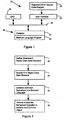
- FIGURE 1 is a general illustration of an apparatus that may be used to practice the present invention.
- FIGURE 2 illustrates the processing steps associated with one embodiment of the invention.
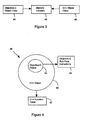
- FIGURE 3 illustrates the relationship between an Objective-C object class, a C++ object class, and the memory location they both specify.
- FIGURE 4 illustrates a C++ object wrapping an Objective-C object to form a mixed C++/Objective-C object in accordance with one embodiment of the invention.
- FIGURE 5 illustrates a mixed C++/Objective-C object and its associated pointers, in accordance with one embodiment of the invention.
- FIG. 1 illustrates a computer 20 that may be used to practice the present invention.
- a mixed Objective-C/C++ source code program 22 is entered into the user interface 24 of the computer 20.
- the user interface 24 generally refers to any input/output device associated with the computer 20.
- the mixed Objective-C/C++ source code program 22 will be keyed into the computer 20 through the use of a keyboard (not shown) associated with the user interface 24.
- the program 22 is delivered over a bus 26 to a Central Processing Unit (CPU) 28.
- the CPU 28 processes the program in connection with a compiler 32 stored in a memory 30.
- the memory 30 may be implemented as any storage medium known in the art, including RAM, disc storage, and optical storage.
- the compiler 32 produces a corresponding machine language program 34 for execution.
- Figure 1 illustrates several standard computer features. However, those skilled in the art will also recognize that Figure 1 illustrates a novel mixed Objective-C/C++ source code program. That is, in accordance with an example of the invention, a single program includes Objective-C and C++ source code instructions. Those skilled in the art will also recognize that the compiler 32 must be configured to process mixed source code instructions of this type. The nature of the invention's Objective-C/C++ source code program 22 and compiler 32 are described below.
- FIG. 2 illustrates processing steps associated with a program 22 in accordance with the present invention.
- the first step of such a program is to define an Objective-C object class data structure (step 40).
- the next step is to specify a C++ object class data structure (step 42). This operation is more fully appreciated with reference to Figure 3.
- Figure 3 illustrates an Objective-C object class pointing to a memory location 48 (of memory 30 of Figure 1).
- the figure also illustrates a C++ object class pointing to the same memory location 48.
- the C++ object class data structure is equivalent in memory layout to the Objective-C object class data structure. Consequently, a single object class (or common object) is defined with two sets of class members that are equivalent.
- Another way of viewing this is that the C++ object model is mixed with the Objective-C object model to create a class that can provide instances that are simultaneously C++ and Objective-C objects.
- the next processing step associated with the embodiment is to establish behavior operations for the object class in a selected language, either C++ or Objective-C.
- the behavior operations establish the functions that can be performed in relation to a common object of the invention. This operation is more fully appreciated with reference to Figure 4.
- Figure 4 illustrates a C++ object 60 at memory location 48.
- the C++ object 60 wraps an Objective-C object 64. That is, a common or mixed object is formed, as will be more fully described below.
- the C++ object points to a C++ function table 62.
- the Objective-C object 64 points to Objective-C run-time instructions 66.
- the final processing step associated with the embodiment is to perform selected behavioral operations in relation to the defined common object.
- the common object at memory location 48 of Figure 4 is subject to different processing operations, as assisted by the C++ function table 62 and the Objective-C run-time instructions 66.
- step 40 of Figure 2 That is, the following code is an example of the step of defining an Objective-C object class data structure.
- Line (2) is an import of the header file "Foundation.h".
- the header file describes all the interfaces to the Objective-C Foundation Kit Library, which is a publicly available specification.
- the Objective-C Foundation Kit Library includes an object called NSMutable Array. The present code forms a sub-class of this object.
- Line (3) is the start of a class definition.
- the instruction defines the class "MutableArray” as a sub-class of the class "NSMutableArray”.
- the contents of this sub-class are defined as private, such that the implementation cannot be seen outside the class.
- the defined class contains three instance variables.
- An unsigned integer variable “_count” is defined at line (5).
- the "_count” variable represents the number of items in the array at any given time.
- An unsigned integer variable “_length” is defined at line (6). This variable represents the number of bytes of dynamic memory currently allocated to hold the dynamic array.
- a pointer "id*" to an array of items is declared.
- these instance variables characterize the Objective-C object class data structure.
- Line (9) defines an instance method "dealloc”, which is called when an instance of an object is released.
- Line (10) defines an instance method called “count”, which returns the number of objects currently held in the mutable array.
- Line(11) defines a method for indexing one of the items in the array; the method takes a parameter index between zero and the number of items that can be held in the array.
- Line (12) has a method called "addObject”, which allows the addition of an object to the end of the array.
- Line (13) defines a method to replace an object at a specified index value.
- Line (14) defines a method to insert an object at a specified index value.
- a method is defined to remove a particular object at a specified index value.
- the first two lines of code (lines (21) (22)) and the last line of code (the "#endif" statement) are used to protect the contents of the header file so the compiler only observes a single definition.
- Line (23) imports the Objective-C header file described in lines (0)-(15).
- the definition of the Objective-C object is imported, and now a corresponding object will be defined in C++. This is done at line (24) with the beginning of the class declaration for the C++ object.
- the "protected" instruction of line (25) indicates that the following definitions are not visible external to this class, they are only visible to sub-classes.
- the instruction at line (26) defines a constant used in the implementation of the Objective-C class to describe the size of the memory increments.
- the instruction ("@defs") at line (27) imports the Objective-C instance variables. These variables are used to define a C++ object. In other words, this import operation creates a C++ class data structure that is exactly equivalent in memory layout to the Objective-C class data structure. Consequently, a C++ object is defined with the same instance variables in the same order as the definitions for the instance variables in an Objective-C object. Thus, there are two definitions that are identical for the same piece of memory (as shown in Figure 3).
- the embodiment effectively merges the two computer languages by defining a single object class with two language definitions (Objective-C and C++) that are equivalent.
- both class members define a structure that fit into the common object class.
- line (27) defines a structure within the C++ class.
- an instance variable "self” is defined, which is a structure that contains the definitions of all the instance variables as defined for the Objective-C class.
- the C++ statement "@defs” imports the Objective-C data structure of "MutableArray", as defined above at lines (5)-(7). That is, the statement of line (27) is equivalent to the statement:
- Lines (28)-(39) define the C++ interfaces to this class object. This operation is analogous to the operations of lines (5)-(15) in relation to the Objective-C code.
- the directive at line (28) indicates that the definitions that follow in the class are usable external to the class. In other words, through this directive, clients of this object can access this object.
- the instructions at lines (29) and (30) describe the constructor operation in C++.
- a constructor is a special function that belongs to a class that creates an instance of the class and then initializes the instance to an initial state.
- the constructor at line (29) is a default constructor, while the constructor at line (30) takes a parameter, which is a pointer or reference to an Objective-C class. The pointer is used for creating sub-classes.
- the constructor operation is automatically executed on the common Objective-C/C++ object.
- the destructor function of C++ is defined at line (31). This function is called whenever a C++ object is released by the program, so that objects can be cleaned- up. In accordance with the invention, the destructor operation is performed on a common Objective-C/C++ object.
- Lines (32) through (39) correspond to the Objective-C methods of lines (8)-(15).
- Line (32) defines a method "count", which corresponds to line (10) of the Objective-C code.
- Line (34) defines a method that does not have a counterpart in the Objective-C portion.
- a one-to-one mapping of methods is not required, it is possible to have more interfaces in one language than the other.
- the remaining lines of code define additional methods.
- the following code establishes behavioral operations for the specified common object.
- Line (40) imports the C++ header file "Cpp_MutableArray.h", which in turn, imports the Objective-C header file definition for the Objective-C class, using the structural mechanism previously described. Note in this example that the Objective-C object's behavior is defined in terms of the C++ class. Those skilled in the art will recognize that the embodiment can also operate by defining the C++ class in terms of Objective-C.
- Line (42) is a standard Objective-C command which tells the compiler that the definitions which follow are the definitions for the Objective-C class called "MutableArray”.
- Line (43) is the Objective-C method definition for "alloc", which is defined at line (8).
- Line (44) calls the C++ class "Cpp_MutableArray”.
- the Objective-C method is creating a C++ object.
- the constructor "Cpp_MutableArray” is being called with a parameter "class”, which is defined at line (30) above.
- the parameter that is passed in is the reference to the Objective-C runtime description of the Objective-C class.
- Figure 5 illustrates that a common object has been created at memory location 48. That is, C++ source code 60 and Objective-C source code 62 have defined a common object at memory location 48.
- the common object has an instance variable "isa”. All instances of Objective-C objects have an instance variable called "isa”, which is a reference from the instance of the object back to the class object. In this case, the reference is to the "Mutable Array" object class 76, which belongs in an Objective-C method table 78.
- the C++ constructor method initializes the "isa" instance variable to the "Mutable Array” reference.
- the C++ object when the C++ object is constructed, it initializes the Objective-C portions of the C++ object. Consequently, in accordance with the embodiment there is automatic initialization of an Objective-C object as a side effect of its definition. This capability is not available in the native Objective-C environment.
- Figure 5 also illustrates the common object including instance variables "_count” 66, "_length” 68, and "_items” 70.
- the common object has a Virtual Memory Table reference 72.
- the end of each object has a reference to a Virtual Memory Table, which points to a table of C++ methods 74.
- This method calls the C++ constructor for the C++ counterpart class, and passes in the reference to the Objective-C class mutable array.
- the C++ constructor takes this reference, initializes the "isa" instance variable and the actual instance of the object and then initializes the object so that it can be an Objective-C object.
- Line (45) calls the method "dealloc", which is defined at line (9). This is the Objective-C instance method that gets called to release objects when they are being freed.
- the C++ delete operator is called on the "self" object being referenced.
- Objective-C syntax is being used, but C++ language features are used to destroy an object. Consequently, in accordance with the embodiment, destruction of an Objective-C object occurs as a side effect of the C++ destructor method function.
- Lines (47)-(58) are method calls between Objective-C and C++.
- line (47) defines the Objective-C method "count" that was introduced at line (10).
- the C++ counterpart method is called and assigned the value defined at line (32).
- C++ code specifies behavioral operations that can be performed on the common object of the embodiment.
- Line (60) defines the constant specified at line (26).
- the MutableArray will change sizes in 8 unit blocks.
- Line (61) is the definition for the constructor at line (44).
- the constructor "Cpp_MutableArray” is defined, which takes a single parameter which is a reference to an Objective-C class.
- Line (63) initializes the length of the constant "items_incr_sz"
- line (64) initializes the variable "count” to zero
- line (65) creates an initial "items” array to the "self_length” value.
- Line (66) defines a default constructor that is called when there is no explicit constructor called (such as at line 44).
- Line (67) sends a message to the Objective-C class "MutableArray" to return itself. Thus, this operation establishes another path to the Objective-c environment.
- Line (68) is the C++ destructor. This method gets called whenever an object is released from the program.
- the destructor removes an object by iterating across the objects that exist in the array and then releases an indexed object.
- the delete operation is called at line (71).
- Line (72) has the definition for the "count” method in the C++ object.
- Line (73) returns the "count” instance variable defined at line (5).
- Lines (74)-(76) are used to make sure the bounds of the array do not exceed a specified limit. If so, an error or exception is called (line (75)).
- Line (77) takes an object reference and then scans the array to find an equivalent object in the array.
- Line (79) illustrates the iteration operation across the items.
- Line (80) throws an exception if the item is not found, otherwise the index value is returned by line (81).
- Lines (82) and (83) define a method to append an object at the end of the mutable array. This method is expressed in terms of the method "insertObjectAtIndex", which is declared at line (36).
- Lines (84) through (88) are used to remove an object from the mutable array.
- Line (86) is an iteration operation through the list to find an object identical to the parameter passed in. If the object is found, it is removed with the instruction at line (87), otherwise an exception is thrown at line (88).
- Lines (89) through (92) are used to overwrite an existing object with a new object.
- Line (91) checks to insure that the index value is in bounds; if so, the object is overwritten at the specified location.
- Lines (93) through (104) are used to insert an object at an index value.
- the method assesses whether the mutable array is large enough to insert the object, and if not, inserts sufficient dynamic memory to accommodate the object.
- Line (94) checks to determine whether the index value is in bounds, if not, an exception is thrown at line (104). If the index value is in bounds, then lines (95) through (97) are used to define local variables.
- Line (98) creates a new array called "_new" that has an array size, "self._length", that has been increased by the previously specified constant "items_incr_sz".
- Line (99) throws an exception if the creation of the new array failed.
- Line (101) checks to see if the object to be inserted is anywhere but at the end of the list, and if so, then the old list of items is copied up to the present pointer location.
- Line (102) is used to delete the old array of items when a new array of items is defined.
- Line (103) is used to insert the object at the specified index value.
- Lines (105) through (117) are used to remove an object from the dynamic array. This method shrinks the dynamic array after an object is removed from it.
- Line (106) checks whether the index value is in bounds, if not an exception is thrown at line (117).
- Lines (107) through (109) define pointers to the old array of items and a new array of items.
- Line (110) enables the release of the object stored in the array at the specified index.
- Line (111) decrements the item count for the array and creates the new array of items equal in length to the current lengh minus the length of the discarded object.
- Line (112) throws an exception if the creation of the new array fails.
- Line (113) copies the memory items from the old list up to the item being removed, and copies it to the new list.
- Line (114) copies the memory items from the old list which follow the removed object to the new list.
- Line (116) checks to see if a new array has been allocated, then the old array is released, and the current list
- Line (120) defines the main program.
- Line (121) defines the "NSAutoreleasePool*", which is an Objective-C class that is part of the memory management system.
- NASHreleasePool* an Objective-C class that is part of the memory management system.
- Line (122) defines an integer that will be used to populate a mutable array.
- Line (123) creates an Objective-C mutable array object with run-time binding.
- the Objective-C syntax is used to send the Objective-C class "MutableArray” to the "alloc” method. When that method returns, the "init” method is invoked, and then the "autorelease” method is called.
- the statement "MutableArray alloc” calls line (43), which causes line (44) to call the C++ "new” operator, which causes the C++ runtime environment to ask for a new piece of memory large enough to hold a Cpp_MutableArray object, which is the C++ counterpart of the Objective-C object.
- the constructor for that class is called, and the reference for that Objective-C object class "MutableArray" is passed in.
- the C++ constructor at line (61) is called.
- the C++ object is initialized. This is where the C++ constructor initializes the "isa" instance variable of the Objective-C object to point back to the class. Then, the other instance variables are set up at lines (63) through (65).
- Line (124) defines a pointer to a C++ object. That object is then assigned to be equal to "p". Thus, there is a variable "p”, which points to an Objective-C mutable array object, and variable "pp", which is pointing to the same object, but is actually the C++ object. Consequently, there are two variables pointing to the same object in memory. One variable observes it as an Objective-C object, and the other variable observes it as a C++ object.
- line (124) creates a stack object.
- the common object with Objective-C attributes can be treated as a stack object.
- the native Objective-C environment does not support stack objects.
- the present embodiment provides the benefit of processing Objective-C objects on a stack.
- Line (125) defines an incrementing loop used to populate a mutable array object with a set of objects.
- "NSNumber” is an OpenStep Foundation class that returns an object with an integer, the index value "i" in this case.
- Line (126) is an example of calling an Objective-C method on an Objective-C object. This operation causes the newly created number object to be appended to the end of the mutable array.
- line (126) calls the method at line (51), which calls the Objective-C method "addObject” at line (52).
- the Objective-C method "addObject” is at line (82).
- Line (82) is a C++ method which calls line (83), which invokes the "insertObjectAtIndex” method at line (93), causing the object to be inserted at the end of the mutable array.
- processing began at an Objective-C object method invocation, and ended with a C++ object method invocation.
- Line (127) calls the C++ method "addObject" on the same object. Thus, the number object is added to the mutable array twice. This is done through line (82), which calls line (83), which invokes the "insertObjectAtIndex” method at line (93).
- the "pool release” instruction at line (128) tells the pool to release itself, which allows it to release objects added to the pool.
- the only object added to the pool is the MutableArray object of line (123).
- Calling "release" at line (128) will call the "dealloc" method at line (45), which calls the C++ delete operator, which calls the C++ destruct operator at line (68). In sum, it frees the memory space associated with the "MutableArray”.
- the foregoing description of an embodiment of the invention will allow those skilled in the art to recognize a number of benefits associated with the disclosed technology.
- the embodiment preserves the dynamic binding benefits of Objective-C, while exploiting the benefits of C++.
- the embodiment allows the benefits of C++ language support for the automatic creation and destruction of objects.
- the embodiment allows the creation of Objective-C objects on a program stack.
- the embodiment allows Objective-C to be used to create distributed objects within a Common Object Request Broker Architecture.
- the compiler 32 of the invention is a compiler that recognizes both C++ and Objective-C statements.
- the compiler 32 may be implemented as a C++ compiler that is augmented to read Objective-C syntax. That is, the tokenizer of a C++ compiler may be modified to identify new token types for Objective-C method calls and declarations.
- a modification to the Objective-C runtime environment is also necessary to practice the invention.
- the Objective-C run-time environment must be modified to bound check memory addresses to determine whether the memory address to be returned to the heap is actually in the heap. If the address is not in the heap, no action is taken. In this way, the run-time environment does not attempt to return memory to the program heap during deallocation of objects on the stack.
- a C++ template class can be used as a pointer to an Objective-C object.
- the referenced Objective-C object is automatically released.
- the explicit memory management of Objective-C is converted into the implicit memory management of C++.
Landscapes
- Engineering & Computer Science (AREA)
- Software Systems (AREA)
- Theoretical Computer Science (AREA)
- Physics & Mathematics (AREA)
- General Engineering & Computer Science (AREA)
- General Physics & Mathematics (AREA)
- Devices For Executing Special Programs (AREA)
Claims (8)
- Procédé exécuté par un ordinateur sous le contrôle d'un programme, ledit ordinateur comportant une mémoire stockant ledit programme, ledit procédé comprenant les étapes consistant à :utiliser un objet commun défini sous la forme d'une structure de données de classe d'objets dans un premier langage informatique, ladite étape d'utilisation comportant l'étape consistant à définir ledit objet commun comme un ensemble de variables d'instanciation caractérisant une structure de données d'une classe d'objets en Objective-C (40) ;utiliser ledit objet commun spécifié sous la forme d'une structure de données de classe d'objets dans un second langage informatique, ladite étape d'utilisation comprenant l'étape consistant à spécifier une structure de données (42) d'une classe d'objets en C++ en important ledit ensemble de variables d'instanciation caractérisant ladite structure de données de classe d'objets en Objective-C ;déterminer à partir dudit objet commun une instanciation d'objet mixte ayant des attributs en C++ et en Objective-C ;fournir un ensemble d'opérations comportementales pouvant être appliquées audit objet commun (50) ; eteffectuer une opération comportementale sélectionnée sur ledit objet commun (52) en réponse à des instructions d'un code source mixte dans ledit premier langage informatique et dans ledit second langage informatique.
- Procédé selon la revendication 1, dans lequel ladite étape d'exécution comprend l'étape consistant à créer et à détruire une instanciation dudit objet commun en réponse à des opérations de traitement en C++.
- Procédé selon la revendication 1, dans lequel ladite étape d'exécution comprend l'étape consistant à placer ledit objet commun sur une pile de programme.
- Support de stockage lisible par ordinateur utilisé pour ordonner à un ordinateur de fonctionner d'une manière spécifiée, comprenant :
des instructions exécutables stockées sur ledit support de stockage, lesdites instructions exécutables comprenant :des instructions pour définir un objet commun dans un ordinateur sous la forme d'une structure de données de classe d'objets en Objective-C (40) ;des instructions pour définir dans ledit ordinateur ledit objet commun sous la forme d'un ensemble de variables d'instanciation caractérisant ladite structure de données de classe d'objets en Objective-C ;des instructions pour spécifier dans ledit ordinateur ledit objet commun comme étant une structure de données de classe d'objets en C++ (42) ;des instructions pour spécifier ladite structure de données de classe d'objets en C++ en important ledit ensemble de variables d'instanciation ; etdes instructions pour déterminer dans ledit ordinateur, à partir dudit objet commun, une instanciation d'objets mixtes ayant des attributs en C++ et en Objective-C. - Support de stockage lisible par ordinateur selon la revendication 4, comprenant en outre des instructions exécutables pour établir un ensemble d'opérations comportementales (50) devant être effectuées par ledit ordinateur relativement à ladite instanciation d'objet mixte.
- Support de stockage lisible par ordinateur selon la revendication 5, comprenant en outre des instructions exécutables pour effectuer une opération comportementale sélectionnée sur ladite instanciation d'objet mixte (52) en réponse à des instructions de code source en Objective-C et en C++.
- Support de stockage lisible par ordinateur selon la revendication 6, comprenant en outre des instructions exécutables pour placer ladite instanciation d'objet mixte sur une pile de programme.
- Support de stockage lisible par ordinateur selon la revendication 5, dans lequel lesdites instructions destinées à établir ledit ensemble d'opérations comportementales sont définies dans un langage appartenant au groupe comprenant C++ et Objective-C.
Applications Claiming Priority (2)
| Application Number | Priority Date | Filing Date | Title |
|---|---|---|---|
| US08/636,572 US5953527A (en) | 1996-04-23 | 1996-04-23 | Method and apparatus for mixing objective-C and C++ objects |
| US636572 | 1996-04-23 |
Publications (2)
| Publication Number | Publication Date |
|---|---|
| EP0803801A1 EP0803801A1 (fr) | 1997-10-29 |
| EP0803801B1 true EP0803801B1 (fr) | 2001-10-17 |
Family
ID=24552468
Family Applications (1)
| Application Number | Title | Priority Date | Filing Date |
|---|---|---|---|
| EP97302309A Expired - Lifetime EP0803801B1 (fr) | 1996-04-23 | 1997-04-03 | Procédé pour mélanger les objets des types objective-C et C++ |
Country Status (4)
| Country | Link |
|---|---|
| US (1) | US5953527A (fr) |
| EP (1) | EP0803801B1 (fr) |
| JP (1) | JPH1040108A (fr) |
| DE (1) | DE69707345T2 (fr) |
Families Citing this family (6)
| Publication number | Priority date | Publication date | Assignee | Title |
|---|---|---|---|---|
| US5907707A (en) * | 1997-01-14 | 1999-05-25 | International Business Machines Corporation | Object model for Java |
| US7089242B1 (en) * | 2000-02-29 | 2006-08-08 | International Business Machines Corporation | Method, system, program, and data structure for controlling access to sensitive functions |
| US8032877B2 (en) * | 2006-10-20 | 2011-10-04 | International Business Machines Corporation | Compiler neutral linking solution for C++ code |
| US8387020B1 (en) | 2007-07-25 | 2013-02-26 | Google Inc. | Verifying that a method has been implemented for a program written in a dynamic programming language |
| US8918772B1 (en) * | 2007-07-25 | 2014-12-23 | Google Inc. | Statically analyzing program correctness for a dynamic programming language |
| US9600204B1 (en) * | 2015-12-08 | 2017-03-21 | International Business Machines Corporation | Efficiently using memory for Java collection objects |
Family Cites Families (3)
| Publication number | Priority date | Publication date | Assignee | Title |
|---|---|---|---|---|
| US5481721A (en) * | 1991-07-17 | 1996-01-02 | Next Computer, Inc. | Method for providing automatic and dynamic translation of object oriented programming language-based message passing into operation system message passing using proxy objects |
| CA2077273C (fr) * | 1991-12-12 | 1996-12-03 | Mike H. Conner | Objets linguistiques neutres |
| FR2691559B1 (fr) * | 1992-05-25 | 1997-01-03 | Cegelec | Systeme logiciel a objets repliques exploitant une messagerie dynamique, notamment pour installation de controle/commande a architecture redondante. |
-
1996
- 1996-04-23 US US08/636,572 patent/US5953527A/en not_active Expired - Lifetime
-
1997
- 1997-04-03 DE DE69707345T patent/DE69707345T2/de not_active Expired - Fee Related
- 1997-04-03 EP EP97302309A patent/EP0803801B1/fr not_active Expired - Lifetime
- 1997-04-17 JP JP9099926A patent/JPH1040108A/ja active Pending
Also Published As
| Publication number | Publication date |
|---|---|
| EP0803801A1 (fr) | 1997-10-29 |
| DE69707345T2 (de) | 2002-04-25 |
| DE69707345D1 (de) | 2001-11-22 |
| US5953527A (en) | 1999-09-14 |
| JPH1040108A (ja) | 1998-02-13 |
Similar Documents
| Publication | Publication Date | Title |
|---|---|---|
| US7219329B2 (en) | Systems and methods providing lightweight runtime code generation | |
| EP0700538B1 (fr) | Systeme hote oriente objets | |
| Alves-Foss | Formal syntax and semantics of Java | |
| EP0689693B1 (fr) | Systeme d'exploitation oriente objets | |
| EP0546683B1 (fr) | Objets neutres vis-à-vis du langage | |
| DE69414387T2 (de) | Objektorientiertes dynamisches "link"-system, welches auf katalogisierte funktionen und klassen zugreift | |
| US5473777A (en) | Wrapper for enabling an object otented application to maintain virtual memory using procedural function calls | |
| JP3508775B2 (ja) | 一つのプログラムの中でまたは1つのプロセッサ環境に於て、夫々のオブジェクトコードタイプが異なる複数のプログラムセグメントを実行するための装置 | |
| EP0546684A2 (fr) | Stubs de méthode pour réattribution | |
| EP0546809A2 (fr) | Ordinateur avec un environnement orienté objet | |
| JPH05274151A (ja) | クラスをシャドウ化するシステム及び方法 | |
| JPH05257664A (ja) | バージョン独立のオブジェクト指向アプリケーション・プログラムを生成するシステム及び方法 | |
| US20040268301A1 (en) | Adding new compiler methods to an integrated development environment | |
| WO1995003578A1 (fr) | Systeme de communication interprocessus oriente objets | |
| Stroustrup et al. | An Abstract Data Type Facility for the C Language | |
| US6751798B1 (en) | Method and apparatus for performing distributed object calls using proxies and memory allocation | |
| EP1234234A1 (fr) | Appareil et procede de communication entre des domaines de ressources | |
| US6951022B1 (en) | Delegate-based event handling | |
| EP0803801B1 (fr) | Procédé pour mélanger les objets des types objective-C et C++ | |
| Barnes et al. | Mobile data, dynamic allocation and zero aliasing: an occam experiment | |
| Hunt et al. | Intercepting and Instrumenting COM Applications. | |
| Pautet et al. | CORBA & DSA: Divorce or marriage? | |
| Skjellum et al. | Object‐oriented analysis and design of the Message Passing Interface | |
| Winroth | A scripting language interface to C++ libraries | |
| Gargaro | Towards Distributed Objects in Ada 9X |
Legal Events
| Date | Code | Title | Description |
|---|---|---|---|
| PUAI | Public reference made under article 153(3) epc to a published international application that has entered the european phase |
Free format text: ORIGINAL CODE: 0009012 |
|
| 17P | Request for examination filed |
Effective date: 19970417 |
|
| AK | Designated contracting states |
Kind code of ref document: A1 Designated state(s): DE FR GB IT SE |
|
| 17Q | First examination report despatched |
Effective date: 20000331 |
|
| GRAG | Despatch of communication of intention to grant |
Free format text: ORIGINAL CODE: EPIDOS AGRA |
|
| RTI1 | Title (correction) |
Free format text: METHOD FOR MIXING OBJECTIVE-C AND C++ OBJECTS |
|
| GRAG | Despatch of communication of intention to grant |
Free format text: ORIGINAL CODE: EPIDOS AGRA |
|
| GRAH | Despatch of communication of intention to grant a patent |
Free format text: ORIGINAL CODE: EPIDOS IGRA |
|
| GRAH | Despatch of communication of intention to grant a patent |
Free format text: ORIGINAL CODE: EPIDOS IGRA |
|
| GRAA | (expected) grant |
Free format text: ORIGINAL CODE: 0009210 |
|
| AK | Designated contracting states |
Kind code of ref document: B1 Designated state(s): DE FR GB IT SE |
|
| PG25 | Lapsed in a contracting state [announced via postgrant information from national office to epo] |
Ref country code: IT Free format text: LAPSE BECAUSE OF FAILURE TO SUBMIT A TRANSLATION OF THE DESCRIPTION OR TO PAY THE FEE WITHIN THE PRESCRIBED TIME-LIMIT;WARNING: LAPSES OF ITALIAN PATENTS WITH EFFECTIVE DATE BEFORE 2007 MAY HAVE OCCURRED AT ANY TIME BEFORE 2007. THE CORRECT EFFECTIVE DATE MAY BE DIFFERENT FROM THE ONE RECORDED. Effective date: 20011017 |
|
| REF | Corresponds to: |
Ref document number: 69707345 Country of ref document: DE Date of ref document: 20011122 |
|
| REG | Reference to a national code |
Ref country code: GB Ref legal event code: IF02 |
|
| PG25 | Lapsed in a contracting state [announced via postgrant information from national office to epo] |
Ref country code: SE Free format text: LAPSE BECAUSE OF FAILURE TO SUBMIT A TRANSLATION OF THE DESCRIPTION OR TO PAY THE FEE WITHIN THE PRESCRIBED TIME-LIMIT Effective date: 20020117 |
|
| ET | Fr: translation filed | ||
| PLBE | No opposition filed within time limit |
Free format text: ORIGINAL CODE: 0009261 |
|
| STAA | Information on the status of an ep patent application or granted ep patent |
Free format text: STATUS: NO OPPOSITION FILED WITHIN TIME LIMIT |
|
| 26N | No opposition filed | ||
| PGFP | Annual fee paid to national office [announced via postgrant information from national office to epo] |
Ref country code: GB Payment date: 20040331 Year of fee payment: 8 |
|
| PGFP | Annual fee paid to national office [announced via postgrant information from national office to epo] |
Ref country code: FR Payment date: 20040408 Year of fee payment: 8 |
|
| PGFP | Annual fee paid to national office [announced via postgrant information from national office to epo] |
Ref country code: DE Payment date: 20040415 Year of fee payment: 8 |
|
| PG25 | Lapsed in a contracting state [announced via postgrant information from national office to epo] |
Ref country code: GB Free format text: LAPSE BECAUSE OF NON-PAYMENT OF DUE FEES Effective date: 20050403 |
|
| PG25 | Lapsed in a contracting state [announced via postgrant information from national office to epo] |
Ref country code: DE Free format text: LAPSE BECAUSE OF NON-PAYMENT OF DUE FEES Effective date: 20051101 |
|
| GBPC | Gb: european patent ceased through non-payment of renewal fee |
Effective date: 20050403 |
|
| PG25 | Lapsed in a contracting state [announced via postgrant information from national office to epo] |
Ref country code: FR Free format text: LAPSE BECAUSE OF NON-PAYMENT OF DUE FEES Effective date: 20051230 |
|
| REG | Reference to a national code |
Ref country code: FR Ref legal event code: ST Effective date: 20051230 |