EP0800512B1 - Antiherpes peptidomimetic compounds - Google Patents
Antiherpes peptidomimetic compounds Download PDFInfo
- Publication number
- EP0800512B1 EP0800512B1 EP95935318A EP95935318A EP0800512B1 EP 0800512 B1 EP0800512 B1 EP 0800512B1 EP 95935318 A EP95935318 A EP 95935318A EP 95935318 A EP95935318 A EP 95935318A EP 0800512 B1 EP0800512 B1 EP 0800512B1
- Authority
- EP
- European Patent Office
- Prior art keywords
- formula
- compound
- acceptable salt
- therapeutically acceptable
- cme
- Prior art date
- Legal status (The legal status is an assumption and is not a legal conclusion. Google has not performed a legal analysis and makes no representation as to the accuracy of the status listed.)
- Expired - Lifetime
Links
- 0 C[*+]C1(CCCC1)[C@](C)* Chemical compound C[*+]C1(CCCC1)[C@](C)* 0.000 description 2
Images

Classifications
-
- C—CHEMISTRY; METALLURGY
- C07—ORGANIC CHEMISTRY
- C07C—ACYCLIC OR CARBOCYCLIC COMPOUNDS
- C07C275/00—Derivatives of urea, i.e. compounds containing any of the groups, the nitrogen atoms not being part of nitro or nitroso groups
- C07C275/04—Derivatives of urea, i.e. compounds containing any of the groups, the nitrogen atoms not being part of nitro or nitroso groups having nitrogen atoms of urea groups bound to acyclic carbon atoms
- C07C275/06—Derivatives of urea, i.e. compounds containing any of the groups, the nitrogen atoms not being part of nitro or nitroso groups having nitrogen atoms of urea groups bound to acyclic carbon atoms of an acyclic and saturated carbon skeleton
- C07C275/16—Derivatives of urea, i.e. compounds containing any of the groups, the nitrogen atoms not being part of nitro or nitroso groups having nitrogen atoms of urea groups bound to acyclic carbon atoms of an acyclic and saturated carbon skeleton being further substituted by carboxyl groups
-
- A—HUMAN NECESSITIES
- A61—MEDICAL OR VETERINARY SCIENCE; HYGIENE
- A61P—SPECIFIC THERAPEUTIC ACTIVITY OF CHEMICAL COMPOUNDS OR MEDICINAL PREPARATIONS
- A61P31/00—Antiinfectives, i.e. antibiotics, antiseptics, chemotherapeutics
- A61P31/12—Antivirals
-
- A—HUMAN NECESSITIES
- A61—MEDICAL OR VETERINARY SCIENCE; HYGIENE
- A61P—SPECIFIC THERAPEUTIC ACTIVITY OF CHEMICAL COMPOUNDS OR MEDICINAL PREPARATIONS
- A61P31/00—Antiinfectives, i.e. antibiotics, antiseptics, chemotherapeutics
- A61P31/12—Antivirals
- A61P31/20—Antivirals for DNA viruses
- A61P31/22—Antivirals for DNA viruses for herpes viruses
-
- C—CHEMISTRY; METALLURGY
- C07—ORGANIC CHEMISTRY
- C07C—ACYCLIC OR CARBOCYCLIC COMPOUNDS
- C07C271/00—Derivatives of carbamic acids, i.e. compounds containing any of the groups, the nitrogen atom not being part of nitro or nitroso groups
- C07C271/06—Esters of carbamic acids
- C07C271/08—Esters of carbamic acids having oxygen atoms of carbamate groups bound to acyclic carbon atoms
- C07C271/10—Esters of carbamic acids having oxygen atoms of carbamate groups bound to acyclic carbon atoms with the nitrogen atoms of the carbamate groups bound to hydrogen atoms or to acyclic carbon atoms
- C07C271/22—Esters of carbamic acids having oxygen atoms of carbamate groups bound to acyclic carbon atoms with the nitrogen atoms of the carbamate groups bound to hydrogen atoms or to acyclic carbon atoms to carbon atoms of hydrocarbon radicals substituted by carboxyl groups
-
- C—CHEMISTRY; METALLURGY
- C07—ORGANIC CHEMISTRY
- C07C—ACYCLIC OR CARBOCYCLIC COMPOUNDS
- C07C2601/00—Systems containing only non-condensed rings
- C07C2601/06—Systems containing only non-condensed rings with a five-membered ring
- C07C2601/08—Systems containing only non-condensed rings with a five-membered ring the ring being saturated
-
- C—CHEMISTRY; METALLURGY
- C07—ORGANIC CHEMISTRY
- C07C—ACYCLIC OR CARBOCYCLIC COMPOUNDS
- C07C2601/00—Systems containing only non-condensed rings
- C07C2601/12—Systems containing only non-condensed rings with a six-membered ring
- C07C2601/14—The ring being saturated
-
- Y—GENERAL TAGGING OF NEW TECHNOLOGICAL DEVELOPMENTS; GENERAL TAGGING OF CROSS-SECTIONAL TECHNOLOGIES SPANNING OVER SEVERAL SECTIONS OF THE IPC; TECHNICAL SUBJECTS COVERED BY FORMER USPC CROSS-REFERENCE ART COLLECTIONS [XRACs] AND DIGESTS
- Y02—TECHNOLOGIES OR APPLICATIONS FOR MITIGATION OR ADAPTATION AGAINST CLIMATE CHANGE
- Y02P—CLIMATE CHANGE MITIGATION TECHNOLOGIES IN THE PRODUCTION OR PROCESSING OF GOODS
- Y02P20/00—Technologies relating to chemical industry
- Y02P20/50—Improvements relating to the production of bulk chemicals
- Y02P20/55—Design of synthesis routes, e.g. reducing the use of auxiliary or protecting groups
Definitions
- This invention relates to peptidomimetic compounds having antiviral properties and to means for using the compounds to treat viral infections. More specifically, the invention relates to peptidomimetic compounds exhibiting activity against herpes viruses, to pharmaceutical compositions comprising the compounds, and to methods of using the compounds to inhibit the replication of herpes virus and to treat herpes infections.
- Herpes viruses inflict a wide range of diseases against humans and animals. For instance, herpes simplex viruses, types 1 and 2 (HSV-1 and HSV-2), are responsible for cold sores and genital lesions, respectively; varicella zoster virus (VZV) causes chicken pox and shingles; and the Epstein-Barr virus (EBV) causes infectious mononucleosis.
- HSV-1 and HSV-2 herpes simplex viruses
- VZV varicella zoster virus
- EBV Epstein-Barr virus
- nucleoside analogs Over the past two decades, a class of compounds known as the purine and pyrimidine nucleoside analogs has received the most attention by investigators in the search for new therapeutic agents for treatment of herpes virus infections. As a result, several nucleoside analogs have been developed as antiviral agents. The most successful to date is acyclovir which is the agent of choice for treating genital herpes simplex infections.
- the present application discloses a group of compounds having activity against herpes simplex viruses.
- the selective action of these compounds against herpes viruses combined with a wide margin of safety, renders the compounds as desirable agents for combating herpes infections.
- the subject peptides of the previous reports can be distinguished from the peptides of the present application by characteristic structural and biological differences.
- EP-A-560 267 discloses peptide derivatives which are useful for treating herpes infections.
- the peptide derivatives are represented by formula A-B-D-CH 2 CH ⁇ CH 2 C(O)R 1 ⁇ C(O)-NHCH ⁇ CR 2 (R 3 )COOH ⁇ C(O)-E where A is an optionally substituted phenylalkanoyl or (phenylalkyl)aminocarbonyl; B is an N-methyl amino acid residue; or A and B together form a saturated or unsaturated alkylaminocarbonyl, or a cycloalkylaminocarbonyl optionally substituent at position 1 of the cycloalkyl; D is an amino acid residue; R 1 is alkyl, cycloalkyl, a monosubstituted or a disubstituted amino, or a pyrrolidino, piperidino, morpholino or 4-methylpiperazino; R 2 is hydrogen or alkyl; R 3 is
- WO-A-94 025 046 is directed to a previously undisclosed use of peptide derivatives, alone or in combination with known antiviral nucleoside analogs, for treating acyclovir-resistant herpes infection.
- the peptide derivatives are included in the group of more preferred compounds noted in above-mentioned document EP-A-520 267 on page 3, line 37 to page 4, line 5.
- R 1 is (1-3C)alkyl
- R 2 is hydrogen or (1-3C)alkyl
- R 3 is (1-3C)alkyl, or a therapeutically acceptable salt thereof.
- a preferred group of the compounds of this invention is represented by formula 1 wherein R 1 and R 3 are both methyl or both ethyl, and R 2 is hydrogen, methyl or ethyl, or a therapeutically acceptable salt thereof.
- a more preferred group of compounds are represented by formula 1 wherein R 1 and R 3 are both methyl and R 2 is hydrogen or a cis-methyl relative to R 1 and R 3 ; or R 1 and R 3 are both ethyl and R 2 is hydrogen; or a therapeutically acceptable salt thereof.
- composition comprising an antiherpes virally effective amount of a compound of formula 1, or a therapeutically acceptable salt thereof, and a pharmaceutically acceptable carrier.
- compositions comprising a compound of formula 1, or a therapeutically acceptable salt thereof, and a physiologically acceptable carrier suitable for topical application.
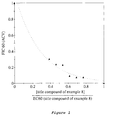
- Figures 1 and 2 are graphic representations of results obtained from studies involving combinations of acyclovir and a peptidomimetic compound of formula 1.
- the studies involve the application of the isobole method, described in example 12, to demonstrate the synergistic activity of the combinations against herpes simplex viruses, types 1 and 2, respectively.
- formula 1 can be illustrated as: wherein Tbg represents the amino acid residue of (S)-2-amino-3,3-dimethylbutanoic acid, Me and Et represent the alkyl radicals methyl and ethyl, respectively, and Asp(cyPn) represents the amino acid residue of (S)- ⁇ -amino-1-carboxycyclopentaneacetic acid.
- residue with reference to an amino acid or amino acid derivative means a radical derived from the corresponding ⁇ -amino acid by eliminating the hydroxyl of the carboxy group and one hydrogen of the ⁇ -amino group.
- (1-3C)alkyl as used herein means an alkyl radical selected from the group consisting of methyl, ethyl, propyl or isopropyl.
- pharmaceutically acceptable carrier means a non-toxic, generally inert vehicle for the active ingredient which does not adversely affect the ingredient.
- physiologically acceptable carrier means an acceptable cosmetic vehicle of one or more non-toxic excipients which do not react with or reduce the effectiveness of the active ingredient contained therein.
- an effective amount means a predetermined antiviral amount of the antiviral agent, i.e. an amount of the agent sufficient to be effective against herpes virus in vivo.
- the compounds of formula 1 are prepared by known methods using reaction conditions which are known to be suitable for the reactants. Description of the methods are found in standard textbooks such as “Annual Reports In Organic Synthesis - 1994", P.M. Weintraub et al., Eds, Academic Press, Inc., San Diego, CA, USA, 1994 (and the preceding annual reports), "Vogel's Textbook Of Practical Organic Chemistry", B.S. Furniss et al., Eds, Longman Group Limited, Essex, UK, 1986, and “Comprehensive Organic Synthesis", B.M. Trost and I. Fleming, Eds, Pergaman Press, Oxford, UK, 1991, Volumes 1 to 8.
- This key intermediate is represented by formula 2 W 1 -Tbg-CH 2 -(R)-CH(CH 2 C(O)CMe 3 )C(O)OW 2 wherein W 1 is an amino protective group, and W 2 is a carboxyl protective group.
- W 2 is a protective group which can be selectively removed in the presence of the protective group W 1 .
- W 1 is tert-butyloxycarbonyl (Boc) or 2,2,2-trichloroethoxycarbonyl and W 2 is benzyl, (4-nitrophenyl)methyl, methyl or ethyl.
- the intermediate of formula 2 can be prepared by a stereospecific process illustrated in the following Scheme 1. wherein W 1 and W 2 are as defined herein and Alk is methyl or ethyl.
- a starting material of formula W 1 -Tbg-O-Alk (3) is reacted with the reagent LiCH 2 P(O) (OCH 3 ) 2 (4) (prepared from CH 3 P(O)(OCH 3 ) 2 and butyllithium) to give a phosphonate of formula W 1 -Tbg-CH 2 P(O)(OCH 3 ) 2 (5) .
- a suitable secondary amine preferably pyrrolidine or piperidine
- the carboxyl protective group (W 2 ) of the key intermediate of formula 2 is selectively removed by standard methods, for example, by hydrogenolysis in the instance wherein W 2 is benzyl, to give the corresponding free carboxylic acid derivative (see formula 14 in Scheme 2 below) for incorporation into the process for preparing the compounds of formula 1.
- the incorporation of the preceding free carboxylic acid derivative into a process for the preparation of the compounds of formula 1 can be envisaged as a sequence of chemical events wherein a carboxylic acid derivative (representing a first unit) is joined to two other units by first forming an amide bond, and secondly by forming a ureido bond.
- an important aspect of this invention includes a key intermediate of formula 2 in which W 1 is an amino protective group for the amine at the N-terminus and W 2 is a carboxyl protective group for the carboxyl at the C-terminus of the intermediate, with the proviso that the amino protective group W 1 can be selectively removed in the presence of the carboxyl protective group W 2 when the terminal amine is destined for the reaction to follow, or that, on the other hand, the carboxyl protective group W 2 can be selectively removed in the presence of the amino protective group W 1 when the terminal carboxyl is destined for the reaction to follow.
- Examples of the intermediates of formula 2 wherein the amino protective group W 1 can be selectively removed in the presence of the carboxyl protective group W 2 include those in which W 1 is tert-butyloxycarbonyl and W 2 is benzyl, 2,2,2-trichloroethyl, methyl or ethyl.
- the compounds of formula 1 can be prepared by a convenient and practical process illustrated in the following Scheme 2.
- W 3 is a carboxyl protective group (preferably benzyl, tert-butyl or 2,2,2-trichloroethyl)
- R 4 is azido for formula 12 and an amino for formula 13
- R 5 is W 1 as defined herein for formula 15 and a hydrogen for formula 16, and R 1 , R 2 and R 3 are as defined herein.
- a process for preparing compound of formula 1 comprises:
- the coupling step involves the dehydrative coupling of a free carboxyl of one reactant with the free amino group of the other reactant in the presence of coupling agent to form a linking amide bond.
- coupling agents are found in general textbooks on peptide chemistry, for example, M. Bodanszky, "Peptide Chemistry", 2nd rev ed, Springer-Verlag, Berlin, Germany, 1993.
- suitable coupling agents are N,N'-dicyclohexylcarbodiimide, 1-hydroxybenzotriazole in the presence of N,N'-dicyclohexylcarbodiimide or N-ethyl-N'-[(3-dimethylamino)propyl]carbodiimide.
- a very practical and useful coupling agent is the commercially available (benzotriazol-1-yloxy)tri(dimethylamino)phosphonium hexafluorophosphate, either by itself or in the presence of 1-hydroxybenzotriazole. Still another very practical and useful coupling agent is commercially available 2-(1H-benzotriazol-1-yl)-N, N, N', N'-tetramethyluronium tetrafluoroborate.
- the coupling reaction is conducted in an inert solvent, e.g. dichloromethane or acetonitrile.
- the reaction temperature usually ranges between 0° and 50 °C and the reaction time usually ranges between 15 minutes and 24 hours.
- step (b) the azide group of the ⁇ -azidoamide of formula 12 is transformed into a corresponding amine of the ⁇ -aminoamide of formula 13 by a reducing agent capable of selectively reducing an azide to an amino group in the presence of an amido group and an ester group.
- a reducing agent capable of selectively reducing an azide to an amino group in the presence of an amido group and an ester group.
- step (e) the free N-terminal derivative of formula 16 is reacted directly with a isocyanatocyclohexane derivative of formula 17 to give the ureido derivative of formula 18.
- This step is based on the classical method for preparing a urea whereby an isocyanato derivative of the residue to be incorporated is reacted with the terminal amino group of an appropriate fragment. ⁇ For examples of this method, see P. Majer and R.S. Randad, J. Org. Chem., 59 , 1937 (1994). ⁇
- the reaction proceeds readily in the presence of an excess of a suitable tertiary amine, for example N-methylmorpholine or diisopropylethylamine.
- the reaction is conducted in an inert solvent, such as dichloromethane or toluene, and at temperatures usually ranging from -20 °C to 20 °C.
- the compound of formula 1 can be obtained in the form of a therapeutically acceptable salt.
- Such salts can be considered as biological equivalents of the compounds of formula 1. Examples of such salts (of the carboxy group) are those formed by known methods with the sodium, potassium or calcium cation.
- the antiviral activity of the compounds of formula 1 can be demonstrated by biochemical, microbiological and biological procedures showing the inhibitory effect of the compounds on the replication of herpes simplex viruses, types 1 and 2 (HSV-1 and HSV-2), as well as acyclovir-resistant herpes simplex viruses.
- the inhibitory effect on herpes ribonucleotide reductase is noted for exemplary compounds of formula 1.
- a method for demonstrating the inhibitory effect of the compounds of formula 1 on viral replication is the cell culture technique; see, for example, T. Spector et al., Proc. Natl. Acad. Sci. USA, 82 , 4254 (1985).
- the therapeutic effect of the compounds of formula 1 can be demonstrated in laboratory animals, for instance, by using an assay based on the murine model of herpes simplex virus-induced ocular disease for antiviral drug testing, described by C.R. Brandt et al., J. Virol. Meth., 36 , 209 (1992).
- a compound of this invention When a compound of this invention, or one of its therapeutically acceptable acid addition salts, is employed as an antiviral agent, it is administered topically or systemically to warm-blooded animals, e.g. humans, pigs or horses, in a vehicle comprising one or more pharmaceutically acceptable carriers, the proportion of which is determined by the solubility and chemical nature of the compound, chosen route of administration and standard biological practice.
- the compound For topical administration, the compound can be formulated in pharmaceutically accepted vehicles containing 0.1 to 5 percent, preferably 0.5 to 5 percent, of the active agent. Such formulations can be in the form of a solution, cream or lotion.
- the compound of formula 1 is administered by either intravenous, subcutaneous or intramuscular injection, in compositions with pharmaceutically acceptable vehicles or carriers.
- pharmaceutically acceptable vehicles or carriers for administration by injection, it is preferred to use the compounds in solution in a sterile aqueous vehicle which may also contain other solutes such as buffers or preservatives as well as sufficient quantities of pharmaceutically acceptable salts or of glucose to make the solution isotonic.
- Suitable vehicles or carriers for the above noted formulations are described in standard pharmaceutical texts, e.g. in "Remington's Pharmaceutical Sciences", 18th ed, Mack Publishing Company, Easton, Penn., 1990.
- the dosage of the compound will vary with the form of administration and the particular active agent chosen. Furthermore, it will vary with the particular host under treatment. Generally, treatment is initiated with small increments until the optimum effect under the circumstances is reached. In general, the compound is most desirably administered at a concentration level that will generally afford antivirally effective results without causing any harmful or deleterious side effects.
- the compound of formula 1 is administered cutaneously in a suitable topical formulation to the infected area of the body e.g. the skin or part of the oral or genital cavity, in an amount sufficient to cover the infected area.
- the treatment should be repeated, for example, every four to six hours until lesions heal.
- the compound of formula 1 is administered at a dosage of 10 mg to 150 mg per kilogram of body weight per day, although the aforementioned variations will occur. However, a dosage level that is in the range of from about 10 mg to 100 mg per kilogram of body weight per day is most desirably employed in order to achieve effective results.
- Another aspect of this invention comprises a cosmetic composition
- a cosmetic composition comprising a herpes viral prophylactic amount of the compound of formula 1, or a therapeutically acceptable salt thereof, together with a physiologically acceptable cosmetic carrier. Additional components, for example, skin softeners, may be included in the formulation.
- the cosmetic formulation of this invention is used prophylactically to prevent the outbreak of herpetic lesions of the skin.
- the formulation can be applied nightly to susceptible areas of the skin.
- the cosmetic composition contains less of the compound than corresponding pharmaceutical compositions for topical application.
- a preferred range of the amount of the compound in the cosmetic composition is 0.5 to 5 percent by weight.
- formulations disclosed hereinabove are indicated to be effective and relatively safe medications for treating herpes viral infections, the possible concurrent administration of these formulations with other antiviral medications or agents to obtain beneficial results is not excluded.
- antiviral medications or agents include the antiviral nucleosides, for example, acyclovir, and antiviral surface active agents or antiviral interferons such as those disclosed by S.S. Asculai and F. Rapp in U.S. patent 4,507,281, March 26, 1985.
- a pharmaceutical composition for treating herpes infections in a mammal comprising a pharmaceutically acceptable carrier, and an effective amount of the combination of an antiviral nucleoside analog or a therapeutically acceptable salt thereof, and a ribonucleotide reductase inhibiting compound of formula 1 or a therapeutically acceptable salt thereof.
- the antiviral nucleoside analog employed in the combination is one which is enzymatically convertible (in vivo) to a viral DNA polymerase inhibitor of, and/or an alternative substrate for, a herpes DNA polymerase.
- the antiviral nucleoside analog can be selected from known nucleoside analogs.
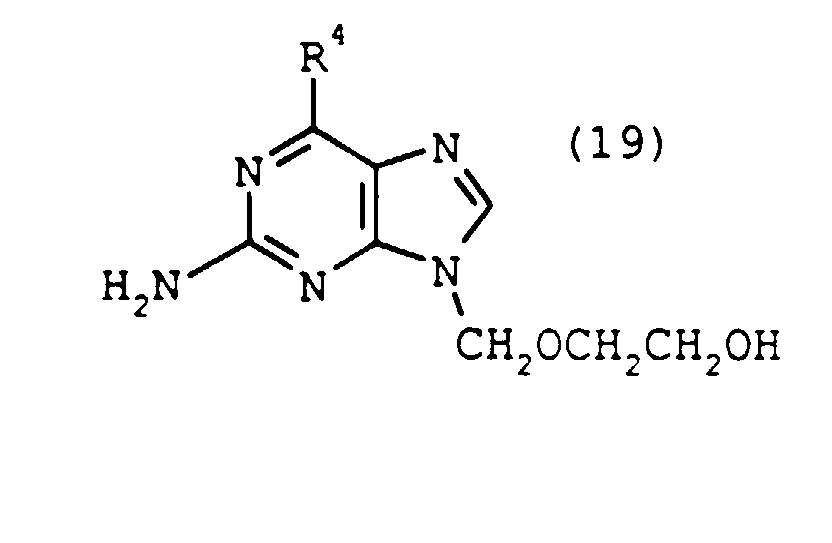
- Preferred nucleoside analogs of the invention include acyclovir and its analogs; for example, the compounds of formula 19 wherein R 4 is hydrogen, hydroxy or amino, or a therapeutically acceptable salt thereof. (Formula 19 wherein R 4 is hydroxy represents acyclovir.)
- antiviral nucleoside analogs for use according to the present invention include penciclovir, famciclovir and valacyclovir.
- An example of a therapeutically acceptable salt of the nucleoside analogs is the sodium salt.
- the term "synergistic effect" when used in relation to the antiviral or antiherpes activity of the above defined combination of the nucleoside analog and the compound of formula 1 means an antiviral or antiherpes effect which is greater than the predictive additive effect of the two individual components of the combination.
- the combination When utilizing the combination of this invention for treating herpes infections, the combination is administered to warm blooded animals, e.g. humans, pigs or horses, in a vehicle comprising one or more pharmaceutically acceptable carriers, the proportion of which is determined by the solubility and chemical nature of the nucleoside analog and the compound of formula 1, chosen route of administration, standard biological practice, and by the relative amounts of the two active ingredients to provide a synergistic antiviral effect.
- the combination may be administered topically.
- the two active agents i.e. the antiviral nucleoside analog and the compound of formula 1, or their therapeutically acceptable salts
- Such formulation can contain 0.01 to 1.0 percent by weight of the nucleoside analog, or a therapeutically acceptable salt thereof, and about 0.05 to 1 percent by weight of the compound of formula 1, or a therapeutically acceptable salt thereof.
- the two active agents are present in the pharmaceutical composition in amounts to provide a synergistic antiherpes effect.
- the first reactant i.e. a free amine (or its hydrochloride salt)
- a free amine or its hydrochloride salt
- CH 2 Cl 2 or CH 3 CN a free amine
- four equivalents of N-methylmorpholine are added to the stirred solution.
- one equivalent of the second reactant i.e. a free carboxylic acid, and 1.05 equivalents of the coupling agent are added.
- the desired cis isomer of 2, 6-dimethylcyclohexanone oxime was reduced (platinum black, 50 psi of hydrogen in a Parr hydrogenator glacial acetic acid, hydrochloric acid, 14 h) to give the desired (1 ⁇ ,2 ⁇ ,6 ⁇ )-2,6-dimethyl-1-cyclohexanamine as its hydrochloric acid addition salt, mp >280 °C.
- the method for preparing and reducing the oximes to amines has been described previously by G. Bellucci et al., Gazz. Chim. Ital., 99 , 1217 (1969).
- HSV-1 Herpes Simplex Virus
- HSV-2 Herpes Simplex Virus
- BHK-21/C13 cells (ATCC CCL 10) are incubated for two days in 150 cm 2 T-flasks (1.5 x 10 6 cells/flask) with alpha-MEM medium (Gibco Canada Inc., Burlington, Ontario, Canada) supplemented with 8% (v/v) fetal bovine serum (FBS, Gibco Canada Inc.).
- the cells are trypsinized and then transferred to fresh media in a 24 well plate to give 2.5 x 10 5 cells in 750 ⁇ L of media per well.
- the cells are incubated at 37° for a period of 6 h to allow them to adhere to the plate.
- the cells are washed once with 500 ⁇ L of alpha-MEM supplemented with 0.5% (v/v) FBS and then incubated with 750 ⁇ L of the same media (low serum) for 3 days. After this period of serum starvation, the low serum medium is removed and the cells are incubated in 500 ⁇ L of BBMT for 2 to 3 h.
- the HSV-2 used was strain HG-52, see Y. Langelier and G. Buttin, J. Gen. Virol., 57 , 21 (1981); the virus was stored at -80°.
- the media is removed and the cells are washed with BBMT (3 X 250 ⁇ L).
- the cells in each well are incubated with or without 200 ⁇ L of appropriate concentrations of the test agent in BBMT medium.
- the infected cells are harvested by first freezing the plate at -80°, followed by thawing. The cells in each well are scraped off the surface of the well with the help of the melting ice fragments.
- the cell suspensions are collected and each well is rinsed with 150 ⁇ L of BBMT medium.
- the viral sample (suspension plus washing) is sonicated gently for 4 min at 4°. Cell debris are removed by centrifugation (1000 times gravity for 10 min at 4°). The supernatant is collected and stored at -80° until determination of viral titer.
- Viral titration was performed by a modification of the colorimetric assay method of M. Langlois et al., Journal of Biological Standardization, 14 , 201 (1986), and the application of the modified method to this cell culture assay is described in detail by R. Déziel and Y. Guindon, vide supra.
- the percentage of virus growth inhibition can be determined for the various concentrations of the test agent. From this data, the EC 50 , i.e. the concentration of the test agent effecting a 50% inhibition of virus replication, can be calculated.
- TABLE II provides examples of the results obtained when compounds of formula 1 were evaluated according to the cell culture assay (HSV-2) of this example.
- this method requires experimental data generated for the two test compounds, each alone and in different combinations. In this way selected concentrations of the title compound of example 8 (EC 5 , EC 10 , EC 20 and EC 30 ) were added to a given concentration of ACV and the EC 50 's were evaluated as described previously. For these experiments, the EC 5 , EC 10 , EC 20 and EC 30 of the title compound of example 8 (i.e. the test compound) were derived from inhibition curves previously obtained.
- FIC 60 (ACV) (which is the ratio of the concentration of ACV required to inhibit HSV replication by 60% in the presence of a fixed concentration of the test compound to the concentration required in the absence of the test compound) .
- FIC 60 (ACV + X ⁇ M of the test compound EC 60 (ACV alone)
- TABLES III and IV are illustrative of results obtained when combinations of ACV and the title compound of example 8 (TC) were evaluated for their antiherpes activity against HSV-1 and HSV-2.
Landscapes
- Chemical & Material Sciences (AREA)
- Organic Chemistry (AREA)
- Health & Medical Sciences (AREA)
- Life Sciences & Earth Sciences (AREA)
- Virology (AREA)
- Animal Behavior & Ethology (AREA)
- Oncology (AREA)
- Chemical Kinetics & Catalysis (AREA)
- General Chemical & Material Sciences (AREA)
- Medicinal Chemistry (AREA)
- Nuclear Medicine, Radiotherapy & Molecular Imaging (AREA)
- Pharmacology & Pharmacy (AREA)
- Communicable Diseases (AREA)
- General Health & Medical Sciences (AREA)
- Public Health (AREA)
- Veterinary Medicine (AREA)
- Engineering & Computer Science (AREA)
- Biotechnology (AREA)
- Molecular Biology (AREA)
- Medicines That Contain Protein Lipid Enzymes And Other Medicines (AREA)
- Pharmaceuticals Containing Other Organic And Inorganic Compounds (AREA)
- Peptides Or Proteins (AREA)
- Storing, Repeated Paying-Out, And Re-Storing Of Elongated Articles (AREA)
- Cosmetics (AREA)
- Acyclic And Carbocyclic Compounds In Medicinal Compositions (AREA)
- Organic Low-Molecular-Weight Compounds And Preparation Thereof (AREA)
Abstract
Description
- This invention relates to peptidomimetic compounds having antiviral properties and to means for using the compounds to treat viral infections. More specifically, the invention relates to peptidomimetic compounds exhibiting activity against herpes viruses, to pharmaceutical compositions comprising the compounds, and to methods of using the compounds to inhibit the replication of herpes virus and to treat herpes infections.
- Herpes viruses inflict a wide range of diseases against humans and animals. For instance, herpes simplex viruses, types 1 and 2 (HSV-1 and HSV-2), are responsible for cold sores and genital lesions, respectively; varicella zoster virus (VZV) causes chicken pox and shingles; and the Epstein-Barr virus (EBV) causes infectious mononucleosis.
- Over the past two decades, a class of compounds known as the purine and pyrimidine nucleoside analogs has received the most attention by investigators in the search for new therapeutic agents for treatment of herpes virus infections. As a result, several nucleoside analogs have been developed as antiviral agents. The most successful to date is acyclovir which is the agent of choice for treating genital herpes simplex infections.
- Nevertheless, in spite of some significant advances, the need for effective, safe therapeutic agents for treating herpes viral infections continues to exist. For a review of current therapeutic agents in this area, see R.E. Boehme et al., Annual Reports in Medicinal Chemistry, 29, 145 (1994).
- The present application discloses a group of compounds having activity against herpes simplex viruses. The selective action of these compounds against herpes viruses, combined with a wide margin of safety, renders the compounds as desirable agents for combating herpes infections.
- The following references disclose peptides or peptidomimetic compounds which have been associated with antiherpes activity:
- J.H. Subak-Sharpe et al., UK patent application 2185024, published July 8, 1987,
- P. Gaudreau et al., J. Biol. Chem., 262, 12413 (1987),
- E.A. Cohen et al., US patent 4,795,740, January 3, 1989,
- R. Freidinger et al., US patent 4,814,432, March 21, 1989,
- V.M. Garskey et al., US patent 4,837,304, June 6, 1989,
- R. Colonno et al., US patent 4,845,195, July 4, 1989,
- P. Gaudreau et al., J. Med. Chem., 33, 723 (1990),
- J. Adams et al., European patent application 411,334, published February 6, 1991,
- R.L. Tolman et al., European patent application 412, 595, published February 13, 1991,
- W.T. Ashton et al., European patent application 438,873, published July 31, 1991,
- P.L. Beaulieu et al., European patent application 461,546, published December 18, 1991,
- P. Gaudreau et al., J. Med. Chem., 35, 346 (1992).
- R. Déziel and Y. Guindon, Canadian patent application 2,033,448, published July 1, 1992,
- L.L. Chang et al., Bioorganic & Medicinal Chemistry Letters, 2, 1207 (1992),
- P.L. Beaulieu et al., European patent application 560 267, published September 15, 1993,
- N. Moss et al., J. Med. Chem., 36, 3005 (1993) and
- R. Déziel and N. Moss, European patent application 618 226, published October 5, 1994.
-
- The subject peptides of the previous reports can be distinguished from the peptides of the present application by characteristic structural and biological differences.
- EP-A-560 267 discloses peptide derivatives which are useful for treating herpes infections. The peptide derivatives are represented by formula
- WO-A-94 025 046 is directed to a previously undisclosed use of peptide derivatives, alone or in combination with known antiviral nucleoside analogs, for treating acyclovir-resistant herpes infection. The peptide derivatives are included in the group of more preferred compounds noted in above-mentioned document EP-A-520 267 on page 3, line 37 to page 4, line 5.
- Abbreviations and symbols used hereinafter are defined in "Details of the Invention" section of this application.
- The compounds of this invention are represented by formula 1wherein R1 is (1-3C)alkyl, R2 is hydrogen or (1-3C)alkyl and R3 is (1-3C)alkyl, or a therapeutically acceptable salt thereof.

- A preferred group of the compounds of this invention is represented by formula 1 wherein R1 and R3 are both methyl or both ethyl, and R2 is hydrogen, methyl or ethyl, or a therapeutically acceptable salt thereof.
- A more preferred group of compounds are represented by formula 1 wherein R1 and R3 are both methyl and R2 is hydrogen or a cis-methyl relative to R1 and R3; or R1 and R3 are both ethyl and R2 is hydrogen; or a therapeutically acceptable salt thereof.
- Included within the scope of this invention is a pharmaceutical composition comprising an antiherpes virally effective amount of a compound of formula 1, or a therapeutically acceptable salt thereof, and a pharmaceutically acceptable carrier.
- Also included within the scope of this invention is a cosmetic composition comprising a compound of formula 1, or a therapeutically acceptable salt thereof, and a physiologically acceptable carrier suitable for topical application.
- Processes for preparing the compounds of formula 1 are described hereinafter.
- Figures 1 and 2 are graphic representations of results obtained from studies involving combinations of acyclovir and a peptidomimetic compound of formula 1. The studies involve the application of the isobole method, described in example 12, to demonstrate the synergistic activity of the combinations against herpes simplex viruses, types 1 and 2, respectively.
- Alternatively, formula 1 can be illustrated as:wherein Tbg represents the amino acid residue of (S)-2-amino-3,3-dimethylbutanoic acid, Me and Et represent the alkyl radicals methyl and ethyl, respectively, and Asp(cyPn) represents the amino acid residue of (S)-α-amino-1-carboxycyclopentaneacetic acid.

- The term "residue" with reference to an amino acid or amino acid derivative means a radical derived from the corresponding α-amino acid by eliminating the hydroxyl of the carboxy group and one hydrogen of the α-amino group.
- The term "(1-3C)alkyl" as used herein means an alkyl radical selected from the group consisting of methyl, ethyl, propyl or isopropyl.
- The term "pharmaceutically acceptable carrier" as used herein means a non-toxic, generally inert vehicle for the active ingredient which does not adversely affect the ingredient.
- The term "physiologically acceptable carrier" as used herein means an acceptable cosmetic vehicle of one or more non-toxic excipients which do not react with or reduce the effectiveness of the active ingredient contained therein.
- The term "effective amount" means a predetermined antiviral amount of the antiviral agent, i.e. an amount of the agent sufficient to be effective against herpes virus in vivo.
- In general, the compounds of formula 1 are prepared by known methods using reaction conditions which are known to be suitable for the reactants. Description of the methods are found in standard textbooks such as "Annual Reports In Organic Synthesis - 1994", P.M. Weintraub et al., Eds, Academic Press, Inc., San Diego, CA, USA, 1994 (and the preceding annual reports), "Vogel's Textbook Of Practical Organic Chemistry", B.S. Furniss et al., Eds, Longman Group Limited, Essex, UK, 1986, and "Comprehensive Organic Synthesis", B.M. Trost and I. Fleming, Eds, Pergaman Press, Oxford, UK, 1991, Volumes 1 to 8.
- An exception to the latter statement, however, is the unique stereospecific synthesis of a key intermediate for the preparation of the compounds of formula 1. This key intermediate is represented by formula 2
- The intermediate of formula 2 can be prepared by a stereospecific process illustrated in the following Scheme 1.wherein W1 and W2 are as defined herein and Alk is methyl or ethyl.

- With reference to the preceding schematic representation, a starting material of formula W1-Tbg-O-Alk (3) is reacted with the reagent LiCH2P(O) (OCH3)2 (4) (prepared from CH3P(O)(OCH3)2 and butyllithium) to give a phosphonate of formula W1-Tbg-CH2P(O)(OCH3)2 (5) . Reaction of the latter phosphonate with a glyoxylyl ester of formula HC(O)C(O)OW2 (6) in the presence a suitable tertiary amine, preferably triethylamine or diisopropylethylamine, affords a γ-keto-α,β-unsaturated ester of formula W1-Tbg-(E)-CH=CHC(O)OW2 (7). Reaction of the latter compound with the sodium enolate of a β-ketoester of formula CH2=CHCH2OC(O)CH2C(O)CMe3 (8) affords a Michael adduct of formula W1-Tbg-CH2-(R)-CH{CH(C(O)CMe3)-(C(O)OCH2CH=CH2)}C(O)OW2 (9).
- Note (1): The β-ketoester of formula 8, i.e. CH2=CHCH2OC(O)CH2C(O)CMe3, is prepared readily by reacting the lithium enolate of allyl acetate with trimethylacetyl chloride.
- Note (2) : The sodium enolate of the β-ketoester of formula 8 is generated in situ from the β-ketoester in the presence of a catalytically effective amount of sodium hydride.
- Thereafter, reaction of the Michael adduct of formula 9 with tetrakistriphenylphosphine palladium (0) in the presence of a suitable secondary amine, preferably pyrrolidine or piperidine, similar to the method of R. Déziel, Tetrahedron Letters, 28, 4371 (1987), effects deallylation and subsequent decarboxylation of the allyl ester to give the key intermediate of formula 2.
- Noteworthy is the unexpected high stereoselectivity obtained in the Michael addition reaction of the γ-keto-α,β-unsaturated ester of formula 7 with the sodium enolate of the β-ketoester of formula 8 to give the Michael adduct of formula 9. The stereoselectivity of the Michael addition reaction is inferred by the fact that the intermediate of formula 2, derived directly from the Michael adduct, is obtained essentially as a single isomer. The diastereoisomeric purity of the intermediate of formula 2 can be demonstrated by nuclear magnetic resonance studies. The enantiomeric purity of the intermediate of formula 2 can be assessed by removing the amino protective group (W1) and applying the method of J. A. Dale et al., J. Org. Chem., 34, 2543 (1969) to the resulting free amino derivative (see example 4 for more detail).
- Thereafter again, the carboxyl protective group (W2) of the key intermediate of formula 2 is selectively removed by standard methods, for example, by hydrogenolysis in the instance wherein W2 is benzyl, to give the corresponding free carboxylic acid derivative (see formula 14 in Scheme 2 below) for incorporation into the process for preparing the compounds of formula 1.
- In general, the incorporation of the preceding free carboxylic acid derivative into a process for the preparation of the compounds of formula 1 can be envisaged as a sequence of chemical events wherein a carboxylic acid derivative (representing a first unit) is joined to two other units by first forming an amide bond, and secondly by forming a ureido bond.
- In the following more detailed description of a convenient and practical process for preparing the compounds of formula 1, a certain order of the chemical events is followed. However, it will be appreciated that changes in the order of chemical events are not critical and therefore such changes are deemed to be within the scope of the present invention.
- Likewise, it should be appreciated that the intermediate of formula 2 wherein protective group W1 can be selectively removed in the presence of protective group W2, allowing for a change in the order of the chemical events, also is deemed to be within the scope of the present invention. Accordingly, an important aspect of this invention includes a key intermediate of formula 2 in which W1 is an amino protective group for the amine at the N-terminus and W2 is a carboxyl protective group for the carboxyl at the C-terminus of the intermediate, with the proviso that the amino protective group W1 can be selectively removed in the presence of the carboxyl protective group W2 when the terminal amine is destined for the reaction to follow, or that, on the other hand, the carboxyl protective group W2 can be selectively removed in the presence of the amino protective group W1 when the terminal carboxyl is destined for the reaction to follow.
- Examples of the intermediates of formula 2 wherein the amino protective group W1 can be selectively removed in the presence of the carboxyl protective group W2 include those in which W1 is tert-butyloxycarbonyl and W2 is benzyl, 2,2,2-trichloroethyl, methyl or ethyl.
- More particularly, with respect to an overall process, the compounds of formula 1 can be prepared by a convenient and practical process illustrated in the following Scheme 2.In Scheme 2, W3 is a carboxyl protective group (preferably benzyl, tert-butyl or 2,2,2-trichloroethyl), R4 is azido for formula 12 and an amino for formula 13, R5 is W1 as defined herein for formula 15 and a hydrogen for formula 16, and R1, R2 and R3 are as defined herein.

- Referring to Scheme 2, a process for preparing compound of formula 1 comprises:
- (a) coupling a carboxylic acid derivative of formula 10 with an amine of formula 11 to obtain an α-azidoamide of formula 12,
- (b) reducing the α-azidoamide of formula 12 to obtain a corresponding α-aminoamide of formula 13,
- (c) coupling the α-amidoamide of formula 13 with a carboxylic acid derivative of formula 14 to obtain a diprotected intermediate of formula 15,
- (d) selectively deprotecting the diprotected intermediate of formula 15 to obtain the free N-terminal derivative of formula 16,
- (e) reacting the free N-terminal derivative of formula 16 with an isocyanatocyclohexane derivative of formula 17 to obtain a ureido derivative of formula 18, and
- (f) deprotecting the latter ureido derivative of formula 18 to obtain the corresponding compound of formula 1, and
- (g) if desired transforming the compound of formula 1 into a therapeutically acceptable salt thereof.
-
- The coupling steps (a) and (c) and the deprotecting steps (d) and (f) can be achieved by methods commonly used in peptide synthesis.
- More explicitly, the coupling step involves the dehydrative coupling of a free carboxyl of one reactant with the free amino group of the other reactant in the presence of coupling agent to form a linking amide bond. Description of such coupling agents are found in general textbooks on peptide chemistry, for example, M. Bodanszky, "Peptide Chemistry", 2nd rev ed, Springer-Verlag, Berlin, Germany, 1993. Examples of suitable coupling agents are N,N'-dicyclohexylcarbodiimide, 1-hydroxybenzotriazole in the presence of N,N'-dicyclohexylcarbodiimide or N-ethyl-N'-[(3-dimethylamino)propyl]carbodiimide. A very practical and useful coupling agent is the commercially available (benzotriazol-1-yloxy)tri(dimethylamino)phosphonium hexafluorophosphate, either by itself or in the presence of 1-hydroxybenzotriazole. Still another very practical and useful coupling agent is commercially available 2-(1H-benzotriazol-1-yl)-N, N, N', N'-tetramethyluronium tetrafluoroborate.
- The coupling reaction is conducted in an inert solvent, e.g. dichloromethane or acetonitrile. An excess of a tertiary amine, e.g. diisopropylethylamine or N-methylmorpholine, is added to maintain the reaction mixture at a pH of about eight. The reaction temperature usually ranges between 0° and 50 °C and the reaction time usually ranges between 15 minutes and 24 hours.
- In step (b), the azide group of the α-azidoamide of formula 12 is transformed into a corresponding amine of the α-aminoamide of formula 13 by a reducing agent capable of selectively reducing an azide to an amino group in the presence of an amido group and an ester group. This step can be accomplished conveniently and efficiently by the method of N. Maiti et al., Tetrahedron Letters, 27, 1423 (1986) using stannous chloride as the reducing agent and methanol as the reaction solvent.
- In step (e), the free N-terminal derivative of formula 16 is reacted directly with a isocyanatocyclohexane derivative of formula 17 to give the ureido derivative of formula 18. This step is based on the classical method for preparing a urea whereby an isocyanato derivative of the residue to be incorporated is reacted with the terminal amino group of an appropriate fragment. {For examples of this method, see P. Majer and R.S. Randad, J. Org. Chem., 59, 1937 (1994).} The reaction proceeds readily in the presence of an excess of a suitable tertiary amine, for example N-methylmorpholine or diisopropylethylamine. The reaction is conducted in an inert solvent, such as dichloromethane or toluene, and at temperatures usually ranging from -20 °C to 20 °C.
- Furthermore, if desired, the compound of formula 1 can be obtained in the form of a therapeutically acceptable salt. Such salts can be considered as biological equivalents of the compounds of formula 1. Examples of such salts (of the carboxy group) are those formed by known methods with the sodium, potassium or calcium cation.
- The antiviral activity of the compounds of formula 1 can be demonstrated by biochemical, microbiological and biological procedures showing the inhibitory effect of the compounds on the replication of herpes simplex viruses, types 1 and 2 (HSV-1 and HSV-2), as well as acyclovir-resistant herpes simplex viruses.
- In the examples hereinafter, the inhibitory effect on herpes ribonucleotide reductase is noted for exemplary compounds of formula 1. Noteworthy, in the connection with this specific inhibition of herpes ribonucleotide reductase, is the relatively minimal effect or absence of such an effect of the compounds on cellular ribonucleotide reductase activity required for normal cell replication.
- A method for demonstrating the inhibitory effect of the compounds of formula 1 on viral replication is the cell culture technique; see, for example, T. Spector et al., Proc. Natl. Acad. Sci. USA, 82, 4254 (1985).
- The therapeutic effect of the compounds of formula 1 can be demonstrated in laboratory animals, for instance, by using an assay based on the murine model of herpes simplex virus-induced ocular disease for antiviral drug testing, described by C.R. Brandt et al., J. Virol. Meth., 36, 209 (1992).
- When a compound of this invention, or one of its therapeutically acceptable acid addition salts, is employed as an antiviral agent, it is administered topically or systemically to warm-blooded animals, e.g. humans, pigs or horses, in a vehicle comprising one or more pharmaceutically acceptable carriers, the proportion of which is determined by the solubility and chemical nature of the compound, chosen route of administration and standard biological practice. For topical administration, the compound can be formulated in pharmaceutically accepted vehicles containing 0.1 to 5 percent, preferably 0.5 to 5 percent, of the active agent. Such formulations can be in the form of a solution, cream or lotion.
- For systemic administration, the compound of formula 1 is administered by either intravenous, subcutaneous or intramuscular injection, in compositions with pharmaceutically acceptable vehicles or carriers. For administration by injection, it is preferred to use the compounds in solution in a sterile aqueous vehicle which may also contain other solutes such as buffers or preservatives as well as sufficient quantities of pharmaceutically acceptable salts or of glucose to make the solution isotonic.
- Suitable vehicles or carriers for the above noted formulations are described in standard pharmaceutical texts, e.g. in "Remington's Pharmaceutical Sciences", 18th ed, Mack Publishing Company, Easton, Penn., 1990.
- The dosage of the compound will vary with the form of administration and the particular active agent chosen. Furthermore, it will vary with the particular host under treatment. Generally, treatment is initiated with small increments until the optimum effect under the circumstances is reached. In general, the compound is most desirably administered at a concentration level that will generally afford antivirally effective results without causing any harmful or deleterious side effects.
- With reference to topical application, the compound of formula 1 is administered cutaneously in a suitable topical formulation to the infected area of the body e.g. the skin or part of the oral or genital cavity, in an amount sufficient to cover the infected area. The treatment should be repeated, for example, every four to six hours until lesions heal.
- With reference to systemic administration, the compound of formula 1 is administered at a dosage of 10 mg to 150 mg per kilogram of body weight per day, although the aforementioned variations will occur. However, a dosage level that is in the range of from about 10 mg to 100 mg per kilogram of body weight per day is most desirably employed in order to achieve effective results.
- Another aspect of this invention comprises a cosmetic composition comprising a herpes viral prophylactic amount of the compound of formula 1, or a therapeutically acceptable salt thereof, together with a physiologically acceptable cosmetic carrier. Additional components, for example, skin softeners, may be included in the formulation. The cosmetic formulation of this invention is used prophylactically to prevent the outbreak of herpetic lesions of the skin. The formulation can be applied nightly to susceptible areas of the skin. Generally, the cosmetic composition contains less of the compound than corresponding pharmaceutical compositions for topical application. A preferred range of the amount of the compound in the cosmetic composition is 0.5 to 5 percent by weight.
- Although the formulations disclosed hereinabove are indicated to be effective and relatively safe medications for treating herpes viral infections, the possible concurrent administration of these formulations with other antiviral medications or agents to obtain beneficial results is not excluded. Such other antiviral medications or agents include the antiviral nucleosides, for example, acyclovir, and antiviral surface active agents or antiviral interferons such as those disclosed by S.S. Asculai and F. Rapp in U.S. patent 4,507,281, March 26, 1985.
- More specifically with respect to treating herpes viral infections by concurrent administration, it has been found that the antiherpes activity of an antiviral nucleoside analogs can be enhanced synergistically, without the concomitant enhancement of toxic effects, by combining the same with a compound of formula 1. Accordingly, there is provided herewith a pharmaceutical composition for treating herpes infections in a mammal comprising a pharmaceutically acceptable carrier, and an effective amount of the combination of an antiviral nucleoside analog or a therapeutically acceptable salt thereof, and a ribonucleotide reductase inhibiting compound of formula 1 or a therapeutically acceptable salt thereof.
- The antiviral nucleoside analog employed in the combination is one which is enzymatically convertible (in vivo) to a viral DNA polymerase inhibitor of, and/or an alternative substrate for, a herpes DNA polymerase. The antiviral nucleoside analog can be selected from known nucleoside analogs. Preferred nucleoside analogs of the invention include acyclovir and its analogs; for example, the compounds of formula 19wherein R4 is hydrogen, hydroxy or amino, or a therapeutically acceptable salt thereof. (Formula 19 wherein R4 is hydroxy represents acyclovir.)
- Other preferred antiviral nucleoside analogs for use according to the present invention include penciclovir, famciclovir and valacyclovir.
- An example of a therapeutically acceptable salt of the nucleoside analogs is the sodium salt.
- The term "synergistic effect" when used in relation to the antiviral or antiherpes activity of the above defined combination of the nucleoside analog and the compound of formula 1 means an antiviral or antiherpes effect which is greater than the predictive additive effect of the two individual components of the combination.
- When utilizing the combination of this invention for treating herpes infections, the combination is administered to warm blooded animals, e.g. humans, pigs or horses, in a vehicle comprising one or more pharmaceutically acceptable carriers, the proportion of which is determined by the solubility and chemical nature of the nucleoside analog and the compound of formula 1, chosen route of administration, standard biological practice, and by the relative amounts of the two active ingredients to provide a synergistic antiviral effect. The combination may be administered topically. For example, the two active agents (i.e. the antiviral nucleoside analog and the compound of formula 1, or their therapeutically acceptable salts) can be formulated in the form of solutions, emulsions, creams, or lotions in pharmaceutically acceptable vehicles. Such formulation can contain 0.01 to 1.0 percent by weight of the nucleoside analog, or a therapeutically acceptable salt thereof, and about 0.05 to 1 percent by weight of the compound of formula 1, or a therapeutically acceptable salt thereof.
- In any event, the two active agents are present in the pharmaceutical composition in amounts to provide a synergistic antiherpes effect.
- The following examples illustrate further this invention. Temperatures are given in degrees Celsius. Solution percentages express a weight to volume relationship, and solution ratios express a volume to volume relationship, unless stated otherwise. Nuclear magnetic resonance (NMR) spectra were recorded on a Bruker 400 MHz spectrometer; the chemical shifts (δ) are reported in parts per million. Abbreviations used in the examples include Boc: tert-butyloxycarbonyl; Bzl: benzyl; DMSO: dimethylsulfoxide; Et: ethyl; EtOH: ethanol; EtOAc: ethyl acetate; Et2O: diethyl ether; HPLC: high performance liquid chromatography; Me: methyl; MeOH: methanol; Pr: propyl; TLC: thin layer chromatography; THF: tetrahydrofuran.
- {See also R. Knorr et al., Tetrahedron Letters, 30, 1927 (1989).}
- The first reactant, i.e. a free amine (or its hydrochloride salt), is dissolved in CH2Cl2 or CH3CN and the solution is cooled to 4°. Under a nitrogen atmosphere, four equivalents of N-methylmorpholine are added to the stirred solution. After 20 min, one equivalent of the second reactant, i.e. a free carboxylic acid, and 1.05 equivalents of the coupling agent are added. (Practical and efficient coupling reagents for this purpose are (benzotriazol-1-yloxy)tris-(dimethylamino)phosphonium hexafluorophosphate or preferably 2-(1H-benzotriazol-1-yl)-N,N,N',N'-tetramethyluronium tetrafluoroborate. The reaction is monitored by TLC. After completion of the reaction, the solvent is evaporated under reduced pressure. The residue is dissolved in EtOAc. The solution is washed successively with 1 N aqueous citric acid, 10% aqueous Na2CO3 and brine. The organic phase is dried (MgSO4), filtered and concentrated under reduced pressure. The residue is purified on silica gel (SiO2) according to Still's flash chromatography technique (W.C. Still et al., J. Org. Chem., 43, 2923 (1978)).
- To a cooled solution (0°) of 4,4-dimethyl-3-pentanone (106 g, 0.928 mol) and (R)-α-methylbenzylamine (111 g, 0.916 mol) in benzene (1 L), a solution of TiCl4 (50.5 mL, 0.461 mol) in benzene (200 mL) was added at a rate that kept the temperature of the mixture below 10°. Thereafter, the mixture was stirred mechanically for 3 h at 40°, cooled to room temperature and filtered through diatomaceous earth. The diatomaceous earth was washed with Et2O. The combined filtrate and wash was concentrated. The residue was dissolved in dry MeOH (2 L). The solution was cooled to 0° and NaBH4 (20 g, 0.53 mol) was added portionwise while maintaining the temperature of the mixture below 5°. The methanol was evaporated. The residue was dissolved in Et2O. The solution was washed with brine, dried (MgSO4) and concentrated to give a reddish oil (a 18:1 mixture of diastereoisomers as indicated by NMR). The oil was purified by flash chromatography (SiO2, eluent: EtOAc/hexane, 7:93) to afford N-(1(R)-phenylethyl)-1(R)-ethyl-2,2-dimethylpropylamine as a liquid (110 g, 54% yield). This material was dissolved in hexane (1.5 L). 1 N HCl in Et2O (550 mL) was added to the solution over a period of 15 min. The resulting white solid was collected on a filter and then washed with hexane to provide N-(1(R)-phenylethyl)-1(R)-ethyl-2,2-dimethylpropylamine hydrochloride (125 g, 97% yield). 1H NMR(CDCl3) δ 7.79-7.74 (m, 2H), 7.48-7.30 (m, 3H), 4.49-4.31 (m, 1H), 2.44-2.36 (m, 1H), 2.23 (d, J = 6.5 Hz, 3H), 1.95-1.54 (m, 2H), 1.14 (s, 9H), 0.55 (t, J = 7.5 Hz, 3H).
- A solution of the latter compound (41.5 g) in MeOH (120 mL) was mixed with 10% Pd/C (w/w) (4.2 g) and the mixture was shaken under 50 psi of hydrogen in a Parr hydrogenator at room temperature for 48 h. The mixture was filtered through diatomaceous earth and the filtrate was concentrated to give the desired NH2-(R)-CH(Et)CMe3 in the form of its hydrochloric acid addition salt, as a white solid (25 g, 100% yield). 1H NMR(CDCl3) δ 8.40-8.10 (broad s, 3H), 2.85-2.70 (m, 1H), 1.90-1.58 (m, 2H), 1.22 (t, J = 7 Hz, 3H), 1.10 (s, 9H).
-
- (a) (S)-α-Azido-1-{(phenylmethoxy)carbonyl}cyclopentaneacetic acid (the compound of formula 10 wherein W3 is Bzl): This compound was prepared from 2-oxospiro[4.4]nonane-1,3-dione, described by M.N. Aboul-Enein et al., Pharm. Acta Helv., 55, 50 (1980), according to the asymmetric azidation method utilizing the Evan's auxiliary; see D.A. Evans et al., J. Amer. Chem. Soc., 112, 4011 (1990). More explicitly, a 1.6 M hexane solution of butyllithium (469 mL, 750 mmol) was added dropwise under an argon atmosphere to a solution of the chiral auxiliary, 4(S)-(1-methylethyl)-2-oxazolidinone, (96.8 g, 750 mmol) (described by L. N. Pridgen and J. Prol., J. Org, Chem, 54, 3231 (1989)} in dry THF at -40°. The mixture was stirred at -40° for 30 min and then cooled to -78°. 2-Oxospiro[4.4]nonane-1,3-dione was added dropwise to the cooled mixture. The mixture was stirred at 0° for 1 h. Thereafter, a 20% aqueous solution of citric acid (600 mL) was added to the mixture. The organic phase was separated and the aqueous phase was extracted with EtOAc. The combined organic phases were washed with brine, dried (MgSO4) and concentrated under reduced pressure to give 3-[2-(1-carboxycyclopentyl)-1-oxoethyl)}-4(S)-(1-methylethyl)-2-oxazolidinone as a pink solid (300 g).The latter solid (ca 750 mmol) was dissolved in CH3CN (1 L). Benzyl bromide (89.2 mL, 750 mmol) and 1,8-diazabicyclo [5.4.0]undec-7-ene (112 mL, 750 mmol) were added to the solution. The mixture was stirred under argon for 16 h. The volatiles were removed under reduced pressure. The residue was dissolved in H2O/EtOAc. The organic phase was separated, washed with a 10% aqueous solution of citric acid and brine, dried (MgSO4) and concentrated under reduced pressure to give an oil. Crystallization of the oil from hexane/EtOAc gave the corresponding benzyl ester as a white solid (204 g, 73% yield).A solution of the latter compound (70 g, 190 mmol) in dry THF (200 mL) was cooled to -78°. A 0.66 M THF solution of potassium bis(trimethylsilyl)amide (286 mL, 190 mmol) containing 6% cumene was added over a period of 15 min to the cooled solution. The mixture was stirred at -78° for 45 min. A solution of 2,4,6-triisopropylbenzenesulfonyl azide (67 g, 220 mmol) in dry THF (100 mL) was added in one portion to the cold mixture, followed two minutes later by the addition of glacial acetic acid (50 mL, 860 mmol). The mixture was warmed and stirred at 35-45° for 1 h. The volatiles were removed under reduced pressure. The yellow residue was triturated with hexane/EtOH (4:1, 1.7 L). The resulting white solid was collected on a filter. The filtrate was mixed with SiO2 (230-240 mesh). Volatiles were removed under reduced pressure and the residual solid was dried at 35° under reduced pressure to remove cumene. The residual solid then was placed on a column of SiO2. Elution of the column with hexane-EtOAc (9:1) and concentration of the eluent gave 3-{{2(S)-azido-1-oxo-2-{1-{(phenylmethoxy)carbonyl)cyclopentyl}-ethyl)-4(S)-(1-methylethyl)-2-oxazolidinone (66 g, 86% yield).A solution of the latter compound (13.4 g, 32.4 mmol) in THF/H2O (3:1, 608 mL) was cooled to 0°. Hydrogen peroxide/H2O (3:7, 16.3 mL, 141 mmol of H2O2) was added to the cooled solution, followed by the addition of LiOH.H2O (2.86 g, 68.2 mmol). The mixture was stirred at 0° for 45 min and then quenched with a 10% aqueous solution of sodium sulfite (400 mL). After NaHCO3 (1.93 g) had been added, the mixture was concentrated under reduced pressure. The chiral auxiliary was recovered by continuous extraction (aqueous NaHCO3/chloroform) for 20 h. Thereafter, the aqueous phase was cooled to 0° rendered acidic by the addition of concentrated HCl and then extracted with EtOAc. The extract was washed with brine, dried (MgSO4) and concentrated under reduced pressure to give (S)-α-azido-1-{(phenylmethoxy)carbonyl}cyclopentaneacetic acid as a white solid (8.2 g, 84% yield). 1H NMR (CDCl3) δ 7.40-7.28 (m, 5H), 5.12 (s, 2H), 4.55 (s, 1H), 2.30-2.20 (m, 1H), 2.05-1.95 (m, 2H), 1.8-1.6 (m, 5H).
- (b) The title compound of this example: By following the coupling procedure of example 1 and using the hydrogen chloride salt of NH2-(R)-CH(Et)CMe3 of example 2 as the first reactant and (S)-α-azido-1-{(phenylmethoxy)carbonyl}cyclopentaneacetic acid of section (a) of this example as the second reactant, N-{1(R)-ethyl-(2,2-dimethylpropyl)}-(S)-α-azido-1-{(phenylmethoxy)carbonyl}cyclopentaneacetamide was obtained. Reduction of the latter compound with tin(II) chloride in MeOH according to the method of N. Maiti et al., Tetrahedron Letters, 27, 1423 (1986), followed by purification by chromatography (SiO2, hexane - Et2O, 1:1), gave the title compound of this example. 1H NMR (CDCl3) δ 7.36-7.27 (m, 5H), 7.08 (d, J = 10.5 Hz, 1H), 5.17 (d, J = 12.3 Hz, 1H), 5.09 (d, J = 12.3 Hz, 1H), 3.72 (s, 1H), 3.56 (ddd, J = 10.5, 10.5, 2.5 Hz, 1H), 2.23-1.15 (m, 2H), 1.87-1.80 (m, 1H), 1.76-1.57 (m, 8H), 1.17-1.03 (m, 1H), 0.88 (s, 9H) and 0.86 (t, J = 7.3 Hz, 3H).
-
-
- (a) Boc-Tbg-OMe (the compound of formula 3 wherein W1 is Boc) : A solution of Boc-Tbg-OH (68 g, 0.30 mol) in dry CH3CN (0.5 L) was cooled to 0°. 1,8-Diazabicyclo[5.4.0]undec-7-ene (54 mL, 0.36 mol) was added over a period of 10 min to the cooled solution, followed by the addition of CH3I (37 mL, 0.60 mol). The reaction mixture was stirred at room temperature (20-22°) for 4 h and then concentrated under reduced pressure. The residue was partitioned between EtOAc and H2O. The organic phase was washed with H2O, an aqueous saturated solution of NaHCO3 (2 X), and brine. Thereafter, the organic phase was dried (MgSO4) and concentrated to afford a clear viscous liquid. This material was distilled bulb to bulb (oil pump vacuum, air bath temperature at 110°) to provide the desired product as a colorless oil (65 g, 88% yield). 1H NMR (CDCl3) 6 5.10 (broad d, J = 9.0 Hz, 1H), 4.10 (d, J = 9.0 Hz, 1H), 3.72 (s, 3H), 1.44 (s, 9H), 0.96 (s, 9H).
- (b) Boc-Tbg-CH2-P(O) (OMe)2 (the compound of formula 5 wherein W1 is Boc) : At -78° under a nitrogen atmosphere, a 5 L flask equipped with a mechanical stirrer, an addition funnel with jacket and a thermometer was charged with a solution of BuLi in hexane (3.60 mol, 361 mL of a 10 N solution). A cold (-78°) solution of freshly distilled dimethyl methylphosphonate (391 mL, 3.60 mol) in dry THF (1 L) was added dropwise via the addition funnel over a 1 h period. The mixture was stirred at -78° for 30 min. A cold (-78°) solution of Boc-Tbg-OMe (111 g, 0.452 mol) in THF (0.5 L) was added dropwise over a 20 min period. The reaction was stirred at -78° for 45 min, and then allowed to warm to about -30° over a 30 min period. Following the sequential addition of glacial acetic acid (0.25 L) and H2O (0.3 L), the mixture was extracted with EtOAc (1 L). The organic layer was washed with H2O, a 10% aqueous solution of NaHCO3 and brine, dried (MgSO4) and concentrated. The resulting solid was triturated with hexane to give the desired phosphonate as a white powder with mp 84-86° (144 g, 95% yield). 1H NMR (CDCl3) δ 5.23 (broad d, J = 9.0 Hz, 1H), 4.25 (d, J = 9.0 Hz, 1H), 3.80 (d, J = 11.4 Hz, 6H), 3.30 (dd, J = 22.0, 14.6 Hz, 1H), 3.12 (dd, J = 22.0, 14.6 Hz, 1H), 1.44 (s, 9H), 1.00 (s, 9H). The phosphonate is used in section (d) of this example.
- (c) HC(O)C(O)OBzl (the compound of formula 6 wherein W2 is Bzl) : Solid H5IO6 (49.3 g, 0.216 mol) was added portionwise to a solution of dibenzyl L-tartrate (70 g, 0.21 mol) in Et2O (900 mL). The mixture was stirred for 2.5 h at room temperature and then filtered. The filtrate was dried (MgSO4) and concentrated. The residual syrup was dissolved in hexane-Et2O (2:3). The resulting milky solution was filtered through a pad of diatomaceous earth. The pad was washed with hexane-Et2O (2:5). The combined filtrate and washing were concentrated to yield benzylglyoxylate as an oil (69.9 g, -90% yield). H1 NMR (CDCl3) showed a mixture of aldehyde and hydrate form. Characteristic chemical shifts: δ 9.25 (s), 7.87-7.21 (m, 5H), 5.47-5.03 (m), 4.56 (broad s).
- (d) The γ-keto-α,β-unsaturated ester Boc-Tbg-(E)-CH=CHC(O)OBzl (the compound of formula 7 wherein W1 is Boc and W2 is Bzl): A solution of Boc-Tbg-CH2-P(O)(OMe)2 (121 g, 0.359 mol), described in section (b) of this example, and triethylamine (0.10 L, 0.72 mol) in CH3CN (0.7 L) was stirred under nitrogen for 10 min at room temperature. Thereafter, a solution of HC(O)C(O)OBzl (121 g, ~0.36 mol) in CH3CN (0.15 L) was added over 30 min. The mixture was stirred for 24 h and then concentrated. The residue was dissolved in Et2O-hexane (2:1, 0.8 L) . The solution was washed with a 10% aqueous solution of citric acid, a saturated solution of NaHCO3 and brine, dried (MgSO4) and concentrated. The resulting orange oil was passed through a silica gel pad (12 x 10 cm) using EtOAc-hexane (3:20) as the eluent. Concentration of the eluate gave the desired γ-keto-α,β-unsaturated ester as a yellow oil (112 g, 83% yield). 1H NMR (CDCl3) δ 7.42-7.32 (m, 5H), 7.23 (d, J = 15.9 Hz, 1H), 6.80 (d, J = 15.9 Hz, 1H), 5.25 (s, 2H), 5.21 (broad d, J = 8.9 Hz, 1H), 4.43 (d, J = 8.9 Hz, 1H), 1.42 (s, 9H), 0.96 (s, 9H). The γ-keto-α,β-unsaturated ester is used in section (f) of this example.
- (e) CH2=CHCH2OC(O)CH2C(O)CMe3 (the compound of formula 8): A solution of lithium bis(trimethylsilyl)amide in THF (1 N, 0.8 L) was cooled to-78°. A solution of allyl acetate (39 mL, 0.36 mol) in THF (40 mL) was added dropwise to the cooled solution. The mixture was stirred at -78° for 1 h. Thereafter, a solution of trimethylacetyl chloride (47 mL, 0.38 mol) was added dropwise and the resulting mixture was stirred for 25 min at -78°. Hexane (0.3 L) and an aqueous solution of HCl (3 N, 0.6 L) were added to the mixture. The organic phase was separated and washed with a saturated aqueous solution of sodium bicarbonate, brine and water. The organic phase was dried (MgSO4), and concentrated to afford an orange oil. Distillation (bulb to bulb, air bath temperature of 60°, 0.25 Tor.) of the crude product gave desired ester as a colorless oil (62 g, 92% yield). 1H NMR (CDCl3) δ 6.02-5.87 (m, 1H), 5.35 (broad d, J = 17.2 Hz, 1H), 5.25 (broad d, J = 9.5 Hz, 1H), 4.63 (broad d, J = 5.6 Hz, 2H), 3.59 (s, 2H), 1.19 (s, 9H).
- (f) The Michael adduct, i.e. Boc-Tbg-CH2-(R)-CH{CH(C(O)CMe3) (C (O)OCH2CH=CH2)}C(O) OBzl (the compound of formula 9 wherein W1 is Boc and W2 is Bzl): Solid NaH (2.7 g of a 60% oil dispersion, 0.07 mol) was added over a 15 min period to a solution of CH2=CHCH2OC(O)CH2C(O)CMe3 (83.2 g, 0.452 mol) in THF (0.8 L). The reaction mixture was stirred at room temperature under an atmosphere of argon until all the solid dissolved (30 min). The homogeneous solution was cooled to -60° (solution temperature) and a solution of Boc-Tbg- (E) -CH=CHC (O)OBzl (170 g, 0.45 mol), described in section (d) of this example, in THF (0.5 L) was added slowly over a period of 45 min. Thereafter, the reaction mixture was stirred at -60° for 5 h. A 10% aqueous solution of citric acid was added and the mixture was allowed to warm to room temperature. The mixture was extracted with Et2O. The organic phase was washed with a 5% aqueous solution of sodium bicarbonate and brine, dried (MgSO4) and concentrated to afford an orange oil (250 g) which was used without further purification in the next reaction.
- (g) Boc-Tbg-CH2-(R)-CH (CH2C(O)CMe3)C(O)-OBzl: Pyrrolidine (56 mL, 0.54 mol) was added to a stirred solution of tetrakistriphenylphosphine palladium(O) (2.60 g, 2.25 mmol, 0.5% molar) in CH2Cl2 (250 mL) and CH3CN (250 mL) at 0° under an atmosphere of argon. The mixture was allowed to warm to room temperature. A solution of the Michael adduct from the preceding section (250 g, 0.45 mol) in CH2Cl2-CH3CN (200 mL:200 mL) was added to the mixture. After 3 h, the mixture was concentrated to yield an orange oil. The crude oil was dissolved in a mixture of Et2O-hexane (1:1, 1L). The solution was washed with a 10% aqueous solution of citric acid, 10% aqueous solution of sodium bicarbonate, and brine, dried (MgSO4) and concentrated to give the title compound of this example as an orange oil (203 g, >90% yield). This material was used without further purification in example 5. A small sample was purified by SiO2 chromatography. Elution with hexane-EtOAc (9:1) gave the pure title compound as a colorless oil. [α] 25 / D + 11.5 (c = 1.3, CHCl3); 1H NMR (CDCl3) δ 7.38-7.28 (m, 5H), 5.10 (s, 2H), 5.07 (broad d, J = 9.2 Hz, 1H), 4.08 (d, J = 9.2 Hz, 1H), 3.38-3.31 (m, 1H), 3.09 (dd, J = 18.8, 6.0 Hz, 1H), 2.94 (dd, J = 18.4 6.1 Hz, 1H), 2.82 (dd, J = 18.4, 6.1 Hz, 1H), 2.77 (dd, J = 18.8, 6.0 Hz, 1H), 1.42 (s, 9H), 1.10 (s, 9H), 0.95 (s, 9H). The diastereoisomeric purity was assessed to be >35:1 by NMR; see P.L. Beaulieu et al., European patent application 560 267, published September 15, 1993. In order to assess the enantiomeric purity of the title compound, the Boc protective group (W1) was removed with 4 N HCl in dioxane and the resulting amine was converted to a Mosher amide (see J.A. Dale et al., vide supra) . By comparing results from a product prepared by the procedure of this example with results obtained with a racemic mixture of the title compound, the enantiomeric excess for said product was determined to be >96% by NMR and >99% by chiral column chromatography. The latter determination was performed by normal phase HPLC on a Chiracel® OD column from Daicel Chemical Industries Limited, Tokyo, Japan (US distributor: Chiral Technologies Inc., Exton PA, USA). EtOH-hexane (1:19) was the eluent and UV detection at 215 nm was employed.
-
- To a solution of the title compound of example 4 (171 g, 0.36 mol) in EtOH (1.4 L) was added 10% Pd/C (10 g). The resultant mixture was stirred vigorously under one atmosphere of hydrogen for 5 h. Thereafter, the reaction mixture was subjected to filtration through diatomaceous earth. The filtrate was concentrated under reduced pressure. The residue was dissolved in a saturated aqueous solution of Na2CO3. The aqueous solution was washed with hexane-Et2O (8:2), rendered acidic with citric acid and extracted with EtOAc. The extract was dried (MgSO4) and concentrated. The orange residue was dissolved in Et2O and the resulting solution was passed through a silica gel pad (12 x 12 cm). Concentration gave the title compound of this example as a solid with mp 62-65° (117 g, 84% yield). 1H NMR (CDCl3) δ 5.18 (d, J = 8.8 Hz, 1H), 4.09 (d, J = 8.8 Hz, 1H), 3.35-3.29 (m, 1H), 3.09 (dd, J = 18.8, 6.3 Hz), 2.94 (dd, J = 18.4, 6.3 Hz, 1H), 2.83 (dd, J = 18.4, 6.3 Hz, 1H), 2.78 (dd, 18.8, 6.3 Hz, 1H), 1.43 (s, 9H), 1.14 (s, 9H), 0.96 (s, 9H).
- By following the coupling procedure of example 1 and using the title compound of example 3 as the first reactant and the title compound of example 5 as the second reactant, the title compound of this example is obtained: 1H NMR (CDCl3) δ 7.43-7.26 (m, 6H), 6.76 (d, J = 10.0 Hz, 1H), 5.16 (s, 2H), 5.06 (d, J = 8.9 Hz, 1H), 4.62 (d, J = 8.9 Hz, 1H), 4.07 (d, J = 8.9 Hz, 1H), 3.60 (ddd, J = 10.0, 10.0, 2.5 Hz, 1H), 3.18-2.83 (m, 3H), 2.70 (dd, J = 16.9, 4.1 Hz, 1H), 2.68-2.54 (m, 1H), 1.90-1.52 (m, 9H), 1.42 (s, 9H), 1.11 (s, 9H), 0.94 (s, 9H), 0.88 (s, 9H), 0.78 (t, J = 7.3 Hz, 3H).
- (1α,2α,6α)-2,6-dimethyl-1-cyclohexanamine hydrochloride was prepared as follows: 2,6-Dimethylphenol was subjected to hydrogenation in the presence of Rh-Al2O3, followed by oxidation of the resulting 2,6-dimethylcyclohexanol isomers with chromic acid according to the method of I.J. Borowitz et al., J. Org. Chem., 37, 581 (1972) to obtain a mixture of cis and trans isomers of 2,6-dimethylcyclohexanone. The latter isomeric mixture of ketones was converted to a corresponding mixture of oximes, which was separated by chromatography on SiO2. The desired cis isomer of 2, 6-dimethylcyclohexanone oxime was reduced (platinum black, 50 psi of hydrogen in a Parr hydrogenator glacial acetic acid, hydrochloric acid, 14 h) to give the desired (1α,2α,6α)-2,6-dimethyl-1-cyclohexanamine as its hydrochloric acid addition salt, mp >280 °C. The method for preparing and reducing the oximes to amines has been described previously by G. Bellucci et al., Gazz. Chim. Ital., 99, 1217 (1969).
- The latter hydrochloric acid addition salt (3.11 g, 19.0 mmol) was suspended in toluene (100 mL) and a solution of phosgene in toluene (1.93 M, 4.9 mL, 95 mmol) was added. The mixture was heated at reflux for 2 h and then concentrated under reduced pressure to give the title compound as a clear colorless oil. This material was used as such in the following example.
- In the same manner, other requisite substituted isocyanatocyclohexanes can be prepared. For example, (1α,2α,6α)-2,6-diethyl-1-isocyanatocyclohexane was prepared from 2,6-diethylphenol via (1α,2α,6α)-2,6-diethyl-1-cyclohexanamine hydrochloride, mp >280°, and (1α,2α,4α,6α)-2,4,6-trimethyl-1-isocyanatocyclohexane was prepared from 2,4,6-trimethyl phenol via (1α,2α,4α,6α)-2,4,6-trimethyl-1-cyclohexanamine hydrochloride, mp >280°.
- To a solution of the title compound of example 6 (11.17 g, 15.05 mmol) in CH2Cl2 (20 mL) was added 4 M HCl/dioxane (100 mL). The mixture was stirred at room temperature for 30 min and then concentrated under reduced pressure to give H-Tbg-CH2-(R)-CH(CH2C(O)CMe3)C(O)-Asp(cyPn)(Bzl)-NH-(R)-CH(Et)CMe3 in the form of its hydrochloric acid addition salt. A suspension of the latter salt in dry CH2Cl2 (100 mL) was cooled to 0°. A solution of (1α, 2α, 6α)-2,6-dimethyl-1-isocyanatocyclohexane (-19 mmol), prepared as described in example 7, in dry CH2Cl2 (25 mL) was added to the cooled suspension. The mixture was stirred at 0° for 5 min. N-Methylmorpholine (3.3 mL, 30 mmol) was added to the mixture. Thereafter, the mixture was stirred at room temperature for 16 h and then concentrated under reduced pressure. The resulting residue was partitioned between EtOAc and a 5% aqueous solution of Na2CO3. The organic phase was washed with 1 N aqueous HCl and brine, dried (MgSO4) and concentrated under reduced pressure. The resulting crude product was purified by flash chromatography (SiO2, eluent:EtOAc/hexane, 1.5-2.5:10) to provide the corresponding benzyl ester of the title compound as a foam (9.59 g, 90% yield, after being dried to constant weight in high vacuum). This product was used as such for the following hydrogenolysis reaction.
- The latter benzyl ester (9.59 g, 13.6 mmol) was subjected to hydrogenolysis (10% Pd/C (1.0 g), 1 atmosphere of H2, absolute EtOH (150 mL), 2.5 h). The reaction mixture was filtered through a glass microfiber filter. The filtrate was concentrated under reduced pressure to 1/3 of its initial volume. This concentrate was filtered through a 0.4 µm membrane. The resulting filtrate was concentrated and the residue was crystallized (2 X) from EtOH-water to give the title compound as a white solid that was dried at 98° under high vacuum for 48 h (6.95 g, 85% yield). Mp 158-160°; 1H NMR (d6-DMSO) δ 8.24 (d, J = 10 Hz, 1H), 6.93 (d, J = 10 Hz, 1H), 6.32 (d, J = 8.5Hz, 1H), 5.82 (d, J = 10 Hz, 1H), 4.93 (d, J = 10 Hz, 1H), 4.00 (d, J = 8.5 Hz, 1H), 3.67-3.63 (m, 1H), 3.45-3.37 (m, 1H), 3.23-3.15 (m, 1H), 2.78-2.59 (m, 4H), 2.08-2.01 (m, 1H), 1.70-1.47 (m, 13H), 1.34-1.19 (m, 4H), 1.03 (s, 9H), 0.93 (s, 9H), 0.87 (s, 9H), 0.74 (d, J = 6.5 Hz, 3H), 0.72 (d, J = 6.5 Hz, 3H), 0.64 (t, J = 7 Hz, 3H), FAB MS (m/z):705.4 (M+H)+; Anal.: calculated for C39H68N4O7: C, 66.54; H, 10.01; N, 7.79; found, C, 66.18; H, 9.96; N, 7.88.
- By following the procedure of this example but replacing (1α,2α, 6α)-2,6-dimethyl-1-isocyanatocyclohexane with (1α,2α,6α)-2,6-diethyl-1-isocyanatocyclohexane, then {{(1α,2α,6α)-2,6-diethyl-1-cyclohexanamino)carbonyl)-Tbg-CH2-(R)-CH(CH2C(O)CMe3)-C(O)-Asp(cyPn)-NH-(R)-CH(Et)CMe3 was obtained: FAB/MS (m/z) : 733.7 (M+H)+.
- By following the procedure of this example but replacing (1α,2α,6α)-2,6-dimethyl-1-isocyanatocyclohexane with an equivalent amount of (1α,- 2α,4α,6α)-2,4,6-trimethyl-1-isocyanatocyclohexane, then {{(1α,2α,4α,6α)-2,4,6-trimethyl-l-cyclohexanamino}carbonyl)-Tbg-CH2-(R)-CH(CH2C(O)CMe3)C(O)-Asp(cyPn)-NH-(R)-CH(Et)CMe3 was obtained; FAB/MS (m/z): 719.8 (M+H)+.
-
- a) Preparation of Enzyme HSV-1 ribonucleotide reductase (partially purified) was obtained from quiescent BHK-21/C13 cells infected with strain F HSV-1 virus at 10 plaque forming units/cell as described by E.A. Cohen et al., J. Gen. Virol., 66, 733 (1985).
- b) Assay The assay described by P. Gaudreau et al., J. Biol, Chem., 262, 12413 (1987), is used to evaluate the capability of the compounds of formula 1 to inhibit HSV-1 ribonucleotide reductase activity. The assay results are expressed as the concentration of the compound producing 50% of the maximal inhibition (IC50) of enzyme activity. The number of units of the enzyme preparation used in each assay was constant, based on the specific activity of the enzyme preparation. The results are relative to the activity obtained in control experiments without the test compound and represent the means of four assays that varied less than 10% with each other.
-
- The following TABLE I illustrates the assay results obtained for exemplified compounds of formula 1.

- BHK-21/C13 cells (ATCC CCL 10) are incubated for two days in 150 cm2 T-flasks (1.5 x 10⁶ cells/flask) with alpha-MEM medium (Gibco Canada Inc., Burlington, Ontario, Canada) supplemented with 8% (v/v) fetal bovine serum (FBS, Gibco Canada Inc.). The cells are trypsinized and then transferred to fresh media in a 24 well plate to give 2.5 x 10⁵ cells in 750 µL of media per well. The cells are incubated at 37° for a period of 6 h to allow them to adhere to the plate. Thereafter, the cells are washed once with 500 µL of alpha-MEM supplemented with 0.5% (v/v) FBS and then incubated with 750 µL of the same media (low serum) for 3 days. After this period of serum starvation, the low serum medium is removed and the cells are incubated in 500 µL of BBMT for 2 to 3 h. {BBMT medium is described by P. Brazeau et al., Proc. Natl. Acad. Sci. USA, 79, 7909 (1982).} Thereafter, the cells are infected with HSV-2 (multiplicity of infection = 0.02 PFU/cell) in 100 µL of BBMT medium. (Note: The HSV-2 used was strain HG-52, see Y. Langelier and G. Buttin, J. Gen. Virol., 57, 21 (1981); the virus was stored at -80°.) Following 1 h of virus adsorption at 37°, the media is removed and the cells are washed with BBMT (3 X 250 µL). The cells in each well are incubated with or without 200 µL of appropriate concentrations of the test agent in BBMT medium. After 28 h of incubation at 37°, the infected cells are harvested by first freezing the plate at -80°, followed by thawing. The cells in each well are scraped off the surface of the well with the help of the melting ice fragments. After complete thawing, the cell suspensions are collected and each well is rinsed with 150 µL of BBMT medium. The viral sample (suspension plus washing) is sonicated gently for 4 min at 4°. Cell debris are removed by centrifugation (1000 times gravity for 10 min at 4°). The supernatant is collected and stored at -80° until determination of viral titer.
- Viral titration was performed by a modification of the colorimetric assay method of M. Langlois et al., Journal of Biological Standardization, 14, 201 (1986), and the application of the modified method to this cell culture assay is described in detail by R. Déziel and Y. Guindon, vide supra.
- Accordingly, the percentage of virus growth inhibition can be determined for the various concentrations of the test agent. From this data, the EC50, i.e. the concentration of the test agent effecting a 50% inhibition of virus replication, can be calculated.
- The following TABLE II provides examples of the results obtained when compounds of formula 1 were evaluated according to the cell culture assay (HSV-2) of this example.

- The synergistic action between the title compound of example 8 and acyclovir (ACV) against HSV-1 and HSV-2 was demonstrated by evaluating the two agents, each alone and then in various combinations in the cell culture assay, using strains of HSV-1 or HSV-2 and applying the isobole method to the results obtained in these studies; see J. Sühnel, J. Antiviral Research, 13, 23 (1990) for a description of the isobole method.
- More explicitly with reference to the isobole method, this method requires experimental data generated for the two test compounds, each alone and in different combinations. In this way selected concentrations of the title compound of example 8 (EC5, EC10, EC20 and EC30) were added to a given concentration of ACV and the EC50's were evaluated as described previously. For these experiments, the EC5, EC10, EC20 and EC30 of the title compound of example 8 (i.e. the test compound) were derived from inhibition curves previously obtained. An isobologram is generated using a value termed FIC60 (ACV) (which is the ratio of the concentration of ACV required to inhibit HSV replication by 60% in the presence of a fixed concentration of the test compound to the concentration required in the absence of the test compound) . This is plotted against a term representing the ratio of the fixed concentration of the test compound to the concentration of the test compound that reduced 60% inhibition of HSV replication in the absence of ACV.
Equations: - The following TABLES III and IV are illustrative of results obtained when combinations of ACV and the title compound of example 8 (TC) were evaluated for their antiherpes activity against HSV-1 and HSV-2.
- The virus strains and their multiplicity of infections (MOI) employed were HSV-1 KOS strain (MOI = 0.01 PFU/cell) for the studies illustrated in TABLE III, and HSV-2 HG-52 strain (MOI = 0.02 PFU/cell) for the studies illustrated in TABLE IV.
SYNERGISTIC STUDIES OF ACYCLOVIR (ACV) AND THE TITLE COMPOUND OF EXAMPLE 8 (TC) AGAINST HSV-1 COMPOUNDS EC50 (µM)1 Compound Alone ACV2 2.2 TC 2.3 Synergistic Studies ACV + 1.0 µM of TC 0.70 ACV + 1.2 µM of TC 0.55 ACV + 1.4 µM of TC 0.50 ACV + 1.6 µM of TC 0.22 ACV + 1.8 µM of TC 0.16 ACV + 2.0 µM of TC (EC30) 0.12 SYNERGISTIC STUDIES OF ACYCLOVIR (AC) AND THE TITLE COMPOUND OF EXAMPLE 8 (TC) AGAINST HSV-2 COMPOUNDS EC50 (µM) Compound Alone ACV 1.8 TC 5.2 Synergistic studies ACV + 2 µM of TC 0.28 ACV + 3 µM of TC 0.38 ACV + 4 µM of TC (EC30) 0.16 - The results of TABLES III and IV show that, on combining the title compound of example 8 with acyclovir, a proportional lowering of the IC50 of acyclovir is effected as the ratio of the concentrations of the title compound of example 8 is increased. Hence, these synergistic studies demonstrate that the compounds of formula 1 are able to potentiate the antiherpes activity of acyclovir against HSV-1 and HSV-2.
- The results of TABLES III and IV are graphically illustrated in accompanying Figures 1 and Figures 2, respectively.
Claims (23)
- A compound of formula 1wherein R1 is (1-3C)alkyl, R2 is hydrogen or (1-3C)alkyl and R3 is (1-3C)alkyl, or a therapeutically acceptable salt thereof.

- A compound as defined in claim 1 wherein R1 and R3 are both methyl or both ethyl, and R2 is hydrogen, methyl or ethyl, or a therapeutically acceptable salt thereof.
- A compound as defined in claim 2 wherein R1 and R3 are both methyl and R2 is hydrogen or a cis-methyl relative to R1 and R3; or R1 and R3 are both ethyl and R2 is hydrogen; or a therapeutically acceptable salt thereof.
- A pharmaceutical composition comprising an antiherpes virally effective amount of a compound as defined in claim 1, or a therapeutically acceptable salt thereof, and a pharmaceutically or veterinarily acceptable carrier.
- A cosmetic composition comprising a compound as defined in claim 1, or a therapeutically acceptable salt thereof, and a physiologically acceptable carrier, suitable for topical application.
- The use of a compound as defined in claim 1, or a therapeutically acceptable salt thereof, for the preparation of a pharmaceutical composition for treating a herpes viral infection in a mammal.
- The in vitro use of a compound as defined in claim 1, or a therapeutically acceptable salt thereof, for inhibiting the replication of herpes virus.
- A compound as defined in claim 3 selected from the group consisting of {{(1α,2α,6α)-2,6-dimethyl-1-cyclohexanamino}carbonyl)-Tbg-CH2-(R)-CH(CH2-C(O)CMe3)C(O)-Asp(cyPn)-NH-(R)-CH(Et)CMe3, {{(1α,2α,6α)-2,6-diethyl-1-cyclohexanamino}carbonyl}-Tbg-CH2-(R)-CH(CH2C(O)CMe3)C(O)-Asp(cyPn)-NH-(R)-CH(Et)CMe3, and {{(1α,2α,4α,6α)-2,4,6-trimethyl-1-cyclohexanamino}carbonyl}-Tbg-CH2-(R)-CH(CH2C(O)CMe3)C(O)-Asp(cyPn)-NH-(R)-CH (Et)CMe3 wherein Tbg represents the amino acid residue of (S)-2-amino-3, 3-dimethylbutanoic acid and Asp(cyPn) represents the amino acid residue of (S)-α-amino-1-carboxycyclopentaneacetic acid.
- A pharmaceutical composition comprising an antiherpes virally effective amount of a compound as defined in claim 8, or a therapeutically acceptable salt thereof, and a pharmaceutically or veterinarily acceptable carrier.
- A cosmetic composition comprising a compound as defined in claim 8, or a therapeutically acceptable salt thereof, and a physiologically acceptable carrier suitable for topical application.
- The use of a compound as defined in claim 8, or a therapeutically acceptable salt thereof, for the preparation of a pharmaceutical composition for treating a herpes viral infection in a mammal.
- The in vitro use of a compound as defined in claim 8, or a therapeutically acceptable salt thereof, for inhibiting the replication of herpes virus.
- A pharmaceutical composition comprising a pharmaceutically or veterinarily acceptable carrier, and an effective amount of the combination of an antiviral nucleoside analog or a therapeutically acceptable salt thereof, and a ribonucleotide reductase inhibiting compound as defined in claim 1, or a therapeutically acceptable salt thereof.
- A pharmaceutical composition of claim 13 wherein the nucleoside analog is a compound of formula 19wherein R4 is hydrogen, hydroxy or amino, or a therapeutically acceptable salt thereof.
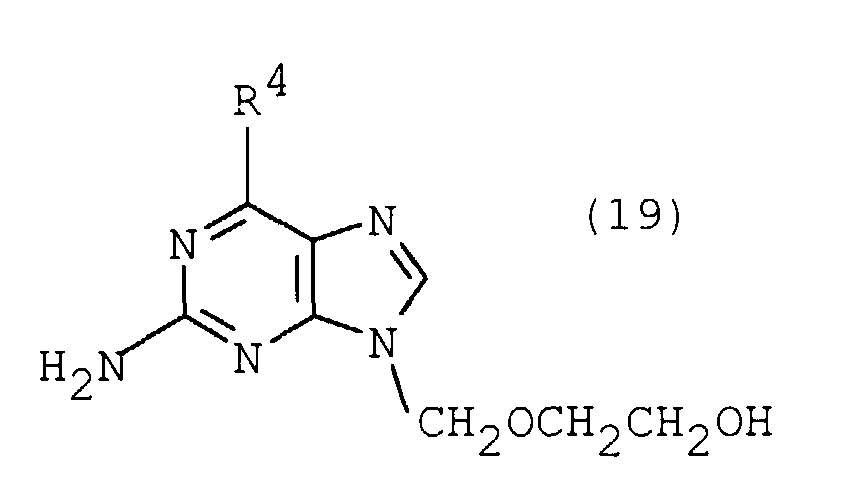
- A pharmaceutical composition of claim 13 wherein the antiviral nucleoside analog is selected from the group of penciclovir, famciclovir and valacyclovir.
- The use of a combination of an antiviral nucleoside analog, or a therapeutically acceptable salt thereof, and a compound of formula 1 of claim 1, or a therapeutically acceptable salt thereof, for the preparation of a pharmaceutical composition for treating herpes viral infections in a mammal.
- The use of claim 16 wherein the antiviral nucleoside analog is selected from the group of acyclovir, 6-deoxyacyclovir, 2,6-diamino-9-{(2-hydroxyethoxy)methyl}purine, penciclovir, famciclovir and valacyclovir.
- The use of a compound as defined in claim 8 for the preparation of a pharmaceutical composition for treating herpes simplex virus type 1 or type 2 infections in a mammal.
- A process for preparing a compound as defined in claim 1, or a therapeutically acceptable salt thereof, comprising:(a) coupling a carboxylic acid derivative of formula 10wherein W3 is a carboxyl protective group with an amine of formula 11
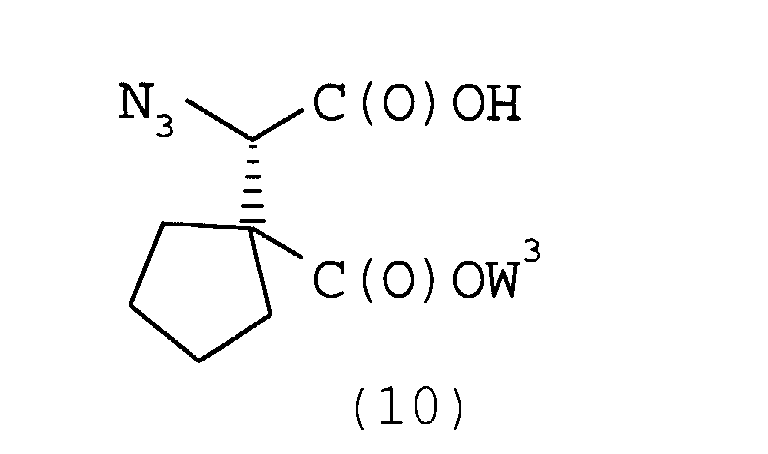 to obtain an α-azidoamide of formula 12
 wherein W3 is as defined in this claim,
 (b) reducing the α-azidoamide of formula 12 to obtain a corresponding α-aminoamide of formula 13wherein W3 is as defined in this claim,
 (c) coupling the α-amidoamide of formula 13 with a carboxvlic acid derivative of formula 14wherein W1 is an amino protective group to obtain a diprotected intermediate of formula 15
 wherein W1 and W3 are as defined in this claim,
 (d) selectively deprotecting the diprotected intermediate of formula 15 to obtain the free N-terminal derivative of formula 16wherein W3 is as defined in this claim,
 (e) reacting the free N-terminal derivative of formula 16 with an isocyanatocyclohexane derivative of formula 17wherein R1, R2 and R3 are as defined in claim 1 to obtain a ureido derivative of formula 18
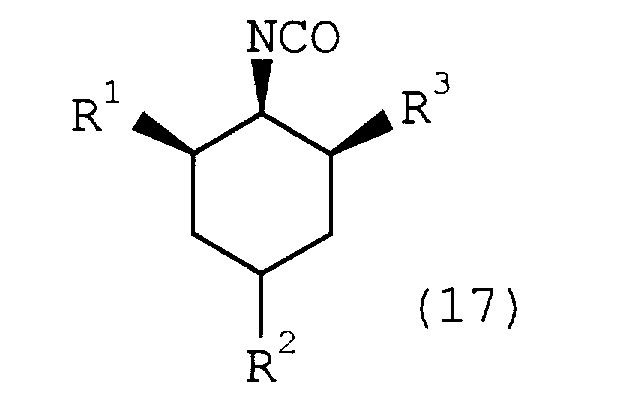 wherein R1, R2, R3 and W3 are as defined in this claim, and
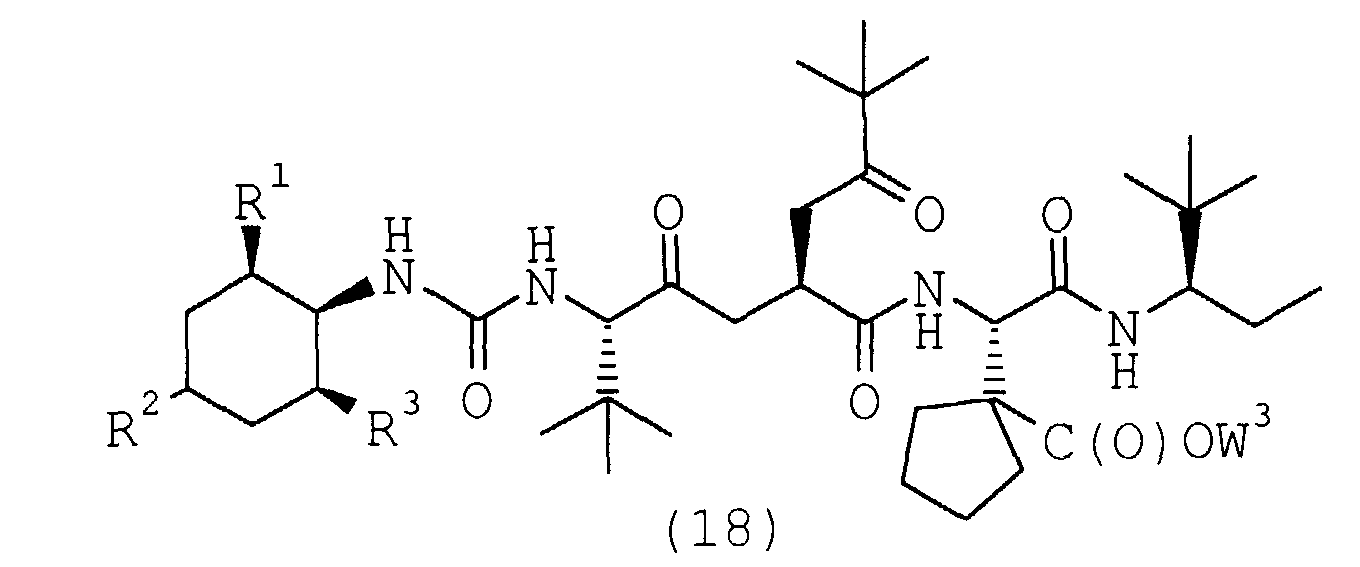 (f) deprotecting the latter ureido derivative to obtain the corresponding compound of formula 1, and(g) if desired transforming the compound of formula 1 into a therapeutically acceptable salt.
 - The process of claim 19 wherein W1 is tert-butyloxycarbonyl and W3 is benzyl.
- An essentially pure enantiomorphic compound of the formula 2
- A compound of formula 2 as defined in claim 21 wherein W1 is tert-butyloxycarbonyl, phenylmethoxycarbonyl or 2,2,2-trichloro-ethoxycarbonyl, and W2 is benzyl, (4-nitrophenyl)methyl, methyl or ethyl.
- A process for preparing a compouna of formula 2 as defined in claim 21 comprising:(a) reacting W1-Tbg-(E)-CH=CHC(O)OW2 wherein W1, W2 and Tbg are as defined in claim 21 with the sodium enolate of CH2=CHCH2OC(O)CH2C(O)CMe3 to obtain a Michael adduct of formula
 and (b) reacting the Michael adduct with tetrakistriphenylphosphine palladium(O) in the presence of a secondary amine to obtain the compound of formula 2.
Applications Claiming Priority (3)
| Application Number | Priority Date | Filing Date | Title |
|---|---|---|---|
| CA2139169 | 1994-12-28 | ||
| CA002139169A CA2139169C (en) | 1994-12-28 | 1994-12-28 | Antiherpes peptidomimetic compounds |
| PCT/CA1995/000626 WO1996020171A1 (en) | 1994-12-28 | 1995-10-31 | Antiherpes peptidomimetic compounds |
Publications (2)
| Publication Number | Publication Date |
|---|---|
| EP0800512A1 EP0800512A1 (en) | 1997-10-15 |
| EP0800512B1 true EP0800512B1 (en) | 2000-01-05 |
Family
ID=4154943
Family Applications (1)
| Application Number | Title | Priority Date | Filing Date |
|---|---|---|---|
| EP95935318A Expired - Lifetime EP0800512B1 (en) | 1994-12-28 | 1995-10-31 | Antiherpes peptidomimetic compounds |
Country Status (11)
| Country | Link |
|---|---|
| EP (1) | EP0800512B1 (en) |
| JP (1) | JPH10511362A (en) |
| AT (1) | ATE188468T1 (en) |
| AU (1) | AU3739595A (en) |
| CA (2) | CA2230750C (en) |
| DE (1) | DE69514388T2 (en) |
| IL (1) | IL116557A0 (en) |
| MX (1) | MX9704548A (en) |
| TW (1) | TW432035B (en) |
| WO (1) | WO1996020171A1 (en) |
| ZA (1) | ZA9510964B (en) |
Families Citing this family (1)
| Publication number | Priority date | Publication date | Assignee | Title |
|---|---|---|---|---|
| EP4454650A4 (en) * | 2021-12-22 | 2025-10-22 | Cj Cheiljedang Corp | ANTIVIRAL COMPOSITION CONTAINING NUCLEOSIDE ANALOGUES DERIVED FROM NUCLEIC ACID AND PHARMACEUTICALLY ACCEPTABLE SALT THEREOF |
Family Cites Families (2)
| Publication number | Priority date | Publication date | Assignee | Title |
|---|---|---|---|---|
| DE69320390T2 (en) * | 1992-03-12 | 1999-02-11 | Boehringer Ingelheim (Canada) Ltd., Laval, Quebec | Isosteric peptide derivatives for herpes |
| CA2095408A1 (en) * | 1993-05-03 | 1994-11-04 | James Gus Chafouleas | Method of combating acyclovir-resistant herpes simplex viral infections |
-
1994
- 1994-12-28 CA CA002230750A patent/CA2230750C/en not_active Expired - Fee Related
- 1994-12-28 CA CA002139169A patent/CA2139169C/en not_active Expired - Fee Related
-
1995
- 1995-10-31 EP EP95935318A patent/EP0800512B1/en not_active Expired - Lifetime
- 1995-10-31 JP JP8520086A patent/JPH10511362A/en not_active Abandoned
- 1995-10-31 WO PCT/CA1995/000626 patent/WO1996020171A1/en not_active Ceased
- 1995-10-31 AU AU37395/95A patent/AU3739595A/en not_active Abandoned
- 1995-10-31 DE DE69514388T patent/DE69514388T2/en not_active Expired - Fee Related
- 1995-10-31 AT AT95935318T patent/ATE188468T1/en not_active IP Right Cessation
- 1995-10-31 MX MX9704548A patent/MX9704548A/en not_active IP Right Cessation
- 1995-12-04 TW TW084112900A patent/TW432035B/en active
- 1995-12-26 IL IL11655795A patent/IL116557A0/en unknown
- 1995-12-27 ZA ZA9510964A patent/ZA9510964B/en unknown
Also Published As
| Publication number | Publication date |
|---|---|
| IL116557A0 (en) | 1996-03-31 |
| CA2230750A1 (en) | 1996-06-29 |
| JPH10511362A (en) | 1998-11-04 |
| DE69514388T2 (en) | 2000-07-27 |
| WO1996020171A1 (en) | 1996-07-04 |
| TW432035B (en) | 2001-05-01 |
| EP0800512A1 (en) | 1997-10-15 |
| AU3739595A (en) | 1996-07-19 |
| MX9704548A (en) | 1998-02-28 |
| DE69514388D1 (en) | 2000-02-10 |
| CA2230750C (en) | 2002-05-21 |
| CA2139169C (en) | 2001-05-01 |
| CA2139169A1 (en) | 1996-06-29 |
| ZA9510964B (en) | 1996-06-08 |
| ATE188468T1 (en) | 2000-01-15 |
Similar Documents
| Publication | Publication Date | Title |
|---|---|---|
| EP0560267B1 (en) | Isosteric antiherpes peptide derivatives | |
| EP0618226B1 (en) | Inhibitors of herpes viral ribonculeotide reductase | |
| CA2139169C (en) | Antiherpes peptidomimetic compounds | |
| US5846941A (en) | Isosteric antiherpes peptide derivatives II | |
| US5574015A (en) | Isosteric antiherpes peptide derivatives | |
| EP0837845B1 (en) | Herpes ribonucleotide reductase inhibitors | |
| AU683465B2 (en) | Method of combating acyclovir-resistant herpes simplex viral infections | |
| US5830864A (en) | Antiherpes peptide derivatives having a ureido n-terminus | |
| EP0560274B1 (en) | Antiherpes peptide derivatives having a ureido N-terminus | |
| AU671825C (en) | Isosteric antiherpes peptide derivatives | |
| MXPA97010147A (en) | Inhibitors of the ribonucleotido-reductasa deher |
Legal Events
| Date | Code | Title | Description |
|---|---|---|---|
| PUAI | Public reference made under article 153(3) epc to a published international application that has entered the european phase |
Free format text: ORIGINAL CODE: 0009012 |
|
| 17P | Request for examination filed |
Effective date: 19970728 |
|
| AK | Designated contracting states |
Kind code of ref document: A1 Designated state(s): AT BE CH DE DK ES FR GB GR IE IT LI LU MC NL PT SE |
|
| 17Q | First examination report despatched |
Effective date: 19980113 |
|
| GRAG | Despatch of communication of intention to grant |
Free format text: ORIGINAL CODE: EPIDOS AGRA |
|
| GRAG | Despatch of communication of intention to grant |
Free format text: ORIGINAL CODE: EPIDOS AGRA |
|
| GRAH | Despatch of communication of intention to grant a patent |
Free format text: ORIGINAL CODE: EPIDOS IGRA |
|
| GRAH | Despatch of communication of intention to grant a patent |
Free format text: ORIGINAL CODE: EPIDOS IGRA |
|
| GRAA | (expected) grant |
Free format text: ORIGINAL CODE: 0009210 |
|
| AK | Designated contracting states |
Kind code of ref document: B1 Designated state(s): AT BE CH DE DK ES FR GB GR IE IT LI LU MC NL PT SE |
|
| PG25 | Lapsed in a contracting state [announced via postgrant information from national office to epo] |
Ref country code: SE Free format text: THE PATENT HAS BEEN ANNULLED BY A DECISION OF A NATIONAL AUTHORITY Effective date: 20000105 Ref country code: NL Free format text: LAPSE BECAUSE OF FAILURE TO SUBMIT A TRANSLATION OF THE DESCRIPTION OR TO PAY THE FEE WITHIN THE PRESCRIBED TIME-LIMIT Effective date: 20000105 Ref country code: GR Free format text: LAPSE BECAUSE OF NON-PAYMENT OF DUE FEES Effective date: 20000105 Ref country code: ES Free format text: THE PATENT HAS BEEN ANNULLED BY A DECISION OF A NATIONAL AUTHORITY Effective date: 20000105 Ref country code: BE Free format text: LAPSE BECAUSE OF FAILURE TO SUBMIT A TRANSLATION OF THE DESCRIPTION OR TO PAY THE FEE WITHIN THE PRESCRIBED TIME-LIMIT Effective date: 20000105 Ref country code: AT Free format text: LAPSE BECAUSE OF FAILURE TO SUBMIT A TRANSLATION OF THE DESCRIPTION OR TO PAY THE FEE WITHIN THE PRESCRIBED TIME-LIMIT Effective date: 20000105 |
|
| REF | Corresponds to: |
Ref document number: 188468 Country of ref document: AT Date of ref document: 20000115 Kind code of ref document: T |
|
| REG | Reference to a national code |
Ref country code: CH Ref legal event code: NV Representative=s name: SCHMAUDER & PARTNER AG PATENTANWALTSBUERO Ref country code: CH Ref legal event code: EP |
|
| REF | Corresponds to: |
Ref document number: 69514388 Country of ref document: DE Date of ref document: 20000210 |
|
| REG | Reference to a national code |
Ref country code: IE Ref legal event code: FG4D |
|
| ITF | It: translation for a ep patent filed | ||
| PG25 | Lapsed in a contracting state [announced via postgrant information from national office to epo] |
Ref country code: PT Free format text: LAPSE BECAUSE OF FAILURE TO SUBMIT A TRANSLATION OF THE DESCRIPTION OR TO PAY THE FEE WITHIN THE PRESCRIBED TIME-LIMIT Effective date: 20000405 Ref country code: DK Free format text: LAPSE BECAUSE OF FAILURE TO SUBMIT A TRANSLATION OF THE DESCRIPTION OR TO PAY THE FEE WITHIN THE PRESCRIBED TIME-LIMIT Effective date: 20000405 |
|
| ET | Fr: translation filed | ||
| NLV1 | Nl: lapsed or annulled due to failure to fulfill the requirements of art. 29p and 29m of the patents act | ||
| PG25 | Lapsed in a contracting state [announced via postgrant information from national office to epo] |
Ref country code: MC Free format text: THE PATENT HAS BEEN ANNULLED BY A DECISION OF A NATIONAL AUTHORITY Effective date: 20001031 Ref country code: LU Free format text: LAPSE BECAUSE OF NON-PAYMENT OF DUE FEES Effective date: 20001031 Ref country code: IE Free format text: LAPSE BECAUSE OF NON-PAYMENT OF DUE FEES Effective date: 20001031 |
|
| PLBE | No opposition filed within time limit |
Free format text: ORIGINAL CODE: 0009261 |
|
| STAA | Information on the status of an ep patent application or granted ep patent |
Free format text: STATUS: NO OPPOSITION FILED WITHIN TIME LIMIT |
|
| 26N | No opposition filed | ||
| REG | Reference to a national code |
Ref country code: IE Ref legal event code: MM4A |
|
| REG | Reference to a national code |
Ref country code: GB Ref legal event code: IF02 |
|
| PGFP | Annual fee paid to national office [announced via postgrant information from national office to epo] |
Ref country code: GB Payment date: 20030929 Year of fee payment: 9 |
|
| PGFP | Annual fee paid to national office [announced via postgrant information from national office to epo] |
Ref country code: CH Payment date: 20031001 Year of fee payment: 9 |
|
| PGFP | Annual fee paid to national office [announced via postgrant information from national office to epo] |
Ref country code: FR Payment date: 20031009 Year of fee payment: 9 |
|
| PGFP | Annual fee paid to national office [announced via postgrant information from national office to epo] |
Ref country code: DE Payment date: 20031010 Year of fee payment: 9 |
|
| PG25 | Lapsed in a contracting state [announced via postgrant information from national office to epo] |
Ref country code: LI Free format text: LAPSE BECAUSE OF NON-PAYMENT OF DUE FEES Effective date: 20041031 Ref country code: GB Free format text: LAPSE BECAUSE OF NON-PAYMENT OF DUE FEES Effective date: 20041031 Ref country code: CH Free format text: LAPSE BECAUSE OF NON-PAYMENT OF DUE FEES Effective date: 20041031 |
|
| PG25 | Lapsed in a contracting state [announced via postgrant information from national office to epo] |
Ref country code: DE Free format text: LAPSE BECAUSE OF NON-PAYMENT OF DUE FEES Effective date: 20050503 |
|
| REG | Reference to a national code |
Ref country code: CH Ref legal event code: PL |
|
| GBPC | Gb: european patent ceased through non-payment of renewal fee |
Effective date: 20041031 |
|
| PG25 | Lapsed in a contracting state [announced via postgrant information from national office to epo] |
Ref country code: FR Free format text: LAPSE BECAUSE OF NON-PAYMENT OF DUE FEES Effective date: 20050630 |
|
| REG | Reference to a national code |
Ref country code: FR Ref legal event code: ST |
|
| PG25 | Lapsed in a contracting state [announced via postgrant information from national office to epo] |
Ref country code: IT Free format text: LAPSE BECAUSE OF NON-PAYMENT OF DUE FEES Effective date: 20051031 |