EP0800390B1 - Cyclopropylpyrroloindole-oligopeptide anticancer agents - Google Patents
Cyclopropylpyrroloindole-oligopeptide anticancer agents Download PDFInfo
- Publication number
- EP0800390B1 EP0800390B1 EP96906176A EP96906176A EP0800390B1 EP 0800390 B1 EP0800390 B1 EP 0800390B1 EP 96906176 A EP96906176 A EP 96906176A EP 96906176 A EP96906176 A EP 96906176A EP 0800390 B1 EP0800390 B1 EP 0800390B1
- Authority
- EP
- European Patent Office
- Prior art keywords
- group
- alkyl
- het
- formula
- carbon atoms
- Prior art date
- Legal status (The legal status is an assumption and is not a legal conclusion. Google has not performed a legal analysis and makes no representation as to the accuracy of the status listed.)
- Expired - Lifetime
Links
- 0 CC(C=C1*)=C*1C#N Chemical compound CC(C=C1*)=C*1C#N 0.000 description 4
Images


Classifications
-
- C—CHEMISTRY; METALLURGY
- C07—ORGANIC CHEMISTRY
- C07D—HETEROCYCLIC COMPOUNDS
- C07D487/00—Heterocyclic compounds containing nitrogen atoms as the only ring hetero atoms in the condensed system, not provided for by groups C07D451/00 - C07D477/00
- C07D487/02—Heterocyclic compounds containing nitrogen atoms as the only ring hetero atoms in the condensed system, not provided for by groups C07D451/00 - C07D477/00 in which the condensed system contains two hetero rings
- C07D487/10—Spiro-condensed systems
-
- A—HUMAN NECESSITIES
- A61—MEDICAL OR VETERINARY SCIENCE; HYGIENE
- A61P—SPECIFIC THERAPEUTIC ACTIVITY OF CHEMICAL COMPOUNDS OR MEDICINAL PREPARATIONS
- A61P35/00—Antineoplastic agents
Definitions
- This invention relates to novel cyclopropylpyrroloindole-oligopeptides which are useful as anticancer agents.
- the title compounds are related to the family of natural oligopeptide antiviral antitumor antibiotics which include netropsin (Julia, M., Preau-Joseph, N.C.R., Hebd-Seances, Acad. Sci. , 1963, 257 , 1115) and distamycin (Arcamone, F., Orezzi, P.G., Barbier, W., Nicolella, V., Penco, S., Gazz. chim. Ital. , 1967, 97, 1097).
- These structures contain pyrrole moieties connected by peptide bonds and with side chains, at least one of which is positively charged, i.e. an amidine group, N-formyl or a group of the guanidyl type.
- distamycin has been used as a therapeutic agent under the name of Stallimycin Hydrochloride in the form of a 1% cream, ointment or paste (Martindale, The Extra Pharmacopoeia, Twenty-eighth Edition, p. 825, 1982) in treatments of infections produced by herpes simplex, herpes zoster and vaccinia viruses.
- the external use limitation of distamycin is due to its high cytotoxicity and a low therapeutic index which in the case of herpes viruses is about 3.
- the said aromatic group is selected from the group consisting of phenyl and napthyl.
- Het 1 and Het 2 are individually selected from the group consisting of thiophene, furan, thiazole, oxazole, N-alkylpyrrole, imidazole, pyrazole and triazole, wherein said alkyl group contains 1 to 4 carbon atoms.
- Het 1 and Het 2 are individually selected from the group consisting of thiophene, furan, thiazole, oxazole, N-alkoxymethylpyrrole, imidazole, pyrazole and triazole, wherein any alkoxy groups contain 1 to 4 carbon atoms.
- A is a straight chain alkyl group of 1 to 6 carbon atoms.
- A is an amidine, with an aliphatic chain, of the formula wherein p is 0 to 5 and X is selected from the group consisting of ⁇ H, -OH, -NH 2 , -CH 3 , -CH 2 CH 3 , and C 3 H 7 .
- A is an amidine, wherein at least one nitrogen atom is a member of a five-membered heterocyclic structure.
- A is a sulfonium salt of formula C p H 2p - SXY, wherein p is 0 to 5 and X and Y are alkyl or alkenyl groups of 1 to 3 carbon atoms.
- composition comprising a compound of the formula: wherein,
- said DNA sequences are oncogene DNA sequences.
- the title agents are compounds of the following general structure: CPI-CO-R-(HetNHCO) n -(HetNHCO) m -A where
- A is a moiety consisting of either an alkyl group, CH 3 , CH 3 CH 2 , CH 3 CH 2 CH 2 or CH 3 CH 2 CH 2 CH 2 , or a group bearing a positive charge, eg. amidine and derivatives, secondary, tertiary or quaternary ammonium salts, and sulfonium salts.
- Het is a monocyclic heterocyclic moiety, e.g. pyrrole, imidazole, triazoles, pyrazoles, thiazole, thiophene, furan, and oxazole.
- the title CPI-oligopeptides exhibit extremely high potencies against human tumor KB cells (Tables 1-3). In certain cases the cytotoxic potencies (TD 50 of ca. 10 -15 M) exceed that of any other agent reported to date. They also have proven efficacy against i.p. implanted tumors in animals, affording increased life span of up to 57%. The title compounds in the latter tests showed no evidence of the delayed death syndrome that is the most serious limitation of drugs more directly related structurally to CC-1065. Thus CC-1065 proved to be too toxic for clinical usage, and analogs that may avoid the delayed death syndrome are currently undergoing clinical trials. FCE 24517 has similarly yet to obtain approval for clinical use.
- CC-1065 and FCE 24517 are both strictly AT recognizing.
- FCE 24517 shows no evidence of DNA alkylation (Arcamone et al., 1989).
- the title compounds alkylate DNA strongly, like CC-1065, but unlike the latter are capable via the variable oligopeptide of recognizing and binding covalently to quite different sequences.
- Effective targeting of such G-rich regions of the genome, particularly some oncogenes may provide a basis for the unusual potency of such sequence-directed alkylators (Hartley, J.A., Lown, J.W., Mattes, W.B., Kohn, K.W., Acta Oncologica , 1988, 27, 503).
- the combination of the CPI alkylating moiety with the versatile DNA-sequence reading capability of the oligopeptide side-chain confers exceptional cytotoxic potency on these agents exceeding in the case of YW-059, for example, that of any other reported natural or synthetic agents.
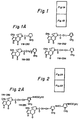
- FIG. 1 displays the PAGE for YW-30, YW-32, YW-33, and YW-34 compared with CC-1065.
- Table 5 quantifies and compares the alkylation intensities at different sites for the CPI-oligopeptides with CC-1065.
- the PAGE results for some of the most potent drugs YW-052 and YW-053 are shown in Figure 2 and tabulated for the primary and secondary alkylation sites in Table 6.
- the compounds of the present invention are useful as anticancer agents.
- An effective amount of one or more of the present compounds is administered to a patient preferably in the presence of a pharmaceutically acceptable carrier or diluent.
- Pharmaceutically compatible binding agents and/or adjuvant materials can also be included.
- the compounds according to the present invention can be administered by any route, for example, orally, parenterally, intravenously, intradermally, subcutaneously, rectally or topically in a liquid or solid form.
- the medium used may be a sterile liquid.
- water which contains conventional stabilizing agents, solubilizing agents and/or buffers.
- Desirable additives include but are not limited to tartrate and borate buffers, ethanol, dimethylsulfoxide, complex forming agents (for example ethylenediamine tetracetic acid), high molecular weight polymers (for example liquid polyethylene oxide) for viscosity regulation or polyethylene derivatives of sorbitan anhydrides.
- Solid carrier materials include but are not limited to starch, lactose, mannitol, methylcellulose, talc, highly dispersed silicic acid, high molecular weight fatty acids (for example stearic acid), gelatin, agar, calcium phosphate, magnesium stearate, animal and vegetable fats or solid high molecular weigh polymers (for example polyethylene glycol).
- the present compounds can be administered in dosages and amounts which are conventional in the art.
- the compounds can be used at a dosage range of about 1-200 mg/kg total body weight/day.
- the dosages may be administered at once or may be divided into a number of smaller doses to be administered at varying intervals of time.
- CP7-14 was dissolved in dimethylformamide (1 ml) under nitrogen.
- 4-Butyramido-N-methyl-2-pyrroleacrylic acid (CP7-6) (16.6 mg) and 1-[(3-dimethylan-lino)propyll-3-ethylcarbodiimide hydrochloride (67.6 mg) were added sequentially.
- the reaction mixture was stirred in dark at room temperature for 2 days.
- the mixture was purified on silica plate eluting with a mixture of acetone and ethylacetate (1:1, v/v) to give an unstable CP7-17.
- CP7-17 was dissolved in a mixture of acetonlerile, triethylamine and water (0.6 ml of each) and the reaction mixture was stirred for 30 min under nitrogen. The solvent was removed by a high vacuum pump and the residue was dissolved in acetone. The mixture was then purified on a silica place eluting with a mixture of acetone and ethvi acetate (1:1, v/v). 9.4 mg (32 % yield) of a yellow powder was obtained.
- N-methyl-2-pyrroleacetic acid (5 mg, 36 umol), 1-(3-dimethylaminopropyl)-3-ethylcarbodiimide hydrochloride (40 mg, 208 umol) and sodium hydrogen carbonate (10 mg) were added sequentially.
- the reaction mixture was stirred at ambient temperature overnight and then purified by flush column chromatography eludng with a mixture of ethyl acetate and hexane (1:3 to 1:1, v/v).
- the product CP3-33 was purified on silica gel plate using methanol and acetone (1/3, v/v) as an eluent and washed off the silica using dimethylformamide and tetrahydrofuran (1/4, v/v). 8 mg (11 umol, 23% yield) of unstable 31 was obtained.
- a solution of CP3-33 (8 mg, 11 umol) in dimethylformamide and tetrahydrofuran (0.8 ml, 1/3, v/v) was added sodium hydride (4 mg, 100 umol, 60% dispersion in mineral oil) at 0 °C under nitrogen. The reaction mixture was stirred at 0 °C for 1 h.
- the product was purified on silica gel plate using methanol and acetone (1/3, v/v) as an eluent and washed off the silica gel using dimethylformamide and tetrahydrofuran (1/4, v/v).
- KB human nasopharyngeal carcinoma cells were maintained in RPMI 1640 medium supplemented with 10% fetal bovine serum. KB cells were cultured in plastic tissue culture flasks and kept in an incubator at 37°C in humidified air containing 5% CO 2 . These cells were free of Mycoplasma as determined with Hoechst 33258 stain.
- the antiproliferative effect of compounds was determined using cell staining method by crystal violet.
- mice All compounds were dissolved in dimethyl sulfoxide (DMSO), diluted in sterile 0.9% NaCl solution to 5% final DMSO concentration.
- DMSO dimethyl sulfoxide
- CDF 1 BALB/c X DBA/2F1 mice
- ILS Increase in life span
Landscapes
- Chemical & Material Sciences (AREA)
- Organic Chemistry (AREA)
- Health & Medical Sciences (AREA)
- Life Sciences & Earth Sciences (AREA)
- General Health & Medical Sciences (AREA)
- Medicinal Chemistry (AREA)
- Nuclear Medicine, Radiotherapy & Molecular Imaging (AREA)
- Pharmacology & Pharmacy (AREA)
- Chemical Kinetics & Catalysis (AREA)
- Animal Behavior & Ethology (AREA)
- General Chemical & Material Sciences (AREA)
- Public Health (AREA)
- Veterinary Medicine (AREA)
- Pharmaceuticals Containing Other Organic And Inorganic Compounds (AREA)
- Medicines That Contain Protein Lipid Enzymes And Other Medicines (AREA)
- Peptides Or Proteins (AREA)
- Nitrogen Condensed Heterocyclic Rings (AREA)
Abstract
Description
- This invention relates to novel cyclopropylpyrroloindole-oligopeptides which are useful as anticancer agents.
- The title compounds are related to the family of natural oligopeptide antiviral antitumor antibiotics which include netropsin (Julia, M., Preau-Joseph, N.C.R., Hebd-Seances, Acad. Sci., 1963, 257, 1115) and distamycin (Arcamone, F., Orezzi, P.G., Barbier, W., Nicolella, V., Penco, S., Gazz. chim. Ital., 1967, 97, 1097).


- These structures contain pyrrole moieties connected by peptide bonds and with side chains, at least one of which is positively charged, i.e. an amidine group, N-formyl or a group of the guanidyl type.
- Of this group of natural oligopeptide antibiotics only distamycin has been used as a therapeutic agent under the name of Stallimycin Hydrochloride in the form of a 1% cream, ointment or paste (Martindale, The Extra Pharmacopoeia, Twenty-eighth Edition, p. 825, 1982) in treatments of infections produced by herpes simplex, herpes zoster and vaccinia viruses. The external use limitation of distamycin is due to its high cytotoxicity and a low therapeutic index which in the case of herpes viruses is about 3.
- Other pertinent compounds are the natural product CC-1065 (Reynolds, V.L., Molineux, T.J., Kaplan, D., Swenson, D.H., Hurley, L.H., Biochemistry, 1985, 24, 6228), and the synthetic agentFCE 24517 (Arcamone, F.M., Animati, F., Barbieri, B., Configliacchi, E., D'Alessio, R., Geroni, C., Giulani, F.C., Lazzari, E., Menozzi, M., Mongetti, N., Penco, S., Verini, A., J. Med. Chem., 1989, 32, 774.
 Whereas CC-1065 itself is too toxic for clinical applications because of the delayed death syndrome three synthetic analogs produced by Upjohn are in clinical trials. Compound FCE 24517 is also undergoing clinical trials at this time.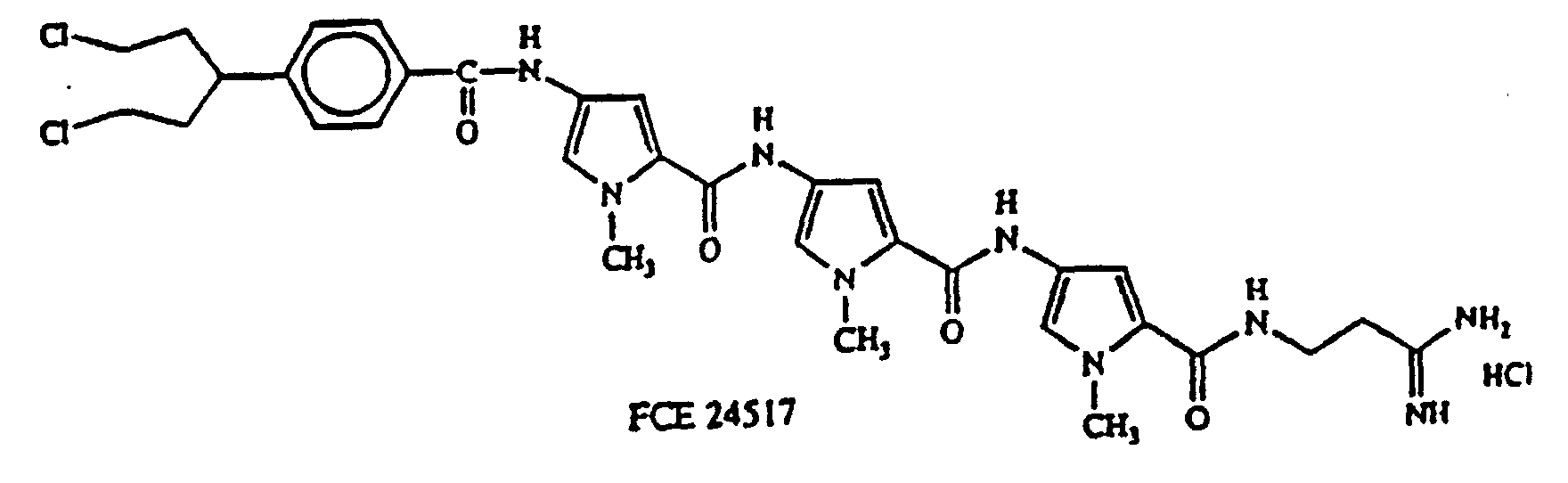
US-A 4978757 and WO 90/02746 disclose CPI type compounds as anticancer agents. US-A 4912199 discloses oligopeptides containing N-alkylpyrrole moieties connected with use as anti-cancer agents. - According to a first aspect of the present invention there is provided
- Compounds of the formula:wherein,
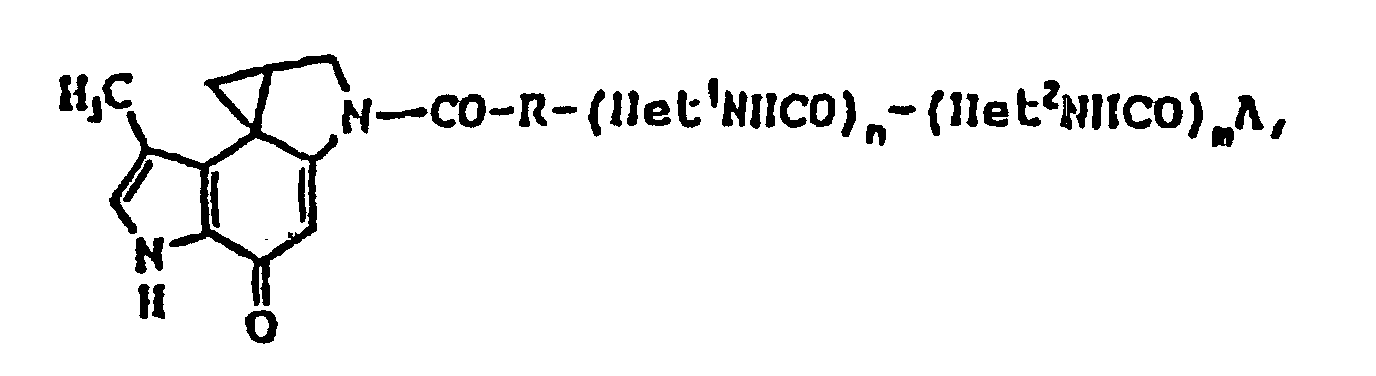
- Het1 and Het2 are individually selected from the group consisting of pyrrole, imidazole, triazole, thiophene, furan, thiazole, oxazole, pyrazole, N-alkylpyrrole, N-alkoxymethylpyrrole, N-alkylimidazole, N-alkoxymethylimidazole, wherein the alkoxy or alkyl contains 1 to 4 carbon atoms.
- R is selected from the group consisting of a valence bond; a C1-C6 alkyl; a C2-C6 alkenyl; a C2-C6 alkynyl; a divalent cycloalkane of formula CpH2p-2, wherein p is 3 to 7, and an ortho, meta or para linked aromatic group,
- A is selected from the group consisting of a C1-C6 alkyl group; an amidine or derivative thereof; a guanidine; a secondary, tertiary or quaternary ammonium salt; and a sulfonium salt,
- n is 0 to 3, and
- m is 0 to 3, wherein when n = 0, m = 1 to 3.
-
- Preferably, R is selected from the group consisting of ― [CH2]1-6-; -CH=CH-, E or Z; and -C≡C-.
- Preferably, the said aromatic group is selected from the group consisting of phenyl and napthyl.
- Preferably, Het1 and Het2 are individually selected from the group consisting of thiophene, furan, thiazole, oxazole, N-alkylpyrrole, imidazole, pyrazole and triazole, wherein said alkyl group contains 1 to 4 carbon atoms.
- Alternatively, Het1 and Het2 are individually selected from the group consisting of thiophene, furan, thiazole, oxazole, N-alkoxymethylpyrrole, imidazole, pyrazole and triazole, wherein any alkoxy groups contain 1 to 4 carbon atoms.
- Preferably, A is a straight chain alkyl group of 1 to 6 carbon atoms.
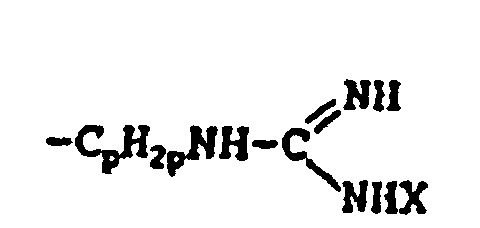
- Preferably, A is an amidine, with an aliphatic chain, of the formulawherein

p is 0 to 5 and X is selected from the group consisting of ―H, -OH, -NH2, -CH3, -CH2CH3, and C3H7. - Preferably, A is an amidine, wherein at least one nitrogen atom is a member of a five-membered heterocyclic structure.
- Alternatively, A is a guanidine of formulawherein p = 0 to 5 and X is selected from the group consisting of

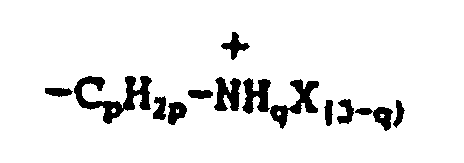
- A still further alternative is provided wherein A is a quaternary, tertiary or secondary ammonium salt of the formulawherein p = 0 to 5 and q is 0, 1, 2, 3 and X is an alkyl or alkenyl group of 1 to 3 carbon atoms.

- Alternatively, A is a sulfonium salt of formula CpH2p- SXY, wherein p is 0 to 5 and X and Y are alkyl or alkenyl groups of 1 to 3 carbon atoms.
- According to a second aspect of the present invention there is provided a pharmaceutical composition comprising a compound of the formula:wherein,

- Het1 and Het2 are individually selected from the group consisting of pyrrole, imidazole, triazole, thiophene, furan, thiazole, oxazole, pyrazole, N-alkylpyrrole, N-alkoxymethylpyrrole, N-alkylimidazole, N-alkoxymethylimidazole, wherein the alkoxy or alkyl contains 1 to 4 carbon atoms.
- R is selected from the group consisting of a valence bond; a C1-C6 alkyl; a C2-C6 alkenyl; a C2-C6 alkynyl; a divalent cycloalkane of formula CpH2p-2, wherein p is 3 to 7, and an ortho, meta or para linked aromatic group,
- A is selected from the group consisting of a C1-C6 alkyl group; an amidine or derivative thereof; a guanidine; a secondary, tertiary or quaternary ammonium salt; and a sulfonium salt,
- n is 0 to 3, and
- m is 0 to 3, wherein when n = 0, m = 1 to 3,
-
- According to a third aspect of the present invention, there is provided a compound of the formula:wherein,

- Het1 and Het2 are individually selected from the group consisting of pyrrole, imidazole, triazole, thiophene, furan, thiazole, oxazole, pyrazole, N-alkylpyrrole, N-alkoxymethylpyrrole, N-alkylimidazole, N-alkoxymethylimidazole, wherein the alkoxy or alkyl contains 1 to 4 carbon atoms.
- R is selected from the group consisting of a valence bond; a C1-C6 alkyl; a C2-C6 alkenyl; a C2-C6 alkynyl; a divalent cycloalkane of formula CpH2p-2, wherein p is 3 to 7, and an ortho, meta or para linked aromatic group,
- A is selected from the group consisting of a C1-C6 alkyl group; an amidine or derivative thereof; a guanidine; a secondary, tertiary or quaternary ammonium salt; and a sulfonium salt,
- n is 0 to 3, and
- m is 0 to 3, wherein when n=0, m=1 to 3
-
- According to a fourth aspect of the present invention, there is provided use of a compound of the formula:wherein,

- Het1 and Het2 are individually selected from the group consisting of pyrrole, imidazole, triazole, thiophene, furan, thiazole, oxazole, pyrazole, N-alkylpyrrole, N- , alkoxymethylpyrrole, N-alkylimidazole, N-alkoxymethylimidazole, wherein the alkoxy or alkyl contains 1 to 4 carbon atoms.
- R is selected from the group consisting of a valence bond; a C1-C6 alkyl; a C2-C6 alkenyl; a C2-C6 alkynyl; a divalent cycloalkane of formula CpH2p-2, wherein p is 3 to 7, and an ortho, meta or para linked aromatic group,
- A is selected from the group consisting of a C1-C6 alkyl group; an amidine or derivative thereof; a guanidine; a secondary, tertiary or quaternary ammonium salt; and a sulfonium salt, n is 0 to 3 and m is 0 to 3 for the manufacture of a medicament for alkylating specific DNA sequences in vivo.
-
- Preferably, said DNA sequences are oncogene DNA sequences.
- According to a fifth aspect of the present invention, there is provided the use of a compound of the formula:wherein,

- Het1 and Het2 are individually selected from the group consisting of pyrrole, imidazole, triazole, thiophene, furan, thiazole, oxazole, pyrazole, N-alkylpyrrole, N-alkoxymethylpyrrole, N-alkylimidazole, N-alkoxymethylimidazole, wherein the alkoxy or alkyl contains 1 to 4 carbon atoms.
- R is selected from the group consisting of a valence bood; a C1-C6 allyl; a C2-C6 alkenyl; a C2-C6 alkynyl; a divalent cycloalkane of formula CpH2p-2, wherein p is 3 to 7, and an ortho, meta or para linked aromatic group,
- A is selected from the group consisting of a C1-C6 alkyl group; an amidine or derivative thereof; a guanidine; a secondary, tertiary or quaternary ammonium salt; and a sulfonium salt,
- n is 0 to 3, and
- m is 0 to 3, for the manufacture of a medicament for treatment of cancer.
-
- The title agents are compounds of the following general structure:

- Preferably, R = CH2 or CH2CH2 or CH=CH (Z or E), or C≡C. Preferably, A is a moiety consisting of either an alkyl group, CH3, CH3CH2, CH3CH2CH2 or CH3CH2CH2CH2, or a group bearing a positive charge, eg. amidine and derivatives, secondary, tertiary or quaternary ammonium salts, and sulfonium salts. Preferably, Het is a monocyclic heterocyclic moiety, e.g. pyrrole, imidazole, triazoles, pyrazoles, thiazole, thiophene, furan, and oxazole. Zusammen (Z) and Entgegen (E) are recognized abbreviations designating configurations of alkene moieties (replacing cis and trans respectively). The title structure may contain one or more types of heterocycles in combination. This group of compounds exhibits anticancer activity in vitro against the human tumor KB cell line and the murine cell line P388 and in vivo anticancer activity against mice injected with P388 leukemia.
- The title CPI-oligopeptides exhibit extremely high potencies against human tumor KB cells (Tables 1-3). In certain cases the cytotoxic potencies (TD50 of ca. 10-15 M) exceed that of any other agent reported to date. They also have proven efficacy against i.p. implanted tumors in animals, affording increased life span of up to 57%. The title compounds in the latter tests showed no evidence of the delayed death syndrome that is the most serious limitation of drugs more directly related structurally to CC-1065. Thus CC-1065 proved to be too toxic for clinical usage, and analogs that may avoid the delayed death syndrome are currently undergoing clinical trials. FCE 24517 has similarly yet to obtain approval for clinical use.
- Another distinct advantage of the title compounds over CC-1065, FCE 24517 and related structures is their ability to recognize and covalently bind to different DNA sequences (Tables 5, 6). CC-1065 and FCE 24517 are both strictly AT recognizing. Moreover FCE 24517 shows no evidence of DNA alkylation (Arcamone et al., 1989). In contrast the title compounds alkylate DNA strongly, like CC-1065, but unlike the latter are capable via the variable oligopeptide of recognizing and binding covalently to quite different sequences. This is of significance therapeutically since it has been demonstrated that clinically effective alkylators like cyclophosphamide, nitrosoureas and mitozolomide show marked DNA sequence selectivity for alkylation of the central guanine of runs of three or more guanines (Hartley, J.A., Gibson, N.W., Kohn, K.W., Mattes, W.B., Cancer Research, 1986, 46, 1943). Effective targeting of such G-rich regions of the genome, particularly some oncogenes may provide a basis for the unusual potency of such sequence-directed alkylators (Hartley, J.A., Lown, J.W., Mattes, W.B., Kohn, K.W., Acta Oncologica, 1988, 27, 503). The combination of the CPI alkylating moiety with the versatile DNA-sequence reading capability of the oligopeptide side-chain confers exceptional cytotoxic potency on these agents exceeding in the case of YW-059, for example, that of any other reported natural or synthetic agents.
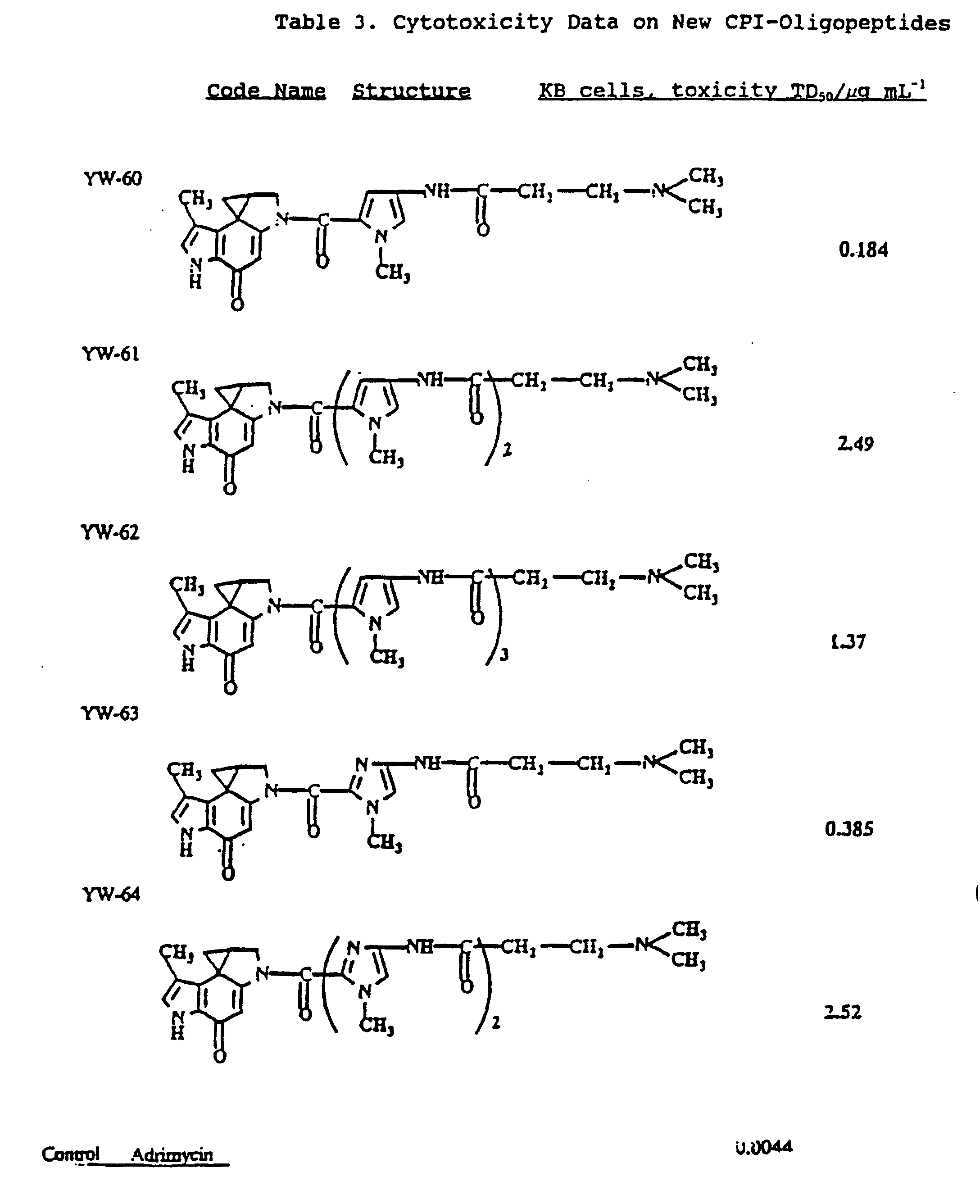
- Compounds according to the present invention demonstrate anticancer activity. The following data summarized in Tables 1-3 documents the in vitro evidence for extremely high cytotoxic potency of the new CPI-oligopeptides against KB human nasopharengeal tumor cells. In the case of YW-059 (Table 2) the cytotoxic potency exceeds that of any other agent, natural or synthetic, reported to date. Table 3 presents cytotoxicity data on representative imidazole-bearing CPI-oligopeptides, i.e. capable of recognizing and binding covalently to mixed DNA sequences quite distinct from the strictly limited AATT recognition by either CC-1065 or FCE 24517. Table 4 presents animal data on the new drugs confirming significant anticancer activity is exhibited also in vivo.


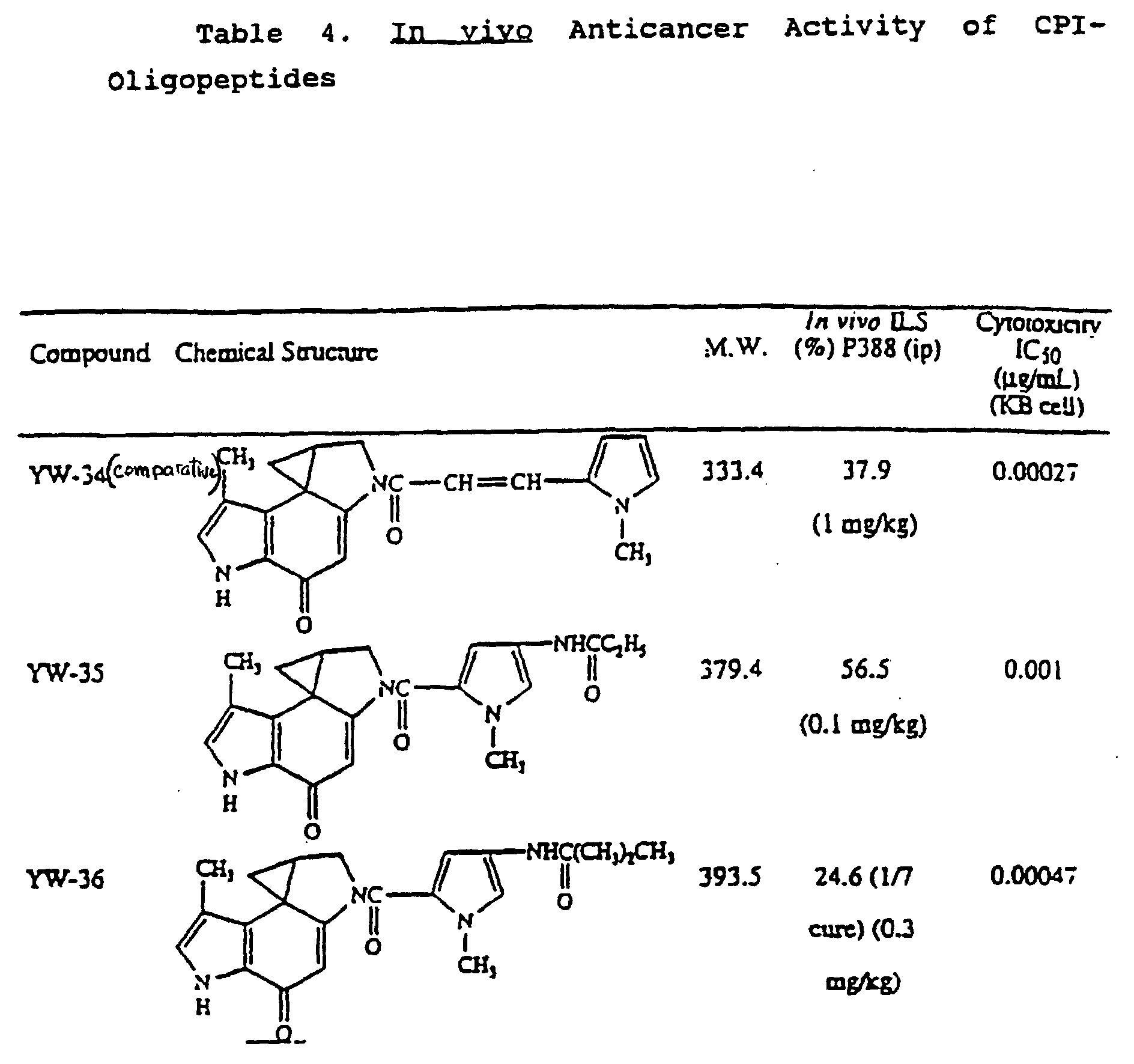
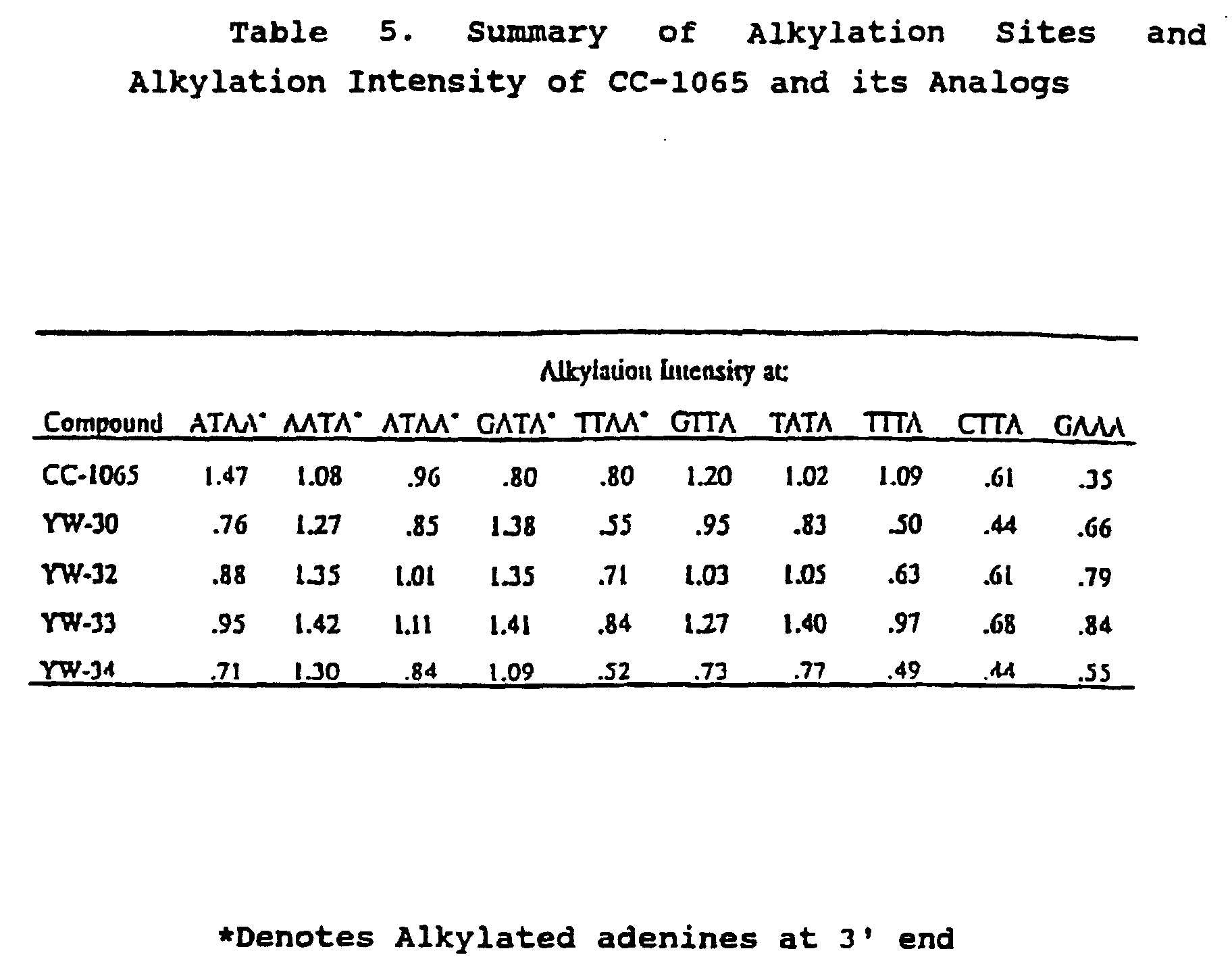
- In contrast to FCE 24517, clear evidence of site and sequence selective DNA alkylation was obtained for the new CPI-oligopeptides by polyacrylamide gel electrophoresis (PAGE). Figure 1 displays the PAGE for YW-30, YW-32, YW-33, and YW-34 compared with CC-1065. Table 5 quantifies and compares the alkylation intensities at different sites for the CPI-oligopeptides with CC-1065. The PAGE results for some of the most potent drugs YW-052 and YW-053 are shown in Figure 2 and tabulated for the primary and secondary alkylation sites in Table 6. A detailed analysis of the frequency of occurrence of bases flanking the prominent alkylation sites for YW-052 and YW-053 compared with CC-1065 is given in Table 7. These data provide evidence of the main cellular event that gives rise to the expression of anticancer properties of the new drugs and how they differ in detail from CC-1065.

Analysis of the DNA Sequence Flanking the Prominent Alkylation Sites of CC-1065 and its Analogs Frequency of Occurrence (%) Compound -3 -2 -1 A G +1 +2 +3 CC-1065 A 30 40 40 100 0 30 30 20 T 30 60 60 50 30 30 G 10 - - 20 40 40 C 30 - - - - 10 A/T 60 100 100 80 60 50 YW-52 A 36 27 27 91 9 46 36 27 T 27 64 55 36 37 27 G 27 9 18 18 27 36 C 10 - - - - 10 A/T 63 91 82 82 73 54 YW-53 A 36 45 36 91 9 27 27 27 T 27 55 64 45 27 27 G 27 - - 28 37 37 C 10 - - - 9 9 A/T 63 100 100 82 54 54 - The compounds of the present invention are useful as anticancer agents. An effective amount of one or more of the present compounds is administered to a patient preferably in the presence of a pharmaceutically acceptable carrier or diluent. Pharmaceutically compatible binding agents and/or adjuvant materials can also be included.
- The compounds according to the present invention can be administered by any route, for example, orally, parenterally, intravenously, intradermally, subcutaneously, rectally or topically in a liquid or solid form. For injection purposes, the medium used may be a sterile liquid. As an injection medium, it is preferred to use water which contains conventional stabilizing agents, solubilizing agents and/or buffers. Desirable additives include but are not limited to tartrate and borate buffers, ethanol, dimethylsulfoxide, complex forming agents (for example ethylenediamine tetracetic acid), high molecular weight polymers (for example liquid polyethylene oxide) for viscosity regulation or polyethylene derivatives of sorbitan anhydrides. Solid carrier materials include but are not limited to starch, lactose, mannitol, methylcellulose, talc, highly dispersed silicic acid, high molecular weight fatty acids (for example stearic acid), gelatin, agar, calcium phosphate, magnesium stearate, animal and vegetable fats or solid high molecular weigh polymers (for example polyethylene glycol).
- The present compounds can be administered in dosages and amounts which are conventional in the art. The compounds can be used at a dosage range of about 1-200 mg/kg total body weight/day. The dosages may be administered at once or may be divided into a number of smaller doses to be administered at varying intervals of time.
-
- Figure 1 shows the results of PAGE for YW-30, YW-32, YW-33, YW-34 and CC-1065.
- Figure 2 shows the results of PAGE for CC-1065, YW-052 and YW-053.
- Figure 3 shows synthetic routes for cyclopropylpyrroloindole-oligopeptide anticancer agents.
-
- Preferred embodiments of the invention are exemplified in the following examples which are in no way to be construed as limiting the scope of the present invention.
- Compound CP7-19 of the formula X, where R = trans-CH=CH; Het=N-methylpyrrole; m = 1; n = 0; A = Butyramido, was prepared. 10% Pd/C (30 mg) and ammonium formate (30 mg) were added to 5-benzyloxy-3-tert-butyloxycarbonyl-1-chloromethyl-8-methyl-1,2-dihydro-3Hpyrrolo[3,2-e]indole (30 mg), which was synthesized using the reported methods (Ref. D. L. Boger and R. S. Coleman, J. Am. Chem. Soc. 1988, 110, 4796-4807), dissolved in a solution of tetrahydrofuran and methanol (0.8 ml, 1/1, v/v) and the reaction mixture was stirred at room temperature for 20 min. The solid was removed by filtration and water (2 ml) was added. The product was extracted with ethyl acetate (10 ml x 3) and the organic phase was dried over sodium sulfate. The solvent was removed in vacuo to generate an oil CP7-13. Without further purification, the oil CP7-13 was treated with anhydrous 3 N hydrochloric acid in ethyl acetate (3 ml) at room temperature for 40 min. The solvent was removed in vacuo to give an unstable intermediate, CP7-14. Without further purification, CP7-14 was dissolved in dimethylformamide (1 ml) under nitrogen. 4-Butyramido-N-methyl-2-pyrroleacrylic acid (CP7-6) (16.6 mg) and 1-[(3-dimethylan-lino)propyll-3-ethylcarbodiimide hydrochloride (67.6 mg) were added sequentially. The reaction mixture was stirred in dark at room temperature for 2 days. The mixture was purified on silica plate eluting with a mixture of acetone and ethylacetate (1:1, v/v) to give an unstable CP7-17. Without further purification, CP7-17 was dissolved in a mixture of acetonlerile, triethylamine and water (0.6 ml of each) and the reaction mixture was stirred for 30 min under nitrogen. The solvent was removed by a high vacuum pump and the residue was dissolved in acetone. The mixture was then purified on a silica place eluting with a mixture of acetone and ethvi acetate (1:1, v/v). 9.4 mg (32 % yield) of a yellow powder was obtained. 1H NMR (acetone-d6,ppm): 10.48 (br s, 1H, NH), 8.97 (br s, 1H, NH), 7.63-7.58 (d, IH, J=15.5 Hz, CHCH), 7.34 (d, 1H, J=2.0 Hz, C5'-H), 6.88 (br m, 1H, C6-H), 6.72 (br s, 1H, C3-H), 6.67 (d, I H, J=2.0 Hz, C3'-H), 6.58-6.62 (d, 1H, J=15.5 Hz, CHCH), 4.31-4.27 (d, 1H, J=10.5 Hz, NCHH), 4.21-4.16 (dd, 1H, J=4.5, 10.5 Hz, NCHH), 3.76 (s, 3H, NCH3), 3.08-3.03 (m, C8a-H), 2.27-2.21 (t, 2H, J=7.5 Hz, CH2CH2CH 2), 1.97-1.93 (dd, 1H, J=4.5, 7.5 Hz, C8-HH), 1.7-1.59 (m, 2H, CH3CH 2CH2), 1.28-1.25 (t, 1H, J=4.5 Hz, C8-HH), 0.94-0.89 (t, 3H, J=7.5 Hz, CH 3CH2CH2). FABHRMS calcd for C24H26N4O3H 419.2083, found 419.2092 (100%).
- Compound CP7-20 of the formula X, where R trans-CH=CH; Het=N-methylpyrrole; m = 2; n = 0; A = butyramido, was prepared from 5-benzyloxy-3-tert-butyloxycarbonyl-1--chloromethyl-8-methyl-1,2-dihydro-3H-pyrrolo[3,2-e]lindole (30 mg) and 4-(4-butyramido-Nmethyl-2-pyrrolecarboxyamido)-N-methyl-2-pyrroleacrylic acid (25 mg) using the same method as described for CP7-19. The product is a yellow powder (15% yield ). 1H NMR (acetone-d6, ppm): 10.54 (br s, 1H, NH), 9.25 (br s, 1H, NH), 8.97 (br s, 1H, NH), 7.64-7.60 (d, 1H, J=15.5 Hz, CHCH), 7.42 (d, 1H, J=2.0 Hz, C5'-H), 7.17 (d, 1H, J=2.0 Hz, C5'-H), 6.89 (br m, 1H, C6-H), 6.83 (d, 1H, J=2.0 Hz, C3'-H), 6.80 (d, 1H, J=2.0 Hz, C3"-H), 6.73 (br s, C3-H), 6.58-6.63 (d, 1H, J=15.5 Hz, CHCH), 4.32-4.28, (d, 1H, J=10.5 Hz, NCHH), 4.22-4.17 (dd, 1H, J=4.5, 10.5 Hz, NCHH), 3.90 (s, 3H, NCH3), 3.78 (s, 3H, NCH3), 3.09-3.03 (m, C8a-H), 2.25-2.20 (t, 2H, J=7.5 Hz, CH3CH2CH 2), 1.97-1.94 (dd, 1H, J=4.5, 7.5 Hz, C8-HH), 1.70-1.58 (m, 2H, CH3CH 2CH2), 1.29-1.27 (t, 1H, J=4.5 Hz, C8-HH), 0.94-0.89 (t, 3H, J=7.5 Hz, CH 3CH2CH2). FABHRMS calcd for C30H32N6O4H 541.2563, found 541.2563 (100%).
- Compound CP5-13 of the formula X, where R = CH2;Het=N-methylpyrrole; m = 1; n = 0; A = H, was prepared. 5-Benzyloxy-3-tert-butyloxlvcarbonyl-1-chloromethyl-8-methyl-1,2-dihydro-3H-pyrrolo[3,2-e]indole (10 mg, 23 umol) was dissolved in 3 N HCl in ethyl acetate (2 ml) and the solution was stirred at ambient temperature for 40 min. The solvent was removed and dichloromethane (2 ml) was added. Dichloroniethane was removed and the residue was dissolved in dimethylformamide (0.5 ml). N-methyl-2-pyrroleacetic acid (5 mg, 36 umol), 1-(3-dimethylaminopropyl)-3-ethylcarbodiimide hydrochloride (40 mg, 208 umol) and sodium hydrogen carbonate (10 mg) were added sequentially. The reaction mixture was stirred at ambient temperature overnight and then purified by flush column chromatography eludng with a mixture of ethyl acetate and hexane (1:3 to 1:1, v/v). White solid CP5-9 (10.2 mg, 22.8 umol, 97%): mp 188-190 0 °C; 1H NMR (CDCl3) ; 8.18 (br s, 1H, NE), 8.04 (s, 1H, C4-H), 7.47-7.34 (m, 5H, C6H5), 6.96 (s, 1H, C7-H), 6.63(s, 1H, C5'-H), 6.10 (s, 2H, C3'-H, C4'-H), 5.22-5.13 (q, 2H, J=3.0, 12 Hz, C6H5CH 2O), 4.45-4.41 (d, IH, J=11.0 Hz, NCHH), 4.0-3.93 (m, 1H, CH2ClCHCH2), 3.85-3.80 (m, 3H, COCH2, CHHCl), 3.70 (s, 3H, NCH3), 3.40-3.33 (t, 1H, J=10.5 Hz, CHHCl), 2.40 (s, 3H, ArCH3); EIHRMS calcd for C26H26ClN3O2, 447.1716 found 447.1708, was obtained.
- To a solution of CP5-9 (5.1 mg, 11.4 umol) in methanol and THF (0.6 ml, 1:1, v/v) was added ammonium formate (10 mg) and 10% Pd/C (10 mg) and the reaction mixture was stirred at ambient temperature for 20 min. The mixture was filtered and the filtrate was extracted with ethyl acetate (10 ml x 2). The solvent was removed in vacuo. To the residue were added acetonitrle (1 ml), triethylamine (0.2 ml) and water (0.2 ml) and the solution was stirred at ambient temperature for 30 min. The solvent was removed and the salt in flask was washed away using water (2 ml x 3). The flask was dried and ether was added. The solid product was filtered and washed with more ether. 1.5 mg (4.67 mmol, 41% yield) of a gray powder was obtained: 1H NMR (acetone-d6): 6.87 (s, 1H, C6-H), 6.62-6.60 (t, 1H, J=2.0 Hz, C5'-H), 5.91-5.89 (t, 1H, J=3.0 Hz, C4'-H), 5.88-5.86 (m, 1H, C3'-H), 4.32-4.29 (d, 1H, J=11.0 Hz, NCHH), 4.21-4.16 (m, 1H, NCHH), 3.88-3.86 (d, 2H, J=5.0 Hz, COCH2), 3.56 (s, 3H, NCH3), 3.08-3.04 (m, 1H, C8a-H), 2.01 (d, 3H, J=I.O Hz, ArCH3), 1.92-1.88 (dd, 1H, J=4.0, 7.0 Hz, C8-HH), 1.23-I..20 (t, 1H, J=4.5 Hz, C8-HH); EIHRMS calcd for C19H19N3O2, 321.1479 found 321.1462.
- Compound CP5-14 of the formula X, where R = CH2CH2; Het=N-methylpyrrole; m = 1; n = 0; A = H, was prepared. Using the same method as described for CP5-9, from 5--benzyloxy-3-tert-butyloxycarbonyl-1-chloromethyl-8-methyl-1,2-dihydro-3H-pyrrolo[3,2-e]indole and N-methyl-2-pyrrolepropionic acid, 5-benzyloxy-1,2-dihydro-1-chloroxymethyl-8-methyl-3(N-methyl-2-pyrrolepropionyloxy)-3H-pyrrolo[3,2-e]indole (CP5-10) was synthesized in the yield of 60% as a white solid: mp 159-161°C; 1H NMR (acetone-d6): 8.09 (s, 1H, C4-H), 7.58-7.30 (m, 5H, C5H5), 7.08 (s, 1H, C7-H), 6.56-6.55 (t, 1H, J=2.0 Hz, C5'-H), 5.90-5.88 (dd, IH, J=0.5, 2.5 Hz, c4'-H), 5.88-5.86 (m, 1H, C3'-H), 5.23 (S, 2H, C6H5CH 2O), 4.30-4.18 (m, 2H, NCH2), 4.33-3.96 (m, 1H, CH2ClCHC2), 3.89-3.84 (dd, 1H, J=2.5,10.5 Hz, CHHCl), 3.70 (s, 3H, NCH3), 3.53-3.46 (t, 1H, J=10.,5 Hz, CHHCl), 2.96-2.79 (m, 4H, CH2CH2), 2.40 (s, 3H, ArCH3); EIHRMS calcd for C27H28ClN3O2, 461.1873 found 461.1873.
- By the treatment of CP5-10 in a similar procedure as described for CP5-13 except that sodium hydride in N,N-dimethylformamide (0.2 ml) and tetrahydrofuran (0.8 ml) was used for the final cyclization reaction, 46% yield of a grey solid CP5-14 was obtained: 1H NMR (DMF-d6): 6.95(s, 1H, C6-H), 6.66-6.64 (t, 1H, J=2.0 Hz, C5'-H), 5.90-5.88 (t, 1H, J=3.0 Hz, C4'-H). 5.85-5.82(m, 1H, C3'-H), 4.26-4.22 (d, 1H, J=11.0 Hz, NCH-H), 4.20-4.17 (m, 1H, NCHH), 3.60 (s, 3H, NCH3), 3.15-2.90 (m, 1H, C8a-H), 2.30 (d, 3H, J=I.O Hz, ArCH3), 1.94-1.90 (dd,1H, J=4.0, 7.0 Hz, C8-HH), 1.25-1.22 (t, 1H, J=4.5 Hz, C8-HH); EIHRMS calcd for C20H21N3O2, 335.1636 found 335.1618.
- Compound CP4-19 of the formula X, where R = 0; Het=N-methylpyrrole; m = 1; n = 0; A = acetamido, was prepared. 5-Benzyloxy-3-tert-butyloxycarbonyl-1-chloromethyl-8-methyl,2-dihydro-3H-pyrrolo[3,2-e]indole (20 mg, 47 umol) was dissolved in 3 N HCl in ethyl acetate and the solution was stirred at ambient temperature for 40 min. The solvent was removed and dichloromethane ( 2 ml) was added. Dichloromethane was removed and the residue was dissolved in dimethylfonnamide (1 ml). 4-Acetamido-N-methyl-2-pyrrolecarboxylic acid (CP4-5) (10.2 mg, 56 umol), 1-(3-dimethylaminopropyl)-3-ethylcarbodiimide hydrochloride (45 mg, 234 umol) and sodium hydrogen carbonate (20 mg) were added sequentially. The reaction mixture was stirred at ambient temperature overnight and then purified by flush column chromatography using ethyl acetate as an eluent. A grey powder (18.4 mg,80% yield) was obtained as product CP4-11: mp 143-145 OC; 1H NMR (500 MHz, CDCl3): 8.15 (br s, 1H, NH), 8.00 (br s, 1H, NH), 7.60 (br s, 1H, C4-H), 7.43-7.32 (m, 5H, C6H5), 7.24 (s, 1H, c5'-H), 6.97 (s, 1H, c7-H), 6.42 (s, 1H, c3'-H), 5.22-5.11 (q, 2 H, J=6.6,, 25.8 Hz, PhCH2O), 4.52-4.50 (d, I H, NCHH, J=6.6 Hz), 4.31-4.27 (dd, 1 H, J=4.8, 6.6 Hz, NCHH), 3.83-3.78 (m, 5 H, CHHCl, CH2ClCHCH2, NCH3), 3.42-3.38 (t, IH, J=6.6 Hz, CHHCl), 2.40 (s, 3 H, ArCH3), 2.17 (s, 3H, CH3CO); EIHRMS calcd for C27H27N4O3Cl, 490.1774, found 490.1765.
- To a solution of CP4-11 (20.6 mg, 42 umol) in methanol and tetrahydrofuran (0.6 mi. 1:1, v/v) was added ammonium formate (20 mg) and 10% Pd/C (20 mg) and the reaction mixture was stirred at ambient temperature for 20 min. The mixture was filtered and water (3 ml) was added to the filtrate. The mixture was extracted with ethyl acetate (10 ml x 2). The solvent was removed in vacuo. To the residue were added acetonitrile (0.4 ml), triethylamine (0.2 ml) and water (0.2 ml) and the solution was stirred at ambient temperature for 20 min. The solvent was removed and the salt in flask was washed away using water (2 ml x 3). Ethyl ether was added and the solid product was filtered and washed with more ether. A gray powder product (10.5 mg, 69% yield) was obtained: 1H NMR (acetone-d6): 10.10 (br s, 1H, NH), 8.74 (br s, 1H, NH), 7.28 (s, 1H, C5'-H), 6.82 (s, 1H, C6-H), 6.45 (s, 1H, C3'-H), 6.17 (s, 1H, C3-H), 4.22-4.17 (dd, 1H, NCHH, J=4.5, 11 Hz), 4.08-4.05 (d, 1H, J=11 Hz, NCHH), 3.77 (s, 3 H, NCH3), 2.93-2.87 (m, 1H, C8a-H), 2.02-1.97 (m, 7H, ArCH3, CH3CO, C8-HH), 1.40-1.33 (q, 1H, J=5.0, 10 Hz, C8-HH), EIHRMS calcd for C20H20N4O3, 364.1537, found 364.1580.
- Compound CP3-38 of the formula X, where R = 0; Het=N-methylpyrrole; m = 3; n = 0; A = 3-dimemethylaminopropionamido, was prepared. Pd/C (25 mg) and ammonium formate (25 mg, 397 umol) were added to 5-benzyloxy-3-tert-butyloxycarbonyl-1-chloromethyl-8-methyl-1, 2-dihydro-3H-pyrrolo[3,2-e]indole (CP3-28, 20 mg, 47 umol) dissolved in a solution of tetrahydrofuran and methanol (0.6 ml, 1/1, v/v) and the reaction mixture was stirred at room temperature for 20 min. The solid was removed by filtration and water (2 ml) was added to the filtrate. The mixture was extracted with ethyl acetate (5 ml x 3) and the organic phase was dried over sodium sulfate. The solvent was removed in vacuo and a colorless solid, CP3-29, was obtained. Without further purification, CP3-29 was treated with anhydrous 3 N hydrochloric acid in ethyl acetate at room temperature for 40 min. The solvent was removed in vacuo to C'ive an unstable CP3-30. Dimethylformamide,(0.8 ml), sodium hydrogen carbonate (21 mg, 250 umol), 4-(4-[4-(3-dimethylaminopropionarnido)-N-methylpyrrole-2-carboxyamido]-N-methylpyrrole-2carboxyamido)-N-methylpyrrole-2-carboxylic acid (CP3-20) (21 mg, 50 umol) and I-[(3dimethylamino)propyl]3-ethylcarbodiimide hydrochloride (48 mg, 250 umol) were added sequentially to CP3-30 under nitrogen. The reaction mixture was stirred in dark at room temperature overnight. The product CP3-33 was purified on silica gel plate using methanol and acetone (1/3, v/v) as an eluent and washed off the silica using dimethylformamide and tetrahydrofuran (1/4, v/v). 8 mg (11 umol, 23% yield) of unstable 31 was obtained. To a solution of CP3-33 (8 mg, 11 umol) in dimethylformamide and tetrahydrofuran (0.8 ml, 1/3, v/v) was added sodium hydride (4 mg, 100 umol, 60% dispersion in mineral oil) at 0 °C under nitrogen. The reaction mixture was stirred at 0 °C for 1 h. The product was purified on silica gel plate using methanol and acetone (1/3, v/v) as an eluent and washed off the silica gel using dimethylformamide and tetrahydrofuran (1/4, v/v). The product CP3-38 (2.7 mg, 4 umol, 32% yield) was obtained: 1H NMR (DMF-d7): 11-50 (s, 1H, NH), 10.10 (s, 1H, NH), 10.02 (s, 1H, NH), 9.97 (s, 1H, NH), 7.55 (d, 1H, J = 1.8 Hz, py-CH), 7.31 (d, 1H, J=1.8 Hz, py-CH), 7.23 (d, 1H, J=1.8 Hz, py-CH), 7.20 (d, I H, J=1.8 Hz, py-CH), 6.97-6.95 (m, 2 H, C6-H, py-CH), 6.82 (d, 1H, J=1.8 Hz, py-CH), 6.23 (s, 1H, C3-H), 4.33-4.28 (dd, 1H, J=4.5, 11.0 Hz, C1-HH), 4.18-4.15 (d, 1H, J=11.0 Hz, C1-HH), 3.95 (s, 3 H, NCH3), 3.92 (s, 3 H, NCH3), 3.83 (s, 3 H, NCH3), 3.10 (m, 1H, C8a-H), 2.57-2.54 (t, 2 H, J=6.0 Hz, COCH2), 2.43-2.39 (t, 2 H, J=6.0 Hz, CH2N), 2.18 [s, 6 H, 2XNCH3, 2.05 (s, 3 H, ArCH3), 2.0 (m, partially obscured by ArCH3, 1H, C8-HH), 1.43-1.41 (t, 1H, J=4.5 Hz, C8-HH) ; FABHRMS calcd for C35H39N9O5 (M + H) 666.3152, found 666.3156.
- Compound CP3-40 of the formula X, where R = 0; Het=N-methylimidazole; m = 2; n 0; A = 3-dimethylaminopropionamido, was prepared from 4-[4-(3-dimethylaminopropionamido)-N-methylimidazole-2-carboxamido]-N-methylimidazole-2-carboxylic acid and 5-benzyloxy-3-tert-butyloxycarbonyl-1-chloromethyl-8-methyl-1,2-dihydro-3H-pyrrolo[3,2-e]indole CP3-28 using the same procedure as that described for CP3-38 (13% yield from CP3-28). 1H NMR (DMF-d7): 11.55 (s, 1H, NH), 10.65 (s, 1H, NH), 9.64 (s, 1H, NH), 7.69 (s, 1H, im-CH), 7.56 (s, 1H, im-CH), 7.00 (d, 1H, J=2.0 Hz, C6-H), 6.97 (s, 1H, C3-H), 4.84-4.80 (d, 1H, J=11.0 Hz, C1-HH), 4.54-4.48 (dd, 1H, J=11.0 Hz, C1-HH, 4.09 (s, 3 H, NCH3), 4.00 (s, 3 H, NCH3), 3.20 (m, I H, C8a-H), 2.61-2.56 (m, 4 H, CH2CH2), 2.20 [s, 6 H, 2XNCH3, 2.05 (s, 3 H, ArCH3), 2.02-1.98 (dd, I H, C8-HH, J=4.5, 7.5 Hz), 1.41-1.38 (t, 1H, C8-HH, J=4.5 Hz); FABHRMS calcd for C27H32N9O4 (M + H) 546.2577, found 546.2583.
- Compound CP8-26 of the formula X, where R = 0; Het = N-methoxymethylpyrrole; m=2; n = 0; A = butyramido, was prepared. 5-Benzyloxy-3-tert-butyloxycarbonyl-1-chloromethyl-8-methyl-1,2-dihydro-3H-pyrrolo[3,2-e]indole CP8-14 (33 mg, 77.5 umol) was dissolved in 3 N HCl in ethyl acetate (3 ml) and the solution was stirred at ambient temperature for 40 min. The solvent was removed and dichloromethane (2 ml) was added. Dichloromethane was removed and the residue was dissolved in dimethylformamide (1 ml), 4-(4-butyamido-N-methoxymethylpyrrole-2-carboxamido)-N-methoxymethylpyrrole-2-carboxylic acid CP8-11 (31 mg, 79.2 umol), 1-(3-dimethylaminopropyl)-3-ethylcarbodiimide hydrochloride (74 mg) and sodium hydrogen carbonate (15 mg) were added sequentially. The reaction mixture was stirred at ambient temperature overnight and then purified by flash column chromatography using ethyl acetate and hexane (2: 1, v/v) as an eluent to afford 5-benzyloxy-1-chloromethyl-8-methyl-3-[4-(4-butyramido-N-methoxymethylpyrrole-2-carboxyamido)-N-methoxymethylpyrrole-2-carboxy]-1, 2-dihydro-3H-pyrrolo[3, 2-e]indole CP8-18 (38 mg, 54 umol, 70% yield): 1H NMR (CDCl3): 8.57 (br s, 1H, NH), 8.35 (br s, 1H, NH), 7.64-7.33 (m, 8H, C4-H, 2xPy-H, C6H5), 6.94 (s, 1H, C7-H), 6.70 (s, 1H, Py-H), 6.57 (s, 1H, Py-H), 5.71-5.67 (d, IH, J=9.0 Hz, CHHOCH3), 5.53 (s, 2H, CH 2OCH3), 5.22-5.05 (m, 3 H, CHHOCH3, PhCH2O), 4.48-4.44 (d, 1H, NCHH, J=11.0 Hz), 4.27-4.21 (t, 1H, J=9.5 Hz, NCHH), 3.79-3.71 (m, 2 H, CHHCl, CH2ClCHCH2), 3.39-3-33 (m, 4H, CHHCl, OCH3), 3.25 (s, 3H, OCH3), 2.38 (s, 3 H, ArCH3), 2.282-2.24 (t, 2H, J=7Hz, CH3CH2CH 2), 1.73-1-64 (m, 2H, CH3CH 2CH2), 0.97-0.92 (t, 3H, J=7 Hz, CH 3CH2CH2. FABHRMS calcd for C37H40N6O6ClH 700.2776, found 700.2723.
- To a solution of CP8-18 (38 mg, 54 umol) in methanol and THF (0.6 ml, 1:1, v/v) was added ammonium formate (20 mg) and 10% Pd/C (20 mg) and the reaction mixture was stirred at ambient temperature for 20 min. The mixture was filtered and water (3 ml) was added to the filtrate. The mixture was extracted with ethyl acetate (10 ml x 2). The solvent was removed in vacuo. To the residue were added acetonitiile (1 ml), triethvlamine (1 ml) and water (1 ml) and the solution was stirred at ambient temperature for 1 h. The solvent was removed and the salt in the flask was washed away using water (2 ml X 3). Ethyl ether was added and the solid product was collected and washed with more ether to afford a grey powder CP8-26 (16.8 mg, 54% yield): 1H NMR (acetone-d7): 10.52 (br s, 1H, NH), 9.42 (br s, 1H, NH), 9.10 (br s, 1H, NH), 7.68-7.67 (d, 1H, J=1.5 Hz, Py-H), 7.40-7.39 (d, 1H, J=1.5 Hz, Py-H), 6.91-6.90 (m, 2H, C6-H, Py-H), 6.73-6.72 (d, 1H, J=1.5 Hz, Py-H), 6.14 (s, 1H, C3-H), 5.77-5.67 (m, 3H, CH 2OCH3, CHHOCH3), 5.27-5.23 (d, 1H, J=10.0 Hz, CHHOCH3), 4.25-4.20 (dd, 1H, J=5.0, 11.0 Hz, NCHH), 4.12-4.08 (d, 1H, J=11.0 Hz, NCHH), 3.25 (s, 3H, OCH3), 3.23 (s, 3H, OCH3), 3.06-3.00 (m, 1H, CH2CHCH2), 2.25-2.20 (t, 2H, J=7 Hz, CH3CH2CH 2), 1.70-1.58 (m, 2H, CH3CH 2CH2), 1.40-1.37 (t, 1H, J=4.5 Hz, C8-HH), 0.93-0.88 (t, 3H, J=7 Hz, CH 3CH2CH2),FABHRMS calcd for C30H34N6O6H 575-2618, found 575.2646.
- Compound CP8-27 of the formula X, where R = 0; Het=N-methoxymethylimidazole; m = 2; n = 0; A = butyramido, was prepared. 5-Benzyloxy-1-chloromethyl-8-methyl-3-[4-(4-butyraraido-N-methoxymethylimidazole-2-carboxyamido)-N-methoxymethylidazole-2carboxy]-1, 2-dihydro-3H-pyrrolo[3, 2-e]indole (CP8-19) was synthesized using the same method as described for CP8-18 except that 4-(4-butyamido-N-methoxymethylimidazole-2carboxamido-)-N-methoxymethylimidazole-2-carboxylic acid CP8-13 was used in the yield of 69%: 1H NMR (CDCl3): 10.65 (br s, 1H, NH), 9.03 (br S, 1H, MH), 8.28 (br s, 1H, NH), 7.82 (s,1 H, Im-H), 7.81 (s,1 H, Im-H), 7.66 (s,1 H, C4-H), 7.47-7.36 (m, 5H, C6H5), 6.99 (s, 1H, C7-H), 5.84-5.68 (m, 4H, 2XCH 2OCH3), 5.20-5.05 (dd, 2 H, J=11.0, 33.0 Hz, PhCH2O), 4.89-4.85 (d, 1H, NCHH, J=11.5 Hz), 4.80-4.74 (dd, 1H, J=7.5, 11.0 Hz, NCHH), 4.02-3.80 (m, 2 H, CHHCl, CH2ClCHCH2), 3.47-3.37 (m, 4H, CHHCl, OCH3), 3.30 (s, 3 H, OCH3), 2.50-2.40 (t, 2H, J=7Hz, CH3CH2CH 2), 2.40 (s, 3 H, ArCH3), 1.87-1.74 (m, 2H, CH3CH 2CH2), 1.05-1.0 (t, 3H, J=7 Hz, CH 3CH2CH2), FABHRMS calcd for C35H39N8O6ClH 703.2759, found 703.2718.
- CP8-27 was synthesized from CP8-19 (30 mg, 42 umol) using a similar method as described for CP8-26 as a grey powder (17.8 mg, 72% yield): 1H NMR (acetone-d6): 10.58 (br s, 1H, NH), 9.51 (br s, 1H, NH), 9.48 (br s, 1H, NH), 7.72 (s, 1H, Im-H), 7.65 (s, 1H, Im-H), 6.93-6.92 (m, 1H, C6-H), 6.81 (br s, 1H, C3-H), 5.88 (s, 3H, CH 2OCH3), 5.77-5.62 (dd, 2H, J=11.0, 32.0 Hz, CH 2OCH3), 4.69-4.65 (d, 1H, J=11.0 Hz, NCHH), 4.51-4.46 (dd, 1H, J=5.0, 11.0 Hz, NCHH), 3.36 (s, 3H, OCH3), 3.33 (s, 3H, OCH3), 3.12-3.07 (m, 1H, CH2CHCH2), 2.43-2.38 (t, 2H, J=7Hz, CH3CH2CH 2), 2.20-2.17 (dd, 1H, J=4.5, 7.5 Hz, C8-HH), 1.76-1.63 (m, 2H, CH3CH 2CH2),1.33-1.29 (t, 1H, J=4.5 Hz, C8-HH), 0.98-0.93 (t, 3H, J=7 Hz, CH 3CH2CH2), FABHRMS calcd for C30H34N6O6H 577.2523, found 577.2523.
- KB human nasopharyngeal carcinoma cells, were maintained in RPMI 1640 medium supplemented with 10% fetal bovine serum. KB cells were cultured in plastic tissue culture flasks and kept in an incubator at 37°C in humidified air containing 5% CO2. These cells were free of Mycoplasma as determined with Hoechst 33258 stain.
- The antiproliferative effect of compounds was determined using cell staining method by crystal violet.
- One hundred-µl cultures were established at 103 cells/well in 96-well tissue culture plates (Nunc, Roskilde, Denmark). After 24 h. 100 µl of the medium containing 2 times concentrated the compounds were added to the cell culture. After an additional 3 days culture, cells were fixed to 20 µl of 25% glutaraldehyde for 15 minutes and washed with water, dried and stained with 0.05% crystal violet in 20% methanol for 15 minutes. After washing with water and drying, crystal violet was extracted with 100µl of 50 mM MaH2PO4/ethanol (1:1 v/v) and OD540 was measured by the multiscanphotometer (Corona, Tokyo, Japan). A linear relationship between cell number and the amount of dye binding was found over the range of cell densities observed all experiments. The concentration of compound that resulted in 50% of the absorbance of untreated cultures was determined by linear regression of the data.
- All compounds were dissolved in dimethyl sulfoxide (DMSO), diluted in sterile 0.9% NaCl solution to 5% final DMSO concentration. BALB/c X DBA/2F1 (CDF1) mice were purchased from Japan CLEA. P388 lymphocytic leukemia cells were inoculated intraperitoneally (106 cells) 1 day prior to treatment into 6 week-old male CDF1 mice, and compounds were injected intraperitoneally in a total volume of 0.1 ml/10g mouse body weight. Efficacy for these models was expressed as the Increase in life span (ILS) of treated mice in comparison to untreated tumor-bearing mice. Maximum ILS obtained was shown in Table 4. Experiment was completed on day 30 after tumor inoculation, and survivor on that day was evaluated as cured animal. Time to death (mean±SD.n=9) for untreated animals was 11.5±1.2 day.
in combination with pharmaceutically acceptable carrier.
for use as an active pharmaceutical substance.
Claims (16)
- Compounds of the formula:wherein,
 wherein when n = 0, m = 1 to 3.Het1 and Het2 are individually selected from the group consisting of pyrrole, imidazole, triazole, thiophene, furan, thiazole, oxazole, pyrazole, N-alkylpyrrole, N-alkoxymethylpyrrole, N-alkylimidazole, N-alkoxymethylimidazole, wherein the alkoxy or alkyl contains 1 to 4 carbon atoms.R is selected from the group consisting of a valence bond; a C1-C6 alkyl; a C2-C6 alkenyl; a C2-C6 alkynyl; a divalent cycloalkane of formula CpH2p-2, wherein p is 3 to 7, and an ortho, meta or para linked aromatic group,A is selected form the group consisting of a C1-C6 alkyl group; an amidine or derivative thereof; a guanidine; a secondary, tertiary or quaternary ammonium salt; and a sulfonium salt,n is 0 to 3, andm is 0 to 3,
 - The compounds according to claim 1, wherein R is selected from the group consisting of -[CH2]1-6-; -CH=CH-, E or Z; and -C≡C-.
- The compound according to claim 1, wherein said aromatic group is selected from the group consisting of phenyl and naphthyl.
- The compounds according to claim 1, wherein Het1 and Het2 are individually selected from the group consisting of thiophene, furan, thiazole, oxazole, N-alkylpyrrole, imidazole, pyrazole and triazole, wherein said alkyl group contains 1 to 4 carbon atoms.
- The compounds according to claim 1, wherein Het1 and Het2 are individually selected from the group consisting of thiophen, furan, thiazole, oxazole, N-alkoxymethylpyrrole, imidazole, pyrazole and triazole, wherein any alkoxy groups contain 1 to 4 carbon atoms.
- The compounds according to claim 1, wherein A is a straight chain alkyl group of 1 to 6 carbon atoms.
- The compounds according to claim 1, wherein A is an amidine, with an aliphatic chain, of the formulawherein

p is 0 to 5 and x is selected from the group consisting of -H, -OH, -NH2 -CH3, -CH2CH3, and C3H7. - The compounds according to claim 1, wherein A is an amidine, wherein at least one nitrogen atom is a member of a five-membered heterocyclic structure.
- The compounds according to claim 1, wherein A is a guanidine of formulawherein p = 0 to 5 and X is selected from the group consisting of
- The compounds according to claim 1, wherein A is a quaternary, tertiary or secondary ammonium salt of the formulawherein p = 0 to 5 and q is 0, 1, 2, 3, and X is an alkyl or alkenyl group of 1 to 3 carbon atoms.
- The compounds according to claim 1, wherein A is a sulfonium salt of formula CpH2p-SXY, wherein p is 0 to 5 and X and Y are alkyl or alkenyl groups of 1 to 3 carbon atoms.
- A pharmaceutical composition comprising a compound of the formula:wherein,
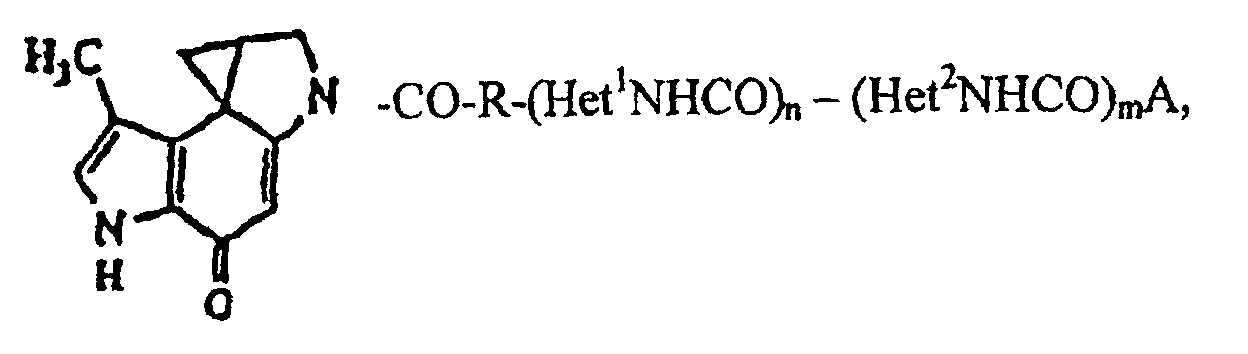 wherein when n = 0, m = 1 to 3,Het1 and Het2 are individually selected from the group consisting of pyrrole, imidazole, triaz-ole, thiophene, furan, thiazole, oxazole, pyrazole, N-alkylpyrrole, N-alkoxymethylpyrrole, N-alkylimidazole, N-alkoxymethylimidazole, wherein the alkoxy or alkyl contains 1 to 4 carbon atoms.R is selected from the group consisting of a valence bond; a C1-C6 alkyl; a C2-C6 alkenyl; a C2-C6 alkynyl; a divalent cycloalkane of formula CpH2p-2, wherein p is 3 to 7, and an ortho, meta or para linked aromatic group,A is selected from the group consisting of a C1-C6 alkyl group; an amidine or derivative thereof; a guanidine; a secondary, tertiary or quaternary ammonium salt; and a sulfonium salt,n is 0 to 3, andm is 0 to 3,
in combination with pharmaceutically acceptable carrier. - A compound of the formula:wherein,
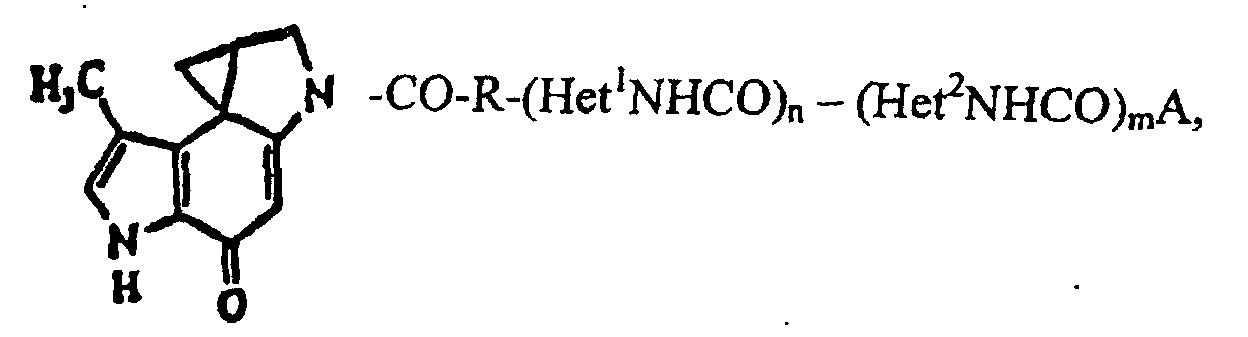 wherein when n=0, m=1 to 3Het1 and Het2 are individually selected from the group consisting of pyrrole, imidazole, triaz-ole, thiophene, furan, thiazole, oxazole, pyrazole, N-alkylpyrrole, N-alkoxymethylpyrrole, N-alkylimidazole, N-alkoxymethylimidazole, wherein the alkoxy or alkyl contains 1 to 4 carbon atoms.R is selected from the group consisting of a valence bond; a C1-C6 alkyl; a C2-C6 alkenyl; a C2-C6 alkynyl; a divalent cycloalkane of formula CpH2p-2, wherein p is 3 to 7, and an ortho, meta or para linked aromatic group,A is selected from the group consisting of a C1-C6 alkyl group; an amidine or derivative thereof; a guanidine; a secondary, tertiary or quaternary ammonium salt; and a sulfonium salt,n is 0 to 3, andm is 0 to 3,
for use as an active pharmaceutical substance. - Use of a compound of the formula:wherein,
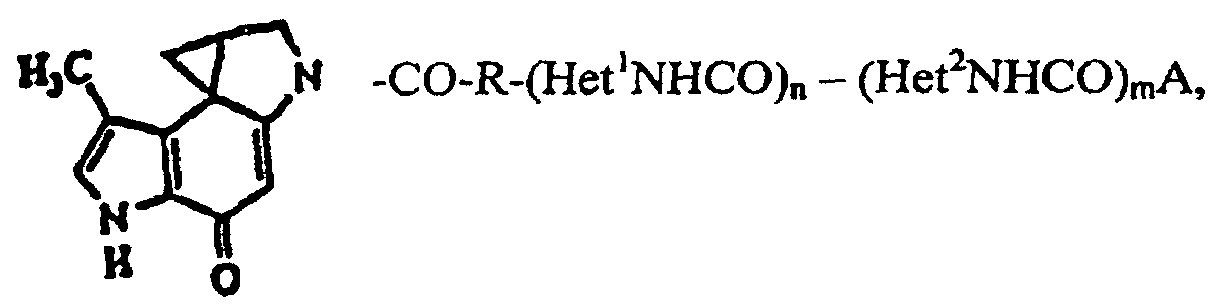 for the manufacture of a medicament for alkylating specific DNA sequences in vivo.Het1 and Het2 are individually selected from the group consisting of pyrrole, imidazole, triaz-ole, thiophene, furan, thiazole, oxazole, pyrazole, N-alkylpyrrole, N-alkoxymethylpyrrole, N-alkylimidazole, N-alkoxymethylimidazole, wherein the alkoxy or alkyl contains 1 to 4 carbon atoms.R is selected from the group consisting of a valence bond; a C1-C6 alkyl; a C2-C6 alkenyl; a C2-C6 alkynyl; a divalent cycloalkane of formula CpH2p-2, wherein p is 3 to 7, and an ortho, meta or para linked aromatic group,A is selected from the group consisting of a C1-C6 alkyl group; an amidine or derivative thereof; a guanidine; a secondary, tertiary or quaternary ammonium salt; and a sulfonium salt,n is 0 to 3, andm is 0 to 3,
 - Use of a compound according to claim 14, wherein said DNA sequences are oncogene DNA sequences.
- Use of a compound of the formula:wherein,
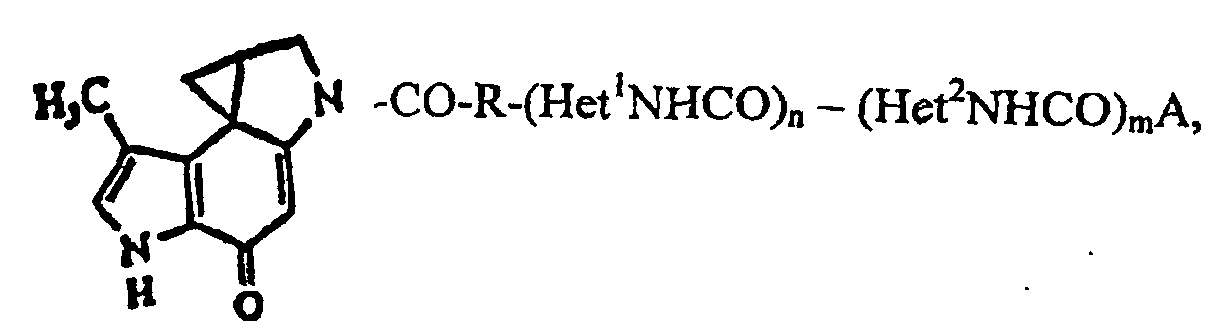 for the manufacture of a medicament for treatment of cancer.Het1 and Het2 are individually selected from the group consisting of pyrrole, imidazole, triaz-ole, thiophene, furan, thiazole, oxazole, pyrazole, N-alkylpyrrole, N-alkoxymethylpyrrole, N-alkylimidazole, N-alkoxymethylimidazole, wherein the alkoxy or alkyl contains 1 to 4 carbon atoms.R is selected from the group consisting of a valence bond; a C1-C6 alkyl; a C2-C6 alkenyl; a C2-C6 alkynyl; a divalent cycloalkane of formula CpH2p-2, wherein p is 3 to 7, and an ortho, meta or para linked aromatic group,A is selected from the group consisting of a C1-C6 alkyl group; an amidine or derivative thereof; a guanidine; a secondary, tertiary or quaternary ammonium salt; and a sulfonium salt,n is 0 to 3, andm is 0 to 3,
Applications Claiming Priority (3)
| Application Number | Priority Date | Filing Date | Title |
|---|---|---|---|
| US381355 | 1995-01-31 | ||
| US08/381,355 US5502068A (en) | 1995-01-31 | 1995-01-31 | Cyclopropylpyrroloindole-oligopeptide anticancer agents |
| PCT/US1996/000727 WO1996023497A1 (en) | 1995-01-31 | 1996-01-31 | Cyclopropylpyrroloindole-oligopeptide anticancer agents |
Publications (3)
| Publication Number | Publication Date |
|---|---|
| EP0800390A1 EP0800390A1 (en) | 1997-10-15 |
| EP0800390A4 EP0800390A4 (en) | 1999-01-20 |
| EP0800390B1 true EP0800390B1 (en) | 2002-12-04 |
Family
ID=23504694
Family Applications (1)
| Application Number | Title | Priority Date | Filing Date |
|---|---|---|---|
| EP96906176A Expired - Lifetime EP0800390B1 (en) | 1995-01-31 | 1996-01-31 | Cyclopropylpyrroloindole-oligopeptide anticancer agents |
Country Status (8)
| Country | Link |
|---|---|
| US (1) | US5502068A (en) |
| EP (1) | EP0800390B1 (en) |
| JP (1) | JPH11500427A (en) |
| AT (1) | ATE228837T1 (en) |
| AU (1) | AU698001B2 (en) |
| CA (1) | CA2210093A1 (en) |
| DE (1) | DE69625175T2 (en) |
| WO (1) | WO1996023497A1 (en) |
Families Citing this family (37)
| Publication number | Priority date | Publication date | Assignee | Title |
|---|---|---|---|---|
| US6015895A (en) * | 1995-12-22 | 2000-01-18 | University Technologies International Inc. | Linker arm for solid support oligonucleotide synthesis and process for production thereof |
| US5659022A (en) * | 1996-01-05 | 1997-08-19 | Epoch Pharmaceuticals, Inc. | Oligonucleotide-cyclopropapyrroloindole conjugates as sequence specific hybridization and crosslinking agents for nucleic acids |
| US5843937A (en) * | 1996-05-23 | 1998-12-01 | Panorama Research, Inc. | DNA-binding indole derivatives, their prodrugs and immunoconjugates as anticancer agents |
| GB9818730D0 (en) | 1998-08-27 | 1998-10-21 | Univ Portsmouth | Collections of compounds |
| PT1109812E (en) | 1998-08-27 | 2005-09-30 | Spirogen Ltd | PYRROLOBENZODIAZEPINAS |
| JP3649617B2 (en) * | 1999-03-26 | 2005-05-18 | 独立行政法人科学技術振興機構 | Compound capable of cleaving double-stranded DNA and method of use thereof |
| US6559125B1 (en) | 2000-01-28 | 2003-05-06 | California Institute Of Technology | Polyamide-alkylator conjugates and related products and method |
| US7078536B2 (en) * | 2001-03-14 | 2006-07-18 | Genesoft Pharmaceuticals, Inc. | Charged compounds comprising a nucleic acid binding moiety and uses therefor |
| KR20030043785A (en) | 2000-03-16 | 2003-06-02 | 젠소프트, 인크. | Charged compounds comprising a nucleic acid binding moiety and uses therefor |
| JP4061819B2 (en) * | 2000-05-12 | 2008-03-19 | 独立行政法人科学技術振興機構 | Method for synthesizing interstrand crosslinker |
| BR0112030A (en) * | 2000-06-27 | 2003-04-29 | Genelabs Tech Inc | New compounds that have antibacterial, antifungal or antitumor activity |
| US7122626B2 (en) * | 2001-04-26 | 2006-10-17 | Genesoft Pharmceuticals, Inc. | Halogen-substitued thienyl compounds |
| US7064218B2 (en) * | 2001-12-26 | 2006-06-20 | Genelabs Technologies, Inc. | Aromatic compounds and poly(oxyalkylene) containing aromatic compounds possessing antibacterial, antifungal or antitumor activity |
| AU2003258022A1 (en) | 2002-08-02 | 2004-02-23 | Genesoft Pharmaceuticals, Inc. | Biaryl compounds having anti-infective activity |
| WO2004039318A2 (en) * | 2002-10-25 | 2004-05-13 | Genesoft Pharmaceuticals, Inc. | Anti-infective biaryl compounds |
| GB0226593D0 (en) | 2002-11-14 | 2002-12-24 | Consultants Ltd | Compounds |
| CA2508769A1 (en) | 2002-12-10 | 2004-06-24 | Oscient Pharmaceuticals Corporation | Antibacterial compounds having a (pyrrole carboxamide)-(benzamide)-(imidazole carboxamide) motif |
| WO2005012256A1 (en) | 2003-07-22 | 2005-02-10 | Astex Therapeutics Limited | 3, 4-disubstituted 1h-pyrazole compounds and their use as cyclin dependent kinases (cdk) and glycogen synthase kinase-3 (gsk-3) modulators |
| GB0321295D0 (en) | 2003-09-11 | 2003-10-15 | Spirogen Ltd | Synthesis of protected pyrrolobenzodiazepines |
| AU2005221959C1 (en) * | 2004-03-13 | 2010-06-17 | Kyoto University | Novel indole derivative for alkylating specific base sequence of DNA and alkylating agent and drug each comprising the same |
| AR052559A1 (en) * | 2005-01-21 | 2007-03-21 | Astex Therapeutics Ltd | PIRAZOL DERIVATIVES TO INHIBIT CDK'S AND GSK'S |
| AR054425A1 (en) * | 2005-01-21 | 2007-06-27 | Astex Therapeutics Ltd | PIPERIDIN ADDITION SALTS 4-IL-ACID AMID 4- (2,6-DICLORO-BENZOILAMINO) 1H-PIRAZOL-3-CARBOXILICO. |
| US8404718B2 (en) | 2005-01-21 | 2013-03-26 | Astex Therapeutics Limited | Combinations of pyrazole kinase inhibitors |
| US20080161251A1 (en) * | 2005-01-21 | 2008-07-03 | Astex Therapeutics Limited | Pharmaceutical Compounds |
| US20080161355A1 (en) * | 2005-01-21 | 2008-07-03 | Astex Therapeutics Limited | Combinations of Pyrazole Kinase Inhibitors and Further Antitumor Agents |
| US20080139620A1 (en) * | 2005-01-21 | 2008-06-12 | Astex Therapeutics Limited | Pyrazole Derivatives For The Inhibition Of Cdk's And Gsk's |
| CA2594477C (en) * | 2005-01-21 | 2016-07-12 | Astex Therapeutics Limited | Pharmaceutical compounds |
| WO2006093271A1 (en) * | 2005-03-03 | 2006-09-08 | Mitsubishi Rayon Co., Ltd. | Polymer particle, resin composition containing same, and molded body |
| EP2027109A1 (en) * | 2006-05-05 | 2009-02-25 | Astex Therapeutics Limited | 4- (2, 6-dichloro-benzoylamino) -1h-pyrazole-s-carboxylic acid (1-methanesulph0nyl-piperidin-4-yl) -amide for the treatment of cancer |
| JP2009536186A (en) * | 2006-05-08 | 2009-10-08 | アステックス・セラピューティクス・リミテッド | Pharmaceutical combinations of diazole derivatives for cancer treatment |
| EP2049516A2 (en) * | 2006-07-14 | 2009-04-22 | Astex Therapeutics Limited | Pharmaceutical compounds |
| US9901567B2 (en) | 2007-08-01 | 2018-02-27 | Syntarga B.V. | Substituted CC-1065 analogs and their conjugates |
| MX2011004625A (en) * | 2008-11-03 | 2011-07-20 | Syntarga Bv | Novel cc-1065 analogs and their conjugates. |
| CA2956934C (en) | 2010-04-21 | 2019-07-09 | Syntarga B.V. | Novel conjugates of cc-1065 analogs and bifunctional linkers |
| MX368396B (en) | 2014-01-10 | 2019-10-01 | Synthon Biopharmaceuticals Bv | Duocarmycin adcs showing improved in vivo antitumor activity. |
| HRP20160797T1 (en) | 2014-01-10 | 2016-08-12 | Synthon Biopharmaceuticals B.V. | Duocarmycin adcs for use in treatment of endometrial cancer |
| AU2015205574B2 (en) | 2014-01-10 | 2019-08-15 | Byondis B.V. | Method for purifying Cys-linked antibody-drug conjugates |
Family Cites Families (3)
| Publication number | Priority date | Publication date | Assignee | Title |
|---|---|---|---|---|
| US4978757A (en) * | 1984-02-21 | 1990-12-18 | The Upjohn Company | 1,2,8,8a-tetrahydrocyclopropa (C) pyrrolo [3,2-e)]-indol-4(5H)-ones and related compounds |
| CA1308516C (en) * | 1987-07-06 | 1992-10-06 | The Governors Of The University Of Alberta | Oligopeptide anticancer and antiviral agents |
| JP3380237B2 (en) * | 1988-09-12 | 2003-02-24 | ファルマシア・アンド・アップジョン・カンパニー | Novel CC-1065 analogs with two CPI subunits |
-
1995
- 1995-01-31 US US08/381,355 patent/US5502068A/en not_active Expired - Fee Related
-
1996
- 1996-01-31 AU AU49643/96A patent/AU698001B2/en not_active Ceased
- 1996-01-31 DE DE69625175T patent/DE69625175T2/en not_active Expired - Fee Related
- 1996-01-31 AT AT96906176T patent/ATE228837T1/en not_active IP Right Cessation
- 1996-01-31 JP JP8523576A patent/JPH11500427A/en not_active Ceased
- 1996-01-31 EP EP96906176A patent/EP0800390B1/en not_active Expired - Lifetime
- 1996-01-31 WO PCT/US1996/000727 patent/WO1996023497A1/en not_active Ceased
- 1996-01-31 CA CA002210093A patent/CA2210093A1/en not_active Abandoned
Also Published As
| Publication number | Publication date |
|---|---|
| DE69625175T2 (en) | 2003-09-11 |
| AU698001B2 (en) | 1998-10-22 |
| WO1996023497A1 (en) | 1996-08-08 |
| DE69625175D1 (en) | 2003-01-16 |
| CA2210093A1 (en) | 1996-08-08 |
| AU4964396A (en) | 1996-08-21 |
| ATE228837T1 (en) | 2002-12-15 |
| US5502068A (en) | 1996-03-26 |
| JPH11500427A (en) | 1999-01-12 |
| EP0800390A4 (en) | 1999-01-20 |
| EP0800390A1 (en) | 1997-10-15 |
Similar Documents
| Publication | Publication Date | Title |
|---|---|---|
| AU698001B2 (en) | Cyclopropylpyrroloindole-oligopeptide anticancer agents | |
| EP0722446B1 (en) | Distamycin a analogues as antitumour or antiviral agents | |
| CA2650119C (en) | Dihydropyrazolopyrimidinone derivatives | |
| AU647446B2 (en) | New ureido derivatives of poly-4-amino-2-carboxy-1-methyl compounds | |
| EP0656360B1 (en) | Trifluoromethylpyrroloindole carboxylic ester derivative and process for producing the same | |
| BR112014017749B1 (en) | ALKNYLBENZENE COMPOSITE 3,5-DISPLACED AND SALT OF THE SAME | |
| SG11202109367WA (en) | Macrocyclic compounds | |
| AU2014291161A1 (en) | Antitumor drug for intermittent administration of FGFR inhibitor | |
| KR20210120070A (en) | immunomodulators | |
| US5981551A (en) | 2,5-diimino-3a,6a-diaryl-1,2,3,3a,4,5,6,6a-octahydroimidazo[4,5-d]imidazoles which are effective as G-CSF mimetics | |
| JPH03504863A (en) | Acryloyl group-substituted pyrrole derivative | |
| AU724511B2 (en) | Acryloyl substituted distamycin derivatives, process for preparing them, and their use as antitumor and antiviral agents | |
| AU716633B2 (en) | Amide derivatives | |
| EP2836493B1 (en) | Functionalized thieno-indole derivatives for the treatment of cancer | |
| US6630470B1 (en) | G-CSF mimetics | |
| US6346531B1 (en) | G-CSF mimetics | |
| EP1100777B1 (en) | Sulfurated distamycin derivatives, process for preparing them, and their use as antitumor agents | |
| EA000033B1 (en) | Bis(2-haloethyl) aminophenyl substituted distamycin derivatives as antitumor and antiviral agents | |
| KR20110082094A (en) | 6-cycloamino-3- (1H-pyrrolo [2,3-VIII] pyridin-4-yl) imidazo [1,2-VIII] pyridazine derivative, its preparation and therapeutic use thereof | |
| WO2003066622A1 (en) | Novel benzimidazole compounds | |
| Baraldi et al. | Heterocyclic analogs of DNA minor groove alkylating agents | |
| US6596845B1 (en) | Cinnamoyl distamycin analogous derivatives, process for their preparation, and their use as antitumor agents | |
| WO2020157662A1 (en) | Duocarmycin analogues | |
| AU2005221959B2 (en) | Novel indole derivative for alkylating specific base sequence of DNA and alkylating agent and drug each comprising the same | |
| JP2860425B2 (en) | Novel porphyrin derivatives and their salts |
Legal Events
| Date | Code | Title | Description |
|---|---|---|---|
| PUAI | Public reference made under article 153(3) epc to a published international application that has entered the european phase |
Free format text: ORIGINAL CODE: 0009012 |
|
| 17P | Request for examination filed |
Effective date: 19970721 |
|
| AK | Designated contracting states |
Kind code of ref document: A1 Designated state(s): AT BE CH DE DK ES FR GB GR IE IT LI LU MC NL PT SE |
|
| RIN1 | Information on inventor provided before grant (corrected) |
Inventor name: LUO, WEIDE Inventor name: WANG, YUQIANG Inventor name: LOWN, J. WILLIAM |
|
| A4 | Supplementary search report drawn up and despatched |
Effective date: 19981208 |
|
| AK | Designated contracting states |
Kind code of ref document: A4 Designated state(s): AT BE CH DE DK ES FR GB GR IE IT LI LU MC NL PT SE |
|
| RAP1 | Party data changed (applicant data changed or rights of an application transferred) |
Owner name: THE GOVERNORS OF THE UNIVERSITY OF ALBERTA |
|
| 17Q | First examination report despatched |
Effective date: 20001030 |
|
| GRAG | Despatch of communication of intention to grant |
Free format text: ORIGINAL CODE: EPIDOS AGRA |
|
| GRAG | Despatch of communication of intention to grant |
Free format text: ORIGINAL CODE: EPIDOS AGRA |
|
| GRAH | Despatch of communication of intention to grant a patent |
Free format text: ORIGINAL CODE: EPIDOS IGRA |
|
| GRAH | Despatch of communication of intention to grant a patent |
Free format text: ORIGINAL CODE: EPIDOS IGRA |
|
| GRAA | (expected) grant |
Free format text: ORIGINAL CODE: 0009210 |
|
| AK | Designated contracting states |
Kind code of ref document: B1 Designated state(s): AT BE CH DE DK ES FR GB GR IE IT LI LU MC NL PT SE |
|
| PG25 | Lapsed in a contracting state [announced via postgrant information from national office to epo] |
Ref country code: NL Free format text: LAPSE BECAUSE OF FAILURE TO SUBMIT A TRANSLATION OF THE DESCRIPTION OR TO PAY THE FEE WITHIN THE PRESCRIBED TIME-LIMIT Effective date: 20021204 Ref country code: GR Free format text: LAPSE BECAUSE OF FAILURE TO SUBMIT A TRANSLATION OF THE DESCRIPTION OR TO PAY THE FEE WITHIN THE PRESCRIBED TIME-LIMIT Effective date: 20021204 Ref country code: BE Free format text: LAPSE BECAUSE OF FAILURE TO SUBMIT A TRANSLATION OF THE DESCRIPTION OR TO PAY THE FEE WITHIN THE PRESCRIBED TIME-LIMIT Effective date: 20021204 Ref country code: AT Free format text: LAPSE BECAUSE OF FAILURE TO SUBMIT A TRANSLATION OF THE DESCRIPTION OR TO PAY THE FEE WITHIN THE PRESCRIBED TIME-LIMIT Effective date: 20021204 |
|
| REF | Corresponds to: |
Ref document number: 228837 Country of ref document: AT Date of ref document: 20021215 Kind code of ref document: T |
|
| REG | Reference to a national code |
Ref country code: GB Ref legal event code: FG4D |
|
| REG | Reference to a national code |
Ref country code: CH Ref legal event code: EP |
|
| REG | Reference to a national code |
Ref country code: IE Ref legal event code: FG4D |
|
| REF | Corresponds to: |
Ref document number: 69625175 Country of ref document: DE Date of ref document: 20030116 |
|
| PG25 | Lapsed in a contracting state [announced via postgrant information from national office to epo] |
Ref country code: MC Free format text: LAPSE BECAUSE OF NON-PAYMENT OF DUE FEES Effective date: 20030131 Ref country code: LU Free format text: LAPSE BECAUSE OF NON-PAYMENT OF DUE FEES Effective date: 20030131 Ref country code: IE Free format text: LAPSE BECAUSE OF NON-PAYMENT OF DUE FEES Effective date: 20030131 |
|
| REG | Reference to a national code |
Ref country code: CH Ref legal event code: NV Representative=s name: ING. MARCO ZARDI C/O M. ZARDI & CO. S.A. |
|
| PG25 | Lapsed in a contracting state [announced via postgrant information from national office to epo] |
Ref country code: SE Free format text: LAPSE BECAUSE OF FAILURE TO SUBMIT A TRANSLATION OF THE DESCRIPTION OR TO PAY THE FEE WITHIN THE PRESCRIBED TIME-LIMIT Effective date: 20030304 Ref country code: DK Free format text: LAPSE BECAUSE OF FAILURE TO SUBMIT A TRANSLATION OF THE DESCRIPTION OR TO PAY THE FEE WITHIN THE PRESCRIBED TIME-LIMIT Effective date: 20030304 |
|
| PG25 | Lapsed in a contracting state [announced via postgrant information from national office to epo] |
Ref country code: PT Free format text: LAPSE BECAUSE OF FAILURE TO SUBMIT A TRANSLATION OF THE DESCRIPTION OR TO PAY THE FEE WITHIN THE PRESCRIBED TIME-LIMIT Effective date: 20030305 |
|
| NLV1 | Nl: lapsed or annulled due to failure to fulfill the requirements of art. 29p and 29m of the patents act | ||
| PG25 | Lapsed in a contracting state [announced via postgrant information from national office to epo] |
Ref country code: ES Free format text: LAPSE BECAUSE OF FAILURE TO SUBMIT A TRANSLATION OF THE DESCRIPTION OR TO PAY THE FEE WITHIN THE PRESCRIBED TIME-LIMIT Effective date: 20030627 |
|
| ET | Fr: translation filed | ||
| PLBE | No opposition filed within time limit |
Free format text: ORIGINAL CODE: 0009261 |
|
| STAA | Information on the status of an ep patent application or granted ep patent |
Free format text: STATUS: NO OPPOSITION FILED WITHIN TIME LIMIT |
|
| REG | Reference to a national code |
Ref country code: IE Ref legal event code: MM4A |
|
| 26N | No opposition filed |
Effective date: 20030905 |
|
| PGFP | Annual fee paid to national office [announced via postgrant information from national office to epo] |
Ref country code: GB Payment date: 20040128 Year of fee payment: 9 |
|
| PGFP | Annual fee paid to national office [announced via postgrant information from national office to epo] |
Ref country code: FR Payment date: 20040210 Year of fee payment: 9 |
|
| PGFP | Annual fee paid to national office [announced via postgrant information from national office to epo] |
Ref country code: DE Payment date: 20040212 Year of fee payment: 9 |
|
| PGFP | Annual fee paid to national office [announced via postgrant information from national office to epo] |
Ref country code: CH Payment date: 20040218 Year of fee payment: 9 |
|
| PG25 | Lapsed in a contracting state [announced via postgrant information from national office to epo] |
Ref country code: IT Free format text: LAPSE BECAUSE OF NON-PAYMENT OF DUE FEES Effective date: 20050131 Ref country code: GB Free format text: LAPSE BECAUSE OF NON-PAYMENT OF DUE FEES Effective date: 20050131 Ref country code: CH Free format text: LAPSE BECAUSE OF NON-PAYMENT OF DUE FEES Effective date: 20050131 |
|
| PG25 | Lapsed in a contracting state [announced via postgrant information from national office to epo] |
Ref country code: DE Free format text: LAPSE BECAUSE OF NON-PAYMENT OF DUE FEES Effective date: 20050802 |
|
| REG | Reference to a national code |
Ref country code: CH Ref legal event code: PL |
|
| GBPC | Gb: european patent ceased through non-payment of renewal fee |
Effective date: 20050131 |
|
| PG25 | Lapsed in a contracting state [announced via postgrant information from national office to epo] |
Ref country code: FR Free format text: LAPSE BECAUSE OF NON-PAYMENT OF DUE FEES Effective date: 20050930 |
|
| REG | Reference to a national code |
Ref country code: FR Ref legal event code: ST |