EP0799208B1 - Pyridine and pyrazinedicarboxylic-acid derivatives as cell proliferation regulators - Google Patents
Pyridine and pyrazinedicarboxylic-acid derivatives as cell proliferation regulators Download PDFInfo
- Publication number
- EP0799208B1 EP0799208B1 EP95941202A EP95941202A EP0799208B1 EP 0799208 B1 EP0799208 B1 EP 0799208B1 EP 95941202 A EP95941202 A EP 95941202A EP 95941202 A EP95941202 A EP 95941202A EP 0799208 B1 EP0799208 B1 EP 0799208B1
- Authority
- EP
- European Patent Office
- Prior art keywords
- formula
- pyrazine
- group
- mmol
- compounds
- Prior art date
- Legal status (The legal status is an assumption and is not a legal conclusion. Google has not performed a legal analysis and makes no representation as to the accuracy of the status listed.)
- Expired - Lifetime
Links
- JUJWROOIHBZHMG-UHFFFAOYSA-N Pyridine Chemical compound C1=CC=NC=C1 JUJWROOIHBZHMG-UHFFFAOYSA-N 0.000 title claims description 30
- UMJSCPRVCHMLSP-UHFFFAOYSA-N pyridine Natural products COC1=CC=CN=C1 UMJSCPRVCHMLSP-UHFFFAOYSA-N 0.000 title claims description 15
- ZUCRGHABDDWQPY-UHFFFAOYSA-N pyrazine-2,3-dicarboxylic acid Chemical class OC(=O)C1=NC=CN=C1C(O)=O ZUCRGHABDDWQPY-UHFFFAOYSA-N 0.000 title claims description 14
- 230000004663 cell proliferation Effects 0.000 title description 2
- 150000001875 compounds Chemical class 0.000 claims description 89
- KYQCOXFCLRTKLS-UHFFFAOYSA-N Pyrazine Chemical compound C1=CN=CC=N1 KYQCOXFCLRTKLS-UHFFFAOYSA-N 0.000 claims description 20
- -1 carboxy, phenyl Chemical group 0.000 claims description 16
- MTCFGRXMJLQNBG-REOHCLBHSA-N (2S)-2-Amino-3-hydroxypropansäure Chemical compound OC[C@H](N)C(O)=O MTCFGRXMJLQNBG-REOHCLBHSA-N 0.000 claims description 15
- 238000000034 method Methods 0.000 claims description 12
- MTCFGRXMJLQNBG-UWTATZPHSA-N D-Serine Chemical compound OC[C@@H](N)C(O)=O MTCFGRXMJLQNBG-UWTATZPHSA-N 0.000 claims description 11
- 125000004169 (C1-C6) alkyl group Chemical group 0.000 claims description 10
- PCNDJXKNXGMECE-UHFFFAOYSA-N Phenazine Natural products C1=CC=CC2=NC3=CC=CC=C3N=C21 PCNDJXKNXGMECE-UHFFFAOYSA-N 0.000 claims description 10
- 125000003118 aryl group Chemical group 0.000 claims description 6
- 125000003178 carboxy group Chemical group [H]OC(*)=O 0.000 claims description 6
- 238000004519 manufacturing process Methods 0.000 claims description 6
- 230000008569 process Effects 0.000 claims description 6
- 150000003839 salts Chemical class 0.000 claims description 6
- 150000008064 anhydrides Chemical class 0.000 claims description 5
- 125000004432 carbon atom Chemical group C* 0.000 claims description 5
- 125000002887 hydroxy group Chemical group [H]O* 0.000 claims description 5
- 125000002496 methyl group Chemical group [H]C([H])([H])* 0.000 claims description 5
- 239000000546 pharmaceutical excipient Substances 0.000 claims description 5
- 125000002915 carbonyl group Chemical group [*:2]C([*:1])=O 0.000 claims description 3
- 150000002148 esters Chemical class 0.000 claims description 3
- 230000003647 oxidation Effects 0.000 claims description 3
- 238000007254 oxidation reaction Methods 0.000 claims description 3
- 239000008194 pharmaceutical composition Substances 0.000 claims description 3
- 230000001105 regulatory effect Effects 0.000 claims description 3
- 125000004178 (C1-C4) alkyl group Chemical group 0.000 claims description 2
- 125000000229 (C1-C4)alkoxy group Chemical group 0.000 claims description 2
- 125000003161 (C1-C6) alkylene group Chemical group 0.000 claims description 2
- UFHFLCQGNIYNRP-UHFFFAOYSA-N Hydrogen Chemical compound [H][H] UFHFLCQGNIYNRP-UHFFFAOYSA-N 0.000 claims description 2
- OAICVXFJPJFONN-UHFFFAOYSA-N Phosphorus Chemical compound [P] OAICVXFJPJFONN-UHFFFAOYSA-N 0.000 claims description 2
- 125000002947 alkylene group Chemical group 0.000 claims description 2
- 125000003710 aryl alkyl group Chemical group 0.000 claims description 2
- 125000004218 chloromethyl group Chemical group [H]C([H])(Cl)* 0.000 claims description 2
- 150000004985 diamines Chemical class 0.000 claims description 2
- 150000001991 dicarboxylic acids Chemical class 0.000 claims description 2
- 239000003814 drug Substances 0.000 claims description 2
- 239000003937 drug carrier Substances 0.000 claims description 2
- 125000000623 heterocyclic group Chemical group 0.000 claims description 2
- 229910052739 hydrogen Inorganic materials 0.000 claims description 2
- 239000001257 hydrogen Substances 0.000 claims description 2
- 125000004435 hydrogen atom Chemical group [H]* 0.000 claims description 2
- CBOIHMRHGLHBPB-UHFFFAOYSA-N hydroxymethyl Chemical compound O[CH2] CBOIHMRHGLHBPB-UHFFFAOYSA-N 0.000 claims description 2
- 125000004464 hydroxyphenyl group Chemical group 0.000 claims description 2
- 125000001841 imino group Chemical group [H]N=* 0.000 claims description 2
- 150000002825 nitriles Chemical class 0.000 claims description 2
- 125000004433 nitrogen atom Chemical group N* 0.000 claims description 2
- 229910052698 phosphorus Inorganic materials 0.000 claims description 2
- 239000011574 phosphorus Substances 0.000 claims description 2
- DZHBCXAANHJHBX-UHFFFAOYSA-N pyrazine-2,3-dicarbaldehyde Chemical compound O=CC1=NC=CN=C1C=O DZHBCXAANHJHBX-UHFFFAOYSA-N 0.000 claims description 2
- YHUVMHKAHWKQBI-UHFFFAOYSA-N quinoline-2,3-dicarboxylic acid Chemical compound C1=CC=C2N=C(C(O)=O)C(C(=O)O)=CC2=C1 YHUVMHKAHWKQBI-UHFFFAOYSA-N 0.000 claims description 2
- 230000000638 stimulation Effects 0.000 abstract description 7
- 230000033228 biological regulation Effects 0.000 abstract description 5
- 230000003612 virological effect Effects 0.000 abstract description 4
- 230000001580 bacterial effect Effects 0.000 abstract description 3
- 150000003216 pyrazines Chemical class 0.000 abstract description 3
- 208000031888 Mycoses Diseases 0.000 abstract description 2
- ZMXDDKWLCZADIW-UHFFFAOYSA-N N,N-Dimethylformamide Chemical compound CN(C)C=O ZMXDDKWLCZADIW-UHFFFAOYSA-N 0.000 description 80
- IAZDPXIOMUYVGZ-UHFFFAOYSA-N Dimethylsulphoxide Chemical compound CS(C)=O IAZDPXIOMUYVGZ-UHFFFAOYSA-N 0.000 description 64
- OKKJLVBELUTLKV-UHFFFAOYSA-N Methanol Chemical compound OC OKKJLVBELUTLKV-UHFFFAOYSA-N 0.000 description 52
- YMWUJEATGCHHMB-UHFFFAOYSA-N Dichloromethane Chemical compound ClCCl YMWUJEATGCHHMB-UHFFFAOYSA-N 0.000 description 50
- 239000000243 solution Substances 0.000 description 34
- 239000000203 mixture Substances 0.000 description 29
- DTQVDTLACAAQTR-UHFFFAOYSA-N Trifluoroacetic acid Chemical compound OC(=O)C(F)(F)F DTQVDTLACAAQTR-UHFFFAOYSA-N 0.000 description 28
- LFQSCWFLJHTTHZ-UHFFFAOYSA-N Ethanol Chemical compound CCO LFQSCWFLJHTTHZ-UHFFFAOYSA-N 0.000 description 24
- HEDRZPFGACZZDS-MICDWDOJSA-N Trichloro(2H)methane Chemical compound [2H]C(Cl)(Cl)Cl HEDRZPFGACZZDS-MICDWDOJSA-N 0.000 description 24
- 239000011347 resin Substances 0.000 description 23
- 229920005989 resin Polymers 0.000 description 23
- 238000004007 reversed phase HPLC Methods 0.000 description 20
- WEVYAHXRMPXWCK-UHFFFAOYSA-N Acetonitrile Chemical compound CC#N WEVYAHXRMPXWCK-UHFFFAOYSA-N 0.000 description 19
- 238000001644 13C nuclear magnetic resonance spectroscopy Methods 0.000 description 18
- RTZKZFJDLAIYFH-UHFFFAOYSA-N Diethyl ether Chemical compound CCOCC RTZKZFJDLAIYFH-UHFFFAOYSA-N 0.000 description 17
- XEKOWRVHYACXOJ-UHFFFAOYSA-N Ethyl acetate Chemical compound CCOC(C)=O XEKOWRVHYACXOJ-UHFFFAOYSA-N 0.000 description 17
- UIIMBOGNXHQVGW-UHFFFAOYSA-M Sodium bicarbonate Chemical compound [Na+].OC([O-])=O UIIMBOGNXHQVGW-UHFFFAOYSA-M 0.000 description 17
- NPZTUJOABDZTLV-UHFFFAOYSA-N hydroxybenzotriazole Substances O=C1C=CC=C2NNN=C12 NPZTUJOABDZTLV-UHFFFAOYSA-N 0.000 description 17
- 238000005160 1H NMR spectroscopy Methods 0.000 description 16
- HEDRZPFGACZZDS-UHFFFAOYSA-N Chloroform Chemical compound ClC(Cl)Cl HEDRZPFGACZZDS-UHFFFAOYSA-N 0.000 description 16
- 239000002904 solvent Substances 0.000 description 15
- CSNNHWWHGAXBCP-UHFFFAOYSA-L Magnesium sulfate Chemical compound [Mg+2].[O-][S+2]([O-])([O-])[O-] CSNNHWWHGAXBCP-UHFFFAOYSA-L 0.000 description 14
- 238000006243 chemical reaction Methods 0.000 description 13
- 210000004027 cell Anatomy 0.000 description 11
- 238000010898 silica gel chromatography Methods 0.000 description 11
- 238000004992 fast atom bombardment mass spectroscopy Methods 0.000 description 10
- 239000000047 product Substances 0.000 description 10
- QOSSAOTZNIDXMA-UHFFFAOYSA-N Dicylcohexylcarbodiimide Chemical compound C1CCCCC1N=C=NC1CCCCC1 QOSSAOTZNIDXMA-UHFFFAOYSA-N 0.000 description 9
- VLKZOEOYAKHREP-UHFFFAOYSA-N n-Hexane Chemical compound CCCCCC VLKZOEOYAKHREP-UHFFFAOYSA-N 0.000 description 9
- BDNKZNFMNDZQMI-UHFFFAOYSA-N 1,3-diisopropylcarbodiimide Chemical compound CC(C)N=C=NC(C)C BDNKZNFMNDZQMI-UHFFFAOYSA-N 0.000 description 8
- VEXZGXHMUGYJMC-UHFFFAOYSA-N Hydrochloric acid Chemical compound Cl VEXZGXHMUGYJMC-UHFFFAOYSA-N 0.000 description 8
- BGRWYRAHAFMIBJ-UHFFFAOYSA-N diisopropylcarbodiimide Natural products CC(C)NC(=O)NC(C)C BGRWYRAHAFMIBJ-UHFFFAOYSA-N 0.000 description 8
- 235000019439 ethyl acetate Nutrition 0.000 description 8
- 229910000030 sodium bicarbonate Inorganic materials 0.000 description 8
- 239000004480 active ingredient Substances 0.000 description 7
- 210000001185 bone marrow Anatomy 0.000 description 7
- 238000001816 cooling Methods 0.000 description 7
- 229910052943 magnesium sulfate Inorganic materials 0.000 description 7
- 108090000765 processed proteins & peptides Proteins 0.000 description 7
- 125000006239 protecting group Chemical group 0.000 description 7
- 238000010992 reflux Methods 0.000 description 7
- 125000003088 (fluoren-9-ylmethoxy)carbonyl group Chemical group 0.000 description 6
- QTBSBXVTEAMEQO-UHFFFAOYSA-N Acetic acid Chemical compound CC(O)=O QTBSBXVTEAMEQO-UHFFFAOYSA-N 0.000 description 6
- IAZDPXIOMUYVGZ-WFGJKAKNSA-N Dimethyl sulfoxide Chemical compound [2H]C([2H])([2H])S(=O)C([2H])([2H])[2H] IAZDPXIOMUYVGZ-WFGJKAKNSA-N 0.000 description 6
- SJRJJKPEHAURKC-UHFFFAOYSA-N N-Methylmorpholine Chemical compound CN1CCOCC1 SJRJJKPEHAURKC-UHFFFAOYSA-N 0.000 description 6
- HEMHJVSKTPXQMS-UHFFFAOYSA-M Sodium hydroxide Chemical compound [OH-].[Na+] HEMHJVSKTPXQMS-UHFFFAOYSA-M 0.000 description 6
- LZCUPFSEDRWYNU-UHFFFAOYSA-N dimethyl pyrazine-2,3-dicarboxylate Chemical compound COC(=O)C1=NC=CN=C1C(=O)OC LZCUPFSEDRWYNU-UHFFFAOYSA-N 0.000 description 6
- 230000000694 effects Effects 0.000 description 6
- 239000000706 filtrate Substances 0.000 description 6
- 239000000463 material Substances 0.000 description 6
- 239000011541 reaction mixture Substances 0.000 description 6
- 239000012074 organic phase Substances 0.000 description 5
- 238000005406 washing Methods 0.000 description 5
- RYHBNJHYFVUHQT-UHFFFAOYSA-N 1,4-Dioxane Chemical compound C1COCCO1 RYHBNJHYFVUHQT-UHFFFAOYSA-N 0.000 description 4
- UXFQFBNBSPQBJW-UHFFFAOYSA-N 2-amino-2-methylpropane-1,3-diol Chemical compound OCC(N)(C)CO UXFQFBNBSPQBJW-UHFFFAOYSA-N 0.000 description 4
- RLGUZULTVARHHX-UHFFFAOYSA-N 2-n,2-n,3-n,3-n-tetrakis(2-hydroxyethyl)pyrazine-2,3-dicarboxamide Chemical compound OCCN(CCO)C(=O)C1=NC=CN=C1C(=O)N(CCO)CCO RLGUZULTVARHHX-UHFFFAOYSA-N 0.000 description 4
- ZKBPWGREDZWROM-UHFFFAOYSA-N 3-methoxycarbonylpyrazine-2-carboxylic acid Chemical compound COC(=O)C1=NC=CN=C1C(O)=O ZKBPWGREDZWROM-UHFFFAOYSA-N 0.000 description 4
- 108010071942 Colony-Stimulating Factors Proteins 0.000 description 4
- 102000007644 Colony-Stimulating Factors Human genes 0.000 description 4
- DHMQDGOQFOQNFH-UHFFFAOYSA-N Glycine Chemical compound NCC(O)=O DHMQDGOQFOQNFH-UHFFFAOYSA-N 0.000 description 4
- 238000005481 NMR spectroscopy Methods 0.000 description 4
- 210000002798 bone marrow cell Anatomy 0.000 description 4
- 239000003795 chemical substances by application Substances 0.000 description 4
- 229940047120 colony stimulating factors Drugs 0.000 description 4
- ZBCBWPMODOFKDW-UHFFFAOYSA-N diethanolamine Chemical compound OCCNCCO ZBCBWPMODOFKDW-UHFFFAOYSA-N 0.000 description 4
- IJKVHSBPTUYDLN-UHFFFAOYSA-N dihydroxy(oxo)silane Chemical compound O[Si](O)=O IJKVHSBPTUYDLN-UHFFFAOYSA-N 0.000 description 4
- 229910052757 nitrogen Inorganic materials 0.000 description 4
- 238000000655 nuclear magnetic resonance spectrum Methods 0.000 description 4
- 238000003756 stirring Methods 0.000 description 4
- 239000012730 sustained-release form Substances 0.000 description 4
- ADFXKUOMJKEIND-UHFFFAOYSA-N 1,3-dicyclohexylurea Chemical compound C1CCCCC1NC(=O)NC1CCCCC1 ADFXKUOMJKEIND-UHFFFAOYSA-N 0.000 description 3
- ZWEHNKRNPOVVGH-UHFFFAOYSA-N 2-Butanone Chemical compound CCC(C)=O ZWEHNKRNPOVVGH-UHFFFAOYSA-N 0.000 description 3
- NOVUDDZGDQKMRB-UHFFFAOYSA-N 2-n,3-n-bis(1,3-dihydroxypropan-2-yl)pyrazine-2,3-dicarboxamide Chemical compound OCC(CO)NC(=O)C1=NC=CN=C1C(=O)NC(CO)CO NOVUDDZGDQKMRB-UHFFFAOYSA-N 0.000 description 3
- WVDDGKGOMKODPV-UHFFFAOYSA-N Benzyl alcohol Chemical compound OCC1=CC=CC=C1 WVDDGKGOMKODPV-UHFFFAOYSA-N 0.000 description 3
- 0 CN([C@](CO)C(O)=O)C(c1cccnc1C(*[C@@](*)CO)=N)=N Chemical compound CN([C@](CO)C(O)=O)C(c1cccnc1C(*[C@@](*)CO)=N)=N 0.000 description 3
- OAKJQQAXSVQMHS-UHFFFAOYSA-N Hydrazine Chemical compound NN OAKJQQAXSVQMHS-UHFFFAOYSA-N 0.000 description 3
- 238000013019 agitation Methods 0.000 description 3
- 125000001797 benzyl group Chemical group [H]C1=C([H])C([H])=C(C([H])=C1[H])C([H])([H])* 0.000 description 3
- 230000015572 biosynthetic process Effects 0.000 description 3
- 125000000484 butyl group Chemical group [H]C([*])([H])C([H])([H])C([H])([H])C([H])([H])[H] 0.000 description 3
- 125000006297 carbonyl amino group Chemical group [H]N([*:2])C([*:1])=O 0.000 description 3
- 238000004587 chromatography analysis Methods 0.000 description 3
- KRKNYBCHXYNGOX-UHFFFAOYSA-N citric acid Chemical compound OC(=O)CC(O)(C(O)=O)CC(O)=O KRKNYBCHXYNGOX-UHFFFAOYSA-N 0.000 description 3
- 239000012043 crude product Substances 0.000 description 3
- 238000010511 deprotection reaction Methods 0.000 description 3
- 230000003394 haemopoietic effect Effects 0.000 description 3
- 238000002347 injection Methods 0.000 description 3
- 239000007924 injection Substances 0.000 description 3
- 230000007246 mechanism Effects 0.000 description 3
- 238000002156 mixing Methods 0.000 description 3
- CMWYAOXYQATXSI-UHFFFAOYSA-N n,n-dimethylformamide;piperidine Chemical compound CN(C)C=O.C1CCNCC1 CMWYAOXYQATXSI-UHFFFAOYSA-N 0.000 description 3
- 239000003208 petroleum Substances 0.000 description 3
- 239000000843 powder Substances 0.000 description 3
- 238000002360 preparation method Methods 0.000 description 3
- 230000008929 regeneration Effects 0.000 description 3
- 238000011069 regeneration method Methods 0.000 description 3
- 238000013268 sustained release Methods 0.000 description 3
- 238000003786 synthesis reaction Methods 0.000 description 3
- LENZDBCJOHFCAS-UHFFFAOYSA-N tris Chemical compound OCC(N)(CO)CO LENZDBCJOHFCAS-UHFFFAOYSA-N 0.000 description 3
- FODJWPHPWBKDON-IBGZPJMESA-N (2s)-2-(9h-fluoren-9-ylmethoxycarbonylamino)-4-[(2-methylpropan-2-yl)oxy]-4-oxobutanoic acid Chemical compound C1=CC=C2C(COC(=O)N[C@@H](CC(=O)OC(C)(C)C)C(O)=O)C3=CC=CC=C3C2=C1 FODJWPHPWBKDON-IBGZPJMESA-N 0.000 description 2
- VVQIIIAZJXTLRE-QMMMGPOBSA-N (2s)-2-amino-6-[(2-methylpropan-2-yl)oxycarbonylamino]hexanoic acid Chemical compound CC(C)(C)OC(=O)NCCCC[C@H](N)C(O)=O VVQIIIAZJXTLRE-QMMMGPOBSA-N 0.000 description 2
- WMMKLGOAKIPZJN-YTFOTSKYSA-N (2s)-6-amino-2-[[(2r)-2-[[(2s)-3-carboxy-2-[[(2s)-4-carboxy-2-[[(2s)-5-oxopyrrolidine-2-carbonyl]amino]butanoyl]amino]propanoyl]amino]-3-sulfanylpropanoyl]amino]hexanoic acid Chemical compound NCCCC[C@@H](C(O)=O)NC(=O)[C@H](CS)NC(=O)[C@H](CC(O)=O)NC(=O)[C@H](CCC(O)=O)NC(=O)[C@@H]1CCC(=O)N1 WMMKLGOAKIPZJN-YTFOTSKYSA-N 0.000 description 2
- OXQOBQJCDNLAPO-UHFFFAOYSA-N 2,3-Dimethylpyrazine Chemical compound CC1=NC=CN=C1C OXQOBQJCDNLAPO-UHFFFAOYSA-N 0.000 description 2
- ISMYJOYXMZNZFH-UHFFFAOYSA-N 2,3-bis(chloromethyl)pyrazine Chemical compound ClCC1=NC=CN=C1CCl ISMYJOYXMZNZFH-UHFFFAOYSA-N 0.000 description 2
- HZAXFHJVJLSVMW-UHFFFAOYSA-N 2-Aminoethan-1-ol Chemical compound NCCO HZAXFHJVJLSVMW-UHFFFAOYSA-N 0.000 description 2
- SZQUPQVVCLFZLC-UHFFFAOYSA-N 2-[benzyl(carboxymethyl)amino]acetic acid Chemical compound OC(=O)CN(CC(O)=O)CC1=CC=CC=C1 SZQUPQVVCLFZLC-UHFFFAOYSA-N 0.000 description 2
- QPGIJQUTGABQLQ-UHFFFAOYSA-N 2-[carboxymethyl-[(2-methylpropan-2-yl)oxycarbonyl]amino]acetic acid Chemical compound CC(C)(C)OC(=O)N(CC(O)=O)CC(O)=O QPGIJQUTGABQLQ-UHFFFAOYSA-N 0.000 description 2
- KJJPLEZQSCZCKE-UHFFFAOYSA-N 2-aminopropane-1,3-diol Chemical compound OCC(N)CO KJJPLEZQSCZCKE-UHFFFAOYSA-N 0.000 description 2
- JIZOXKVOBNBEAW-UHFFFAOYSA-N 2-n,3-n-bis(1,3-dihydroxypropan-2-yl)pyridine-2,3-dicarboxamide Chemical compound OCC(CO)NC(=O)C1=CC=CN=C1C(=O)NC(CO)CO JIZOXKVOBNBEAW-UHFFFAOYSA-N 0.000 description 2
- GVMHKNBJWFHGHB-UHFFFAOYSA-N 3-o-benzyl 1-o-tert-butyl 2-[(2-oxo-2-phenylmethoxyethyl)amino]propanedioate Chemical compound C=1C=CC=CC=1COC(=O)C(C(=O)OC(C)(C)C)NCC(=O)OCC1=CC=CC=C1 GVMHKNBJWFHGHB-UHFFFAOYSA-N 0.000 description 2
- VHYFNPMBLIVWCW-UHFFFAOYSA-N 4-Dimethylaminopyridine Chemical compound CN(C)C1=CC=NC=C1 VHYFNPMBLIVWCW-UHFFFAOYSA-N 0.000 description 2
- RPUHUBBSMULFQR-UHFFFAOYSA-N 5-hydroxy-5-(5-hydroxy-1,3-dimethyl-2,4,6-trioxo-1,3-diazinan-5-yl)-1,3-dimethyl-1,3-diazinane-2,4,6-trione Chemical compound O=C1N(C)C(=O)N(C)C(=O)C1(O)C1(O)C(=O)N(C)C(=O)N(C)C1=O RPUHUBBSMULFQR-UHFFFAOYSA-N 0.000 description 2
- HBAQYPYDRFILMT-UHFFFAOYSA-N 8-[3-(1-cyclopropylpyrazol-4-yl)-1H-pyrazolo[4,3-d]pyrimidin-5-yl]-3-methyl-3,8-diazabicyclo[3.2.1]octan-2-one Chemical class C1(CC1)N1N=CC(=C1)C1=NNC2=C1N=C(N=C2)N1C2C(N(CC1CC2)C)=O HBAQYPYDRFILMT-UHFFFAOYSA-N 0.000 description 2
- WFDIJRYMOXRFFG-UHFFFAOYSA-N Acetic anhydride Chemical compound CC(=O)OC(C)=O WFDIJRYMOXRFFG-UHFFFAOYSA-N 0.000 description 2
- 229920001817 Agar Polymers 0.000 description 2
- GUBGYTABKSRVRQ-XLOQQCSPSA-N Alpha-Lactose Chemical compound O[C@@H]1[C@@H](O)[C@@H](O)[C@@H](CO)O[C@H]1O[C@@H]1[C@@H](CO)O[C@H](O)[C@H](O)[C@H]1O GUBGYTABKSRVRQ-XLOQQCSPSA-N 0.000 description 2
- IJGRMHOSHXDMSA-UHFFFAOYSA-N Atomic nitrogen Chemical compound N#N IJGRMHOSHXDMSA-UHFFFAOYSA-N 0.000 description 2
- VTYYLEPIZMXCLO-UHFFFAOYSA-L Calcium carbonate Chemical compound [Ca+2].[O-]C([O-])=O VTYYLEPIZMXCLO-UHFFFAOYSA-L 0.000 description 2
- 108010017080 Granulocyte Colony-Stimulating Factor Proteins 0.000 description 2
- 102000004269 Granulocyte Colony-Stimulating Factor Human genes 0.000 description 2
- 108010017213 Granulocyte-Macrophage Colony-Stimulating Factor Proteins 0.000 description 2
- 102100039620 Granulocyte-macrophage colony-stimulating factor Human genes 0.000 description 2
- 108010002350 Interleukin-2 Proteins 0.000 description 2
- 102000000588 Interleukin-2 Human genes 0.000 description 2
- 102100039064 Interleukin-3 Human genes 0.000 description 2
- KFZMGEQAYNKOFK-UHFFFAOYSA-N Isopropanol Chemical compound CC(C)O KFZMGEQAYNKOFK-UHFFFAOYSA-N 0.000 description 2
- GUBGYTABKSRVRQ-QKKXKWKRSA-N Lactose Natural products OC[C@H]1O[C@@H](O[C@H]2[C@H](O)[C@@H](O)C(O)O[C@@H]2CO)[C@H](O)[C@@H](O)[C@H]1O GUBGYTABKSRVRQ-QKKXKWKRSA-N 0.000 description 2
- 108010046938 Macrophage Colony-Stimulating Factor Proteins 0.000 description 2
- 102000007651 Macrophage Colony-Stimulating Factor Human genes 0.000 description 2
- YNAVUWVOSKDBBP-UHFFFAOYSA-N Morpholine Chemical compound C1COCCN1 YNAVUWVOSKDBBP-UHFFFAOYSA-N 0.000 description 2
- 241001529936 Murinae Species 0.000 description 2
- 239000007832 Na2SO4 Substances 0.000 description 2
- XYFCBTPGUUZFHI-UHFFFAOYSA-N Phosphine Chemical compound P XYFCBTPGUUZFHI-UHFFFAOYSA-N 0.000 description 2
- NQRYJNQNLNOLGT-UHFFFAOYSA-N Piperidine Chemical compound C1CCNCC1 NQRYJNQNLNOLGT-UHFFFAOYSA-N 0.000 description 2
- VYPSYNLAJGMNEJ-UHFFFAOYSA-N Silicium dioxide Chemical compound O=[Si]=O VYPSYNLAJGMNEJ-UHFFFAOYSA-N 0.000 description 2
- PMZURENOXWZQFD-UHFFFAOYSA-L Sodium Sulfate Chemical compound [Na+].[Na+].[O-]S([O-])(=O)=O PMZURENOXWZQFD-UHFFFAOYSA-L 0.000 description 2
- 241000692850 Sophora cassioides Species 0.000 description 2
- GWEVSGVZZGPLCZ-UHFFFAOYSA-N Titan oxide Chemical compound O=[Ti]=O GWEVSGVZZGPLCZ-UHFFFAOYSA-N 0.000 description 2
- 238000005917 acylation reaction Methods 0.000 description 2
- 239000008272 agar Substances 0.000 description 2
- 235000001014 amino acid Nutrition 0.000 description 2
- 150000001413 amino acids Chemical class 0.000 description 2
- 230000037396 body weight Effects 0.000 description 2
- 231100001018 bone marrow damage Toxicity 0.000 description 2
- 239000002775 capsule Substances 0.000 description 2
- 239000003153 chemical reaction reagent Substances 0.000 description 2
- 239000000824 cytostatic agent Substances 0.000 description 2
- 230000001085 cytostatic effect Effects 0.000 description 2
- 230000004069 differentiation Effects 0.000 description 2
- YLGIBCYHQZTFQL-UHFFFAOYSA-N dimethyl pyridine-2,3-dicarboxylate Chemical compound COC(=O)C1=CC=CN=C1C(=O)OC YLGIBCYHQZTFQL-UHFFFAOYSA-N 0.000 description 2
- 201000010099 disease Diseases 0.000 description 2
- 208000037265 diseases, disorders, signs and symptoms Diseases 0.000 description 2
- 238000001035 drying Methods 0.000 description 2
- 238000010828 elution Methods 0.000 description 2
- 238000001704 evaporation Methods 0.000 description 2
- 230000008020 evaporation Effects 0.000 description 2
- 238000001914 filtration Methods 0.000 description 2
- 239000012467 final product Substances 0.000 description 2
- 230000011132 hemopoiesis Effects 0.000 description 2
- NBZBKCUXIYYUSX-UHFFFAOYSA-N iminodiacetic acid Chemical compound OC(=O)CNCC(O)=O NBZBKCUXIYYUSX-UHFFFAOYSA-N 0.000 description 2
- 238000011065 in-situ storage Methods 0.000 description 2
- 230000005764 inhibitory process Effects 0.000 description 2
- 238000010829 isocratic elution Methods 0.000 description 2
- 239000008101 lactose Substances 0.000 description 2
- HQKMJHAJHXVSDF-UHFFFAOYSA-L magnesium stearate Chemical compound [Mg+2].CCCCCCCCCCCCCCCCCC([O-])=O.CCCCCCCCCCCCCCCCCC([O-])=O HQKMJHAJHXVSDF-UHFFFAOYSA-L 0.000 description 2
- 238000001840 matrix-assisted laser desorption--ionisation time-of-flight mass spectrometry Methods 0.000 description 2
- 239000000178 monomer Substances 0.000 description 2
- 230000003525 myelopoietic effect Effects 0.000 description 2
- 239000007922 nasal spray Substances 0.000 description 2
- 239000003921 oil Substances 0.000 description 2
- 235000019198 oils Nutrition 0.000 description 2
- 230000003287 optical effect Effects 0.000 description 2
- 125000001151 peptidyl group Chemical group 0.000 description 2
- 150000004714 phosphonium salts Chemical class 0.000 description 2
- 239000002244 precipitate Substances 0.000 description 2
- 102000004196 processed proteins & peptides Human genes 0.000 description 2
- KIDHWZJUCRJVML-UHFFFAOYSA-N putrescine Chemical compound NCCCCN KIDHWZJUCRJVML-UHFFFAOYSA-N 0.000 description 2
- TZMYZOQDDVSLJU-UHFFFAOYSA-N pyrazine-2,3-dicarboxamide Chemical compound NC(=O)C1=NC=CN=C1C(N)=O TZMYZOQDDVSLJU-UHFFFAOYSA-N 0.000 description 2
- 239000000741 silica gel Substances 0.000 description 2
- 229910002027 silica gel Inorganic materials 0.000 description 2
- 229910052938 sodium sulfate Inorganic materials 0.000 description 2
- 210000000130 stem cell Anatomy 0.000 description 2
- 230000004936 stimulating effect Effects 0.000 description 2
- 239000006228 supernatant Substances 0.000 description 2
- 239000000454 talc Substances 0.000 description 2
- 235000012222 talc Nutrition 0.000 description 2
- 229910052623 talc Inorganic materials 0.000 description 2
- DYHSDKLCOJIUFX-UHFFFAOYSA-N tert-butoxycarbonyl anhydride Chemical compound CC(C)(C)OC(=O)OC(=O)OC(C)(C)C DYHSDKLCOJIUFX-UHFFFAOYSA-N 0.000 description 2
- 125000000999 tert-butyl group Chemical group [H]C([H])([H])C(*)(C([H])([H])[H])C([H])([H])[H] 0.000 description 2
- 238000012360 testing method Methods 0.000 description 2
- 125000000026 trimethylsilyl group Chemical group [H]C([H])([H])[Si]([*])(C([H])([H])[H])C([H])([H])[H] 0.000 description 2
- 125000002221 trityl group Chemical group [H]C1=C([H])C([H])=C([H])C([H])=C1C([*])(C1=C(C(=C(C(=C1[H])[H])[H])[H])[H])C1=C([H])C([H])=C([H])C([H])=C1[H] 0.000 description 2
- REITVGIIZHFVGU-LJQANCHMSA-N (2r)-2-(9h-fluoren-9-ylmethoxycarbonylamino)-3-[(2-methylpropan-2-yl)oxy]propanoic acid Chemical compound C1=CC=C2C(COC(=O)N[C@H](COC(C)(C)C)C(O)=O)C3=CC=CC=C3C2=C1 REITVGIIZHFVGU-LJQANCHMSA-N 0.000 description 1
- KSDTXRUIZMTBNV-INIZCTEOSA-N (2s)-2-(9h-fluoren-9-ylmethoxycarbonylamino)butanedioic acid Chemical compound C1=CC=C2C(COC(=O)N[C@@H](CC(=O)O)C(O)=O)C3=CC=CC=C3C2=C1 KSDTXRUIZMTBNV-INIZCTEOSA-N 0.000 description 1
- ASOKPJOREAFHNY-UHFFFAOYSA-N 1-Hydroxybenzotriazole Chemical group C1=CC=C2N(O)N=NC2=C1 ASOKPJOREAFHNY-UHFFFAOYSA-N 0.000 description 1
- LMDZBCPBFSXMTL-UHFFFAOYSA-N 1-ethyl-3-(3-dimethylaminopropyl)carbodiimide Chemical compound CCN=C=NCCCN(C)C LMDZBCPBFSXMTL-UHFFFAOYSA-N 0.000 description 1
- NJEYUYUXKBWGBT-UHFFFAOYSA-N 2,2-diethylpropanedioic acid;hydrochloride Chemical compound Cl.CCC(CC)(C(O)=O)C(O)=O NJEYUYUXKBWGBT-UHFFFAOYSA-N 0.000 description 1
- DPZJVKHQLQHGCE-UHFFFAOYSA-N 2-n,3-n-bis(1,3-dihydroxy-2-methylpropan-2-yl)pyrazine-2,3-dicarboxamide Chemical compound OCC(C)(CO)NC(=O)C1=NC=CN=C1C(=O)NC(C)(CO)CO DPZJVKHQLQHGCE-UHFFFAOYSA-N 0.000 description 1
- WCBPMTVUEQFRIY-UHFFFAOYSA-N 2-n,3-n-bis(2-hydroxyethyl)pyrazine-2,3-dicarboxamide Chemical compound OCCNC(=O)C1=NC=CN=C1C(=O)NCCO WCBPMTVUEQFRIY-UHFFFAOYSA-N 0.000 description 1
- FJKROLUGYXJWQN-UHFFFAOYSA-N 4-hydroxybenzoic acid Chemical class OC(=O)C1=CC=C(O)C=C1 FJKROLUGYXJWQN-UHFFFAOYSA-N 0.000 description 1
- 244000215068 Acacia senegal Species 0.000 description 1
- NIXOWILDQLNWCW-UHFFFAOYSA-N Acrylic acid Chemical group OC(=O)C=C NIXOWILDQLNWCW-UHFFFAOYSA-N 0.000 description 1
- 102000005606 Activins Human genes 0.000 description 1
- 108010059616 Activins Proteins 0.000 description 1
- 201000010000 Agranulocytosis Diseases 0.000 description 1
- 208000032467 Aplastic anaemia Diseases 0.000 description 1
- 208000018240 Bone Marrow Failure disease Diseases 0.000 description 1
- 206010065553 Bone marrow failure Diseases 0.000 description 1
- 108091003079 Bovine Serum Albumin Proteins 0.000 description 1
- QUHFNQCVOQBKHR-UHFFFAOYSA-N C(=O)(O)C1C(NCCO1)C(=O)O.N1=CC=NC=C1 Chemical compound C(=O)(O)C1C(NCCO1)C(=O)O.N1=CC=NC=C1 QUHFNQCVOQBKHR-UHFFFAOYSA-N 0.000 description 1
- 241000222120 Candida <Saccharomycetales> Species 0.000 description 1
- 229920002134 Carboxymethyl cellulose Polymers 0.000 description 1
- 229920000623 Cellulose acetate phthalate Polymers 0.000 description 1
- 229920002261 Corn starch Polymers 0.000 description 1
- FBPFZTCFMRRESA-FSIIMWSLSA-N D-Glucitol Natural products OC[C@H](O)[C@H](O)[C@@H](O)[C@H](O)CO FBPFZTCFMRRESA-FSIIMWSLSA-N 0.000 description 1
- FBPFZTCFMRRESA-JGWLITMVSA-N D-glucitol Chemical compound OC[C@H](O)[C@@H](O)[C@H](O)[C@H](O)CO FBPFZTCFMRRESA-JGWLITMVSA-N 0.000 description 1
- KCXVZYZYPLLWCC-UHFFFAOYSA-N EDTA Chemical compound OC(=O)CN(CC(O)=O)CCN(CC(O)=O)CC(O)=O KCXVZYZYPLLWCC-UHFFFAOYSA-N 0.000 description 1
- LYCAIKOWRPUZTN-UHFFFAOYSA-N Ethylene glycol Chemical compound OCCO LYCAIKOWRPUZTN-UHFFFAOYSA-N 0.000 description 1
- 102000008857 Ferritin Human genes 0.000 description 1
- 238000008416 Ferritin Methods 0.000 description 1
- 108050000784 Ferritin Proteins 0.000 description 1
- 108010010803 Gelatin Proteins 0.000 description 1
- 229920000084 Gum arabic Polymers 0.000 description 1
- 101001033279 Homo sapiens Interleukin-3 Proteins 0.000 description 1
- XQFRJNBWHJMXHO-RRKCRQDMSA-N IDUR Chemical compound C1[C@H](O)[C@@H](CO)O[C@H]1N1C(=O)NC(=O)C(I)=C1 XQFRJNBWHJMXHO-RRKCRQDMSA-N 0.000 description 1
- 108010002386 Interleukin-3 Proteins 0.000 description 1
- 102000010445 Lactoferrin Human genes 0.000 description 1
- 108010063045 Lactoferrin Proteins 0.000 description 1
- KWYHDKDOAIKMQN-UHFFFAOYSA-N N,N,N',N'-tetramethylethylenediamine Chemical compound CN(C)CCN(C)C KWYHDKDOAIKMQN-UHFFFAOYSA-N 0.000 description 1
- MZRVEZGGRBJDDB-UHFFFAOYSA-N N-Butyllithium Chemical compound [Li]CCCC MZRVEZGGRBJDDB-UHFFFAOYSA-N 0.000 description 1
- 206010028980 Neoplasm Diseases 0.000 description 1
- VJKJHFNAMRJSFR-PHDIDXHHSA-N OC[C@H](C(O)=O)NC(c1nccnc1C(N[C@H](CO)C(O)=O)=O)=O Chemical compound OC[C@H](C(O)=O)NC(c1nccnc1C(N[C@H](CO)C(O)=O)=O)=O VJKJHFNAMRJSFR-PHDIDXHHSA-N 0.000 description 1
- 235000019502 Orange oil Nutrition 0.000 description 1
- 239000002202 Polyethylene glycol Substances 0.000 description 1
- 239000005700 Putrescine Substances 0.000 description 1
- 229920001800 Shellac Polymers 0.000 description 1
- 229920002472 Starch Polymers 0.000 description 1
- 102000004887 Transforming Growth Factor beta Human genes 0.000 description 1
- 108090001012 Transforming Growth Factor beta Proteins 0.000 description 1
- 239000000205 acacia gum Substances 0.000 description 1
- 235000010489 acacia gum Nutrition 0.000 description 1
- 125000002777 acetyl group Chemical group [H]C([H])([H])C(*)=O 0.000 description 1
- 239000002253 acid Substances 0.000 description 1
- 230000002378 acidificating effect Effects 0.000 description 1
- 230000003213 activating effect Effects 0.000 description 1
- 239000000488 activin Substances 0.000 description 1
- 230000010933 acylation Effects 0.000 description 1
- 239000000783 alginic acid Substances 0.000 description 1
- 235000010443 alginic acid Nutrition 0.000 description 1
- 229920000615 alginic acid Polymers 0.000 description 1
- 229960001126 alginic acid Drugs 0.000 description 1
- 150000004781 alginic acids Chemical class 0.000 description 1
- 125000005907 alkyl ester group Chemical group 0.000 description 1
- 150000001350 alkyl halides Chemical class 0.000 description 1
- 150000001408 amides Chemical class 0.000 description 1
- 150000001412 amines Chemical class 0.000 description 1
- 125000003277 amino group Chemical group 0.000 description 1
- 238000004458 analytical method Methods 0.000 description 1
- 239000008346 aqueous phase Substances 0.000 description 1
- 239000007864 aqueous solution Substances 0.000 description 1
- 230000003190 augmentative effect Effects 0.000 description 1
- 125000003236 benzoyl group Chemical group [H]C1=C([H])C([H])=C(C([H])=C1[H])C(*)=O 0.000 description 1
- MGZWCDQAKCHOBX-SBSPUUFOSA-N benzyl (2r)-2-amino-3-hydroxypropanoate;hydrochloride Chemical compound Cl.OC[C@@H](N)C(=O)OCC1=CC=CC=C1 MGZWCDQAKCHOBX-SBSPUUFOSA-N 0.000 description 1
- CXSIIXKRFBKSNE-UHFFFAOYSA-N benzyl 2-[(2-oxo-2-phenylmethoxyethyl)amino]acetate;hydrochloride Chemical compound Cl.C=1C=CC=CC=1COC(=O)CNCC(=O)OCC1=CC=CC=C1 CXSIIXKRFBKSNE-UHFFFAOYSA-N 0.000 description 1
- 235000019445 benzyl alcohol Nutrition 0.000 description 1
- 125000001584 benzyloxycarbonyl group Chemical group C(=O)(OCC1=CC=CC=C1)* 0.000 description 1
- 239000011230 binding agent Substances 0.000 description 1
- 230000004071 biological effect Effects 0.000 description 1
- 210000004369 blood Anatomy 0.000 description 1
- 239000008280 blood Substances 0.000 description 1
- 210000000601 blood cell Anatomy 0.000 description 1
- 239000012267 brine Substances 0.000 description 1
- 125000004744 butyloxycarbonyl group Chemical group 0.000 description 1
- 229910000019 calcium carbonate Inorganic materials 0.000 description 1
- 239000001506 calcium phosphate Substances 0.000 description 1
- 229910000389 calcium phosphate Inorganic materials 0.000 description 1
- 235000011010 calcium phosphates Nutrition 0.000 description 1
- 229910052799 carbon Inorganic materials 0.000 description 1
- 239000001768 carboxy methyl cellulose Substances 0.000 description 1
- 235000010948 carboxy methyl cellulose Nutrition 0.000 description 1
- 239000008112 carboxymethyl-cellulose Substances 0.000 description 1
- 229940105329 carboxymethylcellulose Drugs 0.000 description 1
- 229940096529 carboxypolymethylene Drugs 0.000 description 1
- 239000000969 carrier Substances 0.000 description 1
- 229940081734 cellulose acetate phthalate Drugs 0.000 description 1
- 238000002512 chemotherapy Methods 0.000 description 1
- 238000005660 chlorination reaction Methods 0.000 description 1
- WORJEOGGNQDSOE-UHFFFAOYSA-N chloroform;methanol Chemical compound OC.ClC(Cl)Cl WORJEOGGNQDSOE-UHFFFAOYSA-N 0.000 description 1
- 230000027288 circadian rhythm Effects 0.000 description 1
- 239000011248 coating agent Substances 0.000 description 1
- 238000000576 coating method Methods 0.000 description 1
- 238000007906 compression Methods 0.000 description 1
- 230000006835 compression Effects 0.000 description 1
- 239000012050 conventional carrier Substances 0.000 description 1
- 239000008120 corn starch Substances 0.000 description 1
- 230000008878 coupling Effects 0.000 description 1
- 238000010168 coupling process Methods 0.000 description 1
- 238000005859 coupling reaction Methods 0.000 description 1
- 239000012228 culture supernatant Substances 0.000 description 1
- XUJNEKJLAYXESH-UHFFFAOYSA-N cysteine Natural products SCC(N)C(O)=O XUJNEKJLAYXESH-UHFFFAOYSA-N 0.000 description 1
- 235000018417 cysteine Nutrition 0.000 description 1
- 230000000994 depressogenic effect Effects 0.000 description 1
- 238000011161 development Methods 0.000 description 1
- 230000018109 developmental process Effects 0.000 description 1
- AQEFLFZSWDEAIP-UHFFFAOYSA-N di-tert-butyl ether Chemical compound CC(C)(C)OC(C)(C)C AQEFLFZSWDEAIP-UHFFFAOYSA-N 0.000 description 1
- RAABOESOVLLHRU-UHFFFAOYSA-N diazene Chemical compound N=N RAABOESOVLLHRU-UHFFFAOYSA-N 0.000 description 1
- 229910000071 diazene Inorganic materials 0.000 description 1
- 150000001990 dicarboxylic acid derivatives Chemical class 0.000 description 1
- ZJULYDCRWUEPTK-UHFFFAOYSA-N dichloromethyl Chemical compound Cl[CH]Cl ZJULYDCRWUEPTK-UHFFFAOYSA-N 0.000 description 1
- 150000005690 diesters Chemical class 0.000 description 1
- 239000003085 diluting agent Substances 0.000 description 1
- 238000010790 dilution Methods 0.000 description 1
- 239000012895 dilution Substances 0.000 description 1
- 229960001760 dimethyl sulfoxide Drugs 0.000 description 1
- 239000007884 disintegrant Substances 0.000 description 1
- 238000004090 dissolution Methods 0.000 description 1
- 239000000839 emulsion Substances 0.000 description 1
- 238000003821 enantio-separation Methods 0.000 description 1
- 238000010931 ester hydrolysis Methods 0.000 description 1
- 229940093499 ethyl acetate Drugs 0.000 description 1
- 125000001495 ethyl group Chemical group [H]C([H])([H])C([H])([H])* 0.000 description 1
- 210000003722 extracellular fluid Anatomy 0.000 description 1
- 239000000284 extract Substances 0.000 description 1
- 239000003925 fat Substances 0.000 description 1
- 239000012894 fetal calf serum Substances 0.000 description 1
- 238000011049 filling Methods 0.000 description 1
- 238000004108 freeze drying Methods 0.000 description 1
- 230000002538 fungal effect Effects 0.000 description 1
- MCQOWYALZVKMAR-UHFFFAOYSA-N furo[3,4-b]pyridine-5,7-dione Chemical compound C1=CC=C2C(=O)OC(=O)C2=N1 MCQOWYALZVKMAR-UHFFFAOYSA-N 0.000 description 1
- 239000008273 gelatin Substances 0.000 description 1
- 229920000159 gelatin Polymers 0.000 description 1
- 239000007903 gelatin capsule Substances 0.000 description 1
- 235000019322 gelatine Nutrition 0.000 description 1
- 235000011852 gelatine desserts Nutrition 0.000 description 1
- 210000004524 haematopoietic cell Anatomy 0.000 description 1
- 108010005788 hemoregulatory peptide 5b Proteins 0.000 description 1
- 230000028993 immune response Effects 0.000 description 1
- 230000001506 immunosuppresive effect Effects 0.000 description 1
- 238000001727 in vivo Methods 0.000 description 1
- 238000011534 incubation Methods 0.000 description 1
- 208000015181 infectious disease Diseases 0.000 description 1
- 239000000893 inhibin Substances 0.000 description 1
- 239000003112 inhibitor Substances 0.000 description 1
- ZPNFWUPYTFPOJU-LPYSRVMUSA-N iniprol Chemical compound C([C@H]1C(=O)NCC(=O)NCC(=O)N[C@H]2CSSC[C@H]3C(=O)N[C@@H](CCCCN)C(=O)N[C@@H](C)C(=O)N[C@@H](CCCNC(N)=N)C(=O)N[C@H](C(N[C@H](C(=O)N[C@@H](CCCNC(N)=N)C(=O)N[C@@H](CC=4C=CC(O)=CC=4)C(=O)N[C@@H](CC=4C=CC=CC=4)C(=O)N[C@@H](CC=4C=CC(O)=CC=4)C(=O)N[C@@H](CC(N)=O)C(=O)N[C@@H](C)C(=O)N[C@@H](CCCCN)C(=O)N[C@@H](C)C(=O)NCC(=O)N[C@@H](CC(C)C)C(=O)N[C@@H](CSSC[C@H](NC(=O)[C@H](CC(O)=O)NC(=O)[C@H](CCC(O)=O)NC(=O)[C@H](C)NC(=O)[C@H](CO)NC(=O)[C@H](CCCCN)NC(=O)[C@H](CC=4C=CC=CC=4)NC(=O)[C@H](CC(N)=O)NC(=O)[C@H](CC(N)=O)NC(=O)[C@H](CCCNC(N)=N)NC(=O)[C@H](CCCCN)NC(=O)[C@H](C)NC(=O)[C@H](CCCNC(N)=N)NC2=O)C(=O)N[C@@H](CCSC)C(=O)N[C@@H](CCCNC(N)=N)C(=O)N[C@@H]([C@@H](C)O)C(=O)N[C@@H](CSSC[C@H](NC(=O)[C@H](CC=2C=CC=CC=2)NC(=O)[C@H](CC(O)=O)NC(=O)[C@H]2N(CCC2)C(=O)[C@@H](N)CCCNC(N)=N)C(=O)N[C@@H](CC(C)C)C(=O)N[C@@H](CCC(O)=O)C(=O)N2[C@@H](CCC2)C(=O)N2[C@@H](CCC2)C(=O)N[C@@H](CC=2C=CC(O)=CC=2)C(=O)N[C@@H]([C@@H](C)O)C(=O)NCC(=O)N2[C@@H](CCC2)C(=O)N3)C(=O)NCC(=O)NCC(=O)N[C@@H](C)C(O)=O)C(=O)N[C@@H](CCC(N)=O)C(=O)N[C@H](C(=O)N[C@@H](CC=2C=CC=CC=2)C(=O)N[C@H](C(=O)N1)C(C)C)[C@@H](C)O)[C@@H](C)CC)=O)[C@@H](C)CC)C1=CC=C(O)C=C1 ZPNFWUPYTFPOJU-LPYSRVMUSA-N 0.000 description 1
- 238000002955 isolation Methods 0.000 description 1
- CSSYQJWUGATIHM-IKGCZBKSSA-N l-phenylalanyl-l-lysyl-l-cysteinyl-l-arginyl-l-arginyl-l-tryptophyl-l-glutaminyl-l-tryptophyl-l-arginyl-l-methionyl-l-lysyl-l-lysyl-l-leucylglycyl-l-alanyl-l-prolyl-l-seryl-l-isoleucyl-l-threonyl-l-cysteinyl-l-valyl-l-arginyl-l-arginyl-l-alanyl-l-phenylal Chemical compound C([C@H](N)C(=O)N[C@@H](CCCCN)C(=O)N[C@@H](CS)C(=O)N[C@@H](CCCNC(N)=N)C(=O)N[C@@H](CCCNC(N)=N)C(=O)N[C@@H](CC=1C2=CC=CC=C2NC=1)C(=O)N[C@@H](CCC(N)=O)C(=O)N[C@@H](CC=1C2=CC=CC=C2NC=1)C(=O)N[C@@H](CCCNC(N)=N)C(=O)N[C@@H](CCSC)C(=O)N[C@@H](CCCCN)C(=O)N[C@@H](CCCCN)C(=O)N[C@@H](CC(C)C)C(=O)NCC(=O)N[C@@H](C)C(=O)N1CCC[C@H]1C(=O)N[C@@H](CO)C(=O)N[C@@H]([C@@H](C)CC)C(=O)N[C@@H]([C@@H](C)O)C(=O)N[C@@H](CS)C(=O)N[C@@H](C(C)C)C(=O)N[C@@H](CCCNC(N)=N)C(=O)N[C@@H](CCCNC(N)=N)C(=O)N[C@@H](C)C(=O)N[C@@H](CC=1C=CC=CC=1)C(O)=O)C1=CC=CC=C1 CSSYQJWUGATIHM-IKGCZBKSSA-N 0.000 description 1
- 229940078795 lactoferrin Drugs 0.000 description 1
- 235000021242 lactoferrin Nutrition 0.000 description 1
- 239000000314 lubricant Substances 0.000 description 1
- 235000019359 magnesium stearate Nutrition 0.000 description 1
- 239000002609 medium Substances 0.000 description 1
- 125000000956 methoxy group Chemical group [H]C([H])([H])O* 0.000 description 1
- MMJPLCPGTJXFNH-LURJTMIESA-N methyl (2s)-2-amino-3-[(2-methylpropan-2-yl)oxy]propanoate Chemical compound COC(=O)[C@@H](N)COC(C)(C)C MMJPLCPGTJXFNH-LURJTMIESA-N 0.000 description 1
- 150000004702 methyl esters Chemical class 0.000 description 1
- 239000013642 negative control Substances 0.000 description 1
- 230000001613 neoplastic effect Effects 0.000 description 1
- FEMOMIGRRWSMCU-UHFFFAOYSA-N ninhydrin Chemical compound C1=CC=C2C(=O)C(O)(O)C(=O)C2=C1 FEMOMIGRRWSMCU-UHFFFAOYSA-N 0.000 description 1
- 239000010502 orange oil Substances 0.000 description 1
- 229940094443 oxytocics prostaglandins Drugs 0.000 description 1
- 229940124531 pharmaceutical excipient Drugs 0.000 description 1
- 230000000144 pharmacologic effect Effects 0.000 description 1
- 229910000073 phosphorus hydride Inorganic materials 0.000 description 1
- 210000001778 pluripotent stem cell Anatomy 0.000 description 1
- 229920001223 polyethylene glycol Polymers 0.000 description 1
- 229920001184 polypeptide Polymers 0.000 description 1
- 229920002689 polyvinyl acetate Polymers 0.000 description 1
- 239000011118 polyvinyl acetate Substances 0.000 description 1
- 229940075065 polyvinyl acetate Drugs 0.000 description 1
- 239000001267 polyvinylpyrrolidone Substances 0.000 description 1
- 229920000036 polyvinylpyrrolidone Polymers 0.000 description 1
- 235000013855 polyvinylpyrrolidone Nutrition 0.000 description 1
- 239000013641 positive control Substances 0.000 description 1
- CHKVPAROMQMJNQ-UHFFFAOYSA-M potassium bisulfate Chemical compound [K+].OS([O-])(=O)=O CHKVPAROMQMJNQ-UHFFFAOYSA-M 0.000 description 1
- 229910000343 potassium bisulfate Inorganic materials 0.000 description 1
- 238000001556 precipitation Methods 0.000 description 1
- 238000004321 preservation Methods 0.000 description 1
- 125000002924 primary amino group Chemical group [H]N([H])* 0.000 description 1
- 230000002062 proliferating effect Effects 0.000 description 1
- 230000035755 proliferation Effects 0.000 description 1
- 239000003380 propellant Substances 0.000 description 1
- 150000003180 prostaglandins Chemical class 0.000 description 1
- GMIOYJQLNFNGPR-UHFFFAOYSA-N pyrazine-2,5-dicarboxylic acid Chemical compound OC(=O)C1=CN=C(C(O)=O)C=N1 GMIOYJQLNFNGPR-UHFFFAOYSA-N 0.000 description 1
- CJVCXRMYJNMDTP-UHFFFAOYSA-N pyridine-2,3-dicarboxamide Chemical compound NC(=O)C1=CC=CN=C1C(N)=O CJVCXRMYJNMDTP-UHFFFAOYSA-N 0.000 description 1
- 150000003254 radicals Chemical class 0.000 description 1
- 238000001959 radiotherapy Methods 0.000 description 1
- 238000001953 recrystallisation Methods 0.000 description 1
- 238000011160 research Methods 0.000 description 1
- 238000013207 serial dilution Methods 0.000 description 1
- 239000004017 serum-free culture medium Substances 0.000 description 1
- ZLGIYFNHBLSMPS-ATJNOEHPSA-N shellac Chemical compound OCCCCCC(O)C(O)CCCCCCCC(O)=O.C1C23[C@H](C(O)=O)CCC2[C@](C)(CO)[C@@H]1C(C(O)=O)=C[C@@H]3O ZLGIYFNHBLSMPS-ATJNOEHPSA-N 0.000 description 1
- 239000004208 shellac Substances 0.000 description 1
- 235000013874 shellac Nutrition 0.000 description 1
- 229940113147 shellac Drugs 0.000 description 1
- HPALAKNZSZLMCH-UHFFFAOYSA-M sodium;chloride;hydrate Chemical compound O.[Na+].[Cl-] HPALAKNZSZLMCH-UHFFFAOYSA-M 0.000 description 1
- 239000007787 solid Substances 0.000 description 1
- 239000007790 solid phase Substances 0.000 description 1
- 239000000600 sorbitol Substances 0.000 description 1
- 238000002798 spectrophotometry method Methods 0.000 description 1
- 239000007921 spray Substances 0.000 description 1
- 239000003381 stabilizer Substances 0.000 description 1
- 239000008107 starch Substances 0.000 description 1
- 235000019698 starch Nutrition 0.000 description 1
- 239000007858 starting material Substances 0.000 description 1
- 230000024642 stem cell division Effects 0.000 description 1
- 210000002536 stromal cell Anatomy 0.000 description 1
- 239000000126 substance Substances 0.000 description 1
- 235000000346 sugar Nutrition 0.000 description 1
- QAOWNCQODCNURD-UHFFFAOYSA-N sulfuric acid Substances OS(O)(=O)=O QAOWNCQODCNURD-UHFFFAOYSA-N 0.000 description 1
- 239000000829 suppository Substances 0.000 description 1
- 238000001356 surgical procedure Methods 0.000 description 1
- 239000000725 suspension Substances 0.000 description 1
- 239000003826 tablet Substances 0.000 description 1
- 239000002700 tablet coating Substances 0.000 description 1
- 238000009492 tablet coating Methods 0.000 description 1
- ZRKFYGHZFMAOKI-QMGMOQQFSA-N tgfbeta Chemical compound C([C@H](NC(=O)[C@H](C(C)C)NC(=O)CNC(=O)[C@H](CCC(O)=O)NC(=O)[C@H](CCCNC(N)=N)NC(=O)[C@H](CC(N)=O)NC(=O)[C@H](CC(C)C)NC(=O)[C@H]([C@@H](C)O)NC(=O)[C@H](CCC(O)=O)NC(=O)[C@H]([C@@H](C)O)NC(=O)[C@H](CC(C)C)NC(=O)CNC(=O)[C@H](C)NC(=O)[C@H](CO)NC(=O)[C@H](CCC(N)=O)NC(=O)[C@@H](NC(=O)[C@H](C)NC(=O)[C@H](C)NC(=O)[C@@H](NC(=O)[C@H](CC(C)C)NC(=O)[C@@H](N)CCSC)C(C)C)[C@@H](C)CC)C(=O)N[C@@H]([C@@H](C)O)C(=O)N[C@@H](C(C)C)C(=O)N[C@@H](CC=1C=CC=CC=1)C(=O)N[C@@H](C)C(=O)N1[C@@H](CCC1)C(=O)N[C@@H]([C@@H](C)O)C(=O)N[C@@H](CC(N)=O)C(=O)N[C@@H](CCC(O)=O)C(=O)N[C@@H](C)C(=O)N[C@@H](CC=1C=CC=CC=1)C(=O)N[C@@H](CCCNC(N)=N)C(=O)N[C@@H](C)C(=O)N[C@@H](CC(C)C)C(=O)N1[C@@H](CCC1)C(=O)N1[C@@H](CCC1)C(=O)N[C@@H](CCCNC(N)=N)C(=O)N[C@@H](CCC(O)=O)C(=O)N[C@@H](CCCNC(N)=N)C(=O)N[C@@H](CO)C(=O)N[C@@H](CCCNC(N)=N)C(=O)N[C@@H](CC(C)C)C(=O)N[C@@H](CC(C)C)C(O)=O)C1=CC=C(O)C=C1 ZRKFYGHZFMAOKI-QMGMOQQFSA-N 0.000 description 1
- 238000002560 therapeutic procedure Methods 0.000 description 1
- 210000001519 tissue Anatomy 0.000 description 1
- 239000004408 titanium dioxide Substances 0.000 description 1
- 235000010215 titanium dioxide Nutrition 0.000 description 1
- 230000000699 topical effect Effects 0.000 description 1
- QORWJWZARLRLPR-UHFFFAOYSA-H tricalcium bis(phosphate) Chemical compound [Ca+2].[Ca+2].[Ca+2].[O-]P([O-])([O-])=O.[O-]P([O-])([O-])=O QORWJWZARLRLPR-UHFFFAOYSA-H 0.000 description 1
- AVCVDUDESCZFHJ-UHFFFAOYSA-N triphenylphosphane;hydrochloride Chemical compound [Cl-].C1=CC=CC=C1[PH+](C=1C=CC=CC=1)C1=CC=CC=C1 AVCVDUDESCZFHJ-UHFFFAOYSA-N 0.000 description 1
- 230000007306 turnover Effects 0.000 description 1
- XLYOFNOQVPJJNP-UHFFFAOYSA-N water Substances O XLYOFNOQVPJJNP-UHFFFAOYSA-N 0.000 description 1
- 238000010626 work up procedure Methods 0.000 description 1
Classifications
-
- C—CHEMISTRY; METALLURGY
- C07—ORGANIC CHEMISTRY
- C07D—HETEROCYCLIC COMPOUNDS
- C07D213/00—Heterocyclic compounds containing six-membered rings, not condensed with other rings, with one nitrogen atom as the only ring hetero atom and three or more double bonds between ring members or between ring members and non-ring members
- C07D213/02—Heterocyclic compounds containing six-membered rings, not condensed with other rings, with one nitrogen atom as the only ring hetero atom and three or more double bonds between ring members or between ring members and non-ring members having three double bonds between ring members or between ring members and non-ring members
- C07D213/04—Heterocyclic compounds containing six-membered rings, not condensed with other rings, with one nitrogen atom as the only ring hetero atom and three or more double bonds between ring members or between ring members and non-ring members having three double bonds between ring members or between ring members and non-ring members having no bond between the ring nitrogen atom and a non-ring member or having only hydrogen or carbon atoms directly attached to the ring nitrogen atom
- C07D213/60—Heterocyclic compounds containing six-membered rings, not condensed with other rings, with one nitrogen atom as the only ring hetero atom and three or more double bonds between ring members or between ring members and non-ring members having three double bonds between ring members or between ring members and non-ring members having no bond between the ring nitrogen atom and a non-ring member or having only hydrogen or carbon atoms directly attached to the ring nitrogen atom with hetero atoms or with carbon atoms having three bonds to hetero atoms with at the most one bond to halogen, e.g. ester or nitrile radicals, directly attached to ring carbon atoms
- C07D213/78—Carbon atoms having three bonds to hetero atoms, with at the most one bond to halogen, e.g. ester or nitrile radicals
- C07D213/81—Amides; Imides
- C07D213/82—Amides; Imides in position 3
-
- C—CHEMISTRY; METALLURGY
- C07—ORGANIC CHEMISTRY
- C07D—HETEROCYCLIC COMPOUNDS
- C07D241/00—Heterocyclic compounds containing 1,4-diazine or hydrogenated 1,4-diazine rings
- C07D241/02—Heterocyclic compounds containing 1,4-diazine or hydrogenated 1,4-diazine rings not condensed with other rings
- C07D241/10—Heterocyclic compounds containing 1,4-diazine or hydrogenated 1,4-diazine rings not condensed with other rings having three double bonds between ring members or between ring members and non-ring members
- C07D241/14—Heterocyclic compounds containing 1,4-diazine or hydrogenated 1,4-diazine rings not condensed with other rings having three double bonds between ring members or between ring members and non-ring members with hetero atoms or with carbon atoms having three bonds to hetero atoms with at the most one bond to halogen, e.g. ester or nitrile radicals, directly attached to ring carbon atoms
- C07D241/24—Carbon atoms having three bonds to hetero atoms with at the most one bond to halogen, e.g. ester or nitrile radicals
-
- C—CHEMISTRY; METALLURGY
- C07—ORGANIC CHEMISTRY
- C07D—HETEROCYCLIC COMPOUNDS
- C07D487/00—Heterocyclic compounds containing nitrogen atoms as the only ring hetero atoms in the condensed system, not provided for by groups C07D451/00 - C07D477/00
- C07D487/02—Heterocyclic compounds containing nitrogen atoms as the only ring hetero atoms in the condensed system, not provided for by groups C07D451/00 - C07D477/00 in which the condensed system contains two hetero rings
- C07D487/04—Ortho-condensed systems
Definitions
- the present invention relates to novel pyridine or pyrazine compounds and their use in the regulation of haematopoiesis, in particular in the stimulation of haematopoiesis, and in the treatment of bacterial, viral and fungal diseases.
- the mammalian body contains cells having enormously diverse structures and functions, and the mechanisms of differentiation and development have been the focus of much study. It is known that for systems of cells having a continuous turnover the mechanism commonly involves a reservoir of pluripotent stem cells which divide and constantly supply new cells to the system. While initially homogeneous the stem cells supplied from the "reservoir” soon become committed to one or other morphology and subsequently develop into the required functional cells.
- stem cell system is the haemopoietic system in bone marrow.
- CSF colony-stimulating factors
- G-CSF granulocyte colony-stimulating factor
- M-CSF macrophage colony-stimulating factor
- GM-CSF granulocyte-macrophage colony-stimulating factor
- multi-CSF multi-lineage colony-stimulating factor
- IL-II interleukin II
- IL-II interleukin II
- Lactoferrin see Broxmeyer et al Blood Cells 11 : 429 (1986)
- prostaglandins see Pelus et al J.
- the present invention relates to certain novel pyridine and pyrazine-containing compounds capable of regulating, in particular stimulating, haematopoiesis.
- Preferred compounds accordinq to the invention are those of formula I in which R 1 and R 2 are both or -G-D;
- Particularly preferred compounds of formula I are those in which Z is -N-; R 1 and R 2 are and R 3 and R 4 are -H.
- Especially preferred compounds include: Pyrazine-2,3-dicarboxyl-di[D-Ser-OH]: N,N,N',N'-tetrakis(2-hydroxyethyl)pyrazine-2,3-dicarboxamide: and N,N'-bis(1,3-dihydroxyprop-2-yl)pyrazine-2,3-dicarboxamide.
- These especially preferred compounds have in common some particularly advantageous properties, such as low molecular mass, semi-peptidic or non-peptidic nature and the presence of minimal or no chirality. It can thus be expected that these compounds will be more easily and inexpensively produced, as well as being less metabolically labile and more amenable to oral administration than other stimulators of the haematopoietic system known in the art, which are generally polypeptides.
- the compounds of the invention are of use in the regulation, in particular in the stimulation, of haematopoiesis.
- the compounds may, for example, be used in the stimulation of myelopoiesis in patients suffering from reduced myelopoietic activity, including bone marrow damage, agranulocytosis and aplastic anaemia. This includes treatment of patients having depressed bone marrow function due to immunosuppressive treatment to suppress tissue reactions, e.g. in bone marrow transplant surgery.
- the compounds may also be used to promote more rapid regeneration of bone marrow after cytostatic chemotherapy and radiation therapy for neoplastic and viral diseases.
- the new compounds may be of particular value where patients have serious infections due to lack of immune response following bone marrow failure.
- Another clinical application will be in combination with known peptide monomers such as those described in EP-A-0359338, WO-A-93/10807 and WO-A-93/24524 to selectively stimulate or inhibit the activity of haematopoietic cells, eg. bone marrow cells.
- haematopoietic cells eg. bone marrow cells.
- Use of the new compounds in this way induces alternating peaks of high and low activity in the bone marrow cells, thus augmenting the natural circadian rhythm of haemopoiesis.
- cytostatic therapy can be given at periods of low bone marrow activity, thus reducing the risk of bone marrow damage, while regeneration will be promoted by the succeeding peak of activity.
- a further clinical application of the compounds of the invention is in the treatment of bacterial, fungal and viral diseases caused by haematopoietic disturbances, such as Candida and Herpes.
- the compounds of the invention may be administered to human patients orally or by injection in the dose range 0.001-100 mg, for example 1-5 mg, per 70 kg body weight per day. If administered intravenously or subcutaneously, the dose may be in the range 1-10 mg per 70 kg body weight per day, for example about 6 mg, for up to ten days. Nasal, topical (transdermal) or rectal administration is, of course, also feasible. In principle it is desirable to produce a concentration of the compound of about 10 -13 M to 10 -5 M in the extracellular fluid of the patient.
- compositions comprising as active ingredient one or more compounds of formula (I) as hereinbefore defined or physiologically compatible salts thereof, in association with a pharmaceutical carrier or excipient.
- the compositions according to the invention may be presented, for example, in a form suitable for oral, nasal, parenteral or rectal administration.
- the term "pharmaceutical” includes veterinary applications of the invention.
- the compounds according to the invention may be presented in the conventional pharmacological forms of administration, such as tablets, coated tablets, nasal sprays, solutions, emulsions, powders, capsules or sustained release forms.
- Conventional pharmaceutical excipients as well as the usual methods of production may be employed for the preparation of these forms.
- Tablets may be produced, for example, by mixing the active ingredient or ingredients with known excipients, such as for example with diluents, such as calcium carbonate, calcium phosphate or lactose, disintegrants such as corn starch or alginic acid, binders such as starch or gelatin, lubricants such as magnesium stearate or talcum, and/or agents for obtaining sustained release, such as carboxypolymethylene, carboxymethyl cellulose, cellulose acetate phthalate, or polyvinylacetate.
- diluents such as calcium carbonate, calcium phosphate or lactose
- disintegrants such as corn starch or alginic acid
- binders such as starch or gelatin
- lubricants such as magnesium stearate or talcum
- agents for obtaining sustained release such as carboxypolymethylene, carboxymethyl cellulose, cellulose acetate phthalate, or polyvinylacetate.
- the tablets may if desired consist of several layers.
- Coated tablets may be produced by coating cores, obtained in a similar manner to the tablets, with agents commonly used for tablet coatings, for example, polyvinyl pyrrolidone or shellac, gum arabic, talcum, titanium dioxide or sugar.
- the core may consist of several layers too.
- the tablet-coat may also consist of several layers in order to obtain sustained release, in which case the excipients mentioned above for tablets may be used.
- Injection solutions may, for example, be produced in the conventional manner, such as by the addition of preservation agents, such as p-hydroxybenzoates, or stabilizers, such as EDTA. The solutions are then filled into injection vials or ampoules.
- preservation agents such as p-hydroxybenzoates, or stabilizers, such as EDTA.
- stabilizers such as EDTA.
- Nasal sprays may be formulated similarly in aqueous solution and packed into spray containers either with an aerosol propellant or provided with means for manual compression.
- Capsules containing one or several active ingredients may be produced, for example, by mixing the active ingredients with inert carriers, such as lactose or sorbitol, and filling the mixture into gelatin capsules.
- Suitable suppositories may, for example, be produced by mixing the active ingredient or active ingredient combinations with the conventional carriers envisaged for this purpose, such as natural fats or polyethyleneglycol or derivatives thereof.
- Dosage units containing the compounds of this invention preferably contain 0. 1-10mg, for example 1-5mg of the compound of formula (I) or salt thereof.
- the present invention thus provides compounds of formula I and compositions thereof for use in the regulation of haematopoiesis.
- Use of the compounds according to the invention in the manufacture of a medicament to regulate haematopoiesis forms a further aspect of the invention. Inhibition and stimulation of bone marrow regeneration are of particular interest.
- a method of regulation of haematopoiesis, especially myelopoiesis which comprises administering an effective amount of a pharmaceutical composition as hereinbefore defined to a subject.
- the present invention also provides a process for the preparation of compounds of formula I, said process comprising any one of the following steps:
- any reactive groups present such as hydroxy, carboxy, amino etc. may optionally be protected during the reaction by means of conventional protecting groups which are cleaved again after the reaction.
- Suitable hydroxy protecting groups include trimethylsilyl, acetyl, benzoyl, tert.butyl, trityl and benzyl.
- Carboxyl protecting groups which may be used include, for example trimethylsilyl, methyl, ethyl, tert.butyl and benzyl.
- Amino protecting groups which may be employed include 9-fluorenylmethoxycarbonyl (Fmoc-), t-butoxycarbonyl (Boc-) and carbobenzoxy.
- a tert.butyl or tert.butyloxycarbonyl group is preferably cleaved by treating with an acid such as trifluoroacetic acid or hydrochloric acid, optionally using a solvent such as methylene chloride.
- step (a) is conveniently carried out in a solvent or mixture of solvents such as ethanol, methylene chloride or dimethylformamide.
- the carbonyl groups will generally be converted to an activated form for example by reaction with an activating reagent such as PyBOP (benzotriazole-1-yl-oxy-tris-pyrrolidino-phosphonium hexafluorophosphate) or a diimide reagent such as DCC (dicyclohexylcarbodiimide) or DIC (diisopropylcarbodiimide), in the presence of a base such as N-methylmorpholine.
- an activating reagent such as PyBOP (benzotriazole-1-yl-oxy-tris-pyrrolidino-phosphonium hexafluorophosphate) or a diimide reagent such as DCC (dicyclohexylcarbodiimide) or DIC (diisopropylcarbodiimide)
- DCC dicyclohexylcarbodiimide
- DIC diisopropylcarbodiimide
- the corresponding anhydrides may be used in step (a) in place of the 2,3-dicarboxylic acids or esters as starting material.
- the amine reacted with the dicarboxylic acid derivative may conveniently be supported on a solid phase during the acylation reaction.
- the compound of formula III may be prepared by treatment of a phosphonium salt, such as triphenylphosphonium chloride, with a base, such as BuLi, the phosphonium salt conveniently being synthesised from the phosphine and an alkyl halide.
- a phosphonium salt such as triphenylphosphonium chloride
- a base such as BuLi
- the compounds of formula I may be resolved into their geometric or optical isomers.
- cis/trans mixtures may be resolved into their cis and trans isomers, and those compounds having at least one optically active carbon atom may be resolved into their enantiomers.
- the cis/trans mixtures obtained may be resolved by chromatography into the cis and trans isomers and the compounds of formula I which occur in racemate form may be separated by known methods, e.g. chromatography, into the diastereoisomers thereof which, if they occur in racemic form, may subsequently be separated into the enantiomers, eg. by chiral chromatography.
- the murine bone marrow-derived stromal cell line C6.4 which does not constitutively produce any detectable HSF activity, was cultured to confluency during 4 days. The cells were then washed and the media replaced with fresh serum-free media. Compounds 1-6 below (1 ⁇ g/mL) were then added and after 24 h incubation the culture supernatants were passed through 30 kDa cut-off filtration devices in order to remove known high molecular mass colony stimulating factors (CSF).
- Murine bone marrow cells were cultured (7.5 x 10 4 cells in medium containing 15% fetal calf serum and 0.3% agar) in the presence of sub-optimal concentrations of Granulocyte-Macrophage (GM)-CSF (20 U/mL).
- GM Granulocyte-Macrophage
- amino acids are according to conventions (see Eur. J. Biochem. 1984, 138: 9-37). Amino acids are of the L-series unless otherwise indicated.
- Fmoc-protected Rink amide AM resin (1 g, 0.49 mmol; Novabiochem AG Läufelfingen, Switzerland; see H. Rink, Tetrahedron Lett. 28 ; 3787-3790 (1987)) was washed with DMF and deprotected with 20% piperidine/DMF. After repeated washing with DMF, Fmoc-D-Ser(Bu t )-OH (776 mg, 2 mmol), PyBOP (1.05 g, 2 mmol), HOBt (306 mg, 2 mmol) and Pr i 2 NEt (0.61 mL, 3 mmol) in DMF (5 mL) were added to the resin and allowed to react overnight with agitation of the reaction vessel.
- the resin was again Fmoc-deprotected and washed before pyrazine-2,3-dicarboxylic acid (27 mg, 0.16 mmol) with the same quantities of PyBOP, HOBt and Pr i 2 NEt was coupled overnight in a similar fashion.
- the resin was then washed successively with DMF and CH 2 Cl 2 and treated 2 h with CF 3 COOH/H 2 O/1,2-ethanediol (90:5:5 v/v/v). Resin residue was filtered off and the filtrate was evaporated.
- the crude peptide material was obtained by precipitation with Et 2 O.
- This compound was synthesised from pyrazine-2,5-dicarboxylic acid and H-D Ser(Bu t )-OBu t in a manner analogous to the pyrazine-2,3-dicarboxyl-di-[D-Ser-OH] compound of Example 2.
- Fmoc-Gly-[TentaGel S Trityl Resin] (1 g, 0.26 mmol; Rapp Polymere GmbH, Tübingen, Germany) was washed with DMF and treated with 20% piperidine/DMF (2 x 10 mL, 3 min each) to remove Fmoc protecting groups.
- the resin was again washed with DMF, drained and then reacted with a pre-activated (10 min) mixture of pyrazine-2,3-dicarboxylic acid (336 mg, 2 mmol) and DIC (155 ⁇ L, 1 mmol) in DMF (5 mL) for 2 h (-ve Kaiser ninhydrin test at this point).
- Methyl pyrazine-2,3-dicarboxylate (2 g, 10.2 mmol) was dissolved in EtOH (5 mL). 2-Amino-1,3-propanediol (1.86g, 20.4 mmol) was added and the mixture was heated under reflux for 4 h. After cooling the solvent was evaporated and the residue was purified by silica gel chromatography (CHCl 3 /MeOH, 8:2) to afford the title compound (2 g, 62.5%).
- Iminodiacetic acid (3 g, 22.5 mmol) was dissolved in a mixture of 2 M NaOH (25 mL), H 2 O (25 mL) and dioxane (25 mL). The solution was cooled to 0°C and a solution of Boc 2 O (5.46 g, 25 mmol) in dioxane (25 mL) was added all at once. The reaction was allowed to proceed at ambient temperature overnight. The solution was then concentrated to 50 mL and its pH adjusted to 2 with 5% aq KHSO 4 . It was extracted with EtOAc, dried over MgSO 4 and evaporated to afford the title compound (5.07 g, 96.6 g).
- Boc-Iminodiacetic acid (5 g, 21.44 mmol), 4-dimethylaminopyridine (5.24 g, 42.87 mol), benzyl alcohol (4.64 g, 42.9 mmol) and HOBt (6.8 g, 43 mmol) were dissolved in CH 2 Cl 2 (200 mL) and the solution was cooled to 0°C. DCC (8.84 g, 42.9 mmol) was added and the reaction was allowed to proceed at ambient temperature overnight. Precipitated dicyclohexylurea was filtered off and the filtrated was extracted with 4% aq NaHCO 3 .
- Boc-Iminodiacetic acid dibenzyl ester (4.5 g, 10.88 mmol) was dissolved in dioxane (15 mL), then 4.6 M HCl in dioxane (20 mL) was added. The mixture was stirred for 90 min at room temperature and Et 2 O (200 mL) was added. The crystalline product was filtered off, washed twice with Et 2 O and dried in vacuo to afford the title compound (3.58 g, 94.2 %).
- 1 H-NMR (DMSO): ⁇ 10.0 (br. s, 2H), 7.4 (m, 10H), 5.25 (s, 4H), 4.07 (s, 4H).
- 13 C-NMR (DMSO): ⁇ 166.55, 135.23, 128.60, 128.51, 128.34, 67.10, 46.73.
- 2,3-Bis(chloromethyl)pyrazine was prepared from 2,3-dimethylpyrazine by free radical chlorination (see G.R. Newkome et al., Synthesis, 1984, 676-679) and was purified by silica gel chromatography (CH 2 Cl 2 /EtOAc, 10:1). H-D-Ser(Bu t )-OBu t (0.58 g, 2.26 mmol) and NMM (0.35 mL, 3.4 mmol) were dissolved in CH 2 Cl 2 (5 mL).
- the aqueous portion was fractionated directly on a RP-HPLC column (Vydac 201HS1022) by application of a solvent gradient of 0 to 5% MeCN in 0.1% aq CF 3 COOH at 10 mL/min over 30 minutes. Fractions containing the desired product were pooled. Further fractions containing incompletely deprotected (t-butyl groups still present by NMR) product were also pooled, lyophilised and further treated with CF 3 COOH for 1.5 hours. After work-up as above, both portions of product were combined and purified to homogeneity by RP-HPLC (column as above) using isocratic elution at 5 mL/min with 0.1% aq CF 3 COH.
- D-Serine benzyl ester hydrochloride (0.93g, 4 mmol) was dissolved in DMF (20 mL) and NMM (0.4 mL, 4 mmol) was added. The mixture was added to a prepared solution of pyrazine-2,3-dicarboxylic acid (0.17g, 1 mmol), 0-(7-azabenzotriazol-1-yl)-1,1,3,3-tetramethyluronium hexafluorophosphate (0.76g, 2 mmol) and NMM (0.4 mL, 4 mmol) in DMF (10 mL). The resulting solution was stirred during 2.5 hours.
Landscapes
- Chemical & Material Sciences (AREA)
- Organic Chemistry (AREA)
- Pharmaceuticals Containing Other Organic And Inorganic Compounds (AREA)
- Micro-Organisms Or Cultivation Processes Thereof (AREA)
- Preparation Of Compounds By Using Micro-Organisms (AREA)
- Organic Low-Molecular-Weight Compounds And Preparation Thereof (AREA)
- Medicines That Contain Protein Lipid Enzymes And Other Medicines (AREA)
Abstract
Description
- The present invention relates to novel pyridine or pyrazine compounds and their use in the regulation of haematopoiesis, in particular in the stimulation of haematopoiesis, and in the treatment of bacterial, viral and fungal diseases.
- The mammalian body contains cells having enormously diverse structures and functions, and the mechanisms of differentiation and development have been the focus of much study. It is known that for systems of cells having a continuous turnover the mechanism commonly involves a reservoir of pluripotent stem cells which divide and constantly supply new cells to the system. While initially homogeneous the stem cells supplied from the "reservoir" soon become committed to one or other morphology and subsequently develop into the required functional cells.
- One example of such a stem cell system is the haemopoietic system in bone marrow.
- The manipulation or control of stem cell division is of great potential therapeutically and much research continues to be devoted to elucidating the mechanisms involved and the chemical messengers responsible. To date several biomolecules have been identified as possessing a role in cell production and differentiation either by the stimulation or inhibition of a step within the process. Myelopoiesis has been particularly well studied in this regard and molecules involved in its control include: colony-stimulating factors (CSF) such as granulocyte colony-stimulating factor (G-CSF), macrophage colony-stimulating factor (M-CSF), granulocyte-macrophage colony-stimulating factor (GM-CSF), multi-lineage colony-stimulating factor (multi-CSF; IL-3) [see Metcalf, Science 229: 16 (1985)], interleukin II (IL-II) [see Paul et al Proc Natl Acad Sci USA 87: 7521 (1990)], Lactoferrin [see Broxmeyer et al Blood Cells 11: 429 (1986)], prostaglandins [see Pelus et al J. Immuno 140: 479 (1988)], acidic (H-subunit) ferritin [see Broxmeyer et al Blood 68: 1257 (1986)], inferferons (α, β and γ) [see Pelus et al supra. and Broxmeyer et al J. Immuno 131: 1300 (1983)], tumour necosis factors (α and β) [see Broxmeyer et al J Immunol 136: 4487 (1986)], transforming growth factor-β [see Ottman et al J Immunol 140: 2661 (1988)], and activin and inhibin [see Broxmeyer et al Proc Natl Acad Sci USA 86: 779 (1989)].
- It has also been found that the haemoregulatory pentapeptide (pEEDCK) inhibits the proliferation of myelopoietic cells selectively [see Paukovits et al Z. Naturforsch 37: 1297 (1982)] and other peptides corresponding to a narrow general formula have been found to exert a similar inhibitor effect in hemopoiesis [see EP-A-112656 and WO90/02753]. Oxidation of the peptide monomers results in dimeric molecules linked by a cysteine bridge and these dimeric molecules have also been found to stimulate myelopoiesis [see Laerum et al. Exp. Hematol 16: 274 (1988)]. The (pEEDCK)2 dimer and other similar compounds are disclosed in WO-A-88/03535.
- There is however a continuing need for compounds capable of regulating cell proliferation, in particular haematopoiesis, to a useful level in vivo. In this regard it should be noted that selective stimulation of individual cell types is of particular clinical importance.
- The present invention relates to certain novel pyridine and pyrazine-containing compounds capable of regulating, in particular stimulating, haematopoiesis.
- Viewed from one aspect the invention provides compounds of formula I:(wherein

- R1
- represents a group
or -G-D;

one of R2, R3 and R4 represents a group as defined above for R1 which may be the same as or different from R1 and the remaining two of R2, R3 and R4 independently represent a hydrogen atom or a C1-6 alkyl group;
or R1 and R2 together form a group -CONH-W-NHCO- and R3 and R4 independently represent hydrogen or a C1-6 alkyl group;
or R3 and R4 together with the intervening ring carbon atoms form an aromatic ring and R1 and R2 are bothor -G-D;
- Z
- represents -N- or -CH-;
- A
- represents -CO- or -CH2-;
- G
- represents cis or trans -CH=CH- or a group of the
formula
in which X represents -O-, -S-, -NH- or -CH2-;

- D
- represents a group -CR5R6R7 or -OR8[(CH2)1-X']2 in which
- R5
- represents -H or a C1-4 alkyl group optionally substituted by a hydroxy, C1-4 alkoxy, carboxy, phenyl or hydroxyphenyl group, such as -CH3, -CH2OH, -CH2OCH3, -CH(CH3)OH, -(CH2)2OH, -CH2(C6H4)OH, -CH2CO2H or -(CH2)2CO2H;
- R6
- represents -H or -CH3;
- R7
- represents -CO2R9 or -CONR9R9;
- R8
- represents -H or a C1-6 alkyl group optionally substituted by a hydroxyl group;
- X'
- represents -OH, -NH2, -CO2R9 or -CONR9R9;
- l
- is 0 or an integer from 1 to 5;
- E
- represents -H, -OH or C1-6 alkyl;
- Y
- represents -O-, -NH-, -S-, -SO- or -SO2-;
- W
- represents a straight-chained or branched C1-20
alkylene group which may be interrupted by one or
more -O- or -NH- groups and which may carry one or
more -OH, -NH2 or carboxyl groups or which may carry
one or more carbonyl groups adjacent to any
interrupting -NH- group, such as a C1-6 alkylene
group, -CH2-O-(CH2)1-4-O-CH2-,
-CH(COR11)-(CH2)1-6-CH(COR11)- or
-CH(CH2OH)-CO-V-CO-CH(CH2OH)-; - V
- represents -NH-(CH2)2-CONH-(C6H4)-NHCO-(CH2)2-NH-, -NH-CH2-CONH-CH2-(C6H4)-CH2-NHCO-CH2-NH- or -NH-CH(CH2CO2H)-CO-NH-CHR12-(CH2)4-CHR12-NH-CO-CH(CH2CO2H)-NH- in which R12 represents -CO-NH-CH(CO2H)-(CH2)4-NH2)
- Preferred compounds accordinq to the invention are those of formula I in which R1 and R2 are bothor -G-D;

- Particularly preferred compounds of formula I are those in which Z is -N-; R1 and R2 areand R3 and R4 are -H.

- Especially preferred compounds include:
Pyrazine-2,3-dicarboxyl-di[D-Ser-OH]:N,N,N',N'-tetrakis(2-hydroxyethyl)pyrazine-2,3-dicarboxamide: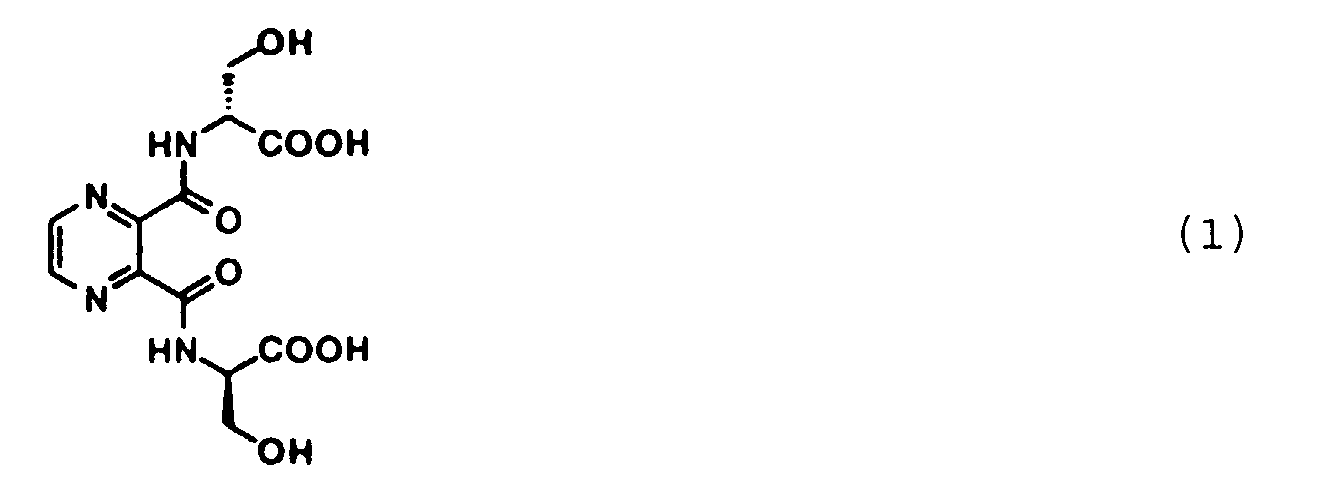 and
and
N,N'-bis(1,3-dihydroxyprop-2-yl)pyrazine-2,3-dicarboxamide.
- These especially preferred compounds have in common some particularly advantageous properties, such as low molecular mass, semi-peptidic or non-peptidic nature and the presence of minimal or no chirality. It can thus be expected that these compounds will be more easily and inexpensively produced, as well as being less metabolically labile and more amenable to oral administration than other stimulators of the haematopoietic system known in the art, which are generally polypeptides.
- One further especially preferred compound of formula I is

- Pyrazine-2,3-dicarboxyl-[(L-Ser)/(D-Ser)]-(Asp)2-Dasa-(Lys-OH)2.
- The compounds of the invention are of use in the regulation, in particular in the stimulation, of haematopoiesis. The compounds may, for example, be used in the stimulation of myelopoiesis in patients suffering from reduced myelopoietic activity, including bone marrow damage, agranulocytosis and aplastic anaemia. This includes treatment of patients having depressed bone marrow function due to immunosuppressive treatment to suppress tissue reactions, e.g. in bone marrow transplant surgery.
- The compounds may also be used to promote more rapid regeneration of bone marrow after cytostatic chemotherapy and radiation therapy for neoplastic and viral diseases.
- In addition, the new compounds may be of particular value where patients have serious infections due to lack of immune response following bone marrow failure.
- Another clinical application will be in combination with known peptide monomers such as those described in EP-A-0359338, WO-A-93/10807 and WO-A-93/24524 to selectively stimulate or inhibit the activity of haematopoietic cells, eg. bone marrow cells. Use of the new compounds in this way induces alternating peaks of high and low activity in the bone marrow cells, thus augmenting the natural circadian rhythm of haemopoiesis. In this way, cytostatic therapy can be given at periods of low bone marrow activity, thus reducing the risk of bone marrow damage, while regeneration will be promoted by the succeeding peak of activity.
- A further clinical application of the compounds of the invention is in the treatment of bacterial, fungal and viral diseases caused by haematopoietic disturbances, such as Candida and Herpes.
- In general, in order to exert a stimulatory effect, the compounds of the invention may be administered to human patients orally or by injection in the dose range 0.001-100 mg, for example 1-5 mg, per 70 kg body weight per day. If administered intravenously or subcutaneously, the dose may be in the range 1-10 mg per 70 kg body weight per day, for example about 6 mg, for up to ten days. Nasal, topical (transdermal) or rectal administration is, of course, also feasible. In principle it is desirable to produce a concentration of the compound of about 10-13 M to 10-5M in the extracellular fluid of the patient.
- According to a further feature of the present invention there are provided pharmaceutical compositions comprising as active ingredient one or more compounds of formula (I) as hereinbefore defined or physiologically compatible salts thereof, in association with a pharmaceutical carrier or excipient. The compositions according to the invention may be presented, for example, in a form suitable for oral, nasal, parenteral or rectal administration.
- As used herein, the term "pharmaceutical" includes veterinary applications of the invention.
- The compounds according to the invention may be presented in the conventional pharmacological forms of administration, such as tablets, coated tablets, nasal sprays, solutions, emulsions, powders, capsules or sustained release forms. Conventional pharmaceutical excipients as well as the usual methods of production may be employed for the preparation of these forms. Tablets may be produced, for example, by mixing the active ingredient or ingredients with known excipients, such as for example with diluents, such as calcium carbonate, calcium phosphate or lactose, disintegrants such as corn starch or alginic acid, binders such as starch or gelatin, lubricants such as magnesium stearate or talcum, and/or agents for obtaining sustained release, such as carboxypolymethylene, carboxymethyl cellulose, cellulose acetate phthalate, or polyvinylacetate.
- The tablets may if desired consist of several layers. Coated tablets may be produced by coating cores, obtained in a similar manner to the tablets, with agents commonly used for tablet coatings, for example, polyvinyl pyrrolidone or shellac, gum arabic, talcum, titanium dioxide or sugar. In order to obtain sustained release or to avoid incompatibilities, the core may consist of several layers too. The tablet-coat may also consist of several layers in order to obtain sustained release, in which case the excipients mentioned above for tablets may be used.
- Injection solutions may, for example, be produced in the conventional manner, such as by the addition of preservation agents, such as p-hydroxybenzoates, or stabilizers, such as EDTA. The solutions are then filled into injection vials or ampoules.
- Nasal sprays may be formulated similarly in aqueous solution and packed into spray containers either with an aerosol propellant or provided with means for manual compression. Capsules containing one or several active ingredients may be produced, for example, by mixing the active ingredients with inert carriers, such as lactose or sorbitol, and filling the mixture into gelatin capsules.
- Suitable suppositories may, for example, be produced by mixing the active ingredient or active ingredient combinations with the conventional carriers envisaged for this purpose, such as natural fats or polyethyleneglycol or derivatives thereof.
- Dosage units containing the compounds of this invention preferably contain 0. 1-10mg, for example 1-5mg of the compound of formula (I) or salt thereof.
- The present invention thus provides compounds of formula I and compositions thereof for use in the regulation of haematopoiesis. Use of the compounds according to the invention in the manufacture of a medicament to regulate haematopoiesis forms a further aspect of the invention. Inhibition and stimulation of bone marrow regeneration are of particular interest.
- According to a still further feature of the present invention there is provided a method of regulation of haematopoiesis, especially myelopoiesis which comprises administering an effective amount of a pharmaceutical composition as hereinbefore defined to a subject.
- The present invention also provides a process for the preparation of compounds of formula I, said process comprising any one of the following steps:
- (a) (in order to prepare compounds of formula I in
which R1 and one of R2, R3 and R4 represents
in which A is -CO-) reacting the corresponding pyridine or pyrazine 2,3-, 2,5- or 2,6-dicarboxylic acids, esters or an activated derivative thereof with a group of formula II
 (wherein D and E are as hereinbefore defined);
- (b) (in order to prepare compounds of formula I in
which R1 and one of R2, R3 and R4 represents
in which A is -CH2-) reacting the corresponding pyridine or pyrazine 2,3-, 2,5- or 2,6-bis(chloromethyl) derivative with a group of formula II as hereinbefore defined;
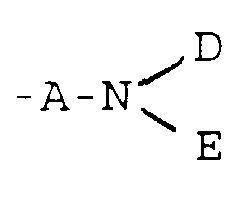
- (c) (in order to prepare compounds of formula I in
which R1 and one of R2, R3 and R4 represents -G-D in
which G is cis or trans -CH=CH-) reacting the
corresponding pyridine or pyrazine 2,3-, 2,5- or
2,6-dialdehyde with a phosphorus ylid of formula
III
Such a pyridine or pyrazine dialdehyde may conveniently be obtained from the corresponding dicarboxylic acids, diacid derivatives, dialcohols, diacetals etc.

- (d) (in order to prepare compounds of formula I in
which R1 and one of R2, R3 and R4 represents -G-D in
which G is a group of formula
reacting the corresponding pyridine or pyrazine 2,3-, 2,5- or 2,6-dicarboxylic acids or an activated derivative thereof such as imino esters, nitriles etc. with a group of formula IV
 (wherein X and D are as hereinbefore defined) followed where necessary by oxidation;
- (e) (in order to prepare compounds of formula I in which R1 and R2 together form a group -CO-NH-W-NH-CO- where W is as hereinbefore defined) reacting a diamine of formula H2N-W-NH2 with a pyridine or pyrazine 2,3-dicarboxylic acid or an activated derivative thereof or 2,3-carboxylic anhydride;
- (f) (in order to prepare compounds of formula I in which R3 and R4 together with the carbon atoms to which they are attached represent an aromatic ring) a bicyclic aromatic compound such as quinoline 2,3-dicarboxylic acid or its anhydride may be used in methods (a) or (d);
- (g) converting a compound of formula I as prepared in any one of steps (a) to (c) into a salt thereof; and
- (h) resolving a chiral compound of formula I into its isomers.
-
- In the reactions described above any reactive groups present, such as hydroxy, carboxy, amino etc. may optionally be protected during the reaction by means of conventional protecting groups which are cleaved again after the reaction.
- Optionally, the final step in the synthesis of compounds of formula I will thus be deprotection of a fully or partly protected derivative of a compound of formula I and such processes form a further aspect of the invention.
- Suitable hydroxy protecting groups include trimethylsilyl, acetyl, benzoyl, tert.butyl, trityl and benzyl.
- Carboxyl protecting groups which may be used include, for example trimethylsilyl, methyl, ethyl, tert.butyl and benzyl.
- Amino protecting groups which may be employed include 9-fluorenylmethoxycarbonyl (Fmoc-), t-butoxycarbonyl (Boc-) and carbobenzoxy.
- The subsequent cleaving of any protecting group used may be carried out by appropriate methods known in the art. For example, a tert.butyl or tert.butyloxycarbonyl group is preferably cleaved by treating with an acid such as trifluoroacetic acid or hydrochloric acid, optionally using a solvent such as methylene chloride.
- The reaction of step (a) is conveniently carried out in a solvent or mixture of solvents such as ethanol, methylene chloride or dimethylformamide.
- The carbonyl groups will generally be converted to an activated form for example by reaction with an activating reagent such as PyBOP (benzotriazole-1-yl-oxy-tris-pyrrolidino-phosphonium hexafluorophosphate) or a diimide reagent such as DCC (dicyclohexylcarbodiimide) or DIC (diisopropylcarbodiimide), in the presence of a base such as N-methylmorpholine. A di-ester, e.g. di-C1-6 alkylester may also be used.
- In the case of preparation of the 2,3-disubstituted pyridine or pyrazine compounds the corresponding anhydrides may be used in step (a) in place of the 2,3-dicarboxylic acids or esters as starting material. The amine reacted with the dicarboxylic acid derivative may conveniently be supported on a solid phase during the acylation reaction.
- In the reaction of step (c), the compound of formula III may be prepared by treatment of a phosphonium salt, such as triphenylphosphonium chloride, with a base, such as BuLi, the phosphonium salt conveniently being synthesised from the phosphine and an alkyl halide.
- As mentioned above the compounds of formula I may be resolved into their geometric or optical isomers. Thus, for example, cis/trans mixtures may be resolved into their cis and trans isomers, and those compounds having at least one optically active carbon atom may be resolved into their enantiomers.
- Thus, for example, the cis/trans mixtures obtained may be resolved by chromatography into the cis and trans isomers and the compounds of formula I which occur in racemate form may be separated by known methods, e.g. chromatography, into the diastereoisomers thereof which, if they occur in racemic form, may subsequently be separated into the enantiomers, eg. by chiral chromatography.
- The biological activity of the compounds of formula I are demonstrated by the following test:
- The murine bone marrow-derived stromal cell line C6.4, which does not constitutively produce any detectable HSF activity, was cultured to confluency during 4 days. The cells were then washed and the media replaced with fresh serum-free media. Compounds 1-6 below (1 µg/mL) were then added and after 24 h incubation the culture supernatants were passed through 30 kDa cut-off filtration devices in order to remove known high molecular mass colony stimulating factors (CSF). Murine bone marrow cells were cultured (7.5 x 10⁴ cells in medium containing 15% fetal calf serum and 0.3% agar) in the presence of sub-optimal concentrations of Granulocyte-Macrophage (GM)-CSF (20 U/mL). Serial dilutions of the filtered C6.4 cell supernatants were then added and the agar plates were incubated at 37°C under 5% CO2 for 7-8 days. Colonies of proliferating bone marrow cells were counted using a microscope. HSF units were calculated as follows: [(Colony number in sample)-(Colony number in -ve control)/C.64 cell supernatant filtrate dilution factor].
Compound HSF units/mL 1 Pyrazine-2,3-dicarboxyl-di[D-Ser-OH] 1.9 x 10⁶ 2 N,N,N',N'-tetrakis(2-hydroxyethyl)pyrazine-2,3-dicarboxamide 2.2 x 10⁶ 3 N,N'-bis(1,3-dihydroxyprop-2-yl)pyrazine-2,3-dicarboxamide 8.7 x 10⁶ 4 Pyrazine-2,3-dicarboxyl-[(L-Ser)/(D-Ser)]-(Asp)2-Dasa-(Lys-OH)2 5.2 x 10⁵ Positive Control a 1.5 x 10⁶ Negative Control b 0 - The following Examples are given by way of illustration only.
- Throughout the following Examples, abbreviations for amino acids are according to conventions (see Eur. J. Biochem. 1984, 138: 9-37). Amino acids are of the L-series unless otherwise indicated.
- The following abbreviations are used in the Examples:
Dasa = L,L-2,7-Diaminosuberic acid DCC = Dicyclohexylcarbodiimide DIC = Diisopropylcarbodiimide DMF = N,N-Dimethylformamide DMSO = Dimethylsulphoxide FAB-MS = Fast atom bombardment mass spectrometry Fmoc = 9-Fluorenylmethoxycarbonyl HOBt = 1-Hydroxybenzotriazole NMM = N-Methylmorpholine NMR = Nuclear magnetic resonance spectroscopy PyBOP = Benzotriazole-1-yl-oxy-tris-pyrrolidinophosphonium hexa-fluorophosphate -

- Pyrazine-2,3-dicarboxylic acid (0.26 g, 1.6 mmol), PyBOP (1.6 g, 3.2 mmol), HOBt (0.43 g, 3.2 mmol) and NMM (0.53 mL, 4.7 mmol), dissolved in CH2Cl2(10 mL), were allowed to react for 5 min. A solution of H-Ser(But)-OMe, HCl (1 g, 4.7 mmol) and NMM (0.53 mL, 4.7 mmol) in CH2Cl2 (20 mL) was then added and the entire mixture was stirred overnight. The solution was then extracted successively with 5% aq NaHCO3 and brine, dried over anhydrous MgSO4, filtered and evaporated to yield an oily residue of pyrazine-2,3-dicarboxyl-di-[Ser(But)-OMe], TLC Rf = 0.72 (90:10:0.5:1 CHCl3/MeOH/AcOH/H2O).
- This material (ca. 1.6 mmol) was dissolved in MeOH (20 mL) and 2M aq NaOH (3.2 mL, 6.4 mmol) was added. The reaction mixture was stirred until TLC indicated complete methyl ester hydrolysis after 1.5 h (Rf = 0.28 only). The solution was concentrated to remove MeOH. It was then diluted with H2O and acidified to pH 2 with 6 M aq HCl. The precipitate was extracted into CHCl3 and the combined extracts were dried over anhydrous MgSO4, filtered and evaporated to dryness. Pyrazine-2,3-dicarboxyl-di-[Ser(But)-OH] (0.8 g, 87%) was obtained as an oil. Analytical RP-HPLC and FAB-MS analysis indicated that a mixture of two diastereomers was present. One of these (tR = 18.5 min; Vydac 218TP54, 4.6 x 25 mm, 1 mL/min, 5 to 50% MeCN in 0.1% Aq CF3COOH over 20 min) was optically active (after isolation by RP-HPLC and t-butyl ether deprotection) and consisted of a mixture of the D/D-Ser and L/L-Ser enantiomers of pyrazine-2,3-dicarboxyl-di-[Ser(But)-OH] (chromatographically identical to authentic materials, see below). The other (tR = 19.8 min) was meso-pyrazine-2,3-dicarboxyl-di-[Ser(But)-OH], which was purified to homogeneity by preparative RP-HPLC. After lyophilisation the residue was treated for 30 min with a 1:1 mixture of CF3COOH and CH2Cl2. This solution was evaporated to dryness and the residue was lyophilised from water solution to yield pure meso-pyrazine-2,3-dicarboxyl-di-[Ser-OH] after preparative RP-HPLC (gradient elution 0 to 6% MeCN in 0.1% aq CF3COOH on C18 column, (NMR spectra consistent with structure), [α]D = 0 (c 1, DMF) . FAB-MS [M+H]+ = 343, C12H14N4O8 = 342.26.
-
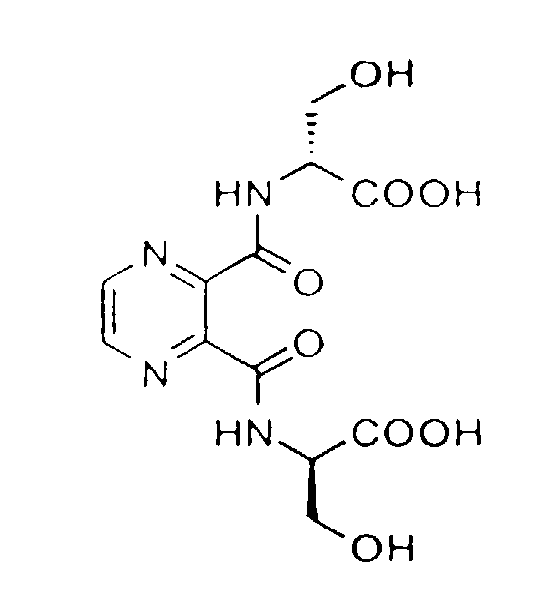
- Pyrazine-2,3-dicarboxylic acid (1 g, 6 mmol) was activated with DIC (0.93 mL, 6 mmol) in DMF (15 mL) for 10 min to form the anhydride in situ. To this was added a solution of H-D-Ser(But)-OBut.HCl (1.7 g, 6.6 mmol) and NMM (0.69 mL, 6.6 mmol) in DMF (10 mL). The mixture was stirred for 4 h. A second portion of H-D-Ser(But)-OBut.HCl and NMM in DMF (same quantities as above) was then preactivated for 10 min by addition of HOBt (0.81 g, 6 mmol) and DIC (0.93 mL, 6 mmol). This solution was then added to the above mixture and stirred overnight. Solvent was removed in vacuo and the residue was redissolved in CH2Cl2, extracted with 5% aq NaHCO3, dried over anhydrous MgSO4, filtered and evaporated. The resulting oil was chromatographed on silica gel (70:25:5 hexane/EtOAc/AcOH) and the fractions containing pure pyrazine-2,3-dicarboxyl-di-(D-Ser(But)-OBut] were pooled and evaporated. The residue was treated for 30 min with CF3COOH containing 5% H2O; evaporated, redissolved in H2O and lyophilised. Pure pyrazine-2,3-dicarboxyl-di-[D-Ser-OH] (350 mg, 17%) was obtained after preparative RP-HPLC. [α]D = -17 (c 1, DMF).
1H-NMR (300 MHz, DMSO): δ = 3.75-3.8 (m, 4H, CH 2), 4.46-4.49 (m, 2H, Cα H), 8.65 (d, J = 9Hz, 2H, 2H, CONH), 8.82 (s, 2H, aromatic CH), 12.8 (broad s, 2H, COOH); 13C-NMR (75 MHz, DMSO): δ = 55.05 (C αH), 61.71 (CH2), 145.14, 146.0 (aromatic CH), 164.26 (CONH), 171.86 (COOH)
FAB-MS [M+H]+ = 343, C12H14N4O8 = 342.26. -

- This compound was prepared analogously to the Pyrazine-2,3-dicarboxylate-di-[D-Ser-OH] isomer of Example 2 from H-L-Ser(But)-OBut.HCl. It had identical analytical data to the isomer of Example 2 with the exception of optical rotation: [α]D = +17 (c 1, DMF).
- Fmoc-protected Rink amide AM resin (1 g, 0.49 mmol; Novabiochem AG Läufelfingen, Switzerland; see H. Rink, Tetrahedron Lett. 28; 3787-3790 (1987)) was washed with DMF and deprotected with 20% piperidine/DMF. After repeated washing with DMF, Fmoc-D-Ser(But)-OH (776 mg, 2 mmol), PyBOP (1.05 g, 2 mmol), HOBt (306 mg, 2 mmol) and Pri 2NEt (0.61 mL, 3 mmol) in DMF (5 mL) were added to the resin and allowed to react overnight with agitation of the reaction vessel. The resin was again Fmoc-deprotected and washed before pyrazine-2,3-dicarboxylic acid (27 mg, 0.16 mmol) with the same quantities of PyBOP, HOBt and Pri 2NEt was coupled overnight in a similar fashion. The resin was then washed successively with DMF and CH2Cl2 and treated 2 h with CF3COOH/H2O/1,2-ethanediol (90:5:5 v/v/v). Resin residue was filtered off and the filtrate was evaporated. The crude peptide material was obtained by precipitation with Et2O. This was dried, redissolved in H2O and chromatographed (Vydac 218TP1022, 22 x 250 mm, 5 mL/min, isocratic elution 0.1% aq CF3COOH). Appropriate fractions were collected, pooled and lyophilised to yield the pure title compound.
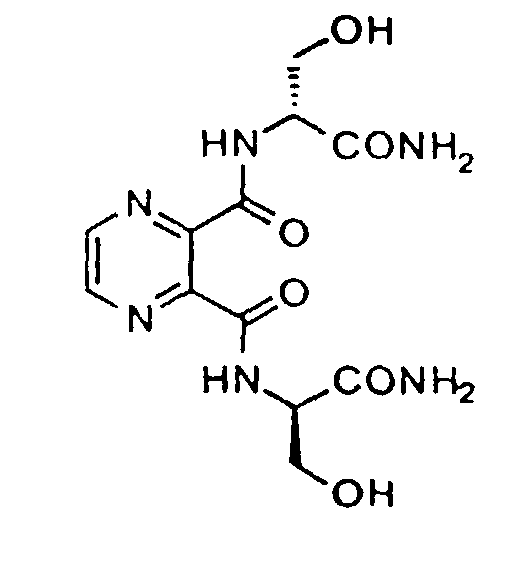
Analytical RP-HPLC: tR = 3.7 min (Vydac 218TP54,
4.6 x 250 mm, 1 mL/min, 0 to 20% MeCN in 0.1% aq CF3COOH over 20 min, λ = 215 nm). FAB-MS: [M + H]+ = 341.1, C12H16N6O6 = 340.30. -

- This compound was prepared analogously to the Pyrazine-2,3-dicarboxyl-di-[D-Ser-OH] compound of Example 2 from quinolinic anhydride. The intermediate quinolinoyl-di-[D-Ser(But)-OBut] had NMR spectra consistent with the proposed structure and RP-HPLC tR = 16.1 min (Vydac 218TP54, 4.6 x 250 mm, 1 mL/min, 50 - 80% MeCN in 0.1% aq CF3COOH over 20 min). The final product quinolinoyl-di-[D-Ser-OH] was >90% pure (RP-HPLC tR = 6.1 min, 0 - 12% MeCN over 20 min, λ = 215 nm). MALDI-TOF MS: [M+H]+ = 342.3, [M+Na]+ = 364.3, C13H15N3O8 = 341.28.
-

- This compound was synthesised from pyrazine-2,5-dicarboxylic acid and H-D Ser(But)-OBut in a manner analogous to the pyrazine-2,3-dicarboxyl-di-[D-Ser-OH] compound of Example 2. The intermediate pyrazine-2,5-dicarboxyl-di-[D-Ser(But)-OBut] showed 1H-NMR (CDCl3, 300 MHz): δ = 1.11 (s, 18 H, CH2OC(CH 3)3), 1.42 (s, 18H, C(O)OC(CH 3)3) , 3.63 - 3.83 (dm, 4 H, CβH 2), 4.60 (m, 2H, Cα H), 8.54 (d, 2H, CONH), 9.27 (s, 2H, Ar-H). After removal of the t-butyl protecting groups through CF3COOH treatment, the pure title compound was obtained.
Analytical RP-HPLC: tR = 12.5 min (Vydac 218TP54, 4.6 x 250 mm, 1 mL/min, 0 to 20% MeCN in 0.1% aq CF3COOH over 20 min, λ = 215 nm). -

- Pyrazine-2,3-dicarboxylic acid (34 mg, 0.2 mmol), PyBOP (229 mg, 0.44 mmol), HOBt (60 mg, 0.44 mmol) and NMM (0.7 mL, 0.64 mmol) were dissolved in DMF (2 mL) and allowed to react for 10 min. 2-Amino-2-methyl-1,3-propanediol (46 mg, 0.44 mmol) was then added and stirring was continued overnight. The entire reaction mixture was then fractionated on a RP-HPLC column (Vydac 218TP1022, 22 x 250 mm, 10 mL/min, 0 to 15% MeCN in 0.1% aq CF3COOH over 40 min). Appropriate fractions were pooled, rechromatographed and lyophilised to yield the pure title compound. Alternatively, the title compound was synthesised as follows: dimethylpyrazine-2,3-dicarboxylate (1.5g, 7.7 mmol) and 2-amino-2-methyl-1,3-propanediol (1.6g, 15.4 mmol) in absolute ethanol (5 mL) were heated under reflux during 4 hours. The reaction mixture was then cooled and the solvent was removed under reduced pressure. The residue was chromatographed on a flash silica gel column using CHCl3/MeoH (4:1) as the eluant. Solvents were removed in vacuo and the pure title compound (2.2g, 85%) was obtained after recrystallisation from isopropanol/ hexane.
- 1H-NMR (300 MHz, CDCl3): δ 1.06 (s, 6H, 2 x Me), 3.48 (d, J = 6.3 Hz, 8H, 4 x CH2), 4.29 (t, J =6.3 Hz, 4H, 4 x -OH), 7.64 (s, 2H, 2 x NH), 8.38 (s, 2H, 2 x CH).
- 13C-NMR (75 MHz, CDCl3): δ 164.26 (CO), 145.54 (C-2,3), 143.59 (C-5,6), 65.30 (CH2), 58.66 (Cq), 18.13 (Me).
- Analytical RP-HPLC: tR = 12.28 min (Vydac 218TP54, 4.6 x 250 mm, 1 mL/min, 0 to 10% MeCN in 0.1% aq CF3COOH over 20 min, λ = 215 nm).
FAB-MS: [M+H]+ = 343, C14H22N4O6 = 342.35. -

- Fmoc-Gly-[TentaGel S Trityl Resin] (1 g, 0.26 mmol; Rapp Polymere GmbH, Tübingen, Germany) was washed with DMF and treated with 20% piperidine/DMF (2 x 10 mL, 3 min each) to remove Fmoc protecting groups. The resin was again washed with DMF, drained and then reacted with a pre-activated (10 min) mixture of pyrazine-2,3-dicarboxylic acid (336 mg, 2 mmol) and DIC (155 µL, 1 mmol) in DMF (5 mL) for 2 h (-ve Kaiser ninhydrin test at this point). PyBOP (520 mg, 1 mmol), HOBt (135 mg, 1 mmol) and NMM (155 µL, 1.5 mmol) in DMF (5 mL) were then added to the resin, followed after a few min by H-D-Ser(But)-OBut (254 mg, 1 mmol) and NMM (110 µL, 1 mmol) in DMF (5 mL). The peptidyl resin mixture was agitated with a stream of N2 overnight. The resin was then washed with DMF and CH2Cl2 and was drained.
- Pyrazine-2,3-dicarboxyl-[(Gly-OH)/(D-Ser(But)-OBut)] was detached from the synthesis resin by agitation with a solution (50 mL) of 10:10:1 AcOH/CH2Cl2/MeOH for 2 h. The solution was then filtered off and the resin washed with more neat CH2Cl2. The combined filtrate and washings were rotary evaporated and the product precipitated by the addition of Et2O and cooling. The precipitate was collected and dried. An aliquot was redissolved in H2O/MeCN and was chromatographed on a RP-HPLC column (Vydac 218TP1022, 22 x 250 mm, 10 mL/min, 5-50% MeCN in 0.1% aq CF3COOH over 50 min). Appropriate fractions were collected, pooled and lyophilised. The product of pyrazine-2,3-dicarboxyl-[(Gly-OH)/D-Ser(But)-OBut)] had NMR spectra consistent with the proposed structure and was >99% pure (tR = 21.6 min on Vydac 218TP54, 4.6 x 250 mm, 1 mL/min, 5 - 50% MeCN in 0.1% aq CF3COOH over 20 min, λ = 215 nm).
- This material was deprotected by treatment for 1 h with excess CF3COOH containing 2% H2O. The solution was evaporated and pyrazine-2,3-dicarboxyl-[(Gly-OH)/(D-Ser-OH)] was precipitated by addition of Et2O. The product was dried and lyophilised from H2O. Analytical RP-HPLC: tR = 4.7 min, >99% purity (Vydac 218TP54, 4.6 x 250 mm, 1 mL/min, 0 - 12% MeCN in 0.1% aq CF3COOH over 20 min, λ = 215 nm). FAB-MS: [M+H]+ = 313.2, C11H12N4O7 = 312.24.
-

- Pyrazine-2,3-dicarboxylic acid (1 g, 6 mmol) was treated with DIC (0.93 mL, 6 mmol) in DMF (20 ml) to form the anhydride in situ. After 10 min the solution was diluted to 50 mL with DMF and 1,4-diaminobutane (0.53 g, 6 mmol) in DMF (10 mL) was added dropwise over 5 min. Soon a solid was observed to precipitate. A solution of PyBOP (3.38 g, 6.5 mmol), HOBt (6.5 mmol) and NMM (1 mL, 9.8 mmol) in DMF (10 mL) was prepared and added slowly to the above suspension (further diluted to 90 mL with DMF). The entire mixture was stirred for 2 h, when dissolution was complete. DMF was then removed under oil-pump vacuum and the resulting paste was redissolved in CHCl3/MeOH (3:1, v/v) and filtered through a silica gel chromatography column. Appropriate fractions were pooled and evaporated. Some residual HOBt was removed as follows: the dried crude product was redissolved in 0.1% aq CF3COOH and was extracted several times with Et2O. The aqueous phase was then lyophilised and the product chromatographed by RP-HPLC (Vydac 218TP1022, 22 x 250 mm, 10 mL/min, 0 to 10% MeCN in 0.1% aq CF3COOH over 40 min) to yield the pure title compound, whose NMR spectra were consistent with the proposed structure. Analytical RP-HPLC: tR = 12.06 min (Vydac 218TP54, 4.6 x 25 mm, 1 mL/min, 0 to 20% MeCN in 0.1% aq CF3COOH over 20 min, λ = 215 nm).
-

- (a) [Fmoc-Asp (OBut)]2-Dasa-[Lys(Boc)]2-SASRIN resin Fmoc-Lys(Boc)-SASRIN resin (5 g, 0.6 mmol/g) was washed with DMF and then treated with 20% piperidine in DMF for 15 min to remove Fmoc groups. After repeated DMF washing, Fmoc2-Dasa-(OH)2 (648 mg, 1 mmol) was coupled to the deprotected resin with the aid of DCC (1.03 g, 5 mmol) and HOBt (765 mg, 5 mmol) in DMF during 10 h. After washing, a further coupling cycle (1 h) was performed with similar quantities of DCC and HOBt in order to couple any remaining free Dasa carboxyl groups to resin-bound Lys. The dipeptidyl resin was then washed with 30% MeOH/CH2Cl2 (2 x 20 min) and DMF. Untreated Lys amino groups were capped by reaction with 10% Ac2O/DMF (2 x 50 mL) during 1 h. After renewed Fmoc deprotection, acylation with Fmoc-Asp(OBut)-OPfp (5.78 g, 10 mmol) and HOBt (1.53 g, 10 mmol) was carried out for 2 h. The final product was washed with DMF, CH2Cl2 and Et2O before being dried in vacuo. The peptidyl resin contained 0.36 mmol/g amino groups according to spectrophotometric measurement of Fmoc release from an aliquot of resin (Dibenzofulvene-piperidine adduct, ε267 = 18.98, ε301 = 8.550, R. Frank, R. Döring, Tetrahedron, 1988, 44: 6031-6040).
- (b) Pyrazine-2,3-dicarboxyl-[(L-Ser)/(D-Ser)]-(Asp)2-Dasa-(Lys-OH)2 An aliquot of the [Fmoc-Asp(OBut)]2-Dasa-[Lys(Boc)]2-SASRIN resin (167 mg, 0.06 mmol) was Fmoc deprotected with 20% piperidine/DMF and was washed with DMF. Pyrazine-2,3-dicarboxyl-[(D-Ser-OH)/(L-Ser-OH)] (18 mg, 0.05 mmol) was then activated in DMF with PyBOP (78 mg, 0.15 mmol), HOBt (20 mg, 0.15 mmol) and NMM (25 µL, 0.225 mmol) and the mixture added to the deprotected resin. This was allowed to react overnight with agitation of the reaction mixture by a stream of nitrogen. The resin was then washed successively with DMF, CH2Cl2 and Et2O before drying in vacuo. It was then treated for 1 h with CF3COOH containing 5% H2O. Resin residue was filtered off, the filtrate was evaporated and the crude peptide product was precipitated by the addition of Et2O. The dried peptide material was redissolved in H2O and was fractionated by semi-preparative RP-HPLC using a C18 column and shallow gradient elution with MeCN gradients in 0.1% aq CF3COOH. Appropriate fractions were collected, pooled, concentrated and re-chromatographed to homogeneity. The analytically correct product showed analytical RP-HPLC: tR = 11.34 min (Vydac 218TP54, 1 mL/min, 0 to 20% MeCN in 0.1% aq CF3COOH over 20 min, λ = 215 nm); co-chromatography of a sample of Pyrazine-2,3-dicarboxyl-(L-Ser)2-(Asp)2-Dasa-(Lys-OH)2 which was synthesised in a similar fashion showed tR = 11.67 min for the di-L-Ser isomer. FAB-MS: [M + H]+ = 997, C40H60N12O18 = 996.98.
-
-

- Methyl pyrazine-2,3-dicarboxylate (2 g, 10.2 mmol) was dissolved in EtOH (5 mL). Tris(hydroxymethyl)-aminomethane (2.47 g, 20.4 mmol) was added and the mixture was heated under reflux for 8 h. After cooling, the crystalline title compound (2.54 g, 66.8%) was obtained after filtration, washing with EtOH and drying. 1H-NMR (DMSO): δ = 8.78 (s, 2H), 8.00 (s, 2H), 4.61 (t, J = 5.8 Hz, 6H), 3.71 (d, J = 5.8 Hz, 12H).
13C-NMR (DMSO): δ = 164.68, 145.80, 144.69, 62.70, 60.09. MS: [M + H]+ = 375.5, C14H22N4O8 = 374.36. -

- Methyl pyrazine-2,3-dicarboxylate (2 g, 10.2 mmol) was dissolved in EtOH (5 mL). Diethanolamine (2.14 g, 20.4 mmol) was added and the mixture was heated under reflux for 5 h. After cooling the solvent was evaporated and the residue was purified by silica gel chromatography (CHCl3/MeOH, 8:2) to afford the title compound (2.5 g, 71.4%).
1H-NMR (DMSO): δ = 8.70 (s, 2H), 4.70 (t, J = 5.2 Hz, 2H), 4.67 (t, J = 5.6 Hz, 2H), 3.54 (m, 12H), 3.32 (m, 4H).
13C-NMR (DMSO): δ = 166.65, 148.90, 143.27, 59.59, 58.33, 51.57, 48.76.
MS: [M + H]+ = 343.4, C14H22N4O6 = 342.36. -
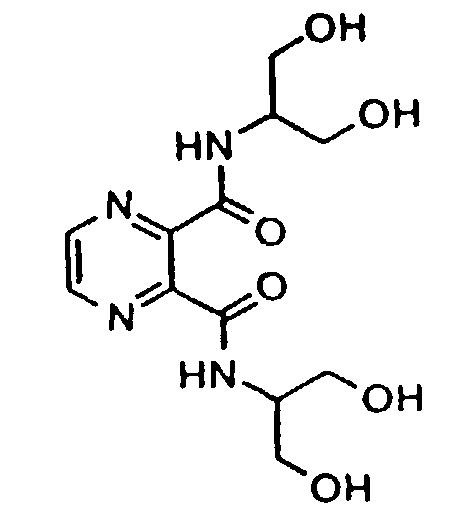
- Methyl pyrazine-2,3-dicarboxylate (2 g, 10.2 mmol) was dissolved in EtOH (5 mL). 2-Amino-1,3-propanediol (1.86g, 20.4 mmol) was added and the mixture was heated under reflux for 4 h. After cooling the solvent was evaporated and the residue was purified by silica gel chromatography (CHCl3/MeOH, 8:2) to afford the title compound (2 g, 62.5%).
1H-NMR (DMSO): δ = 8.77 (s, 2H), 8.21 (d,J = 8.40 Hz, 2H), 4.61 (t, J = 5.80 Hz, 4H) 3.91 (m, 2H) 3.55 (m, 8H).
13C-NMR (DMSO): δ = 164.35, 146.28, 144.58, 59.99, 53.31. MS: [M + H]+ = 315.4, C12H18N4O6 = 314.30. -

- Methyl pyrazine-2,3-dicarboxylate (2 g, 10.2 mmol) was dissolved in EtOH (3 mL). Ethanolamine (1.25 g, 20.4 mmol) was added and the mixture was heated under reflux for 6 h. After cooling the solvent was evaporated and the residue was purified by silica gel chromatography (EtOAc/MeOH, 3:1) to afford the title compound (1.7 g, 65.4%).
1H-NMR (DMSO): δ = 8.76 (s, 2H), 8.49 (t,J = 6.0 Hz, 2H), 4.70 (br. s, 2H), 3.53 (t, J = 6.3 Hz, 4H), 3.33 (m, 4H).
13C-NMR (DMSO): δ = 164.66, 146.60, 144.56, 59.72, 41.83. -

- Pyrazine-2,3-dicarboxylic acid (1 g, 5.95 mmol) was suspended in CH2Cl2 (50 mL). Morpholine (1.04 g, 11.9 mmol) and HOBt (2.37 g, 15 mmol) were added and the mixture was cooled to 0°C. DCC (2.46 g, 11.9 mmol) was then added and the reaction mixture was allowed to reach ambient temperature overnight. The formed dicyclohexylurea was filtered off and the filtrate was evaporated. The residue was purified by silica gel chromatography (CHCl3/MeOH, 19:1) to afford the title compound (1.43 g, 78.6 %).
1H-NMR (CDCl3): δ = 8.54 (s, 2H), 3.78 (s, 8H), 3.74 (t, J = 5.0 Hz, 4H), 3.45 (t, J = 5.0 Hz, 4H).
13C-NMR (CDCl3): δ = 165.28, 149.97, 142.73, 47.60, 42.51. -

- Iminodiacetic acid (3 g, 22.5 mmol) was dissolved in a mixture of 2 M NaOH (25 mL), H2O (25 mL) and dioxane (25 mL). The solution was cooled to 0°C and a solution of Boc2O (5.46 g, 25 mmol) in dioxane (25 mL) was added all at once. The reaction was allowed to proceed at ambient temperature overnight. The solution was then concentrated to 50 mL and its pH adjusted to 2 with 5% aq KHSO4. It was extracted with EtOAc, dried over MgSO4 and evaporated to afford the title compound (5.07 g, 96.6 g).
1H-NMR (DMSO): δ = 3.91 (s, 2H), 3.88 (s, 2H), 1.36 (s, 9H). 13C-NMR (DMSO): δ = 171.21, 154.87, 79.68, 49.76, 49.23, 27.93 - Boc-Iminodiacetic acid (5 g, 21.44 mmol), 4-dimethylaminopyridine (5.24 g, 42.87 mol), benzyl alcohol (4.64 g, 42.9 mmol) and HOBt (6.8 g, 43 mmol) were dissolved in CH2Cl2 (200 mL) and the solution was cooled to 0°C. DCC (8.84 g, 42.9 mmol) was added and the reaction was allowed to proceed at ambient temperature overnight. Precipitated dicyclohexylurea was filtered off and the filtrated was extracted with 4% aq NaHCO3.
- The organic phase was dried over MgSO4 and evaporated. The residue was purified by silica gel chromatography (petroleum ether/EtOAc, 3:1) to afford the title compound (4.6 g, 52.3%).
1H-NMR (CDCl3): δ = 7.34 (m, 10H), 5.17 (s, 2H), 5.16 (s, 2H), 4.17 (s 2H), 4.05 (s, 2H), 1.39 (s, 9H).
13C-NMR (CDCl3): δ = 169.67, 169.54, 155.04, 135.46, 128.61, 128.58, 128.46, 128.36, 128.24, 81.19, 66.86, 66.81, 49.81, 49.23, 28.10. - Boc-Iminodiacetic acid dibenzyl ester (4.5 g, 10.88 mmol) was dissolved in dioxane (15 mL), then 4.6 M HCl in dioxane (20 mL) was added. The mixture was stirred for 90 min at room temperature and Et2O (200 mL) was added. The crystalline product was filtered off, washed twice with Et2O and dried in vacuo to afford the title compound (3.58 g, 94.2 %).
1H-NMR (DMSO): δ = 10.0 (br. s, 2H), 7.4 (m, 10H), 5.25 (s, 4H), 4.07 (s, 4H).
13C-NMR (DMSO): δ = 166.55, 135.23, 128.60, 128.51, 128.34, 67.10, 46.73. - Pyrazine-2,3-dicarboxylic acid (0.72 g, 4.29 mmol), iminodiacetic acid dibenzyl ester hydrochloride (3 g, 8.58 mmol), Pri 2NEt (1.11 g, 8.6 mmol) and HOBt (237 g, 15 mol) were dissolved in CH2Cl2 (70 mL) and the solution was cooled to 0°C. Then DCC (1.77 g, 8.6 mmol) was added and the reaction was allowed to proceed overnight at room temperature. The precipitated dicyclohexylurea was then filtered off and the filtrate was extracted with 4 % aq NaHCO3. The organic phase was dried over MgSO4 and evaporated. The residue was purified by silica gel chromatography (petroleum ether/EtOAc, 1:1) to afford the title compound (2.13 g 67%).
1H-NMR (CDCl3): δ = 8.19 (s, 2H), 7.33 (m, 20H), 5.17 (s, 4H), 5.16 (s, 4H), 4.48 (s, 4H), 4.25 (s, 4H).
13C-NMR (CDCl3): δ = 168.53, 168.19, 166.40, 149.04, 142.78, 135.47, 135.38, 128.60, 128.58, 128.54, 128.46, 128.37, 128.30, 66.97, 51.24, 48.27. -

- Pyrazine-2,3-dicarboxylic acid (3.97 g, 23.5 mmol) was suspended in CH2Cl2 (300 mL). Diethylmalonate hydrochloride (10 g, 47.25 mmol), HOBt (7.9 g, 50 mmol ) and Pri 2NEt (6.2 g, 48 mmol) were added and the solution was cooled to 0°C. 1-ethyl-3-(3'-dimethylaminopropyl)carbodiimide (9.2 g, 48 mmol) was then added and the reaction was allowed to proceed overnight at room temperature. The mixture was extracted with 4% aq NaHCO3 and the organic phase was dried over MgSO4 and evaporated. The residue was purified by silica gel chromatography (petroleum ether/EtOAc, 1:1) to afford the title compound (7.58 g, 60%).
1H-NMR (CDCl3): δ = 8.71 (s, 2H), 7.93 (d, J = 7.6 Hz, 2 H), 5.39 (d, J = 7.5 Hz, 2H), 4.29 (m, 8H), 1.31 (t, J = 7.2 Hz, 12H).
13C-NMR (CDCl3): δ = 165.84, 163.44, 145.77, 144.63, 62.71, 56.60, 13.96. -

- Pyridine-2,3-dicarboxylic acid dimethyl ester (2 g, 10.25 mmol) was dissolved in EtOH (5 mL).
Diethanolamine (2.16 g, 20.5 mmol) was added and the mixture was heated under reflux for 6 h. After cooling the solvent was evaporated and the residue was purified by silica gel chromatography (CHCl3 MeOH, 8:2) to afford the title compound (1.99 g, 57%)
1H-NMR (DMSO): δ = 8.57 (m, 1H), 7.91 (m, 1H), 7.49 (m, 1H), 4.70 (m, 4H), 3.57 (m, 4H), 3.51 (m, 8H), 3.31 (t, J = 6.3 Hz, 2H), 3.23 (t, J = 5.8 Hz, 2H).
13C-NMR (DMSO): δ = 168.52, 168.02, 152.15, 148.31, 135.44, 131.69, 123.62, 59.50, 58.59, 58.42, 58,17, 51.90, 51.55, 48.63, 47.61. -

- Pyridine-2,3-dicarboxylic acid dimethyl ester (2 g, 10.25 mmol) was dissolved in EtOH (5 mL). 2-Amino-1,3-propanediol (1.87 g, 20.5 mmol) was added and the mixture was heated under reflux for 6 h. After cooling the solvent was evaporated and the residue was purified by silica gel chromatography (CHCl3/MeOH, 7:4) to afford the title compound (4 g, 75%).
1II-NMR (DMSO): δ = 8.64 (m, 1H), 8.33 (d, J = 8.6 Hz, 1H), 7.91 (d, J = 8.4 Hz, 1H), 7.85 (m, 1H), 7.61 (m, 1H), 4.75 (t, J = 5.4 Hz, 2H), 4.45 (t, J = 5.9 Hz 2H), 3.889 (m, 2H), 3.50 (m, 8H).
13C-NMR (DMSO): δ = 167.64, 163.88, 148.44, 146.96, 137.14, 133.85, 125.88, 60.47, 59.83, 53.89, 52.90. - 2,3-Bis(chloromethyl)pyrazine was prepared from 2,3-dimethylpyrazine by free radical chlorination (see G.R. Newkome et al., Synthesis, 1984, 676-679) and was purified by silica gel chromatography (CH2Cl2/EtOAc, 10:1). H-D-Ser(But)-OBut (0.58 g, 2.26 mmol) and NMM (0.35 mL, 3.4 mmol) were dissolved in CH2Cl2 (5 mL). To the stirring solution 2,3-bis(chloromethyl)pyrazine (0.1 g, 0.57 mmol) in CH2Cl2(1 mL) was added and the entire mixture was left stirring at ambient temperature for 2 days. The mixture was then diluted with CH2Cl2 to 30 mL and extracted successively with 5% aq NaHCO3 (3 x 10 mL) and H2O (1 x 10 mL). The organic fraction was then evaporated and redissolved in CF3COOH (15 mL). After stirring for 0.5 hours, the reaction mixture was evaporated and the residue was dissolved in H2O. This solution was extracted several times with Et2O. The aqueous portion was fractionated directly on a RP-HPLC column (Vydac 201HS1022) by application of a solvent gradient of 0 to 5% MeCN in 0.1% aq CF3COOH at 10 mL/min over 30 minutes. Fractions containing the desired product were pooled. Further fractions containing incompletely deprotected (t-butyl groups still present by NMR) product were also pooled, lyophilised and further treated with CF3COOH for 1.5 hours. After work-up as above, both portions of product were combined and purified to homogeneity by RP-HPLC (column as above) using isocratic elution at 5 mL/min with 0.1% aq CF3COH. Appropriate fractions were pooled and lyophilised to afford pure title compound (7 mg). Analytical RP-HPLC: tR = 3.0 min (Vydac 201HS54, 4.6 x 250 mm, 1 mL/min, 0 to 20% MeCN in 0.1% aq CF3COOH over 20 min, λ = 215 nm). FAB-MS: [M+H]+ = 315.3.

C12H18O6N4 = 314.30
1H-NMR (DMSO): δ = 3.86 (m, Ser Cβ H 2, 4H), 3.95 (m, Ser Cα H, 2H), 4.4 (s, Ar-CH 2, 4H), 8.65 (s, Ar-H, 2H). - D-Serine benzyl ester hydrochloride (0.93g, 4 mmol) was dissolved in DMF (20 mL) and NMM (0.4 mL, 4 mmol) was added. The mixture was added to a prepared solution of pyrazine-2,3-dicarboxylic acid (0.17g, 1 mmol), 0-(7-azabenzotriazol-1-yl)-1,1,3,3-tetramethyluronium hexafluorophosphate (0.76g, 2 mmol) and NMM (0.4 mL, 4 mmol) in DMF (10 mL). The resulting solution was stirred during 2.5 hours. DMF was then removed in vacuo and the residue was partitioned between CH2Cl2 and 5% aq NaHCO3. The organic phase was further extracted with 5% aq NaHCO3, 5% aq citric acid and H2O before being dried over Na2SO4, filtered and evaporated. The residue was crystallised from hexane/PriOH (1:1), filtered, washed with Et2O and dried. The resulting material was redissolved in MeCN/H2O (3:1) and the solution was lyophilised to afford the pure title compound. MALDI-TOF MS: [M+H]+ = 523.3.

C26H26O8N4 = 522.51
1H-NMR (DMSO): δ = 3.72-3.88 (dm, Ser Cβ H 2, 4H), 4.62 (m, Ser Cα H, 2H) , 5.16 (s, Ar-CH 2, 4H) , 7.29-7.40 (m, Ar-H benzyl, 10H), 8.81 (s, Ar-H pyrazine, 2H). -

- (a) Pyrazine-2,3-dicarboxylic acid dimethylester
A solution of pyrazine-2,3-dicarboxylic acid (50g,
297.50 mmol) in 300 mL methanol and 15 mL concentrated
sulfuric acid was refluxed for 24 hours. The solution
was concentrated to remove MeOH, the residue redissolved
in 450 mL ethylacetate and the solution extracted with
450 mL saturated NaHCO3. The organic phase was then
successively extracted with 450 mL H2O, dried over
anhydrous Na2SO4, filtered and evaporated to dryness.
Pyrazine-2,3-dicarboxylic acid dimethylester was
isolated as an orange oil (46.9g, 80%).
13C-NMR (CDCl3) δ 164.32, 145.20, 144.41, 52.90. - (b) Pyrazine-2-[N-bis-(2-hydroxyethyl)-carboxamide]-3-[N-(2-methyl-1,3-propanediol-2-yl]-carboxamide
A solution of pyrazine-2,3-dicarboxylic acid
dimethylester (0.25g, 1.27 mmol), 2-amino-2-methylpropane-1,3-diol
(0.132g, 1.26 mmol) and
diethanolamine (0.134g, 1.27 mmol) in 15 mL ethanol was
refluxed for 24 hours and the solvent removed in vacuo.
The residue (0.26g) was pre-purified using 90g silica
gel 60 (35-70 mesh) and CH2Cl2/MeOH (5:1). The remaining
120 mg were purified using silica gel 60 (20-45 mesh)
and methylethylketone/methanol (40:5). Yield: 38 mg of
pure compound.
13C-NMR (DMSO-d6): δ 167.21, 162.15, 149.87, 146.36, 143.13, 142.33, 63.43, 59.15, 58.32, 58.28, 51.15, 48.03, 18.07. -
- A solution of pyrazine-2,3-dicarboxylic acid dimethylester (5.5g, 28.04 mmol), tris-(hydroxymethyl)-aminomethane (3.4g, 28.07 mmol) and diethanolamine (2.85g, 27.11 mmol) in 60 mL ethanol was refluxed for 24 hours and the solvent removed in vacuo. The crude product (11.72g) was purified using 90g of silica gel 60 (35-70 mesh) with CH2Cl2/MeOH (5:1). After evaporation the residue was redissolved in 5 mL H2O and the solution lyophilised to yield 200 mg of the title compound as yellowish powder.

13C-NMR (DMSO-d6): δ 170.72, 164.80, 151.02, 147.93, 145.03, 143.79, 63.78, 62.45, 61.05, 60.45, 53.40, 50.29. -

- A solution of pyrazine-2,3-dicarboxylic acid dimethylester (5.5g, 28.04 mmol), tris-(hydroxymethyl)-aminomethane (3.4g, 28.07 mmol) and 2-amino-2-methylpropane-1,3-diol (2.85g, 27.11 mmol) in 60 mL ethanol was refluxed for 24 hours and the solvent removed in vacuo. The crude product (11.24g) was purified over 90g silica gel 60 (35-70 mesh) and CHCl2/MeOH (5:1). After evaporation the residue was redissolved in 5 mL H2O and the solution lyophilised to yield 260 mg of the title compound as yellowish powder. 13C-NMR (DMSO-d6) : δ 164.71, 164.40, 145.99, 145.92, 144.69, 63.52, 62.72, 60.07, 58.94, 18.36.
or D and E together with the intervening nitrogen atom form a heterocyclic group of formula
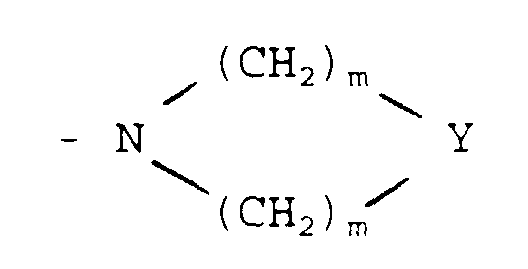
Claims (10)
- Compounds of formula I:(wherein

- R1
- represents a group
or -G-D;
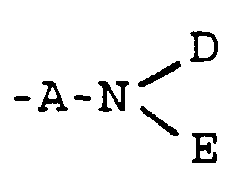
one of R2, R3 and R4 represents a group as defined above for R1 which may be the same as or different from R1 and the remaining two of R2, R3 and R4 independently represent a hydrogen atom or a C1-6 alkyl group;
or R1 and R2 together form a group -CONH-W-NHCO- and R3 and R4 independently represent hydrogen or a C1-6 alkyl group;
or R3 and R4 together with the intervening ring carbon atoms form an aromatic ring and R1 and R2 are bothor -G-D;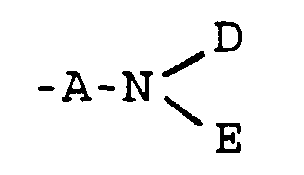
- z
- represents -N- or -CH-;
- A
- represents -CO- or -CH2-;
- G
- represents cis or trans -CH=CH- or a group of the
formula
in which X represents -O-, -S-, -NH- or -CH2-;
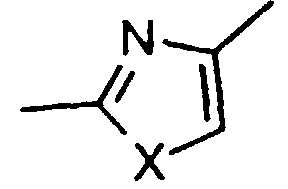
- D
- represents a group -CR5R6R7 or -CR8[(CH2)1-X']2 in which
- R5
- represents -H or a C1-4 alkyl group optionally substituted by a hydroxy, C1-4 alkoxy, carboxy, phenyl or hydroxyphenyl group;
- R6
- represents -H or -CH3;
- R7
- represents -CO2R9 or -CONR9R9;
- R8
- represents -H or a C1-6 alkyl group optionally substituted by a hydroxyl group;
- X
- represents -OH, -NH2, -CO2R9 or -CONR9R9;
- l
- is 0 or an integer from 1 to 5;
- E
- represents -H, -OH or C1-6 alkyl;
or D and E together with the intervening nitrogen atom form a heterocyclic group of formulain which each m independently represents an integer from 1 to 3;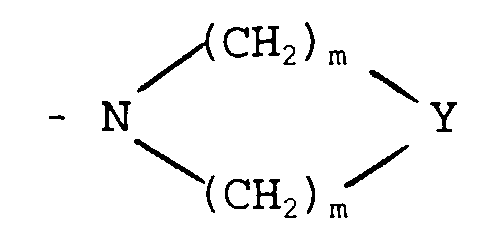
- Y
- represents -O-, -NH-, -S-, -SO- or -SO2-;
- W
- represents a straight-chained or branched C1-20
alkylene group which may be interrupted by one or
more -O- or -NH- groups and which may carry one or
more -OH, -NH2 or carboxyl groups or which may carry
one or more carbonyl groups adjacent to any
interrupting -NH- group, such as a C1-6 alkylene
group, -CH2-O-(CH2)1-4-O-CH2-,
-CH(COR11)-(CH2)1-6-CH (COR11)- or
-CH(CH2OH)-CO-V-CO-CH(CH2OH)-;
- V
- represents -NH-(CH2)2-CONH-(C6H4)-NHCO-(CH2)2-NH-, -NH-CH2-CONH-CH2-(C6H4)-CH2-NHCO-CH2-NH- or -NH-CH(CH2CO2H)-CO-NH-CHR12-(CH2)4-CHR12-NH-CO-CH(CH2CO2H)-NH- in which R12 represents -CO-NH-CH(CO2H)-(CH2)4-NH2)
- Compounds as claimed in claim 1 wherein R1 and R2 are bothor -G-D;
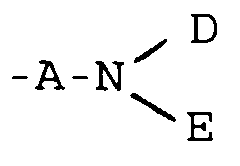
- Compounds as claimed in claim 1 or claim 2 wherein Z is -N-; R1 and R2 areand R3 and R4 are -H.

- Compounds as claimed in claim 1 of formula (1), (2) or (3):Pyrazine-2,3-dicarboxyl-di[D-Ser-OH]
 N,N,N',N'-tetrakis(2-hydroxyethyl)pyrazine-2,3-dicarboxamide
 N,N'-bis(1,3-dihydroxyprop-2-yl)pyrazine-2,3-dicarboxamide
- A compound as claimed in claim 1 of formula (4):pyrazine-2,3-dicarboxyl-[(L-Ser)/(D-Ser)]-(Asp)2-Dasa-(Lys-OH)2.

- A pharmaceutical composition comprising a compound as claimed in any one of claims 1 to 5 together with a pharmaceutical carrier or excipient.
- Compounds as claimed in any one of claims 1 to 5 for use in regulating haematopoiesis.
- Use of compounds as claimed in any one of claims 1 to 5 in the manufacture of a medicament to regulate haematopoiesis.
- A process for preparing a compound as claimed in any one of claims 1 to 5, said process comprising any one of the following steps:(a) (in order to prepare compounds of formula I in which R1 and one of R2, R3 and R4 representsin which A is -CO-) reacting the corresponding pyridine or pyrazine 2,3-, 2,5- or 2,6-dicarboxylic acids, esters or an activated derivative thereof with a group of formula II
 (wherein D and E are as hereinbefore defined);
 (b) (in order to prepare compounds of formula I in which R1 and one of R2, R3 and R4 representsin which A is -CH2-) reacting the corresponding pyridine or pyrazine 2,3-, 2,5- or 2,6-bis(chloromethyl) derivative with a group of formula II as hereinbefore defined;
 (c) (in order to prepare compounds of formula I in which R1 and one of R2, R3 and R4 represents -G-D in which G is cis or trans -CH=CH-) reacting the corresponding pyridine or pyrazine 2,3-, 2,5- or 2,6-dialdehyde with a phosphorus ylid of formula IIIsuch a pyridine or pyrazine dialdehyde may conveniently be obtained from the corresponding dicarboxylic acids, diacid derivatives, dialcohols, diacetals etc.
 (d) in order to prepare compounds of formula I in which R1 and one of R2, R3 and R4 represents -G-D in which G is a group of formulareacting the corresponding pyridine or pyrazine 2,3-, 2,5- or 2,6-dicarboxylic acids or an activated derivative thereof such as imino esters, nitriles etc. with a group of formula IV
 (wherein X and D are as hereinbefore defined) followed where necessary by oxidation;
 (e) (in order to prepare compounds of formula I in which R1 and R2 together form a group -CO-NH-W-NH-CO- where W is as hereinbefore defined) reacting a diamine of formula H2N-W-NH2 with a pyridine or pyrazine 2,3-dicarboxylic acid or an activated derivative thereof or 2,3-carboxylic anhydride;(f) (in order to prepare compounds of formula I in which R3 and R4 together with the carbon atoms to which they are attached represent an aromatic ring) a bicyclic aromatic compound such as quinoline 2,3-dicarboxylic acid or its anhydride may be used in methods (a) or (d);(g) converting a compound of formula I as prepared in any one of steps (a) to (c) into a salt thereof; and(h) resolving a chiral compound of formula I into its isomers.
 - A process for preparing a compound as claimed in any one of claims 1 to 5, said process comprising deprotecting a partially or fully protected derivative of a compound of formula I.
Applications Claiming Priority (3)
| Application Number | Priority Date | Filing Date | Title |
|---|---|---|---|
| GB9425730 | 1994-12-20 | ||
| GBGB9425730.0A GB9425730D0 (en) | 1994-12-20 | 1994-12-20 | Compounds |
| PCT/GB1995/002977 WO1996019457A1 (en) | 1994-12-20 | 1995-12-20 | Pyridine and pyrazinedicarboxylic-acid derivatives as cell proliferation regulators |
Publications (2)
| Publication Number | Publication Date |
|---|---|
| EP0799208A1 EP0799208A1 (en) | 1997-10-08 |
| EP0799208B1 true EP0799208B1 (en) | 2000-09-13 |
Family
ID=10766245
Family Applications (1)
| Application Number | Title | Priority Date | Filing Date |
|---|---|---|---|
| EP95941202A Expired - Lifetime EP0799208B1 (en) | 1994-12-20 | 1995-12-20 | Pyridine and pyrazinedicarboxylic-acid derivatives as cell proliferation regulators |
Country Status (8)
| Country | Link |
|---|---|
| US (2) | US5972926A (en) |
| EP (1) | EP0799208B1 (en) |
| AT (1) | ATE196290T1 (en) |
| AU (1) | AU4268696A (en) |
| DE (1) | DE69518857T2 (en) |
| ES (1) | ES2150021T3 (en) |
| GB (1) | GB9425730D0 (en) |
| WO (1) | WO1996019457A1 (en) |
Families Citing this family (15)
| Publication number | Priority date | Publication date | Assignee | Title |
|---|---|---|---|---|
| GB9425730D0 (en) * | 1994-12-20 | 1995-02-22 | Nycomed Pharma As | Compounds |
| EP0958283A1 (en) * | 1997-01-27 | 1999-11-24 | Nycomed Austria GmbH | New compounds with hemoregulating effect |
| US6184241B1 (en) * | 1998-08-24 | 2001-02-06 | Kansas State University Research Foundation | Aspartic protease inhibitors |
| US6340683B1 (en) | 1999-04-22 | 2002-01-22 | Synaptic Pharmaceutical Corporation | Selective NPY (Y5) antagonists (triazines) |
| US6989379B1 (en) | 1999-04-22 | 2006-01-24 | H. Lundbick A/S | Selective NPY (Y5) antagonists |
| DK1183245T3 (en) | 1999-04-22 | 2007-09-24 | Lundbeck & Co As H | Selective NPY (Y5) antagonists |
| US6218408B1 (en) | 1999-06-30 | 2001-04-17 | Synaptic Pharmaceutical Corporation | Selective NPY (Y5) antagonists (bicyclics) |
| US6222040B1 (en) | 1999-06-30 | 2001-04-24 | Synaptic Pharmaceutical Corporation | Selective NPY (Y5) antagonists (tricyclics) |
| US6225330B1 (en) | 1999-06-30 | 2001-05-01 | Synaptic Pharmaceutical Corporation | Selective NPY (Y5) antagonists (tricyclics) |
| US7273880B2 (en) | 1999-06-30 | 2007-09-25 | H. Lunbeck A/S | Selective NPY (Y5) antagonists |
| US6214853B1 (en) | 1999-06-30 | 2001-04-10 | Synaptic Pharmaceutical Corporation | Selective NPY (Y5) antagonists (bicyclics) |
| FR2843590B1 (en) | 2002-08-14 | 2007-10-05 | Prestwick Scient Capital Inc | DERIVATIVES OF R (+) - 2-AMINO-3-HYDROXYPROPANOIC ACID WITH GLYCINERGIC ACTION |
| US20070270590A1 (en) * | 2006-04-20 | 2007-11-22 | Marioara Mendelovici | Methods for preparing eszopiclone crystalline form a, substantially pure eszopiclone and optically enriched eszopiclone |
| US20080015197A1 (en) * | 2006-06-26 | 2008-01-17 | Alex Mainfeld | Process for the preparatrion of zopiclone |
| TW200846340A (en) * | 2007-01-31 | 2008-12-01 | Teva Pharma | Methods for preparing eszopiclone |
Family Cites Families (7)
| Publication number | Priority date | Publication date | Assignee | Title |
|---|---|---|---|---|
| IL104323A0 (en) * | 1992-01-10 | 1993-05-13 | Smithkline Beecham Corp | Hemoregulatory peptides |
| GB9211677D0 (en) * | 1992-06-02 | 1992-07-15 | Nycomed Bioreg As | Peptide compounds |
| GB9211668D0 (en) * | 1992-06-02 | 1992-07-15 | Nycomed Bioreg As | Peptide compounds |
| GB9314200D0 (en) * | 1993-07-09 | 1993-08-18 | Hafslund Nycomed As | Peptide compounds |
| DE69420044T2 (en) * | 1993-10-29 | 2000-03-23 | Smithkline Beecham Corp., King Of Prussia | BLOOD REGULATING PEPTIDES |
| GB9324691D0 (en) * | 1993-12-01 | 1994-01-19 | Hafslund Nycomed As | Peptide compounds |
| GB9425730D0 (en) * | 1994-12-20 | 1995-02-22 | Nycomed Pharma As | Compounds |
-
1994
- 1994-12-20 GB GBGB9425730.0A patent/GB9425730D0/en active Pending
-
1995
- 1995-12-20 DE DE69518857T patent/DE69518857T2/en not_active Expired - Lifetime
- 1995-12-20 WO PCT/GB1995/002977 patent/WO1996019457A1/en not_active Ceased
- 1995-12-20 AT AT95941202T patent/ATE196290T1/en active
- 1995-12-20 EP EP95941202A patent/EP0799208B1/en not_active Expired - Lifetime
- 1995-12-20 ES ES95941202T patent/ES2150021T3/en not_active Expired - Lifetime
- 1995-12-20 US US08/849,456 patent/US5972926A/en not_active Expired - Fee Related
- 1995-12-20 AU AU42686/96A patent/AU4268696A/en not_active Abandoned
-
1999
- 1999-08-20 US US09/377,776 patent/US6124298A/en not_active Expired - Fee Related
Also Published As
| Publication number | Publication date |
|---|---|
| WO1996019457A1 (en) | 1996-06-27 |
| GB9425730D0 (en) | 1995-02-22 |
| ES2150021T3 (en) | 2000-11-16 |
| US5972926A (en) | 1999-10-26 |
| US6124298A (en) | 2000-09-26 |
| DE69518857D1 (en) | 2000-10-19 |
| AU4268696A (en) | 1996-07-10 |
| DE69518857T2 (en) | 2001-04-26 |
| EP0799208A1 (en) | 1997-10-08 |
| ATE196290T1 (en) | 2000-09-15 |
Similar Documents
| Publication | Publication Date | Title |
|---|---|---|
| US6124298A (en) | Pyrazinedicarboxylic-acid derivatives as cell proliferation regulators | |
| US4595677A (en) | Substituted tetrapeptides | |
| JPH0229080B2 (en) | ||
| MX2007000856A (en) | Guanidine derivatives and therapeutic uses thereof. | |
| US4904680A (en) | Amino acid derivatives having anti-tumor activity and compositions containing them | |
| US5332726A (en) | Antithrombotic peptides and pseudopeptides | |
| AU2014392A (en) | Anti-thrombotic peptides and pseudopeptides | |
| JPS6233198A (en) | Novel peptide derivative | |
| RU2181123C2 (en) | Pharmaceutical composition with fungicide activity and derivatives of dipeptide of alpha-amino acid or its derivative and cyclopentane-beta-amino acid or its derivative | |
| EP0333000B1 (en) | Peptides with inhibitory activity of enzymatic systems, process for their preparation and pharmaceutical compositions containing them | |
| CA2043603A1 (en) | Hiv protease inhibitors and processes for their preparation | |
| US4405607A (en) | Novel pentapeptides, processes for their production, pharmaceutical compositions comprising said pentapeptides and their use | |
| US4512980A (en) | Peptide, process for preparation thereof and use thereof | |
| US5610141A (en) | Double chain peptide compounds having hemoregulatory activity | |
| DE3939747A1 (en) | RENININHIBITIC PEPTIDES, METHOD FOR THE PRODUCTION THEREOF AND THEIR USE IN MEDICINAL PRODUCTS | |
| US4943561A (en) | Gastrin releasing peptide antagonist | |
| US6197793B1 (en) | Hemoregulatory compounds | |
| US5190924A (en) | Peptide amides and amide dimers useful as muscle relaxants | |
| US6030989A (en) | Hemoregulatory compounds | |
| JP2868560B2 (en) | Purine derivatives with pharmaceutical action | |
| AU686152B2 (en) | Cyclic compounds and compositions which inhibit bone resorption | |
| US6051584A (en) | Hemoregulatory compounds | |
| US5731289A (en) | Double-chain hemoregulatory peptides | |
| WO1993024522A1 (en) | Double chain peptide compounds having hemoregulatory activity | |
| US6288038B1 (en) | Depsipeptide derivatives bearing piperazinone rings |
Legal Events
| Date | Code | Title | Description |
|---|---|---|---|
| PUAI | Public reference made under article 153(3) epc to a published international application that has entered the european phase |
Free format text: ORIGINAL CODE: 0009012 |
|
| 17P | Request for examination filed |
Effective date: 19970718 |
|
| AK | Designated contracting states |
Kind code of ref document: A1 Designated state(s): AT BE CH DE DK ES FR GB GR IE IT LI LU MC NL PT SE |
|
| 17Q | First examination report despatched |
Effective date: 19971120 |
|
| RAP1 | Party data changed (applicant data changed or rights of an application transferred) |
Owner name: NYCOMED IMAGING AS |
|
| GRAG | Despatch of communication of intention to grant |
Free format text: ORIGINAL CODE: EPIDOS AGRA |
|
| GRAG | Despatch of communication of intention to grant |
Free format text: ORIGINAL CODE: EPIDOS AGRA |
|
| GRAG | Despatch of communication of intention to grant |
Free format text: ORIGINAL CODE: EPIDOS AGRA |
|
| GRAH | Despatch of communication of intention to grant a patent |
Free format text: ORIGINAL CODE: EPIDOS IGRA |
|
| GRAH | Despatch of communication of intention to grant a patent |
Free format text: ORIGINAL CODE: EPIDOS IGRA |
|
| GRAA | (expected) grant |
Free format text: ORIGINAL CODE: 0009210 |
|
| AK | Designated contracting states |
Kind code of ref document: B1 Designated state(s): AT BE CH DE DK ES FR GB GR IE IT LI LU MC NL PT SE |
|
| PG25 | Lapsed in a contracting state [announced via postgrant information from national office to epo] |
Ref country code: NL Free format text: LAPSE BECAUSE OF FAILURE TO SUBMIT A TRANSLATION OF THE DESCRIPTION OR TO PAY THE FEE WITHIN THE PRESCRIBED TIME-LIMIT Effective date: 20000913 Ref country code: LI Free format text: LAPSE BECAUSE OF FAILURE TO SUBMIT A TRANSLATION OF THE DESCRIPTION OR TO PAY THE FEE WITHIN THE PRESCRIBED TIME-LIMIT Effective date: 20000913 Ref country code: GR Free format text: LAPSE BECAUSE OF NON-PAYMENT OF DUE FEES Effective date: 20000913 Ref country code: CH Free format text: LAPSE BECAUSE OF FAILURE TO SUBMIT A TRANSLATION OF THE DESCRIPTION OR TO PAY THE FEE WITHIN THE PRESCRIBED TIME-LIMIT Effective date: 20000913 Ref country code: BE Free format text: LAPSE BECAUSE OF FAILURE TO SUBMIT A TRANSLATION OF THE DESCRIPTION OR TO PAY THE FEE WITHIN THE PRESCRIBED TIME-LIMIT Effective date: 20000913 Ref country code: AT Free format text: LAPSE BECAUSE OF FAILURE TO SUBMIT A TRANSLATION OF THE DESCRIPTION OR TO PAY THE FEE WITHIN THE PRESCRIBED TIME-LIMIT Effective date: 20000913 |
|
| REF | Corresponds to: |
Ref document number: 196290 Country of ref document: AT Date of ref document: 20000915 Kind code of ref document: T |
|
| REG | Reference to a national code |
Ref country code: CH Ref legal event code: EP |
|
| REF | Corresponds to: |
Ref document number: 69518857 Country of ref document: DE Date of ref document: 20001019 |
|
| ET | Fr: translation filed | ||
| ITF | It: translation for a ep patent filed | ||
| REG | Reference to a national code |
Ref country code: IE Ref legal event code: FG4D |
|
| REG | Reference to a national code |
Ref country code: ES Ref legal event code: FG2A Ref document number: 2150021 Country of ref document: ES Kind code of ref document: T3 |
|
| PGFP | Annual fee paid to national office [announced via postgrant information from national office to epo] |
Ref country code: SE Payment date: 20001206 Year of fee payment: 6 |
|
| PG25 | Lapsed in a contracting state [announced via postgrant information from national office to epo] |
Ref country code: SE Free format text: LAPSE BECAUSE OF FAILURE TO SUBMIT A TRANSLATION OF THE DESCRIPTION OR TO PAY THE FEE WITHIN THE PRESCRIBED TIME-LIMIT Effective date: 20001213 Ref country code: PT Free format text: LAPSE BECAUSE OF FAILURE TO SUBMIT A TRANSLATION OF THE DESCRIPTION OR TO PAY THE FEE WITHIN THE PRESCRIBED TIME-LIMIT Effective date: 20001213 Ref country code: DK Free format text: LAPSE BECAUSE OF FAILURE TO SUBMIT A TRANSLATION OF THE DESCRIPTION OR TO PAY THE FEE WITHIN THE PRESCRIBED TIME-LIMIT Effective date: 20001213 |
|
| PGFP | Annual fee paid to national office [announced via postgrant information from national office to epo] |
Ref country code: AT Payment date: 20001213 Year of fee payment: 6 |
|
| PGFP | Annual fee paid to national office [announced via postgrant information from national office to epo] |
Ref country code: IE Payment date: 20001219 Year of fee payment: 6 |
|
| PGFP | Annual fee paid to national office [announced via postgrant information from national office to epo] |
Ref country code: LU Payment date: 20001222 Year of fee payment: 6 |
|
| PGFP | Annual fee paid to national office [announced via postgrant information from national office to epo] |
Ref country code: MC Payment date: 20010102 Year of fee payment: 6 |
|
| NLV1 | Nl: lapsed or annulled due to failure to fulfill the requirements of art. 29p and 29m of the patents act | ||
| REG | Reference to a national code |
Ref country code: CH Ref legal event code: PL |
|
| PLBE | No opposition filed within time limit |
Free format text: ORIGINAL CODE: 0009261 |
|
| STAA | Information on the status of an ep patent application or granted ep patent |
Free format text: STATUS: NO OPPOSITION FILED WITHIN TIME LIMIT |
|
| 26N | No opposition filed | ||
| PG25 | Lapsed in a contracting state [announced via postgrant information from national office to epo] |
Ref country code: MC Free format text: LAPSE BECAUSE OF NON-PAYMENT OF DUE FEES Effective date: 20011220 Ref country code: LU Free format text: LAPSE BECAUSE OF NON-PAYMENT OF DUE FEES Effective date: 20011220 Ref country code: IE Free format text: LAPSE BECAUSE OF FAILURE TO SUBMIT A TRANSLATION OF THE DESCRIPTION OR TO PAY THE FEE WITHIN THE PRESCRIBED TIME-LIMIT Effective date: 20011220 |
|
| REG | Reference to a national code |
Ref country code: GB Ref legal event code: IF02 |
|
| REG | Reference to a national code |
Ref country code: GB Ref legal event code: 732E |
|
| REG | Reference to a national code |
Ref country code: IE Ref legal event code: MM4A |
|
| PGFP | Annual fee paid to national office [announced via postgrant information from national office to epo] |
Ref country code: ES Payment date: 20091221 Year of fee payment: 15 |
|
| PGFP | Annual fee paid to national office [announced via postgrant information from national office to epo] |
Ref country code: IT Payment date: 20091218 Year of fee payment: 15 Ref country code: GB Payment date: 20091106 Year of fee payment: 15 Ref country code: FR Payment date: 20091215 Year of fee payment: 15 |
|
| PGFP | Annual fee paid to national office [announced via postgrant information from national office to epo] |
Ref country code: DE Payment date: 20091230 Year of fee payment: 15 |
|
| GBPC | Gb: european patent ceased through non-payment of renewal fee |
Effective date: 20101220 |
|
| REG | Reference to a national code |
Ref country code: FR Ref legal event code: ST Effective date: 20110831 |
|
| PG25 | Lapsed in a contracting state [announced via postgrant information from national office to epo] |
Ref country code: FR Free format text: LAPSE BECAUSE OF NON-PAYMENT OF DUE FEES Effective date: 20110103 |
|
| PG25 | Lapsed in a contracting state [announced via postgrant information from national office to epo] |
Ref country code: GB Free format text: LAPSE BECAUSE OF NON-PAYMENT OF DUE FEES Effective date: 20101220 Ref country code: DE Free format text: LAPSE BECAUSE OF NON-PAYMENT OF DUE FEES Effective date: 20110701 |
|
| PG25 | Lapsed in a contracting state [announced via postgrant information from national office to epo] |
Ref country code: IT Free format text: LAPSE BECAUSE OF NON-PAYMENT OF DUE FEES Effective date: 20101220 |
|
| REG | Reference to a national code |
Ref country code: DE Ref legal event code: R119 Ref document number: 69518857 Country of ref document: DE Effective date: 20110701 |
|
| REG | Reference to a national code |
Ref country code: ES Ref legal event code: FD2A Effective date: 20120206 |
|
| PG25 | Lapsed in a contracting state [announced via postgrant information from national office to epo] |
Ref country code: ES Free format text: LAPSE BECAUSE OF NON-PAYMENT OF DUE FEES Effective date: 20101221 |