EP0784872B1 - Electrochemical cell and electrochemical process within a carbon dioxide environment - Google Patents
Electrochemical cell and electrochemical process within a carbon dioxide environment Download PDFInfo
- Publication number
- EP0784872B1 EP0784872B1 EP96924253A EP96924253A EP0784872B1 EP 0784872 B1 EP0784872 B1 EP 0784872B1 EP 96924253 A EP96924253 A EP 96924253A EP 96924253 A EP96924253 A EP 96924253A EP 0784872 B1 EP0784872 B1 EP 0784872B1
- Authority
- EP
- European Patent Office
- Prior art keywords
- electrolyte
- cathode
- anode
- carbon dioxide
- electrochemical cell
- Prior art date
- Legal status (The legal status is an assumption and is not a legal conclusion. Google has not performed a legal analysis and makes no representation as to the accuracy of the status listed.)
- Expired - Lifetime
Links
Images
Classifications
-
- H—ELECTRICITY
- H01—ELECTRIC ELEMENTS
- H01M—PROCESSES OR MEANS, e.g. BATTERIES, FOR THE DIRECT CONVERSION OF CHEMICAL ENERGY INTO ELECTRICAL ENERGY
- H01M10/00—Secondary cells; Manufacture thereof
- H01M10/05—Accumulators with non-aqueous electrolyte
- H01M10/052—Li-accumulators
-
- H—ELECTRICITY
- H01—ELECTRIC ELEMENTS
- H01M—PROCESSES OR MEANS, e.g. BATTERIES, FOR THE DIRECT CONVERSION OF CHEMICAL ENERGY INTO ELECTRICAL ENERGY
- H01M10/00—Secondary cells; Manufacture thereof
- H01M10/05—Accumulators with non-aqueous electrolyte
- H01M10/056—Accumulators with non-aqueous electrolyte characterised by the materials used as electrolytes, e.g. mixed inorganic/organic electrolytes
- H01M10/0564—Accumulators with non-aqueous electrolyte characterised by the materials used as electrolytes, e.g. mixed inorganic/organic electrolytes the electrolyte being constituted of organic materials only
- H01M10/0565—Polymeric materials, e.g. gel-type or solid-type
-
- H—ELECTRICITY
- H01—ELECTRIC ELEMENTS
- H01M—PROCESSES OR MEANS, e.g. BATTERIES, FOR THE DIRECT CONVERSION OF CHEMICAL ENERGY INTO ELECTRICAL ENERGY
- H01M10/00—Secondary cells; Manufacture thereof
- H01M10/36—Accumulators not provided for in groups H01M10/05-H01M10/34
- H01M10/38—Construction or manufacture
-
- H—ELECTRICITY
- H01—ELECTRIC ELEMENTS
- H01M—PROCESSES OR MEANS, e.g. BATTERIES, FOR THE DIRECT CONVERSION OF CHEMICAL ENERGY INTO ELECTRICAL ENERGY
- H01M4/00—Electrodes
- H01M4/02—Electrodes composed of, or comprising, active material
- H01M4/04—Processes of manufacture in general
-
- H—ELECTRICITY
- H01—ELECTRIC ELEMENTS
- H01M—PROCESSES OR MEANS, e.g. BATTERIES, FOR THE DIRECT CONVERSION OF CHEMICAL ENERGY INTO ELECTRICAL ENERGY
- H01M4/00—Electrodes
- H01M4/02—Electrodes composed of, or comprising, active material
- H01M4/04—Processes of manufacture in general
- H01M4/0402—Methods of deposition of the material
-
- H—ELECTRICITY
- H01—ELECTRIC ELEMENTS
- H01M—PROCESSES OR MEANS, e.g. BATTERIES, FOR THE DIRECT CONVERSION OF CHEMICAL ENERGY INTO ELECTRICAL ENERGY
- H01M4/00—Electrodes
- H01M4/02—Electrodes composed of, or comprising, active material
- H01M4/04—Processes of manufacture in general
- H01M4/0402—Methods of deposition of the material
- H01M4/0404—Methods of deposition of the material by coating on electrode collectors
-
- H—ELECTRICITY
- H01—ELECTRIC ELEMENTS
- H01M—PROCESSES OR MEANS, e.g. BATTERIES, FOR THE DIRECT CONVERSION OF CHEMICAL ENERGY INTO ELECTRICAL ENERGY
- H01M4/00—Electrodes
- H01M4/02—Electrodes composed of, or comprising, active material
- H01M4/13—Electrodes for accumulators with non-aqueous electrolyte, e.g. for lithium-accumulators; Processes of manufacture thereof
-
- Y—GENERAL TAGGING OF NEW TECHNOLOGICAL DEVELOPMENTS; GENERAL TAGGING OF CROSS-SECTIONAL TECHNOLOGIES SPANNING OVER SEVERAL SECTIONS OF THE IPC; TECHNICAL SUBJECTS COVERED BY FORMER USPC CROSS-REFERENCE ART COLLECTIONS [XRACs] AND DIGESTS
- Y02—TECHNOLOGIES OR APPLICATIONS FOR MITIGATION OR ADAPTATION AGAINST CLIMATE CHANGE
- Y02E—REDUCTION OF GREENHOUSE GAS [GHG] EMISSIONS, RELATED TO ENERGY GENERATION, TRANSMISSION OR DISTRIBUTION
- Y02E60/00—Enabling technologies; Technologies with a potential or indirect contribution to GHG emissions mitigation
- Y02E60/10—Energy storage using batteries
-
- Y—GENERAL TAGGING OF NEW TECHNOLOGICAL DEVELOPMENTS; GENERAL TAGGING OF CROSS-SECTIONAL TECHNOLOGIES SPANNING OVER SEVERAL SECTIONS OF THE IPC; TECHNICAL SUBJECTS COVERED BY FORMER USPC CROSS-REFERENCE ART COLLECTIONS [XRACs] AND DIGESTS
- Y02—TECHNOLOGIES OR APPLICATIONS FOR MITIGATION OR ADAPTATION AGAINST CLIMATE CHANGE
- Y02P—CLIMATE CHANGE MITIGATION TECHNOLOGIES IN THE PRODUCTION OR PROCESSING OF GOODS
- Y02P70/00—Climate change mitigation technologies in the production process for final industrial or consumer products
- Y02P70/50—Manufacturing or production processes characterised by the final manufactured product
-
- Y—GENERAL TAGGING OF NEW TECHNOLOGICAL DEVELOPMENTS; GENERAL TAGGING OF CROSS-SECTIONAL TECHNOLOGIES SPANNING OVER SEVERAL SECTIONS OF THE IPC; TECHNICAL SUBJECTS COVERED BY FORMER USPC CROSS-REFERENCE ART COLLECTIONS [XRACs] AND DIGESTS
- Y10—TECHNICAL SUBJECTS COVERED BY FORMER USPC
- Y10T—TECHNICAL SUBJECTS COVERED BY FORMER US CLASSIFICATION
- Y10T29/00—Metal working
- Y10T29/49—Method of mechanical manufacture
- Y10T29/49002—Electrical device making
- Y10T29/49108—Electric battery cell making
Definitions
- the present invention relates in general to secondary cells and, more particularly, to an electrochemical cell and electrochemical process associated therewith, wherein a chain growth polymerization reaction is substantially increased through the use of carbon dioxide gas.
- Rechargeable, or secondary cells have been known in the art for many years. Furthermore, secondary cells constructed with an acrylic polymer cathode paste or an acrylic polymer electrolyte have likewise been known in the art.
- US 4,326,014 describes an anode coating for anhydrous electrochemical generating cells, wherein the anode active material is immersed in an electrolyte solution and coated with the insoluble reaction product of the anode metal with an inhibiting reactant such as CO 2 , SO 2 , O 2 , NH 3 and N 2 saturated with respect to water vapor, wherein this coating is insoluble in the cell under open circuit conditions and is stable with regard to said electrolyte but removable in said electrolyte, when the cell is discharged with a negligible over voltage.
- an inhibiting reactant such as CO 2 , SO 2 , O 2 , NH 3 and N 2 saturated with respect to water vapor
- GB 2 018 015 A describes a thin, flexible electrode which is useful e.g. in construction of batteries for portable electronic devices, and comprises an active material and a minor amount of an ethylene acrylic acid polymer.
- the present invention comprises an electrochemical process associated with the fabrication of an electrochemical cell.
- the fabrication of the electrochemical cell comprises the steps of: (1) inserting sub components of an electrochemical cell into a chamber having an atmosphere, wherein at least one of the sub components includes a lithium source substrate, an electrolyte, and a cathode paste, and, wherein at least one of the anode, electrolyte or cathode paste is acrylic based; (2) displacing the atmosphere within the chamber with carbon dioxide; (3) forming a passive layer which includes lithium carbonate on the lithium source substrate; (5) displacing oxygen, which may be in the acrylic based cathode paste or electrolyte, with carbon dioxide to, in turn, facilitate a free-radical chain growth reaction; (6) fabricating the sub components into components for use in the electrochemical cell, and (7) assembling the fabricated components into an electrochemical cell.
- the passive layer will restrict the penetration of acids, generated within the completely fabricated electrochemical cell during aging and operation, through the passive layer and into contact with the lithium source substrate.
- the step of displacing the atmosphere within the chamber with carbon dioxide further comprises the step of saturating at least one of the acrylic based cathode paste or the electrolyte with carbon dioxide. It is also contemplated that the electrochemical process further comprise the step of maintaining a predetermined amount of carbon dioxide within the fully fabricated electrochemical cell to, in turn, prevent reabsorption of oxygen within at least one of the electrolyte or the cathode paste.
- the step of fabricating the components may further include the steps of: (1) applying a cathode paste onto a substrate; (2) curing the cathode paste; (3) applying the electrolyte over the cathode paste; and (4) curing the electrolyte.
- the step of assembling the fabricated sub components may comprise the step of associating an anode with the electrolyte and cathode, to, in turn, result in a fully assembled electrochemical cell.
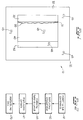
- Electrochemical cell 10 is shown in Fig. 1 as including native atmosphere 20, chamber 22, metal ion source electrode 30, surface 31, electrolyte 40, cathode 50, and passivating layer 60.
- metal ion source electrode 30 will be described as a lithium source anode for use in a rechargeable electrochemical cell/battery.
- cathode such as cathode 50
- the term atmosphere comprises any existing atmospheric conditions (including no atmosphere, i.e. a vacuum) present in the chamber prior to displacement thereof with carbon dioxide, as will be explained.
- Cathode 50 and electrolyte 40 are both constructed with an acrylic polymer. However, it is also contemplated that only one of such components be acrylic based.
- Acrylic polymer cathode paste 50 and acrylic polymer electrolyte 40 further include means for precluding the absorption of oxygen 45.
- the oxygen precluding means substantially comprises carbon dioxide positioned within the fully assembled electrochemical cell.
- the carbon dioxide may be maintained in acrylic polymer cathode paste 50 and/or in acrylic polymer electrolyte 40.
- actual positioning and maintaining of the carbon dioxide therein is accomplished by fabricating the acrylic polymer cathode paste and acrylic polymer electrolyte in a carbon dioxide environment, within chamber 22, in order to displace oxygen existing in, for example, the acrylic monomers.
- carbon dioxide is more soluble in acrylic polymer systems than oxygen, it is able to displace the oxygen which would hinder free radical chain growth polymer reactions.
- the carbon dioxide also increases the efficiency of the initiator used in the chain growth reactions and thereby allows the use of a lower amount of initiator, than previously known in the art, which, in turn, minimizes the ability of waste initiator being incorporated into the polymer as an impurity.
- carbon dioxide is in substantial chemical equilibrium with the electrolyte and the initiator; (2) the carbon dioxide displaces oxygen in the acrylic polymer cathode paste or electrolyte which may hinder free radical chain growth reactions necessitating relatively large amounts of initiator; (3) carbon dioxide reacts with lithium to form a favorable passivating layer while nitrogen and argon do not, or, in the case of nitrogen, an unfavorable passivating layer may be formed; and (4) carbon dioxide is a relatively inexpensive and safe inactive gas.
- the components are then assembled into an electrochemical cell under a carbon dioxide environment. Therefore, once cell assembly is complete, the internal components of the cell retain a predetermined amount of carbon dioxide.
- the predetermined amount of carbon dioxide integrated into the cell is desirable, indeed, even preferred, because it will prevent the reabsorption of oxygen into the acrylic based electrochemical cell. Also, it is typical that trace amounts of water will remain in a fabricated cell. This water may react with the electrolyte to form an acid, such as hydrofluoric acid, which is destructive to the lithium anode (and, of course, could also be destructive to the cathode). Maintaining carbon dioxide within the fabricated electrochemical cell renders the generated acids substantially inactive, thus increasing the life of the lithium anode.
- the fabrication of an electrochemical cell and associated electrochemical process takes place in a sealed chamber 22 (Fig. 1) having an atmosphere (typically an ambient atmosphere) 20 (Fig. 1).
- the sub components including an acrylic polymer paste cathode or an acrylic polymer electrolyte, are inserted 61 within the sealed chamber.
- the existing atmosphere 20 (Fig. 1) is displaced 62 with carbon dioxide, thereby saturating both the sealed chamber and the acrylic based sub components with carbon dioxide.
- the present invention has been described with respect to saturating the acrylic based sub components with carbon dioxide, merely displacing oxygen within the acrylic monomer, with the carbon dioxide, is also contemplated.
- a passivating layer is formed 65 upon the surface 31 of lithium source substrate 30.
- the passivating layer comprises a thin layer of lithium carbonate formed by the reaction of the carbon dioxide and the lithium source substrate. This lithium carbonate passivating layer allows ions, associated with the electrochemical process, to pass through to the lithium source substrate, but precludes acids generated during cell operation from attacking the surface of the lithium source substrate.
- the carbon dioxide is more soluble in acrylic polymer systems than nitrogen or argon, the carbon dioxide more easily displaces oxygen within either the acrylic polymer cathode paste or acrylic polymer electrolyte with carbon dioxide. Displacing oxygen in the acrylic polymers with carbon dioxide increases the efficiency of the polymer initiator, allows the formation of a thinner polymer based electrolyte film (due to the enhanced quality of the polymer matrix), and facilitates the creation of a polymer, through a chain growth reaction, with substantially fewer impurities than a polymer synthesized in an atmosphere comprised of oxygen.
- the sub components are likewise assembled in an atmosphere substantially comprised of carbon dioxide. This step is necessary to ensure that the fabricated acrylic based electrochemical cell retains a predetermined amount of carbon dioxide so that acids, formed by the reaction of water and the electrolyte, are rendered substantially inactive.
Landscapes
- Chemical & Material Sciences (AREA)
- Engineering & Computer Science (AREA)
- Manufacturing & Machinery (AREA)
- Chemical Kinetics & Catalysis (AREA)
- Electrochemistry (AREA)
- General Chemical & Material Sciences (AREA)
- Materials Engineering (AREA)
- Physics & Mathematics (AREA)
- Condensed Matter Physics & Semiconductors (AREA)
- Dispersion Chemistry (AREA)
- General Physics & Mathematics (AREA)
- Inorganic Chemistry (AREA)
- Battery Electrode And Active Subsutance (AREA)
- Secondary Cells (AREA)
Abstract
Description
- The present invention relates in general to secondary cells and, more particularly, to an electrochemical cell and electrochemical process associated therewith, wherein a chain growth polymerization reaction is substantially increased through the use of carbon dioxide gas.
- Rechargeable, or secondary cells, have been known in the art for many years. Furthermore, secondary cells constructed with an acrylic polymer cathode paste or an acrylic polymer electrolyte have likewise been known in the art.
- While such cells have been functional, problems have resulted inasmuch as the acrylic based components typically contain impurities such as oxygen and excess polymerization initiator. Oxygen within the electrochemical cell hinders free radical chain growth polymerization reactions. The use of increased levels of polymerization initiator is necessary, therefore, in order to overcome the effect of the oxygen. Increasing the amount of initiator, however, decreases the purity of the acrylic polymer because the excess initiator is incorporated into the polymer.
- Although the prior art does disclose the use of argon and nitrogen gas as a means for displacing oxygen, these gases are relatively expensive, and not very soluble in acrylic monomers. Additionally, such prior art acrylic based cells typically maintain at least trace amounts of water therein. This trace amount of water would react with the electrolyte to form an acid, such as hydrofluoric acid, which would react destructively with the lithium source anode and/or lithium intercalation cathode.
- US 4,326,014 describes an anode coating for anhydrous electrochemical generating cells, wherein the anode active material is immersed in an electrolyte solution and coated with the insoluble reaction product of the anode metal with an inhibiting reactant such as CO2, SO2, O2, NH3 and N2 saturated with respect to water vapor, wherein this coating is insoluble in the cell under open circuit conditions and is stable with regard to said electrolyte but removable in said electrolyte, when the cell is discharged with a negligible over voltage.
- GB 2 018 015 A describes a thin, flexible electrode which is useful e.g. in construction of batteries for portable electronic devices, and comprises an active material and a minor amount of an ethylene acrylic acid polymer.
- Although the use of carbon dioxide is known by polymer chemists as a means to facilitate chain growth polymerization reactions in supercritical fluids, (see for example, Shaffer, K.A. and DeSimone, J.M., Chain Polymerization in Inert Near- and Supercritical Fluids, TRIP, Vol. 3, No. 5 pg. 146), the use of carbon dioxide in an acrylic polymer based electrochemical cell and electrochemical process, has not been taught or suggested by the prior art. It is thus an object of the present invention to provide an electrolytic cell and associated process wherein the electrolytic cell is assembled in an atmosphere substantially comprised of carbon dioxide.
- It is also an object of the present invention to provide an electrochemical cell and associated process wherein the electrochemical cell assembled in the substantially carbon dioxide atmosphere retains a predetermined amount of carbon dioxide in the electrolytic cell after assembly.
- It is further an object of the present invention to provide an electrochemical cell and associated process wherein the carbon dioxide substantially displaces oxygen in an acrylic cathode paste or acrylic electrolyte to, in turn, increase the efficiency of the initiator in a chain growth polymerization reaction.
- These and other objects of the present invention will become apparent in light of the attached Specification, Claims, and Drawings.
- The present invention comprises an electrochemical process associated with the fabrication of an electrochemical cell. The fabrication of the electrochemical cell comprises the steps of: (1) inserting sub components of an electrochemical cell into a chamber having an atmosphere, wherein at least one of the sub components includes a lithium source substrate, an electrolyte, and a cathode paste, and, wherein at least one of the anode, electrolyte or cathode paste is acrylic based; (2) displacing the atmosphere within the chamber with carbon dioxide; (3) forming a passive layer which includes lithium carbonate on the lithium source substrate; (5) displacing oxygen, which may be in the acrylic based cathode paste or electrolyte, with carbon dioxide to, in turn, facilitate a free-radical chain growth reaction; (6) fabricating the sub components into components for use in the electrochemical cell, and (7) assembling the fabricated components into an electrochemical cell.
- In a preferred embodiment of the invention, the passive layer will restrict the penetration of acids, generated within the completely fabricated electrochemical cell during aging and operation, through the passive layer and into contact with the lithium source substrate.
- Also in a preferred embodiment of the invention, the step of displacing the atmosphere within the chamber with carbon dioxide further comprises the step of saturating at least one of the acrylic based cathode paste or the electrolyte with carbon dioxide. It is also contemplated that the electrochemical process further comprise the step of maintaining a predetermined amount of carbon dioxide within the fully fabricated electrochemical cell to, in turn, prevent reabsorption of oxygen within at least one of the electrolyte or the cathode paste.
- In this preferred embodiment of the invention, the step of fabricating the components may further include the steps of: (1) applying a cathode paste onto a substrate; (2) curing the cathode paste; (3) applying the electrolyte over the cathode paste; and (4) curing the electrolyte. Furthermore, the step of assembling the fabricated sub components may comprise the step of associating an anode with the electrolyte and cathode, to, in turn, result in a fully assembled electrochemical cell.
- Fig. 1. of the drawings is a schematic representation of the present electrochemical cell; and
- Fig. 2. of the drawings is a flow chart of the present electrochemical process.
-
- While this invention is susceptible of embodiment in many different forms, there is shown in the drawings and will herein be described in detail, one specific embodiment with the understanding that the present disclosure is to be considered as an exemplification of the principles of the invention and is not intended to limit the invention to the embodiment illustrated.
-
Electrochemical cell 10 is shown in Fig. 1 as includingnative atmosphere 20,chamber 22, metalion source electrode 30,surface 31,electrolyte 40,cathode 50, and passivatinglayer 60. For purposes of explanation of the present invention, metalion source electrode 30 will be described as a lithium source anode for use in a rechargeable electrochemical cell/battery. However, it will be understood to those with ordinary skill in the art, that the principles associated with the claimed and described invention would also be applicable for use with a cathode, such ascathode 50, as well as with respect to other types of alkali metal ion source electrodes. Furthermore, it should also be noted that the term atmosphere, as used herein, comprises any existing atmospheric conditions (including no atmosphere, i.e. a vacuum) present in the chamber prior to displacement thereof with carbon dioxide, as will be explained. -
Cathode 50 andelectrolyte 40 are both constructed with an acrylic polymer. However, it is also contemplated that only one of such components be acrylic based. Acrylicpolymer cathode paste 50 andacrylic polymer electrolyte 40 further include means for precluding the absorption ofoxygen 45. The oxygen precluding means substantially comprises carbon dioxide positioned within the fully assembled electrochemical cell. For example, and as will be explained in greater detail, the carbon dioxide may be maintained in acrylicpolymer cathode paste 50 and/or inacrylic polymer electrolyte 40. Indeed, actual positioning and maintaining of the carbon dioxide therein is accomplished by fabricating the acrylic polymer cathode paste and acrylic polymer electrolyte in a carbon dioxide environment, withinchamber 22, in order to displace oxygen existing in, for example, the acrylic monomers. - Inasmuch as carbon dioxide is more soluble in acrylic polymer systems than oxygen, it is able to displace the oxygen which would hinder free radical chain growth polymer reactions. The carbon dioxide also increases the efficiency of the initiator used in the chain growth reactions and thereby allows the use of a lower amount of initiator, than previously known in the art, which, in turn, minimizes the ability of waste initiator being incorporated into the polymer as an impurity.
- While the prior art teaches the use of nitrogen and argon gas as a purging agent of oxygen in the formation of an electrochemical cell, it is silent as to the use of carbon dioxide. The use of carbon dioxide, however, has significant advantages over the use of nitrogen or argon especially when used for the fabrication of acrylic based components. For example, (1) carbon dioxide is in substantial chemical equilibrium with the electrolyte and the initiator; (2) the carbon dioxide displaces oxygen in the acrylic polymer cathode paste or electrolyte which may hinder free radical chain growth reactions necessitating relatively large amounts of initiator; (3) carbon dioxide reacts with lithium to form a favorable passivating layer while nitrogen and argon do not, or, in the case of nitrogen, an unfavorable passivating layer may be formed; and (4) carbon dioxide is a relatively inexpensive and safe inactive gas.
- After the sub components of the electrochemical cell, including the acrylic cathode paste and electrolyte, have been fabricated, the components, like the sub components, are then assembled into an electrochemical cell under a carbon dioxide environment. Therefore, once cell assembly is complete, the internal components of the cell retain a predetermined amount of carbon dioxide. The predetermined amount of carbon dioxide integrated into the cell is desirable, indeed, even preferred, because it will prevent the reabsorption of oxygen into the acrylic based electrochemical cell. Also, it is typical that trace amounts of water will remain in a fabricated cell. This water may react with the electrolyte to form an acid, such as hydrofluoric acid, which is destructive to the lithium anode (and, of course, could also be destructive to the cathode). Maintaining carbon dioxide within the fabricated electrochemical cell renders the generated acids substantially inactive, thus increasing the life of the lithium anode.
- In operation, and as shown in the flow chart of Fig. 2, the fabrication of an electrochemical cell and associated electrochemical process takes place in a sealed chamber 22 (Fig. 1) having an atmosphere (typically an ambient atmosphere) 20 (Fig. 1). First, the sub components, including an acrylic polymer paste cathode or an acrylic polymer electrolyte, are inserted 61 within the sealed chamber. After the sub components are placed within the sealed chamber, the existing atmosphere 20 (Fig. 1) is displaced 62 with carbon dioxide, thereby saturating both the sealed chamber and the acrylic based sub components with carbon dioxide. Although the present invention has been described with respect to saturating the acrylic based sub components with carbon dioxide, merely displacing oxygen within the acrylic monomer, with the carbon dioxide, is also contemplated.
- Once the ambient atmosphere is displaced with carbon dioxide, a passivating layer is formed 65 upon the
surface 31 oflithium source substrate 30. The passivating layer comprises a thin layer of lithium carbonate formed by the reaction of the carbon dioxide and the lithium source substrate. This lithium carbonate passivating layer allows ions, associated with the electrochemical process, to pass through to the lithium source substrate, but precludes acids generated during cell operation from attacking the surface of the lithium source substrate. - Furthermore, because the carbon dioxide is more soluble in acrylic polymer systems than nitrogen or argon, the carbon dioxide more easily displaces oxygen within either the acrylic polymer cathode paste or acrylic polymer electrolyte with carbon dioxide. Displacing oxygen in the acrylic polymers with carbon dioxide increases the efficiency of the polymer initiator, allows the formation of a thinner polymer based electrolyte film (due to the enhanced quality of the polymer matrix), and facilitates the creation of a polymer, through a chain growth reaction, with substantially fewer impurities than a polymer synthesized in an atmosphere comprised of oxygen. Finally, the sub components are likewise assembled in an atmosphere substantially comprised of carbon dioxide. This step is necessary to ensure that the fabricated acrylic based electrochemical cell retains a predetermined amount of carbon dioxide so that acids, formed by the reaction of water and the electrolyte, are rendered substantially inactive.
Claims (8)
- Process for fabricating an electrochemical cell wherein at least one of the sub components includes a lithium source anode, an electrolyte and a cathode wherein at least one of the electrolyte, anode or cathode is acrylic based, comprising the steps of:inserting sub components of an electrochemical cell into a chamber having an atmosphere,displacing the atmosphere within the chamber with carbon dioxide,displacing oxygen which may be in the at least one of the acrylic based anode, cathode or electrolyte, with carbon dioxide to, in turn, facilitate a free-radical chain growth reaction,fabricating the sub components into components for use in the electrochemical cell, andassembling the fabricated components into an electrochemical cell.
- The process according to claim 1, further including the step of passivating the lithium source anode, thus restricting penetration of acids generated within the completely fabricated electrochemical cell, during aging and operation.
- The process according to claim 1, wherein the step of displacing the atmosphere within the chamber with carbon dioxide further comprises the step of:saturating the at least one of the acrylicic based anode, cathode or electrolyte with carbon dioxide.
- The process according to claim 1 further comprising the step of maintaining a predetermined amount of carbon dioxide within the fully fabricated electrochemical cell to, in turn, prevent reabsorption of oxygen within at least one of the electrolyte, anode and cathode.
- The process according to claim 1 wherein the sub components further include a cathode paste; the step of fabricating the components includes the steps of:applying the cathode paste onto a substrate;at least partially curing the cathode paste;applying the electrolyte over the cathode paste; andat least partially curing the electrolyte.
- The process according to claim 5 wherein the step of assembling the fabricated sub components further comprises the step of associating an anode with the electrolyte and cathode, to, in turn, result in a fully assembled electrochemical cell.
- The process according to claim 1 wherein the sub components further include an anode paste; the step of fabricating the components includes the steps of:applying the anode paste onto a substrate;at least partially curing the anode paste;applying the electrolyte over the anode paste; andat least partially curing the electrolyte.
- The process according to claim 7 wherein the step of assembling the fabricated sub components further comprises the step of associating a cathode with the electrolyte and anode, to, in turn, result in a fully assembled electrochemical cell.
Applications Claiming Priority (3)
| Application Number | Priority Date | Filing Date | Title |
|---|---|---|---|
| US08/510,750 US5601623A (en) | 1995-08-03 | 1995-08-03 | Electrolytic cell and electrolytic process within a carbon dioxide environment |
| US510750 | 1995-08-03 | ||
| PCT/US1996/008062 WO1997006568A1 (en) | 1995-08-03 | 1996-07-16 | Electrochemical cell and electrochemical process within a carbon dioxide environment |
Publications (2)
| Publication Number | Publication Date |
|---|---|
| EP0784872A1 EP0784872A1 (en) | 1997-07-23 |
| EP0784872B1 true EP0784872B1 (en) | 2000-04-19 |
Family
ID=24032033
Family Applications (1)
| Application Number | Title | Priority Date | Filing Date |
|---|---|---|---|
| EP96924253A Expired - Lifetime EP0784872B1 (en) | 1995-08-03 | 1996-07-16 | Electrochemical cell and electrochemical process within a carbon dioxide environment |
Country Status (5)
| Country | Link |
|---|---|
| US (1) | US5601623A (en) |
| EP (1) | EP0784872B1 (en) |
| JP (1) | JPH11504466A (en) |
| DE (1) | DE69607820D1 (en) |
| WO (1) | WO1997006568A1 (en) |
Families Citing this family (6)
| Publication number | Priority date | Publication date | Assignee | Title |
|---|---|---|---|---|
| US5707760A (en) * | 1996-12-09 | 1998-01-13 | Valence Technology, Inc. | Additives for inhibiting decomposition of lithium salts and electrolytes containing said additives |
| DE69802134T2 (en) * | 1997-04-23 | 2002-03-07 | Hydro-Quebec, Montreal | Thin film solid lithium cells and method of manufacture |
| US5871865A (en) | 1997-05-15 | 1999-02-16 | Valence Technology, Inc. | Methods of fabricating electrochemical cells |
| KR100997349B1 (en) * | 2002-01-09 | 2010-11-30 | 스티븐 이. 슬룹 | Systems and methods for recovering electrolyte from energy storage and / or diverters using supercritical fluids |
| EP1333522A1 (en) * | 2002-02-01 | 2003-08-06 | Batrec Industrie AG | Method of and apparatus for storage and handling of objects comprising alkali metals, such as alkali metal containing batteries |
| WO2021245196A1 (en) * | 2020-06-04 | 2021-12-09 | Albemarle Germany Gmbh | Process for the preparation of lithium metal and lithium alloy mouldings |
Family Cites Families (7)
| Publication number | Priority date | Publication date | Assignee | Title |
|---|---|---|---|---|
| US4326014A (en) * | 1972-05-19 | 1982-04-20 | Duracell International Inc. | High temperature organic electrolyte cells |
| US4195121A (en) * | 1978-03-28 | 1980-03-25 | Union Carbide Corporation | Thin flexible electrodes and the method for producing them |
| US4778737A (en) * | 1985-07-30 | 1988-10-18 | The B. F. Goodrich Company | Compositions of polymers in alkaline media |
| DE3912846C1 (en) * | 1989-04-19 | 1990-06-21 | Accumulatorenwerke Hoppecke Carl Zoellner & Sohn Gmbh & Co Kg, 5790 Brilon, De | |
| JP3318941B2 (en) * | 1991-12-28 | 2002-08-26 | ソニー株式会社 | Manufacturing method of cathode material |
| US5346787A (en) * | 1993-04-19 | 1994-09-13 | Valence Technology, Inc. | Allyl carbonate polymer solid electrolytes |
| JPH07176323A (en) * | 1993-12-21 | 1995-07-14 | Mitsubishi Cable Ind Ltd | Electrolytic solution and negative electrode for li secondary battery |
-
1995
- 1995-08-03 US US08/510,750 patent/US5601623A/en not_active Expired - Lifetime
-
1996
- 1996-07-16 WO PCT/US1996/008062 patent/WO1997006568A1/en not_active Ceased
- 1996-07-16 DE DE69607820T patent/DE69607820D1/en not_active Expired - Lifetime
- 1996-07-16 JP JP9508414A patent/JPH11504466A/en active Pending
- 1996-07-16 EP EP96924253A patent/EP0784872B1/en not_active Expired - Lifetime
Also Published As
| Publication number | Publication date |
|---|---|
| DE69607820D1 (en) | 2000-05-25 |
| US5601623A (en) | 1997-02-11 |
| JPH11504466A (en) | 1999-04-20 |
| EP0784872A1 (en) | 1997-07-23 |
| WO1997006568A1 (en) | 1997-02-20 |
Similar Documents
| Publication | Publication Date | Title |
|---|---|---|
| Aurbach et al. | On the role of water contamination in rechargeable Li batteries | |
| US5522955A (en) | Process and apparatus for producing thin lithium coatings on electrically conductive foil for use in solid state rechargeable electrochemical cells | |
| CA1307024C (en) | Separator for lithium batteries and lithium batteries including the separator | |
| US4296185A (en) | Coating for lithium anode, thionyl chloride active cathode electrochemical cell | |
| US4170693A (en) | Coating for lithium anode, thionyl chloride active cathode electrochemical cell | |
| US5552238A (en) | Stabilized rechargeable cell in MSE and method therefor | |
| US4740433A (en) | Nonaqueous battery with special separator | |
| US6432581B1 (en) | Rechargeable battery including an inorganic anode | |
| US4085256A (en) | High temperature organic electrolyte cells | |
| US6372388B1 (en) | Vinylidene fluoride copolymer for gel-form solid electrolyte formation, solid electrolyte, and battery | |
| EP0784872B1 (en) | Electrochemical cell and electrochemical process within a carbon dioxide environment | |
| Odziemkowski et al. | An electrochemical study of the reactivity at the lithium electrolyte/bare lithium metal interface: II. Unpurified solvents | |
| JP3580523B2 (en) | Ion conductive polymer gel electrolyte and battery containing the gel electrolyte | |
| EP1043732B1 (en) | Polymer electrolyte and nonaqueous battery containing the same | |
| Gan et al. | Lithium electrodes with and without CO2 treatment: electrochemical behavior and effect on high rate lithium battery performance | |
| JP3292220B2 (en) | Lithium battery | |
| CN120511354A (en) | Preparation of ultrathin polymer electrolyte with wide electrochemical window and application of polymer electrolyte in solid-state lithium metal battery | |
| US4366616A (en) | Coating for lithium anode, thionyl chloride active cathode electrochemical cell | |
| US20220246933A1 (en) | Fluoride ion secondary battery | |
| US4326014A (en) | High temperature organic electrolyte cells | |
| US5601948A (en) | Gas plasma treatment of cathodes to improve cell performance | |
| KR20040026370A (en) | Metallic lithium anodes for electrochemical cells | |
| USH1462H (en) | Solid state electrochemical lithium/polymer cell | |
| US5202203A (en) | Chloromethyl chlorosulfate as a voltage delay inhibitor in lithium cells | |
| US6017635A (en) | Hydrophobic composition and a method of preparing a hydrophobic plate |
Legal Events
| Date | Code | Title | Description |
|---|---|---|---|
| PUAI | Public reference made under article 153(3) epc to a published international application that has entered the european phase |
Free format text: ORIGINAL CODE: 0009012 |
|
| 17P | Request for examination filed |
Effective date: 19970430 |
|
| AK | Designated contracting states |
Kind code of ref document: A1 Designated state(s): DE |
|
| 17Q | First examination report despatched |
Effective date: 19970716 |
|
| RAP1 | Party data changed (applicant data changed or rights of an application transferred) |
Owner name: MITSUBISHI CHEMICAL CORPORATION |
|
| GRAG | Despatch of communication of intention to grant |
Free format text: ORIGINAL CODE: EPIDOS AGRA |
|
| GRAG | Despatch of communication of intention to grant |
Free format text: ORIGINAL CODE: EPIDOS AGRA |
|
| GRAH | Despatch of communication of intention to grant a patent |
Free format text: ORIGINAL CODE: EPIDOS IGRA |
|
| GRAH | Despatch of communication of intention to grant a patent |
Free format text: ORIGINAL CODE: EPIDOS IGRA |
|
| GRAA | (expected) grant |
Free format text: ORIGINAL CODE: 0009210 |
|
| AK | Designated contracting states |
Kind code of ref document: B1 Designated state(s): DE |
|
| REF | Corresponds to: |
Ref document number: 69607820 Country of ref document: DE Date of ref document: 20000525 |
|
| PG25 | Lapsed in a contracting state [announced via postgrant information from national office to epo] |
Ref country code: DE Free format text: LAPSE BECAUSE OF FAILURE TO SUBMIT A TRANSLATION OF THE DESCRIPTION OR TO PAY THE FEE WITHIN THE PRESCRIBED TIME-LIMIT Effective date: 20000720 |
|
| EN | Fr: translation not filed | ||
| PLBE | No opposition filed within time limit |
Free format text: ORIGINAL CODE: 0009261 |
|
| STAA | Information on the status of an ep patent application or granted ep patent |
Free format text: STATUS: NO OPPOSITION FILED WITHIN TIME LIMIT |
|
| 26N | No opposition filed |