EP0783557B1 - Hydrocarbon conversion - Google Patents
Hydrocarbon conversion Download PDFInfo
- Publication number
- EP0783557B1 EP0783557B1 EP95935228A EP95935228A EP0783557B1 EP 0783557 B1 EP0783557 B1 EP 0783557B1 EP 95935228 A EP95935228 A EP 95935228A EP 95935228 A EP95935228 A EP 95935228A EP 0783557 B1 EP0783557 B1 EP 0783557B1
- Authority
- EP
- European Patent Office
- Prior art keywords
- catalyst
- zone
- benzene
- zsm
- toluene
- Prior art date
- Legal status (The legal status is an assumption and is not a legal conclusion. Google has not performed a legal analysis and makes no representation as to the accuracy of the status listed.)
- Expired - Lifetime
Links
- 238000006243 chemical reaction Methods 0.000 title claims description 56
- 229930195733 hydrocarbon Natural products 0.000 title claims description 56
- 150000002430 hydrocarbons Chemical class 0.000 title claims description 54
- 239000004215 Carbon black (E152) Substances 0.000 title claims description 32
- 239000003054 catalyst Substances 0.000 claims description 212
- UHOVQNZJYSORNB-UHFFFAOYSA-N Benzene Chemical compound C1=CC=CC=C1 UHOVQNZJYSORNB-UHFFFAOYSA-N 0.000 claims description 165
- YXFVVABEGXRONW-UHFFFAOYSA-N Toluene Chemical compound CC1=CC=CC=C1 YXFVVABEGXRONW-UHFFFAOYSA-N 0.000 claims description 135
- 238000000034 method Methods 0.000 claims description 94
- 230000008569 process Effects 0.000 claims description 78
- KDLHZDBZIXYQEI-UHFFFAOYSA-N Palladium Chemical compound [Pd] KDLHZDBZIXYQEI-UHFFFAOYSA-N 0.000 claims description 70
- 239000010457 zeolite Substances 0.000 claims description 69
- HNPSIPDUKPIQMN-UHFFFAOYSA-N dioxosilane;oxo(oxoalumanyloxy)alumane Chemical group O=[Si]=O.O=[Al]O[Al]=O HNPSIPDUKPIQMN-UHFFFAOYSA-N 0.000 claims description 57
- 229910021536 Zeolite Inorganic materials 0.000 claims description 55
- BASFCYQUMIYNBI-UHFFFAOYSA-N platinum Chemical compound [Pt] BASFCYQUMIYNBI-UHFFFAOYSA-N 0.000 claims description 46
- 238000002407 reforming Methods 0.000 claims description 38
- 230000000694 effects Effects 0.000 claims description 37
- 239000000047 product Substances 0.000 claims description 34
- 229910052751 metal Inorganic materials 0.000 claims description 32
- 239000002184 metal Substances 0.000 claims description 32
- 229910052739 hydrogen Inorganic materials 0.000 claims description 31
- 239000001257 hydrogen Substances 0.000 claims description 31
- UFHFLCQGNIYNRP-UHFFFAOYSA-N Hydrogen Chemical compound [H][H] UFHFLCQGNIYNRP-UHFFFAOYSA-N 0.000 claims description 30
- 229910052763 palladium Inorganic materials 0.000 claims description 24
- 230000015572 biosynthetic process Effects 0.000 claims description 22
- 238000005984 hydrogenation reaction Methods 0.000 claims description 22
- 239000002808 molecular sieve Substances 0.000 claims description 22
- URGAHOPLAPQHLN-UHFFFAOYSA-N sodium aluminosilicate Chemical compound [Na+].[Al+3].[O-][Si]([O-])=O.[O-][Si]([O-])=O URGAHOPLAPQHLN-UHFFFAOYSA-N 0.000 claims description 22
- 229910052697 platinum Inorganic materials 0.000 claims description 20
- NINIDFKCEFEMDL-UHFFFAOYSA-N Sulfur Chemical compound [S] NINIDFKCEFEMDL-UHFFFAOYSA-N 0.000 claims description 17
- 229910052717 sulfur Inorganic materials 0.000 claims description 17
- 239000011593 sulfur Substances 0.000 claims description 17
- 239000002253 acid Substances 0.000 claims description 16
- 238000003786 synthesis reaction Methods 0.000 claims description 16
- 238000011282 treatment Methods 0.000 claims description 14
- PXHVJJICTQNCMI-UHFFFAOYSA-N Nickel Chemical compound [Ni] PXHVJJICTQNCMI-UHFFFAOYSA-N 0.000 claims description 12
- 238000009835 boiling Methods 0.000 claims description 10
- 230000001965 increasing effect Effects 0.000 claims description 10
- 238000001833 catalytic reforming Methods 0.000 claims description 9
- 239000013067 intermediate product Substances 0.000 claims description 8
- 239000003208 petroleum Substances 0.000 claims description 7
- 238000010025 steaming Methods 0.000 claims description 6
- 229910052759 nickel Inorganic materials 0.000 claims description 5
- 238000000926 separation method Methods 0.000 claims description 5
- WFKWXMTUELFFGS-UHFFFAOYSA-N tungsten Chemical compound [W] WFKWXMTUELFFGS-UHFFFAOYSA-N 0.000 claims description 5
- 229910052721 tungsten Inorganic materials 0.000 claims description 5
- 239000010937 tungsten Substances 0.000 claims description 5
- ZOKXTWBITQBERF-UHFFFAOYSA-N Molybdenum Chemical compound [Mo] ZOKXTWBITQBERF-UHFFFAOYSA-N 0.000 claims description 3
- 125000003118 aryl group Chemical group 0.000 claims description 3
- 229910017052 cobalt Inorganic materials 0.000 claims description 3
- 239000010941 cobalt Substances 0.000 claims description 3
- GUTLYIVDDKVIGB-UHFFFAOYSA-N cobalt atom Chemical group [Co] GUTLYIVDDKVIGB-UHFFFAOYSA-N 0.000 claims description 3
- 229910052750 molybdenum Inorganic materials 0.000 claims description 3
- 239000011733 molybdenum Substances 0.000 claims description 3
- 230000000737 periodic effect Effects 0.000 claims description 3
- 238000010791 quenching Methods 0.000 claims description 3
- 238000004064 recycling Methods 0.000 claims description 2
- VYPSYNLAJGMNEJ-UHFFFAOYSA-N Silicium dioxide Chemical compound O=[Si]=O VYPSYNLAJGMNEJ-UHFFFAOYSA-N 0.000 description 34
- PNEYBMLMFCGWSK-UHFFFAOYSA-N aluminium oxide Inorganic materials [O-2].[O-2].[O-2].[Al+3].[Al+3] PNEYBMLMFCGWSK-UHFFFAOYSA-N 0.000 description 32
- 239000008096 xylene Substances 0.000 description 32
- 150000003738 xylenes Chemical class 0.000 description 29
- 239000000203 mixture Substances 0.000 description 23
- 150000001336 alkenes Chemical class 0.000 description 21
- 239000003502 gasoline Substances 0.000 description 21
- 239000000377 silicon dioxide Substances 0.000 description 17
- IJGRMHOSHXDMSA-UHFFFAOYSA-N Atomic nitrogen Chemical compound N#N IJGRMHOSHXDMSA-UHFFFAOYSA-N 0.000 description 14
- YNQLUTRBYVCPMQ-UHFFFAOYSA-N Ethylbenzene Chemical compound CCC1=CC=CC=C1 YNQLUTRBYVCPMQ-UHFFFAOYSA-N 0.000 description 14
- 229910052681 coesite Inorganic materials 0.000 description 12
- 229910052593 corundum Inorganic materials 0.000 description 12
- 229910052906 cristobalite Inorganic materials 0.000 description 12
- 238000004519 manufacturing process Methods 0.000 description 12
- 229910052682 stishovite Inorganic materials 0.000 description 12
- 229910052905 tridymite Inorganic materials 0.000 description 12
- 229910001845 yogo sapphire Inorganic materials 0.000 description 12
- 238000001354 calcination Methods 0.000 description 11
- 230000002829 reductive effect Effects 0.000 description 11
- 239000000463 material Substances 0.000 description 10
- 230000003197 catalytic effect Effects 0.000 description 9
- 239000000571 coke Substances 0.000 description 9
- 239000011148 porous material Substances 0.000 description 9
- TVMXDCGIABBOFY-UHFFFAOYSA-N octane Chemical compound CCCCCCCC TVMXDCGIABBOFY-UHFFFAOYSA-N 0.000 description 8
- 230000008929 regeneration Effects 0.000 description 8
- 238000011069 regeneration method Methods 0.000 description 8
- 230000008901 benefit Effects 0.000 description 7
- 229910052757 nitrogen Inorganic materials 0.000 description 7
- VXAUWWUXCIMFIM-UHFFFAOYSA-M aluminum;oxygen(2-);hydroxide Chemical compound [OH-].[O-2].[Al+3] VXAUWWUXCIMFIM-UHFFFAOYSA-M 0.000 description 6
- 238000004517 catalytic hydrocracking Methods 0.000 description 6
- 238000005336 cracking Methods 0.000 description 6
- 239000007789 gas Substances 0.000 description 6
- 239000011159 matrix material Substances 0.000 description 6
- JRZJOMJEPLMPRA-UHFFFAOYSA-N olefin Natural products CCCCCCCC=C JRZJOMJEPLMPRA-UHFFFAOYSA-N 0.000 description 6
- 239000006069 physical mixture Substances 0.000 description 6
- 239000000843 powder Substances 0.000 description 6
- 230000003716 rejuvenation Effects 0.000 description 6
- 229920006395 saturated elastomer Polymers 0.000 description 6
- 239000007787 solid Substances 0.000 description 6
- XLYOFNOQVPJJNP-UHFFFAOYSA-N water Chemical compound O XLYOFNOQVPJJNP-UHFFFAOYSA-N 0.000 description 6
- MCMNRKCIXSYSNV-UHFFFAOYSA-N Zirconium dioxide Chemical compound O=[Zr]=O MCMNRKCIXSYSNV-UHFFFAOYSA-N 0.000 description 5
- AZDRQVAHHNSJOQ-UHFFFAOYSA-N alumane Chemical group [AlH3] AZDRQVAHHNSJOQ-UHFFFAOYSA-N 0.000 description 5
- QVGXLLKOCUKJST-UHFFFAOYSA-N atomic oxygen Chemical compound [O] QVGXLLKOCUKJST-UHFFFAOYSA-N 0.000 description 5
- 239000008367 deionised water Substances 0.000 description 5
- 229910021641 deionized water Inorganic materials 0.000 description 5
- 150000002739 metals Chemical class 0.000 description 5
- 229910052760 oxygen Inorganic materials 0.000 description 5
- 239000001301 oxygen Substances 0.000 description 5
- VEXZGXHMUGYJMC-UHFFFAOYSA-M Chloride anion Chemical compound [Cl-] VEXZGXHMUGYJMC-UHFFFAOYSA-M 0.000 description 4
- XEEYBQQBJWHFJM-UHFFFAOYSA-N Iron Chemical compound [Fe] XEEYBQQBJWHFJM-UHFFFAOYSA-N 0.000 description 4
- QGZKDVFQNNGYKY-UHFFFAOYSA-O ammonium group Chemical group [NH4+] QGZKDVFQNNGYKY-UHFFFAOYSA-O 0.000 description 4
- 239000002585 base Substances 0.000 description 4
- 150000001768 cations Chemical class 0.000 description 4
- 239000000356 contaminant Substances 0.000 description 4
- 230000009849 deactivation Effects 0.000 description 4
- 238000009826 distribution Methods 0.000 description 4
- VLKZOEOYAKHREP-UHFFFAOYSA-N n-Hexane Chemical compound CCCCCC VLKZOEOYAKHREP-UHFFFAOYSA-N 0.000 description 4
- 238000012545 processing Methods 0.000 description 4
- 230000009467 reduction Effects 0.000 description 4
- DGAQECJNVWCQMB-PUAWFVPOSA-M Ilexoside XXIX Chemical compound C[C@@H]1CC[C@@]2(CC[C@@]3(C(=CC[C@H]4[C@]3(CC[C@@H]5[C@@]4(CC[C@@H](C5(C)C)OS(=O)(=O)[O-])C)C)[C@@H]2[C@]1(C)O)C)C(=O)O[C@H]6[C@@H]([C@H]([C@@H]([C@H](O6)CO)O)O)O.[Na+] DGAQECJNVWCQMB-PUAWFVPOSA-M 0.000 description 3
- OKKJLVBELUTLKV-UHFFFAOYSA-N Methanol Chemical compound OC OKKJLVBELUTLKV-UHFFFAOYSA-N 0.000 description 3
- CTQNGGLPUBDAKN-UHFFFAOYSA-N O-Xylene Chemical compound CC1=CC=CC=C1C CTQNGGLPUBDAKN-UHFFFAOYSA-N 0.000 description 3
- OAICVXFJPJFONN-UHFFFAOYSA-N Phosphorus Chemical compound [P] OAICVXFJPJFONN-UHFFFAOYSA-N 0.000 description 3
- GWEVSGVZZGPLCZ-UHFFFAOYSA-N Titan oxide Chemical compound O=[Ti]=O GWEVSGVZZGPLCZ-UHFFFAOYSA-N 0.000 description 3
- 150000004945 aromatic hydrocarbons Chemical class 0.000 description 3
- 238000006555 catalytic reaction Methods 0.000 description 3
- 238000004939 coking Methods 0.000 description 3
- 239000002131 composite material Substances 0.000 description 3
- 238000006356 dehydrogenation reaction Methods 0.000 description 3
- 238000010586 diagram Methods 0.000 description 3
- 125000004435 hydrogen atom Chemical group [H]* 0.000 description 3
- 238000011065 in-situ storage Methods 0.000 description 3
- 238000002156 mixing Methods 0.000 description 3
- 229910052698 phosphorus Inorganic materials 0.000 description 3
- 239000011574 phosphorus Substances 0.000 description 3
- -1 platinum group metals Chemical class 0.000 description 3
- 239000002243 precursor Substances 0.000 description 3
- 235000012239 silicon dioxide Nutrition 0.000 description 3
- 239000011734 sodium Substances 0.000 description 3
- 229910052708 sodium Inorganic materials 0.000 description 3
- 238000012360 testing method Methods 0.000 description 3
- KSSJBGNOJJETTC-UHFFFAOYSA-N COC1=C(C=CC=C1)N(C1=CC=2C3(C4=CC(=CC=C4C=2C=C1)N(C1=CC=C(C=C1)OC)C1=C(C=CC=C1)OC)C1=CC(=CC=C1C=1C=CC(=CC=13)N(C1=CC=C(C=C1)OC)C1=C(C=CC=C1)OC)N(C1=CC=C(C=C1)OC)C1=C(C=CC=C1)OC)C1=CC=C(C=C1)OC Chemical compound COC1=C(C=CC=C1)N(C1=CC=2C3(C4=CC(=CC=C4C=2C=C1)N(C1=CC=C(C=C1)OC)C1=C(C=CC=C1)OC)C1=CC(=CC=C1C=1C=CC(=CC=13)N(C1=CC=C(C=C1)OC)C1=C(C=CC=C1)OC)N(C1=CC=C(C=C1)OC)C1=C(C=CC=C1)OC)C1=CC=C(C=C1)OC KSSJBGNOJJETTC-UHFFFAOYSA-N 0.000 description 2
- OYPRJOBELJOOCE-UHFFFAOYSA-N Calcium Chemical compound [Ca] OYPRJOBELJOOCE-UHFFFAOYSA-N 0.000 description 2
- FYYHWMGAXLPEAU-UHFFFAOYSA-N Magnesium Chemical compound [Mg] FYYHWMGAXLPEAU-UHFFFAOYSA-N 0.000 description 2
- NBIIXXVUZAFLBC-UHFFFAOYSA-N Phosphoric acid Chemical compound OP(O)(O)=O NBIIXXVUZAFLBC-UHFFFAOYSA-N 0.000 description 2
- RTAQQCXQSZGOHL-UHFFFAOYSA-N Titanium Chemical compound [Ti] RTAQQCXQSZGOHL-UHFFFAOYSA-N 0.000 description 2
- HCHKCACWOHOZIP-UHFFFAOYSA-N Zinc Chemical compound [Zn] HCHKCACWOHOZIP-UHFFFAOYSA-N 0.000 description 2
- 230000002378 acidificating effect Effects 0.000 description 2
- 230000029936 alkylation Effects 0.000 description 2
- 238000005804 alkylation reaction Methods 0.000 description 2
- 229910052782 aluminium Inorganic materials 0.000 description 2
- XAGFODPZIPBFFR-UHFFFAOYSA-N aluminium Chemical compound [Al] XAGFODPZIPBFFR-UHFFFAOYSA-N 0.000 description 2
- 235000012211 aluminium silicate Nutrition 0.000 description 2
- 150000003863 ammonium salts Chemical class 0.000 description 2
- 239000011230 binding agent Substances 0.000 description 2
- 239000011575 calcium Substances 0.000 description 2
- 229910052791 calcium Inorganic materials 0.000 description 2
- 239000007795 chemical reaction product Substances 0.000 description 2
- 238000001816 cooling Methods 0.000 description 2
- 230000001627 detrimental effect Effects 0.000 description 2
- LJSQFQKUNVCTIA-UHFFFAOYSA-N diethyl sulfide Chemical compound CCSCC LJSQFQKUNVCTIA-UHFFFAOYSA-N 0.000 description 2
- WQOXQRCZOLPYPM-UHFFFAOYSA-N dimethyl disulfide Chemical compound CSSC WQOXQRCZOLPYPM-UHFFFAOYSA-N 0.000 description 2
- 230000003292 diminished effect Effects 0.000 description 2
- 230000002708 enhancing effect Effects 0.000 description 2
- 239000000284 extract Substances 0.000 description 2
- 239000000499 gel Substances 0.000 description 2
- 238000010438 heat treatment Methods 0.000 description 2
- 229910052500 inorganic mineral Inorganic materials 0.000 description 2
- 229910052742 iron Inorganic materials 0.000 description 2
- 238000006317 isomerization reaction Methods 0.000 description 2
- NLYAJNPCOHFWQQ-UHFFFAOYSA-N kaolin Chemical compound O.O.O=[Al]O[Si](=O)O[Si](=O)O[Al]=O NLYAJNPCOHFWQQ-UHFFFAOYSA-N 0.000 description 2
- 239000007788 liquid Substances 0.000 description 2
- 239000011777 magnesium Substances 0.000 description 2
- 229910052749 magnesium Inorganic materials 0.000 description 2
- 229910044991 metal oxide Inorganic materials 0.000 description 2
- 150000004706 metal oxides Chemical class 0.000 description 2
- VNWKTOKETHGBQD-UHFFFAOYSA-N methane Chemical compound C VNWKTOKETHGBQD-UHFFFAOYSA-N 0.000 description 2
- 239000011707 mineral Substances 0.000 description 2
- 230000004048 modification Effects 0.000 description 2
- 238000012986 modification Methods 0.000 description 2
- 150000002892 organic cations Chemical class 0.000 description 2
- 239000005416 organic matter Substances 0.000 description 2
- 239000012188 paraffin wax Substances 0.000 description 2
- 239000002245 particle Substances 0.000 description 2
- 238000006057 reforming reaction Methods 0.000 description 2
- 230000001172 regenerating effect Effects 0.000 description 2
- 238000001179 sorption measurement Methods 0.000 description 2
- 239000000126 substance Substances 0.000 description 2
- 239000010936 titanium Substances 0.000 description 2
- 229910052719 titanium Inorganic materials 0.000 description 2
- 229910052725 zinc Inorganic materials 0.000 description 2
- 239000011701 zinc Substances 0.000 description 2
- 239000005995 Aluminium silicate Substances 0.000 description 1
- OKTJSMMVPCPJKN-UHFFFAOYSA-N Carbon Chemical compound [C] OKTJSMMVPCPJKN-UHFFFAOYSA-N 0.000 description 1
- HTIRHQRTDBPHNZ-UHFFFAOYSA-N Dibutyl sulfide Chemical compound CCCCSCCCC HTIRHQRTDBPHNZ-UHFFFAOYSA-N 0.000 description 1
- QMMFVYPAHWMCMS-UHFFFAOYSA-N Dimethyl sulfide Chemical compound CSC QMMFVYPAHWMCMS-UHFFFAOYSA-N 0.000 description 1
- OTMSDBZUPAUEDD-UHFFFAOYSA-N Ethane Chemical compound CC OTMSDBZUPAUEDD-UHFFFAOYSA-N 0.000 description 1
- 238000010306 acid treatment Methods 0.000 description 1
- 230000004913 activation Effects 0.000 description 1
- 230000032683 aging Effects 0.000 description 1
- 150000001340 alkali metals Chemical group 0.000 description 1
- 125000000217 alkyl group Chemical group 0.000 description 1
- 230000002152 alkylating effect Effects 0.000 description 1
- 229910000147 aluminium phosphate Inorganic materials 0.000 description 1
- 229910000323 aluminium silicate Inorganic materials 0.000 description 1
- JYIBXUUINYLWLR-UHFFFAOYSA-N aluminum;calcium;potassium;silicon;sodium;trihydrate Chemical compound O.O.O.[Na].[Al].[Si].[K].[Ca] JYIBXUUINYLWLR-UHFFFAOYSA-N 0.000 description 1
- HPTYUNKZVDYXLP-UHFFFAOYSA-N aluminum;trihydroxy(trihydroxysilyloxy)silane;hydrate Chemical group O.[Al].[Al].O[Si](O)(O)O[Si](O)(O)O HPTYUNKZVDYXLP-UHFFFAOYSA-N 0.000 description 1
- 150000001450 anions Chemical class 0.000 description 1
- 238000005899 aromatization reaction Methods 0.000 description 1
- 230000009286 beneficial effect Effects 0.000 description 1
- 229910052799 carbon Inorganic materials 0.000 description 1
- 238000004523 catalytic cracking Methods 0.000 description 1
- 125000002091 cationic group Chemical group 0.000 description 1
- 230000008859 change Effects 0.000 description 1
- 238000007385 chemical modification Methods 0.000 description 1
- 229910001603 clinoptilolite Inorganic materials 0.000 description 1
- 150000001875 compounds Chemical class 0.000 description 1
- 239000000470 constituent Substances 0.000 description 1
- 238000007796 conventional method Methods 0.000 description 1
- 125000004122 cyclic group Chemical group 0.000 description 1
- 230000020335 dealkylation Effects 0.000 description 1
- 238000006900 dealkylation reaction Methods 0.000 description 1
- 230000002950 deficient Effects 0.000 description 1
- 230000008021 deposition Effects 0.000 description 1
- GUJOJGAPFQRJSV-UHFFFAOYSA-N dialuminum;dioxosilane;oxygen(2-);hydrate Chemical compound O.[O-2].[O-2].[O-2].[Al+3].[Al+3].O=[Si]=O.O=[Si]=O.O=[Si]=O.O=[Si]=O GUJOJGAPFQRJSV-UHFFFAOYSA-N 0.000 description 1
- 229910001649 dickite Inorganic materials 0.000 description 1
- 238000007323 disproportionation reaction Methods 0.000 description 1
- 238000004821 distillation Methods 0.000 description 1
- 238000011066 ex-situ storage Methods 0.000 description 1
- 238000000605 extraction Methods 0.000 description 1
- 229910001657 ferrierite group Inorganic materials 0.000 description 1
- 239000012530 fluid Substances 0.000 description 1
- 229910052621 halloysite Inorganic materials 0.000 description 1
- 229910052677 heulandite Inorganic materials 0.000 description 1
- 150000002431 hydrogen Chemical class 0.000 description 1
- 150000004679 hydroxides Chemical class 0.000 description 1
- 239000011261 inert gas Substances 0.000 description 1
- 230000002401 inhibitory effect Effects 0.000 description 1
- 229910010272 inorganic material Inorganic materials 0.000 description 1
- 239000011147 inorganic material Substances 0.000 description 1
- 229910052809 inorganic oxide Inorganic materials 0.000 description 1
- 238000005342 ion exchange Methods 0.000 description 1
- 230000002427 irreversible effect Effects 0.000 description 1
- 229910052622 kaolinite Inorganic materials 0.000 description 1
- 239000012263 liquid product Substances 0.000 description 1
- 239000000395 magnesium oxide Substances 0.000 description 1
- CPLXHLVBOLITMK-UHFFFAOYSA-N magnesium oxide Inorganic materials [Mg]=O CPLXHLVBOLITMK-UHFFFAOYSA-N 0.000 description 1
- 230000007246 mechanism Effects 0.000 description 1
- XDAHMMVFVQFOIY-UHFFFAOYSA-N methanedithione;sulfane Chemical compound S.S=C=S XDAHMMVFVQFOIY-UHFFFAOYSA-N 0.000 description 1
- 229910052901 montmorillonite Inorganic materials 0.000 description 1
- 229910052680 mordenite Inorganic materials 0.000 description 1
- 229910000510 noble metal Inorganic materials 0.000 description 1
- TWNQGVIAIRXVLR-UHFFFAOYSA-N oxo(oxoalumanyloxy)alumane Chemical compound O=[Al]O[Al]=O TWNQGVIAIRXVLR-UHFFFAOYSA-N 0.000 description 1
- 230000036961 partial effect Effects 0.000 description 1
- 239000003348 petrochemical agent Substances 0.000 description 1
- 238000005504 petroleum refining Methods 0.000 description 1
- DBJYYRBULROVQT-UHFFFAOYSA-N platinum rhenium Chemical compound [Re].[Pt] DBJYYRBULROVQT-UHFFFAOYSA-N 0.000 description 1
- HWLDNSXPUQTBOD-UHFFFAOYSA-N platinum-iridium alloy Chemical compound [Ir].[Pt] HWLDNSXPUQTBOD-UHFFFAOYSA-N 0.000 description 1
- 230000008092 positive effect Effects 0.000 description 1
- 239000002244 precipitate Substances 0.000 description 1
- 238000002360 preparation method Methods 0.000 description 1
- 230000001737 promoting effect Effects 0.000 description 1
- 230000007420 reactivation Effects 0.000 description 1
- 230000008707 rearrangement Effects 0.000 description 1
- 230000001105 regulatory effect Effects 0.000 description 1
- 229910052702 rhenium Inorganic materials 0.000 description 1
- WUAPFZMCVAUBPE-UHFFFAOYSA-N rhenium atom Chemical compound [Re] WUAPFZMCVAUBPE-UHFFFAOYSA-N 0.000 description 1
- 238000009738 saturating Methods 0.000 description 1
- 238000000638 solvent extraction Methods 0.000 description 1
- 229910052678 stilbite Inorganic materials 0.000 description 1
- 238000007669 thermal treatment Methods 0.000 description 1
- 238000010555 transalkylation reaction Methods 0.000 description 1
Images

Classifications
-
- C—CHEMISTRY; METALLURGY
- C10—PETROLEUM, GAS OR COKE INDUSTRIES; TECHNICAL GASES CONTAINING CARBON MONOXIDE; FUELS; LUBRICANTS; PEAT
- C10G—CRACKING HYDROCARBON OILS; PRODUCTION OF LIQUID HYDROCARBON MIXTURES, e.g. BY DESTRUCTIVE HYDROGENATION, OLIGOMERISATION, POLYMERISATION; RECOVERY OF HYDROCARBON OILS FROM OIL-SHALE, OIL-SAND, OR GASES; REFINING MIXTURES MAINLY CONSISTING OF HYDROCARBONS; REFORMING OF NAPHTHA; MINERAL WAXES
- C10G35/00—Reforming naphtha
- C10G35/04—Catalytic reforming
- C10G35/06—Catalytic reforming characterised by the catalyst used
- C10G35/085—Catalytic reforming characterised by the catalyst used containing platinum group metals or compounds thereof
-
- C—CHEMISTRY; METALLURGY
- C10—PETROLEUM, GAS OR COKE INDUSTRIES; TECHNICAL GASES CONTAINING CARBON MONOXIDE; FUELS; LUBRICANTS; PEAT
- C10G—CRACKING HYDROCARBON OILS; PRODUCTION OF LIQUID HYDROCARBON MIXTURES, e.g. BY DESTRUCTIVE HYDROGENATION, OLIGOMERISATION, POLYMERISATION; RECOVERY OF HYDROCARBON OILS FROM OIL-SHALE, OIL-SAND, OR GASES; REFINING MIXTURES MAINLY CONSISTING OF HYDROCARBONS; REFORMING OF NAPHTHA; MINERAL WAXES
- C10G59/00—Treatment of naphtha by two or more reforming processes only or by at least one reforming process and at least one process which does not substantially change the boiling range of the naphtha
- C10G59/02—Treatment of naphtha by two or more reforming processes only or by at least one reforming process and at least one process which does not substantially change the boiling range of the naphtha plural serial stages only
-
- C—CHEMISTRY; METALLURGY
- C10—PETROLEUM, GAS OR COKE INDUSTRIES; TECHNICAL GASES CONTAINING CARBON MONOXIDE; FUELS; LUBRICANTS; PEAT
- C10G—CRACKING HYDROCARBON OILS; PRODUCTION OF LIQUID HYDROCARBON MIXTURES, e.g. BY DESTRUCTIVE HYDROGENATION, OLIGOMERISATION, POLYMERISATION; RECOVERY OF HYDROCARBON OILS FROM OIL-SHALE, OIL-SAND, OR GASES; REFINING MIXTURES MAINLY CONSISTING OF HYDROCARBONS; REFORMING OF NAPHTHA; MINERAL WAXES
- C10G35/00—Reforming naphtha
- C10G35/04—Catalytic reforming
- C10G35/06—Catalytic reforming characterised by the catalyst used
- C10G35/095—Catalytic reforming characterised by the catalyst used containing crystalline alumino-silicates, e.g. molecular sieves
-
- Y—GENERAL TAGGING OF NEW TECHNOLOGICAL DEVELOPMENTS; GENERAL TAGGING OF CROSS-SECTIONAL TECHNOLOGIES SPANNING OVER SEVERAL SECTIONS OF THE IPC; TECHNICAL SUBJECTS COVERED BY FORMER USPC CROSS-REFERENCE ART COLLECTIONS [XRACs] AND DIGESTS
- Y02—TECHNOLOGIES OR APPLICATIONS FOR MITIGATION OR ADAPTATION AGAINST CLIMATE CHANGE
- Y02P—CLIMATE CHANGE MITIGATION TECHNOLOGIES IN THE PRODUCTION OR PROCESSING OF GOODS
- Y02P20/00—Technologies relating to chemical industry
- Y02P20/50—Improvements relating to the production of bulk chemicals
- Y02P20/52—Improvements relating to the production of bulk chemicals using catalysts, e.g. selective catalysts
Definitions
- This invention relates to a process for conversion of hydrocarbons. More specifically, the invention relates to a process for upgrading a hydrocarbon feedstock by reforming followed by hydrodealkylation.
- Catalytic reforming of naphtha feedstocks is well known in the petroleum refining industry. Most naphtha feeds contain large quantities of naphthenes and paraffins and consequently they have low octane numbers. In catalytic reforming these components go through a variety of hydrocarbon conversions resulting in a gasoline product of improved octane number. Some of the more important conversion reactions include dehydrogenation of naphthenes to aromatics and dehydrocyclization of normal paraffins to isoparaffins. Less desirable reactions which commonly occur include hydrocracking of paraffins, naphthenes and dealkylation of alkylaromatics to produce gaseous hydrocarbons such as methane and ethane. Because of these less desirable reactions, an important objective of catalytic reforming is to rearrange the structure of the hydrocarbon molecules to form higher octane products without any significant change in the carbon number distribution of the stock.
- the reforming reactions are, typically, catalyzed by catalysts comprising porous supports, such as alumina, that have dehydrogenation promoting metal components impregnated or admixed therewith.
- catalysts comprising porous supports, such as alumina, that have dehydrogenation promoting metal components impregnated or admixed therewith.
- Platinum on alumina and more recently bimetallics such as platinum and rhenium on alumina are examples of these catalysts.
- Such catalysts are described in U.S. Patent Nos. 3,415,737 and 3,953,368.
- reforming catalysts have been based on zeolites containing a noble metal component such as platinum.
- U.S. Patent No. 4,582,815 describes a silica-bound zeolite catalyst composition for various hydrocarbon conversions including reforming.
- U.S. Patent No. 4,839,027 describes a reforming process which employs an intermediate or large pore zeolite bound with a low acidity refractory oxide binder material and containing at least one metal species selected from the platinum group metals.
- reforming is operated at pressures below about 350 p.s.i.g. (2,514 kPa) and in the presence of hydrogen.
- Thermally treated zeolites have been described in U.S. Patent No. 3,923,641 where a high activity zeolite beta catalyst is used in hydrocracking a reformate by heating the catalyst at high temperatures, ranging from 400°F (204°C) to 1,700°F (927°C) for one to 48 hours to achieve a strongly acidic material.
- a broad range of hydrocracking conditions are described including temperatures ranging from 400°F (204°C) to 600°F (316°C) and pressures from 0 to 2,000 psig (101.4 kPa to 13,891 kPa).
- U.S. Patent No. 4,016,218 a process for alkylating aromatic hydrocarbons over a thermally modified crystalline aluminosilicate is described.
- benzene, toluene and xylenes can be produced from a reformate feed containing benzene and alkyl aromatics over a zeolite of reduced activity, such as steamed ZSM-5 under high temperature conditions, see U.S. Patent No. 4,224,141.
- the described conditions also require low pressures, below about 100 psig (791 kPa), preferably lower, and an absence of hydrogen. These conditions are incompatible with the pressure conditions and the presence of hydrogen in the reformer so the feed is not used directly from the reformer. Rather, it is first fractionated and a portion of the effluent is sent to the hydrocracker.
- catalyst deactivation can generally be ascribed to the nature of the feed, the nature of the catalyst itself and/or the processing conditions. More specifically, catalyst deactivation can result from the deposition of organic matter onto the catalyst which is typically referred to as "coking", or from a reduction in the zeolite framework aluminum content. In both instances, it is the acidic function of the zeolite catalyst that becomes diminished or destroyed.
- zeolite framework dealuminization might be expected.
- MTG processing is typically conducted at elevated temperatures.
- Water vapor produced is known to attack aluminum atoms present in the zeolite framework and to remove them in the form of aluminum oxide and/or hydroxide clusters.
- the loss of framework aluminum is detrimental to these catalysts since catalytic activity is generally attributed to framework aluminum atoms and/or cations associated with aluminum atoms.
- U.S. Patent No. 4,919,790 discloses a method for reactivating a deactivated zeolite catalyst so that the reactivated catalyst may be used for hydrocarbon dewaxing.
- a method for upgrading a reformate which utilizes a catalyst deactivated by MTG processing is not described.
- US 4 341 622 discloses a process for the manufacture of aromatic hydrocarbons which comprises subjecting a hydrocarbon naphtha to catalytic reforming, distilling said reformate and contacting the resulting heavy reformate with a zeolite catalyst.
- US 4 010 093 discloses a reforming operation which includes a zeolite conversion catalyst as a final catalyst composition.
- the catalyst is contacted under temperature conditions controlled by quench gas.
- US 4 233 268 discloses an apparatus for carrying out a catalytic hydrocarbon conversion process, comprising at least two chambers of unequal volumes ; a vessel in which used catalyst accumulates and a fixed-bed regeneration chamber.
- WO 94/05419 discloses a process for regenerating a deactivated catalyst comprising a Group VIII catalytic metal and zeolite.
- US 3 928 174 discloses a method for redistributing the paraffin-aromatic components of a reformate product of catalytic reforming comprising C 5 and higher boiling hydrocarbons.
- a process has been discovered for producing benzene, toluene and xylenes while enhancing the octane value of the gasoline boiling range materials of a naphtha fraction of low octane value and high gasoline end boiling range.
- the process of this invention can increase the benzene production of a reformer by more than 10% while producing less C 9 + hydrocarbons, through hydrodealkylation reactions.
- the invention is directed to a multi-step integrated process for upgrading a petroleum naphtha comprising the steps of
- catalytic reforming zone and the benzene and toluene synthesis zone are in series flow arrangement without intermediate separation of the reformer effluent so that the two zones are operated under compatible conditions including hydrogen circulation rate and pressure.
- a low acidity molecular sieve can be provided by using a deactivated catalyst from another refinery process.
- the other refinery process provides the catalyst treatment conditions needed to reduce catalyst acidity.
- the deactivated catalyst Prior to the contacting with the reformate, the deactivated catalyst can be regenerated by conventional techniques such as by burning in an oxygen-containing gas to remove at least a major part of the accumulated coke from the catalyst or by hydrogen regeneration.
- a petroleum naphtha characterized by a boiling range of C 5 to about 450°F (232°C), typically boiling up to about 400°F (204°C), is contacted with a reforming catalyst under reforming conditions selected to produce a reaction product comprising aromatics and paraffins.
- the hydrocarbon feed contains a percentage of components which boil above 300°F (149°C).
- the components boiling above 300°F (149°C) usually comprise at least 10% of the entire feed.
- the feed can be further characterized by the presence of C 9 + hydrocarbons which are usually present in an amount of less than about 40 wt.%, typically 25 wt.% to 40 wt.%, based on the entire weight of the feed.
- Yield advantages can be achieved by increasing the cut point of the reformer feed to boost C 9 + aromatics.
- a C 9 + aromatic cofeed can be employed in which case the feed can contain over 40 wt.% C 9 + hydrocarbons, typically, up to 50 wt.% C 9 + hydrocarbons. Since C 6 - components are olefin precursors, yield loss is minimized by removing them from the feed. Thus, the feed can be substantially devoid of C 6 - hydrocarbons.
- the reformate is formed under typical reforming conditions designed to promote dehydrogenation of naphthenes, isomerization of paraffinic hydrocarbons and dehydrocyclization of non-aromatic hydrocarbons.
- a relatively low octane aromatic deficient hydrocarbon material is converted to a relatively high octane aromatic rich product.
- the reformer typically employs a bimetallic catalyst arranged in a plurality of reaction zones. Typical reforming catalysts include platinum/alumina, platinum-rhenium/alumina and platinum-iridium/alumina.
- the reforming process can be continuous, cyclic or semiregenerative.
- the process can be in a fixed bed, moving bed, tubular, radial flow or fluid bed.
- a hydrogen to hydrocarbon mole ratio of up to 8:1 is employed to maintain a reasonable catalyst cycle length.
- the conditions of reforming typically include temperatures of at least about 800°F (427°C) to about 1050°F (565°C) and pressures from about 50 psig (446 kPa) to about 500 psig (3,549 kPa), more specifically from about 50 psig (446 kPa) up to and including 450 psig (3204 kPa). It may often be preferred to employ pressures in the lower ranges e.g. 50 psig (446 kPa) to about 125 psig (963 kPa) to encourage formation of aromatics which supply precursers for the preferred reactions of the benzene and toluene synthesis zone and enhance yield of the preferred products.
- the hydrogen-to-hydrocarbon ratio ranges from about 0.5 to about 20 and the liquid hourly space velocity can be in the range of about 0.1 to 10, usually about 0.5 to 5.
- the reformate product along with the hydrogen and light hydrocarbons present in the reformer reactor effluent is cascaded to a benzene and toluene synthesis zone which is operatively connected to the reforming zone.
- a benzene and toluene synthesis zone which is operatively connected to the reforming zone.
- the temperature and pressure conditions established in the reformer are not modified and in one convenient mode of operation, employing a conventional reformer having a plurality of catalytic reactor beds, at least a portion of the catalytic material of the last reactor of the reformer is replaced with the benzene and toluene synthesis catalyst of this invention.
- hydrodealkylation Since a reaction mechanism through which the benzene and toluene, and usually xylenes, are formed is typically hydrodealkylation, this term will be employed hereinafter.
- the hydrocarbon conversion reactions which occur in this zone which enhance production of C 6 to C 8 aromatics, particularly benzene and toluene include disproportionation of C 7 + aromatics, transalkylation of C 6 + aromatics and cracking of linear and lower branched paraffins. Dehydrocyclization can also occur. There is no significant net consumption or generation of aromatic rings. Furthermore, ethylbenzene content of the reformate is often reduced and xylenes are usually unaffected or increased.
- the least desirable reaction is paraffin cracking and the consequent formation of coke and olefins (which alkylate the aromatics).
- the process conditions minimize these reactions by employing a low acid activity molecular sieve, which activity is determined, for example, by the alpha value.
- the process of this invention can be carried out in a variety of reactor configurations.
- the hydrodealkylation catalyst in a reforming process comprising a plurality of reaction beds, can be placed in the last reaction bed of the reformer.
- the third reaction bed will contain the hydrodealkylation catalyst so that the hydrocarbons contact this catalyst as they exit the reformer.
- a separate reactor containing the hydrodealkylation catalyst is placed in series with the reformer. Advantages of this configuration include flexibility in operation which permit modification of the feed temperature and control of reformer catalyst rejuvenation by allowing the hydrodealkylation reactor to be isolated during rejuvenation of the reforming catalyst which maximizes the life of the hydrodealkylation catalyst.
- the reactor may be a fixed, moving or fluidized bed or a tubular regime, regardless of the reactors of the reforming zone.
- a separate hydrodealkylation reactor may especially be useful if the reformer contains a moving or fluidized catalyst bed.
- the upgrading reactor is maintained at temperatures ranging from about 500°F (260°C) to about 1,500°F (815°C), specifically, above about 600°F (315°C) to 1,100°F (538°C), more specifically above about 800 °F (427°C) to about 1000°F (510°C).
- Appropriate pressures are, usually, greater than atmospheric, above about 20 psig (239 kPa), specifically above about 50 p.s.i.g. (446 kPa) upto about 1000 p.s.i.g. (6996 kPa), specifically, about 100 p.s.i.g. (791 kPa) which are compatible with the conditions of the reformer.
- the reaction is conducted in the presence of hydrogen.
- the hydrogen to hydrocarbon mole ratio can range from about 0.5 to about 10.
- Hydrogen can be added as quench to control the reaction.
- the catalyst space velocity is, typically, less than about 75 W.H.S.V., more typically less than about 50 W.H.S.V., even more typically from about 5 to about 30 W.H.S.V.
- any molecular sieve having a pore size appropriate to admit the bulky C 9 + hydrocarbons and catalytically dealkylate the aromatics can be employed in this reformate upgrading process.
- the molecular sieve which catalyzes these reactions is usually an intermediate or large pore size zeolite having a silica-to-alumina mole ratio of at least about 12, specifically from about 12 to 2000.
- the zeolite is usually characterized by a Constraint Index of about 0.5 to 12 specifically about 1 to 12 as described in U.S. Patent No. 4,088,605.
- the molecular sieve of choice is a zeolite.
- Zeolites contemplated include ZSM-5, ZSM-11, ZSM-12, ZSM-35, ZSM-38, zeolite beta and other similar materials.
- U.S. Patent No. 3,702,886 describes ZSM-5.
- ZSM-11 is more particularly described in U.S. Patent No. 3,709,979.
- ZSM-12 is more particularly described in U.S. Patent No. 3,832,449.
- ZSM-35 is more particularly described in U.S. Patent No. 4,016,245.
- ZSM-38 is more particularly described in U.S. Patent No. 4,046,859.
- Additional molecular sieves contemplated include ZSM-23, described in U.S. Patent No. 4,076,842; MCM-22. described in U.S. 4,962,256; MCM-36 described in U.S. Patent No. 5,266,541 and ZSM-3 described in U.S. Patent No. 3,415,736.
- SAPO Silicoaluminophosphates
- Aluminophosphates e.g. ALPO and VPI catalysts and other metal aluminophosphates are also contemplated. These are described in U.S. Patent No. 5,304,698.
- Xylene selective molecular sieves may be preferred in some refineries.
- Materials having pores of sufficient size for xylene selectivity include zeolite beta, Y, USY, mordenite, ZSM-12, ZSM-20, MCM-36, MCM-56, MCM-58 and MCM-60.
- zeolite beta Y, USY, mordenite
- ZSM-12 ZSM-20
- MCM-36 MCM-36
- MCM-56 MCM-58 and MCM-60
- MCM-60 MCM-60.
- ZSM-5 and zeolite beta An example of such a mixture is ZSM-5 and zeolite beta.
- the specific molecular sieves described, when prepared in the presence of organic cations may be activated by heating in an inert atmosphere at 1000°F (538°C) for one hour, for example, followed by base exchange with ammonium salts followed by calcination at 1000°F (538°C) in air.
- the presence of organic cations in the forming solution may not be absolutely essential. More generally it is desirable to activate this type catalyst by base exchange with ammonium salts followed by calcination in air at about 1000°F (538°C) for from about 15 minutes to about 24 hours.
- Natural zeolites may sometimes be used if converted to a zeolite catalyst by various activation procedures and other treatments such as base exchange, steaming, alumina extraction and calcination, in combinations. Natural minerals which may be so treated include ferrierite, brewsterite, stilbite, dachiardite, epistilbite, heulandite, and clinoptilolite.
- the zeolite When synthesized in the alkali metal form, the zeolite is conveniently converted to the hydrogen form, generally by intermediate formation of the ammonium form as a result of ammonium ion exchange and calcination of the ammonium form to yield the hydrogen form.
- the zeolites in their fresh state may be in the hydrogen form or they may be base exchanged or impregnated to contain ammonium or a metal cation component.
- the metals that may be present include any of the cations of the metals of Groups I through VIII of the Periodic Table of the Elements. Specific metals include platinum, palladium, nickel, cobalt, tungsten and molybdenum.
- the hydrodealkylation reaction zone contains a molecular sieve of low acid activity, typically, which activity can be determined by the alpha value.
- An alpha value of less than about 150, more specifically, less than about 100, even more specifically, less then about 60, more specifically, less than about 50, to provide a reaction product of increased benzene and/or toluene content is preferred.
- Acidity of the described molecular sieves may be reduced to levels suitable to practice the invention by thermal treatment or steam treatment at high temperature as described in U.S. Patent No. 4,105,537 and in U.S. Patent No. 3,965,209, respectively.
- Another method for reducing acidity is to provide basic cations such as sodium at a significant proportion of the cationic sites of the zeolite. That technique is described in U.S. Patent No. 3,899,544.
- That catalyst preparation step may be conducted in situ by passing steam at suitable temperature, generally 1000°F (538°C) or higher through catalyst in the reactor for a period of several hours until the desired reaction activity is achieved.
- suitable temperature generally 1000°F (538°C) or higher
- the activity can be reduced by exposing the molecular sieve to steam and high temperatures for a period of time sufficient to reduce acid activity. This can be accomplished at temperatures below about 1500°F (815°C), typically about 1000°F (538°C) for several hours or even days.
- steam treatment is conducted fr 6 to 168 hours.
- the reformate upgrading process of this invention can be catalyzed by a spent catalyst comprising a molecular sieve which was deactivated during use in an acid catalyzed reaction.
- a spent catalyst comprising a molecular sieve which was deactivated during use in an acid catalyzed reaction.
- An important feature of the invention is that by virtue of its deactivation, the molecular sieve is of sufficient activity to catalyze the desirable reactions of the reformate upgrading and the deactivating materials, e.g. metallic contaminants and coke, which form a part of the catalyst, do not hinder the ability of the molecular sieve to catalyze these reactions.
- the spent catalysts contemplated are those used in reactions involving zeolites of intermediate pore size.
- these zeolites have unusually low alumina contents, i.e., high silica to alumina ratio, they are very active even when the silica-to-alumina mole ratio exceeds 30.
- this activity is surprising because catalytic activity is generally attributed to the framework aluminum atoms and/or anions associated with these aluminum atoms.
- These zeolites retain their crystallinity for long periods of time in spite of the presence of steam at high temperatures which induce irreversible collapse of the framework of other zeolites, e.g. of the X and A types.
- these zeolites usually have low coke-forming activity and, therefore, are conducive to long times on stream between regenerations (usually by burning at higher than usual temperatures).
- framework dealuminization does occur, the catalytic activity of this type of zeolite is drastically reduced. Accordingly when the zeolite experiences framework dealuminization, its utility as a catalyst is seriously diminished and it is simply not economically feasible to continue to use the zeolite.
- the sources of the spent zeolites may be quite varied.
- the deactivated catalyst is deactivated from a refinery oxygenate or hydrocarbon conversion process.
- a catalyst which has become deactivated during the methanol-to-gasoline process is readily employed in the present process.
- the methanol-to-gasoline process is specifically described in U.S. Patent Nos. 3,894,107; 3979,472; 4,044,065 and 4,255,349.
- a catalyst which has become deactivated during other known conversion processes such as lube dewaxing, distillate dewaxing, zeolite catalyzed processes for converting olefins to gasoline and distillate, see U.S. 4,150,062 and U.S. 4,021,502, high temperature isomerization, ethyl benzene conversion, and olefins conversion to chemical intermediate (e.g. over ZSM-23) may be used.
- the spent methanol-to-gasoline catalyst could not be effectively used in the methanol-to-gasoline process, even after regenerating the catalyst.
- the deactivated catalyst can be employed in its deactivated state for reformate upgrading without any treatment to reactivate it, in which instance the catalyst must not be so deactivated that it has lost all of its activity.
- the deactivated catalyst is employed after it has been regenerated by known techniques such as by regeneration with oxygen or reactivation with hydrogen.
- the ability to successfully employ the spent catalyst is unexpected since laboratory analysis has shown that the spent catalysts contain the many metallic contaminants present in the feed and in the processing equipment.
- the contaminants include iron, calcium, sodium, nickel, phosphorus, titanium, zinc and magnesium.
- the activity may be measured in terms of acid activity, usually, measured by the alpha value which is typically less than about 150, even more specifically less than about 100.
- the alpha value is usually less than about 60, specifically less than about 50. Specific ranges of alpha value are from about 1 to 40, more specifically less than 30.
- the Alpha Test is described in U.S. Patent 3,354,078; in the Journal of Catalysis, Vol. 4, p. 527 (1965); vol. 6, p. 278 (1966); and Vol. 61, p. 395 (1980).
- the experimental conditions of the test used herein include a constant temperature of 538°C and a variable flow rate as described in detail in the Journal of Catalysis, Vol. 61, p. 395.
- the catalyst comprises a hydrogenation component, typically a metal from group VIII of the Periodic Table of the Elements (CAS version, Sargent-Welch Scientific Company (1979)).
- suitable hydrogenation components include cobalt, nickel, platinum and palladium.
- Other metals such as a Group VIB metal e.g., tungsten and molybdenum may also be employed.
- Palladium is, however, preferred: it has demonstrated advantages over platinum in its ability to convert the reformate without producing excessive amounts of olefins which lead to increased catalyst aging.
- the metal hydrogenation component results in enhanced benzene selectivity, as compared to the zeolite which does not contain a metal hydrogenation component.
- a portion of the olefins, formed by dealkylating the heavy aromatics, are saturated as they form. This achieves three beneficial results: (1) reduced coke make because any potential coke precursors are saturated; (2) increased benzene production and net conversion of ethylbenzene and C 9 + aromatics because of saturation of any intermediate olefins available for aromatics alkylation; and possibly (3) increased dehydrocyclization of C 6 + paraffins present in the feed.
- the amount of hydrogenation metal can vary, depending upon the amount of hydrocracking activity and desired selectivity. Typically, the amount of hydrogenation metal varies from about 0.05 wt.% to about 5 wt.% by weight of the catalyst, mor typically, the amount of hydrogenation metal ranges from about 0.1 wt.% to about 3 wt.%. Less than about 1 wt.%, typically from about 0.2 to about 0.5 wt% hydrogenation metal usually exhibits the desired degree of activity and selectivity.
- the metal hydrogenation component of the hydrodealkylation catalyst can be contacted with an activity moderating amount of a Group VIA element, especially sulfur. It was found that undesired olefin forming and ring saturating activity attributed to the metal function is moderated by treating the catalyst with sulfur. Typically, this has not been found to inhibit the acid function of the catalyst.
- Sulfur treatment can be accomplished in situ by continuously adding a source of sulfur along with the feed or cofeed such as a C 9 + stream or a hydrogen stream or intermittently continuously adding a sulfur source to the feed or cofeed during the process by cofeeding sulfur, discontinuing the cofeed and then recontinuing the sulfur cofeed.
- a source of sulfur along with the feed or cofeed such as a C 9 + stream or a hydrogen stream or intermittently continuously adding a sulfur source to the feed or cofeed during the process by cofeeding sulfur, discontinuing the cofeed and then recontinuing the sulfur cofeed.
- Sources of sulfur include any sulfur containing compound capable of moderating the hydrogenation function, examples include alkylsulfides such as dibutylsulfide, methylsulfide, dimethyldisulfide and diethylsulfide.
- Other sources of sulfur include hydrogen sulfide and carbon disulfide. The amount can vary greatly but typically ranges from about 50 ppmw to about 10,000 ppmw.
- the hydrogenation metal can be exposed to the conditions necessary to reduce the acid activity of the molecular sieve. That is the catalyst can be formed, complete with hydrogenation metal, and then subjected to steaming or other acid activity reducing treatment.
- any molecular sieve which is employed in the process of this invention is often associated with a matrix material which is resistant to the temperature and other conditions employed in the processes which they catalyze.
- matrix materials include synthetic or naturally occurring substances as well as inorganic materials such as clays, silica and/or metal oxides. The latter may be either naturally occurring or in the form of gelatinous precipitates or gels including mixtures of silica and metal oxides.
- Naturally occurring clays which can be composited with the zeolite include those of the montmorillonite and kaolin families, which families include the sub-bentonites and the kaolins commonly known as Dixie, McNamee-Georgia and Florida clays or others in which the main mineral constituent is halloysite, kaolinite, dickite, nacrite or anauxite.
- Such clays can be used in the raw state as originally mined or initially subjected to calcination, acid treatment or chemical modification.
- the molecular sieve employed herein may be composited with the porous matrix material, such as alumina, silica, titania, zirconia or combinations thereof, e.g. silica-alumina, silica-magnesia, silica-zirconia, silica-thoria, silica-berylia, silica-titania as well as ternary compositions such as silica-alumina-thoria, silica-alumina-zirconia, silica-alumina-magnesia and silica-magnesia-zirconia.
- the matrix may be in the form of a cogel.
- the relative proportions of zeolite component and inorganic oxide gel matrix may vary widely with the zeolite content ranging from between about 1 to about 100 percent by weight and more usually in the range of about 5, more specifically 20 to about 80, more specifically about 100, percent by weight of the composite.
- the petroleum naphtha is catalytically reformed and the reformate is cascaded to the hydrodealkylation reaction zone.
- Fig. 1 is a simplified schematic flow diagram of one useful process configuration.
- a petroleum naphtha supplied by line 10 is charged to reformer heater 12 which elevates the temperature of the feed to a temperature suitable for reforming.
- the heated feed is charged to a plurality of reformer reaction zones 16a, 16b and 16c with interstage heaters 15a and 15b. Although three reformer reaction zones are shown, there can be less than three or more than three reaction zones.
- the bottom portion of the last reformer reaction zone 18 is loaded with the hydrodealkylation catalyst.
- the feed passes over the hydrodealkylation catalyst just before it exists the reformer to produce a product of increased benzene content as compared to the effluent of the last reforming catalyst zone 16c.
- the hydrodealkylation catalyst of reaction zone 18 is typically isolated from the reforming catalyst to maximize its opportunity to work on the products of reforming as opposed to the reformer feed. This can be accomplished by providing a separate reactor or by segregating the catalysts within the same reactor. However, intermingling of the hydrodealkylation catalyst and the reforming catalyst will be difficult to avoid and will not be detrimental.
- One reactor bed configuration involves sandwiching the hydrodealkylation catalyst between the reformer catalyst.
- the final reformer catalyst isomerizes and saturates olefins formed by the hydrodealkylation catalyst.
- Highly branched C 8 paraffins present in reformate have a boiling point which is close to that of benzene. This poses difficulties in meeting the benzene purity requirements of the petrochemicals industry.
- a medium pore size zeolite catalyst, preferably ZSM-5, in a middle portion of the last stage of the reforming reaction zone cracks C 6 + paraffins, including these C 8 paraffins (cracking selectivity is towards linear and low branched paraffins).
- a radial flow reactor is particularly suitable to maintain a low pressure drop.
- the radial flow reactor particularly in combination with smaller particle size hydrodealkylation catalyst, contributes to improved flow distribution in the last bed of the reformer.
- a self bound zeolite such as self-bound ZSM-5 is specifically contemplated.
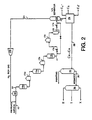
- FIG. 2 shows an embodiment of the invention in which the hydrodealkylation catalyst is located in a separate reactor 19 associated with switching valves 17a and 17b which, optionally, enable the catalyst zone to be removed from on-line contact during at least a portion of regeneration of the reformer catalyst.
- switching valves 17a and 17b which, optionally, enable the catalyst zone to be removed from on-line contact during at least a portion of regeneration of the reformer catalyst.
- heater 15c is located between the last reactor of the reformer and the hydrodealkylation catalyst reactor 19.
- the aromatics rich product is passed to vapor/liquid separator 22 which separates a hydrogen-rich gas via hydrogen compressor 25 for recycling to the reformer via line 21.
- the liquid product is conveyed from separator 22 to fractionator 26 is, typically a series of fractionators that separate the product into C 4 -, C 5 , C 6 -C 8 and C 9 + hydrocarbon streams.
- the C 9 + aromatics can be separated and recycled to the reformer or the hydrodealkylation reactor to increase yield.
- the C 6 to C 8 stream of fractionator 26 is transferred by line 28 to a paraffin separator 34 which separates the paraffins from the aromatics, typically, by solvent extraction.
- the aromatics extract can then be conveyed via line 35 to separation zone 36 which separates the extract into benzene, toluene and xylenes streams.
- An important advantage of the invention is a low consumption of hydrogen.
- hydrogen consumption is less than about 200 SCFB (35.6 n.1.1. -1 ), more typically, ranging from about 0 SCFB (0 n.1.1 -1 ) to about 100 S.C.F.B. (17.8 n.1.1. -1 ), more typically less than about 50 SCFB (8.9 n.1.1. -1 ).
- This low hydrogen consumption can be particularly advantageous when there is a need to balance a high hydrogen consumption in the reformer.
- the hydrodealkylation catalyst can be exposed to the conditions of the reformer during rejuvenative treatment of the reformer catalyst.
- Particular advantages are associated with palladium, as opposed to platinum, as the hydrogenation component of the hydrodealkylation catalyst after rejuvenative treatment of the reformer catalyst. That is, palladium-containing catalysts have been found to withstand the rejuvenative treatment better than platinum-containing catalysts.
- the reformer catalyst is rejuvenated by oxychlorination but any rejuvenating method is contemplated.
- the hydrodealkylation catalyst may be reactivated by the rejuvenative treatment of the reformer catalyst.
- other methods known for reactivating the catalyst may be employed such as burning with oxygen, regeneration with hydrogen or an inert gas such as nitrogen.
- This example demonstrates the results of hydrodealkylating a reformate under conditions compatible with the reformer.
- a steamed zeolite H-ZSM-5 having an alpha value of 16 is evaluated for effectiveness in hydrodealkylating a full range reformate, described in Table 1, under conditions of temperature, pressure and H 2 /HC ratio compatible with reforming.
- the reformate has the following composition: Full Range Reformate wt% C 4 - 0.45 C 5 -C 8 (saturated) 25.47 benzene 6.31 toluene 17.80 C 8 aromatics 22.25 C 9 + 27.72 C 5 +, R + O (calculated) 101.00
- the hydrodealkylation reactions are carried out under the following conditions: Pressure, psig 200 Temperature, °F 902 WHSV 7.8 H 2 /HC ratio 5/1
- the temperature of reaction is 900°F
- pressure is 200 psig
- space velocity is 20.00 (W.H.S.V.)
- the hydrogen/hydrocarbon ratio is 5.
- the feed and the product hydrocarbon distribution in terms of weight percent is reported in Table 4.
- This example demonstrates the results of hydrodealkylating a reformate under conditions compatible with the reformer using a low acidity catalyst which includes a metal hydrogenation component.
- a platinum ZSM-5 having an alpha value of 10-15 is evaluated for effectiveness in hydrodealkylating a full range reformate, described in the following Table 5 under conditions of temperature, pressure and H 2 /HC ratio compatible with reforming, the temperature is 921°F, pressure is 300 psig, W.H.S.V. is 20 and hydrogen to hydrocarbon mole ratio of 5:1.
- This example compares the results of contacting a reformate with fresh and spent catalysts. Both catalysts have an alpha value of 9.
- the spent catalyst is removed from a methanol-to-gasoline unit and contains metallic contaminants as set forth in Table 7: Metals ppm Iron 1230 Calcium 330 Nickel 210 Phosphorus 88 Titanium 75 Zinc 110 Magnesium ⁇ 82 Sodium 210
- the catalysts are contacted with a full range reformate under the conditions of Table 8.
- Reaction Conditions Pressure psig 300 Temperature, °F 920 WHSV, hr -1 20 H 2 /HC ratio 5/1
- This example compares the performance of various reformate upgrading catalysts in upgrading a reformate.
- a physical mixture of 50 parts ZSM-5 (SiO 2 /Al 2 O 3 ratio of ⁇ 55), platinum solution and 50 parts pseudoboehmite alumina powder is mulled to form a uniform mixture. All components are blended based on parts by weight on a 100% solids basis, excluding platinum.
- the platinum solution contains platinum tetraamine chloride to target 0.1 wt.% platinum. Sufficient amount of deionized water is added to form an extrudable paste.
- the mixture is auger extruded to 1/16" cylindrical shape extrudates and dried on a belt drier at 127°C.
- the extrudates are then nitrogen calcined at 480°C for 3 hours followed by a 6 hour air calcination at 538°C.
- the calcined catalyst is steamed at 550°C for 24 hours.
- a physical mixture of 65 parts ZSM-5 (SiO2/Al2O3 ratio of ⁇ 55), solution, and 35 parts pseudoboehmite alumina powder is mulled to form a uniform mixture.
- the components are blended based on parts by weight on a 100% solids basis excluding palladium.
- the palladium solution contains palladium tetraammine chloride to target 0.3 wt% palladium, by weight of the catalyst.
- Sufficient amount of deionized water is added to form an extrudable paste.
- the mixture is auger extruded to 1/16" cylindrical shape extrudates and dried on a belt drier at 127°C.
- the extrudates are then nitrogen calcined at 480°C for 3 hours followed by a 6 hour air calcination at 538°C.
- the calcined catalyst is steamed at 550°C for 72 hours.
- a physical mixture of 65 parts ZSM-5 (SiO2/Al2O3 ratio of ⁇ 55) and 35 parts pseudoboehmite alumina powder is mulled to form a uniform mixture. All components are blended based on parts by weight on a 100% solids basis. Sufficient amount of deionized water is added to form an extrudable paste. The mixture is auger extruded to 1/16" cylindrical shape extrudates and dried on a belt drier at 127°C. The extrudates are then nitrogen calcined at 480°C for 3 hours followed by a 6 hour air calcination at 538°C. Then the catalyst is used in a commercial hydrocarbon conversion process for 2 years and regenerated to remove coke built in the catalyst.
- a physical mixture of 50 parts ZSM-5 (SiO 2 /Al 2 O 3 ratio of ⁇ 55) and 35 parts pseudoboehmite alumina powder is mulled to form a uniform mixture. All components are blended based on parts by weight on a 100% solids basis. Sufficient amount of deionized water is added to form an extrudable paste.
- the mixture is auger extruded to 1/16" cylindrical shape extrudates and dried on a belt drier at 127°C.
- the extrudates are nitrogen calcined at 480 °C for 3 hours followed by a 6 hour air calcination at 538°C.
- the catalyst is used in a commercial hydrocarbon conversion process for 2 years and regenerated to remove coke.
- the used extrudates are impregnated with 0.3 wt.% palladium using an incipient wetness method with palladium tetraamine chloride solution.
- the impregnated extrudates are dried at 120°C overnight and calcined at 370°C for 3 hours.
- a physical mixture of 65 parts ZSM-5 (SiO 2 /Al 2 O 3 ratio of ⁇ 55) and 35 parts pseudoboehmite alumina powder is mulled to form a uniform mixture and formed into 1/16" cylindrical shape extrudates using a standard augur extruder. All components are blended based on parts by weight on a 100% solids basis.
- the extrudates are dried on a belt drier at 127°C and are then nitrogen calcined at 480°C for 3 hours followed by a 6 hour air calcination at 538°C.
- the catalyst is used in a commercial hydrocarbon conversion process for 2 years and regenerated to remove coke built in the catalyst.
- the used extrudates are impregnated with 3.5 wt.% tungsten and 2 wt.% phosphorus using an incipient wetness method with a solution of ammounium metatungstate and phosphoric acid.
- the impregnated extrudates are then dried at 120°C overnight and calcined at 500°C for 3 hours.
- a physical mixture of 65 parts zeolite beta (SiO2/Al2O3 ratio of ⁇ 40), palladium solution, and 35 parts pseudoboehmite alumina powder is mulled to form a uniform mixture.
- the components are blended based on parts by weight on a 100% solids basis excluding palladium.
- the palladium solution contains palladium tetraammine chloride to target 0.6wt% palladium.
- Sufficient amount of deionized water is added to form an extrudable paste.
- the mixture is auger extruded to 1/16" cylindrical shape extrudates and dried on a belt drier at 127°C.
- the extrudates are then nitrogen calcined at 480°C for 3 hours followed by a 6 hour air calcination at 538°C.
- the calcined catalyst is steamed at 550°C for 72 hours.
- Catalyst Properties Catalyst A B C D E F Description Pt/ ZSM-5 Pd/ ZSM-5 H/ ZSM-5 Pd/ ZSM-5 W/ ZSM-5 Pd/ Beta Surface area, m 2 /g 303 295 294 293 270 370 n-hexane sorption, wt.% 9.5 10.0 9.2 8.8 8.6 -- cy-hexane sorption, wt.% 9.3 -- 8.3 -- -- 13.0 alpha value 20 17 6 9 6 10 alpha value, after oxychlorination 54 21 6 12 6 --
- steamed Pd/beta produces additional 2.6 wt% xylenes over the xylenes of the feed while steamed Pd/ZSM-5 produces only 0.7 wt% xylenes over the xylenes of the feed which is more than three times the incremental xylenes.
- steamed Pd/beta produces 1.2 wt% xylenes over the wt.% xylenes of the feed. This is over three times the amount of xylenes produced by steamed H-ZSM-5 and steamed Pd/ZSM-5.
- the catalyst is steamed ZSM-5 having an alpha value of about 20 before oxychlorination about 54 after oxychlorination of the reforming catalyst and containing 0.1 wt.% platinum.
- the upgrading was operated over the oxychlorinated catalyst at a temperature of 920°F (493°C), pressure of 325 psig (2,342 kPa), W.H.S.V. of 45 and a hydrogen to hydrocarbon mole ratio of 6:1.
- This example illustrates the performance of a mixture of zeolite beta and ZSM-5 in reformate upgrading.
- a 50:50 catalyst mixture is made from 0.6 wt.% palladium zeolite beta and catalyst F (steamed 0.3 wt.% palladium ZSM-5).
- the test conditions are 920°F (493°C), 30 W.H.S.V., and pressure of 320 p.s.i.g. (2307.7 kPa).
Landscapes
- Chemical & Material Sciences (AREA)
- Oil, Petroleum & Natural Gas (AREA)
- Engineering & Computer Science (AREA)
- Chemical Kinetics & Catalysis (AREA)
- General Chemical & Material Sciences (AREA)
- Organic Chemistry (AREA)
- Crystallography & Structural Chemistry (AREA)
- Catalysts (AREA)
- Production Of Liquid Hydrocarbon Mixture For Refining Petroleum (AREA)
Description
Typically, a hydrogen to hydrocarbon mole ratio of up to 8:1 is employed to maintain a reasonable catalyst cycle length.
Advantages of this configuration include flexibility in operation which permit modification of the feed temperature and control of reformer catalyst rejuvenation by allowing the hydrodealkylation reactor to be isolated during rejuvenation of the reforming catalyst which maximizes the life of the hydrodealkylation catalyst.
| Full Range Reformate | wt% |
| C4- | 0.45 |
| C5-C8 (saturated) | 25.47 |
| benzene | 6.31 |
| toluene | 17.80 |
| C8 aromatics | 22.25 |
| C9+ | 27.72 |
| C5+, R + O (calculated) | 101.00 |
| Pressure, psig | 200 |
| Temperature, °F | 902 |
| WHSV | 7.8 |
| H2/HC ratio | 5/1 |
| C4- | 9.49 |
| C5-C8 (saturated) | 16.88 |
| benzene | 8.68 |
| toluene | 21.28 |
| C8 aromatics | 20.93 |
| C9+ | 22.74 |
| C5+, R + O (calculated) | 104.15 |
| Hydrocarbon Distribution (wt.%) | Reformate Chargestock | SiO2:Al2O3 = 70 Product 1 | SiO2:Al2O3 = 1600 Product 2 |
| C1-C4 | 0.9 | 29.46 | 4.71 |
| C6-C9 (aromatics) | 55.9 | 55.53 | 57.89 |
| C10 (aromatics) | 4.5 | 4.87 | 3.15 |
| C11-C12 (aromatics) | 1.0 | 1.59 | 0.45 |
| C13+ | 0.2 | 0.79 | 0.10 |
| Net % conversion C9+ | --- | 26.95 | 27.87 |
| Net % conversion C5-C6 paraffins | --- | 65.21 | -3.0 |
| Full Range Reformate | wt% |
| C4- | 0.11 |
| C5-C8 | 18.93 |
| benzene | 5.56 |
| toluene | 19.02 |
| ethylbenzene | 3.55 |
| xylenes | 21.40 |
| C9 + | 29.46 |
| C4-(saturated) | 5.15 |
| C5-C8 | 15.68 |
| benzene | 8.48 |
| toluene | 24.92 |
| ethylbenzene | 1.72 |
| xylenes | 22.93 |
| C9+ | 21.22 |
| Metals | ppm |
| Iron | 1230 |
| Calcium | 330 |
| Nickel | 210 |
| Phosphorus | 88 |
| Titanium | 75 |
| Zinc | 110 |
| Magnesium | <82 |
| Sodium | 210 |
| Reaction Conditions | |
| Pressure, psig | 300 |
| Temperature, °F | 920 |
| WHSV, hr-1 | 20 |
| H2/HC ratio | 5/1 |
| Catalyst | |||
| Feed | Fresh | Spent | |
| C4- | 0.35 | 2.39 | 1.44 |
| C5-C6 | 23.05 | 16.85 | 19.53 |
| benzene | 5.56 | 6.55 | 6.59 |
| toluene | 18.37 | 21.37 | 21.04 |
| ethylbenzene | 3.41 | 3.22 | 3.24 |
| xylenes | 20.66 | 22.45 | 21.49 |
| C9+ | 28.60 | 27.20 | 26.69 |
| Catalyst Properties | ||||||
| Catalyst | A | B | C | D | E | F |
| Description | Pt/ ZSM-5 | Pd/ ZSM-5 | H/ ZSM-5 | Pd/ ZSM-5 | W/ ZSM-5 | Pd/ Beta |
| Surface area, m2/g | 303 | 295 | 294 | 293 | 270 | 370 |
| n-hexane sorption, wt.% | 9.5 | 10.0 | 9.2 | 8.8 | 8.6 | -- |
| cy-hexane sorption, wt.% | 9.3 | -- | 8.3 | -- | -- | 13.0 |
| | 20 | 17 | 6 | 9 | 6 | 10 |
| alpha value, after oxychlorination | 54 | 21 | 6 | 12 | 6 | -- |
| Catalyst | B Pd/ ZSM-5 | C H/ ZSM-5 | D /Pd ZSM-5 | E W/ ZSM-5 | F Pd/ beta | |
| W.H.S.V. | 30 | 20 | 20 | 20 | 30 | |
| Feed, wt.% | Product composition, wt.% | |||||
| Benzene | 5.6 | 8.6 | 7.4 | 8.1 | 7.7 | 6.6 |
| Toluene | 15.0 | 19.7 | 18.0 | 19.1 | 18.2 | 18.0 |
| Xylenes | 17.5 | 18.2 | 18.0 | 18.4 | 18.2 | 20.1 |
| C5+ | 97.8 | 90.8 | 93.8 | 92.3 | 92.9 | 89.6 |
| C4- | 2.2 | 9.5 | 6.3 | 8.0 | 7.3 | 10.6 |
| C4-, olefin, | 0 | 0.2 | 2.5 | 0.3 | 0.9 | 0.1 |
| Catalyst | A | B | C | D | E | F |
| Description | Pt/ ZSM-5 | Pd/ ZSM-5 | H/ ZSM-5 | Pd/ ZSM-5 | W/ ZSM-5 | Pd/ beta |
| Product, wt.% | ||||||
| Benzene | 8.3 | 8.2 | 6.9 | 7.3 | 7.0 | 6.5 |
| Toluene | 19.4 | 18.7 | 17.1 | 17.9 | 17.0 | 17.2 |
| Xylenes | 18.1 | 17.8 | 17.9 | 18.1 | 17.9 | 18.7 |
| Yields, wt.% | ||||||
| C5+ | 88.4 | 92.6 | 95.2 | 94.4 | 94.9 | 94.2 |
| C4- | 12.0 | 7.6 | 4.8 | 5.8 | 5.2 | 5.9 |
| C4-, olefin | 0.0 | 0.4 | 1.9 | 0.4 | 0.9 | 0.1 |
| Reformate Upgrading with Sulfur Addition | |||
| Feed | Products | ||
| Time On Stream, hours | 50 | 74 | |
| sulfur cofeed, 400 pppm | No | Yes | |
| C4- | 2.3 | 11.0 | 7.8 |
| C5+ | 97.7 | 89.4 | 92.3 |
| C9 aromatics | 19.9 | 15.4 | 15.6 |
| Benzene | 5.8 | 7.9 | 8.0 |
| Toluene | 15.6 | 18.6 | 19.1 |
| Xylenes | 17.9 | 18.0 | 18.3 |
| H2 Consumed, SCF/B | 183.1 | 74.9 | |
| Benzene increase | 1.4 | 1.4 | |
| Toluene increase | 1.2 | 1.2 |
| Reformate Upgrading with Catalyst Mixture | |||
| Feed | Products | ||
| Catalyst | 50/50 mixture | F | |
| C4- | 2.2 | 9.2 | 5.9 |
| C5+ | 97.8 | 91.1 | 94.2 |
| Benzene | 5.6 | 7.5 | 6.5 |
| Toluene | 15.0 | 18.5 | 17.2 |
| Xylenes | 17.5 | 18.9 | 18.7 |
Claims (27)
- A multistage integrated process for upgrading a petroleum naphtha comprising the steps ofwherein the intermediate product of step (a) that in fed to the benzene and toluene synthesis zone of step (b) has not been subjected to intermediate separation.(a) introducing the naphtha to a catalytic reforming stage comprising a plurality of operatively connected catalyst zones including a first catalyst zone and a last catalyst zone, the last catalyst zone being maintained under reforming conditions of temperature ranging from at least 800°F (427°C) to 1050°F (565°C) and pressure of 50 psig (446 kPa) to 500 psig (3,549 kPa) to provide an intermediate product comprising aromatics and paraffins;(b) transferring at least a portion of the intermediate product of the last catalyst zone to a benzene and toluene synthesis zone comprising at least one benzene and toluene synthesis catalyst operatively connected to the last catalyst zone of the reforming stage of step (a), the benzene and toluene synthesis zone being maintained under conditions of hydrogen-to-hydrocarbon mole ratio and pressure compatible with the last catalyst zone of the reforming stage and temperature of greater than 800°F (427°C), the benzene and toluene synthesis catalyst zone containing a catalyst comprising a molecular sieve of low acid activity, as determined by an alpha value of less than 60, to provide a hydrocarbon product of higher benzene and toluene content than the intermediate product of the last catalyst zone of the reforming stage,
- The process as described in claim 1 in which the catalyst of step (b) comprises ZSM-5 having an alpha value less than 50.
- The process as described in claim 1 in which the benzene content of the hydrocarbon product of step (a) is increased by at least 10% in step (b).
- The process as described in claims 1, 2 or 3 in which the catalyst of step (b) further comprises a metal hydrogenation component.
- The process as described in claim 4 in which the metal hydrogenation component is a metal selected from group VIB or VIII of the Periodic Table of the Elements.
- The process as described in claims 1, 2 or 5 in which the catalyst of step (b) comprises platinum or palladium and ZSM-5.
- The process as described in claim 5 in which the metal hydrogenation component is cobalt, nickel, platinum, palladium, molybdenum or tungsten.
- The process as described in claims 1, 5 or 7 in which the molecular sieve is zeolite beta.
- The process as described in claims 1, 2, 5, 6 or 7 in which the catalyst of step (b) comprises a catalyst deactivated in another refinery oxygenate or hydrocarbon conversion process.
- The process as described in claims 1, 2, 4, 5 or 6 in which the product further comprises branched C6+-paraffins, the process further comprising step (c) of contacting the product over a catalyst zone comprising another catalytic reforming stage which isomerizes the branched C6+ paraffins.
- The process as described in claims 1, 2, 4, 5, 6, 7 or 9 in which the catalyst further comprises sulfur.
- The process as described in claim 11 in which a source of sulfur is a cofeed introduced in step (b).
- The process of claim 1 in which at least the catalyst zone of step (a) is a radial flow reactor zone.
- The process of claim 2 or 13 in which the catalyst of step (b) is self-bound ZSM-5.
- The process of claim 2 or 4 in which the catalyst of step (b) further comprises zeolite beta.
- The process of claim 13 in which the zone of step (b) is a fixed bed zone.
- The process of claim 1, 2, 4, 5, 6, 7, 8, 11, 12 or 15 in which the hydrogen consumption is less than 200 SCF/B.
- The process of claim 1 in which the benzene and toluene synthesis zone of step (b) comprises a hydrogen' quench.
- The process of claim 1 in which the hydrocarbon product of step (b) comprise C9+ hydrocarbons, the process further comprising separating the C9+ hydrocarbons from the product of step (b) and recycling the C9+ hydrocarbons to step (a) or step (b).
- The process of claim 1 which further comprises a C9+ aromatic cofeed in step (a) or step (b).
- The process of claim 1 in which the petroleum. naphtha is free of C6- hydrocarbons.
- The process of claim 1 in which the end boiling range of the petroleum naphtha contains from 20 to 40 wt.% C9+ hydrocarbons.
- The process of claim 1 in which the molecular seive of step (b) comprises zeolite beta.
- The process of claims 2, 4, 5, 6, 7 or 8 in which the catalyst of step (b) is subjected to steaming.
- The process as described in claims 4, 5, 6, 8 or 9 in which the catalyst of step (b) is exposed to the conditions of the reformer during a rejuvenative treatment of the catalyst of step (a).
- The process of claim 25 in which the hydrogenation component of the catalyst of step (b) is palladium.
- The process of claims 25 or 26 in which the rejuvenative treatment is oxychlorination.
Applications Claiming Priority (7)
| Application Number | Priority Date | Filing Date | Title |
|---|---|---|---|
| US31456694A | 1994-09-28 | 1994-09-28 | |
| US31456494A | 1994-09-28 | 1994-09-28 | |
| US314564 | 1994-09-28 | ||
| US36756995A | 1995-01-03 | 1995-01-03 | |
| US367569 | 1995-01-03 | ||
| PCT/US1995/012528 WO1996010066A1 (en) | 1994-09-28 | 1995-09-27 | Hydrocarbon conversion |
| US314566 | 2002-12-09 |
Publications (3)
| Publication Number | Publication Date |
|---|---|
| EP0783557A1 EP0783557A1 (en) | 1997-07-16 |
| EP0783557A4 EP0783557A4 (en) | 1999-01-20 |
| EP0783557B1 true EP0783557B1 (en) | 2004-08-11 |
Family
ID=27405730
Family Applications (1)
| Application Number | Title | Priority Date | Filing Date |
|---|---|---|---|
| EP95935228A Expired - Lifetime EP0783557B1 (en) | 1994-09-28 | 1995-09-27 | Hydrocarbon conversion |
Country Status (8)
| Country | Link |
|---|---|
| US (1) | US5865986A (en) |
| EP (1) | EP0783557B1 (en) |
| JP (1) | JPH10506667A (en) |
| KR (1) | KR100385290B1 (en) |
| AU (1) | AU697412B2 (en) |
| CA (1) | CA2198212A1 (en) |
| DE (1) | DE69533361T2 (en) |
| WO (1) | WO1996010066A1 (en) |
Families Citing this family (41)
| Publication number | Priority date | Publication date | Assignee | Title |
|---|---|---|---|---|
| US5885439A (en) * | 1997-11-04 | 1999-03-23 | Uop Llc | Catalytic reforming process with multiple zones |
| JP2003500517A (en) * | 1999-05-25 | 2003-01-07 | モービル・オイル・コーポレイション | Multi-step reforming method using rhenium-containing catalyst in final stage |
| US6372680B1 (en) * | 1999-07-27 | 2002-04-16 | Phillips Petroleum Company | Catalyst system for converting oxygenated hydrocarbons to aromatics |
| US6398947B2 (en) * | 1999-09-27 | 2002-06-04 | Exxon Mobil Oil Corporation | Reformate upgrading using zeolite catalyst |
| DE19949211A1 (en) * | 1999-10-13 | 2001-05-31 | Veba Oel Ag | Process for the preparation of n-alkanes from mineral oil fractions and catalyst for carrying out the process |
| US6500996B1 (en) | 1999-10-28 | 2002-12-31 | Exxonmobil Oil Corporation | Process for BTX purification |
| KR100760719B1 (en) * | 2000-02-17 | 2007-10-04 | 셀 인터나쵸나아레 레사아치 마아츠샤피 비이부이 | Method for Purifying Liquid Hydrocarbon Products |
| KR100557558B1 (en) * | 2000-11-30 | 2006-03-03 | 에스케이 주식회사 | Process for producing aromatic hydrocarbons and liquefied petroleum gas from hydrocarbon mixtures |
| US7186873B2 (en) * | 2002-06-19 | 2007-03-06 | Exxonmobil Chemical Patents Inc. | Manufacture of xylenes by reactive distillation of reformate |
| US7119239B2 (en) * | 2002-06-19 | 2006-10-10 | Exxonmobil Chemical Patents Inc. | Manufacture of xylenes using reformate |
| US20040030210A1 (en) * | 2002-06-19 | 2004-02-12 | Mohr Gary D. | Manufacture of xylenes from reformate |
| JP5007022B2 (en) * | 2002-06-19 | 2012-08-22 | エクソンモービル・ケミカル・パテンツ・インク | Production of xylene using modified oil |
| US7067052B2 (en) * | 2003-07-01 | 2006-06-27 | Exxonmobil Chemical Patents Inc. | Process for the production of reformate having reduced ethylbenzene content |
| US7179367B2 (en) * | 2003-07-01 | 2007-02-20 | Exxonmobil Chemical Patents Inc. | Process for producing reformate having increased xylenes content and reduced ethylbenzene content |
| US20050197518A1 (en) * | 2004-03-04 | 2005-09-08 | Miller Jeffrey T. | Method of converting C9 aromatics-comprising mixtures to xylene isomers |
| US7576249B2 (en) * | 2005-01-06 | 2009-08-18 | Fina Technology, Inc. | Toluene disproportionation process utilizing mild sulfiding during startup |
| US20060165873A1 (en) * | 2005-01-25 | 2006-07-27 | Micron Technology, Inc. | Plasma detection and associated systems and methods for controlling microfeature workpiece deposition processes |
| KR101234448B1 (en) * | 2005-11-14 | 2013-02-18 | 에스케이이노베이션 주식회사 | Process for The Preparation of Aromatic Hydrocarbons and Liquefied Petroleum Gas from Hydrocarbon Mixture |
| US7517824B2 (en) * | 2005-12-06 | 2009-04-14 | Exxonmobil Chemical Company | Process for steam stripping hydrocarbons from a bromine index reduction catalyst |
| TWI478768B (en) * | 2007-07-18 | 2015-04-01 | China Petro Chemical Technologydevelopment Company | Catalysts and methods for the production of light aromatics and light alkanes from hydrocarbon feedstocks |
| US8395006B2 (en) * | 2009-03-13 | 2013-03-12 | Exxonmobil Research And Engineering Company | Process for making high octane gasoline with reduced benzene content by benzene alkylation at high benzene conversion |
| RU2404227C1 (en) * | 2009-05-26 | 2010-11-20 | Министерство Промышленности И Торговли Российской Федерации | Method of reforming straight-run gasoline fractions |
| CN102417829B (en) * | 2010-09-28 | 2014-05-28 | 中国石油化工股份有限公司 | Catalytic conversion method capable of reducing benzene content of gasoline |
| US9545622B2 (en) * | 2010-10-11 | 2017-01-17 | Exxonmobil Chemical Patents Inc. | Activation and use of hydroalkylation catalysts |
| WO2013095815A1 (en) * | 2011-12-22 | 2013-06-27 | Uop Llc | Enhanced aromatics production by low pressure end point reduction and selective hydrogenation and hydrodealkylation |
| US20140094632A1 (en) * | 2012-09-28 | 2014-04-03 | Uop Llc | Methods and apparatuses for recovering normal hexane from reformate streams |
| US10041012B2 (en) * | 2014-08-22 | 2018-08-07 | Uop Llc | Staggered fired heater manifolds |
| RU2698722C1 (en) * | 2015-12-30 | 2019-08-29 | Юоп Ллк | Improved method of producing olefins and btc using a reactor for cracking aliphatic compounds |
| WO2018025183A1 (en) | 2016-08-02 | 2018-02-08 | Sabic Global Technologies B.V. | Process for preparing hydrocracking catalyst |
| US20180179455A1 (en) * | 2016-12-27 | 2018-06-28 | Uop Llc | Olefin and btx production using aliphatic cracking and dealkylation reactor |
| US10308568B2 (en) * | 2017-05-01 | 2019-06-04 | Chevron Phillips Chemical Company Lp | Selective poisoning of aromatization catalysts to increase catalyst activity and selectivity |
| EP3539654A1 (en) * | 2018-03-14 | 2019-09-18 | Saudi Arabian Oil Company | Method of heavy reformate conversion into btx over metal-impregnated zsm-5+nanocrystalline beta zeolite composite catalyst; said composite catalyst |
| EP3785797B1 (en) | 2018-03-14 | 2024-04-24 | Saudi Arabian Oil Company | Heavy reformate conversion into xylenes using composite zeolite catalysts |
| EP3539650B1 (en) | 2018-03-14 | 2021-03-31 | Saudi Arabian Oil Company | Methods of producing composite zeolite catalysts for heavy reformate conversion into xylenes |
| EP3539651B1 (en) | 2018-03-14 | 2025-09-17 | Saudi Arabian Oil Company | Method of heavy reformate conversion into btx over metal-impregnated zsm-5+layered mordenite zeolite composite catalyst; said composite catalyst |
| EP3539652A1 (en) | 2018-03-14 | 2019-09-18 | Saudi Arabian Oil Company | Method of heavy reformate conversion into btx over metal-impregnated zsm-5+mesoporous mordenite zeolite composite catalyst |
| US11370980B2 (en) * | 2020-07-31 | 2022-06-28 | Saudi Arabian Oil Company | Recycle catalytic reforming process to increase aromatics yield |
| CN114456835B (en) * | 2020-10-22 | 2023-06-06 | 中国石油化工股份有限公司 | Treatment system and treatment method for gasoline component |
| CN115232641A (en) * | 2021-04-23 | 2022-10-25 | 中国石油化工股份有限公司 | A main component consisting of 9+ Method for producing light aromatic hydrocarbons from aromatic hydrocarbons |
| JP2023012431A (en) * | 2021-07-13 | 2023-01-25 | 東ソー株式会社 | Method for producing aromatic compound |
| CN121801594A (en) * | 2026-03-09 | 2026-04-07 | 弘润石化(潍坊)有限责任公司 | Naphtha catalytic reforming method with high aromatic hydrocarbon yield |
Family Cites Families (15)
| Publication number | Priority date | Publication date | Assignee | Title |
|---|---|---|---|---|
| US3395094A (en) * | 1966-05-04 | 1968-07-30 | Mobil Oil Corp | Shape selective naphtha processing |
| US4010093A (en) * | 1973-03-06 | 1977-03-01 | Mobil Oil Corporation | Method of operating a platinum reformer comprising a selective zeolite catalyst in third reactor |
| US3928174A (en) * | 1975-01-02 | 1975-12-23 | Mobil Oil Corp | Combination process for producing LPG and aromatic rich material from naphtha |
| US4078990A (en) * | 1977-03-04 | 1978-03-14 | Mobil Oil Corporation | Manufacture of lower aromatic compounds |
| US4157355A (en) * | 1978-03-13 | 1979-06-05 | Uop Inc. | Combination process for selected aromatic hydrocarbon production |
| US4211886A (en) * | 1978-09-25 | 1980-07-08 | Mobil Oil Corporation | Manufacture of benzene, toluene and xylene |
| US4351979A (en) * | 1980-04-14 | 1982-09-28 | Mobil Oil Corporation | Manufacture of aromatic compounds |
| US4341622A (en) * | 1980-12-04 | 1982-07-27 | Mobil Oil Corporation | Manufacture of benzene, toluene and xylene |
| US4808295A (en) * | 1987-08-25 | 1989-02-28 | Mobil Oil Corporation | Two stage process for the production of a high benzene aromatic product |
| US5082984A (en) * | 1990-01-29 | 1992-01-21 | Mobil Oil Corp. | Dual function catalyst and isomerization therewith |
| US5376259A (en) * | 1990-03-02 | 1994-12-27 | Chevron Research And Technology Company | Staged catalyst processing to produce optimum aromatic barrel per calendar day aromatic production |
| JPH06145672A (en) * | 1992-11-12 | 1994-05-27 | Japan Energy Corp | Production of fraction containing highly aromatic hydrocarbon |
| US5396010A (en) * | 1993-08-16 | 1995-03-07 | Mobil Oil Corporation | Heavy naphtha upgrading |
| US5472593A (en) * | 1994-02-14 | 1995-12-05 | Uop | BTX from naphtha without extraction |
| US5792338A (en) * | 1994-02-14 | 1998-08-11 | Uop | BTX from naphtha without extraction |
-
1995
- 1995-09-27 JP JP8512059A patent/JPH10506667A/en not_active Ceased
- 1995-09-27 KR KR1019970701950A patent/KR100385290B1/en not_active Expired - Fee Related
- 1995-09-27 EP EP95935228A patent/EP0783557B1/en not_active Expired - Lifetime
- 1995-09-27 AU AU37324/95A patent/AU697412B2/en not_active Ceased
- 1995-09-27 CA CA002198212A patent/CA2198212A1/en not_active Abandoned
- 1995-09-27 WO PCT/US1995/012528 patent/WO1996010066A1/en not_active Ceased
- 1995-09-27 DE DE69533361T patent/DE69533361T2/en not_active Expired - Fee Related
- 1995-11-03 US US08/552,769 patent/US5865986A/en not_active Expired - Fee Related
Also Published As
| Publication number | Publication date |
|---|---|
| JPH10506667A (en) | 1998-06-30 |
| CA2198212A1 (en) | 1996-04-04 |
| KR100385290B1 (en) | 2003-08-21 |
| WO1996010066A1 (en) | 1996-04-04 |
| EP0783557A1 (en) | 1997-07-16 |
| AU3732495A (en) | 1996-04-19 |
| AU697412B2 (en) | 1998-10-08 |
| US5865986A (en) | 1999-02-02 |
| DE69533361T2 (en) | 2004-12-30 |
| DE69533361D1 (en) | 2004-09-16 |
| KR970706374A (en) | 1997-11-03 |
| EP0783557A4 (en) | 1999-01-20 |
Similar Documents
| Publication | Publication Date | Title |
|---|---|---|
| AU697412B2 (en) | Hydrocarbon conversion | |
| US5396010A (en) | Heavy naphtha upgrading | |
| EP0893487B1 (en) | Production of benzene, toluene and xylene (BTX) from FCC naphtha | |
| AU710073B2 (en) | Heavy aromatics processing | |
| US8481443B2 (en) | Transalkylation of heavy aromatic hydrocarbon feedstocks | |
| AU738979B2 (en) | Heavy aromatics processing | |
| EP0056718A2 (en) | Pretreatment of catalytic conversion feedstocks | |
| US7815793B2 (en) | Process for reducing bromine index of hydrocarbon feedstock | |
| US20190359542A1 (en) | Transalkylation of Heavy Aromatic Hydrocarbons | |
| US5037529A (en) | Integrated low pressure aromatization process | |
| WO2018067194A1 (en) | Dealkylation and transalkylation of heavy aromatic hydrocarbons | |
| US20150025283A1 (en) | Process and Catalyst for C9+ Aromatics Conversion | |
| WO2013169465A1 (en) | Process for the production of xylenes | |
| KR20170098915A (en) | LPG and BTX production process | |
| US6218590B1 (en) | Zeolite material, a method of making such improved zeolite material and the use thereof in the conversion of non-aromatic hydrocarbons to aromatics and light olefins | |
| US20030038058A1 (en) | Multi-stage reforming process using rhenium-containing catalyst in the final stage | |
| JP7821118B2 (en) | Conversion of heavy aromatic compounds to lighter aromatic compounds with low ring saturation and hydrocarbon cracking | |
| EP0273592A1 (en) | Process for continuous dewaxing of hydrocarbon oils |
Legal Events
| Date | Code | Title | Description |
|---|---|---|---|
| PUAI | Public reference made under article 153(3) epc to a published international application that has entered the european phase |
Free format text: ORIGINAL CODE: 0009012 |
|
| 17P | Request for examination filed |
Effective date: 19970318 |
|
| AK | Designated contracting states |
Kind code of ref document: A1 Designated state(s): BE DE ES FR GB IT NL |
|
| A4 | Supplementary search report drawn up and despatched |
Effective date: 19981204 |
|
| AK | Designated contracting states |
Kind code of ref document: A4 Designated state(s): BE DE ES FR GB IT NL |
|
| RAP1 | Party data changed (applicant data changed or rights of an application transferred) |
Owner name: EXXONMOBIL OIL CORPORATION |
|
| 17Q | First examination report despatched |
Effective date: 20030408 |
|
| GRAP | Despatch of communication of intention to grant a patent |
Free format text: ORIGINAL CODE: EPIDOSNIGR1 |
|
| GRAS | Grant fee paid |
Free format text: ORIGINAL CODE: EPIDOSNIGR3 |
|
| GRAA | (expected) grant |
Free format text: ORIGINAL CODE: 0009210 |
|
| AK | Designated contracting states |
Kind code of ref document: B1 Designated state(s): BE DE ES FR GB IT NL |
|
| PG25 | Lapsed in a contracting state [announced via postgrant information from national office to epo] |
Ref country code: IT Free format text: LAPSE BECAUSE OF FAILURE TO SUBMIT A TRANSLATION OF THE DESCRIPTION OR TO PAY THE FEE WITHIN THE PRESCRIBED TIME-LIMIT;WARNING: LAPSES OF ITALIAN PATENTS WITH EFFECTIVE DATE BEFORE 2007 MAY HAVE OCCURRED AT ANY TIME BEFORE 2007. THE CORRECT EFFECTIVE DATE MAY BE DIFFERENT FROM THE ONE RECORDED. Effective date: 20040811 Ref country code: ES Free format text: LAPSE BECAUSE OF FAILURE TO SUBMIT A TRANSLATION OF THE DESCRIPTION OR TO PAY THE FEE WITHIN THE PRESCRIBED TIME-LIMIT Effective date: 20040811 Ref country code: BE Free format text: LAPSE BECAUSE OF FAILURE TO SUBMIT A TRANSLATION OF THE DESCRIPTION OR TO PAY THE FEE WITHIN THE PRESCRIBED TIME-LIMIT Effective date: 20040811 |
|
| REG | Reference to a national code |
Ref country code: GB Ref legal event code: FG4D |
|
| REF | Corresponds to: |
Ref document number: 69533361 Country of ref document: DE Date of ref document: 20040916 Kind code of ref document: P |
|
| PGFP | Annual fee paid to national office [announced via postgrant information from national office to epo] |
Ref country code: GB Payment date: 20041014 Year of fee payment: 10 |
|
| PGFP | Annual fee paid to national office [announced via postgrant information from national office to epo] |
Ref country code: FR Payment date: 20041022 Year of fee payment: 10 |
|
| PGFP | Annual fee paid to national office [announced via postgrant information from national office to epo] |
Ref country code: NL Payment date: 20041025 Year of fee payment: 10 |
|
| PGFP | Annual fee paid to national office [announced via postgrant information from national office to epo] |
Ref country code: DE Payment date: 20041130 Year of fee payment: 10 |
|
| ET | Fr: translation filed | ||
| PLBE | No opposition filed within time limit |
Free format text: ORIGINAL CODE: 0009261 |
|
| STAA | Information on the status of an ep patent application or granted ep patent |
Free format text: STATUS: NO OPPOSITION FILED WITHIN TIME LIMIT |
|
| 26N | No opposition filed |
Effective date: 20050512 |
|
| PG25 | Lapsed in a contracting state [announced via postgrant information from national office to epo] |
Ref country code: GB Free format text: LAPSE BECAUSE OF NON-PAYMENT OF DUE FEES Effective date: 20050927 |
|
| PG25 | Lapsed in a contracting state [announced via postgrant information from national office to epo] |
Ref country code: NL Free format text: LAPSE BECAUSE OF NON-PAYMENT OF DUE FEES Effective date: 20060401 Ref country code: DE Free format text: LAPSE BECAUSE OF NON-PAYMENT OF DUE FEES Effective date: 20060401 |
|
| GBPC | Gb: european patent ceased through non-payment of renewal fee |
Effective date: 20050927 |
|
| PG25 | Lapsed in a contracting state [announced via postgrant information from national office to epo] |
Ref country code: FR Free format text: LAPSE BECAUSE OF NON-PAYMENT OF DUE FEES Effective date: 20060531 |
|
| NLV4 | Nl: lapsed or anulled due to non-payment of the annual fee |
Effective date: 20060401 |
|
| REG | Reference to a national code |
Ref country code: FR Ref legal event code: ST Effective date: 20060531 |