EP0780398B1 - Process for purifying Tamm-Horsfall glycoprotein and uromodulin - Google Patents
Process for purifying Tamm-Horsfall glycoprotein and uromodulin Download PDFInfo
- Publication number
- EP0780398B1 EP0780398B1 EP96119948A EP96119948A EP0780398B1 EP 0780398 B1 EP0780398 B1 EP 0780398B1 EP 96119948 A EP96119948 A EP 96119948A EP 96119948 A EP96119948 A EP 96119948A EP 0780398 B1 EP0780398 B1 EP 0780398B1
- Authority
- EP
- European Patent Office
- Prior art keywords
- uromodulin
- thg
- purified
- urine
- tamm
- Prior art date
- Legal status (The legal status is an assumption and is not a legal conclusion. Google has not performed a legal analysis and makes no representation as to the accuracy of the status listed.)
- Expired - Lifetime
Links
- 102000018614 Uromodulin Human genes 0.000 title claims abstract description 30
- 108010027007 Uromodulin Proteins 0.000 title claims abstract description 30
- 238000000034 method Methods 0.000 title claims abstract description 25
- 230000008569 process Effects 0.000 title claims abstract description 9
- 210000002700 urine Anatomy 0.000 claims description 21
- 239000002244 precipitate Substances 0.000 claims description 11
- 238000000746 purification Methods 0.000 claims description 9
- 238000007710 freezing Methods 0.000 claims description 5
- 230000008014 freezing Effects 0.000 claims description 5
- 238000010257 thawing Methods 0.000 claims description 5
- 238000002523 gelfiltration Methods 0.000 claims description 2
- 108060003951 Immunoglobulin Proteins 0.000 description 8
- 102000018358 immunoglobulin Human genes 0.000 description 8
- WQZGKKKJIJFFOK-QTVWNMPRSA-N D-mannopyranose Chemical compound OC[C@H]1OC(O)[C@@H](O)[C@@H](O)[C@@H]1O WQZGKKKJIJFFOK-QTVWNMPRSA-N 0.000 description 7
- FAPWRFPIFSIZLT-UHFFFAOYSA-M Sodium chloride Chemical compound [Na+].[Cl-] FAPWRFPIFSIZLT-UHFFFAOYSA-M 0.000 description 6
- 102000004169 proteins and genes Human genes 0.000 description 6
- 108090000623 proteins and genes Proteins 0.000 description 6
- 108060008682 Tumor Necrosis Factor Proteins 0.000 description 5
- 239000012535 impurity Substances 0.000 description 5
- 238000005185 salting out Methods 0.000 description 5
- 102000003390 tumor necrosis factor Human genes 0.000 description 5
- 108010002352 Interleukin-1 Proteins 0.000 description 4
- 150000001720 carbohydrates Chemical group 0.000 description 4
- 239000012634 fragment Substances 0.000 description 4
- 230000035935 pregnancy Effects 0.000 description 4
- 239000011780 sodium chloride Substances 0.000 description 4
- 239000006228 supernatant Substances 0.000 description 4
- 102000004127 Cytokines Human genes 0.000 description 3
- 108090000695 Cytokines Proteins 0.000 description 3
- 238000005119 centrifugation Methods 0.000 description 3
- 238000004128 high performance liquid chromatography Methods 0.000 description 3
- 239000008363 phosphate buffer Substances 0.000 description 3
- 239000012264 purified product Substances 0.000 description 3
- 108010002350 Interleukin-2 Proteins 0.000 description 2
- 241001494479 Pecora Species 0.000 description 2
- 125000003275 alpha amino acid group Chemical group 0.000 description 2
- 230000008901 benefit Effects 0.000 description 2
- 238000004040 coloring Methods 0.000 description 2
- 238000010828 elution Methods 0.000 description 2
- 238000004108 freeze drying Methods 0.000 description 2
- 230000002519 immonomodulatory effect Effects 0.000 description 2
- 229940072221 immunoglobulins Drugs 0.000 description 2
- 230000007246 mechanism Effects 0.000 description 2
- 239000000178 monomer Substances 0.000 description 2
- 230000003389 potentiating effect Effects 0.000 description 2
- 238000002415 sodium dodecyl sulfate polyacrylamide gel electrophoresis Methods 0.000 description 2
- XLYOFNOQVPJJNP-UHFFFAOYSA-N water Substances O XLYOFNOQVPJJNP-UHFFFAOYSA-N 0.000 description 2
- 238000012425 Freezing-thawing process Methods 0.000 description 1
- 102000003886 Glycoproteins Human genes 0.000 description 1
- 108090000288 Glycoproteins Proteins 0.000 description 1
- 206010061218 Inflammation Diseases 0.000 description 1
- 102000004856 Lectins Human genes 0.000 description 1
- 108090001090 Lectins Proteins 0.000 description 1
- 102000001621 Mucoproteins Human genes 0.000 description 1
- 108010093825 Mucoproteins Proteins 0.000 description 1
- OVRNDRQMDRJTHS-UHFFFAOYSA-N N-acelyl-D-glucosamine Natural products CC(=O)NC1C(O)OC(CO)C(O)C1O OVRNDRQMDRJTHS-UHFFFAOYSA-N 0.000 description 1
- OVRNDRQMDRJTHS-FMDGEEDCSA-N N-acetyl-beta-D-glucosamine Chemical compound CC(=O)N[C@H]1[C@H](O)O[C@H](CO)[C@@H](O)[C@@H]1O OVRNDRQMDRJTHS-FMDGEEDCSA-N 0.000 description 1
- MBLBDJOUHNCFQT-LXGUWJNJSA-N N-acetylglucosamine Natural products CC(=O)N[C@@H](C=O)[C@@H](O)[C@H](O)[C@H](O)CO MBLBDJOUHNCFQT-LXGUWJNJSA-N 0.000 description 1
- 229920002684 Sepharose Polymers 0.000 description 1
- 206010040047 Sepsis Diseases 0.000 description 1
- 206010040070 Septic Shock Diseases 0.000 description 1
- 235000014633 carbohydrates Nutrition 0.000 description 1
- 239000012141 concentrate Substances 0.000 description 1
- 238000000502 dialysis Methods 0.000 description 1
- 201000010099 disease Diseases 0.000 description 1
- 208000037265 diseases, disorders, signs and symptoms Diseases 0.000 description 1
- 239000003814 drug Substances 0.000 description 1
- 230000001747 exhibiting effect Effects 0.000 description 1
- 230000035931 haemagglutination Effects 0.000 description 1
- 230000007365 immunoregulation Effects 0.000 description 1
- 230000001506 immunosuppresive effect Effects 0.000 description 1
- 208000015181 infectious disease Diseases 0.000 description 1
- 230000004054 inflammatory process Effects 0.000 description 1
- 230000002401 inhibitory effect Effects 0.000 description 1
- 238000001155 isoelectric focusing Methods 0.000 description 1
- 210000003734 kidney Anatomy 0.000 description 1
- 239000002523 lectin Substances 0.000 description 1
- 239000003446 ligand Substances 0.000 description 1
- 230000001404 mediated effect Effects 0.000 description 1
- 239000012528 membrane Substances 0.000 description 1
- 229910021645 metal ion Inorganic materials 0.000 description 1
- 229950006780 n-acetylglucosamine Drugs 0.000 description 1
- 230000004962 physiological condition Effects 0.000 description 1
- 239000011148 porous material Substances 0.000 description 1
- 238000001556 precipitation Methods 0.000 description 1
- 230000009257 reactivity Effects 0.000 description 1
- 238000000926 separation method Methods 0.000 description 1
- 238000003756 stirring Methods 0.000 description 1
- 229940124597 therapeutic agent Drugs 0.000 description 1
- 210000005239 tubule Anatomy 0.000 description 1
- 238000000108 ultra-filtration Methods 0.000 description 1
- 230000002485 urinary effect Effects 0.000 description 1
- 230000003612 virological effect Effects 0.000 description 1
- 239000011800 void material Substances 0.000 description 1
Images

Classifications
-
- C—CHEMISTRY; METALLURGY
- C07—ORGANIC CHEMISTRY
- C07K—PEPTIDES
- C07K14/00—Peptides having more than 20 amino acids; Gastrins; Somatostatins; Melanotropins; Derivatives thereof
- C07K14/435—Peptides having more than 20 amino acids; Gastrins; Somatostatins; Melanotropins; Derivatives thereof from animals; from humans
- C07K14/46—Peptides having more than 20 amino acids; Gastrins; Somatostatins; Melanotropins; Derivatives thereof from animals; from humans from vertebrates
- C07K14/47—Peptides having more than 20 amino acids; Gastrins; Somatostatins; Melanotropins; Derivatives thereof from animals; from humans from vertebrates from mammals
- C07K14/4701—Peptides having more than 20 amino acids; Gastrins; Somatostatins; Melanotropins; Derivatives thereof from animals; from humans from vertebrates from mammals not used
- C07K14/4715—Pregnancy proteins, e.g. placenta proteins, alpha-feto-protein, pregnancy specific beta glycoprotein
-
- C—CHEMISTRY; METALLURGY
- C07—ORGANIC CHEMISTRY
- C07K—PEPTIDES
- C07K14/00—Peptides having more than 20 amino acids; Gastrins; Somatostatins; Melanotropins; Derivatives thereof
- C07K14/435—Peptides having more than 20 amino acids; Gastrins; Somatostatins; Melanotropins; Derivatives thereof from animals; from humans
- C07K14/46—Peptides having more than 20 amino acids; Gastrins; Somatostatins; Melanotropins; Derivatives thereof from animals; from humans from vertebrates
- C07K14/47—Peptides having more than 20 amino acids; Gastrins; Somatostatins; Melanotropins; Derivatives thereof from animals; from humans from vertebrates from mammals
-
- A—HUMAN NECESSITIES
- A61—MEDICAL OR VETERINARY SCIENCE; HYGIENE
- A61P—SPECIFIC THERAPEUTIC ACTIVITY OF CHEMICAL COMPOUNDS OR MEDICINAL PREPARATIONS
- A61P7/00—Drugs for disorders of the blood or the extracellular fluid
- A61P7/02—Antithrombotic agents; Anticoagulants; Platelet aggregation inhibitors
-
- A—HUMAN NECESSITIES
- A61—MEDICAL OR VETERINARY SCIENCE; HYGIENE
- A61P—SPECIFIC THERAPEUTIC ACTIVITY OF CHEMICAL COMPOUNDS OR MEDICINAL PREPARATIONS
- A61P9/00—Drugs for disorders of the cardiovascular system
-
- C—CHEMISTRY; METALLURGY
- C07—ORGANIC CHEMISTRY
- C07K—PEPTIDES
- C07K1/00—General methods for the preparation of peptides, i.e. processes for the organic chemical preparation of peptides or proteins of any length
- C07K1/14—Extraction; Separation; Purification
- C07K1/30—Extraction; Separation; Purification by precipitation
-
- C—CHEMISTRY; METALLURGY
- C07—ORGANIC CHEMISTRY
- C07K—PEPTIDES
- C07K1/00—General methods for the preparation of peptides, i.e. processes for the organic chemical preparation of peptides or proteins of any length
- C07K1/14—Extraction; Separation; Purification
- C07K1/34—Extraction; Separation; Purification by filtration, ultrafiltration or reverse osmosis
-
- C—CHEMISTRY; METALLURGY
- C07—ORGANIC CHEMISTRY
- C07K—PEPTIDES
- C07K1/00—General methods for the preparation of peptides, i.e. processes for the organic chemical preparation of peptides or proteins of any length
- C07K1/14—Extraction; Separation; Purification
- C07K1/36—Extraction; Separation; Purification by a combination of two or more processes of different types
-
- G—PHYSICS
- G01—MEASURING; TESTING
- G01N—INVESTIGATING OR ANALYSING MATERIALS BY DETERMINING THEIR CHEMICAL OR PHYSICAL PROPERTIES
- G01N33/00—Investigating or analysing materials by specific methods not covered by groups G01N1/00 - G01N31/00
- G01N33/48—Biological material, e.g. blood, urine; Haemocytometers
- G01N33/50—Chemical analysis of biological material, e.g. blood, urine; Testing involving biospecific ligand binding methods; Immunological testing
- G01N33/68—Chemical analysis of biological material, e.g. blood, urine; Testing involving biospecific ligand binding methods; Immunological testing involving proteins, peptides or amino acids
-
- G—PHYSICS
- G01—MEASURING; TESTING
- G01N—INVESTIGATING OR ANALYSING MATERIALS BY DETERMINING THEIR CHEMICAL OR PHYSICAL PROPERTIES
- G01N2333/00—Assays involving biological materials from specific organisms or of a specific nature
- G01N2333/435—Assays involving biological materials from specific organisms or of a specific nature from animals; from humans
- G01N2333/46—Assays involving biological materials from specific organisms or of a specific nature from animals; from humans from vertebrates
- G01N2333/47—Assays involving proteins of known structure or function as defined in the subgroups
- G01N2333/4701—Details
- G01N2333/471—Pregnancy proteins, e.g. placenta proteins, alpha-feto-protein, pregnancy specific beta glycoprotein
-
- Y—GENERAL TAGGING OF NEW TECHNOLOGICAL DEVELOPMENTS; GENERAL TAGGING OF CROSS-SECTIONAL TECHNOLOGIES SPANNING OVER SEVERAL SECTIONS OF THE IPC; TECHNICAL SUBJECTS COVERED BY FORMER USPC CROSS-REFERENCE ART COLLECTIONS [XRACs] AND DIGESTS
- Y10—TECHNICAL SUBJECTS COVERED BY FORMER USPC
- Y10S—TECHNICAL SUBJECTS COVERED BY FORMER USPC CROSS-REFERENCE ART COLLECTIONS [XRACs] AND DIGESTS
- Y10S436/00—Chemistry: analytical and immunological testing
- Y10S436/811—Test for named disease, body condition or organ function
- Y10S436/814—Pregnancy
-
- Y—GENERAL TAGGING OF NEW TECHNOLOGICAL DEVELOPMENTS; GENERAL TAGGING OF CROSS-SECTIONAL TECHNOLOGIES SPANNING OVER SEVERAL SECTIONS OF THE IPC; TECHNICAL SUBJECTS COVERED BY FORMER USPC CROSS-REFERENCE ART COLLECTIONS [XRACs] AND DIGESTS
- Y10—TECHNICAL SUBJECTS COVERED BY FORMER USPC
- Y10T—TECHNICAL SUBJECTS COVERED BY FORMER US CLASSIFICATION
- Y10T436/00—Chemistry: analytical and immunological testing
- Y10T436/25—Chemistry: analytical and immunological testing including sample preparation
- Y10T436/25375—Liberation or purification of sample or separation of material from a sample [e.g., filtering, centrifuging, etc.]
Definitions
- the present invention relates to a process for purifying Tamm-Horsfall glycoprotein (hereinafter referred to briefly as "THG”), or uromodulin, which is of a human urine origin, to their purified products and to a method for making the discrimination between both of such proteins with use of immunoglobulins.
- TMG Tamm-Horsfall glycoprotein
- uromodulin which is of a human urine origin
- THG was initially discovered as a urinary mucoprotein (Morner Kah, 1895, Skand. Arch. Physiol. 6:332) and was thereafter reported to be a factor acting to inhibit in urine viral hemagglutination (Tamm, I. and Horsfall, E. L., 1950, Proc. Soc. Exp. Biol. Med., 74: 108).
- THG a pool of urine collected is stored at 4°C overnight, and the resultant supernatant as separated out, after a portion of the same is discarded, is admixed with sodium chloride to a concentration of 0.58 M, followed by stirring and centrifugation; the resultant precipitate is collected and dissolved in water, followed by centrifugation, and the supernatant is collected and freeze-dried to thereby give a lyophilisate, which is regarded as THG.
- THG has been purified by means of a variety of the modified processes devised by a large number of researchers, whereby purification is fundamentally effected along the line of the above-described procedure (Moonen, P. et al., FEBS Lett., 226:314. Toma, G. et al., 1994, Biochem. Biophys. Res. Commun., 200: 275).
- uromodulin a glycoprotein showing the same amino acid sequence as THG
- Pregnancy urine was subjected to a lectin column (Con A-Sepharose column), and after elution with ⁇ -methylmannose, the eluate was dialyzed against water, followed by lyophilization; the lyophilizate was then dissolved in phosphate buffer saline, and the solution was subjected to separation by isoelectric focusing, followed by concentration through ultrafiltration membranes to thereby purify uromodulin.
- Uromodulin whose carbohydrate chain or moiety elicits numerous functions, has been considered to be a specific ligand for cytokines, such as IL-1, IL-2 and tumor necrosis factor (TNF) (Hession, C., et al., 1987, Science, 237: 1497. Sherblom, A. P., et al., 1989, J. Immunol., 143: 939, Brown, K. M., et al., 1986, Proc. Natl. Acad. Sci. U.S.A., 83: 9119, and Winkelstein, A., et al., 1990, Immunopharmacology, 20: 201).
- TGF tumor necrosis factor
- THG contains carbohydrates in quantity equivalent to about 30 % % of the molecular weight and possesses a carbohydrate chain structure being rich in mannose represented by GluNa, and Man (5-7) wherein GluNa and Man denote N-acetylglucosamine and mannose, respectively. And it has been proven that the carbohydrate residues of Man 5 and Man 6 bind specifically to cytokines, inclusive of IL-1, IL-2 and tumor necrosis factor (TNF). These findings suggest the possibility that THG would be involved in the immunomodulatory mechanism, and at the same time, uromodulin showing the same amino acid sequence as THG was reported to exhibit immunosuppressive activity greater than 10 times more potent than THG.
- THG of a sheep origin binds to sheep's IgG
- THG of a human origin likewise binds to human IgG
- Rhodes, D. C. J. et al., 1993, Kidney Int., 44: 1014 Consequently, THG is considered to play a key role in novel immunomodulation or immune protection in the renal tubules, in addition to the immunoregulation mechanism mediated through cytokines.
- THG and uromodulin In purifying THG and uromodulin, many researchers employ the above-mentioned salting out method. Nevertheless, the method incurs the risk of allowing not only the objective protein but also many other impurities to precipitate in entanglement with the protein, and this requires additional steps of removing such impurities to be provided in the subsequent purification procedure. In order to overcome such disadvantage, the objective protein must be precipitated under milder operating conditions. Furthermore, THG and uromodulin tend to gel readily in solution when such metal ions as Na + and Ca ++ , coexist, and it is therefore far from being easy to dissolve the lyophilized THG in isotonic saline.
- THG and uromodulin individually are able to be assayed accurately and methods for quantitatively determining each of them are established accordingly, these would be considered to serve a useful purpose to clarify more efficiently their physiological and clinical significances.
- the present inventors found that urine, whether it is ordinary urine or pregnancy urine, upon freezing and thawing, yields precipitates in large volume in which a great deal of THG is contained, and succeeded in allowing THG to precipitate in great quantities in one step of freezing and thawing without resorting to the salting out method.
- the novel process does not cause rapid precipitation and was found to offer the advantage that impurities are less susceptible to entanglement in the precipitate.
- HPLC high performance liquid chromatography
- the purified THG binds to the human immunoglobulin classes of IgG, IgA and Ig M and all of the IgG subclasses of IgG1, IgG2, IgG3 and IgG4 as well as the F(ab') 2 fragment of IgG
- the purified uromodulin binds to the human immunoglobulin classes of IgG and IgA and the IgG subclasses of IgG1, IgG2 and IgG4, though it does not bind readily to IgM, the IgG subclass of IgG3 and the F(ab') 2 fragment of IgG.
- the present invention has been completed based on these findings, and relates to a process for purifying THG or uromodulin, characterized in that said process comprises freezing human urine, followed by thawing to thereby collect the resultant precipitate fraction.
- Freezing and thawing or unfreezing of human urine can be carried out by the conventionally known procedures, whereby the precipitate fraction formed in the thawed solution is collected.
- the precipitate fraction obtained by the above-described procedure can be further purified, for example, by dissolving the same in phosphate buffer saline, followed by gel permeation to remove impurities including coloring matters, etc.
- the purified product obtained in this manner shows the characteristic property that it binds to IgG through its F(ab') 2 fragment, IgA (monomer) and IgM, which are the immunoglobulin classes, and all of IgG1, IgG2, IgG3 and IgG4, which are the IgG subclasses, and when it is the purified uromodulin, exhibits on the other hand the characteristic property that it binds to IgG and IgA (monomer) which are the human immunoglobulin classes and IgG1, IgG2 and IgG4 which are the IgG subclasses, whereas it does not bind readily to IgG through its F(ab') 2 fragment and IgM which are the human immunoglobulin classes and Ig3 which is the IgG subclass.
- Endotoxin shock and sepsis are considered to be caused by cytokines IL-1 and TNF being involved in the inflammation, while THG or uromodulin originated from human urine exhibits inhibitory activity against cytokine IL-1, and consequently THG and uromodulin are effective as a therapeutic agent against such diseases. Also, THG and uromodulin, with their reactivities toward the immunoglobulins, are thought to possess infection-resistance potentiating activity. Since there has been established an immunoglobulin-based method for making the discrimination between THG and uromodulin, in addition, the present invention is useful in elucidating the physiological and clinical significances of these proteins.
- THG and uromodulin can be purified with enhanced efficiency by the simplified procedure to thereby produce the purified products exhibiting their characteristic properties, and by taking full advantage of such characteristic properties, the discrimination can be made between THG and uromodulin.
- a fraction being eluted in the void volume was subjected to SDS-PAGE to identify the molecular weight and degree of purity (see Fig. 2).
- Urine of pregnant women in the second and a half month to sixth month of pregnancy was also able to be purified by the above-mentioned procedure.
Landscapes
- Health & Medical Sciences (AREA)
- Chemical & Material Sciences (AREA)
- Life Sciences & Earth Sciences (AREA)
- Organic Chemistry (AREA)
- Molecular Biology (AREA)
- Engineering & Computer Science (AREA)
- General Health & Medical Sciences (AREA)
- Medicinal Chemistry (AREA)
- Biochemistry (AREA)
- Proteomics, Peptides & Aminoacids (AREA)
- Hematology (AREA)
- Immunology (AREA)
- Biomedical Technology (AREA)
- Biophysics (AREA)
- Genetics & Genomics (AREA)
- Analytical Chemistry (AREA)
- Urology & Nephrology (AREA)
- General Physics & Mathematics (AREA)
- Pathology (AREA)
- Biotechnology (AREA)
- Cell Biology (AREA)
- Zoology (AREA)
- Toxicology (AREA)
- Microbiology (AREA)
- Gastroenterology & Hepatology (AREA)
- Food Science & Technology (AREA)
- Physics & Mathematics (AREA)
- Chemical Kinetics & Catalysis (AREA)
- Pharmacology & Pharmacy (AREA)
- Veterinary Medicine (AREA)
- Bioinformatics & Cheminformatics (AREA)
- Public Health (AREA)
- Animal Behavior & Ethology (AREA)
- General Chemical & Material Sciences (AREA)
- Nuclear Medicine, Radiotherapy & Molecular Imaging (AREA)
- Reproductive Health (AREA)
- Gynecology & Obstetrics (AREA)
- Diabetes (AREA)
- Pregnancy & Childbirth (AREA)
- Cardiology (AREA)
Abstract
Description
- The present invention relates to a process for purifying Tamm-Horsfall glycoprotein (hereinafter referred to briefly as "THG"), or uromodulin, which is of a human urine origin, to their purified products and to a method for making the discrimination between both of such proteins with use of immunoglobulins.
- THG was initially discovered as a urinary mucoprotein (Morner Kah, 1895, Skand. Arch. Physiol. 6:332) and was thereafter reported to be a factor acting to inhibit in urine viral hemagglutination (Tamm, I. and Horsfall, E. L., 1950, Proc. Soc. Exp. Biol. Med., 74: 108). Referring specifically to the purification process for THG, a pool of urine collected is stored at 4°C overnight, and the resultant supernatant as separated out, after a portion of the same is discarded, is admixed with sodium chloride to a concentration of 0.58 M, followed by stirring and centrifugation; the resultant precipitate is collected and dissolved in water, followed by centrifugation, and the supernatant is collected and freeze-dried to thereby give a lyophilisate, which is regarded as THG. Subsequently, THG has been purified by means of a variety of the modified processes devised by a large number of researchers, whereby purification is fundamentally effected along the line of the above-described procedure (Moonen, P. et al., FEBS Lett., 226:314. Toma, G. et al., 1994, Biochem. Biophys. Res. Commun., 200: 275).
- On the other hand, uromodulin, a glycoprotein showing the same amino acid sequence as THG, was purified from urine of pregnant women (Muchmore, A. V. and Decker, J. M., 1985, Science, 229:479). Pregnancy urine was subjected to a lectin column (Con A-Sepharose column), and after elution with α-methylmannose, the eluate was dialyzed against water, followed by lyophilization; the lyophilizate was then dissolved in phosphate buffer saline, and the solution was subjected to separation by isoelectric focusing, followed by concentration through ultrafiltration membranes to thereby purify uromodulin. Uromodulin, whose carbohydrate chain or moiety elicits numerous functions, has been considered to be a specific ligand for cytokines, such as IL-1, IL-2 and tumor necrosis factor (TNF) (Hession, C., et al., 1987, Science, 237: 1497. Sherblom, A. P., et al., 1989, J. Immunol., 143: 939, Brown, K. M., et al., 1986, Proc. Natl. Acad. Sci. U.S.A., 83: 9119, and Winkelstein, A., et al., 1990, Immunopharmacology, 20: 201). In recent years, however, what is purified from urine merely by the salting out method is referred to as "THG", and what is purified from pregnancy urine by the salting out method is called "uromodulin".
- THG contains carbohydrates in quantity equivalent to about 30 % % of the molecular weight and possesses a carbohydrate chain structure being rich in mannose represented by GluNa, and Man (5-7) wherein GluNa and Man denote N-acetylglucosamine and mannose, respectively. And it has been proven that the carbohydrate residues of Man 5 and Man 6 bind specifically to cytokines, inclusive of IL-1, IL-2 and tumor necrosis factor (TNF). These findings suggest the possibility that THG would be involved in the immunomodulatory mechanism, and at the same time, uromodulin showing the same amino acid sequence as THG was reported to exhibit immunosuppressive activity greater than 10 times more potent than THG. Also a report was recently published that THG of a sheep origin binds to sheep's IgG, while THG of a human origin likewise binds to human IgG (Rhodes, D. C. J. et al., 1993, Kidney Int., 44: 1014). Consequently, THG is considered to play a key role in novel immunomodulation or immune protection in the renal tubules, in addition to the immunoregulation mechanism mediated through cytokines.
- In purifying THG and uromodulin, many researchers employ the above-mentioned salting out method. Nevertheless, the method incurs the risk of allowing not only the objective protein but also many other impurities to precipitate in entanglement with the protein, and this requires additional steps of removing such impurities to be provided in the subsequent purification procedure. In order to overcome such disadvantage, the objective protein must be precipitated under milder operating conditions. Furthermore, THG and uromodulin tend to gel readily in solution when such metal ions as Na+ and Ca++, coexist, and it is therefore far from being easy to dissolve the lyophilized THG in isotonic saline. For the reason of this, it is desirable to conduct purification of THG under physiological conditions from the beginning without incorporating the step of lyophilization in the purification process. Moreover, if THG and uromodulin individually are able to be assayed accurately and methods for quantitatively determining each of them are established accordingly, these would be considered to serve a useful purpose to clarify more efficiently their physiological and clinical significances.
- The present inventors found that urine, whether it is ordinary urine or pregnancy urine, upon freezing and thawing, yields precipitates in large volume in which a great deal of THG is contained, and succeeded in allowing THG to precipitate in great quantities in one step of freezing and thawing without resorting to the salting out method. In contrast to the salting out method, moreover, the novel process does not cause rapid precipitation and was found to offer the advantage that impurities are less susceptible to entanglement in the precipitate. On the basis of simplification of the purification process by eliminating a number of steps required for the conventional counterparts, furthermore, the present inventors discovered that gel permeation by use of high performance liquid chromatography (hereinafter referred to briefly as "HPLC") can remove efficiently impurities (composed mainly of coloring matters), while the collected fraction containing the objective protein, after passing through, for example, a filter of about 0.2 µm in pore size, can be stored at a temperature of 4°C without being freeze-dried.
- It was also found that the purified THG binds to the human immunoglobulin classes of IgG, IgA and Ig M and all of the IgG subclasses of IgG1, IgG2, IgG3 and IgG4 as well as the F(ab')2 fragment of IgG, whereas the purified uromodulin binds to the human immunoglobulin classes of IgG and IgA and the IgG subclasses of IgG1, IgG2 and IgG4, though it does not bind readily to IgM, the IgG subclass of IgG3 and the F(ab')2 fragment of IgG.
- The present invention has been completed based on these findings, and relates to a process for purifying THG or uromodulin, characterized in that said process comprises freezing human urine, followed by thawing to thereby collect the resultant precipitate fraction.
- Freezing and thawing or unfreezing of human urine can be carried out by the conventionally known procedures, whereby the precipitate fraction formed in the thawed solution is collected.
- The precipitate fraction obtained by the above-described procedure can be further purified, for example, by dissolving the same in phosphate buffer saline, followed by gel permeation to remove impurities including coloring matters, etc.
- The purified product obtained in this manner, when it is the purified THG, shows the characteristic property that it binds to IgG through its F(ab')2 fragment, IgA (monomer) and IgM, which are the immunoglobulin classes, and all of IgG1, IgG2, IgG3 and IgG4, which are the IgG subclasses, and when it is the purified uromodulin, exhibits on the other hand the characteristic property that it binds to IgG and IgA (monomer) which are the human immunoglobulin classes and IgG1, IgG2 and IgG4 which are the IgG subclasses, whereas it does not bind readily to IgG through its F(ab')2 fragment and IgM which are the human immunoglobulin classes and Ig3 which is the IgG subclass.
- Endotoxin shock and sepsis are considered to be caused by cytokines IL-1 and TNF being involved in the inflammation, while THG or uromodulin originated from human urine exhibits inhibitory activity against cytokine IL-1, and consequently THG and uromodulin are effective as a therapeutic agent against such diseases. Also, THG and uromodulin, with their reactivities toward the immunoglobulins, are thought to possess infection-resistance potentiating activity. Since there has been established an immunoglobulin-based method for making the discrimination between THG and uromodulin, in addition, the present invention is useful in elucidating the physiological and clinical significances of these proteins.
- According to the present invention, THG and uromodulin can be purified with enhanced efficiency by the simplified procedure to thereby produce the purified products exhibiting their characteristic properties, and by taking full advantage of such characteristic properties, the discrimination can be made between THG and uromodulin.
- Described below are the examples to illustrate this invention in more detail, but this invention is not intended to be limited by these examples, wherein in the attached sheets:
- Fig. 1 is an elution pattern obtained when a specimen prepared in Example 1 by purifying human urine by the freezing-thawing process was subjected to gel filtration.
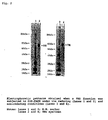
- Fig. 2 is a photograph showing the electrophoretic patterns obtained when THG as purified in Example 1 was subjected to SDS-PAGE individually under the reducing and non-reducing conditions.
-
- Normal human urine was pooled, frozen at -20°C and then thawed at 4°C to thereby give a precipitate. The precipitate separated out was centrifuged at 3,000 x g for 30 min, and the supernatant was discarded, while the precipitate was dissolved in phosphate buffer saline (PBS), followed by dialysis against PBS and centrifugation. The resultant supernatant was separated and concentrated by Amicon, and the concentrate was subjected to HPLC, followed by gel permeation of the mobile phase under the PBS condition (TSK-300SW: manufactured by Tosoh Inc. of Japan) (see Fig. 1). A fraction being eluted in the void volume was subjected to SDS-PAGE to identify the molecular weight and degree of purity (see Fig. 2). Urine of pregnant women (in the second and a half month to sixth month of pregnancy) was also able to be purified by the above-mentioned procedure.
Claims (4)
- A process for purifying Tamm-Horsfall glycoprotein or uromodulin, characterized in that said process comprises freezing human urine, followed by thawing, to thereby collect the resultant precipitate fraction.
- A purification process as claimed in claim 1, wherein a precipitate fraction is further purified by gel filtration.
- A purification process as claimed in claim 1 or 2, wherein as human urine, there is used normal urine and Tamm-Horsfall glycoprotein is purified.
- A purification process as claimed in claim 1 or 2, wherein as human urine, there is used urine of pregnant women and uromodulin is purified.
Applications Claiming Priority (3)
| Application Number | Priority Date | Filing Date | Title |
|---|---|---|---|
| JP34793995A JP3839509B2 (en) | 1995-12-14 | 1995-12-14 | Tam-Hosefall Glycoprotein or Uromodulin Purification Method, Purified Product, and Method for Distinguishing Both |
| JP34793995 | 1995-12-14 | ||
| JP347939/95 | 1995-12-14 |
Publications (3)
| Publication Number | Publication Date |
|---|---|
| EP0780398A2 EP0780398A2 (en) | 1997-06-25 |
| EP0780398A3 EP0780398A3 (en) | 1998-04-08 |
| EP0780398B1 true EP0780398B1 (en) | 2003-05-28 |
Family
ID=18393634
Family Applications (1)
| Application Number | Title | Priority Date | Filing Date |
|---|---|---|---|
| EP96119948A Expired - Lifetime EP0780398B1 (en) | 1995-12-14 | 1996-12-12 | Process for purifying Tamm-Horsfall glycoprotein and uromodulin |
Country Status (7)
| Country | Link |
|---|---|
| US (1) | US6110688A (en) |
| EP (1) | EP0780398B1 (en) |
| JP (1) | JP3839509B2 (en) |
| KR (1) | KR970042590A (en) |
| CN (1) | CN1165146A (en) |
| AT (1) | ATE241644T1 (en) |
| DE (1) | DE69628397T2 (en) |
Families Citing this family (2)
| Publication number | Priority date | Publication date | Assignee | Title |
|---|---|---|---|---|
| EP1919496A2 (en) * | 2005-08-30 | 2008-05-14 | The Regents Of The University Of California | Abnormal glycosylation in tamm-horsfall protein in interstitial cystitis patient |
| ES2700958T3 (en) | 2012-02-09 | 2019-02-20 | Inst Massone S A | Tamm-Horsfall glycoprotein (THP) as an immunostimulant drug and compositions for use in a treatment method to inhibit tumor development |
Family Cites Families (3)
| Publication number | Priority date | Publication date | Assignee | Title |
|---|---|---|---|---|
| ES8801383A1 (en) * | 1985-06-27 | 1988-01-01 | Biogen Nv | Processes for producing uromodulin. |
| US4977244A (en) * | 1985-06-27 | 1990-12-11 | The United States Of America As Represented By The Department Of Health And Human Services | Uromodulin and a process of purifying it |
| ES2091192T3 (en) * | 1989-01-05 | 1996-11-01 | Leti Lab | APPLICATION OF SPECIFIC PROPERTIES OF ALLERGENS, ALLERGENS FROM ANIMAL AND VEGETABLE SOURCES AND METHODS FOR THEIR ISOLATION. |
-
1995
- 1995-12-14 JP JP34793995A patent/JP3839509B2/en not_active Expired - Fee Related
-
1996
- 1996-12-12 AT AT96119948T patent/ATE241644T1/en not_active IP Right Cessation
- 1996-12-12 EP EP96119948A patent/EP0780398B1/en not_active Expired - Lifetime
- 1996-12-12 DE DE69628397T patent/DE69628397T2/en not_active Expired - Fee Related
- 1996-12-13 US US08/766,742 patent/US6110688A/en not_active Expired - Fee Related
- 1996-12-13 CN CN96121360A patent/CN1165146A/en active Pending
- 1996-12-14 KR KR1019960065842A patent/KR970042590A/en not_active Withdrawn
Non-Patent Citations (2)
| Title |
|---|
| HORTON J.K. ET AL: "A new and rapid immunochemiluminometric assay for the measurement of Tamm-Horsfall glycoprotein", CLIN CHIM ACTA, vol. 174, 1988, pages 225 - 237, XP023397351, DOI: doi:10.1016/0009-8981(88)90389-0 * |
| PENNICA D. ET AL: "Identification of human uromodulin as the Tamm-Horsfall urinary glycoprotein", SCIENCE, vol. 236, 1987, pages 83 - 88, XP001024012, DOI: doi:10.1126/science.3453112 * |
Also Published As
| Publication number | Publication date |
|---|---|
| EP0780398A3 (en) | 1998-04-08 |
| DE69628397T2 (en) | 2003-11-27 |
| US6110688A (en) | 2000-08-29 |
| ATE241644T1 (en) | 2003-06-15 |
| JPH09165398A (en) | 1997-06-24 |
| DE69628397D1 (en) | 2003-07-03 |
| CN1165146A (en) | 1997-11-19 |
| JP3839509B2 (en) | 2006-11-01 |
| EP0780398A2 (en) | 1997-06-25 |
| KR970042590A (en) | 1997-07-24 |
Similar Documents
| Publication | Publication Date | Title |
|---|---|---|
| US4749780A (en) | Biologically active fragments of human antihemophilic factor and method for preparation thereof | |
| US4276283A (en) | Method of preparing an intravenously administrable immune globulin preparation containing antibodies and preparations produced according to this method | |
| EP0907378A1 (en) | Concentrated antibody preparation | |
| Vaerman et al. | On the significance of the heterogeneity in molecular size of human serum γA-globulins | |
| JPH03204896A (en) | Extracellular fragment of interferon receptor | |
| CA1234047A (en) | Process for preparing the principal proteins of haemolyzed blood in the non-denatured form | |
| EP0276551A1 (en) | Colony-stimulating factor and method for preparation thereof | |
| US4806346A (en) | Method for isolation of antigen specific immunoglobulin | |
| US4455300A (en) | Fibronectin compositions | |
| US7041798B1 (en) | Method for the chromatographic fractionation of plasma or serum, preparations, so obtained, and their use | |
| US6110688A (en) | Process for purifying Tamm-Horsfall glycoprotein or uromodulin their purified products and method for making the discrimination between both of them | |
| EP0328132B1 (en) | Therapeutic agent for thrombocytopenia | |
| US5391713A (en) | Interferon purification process | |
| AU2002237586A1 (en) | Pharmaceutical composition of F(AB)2 fragments of antibodies and method for the preparation thereof | |
| Hanson et al. | An immunological comparison of immunoglobulins from human blood serum, urine and milk using diffusion-in-gel methods | |
| JP3947551B2 (en) | Identification of Tam-Horsefall glycoprotein and uromodulin | |
| FI98218C (en) | Interferon purification method | |
| Freedman et al. | The heterogeneity of gamma-globulin in post-exercise urine | |
| JP3860601B2 (en) | Purification of Tam-Horsefall glycoprotein or uromodulin | |
| KR0140261B1 (en) | Thrombin-like protein with platelet aggregation effect and preparation method thereof | |
| EP0539584A1 (en) | Reagent for diagnosing mycoplasma pneumoniae | |
| JPS6157290B2 (en) | ||
| KR0137855B1 (en) | Preparation method of low molecular weight urogastron | |
| HK1007747B (en) | Interferon purification process | |
| RU2068694C1 (en) | Method of isolation of fragment c3d of human complement component c3 |
Legal Events
| Date | Code | Title | Description |
|---|---|---|---|
| PUAI | Public reference made under article 153(3) epc to a published international application that has entered the european phase |
Free format text: ORIGINAL CODE: 0009012 |
|
| AK | Designated contracting states |
Kind code of ref document: A2 Designated state(s): AT BE CH DE DK ES FI FR GB GR IE IT LI LU MC NL PT SE |
|
| PUAL | Search report despatched |
Free format text: ORIGINAL CODE: 0009013 |
|
| AK | Designated contracting states |
Kind code of ref document: A3 Designated state(s): AT BE CH DE DK ES FI FR GB GR IE IT LI LU MC NL PT SE |
|
| 17P | Request for examination filed |
Effective date: 19980915 |
|
| 17Q | First examination report despatched |
Effective date: 20010917 |
|
| GRAH | Despatch of communication of intention to grant a patent |
Free format text: ORIGINAL CODE: EPIDOS IGRA |
|
| RIC1 | Information provided on ipc code assigned before grant |
Free format text: 7C 07K 14/47 A |
|
| RTI1 | Title (correction) |
Free format text: PROCESS FOR PURIFYING TAMM-HORSFALL GLYCOPROTEIN AND UROMODULIN |
|
| GRAH | Despatch of communication of intention to grant a patent |
Free format text: ORIGINAL CODE: EPIDOS IGRA |
|
| GRAA | (expected) grant |
Free format text: ORIGINAL CODE: 0009210 |
|
| AK | Designated contracting states |
Designated state(s): AT BE CH DE DK ES FI FR GB GR IE IT LI LU MC NL PT SE |
|
| PG25 | Lapsed in a contracting state [announced via postgrant information from national office to epo] |
Ref country code: NL Free format text: LAPSE BECAUSE OF FAILURE TO SUBMIT A TRANSLATION OF THE DESCRIPTION OR TO PAY THE FEE WITHIN THE PRESCRIBED TIME-LIMIT Effective date: 20030528 Ref country code: LI Free format text: LAPSE BECAUSE OF FAILURE TO SUBMIT A TRANSLATION OF THE DESCRIPTION OR TO PAY THE FEE WITHIN THE PRESCRIBED TIME-LIMIT Effective date: 20030528 Ref country code: IT Free format text: LAPSE BECAUSE OF FAILURE TO SUBMIT A TRANSLATION OF THE DESCRIPTION OR TO PAY THE FEE WITHIN THE PRESCRIBED TIME-LIMIT;WARNING: LAPSES OF ITALIAN PATENTS WITH EFFECTIVE DATE BEFORE 2007 MAY HAVE OCCURRED AT ANY TIME BEFORE 2007. THE CORRECT EFFECTIVE DATE MAY BE DIFFERENT FROM THE ONE RECORDED. Effective date: 20030528 Ref country code: FI Free format text: LAPSE BECAUSE OF FAILURE TO SUBMIT A TRANSLATION OF THE DESCRIPTION OR TO PAY THE FEE WITHIN THE PRESCRIBED TIME-LIMIT Effective date: 20030528 Ref country code: CH Free format text: LAPSE BECAUSE OF FAILURE TO SUBMIT A TRANSLATION OF THE DESCRIPTION OR TO PAY THE FEE WITHIN THE PRESCRIBED TIME-LIMIT Effective date: 20030528 Ref country code: BE Free format text: LAPSE BECAUSE OF FAILURE TO SUBMIT A TRANSLATION OF THE DESCRIPTION OR TO PAY THE FEE WITHIN THE PRESCRIBED TIME-LIMIT Effective date: 20030528 Ref country code: AT Free format text: LAPSE BECAUSE OF FAILURE TO SUBMIT A TRANSLATION OF THE DESCRIPTION OR TO PAY THE FEE WITHIN THE PRESCRIBED TIME-LIMIT Effective date: 20030528 |
|
| REG | Reference to a national code |
Ref country code: GB Ref legal event code: FG4D |
|
| REG | Reference to a national code |
Ref country code: CH Ref legal event code: EP |
|
| REG | Reference to a national code |
Ref country code: IE Ref legal event code: FG4D |
|
| REF | Corresponds to: |
Ref document number: 69628397 Country of ref document: DE Date of ref document: 20030703 Kind code of ref document: P |
|
| PG25 | Lapsed in a contracting state [announced via postgrant information from national office to epo] |
Ref country code: SE Free format text: LAPSE BECAUSE OF FAILURE TO SUBMIT A TRANSLATION OF THE DESCRIPTION OR TO PAY THE FEE WITHIN THE PRESCRIBED TIME-LIMIT Effective date: 20030828 Ref country code: PT Free format text: LAPSE BECAUSE OF FAILURE TO SUBMIT A TRANSLATION OF THE DESCRIPTION OR TO PAY THE FEE WITHIN THE PRESCRIBED TIME-LIMIT Effective date: 20030828 Ref country code: GR Free format text: LAPSE BECAUSE OF FAILURE TO SUBMIT A TRANSLATION OF THE DESCRIPTION OR TO PAY THE FEE WITHIN THE PRESCRIBED TIME-LIMIT Effective date: 20030828 Ref country code: DK Free format text: LAPSE BECAUSE OF FAILURE TO SUBMIT A TRANSLATION OF THE DESCRIPTION OR TO PAY THE FEE WITHIN THE PRESCRIBED TIME-LIMIT Effective date: 20030828 |
|
| PG25 | Lapsed in a contracting state [announced via postgrant information from national office to epo] |
Ref country code: ES Free format text: LAPSE BECAUSE OF FAILURE TO SUBMIT A TRANSLATION OF THE DESCRIPTION OR TO PAY THE FEE WITHIN THE PRESCRIBED TIME-LIMIT Effective date: 20030908 |
|
| NLV1 | Nl: lapsed or annulled due to failure to fulfill the requirements of art. 29p and 29m of the patents act | ||
| ET | Fr: translation filed | ||
| PG25 | Lapsed in a contracting state [announced via postgrant information from national office to epo] |
Ref country code: LU Free format text: LAPSE BECAUSE OF NON-PAYMENT OF DUE FEES Effective date: 20031212 Ref country code: IE Free format text: LAPSE BECAUSE OF NON-PAYMENT OF DUE FEES Effective date: 20031212 |
|
| REG | Reference to a national code |
Ref country code: CH Ref legal event code: PL |
|
| PG25 | Lapsed in a contracting state [announced via postgrant information from national office to epo] |
Ref country code: MC Free format text: LAPSE BECAUSE OF NON-PAYMENT OF DUE FEES Effective date: 20031231 |
|
| PLBE | No opposition filed within time limit |
Free format text: ORIGINAL CODE: 0009261 |
|
| STAA | Information on the status of an ep patent application or granted ep patent |
Free format text: STATUS: NO OPPOSITION FILED WITHIN TIME LIMIT |
|
| 26N | No opposition filed |
Effective date: 20040302 |
|
| REG | Reference to a national code |
Ref country code: IE Ref legal event code: MM4A |
|
| PGFP | Annual fee paid to national office [announced via postgrant information from national office to epo] |
Ref country code: FR Payment date: 20081216 Year of fee payment: 13 |
|
| PGFP | Annual fee paid to national office [announced via postgrant information from national office to epo] |
Ref country code: DE Payment date: 20081127 Year of fee payment: 13 |
|
| PGFP | Annual fee paid to national office [announced via postgrant information from national office to epo] |
Ref country code: GB Payment date: 20081219 Year of fee payment: 13 |
|
| GBPC | Gb: european patent ceased through non-payment of renewal fee |
Effective date: 20091212 |
|
| REG | Reference to a national code |
Ref country code: FR Ref legal event code: ST Effective date: 20100831 |
|
| PG25 | Lapsed in a contracting state [announced via postgrant information from national office to epo] |
Ref country code: FR Free format text: LAPSE BECAUSE OF NON-PAYMENT OF DUE FEES Effective date: 20091231 |
|
| PG25 | Lapsed in a contracting state [announced via postgrant information from national office to epo] |
Ref country code: DE Free format text: LAPSE BECAUSE OF NON-PAYMENT OF DUE FEES Effective date: 20100701 |
|
| PG25 | Lapsed in a contracting state [announced via postgrant information from national office to epo] |
Ref country code: GB Free format text: LAPSE BECAUSE OF NON-PAYMENT OF DUE FEES Effective date: 20091212 |