EP0777178B1 - Datenverarbeitungssystem - Google Patents
Datenverarbeitungssystem Download PDFInfo
- Publication number
- EP0777178B1 EP0777178B1 EP96308493A EP96308493A EP0777178B1 EP 0777178 B1 EP0777178 B1 EP 0777178B1 EP 96308493 A EP96308493 A EP 96308493A EP 96308493 A EP96308493 A EP 96308493A EP 0777178 B1 EP0777178 B1 EP 0777178B1
- Authority
- EP
- European Patent Office
- Prior art keywords
- role
- list
- objects
- dynamic
- resolutions
- Prior art date
- Legal status (The legal status is an assumption and is not a legal conclusion. Google has not performed a legal analysis and makes no representation as to the accuracy of the status listed.)
- Expired - Lifetime
Links
Images


Classifications
-
- G—PHYSICS
- G06—COMPUTING OR CALCULATING; COUNTING
- G06F—ELECTRIC DIGITAL DATA PROCESSING
- G06F9/00—Arrangements for program control, e.g. control units
- G06F9/06—Arrangements for program control, e.g. control units using stored programs, i.e. using an internal store of processing equipment to receive or retain programs
- G06F9/44—Arrangements for executing specific programs
- G06F9/448—Execution paradigms, e.g. implementations of programming paradigms
- G06F9/4488—Object-oriented
- G06F9/449—Object-oriented method invocation or resolution
Definitions
- the present invention relates to data processing systems, and more particularly, to providing dynamic objects for object-oriented programming applications in a System Object Model (SOM).
- SOM System Object Model
- object-oriented programming languages are becoming mainstream programming technologies.
- the OOP languages offer improved programmer productivity, reusable code, and easier maintenance.
- a central aspect of object-oriented programming models is called method resolution. This is the mechanism used to select a particular method given an object, the method's ID, and the arguments to the method.
- method resolution consists of determining an offset into an object's specific table of procedure entry points based on an analysis of the program's source code. These objects are referred to as static objects. Static objects do not allow a choice of which method to select during program execution. Static objects expect the choice of which method to execute for a particular method's ID, and a particular object to remain constant once program execution begins. While most static models allow the resolution to be preformed once, the selected method may be called repeatedly without going through resolution as long as the same object is to be used.
- Another prior art object-oriented programming language offers a dynamic model which consists of using the name of the object to determine a specific method at runtime.
- dynamic models the choice of which method to select can change during the time of a program's execution.
- static objects which allow a selected method for the same object to be called repeatedly without going through resolution
- dynamic models cannot perform such a procedure because the set of methods that a class overrides from its ancestor classes can change during a program's execution, thus changing the method that should result from resolution with a particular method's ID, and a particular object while the program is running.
- static or dynamic objects must be capable of corresponding to different roles.
- a person could represent a student, teacher, father, etc.
- the prior art has used the object-oriented mechanism of multiple inheritance. Multiple inheritance represents objects as objects that inherit from different classes. Thus, objects are required to carry the overhead of their complexity in every context.
- a method implemented in a computer system for accessing a dynamic object in an object oriented environment comprising: creating a system object model in said computer system having a plurality of method resolutions; creating a list object associated with said system object model in said object oriented environment; and creating a dynamic role object in said computer system associated with said list object in said object oriented environment specifying a plurality of roles characterised by: determining that an application program in said object oriented environment requires an indicated one of said plurality of roles in said dynamic role object; searching said list object for said indicated one of said plurality of roles in said role object; and executing said one of said plurality of roles using one of said plurality of method resolutions in said system object model.
- an apparatus for creating a dynamic object in an object-oriented environment comprising: means for creating a list object having a plurality of role objects in said computer system in said object-oriented environment; means for associating a system object model having a plurality of method resolutions with said list object; and means for specifying roles within each of said plurality of role objects to create a dynamic object accessible through said plurality of method resolutions in said system object model characterised by: means for determining that one of said plurality of role objects contains a specific role required in an application program in said computer system in said object-oriented environment; means for searching said list object in said computer system for said dynamic object; and means for executing said one of said plurality of role objects using one of said plurality of method resolutions in said system object model.
- a computer program product having a computer readable medium having computer program logic recorded thereon for creating a dynamic object in an object-oriented environment, comprising: computer readable medium for creating a list object having a plurality of role objects in said computer in said object-oriented environment; computer readable medium for associating a system object model having a plurality of method resolutions with said list object; and computer readable medium for specifying a role within each of said plurality of role objects to create a dynamic object accessible through said plurality of method resolutions in said system object model characterised by: computer readable medium for determining that one of said plurality of role objects contains a specific role required in an application program in said computer system in said object-oriented environment; and computer readable medium for searching said list object in said computer system for said dynamic object.
- a method for creating a dynamic object in an object oriented environment, comprising the steps of: identifying a particular role object in a role object list, said role object list referencing a plurality of role objects, each role object having an associated role; loading the identified role object characterised by: identifying an additional role associated with a role object in the role object list different from the particular role object; and loading the identified additional role object.
- the IBM System Object Model is the principal building block for providing this function.
- the IBM System Object Model implements three types of method resolution. The first is offset resolution which consists of determining an offset into an object specific table of procedure entry points based on an analysis of the program's source code. The second is dynamic resolution which consists of using the name of the object to determine a specific method at runtime. The third is dispatch resolution which is used to provide the functions of this invention. In dispatch resolution, method resolution is decided by the implementation of "somDispatch" methods.
- Dynamic objects are represented as lists of objects. Objects are added to the list at any time. For example, when a program is started, a person object will only have a student object. Before calling a function requiring teacher characteristics, a teacher role is added to the person object. When the function call returns, the teacher role is deleted from the person object if the role is no longer needed.
- dynamic roles objects are associated with a role list object.
- Methods are provided to add a role to an object or delete a role. This is achieved by overriding the somDISPATCH method.
- the procedure searches for all objects in the role object list to find the first one having the needed method.
- FIG. 2 a diagram of objects in an object oriented system is depicted in accordance with a preferred embodiment of the present invention.
- An object encapsulates data and the methods needed to operate on that data.
- Objects can be represented by a "doughnut diagram" such as shown in Figure 2.
- Object data 42 is shown in the centre of the doughnut surrounded by the applicable methods 44 through 54. Data 42, may be modified only by the methods of that object.
- Methods 44-54 are invoked by receiving messages from other objects.
- a typical object oriented system will have a message router 56, that routes messages between objects.
- object 58 causes Method 48, to be invoked by sending a message 55, to message router 56, that in turn sends message 53, to Method 48 of object 40.
- An object has the properties of encapsulation, inheritance, and polymorphism.
- Encapsulation refers to the hiding of an object's implementation details.
- Inheritance refers to a technique of specifying the shape and behaviour of a class of objects, called a derived class, or a subclass, as incremental differences from another class, called a parent class or superclass.
- Polymorphism refers to the ability to hide different implementations behind a common interface, simplifying the communications among the objects.
- Objects are grouped into classes of related objects.
- the class description contains information relevant to all objects in a class, including a description of instance variables maintained by each of the objects and the available object methods.
- An object instance is created (or "instantiated"), based on that information and has the properties defined in the object class.
- the object class DOG can include the instance variables "dog_type”, and “dog_name”, and a "bark” method implementing the response to a bark message.
- An instance of dog e.g., Rover, will maintain the type and name instance variables for itself and will respond to the bark message.
- Abstract classes are used to describe the interfaces and methods expected to be used by a class without providing details on the implementation of those methods. Abstract classes are useful where the implementation details are to be left to the implementor. Concrete classes are created as subclasses of abstract classes and implement those classes.
- a state data structure 60 for a particular object is shown where the first full word 62, contains the address of the object's method procedure table 66.
- the method procedure table 66 contains the address of the class object data structure 68, and addresses of various methods for the particular object 72 and 74.
- the address 68 points to the class object data structure 70. All objects that are of the same class as this object also contain an address that points to this method procedure table 66. Any methods inherited by the objects will have their method procedure addresses at the same offset in memory as they appear in the method procedure table 66, of the ancestor class. Addresses of the blocks of computer memory containing the series of instructions for two of the method procedures are set forth at 72 and 74.
- Locations 76 and 78 are in computer memory and contains the series of instructions of a particular method procedures pointed to by the addresses at 72 and 74.
- a complete description of the IBM System Object Model can be found in U. S. Patent Number 5,421,016, entitled "System and Method for Dynamically Invoking Object Methods from an Application Designed for Static Method Invocation".
- the list object 80 contains pointers to SOM objects representing a person object 82, student object 84, and a teacher object 86.
- the invention describes a technique that can add roles to the object dynamically, depending on the context.
- the person object 82 may contain information on a particular individual including the birth date, birth place, name, etc.
- the student object 84 contains specific information on a student including grade point average (GPA), major, grade for a particular class, etc.
- the teacher object 86 contains particular information on a teacher including salary, specialization, students in class, etc.
- any number of dynamic objects with various roles can be added to the list object 80.
- the teacher object 86 may be loaded, and when the function call returns, the teacher object 86, may be deleted if no longer needed.
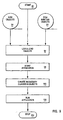
- FIG. 9 there is shown a flow diagram for executing the dynamic role objects of the invention.
- the invention allows an application to invoke the dynamic role objects.
- Dynamic invocation refers to the ability of a program to determine the method to call at run time and not when the application is compiled. Dynamic resolution systems require run time information to accurately resolve the method call.
- an application using the SOM dynamic role objects of the invention commences processing at block 90 and proceeds to block 92.
- the procedure performs a dynamic link and load of the dynamic SOM objects 94, based on the list object of Figure 5, and the SOM run time library 96.
- the application is started, which invokes the creation of necessary classes and objects as set forth in function block 100.
- the application is executed as shown in function block 102 and control is terminated at terminal block 104.
- a data processing system provides dynamic roles for objects in an object-oriented programming environment.
- a mechanism adds roles dynamically for an object depending on the context of the object.
- the IBM System Object Model (SOM) is the principal building block for providing this function.
- the dispatch resolution of the SOM is used to provide the functions of this invention the "somDispatch” methods feature.
- the "somDispatch” methods is overridden in new classes to implement application specific dispatch mechanism.
- Dynamic objects are represented as lists of objects where objects are added to the list at any time. For example, when a program is started, a person object will only have a student object. Before calling a function requiring teacher characteristics, the teacher role is added to the person object. When the function call returns, the teacher role is deleted from the person object if the role is no longer needed.
Landscapes
- Engineering & Computer Science (AREA)
- Software Systems (AREA)
- Theoretical Computer Science (AREA)
- Physics & Mathematics (AREA)
- General Engineering & Computer Science (AREA)
- General Physics & Mathematics (AREA)
- Stored Programmes (AREA)
- Devices For Executing Special Programs (AREA)
Claims (9)
- Verfahren, implementiert in einem Computersystem, zum Zugriff auf ein dynamisches Objekt in einer objektorientierten Umgebung, das umfasst:Erzeugen eines Systemobjekt-Modells (82, 84, 86) in dem Computersystem, das eine Vielzahl von Methodenzerlegungen besitzt;Erzeugen eines Listenobjekts (80) in der objektorientierten Umgebung, das zu dem Systemobjekt-Modell (82, 84, 86) gehört; undErzeugen eines dynamischen Funktionsobjektes in dem Computersystem, das eine Vielzahl von Funktionen bestimmt und das zu dem Listenobjekt (80) in der objektorientierten Umgebung gehört; gekennzeichnet durchFestlegen, dass ein Anwendungsprogramm in der objektorientierten Umgebung eine indizierte Funktion aus der Vielzahl der Funktionen in dem dynamischen Funktionsobjekt erfordert;Durchsuchen des Listenobjekts (80) nach der indizierten Funktion aus der Vielzahl der Funktionen in dem Funktionsobjekt; undAusführen dieser Funktion aus der Vielzahl der Funktionen unter Verwendung einer der vielen Methodenzerlegungen in dem Systemobjekt-Modell (82, 84, 86).
- Verfahren nach Anspruch 1, wobei die eine der Methodenzerlegungen die Zuteilungszerlegung ist.
- Vorrichtung zum Erzeugen eines dynamischen Objekts in einer objektorientierten Umgebung, die umfasst:gekennzeichnet durch:Mittel zum Erzeugen eines Listenobjekts (80), das eine Vielzahl von Funktionsobjekten (82, 84, 86) in dem Computersystem in der objektorientierten Umgebung besitzt;Mittel zum Verbinden eines Systemobjekt-Modells, das eine Vielzahl von Methodenzerlegungen besitzt, mit dem Listenobjekt (80); undMittel zum Bestimmen von Funktionen in jedem der vielen Funktionsobjekte, um ein dynamisches Objekt zu erzeugen, das durch die Vielzahl der Methodenzerlegungen in dem Systemobjekt-Modell erreichbar ist;Mittel zum Festlegen, dass eines aus der Vielzahl der Funktionsobjekte (82, 84, 86) eine bestimmte Funktion enthält, die in einem Anwendungsprogramm des Computersystems in der objektorientierten Umgebung erforderlich ist;Mittel zum Durchsuchen des Listenobjekts (80) in dem Computersystem nach dem dynamischen Objekt; undMittel zum Ausführen dieser Funktion aus der Vielzahl der Funktionsobjekte unter Verwendung einer aus der Vielzahl der Methodenzerlegungen in dem Systemobjekt-Modell (82, 84, 86).
- Computerprogramm, das einen maschinenlesbaren Datenträger besitzt, auf dem eine Computerprogrammlogik aufgezeichnet ist zum Erzeugen eines dynamischen Objekts in einer objektorientierten Umgebung, das umfasst:maschinenlesbaren Datenträger zum Erzeugen eines Listenobjekts (80), das eine Vielzahl von Funktionsobjekten (82, 84, 86) in dem Computer in der objektorientierten Umgebung besitzt;maschinenlesbaren Datenträger zum Verbinden eines Systemobjekt-Modells, das eine Vielzahl von Methodenzerlegungen besitzt, mit dem Listenobjekt; undmaschinenlesbaren Datenträger zum Bestimmen einer Funktion in jedem aus der Vielzahl der Funktionsobjekte, um ein dynamisches Objekt zu erzeugen, das durch die Vielzahl der Methodenzerlegungen in dem Systemobjekt-Modell erreichbar ist;
gekennzeichnet durch:maschinenlesbaren Datenträger zum Festlegen, dass eines aus der Vielzahl der Funktionsobjekte (82, 84, 86) eine bestimmte Funktion enthält, die in einem Anwendungsprogramm des Computersystems in der objektorientierten Umgebung erforderlich ist; undmaschinenlesbaren Datenträger zum Durchsuchen des Listenobjekts (80) in dem Computersystem nach dem dynamischen Objekt. - Verfahren, implementiert in einem Computersystem, zum Erzeugen eines dynamischen Objekts in einer objektorientierten Umgebung, das folgende Schritte umfasst:Identifizieren eines besonderen Funktionsobjekts in einer Funktionsobjektliste (80), wobei die Funktionsobjektliste auf eine Vielzahl von Funktionsobjekten (82, 84, 86) verweist, wobei jedes Funktionsobjekt eine dazugehörige Funktion besitzt;Laden des identifizierten Funktionsobjekts (86),
gekennzeichnet durch:Erkennen einer zusätzlichen Funktion, die mit einem Funktionsobjekt in der Funktionsobjektliste verbunden ist und sich von dem besonderen Funktionsobjekt unterscheidet; undLaden des identifizierten zusätzlichen Funktionsobjekts. - Verfahren nach Anspruch 5,
gekennzeichnet durch:Identifizieren einer Extrafunktion, die mit einem neuen Funktionsobjekt verbunden ist, das nicht in der Funktionsobjektliste enthalten ist; undHinzufügen des neuen Funktionsobjekts zu der Funktionsobjektliste. - Eine Methode nach Anspruch 5 oder 6,
gekennzeichnet durch:Verbinden eines Systemobjekt-Modells, das eine Vielzahl von Methodenzerlegungen besitzt, mit der Funktionsobjektliste;Bestimmen von Funktionen in jedem aus der Vielzahl der Funktionsobjekte, um ein dynamisches Objekt zu erzeugen, das durch die Vielzahl der Methodenzerlegungen in dem Systemobjekt-Modell erreichbar ist. - Eine Methode nach Anspruch 7,
gekennzeichnet durch:Festlegen, dass eines aus der Vielzahl der Funktionsobjekte Funktionsinformationen enthält, die in einem Anwendungsprogramm des Computersystems in der objektorientierten Umgebung erforderlich sind;Durchsuchen der Funktionsobjektliste in dem Computersystem nach dem dynamischen Objekt; undAusführen dieses Funktionsobjekts aus der Vielzahl der Funktionsobjekte unter Verwendung einer aus der Vielzahl der Methodenzerlegungen in dem Systemobjekt-Modell. - Eine Methode nach Anspruch 8, wobei eine der Methodenzerlegungen die Zuteilungszerlegung ist.
Applications Claiming Priority (2)
| Application Number | Priority Date | Filing Date | Title |
|---|---|---|---|
| US565374 | 1995-11-30 | ||
| US08/565,374 US5764958A (en) | 1995-11-30 | 1995-11-30 | Method and apparatus for creating dynamic roles with a system object model |
Publications (2)
| Publication Number | Publication Date |
|---|---|
| EP0777178A1 EP0777178A1 (de) | 1997-06-04 |
| EP0777178B1 true EP0777178B1 (de) | 2001-09-05 |
Family
ID=24258334
Family Applications (1)
| Application Number | Title | Priority Date | Filing Date |
|---|---|---|---|
| EP96308493A Expired - Lifetime EP0777178B1 (de) | 1995-11-30 | 1996-11-25 | Datenverarbeitungssystem |
Country Status (5)
| Country | Link |
|---|---|
| US (1) | US5764958A (de) |
| EP (1) | EP0777178B1 (de) |
| CN (1) | CN1101029C (de) |
| DE (1) | DE69614978T2 (de) |
| MY (1) | MY112346A (de) |
Families Citing this family (38)
| Publication number | Priority date | Publication date | Assignee | Title |
|---|---|---|---|---|
| US5999942A (en) * | 1993-02-11 | 1999-12-07 | Appage Corporation | Method and apparatus for enforcement of behavior of application processing systems without modifying application processing systems |
| US6088739A (en) * | 1996-06-28 | 2000-07-11 | Microsoft Corporation | Method and system for dynamic object clustering |
| WO1998021651A1 (en) * | 1996-11-14 | 1998-05-22 | Alcatel Usa Sourcing, L.P. | Generic software state machine and method of constructing dynamic objects for an application program |
| US5997168A (en) | 1997-04-14 | 1999-12-07 | Electronic Data Systems Corporation | Optimizing the operation of an equipment control system |
| US7076784B1 (en) | 1997-10-28 | 2006-07-11 | Microsoft Corporation | Software component execution management using context objects for tracking externally-defined intrinsic properties of executing software components within an execution environment |
| US5958004A (en) | 1997-10-28 | 1999-09-28 | Microsoft Corporation | Disabling and enabling transaction committal in transactional application components |
| US6813769B1 (en) * | 1997-10-28 | 2004-11-02 | Microsoft Corporation | Server application components with control over state duration |
| US6134594A (en) | 1997-10-28 | 2000-10-17 | Microsoft Corporation | Multi-user, multiple tier distributed application architecture with single-user access control of middle tier objects |
| US6631425B1 (en) | 1997-10-28 | 2003-10-07 | Microsoft Corporation | Just-in-time activation and as-soon-as-possible deactivation or server application components |
| US6526416B1 (en) | 1998-06-30 | 2003-02-25 | Microsoft Corporation | Compensating resource managers |
| US6473791B1 (en) | 1998-08-17 | 2002-10-29 | Microsoft Corporation | Object load balancing |
| US6442620B1 (en) * | 1998-08-17 | 2002-08-27 | Microsoft Corporation | Environment extensibility and automatic services for component applications using contexts, policies and activators |
| US6425017B1 (en) | 1998-08-17 | 2002-07-23 | Microsoft Corporation | Queued method invocations on distributed component applications |
| US6487665B1 (en) | 1998-11-30 | 2002-11-26 | Microsoft Corporation | Object security boundaries |
| US6385724B1 (en) | 1998-11-30 | 2002-05-07 | Microsoft Corporation | Automatic object caller chain with declarative impersonation and transitive trust |
| US6574736B1 (en) | 1998-11-30 | 2003-06-03 | Microsoft Corporation | Composable roles |
| US6868541B1 (en) * | 1998-12-21 | 2005-03-15 | Microsoft Corporation | Asynchronous programming environment |
| US6748455B1 (en) | 1999-02-23 | 2004-06-08 | Microsoft Corporation | Object connectivity through loosely coupled publish and subscribe events with filtering |
| US6829770B1 (en) | 1999-02-23 | 2004-12-07 | Microsoft Corporation | Object connectivity through loosely coupled publish and subscribe events |
| US6325632B1 (en) * | 1999-05-05 | 2001-12-04 | Anabas, Inc. | Computer-aided learning method and systems matching students with instructors |
| US6748555B1 (en) | 1999-09-09 | 2004-06-08 | Microsoft Corporation | Object-based software management |
| US6920636B1 (en) | 1999-12-15 | 2005-07-19 | Microsoft Corporation | Queued component interface passing for results outflow from queued method invocations |
| US6714942B1 (en) | 2000-07-28 | 2004-03-30 | E-Volve Incorporated | Method of creating and using a sub-classed object that spans multiple computers in a networked computing system |
| US6898783B1 (en) | 2000-08-03 | 2005-05-24 | International Business Machines Corporation | Object oriented based methodology for modeling business functionality for enabling implementation in a web based environment |
| US7171455B1 (en) | 2000-08-22 | 2007-01-30 | International Business Machines Corporation | Object oriented based, business class methodology for generating quasi-static web pages at periodic intervals |
| US6684388B1 (en) | 2000-08-22 | 2004-01-27 | International Business Machines Corporation | Method for generating platform independent, language specific computer code |
| US6853994B1 (en) * | 2000-08-30 | 2005-02-08 | International Business Machines Corporation | Object oriented based, business class methodology for performing data metric analysis |
| US7392546B2 (en) * | 2001-06-11 | 2008-06-24 | Bea Systems, Inc. | System and method for server security and entitlement processing |
| US20040181380A1 (en) * | 2002-12-26 | 2004-09-16 | Mitsunobu Yoshida | Simulation method and program product |
| US7299493B1 (en) | 2003-09-30 | 2007-11-20 | Novell, Inc. | Techniques for dynamically establishing and managing authentication and trust relationships |
| US20060048226A1 (en) * | 2004-08-31 | 2006-03-02 | Rits Maarten E | Dynamic security policy enforcement |
| US7526502B2 (en) * | 2004-09-10 | 2009-04-28 | Microsoft Corporation | Dynamic call site binding |
| US7437080B2 (en) * | 2005-02-03 | 2008-10-14 | Stratalight Communications, Inc. | Optical transmission system having optimized filter wavelength offsets |
| US7774827B2 (en) * | 2005-06-06 | 2010-08-10 | Novell, Inc. | Techniques for providing role-based security with instance-level granularity |
| US8904391B2 (en) * | 2007-04-23 | 2014-12-02 | International Business Machines Corporation | Policy-based access control approach to staff activities of a business process |
| EP2848085A4 (de) * | 2012-03-14 | 2015-11-11 | Intel Corp | Architektur eines mobilen endgeräts für drahtlose vorrichtungen mit doppelter persönlichkeit |
| US10175953B2 (en) * | 2014-04-02 | 2019-01-08 | Microsoft Technology Licensing, Llc | User interface control and communication |
| CN108582085B (zh) * | 2018-07-18 | 2021-03-02 | 北京进化者机器人科技有限公司 | 控制命令的确定方法、装置和机器人 |
Family Cites Families (7)
| Publication number | Priority date | Publication date | Assignee | Title |
|---|---|---|---|---|
| CA2077273C (en) * | 1991-12-12 | 1996-12-03 | Mike H. Conner | Language neutral objects |
| US5421016A (en) * | 1991-12-12 | 1995-05-30 | International Business Machines Corporation | System and method for dynamically invoking object methods from an application designed for static method invocation |
| US5361350A (en) * | 1991-12-12 | 1994-11-01 | International Business Machines Corporation | Object oriented method management system and software for managing class method names in a computer system |
| EP0546682A3 (en) * | 1991-12-12 | 1993-12-08 | Ibm | Parent class shadowing |
| JPH06103075A (ja) * | 1992-07-06 | 1994-04-15 | Internatl Business Mach Corp <Ibm> | オブジェクト指向適用業務 |
| JP3365576B2 (ja) * | 1993-06-14 | 2003-01-14 | インターナショナル・ビジネス・マシーンズ・コーポレーション | オブジェクトの実行方法および装置 |
| US5555365A (en) * | 1994-08-26 | 1996-09-10 | International Business Machines Corporation | Method and system for optimizing static and dynamic binding of presentation objects with the object data they represent |
-
1995
- 1995-11-30 US US08/565,374 patent/US5764958A/en not_active Expired - Fee Related
-
1996
- 1996-11-25 EP EP96308493A patent/EP0777178B1/de not_active Expired - Lifetime
- 1996-11-25 DE DE69614978T patent/DE69614978T2/de not_active Expired - Fee Related
- 1996-11-28 MY MYPI96004996A patent/MY112346A/en unknown
- 1996-11-29 CN CN96121832A patent/CN1101029C/zh not_active Expired - Fee Related
Also Published As
| Publication number | Publication date |
|---|---|
| MY112346A (en) | 2001-05-31 |
| CN1157964A (zh) | 1997-08-27 |
| CN1101029C (zh) | 2003-02-05 |
| DE69614978D1 (de) | 2001-10-11 |
| DE69614978T2 (de) | 2002-04-04 |
| EP0777178A1 (de) | 1997-06-04 |
| US5764958A (en) | 1998-06-09 |
Similar Documents
| Publication | Publication Date | Title |
|---|---|---|
| US5764958A (en) | Method and apparatus for creating dynamic roles with a system object model | |
| US6810522B2 (en) | Method and system for associating parameters of containers and contained objects | |
| US5890176A (en) | Object-oriented document version tracking method and apparatus | |
| US5497491A (en) | System and method for importing and exporting data between an object oriented computing environment and an external computing environment | |
| US5265206A (en) | System and method for implementing a messenger and object manager in an object oriented programming environment | |
| US5613099A (en) | Persistent object storage system with modifiable group skeletal formats | |
| US5555365A (en) | Method and system for optimizing static and dynamic binding of presentation objects with the object data they represent | |
| US5715432A (en) | Method and system for developing network analysis and modeling with graphical objects | |
| US5732263A (en) | Systems, methods and computer program products for generating and validating user defined object classes in an object oriented programming environment after build time | |
| US5729739A (en) | Persistent object mapping system and method with abstract schema mapper | |
| Thomas | PCTE interfaces: Supporting tools in software-engineering environments | |
| US5896532A (en) | Objects with run-time classes and methods of making them | |
| US6526457B1 (en) | Systems utility object interface for facilitating software portability | |
| EP0629946B1 (de) | Vorrichtung und Verfahren zum Einschalten der Vor/Nachbearbeitungsmethode in einem objektorientierten System | |
| US6154786A (en) | Method for associating data bearing objects with user interface objects | |
| EP0631229A2 (de) | Verfahren und Vorrichtung zur Speicherung und Rückspeicherung von Attributdaten von persistenten Objekten | |
| US6799320B1 (en) | Providing binding options for component interfaces | |
| JP3672334B2 (ja) | オブジェクト集合方法およびシステム | |
| GB2373349A (en) | Data definition language | |
| US6405263B1 (en) | Method and apparatus for subclassing system object model classes in dynamic languages | |
| US6405360B1 (en) | Property container type objects | |
| US6202098B1 (en) | Method and system for object oriented notification | |
| Coskun et al. | Class objects in SOM | |
| CA2238973C (en) | An object oriented programming based global registry system, method, and article of manufacture | |
| Chauveau | Working with C++ |
Legal Events
| Date | Code | Title | Description |
|---|---|---|---|
| PUAI | Public reference made under article 153(3) epc to a published international application that has entered the european phase |
Free format text: ORIGINAL CODE: 0009012 |
|
| AK | Designated contracting states |
Kind code of ref document: A1 Designated state(s): DE FR GB |
|
| 17P | Request for examination filed |
Effective date: 19971201 |
|
| 17Q | First examination report despatched |
Effective date: 20000309 |
|
| GRAG | Despatch of communication of intention to grant |
Free format text: ORIGINAL CODE: EPIDOS AGRA |
|
| GRAG | Despatch of communication of intention to grant |
Free format text: ORIGINAL CODE: EPIDOS AGRA |
|
| GRAH | Despatch of communication of intention to grant a patent |
Free format text: ORIGINAL CODE: EPIDOS IGRA |
|
| GRAH | Despatch of communication of intention to grant a patent |
Free format text: ORIGINAL CODE: EPIDOS IGRA |
|
| GRAA | (expected) grant |
Free format text: ORIGINAL CODE: 0009210 |
|
| AK | Designated contracting states |
Kind code of ref document: B1 Designated state(s): DE FR GB |
|
| REF | Corresponds to: |
Ref document number: 69614978 Country of ref document: DE Date of ref document: 20011011 |
|
| REG | Reference to a national code |
Ref country code: GB Ref legal event code: IF02 |
|
| ET | Fr: translation filed | ||
| PLBE | No opposition filed within time limit |
Free format text: ORIGINAL CODE: 0009261 |
|
| STAA | Information on the status of an ep patent application or granted ep patent |
Free format text: STATUS: NO OPPOSITION FILED WITHIN TIME LIMIT |
|
| 26N | No opposition filed | ||
| PGFP | Annual fee paid to national office [announced via postgrant information from national office to epo] |
Ref country code: GB Payment date: 20061101 Year of fee payment: 11 |
|
| PGFP | Annual fee paid to national office [announced via postgrant information from national office to epo] |
Ref country code: FR Payment date: 20061117 Year of fee payment: 11 |
|
| PGFP | Annual fee paid to national office [announced via postgrant information from national office to epo] |
Ref country code: DE Payment date: 20061120 Year of fee payment: 11 |
|
| GBPC | Gb: european patent ceased through non-payment of renewal fee |
Effective date: 20071125 |
|
| PG25 | Lapsed in a contracting state [announced via postgrant information from national office to epo] |
Ref country code: DE Free format text: LAPSE BECAUSE OF NON-PAYMENT OF DUE FEES Effective date: 20080603 |
|
| REG | Reference to a national code |
Ref country code: FR Ref legal event code: ST Effective date: 20080930 |
|
| PG25 | Lapsed in a contracting state [announced via postgrant information from national office to epo] |
Ref country code: GB Free format text: LAPSE BECAUSE OF NON-PAYMENT OF DUE FEES Effective date: 20071125 |
|
| PG25 | Lapsed in a contracting state [announced via postgrant information from national office to epo] |
Ref country code: FR Free format text: LAPSE BECAUSE OF NON-PAYMENT OF DUE FEES Effective date: 20071130 |