EP0766485A2 - Verbesserter Datenzugriff in Fernsprechnetzwerken - Google Patents
Verbesserter Datenzugriff in Fernsprechnetzwerken Download PDFInfo
- Publication number
- EP0766485A2 EP0766485A2 EP96306735A EP96306735A EP0766485A2 EP 0766485 A2 EP0766485 A2 EP 0766485A2 EP 96306735 A EP96306735 A EP 96306735A EP 96306735 A EP96306735 A EP 96306735A EP 0766485 A2 EP0766485 A2 EP 0766485A2
- Authority
- EP
- European Patent Office
- Prior art keywords
- telephone number
- data
- specialized data
- switching system
- bit map
- Prior art date
- Legal status (The legal status is an assumption and is not a legal conclusion. Google has not performed a legal analysis and makes no representation as to the accuracy of the status listed.)
- Withdrawn
Links
Images


Classifications
-
- H—ELECTRICITY
- H04—ELECTRIC COMMUNICATION TECHNIQUE
- H04Q—SELECTING
- H04Q3/00—Selecting arrangements
- H04Q3/0016—Arrangements providing connection between exchanges
-
- H—ELECTRICITY
- H04—ELECTRIC COMMUNICATION TECHNIQUE
- H04Q—SELECTING
- H04Q2213/00—Indexing scheme relating to selecting arrangements in general and for multiplex systems
- H04Q2213/13097—Numbering, addressing
-
- H—ELECTRICITY
- H04—ELECTRIC COMMUNICATION TECHNIQUE
- H04Q—SELECTING
- H04Q2213/00—Indexing scheme relating to selecting arrangements in general and for multiplex systems
- H04Q2213/13103—Memory
-
- H—ELECTRICITY
- H04—ELECTRIC COMMUNICATION TECHNIQUE
- H04Q—SELECTING
- H04Q2213/00—Indexing scheme relating to selecting arrangements in general and for multiplex systems
- H04Q2213/13106—Microprocessor, CPU
-
- H—ELECTRICITY
- H04—ELECTRIC COMMUNICATION TECHNIQUE
- H04Q—SELECTING
- H04Q2213/00—Indexing scheme relating to selecting arrangements in general and for multiplex systems
- H04Q2213/1313—Metering, billing
-
- H—ELECTRICITY
- H04—ELECTRIC COMMUNICATION TECHNIQUE
- H04Q—SELECTING
- H04Q2213/00—Indexing scheme relating to selecting arrangements in general and for multiplex systems
- H04Q2213/13141—Hunting for free outlet, circuit or channel
-
- H—ELECTRICITY
- H04—ELECTRIC COMMUNICATION TECHNIQUE
- H04Q—SELECTING
- H04Q2213/00—Indexing scheme relating to selecting arrangements in general and for multiplex systems
- H04Q2213/13271—Forced release
-
- H—ELECTRICITY
- H04—ELECTRIC COMMUNICATION TECHNIQUE
- H04Q—SELECTING
- H04Q2213/00—Indexing scheme relating to selecting arrangements in general and for multiplex systems
- H04Q2213/13353—Routing table, map memory
-
- H—ELECTRICITY
- H04—ELECTRIC COMMUNICATION TECHNIQUE
- H04Q—SELECTING
- H04Q2213/00—Indexing scheme relating to selecting arrangements in general and for multiplex systems
- H04Q2213/1338—Inter-exchange connection
-
- H—ELECTRICITY
- H04—ELECTRIC COMMUNICATION TECHNIQUE
- H04Q—SELECTING
- H04Q2213/00—Indexing scheme relating to selecting arrangements in general and for multiplex systems
- H04Q2213/13383—Hierarchy of switches, main and subexchange, e.g. satellite exchange
Definitions
- This invention relates to methods and apparatus for accessing data in telecommunications networks and specifically for accessing data in connection with the establishment of telecommunications calls.
- Modern telecommunications networks are increasingly using the concept of an intelligent network, i.e., a network which desires routing data or derives data for otherwise treating telecommunication calls from a data base shared by a plurality of switching systems.
- An example of such an intelligent network is the network used for carrying 800 calls. These calls, which are free to callers, are characterized by having a telephone number which is not directly related to the location of the called number. This is in contract to normal telephone numbers wherein a three digit area code provides information as to the area to which a call is to be routed, a three digit office code usually provides information as to which central office in that area is to receive the call, and a four digit directory number identifies a particular called customer within that office code.
- a telecommunications network receives a call wherein the caller dials an 800 number, the network queries a data base.
- POTS plain old telephone service
- the approach of using a data base to determine routing information is also being considered in connection with service provider number portability, i.e., the ability of a customer to retain a telephone number even when the customer is served by a different carrier using a different switching system.
- service provider number portability i.e., the ability of a customer to retain a telephone number even when the customer is served by a different carrier using a different switching system.
- the data base is accessed prior to routing calls to office codes whose telephone numbers are served from different switching systems belonging to different carriers.
- a problem of the prior art is that the access time for querying a data base in order to obtain the information required for routing a call is substantial, currently approximately 300 milliseconds. This access time is directly added to the call set-up time of telephone calls and noticeably slows down the completion of such calls.
- the use of common channel signaling which has become the prevalent and dominant mode in many areas has allowed the call set up time to be reduced to a small fraction of a second under normal circumstances in which no data base query is required. For the case of calls such as "800" (free) telephone calls, this is especially important since a data base query is required for the 800 number, and the time of an additional query would be added to the call set-up time.
- the local data contained within a switching system provides information as to whether or not a remote data base query is required in order to establish a call to a particular telephone number.
- the data for indication whether or not a data base query is required is maintained in a bit map using one but per called directory number served directly or indirectly from the querying switch.
- the query response is a default response or that the query response has been stored in memory at the querying switch.
- a default response is the identification of a dominant carrier in a situation in which the data base query is used to find the identity of the carrier for serving a terminating call.
- the distinction between the default attribute and an entry in the data retained in the querying switching system is provided by a second bit map.
- the use of the second bit map eliminates a search of the data maintained in the querying switching system.
- the data base is used for routing calls in a number portability environment wherein the area code plus office code does not always identify which switching system serves a called number.
- a local universal data base for processing calls within a local exchange area
- a national data base for processing interlocal (toll) calls
- a dominant local exchange carrier such as one of the regional holding companies formed when AT&T divested itself of its local exchange carriers
- the call set-up time for many if not most of the remaining calls is reduced by having a modes size memory for storing the data for the most frequently called telephone number requiring an attribute other than the default attribute.
- the centralized data base remains the high reliability depository of the data that it contains. Periodically the data in the bit maps is cleared and the data for the most frequently called number is also cleared so that it can repopulate via access to the centralized data base as calls are made. This will automatically update the memory of the individual switching system.
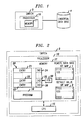
- FIG. 1 illustrates that a switch 3, comprising of processor 10 which in turn includes memory 17, accesses a universal data base 4 whenever its own memory 17 does not contain specialized data required for processing a call (such as the identification of a switch for serving the termination of a call identified by a received telephone number).
- a switch 3 comprising of processor 10 which in turn includes memory 17, accesses a universal data base 4 whenever its own memory 17 does not contain specialized data required for processing a call (such as the identification of a switch for serving the termination of a call identified by a received telephone number).
- the call processing details for the specific case of number portability are described with respect to later figures.
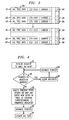
- FIG. 2 illustrated the memory content of the processor that is pertinent to the implementation of applicant's invention.
- Processor 106 is operative under the control of a program 18 for performing the actions of the flow charts shown hereinafter.
- This memory includes two bit maps 1 and 2 each having one bit per called telephone number whose routing is to be determined by switch 3.
- memory 17 includes a table 20 comprising a plurality of entries 21,...,22,23 each having a corresponding indicator, 24,...,25,26.
- a pointer 30, points to one of the entries and its corresponding indicator and is used to help remove one entry when another entry is to be inserted in the table.
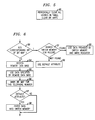
- FIG.3 shows two states of table 20. It is assumed in this case that switch 3 provided routing for calls to at least two office codes, namely 222 and 275. Entry 21 indicated that telephone number 222-2333 is served by carrier 1 that telephone number 275-2457 is served by carrier 2 and that telephone number 275-1930 is served by carrier 1. It is assumed in this case that all the telephone numbers served by switch 3 are in the same area code. Clearly is switch 3 is a toll switch, then a full 10-digit number would be required. The bottom portion of FIG. 3 then indicates that entry 23 has been deleted and data for telephone number 222-1233 served by carrier 2 has replaced the data in entry 23.
- FIG. 4 illustrates the process of inserting an entry into table 20.
- Pointer 30 points one beyond the last place where an entry had been inserted into table 20.
- a request is received to make an entry into table 20 (action block 31).
- Test 32 is used to determine whether the pointed to indicator is marked. If it is, then that indicated is cleared (action block 33), the pointer is advanced (action block 34), and test 32 is repeated. If the result of test 32 is that the pointed to indicator is not marked, then the present entry is deleted, the bit maps for that entry are updated to indicate that data for the number corresponding to the present entry must now be accessed from the data base, and the new entry is entered at the location corresponding to the unmarked indicator found in the last iteration of test 32.
- bit pointer is advanced (action block 36) and the AVL data to link the entries in the table in such a manner that any particular entry can be found rapidly is updated (action block 37).
- the bit maps 1 and 2 must be updated as described hereinafter with respect to FIGs. 6 and 7.
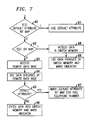
- FIG. 5 illustrates that the contents of table 20 are periodically refreshed by simply clearing all entries in the table and clearing all indicators in the table.
- Entries in the table are cleared by clearing the AVL tree data and by updating the bit maps 1 and 2 to indicate that nothing is known in the local data about any of the telephone number routed from switch 3. Periodically may mean every night at midnight or 2:00 a.m.; thereafter the first instance of any telephone number requires an access of the remote data base 4. Then, calls as they come, populate table 20, and populate the bit maps 1 and 2 for indicating that a particular directory number has the default value, i.e., in this case, is served by the dominant carrier, or to indicate that table 20 contains data for a particular telephone number.
- both bit maps are cleared which means that the remote data base will be consulted for the next call for every number routed from switch 3.
- the AVL tree data is cleared so that no entry is found in the search.
- the AVL tree data is cleared in such a way that subsequent attempts to enter data into table 20 are successful.
- FIGs. 6 and 7 illustrate alternate processes for accessing data in either of the switch or the remote data base.
- Test 50 tests the state of the bit map 1 that corresponds to the directory number for which the data is being sought. If this bit is 1, then the required data may be obtained within the switch memory. Test 51 searches the switch memory for such data. If the data is not found, then the default attribute is used, (action block 52). If the data is found, then the data provided by the switch memory is used, and the indicator in table 20 for that data is marked (action block 53).
- Marking the indicator ensures that this table entry is not an immediate candidate for being deleted from the switch memory is used, and the indicator in table 20 for that data is marked (action block 53). Marking the indicator ensures that this table entry is not an immediate candidate for being deleted from the switch memory in the sequence of FIG. 4. If the result of test 50 is that the bit is zero, then the remote data base is accessed (action block 55). The bit map for the telephone number for which a query has been made is marked in preparation for indicating that the default attribute is applied to this number or that the appropriate data found is the default attribute. If so, no further processing action is required; if not, the data found in the remote data base is entered into switch memory (action block 58), and the indicator for this entry is marked to 1 to ensure that it is not an immediate candidate for removal.
- FIG. 7 illustrates the case in which 2 bit maps are used.
- the advantage of using 2 bit maps is that it saves the time required to search table 20 or any equivalent thereof in order to determine whether the data associated with the telephone number to which the data request has been made is the default attribute (in which case no data entry is stored).
- the disadvantage is the cost of storage of the second bit map.
- the default attribute bit map (bit map 2) is tested (test 60). If the result of this test is a 1, then the default attribute is used (action block 61).
- the advantage of the arrangement of FIG. 7 is that since the most frequently used instance of the data, namely the default attribute, is found very quickly. If the result of test 60 is that the bit corresponding to the telephone number for which data is being sought is a zero, then a second bit map which corresponds to bit map 1 of FIG.2 is tested (test 62) to determine whether the required data is to be found in the memory of the switch or is to be found in the remote data base.
- the remote data base is accessed (action block 63) and the data specified by the remote data base is used (action block 64).
- Test 65 is used to determine whether the data found from the remote data base is the default attribute. If not, then the data is entered into switch memory and the indicator for that data entry is set to 1 (action block 66). If the data returned by the remote data base is the default attribute, and it is possible that the remote data base instead of returning a default attribute simply returns a no data found message which is interpreted by switch 3 as representing the default attribute, then the default attribute bit map (bit map 2) for this telephone number is marked (action block 67), and the default attribute is used.
- switch memory is accessed to find this data (action block 68).
- the data provided by the switch memory is used and the indicator for that data entry is marked in order to ensure that this data entry is not an immediate candidate for deletion (action block 69).
- a third possibility, common attribute bit maps instead of one default attribute bit map, is that only a default attribute bit map is used and that data such as that stored in table 20 is not kept in the switch. For this situation, the switch accesses the remote data base for all telephone numbers for which a default attribute has not yet been confirmed by the remote data base.
- FIG. 8 is a flow diagram illustrating the use of the default attribute bit map only.
- the default attribute bit map is accessed using the telephone number for which data is required. If the result of test 70 is that a 1 was found in the bit map then the default attribute is used (action block 71). If the result of test 70 is that a 0 was found, then the data base is accessed (action block 74). If the result is a default attribute, then the default attribute bit map is marked (action block 75) and the default attribute is used (action block 76).
- FIG. 9 considers the case in which there is not a single default attribute map, but a plurality of common attribute maps.
- Each of the common attribute maps is tested to determine whether the bit corresponding to the telephone number is 1 in any of these bit maps. If so, then the common attribute of the bit map for which a 1 was found is used (action block 81). If the result is one of the common attributes, then the common attribute bit map corresponding to the found common attribute is marked (action block 85) and that found common attribute is used as the data (action block 86).
- FIG. 10-18 illustrate a specific system arrangement in which the principles of applicants invention as described with respect to FIGs. 1-9 can be applied in one preferred embodiment.
- the teachings of the present invention are used to implement action blocks 309, 401, 505, and 603 of FIGs. 12, 13,14, and 15. Where alternate carriers are specified for a telephone number, and entry in table 20 or in the remote data base is required unless it is decided that a "default" attribute should be reserved for a very frequently used pairing of preferred and alternate carrier, and multiple "default" attribute bit maps are used.
- FIG. 10 is a block diagram showing the relationship between telephone customers, local service providers (i.e., local exchange carriers) and interexchange carriers.
- Individual customers 101-105 service to originate or terminate telephone traffic. Some of these customers, such as customers 101 and 104, are connected to two carriers in order to provide especially reliable service.
- Local exchange carriers 106-110 are connected to the customers and are connected to interexchange carriers 111-113.
- Each local exchange carrier includes one or more switches 117, a local universal data base (LUDB) 118 and a billing recording system 119.
- LUDB local universal data base
- a local universal data base can be shared by several or all local carriers.
- the switches are for establishing telephone connections in the conventional way and are interconnected by the links show in FIG. 10.
- the data base 118 need only contain data for the telephone numbers of the region served by the local exchange carrier.
- Each of the local exchange carriers serving a particular region stores in its data base concerning all the numbers of the region so that in a broad sense, each of the data bases contain the same data.
- the data base for a particular region and a particular carrier is accessed through data links from each of the switches of the carrier serving that region. While FIG. 10 shows individual data bases for each local exchange carrier, these data bases could be shared among a plurality of such local exchange carriers; this is particularly straight forward since the data bases are accessed using data links.
- the local exchange carriers are connected to interexchange carriers 111, 112,...,113, each of which contains one or more switches 114, and access to a national universal data base (NUDB) 115 and a billing record system 116.
- NUDB national universal data base
- the remarks made previously about the local data base are also applied to the national data base which, of course, is very much larger.
- This national data base can be concentrated or distributed and can be shared among a plurality of interexchange carriers since it is accessed by data links from the switches that use the data of the data base.
- FIG. 11 shows an arrangement for updating the local and national data bases.
- a centralized service management system 201 transmits update messages to individual carrier local number portability service management systems 202 which transmit update message to the local data bases 203 of each of the carriers 204.
- the centralized service management system 201 transmits data messages to interexchange carrier local number portability service management systems 210, each of which are used to update the national data bases 211 of each of the carriers 212.
- Local access providers must provide update information to the centralized service management systems 201.
- the customer's new local service provider is responsible for the update for the case in which the customer changes service providers.
- the original local carrier may be required to forward calls for a short period (a few days) until the data base ha been updated.
- FIG. 12 is a flowchart of the routing procedure for this kind of arrangement.
- the local exchange carrier switch receives the call (action block 301).
- the local carrier switch makes a translation whether this is a local or a toll call (test 303). If geographic number (location) portability has been implemented in the region where the call is received, then in order to successfully complete test 303, the local data base will return the preferred termination local exchange carrier and the switch from which the terminating customer is served and this can be used to conjunction with the identification of the originating switch to determine whether this is a local or toll call.
- a call will also be a toll call if it is recognized that the local data base will not contain data for that terminating customer.
- the interexchange carrier receives the Automatic Number Identification (ANI) of the calling customer and the Dialed Number (action block 307).
- the interexchange carrier accesses the national data base to determine the termination carrier (and alternate where provided) and the terminating switch (and alternate where specified) (action block 309).
- the interexchange carrier then routes the call to an egress switch serving the preferred terminating carrier and transmits the terminating carrier and local office identification (action block 311).
- Test 313 determines whether the preferred carrier is available; if so, the call is completed to the called customer via that terminating carrier (action block 315). If the preferred carrier is not available (negative result of test 313), then test 317 determine whether an alternate carrier has been specified. If so, then test 319 determines whether the alternate carrier is available. If so, the call is routed to the alternate carrier for completion to the called customer (action block 321). If the alternate carrier is unavailable, then the call if blocked and given blocked call treatment (action block 323). Similarly, if no alternate carrier had been specified (negative result of test 317) then the call is also blocked (action block 323).
- action block 401 (FIG.13) is entered.
- the local exchange carrier switch queries the local data base to determine the preferred carrier and switch (and alternate carrier and switch if so specified).
- Test 403 is used to determine whether the preferred carrier is available. If so, then the call is routed to the preferred carrier, and the terminating carrier and end office identification are transmitted toward the terminating carrier (action block 405). If not, test 407 determines whether an alternate carrier has been specified. If so, test 409 determines whether the alternate carrier is available. If so, then the call is routed to the alternate carrier for completion to the called customer. If the alternate carrier is not available (negative result of test 409) or if no alternate carrier had been specified (negative result of test 407) then the call is given blocked call treatment (action block 413).
- FIG. 14 is a flow diagram showing the actions performed for billing a toll call.
- the interexchange carrier receives the ANI and Dialed Number (action block 501).
- the interexchange carrier translates the incoming trunk identification to identify the originating carrier (action block 503).
- signaling information from the originating carrier can identify that carrier.
- the interexchange carrier queries the national data base to identify the terminating carrier and switch for the called number (action block 505) and the interexchange carrier prepares a call detail record including the ANI, Dialed Number, originating and terminating local carrier identification and switch identification, the interexchange carrier identity (in case billing records are processed for several carriers by a single processor), and elapsed time for the call (action block 507).
- FIG. 15 is the billing procedure for local calls.
- the local carrier receives the Dialed Number and the ANI of the originating customer (action block 601).
- the local carrier queries the local data base to identify the terminating carrier and switch based on the Dialed Number (action block 603).
- the local carrier then preparers a call detail record including the ANI, Dialed Number, the terminating carrier and terminating switch identification.
- the alternate terminating carrier and switch are substituted for the preferred carrier and switch in the call detail record.
- FIG. 16 illustrates a toll call and illustrates some of the ways in which the arrangement described herein has flexibility.
- a customer 701 has access to three different local carriers: Namely, Local Exchange Carrier 711, Competitive Access Provider 713 and Cable TV provider 715. Assume that this customer elects for a particular call to use the Competitive Access Provider 713.
- the toll call arrives at the ingress switch 731 of the selected interexchange carrier, the call is routed to the egress switch of interexchange carrier 733, either the ingress switch or the egress switch may query a national universal data base 741 to obtain information as to the carrier and office serving the called customer.
- the interexchange carrier switch querying data base 741 supplies the called party number (NPA--NXX--XXXX) and receives in response the identity or identities of the carrier(s) and end office(s) of the local carrier serving the called customer. It is also possible that the data base is queried from an intermediate switch of the selected interexchange carrier; this might happen, for example, if the call is of a special type handled by a specialist interexchange carrier switch. At any rate, the egress switch is informed, either by the querying switch, or directly by the data base if the egress switch is the querying switch, of the identity of the preferred carrier() and the identity of the end office for each such carrier.
- the call is then routed, in this case via CATV carrier 725, to the terminating customer.
- CATV carrier 725 Note that in the terminating region there is also a Local Exchange Carrier 721 and the Competitive Access Provider 723, so that there is an alternative for completing the call to the called customer 703.
- the identity of the originating and terminating local carrier, as well as the interexchange carrier are provided either explicitly to the call detail records or implicitly because the record is made by a particular carrier.
- FIG. 17 illustrates a local call and illustrates some of the ways in which the arrangement described herein has flexibility.
- a customer 801 has access to three different local carriers, namely local exchange carrier 811, Competitive Access Provider 813 and Cable TV provider 815. Assume that this customer elects for a particular call to use the Competitive Access Provider 813, the switch from the Competitive Access Provider 813 accesses local universal data base 841 with the dialed number (NPA-NXX-XXX) and receives in response the identity or identities of the carrier(s) and end office(s) of the local carrier serving the called customer. The Competitive Access Provider then routes the call via the preferred carrier which may be local exchange carrier 811 or Cable TV provider 815.
- the preferred carrier which may be local exchange carrier 811 or Cable TV provider 815.
- the call can be routed via a non-preferred carrier if access via the preferred terminating carrier is blocked.
- the identity of the originating and terminating local carrier are provided either explicitly to the call detail record or implicitly because the record is made by a particular carrier.
- the interexchange carrier accesses the national data base
- the originating carrier can alternatively by arranged to access that data base and forward the identity of the terminating carrier(s) and switch(es) to the interexchange carrier.
- the local carrier determines that the call is a local operator call and sends the call to a local operator assistance system which may be part of the calling party's local carrier network, or in another local network (operator systems can service multiple local networks).
- the originating local carrier is identified to the operator system either by incoming trunk information or signaling.
- the operator system makes a call detail record that includes both the originating and terminating, carrier and switch, identifications.
- the local carrier determines that the call is a toll operator call and sends the call to the subscribed or dialed toll carrier operator system.
- the originating local carrier is identified to the toll operator assistance system either by incoming trunk information or signaling.
- the operator system performs the requested operator service and routes the call to a toll ingress switch. From here, routing is the same as a toll call -- the ingress toll switch queries the NUDB, etc.
- the terminating carrier and switch identifications are signaled in the backwards direction to the operator system to be included in the call detail record.
- Essential to the implementation of Local Number Portability (LNP) is the ability to associate a network destination with a ported dialed number. This information, identified as a Locating Routing Number or LRN, will necessarily indicate the specific switching entity which serves the called party and, therefore, to which the call must be routed.
- the LRN will be the key element in the LNP data base.
- LRN must be selected for each switching entity which terminates subscriber lines.
- LNP and in particular, the use of an LRN will significantly impact call processing in all networks, the format of the LRN can be selected to minimize the required network changes. Specifically, it would be desirable if the use of the LRN:
- any number of formats might be considered for use as an LRN.
- a simple 5 digit numeric code would allow the unique identity of up to 100,000 end offices.
- the code could be designed to include routing information indicating, for example, a region of the country in which the end office was located; or the code could be designed to include the identity of the local service provider. All of these suggestions, however, fail to satisfy the most important of the above mentioned criteria -- the need to retain the current routing algorithms in all network switches.
- routing is based upon the geographic information contained in North American Numbering Plan (NANP) numbers -- specifically the first six digits of those numbers of NPA-NXX.
- NANP North American Numbering Plan
- a unique LRN in the form of NPA-NXX, is assigned to each switching entity which terminates subscriber lines.
- the LRNs are assigned by a code administrator, likely the same administrator responsible for local number identification.
- Existing end offices which are responsible for local number administration.
- Existing end offices which are presently associated with one or more NPA-NXXs would select one of the NPA-NXXs currently assigned to the office as the LRN.
- Local service providers establishing new switching entities would, naturally, request and receive an LRN from the administrator.
- An LRN need not contain the NPA-NXX code of any customer served by the switch identified by the LRN.
- an LRN assigned to any end office not be an NPA-NXX assigned to any other end office. For example, consider a large end office which currently uses four NPA-NXXs to identify customers served from that office. One of the four NPA-NXXs would be selected as the LRN for that office. The LRN for any other end office should not be selected from any of the three (non-LRN) codes assigned to the existing end office. This constraint eliminates the need to establish separate routing tables -- or domains -- to distinguish routing based upon LRNs -- for those dialed numbers that have been ported -- from routing based on the dialed number for those numbers that have not been ported. Rather, routing tables as they exist today, would be used to effect call completion. Finally, it is assumed that information associated with LRNs, such as service provider name, common location language identifier (CLLI) code, tandem routes, vertical and horizontal graphics coordinates, etc., would be added to the Local Exchange Routing Guide (LERG).
- LELG Local Exchange Routing Guide
- Equally important in the selection and use of an LRN is its compatibility with the existing signaling methods used to transmit the necessary address information required for proper call completion. Signaling messages are necessary to provide this information either directly to the terminating switch or to an intermediate or tandem office. It will be necessary to carry both the LRN as well as the dialed number (DN) along the signaling path. The LRN is clearly required for call routing and the DN is needed by the serving end office to effect the connection to the loop assigned to the called party. The following describes the methodology through which existing signaling methods can be used to forward this information.
- signaling information is carried over a dedicated, common channel signalling network using the SS7 protocol.
- Call set-up is effected using an initial address message (IAM) which contains several parameters, each containing specific information related to the call.
- IAM initial address message
- This signaling method is used to provide call completion in a number portable environment by simply modifying the use of existing parameters. Although the modification of the use of these parameters requires industry agreement, it should not involve the more complex and time consuming exercise of establishing and implementing the use of an entirely new signaling parameter within the SS7 message.
- the SS7 IAM parameters that are involved are the called party number (CdPN) parameter and the Generic Address Parameter (GAP).
- CdPN called party number
- GAP Generic Address Parameter
- a non-featured call is one who dialed directory number is used for routing the call, in contrast, for example, to 800 calls wherein the dialed number cannot be used directly for routing.
- the GAP is an optional parameter designated to transport a "user provided number" and is currently used in only a few instances. It is proposed that when a ported call is processed and an LRN is received as a response from an LNP data base, the LRN is populated in the CdPN parameter of the IAM.
- the LRN when a ported call is processed and an LRN is received as a response from an LNP data base, the LRN is populated in the CdPN parameter of the IAM. It is further proposed that the DN be transmitted in the GAP. The contents of the CdPN parameter (the LRN) will be used as necessary to route the call. Because the information is in the NPA-NXX format, routing should proceed without change.
- the 6 digit format of the LRN can be identified by the switch to indicate a call for completion to a ported number. With that identification, the switch can be instructed to locate the number originally dialed -- and necessary to identify the called party -- in the GAP.
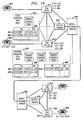
- FIG. 18 illustrates the operation of applicant's invention with respect to the use of a location routing number.
- Telephones 901, 902, and 903 are connected to end offices 911, 912, and 913, respectively.
- End offices 911 and 912 are in the same local region, whereas, end office 913 is connected to end offices 911, and 912 via trunks interconnecting interexchange carrier offices 902 and 921.
- Access tandems 915 and 916 are used for accessing the interexchange carrier and for interconnecting the end offices to data bases as shown as local universal data base 951 and a national universal data base 952.
- For each end office a set of office codes served by that office is shown.
- the particular office code which is also used as the location routing number is shown in parentheses.
- telephone station 415-887-1234 is connected to end office 912 having location routing number 415-267.
- End office 911 serves the bulk of the telephones having telephone numbers in the 415-887 office code.
- telephone 901 calls telephone 902 having telephone number 415-887-1234
- a check is made in local universal data base 951, table 930, and an entry 931 is found, indicating that telephone 415-887-1234 is served by an end office identified by location routing number 415-267, i.e., end office 912. If no entry had been found by location routing number 415-887-1234, then the call would have been routed using the 415-887 code to end office 911.
- telephone 901 calls telephone 903 having telephone number 201-334-9876
- such a call is identified as being an interLATA (inter-local access transport area) routed to an interexchange carrier which accesses a national universal data base in order to find the identity of the switch serving the terminating telephone. It is necessary to identify this switch in order to route via an exchange carrier that serves the identified switch.
- the national universal data base 952 has an entry 942 in table 940 for telephone number 201-334-9876 and that entry indicates that the location routing number of the terminating end office is 201-789. If no entry had been found, then the 201-334 office code would have been used to route the call to end office 914 which serves the bulk of the 201-334 office code traffic.
- the data bases need only store data for the numbers that are not served by the local switches serving the bulk of the numbers of a particular office code. Data need only be stored for the numbers of customers who have moved from such a switch to another.
- an end office switch may serve more than one carrier, with different sets of customers, associated with different sets, telephone numbers, being served by different carriers.
- different trunk groups being served by different carriers.
- different trunk groups are likely to be used for the calls of the different carriers.
- the routing arrangement must be capable of selecting these carriers. Therefore, it is necessary to have the translations in the LUDB 951 and NUBD 952 augmented with the identities of the trunk groups or a routing index for finding such trunk groups. As shown in FIG. 5, such carriers must be identified for routing and entered in billing records.
Landscapes
- Engineering & Computer Science (AREA)
- Computer Networks & Wireless Communication (AREA)
- Exchange Systems With Centralized Control (AREA)
- Data Exchanges In Wide-Area Networks (AREA)
Applications Claiming Priority (2)
| Application Number | Priority Date | Filing Date | Title |
|---|---|---|---|
| US534534 | 1983-09-22 | ||
| US08/534,534 US5740239A (en) | 1995-09-27 | 1995-09-27 | Method and apparatus using bit maps to access data for processing telephone calls |
Publications (2)
| Publication Number | Publication Date |
|---|---|
| EP0766485A2 true EP0766485A2 (de) | 1997-04-02 |
| EP0766485A3 EP0766485A3 (de) | 2000-02-23 |
Family
ID=24130475
Family Applications (1)
| Application Number | Title | Priority Date | Filing Date |
|---|---|---|---|
| EP96306735A Withdrawn EP0766485A3 (de) | 1995-09-27 | 1996-09-17 | Verbesserter Datenzugriff in Fernsprechnetzwerken |
Country Status (2)
| Country | Link |
|---|---|
| US (1) | US5740239A (de) |
| EP (1) | EP0766485A3 (de) |
Cited By (3)
| Publication number | Priority date | Publication date | Assignee | Title |
|---|---|---|---|---|
| WO1997033441A1 (en) * | 1996-03-08 | 1997-09-12 | Stentor Resource Centre Inc. | Providing number portability by means of enhanced routing tables |
| WO2004002122A1 (en) * | 2002-06-20 | 2003-12-31 | Racov, Yael | Method and system to register a caller's response in a bitmap using the caller's telephone number |
| WO2006033089A1 (en) * | 2004-09-24 | 2006-03-30 | Telefonaktiebolaget L M Ericsson (Publ) | Method and information database structure with user defined priorities for faster data access |
Families Citing this family (42)
| Publication number | Priority date | Publication date | Assignee | Title |
|---|---|---|---|---|
| US5661792A (en) * | 1994-10-18 | 1997-08-26 | At&T | Completing telecommunications calls in a competitive local and toll enviroment |
| US5978464A (en) * | 1995-06-30 | 1999-11-02 | Siemens Information And Communications Networks, Inc. | Method for updating a local switch internal database in system having different service providers within a common numbering plan area |
| US5912962A (en) * | 1996-02-06 | 1999-06-15 | Northern Telecom Limited | Method of porting for use with local number portability |
| EP0827319A3 (de) * | 1996-07-30 | 2000-05-17 | Hewlett-Packard Company | Globale Titelumwertung in einem die Tragbarkeit der Nummern aufrechterhaltenden Signalisierungsnetzwerk der Fernmeldetechnik |
| US5940493A (en) * | 1996-11-26 | 1999-08-17 | Bellsouth Corporation | System and method for providing directory assistance information |
| US5917899A (en) * | 1996-12-17 | 1999-06-29 | Ameritech Corporation | Method of connecting a plurality of virtual networks |
| US6628774B2 (en) * | 1998-11-20 | 2003-09-30 | Ameritech Corporation | Method of routing interlata network traffic |
| US5878122A (en) * | 1997-02-07 | 1999-03-02 | Northern Telecom Limited | Long distance service bureau |
| US5937056A (en) * | 1997-02-19 | 1999-08-10 | Ericsson Inc. | Alternate routing for calls requiring monitoring |
| US5910981A (en) * | 1997-03-26 | 1999-06-08 | Lucent Technologies Inc. | Automatic updating of a local database supporting local number portability |
| US5956396A (en) * | 1997-05-06 | 1999-09-21 | At&T Corp | Class-of-service automatic routing |
| US6078657A (en) * | 1997-05-30 | 2000-06-20 | Telcordia Technologies, Inc. | Method and system for providing local telephone number portability using geographic unit building blocks |
| US6072793A (en) * | 1997-06-12 | 2000-06-06 | Lucent Technologies Inc. | Electronically controlled main distributing frame |
| US6108408A (en) * | 1997-07-30 | 2000-08-22 | Sbc Technology Resources, Inc. | Apparatus and method for routing a dedicated number through alternate telephone carriers |
| US6084872A (en) * | 1997-10-30 | 2000-07-04 | Ameritech Corporation | Trunk and switch architecture for providing switched-circuit connections to on-line data services |
| US6154534A (en) * | 1997-12-30 | 2000-11-28 | Ericsson, Inc. | Flexible routing of local number portability (LNP) data in a telecommunications network |
| US6041366A (en) * | 1998-02-02 | 2000-03-21 | International Business Machines Corporation | System and method for dynamic specification of input/output attributes |
| EP1173969B1 (de) | 1999-04-05 | 2007-04-11 | Tekelec | Verfahren und system zur leitweglenkung von mit portierten teilnehmern assozierten signalisierungsnachrichten in einem kommunikationsnetzwerk |
| US6845238B1 (en) | 1999-09-15 | 2005-01-18 | Telefonaktiebolaget Lm Ericsson (Publ) | Inter-frequency measurement and handover for wireless communications |
| US6600917B1 (en) | 1999-10-04 | 2003-07-29 | Telefonaktiebolaget Lm Ericsson (Publ) | Telecommunications network broadcasting of service capabilities |
| US6647113B2 (en) | 2000-05-05 | 2003-11-11 | Tekelec | Methods and systems for providing universal triggerless number portability |
| US6611831B1 (en) | 2000-08-07 | 2003-08-26 | Lucent Technologies Inc. | Method for worldwide administration of advanced number portability numbers |
| US6359980B1 (en) | 2000-08-31 | 2002-03-19 | Lucent Technologies Inc. | Method for administering advanced number portability numbers |
| US6687349B1 (en) * | 2001-01-31 | 2004-02-03 | At&T Corp. | System and method for defining a local communication space |
| US7181218B2 (en) * | 2001-04-10 | 2007-02-20 | Telefonaktiebolaget Lm Ericsson (Publ) | Commanding handover between differing radio access technologies |
| US7305383B1 (en) | 2004-06-10 | 2007-12-04 | Cisco Technology, Inc. | Processing system using bitmap array to compress deterministic finite automation state table allowing direct indexing |
| US8688128B1 (en) * | 2005-12-23 | 2014-04-01 | At&T Intellectual Property Ii, L.P. | Method and system for providing toll-free telematic and mobile services applications |
| US8213899B1 (en) * | 2006-12-05 | 2012-07-03 | Sprint Spectrum L.P. | Real time network determination of intra-carrier mobile to mobile calls |
| US8606222B2 (en) | 2006-12-28 | 2013-12-10 | Tekelec Global, Inc. | Methods, systems, and computer program products for performing prepaid account balance screening |
| US8213440B2 (en) * | 2007-02-21 | 2012-07-03 | Tekelec Global, Inc. | Methods, systems, and computer program products for using a location routing number based query and response mechanism to route calls to IP multimedia subsystem (IMS) subscribers |
| US8730970B2 (en) * | 2007-02-23 | 2014-05-20 | Tekelec Global, Inc. | Methods systems, and computer program products for providing voicemail routing information in a network that provides customized voicemail services |
| US8254553B2 (en) | 2007-08-10 | 2012-08-28 | Tekelec, Inc. | Systems, methods, and computer program products for number translation with local directory number support |
| US9584959B2 (en) * | 2008-11-24 | 2017-02-28 | Tekelec Global, Inc. | Systems, methods, and computer readable media for location-sensitive called-party number translation in a telecommunications network |
| US9219677B2 (en) | 2009-01-16 | 2015-12-22 | Tekelec Global, Inc. | Methods, systems, and computer readable media for centralized routing and call instance code management for bearer independent call control (BICC) signaling messages |
| US9712341B2 (en) | 2009-01-16 | 2017-07-18 | Tekelec, Inc. | Methods, systems, and computer readable media for providing E.164 number mapping (ENUM) translation at a bearer independent call control (BICC) and/or session intiation protocol (SIP) router |
| US8224337B2 (en) * | 2009-09-16 | 2012-07-17 | Tekelec, Inc. | Methods, systems, and computer readable media for providing foreign routing address information to a telecommunications network gateway |
| US9319318B2 (en) * | 2010-03-15 | 2016-04-19 | Tekelec, Inc. | Methods, systems, and computer readable media for performing PCRF-based user information pass through |
| US8903974B2 (en) | 2010-10-05 | 2014-12-02 | Tekelec, Inc. | Methods, systems, and computer readable media for user controlled policy sharing |
| US9332036B2 (en) | 2010-10-15 | 2016-05-03 | Tekelec, Inc. | Methods, systems, and computer readable media for providing user receptivity driven policy in a communications network |
| US8620263B2 (en) | 2010-10-20 | 2013-12-31 | Tekelec, Inc. | Methods, systems, and computer readable media for diameter routing agent (DRA) based credit status triggered policy control |
| US8681622B2 (en) | 2010-12-17 | 2014-03-25 | Tekelec, Inc. | Policy and charging rules function (PCRF) and performance intelligence center (PIC) based congestion control |
| US8996670B2 (en) | 2011-08-05 | 2015-03-31 | Tekelec, Inc. | Methods, systems, and computer readable media for network metadata based policy control |
Family Cites Families (10)
| Publication number | Priority date | Publication date | Assignee | Title |
|---|---|---|---|---|
| US5155858A (en) * | 1988-10-27 | 1992-10-13 | At&T Bell Laboratories | Twin-threshold load-sharing system with each processor in a multiprocessor ring adjusting its own assigned task list based on workload threshold |
| DE69332632T2 (de) * | 1992-06-30 | 2003-06-26 | Siemens Information And Communication Networks, Inc. | Anrufverarbeitungssystem |
| CA2078045C (en) * | 1992-09-11 | 1999-11-16 | Mark R. Sestak | Global management of telephone directory |
| US5473681A (en) * | 1993-07-02 | 1995-12-05 | At&T Corp. | Method for use in completing telephone calls |
| US5481603A (en) * | 1993-09-28 | 1996-01-02 | At&T Corp. | Intelligent call processing based upon complete identification of calling station |
| US5550912A (en) * | 1994-02-28 | 1996-08-27 | At&T Corp. | Connections between a toll network and multiple local networks |
| US5475749A (en) * | 1994-02-28 | 1995-12-12 | At&T Corp. | Connections between a toll network and multiple local networks |
| FI98683C (fi) * | 1994-05-09 | 1997-07-25 | Helsingin Puhelin Oy | Menetelmä puhelinverkon keskusten ohjaamiseksi |
| US5559877A (en) * | 1995-03-21 | 1996-09-24 | At&T | Automatic provisioning of trunking and routing parameters in a telecommunications network |
| US5598464A (en) * | 1995-06-20 | 1997-01-28 | Dsc Communications Comporation | Method and apparatus for providing local number portability |
-
1995
- 1995-09-27 US US08/534,534 patent/US5740239A/en not_active Expired - Fee Related
-
1996
- 1996-09-17 EP EP96306735A patent/EP0766485A3/de not_active Withdrawn
Cited By (3)
| Publication number | Priority date | Publication date | Assignee | Title |
|---|---|---|---|---|
| WO1997033441A1 (en) * | 1996-03-08 | 1997-09-12 | Stentor Resource Centre Inc. | Providing number portability by means of enhanced routing tables |
| WO2004002122A1 (en) * | 2002-06-20 | 2003-12-31 | Racov, Yael | Method and system to register a caller's response in a bitmap using the caller's telephone number |
| WO2006033089A1 (en) * | 2004-09-24 | 2006-03-30 | Telefonaktiebolaget L M Ericsson (Publ) | Method and information database structure with user defined priorities for faster data access |
Also Published As
| Publication number | Publication date |
|---|---|
| US5740239A (en) | 1998-04-14 |
| EP0766485A3 (de) | 2000-02-23 |
Similar Documents
| Publication | Publication Date | Title |
|---|---|---|
| US5740239A (en) | Method and apparatus using bit maps to access data for processing telephone calls | |
| US5910981A (en) | Automatic updating of a local database supporting local number portability | |
| US6324277B1 (en) | Completing telecommunications calls in a competitive local and toll environment | |
| EP0520688B1 (de) | Verfahren zur Umleitung von Telekommunikationsverkehr | |
| CA2217037C (en) | A system and method for providing portable telephone number service | |
| EP0932984B1 (de) | Fernmeldenetz mit teilnehmernummerverschiebbarkeit | |
| US5136636A (en) | Telephone connection to a nearby dealer | |
| JP2981166B2 (ja) | 通信ネットワークにおける中継線選択および経路選択のパラメータの自動提供装置とその方法 | |
| US5940490A (en) | Call processing to provide number portability | |
| EP0756428B1 (de) | Datenbankbefragungen in einem Fernmeldenetz | |
| KR20010022744A (ko) | 전화 번호 이식성을 부여하는, 전화망에서의 호출명 전송 관리 | |
| US7190780B2 (en) | Method of operating a virtual private network | |
| EP1100279A2 (de) | Triggerloses Nummerübertragbarkeitssystem und -verfahren | |
| US20070019624A1 (en) | Trunk and switch architecture for providing switched-circuit connections to on-line data services | |
| CA2102992A1 (en) | System for completing calls to roaming cellular telephone subscribers | |
| US7764774B2 (en) | Allow toll free calls via dedicated access line (DAL) based upon origination | |
| US5995609A (en) | Number portability for a cluster of switches | |
| US6633638B1 (en) | Method and apparatus for a customer self-provisioning of outpulsed digits in a telecommunication network | |
| EP0950323B1 (de) | Steuerungsverfahren eines anrufes | |
| CA2232772C (en) | Completing telecommunications calls in a competitive local and toll environment | |
| CA2156002C (en) | Completing telecommunications calls in a competitive local and toll environment | |
| US6539089B1 (en) | Method and apparatus for implementing a plurality of numbering plans in a telecommunications network | |
| EP1157530B1 (de) | Nummerveränderungsmedium |
Legal Events
| Date | Code | Title | Description |
|---|---|---|---|
| PUAI | Public reference made under article 153(3) epc to a published international application that has entered the european phase |
Free format text: ORIGINAL CODE: 0009012 |
|
| AK | Designated contracting states |
Kind code of ref document: A2 Designated state(s): DE ES FR GB IT |
|
| PUAL | Search report despatched |
Free format text: ORIGINAL CODE: 0009013 |
|
| AK | Designated contracting states |
Kind code of ref document: A3 Designated state(s): DE ES FR GB IT |
|
| 17P | Request for examination filed |
Effective date: 20000811 |
|
| 17Q | First examination report despatched |
Effective date: 20010726 |
|
| GRAH | Despatch of communication of intention to grant a patent |
Free format text: ORIGINAL CODE: EPIDOS IGRA |
|
| STAA | Information on the status of an ep patent application or granted ep patent |
Free format text: STATUS: THE APPLICATION IS DEEMED TO BE WITHDRAWN |
|
| 18D | Application deemed to be withdrawn |
Effective date: 20030206 |