EP0760562B1 - Communication procedure control system - Google Patents
Communication procedure control system Download PDFInfo
- Publication number
- EP0760562B1 EP0760562B1 EP19960306320 EP96306320A EP0760562B1 EP 0760562 B1 EP0760562 B1 EP 0760562B1 EP 19960306320 EP19960306320 EP 19960306320 EP 96306320 A EP96306320 A EP 96306320A EP 0760562 B1 EP0760562 B1 EP 0760562B1
- Authority
- EP
- European Patent Office
- Prior art keywords
- synchronization
- data
- transmission
- procedure
- communication
- Prior art date
- Legal status (The legal status is an assumption and is not a legal conclusion. Google has not performed a legal analysis and makes no representation as to the accuracy of the status listed.)
- Expired - Lifetime
Links
Images









Classifications
-
- H—ELECTRICITY
- H04—ELECTRIC COMMUNICATION TECHNIQUE
- H04J—MULTIPLEX COMMUNICATION
- H04J3/00—Time-division multiplex systems
- H04J3/02—Details
- H04J3/06—Synchronising arrangements
- H04J3/0602—Systems characterised by the synchronising information used
- H04J3/0605—Special codes used as synchronising signal
-
- H—ELECTRICITY
- H04—ELECTRIC COMMUNICATION TECHNIQUE
- H04N—PICTORIAL COMMUNICATION, e.g. TELEVISION
- H04N7/00—Television systems
- H04N7/24—Systems for the transmission of television signals using pulse code modulation
- H04N7/52—Systems for transmission of a pulse code modulated video signal with one or more other pulse code modulated signals, e.g. an audio signal or a synchronizing signal
- H04N7/54—Systems for transmission of a pulse code modulated video signal with one or more other pulse code modulated signals, e.g. an audio signal or a synchronizing signal the signals being synchronous
- H04N7/56—Synchronising systems therefor
Definitions
- a method for multiplexing audio information, video information and data in a transmission line is defined by ITU-T Recommendation H.221.
- Information to be multiplexed according to the H.221 has various forms: audio, image, LSD (Low-Speed Data), HSD (High-Speed Data), MLP (Multilayer Protocol), HMLP (High-Speed Multilayer Protocol) and ECS (Encryption Control Signal).
- LSD and HSD may have free contents for applications, e.g., data for external device control, character data, highly fine color still image and facsimile.
- one 64-kbps channel B is constructed of octets to be transmitted at 8 kHz.
- a data unit is a frame of 80 octets, a sub-multiframe consisting of 2 frames, and a multiframe consisting of 8 sub-multiframes.
- a receiver establishes synchronization of every data unit by detecting a frame alignment (synchronizing) word (FAW) and a multiframe alignment (synchronizing) word (MFAW). Recognition of establishment or getting-out of synchronization is made with front two-step alignment guard and back two-step alignment guard operations.
- FAW frame alignment
- MFAW multiframe alignment
- bit arrangement of multiplexed different kinds of signals There is an example of bit arrangement of multiplexed different kinds of signals according to H. 221.
- information consisting of audio 48 kbps, video 68.8 kbps and LSD 8 kbps is multiplexed to be transmitted over 2B channels.
- a communication party (receiving terminal) is informed by BAS (Bitrate Allocation Signal) codes of how the information was multiplexed.
- BAS Bit Allocation Signal
- a receiving terminal after establishment of frame alignment (synchronization) and multiframe alignment separates multiplexed information referring to the received BAS codes.
- the BAS code is transmitted one for each sub-multiframe.
- the separated information e,g., image data is handled as follows:
- ITU-T Recommendation H.261 defines an image coding method.
- the channel coding enables the detection and correction of transmission error at communicating terminals.
- Forward Error Correction (FEC) is conducted by using BCH (Bose Chaudhuri Hocquenghem) code of "511, 493".
- BCH Bose Chaudhuri Hocquenghem
- This channel coding is to add an error-correcting code of 18 bits to a file identifier (Fi) of 1 bit and coded image data of 492 bits.
- the receiving terminal first detects synchronizing bit pattern of a FEC frame and then decodes coded image data correcting error by using error correcting parity bit.
- a sending party and a receiving party negotiate with each other to determine how to multiplex and transmit the above-mentioned different kinds of information, i.e., transmission mode not to exceed the receiving capability of parties.
- This negotiation is defined as a communication procedure using BAS codes according to the ITU-T Recommendation H.242.
- the Recommendation provides that BAS code itself consists of double error-correcting code (16, 8). Namely, it uses such protection that the received BAS code is considered to be invalid if an error of not less than 3 bits occurred in a frame synchronization word in the same sub-multiframe, and three of the BAS codes received just before the frame synchronization was lost is also considered to be invalid.
- the double error-correcting code (16, 8) has 8 error correcting bits added to 8 bits of BAS code.
- the above-mentioned protection is ineffective if an uncorrectable transmission-line error occurred only in BAS data strings. In consequence of the transmission error in BAS code, incorrect separation of the received information occurs.
- a conventional communication procedure control system that includes a video synchronization monitoring portion for monitoring the video FEC synchronization in a video data decoding, a data synchronization monitoring portion for monitoring synchronization of synchronous data and a H. 221 frame-synchronization monitoring portion for monitoring the synchronization of the H. 221 frame.
- These monitoring portions detect loss of the FEC synchronization in a video data decoding portion and loss of the data synchronization in a data receiving portion when the received information was incorrectly separated
- a transmission procedure executing portion recognizes that the receiving mode of the receiving terminal does not match with the transmitting mode of the sending terminal and then executes the mode-mismatch recovering procedure.
- This procedure repeats the negotiation of a communication mode at the beginning of the communication between them as shown in the latter stage of the mode-mismatch recovery procedure, whereat the communication will be once conducted only in an initial mode of audio ⁇ -law OF for call-setting-up.
- the transmission mode is then determined by the negotiation and the receiving party is informed of the multiplexing conditions and multiplexed information to establish again the initially intended communication mode.
- MLP 6.4 kbps is multiplied to the transmission state and a resultant transmission state is recognized with a result of incorrect separation of the three kinds of information. Namely, a part of video data is recognized as MLP (M1, M2, ...) and, therefore, the video (FEC) synchronization is lost and will not be restored.
- the data (LSD) can be correctly separated keeping the data synchronization because the transmission condition of both is the same.
- the conventional mode-mismatch recovering procedure is executed again starting with only speech communication, causing interruption of data transmission.
- the present invention relates to a communication procedure control system that can exactly execute error recovery procedure whenever out-of-synchronization condition occurs in any portion during multiplex transmission of data.
- the present invention has, as its object the provision of a communication procedure control system which, in the event that any of different kinds of multiplexed data after separation is pulled out of synchronization (provided the H.221 frame alignment is maintained), can recover the normal synchronous transmission condition from the mismatched mode condition without interrupting transmission of information in the established synchronization.
- the present invention provides a communication procedure control system for multiplex transmission of a plurality of different forms of data in frames according to the ITU-T Recommendation H.221, comprising data synchronization monitoring means for monitoring the different forms of received data, separated after having been received in the form of a frame H.221 over a multiplex transmission line, frame synchronization monitoring means for monitoring frame synchronization of the received frames, communication procedure executing means for executing a mode-mismatch recovering procedure for matching transmission and reception communication modes in the event that loss of synchronization of data transmission occurs and continues over a specified time, characterized in that information synchronization control means is provided for performing overall control of the synchronized conditions of the received data and for issuing, in the event of loss of synchronization in said monitored information over the specified time, a request for execution by said communication procedure execution means of a mode-mismatch recovering procedure while maintaining transmission of the information which has not lost synchronization.
- Such a system can execute mode-mismatch recovering procedure without interrupting transmission of information for which synchronization remains established.
- a method for multiplexing audio information, video information and data in a transmission line is defined by ITU-T Recommendation H.221.
- Information to be multiplexed according to the H.221 has various forms: audio, image, LSD (Low-Speed Data), HSD (High-Speed Data), MLP (Multilayer Protocol), HMLP (High-Speed Multilayer Protocol) and ECS (Encryption Control Signal).
- LSD and HSD may have free contents for applications, e.g., data for external device control, character data, highly fine color still image and facsimile.
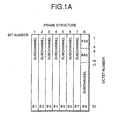
- Fig. 1A and Fig. 1B illustrate a frame structure according to the H.221.
- One 64-kbps channel B is constructed of octets to be transmitted at 8 kHz.
- a data unit is a frame of 80 octets (see Fig. 1A), sub-multiframe consisting of 2 or 8 unit frames, and a multiframe consisting of 8 sub-multiframes (see Fig. 1B).
- a receiver establishes synchronization of every data unit by detecting a frame alignment (synchronizing) word (FAW) and a multiframe alignment (synchronizing) word (MFAW). Recognition of establishment or getting-out of synchronization is made with front two-step alignment guard and back two-step alignment guard operations.
- FAW frame alignment
- MFAW multiframe alignment
- Fig. 2 shows an example of bit arrangement of multiplexed different kinds of signals according to H. 221.
- Information consisting of audio 48 kbps, video 68.8 kbps and LSD 8 kbps is multiplexed to be transmitted over 2B channels.
- a communication party (receiving terminal) is informed by BAS codes (see Fig. 2) of how the information was multiplexed.
- BAS codes see Fig. 2 of how the information was multiplexed.
- a receiving terminal after establishment of frame alignment (synchronization) and multiframe alignment separates multiplexed information referring to the received BAS codes.
- the BAS code is transmitted one for each sub-multiframe.
- the separated information e.g., image data is handled as follows:
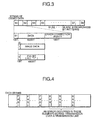
- Fig. 3 is a view for explaining a channel coding method according to the ITU-T Recommendation standard H.261.
- This recommended standard H.261 defines an image coding method.
- the channel coding enables the detection and correction of transmission error at communicating terminals.
- Forward Error Correction (FEC) is conducted by using BCH (Bose Chaudhuri Hocquenghem) code of "511, 493".
- BCH Bose Chaudhuri Hocquenghem
- This channel coding is to add an error-correcting code of 18 bits to a file identifier (Fi) of 1 bit and coded image data of 492 bits.
- the receiving terminal first detects synchronizing bit pattern S1 to S8 of a FEC frame and then decodes coded image data correcting error by using error correcting parity bit.
- a sending party and a receiving party negotiate with each other to determine how to multiplex and transmit the above-mentioned different kinds of information, i.e., transmission mode not to exceed the receiving capability of parties.
- This negotiation is defined as a communication procedure using BAS codes according to the ITU-T Recommendation standard H.242.
- the Recommendation standard (H.242) provides that BAS code itself consists of double error-correcting code (16, 8). Namely, it uses such protection that the received BAS code is considered to be invalid if an error of not less than 3 bits occurred in a frame synchronization word in the same sub-multiframe, and three of the BAS codes received just before the frame synchronization was lost is also considered to be invalid.
- the double error-correcting code (16, 8) has 8 error correcting bits added to 8 bits of BAS code.
- the above-mentioned protection is ineffective if an uncorrectable transmission-line error occurred only in BAS data strings as shown in Fig. 4. In consequence of the transmission error in BAS code, incorrect separation of the received information occurs.
- Fig. 5 is a block diagram of a conventional communication procedure control system that includes a video synchronization monitoring portion 11 for monitoring the video FEC synchronization in a video data decoding, a data synchronization monitoring portion 12 for monitoring synchronization of synchronous data and a H. 221 frame-synchronization monitoring portion 13 for monitoring the synchronization of the H. 221 frame.
- These monitoring portions detect loss of the FEC synchronization in a video data decoding portion and loss of the data synchronization in a data receiving portion when the received information was incorrectly separated.
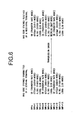
- Figs. 6 and 7A show an example of erroneous recognition BAS code, where a sequence LSD8k of BAS codes in a sub-multiframe SMFn+7 transmitted from a sending terminal is incorrectly recognized as MLP6.4k in the received sequence of BAS codes.
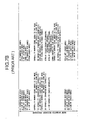
- Figs. 7B and 7C shows an example of a sequence of BAS codes to be transmitted and received when a mode mismatch recovering procedure: the above-mentioned erroneous recognition occurred in a mode-initializing procedure (as shown in Fig. 7A) resulting in loosing video synchronization.
- a transmission procedure executing portion 15' recognizes that the receiving mode of the receiving terminal does not match with the transmitting mode of the sending terminal and then executes the mode-mismatch recovering procedure.
- This procedure repeats the negotiation of a communication mode at the beginning of the communication between them as shown in the latter stage of the mode-mismatch recovery procedure (shown in Figs. 7B and 7C), whereat the communication will be once conducted only in an initial mode of audio ⁇ -law OF for call-setting-up.
- the transmission mode is then determined by the negotiation and the receiving party is informed of the multiplexing conditions and multiplexed information to establish again the initially intended communication mode.
- a resultant transmission state of Fig. 8 is recognized with a result of incorrect separation of the three kinds of information. Namely, a part of video data is recognized as MLP (M1, M2, ...) and, therefore, the video (FEC) synchronization is lost and will not be restored.
- the data (LSD) can be correctly separated keeping the data synchronization because the transmission condition of Fig. 2 is the same as that of the transmission conditions of Fig. 8.
- the conventional mode-mismatch recovering procedure is executed again starting with only speech communication, causing interruption of data transmission.
- Fig. 9 is a block diagram of a control portion of a communication procedure control system embodying the present invention.
- a video-synchronization monitoring portion 11 monitors FEC synchronization of video data in a video-data decoding portion
- a data synchronization monitoring portion 12 monitors synchronization of synchronous data in a data receiving portion
- a H.221 synchronization monitoring portion 13 monitors frame synchronization of each H.221 frame.
- a synchronization control portion 14 is connected to the video-synchronization monitoring portion 11, the data synchronization monitoring portion 12 and the H.221 synchronization monitoring portion 13. It performs overall control of the synchronized conditions of every kind of information and issues a request for executing mode-mismatch recovering procedure in the case that synchronization of any kind of information was lost and could not be restored after the elapse of a specified time.
- a transmission procedure executing portion 15 is connected to the synchronization control portion 14 and executes the synchronization restoring procedure and the mode-mismatch recovering procedure.
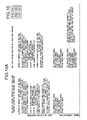
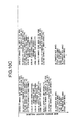
- Fig. 10 shows an example of a string of BAS codes to be transmitted when executing a mode-mismatch recovering procedure (shown in Figs. 10B and 10C) according to the present invention in the case that the FEC synchronization of video signals is lost and the synchronization of LSD data is kept as established.
- the shown example will be explained below in comparison with the string of BAS codes to be transmitted when executing the conventional mode-mismatch recovering procedure (shown in Figs. 7B and 7C).
- one terminal has a BAS code set of transmission capability ⁇ 2B Capability, G.722-48k, Capability Au16kb/s, CIF, 1/29.97, 1/29.97, Capability LSD9.6k, Capability LSD8k, Capability MLP6.4k ⁇ and the other terminal has a BAS code set of transmission capability ⁇ Capability 2B, G.722-48k, CIF, 2/29.97, 3/29.97, Capability LSD8k, Capability MLP6.4k ⁇ .
- a BAS command set specifying a transmission mode of the receiving terminal is determined as ⁇ 2B, G.722m3, H.261, LSD8kb/s ⁇ and a BAS command set specifying a transmission mode of a sending terminal becomes the same as that of the receiving terminal.
- a BAS code of MLP6.4kb/s is incorrectly recognized resulting in that the video FEC synchronization is lost and can not be restored but the H.221-frame alignment and the data synchronization are kept as established.
- the prior art system transmits a BAS command set ⁇ 1B, ⁇ -law OF, video OFF, LSD OFF ⁇ and then a capability-indicating BAS code set ⁇ Capability 1B, Capability ⁇ -law ⁇ .
- the receiving terminal which received the capability-indicating BAS code set during the communication with the sending terminal, transmits a BAS code set indicating own capability to the sending terminal and then carries-out again negotiation to determine a transmission mode like at the communication starting stage.
- the receiving terminal presents that it is capable of receiving only audio signal of ⁇ -law and incapable of receiving video and data LSD and MLD.
- the sending terminal stops transmission of video and data LSD and sends only audio signal of ⁇ -law OF to restore the initial call setting-up mode.
- the receiving terminal stops separation of video, data LSD and erroneously recognized data MLP. Like the mode initializing procedure at the beginning of data communication, the both terminals send and receive the capability-indicating BAS code set, determines the communication mode and sends and receives the BAS command set. The mismatched mode condition is corrected and accurate data transmission is achieved.
- the communication procedure control system Under the condition that the video FEC synchronization is lost and can not be restored but the H.221 frame alignment and the data synchronization are kept as established over the LSD transmission line, the communication procedure control system according to the present invention first transmits the BAS command set ⁇ 2B, ⁇ -law OF, Video OFF, LSD8k ⁇ and then the capability-indicating BAS code set ⁇ 2B Capability, ⁇ -Law Capability, LSD8k Capability ⁇ to initialize video, MLP data and asynchronous audio modes.
- the receiving terminal informed that it can receive audio signals of ⁇ -law and data of LSD8k but can not receive video signals and MLP data, and the sending terminal, therefore, stops the transmission of video signals and continues transmission of LSD8k data and selects the speech communication " ⁇ -Law OF".
- the receiving terminal stops separation of video signals and erroneously recognized MLP data.
- the both terminals send and receive the capability-indicating BAS code set, determines the communication mode and sends and receives the BAS command set.
- the mismatched mode condition is corrected and correct transmission of various kinds of information is resumed. Namely, according to the present invention, the recovery from mismatched mode can be achieved, keeping the LSD transmission line in its synchronized condition.
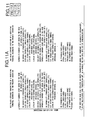
- Fig. 11 shows an example of mode-mismatch recovering means according to the present invention, which operates, by way of example, under the condition that synchronization of FEC video signals is maintained but synchronization of LSD data is lost.
- a receiving terminal and a sending terminal are assumed to have the same transmission capability ⁇ 2B capability, G.722-48k, CIF, 1/29.97, 1/29.97, Variable LSD capability, Encrypting capability ⁇ .
- both terminals have the same BAS codes ⁇ 2B, G.722m3, H.261, Variable LSD ⁇ .
- a BAS code of encryption ON is incorrectly recognized resulting in that the LSD data synchronization is lost and can not be restored but the H.221-frame alignment and the FEC video synchronization are maintained as established.
- the receiving terminal in this instance first transmits the BAS command set ⁇ 2B, ⁇ -law OF, H.261, LSD OFF ⁇ and then the capability-indicating BAS code set ⁇ 2B Capability, ⁇ -Law Capability, CIF, 1/29.97, 1/29.97 ⁇ .
- the receiving terminal informed the sending terminal that it can receive audio signals of ⁇ -law and video signals but can not receive LSD data and encrypted data.
- the sending terminal therefore, stops transmission of LSD data and continues transmission of video signals and selects the speech communication " ⁇ -Law OF".
- the receiving terminal stops separation of LSD data and incorrectly recognized encrypted data.
- the both terminals send and receive the capability-indicating BAS set, determine the communication mode and send and receive the BAS command set.
- the mismatched mode condition is corrected and accurate transmission of various kinds of information is restored. Namely, according to the present invention, the recovery from the mismatched mode can be achieved, keeping the video transmission line in its synchronized condition.
- the present invention offers the following advantages:
- the communication procedure control system is also applicable to transmission of various kinds of data such as video-data and synchronous data.
Landscapes
- Engineering & Computer Science (AREA)
- Signal Processing (AREA)
- Computer Networks & Wireless Communication (AREA)
- Multimedia (AREA)
- Time-Division Multiplex Systems (AREA)
- Synchronisation In Digital Transmission Systems (AREA)
- Two-Way Televisions, Distribution Of Moving Picture Or The Like (AREA)
- Communication Control (AREA)
Description
- With developments of high-speed digital communications networks such as ISDN (Integrated Services Digital Networks) and advances of video processing techniques, there has been an increasing demand for video communication services. The concept of interactive Multimedia becomes popular and various kinds of information services besides audio and video communications are expected to emerge and develop.
- An example of a multimedia communication apparatus capable of multiplexing multimedia information is disclosed in EP-A-0 535 890.
- A method for multiplexing audio information, video information and data in a transmission line is defined by ITU-T Recommendation H.221. Information to be multiplexed according to the H.221 has various forms: audio, image, LSD (Low-Speed Data), HSD (High-Speed Data), MLP (Multilayer Protocol), HMLP (High-Speed Multilayer Protocol) and ECS (Encryption Control Signal).
- LSD and HSD may have free contents for applications, e.g., data for external device control, character data, highly fine color still image and facsimile.
- In a frame structure according to the H.221, one 64-kbps channel B is constructed of octets to be transmitted at 8 kHz. A data unit is a frame of 80 octets, a sub-multiframe consisting of 2 frames, and a multiframe consisting of 8 sub-multiframes. A receiver establishes synchronization of every data unit by detecting a frame alignment (synchronizing) word (FAW) and a multiframe alignment (synchronizing) word (MFAW). Recognition of establishment or getting-out of synchronization is made with front two-step alignment guard and back two-step alignment guard operations.
- There is an example of bit arrangement of multiplexed different kinds of signals according to H. 221. In the example, information consisting of audio 48 kbps, video 68.8 kbps and
LSD 8 kbps is multiplexed to be transmitted over 2B channels. A communication party (receiving terminal) is informed by BAS (Bitrate Allocation Signal) codes of how the information was multiplexed. A receiving terminal after establishment of frame alignment (synchronization) and multiframe alignment separates multiplexed information referring to the received BAS codes. The BAS code is transmitted one for each sub-multiframe. - The separated information, e,g., image data is handled as follows:
- ITU-T Recommendation H.261 defines an image coding method. The channel coding enables the detection and correction of transmission error at communicating terminals. Forward Error Correction (FEC) is conducted by using BCH (Bose Chaudhuri Hocquenghem) code of "511, 493". This channel coding is to add an error-correcting code of 18 bits to a file identifier (Fi) of 1 bit and coded image data of 492 bits. The receiving terminal first detects synchronizing bit pattern of a FEC frame and then decodes coded image data correcting error by using error correcting parity bit.
- At the beginning of communication, a sending party and a receiving party negotiate with each other to determine how to multiplex and transmit the above-mentioned different kinds of information, i.e., transmission mode not to exceed the receiving capability of parties. This negotiation is defined as a communication procedure using BAS codes according to the ITU-T Recommendation H.242.
- In case if an error in BAS bit position occurs, received information is incorrectly separated. In view of this problem, the Recommendation (H.242) provides that BAS code itself consists of double error-correcting code (16, 8). Namely, it uses such protection that the received BAS code is considered to be invalid if an error of not less than 3 bits occurred in a frame synchronization word in the same sub-multiframe, and three of the BAS codes received just before the frame synchronization was lost is also considered to be invalid. The double error-correcting code (16, 8) has 8 error correcting bits added to 8 bits of BAS code. The above-mentioned protection, however, is ineffective if an uncorrectable transmission-line error occurred only in BAS data strings. In consequence of the transmission error in BAS code, incorrect separation of the received information occurs.
- There is a conventional communication procedure control system that includes a video synchronization monitoring portion for monitoring the video FEC synchronization in a video data decoding, a data synchronization monitoring portion for monitoring synchronization of synchronous data and a H. 221 frame-synchronization monitoring portion for monitoring the synchronization of the H. 221 frame. These monitoring portions detect loss of the FEC synchronization in a video data decoding portion and loss of the data synchronization in a data receiving portion when the received information was incorrectly separated
- The above-mentioned error conditions, by way of example of erroneous recognition BAS code, where a sequence LSD8k of BAS codes in a sub-multiframe SMFn+7 transmitted from a sending terminal is incorrectly recognized as MLP6.4k in the received sequence of BAS codes.
- On the other hand, in the case if any of the synchronization monitors detected that the video FEC synchronization or the data synchronization is lost with keeping the H.221 frame synchronization as established and the synchronization could not recovered within a specified time, a transmission procedure executing portion recognizes that the receiving mode of the receiving terminal does not match with the transmitting mode of the sending terminal and then executes the mode-mismatch recovering procedure. This procedure repeats the negotiation of a communication mode at the beginning of the communication between them as shown in the latter stage of the mode-mismatch recovery procedure, whereat the communication will be once conducted only in an initial mode of audio µ-law OF for call-setting-up. The transmission mode is then determined by the negotiation and the receiving party is informed of the multiplexing conditions and multiplexed information to establish again the initially intended communication mode.
- It is assumed that three kinds of information, e.g., in terms of audio (48 kbps), data LSD (8 kbps) and video (68.8 kbps) are now transmitted at a transfer rate of 2×64 kbps. The transmission rate of the video is variable and determined at 68.8 kbps by subtracting audio rate, LSD rate, MLP rate and FAS (Frame Alignment Signal), BAS rate from the transfer rate. In the event of a transmission error having occurred in a sub-multiframe SMFn+7, an error took place in the transmitted BAS codes but an incorrect BAS code of MLP 6.4 kbps was recognized as a received command of BAS code. In this instance, MLP 6.4 kbps is multiplied to the transmission state and a resultant transmission state is recognized with a result of incorrect separation of the three kinds of information. Namely, a part of video data is recognized as MLP (M1, M2, ...) and, therefore, the video (FEC) synchronization is lost and will not be restored. On the other hand, the data (LSD) can be correctly separated keeping the data synchronization because the transmission condition of both is the same. However, the conventional mode-mismatch recovering procedure is executed again starting with only speech communication, causing interruption of data transmission.
- The present invention relates to a communication procedure control system that can exactly execute error recovery procedure whenever out-of-synchronization condition occurs in any portion during multiplex transmission of data.
- The present invention has, as its object the provision of a communication procedure control system which, in the event that any of different kinds of multiplexed data after separation is pulled out of synchronization (provided the H.221 frame alignment is maintained), can recover the normal synchronous transmission condition from the mismatched mode condition without interrupting transmission of information in the established synchronization.
- To solve the above-mentioned problem according to the conventional method, the present invention according to
claim 1 provides a communication procedure control system for multiplex transmission of a plurality of different forms of data in frames according to the ITU-T Recommendation H.221, comprising data synchronization monitoring means for monitoring the different forms of received data, separated after having been received in the form of a frame H.221 over a multiplex transmission line, frame synchronization monitoring means for monitoring frame synchronization of the received frames, communication procedure executing means for executing a mode-mismatch recovering procedure for matching transmission and reception communication modes in the event that loss of synchronization of data transmission occurs and continues over a specified time, characterized in that information synchronization control means is provided for performing overall control of the synchronized conditions of the received data and for issuing, in the event of loss of synchronization in said monitored information over the specified time, a request for execution by said communication procedure execution means of a mode-mismatch recovering procedure while maintaining transmission of the information which has not lost synchronization. - Such a system can execute mode-mismatch recovering procedure without interrupting transmission of information for which synchronization remains established.
- Preferred further features are defined in
claims 2 to 7. -
- Figures 1A and 1B are illustrative of a frame structure according to the recommendation H.221 of ITU-T.
- Figure 2 shows an example of bit arrangement for multiplexing signals by using frames H.221.
- Figure 3 is illustrative of a method for communication line coding system according to the recommendation H.261 of ITU-T.
- Figure 4 shows an exemplified state in which an error is added to BAS code.
- Figure 5 is a block diagram of a control portion of a conventional transmission control system.
- Figure 6 shows an example of recognition of a BAS code with the error attached thereto.
- Figure 7 (7A, 7B and 7C) shows an example of a sequence of BAS codes to be transmitted and received when executing a mode initializing procedure and a mode mismatch recovering procedure according to a conventional transmission control system.
- Figure 8 is another example of bit arrangement for multiplexing signals by using frames H.221.
- Figure 9 is a block diagram of a control portion of a communication procedure control system embodying the present invention.
- Figure 10 (10A, 10B and 10C) shows an example of a sequence of BAS codes to be transmitted and received when executing a mode initializing procedure and a mode mismatch recovering procedure according to the present invention.
- Figure 11 (11A, 11B and 11C) shows an example of a sequence of BAS codes to be transmitted and received when executing a mode initializing procedure and a mode mismatch recovering procedure according to a communication procedure control system according to the present invention.
-
- A method for multiplexing audio information, video information and data in a transmission line is defined by ITU-T Recommendation H.221. Information to be multiplexed according to the H.221 has various forms: audio, image, LSD (Low-Speed Data), HSD (High-Speed Data), MLP (Multilayer Protocol), HMLP (High-Speed Multilayer Protocol) and ECS (Encryption Control Signal).
- LSD and HSD may have free contents for applications, e.g., data for external device control, character data, highly fine color still image and facsimile.
- Fig. 1A and Fig. 1B illustrate a frame structure according to the H.221. One 64-kbps channel B is constructed of octets to be transmitted at 8 kHz. A data unit is a frame of 80 octets (see Fig. 1A), sub-multiframe consisting of 2 or 8 unit frames, and a multiframe consisting of 8 sub-multiframes (see Fig. 1B). As shown in Figs. 1A and 1B, a receiver establishes synchronization of every data unit by detecting a frame alignment (synchronizing) word (FAW) and a multiframe alignment (synchronizing) word (MFAW). Recognition of establishment or getting-out of synchronization is made with front two-step alignment guard and back two-step alignment guard operations.
- Fig. 2 shows an example of bit arrangement of multiplexed different kinds of signals according to H. 221. Information consisting of audio 48 kbps, video 68.8 kbps and
LSD 8 kbps is multiplexed to be transmitted over 2B channels. A communication party (receiving terminal) is informed by BAS codes (see Fig. 2) of how the information was multiplexed. A receiving terminal after establishment of frame alignment (synchronization) and multiframe alignment separates multiplexed information referring to the received BAS codes. The BAS code is transmitted one for each sub-multiframe. - The separated information, e.g., image data is handled as follows:
- Fig. 3 is a view for explaining a channel coding method according to the ITU-T Recommendation standard H.261. This recommended standard H.261 defines an image coding method. The channel coding enables the detection and correction of transmission error at communicating terminals. Forward Error Correction (FEC) is conducted by using BCH (Bose Chaudhuri Hocquenghem) code of "511, 493". This channel coding is to add an error-correcting code of 18 bits to a file identifier (Fi) of 1 bit and coded image data of 492 bits. The receiving terminal first detects synchronizing bit pattern S1 to S8 of a FEC frame and then decodes coded image data correcting error by using error correcting parity bit.
- At the beginning of communication, a sending party and a receiving party negotiate with each other to determine how to multiplex and transmit the above-mentioned different kinds of information, i.e., transmission mode not to exceed the receiving capability of parties. This negotiation is defined as a communication procedure using BAS codes according to the ITU-T Recommendation standard H.242.
- In case if an error in BAS bit position occurs, received information is incorrectly separated. In view of this problem, the Recommendation standard (H.242) provides that BAS code itself consists of double error-correcting code (16, 8). Namely, it uses such protection that the received BAS code is considered to be invalid if an error of not less than 3 bits occurred in a frame synchronization word in the same sub-multiframe, and three of the BAS codes received just before the frame synchronization was lost is also considered to be invalid. The double error-correcting code (16, 8) has 8 error correcting bits added to 8 bits of BAS code. The above-mentioned protection, however, is ineffective if an uncorrectable transmission-line error occurred only in BAS data strings as shown in Fig. 4. In consequence of the transmission error in BAS code, incorrect separation of the received information occurs.
- Fig. 5 is a block diagram of a conventional communication procedure control system that includes a video
synchronization monitoring portion 11 for monitoring the video FEC synchronization in a video data decoding, a datasynchronization monitoring portion 12 for monitoring synchronization of synchronous data and a H. 221 frame-synchronization monitoring portion 13 for monitoring the synchronization of the H. 221 frame. These monitoring portions detect loss of the FEC synchronization in a video data decoding portion and loss of the data synchronization in a data receiving portion when the received information was incorrectly separated. - The above-mentioned error conditions, by way of example, are shown in Figs. 6 and 7A. Fig. 6 shows an example of erroneous recognition BAS code, where a sequence LSD8k of BAS codes in a sub-multiframe SMFn+7 transmitted from a sending terminal is incorrectly recognized as MLP6.4k in the received sequence of BAS codes.
- Figs. 7B and 7C shows an example of a sequence of BAS codes to be transmitted and received when a mode mismatch recovering procedure: the above-mentioned erroneous recognition occurred in a mode-initializing procedure (as shown in Fig. 7A) resulting in loosing video synchronization.
- On the other hand, in the case if any of the synchronization monitors 11, 12 detected that the video FEC synchronization or the data synchronization is lost with keeping the H.221 frame synchronization as established and the synchronization could not recovered within a specified time, a transmission procedure executing portion 15' recognizes that the receiving mode of the receiving terminal does not match with the transmitting mode of the sending terminal and then executes the mode-mismatch recovering procedure. This procedure repeats the negotiation of a communication mode at the beginning of the communication between them as shown in the latter stage of the mode-mismatch recovery procedure (shown in Figs. 7B and 7C), whereat the communication will be once conducted only in an initial mode of audio µ-law OF for call-setting-up. The transmission mode is then determined by the negotiation and the receiving party is informed of the multiplexing conditions and multiplexed information to establish again the initially intended communication mode.
- It is assumed that three kinds of information, e.g., in terms of audio (48 kbps), data LSD (8 kbps) and video (68.8 kbps) are now transmitted at a transfer rate of 2×64 kbps. The transmission rate of the video is variable and determined at 68.8 kbps by subtracting audio rate, LSD rate, MLP rate and FAS, BAS rate from the transfer rate. In the event of a transmission error having occurred in a sub-multiframe SMFn+7 as shown in Fig. 6, an error took place in the transmitted BAS codes but an incorrect BAS code of MLP 6.4 kbps was recognized as a received command of BAS code. In this instance, MLP 6.4 kbps is multiplied to the transmission state of Fig. 2 and a resultant transmission state of Fig. 8 is recognized with a result of incorrect separation of the three kinds of information. Namely, a part of video data is recognized as MLP (M1, M2, ...) and, therefore, the video (FEC) synchronization is lost and will not be restored. On the other hand, the data (LSD) can be correctly separated keeping the data synchronization because the transmission condition of Fig. 2 is the same as that of the transmission conditions of Fig. 8. However, the conventional mode-mismatch recovering procedure is executed again starting with only speech communication, causing interruption of data transmission.
- Fig. 9 is a block diagram of a control portion of a communication procedure control system embodying the present invention.
- In Fig. 9, a video-
synchronization monitoring portion 11 monitors FEC synchronization of video data in a video-data decoding portion, a datasynchronization monitoring portion 12 monitors synchronization of synchronous data in a data receiving portion and a H.221synchronization monitoring portion 13 monitors frame synchronization of each H.221 frame. Asynchronization control portion 14 is connected to the video-synchronization monitoring portion 11, the datasynchronization monitoring portion 12 and the H.221synchronization monitoring portion 13. It performs overall control of the synchronized conditions of every kind of information and issues a request for executing mode-mismatch recovering procedure in the case that synchronization of any kind of information was lost and could not be restored after the elapse of a specified time. A transmissionprocedure executing portion 15 is connected to thesynchronization control portion 14 and executes the synchronization restoring procedure and the mode-mismatch recovering procedure. - Fig. 10 shows an example of a string of BAS codes to be transmitted when executing a mode-mismatch recovering procedure (shown in Figs. 10B and 10C) according to the present invention in the case that the FEC synchronization of video signals is lost and the synchronization of LSD data is kept as established. The shown example will be explained below in comparison with the string of BAS codes to be transmitted when executing the conventional mode-mismatch recovering procedure (shown in Figs. 7B and 7C). In both examples, one terminal has a BAS code set of transmission capability {2B Capability, G.722-48k, Capability Au16kb/s, CIF, 1/29.97, 1/29.97, Capability LSD9.6k, Capability LSD8k, Capability MLP6.4k} and the other terminal has a BAS code set of transmission capability {
Capability 2B, G.722-48k, CIF, 2/29.97, 3/29.97, Capability LSD8k, Capability MLP6.4k}. As the result of execution of a mode initializing procedure for determining transmission mode of respective terminals, a BAS command set specifying a transmission mode of the receving terminal is determined as {2B, G.722m3, H.261, LSD8kb/s} and a BAS command set specifying a transmission mode of a sending terminal becomes the same as that of the receiving terminal. At this time, a BAS code of MLP6.4kb/s is incorrectly recognized resulting in that the video FEC synchronization is lost and can not be restored but the H.221-frame alignment and the data synchronization are kept as established. - In this instance, the prior art system transmits a BAS command set {1B, µ-law OF, video OFF, LSD OFF} and then a capability-indicating BAS code set {
Capability 1B, Capability µ-law}. The receiving terminal, which received the capability-indicating BAS code set during the communication with the sending terminal, transmits a BAS code set indicating own capability to the sending terminal and then carries-out again negotiation to determine a transmission mode like at the communication starting stage. The receiving terminal presents that it is capable of receiving only audio signal of µ-law and incapable of receiving video and data LSD and MLD. The sending terminal stops transmission of video and data LSD and sends only audio signal of µ-law OF to restore the initial call setting-up mode. The receiving terminal stops separation of video, data LSD and erroneously recognized data MLP. Like the mode initializing procedure at the beginning of data communication, the both terminals send and receive the capability-indicating BAS code set, determines the communication mode and sends and receives the BAS command set. The mismatched mode condition is corrected and accurate data transmission is achieved. - Under the condition that the video FEC synchronization is lost and can not be restored but the H.221 frame alignment and the data synchronization are kept as established over the LSD transmission line, the communication procedure control system according to the present invention first transmits the BAS command set {2B, µ-law OF, Video OFF, LSD8k} and then the capability-indicating BAS code set {2B Capability, µ-Law Capability, LSD8k Capability} to initialize video, MLP data and asynchronous audio modes.
- In this instance, the receiving terminal informed that it can receive audio signals of µ-law and data of LSD8k but can not receive video signals and MLP data, and the sending terminal, therefore, stops the transmission of video signals and continues transmission of LSD8k data and selects the speech communication "µ-Law OF". The receiving terminal stops separation of video signals and erroneously recognized MLP data. Like the mode initializing procedure at the beginning of data communication (see Fig. 10A), the both terminals send and receive the capability-indicating BAS code set, determines the communication mode and sends and receives the BAS command set. The mismatched mode condition is corrected and correct transmission of various kinds of information is resumed. Namely, according to the present invention, the recovery from mismatched mode can be achieved, keeping the LSD transmission line in its synchronized condition.
- Fig. 11 shows an example of mode-mismatch recovering means according to the present invention, which operates, by way of example, under the condition that synchronization of FEC video signals is maintained but synchronization of LSD data is lost. In this instance, a receiving terminal and a sending terminal are assumed to have the same transmission capability {2B capability, G.722-48k, CIF, 1/29.97, 1/29.97, Variable LSD capability, Encrypting capability}. As the result of a mode initializing procedure for determining transmission mode of both terminals, both terminals have the same BAS codes {2B, G.722m3, H.261, Variable LSD}. At this time, a BAS code of encryption ON is incorrectly recognized resulting in that the LSD data synchronization is lost and can not be restored but the H.221-frame alignment and the FEC video synchronization are maintained as established.
- According to the present invention, the receiving terminal in this instance first transmits the BAS command set {2B, µ-law OF, H.261, LSD OFF} and then the capability-indicating BAS code set {2B Capability, µ-Law Capability, CIF, 1/29.97, 1/29.97}. The receiving terminal informed the sending terminal that it can receive audio signals of µ-law and video signals but can not receive LSD data and encrypted data. The sending terminal, therefore, stops transmission of LSD data and continues transmission of video signals and selects the speech communication "µ-Law OF". The receiving terminal stops separation of LSD data and incorrectly recognized encrypted data. Like the mode initializing procedure at the beginning of data communication, the both terminals send and receive the capability-indicating BAS set, determine the communication mode and send and receive the BAS command set. The mismatched mode condition is corrected and accurate transmission of various kinds of information is restored. Namely, according to the present invention, the recovery from the mismatched mode can be achieved, keeping the video transmission line in its synchronized condition.
- As is apparent from the foregoing, the present invention offers the following advantages:
- Under the condition that, in multiplex transmission of H.221 frames, any one of different kinds of received and separated signals (information) is pulled out of synchronization and can not be restored in synchronized condition but H.221 frames are kept as synchronized in the multiplexed transmission line of H.221 frames, the mismatched mode can be removed without interrupting transmission of signals being in synchronized condition. The communication procedure control system according to the present invention is also applicable to transmission of various kinds of data such as video-data and synchronous data.
Claims (7)
- A communication procedure control system for multiplex transmission of a plurality of different forms of data in frames according to the ITU-T Recommendation H.221, comprising data synchronization monitoring means (11, 12) for monitoring the different forms of received data, separated after having been received in the form of a frame H.221 over a multiplex transmission line, frame synchronization monitoring means (13) for monitoring frame synchronization of the received frames, communication procedure executing means (15) for executing a mode-mismatch recovering procedure for matching transmission and reception communication modes in the event that loss of synchronization of data transmission occurs and continues over a specified time, characterized in that information synchronization control means (14) is provided for performing overall control of the synchronized conditions of the received data and for issuing, in the event of loss of synchronization in said monitored information over the specified time, a request for execution by said communication procedure execution means of a mode-mismatch recovering procedure while maintaining transmission of the information which has not lost synchronization.
- A communication procedure control system according to claim 1, wherein the data synchronization monitoring means (11) is arranged to monitor the synchronization of video data in a video-data decoding portion and the synchronization of synchronous data in a data receiving portion.
- A communication procedure control system according to claim 2, wherein said communication-procedure executing means (15) is arranged to perform a communication procedure to re-establish how video data transmission is to be performed while maintaining transmission of the synchronous data whenever the synchronization monitoring means (11, 12) detects that the received video data has lost synchronization but the received synchronous data is still in synchronization.
- A communication procedure control system according to claim 2, wherein said communication-procedure executing means (15) is arranged to perform again the communication procedure to re-establish how synchronous data transmission is to be performed while maintaining transmission of video data whenever the synchronization monitoring means (11, 12) detects that the received synchronous data has lost synchronization but the received video data is still in synchronization.
- A communication procedure control system according to claim 1, wherein the data monitored by said data synchronization monitoring means includes synchronous data in a data receiving portion.
- A communication procedure control system according to claim 5, wherein said information synchronization control means is operable to cause the communication procedure executing means to execute the mode-mismatch recovering procedure while maintaining synchronization of data other than the synchronous data when synchronization of said synchronous data has been lost and synchronization of said other data has not been lost.
- A communication procedure control system according to claim 5, wherein said information synchronization control means is operable to cause the communication procedure executing means to execute the mode-mismatch recovering procedure while maintaining synchronization of the synchronous data when synchronization of data other than the synchronous data has been lost and synchronization of said synchronous data has not been lost.
Applications Claiming Priority (3)
| Application Number | Priority Date | Filing Date | Title |
|---|---|---|---|
| JP222108/95 | 1995-08-30 | ||
| JP22210895 | 1995-08-30 | ||
| JP22210895A JPH0969822A (en) | 1995-08-30 | 1995-08-30 | Communication procedure control system |
Publications (3)
| Publication Number | Publication Date |
|---|---|
| EP0760562A2 EP0760562A2 (en) | 1997-03-05 |
| EP0760562A3 EP0760562A3 (en) | 1999-06-23 |
| EP0760562B1 true EP0760562B1 (en) | 2004-10-27 |
Family
ID=16777275
Family Applications (1)
| Application Number | Title | Priority Date | Filing Date |
|---|---|---|---|
| EP19960306320 Expired - Lifetime EP0760562B1 (en) | 1995-08-30 | 1996-08-30 | Communication procedure control system |
Country Status (3)
| Country | Link |
|---|---|
| EP (1) | EP0760562B1 (en) |
| JP (1) | JPH0969822A (en) |
| DE (1) | DE69633702T2 (en) |
Families Citing this family (4)
| Publication number | Priority date | Publication date | Assignee | Title |
|---|---|---|---|---|
| DE19737850A1 (en) * | 1997-08-29 | 1999-04-08 | Siemens Ag | Method and communication system for the synchronization of two devices on a predeterminable data transmission method |
| US6195393B1 (en) * | 1998-07-06 | 2001-02-27 | General Instrument Corporation | HDTV video frame synchronizer that provides clean digital video without variable delay |
| JP3374795B2 (en) | 1999-07-29 | 2003-02-10 | 株式会社豊田自動織機 | Fender cover integrated step for industrial vehicles |
| CN112565664B (en) * | 2020-11-27 | 2023-04-28 | 北京融讯科创技术有限公司 | Video conference code stream feedback method, device, equipment and computer readable storage medium |
Family Cites Families (3)
| Publication number | Priority date | Publication date | Assignee | Title |
|---|---|---|---|---|
| JP3226945B2 (en) * | 1991-10-02 | 2001-11-12 | キヤノン株式会社 | Multimedia communication equipment |
| JPH0638188A (en) * | 1992-07-20 | 1994-02-10 | Canon Inc | Block distortion elimination device |
| US5537150A (en) * | 1992-05-01 | 1996-07-16 | Canon Kabushiki Kaisha | Image processing apparatus and image communicating apparatus |
-
1995
- 1995-08-30 JP JP22210895A patent/JPH0969822A/en active Pending
-
1996
- 1996-08-30 DE DE1996633702 patent/DE69633702T2/en not_active Expired - Lifetime
- 1996-08-30 EP EP19960306320 patent/EP0760562B1/en not_active Expired - Lifetime
Also Published As
| Publication number | Publication date |
|---|---|
| EP0760562A3 (en) | 1999-06-23 |
| DE69633702D1 (en) | 2004-12-02 |
| EP0760562A2 (en) | 1997-03-05 |
| JPH0969822A (en) | 1997-03-11 |
| DE69633702T2 (en) | 2006-02-02 |
Similar Documents
| Publication | Publication Date | Title |
|---|---|---|
| US7818634B2 (en) | Detecting method and system for consistency of link scrambling configuration | |
| EP0244629B1 (en) | Radio transmission system having simplified error coding circuitry and fast channel switching | |
| JPH03267846A (en) | Codec for asynchronous transmission | |
| KR100238133B1 (en) | Image recovery apparatus and method in video phone | |
| CN111385678A (en) | A method and device for realizing self-negotiation of optical link channel | |
| JP3556323B2 (en) | Relay device | |
| US7471697B2 (en) | Multiplex transmission system for reporting alert information to the conversion device on the receiving side without using a dedicated frame | |
| US5355124A (en) | Wiring concentrator for data networks | |
| EP0760562A2 (en) | Communication procedure control system | |
| EP0196647B1 (en) | Digital communication system | |
| US6920592B2 (en) | System, method, and apparatus for detecting and recovering from false synchronization | |
| US20020080724A1 (en) | Method of controlling 1+1bi -directional switching operation of asynchronous transfer mode switch | |
| JP3123942B2 (en) | Bulk transmission method using dedicated line | |
| CA2152177C (en) | Method and system for synchronizing an encoder and a decoder when an error is detected upon transmission of encoded data on communication networks | |
| US6137810A (en) | Telecommunication method and system | |
| US6687318B1 (en) | Method and communication system for synchronizing two devices with a predeterminable data transmission method | |
| JP2001119392A (en) | ISDN encryption adapter and ISDN encryption communication method | |
| US8713238B1 (en) | Recovery of a hot-pluggable serial communication link | |
| JP2859002B2 (en) | Synchronous signal processing device | |
| JP3295834B2 (en) | Time division multiplex data receiver | |
| JP2776302B2 (en) | Auxiliary signal transmission system with redundant configuration | |
| JP2567707B2 (en) | Working-Standby line switching method | |
| JP2003069614A (en) | Data transmission device | |
| JP2770790B2 (en) | SOH termination circuit | |
| JP2964653B2 (en) | Transmission equipment |
Legal Events
| Date | Code | Title | Description |
|---|---|---|---|
| PUAI | Public reference made under article 153(3) epc to a published international application that has entered the european phase |
Free format text: ORIGINAL CODE: 0009012 |
|
| AK | Designated contracting states |
Kind code of ref document: A2 Designated state(s): DE FR GB |
|
| PUAL | Search report despatched |
Free format text: ORIGINAL CODE: 0009013 |
|
| RIC1 | Information provided on ipc code assigned before grant |
Free format text: 6H 04J 3/06 A, 6H 04N 7/56 B, 6H 04N 7/66 B |
|
| AK | Designated contracting states |
Kind code of ref document: A3 Designated state(s): DE FR GB |
|
| 17P | Request for examination filed |
Effective date: 19991220 |
|
| 17Q | First examination report despatched |
Effective date: 20011116 |
|
| GRAP | Despatch of communication of intention to grant a patent |
Free format text: ORIGINAL CODE: EPIDOSNIGR1 |
|
| GRAS | Grant fee paid |
Free format text: ORIGINAL CODE: EPIDOSNIGR3 |
|
| GRAA | (expected) grant |
Free format text: ORIGINAL CODE: 0009210 |
|
| AK | Designated contracting states |
Kind code of ref document: B1 Designated state(s): DE FR GB |
|
| REG | Reference to a national code |
Ref country code: GB Ref legal event code: FG4D |
|
| REF | Corresponds to: |
Ref document number: 69633702 Country of ref document: DE Date of ref document: 20041202 Kind code of ref document: P |
|
| ET | Fr: translation filed | ||
| PLBE | No opposition filed within time limit |
Free format text: ORIGINAL CODE: 0009261 |
|
| STAA | Information on the status of an ep patent application or granted ep patent |
Free format text: STATUS: NO OPPOSITION FILED WITHIN TIME LIMIT |
|
| 26N | No opposition filed |
Effective date: 20050728 |
|
| REG | Reference to a national code |
Ref country code: FR Ref legal event code: PLFP Year of fee payment: 20 |
|
| PGFP | Annual fee paid to national office [announced via postgrant information from national office to epo] |
Ref country code: DE Payment date: 20150825 Year of fee payment: 20 Ref country code: GB Payment date: 20150826 Year of fee payment: 20 |
|
| PGFP | Annual fee paid to national office [announced via postgrant information from national office to epo] |
Ref country code: FR Payment date: 20150811 Year of fee payment: 20 |
|
| REG | Reference to a national code |
Ref country code: DE Ref legal event code: R071 Ref document number: 69633702 Country of ref document: DE |
|
| REG | Reference to a national code |
Ref country code: GB Ref legal event code: PE20 Expiry date: 20160829 |
|
| PG25 | Lapsed in a contracting state [announced via postgrant information from national office to epo] |
Ref country code: GB Free format text: LAPSE BECAUSE OF EXPIRATION OF PROTECTION Effective date: 20160829 |