EP0759935B1 - Recombinant papilloma virus l1 - Google Patents
Recombinant papilloma virus l1 Download PDFInfo
- Publication number
- EP0759935B1 EP0759935B1 EP95918467A EP95918467A EP0759935B1 EP 0759935 B1 EP0759935 B1 EP 0759935B1 EP 95918467 A EP95918467 A EP 95918467A EP 95918467 A EP95918467 A EP 95918467A EP 0759935 B1 EP0759935 B1 EP 0759935B1
- Authority
- EP
- European Patent Office
- Prior art keywords
- protein
- papilloma virus
- recombinant
- hpv6b
- hexahis
- Prior art date
- Legal status (The legal status is an assumption and is not a legal conclusion. Google has not performed a legal analysis and makes no representation as to the accuracy of the status listed.)
- Expired - Lifetime
Links
Images


Classifications
-
- C—CHEMISTRY; METALLURGY
- C07—ORGANIC CHEMISTRY
- C07K—PEPTIDES
- C07K14/00—Peptides having more than 20 amino acids; Gastrins; Somatostatins; Melanotropins; Derivatives thereof
- C07K14/005—Peptides having more than 20 amino acids; Gastrins; Somatostatins; Melanotropins; Derivatives thereof from viruses
-
- A—HUMAN NECESSITIES
- A61—MEDICAL OR VETERINARY SCIENCE; HYGIENE
- A61P—SPECIFIC THERAPEUTIC ACTIVITY OF CHEMICAL COMPOUNDS OR MEDICINAL PREPARATIONS
- A61P31/00—Antiinfectives, i.e. antibiotics, antiseptics, chemotherapeutics
- A61P31/12—Antivirals
-
- A—HUMAN NECESSITIES
- A61—MEDICAL OR VETERINARY SCIENCE; HYGIENE
- A61P—SPECIFIC THERAPEUTIC ACTIVITY OF CHEMICAL COMPOUNDS OR MEDICINAL PREPARATIONS
- A61P31/00—Antiinfectives, i.e. antibiotics, antiseptics, chemotherapeutics
- A61P31/12—Antivirals
- A61P31/20—Antivirals for DNA viruses
-
- A—HUMAN NECESSITIES
- A61—MEDICAL OR VETERINARY SCIENCE; HYGIENE
- A61P—SPECIFIC THERAPEUTIC ACTIVITY OF CHEMICAL COMPOUNDS OR MEDICINAL PREPARATIONS
- A61P35/00—Antineoplastic agents
-
- A—HUMAN NECESSITIES
- A61—MEDICAL OR VETERINARY SCIENCE; HYGIENE
- A61P—SPECIFIC THERAPEUTIC ACTIVITY OF CHEMICAL COMPOUNDS OR MEDICINAL PREPARATIONS
- A61P43/00—Drugs for specific purposes, not provided for in groups A61P1/00-A61P41/00
-
- C—CHEMISTRY; METALLURGY
- C07—ORGANIC CHEMISTRY
- C07K—PEPTIDES
- C07K16/00—Immunoglobulins [IG], e.g. monoclonal or polyclonal antibodies
- C07K16/08—Immunoglobulins [IG], e.g. monoclonal or polyclonal antibodies against material from viruses
- C07K16/081—DNA viruses
- C07K16/084—Papillomaviridae (F); Polyomaviridae (F), e.g. SV40, BK virus or JC virus
-
- A—HUMAN NECESSITIES
- A61—MEDICAL OR VETERINARY SCIENCE; HYGIENE
- A61K—PREPARATIONS FOR MEDICAL, DENTAL OR TOILETRY PURPOSES
- A61K39/00—Medicinal preparations containing antigens or antibodies
-
- C—CHEMISTRY; METALLURGY
- C07—ORGANIC CHEMISTRY
- C07K—PEPTIDES
- C07K2319/00—Fusion polypeptide
-
- C—CHEMISTRY; METALLURGY
- C12—BIOCHEMISTRY; BEER; SPIRITS; WINE; VINEGAR; MICROBIOLOGY; ENZYMOLOGY; MUTATION OR GENETIC ENGINEERING
- C12N—MICROORGANISMS OR ENZYMES; COMPOSITIONS THEREOF; PROPAGATING, PRESERVING, OR MAINTAINING MICROORGANISMS; MUTATION OR GENETIC ENGINEERING; CULTURE MEDIA
- C12N2710/00—MICROORGANISMS OR ENZYMES; COMPOSITIONS THEREOF; PROPAGATING, PRESERVING, OR MAINTAINING MICROORGANISMS; MUTATION OR GENETIC ENGINEERING; CULTURE MEDIA dsDNA viruses
- C12N2710/00011—Details
- C12N2710/20011—Papillomaviridae
- C12N2710/20022—New viral proteins or individual genes, new structural or functional aspects of known viral proteins or genes
-
- C—CHEMISTRY; METALLURGY
- C12—BIOCHEMISTRY; BEER; SPIRITS; WINE; VINEGAR; MICROBIOLOGY; ENZYMOLOGY; MUTATION OR GENETIC ENGINEERING
- C12N—MICROORGANISMS OR ENZYMES; COMPOSITIONS THEREOF; PROPAGATING, PRESERVING, OR MAINTAINING MICROORGANISMS; MUTATION OR GENETIC ENGINEERING; CULTURE MEDIA
- C12N2710/00—MICROORGANISMS OR ENZYMES; COMPOSITIONS THEREOF; PROPAGATING, PRESERVING, OR MAINTAINING MICROORGANISMS; MUTATION OR GENETIC ENGINEERING; CULTURE MEDIA dsDNA viruses
- C12N2710/00011—Details
- C12N2710/20011—Papillomaviridae
- C12N2710/20023—Virus like particles [VLP]
-
- Y—GENERAL TAGGING OF NEW TECHNOLOGICAL DEVELOPMENTS; GENERAL TAGGING OF CROSS-SECTIONAL TECHNOLOGIES SPANNING OVER SEVERAL SECTIONS OF THE IPC; TECHNICAL SUBJECTS COVERED BY FORMER USPC CROSS-REFERENCE ART COLLECTIONS [XRACs] AND DIGESTS
- Y10—TECHNICAL SUBJECTS COVERED BY FORMER USPC
- Y10S—TECHNICAL SUBJECTS COVERED BY FORMER USPC CROSS-REFERENCE ART COLLECTIONS [XRACs] AND DIGESTS
- Y10S977/00—Nanotechnology
- Y10S977/902—Specified use of nanostructure
- Y10S977/904—Specified use of nanostructure for medical, immunological, body treatment, or diagnosis
- Y10S977/915—Therapeutic or pharmaceutical composition
- Y10S977/917—Vaccine
-
- Y—GENERAL TAGGING OF NEW TECHNOLOGICAL DEVELOPMENTS; GENERAL TAGGING OF CROSS-SECTIONAL TECHNOLOGIES SPANNING OVER SEVERAL SECTIONS OF THE IPC; TECHNICAL SUBJECTS COVERED BY FORMER USPC CROSS-REFERENCE ART COLLECTIONS [XRACs] AND DIGESTS
- Y10—TECHNICAL SUBJECTS COVERED BY FORMER USPC
- Y10S—TECHNICAL SUBJECTS COVERED BY FORMER USPC CROSS-REFERENCE ART COLLECTIONS [XRACs] AND DIGESTS
- Y10S977/00—Nanotechnology
- Y10S977/902—Specified use of nanostructure
- Y10S977/904—Specified use of nanostructure for medical, immunological, body treatment, or diagnosis
- Y10S977/918—Immunological
-
- Y—GENERAL TAGGING OF NEW TECHNOLOGICAL DEVELOPMENTS; GENERAL TAGGING OF CROSS-SECTIONAL TECHNOLOGIES SPANNING OVER SEVERAL SECTIONS OF THE IPC; TECHNICAL SUBJECTS COVERED BY FORMER USPC CROSS-REFERENCE ART COLLECTIONS [XRACs] AND DIGESTS
- Y10—TECHNICAL SUBJECTS COVERED BY FORMER USPC
- Y10S—TECHNICAL SUBJECTS COVERED BY FORMER USPC CROSS-REFERENCE ART COLLECTIONS [XRACs] AND DIGESTS
- Y10S977/00—Nanotechnology
- Y10S977/902—Specified use of nanostructure
- Y10S977/904—Specified use of nanostructure for medical, immunological, body treatment, or diagnosis
- Y10S977/92—Detection of biochemical
Definitions
- THIS INVENTION relates to the L1 protein papilloma viruses.
- the invention relates to recombinant papilloma virus L1 protein and its use for detecting and treating papilloma virus infections.
- Papilloma viruses infect a range of hosts including man, cattle, sheep, dogs and cats.
- Papilloma Virus infections in Animals by J. P. Sundberg which is described in Papilloma Viruses and Human Diseases, edited by K. Syrjanen, L. Gissman and L. G. Koss, Springer Verlag, 1987.
- Human papilloma viruses induce benign hyperproliferative lesions of the cutaneous and mucosal epithelia. Of the 70 different virus types which infect humans, more than 20 are associated with anogenital lesions (de V Amsterdam, 1989, J. Virol. 63 4898-4903). Papilloma viruses have also been associated with various forms of cancers. Human papilloma virus types 16 and 18 have been associated with a number of cervical intra-epithelial neoplasias and carcinomas of the cervix (Lancaster et al ., 1987, Cancer Metast. Rev. 6 6653-6664 and Pfister, 1987, Adv. Cancer Res. 48 113-147).
- Papilloma viruses are small DNA viruses encoding up to eight early and two late genes.
- the late genes L1 and L2 code for structural proteins which assemble into a capsid within the cell (Galloway et al ., 1989, Adv. Virus Res. 37 125-171).
- the minor capsid protein L2 is present at approximately one-tenth the abundance of L1 (Doorbar et al ., 1987, J. Virol. 61 2793-2799).
- L1 protein has been cloned and expressed in a eukaryotic expression system using recombinant vaccinia virus (Browne et al ., 1988, J. Gen. Virol. 69 1263-1273; Zhou et al ., 1990, J. Gen. Virol. 71 2185-2190 and Zhou et al ., 1991, Virology 185 251-257), in a baculovirus expression system (Park et al ., 1993, J. Virol. Meth. 45 303-318) and in a bacterial expression system (Strike et al ., 1989, J. Gen. Virol. 70 543-555).
- L1 protein is the major capsid protein, it has been used as the basis for the development of vaccines for protection against papilloma virus infection.
- Zhou et al immunized mice with synthetic HPV16 virus-like particles (VLPs) using a vaccinia virus doubly recombinant for the L1 and L2 proteins of HPV16.
- VLPs HPV16 virus-like particles
- the murine anti-VLP anti-sera failed to recognise two peptides that were recognised by anti-HPV16L1 monoclonal antibodies raised against a recombinant L1 fusion protein (Zhou et al ., 1992, Virology 189 592-599). These researchers concluded that the immunoreactive epitopes of HPV16 defined using virus-like particles differ significantly from those defined using recombinant HPV16L1 fusion proteins.
- VLPs were formed intracellularly from recombinant L1 or L1 and L2 proteins encoded by recombinant vaccinia virus (Zhou et al ., 1991, Virology 185 251-257; Zhou et al ., 1991, Virology 181 203-210 and International Patent Specification WO93/02184).
- These vaccines using synthetic virus-like particles have a number of disadvantages. Firstly, the recombinant L1 or L1 and L2 genes are expressed from a vaccinia virus vector which may not be suitable for the production of a vaccine. Secondly, the virus-like particles are produced intracellutarly which is a rate limiting step.
- virus-like particles may incorporate cellular DNA because they are produced intracellularly and virus-like particles incorporating DNA are not suitable for use in vaccines.
- virus-like particles may only be partially purified because of the need to retain their integrity and hence correct epitope presentation. Consequently, other proteins or matter associated with the virus-like particles may contaminate a vaccine preparation.
- the process of producing a vaccine in commercial amounts with virus-like particles from recombinant vaccinia viruses is comparatively expensive.
- the present invention provides a method for preparing a multimeric structure comprising one or more bacterially-expressed recombinant papilloma virus L1 proteins, said method including the steps of:
- formation of said multimeric structure at step (iv) occurs in the absence of salt.
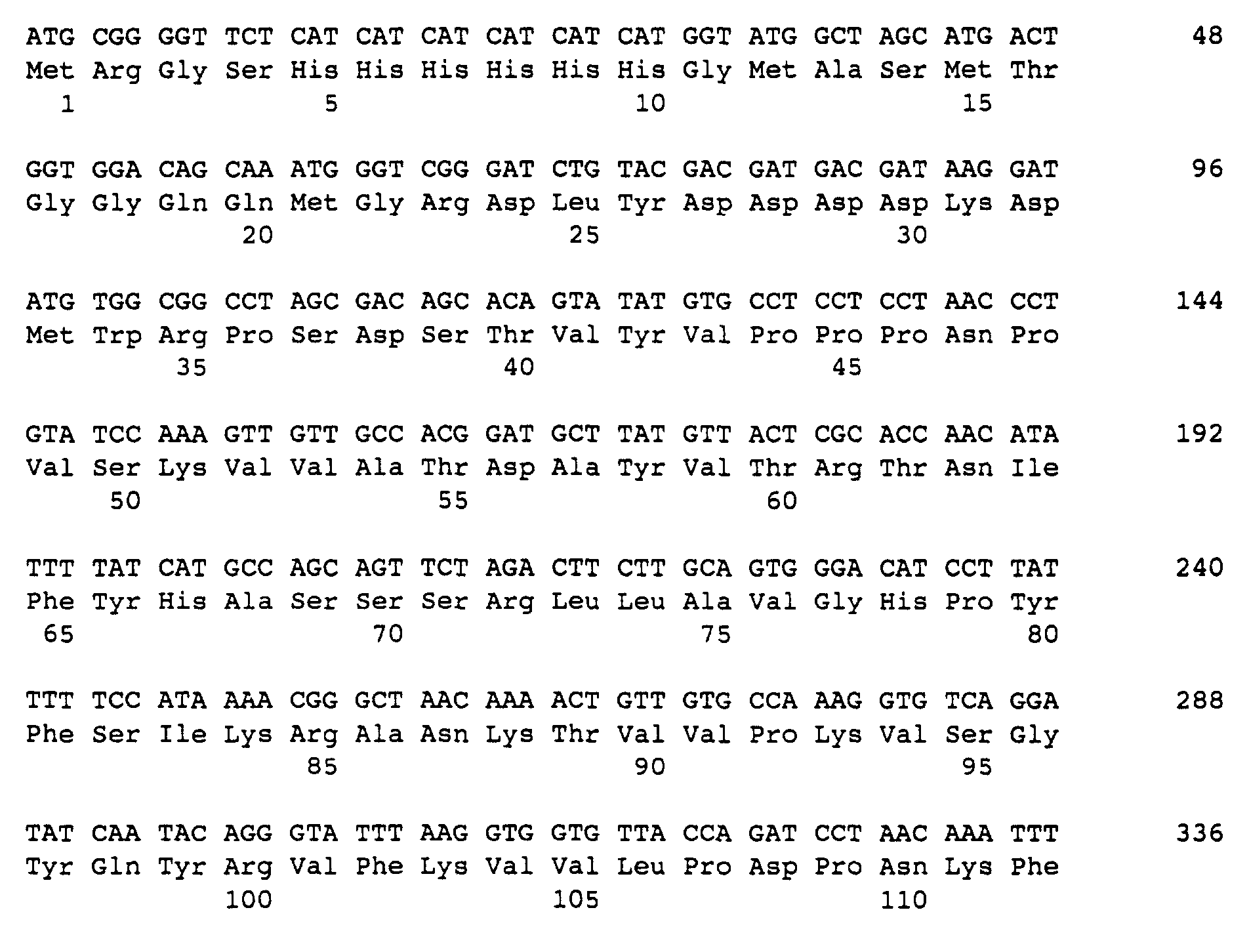
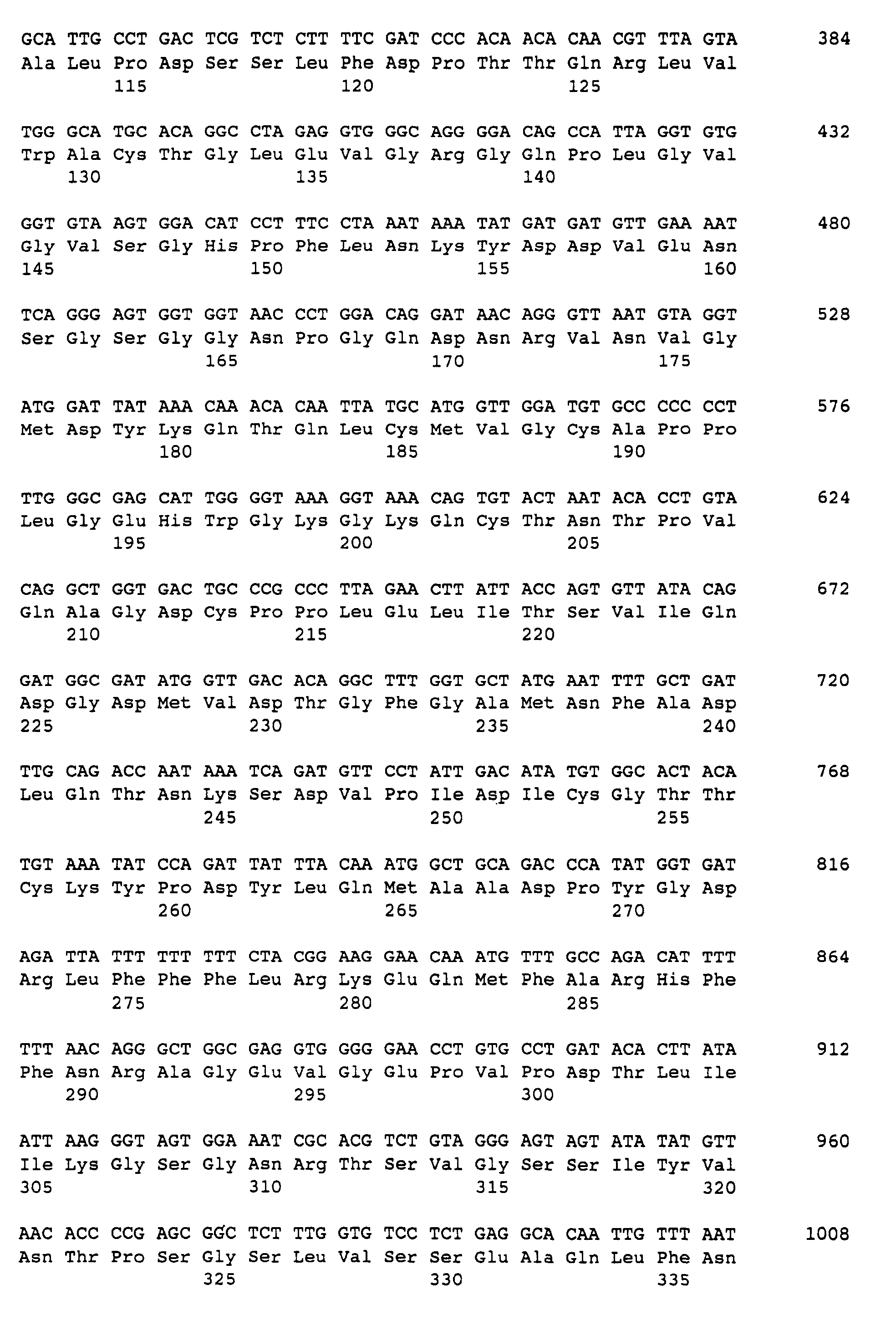
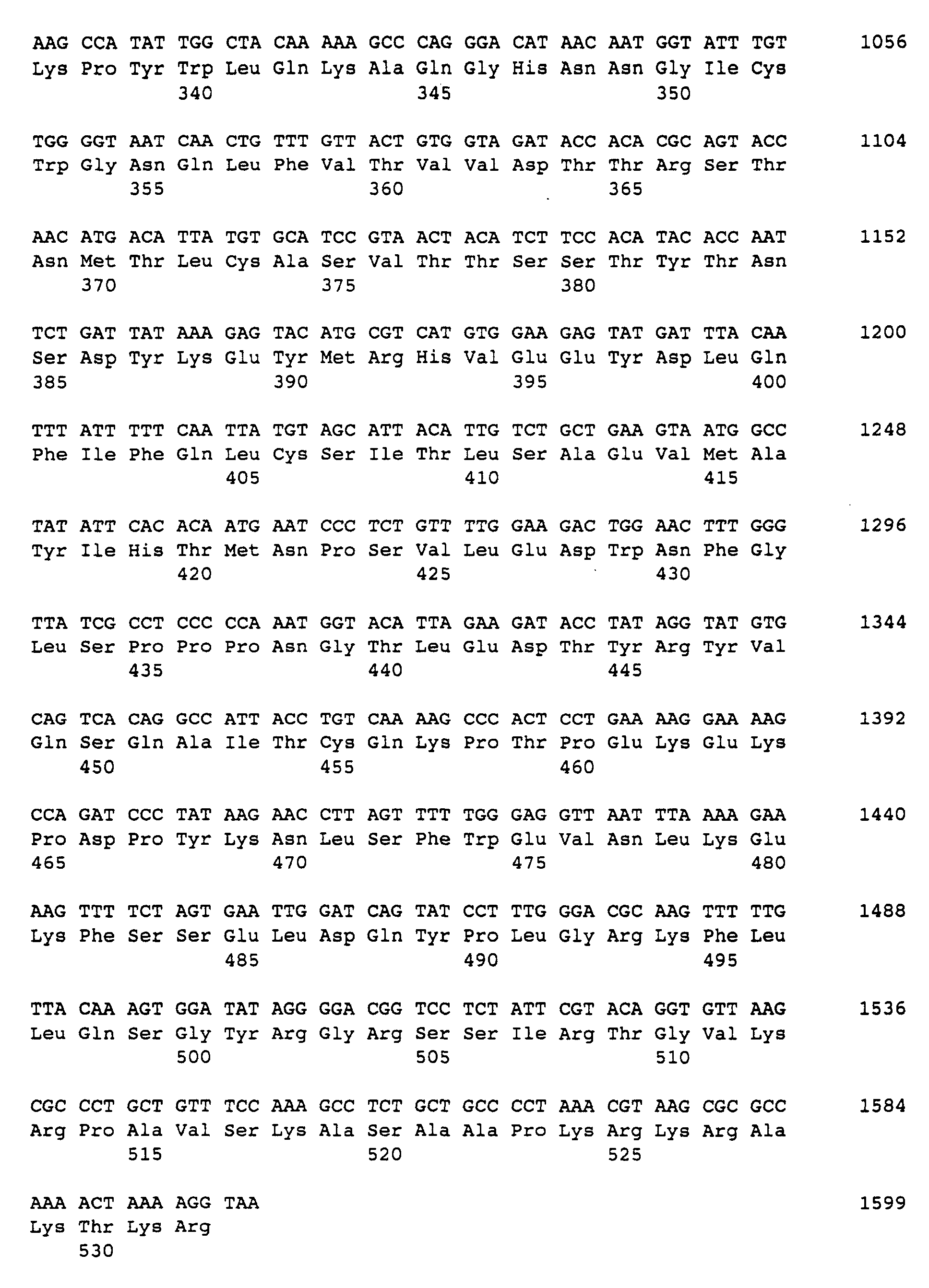
- the recombinant DNA molecule may comprise a 5' nucleotide sequence according to SEQ ID NO:2. Furthermore, the recombinant DNA molecule may comprise a 5' nucleotide sequence according to SEQ ID NO:3.
- the recombinant DNA molecule may comprise a nucleotide sequence that is hybridizable under standard conditions with SEQ ID NO:2 or SEQ ID NO:3.
- the recombinant DNA molecule may be inserted into pTrcHisB in a correct reading frame with respect to expression of the papilloma virus L1 protein.
- the papilloma virus L1 protein may be expressed in an E.coli bacterial cell.
- the method of the invention may, furthermore, include the step of incorporating the multimeric structure into a vaccine.
- the recombinant papilloma virus L1 protein may be a fusion protein.
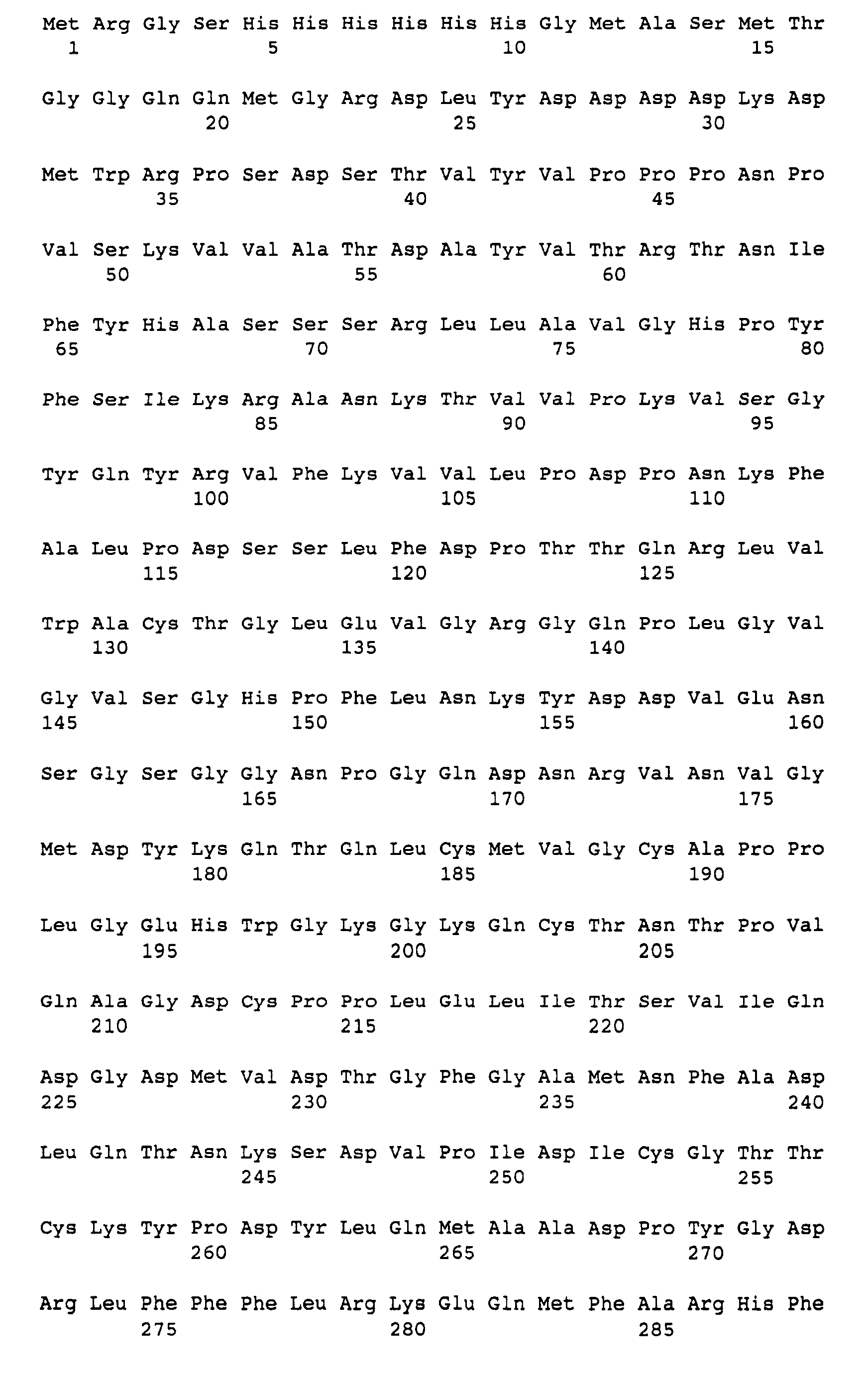
- the method may use multimeric structures comprising recombinant papilloma virus L1 proteins which has an N terminal amino acid sequence that includes (His) 6 .
- the N terminal amino acid sequence (SEQ ID NO:1) may include:
- the recombinant DNA molecule may be constructed from a suitable source of papilloma virus DNA such as a human papilloma virus or a bovine papilloma virus using standard cloning and/or PCR techniques.
- the recombinant DNA molecule may also include an expression vector.
- the expression vector may be a plasmid, cosmid, phagemid or a virus.
- a suitable expression vector encodes (in the following order) an ATG site, (His) 6 peptide, and then a cloning site wherein papilloma virus L1 protein DNA sequence may be inserted in the correct reading frame so that a fusion protein of (His) 6 -L1 protein results from translation.
- a preferable expression vector is any one of plasmids pTrcHisA, pTrcHisB and pTrcHisC.
- a suitable host is a E. coli strain.
- the preferred expression system is a bacterial expression system with E. coli and plasmid pTrcHisB.
- Introduction of the recombinant DNA molecule into a suitable host may be achieved by any suitable method including transfection and transformation.
- a preferable recombinant DNA molecule is the complete DNA sequence of HPV6b L1 protein inserted into pTrcHisB in a correct reading frame orientation to form pTrc6bL1.
- the recombinant DNA molecule pTrc6bL1 is preferably transformed into E. coli strain DH5.
- the expression system may be disrupted.
- the expression system is a cell system
- the cell may be lysed with suitable techniques and agents such as sonication in a buffer containing guanidinium hydrochloride.
- the recombinant papilloma virus L1 protein may be partially or completely purified'. Purification may be achieved by using any one or more suitable chromatographic procedures.
- the recombinant papilloma virus L1 protein may be purified using a step of affinity chromatography with a nickel column. Additional purification steps may include preparative gel electrophoresis.
- the invention provides for a prophylactic or therapeutic vaccine including said recombinant papilloma virus L1 protein.
- the vaccine may include a suitable adjuvant such as ISCOMS, alum, Freunds Incomplete adjuvant, Freunds Complete adjuvant, Quil A, other saponins, Aluminium hydroxide, algammulin, and pertussigen.
- the vaccine may not include adjuvant where the recombinant papilloma virus L1 protein is immunogenic without adjuvant.
- the L1 open reading frame of HPV6b was cloned from a clinical isolate by polymerase chain reaction using as primers:
- the resulting 1.5kb PCR product was cleaved with Bam H1 and Sma 1 and cloned into a Bam H1/klenow blunted Eco R1 site created within the plasmid pTRCHIS B (Invitrogen).
- the resultant L1 recombinant plasmid was pTRC6bL1.
- the bacteria were pelleted by centrifugation (Beckman JA14 rotor centrifuged at 5000 rpm for 10 minutes at 20°C). The pellet was washed in 50 ml of phosphate buffered saline by resuspending the bacterial pellet in a 50 ml centrifuged tube. The washed bacteria were repelleted by centrifugation (Beckman TJ-6 at 3000 rpm for 10 minutes at 20°C). The supernatant was discarded. The pellet was stored at -20°C or -70°C until needed.
- the bacteria were resuspended and lysed in 50 ml of Guanidinium lysis buffer (6M Guanidinium hydrochloride and 5.8 ml/litre of solution A [177 mM NaH 2 PO 4 and 5M NaCl] pH 7.8 using HCl). The suspension was sonicated at 30% output for two minutes. The cell debris was pelleted by centrifugation (Beckman JA21 rotor at 10000 rpm for 30 minutes at 4°C). The supernatant which contains the HPV6b L1 HEXAHIS protein was retained.
- Guanidinium lysis buffer 6M Guanidinium hydrochloride and 5.8 ml/litre of solution A [177 mM NaH 2 PO 4 and 5M NaCl] pH 7.8 using HCl.
- the suspension was sonicated at 30% output for two minutes.
- the cell debris was pelleted by centrifugation (Beckman JA21 rotor at 10000 rpm for 30 minutes at 4°C).
- HPV6b L1 HEXAHIS protein was substantially purified by essentially a two step purification procedure.
- the supernatant containing the HPV6b L1 HEXAHIS protein was loaded onto a nickel column (2.6 cm ⁇ 6 cm) using a BIORAD ECONO system at 4°C. Before loading the supernatant, the column was washed thoroughly with NA buffer at 1 ml/minute. NA buffer comprises 6M urea, 5.8 mls/litre solution A [177 mM NaH 2 PO 4 and 5 M NaCI], 94 mis/litre solution B [200 mM Na 2 HPO 4 and 5 M NaCl] at pH 7.8 using HCl before urea was added. The supernatant was loaded onto the Nickel column at one ml/minute.
- NB buffer comprises 6 M urea and 100 mls/litre of solution A [177 M NaH 2 PO 4 and 5 M NaCI] at pH 4.0 using HCI before urea is added.
- the column was washed with NB buffer according to the procedure in Table 1 where lowering of the pH gradient removed contaminating proteins. 10 ml fractions of the eluent were collected.
- HPV6b L1 HEXAHIS protein The fractions containing HPV6b L1 HEXAHIS protein were determined by either dot blot, direct ELISA or SDS PAGE. After the fractions were identified, the washing of the column continued with 100% NB buffer until the pH levelled off. The column was then washed with NA buffer. (The column was stored in 20% ethanol.)
- the fractions containing HPV6b L1 HEXAHIS protein were pooled and dialysed against five litres of dH 2 O or 10 mM Tris HCI pH 7.5 for overnight at 4°C (or two hours at room temperature). The protein was then precipitated with acetone in a 8:2 acetone to sample ratio, for two hours at -70°C or overnight at -20°C. The protein-acetone solution was centrifuged (Beckman TJ-6 at 3000 rpm and at 4°C for 20 minutes). The supernatant was discarded. The pellet was dried under a flow of nitrogen gas for five minutes to remove any remaining acetone.
- the pellet was resuspended in 1 ml of ddH 2 O and 4-5 mls of 4 x loading buffer [1.0 ml of 0.5M Tris pH 6.8, 0.8 ml of glycerol, 1.6 ml of 10% SDS w/v, 0.1 g of DTT 1% w/v, 0.2 ml of 0.1% w/v bromphenol blue and 4.4 mi of dH 2 O].
- the resuspended pellet was heated at 65-70°C for 15 minutes to ensure all the protein was dissolved.
- the resuspension was loaded onto a BIORAD Prep Cell comprising a 10% separating gel (4.5 cm high by 4 cm diameter) with a 4% stacking gel (4 cm high by 4 cm diameter).
- the Prep Cell was ran at 12W constant power.
- the dialysed HPV6b L1 HEXAHIS protein was precipitated with acetone to remove SDS.
- a 8:2 acetone to sample ratio was used either for two hours at -70°C or overnight at -20°C.
- the protein-acetone solution was centrifuged (Beckman TJ-6 at 3000 rpm and at 4°C for 20 minutes). The supernatant was discarded and the pellet was dried under a flow of nitrogen gas for five minutes to remove any remaining acetone.
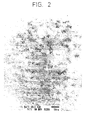
- FIG. 2 shows the typical pentameric structures of HPV6b L1 HEXAHIS protein aggregates.
- mice (strain C57Bl/6) were injected subcutaneously twice at a four week interval with 50 ⁇ g protein/mouse following the experimental protocol in Table 2. Two weeks after the second injection the mice were bled Serum was obtained from the extracted blood using standard procedures.
- the serum was tested for the production of antibodies to HPV6b L1 HEXAHIS protein using three different antigens
- the serum was tested against a human papilloma virus HPV6B capsid preparation.
- the serum was diluted at 1 in 200 and tested against a HPV6B capsid preparation in RIPA buffer (20 mM Tris-HCl pH 7.6; 2 mM EDTA; 50 mM NaCl; 1% deoxycholate; 1% Triton X-100; 0.25% SDS; 1% aproptinin; and 1 mM PMSF).
- the antibody-antigen precipitates were run on 10% SDS PAGE separating the individual components of the immune complex.
- the presence of HPV6b L1 protein was detected with rabbit anti-HPV6b L1 antibody.
- the presence of HPV6b L1 protein indicates anti-HPV6b L1 antibody was produced in the mouse against 6bL1HEXAHIS protein. Groups A, B, C, D,E and F gave positive results.
- Serum was also tested by western blot analysis with HPV6b L1 produced from bacutovirus. A positive result indicates anti-HPV6b L1 antibody was produced in the mouse against HPV6b L1 HEXAHIS protein. Groups A, B, C, D, E and F gave positive results with the best result demonstrated when aluminium hydroxide was used as adjuvant. The control groups A, B, C, D and E gave negative results.
- the serum was tested by dot blot and ELISA using standard techniques against bovine papilloma virus L1 protein. The best result was achieved with serum from group D mice (i.e. when aluminium was used as an adjuvant) with a OD reading of 0.96. This was followed by serum from group C (i.e. with Freund's complete adjuvant) with OD reading of 0.70, serum from group E (ie. with algammulin) with OD reading 0.34, then serum from group B (i.e. boiled in 1% SDS and cooled) with OD reading 0.24 and serum from group A (no adjuvant) with OD reading 0.34. All control groups had an OD reading of 0.05.
- HPV6b L1 HEXAHIS protein was immunogenic and produced anti-HPV6b L1 antibodies when used as an antigen with or without adjuvant.
- EXAMPLE 3 Demonstration of delayed type hypersensitivity (and confirm antibody production) in mice by HPV6b L1 HEXAHIS protein
- Delayed type hypersensitivity involves cell mediated immune reactions as well as some humoral immune reactions.
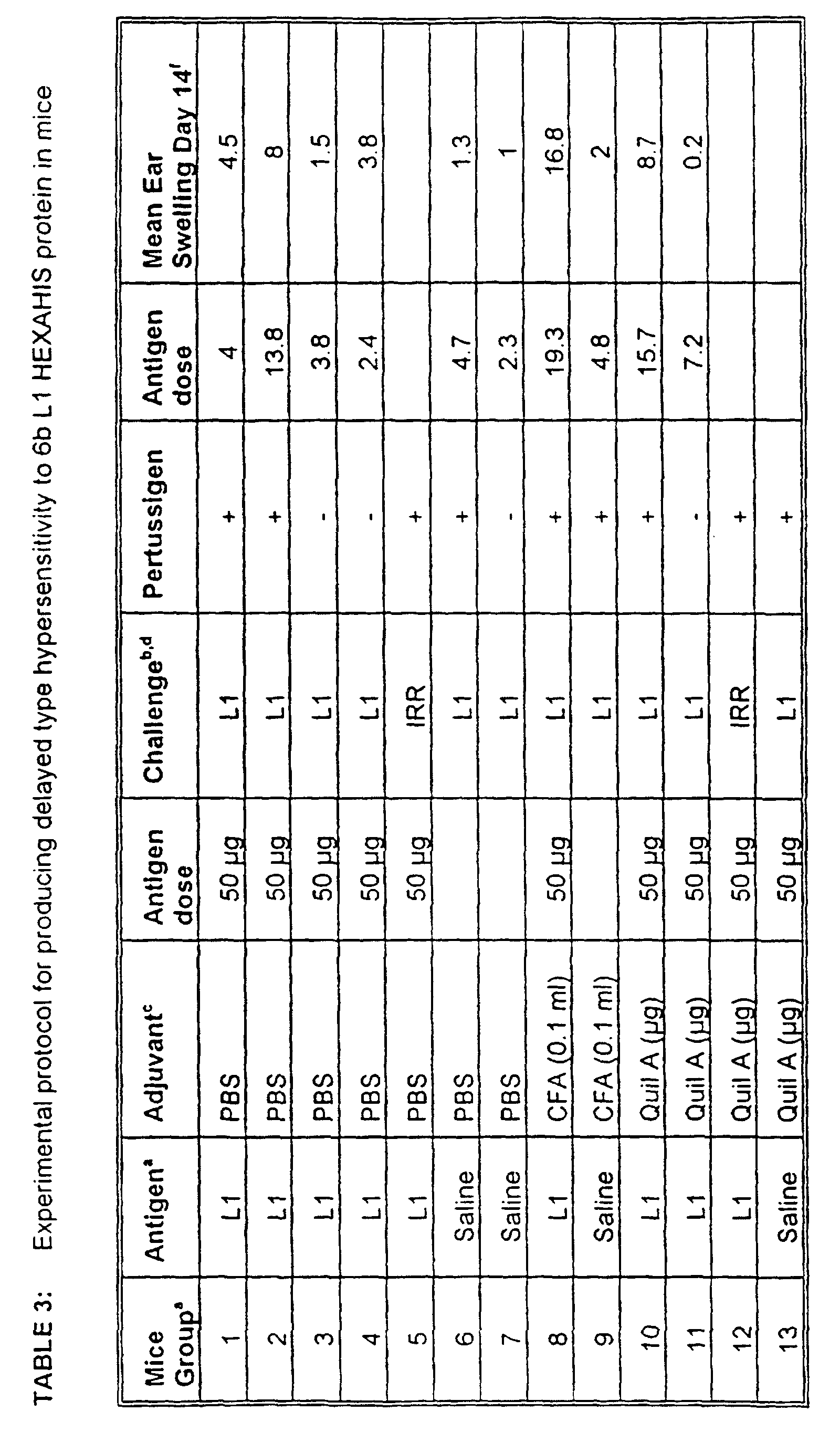
- Mice (strain BALB/c) were treated (intraperitoneal injection) with HPV6b L1 HEXAHIS protein under a variety of conditions outlined in Table 3.
- the ear was challenged by intradermal injection) with HPV6b L1 HEXAHIS protein or another HEXAHIS protein.
- the thickness of the ear was measured on day 13 and day 14. Mice that gave a positive response on day 14 were killed and the histology of the ear was examined.
- HPV6b L1 HEXAHIS protein without adjuvant induced good delayed type hypersensitivity with initial doses of 50 ⁇ g/mouse but not at 5 ⁇ g/mouse.
- HPV6b L1 protein expressed and isolated in the method of Example 1 formed capsomeric aggregates, and the HPV6b L1 protein capsomeric aggregates without further adjuvant were immunogenic producing an antibody response and a cell mediated response. Therefore, HPV6b L1 HEXAHIS protein would serve as a suitable basis for a vaccine designed to prevent human papilloma virus infection by induction of neutralising antibodies or to treat existing lesions through the induction of L1 protein specific cell mediated immunity.
- Examples 1 to 3 have used HPV6b L1 protein as an example to demonstrate the immunogenicity of the preparation and, as an example, the invention is not restricted to this example and any papilloma virus L1 protein can be used.
- Rabbit HPV6b L1 HEXAHIS antisera was added to each of the wells coated with HPV6b L1 HEXAHIS, HPV VLP-1, baculovirus prepared controls or E. coli prepared controls (prepared in duplicate), and was serially diluted 1 ⁇ 2 down the plates.
- Sera raised against influenza virus A/PR-8 was used as a negative control.
- Sera raised against HPV VLP-L1 was used as positive control on HPV VLP-L1 plates. Plates were incubated for 1 hour, at room temperature, and were then washed three times with PBS containing 0.05% (v/v) Tween 20 at pH 7.2.
- Goat-rabbit IgG-HRP conjugate was added to each well and plates were incubated and washed as before. Specific binding of antisera to antigen was detected using TMB. The reaction was stopped after 5 minutes using 0.5M HCl.
- this example provides support for an immunoassay for the detection of papilloma virus L1 protein demonstrated by the coating of various proteins in wells and the use of antibody raised against recombinant HPV6 L1 HEXAHIS protein. Wells containing either HPV6b derived antigen gave a positive result.
- This example also provides support for an immunoassay for the detection of antibody specific for papilloma virus L1 protein demonstrated by the coating of the wells with recombinant HPV6b L1 HEXAHIS protein and the use of sera raised against influenza virus A/PR-8 and sera raised against HPV6 L1 HEXAHIS protein. In this case, wells containing sera raised against HPV6 L1 HEXAHIS protein gave a positive result whilst that raised againt influenza virus was negative.
- EXAMPLE 5 ELISA capture assay demonstrating the formation of multimeric structure-antibody complex
Landscapes
- Health & Medical Sciences (AREA)
- Chemical & Material Sciences (AREA)
- Life Sciences & Earth Sciences (AREA)
- Organic Chemistry (AREA)
- General Health & Medical Sciences (AREA)
- Medicinal Chemistry (AREA)
- Virology (AREA)
- Molecular Biology (AREA)
- Public Health (AREA)
- Proteomics, Peptides & Aminoacids (AREA)
- General Chemical & Material Sciences (AREA)
- Chemical Kinetics & Catalysis (AREA)
- Nuclear Medicine, Radiotherapy & Molecular Imaging (AREA)
- Genetics & Genomics (AREA)
- Pharmacology & Pharmacy (AREA)
- Animal Behavior & Ethology (AREA)
- Biophysics (AREA)
- Biochemistry (AREA)
- Veterinary Medicine (AREA)
- Immunology (AREA)
- Gastroenterology & Hepatology (AREA)
- Communicable Diseases (AREA)
- Engineering & Computer Science (AREA)
- Oncology (AREA)
- Biotechnology (AREA)
- Bioinformatics & Cheminformatics (AREA)
- Peptides Or Proteins (AREA)
- Medicines Containing Antibodies Or Antigens For Use As Internal Diagnostic Agents (AREA)
- Micro-Organisms Or Cultivation Processes Thereof (AREA)
- Preparation Of Compounds By Using Micro-Organisms (AREA)
- Apparatus Associated With Microorganisms And Enzymes (AREA)
- Pharmaceuticals Containing Other Organic And Inorganic Compounds (AREA)
Abstract
Description



| Procedure for washing the Nickel column with NB buffer | |
| Time (Minutes) | % NB Buffer |
| 0 | 0 |
| 30 | 0 |
| 300 | 100 |
| 310 | 100 |
| 320 | 100 |
| 330 | 100 |
| Experimental protocol for injecting mice with 6b L1 HEXAHIS protein to produce antibodies | ||
| Mice Groupa | Addition of 6b L1 HEXAHIS proteinb | Other conditions |
| A | + | No adjuvant |
| A1 | - | No adjuvant |
| B | + | boiled in 1% SDS and cooled |
| B1 | - | boiled in 1% SDS and cooled |
| C | + | with Freund's complete adjuvant |
| C1 | - | with Freund's complete adjuvant |
| D | + | absorbed to Aluminium hydroxide |
| D1 | - | absorbed to Aluminium hydroxide |
| E | + | with Algammulin |
| E1 | - | with Algammulin |
| F | + | with L2 (50 µg) and no adjuvant |
| Results of ELISA using rabbit HPV6b L1 HEXAHIS antisera | |
| ANTIGEN | ELISA USING RABBIT HPV6b L1 HEXAHIS ANTISERA |
| HPV6 VLP-L1 | > 4.0 exceeds limits @ 1:4000 |
| HPV6b L1 HEXAHIS | 2.12 ± 0.1 @ 1:4000 |
| baculovirus control preparation | 0.63 ± 0.01 @ 1:4000 |
| E. coli control preparation | 0.12 ± 0.00 @ 1:4000 |






Claims (9)
- A method for preparing a multimeric structure comprising one or more bacterially-expressed recombinant papilloma virus L1 proteins, said method including the steps of:(i) expressing a recombinant DNA molecule encoding a recombinant papilloma virus L1 protein in a bacterial cell;(ii) obtaining said recombinant papilloma virus L1 protein from said bacterial cell under denaturing conditions;(iii) purifying said recombinant papilloma virus L1 protein obtained at step (ii); and(iv) forming said multimeric structure from one or more of said recombinant papilloma virus L1 proteins purified at step (iii).
- The method of Claim 1, wherein at step (iv) formation of said multimeric structure occurs in the absence of salt.
- The method of Claim 1, wherein the recombinant DNA molecule comprises a 5' nucleotide sequence according to SEQ ID NO:2.
- The method of Claim 1, wherein the recombinant DNA molecule comprises a nucleotide sequence according to SEQ ID NO:3.
- The method of Claim 1, wherein the recombinant DNA molecule comprises a nucleotide sequence that is hybridizable under standard conditions with SEQ ID NO:2 or SEQ ID NO:3
- The method of Claim 1, wherein the recombinant DNA molecule is inserted into pTrcHisB in a correct reading frame with respect to expression of the papilloma virus L1 protein.
- The method of Claim 1, wherein the papilloma virus L1 protein is expressed in an E. coli bacterial cell.
- The method of Claim 1, further including the step of Incorporating the multimeric structure into a vaccine.
- The method of claim 1 wherein said recombinant papilloma virus L1 protein is a fusion protein.
Priority Applications (1)
| Application Number | Priority Date | Filing Date | Title |
|---|---|---|---|
| EP03006355A EP1325957B1 (en) | 1994-05-17 | 1995-05-17 | Recombinant papilloma virus L1 |
Applications Claiming Priority (4)
| Application Number | Priority Date | Filing Date | Title |
|---|---|---|---|
| AUPM566794 | 1994-05-17 | ||
| AUPM5667A AUPM566794A0 (en) | 1994-05-17 | 1994-05-17 | Process and product |
| AUPM5667/94 | 1994-05-17 | ||
| PCT/AU1995/000292 WO1995031476A1 (en) | 1994-05-17 | 1995-05-17 | Recombinant papilloma virus l1 |
Related Child Applications (2)
| Application Number | Title | Priority Date | Filing Date |
|---|---|---|---|
| EP03006355A Division EP1325957B1 (en) | 1994-05-17 | 1995-05-17 | Recombinant papilloma virus L1 |
| EP03006355.6 Division-Into | 2003-03-20 |
Publications (3)
| Publication Number | Publication Date |
|---|---|
| EP0759935A1 EP0759935A1 (en) | 1997-03-05 |
| EP0759935A4 EP0759935A4 (en) | 1999-07-07 |
| EP0759935B1 true EP0759935B1 (en) | 2003-07-16 |
Family
ID=3780242
Family Applications (2)
| Application Number | Title | Priority Date | Filing Date |
|---|---|---|---|
| EP03006355A Expired - Lifetime EP1325957B1 (en) | 1994-05-17 | 1995-05-17 | Recombinant papilloma virus L1 |
| EP95918467A Expired - Lifetime EP0759935B1 (en) | 1994-05-17 | 1995-05-17 | Recombinant papilloma virus l1 |
Family Applications Before (1)
| Application Number | Title | Priority Date | Filing Date |
|---|---|---|---|
| EP03006355A Expired - Lifetime EP1325957B1 (en) | 1994-05-17 | 1995-05-17 | Recombinant papilloma virus L1 |
Country Status (13)
| Country | Link |
|---|---|
| US (1) | US6013262A (en) |
| EP (2) | EP1325957B1 (en) |
| JP (3) | JPH10500295A (en) |
| KR (1) | KR100384922B1 (en) |
| AT (2) | ATE245164T1 (en) |
| AU (1) | AUPM566794A0 (en) |
| CA (1) | CA2190473C (en) |
| DE (2) | DE69531297T2 (en) |
| DK (1) | DK0759935T3 (en) |
| ES (2) | ES2203640T3 (en) |
| NZ (1) | NZ285339A (en) |
| PT (2) | PT759935E (en) |
| WO (1) | WO1995031476A1 (en) |
Families Citing this family (38)
| Publication number | Priority date | Publication date | Assignee | Title |
|---|---|---|---|---|
| US8062642B1 (en) | 1993-03-09 | 2011-11-22 | University Of Rochester | Production of papillomavirus capsid protein and virus-like particles |
| ES2264126T3 (en) * | 1994-05-16 | 2006-12-16 | MERCK & CO., INC. | VACCINES AGAINST PAPILOMAVIRUS. |
| GB9621091D0 (en) | 1996-10-09 | 1996-11-27 | Fondation Pour Le Perfectionem | Attenuated microorganisms strains and their uses |
| WO1998044944A2 (en) * | 1997-04-08 | 1998-10-15 | Merck & Co., Inc. | Stabilized human papillomavirus formulations |
| US6228368B1 (en) * | 1997-10-06 | 2001-05-08 | Loyola University Of Chicago | Papilloma virus capsomere formulations and method of use |
| CA2354444A1 (en) * | 1998-12-17 | 2000-06-22 | Merck & Co., Inc. | Synthetic virus-like particles with heterologous epitopes |
| US6689366B1 (en) * | 1998-12-17 | 2004-02-10 | Merck & Co., Inc. | Synthetic virus like particles with heterologous epitopes |
| WO2000039151A1 (en) * | 1998-12-23 | 2000-07-06 | Merck & Co., Inc. | Neutralizing assay using human papillomavirus virus-like particles |
| ATE413188T1 (en) | 1999-02-05 | 2008-11-15 | Merck & Co Inc | HUMAN PAPILLOMAVIRUS VACCINE FORMULATIONS |
| US8128922B2 (en) * | 1999-10-20 | 2012-03-06 | Johns Hopkins University | Superior molecular vaccine linking the translocation domain of a bacterial toxin to an antigen |
| US7026443B1 (en) | 1999-12-10 | 2006-04-11 | Epimmune Inc. | Inducing cellular immune responses to human Papillomavirus using peptide and nucleic acid compositions |
| KR100366608B1 (en) * | 2000-02-15 | 2003-01-09 | 마스터진(주) | Recombinant Human Papilloma Virus Vaccines expressed in transgenic plants |
| ATE418997T1 (en) * | 2000-07-06 | 2009-01-15 | Univ Georgetown | STABLE (FIXED) FORMS OF VIRAL L1 CAPSID PROTEINS, THEIR FUSION PROTEINS, AND THEIR USES |
| WO2002009645A2 (en) * | 2000-08-01 | 2002-02-07 | The Johns Hopkins University | Intercellular transport protein linked to an antigen as a molecular vaccine |
| EP1363938B1 (en) * | 2000-08-03 | 2013-12-11 | Johns Hopkins University | Molecular vaccine linking an endoplasmic reticulum chaperone polypeptide to an antigen |
| AUPR446801A0 (en) | 2001-04-18 | 2001-05-17 | University Of Queensland, The | Novel compositions and uses therefor |
| WO2003068804A2 (en) * | 2002-02-14 | 2003-08-21 | Novavax, Inc. | Novel insect cell line |
| EP1549140A4 (en) * | 2002-09-03 | 2009-04-29 | Kentucky Bioproc Llc | PRODUCTION OF PEPTIDES IN PLANTS IN THE FORM OF HYBRID VIRAL HULL PROTEINS |
| EP1644048B1 (en) * | 2003-05-05 | 2015-04-29 | Johns Hopkins University | Anti-cancer dna vaccine employing plasmids encoding signal sequence, mutant oncoprotein antigen, and heat shock protein |
| ATE476528T1 (en) | 2004-12-08 | 2010-08-15 | Gen Probe Inc | NUCLEIC ACID DETECTION FROM DIFFERENT TYPES OF HUMAN PAPILLOMAVIRUS |
| WO2006073970A2 (en) * | 2005-01-06 | 2006-07-13 | The Johns Hopkins University | Rna interference that blocks expression of pro-apoptotic proteins potentiates immunity induced by dna and transfected dendritic cell vaccines |
| WO2006081323A2 (en) * | 2005-01-26 | 2006-08-03 | The Johns Hopkins University | Anti-cancer dna vaccine employing plasmids encoding mutant oncoprotein antigen and calreticulin |
| WO2006113209A1 (en) | 2005-04-15 | 2006-10-26 | The Government Of The United States Of America, As Represented By The Secretary, Department Of Health And Human Services | Methods and compositions for producing an enhanced immune response to a human papillomavirus immunogen |
| US7972776B2 (en) * | 2005-11-15 | 2011-07-05 | Oncohealth Corporation | Protein chips for HPV detection |
| US7732166B2 (en) * | 2005-11-15 | 2010-06-08 | Oncohealth Corporation | Detection method for human pappilomavirus (HPV) and its application in cervical cancer |
| US20100330105A1 (en) * | 2006-08-22 | 2010-12-30 | John Hopkins University | Anticancer Combination Therapies |
| US8968995B2 (en) * | 2008-11-12 | 2015-03-03 | Oncohealth Corp. | Detection, screening, and diagnosis of HPV-associated cancers |
| US8916342B2 (en) | 2006-11-13 | 2014-12-23 | Oncohealth Corp. | Identification of high grade or ≧ CIN2 for early stages and late stages detection, screening, and diagnosis of human papillomavirus (HPV) and HPV-associated cancers |
| US20100003704A1 (en) | 2008-06-13 | 2010-01-07 | Shuling Cheng | IN SITU detection of early stages and late stages HPV infection |
| US9085638B2 (en) | 2007-03-07 | 2015-07-21 | The Johns Hopkins University | DNA vaccine enhancement with MHC class II activators |
| US20080260765A1 (en) * | 2007-03-15 | 2008-10-23 | Johns Hopkins University | HPV DNA Vaccines and Methods of Use Thereof |
| EP2147926B1 (en) | 2007-04-29 | 2016-08-24 | Beijing Wantai Biological Pharmacy Enterprise Co., Ltd. | Truncated human papillomavirus type 18 l1 proteins |
| EP2154147B1 (en) * | 2007-04-29 | 2015-10-07 | Beijing Wantai Biological Pharmacy Enterprise Co., Ltd. | A truncated l1 protein of human papillomavirus 16 |
| EP2154149B1 (en) * | 2007-05-29 | 2019-07-10 | Xiamen University | A truncated l1 protein of human papillomavirus 6 |
| US20090285861A1 (en) * | 2008-04-17 | 2009-11-19 | Tzyy-Choou Wu | Tumor cell-based cancer immunotherapeutic compositions and methods |
| JP5819851B2 (en) | 2010-01-08 | 2015-11-24 | オンコヘルス コーポレーション | Cell-based high-throughput HPV immunoassay for the treatment and screening of HPV-related cancers |
| CA2799205A1 (en) | 2010-05-25 | 2011-12-01 | Qiagen Gaithersburg, Inc. | Fast results hybrid capture assay and associated strategically-truncated probes |
| EP4141110A4 (en) | 2020-04-24 | 2025-04-09 | Sf Biotech Laboratuvar Danismanlik Anonim Sirketi | PROCESS FOR PRODUCING LEVIVIRUS FAMILY BACTERIOPHAGE PARTICLES |
Family Cites Families (6)
| Publication number | Priority date | Publication date | Assignee | Title |
|---|---|---|---|---|
| EP0133123A1 (en) * | 1983-07-25 | 1985-02-13 | Mgi Pharma, Inc. | Immunogens of papilloma viruses |
| EP1359156B1 (en) * | 1991-07-19 | 2007-03-07 | University of Queensland | Vaccine against Human Papillomavirus (Type 18) |
| PT647140E (en) * | 1992-06-25 | 2007-12-27 | Univ Georgetown | Papillomavirus vaccines |
| US5618536A (en) * | 1992-09-03 | 1997-04-08 | The United States Of America As Represented By The Department Of Health And Human Services | Chimeric papillomavirus-like particles |
| US5437951A (en) * | 1992-09-03 | 1995-08-01 | The United States Of America As Represented By The Department Of Health And Human Services | Self-assembling recombinant papillomavirus capsid proteins |
| DE69434383T2 (en) * | 1993-03-09 | 2005-11-24 | The University Of Rochester | PREPARATION OF HUMAN PAPILLOMA VIRUS CROP PROTEIN AND VIRUS-RELATED PARTICLES |
-
1994
- 1994-05-17 AU AUPM5667A patent/AUPM566794A0/en not_active Abandoned
-
1995
- 1995-05-17 PT PT95918467T patent/PT759935E/en unknown
- 1995-05-17 PT PT03006355T patent/PT1325957E/en unknown
- 1995-05-17 JP JP7529247A patent/JPH10500295A/en not_active Withdrawn
- 1995-05-17 KR KR1019960706525A patent/KR100384922B1/en not_active Expired - Lifetime
- 1995-05-17 EP EP03006355A patent/EP1325957B1/en not_active Expired - Lifetime
- 1995-05-17 ES ES95918467T patent/ES2203640T3/en not_active Expired - Lifetime
- 1995-05-17 CA CA2190473A patent/CA2190473C/en not_active Expired - Lifetime
- 1995-05-17 AT AT95918467T patent/ATE245164T1/en active
- 1995-05-17 NZ NZ285339A patent/NZ285339A/en not_active IP Right Cessation
- 1995-05-17 DE DE69531297T patent/DE69531297T2/en not_active Expired - Lifetime
- 1995-05-17 EP EP95918467A patent/EP0759935B1/en not_active Expired - Lifetime
- 1995-05-17 DE DE69535249T patent/DE69535249T2/en not_active Expired - Lifetime
- 1995-05-17 WO PCT/AU1995/000292 patent/WO1995031476A1/en not_active Ceased
- 1995-05-17 AT AT03006355T patent/ATE340859T1/en active
- 1995-05-17 ES ES03006355T patent/ES2275965T3/en not_active Expired - Lifetime
- 1995-05-17 DK DK95918467T patent/DK0759935T3/en active
- 1995-05-17 US US08/737,336 patent/US6013262A/en not_active Expired - Lifetime
-
2005
- 2005-07-05 JP JP2005196551A patent/JP3878197B2/en not_active Expired - Lifetime
-
2006
- 2006-07-07 JP JP2006187730A patent/JP4016054B2/en not_active Expired - Lifetime
Also Published As
| Publication number | Publication date |
|---|---|
| KR100384922B1 (en) | 2003-08-21 |
| WO1995031476A1 (en) | 1995-11-23 |
| JPH10500295A (en) | 1998-01-13 |
| DE69531297D1 (en) | 2003-08-21 |
| US6013262A (en) | 2000-01-11 |
| CA2190473A1 (en) | 1995-11-23 |
| EP1325957A3 (en) | 2003-11-26 |
| EP0759935A4 (en) | 1999-07-07 |
| DK0759935T3 (en) | 2003-11-10 |
| JP4016054B2 (en) | 2007-12-05 |
| DE69531297T2 (en) | 2004-05-27 |
| EP1325957B1 (en) | 2006-09-27 |
| ATE340859T1 (en) | 2006-10-15 |
| EP1325957A2 (en) | 2003-07-09 |
| NZ285339A (en) | 1998-04-27 |
| ATE245164T1 (en) | 2003-08-15 |
| EP0759935A1 (en) | 1997-03-05 |
| JP2006001936A (en) | 2006-01-05 |
| AUPM566794A0 (en) | 1994-06-09 |
| DE69535249D1 (en) | 2006-11-09 |
| PT759935E (en) | 2003-11-28 |
| JP2006321806A (en) | 2006-11-30 |
| JP3878197B2 (en) | 2007-02-07 |
| PT1325957E (en) | 2007-01-31 |
| ES2275965T3 (en) | 2007-06-16 |
| ES2203640T3 (en) | 2004-04-16 |
| CA2190473C (en) | 2011-08-30 |
| DE69535249T2 (en) | 2007-05-10 |
Similar Documents
| Publication | Publication Date | Title |
|---|---|---|
| EP1325957B1 (en) | Recombinant papilloma virus L1 | |
| US6228368B1 (en) | Papilloma virus capsomere formulations and method of use | |
| US7279306B2 (en) | Stable (fixed) forms of viral capsid proteins, and viral capsid protein fusions, preferably papillomavirus L1 proteins, and uses thereof | |
| US6562351B2 (en) | Papilloma truncated L1 protein and fusion protein constructs | |
| US6649167B2 (en) | Papillomavirus truncated L1 protein and fusion protein constructs | |
| US7462356B2 (en) | Chimeric papillomavirus-like particles | |
| US7182947B2 (en) | Papillomavirus truncated L1 protein and fusion protein constructs | |
| AU683564B2 (en) | Recombinant papilloma virus L1 | |
| US7494658B2 (en) | Papilloma virus truncated L1 protein and fusion protein constructs | |
| AU717647B2 (en) | Chimeric papillomavirus-like particles | |
| HK1094340A (en) | Papilloma virus capsomere vaccine formulations and methods of use | |
| MXPA00003358A (en) | Papilloma virus capsomere vaccine formulations and methods of use |
Legal Events
| Date | Code | Title | Description |
|---|---|---|---|
| PUAI | Public reference made under article 153(3) epc to a published international application that has entered the european phase |
Free format text: ORIGINAL CODE: 0009012 |
|
| 17P | Request for examination filed |
Effective date: 19961217 |
|
| AK | Designated contracting states |
Kind code of ref document: A1 Designated state(s): AT BE CH DE DK ES FR GB GR IE IT LI LU MC NL PT SE |
|
| A4 | Supplementary search report drawn up and despatched |
Effective date: 19990521 |
|
| AK | Designated contracting states |
Kind code of ref document: A4 Designated state(s): AT BE CH DE DK ES FR GB GR IE IT LI LU MC NL PT SE |
|
| 17Q | First examination report despatched |
Effective date: 20010723 |
|
| GRAH | Despatch of communication of intention to grant a patent |
Free format text: ORIGINAL CODE: EPIDOS IGRA |
|
| GRAH | Despatch of communication of intention to grant a patent |
Free format text: ORIGINAL CODE: EPIDOS IGRA |
|
| GRAA | (expected) grant |
Free format text: ORIGINAL CODE: 0009210 |
|
| AK | Designated contracting states |
Designated state(s): AT BE CH DE DK ES FR GB GR IE IT LI LU MC NL PT SE |
|
| REG | Reference to a national code |
Ref country code: GB Ref legal event code: FG4D |
|
| REG | Reference to a national code |
Ref country code: CH Ref legal event code: EP |
|
| REG | Reference to a national code |
Ref country code: IE Ref legal event code: FG4D |
|
| REF | Corresponds to: |
Ref document number: 69531297 Country of ref document: DE Date of ref document: 20030821 Kind code of ref document: P |
|
| REG | Reference to a national code |
Ref country code: SE Ref legal event code: TRGR |
|
| REG | Reference to a national code |
Ref country code: CH Ref legal event code: NV Representative=s name: PATENTANWAELTE FELDMANN & PARTNER AG |
|
| REG | Reference to a national code |
Ref country code: DK Ref legal event code: T3 |
|
| REG | Reference to a national code |
Ref country code: GR Ref legal event code: EP Ref document number: 20030404124 Country of ref document: GR |
|
| REG | Reference to a national code |
Ref country code: ES Ref legal event code: FG2A Ref document number: 2203640 Country of ref document: ES Kind code of ref document: T3 |
|
| ET | Fr: translation filed | ||
| PLBE | No opposition filed within time limit |
Free format text: ORIGINAL CODE: 0009261 |
|
| STAA | Information on the status of an ep patent application or granted ep patent |
Free format text: STATUS: NO OPPOSITION FILED WITHIN TIME LIMIT |
|
| 26N | No opposition filed |
Effective date: 20040419 |
|
| PGFP | Annual fee paid to national office [announced via postgrant information from national office to epo] |
Ref country code: LU Payment date: 20140527 Year of fee payment: 20 |
|
| PGFP | Annual fee paid to national office [announced via postgrant information from national office to epo] |
Ref country code: IE Payment date: 20140521 Year of fee payment: 20 Ref country code: GB Payment date: 20140527 Year of fee payment: 20 Ref country code: MC Payment date: 20140526 Year of fee payment: 20 |
|
| PGFP | Annual fee paid to national office [announced via postgrant information from national office to epo] |
Ref country code: GR Payment date: 20140528 Year of fee payment: 20 Ref country code: AT Payment date: 20140526 Year of fee payment: 20 Ref country code: CH Payment date: 20140514 Year of fee payment: 20 Ref country code: IT Payment date: 20140526 Year of fee payment: 20 Ref country code: ES Payment date: 20140528 Year of fee payment: 20 Ref country code: PT Payment date: 20140505 Year of fee payment: 20 Ref country code: DE Payment date: 20140526 Year of fee payment: 20 Ref country code: NL Payment date: 20140520 Year of fee payment: 20 Ref country code: SE Payment date: 20140523 Year of fee payment: 20 |
|
| PGFP | Annual fee paid to national office [announced via postgrant information from national office to epo] |
Ref country code: DK Payment date: 20140527 Year of fee payment: 20 Ref country code: BE Payment date: 20140527 Year of fee payment: 20 |
|
| PGFP | Annual fee paid to national office [announced via postgrant information from national office to epo] |
Ref country code: FR Payment date: 20140602 Year of fee payment: 20 |
|
| REG | Reference to a national code |
Ref country code: DE Ref legal event code: R071 Ref document number: 69531297 Country of ref document: DE Ref country code: DK Ref legal event code: EUP Effective date: 20150517 |
|
| REG | Reference to a national code |
Ref country code: NL Ref legal event code: V4 Effective date: 20150517 |
|
| REG | Reference to a national code |
Ref country code: PT Ref legal event code: MM4A Free format text: MAXIMUM VALIDITY LIMIT REACHED Effective date: 20150517 |
|
| REG | Reference to a national code |
Ref country code: CH Ref legal event code: PL |
|
| REG | Reference to a national code |
Ref country code: GB Ref legal event code: PE20 Expiry date: 20150516 |
|
| REG | Reference to a national code |
Ref country code: SE Ref legal event code: EUG |
|
| REG | Reference to a national code |
Ref country code: IE Ref legal event code: MK9A |
|
| REG | Reference to a national code |
Ref country code: AT Ref legal event code: MK07 Ref document number: 245164 Country of ref document: AT Kind code of ref document: T Effective date: 20150517 |
|
| REG | Reference to a national code |
Ref country code: ES Ref legal event code: FD2A Effective date: 20150724 |
|
| REG | Reference to a national code |
Ref country code: GR Ref legal event code: MA Ref document number: 20030404124 Country of ref document: GR Effective date: 20150518 |
|
| PG25 | Lapsed in a contracting state [announced via postgrant information from national office to epo] |
Ref country code: GB Free format text: LAPSE BECAUSE OF EXPIRATION OF PROTECTION Effective date: 20150516 Ref country code: PT Free format text: LAPSE BECAUSE OF EXPIRATION OF PROTECTION Effective date: 20150526 |
|
| PG25 | Lapsed in a contracting state [announced via postgrant information from national office to epo] |
Ref country code: IE Free format text: LAPSE BECAUSE OF EXPIRATION OF PROTECTION Effective date: 20150517 |
|
| PG25 | Lapsed in a contracting state [announced via postgrant information from national office to epo] |
Ref country code: ES Free format text: LAPSE BECAUSE OF EXPIRATION OF PROTECTION Effective date: 20150518 |