EP0742826B1 - Multivariant il-3 hematopoiesis fusion protein - Google Patents

Multivariant il-3 hematopoiesis fusion protein Download PDF

Info

Publication number
EP0742826B1
EP0742826B1 EP95910141A EP95910141A EP0742826B1 EP 0742826 B1 EP0742826 B1 EP 0742826B1 EP 95910141 A EP95910141 A EP 95910141A EP 95910141 A EP95910141 A EP 95910141A EP 0742826 B1 EP0742826 B1 EP 0742826B1
Authority
EP
European Patent Office
Prior art keywords
site
information
xaa
name
note
Prior art date
Legal status (The legal status is an assumption and is not a legal conclusion. Google has not performed a legal analysis and makes no representation as to the accuracy of the status listed.)
Expired - Lifetime
Application number
EP95910141A
Other languages
German (de)
French (fr)
Other versions
EP0742826A1 (en
Inventor
Christopher S. Bauer
Mark Allen Abrams
Sarah Ruth Braford-Goldberg
Marie Helena Caparon
Alan Michael Easton
Barbara Kure Klein
John Patrick Mc Kearn
Peter O. Olins
Kumnan Paik
John Warren Thomas
Current Assignee (The listed assignees may be inaccurate. Google has not performed a legal analysis and makes no representation or warranty as to the accuracy of the list.)
GD Searle LLC
Original Assignee
GD Searle LLC
Priority date (The priority date is an assumption and is not a legal conclusion. Google has not performed a legal analysis and makes no representation as to the accuracy of the date listed.)
Filing date
Publication date
Application filed by GD Searle LLC filed Critical GD Searle LLC
Priority to EP04020846A priority Critical patent/EP1482044A3/en
Publication of EP0742826A1 publication Critical patent/EP0742826A1/en
Application granted granted Critical
Publication of EP0742826B1 publication Critical patent/EP0742826B1/en
Anticipated expiration legal-status Critical
Expired - Lifetime legal-status Critical Current

Links

Images

Classifications

    • CCHEMISTRY; METALLURGY
    • C07ORGANIC CHEMISTRY
    • C07KPEPTIDES
    • C07K14/00Peptides having more than 20 amino acids; Gastrins; Somatostatins; Melanotropins; Derivatives thereof
    • CCHEMISTRY; METALLURGY
    • C07ORGANIC CHEMISTRY
    • C07KPEPTIDES
    • C07K14/00Peptides having more than 20 amino acids; Gastrins; Somatostatins; Melanotropins; Derivatives thereof
    • C07K14/435Peptides having more than 20 amino acids; Gastrins; Somatostatins; Melanotropins; Derivatives thereof from animals; from humans
    • C07K14/52Cytokines; Lymphokines; Interferons
    • C07K14/54Interleukins [IL]
    • C07K14/5403IL-3
    • AHUMAN NECESSITIES
    • A61MEDICAL OR VETERINARY SCIENCE; HYGIENE
    • A61KPREPARATIONS FOR MEDICAL, DENTAL OR TOILETRY PURPOSES
    • A61K38/00Medicinal preparations containing peptides
    • A61K38/16Peptides having more than 20 amino acids; Gastrins; Somatostatins; Melanotropins; Derivatives thereof
    • A61K38/17Peptides having more than 20 amino acids; Gastrins; Somatostatins; Melanotropins; Derivatives thereof from animals; from humans
    • A61K38/19Cytokines; Lymphokines; Interferons
    • A61K38/20Interleukins [IL]
    • AHUMAN NECESSITIES
    • A61MEDICAL OR VETERINARY SCIENCE; HYGIENE
    • A61PSPECIFIC THERAPEUTIC ACTIVITY OF CHEMICAL COMPOUNDS OR MEDICINAL PREPARATIONS
    • A61P7/00Drugs for disorders of the blood or the extracellular fluid
    • CCHEMISTRY; METALLURGY
    • C07ORGANIC CHEMISTRY
    • C07KPEPTIDES
    • C07K19/00Hybrid peptides, i.e. peptides covalently bound to nucleic acids, or non-covalently bound protein-protein complexes
    • AHUMAN NECESSITIES
    • A61MEDICAL OR VETERINARY SCIENCE; HYGIENE
    • A61KPREPARATIONS FOR MEDICAL, DENTAL OR TOILETRY PURPOSES
    • A61K38/00Medicinal preparations containing peptides
    • CCHEMISTRY; METALLURGY
    • C07ORGANIC CHEMISTRY
    • C07KPEPTIDES
    • C07K2319/00Fusion polypeptide
    • CCHEMISTRY; METALLURGY
    • C07ORGANIC CHEMISTRY
    • C07KPEPTIDES
    • C07K2319/00Fusion polypeptide
    • C07K2319/01Fusion polypeptide containing a localisation/targetting motif
    • C07K2319/02Fusion polypeptide containing a localisation/targetting motif containing a signal sequence

Definitions

  • the present invention relates to fusion molecules composed of mutants or variants of human interleukin-3.
  • Colony stimulating factors which stimulate the differentiation and/or proliferation of bone marrow cells have generated much interest because of their therapeutic potential for restoring depressed levels of hematopoietic stem cell-derived cells.
  • CSFs in both human and murine systems have been identified and distinguished according to their activities.
  • granulocyte-CSF G-CSF
  • macrophage-CSF M-CSF
  • GM-CSF and interleukin-3 IL-3
  • IL-3 also stimulates the formation of mast, megakaryocyte and pure and mixed erythroid colonies.
  • IL-3 Because of its ability to stimulate the proliferation of a number of different cell types and to support the growth and proliferation of progenitor cells, IL-3 has potential for therapeutic use in restoring hematopoietic cells to normal amounts in those cases where the number of cells has been reduced due to diseases or to therapeutic treatments such as radiation and/or chemotherapy.
  • Interleukin-3 is a hematopoietic growth factor which has the property of being able to promote the survival, growth and differentiation of hematopoietic cells.
  • IL-3 is a hematopoietic growth factor which has the property of being able to promote the survival, growth and differentiation of hematopoietic cells.
  • the biological properties of IL-3 are the ability (a) to support the growth and differentiation of progenitor cells committed to all, or virtually all, blood cell lineages; (b) to interact with early multipotential stem cells; (c) to sustain the growth of pluripotent precursor cells; (d) to stimulate proliferation of chronic myelogenous leukemia (CML) cells; (e) to stimulate proliferation of mast cells, eosinophils and basophils; (f) to stimulate DNA synthesis by human acute myelogenous leukemia (AML) cells; (g) to prime cells for production of leukotrienes and histamines; (h) to induce leukocyte che
  • hIL-3 Mature human interleukin-3 (hIL-3) consists of 133 amino acids. It has one disulfide bridge and two potential glycosylation sites (Yang, et al., CELL 47 :3 (1986)).
  • Murine IL-3 (mIL-3) was first identified by Ihle, et al., J. IMMUNOL. 126 :2184 (1981) as a factor which induced expression of a T cell associated enzyme, 20 - hydroxysteroid dehydrogenase. The factor was purified to homogeneity and shown to regulate the growth and differentiation of numerous subclasses of early hematopoietic and lymphoid progenitor cells.
  • cDNA clones coding for murine IL-3 were isolated (Fung, et al., NATURE 307 :233 (1984) and Yokota, et al., PROC. NATL. ACAD. SCI. USA 81 :1070 (1984)).
  • the gibbon IL-3 sequence was obtained using a gibbon cDNA expression library.
  • the gibbon IL-3 sequence was then used as a probe against a human genomic library to obtain a human IL-3 sequence.
  • U.S. 4,877,729 and U.S. 4,959,454 disclose human IL-3 and gibbon IL-3 cDNAs and the protein sequences for which they code.
  • the hIL-3 disclosed has serine rather than proline at position 8 in the protein sequence.
  • PCT International Patent Application
  • WO 88/00598 discloses gibbon- and human-like IL-3.
  • the hIL-3 contains a Ser8 -> Pro 8 replacement. Suggestions are made to replace Cys by Ser, thereby breaking the disulfide bridge, and to replace one or more amino acids at the glycosylation sites.
  • EP-A-0275598 (WO 88/04691) illustrates that Ala 1 can be deleted while retaining biological activity.
  • Some mutant hIL-3 sequences are provided, e.g., two double mutants, Ala 1 -> Asp 1 , Trp 13 -> Arg 13 (pGB/IL-302) and Ala 1 -> Asp 1 , Met 3 -> Thr 3 (pGB/IL-304) and one triple mutant Ala 1 -> Asp 1 , Leu 9 -> Pro 9 , Trp 13 -> Arg 13 (pGB/IL-303).
  • WO 88/05469 describes how deglycosylation mutants can be obtained and suggests mutants of Arg54Arg55 and Arg 108 Arg 109 Lys 110 might avoid proteolysis upon expression in Saccharomyces cerevisiae by KEX2 protease. No mutated proteins are disclosed. Glycosylation and the KEX2 protease activity are only important, in this context, upon expression in yeast.
  • WO 88/06161 mentions various mutants which theoretically may be conformationally and antigenically neutral. The only actually performed mutations are Met 2 -> Ile 2 and Ile 131 -> Leu 131 . It is not disclosed whether the contemplated neutralities were obtained for these two mutations.
  • WO 91/00350 discloses nonglycosylated hIL-3 analog proteins, for example, hIL-3 (Pro 8 Asp 15 Asp 70 ), Met 3 rhuIl-3 (Pro 8 Asp 15 Asp 70 ); Thr 4 rhuIL-3 (Pro 8 Asp 15 Asp 70 )and Thr 6 rhuIL-3 (Pro 8 Asp 15 Asp 70 ). It is said that these protein compositions do not exhibit certain adverse side effects associated with native hIL-3 such as urticaria resulting from infiltration of mast cells and lymphocytes into the dermis.
  • the disclosed analog hIL-3 proteins may have N termini at Met 3 , Thr 4 , or Thr 6 .
  • WO 91/12874 discloses cysteine added variants (CAVs) of IL-3 which have at least one Cys residue substituted for a naturally occurring amino acid residue.
  • U.S. 4,810,643 discloses the DNA sequence encoding human G-CSF.
  • WO 91/02754 discloses a fusion protein composed of GM-CSF and IL-3 which has increased biological activity compared to GM-CSF or IL-3 alone. Also disclosed are nonglycosylated IL-3 and GM-CSF analog proteins as components of the fusion.
  • WO 92/04455 discloses fusion proteins composed of IL-3 fused to a lymphokine selected from the group consisting of IL-3, IL-6, IL-7, IL-9, IL-11, EPO and G-CSF.
  • the present invention is directed to the following;
  • hIL-3 human interleukin-3
  • mutants mutant proteins fused to a second IL-3 variant with or without a linker.
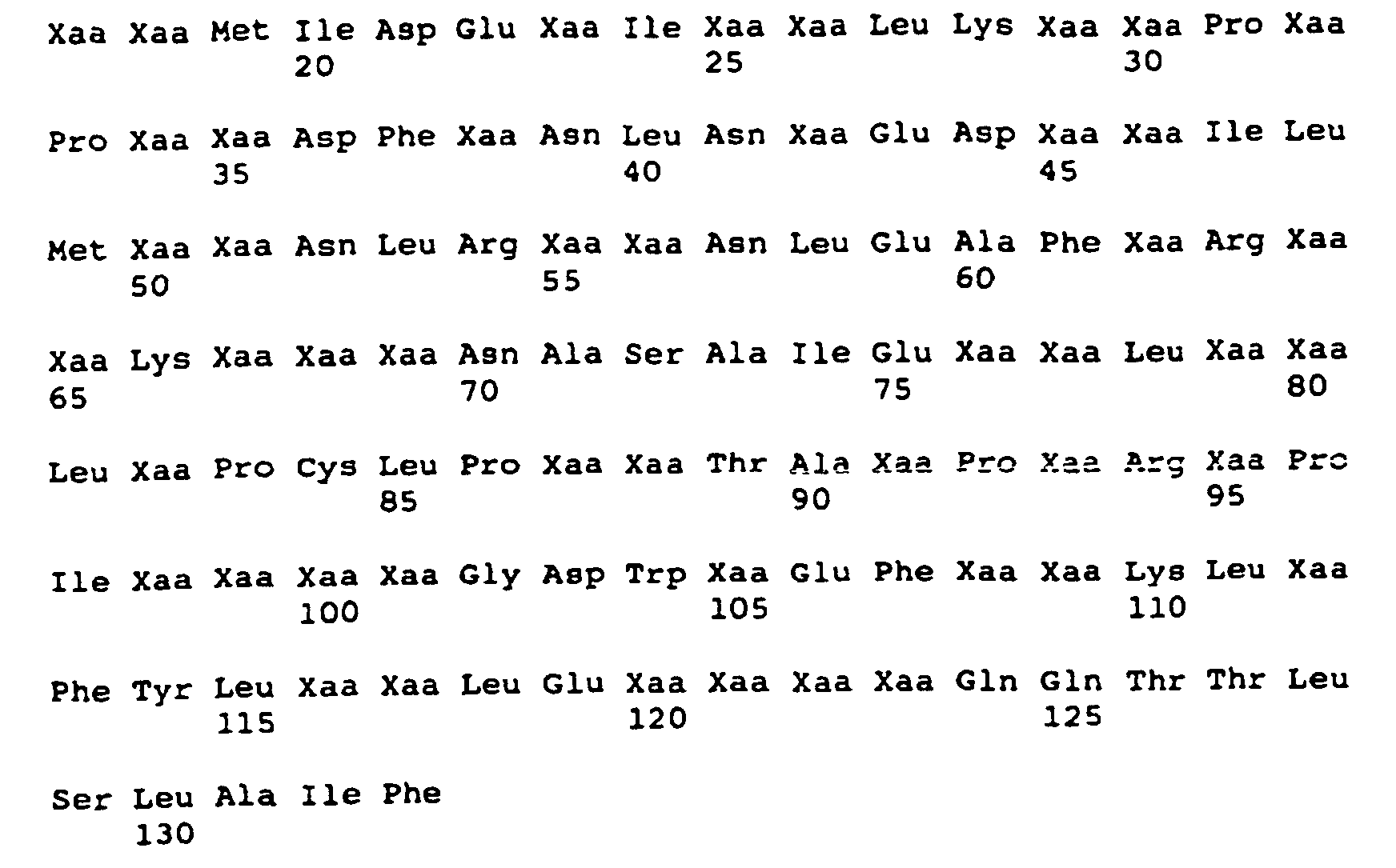
  • hIL-3 muteins contain amino acid substitutions and may also have amino acid deletions at either/or both the N- and C- termini.
  • mixed function colony stimulating factors formed from covalently linked polypeptides, each of which may act through a different and specific cell receptor to initiate complementary biological activities.
  • R1 is a hIL-3 variant which contains multiple amino acid substitutions and which may have portions of the hIL-3 molecule deleted
  • R2 is an Il-3 or Il-3 variant.
  • the R1 polypeptide is fused either directly or through a linker segment to the R2 polypeptide.
  • L represents a chemical bond or polypeptide segment to which both R1 and R2 are fused.
  • These comparative mutant IL-3 polypeptides may contain four or more amino acids which differ from the amino acids found at the corresponding positions in the native hIL-3 polypeptide.
  • the fusion molecules may be characterized by having the usual activity of both of the peptides forming the fusion molecule or it may be further characterized by having a biological or physiological activity greater than simply the additive function of the presence of IL-3 or the second colony stimulating factor alone.
  • the fusion molecule may also unexpectedly provide an enhanced effect on the activity or an activity different from that expected by the presence of IL-3 or IL-3 variant.
  • the fusion molecule may also have an improved activity profile which may include reduction of undesirable biological activities associated with native hIL-3.
  • mutants of hIL-3 in which from 1 to 14 amino acids have been deleted from the N-terminus and/or from 1 to 15 amino acids have been deleted from the C-terminus, containing multiple amino acid substitutions, to which a second colony stimulating factor or IL-3 variant has been fused.
  • Other fusion molecules are composed of hIL-3 variants in which amino acids 1 to 14 have been deleted from the N-terminus, amino acids 126 to 133 have been deleted from the C-terminus, and contains from about four to about twenty-six amino acid substitutions in the polypeptide sequence fused to second colony stimulating factor or IL-3 variant.
  • the fusion molecules of the present invention may function as IL-3 antagonists or as discrete antigenic fragments for the production of antibodies useful in immunoassay and immunotherapy protocols.
  • Antagonists of hIL-3 would be particularly useful in blocking the growth of certain cancer cells like AML, CML and certain types of B lymphoid cancers.
  • Other conditions where antagonists would be useful include those in which certain blood cells are produced at abnormally high numbers or are being activated by endogenous ligands.
  • Antagonists would effectively compete for ligands, presumably naturally occurring hemopoietins including and not limited to IL-3, GM-CSF and IL-5, which might trigger or augment the growth of cancer cells by virtue of their ability to bind to the IL-3 receptor complex while intrinsic activation properties of the ligand are diminished.
  • IL-3, GM-CSF and/or IL-5 also play a role in certain asthmatic responses.
  • An antagonist of the IL-3 receptor may have the utility in this disease by blocking receptor-mediated activation and recruitment of inflammatory cells.
  • in vitro uses would include the ability to stimulate bone marrow and blood cell activation and growth before infusion into patients.
  • the compounds described herein for comparative purposes encompass recombinant human interleukin-3 (hIL-3) variants or mutant proteins (muteins) fused to itself, Il-3 or a second colony stimulating factor (CSF) including but not limited to cytokine, lymphokine, interleukin, hematopoietic growth factor or IL-3 variant with or without a linker.
  • CSF colony stimulating factor
  • Hematopoiesis requires a complex series of cellular events in which stem cells generate continuously into large populations of maturing cells in all major lineages. There are currently at least 20 known regulators with hematopoietic proliferative activity.
  • proliferative regulators can stimulate one or another type of colony formation in vitro, the precise pattern of colony formation stimulated by each regulator is quite distinctive. No two regulators stimulate exactly the same pattern of colony formation, as evaluated by colony numbers or, more importantly, by the lineage and maturation pattern of the cells making up the developing colonies. Proliferative responses can most readily be analyzed in simplified in vitro culture systems. Three quite different parameters can be distinguished: alteration in colony size, alteration in colony numbers and cell lineage. Two or more factors may act on the progenitor cell, inducing the formation of larger number of progeny thereby increasing the colony size.
  • Two or more factors may allow increased number of progenitor cells to proliferate either because distinct subsets of progenitors cells exist that respond exclusively to one factor or because some progenitors require stimulation by two or more factors before being able to respond.
  • Activation of additional receptors on a cell by the use of two or more factors is likely to enhance the mitotic signal because of coalescence of initially differing signal pathways into a common final pathway reaching the nucleus (Metcalf, 1989).
  • Other mechanisms could explain synergy. For example, if one signaling pathway is limited by an intermediate activation of an additional signaling pathway by a second factor may result in a superadditive response.
  • activation of one receptor type can induce a enhanced expression of other receptors (Metcalf, 1993).
  • Two or more factors may result in a different pattern of cell lineages then from a single factor.
  • the use of fusion molecules may have the potential clinical advantage resulting from a proliferative response that is not possible by any single factor.
  • Hematopoietic and other growth factors can be grouped in to two distinct families of related receptors: (1) tyrosine kinase receptors, including those for epidermal growth factor, M-CSF (Sherr, 1990) and SCF (Yarden et al., 1987): and (2) hematopoietic receptors, not containing a tyrosine kinase domain, but exhibiting obvious homology in their extracellular domain (Bazan, 1990).
  • EPO erythropoietin
  • GM-CSF Gearing et al., 1989
  • IL-3 Kitamura et al., 1991
  • G-CSF Fukunaga et al., 1990
  • IL-4 Harada et al., 1990
  • IL-5 (Takaki et al., 1990)
  • IL-6 (Yamasaki et al., 1988)
  • IL-7 Goodwin et al., 1990
  • LIF Gateing et al., 1991
  • IL-2 Cosman et al., 1987.
  • ⁇ -chain GM-CSF
  • IL-3 and IL-5 share the same ⁇ -chain
  • receptor complexes for IL-6, LIF and IL-11 share a common ⁇ -chain (gp130) (Taga et al., 1989; Gearing et al., 1992).
  • the receptor complexes of IL-2, IL-4 and IL-7 share a common ⁇ -chain (Kondo et al., 1993; Russell et al., 1993; Noguchi et al., 1993).
  • the use of multiple factors may also have potential advantage by lowering the demands placed on factor-producing cells and their induction systems. If there are limitations in the ability of a cell to produce a factor then by lowering the required concentrations of each of the factors by using them in combination may usefully reduce demands on the factor-producing cells. The use of multiple factors may lower the amount of the factors that would be needed, probably reducing the likelihood of adverse responses.
  • All compounds described herein, including those for comparative purposes are represented by a formula selected from the group consisting of R 1 -L-R 2 , R 2 -L-R 1 , R 1 -R 2 , R 2 -R 1 , R 1 -L-R 1 and R 1 -R 1 where R1 is a hIL-3 variant which contains multiple amino acid substitutions and which may have portions of the hIL-3 molecule deleted as is disclosed in co-pending United States Patent Application Serial number PCT/US93/11197, R2 is Il-3, Il-3 variant or a colony stimulating factor with a different but complementary activity. By complementary activity is meant activity which enhances or changes the response to another cell modulator.
  • the R1 polypeptide is fused either directly or through a linker segment to the R2 polypeptide.
  • the term "directly” defines fusions in which the polypeptides are joined without a peptide linker.
  • L represents a chemical bound or polypeptide segment to which both R1 and R2 are fused in frame, most commonly L is a linear peptide to which R1 and R2 are bound by amide bonds linking the carboxy terminus of R1 to the amino terminus of L and carboxy terminus of L to the amino terminus of R2.
  • fused in frame is meant that there is no translation termination or disruption between the reading frames of R1 and R2.
  • CSFs colony stimulating factors
  • cytokine cytokine
  • lymphokine interleukin
  • hematopoietic growth factor which can be fused to a hIL-3 variant for comparison purposes
  • M-CSF Meg-CSF (more recently referred to as c-mpl ligand)
  • EPO erythropoietin
  • human growth hormone B-cell growth factor, B-cell differentiation factor, eosinophil differentiation factor and stem cell factor (SCF) also known as steel factor or c-kit ligand.
  • SCF stem cell factor
  • R2 is a hIL-3 variant which means an IL-3 in which has amino acid substitutions and which may have portions of the hIL-3 molecule deleted such as what is disclosed in PCT/US93/11197 and PCT/US93/11198 as well as other variants known in the art.
  • a linking group (L) is generally a polypeptide of between 1 and 500 amino acids in length.
  • the linkers joining the two molecules are preferably designed to (1) allow the two molecules to fold and act independently of each other, (2) not have a propensity for developing an ordered secondary structure which could interfere with the functional domains of the two proteins, (3) have minimal hydrophobic or charged characteristic which could interact with the functional protein domains and (4) provide steric separation of R1 and R2 such that R1 and R2 could interact simultaneously with their corresponding receptors on a single cell.
  • surface amino acids in flexible protein regions include Gly, Asn and Ser. Virtually any permutation of amino acid sequences containing Gly, Asn and Ser would be expected to satisfy the above criteria for a linker sequence.
  • Other neutral amino acids, such as Thr and Ala may also be used in the linker sequence. Additional amino acids may also be included in the linkers due to the addition of unique restriction sites in the linker sequence to facilitate construction of the fusions.
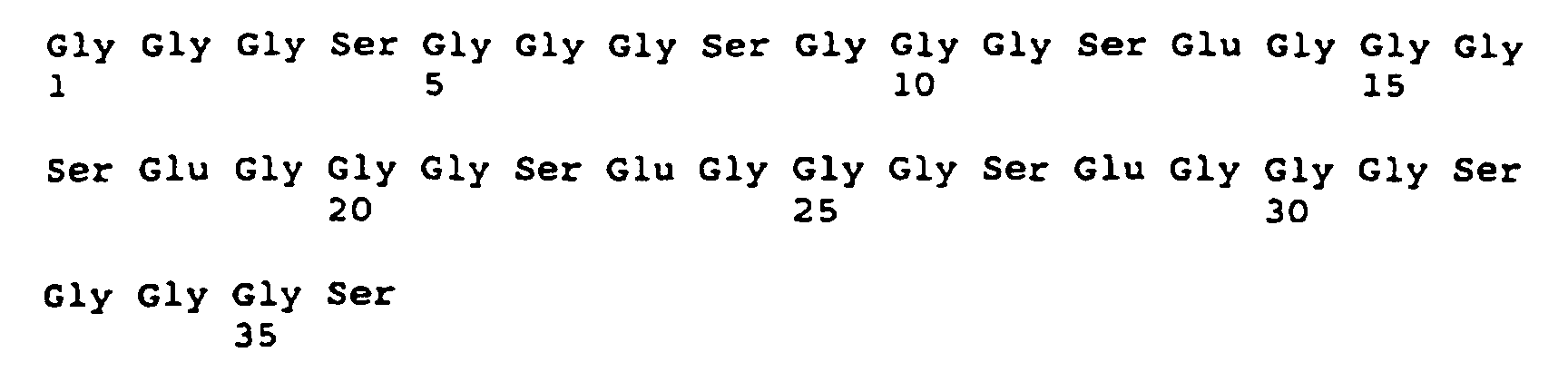
  • a highly-flexible linker is the (GlySer)-rich spacer region present within the pIII protein of the filamentous bacteriophages, e.g. bacteriophages M13 or fd (Schaller et al., 1975). This region provides a long, flexible spacer region between two domains of the pIII surface protein.
  • the spacer region consists of the amino acid sequence:
  • the present invention also includes linkers in which an endopeptidase recognition sequence is included.
  • a cleavage site may be valuable to separate the individual components of the fusion to determine if they are properly folded and active in vitro.
  • endopeptidases include, but are not limited to, Plasmin, Enterokinase, Kallikrein, Urokinase, Tissue Plasminogen activator, clostripain, Chymosin, Collagenase, Russell's viper Venom Protease, Postproline cleavage enzyme, V8 protease, Thrombin and factor Xa.
  • Peptide linker segments from the hinge region of heavy chain immunoglobulins IgG, IgA, IgM, IgD or IgE provide an angular relationship between the attached polypeptides. Especially useful are those hinge regions where the cysteines are replaced with serines.
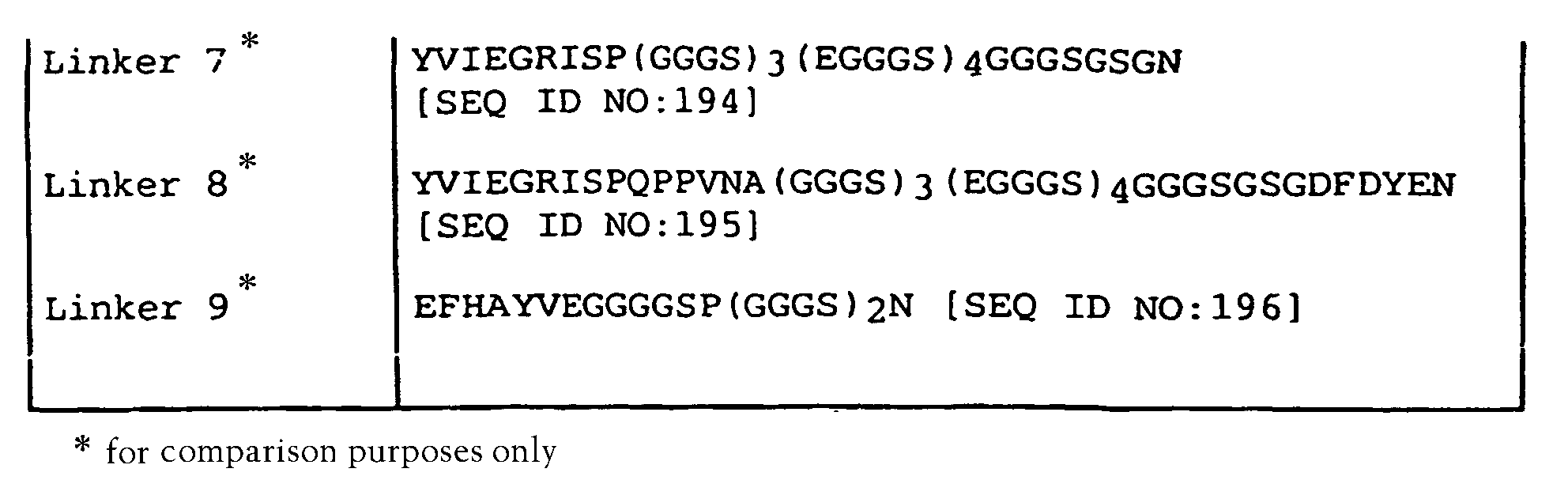
  • Linkers include sequences derived from murine IgG gamma 2b hinge region in which the cysteins have been changed to serines. These linkers may also include an endopeptidase cleavage site. Examples of such linkers include the following sequences selected from the group of sequences
  • R1-C1 + R2-C2 or C1-R1 + C2-R2; C1-R1 + R2-C2; or C1-R1 + R2-C2.
  • R1 is a hIL-3 variant which contains multiple amino acid substitutions and which may have portions of the hIL-3 molecule deleted
  • R2 is a colony stimulating factor with a different but complementary activity.
  • a nonexclusive list of other growth hormones, colony stimulating factors (CSFs), cytokine, lymphokine, interleukin, hematopoietic growth factor within this definition of R2, which can be fused to a hIL-3 variant for comparison purposes include GM-CSF, CSF-1, G-CSF, Meg-CSF (more recently referred to as c-mpl ligand), M-CSF, erythropoietin (EPO), IL-1, IL-4, IL-2, IL-5, IL-6, IL-7, IL-8, IL-9, IL-10, IL-11, IL-12, IL-13, LIF, flt3/flk2, human growth hormone, B-cell growth factor, B-cell differentiation factor, eosinophil differentiation factor and stem cell factor (SCF) also known as steel factor or c-kit ligand.
  • CSFs colony stimulating factors
  • cytokine cytokine
  • lymphokine interleukin
  • Domains C1 and C2 are either identical or non-identical chemical structures, typically proteinaceous, which can form a non-covalent, specific association. Complexes between C1 and C2 result in a one-to-one stoichiometric relationship between R1 and R2 for each complex. Examples of domains which associate are "leucine zipper" domains of transcription factors, dimerization domains of bacterial transcription repressors and immunoglobulin constant domains. Covalent bonds link R1 and C1, and R2 and C2, respectively. As indicated in the formulae, the domains C1 and C2 can be present either at the N-terminus or C-terminus of their corresponding hematopoietic growth factor (R).
  • R hematopoietic growth factor
  • These multimerization domains include those derived from the bZIP family of proteins (Abel et al., 1989; Landshulz et al., 1988; Pu et al., 1993; Kozarides et al., 1988) as well as multimerization domains of the helix-loop-helix family of proteins (Abel et al., 1989; Murre et al., 1989; Tapscott et al., 1988; Fisher et al., 1991). Fusions that are furthermore described for comparison include colony stimulating factors dimerized by virtue of their incorporation as translational fusions the leucine zipper dimerization domains of the bZIP family proteins Fos and Jun.
  • the leucine zipper domain of Jun is capable of interacting with identical domains.
  • the leucine zipper domain of Fos interacts with the Jun leucine zipper domain, but does not interact with other Fos leucine zipper domains. Mixtures of Fos and Jun predominantly result in formation of Fos-Jun heterodimers. Consequently, when fused to colony stimulating factors, the Jun domain can be used to direct the formation of either homo or heterodimers. Preferential formation of heterodimers can be achieved if one of the colony stimulating factor partner is engineered to possess the Jun leucine zipper domain while the other is engineered to possess the Fos zipper.
  • Peptides may also be added to facilitate purification or identification of fusion proteins (e.g., poly-His).
  • a highly antigenic peptide may also be added that would enable rapid assay and facile purification of the fusion protein by a specific monoclonal antibody.
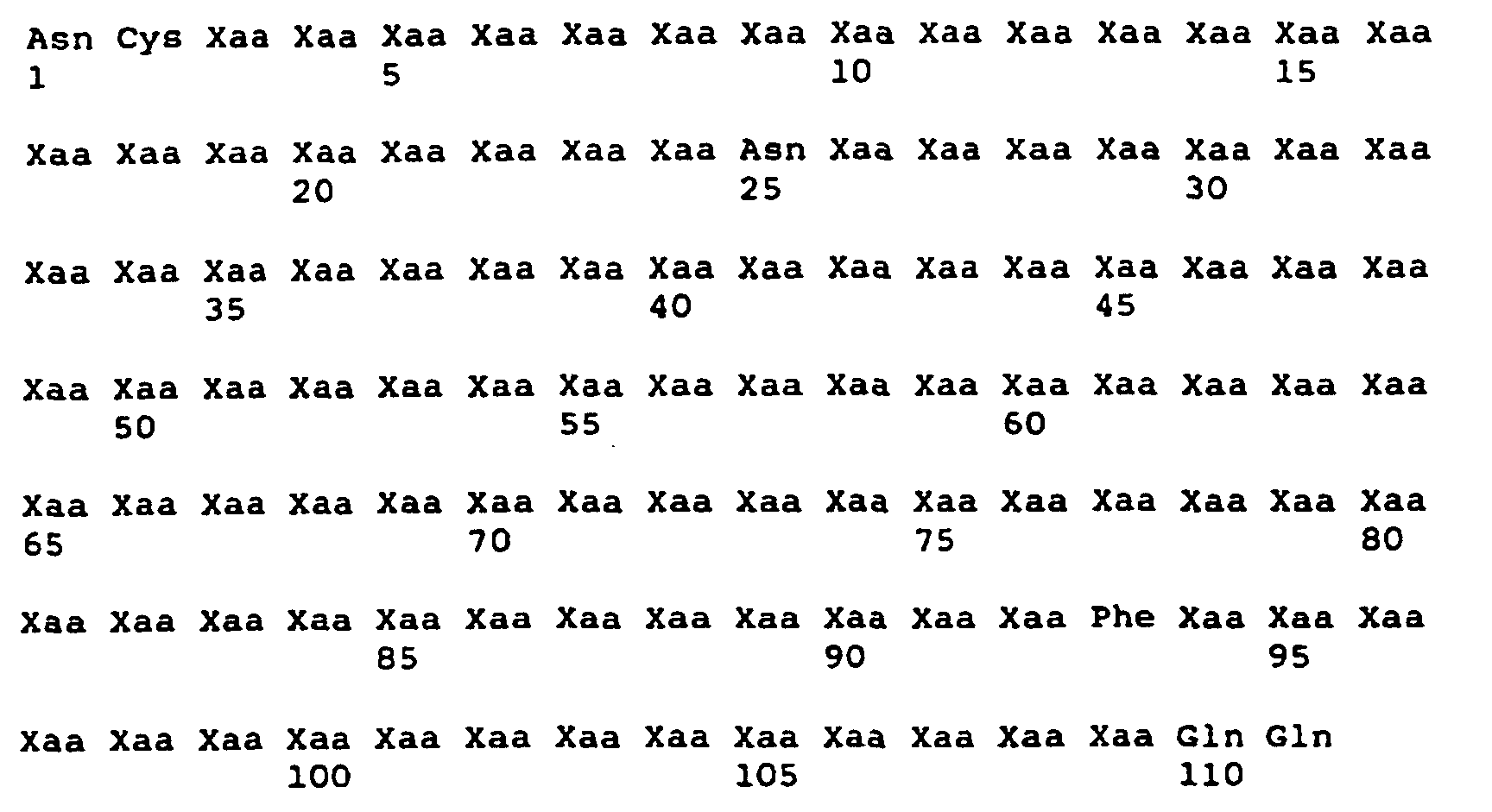
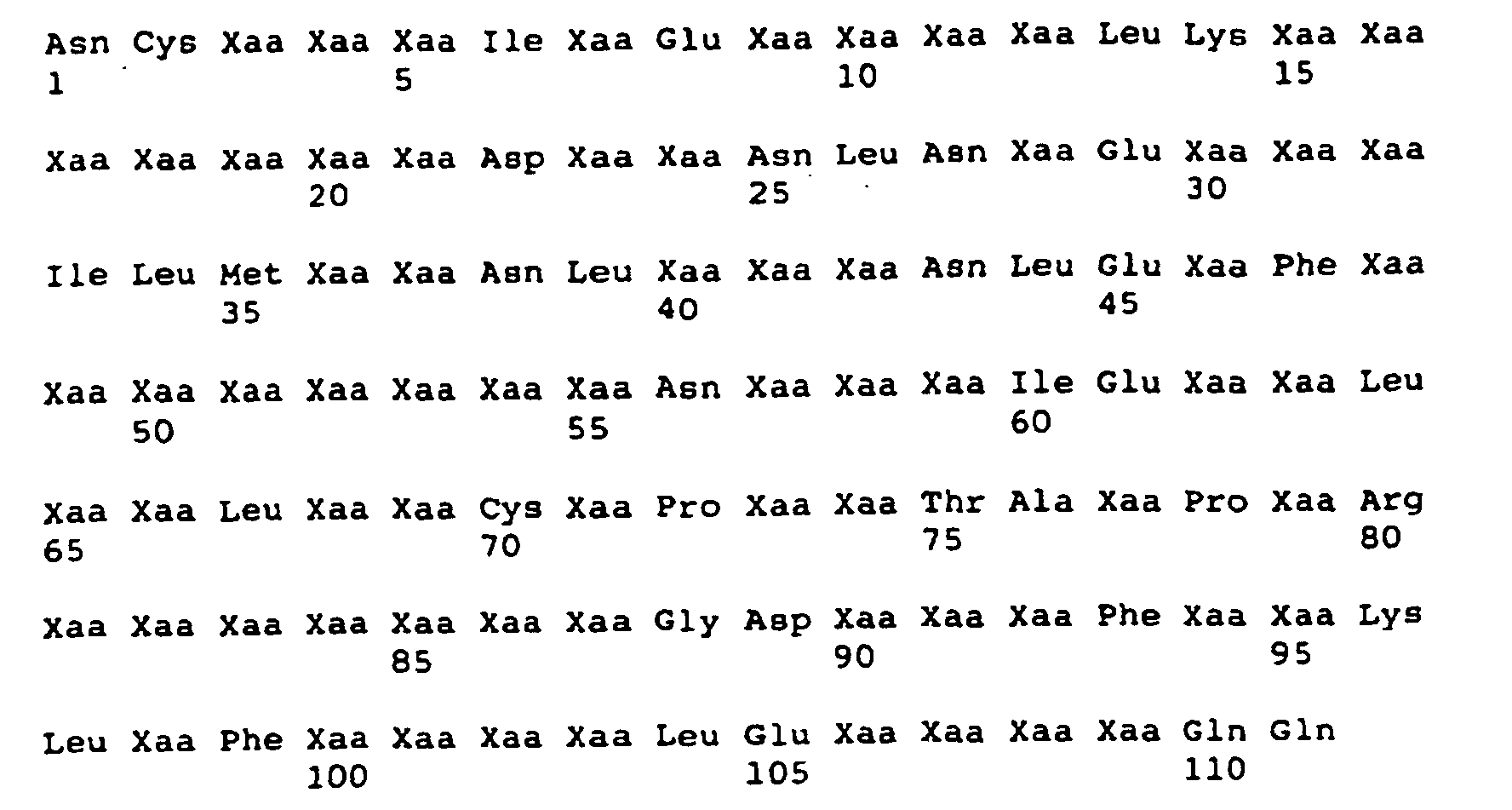
  • Molecules that are furthermore described for comparison are composed of variants of human interleukin-3 (hIL-3) in which amino acid substitutions have been made at four or more positions in amino acid sequence of the polypeptide fused to second colony stimulating factor or IL-3 variant.
  • Other fusion molecules that are furthermore described for comparison are (15-125)hIL-3 deletion mutants which have deletions of amino acids 1 to 14 at the N-terminus and 126 to 133 at the C-terminus and which also have four or more amino acid substitutions in the polypeptide fused to second colony stimulating factor or IL-3 variant.
  • the discription includes comparative mutant polypeptides comprising minimally amino acids residues 15 to 118 of hIL-3 with or without additional amino acid extensions to the N-terminus and/or C-terminus which further contain four or more amino acid substitutions in the amino acid sequence of the polypeptide fused to another colony stimulating factor or IL-3 variant.
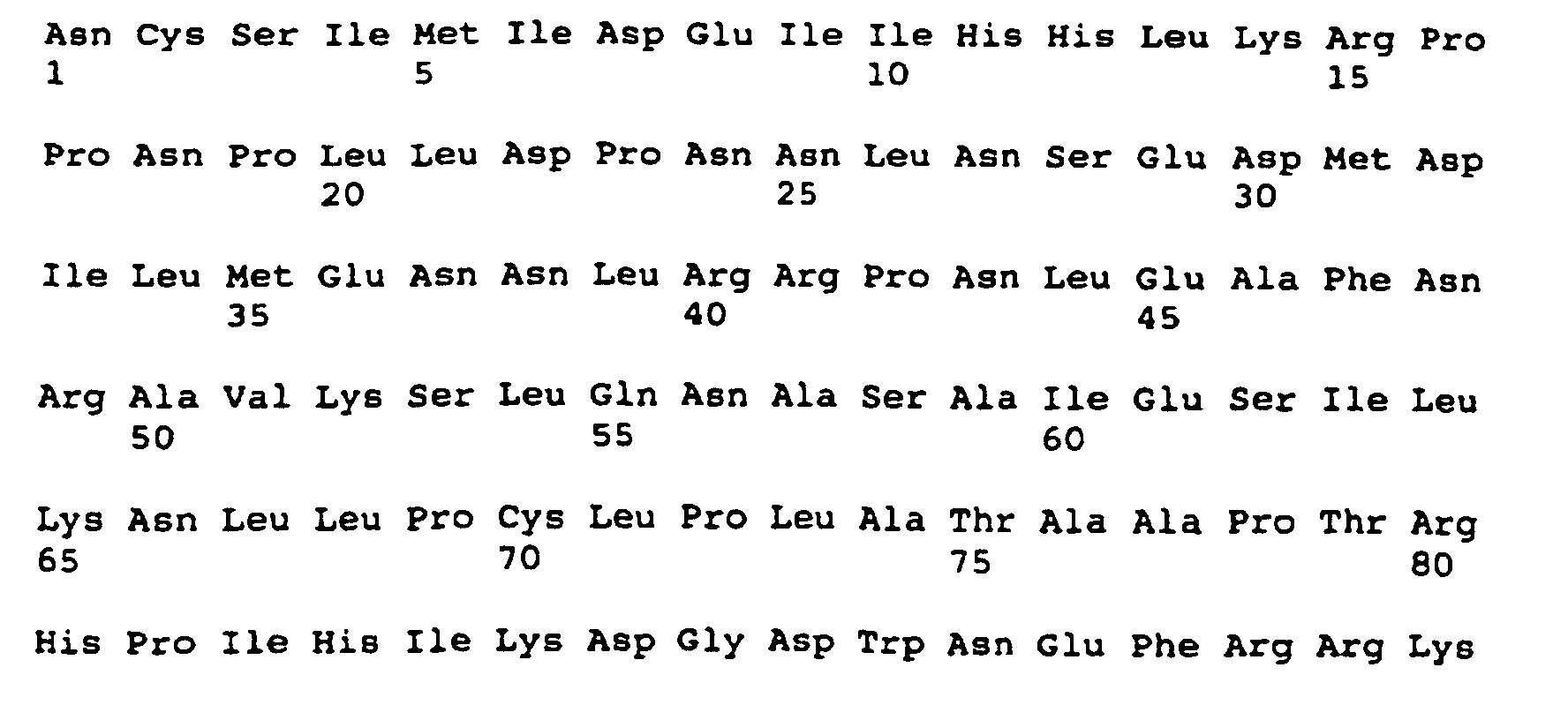
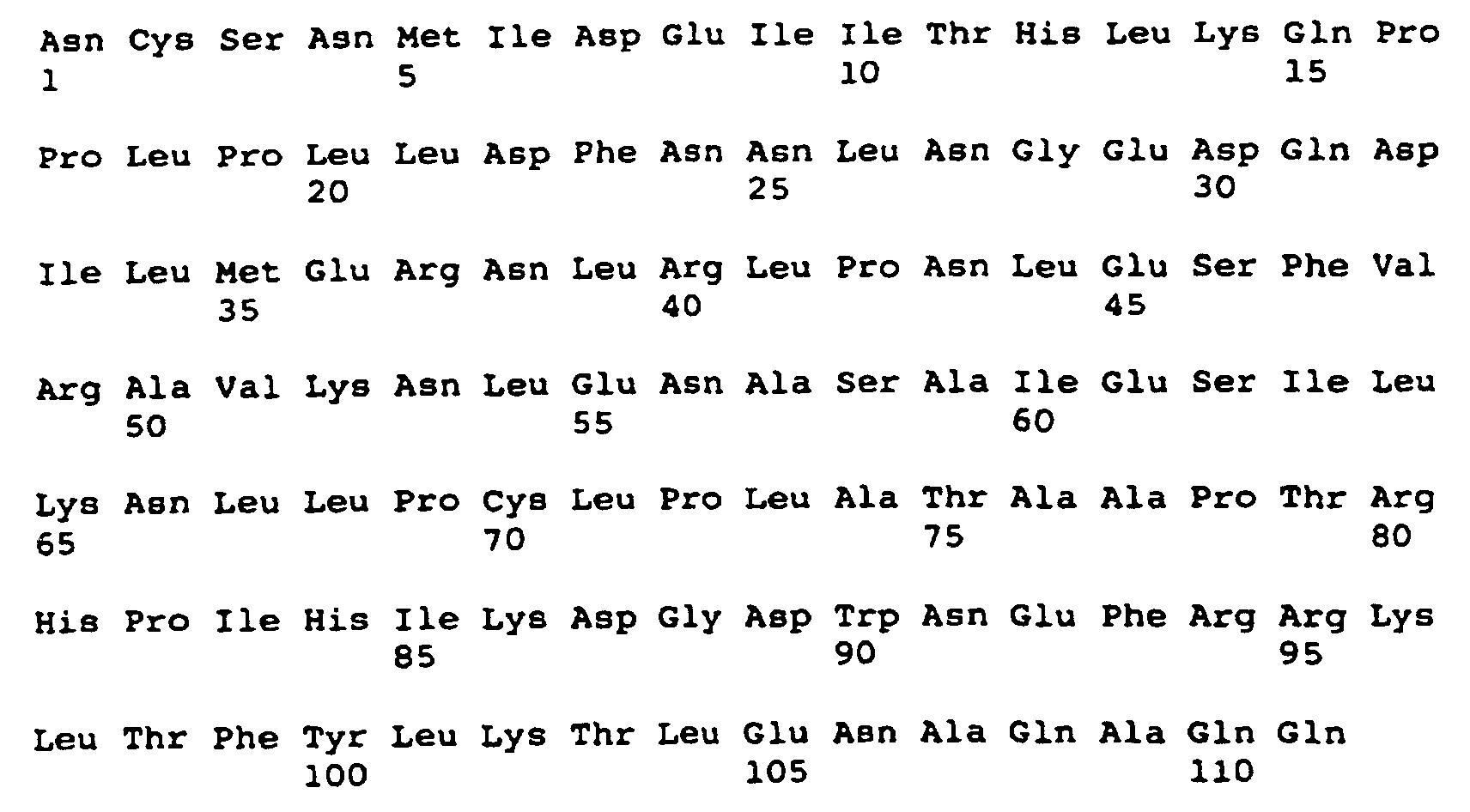
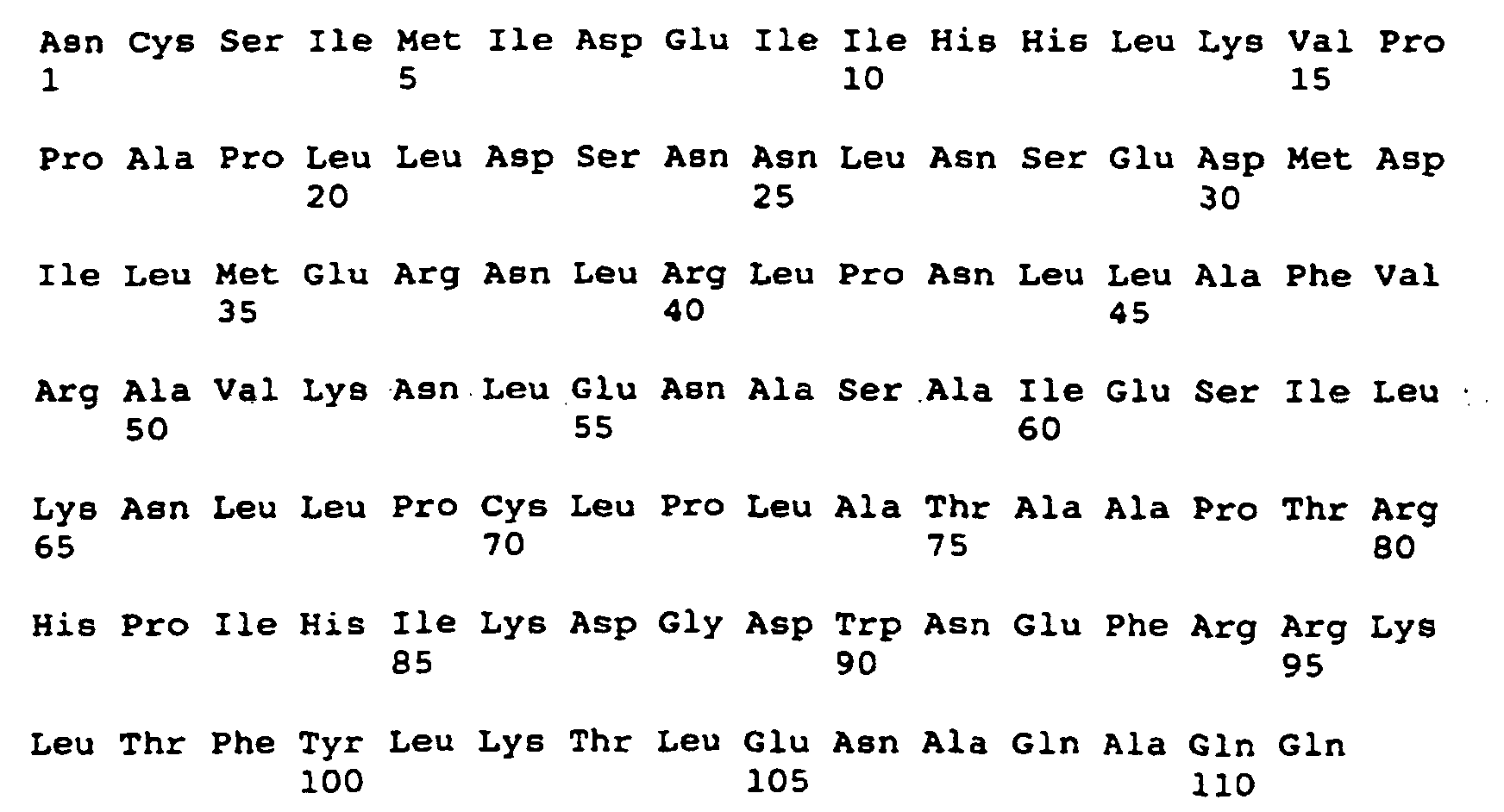
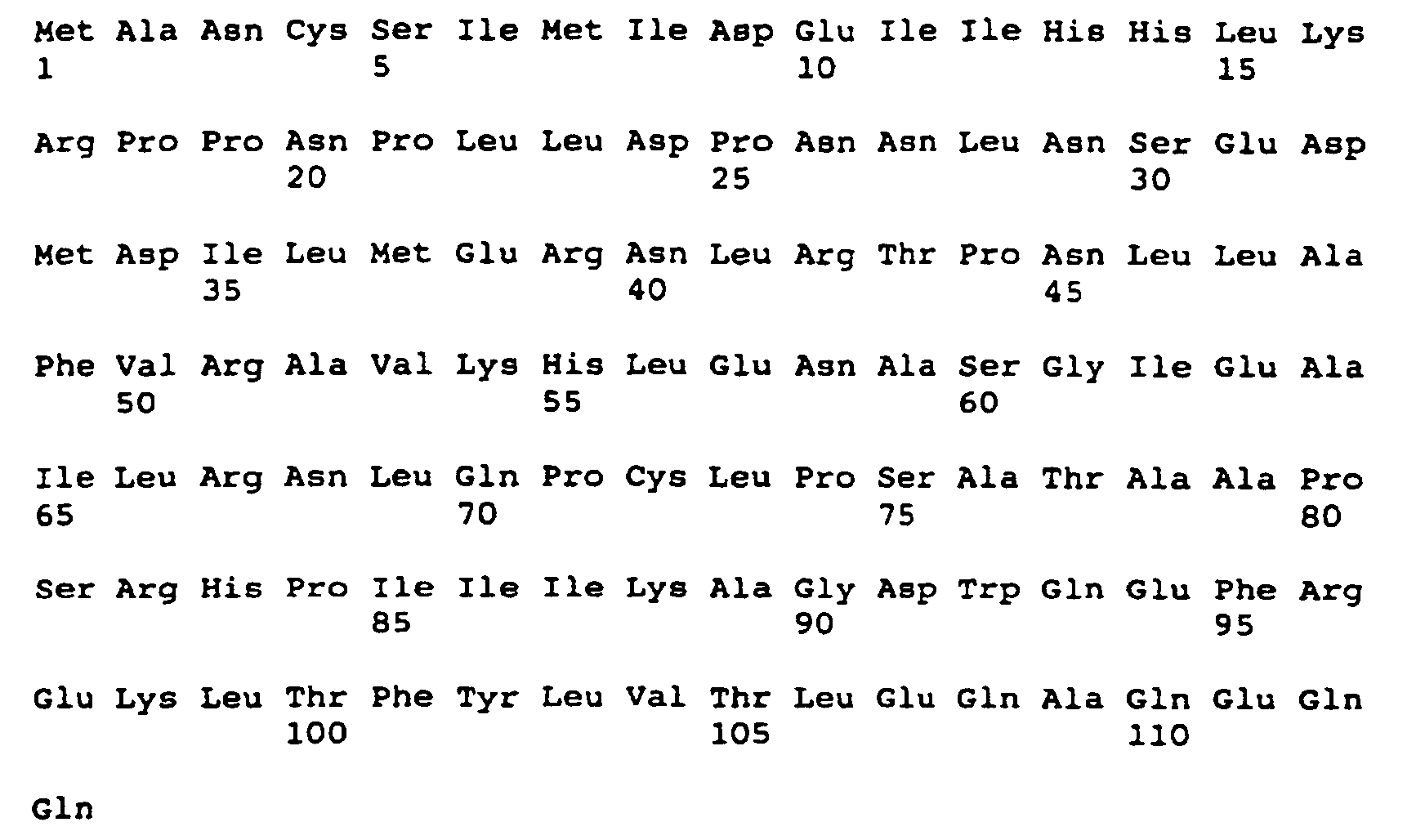
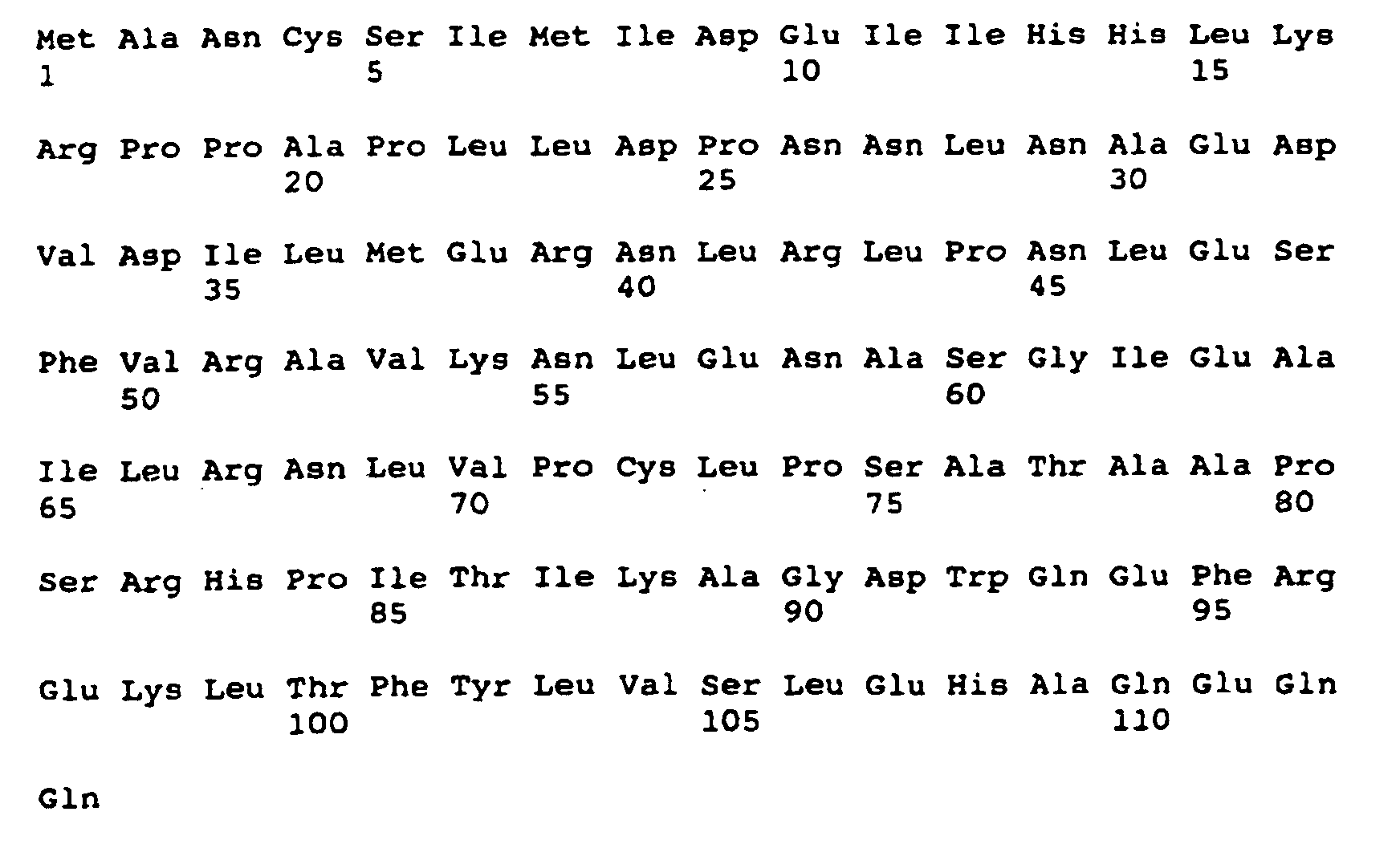
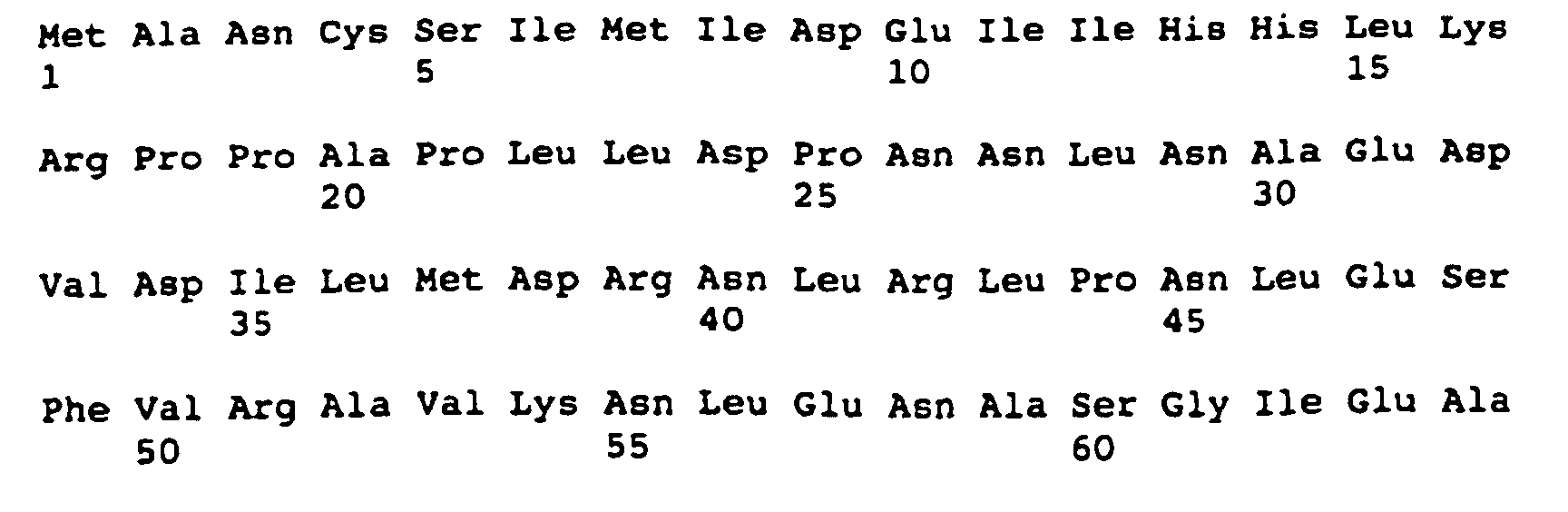
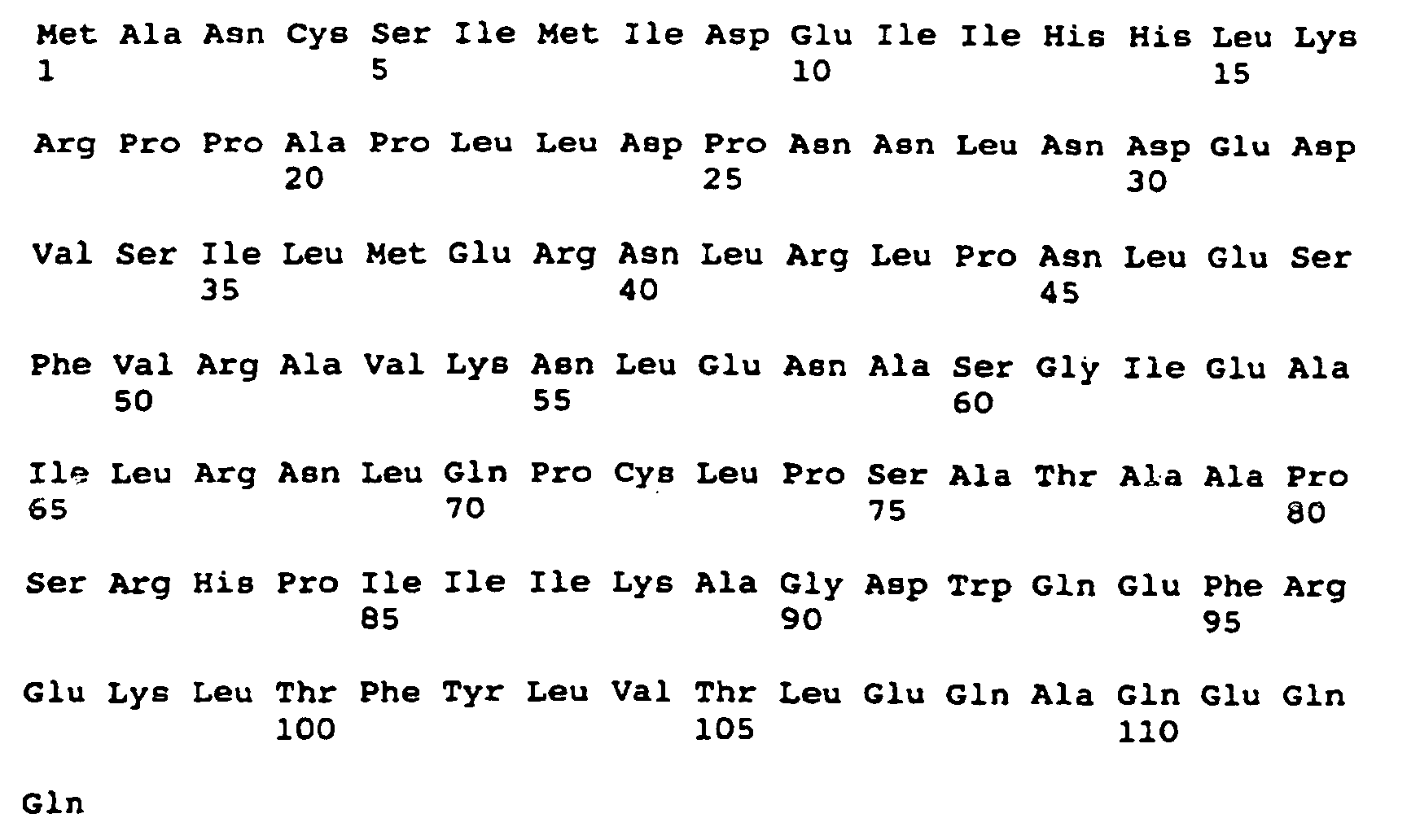
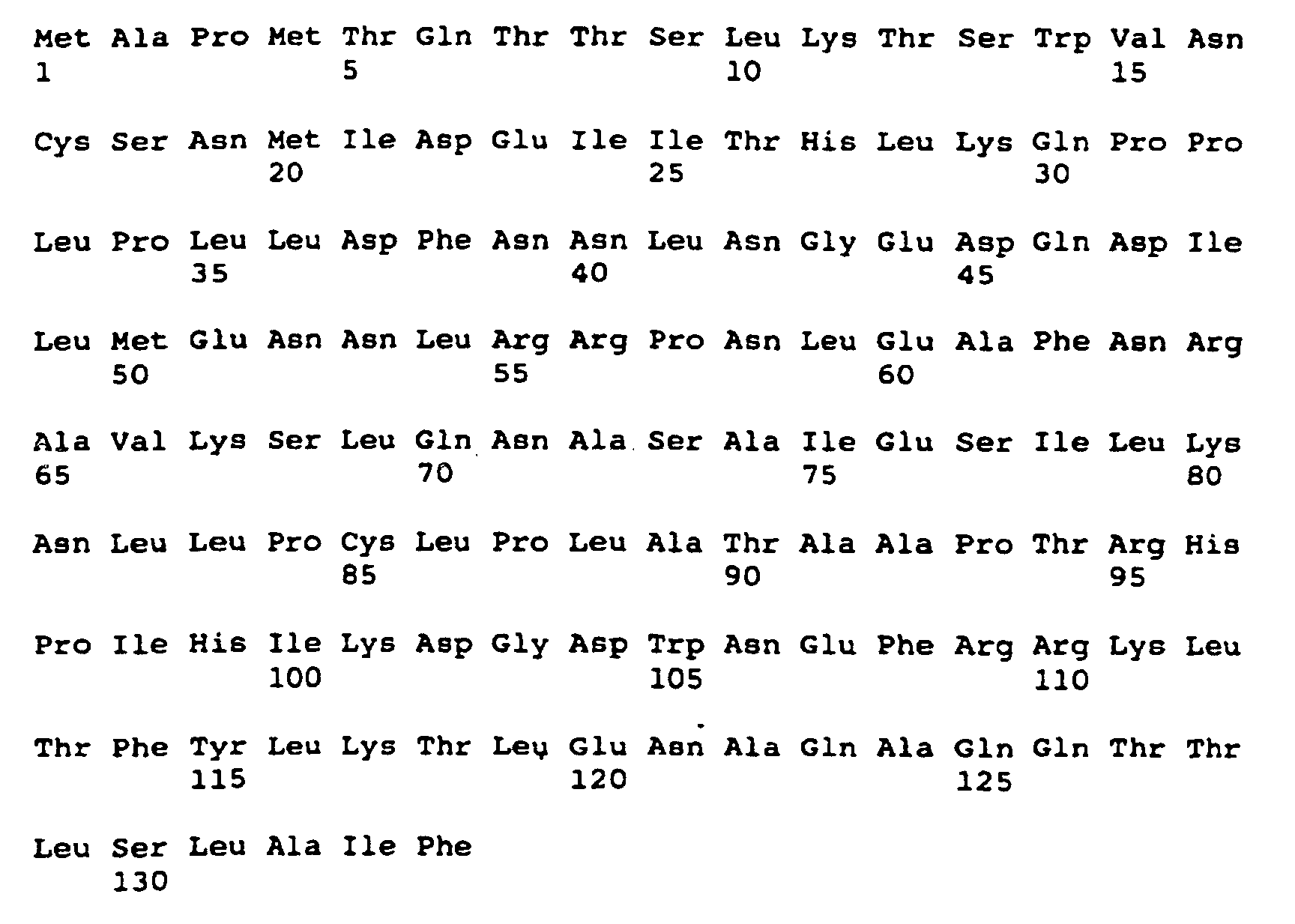
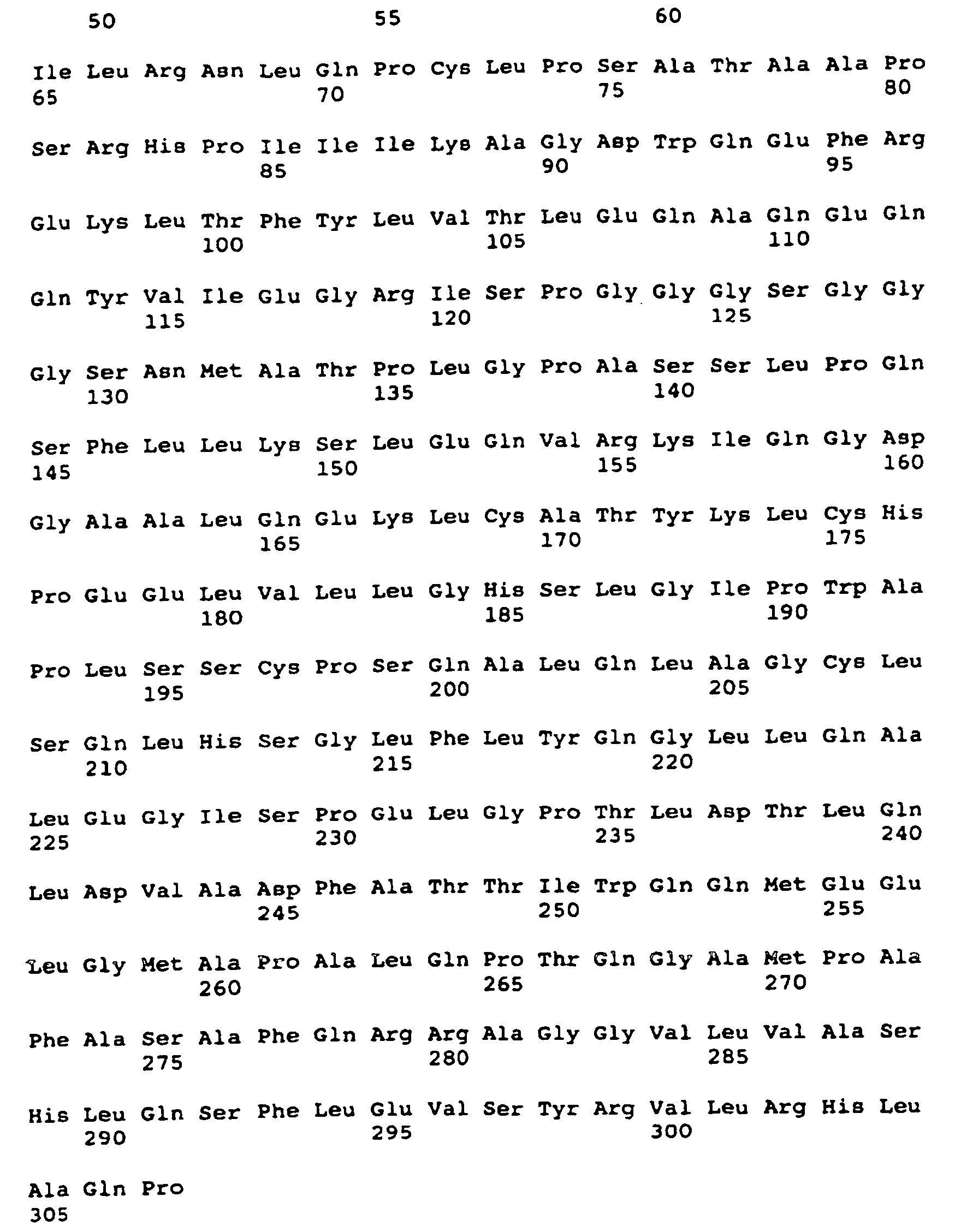
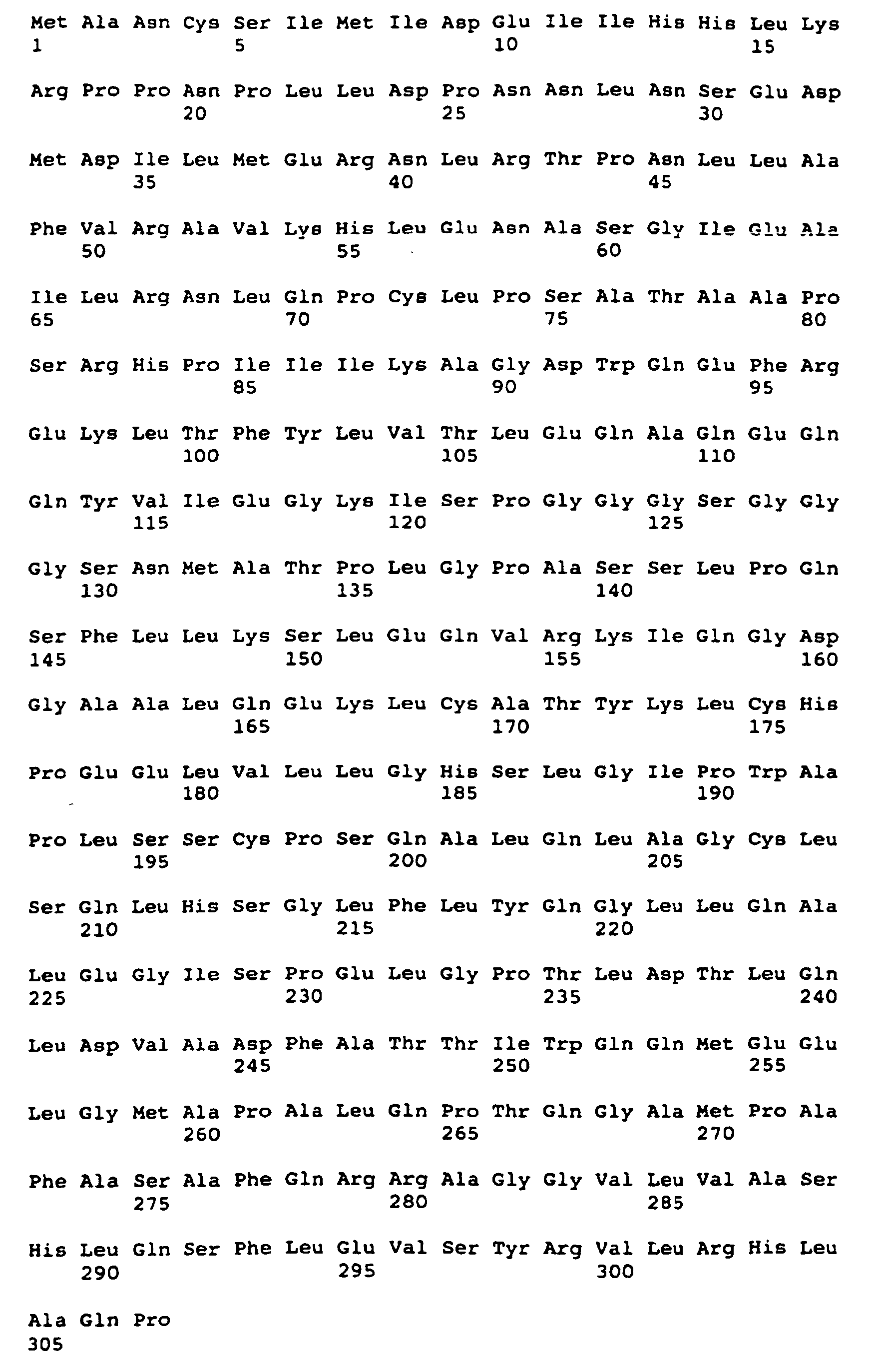
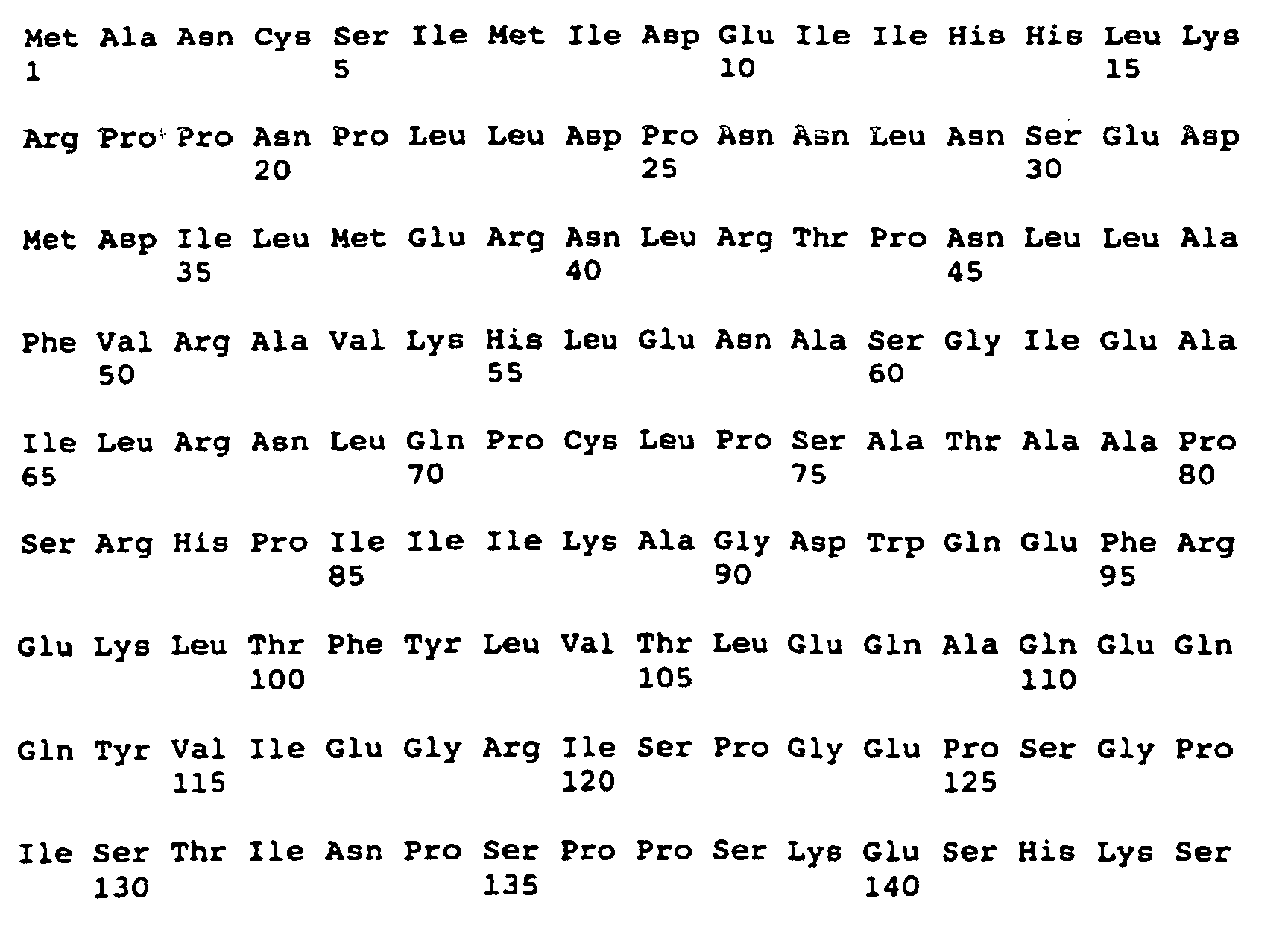
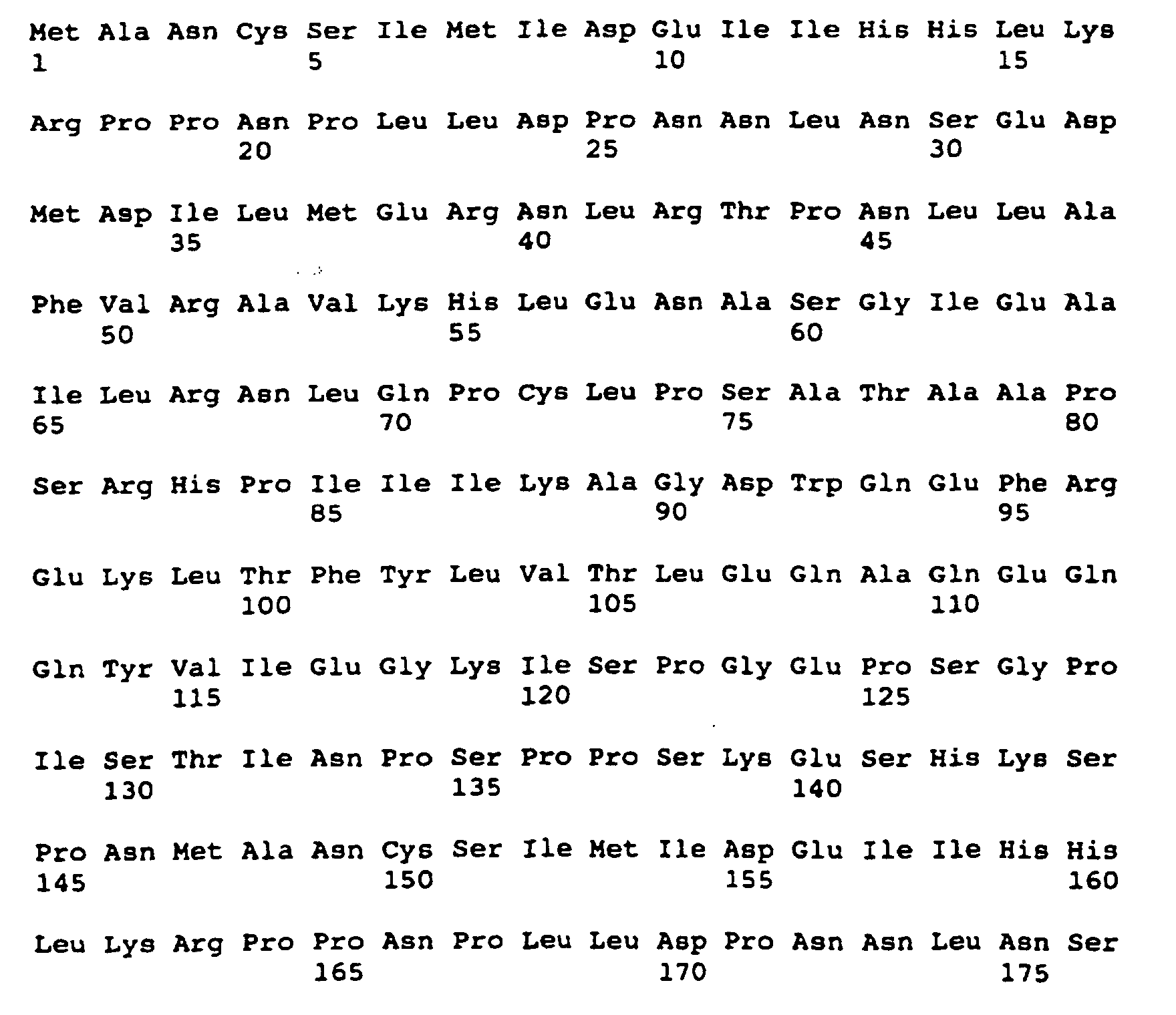
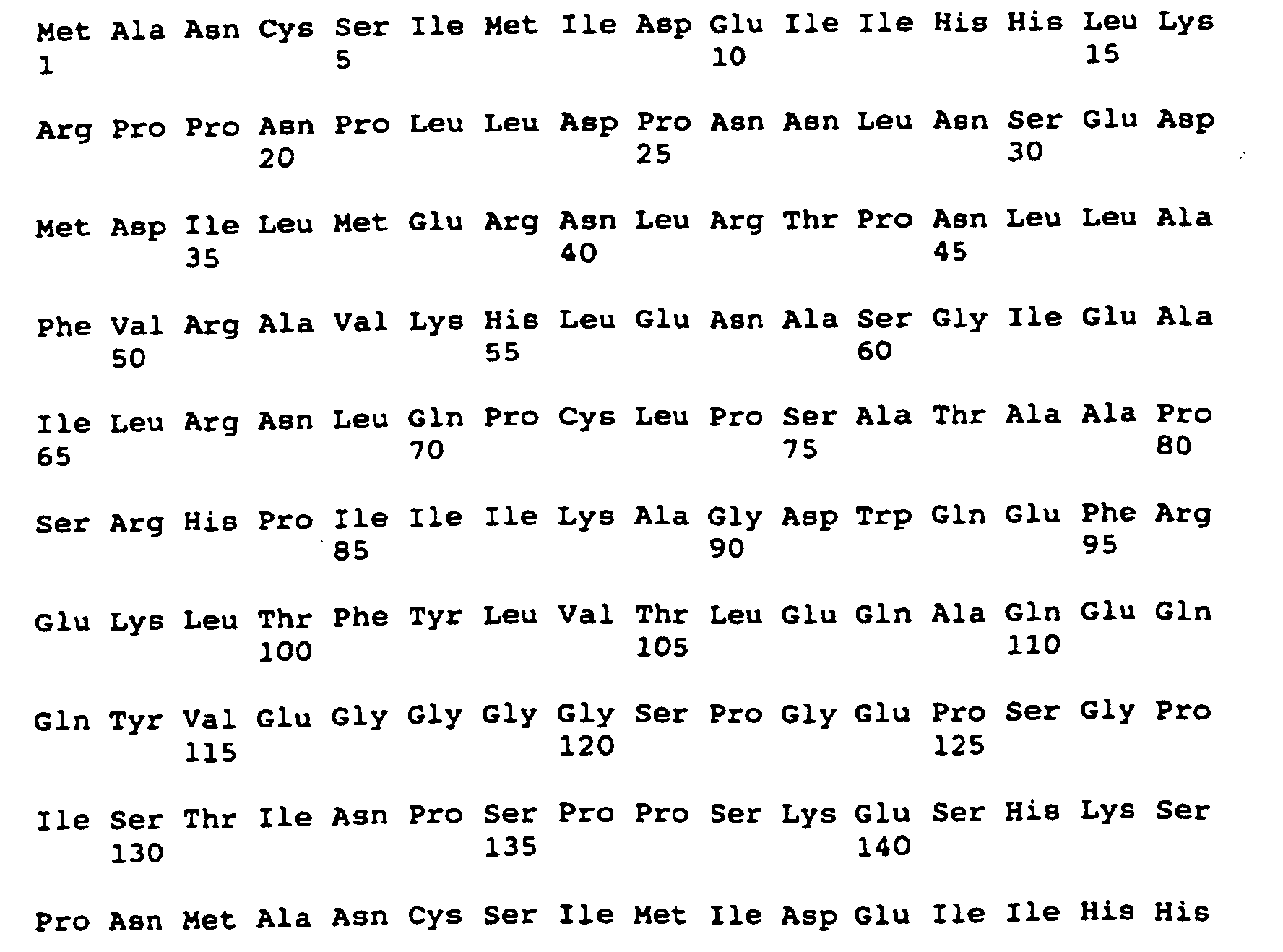
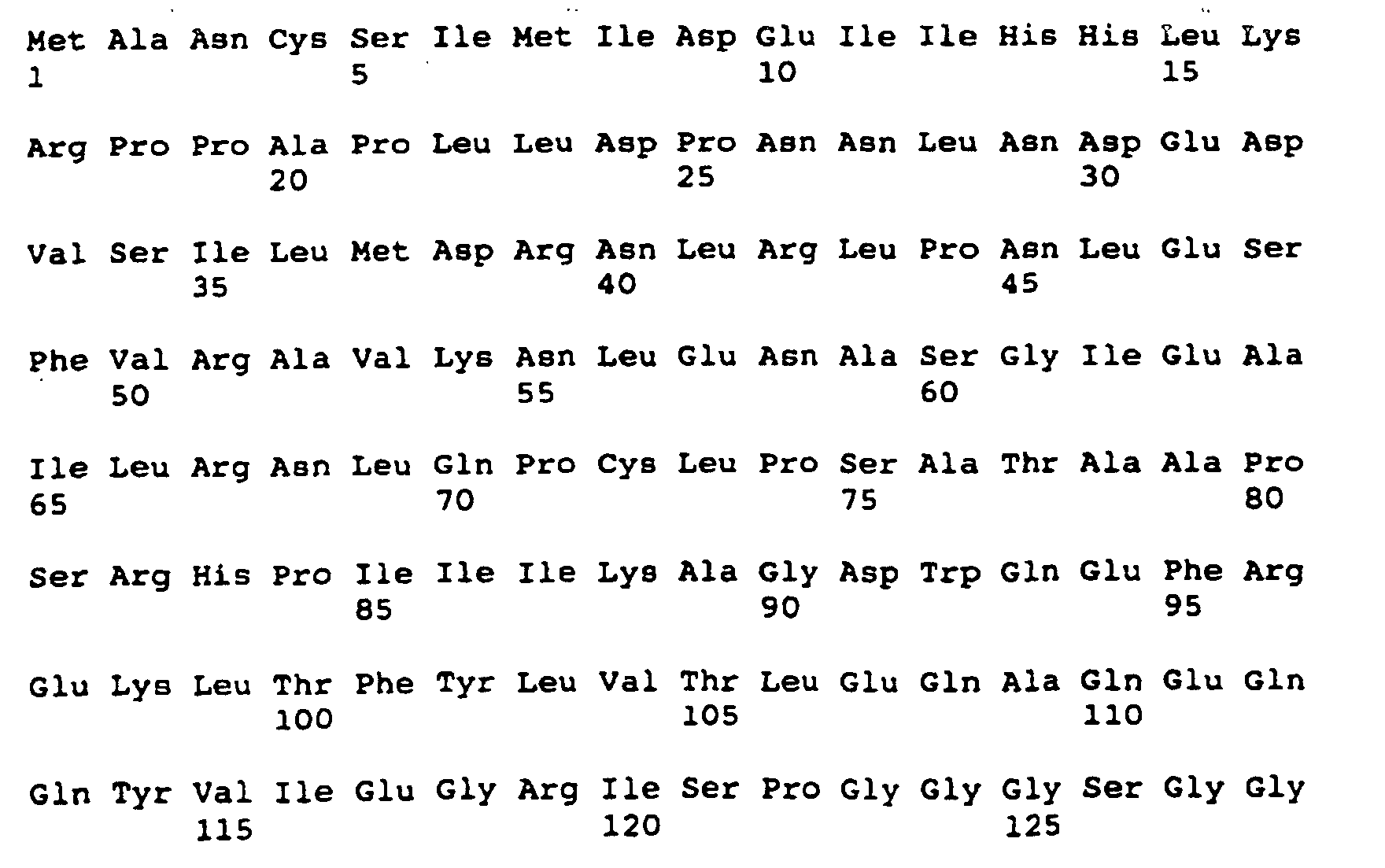
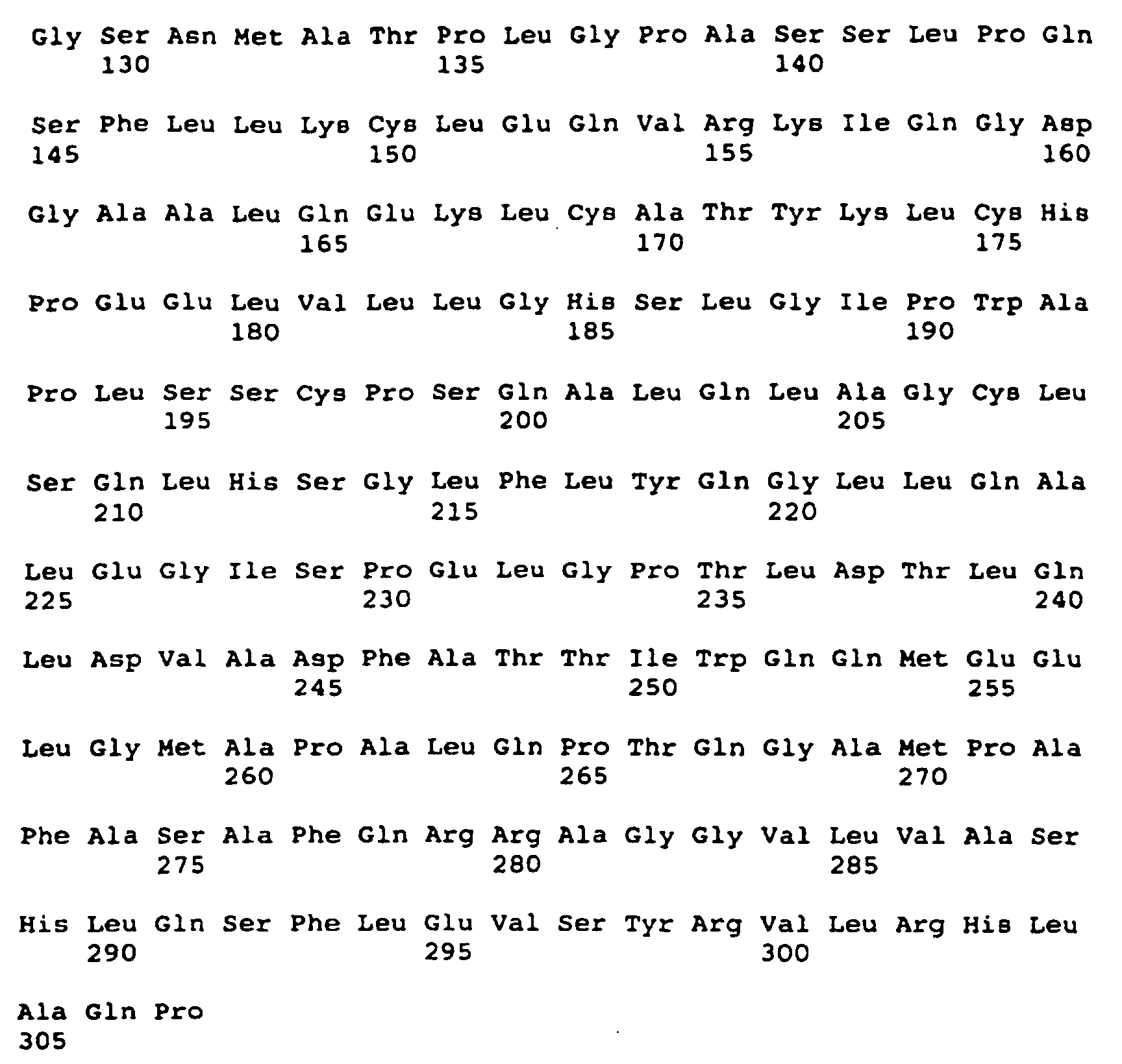
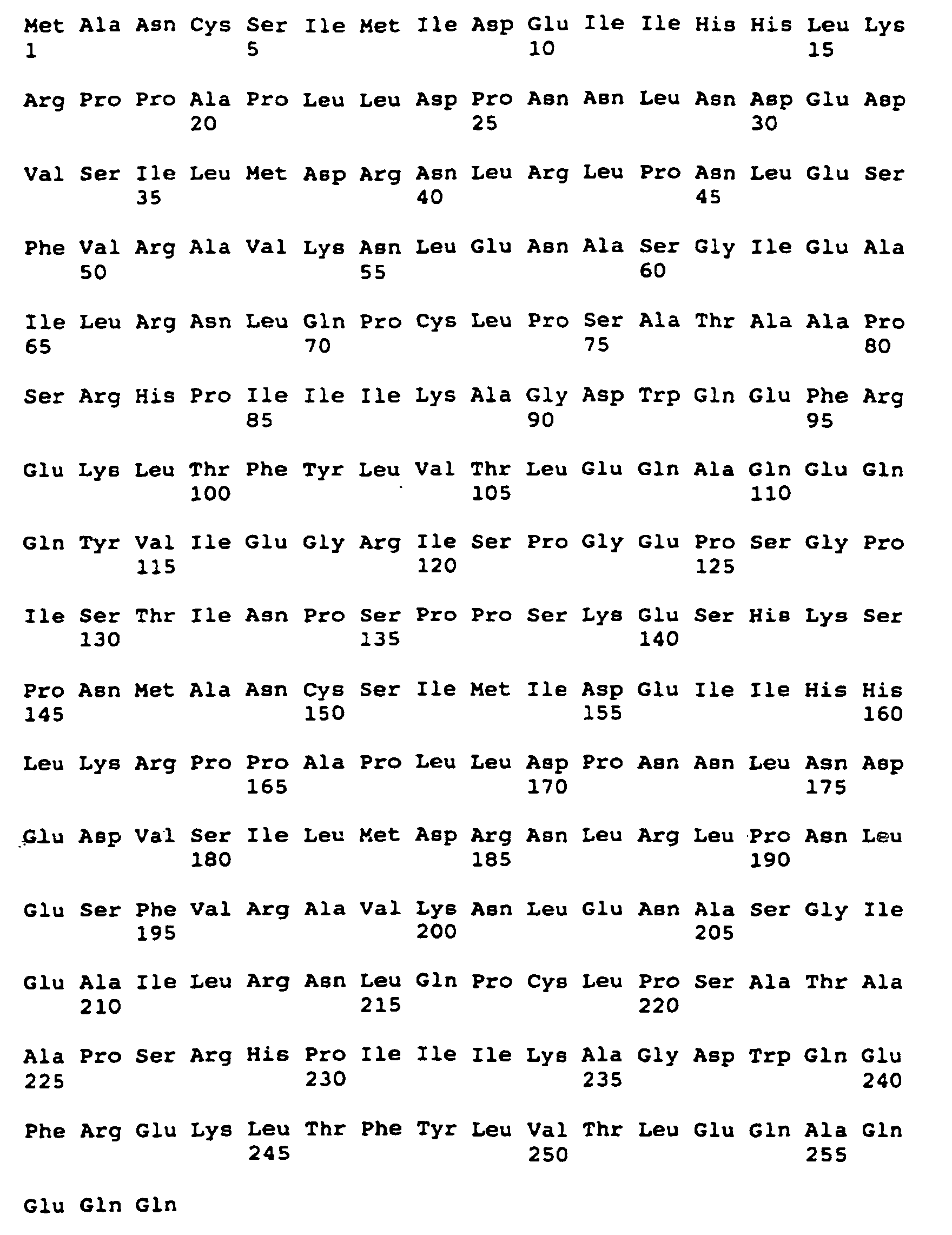
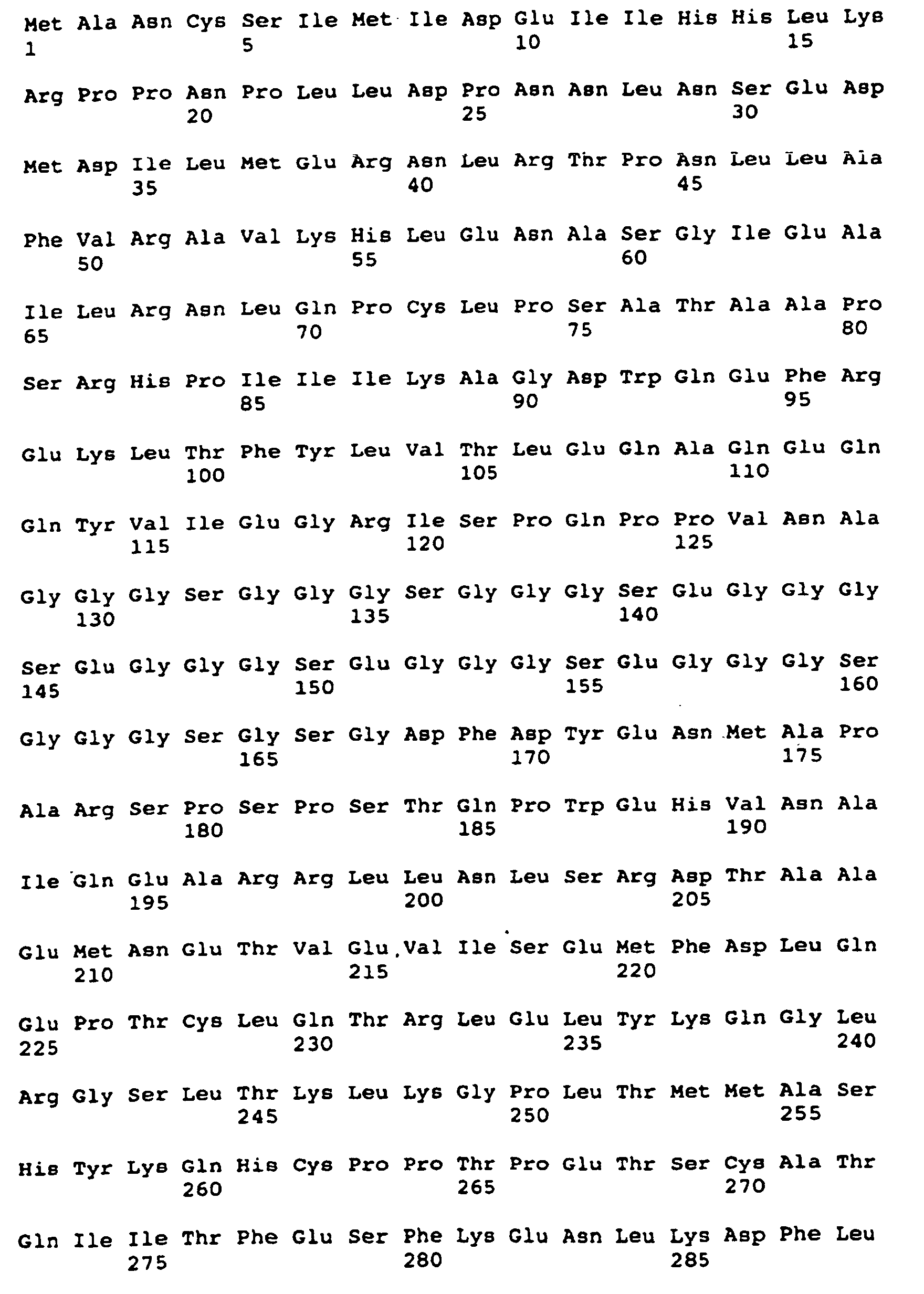
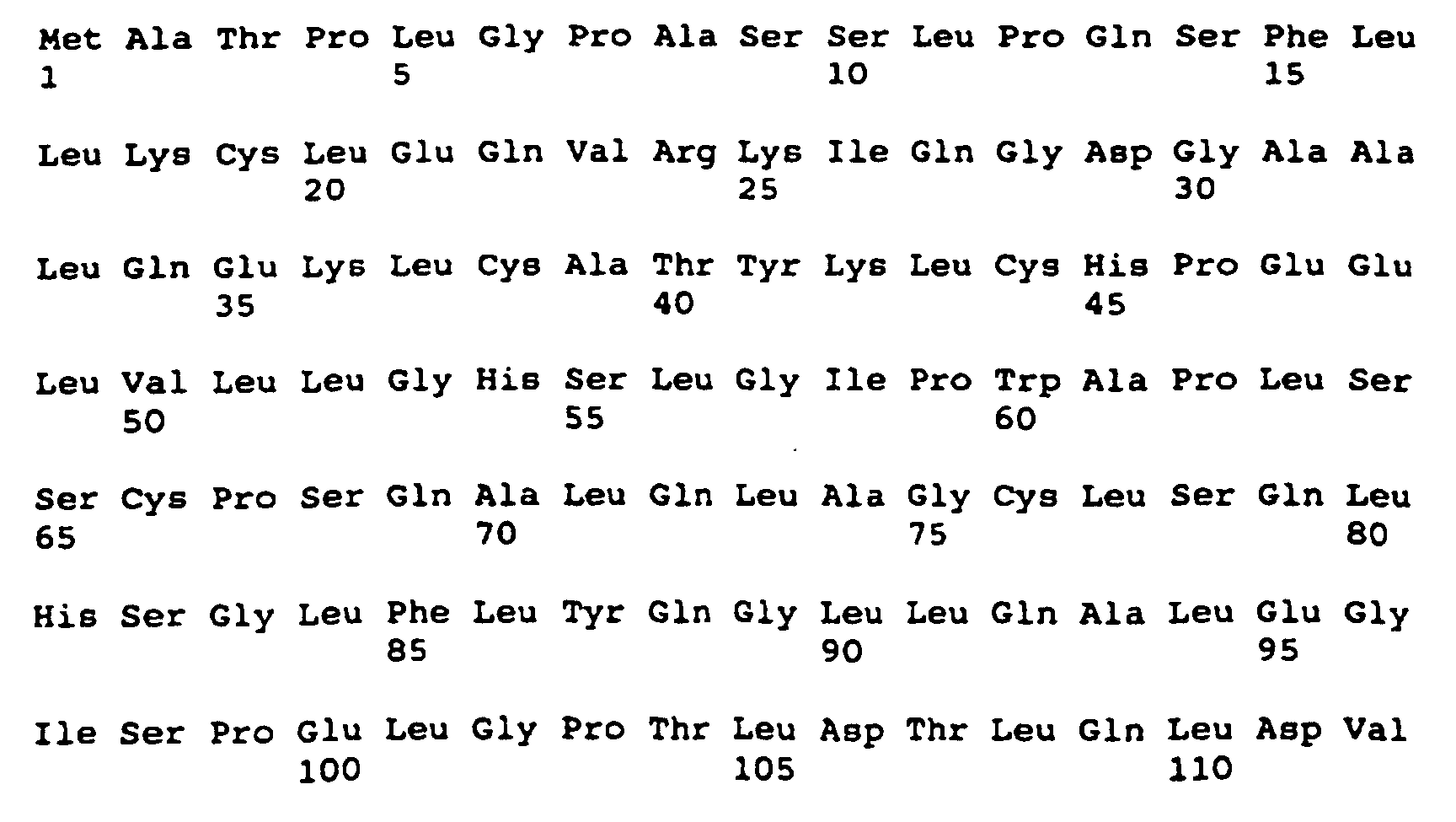
  • human interleukin-3 corresponds to the amino acid sequence (1-133) as depicted in Figure 1 and (15-125) hIL-3 corresponds to the 15 to 125 amino acid sequence of the hIL-3 polypeptide.
  • Naturally occurring variants of hIL-3 polypeptide amino acids are also (for example, the allele in which proline rather than serine is at position 8 in the hIL-3 polypeptide sequence) variant hIL-3 molecules which are modified post-translationally (e.g. glycosylation).
  • mutant amino acid sequence refers to a polypeptide having an amino acid sequence which varies from a native sequence or is encoded by a nucleotide sequence intentionally made variant from a native sequence.
  • “Mutant protein,” “variant protein” or “mutein” means a protein comprising a mutant amino acid sequence and includes polypeptides which differ from the amino acid sequence of native hIL-3 due to amino acid deletions, substitutions, or both.
  • “Native sequence” refers to an amino acid or nucleic acid sequence which is identical to a wild-type or native form of a gene or protein.
  • Human IL-3 can be characterized by its ability to stimulate colony formation by human hematopoietic progenitor cells. The colonies formed include erythroid, granulocyte, megakaryocyte, granulocytic macrophages and mixtures thereof. Human IL-3 has demonstrated an ability to restore bone marrow function and peripheral blood cell populations to therapeutically beneficial levels in studies performed initially in primates and subsequently in humans (Gillio, A. P., et al. (1990); Ganser, A, et al. (1990); Falk, S., et al. (1991).
  • Additional activities of hIL-3 include the ability to stimulate leukocyte migration and chemotaxis; the ability to prime human leukocytes to produce high levels of inflammatory mediators like leukotrienes and histamine; the ability to induce cell surface expression of molecules needed for leukocyte adhesion; and the ability to trigger dermal inflammatory responses and fever. Many or all of these biological activities of hIL-3 involve signal transduction and high affinity receptor binding. Fusion molecules of the present invention may exhibit useful properties such as having similar or greater biological activity when compared to native hIL-3 or by having improved half-life or decreased adverse side effects, or a combination of these properties. They may also be useful as antagonists.
  • Fusion molecules which have little or no activity when compared to native hIL-3 may still be useful as antagonists, as antigens for the production of antibodies for use in immunology or immunotherapy, as genetic probes or as intermediates used to construct other useful hIL-3 muteins.
  • novel fusion molecules of the present invention will preferably have at least one biological property of human IL-3 and the other IL-3 variant to which it is fused and may have more than one IL-3-like biological property, or an improved property, or a reduction in an undesirable biological property of human IL-3.
  • Some mutant polypeptides of the present invention may also exhibit an improved side effect profile. For example, they may exhibit a decrease in leukotriene release or histamine release when compared to native hIL-3 or (15-125) hIL-3.
  • Such hIL-3 or hIL-3-like biological properties may include one or more of the following biological characteristics and in vivo and in vitro activities.
  • an IL-3-like biological property is the stimulation of granulocytic type colonies, megakaryocytic type colonies, monocyte/macrophage type colonies, and erythroid bursts.
  • IL-3-like properties are the interaction with early multipotential stem cells, the sustaining of the growth of pluripotent precursor cells, the ability to stimulate chronic myelogenous leukemia (CML) cell proliferation, the stimulation of proliferation of mast cells, the ability to support the growth of various factor-dependent cell lines, and the ability to trigger immature bone marrow cell progenitors.
  • CML chronic myelogenous leukemia
  • Other biological properties of IL-3 have been disclosed in the art. Human IL-3 also has some biological activities which may in some cases be undesirable, for example the ability to stimulate leukotriene release and the ability to stimulate increased histamine synthesis in spleen and bone marrow cultures and in vivo.
  • Biological activity of hIL-3 and hIL-3 fusion proteins of the present invention is determined by DNA synthesis by human acute myelogenous leukemia cells (AML).
  • AML acute myelogenous leukemia cells
  • the factor-dependent cell line AML 193 was adapted for use in testing biological activity.
  • the biological activity of hIL-3 and hIL-3 fusion proteins of the present invention is also determined by counting the colony forming units in a bone marrow assay.
  • in vitro cell based assays may also be useful to determine the activity of the fusion molecules depending on the colony stimulating factors that comprise the fusion.
  • TF-1 proliferation assay The TF-1 cell line was derived from bone marrow of a patient with erythroleukemia (Kitamura et al., 1989). TF-1 cells respond to IL-3, GM-CSF, EPO and IL-5. 32D proliferation assay: 32D is a murine IL-3 dependent cell line which does not respond to human IL-3 but does respond to human G-CSF which is not species restricted. T1165 proliferation assay: T1165 cells are a IL-6 dependent murine cell line (Nordan et al., 1986) which respond to IL-6 and IL-11. Human Plasma Clot meg-CSF Assay: Used to assay megakaryocyte colony formation activity (Mazur et al., 1981).
  • One object of the present invention is to provide hIL-3 variant as defined in the claims, which have similar or improved biological activity in relation to native hIL-3 or IL-3 variant.
  • the hIL-3 variant fusion molecules of the present invention may have hIL-3 or hIL-3-like activity.
  • they may possess one or more of the biological activities of native hIL-3 and may be useful in stimulating the production of hematopoietic cells by human or primate progenitor cells.
  • the fusion molecules of the present invention and pharmaceutical compositions containing them may be useful in the treatment of conditions in which hematopoietic cell populations have been reduced or destroyed due to disease or to treatments such as radiation or chemotherapy.
  • Pharmaceutical compositions containing fusion molecules of the present invention can be administered parenterally, intravenously, or subcutaneously.
  • Native hIL-3 possesses considerable inflammatory activity and has been shown to stimulate synthesis of the arachidonic acid metabolites LTC 4 , LTD 4 , and LTE 4 ; histamine synthesis and histamine release.
  • Human clinical trials with native hIL-3 have documented inflammatory responses (Biesma, et al., BLOOD, 80 :1141-1148 (1992) and Postmus, et al., J. CLIN. ONCOL., 10 :1131-1140 (1992)).
  • a recent study indicates that leukotrienes are involved in IL-3 actions in vivo and may contribute significantly to the biological effects of IL-3 treatment (Denzlinger, C., et al., BLOOD, 81 :2466-2470 (1993))
  • Some fusion molecules of the present invention may have an improved therapeutic profile as compared to native hIL-3.
  • some fusion molecules of the present invention may have a similar or more potent growth factor activity relative to native hIL-3 without having a similar or corresponding increase in the stimulation of leukotriene or histamine.
  • These fusion molecules would be expected to have a more favorable therapeutic profile since the amount of polypeptide which needs to be given to achieve the desired growth factor activity (e. g. cell proliferation) would have a lesser leukotriene or histamine stimulating effect.
  • the stimulation of inflammatory factors has been an undesirable side effect of the treatment. Reduction or elimination of the stimulation of mediators of inflammation would provide an advantage over the use of native hIL-3.
  • Novel fusion molecules of the present invention may also be useful as antagonists which block the hIL-3 receptor by binding specifically to it and preventing binding of the agonist.
  • novel fusion molecules of the present invention particularly those which retain activity similar to or better than that of native hIL-3, is that it may be possible to use a smaller amount of the biologically active mutein to produce the desired therapeutic effect. This may make it possible to reduce the number of treatments necessary to produce the desired therapeutic effect. The use of smaller amounts may also reduce the possibility of any potential antigenic effects or other possible undesirable side effects. For example, if a desired therapeutic effect can be achieved with a smaller amount of polypeptide it may be possible to reduce or eliminate side effects associated with the administration of native IL-3 such as the stimulation of leukotriene and/or histamine release.
  • the novel fusion molecules of the present invention may also be useful in the activation of stem cells or progenitors which have low receptor numbers.
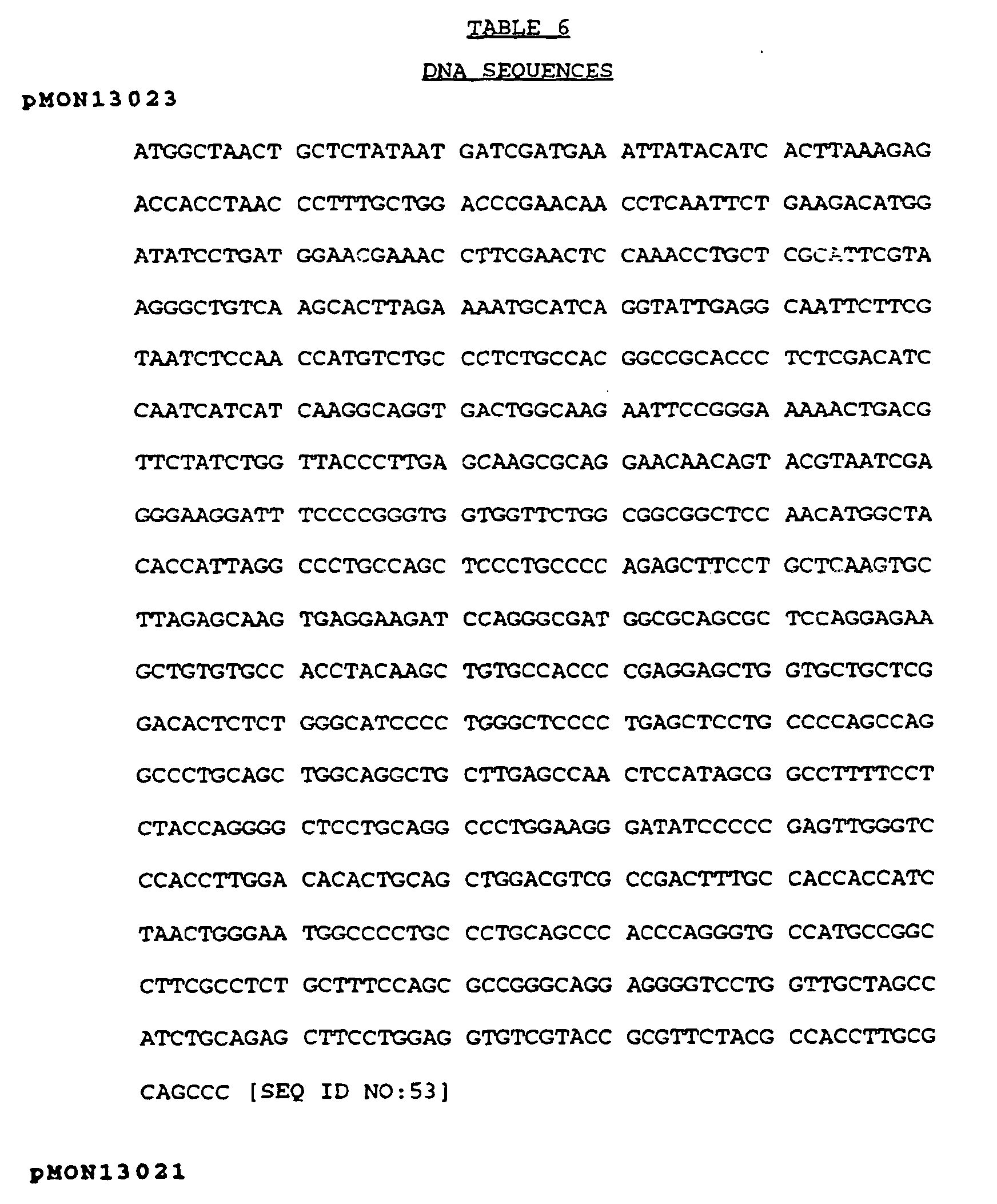
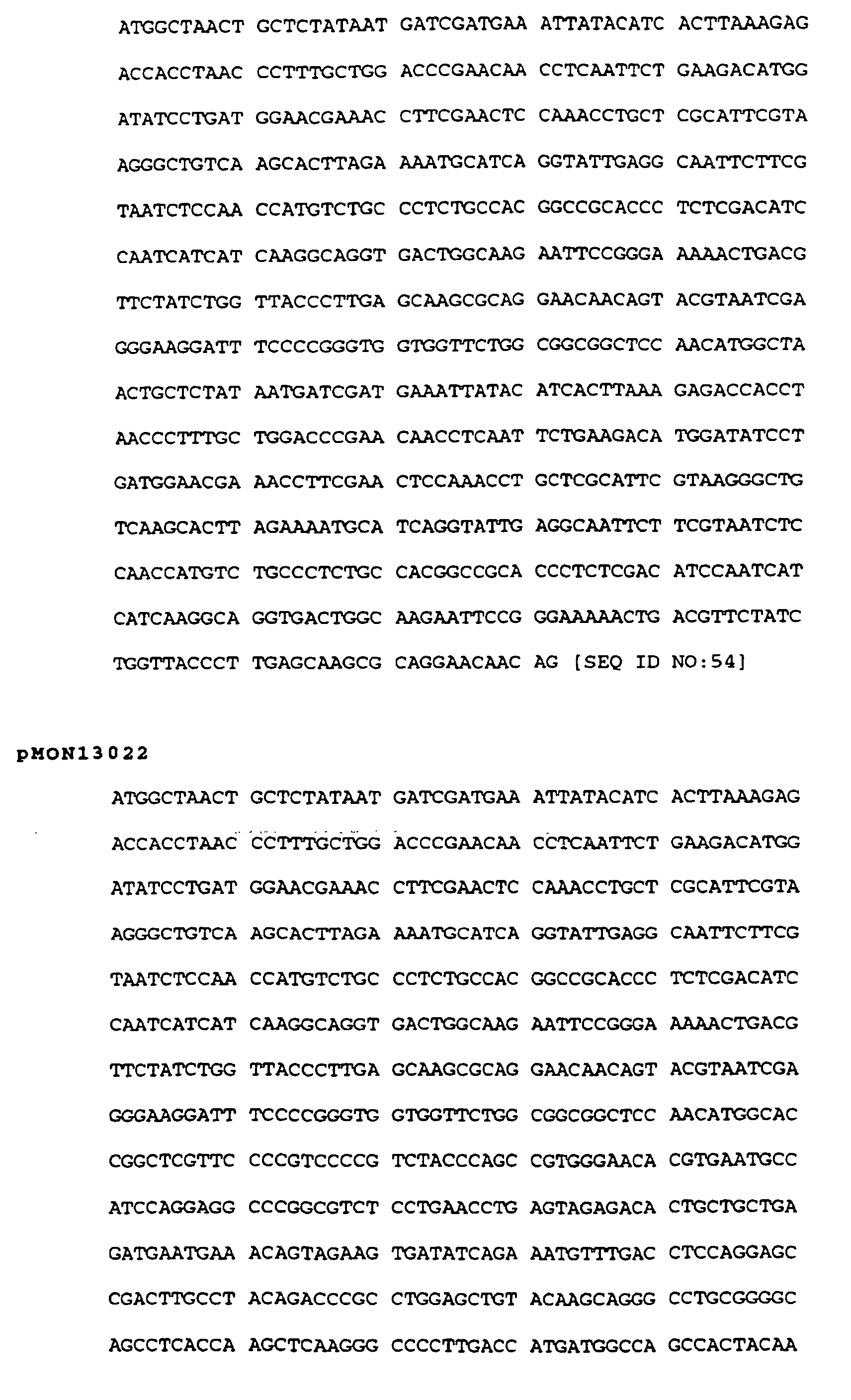
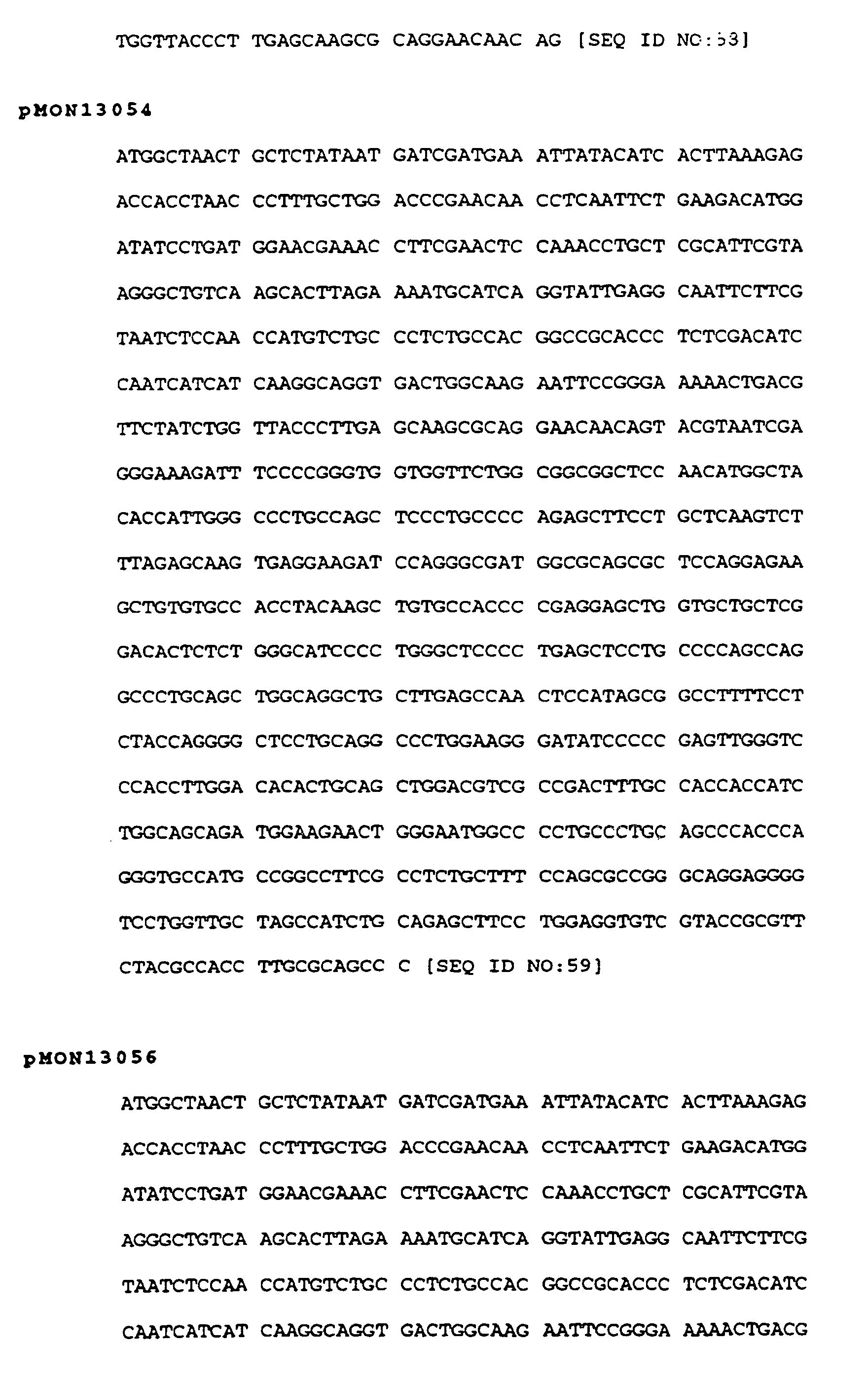
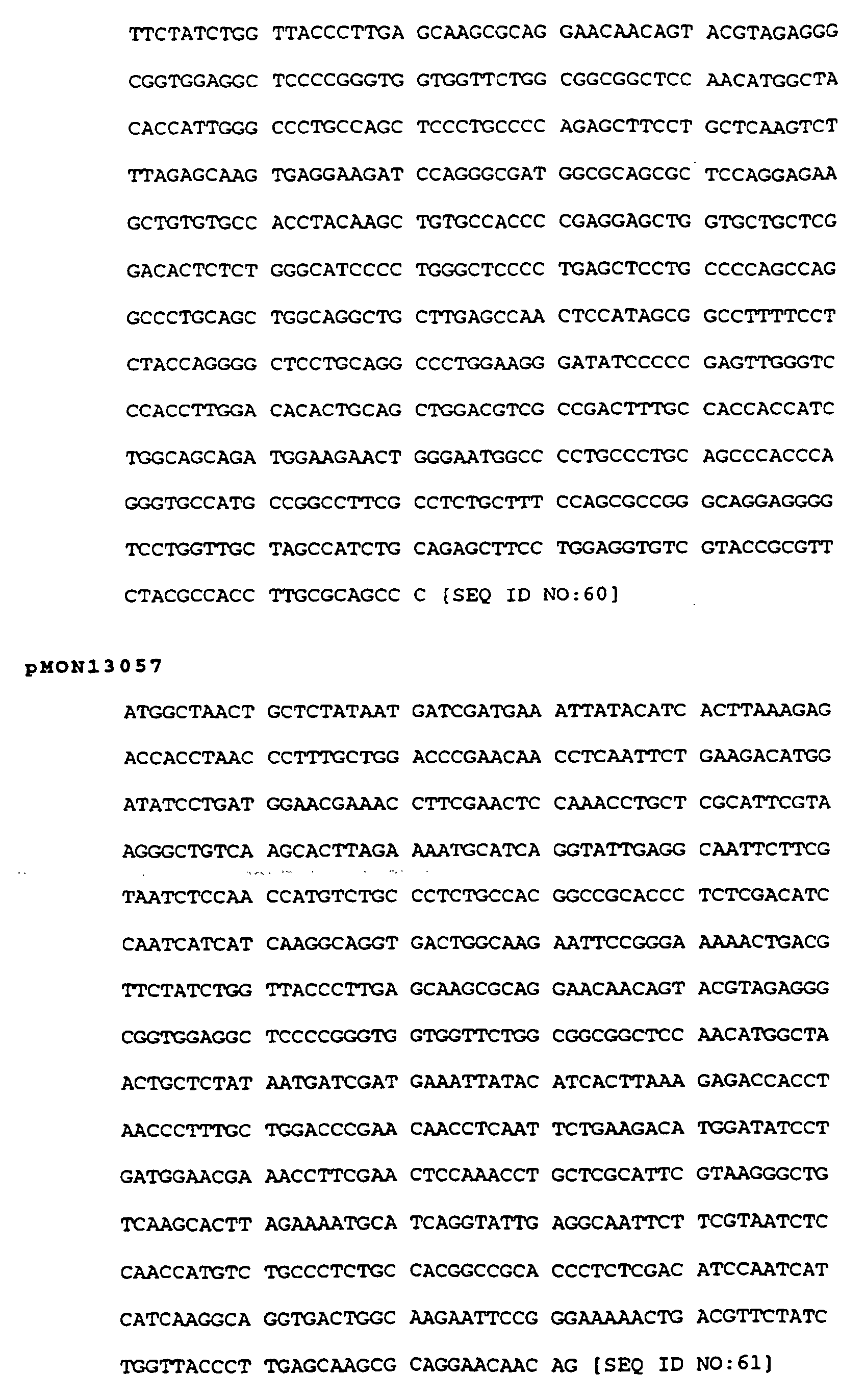
  • the present invention also includes the DNA sequences which code for the fusion proteins, DNA sequences which are substantially similar and perform substantially the same function, and DNA sequences which differ from the DNAs encoding the fusion molecules of the invention only due to the degeneracy of the genetic code. Also included in the present invention are; the oligonucleotide intermediates used to construct the mutant DNAs; and the polypeptides coded for by these oligonucleotides. These polypeptides may be useful as antagonists or as antigenic fragments for the production of antibodies useful in immunoassay and immunotherapy protocols.
  • amino acid substitutions could be made in the full-length hIL-3 gene, or genes encoding variants of hIL-3 in which from 1 to 14 amino acids have been deleted from the N-terminus and/or from 1 to 15 amino acids have been deleted from the C-terminus.
  • these oligonucleotides would encode hIL-3 variants with the desired amino acid substitutions and/or deletions from the N-terminus and/or C-terminus.
  • oligonucleotide-directed mutagenesis including; oligonucleotide-directed mutagenesis [zoller and Smith (1982, 1983, 1984), Smith (1985), Kunkel (1985), Taylor, et al. (1985), Deng and Nickoloff (1992)] or polymerase chain reaction (PCR) techniques [Saiki, (1985)].
  • Pairs of complementary synthetic oligonucleotides encoding the desired gene can be made and annealed to each other.
  • the DNA sequence of the oligonucleotide would encode sequence for amino acids of desired gene with the exception of those substituted and/or deleted from the sequence.
  • Plasmid DNA can be treated with the chosen restriction endonucleases then ligated to the annealed oligonucleotides.
  • the ligated mixtures can be used to transform competent JM101 cells to resistance to an appropriate antibiotic.
  • Single colonies can be picked and the plasmid DNA examined by restriction analysis and/or DNA sequencing to identify plasmids with the desired genes.
  • Fusing of the DNA sequences of the hIL-3 variant with the DNA sequence of the other IL-3 variant may be accomplished by the use of intermediate vectors.
  • one gene can be cloned directly into a vector containing the other gene.
  • Linkers and adapters can be used for joining the DNA sequences, as well as replacing lost sequences, where a restriction site was internal to the region of interest.
  • genetic material DNA encoding one polypeptide, peptide linker, and the other polypeptide is inserted into a suitable expression vector which is used to transform bacteria, yeast, insect cell or mammalian cells.
  • the transformed organism is grown and the protein isolated by standard techniques.
  • the resulting product is therefore a new protein which has a hIL-3 variant joined by a linker region to a second IL-3 variant.
  • Another aspect of the present invention provides plasmid DNA vectors for use in the expression of these novel fusion molecules.
  • These vectors contain the novel DNA sequences described above which code for the novel polypeptides of the invention.
  • Appropriate vectors which can transform microorganisms capable of expressing the fusion molecules include expression vectors comprising nucleotide sequences coding for the fusion molecules joined to transcriptional and translational regulatory sequences which are selected according to the host cells used.
  • Vectors incorporating modified sequences as described above are included in the present invention and are useful in the production of the fusion polypeptides.
  • the vector employed in the method also contains selected regulatory sequences in operative association with the DNA coding sequences of the invention and capable of directing the replication and expression thereof in selected host cells.
  • a method for producing the novel fusion molecules involves culturing a suitable cell or cell line, which has been transformed with a vector containing a DNA sequence coding for expression of a novel hIL-3 variant fusion molecule.
  • Suitable cells or cell lines may be bacterial cells.
  • E . coli are well-known as host cells in the field of biotechnology. Examples of such strains include E . coli strains JM101 [Yanish-Perron, et al. (1985)] and MON105 [Obukowicz, et al. (1992)].
  • the expression of the fusion protein utilizing a chromosomal expression vector for E. coli based on the bacteriophage Mu (Weinberg et al., 1993).
  • a chromosomal expression vector for E. coli based on the bacteriophage Mu (Weinberg et al., 1993).
  • B . subtilis may also be employed in this method.
  • Many strains of yeast cells known to those skilled in the art are also available as host cells for expression of the polypeptides of the present invention.
  • the above-mentioned mutant hIL-3 variant fusion molecules of the present invention may also be constructed with Met-Ala- at the N-terminus so that upon expression the Met is cleaved off leaving Ala at the N-terminus.
  • the fusion molecules of the present invention may include fusion polypeptides having Met-, Ala- or Met-Ala- attached to the N-terminus.
  • fusion molecules When the fusion molecules are expressed in the cytoplasm of E . coli , polypeptides with and without Met attached to the N-terminus are obtained.
  • the N-termini of proteins made in the cytoplasm of E . coli are affected by posttranslational processing by methionine aminopeptidase (Ben-Bassat et al., 1987) and possibly by other peptidases.
  • These mutant fusion molecules may also be expressed in E . coli by fusing a signal peptide to the N-terminus.
  • This signal peptide is cleaved from the polypeptide as part of the secretion process.
  • Secretion in E . coli can be used to obtain the correct amino acid at the N-terminus (e.g., Asn 15 in the (15-125) hIL-3 polypeptide) due to the precise nature of the signal peptidase. This is in contrast to the heterogeneity often observed at the N-terminus of proteins expressed in the cytoplasm in E . coli .
  • mammalian cells such as Chinese hamster ovary cells (CHO).
  • CHO Chinese hamster ovary cells
  • An expression vector is constructed in which a strong promoter capable of functioning in mammalian cells drives transcription of a eukaryotic secretion signal peptide coding region, which is translationally fused to the coding region for the fusion molecule.
  • plasmids such as pcDNA I/Neo, pRc/RSV, and pRc/CMV (obtained from Invitrogen Corp., San Diego, California) can be used.
  • the eukaryotic secretion signal peptide coding region can be from the hIL-3 gene itself or it can be from another secreted mammalian protein (Bayne, M. L. et al. (1987) Proc. Natl. Acad. Sci. USA 84 , 2638-2642).
  • the vector DNA is transfected into mammalian cells.
  • Such cells can be, for example, the COS7, HeLa, BHK, CHO, or mouse L lines.
  • the cells can be cultured, for example, in DMEM media (JRH Scientific).
  • the hIL-3 variant secreted into the media can be recovered by standard biochemical approaches following transient expression 24 - 72 hours after transfection of the cells or after establishment of stable cell lines following selection for neomycin resistance.
  • suitable mammalian host cells and methods for transformation, culture, amplification, screening and product production and purification are known in the art. See, e.g., Gething and Sambrook, Nature , 293 :620-625 (1981), or alternatively, Kaufman et al, Mol. Cell. Biol ., 5 (7):1750-1759 (1985) or Howley et al., U.S. Pat. No. 4,419,446.
  • Another suitable mammalian cell line is the monkey COS-1 cell line.
  • a similarly useful mammalian cell line is the CV-1 cell line.
  • insect cells may be utilized as host cells in the method of the present invention. See, e.g. Miller et al, Genetic Engineering , 8 :277-298 (Plenum Press 1986) and references cited therein. In addition, general methods for expression of foreign genes in insect cells using Baculovirus vectors are described in: Summers, M. D. and Smith, G. E. (1987) - A manual of methods for Baculovirus vectors and insect cell culture procedures, Texas Agricultural Experiment Station Bulletin No. 1555.
  • An expression vector is constructed comprising a Baculovirus transfer vector, in which a strong Baculovirus promoter (such as the polyhedron promoter) drives transcription of a eukaryotic secretion signal peptide coding region, which is translationally fused to the coding region for the fusion polypeptide.
  • a strong Baculovirus promoter such as the polyhedron promoter
  • the plasmid pVL1392 obtained from Invitrogen Corp., San Diego, California
  • two micrograms of this DNA is cotransfected with one microgram of Baculovirus DNA (see Summers & Smith, 1987) into insect cells, strain SF9.
  • Pure recombinant Baculovirus carrying the fusion molecule is used to infect cells cultured, for example, in Excell 401 serum-free medium (JRH Biosciences, Lenexa, Kansas).
  • the fusion molecule secreted into the medium can be recovered by standard biochemical approaches.
  • Supernatants from mammalian or insect cells expressing the fusion protein can be first concentrated using any of an number of commercial concentration units.
  • the fusion molecules of the present invention may be useful in the treatment of diseases characterized by a decreased levels of either myeloid, erythroid, lymphoid, or megakaryocyte cells of the hematopoietic system or combinations thereof. In addition, they may be used to activate mature myeloid and/or lymphoid cells.
  • conditions susceptible to treatment with the polypeptides of the present invention is leukopenia, a reduction in the number of circulating leukocytes (white cells) in the peripheral blood.
  • Leukopenia may be induced by exposure to certain viruses or to radiation. It is often a side effect of various forms of cancer therapy, e.g., exposure to chemotherapeutic drugs, radiation and of infection or hemorrhage. Therapeutic treatment of leukopenia with these fusion molecules of the present invention may avoid undesirable side effects caused by treatment with presently available drugs.
  • the fusion molecules of the present invention may be useful in the treatment of neutropenia and, for example, in the treatment of such conditions as aplastic anemia, cyclic neutropenia, idiopathic neutropenia, Chediak-Higashi syndrome, systemic lupus erythematosus (SLE), leukemia, myelodysplastic syndrome and myelofibrosis.
  • the fusion molecule of the present invention may be useful in the treatment or prevention of thrombocytopenia.
  • thrombocytopenia Currently the only therapy for thrombocytopenia is platelet transfusions which are costly and carry the significant risks of infection (HIV, HBV) and alloimunization.
  • the fusion molecule may alleviate or diminish the need for platelet transfusions.
  • Severe thrombocytopenia may result from genetic defects such as Fanconi's Anemia, Wiscott-Aldrich, or May-Hegglin syndromes.
  • Acquired thrombocytopenia may result from auto- or allo-antibodies as in Immune Thrombocytopenia Purpura, Systemic Lupus Erythromatosis, hemolytic anemia, or fetal maternal incompatibility.
  • thrombocytopenia may result in thrombocytopenia. Severe thrombocytopenia may also result from chemotherapy and/or radiation therapy or cancer. Thrombocytopenia may also result from marrow invasion by carcinoma, lymphoma, leukemia or fibrosis.
  • the fusion molecules of the present invention may be useful in the mobilization of hematopoietic progenitors and stem cells into peripheral blood.
  • Peripheral blood derived progenitors have been shown to be effective in reconstituting patients in the setting of autologous marrow transplantation.
  • Hematopoietic growth factors including G-CSF and GM-CSF have been shown.to enhance the number of circulating progenitors and stem cells in the peripheral blood. This has simplified the procedure for peripheral stem cell collection and dramatically decreased the cost of the procedure by decreasing the number of pheresis required.
  • the fusion molecule may be useful in mobilization of stem cells and further enhance the efficacy of peripheral stem cell transplantation.
  • drugs may cause bone marrow suppression or hematopoietic deficiencies.
  • examples of such drugs are AZT, DDI, alkylating agents and anti-metabolites used in chemotherapy, antibiotics such as chloramphenicol, penicillin, gancyclovir, daunomycin and sulfa drugs, phenothiazones, tranquilizers such as meprobamate, analgesics such as aminopyrine and dipyrone, anti convulsants such as phenytoin or carbamazepine, antithyroids such as propylthiouracil and methimazole and diuretics.
  • the fusion molecules of the present invention may be useful in preventing or treating the bone marrow suppression or hematopoietic deficiencies which often occur in patients treated with these drugs.
  • Hematopoietic deficiencies may also occur as a result of viral, microbial or parasitic infections and as a result of treatment for renal disease or renal failure, e.g., dialysis.
  • the fusion molecules of the present invention may be useful in treating such hematopoietic deficiency.
  • the treatment of hematopoietic deficiency may include administration of a pharmaceutical composition containing the fusion molecules to a patient.
  • the fusion molecules of the present invention may also be useful for the activation and amplification of hematopoietic precursor cells by treating these cells in vitro with the fusion proteins of the present invention prior to injecting the cells into a patient.
  • Immunodeficiencies may also be beneficially affected by treatment with the fusion molecules of the present invention.
  • Immunodeficiencies may be the result of viral infections e.g. HTLVI, HTLVII, HTLVIII, severe exposure to radiation, cancer therapy or the result of other medical treatment.
  • the fusion molecules of the present invention may also be employed, alone or in combination with other hematopoietins, in the treatment of other blood cell deficiencies, including thrombocytopenia (platelet deficiency), or anemia.
  • Other uses for these novel polypeptides are in the treatment of patients recovering from bone marrow transplants in vivo and ex vivo, and in the development of monoclonal and polyclonal antibodies generated by standard methods for diagnostic or therapeutic use.
  • compositions for treating the conditions referred to above.
  • Such compositions comprise a therapeutically effective amount of one or more of the fusion molecules of the present invention in a mixture with a pharmaceutically acceptable carrier.
  • This composition can be administered either parenterally, intravenously or subcutaneously.
  • the therapeutic composition for use in this invention' is preferably in the form of a pyrogen-free, parenterally acceptable aqueous solution.
  • the preparation of such a parenterally acceptable protein solution having due regard to pH, isotonicity, stability and the like, is within the skill of the art.
  • the dosage regimen involved in a method for treating the above-described conditions will be determined by the attending physician considering various factors which modify the action of drugs, e.g. the condition, body weight, sex and diet of the patient, the severity of any infection, time of administration and other clinical factors.
  • a daily regimen may be in the range of 0.2 - 150 ⁇ g/kg of fusion protein per kilogram of body weight.
  • This dosage regimen is referenced to a standard level of biological activity which recognizes that native IL-3 generally possesses an EC 50 at or about 10 picoMolar to 100 picoMolar in the AML proliferation assay described herein. Therefore, dosages would be adjusted relative to the activity of a given fusion protein vs.
  • dosage regimens may include doses as low as 0.1 microgram and as high as 1 milligram per kilogram of body weight per day.
  • dosages of fusion molecule would be adjusted higher or lower than the range of 10 - 200 micrograms per kilogram of body weight.
  • these include co-administration with other colony stimulating factor or IL-3 variant or growth factors; co-administration with chemotherapeutic drugs and/or radiation; the use of glycosylated fusion protein; and various patient-related issues mentioned earlier in this section.
  • the therapeutic method and compositions may also include co-administration with other human factors.
  • a non-exclusive list of other appropriate hematopoietins, CSFs, cytokines, lymphokines, hematopoietic growth factors and interleukins for simultaneous or serial co-administration with the polypeptides of the present invention includes GM-CSF, CSF-1, G-CSF, Meg-CSF (more recently referred to as c-mpl ligand), M-CSF, erythropoietin (EPO), IL-1, IL-4, IL-2, IL-5, IL-6, IL-7, IL-8; IL-9, IL-10, IL-11, IL-12, IL-13, LIF, flt3/flk2, B-cell growth factor, B-cell differentiation factor and eosinophil differentiation factor, stem cell factor (SCF) also known as steel factor or c- kit ligand, or combinations thereof.
  • SCF stem cell factor
  • the dosage recited above would be adjusted to compensate for such additional components in the therapeutic composition. Progress
  • Strain JM101 delta (pro lac), supE, thi, F' (traD36, rpoAB, lacI-Q, lacZdeltaM15) (Messing, 1979). This strain can be obtained from the American Type Culture Collection (ATCC), 12301 Parklawn Drive, Rockville, Maryland 20852, accession number 33876.
  • MON105 W3110 rpoH358 is a derivative of W3110 (Bachmann, 1972) and has been assigned ATCC accession number 55204.
  • Strain GM48 dam-3, dcm-6, gal, ara, lac, thr, leu, tonA, tsx (Marinus, 1973) is used to make plasmid DNA that is not methylated at the sequence GATC.
  • the gene used for hIL-3 production in E . coli is obtained from British Biotechnology Incorporated, Cambridge, England, catalogue number BBG14. This gene is carried on a pUC based plasmid designated pP0518.
  • Many other human CSF genes can be obtained from R&D Systems, Inc. (Minn, MN) including IL-1 alpha, IL-1 beta, IL-2, IL-4, IL-5, IL-6, IL-7, IL-8, G-CSF, GM-CSF and LIF.
  • the plasmids used for production of hIL-3 in E . coli contain genetic elements whose use has been described (Olins et al., 1988; Olins and Rangwala, 1990).
  • the replicon used is that of pBR327 (Covarrubias, et al., 1981) which is maintained at a copy number of about 100 in the cell (Soberon et al., 1980).
  • a gene encoding the beta-lactamase protein is present on the plasmids. This protein confers ampicillin resistance on the cell. This resistance serves as a selectable phenotype for the presence of the plasmid in the cell.
  • the transcription promoter is derived from the recA gene of E . coli (Sancar et al., 1980). This promoter, designated precA, iricludes the RNA polymerase binding site and the lexA repressor binding site (the operator). This segment of DNA provides high level transcription that is regulated even when the recA promoter is on a plasmid with the pBR327 origin of replication (Olins et al., 1988).
  • the ribosome binding site used is that from gene 10 of phage T7 (Olins et al., 1988). This is encoded in a 100 base pair (bp) fragment placed adjacent to precA.
  • the recognition sequence for the enzyme NcoI (CCATGG) follows the g10-L. It is at this NcoI site that the hIL-3 genes are joined to the plasmid. It is expected that the nucleotide sequence at this junction will be recognized in mRNA as a functional start site for translation (Olins et al., 1988).
  • the hIL-3 genes used were engineered to have a HindIII recognition site (AAGCTT) downstream from the coding sequence of the gene.
  • HindIII site is a 514 base pair RsaI fragment containing the origin of replication of the single stranded phage f1 (Dente et al., 1983; Olins, et al., 1990).
  • a plasmid containing these elements is pMON2341.
  • Another plasmid containing these elements is pMON5847 which has been deposited at the American Type Culture Collection, 12301 Parklawn Drive, Rockville, Maryland 20852 under the accession number ATCC 68912.
  • the transcription promoter is derived from the ara B, A, and D genes of E. coli (Greenfield et al ., 1978). This promoter is designated pAraBAD and is contained on a 323 base pair SacII, BglII restriction fragment.
  • the LamB secretion leader (Wong et al ., 1988, Clement et al ., 1981) is fused to the N-terminus of the hIL-3 gene at the recognition sequence for the enzyme NcoI (5'CCATGG3').
  • the hIL-3 genes used were engineered to have a HindIII recognition site (5'AAGCTT3') following the coding sequence of the gene.
  • the hIL-3 variant genes and other CSF genes can be constructed by the assembly of synthetic oligonucleotides. Synthetic oligonucleotides are designed so that they would anneal in complementary pairs, with protruding single stranded ends, and when the pairs are properly assembled would result in a DNA sequence that encoded a portion of the desired gene. Amino acid substitutions in the hIL-3 gene are made by designing the oligonucleotides to encode the desired substitutions. The complementary oligonucleotides are annealed at concentration of 1 picomole per microliter in ligation buffer plus 50mM NaCl. The samples are heated in a 100 ml beaker of boiling water and permitted to cool slowly to room temperature.
  • One picomole of each of the annealed pairs of oligonucleotides are ligated with approximately 0.2 picomoles of plasmid DNA, digested with the appropriate restriction enzymes, in ligation buffer (25 mM Tris pH 8.0, 10 mM MgCl 2 , 10 mM dithiothreitol, 1 mM ATP, 2mM spermidine) with T4 DNA ligase obtained from New England Biolabs (Beverly, Massachusetts) in a total volume of 20 ⁇ l at room temperature overnight.
  • ligation buffer 25 mM Tris pH 8.0, 10 mM MgCl 2 , 10 mM dithiothreitol, 1 mM ATP, 2mM spermidine
  • PCR Polymerase Chain Reaction
  • Thermus aquaticus Thermus aquaticus .
  • the PCR technique is a DNA amplification method that mimics the natural DNA replication process in that the number of DNA molecules doubles after each cycle, in a way similar to in vivo replication.
  • the DNA polymerase mediated extension is in a 5' to 3' direction.
  • the term "primer” as used herein refers to an oligonucleotide sequence that provides an end to which the DNA polymerase can add nucleotides that are complementary to a nucleotide sequence.
  • the latter nucleotide sequence is referred to as the "template", to which the primers are annealed.
  • the amplified PCR product is defined as the region comprised between the 5' ends of the extension primers. Since the primers have defined sequences, the product will have discrete ends, corresponding to the primer sequences.
  • the primer extension reaction is carried out using 20 picomoles (pmoles) of each of the oligonucleotides and 1 picogram of template plasmid DNA for 35 cycles (1 cycle is defined as 94 degrees C for one minute, 50 degrees C for two minutes and 72 degrees for three minutes.).
  • the reaction mixture is extracted with an equal volume of phenol/chloroform (50% phenol and 50% chloroform, volume to volume) to remove proteins.
  • the aqueous phase, containing the amplified DNA, and solvent phase are separated by centrifugation for 5 minutes in a microcentrifuge (Model 5414 Eppendorf Inc, Fremont CA.). To precipitate the amplified DNA the aqueous phase is removed and transferred to a fresh tube to which is added 1/10 volume of 3M NaOAc (pH 5.2) and 2.5 volumes of ethanol (100% stored at minus 20 degrees C). The solution is mixed and placed on dry ice for 20 minutes. The DNA is pelleted by centrifugation for 10 minutes in a microcentrifuge and the solution is removed from the pellet. The DNA pellet is washed with 70% ethanol. ethanol removed and dried in a speedvac concentrator (Savant, Farmingdale, New York).
  • the pellet is resuspended in 25 microliters of TE (20mM Tris-HCl pH 7.9, 1mM EDTA).
  • TE Tris-HCl pH 7.9, 1mM EDTA
  • the DNA is precipitated by adding equal volume of 4M NH 4 OAc and one volume of isopropanol [Treco et al ., (1988)].
  • the solution is mixed and incubated at room temperature for 10 minutes and centrifuged. These conditions selectively precipitate DNA fragments larger than ⁇ 20 bases and are used to remove oligonucleotide primers.
  • One quarter of the reaction is digested with restriction enzymes [Higuchi, (1989)] an on completion heated to 70 degrees C to inactivate the enzymes.
  • E . coli JM101 cells are made competent to take up DNA. Typically, 20 to 100 ml of cells are grown in LB medium to a density of approximately 150 Klett units and then collected by centrifugation. The cells are resuspended in one half culture volume of 50 mM CaCl 2 and held at 4°C for one hour. The cells are again collected by centrifugation and resuspended in one tenth culture volume of 50 mM CaCl 2 . DNA is added to a 150 microliter volume of these cells, and the samples are held at 4°C for 30 minutes. The samples are shifted to 42°C for one minute, one milliliter of LB is added, and the samples are shaken at 37°C for one hour.
  • LB medium Maniatis et al., 1982 is used for growth of cells for DNA isolation.
  • the ingredients in the M9 medium are as follows: 3g/liter KH 2 PO 4 , 6g/l Na 2 HPO 4 , 0.5 g/l NaCl, 1 g/l NH 4 Cl, 1.2 mM MgSO 4 , 0.025 mM CaCl 2 , 0.2% glucose (0.2% glycerol with the AraBAD promoter), 1% casamino acids, 0.1 ml/l trace minerals (per liter 108 g FeCl 3 ⁇ 6H 2 O, 4.0 g ZnSO 4 ⁇ 7H 2 O, 7.0 CoCl 2 ⁇ 2H 2 O, 7.0 g Na 2 MoO 4 ⁇ 2H 2 O, 8.0 g CuSO 4 ⁇ 5H 2 O, 2.0 g H 3 BO 3 , 5.0 g MnSO 4 ⁇ H 2 O, 100 ml concentrated HCl).
  • Bacto agar is used for solid media and ampicillin is added to both liquid and solid LB media at 200 micrograms per milli
  • E . coli strains harboring the plasmids of interest are grown at 37°C in M9 plus casamino acids medium with shaking in a Gyrotory water bath Model G76 from New Brunswick Scientific (Edison, New Jersey). Growth is monitored with a Klett Summerson meter (green 54 filter), Klett Mfg. Co. (New York, New York). At a Klett value of approximately 150, an aliquot of the culture (usually one milliliter) is removed for protein analysis. To the remaining culture, nalidixic acid (10mg/ml) in 0.1 N NaOH is added to a final concentration of 50 ⁇ g/ml. The cultures are shaken at 37°C for three to four hours after addition of nalidixic acid. A high degree of aeration is maintained throughout the bacterial growth in order to achieve maximal production of the desired gene product. The cells are examined under a light microscope for the presence of inclusion bodies. One milliliter aliquots of the culture are removed for analysis of protein content.
  • the first step in purification of the fusion molecules is to sonicate the cells. Aliquots of the culture are resuspended from cell pellets in sonication buffer: 10 mM Tris, pH 8.0, 1 mM EDTA, 50 mM NaCl and 0.1 mM PMSF. These resuspended cells are subjected to several repeated sonication bursts using the microtip from a Sonicator cell disrupter, Model W-375 obtained from Heat Systems-Ultrasonics Inc. (Farmingdale, New York). The extent of sonication is monitored by examining the homogenates under a light microscope. When nearly all of the cells are broken, the homogenates are fractionated by centrifugation. The pellets, which contain most of the inclusion bodies, are highly enriched for fusion proteins.
  • fusion proteins can be purified by a variety of standard methods. Some of these methods are described in detail in Methods in Enzymology, Volume 182 'Guide to Protein Purification' edited by Murray Deutscher, Academic Press, San Diego, CA (1990).
  • Fusion proteins which are produced as insoluble inclusion bodies in E. coli can be solubilized in high concentrations of denaturant, such as Guanidine HCl or Urea including dithiothreitol or beta mercaptoethanol as a reducing agent. Folding of the protein to an active conformation may be accomplished via sequential dialysis to lower concentrations of denaturant without reducing agent.
  • denaturant such as Guanidine HCl or Urea including dithiothreitol or beta mercaptoethanol
  • the folded proteins can be affinity purified using affinity reagents such as mAbs or receptor subunits attached to a suitable matrix.
  • affinity reagents such as mAbs or receptor subunits attached to a suitable matrix.
  • purification can be accomplished using any of a variety of chromatographic methods such as: ion exchange, gel filtration or hydrophobic chromatography or reversed phase HPLC.
  • the fusion protein concentrations can be determined using a sandwich ELISA based on an appropriate affinity purified antibody.
  • Microtiter plates (Dynatech Immulon II) are coated with 150 ⁇ l goat-anti-rhIL-3 at a concentration of approximately 1 ⁇ g/ml in 100 mM NaHCO 3 , pH 8.2. Plates are incubated overnight at room temperature in a chamber maintaining 100% humidity. Wells are emptied and the remaining reactive sites on the plate are blocked with 200 ⁇ l of solution containing 10 mM PBS, 3% BSA and 0.05% Tween 20, pH 7.4 for 1 hour at 37° C and 100% humidity.
  • Wells are emptied and washed 4X with 150 mM NaCl containing 0.05$ Tween 20 (wash buffer). Each well then receives 150 ⁇ l of dilution buffer (10 mM PBS containing 0.1% BSA, 0.01% Tween 20, pH 7.4), containing rhIL-3 standard, control, sample or dilution buffer alone. A standard curve is prepared with concentrations ranging from 0.125 ng/ml to 5 ng/ml using a stock solution of rhIL-3 (concentration determined by amino acid composition analysis). Plates are incubated 2.5 hours at 37° C and 100% humidity. Wells are emptied and each plate is washed 4X with wash buffer.
  • Each well then received 150 ⁇ l of an optimal dilution (as determined in a checkerboard assay format) of goat anti-rhIL-3 conjugated to horseradish peroxidase. Plates are incubated 1.5 hours at 37° C and 100% humidity. Wells are emptied and each plate is washed 4X with wash buffer. Each well then received 150 ⁇ l of ABTS substrate solution (Kirkegaard and Perry). Plates are incubated at room temperature until the color of the standard wells containing 5 ng/ml rhIL-3 had developed enough to yield an absorbance between 0.5-1.0 when read at a test wavelength of 410 nm and a reference wavelength of 570 nm on a Dynatech microtiter plate reader. Concentrations of immunoreactive rhIL-3 in unknown samples are calculated from the standard curve using software supplied with the plate reader.
  • plasmid encoding a fusion protein composed of the IL-3 variant protein found in the plasmid, pMON13288 (United States Patent Application Serial number PCT/US93/11197), followed by a factor Xa proteolytic cleavage site, followed by murine IgG 2b hinge region, in which the cysteines have replaced with serines, as the polypeptide linker sequence between the two proteins of the fusion and followed by G-CSF.
  • the plasmid, pMON13288 is digested with EcoRI (which is internal in the IL-3 variant gene) and HindIII (which is after the stop codons for the IL-3 variant) and the 3900 base pair EcoRI,HindIII restriction fragment is purified.
  • the genetic elements derived from pMON13288 are the beta-lactamase gene (AMP), pBR327 origin of replication, recA promoter, g10L ribosome binding site, the bases encoding amino acids 15-105 of (15-125)IL-3 variant gene, and phage f1 origin of replication. Pairs of complementary synthetic oligonucleotides are designed to replace the portion of the IL-3 variant gene after the EcoRI site (bases encoding amino acids 106-125), DNA sequence encoding the factor Xa cleavage site, DNA sequence encoding the polypeptide linker and AflIII restriction site to allow for cloning of the second gene in the fusion.
  • AMP beta-lactamase gene
  • recA promoter recA promoter
  • g10L ribosome binding site the bases encoding amino acids 15-105 of (15-125)IL-3 variant gene
  • phage f1 origin of replication Pairs of complementary synthetic oligonucleotides are designed to replace the portion of
  • oligonucleotides When properly assembled the oligonucleotides result in a DNA sequence, encoding the above mentioned components in-frame, with EcoRI and HindIII restriction ends. Within this DNA sequence unique restriction sites are also created to allow for the subsequent replacement of specific regions with a sequence that has similar function (e.g.. alternative polypeptide linker region).
  • a unique SnaBI restriction site is created at the end of the 13288 gene which allows for the cloning of other genes in the C-terminus position of the fusion.
  • a unique XmaI site is created between sequence encoding the factor Xa cleavage site and the region encoding the polypeptide linker.
  • a unique AflIII site is created after the linker region that allows for the cloning of the N-terminal protein of the fusion.
  • the 3900 base pair fragment from pMON13288 is ligated with the assembled oligonucleotides and transformed into an appropriate E. coli strain.
  • the resulting clones are screened by restriction analysis and DNA sequenced to confirm that the desired DNA sequence are created.
  • the resulting plasmid is used as an intermediate into which other genes can be cloned as a NcoI,HindIII fragment into the AflIII and HindIII sites to create the desired fusion.
  • the overhangs created by NcoI and AflIII are compatible but the flanking sequence of the restriction recognition sites are different.
  • the NcoI and AflIII sites are lost as a result of the cloning.
  • the above mentioned restriction sites are used as examples and are not limited to those described.
  • Other unique restriction site may also be engineered which serve the function of allowing the regions to be replaced.
  • the plasmid encoding the resulting fusion is DNA sequenced to confirm that the desired DNA sequence is obtained.
  • Other IL-3 variant genes or other colony stimulating factor genes can be altered in a similar manner by genetic engineering techniques to create the appropriate restriction sites which would allow for cloning either into the C-terminal or N-terminal position of the fusion construct described above.
  • alternative peptidase cleavage sites or polypeptide linkers can be engineered into the fusion plasmids.
  • E . coli strains harboring the plasmids of interest are grown overnight at 37°C and diluted the following morning, approximately 1/50, in fresh M9 plus casamino acids medium.
  • Nalidixic acid (10mg/ml) in 0.1 N NaOH is added to a final concentration of 50 ⁇ g/ml.
  • the cultures are grown at 37°C for three to four hours after the addition of nalidixic acid.
  • a high degree of aeration is maintained throughout the bacterial growth in order to achieve maximal production of the desired fusion protein.
  • the fusion proteins are produced as insoluble inclusion bodies in E. coli the cells are examined under a light microscope for the presence of inclusion bodies.
  • E. coli cells containing fusion molecules in inclusion bodies were lysed by sonication.
  • a 10% (w/v) suspension of the cells in 10 mM Tris-HCl pH 8.0 and 1 mM EDTA was subjected to three or four one minute bursts using a Sonicator cell disrupter, Model W-375, obtained from Heat Systems-Ultrasonics Inc. (Farmingdale, New York).
  • the extent of cell disruption was monitored by examining the cells under a light microscope.
  • the inclusion bodies were harvested by centrifugation at 2800 x g for 20 min.
  • the inclusion bodies were washed twice by suspending the inclusion body pellets to 10% in sonicatio buffer and centrifuging as above.
  • the fusion molecules were dissolved at one gram of inclusion bodies in 10 ml of 8 M urea with 50 mM Tris-HCl pH 9.5 and 5 mM DTT by blending with a Bio Homogenizer for 10 - 30 seconds and then gently stirring at 4°C for 1 - 2 hours.
  • the dissolved fusion protein was clarified by centrifugation at 47,000 x g for 15 minutes.
  • Folding of the protein into an active conformation was done by diluting 8 fold with 2.3 M urea in 10 mM Tris-HCl pH 9.5 over 30 minutes to lower the concentration to 3 M urea. Folding of the fusion molecule was normally done between 2 and 3 M urea although higher concentrations of urea will also permit folding. The fusion was gently stirred under these conditions exposed to air until protein folding and formation of disulfide bonds was complete.
  • RP - HPLC reversed phase high performance liquid chromatography
  • CH3CN acetonitrile
  • TFA trifluoroacetic acid
  • the pH of the fusion protein solution was lowered to 5.0 with glacial acetic acid and incubated at 4°C. After one hour, the solution was clarified by centrifugation at 47,000 x g for 15 minutes. The pH of the supernatant was lowered to 4.0 with acetic acid and clarified by filtration using a 0.45 ⁇ filter. The filtrate was dialyzed versus two, 100-fold, changes of 10 mM ammonium acetate pH 4.0. The pH of the dialyzed solution was increased to 6.5 with NaOH.
  • the neutralized solution was then loaded at 2 mg of fusion protein per 1 ml of resin on a DEAE Fast Flow column (Pharmacia Piscataway, NJ) equilibrated with 10 mM Tris-Cl pH 6.5.
  • the fusion protein was eluted using a linear gradient from 50 to 150 mM NaCl in equilibration buffer with a linear flow of 0.28 cm/min. for 12 hours.
  • RP-HPLC analysis fractions with a purity of 93% or better were pooled. The pooled fractions were dialyzed versus two, 100-fold, changes of 10 mM Tris-Cl pH 7.5.
  • the dialyzed protein solution was sterile filtered, using a 0.45 ⁇ filter, and stored at 4°C.
  • RP-HPLC and cation exchange chromatography such as CM Fast Flow can also be used separately or in combination with DEAE chromatography to purify the fusion proteins.
  • the purified fusion protein was analyzed by RP-HPLC, electrospray mass spectrometry, IEF, and SDS-PAGE. The protein quantitation was done by amino acid composition and Bradford protein determination.'
  • the folded proteins can be affinity purified using affinity reagents such as mAbs or receptor subunits attached to a suitable matrix.
  • affinity reagents such as mAbs or receptor subunits attached to a suitable matrix.
  • purification can be accomplished using any of a variety of chromatographic methods such as: ion exchange, gel filtration or hydrophobic chromatography or reversed phase HPLC.
  • the protein concentration of the fusion protein can be determined using a sandwich ELISA based on an affinity purified polyclonal antibody. Alternatively the protein concentration can be determined by amino acid composition.
  • the bioactivity of the fusion molecule can be determined in a number of in vitro assays compared with native IL-3, the IL-3 variant or G-CSF alone or together.
  • One such assay is the AML-193 cell proliferation assay. AML-193 cells respond to IL-3 and G-CSF which allows for the combined bioactivity of the IL-3 variant/G-CSF fusion to be determined.
  • factor dependent cell lines such as M-NFS-60 (ATCC. CRL 1838) or 32D which are murine IL-3 dependent cell line, may be used.
  • the activity of IL-3 is species specific whereas G-CSF is not, therefor the bioactivity of the G-CSF component of the IL-3 variant/G-CSF fusion can be determined independently.
  • the methylcellulose assay can be used to determine the effect of the IL-3 variant/G-CSF fusion protein on the expansion of the hematopoietic progenitor cells and the pattern of the different types of hematopoietic colonies in vitro.
  • the methylcellulose assay can provide an estimate of precursor frequency since one measures the frequency of progenitors per 100,000 input cells. Long term, stromal dependent cultures have been used to delineate primitive hematopoietic progenitors and stem cells.
  • This assay can be used to determine whether the fusion molecule stimulates the expansion of very primitive progenitors and/or stem cells.
  • limiting dilution cultures can be performed which will indicate the frequency of primitive progenitors stimulated by the fusion molecule.
  • the factor Xa cleavage site is useful to cleave the fusion protein after it is purified and re-folded to separate the IL-3 and G-CSF components of the fusion.
  • the IL-3 and G-CSF components of the fusion can be purified to homogeneity and assayed separately to demonstrate that both components are in an active conformation after being expressed, refolded and purified as a fusion.
  • pMON13018 an intermediate plasmid used for constructing plasmids containing DNA sequences encoding fusion proteins.
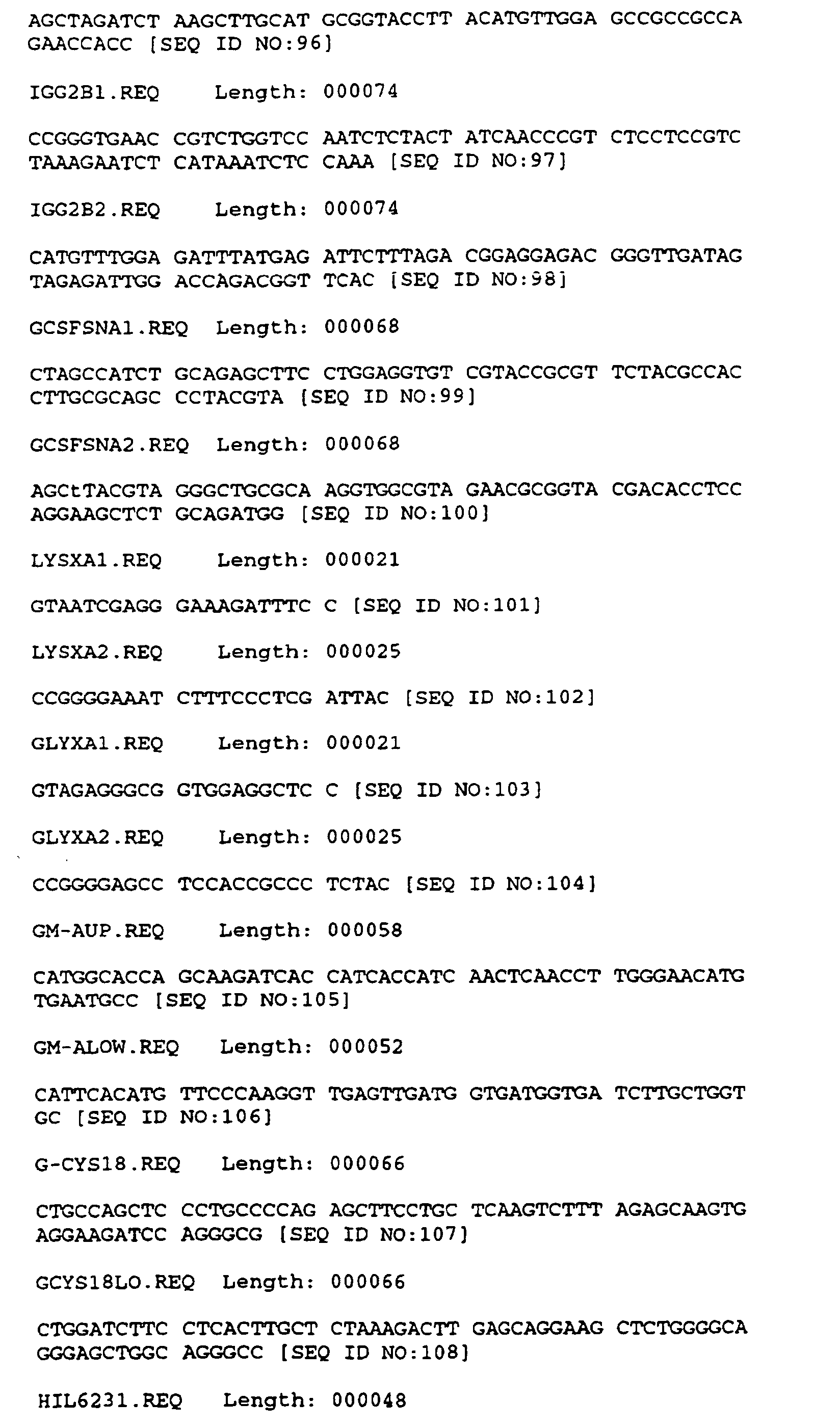
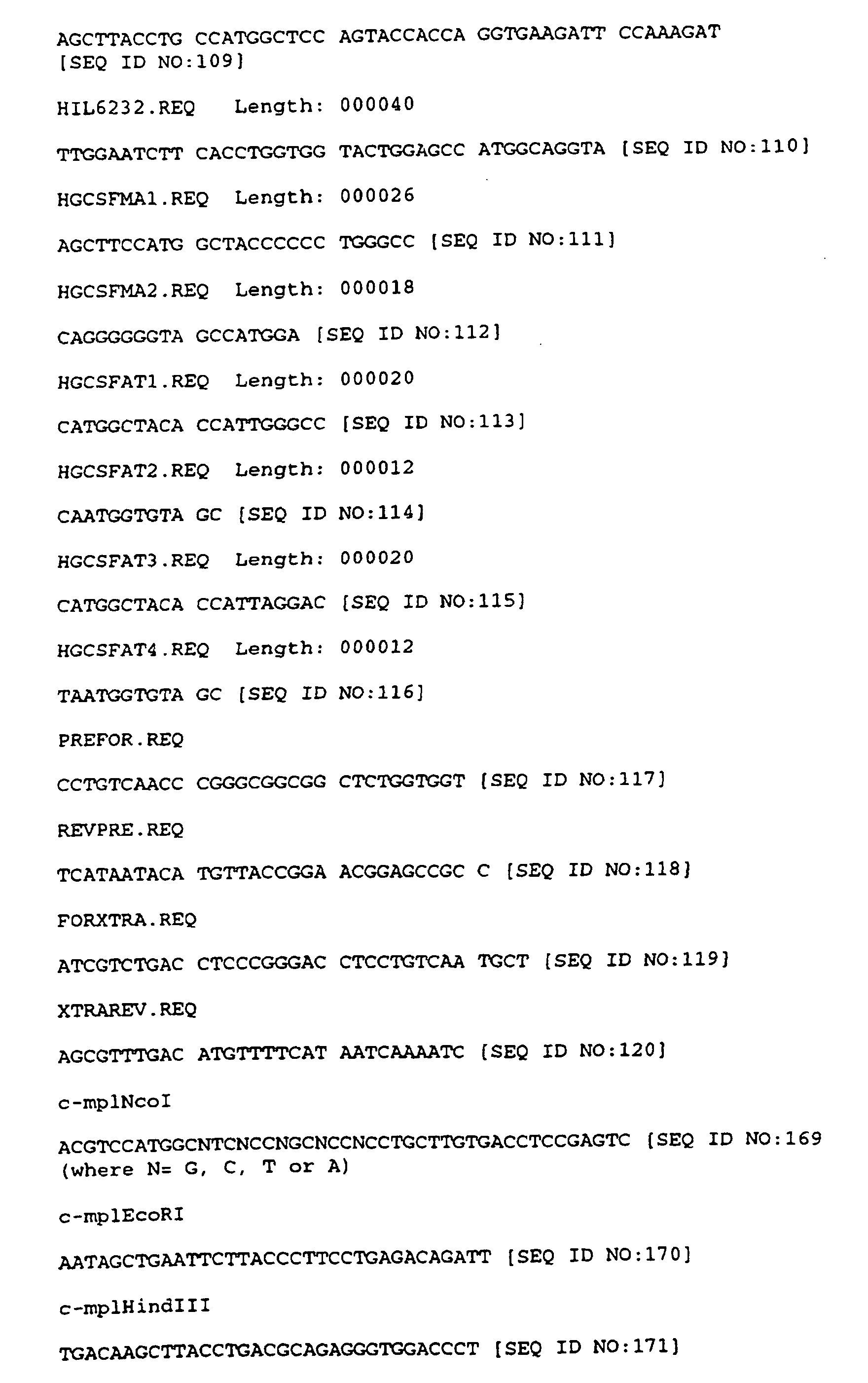
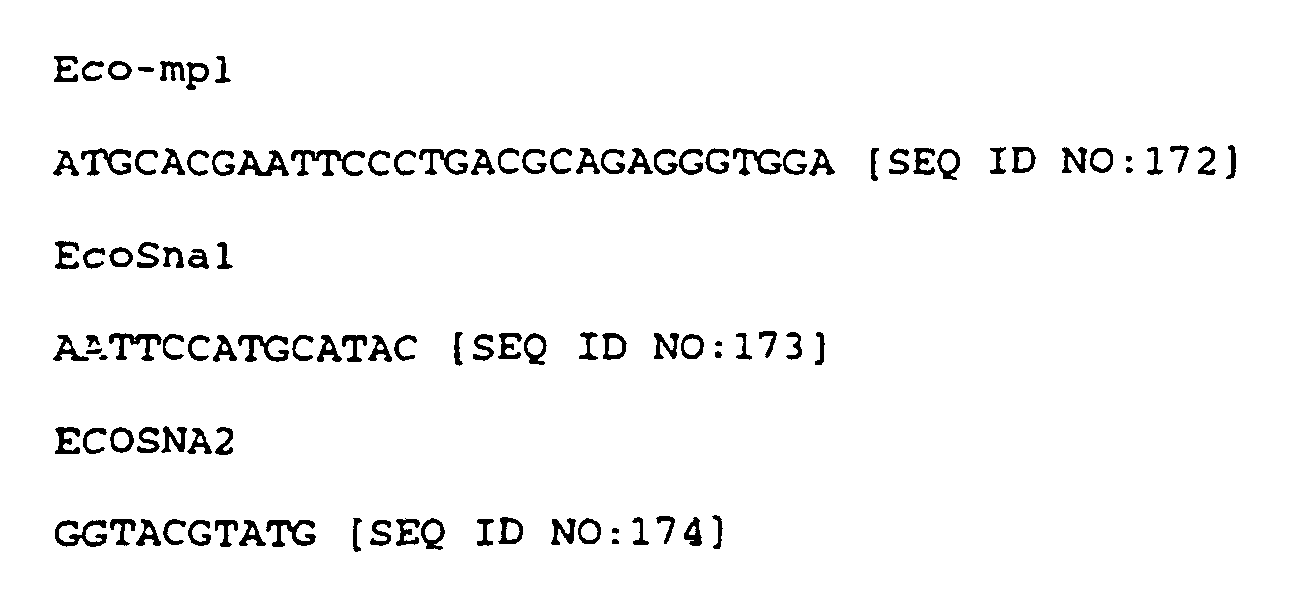
  • the 3900 base pair EcoRI,HindIII restriction fragment from pMON13288 was ligated with the following pairs of annealed complementary oligonucleotides:
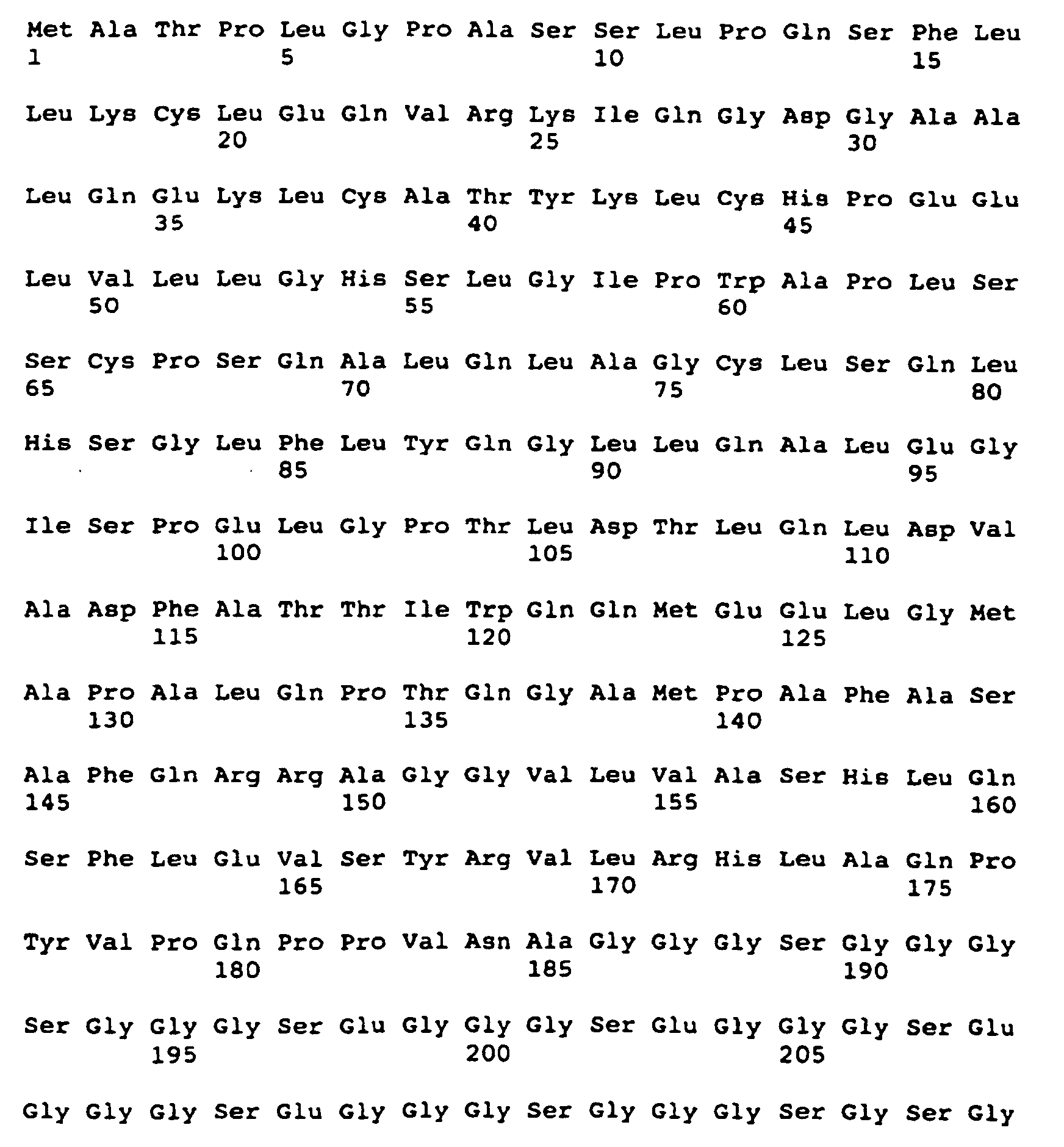
  • the assembled oligonucleotides create EcoRI and HindIII restriction ends and the DNA sequence that encodes amino acids 106-125 of (15-125)hIL-3 variant 13288 and the polypeptide Linker 1 (Table 1) which is comprised of the factor Xa cleavage site and the amino acid sequence (Gly 3 Ser) 2 .
  • the ligation reaction was used to transform E. coli K-12 strain JM101. Transformant bacteria were selected on ampicillin-containing plates. Plasmid DNA was isolated from a colony grown in LB broth. The DNA was sequenced to determine that the sequence was that of the oligonucleotides.
  • a schematic diagram of the construction of the plasmid, pMON13018, is shown in Figure 2.
  • pMON13019 an intermediate plasmid used for constructing plasmids containing DNA sequences encoding fusion proteins.
  • the 4014 base pair XmaI/AflIII restriction fragment from pMON13018 was ligated with the following pair of annealed complementary oligonucleotides:
  • the assembled oligonucleotides create XmaI and AflIII restriction ends and the DNA sequence that encodes amino acids 9-33 of the polypeptide Linker 4 (Table 1) which is comprised of the factor Xa cleavage site and the murine IgG2b hinge region.
  • the ligation reaction was used to transform E. coli K-12 strain JM101. Transformant bacteria were selected on ampicillin-containing plates. Plasmid DNA was isolated from a colony grown in LB broth. The DNA was sequenced to determine that the sequence was that of the oligonucleotides.
  • pMON13024 an intermediate plasmid used for constructing plasmids containing DNA sequences encoding fusion proteins.
  • the 4091 base pair NheI,HindIII restriction fragment from pMON13010 was ligated with the following pair of annealed complementary oligonucleotides:
  • the assembled oligonucleotides create NheI and HindIII restriction ends, create a SnaBI restriction site at the 3' end of the G-CSF gene, and the DNA sequence that encodes amino acids 155-175 of G-CSF.
  • the stop codon after the G-CSF gene is eliminated and the DNA sequence of the SnaBI recognition site encodes amino acids Tyr Val in-frame at the C-terminus of G-CSF.
  • the ligation reaction was used to transform E. coli K-12 strain JM101. Transformant bacteria were selected on ampicillin-containing plates. Plasmid DNA was isolated from a colony grown in LB broth. The DNA was sequenced to determine that the sequence was that of the oligonucleotides.
  • Plasmid, pMON13018 DNA was digested with restriction enzymes NcoI and SnaBI, resulting in a 3704 base pair NcoI,SnaBI fragment.
  • Plasmid, pMON13024 DNA was digested with NcoI and SnaBI resulting in a 528 base pair NcoI, SnaBI fragment. The restriction fragments were ligated, and the ligation reaction mixture was used to transform E. coli K-12 strain JM101. Transformant bacteria were selected on ampicillin-containing plates. Plasmid DNA was isolated, analyzed by restriction analysis, and sequenced to confirm the correct insert.
  • Plasmid, pMON15930 DNA was digested with restriction enzymes NcoI and SnaBI, resulting in a 3829 base pair NcoI,SnaBI fragment.
  • Plasmid, pMON13024 DNA was digested with NcoI and SnaBI, resulting in a 528 base pair NcoI, SnaBI fragment. The restriction fragments were ligated, and the ligation reaction mixture was used to transform E. coli K-12 strain JM101. Transformant bacteria were selected on ampicillin-containing plates. Plasmid DNA was isolated, analyzed by restriction analysis, and sequenced to confirm the correct insert.
  • pMON13041 an intermediate plasmid used for constructing plasmids containing DNA sequences encoding fusion proteins.
  • the 4018 base pair SnaBI/XmaI restriction fragment from pMON13018 was ligated with the following pair of annealed complementary oligonucleotides:
  • the assembled oligonucleotides create SnaBI and XmaI restriction ends and the DNA sequence that encodes amino acids 1 - 8 of the polypeptide Linker 2 (Table 1) which is comprised of the factor Xa cleavage site in which the Arg is changed to Lys and the amino acid sequence (Gly 3 Ser) 2 .
  • the ligation reaction was used to transform E. coli K-12 strain JM101. Transformant bacteria were selected on ampicillin-containing plates. Plasmid DNA was isolated from a colony grown in LB broth. The DNA was sequenced to determine that the sequence was that of the oligonucleotides.
  • pMON13042 an intermediate plasmid used for constructing plasmids containing DNA sequences encoding fusion proteins.
  • the 4018 base pair SnaBI/XmaI restriction fragment from pMON13018 was ligated with the following pair of annealed complementary oligonucleotides:
  • Polypeptide Linker 3 is comprised of the following amino acid sequence Tyr Val Glu Gly Gly Gly Gly Ser Pro (Gly 3 Ser) 2 Asn [SEQ ID NO:190].
  • the ligation reaction was used to transform E. coli K-12 strain JM101. Transformant bacteria were selected on ampicillin-containing plates. Plasmid DNA was isolated from a colony grown in LB broth. The DNA was sequenced to determine that the sequence was that of the oligonucleotides.
  • Plasmid, pMON13018 DNA was digested with restriction enzymes NcoI and NsiI, resulting in a 3873 base pair NcoI,NsiI fragment.
  • Plasmid, pMON13416 (United States Patent Application Serial number PCT/US93/11197) DNA, which encodes a hIL-3 variant, was digested with NcoI and NsiI, resulting in a 170 base pair NcoI, NsiI fragment. The restriction fragments were ligated, and the ligation reaction mixture was used to transform E. coli K-12 strain JM101. Transformant bacteria were selected on ampicillin-containing plates. Plasmid DNA was isolated, analyzed by restriction analysis, and sequenced to confirm the correct insert.
  • Plasmid, pMON13019 DNA was digested with restriction enzymes NcoI and Nsil, resulting in a 3918 base pair NcoI,NsiI fragment.
  • Plasmid, pMON13416 DNA was digested with NcoI and NsiI, resulting in a 170 base pair NcoI, NsiI fragment. The restriction fragments were ligated, and the ligation reaction mixture was used to transform E. coli K-12 strain JM101. Transformant bacteria were selected on ampicillin-containing plates. Plasmid DNA was isolated, analyzed by restriction analysis, and sequenced to confirm the correct insert.
  • pUC18 based plasmid containing the engineered gene encoding human granulocyte colony stimulating factor (hG-CSF) was obtained from R&D Systems (catalog # BBG13, Minneapolis MN). This plasmid was designated pMON13457.
  • the 3157 base pair ApaI,HindIII fragment from pMON13457 was ligated with the following pair of annealed complementary oligonucleotides:
  • the assembled oligonucleotides create HindIII and ApaI restriction ends, an internal NcoI restriction site, the DNA sequence that encodes the first four amino acids of hG-CSF (Thr Pro Leu Gly) preceded by an initiator methionine followed by an alanine.
  • the methionine and alanine were added for expression in E. coli .
  • the ligation reaction mixture was used to transform E. coli K-12 strain JM101. Transformant bacteria were selected on ampicillin-containing plates. Plasmid DNA was isolated and sequenced to confirm the correct insert. The resulting plasmid was designated pMON13478.
  • the 3163 base pair NcoI,ApaI fragment from pMON13478 was ligated with the following pair of annealed complementary oligonucleotides:
  • the assembled oligonucleotides create NcoI and ApaI restriction ends, and maximizes A/T content of the DNA sequence that encodes the first four amino acids of mature hG-CSF (Thr Pro Leu Gly).
  • the A/T content of the DNA sequence was changed to increase protein expression levels in E. coli.
  • the ligation reaction mixture was used to transform E. coli K-12 strain JM101. Transformant bacteria were selected on ampicillin-containing plates. Plasmid DNA was isolated and sequenced to confirm the correct insert.
  • the ApaI restriction end of the oligonucleotides is compatible with the ApaI site but ApaI recognition sequence is altered.
  • the resulting plasmid was designated pMON13498.
  • the foregoing modifications to the hG-CSF gene are found in the DNA sequence [SEQ ID NO:178].
  • Plasmid, pMON5743 (Olins and Rangwala [1990]), DNA was digested with restriction enzymes NcoI and EcoRI, resulting in a 3633 base pair NcoI,EcoRI fragment. Plasmid, pMON13498, DNA was digested with NcoI and EcoRI, resulting in a 542 base pair NcoI, EcoRI fragment. The restriction fragments were ligated, and the ligation reaction mixture was used to transform E. coli K-12 strain JM101. Transformant bacteria were selected on ampicillin-containing plates. Plasmid DNA was isolated, analyzed by restriction analysis, and sequenced to confirm the correct insert. The plasmid, pMON13010, encodes the following amino acid sequence:
  • DNA sequence # [SEQ ID NO:178] codes for the foregoing pMON13010 polypeptide.
  • the 3163 base pair NcoI,ApaI fragment from pMON13478 was ligated with the following pair of annealed complementary oligonucleotides:
  • the assembled oligonucleotides create NcoI and ApaI restriction ends, and maximizes A/T content of the DNA sequence chat encodes the first three amino acids of hG-CSF (Thr Pro Leu).
  • the A/T content of the DNA sequence was changed to increase expression levels in E. coli .
  • the ligation reaction mixture was used to transform E. coli K-12 strain JM101. Transformant bacteria were selected on ampicillin-containing plates. Plasmid DNA was isolated and sequenced to confirm the correct insert. The resulting plasmid was designated pMON13499.
  • the foregoing modifications to the hG-CSF gene are found in the DNA sequence [SEQ ID NO:177].
  • the assembled oligonucleotides create ApaI and BstXI restriction ends, and encodes amino acids 5 to 26 of hG-CSF except for amino acid 17 where the cysteine was replaced with serine.
  • the cysteine was replaced with a serine to increase the in vitro refold efficiencies of the protein isolated from E. coli .
  • the ligation reaction mixture was used to transform E. coli K-12 strain JM101. Transformant bacteria were selected on ampicillin-containing plates. Plasmid DNA was isolated and sequenced to confirm the correct insert. The resulting plasmid was designated pMON13033.
  • the foregoing modifications to the hG-CSF gene are found in the DNA sequence [SEQ ID NO:179].
  • Plasmid, pMON5743 DNA was digested with restriction enzymes NcoI and EcoRI, resulting in a 3633 base pair NcoI,EcoRI fragment.
  • Plasmid, pMON13033 DNA was digested with NcoI and EcoRI, resulting in a 542 base pair NcoI, EcoRI fragment. The restriction fragments were ligated, and the ligation reaction mixture was used to transform E. coli K-12 strain JM101. Transformant bacteria were selected on ampicillin-containing plates. Plasmid DNA was isolated, analyzed by restriction analysis, and sequenced to confirm the correct insert.
  • the plasmid, pMON13037 encodes the following amino acid sequence:
  • DNA sequence # [SEQ ID NO:179] codes for the foregoing pMON13037 polypeptide.
  • pUC18 based plasmid containing the engineered gene encoding human granulocyte macrophage colony stimulating factor (hGM-CSF) was obtained from R&D Systems (catalog # BBG12, Minneapolis MN). This plasmid was designated pMON13458.
  • the 2986 base pair NcoI,BsmI fragment from pMON13458 was ligated with the following pair of annealed complementary oligonucleotides:
  • the assembled oligonucleotides create NcoI and BsmI restriction ends and the DNA sequence that encodes the first nineteen amino acids of hGM-CSF.
  • the DNA sequence encoding amino acids 3, 4, 5, 7, 9, 11, 12, 13 and 15 were changed to E.coli preferred codons to increase expression levels in E. coli.
  • the ligation reaction mixture was used to transform E. coli K-12 strain JM101. Transformant bacteria were selected on ampicillin-containing plates. Plasmid DNA was isolated and sequenced to confirm the correct insert. The resulting plasmid was designated pMON13011.
  • the foregoing modifications to the hGM-CSF gene are found in the DNA sequence [SEQ ID NO:176].
  • Plasmid, pMON5743 DNA was digested with restriction enzymes NcoI and EcoRI, resulting in a 3633 base pair NcoI,EcoRI fragment.
  • Plasmid, pMON13011 DNA was digested with NcoI and EcoRI, resulting in a 398 base pair NcoI, EcoRI fragment. The restriction fragments were ligated, and the ligation reaction mixture was used to transform E. coli K-12 strain JM101. Transformant bacteria were selected on ampicillin-containing plates. Plasmid DNA was isolated, analyzed by restriction analysis, and sequenced to confirm the correct insert.
  • the plasmid, pMON13012 encodes the following amino acid sequence:
  • DNA sequence # [SEQ ID NO:176] codes for the foregoing pMON13012 polypeptide.
  • a pUC18 based plasmid containing the engineered gene encoding human interleukin-6 (hIL-6) was obtained from British Biotech (catalog # BBG17).
  • the 3170 base pair HindIII/BstXI fragment from this plasmid was ligated with the following pair of annealed complementary oligonucleotides:
  • the assembled oligonucleotides create HindIII and BstXI restriction ends and the DNA sequence that encodes the first ten amino acids of hIL-6 plus Met Ala at the N-terminus for E. coli protein expression.
  • the oligonucleotides also create an NcoI site at the 5' end of the gene.
  • the codons encoding the first ten amino acids were changed to E.coli preferred to increase expression levels in E. coli .
  • the ligation reaction mixture was used to transform E. coli K-12 strain JM101. Transformant bacteria were selected on ampicillin-containing plates. Plasmid DNA was isolated and sequenced to confirm the correct insert. The resulting plasmid was designated pMON5865.
  • the foregoing modifications to the hG-CSF gene are found in the DNA sequence [SEQ ID NO:175].
  • Plasmid pMON5743 DNA was digested with restriction enzymes NcoI and EcoRI, resulting in a 3633 base pair NcoI,EcoRI fragment.
  • Plasmid, pMON5865, DNA was digested with NcoI and EcoRI, resulting in a 572 base pair NcoI, EcoRI fragment.
  • the restriction fragments were ligated, and the ligation reaction mixture was used to transform E. coli K-12 strain JM101. Transformant bacteria were selected on ampicillin-containing plates. Plasmid DNA was isolated, analyzed by restriction analysis, and sequenced to confirm the correct insert.
  • the plasmid, pMON13040 encodes the following amino acid sequence:
  • DNA sequence # [SEQ ID NO:175] codes for the foregoing pMON13040 polypeptide.
  • pMON15931 an intermediate plasmid used for constructing plasmids containing DNA sequences encoding fusion proteins.
  • the DNA sequence encoding the (Gly-Ser)-rich spacer region of the pIII protein of the filamentous bacteriophage fd was amplified using PCR techniques.
  • a plasmid containing the gene encoding the pIII protein of the filamentous bacteriophage fd served as the template for the PCR reaction using the following oligonucleotides as primers:
  • the PCR primer extension reaction generated the following DNA sequence:
  • the foregoing DNA sequence encodes amino acids 9 - 49 of the polypeptide Linker 7 (Table 1) which is comprised of the factor Xa cleavage site and the (Gly-Ser)-rich region of the pIII protein of the fd bacteriophage.
  • the PCR generated fragment was digested with XmaI and AflIII and ligated with the 4014 base pair XmaI,AflIII fragment from pMON13018.
  • the ligation reaction mixture was used to transform E. coli K-12 strain JM101. Transformant bacteria were selected on ampicillin-containing plates. Plasmid DNA was isolated, analyzed by restriction analysis, and sequenced to confirm the correct insert.
  • pMON15930 an intermediate plasmid used for constructing plasmids containing DNA sequences encoding fusion proteins.
  • the DNA sequence encoding the (Gly-Ser)-rich spacer region with a few flanking amino acids of the pIII protein of the filamentous bacteriophage fd was amplified using PCR techniques.
  • a plasmid containing the gene encoding the pIII protein of the filamentous bacteriophage fd served as the template for the PCR reaction using the following oligonucleotides as primers:
  • the PCR primer extension reaction generated the following DNA sequence:
  • the foregoing DNA sequence encodes amino acids 9 - 70 of the polypeptide Linker 8 (Table 1) which is comprised of the factor Xa cleavage site and the (Gly-Ser)-rich region of the pIII protein of the fd bacteriophage.
  • the PCR generated fragment was digested with XmaI and AflIII and ligated with the 4014 base pair XmaI,AflIII fragment from pMON13018.
  • the ligation reaction mixture was used to transform E. coli K-12 strain JM101. Transformant bacteria were selected on ampicillin-containing plates. Plasmid DNA was isolated, analyzed by restriction analysis, and sequenced to confirm the correct insert.
  • Plasmid, pMON13019 DNA was digested with restriction enzymes NcoI and SnaBI, resulting in a 3749 base pair NcoI,SnaBI fragment.
  • Plasmid, pMON13024 DNA was digested with NcoI and SnaBI, resulting in a 528 base pair NcoI, SnaBI fragment. The restriction fragments were ligated, and the ligation reaction mixture was used to transform E. coli K-12 strain JM101. Transformant bacteria were selected on ampicillin-containing plates. Plasmid DNA was isolated, analyzed by restriction analysis, and sequenced to confirm the correct insert. The resulting plasmid was designated pMON13038.
  • Plasmid, pMON13018 DNA was digested with restriction enzymes AflIII and HindIII, resulting in a 4023 base pair AflIII,HindIII fragment.
  • Plasmid, pMON13288 DNA was digested with NcoI and HindIII, resulting in a 345 base pair NcoI, HindIII fragment. The restriction fragments were ligated, and the ligation reaction mixture was used to transform E. coli K-12 strain JM101. Transformant bacteria were selected on ampicillin-containing plates. Plasmid DNA was isolated, analyzed by restriction analysis, and sequenced to confirm the correct insert.
  • a schematic diagram of the construction of the plasmid, pMON13021 is shown in Figure 2.
  • the plasmid, pMON13021 encodes the fusion with the following amino acid sequence:
  • DNA sequence # [SEQ ID NO:54] codes for the foregoing pMON13021 polypeptide.
  • Plasmid, pMON13018 DNA was digested with restriction enzymes AflIII and HindIII, resulting in a 4023 base pair AflIII,HindIII fragment.
  • Plasmid, pMON13012 DNA was digested with NcoI and HindIII, resulting in a 586 base pair NcoI, HindIII fragment. The restriction fragments were ligated, and the ligation reaction mixture was used to transform E. coli K-12 strain JM101. Transformant bacteria were selected on ampicillin-containing plates. Plasmid DNA was isolated, analyzed by restriction analysis, and sequenced to confirm the correct insert.
  • the plasmid, pMON13022 encodes the fusion with the following amino acid sequence:
  • DNA sequence # [SEQ ID NO:55] codes for the foregoing pMON13022 polypeptide.
  • fusion proteins comprised in part of hIL-3 variant(s) are shown in Table 2.
  • the plasmids containing the genes encoding the fusion proteins in Table 2 were constructed by methods described in Materials and Methods and in Examples contained herein, particularly Examples 1, 9, 10, 26 and 27.
  • DNA restriction fragments, indicated in Table 2 were ligated and the resulting E. coli expression plasmids (Table 2) contain DNA sequences which encode the indicated polypeptide fusions (Table 2).
  • the polypeptide fusions are comprised of two colony stimulating factors (R 1 and R 2 ) fused through a polypeptide linker (L) (Table 1), represented by the formula, R 1 -L-R 2 .
  • Some of the genes encoding the polypeptide fusions in Table 2 were transferred from the E. coli expression vector, as a NcoI,HindIII restriction fragment into a mammalian cell (BHK) expression vector pMON3934.
  • the E. coli and BHK expression plasmids are shown in Table 2.
  • the biological activity, growth promoting activity in AML193.1.3 cells, for some of the polypeptide fusions in Table 2 is shown in Table 3.
  • the biological activity, as evaluated in the methylcellulose assay, for some of the fusions in Table 2 is shown in Figures 3-7.
  • pMON3934 a mammalian expression vector, is derived from pMON3359 [Hippenmeyer et al., (1993)], but it contains a modified human IL 3 signal peptide sequence in addition to the IE110 promoter and poly-A signal.
  • the signal peptide sequence is flanked by BamHI and NcoI restriction enzyme sites, which facilitates cloning and expression of genes as NcoI,HindIII fragments.
  • the HindIII site is 3' to the NcoI site.
  • the DNA sequence of the signal peptide is shown below (restriction enzyme sites are indicated above).
  • the ATG (methionine) codon within the NcoI site is in-frame with the initiator ATG of the signal peptide (underlined);
  • the resulting plasmid was designated pMON26448.
  • the plasmid, pMON26448 encodes the fusion with the following amino acid sequence:
  • DNA sequence # [SEQ ID NO:180] codes for the foregoing pMON26448 polypeptide.
  • Plasmid, pMON13018 DNA was digested with restriction enzymes AflIII and HindIII, resulting in a 4023 base pair AflIII,HindIII fragment.
  • Plasmid, pMON26448 DNA was digested with NcoI and HindIII, resulting in a 468 base pair NcoI, HindIII fragment. The restriction fragments were ligated, and the ligation reaction mixture was used to transform E. coli. Transformant bacteria were selected on ampicillin-containing plates. Plasmid DNA was isolated, analyzed by restriction analysis, and sequenced to confirm the correct insert.
  • the E. coli expression plasmid, pMON26460 encodes the fusion with the following amino acid sequence:
  • DNA sequence # [SEQ ID NO:183] codes for the foregoing pMON26460 polypeptide.
  • the gene encoding the fusion was transferred as a NcoI,HindIII fragment to the mammalian expression vector, pMON3934, and the resulting plasmid was designated pMON26463.
  • the ligation reaction mixture was used to transform E. coli. Transformant bacteria were selected on ampicillin-containing plates. Plasmid DNA was isolated, analyzed by restriction analysis, and sequenced to confirm the correct insert.
  • DNA sequence # [SEQ ID NO:186] codes for the foregoing pMON26461 polypeptide.
  • the gene encoding the fusion was transferred as a NcoI,HindIII fragment to the mammalian expression vector, pMON3934, and the resulting plasmid was designated pMON26464.
  • the 3285 base pair NcoI,HindIII fragment from, pMON3935 was ligated with the 362 base pair NcoI,SmaI restriction fragment from pMON26426 and the 494 base pair SmaI,HindIII restriction fragment from pMON26460, and the ligation reaction mixture was used to transform E. coli. Transformant bacteria were selected on spectinomycin-containing plates. Plasmid DNA was isolated, analyzed by restriction analysis, and sequenced to confirm the correct insert.
  • the E. coli expression plasmid, pMON26471 encodes the fusion with the following amino acid sequence:
  • DNA sequence # [SEQ ID NO:184] codes for the foregoing pMON26471 polypeptide.
  • the gene encoding the fusion was transferred as a NcoI,HindIII fragment to the mammalian expression vector, pMON3934, and the resulting plasmid was designated pMON26473.
  • the 3285 base pair NcoI,HindIII fragment from, pMON3935 was ligated with the 481 base pair NcoI,SnaBI restriction fragment from pMON26461 and the 399 base pair SnaBI,HindIII restriction fragment from pMON3988, and the ligation reaction mixture was used to transform E. coli. Transformant bacteria were selected on spectinomycin-containing plates. Plasmid DNA was isolated, analyzed by restriction analysis, and sequenced to confirm the correct insert.
  • the E. coli expression plasmid, pMON26472 encodes the fusion with the following amino acid sequence:
  • DNA sequence # [SEQ ID NO:185] codes for the foregoing pMON26472 polypeptide.
  • the gene encoding the fusion was transferred as a NcoI,HindIII fragment to the mammalian expression vector, pMON3934, and the resulting plasmid was designated pMON26474.
  • the factor-dependent cell line AML 193 was obtained from the American Type Culture Collection (ATCC, Rockville, MD). This cell line, established from a patient with acute myelogenous leukemia, is a growth factor dependent cell line which displayed enhanced growth in GM-CSF supplemented medium (Lange, B., et al., (1987); valtieri, M., et al., (1987). The ability of AML 193 cells to proliferate in the presence of human IL-3 has also been documented. (Santoli, D., et al., (1987)).
  • a cell line variant was used, AML 193 1.3, which was adapted for long term growth in IL-3 by washing out the growth factors and starving the cytokine dependent AML 193 cells for growth factors for 24 hours. The cells are then replated at 1x10 5 cells/well in a 24 well plate in media containing 100 U/ml IL-3. It took approximately 2 months for the cells to grow rapidly in IL-3. These cells are maintained as AML 193 1.3 thereafter by supplementing tissue culture medium (see below) with human IL-3.
  • AML 193 1.3 cells are washed 6 times in cold Hanks balanced salt solution (HBSS, Gibco, Grand Island, NY) by centrifuging cell suspensions at 250 x g for 10 minutes followed by decantation of the supernatant. Pelleted cells are resuspended in HBSS and the procedure is repeated until six wash cycles are completed. Cells washed six times by this procedure are resuspended in tissue culture medium at a density ranging from 2 x 10⁵ to 5 x 10⁵ viable cells/ml. This medium is prepared by supplementing Iscove's modified Dulbecco's Medium (IMDM, Hazelton, Lenexa, KS) with albumin, transferrin, lipids and 2-mercaptoethanol.
  • IMDM Iscove's modified Dulbecco's Medium
  • Bovine albumin (Boehringer-Mannheim, Indianapolis, IN) is added at 500 ⁇ g/ml; human transferrin (Boehringer-Mannheim, Indianapolis, IN) is added at 100 ⁇ g/ml; soybean lipid (Boehringer-Mannheim, Indianapolis, IN) is added at 50 ⁇ g/ml; and 2-mercaptoethanol (Sigma, St. Louis, MO) is added at 5 x 10 -5 M.
  • hIL-3 mutein human interleukin-3 or fusion protein
  • tissue culture medium supplemented as stated above in 96 well Costar 3596 tissue culture plates.
  • Each well contained 50 ⁇ l of medium containing interleukin-3 or fusion protein once serial dilutions are completed.
  • Control wells contained tissue culture medium alone (negative control).
  • AML 193 1.3 cell suspensions prepared as above are added to each well by pipetting 50 ⁇ l (2.5 x 10 4 cells) into each well. Tissue culture plates are incubated at 37°C with 5% CO 2 in humidified air for 3 days.
  • 0.5 ⁇ Ci 3 H-thymidine (2 Ci/mM, New England Nuclear, Boston, MA) is added in 50 ⁇ l of tissue culture medium. Cultures are incubated at 37°C with 5% CO 2 in humidified air for 18-24 hours. Cellular DNA is harvested onto glass filter mats (Pharmacia LKB, Gaithersburg, MD) using a TOMTEC cell harvester (TOMTEC, Orange, CT) which utilized a water wash cycle followed by a 70% ethanol wash cycle. Filter mats are allowed to air dry and then placed into sample bags to which scintillation fluid (Scintiverse II, Fisher Scientific, St. Louis, MO or BetaPlate Scintillation Fluid, Pharmacia LKB, Gaithersburg, MD) is added.
  • scintillation fluid Scintiverse II, Fisher Scientific, St. Louis, MO or BetaPlate Scintillation Fluid, Pharmacia LKB, Gaithersburg, MD
  • Beta emissions of samples from individual tissue culture wells are counted in a LKB Betaplate model 1205 scintillation counter (Pharmacia LKB, Gaithersburg, MD) and data is expressed as counts per minute of 3 H-thymidine incorporated into cells from each tissue culture well.
  • Activity of each human interleukin-3 preparation or fusion protein preparation is quantitated by measuring cell proliferation ( 3 H-thymidine incorporation) induced by graded concentrations of interleukin-3 or fusion protein. Typically, concentration ranges from 0.05 pM - 10 5 pM are quantitated in these assays.
  • the protein fusions were tested in a concentration range of 2000pM to 0.06pM titrated in serial 2 fold dilutions. Biological activity of the fusion molecules was compared to the following standards as described below. Protein fusions comprised in part of G-CSF, pMON3987, pMON3995, pMON3997, pMON26406, pMON26433, pMON26415, pMON26416, and pMON26430, were compared to the dose response curve of equal molar concentrations of hG-CSF and pMON13288 or pMON13416.
  • Protein fusions comprised in part of GM-CSF, pMON3989 and pMON3998 were compared to the dose response curve of equal molar concentrations of hGM-CSF and pMON13288. Protein fusions comprised of dimers of hIL-3 variants, pMON3988, pMON26425, pMON26427, pMON26420, pMON26429 and pMON26431 were compared to the dose response curve of pMON13288 or pMON13416.
  • Proliferation assay was performed using neutralizing polyclonal antibodies to pMON13288.
  • a fusion molecule with the factor Xa cleavage site was cleaved then purified and the halves of the molecule were assayed for proliferative activity.
  • This assay provides a reasonable approximation of the growth activity of colony stimulating factors to stimulate normal bone marrow cells to produce different types of hematopoietic colonies in vitro (Bradley et al., 1966, Pluznik et al., 1965).
  • CD34+ cells are counted and CD34+ cells are selected using the Ceprate LC (CD34) Kit (CellPro Co., Bothel, WA) column. This fractionation is performed since all stem and progenitor cells within the bone marrow display CD34 surface antigen.
  • Cultures are set up in triplicate with a final volume of 1.0 ml in a 35 X 10 mm petri dish (Nunc#174926).
  • Culture medium is purchased from Terry Fox Labs. (HCC-4230 medium (Terry Fox Labs, Vancouver, B.C., Canada) and erythropoietin (Amgen, Thousands Oaks, CA.) is added to the culture media.
  • 3,000-10,000 CD34+ cells are added per dish.
  • Native IL-3 and fusion molecules are added to give final concentrations ranging from .001nM 10nM.
  • Native IL-3 and fusion molecules are supplied in house.
  • G-CSF Neurogen
  • Cultures are resuspended using a 3cc syringe and 1.0 ml is dispensed per dish.
  • Control baseline response
  • Positive control cultures received conditioned media (PHA stimulated human cells:Terry Fox Lab. H2400).
  • Cultures are incubated at 37°C, 5% CO 2 in humidified air.
  • Hematopoietic colonies which are defined as greater than 50 cells are counted on the day of peak response (days 10-11) using a Nikon inverted phase microscope with a 40x objective combination. Groups of cells containing fewer than 50 cells are referred to as clusters.
  • colonies can be identified by spreading the colonies on a slide and stained or they can be picked, resuspended and spun onto cytospin slides for staining.
  • Bone marrow cells are traditionally used for in vitro assays of hematopoietic colony stimulating factor (CSF) activity.
  • CSF colony stimulating factor
  • human bone marrow is not always available, and there is considerable variability between donors.
  • Umbilical cord blood is comparable to bone marrow as a source of hematopoietic stem cells and progenitors (Broxmeyer et al., 1992; Mayani et al., 1993). In contrast to bone marrow, cord blood is more readily available on a regular basis.
  • CFU-GM granulocyte / macrophage colonies
  • HPP-CFC high proliferative potential colony forming cell
  • Mononuclear cells are isolated from cord blood within 24 hr. of collection, using a standard density gradient (1.077g/ml Histopaque).
  • Cord blood MNC have been further enriched for stem cells and progenitors by several procedures, including immunomagnetic selection for CD14-, CD34+ cells; panning for SBA-, CD34+ fraction using coated flasks from Applied Immune Science (Santa Clara, CA); and CD34+ selection using a CellPro (Bothell, WA) avidin column. Either freshly isolated or cryopreserved CD34+ cell enriched fractions are used for the assay.
  • Duplicate cultures for each serial dilution of sample are prepared with 1x10⁴ cells in 1ml of .9% methycellulose containing medium without additional growth factors (Methocult H4230 from Stem Cell Technologies, Vancouver, BC.).
  • Methocult H4330 containing erythropoietin (EPO) was used instead of Methocult H4230, or Stem Cell Factor (SCF), 50ng/ml (Biosource International, Camarillo, CA) was added. After culturing for 7-9 days, colonies containing >30 cells are counted. In order to rule out subjective bias in scoring, assays are scored blind.
  • CD34+ cells After enrichment, the purity of CD34+ cells was 70% on average as determined by using flow cytometric analysis using anti CD34 monoclonal antibody conjugated to fluorescein and anti CD38 conjugated to phycoerythrin (Becton Dickinson, San Jose CA).
  • MK buffer 13.6 mM Sodium Citrate, 1 mM Theophylline, 2.2 ⁇ m PGE1, 11 mM Glucose, 3% w/v BSA, in PBS, pH 7.4,
  • MK buffer 13.6 mM Sodium Citrate, 1 mM Theophylline, 2.2 ⁇ m PGE1, 11 mM Glucose, 3% w/v BSA, in PBS, pH 7.4,
  • CD41a-FITC Green fluorescence
  • PI red fluorescence
  • CD34+ enriched population were isolated as described above.
  • Cells were suspended at 25,000 cells/ml with/without cytokine(s) in a media consisting of a base Iscoves IMDM media supplemented with 0.3% BSA, 0.4mg/ml apo-transferrin, 6.67 ⁇ M FeCl 2 , 25 ⁇ g/ml CaCl 2 , 25 ⁇ g/ml L-asparagine, 500 ⁇ g/ml E-amino-n-caproic acid and Penicillin/Streptomycin. Prior to plating into 35mm plates, thrombin was added (0.25 Units/ml) to initiate clot formation. Cells were incubated at 37°C for 13 days at 5% CO 2 in a 37°C humidified incubator.
  • pMON26448 is the 1-153 amino acid form of c-mpl ligand (Meg-CSF).
  • pMON26463 is a fusion molecule consisting of hIL3 variant, pMON13288 and the 1-153 amino acid form of c-mpl ligand. Incubation in the presence of hIL3 variant, pMON13288 gave rise to colonies that were predominantly negative for megakaryocyte markers (86/114, (Table 4)) except for number of small CFU-MK colonies (23/114).
  • pMON26448 alone gave rise primarily to CFU-MK colonies (172/175) with only a few number of negative colonies (3/175).
  • Combination of hIL3 variant, pMON13288 and pMON26448 gave rise to a large number of positive colonies (295/414) that were predominantly of the BFU-MK morphology. There were a negative colonies as well (119/414). Total number of positive colonies with co-administration was more than additive than with either cytokine alone.
  • pMON26463 the fusion molecule gave results similar to the combination of hIL3 variant, pMON13288 and pMON26448. The number of negative cells is less than with hIL3 variant, pMON13288 which is probably due to a lower concentration of pMON13288 in the preparation (approximately 10ng/ml as part of the fusion molecule vs.
  • the following assay is used to measure IL-3 mediated sulfidoleukotriene release from human mononuclear cells.
  • Ficoll-Paque (Pharmacia # 17-0840-02) ready to use medium (density 1.077 g/ml.).
  • the Ficoll is warmed to room temperature prior to use and clear 50 ml polystyrene tubes are utilized.
  • the Ficoll gradient is spun at 300 x g for 30 minutes at room temperature using a H1000B rotor in a Sorvall RT6000B refrigerated centrifuge.
  • the band containing the mononuclear cells is carefully removed, the volume adjusted to 50 mls with Dulbecco's phosphate-buffered saline (Gibco Laboratories cat.
  • the cells are resuspended in HACM Buffer (HA buffer supplemented with 1 mM CaCl2 (Fisher # C79-500) and 1 mM MgCl2 (Fisher # M-33) at a concentration of 1 x 10⁶ cells/ml and 180 ⁇ l are transferred into each well of 96 well tissue culture plates.
  • the cells are allowed to acclimate at 37°C for 15 minutes.
  • the cells are primed by adding 10 ⁇ ls of a 20 X stock of various concentrations of cytokine to each well (typically 100000, 20000, 4000, 800, 160, 32, 6.4, 1.28, 0 fM IL3).
  • the cells are incubated for 15 minutes at 37°C.
  • Sulfidoleukotriene release is activated by the addition of 10 ⁇ ls of 20 X (1000 nM) fmet-leu-phe (Calbiochem # 344252) final concentration 50nM FMLP and incubated for 10 minutes at 37°C. The plates are spun at 350 x g at 4°C for 20 minutes. The supernatants are removed and assayed for sulfidoleukotrienes using Cayman's Leukotriene C4 EIA kit (Cat. #420211) according to manufacturers' directions. Native hIL-3 is run as a standard control in each assay.
  • lymphokine and the variants thereof can be found in U.S. Patent 4,810,643, and 5,218,092 E.P. Application 02174004.
  • Amino acids are shown herein by standard one letter or three letter abbreviations as follows: Abbreviated Designation Amino Acid A Ala Alanine C Cys Cysteine D Asp Aspartic acid E Glu Glutamic acid F Phe Phenylalanine G Gly Glycine H His Histidine I Ile Isoleucine K Lys Lysine L Leu Leucine M Met Methionine N Asn Asparagine P Pro Proline Q Gln Glutamine R Arg Arginine S Ser Serine T Thr Threonine V Val valine W Trp Tryptophan Y Tyr Tyrosine

Landscapes

  • Health & Medical Sciences (AREA)
  • Chemical & Material Sciences (AREA)
  • Life Sciences & Earth Sciences (AREA)
  • Organic Chemistry (AREA)
  • Medicinal Chemistry (AREA)
  • General Health & Medical Sciences (AREA)
  • Proteomics, Peptides & Aminoacids (AREA)
  • Biochemistry (AREA)
  • Molecular Biology (AREA)
  • Genetics & Genomics (AREA)
  • Biophysics (AREA)
  • Gastroenterology & Hepatology (AREA)
  • Zoology (AREA)
  • Animal Behavior & Ethology (AREA)
  • Pharmacology & Pharmacy (AREA)
  • Public Health (AREA)
  • Veterinary Medicine (AREA)
  • Toxicology (AREA)
  • Engineering & Computer Science (AREA)
  • Bioinformatics & Cheminformatics (AREA)
  • Nuclear Medicine, Radiotherapy & Molecular Imaging (AREA)
  • Hematology (AREA)
  • Diabetes (AREA)
  • Chemical Kinetics & Catalysis (AREA)
  • General Chemical & Material Sciences (AREA)
  • Immunology (AREA)
  • Epidemiology (AREA)
  • Peptides Or Proteins (AREA)
  • Medicines That Contain Protein Lipid Enzymes And Other Medicines (AREA)
  • Preparation Of Compounds By Using Micro-Organisms (AREA)
  • Micro-Organisms Or Cultivation Processes Thereof (AREA)
  • Saccharide Compounds (AREA)

Abstract

A claimed fusion protein has the formula: R1-L-R2, R2-L-R1, R1-R2, R2-R1, R1-L-R1, or R1-R1 where R1 is a human interleukin-3 (IL-3) mutant of a given formula and may have Met- or Met-Ala- preceding amino acid 1, and opt. where 1-14 amino acids can be deleted from the N-terminus and/or 1-15 amino acids can be deleted from the C-terminus, and where 4-44, 4-35 or 4-26 amino acids termed 'Xaa" are different from the corresp. amino acids of native (1-133) human IL-3; R2 is an IL-3, IL-3 variant or a colony-stimulating factor; and L is a linker capable of binding R1 to R2. Various sequences are given for R1. Also claimed is recombinant DNA comprising vector DNA and DNA encoding a fusion protein polypeptide (42 nucleotide sequences given).

Description

Field of the Invention
The present invention relates to fusion molecules composed of mutants or variants of human interleukin-3.
Background of the Invention
Colony stimulating factors (CSFs) which stimulate the differentiation and/or proliferation of bone marrow cells have generated much interest because of their therapeutic potential for restoring depressed levels of hematopoietic stem cell-derived cells. CSFs in both human and murine systems have been identified and distinguished according to their activities. For example, granulocyte-CSF (G-CSF) and macrophage-CSF (M-CSF) stimulate the in vitro formation of neutrophilic granulocyte and macrophage colonies, respectively while GM-CSF and interleukin-3 (IL-3) have broader activities and stimulate the formation of both macrophage, neutrophilic and eosinophilic granulocyte colonies. IL-3 also stimulates the formation of mast, megakaryocyte and pure and mixed erythroid colonies.
Because of its ability to stimulate the proliferation of a number of different cell types and to support the growth and proliferation of progenitor cells, IL-3 has potential for therapeutic use in restoring hematopoietic cells to normal amounts in those cases where the number of cells has been reduced due to diseases or to therapeutic treatments such as radiation and/or chemotherapy.
Interleukin-3 (IL-3) is a hematopoietic growth factor which has the property of being able to promote the survival, growth and differentiation of hematopoietic cells. Among the biological properties of IL-3 are the ability (a) to support the growth and differentiation of progenitor cells committed to all, or virtually all, blood cell lineages; (b) to interact with early multipotential stem cells; (c) to sustain the growth of pluripotent precursor cells; (d) to stimulate proliferation of chronic myelogenous leukemia (CML) cells; (e) to stimulate proliferation of mast cells, eosinophils and basophils; (f) to stimulate DNA synthesis by human acute myelogenous leukemia (AML) cells; (g) to prime cells for production of leukotrienes and histamines; (h) to induce leukocyte chemotaxis; and (i) to induce cell surface molecules needed for leukocyte adhesion.
Mature human interleukin-3 (hIL-3) consists of 133 amino acids. It has one disulfide bridge and two potential glycosylation sites (Yang, et al., CELL 47:3 (1986)).
Murine IL-3 (mIL-3) was first identified by Ihle, et al., J. IMMUNOL. 126:2184 (1981) as a factor which induced expression of a T cell associated enzyme, 20 - hydroxysteroid dehydrogenase. The factor was purified to homogeneity and shown to regulate the growth and differentiation of numerous subclasses of early hematopoietic and lymphoid progenitor cells.
In 1984, cDNA clones coding for murine IL-3 were isolated (Fung, et al., NATURE 307:233 (1984) and Yokota, et al., PROC. NATL. ACAD. SCI. USA 81:1070 (1984)). The murine DNA sequence coded for a polypeptide of 166 amino acids including a putative signal peptide.
The gibbon IL-3 sequence was obtained using a gibbon cDNA expression library. The gibbon IL-3 sequence was then used as a probe against a human genomic library to obtain a human IL-3 sequence.
Gibbon and human genomic DNA homologues of the murine IL-3 sequence were disclosed by Yang, et al., CELL 47:3 (1986). The human sequence reported by Yang, et al. included a serine residue at position 8 of the mature protein sequence. Following this finding, others reported isolation of Pro8 hIL-3 cDNAs having proline at position 8 of the protein sequence. Thus it appears that there may be two allelic forms of hIL-3.
Dorssers, et al., GENE 55:115 (1987), found a clone from a human cDNA library which hybridized with mIL-3. This hybridization was the result of the high degree of homology between the 3' noncoding regions of mIL-3 and hIL-3. This cDNA coded for an hIL-3 (Pro8) sequence.
U.S. 4,877,729 and U.S. 4,959,454 disclose human IL-3 and gibbon IL-3 cDNAs and the protein sequences for which they code. The hIL-3 disclosed has serine rather than proline at position 8 in the protein sequence.
Clark-Lewis, et al., SCIENCE 231:134 (1986) performed a functional analysis of murine IL-3 analogs synthesized with an automated peptide synthesizer. The authors concluded that the stable tertiary structure of the complete molecule was required for full activity. A study on the role of the disulfide bridges showed that replacement of all four cysteines by alanine gave a molecule with 1/500th the activity as the native molecule. Replacement of two of the four Cys residues by Ala(Cys79, Cys140 -> Ala79, Ala140) resulted in an increased activity. The authors concluded that in murine IL-3 a single disulfide bridge is required between cysteines 17 and 80 to get biological activity that approximates physiological levels and that this structure probably stabilizes the tertiary structure of the protein to give a conformation that is optimal for function. (Clark-Lewis, et al., PROC. NATL. ACAD. SCI. USA 85:7897 (1988)).
International Patent Application (PCT) WO 88/00598 discloses gibbon- and human-like IL-3. The hIL-3 contains a Ser8 -> Pro8 replacement. Suggestions are made to replace Cys by Ser, thereby breaking the disulfide bridge, and to replace one or more amino acids at the glycosylation sites.
EP-A-0275598 (WO 88/04691) illustrates that Ala1 can be deleted while retaining biological activity. Some mutant hIL-3 sequences are provided, e.g., two double mutants, Ala1 -> Asp1, Trp13 -> Arg13 (pGB/IL-302) and Ala1 -> Asp1, Met3 -> Thr3 (pGB/IL-304) and one triple mutant Ala1 -> Asp1, Leu9 -> Pro9, Trp13 -> Arg13 (pGB/IL-303).
WO 88/05469 describes how deglycosylation mutants can be obtained and suggests mutants of Arg54Arg55 and Arg108Arg109Lys110 might avoid proteolysis upon expression in Saccharomyces cerevisiae by KEX2 protease. No mutated proteins are disclosed. Glycosylation and the KEX2 protease activity are only important, in this context, upon expression in yeast.
WO 88/06161 mentions various mutants which theoretically may be conformationally and antigenically neutral. The only actually performed mutations are Met2 -> Ile2 and Ile131 -> Leu131. It is not disclosed whether the contemplated neutralities were obtained for these two mutations.
WO 91/00350 discloses nonglycosylated hIL-3 analog proteins, for example, hIL-3 (Pro8Asp15Asp70), Met3 rhuIl-3 (Pro8Asp15Asp70); Thr4 rhuIL-3 (Pro8Asp15Asp70)and Thr6 rhuIL-3 (Pro8Asp15Asp70). It is said that these protein compositions do not exhibit certain adverse side effects associated with native hIL-3 such as urticaria resulting from infiltration of mast cells and lymphocytes into the dermis. The disclosed analog hIL-3 proteins may have N termini at Met3, Thr4, or Thr6.
WO 91/12874 discloses cysteine added variants (CAVs) of IL-3 which have at least one Cys residue substituted for a naturally occurring amino acid residue.
U.S. 4,810,643 discloses the DNA sequence encoding human G-CSF.
WO 91/02754 discloses a fusion protein composed of GM-CSF and IL-3 which has increased biological activity compared to GM-CSF or IL-3 alone. Also disclosed are nonglycosylated IL-3 and GM-CSF analog proteins as components of the fusion.
WO 92/04455 discloses fusion proteins composed of IL-3 fused to a lymphokine selected from the group consisting of IL-3, IL-6, IL-7, IL-9, IL-11, EPO and G-CSF.
Summary of the Invention
The present invention is directed to the following;
  • 1. A fusion protein having a binding affinity for at least the hIL-3 receptor and having the formula selected from the group consisting of SEQ. ID. Nos 126, 127, 132, and 136, of the accompanying sequence listing.
  • 2. A pharmaceutical composition comprising a thereapeutically effective amount of the fusion protein of 1 and a pharmaceutically acceptable carrier.
  • 3. A pharmaceutically effective amount of the fusion protein of for use in a method of increasing hematopoietic cell production in a mammal.
  • 4. A pharmaceutically effective amount of the fusion protein of 1 for use in a method of increasing hematopoietic cell production in a mammal.
  • 5. A recombinant DNA sequence that encodes a fusion protein according to 1.
  • 6. The recombinant DNA sequence of 5 selected from the group consisting of nucleotide sequences corresponding to SEQ. ID. Nos 58, 61, 63, and 86 of the accompanying sequence listing.
  • 7. A host cell comprising a recombinant DNA sequence of one of 5 or 6 and capable of expressing the fusion protein.
  • 8. A method of producing a fusion protein according to 1 comprising the steps of
  • (a) culturing a host cell according to claim 7 under conditions permitting expression of the recombinant DNA; and
  • (b) harvesting the fusion protein from the culture.
  • Further described for comparative purposes are recombinant human interleukin-3 (hIL-3) variant or mutant proteins (muteins) fused to a second IL-3 variant with or without a linker. These hIL-3 muteins contain amino acid substitutions and may also have amino acid deletions at either/or both the N- and C- termini. Further described for comparative purposes are mixed function colony stimulating factors formed from covalently linked polypeptides, each of which may act through a different and specific cell receptor to initiate complementary biological activities.
    These are represented by the formulas
       R1-L-R2, R2-L-R1, R1-R2, R2-R1, R1-L-R1 and R1-R1
    where R1 is a hIL-3 variant which contains multiple amino acid substitutions and which may have portions of the hIL-3 molecule deleted, R2 is an Il-3 or Il-3 variant. The R1 polypeptide is fused either directly or through a linker segment to the R2 polypeptide. Thus L represents a chemical bond or polypeptide segment to which both R1 and R2 are fused. These comparative mutant IL-3 polypeptides may contain four or more amino acids which differ from the amino acids found at the corresponding positions in the native hIL-3 polypeptide.
    The fusion molecules may be characterized by having the usual activity of both of the peptides forming the fusion molecule or it may be further characterized by having a biological or physiological activity greater than simply the additive function of the presence of IL-3 or the second colony stimulating factor alone. The fusion molecule may also unexpectedly provide an enhanced effect on the activity or an activity different from that expected by the presence of IL-3 or IL-3 variant. The fusion molecule may also have an improved activity profile which may include reduction of undesirable biological activities associated with native hIL-3.
    Further described for comparative purposes are mutants of hIL-3 in which from 1 to 14 amino acids have been deleted from the N-terminus and/or from 1 to 15 amino acids have been deleted from the C-terminus, containing multiple amino acid substitutions, to which a second colony stimulating factor or IL-3 variant has been fused. Other fusion molecules are composed of hIL-3 variants in which amino acids 1 to 14 have been deleted from the N-terminus, amino acids 126 to 133 have been deleted from the C-terminus, and contains from about four to about twenty-six amino acid substitutions in the polypeptide sequence fused to second colony stimulating factor or IL-3 variant.
    The fusion molecules of the present invention may function as IL-3 antagonists or as discrete antigenic fragments for the production of antibodies useful in immunoassay and immunotherapy protocols.
    Antagonists of hIL-3 would be particularly useful in blocking the growth of certain cancer cells like AML, CML and certain types of B lymphoid cancers. Other conditions where antagonists would be useful include those in which certain blood cells are produced at abnormally high numbers or are being activated by endogenous ligands. Antagonists would effectively compete for ligands, presumably naturally occurring hemopoietins including and not limited to IL-3, GM-CSF and IL-5, which might trigger or augment the growth of cancer cells by virtue of their ability to bind to the IL-3 receptor complex while intrinsic activation properties of the ligand are diminished. IL-3, GM-CSF and/or IL-5 also play a role in certain asthmatic responses. An antagonist of the IL-3 receptor may have the utility in this disease by blocking receptor-mediated activation and recruitment of inflammatory cells.
    In addition to the use of the fusion molecules of the present invention in vivo, it is envisioned that in vitro uses would include the ability to stimulate bone marrow and blood cell activation and growth before infusion into patients.
    Brief Description of the Drawings
  • Figure 1 is the human IL-3 gene for E. coli expression (pMON5873), encoding the polypeptide sequence of natural (wild type) human IL-3 [SEQ ID NO:49], plus an initiator methionine, as expressed in E. coli, with the amino acids numbered from the N-terminus of the natural hIL-3.
  • Figure 2 is the construction of plasmids pMON13018 and pMON13021. The plasmid pMON13018 is an intermediate plasmid used to construct the plasmid pMON13021 which encodes the polypeptide fusion pMON13021.
  • Figure 3 is the bioactivity, as measured in the methylcellulose assay, of the polypeptide fusion pMON3988.
  • Figure 4 is the bioactivity, as measured in the methylcellulose assay, of the polypeptide fusions pMON3987 and pMON26430, pMON3995 and pMON26415.
  • Figure 5 is the bioactivity, as measured in the methylcellulose assay, of the polypeptide fusion pMON26425.
  • Figure 6 is the bioactivity, as measured in the methylcellulose assay, of the polypeptide fusions pMON26406 and pMON26433.
  • Figure 7 is the bioactivity, as measured in the methylcellulose assay, of the polypeptide fusions pMON26431 and pMON26427.
  • Detailed Description of the Invention
    The compounds described herein for comparative purposes encompass recombinant human interleukin-3 (hIL-3) variants or mutant proteins (muteins) fused to itself, Il-3 or a second colony stimulating factor (CSF) including but not limited to cytokine, lymphokine, interleukin, hematopoietic growth factor or IL-3 variant with or without a linker. They encompass mixed function colony stimulating factors formed from covalently linked polypeptides, each of which may act through a different and specific cell receptor to initiate complementary biological activities. Hematopoiesis requires a complex series of cellular events in which stem cells generate continuously into large populations of maturing cells in all major lineages. There are currently at least 20 known regulators with hematopoietic proliferative activity. Most of these proliferative regulators can stimulate one or another type of colony formation in vitro, the precise pattern of colony formation stimulated by each regulator is quite distinctive. No two regulators stimulate exactly the same pattern of colony formation, as evaluated by colony numbers or, more importantly, by the lineage and maturation pattern of the cells making up the developing colonies. Proliferative responses can most readily be analyzed in simplified in vitro culture systems. Three quite different parameters can be distinguished: alteration in colony size, alteration in colony numbers and cell lineage. Two or more factors may act on the progenitor cell, inducing the formation of larger number of progeny thereby increasing the colony size. Two or more factors may allow increased number of progenitor cells to proliferate either because distinct subsets of progenitors cells exist that respond exclusively to one factor or because some progenitors require stimulation by two or more factors before being able to respond. Activation of additional receptors on a cell by the use of two or more factors is likely to enhance the mitotic signal because of coalescence of initially differing signal pathways into a common final pathway reaching the nucleus (Metcalf, 1989). Other mechanisms could explain synergy. For example, if one signaling pathway is limited by an intermediate activation of an additional signaling pathway by a second factor may result in a superadditive response. In some cases, activation of one receptor type can induce a enhanced expression of other receptors (Metcalf, 1993). Two or more factors may result in a different pattern of cell lineages then from a single factor. The use of fusion molecules may have the potential clinical advantage resulting from a proliferative response that is not possible by any single factor.
    Hematopoietic and other growth factors can be grouped in to two distinct families of related receptors: (1) tyrosine kinase receptors, including those for epidermal growth factor, M-CSF (Sherr, 1990) and SCF (Yarden et al., 1987): and (2) hematopoietic receptors, not containing a tyrosine kinase domain, but exhibiting obvious homology in their extracellular domain (Bazan, 1990). Included in this later group are erythropoietin (EPO) (D'Andrea et al., 1989), GM-CSF (Gearing et al., 1989), IL-3 (Kitamura et al., 1991), G-CSF (Fukunaga et al., 1990), IL-4 (Harada et al., 1990), IL-5 ((Takaki et al., 1990), IL-6 (Yamasaki et al., 1988), IL-7 (Goodwin et al., 1990), LIF (Gearing et al., 1991) and IL-2 (Cosman et al., 1987). Most of the later group of receptors exists in high-affinity form as a heterodimers. After ligand binding, the specific α-chains become associated with at least one other receptor chain (β-chain, γ-chain). Many of these factors share a common receptor subunit. The α-chains for GM-CSF, IL-3 and IL-5 share the same β-chain (Kitamura et al., 1991 Takaki et al., 1991) and receptor complexes for IL-6, LIF and IL-11 share a common β-chain (gp130) (Taga et al., 1989; Gearing et al., 1992). The receptor complexes of IL-2, IL-4 and IL-7 share a common γ-chain (Kondo et al., 1993; Russell et al., 1993; Noguchi et al., 1993).
    The use of multiple factors may also have potential advantage by lowering the demands placed on factor-producing cells and their induction systems. If there are limitations in the ability of a cell to produce a factor then by lowering the required concentrations of each of the factors by using them in combination may usefully reduce demands on the factor-producing cells. The use of multiple factors may lower the amount of the factors that would be needed, probably reducing the likelihood of adverse responses.
    All compounds described herein, including those for comparative purposes are represented by a formula selected from the group consisting of
       R1-L-R2, R2-L-R1, R1-R2, R2-R1, R1-L-R1 and R1-R1
    where R1 is a hIL-3 variant which contains multiple amino acid substitutions and which may have portions of the hIL-3 molecule deleted as is disclosed in co-pending United States Patent Application Serial number PCT/US93/11197, R2 is Il-3, Il-3 variant or a colony stimulating factor with a different but complementary activity. By complementary activity is meant activity which enhances or changes the response to another cell modulator. The R1 polypeptide is fused either directly or through a linker segment to the R2 polypeptide. The term "directly" defines fusions in which the polypeptides are joined without a peptide linker. Thus L represents a chemical bound or polypeptide segment to which both R1 and R2 are fused in frame, most commonly L is a linear peptide to which R1 and R2 are bound by amide bonds linking the carboxy terminus of R1 to the amino terminus of L and carboxy terminus of L to the amino terminus of R2. By "fused in frame" is meant that there is no translation termination or disruption between the reading frames of R1 and R2. A nonexclusive list of other growth factors, colony stimulating factors (CSFs), cytokine, lymphokine, interleukin, hematopoietic growth factor, which can be fused to a hIL-3 variant for comparison purposes include GM-CSF, CSF-1, G-CSF, Meg-CSF (more recently referred to as c-mpl ligand), M-CSF, erythropoietin (EPO), IL-1, IL-4, IL-2, IL-5, IL-6, IL-7, IL-8, IL-9, IL-10, IL-11, IL-12, IL-13, LIF, flt3/flk2, human growth hormone, B-cell growth factor, B-cell differentiation factor, eosinophil differentiation factor and stem cell factor (SCF) also known as steel factor or c-kit ligand. Additionally, this encompasses the use of modified R2 molecules or mutated or modified DNA sequences encoding these R2 molecules. The present invention includes fusion molecules in which R2 is a hIL-3 variant which means an IL-3 in which has amino acid substitutions and which may have portions of the hIL-3 molecule deleted such as what is disclosed in PCT/US93/11197 and PCT/US93/11198 as well as other variants known in the art.
    A linking group (L) is generally a polypeptide of between 1 and 500 amino acids in length. The linkers joining the two molecules are preferably designed to (1) allow the two molecules to fold and act independently of each other, (2) not have a propensity for developing an ordered secondary structure which could interfere with the functional domains of the two proteins, (3) have minimal hydrophobic or charged characteristic which could interact with the functional protein domains and (4) provide steric separation of R1 and R2 such that R1 and R2 could interact simultaneously with their corresponding receptors on a single cell. Typically surface amino acids in flexible protein regions include Gly, Asn and Ser. Virtually any permutation of amino acid sequences containing Gly, Asn and Ser would be expected to satisfy the above criteria for a linker sequence. Other neutral amino acids, such as Thr and Ala, may also be used in the linker sequence. Additional amino acids may also be included in the linkers due to the addition of unique restriction sites in the linker sequence to facilitate construction of the fusions.
    One example of a highly-flexible linker is the (GlySer)-rich spacer region present within the pIII protein of the filamentous bacteriophages, e.g. bacteriophages M13 or fd (Schaller et al., 1975). This region provides a long, flexible spacer region between two domains of the pIII surface protein. The spacer region consists of the amino acid sequence:
    Figure 00140001
    The present invention also includes linkers in which an endopeptidase recognition sequence is included. Such a cleavage site may be valuable to separate the individual components of the fusion to determine if they are properly folded and active in vitro. Examples of various endopeptidases include, but are not limited to, Plasmin, Enterokinase, Kallikrein, Urokinase, Tissue Plasminogen activator, clostripain, Chymosin, Collagenase, Russell's viper Venom Protease, Postproline cleavage enzyme, V8 protease, Thrombin and factor Xa.
    Peptide linker segments from the hinge region of heavy chain immunoglobulins IgG, IgA, IgM, IgD or IgE provide an angular relationship between the attached polypeptides. Especially useful are those hinge regions where the cysteines are replaced with serines. Linkers include sequences derived from murine IgG gamma 2b hinge region in which the cysteins have been changed to serines. These linkers may also include an endopeptidase cleavage site. Examples of such linkers include the following sequences selected from the group of sequences
    Figure 00150001
    Figure 00150002
    An alternative method for connecting two hematopoietic growth factors is by means of a non-covalent interaction. Such complexed proteins can be described by one the formulae:
    R1-C1 + R2-C2; or C1-R1 + C2-R2; C1-R1 + R2-C2; or C1-R1 + R2-C2.
    where R1 is a hIL-3 variant which contains multiple amino acid substitutions and which may have portions of the hIL-3 molecule deleted, R2 is a colony stimulating factor with a different but complementary activity. A nonexclusive list of other growth hormones, colony stimulating factors (CSFs), cytokine, lymphokine, interleukin, hematopoietic growth factor within this definition of R2, which can be fused to a hIL-3 variant for comparison purposes include GM-CSF, CSF-1, G-CSF, Meg-CSF (more recently referred to as c-mpl ligand), M-CSF, erythropoietin (EPO), IL-1, IL-4, IL-2, IL-5, IL-6, IL-7, IL-8, IL-9, IL-10, IL-11, IL-12, IL-13, LIF, flt3/flk2, human growth hormone, B-cell growth factor, B-cell differentiation factor, eosinophil differentiation factor and stem cell factor (SCF) also known as steel factor or c-kit ligand. Domains C1 and C2 are either identical or non-identical chemical structures, typically proteinaceous, which can form a non-covalent, specific association. Complexes between C1 and C2 result in a one-to-one stoichiometric relationship between R1 and R2 for each complex. Examples of domains which associate are "leucine zipper" domains of transcription factors, dimerization domains of bacterial transcription repressors and immunoglobulin constant domains. Covalent bonds link R1 and C1, and R2 and C2, respectively. As indicated in the formulae, the domains C1 and C2 can be present either at the N-terminus or C-terminus of their corresponding hematopoietic growth factor (R). These multimerization domains (C1 and C2) include those derived from the bZIP family of proteins (Abel et al., 1989; Landshulz et al., 1988; Pu et al., 1993; Kozarides et al., 1988) as well as multimerization domains of the helix-loop-helix family of proteins (Abel et al., 1989; Murre et al., 1989; Tapscott et al., 1988; Fisher et al., 1991). Fusions that are furthermore described for comparison include colony stimulating factors dimerized by virtue of their incorporation as translational fusions the leucine zipper dimerization domains of the bZIP family proteins Fos and Jun. The leucine zipper domain of Jun is capable of interacting with identical domains. On the other hand, the leucine zipper domain of Fos interacts with the Jun leucine zipper domain, but does not interact with other Fos leucine zipper domains. Mixtures of Fos and Jun predominantly result in formation of Fos-Jun heterodimers. Consequently, when fused to colony stimulating factors, the Jun domain can be used to direct the formation of either homo or heterodimers. Preferential formation of heterodimers can be achieved if one of the colony stimulating factor partner is engineered to possess the Jun leucine zipper domain while the other is engineered to possess the Fos zipper.
    Peptides may also be added to facilitate purification or identification of fusion proteins (e.g., poly-His). A highly antigenic peptide may also be added that would enable rapid assay and facile purification of the fusion protein by a specific monoclonal antibody.
    Molecules that are furthermore described for comparison are composed of variants of human interleukin-3 (hIL-3) in which amino acid substitutions have been made at four or more positions in amino acid sequence of the polypeptide fused to second colony stimulating factor or IL-3 variant. Other fusion molecules that are furthermore described for comparison are (15-125)hIL-3 deletion mutants which have deletions of amino acids 1 to 14 at the N-terminus and 126 to 133 at the C-terminus and which also have four or more amino acid substitutions in the polypeptide fused to second colony stimulating factor or IL-3 variant. The discription includes comparative mutant polypeptides comprising minimally amino acids residues 15 to 118 of hIL-3 with or without additional amino acid extensions to the N-terminus and/or C-terminus which further contain four or more amino acid substitutions in the amino acid sequence of the polypeptide fused to another colony stimulating factor or IL-3 variant.
    As used herein human interleukin-3 corresponds to the amino acid sequence (1-133) as depicted in Figure 1 and (15-125) hIL-3 corresponds to the 15 to 125 amino acid sequence of the hIL-3 polypeptide. Naturally occurring variants of hIL-3 polypeptide amino acids are also (for example, the allele in which proline rather than serine is at position 8 in the hIL-3 polypeptide sequence) variant hIL-3 molecules which are modified post-translationally (e.g. glycosylation).
    "Mutant amino acid sequence," "mutant protein" or "mutant polypeptide" refers to a polypeptide having an amino acid sequence which varies from a native sequence or is encoded by a nucleotide sequence intentionally made variant from a native sequence. "Mutant protein," "variant protein" or "mutein" means a protein comprising a mutant amino acid sequence and includes polypeptides which differ from the amino acid sequence of native hIL-3 due to amino acid deletions, substitutions, or both. "Native sequence" refers to an amino acid or nucleic acid sequence which is identical to a wild-type or native form of a gene or protein.
    Human IL-3 can be characterized by its ability to stimulate colony formation by human hematopoietic progenitor cells. The colonies formed include erythroid, granulocyte, megakaryocyte, granulocytic macrophages and mixtures thereof. Human IL-3 has demonstrated an ability to restore bone marrow function and peripheral blood cell populations to therapeutically beneficial levels in studies performed initially in primates and subsequently in humans (Gillio, A. P., et al. (1990); Ganser, A, et al. (1990); Falk, S., et al. (1991). Additional activities of hIL-3 include the ability to stimulate leukocyte migration and chemotaxis; the ability to prime human leukocytes to produce high levels of inflammatory mediators like leukotrienes and histamine; the ability to induce cell surface expression of molecules needed for leukocyte adhesion; and the ability to trigger dermal inflammatory responses and fever. Many or all of these biological activities of hIL-3 involve signal transduction and high affinity receptor binding. Fusion molecules of the present invention may exhibit useful properties such as having similar or greater biological activity when compared to native hIL-3 or by having improved half-life or decreased adverse side effects, or a combination of these properties. They may also be useful as antagonists. Fusion molecules which have little or no activity when compared to native hIL-3 may still be useful as antagonists, as antigens for the production of antibodies for use in immunology or immunotherapy, as genetic probes or as intermediates used to construct other useful hIL-3 muteins.
    The novel fusion molecules of the present invention will preferably have at least one biological property of human IL-3 and the other IL-3 variant to which it is fused and may have more than one IL-3-like biological property, or an improved property, or a reduction in an undesirable biological property of human IL-3. Some mutant polypeptides of the present invention may also exhibit an improved side effect profile. For example, they may exhibit a decrease in leukotriene release or histamine release when compared to native hIL-3 or (15-125) hIL-3. Such hIL-3 or hIL-3-like biological properties may include one or more of the following biological characteristics and in vivo and in vitro activities.
    One such property is the support of the growth and differentiation of progenitor cells committed to erythroid, lymphoid, and myeloid lineages. For example, in a standard human bone marrow assay, an IL-3-like biological property is the stimulation of granulocytic type colonies, megakaryocytic type colonies, monocyte/macrophage type colonies, and erythroid bursts. Other IL-3-like properties are the interaction with early multipotential stem cells, the sustaining of the growth of pluripotent precursor cells, the ability to stimulate chronic myelogenous leukemia (CML) cell proliferation, the stimulation of proliferation of mast cells, the ability to support the growth of various factor-dependent cell lines, and the ability to trigger immature bone marrow cell progenitors. Other biological properties of IL-3 have been disclosed in the art. Human IL-3 also has some biological activities which may in some cases be undesirable, for example the ability to stimulate leukotriene release and the ability to stimulate increased histamine synthesis in spleen and bone marrow cultures and in vivo.
    Biological activity of hIL-3 and hIL-3 fusion proteins of the present invention is determined by DNA synthesis by human acute myelogenous leukemia cells (AML). The factor-dependent cell line AML 193 was adapted for use in testing biological activity. The biological activity of hIL-3 and hIL-3 fusion proteins of the present invention is also determined by counting the colony forming units in a bone marrow assay.
    Other in vitro cell based assays may also be useful to determine the activity of the fusion molecules depending on the colony stimulating factors that comprise the fusion. The following are examples of other useful assays.
    TF-1 proliferation assay: The TF-1 cell line was derived from bone marrow of a patient with erythroleukemia (Kitamura et al., 1989). TF-1 cells respond to IL-3, GM-CSF, EPO and IL-5. 32D proliferation assay: 32D is a murine IL-3 dependent cell line which does not respond to human IL-3 but does respond to human G-CSF which is not species restricted. T1165 proliferation assay: T1165 cells are a IL-6 dependent murine cell line (Nordan et al., 1986) which respond to IL-6 and IL-11.
    Human Plasma Clot meg-CSF Assay: Used to assay megakaryocyte colony formation activity (Mazur et al., 1981).
    One object of the present invention is to provide hIL-3 variant as defined in the claims, which have similar or improved biological activity in relation to native hIL-3 or IL-3 variant.
    The hIL-3 variant fusion molecules of the present invention may have hIL-3 or hIL-3-like activity. For example, they may possess one or more of the biological activities of native hIL-3 and may be useful in stimulating the production of hematopoietic cells by human or primate progenitor cells. The fusion molecules of the present invention and pharmaceutical compositions containing them may be useful in the treatment of conditions in which hematopoietic cell populations have been reduced or destroyed due to disease or to treatments such as radiation or chemotherapy. Pharmaceutical compositions containing fusion molecules of the present invention can be administered parenterally, intravenously, or subcutaneously.
    Native hIL-3 possesses considerable inflammatory activity and has been shown to stimulate synthesis of the arachidonic acid metabolites LTC4, LTD4, and LTE4; histamine synthesis and histamine release. Human clinical trials with native hIL-3 have documented inflammatory responses (Biesma, et al., BLOOD, 80:1141-1148 (1992) and Postmus, et al., J. CLIN. ONCOL., 10:1131-1140 (1992)). A recent study indicates that leukotrienes are involved in IL-3 actions in vivo and may contribute significantly to the biological effects of IL-3 treatment (Denzlinger, C., et al., BLOOD, 81:2466-2470 (1993))
    Some fusion molecules of the present invention may have an improved therapeutic profile as compared to native hIL-3. For example, some fusion molecules of the present invention may have a similar or more potent growth factor activity relative to native hIL-3 without having a similar or corresponding increase in the stimulation of leukotriene or histamine. These fusion molecules would be expected to have a more favorable therapeutic profile since the amount of polypeptide which needs to be given to achieve the desired growth factor activity (e. g. cell proliferation) would have a lesser leukotriene or histamine stimulating effect. In studies with native hIL-3, the stimulation of inflammatory factors has been an undesirable side effect of the treatment. Reduction or elimination of the stimulation of mediators of inflammation would provide an advantage over the use of native hIL-3.
    Novel fusion molecules of the present invention may also be useful as antagonists which block the hIL-3 receptor by binding specifically to it and preventing binding of the agonist.
    One potential advantage of the novel fusion molecules of the present invention, particularly those which retain activity similar to or better than that of native hIL-3, is that it may be possible to use a smaller amount of the biologically active mutein to produce the desired therapeutic effect. This may make it possible to reduce the number of treatments necessary to produce the desired therapeutic effect. The use of smaller amounts may also reduce the possibility of any potential antigenic effects or other possible undesirable side effects. For example, if a desired therapeutic effect can be achieved with a smaller amount of polypeptide it may be possible to reduce or eliminate side effects associated with the administration of native IL-3 such as the stimulation of leukotriene and/or histamine release. The novel fusion molecules of the present invention may also be useful in the activation of stem cells or progenitors which have low receptor numbers.
    The present invention also includes the DNA sequences which code for the fusion proteins, DNA sequences which are substantially similar and perform substantially the same function, and DNA sequences which differ from the DNAs encoding the fusion molecules of the invention only due to the degeneracy of the genetic code. Also included in the present invention are; the oligonucleotide intermediates used to construct the mutant DNAs; and the polypeptides coded for by these oligonucleotides. These polypeptides may be useful as antagonists or as antigenic fragments for the production of antibodies useful in immunoassay and immunotherapy protocols.
    Compounds of this invention are preferably made by genetic engineering techniques now standard in the art United States Patent 4,935,233 and Sambrook et al., "Molecular Cloning. A Laboratory Manual", Cold Spring Harbor Laboratory (1989)]. One method of creating the preferred hIL-3 (15-125) mutant genes is cassette mutagenesis [Wells, et al. (1985)] in which a portion of the coding sequence of hIL-3 in a plasmid is replaced with synthetic oligonucleotides that encode the desired amino acid substitutions in a portion of the gene between two restriction sites. In a similar manner amino acid substitutions could be made in the full-length hIL-3 gene, or genes encoding variants of hIL-3 in which from 1 to 14 amino acids have been deleted from the N-terminus and/or from 1 to 15 amino acids have been deleted from the C-terminus. When properly assembled these oligonucleotides would encode hIL-3 variants with the desired amino acid substitutions and/or deletions from the N-terminus and/or C-terminus. These and other mutations could be created by those skilled in the art by other mutagenesis methods including; oligonucleotide-directed mutagenesis [zoller and Smith (1982, 1983, 1984), Smith (1985), Kunkel (1985), Taylor, et al. (1985), Deng and Nickoloff (1992)] or polymerase chain reaction (PCR) techniques [Saiki, (1985)].
    Pairs of complementary synthetic oligonucleotides encoding the desired gene can be made and annealed to each other. The DNA sequence of the oligonucleotide would encode sequence for amino acids of desired gene with the exception of those substituted and/or deleted from the sequence.
    Plasmid DNA can be treated with the chosen restriction endonucleases then ligated to the annealed oligonucleotides. The ligated mixtures can be used to transform competent JM101 cells to resistance to an appropriate antibiotic. Single colonies can be picked and the plasmid DNA examined by restriction analysis and/or DNA sequencing to identify plasmids with the desired genes.
    Fusing of the DNA sequences of the hIL-3 variant with the DNA sequence of the other IL-3 variant may be accomplished by the use of intermediate vectors. Alternatively one gene can be cloned directly into a vector containing the other gene. Linkers and adapters can be used for joining the DNA sequences, as well as replacing lost sequences, where a restriction site was internal to the region of interest. Thus genetic material (DNA) encoding one polypeptide, peptide linker, and the other polypeptide is inserted into a suitable expression vector which is used to transform bacteria, yeast, insect cell or mammalian cells. The transformed organism is grown and the protein isolated by standard techniques. The resulting product is therefore a new protein which has a hIL-3 variant joined by a linker region to a second IL-3 variant.
    Another aspect of the present invention provides plasmid DNA vectors for use in the expression of these novel fusion molecules. These vectors contain the novel DNA sequences described above which code for the novel polypeptides of the invention. Appropriate vectors which can transform microorganisms capable of expressing the fusion molecules include expression vectors comprising nucleotide sequences coding for the fusion molecules joined to transcriptional and translational regulatory sequences which are selected according to the host cells used.
    Vectors incorporating modified sequences as described above are included in the present invention and are useful in the production of the fusion polypeptides. The vector employed in the method also contains selected regulatory sequences in operative association with the DNA coding sequences of the invention and capable of directing the replication and expression thereof in selected host cells.
    As another aspect of the present invention, there is provided a method for producing the novel fusion molecules. The method of the present invention involves culturing a suitable cell or cell line, which has been transformed with a vector containing a DNA sequence coding for expression of a novel hIL-3 variant fusion molecule. Suitable cells or cell lines may be bacterial cells. For example, the various strains of E. coli are well-known as host cells in the field of biotechnology. Examples of such strains include E. coli strains JM101 [Yanish-Perron, et al. (1985)] and MON105 [Obukowicz, et al. (1992)]. Also included in the present invention is the expression of the fusion protein utilizing a chromosomal expression vector for E. coli based on the bacteriophage Mu (Weinberg et al., 1993). Various strains of B. subtilis may also be employed in this method. Many strains of yeast cells known to those skilled in the art are also available as host cells for expression of the polypeptides of the present invention. When expressed in the E. coli cytoplasm, the above-mentioned mutant hIL-3 variant fusion molecules of the present invention may also be constructed with Met-Ala- at the N-terminus so that upon expression the Met is cleaved off leaving Ala at the N-terminus. The fusion molecules of the present invention may include fusion polypeptides having Met-, Ala- or Met-Ala- attached to the N-terminus. When the fusion molecules are expressed in the cytoplasm of E. coli, polypeptides with and without Met attached to the N-terminus are obtained. The N-termini of proteins made in the cytoplasm of E. coli are affected by posttranslational processing by methionine aminopeptidase (Ben-Bassat et al., 1987) and possibly by other peptidases. These mutant fusion molecules may also be expressed in E. coli by fusing a signal peptide to the N-terminus. This signal peptide is cleaved from the polypeptide as part of the secretion process. Secretion in E. coli can be used to obtain the correct amino acid at the N-terminus (e.g., Asn15 in the (15-125) hIL-3 polypeptide) due to the precise nature of the signal peptidase. This is in contrast to the heterogeneity often observed at the N-terminus of proteins expressed in the cytoplasm in E. coli.
    Also suitable for use in the present invention are mammalian cells, such as Chinese hamster ovary cells (CHO). General methods for expression of foreign genes in mammalian cells are reviewed in: Kaufman, R. J. (1987) High level production of proteins in mammalian cells, in Genetic Engineering, Principles and Methods, Vol. 9, J. K. Setlow, editor, Plenum Press, New York. An expression vector is constructed in which a strong promoter capable of functioning in mammalian cells drives transcription of a eukaryotic secretion signal peptide coding region, which is translationally fused to the coding region for the fusion molecule. For example, plasmids such as pcDNA I/Neo, pRc/RSV, and pRc/CMV (obtained from Invitrogen Corp., San Diego, California) can be used. The eukaryotic secretion signal peptide coding region can be from the hIL-3 gene itself or it can be from another secreted mammalian protein (Bayne, M. L. et al. (1987) Proc. Natl. Acad. Sci. USA 84, 2638-2642). After construction of the vector containing the hIL-3 variant gene, the vector DNA is transfected into mammalian cells. Such cells can be, for example, the COS7, HeLa, BHK, CHO, or mouse L lines. The cells can be cultured, for example, in DMEM media (JRH Scientific). The hIL-3 variant secreted into the media can be recovered by standard biochemical approaches following transient expression 24 - 72 hours after transfection of the cells or after establishment of stable cell lines following selection for neomycin resistance. The selection of suitable mammalian host cells and methods for transformation, culture, amplification, screening and product production and purification are known in the art. See, e.g., Gething and Sambrook, Nature, 293:620-625 (1981), or alternatively, Kaufman et al, Mol. Cell. Biol., 5(7):1750-1759 (1985) or Howley et al., U.S. Pat. No. 4,419,446. Another suitable mammalian cell line is the monkey COS-1 cell line. A similarly useful mammalian cell line is the CV-1 cell line.
    Where desired, insect cells may be utilized as host cells in the method of the present invention. See, e.g. Miller et al, Genetic Engineering, 8:277-298 (Plenum Press 1986) and references cited therein. In addition, general methods for expression of foreign genes in insect cells using Baculovirus vectors are described in: Summers, M. D. and Smith, G. E. (1987) - A manual of methods for Baculovirus vectors and insect cell culture procedures, Texas Agricultural Experiment Station Bulletin No. 1555. An expression vector is constructed comprising a Baculovirus transfer vector, in which a strong Baculovirus promoter (such as the polyhedron promoter) drives transcription of a eukaryotic secretion signal peptide coding region, which is translationally fused to the coding region for the fusion polypeptide. For example, the plasmid pVL1392 (obtained from Invitrogen Corp., San Diego, California) can be used. After construction of the vector carrying the gene encoding the fusion polypeptide, two micrograms of this DNA is cotransfected with one microgram of Baculovirus DNA (see Summers & Smith, 1987) into insect cells, strain SF9. Pure recombinant Baculovirus carrying the fusion molecule is used to infect cells cultured, for example, in Excell 401 serum-free medium (JRH Biosciences, Lenexa, Kansas). The fusion molecule secreted into the medium can be recovered by standard biochemical approaches. Supernatants from mammalian or insect cells expressing the fusion protein can be first concentrated using any of an number of commercial concentration units.
    The fusion molecules of the present invention may be useful in the treatment of diseases characterized by a decreased levels of either myeloid, erythroid, lymphoid, or megakaryocyte cells of the hematopoietic system or combinations thereof. In addition, they may be used to activate mature myeloid and/or lymphoid cells. Among conditions susceptible to treatment with the polypeptides of the present invention is leukopenia, a reduction in the number of circulating leukocytes (white cells) in the peripheral blood. Leukopenia may be induced by exposure to certain viruses or to radiation. It is often a side effect of various forms of cancer therapy, e.g., exposure to chemotherapeutic drugs, radiation and of infection or hemorrhage. Therapeutic treatment of leukopenia with these fusion molecules of the present invention may avoid undesirable side effects caused by treatment with presently available drugs.
    The fusion molecules of the present invention may be useful in the treatment of neutropenia and, for example, in the treatment of such conditions as aplastic anemia, cyclic neutropenia, idiopathic neutropenia, Chediak-Higashi syndrome, systemic lupus erythematosus (SLE), leukemia, myelodysplastic syndrome and myelofibrosis.
    The fusion molecule of the present invention may be useful in the treatment or prevention of thrombocytopenia. Currently the only therapy for thrombocytopenia is platelet transfusions which are costly and carry the significant risks of infection (HIV, HBV) and alloimunization. The fusion molecule may alleviate or diminish the need for platelet transfusions. Severe thrombocytopenia may result from genetic defects such as Fanconi's Anemia, Wiscott-Aldrich, or May-Hegglin syndromes. Acquired thrombocytopenia may result from auto- or allo-antibodies as in Immune Thrombocytopenia Purpura, Systemic Lupus Erythromatosis, hemolytic anemia, or fetal maternal incompatibility. In addition, splenomegaly, disseminated intravascular coagulation, thrombotic thrombocytopenic purpura, infection or prosthetic heart valves may result in thrombocytopenia. Severe thrombocytopenia may also result from chemotherapy and/or radiation therapy or cancer. Thrombocytopenia may also result from marrow invasion by carcinoma, lymphoma, leukemia or fibrosis.
    The fusion molecules of the present invention may be useful in the mobilization of hematopoietic progenitors and stem cells into peripheral blood. Peripheral blood derived progenitors have been shown to be effective in reconstituting patients in the setting of autologous marrow transplantation. Hematopoietic growth factors including G-CSF and GM-CSF have been shown.to enhance the number of circulating progenitors and stem cells in the peripheral blood. This has simplified the procedure for peripheral stem cell collection and dramatically decreased the cost of the procedure by decreasing the number of pheresis required. The fusion molecule may be useful in mobilization of stem cells and further enhance the efficacy of peripheral stem cell transplantation.
    Another projected clinical use of growth factors has been in the in vitro activation of hematopoietic progenitors and stem cells for gene therapy. In order to have the gene of interest incorporated into the genome of the hematopoietic progenitor or stem cell one needs to stimulate cell division and DNA replication. Hematopoietic stem cells cycle at a very low frequency which means that growth factors may be useful to promote gene transduction and thereby enhance the clinical prospects for gene therapy.
    Many drugs may cause bone marrow suppression or hematopoietic deficiencies. Examples of such drugs are AZT, DDI, alkylating agents and anti-metabolites used in chemotherapy, antibiotics such as chloramphenicol, penicillin, gancyclovir, daunomycin and sulfa drugs, phenothiazones, tranquilizers such as meprobamate, analgesics such as aminopyrine and dipyrone, anti convulsants such as phenytoin or carbamazepine, antithyroids such as propylthiouracil and methimazole and diuretics. The fusion molecules of the present invention may be useful in preventing or treating the bone marrow suppression or hematopoietic deficiencies which often occur in patients treated with these drugs.
    Hematopoietic deficiencies may also occur as a result of viral, microbial or parasitic infections and as a result of treatment for renal disease or renal failure, e.g., dialysis. The fusion molecules of the present invention may be useful in treating such hematopoietic deficiency.
    The treatment of hematopoietic deficiency may include administration of a pharmaceutical composition containing the fusion molecules to a patient. The fusion molecules of the present invention may also be useful for the activation and amplification of hematopoietic precursor cells by treating these cells in vitro with the fusion proteins of the present invention prior to injecting the cells into a patient.
    Various immunodeficiencies e.g., in T and/or B lymphocytes, or immune disorders, e.g., rheumatoid arthritis, may also be beneficially affected by treatment with the fusion molecules of the present invention. Immunodeficiencies may be the result of viral infections e.g. HTLVI, HTLVII, HTLVIII, severe exposure to radiation, cancer therapy or the result of other medical treatment. The fusion molecules of the present invention may also be employed, alone or in combination with other hematopoietins, in the treatment of other blood cell deficiencies, including thrombocytopenia (platelet deficiency), or anemia. Other uses for these novel polypeptides are in the treatment of patients recovering from bone marrow transplants in vivo and ex vivo, and in the development of monoclonal and polyclonal antibodies generated by standard methods for diagnostic or therapeutic use.
    Other aspects of the present invention are methods and therapeutic compositions for treating the conditions referred to above. Such compositions comprise a therapeutically effective amount of one or more of the fusion molecules of the present invention in a mixture with a pharmaceutically acceptable carrier. This composition can be administered either parenterally, intravenously or subcutaneously. When administered, the therapeutic composition for use in this invention'is preferably in the form of a pyrogen-free, parenterally acceptable aqueous solution. The preparation of such a parenterally acceptable protein solution, having due regard to pH, isotonicity, stability and the like, is within the skill of the art.
    The dosage regimen involved in a method for treating the above-described conditions will be determined by the attending physician considering various factors which modify the action of drugs, e.g. the condition, body weight, sex and diet of the patient, the severity of any infection, time of administration and other clinical factors. Generally, a daily regimen may be in the range of 0.2 - 150 µg/kg of fusion protein per kilogram of body weight. This dosage regimen is referenced to a standard level of biological activity which recognizes that native IL-3 generally possesses an EC50 at or about 10 picoMolar to 100 picoMolar in the AML proliferation assay described herein. Therefore, dosages would be adjusted relative to the activity of a given fusion protein vs. the activity of native (reference) IL-3 and it would not be unreasonable to note that dosage regimens may include doses as low as 0.1 microgram and as high as 1 milligram per kilogram of body weight per day. In addition, there may exist specific circumstances where dosages of fusion molecule would be adjusted higher or lower than the range of 10 - 200 micrograms per kilogram of body weight.
    These include co-administration with other colony stimulating factor or IL-3 variant or growth factors; co-administration with chemotherapeutic drugs and/or radiation; the use of glycosylated fusion protein; and various patient-related issues mentioned earlier in this section. As indicated above, the therapeutic method and compositions may also include co-administration with other human factors. A non-exclusive list of other appropriate hematopoietins, CSFs, cytokines, lymphokines, hematopoietic growth factors and interleukins for simultaneous or serial co-administration with the polypeptides of the present invention includes GM-CSF, CSF-1, G-CSF, Meg-CSF (more recently referred to as c-mpl ligand), M-CSF, erythropoietin (EPO), IL-1, IL-4, IL-2, IL-5, IL-6, IL-7, IL-8; IL-9, IL-10, IL-11, IL-12, IL-13, LIF, flt3/flk2, B-cell growth factor, B-cell differentiation factor and eosinophil differentiation factor, stem cell factor (SCF) also known as steel factor or c-kit ligand, or combinations thereof. The dosage recited above would be adjusted to compensate for such additional components in the therapeutic composition. Progress of the treated patient can be monitored by periodic assessment of the hematological profile, e.g., differential cell count and the like.
    Materials and methods for fusion molecule Expression in E. coli
    Unless noted otherwise, all specialty chemicals are obtained from Sigma Co., (St. Louis, MO). Restriction endonucleases, T4 poly-nucleotides kinase, E. coli DNA polymerase I large fragment (Klenow) and T4 DNA ligase are obtained from New England Biolabs (Beverly, Massachusetts).
    Escherichia coli strains
    Strain JM101: delta (pro lac), supE, thi, F' (traD36, rpoAB, lacI-Q, lacZdeltaM15) (Messing, 1979). This strain can be obtained from the American Type Culture Collection (ATCC), 12301 Parklawn Drive, Rockville, Maryland 20852, accession number 33876. MON105 (W3110 rpoH358) is a derivative of W3110 (Bachmann, 1972) and has been assigned ATCC accession number 55204. Strain GM48: dam-3, dcm-6, gal, ara, lac, thr, leu, tonA, tsx (Marinus, 1973) is used to make plasmid DNA that is not methylated at the sequence GATC.
    Genes and plasmids
    The gene used for hIL-3 production in E. coli is obtained from British Biotechnology Incorporated, Cambridge, England, catalogue number BBG14. This gene is carried on a pUC based plasmid designated pP0518. Many other human CSF genes can be obtained from R&D Systems, Inc. (Minn, MN) including IL-1 alpha, IL-1 beta, IL-2, IL-4, IL-5, IL-6, IL-7, IL-8, G-CSF, GM-CSF and LIF.
    The plasmids used for production of hIL-3 in E. coli contain genetic elements whose use has been described (Olins et al., 1988; Olins and Rangwala, 1990). The replicon used is that of pBR327 (Covarrubias, et al., 1981) which is maintained at a copy number of about 100 in the cell (Soberon et al., 1980). A gene encoding the beta-lactamase protein is present on the plasmids. This protein confers ampicillin resistance on the cell. This resistance serves as a selectable phenotype for the presence of the plasmid in the cell.
    For cytoplasmic expression vectors the transcription promoter is derived from the recA gene of E. coli (Sancar et al., 1980). This promoter, designated precA, iricludes the RNA polymerase binding site and the lexA repressor binding site (the operator). This segment of DNA provides high level transcription that is regulated even when the recA promoter is on a plasmid with the pBR327 origin of replication (Olins et al., 1988).
    The ribosome binding site used is that from gene 10 of phage T7 (Olins et al., 1988). This is encoded in a 100 base pair (bp) fragment placed adjacent to precA. In the plasmids used herein, the recognition sequence for the enzyme NcoI (CCATGG) follows the g10-L. It is at this NcoI site that the hIL-3 genes are joined to the plasmid. It is expected that the nucleotide sequence at this junction will be recognized in mRNA as a functional start site for translation (Olins et al., 1988). The hIL-3 genes used were engineered to have a HindIII recognition site (AAGCTT) downstream from the coding sequence of the gene. At this HindIII site is a 514 base pair RsaI fragment containing the origin of replication of the single stranded phage f1 (Dente et al., 1983; Olins, et al., 1990). A plasmid containing these elements is pMON2341. Another plasmid containing these elements is pMON5847 which has been deposited at the American Type Culture Collection, 12301 Parklawn Drive, Rockville, Maryland 20852 under the accession number ATCC 68912.
    In secretion expression plasmids the transcription promoter is derived from the ara B, A, and D genes of E. coli (Greenfield et al., 1978). This promoter is designated pAraBAD and is contained on a 323 base pair SacII, BglII restriction fragment. The LamB secretion leader (Wong et al., 1988, Clement et al., 1981) is fused to the N-terminus of the hIL-3 gene at the recognition sequence for the enzyme NcoI (5'CCATGG3'). The hIL-3 genes used were engineered to have a HindIII recognition site (5'AAGCTT3') following the coding sequence of the gene.
    Recombinant DNA methods Synthetic gene assembly
    The hIL-3 variant genes and other CSF genes can be constructed by the assembly of synthetic oligonucleotides.
    Synthetic oligonucleotides are designed so that they would anneal in complementary pairs, with protruding single stranded ends, and when the pairs are properly assembled would result in a DNA sequence that encoded a portion of the desired gene. Amino acid substitutions in the hIL-3 gene are made by designing the oligonucleotides to encode the desired substitutions. The complementary oligonucleotides are annealed at concentration of 1 picomole per microliter in ligation buffer plus 50mM NaCl. The samples are heated in a 100 ml beaker of boiling water and permitted to cool slowly to room temperature. One picomole of each of the annealed pairs of oligonucleotides are ligated with approximately 0.2 picomoles of plasmid DNA, digested with the appropriate restriction enzymes, in ligation buffer (25 mM Tris pH 8.0, 10 mM MgCl2, 10 mM dithiothreitol, 1 mM ATP, 2mM spermidine) with T4 DNA ligase obtained from New England Biolabs (Beverly, Massachusetts) in a total volume of 20 µl at room temperature overnight.

    Polymerase Chain Reaction
    Polymerase Chain Reaction (hereafter referred to as PCR) techniques (Saiki, 1985) used the reagent kit and thermal cycler from Perkin-Elmer Cetus (Norwalk, CT.). PCR is based on a thermostable DNA polymerase from Thermus aquaticus. The PCR technique is a DNA amplification method that mimics the natural DNA replication process in that the number of DNA molecules doubles after each cycle, in a way similar to in vivo replication. The DNA polymerase mediated extension is in a 5' to 3' direction. The term "primer" as used herein refers to an oligonucleotide sequence that provides an end to which the DNA polymerase can add nucleotides that are complementary to a nucleotide sequence. The latter nucleotide sequence is referred to as the "template", to which the primers are annealed. The amplified PCR product is defined as the region comprised between the 5' ends of the extension primers. Since the primers have defined sequences, the product will have discrete ends, corresponding to the primer sequences. The primer extension reaction is carried out using 20 picomoles (pmoles) of each of the oligonucleotides and 1 picogram of template plasmid DNA for 35 cycles (1 cycle is defined as 94 degrees C for one minute, 50 degrees C for two minutes and 72 degrees for three minutes.). The reaction mixture is extracted with an equal volume of phenol/chloroform (50% phenol and 50% chloroform, volume to volume) to remove proteins. The aqueous phase, containing the amplified DNA, and solvent phase are separated by centrifugation for 5 minutes in a microcentrifuge (Model 5414 Eppendorf Inc, Fremont CA.). To precipitate the amplified DNA the aqueous phase is removed and transferred to a fresh tube to which is added 1/10 volume of 3M NaOAc (pH 5.2) and 2.5 volumes of ethanol (100% stored at minus 20 degrees C). The solution is mixed and placed on dry ice for 20 minutes. The DNA is pelleted by centrifugation for 10 minutes in a microcentrifuge and the solution is removed from the pellet. The DNA pellet is washed with 70% ethanol. ethanol removed and dried in a speedvac concentrator (Savant, Farmingdale, New York). The pellet is resuspended in 25 microliters of TE (20mM Tris-HCl pH 7.9, 1mM EDTA). Alternatively the DNA is precipitated by adding equal volume of 4M NH4OAc and one volume of isopropanol [Treco et al., (1988)]. The solution is mixed and incubated at room temperature for 10 minutes and centrifuged. These conditions selectively precipitate DNA fragments larger than ~ 20 bases and are used to remove oligonucleotide primers. One quarter of the reaction is digested with restriction enzymes [Higuchi, (1989)] an on completion heated to 70 degrees C to inactivate the enzymes.
    Recovery of recombinant plasmids from ligation mixes
    E. coli JM101 cells are made competent to take up DNA. Typically, 20 to 100 ml of cells are grown in LB medium to a density of approximately 150 Klett units and then collected by centrifugation. The cells are resuspended in one half culture volume of 50 mM CaCl2 and held at 4°C for one hour. The cells are again collected by centrifugation and resuspended in one tenth culture volume of 50 mM CaCl2. DNA is added to a 150 microliter volume of these cells, and the samples are held at 4°C for 30 minutes. The samples are shifted to 42°C for one minute, one milliliter of LB is added, and the samples are shaken at 37°C for one hour. Cells from these samples are spread on plates containing ampicillin to select for transformants. The plates are incubated overnight at 37°C. Single colonies are picked, grown in LB supplemented with ampicillin overnight at 37°C with shaking. From these cultures DNA is isolated for restriction analysis.
    Culture medium
    LB medium (Maniatis et al., 1982) is used for growth of cells for DNA isolation. M9 minimal medium supplemented with 1.0% casamino acids, acid hydrolyzed casein, Difco (Detroit, Michigan) is used for cultures in which recombinant fusion molecule is produced. The ingredients in the M9 medium are as follows: 3g/liter KH2PO4, 6g/l Na2HPO4, 0.5 g/l NaCl, 1 g/l NH4Cl, 1.2 mM MgSO4, 0.025 mM CaCl2, 0.2% glucose (0.2% glycerol with the AraBAD promoter), 1% casamino acids, 0.1 ml/l trace minerals (per liter 108 g FeCl3·6H2O, 4.0 g ZnSO4·7H2O, 7.0 CoCl2·2H2O, 7.0 g Na2MoO4·2H2O, 8.0 g CuSO4·5H2O, 2.0 g H3BO3, 5.0 g MnSO4·H2O, 100 ml concentrated HCl). Bacto agar is used for solid media and ampicillin is added to both liquid and solid LB media at 200 micrograms per milliliter.
    Production of fusion molecules in E. coli with vectors employing the recA promoter
    E. coli strains harboring the plasmids of interest are grown at 37°C in M9 plus casamino acids medium with shaking in a Gyrotory water bath Model G76 from New Brunswick Scientific (Edison, New Jersey). Growth is monitored with a Klett Summerson meter (green 54 filter), Klett Mfg. Co. (New York, New York). At a Klett value of approximately 150, an aliquot of the culture (usually one milliliter) is removed for protein analysis. To the remaining culture, nalidixic acid (10mg/ml) in 0.1 N NaOH is added to a final concentration of 50 µg/ml. The cultures are shaken at 37°C for three to four hours after addition of nalidixic acid. A high degree of aeration is maintained throughout the bacterial growth in order to achieve maximal production of the desired gene product. The cells are examined under a light microscope for the presence of inclusion bodies. One milliliter aliquots of the culture are removed for analysis of protein content.
    Fractionation of E. coli cells producing fusion proteins in the cytoplasm
    The first step in purification of the fusion molecules is to sonicate the cells. Aliquots of the culture are resuspended from cell pellets in sonication buffer: 10 mM Tris, pH 8.0, 1 mM EDTA, 50 mM NaCl and 0.1 mM PMSF. These resuspended cells are subjected to several repeated sonication bursts using the microtip from a Sonicator cell disrupter, Model W-375 obtained from Heat Systems-Ultrasonics Inc. (Farmingdale, New York). The extent of sonication is monitored by examining the homogenates under a light microscope. When nearly all of the cells are broken, the homogenates are fractionated by centrifugation. The pellets, which contain most of the inclusion bodies, are highly enriched for fusion proteins.
    Methods: Extraction, Refolding and Purification of Fusion Molecules Expressed as Inclusion Bodies in E. coli.
    These fusion proteins can be purified by a variety of standard methods. Some of these methods are described in detail in Methods in Enzymology, Volume 182 'Guide to Protein Purification' edited by Murray Deutscher, Academic Press, San Diego, CA (1990).
    Fusion proteins which are produced as insoluble inclusion bodies in E. coli can be solubilized in high concentrations of denaturant, such as Guanidine HCl or Urea including dithiothreitol or beta mercaptoethanol as a reducing agent. Folding of the protein to an active conformation may be accomplished via sequential dialysis to lower concentrations of denaturant without reducing agent.
    In some cases the folded proteins can be affinity purified using affinity reagents such as mAbs or receptor subunits attached to a suitable matrix. Alternatively, (or in addition) purification can be accomplished using any of a variety of chromatographic methods such as: ion exchange, gel filtration or hydrophobic chromatography or reversed phase HPLC.
    hIL-3 SANDWICH ELISA
    The fusion protein concentrations can be determined using a sandwich ELISA based on an appropriate affinity purified antibody. Microtiter plates (Dynatech Immulon II) are coated with 150 µl goat-anti-rhIL-3 at a concentration of approximately 1 µg/ml in 100 mM NaHCO3, pH 8.2. Plates are incubated overnight at room temperature in a chamber maintaining 100% humidity. Wells are emptied and the remaining reactive sites on the plate are blocked with 200 µl of solution containing 10 mM PBS, 3% BSA and 0.05% Tween 20, pH 7.4 for 1 hour at 37° C and 100% humidity. Wells are emptied and washed 4X with 150 mM NaCl containing 0.05$ Tween 20 (wash buffer). Each well then receives 150 µl of dilution buffer (10 mM PBS containing 0.1% BSA, 0.01% Tween 20, pH 7.4), containing rhIL-3 standard, control, sample or dilution buffer alone. A standard curve is prepared with concentrations ranging from 0.125 ng/ml to 5 ng/ml using a stock solution of rhIL-3 (concentration determined by amino acid composition analysis). Plates are incubated 2.5 hours at 37° C and 100% humidity. Wells are emptied and each plate is washed 4X with wash buffer. Each well then received 150 µl of an optimal dilution (as determined in a checkerboard assay format) of goat anti-rhIL-3 conjugated to horseradish peroxidase. Plates are incubated 1.5 hours at 37° C and 100% humidity. Wells are emptied and each plate is washed 4X with wash buffer. Each well then received 150 µl of ABTS substrate solution (Kirkegaard and Perry). Plates are incubated at room temperature until the color of the standard wells containing 5 ng/ml rhIL-3 had developed enough to yield an absorbance between 0.5-1.0 when read at a test wavelength of 410 nm and a reference wavelength of 570 nm on a Dynatech microtiter plate reader. Concentrations of immunoreactive rhIL-3 in unknown samples are calculated from the standard curve using software supplied with the plate reader.
    The following examples will illustrate the invention in greater detail.
    EXAMPLE 1 Construction of expression plasmid for fusion molecules
    Construction of a plasmid encoding a fusion protein composed of the IL-3 variant protein found in the plasmid, pMON13288 (United States Patent Application Serial number PCT/US93/11197), followed by a factor Xa proteolytic cleavage site, followed by murine IgG 2b hinge region, in which the cysteines have replaced with serines, as the polypeptide linker sequence between the two proteins of the fusion and followed by G-CSF. The plasmid, pMON13288, is digested with EcoRI (which is internal in the IL-3 variant gene) and HindIII (which is after the stop codons for the IL-3 variant) and the 3900 base pair EcoRI,HindIII restriction fragment is purified. The genetic elements derived from pMON13288 are the beta-lactamase gene (AMP), pBR327 origin of replication, recA promoter, g10L ribosome binding site, the bases encoding amino acids 15-105 of (15-125)IL-3 variant gene, and phage f1 origin of replication. Pairs of complementary synthetic oligonucleotides are designed to replace the portion of the IL-3 variant gene after the EcoRI site (bases encoding amino acids 106-125), DNA sequence encoding the factor Xa cleavage site, DNA sequence encoding the polypeptide linker and AflIII restriction site to allow for cloning of the second gene in the fusion. When properly assembled the oligonucleotides result in a DNA sequence, encoding the above mentioned components in-frame, with EcoRI and HindIII restriction ends. Within this DNA sequence unique restriction sites are also created to allow for the subsequent replacement of specific regions with a sequence that has similar function (e.g.. alternative polypeptide linker region). A unique SnaBI restriction site is created at the end of the 13288 gene which allows for the cloning of other genes in the C-terminus position of the fusion. A unique XmaI site is created between sequence encoding the factor Xa cleavage site and the region encoding the polypeptide linker. A unique AflIII site is created after the linker region that allows for the cloning of the N-terminal protein of the fusion. The 3900 base pair fragment from pMON13288 is ligated with the assembled oligonucleotides and transformed into an appropriate E. coli strain. The resulting clones are screened by restriction analysis and DNA sequenced to confirm that the desired DNA sequence are created. The resulting plasmid is used as an intermediate into which other genes can be cloned as a NcoI,HindIII fragment into the AflIII and HindIII sites to create the desired fusion. The overhangs created by NcoI and AflIII are compatible but the flanking sequence of the restriction recognition sites are different. The NcoI and AflIII sites are lost as a result of the cloning. The above mentioned restriction sites are used as examples and are not limited to those described. Other unique restriction site may also be engineered which serve the function of allowing the regions to be replaced. The plasmid encoding the resulting fusion is DNA sequenced to confirm that the desired DNA sequence is obtained. Other IL-3 variant genes or other colony stimulating factor genes can be altered in a similar manner by genetic engineering techniques to create the appropriate restriction sites which would allow for cloning either into the C-terminal or N-terminal position of the fusion construct described above. Likewise alternative peptidase cleavage sites or polypeptide linkers can be engineered into the fusion plasmids.
    EXAMPLE 2 Expression, Extraction, Refolding and Purification of Fusion Proteins, such as pMON13061, Expressed as Inclusion Bodies in E. coli
    E. coli strains harboring the plasmids of interest are grown overnight at 37°C and diluted the following morning, approximately 1/50, in fresh M9 plus casamino acids medium. The culture is grown at 37°C for three to four hours to mid-log (OD600=~1) with vigorous shaking. Nalidixic acid (10mg/ml) in 0.1 N NaOH is added to a final concentration of 50 µg/ml. The cultures are grown at 37°C for three to four hours after the addition of nalidixic acid. A high degree of aeration is maintained throughout the bacterial growth in order to achieve maximal production of the desired fusion protein. In cases where the fusion proteins are produced as insoluble inclusion bodies in E. coli the cells are examined under a light microscope for the presence of inclusion bodies.
    E. coli cells containing fusion molecules in inclusion bodies were lysed by sonication. A 10% (w/v) suspension of the cells in 10 mM Tris-HCl pH 8.0 and 1 mM EDTA was subjected to three or four one minute bursts using a Sonicator cell disrupter, Model W-375, obtained from Heat Systems-Ultrasonics Inc. (Farmingdale, New York). The extent of cell disruption was monitored by examining the cells under a light microscope. When essentially all of the cells had been lysed, the inclusion bodies were harvested by centrifugation at 2800 x g for 20 min. The inclusion bodies were washed twice by suspending the inclusion body pellets to 10% in sonicatio buffer and centrifuging as above.
    The fusion molecules were dissolved at one gram of inclusion bodies in 10 ml of 8 M urea with 50 mM Tris-HCl pH 9.5 and 5 mM DTT by blending with a Bio Homogenizer for 10 - 30 seconds and then gently stirring at 4°C for 1 - 2 hours. The dissolved fusion protein was clarified by centrifugation at 47,000 x g for 15 minutes.
    Folding of the protein into an active conformation was done by diluting 8 fold with 2.3 M urea in 10 mM Tris-HCl pH 9.5 over 30 minutes to lower the concentration to 3 M urea. Folding of the fusion molecule was normally done between 2 and 3 M urea although higher concentrations of urea will also permit folding. The fusion was gently stirred under these conditions exposed to air until protein folding and formation of disulfide bonds was complete. The folding progress was monitored by reversed phase high performance liquid chromatography (RP - HPLC) using a 0.46 x 15 cm Vydac C 4 column (Hesperia, California) with a linear 35% to 65% acetonitrile (CH3CN) / 0.1% trifluoroacetic acid (TFA) gradient over 25 minutes at 1 ml/minute.
    After folding was complete, the pH of the fusion protein solution was lowered to 5.0 with glacial acetic acid and incubated at 4°C. After one hour, the solution was clarified by centrifugation at 47,000 x g for 15 minutes. The pH of the supernatant was lowered to 4.0 with acetic acid and clarified by filtration using a 0.45µ filter. The filtrate was dialyzed versus two, 100-fold, changes of 10 mM ammonium acetate pH 4.0. The pH of the dialyzed solution was increased to 6.5 with NaOH. The neutralized solution was then loaded at 2 mg of fusion protein per 1 ml of resin on a DEAE Fast Flow column (Pharmacia Piscataway, NJ) equilibrated with 10 mM Tris-Cl pH 6.5. The fusion protein was eluted using a linear gradient from 50 to 150 mM NaCl in equilibration buffer with a linear flow of 0.28 cm/min. for 12 hours. Using RP-HPLC analysis, fractions with a purity of 93% or better were pooled. The pooled fractions were dialyzed versus two, 100-fold, changes of 10 mM Tris-Cl pH 7.5. The dialyzed protein solution was sterile filtered, using a 0.45µ filter, and stored at 4°C. RP-HPLC and cation exchange chromatography such as CM Fast Flow can also be used separately or in combination with DEAE chromatography to purify the fusion proteins.
    The purified fusion protein was analyzed by RP-HPLC, electrospray mass spectrometry, IEF, and SDS-PAGE. The protein quantitation was done by amino acid composition and Bradford protein determination.'
    In some cases the folded proteins can be affinity purified using affinity reagents such as mAbs or receptor subunits attached to a suitable matrix. Alternatively, (or in addition) purification can be accomplished using any of a variety of chromatographic methods such as: ion exchange, gel filtration or hydrophobic chromatography or reversed phase HPLC.
    These and other protein purification methods are described in detail in Methods in Enzymology, volume 182 'Guide to Protein Purification' edited by Murray Deutscher, Academic Press, San Diego, CA (1990).
    EXAMPLE 3 Determination of the in vitro activity of fusion proteins
    The protein concentration of the fusion protein can be determined using a sandwich ELISA based on an affinity purified polyclonal antibody. Alternatively the protein concentration can be determined by amino acid composition. The bioactivity of the fusion molecule can be determined in a number of in vitro assays compared with native IL-3, the IL-3 variant or G-CSF alone or together. One such assay is the AML-193 cell proliferation assay. AML-193 cells respond to IL-3 and G-CSF which allows for the combined bioactivity of the IL-3 variant/G-CSF fusion to be determined. In addition other factor dependent cell lines, such as M-NFS-60 (ATCC. CRL 1838) or 32D which are murine IL-3 dependent cell line, may be used. The activity of IL-3 is species specific whereas G-CSF is not, therefor the bioactivity of the G-CSF component of the IL-3 variant/G-CSF fusion can be determined independently. The methylcellulose assay can be used to determine the effect of the IL-3 variant/G-CSF fusion protein on the expansion of the hematopoietic progenitor cells and the pattern of the different types of hematopoietic colonies in vitro. The methylcellulose assay can provide an estimate of precursor frequency since one measures the frequency of progenitors per 100,000 input cells. Long term, stromal dependent cultures have been used to delineate primitive hematopoietic progenitors and stem cells. This assay can be used to determine whether the fusion molecule stimulates the expansion of very primitive progenitors and/or stem cells. In addition, limiting dilution cultures can be performed which will indicate the frequency of primitive progenitors stimulated by the fusion molecule.
    The factor Xa cleavage site is useful to cleave the fusion protein after it is purified and re-folded to separate the IL-3 and G-CSF components of the fusion. After cleavage with factor Xa the IL-3 and G-CSF components of the fusion can be purified to homogeneity and assayed separately to demonstrate that both components are in an active conformation after being expressed, refolded and purified as a fusion.
    EXAMPLE 4 Construction of pMON13018
    Construction of pMON13018, an intermediate plasmid used for constructing plasmids containing DNA sequences encoding fusion proteins. The 3900 base pair EcoRI,HindIII restriction fragment from pMON13288 was ligated with the following pairs of annealed complementary oligonucleotides:
    Figure 00480001
    Figure 00480002
    Figure 00480003
    The assembled oligonucleotides create EcoRI and HindIII restriction ends and the DNA sequence that encodes amino acids 106-125 of (15-125)hIL-3 variant 13288 and the polypeptide Linker 1 (Table 1) which is comprised of the factor Xa cleavage site and the amino acid sequence (Gly3Ser)2. The ligation reaction was used to transform E. coli K-12 strain JM101. Transformant bacteria were selected on ampicillin-containing plates. Plasmid DNA was isolated from a colony grown in LB broth. The DNA was sequenced to determine that the sequence was that of the oligonucleotides. A schematic diagram of the construction of the plasmid, pMON13018, is shown in Figure 2.
    EXAMPLE 5 Construction of pMON13019
    Construction of pMON13019, an intermediate plasmid used for constructing plasmids containing DNA sequences encoding fusion proteins. The 4014 base pair XmaI/AflIII restriction fragment from pMON13018 was ligated with the following pair of annealed complementary oligonucleotides:
    Figure 00490001
    The assembled oligonucleotides create XmaI and AflIII restriction ends and the DNA sequence that encodes amino acids 9-33 of the polypeptide Linker 4 (Table 1) which is comprised of the factor Xa cleavage site and the murine IgG2b hinge region. The ligation reaction was used to transform E. coli K-12 strain JM101. Transformant bacteria were selected on ampicillin-containing plates. Plasmid DNA was isolated from a colony grown in LB broth. The DNA was sequenced to determine that the sequence was that of the oligonucleotides.
    EXAMPLE 6 Construction of pMON13024
    Construction of pMON13024, an intermediate plasmid used for constructing plasmids containing DNA sequences encoding fusion proteins. The 4091 base pair NheI,HindIII restriction fragment from pMON13010 was ligated with the following pair of annealed complementary oligonucleotides:
    Figure 00490002
    Figure 00500001
    The assembled oligonucleotides create NheI and HindIII restriction ends, create a SnaBI restriction site at the 3' end of the G-CSF gene, and the DNA sequence that encodes amino acids 155-175 of G-CSF. The stop codon after the G-CSF gene is eliminated and the DNA sequence of the SnaBI recognition site encodes amino acids Tyr Val in-frame at the C-terminus of G-CSF. The ligation reaction was used to transform E. coli K-12 strain JM101. Transformant bacteria were selected on ampicillin-containing plates. Plasmid DNA was isolated from a colony grown in LB broth. The DNA was sequenced to determine that the sequence was that of the oligonucleotides.
    EXAMPLE 7 Construction of pMON13027
    Construction of pMON13027, an intermediate plasmid used for constructing plasmids containing DNA sequences encoding fusion proteins. Plasmid, pMON13018, DNA was digested with restriction enzymes NcoI and SnaBI, resulting in a 3704 base pair NcoI,SnaBI fragment. Plasmid, pMON13024, DNA was digested with NcoI and SnaBI resulting in a 528 base pair NcoI, SnaBI fragment. The restriction fragments were ligated, and the ligation reaction mixture was used to transform E. coli K-12 strain JM101. Transformant bacteria were selected on ampicillin-containing plates. Plasmid DNA was isolated, analyzed by restriction analysis, and sequenced to confirm the correct insert.
    EXAMPLE 8 Construction of pMON13032
    Construction of pMON13032, an intermediate plasmid used for constructing plasmids containing DNA sequences encoding fusion proteins. Plasmid, pMON15930, DNA was digested with restriction enzymes NcoI and SnaBI, resulting in a 3829 base pair NcoI,SnaBI fragment. Plasmid, pMON13024, DNA was digested with NcoI and SnaBI, resulting in a 528 base pair NcoI, SnaBI fragment. The restriction fragments were ligated, and the ligation reaction mixture was used to transform E. coli K-12 strain JM101. Transformant bacteria were selected on ampicillin-containing plates. Plasmid DNA was isolated, analyzed by restriction analysis, and sequenced to confirm the correct insert.
    EXAMPLE 9 Construction of pMON13041
    Construction of pMON13041, an intermediate plasmid used for constructing plasmids containing DNA sequences encoding fusion proteins. The 4018 base pair SnaBI/XmaI restriction fragment from pMON13018 was ligated with the following pair of annealed complementary oligonucleotides:
    Figure 00510001
    The assembled oligonucleotides create SnaBI and XmaI restriction ends and the DNA sequence that encodes amino acids 1 - 8 of the polypeptide Linker 2 (Table 1) which is comprised of the factor Xa cleavage site in which the Arg is changed to Lys and the amino acid sequence (Gly3Ser)2. The ligation reaction was used to transform E. coli K-12 strain JM101. Transformant bacteria were selected on ampicillin-containing plates. Plasmid DNA was isolated from a colony grown in LB broth. The DNA was sequenced to determine that the sequence was that of the oligonucleotides.
    EXAMPLE 10 Construction of pMON13042
    Construction of pMON13042, an intermediate plasmid used for constructing plasmids containing DNA sequences encoding fusion proteins. The 4018 base pair SnaBI/XmaI restriction fragment from pMON13018 was ligated with the following pair of annealed complementary oligonucleotides:
    Figure 00520001
    The assembled oligonucleotides create SnaBI and XmaI restriction ends and the DNA sequence that encodes the polypeptide Linker 3 (Table 1). Polypeptide Linker 3 is comprised of the following amino acid sequence Tyr Val Glu Gly Gly Gly Gly Ser Pro (Gly3Ser)2 Asn [SEQ ID NO:190]. The ligation reaction was used to transform E. coli K-12 strain JM101. Transformant bacteria were selected on ampicillin-containing plates. Plasmid DNA was isolated from a colony grown in LB broth. The DNA was sequenced to determine that the sequence was that of the oligonucleotides.
    EXAMPLE 11 Construction of pMON13046
    Construction of pMON13046, an intermediate plasmid used for constructing plasmids containing DNA sequences encoding fusion proteins. Plasmid, pMON13018, DNA was digested with restriction enzymes NcoI and NsiI, resulting in a 3873 base pair NcoI,NsiI fragment. Plasmid, pMON13416 (United States Patent Application Serial number PCT/US93/11197) DNA, which encodes a hIL-3 variant, was digested with NcoI and NsiI, resulting in a 170 base pair NcoI, NsiI fragment. The restriction fragments were ligated, and the ligation reaction mixture was used to transform E. coli K-12 strain JM101. Transformant bacteria were selected on ampicillin-containing plates. Plasmid DNA was isolated, analyzed by restriction analysis, and sequenced to confirm the correct insert.
    EXAMPLE 12 Construction of pMON13047
    Construction of pMON13047, an intermediate plasmid used for constructing plasmids containing DNA sequences encoding fusion proteins. Plasmid, pMON13019, DNA was digested with restriction enzymes NcoI and Nsil, resulting in a 3918 base pair NcoI,NsiI fragment. Plasmid, pMON13416, DNA was digested with NcoI and NsiI, resulting in a 170 base pair NcoI, NsiI fragment. The restriction fragments were ligated, and the ligation reaction mixture was used to transform E. coli K-12 strain JM101. Transformant bacteria were selected on ampicillin-containing plates. Plasmid DNA was isolated, analyzed by restriction analysis, and sequenced to confirm the correct insert.
    EXAMPLE 13 Construction of pMON13478
    A pUC18 based plasmid containing the engineered gene encoding human granulocyte colony stimulating factor (hG-CSF) was obtained from R&D Systems (catalog # BBG13, Minneapolis MN). This plasmid was designated pMON13457. The 3157 base pair ApaI,HindIII fragment from pMON13457 was ligated with the following pair of annealed complementary oligonucleotides:
    Figure 00530001
    The assembled oligonucleotides create HindIII and ApaI restriction ends, an internal NcoI restriction site, the DNA sequence that encodes the first four amino acids of hG-CSF (Thr Pro Leu Gly) preceded by an initiator methionine followed by an alanine. The methionine and alanine were added for expression in E. coli. The ligation reaction mixture was used to transform E. coli K-12 strain JM101. Transformant bacteria were selected on ampicillin-containing plates. Plasmid DNA was isolated and sequenced to confirm the correct insert.
    The resulting plasmid was designated pMON13478.
    EXAMPLE 14 Construction of pMON13498
    The 3163 base pair NcoI,ApaI fragment from pMON13478 was ligated with the following pair of annealed complementary oligonucleotides:
    Figure 00540001
    The assembled oligonucleotides create NcoI and ApaI restriction ends, and maximizes A/T content of the DNA sequence that encodes the first four amino acids of mature hG-CSF (Thr Pro Leu Gly). The A/T content of the DNA sequence was changed to increase protein expression levels in E. coli. The ligation reaction mixture was used to transform E. coli K-12 strain JM101. Transformant bacteria were selected on ampicillin-containing plates. Plasmid DNA was isolated and sequenced to confirm the correct insert. The ApaI restriction end of the oligonucleotides is compatible with the ApaI site but ApaI recognition sequence is altered. The resulting plasmid was designated pMON13498. The foregoing modifications to the hG-CSF gene are found in the DNA sequence [SEQ ID NO:178].
    EXAMPLE 15 Construction of pMON13010
    Plasmid, pMON5743 (Olins and Rangwala [1990]), DNA was digested with restriction enzymes NcoI and EcoRI, resulting in a 3633 base pair NcoI,EcoRI fragment. Plasmid, pMON13498, DNA was digested with NcoI and EcoRI, resulting in a 542 base pair NcoI, EcoRI fragment. The restriction fragments were ligated, and the ligation reaction mixture was used to transform E. coli K-12 strain JM101. Transformant bacteria were selected on ampicillin-containing plates. Plasmid DNA was isolated, analyzed by restriction analysis, and sequenced to confirm the correct insert. The plasmid, pMON13010, encodes the following amino acid sequence:
    Figure 00550001
    DNA sequence # [SEQ ID NO:178] codes for the foregoing pMON13010 polypeptide.
    EXAMPLE 16 Construction of pMON13499
    The 3163 base pair NcoI,ApaI fragment from pMON13478 was ligated with the following pair of annealed complementary oligonucleotides:
    Figure 00550002
    The assembled oligonucleotides create NcoI and ApaI restriction ends, and maximizes A/T content of the DNA sequence chat encodes the first three amino acids of hG-CSF (Thr Pro Leu). The A/T content of the DNA sequence was changed to increase expression levels in E. coli. The ligation reaction mixture was used to transform E. coli K-12 strain JM101. Transformant bacteria were selected on ampicillin-containing plates. Plasmid DNA was isolated and sequenced to confirm the correct insert. The resulting plasmid was designated pMON13499. The foregoing modifications to the hG-CSF gene are found in the DNA sequence [SEQ ID NO:177].
    EXAMPLE 17 Construction of pMON13033
    The 3117 base pair ApaI,BstXI fragment from pMON13499 was ligated with the following pair of annealed complementary oligonucleotides:
    Figure 00560001
    The assembled oligonucleotides create ApaI and BstXI restriction ends, and encodes amino acids 5 to 26 of hG-CSF except for amino acid 17 where the cysteine was replaced with serine. The cysteine was replaced with a serine to increase the in vitro refold efficiencies of the protein isolated from E. coli. The ligation reaction mixture was used to transform E. coli K-12 strain JM101. Transformant bacteria were selected on ampicillin-containing plates. Plasmid DNA was isolated and sequenced to confirm the correct insert. The resulting plasmid was designated pMON13033. The foregoing modifications to the hG-CSF gene are found in the DNA sequence [SEQ ID NO:179].
    EXAMPLE 18 Construction of pMON13037
    Plasmid, pMON5743, DNA was digested with restriction enzymes NcoI and EcoRI, resulting in a 3633 base pair NcoI,EcoRI fragment. Plasmid, pMON13033, DNA was digested with NcoI and EcoRI, resulting in a 542 base pair NcoI, EcoRI fragment. The restriction fragments were ligated, and the ligation reaction mixture was used to transform E. coli K-12 strain JM101. Transformant bacteria were selected on ampicillin-containing plates. Plasmid DNA was isolated, analyzed by restriction analysis, and sequenced to confirm the correct insert. The plasmid, pMON13037, encodes the following amino acid sequence:
    Figure 00570001
    DNA sequence # [SEQ ID NO:179] codes for the foregoing pMON13037 polypeptide.
    EXAMPLE 19 Construction of pMON13011
    A pUC18 based plasmid containing the engineered gene encoding human granulocyte macrophage colony stimulating factor (hGM-CSF) was obtained from R&D Systems (catalog # BBG12, Minneapolis MN). This plasmid was designated pMON13458. The 2986 base pair NcoI,BsmI fragment from pMON13458 was ligated with the following pair of annealed complementary oligonucleotides:
    Figure 00580001
    The assembled oligonucleotides create NcoI and BsmI restriction ends and the DNA sequence that encodes the first nineteen amino acids of hGM-CSF. The DNA sequence encoding amino acids 3, 4, 5, 7, 9, 11, 12, 13 and 15 were changed to E.coli preferred codons to increase expression levels in E. coli. The ligation reaction mixture was used to transform E. coli K-12 strain JM101. Transformant bacteria were selected on ampicillin-containing plates. Plasmid DNA was isolated and sequenced to confirm the correct insert. The resulting plasmid was designated pMON13011. The foregoing modifications to the hGM-CSF gene are found in the DNA sequence [SEQ ID NO:176].
    EXAMPLE 20 Construction of pMON13012
    Plasmid, pMON5743, DNA was digested with restriction enzymes NcoI and EcoRI, resulting in a 3633 base pair NcoI,EcoRI fragment. Plasmid, pMON13011, DNA was digested with NcoI and EcoRI, resulting in a 398 base pair NcoI, EcoRI fragment. The restriction fragments were ligated, and the ligation reaction mixture was used to transform E. coli K-12 strain JM101. Transformant bacteria were selected on ampicillin-containing plates. Plasmid DNA was isolated, analyzed by restriction analysis, and sequenced to confirm the correct insert. The plasmid, pMON13012, encodes the following amino acid sequence:
    Figure 00590001
    DNA sequence # [SEQ ID NO:176] codes for the foregoing pMON13012 polypeptide.
    EXAMPLE 21 Construction of pMON5865
    A pUC18 based plasmid containing the engineered gene encoding human interleukin-6 (hIL-6) was obtained from British Biotech (catalog # BBG17). The 3170 base pair HindIII/BstXI fragment from this plasmid was ligated with the following pair of annealed complementary oligonucleotides:
    Figure 00590002
    The assembled oligonucleotides create HindIII and BstXI restriction ends and the DNA sequence that encodes the first ten amino acids of hIL-6 plus Met Ala at the N-terminus for E. coli protein expression. The oligonucleotides also create an NcoI site at the 5' end of the gene. The codons encoding the first ten amino acids were changed to E.coli preferred to increase expression levels in E. coli. The ligation reaction mixture was used to transform E. coli K-12 strain JM101. Transformant bacteria were selected on ampicillin-containing plates. Plasmid DNA was isolated and sequenced to confirm the correct insert. The resulting plasmid was designated pMON5865. The foregoing modifications to the hG-CSF gene are found in the DNA sequence [SEQ ID NO:175].
    EXAMPLE 22 Construction of pMON13040
    Plasmid pMON5743 DNA was digested with restriction enzymes NcoI and EcoRI, resulting in a 3633 base pair NcoI,EcoRI fragment. Plasmid, pMON5865, DNA was digested with NcoI and EcoRI, resulting in a 572 base pair NcoI, EcoRI fragment. The restriction fragments were ligated, and the ligation reaction mixture was used to transform E. coli K-12 strain JM101. Transformant bacteria were selected on ampicillin-containing plates. Plasmid DNA was isolated, analyzed by restriction analysis, and sequenced to confirm the correct insert. The plasmid, pMON13040, encodes the following amino acid sequence:
    Figure 00600001
    Figure 00610001
    DNA sequence # [SEQ ID NO:175] codes for the foregoing pMON13040 polypeptide.
    EXAMPLE 23 Construction of pMON15931
    Construction of pMON15931, an intermediate plasmid used for constructing plasmids containing DNA sequences encoding fusion proteins. The DNA sequence encoding the (Gly-Ser)-rich spacer region of the pIII protein of the filamentous bacteriophage fd (Schaller et al., 1975) was amplified using PCR techniques. A plasmid containing the gene encoding the pIII protein of the filamentous bacteriophage fd served as the template for the PCR reaction using the following oligonucleotides as primers:
    Figure 00610002
    The PCR primer extension reaction generated the following DNA sequence:
    Figure 00610003
    The foregoing DNA sequence encodes amino acids 9 - 49 of the polypeptide Linker 7 (Table 1) which is comprised of the factor Xa cleavage site and the (Gly-Ser)-rich region of the pIII protein of the fd bacteriophage. The PCR generated fragment was digested with XmaI and AflIII and ligated with the 4014 base pair XmaI,AflIII fragment from pMON13018. The ligation reaction mixture was used to transform E. coli K-12 strain JM101. Transformant bacteria were selected on ampicillin-containing plates. Plasmid DNA was isolated, analyzed by restriction analysis, and sequenced to confirm the correct insert.
    EXAMPLE 24 Construction of pMON15930
    Construction of pMON15930, an intermediate plasmid used for constructing plasmids containing DNA sequences encoding fusion proteins. The DNA sequence encoding the (Gly-Ser)-rich spacer region with a few flanking amino acids of the pIII protein of the filamentous bacteriophage fd (Schaller et al., 1975) was amplified using PCR techniques. A plasmid containing the gene encoding the pIII protein of the filamentous bacteriophage fd served as the template for the PCR reaction using the following oligonucleotides as primers:
    Figure 00620001
    The PCR primer extension reaction generated the following DNA sequence:
    Figure 00620002
    The foregoing DNA sequence encodes amino acids 9 - 70 of the polypeptide Linker 8 (Table 1) which is comprised of the factor Xa cleavage site and the (Gly-Ser)-rich region of the pIII protein of the fd bacteriophage. The PCR generated fragment was digested with XmaI and AflIII and ligated with the 4014 base pair XmaI,AflIII fragment from pMON13018. The ligation reaction mixture was used to transform E. coli K-12 strain JM101. Transformant bacteria were selected on ampicillin-containing plates. Plasmid DNA was isolated, analyzed by restriction analysis, and sequenced to confirm the correct insert.
    EXAMPLE 25 Construction of pMON13038
    Construction of pMON13038, an intermediate plasmid used for constructing plasmids containing DNA sequences encoding fusion proteins. Plasmid, pMON13019, DNA was digested with restriction enzymes NcoI and SnaBI, resulting in a 3749 base pair NcoI,SnaBI fragment. Plasmid, pMON13024, DNA was digested with NcoI and SnaBI, resulting in a 528 base pair NcoI, SnaBI fragment. The restriction fragments were ligated, and the ligation reaction mixture was used to transform E. coli K-12 strain JM101. Transformant bacteria were selected on ampicillin-containing plates. Plasmid DNA was isolated, analyzed by restriction analysis, and sequenced to confirm the correct insert. The resulting plasmid was designated pMON13038.
    EXAMPLE 26 Construction of pMON13021
    Plasmid, pMON13018, DNA was digested with restriction enzymes AflIII and HindIII, resulting in a 4023 base pair AflIII,HindIII fragment. Plasmid, pMON13288, DNA was digested with NcoI and HindIII, resulting in a 345 base pair NcoI, HindIII fragment. The restriction fragments were ligated, and the ligation reaction mixture was used to transform E. coli K-12 strain JM101. Transformant bacteria were selected on ampicillin-containing plates. Plasmid DNA was isolated, analyzed by restriction analysis, and sequenced to confirm the correct insert. A schematic diagram of the construction of the plasmid, pMON13021, is shown in Figure 2. The plasmid, pMON13021, encodes the fusion with the following amino acid sequence:
    Figure 00640001
    DNA sequence # [SEQ ID NO:54] codes for the foregoing pMON13021 polypeptide.
    EXAMPLE 27 Construction of pMON13022
    Plasmid, pMON13018, DNA was digested with restriction enzymes AflIII and HindIII, resulting in a 4023 base pair AflIII,HindIII fragment. Plasmid, pMON13012, DNA was digested with NcoI and HindIII, resulting in a 586 base pair NcoI, HindIII fragment. The restriction fragments were ligated, and the ligation reaction mixture was used to transform E. coli K-12 strain JM101. Transformant bacteria were selected on ampicillin-containing plates. Plasmid DNA was isolated, analyzed by restriction analysis, and sequenced to confirm the correct insert. The plasmid, pMON13022, encodes the fusion with the following amino acid sequence:
    Figure 00640002
    DNA sequence # [SEQ ID NO:55] codes for the foregoing pMON13022 polypeptide.
    EXAMPLE 28-62
    Further examples of fusion proteins, comprised in part of hIL-3 variant(s) are shown in Table 2. The plasmids containing the genes encoding the fusion proteins in Table 2 were constructed by methods described in Materials and Methods and in Examples contained herein, particularly Examples 1, 9, 10, 26 and 27. DNA restriction fragments, indicated in Table 2 were ligated and the resulting E. coli expression plasmids (Table 2) contain DNA sequences which encode the indicated polypeptide fusions (Table 2). The polypeptide fusions are comprised of two colony stimulating factors (R1 and R2) fused through a polypeptide linker (L) (Table 1), represented by the formula, R1-L-R2. Some of the genes encoding the polypeptide fusions in Table 2 were transferred from the E. coli expression vector, as a NcoI,HindIII restriction fragment into a mammalian cell (BHK) expression vector pMON3934. The E. coli and BHK expression plasmids are shown in Table 2. The biological activity, growth promoting activity in AML193.1.3 cells, for some of the polypeptide fusions in Table 2 is shown in Table 3. The biological activity, as evaluated in the methylcellulose assay, for some of the fusions in Table 2 is shown in Figures 3-7.
    Figure 00650001
    Figure 00660001
    Figure 00670001
    Figure 00680001
    Figure 00690001
    Example 63 Isolation of 1-332 and 1-153 amino acid forms of c-mpl ligand (Meg-CSF)
  • A. Reverse transcriptase reaction (c-mpl ligand sequence based on Genbank accession #L33410). Human fetal liver A+ RNA was obtained from Clontech (Palo Alto, CA). The first strand cDNA reactions was carried out using a cDNA Cycle™ Kit obtained from Invitrogen (San Diego, CA).
  • B. Polymerase chain reactions
    Following the reverse transcriptase (RT) reaction, the 1-332 c-mpl ligand was amplified by PCR using the oligonucleotide primers c-mplNcol [SEQ ID NO:169], which created an NcoI site immediately preceding the 5' end of the gene and c-mplEcoRI [SEQ ID NO:170] which created an EcoRI site immediately 3' to the stop codon. Following the RT reaction, the 1-153 c-mpl ligand was amplified using the c-mplNcoI [SEQ ID NO:169] primer and the 3' primer, c-mplHindIII [SEQ ID NO:171] which created a stop codon and an HindIII site immediately 3' to the codon for amino acid 153.

  • Example 64 Construction of pMON26448
    The 1-153 c-mpl ligand PCR product was digested with NcoI and HindIII restriction enzymes for subcloning into pMON3934. pMON3934, a mammalian expression vector, is derived from pMON3359 [Hippenmeyer et al., (1993)], but it contains a modified human IL 3 signal peptide sequence in addition to the IE110 promoter and poly-A signal. The signal peptide sequence is flanked by BamHI and NcoI restriction enzyme sites, which facilitates cloning and expression of genes as NcoI,HindIII fragments. The HindIII site is 3' to the NcoI site. The DNA sequence of the signal peptide is shown below (restriction enzyme sites are indicated above). The ATG (methionine) codon within the NcoI site is in-frame with the initiator ATG of the signal peptide (underlined);
    Figure 00710001
    The resulting plasmid was designated pMON26448. The plasmid, pMON26448, encodes the fusion with the following amino acid sequence:
    Figure 00710002
    DNA sequence # [SEQ ID NO:180] codes for the foregoing pMON26448 polypeptide.
    EXAMPLE 65 Isolation of cDNA sequence amino acid 1-153 form of c-mpl ligand (Meg-CSF) with modified C-terminus
  • A. Reverse transcriptase reaction (c-mpl ligand sequence based on Genbank accession #L33410). Human fetal liver A+ RNA was obtained from Clontech (Palo Alto, CA). The first strand cDNA reactions was carried out using a cDNA Cycle™ Kit obtained from Invitrogen (San Diego, CA).
  • B. Polymerase chain reactions
    Following the reverse transcriptase (RT) reaction, the 1-332 c-mpl ligand was amplified by PCR using the oligonucleotide primers c-mplNcoI [SEQ ID NO:169], which created an NcoI site immediately preceeding the 5' end of the gene and c-mplEcoRI [SEQ ID NO:170] which created an EcoRI site immediately 3' to the stop codon. Using the above PCR reaction as the template, the 1-153 c-mpl ligand was amplified using the c-mplNcoI [SEQ ID NO:169] primer and the 3' primer, Eco-mpl [SEQ ID NO:172] which created an EcoRI site immediately 3' to the codon for amino acid 153 and encodes the amino acids Glu Phe in-frame at the C-terminus of the gene. The 1-153 c-mpl ligand PCR product was digested with NcoI and EcoRI. The resulting 467 base pair NcoI,EcoRI restriction fragment was subsequently cloned into intermediate plasmids, described in the examples herein, to create fusion polypeptides.
  • Example 66 Construction of pMON26460
    Plasmid, pMON13018, DNA was digested with restriction enzymes AflIII and HindIII, resulting in a 4023 base pair AflIII,HindIII fragment. Plasmid, pMON26448, DNA was digested with NcoI and HindIII, resulting in a 468 base pair NcoI, HindIII fragment. The restriction fragments were ligated, and the ligation reaction mixture was used to transform E. coli. Transformant bacteria were selected on ampicillin-containing plates. Plasmid DNA was isolated, analyzed by restriction analysis, and sequenced to confirm the correct insert. The E. coli expression plasmid, pMON26460, encodes the fusion with the following amino acid sequence:
    Figure 00730001
    DNA sequence # [SEQ ID NO:183] codes for the foregoing pMON26460 polypeptide.
    The gene encoding the fusion was transferred as a NcoI,HindIII fragment to the mammalian expression vector, pMON3934, and the resulting plasmid was designated pMON26463.
    Example 67 Construction of pMON26461
    The 4029 base pair NcoI,SnaBI fragment from, pMON13057, was ligated with the 467 base pair NcoI,EcoRI PCR generated fragment from Example 65 and two oligonucleotides (Ecosnal [SEQ ID NO:173], Ecosna2 [SEQ ID NO:174]) The ligation reaction mixture was used to transform E. coli. Transformant bacteria were selected on ampicillin-containing plates. Plasmid DNA was isolated, analyzed by restriction analysis, and sequenced to confirm the correct insert. The E. coli expression plasmid, pMON26461, encodes the fusion with the following amino acid sequence:
    Figure 00740001
    DNA sequence # [SEQ ID NO:186] codes for the foregoing pMON26461 polypeptide.
    The gene encoding the fusion was transferred as a NcoI,HindIII fragment to the mammalian expression vector, pMON3934, and the resulting plasmid was designated pMON26464.

    Example 68 Construction of pMON26471
    The 3285 base pair NcoI,HindIII fragment from, pMON3935, was ligated with the 362 base pair NcoI,SmaI restriction fragment from pMON26426 and the 494 base pair SmaI,HindIII restriction fragment from pMON26460, and the ligation reaction mixture was used to transform E. coli. Transformant bacteria were selected on spectinomycin-containing plates. Plasmid DNA was isolated, analyzed by restriction analysis, and sequenced to confirm the correct insert. The E. coli expression plasmid, pMON26471, encodes the fusion with the following amino acid sequence:
    Figure 00740002
    DNA sequence # [SEQ ID NO:184] codes for the foregoing pMON26471 polypeptide.
    The gene encoding the fusion was transferred as a NcoI,HindIII fragment to the mammalian expression vector, pMON3934, and the resulting plasmid was designated pMON26473.

    Example 69 Construction of pMON26472
    The 3285 base pair NcoI,HindIII fragment from, pMON3935, was ligated with the 481 base pair NcoI,SnaBI restriction fragment from pMON26461 and the 399 base pair SnaBI,HindIII restriction fragment from pMON3988, and the ligation reaction mixture was used to transform E. coli. Transformant bacteria were selected on spectinomycin-containing plates. Plasmid DNA was isolated, analyzed by restriction analysis, and sequenced to confirm the correct insert. The E. coli expression plasmid, pMON26472, encodes the fusion with the following amino acid sequence:
    Figure 00750001
    DNA sequence # [SEQ ID NO:185] codes for the foregoing pMON26472 polypeptide.
    The gene encoding the fusion was transferred as a NcoI,HindIII fragment to the mammalian expression vector, pMON3934, and the resulting plasmid was designated pMON26474.
    AML Proliferation Assay for Bioactive Human Interleukin-3
    The factor-dependent cell line AML 193 was obtained from the American Type Culture Collection (ATCC, Rockville, MD). This cell line, established from a patient with acute myelogenous leukemia, is a growth factor dependent cell line which displayed enhanced growth in GM-CSF supplemented medium (Lange, B., et al., (1987); valtieri, M., et al., (1987). The ability of AML 193 cells to proliferate in the presence of human IL-3 has also been documented. (Santoli, D., et al., (1987)). A cell line variant was used, AML 193 1.3, which was adapted for long term growth in IL-3 by washing out the growth factors and starving the cytokine dependent AML 193 cells for growth factors for 24 hours. The cells are then replated at 1x10⁵ cells/well in a 24 well plate in media containing 100 U/ml IL-3. It took approximately 2 months for the cells to grow rapidly in IL-3. These cells are maintained as AML 193 1.3 thereafter by supplementing tissue culture medium (see below) with human IL-3.
    AML 193 1.3 cells are washed 6 times in cold Hanks balanced salt solution (HBSS, Gibco, Grand Island, NY) by centrifuging cell suspensions at 250 x g for 10 minutes followed by decantation of the supernatant. Pelleted cells are resuspended in HBSS and the procedure is repeated until six wash cycles are completed. Cells washed six times by this procedure are resuspended in tissue culture medium at a density ranging from 2 x 10⁵ to 5 x 10⁵ viable cells/ml. This medium is prepared by supplementing Iscove's modified Dulbecco's Medium (IMDM, Hazelton, Lenexa, KS) with albumin, transferrin, lipids and 2-mercaptoethanol. Bovine albumin (Boehringer-Mannheim, Indianapolis, IN) is added at 500 µg/ml; human transferrin (Boehringer-Mannheim, Indianapolis, IN) is added at 100 µg/ml; soybean lipid (Boehringer-Mannheim, Indianapolis, IN) is added at 50 µg/ml; and 2-mercaptoethanol (Sigma, St. Louis, MO) is added at 5 x 10⁻⁵ M.
    Serial dilutions of human interleukin-3 or fusion protein (hIL-3 mutein) are made in triplicate series in tissue culture medium supplemented as stated above in 96 well Costar 3596 tissue culture plates. Each well contained 50 µl of medium containing interleukin-3 or fusion protein once serial dilutions are completed. Control wells contained tissue culture medium alone (negative control). AML 193 1.3 cell suspensions prepared as above are added to each well by pipetting 50 µl (2.5 x 10⁴ cells) into each well. Tissue culture plates are incubated at 37°C with 5% CO2 in humidified air for 3 days. On day 3, 0.5 µCi 3H-thymidine (2 Ci/mM, New England Nuclear, Boston, MA) is added in 50 µl of tissue culture medium. Cultures are incubated at 37°C with 5% CO2 in humidified air for 18-24 hours. Cellular DNA is harvested onto glass filter mats (Pharmacia LKB, Gaithersburg, MD) using a TOMTEC cell harvester (TOMTEC, Orange, CT) which utilized a water wash cycle followed by a 70% ethanol wash cycle. Filter mats are allowed to air dry and then placed into sample bags to which scintillation fluid (Scintiverse II, Fisher Scientific, St. Louis, MO or BetaPlate Scintillation Fluid, Pharmacia LKB, Gaithersburg, MD) is added. Beta emissions of samples from individual tissue culture wells are counted in a LKB Betaplate model 1205 scintillation counter (Pharmacia LKB, Gaithersburg, MD) and data is expressed as counts per minute of 3H-thymidine incorporated into cells from each tissue culture well. Activity of each human interleukin-3 preparation or fusion protein preparation is quantitated by measuring cell proliferation (3H-thymidine incorporation) induced by graded concentrations of interleukin-3 or fusion protein. Typically, concentration ranges from 0.05 pM - 105 pM are quantitated in these assays. Activity is determined by measuring the dose of interleukin-3 or fusion molecule which provides 50% of maximal proliferation [EC50 = 0.5 x (maximum average counts per minute of 3H-thymidine incorporated per well among triplicate cultures of all concentrations of interleukin-3 tested - background proliferation measured by 3H-thymidine incorporation observed in triplicate cultures lacking interleukin-3]. This EC50 value is also equivalent to 1 unit of bioactivity. Every assay is performed with native interleukin-3 as a reference standard so that relative activity levels could be assigned.
    Typically, the protein fusions were tested in a concentration range of 2000pM to 0.06pM titrated in serial 2 fold dilutions. Biological activity of the fusion molecules was compared to the following standards as described below.
    Protein fusions comprised in part of G-CSF, pMON3987, pMON3995, pMON3997, pMON26406, pMON26433, pMON26415, pMON26416, and pMON26430, were compared to the dose response curve of equal molar concentrations of hG-CSF and pMON13288 or pMON13416.
    Protein fusions comprised in part of GM-CSF, pMON3989 and pMON3998 were compared to the dose response curve of equal molar concentrations of hGM-CSF and pMON13288.
    Protein fusions comprised of dimers of hIL-3 variants, pMON3988, pMON26425, pMON26427, pMON26420, pMON26429 and pMON26431 were compared to the dose response curve of pMON13288 or pMON13416.
    Activity for each sample was determined by the concentration which gave 50% of the maximal response by fitting a four-parameter logistic model to the data. It was observed that the upper plateau (maximal response) for the sample and the standard with which it was compared did not differ. Therefore relative potency calculation for each sample was determined from EC50 estimations for the sample and the standard as indicated above. Relative potency (EC50 of standard divided by EC50 of sample) reported in Table 3 is the mean of at least two independent assays unless indicated. AML 193.1.3 cells proliferate in response to hIL-3, hGM-CSF and hG-CSF. Therefore the following additional assays were performed for some samples to demonstrate that the G-CSF or GM-CSF portion of the fusion proteins was active. Proliferation assay was performed using neutralizing polyclonal antibodies to pMON13288. In addition, a fusion molecule with the factor Xa cleavage site was cleaved then purified and the halves of the molecule were assayed for proliferative activity. These experiments showed that both components of the fusion protein were active.
    AML cell proliferation assay
    pMON R1 Linker R2 AML 193.1.3 Bioactivity (relative potency)
    pMON3987 13288 Linker 1 G-CSF 0.35 ±0.11
    pMON3988 13288 Linker 1 13288 0.64 ±0.13
    pMON3989 13288 Linker 1 GM-CSF 0.6 ±0.09
    pMON3995 G-CSF Linker 1 13288 0.41 ±0.44
    pMON3997 13288 Linker 7 G-CSF 0.26 (n=1)
    pMON3998 13288 Linker 7 GM-CSF 0.21 (n=1)
    pMON26406 13288 Linker 4 G-CSF 0.37 ±0.30
    pMON26433 G-CSF Linker 4 13288 0.79 ±0.35
    pMON26415 13288 Linker 1 G-CSF Ser17 0.46 ±0.08
    pMON26416 G-CSF Linker 1 13416 0.43 ±0.02
    pMON26425 13288 Linker 2 13288 1.32 ±0.41
    pMON26427 13288 Linker 3 13288 1.41 ±0.91
    pMON26420 13416 Linker 1 13416 2.09 ±0.52
    pMON26430 13288 Linker 6 G-CSF 1.04 ±0.69
    pMON26429 13288 Linker 5 13288 1.88 ±0.09
    pMON26431 13288 Linker 6 13288 0.66 ±0.26
    Methylcellulose Assay
    This assay provides a reasonable approximation of the growth activity of colony stimulating factors to stimulate normal bone marrow cells to produce different types of hematopoietic colonies in vitro (Bradley et al., 1966, Pluznik et al., 1965).
    Methods
    Approximately 30 ml of fresh, normal, healthy bone marrow aspirate are obtained from individuals. Under sterile conditions samples are diluted 1:5 with a 1X PBS (#14040.059 Life Technologies, Gaithersburg, MD.) solution in a 50 ml conical tube (#25339-50 Corning, Corning MD). Ficoll (Histopaque 1077 Sigma H-8889) is layered under the diluted sample and centrifuged, 300 x g for 30 min. The mononuclear cell band is removed and washed two times in 1X PBS and once with 1% BSA PBS (CellPro Co., Bothel, WA). Mononuclear cells are counted and CD34+ cells are selected using the Ceprate LC (CD34) Kit (CellPro Co., Bothel, WA) column. This fractionation is performed since all stem and progenitor cells within the bone marrow display CD34 surface antigen.
    Cultures are set up in triplicate with a final volume of 1.0 ml in a 35 X 10 mm petri dish (Nunc#174926).
    Culture medium is purchased from Terry Fox Labs. (HCC-4230 medium (Terry Fox Labs, Vancouver, B.C., Canada) and erythropoietin (Amgen, Thousands Oaks, CA.) is added to the culture media. 3,000-10,000 CD34+ cells are added per dish. Native IL-3 and fusion molecules are added to give final concentrations ranging from .001nM 10nM. Native IL-3 and fusion molecules are supplied in house. G-CSF (Neupogen) is from Amgen.
    Cultures are resuspended using a 3cc syringe and 1.0 ml is dispensed per dish. Control (baseline response) cultures received no colony stimulating factors.
    Positive control cultures received conditioned media (PHA stimulated human cells:Terry Fox Lab. H2400). Cultures are incubated at 37°C, 5% CO2 in humidified air.
    Hematopoietic colonies which are defined as greater than 50 cells are counted on the day of peak response (days 10-11) using a Nikon inverted phase microscope with a 40x objective combination. Groups of cells containing fewer than 50 cells are referred to as clusters. Alternatively colonies can be identified by spreading the colonies on a slide and stained or they can be picked, resuspended and spun onto cytospin slides for staining.
    Human Cord Blood Hemopoietic Growth Factor Assays
    Bone marrow cells are traditionally used for in vitro assays of hematopoietic colony stimulating factor (CSF) activity. However, human bone marrow is not always available, and there is considerable variability between donors. Umbilical cord blood is comparable to bone marrow as a source of hematopoietic stem cells and progenitors (Broxmeyer et al., 1992; Mayani et al., 1993). In contrast to bone marrow, cord blood is more readily available on a regular basis. There is also a potential to reduce assay variability by pooling cells obtained fresh from several donors, or to create a bank of cryopreserved cells for this purpose. By modifying the culture conditions, and/or analyzing for lineage specific markers, it should be possible to assay specifically for granulocyte / macrophage colonies (CFU-GM), for megakaryocyte CSF activity, or for high proliferative potential colony forming cell (HPP-CFC) activity.
    Methods
    Mononuclear cells (MNC) are isolated from cord blood within 24 hr. of collection, using a standard density gradient (1.077g/ml Histopaque). Cord blood MNC have been further enriched for stem cells and progenitors by several procedures, including immunomagnetic selection for CD14-, CD34+ cells; panning for SBA-, CD34+ fraction using coated flasks from Applied Immune Science (Santa Clara, CA); and CD34+ selection using a CellPro (Bothell, WA) avidin column. Either freshly isolated or cryopreserved CD34+ cell enriched fractions are used for the assay. Duplicate cultures for each serial dilution of sample (concentration range from 1pM to 1204pM) are prepared with 1x10⁴ cells in 1ml of .9% methycellulose containing medium without additional growth factors (Methocult H4230 from Stem Cell Technologies, Vancouver, BC.). In some experiments, Methocult H4330 containing erythropoietin (EPO) was used instead of Methocult H4230, or Stem Cell Factor (SCF), 50ng/ml (Biosource International, Camarillo, CA) was added. After culturing for 7-9 days, colonies containing >30 cells are counted. In order to rule out subjective bias in scoring, assays are scored blind.
    Analysis of c-mpl ligand proliferative activity Methods 1. Bone marrow proliferation assay a. CD34+ Cell Purification:
    Between 15-20 ml bone marrow aspirates were obtained from normal allogeneic marrow donors after informed consent. Cells were diluted 1:3 in phosphate buffered saline (PBS, Gibco-BRL), 30 ml were layered over 15 ml Histopaque-1077 (Sigma) and centrifuged for 30 minutes at 300 RCF. The mononuclear interface layer was collected and washed in PBS. CD34+ cells were enriched from the mononuclear cell preparation using an affinity column per manufacturers instructions (CellPro, Inc, Bothell WA). After enrichment, the purity of CD34+ cells was 70% on average as determined by using flow cytometric analysis using anti CD34 monoclonal antibody conjugated to fluorescein and anti CD38 conjugated to phycoerythrin (Becton Dickinson, San Jose CA).
    Cells were resuspended at 40,000 cells/ml in X-Vivo 10 media (Bio-Whittaker, Walkersville, MD) and 1 ml was plated in 12-well tissue culture plates (Costar). The growth factor rhIL-3 was added at 100 ng/ml (pMON5873) was added to some wells. hIL3 variant, pMON13288, was used at 10 ng/ml or 100 ng/ml. Conditioned media from BHK cells transfected with plasmid encoding c-mpl ligand were tested by addition of 100 µl of supernatant added to 1 ml cultures (approximately a 10% dilution). Cells were incubated at 37°C for 8-14 days at 5% CO2 in a 37°C humidified incubator.
    b. Cell Harvest and Analysis:
    At the end of the culture period a total cell count was obtained for each condition. For fluorescence analysis and ploidy determination cells were washed in megakaryocyte buffer (MK buffer, 13.6 mM Sodium Citrate, 1 mM Theophylline, 2.2 µm PGE1, 11 mM Glucose, 3% w/v BSA, in PBS, pH 7.4,) [Tomer et al., (1987)] resuspended in 500 µl of MK buffer containing anti-CD41a FITC antibody (1:200, AMAC, Westbrook, ME) and washed in MK buffer. For DNA analysis cells were permeablized in MK buffer containing 0.5% Tween 20 (Fisher, Fair Lawn NJ)for 20 min. on ice followed by fixation in 0.5% Tween-20 and 1% paraformaldehyde (Fisher Chemical) for 30 minutes followed by incubation in Propidium Iodide (Calbiochem , La Jolla Ca) (50 µg/ml) with RNA-ase (400 U/ml) in 55% v/v MK buffer (200mOsm) for 1-2 hours on ice. Cells were analyzed on a FACScan or Vantage flow cytometer (Becton Dickinson, San Jose, CA). Green fluorescence (CD41a-FITC) was collected along with linear and log signals for red fluorescence (PI) to determine DNA ploidy. All cells were collected to determine the percent of cells that were CD41+. Data analysis was performed using software by LYSIS (Becton Dickinson, San Jose, CA). Percent of cells expressing the CD41 antigen was obtained from flow cytometry analysis(Percent). Absolute (Abs) number of CD41+ cells/ml was calculated by: (Abs)=(Cell Count)*(Percent)/100.
    2. Megakaryocyte fibrin clot assay.
    CD34+ enriched population were isolated as described above. Cells were suspended at 25,000 cells/ml with/without cytokine(s) in a media consisting of a base Iscoves IMDM media supplemented with 0.3% BSA, 0.4mg/ml apo-transferrin, 6.67µM FeCl2, 25µg/ml CaCl2, 25µg/ml L-asparagine, 500µg/ml E-amino-n-caproic acid and Penicillin/Streptomycin. Prior to plating into 35mm plates, thrombin was added (0.25 Units/ml) to initiate clot formation. Cells were incubated at 37°C for 13 days at 5% CO2 in a 37°C humidified incubator.
    At the end of the culture period plates were fixed with Methanol:Acetone (1:3), air dried and stored at -200C until staining. A peroxidase immunocytochemistry staining procedure was used (Zymed, Histostain-SP. San Francisco, CA) using a cocktail of primary monoclonal antibodies consisting of anti CD41a, CD42 and CD61. Colonies were counted after staining and classified as negative, CFU-MK (small colonies, 1-2 foci and less that approx. 25 cells), BFU-MK (large, multi-foci colonies with > 25 cells) or mixed colonies (mixture of both positive and negative cells.
    Example 70 Administration of hIL-3 variant, pMON13288, and c-mpl ligand fusion molecule has a more than additive effect on megakaryocyte expansion than either cytokine alone.
    Megakaryocyte fibrin clot cultures were set up as described in methods section. pMON26448 is the 1-153 amino acid form of c-mpl ligand (Meg-CSF). pMON26463 is a fusion molecule consisting of hIL3 variant, pMON13288 and the 1-153 amino acid form of c-mpl ligand.
    Incubation in the presence of hIL3 variant, pMON13288 gave rise to colonies that were predominantly negative for megakaryocyte markers (86/114, (Table 4)) except for number of small CFU-MK colonies (23/114). pMON26448 alone gave rise primarily to CFU-MK colonies (172/175) with only a few number of negative colonies (3/175). Combination of hIL3 variant, pMON13288 and pMON26448 gave rise to a large number of positive colonies (295/414) that were predominantly of the BFU-MK morphology. There were a negative colonies as well (119/414). Total number of positive colonies with co-administration was more than additive than with either cytokine alone. pMON26463, the fusion molecule gave results similar to the combination of hIL3 variant, pMON13288 and pMON26448. The number of negative cells is less than with hIL3 variant, pMON13288 which is probably due to a lower concentration of pMON13288 in the preparation (approximately 10ng/ml as part of the fusion molecule vs. 100ng/ml of hIL3 variant, pMON13288)
    Colonies/Well
    cytokine treatment Negative CFU-MK BFU-MK Mixed Total
    pMON13288 86 23 0 5 114
    pMON26448 3 73 98 1 175
    pMON26448 + pMON13288 119 29 244 22 414
    pMON26463 10 30 165 17 222
    Colonies/100,000 plated
    cytokine treatment Negative CFU-MK BFU-MK Mixed Total
    pMON13288 344 92 0 20 456
    pMON26448 12 292 392 4 700
    pMON26448 + pMON13288 476 116 976 88 1656
    pMON26463 40 120 660 68 888
    IL-3 Mediated Sulfidoleukotriene Release from Human Mononuclear Cells
    The following assay is used to measure IL-3 mediated sulfidoleukotriene release from human mononuclear cells.
    Heparin-containing human blood is collected and layered onto an equal volume of Ficoll-Paque (Pharmacia # 17-0840-02) ready to use medium (density 1.077 g/ml.). The Ficoll is warmed to room temperature prior to use and clear 50 ml polystyrene tubes are utilized. The Ficoll gradient is spun at 300 x g for 30 minutes at room temperature using a H1000B rotor in a Sorvall RT6000B refrigerated centrifuge. The band containing the mononuclear cells is carefully removed, the volume adjusted to 50 mls with Dulbecco's phosphate-buffered saline (Gibco Laboratories cat. # 310-4040PK), spun at 400 x g for 10 minutes at 4°C and the supernatant is carefully removed. The cell pellet is washed twice with HA Buffer [20 mM Hepes (Sigma # H-3375), 125 mM NaCl (Fisher # S271-500), 5 mM KCl (Sigma # P-9541), 0.5 mM glucose (Sigma # G-5000),0.025% Human Serum Albumin (Calbiochem # 126654) and spun at 300 x g, 10 min., 4°C. The cells are resuspended in HACM Buffer (HA buffer supplemented with 1 mM CaCl2 (Fisher # C79-500) and 1 mM MgCl2 (Fisher # M-33) at a concentration of 1 x 10⁶ cells/ml and 180 µl are transferred into each well of 96 well tissue culture plates. The cells are allowed to acclimate at 37°C for 15 minutes. The cells are primed by adding 10 µls of a 20 X stock of various concentrations of cytokine to each well (typically 100000, 20000, 4000, 800, 160, 32, 6.4, 1.28, 0 fM IL3). The cells are incubated for 15 minutes at 37°C. Sulfidoleukotriene release is activated by the addition of 10 µls of 20 X (1000 nM) fmet-leu-phe (Calbiochem # 344252) final concentration 50nM FMLP and incubated for 10 minutes at 37°C. The plates are spun at 350 x g at 4°C for 20 minutes. The supernatants are removed and assayed for sulfidoleukotrienes using Cayman's Leukotriene C4 EIA kit (Cat. #420211) according to manufacturers' directions. Native hIL-3 is run as a standard control in each assay.
    Further details known to those skilled in the art may be found in T. Maniatis, et al., Molecular Cloning, A Laboratory Manual, Cold Spring Harbor Laboratory (1982) and references cited therein; and in J. Sambrook, et al., Molecular Cloning, A Laboratory Manual, 2nd edition, Cold Spring Harbor Laboratory (1989) and references cited therein.
    Additional details on the IL-3 variants of the present invention may be found in co-pending United States Patent Application Serial number PCT/US93/11197.
    Additional details on how to make the fusion protein can be found in WO 92/04455 and WO 91/02754.
    Additional details about the lymphokine and the variants thereof can be found in U.S. Patent 4,810,643, and 5,218,092 E.P. Application 02174004.
    Amino acids are shown herein by standard one letter or three letter abbreviations as follows:
    Abbreviated Designation Amino Acid
    A Ala Alanine
    C Cys Cysteine
    D Asp Aspartic acid
    E Glu Glutamic acid
    F Phe Phenylalanine
    G Gly Glycine
    H His Histidine
    I Ile Isoleucine
    K Lys Lysine
    L Leu Leucine
    M Met Methionine
    N Asn Asparagine
    P Pro Proline
    Q Gln Glutamine
    R Arg Arginine
    S Ser Serine
    T Thr Threonine
    V Val valine
    W Trp Tryptophan
    Y Tyr Tyrosine
    Figure 00880001
    Figure 00890001
    Figure 00900001
    Figure 00910001
    Figure 00910002
    Figure 00920001
    Figure 00930001
    Figure 00940001
    Figure 00950001
    Figure 00960001
    Figure 00970001
    Figure 00980001
    Figure 00990001
    Figure 01000001
    Figure 01010001
    Figure 01020001
    Figure 01030001
    Figure 01040001
    Figure 01050001
    Figure 01060001
    Figure 01070001
    Figure 01080001
    Figure 01090001
    Figure 01100001
    Figure 01110001
    Figure 01120001
    Figure 01130001
    Figure 01140001
    Figure 01150001
    Figure 01160001
    Figure 01170001
    Figure 01180001
    Figure 01190001
    Figure 01200001
    Figure 01210001
    References
  • Abel, T. and T. Maniatis. Nature 341:24-25, (1989).
  • Adams, S.P., Kavka, K.S., Wykes, E.J., Holder, S.B. and Galluppi, G.R. Hindered Dialkyamino Nucleoside Phosphate reagents in the synthesis of two DNA 51-mers. J. Am. Chem. Soc., 105, 661-663 (1983).
  • Atkinson, T. and Smith, M., in Gait, M.J., Oligonucleotide Synthesis (1984) (IRL Press, Oxford England).
  • Bachmann, B., Pedigrees of some mutant strains of Escherichia coli K-12, Bacteriological Reviews, 36:525-557 (1972).
  • Bayne, M. L., Expression of a synthetic gene encoding human insulin-like growth factor I in cultured mouse fibroblasts. Proc. Natl. Acad. Sci. USA 84, 2638-2642 (1987).
  • Bazan, J. F., Haemopoietic receptors and helical cytokines. Proc. Natl. Acad. Sci. U.S.A. 87(18):6934-8 (1990).
  • Ben-Bassat, A., K. Bauer, S-Y. Chang, K. Myambo, A. Boosman and S. Ching. Processing of the initiating methionine from proteins: properties of the Escherichia coli methionine aminopeptidase and its gene structure. J. Bacteriol., 169: 751-757 (1987).
  • Biesma, B. et al., Effects of interleukin-3 after chemotherapy for advanced ovarian cancer. Blood, 80:1141-1148 (1992).
  • Birnboim, H. C. and J. Doly. A rapid alkaline extraction method for screening recombinant plasmid DNA. Nucleic Acids Research, 7(6): 1513-1523 (1979).
  • Bradford, M. M., A rapid and sensitive method for the quantitation of microgram quantities of protein utilizing the principle of protein-dye binding, Analytical Biochemistry, 72: 248-254 (1976).
  • Bradley, TR and Metcalf, D. The growth of mouse bone marrow cells in vitro. Aust. Exp. Biol. Med. Sci. 44:287-300, (1966).
  • Broxmeyer, H.E. et al, Growth characteristics and expansion of human umbilical cord blood and estimation of its potential for transplantation in adults, Proc. Natl. Acad. Sci. USA, 89:4109-4113, (1992).
  • Clark-Lewis, I., L. E. Hood and S. B. H. Kent. Role of disulfide bridges in determining the biological activity of interleukin 3, Proc. Natl. Acad. Sci., 85: 7897-7901 (1988).
  • Clement, J. M. and Hofnung, M. Gene sequence of the receptor, an outer membrane protein of E. coli K12. Cell, 27: 507-514 (1981).
  • Covarrubias, L., L. Cervantes, A. Covarrubias, X. Soberon, I. Vichido, A. Blanco, Y. M. Kupersztoch-Portnoy and F. Bolivar. Construction and characterization of new cloning vehicles. V. Mobilization and coding properties of pBR322 and several deletion derivatives including pBR327 and pBR328. Gene 13: 25-35 (1981).
  • D'Andrea, A.D., Lodish, H.G., Wong, G.G.:Expression cloning of the murine erythropoietin receptor. Cell 57:277, 1989
  • Deng, W.P. & Nickoloff, J.A. Site-directed mutagenesis of virtually any plasmid by eliminating a unique site Anal. Biochem. 200:81 (1992).
  • Dente, L., G. Cesareni and R. Cortese, pEMBL: a new family of single stranded plasmids, Nucleic Acids Research, 11: 1645-1655 (1983).
  • Dunn, J.J. and Studier, F.W., Complete nucleotide sequence of bacteriophage T7 DNA and the locations of T7 genetic elements. J. Mol. Biol. 166:477-535 (1983).
  • Falk, S., G. Seipelt, A. Ganser, O. G. Ottmann, D. Hoelzer, H. J. Stutte and K. Hubner. Hematopathology 95: 355 (1991).
  • Farese, A.M., Williams, D.E., Seiler, F. R., and MacVittie, T.J., Combination protocols fo cytokine therapy with interleukin-3 and granulocyte-Macrophage colony-stimulating factor in a primate model of radiation-induced marrow aplasia. Blood 82(10):3012-3018 (1993).
  • Fisher, D. E., C. S. Carr, L. A. Parent and P. A. Sharp. Genes and Development 5:2342-2352, (1991).
  • Fling, M. E., et al. Nucleotide sequence of the transposon Tn7 gene encoding an aminoglycoside-modifying enzyme, 3"(9)-O-nucleotidyltransferase. Nucl. Acids Res. 13:7095-7106 (1985).
  • Fukunaga, R., Ishizaka-Ikeda, E., and Nagata, S., Purification and characterization of the recptor for murine granulocyte colonystimulating factor. J. Biol. Chem. 265(23):14008-15 (1990).
  • Ganser, A., A. Lindemann, G. Seipelt, O. G. Ottmann, F. Herrmann, M. Eder, J. Frisch, G. Schulz, R. Mertelsmann and D. Hoelzer. Effects of Recombinant Human Interleukin-3 in Patients With Normal Hematopoiesis and in Patients with Bone Marrow Failure, Blood 76: 666 (1990).
  • Gearing, D.P., King, J.A., Gough, N.M., Nicola, N.A.: Expression cloning of a receptor for human granulocyte-macrophage colony-stimulating factor. EMBO J 8:3667, 1989
  • Gearing, D.P., Thut, C.J., VandenBos, T., Gimpel, S.D., Delaney, P.B., King, J.A., Price V., Cosman, D., Beckmann MP: Leukemia inhibitory factor receptor is structurally related to the IL-6 signal transducer, gp130. EMBO J 10:2839, 1991
  • Gearing, D.P., Comeau, M.R., Friend, D.J., Gimpel, S.D., Thut, C.J., McGourty, J., Brasher, K.K., King. J.A., Gills, S., and Mosely, B., Ziegler, S.F., and Cosman, D., The IL-6 signal transducer, GP130: an oncostatin M recptor and affinty converter for the LIF recptor. Science 255(5050):1434-7 (1992).
  • Gething and Sambrook, Cell-surface expression of influenza haemagglutinin from a cloned DNA copy of the RNA gene, Nature, 293: 620-625 (1981).
  • Gillio, A. P., C. Gasparetto, J. Laver, M. Abboud, M. A. Bonilla, M. B. Garnick and R. J. O'Reilly. J. Clin. Invest. 85: 1560 (1990).
  • Goodwin, R.G., Friend, D.J., Ziegler, S.F., Jerry, R., Falk, B.A., Gimpel, S.D., Cosman, D., Dower, S.K., March, C.J., Namen, A.E., Cloning of the human and murine interleukin-7 receptors: demonstration of a sloble form and homology to a new receptor superfamily. Cell 60(6):941-51 (1990)
  • Gouy, M. and G. Gautier, Codon usage in bacteria: Correlation with gene expressivity, Nucleic Acids Research, 10: 7055-7074 (1982).
  • Greenfield, L., T. Boone, and G. Wilcox. DNA sequence of the araBAD promoter in Escherichia coli B/r. Proc. Natl. Acad. Sci. USA, 75: 4724-4728 (1978).
  • Harada, N., Castle, B.E., Gorman, D.M., Itoh, N., Schreurs, J., Barrett R.L., Howard, M., Miyajima, A.: Expression cloning of a cDNA encoding the murine interleukin 4 receptor based on ligand binding. Proc Natl Acad Sci USA 87:857, 1990
  • Higuchi, R., in PCR Technology, H.A. Erlich ed., Stockton Press, N.Y. chapter 2-6 (1989).
  • Hippenmeyer, P., and Highkin M. High level, stable production of recombinant proteins in mammalian cell culture using the herpesvirus VP16 transactivator. Bio/Technology 11: 1037-1041 (1993).
  • Hunkapiller, M. W., R. W. Hewick, R. J. Dreyer and L. E. Hood. High sensitivity sequencing with a gas-phase sequenator. Methods in Enzymology 153: 399-413 (1983).
  • Kaufman, et al., Coamplification and Coexpression of Human Tissue-Type Plasminogen Activator and Murine Dihydrofolate Reductase Sequences in Chinese Hamster Ovary Cells, Mol. Cell. Biol., 5(7): 1750-1759 (1985).
  • Kaufman, R. J. High level production of proteins in mammalian cells, in Genetic Engineering, Principles and Methods, Vol. 9, J. K. Setlow, editor, Plenum Press, New York (1987).
  • Kelso, A., Gough, N.M.: Coexpession of granulocyte-macrophage colony-stimulating factor. gamma-interferon and interleukins-3 and 4 is random in murine alloreactive T lymphocyte clones. Proc Natl Acad Sci USA 85:9189, 1988
  • Kitamura, T., Sato, N., Arai, K., Miyajima, A.: Expression cloning of the human IL-3 receptor cDNA reveals a shared beta subunit for the human IL-3 and GM-CSF receptors. Cell 66:1165, 1991
  • Kondo, M., Takeshita, T., Ishii, N., Nakamura, M., Watanabe, S., Arai, K-I, Sugamura, K.: Sharing of the Interleukin-2 (IL-2) Receptor g Chain Between Receptors for IL-2 and Il-4. Science 262:1874, 17 Dec 1993.
  • Kozarides, T. and E. Ziff, Nature 336: 646-651, (1988).
  • Kunkel, T. A. Rapid and efficient site-specific mutagenesis without phenotypic selection. Proc. Natl. Acad. Sci. USA, 82: 488-492 (1985).
  • Laemmli, U. K., Cleavage of structural proteins during assembly of the head of bacteriophage T4, Nature, 227:680-685 (1970).
  • Landshulz, W. H., P. F. Johnson and S. L. Knight, Science 240: 1759-1764, (1988).
  • Lange, B., M. Valtieri, D. Santoli, D. Caracciolo, F. Mavilio, I. Gemperlein, C. Griffin, B. Emanuel, J. Finan, P. Nowell, and G. Rovera. Growth factor requirements of childhood acute leukemia: establishment of GM-CSF-dependent cell lines. Blood 70:192 (1987).
  • Maekawa, T., Metcalf, D., Gearing, D.P.: Enhanced suppression of human myeloid leukemic cell lines by combination of IL-6, LIF, GM-CSF and G-CSF, Int J Cancer 45:353, 1989
  • Mahler, H. R. and E. H. Cordes, in Biological Chemistry, p. 128, New York, Harper and Row (1966).
  • Maniatis, T., E. F. Fritsch and J. Sambrook, Molecular Cloning, A Laboratory Manual. Cold Spring Harbor Laboratory (1982).
  • Marinus, M. G. Location of DNA methylation genes on the Escherichia coli K-12 genetic map. Molec. Gen. Genet, 127: 47-55 (1973).
  • Mayani, H. et al, Cytokine-induced selective expansion and maturation of erythroid versus myeloid progenitors from purified cord blood precursor cells, Blood, vol. 81:3252-3258, (1993).
  • Mazur, E et al, Blood 57:277-286, (1981).
  • McBride, L.J. and Caruthers, M.H. An investigation of several deoxynucleoside phosphoramidites. Tetrahedron Lett., 24, 245-248 (1983).
  • Messing, J., A multipurpose cloning system based on the single-stranded DNA bacteriophage M13. Recombinant DNA Technical Bulletin, NIH Publication No. 79-99, Vol. 2, No. 2, pp. 43-48 (1979).
  • Metcalf, D., Begley, C.G., Williamson, D., Nice, E.C., DeLamarter, J., Mermod J-J, Thatcher, D., Schmidt, A.: Hemopoietic responses in mice injected with purified recombinant murine GM-CSF. Exp Hematol 15:1, 1987
  • Metcalf, D.: The molecular control of cell division, differentiation commitment and maturation in haemopoietic cells. Nature 339:27, 1989
  • Metcalf, D., Nicola, N.A.: Direct proliferative actions of stem cell factor on murine bone marrow cells in vitro. Effects of combinatin with colony-stimulating factors. Proc Natl Acad Sci USA 88:6239, 1991
  • Metcalf, D., Hematopoietic regulators: redundancy or subtlety? Blood 82(12):3515-3523 (1993).
  • Murre, C. S. P. S. McCaw and D. Baltimore. Cell 56:777-783, (1989).
  • Murre, C. S. , P. S. McCaw, H. Vassin, M. Caudy, L. Y. Jan, Y. N. Jan, C. V. Cabrera, J. N. Bushkin, S. Hauschka, A. B. Lassar, H. Weintraub and D. Baltimore, Cell 58:537-544, (1989).
  • Neu, H. C. and L. A. Heppel. The release of enzymes from Escherichia coli by osmotic shock and during the formation of spheroplasts. J. Biol. Chem., 240: 3685-3692 (1965).
  • Noguchi, M., Nakamura, Y., Russell, S.M., Ziegler, S.F., Tsang, M., Xiqing, C., Leonard, W.J.: Interleukin-2 Receptor g Chain: A Functional Component of the Interleukin-7 Receptor. Science 262:1877, 17 Dec 1993.
  • Nordon, P, and Potter, M, A Macrophage-Derived Factor Required by plasmacytomas for Survival and Proliferation in Vitro, Science 233:566, (1986).
  • Obukowicz, M.G., Staten, N.R. and Krivi, G.G., Enhanced Heterologous Gene Expression in Novel rpoH Mutants of Escherichia coli. Applied and Environmental Microbiology 58, No. 5, p. 1511-1523 (1992).
  • Olins, P. O., C. S. Devine, S. H. Rangwala and K. S. Kavka, The T7 phage gene 10 leader RNA, a ribosome-binding site that dramatically enhances the expression of foreign genes in Escherichia coli, Gene, 73:227-235 (1988).
  • Olins, P. O. and S. H. Rangwala, Vector for enhanced translation of foreign genes in Escherichia coli, Methods in Enzymology, 185: 115-119 (1990).
  • Pluznik, DH and Sachs, L. Cloning of normal "mast" cells in tissue culture. J Cell Comp Physiol 66:319-324 (1965).
  • Postmus, et al., Effects of recombinant human interleukin-3 in patients with relapsed small-cell lung cancer treated with chemotherapy: a dose-finding study. J. Clin. Oncol., 10:1131-1140 (1992).
  • Prober, J. M., G. L. Trainor, R. J. Dam, F. W. Hobbs, C. W. Robertson, R. J. Zagursky, A. J. Cocuzza, M. A. Jensen and K. Baumeister. A system for rapid DNA sequencing with fluorescent chain-terminating dideoxynucleotides. Science 238: 336-341 (1987).
  • Pu, W. T. and K. Struhl, Nucleic Acids Research 21:4348-4355, (1993).
  • Renart J., J. Reiser and G. R. Stark, Transfer of proteins from gels to diazobenzyloxymethyl-paper and detection with anti-sera: a method for studying antibody specificity and antigen structure, Proc. Natl. Acad. Sci. USA, 76: 3116-3120 (1979).
  • Russell, S.M., Keegan, A.D., Harada, N., Nakamura, Y., Noguchi, M., Leland, P., Friedmann, M.C., Miyajima, A., Puri, R.K., Paul, W.E., Leonard, W.J.: Interleukin-2 Receptor g Chain: A Functional Component of the Interleukin-4 Receptor. Science 262:1880, 17 Dec 1993.
  • Saiki, R.K., Schorf, S., Faloona, F., Mullis, K.B., Horn, G.T., Erlich, H.A. and Arnheim, N., Enzymatic Amplification of β-Globin Genomic Sequences and Restriction Site Analysis for Diagnosis of Sickle Cell Anemia, Science, 230: 1350-1354 (1985).
  • Sambrook, J., et al., Molecular Cloning, A Laboratory Manual, 2nd edition, Cold Spring Harbor Laboratory (1989).
  • Sancar, A., C. Stachelek, W. Konigsberg and W. D. Rupp, Sequences of the recA gene and protein, Proc. Natl. Acad. Sci., 77: 2611-2615 (1980).
  • Sanger, F., S. Nicklen and A. R. Coulson. DNA sequencing with chain-terminating inhibitors. Proc. Natl. Acad Sci. U. S. A. 74: 5463-5467 (1977).
  • Santoli, D., Y. Yang, S. C. Clark, B. L. Kreider, D. Caracciolo, and G. Rovera. Synergistic and antagonistic effects of recombinant human interleukin (IL-3), IL-1 , granulocyte and macrophage colony-stimulating factors (G-CSF and M-CSF) on the growth of GM-CSF-dependent leukemic cell lines. J. Immunol. 139:348 (1987).
  • Schaller et al., PROC NATL ACAD SCI USA 72:737-741, (1975). Sherr, C.J.: Colony-stimulating factor-1 receptor. Blood 75:1, 1990
  • Smith, M. In vitro mutagenesis. Ann. Rev. Genet., 19:423-462 (1985).
  • Soberon, X., L. Covarrubias and F. Bolivar, Construction and characterization of new cloning vehicles. IV. Deletion derivatives of pBR322 and pBR325, Gene, 9: 211-223 (1980).
  • Stader, J. A. and T. J. Silhavy. Engineering Escherichia coli to secrete heterologous gene products, Methods in Enzymology, 185: 166-87 (1990).
  • Summers, M. D. and G. E. Smith. A manual of methods for Baculovirus vectors and insect cell culture procedures. Texas Agricultural Experiment Station Bulletin No. 1555 (1987).
  • Taga, T., Hibi, M., Yamasaki, K., Yasukswa, K., Matsuda, T., Hirano, T., and Kishimoto, T. Interleukin-6 triggers the association of its receptor with a possibele signal transducer, gp130. Cell 58(3):573-81 (1989).
  • Takaki, S., Tominage, A., Hitoshi, Y., Mita S., Sonada, E., Yamaguchi, N., Takatsu, K.: Molecular cloning and expression of the murine interleukin-5 receptor. EMBO J 9:4367, 1990
  • Takaki, S., Mita, S., Kitamura, T., Yonehara, S., Yamaguchi, N., Tominaga, A., Miyajima, A., and Takatsu, S., Identification of the second subunit of the murine interleukin-5 receptor: interleukin-3 receptor-like protein, AIC2B is a component of the high afffinty interleukin-5 recptor. EMBO. J.:10(10):2833-8 (1991).
  • Tapscott, S. J., R. L. Davis, M. J. Thayer, P. F. Cheng, H. Weintraud and A. B. Lassar, Science 242:405-411, (1988).
  • Taylor, J.W., Ott, J. and Eckstein, F.. The rapid generation of oligonucleotide-directed mutants at high frequency using phosphorothioate modified DNA. Nucl. Acids Res., 13:8764-8785 (1985).
  • Tomer, A., Harker, L.A., and Burstein, S.A. Purification of human megakaryocytes by Fluoresence-activated cell sorting. Blood 70(6):2735-1742 (1987).
  • Treco, D.A., (1989) in Current protocols in Molecular Biology, Seidman et al., eds. J Wiley N.Y., unit 2.1.
  • Valtieri, M., D. Santoli, D. Caracciolo, B. L. Kreider, S. W. Altmann, D. J. Tweardy, I. Gemperlein, F. Mavilio, B. J. Lange and G. Rovera. Establishment and characterization of an undifferentiated human T leukemia cell line which requires granulocyte-macrophage colony stimulating factor for growth. J. Immunol. 138:4042 (1987).
  • Voet, D., W. B. Gatzer, R. A. Cox, P. Doty. Absorption spectra of the common bases. Biopolymers 1: 193 (1963).
  • Weinberg, R.A., De Ciechi, P.A., Obukowicz, M.: A chromosomal expression vector for Escherichia coli based on the bacteriophage Mu. Gene 126 (1993) 25-33.
  • Wells, J.A., Vasser, M., and Powers, D.B. Cassette mutagenesis: an effective method for generation of multiple mutants at defined sites. Gene, 34:315-323 (1985).
  • Wong, Y. Y., R. Seetharam, C. Kotts, R. A. Heeren, B. K. Klein, S. B. Braford, K. J. Mathis, B. F. Bishop, N. R. Siegel, C. E. Smith and W. C. Tacon. Expression of secreted IGF-1 in Escherichia coli. Gene, 68: 193-203 (1988).
  • Yanisch-Perron, C., J. Viera and J. Messing. Improved M13 phage cloning vectors and host strains: nucleotide sequences of the M13mp18 and pUC19 vectors. Gene 33: 103-119 (1985).
  • Yamasaki, K., Taga, T., Hirata, Y., Yawata, H., Kawanishi, Y., Seed, B., Taniguchi, T., Hirano, T., Kishimoto, T.: Cloning and expression of the human interleukin-6 (BSF-2IFN beta 2) receptor. Science 241:825, 1988
  • Yarden Y., Kuang, W-J., Yang-Feng, T., Coussens, L., Munemitsu, S., Dull, T.J., Chen, E., Schlesinger, J., Francke, U., Ullrich, A., Human proto-oncogene c-kit: A new cell surface receptor tyrosine kinase for an unidentified ligand. EMBO J 6:3341, 1987
  • Zoller, M.J. and Smith, M. Oligonucleotide-directed mutagenesis using M13-derived vectors: an efficient and general procedure for the production of point mutations in any fragment of DNA. Nucleic Acid Research, 10: 6487-6500 (1982).
  • Zoller, M.J. and Smith, M. Oligonucleotide-directed mutagenesis of DNA fragments cloned into M13 vectors. Methods in Enzymology, 100:468-500 (1983).
  • Zoller, M.J. and Smith, M. Oligonucleotide-directed Mutagenesis: A simple method using two oligonucleotide primers and a single-stranded DNA template. DNA, 3: 479 (1984).
  • SEQUENCE LISTING
  • (1) GENERAL INFORMATION:
  • (i) APPLICANT:
  • (A) NAME: G.D. Searle & Co.
  • (B) STREET: P. O. Box 5110
  • (C) CITY: Chicago
  • (D) STATE: Illinois
  • (E) COUNTRY: United States of America
  • (F) POSTAL CODE (ZIP): 60680
  • (G) TELEPHONE: (708)470-6501
  • (H) TELEFAX: (708)470-6881
    • (A) NAME: Monsanto Company
    • (B) STREET: 800 North Lindbergh Boulevard
    • (C) CITY: St. Louis
    • (D) STATE: Missouri
    • (E) COUNTRY: United States of America
    • (F) POSTAL CODE (ZIP): 63167
    • (G) TELEPHONE: (314)694-3131
    • (H) TELEFAX: (314)694-5435
  • (ii) TITLE OF INVENTION: Multivariant IL-3 Hematopoiesis Fusion Protein
  • (iii) NUMBER OF SEQUENCES: 196
  • (iv) COMPUTER READABLE FORM:
  • (A) MEDIUM TYPE: Floppy disk
  • (B) COMPUTER: IBM PC compatible
  • (C) OPERATING SYSTEM: PC-DOS/MS-DOS
  • (D) SOFTWARE: PatentIn Release #1.0, Version #1.30 (EPO)
  • (vi) PRIOR APPLICATION DATA:
  • (A) APPLICATION NUMBER: US 08/192325
  • (B) FILING DATE: 14-FEB-1994
  • (2) INFORMATION FOR SEQ ID NO:1:
  • (i) SEQUENCE CHARACTERISTICS:
  • (A) LENGTH: 133 amino acids
  • (B) TYPE: amino acid
  • (D) TOPOLOGY: linear
  • (ii) MOLECULE TYPE: peptide
  • (ix) FEATURE:
  • (A) NAME/KEY: Modified-site
  • (B) LOCATION: 1
  • (D) OTHER INFORMATION: /note= "Met- may or may not precede the amino acid in position 1"
  • (ix) FEATURE:
  • (A) NAME/KEY: Modified-site
  • (B) LOCATION: 17
  • (D) OTHER INFORMATION: /note= "Xaa at position 17 is Ser, Lys, Gly, Asp, Met, Gln, or Arg"
  • (ix) FEATURE:
  • (A) NAME/KEY: Modified-site
  • (B) LOCATION: 18
  • (D) OTHER INFORMATION: /note= "Xaa at position 18 is Asn, His, Leu, Ile, Phe, Arg, or Gln"
  • (ix) FEATURE:
  • (A) NAME/KEY: Modified-site
  • (B) LOCATION: 19
  • (D) OTHER INFORMATION: /note= "Xaa at positiion 19 is Met, Phe, Ile, Arg, Gly, Ala, or Cys"
  • (ix) FEATURE:
  • (A) NAME/KEY: Modified-site
  • (B) LOCATION: 20
  • (D) OTHER INFORMATION: /note= "Xaa at position 20 is Ile, Cys, Gln, Glu, Arg, Pro, or Ala"
  • (ix) FEATURE:
  • (A) NAME/KEY: Modified-site
  • (B) LOCATION: 21
  • (D) OTHER INFORMATION: /note= "Xaa at position 21 is Asp, Phe, Lys, Arg, Ala, Gly, Glu, Gln, Asn, Thr, Ser, or Val"
  • (ix) FEATURE:
  • (A) NAME/KEY: Modified-site
  • (B) LOCATION: 22
  • (D) OTHER INFORMATION: /note= "Xaa at position 22 is Glu, Trp, Pro, Ser, Ala, His, Asp, Asn, Gln, Leu, Val, or Gly"
  • (ix) FEATURE:
  • (A) NAME/KEY: Modified-site
  • (B) LOCATION: 23
  • (D) OTHER INFORMATION: /note= "Xaa at position 23 is Ile, Val, Ala, Leu, Gly, Trp, Lys, Phe, Ser, or Arg"
  • (ix) FEATURE:
  • (A) NAME/KEY: Modified-site
  • (B) LOCATION: 24
  • (D) OTHER INFORMATION: /note= "Xaa at position 24 is lie, Gly, Val, Arg, Ser, Phe, or Leu"
  • (ix) FEATURE:
  • (A) NAME/KEY: Modified-site
  • (B) LOCATION: 25
  • (D) OTHER INFORMATION: /note= "Xaa at position 25 is Thr, His, Gly, Gln, Arg, Pro, or Ala"
  • (ix) FEATURE:
  • (A) NAME/KEY: Modified-site
  • (B) LOCATION: 26
  • (D) OTHER INFORMATION: /note= "Xaa at position 26 is His, Thr, Phe, Gly, Arg, Ala, or Trp"
  • (ix) FEATURE:
  • (A) NAME/KEY: Modified-site
  • (B) LOCATION: 27
  • (D) OTHER INFORMATION: /note= "Xaa at position 27 is Leu, Gly, Arg, Thr, Ser, or Ala"
  • (ix) FEATURE:
  • (A) NAME/KEY: Modified-site
  • (B) LOCATION: 28
  • (D) OTHER INFORMATION: /note= "Xaa at position 28 is Lys, Arg, Leu, Gln, Gly, Pro, Val, or Trp"
  • (ix) FEATURE:
  • (A) NAME/KEY: Modified-site
  • (B) LOCATION: 29
  • (D) OTHER INFORMATION: /note= "Xaa at position 29 is Gln, Asn, Leu, Pro, Arg, or Val"
  • (ix) FEATURE:
  • (A) NAME/KEY: Modified-site
  • (B) LOCATION: 30
  • (D) OTHER INFORMATION: /note= "Xaa at position 30 is Pro, His, Thr, Gly, Asp, Gln, Ser, Leu, or Lys"
  • (ix) FEATURE:
  • (A) NAME/KEY: Modified-site
  • (B) LOCATION: 31
  • (D) OTHER INFORMATION: /note= "Xaa at position 31 is Pro, Asp, Gly, Ala, Arg, Leu, or Gln"
  • (ix) FEATURE:
  • (A) NAME/KEY: Modified-site
  • (B) LOCATION: 32
  • (D) OTHER INFORMATION: /note= "Xaa at position 32 is Leu, Val, Arg, Gln, Asn, Gly, Ala, or Glu"
  • (ix) FEATURE:
  • (A) NAME/KEY: Modified-site
  • (B) LOCATION: 33
  • (D) OTHER INFORMATION: /note= "Xaa at position 33 is Pro, Leu, Gln, Ala, Thr, or Glu"
  • (ix) FEATURE:
  • (A) NAME/KEY: Modified-site
  • (B) LOCATION: 34
  • (D) OTHER INFORMATION: /note= "Xaa at position 34 is Leu, Val, Gly, Ser, Lys, Glu, Gln, Thr, Arg, Ala, Phe, Ile, or Met"
  • (ix) FEATURE:
  • (A) NAME/KEY: Modified-site
  • (B) LOCATION: 35
  • (D) OTHER INFORMATION: /note= "Xaa at position 35 is Leu, Ala, Gly, Asn, Pro, Gln, or Val"
  • (ix) FEATURE:
  • (A) NAME/KEY: Modified-site
  • (B) LOCATION: 36
  • (D) OTHER INFORMATION: /note= "Xaa at position 36 is Asp, Leu, or Val"
  • (ix) FEATURE:
  • (A) NAME/KEY: Modified-site
  • (B) LOCATION: 37
  • (D) OTHER INFORMATION: /note= "Xaa at position 37 is Phe, Ser, Pro, Trp, or Ile"
  • (ix) FEATURE:
  • (A) NAME/KEY: Modified-site
  • (B) LOCATION: 38
  • (D) OTHER INFORMATION: /note= "Xaa at position 38 is Asn, or Ala"
  • (ix) FEATURE:
  • (A) NAME/KEY: Modified-site
  • (B) LOCATION: 40
  • (D) OTHER INFORMATION: /note= "Xaa at position 40 is Leu, Trp, or Arg"
  • (ix) FEATURE:
  • (A) NAME/KEY: Modified-site
  • (B) LOCATION: 41
  • (D) OTHER INFORMATION: /note= "Xaa at position 41 is Asn, Cys, Arg, Leu, His, Met, or Pro"
  • (ix) FEATURE:
  • (A) NAME/KEY: Modified-site
  • (B) LOCATION: 42
  • (D) OTHER INFORMATION: /note= "Xaa at position 42 is Gly, Asp, Ser, Cys, Asn, Lys, Thr, Leu, Val, Glu, Phe, Tyr, Ile, Met, or Ala"
  • (ix) FEATURE:
  • (A) NAME/KEY: Modified-site
  • (B) LOCATION: 43
  • (D) OTHER INFORMATION: /note= "Xaa at position 43 is Glu, Asn, Tyr, Leu, Phe, Asp, Ala, Cys, Gln, Arg, Thr, Gly, or Ser"
  • (ix) FEATURE:
  • (A) NAME/KEY: Modified-site
  • (B) LOCATION: 44
  • (D) OTHER INFORMATION: /note= "Xaa at position 44 is Asp, Ser, Leu, Arg, Lys, Thr, Met, Trp, Glu, Asn, Gln, Ala, or Pro"
  • (ix) FEATURE:
  • (A) NAME/KEY: Modified-site
  • (B) LOCATION: 45
  • (D) OTHER INFORMATION: /note= "Xaa at position 45 is Gln, Pro, Phe, Val, Met, Leu, Thr, Lys, Trp, Asp, Asn, Arg, Ser, Ala, Ile, Glu, or His"
  • (ix) FEATURE:
  • (A) NAME/KEY: Modified-site
  • (B) LOCATION: 46
  • (D) OTHER INFORMATION: /note= "Xaa at position 46 is Asp, Phe, Ser, Thr, Cys, Glu, Asn, Gln, Lys, His, Ala, Tyr, Ile, Val, or Gly"
  • (ix) FEATURE:
  • (A) NAME/KEY: Modified-site
  • (B) LOCATION: 47
  • (D) OTHER INFORMATION: /note= "Xaa at position 47 is Ile, Gly, Val, Ser, Arg, Pro, or His"
  • (ix) FEATURE:
  • (A) NAME/KEY: Modified-site
  • (B) LOCATION: 48
  • (D) OTHER INFORMATION: /note= "Xaa at position 48 is Leu, Ser, Cys, Arg, Ile, His, Phe, Glu, Lys, Thr, Ala, Met, Val, or Asn"
  • (ix) FEATURE:
  • (A) NAME/KEY: Modified-site
  • (B) LOCATION: 49
  • (D) OTHER INFORMATION: /note= "Xaa at position 49 is Met, Arg, Ala, Gly, Pro, Asn, His, or Asp"
  • (ix) FEATURE:
  • (A) NAME/KEY: Modified-site
  • (B) LOCATION: 50
  • (D) OTHER INFORMATION: /note= "Xaa at position 50 is Glu, Leu, Thr, Asp, Tyr, Lys, Asn, Ser, Ala, Ile, Val, His, Phe, Met, or Gln"
  • (ix) FEATURE:
  • (A) NAME/KEY: Modified-site
  • (B) LOCATION: 51
  • (D) OTHER INFORMATION: /note= "Xaa at position 51 is Asn, Arg, Met, Pro, Ser, Thr, or His"
  • (ix) FEATURE:
  • (A) NAME/KEY: Modified-site
  • (B) LOCATION: 52
  • (D) OTHER INFORMATION: /note= "Xaa at position 52 is Asn, His, Arg, Leu, Gly, Ser, or Thr"
  • (ix) FEATURE:
  • (A) NAME/KEY: Modified-site
  • (B) LOCATION: 53
  • (D) OTHER INFORMATION: /note= "Xaa at position 53 is Leu, Thr, Ala, Gly, Glu, Pro, Lys, Ser, or Met"
  • (ix) FEATURE:
  • (A) NAME/KEY: Modified-site
  • (B) LOCATION: 54
  • (D) OTHER INFORMATION: /note= "Xaa at position 54 is Arg, Asp, Ile, Ser, Val, Thr, Gln, Asn, Lys, His, Ala, or Leu"
  • (ix) FEATURE:
  • (A) NAME/KEY: Modified-site
  • (B) LOCATION: 55
  • (D) OTHER INFORMATION: /note= "Xaa at position 55 is Arg, Thr, Val, Ser, Leu, or Gly"
  • (ix) FEATURE:
  • (A) NAME/KEY: Modified-site
  • (B) LOCATION: 56
  • (D) OTHER INFORMATION: /note= "Xaa at position 56 is Pro, Gly, Cys, Ser, Gln, Glu, Arg, His, Thr, Ala, Tyr, Phe, Leu, Val, or Lys"
  • (ix) FEATURE:
  • (A) NAME/KEY: Modified-site
  • (B) LOCATION: 57
  • (D) OTHER INFORMATION: /note= "Xaa at position 57 is Asn or Gly"
  • (ix) FEATURE:
  • (A) NAME/KEY: Modified-site
  • (B) LOCATION: 58
  • (D) OTHER INFORMATION: /note= "Xaa at position 58 is Leu, Ser, Asp, Arg, Gln, Val, or Cys"
  • (ix) FEATURE:
  • (A) NAME/KEY: Modified-site
  • (B) LOCATION: 59
  • (D) OTHER INFORMATION: /notes "Xaa at position 59 is Glu, Tyr, His, Leu, Pro, or Arg"
  • (ix) FEATURE:
  • (A) NAME/KEY: Modified-site
  • (B) LOCATION: 60
  • (D) OTHER INFORMATION: /note= "Xaa at position 60 is Ala, Ser, Pro, Tyr, Asn, or Thr"
  • (ix) FEATURE:
  • (A) NAME/KEY: Modified-site
  • (B) LOCATION: 61
  • (D) OTHER INFORMATION: /note= "Xaa at position 61 is Phe, Asn, Glu, Pro, Lys, Arg, or Ser"
  • (ix) FEATURE:
  • (A) NAME/KEY: Modified-site
  • (B) LOCATION: 62
  • (D) OTHER INFORMATION: /note= "Xaa at position 62 is Asn, His, Val, Arg, Pro, Thr, Asp, or Ile"
  • (ix) FEATURE:
  • (A) NAME/KEY: Modified-site
  • (B) LOCATION: 63
  • (D) OTHER INFORMATION: /note= "Xaa at position 63 is Arg, Tyr, Trp, Lys, Ser, His, Pro, or Val"
  • (ix) FEATURE:
  • (A) NAME/KEY: Modified-site
  • (B) LOCATION: 64
  • (D) OTHER INFORMATION: /note= "Xaa at position 64 is Ala, Asn, Pro, Ser, or Lys"
  • (ix) FEATURE:
  • (A) NAME/KEY: Modified-site
  • (B) LOCATION: 65
  • (D) OTHER INFORMATION: /note= "Xaa at position 65 is Val, Thr, Pro, His, Leu, Phe, or Ser"
  • (ix) FEATURE:
  • (A) NAME/KEY: Modified-site
  • (B) LOCATION: 66
  • (D) OTHER INFORMATION: /note= "Xaa at position 66 is Lys, Ile, Arg, Val, Asn, Glu, or Ser"
  • (ix) FEATURE:
  • (A) NAME/KEY: Modified-site
  • (B) LOCATION: 67
  • (D) OTHER INFORMATION: /note= "Xaa at position 67 is Ser, Ala, Phe, Val, Gly, Asn, Ile, Pro, or His"
  • (ix) FEATURE:
  • (A) NAME/KEY: Modified-site
  • (B) LOCATION: 68
  • (D) OTHER INFORMATION: /note= "Xaa at position 68 is Leu, Val, Trp, Ser, Ile, Phe, Thr, or His"
  • (ix) FEATURE:
  • (A) NAME/KEY: Modified-site
  • (B) LOCATION: 69
  • (D) OTHER INFORMATION: /note= "Xaa at position 69 is Gln, Ala, Pro, Thr, Glu, Arg, Trp, Gly, or Leu"
  • (ix) FEATURE:
  • (A) NAME/KEY: Modified-site
  • (B) LOCATION: 70
  • (D) OTHER INFORMATION: /note= "Xaa at position 70 is Asn, Leu, Val, Trp, Pro, or Ala"
  • (ix) FEATURE:
  • (A) NAME/KEY: Modified-site
  • (B) LOCATION: 71
  • (D) OTHER INFORMATION: /note= "Xaa at position 71 is Ala, Met, Leu, Pro, Arg, Glu, Thr, Gln, Trp, or Asn"
  • (ix) FEATURE:
  • (A) NAME/KEY: Modified-site
  • (B) LOCATION: 72
  • (D) OTHER INFORMATION: /note= "Xaa at position 72 is Ser, Glu, Met, Ala, His, Asn, Arg, or Asp"
  • (ix) FEATURE:
  • (A) NAME/KEY: Modified-site
  • (B) LOCATION: 73
  • (D) OTHER INFORMATION: /note= "Xaa at position 73 is Ala, Glu, Asp, Leu, Ser, Gly, Thr, or Arg"
  • (ix) FEATURE:
  • (A) NAME/KEY: Modified-site
  • (B) LOCATION: 74
  • (D) OTHER INFORMATION: /note= "Xaa at position 74 is Ile, Met, Thr, Pro, Arg, Gly, or Ala"
  • (ix) FEATURE:
  • (A) NAME/KEY: Modified-site
  • (B) LOCATION: 75
  • (D) OTHER INFORMATION: /note= "Xaa at position 75 is Glu, Lys, Gly, Asp, Pro, Trp, Arg, Ser, Gln, or Leu"
  • (ix) FEATURE:
  • (A) NAME/KEY: Modified-site
  • (B) LOCATION: 76
  • (D) OTHER INFORMATION: /note= "Xaa at position 76 is Ser, Val, Ala, Asn, Trp, Glu, Pro, Gly, or Asp"
  • (ix) FEATURE:
  • (A) NAME/KEY: Modified-site
  • (B) LOCATION: 77
  • (D) OTHER INFORMATION: /note= "Xaa at position 77 is Ile, Ser, Arg, Thr, or Leu"
  • (ix) FEATURE:
  • (A) NAME/KEY: Modified-site
  • (B) LOCATION: 78
  • (D) OTHER INFORMATION: /note= "Xaa at position 78 is Leu, Ala, Ser, Glu, Phe, Gly, or Arg"
  • (ix) FEATURE:
  • (A) NAME/KEY: Modified-site
  • (B) LOCATION: 79
  • (D) OTHER INFORMATION: /note= "Xaa at position 79 is Lys, Thr, Asn, Met, Arg, Ile, Gly, or Asp"
  • (ix) FEATURE:
  • (A) NAME/KEY: Modified-site
  • (B) LOCATION: 80
  • (D) OTHER INFORMATION: /note= "Xaa at position 80 is Asn, Trp, Val, Gly, Thr, Leu, Glu, or Arg"
  • (ix) FEATURE:
  • (A) NAME/KEY: Modified-site
  • (B) LOCATION: 81
  • (D) OTHER INFORMATION: /note= "Xaa at position 81 is Leu, Gln, Gly, Ala, Trp, Arg, Val, or Lys"
  • (ix) FEATURE:
  • (A) NAME/KEY: Modified-site
  • (B) LOCATION: 82
  • (D) OTHER INFORMATION: /note= "Xaa at position 82 is Leu, Gln, Lys, Trp, Arg, Asp, Glu, Asn, His, Thr, Ser, Ala, Tyr, Phe, Ile, Met, or Val"
  • (ix) FEATURE:
  • (A) NAME/KEY: Modified-site
  • (B) LOCATION: 83
  • (D) OTHER INFORMATION: /note= "Xaa at position 83 is Pro, Ala, Thr, Trp, Arg, or Met"
  • (ix) FEATURE:
  • (A) NAME/KEY: Modified-site
  • (B) LOCATION: 84
  • (D) OTHER INFORMATION: /note= "Xaa at position 84 is Cys, Glu, Gly, Arg, Met, or Val"
  • (ix) FEATURE:
  • (A) NAME/KEY: Modified-site
  • (B) LOCATION: 85
  • (D) OTHER INFORMATION: /note= "Xaa at position 85 is Leu, Asn, Val, or Gln"
  • (ix) FEATURE:
  • (A) NAME/KEY: Modified-site
  • (B) LOCATION: 86
  • (D) OTHER INFORMATION: /note= "Xaa at position 86 is Pro, Cys, Arg, Ala, or Lys"
  • (ix) FEATURE:
  • (A) NAME/KEY: Modified-site
  • (B) LOCATION: 87
  • (D) OTHER INFORMATION: /note= "Xaa at position 87 is Leu, Ser, Trp, or Gly"
  • (ix) FEATURE:
  • (A) NAME/KEY: Modified-site
  • (B) LOCATION: 88
  • (D) OTHER INFORMATION: /note= "Xaa at position 88 is Ala, Lys, Arg, Val, or Trp"
  • (ix) FEATURE:
  • (A) NAME/KEY: Modified-site
  • (B) LOCATION: 89
  • (D) OTHER INFORMATION: /note= "Xaa at position 89 is Thr, Asp, Cys, Leu, Val, Glu, His, Asn, or Ser"
  • (ix) FEATURE:
  • (A) NAME/KEY: Modified-site
  • (B) LOCATION: 90
  • (D) OTHER INFORMATION: /note= "Xaa at position 90 is Ala, Pro, Ser, Thr, Gly, Asp, Ile, or Met"
  • (ix) FEATURE:
  • (A) NAME/KEY: Modified-site
  • (B) LOCATION: 91
  • (D) OTHER INFORMATION: /note= "Xaa at position 91 is Ala, Pro, Ser, Thr, Phe, Leu, Asp, or His"
  • (ix) FEATURE:
  • (A) NAME/KEY: Modified-site
  • (B) LOCATION: 92
  • (D) OTHER INFORMATION: /note= "Xaa at position 92 is Pro, Phe, Arg, Ser, Lys, His, Ala, Gly, Ile, or Leu"
  • (ix) FEATURE:
  • (A) NAME/KEY: Modified-site
  • (B) LOCATION: 93
  • (D) OTHER INFORMATION: /note= "Xaa at position 93 is Thr, Asp, Ser, Asn, Pro, Ala, Leu, or Arg"
  • (ix) FEATURE:
  • (A) NAME/KEY: Modified-site
  • (B) LOCATION: 94
  • (D) OTHER INFORMATION: /note= "Xaa at position 94 is Arg, Ile, Ser, Glu, Leu, Val, Gln, Lys, His, Ala, or Pro"
  • (ix) FEATURE:
  • (A) NAME/KEY: Modified-site
  • (B) LOCATION: 95
  • (D) OTHER INFORMATION: /note= "Xaa at position 95 is His, Gln, Pro, Arg, Val, Leu, Gly, Thr, Asn, Lys, Ser, Ala, Trp, Phe, Ile, or Tyr"
  • (ix) FEATURE:
  • (A) NAME/KEY: Modified-site
  • (B) LOCATION: 96
  • (D) OTHER INFORMATION: /note= "Xaa at position 96 is Pro, Lys, Tyr, Gly, Ile, or Thr"
  • (ix) FEATURE:
  • (A) NAME/KEY: Modified-site
  • (B) LOCATION: 97
  • (D) OTHER INFORMATION: /note= "Xaa at position 97 is Ile, Val, Lys, Ala, or Asn"
  • (ix) FEATURE:
  • (A) NAME/KEY: Modified-site
  • (B) LOCATION: 98
  • (D) OTHER INFORMATION: /note= "Xaa at position 98 is His, Ile, Asn, Leu, Asp, Ala, Thr, Glu, Gln, Ser, Phe, Met, Val, Lys, Arg, Tyr, or Pro"
  • (ix) FEATURE:
  • (A) NAME/KEY: Modified-site
  • (B) LOCATION: 99
  • (D) OTHER INFORMATION: /note= "Xaa at position 99 is Ile, Leu, Arg, Asp, Val, Pro, Gln, Gly, Ser, Phe, or His"
  • (ix) FEATURE:
  • (A) NAME/KEY: Modified-site
  • (B) LOCATION: 100
  • (D) OTHER INFORMATION: /note= "Xaa at position 100 is Lys, Tyr, Leu, His, Arg, Ile, Ser, Gln, or Pro"
  • (ix) FEATURE:
  • (A) NAME/KEY: Modified-site
  • (B) LOCATION: 101
  • (D) OTHER INFORMATION: /note= "Xaa at position 101 is Asp, Pro, Met, Lys, His, Thr, Val, Tyr, Glu, Asn, Ser, Ala, Gly, Ile, Leu, or Gln"
  • (ix) FEATURE:
  • (A) NAME/KEY: Modified-site
  • (B) LOCATION: 102
  • (D) OTHER INFORMATION: /note= "Xaa at position 102 is Gly, Leu, Glu, Lys, Ser, Tyr, or Pro"
  • (ix) FEATURE:
  • (A) NAME/KEY: Modified-site
  • (B) LOCATION: 103
  • (D) OTHER INFORMATION: /note= "Xaa at position 103 is Asp, or Ser"
  • (ix) FEATURE:
  • (A) NAME/KEY: Modified-site
  • (B) LOCATION: 104
  • (D) OTHER INFORMATION: /note= "Xaa at position 104 is Trp, Val, Cys, Tyr, Thr, Met, Pro, Leu, Gln, Lys, Ala, Phe, or Gly"
  • (ix) FEATURE:
  • (A) NAME/KEY: Modified-site
  • (B) LOCATION: 105
  • (D) OTHER INFORMATION: /note= "Xaa at position 105 is Asn, Pro, Ala, Phe, Ser, Trp, Gln, Tyr, Leu, Lys, Ile, Asp, or His"
  • (ix) FEATURE:
  • (A) NAME/KEY: Modified-site
  • (B) LOCATION: 106
  • (D) OTHER INFORMATION: /note= "Xaa at position 106 is Glu, Ser, Ala, Lys, Thr, Ile, Gly, or Pro"
  • (ix) FEATURE:
  • (A) NAME/KEY: Modified-site
  • (B) LOCATION: 108
  • (D) OTHER INFORMATION: /note= "Xaa at position 108 is Arg, Lys, Asp, Leu, Thr, Ile, Gln, His, Ser, Ala, or Pro"
  • (ix) FEATURE:
  • (A) NAME/KEY: Modified-site
  • (B) LOCATION: 109
  • (D) OTHER INFORMATION: /note= "Xaa at position 109 is Arg, Thr, Pro, Glu, Tyr, Leu, Ser, or Gly"
  • (ix) FEATURE:
  • (A) NAME/KEY: Modified-site
  • (B) LOCATION: 110
  • (D) OTHER INFORMATION: /note= "Xaa at position 110 is Lys, Ala, Asn, Thr, Leu, Arg, Gln, His, Glu, Ser, Ala, or Trp"
  • (ix) FEATURE:
  • (A) NAME/KEY: Modified-site
  • (B) LOCATION: 111
  • (D) OTHER INFORMATION: /note= "Xaa at position 111 is Leu, Ile, Arg, Asp, or Met"
  • (ix) FEATURE:
  • (A) NAME/KEY: Modified-site
  • (B) LOCATION: 112
  • (D) OTHER INFORMATION: /note= "Xaa at position 112 is Thr, Val, Gln, Tyr, Glu, His, Ser, or Phe"
  • (ix) FEATURE:
  • (A) NAME/KEY: Modified-site
  • (B) LOCATION: 113
  • (D) OTHER INFORMATION: /note= "Xaa at position 113 is Phe, Ser, Cys, His, Gly, Trp, Tyr, Asp, Lys, Leu, Ile, Val, or Asn"
  • (ix) FEATURE:
  • (A) NAME/KEY: Modified-site
  • (B) LOCATION: 114
  • (D) OTHER INFORMATION: /note= "Xaa at position 114 is Tyr, Cys, His, Ser, Trp, Arg, or Leu"
  • (ix) FEATURE:
  • (A) NAME/KEY: Modified-site
  • (B) LOCATION: 115
  • (D) OTHER INFORMATION: /note= "Xaa at position 115 is Leu, Asn, Val, Pro, Arg, Ala, His, Thr, Trp, or Met"
  • (ix) FEATURE:
  • (A) NAME/KEY: Modified-site
  • (B) LOCATION: 116
  • (D) OTHER INFORMATION: /note= "Xaa at position 116 is Lys, Leu, Pro, Thr, Met, Asp, Val, Glu, Arg, Trp, Ser, Asn, His, Ala, Tyr, Phe, Gln, or Ile"
  • (ix) FEATURE:
  • (A) NAME/KEY: Modified-site
  • (B) LOCATION: 117
  • (D) OTHER INFORMATION: /note= "Xaa at position 117 is Thr, Ser, Asn, Ile, Trp, Lys, or Pro"
  • (ix) FEATURE:
  • (A) NAME/KEY: Modified-site
  • (B) LOCATION: 118
  • (D) OTHER INFORMATION: /note= "Xaa at position 118 is Leu, Ser, Pro, Ala, Glu, Cys, Asp, or Tyr"
  • (ix) FEATURE:
  • (A) NAME/KEY: Modified-site
  • (B) LOCATION: 119
  • (D) OTHER INFORMATION: /note= "Xaa at position 119 is Glu, Ser, Lys, Pro, Leu, Thr, Tyr, or Arg"
  • (ix) FEATURE:
  • (A) NAME/KEY: Modified-site
  • (B) LOCATION: 120
  • (D) OTHER INFORMATION: /note= "Xaa at position 120 is Asn, Ala, Pro, Leu, His, Val, or Gln"
  • (ix) FEATURE:
  • (A) NAME/KEY: Modified-site
  • (B) LOCATION: 121
  • (D) OTHER INFORMATION: /note= "Xaa at position 121 is Ala, Ser, Ile, Asn, Pro, Lys, Asp, or Gly"
  • (ix) FEATURE:
  • (A) NAME/KEY: Modified-site
  • (B) LOCATION: 122
  • (D) OTHER INFORMATION: /note= "Xaa at position 122 is Gln, Ser, Met, Trp, Arg, Phe, Pro, His, Ile, Tyr, or Cys"
  • (ix) FEATURE:
  • (A) NAME/KEY: Modified-site
  • (B) LOCATION: 123
  • (D) OTHER INFORMATION: /note= "Xaa at position 123 is Ala, Met, Glu, His, Ser, Pro, Tyr, or Leu"
  • (xi) SEQUENCE DESCRIPTION: SEQ ID NO:1:
    Figure 01450001
    Figure 01460001
  • (2) INFORMATION FOR SEQ ID NO:2:
  • (i) SEQUENCE CHARACTERISTICS:
  • (A) LENGTH: 133 amino acids
  • (B) TYPE: amino acid
  • (D) TOPOLOGY: linear
  • (ii) MOLECULE TYPE: peptide
  • (ix) FEATURE:
  • (A) NAME/KEY: Modified-site
  • (B) LOCATION: 1
  • (D) OTHER INFORMATION: /note= "Met- may or may not precede the amino acid in position 1"
  • (ix) FEATURE:
  • (A) NAME/KEY: Modified-site
  • (B) LOCATION: 17
  • (D) OTHER INFORMATION: /note= "Xaa at position 17 is Ser, Gly, Asp, Met, or Gln"
  • (ix) FEATURE:
  • (A) NAME/KEY: Modified-site
  • (B) LOCATION: 18
  • (D) OTHER INFORMATION: /note= "Xaa at position 18 is Asn, His, or Ile"
  • (ix) FEATURE:
  • (A) NAME/KEY: Modified-site
  • (B) LOCATION: 19
  • (D) OTHER INFORMATION: /note= "Xaa at position 19 is Met or Ile"
  • (ix) FEATURE:
  • (A) NAME/KEY: Modified-site
  • (B) LOCATION: 21
  • (D) OTHER INFORMATION: /note="Xaa at position 21 is Asp or Glu"
  • (ix) FEATURE:
  • (A) NAME/KEY: Modified-site
  • (B) LOCATION: 23
  • (D) OTHER INFORMATION: /note= "Xaa at position 23 is Ile, Ala, Leu, or Gly"
  • (ix) FEATURE:
  • (A) NAME/KEY: Modified-site
  • (B) LOCATION: 24
  • (D) OTHER INFORMATION: /note= "Xaa at position 24 is Ile, Val, or Leu"
  • (ix) FEATURE:
  • (A) NAME/KEY: Modified-site
  • (B) LOCATION: 25
  • (D) OTHER INFORMATION: /note= "Xaa at position 25 is Thr, His, Gln, or Ala"
  • (ix) FEATURE:
  • (A) NAME/KEY: Modified-site
  • (B) LOCATION: 26
  • (D) OTHER INFORMATION: /note= "Xaa at position 26 is His or Ala"
  • (ix) FEATURE:
  • (A) NAME/KEY: Modified-site
  • (B) LOCATION: 29
  • (D) OTHER INFORMATION: /note= "Xaa at position 29 is Gln, Asn, or Val"
  • (ix) FEATURE:
  • (A) NAME/KEY: Modified-site
  • (B) LOCATION: 30
  • (D) OTHER INFORMATION: /note= "Xaa at position 30 is Pro, Gly, or Gln"
  • (ix) FEATURE:
  • (A) NAME/KEY: Modified-site
  • (B) LOCATION: 31
  • (D) OTHER INFORMATION: /note= "Xaa at position 31 is Pro, Asp, Gly, or Gln"
  • (ix) FEATURE:
  • (A) NAME/KEY: Modified-site
  • (B) LOCATION: 32
  • (D) OTHER INFORMATION: /note= "Xaa at position 32 is Leu, Arg, Gln, Asn, Gly, Ala, or Glu"
  • (ix) FEATURE:
  • (A) NAME/KEY: Modified-site
  • (B) LOCATION: 33
  • (D) OTHER INFORMATION: /note= "Xaa at position 33 is Pro or Glu"
  • (ix) FEATURE:
  • (A) NAME/KEY: Modified-site
  • (B) LOCATION: 34
  • (D) OTHER INFORMATION: /note= "Xaa at position 34 is Leu, Val, Gly, Ser, Lys, Ala, Arg, Gln, Glu, Ile, Phe, Thr, or Met"
  • (ix) FEATURE:
  • (A) NAME/KEY: Modified-site
  • (B) LOCATION: 35
  • (D) OTHER INFORMATION: /note= "Xaa at position 35 is Leu, Ala, Asn, Pro, Gln, or Val"
  • (ix) FEATURE:
  • (A) NAME/KEY: Modified-site
  • (B) LOCATION: 37
  • (D) OTHER INFORMATION: /note= "Xaa at position 37 is Phe, Ser, Pro, or Trp"
  • (ix) FEATURE:
  • (A) NAME/KEY: Modified-site
  • (B) LOCATION: 38
  • (D) OTHER INFORMATION: /note="Xaa at position 38 is Asn or Ala"
  • (ix) FEATURE:
  • (A) NAME/KEY: Modified-site
  • (B) LOCATION: 42
  • (D) OTHER INFORMATION: /note= "Xaa at position 42 is Gly, Asp, Ser, Cys, Ala, Asn, Ile, Leu, Met, Tyr, or Arg"
  • (ix) FEATURE:
  • (A) NAME/KEY: Modified-site
  • (B) LOCATION: 44
  • (D) OTHER INFORMATON: /note="Xaa at position 44 is Asp or Glu"
  • (ix) FEATURE:
  • (A) NAME/KEY: Modified-site
  • (B) LOCATION: 45
  • (D) OTHER INFORMATION: /note= "Xaa at position 45 is Gln, Val, Met, Leu, Thr, Ala, Asn, Glu, Ser, or Lys"
  • (ix) FEATURE:
  • (A) NAME/KEY: Modified-site
  • (B) LOCATION: 46
  • (D) OTHER INFORMATION: /note= "Xaa at position 46 is Asp, Phe, Ser, Thr, Ala, Asn, GIn, Glu, His, Ile, Lys, Tyr, Val, or Cys"
  • (ix) FEATURE:
  • (A) NAME/KEY: Modified-site
  • (B) LOCATION: 50
  • (D) OTHER INFORMATION: /note= "Xaa at position 50 is Glu, Ala, Asn, Ser, or Asp"
  • (ix) FEATURE:
  • (A) NAME/KEY: Modified-site
  • (B) LOCATION: 51
  • (D) OTHER INFORMATION: /note= "Xaa at position 51 is Asn, Arg, Met, Pro, Ser, Thr, or His"
  • (ix) FEATURE:
  • (A) NAME/KEY: Modified-site
  • (B) LOCATION: 54
  • (D) OTHER INFORMATON: /note="Xaa at position 54 is Arg or Ala"
  • (ix) FEATURE:
  • (A) NAME/KEY: Modified-site
  • (B) LOCATION: 55
  • (D) OTHER INFORMATION: /note= "Xaa at position 55 is Arg, Thr, Val, Leu, or Gly"
  • (ix) FEATURE:
  • (A) NAME/KEY: Modified-site
  • (B) LOCATION: 56
  • (D) OTHER INFORMATION: /note= "Xaa at position 56 is Pro, Gly, Ser, Gln, Ala, Arg, Asn, Glu, Leu, Thr, Val, or Lys"
  • (ix) FEATURE:
  • (A) NAME/KEY: Modified-site
  • (B) LOCATION: 60
  • (D) OTHER INFORMATION: /note= "Xaa at position 60 is Ala or Ser"
  • (ix) FEATURE:
  • (A) NAME/KEY: Modified-site
  • (B) LOCATION: 62
  • (D) OTHER INFORMATION: /note= "Xaa at position 62 is Asn, Pro, Thr, or Ile"
  • (ix) FEATURE:
  • (A) NAME/KEY: Modified-site
  • (B) LOCATION: 63
  • (D) OTHER INFORMATION: /note= "Xaa at position 63 is Arg or Lys"
  • (ix) FEATURE:
  • (A) NAME/KEY: Modified-site
  • (B) LOCATION: 64
  • (D) OTHER INFORMATION: /note= "Xaa at position 64 is Ala or Asn"
  • (ix) FEATURE:
  • (A) NAME/KEY: Modified-site
  • (B) LOCATION: 65
  • (D) OTHER INFORMATION: /note= "Xaa at position 65 is Val or Thr"
  • (ix) FEATURE:
  • (A) NAME/KEY: Modified-site
  • (B) LOCATION: 66
  • (D) OTHER INFORMATION: /note= "Xaa at position 66 is Lys or Arg"
  • (ix) FEATURE:
  • (A) NAME/KEY: Modified-site
  • (B) LOCATION: 67
  • (D) OTHER INFORMATION: /note= "Xaa at position 67 is Ser Phe or His"
  • (ix) FEATURE:
  • (A) NAME/KEY: Modified-site
  • (B) LOCATION: 68
  • (D) OTHER INFORMATION: /note= "Xaa at position 68 is Leu, Ile, Phe, or His"
  • (ix) FEATURE:
  • (A) NAME/KEY: Modified-site
  • (B) LOCATION: 69
  • (D) OTHER INFORMATION: /note= "Xaa at position 69 is Gln, Ala, Pro, Thr, Glu, Arg, or Gly"
  • (ix) FEATURE:
  • (A) NAME/KEY: Modified-site
  • (B) LOCATION: 71
  • (D) OTHER INFORMATION: /note= "Xaa at position 71 is Ala, Pro, or Arg"
  • (ix) FEATURE:
  • (A) NAME/KEY: Modified-site
  • (B) LOCATION: 72
  • (D) OTHER INFORMATION: /note= "Xaa at position 72 is Ser, Glu, Arg, or Asp"
  • (ix) FEATURE:
  • (A) NAME/KEY: Modified-site
  • (B) LOCATION: 73
  • (D) OTHER INFORMATION: /note= "Xaa at position 73 is Ala or Leu"
  • (ix) FEATURE:
  • (A) NAME/KEY: Modified-site
  • (B) LOCATION: 76
  • (D) OTHER INFORMATION: /note= "Xaa at position 76 is Ser, Val, Ala, Asn, Glu, Pro, or Gly"
  • (ix) FEATURE:
  • (A) NAME/KEY: Modified-site
  • (B) LOCATION: 77
  • (D) OTHER INFORMATION: /note= "Xaa at position 77 is Ile or Leu"
  • (ix) FEATURE:
  • (A) NAME/KEY: Modified-site
  • (B) LOCATION: 79
  • (D) OTHER INFORMATION: /note= "Xaa at position 79 is Lys, Thr, Gly, Asn, Met, Arg, Ile, Gly, or Asp"
  • (ix) FEATURE:
  • (A) NAME/KEY: Modified-site
  • (B) LOCATION: 80
  • (D) OTHER INFORMATION: /note= "Xaa at position 80 is Asn, Gly, Glu, or Arg"
  • (ix) FEATURE:
  • (A) NAME/KEY: Modified-site
  • (B) LOCATION: 82
  • (D) OTHER INFORMATION: /note= "Xaa at position 82 is Leu, Gln, Trp, Arg, Asp, Ala, Asn, Glu, His, Ile, Met, Phe, Ser, Thr, Tyr, or Val"
  • (ix) FEATURE:
  • (A) NAME/KEY: Modified-site
  • (B) LOCATION: 83
  • (D) OTHER INFORMATION: /note= "Xaa at position 83 is Pro or Thr"
  • (ix) FEATURE:
  • (A) NAME/KEY: Modified-site
  • (B) LOCATION: 85
  • (D) OTHER INFORMATION: /note= "Xaa at position 85 is Leu or Val"
  • (ix) FEATURE:
  • (A) NAME/KEY: Modified-site
  • (B) LOCATION: 87
  • (D) OTHER INFORMATION: /note= "Xaa at position 87 is Leu or Ser"
  • (ix) FEATURE:
  • (A) NAME/KEY: Modified-site
  • (B) LOCATION: 88
  • (D) OTHER INFORMATION: /note= "Xaa at position 88 is Ala or Trp"
  • (ix) FEATURE:
  • (A) NAME/KEY: Modified-site
  • (B) LOCATION: 91
  • (D) OTHER INFORMATION: /note= "Xaa at position 91 is Ala or Pro"
  • (ix) FEATURE:
  • (A) NAME/KEY: Modified-site
  • (B) LOCATION: 93
  • (D) OTHER INFORMATION: /note= "Xaa at position 93 is Thr, Asp, Ser, Pro, Ala, Leu, or Arg"
  • (ix) FEATURE:
  • (A) NAME/KEY: Modified-site
  • (B) LOCATION: 95
  • (D) OTHER INFORMATION: /note= "Xaa at position 95 is His, Pro, Arg, Val, Leu, Gly, Asn, Phe, Ser, or Thr"
  • (ix) FEATURE:
  • (A) NAME/KEY: Modified-site
  • (B) LOCATION: 96
  • (D) OTHER INFORMATION: /note= "Xaa at position 96 is Pro or Tyr"
  • (ix) FEATURE:
  • (A) NAME/KEY: Modified-site
  • (B) LOCATION: 97
  • (D) OTHER INFORMATION: /note= "Xaa at position 97 is Ile or Val"
  • (ix) FEATURE:
  • (A) NAME/KEY: Modified-site
  • (B) LOCATION: 98
  • (D) OTHER INFORMATION: /note= "Xaa at position 98 is His, Ile, Asn, Leu, Ala, Thr, Arg, Gln, Lys, Met, Ser, Tyr, Val, or Pro"
  • (ix) FEATURE:
  • (A) NAME/KEY: Modified-site
  • (B) LOCATION: 99 .
  • (D) OTHER INFORMATION: /note= "Xaa at position 99 is Ile, Leu, or Val"
  • (ix) FEATURE:
  • (A) NAME/KEY: Modified-site
  • (B) LOCATION: 100
  • (D) OTHER INFORMATION: /note= "Xaa at position 100 is Lys, Arg, Ile, Gln, Pro, or Ser"
  • (ix) FEATURE:
  • (A) NAME/KEY: Modified-site
  • (B) LOCATION: 101
  • (D) OTHER INFORMATION: /note= "Xaa at position 101 is Asp, Pro, Met, Lys, Thr, His, Asn, Ile, Leu, or Tyr"
  • (ix) FEATURE:
  • (A) NAME/KEY: Modified-site
  • (B) LOCATION: 104
  • (D) OTHER INFORMATION: /note= "Xaa at position 104 is Trp or Leu"
  • (ix) FEATURE:
  • (A) NAME/KEY: Modified-site
  • (B) LOCATION: 105
  • (D) OTHER INFORMATION: /note= "Xaa at position 105 is Asn, Pro, Ala, Ser, Trp, Gln, Tyr, Leu, Lys, Ile, Asp, or His"
  • (ix) FEATURE:
  • (A) NAME/KEY: Modified-site
  • (B) LOCATION: 106
  • (D) OTHER INFORMATION: /note= "Xaa at position 106 is Glu or Gly"
  • (ix) FEATURE:
  • (A) NAME/KEY: Modified-site
  • (B) LOCATION: 108
  • (D) OTHER INFORMATON: /note="Xaa at position 108 is Arg, Ala, or Ser"
  • (ix) FEATURE:
  • (A) NAME/KEY: Modified-site
  • (B) LOCATION: 109
  • (D) OTHER INFORMATION: /note= "Xaa at position 109 is Arg, Thr, Glu, Leu, or Ser"
  • (ix) FEATURE:
  • (A) NAME/KEY: Modified-site
  • (B) LOCATION: 112
  • (D) OTHER INFORMATION: /note= "Xaa at position 112 is Thr, Val, or Gln"
  • (ix) FEATURE:
  • (A) NAME/KEY: Modified-site
  • (B) LOCATION: 114
  • (D) OTHER INFORMATION: /note= "Xaa at position 114 is Tyr or Trp"
  • (ix) FEATURE:
  • (A) NAME/KEY: Modified-site
  • (B) LOCATION: 115
  • (D) OTHER INFORMATION: /note= "Xaa at position 115 is Leu or Ala"
  • (ix) FEATURE:
  • (A) NAME/KEY: Modified-site
  • (B) LOCATION: 116
  • (D) OTHER INFORMATION: /note= "Xaa at position 116 is Lys, Thr, Val, Trp, Ser, Ala, His, Met, Phe, Tyr, or Ile"
  • (ix) FEATURE:
  • (A) NAME/KEY: Modified-site
  • (B) LOCATION: 117
  • (D) OTHER INFORMATION: /note= "Xaa at position 117 is Thr or Ser"
  • (ix) FEATURE:
  • (A) NAME/KEY: Modified-site
  • (B) LOCATION: 120
  • (D) OTHER INFORMATION: /note= "Xaa at position 120 is Asn, Pro, Leu, His, Val, or Gln"
  • (ix) FEATURE:
  • (A) NAME/KEY: Modified-site
  • (B) LOCATION: 121
  • (D) OTHER INFORMATION: /note= "Xaa at position 121 is Ala, Ser, Ile, Asn, Pro, Asp, or Gly"
  • (ix) FEATURE:
  • (A) NAME/KEY: Modified-site
  • (B) LOCATION: 122
  • (D) OTHER INFORMATION: /note= "Xaa at position 122 is Gln, Ser, Met, Trp, Arg, Phe, Pro, His, Ile, Tyr, or Cys"
  • (ix) FEATURE:
  • (A) NAME/KEY: Modified-site
  • (B) LOCATION: 123
  • (D) OTHER INFORMATION: /note= "Xaa at position 123 is Ala, Met, Glu, His, Ser, Pro, Tyr, or Leu"
  • (xi) SEQUENCE DESCRIPTION: SEQ ID NO:2:
    Figure 01530001
  • (2) INFORMATION FOR SEQ ID NO:3:
  • (i) SEQUENCE CHARACTERISTICS:
  • (A) LENGTH: 133 amino acids
  • (B) TYPE: amino acid
  • (D) TOPOLOGY: linear
  • (ii) MOLECULE TYPE: peptide
  • (ix) FEATURE:
  • (A) NAME/KEY: Modified-site
  • (B) LOCATION: 1
  • (D) OTHER INFORMATION: /note= "Met- may or may not precede the amino acid in position 1"
  • (ix) FEATURE:
  • (A) NAME/KEY: Modified-site
  • (B) LOCATION: 17
  • (D) OTHER INFORMATION: /note= "Xaa at position 17 is Ser, Gly, Asp, or Gln"
  • (ix) FEATURE:
  • (A) NAME/KEY: Modified-site
  • (B) LOCATION: 18
  • (D) OTHER INFORMATION: /note= "Xaa at position 18 is Asn, His, or Ile"
  • (ix) FEATURE:
  • (A) NAME/KEY: Modified-site
  • (B) LOCATION: 23
  • (D) OTHER INFORMATION: /note= "Xaa at position 23 is Ile, Ala, Leu, or Gly"
  • (ix) FEATURE:
  • (A) NAME/KEY: Modified-site
  • (B) LOCATION: 25
  • (D) OTHER INFORMATION: /note= "Xaa at position 25 is Thr, His, or Gln"
  • (ix) FEATURE:
  • (A) NAME/KEY: Modified-site
  • (B) LOCATION: 26
  • (D) OTHER INFORMATION: /note= "Xaa at position 26 is His or Ala"
  • (ix) FEATURE:
  • (A) NAME/KEY: modified-site
  • (B) LOCATION: 29
  • (D) OTHER INFORMATION: /note="Xaa at position 29 is Gln or Asn"
  • (ix) FEATURE:
  • (A) NAME/KEY: Modified-site
  • (B) LOCATION: 30
  • (D) OTHER INFORMATION: /note= "Xaa at position 30 is Pro or Gly"
  • (ix) FEATURE:
  • (A) NAME/KEY: Modified-site
  • (B) LOCATION: 32
  • (D) OTHER INFORMATION: /note= "Xaa at position 32 is Leu, Arg, Asn, or Ala"
  • (ix) FEATURE:
  • (A) NAME/KEY: Modified-site
  • (B) LOCATION: 34
  • (D) OTHER INFORMATION: /note= "Xaa at position 34 is Leu, Val, Ser, Ala, Arg, Gln, Glu, Ile, Phe, Thr, or Met"
  • (ix) FEATURE:
  • (A) NAME/KEY: Modified-site
  • (B) LOCATION: 35
  • (D) OTHER INFORMATION: /note= "Xaa at position 35 is Leu, Ala, Asn, or Pro"
  • (ix) FEATURE:
  • (A) NAME/KEY: Modified-site
  • (B) LOCATION: 38
  • (D) OTHER INFORMATION: /note= "Xaa at position 38 is Asn or Ala"
  • (ix) FEATURE:
  • (A) NAME/KEY: Modified-site
  • (B) LOCATION: 42
  • (D) OTHER INFORMATION: /note= "Xaa at position 42 is Gly, Asp, Ser, Ala, Asn, Ile, Leu, Met, Tyr, or Arg"
  • (ix) FEATURE:
  • (A) NAME/KEY: Modified-site
  • (B) LOCATION: 45
  • (D) OTHER INFORMATION: /note= "Xaa at position 45 is Gln, Val, Met, Leu, Ala, Asn, Glu, or Lys"
  • (ix) FEATURE:
  • (A) NAME/KEY: Modified-site
  • (B) LOCATION: 46
  • (D) OTHER INFORMATION: /note= "Xaa at position 46 is Asp, Phe, Ser, Gln, Glu, His, Val, or Thr"
  • (ix) FEATURE:
  • (A) NAME/KEY: Modified-site
  • (B) LOCATION: 50
  • (D) OTHER INFORMATION: /note= "Xaa at position 50 is Glu, Asn, Ser, or Asp"
  • (ix) FEATURE:
  • (A) NAME/KEY: Modified-site
  • (B) LOCATION: 51
  • (D) OTHER INFORMATION: /note= "Xaa at position 51 is Asn, Arg, Pro, Thr, or His"
  • (ix) FEATURE:
  • (A) NAME/KEY: Modified-site
  • (B) LOCATION: 55
  • (D) OTHER INFORMATION: /note= "Xaa at position 55 is Arg, Leu, or Gly"
  • (ix) FEATURE:
  • (A) NAME/KEY: Modified-site
  • (B) LOCATION: 56
  • (D) OTHER INFORMATION: /note= "Xaa at position 56 is Pro, Gly, Ser, Ala, Asn, Val, Leu, or Gln"
  • (ix) FEATURE:
  • (A) NAME/KEY: Modified-site
  • (B) LOCATION: 62
  • (D) OTHER INFORMATION: /note= "Xaa at position 62 is Asn, Pro, or Thr"
  • (ix) FEATURE:
  • (A) NAME/KEY: Modified-site
  • (B) LOCATION: 64
  • (D) OTHER INFORMATION: /note= "Xaa at position 64 is Ala or Asn"
  • (ix) FEATURE:
  • (A) NAME/KEY: Modified-site
  • (B) LOCATION: 65
  • (D) OTHER INFORMATION: /note= "Xaa at position 65 is Val or Thr"
  • (ix) FEATURE:
  • (A) NAME/KEY: Modified-site
  • (B) LOCATION: 67
  • (D) OTHER INFORMATION: /note= "Xaa at position 67 is Ser or Phe"
  • (ix) FEATURE:
  • (A) NAME/KEY: Modified-site
  • (B) LOCATION: 68
  • (D) OTHER INFORMATION: /note= "Xaa at position 68 is Leu or Phe"
  • (ix) FEATURE:
  • (A) NAME/KEY: Modified-site
  • (B) LOCATION: 69
  • (D) OTHER INFORMATION: /note= "Xaa at position 69 is Gln, Ala, Glu, or Arg"
  • (ix) FEATURE:
  • (A) NAME/KEY: Modified-site
  • (B) LOCATION: 76
  • (D) OTHER INFORMATION: /note= "Xaa at position 76 is Ser, Val, Asn, Pro, or Gly"
  • (ix) FEATURE:
  • (A) NAME/KEY: Modified-site
  • (B) LOCATION: 77
  • (D) OTHER INFORMATION: /note= "Xaa at position 77 is Ile or Leu"
  • (ix) FEATURE:
  • (A) NAME/KEY: Modified-site
  • (B) LOCATION: 79
  • (D) OTHER INFORMATION: /note= "Xaa at position 79 is Lys, Asn, Met, Arg, Ile, or Gly"
  • (ix) FEATURE:
  • (A) NAME/KEY: Modified-site
  • (B) LOCATION: 80
  • (D) OTHER INFORMATION: /note= "Xaa at position 80 is Asn, Gly, Glu, or Arg"
  • (ix) FEATURE:
  • (A) NAME/KEY: Modified-site
  • (B) LOCATION: 82
  • (D) OTHER INFORMATION: /note= "Xaa at position 82 is Leu, Gln, Trp, Arg, Asp, Asn, Glu, His, Met, Phe, Ser, Thr, Tyr, or Val"
  • (ix) FEATURE:
  • (A) NAME/KEY: Modified-site
  • (B) LOCATION: 87
  • (D) OTHER INFORMATION: /note= "Xaa at position 87 is Leu or Ser"
  • (ix) FEATURE:
  • (A) NAME/KEY: Modified-site
  • (B) LOCATION: 88
  • (D) OTHER INFORMATION: /note= "Xaa at position 88 is Ala or Trp"
  • (ix) FEATURE:
  • (A) NAME/KEY: Modified-site
  • (B) LOCATION: 91
  • (D) OTHER INFORMATION: /note= "Xaa at position 91 is Ala or Pro"
  • (ix) FEATURE:
  • (A) NAME/KEY: Modified-site
  • (B) LOCATION: 93
  • (D) OTHER INFORMATION: /note= "Xaa at position 93 is Thr, Asp, or Ala"
  • (ix) FEATURE:
  • (A) NAME/KEY: Modified-site
  • (B) LOCATION: 95
  • (D) OTHER INFORMATION: /note= "Xaa at position 95 is His, Pro, Arg, Val, Gly, Asn, Ser, or Thr"
  • (ix) FEATURE:
  • (A) NAME/KEY: Modified-site
  • (B) LOCATION: 98
  • (D) OTHER INFORMATION: /note= "Xaa at position 98 is His, Ile, Aen, Ala, Thr, Gln, Glu, Lys, Met, Ser, Tyr, Val, or Leu"
  • (ix) FEATURE:
  • (A) NAME/KEY: Modified-site
  • (B) LOCATION: 99
  • (D) OTHER INFORMATION: /note= "Xaa at position 99 is Ile or Leu"
  • (ix) FEATURE:
  • (A) NAME/KEY: Modified-site
  • (B) LOCATION: 100
  • (D) OTHER INFORMATION: /note= "Xaa at position 100 is Lys or Arg"
  • (ix) FEATURE;
  • (A) NAME/KEY: Modified-site
  • (B) LOCATION: 101
  • (D) OTHER INFORMATION: /note= "Xaa at position 101 is Asp, Pro, Met, Lys, Thr, His, Asn, Ile, Leu, or Tyr"
  • (ix) FEATURE:
  • (A) NAME/KEY: Modified-site
  • (B) LOCATION: 105
  • (D) OTHER INFORMATION: /note= "Xaa at position 105 is Asn, Pro, Ser, Ile, or Asp"
  • (ix) FEATURE:
  • (A) NAME/KEY: Modified-site
  • (B) LOCATION: 108
  • (D) OTHER INFORMATION: /note= "Xaa at position 108 is Arg, or Ser"
  • (ix) FEATURE:
  • (A) NAME/KEY: Modified-site
  • (B) LOCATION: 109
  • (D) OTHER INFORMATION: /note= "Xaa at position 109 is Arg, Thr, Glu, Leu, or Ser"
  • (ix) FEATURE:
  • (A) NAME/KEY: Modified-site
  • (B) LOCATION: 112
  • (D) OTHER INFORMATION: /note= "Xaa at position 112 is Thr or Gln"
  • (ix) FEATURE:
  • (A) NAME/KEY: Modified-site
  • (B) LOCATION: 116
  • (D) OTHER INFORMATION: /note= "Xaa at position 116 is Lys, Val, Trp, Ala, His, Phe, Tyr, or Ile"
  • (ix) FEATURE:
  • (A) NAME/KEY: Modified-site
  • (B) LOCATION: 117
  • (D) OTHER INFORMATION: /note= "Xaa at position 117 is Thr or Ser"
  • (ix) FEATURE:
  • (A) NAME/KEY: Modified-site
  • (B) LOCATION: 120
  • (D) OTHER INFORMATION: /note= "Xaa at position 120 is Asn, Pro, Leu, His, Val, or Gln"
  • (ix) FEATURE:
  • (A) NAME/KEY: Modified-site
  • (B) LOCATION: 121
  • (D) OTHER INFORMATION: /note= "Xaa at position 121 is Ala, Ser, Ile, Pro, or Asp"
  • (ix) FEATURE:
  • (A) NAME/KEY: Modified-site
  • (B) LOCATION: 122
  • (D) OTHER INFORMATION: /note= "Xaa at position 122 is Gln, Met, Trp, Phe, Pro, His, Ile, or Tyr"
  • (ix) FEATURE:
  • (A) NAME/KEY: Modified-site
  • (B) LOCATION: 123
  • (D) OTHER INFORMATION: /note= "Xaa at position 123 is Ala, Met, Glu, Ser, or Leu"
  • (xi) SEQUENCE DESCRIPTION: SEQ ID NO:3:
    Figure 01580001
    Figure 01590001
  • (2) INFORMATION FOR SEQ ID NO:4:
  • (i) SEQUENCE CHARACTERISTICS:
  • (A) LENGTH: 111 amino acids
  • (B) TYPE: amino acid
  • (D) TOPOLOGY: linear
  • (ii) MOLECULE TYPE: peptide
  • (ix) FEATURE:
  • (A) NAME/KEY: Modified-site
  • (B) LOCATION: 1
  • (D) OTHER INFORMATION: /note= "Met- or Met-Ala- may or may not precede the amino acid in position 1"
  • (ix) FEATURE:
  • (A) NAME/KEY: Modified-site
  • (B) LOCATION: 3
  • (D) OTHER INFORMATION: /note= "Xaa at position 3 is Ser, Lys, Gly, Asp, Met, Gln, or Arg"
  • (ix) FEATURE:
  • (A) NAME/KEY: Modified-site
  • (B) LOCATION: 4
  • (D) OTHER INFORMATION: /note= "Xaa at position 4 is Asn, His, Leu, Ile, Phe, Arg, or Gln"
  • (ix) FEATURE:
  • (A) NAME/KEY: Modified-site
  • (B) LOCATION: 5
  • (D) OTHER INFORMATION: /note= "Xaa at position 5 is Met, Phe, Ile, Arg, Gly, Ala, or Cys"
  • (ix) FEATURE:
  • (A) NAME/KEY: Modified-site
  • (B) LOCATION: 6
  • (D) OTHER INFORMATION: /note= "Xaa at position 6 is Ile, Cys, Gln, Glu, Arg, Pro, or Ala"
  • (ix) FEATURE:
  • (A) NAME/KEY: Modified-site
  • (B) LOCATION: 7
  • (D) OTHER INFORMATION: /note= "Xaa at position 7 is Asp, Phe, Lys, Arg, Ala, Gly, Glu, Gln, Asn, Thr, Ser, or Val"
  • (ix) FEATURE:
  • (A) NAME/KEY: Modified-site
  • (B) LOCATION: 8
  • (D) OTHER INFORMATION: /note= "Xaa at position 8 is Glu, Trp, Pro, Ser, Ala, His, Asp, Asn, Gln, Leu, Val, or Gly"
  • (ix) FEATURE:
  • (A) NAME/KEY: Modified-site
  • (B) LOCATION: 9
  • (D) OTHER INFORMATION: /note= "Xaa at position 9 is Ile, Val, Ala, Leu, Gly, Trp, Lys, Phe, Leu, Ser or Arg"
  • (ix) FEATURE:
  • (A) NAME/KEY: Modified-site
  • (B) LOCATION: 10
  • (D) OTHER INFORMATION: /note= "Xaa at position 10 is Ile, Gly, Val, Arg, Ser, Phe, or Leu"
  • (ix) FEATURE:
  • (A) NAME/KEY: Modified-site
  • (B) LOCATION: 11
  • (D) OTHER INFORMATION: /note= "Xaa at position 11 is Thr, His, Gly, Gln, Arg, Pro, or Ala"
  • (ix) FEATURE:
  • (A) NAME/KEY: Modified-site
  • (B) LOCATION: 12
  • (D) OTHER INFORMATION: /note= "Xaa at position 12 is His, Thr, Phe, Gly, Arg, Ala, or Trp"
  • (ix) FEATURE:
  • (A) NAME/KEY: Modified-site
  • (B) LOCATION: 13
  • (D) OTHER INFORMATION: /note= "Xaa at position 13 is Leu, Gly, Arg, Thr, Ser, or Ala"
  • (ix) FEATURE:
  • (A) NAME/KEY: Modified-site
  • (B) LOCATION: 14
  • (D) OTHER INFORMATION: /note= "Xaa at position 14 is Lys, Arg, Leu, Gln, Gly, Pro, Val, or Trp"
  • (ix) FEATURE:
  • (A) NAME/KEY: Modified-site
  • (B) LOCATION: 15
  • (D) OTHER INFORMATION: /note= "Xaa at position 15 is GIn, Asn, Leu, Pro, Arg, or Val"
  • (ix) FEATURE:
  • (A) NAME/KEY: Modified-site
  • (B) LOCATION: 16
  • (D) OTHER INFORMATION: /note= "Xaa at position 16 is Pro, His, Thr, Gly, Asp, Gln, Ser, Leu, or Lys"
  • (ix) FEATURE:
  • (A) NAME/KEY: Modified-site
  • (B) LOCATION: 17
  • (D) OTHER INFORMATION: /note= "Xaa at position 17 is Pro, Asp, Gly, Ala, Arg, Leu, or Gln"
  • (ix) FEATURE:
  • (A) NAME/KEY: Modified-site
  • (B) LOCATION: 18
  • (D) OTHER INFORMATION: /note= "Xaa at position 18 is Leu, Val, Arg, Gln, Asn, Gly, Ala, or Glu"
  • (ix) FEATURE:
  • (A) NAME/KEY: Modified-site
  • (B) LOCATION: 19
  • (D) OTHER INFORMATION: /note= "Xaa at position 19 is Pro, Leu, Gln, Ala, Thr, or Glu"
  • (ix) FEATURE:
  • (A) NAME/KEY: Modified-site
  • (B) LOCATION: 20
  • (D) OTHER INFORMATION: /note= "Xaa at position 20 is Leu, Val, Gly, Ser, Lys, Glu, Gln, Thr, Arg, Ala, Phe, Ile, or Met"
  • (ix) FEATURE:
  • (A) NAME/KEY: Modified-site
  • (B) LOCATION: 21
  • (D) OTHER INFORMATION: /note= "Xaa at position 21 is Leu, Ala, Gly, Asn, Pro, Gln, or Val"
  • (ix) FEATURE:
  • (A) NAME/KEY: Modified-site
  • (B) LOCATION: 22
  • (D) OTHER INFORMATION: /note= "Xaa at position 22 is Asp, Leu, or Val"
  • (ix) FEATURE:
  • (A) NAME/KEY: Modified-site
  • (B) LOCATION: 23 .
  • (D) OTHER INFORMATION.: /note= "Xaa at position 23 is Phe, Ser, Pro, Trp, or Ile"
  • (ix) FEATURE:
  • (A) NAME/KEY: Modified-site
  • (B) LOCATION: 24
  • (D) OTHER INFORMATION: /note= "Xaa at position 24 is Asn or Ala"
  • (ix) FEATURE:
  • (A) NAME/KEY: Modified-site
  • (B) LOCATION: 26
  • (D) OTHER INFORMATION: /note= "Xaa at position 26 is Leu, Trp, or Arg"
  • (ix) FEATURE:
  • (A) NAME/KEY: Modified-site
  • (B) LOCATION: 27
  • (D) OTHER INFORMATION: /note= "Xaa at position 27 is Asn, Cys, Arg, Leu, His, Met, or Pro"
  • (ix) FEATURE:
  • (A) NAME/KEY: Modified-site
  • (B) LOCATION: 28
  • (D) OTHER INFORMATION: /note= "Xaa at position 28 is Gly, Asp, Ser, Cys, Ala, Lys, Asn, Thr, Leu, Val, Glu, Phe, Tyr, Ile, or Met"
  • (ix) FEATURE:
  • (A) NAME/KEY: Modified-site
  • (B) LOCATION: 29
  • (D) OTHER INFORMATION: /note= "Xaa at position 29 is Glu, Asn, Tyr, Leu, Phe, Asp, Ala, Cys, Gln, Arg, Thr, Gly, or Ser"
  • (ix) FEATURE:
  • (A) NAME/KEY: Modified-site
  • (B) LOCATION: 30
  • (D) OTHER INFORMATION: /note= "Xaa at position 30 is Asp, Ser, Leu, Arg, Lys, Thr, Met, Trp, Glu, Asn, Gln, Ala, or Pro"
  • (ix) FEATURE:
  • (A) NAME/KEY: Modified-site
  • (B) LOCATION: 31
  • (D) OTHER INFORMATION: /note= "Xaa at position 31 is Gln, Pro, Phe, Val, Met, Leu, Thr, Lys, Asp, Asn, Arg, Ser, Ala, Ile, Glu, His, or Trp"
  • (ix) FEATURE:
  • (A) NAME/KEY: Modified-site
  • (B) LOCATION: 32
  • (D) OTHER INFORMATION: /note= "Xaa at position 32 is Asp, Phe, Ser, Thr, Cys, Glu, Asn, Gln, Lys, His, Ala, Tyr, Ile, Val, or Gly"
  • (ix) FEATURE:
  • (A) NAME/KEY: Modified-site
  • (B) LOCATION: 33
  • (D) OTHER INFORMATION: /note= "Xaa at position 33 is Ile, Gly, Val, Ser, Arg, Pro, or His"
  • (ix) FEATURE:
  • (A) NAME/KEY: Modified-site
  • (B) LOCATION: 34
  • (D) OTHER INFORMATION: /note= "Xaa at position 34 is Leu, Ser, Cys, Arg, Ile, His, Phe, Glu, Lys, Thr, Ala, Met, Val, or Asn"
  • (ix) FEATURE:
  • (A) NAME/KEY: Modified-site
  • (B) LOCATION: 35
  • (D) OTHER INFORMATION: /note= "Xaa at position 35 is Met, Arg, Ala, Gly, Pro, Asn, His, or Asp"
  • (ix) FEATURE:
  • (A) NAME/KEY: Modified-site
  • (B) LOCATION: 36
  • (D) OTHER INFORMATION: /note= "Xaa at position 36 is Glu, Leu, Thr, Asp, Tyr, Lys, Asn, Ser, Ala, Ile, Val, His, Phe, Met, or Gln"
  • (ix) FEATURE:
  • (A) NAME/KEY: Modified-site
  • (B) LOCATION: 37
  • (D) OTHER INFORMATION: /note= "Xaa at position 37 is Asn, Arg, Met, Pro, Ser, Thr, or His"
  • (ix) FEATURE:
  • (A) NAME/KEY: Modified-site
  • (B) LOCATION: 38
  • (D) OTHER INFORMATION: /note= "Xaa at position 38 is Asn, His, Arg, Leu, Gly, Ser, or Thr"
  • (ix) FEATURE:
  • (A) NAME/KEY: Modified-site
  • (B) LOCATION: 39
  • (D) OTHER INFORMATION: /note= "Xaa at position 39 is Leu, Thr, Ala, Gly, Glu, Pro, Lys, Ser, or Met"
  • (ix) FEATURE:
  • (A) NAME/KEY: Modified-site
  • (B) LOCATION: 40
  • (D) OTHER INFORMATION: /note= "Xaa at position 40 is Arg, Asp, Ile, Ser, Val, Thr, Gln, Asn, Lys, His, Ala, or Leu"
  • (ix) FEATURE:
  • (A) NAME/KEY: Modified-site
  • (B) LOCATION: 41
  • (D) OTHER INFORMATION: /note= "Xaa at position 41 is Arg, Thr, Val, Ser, Leu, or Gly"
  • (ix) FEATURE:
  • (A) NAME/KEY: Modified-site
  • (B) LOCATION: 42
  • (D) OTHER INFORMATION: /note= "Xaa at position 42 is Pro, Gly, Cys, Ser, Gln, Glu, Arg, His, Thr, Ala, Tyr, Phe, Leu, Val, or Lys"
  • (ix) FEATURE:
  • (A) NAME/KEY: Modified-site
  • (B) LOCATION: 43
  • (D) OTHER INFORMATION: /note= "Xaa at position 43 is Asn or Gly"
  • (ix) FEATURE:
  • (A) NAME/KEY: Modified-site
  • (B) LOCATION: 44
  • (D) OTHER INFORMATION: /note= "Xaa at position 44 is Leu, Ser, Asp, Arg, Gln, Val, or Cys"
  • (ix) FEATURE:
  • (A) NAME/KEY: Modified-site
  • (B) LOCATION: 45
  • (D) OTHER INFORMATION: /note= "Xaa at position 45 is Glu, Tyr, His, Leu, Pro, or Arg"
  • (ix) FEATURE:
  • (A) NAME/KEY: Modified-site
  • (B) LOCATION: 46
  • (D) OTHER INFORMATION: /note= "Xaa at position 46 is Ala, Ser, Pro, Tyr, Asn, or Thr"
  • (ix) FEATURE:
  • (A) NAME/KEY: Modified-site
  • (B) LOCATION: 47
  • (D) OTHER INFORMATION: /note= "Xaa at position 47 is Phe, Asn, Glu, Pro, Lys, Arg, or Ser"
  • (ix) FEATURE:
  • (A) NAME/KEY: Modified-site
  • (B) LOCATION: 48
  • (D) OTHER INFORMATION: /note= "Xaa at position 48 is Asn, His, Val, Arg, Pro, Thr, Asp, or Ile"
  • (ix) FEATURE:
  • (A) NAME/KEY: Modified-site
  • (B) LOCATION: 49
  • (D) OTHER INFORMATION: /note= "Xaa at position 49 is Arg, Tyr, Trp, Lys, Ser, His, Pro, or Val"
  • (ix) FEATURE:
  • (A) NAME/KEY: Modified-site
  • (B) LOCATION: 50
  • (D) OTHER INFORMATION: /note= "Xaa at position 50 is Ala, Asn, Pro, Ser, or Lys"
  • (ix) FEATURE:
  • (A) NAME/KEY: Modified-site
  • (B) LOCATION: 51
  • (D) OTHER INFORMATION: /note= "Xaa at position 51 is Val, Thr, Pro, His, Leu, Phe, or Ser"
  • (ix) FEATURE:
  • (A) NAME/KEY: Modified-site
  • (B) LOCATION: 52
  • (D) OTHER INFORMATION: /note= "Xaa at position 52 is Lys, Ile, Arg, Val, Asn, Glu, or Ser"
  • (ix) FEATURE:
  • (A) NAME/KEY: Modified-site
  • (B) LOCATION: 53
  • (D) OTHER INFORMATION: /note= "Xaa at position 53 is Ser, Ala, Phe, Val, Gly, Asn, Ile, Pro, or His"
  • (ix) FEATURE:
  • (A) NAME/KEY: Modified-site
  • (B) LOCATION: 54
  • (D) OTHER INFORMATION: /note= "Xaa at position 54 is Leu, Val, Trp, Ser, Ile, Phe, Thr, or His"
  • (ix) FEATURE:
  • (A) NAME/KEY: Modified-site
  • (B) LOCATION: 55
  • (D) OTHER INFORMATION: /note= "Xaa at position 55 is Gln, Ala, Pro, Thr, Glu, Arg, Trp, Gly, or Leu"
  • (ix) FEATURE:
  • (A) NAME/KEY: Modified-site
  • (B) LOCATION: 56
  • (D) OTHER INFORMATION: /note= "Xaa at position 56 is Asn, Leu, Val, Trp, Pro, or Ala"
  • (ix) FEATURE:
  • (A) NAME/KEY: Modified-site
  • (B) LOCATION: 57
  • (D) OTHER INFORMATION: /note= "Xaa at position 57 is Ala, Met, Leu, Pro, Arg, Glu, Thr, Gln, Trp, or Asn"
  • (ix) FEATURE:
  • (A) NAME/KEY: Modified-site
  • (B) LOCATION: 58
  • (D) OTHER INFORMATION: /note= "Xaa at position 58 is Ser, Glu, Met, Ala, His, Asn, Arg, or Asp"
  • (ix) FEATURE:
  • (A) NAME/KEY: Modified-site
  • (B) LOCATION: 59
  • (D) OTHER INFORMATION: /note= "Xaa at position 59 is Ala, Glu, Asp, Leu, Ser, Gly, Thr, or Arg"
  • (ix) FEATURE:
  • (A) NAME/KEY: Modified-site
  • (B) LOCATION: 60
  • (D) OTHER INFORMATION: /note= "Xaa at position 60 is Ile, Met, Thr, Pro, Arg, Gly, Ala"
  • (ix) FEATURE:
  • (A) NAME/KEY: Modified-site
  • (B) LOCATION: 61
  • (D) OTHER INFORMATION: /note= "Xaa at position 61 is Glu, Lys, Gly, Asp, Pro, Trp, Arg, Ser, Gln, or Leu"
  • (ix) FEATURE:
  • (A) NAME/KEY: Modified-site
  • (B) LOCATION: 62
  • (D) OTHER INFORMATION: /note= "Xaa at position 62 is Ser, Val, Ala, Asn, Trp, Glu, Pro, Gly, or Asp"
  • (ix) FEATURE:
  • (A) NAME/KEY: Modified-site
  • (B) LOCATION: 63
  • (D) OTHER INFORMATION: /note= "Xaa at position 63 is Ile, Ser, Arg, Thr, or Leu"
  • (ix) FEATURE:
  • (A) NAME/KEY: Modified-site
  • (B) LOCATION: 64
  • (D) OTHER INFORMATION: /note= "Xaa at position 64 is Leu, Ala, Ser, Glu, Phe, Gly, or Arg"
  • (ix) FEATURE:
  • (A) NAME/KEY: Modified-site
  • (B) LOCATION: 65
  • (D) OTHER INFORMATION: /note= "Xaa at position 65 is Lys, Thr, Gly, Asn, Met, Arg, Ile, or Asp"
  • (ix) FEATURE:
  • (A) NAME/KEY: Modified-site
  • (B) LOCATION: 66
  • (D) OTHER INFORMATION: /note= "Xaa at position 66 is Asn, Trp, Val, Gly, Thr, Leu, Glu, or Arg"
  • (ix) FEATURE:
  • (A) NAME/KEY: Modified-site
  • (B) LOCATION: 67
  • (D) OTHER INFORMATION: /note= "Xaa at position 67 is Leu, Gln, Gly, Ala, Trp, Arg, Val, or Lys"
  • (ix) FEATURE:
  • (A) NAME/KEY: Modified-site
  • (B) LOCATION: 68
  • (D) OTHER INFORMATION: /note= "Xaa at position 68 is Leu, Gln, Lys, Trp, Arg, Asp, Glu, Asn, His, Thr, Ser, Ala, Tyr, Phe, Ile, Met, or Val"
  • (ix) FEATURE:
  • (A) NAME/KEY: Modified-site
  • (B) LOCATION: 69
  • (D) OTHER INFORMATION: /note= "Xaa at position 69 is Pro, Ala, Thr, Trp, Arg, or Met"
  • (ix) FEATURE:
  • (A) NAME/KEY: Modified-site
  • (B) LOCATION: 70
  • (D) OTHER INFORMATION: /note= "Xaa at position 70 is Cys, Glu, Gly, Arg, Met, or Val"
  • (ix) FEATURE:
  • (A) NAME/KEY: Modified-site
  • (B) LOCATION: 71
  • (D) OTHER INFORMATION: /note= "Xaa at position 71 is Leu, Asn, Val, or Gln"
  • (ix) FEATURE:
  • (A) NAME/KEY: Modified-site
  • (B) LOCATION: 72
  • (D) OTHER INFORMATION: /note= "Xaa at position 72 is Pro, Cys, Arg, Ala, or Lys"
  • (ix) FEATURE:
  • (A) NAME/KEY: Modified-site
  • (B) LOCATION: 73
  • (D) OTHER INFORMATION: /note= "Xaa at position 73 is Leu, Ser, Trp, or Gly"
  • (ix) FEATURE:
  • (A) NAME/KEY: Modified-site
  • (B) LOCATION: 74
  • (D) OTHER INFORMATION: /note= "Xaa at position 74 is Ala, Lys, Arg, Val, or Trp"
  • (ix) FEATURE:
  • (A) NAME/KEY: Modified-site
  • (B) LOCATION: 75
  • (D) OTHER INFORMATION: /note= "Xaa at position 75 is Thr, Asp, Cys, Leu, Val, Glu, His, Asn, or Ser"
  • (ix) FEATURE:
  • (A) NAME/KEY: Modified-site
  • (B) LOCATION: 76
  • (D) OTHER INFORMATION: /note= "Xaa at position 76 is Ala, Pro, Ser, Thr, Gly, Asp, Ile, or Met"
  • (ix) FEATURE:
  • (A) NAME/KEY: Modified-site
  • (B) LOCATION: 77
  • (D) OTHER INFORMATION: /note= "Xaa at position 77 is Ala, Pro, Ser, Thr, Phe, Leu, Asp, or His"
  • (ix) FEATURE:
  • (A) NAME/KEY: Modified-site
  • (B) LOCATION: 78
  • (D) OTHER INFORMATION: /note= "Xaa at position 78 is Pro, Phe, Arg, Ser, Lys, His, Ala, Gly, Ile, or Leu"
  • (ix) FEATURE:
  • (A) NAME/KEY: Modified-site
  • (B) LOCATION: 79
  • (D) OTHER INFORMATION: /note= "Xaa at position 79 is Thr, Asp, Ser, Asn, Pro, Ala, Leu, or Arg"
  • (ix) FEATURE:
  • (A) NAME/KEY: Modified-site
  • (B) LOCATION: 80
  • (D) OTHER INFORMATION: /note= "Xaa at position 80 is Arg, Ile, Ser, Glu, Leu, Val, Gln, Lys, His, Ala, or Pro"
  • (ix) FEATURE:
  • (A) NAME/KEY: Modified-site
  • (B) LOCATION: 81
  • (D) OTHER INFORMATION: /note= "Xaa at position 81 is His, Gln, Pro, Arg, Val, Leu, Gly, Thr, Asn, Lys, Ser, Ala, Trp, Phe, Ile, or Tyr"
  • (ix) FEATURE:
  • (A) NAME/KEY: Modified-site
  • (B) LOCATION: 82
  • (D) OTHER INFORMATION: /note= "Xaa at position 82 is Pro, Lys, Tyr, Gly, Ile, or Thr"
  • (ix) FEATURE:
  • (A) NAME/KEY: Modified-site
  • (B) LOCATION: 83
  • (D) OTHER INFORMATION: /note= "Xaa at position 83 is Ile, Val, Lys, Ala, or Asn"
  • (ix) FEATURE:
  • (A) NAME/KEY: Modified-site
  • (B) LOCATION: 84
  • (D) OTHER INFORMATION: /note= "Xaa at position 84 is His, Ile, Asn, Leu, Asp, Ala, Thr, Glu, Gln, Ser, Phe, Met, Val, Lys, Arg, Tyr, or Pro"
  • (ix) FEATURE:
  • (A) NAME/KEY: Modified-site
  • (B) LOCATION: 85
  • (D) OTHER INFORMATION: /note= "Xaa at position 85 is Ile, Leu, Arg, Asp, Val, Pro, Gln, Gly, Ser, Phe, or His"
  • (ix) FEATURE:
  • (A) NAME/KEY: Modified-site
  • (B) LOCATION: 86
  • (D) OTHER INFORMATION: /note= "Xaa at position 86 is Lys, Tyr, Leu, His, Arg, Ile, Ser, Gln, or Pro"
  • (ix) FEATURE:
  • (A) NAME/KEY: Modified-site
  • (B) LOCATION: 87
  • (D) OTHER INFORMATION: /note= "Xaa at position 87 is Asp, Pro, Met, Lys, His, Thr, Val, Tyr, Glu, Asn, Ser, Ala, Gly, Ile, Leu, or Gln"
  • (ix) FEATURE:
  • (A) NAME/KEY: Modified-site
  • (B) LOCATION: 88
  • (D) OTHER INFORMATION: /note= "Xaa at position 88 Gly, Leu, Glu, Lys, Ser, Tyr, or Pro"
  • (ix) FEATURE:
  • (A) NAME/KEY: Modified-site
  • (B) LOCATION: 89
  • (D) OTHER INFORMATION: /note= "Xaa at position 89 is Asp or Ser"
  • (ix) FEATURE:
  • (A) NAME/KEY: Modified-site
  • (B) LOCATION: 90
  • (D) OTHER INFORMATION: /note= "Xaa at position 90 is Trp, Val, Cys, Tyr, Thr, Met, Pro, Leu, Gln, Lys, Ala, Phe, or Gly"
  • (ix) FEATURE:
  • (A) NAME/KEY: Modified-site
  • (B) LOCATION: 91
  • (D) OTHER INFORMATION: /note= "Xaa at position 91 is Asn, Pro, Ala, Phe, Ser, Trp, Gln, Tyr, Leu, Lys, Ile, Asp, or His"
  • (ix) FEATURE:
  • (A) NAME/KEY: Modified-site
  • (B) LOCATION: 92
  • (D) OTHER INFORMATION: /note= "Xaa at position 92 is Glu, Ser, Ala, Lys, Thr, Ile, Gly, or Pro"
  • (ix) FEATURE:
  • (A) NAME/KEY: Modified-site
  • (B) LOCATION: 94
  • (D) OTHER INFORMATION: /note= "Xaa at position 94 is Arg, Lys, Asp, Leu, Thr, Ile, Gln, His, Ser, Ala, or Pro"
  • (ix) FEATURE:
  • (A) NAME/KEY: Modified-site
  • (B) LOCATION: 95
  • (D) OTHER INFORMATION: /note= "Xaa at position 95 is Arg, Thr, Pro, Glu, Tyr, Leu, Ser, or Gly"
  • (ix) FEATURE:
  • (A) NAME/KEY: Modified-site
  • (B) LOCATION: 96
  • (D) OTHER INFORMATION: /note= "Xaa at position 96 is Lys, Asn, Thr, Leu, Gln, Arg, His, Glu, Ser, Ala, or Trp"
  • (ix) FEATURE:
  • (A) NAME/KEY: Modified-site
  • (B) LOCATION: 97
  • (D) OTHER INFORMATION: /note= "Xaa at position 97 is Leu, Ile, Arg, Asp, or Met"
  • (ix) FEATURE:
  • (A) NAME/KEY: Modified-site
  • (B) LOCATION: 98
  • (D) OTHER INFORMATION: /note= "Xaa at position 98 is Thr, Val, Gln, Tyr, Glu, His, Ser, or Phe"
  • (ix) FEATURE:
  • (A) NAME/KEY: Modified-site
  • (B) LOCATION: 99
  • (D) OTHER INFORMATION: /note= "Xaa at position 99 is Phe, Ser, Cys, His, Gly, Trp, Tyr, Asp, Lys, Leu, Ile, Val, or Asn"
  • (ix) FEATURE:
  • (A) NAME/KEY: Modified-site
  • (B) LOCATION: 100
  • (D) OTHER INFORMATION: /note= "Xaa at position 100 is Tyr, Cys, His, Ser, Trp, Arg, or Leu"
  • (ix) FEATURE:
  • (A) NAME/KEY: Modified-site
  • (B) LOCATION: 101
  • (D) OTHER INFORMATION: /note= "Xaa at position 101 is Leu, Asn, Val, Pro, Arg, Ala, His, Thr, Trp, or Met"
  • (ix) FEATURE:
  • (A) NAME/KEY: Modified-site
  • (B) LOCATION: 102
  • (D) OTHER INFORMATION: /note= "Xaa at position 102 is Lys, Leu, Pro, Thr, Met, Asp, Val, Glu, Arg, Trp, Ser, Asn, His, Ala, Tyr, Phe, Gln, or Ile"
  • (ix) FEATURE:
  • (A) NAME/KEY: Modified-site
  • (B) LOCATION: 103
  • (D) OTHER INFORMATION: /note= "Xaa at position 103 is Thr, Ser, Asn, Ile, Trp, Lys, or Pro"
  • (ix) FEATURE:
  • (A) NAME/KEY: Modified-site
  • (B) LOCATION: 104
  • (D) OTHER INFORMATION: /note= "Xaa at position 104 is Leu, Ser, Pro, Ala, Glu, Cys, Asp, or Tyr"
  • (ix) FEATURE:
  • (A) NAME/KEY: Modified-site
  • (B) LOCATION: 105
  • (D) OTHER INFORMATION: /note= "Xaa at position 105 is Glu, Ser, Lys, Pro, Leu, Thr, Tyr, or Arg"
  • (ix) FEATURE:
  • (A) NAME/KEY: Modified-site
  • (B) LOCATION: 106
  • (D) OTHER INFORMATION: /note= "Xaa at position 106 is Asn, Ala, Pro, Leu, His, Val or Gln"
  • (ix) FEATURE:
  • (A) NAME/KEY: Modified-site
  • (B) LOCATION: 107
  • (D) OTHER INFORMATION: /note= "Xaa at position 107 is Ala, Ser, Ile, Asn, Pro, Lys, Asp, or Gly"
  • (ix) FEATURE:
  • (A) NAME/KEY: Modified-site
  • (B) LOCATION: 108
  • (D) OTHER INFORMATION: /note= "Xaa at position 108 is Gln, Ser, Met, Trp, Arg, Phe, Pro, His, Ile, Tyr, or Cys"
  • (ix) FEATURE:
  • (A) NAME/KEY: Modified-site
  • (B) LOCATION: 109
  • (D) OTHER INFORMATION: /note= "Xaa at position 109 is Ala, Met, Glu, His, Ser, Pro, Tyr, or Leu"
  • (xi) SEQUENCE DESCRIPTION: SEQ ID NO:4:
    Figure 01700001
  • (2) INFORMATION FOR SEQ ID NO:5:
  • (i) SEQUENCE CHARACTERISTICS:
  • (A) LENGTH: 111 amino acids
  • (B) TYPE: amino acid
  • (D) TOPOLOGY: linear
  • (ii) MOLECULE TYPE: peptide
  • (ix) FEATURE:
  • (A) NAME/KEY: Modified-site
  • (B) LOCATION: 1
  • (D) OTHER INFORMATION: /note= "Met- or Met-Ala- may or may not precede the amino acid in position 1"
  • (ix) FEATURE:
  • (A) NAME/KEY: Modified-site
  • (B) LOCATION: 3
  • (D) OTHER INFORMATION: /note= "Xaa at position 3 is Ser, Gly, Asp, Met, or Gln"
  • (ix) FEATURE:
  • (A) NAME/KEY: Modified-site
  • (B) LOCATION: 4
  • (D) OTHER INFORMATION: /note= "Xaa at position 4 is Asn, His, or Ile"
  • (ix) FEATURE:
  • (A) NAME/KEY: Modified-site
  • (B) LOCATION: 5
  • (D) OTHER INFORMATION: /note= "Xaa at position 5 is Met or Ile"
  • (ix) FEATURE:
  • (A) NAME/KEY: Modified-site
  • (B) LOCATION: 7
  • (C) OTHER INFORMATON: /note= "Xaa at position 7 is Asp or Glu"
  • (ix) FEATURE:
  • (A) NAME/KEY: Modified-site
  • (B) LOCATION: 9
  • (D) OTHER INFORMATION: /note= "Xaa at position 9 is Ile, Ala, Leu, or Gly"
  • (ix) FEATURE:
  • (A) NAME/KEY: Modified-site
  • (B) LOCATION: 10
  • (D) OTHER INFORMATION: /note= "Xaa at position 10 is Ile, Val, or Leu"
  • (ix) FEATURE:
  • (A) NAME/KEY: Modified-site
  • (B) LOCATION: 11
  • (D) OTHER INFORMATION: /note= "Xaa at position 11 is Thr, His, Gln, or Ala"
  • (ix) FEATURE:
  • (A) NAME/KEY: Modified-site
  • (B) LOCATION: 12
  • (D) OTHER INFORMATION: /note= "Xaa at position 12 is His or Ala"
  • (ix) FEATURE:
  • (A) NAME/KEY: Modified-site
  • (B) LOCATION: 15
  • (D) OTHER INFORMATION: /note= "Xaa at position 15 is Gln, Asn, or Val"
  • (ix) FEATURE:
  • (A) NAME/KEY: Modified-site
  • (B) LOCATION: 16
  • (D) OTHER INFORMATION: /note= "Xaa at position 16 is Pro, Gly, or Gln"
  • (ix) FEATURE:
  • (A) NAME/KEY: Modified-site
  • (B) LOCATION: 17
  • (D) OTHER INFORMATION: /note= "Xaa at position 17 is Pro, Asp, Gly, or Gln"
  • (ix) FEATURE:
  • (A) NAME/KEY: Modified-site
  • (B) LOCATION: 18
  • (D) OTHER INFORMATION: /note= "Xaa at position 18 is Leu, Arg, Gln, Asn, Gly, Ala, or Glu"
  • (ix) FEATURE:
  • (A) NAME/KEY: Modified-site
  • (B) LOCATION: 19
  • (D) OTHER INFORMATION: /note= "Xaa at position 19 is Pro or Glu"
  • (ix) FEATURE:
  • (A) NAME/KEY: Modified-site
  • (B) LOCATION: 20
  • (D) OTHER INFORMATION: /note= "Xaa at position 20 is Leu, Val, Gly, Ser, Lys, Ala, Arg, Gln, Glu, Ile, Phe, Thr, or Met"
  • (ix) FEATURE:
  • (A) NAME/KEY: Modified-site
  • (B) LOCATION: 21
  • (D) OTHER INFORMATION: /note= "Xaa at position 21 is Leu, Ala, Asn, Pro, Gln, or Val"
  • (ix) FEATURE:
  • (A) NAME/KEY: Modified-site
  • (B) LOCATION: 23
  • (D) OTHER INFORMATION: /note= "Xaa at position 23 is Phe, Ser, Pro, or Trp"
  • (ix) FEATURE:
  • (A) NAME/KEY: Modified-site
  • (B) LOCATION: 24
  • (D) OTHER INFORMATION: /note= "Xaa at position 24 is Asn or Ala"
  • (ix) FEATURE:
  • (A) NAME/KEY: Modified-site
  • (B) LOCATION: 28
  • (D) OTHER INFORMATION: /note= "Xaa at position 28 is Gly, Asp, Ser, Cys, Ala, Asn, Ile, Leu, Met, Tyr, or Arg"
  • (ix) FEATURE:
  • (A) NAME/KEY: Modified-site
  • (B) LOCATION: 30
  • (D) OTHER INFORMATION: /note= "Xaa at position 30 is Asp or Glu"
  • (ix) FEATURE:
  • (A) NAME/KEY: Modified-site
  • (B) LOCATION: 31
  • (D) OTHER INFORMATION: /note= "Xaa at position 31 is Gln, Val, Met, Leu, Thr, Ala, Asn, Glu, Ser, or Lys"
  • (ix) FEATURE:
  • (A) NAME/KEY: Modified-site
  • (B) LOCATION: 32
  • (D) OTHER INFORMATION: /note= "Xaa at position 32 is Asp, Phe, Ser, Thr, Ala, Asn, Gln, Glu, His, Ile, Lys, Tyr, Val, or Cys"
  • (ix) FEATURE:
  • (A) NAME/KEY: Modified-site
  • (B) LOCATION: 36
  • (D) OTHER INFORMATION: /note= "Xaa at position 36 is Glu, Ala, Asn, Ser, or Asp"
  • (ix) FEATURE:
  • (A) NAME/KEY: Modified-site
  • (B) LOCATION: 37
  • (D) OTHER INFORMATION: /note= "Xaa at position 37 is Asn, Arg, Met, Pro, Ser, Thr, or His"
  • (ix) FEATURE:
  • (A) NAME/KEY: Modified-site
  • (B) LOCATION: 40
  • (D) OTHER INFORMATION: /note= "Xaa at position 40 is Arg or Ala"
  • (ix) FEATURE:
  • (A) NAME/KEY: Modified-site
  • (B) LOCATION: 41
  • (D) OTHER INFORMATION: /note= "Xaa at position 41 is Arg, Thr, Val, Leu, or Gly"
  • (ix) FEATURE:
  • (A) NAME/KEY: Modified-site
  • (B) LOCATION: 42
  • (D) OTHER INFORMATION: /note= "Xaa at position 42 is Pro, Gly, Ser, Gln, Ala, Arg, Asn, Glu, Leu, Thr, Val, or Lys"
  • (ix) FEATURE:
  • (A) NAME/KEY: Modified-site
  • (B) LOCATION: 46
  • (D) OTHER INFORMATION: /note= "Xaa at position 46 is Ala or Ser"
  • (ix) FEATURE:
  • (A) NAME/KEY: Modified-site
  • (B) LOCATION: 48
  • (D) OTHER INFORMATION: /note= "Xaa at position 48 is Asn, Pro, Thr, or Ile"
  • (ix) FEATURE:
  • (A) NAME/KEY: Modified-site
  • (B) LOCATION: 49
  • (D) OTHER INFORMATION: /note= "Xaa at position 49 is Arg or Lys"
  • (ix) FEATURE:
  • (A) NAME/KEY: Modified-site
  • (B) LOCATION: 50
  • (D) OTHER INFORMATION: /note= "Xaa at position 50 is Ala or Asn"
  • (ix) FEATURE:
  • (A) NAME/KEY: Modified-site
  • (B) LOCATION: 51
  • (D) OTHER INFORMATION: /note= "Xaa at position 51 is Val or Thr"
  • (ix) FEATURE:
  • (A) NAME/KEY: Modified-site
  • (B) LOCATION: 52
  • (D) OTHER INFORMATION: /note= "Xaa at position 52 is Lys or Arg"
  • (ix) FEATURE:
  • (A) NAME/KEY: Modified-site
  • (B) LOCATION: 53
  • (D) OTHER INFORMATION: /note= "Xaa at position 53 is Ser, Phe, or His"
  • (ix) FEATURE:
  • (A) NAME/KEY: Modified-site
  • (B) LOCATION: 54
  • (D) OTHER INFORMATION: /note= "Xaa at position 54 is Leu, Ile, Phe, or His"
  • (ix) FEATURE:
  • (A) NAME/KEY: Modified-site
  • (B) LOCATION: 55
  • (D) OTHER INFORMATION: /note= "Xaa at position 55 is Gln, Ala, Pro, Thr, Glu, Arg, or Gly"
  • (ix) FEATURE:
  • (A) NAME/KEY: Modified-site
  • (B) LOCATION: 57
  • (D) OTHER INFORMATION: /note= "Xaa at position 57 is Ala, Pro, or Arg"
  • (ix) FEATURE:
  • (A) NAME/KEY: Modified-site
  • (B) LOCATION: 58
  • (D) OTHER INFORMATION: /note= "Xaa at position 58 is Ser, Glu, Arg, or Asp"
  • (ix) FEATURE:
  • (A) NAME/KEY: Modified-site
  • (B) LOCATION: 59
  • (D) OTHER INFORMATION: /note= "Xaa at position 59 is Ala or Leu"
  • (ix) FEATURE:
  • (A) NAME/KEY: Modified-site
  • (B) LOCATION: 62
  • (D) OTHER INFORMATION: /note= "Xaa at position 62 is Ser, Val, Ala, Asn, Glu, Pro, or Gly"
  • (ix) FEATURE:
  • (A) NAME/KEY: Modified-site
  • (B) LOCATION: 63
  • (D) OTHER INFORMATION: /note= "Xaa at position 63 is Ile or Leu"
  • (ix) FEATURE:
  • (A) NAME/KEY: Modified-site
  • (B) LOCATION: 65
  • (D) OTHER INFORMATION: /note= "Xaa at position 65 is Lys, Thr, Gly, Asn, Met, Arg, Ile, Gly, or Asp"
  • (ix) FEATURE:
  • (A) NAME/KEY: Modified-site
  • (B) LOCATION: 66
  • (D) OTHER INFORMATION: /note= "Xaa at position 66 is Asn, Gly, Glu, or Arg"
  • (ix) FEATURE:
  • (A) NAME/KEY: Modified-site
  • (B) LOCATION: 68
  • (D) OTHER INFORMATION: /note= "Xaa at position 68 is Leu, Gln, Trp, Arg, Asp, Ala, Asn, Glu, His, Ile, Met, Phe, Ser, Thr, Tyr, or Val"
  • (ix) FEATURE:
  • (A) NAME/KEY: Modified-site
  • (B) LOCATION: 69
  • (D) OTHER INFORMATION: /note= "Xaa at position 69 is Pro or Thr"
  • (ix) FEATURE:
  • (A) NAME/KEY: Modified-site
  • (B) LOCATION: 71
  • (D) OTHER INFORMATION: /note= "Xaa at position 71 is Leu or Val"
  • (ix) FEATURE:
  • (A) NAME/KEY: Modified-site
  • (B) LOCATION: 73
  • (D) OTHER INFORMATION: /note= "Xaa at position 73 is Leu or Ser"
  • (ix) FEATURE:
  • (A) NAME/KEY: Modified-site
  • (B) LOCATION: 74
  • (D) OTHER INFORMATION: /note= "Xaa at position 74 is Ala or Trp"
  • (ix) FEATURE:
  • (A) NAME/KEY: Modified-site
  • (B) LOCATION: 77
  • (D) OTHER INFORMATION: /note= "Xaa at position 77 is Ala or Pro"
  • (ix) FEATURE:
  • (A) NAME/KEY: Modified-site
  • (B) LOCATION: 79
  • (D) OTHER INFORMATION: /note= "Xaa at position 79 is Thr, Asp, Ser, Pro, Ala, Leu, or Arg"
  • (ix) FEATURE:
  • (A) NAME/KEY: Modified-site
  • (B) LOCATION: 81
  • (D) OTHER INFORMATION: /note= "Xaa at position 81 is His, Pro, Arg, Val, Leu, Gly, Asn, Phe, Ser, or Thr"
  • (ix) FEATURE:
  • (A) NAME/KEY: Modified-site
  • (B) LOCATION: 82
  • (D) OTHER INFORMATION: /note= "Xaa at position 82 is Pro or Tyr"
  • (ix) FEATURE:
  • (A) NAME/KEY: Modified-site
  • (B) LOCATION: 83
  • (D) OTHER INFORMATION: /note= "Xaa at position 83 is Ile or Val"
  • (ix) FEATURE:
  • (A) NAME/KEY: Modified-site
  • (B) LOCATION: 84
  • (D) OTHER INFORMATION: /note= "Xaa at position 84 is His, Ile, Asn, Leu, Ala, Thr, Arg, Gln, Lys, Met, Ser, Tyr, Val, or Pro"
  • (ix) FEATURE:
  • (A) NAME/KEY: Modified-site
  • (B) LOCATION: 85
  • (D) OTHER INFORMATION: /note= "Xaa at position 85 is Ile, Leu, or Val"
  • (ix) FEATURE:
  • (A) NAME/KEY: Modified-site
  • (B) LOCATION: 86
  • (D) OTHER INFORMATION: /note= "Xaa at position 86 is Lys, Arg, Ile, Gln, Pro, or Ser"
  • (ix) FEATURE:
  • (A) NAME/KEY: Modified-site
  • (B) LOCATION: 87
  • (D) OTHER INFORMATION: /note= "Xaa at position 87 is Asp, Pro, Met, Lys, His, Thr, Asn, Ile, Leu, or Tyr"
  • (ix) FEATURE:
  • (A) NAME/KEY: Modified-site
  • (B) LOCATION: 90
  • (D) OTHER INFORMATION: /note= "Xaa at position 90 is Trp or Leu"
  • (ix) FEATURE:
  • (A) NAME/KEY: Modified-site
  • (B) LOCATION: 91
  • (D) OTHER INFORMATION: /note="Xaa at position 91 is Asn, Pro, Ala, Ser, Trp, Gln, Tyr, Leu, Lys, Ile, Asp, or His"
  • (ix) FEATURE:
  • (A) NAME/KEY: Modified-site
  • (B) LOCATION: 92
  • (D) OTHER INFORMATION: /note= "Xaa at position 92 is Glu or Gly"
  • (ix) FEATURE:
  • (A) NAME/KEY: Modified-site
  • (B) LOCATION: 94
  • (C) OTHER INFORMATION: /note= "Xaa at position 94 is Arg, Ala, or Ser"
  • (ix) FEATURE:
  • (A) NAME/KEY: Modified-site
  • (B) LOCATION: 95
  • (D) OTHER INFORMATION: /note= "Xaa at position 95 is Arg, Thr, Glu, Leu, or Ser"
  • (ix) FEATURE:
  • (A) NAME/KEY: Modified-site
  • (B) LOCATION: 98
  • (D) OTHER INFORMATION: /note= "Xaa at position 98 is Thr, Val, or Gln"
  • (ix) FEATURE:
  • (A) NAME/KEY: Modified-site
  • (B) LOCATION: 100
  • (D) OTHER INFORMATION: /note= "Xaa at position 100 is Tyr or Trp"
  • (ix) FEATURE:
  • (A) NAME/KEY: Modified-site
  • (B) LOCATION: 101
  • (D) OTHER INFORMATION: /note= "Xaa at position 101 is Leu or Ala"
  • (ix) FEATURE:
  • (A) NAME/KEY: Modified-site
  • (B) LOCATION: 102
  • (D) OTHER INFORMATION: /note= "Xaa at position 102 is Lys, Thr, Val, Trp, Ser, Ala, His, Met, Phe, Tyr, or Ile"
  • (ix) FEATURE:
  • (A) NAME/KEY: Modified-site
  • (B) LOCATION: 103
  • (D) OTHER INFORMATION: /note= "Xaa at position 103 is Thr or Ser"
  • (ix) FEATURE:
  • (A) NAME/KEY: Modified-site
  • (B) LOCATION: 106
  • (D) OTHER INFORMATION: /note= "Xaa at position 106 is Asn, Pro, Leu, His, Val, or Gln"
  • (ix) FEATURE:
  • (A) NAME/KEY: Modified-site
  • (B) LOCATION: 107
  • (D) OTHER INFORMATION: /note= "Xaa at position 107 is Ala, Ser, Ile, Asn, Pro, Asp, or Gly"
  • (ix) FEATURE:
  • (A) NAME/KEY: Modified-site
  • (B) LOCATION: 108
  • (D) OTHER INFORMATION: /note= "Xaa at position 108 is Gln, Ser, Met, Trp, Arg, Phe, Pro, His, Ile, Tyr, or Cys"
  • (ix) FEATURE:
  • (A) NAME/KEY: Modified-site
  • (B) LOCATION: 109
  • (D) OTHER INFORMATION: /note= "Xaa at position 109 is Ala, Met, Glu, His, Ser, Pro, Tyr, or Leu"
  • (xi) SEQUENCE DESCRIPTION: SEQ ID NO:5:
    Figure 01780001
  • (2) INFORMATION FOR SEQ ID NO:6:
  • (i) SEQUENCE CHARACTERISTICS:
  • (A) LENGTH: 111 amino acids
  • (B) TYPE: amino acid
  • (D) TOPOLOGY: linear
  • (ii) MOLECULE TYPE: peptide
  • (ix) FEATURE:
  • (A) NAME/KEY: Modified-site
  • (B) LOCATION: 1
  • (D) OTHER INFORMATION: /note= "Met- or Met-Ala- may or may not precede the amino acid in position 1"
  • (ix) FEATURE:
  • (A) NAME/KEY: Modified-site
  • (B) LOCATION: 3
  • (D) OTHER INFORMATION: /note= "Xaa at position 3 is Ser, Gly, Asp, or Gln"
  • (ix) FEATURE:
  • (A) NAME/KEY: Modified-site
  • (B) LOCATION: 4
  • (D) OTHER INFORMATION: /note= "Xaa at position 4 is Asn, His, or Ile"
  • (ix) FEATURE:
  • (A) NAME/KEY: Modified-site
  • (B) LOCATION: 9
  • (D) OTHER INFORMATION: /note= "Xaa at position 9 is Ile, Ala, Leu, or Gly"
  • (ix) FEATURE:
  • (A) NAME/KEY: Modified-site
  • (B) LOCATION: 11
  • (D) OTHER INFORMATION: /note= "Xaa at position 11 is Thr, His, or Gln"
  • (ix) FEATURE:
  • (A) NAME/KEY: Modified-site
  • (B) LOCATION: 12
  • (D) OTHER INFORMATION: /note= "Xaa at position 12 is His or Ala"
  • (ix) FEATURE:
  • (A) NAME/KEY: Modified-site
  • (B) LOCATION: 15
  • (D) OTHER INFORMATION: /note= "Xaa at position 15 is Gln or Asn"
  • (ix) FEATURE:
  • (A) NAME/KEY: Modified-site
  • (B) LOCATION: 16
  • (D) OTHER INFORMATION: /note= "Xaa at position 16 is Pro or Gly"
  • (ix) FEATURE:
  • (A) NAME/KEY: Modified-site
  • (B) LOCATION: 18
  • (D) OTHER INFORMATION: /note= "Xaa at position 18 is Leu, Arg, Asn, or Ala"
  • (ix) FEATURE:
  • (A) NAME/KEY: Modified-site
  • (B) LOCATION: 20
  • (D) OTHER INFORMATION: /note= "Xaa at position 20 is Leu, Val, Ser, Ala, Arg, Gln, Glu, Ile, Phe, Thr, or Met"
  • (ix) FEATURE:
  • (A) NAME/KEY: Modified-site
  • (B) LOCATION: 21
  • (D) OTHER INFORMATION: /note= "Xaa at position 21 is Leu, Ala, Asn, or Pro"
  • (ix) FEATURE:
  • (A) NAME/KEY: Modified-site
  • (B) LOCATION: 24
  • (D) OTHER INFORMATION: /note= "Xaa at position 24 is Asn or Ala"
  • (ix) FEATURE:
  • (A) NAME/KEY: Modified-site
  • (B) LOCATION: 28
  • (D) OTHER INFORMATION: /note= "Xaa at position 28 is Gly, Asp, Ser, Ala, Asn, Ile, Leu, Met, Tyr, or Arg"
  • (ix) FEATURE:
  • (A) NAME/KEY: Modified-site
  • (B) LOCATION: 31
  • (D) OTHER INFORMATION: /note= "Xaa at position 31 is Gln, Val, Met, Leu, Ala, Asn, Glu, or Lys"
  • (ix) FEATURE:
  • (A) NAME/KEY: Modified-site
  • (B) LOCATION: 32
  • (D) OTHER INFORMATION: /note= "Xaa at position 32 is Asp, Phe, Ser, Ala, Gln, Glu, His, Val, or Thr"
  • (ix) FEATURE:
  • (A) NAME/KEY: Modified-site
  • (B) LOCATION: 36
  • (D) OTHER INFORMATION: /note= "Xaa at position 36 is Glu, Asn, Ser, or Asp"
  • (ix) FEATURE:
  • (A) NAME/KEY: Modified-site
  • (B) LOCATION: 37
  • (D) OTHER INFORMATION: /note= "Xaa at position 37 is Asn, Arg, Pro, Thr, or His"
  • (ix) FEATURE:
  • (A) NAME/KEY: Modified-site
  • (B) LOCATION: 41
  • (D) OTHER INFORMATION: /note= "Xaa at position 41 is Arg, Leu, or Gly"
  • (ix) FEATURE:
  • (A) NAME/KEY: Modified-site
  • (B) LOCATION: 42
  • (D) OTHER INFORMATION: /note= "Xaa at position 42 is Pro, Gly, Ser, Ala, Asn, Val, Leu, or Gln"
  • (ix) FEATURE:
  • (A) NAME/KEY: Modified-site
  • (B) LOCATION: 48
  • (D) OTHER INFORMATION: /note= "Xaa at position 48 is Asn, Pro, or Thr"
  • (ix) FEATURE:
  • (A) NAME/KEY: Modified-site
  • (B) LOCATION: 50
  • (D) OTHER INFORMATION: /note= "Xaa at position 50 is Ala or Asn"
  • (ix) FEATURE:
  • (A) NAME/KEY: Modified-site
  • (B) LOCATION: 51
  • (D) OTHER INFORMATION: /note= "Xaa at position 51 is Val or Thr"
  • (ix) FEATURE:
  • (A) NAME/KEY: Modified-site
  • (B) LOCATION: 53
  • (D) OTHER INFORMATION: /note= "Xaa at position 53 is Ser or Phe"
  • (ix) FEATURE:
  • (A) NAME/KEY: Modified-site
  • (B) LOCATION: 54
  • (D) OTHER INFORMATION: /note= "Xaa at position 54 is Leu or Phe"
  • (ix) FEATURE:
  • (A) NAME/KEY: Modified-site
  • (B) LOCATION: 55
  • (D) OTHER INFORMATION: /note= "Xaa at position 55 is Gln, Ala, Glu, or Arg"
  • (ix) FEATURE:
  • (A) NAME/KEY: Modified-site
  • (B) LOCATION: 62
  • (D) OTHER INFORMATION: /note= "Xaa at position 62 is Ser, Val, Asn, Pro, or Gly"
  • (ix) FEATURE:
  • (A) NAME/KEY: Modified-site
  • (B) LOCATION: 63
  • (D) OTHER INFORMATION: /note= "Xaa at position 63 is Ile or Leu"
  • (ix) FEATURE:
  • (A) NAME/KEY: Modified-site
  • (B) LOCATION: 65
  • (D) OTHER INFORMATION: /note= "Xaa at position 65 is Lys, Asn, Met, Arg, Ile, or Gly"
  • (ix) FEATURE:
  • (A) NAME/KEY: Modified-site
  • (B) LOCATION: 66
  • (D) OTHER INFORMATION: /note= "Xaa at position 66 is Asn, Gly, Glu, or Arg"
  • (ix) FEATURE:
  • (A) NAME/KEY: Modified-site
  • (B) LOCATION: 68
  • (D) OTHER INFORMATION: /note= "Xaa at position 68 is Leu, Gln, Trp, Arg, Asp, Asn, Glu, His, Met, Phe, Ser, Thr, Tyr, or Val"
  • (ix) FEATURE:
  • (A) NAME/KEY: Modified-site
  • (B) LOCATION: 73
  • (D) OTHER INFORMATION: /note= "Xaa at position 73 is Leu or Ser"
  • (ix) FEATURE:
  • (A) NAME/KEY: Modified-site
  • (B) LOCATION: 74
  • (D) OTHER INFORMATION: /note= "Xaa at position 74 is Ala or Trp"
  • (ix) FEATURE:
  • (A) NAME/KEY: Modified-site
  • (B) LOCATION: 77
  • (D) OTHER INFORMATION: /note= "Xaa at position 77 is Ala or Pro"
  • (ix) FEATURE:
  • (A) NAME/KEY: Modified-site
  • (B) LOCATION: 79
  • (D) OTHER INFORMATION: /note= "Xaa at position 79 is Thr, Asp, or Ala"
  • (ix) FEATURE:
  • (A) NAME/KEY: Modified-site
  • (B) LOCATION: 81
  • (D) OTHER INFORMATION: /note= "Xaa at position 81 is His, Pro, Arg, Val, Gly, Asn, Ser, or Thr"
  • (ix) FEATURE:
  • (A) NAME/KEY: Modified-site
  • (B) LOCATION: 84
  • (D) OTHER INFORMATION: /note= "Xaa at position 84 is His, Ile, Asn, Leu, Ala, Thr, Arg, Gln, Glu, Lys, Met, Ser, Tyr, Val, or Leu"
  • (ix) FEATURE:
  • (A) NAME/KEY: Modified-site
  • (B) LOCATION: 85
  • (D) OTHER INFORMATION: /note= "Xaa at position 85 is Ile or Leu"
  • (ix) FEATURE:
  • (A) NAME/KEY: Modified-site
  • (B) LOCATION: 86
  • (D) OTHER INFORMATION: /note= "Xaa at position 86 is Lys or Arg"
  • (ix) FEATURE:
  • (A) NAME/KEY: Modified-site
  • (B) LOCATION: 87
  • (D) OTHER INFORMATION: /note= "Xaa at position 87 is Asp, Pro, Met, Lys, His, Pro, Asn, Ile, Leu, or Tyr"
  • (ix) FEATURE:
  • (A) NAME/KEY: Modified-site
  • (B) LOCATION: 91
  • (D) OTHER INFORMATION: /note= "Xaa at position 91 is Asn, Pro, Ser, Ile, or Asp"
  • (ix) FEATURE:
  • (A) NAME/KEY: Modified-site
  • (B) LOCATION: 94
  • (D) OTHER INFORMATION: /note="Xaa at position 94 is Arg, Ala, or Ser"
  • (ix) FEATURE:
  • (A) NAME/KEY: Modified-site
  • (B) LOCATION: 95
  • (D) OTHER INFORMATION: /note= "Xaa at position 95 is Arg, Thr, Glu, Leu, or Ser"
  • (ix) FEATURE:
  • (A) NAME/KEY: Modified-site
  • (B) LOCATION: 98
  • (D) OTHER INFORMATION: /note= "Xaa at position 98 is Thr or Gln"
  • (ix) FEATURE:
  • (A) NAME/KEY: Modified-site
  • (B) LOCATION: 102
  • (D) OTHER INFORMATION: /note= "Xaa at position 102 is Lys, Val, Trp, or Ile"
  • (ix) FEATURE:
  • (A) NAME/KEY: Modified-site
  • (B) LOCATION: 103
  • (D) OTHER INFORMATION: /note= "Xaa at position 103 is Thr, Ala, His, Phe, Tyr, or Ser"
  • (ix) FEATURE:
  • (A) NAME/KEY: Modified-site
  • (B) LOCATION: 106
  • (D) OTHER INFORMATION: /note= "Xaa at position 106 is Asn, Pro, Leu, His, Val, or Gln"
  • (ix) FEATURE:
  • (A) NAME/KEY: Modified-site
  • (B) LOCATION: 107
  • (D) OTHER INFORMATION: /note= "Xaa at position 107 is Ala, Ser, Ile, Pro, or Asp"
  • (ix) FEATURE:
  • (A) NAME/KEY: Modified-site
  • (B) LOCATION: 108
  • (D) OTHER INFORMATION: /note= "Xaa at position 108 is Gln, Met, Trp, Phe, Pro, His, Ile, or Tyr"
  • (ix) FEATURE:
  • (A) NAME/KEY: Modified-site
  • (B) LOCATION: 109
  • (D) OTHER INFORMATION: /note= "Xaa at position 109 is Ala, Met, Glu, Ser, or Leu"
  • (xi) SEQUENCE DESCRIPTION: SEQ ID NO:6:
    Figure 01830001
  • (2) INFORMATION FOR SEQ ID NO:7:
  • (i) SEQUENCE CHARACTERISTICS:
  • (A) LENGTH: 133 amino acids
  • (B) TYPE: amino acid
  • (D) TOPOLOGY: linear
  • (ii) MOLECULE TYPE: peptide
  • (ix) FEATURE:
  • (A) NAME/KEY: Modified-site
  • (B) LOCATION: 1
  • (D) OTHER INFORMATION: /note= "Met- may or may not precede the amino acid in position 1"
  • (ix) FEATURE:
  • (A) NAME/KEY: Modified-site
  • (B) LOCATION: 18
  • (D) OTHER INFORMATION: /note= "Xaa at position 18 is Asn or Ile"
  • (ix) FEATURE:
  • (A) NAME/KEY: Modified-site
  • (B) LOCATION: 19
  • (D) OTHER INFORMAITON: /note= "Xaa at position 19 is Met, Ala: or Ile"
  • (ix) FEATURE:
  • (A) NAME/KEY: Modified-site
  • (B) LOCATION: 20
  • (D) OTHER INFORMATION: /note= "Xaa at position 20 is Ile, Pro, or Leu"
  • (ix) FEATURE:
  • (A) NAME/KEY: Modified-site
  • (B) LOCATION: 23
  • (D) OTHER INFORMATION: /note= "Xaa at position 23 is Ile, Ala, or Leu"
  • (ix) FEATURE:
  • (A) NAME/KEY: Modified-site
  • (B) LOCATION: 25
  • (D) OTHER INFORMATION: /note= "Xaa at position 25 is Thr or His"
  • (ix) FEATURE:
  • (A) NAME/KEY: Modified-site
  • (B) LOCATION: 29
  • (D) OTHER INFORMATION: /note= "Xaa at position 29 is Gln, Arg, Val, or Ile"
  • (ix) FEATURE:
  • (A) NAME/KEY: Modified-site
  • (B) LOCATION: 32
  • (D) OTHER INFORMATION: /note= "Xaa at position 32 is Leu, Ala, Asn, or Arg"
  • (ix) FEATURE:
  • (A) NAME/KEY: Modified-site
  • (B) LOCATION: 34
  • (D) OTHER INFORMATION: /note= "Xaa at position 34 is Leu or Ser"
  • (ix) FEATURE:
  • (A) NAME/KEY: Modified-site
  • (B) LOCATION: 37
  • (D) OTHER INFORMATION: /note= "Xaa at position 37 is Phe, Pro, or Ser"
  • (ix) FEATURE:
  • (A) NAME/KEY: Modified-site
  • (B) LOCATION; 38
  • (D) OTHER INFORMATION: /note= "Xaa at position 38 is Asn or Ala"
  • (ix) FEATURE:
  • (A) NAME/KEY: Modified-site
  • (B) LOCATION: 42
  • (D) OTHER INFORMATION: /note= "Xaa at position 42 is Gly, Ala, Ser, Asp, or Asn"
  • (ix) FEATURE:
  • (A) NAME/KEY: Modified-site
  • (B) LOCATION: 45
  • (D) OTHER INFORMATION: /note= "Xaa at position 45 is Gln, Val, or Met"
  • (ix) FEATURE:
  • (A) NAME/KEY: Modified-site
  • (B) LOCATION: 46
  • (D) OTHER INFORMATION: /note= "Xaa at position 46 is Asp or Ser"
  • (ix) FEATURE:
  • (A) NAME/KEY: Modified-site
  • (B) LOCATION: 49
  • (D) OTHER INFORMATION: /note= "Xaa at position 49 is Met, Ile, Leu, or Asp"
  • (ix) FEATURE:
  • (A) NAME/KEY: Modified-site
  • (B) LOCATION: 50
  • (D) OTHER INFORMATION: /note= "Xaa at position 50 is Glu or Asp"
  • (ix) FEATURE:
  • (A) NAME/KEY: Modified-site
  • (B) LOCATION: 51
  • (D) OTHER INFORMATION: /note= "Xaa at position 51 is Asn, Arg, or Ser"
  • (ix) FEATURE:
  • (A) NAME/KEY: Modified-site
  • (B) LOCATION: 55
  • (D) OTHER INFORMATION: /note= "Xaa at position 55 is Arg, Leu, or Thr"
  • (ix) FEATURE:
  • (A) NAME/KEY: Modified-site
  • (B) LOCATION: 56
  • (D) OTHER INFORMATION: /note= "Xaa at position 56 is Pro or Ser"
  • (ix) FEATURE:
  • (A) NAME/KEY: Modified-site
  • (B) LOCATION: 59
  • (D) OTHER INFORMATION: /note= "Xaa at position 59 is Glu or Leu"
  • (ix) FEATURE:
  • (A) NAME/KEY: Modified-site
  • (B) LOCATION: 60
  • (D) OTHER INFORMATION: /note= "Xaa at position 60 is Ala or Ser"
  • (ix) FEATURE:
  • (A) NAME/KEY: Modified-site
  • (B) LOCATION: 62
  • (D) OTHER INFORMATION: /note= "Xaa at position 62 is Asn Val, or Pro"
  • (ix) FEATURE:
  • (A) NAME/KEY: Modified-site
  • (B) LOCATION: 63
  • (D) OTHER INFORMATION: /note= "Xaa at position 63 is Arg or His"
  • (ix) FEATURE:
  • (A) NAME/KEY: Modified-site
  • (B) LOCATION: 65
  • (D) OTHER INFORMATION: /note= "Xaa at position 65 is Val or Ser"
  • (ix) FEATURE:
  • (A) NAME/KEY: Modified-site
  • (B) LOCATION: 67
  • (D) OTHER INFORMATION: /note= "Xaa at position 67 is Ser, Asn, His, or Gln"
  • (ix) FEATURE:
  • (A) NAME/KEY: Modified-site
  • (B) LOCATION: 69
  • (D) OTHER INFORMATION: /note= "Xaa at position 69 is Gln or Glu"
  • (ix) FEATURE:
  • (A) NAME/KEY: Modified-site
  • (B) LOCATION: 73
  • (D) OTHER INFORMATION: /note= "Xaa at position 73 is Ala or Gly"
  • (ix) FEATURE:
  • (A) NAME/KEY: Modified-site
  • (B) LOCATION: 76
  • (D) OTHER INFORMATION: /note= "Xaa at position 76 is Ser, Ala, or Pro"
  • (ix) FEATURE:
  • (A) NAME/KEY: Modified-site
  • (B) LOCATION: 79
  • (D) OTHER INFORMATION: /note= "Xaa at position 79 is Lys, Arg, or Ser"
  • (ix) FEATURE:
  • (A) NAME/KEY: Modified-site
  • (B) LOCATION: 82
  • (D) OTHER INFORMATION: /note= "Xaa at position 82 is Leu, Glu, Val, or Trp"
  • (ix) FEATURE:
  • (A) NAME/KEY: Modified-site
  • (B) LOCATION: 85
  • (D) OTHER INFORMATION: /note= "Xaa at position 85 is Leu or Val"
  • (ix) FEATURE:
  • (A) NAME/KEY: Modified-site
  • (B) LOCATION: 87
  • (D) OTHER INFORMATION: /note= "Xaa at position 87 is Leu, Ser, or Tyr"
  • (ix) FEATURE:
  • (A) NAME/KEY: Modified-site
  • (B) LOCATION: 88
  • (D) OTHER INFORMATION: /note= "Xaa at position 88 is Ala or Trp"
  • (ix) FEATURE:
  • (A) NAME/KEY: Modified-site
  • (B) LOCATION: 91
  • (D) OTHER INFORMATION: /note= "Xaa at position 91 is Ala or Pro"
  • (ix) FEATURE:
  • (A) NAME/KEY: Modified-site
  • (B) LOCATION: 93
  • (D) OTHER INFORMATION: /note= "Xaa at position 93 is Pro or Ser"
  • (ix) FEATURE:
  • (A) NAME/KEY: Modified-site
  • (B) LOCATION: 95
  • (D) OTHER INFORMATION: /note= "Xaa at position 95 is His or Thr"
  • (ix) FEATURE:
  • (A) NAME/KEY: Modified-site
  • (B) LOCATION: 98
  • (D) OTHER INFORMATION: /note= "Xaa at position 98 is His, Ile, or Thr"
  • (ix) FEATURE:
  • (A) NAME/KEY: Modified-site
  • (B) LOCATION: 100
  • (D) OTHER INFORMATION: /note= "Xaa at position 100 is Lys or Arg"
  • (ix) FEATURE:
  • (A) NAME/KEY: Modified-site
  • (B) LOCATION: 101
  • (D) OTHER INFORMATION: /note= "Xaa at position 101 is Asp, Ala, or Met"
  • (ix) FEATURE:
  • (A) NAME/KEY: Modified-site
  • (B) LOCATION: 105
  • (D) OTHER INFORMATION: /note= "Xaa at position 105 is Asn or Glu"
  • (ix) FEATURE:
  • (A) NAME/KEY: Modified-site
  • (B) LOCATION: 109
  • (D) OTHER INFORMATION: /note= "Xaa at position 109 is Arg, Glu, or Leu"
  • (ix) FEATURE:
  • (A) NAME/KEY: Modified-site
  • (B) LOCATION: 112
  • (D) OTHER INFORMATION: /note= "Xaa at position 112 is Thr or Gln"
  • (ix) FEATURE:
  • (A) NAME/KEY: Modified-site
  • (B) LOCATION: 116
  • (D) OTHER INFORMATION: /note= "Xaa at position 116 is Lys, Val, Trp, or Ser"
  • (ix) FEATURE:
  • (A) NAME/KEY: Modified-site
  • (B) LOCATION: 117
  • (D) OTHER INFORMATION: /note= "Xaa at position 117 is Thr or Ser"
  • (ix) FEATURE:
  • (A) NAME/KEY: Modified-site
  • (B) LOCATION: 120
  • (D) OTHER INFORMATION: /note= "Xaa at position 120 is Asn, Gln, or His"
  • (ix) FEATURE:
  • (A) NAME/KEY: Modified-site
  • (B) LOCATION: 123
  • (D) OTHER INFORMATION: /note= "Xaa at position 123 is Ala or Glu"
  • (xi) SEQUENCE DESCRIPTION: SEQ ID NO:7:
    Figure 01880001
  • (2) INFORMATION FOR SEQ ID NO:8:
  • (i) SEQUENCE CHARACTERISTICS:
  • (A) LENGTH: 111 amino acids
  • (B) TYPE: amino acid
  • (D) TOPOLOGY: linear
  • (ii) MOLECULE TYPE: peptide
  • (ix) FEATURE:
  • (A) NAME/KEY: Modified-site
  • (B) LOCATION: 1
  • (D) OTHER INFORMATION: /note= "Met- or Met-Ala may or may not precede the amino acid in position 1"
  • (ix) FEATURE:
  • (A) NAME/KEY: Modified-site
  • (B) LOCATION: 4
  • (D) OTHER INFORMATION: /note= "Xaa at position 4 is Asn or Ile"
  • (ix) FEATURE:
  • (A) NAME/KEY: Modified-site
  • (B) LOCATION: 5
  • (D) OTHER INFORMATION: /note= "Xaa at position 5 is Met, Ala, or Ile"
  • (ix) FEATURE:
  • (A) NAME/KEY: Modified-site
  • (B) LOCATION: 6
  • (D) OTHER INFORMATION: /note= "Xaa at position 6 is Ile, Pro, or Leu"
  • (ix) FEATURE:
  • (A) NAME/KEY: Modified-site
  • (B) LOCATION: 9
  • (D) OTHER INFORMATION: /note= "Xaa at position 9 is Ile, Ala, or Leu"
  • (ix) FEATURE:
  • (A) NAM/KEY: Modified-site
  • (B) LOCATION: 11
  • (D) OTHER INFORMATION: /note= "Xaa at position 11 is Thr or His"
  • (ix) FEATURE:
  • (A) NAME/KEY: Modified-site
  • (B) LOCATION: 15
  • (D) OTHER INFORMATION: /note= "Xaa at position 15 is Gln, Arg, Val, or Ile"
  • (ix) FEATURE:
  • (A) NAME/KEY: Modified-site
  • (B) LOCATION: 18
  • (D) OTHER INFORMATION: /note= "Xaa at position 18 is Leu, Ala, Asn, or Arg"
  • (ix) FEATURE:
  • (A) NAME/KEY: Modified-site
  • (B) LOCATION: 20
  • (D) OTHER INFORMATION: /note= "Xaa at position 20 is Leu or Ser"
  • (ix) FEATURE:
  • (A) NAME/KEY: Modified-site
  • (B) LOCATION: 23
  • (D) OTHER INFORMATION: /note= "Xaa at position 23 is Phe, Pro, or Ser"
  • (ix) FEATURE:
  • (A) NAME/KEY: Modified-site
  • (B) LOCATION: 24
  • (D) OTHER INFORMATION: /note= "Xaa at position 24 is Asn or Ala"
  • (ix) FEATURE:
  • (A) NAME/KEY: Modified-site
  • (B) LOCATION: 28
  • (D) OTHER INFORMATION: /note= "Xaa at position 28 is Gly, Ala, Ser, Asp, or Asn"
  • (ix) FEATURE:
  • (A) NAME/KEY: Modified-site
  • (B) LOCATION: 31
  • (D) OTHER INFORMATION: /note= "Xaa at position 31 is Gln, Val, or Met"
  • (ix) FEATURE:
  • (A) NAME/KEY: Modified-site
  • (B) LOCATION: 32
  • (D) OTHER INFORMATION: /note= "Xaa at position 32 is Asp or Ser"
  • (ix) FEATURE:
  • (A) NAME/KEY: Modified-site
  • (B) LOCATION: 35
  • (D) OTHER INFORMATION: /note= "Xaa at position 35 is Met, Ile, or Asp"
  • (ix) FEATURE:
  • (A) NAME/KEY: Modified-site
  • (B) LOCATION 36
  • (D) OTHER INFORMATION: /note= "Xaa at position 36 is Glu or Asp"
  • (ix) FEATURE:
  • (A) NAME/KEY: Modified-site
  • (B) LOCATION: 37
  • (D) OTHER INFORMATION: /note= "Xaa at position 37 is Asn, Arg, or Ser"
  • (ix) FEATURE:
  • (A) NAME/KEY: Modified-site
  • (B) LOCATION: 41
  • (D) OTHER INFORMATION: /note= "Xaa at position 41 is Arg, Leu, or Thr"
  • (ix) FEATURE:
  • (A) NAME/KEY: Modified-site
  • (B) LOCATION 42
  • (D) OTHER INFORMATION: /note= "Xaa at position 42 is Pro or Ser"
  • (ix) FEATURE:
  • (A) NAME/KEY: Modified-site
  • (B) LOCATION: 45
  • (D) OTHER INFORMATION: /note= "Xaa at position 45 is Glu or Leu"
  • (ix) FEATURE:
  • (A) NAME/KEY: Modified-site
  • (B) LOCATION: 46
  • (D) OTHER INFORMATION: /note= "Xaa at position 46 is Ala or Ser"
  • (ix) FEATURE:
  • (A) NAME/KEY: Modified-site
  • (B) LOCATION: 48
  • (D) OTHER INFORMATION: /note= "Xaa at position 48 is Asn, Val, or Pro"
  • (ix) FEATURE:
  • (A) NAME/KEY: Modified-site
  • (B) LOCATION: 49
  • (D) OTHER INFORMATION: /note= "Xaa at position 49 is Arg or His"
  • (ix) FEATURE:
  • (A) NAME/KEY: Modified-site
  • (B) LOCATION: 51
  • (D) OTHER INFORMATION: /note= "Xaa at position 51 is Val or Ser"
  • (ix) FEATURE:
  • (A) NAME/KEY: Modified-site
  • (B) LOCATION: 53
  • (D) OTHER INFORMATION: /note= "Xaa at position 53 is Ser, Asn, His, or Gln"
  • (ix) FEATURE:
  • (A) NAME/KEY: Modified-site
  • (B) LOCATION: 55
  • (D) OTHER INFORMATION: /note= "Xaa at position 55 is Gln or Glu"
  • (ix) FEATURE:
  • (A) NAME/KEY: Modified-site
  • (B) LOCATION: 59
  • (D) OTHER INFORMATION: /note= "Xaa at position 59 is Ala or Gly"
  • (ix) FEATURE:
  • (A) NAME/KEY: Modified-site
  • (B) LOCATION: 62
  • (D) OTHER INFORMATION: /note= "Xaa at position 62 is Ser, Ala, or Pro"
  • (ix) FEATURE:
  • (A) NAME/KEY: Modified-site
  • (B) LOCATION: 65
  • (D) OTHER INFORMATION: /note= "Xaa at position 65 is Lys, Arg, or Ser"
  • (ix) FEATURE:
  • (A) NAME/KEY: Modified-site
  • (B) LOCATION: 67
  • (D) OTHER INFORMATION: /note= "Xaa at position 67 is Leu, Glu, or Val"
  • (ix) FEATURE:
  • (A) NAME/KEY: Modified-site
  • (B) LOCATION: 68
  • (D) OTHER INFORMATION: /note= "Xaa at position 68 is Leu, Glu, Val, or Trp"
  • (ix) FEATURE:
  • (A) NAME/KEY: Modified-site
  • (B) LOCATION 71
  • (D) OTHER INFORMATION: /note= "Xaa at position 71 is Leu or Val"
  • (ix) FEATURE:
  • (A) NAME/KEY: Modified-site
  • (B) LOCATION: 73
  • (D) OTHER INFORMATION: /note= "Xaa at position 73 is Leu, Ser, or Tyr"
  • (ix) FEATURE:
  • (A) NAME/KEY: Modified-site
  • (B) LOCATION: 74
  • (D) OTHER INFORMATION: /note= "Xaa at position 74 is Ala or Trp"
  • (ix) FEATURE:
  • (A) NAME/KEY: Modified-site
  • (B) LOCATION: 77
  • (D) OTHER INFORMATION: /note= "Xaa at position 77 is Ala or Pro"
  • (ix) FEATURE:
  • (A) NAME/KEY: Modified-site
  • (B) LOCATION: 79
  • (D) OTHER INFORMATION: /note= "Xaa at position 79 is Pro or Ser"
  • (ix) FEATURE:
  • (A) NAME/KEY: Modified-site
  • (B) LOCATION: 81
  • (D) OTHER INFORMATION: /note= "Xaa at position 81 is His or Thr"
  • (ix) FEATURE:
  • (A) NAME/KEY: Modified-site
  • (B) LOCATION: 84
  • (D) OTHER INFORMATION: /note= "Xaa at position 84 is His, Ile, or Thr"
  • (ix) FEATURE:
  • (A) NAME/KEY: Modified-site
  • (B) LOCATION: 86
  • (D) OTHER INFORMATION: /note= "Xaa at position 86 is Lys or Arg"
  • (ix) FEATURE:
  • (A) NAME/KEY: Modified-site
  • (B) LOCATION: 87
  • (D) OTHER INFORMATION: /note= "Xaa at position 87 is Asp, Ala, or Met"
  • (ix) FEATURE:
  • (A) NAME/KEY: Modified-site
  • (B) LOCATION: 91
  • (D) OTHER INFORMATION: /note= "Xaa at position 91 is Asn or Glu"
  • (ix) FEATURE:
  • (A) NAME/KEY: Modified-site
  • (B) LOCATION: 95
  • (D) OTHER INFORMATION: /note= "Xaa at position 95 is Arg, Glu, or Leu"
  • (ix) FEATURE:
  • (A) NAME/KEY: Modified-site
  • (B) LOCATION: 98
  • (D) OTHER INFORMATION: /note= "Xaa at position 98 is Thr or Gln"
  • (ix) FEATURE:
  • (A) NAME/KEY: Modified-site
  • (B) LOCATION: 102
  • (D) OTHER INFORMATION: /note= "Xaa at position 102 is Lys, Val, Trp, or Ser"
  • (ix) FEATURE:
  • (A) NAME/KEY: Modified-site
  • (B) LOCATION: 103
  • (D) OTHER INFORMATION: /note= "Xaa at position 103 is Thr or Ser"
  • (ix) FEATURE:
  • (A) NAME/KEY: Modified-site
  • (B) LOCATION: 106
  • (D) OTHER INFORMATION: /note= "Xaa at position 106 is Asn, Gln, or His"
  • (ix) FEATURE:
  • (A) NAME/KEY: Modified-site
  • (B) LOCATION: 109
  • (D) OTHER INFORMATION: /note= "Xaa at position 109 is Ala or Glu"
  • (xi) SEQUENCE DESCRIPTION: SEQ ID NO:8:
    Figure 01930001
  • (2) INFORMATION FOR SEQ ID NO:9:
  • (i) SEQUENCE CHARACTERISTICS:
  • (A) LENGTH: 111 amino acids
  • (B) TYPE: amino acid
  • (D) TOPOLOGY: linear
  • (ii) MOLECULE TYPE: peptide
  • (xi) SEQUENCE DESCRIPTION: SEQ ID NO:9:
    Figure 01940001
  • (2) INFORMATION FOR SEQ ID NO:10:
  • (i) SEQUENCE CHARACTERISTICS:
  • (A) LENGTH: 111 amino acids
  • (B) TYPE: amino acid
  • (D) TOPOLOGY: linear
  • (ii) MOLECULE TYPE: peptide
  • (xi) SEQUENCE DESCRIPTION: SEQ ID NO:10:
    Figure 01940002
    Figure 01950001
  • (2) INFORMATION FOR SEQ ID NO:11:
  • (i) SEQUENCE CHARACTERISTICS:
  • (A) LENGTH: 111 amino acids
  • (B) TYPE: amino acid
  • (D) TOPOLOGY: linear
  • (ii) MOLECULE TYPE: peptide
  • (xi) SEQUENCE DESCRIPTION: SEQ ID NO:11:
    Figure 01950002
  • (2) INFORMATION FOR SEQ ID NO:12:
  • (i) SEQUENCE CHARACTERISTICS:
  • (A) LENGTH: 111 amino acids
  • (B) TYPE: amino acid
  • (D) TOPOLOGY: linear
  • (ii) MOLECULE TYPE: peptide
  • (xi) SEQUENCE DESCRIPTION: SEQ ID NO:12:
    Figure 01950003
    Figure 01960001
  • (2) INFORMATION FOR SEQ ID NO:13:
  • (i) SEQUENCE CHARACTERISTICS:
  • (A) LENGTH: 111 amino acids
  • (B) TYPE: amino acid
  • (D) TOPOLOGY: linear
  • (ii) MOLECULE TYPE: peptide
  • (xi) SEQUENCE DESCRIPTION: SEQ ID NO:13:
    Figure 01960002
  • (2) INFORMATION FOR SEQ ID NO:14:
  • (i) SEQUENCE CHARACTERISTICS:
  • (A) LENGTH: 111 amino acids
  • (B) TYPE: amino acid
  • (D) TOPOLOGY: linear
  • (ii) MOLECULE TYPE: peptide
  • (xi) SEQUENCE DESCRIPTION: SEQ ID NO:14:
    Figure 01960003
    Figure 01970001
  • (2) INFORMATION FOR SEQ ID NO:15:
  • (i) SEQUENCE CHARACTERISTICS:
  • (A) LENGTH: 111 amino acids
  • (B) TYPE: amino acid
  • (D) TOPOLOGY: linear
  • (ii) MOLECULE TYPE: peptide
  • (xi) SEQUENCE DESCRIPTION: SEQ ID NO:15:
    Figure 01970002
  • (2) INFORMATION FOR SEQ ID NO:16:
  • (i) SEQUENCE CHARACTERISTICS:
  • (A) LENGTH: 111 amino acids
  • (B) TYPE: amino acid
  • (D) TOPOLOGY: linear
  • (ii) MOLECULE TYPE: peptide
  • (xi) SEQUENCE DESCRIPTION: SEQ ID NO:16:
    Figure 01980001
  • (2) INFORMATION FOR SEQ ID NO:17:
  • (i) SEQUENCE CHARACTERISTICS:
  • (A) LENGTH: 111 amino acids
  • (B) TYPE: amino acid
  • (D) TOPOLOGY: linear
  • (ii) MOLECULE TYPE: peptide
  • (xi) SEQUENCE DESCRIPTION: SEQ ID NO:17:
    Figure 01980002
  • (2) INFORMATION FOR SEQ ID NO:18:
  • (i) SEQUENCE CHARACTERISTICS:
  • (A) LENGTH: 111 amino acids
  • (B) TYPE: amino acid
  • (D) TOPOLOGY: linear
  • (ii) MOLECULE TYPE: peptide
  • (xi) SEQUENCE DESCRIPTION: SEQ ID NO:18:
    Figure 01990001
  • (2) INFORMATION FOR SEQ ID NO:19:
  • (i) SEQUENCE CHARACTERISTICS:
  • (A) LENGTH: 111 amino acids
  • (B) TYPE: amino acid
  • (D) TOPOLOGY: linear
  • (ii) MOLECULE TYPE: peptide
  • (xi) SEQUENCE DESCRIPTION: SEQ ID NO:19:
    Figure 01990002
    Figure 02000001
  • (2) INFORMATION FOR SEQ ID NO:20:
  • (i) SEQUENCE CHARACTERISTICS:
  • (A) LENGTH: 111 amino acids
  • (B) TYPE: amino acid
  • (D) TOPOLOGY: linear
  • (ii) MOLECULE TYPE: peptide
  • (xi) SEQUENCE DESCRIPTION: SEQ ID NO:20:
    Figure 02000002
  • (2) INFORMATION FOR SEQ ID NO:21:
  • (i) SEQUENCE CHARACTERISTICS:
  • (A) LENGTH: 111 amino acids
  • (B) TYPE: amino acid
  • (D) TOPOLOGY: linear
  • (ii) MOLECULE TYPE: peptide
  • (xi) SEQUENCE DESCRIPTION: SEQ ID NO:21:
    Figure 02000003
    Figure 02010001
  • (2) INFORMATION FOR SEQ ID NO:22:
  • (i) SEQUENCE CHARACTERISTICS:
  • (A) LENGTH: 111 amino acids
  • (B) TYPE: amino acid
  • (D) TOPOLOGY: linear
  • (ii) MOLECULE TYPE: peptide
  • (xi) SEQUENCE DESCRIPTION: SEQ ID NO:22:
    Figure 02010002
  • (2) INFORMATION FOR SEQ ID NO:23:
  • (i) SEQUENCE CHARACTERISTICS:
  • (A) LENGTH: 111 amino acids
  • (B) TYPE: amino acid
  • (D) TOPOLOGY: linear
  • (ii) MOLECULE TYPE: peptide
  • (xi) SEQUENCE DESCRIPTION: SEQ ID NO:23:
    Figure 02010003
    Figure 02020001
  • (2) INFORMATION FOR SEQ ID NO:24:
  • (i) SEQUENCE CHARACTERISTICS:
  • (A) LENGTH: 111 amino acids
  • (B) TYPE: amino acid
  • (D) TOPOLOGY: linear
  • (ii) MOLECULE TYPE: peptide
  • (xi) SEQUENCE DESCRIPTION: SEQ ID NO:24:
    Figure 02020002
  • (2) INFORMATION FOR SEQ ID NO:25:
  • (i) SEQUENCE CHARACTERISTICS:
  • (A) LENGTH: 113 amino acids
  • (B) TYPE: amino acid
  • (D) TOPOLOGY: linear
  • (ii) MOLECULE TYPE: peptide
  • (xi) SEQUENCE DESCRIPTION: SEQ ID NO:25:
    Figure 02030001
  • (2) INFORMATION FOR SEQ ID NO:26:
  • (i) SEQUENCE CHARACTERISTICS:
  • (A) LENGTH: 113 amino acids
  • (B) TYPE: amino acid
  • (D) TOPOLOGY: linear
  • (ii) MOLECULE TYPE: peptide
  • (xi) SEQUENCE DESCRIPTION: SEQ ID NO:26:
    Figure 02030002
  • (2) INFORMATION FOR SEQ ID NO:27:
  • (i) SEQUENCE CHARACTERISTICS:
  • (A) LENGTH: 113 amino acids
  • (B) TYPE: amino acid
  • (D) TOPOLOGY: linear
  • (ii) MOLECULE TYPE: peptide
  • (xi) SEQUENCE DESCRIPTION: SEQ ID NO:27:
    Figure 02040001
  • (2) INFORMATION FOR SEQ ID NO:28:
  • (i) SEQUENCE CHARACTERISTICS:
  • (A) LENGTH: 113 amino acids
  • (B) TYPE: amino acid
  • (D) TOPOLOGY: linear
  • (ii) MOLECULE TYPE: peptide
  • (xi) SEQUENCE DESCRIPTION: SEQ ID NO:28:
    Figure 02040002
    Figure 02050001
  • (2) INFORMATION FOR SEQ ID NO:29:
  • (i) SEQUENCE CHARACTERISTICS:
  • (A) LENGTH: 113 amino acids
  • (B) TYPE: amino acid
  • (D) TOPOLOGY: linear
  • (ii) MOLECULE TYPE: peptide
  • (xi) SEQUENCE DESCRIPTION: SEQ ID NO:29:
    Figure 02050002
  • (2) INFORMATION FOR SEQ ID NO:30:
  • (i) SEQUENCE CHARACTERISTICS:
  • (A) LENGTH: 113 amino acids
  • (B) TYPE: amino acid
  • (D) TOPOLOGY: linear
  • (ii) MOLECULE TYPE: peptide
  • (xi) SEQUENCE DESCRIPTION: SEQ ID NO:30:
    Figure 02060001
  • (2) INFORMATION FOR SEQ ID NO:31:
  • (i) SEQUENCE CHARACTERISTICS:
  • (A) LENGTH: 113 amino acids
  • (B) TYPE: amino acid
  • (D) TOPOLOGY: linear
  • (ii) MOLECULE TYPE: peptide
  • (xi) SEQUENCE DESCRIPTION: SEQ ID NO:31:
    Figure 02060002
  • (2) INFORMATION FOR SEQ ID NO:32:
  • (i) SEQUENCE CHARACTERISTICS:
  • (A) LENGTH: 113 amino acids
  • (B) TYPE: amino acid
  • (D) TOPOLOGY: linear
  • (ii) MOLECULE TYPE: peptide
  • (xi) SEQUENCE DESCRIPTION: SEQ ID NO:32:
    Figure 02070001
  • (2) INFORMATION FOR SEQ ID NO:33:
  • (i) SEQUENCE CHARACTERISTICS:
  • (A) LENGTH: 113 amino acids
  • (B) TYPE: amino acid
  • (D) TOPOLOGY: linear
  • (ii) MOLECULE TYPE: peptide
  • (xi) SEQUENCE DESCRIPTION: SEQ ID NO:33:
    Figure 02070002
    Figure 02080001
  • (2) INFORMATION FOR SEQ ID NO:34:
  • (i) SEQUENCE CHARACTERISTICS:
  • (A) LENGTH: 113 amino acids
  • (B) TYPE: amino acid
  • (D) TOPOLOGY: linear
  • (ii) MOLECULE TYPE: peptide
  • (xi) SEQUENCE DESCRIPTION: SEQ ID NO:34:
    Figure 02080002
  • (2) INFORMATION FOR SEQ ID NO:35:
  • (i) SEQUENCE CHARACTERISTICS:
  • (A) LENGTH: 113 amino acids
  • (B) TYPE: amino acid
  • (D) TOPOLOGY: linear
  • (ii) MOLECULE TYPE: peptide
  • (xi) SEQUENCE DESCRIPTION: SEQ ID NO:35:
    Figure 02090001
  • (2) INFORMATION FOR SEQ ID NO:36:
  • (i) SEQUENCE CHARACTERISTICS:
  • (A) LENGTH: 113 amino acids
  • (B) TYPE: amino acid
  • (D) TOPOLOGY: linear
  • (ii) MOLECULE TYPE: peptide
  • (xi) SEQUENCE DESCRIPTION: SEQ ID NO:36:
    Figure 02090002
  • (2) INFORMATION FOR SEQ ID NO:37:
  • (i) SEQUENCE CHARACTERISTICS:
  • (A) LENGTH: 113 amino acids
  • (B) TYPE: amino acid
  • (D) TOPOLOGY: linear
  • (ii) MOLECULE TYPE: peptide
  • (xi) SEQUENCE DESCRIPTION: SEQ ID NO:37:
    Figure 02100001
  • (2) INFORMATION FOR SEQ ID NO:38:
  • (i) SEQUENCE CHARACTERISTICS:
  • (A) LENGTH: 113 amino acids
  • (B) TYPE: amino acid
  • (D) TOPOLOGY: linear
  • (ii) MOLECULE TYPE: peptide
  • (xi) SEQUENCE DESCRIPTION: SEQ ID NO:38:
    Figure 02100002
    Figure 02110001
  • (2) INFORMATION FOR SEQ ID NO:39:
  • (i) SEQUENCE CHARACTERISTICS:
  • (A) LENGTH: 113 amino acids
  • (B) TYPE: amino acid
  • (D) TOPOLOGY: linear
  • (ii) MOLECULE TYPE: peptide
  • (xi) SEQUENCE DESCRIPTION: SEQ ID NO:39:
    Figure 02110002
  • (2) INFORMATION FOR SEQ ID NO:40:
  • (i) SEQUENCE CHARACTERISTICS:
  • (A) LENGTH: 113 amino acids
  • (B) TYPE: amino acid
  • (D) TOPOLOGY: linear
  • (ii) MOLECULE TYPE: peptide
  • (xi) SEQUENCE DESCRIPTION: SEQ ID NO:40:
    Figure 02120001
  • (2) INFORMATION FOR SEQ ID NO:41:
  • (i) SEQUENCE CHARACTERISTICS:
  • (A) LENGTH: 113 amino acids
  • (B) TYPE: amino acid
  • (D) TOPOLOGY: linear
  • (ii) MOLECULE TYPE: peptide
  • (xi) SEQUENCE DESCRIPTION: SEQ ID NO:41:
    Figure 02120002
  • (2) INFORMATION FOR SEQ ID NO:42:
  • (i) SEQUENCE CHARACTERISTICS:
  • (A) LENGTH: 113 amino acids
  • (B) TYPE: amino acid
  • (D) TOPOLOGY: linear
  • (ii) MOLECULE TYPE: peptide
  • (xi) SEQUENCE DESCRIPTION: SEQ ID NO:42:
    Figure 02130001
  • (2) INFORMATION FOR SEQ ID NO:43:
  • (i) SEQUENCE CHARACTERISTICS:
  • (A) LENGTH: 113 amino acids
  • (B) TYPE: amino acid
  • (D) TOPOLOGY: linear
  • (ii) MOLECULE TYPE: peptide
  • (xi) SEQUENCE DESCRIPTION: SEQ ID NO:43:
    Figure 02130002
    Figure 02140001
  • (2) INFORMATION FOR SEQ ID NO:44:
  • (i) SEQUENCE CHARACTERISTICS:
  • (A) LENGTH: 113 amino acids
  • (B) TYPE: amino acid
  • (D) TOPOLOGY: linear
  • (ii) MOLECULE TYPE: peptide
  • (xi) SEQUENCE DESCRIPTION: SEQ ID NO:44:
    Figure 02140002
  • (2) INFORMATION FOR SEQ ID NO:45:
  • (i) SEQUENCE CHARACTERISTICS:
  • (A) LENGTH: 113 amino acids
  • (B) TYPE: amino acid
  • (D) TOPOLOGY: linear
  • (ii) MOLECULE TYPE: peptide
  • (xi) SEQUENCE DESCRIPTION: SEQ ID NO:45:
    Figure 02150001
  • (2) INFORMATION FOR SEQ ID NO:46:
  • (i) SEQUENCE CHARACTERISTICS:
  • (A) LENGTH: 125 amino acids
  • (B) TYPE: amino acid
  • (D) TOPOLOGY: linear
  • (ii) MOLECULE TYPE: peptide
  • (xi) SEQUENCE DESCRIPTION: SEQ ID NO:46:
    Figure 02150002
  • (2) INFORMATION FOR SEQ ID NO:47:
  • (i) SEQUENCE CHARACTERISTICS:
  • (A) LENGTH: 125 amino acids
  • (B) TYPE: amino acid
  • (D) TOPOLOGY: linear
  • (ii) MOLECULE TYPE: peptide
  • (xi) SEQUENCE DESCRIPTION: SEQ ID NO:47:
    Figure 02160001
  • (2) INFORMATION FOR SEQ ID NO:48:
  • (i) SEQUENCE CHARACTERISTICS:
  • (A) LENGTH: 113 amino acids
  • (B) TYPE: amino acid
  • (D) TOPOLOGY: linear
  • (ii) MOLECULE TYPE: peptide
  • (xi) SEQUENCE DESCRIPTION: SEQ ID NO:48:
    Figure 02160002
    Figure 02170001
  • (2) INFORMATION FOR SEQ ID NO:49:
  • (i) SEQUENCE CHARACTERISTICS:
  • (A) LENGTH: 134 amino acids
  • (B) TYPE: amino acid
  • (D) TOPOLOGY: linear
  • (ii) MOLECULE TYPE: peptide
  • (xi) SEQUENCE DESCRIPTION: SEQ ID NO:49:
    Figure 02170002
  • (2) INFORMATION FOR SEQ ID NO:50:
  • (i) SEQUENCE CHARACTERISTICS:
  • (A) LENGTH: 36 amino acids
  • (B) TYPE: amino acid
  • (D) TOPOLOGY: linear
  • (ii) MOLECULE TYPE: peptide
  • (xi) SEQUENCE DESCRIPTION: SEQ ID NO:50:
    Figure 02180001
  • (2) INFORMATION FOR SEQ ID NO:51:
  • (i) SEQUENCE CHARACTERISTICS:
  • (A) LENGTH: 24 amino acids
  • (B) TYPE: amino acid
  • (D) TOPOLOGY: linear
  • (ii) MOLECULE TYPE: peptide
  • (xi) SEQUENCE DESCRIPTION: SEQ ID NO:51:
    Figure 02180002
  • (2) INFORMATION FOR SEQ ID NO:52:
  • (i) SEQUENCE CHARACTERISTICS:
  • (A) LENGTH: 28 amino acids
  • (B) TYPE: amino acid
  • (D) TOPOLOGY: linear
  • (ii) MOLECULE TYPE: peptide
  • (xi) SEQUENCE DESCRIPTION: SEQ ID NO:52:
    Figure 02180003
  • (2) INFORMATION FOR SEQ ID NO:53:
  • (i) SEQUENCE CHARACTERISTICS:
  • (A) LENGTH: 906 base pairs
  • (B) TYPE: nucleic acid
  • (C) STRANDEDNESS: double
  • (D) TOPOLOGY: linear
  • (ii) MOLECULE TYPE: DNA (genomic)
  • (xi) SEQUENCE DESCRIPTION: SEQ ID NO:53:
    Figure 02190001
  • (2) INFORMATION FOR SEQ ID NO:54:
  • (i) SEQUENCE CHARACTERISTICS:
  • (A) LENGTH: 732 base pairs
  • (B) TYPE: nucleic acid
  • (C) STRANDEDNESS: double
  • (D) TOPOLOGY: linear
  • (ii) MOLECULE TYPE: DNA (genomic)
  • (xi) SEQUENCE DESCRIPTION: SEQ ID NO:54:
    Figure 02190002
    Figure 02200001
  • (2) INFORMATION FOR SEQ ID NO:55:
  • (i) SEQUENCE CHARACTERISTICS:
  • (A) LENGTH: 777 base pairs
  • (B) TYPE: nucleic acid
  • (C) STRANDEDNESS: double
  • (D) TOPOLOGY: linear
  • (ii) MOLECULE TYPE: DNA (genomic)
  • (xi) SEQUENCE DESCRIPTION: SEQ ID NO:55:
    Figure 02200002
  • (2) INFORMATION FOR SEQ ID NO:56:
  • (i) SEQUENCE CHARACTERISTICS:
  • (A) LENGTH: 921 base pairs
  • (B) TYPE: nucleic acid
  • (C) STRANDEDNESS: double
  • (D) TOPOLOGY: linear
  • (ii) MOLECULE TYPE: DNA (genomic)
  • (xi) SEQUENCE DESCRIPTION: SEQ ID NO:56:
    Figure 02210001
  • (2) INFORMATION FOR SEQ ID NO:57:
  • (i) SEQUENCE CHARACTERISTICS:
  • (A) LENGTH: 951 base pairs
  • (B) TYPE: nucleic acid
  • (C) STRANDEDNESS: double
  • (D) TOPOLOGY: linear
  • (ii) MOLECULE TYPE: DNA (genomic)
  • (xi) SEQUENCE DESCRIPTION: SEQ ID NO:57:
    Figure 02220001
  • (2) INFORMATION FOR SEQ ID NO:58:
  • (i) SEQUENCE CHARACTERISTICS:
  • (A) LENGTH: 732 base pairs
  • (B) TYPE: nucleic acid
  • (C) STRANDEDNESS: double
  • (D) TOPOLOGY: linear
  • (ii) MOLECULE TYPE: DNA (genomic)
  • (xi) SEQUENCE DESCRIPTION: SEQ ID NO:58:
    Figure 02220002
    Figure 02230001
  • (2) INFORMATION FOR SEQ ID NO:59:
  • (i) SEQUENCE CHARACTERISTICS:
  • (A) LENGTH: 921 base pairs
  • (B) TYPE: nucleic acid
  • (C) STRANDEDNESS: double
  • (D) TOPOLOGY: linear
  • (ii) MOLECULE TYPE: DNA (genomic)
  • (xi) SEQUENCE DESCRIPTION: SEQ ID NO:59:
    Figure 02230002
  • (2) INFORMATION FOR SEQ ID NO:60:
  • (i) SEQUENCE CHARACTERISTICS:
  • (A) LENGTH: 921 base pairs
  • (B) TYPE: nucleic acid
  • (C) STRANDEDNESS: double
  • (D) TOPOLOGY: linear
  • (ii) MOLECULE TYPE: DNA (genomic)
  • (xi) SEQUENCE DESCRIPTION: SEQ ID NO:60:
    Figure 02240001
  • (2) INFORMATION FOR SEQ ID NO:61:
  • (i) SEQUENCE CHARACTERISTICS:
  • (A) LENGTH: 732 base pairs
  • (B) TYPE: nucleic acid
  • (C) STRANDEDNESS: double
  • (D) TOPOLOGY: linear
  • (ii) MOLECULE TYPE: DNA (genomic)
  • (xi) SEQUENCE DESCRIPTION: SEQ ID NO:61:
    Figure 02240002
    Figure 02250001
  • (2) INFORMATION FOR SEQ ID NO:62:
  • (i) SEQUENCE CHARACTERISTICS:
  • (A) LENGTH: 777 base pairs
  • (B) TYPE: nucleic acid
  • (C) STRANDEDNESS: double
  • (D) TOPOLOGY: linear
  • (ii) MOLECULE TYPE: DNA (genomic)
  • (xi) SEQUENCE DESCRIPTION: SEQ ID NO:62:
    Figure 02250002
    Figure 02260001
  • (2) INFORMATION FOR SEQ ID NO:63:
  • (i) SEQUENCE CHARACTERISTICS:
  • (A) LENGTH: 777 base pairs
  • (B) TYPE: nucleic acid
  • (C) STRANDEDNESS: double
  • (D) TOPOLOGY: linear
  • (ii) MOLECULE TYPE: DNA (genomic)
  • (xi) SEQUENCE DESCRIPTION: SEQ ID NO:63:
    Figure 02260002
  • (2) INFORMATION FOR SEQ ID NO:64:
  • (i) SEQUENCE CHARACTERISTICS:
  • (A) LENGTH: 777 base pairs
  • (B) TYPE: nucleic acid
  • (C) STRANDEDNESS: double
  • (D) TOPOLOGY: linear
  • (ii) MOLECULE TYPE: DNA (genomic)
  • (xi) SEQUENCE DESCRIPTION: SEQ ID NO:64:
    Figure 02260003
    Figure 02270001
  • (2) INFORMATION FOR SEQ ID NO:65:
  • (i) SEQUENCE CHARACTERISTICS:
  • (A) LENGTH: 1047 base pairs
  • (B) TYPE: nucleic acid
  • (C) STRANDEDNESS: double
  • (D) TOPOLOGY: linear
  • (ii) MOLECULE TYPE: DNA (genomic)
  • (xi) SEQUENCE DESCRIPTION: SEQ ID NO:65:
    Figure 02270002
    Figure 02280001
  • (2) INFORMATION FOR SEQ ID NO:66:
  • (i) SEQUENCE CHARACTERISTICS:
  • (A) LENGTH: 903 base pairs
  • (B) TYPE: nucleic acid
  • (C) STRANDEDNESS: double
  • (D) TOPOLOGY: linear
  • (ii) MOLECULE TYPE: DNA (genomic)
  • (xi) SEQUENCE DESCRIPTION: SEQ ID NO:66:
    Figure 02280002
  • (2) INFORMATION FOR SEQ ID NO:67:
  • (i) SEQUENCE CHARACTERISTICS:
  • (A) LENGTH: 1017 base pairs
  • (B) TYPE: nucleic acid
  • (C) STRANDEDNESS: double
  • (D) TOPOLOGY: linear
  • (ii) MOLECULE TYPE: DNA (genomic)
  • (xi) SEQUENCE DESCRIPTION: SEQ ID NO:67:
    Figure 02290001
  • (2) INFORMATION FOR SEQ ID NO:68:
  • (i) SEQUENCE CHARACTERISTICS:
  • (A) LENGTH: 966 base pairs
  • (B) TYPE: nucleic acid
  • (C) STRANDEDNESS: double
  • (D) TOPOLOGY: linear
  • (ii) MOLECULE TYPE: DNA (genomic)
  • (xi) SEQUENCE DESCRIPTION: SEQ ID NO:68:
    Figure 02300001
  • (2) INFORMATION FOR SEQ ID NO:69:
  • (i) SEQUENCE CHARACTERISTICS:
  • (A) LENGTH: 822 base pairs
  • (B) TYPE: nucleic acid
  • (C) STRANDEDNESS: double
  • (D) TOPOLOGY: linear
  • (ii) MOLECULE TYPE: DNA (genomic)
  • (xi) SEQUENCE DESCRIPTION: SEQ ID NO:69:
    Figure 02300002
    Figure 02310001
  • (2) INFORMATION FOR SEQ ID NO:70:
  • (i) SEQUENCE CHARACTERISTICS:
  • (A) LENGTH: 966 base pairs
  • (B) TYPE: nucleic acid
  • (C) STRANDEDNESS: double
  • (D) TOPOLOGY: linear
  • (ii) MOLECULE TYPE: DNA (genomic)
  • (xi) SEQUENCE DESCRIPTION: SEQ ID NO:70:
    Figure 02310002
    Figure 02320001
  • (2) INFORMATION FOR SEQ ID NO:71:
  • (i) SEQUENCE CHARACTERISTICS:
  • (A) LENGTH: 966 base pairs
  • (B) TYPE: nucleic acid
  • (C) STRANDEDNESS: double
  • (D) TOPOLOGY: linear
  • (ii) MOLECULE TYPE: DNA (genomic)
  • (xi) SEQUENCE DESCRIPTION: SEQ ID NO:71:
    Figure 02320002
  • (2) INFORMATION FOR SEQ ID NO:72:
  • (i) SEQUENCE CHARACTERISTICS:
  • (A) LENGTH: 921 base pairs
  • (B) TYPE: nucleic acid
  • (C) STRANDEDNESS: double
  • (D) TOPOLOGY: linear
  • (ii) MOLECULE TYPE: DNA (genomic)
  • (xi) SEQUENCE DESCRIPTION: SEQ ID NO:72:
    Figure 02330001
  • (2) INFORMATION FOR SEQ ID NO:73:
  • (i) SEQUENCE CHARACTERISTICS:
  • (A) LENGTH: 966 base pairs
  • (B) TYPE: nucleic acid
  • (C) STRANDEDNESS: double
  • (D) TOPOLOGY: linear
  • (ii) MOLECULE TYPE: DNA (genomic)
  • (xi) SEQUENCE DESCRIPTION: SEQ ID NO:73:
    Figure 02330002
    Figure 02340001
  • (2) INFORMATION FOR SEQ ID NO:74:
  • (i) SEQUENCE CHARACTERISTICS:
  • (A) LENGTH: 1047 base pairs
  • (B) TYPE: nucleic acid
  • (C) STRANDEDNESS: double
  • (D) TOPOLOGY: linear
  • (ii) MOLECULE TYPE: DNA (genomic)
  • (xi) SEQUENCE DESCRIPTION: SEQ ID NO:74:
    Figure 02340002
    Figure 02350001
  • (2) INFORMATION FOR SEQ ID NO:75:
  • (i) SEQUENCE CHARACTERISTICS:
  • (A) LENGTH: 921 base pairs
  • (B) TYPE: nucleic acid
  • (C) STRANDEDNESS: double
  • (D) TOPOLOGY: linear
  • (ii) MOLECULE TYPE: DNA (genomic)
  • (xi) SEQUENCE DESCRIPTION: SEQ ID NO:75:
    Figure 02350002
    Figure 02360001
  • (2) INFORMATION FOR SEQ ID NO:76:
  • (i) SEQUENCE CHARACTERISTICS:
  • (A) LENGTH: 1047 base pairs
  • (B) TYPE: nucleic acid
  • (C) STRANDEDNESS: double
  • (D) TOPOLOGY: linear
  • (ii) MOLECULE TYPE: DNA (genomic)
  • (xi) SEQUENCE DESCRIPTION: SEQ ID NO:76:
    Figure 02360002
  • (2) INFORMATION FOR SEQ ID NO:77:
  • (i) SEQUENCE CHARACTERISTICS:
  • (A) LENGTH: 966 base pairs
  • (B) TYPE: nucleic acid
  • (C) STRANDEDNESS: double
  • (D) TOPOLOGY: linear
  • (ii) MOLECULE TYPE: DNA (genomic)
  • (xi) SEQUENCE DESCRIPTION: SEQ ID NO:77:
    Figure 02370001
  • (2) INFORMATION FOR SEQ ID NO:78:
  • (i) SEQUENCE CHARACTERISTICS:
  • (A) LENGTH: 921 base pairs
  • (B) TYPE: nucleic acid
  • (C) STRANDEDNESS: double
  • (D) TOPOLOGY: linear
  • (ii) MOLECULE TYPE: DNA (genomic)
  • (xi) SEQUENCE DESCRIPTION: SEQ ID NO:78:
    Figure 02370002
    Figure 02380001
  • (2) INFORMATION FOR SEQ ID NO:79:
  • (i) SEQUENCE CHARACTERISTICS:
  • (A) LENGTH: 966 base pairs
  • (B) TYPE: nucleic acid
  • (C) STRANDEDNESS: double
  • (D) TOPOLOGY: linear
  • (ii) MOLECULE TYPE: DNA (genomic)
  • (xi) SEQUENCE DESCRIPTION: SEQ ID NO:79:
    Figure 02380002
    Figure 02390001
  • (2) INFORMATION FOR SEQ ID NO:80:
  • (i) SEQUENCE CHARACTERISTICS:
  • (A) LENGTH: 921 base pairs
  • (B) TYPE: nucleic acid
  • (C) STRANDEDNESS: double
  • (D) TOPOLOGY: linear
  • (ii) MOLECULE TYPE: DNA (genomic)
  • (xi) SEQUENCE DESCRIPTION: SEQ ID NO:80:
    Figure 02390002
    Figure 02400001
  • (2) INFORMATION FOR SEQ ID NO:81:
  • (i) SEQUENCE CHARACTERISTICS:
  • (A) LENGTH: 966 base pairs
  • (B) TYPE: nucleic acid
  • (C) STRANDEDNESS: double
  • (D) TOPOLOGY: linear
  • (ii) MOLECULE TYPE: DNA (genomic)
  • (xi) SEQUENCE DESCRIPTION: SEQ ID NO:81:
    Figure 02400002
  • (2) INFORMATION FOR SEQ ID NO:82:
  • (i) SEQUENCE CHARACTERISTICS:
  • (A) LENGTH: 777 base pairs
  • (B) TYPE: nucleic acid
  • (C) STRANDEDNESS: double
  • (D) TOPOLOGY: linear
  • (ii) MOLECULE TYPE: DNA (genomic)
  • (xi) SEQUENCE DESCRIPTION: SEQ ID NO:82:
    Figure 02410001
  • (2) INFORMATION FOR SEQ ID NO:83:
  • (i) SEQUENCE CHARACTERISTICS:
  • (A) LENGTH: 984 base pairs
  • (B) TYPE: nucleic acid
  • (C) STRANDEDNESS: double
  • (D) TOPOLOGY: linear
  • (ii) MOLECULE TYPE: DNA (genomic)
  • (xi) SEQUENCE DESCRIPTION: SEQ ID NO:83:
    Figure 02410002
    Figure 02420001
  • (2) INFORMATION FOR SEQ ID NO:84:
  • (i) SEQUENCE CHARACTERISTICS:
  • (A) LENGTH: 921 base pairs
  • (B) TYPE: nucleic acid
  • (C) STRANDEDNESS: double
  • (D) TOPOLOGY: linear
  • (ii) MOLECULE TYPE: DNA (genomic)
  • (xi) SEQUENCE DESCRIPTION: SEQ ID NO:84:
    Figure 02420002
    Figure 02430001
  • (2) INFORMATION FOR SEQ ID NO:85:
  • (i) SEQUENCE CHARACTERISTICS:
  • (A) LENGTH: 921 base pairs
  • (B) TYPE: nucleic acid
  • (C) STRANDEDNESS: double
  • (D) TOPOLOGY: linear
  • (ii) MOLECULE TYPE: DNA (genomic)
  • (xi) SEQUENCE DESCRIPTION: SEQ ID NO:85:
    Figure 02430002
  • (2) INFORMATION FOR SEQ ID NO:86:
  • (i) SEQUENCE CHARACTERISTICS:
  • (A) LENGTH: 732 base pairs
  • (B) TYPE: nucleic acid
  • (C) STRANDEDNESS: double
  • (D) TOPOLOGY: linear
  • (ii) MOLECULE TYPE: DNA (genomic)
  • (xi) SEQUENCE DESCRIPTION: SEQ ID NO:86:
    Figure 02440001
  • (2) INFORMATION FOR SEQ ID NO:87:
  • (i) SEQUENCE CHARACTERISTICS:
  • (A) LENGTH: 921 base pairs
  • (B) TYPE: nucleic acid
  • (C) STRANDEDNESS: double
  • (D) TOPOLOGY: linear
  • (ii) MOLECULE TYPE: DNA (genomic)
  • (xi) SEQUENCE DESCRIPTION: SEQ ID NO:87:
    Figure 02440002
    Figure 02450001
  • (2) INFORMATION FOR SEQ ID NO:88:
  • (i) SEQUENCE CHARACTERISTICS:
  • (A) LENGTH: 732 base pairs
  • (B) TYPE: nucleic acid
  • (C) STRANDEDNESS: double
  • (D) TOPOLOGY: linear
  • (ii) MOLECULE TYPE: DNA (genomic)
  • (xi) SEQUENCE DESCRIPTION: SEQ ID NO:88:
    Figure 02450002
  • (2) INFORMATION FOR SEQ ID NO:89:
  • (i) SEQUENCE CHARACTERISTICS:
  • (A) LENGTH: 966 base pairs
  • (B) TYPE: nucleic acid
  • (C) STRANDEDNESS: double
  • (D) TOPOLOGY: linear
  • (ii) MOLECULE TYPE: DNA (genomic)
  • (xi) SEQUENCE DESCRIPTION: SEQ ID NO:89:
    Figure 02460001
  • (2) INFORMATION FOR SEQ ID NO:90:
  • (i) SEQUENCE CHARACTERISTICS:
  • (A) LENGTH: 777 base pairs
  • (B) TYPE: nucleic acid
  • (C) STRANDEDNESS: double
  • (D) TOPOLOGY: linear
  • (ii) MOLECULE TYPE: DNA (genomic)
  • (xi) SEQUENCE DESCRIPTION: SEQ ID NO:90:
    Figure 02460002
    Figure 02470001
  • (2) INFORMATION FOR SEQ ID NO:91:
  • (i) SEQUENCE CHARACTERISTICS:
  • (A) LENGTH: 41 base pairs
  • (B) TYPE: nucleic acid
  • (C) STRANDEDNESS: single
  • (D) TOPOLOGY: linear
  • (ii) MOLECULE TYPE: other nucleic acid
  • (A) DESCRIPTION: /desc = "synthetic DNA"
  • (xi) SEQUENCE DESCRIPTION: SEQ ID NO:91:
    Figure 02470002
  • (2) INFORMATION FOR SEQ ID NO:92:
  • (i) SEQUENCE CHARACTERISTICS:
  • (A) LENGTH: 46 base pairs
  • (B) TYPE: nucleic acid
  • (C) STRANDEDNESS: single
  • (D) TOPOLOGY: linear
  • (ii) MOLECULE TYPE: other nucleic acid
  • (A) DESCRIPTION: /desc = "synthetic DNA"
  • (xi) SEQUENCE DESCRIPTION: SEQ ID NO:92:
    Figure 02470003
  • (2) INFORMATION FOR SEQ ID NO:93:
  • (i) SEQUENCE CHARACTERISTICS:
  • (A) LENGTH: 39 base pairs
  • (B) TYPE: nucleic acid
  • (C) STRANDEDNESS: single
  • (D) TOPOLOGY: linear
  • (ii) MOLECULE TYPE: other nucleic acid
  • (A) DESCRIPTION: /desc = "synthetic DNA"
  • (xi) SEQUENCE DESCRIPTION: SEQ ID NO:93:
    Figure 02480001
  • (2) INFORMATION FOR SEQ ID NO:94:
  • (i) SEQUENCE CHARACTERISTICS:
  • (A) LENGTH: 39 base pairs
  • (B) TYPE: nucleic acid
  • (C) STRANDEDNESS: single
  • (D) TOPOLOGY: linear
  • (ii) MOLECULE TYPE: other nucleic acid
  • (A) DESCRIPTION: /desc = "synthetic DNA"
  • (xi) SEQUENCE DESCRIPTION: SEQ ID NO:94:
    Figure 02480002
  • (2) INFORMATION FOR SEQ ID NO:95:
  • (i) SEQUENCE CHARACTERISTICS:
  • (A) LENGTH: 63 base pairs
  • (B) TYPE: nucleic acid
  • (C) STRANDEDNESS: single
  • (D) TOPOLOGY: linear
  • (ii) MOLECULE TYPE: other nucleic acid
  • (A) DESCRIPTION: /desc = "synthetic DNA"
  • (xi) SEQUENCE DESCRIPTION: SEQ ID NO:95:
    Figure 02480003
  • (2) INFORMATION FOR SEQ ID NO:96:
  • (i) SEQUENCE CHARACTERISTICS:
  • (A) LENGTH: 58 base pairs
  • (B) TYPE: nucleic acid
  • (C) STRANDEDNESS: single
  • (D) TOPOLOGY: linear
  • (ii) MOLECULE TYPE: other nucleic acid
  • (A) DESCRIPTION: /desc = "synthetic DNA"
  • (xi) SEQUENCE DESCRIPTION: SEQ ID NO:96:
    Figure 02490001
  • (2) INFORMATION FOR SEQ ID NO:97:
  • (i) SEQUENCE CHARACTERISTICS:
  • (A) LENGTH: 74 base pairs
  • (B) TYPE: nucleic acid
  • (C) STRANDEDNESS: single
  • (D) TOPOLOGY: linear
  • (ii) MOLECULE TYPE: other nucleic acid
  • (A) DESCRIPTION: /desc = "synthetic DNA"
  • (xi) SEQUENCE DESCRIPTION: SEQ ID NO:97:
    Figure 02490002
  • (2) INFORMATION FOR SEQ ID NO:98:
  • (i) SEQUENCE CHARACTERISTICS:
  • (A) LENGTH: 74 base pairs
  • (B) TYPE: nucleic acid
  • (C) STRANDEDNESS: single
  • (D) TOPOLOGY: linear
  • (ii) MOLECULE TYPE: other nucleic acid
  • (A) DESCRIPTION: /desc = "synthetic DNA"
  • (xi) SEQUENCE DESCRIPTION: SEQ ID NO:98:
    Figure 02490003
  • (2) INFORMATION FOR SEQ ID NO:99:
  • (i) SEQUENCE CHARACTERISTICS:
  • (A) LENGTH: 68 base pairs
  • (B) TYPE: nucleic acid
  • (C) STRANDEDNESS: single
  • (D) TOPOLOGY: linear
  • (ii) MOLECULE TYPE: other nucleic acid
  • (A) DESCRIPTION: /desc = "synthetic DNA"
  • (xi) SEQUENCE DESCRIPTION: SEQ ID NO:99:
    Figure 02500001
  • (2) INFORMATION FOR SEQ ID NO:100:
  • (i) SEQUENCE CHARACTERISTICS:
  • (A) LENGTH: 68 base pairs
  • (B) TYPE: nucleic acid
  • (C) STRANDEDNESS: single
  • (D) TOPOLOGY: linear
  • (ii) MOLECULE TYPE: other nucleic acid
  • (A) DESCRIPTION: /desc = "synthetic DNA"
  • (xi) SEQUENCE DESCRIPTION: SEQ ID NO:100:
    Figure 02500002
  • (2) INFORMATION FOR SEQ ID NO:101:
  • (i) SEQUENCE CHARACTERISTICS:
  • (A) LENGTH: 21 base pairs
  • (B) TYPE: nucleic acid
  • (C) STRANDEDNESS: single
  • (D) TOPOLOGY: linear
  • (ii) MOLECULE TYPE: other nucleic acid
  • (A) DESCRIPTION: /desc = "synthetic DNA"
  • (xi) SEQUENCE DESCRIPTION: SEQ ID NO:101:
    Figure 02500003
  • (2) INFORMATION FOR SEQ ID NO:102:
  • (i) SEQUENCE CHARACTERISTICS:
  • (A) LENGTH: 25 base pairs
  • (B) TYPE: nucleic acid
  • (C) STRANDEDNESS: single
  • (D) TOPOLOGY: linear
  • (ii) MOLECULE TYPE: other nucleic acid
  • (A) DESCRIPTION: /desc = "synthetic DNA"
  • (xi) SEQUENCE DESCRIPTION: SEQ ID NO:102:
    Figure 02510001
  • (2) INFORMATION FOR SEQ ID NO:103:
  • (i) SEQUENCE CHARACTERISTICS:
  • (A) LENGTH: 21 base pairs
  • (B) TYPE: nucleic acid
  • (C) STRANDEDNESS: single
  • (D) TOPOLOGY: linear
  • (ii) MOLECULE TYPE: other nucleic acid
  • (A) DESCRIPTION: /desc = "synthetic DNA"
  • (xi) SEQUENCE DESCRIPTION: SEQ ID NO:103:
    Figure 02510002
  • (2) INFORMATION FOR SEQ ID NO:104:
  • (i) SEQUENCE CHARACTERISTICS:
  • (A) LENGTH: 25 base pairs
  • (B) TYPE: nucleic acid
  • (C) STRANDEDNESS: single
  • (D) TOPOLOGY: linear
  • (ii) MOLECULE TYPE: other nucleic acid
  • (A) DESCRIPTION: /desc = "synthetic DNA"
  • (xi) SEQUENCE DESCRIPTION: SEQ ID NO:104:
    Figure 02510003
  • (2) INFORMATION FOR SEQ ID NO:105:
  • (i) SEQUENCE CHARACTERISTICS:
  • (A) LENGTH: 58 base pairs
  • (B) TYPE: nucleic acid
  • (C) STRANDEDNESS: single
  • (D) TOPOLOGY: linear
  • (ii) MOLECULE TYPE: other nucleic acid
  • (A) DESCRIPTION: /desc = "sythetic DNA"
  • (xi) SEQUENCE DESCRIPTION: SEQ ID NO:105:
    Figure 02510004
  • (2) INFORMATION FOR SEQ ID NO:106:
  • (i) SEQUENCE CHARACTERISTICS:
  • (A) LENGTH: 52 base pairs
  • (B) TYPE: nucleic acid
  • (C) STRANDEDNESS: single
  • (D) TOPOLOGY: linear
  • (ii) MOLECULE TYPE: other nucleic acid
  • (A) DESCRIPTION: /desc = "synthetic DNA"
  • (xi) SEQUENCE DESCRIPTION: SEQ ID NO:106:
    Figure 02520001
  • (2) INFORMATION FOR SEQ ID NO:107:
  • (i) SEQUENCE CHARACTERISTICS:
  • (A) LENGTH: 66 base pairs
  • (B) TYPE: nucleic acid
  • (C) STRANDEDNESS: single
  • (D) TOPOLOGY: linear
  • (ii) MOLECULE TYPE: other nucleic acid
  • (A) DESCRIPTION: /desc = "synthetic DNA"
  • (xi) SEQUENCE DESCRIPTION: SEQ ID NO:107:
    Figure 02520002
  • (2) INFORMATION FOR SEQ ID NO:108:
  • (i) SEQUENCE CHARACTERISTICS:
  • (A) LENGTH: 66 base pairs
  • (B) TYPE: nucleic acid
  • (C) STRANDEDNESS: single
  • (D) TOPOLOGY: linear
  • (ii) MOLECULE TYPE: other nucleic acid
  • (A) DESCRIPTION: /desc = "synthetic DNA"
  • (xi) SEQUENCE DESCRIPTION: SEQ ID NO:108:
    Figure 02520003
  • (2) INFORMATION FOR SEQ ID NO:109:
  • (i) SEQUENCE CHARACTERISTICS:
  • (A) LENGTH: 48 base pairs
  • (B) TYPE: nucleic acid
  • (C) STRANDEDNESS: single
  • (D) TOPOLOGY: linear
  • (ii) MOLECULE TYPE: other nucleic acid
  • (A) DESCRIPTION: /desc = "synthetic DNA"
  • (xi) SEQUENCE DESCRIPTION: SEQ ID NO:109:
    Figure 02530001
  • (2) INFORMATION FOR SEQ ID NO:110:
  • (i) SEQUENCE CHARACTERISTICS:
  • (A) LENGTH: 40 base pairs
  • (B) TYPE: nucleic acid
  • (C) STRANDEDNESS: single
  • (D) TOPOLOGY: linear
  • (ii) MOLECULE TYPE: other nucleic acid
  • (A) DESCRIPTION: /desc = "synthetic DNA"
  • (xi) SEQUENCE DESCRIPTION: SEQ ID NO:110:
    Figure 02530002
  • (2) INFORMATION FOR SEQ ID NO:111:
  • (i) SEQUENCE CHARACTERISTICS:
  • (A) LENGTH: 26 base pairs
  • (B) TYPE: nucleic acid
  • (C) STRANDEDNESS: single
  • (D) TOPOLOGY: linear
  • (ii) MOLECULE TYPE: other nucleic acid
  • (A) DESCRIPTION: /desc = "synthetic DNA"
  • (xi) SEQUENCE DESCRIPTION: SEQ ID NO:111:
    Figure 02530003
  • (2) INFORMATION FOR SEQ ID NO:112:
  • (i) SEQUENCE CHARACTERISTICS:
  • (A) LENGTH: 18 base pairs
  • (B) TYPE: nucleic acid
  • (C) STRANDEDNESS: single
  • (D) TOPOLOGY: linear
  • (ii) MOLECULE TYPE: other nucleic acid
  • (A) DESCRIPTION: /desc = "synthetic DNA"
  • (xi) SEQUENCE DESCRIPTION: SEQ ID NO:112:
    Figure 02540001
  • (2) INFORMATION FOR SEQ ID NO:113:
  • (i) SEQUENCE CHARACTERISTICS:
  • (A) LENGTH: 20 base pairs
  • (B) TYPE: nucleic acid
  • (C) STRANDEDNESS: single
  • (D) TOPOLOGY: linear
  • (ii) MOLECULE TYPE: other nucleic acid
  • (A) DESCRIPTION: /desc = "synthetic DNA"
  • (xi) SEQUENCE DESCRIPTION: SEQ ID NO:113:
    Figure 02540002
  • (2) INFORMATION FOR SEQ ID NO:114:
  • (i) SEQUENCE CHARACTERISTICS:
  • (A) LENGTH: 12 base pairs
  • (B) TYPE: nucleic acid
  • (C) STRANDEDNESS: single
  • (D) TOPOLOGY: linear
  • (ii) MOLECULE TYPE: other nucleic acid
  • (A) DESCRIPTION: /desc = "synthetic DNA"
  • (xi) SEQUENCE DESCRIPTION: SEQ ID NO:114:
    Figure 02540003
  • (2) INFORMATION FOR SEQ ID NO:115:
  • (i) SEQUENCE CHARACTERISTICS:
  • (A) LENGTH: 20 base pairs
  • (B) TYPE: nucleic acid
  • (C) STRANDEDNESS: single
  • (D) TOPOLOGY: linear
  • (ii) MOLECULE TYPE: other nucleic acid
  • (A) DESCRIPTION: /desc = "synthetic DNA"
  • (xi) SEQUENCE DESCRIPTION: SEQ ID NO:115:
    Figure 02540004
  • (2) INFORMATION FOR SEQ ID NO:116:
  • (i) SEQUENCE CHARACTERISTICS:
  • (A) LENGTH: 12 base pairs
  • (B) TYPE: nucleic acid
  • (C) STRANDEDNESS: single
  • (D) TOPOLOGY: linear
  • (ii) MOLECULE TYPE: other nucleic acid
  • (A) DESCRIPTION: /desc = "synthetic DNA"
  • (xi) SEQUENCE DESCRIPTION: SEQ ID NO:116:
    Figure 02550001
  • (2) INFORMATION FOR SEQ ID NO:117:
  • (i) SEQUENCE CHARACTERISTICS:
  • (A) LENGTH: 30 base pairs
  • (B) TYPE: nucleic acid
  • (C) STRANDEDNESS: single
  • (D) TOPOLOGY: linear
  • (ii) MOLECULE TYPE: other nucleic acid
  • (A) DESCRIPTION: /desc = "synthetic DNA"
  • (xi) SEQUENCE DESCRIPTION: SEQ ID NO:117:
    Figure 02550002
  • (2) INFORMATION FOR SEQ ID NO:118:
  • (i) SEQUENCE CHARACTERISTICS:
  • (A) LENGTH: 31 base pairs
  • (B) TYPE: nucleic acid
  • (C) STRANDEDNESS: single
  • (D) TOPOLOGY: linear
  • (ii) MOLECULE TYPE: other nucleic acid
  • (A) DESCRIPTION: /desc = "synthetic DNA"
  • (xi) SEQUENCE DESCRIPTION: SEQ ID NO:118:
    Figure 02550003
  • (2) INFORMATION FOR SEQ ID NO:119:
  • (i) SEQUENCE CHARACTERISTICS:
  • (A) LENGTH: 34 base pairs
  • (B) TYPE: nucleic acid
  • (C) STRANDEDNESS: single
  • (D) TOPOLOGY: linear
  • (ii) MOLECULE TYPE: other nucleic acid
  • (A) DESCRIPTION: /desc = "synthetic DNA"
  • (xi) SEQUENCE DESCRIPTION: SEQ ID NO:119:
    Figure 02560001
  • (2) INFORMATION FOR SEQ ID NO:120:
  • (i) SEQUENCE CHARACTERISTICS:
  • (A) LENGTH: 30 base pairs
  • (B) TYPE: nucleic acid
  • (C) STRANDEDNESS: single
  • (D) TOPOLOGY: linear
  • (ii) MOLECULE TYPE: other nucleic acid
  • (A) DESCRIPTION: /desc = "synthetic DNA"
  • (xi) SEQUENCE DESCRIPTION: SEQ ID NO:120:
    Figure 02560002
  • (2) INFORMATION FOR SEQ ID NO:121:
  • (i) SEQUENCE CHARACTERISTICS:
  • (A) LENGTH: 307 amino acids
  • (B) TYPE: amino acid
  • (C) STRANDEDNESS:
  • (D) TOPOLOGY: linear
  • (ii) MOLECULE TYPE: protein
  • (xi) SEQUENCE DESCRIPTION: SEQ ID NO:121:
    Figure 02560003
    Figure 02570001
  • (2) INFORMATION FOR SEQ ID NO:122:
  • (i) SEQUENCE CHARACTERISTICS:
  • (A) LENGTH: 307 amino acids
  • (B) TYPE: amino acid
  • (C) STRANDEDNESS:
  • (D) TOPOLOGY: linear
  • (ii) MOLECULE TYPE: protein
  • (xi) SEQUENCE DESCRIPTION: SEQ ID NO:122:
    Figure 02570002
    Figure 02580001
  • (2) INFORMATION FOR SEQ ID NO:123:
  • (i) SEQUENCE CHARACTERISTICS:
  • (A) LENGTH: 307 amino acids
  • (B) TYPE: amino acid
  • (C) STRANDEDNESS:
  • (D) TOPOLOGY: linear
  • (ii) MOLECULE TYPE: protein
  • (xi) SEQUENCE DESCRIPTION: SEQ ID NO:123:
    Figure 02590001
  • (2) INFORMATION FOR SEQ ID NO:124:
  • (i) SEQUENCE CHARACTERISTICS:
  • (A) LENGTH: 307 amino acids
  • (B) TYPE: amino acid
  • (C) STRANDEDNESS:
  • (D) TOPOLOGY: linear
  • (ii) MOLECULE TYPE: protein
  • (xi) SEQUENCE DESCRIPTION: SEQ ID NO:124:
    Figure 02600001
    Figure 02610001
  • (2) INFORMATION FOR SEQ ID NO:125:
  • (i) SEQUENCE CHARACTERISTICS:
  • (A) LENGTH: 244 amino acids
  • (B) TYPE: amino acid
  • (C) STRANDEDNESS:
  • (D) TOPOLOGY: linear
  • (ii) MOLECULE TYPE: protein
  • (xi) SEQUENCE DESCRIPTION: SEQ ID NO:125:
    Figure 02610002
    Figure 02620001
  • (2) INFORMATION FOR SEQ ID NO:126:
  • (i) SEQUENCE CHARACTERISTICS:
  • (A) LENGTH: 244 amino acids
  • (B) TYPE: amino acid
  • (C) STRANDEDNESS:
  • (D) TOPOLOGY: linear
  • (ii) MOLECULE TYPE: protein
  • (xi) SEQUENCE DESCRIPTION: SEQ ID NO:126:
    Figure 02620002
    Figure 02630001
  • (2) INFORMATION FOR SEQ ID NO:127:
  • (i) SEQUENCE CHARACTERISTICS:
  • (A) LENGTH: 244 amino acids
  • (B) TYPE: amino acid
  • (C) STRANDEDNESS:
  • (D) TOPOLOGY: linear
  • (ii) MOLECULE TYPE: protein
  • (xi) SEQUENCE DESCRIPTION: SEQ ID NO:127:
    Figure 02630002
    Figure 02640001
  • (2) INFORMATION FOR SEQ ID NO:128:
  • (i) SEQUENCE CHARACTERISTICS:
  • (A) LENGTH: 322 amino acids
  • (B) TYPE: amino acid
  • (C) STRANDEDNESS:
  • (D) TOPOLOGY: linear
  • (ii) MOLECULE TYPE: protein
  • (xi) SEQUENCE DESCRIPTION: SEQ ID NO:128:
    Figure 02640002
    Figure 02650001
  • (2) INFORMATION FOR SEQ ID NO:129:
  • (i) SEQUENCE CHARACTERISTICS:
  • (A) LENGTH: 322 amino acids
  • (B) TYPE: amino acid
  • (C) STRANDEDNESS:
  • (D) TOPOLOGY: linear
  • (ii) MOLECULE TYPE: protein
  • (xi) SEQUENCE DESCRIPTION: SEQ ID NO:129:
    Figure 02650002
    Figure 02660001
  • (2) INFORMATION FOR SEQ ID NO:130:
  • (i) SEQUENCE CHARACTERISTICS:
  • (A) LENGTH: 322 amino acids
  • (B) TYPE: amino acid
  • (C) STRANDEDNESS:
  • (D) TOPOLOGY: linear
  • (ii) MOLECULE TYPE: protein
  • (xi) SEQUENCE DESCRIPTION: SEQ ID NO:130:
    Figure 02670001
    Figure 02680001
  • (2) INFORMATION FOR SEQ ID NO:131:
  • (i) SEQUENCE CHARACTERISTICS:
  • (A) LENGTH: 259 amino acids
  • (B) TYPE: amino acid
  • (C) STRANDEDNESS:
  • (D) TOPOLOGY: linear
  • (ii) MOLECULE TYPE: protein
  • (xi) SEQUENCE DESCRIPTION: SEQ ID NO:131:
    Figure 02680002
    Figure 02690001
  • (2) INFORMATION FOR SEQ ID NO:132:
  • (i) SEQUENCE CHARACTERISTICS:
  • (A) LENGTH: 259 amino acids
  • (B) TYPE: amino acid
  • (C) STRANDEDNESS:
  • (D) TOPOLOGY: linear
  • (ii) MOLECULE TYPE: protein
  • (xi) SEQUENCE DESCRIPTION: SEQ ID NO:132:
    Figure 02690002
    Figure 02700001
  • (2) INFORMATION FOR SEQ ID NO:133:
  • (i) SEQUENCE CHARACTERISTICS:
  • (A) LENGTH: 259 amino acids
  • (B) TYPE: amino acid
  • (C) STRANDEDNESS:
  • (D) TOPOLOGY: linear
  • (ii) MOLECULE TYPE: protein
  • (xi) SEQUENCE DESCRIPTION: SEQ ID NO:133:
    Figure 02700002
    Figure 02710001
  • (2) INFORMATION FOR SEQ ID NO:134:
  • (i) SEQUENCE CHARACTERISTICS:
  • (A) LENGTH: 307 amino acids
  • (B) TYPE: amino acid
  • (C) STRANDEDNESS:
  • (D) TOPOLOGY: linear
  • (ii) MOLECULE TYPE: protein
  • (xi) SEQUENCE DESCRIPTION: SEQ ID NO:134:
    Figure 02710002
    Figure 02720001
  • (2) INFORMATION FOR SEQ ID NO:135:
  • (i) SEQUENCE CHARACTERISTICS:
  • (A) LENGTH: 307 amino acids
  • (B) TYPE: amino acid
  • (C) STRANDEDNESS:
  • (D) TOPOLOGY: linear
  • (ii) MOLECULE TYPE: protein
  • (xi) SEQUENCE DESCRIPTION: SEQ ID NO:135:
    Figure 02720002
    Figure 02730001
  • (2) INFORMATION FOR SEQ ID NO:136:
  • (i) SEQUENCE CHARACTERISTICS:
  • (A) LENGTH: 244 amino acids
  • (B) TYPE: amino acid
  • (C) STRANDEDNESS:
  • (D) TOPOLOGY: linear
  • (ii) MOLECULE TYPE: protein
  • (xi) SEQUENCE DESCRIPTION: SEQ ID NO:136:
    Figure 02740001
  • (2) INFORMATION FOR SEQ ID NO:137:
  • (i) SEQUENCE CHARACTERISTICS:
  • (A) LENGTH: 259 amino acids
  • (B) TYPE: amino acid
  • (C) STRANDEDNESS:
  • (D) TOPOLOGY: linear
  • (ii) MOLECULE TYPE: protein
  • (xi) SEQUENCE DESCRIPTION: SEQ ID NO:137:
    Figure 02750001
  • (2) INFORMATION FOR SEQ ID NO:138:
  • (i) SEQUENCE CHARACTERISTICS:
  • (A) LENGTH: 322 amino acids
  • (B) TYPE: amino acid
  • (C) STRANDEDNESS:
  • (D) TOPOLOGY: linear
  • (ii) MOLECULE TYPE: protein
  • (xi) SEQUENCE DESCRIPTION: SEQ ID NO:138:
    Figure 02760001
    Figure 02770001
  • (2) INFORMATION FOR SEQ ID NO:139:
  • (i) SEQUENCE CHARACTERISTICS:
  • (A) LENGTH: 349 amino acids
  • (B) TYPE: amino acid
  • (C) STRANDEDNESS:
  • (D) TOPOLOGY: linear
  • (ii) MOLECULE TYPE: protein
  • (xi) SEQUENCE DESCRIPTION: SEQ ID NO:139:
    Figure 02770002
    Figure 02780001
  • (2) INFORMATION FOR SEQ ID NO:140:
  • (i) SEQUENCE CHARACTERISTICS:
  • (A) LENGTH: 64 base pairs
  • (B) TYPE: nucleic acid
  • (C) STRANDEDNESS: single
  • (D) TOPOLOGY: linear
  • (ii) MOLECULE TYPE: other nucleic acid
  • (A) DESCRIPTION: /desc = "synthetic DNA"
  • (xi) SEQUENCE DESCRIPTION: SEQ ID NO:140:
    Figure 02780002
  • (2) INFORMATION FOR SEQ ID NO:141:
  • (i) SEQUENCE CHARACTERISTICS:
  • (A) LENGTH: 259 amino acids
  • (B) TYPE: amino acid
  • (C) STRANDEDNESS:
  • (D) TOPOLOGY: linear
  • (ii) MOLECULE TYPE: protein
  • (xi) SEQUENCE DESCRIPTION: SEQ ID NO:141:
    Figure 02790001
  • (2) INFORMATION FOR SEQ ID NO:142:
  • (i) SEQUENCE CHARACTERISTICS:
  • (A) LENGTH: 301 amino acids
  • (B) TYPE: amino acid
  • (C) STRANDEDNESS:
  • (D) TOPOLOGY: linear
  • (ii) MOLECULE TYPE: protein
  • (xi) SEQUENCE DESCRIPTION: SEQ ID NO:142:
    Figure 02800001
    Figure 02810001
  • (2) INFORMATION FOR SEQ ID NO:143:
  • (i) SEQUENCE CHARACTERISTICS:
  • (A) LENGTH: 335 amino acids
  • (B) TYPE: amino acid
  • (C) STRANDEDNESS:
  • (D) TOPOLOGY: linear
  • (ii) MOLECULE TYPE: protein
  • (xi) SEQUENCE DESCRIPTION: SEQ ID NO:143:
    Figure 02810002
    Figure 02820001
  • (2) INFORMATION FOR SEQ ID NO:144:
  • (i) SEQUENCE CHARACTERISTICS:
  • (A) LENGTH: 274 amino acids
  • (B) TYPE: amino acid
  • (C) STRANDEDNESS:
  • (D) TOPOLOGY: linear
  • (ii) MOLECULE TYPE: protein
  • (xi) SEQUENCE DESCRIPTION: SEQ ID NO:144:
    Figure 02820002
    Figure 02830001
  • (2) INFORMATION FOR SEQ ID NO:145:
  • (i) SEQUENCE CHARACTERISTICS:
  • (A) LENGTH: 317 amino acids
  • (B) TYPE: amino acid
  • (C) STRANDEDNESS:
  • (D) TOPOLOGY: linear
  • (ii) MOLECULE TYPE: protein
  • (xi) SEQUENCE DESCRIPTION: SEQ ID NO:145:
    Figure 02830002
    Figure 02840001
  • (2) INFORMATION FOR SEQ ID NO:146:
  • (i) SEQUENCE CHARACTERISTICS:
  • (A) LENGTH: 307 amino acids
  • (B) TYPE: amino acid
  • (C) STRANDEDNESS:
  • (D) TOPOLOGY: linear
  • (ii) MOLECULE TYPE: protein
  • (xi) SEQUENCE DESCRIPTION: SEQ ID NO:146:
    Figure 02840002
    Figure 02850001
  • (2) INFORMATION FOR SEQ ID NO:147:
  • (i) SEQUENCE CHARACTERISTICS:
  • (A) LENGTH: 307 amino acids
  • (B) TYPE: amino acid
  • (C) STRANDEDNESS:
  • (D) TOPOLOGY: linear
  • (ii) MOLECULE TYPE: protein
  • (xi) SEQUENCE DESCRIPTION: SEQ ID NO:147:
    Figure 02860001
    Figure 02870001
  • (2) INFORMATION FOR SEQ ID NO:148:
  • (i) SEQUENCE CHARACTERISTICS:
  • (A) LENGTH: 337 amino acids
  • (B) TYPE: amino acid
  • (C) STRANDEDNESS:
  • (D) TOPOLOGY: linear
  • (ii) MOLECULE TYPE: protein
  • (xi) SEQUENCE DESCRIPTION: SEQ ID NO:148:
    Figure 02870002
    Figure 02880001
  • (2) INFORMATION FOR SEQ ID NO:149:
  • (i) SEQUENCE CHARACTERISTICS:
  • (A) LENGTH: 322 amino acids
  • (B) TYPE: amino acid
  • (C) STRANDEDNESS:
  • (D) TOPOLOGY: linear
  • (ii) MOLECULE TYPE: protein
  • (xi) SEQUENCE DESCRIPTION: SEQ ID NO:149:
    Figure 02880002
    Figure 02890001
  • (2) INFORMATION FOR SEQ ID NO:150:
  • (i) SEQUENCE CHARACTERISTICS:
  • (A) LENGTH: 322 amino acids
  • (B) TYPE: amino acid
  • (C) STRANDEDNESS:
  • (D) TOPOLOGY: linear
  • (ii) MOLECULE TYPE: protein
  • (xi) SEQUENCE DESCRIPTION: SEQ ID NO:150:
    Figure 02890002
    Figure 02900001
  • (2) INFORMATION FOR SEQ ID NO:151:
  • (i) SEQUENCE CHARACTERISTICS:
  • (A) LENGTH: 349 amino acids
  • (B) TYPE: amino acid
  • (C) STRANDEDNESS:
  • (D) TOPOLOGY: linear
  • (ii) MOLECULE TYPE: protein
  • (xi) SEQUENCE DESCRIPTION: SEQ ID NO:151:
    Figure 02910001
    Figure 02920001
  • (2) INFORMATION FOR SEQ ID NO:152:
  • (i) SEQUENCE CHARACTERISTICS:
  • (A) LENGTH: 307 amino acids
  • (B) TYPE: amino acid
  • (C) STRANDEDNESS:
  • (D) TOPOLOGY: linear
  • (ii) MOLECULE TYPE: protein
  • (xi) SEQUENCE DESCRIPTION: SEQ ID NO:152:
    Figure 02920002
    Figure 02930001
  • (2) INFORMATION FOR SEQ ID NO:153:
  • (i) SEQUENCE CHARACTERISTICS:
  • (A) LENGTH: 244 amino acids
  • (B) TYPE: amino acid
  • (C) STRANDEDNESS:
  • (D) TOPOLOGY: linear
  • (ii) MOLECULE TYPE: protein
  • (xi) SEQUENCE DESCRIPTION: SEQ ID NO:153:
    Figure 02930002
    Figure 02940001
  • (2) INFORMATION FOR SEQ ID NO:154:
  • (i) SEQUENCE CHARACTERISTICS:
  • (A) LENGTH: 322 amino acids
  • (B) TYPE: amino acid
  • (C) STRANDEDNESS:
  • (D) TOPOLOGY: linear
  • (ii) MOLECULE TYPE: protein
  • (xi) SEQUENCE DESCRIPTION: SEQ ID NO:154:
    Figure 02940002
    Figure 02950001
  • (2) INFORMATION FOR SEQ ID NO:155:
  • (i) SEQUENCE CHARACTERISTICS:
  • (A) LENGTH: 259 amino acids
  • (B) TYPE: amino acid
  • (C) STRANDEDNESS:
  • (D) TOPOLOGY: linear
  • (ii) MOLECULE TYPE: protein
  • (xi) SEQUENCE DESCRIPTION: SEQ ID NO:155:
    Figure 02960001
  • (2) INFORMATION FOR SEQ ID NO:156:
  • (i) SEQUENCE CHARACTERISTICS:
  • (A) LENGTH: 322 amino acids
  • (B) TYPE: amino acid
  • (C) STRANDEDNESS:
  • (D) TOPOLOGY: linear
  • (ii) MOLECULE TYPE: protein
  • (xi) SEQUENCE DESCRIPTION: SEQ ID NO:156:
    Figure 02970001
    Figure 02980001
  • (2) INFORMATION FOR SEQ ID NO:157:
  • (i) SEQUENCE CHARACTERISTICS:
  • (A) LENGTH: 322 amino acids
  • (B) TYPE: amino acid
  • (C) STRANDEDNESS:
  • (D) TOPOLOGY: linear
  • (ii) MOLECULE TYPE: protein
  • (xi) SEQUENCE DESCRIPTION: SEQ ID NO:157:
    Figure 02980002
    Figure 02990001
  • (2) INFORMATION FOR SEQ ID NO:158:
  • (i) SEQUENCE CHARACTERISTICS:
  • (A) LENGTH: 307 amino acids
  • (B) TYPE: amino acid
  • (C) STRANDEDNESS:
  • (D) TOPOLOGY: linear
  • (ii) MOLECULE TYPE: protein
  • (xi) SEQUENCE DESCRIPTION: SEQ ID NO:158:
    Figure 02990002
    Figure 03000001
  • (2) INFORMATION FOR SEQ ID NO:159:
  • (i) SEQUENCE CHARACTERISTICS:
  • (A) LENGTH: 307 amino acids
  • (B) TYPE: amino acid
  • (C) STRANDEDNESS:
  • (D) TOPOLOGY: linear
  • (ii) MOLECULE TYPE: protein
  • (xi) SEQUENCE DESCRIPTION: SEQ ID NO:159:
    Figure 03000002
    Figure 03010001
  • (2) INFORMATION FOR SEQ ID NO:160:
  • (i) SEQUENCE CHARACTERISTICS:
  • (A) LENGTH: 128 amino acids
  • (B) TYPE: amino acid
  • (C) STRANDEDNESS:
  • (D) TOPOLOGY: linear
  • (ii) MOLECULE TYPE: protein
  • (xi) SEQUENCE DESCRIPTION: SEQ ID NO:160:
    Figure 03020001
  • (2) INFORMATION FOR SEQ ID NO:161:
  • (i) SEQUENCE CHARACTERISTICS:
  • (A) LENGTH: 176 amino acids
  • (B) TYPE: amino acid
  • (C) STRANDEDNESS:
  • (D) TOPOLOGY: linear
  • (ii) MOLECULE TYPE: protein
  • (xi) SEQUENCE DESCRIPTION: SEQ ID NO:161:
    Figure 03020002
    Figure 03030001
  • (2) INFORMATION FOR SEQ ID NO:162:
  • (i) SEQUENCE CHARACTERISTICS:
  • (A) LENGTH: 176 amino acids
  • (B) TYPE: amino acid
  • (C) STRANDEDNESS:
  • (D) TOPOLOGY: linear
  • (ii) MOLECULE TYPE: protein
  • (xi) SEQUENCE DESCRIPTION: SEQ ID NO:162:
    Figure 03030002
    Figure 03040001
  • (2) INFORMATION FOR SEQ ID NO:163:
  • (i) SEQUENCE CHARACTERISTICS:
  • (A) LENGTH: 186 amino acids
  • (B) TYPE: amino acid
  • (C) STRANDEDNESS:
  • (D) TOPOLOGY: linear
  • (ii) MOLECULE TYPE: protein
  • (xi) SEQUENCE DESCRIPTION: SEQ ID NO:163:
    Figure 03040002
  • (2) INFORMATION FOR SEQ ID NO:164:
  • (i) SEQUENCE CHARACTERISTICS:
  • (A) LENGTH: 155 amino acids
  • (B) TYPE: amino acid
  • (C) STRANDEDNESS:
  • (D) TOPOLOGY: linear
  • (ii) MOLECULE TYPE: protein
  • (xi) SEQUENCE DESCRIPTION: SEQ ID NO:164:
    Figure 03050001
  • (2) INFORMATION FOR SEQ ID NO:165:
  • (i) SEQUENCE CHARACTERISTICS:
  • (A) LENGTH: 286 amino acids
  • (B) TYPE: amino acid
  • (C) STRANDEDNESS:
  • (D) TOPOLOGY: linear
  • (ii) MOLECULE TYPE: protein
  • (xi) SEQUENCE DESCRIPTION: SEQ ID NO:165:
    Figure 03050002
    Figure 03060001
  • (2) INFORMATION FOR SEQ ID NO:166:
  • (i) SEQUENCE CHARACTERISTICS:
  • (A) LENGTH: 286 amino acids
  • (B) TYPE: amino acid
  • (C) STRANDEDNESS:
  • (D) TOPOLOGY: linear
  • (ii) MOLECULE TYPE: protein
  • (xi) SEQUENCE DESCRIPTION: SEQ ID NO:166:
    Figure 03070001
  • (2) INFORMATION FOR SEQ ID NO:167:
  • (i) SEQUENCE CHARACTERISTICS:
  • (A) LENGTH: 286 amino acids
  • (B) TYPE: amino acid
  • (C) STRANDEDNESS:
  • (D) TOPOLOGY: linear
  • (ii) MOLECULE TYPE: protein
  • (xi) SEQUENCE DESCRIPTION: SEQ ID NO:167:
    Figure 03080001
    Figure 03090001
  • (2) INFORMATION FOR SEQ ID NO:168:
  • (i) SEQUENCE CHARACTERISTICS:
  • (A) LENGTH: 290 amino acids
  • (B) TYPE: amino acid
  • (C) STRANDEDNESS:
  • (D) TOPOLOGY: linear
  • (ii) MOLECULE TYPE: protein
  • (xi) SEQUENCE DESCRIPTION: SEQ ID NO:168:
    Figure 03090002
    Figure 03100001
  • (2) INFORMATION FOR SEQ ID NO:169:
  • (i) SEQUENCE CHARACTERISTICS:
  • (A) LENGTH: 45 base pairs
  • (B) TYPE: nucleic acid
  • (C) STRANDEDNESS: single
  • (D) TOPOLOGY: linear
  • (ii) MOLECULE TYPE: other nucleic acid
  • (A) DESCRIPTION: /desc = "synthetic DNA"
  • (xi) SEQUENCE DESCRIPTION: SEQ ID NO:169:
    Figure 03100002
  • (2) INFORMATION FOR SEQ ID NO:170:
  • (i) SEQUENCE CHARACTERISTICS:
  • (A) LENGTH: 34 base pairs
  • (B) TYPE: nucleic acid
  • (C) STRANDEDNESS: single
  • (D) TOPOLOGY: linear
  • (ii) MOLECULE TYPE: other nucleic acid
  • (A) DESCRIPTION: /desc = "synthetic DNA"
  • (xi) SEQUENCE DESCRIPTION: SEQ ID NO:170:
    Figure 03100003
  • (2) INFORMATION FOR SEQ ID NO:171:
  • (i) SEQUENCE CHARACTERISTICS:
  • (A) LENGTH: 33 base pairs
  • (B) TYPE: nucleic acid
  • (C) STRANDEDNESS: single
  • (D) TOPOLOGY: linear
  • (ii) MOLECULE TYPE: other nucleic acid
  • (A) DESCRIPTION: /desc = "synthetic DNA"
  • (xi) SEQUENCE DESCRIPTION: SEQ ID NO:171:
    Figure 03110001
  • (2) INFORMATION FOR SEQ ID NO:172:
  • (i) SEQUENCE CHARACTERISTICS:
  • (A) LENGTH: 30 base pairs
  • (B) TYPE: nucleic acid
  • (C) STRANDEDNESS: single
  • (D) TOPOLOGY: linear
  • (ii) MOLECULE TYPE: other nucleic acid
  • (A) DESCRIPTION: /desc = "synthetic DNA"
  • (xi) SEQUENCE DESCRIPTION: SEQ ID NO:172:
    Figure 03110002
  • (2) INFORMATION FOR SEQ ID NO:173:
  • (i) SEQUENCE CHARACTERISTICS:
  • (A) LENGTH: 14 base pairs
  • (B) TYPE: nucleic acid
  • (C) STRANDEDNESS: single
  • (D) TOPOLOGY: linear
  • (ii) MOLECULE TYPE: other nucleic acid
  • (A) DESCRIPTION: /desc = "synthetic DNA"
  • (xi) SEQUENCE DESCRIPTION: SEQ ID NO:173:
    Figure 03110003
  • (2) INFORMATION FOR SEQ ID NO:174:
  • (i) SEQUENCE CHARACTERISTICS:
  • (A) LENGTH: 10 base pairs
  • (B) TYPE: nucleic acid
  • (C) STRANDEDNESS: single
  • (D) TOPOLOGY: linear
  • (ii) MOLECULE TYPE: other nucleic acid
  • (A) DESCRIPTION: /desc = "synthetic DNA"
  • (xi) SEQUENCE DESCRIPTION: SEQ ID NO:174:
    Figure 03110004
  • (2) INFORMATION FOR SEQ ID NO:175:
  • (i) SEQUENCE CHARACTERISTICS:
  • (A) LENGTH: 561 base pairs
  • (B) TYPE: nucleic acid
  • (C) STRANDEDNESS: double
  • (D) TOPOLOGY: linear
  • (ii) MOLECULE TYPE: DNA (genomic)
  • (xi) SEQUENCE DESCRIPTION: SEQ ID NO:175:
    Figure 03120001
  • (2) INFORMATION FOR SEQ ID NO:176:
  • (i) SEQUENCE CHARACTERISTICS:
  • (A) LENGTH: 402 base pairs
  • (B) TYPE: nucleic acid
  • (C) STRANDEDNESS: double
  • (D) TOPOLOGY: linear
  • (ii) MOLECULE TYPE: DNA (genomic)
  • (xi) SEQUENCE DESCRIPTION: SEQ ID NO:176:
    Figure 03120002
  • (2) INFORMATION FOR SEQ ID NO:177:
  • (i) SEQUENCE CHARACTERISTICS:
  • (A) LENGTH: 546 base pairs
  • (B) TYPE: nucleic acid
  • (C) STRANDEDNESS: double
  • (D) TOPOLOGY: linear
  • (ii) MOLECULE TYPE: DNA (genomic)
  • (xi) SEQUENCE DESCRIPTION: SEQ ID NO:177:
    Figure 03130001
  • (2) INFORMATION FOR SEQ ID NO:178:
  • (i) SEQUENCE CHARACTERISTICS:
  • (A) LENGTH: 546 base pairs
  • (B) TYPE: nucleic acid
  • (C) STRANDEDNESS: double
  • (D) TOPOLOGY: linear
  • (ii) MOLECULE TYPE: DNA (genomic)
  • (xi) SEQUENCE DESCRIPTION: SEQ ID NO:178:
    Figure 03130002
    Figure 03140001
  • (2) INFORMATION FOR SEQ ID NO:179:
  • (i) SEQUENCE CHARACTERISTICS:
  • (A) LENGTH: 546 base pairs
  • (B) TYPE: nucleic acid
  • (C) STRANDEDNESS: double
  • (D) TOPOLOGY: linear
  • (ii) MOLECULE TYPE: DNA (genomic)
  • (xi) SEQUENCE DESCRIPTION: SEQ ID NO:179:
    Figure 03140002
  • (2) INFORMATION FOR SEQ ID NO:180:
  • (i) SEQUENCE CHARACTERISTICS:
  • (A) LENGTH: 465 base pairs
  • (B) TYPE: nucleic acid
  • (C) STRANDEDNESS: double
  • (D) TOPOLOGY: linear
  • (ii) MOLECULE TYPE: DNA (genomic)
  • (xi) SEQUENCE DESCRIPTION: SEQ ID NO:180:
    Figure 03140003
    Figure 03150001
  • (2) INFORMATION FOR SEQ ID NO:181:
  • (i) SEQUENCE CHARACTERISTICS:
  • (A) LENGTH: 143 base pairs
  • (B) TYPE: nucleic acid
  • (C) STRANDEDNESS: double
  • (D) TOPOLOGY: linear
  • (ii) MOLECULE TYPE: DNA (genomic)
  • (xi) SEQUENCE DESCRIPTION: SEQ ID NO:181:
    Figure 03150002
  • (2) INFORMATION FOR SEQ ID NO:182:
  • (i) SEQUENCE CHARACTERISTICS:
  • (A) LENGTH: 180 base pairs
  • (B) TYPE: nucleic acid
  • (C) STRANDEDNESS: double
  • (D) TOPOLOGY: linear
  • (ii) MOLECULE TYPE: DNA (genomic)
  • (xi) SEQUENCE DESCRIPTION: SEQ ID NO:182:
    Figure 03150003
  • (2) INFORMATION FOR SEQ ID NO:183:
  • (i) SEQUENCE CHARACTERISTICS:
  • (A) LENGTH: 858 base pairs
  • (B) TYPE: nucleic acid
  • (C) STRANDEDNESS: double
  • (D) TOPOLOGY: linear
  • (ii) MOLECULE TYPE: DNA (genomic)
  • (xi) SEQUENCE DESCRIPTION: SEQ ID NO:183:
    Figure 03160001
  • (2) INFORMATION FOR SEQ ID NO:184:
  • (i) SEQUENCE CHARACTERISTICS:
  • (A) LENGTH: 858 base pairs
  • (B) TYPE: nucleic acid
  • (C) STRANDEDNESS: double
  • (D) TOPOLOGY: linear
  • (ii) MOLECULE TYPE: DNA (genomic)
  • (xi) SEQUENCE DESCRIPTION: SEQ ID NO:184:
    Figure 03160002
    Figure 03170001
  • (2) INFORMATION FOR SEQ ID NO:185:
  • (i) SEQUENCE CHARACTERISTICS:
  • (A) LENGTH: 852 base pairs
  • (B) TYPE: nucleic acid
  • (C) STRANDEDNESS: double
  • (D) TOPOLOGY: linear
  • (ii) MOLECULE TYPE: DNA (genomic)
  • (xi) SEQUENCE DESCRIPTION: SEQ ID NO:185:
    Figure 03170002
    Figure 03180001
  • (2) INFORMATION FOR SEQ ID NO:186:
  • (i) SEQUENCE CHARACTERISTICS:
  • (A) LENGTH: 870 base pairs
  • (B) TYPE: nucleic acid
  • (C) STRANDEDNESS: double
  • (D) TOPOLOGY: linear
  • (ii) MOLECULE TYPE: DNA (genomic)
  • (xi) SEQUENCE DESCRIPTION: SEQ ID NO:186:
    Figure 03180002
  • (2) INFORMATION FOR SEQ ID NO:187:
  • (i) SEQUENCE CHARACTERISTICS:
  • (A) LENGTH: 18 amino acids
  • (B) TYPE: amino acid
  • (C) STRANDEDNESS:
  • (D) TOPOLOGY: linear
  • (ii) MOLECULE TYPE: peptide
  • (xi) SEQUENCE DESCRIPTION: SEQ ID NO:187:
    Figure 03190001
  • (2) INFORMATION FOR SEQ ID NO:188:
  • (i) SEQUENCE CHARACTERISTICS:
  • (A) LENGTH: 18 amino acids
  • (B) TYPE: amino acid
  • (C) STRANDEDNESS:
  • (D) TOPOLOGY: linear
  • (ii) MOLECULE TYPE: peptide
  • (xi) SEQUENCE DESCRIPTION: SEQ ID NO:188:
    Figure 03190002
  • (2) INFORMATION FOR SEQ ID NO:189:
  • (i) SEQUENCE CHARACTERISTICS:
  • (A) LENGTH: 18 amino acids
  • (B) TYPE: amino acid
  • (C) STRANDEDNESS:
  • (D) TOPOLOGY: linear
  • (ii) MOLECULE TYPE: peptide
  • (xi) SEQUENCE DESCRIPTION: SEQ ID NO:189:
    Figure 03190003
  • (2) INFORMATION FOR SEQ ID NO:190:
  • (i) SEQUENCE CHARACTERISTICS:
  • (A) LENGTH: 18 amino acids
  • (B) TYPE: amino acid
  • (C) STRANDEDNESS:
  • (D) TOPOLOGY: linear
  • (ii) MOLECULE TYPE: peptide
  • (xi) SEQUENCE DESCRIPTION: SEQ ID NO:190:
    Figure 03200001
  • (2) INFORMATION FOR SEQ ID NO:191:
  • (i) SEQUENCE CHARACTERISTICS:
  • (A) LENGTH: 33 amino acids
  • (B) TYPE: amino acid
  • (C) STRANDEDNESS:
  • (D) TOPOLOGY: linear
  • (ii) MOLECULE TYPE: peptide
  • (xi) SEQUENCE DESCRIPTION: SEQ ID NO:191:
    Figure 03200002
  • (2) INFORMATION FOR SEQ ID NO:192:
  • (i) SEQUENCE CHARACTERISTICS:
  • (A) LENGTH: 33 amino acids
  • (B) TYPE: amino acid
  • (C) STRANDEDNESS:
  • (D) TOPOLOGY: linear
  • (ii) MOLECULE TYPE: peptide
  • (xi) SEQUENCE DESCRIPTION: SEQ ID NO:192:
    Figure 03200003
  • (2) INFORMATION FOR SEQ ID NO:193:
  • (i) SEQUENCE CHARACTERISTICS:
  • (A) LENGTH: 33 amino acids
  • (B) TYPE: amino acid
  • (C) STRANDEDNESS:
  • (D) TOPOLOGY: linear
  • (ii) MOLECULE TYPE: peptide
  • (xi) SEQUENCE DESCRIPTION: SEQ ID NO:193:
    Figure 03210001
  • (2) INFORMATION FOR SEQ ID NO:194:
  • (i) SEQUENCE CHARACTERISTICS:
  • (A) LENGTH: 49 amino acids
  • (B) TYPE: amino acid
  • (C) STRANDEDNESS:
  • (D) TOPOLOGY: linear
  • (ii) MOLECULE TYPE: peptide
  • (xi) SEQUENCE DESCRIPTION: SEQ ID NO:194:
    Figure 03210002
  • (2) INFORMATION FOR SEQ ID NO:195:
  • (i) SEQUENCE CHARACTERISTICS:
  • (A) LENGTH: 60 amino acids
  • (B) TYPE: amino acid
  • (C) STRANDEDNESS:
  • (D) TOPOLOGY: linear
  • (ii) MOLECULE TYPE: peptide
  • (xi) SEQUENCE DESCRIPTION: SEQ ID NO:195:
    Figure 03220001
  • (2) INFORMATION FOR SEQ ID NO:196:
  • (i) SEQUENCE CHARACTERISTICS:
  • (A) LENGTH: 22 amino acids
  • (B) TYPE: amino acid
  • (C) STRANDEDNESS:
  • (D) TOPOLOGY: linear
  • (ii) MOLECULE TYPE: peptide
  • (xi) SEQUENCE DESCRIPTION: SEQ ID NO:196:
    Figure 03220002
  • Claims (8)

    1. A fusion protein having a binding affinity for at least the hIL-3 receptor and having the formula selected from the group consisting of SEQ. ID. Nos 126, 127, 132, and 136, of the accompanying sequence listing.
    2. A pharmaceutical composition comprising a thereapeutically effective amount of the fusion protein of claim 1 and a pharmaceutically acceptable carrier.
    3. A pharmaceutically effective amount of the fusion protein of claim 1 for use in a method of increasing hematopoietic cell production in a mammal.
    4. A pharmaceutically effective amount of the fusion protein of claim 1 for use in a method of increasing hematopoietic cell production in a mammal.
    5. A recombinant DNA sequence that encodes a fusion protein according to claim 1.
    6. The recombinant DNA sequence of claim 5 selected from the group consisting of nucleotide sequences corresponding to SEQ. ID. Nos 58, 61, 63, and 86 of the accompanying sequence listing.
    7. A host cell comprising a recombinant DNA sequence of one of claims 5 or 6 and capable of expressing the fusion protein.
    8. A method of producing a fusion protein according to claim 1 comprising the steps of
      (a) culturing a host cell according to claim 7 under conditions permitting expression of the recombinant DNA; and
      (b) harvesting the fusion protein from the culture.
    EP95910141A 1994-02-04 1995-02-02 Multivariant il-3 hematopoiesis fusion protein Expired - Lifetime EP0742826B1 (en)

    Priority Applications (1)

    Application Number Priority Date Filing Date Title
    EP04020846A EP1482044A3 (en) 1994-02-04 1995-02-02 Multivariant IL-3 hematopoiesis fusion protein

    Applications Claiming Priority (3)

    Application Number Priority Date Filing Date Title
    US08/192,325 US6057133A (en) 1992-11-24 1994-02-04 Multivariant human IL-3 fusion proteins and their recombinant production
    US192325 1994-02-04
    PCT/US1995/001185 WO1995021254A1 (en) 1994-02-04 1995-02-02 Multivariant il-3 hematopoiesis fusion protein

    Related Child Applications (1)

    Application Number Title Priority Date Filing Date
    EP04020846.4 Division-Into 2004-09-02

    Publications (2)

    Publication Number Publication Date
    EP0742826A1 EP0742826A1 (en) 1996-11-20
    EP0742826B1 true EP0742826B1 (en) 2005-08-17

    Family

    ID=22709185

    Family Applications (2)

    Application Number Title Priority Date Filing Date
    EP04020846A Withdrawn EP1482044A3 (en) 1994-02-04 1995-02-02 Multivariant IL-3 hematopoiesis fusion protein
    EP95910141A Expired - Lifetime EP0742826B1 (en) 1994-02-04 1995-02-02 Multivariant il-3 hematopoiesis fusion protein

    Family Applications Before (1)

    Application Number Title Priority Date Filing Date
    EP04020846A Withdrawn EP1482044A3 (en) 1994-02-04 1995-02-02 Multivariant IL-3 hematopoiesis fusion protein

    Country Status (17)

    Country Link
    US (3) US6057133A (en)
    EP (2) EP1482044A3 (en)
    JP (1) JPH10502801A (en)
    KR (1) KR100370264B1 (en)
    CN (1) CN1227604A (en)
    AT (1) ATE302275T1 (en)
    BR (1) BR9506733A (en)
    CA (1) CA2182484A1 (en)
    CZ (1) CZ289904B6 (en)
    DE (1) DE69534381T2 (en)
    FI (1) FI963072A0 (en)
    MX (1) MX9603205A (en)
    NO (1) NO963225L (en)
    NZ (2) NZ281421A (en)
    PL (1) PL315791A1 (en)
    RO (1) RO118016B1 (en)
    WO (1) WO1995021254A1 (en)

    Families Citing this family (39)

    * Cited by examiner, † Cited by third party
    Publication number Priority date Publication date Assignee Title
    US5581476A (en) 1993-01-28 1996-12-03 Amgen Inc. Computer-based methods and articles of manufacture for preparing G-CSF analogs
    US6254870B1 (en) 1995-02-03 2001-07-03 G. D. Searle & Co. Thrombopoietin: IL-3 fusion protein
    WO1997012979A1 (en) * 1995-10-05 1997-04-10 G.D Searle & Co. Interleuken-3 (il-3) receptor agonists
    US6066318A (en) 1995-10-05 2000-05-23 G.D. Searle & Co. Multi-functional hematopoietic fusion proteins between sequence rearranged C-MPL receptor agonists and other hematopoietic factors
    CN1590407A (en) * 1995-10-05 2005-03-09 G.D.瑟尔公司 Multifunctional hematopoietic receptor agonists
    WO1997023639A1 (en) * 1995-12-22 1997-07-03 Toray Industries, Inc. Process for producing biologically active fused proteins
    RO120919B1 (en) * 1996-10-25 2006-09-29 G.D. Searle & Co. Hematopoietic protein, nucleic acid molecule encoding the same, pharmaceutical composition and use of said protein
    US6967092B1 (en) 1996-10-25 2005-11-22 Mc Kearn John P Multi-functional chimeric hematopoietic receptor agonists
    DE19900743A1 (en) * 1999-01-12 2000-07-13 Aventis Pharma Gmbh New complexing proteins
    AR025984A1 (en) * 1999-10-07 2002-12-26 Maxygen Aps SIMPLE CHAIN OLIGOMERIC POLYPEPTIDES
    US6646110B2 (en) * 2000-01-10 2003-11-11 Maxygen Holdings Ltd. G-CSF polypeptides and conjugates
    US6831158B2 (en) * 2000-01-10 2004-12-14 Maxygen Holdings Ltd. G-CSF conjugates
    AU2001289307A1 (en) * 2000-04-06 2001-10-23 Pharmacia Corporation Chemically-modified myelopoietin conjugates
    AU7577100A (en) 2000-09-11 2002-03-26 Therapro Technologies Inc Thionin as an antineoplastic and immunostimulant
    ATE468862T1 (en) * 2001-07-11 2010-06-15 Maxygen Inc G-CSF CONJUGATES
    ES2388170T3 (en) 2001-08-24 2012-10-09 Uvic Industry Partnerships Inc. Proaerolysin containing protease activation sequences and methods of use for the treatment of prostate cancer
    AU2002328824A1 (en) * 2002-06-29 2004-01-19 Aquanova German Solubilisate Technologies (Agt) Gmbh Isoflavone concentrate and method for production thereof
    US7166574B2 (en) * 2002-08-20 2007-01-23 Biosurface Engineering Technologies, Inc. Synthetic heparin-binding growth factor analogs
    US8227411B2 (en) * 2002-08-20 2012-07-24 BioSurface Engineering Technologies, Incle FGF growth factor analogs
    US7598224B2 (en) 2002-08-20 2009-10-06 Biosurface Engineering Technologies, Inc. Dual chain synthetic heparin-binding growth factor analogs
    US7981862B2 (en) 2003-08-19 2011-07-19 Biosurface Engineering Technologies, Inc. Composition comprising BMP-2 amplifier/co-activator for enhancement of osteogenesis
    US7414028B1 (en) 2004-02-04 2008-08-19 Biosurface Engineering Technologies, Inc. Growth factor analogs
    US7528105B1 (en) 2004-02-10 2009-05-05 Biosurface Engineering Technologies Heterodimeric chain synthetic heparin-binding growth factor analogs
    US20080227696A1 (en) * 2005-02-22 2008-09-18 Biosurface Engineering Technologies, Inc. Single branch heparin-binding growth factor analogs
    US7671012B2 (en) 2004-02-10 2010-03-02 Biosurface Engineering Technologies, Inc. Formulations and methods for delivery of growth factor analogs
    US20060024347A1 (en) * 2004-02-10 2006-02-02 Biosurface Engineering Technologies, Inc. Bioactive peptide coatings
    DE602005023714D1 (en) 2004-02-20 2010-11-04 Biosurface Eng Tech Inc BONE MORPHOGENETIC PROTEIN-2 POSITIVE MODULATOR (BMP-2)
    EP1773981A1 (en) * 2004-07-12 2007-04-18 Sorin Group Italia S.R.L. Device and method for growing human cells
    US7597884B2 (en) 2004-08-09 2009-10-06 Alios Biopharma, Inc. Hyperglycosylated polypeptide variants and methods of use
    US7381805B2 (en) 2005-06-01 2008-06-03 Maxygen Holdings, Ltd. Compositions comprising mixtures of positional PEG isomers of PEGylated G-CSF
    EP2386639A3 (en) 2005-11-21 2012-05-30 Protox Therapeutics Incorporated Modified pore-forming protein toxins and use thereof
    US7820172B1 (en) 2006-06-01 2010-10-26 Biosurface Engineering Technologies, Inc. Laminin-derived multi-domain peptides
    CN101139399B (en) * 2007-08-13 2011-01-26 重庆医科大学附属第二医院 Recombinant fusion protein targeting and killing leukemia cells and its preparation method and use
    AU2010307075B2 (en) 2009-10-12 2014-12-18 The United States Of America, As Represented By The Secretary, Department Of Health And Human Services Granulysin in immunotherapy
    WO2011109556A2 (en) 2010-03-04 2011-09-09 Pfenex Inc. Method for producing soluble recombinant interferon protein without denaturing
    AU2011235210B2 (en) 2010-04-01 2015-07-16 Pfenex Inc. Methods for G-CSF production in a Pseudomonas host cell
    JP6066356B2 (en) 2011-09-23 2017-01-25 ブルーバード バイオ, インコーポレイテッド Improved gene therapy methods
    CA3078434A1 (en) 2017-10-10 2019-04-18 Medicenna Therapeutics, Inc. Il-4-fusion formulations for treatment of central nervous system (cns) tumors
    EP3831945A4 (en) 2018-07-30 2022-05-04 Jinyu Zhang Protein heterodimer and use thereof

    Family Cites Families (28)

    * Cited by examiner, † Cited by third party
    Publication number Priority date Publication date Assignee Title
    US4438032A (en) * 1981-01-30 1984-03-20 The Regents Of The University Of California Unique T-lymphocyte line and products derived therefrom
    NZ212645A (en) * 1984-07-06 1990-02-26 Sandoz Ltd Method for producing primate granulocyte-macrophage colony stimulating factor (gm-csf)
    AU588819B2 (en) * 1984-10-29 1989-09-28 Immunex Corporation Cloning of human granulocyte-macrophage colony stimulating factor gene
    JPS63500636A (en) * 1985-08-23 1988-03-10 麒麟麦酒株式会社 DNA encoding multipotent granulocyte colony stimulating factor
    US4810643A (en) * 1985-08-23 1989-03-07 Kirin- Amgen Inc. Production of pluripotent granulocyte colony-stimulating factor
    US4877729A (en) * 1986-07-14 1989-10-31 Genetics Institute, Inc. Recombinant DNA encoding novel family of primate hematopoietic growth factors
    US4959455A (en) * 1986-07-14 1990-09-25 Genetics Institute, Inc. Primate hematopoietic growth factors IL-3 and pharmaceutical compositions
    US5032395A (en) * 1986-07-14 1991-07-16 Genetics Institute, Inc. Method of inducing leukocytosis with a combination of IL-3 and GM-CSF
    EP0790307A1 (en) * 1986-12-16 1997-08-20 Gist-Brocades B.V. Molecular cloning and expression of human IL-3
    EP0342206A4 (en) * 1987-01-20 1990-09-19 Immunex Corporation Human interleukin-3 proteins
    AU3864089A (en) * 1988-07-20 1990-02-19 Immunex Corporation Nonglycosylated human interleukin-3 compositions
    US5218092A (en) * 1988-09-29 1993-06-08 Kyowa Hakko Kogyo Co., Ltd. Modified granulocyte-colony stimulating factor polypeptide with added carbohydrate chains
    AU5355790A (en) * 1989-04-19 1990-11-16 Cetus Corporation Multifunctional m-csf proteins and genes encoding therefor
    DE69030937T2 (en) * 1989-08-14 1997-10-09 Gist Brocades Nv Interleukin-3 mutants
    US5516512A (en) * 1989-08-14 1996-05-14 Gist-Brocades, N.V. N- and C-terminal truncation and deletion mutants of human interleukin-3
    US5073627A (en) * 1989-08-22 1991-12-17 Immunex Corporation Fusion proteins comprising GM-CSF and IL-3
    JP3115318B2 (en) * 1989-08-22 2000-12-04 イミュネックス・コーポレーション Fusion protein containing GM-CSF and IL-3
    US5108910A (en) * 1989-08-22 1992-04-28 Immunex Corporation DNA sequences encoding fusion proteins comprising GM-CSF and IL-3
    DE3939703C2 (en) * 1989-12-01 1998-07-02 Boehringer Ingelheim Kg Improved transdermal application of pharmacologically active compounds
    JPH0463595A (en) * 1990-04-03 1992-02-28 Kirin Brewery Co Ltd Human interleukin 3 derivative
    DK0546124T4 (en) * 1990-08-29 2003-05-19 Inst Genetics Llc Multiple-domain hematopoiesis stimulators
    JPH05502463A (en) * 1990-09-28 1993-04-28 オーソ・フアーマシユーチカル・コーポレーシヨン hybrid growth factor
    DE4030850A1 (en) * 1990-09-29 1992-04-02 Henkel Kgaa Pasty bleaching agent compsn. - comprising perborate mono:hydrate in liq. medium comprising addn. prod. of ethylene oxide with long chain satd. alcohol
    US5199942A (en) * 1991-06-07 1993-04-06 Immunex Corporation Method for improving autologous transplantation
    ATE179211T1 (en) * 1991-10-07 1999-05-15 Medvet Science Pty Ltd HUMAN IL-3 VARIANTS
    US5376367A (en) * 1991-11-22 1994-12-27 Immunex Corporation Fusion proteins comprising MGF and IL-3
    JPH08503706A (en) * 1992-11-24 1996-04-23 ジー.ディー.サール アンド カンパニー Interleukin-3 (IL-3) multiple mutant polypeptide
    US5501962A (en) * 1993-06-21 1996-03-26 G. D. Searle & Co. Interleuken-3 (IL-3) human/murine hybrid polypeptides and recombinant production of the same

    Also Published As

    Publication number Publication date
    US6057133A (en) 2000-05-02
    DE69534381T2 (en) 2006-11-23
    KR970700766A (en) 1997-02-12
    FI963072L (en) 1996-08-02
    FI963072A7 (en) 1996-08-02
    JPH10502801A (en) 1998-03-17
    AU1835695A (en) 1995-08-21
    US6022535A (en) 2000-02-08
    US6030812A (en) 2000-02-29
    NZ330060A (en) 1999-11-29
    EP1482044A3 (en) 2005-05-18
    ATE302275T1 (en) 2005-09-15
    CA2182484A1 (en) 1995-08-10
    BR9506733A (en) 1997-09-23
    PL315791A1 (en) 1996-12-09
    NO963225D0 (en) 1996-08-01
    AU697433B2 (en) 1998-10-08
    CZ289904B6 (en) 2002-04-17
    FI963072A0 (en) 1996-08-02
    EP1482044A2 (en) 2004-12-01
    CN1227604A (en) 1999-09-01
    DE69534381D1 (en) 2005-09-22
    EP0742826A1 (en) 1996-11-20
    NO963225L (en) 1996-09-25
    KR100370264B1 (en) 2003-05-09
    NZ281421A (en) 1998-05-27
    RO118016B1 (en) 2002-12-30
    MX9603205A (en) 1997-03-29
    CZ229896A3 (en) 1996-12-11
    WO1995021254A1 (en) 1995-08-10

    Similar Documents

    Publication Publication Date Title
    CA2182483C (en) Il-3 variant hematopoiesis fusion protein
    EP1482044A2 (en) Multivariant IL-3 hematopoiesis fusion protein
    EP0741576B1 (en) Co-administration of interleukin-3 mutants with colony stimulating factors
    US6361977B1 (en) Methods of using multivariant IL-3 hematopoiesis fusion protein
    EP0742720B1 (en) Co-administration of interleukin-3 mutant polypeptides with csf's for multi-lineage hematopoietic cell production
    US6361976B1 (en) Co-administration of interleukin-3 mutant polypeptides with CSF'S for multi-lineage hematopoietic cell production
    US6403076B1 (en) Compositions for increasing hematopoiesis with interleukin-3 mutants
    US7091319B1 (en) IL-3 variant hematopoiesis fusion protein
    AU697433C (en) Multivariant IL-3 hematopoiesis fusion protein
    HK1057052A (en) Ii-3 variant hematopoiesis fusion protein
    HK1013655B (en) Il-3 variant hematopoiesis fusion protein

    Legal Events

    Date Code Title Description
    PUAI Public reference made under article 153(3) epc to a published international application that has entered the european phase

    Free format text: ORIGINAL CODE: 0009012

    17P Request for examination filed

    Effective date: 19960725

    AK Designated contracting states

    Kind code of ref document: A1

    Designated state(s): AT BE CH DE DK ES FR GB GR IE IT LI LU NL PT SE

    17Q First examination report despatched

    Effective date: 20030714

    GRAP Despatch of communication of intention to grant a patent

    Free format text: ORIGINAL CODE: EPIDOSNIGR1

    GRAS Grant fee paid

    Free format text: ORIGINAL CODE: EPIDOSNIGR3

    GRAA (expected) grant

    Free format text: ORIGINAL CODE: 0009210

    RAP1 Party data changed (applicant data changed or rights of an application transferred)

    Owner name: G.D. SEARLE LLC

    AK Designated contracting states

    Kind code of ref document: B1

    Designated state(s): AT BE CH DE DK ES FR GB GR IE IT LI LU NL PT SE

    PG25 Lapsed in a contracting state [announced via postgrant information from national office to epo]

    Ref country code: NL

    Free format text: LAPSE BECAUSE OF FAILURE TO SUBMIT A TRANSLATION OF THE DESCRIPTION OR TO PAY THE FEE WITHIN THE PRESCRIBED TIME-LIMIT

    Effective date: 20050817

    REG Reference to a national code

    Ref country code: GB

    Ref legal event code: FG4D

    REG Reference to a national code

    Ref country code: CH

    Ref legal event code: EP

    REG Reference to a national code

    Ref country code: IE

    Ref legal event code: FG4D

    REF Corresponds to:

    Ref document number: 69534381

    Country of ref document: DE

    Date of ref document: 20050922

    Kind code of ref document: P

    REG Reference to a national code

    Ref country code: SE

    Ref legal event code: TRGR

    REG Reference to a national code

    Ref country code: CH

    Ref legal event code: NV

    Representative=s name: E. BLUM & CO. PATENTANWAELTE

    PG25 Lapsed in a contracting state [announced via postgrant information from national office to epo]

    Ref country code: DK

    Free format text: LAPSE BECAUSE OF FAILURE TO SUBMIT A TRANSLATION OF THE DESCRIPTION OR TO PAY THE FEE WITHIN THE PRESCRIBED TIME-LIMIT

    Effective date: 20051117

    PG25 Lapsed in a contracting state [announced via postgrant information from national office to epo]

    Ref country code: ES

    Free format text: LAPSE BECAUSE OF FAILURE TO SUBMIT A TRANSLATION OF THE DESCRIPTION OR TO PAY THE FEE WITHIN THE PRESCRIBED TIME-LIMIT

    Effective date: 20051128

    REG Reference to a national code

    Ref country code: GR

    Ref legal event code: EP

    Ref document number: 20050403232

    Country of ref document: GR

    PGFP Annual fee paid to national office [announced via postgrant information from national office to epo]

    Ref country code: LU

    Payment date: 20051223

    Year of fee payment: 12

    PGFP Annual fee paid to national office [announced via postgrant information from national office to epo]

    Ref country code: GR

    Payment date: 20051229

    Year of fee payment: 12

    PG25 Lapsed in a contracting state [announced via postgrant information from national office to epo]

    Ref country code: PT

    Free format text: LAPSE BECAUSE OF FAILURE TO SUBMIT A TRANSLATION OF THE DESCRIPTION OR TO PAY THE FEE WITHIN THE PRESCRIBED TIME-LIMIT

    Effective date: 20060117

    NLV1 Nl: lapsed or annulled due to failure to fulfill the requirements of art. 29p and 29m of the patents act
    PG25 Lapsed in a contracting state [announced via postgrant information from national office to epo]

    Ref country code: IE

    Free format text: LAPSE BECAUSE OF NON-PAYMENT OF DUE FEES

    Effective date: 20060202

    Ref country code: GB

    Free format text: LAPSE BECAUSE OF NON-PAYMENT OF DUE FEES

    Effective date: 20060202

    Ref country code: AT

    Free format text: LAPSE BECAUSE OF NON-PAYMENT OF DUE FEES

    Effective date: 20060202

    PG25 Lapsed in a contracting state [announced via postgrant information from national office to epo]

    Ref country code: SE

    Free format text: LAPSE BECAUSE OF NON-PAYMENT OF DUE FEES

    Effective date: 20060203

    PG25 Lapsed in a contracting state [announced via postgrant information from national office to epo]

    Ref country code: LI

    Free format text: LAPSE BECAUSE OF NON-PAYMENT OF DUE FEES

    Effective date: 20060228

    Ref country code: CH

    Free format text: LAPSE BECAUSE OF NON-PAYMENT OF DUE FEES

    Effective date: 20060228

    Ref country code: BE

    Free format text: LAPSE BECAUSE OF NON-PAYMENT OF DUE FEES

    Effective date: 20060228

    PGFP Annual fee paid to national office [announced via postgrant information from national office to epo]

    Ref country code: IT

    Payment date: 20060228

    Year of fee payment: 12

    ET Fr: translation filed
    PLBE No opposition filed within time limit

    Free format text: ORIGINAL CODE: 0009261

    STAA Information on the status of an ep patent application or granted ep patent

    Free format text: STATUS: NO OPPOSITION FILED WITHIN TIME LIMIT

    26N No opposition filed

    Effective date: 20060518

    PG25 Lapsed in a contracting state [announced via postgrant information from national office to epo]

    Ref country code: DE

    Free format text: LAPSE BECAUSE OF NON-PAYMENT OF DUE FEES

    Effective date: 20060901

    REG Reference to a national code

    Ref country code: CH

    Ref legal event code: PL

    EUG Se: european patent has lapsed
    GBPC Gb: european patent ceased through non-payment of renewal fee

    Effective date: 20060202

    REG Reference to a national code

    Ref country code: IE

    Ref legal event code: MM4A

    REG Reference to a national code

    Ref country code: FR

    Ref legal event code: ST

    Effective date: 20061031

    BERE Be: lapsed

    Owner name: G.D. *SEARLE LLC

    Effective date: 20060228

    PG25 Lapsed in a contracting state [announced via postgrant information from national office to epo]

    Ref country code: FR

    Free format text: LAPSE BECAUSE OF NON-PAYMENT OF DUE FEES

    Effective date: 20060228

    PG25 Lapsed in a contracting state [announced via postgrant information from national office to epo]

    Ref country code: GR

    Free format text: LAPSE BECAUSE OF NON-PAYMENT OF DUE FEES

    Effective date: 20060904

    PG25 Lapsed in a contracting state [announced via postgrant information from national office to epo]

    Ref country code: LU

    Free format text: LAPSE BECAUSE OF NON-PAYMENT OF DUE FEES

    Effective date: 20070202

    PG25 Lapsed in a contracting state [announced via postgrant information from national office to epo]

    Ref country code: IT

    Free format text: LAPSE BECAUSE OF NON-PAYMENT OF DUE FEES

    Effective date: 20070202