EP0742032B1 - Process for vitrifying compound materials containing asbestos - Google Patents
Process for vitrifying compound materials containing asbestos Download PDFInfo
- Publication number
- EP0742032B1 EP0742032B1 EP96106165A EP96106165A EP0742032B1 EP 0742032 B1 EP0742032 B1 EP 0742032B1 EP 96106165 A EP96106165 A EP 96106165A EP 96106165 A EP96106165 A EP 96106165A EP 0742032 B1 EP0742032 B1 EP 0742032B1
- Authority
- EP
- European Patent Office
- Prior art keywords
- asbestos
- materials containing
- containing asbestos
- vitrifying
- ashes
- Prior art date
- Legal status (The legal status is an assumption and is not a legal conclusion. Google has not performed a legal analysis and makes no representation as to the accuracy of the status listed.)
- Expired - Lifetime
Links
Images
Classifications
-
- A—HUMAN NECESSITIES
- A62—LIFE-SAVING; FIRE-FIGHTING
- A62D—CHEMICAL MEANS FOR EXTINGUISHING FIRES OR FOR COMBATING OR PROTECTING AGAINST HARMFUL CHEMICAL AGENTS; CHEMICAL MATERIALS FOR USE IN BREATHING APPARATUS
- A62D3/00—Processes for making harmful chemical substances harmless or less harmful, by effecting a chemical change in the substances
- A62D3/40—Processes for making harmful chemical substances harmless or less harmful, by effecting a chemical change in the substances by heating to effect chemical change, e.g. pyrolysis
-
- B—PERFORMING OPERATIONS; TRANSPORTING
- B09—DISPOSAL OF SOLID WASTE; RECLAMATION OF CONTAMINATED SOIL
- B09B—DISPOSAL OF SOLID WASTE NOT OTHERWISE PROVIDED FOR
- B09B3/00—Destroying solid waste or transforming solid waste into something useful or harmless
- B09B3/20—Agglomeration, binding or encapsulation of solid waste
- B09B3/25—Agglomeration, binding or encapsulation of solid waste using mineral binders or matrix
- B09B3/29—Agglomeration, binding or encapsulation of solid waste using mineral binders or matrix involving a melting or softening step
-
- C—CHEMISTRY; METALLURGY
- C03—GLASS; MINERAL OR SLAG WOOL
- C03C—CHEMICAL COMPOSITION OF GLASSES, GLAZES OR VITREOUS ENAMELS; SURFACE TREATMENT OF GLASS; SURFACE TREATMENT OF FIBRES OR FILAMENTS MADE FROM GLASS, MINERALS OR SLAGS; JOINING GLASS TO GLASS OR OTHER MATERIALS
- C03C1/00—Ingredients generally applicable to manufacture of glasses, glazes, or vitreous enamels
- C03C1/002—Use of waste materials, e.g. slags
-
- A—HUMAN NECESSITIES
- A62—LIFE-SAVING; FIRE-FIGHTING
- A62D—CHEMICAL MEANS FOR EXTINGUISHING FIRES OR FOR COMBATING OR PROTECTING AGAINST HARMFUL CHEMICAL AGENTS; CHEMICAL MATERIALS FOR USE IN BREATHING APPARATUS
- A62D2101/00—Harmful chemical substances made harmless, or less harmful, by effecting chemical change
- A62D2101/40—Inorganic substances
- A62D2101/41—Inorganic fibres, e.g. asbestos
-
- B—PERFORMING OPERATIONS; TRANSPORTING
- B09—DISPOSAL OF SOLID WASTE; RECLAMATION OF CONTAMINATED SOIL
- B09B—DISPOSAL OF SOLID WASTE NOT OTHERWISE PROVIDED FOR
- B09B2101/00—Type of solid waste
- B09B2101/35—Asbestos
Definitions
- the present invention concerns a process for vitrifying compound materials containing asbestos, simply defined CMCA herein, and especially waste from the removal of insulating and roofing elements of asbestos cement.
- the purpose of the present invention is to render the waste containing asbestos inert in that they represent a serious and yet unsolved environmental problem.
- Asbestos has been used in a number of ways and for many years owing to its peculiar characteristics as a heat-resistant, sound-absorbing material, with high traction resistance, flexibility and wear-resistance. Since the appearance of certain serious illnesses of the breathing system were correlated to the presence of asbestos fibres in the air the use of the mineral dropped, until it was definitely banned. In Italy law n° 257 of the 27/3/92 rules that the use of asbestos was to cease and that the danger of asbestos pollution was to be eliminated wherever there are artifacts containing this mineral.
- the removal of materials containing asbestos as a method for avoiding pollution by asbestos fibres in any case means having to dispose of, at a considerable cost, the CMCAs obtained, in category II, type C, disposal plants.
- the proposed invention has the purpose of de-classing, according to current laws, the residues of materials containing asbestos by converting them into vitreous materials, lacking the fibrous features of asbestos minerals that are harmful to human health, hence making them disposable with category II, type B, disposal plants.
- the product obtained could be re-used as slag in blast furnaces of the coloured glass industry, down-stream from its being listed as secondary raw material, in compliance with art. 2 of law n° 475 of the 9/11/88 and later integrations.
- the anhydrate splits into forsterite (Mg 2 SiO 4 ) and silica (SiO 2 ); the reaction is irreversible.
- the asbestoses melt into amorphous glass in that as stated they feature a high content of oxides typical to all glass available on the market.
- the procedure according to the present invention is characterized in that it uses a secondary raw material light ashes from bitumen coal as a vitrifying agent and hence, differently from some quoted above, does not require of any special pre-treatment of the materials containing asbestos, except the known shredding of the same and mixing the ashes with an appropriate temperature lowering flux.
- the process comprises a thermal vitrifying cycle, conducted in either an electric or a methane melting furnace, that lasts about 3 hours, operated at maximum temperatures between 1000°C and 1300°C (the temperature at which the light ashes melt) that ensures the full thermal corruption of all types of asbestos.
- the percentage of waste materials containing asbestos may vary between 40 and 60% of the weight of the mixture, with the addition of ashes to which a quantity between 5 and 15% of temperature lowering flux (Na 2 B 4 O 7 , Na 2 CO 3 , etc.) weight has been added, according to the type of CMCA and of the composition of the matrix in which the asbestos was previously held.
- the energy consumption required for vitrifying one kilogram of CMCA is about 1.55 kWh; the vitrified material features a loss in volume equal to about 80% of the initial volume and a slight loss in weight owing to the combustion of residual coal contained in the ashes.
- the content in oxides confirm that there may be an advantageous re-use of the product in the coloured hollow glass industry, thanks to the presence of ferrous oxide.
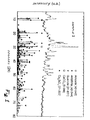
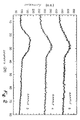
- the attached figures 1 and 2 that are diagrams of the X-ray diffractometry spectrums, provide both the identification of the asbestos contained in the CMCAs, and the check of the structural change and consequent inertia of the same.
- Fig. 1 shows the diffractometry spectrum of Sample 1, a spectrum relative to the CMCA as it is that shows a series of characteristic peaks that allow to identify the type of materials containing asbestos contained in Sample 1.
- Fig. 2 shows the diffractometric spectrums of Samples 3, 4 and 5 relative to the vitrified products of mixtures with different contents of CMCA that feature the characteristic trend of amorphous materials in which there are no crystalline forms.
Landscapes
- Chemical & Material Sciences (AREA)
- Chemical Kinetics & Catalysis (AREA)
- General Chemical & Material Sciences (AREA)
- Engineering & Computer Science (AREA)
- General Health & Medical Sciences (AREA)
- Toxicology (AREA)
- Business, Economics & Management (AREA)
- Emergency Management (AREA)
- Health & Medical Sciences (AREA)
- Life Sciences & Earth Sciences (AREA)
- Geochemistry & Mineralogy (AREA)
- Materials Engineering (AREA)
- Organic Chemistry (AREA)
- Environmental & Geological Engineering (AREA)
- Processing Of Solid Wastes (AREA)
- Silicates, Zeolites, And Molecular Sieves (AREA)
Abstract
Description
- The present invention concerns a process for vitrifying compound materials containing asbestos, simply defined CMCA herein, and especially waste from the removal of insulating and roofing elements of asbestos cement.
- The purpose of the present invention is to render the waste containing asbestos inert in that they represent a serious and yet unsolved environmental problem.
- The main varieties of asbestos are shown in Table 1.
- Asbestos has been used in a number of ways and for many years owing to its peculiar characteristics as a heat-resistant, sound-absorbing material, with high traction resistance, flexibility and wear-resistance. Since the appearance of certain serious illnesses of the breathing system were correlated to the presence of asbestos fibres in the air the use of the mineral dropped, until it was definitely banned. In Italy law n° 257 of the 27/3/92 rules that the use of asbestos was to cease and that the danger of asbestos pollution was to be eliminated wherever there are artifacts containing this mineral.
Mineral Variety Chemical composition Krysotile serpentine Mg3Si2O5(OH)4 Actinolite amphibole Ca2(FeMg)5Si8O22(OH)2 Amosite amphibole (FeMg)7Si6O22(OH)2 Antofillite amphibole Mg7Si8O22(OH)2 Crocidolite amphibole Na2Fe10Si16O46(OH)2 Tremolite amphibole Ca2Mg5Si8O22(OH)2 - The removal of materials containing asbestos as a method for avoiding pollution by asbestos fibres in any case means having to dispose of, at a considerable cost, the CMCAs obtained, in category II, type C, disposal plants. The proposed invention has the purpose of de-classing, according to current laws, the residues of materials containing asbestos by converting them into vitreous materials, lacking the fibrous features of asbestos minerals that are harmful to human health, hence making them disposable with category II, type B, disposal plants. Furthermore, the product obtained could be re-used as slag in blast furnaces of the coloured glass industry, down-stream from its being listed as secondary raw material, in compliance with art. 2 of law n° 475 of the 9/11/88 and later integrations.
- All types of asbestos, because they contain a part of hydroxyl water, are specially sensitive to dry heating. In this way they lose their toxic characteristics because they are transformed not only in their chemical composition, but above all also in their structure, transforming into other silicates or oxides. Already at temperatures above 200 °C amphibole asbestoses issue their content of hydroxyl in the form of water. Between 600°C and 1000°C in all types of asbestos the complete transformation into the related crystalline phases is terminated as a consequence of the loss of hydroxyl groups.
- Especially with Krysotile, at temperatures close to 980°C, the anhydrate splits into forsterite (Mg2SiO4) and silica (SiO2); the reaction is irreversible. At higher temperatures (1200°C for Crocidolite, 1500°C for Krysotile) the asbestoses melt into amorphous glass in that as stated they feature a high content of oxides typical to all glass available on the market.
- On the basis of these observations there are various patents that propose to render residues containing asbestos inert by means of thermal treatment (Mason, USA N° 5.085.838 dated 4/2/92) by combining the melted material with combustion wastes (Ek USA N° 5.096.692 dated 17/3/92) or with mineralized agents (Richter, USA N° 4.808.198 dated 28/2/89).
- Other patents present vitrifying processes (Roberts & Johnson, USA N0 4.678.493 dated 7/7/87; Adelio et al., ITALY N° 48.313 A/89, deposited 28/8/89) in which the asbestos waste is mixed with broken glass or conventional residues, also toxic and noxious, having been previously appropriately pre-treated, to form vitreous products in which asbestos is absent, because irreversibly modified.
- Prior art very close to the present process is shown in JP-A-02 303 585 and relevant WPl and Patent Abstracts of Japan; a process is disclosed therein for converting asbestos containing materials in a vitreous slag, such materials being mixed with ash from municipal waste incinerator to give a product that, anyway, has poor cristalline properties. Document DE-A-40 04 201 is also known that discloses use of flux materials to reduce the melting point of asbestos waste compounds.
- The procedure according to the present invention is characterized in that it uses a secondary raw material light ashes from bitumen coal as a vitrifying agent and hence, differently from some quoted above, does not require of any special pre-treatment of the materials containing asbestos, except the known shredding of the same and mixing the ashes with an appropriate temperature lowering flux.
- The process comprises a thermal vitrifying cycle, conducted in either an electric or a methane melting furnace, that lasts about 3 hours, operated at maximum temperatures between 1000°C and 1300°C (the temperature at which the light ashes melt) that ensures the full thermal corruption of all types of asbestos. The percentage of waste materials containing asbestos may vary between 40 and 60% of the weight of the mixture, with the addition of ashes to which a quantity between 5 and 15% of temperature lowering flux (Na2B4O7, Na2CO3, etc.) weight has been added, according to the type of CMCA and of the composition of the matrix in which the asbestos was previously held.
- The energy consumption required for vitrifying one kilogram of CMCA is about 1.55 kWh; the vitrified material features a loss in volume equal to about 80% of the initial volume and a slight loss in weight owing to the combustion of residual coal contained in the ashes.
- The content in oxides (SiO2, Fe2O3, CaO, Al2O3, Na2O, MgO) confirm that there may be an advantageous re-use of the product in the coloured hollow glass industry, thanks to the presence of ferrous oxide.
- The use of the process proposed leads to the following advantages:
- 1) the environmental risk problems linked to the conditioning, stockage and control of the CMCAs in the disposal plant are overcome.
- 2) economic convenience arising from the degrading of the residues according to the classification as per DPR 915/82 and to the reduction in volume of the vitrified substance compared to the original volume of residues.
- 3) use and consequent evaluation of a secondary raw material at extremely contained costs and easily procurable such as light ashes from bituminous coals combustion.
- 4) possibility of future listing of the vitreous product obtained as secondary raw materials relatively to the industrial production of coloured hollow glass.
- 5) the X-ray diffractometry analysis, used according to the DPR 915/82 to classify CMCAs to be disposed of in category II, type B, plants, in various samples examined, detected total absence of asbestos fibres confirming the safety of the product obtained. The tests for yield in acetic acid 0.5 M, according to IRSA standards, confirm full environmental compatibility according to the limits set by law 319/76.
- 6) full homogeneousness of the vitreous melted material is reached so as to allow stirring thereof.
-
- The attached figures 1 and 2, that are diagrams of the X-ray diffractometry spectrums, provide both the identification of the asbestos contained in the CMCAs, and the check of the structural change and consequent inertia of the same.
- Fig. 1 shows the diffractometry spectrum of
Sample 1, a spectrum relative to the CMCA as it is that shows a series of characteristic peaks that allow to identify the type of materials containing asbestos contained inSample 1. - Fig. 2 shows the diffractometric spectrums of
Samples
Claims (1)
- A process for vitrifying compound materials containing asbestos providing for shredding such compound, mixing it with coal ashes and a temperature lowering flux characterized in that the process is carried out in an electric or gas furnace at a maximum temperature between 1000°C and 1300°C for about three hours and the coal ashes are light ashes from bitumen coals to cause such a full homogeneousness of the vitreous melted material as to allow stirring thereof
Applications Claiming Priority (2)
| Application Number | Priority Date | Filing Date | Title |
|---|---|---|---|
| ITMI950884 | 1995-05-03 | ||
| ITMI950884A IT1274417B (en) | 1995-05-03 | 1995-05-03 | PROCEDURE FOR GLAZING COMPOSITE MATERIALS CONTAINING ASBESTOS |
Publications (3)
| Publication Number | Publication Date |
|---|---|
| EP0742032A2 EP0742032A2 (en) | 1996-11-13 |
| EP0742032A3 EP0742032A3 (en) | 1997-01-02 |
| EP0742032B1 true EP0742032B1 (en) | 2000-01-26 |
Family
ID=11371518
Family Applications (1)
| Application Number | Title | Priority Date | Filing Date |
|---|---|---|---|
| EP96106165A Expired - Lifetime EP0742032B1 (en) | 1995-05-03 | 1996-04-19 | Process for vitrifying compound materials containing asbestos |
Country Status (4)
| Country | Link |
|---|---|
| EP (1) | EP0742032B1 (en) |
| AT (1) | ATE189128T1 (en) |
| DE (1) | DE69606348D1 (en) |
| IT (1) | IT1274417B (en) |
Families Citing this family (2)
| Publication number | Priority date | Publication date | Assignee | Title |
|---|---|---|---|---|
| PL215074B1 (en) * | 2012-02-06 | 2013-10-31 | Maciej Pawlikowski | Method for utilization of asbestos an/or asbestos containing products |
| FR3032635B1 (en) * | 2015-02-13 | 2021-03-19 | O T N D Onet Tech Nuclear Decommissioning | PROCESS FOR DESTRUCTION OF ASBESTOS WASTE AND PLANT FOR DESTRUCTION OF ASBESTOS WASTE |
Family Cites Families (5)
| Publication number | Priority date | Publication date | Assignee | Title |
|---|---|---|---|---|
| JPH0798180B2 (en) * | 1989-05-17 | 1995-10-25 | 株式会社クボタ | Asbestos melting method |
| DE4004201A1 (en) * | 1990-02-12 | 1991-08-14 | Ortlepp Wolfgang | Disposal of harmful matter esp. asbestos waste - by melting with coal or coke and flux giving prods. useful for making building material and in metallurgy |
| DE4211161A1 (en) * | 1992-03-31 | 1993-10-07 | Keramit Gmbh | Process for the disposal of asbestos, asbestos-containing residues and asbestos-containing waste materials in connection with the use of mineral raw materials and / or secondary raw materials with a view to recycling these waste materials for the production of new products in which the asbestos fibers are chemically / thermally converted and therefore no longer a hazardous substance represent |
| DK44393D0 (en) * | 1993-04-20 | 1993-04-20 | Rockwool Int | PROCEDURE FOR THE CONVERSION OF AN ASBEST CEMENT PRODUCT TO A HEALTHY HAZARDOUS PRODUCT |
| EP0823266A1 (en) * | 1994-05-26 | 1998-02-11 | Metallgesellschaft Aktiengesellschaft | Process and device for the disposal of carbonised coke and/or pyrolysis dust |
-
1995
- 1995-05-03 IT ITMI950884A patent/IT1274417B/en active IP Right Grant
-
1996
- 1996-04-19 EP EP96106165A patent/EP0742032B1/en not_active Expired - Lifetime
- 1996-04-19 AT AT96106165T patent/ATE189128T1/en not_active IP Right Cessation
- 1996-04-19 DE DE69606348T patent/DE69606348D1/en not_active Expired - Lifetime
Also Published As
| Publication number | Publication date |
|---|---|
| EP0742032A3 (en) | 1997-01-02 |
| EP0742032A2 (en) | 1996-11-13 |
| DE69606348D1 (en) | 2000-03-02 |
| ITMI950884A1 (en) | 1996-11-03 |
| ATE189128T1 (en) | 2000-02-15 |
| ITMI950884A0 (en) | 1995-05-03 |
| IT1274417B (en) | 1997-07-17 |
Similar Documents
| Publication | Publication Date | Title |
|---|---|---|
| Zhang et al. | Preparation of additive-free glass-ceramics from MSW incineration bottom ash and coal fly ash | |
| Barbieri et al. | Alkaline and alkaline-earth silicate glasses and glass-ceramics from municipal and industrial wastes | |
| AU728391B2 (en) | Environmentally stable products derived from the remediation of contaminated sediments and soils | |
| Scarinci et al. | Vitrification of industrial and natural wastes with production of glass fibres | |
| US5096692A (en) | Mineralogical conversion of asbestos waste | |
| US5803894A (en) | Process for preparing enviromentally stable products by the remediation of contaminated sediments and soils | |
| CA1302084C (en) | Solid fuel composition from waste products | |
| IE74218B1 (en) | Method for the incineration of wastes | |
| EP0892765A1 (en) | Manufacture of ceramic tiles from fly ash | |
| CA2208271A1 (en) | Manufacture of ceramic tiles from spent aluminum potlining | |
| GB2067729A (en) | Incinerating waste material | |
| Abe et al. | Ash melting treatment by rotating type surface melting furnace | |
| EP0479894B1 (en) | Mineralogical conversion of asbestos waste | |
| EP0777838B1 (en) | Converting paper mill sludge | |
| PL199964B1 (en) | Method for producing a glass and glass produced thereby | |
| CA2062637A1 (en) | Method and apparatus for recovering useful products from waste streams | |
| EP0742032A2 (en) | Process for vitrifying compound materials containing asbestos | |
| Ribeiro et al. | Ash from a pulp mill boiler—Characterisation and vitrification | |
| DE4423728A1 (en) | Process for the treatment and environmentally sound recovery of asbestos cement products | |
| US5672146A (en) | EAF dust treatment | |
| Eaton | Test Plan: Phase 1 demonstration of 3-phase electric arc melting furnace technology for vitrifying high-sodium content low-level radioactive liquid wastes | |
| Dwivedi et al. | Effect of controlled crystallization on the chemical durability of a lead-containing waste glass | |
| JP2008273803A (en) | Method for producing artificial zeolite and precursor thereof | |
| Kasprzyk et al. | Thermal transformation of combustion wastes from coal-fired boilers | |
| Jantzen et al. | How to recycle asbestos containing materials |
Legal Events
| Date | Code | Title | Description |
|---|---|---|---|
| PUAI | Public reference made under article 153(3) epc to a published international application that has entered the european phase |
Free format text: ORIGINAL CODE: 0009012 |
|
| AK | Designated contracting states |
Kind code of ref document: A2 Designated state(s): AT BE CH DE DK ES FR GB GR IE LI NL SE |
|
| PUAL | Search report despatched |
Free format text: ORIGINAL CODE: 0009013 |
|
| AK | Designated contracting states |
Kind code of ref document: A3 Designated state(s): AT BE CH DE DK ES FR GB GR IE LI NL SE |
|
| 17P | Request for examination filed |
Effective date: 19970401 |
|
| 17Q | First examination report despatched |
Effective date: 19980817 |
|
| GRAG | Despatch of communication of intention to grant |
Free format text: ORIGINAL CODE: EPIDOS AGRA |
|
| GRAG | Despatch of communication of intention to grant |
Free format text: ORIGINAL CODE: EPIDOS AGRA |
|
| GRAH | Despatch of communication of intention to grant a patent |
Free format text: ORIGINAL CODE: EPIDOS IGRA |
|
| GRAH | Despatch of communication of intention to grant a patent |
Free format text: ORIGINAL CODE: EPIDOS IGRA |
|
| GRAA | (expected) grant |
Free format text: ORIGINAL CODE: 0009210 |
|
| AK | Designated contracting states |
Kind code of ref document: B1 Designated state(s): AT BE CH DE DK ES FR GB GR IE LI NL SE |
|
| PG25 | Lapsed in a contracting state [announced via postgrant information from national office to epo] |
Ref country code: SE Free format text: THE PATENT HAS BEEN ANNULLED BY A DECISION OF A NATIONAL AUTHORITY Effective date: 20000126 Ref country code: NL Free format text: LAPSE BECAUSE OF FAILURE TO SUBMIT A TRANSLATION OF THE DESCRIPTION OR TO PAY THE FEE WITHIN THE PRESCRIBED TIME-LIMIT Effective date: 20000126 Ref country code: LI Free format text: LAPSE BECAUSE OF FAILURE TO SUBMIT A TRANSLATION OF THE DESCRIPTION OR TO PAY THE FEE WITHIN THE PRESCRIBED TIME-LIMIT Effective date: 20000126 Ref country code: GR Free format text: LAPSE BECAUSE OF NON-PAYMENT OF DUE FEES Effective date: 20000126 Ref country code: FR Free format text: LAPSE BECAUSE OF FAILURE TO SUBMIT A TRANSLATION OF THE DESCRIPTION OR TO PAY THE FEE WITHIN THE PRESCRIBED TIME-LIMIT Effective date: 20000126 Ref country code: ES Free format text: THE PATENT HAS BEEN ANNULLED BY A DECISION OF A NATIONAL AUTHORITY Effective date: 20000126 Ref country code: CH Free format text: LAPSE BECAUSE OF FAILURE TO SUBMIT A TRANSLATION OF THE DESCRIPTION OR TO PAY THE FEE WITHIN THE PRESCRIBED TIME-LIMIT Effective date: 20000126 Ref country code: BE Free format text: LAPSE BECAUSE OF FAILURE TO SUBMIT A TRANSLATION OF THE DESCRIPTION OR TO PAY THE FEE WITHIN THE PRESCRIBED TIME-LIMIT Effective date: 20000126 Ref country code: AT Free format text: LAPSE BECAUSE OF FAILURE TO SUBMIT A TRANSLATION OF THE DESCRIPTION OR TO PAY THE FEE WITHIN THE PRESCRIBED TIME-LIMIT Effective date: 20000126 |
|
| REF | Corresponds to: |
Ref document number: 189128 Country of ref document: AT Date of ref document: 20000215 Kind code of ref document: T |
|
| REG | Reference to a national code |
Ref country code: CH Ref legal event code: EP |
|
| REF | Corresponds to: |
Ref document number: 69606348 Country of ref document: DE Date of ref document: 20000302 |
|
| REG | Reference to a national code |
Ref country code: IE Ref legal event code: FG4D |
|
| PG25 | Lapsed in a contracting state [announced via postgrant information from national office to epo] |
Ref country code: IE Free format text: LAPSE BECAUSE OF NON-PAYMENT OF DUE FEES Effective date: 20000419 |
|
| PG25 | Lapsed in a contracting state [announced via postgrant information from national office to epo] |
Ref country code: GB Free format text: LAPSE BECAUSE OF NON-PAYMENT OF DUE FEES Effective date: 20000426 Ref country code: DK Free format text: LAPSE BECAUSE OF FAILURE TO SUBMIT A TRANSLATION OF THE DESCRIPTION OR TO PAY THE FEE WITHIN THE PRESCRIBED TIME-LIMIT Effective date: 20000426 |
|
| PG25 | Lapsed in a contracting state [announced via postgrant information from national office to epo] |
Ref country code: DE Free format text: LAPSE BECAUSE OF FAILURE TO SUBMIT A TRANSLATION OF THE DESCRIPTION OR TO PAY THE FEE WITHIN THE PRESCRIBED TIME-LIMIT Effective date: 20000427 |
|
| EN | Fr: translation not filed | ||
| NLV1 | Nl: lapsed or annulled due to failure to fulfill the requirements of art. 29p and 29m of the patents act | ||
| REG | Reference to a national code |
Ref country code: CH Ref legal event code: PL |
|
| PLBE | No opposition filed within time limit |
Free format text: ORIGINAL CODE: 0009261 |
|
| STAA | Information on the status of an ep patent application or granted ep patent |
Free format text: STATUS: NO OPPOSITION FILED WITHIN TIME LIMIT |
|
| GBPC | Gb: european patent ceased through non-payment of renewal fee |
Effective date: 20000426 |
|
| 26N | No opposition filed | ||
| REG | Reference to a national code |
Ref country code: IE Ref legal event code: MM4A |