EP0721168A2 - Verfahren und Scheduler zum Steuern, wenn ein Server eine Einheit unter Berücksichtigung der Haüfigkeit bedient - Google Patents
Verfahren und Scheduler zum Steuern, wenn ein Server eine Einheit unter Berücksichtigung der Haüfigkeit bedient Download PDFInfo
- Publication number
- EP0721168A2 EP0721168A2 EP95309416A EP95309416A EP0721168A2 EP 0721168 A2 EP0721168 A2 EP 0721168A2 EP 95309416 A EP95309416 A EP 95309416A EP 95309416 A EP95309416 A EP 95309416A EP 0721168 A2 EP0721168 A2 EP 0721168A2
- Authority
- EP
- European Patent Office
- Prior art keywords
- time
- server
- entity
- service
- entities
- Prior art date
- Legal status (The legal status is an assumption and is not a legal conclusion. Google has not performed a legal analysis and makes no representation as to the accuracy of the status listed.)
- Ceased
Links
Images




Classifications
-
- G—PHYSICS
- G06—COMPUTING OR CALCULATING; COUNTING
- G06F—ELECTRIC DIGITAL DATA PROCESSING
- G06F9/00—Arrangements for program control, e.g. control units
- G06F9/06—Arrangements for program control, e.g. control units using stored programs, i.e. using an internal store of processing equipment to receive or retain programs
- G06F9/46—Multiprogramming arrangements
- G06F9/48—Program initiating; Program switching, e.g. by interrupt
- G06F9/4806—Task transfer initiation or dispatching
- G06F9/4843—Task transfer initiation or dispatching by program, e.g. task dispatcher, supervisor, operating system
- G06F9/4881—Scheduling strategies for dispatcher, e.g. round robin, multi-level priority queues
-
- G—PHYSICS
- G06—COMPUTING OR CALCULATING; COUNTING
- G06F—ELECTRIC DIGITAL DATA PROCESSING
- G06F9/00—Arrangements for program control, e.g. control units
- G06F9/06—Arrangements for program control, e.g. control units using stored programs, i.e. using an internal store of processing equipment to receive or retain programs
- G06F9/46—Multiprogramming arrangements
- G06F9/50—Allocation of resources, e.g. of the central processing unit [CPU]
- G06F9/5005—Allocation of resources, e.g. of the central processing unit [CPU] to service a request
- G06F9/5027—Allocation of resources, e.g. of the central processing unit [CPU] to service a request the resource being a machine, e.g. CPUs, Servers, Terminals
-
- H—ELECTRICITY
- H04—ELECTRIC COMMUNICATION TECHNIQUE
- H04L—TRANSMISSION OF DIGITAL INFORMATION, e.g. TELEGRAPHIC COMMUNICATION
- H04L9/00—Cryptographic mechanisms or cryptographic arrangements for secret or secure communications; Network security protocols
- H04L9/40—Network security protocols
Definitions
- the present invention is related to a scheduler. More specifically, the present invention is related to a scheduler which allows an entity to receive service from a server before its finishing time.
- the scheduler will provide the users access to the server in a fair manner so that no user will experience an undue delay based on its needs.
- scheduler's have not necessarily been fair to users when the users have a significant divergence in their needs. Many times, either the user with the greatest needs is left waiting while the user with the lowest needs is being served by the server, and vice versa.
- the present invention is directed to meeting the needs of users so users having lower needs can be served at times when users of greater needs do not require service at a given time.
- the present invention provides for rate control of the server so the server does not always have to be serving a user.
- the present invention pertains to a scheduler for controlling when N entities, where N is an integer ⁇ 1, are serviced by a server.
- the scheduler comprises a starting time memory having starting times s i of the N entities, where 1 ⁇ i ⁇ N and is an integer, and s i corresponds to the time the i'th entity requests service from the server.
- the scheduler is also comprised of a finishing time memory having finishing times f i of the N entities, where f i corresponds to the time the i'th entity should be serviced by the server.
- the scheduler is also comprised of a virtual clock that keeps track of virtual time so the starting times s i and finishing times f i can be identified.
- the scheduler comprises a controller which chooses entities to receive service from the server in the order of the entities with an earliest finishing time f i and a starting time s i being serviced first, and then the entities with the earliest or latest starting time s i or having the highest or lowest id or rate if their finishing times are the same being serviced next at each given time.
- rate control is used, then there is the alternative criteria of if there is no entity with a starting time less than or equal to virtual time, the server does not provide service to any entity and the virtual clock increments virtual time by one unit of virtual time.
- the virtual time is always incremented by sore unit of virtual time, and preferably one unit of virtual time, as a function of time regardless of what the server is doing.
- the function of time is simply a predetermined period of time. As is apparent from the latter, if the entities' finishing times are the same, then whatever protocol is desired to indicate which entity is to be provided to the server to be operated upon is the choice of the operator.
- the present invention pertains to a method of scheduling when a server provides service to entities.
- the method comprises the steps of requesting service from the server by N entities, where N ⁇ 1 and is an integer. Then there is the step of storing when each of the N entities starts requesting service and when each of the N entities should have received service. Next, there is the step of providing service to an entity of the N entities which has the earliest receive time and start time, unless there is more than one entity with the earliest receive time in which case the entity with the earliest start time receives service and possibly before its receive time. If rate control is used, then there is the alternative criteria of if there is no entity with a start time less than or equal to virtual time, then the server is idle and virtual time is incremented by some unit of virtual time as a function of time.
- the present invention pertains to a scheduler for scheduling when N entities each of which has a weight w, where N is an integer ⁇ 1 and w is a real number, are served by a server.
- the scheduler is comprised of a starting time memory having starting times s i when the N entities request service, where 1 ⁇ i ⁇ N and is an integer, and s i is the time at which the i'th entity may next get service from the server.
- the scheduler is also comprised of a finishing time memory having finishing times f i when the N entities should be serviced, where f i is the time by which the i'th entity should be serviced by the server.
- T 0
- X 0
- Y 1
- Z 0
- either T or X can be essentially any real number as long as both are not 0
- the scheduler is also comprised of a controller which chooses which entity is to be operated upon by the server in the order of the entity with an earliest finishing time f i and a start time s i receiving service first, and then the entities based on a predetermined criteria.
- the predetermined criteria can essentially be any type of tie-breaking procedure that the user wishes to apply such as earliest start time or id number, etc. If rate control is utilized, there is the alternative criteria of if there is no entity with a start time less than or equal to virtual time, the server does not provide service to any entity and the virtual clock increments virtual time preferably by one unit of virtual time as a function of time and preferably after a predetermined period of time.
- the present invention pertains to a method for scheduling when a server provides service to entities.
- the method comprises the steps of identifying when a first entity requests service from the server.
- the present invention pertains to a scheduler for controlling when a server provides service to entities.
- the scheduler comprises a memory having times which are a function of when entities request service from the server.
- the scheduler is also comprised of a virtual clock that keeps track of virtual time as a function of when entities request service from the server.
- the scheduler is also comprised of a controller which causes an entity to receive service from the server as a function of when the entity requests service from the server. If rate control is utilized, then the virtual clock keeps track of time as a function of time and preferably a predetermined period of time.
- Figure 1 is a schematic representation of the present invention.
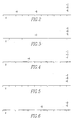
- Figures 2-11 are schematic representations of cells waiting for service from a server as a function of virtual time.
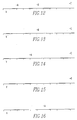
- Figures 12-20 are schematic representations of cells waiting for service from a server as a function of virtual time.
- Figure 21 is a schematic representation of an ATM switch element.
- Figure 22 is a flow chart of a method of scheduling when a server provides service to entities of the present invention.
- Figure 23 is a flow chart of an alternative method of scheduling when a server provides service to entities of the present invention.
- a scheduler 10 for controlling when N entities 12, where N is an integer ⁇ 1, are operated upon by a server 14.
- the scheduler 10 comprises a starting time memory, such as a priority queue 16, having starting times s i of the N entities, where 1 ⁇ i ⁇ N and is an integer, and si corresponds to the time the i'th entity starts requesting service from the server 14.
- the scheduler 10 is also comprised of a finishing time memory, such as a priority queue 18, having finishing times f i of the N entities 12, where f i corresponds to the time the i'th entity should be operated upon by the server 14.
- the scheduler 10 is also comprised of a virtual clock 20 that keeps track of time so the starting times s; and finishing times f i can be identified. Additionally, the scheduler 10 comprises a controller 22 which provides entities service from the server 14 in the order of the entities with an earliest finishing time f; and a start time s i being operated upon first, and then the entities with the earliest or latest starting time s i or having the highest or lowest id or rate if their finishing times are the same being operated upon next at each given time. As is apparent from the latter, if the entities' finishing times are the same, then whatever protocol is desired to indicate which entity is to be provided to the server 14 to be operated upon is the choice of the operator.
- the server does not provide service to any entity and the virtual clock increments virtual time by one unit of virtual time as a function of time and preferably after a predetermined period of time. It should be noted that even when the server does not provide service, the virtual clock increments virtual time by one unit of virtual time. Thus, virtual time always advances by one increment of virtual time.
- scheduler 10 can include an element pool 24 which is connected with the N entities 12 and receives elements from the N entities 12 to be operated upon by the server 14.
- the arrival times s; of elements then corresponds to the time elements from the i'th entity 12 arrives in the element pool 24 and the finishing times f i correspond to the time an element from the i'th entity 12 is to leave the element pool 24 and be operated upon by the server 14.
- the controller 22 transfers or chooses elements to be operated upon by the server 14 from the element pool 24.
- the controller 22 is connected to the virtual clock 20, the element pool 24, the starting time priority queue 16 and the finishing time priority queue 18 for controlling time of the virtual clock 20, storing the elements in the element pool 24, and the arrival times s i and their finishing times f i in the starting time priority queue 16 and the finishing time priority queue, respectively.
- the controller 22 preferably operates upon entities or elements of the element pool 24 sequentially.
- the controller 22 causes the virtual clock 20 to move present virtual time forward when an entity receives service or an element leaves the element pool 24.
- the controller 22 can cause the virtual clock 20 to increment virtual time to the earliest starting time of an entity or an element if the earliest start time of an entity is later than virtual time, otherwise, the controller 22 causes the virtual clock 20 to increment virtual time by a unit of virtual time. If rate control is utilized, then the controller only causes the latter to occur preferably after a predetermined time if no service is provided.
- the controller 22 transfers the element out of the element pool 24 which has the earliest finishing time f i and a starting time s i unless there is more than one element with the earliest finishing time fi, in which case, preferably, the element with the earliest starting time s i is transferred out of the element pool 24 by the controller 22 and before its finishing time f i , unless there is no element with a starting time s i less than or equal to virtual time, in the element pool, in which case no element is transferred out of the element pool 24 by the controller if rate control is utilized.
- the present invention pertains to a scheduler 10 for scheduling when N entities each of which has a weight w, where N is an integer ⁇ 1 and w is a real number, are served by a server 14.
- the scheduler 10 is comprised of a starting time memory 16 having starting times s i when the N entities 12 request service, where 1 ⁇ i ⁇ N and is an integer, and s; is the time at which the i'th entity may next get service from the server 14.
- the scheduler 10 is also comprised of a finishing time memory 18 having finishing times f i when the N entities should be serviced, where f i is the time by which the i'th entity should be serviced by the server 14.
- either T or X can be essentially any real number as long as both are not 0
- either Y or Z can be essentially any real number as long as both are not 0.
- the scheduler 10 is also comprised of a controller which chooses which entity is to be operated upon by the server 14 in the order of the entity with an earliest finishing time f i and a start time s i receiving service first, and then the entities based on a predetermined criteria.
- the predetermined criteria can essentially be any type of tie-breaking procedure that the user wishes to apply such as earliest start time or id number, etc. If rate control is utilized, there is the alternative criteria of if there is no entity with a start time less than or equal to virtual time, the server does not provide service to any entity and preferably the virtual clock increments virtual time by one unit of virtual time.
- “1" is used to represent the maximum rate of work of the server 14, so it makes no sense to give a single entry a weight which would be equal to greater than 100% of the capacity of the server 14).
- the sum of the weights of all entities will be less than or equal to 1 if the entities are not restricted as to how much work they can ask the server 14 to perform. This is equivalent to not allocating more than 100% of the server 14 capacity. If an entity is somehow restricted from asking for more than some fraction (say RS i ⁇ 1) of the server's capacity, then a more general statement is that the sum (over all entities) of MIN(w i , RS i ) should be less than 1.
- W sum over all entities of w i
- s i is the time at which the i'th entity may next get service and f i is the time by which the i'th entity should be serviced.
- U i can be different than one based on the application. For instance, u i may not be equal to one in a packet based network.
- So f Fmin value of the finishing time of the entity with the smallest finishing time.
- So s smin value of the starting time of the entity with the smallest starting time.
- V k indicates the k'th time that the server does work.
- V k MAX ( V k -1 +(1 ⁇ X ), ( s Smin ⁇ Y )+(( f Fmin - s Smin ) ⁇ Z ))
- V k MAX ( V k -1 +((1/ AW ) ⁇ T ), ( s Smin ⁇ Y )+(( f Fmin - s Smin ) ⁇ Z )) where (
- Equation (1) with is “Self-Clocked Fair Queueing” (SFQ). See “A Self-Clocked Fair Queueing Scheme for Broadband Applications” by S.J. Golestani, In Proc. IEEE Infocom, May 1994, incorporated by reference.
- RC VSQ Rate Control Service Queueing
- RC VSQ requires the starting times of users to be identified and particularly the smallest starting time of a user as well as finishing times of users.
- RC VSQ comprises a starting time memory, such as the priority queue 16, as described above, and a finishing time memory, such as a priority queue 18, as described above. Then, in operation of RC VSQ, the server 10 provides service in the following manner:
- rate control When rate control is implemented, the server 10 provides service at the established rate, whatever that may be, and no faster. Rate control is not necessarily work conserving while VSQ is work conserving.
- the present invention pertains to a method of scheduling when a server 10 operates on entities, as shown in figure 22.
- the method comprises the steps of requesting service of the server from N elements, where N ⁇ 1 and is an integer. Then there is the step of storing when each of the N entities first requests service and when each of the N entities is to have received service from the server. Next, there is the step of providing service to an entity of the N entities which has the earliest receive time and a request time, unless there is more than one entity with the earliest receive time in which case the entity with the earliest request time receives service from the server. Preferably, after the providing step, there is the step of repeating the providing step in regard to other entities.
- the controller 22 can cause the steps to be implemented.
- rate control is used, then there is the alternative criteria of if there is no entity with a request time less than or equal to virtual time, then the server is idle.
- the present invention also pertains to a method for scheduling when a server 14 provides service to entities, as shown in figure 23.
- the method comprises the steps of identifying when an entity requests service from the server 14.
- the process for identifying when a first entity requests service from the server can include any technique or method for calculating when the first entity requests service from the server 14. This can include identifying when the request occurs by actually determining the time when the entity requests service from the server 14. Or, it can be calculated from when a previous entity has requested service from the server 14 and determined by some function or relationship when the entity requests service from the server 14. Or, it can be determined as a function of another entity which is currently receiving service from the server 14. Alternatively, the time when the first entity requests service can be identified from a time when the entity is to receive service from the server 14. For instance, start time plus 1/W i equals finish time.
- the identifying step can be part of a calculation where at some point in the overall process of identifying time for the server to provide service to the entity, the time when the entity requests service from the server is identified. Basically, the identifying step can be a conclusion to a process or as an interim step to a process.
- the entity preferably is a first entity which requests service from the server 14.
- the method for scheduling when a server 14 provides service to entities next comprises the step of providing service to an entity as a function of when the entity requests service from the server 14.
- the entity can be the first entity and it receives service from the server 14 as a function of when the first entity requests the service from the server 14. It is preferably when the first entity first requests service from the server 14 that is a basis for providing service to the first entity.
- the step of providing service to an entity can be the step of providing service to a second entity as a function of when the first entity requests service from the server 14. The time when the second entity receives service is then some functional relationship of when the first entity first requested service from the server 14.
- the providing step is a function of virtual time, and there is the additional step of incrementing virtual time by one unit of virtual time after a predetermined period of time.
- virtual time is incremented by one unit of virtual time after a predetermined period of time, regardless of any other considerations.
- the present invention pertains to a scheduler for controlling when a server provides service to entities.
- the scheduler comprises a memory, having times which are a function of when entities request service from the server 14.
- the scheduler 10 also comprises a virtual clock 20 that keeps track of time as a function of when entities request service from the server 14.
- the scheduler 10 comprises a controller 22 which causes an entity to receive service from the server 14 as a function of when the entity requests service from the server 14.
- the memory can be a starting time, such as a priority queue 16. If rate control is utilized, then the virtual clock keeps track of time as a function of a predetermined period of time whether or not there is no service provided to an entity.
- a scheduler 10 will schedule when the users with cells will be served by the server 14.
- the scheduler 10 logs in the time a user first requests service from the server 14.
- the scheduler 10 also logs in the latest time the user should finish waiting for service from the server 14.
- the scheduler 10 records the start time and the finish time for each user that requests service from the server 14. This information is obtained from the user and from the virtual clock 20 identifying when the user has first started waiting for the service from the server 14. This can occur by the entity sending a signal to the server 14 or the scheduler 10 when it requests service; or by the scheduler 10 or the server 14 using a sensor, or trigger to identify when the entity is requesting service.
- This aspect of the invention can be similar to how a telecommunications switch operates to switch signals which arrive at the switch from several connections, as is well known in the art.
- the scheduler 10 determines which user of the users waiting for service from the server 14 has the earliest finishing time. The user with the earliest finishing time is then provided service by the server 14 and the user's cell is operated upon by the server 14. If the users have the same finishing time, then the server looks at which user has the earliest start time and provides service to the user with the earliest start time. The scheduler 10 causes the user to receive service from a server 14 even though its time to finish waiting for service may not as yet have occurred.
- the scheduler 10 looks for the next user to receive service from the server 14.
- a user that has a high rate will receive service from the server 14 more often than a user with a lower rate.
- the scheduler 10 is not controlled by the user receiving service from the server 14 when its finish time occurs, users with lower rates can receive service from the server 14 intermittently when the server 14 is not providing service to a higher rate.
- the server 14 is controlled by the fact that over a given unit cycle of operation, it has certain service capability, and that all the rates of the different users combine to equal that unit rate for the cycle, then over the course of a cycle, each user will have service provided by the server 14.
- each user A-E has rates of .5, .2, .1, .1, .1, respectively.
- each user A-E has a cell which arrives for service from a server 14.
- a cell from user B arrives to receive service from server 14.
- the server 14 provides service to the cell from user D since all the cells waiting for service have the same finish time but the cell from user D has a start time of 0, which is as early as a cell from user E but earlier than the cell from user B. See figure 7.
- a cell from user A arrives for service from server 14.
- the server 14 provides service to the cell from user A since the cell has the earliest finish time of the cells waiting for service from server 14. See figure 8.
- a cell from user A arrives for service from the server 14.
- the cycle then repeats itself as described above.
- a cell from user A arrives for service from the server 14.
- the virtual time is advanced by one increment to the earliest starting time of a cell that requires service from the server 14.
- a cell from user A arrives for service from the server 14.
- a cell from user B arrives for service from server 14.
- the server from server 14 provides service to the cell from user B since the cell from user B has the earliest finish time of any cell waiting for service from server 14. See figure 17.
- the virtual time is incremented to the next virtual time that corresponds to the earliest start time that a cell would require service from the server 14.
- a cell from user A arrives for service from server 14.
- the server 14 provides service to the cell from user A because it has the earliest finish time. See figure 18.
- the virtual time is incremented by two units in this instance.
- a cell from user A arrives for service from the server 14.
- Server 14 provides service to the cell from user A since it has the earliest finish time. See figure 19.
- each entity 12 there are three entities 12 connected to an element pool 24. These entities 12 have associated with them a weight and a rate. For instance, user 0 associated with the 0th entity 12 has a weight of .5 and a rate of .5. User 1 associated with the first entity 12 has a weight of .333 and a rate of .333. User 2 associated with the second entity 12 has a weight of .166 and a rate of .166.
- the virtual time is 0.
- Cells 000, 001 and 002 corresponding with the 0th, 1st, 2nd entities 12 of the 0th, 1st and 2nd users arrive at the element pool 24.
- the start time column user 0 has the second or last position in regard to when the cell 000 associated with the 0th user arrived in the element pool 24.
- there is a quantity Q identified in the column Q showing there is but 1 cell of user 0 in the element pool 24.
- the quantity Q of user 0 is now 0 since its corresponding cell has been operated upon by the server 14 and is no longer in the element pool 24.
- the finishing time priority queue 18 also reflects the finishing queue of user 0 having a -1 in the element pool 24 since the cell associated with user 0 is no longer present in the element pool 24.
- the server can only operate on one cell at a time, only the cell of user 0, which has the earliest finishing time, is removed from the element pool 24.
- all the cells of user 0, 1 and 2 have arrived at the same starting time in the element pool 24, even though their weights may be different, they are ordered in the starting time priority queue 16 on the basis of highest user number to lowest user number, although essentially any scheme of ordering could be chosen.
- the quantity of cells associated with user 0 in the element pool 24 is then reduced by 1.
- an ATM switch element has one to N input connections 102 and one to M output connections 104, as shown in figure 21.
- ATM cells are received by the switch element 100 through the input connections 102.
- the switch element 100 operates on the cells and sends them on their way through output connections 104.
- a cell comes in over a specific input connection 102, it is placed in a pool 106, as is well known in the art, and informs the scheduler 108 of the switch element, as is well known in the art, of the presence of the cell in the corresponding pool 106.
- each input connection 102 can have its own unique pool 106 in which cells entering the switch element 102 are stored or there can be a common pool 106 in which all cells from each individual input connection 102 are stored until the server 110 of the switch element is ready to operate upon them.
- the scheduler 108 of the switch element 100 operates as described above except in the ATM context, the finish time is determined by the finish time identified in the scheduler for the cell as well as a bid value that has been provided by the cell in order to obtain service by the server 110 of the switch element 100.
- This use of a bid is well known in the art. See, for instance, "Gigabit Networking” by Craig Partridge, Addison Wesley, 1994; "ATM User Network Interface Specification, Version 3.0" by the ATM Forum, Prentice Hall, 1994; “Asynchronous Transfer Mode Networks: Performance Issues", by Raif O. Onvural, Artech House, Inc., Norwood, Mass. 1994, and "Comparison of Rate-Based Service Disciplines” by Hui Zhang and Srinivasov Keshav, Proceedings of ACM SIGCOMM '91, all of which are incorporated by reference.
- every packet can be stamped as is known in the art.
- the packet at the head of a queue can be computed based on the above and not all of the packets in that queue need to be stamped.
- the first N packets could be stamped, and any packets thereafter would not need to be stamped, where N is the maximum number of service intervals a packet can be late in receiving service.
Landscapes
- Engineering & Computer Science (AREA)
- Theoretical Computer Science (AREA)
- Software Systems (AREA)
- General Physics & Mathematics (AREA)
- Computer Security & Cryptography (AREA)
- Physics & Mathematics (AREA)
- General Engineering & Computer Science (AREA)
- Signal Processing (AREA)
- Computer Networks & Wireless Communication (AREA)
- Computer And Data Communications (AREA)
- Information Transfer Between Computers (AREA)
- Mobile Radio Communication Systems (AREA)
- Communication Control (AREA)
Applications Claiming Priority (4)
| Application Number | Priority Date | Filing Date | Title |
|---|---|---|---|
| US362217 | 1994-12-22 | ||
| US08/362,217 US5828879A (en) | 1994-12-22 | 1994-12-22 | Method and a scheduler for controlling when a server provides service to an entity |
| US08/375,624 US5845115A (en) | 1994-12-22 | 1995-01-20 | Method and a scheduler for controlling when a server provides service with rate control to an entity |
| US375624 | 1995-01-20 |
Publications (2)
| Publication Number | Publication Date |
|---|---|
| EP0721168A2 true EP0721168A2 (de) | 1996-07-10 |
| EP0721168A3 EP0721168A3 (de) | 1998-01-28 |
Family
ID=27001598
Family Applications (1)
| Application Number | Title | Priority Date | Filing Date |
|---|---|---|---|
| EP95309416A Ceased EP0721168A3 (de) | 1994-12-22 | 1995-12-22 | Verfahren und Scheduler zum Steuern, wenn ein Server eine Einheit unter Berücksichtigung der Haüfigkeit bedient |
Country Status (4)
| Country | Link |
|---|---|
| US (1) | US5828878A (de) |
| EP (1) | EP0721168A3 (de) |
| JP (1) | JP4283899B2 (de) |
| CA (1) | CA2150967C (de) |
Cited By (1)
| Publication number | Priority date | Publication date | Assignee | Title |
|---|---|---|---|---|
| EP0977404A3 (de) * | 1998-07-30 | 2003-11-19 | Marconi Intellectual Property (Ringfence) Inc. | Skalierbarer Zellenvermittler mit Ablauffolgesteuerung, und Verfahren zur Vermittlung |
Families Citing this family (22)
| Publication number | Priority date | Publication date | Assignee | Title |
|---|---|---|---|---|
| EP0798897A3 (de) | 1996-03-26 | 1999-07-14 | Digital Equipment Corporation | Verfahren und Anlage zur relativen Fehlerablaufplannung unter Verwendung diskreter Geschwindigkeiten und proportioneller Skalierung der Geschwindigkeit |
| DE19617816B4 (de) * | 1996-05-03 | 2004-09-09 | Siemens Ag | Verfahren zum optimierten Übertragen von ATM-Zellen über Verbindungsabschnitte |
| US6064677A (en) * | 1996-06-27 | 2000-05-16 | Xerox Corporation | Multiple rate sensitive priority queues for reducing relative data transport unit delay variations in time multiplexed outputs from output queued routing mechanisms |
| FR2771830B1 (fr) * | 1997-12-03 | 2000-02-11 | Remi Despres | Dispositif de gestion partagee d'une ressource entre plusieurs utilisateurs |
| US5996073A (en) * | 1997-12-18 | 1999-11-30 | Tioga Systems, Inc. | System and method for determining computer application state |
| US6385566B1 (en) * | 1998-03-31 | 2002-05-07 | Cirrus Logic, Inc. | System and method for determining chip performance capabilities by simulation |
| US6122673A (en) * | 1998-07-22 | 2000-09-19 | Fore Systems, Inc. | Port scheduler and method for scheduling service providing guarantees, hierarchical rate limiting with/without overbooking capability |
| US7099943B1 (en) * | 1998-08-26 | 2006-08-29 | Intel Corporation | Regulating usage of computer resources |
| US6434631B1 (en) * | 1999-10-15 | 2002-08-13 | Lucent Technologies Inc. | Method and system for providing computer storage access with quality of service guarantees |
| WO2001043347A2 (en) * | 1999-12-08 | 2001-06-14 | The University Of British Columbia | Weighted fair queuing scheduler |
| US7304945B1 (en) * | 2000-02-14 | 2007-12-04 | Ericsson Ab | Method and apparatus for dynamic bitmap generator scheduler |
| JP4879382B2 (ja) * | 2000-03-22 | 2012-02-22 | 富士通株式会社 | パケットスイッチ、スケジューリング装置、廃棄制御回路、マルチキャスト制御回路、およびQoS制御装置 |
| US6782389B1 (en) * | 2000-09-12 | 2004-08-24 | Ibrix, Inc. | Distributing files across multiple, permissibly heterogeneous, storage devices |
| AU2002254147A1 (en) * | 2001-03-08 | 2002-09-24 | Adisak Mekkittikul | A method and system for bandwidth allocation tracking |
| US6947998B2 (en) * | 2001-03-08 | 2005-09-20 | Broadband Royalty Corporation | Method and system for bandwidth allocation tracking in a packet data network |
| JP2003067331A (ja) * | 2001-08-28 | 2003-03-07 | Matsushita Electric Ind Co Ltd | スケジュール作成方法、スケジュール作成装置及びスケジュール作成プログラム |
| EP1324553A3 (de) * | 2001-12-31 | 2006-03-22 | Alcatel Canada Inc. | Verfahren und Vorrichtung zur Planung und Wartung von Ereignissen unter Benutzung einer Kalenderstruktur |
| US6954811B2 (en) * | 2002-07-19 | 2005-10-11 | Calix Networks, Inc. | Arbiter for an input buffered communication switch |
| FI112421B (fi) * | 2002-10-29 | 2003-11-28 | Tellabs Oy | Menetelmä ja laitteisto siirtoyhteyskapasiteetin vuorottamiseksi pakettikytkentäisten tietoliikennevoiden kesken |
| US8874477B2 (en) | 2005-10-04 | 2014-10-28 | Steven Mark Hoffberg | Multifactorial optimization system and method |
| US7937618B2 (en) * | 2007-04-26 | 2011-05-03 | International Business Machines Corporation | Distributed, fault-tolerant and highly available computing system |
| EP2063580B1 (de) * | 2007-11-20 | 2011-07-20 | Alcatel Lucent | Scheduler mit niedriger Komplexität mit Generalized Processor Sharing GPS-artiger Schedulerfunktion |
Family Cites Families (1)
| Publication number | Priority date | Publication date | Assignee | Title |
|---|---|---|---|---|
| US5142533A (en) * | 1991-03-28 | 1992-08-25 | Motorola, Inc. | Method for controlling the scheduling of multiple access to communication resources |
-
1995
- 1995-06-05 CA CA002150967A patent/CA2150967C/en not_active Expired - Fee Related
- 1995-06-07 US US08/476,365 patent/US5828878A/en not_active Expired - Fee Related
- 1995-11-15 JP JP29687795A patent/JP4283899B2/ja not_active Expired - Lifetime
- 1995-12-22 EP EP95309416A patent/EP0721168A3/de not_active Ceased
Cited By (1)
| Publication number | Priority date | Publication date | Assignee | Title |
|---|---|---|---|---|
| EP0977404A3 (de) * | 1998-07-30 | 2003-11-19 | Marconi Intellectual Property (Ringfence) Inc. | Skalierbarer Zellenvermittler mit Ablauffolgesteuerung, und Verfahren zur Vermittlung |
Also Published As
| Publication number | Publication date |
|---|---|
| US5828878A (en) | 1998-10-27 |
| EP0721168A3 (de) | 1998-01-28 |
| JPH08272710A (ja) | 1996-10-18 |
| JP4283899B2 (ja) | 2009-06-24 |
| CA2150967A1 (en) | 1996-06-23 |
| CA2150967C (en) | 2001-04-03 |
Similar Documents
| Publication | Publication Date | Title |
|---|---|---|
| US5845115A (en) | Method and a scheduler for controlling when a server provides service with rate control to an entity | |
| EP0721168A2 (de) | Verfahren und Scheduler zum Steuern, wenn ein Server eine Einheit unter Berücksichtigung der Haüfigkeit bedient | |
| US5859835A (en) | Traffic scheduling system and method for packet-switched networks | |
| EP1083709B1 (de) | Verfahren und Vorrichtung zur Verkehrsablaufsteuerung um die Dienstqualität in einem Kommunikationsnetzwerk zu erfüllen | |
| Stiliadis et al. | Rate-proportional servers: A design methodology for fair queueing algorithms | |
| EP0859492B1 (de) | Vorrichtung mit einem gewichteten gerechten Warteschlangenverfahren und mit adaptiver Umverteilung der Bandbreite | |
| US7194741B2 (en) | Weighted fair queuing scheduler | |
| Zukerman et al. | The DQDB protocol and its performance under overload traffic conditions | |
| Anderson | Meta-scheduling for distributed continuous media | |
| Potter et al. | Analysis of a discrete multipriority queueing system involving a central shared processor serving many local queues | |
| Takagi et al. | Analysis of a discrete-time queueing system with time-limited service | |
| US7130270B2 (en) | Method and apparatus for varying bandwidth provided to virtual channels in a virtual path | |
| US7567572B1 (en) | 2-rate scheduling based on search trees with configurable excess bandwidth sharing | |
| Landry et al. | Queueing study of a 3-priority policy with distinct service strategies | |
| Altman et al. | Discrete time queues with delayed information | |
| Chen et al. | A Queueing Analysis of the Performance of DQDB | |
| Balakrishnan et al. | Buffer losses vs. deadline violations for ABR traffic in an ATM switch: A computational approach | |
| Kwak et al. | A new starting potential fair queuing algorithm with O (1) virtual time computation complexity | |
| Hariri et al. | A hierarchical analysis approach for high performance computing and communication applications | |
| Hong et al. | Analysis of transmission delay for a structured-priority packet-switching system | |
| JP2004520731A (ja) | 複数の情報パケットフロー間で共用資源をスケジュールするための手順及びシステム | |
| La Corte et al. | Jitter analysis in an ATM multimedia multiplexer | |
| JPH10190665A (ja) | コネクション帯域変更要求装置、atmエンドシステム及びatm交換機 | |
| JPH118633A (ja) | ユーザ指向入力型ネットワーク設計装置 | |
| Mitchell et al. | Transient call blocking for a server with leaky bucket policing |
Legal Events
| Date | Code | Title | Description |
|---|---|---|---|
| PUAI | Public reference made under article 153(3) epc to a published international application that has entered the european phase |
Free format text: ORIGINAL CODE: 0009012 |
|
| AK | Designated contracting states |
Kind code of ref document: A2 Designated state(s): DE FR GB |
|
| PUAL | Search report despatched |
Free format text: ORIGINAL CODE: 0009013 |
|
| AK | Designated contracting states |
Kind code of ref document: A3 Designated state(s): DE FR GB |
|
| 17P | Request for examination filed |
Effective date: 19980721 |
|
| 17Q | First examination report despatched |
Effective date: 20000317 |
|
| RAP1 | Party data changed (applicant data changed or rights of an application transferred) |
Owner name: MARCONI COMMUNICATIONS, INC. |
|
| RAP1 | Party data changed (applicant data changed or rights of an application transferred) |
Owner name: MARCONI INTELLECTUAL PROPERTY (RINGFENCE) INC. |
|
| RAP1 | Party data changed (applicant data changed or rights of an application transferred) |
Owner name: ERICSSON AB |
|
| RAP1 | Party data changed (applicant data changed or rights of an application transferred) |
Owner name: ERICSSON AB |
|
| RAP1 | Party data changed (applicant data changed or rights of an application transferred) |
Owner name: ERICSSON AB |
|
| STAA | Information on the status of an ep patent application or granted ep patent |
Free format text: STATUS: THE APPLICATION HAS BEEN REFUSED |
|
| 18R | Application refused |
Effective date: 20111119 |