EP0720127A2 - System zum Folgen geschützter medizinischer Testkarten - Google Patents
System zum Folgen geschützter medizinischer Testkarten Download PDFInfo
- Publication number
- EP0720127A2 EP0720127A2 EP95309522A EP95309522A EP0720127A2 EP 0720127 A2 EP0720127 A2 EP 0720127A2 EP 95309522 A EP95309522 A EP 95309522A EP 95309522 A EP95309522 A EP 95309522A EP 0720127 A2 EP0720127 A2 EP 0720127A2
- Authority
- EP
- European Patent Office
- Prior art keywords
- test
- digital signal
- monitoring system
- central monitoring
- pins
- Prior art date
- Legal status (The legal status is an assumption and is not a legal conclusion. Google has not performed a legal analysis and makes no representation as to the accuracy of the status listed.)
- Withdrawn
Links
Images

Classifications
-
- G—PHYSICS
- G07—CHECKING-DEVICES
- G07C—TIME OR ATTENDANCE REGISTERS; REGISTERING OR INDICATING THE WORKING OF MACHINES; GENERATING RANDOM NUMBERS; VOTING OR LOTTERY APPARATUS; ARRANGEMENTS, SYSTEMS OR APPARATUS FOR CHECKING NOT PROVIDED FOR ELSEWHERE
- G07C9/00—Individual registration on entry or exit
- G07C9/20—Individual registration on entry or exit involving the use of a pass
- G07C9/22—Individual registration on entry or exit involving the use of a pass in combination with an identity check of the pass holder
- G07C9/23—Individual registration on entry or exit involving the use of a pass in combination with an identity check of the pass holder by means of a password
-
- G—PHYSICS
- G16—INFORMATION AND COMMUNICATION TECHNOLOGY [ICT] SPECIALLY ADAPTED FOR SPECIFIC APPLICATION FIELDS
- G16H—HEALTHCARE INFORMATICS, i.e. INFORMATION AND COMMUNICATION TECHNOLOGY [ICT] SPECIALLY ADAPTED FOR THE HANDLING OR PROCESSING OF MEDICAL OR HEALTHCARE DATA
- G16H10/00—ICT specially adapted for the handling or processing of patient-related medical or healthcare data
- G16H10/40—ICT specially adapted for the handling or processing of patient-related medical or healthcare data for data related to laboratory analysis, e.g. patient specimen analysis
-
- G—PHYSICS
- G16—INFORMATION AND COMMUNICATION TECHNOLOGY [ICT] SPECIALLY ADAPTED FOR SPECIFIC APPLICATION FIELDS
- G16H—HEALTHCARE INFORMATICS, i.e. INFORMATION AND COMMUNICATION TECHNOLOGY [ICT] SPECIALLY ADAPTED FOR THE HANDLING OR PROCESSING OF MEDICAL OR HEALTHCARE DATA
- G16H40/00—ICT specially adapted for the management or administration of healthcare resources or facilities; ICT specially adapted for the management or operation of medical equipment or devices
- G16H40/60—ICT specially adapted for the management or administration of healthcare resources or facilities; ICT specially adapted for the management or operation of medical equipment or devices for the operation of medical equipment or devices
- G16H40/67—ICT specially adapted for the management or administration of healthcare resources or facilities; ICT specially adapted for the management or operation of medical equipment or devices for the operation of medical equipment or devices for remote operation
-
- Y—GENERAL TAGGING OF NEW TECHNOLOGICAL DEVELOPMENTS; GENERAL TAGGING OF CROSS-SECTIONAL TECHNOLOGIES SPANNING OVER SEVERAL SECTIONS OF THE IPC; TECHNICAL SUBJECTS COVERED BY FORMER USPC CROSS-REFERENCE ART COLLECTIONS [XRACs] AND DIGESTS
- Y10—TECHNICAL SUBJECTS COVERED BY FORMER USPC
- Y10S—TECHNICAL SUBJECTS COVERED BY FORMER USPC CROSS-REFERENCE ART COLLECTIONS [XRACs] AND DIGESTS
- Y10S283/00—Printed matter
- Y10S283/90—Medical record
Definitions
- the present invention relates generally to systems for tracking objects moving amongst a plurality of locations. More particularly, the present invention is directed to a system for tracking medical test cards as such test cards move from their point of manufacture to a test lab for analysis. Still more particularly, the present invention relates to a system for tracking medical test cards for use with a confidential in-home test kit to be used by a consumer to test for the presence of the HIV virus (human immunodeficiency virus) which is known to cause AIDS (Acquired Immune Deficiency Syndrome).
- HIV virus human immunodeficiency virus
- HIV HIV is viewed by many as the single most serious modern-day health issue affecting society. Since there is presently no known cure for the disease, early detection and treatment of the HIV virus provides the best chance of helping a patient to prolong his or her life by delaying onset of the disease. In addition, early detection is crucial to preventing the spread of the virus itself.
- the present invention relates to a confidential at-home test system for determining whether an individual may be carrying the HIV virus.
- An individual uses the at-home system by purchasing a test kit at a pharmacy or other retail outlet.
- the test kit contains a test card for carrying a sample of the individual's blood to a testing lab.
- the individual places several drops of his or her blood onto the test card while at home, and then mails the test card to a central laboratory for testing. Several days later, the individual then calls a central phone number to get his or her testing results.
- any HIV testing system have mechanisms for maintaining the anonymity of the individuals being tested.
- the system in order to maintain the integrity of a testing system such as the one described above, which may potentially involve the processing and handling of numerous test cards by a testing lab, it is crucial that the system also have mechanisms for continuously tracking the location and status of each test card in the system.
- the present invention is directed to a method and apparatus for tracking with a central monitoring system status and result information associated with a plurality of test cards.
- Each of the test cards in the system is anonymously associated with a patient such that the patient's identity is unknown to the central monitoring system.
- a first set of unique personal identification numbers (PINs) is stored in a personal identification number database in the central monitoring system, and a first digital signal representative of PINs from the first set of unique PINs is provided to a test kit assembler.
- a second digital signal is received in the central monitoring system from the test kit assembler. The second digital signal is representative of test kits actually assembled by the test kit assembler.
- Each of the test kits actually assembled includes a test card having one of the unique PINs from the first set of unique PINs associated therewith.
- the first set of unique PINs is tracked by updating the personal identification number database in response to the second digital signal.
- a third digital signal is provided from the central monitoring system to a test lab.
- the third digital signal is representative of a second set of unique PINs and is provided by the central monitoring system in response to the second digital signal.
- a fourth digital signal is received in the central monitoring system from the test lab.
- the fourth digital signal is representative of test cards received at the test lab from patients.
- Each of the test cards received at the test lab is known to the central monitoring system only by one of the unique PINs from the first set of unique PINs, and the identities of patients associated with the test cards received at the test lab are anonymous to the central monitoring system.
- the first set of unique PINs is again tracked from the central monitoring system by updating the personal identification number database and a test results database in response to the fourth digital signal.
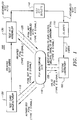
- Fig. 1 shows a flow diagram illustrating the operation of a testing system for processing and securely tracking medical test cards in accordance with a preferred embodiment of the present invention.
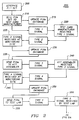
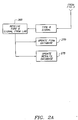
- Figs. 2 and 2A show a further flow diagram illustrating the operation of a system for securely tracking medical test cards in accordance with a preferred embodiment of the present invention.
- Fig. 3 shows an exemplary test card for use in conjunction with the preferred embodiment of the present invention.
- a flow diagram illustrating the operation of a testing system 100 for processing and securely tracking medical test cards used in connection with an in-home HIV testing kit according to a preferred embodiment of the present invention.
- an individual desiring to use the in-home HIV test kit purchases the kit from a pharmacy or retail outlet.
- Each test kit includes a single testing card having a unique personal identification number (PIN) printed thereon in both human readable and machine readable (i.e. , bar code) format.
- PIN personal identification number
- Status and test result information for all test cards being processed by the testing system 100 is maintained at a central PIN monitoring site 110.
- the PIN uniquely identifies each test card in the testing system 100 to central monitoring site 110.
- no information relating to the personal identity of an individual using a test card e.g. , name, address, telephone number, social security number
- test cards for use with the in-home test kits are produced by a test card manufacturer 120 based on a set of PINs provided by PIN monitoring site 110.
- the test cards manufactured by card manufacturer 120 are then provided to a test kit assembler 130 who combines the manufactured test cards with other materials thereby assembling complete in-home test kits.
- the assembled test kits are provided to pharmacies and other retail outlets 140 where the kits are purchased by individual clients 150.
- the individual clients 150 then take the kits home, deposit their blood samples on the test cards, and mail the test cards to a testing laboratory 160. Prior to mailing the test card to the laboratory, each client 160 maintains a copy of the PIN that was affixed to his or her test card.
- the clients 150 call the central monitoring site 110 to obtain their test results. During these calls, a client caller identifies himself or herself to the central monitoring system 110 only by the PIN number that was affixed to his or her test card.
- central monitoring site 110 transmits digital signals to and receives digital signals from manufacturer 120, test kit assembler 130, and testing laboratory 160. By processing these signals, PIN monitoring site 110 is able to maintain current information associated with each active PIN in testing system 100 in a plurality of separate databases.
- a PIN database at PIN monitoring site 110 stores information representing whether a test card containing the PIN was ever manufactured by manufacturer 120, whether a test kit having a test card with the PIN was ever shipped by assembler 130, whether a test card containing the PIN was received by the test lab 160, the status ( e.g. , pending or delayed) of any test being performed by test lab 160 on the test card containing the PIN, and a results database at PIN monitoring site 110 stores any test result information (e.g. , HIV positive, HIV negative or inconclusive) associated with the test card containing the PIN.
- test result information e.g. , HIV positive, HIV negative or inconclusive
- transmission and reception of information amongst PIN monitoring site 110, test card manufacturer 120, test kit assembler 130 and testing laboratory 160 is accomplished via dial-up modem lines 115 and 125, and dedicated modem line 155.
- Modem lines 115, 125 and 155 are preferably coupled to a general purpose computer system at PIN monitoring site 110.
- modem lines 115, 125 and 155 are preferably coupled to separate stand-alone personal computing systems respectively located at manufacturer 120, test kit assembler 130 and testing lab 160.
- the central PIN monitoring site 110 generates a first set of unique PINs for use in testing system 100.
- each PIN in the set is a unique 14-digit number.
- a common 5-digit job number is then appended to each PIN in the set.
- a Type 1 digital signal representative of the first set of PINs with the common 5-digit job number appended thereto is transmitted via dial-up modem line 115 from PIN monitoring site 110 to test card manufacturer 120.
- the Type 1 signal is transmitted from PIN monitoring site 110 to test card manufacturer 120 by diskette.
- central PIN monitoring site 110 initially updates its PIN database by storing the first set of unique PINs having the 5-digit job number on the PIN database and designating each such PIN as AUTHORIZED. PINs bearing the AUTHORIZED designation represent test cards that have been authorized for manufacture.
- step 220 the test card manufacturer 120 receives a Type 1 digital signal transmitted by PIN monitoring system 110, and then attempts to produce test cards corresponding to all the PINs transmitted.
- each test card produced by test card manufacturer 120 will bear its associated 14-digit PIN in both human readable and bar code format.
- manufacturer 120 will typically not produce for shipment a test card corresponding to every single PIN generated in step 205.
- the test card manufacturer 120 will transmit a Type 2 digital signal via dial-up modem line 115 back to PIN monitoring site 110.
- This Type 2 digital signal will represent the PINs corresponding to those test cards that were not actually manufactured for shipment either as a result of manufacturing shrinkage or because such cards were pulled for quality control purposes.
- the Type 2 signal may be transmitted from test card manufacturer 120 to PIN monitoring site 110 by diskette.
- the PIN monitoring site 110 Upon receipt of a Type 2 digital signal in step 225, the PIN monitoring site 110 will update its PIN database (in step 230) by designating as INVALID each PIN for which no test card was produced for shipment.
- the PIN monitoring site 110 will designate as MANUFACTURED each PIN for which a test card was produced for shipment by manufacturer 120.
- the PIN monitoring site 110 transmits a Type 3 digital signal to the test kit assembler 130.
- the Type 3 signal is representative of the PINs corresponding to the test cards actually produced for shipment by test card manufacturer 120.
- PIN monitoring site 110 designates as ASSEMBLER (which stands for "at assembler") each PIN represented by the Type 3 signal.
- the third digital signal is transmitted via dial-up modem line 125 from PIN monitoring site 110 to test kit assembler 130.
- the Type 3 files may be transmitted from PIN monitoring site 110 to test card assembler 130 via diskette.
- test kit assembler 130 The PINs transmitted to the test kit assembler in step 235 will continue to bear the same 5-digit job number originally assigned to such PINs in step 205.
- Type 3 digital signal is transmitted to the test kit assembler 130, the test cards manufactured by test card manufacturer 120 are shipped from test card manufacturer 120 to test kit assembler 130.
- Each pallet of test cards shipped from the test card manufacturer 120 to the test kit assembler 130 preferably has affixed thereto the common 5-digit job number originally assigned to the first set of PINs during step 205.
- the test kit assembler 130 Upon receipt of the test cards and the Type 3 digital signal in step 240, the test kit assembler 130 begins assembling test kit packages. Each test kit package will contain one of the test cards provided by the test card manufacturer 120, as well as other materials including pamphlets on the HIV virus and AIDs, and a mailer for shipping the test card to the testing lab 160. The test kit assembler 130 assigns a common lot number to all the kits assembled. As a result of manufacturing shrinkage and test kits that are pulled by assembler 130 for quality control testing purposes, assembler 130 will typically not produce for shipment a test kit corresponding to every single PIN provided to assembler 130 in the Type 3 digital signal.
- test kit assembler 130 will transmit a Type 4 digital signal via dial-up modem line 125 back to PIN monitoring site 110.
- a Type 4 digital signal will represent the PINs corresponding to those test kits that were not actually assembled for shipment.
- the Type 4 signals may be transmitted from test kit assembler 130 to PIN monitoring site 110 by diskette.
- the PIN monitoring site 110 Upon receipt of a Type 4 digital signal in step 245, the PIN monitoring site 110 will update its PIN database (in step 250) by designating as INVALID each PIN for which no test kit was assembled for shipment.
- PIN monitoring site 110 will also update its PIN database by designating as RELEASED each PIN for which a test kit was assembled for shipment.
- test kit manufacturer 130 Following transmission of a Type 4 digital signal from the test kit manufacturer 130 to the PIN monitoring site 110, test kit manufacturer 130 ships its assembled test kits to retail outlets 140 where the test kits are purchased by clients 150.
- step 255 the PIN monitoring site 110 transmits (via dedicated modem line 155) a Type 5 digital signal to the test lab 150 representative of the PINs corresponding to the test kits actually assembled for shipment and released to retail outlets 140 by test kit assembler 130, thereby alerting test lab 160 of the PINs corresponding to the test cards that test lab 160 should expect to receive from clients 150.
- the PINs transmitted to the test lab in step 255 will continue to bear the same 5-digit job number originally assigned to such PINs in step 205.
- step 260 testing lab 160 receives a Type 5 digital signal and stores in a testing laboratory PIN database (located at laboratory 160) the PINs corresponding to the test kits actually assembled for shipment and released to retail outlets 140 by test kit assembler 130.
- Each PIN stored in the testing laboratory PIN database in step 260 is initially designated as VALID.
- test lab 160 compares the PIN of each received test card to the list of PINs stored in step 260. If the PIN of a received card corresponds to a VALID PIN stored in the testing laboratory PIN database, the PIN is designated as RECEIVED by the testing lab 160 and formal testing is then begun to determine whether the blood on the test card represents an HIV positive or HIV negative result. Approximately one to three days later, after the test lab has tested the test card, result information (HIV positive, HIV negative, test inconclusive) corresponding to the PIN is also stored by test lab 160.
- result information HV positive, HIV negative, test inconclusive
- test card if the PIN on a test card received at the lab corresponds to a PIN that is either designated as INVALID in the testing laboratory database or which is not listed ( i.e. , UNKNOWN) to the testing laboratory database, the test card is not processed for testing.
- the test card if the PIN on a test card received by the testing laboratory 160 corresponds to a PIN that was previously designated as received, the test card is flagged as a duplicate and the PIN associated with the test card is designated as INVALID in the testing laboratory PIN database.
- test lab 160 In the event that counterfeit test cards are produced by an unauthorized third party, it is unlikely that consumers attempting to use such unauthorized test cards could obtain any test result information, because the unauthorized test cards would not be likely to contain valid or non-duplicative PINs and, as such, would not be accepted for processing by test lab 160.
- test lab 160 and PIN monitoring site 110 are coupled by dedicated modem line 155 and, on a regular basis, test lab 160 transmits a Type 6 digital signal to PIN monitoring site 110.
- Each Type 6 signal sent will transmit to PIN monitoring site 110 PINs designated as RECEIVED by test lab 160, a list of all INVALID, UNKNOWN or duplicative PINs which test lab 160 received but did not process, and any available test result information corresponding to PINs on the test cards being processed by test lab 160.
- PIN monitoring site 110 preferably receives the transmission of Type 6 signals from test lab 160 (step 265) on an hourly basis.
- PIN monitoring site 110 Upon receipt of this transmission, PIN monitoring site 110 updates its PIN database (in step 270) by designating each VALID PIN received by the test lab as RECEIVED and by designating each duplicative PIN received by testing laboratory 160 as INVALID. In addition, in step 275, the test results database at PIN monitoring site 110 is updated with any test result information provided in the Type 6 signal for PINS corresponding to test cards previously received by the test lab.
- a Type VII signal (not shown in Figs. 2 and 2A) is periodically transmitted from PIN monitoring site 110 to testing laboratory 160.
- the Type VII signal is representative of PINS that were previously provided to testing laboratory 160 by monitoring site 110 (in step 260), but which have since become INVALID. PINs initially designated as RELEASED by monitoring site 110 will be rendered INVALID if monitoring site 110 determines that the test kit associated with the PIN is either defective or has reached its expiration date.
- monitoring site 110 uses Type VII signals to periodically alert testing laboratory 160 of PINs that have become invalid subsequent to the time they were released to outlets 140.
- testing laboratory 160 Upon receipt of a Type VII signal, testing laboratory 160 updates its testing laboratory database by designating as INVALID each PIN represented by the type VII signal.
- monitoring site 100 is able to accurately track both location information and status information for each test card in the system on a current basis.
- Test card 300 is intended to be used as a simple means for a client 150 to apply his or her blood sample to the card (in zones 330a, 330b, 330c), detach the identification portion (300b) of the card, and return the test portion (300a) of the card to testing laboratory 160 for evaluation.
- Card 300 is preferably rectangular in shape and contains a perforation which facilitates the separation of test portion 300a from identification portion 300b by a client 150.
- Each test card 300 has a unique PIN 310a, 310b (generated in step 205) printed both on the test portion 300a and identification portion 300b of the card.
- a bar code representation 320 of PIN 310a, 310b is also printed on test portion 300b.
Landscapes
- Health & Medical Sciences (AREA)
- Engineering & Computer Science (AREA)
- Medical Informatics (AREA)
- Epidemiology (AREA)
- General Health & Medical Sciences (AREA)
- Primary Health Care (AREA)
- Public Health (AREA)
- Biomedical Technology (AREA)
- General Physics & Mathematics (AREA)
- Physics & Mathematics (AREA)
- Business, Economics & Management (AREA)
- General Business, Economics & Management (AREA)
- Medical Treatment And Welfare Office Work (AREA)
- Measuring And Recording Apparatus For Diagnosis (AREA)
- Management, Administration, Business Operations System, And Electronic Commerce (AREA)
Applications Claiming Priority (2)
| Application Number | Priority Date | Filing Date | Title |
|---|---|---|---|
| US08/366,785 US5612870A (en) | 1994-12-30 | 1994-12-30 | System for tracking secure medical test cards |
| US366785 | 1999-08-04 |
Publications (2)
| Publication Number | Publication Date |
|---|---|
| EP0720127A2 true EP0720127A2 (de) | 1996-07-03 |
| EP0720127A3 EP0720127A3 (de) | 1998-05-27 |
Family
ID=23444487
Family Applications (1)
| Application Number | Title | Priority Date | Filing Date |
|---|---|---|---|
| EP95309522A Withdrawn EP0720127A3 (de) | 1994-12-30 | 1995-12-29 | System zum Folgen geschützter medizinischer Testkarten |
Country Status (16)
| Country | Link |
|---|---|
| US (1) | US5612870A (de) |
| EP (1) | EP0720127A3 (de) |
| JP (1) | JPH08263577A (de) |
| KR (1) | KR960020943A (de) |
| CN (1) | CN1145490A (de) |
| AR (1) | AR000614A1 (de) |
| AU (1) | AU691059B2 (de) |
| BR (1) | BR9506135A (de) |
| CA (1) | CA2166150A1 (de) |
| CZ (1) | CZ348195A3 (de) |
| HU (1) | HUT74698A (de) |
| IL (1) | IL116625A0 (de) |
| PL (1) | PL312094A1 (de) |
| SG (1) | SG41972A1 (de) |
| TW (1) | TW315564B (de) |
| ZA (1) | ZA9511050B (de) |
Cited By (5)
| Publication number | Priority date | Publication date | Assignee | Title |
|---|---|---|---|---|
| RU2171492C1 (ru) * | 2000-06-26 | 2001-07-27 | Хазанов Михаил Евгеньевич | Способ предоставления данных, относящихся к пациентам медицинского учреждения |
| WO2002039341A1 (en) * | 2000-11-07 | 2002-05-16 | Mitsui Knowledge Industry | Anonymizing method and system therefor, method for making personal information anonymous and transferring it, and system therefor |
| WO2005034008A3 (en) * | 2003-10-03 | 2005-08-11 | Charles A Calabrese | A method of anonymous medical testing and providing the patient with the test results |
| GB2431259A (en) * | 2005-10-11 | 2007-04-18 | Idx Invest Corp | Data object tracking system and method |
| CH704757A1 (de) * | 2011-03-29 | 2012-10-15 | Werner Doebelin | Probenträger und Probenträgerkarte zur automatischen Extraktion und direkten Analyse von Proben. |
Families Citing this family (29)
| Publication number | Priority date | Publication date | Assignee | Title |
|---|---|---|---|---|
| US7925531B1 (en) | 1995-11-13 | 2011-04-12 | TrialCard Incorporated | Method of delivering goods and services via media |
| US6859780B1 (en) * | 1995-11-13 | 2005-02-22 | Trialcard Systems, Inc. | Method and system for dispensing, tracking and managing pharmaceutical products |
| US7996260B1 (en) | 1995-11-13 | 2011-08-09 | Trialcard, Inc. | Promotional carrier for promoting pharmaceutical prescription products |
| US7349557B2 (en) * | 1998-06-19 | 2008-03-25 | Solidus Networks, Inc. | Electronic transaction verification system |
| US6654724B1 (en) * | 1999-02-12 | 2003-11-25 | Adheris, Inc. | System for processing pharmaceutical data while maintaining patient confidentially |
| US8577697B2 (en) * | 2000-02-28 | 2013-11-05 | Gregory A. Demopulos | Use of internet site as a registry for results of medical tests |
| WO2001096984A2 (en) * | 2000-06-14 | 2001-12-20 | Sleep Solutions, Inc. | Secure test and test result delivery system |
| US6944767B1 (en) | 2000-07-07 | 2005-09-13 | Genaissance Pharmaceuticals, Inc. | Methods and apparatus for ensuring the privacy and security of personal medical information |
| US20020029156A1 (en) * | 2000-09-06 | 2002-03-07 | Genomics Collaborative, Inc. | Method for anonymizing patient identity and clinical samples |
| AU2001297675A1 (en) * | 2000-11-20 | 2002-09-19 | Amerasia International Technology, Inc. | Electronic voting apparatus, system and method |
| US7422150B2 (en) * | 2000-11-20 | 2008-09-09 | Avante International Technology, Inc. | Electronic voting apparatus, system and method |
| US7461787B2 (en) | 2000-11-20 | 2008-12-09 | Avante International Technology, Inc. | Electronic voting apparatus, system and method |
| WO2002048820A2 (en) * | 2000-12-14 | 2002-06-20 | Haupt, Mark | Managing a medical procedure |
| US6474694B1 (en) | 2001-06-05 | 2002-11-05 | Moore North America, Inc. | Medical test form |
| US7635087B1 (en) | 2001-10-01 | 2009-12-22 | Avante International Technology, Inc. | Method for processing a machine readable ballot and ballot therefor |
| US7077313B2 (en) * | 2001-10-01 | 2006-07-18 | Avante International Technology, Inc. | Electronic voting method for optically scanned ballot |
| US7828215B2 (en) * | 2001-10-01 | 2010-11-09 | Avante International Technology, Inc. | Reader for an optically readable ballot |
| US7587793B2 (en) * | 2001-12-14 | 2009-09-15 | Bode Technology Group, Inc. | Evidence collection holder and storage method |
| US20030217037A1 (en) * | 2002-01-22 | 2003-11-20 | Uwe Bicker | Method and system for anonymous test administration and user-enabled personal health risk assessment |
| GB2413881A (en) * | 2003-01-24 | 2005-11-09 | Troy S Tyler | Anonymous testing system and kit |
| WO2005098736A2 (en) * | 2004-03-26 | 2005-10-20 | Convergence Ct | System and method for controlling access and use of patient medical data records |
| EP1846164B1 (de) * | 2005-01-25 | 2018-05-02 | The Bode Technology Group, Inc | Halter zur nachweisentnahme für probeautomatisierung |
| US8621234B2 (en) * | 2007-12-28 | 2013-12-31 | Koninklijke Philips N.V. | Information interchange system and apparatus |
| US8066184B2 (en) * | 2008-04-30 | 2011-11-29 | Avante International Technology, Inc. | Optically readable marking sheet and reading apparatus and method therefor |
| US8261985B2 (en) | 2009-04-07 | 2012-09-11 | Avante Corporation Limited | Manual recount process using digitally imaged ballots |
| US8485442B2 (en) | 2009-07-02 | 2013-07-16 | Biometric Payment Solutions | Electronic transaction verification system with biometric authentication |
| US8261986B2 (en) * | 2009-10-21 | 2012-09-11 | Kevin Kwong-Tai Chung | System and method for decoding an optically readable markable sheet and markable sheet therefor |
| US8825555B2 (en) * | 2010-06-30 | 2014-09-02 | International Business Machines Corporation | Privacy-sensitive sample analysis |
| CN111758133A (zh) * | 2018-03-27 | 2020-10-09 | 富士胶片株式会社 | 被检体检查计划管理装置、被检体检查计划管理系统、被检体检查计划管理方法及程序 |
Family Cites Families (8)
| Publication number | Priority date | Publication date | Assignee | Title |
|---|---|---|---|---|
| US4792968A (en) * | 1985-07-10 | 1988-12-20 | Fdr Interactive Technologies | Statistical analysis system for use with public communication facility |
| EP0230458A4 (en) * | 1985-07-19 | 1990-12-27 | Clinicom Incorporated | Patient identification and verification system and method |
| US4777964A (en) * | 1986-01-02 | 1988-10-18 | David Briggs | System for obtaining blood samples and submitting for testing of aids |
| US4632428A (en) * | 1986-12-29 | 1986-12-30 | Brown Steven P | Combination medical data, identification and health insurance card |
| US4815768A (en) * | 1987-04-08 | 1989-03-28 | Applebaum Michael I | Method and apparatus for disclosure of personal information |
| CA2008243C (en) * | 1989-01-25 | 2002-05-28 | Morris H. Shamos | Patient identification system |
| US5325294A (en) * | 1992-06-29 | 1994-06-28 | Keene Sharon A | Medical privacy system |
| US5509064A (en) * | 1994-12-30 | 1996-04-16 | Ortho Pharmaceutical Corporation | Call routing and handling system for conveying confidential medical test result information to anonymous callers |
-
1994
- 1994-12-30 US US08/366,785 patent/US5612870A/en not_active Expired - Lifetime
-
1995
- 1995-12-27 CA CA002166150A patent/CA2166150A1/en not_active Abandoned
- 1995-12-28 CZ CZ953481A patent/CZ348195A3/cs unknown
- 1995-12-28 JP JP7352206A patent/JPH08263577A/ja active Pending
- 1995-12-28 ZA ZA9511050A patent/ZA9511050B/xx unknown
- 1995-12-29 EP EP95309522A patent/EP0720127A3/de not_active Withdrawn
- 1995-12-29 HU HU9503935A patent/HUT74698A/hu unknown
- 1995-12-29 BR BR9506135A patent/BR9506135A/pt unknown
- 1995-12-29 IL IL11662595A patent/IL116625A0/xx unknown
- 1995-12-29 SG SG1995002407A patent/SG41972A1/en unknown
- 1995-12-29 AU AU40721/95A patent/AU691059B2/en not_active Ceased
- 1995-12-29 KR KR1019950067284A patent/KR960020943A/ko not_active Withdrawn
- 1995-12-29 PL PL95312094A patent/PL312094A1/xx unknown
-
1996
- 1996-01-02 CN CN96104079A patent/CN1145490A/zh active Pending
- 1996-01-02 AR AR33490396A patent/AR000614A1/es unknown
- 1996-05-02 TW TW085105245A patent/TW315564B/zh not_active IP Right Cessation
Cited By (6)
| Publication number | Priority date | Publication date | Assignee | Title |
|---|---|---|---|---|
| RU2171492C1 (ru) * | 2000-06-26 | 2001-07-27 | Хазанов Михаил Евгеньевич | Способ предоставления данных, относящихся к пациентам медицинского учреждения |
| WO2002039341A1 (en) * | 2000-11-07 | 2002-05-16 | Mitsui Knowledge Industry | Anonymizing method and system therefor, method for making personal information anonymous and transferring it, and system therefor |
| WO2005034008A3 (en) * | 2003-10-03 | 2005-08-11 | Charles A Calabrese | A method of anonymous medical testing and providing the patient with the test results |
| GB2431259A (en) * | 2005-10-11 | 2007-04-18 | Idx Invest Corp | Data object tracking system and method |
| US7809761B2 (en) | 2005-10-11 | 2010-10-05 | Idx Investment Corporation | Data object tracking system and method |
| CH704757A1 (de) * | 2011-03-29 | 2012-10-15 | Werner Doebelin | Probenträger und Probenträgerkarte zur automatischen Extraktion und direkten Analyse von Proben. |
Also Published As
| Publication number | Publication date |
|---|---|
| HUT74698A (en) | 1997-02-28 |
| CN1145490A (zh) | 1997-03-19 |
| CA2166150A1 (en) | 1996-07-01 |
| TW315564B (de) | 1997-09-11 |
| JPH08263577A (ja) | 1996-10-11 |
| AU691059B2 (en) | 1998-05-07 |
| EP0720127A3 (de) | 1998-05-27 |
| BR9506135A (pt) | 1997-12-23 |
| ZA9511050B (en) | 1997-06-30 |
| PL312094A1 (en) | 1996-07-08 |
| SG41972A1 (en) | 1997-08-15 |
| CZ348195A3 (en) | 1996-08-14 |
| US5612870A (en) | 1997-03-18 |
| AU4072195A (en) | 1996-07-11 |
| AR000614A1 (es) | 1997-07-10 |
| KR960020943A (ko) | 1996-07-18 |
| HU9503935D0 (en) | 1996-03-28 |
| IL116625A0 (en) | 1996-03-31 |
Similar Documents
| Publication | Publication Date | Title |
|---|---|---|
| US5612870A (en) | System for tracking secure medical test cards | |
| National Center on Elder Abuse | The national elder abuse incidence study | |
| Brugha et al. | The list of threatening experiences: the reliability and validity of a brief life events questionnaire | |
| Shuttlesworth et al. | Families versus institutions: Incongruent role expectations in the nursing home | |
| EP0720111A2 (de) | System für die Leitweglenkung und die Verarbeitung von Telefongesprächen zur Übermittlung vertraulicher Informationen medizinische Testergebnisse betreffend an einen anonymen Anrufer | |
| Hyler et al. | Reliability in the DSM-III field trials: interview v case summary | |
| EP0734000A2 (de) | Automatisiertes System zur Identifikation von Systembenutzern | |
| Horwitz et al. | Intensive intervention improves primary care follow‐up for uninsured emergency department patients | |
| Milich et al. | Teacher ratings of inattention/overactivity and aggression: Cross-validation with classroom observations | |
| Somlai et al. | An empirical investigation of the relationship between spirituality, coping, and emotional distress in people living with HIV infection and AIDS | |
| Bell et al. | Response of emergency rooms to victims of interpersonal violence | |
| Treno et al. | RESEARCH REPORT Sample selection bias in the emergency room: an examination of the role of alcohol in injury | |
| Bissell | Alcoholism in physicians: Tactics to improve the salvage rate | |
| Berk | Preliminary data on race and crack charging practices in Los Angeles | |
| Montag et al. | Millon MCMI scales factor analyzed and correlated with MMPI and CPS scales | |
| AU3004297A (en) | Method and apparatus for ascertaining medical conditions | |
| Carson et al. | Techniques of postmarketing surveillance: an overview | |
| Coope | A screening clinic for hypertension in general practice | |
| Zylke | Sudden infant death syndrome: resurgent research offers hope | |
| Gordon et al. | Race/ethnicity and validity of self-reported pneumococcal vaccination | |
| Chitwood et al. | Treatment program clients and emergency room patients: a comparison of two drug-using samples | |
| Vaeth et al. | Alcoholism and attention deficit disorder: MMPI correlates | |
| Huba et al. | Service use patterns of youth with, and at high risk for, HIV: A care typology | |
| Mahon et al. | Electronic communication facilitates investigation of a highly dispersed foodborne outbreak: Salmonella on the superhighway | |
| Ross et al. | Identifying asthmatic patients in the community: a new method |
Legal Events
| Date | Code | Title | Description |
|---|---|---|---|
| PUAI | Public reference made under article 153(3) epc to a published international application that has entered the european phase |
Free format text: ORIGINAL CODE: 0009012 |
|
| AK | Designated contracting states |
Kind code of ref document: A2 Designated state(s): AT BE CH DE DK ES FR GB GR IE IT LI LU NL PT SE |
|
| PUAL | Search report despatched |
Free format text: ORIGINAL CODE: 0009013 |
|
| AK | Designated contracting states |
Kind code of ref document: A3 Designated state(s): AT BE CH DE DK ES FR GB GR IE IT LI LU NL PT SE |
|
| STAA | Information on the status of an ep patent application or granted ep patent |
Free format text: STATUS: THE APPLICATION IS DEEMED TO BE WITHDRAWN |
|
| 18D | Application deemed to be withdrawn |
Effective date: 19981128 |