EP0718406B1 - Method of dissolution of sausage skins and other cellulosic substances by means of an enzyme solution - Google Patents
Method of dissolution of sausage skins and other cellulosic substances by means of an enzyme solution Download PDFInfo
- Publication number
- EP0718406B1 EP0718406B1 EP95850219A EP95850219A EP0718406B1 EP 0718406 B1 EP0718406 B1 EP 0718406B1 EP 95850219 A EP95850219 A EP 95850219A EP 95850219 A EP95850219 A EP 95850219A EP 0718406 B1 EP0718406 B1 EP 0718406B1
- Authority
- EP
- European Patent Office
- Prior art keywords
- skins
- dissolved
- substances
- added
- hydrolysis
- Prior art date
- Legal status (The legal status is an assumption and is not a legal conclusion. Google has not performed a legal analysis and makes no representation as to the accuracy of the status listed.)
- Expired - Lifetime
Links
Images




Classifications
-
- C—CHEMISTRY; METALLURGY
- C12—BIOCHEMISTRY; BEER; SPIRITS; WINE; VINEGAR; MICROBIOLOGY; ENZYMOLOGY; MUTATION OR GENETIC ENGINEERING
- C12P—FERMENTATION OR ENZYME-USING PROCESSES TO SYNTHESISE A DESIRED CHEMICAL COMPOUND OR COMPOSITION OR TO SEPARATE OPTICAL ISOMERS FROM A RACEMIC MIXTURE
- C12P19/00—Preparation of compounds containing saccharide radicals
- C12P19/14—Preparation of compounds containing saccharide radicals produced by the action of a carbohydrase (EC 3.2.x), e.g. by alpha-amylase, e.g. by cellulase, hemicellulase
-
- A—HUMAN NECESSITIES
- A22—BUTCHERING; MEAT TREATMENT; PROCESSING POULTRY OR FISH
- A22C—PROCESSING MEAT, POULTRY, OR FISH
- A22C13/00—Sausage casings
- A22C13/0013—Chemical composition of synthetic sausage casings
Definitions
- the invention is concerned with a method of destruction of sausage skins and other mainly cellulose-containing substances by dissolution in an enzyme solution.
- usage skin means a fibrous casing or a cellulose or cellophane® casing or some other cellulose-based casing.
- Casing of cellulose material for tube-formed food products are as is well known used for packing of processed meat products, such at for example sausages.
- the object of this invention is the destruction of the sausage skins by means of enzyme hydrolysis by an economic method.
- the method of the invention is characterized by the following steps:
- the invention provides an economic method for dissolution of skins by means of enzymes, and as the enzymes are recovered, they are reused in the following dissolution.
- the skins to be destroyed, and possibly other cellulose-containing substances are dissolved in a reactor that contains an enzyme solution.
- the enzymes then adhere to the sausage skin and a hydrolysis reaction for dissolving of these starts. This reaction is continued until a required part of the skins to be dissolved, preferably all of them, have been dissolved, whereafter a new amount of skins to be destroyed is added to the reactor, whereby the enzymes are adsorbed to the new skins.
- the disintegration products of the skins in other words, the sugars are in the solution that is recovered from the reactor.
- These disintegration products which often simply are measured as reducing sugars, mainly consist of oligo- and monosaccharides, the last mentioned ones mainly of glucose.
- the method can thus be used for example for preparing of glucose, which is obtained as a by-product when the skins are destroyed.
- the destruction of the skins can be followed as a function of time and enzyme and/or skin concentration and/or by defining the concentrations of glucose and reducing sugars and also the amount of insoluble dry matter.
- the enzymes used are cellulase preparations, preferably commercial and easily available ones, which split up cellulose to hydrocarbons of lower molecular weights than cellulose.
- the composition of the end product and the proportion of glucose in the dissolved hydrocarbons depend on the ratio of the different activities of the used cellulase preparations.
- ⁇ -glucosidase enzyme is preferably added to the reactor, as it produces glucose from cellobiose-disaccharide and oligosaccharides.
- the ⁇ -glucosidase also hinders an inhibition of cellulases because of cellobiose. As ⁇ -glucosidase does not adhere to the sausage skins it is preferably fastened on a solid carrier. The use of such an immobilised ⁇ -glucosidase makes it also possible to recirculate this enzyme.
- the skins can be dissolved in 2-5 hours.
- the time of hydrolysis is chosen by a suitable dose of enzymes, also according to what is preferable in the factory, taking into consideration the costs of the apparatuses, the amount of the skins and the addition of those and also the enzyme costs.
- the cellulases are preferably recirculated in a semi-continuous batch hydrolysis so that the enzymes are bound to new skins after the hydrolysis and the recovered sugar solution is preferably substituted with a buffer or water solution for the following hydrolysis.
- the hydrolysis works for several weeks with the same effect and with only a small substituting enzyme addition.
- an addition of ⁇ -glucosidase is needed to keep the hydrolysis level constant, as it does not adhere to the skins and is thus not reusable.
- the ⁇ -glucosidase is bound to a solid carrier, the same enzyme batch can be recirculated in several weeks in a semi-continuous hydrolysis without reducing the sugar yields.
- the following enzyme consumption can be evaluated from the semi-continuous hydrolysis tests when a new enzyme addition (30 FPU Econase® and 100 nkat ⁇ -glucosidase/g skin) is carried out every 150th day.
- Econase® 0,7 FPU/g skin Immobilised ⁇ -glucosidase 6,7 nkat/g skin nkat nanokatal, a unit of the enzyme activity.
- One nanokatal produces one nanomole of reaction product in a second, respectively disintegrate or change one nanomole of starting material in a second in conditions to be used in the analysis method.
- the reaction product can also be used as fodder.
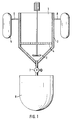
- Fig. 1 is a schematic view of the process of the invention.
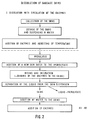
- Fig. 2 is a flow diagram of the steps of the method of the invention wherein the enzyme is circulated.
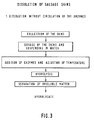
- Fig. 3 is a flow diagram of the steps of the method of the invention without any circulation of the enzymes or when the hydrolysis is carried out only once.
- Fig. 1 for example 5 m 3 /500 kg skin/d
- the hydrolysis time is for example 24 hours or more.
- the hydrolysis time can vary depending on the practical function of the factory.
- the reactors 1 are preferably containers with a mixer 2 and foreseen with mantles 3 (temperature regulation) with a sieve bottom 4 above the mixers.
- the reactors are supplied from a separate supply/skin collection container 5 along line 6.
- the insoluble dry matter, the skins to which the enzymes are bound and the immobilised ⁇ -glucosidase can be separated from the hydrolysate by centrifugation, filtration or other known separation methods of dry matter.
- the separated insoluble dry matter is returned to the reactor, which in this case is any mixed container with a mantle without any intermediate bottom.
- the insoluble matters are discharged with desired intervals from the reactor in a suitable stage of the process.
- Unused and used sausage skins were dissolved enzymatically with three commercial cellulase preparations, with Econase® manufactured by Alko and with Spezyme CE®-and Spezyme CP®-cellulases manufactured by Genencor.
- the hydrolysis of the skins were observed as a function of time and of the enzyme and the skin content by determining the concentrations of glucose and reducing sugars and the amounts of insoluble and soluble dry matter.
- ⁇ -glucosidase enzyme Novo was fastened on a solid carrier.
- the FPU the hydrolysing activity on the filter paper
- HEC the hydroxy ethylcellulose hydrolysing activity
- the endoglucanases cleave bindings in the cellulose chain by producing oligosaccharides of different sizes and the exoglucanases release cellubiose units from the ends of the chains.
- ⁇ -glucosidase produces glucose from the disaccharides and from the oligosaccharides.
- the batch hydrolysis of the sausage skins were made in a water bath (150 rpm) with shaking conical bottles. The whole content of the bottle was taken as a sample from which the sugar and the dry matter contents were determined.
- the composition of the reaction mixture was:
- the enzymes were added according to the FPU activity of the preparations (2-30 FPU/g skin) into the hydrolysis mixtures.
- the reaction temperature was 50°C, which is optimal for the function of the cellulases.
- the temperature can also be lower, for example 30-50°C.
- the used skins were hydrolyzed as well as the unused skins.
- the fat in the skins remained on the walls of the reaction vessel and on the surface of the liquid.
- the fat could be cleaved into fatty acids and glycerol by a lipase enzyme that cleave fats, ( Candida cylindracea lipase, Biocatalysts LTD, UK), but the fatty acids remained suspended in the reaction mixture as they are insoluble in water.
- the refining of the skins had no effect on the hydrolysis result.
- the whole skins (ca 6 x 30 cm, 15 g/p) were dissolved with Econase® as well as the smaller particles (0,5 x 0,5 cm; 1 x 1 cm; 3 x 3 cm).
- Fig. 5 there has been presented the concentration of insoluble dry matter in the hydrolysis, wherein the contents of the skins (used skins) were 50, 100 and 150 g/l and the cellulase enzyme concentrations (Econase®) 2, 5 and 10 FPU/g skin.
- Econase® cellulase enzyme concentrations
- stage of addition of the skins on the total hydrolysis (24 h)
- Stage of skin addition hydr. time Red.sug. (g/l) Glucose (g/l) Insoluble dry matter (g/l) Soluble dry matter (g/l) 2 7,4 4,3 15,6 47,6 4 9,3 4,8 7,7 51,0 6 16,1 8,2 5,5 52,1 24 22,4 15,7 1,4 55,3
- the binding of Novo ⁇ -glucosidase was studied with five different carriers.
- the immobilisation mixture contained 5 g carrier washed with water, 49 ml 50 mM acetate buffer, pH 5 and 1,35 ml enzyme (2000 nkat/g carrier).
- the reaction mixtures were agitated slightly in cold conditions (+4 °C) for 24 hours.
- the binding of the enzyme was followed from the solutions and the carriers.
- the ⁇ -glucosidase was best bound to a weak cation exchanger.
- the enzyme was fastened with glutar aldehyde by crosslinking to improve the stability of the carrier.
- Immobilised ⁇ -glucosidase 1000 nkat/g skin
- Immobilised ⁇ -glucosidase 1000 nkat/g skin
- three different amounts of glutar aldehyde-treated immobilised ⁇ -glucosidase 1000, 2000 and 3000 nkat/g skin
- Fig. 13 there has been presented the effect of the circulation of the immobilised ⁇ -glucosidase on the forming of the soluble dry matter in a semi-continuous hydrolysis of used sausage skins with Econase® cellulase.
- the enzyme dose was 30 FPU/g skins. Every 24 hour there had been added new skins to the reaction mixture (50 g/l), the sugar solution was recovered and substituted with a buffer solution containing cellulase (0,5 FPU/g).
- the immobilised ⁇ -glucosidase that was treated with glutar aldehyde 1000-3000 nkat/g skin was added only in the beginning of the reaction.
- the reaction conditions 50°C, pH 5, mixing 150 rpm.
- the enzyme costs can be reduced by using an immobilised ⁇ -glucosidase.
- the same enzyme batch can be circulated for several weeks or months in a continuous hydrolysis.
Landscapes
- Life Sciences & Earth Sciences (AREA)
- Engineering & Computer Science (AREA)
- Organic Chemistry (AREA)
- Wood Science & Technology (AREA)
- Zoology (AREA)
- Chemical & Material Sciences (AREA)
- Health & Medical Sciences (AREA)
- Bioinformatics & Cheminformatics (AREA)
- General Chemical & Material Sciences (AREA)
- Microbiology (AREA)
- Biotechnology (AREA)
- Food Science & Technology (AREA)
- Biochemistry (AREA)
- Chemical Kinetics & Catalysis (AREA)
- General Engineering & Computer Science (AREA)
- General Health & Medical Sciences (AREA)
- Genetics & Genomics (AREA)
- Preparation Of Compounds By Using Micro-Organisms (AREA)
- Processing Of Meat And Fish (AREA)
- Meat, Egg Or Seafood Products (AREA)
- Processing Of Solid Wastes (AREA)
- Polysaccharides And Polysaccharide Derivatives (AREA)
Abstract
Description
- The invention is concerned with a method of destruction of sausage skins and other mainly cellulose-containing substances by dissolution in an enzyme solution.
- In this application, the term "sausage skin" means a fibrous casing or a cellulose or cellophane® casing or some other cellulose-based casing.
- The publication "Industrielle Enzyme" (
edition 1, 1979, H Ruttloff et al. "Industrielle Herstellung und Verwendung von Enzympräparaten", page 286-297) describes the use of cellulose cleavage enzymes. The construction and mode of action of the cellulase enzymes are described. Further is described the use of cellulase enzymes in for example food and brewery industry. - Ghose T. K. and I. A. Kostrick, Biotechnol Bioengng. 12 (1970), page 921-946 discloses a method of destruction of cellulase substances by means of dissolution with an enzyme solution. The separation of the product solution takes place via an osmose type process by using an ultrafiltration membrane. Compared to the method of the present invention this method has disadvantages, such as it is more expensive, has lower productivity rate and is more circumstantial.
- Casing of cellulose material for tube-formed food products are as is well known used for packing of processed meat products, such at for example sausages.
- In the sausage factories there is a need to destroy sausage skins because of the large amount of waste they cause. Until now they usually have got rid of the skins simply by bringing them to the dump. One usual method is also the composting of those in wet conditions which is difficult as different factors, such as the oxygen availability and the temperature, have to be adjusted. One earlier used method is also the burning of them.
- The methods of the prior art have disadvantages. For example, they either cause large amounts of waste products, have long reaction times or are not economical. Thus, there is a need for a method of destruction of cellulose-containing substances in an economical way. This problem is solved by the present invention, in which the cellulase enzymes causing the degradation of the cellulose-containing substances are recovered in an economical way.
- The object of this invention is the destruction of the sausage skins by means of enzyme hydrolysis by an economic method.
- Thus, the method of the invention is characterized by the following steps:
- a) cellulase enzymes are added to a reactor containing a water solution,
- b) before step a) or after that, the substances to be dissolved are added to the reactor,
- c) the substances to be dissolved are allowed to dissolve completely or partially, after which
- d) a new amount of substances to be dissolved are added to the reactor, and
- e) when the enzymes have been adsorbed to the new substances to be dissolved, the solution containing the substances, which were dissolved in step c), are recovered by separating the solution and the substances to be dissolved from each other, whereby
- f) water is added to the substances to be dissolved and if desired, steps c-f are repeated as many times as wished.
-
- Thus, the invention provides an economic method for dissolution of skins by means of enzymes, and as the enzymes are recovered, they are reused in the following dissolution. In the practice, there are, however, usually some spillage of the enzymes for what reason a given amount of enzymes preferably are added in any stage to the reactor. This amount is, however, little compared with the total amount needed in the hydrolysis.
- In the method of the invention, the skins to be destroyed, and possibly other cellulose-containing substances, are dissolved in a reactor that contains an enzyme solution. The enzymes then adhere to the sausage skin and a hydrolysis reaction for dissolving of these starts. This reaction is continued until a required part of the skins to be dissolved, preferably all of them, have been dissolved, whereafter a new amount of skins to be destroyed is added to the reactor, whereby the enzymes are adsorbed to the new skins. The disintegration products of the skins, in other words, the sugars are in the solution that is recovered from the reactor. These disintegration products, which often simply are measured as reducing sugars, mainly consist of oligo- and monosaccharides, the last mentioned ones mainly of glucose.
- In one embodiment of the method, the method can thus be used for example for preparing of glucose, which is obtained as a by-product when the skins are destroyed.
- In the method the destruction of the skins can be followed as a function of time and enzyme and/or skin concentration and/or by defining the concentrations of glucose and reducing sugars and also the amount of insoluble dry matter.
- The enzymes used are cellulase preparations, preferably commercial and easily available ones, which split up cellulose to hydrocarbons of lower molecular weights than cellulose. The composition of the end product and the proportion of glucose in the dissolved hydrocarbons depend on the ratio of the different activities of the used cellulase preparations.
- When the method simultaneously is used for preparing glucose, also β-glucosidase enzyme is preferably added to the reactor, as it produces glucose from cellobiose-disaccharide and oligosaccharides. The β-glucosidase also hinders an inhibition of cellulases because of cellobiose. As β-glucosidase does not adhere to the sausage skins it is preferably fastened on a solid carrier. The use of such an immobilised β-glucosidase makes it also possible to recirculate this enzyme.
- Depending on the concentration of the enzymes and of the skins, the skins can be dissolved in 2-5 hours. In the practice, the time of hydrolysis is chosen by a suitable dose of enzymes, also according to what is preferable in the factory, taking into consideration the costs of the apparatuses, the amount of the skins and the addition of those and also the enzyme costs.
- To reduce the enzyme costs, the cellulases are preferably recirculated in a semi-continuous batch hydrolysis so that the enzymes are bound to new skins after the hydrolysis and the recovered sugar solution is preferably substituted with a buffer or water solution for the following hydrolysis. The hydrolysis works for several weeks with the same effect and with only a small substituting enzyme addition. Also an addition of β-glucosidase is needed to keep the hydrolysis level constant, as it does not adhere to the skins and is thus not reusable. As the β-glucosidase, however, is bound to a solid carrier, the same enzyme batch can be recirculated in several weeks in a semi-continuous hydrolysis without reducing the sugar yields. Thus, the following enzyme consumption can be evaluated from the semi-continuous hydrolysis tests when a new enzyme addition (30 FPU Econase® and 100 nkat β-glucosidase/g skin) is carried out every 150th day.
Econase® 0,7 FPU/g skin Immobilised β- glucosidase 6,7 nkat/g skin - The need of a completely new enzyme addition depends on many practical factors in the factory. These are for example the inactivation and the enzyme spillage, the deposition of the skins, the hydrolysis time, the fact that the apparatus gets dirty and so on.
- The reaction product can also be used as fodder.
- In the following the invention is described by means of figures. The intention is not to limit the invention to the details of those.
- Fig. 1 is a schematic view of the process of the invention.
- Fig. 2 is a flow diagram of the steps of the method of the invention wherein the enzyme is circulated.
- Fig. 3 is a flow diagram of the steps of the method of the invention without any circulation of the enzymes or when the hydrolysis is carried out only once.
- In the practice there can be used two or
several batch reactors 1 in accordance with Fig. 1 (for example 5 m3/500 kg skin/d), wherein the hydrolysis time is for example 24 hours or more. The hydrolysis time can vary depending on the practical function of the factory. Thereactors 1 are preferably containers with amixer 2 and foreseen with mantles 3 (temperature regulation) with asieve bottom 4 above the mixers. The reactors are supplied from a separate supply/skin collection container 5 alongline 6. When the hydrolysis of a givenreactor 1 is ready, a new batch of skins are added to the hydrolysate, to which the cellulases are adsorbed. When the adsorbtion is complete, the mixing is stopped and the solution is let through thesieve bottom 4 alongline 7 to theproduction vessel 9. Water is added to the reactor alongline 8 and the mixing and the hydrolysis is continued. The immobilised β-glucosidase is kept in the reactor by thesieve 4. - In alternative, the insoluble dry matter, the skins to which the enzymes are bound and the immobilised β-glucosidase can be separated from the hydrolysate by centrifugation, filtration or other known separation methods of dry matter. The separated insoluble dry matter is returned to the reactor, which in this case is any mixed container with a mantle without any intermediate bottom.
- The insoluble matters are discharged with desired intervals from the reactor in a suitable stage of the process.
- In the following there are examples with information about the details of the method.
- Unused and used sausage skins were dissolved enzymatically with three commercial cellulase preparations, with Econase® manufactured by Alko and with Spezyme CE®-and Spezyme CP®-cellulases manufactured by Genencor. The hydrolysis of the skins were observed as a function of time and of the enzyme and the skin content by determining the concentrations of glucose and reducing sugars and the amounts of insoluble and soluble dry matter. To effect the hydrolysis, β-glucosidase enzyme (Novozym 188®, Novo) was fastened on a solid carrier.
- There were quite much fat (14,9 % of dry matter) and proteins in the used skins (10,5% of dry matter). The proportion of insoluble dry matter was smaller and the proportion of soluble dry matter higher than in the unused skins (Table 1).
The composition of the sausage skins Unused skins Used skins Dry matter 80 % 70 % Insoluble dry matter 72 % 53 % Soluble dry matter 8 % 17 % Fat 0,20 % of dry matter 14,9 % of dry matter Protein 0,22 % of dry matter 10,5 % of dry matter - In the dissolution tests of the skins, there were used commercial cellulase preparations, in which the activities of the enzymes differed somewhat from each other (Table 2).
-
- Econase CE® (Alko)
- Spezyme CE®(Genencor International)
- Spezyme CP® Genencor International)
-
- Novozym 188® (Novo)
- The FPU (the hydrolysing activity on the filter paper) and HEC (the hydroxy ethylcellulose hydrolysing activity) activities of the cellulase preparations are described as cellulose splitting exo- and endoactivities. The endoglucanases cleave bindings in the cellulose chain by producing oligosaccharides of different sizes and the exoglucanases release cellubiose units from the ends of the chains. β-glucosidase produces glucose from the disaccharides and from the oligosaccharides.
The activities of the cellulose preparations used Activity Econase® Spezyme CE® Spezyme CP® Novozym® FPU U/ml 31 49 67 0,06 HEC nkat/ml 13500 16400 23100 291 β-glucosidase nkat/ml 1028 450 1078 7350 β-glucosidase/FPU 33 9 16 Protein mg/ml 85 109 121 63 - The batch hydrolysis of the sausage skins were made in a water bath (150 rpm) with shaking conical bottles. The whole content of the bottle was taken as a sample from which the sugar and the dry matter contents were determined. The composition of the reaction mixture was:
- 1,3 g skin as dry matter (50-150 g/l)
- 19
ml 50 mM acetate buffer,pH - 1 ml enzyme dilution
-
- The enzymes were added according to the FPU activity of the preparations (2-30 FPU/g skin) into the hydrolysis mixtures.
- The reactions were made in a dilute buffer in
pH 5, as the cellulases work best in slightly acid conditions. It is, however, not necessary to use a buffer as the pH of the water solution of the skins is 5 without any adjusting and it is not changed during the hydrolysis. - The reaction temperature was 50°C, which is optimal for the function of the cellulases. The temperature can also be lower, for example 30-50°C.
- The used skins were hydrolyzed as well as the unused skins.
- The fat in the skins remained on the walls of the reaction vessel and on the surface of the liquid. The fat could be cleaved into fatty acids and glycerol by a lipase enzyme that cleave fats, (Candida cylindracea lipase, Biocatalysts LTD, UK), but the fatty acids remained suspended in the reaction mixture as they are insoluble in water.
- The refining of the skins had no effect on the hydrolysis result. The whole skins (ca 6 x 30 cm, 15 g/p) were dissolved with Econase® as well as the smaller particles (0,5 x 0,5 cm; 1 x 1 cm; 3 x 3 cm).
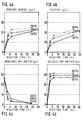
- The hydrolysis of the sausage skins by Econase® cellulase preparation and the effect of the enzyme administration as a function of time are presented in Fig. 4.
- These results show that the skins are dissolved very well with the method of the invention in ca 2-5 hours. The insoluble dry matter describes the portion that has not dissolved and with respect to interpretation of the figure reference is made to Table 1, wherein there is presented the initial composition of the skins.
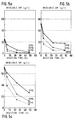
- In Fig. 5, there has been presented the concentration of insoluble dry matter in the hydrolysis, wherein the contents of the skins (used skins) were 50, 100 and 150 g/l and the cellulase enzyme concentrations (Econase®) 2, 5 and 10 FPU/g skin. When a smaller enzyme dose was used (2-5 FPU/g skin) or a bigger concentration of skins (100-150 g/l), a longer reaction time was needed for the maximum hydrolysis. Even if the sugar analysis showed that the hydrolysis was not complete, apparent skins could be seen only in the 5 hour samples and in the 24 hour sample, wherein the skin concentration was 150 g/l and the
enzyme concentration 2 FPU/g. - When the enzyme concentration was raised to 30 FPU/g skin, the hydrolysis time shortened to 5 hours (Fig. 6). No skins could be seen even after three hours. There were insoluble dry matter left in an amount of 0,3 g/l.
- As the enzyme dose was made according to the FPU activity by using Spezyme®-enzymes, the proportion of HEC activity and β-glucosidase remained smaller than with Econase® The skins were dissolved as well with Spezyme® enzymes as with the Econase® (Fig. 7 and 8).
- In a semi-continuous hydrolysis, wherein the enzymes in the sugar solution are recovered after each individual batch hydrolysis, the consumption of the enzymes can be reduced.
- In a semi-continuous hydrolysis of used skins (50 g/l skin,
Econase® 30 FPU/g) there were added new skins (50 g/l) in the same reaction mixture after 24 hours hydrolysis, to which the cellulases were allowed to bound in 20 minutes. The binding time was not optimated. The sugar solution was recovered from the skin mixture by centrifugation (2500 rpm, 10 min) and acetate buffer was added instead. It is also possible to recover the skins by filtration. New skins were hydrolyzed again in 24 hours. As the β-glucosidase does not adhere to the cellulose, this enzyme was added in connection with each buffer change in an amount that corresponded to the original β-glucosidase amount (1000 nkat/g skin). The same operation was repeated every 24 hour. The sugar yields were slowly reduced after the second batch hydrolysis because of a small cellulase waste (Fig. 9). Without the p-glucosidase addition the reduction was even faster (Fig. 10). The loss of cellulase was substituted with a little addition of cellulase. Without any substituting cellulase addition, the semi-continuous hydrolysis does not work with the same effect. - To find a suitable stage of adding skins and a suitable hydrolysis time (50 g/l skins,
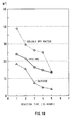
Econase® 10 FPU/g), the skin rests were separated from the skin mixtures after 2, 4, 6 or 24 hours hydrolysis and new skins were added to the solutions. After 24 hours hydrolysis, the solutions were analyzed. The hydrolysis had proceeded best in the reaction mixture wherein the new skins had not been added until 24 hours after the beginning of the hydrolysis (Table 3). - With respect to the hydrolysis it is most preferable that the new skins are not added until the old skins have been completely dissolved and the cellulases have been released to the solution.
The effect of stage of addition of the skins on the total hydrolysis (24 h) Stage of skin addition (h) = hydr. time Red.sug. (g/l) Glucose (g/l) Insoluble dry matter (g/l) Soluble dry matter (g/l) 2 7,4 4,3 15,6 47,6 4 9,3 4,8 7,7 51,0 6 16,1 8,2 5,5 52,1 24 22,4 15,7 1,4 55,3 - To find a suitable cellulase addition in a semi-continuous hydrolysis there was in addition to the β-glucosidase (1000 nkat/g skin) added
Econase® - The real enzyme consumption in a hydrolysis wherein the enzymes are circulated can be calculated from the results:
- The initial addition of cellulase of 30 FPU/g skin to one batch every 150th day.
- The addition of cellulase of 0,5 FPU/g skin to each batch and the addition of β-glucosidase of 1000 nkat/g skin to each batch.
- TOTAL: 0,7 FPU Econase® and 1000 nkat β-glucosidase/g skin.
-
- An addition of soluble p-glucosidase continuously to the hydrolysis mixture increases the enzyme costs considerably. As there is no commercial β-glucosidase that is bound to a solid carrier suitable for continuous use, this immobilised enzyme preparation was prepared.
- The binding of Novo β-glucosidase was studied with five different carriers. The immobilisation mixture contained 5 g carrier washed with water, 49
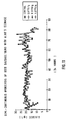
ml 50 mM acetate buffer,pH - Immobilised β-glucosidase (1000 nkat/g skin) was circulated in a semi-continuous hydrolysis of sausage skins in three weeks, whereby it worked as a soluble enzyme. Without any glutar aldehyde binding, the enzyme was released quite quickly from the carrier. Also three different amounts of glutar aldehyde-treated immobilised β-glucosidase (1000, 2000 and 3000 nkat/g skin) was circulated during a month in the hydrolysis without any reduction of the sugar yields.
- In Fig. 13 there has been presented the effect of the circulation of the immobilised β-glucosidase on the forming of the soluble dry matter in a semi-continuous hydrolysis of used sausage skins with Econase® cellulase. In the beginning there was 50 g/l skins and the enzyme dose was 30 FPU/g skins. Every 24 hour there had been added new skins to the reaction mixture (50 g/l), the sugar solution was recovered and substituted with a buffer solution containing cellulase (0,5 FPU/g). The immobilised β-glucosidase that was treated with glutar aldehyde (1000-3000 nkat/g skin) was added only in the beginning of the reaction. The reaction conditions: 50°C,
pH 5, mixing 150 rpm. - The enzyme costs can be reduced by using an immobilised β-glucosidase. The same enzyme batch can be circulated for several weeks or months in a continuous hydrolysis.
Claims (12)
- Method of destruction of sausage skins and other mainly cellulosic substances by means of dissolution with an enzyme solution, characterized in that the method comprises the following steps:a) cellulase enzymes are added to a reactor containing a water solution,b) before step a) or after that the substances to be dissolved are added to the reactor,c) the substances to be dissolved are dissolved partly or completely, after whichd) a new amount of substances to be dissolved are added to the reactor,e) when the enzymes have been adsorbed in the new substances to be dissolved, the solution containing the substances dissolved in step c) are recovered by separating the solution and the substances to be dissolved from each other, wherebyf) water is added to the substances to be dissolved and if desired, steps c-f are repeated a wished amount of times
- Method of claim 1, characterized in that the enzymes are cellulases.
- Method of claim 2, characterized in that the cellulase preparations are Econase® CE, Spezyme CE® and/or Spezyme CP®.
- Method of any of claims 1-3, characterized in that the hydrolysis time is adjusted by the concentration of the skins and the concentration of the enzyme.
- Method of any of claims 1-4, characterized in that the hydrolysis time is 2-5 hours when the concentration of the skins is ca 0-100 g/l and the concentration of the enzymes 1-50 FPU/g skins.
- Method of any of claims 1-5, characterized in that the amount of cellulase enzyme in the solution is 1-50 FPU/g skin.
- Method of any of claims 1-6, characterized in that also β-glucosidase is added to the process for effecting the hydrolysis when a bigger amount of glucose is desired.
- Method of claim 7, characterized in that the β-glucosidase is immobilised for recirculating of the same.
- Method of claim 8, characterized in that the amount of immobilised βglucosidase is ca 1000 nkat/g skins.
- Method of claims 1-9, characterized in that between the additions of the skins or in connection with those, the needed amount of cellulase enzymes and β-glucosidase is added.
- Method of any of claims 1-10, characterized in that the skin concentration is 10-200 g/1.
- Method of any of claims 1-11, characterized in that the method is carried out as a semi-continuous batch process by using one, two or several reactors.
Applications Claiming Priority (2)
| Application Number | Priority Date | Filing Date | Title |
|---|---|---|---|
| FI946053A FI96323C (en) | 1994-12-23 | 1994-12-23 | Process for dissolving sausage skins and other cellulosic substances by means of an enzyme solution |
| FI946053 | 1994-12-23 |
Publications (2)
| Publication Number | Publication Date |
|---|---|
| EP0718406A1 EP0718406A1 (en) | 1996-06-26 |
| EP0718406B1 true EP0718406B1 (en) | 2001-03-14 |
Family
ID=8542046
Family Applications (1)
| Application Number | Title | Priority Date | Filing Date |
|---|---|---|---|
| EP95850219A Expired - Lifetime EP0718406B1 (en) | 1994-12-23 | 1995-12-07 | Method of dissolution of sausage skins and other cellulosic substances by means of an enzyme solution |
Country Status (9)
| Country | Link |
|---|---|
| US (1) | US5814515A (en) |
| EP (1) | EP0718406B1 (en) |
| JP (1) | JPH08214894A (en) |
| AT (1) | ATE199744T1 (en) |
| DE (1) | DE69520335T2 (en) |
| DK (1) | DK0718406T3 (en) |
| ES (1) | ES2155121T3 (en) |
| FI (1) | FI96323C (en) |
| NO (1) | NO955052L (en) |
Families Citing this family (6)
| Publication number | Priority date | Publication date | Assignee | Title |
|---|---|---|---|---|
| FI96323C (en) * | 1994-12-23 | 1996-06-10 | Eriksson Capital Ab | Process for dissolving sausage skins and other cellulosic substances by means of an enzyme solution |
| DE19628232A1 (en) * | 1996-07-15 | 1998-01-22 | Kalle Nalo Gmbh | Cellulose hydrate molded body with an enzymatically modified surface |
| US6042853A (en) * | 1998-08-28 | 2000-03-28 | Viskase Corporation | Method for removing cellulosic casings from sausages |
| US6132779A (en) * | 1998-08-28 | 2000-10-17 | Viskase Corporation | Method for removing cellulosic casings from sausages |
| DE10352657A1 (en) * | 2003-11-11 | 2005-06-02 | Huckfeldt & Thorlichen Gmbh & Co. Kg | Packaging casing, in particular sausage casing containing knitted fabric and method for opening the same |
| CN102861757B (en) * | 2012-09-13 | 2015-04-01 | 南京林业大学 | Method for destroying casing waste in sausage manufacturing industry |
Family Cites Families (7)
| Publication number | Priority date | Publication date | Assignee | Title |
|---|---|---|---|---|
| DD154713A1 (en) * | 1980-11-17 | 1982-04-14 | Ludwig Muehlberg | METHOD FOR HYDROLYZING CELLULOSE-CONTAINING ABPRODUCTS |
| AT371499B (en) * | 1981-03-25 | 1983-06-27 | Steyrermuehl Papier | METHOD FOR OBTAINING MONOSACCHARIDES AND PLANT FOR IMPLEMENTING THE METHOD |
| GB2107320A (en) * | 1981-09-29 | 1983-04-27 | Philip Morris Inc | Method for recycling cellulosic waste materials from tobacco product manufacture |
| DE3227920A1 (en) * | 1982-07-27 | 1984-02-02 | Hoechst Ag, 6230 Frankfurt | CELLULASER-RESISTANT FOOD COVER |
| US5236726A (en) * | 1991-12-05 | 1993-08-17 | Weyerhaeuser Company | Method of processing cellulose sausage skins |
| US5348871A (en) * | 1992-05-15 | 1994-09-20 | Martin Marietta Energy Systems, Inc. | Process for converting cellulosic materials into fuels and chemicals |
| FI96323C (en) | 1994-12-23 | 1996-06-10 | Eriksson Capital Ab | Process for dissolving sausage skins and other cellulosic substances by means of an enzyme solution |
-
1994
- 1994-12-23 FI FI946053A patent/FI96323C/en not_active IP Right Cessation
-
1995
- 1995-12-07 AT AT95850219T patent/ATE199744T1/en not_active IP Right Cessation
- 1995-12-07 DK DK95850219T patent/DK0718406T3/en active
- 1995-12-07 EP EP95850219A patent/EP0718406B1/en not_active Expired - Lifetime
- 1995-12-07 ES ES95850219T patent/ES2155121T3/en not_active Expired - Lifetime
- 1995-12-07 DE DE69520335T patent/DE69520335T2/en not_active Expired - Lifetime
- 1995-12-13 NO NO955052A patent/NO955052L/en not_active Application Discontinuation
- 1995-12-20 JP JP7331281A patent/JPH08214894A/en active Pending
- 1995-12-21 US US08/576,826 patent/US5814515A/en not_active Expired - Fee Related
Also Published As
| Publication number | Publication date |
|---|---|
| ATE199744T1 (en) | 2001-03-15 |
| NO955052L (en) | 1996-06-24 |
| NO955052D0 (en) | 1995-12-13 |
| JPH08214894A (en) | 1996-08-27 |
| EP0718406A1 (en) | 1996-06-26 |
| ES2155121T3 (en) | 2001-05-01 |
| FI96323C (en) | 1996-06-10 |
| FI96323B (en) | 1996-02-29 |
| DE69520335D1 (en) | 2001-04-19 |
| DE69520335T2 (en) | 2001-08-09 |
| FI946053A0 (en) | 1994-12-23 |
| DK0718406T3 (en) | 2001-04-17 |
| US5814515A (en) | 1998-09-29 |
Similar Documents
| Publication | Publication Date | Title |
|---|---|---|
| Jönsson et al. | Ultrafiltration applications | |
| US3764475A (en) | Enzymatic hydrolysis of cellulose to soluble sugars | |
| JP2010036058A (en) | Saccharification system, method of manufacturing saccharified liquid, fermentation system, and method of manufacturing fermented liquid | |
| WO1995004134A1 (en) | Method of reducing complex carbohydrates in fermentation products | |
| EP0718406A1 (en) | Method of dissolution of sausage skins and other cellulosic substances by means of an enzyme solution | |
| Ellenrieder et al. | Hydrolysis of supersaturated naringin solutions by free and immobilized naringinase | |
| AU2002355759B2 (en) | Recovery method for immobilized biocatalysts | |
| KR850002993A (en) | Amino acid production method and apparatus by fermentation | |
| Freixo et al. | Enzymatic hydrolysis of beechwood xylan in a membrane reactor | |
| SU921470A3 (en) | Method of producing immobilized sugar-producing enzime preparation | |
| AU2002355759A1 (en) | Recovery method for immobilized biocatalysts | |
| KR101655404B1 (en) | Method for producing functional egg having increased amino acid content, and functional egg having increased amino acid content produced by the same | |
| Calabro | Engineering aspects of membrane bioreactors | |
| RU2039819C1 (en) | Method for production of collagenase | |
| Meuser et al. | Comparison of starch extraction from tapioca chips, pellets and roots | |
| IE55342B1 (en) | Process for producing protein foodstuffs and various by-products from cereals | |
| Mishra et al. | Immobilization of Penicillium funiculosum cellulase on a soluble polymer | |
| US5250305A (en) | Process for enzymatic ultrafiltration of deamidated protein | |
| Ward | Enzyme Bioprocessing Applications | |
| WO2012072883A1 (en) | Hydrolysis process | |
| CN1071309A (en) | Method for continuous production of partially hydrolysed starch, products produced by this method and use thereof | |
| CN116807003A (en) | Manufacturing process of ferment | |
| CN116784472A (en) | Manufacturing process of ferment | |
| SU1500671A1 (en) | METHOD OF MANUFACTURE OF ALCOHOL AND FOOD PRODUCT | |
| CN117402927A (en) | Preparation method for efficiently preparing jerusalem artichoke peptide |
Legal Events
| Date | Code | Title | Description |
|---|---|---|---|
| PUAI | Public reference made under article 153(3) epc to a published international application that has entered the european phase |
Free format text: ORIGINAL CODE: 0009012 |
|
| AK | Designated contracting states |
Kind code of ref document: A1 Designated state(s): AT BE CH DE DK ES FR GB GR IE IT LI LU MC NL PT SE |
|
| 17P | Request for examination filed |
Effective date: 19960916 |
|
| 17Q | First examination report despatched |
Effective date: 19990701 |
|
| GRAG | Despatch of communication of intention to grant |
Free format text: ORIGINAL CODE: EPIDOS AGRA |
|
| 17Q | First examination report despatched |
Effective date: 19990701 |
|
| GRAG | Despatch of communication of intention to grant |
Free format text: ORIGINAL CODE: EPIDOS AGRA |
|
| GRAH | Despatch of communication of intention to grant a patent |
Free format text: ORIGINAL CODE: EPIDOS IGRA |
|
| GRAH | Despatch of communication of intention to grant a patent |
Free format text: ORIGINAL CODE: EPIDOS IGRA |
|
| GRAA | (expected) grant |
Free format text: ORIGINAL CODE: 0009210 |
|
| AK | Designated contracting states |
Kind code of ref document: B1 Designated state(s): AT BE CH DE DK ES FR GB GR IE IT LI LU MC NL PT SE |
|
| PG25 | Lapsed in a contracting state [announced via postgrant information from national office to epo] |
Ref country code: NL Free format text: LAPSE BECAUSE OF FAILURE TO SUBMIT A TRANSLATION OF THE DESCRIPTION OR TO PAY THE FEE WITHIN THE PRESCRIBED TIME-LIMIT Effective date: 20010314 Ref country code: LI Free format text: LAPSE BECAUSE OF FAILURE TO SUBMIT A TRANSLATION OF THE DESCRIPTION OR TO PAY THE FEE WITHIN THE PRESCRIBED TIME-LIMIT Effective date: 20010314 Ref country code: IT Free format text: LAPSE BECAUSE OF FAILURE TO SUBMIT A TRANSLATION OF THE DESCRIPTION OR TO PAY THE FEE WITHIN THE PRE;WARNING: LAPSES OF ITALIAN PATENTS WITH EFFECTIVE DATE BEFORE 2007 MAY HAVE OCCURRED AT ANY TIME BEFORE 2007. THE CORRECT EFFECTIVE DATE MAY BE DIFFERENT FROM THE ONE RECORDED.SCRIBED TIME-LIMIT Effective date: 20010314 Ref country code: GR Free format text: LAPSE BECAUSE OF NON-PAYMENT OF DUE FEES Effective date: 20010314 Ref country code: CH Free format text: LAPSE BECAUSE OF FAILURE TO SUBMIT A TRANSLATION OF THE DESCRIPTION OR TO PAY THE FEE WITHIN THE PRESCRIBED TIME-LIMIT Effective date: 20010314 Ref country code: BE Free format text: LAPSE BECAUSE OF FAILURE TO SUBMIT A TRANSLATION OF THE DESCRIPTION OR TO PAY THE FEE WITHIN THE PRESCRIBED TIME-LIMIT Effective date: 20010314 Ref country code: AT Free format text: LAPSE BECAUSE OF FAILURE TO SUBMIT A TRANSLATION OF THE DESCRIPTION OR TO PAY THE FEE WITHIN THE PRESCRIBED TIME-LIMIT Effective date: 20010314 |
|
| REF | Corresponds to: |
Ref document number: 199744 Country of ref document: AT Date of ref document: 20010315 Kind code of ref document: T |
|
| REG | Reference to a national code |
Ref country code: CH Ref legal event code: EP |
|
| REG | Reference to a national code |
Ref country code: DK Ref legal event code: T3 |
|
| REG | Reference to a national code |
Ref country code: IE Ref legal event code: FG4D |
|
| REF | Corresponds to: |
Ref document number: 69520335 Country of ref document: DE Date of ref document: 20010419 |
|
| REG | Reference to a national code |
Ref country code: ES Ref legal event code: FG2A Ref document number: 2155121 Country of ref document: ES Kind code of ref document: T3 |
|
| PG25 | Lapsed in a contracting state [announced via postgrant information from national office to epo] |
Ref country code: SE Free format text: LAPSE BECAUSE OF FAILURE TO SUBMIT A TRANSLATION OF THE DESCRIPTION OR TO PAY THE FEE WITHIN THE PRESCRIBED TIME-LIMIT Effective date: 20010614 |
|
| PG25 | Lapsed in a contracting state [announced via postgrant information from national office to epo] |
Ref country code: PT Free format text: LAPSE BECAUSE OF FAILURE TO SUBMIT A TRANSLATION OF THE DESCRIPTION OR TO PAY THE FEE WITHIN THE PRESCRIBED TIME-LIMIT Effective date: 20010615 |
|
| ET | Fr: translation filed | ||
| NLV1 | Nl: lapsed or annulled due to failure to fulfill the requirements of art. 29p and 29m of the patents act | ||
| REG | Reference to a national code |
Ref country code: CH Ref legal event code: PL |
|
| PG25 | Lapsed in a contracting state [announced via postgrant information from national office to epo] |
Ref country code: MC Free format text: LAPSE BECAUSE OF NON-PAYMENT OF DUE FEES Effective date: 20011207 Ref country code: LU Free format text: LAPSE BECAUSE OF NON-PAYMENT OF DUE FEES Effective date: 20011207 Ref country code: IE Free format text: LAPSE BECAUSE OF FAILURE TO SUBMIT A TRANSLATION OF THE DESCRIPTION OR TO PAY THE FEE WITHIN THE PRESCRIBED TIME-LIMIT Effective date: 20011207 Ref country code: GB Free format text: LAPSE BECAUSE OF NON-PAYMENT OF DUE FEES Effective date: 20011207 |
|
| REG | Reference to a national code |
Ref country code: GB Ref legal event code: IF02 |
|
| PLBE | No opposition filed within time limit |
Free format text: ORIGINAL CODE: 0009261 |
|
| STAA | Information on the status of an ep patent application or granted ep patent |
Free format text: STATUS: NO OPPOSITION FILED WITHIN TIME LIMIT |
|
| 26N | No opposition filed | ||
| GBPC | Gb: european patent ceased through non-payment of renewal fee |
Effective date: 20011207 |
|
| REG | Reference to a national code |
Ref country code: IE Ref legal event code: MM4A |
|
| REG | Reference to a national code |
Ref country code: ES Ref legal event code: PC2A |
|
| REG | Reference to a national code |
Ref country code: FR Ref legal event code: TP |
|
| PGFP | Annual fee paid to national office [announced via postgrant information from national office to epo] |
Ref country code: FR Payment date: 20110104 Year of fee payment: 16 Ref country code: DK Payment date: 20101210 Year of fee payment: 16 |
|
| PGFP | Annual fee paid to national office [announced via postgrant information from national office to epo] |
Ref country code: DE Payment date: 20101222 Year of fee payment: 16 |
|
| PGFP | Annual fee paid to national office [announced via postgrant information from national office to epo] |
Ref country code: ES Payment date: 20101217 Year of fee payment: 16 |
|
| REG | Reference to a national code |
Ref country code: DK Ref legal event code: EBP |
|
| REG | Reference to a national code |
Ref country code: FR Ref legal event code: ST Effective date: 20120831 |
|
| REG | Reference to a national code |
Ref country code: DE Ref legal event code: R119 Ref document number: 69520335 Country of ref document: DE Effective date: 20120703 |
|
| PG25 | Lapsed in a contracting state [announced via postgrant information from national office to epo] |
Ref country code: DE Free format text: LAPSE BECAUSE OF NON-PAYMENT OF DUE FEES Effective date: 20120703 |
|
| PG25 | Lapsed in a contracting state [announced via postgrant information from national office to epo] |
Ref country code: DK Free format text: LAPSE BECAUSE OF NON-PAYMENT OF DUE FEES Effective date: 20120102 |
|
| PG25 | Lapsed in a contracting state [announced via postgrant information from national office to epo] |
Ref country code: FR Free format text: LAPSE BECAUSE OF NON-PAYMENT OF DUE FEES Effective date: 20120102 |
|
| REG | Reference to a national code |
Ref country code: ES Ref legal event code: FD2A Effective date: 20130703 |
|
| PG25 | Lapsed in a contracting state [announced via postgrant information from national office to epo] |
Ref country code: ES Free format text: LAPSE BECAUSE OF NON-PAYMENT OF DUE FEES Effective date: 20111208 |