EP0714893B1 - 2-substituted benzothiazole derivatives useful in the treatment of diabetic complications - Google Patents

2-substituted benzothiazole derivatives useful in the treatment of diabetic complications Download PDF

Info

Publication number
EP0714893B1
EP0714893B1 EP95118523A EP95118523A EP0714893B1 EP 0714893 B1 EP0714893 B1 EP 0714893B1 EP 95118523 A EP95118523 A EP 95118523A EP 95118523 A EP95118523 A EP 95118523A EP 0714893 B1 EP0714893 B1 EP 0714893B1
Authority
EP
European Patent Office
Prior art keywords
acid
mmol
methyl
hydrogen
trifluorobenzothiazol
Prior art date
Legal status (The legal status is an assumption and is not a legal conclusion. Google has not performed a legal analysis and makes no representation as to the accuracy of the status listed.)
Expired - Lifetime
Application number
EP95118523A
Other languages
German (de)
French (fr)
Other versions
EP0714893A1 (en
Inventor
Tomoji c/o Grelan Res. C. Aotsuka
Naoki c/o Grelan Res. C. Abe
Naoki c/o Grelan Res. C. Ashizawa
Current Assignee (The listed assignees may be inaccurate. Google has not performed a legal analysis and makes no representation or warranty as to the accuracy of the list.)
Aska Pharmaceutical Co Ltd
Original Assignee
Grelan Pharmaceutical Co Ltd
Priority date (The priority date is an assumption and is not a legal conclusion. Google has not performed a legal analysis and makes no representation as to the accuracy of the date listed.)
Filing date
Publication date
Application filed by Grelan Pharmaceutical Co Ltd filed Critical Grelan Pharmaceutical Co Ltd
Publication of EP0714893A1 publication Critical patent/EP0714893A1/en
Application granted granted Critical
Publication of EP0714893B1 publication Critical patent/EP0714893B1/en
Anticipated expiration legal-status Critical
Expired - Lifetime legal-status Critical Current

Links

Classifications

    • C—CHEMISTRY; METALLURGY
    • C07—ORGANIC CHEMISTRY
    • C07D—HETEROCYCLIC COMPOUNDS
    • C07D277/00—Heterocyclic compounds containing 1,3-thiazole or hydrogenated 1,3-thiazole rings
    • C07D277/60—Heterocyclic compounds containing 1,3-thiazole or hydrogenated 1,3-thiazole rings condensed with carbocyclic rings or ring systems
    • C07D277/62—Benzothiazoles
    • C07D277/68—Benzothiazoles with hetero atoms or with carbon atoms having three bonds to hetero atoms with at the most one bond to halogen, e.g. ester or nitrile radicals, directly attached in position 2
    • C07D277/70—Sulfur atoms
    • C07D277/74—Sulfur atoms substituted by carbon atoms
    • C—CHEMISTRY; METALLURGY
    • C07—ORGANIC CHEMISTRY
    • C07D—HETEROCYCLIC COMPOUNDS
    • C07D277/00—Heterocyclic compounds containing 1,3-thiazole or hydrogenated 1,3-thiazole rings
    • C07D277/60—Heterocyclic compounds containing 1,3-thiazole or hydrogenated 1,3-thiazole rings condensed with carbocyclic rings or ring systems
    • C07D277/62—Benzothiazoles
    • C07D277/64—Benzothiazoles with only hydrocarbon or substituted hydrocarbon radicals attached in position 2

Definitions

  • the present invention relates to 2-substituted benzothiazole derivatives having potent pharmacological actions and intermediates for the preparation thereof. More particularly, the present invention relates to compounds having potent aldose reductase-inhibitory activity, which are useful as prophylactic and therapeutic agents for treating diseases such as diabetic complications. The present invention also relates to pharmaceutical compositions comprising an effective amount of said 2-substituted benzothiazole derivative and a pharmaceutically acceptable carrier useful in treating diabetes-related diseases.
  • diabetic hyperglycemia because of elevated glucose level in insulin-independent tissues such as peripheral nerves, retina, lens, cornea, blood vessels and glomeruli, glucose metabolism through the polyol pathway in these tissues is activated, and polyols such as sorbitol are accumulated.
  • the diabetic hyperglycemia causes diabetic complications due to the accumulation of polyols. Accordingly, techniques for preventing and treating diabetic complications by inhibiting aldose reductase, a glucose metabolizing enzyme, are studied.
  • the present invention provides 2-substituted benzothiazole derivatives having potent aldose reductase-inhibiting activity, which are of practical value in clinical use as prophylactic and therapeutic agents.
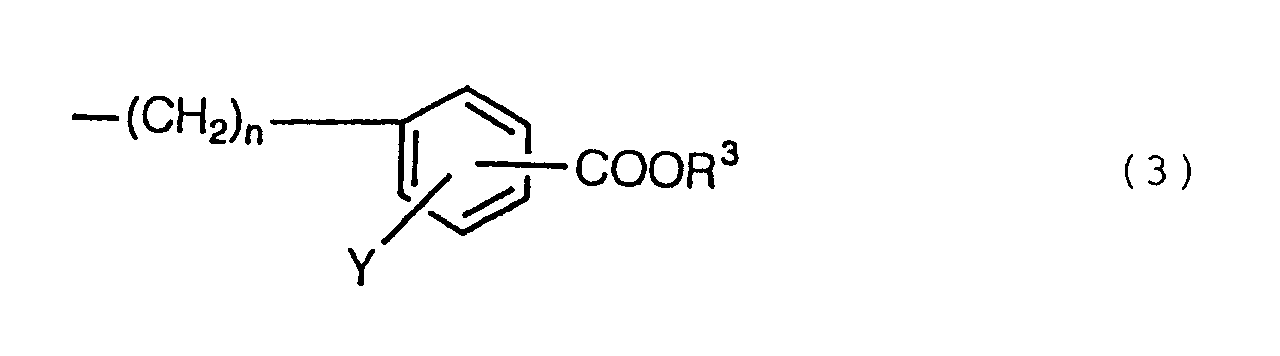
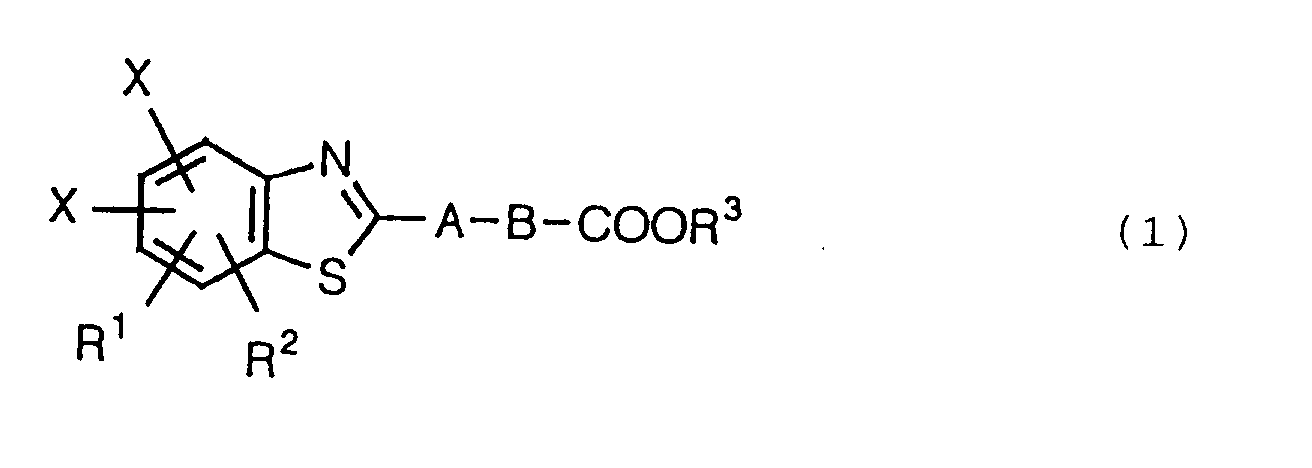
  • the present invention relates to 2-substituted benzothiazole derivatives having the formula (1): wherein X is halogen, R 1 and R 2 , which are the same or different, are each independently hydrogen or halogen, A is a methylene group, and -B-COOR 3 is a group represented by the following formula (2): wherein R 3 is hydrogen or C1 to C3 alkyl, Y is hydrogen, halogen, C1 to C3 alkyl, carboxyl or di-C 1 to C 3 alkylamino and n is an integer of 1 to 3; a group represented by the following formula (3): wherein R 3 is hydrogen or C1 to C3 alkyl, Y is hydrogen, halogen, C1 to C3 alkyl, carboxyl or di-C 1 to C 3 alkylamino and n is an integer of 1 to 3; or a group represented by the following formula (5): ⁇ (CH 2 ) m ⁇ COOR 3 wherein R 3 is hydrogen or C1 to C3
  • compositions comprising an effective amount of the 2-substituted benzothiazole derivative having the formula (1) or a pharmaceutically acceptable salt thereof in admixture with a pharmaceutically acceptable carrier useful in inhibiting aldose reductase.
  • the present invention provides the 2-substituted benzothiazole derivatives (1) and the pharmaceutically acceptable salts thereof, which possess strong aldose reductase-inhibiting activity and are of value in the prophylactic or therapeutic treatment of diabetic complications; a pharmaceutical composition comprising an effective amount of the 2-substituted benzothiazole derivative having the formula (1) or a pharmaceutically acceptable salt thereof in admixture with a pharmaceutically acceptable carrier useful as an inhibitor of aldose reductase; and processes for producing such compounds and compositions.
  • X is halogen including, for example, fluorine and chlorine. Among them, fluorine is preferable.
  • R 1 and R 2 which are the same or different, are each independently hydrogen or halogen.
  • Halogen for R 1 and R 2 includes, for example, fluorine and chlorine. Among them, fluorine is preferable.
  • R 3 is hydrogen or C1 to C3 alkyl.
  • C1 to C3 alkyl groups for R 3 include, for example, methyl, ethyl, n-propyl and isopropyl.
  • Y is hydrogen, halogen, C1 to C3 alkyl, carboxyl or di-C 1 to C 3 alkylamino.
  • Halogen for Y includes fluorine, chlorine, bromine and iodine.
  • C1 to C3 alkyl groups for Y include, for example, methyl, ethyl, n-propyl and isopropyl.
  • Di-C 1 to C 3 alkylamino groups for Y include, for example, dimethylamino, diethylamino, di(n-propyl)amino and diisopropylamino.
  • X is halogen
  • R 1 and R 2 which are the same or different, are each independently hydrogen or halogen
  • R 3 is hydrogen or C1 to C3 alkyl
  • Y is hydrogen, halogen, C1 to C3 alkyl, carboxyl or di-C 1 to C 3 alkylamino
  • n is an integer of 1 to 3 or the pharmaceutically acceptable salts thereof.
  • the compounds of the present invention include benzothiazole derivatives of the formula (1) wherein -B-COOR 3 is a group represented by the aforementioned formula (2).
  • Preferred benzothiazole derivatives include compounds of the formula (6): wherein X, R 1 , R 2 , R 3 , Y and n are of the same meaning as defined above.
  • Preferred examples of said compounds according to the present invention include:
  • the compounds of the present invention include benzothiazole derivatives of the formula (1) wherein -B-COOR 3 is a group represented by the aforementioned formula (3).
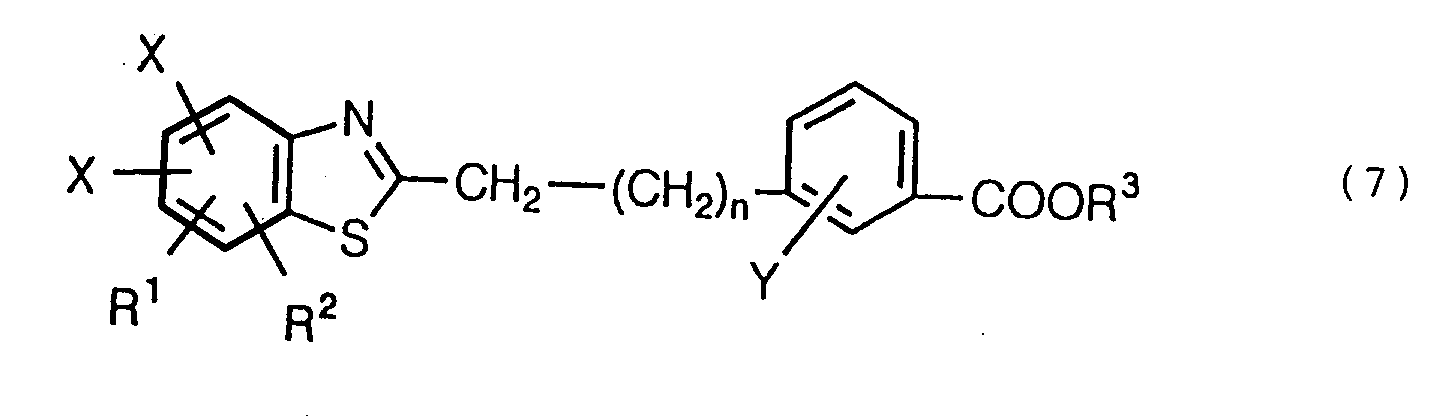
  • Preferred benzothiazole derivatives include compounds of the formula (7): wherein X, R 1 , R 2 , R 3 , Y and n are of the same meaning as defined above.
  • Preferred examples of said compounds according to the present invention include:
  • the compounds of the present invention include benzothiazole derivatives of the formula (1) wherein -B-COOR 3 is a group represented by the aforementioned formula (5).
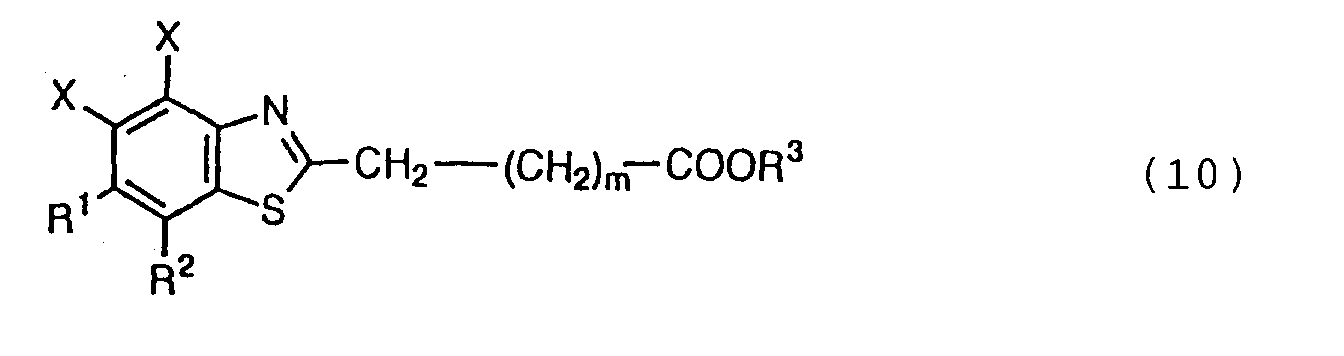
  • Preferred benzothiazole derivatives include compounds of the formula (10): wherein X, R 1 , R 2 , R 3 and m are of the same meaning as defined above, and compounds of the formula (11): wherein X, R 1 , R 2 , R 3 and m are of the same meaning as defined above.
  • Preferred examples of said compounds according to the present invention include:
  • Preferred examples of the concrete compounds according to the invention are:
  • the compound (1) may be in the form of salts (including addition salts) derived from pharmaceutically or physiologically acceptable acids or bases.
  • Such salts include medically or pharmaceutically acceptable non-toxic or low toxic basic salts or acid salts.
  • These salts include but are not limited to the following: basic salts with ammonium, an alkali metal or alkaline earth metal, such as lithium, sodium, potassium, calcium and magnesium or with an organic base (e.g., trialkylamines such as triethylamine, dibenzylamine, ethanolamine, triethanolamine, N-methylmorpholine and pyridine) and acid salts with an inorganic acid such as hydrochloric acid, hydrobromic acid, hydroiodic acid, sulphuric acid, nitric acid and phosphoric acid and, depending on compounds, salts with an organic acid such as acetic acid, propionic acid, oxalic acid, succinic acid, citric acid, ascorbic acid, lactic acid, p-toluene
  • the compounds (1) of the present invention can be made by one of various routes.
  • the nature of the substituents involved determines the preferred method of preparation.
  • Many compounds of Formula (1) can be prepared by one of the following schemes, as illustrated below for a preferred compound.
  • the compound of the present invention can be separated, isolated and purified by conventional techniques including extraction, fractionation, chromatography, salting-out, crystallisation, recrystallization.
  • Another aspect of the present invention is to provide a pharmaceutical composition
  • a pharmaceutical composition comprising an effective amount of the compound of Formula (1) or a pharmaceutically acceptable salt thereof.
  • the pharmaceutical composition is useful in the prophylactic and therapeutic treatment of various diseases or symptoms associated with diabetes, even related to aldose reductases.
  • the pharmaceutical composition is useful in the prophylactic and therapeutic treatment of diabetic complications including cataract, keratopathy, retinopathy peripheral and autonomic neuropathy, nephropathy.
  • Aldose reductase which is a member of an aldo-keto reductase, converts glucose into sorbitol and widely exists in various tissues of human body.
  • Aldose reductase and sorbitol dehydrogenase which can oxidize sorbitol to fructose, act in the polyol pathway wherein glucose is converted into fructose through sorbitol. It is believed that in diabetes glucose entry into cells increases due to chronic hyperglycemia, glucose metabolism through the polyol pathway is activated, and polyols such as sorbitol are accumulated resulting in the development of various complications.
  • the compounds of the present invention potently inhibit aldose reductase activity and the accumulation of polyols such as sorbitol, which are considered to be related to the pathogenesis of diabetic complications.
  • the compounds of the present invention are effective in the prophylactic and therapeutic treatment of various diabetic complications.
  • Diabetic complications discussed herein include cataract, keratopathy, retinopathy, peripheral and autonomic neuropathy, nephropathy.
  • the compounds of the present invention may be useful in the prophylactic and therapeutic treatment of theses complications because of their aldose reductase inhibiting activity and other activities.
  • the compounds of the present invention serving as aldose reductase inhibitors and prophylactic and therapeutic agents for preventing and treating diabetic complications can be used independently without any additives, but preferably in admixture of any of pharmaceutically acceptable additives.
  • the compounds of the present invention may be orally, parenterally, ophthalmically, rectally, or topically administered as pharmaceutical compositions or formulations. Preferably it can be applied by various routes including oral routes, injection, or application to mucosa of eye, oral cavity or rectum.
  • Preferred formulations for each administration route are as follows:
  • additives are any pharmaceutical ingredients as long as they are suitable for oral drugs and the intended purposes according to the present invention.
  • the pharmaceutical additive is selected from conventional pharmaceutical components such as carriers, vehicles, adjuvants, excipients, diluents, binders, disintegrants, preservatives, antioxidants, sweetening, flavoring, perfuming, lubricating, thickening, buffering and coating agents.
  • the oral formulations of the present invention include tablets, granules, fine granules, powders, syrups, capsules.
  • the additives include pharmaceutical ingredients suitable for aqueous or non-aqueous injections.
  • the additive is selected from conventional pharmaceutical components such as solubilizers, solution adjuvants, suspending agents, pH regulators and stabilizers.
  • it may be selected from conventional ingredients suitable for preparing powders for injection, which are used in solution or suspension when administered.
  • additives include pharmaceutical ingredients suitable for preparing aqueous or non-aqueous solutions, gels or ointments.
  • the additive is selected from conventional pharmaceutical components such as solubilizers, solution adjuvants, suspending agents, emulsifying agents, buffering agents, stabilizers, preservatives, vaseline, purified lanolin, liquid paraffin, and Platisbase (Squibb & Sandoz, US).
  • Desired oral drugs, injections or drugs for mucosal applications comprising the compound of the present invention in admixture with the aforementioned ingredient can be prepared according to the manufacturing methods described in The 12th Pharmacopoeia of Japan (JPX ) or appropriately modified ones.
  • compositions (drugs) of the present invention are administered to mammals including human.
  • These drugs of the present invention inhibit aldose reductase activity and the accumulation of sorbitol in tissues, as discussed above.
  • they are effective in the prophylactic and therapeutic treatment of various diabetic complications that are difficult to prevent and treat only with euglycemic agents such as insulin and synthetic hypoglycemic agents.
  • the compounds and salts thereof according to the present invention are of low toxicity and clinically useful in prophylactically and therapeutically treating diseases or symptoms related to diabetes, for example, various diabetic complications.
  • the doses of these compounds or salts thereof are usually 1 to 1,500mg/day, preferably 5 to 1,000 mg/day for oral administration; usually 1 to 500 mg/day, preferably 3 to 300 mg/day for injection; and usually 1 to 500 mg/day, preferably 3 to 300mg/day for application to mucosa.
  • Specific dose levels for any particular patient will be employed depending upon a variety factors including the activity of specific compounds employed, the age, body weight, general health, sex, diet, timing of administration, route of administration, rate of excretion, drug combination, and the severity of the particular disease or symptom undergoing therapy.
  • the optimum dose is preferably determined based on how long the patient has suffered from diabetes, and the patient's age, sex, body weight and other factors.
  • the drugs of the present invention can be administered to patients developing diabetic complications such as cataract, keratopathy, retinopathy, peripheral or autonomic neuropathy, or nephropathy. Moreover, these drugs can be administered to the cases of diabetes without complications with the aim of prophylactically preventing them from developing. These drugs can be used independently, but, of course, can be used in combination with insulin or other antidiabetic agents (chlorpropamide, acetohexamide, tolbutamide).
  • Aldose reductase samples were prepared from porcine lens according the method by S. Hayman et al., (Journal of Biological Chemistry, 240, p.877-882 (1965)).
  • lens of porcine eyes were frozen (-80 °C) until employed. These lenses were homogenized with distilled water and then centrifuged at 10,000 ⁇ g for 15 minutes. The supernatant was fractionated with 0 to 40% ammonium sulfate and centrifuged at 10,000 ⁇ g for 10 minutes. The resultant supernatant was dialyzed overnight against 0.05 M sodium chloride. The dialyzed solution was used as an aldose reductase sample.
  • Sprague-Dawley rats male, 6-week-old, 5-6 rats/group
  • fasted for 18 hours were made diabetic by a single intravenous (tail vein) injection of 60 mg/kg body weight of streptozotocin (Sigma).
  • streptozotocin 60 mg/kg body weight of streptozotocin (Sigma).
  • a sample compound suspended in 0.5% carboxymethyl cellulose was administered orally to the rats at a dose of 10 or 30 mg/kg.
  • the rats were fed with diet and water ad libitum during the experiment.
  • mice Male, 7-week-old, 5 mice/group), fasted for 18 hours, received orally the compound each of Examples 1-ii), 19-ii), 21, 22-ii) and 23-ii) suspended in 0.5% carboxymethyl cellulose at a dose of 1000 mg/kg.
  • Control groups received only 0.5% carboxymethyl cellulose orally. All were observed for the following 7 consecutive days. The mice were fed with diet and water ad libitum during the experiment. No animal died and body weight changes in treated animal groups were similar to that in control group.
  • Sprague-Dawley rats male, 6-week-old, 5 to 6 rats/group), fasted for 18 hours, were made diabetic by injecting streptozotocin (Sigma) at a dose of 60 mg/kg body weight into the tail vein thereof. From 7 days after the streptozotocin injection, a sample compound suspended in 0.5% carboxymethyl cellulose was administered orally to the rats at a dose between 1 and 10 mg/kg once daily for 5 consecutive days. The rats were fed with diet and water ad libitum during the experiment.
  • the sorbitol contents in the tissues was assayed enzymatically using SDH (sorbitol dehydrogenase) and NAD ( ⁇ -nicotinamide adenine dinucleotide) according to the method by H.U.Bergmeyer et al. (Methods of Enzymatic Analysis, 3, p.1323-1330 (1974)).
  • SDH sorbitol dehydrogenase
  • NAD ⁇ -nicotinamide adenine dinucleotide
  • the organic phase was extracted with aqueous sodium bicarbonate.
  • the alkaline phase was acidified with 10% hydrochloric acid and re-extracted with ethyl acetate.
  • the combined organic phases were dried and then evaporated to yield a residue, which was recrystallized from acetonitrile to give 5-(4,5,7-trifluorobenzothiazol-2-yl)pentanoic acid (81 mg, 26%).
  • ingredients (a), (b), (c) and (d) were formulated into capsules by known methods according to general pharmaceutical rules prescribed in JPXII.
  • the ingredients (a), (b), (c) and (d) were formulated into eyedrops by known methods according to general pharmaceutical rules prescribed in JPXII.
  • the compounds of the present invention exert potent aldose reductase inhibiting actions and useful in the prophylactic or therapeutic treatment of diabetic complications such as cataract, keratopathy, retinopathy, peripheral and autonomic neuropathy, nephropathy and the like.
  • the compound may be applied orally or parenterally for prophylactic or therapeutic purposes.

Landscapes

  • Chemical & Material Sciences (AREA)
  • Organic Chemistry (AREA)
  • Pharmaceuticals Containing Other Organic And Inorganic Compounds (AREA)

Description
FIELD OF THE INVENTION
The present invention relates to 2-substituted benzothiazole derivatives having potent pharmacological actions and intermediates for the preparation thereof. More particularly, the present invention relates to compounds having potent aldose reductase-inhibitory activity, which are useful as prophylactic and therapeutic agents for treating diseases such as diabetic complications. The present invention also relates to pharmaceutical compositions comprising an effective amount of said 2-substituted benzothiazole derivative and a pharmaceutically acceptable carrier useful in treating diabetes-related diseases.
BACKGROUND OF THE INVENTION
The incidence of diabetes has been increasing, and insulin and a variety of euglycemic agents have been used as medicaments for remedying diabetes. However, their efficacy against diabetic complications, which are becoming a serious problem with higher incidence of diabetes, is limited. Therefore, the development of new therapeutic agents for diabetic complications is desired in view of novel concepts.
In diabetic hyperglycemia, because of elevated glucose level in insulin-independent tissues such as peripheral nerves, retina, lens, cornea, blood vessels and glomeruli, glucose metabolism through the polyol pathway in these tissues is activated, and polyols such as sorbitol are accumulated. The diabetic hyperglycemia causes diabetic complications due to the accumulation of polyols. Accordingly, techniques for preventing and treating diabetic complications by inhibiting aldose reductase, a glucose metabolizing enzyme, are studied.
Among the compounds synthesized with the aim of inhibitor of aldose reductase, some benzothiazole derivatives are disclosed in prior art documents, for example: Japanese Unexamined Patent Publications No.3173/1989, No.211585/1989, No.5481/1991, No.234321/1992, No.92961/1993 (Chemical Abstracts (CA), Vol.117, 151006s, 1992; EP No.492,667), No.172353/1994 (CA, Vol.121, 280655j, 1994), No.199851/1994 (CA, Vol.121, 280632z, 1994; WO 94 15,934), No.279423/1994 (CA, Vol.122, 239686c, 1995; WO 94 22,845) and No.279453/1994 (CA, Vol.122, 214086u, 1995; WO 94 22,875). However, these compounds are not satisfactory medicaments, so the development of drugs with higher aldose reductase inhibiting activity, for the treatment of diabetic complications, is still desired.
SUMMARY OF THE INVENTION
The present invention provides 2-substituted benzothiazole derivatives having potent aldose reductase-inhibiting activity, which are of practical value in clinical use as prophylactic and therapeutic agents.
The present invention relates to 2-substituted benzothiazole derivatives having the formula (1):
Figure 00020001
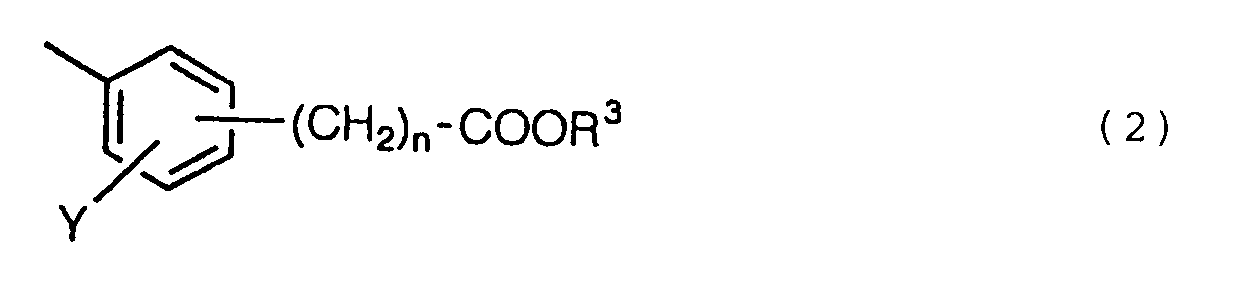
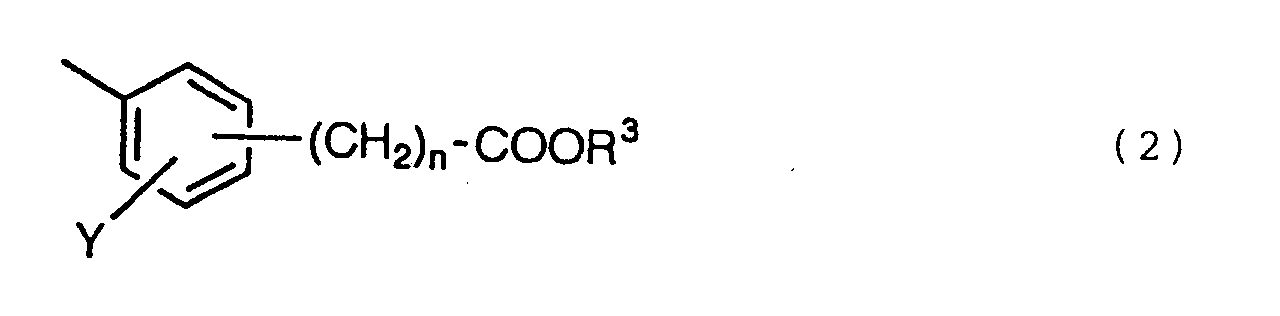
wherein X is halogen, R1 and R2, which are the same or different, are each independently hydrogen or halogen, A is a methylene group, and -B-COOR3 is a group represented by the following formula (2):
Figure 00020002
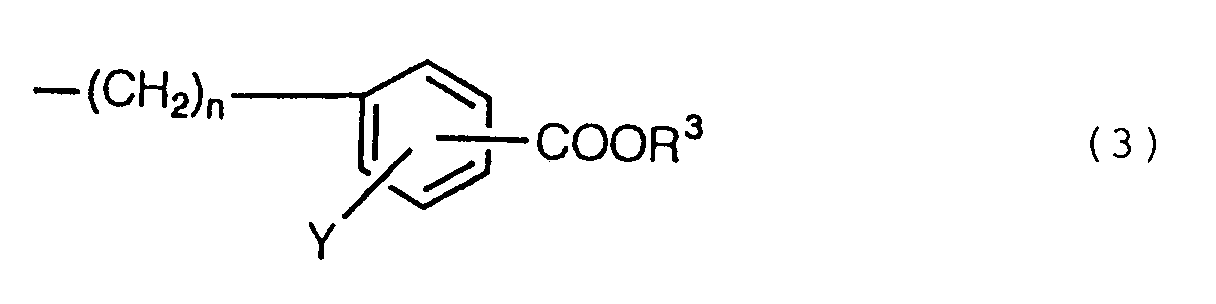
wherein R3 is hydrogen or C1 to C3 alkyl, Y is hydrogen, halogen, C1 to C3 alkyl, carboxyl or di-C1 to C3 alkylamino and n is an integer of 1 to 3; a group represented by the following formula (3):
Figure 00030001
wherein R3 is hydrogen or C1 to C3 alkyl, Y is hydrogen, halogen, C1 to C3 alkyl, carboxyl or di-C1 to C3 alkylamino and n is an integer of 1 to 3; or a group represented by the following formula (5): ―(CH2)m―COOR3 wherein R3 is hydrogen or C1 to C3 alkyl, and m is an integer of 2 to 5,
or a pharmaceutically acceptable salt thereof.
Another aspect of the present invention relates to pharmaceutical compositions comprising an effective amount of the 2-substituted benzothiazole derivative having the formula (1) or a pharmaceutically acceptable salt thereof in admixture with a pharmaceutically acceptable carrier useful in inhibiting aldose reductase.
DETAILED DESCRIPTION OF THE PREFERRED EMBODIMENT
The present invention provides the 2-substituted benzothiazole derivatives (1) and the pharmaceutically acceptable salts thereof, which possess strong aldose reductase-inhibiting activity and are of value in the prophylactic or therapeutic treatment of diabetic complications; a pharmaceutical composition comprising an effective amount of the 2-substituted benzothiazole derivative having the formula (1) or a pharmaceutically acceptable salt thereof in admixture with a pharmaceutically acceptable carrier useful as an inhibitor of aldose reductase; and processes for producing such compounds and compositions.
With regard to the foregoing formula (1), X is halogen including, for example, fluorine and chlorine. Among them, fluorine is preferable.
R1 and R2, which are the same or different, are each independently hydrogen or halogen. Halogen for R1 and R2 includes, for example, fluorine and chlorine. Among them, fluorine is preferable.
With regard to the foregoing formulas (2) and (3), R3 is hydrogen or C1 to C3 alkyl. C1 to C3 alkyl groups for R3 include, for example, methyl, ethyl, n-propyl and isopropyl. Y is hydrogen, halogen, C1 to C3 alkyl, carboxyl or di-C1 to C3 alkylamino. Halogen for Y includes fluorine, chlorine, bromine and iodine. C1 to C3 alkyl groups for Y include, for example, methyl, ethyl, n-propyl and isopropyl. Di-C1 to C3 alkylamino groups for Y include, for example, dimethylamino, diethylamino, di(n-propyl)amino and diisopropylamino.
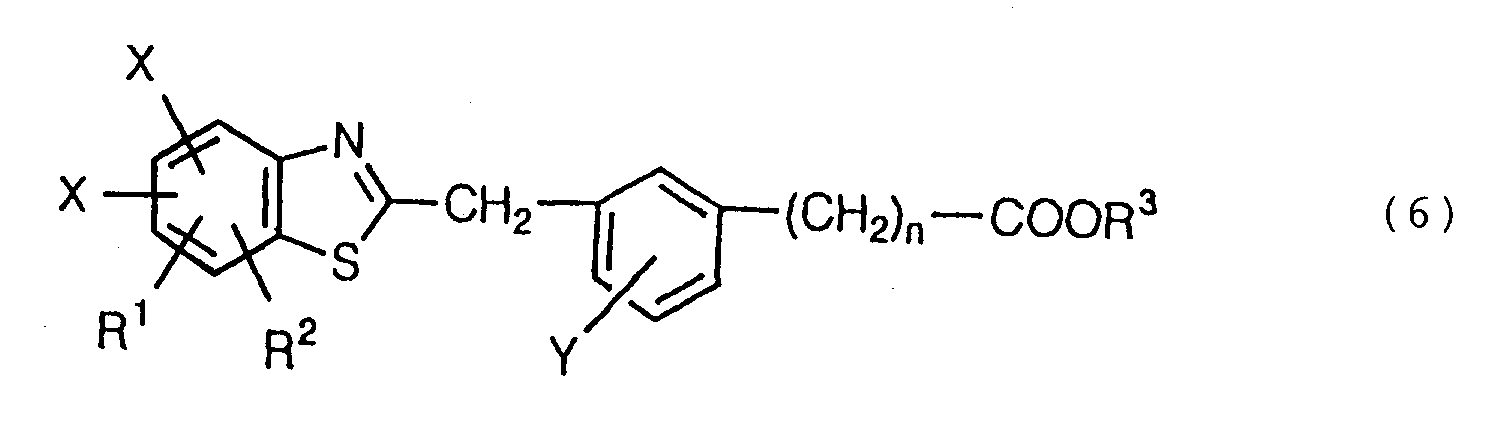
An important group of compounds according to the present invention are the compounds of the formula (6):
Figure 00050001
wherein X is halogen, R1 and R2, which are the same or different, are each independently hydrogen or halogen, R3 is hydrogen or C1 to C3 alkyl, Y is hydrogen, halogen, C1 to C3 alkyl, carboxyl or di-C1 to C3 alkylamino and n is an integer of 1 to 3 or the pharmaceutically acceptable salts thereof.
The compounds of the present invention include benzothiazole derivatives of the formula (1) wherein -B-COOR3 is a group represented by the aforementioned formula (2). Preferred benzothiazole derivatives include compounds of the formula (6):
Figure 00060001
wherein X, R1, R2, R3, Y and n are of the same meaning as defined above.
Preferred examples of said compounds according to the present invention include:
  • (1) 3-[(4,5-difluorobenzothiazol-2-yl)methyl]phenylacetic acid
  • (2) 3-[(4,5-dichlorobenzothiazol-2-yl)methyl]phenylacetic acid
  • (3) 3-[(4,5,7-trifluorobenzothiazol-2-yl)methyl]phenylacetic acid
  • (4) 3-[(4,5,7-trifluorobenzothiazol-2-yl)methyl]phenylpropionic acid
  • (5) a methyl, ethyl, n-propyl and i-propyl ester each of the above-mentioned carboxylic acids (1) to (4).
  • The compounds of the present invention include benzothiazole derivatives of the formula (1) wherein -B-COOR3 is a group represented by the aforementioned formula (3). Preferred benzothiazole derivatives include compounds of the formula (7):
    Figure 00070001
    wherein X, R1, R2, R3, Y and n are of the same meaning as defined above.
    Preferred examples of said compounds according to the present invention include:
  • (1) 3-[2-(4,5-difluorobenzothiazol-2-yl)ethyl]benzoic acid
  • (2) 3-[2-(4,5-dichlorobenzothiazol-2-yl)ethyl]benzoic acid
  • (3) 3-[2-(4,5,7-trifluorobenzothiazol-2-yl)ethyl]benzoic acid
  • (4) 3-[3-(4,5,7-trifluorobenzothiazol-2-yl)propyl]benzoic acid
  • (5) a methyl, ethyl, n-propyl and i-propyl ester each of the above-mentioned carboxylic acids (1) to (4).
  • The compounds of the present invention include benzothiazole derivatives of the formula (1) wherein -B-COOR3 is a group represented by the aforementioned formula (5). Preferred benzothiazole derivatives include compounds of the formula (10):
    Figure 00080001
    wherein X, R1, R2, R3 and m are of the same meaning as defined above, and compounds of the formula (11):
    Figure 00080002
    wherein X, R1, R2, R3 and m are of the same meaning as defined above.
    Preferred examples of said compounds according to the present invention include:
  • (1) 4-(4,5,7-trifluorobenzothiazol-2-yl)butanoic acid
  • (2) 5-(4,5,7-trifluorobenzothiazol-2-yl)pentanoic acid
  • (3) 6-(4,5-difluorobenzothiazol-2-yl)hexanoic acid
  • (4) 6-(4,5,7-trifluorobenzothiazol-2-yl)hexanoic acid
  • (5) 7-(4,5,7-trifluorobenzothiazol-2-yl)heptanoic acid
  • (6) 5-(4,5-difluorobenzothiazol-2-ylthio)pentanoic acid
  • (7) 5-(4,5,7-trifluorobenzothiazol-2-ylthio)pentanoic acid
  • (8) a methyl, ethyl, n-propyl and i-propyl ester each of the above-mentioned carboxylic acids (1) to (7).
  • Preferred examples of the concrete compounds according to the invention are:
  • (1) 2-[(4,5,7-trifluorobenzothiazol-2-yl)methyl]phenylacetic acid
  • (2) 4-[(4,5,7-trifluorobenzothiazol-2-yl)methyl]phenylacetic acid
  • (3) 3-[(5,7-difluorobenzothiazol-2-yl)methyl]phenylacetic acid
  • (4) 3-[(6,7-difluorobenzothiazol-2-yl)methyl]phenylacetic acid
  • (5) 3-[(4,5-difluorobenzothiazol-2-yl)methyl]-5-methylphenylacetic acid
  • (6) 3-[(4,5-difluorobenzothiazol-2-yl)methyl]-5-ethylphenylacetic acid
  • (7) 3-[(4,5-difluorobenzothiazol-2-yl)methyl]-5-fluorophenylacetic acid
  • (8) 3-[(4,5-difluorobenzothiazol-2-yl)methyl]-5-chlorophenylacetic acid
  • (9) 3-[(4,5-difluorobenzothiazol-2-yl)methyl]-5-bromophenylacetic acid
  • (10) 3-[(4,5-difluorobenzothiazol-2-yl)methyl]-5-iodophenylacetic acid
  • (11) 3-[(4,5-difluorobenzothiazol-2-yl)methyl]-5-carboxylphenylacetic acid
  • (12) 3-[(4,5-difluorobenzothiazol-2-yl)methyl]-5-dimethylaminophenylacetic acid
  • (13) 3-[(4,5,7-trifluorobenzothiazol-2-yl)methyl]-2-chlorophenylacetic acid
  • (14) 3-[(4,5,7-trifluorobenzothiazol-2-yl)methyl]-5-methylphenylacetic acid
  • (15) 3-[(4,5,7-trifluorobenzothiazol-2-yl)methyl]-5-fluorophenylacetic acid
  • (16) 3-[(4,5,7-trifluorobenzothiazol-2-yl)methyl]-5-chlorophenylacetic acid
  • (17) 3-[(4,5,7-trifluorobenzothiazol-2-yl)methyl]-5-bromophenylacetic acid
  • (18) 3-[(4,5,7-trifluorobenzothiazol-2-yl)methyl]-5-iodophenylacetic acid
  • (19) 3-[(4,5,7-trifluorobenzothiazol-2-yl)methyl]-5-carboxylphenylacetic acid
  • (20) 3-[(4,5,7-trifluorobenzothiazol-2-yl)methyl]-5-dimethylaminophenylacetic acid
  • (21) a methyl, ethyl, n-propyl and i-propyl ester each of the above-mentioned carboxylic acids (1) to (20).
  • The compound (1) may be in the form of salts (including addition salts) derived from pharmaceutically or physiologically acceptable acids or bases. Such salts include medically or pharmaceutically acceptable non-toxic or low toxic basic salts or acid salts. These salts include but are not limited to the following: basic salts with ammonium, an alkali metal or alkaline earth metal, such as lithium, sodium, potassium, calcium and magnesium or with an organic base (e.g., trialkylamines such as triethylamine, dibenzylamine, ethanolamine, triethanolamine, N-methylmorpholine and pyridine) and acid salts with an inorganic acid such as hydrochloric acid, hydrobromic acid, hydroiodic acid, sulphuric acid, nitric acid and phosphoric acid and, depending on compounds, salts with an organic acid such as acetic acid, propionic acid, oxalic acid, succinic acid, citric acid, ascorbic acid, lactic acid, p-toluenesulfonic acid, methanesulfonic acid, fumaric acid, tartaric acid and maleic acid.
    The compounds (1) of the present invention can be made by one of various routes. The nature of the substituents involved determines the preferred method of preparation. Many compounds of Formula (1) can be prepared by one of the following schemes, as illustrated below for a preferred compound.
  • (A) Preferred compounds of Formula (6)
    Figure 00110001
    wherein X, R1, R2, R3, Y and n are previously defined, can be prepared, for example, by the method described in Preparation Scheme 1.
    Figure 00110002
    In Preparation Scheme 1, the compounds of Formula (6) can be prepared by combining an appropriate compound of Formula (12) wherein X, R1 and R2 are previously defined, or an acid addition salt thereof, with an appropriately substituted compound of Formula (13) wherein R3, Y and n are previously defined. The reaction is carried out, if necessary, in the presence of an appropriate base, preferably under an inert gas atmosphere. In Preparation Scheme 1, the acid chloride of Formula (13) can be replaced with an appropriate reactive derivative thereof known per se such as an ester derivative thereof and an acid anhydride thereof in addition to its free carboxylic acid itself. The reaction is best carried out in the presence of or in the absence of a solvent. When the reaction is conducted in solvents, it is often convenient to use conventional solvents which are free from any adverse action on the reaction. Preferred examples of such solvents are N, N-dimethylformamide and N-methylpyrrolidone. The reaction temperature range is 20 °C to 200 °C and preferably 60 °C to reflux.When the compound of Formula (6) thus obtained is in the form of an ester, the ester can be converted to a corresponding carboxylic acid compound by hydrolysis in the presence of bases or acids. Preferred bases used in this hydrolysis include, for example, alkali metal hydroxides such as sodium hydroxide and potassium hydroxide, alkali metal carbonates such as sodium carbonate and potassium carbonate. Preferred acids include, for example, organic acids such as formic acid, acetic acid, propionic acid, trifluoroacetic acid, benzenesulfonic acid and p-toluenesulfonic acid, inorganic acids such as hydrochloric acid, hydrobromic acid, sulphuric acid, nitric acid and phosphoric acid. The hydrolysis can be conducted in conventional solvents or mixtures thereof which are free from any adverse action on the reaction. Examples of such solvents are water, acetone, dioxane, dichloromethane, methanol, ethanol, propanol, pyridine and N, N-dimethylformamide. If the base or acid used in this reaction is a form of the solution, it can be used as a solvent of the reaction. The reaction temperature range is not limited to but it can be run at temperatures within the range of cooling to heating.The compounds of Formula (12) used in Preparation Scheme 1 may be prepared according to the known method described in Journal of Medicinal Chemistry, 34, pp.108-122, 1991. The compounds of Formula (13) may also be prepared according to the known method described in International Journal of Preparative Protein Research, 29, pp.331-346, 1987.
  • (B) Preferred compounds of Formula (7)
    Figure 00130001
    wherein X, R1, R2, R3, Y and n are previously defined, can be prepared, for example, by the method described in Preparation Scheme 2.
    Figure 00130002
    In Preparation Scheme 2, the compounds of Formula (7) can be prepared by combining an appropriate compound of Formula (12) wherein X, R1 and R2 are previously defined, or an acid addition salt thereof, with an appropriately substituted compound of Formula (14) wherein R3, Y and n are previously defined. The reaction is carried out, preferably under an inert gas atmosphere. The reaction is best carried out in the presence of or in the absence of a solvent. When the reaction is conducted in solvents, it is often convenient to use conventional solvents which are free from any adverse action on the reaction. Preferred examples of such solvents are lower alcohols such as methanol, ethanol and propanol. The reaction temperature range is 20 °C to 200 °C, preferably 60 °C to the reflux temperature of solvents used. When the reaction is conducted in the absence of solvents, the acid addition salt compound of Formula (12) and the compound of Formula (14) are condensed together at 90°C to 250 °C to lead to reaction. Hydrolysis of the ester product thus prepared may be conducted by methods as described for Preparation Scheme 1.
  • (E) Preferred compounds of Formula (10)
    Figure 00150001
    wherein X, R1, R2, R3 and m are previously defined, can be prepared, for example, by the method described in Preparation Scheme 5.
    Figure 00160001
    In Preparation Scheme 5, the compound of Formula (10) can be prepared by reacting an appropriate compound of Formula (12a) wherein X, R1 and R2 are previously defined, or an acid addition salt thereof, with an appropriate compound of Formula (20) wherein R3 and m are previously defined, or Formula (21) wherein R3 and m are previously defined, if necessary in the presence of a base, preferably under an inert gas atmosphere. The reaction may be conducted under the substantially same conditions as in the aforementioned Preparation Scheme 1 or 2. The ester product can be converted into a corresponding carboxylic acid by hydrolysis similar thereto.The carboxylic acid compound of Formula (10) can be prepared by reacting an appropriate compound of Formula (12a) with an appropriate acid anhydride compound of Formula (22) wherein m is previously defined. The reaction is conducted in the presence of or in the absence of a solvent. When it is carried out in the solvent, it is convenient to use conventional solvents which are free from any adverse action on the reaction. Preferred examples of such solvents are N,N-dimethylformamide and N-methylpyrrolidone. The reaction temperature range is not limited to, but is preferably room temperature to 150 °C.
  • (F) Preferred compounds of Formula (11)
    Figure 00170001
    wherein X, R1, R2, R3 and m are of the same meaning as defined above, can be prepared, for example, by the method described in Preparation Scheme 6.
    Figure 00170002
    In Preparation Scheme 6, the compound of Formula (11) can be prepared by reacting an appropriate compound of Formula (17) wherein X, R1 and R2 are previously defined, with an appropriate compound of Formula (23) wherein R3 and m are previously defined and W is halogen, methanesulfonyl or p-toluenesulfonyl in the presence of a suitable base, if necessary, under an inert gas atmosphere. The base used in the reaction includes alkali metal hydrides such as sodium hydride, alkaline earth metal hydrides such as calcium hydride, alkali metal hydroxides such as sodium hydroxide and potassium hydroxide, alkali metal carbonates such as sodium carbonate and potassium carbonate, alkali metal alkoxides such as sodium methoxide, sodium ethoxide and potassium t-butoxide. Preferred halogens for the compound of Formula (23) are chlorine and bromine.The above reaction is conducted in conventional solvents which are free from any adverse action on the reaction or a mixture thereof. Preferred examples of such solvents are N,N-dimethylformamide, tetrahydrofuran and dimethylsulfoxide. The reaction temperature range is not limited to, but is preferably 0 to 100 °C. The ester product can be converted into a corresponding carboxylic acid by hydrolysis.
  • (G) Preferred compounds of Formula (26) wherein X, R1, R2, R3 and Y are previously defined, can be prepared, for example, by the method described in Preparation Scheme 7.
    Figure 00200001
    In Preparation Scheme 7, the compounds of Formula (26) can be prepared by reacting an appropriate compound of Formula (12) or an acid addition salt thereof, with an appropriate compound of Formula (24) wherein Y is previously defined, if necessary, in the presence of a base, preferably under an inert gas atmosphere, followed by reaction with an appropriate compound of Formula (25) wherein R3 is previously defined. Preferred examples of the compound of Formula (25) include water, methanol and ethanol. Preferred examples of solvents used in the reaction step wherein the compound of Formula (12) is reacted with the compound of Formula (24) are N-methylpyrrolidone and N, N-dimethylformamide. The reaction temperature range is preferably ice cooling to about 100 °C. When the compound of Formula (26) is an ester, it can be hydrolyzed to produce a corresponding carboxylic acid. The compound of Formula (12) or its acid addition salt can be condensed with the compound of Formula (27) wherein Y is previously defined to form the compound of Formula (28) wherein X, R1, R2 and Y are previously defined, which can be hydrolyzed to produce the compound of Formula (26). The reaction of the compound of Formula (12) with the compound of Formula (27) can be run, if necessary, in the presence of an appropriate acid, preferably under an inert gas atmosphere. The reaction may be conducted in the presence of or in the absence of an appropriate solvent. When it is conducted in solvents, it is often convenient to use conventional solvents which are free from any adverse action on the reaction. Preferred examples of such solvents are methanol, ethanol and propanol. Preferred acids include, for example, inorganic acids such as hydrochloric acid, hydrobromic acid, sulphuric acid, nitric acid and phosphoric acid, organic acids such as formic acid and acetic acid. Among them, strong acids such as hydrochloric acid and sulphuric acid are preferable. The reaction temperature range is preferably 60 °C to 200 °C. The compounds of Formula (27) are known substances or ones which are readily producible by known techniques (e.g., Japanese Unexamined Patent Publication No. 19067/1989). Hydrolysis of the compound of Formula (28) can be conducted in an appropriate acid. Preferred examples of such acids are sulphuric acid, hydrochloric acid, hydrobromic acid, phosphoric acid and trifluoroacetic acid. The hydrolysis can be conducted in conventional solvents or mixtures thereof which are free from any adverse action on the reaction. The reaction temperature range is not limited to but it can be run at temperatures within the range of 60 °C to reflux.
  • The compound of the present invention can be separated, isolated and purified by conventional techniques including extraction, fractionation, chromatography, salting-out, crystallisation, recrystallization.
    Another aspect of the present invention is to provide a pharmaceutical composition comprising an effective amount of the compound of Formula (1) or a pharmaceutically acceptable salt thereof. The pharmaceutical composition is useful in the prophylactic and therapeutic treatment of various diseases or symptoms associated with diabetes, even related to aldose reductases. Preferably the pharmaceutical composition is useful in the prophylactic and therapeutic treatment of diabetic complications including cataract, keratopathy, retinopathy peripheral and autonomic neuropathy, nephropathy.
    Aldose reductase, which is a member of an aldo-keto reductase, converts glucose into sorbitol and widely exists in various tissues of human body. Aldose reductase and sorbitol dehydrogenase, which can oxidize sorbitol to fructose, act in the polyol pathway wherein glucose is converted into fructose through sorbitol. It is believed that in diabetes glucose entry into cells increases due to chronic hyperglycemia, glucose metabolism through the polyol pathway is activated, and polyols such as sorbitol are accumulated resulting in the development of various complications.
    The compounds of the present invention potently inhibit aldose reductase activity and the accumulation of polyols such as sorbitol, which are considered to be related to the pathogenesis of diabetic complications. In view of their advantageous features, the compounds of the present invention are effective in the prophylactic and therapeutic treatment of various diabetic complications. Diabetic complications discussed herein include cataract, keratopathy, retinopathy, peripheral and autonomic neuropathy, nephropathy. The compounds of the present invention may be useful in the prophylactic and therapeutic treatment of theses complications because of their aldose reductase inhibiting activity and other activities.
    The compounds of the present invention serving as aldose reductase inhibitors and prophylactic and therapeutic agents for preventing and treating diabetic complications can be used independently without any additives, but preferably in admixture of any of pharmaceutically acceptable additives. The compounds of the present invention may be orally, parenterally, ophthalmically, rectally, or topically administered as pharmaceutical compositions or formulations. Preferably it can be applied by various routes including oral routes, injection, or application to mucosa of eye, oral cavity or rectum. Preferred formulations for each administration route are as follows:
    For oral administration, additives are any pharmaceutical ingredients as long as they are suitable for oral drugs and the intended purposes according to the present invention. Usually, the pharmaceutical additive is selected from conventional pharmaceutical components such as carriers, vehicles, adjuvants, excipients, diluents, binders, disintegrants, preservatives, antioxidants, sweetening, flavoring, perfuming, lubricating, thickening, buffering and coating agents. The oral formulations of the present invention include tablets, granules, fine granules, powders, syrups, capsules.
    For injection, the additives include pharmaceutical ingredients suitable for aqueous or non-aqueous injections. Usually, the additive is selected from conventional pharmaceutical components such as solubilizers, solution adjuvants, suspending agents, pH regulators and stabilizers. In addition, it may be selected from conventional ingredients suitable for preparing powders for injection, which are used in solution or suspension when administered.
    For application to mucosa, such additives include pharmaceutical ingredients suitable for preparing aqueous or non-aqueous solutions, gels or ointments. Usually, the additive is selected from conventional pharmaceutical components such as solubilizers, solution adjuvants, suspending agents, emulsifying agents, buffering agents, stabilizers, preservatives, vaseline, purified lanolin, liquid paraffin, and Platisbase (Squibb & Sandoz, US).
    Desired oral drugs, injections or drugs for mucosal applications comprising the compound of the present invention in admixture with the aforementioned ingredient can be prepared according to the manufacturing methods described in The 12th Pharmacopoeia of Japan (JPX
    Figure 00240001
    ) or appropriately modified ones.
    The pharmaceutical compositions (drugs) of the present invention are administered to mammals including human. These drugs of the present invention inhibit aldose reductase activity and the accumulation of sorbitol in tissues, as discussed above. In view of the unique features, they are effective in the prophylactic and therapeutic treatment of various diabetic complications that are difficult to prevent and treat only with euglycemic agents such as insulin and synthetic hypoglycemic agents.
    The compounds and salts thereof according to the present invention are of low toxicity and clinically useful in prophylactically and therapeutically treating diseases or symptoms related to diabetes, for example, various diabetic complications. The doses of these compounds or salts thereof are usually 1 to 1,500mg/day, preferably 5 to 1,000 mg/day for oral administration; usually 1 to 500 mg/day, preferably 3 to 300 mg/day for injection; and usually 1 to 500 mg/day, preferably 3 to 300mg/day for application to mucosa.
    Specific dose levels for any particular patient will be employed depending upon a variety factors including the activity of specific compounds employed, the age, body weight, general health, sex, diet, timing of administration, route of administration, rate of excretion, drug combination, and the severity of the particular disease or symptom undergoing therapy. The optimum dose is preferably determined based on how long the patient has suffered from diabetes, and the patient's age, sex, body weight and other factors.
    The drugs of the present invention can be administered to patients developing diabetic complications such as cataract, keratopathy, retinopathy, peripheral or autonomic neuropathy, or nephropathy. Moreover, these drugs can be administered to the cases of diabetes without complications with the aim of prophylactically preventing them from developing. These drugs can be used independently, but, of course, can be used in combination with insulin or other antidiabetic agents (chlorpropamide, acetohexamide, tolbutamide).
    Biological Experiment
    The following is illustrative of experimental procedures for pharmacological tests and examples of typical results for various test compounds of Formula (1), which are provided to illustrate the efficacy of the compounds of Formula (1). Other compounds of the present invention that are not shown here also exert the same efficacy.
    1) Aldose Reductase Inhibition (Preparation of Enzyme)
    Aldose reductase samples were prepared from porcine lens according the method by S. Hayman et al., (Journal of Biological Chemistry, 240, p.877-882 (1965)).
    In brief, lens of porcine eyes were frozen (-80 °C) until employed. These lenses were homogenized with distilled water and then centrifuged at 10,000× g for 15 minutes. The supernatant was fractionated with 0 to 40% ammonium sulfate and centrifuged at 10,000 × g for 10 minutes. The resultant supernatant was dialyzed overnight against 0.05 M sodium chloride. The dialyzed solution was used as an aldose reductase sample.
    (Assay of Enzymatic Activity)
    Aldose reductase activity was assayed according to the aforementioned method by S. Hayman et al.
    In brief, to 200µl of 40 mM phosphate buffer (pH 6.2) containing lithium sulfate, 0.4M (final concentration); NADPH (reduced nicotinamide adenine dinucleotide phosphate), 0.1mM (final concentration); and DL-glyceraldehyde as a substrate, 3 mM (final concentration) was added 25µl of the aldose reductase solution obtained by the aforementioned method and 25µ l of 1% DMSO solutions containing a sample inhibitor compound with different concentrations. The mixtures were incubated at 37°C for 2 minutes for reaction and changes in the absorbance at 340 nm were read using an auto-analyzer (Hitachi Corporation, Model 7070, Japan). The change in the absorbance of a mixed solution including 1% DMSO instead of sample compounds was expresses as 100%. Table 1 shows the inhibiting activity of each sample compound. IC50(M) means the concentration of the compounds, required for 50% inhibition of aldose reductase activity.
    Sample Compounds IC50(M)
    Example 1-ii) 6.6× 10⁻⁹
    Example 15-ii) 1.4× 10⁻⁸
    Example 19-ii) 1.2× 10⁻⁸
    Example 20-ii) 1.9× 10⁻⁸
    Example 21 6.7× 10⁻⁹
    Example 22-ii) 9.6× 10⁻⁹
    Example 28-ii) 9.4× 10⁻⁹
    Example 30-ii) 8.7× 10⁻⁹
    Example 31-ii) 6.7× 10⁻⁹
    2) Inhibitory Effect on Sorbitol Accumulation in the Tissues of Experimental Diabetic Rats (Prophylactic effect)
    Sprague-Dawley rats (male, 6-week-old, 5-6 rats/group), fasted for 18 hours, were made diabetic by a single intravenous (tail vein) injection of 60 mg/kg body weight of streptozotocin (Sigma). Four, eight and twenty four hours after the injection of streptozotocin, respectively, a sample compound suspended in 0.5% carboxymethyl cellulose was administered orally to the rats at a dose of 10 or 30 mg/kg. The rats were fed with diet and water ad libitum during the experiment. Three hours after the final administration, the sorbitol contents in the tissues (sciatic nerve, lens) was assayed enzymatically using SDH (sorbitol dehydrogenase) and NAD (β-nicotinamide adenine dinucleotide) according to the method by H.U.Bergmeyer et al. (Methods of Enzymatic Analysis, 3, p.1323-1330 (1974)). The sorbitol contents in control groups to which 0.5% carboxymethyl cellulose was administered instead of sample compounds is expressed as 100%. Table 2 shows the result of the tests using the compounds of the present invention.
    Sample Compounds Sorbitol Accumulation (%)
    Nerve Lens
    Example 1-ii) 0 4
    Example 20-ii) 15 63
    Example 21 0 40
    Example 22-ii) 0 41
    3) Safety Study
    The safety of the compounds of the present invention was confirmed according to the following experimental procedure.
    Normal ICR mice (male, 7-week-old, 5 mice/group), fasted for 18 hours, received orally the compound each of Examples 1-ii), 19-ii), 21, 22-ii) and 23-ii) suspended in 0.5% carboxymethyl cellulose at a dose of 1000 mg/kg. Control groups received only 0.5% carboxymethyl cellulose orally. All were observed for the following 7 consecutive days. The mice were fed with diet and water ad libitum during the experiment. No animal died and body weight changes in treated animal groups were similar to that in control group.
    4) Inhibitory Effect on Sorbitol Accumulation in the Tissues of Experimental Diabetic Rats (Therapeutic Effect)
    Sprague-Dawley rats (male, 6-week-old, 5 to 6 rats/group), fasted for 18 hours, were made diabetic by injecting streptozotocin (Sigma) at a dose of 60 mg/kg body weight into the tail vein thereof. From 7 days after the streptozotocin injection, a sample compound suspended in 0.5% carboxymethyl cellulose was administered orally to the rats at a dose between 1 and 10 mg/kg once daily for 5 consecutive days. The rats were fed with diet and water ad libitum during the experiment. Three hours after the final administration, the sorbitol contents in the tissues (sciatic nerve, lens) was assayed enzymatically using SDH (sorbitol dehydrogenase) and NAD (β-nicotinamide adenine dinucleotide) according to the method by H.U.Bergmeyer et al. (Methods of Enzymatic Analysis, 3, p.1323-1330 (1974)). The sorbitol contents in control groups to which 0.5% carboxymethyl cellulose was administered instead of sample compounds is expressed as 100%.
    Sample Compounds Dose Level (mg/kg) Sorbitol Accumulation (%)
    Nerve Lens
    Example 1-ii) 10 2 68
    Example 22-ii) 3 2 25
    Example 24-ii) 10 11 26
    Example 25-ii) 1 0 47
    Example 31-ii) 3 1 77
    Example 1
  • i) To a solution of monomethyl 1,3-phenylene diacetate (531 mg, 2.6 mmol) in benzene (5 ml) was gradually added thionyl chloride (607 mg, 5.2 mmol). The mixture was heated to reflux for 2 hours. An excess of thionyl chloride was then distilled off in vacuo leaving 3-methoxycarbonylmethylphenylacetyl chloride. 2-Amino-3,4,6-trifluorothiophenol (507 mg, 2.8 mmol) was dissolved in N-methylpyrrolidone (NMP, 5 ml) under a nitrogen stream. To the resultant solution was gradually added the product 3-methoxycarbonylmethylphenylacetyl chloride thus obtained and the mixture was stirred at 100 °C for 2 hours. After cooling, the reaction mixture was diluted with water and extracted with ethyl acetate. The organic layer was dried and then evaporated to yield a residue, which was purified on a silica gel column to give methyl 3-[(4,5,7-trifluorobenzothiazol-2-yl)methyl]phenylacetate (267 mg, 27%) as an oil.
    NMR(CDCl3)δ:
    3.64(2H,s),3.70(3H,s),4.45(2H,s),6.9-7.1(1H,m), 7.2-7.4(4H,m)
    • MS:351(M+),291,277
  • ii) To a solution of methyl 3-[(4,5,7-trifluorobenzothiazol-2-yl)methyl]phenylacetate (231 mg, 0.66 mmol) in a mixture of water (5 ml) and dioxane (5 ml) was added dropwise 2N sodium hydroxide (2 ml, 4 mmol). After the addition was complete, the mixture was stirred for 2 hours, then diluted with water, washed with ether, acidified with 10% hydrochloric acid and extracted with ethyl acetate. The organic layer was dried, then evaporated to yield a residue, which was recrystallized from isopropyl ether to give 3-[(4,5,7-trifluorobenzothiazol-2-yl)methyl]phenylacetic acid (134 mg, 90%) as a colorless powder.
  • m.p. 132 to 134°C
    NMR(CDCl3)δ:
    3.67(2H,s),4.45(2H,s),6.9-7.1(1H,m),7.2-7.4(4H,m)
  • MS:337(M+ ),293,277
  • Example 2
  • i) A solution of ethyl 3-iodobenzoate (2 g, 7.2 mmol), palladium acetate (16 mg, 0.072 mmol), triethylamine (729 mg, 7.2 mmol) and acrylonitrile (480 mg, 9.0 mmol) in acetonitrile (10 ml) was stirred at reflux for 3 hours under a nitrogen stream. After additional palladium acetate (16 mg, 0.072 mmol) was added to the reaction mixture, the resulting mixture was stirred at reflux for 9 hours. The reaction mixture was diluted with water and extracted with ethyl acetate. The organic layer was washed with a saturated saline solution, then dried and evaporated to yield a residue, which was purified on a silica gel column to give ethyl 3-(2-cyanovinyl)benzoate (808 mg, 55%) as an oil mixture of E and Z isomers (E:Z=3:1).
    NMR(E:Z=3:1)(CDCl3)δ:
    1.42(3H,t,J=7.3Hz),4.41(2H,q,J=7.3Hz), 5.98(5.54)(1H,d,Jtrans=16.8Hz,Jcis= 12.6Hz),7.45(7.24)(1H,d,Jtrans=16.8Hz, Jcis=12.6Hz),7.50(7.55)(1H,dd,J=8.0Hz and 7.7Hz), 7.63(1H,d,J=7.7Hz),8.11 (8.16)(1H,d,J=8.0Hz),8.14(8.31)(1H,s)
  • ii) To a solution of ethyl 3-(2-cyanovinyl)benzoate (800 mg, 4.0 mmol) in methanol (30 ml) was added cautiously 10% palladium/C and the mixture was stirred at 3 atm. for 10 hours under a hydrogen atmosphere. After the mixture was filtered to remove a solid, the filtrate was evaporated to yield ethyl 3-(2-cyanoethyl)benzoate (682 mg, 84%) as a colorless oil.
    NMR(CDCl3)δ:
    1.40(3H,t,J=7.3Hz),2.67(1H,t,J=7.3Hz),3.02(1H,t, J=7.3Hz),4.39(2H,q,J=7.3Hz),7.3-7.5(2H,m),7.91 (1H,s),7.96(1H,d,J=6.3Hz)
  • iii) To a solution of zinc chloride (26 mg, 0.19 mmol) in chlorobenzene (3 ml) was added a solution of 2-amino-3,4,6-trifluorothiophenol hydrochloride (269 mg, 1.2 mmol) in chlorobenzene (1 ml) and a solution of ethyl 3-(2-cyanoethyl)benzoate (254 mg, 1.2 mmol) in chlorobenzene (1 ml) and the mixture was heated to reflux for 40 hours. The reaction mixture was evaporated followed by addition of methylene chloride. The resulting mixture was washed with water, dried and evaporated to yield a residue, which was purified on a silica gel column to give ethyl 3-[2-(4,5,7-trifluorobenzothiazol-2-yl)ethyl]benzoate (133 mg, 30%) as an oil.
    NMR(CDCl3)δ:
    1.40(t,3H,J=7.2Hz),3.28(t,2H,J=7.8Hz),3.48(t,2H, J=7.8Hz),4.38(q,2H,J=7.2Hz),6.9-7.1(1H,m),7.37 (br.t,1H,J=7.6Hz),7.43(br.d,1H,J=7.6Hz),7.92 (br.d,1H,J=7.6Hz),7.95(1H,s)
  • iv) To a solution of ethyl 3-[2-(4,5,7-trifluorobenzothiazol-2-yl)ethyl]benzoate (133 mg, 0.36 mmol) in a mixture of water (5 ml) and dioxane (5 ml) was added dropwise aqueous 2N sodium hydroxide (2 ml) and the mixture was stirred for 7 hours at ambient temperature. The reaction mixture was diluted with water and then washed with ether. The aqueous layer was acidified with 10% hydrochloric acid and extracted with ethyl acetate. After drying, evaporation of the solvent left crude crystals, which were recrystallized from ether to give 3-[2-(4,5,7-trifluorobenzothiazol-2-yl)ethyl]benzoic acid (82 mg, 68%) as colorless crystals.
  • m.p.190 °C (dec.)
    NMR(CDCl3)δ:
    3.31(2H,t,J=7.6Hz),3.51(2H,t,J=7.6Hz),6.9-7.1 (1H,m),7.42(1H,t,J=7,6Hz),7.50(1H,d,J=7.6Hz), 8.00(1H,d,J=7.6Hz),8.03(1H,s)
  • MS:337(M+),319,291,216,135
  • Example 3 i) Method A
    To NMP (6 ml) was added 2-amino-3,4,6-trifluorothiophenol (1.61 g, 9 mmol) and ethyl succinyl chloride (1.48 g, 9 mmol) and the mixture was heated and stirred for 1 hour at 100 °C under a nitrogen stream. The reaction solution was poured into ice-water and extracted with ethyl acetate. The organic layer was washed with water, then dried and evaporated to yield a residue, which was purified on a silica gel column to give ethyl 3-(4,5,7-trifluorobenzothiazol-2-yl)propionate (1.12 g, 43%) as an oil.
    To a mixture of methanol (8 ml), water (6 ml) and 2N sodium hydroxide (2 ml, 4 mmol) was added ethyl 3-(4,5,7-trifluorobenzothiazol-2-yl)propionate (1.1 g, 3.8 mmol) and the mixture was stirred for 15 min. at ambient temperature. The reaction solution was diluted with water and then extracted with ethyl acetate. The organic layer was washed with water, then dried and evaporated to yield a residue, which was recrystallized from hexane-isopropyl ether to give 3-(4,5,7-trifluorobenzothiazol-2-yl)propionic acid (840 mg, 85%) as colorless needles.
  • m.p.123 to 125°C
    NMR(CDCl3)δ:
    3.06(2H,t,J=7.1Hz),3.46(2H,t,J=7.1Hz),6.98-7.09 (1H,m)
  • Method B
    To a solution of 2-amino-3,4,6-trifluorothiophenol (1.79 g, 10 mmol) in NMP (5 ml) was added dropwise a solution of succinic anhydride (1.0 g, 10 mmol) in NMP (5 ml) at ambient temperature under a nitrogen stream and the mixture was heated to 100 °C for 1 hour. The resultant mixture was basified by dilution with aqueous sodium carbonate and washed with ether. The aqueous layer was acidified with 7% hydrochloric acid and extracted with ethyl acetate. The organic layer was washed with water, then dried and evaporated to yield crude crystals, which were washed with hexane-isopropyl ether to give 3-(4,5,7-trifluorobenzothiazol-2-yl)propionic acid (2.16 g, 83%).
    Example 4
  • i) To a solution of 3-(4,5,7-trifluorobenzothiazol-2-yl)propionic acid (522 mg, 2 mmol) obtained in Example 3-i) in a mixture of toluene (5 ml) and N,N-dimethylformamide (DMF; 1 ml) was added thionyl chloride (357 mg, 3 mmol) and the mixture was stirred for 1 hour at room temperature. To the ice cold reaction mixture was N-phenylglycine methyl ester hydrochloride (403 mg, 2 mmol) and triethylamine (400 mg, 4 mmol) and the mixture was stirred for 2 hours. The reaction mixture was diluted with water and then extracted with ethyl acetate. The organic layer was washed with water, then dried and evaporated to yield a residue, which was purified on a silica gel column to give N-[3-(4,5,7-trifluorobenzothiazol-2-yl)propionyl]-N-phenylglycine methyl ester (240 mg, 29%) as an oil.
    NMR(CDCl3)δ:
    2.78(2H,t,J=6.9Hz),3.44(2H,t,J=6.9Hz),3.73(3H, s),4.40(2H,s),6.93-7.03(1H,m),7.3-7.5(5H,m)
    • MS:408(M+),244,215
  • ii) (not according to the invention) To a solution of N-[3-(4,5,7-trifluorobenzothiazol-2-yl)propionyl]-N-phenylglycine methyl ester (420 mg, 1 mmol) in a mixture of water (3 ml) and dioxane (6 ml) was added dropwise 2N sodium hydroxide (1.2 ml) with stirring under ice cooling and the mixture was stirred for 1 hour at room temperature. The reaction mixture was then diluted with water and washed with ether. The aqueous layer was acidified with 7% hydrochloric acid and extracted with ethyl acetate. The organic layer was washed with water, then dried and evaporated to yield a residue, which was recrystallized from ethyl acetate-isopropyl ether to give N-[3-(4,5,7-trifluorobenzothiazol-2-yl)propionyl]-N-phenylglycine (210 mg, 52%) as a colorless powder.
  • m.p.121 to 124°C
    NMR(CDCl3)δ:
    2.77(2H,t,J=6.8Hz),3.43(2H,t,J=6.8Hz),4.41 (2H,s),6.93-7.03(1H,m),7.3-7.5(5H,m)
  • MS:394(M+),376,245,244
  • Example 10
  • i) To DMSO (15 ml) was added α-chloroacetoanilide (850 mg, 5 mmol), 4,5,7-trifluoro-2-mercaptobenzothiazole (1.1 g, 5 mmol), potassium carbonate (690 mg, 5 mmol) and potassium iodide (50 mg) and the mixture was stirred at room temperature for 4 hours. The resultant reaction mixture was diluted with water, acidified with 7% hydrochloric acid and extracted with ethyl acetate. The organic layer was washed with water, dried and then evaporated to yield a crude product, which was purified on a silica gel column to give 2-(4,5,7-trifluorobenzothiazol-2-ylthio)-N-phenylacetamide (0.97 g, 52%).
    NMR(CDCl3)δ:
    4.09(2H,s),6.99-7.10(1H,m),7.10(1H,t),7.32 (2H,dd),7.57(2H,d),9.55(1H,bs)
  • ii) To DMSO (5 ml) was added 2-(4,5,7-trifluorobenzothiazol-2-ylthio)-N-phenylacetamide (354 mg, 1 mmol), bromoacetic acid (278 mg, 2 mmol) and potassium carbonate (414 mg, 3 mmol) and the mixture was stirred at room temperature for 5 hours under a nitrogen stream. The resultant reaction mixture was diluted with water and washed with ethyl acetate. The aqueous phase was acidified with 7% hydrochloric acid and extracted with ethyl acetate. The organic phase was washed with water, dried and then evaporated to yield crude crystals, which were recrystallized from ethyl acetate-hexane to give N-[2-(4,5,7-trifluorobenzothiazol-2-ylthio)acetyl]-N-phenylglycine (80 mg, 19%) as slightly yellow crystals.
  • m.p.174 to 176°C
    NMR(CDCl3)δ:
    3.40(2H,s),4.10(2H,s),6.71-6.82(1H,m),7.40-7.60 (5H,m)
  • MS:412(M+),394,368,367
  • Example 11
    2-Amino-3,4,6-trifluorothiophenol (200 mg, 1.1 mmol) was dissolved in N-methylpyrrolidone (NMP, 1 ml) under a nitrogen stream. To the resultant solution was gradually added glutaric acid (127 mg, 1.1 mmol) at room temperature and the mixture was stirred at 100 °C for 6 hours. After naturally cooling, the mixture was diluted with water and extracted with ethyl acetate. The organic phase was washed with aqueous sodium bicarbonate. The alkaline phase was acidified with 10% hydrochloric acid and re-extracted with ethyl acetate. The combined organic phases were dried and then evaporated to yield a residue, which was recrystallized from acetonitrile to give 4-(4,5,7-trifluorobenzothiazol-2-yl)butanoic acid (133 mg, 44%).
  • m.p.113 to 114°C
    NMR(CDCl3)δ:
    2.26(2H,tt,J=7.6Hz and 7.3Hz),2.56(2H,t, J=7.3Hz),3.25(2H,t,J=7.6Hz),6.9-7.1(1H,m)
  • MS:275(M+),257,216
  • Example 12
    A solution of adipic acid (10.0 g, 68 mmol) in acetic anhydride (50 ml) was heated to reflux for 3 hours. An excess of acetic anhydride was then distilled off in vacuo leaving adipic anhydride (7.4 g). 2-Amino-3,4,6-trifluorothiophenol (200 mg, 1.1 mmol) was dissolved in NMP (1 ml) under a nitrogen stream. To the resultant solution was gradually added adipic anhydride (143 mg, 1.1 mmol) and the mixture was stirred at 100 °C for 6 hours. After naturally cooling, the mixture was diluted with water and extracted with ethyl acetate. The organic phase was extracted with aqueous sodium bicarbonate. The alkaline phase was acidified with 10% hydrochloric acid and re-extracted with ethyl acetate. The combined organic phases were dried and then evaporated to yield a residue, which was recrystallized from acetonitrile to give 5-(4,5,7-trifluorobenzothiazol-2-yl)pentanoic acid (81 mg, 26%).
  • m.p.122 to 124°C
    NMR(CDCl3)δ:
    1.7-1.9(1H,m),1.9-2.2(1H,m),2.45(2H,t,J=7.2Hz), 3.18(2H,t,J=7.4Hz),6.9-7.1(1H,m)
  • MS:289(M+),216
  • Example 13
  • i) To xylene (6 ml) was added 2-amino-3,4,6-trifluorothiophenol hydrochloride (647 mg, 3 mmol), 6-cyanohexanoic acid ethyl ester (507 mg, 3 mmol) and ethanol (0.5 ml) and the mixture was heated to reflux for 60 hours under a nitrogen stream. The resultant reaction mixture was washed with water, dried and then evaporated to yield a residue, which was purified on a silica gel column to give 6-(4,5,7-trifluorobenzothiazol-2-yl)hexanoic acid ethyl ester (395 mg, 40%) as an oil.
    NMR(CDCl3)δ:
    1.25(3H,t,J=7.1Hz),1.46-1.98(6H,m),2.33(2H,t, J=7.3Hz),3.15(2H,t,J=7.4Hz),4.12(2H,q,J=7.1Hz), 6.95-7.06(1H,m)
    • MS:331(M+),203
  • ii) To methanol (3 ml) was added 6-(4,5,7-trifluorobenzothiazol-2-yl)hexanoic acid ethyl ester (390 mg, 1.18 mmol) and aqueous 2 N sodium hydroxide (0.7 ml, 1.4 mmol) and the mixture was stirred at room temperature for 1 hour. The resultant reaction mixture was diluted with water and washed with ether. The aqueous phase was acidified with 7% hydrochloric acid and extracted with ethyl acetate. The organic phase was washed with water, dried and then evaporated to yield a residue, which was crystallized from hexane-isopropyl ether to give 6-(4,5,7-trifluorobenzothiazol-2-yl)hexanoic acid (170 mg, 48%) as a colorless powder.
  • m.p.84 to 86°C
    NMR(CDCl3)δ:
    1.45-1.98(6H,m),2.39(2H,t,J=7.3Hz),3.16(2H,t, J=7.8Hz),6.95-7.06(1H,m)
  • MS:303(M+),203,167
  • Example 14
  • i) Monomethyl suberiate (500 mg, 2.7 mmol) was dissolved in benzene (5 ml). To the resulting benzene solution was gradually added thionyl chloride (632 mg, 5.4 mmol) at room temperature and the mixture was heated to reflux for 2 hours. After an excess of thionyl chloride was distilled off in vacuo, the resultant reaction mixture was gradually added to a solution of 2-amino-3,4,6-trifluorothiophenol (500 mg, 2.8 mmol) in NMP (5 ml) at room temperature and the mixture was heated with stirring at 100 °C for 23 hours under a nitrogen stream. After naturally cooling, the resultant solution was diluted with water and extracted with ethyl acetate. The organic layer was dried and then evaporated to yield a residue, which was purified on a silica gel column to give 7-(4,5,7-trifluorobenzothiazol-2-yl)heptanoic acid methyl ester (407 mg, 46%) as an oil.
    NMR(CDCl3)δ:
    1.2-1.6(4H,m),1.6-1.8(2H,m),1.8-2.0(2H,m),2.31 (2H,br.t,J=5.5Hz),3.14(2H,br.t,J=6.3Hz),3.67 (3H,s),6.9-7.1(1H,m)
    • MS:331(M+),258,216,202
  • iii) To a solution of 7-(4,5,7-trifluorobenzothiazol-2-yl)heptanoic acid methyl ester (407 mg, 1.2 mmol) in a mixture of water (7 ml) and dioxane (7 ml) was added dropwise aqueous 2N sodium hydroxide (4 ml) at room temperature and the mixture was stirred for 5 hours at room temperature. To the mixture further aqueous 2N sodium hydroxide (2 ml) was added dropwise and the resulting mixture was stirred for 1 hour, then diluted with water and extracted with ethyl acetate. The aqueous phase was acidified with hydrochloric acid and extracted with ethyl acetate. The organic layer was washed with water, dried and then evaporated to yield a residue, which was crystallized from isopropyl ether to give 7-(4,5,7-trifluorobenzothiazol-2-yl)heptanoic acid (189 mg, 50%) as a colorless powder.
  • m.p.116 to 118°C
    NMR(CDCl3)δ:
    1.3-1.5(4H,m),1.8-1.5(2H,m),1.8-2.0(2H,m), 2.37(2H,t,J=7.4Hz),3.15(2H,t,J=7.8Hz),6.9-7.1 (1H,m)
  • MS:317(M+),258,216,203
  • Example 15
  • i) Sodium hydride (60% in oil, 220 mg, 5.5 mmol) was suspended in DMF (2 ml) and the suspension was stirred on a water bath. To the suspension was added dropwise a solution of 4,5,7-trifluoro-2-mercaptobenzothiazole (1.1 g, 5 mmol) in DMF (5 ml) under ice cooling and the mixture was stirred for 30 min. at room temperature and then cooled on a water bath. To the cooled mixture was added dropwise a solution of ethyl 5-bromopentanoate (1.05 g, 5 mmol) in DMF (3 ml) and the mixture was stirred for 2 hours at room temperature. The resultant mixture was diluted with water, then acidified with 7% hydrochloric acid and extracted with ethyl acetate. The organic layer was washed with an aqueous saturated saline solution, dried and then evaporated. The resulting residue was purified on a silica gel column to give 5-(4,5,7-trifluorobenzothiazol-2-ylthio)pentanoic acid ethyl ester (1.1 g, 64%) as an oil.
    NMR(CDCl3)δ:
    1.26(3H,t,J=7Hz),1.75-1.95(4H,m),2.38(2H,t, J=6.9Hz),3.42(2H,t,J=6.9Hz),4.15(2H,q,J=7.1Hz), 6.89-6.98(1H,m)
    • MS:349(M+ ),303,247,221
  • ii) To a mixture of dioxane (5 ml), methanol (2.5 ml) and water (2.5 ml) was added 5-(4,5,7-trifluorobenzothiazol-2-ylthio)pentanoic acid ethyl ester (590 mg, 2 mmol) and sodium hydroxide (100 mg, 2.5 mmol) and the resultant mixture was stirred for 15 hours at room temperature. The reaction mixture was diluted with water and washed with ether. The aqueous phase was then acidified with 7% hydrochloric acid and extracted with ethyl acetate. The organic phase was washed with an aqueous saturated saline solution, dried and then evaporated. The resulting oily residue was purified on a silica gel column and crystallized from hexane-isopropyl ether to give 5-(4,5,7-trifluorobenzothiazol-2-ylthio)pentanoic acid (170 mg, 31%) as a colorless powder.
  • m.p.56 to 58°C
    NMR(CDCl3)δ:
    1.78-1.99(4H,m),2.45(2H,t,J=7.1Hz),3.43(2H,t, J=6.9Hz),6.88-6.99(1H,m)
  • MS:321(M+),248,234,221
  • Example 16
  • i) To a solution of 1,3-phenylene diacetic acid monoethyl ester (1.48 g, 6.7 mmol) in benzene (15 ml) was added dropwise thionyl chloride (1.6 g, 13.4 mmol) at room temperature and the mixture was heated to reflux for 2 hours. The solvent was then distilled off in vacuo leaving an acid chloride. The acid chloride was dissolved in NMP (2.0 ml) and stirred under a nitrogen stream during ice cooling. To the acid chloride solution was added dropwise a solution of 2-amino-4,6-difluorothiophenol (1.00 g, 6.2 mmol) in NMP (2.0 ml) and the resultant mixture was stirred overnight. After ice cooling, triethylamine (0.63 g, 6.2 mmol) was added to the ice cooled reaction mixture, which was then stirred at 100 °C for 6 hours. The reaction mixture was diluted with water and extracted with ethyl acetate. The organic layer was washed with aqueous sodium bicarbonate and a saturated saline solution successively, dried and then evaporated in vacuo to yield a oil residue. The resulting oily residue was purified on a silica gel column and crystallized from isopropyl ether to give ethyl 3-[(5,7-difluorobenzothiazol-2-yl)methyl]phenylacetate (0.690 g, 32%).
  • m.p.66 to 67°C
    NMR(CDCl3)δ:
    1.24(3H,t,J=7.3Hz),3.62(2H,s),4.15(2H,q, J=7.3Hz),4.42(2H,s),7.2-7.4(4H,m),6.89(1H, ddd,J=2.3,9.2 and 9.2Hz),7.51(1H,bdd,J=2.3 and 9.2Hz).
  • MS:347(M+),318,274.
  • ii) Ethyl 3-[(5,7-difluorobenzothiazol-2-yl)methyl]phenylacetate (610 mg, 1.8 mmol) was treated according to the procedure for Example 4-ii) and the resultant product was crystallized from isopropyl ether to give 3-[(5,7-difluorobenzothiazol-2-yl)methyl]phenylacetic acid (430 mg, 75%) as a white powder.
  • m.p.102 to 104°C
    NMR(CDCl3)δ:
    3.66(2H,s),4.42(2H,s),6.88(1H,ddd,J=2.3, 9.2 and 9.2Hz),7.2-7.4(4H,m),7.51(1H,bdd, J=2.3 and 8.9Hz).
  • MS:319(M+),275,259.
  • Example 17
  • i) The procedure of Example 16-i) was repeated using 1,3-phenylene diacetic acid monoethyl ester (2.87 g, 10.5 mmol) and 2-amino-5,6-difluorothiophenol (2.0 g, 11.7 mmol) to obtain ethyl 3-[(6,7-difluorobenzothiazol-2-yl)methyl]phenylacetate (1.89 g, 44%) as a pale yellow oil.
    NMR(CDCl3)δ:
    1.24(3H,t,J=7.3Hz),3.62(2H,s),4.15(2H,q, J=7.3Hz),4.40(2H,s),7.2-7.4(4H,m),7.6-7.8 (1H,m).
    • MS:347(M+),318,301,274.
  • ii) Ethyl 3-[(6,7-difluorobenzothiazol-2-yl)methyl]phenylacetate (1.2 g, 3.5 mmol) was treated according to the procedure for Example 4-ii) and the resultant product was crystallized from isopropyl ether to give 3-[(6,7-difluorobenzothiazol-2-yl)methyl]phenylacetic acid (1.0 g, 90%) as a colorless powder.
  • m.p.109 to 111°C
    NMR(CDCl3)δ:
    3.66(2H,s),4.41(2H,s),7.2-7.4(5H,m), 7.6-7.8(1H,m).
  • MS:319(M+),275,136.
  • Example 18
  • i) The procedure of Example 16-i) was repeated using 1,4-phenylene diacetic acid monoethyl ester (510 mg, 2.1 mmol) and 2-amino-3,4,6-trifluorothiophenol hydrochloride (2.0 g, 11.7 mmol) to obtain ethyl 4-[(4,5,7-trifluorobenzothiazol-2-yl)methyl]phenylacetate (270 mg, 35%) as a colorless powder.
  • m.p.75 to 77°C
    NMR(CDCl3)δ:
    1.26(3H,t,J=7.1),3.62(2H,s),4.16(2H,q, J=7.1Hz),4.44(2H,s),6.9-7.1(1H,m),7.29(2H, br.d,J=8.6Hz),7.34(2H,br.d,J=8.6Hz).
  • MS:365(M+),292,146,104.
  • ii) Ethyl 4-[(4,5,7-trifluorobenzothiazol-2-yl)methyl]phenylacetate (250 mg, 0.7 mmol) was treated according to the procedure for Example 4-ii) and the resultant product was crystallized from ethyl acetate to give 4-[(4,5,7-trifluorobenzothiazol-2-yl)methyl]phenylacetic acid (98 mg, 42%) as colorless plate crystals.
  • m.p.173 to 175°C
    NMR(CDCl3)δ:
    3.67(2H,s),4.45(2H,s),6.9-7.1(1H,m),7.30 (2H,br.d,J=8.6Hz),7.35(2H,br.d,J=8.6Hz).
  • MS:337(M+),292,267.
  • Example 19
  • i) The procedure of Example 16-i) was repeated using 1,3-phenylene diacetic acid monoethyl ester (847 mg, 3.3 mmol) and 2-amino-3,4-dichlorothiophenol hydrochloride (831 mg, 4.3 mmol) to obtain ethyl 3-[(4,5-dichlorobenzothiazol-2-yl)methyl]phenylacetate (706 mg, 56%) as a pale yellow oil.
    NMR(CDCl3)δ:
    1.24(3H,t,J=7.3Hz),4.48(2H,s),3.61(2H,s), 4.15(2H,q,J=7.3),7.2-7.4(4H,m),7.41(1H,d, J=8.6Hz),7.58(1H,d,J=8.6Hz).
    • MS:379(M+),306,291.
  • ii) Ethyl 3-[(4,5-dichlorobenzothiazol-2-yl)methyl]phenylacetate (647 mg, 1.7 mmol) was treated according to the procedure for Example 4-ii) and the resultant product was crystallized from methanol to give 3-[(4,5-dichlorobenzothiazol-2-yl)methyl]phenylacetic acid (477 mg, 80%) as needles.
  • m.p.150 to 152°C
    NMR(CDCl3)δ:
    3.66(2H,s),4.48(2H,s),7.2-7.4(4H,m),7.57 (1H,d,J=8.6Hz),7.58(1H,d,J=8.6Hz).
  • MS:351(M+),307,291,152.
  • Example 20
  • i) To a solution of 1,2-phenylene diacetic acid (2.0 g, 10.3 mmol) in benzene (40 ml) was added gradually thionyl chloride (6.20 g, 51.8 mmol) at room temperature and the mixture was heated to reflux for 2 hours. After cooling, the solvent was then distilled off in vacuo leaving an acid chloride. The acid chloride (2.38 g, 10.3 mmol) was dissolved in NMP (10 ml) and stirred under ice cooling. To the acid chloride solution was added a solution of 2-amino-3,4,6-trifluorothiophenol (0.615 g, 3.4 mmol) in NMP (10 ml) and the resultant mixture was stirred for 1 hour under a nitrogen stream followed by addition of ethanol (10 ml). An excess of ethanol was distilled off in vacuo. The mixture was stirred at 100 °C for 2 hours, then diluted with water and extracted with ethyl acetate. The organic layer was dried and concentrated in vacuo to yield a residue. The residue was purified on a silica gel column to give ethyl 2-[(4,5,7-trifluorobenzothiazol-2-yl)methyl]phenylacetate (0.503 g, 41%) as a pale yellow oil.
    NMR(CDCl3)δ:
    1.20(3H,t,J=7.3Hz),3.71(2H,s),4.08(2H,q, J=7.3Hz),4.56(2H,s),6.9-7.1(1H,m),7.3-7.4 (4H,m).
    • MS:365(M+),319,290.
  • ii) Ethyl 2-[(4,5,7-trifluorobenzothiazol-2-yl)methyl]phenylacetate (445 mg, 1.2 mmol) was treated according to the procedure for Example 4-ii) and the resultant product was crystallized from chloroform-hexane to give 2-[(4,5,7-trifluorobenzothiazol-2-yl)methyl]phenylacetic acid (209 mg, 48%) as colorless needles.
  • m.p.124 to 126°C
    NMR(CDCl3)δ:
    3.75(2H,s),4.52(2H,s),6.9-7.0(1H,m),7.2-7.4 (4H,m).
  • MS:337(M+),319,290.
  • Example 21
    To a solution of 1,3-phenylene diacetic acid (1.5 g, 7.7 mmol) in benzene (30 ml) was added gradually thionyl chloride (3.28 g, 27.6 mmol) at room temperature and the mixture was heated to reflux for 2 hours. The solvent was then distilled off in vacuo leaving an acid chloride. The acid chloride (1.05 g, 4.6 mmol) was dissolved in NMP (1.5 ml) and stirred under ice cooling. To the acid chloride solution was added dropwise 2-amino-3,4-difluorothiophenol (1.11 g, 6.9 mmol) and triethylamine (0.70 g, 6.9 mmol) and the resultant mixture was stirred at 100 °C for 2 hours under a nitrogen stream. The reaction mixture was diluted with water and extracted with ethyl acetate. The organic layer was dried and concentrated in vacuo to yield a residue. The residue was purified on a silica gel column and crystallized from isopropyl ether to give 3-[(4,5-difluorobenzothiazol-2-yl)methyl]phenylacetic acid (0.245 g, 17%) as a colorless powder.
  • m.p.154 to 155°C
    NMR(CDCl3)δ:
    3.66(2H,s),4.45(2H,s),7.1-7.4(5H,m),7.4-7.5 (1H,m).
  • MS:319(M+),275,156.
  • Example 22
  • i) A solution of 1,3-biscyanomethyl-5-methylbenzene (2.89 g, 17 mmol) and 2-amino-3,4,6-trifluorothiophenol hydrochloride (3.66 g, 17 mmol) in absolute ethanol was heated at 170 °C for 15 hours under a nitrogen stream in an autoclave. After the reaction, evaporation of the solvent left a residue, which was purified on a silica gel column and recrystallized from ethyl acetate-hexane to obtain 3-[(4,5,7-trifluorobenzothiazol-2-yl)methyl]-5-methylphenylacetonitrile (1.86 g, 33%).
  • m.p.110 to 113°C
    NMR(CDCl3)δ:
    2.36(3H,s),3.71(2H,s),4.42(2H,s),6.95-7.05 (1H,m),7.10-7.14(3H,m).
  • MS:332(M+),305,290.
  • ii) A solution of 3-[(4,5,7-trifluorobenzothiazol-2-yl)methyl]-5-methylphenylacetonitrile (420 mg, 1.27 mmol) in 50% sulfuric acid was heated to reflux for 2 hours, then diluted with water and extracted with ethyl acetate. The organic layer was washed with water, dried and evaporated to yield crude crystals, which was recrystallized from ethanol-hexane to obtain 3-[(4,5,7-trifluorobenzothiazol-2-yl)methyl]-5-methylphenylacetic acid (290 mg, 87%) as a colorless powder.
  • m.p.127 to 129°C
    NMR(CDCl3)δ:
    2.34(3H,s),3.62(2H,s),4.41(2H,s),7.0-7.1(4H,m).
  • MS:351(M+),307.
  • Example 23
  • i) The procedure of Example 22-i) was repeated using 1,3-biscyanomethyl-5-methylbenzene (680 mg, 4 mmol) and 2-amino-3,4-difluorothiophenol hydrochloride (888 mg, 4.5 mmol) and the resultant product was recrystallized from ethyl acetate-hexane to give 3-[(4,5-difluorobenzothiazol-2-yl)methyl]-5-methylphenylacetonitrile (210 mg, 17%) as a colorless powder.
  • m.p.84 to 86°C
    NMR(CDCl3)δ:
    2.36(3H,s),3.72(2H,s),4.42(2H,s),7.09-7.28 (4H,m),7.45-7.50(1H,m),
  • MS:314(M+),287.
  • ii) 3-[(4,5-Difluorobenzothiazol-2-yl)methyl]-5-methylphenylacetonitrile (400 mg, 1.27 mmol) was treated according to the procedure for Example 22-ii) and the resultant product was recrystallized from ethanol-hexane to give 3-[(4,5-difluorobenzothiazol-2-yl)methyl]-5-methylphenylacetic acid (340 mg, 80%) as a colorless powder.
  • m.p.139 to 141°C
    NMR(CDCl3)δ:
    2.33(3H,s),3.62(2H,s),4.40(2H,s),7.0-7.5(5H,m).
  • MS:333(M+),288,272.
  • Example 24
  • i) The procedure of Example 22-i) was repeated using 1,3-biscyanomethyl-2-chlorobenzene (870 mg, 4.4 mmol) and 2-amino-3,4-difluorothiophenol hydrochloride (956 mg, 4.8 mmol) and the resultant product was recrystallized from ethyl acetate-hexane to give 3-[(4,5-difluorobenzothiazol-2-yl)methyl]-2-chlorophenylacetonitrile (295 mg, 20%) as a colorless powder.
  • m.p.152 to 154°C
    NMR(CDCl3)δ:
    3.89(2H,s),4.64(2H,s),7.22-7.55(5H,m).
  • MS:334(M+),299,259.
  • ii) 3-[(4,5-Difluorobenzothiazol-2-yl)methyl]-2-chlorophenylacetonitrile (400 mg, 1.20 mmol) was treated according to the procedure for Example 22-ii) and the resultant product was recrystallized from acetonitrile-ethanol to give 3-[(4,5-difluorobenzothiazol-2-yl)methyl]-2-chlorophenylacetic acid (380 mg, 90%) as a colorless powder.
  • m.p.198 °C (dec.)
    NMR(CDCl3)δ:
    3.66(2H,s),4.51(2H,s),7.15-7.48(5H,m).
  • MS:318(M+-Cl),272.
  • Example 25
  • i) The procedure of Example 22-i) was repeated using 1,3-biscyanomethyl-2-chlorobenzene (953 mg, 5 mmol) and 2-amino-3,4,6-trifluorothiophenol hydrochloride (1,078 mg, 10 mmol) and the resultant product was crystallized from ethyl acetate-hexane to give 3-[(4,5,7-trifluorobenzothiazol-2-yl)methyl]-2-chlorophenylacetonitrile (410 mg, 23%) as a colorless powder.
  • m.p.148 to 151°C
    NMR(CDCl3)δ:
    3.89(2H,s),4.64(2H,s),7.0-7.1(1H,m),7.3-7.6 (3H,m).
  • MS:352(M+),317,277.
  • ii) 3-[(4,5,7-Trifluorobenzothiazol-2-yl)methyl]-2-chlorophenylacetonitrile (370 mg, 1.05 mmol) was treated according to the procedure for Example 22-ii) and the resultant product was crystallized from ethanol-hexane to give 3-[(4,5,7-trifluorobenzothiazol-2-yl)methyl]-2-chlorophenylacetic acid (290 mg, 87%).
  • m.p.156 to 158°C
    NMR(CDCl3)δ:
    3.89(2H,s),4.64(2H,s),6.96-7.05(1H,m),7.3-7.4 (3H,m).
  • MS:336(M+-Cl),290.
  • Example 26
  • i) The procedure of Example 22-i) was repeated using 1,3-biscyanomethyl-5-fluorobenzene (1.6 g, 9.2 mmol) and 2-amino-3,4,6-trifluorothiophenol hydrochloride (1.98 g, 9.2 mmol) and the resultant product was crystallized from isopropyl ether to give 3-[(4,5,7-trifluorobenzothiazol-2-yl)methyl]-5-fluorophenylacetonitrile (868 mg, 28%) as a colorless powder.
  • m.p.91 to 94°C
    NMR(CDCl3)δ:
    3.77(2H,s),4.46(2H,s),6.9-7.1(3H,m),7.14(1H,bs).
  • MS:336(M+),309,295.
  • ii) 3-[(4,5,7-Trifluorobenzothiazol-2-yl)methyl]-5-fluorophenylacetonitrile (600 mg, 2.4 mmol) was treated according to the procedure for Example 22-ii) and the resultant product was recrystallized from isopropyl ether to give 3-[(4,5,7-trifluorobenzothiazol-2-yl)methyl]-5-fluorophenylacetic acid (717 mg, 85%) as a colorless powder.
  • m.p.139 to 142°C
    NMR(CDCl3)δ:
    3.66(2H,s),4.44(2H,s),6.9-7.1(3H,m),7.08(1H,bs).
  • MS:355(M+),311,295.
  • Example 27
  • i) The procedure of Example 22-i) was repeated using 1,3-biscyanomethyl-5-chlorobenzene (650 mg, 3.4 mmol) and 2-amino-3,4,6-trifluorothiophenol hydrochloride (735 mg, 3.4 mmol) and the resultant product was crystallized from isopropyl ether to give 3-[(4,5,7-trifluorobenzothiazol-2-yl)methyl]-5-chlorophenylacetonitrile (333 mg, 28%) as a colorless powder.
  • m.p.114 to 117°C
    NMR(CDCl3)δ:
    3.75(2H,s),4.45(2H,s),6.9-7.1(1H,s),7.24 (1H,bs),7.31(1H,bs),7.35(1H,bs).
  • MS:352(M+),325,277.
  • ii) 3-[(4,5,7-Trifluorobenzothiazol-2-yl)methyl]-5-chlorophenylacetonitrile (300 mg, 0.8 mmol) was treated according to the procedure for Example 22-ii) and the resultant product was recrystallized from isopropyl ether to give 3-[(4,5,7-trifluorobenzothiazol-2-yl)methyl]-5-chlorophenylacetic acid (244 mg, 77%) as a colorless powder.
  • m.p.177 to 179°C
    NMR(CDCl3)δ:
    3.64(2H,s),4.43(2H,s),6.9-7.1(1H,m),7.19 (1H,bs),7.26(1H,bs),7.29(1H,bs).
  • MS:371(M+),327,290.
  • Example 28
  • i) The procedure of Example 22-i) was repeated using 1,3-biscyanomethyl-5-bromobenzene (1.9 g, 8.1 mmol) and 2-amino-3,4,6-trifluorothiophenol hydrochloride (1.74 g, 8.1 mmol) and the resultant product was crystallized from isopropyl ether to give 3-[(4,5,7-trifluorobenzothiazol-2-yl)methyl]-5-bromophenylacetonitrile (532 mg, 18%) as a colorless powder.
  • m.p.119 to 124°C
    NMR(CDCl3)δ:
    3.74(2H,s),4.44(2H,s),6.9-7.1(1H,m),7.29 (1H,bs),7.47(1H,bs),7.50(1H,bs).
  • MS:396(M+),371,277.
  • ii) 3-[(4,5,7-Trifluorobenzothiazol-2-yl)methyl]-5-bromophenylacetonitrile (500 mg, 1.2 mmol) was treated according to the procedure for Example 22-ii) and the resultant product was recrystallized from isopropyl ether to give 3-[(4,5,7-trifluorobenzothiazol-2-yl)methyl]-5-bromophenylacetic acid (372 mg, 71%) as a colorless powder.
  • m.p.183 to 185°C
    NMR(CDCl3)δ:
    3.64(2H,s),4.42(2H,s),6.9-7.1(1H,m),7.24 (1H,bs),7.42(1H,bs),7.45(1H,bs).
  • MS:415(M+),371,290.
  • Example 29
  • i) The procedure of Example 22-i) was repeated using 1,3-biscyanomethyl-5-iodobenzene (420 mg, 1.49 mmol) and 2-amino-3,4,6-trifluorothiophenol hydrochloride (321 mg, 1.49 mmol) and the resultant product was crystallized from ethyl acetate-hexane to give 3-[(4,5,7-trifluorobenzothiazol-2-yl)methyl]-5-iodophenylacetonitrile (240 mg, 36%) as a colorless powder.
  • m.p.127 to 130°C
    NMR(CDCl3)δ:
    3.72(2H,s),4.41(2H,s),7.0-7.1(1H,m),7.32 (1H,bs),7.66(1H,bs),7.70(1H,bs).
  • MS:444(M+),417,277.
  • ii) 3-[(4,5,7-Trifluorobenzothiazol-2-yl)methyl]-5-iodophenylacetonitrile (240 mg, 0.54 mmol) was treated according to the procedure for Example 22-ii) and the resultant product was recrystallized from ethyl acetate-hexane to give 3-[(4,5,7-trifluorobenzothiazol-2-yl)methyl]-5-iodophenylacetic acid (163 mg, 65%) as a colorless powder.
  • m.p.171 to 173°C
    NMR(CDCl3)δ:
    3.61(2H,s),4.40(2H,s),7.0-7.1(1H,m),7.27 (1H,bs),7.62(1H,bs),7.65(1H,bs).
  • MS:463(M+),419,290.
  • Example 30
  • i) The procedure of Example 22-i) was repeated using 3,5-biscyanomethylbenzoic acid (1,819 mg, 8.5 mmol) and 2-amino-3,4,6-trifluorothiophenol hydrochloride (2,015 mg, 9.3 mmol) and the resultant product was crystallized from ethyl acetate-hexane to give methyl 3-[(4,5,7-trifluorobenzothiazol-2-yl)methyl]-5-cyanomethylbenzoate (470 mg, 15%) as a colorless powder.
  • m.p.130 to 132°C
    NMR(CDCl3)δ:
    3.82(2H,s),3.94(3H,s),4.53(2H,s),7.56(1H,s), 7.98(1H,s),8.03(1H,s).
  • MS:376(M+),349,316,277.
  • ii) Methyl 3-[(4,5,7-trifluorobenzothiazol-2-yl)methyl]-5-cyanomethylbenzoate (376 mg, 1 mmol) was treated according to the procedure for Example 22-ii) and the resultant product was recrystallized from ethyl acetate-isopropyl ether to give 3-[(4,5,7-trifluorobenzothiazol-2-yl)methyl]-5-carboxymethylbenzoic acid (170 mg, 45%) as a colorless powder.
  • m.p.203 to 205°C
    NMR(CDCl3)δ:
    3.65(2H,s),4.51(2H,s),7.0-7.1(1H,m),7.51 (1H,s),7.95(2H,s).
  • MS:381(M+),335,319,290.
  • Example 31
  • i) The procedure of Example 22-i) was repeated using 1,3-biscyanomethyl-5-dimethylaminobenzene (440 mg, 2.2 mmol) and 2-amino-3,4,6-trifluorothiophenol hydrochloride (474 mg, 2.2 mmol) and the resultant product was crystallized from isopropyl ether to give 3-[(4,5,7-trifluorobenzothiazol-2-yl)methyl]-5-dimethylaminophenylacetonitrile (234 mg, 30%) as a colorless powder.
  • m.p.99 to 100 °C
    NMR(CDCl3)δ:
    2.98(6H,s),3.70(2H,s),4.39(2H,s),6.58(1H,s), 6.62(2H,s),6.9-7.0(1H,m).
  • MS:361(M+).
  • ii) 3-[(4,5,7-Trifluorobenzothiazol-2-yl)methyl]-5-dimethylaminophenylacetonitrile (200 mg, 0.55 mmol) was treated according to the procedure for Example 22-ii) and the resultant product was recrystallized from ethanol-hexane to give 3-[(4,5,7-trifluorobenzothiazol-2-yl)methyl]-5-dimethylaminophenylacetic acid (158 mg, 75%) as a colorless powder.
  • m.p.114 to 115°C
    NMR(CDCl3)δ:
    2.96(6H,s),3.61(2H,s),4.39(2H,s),6.58(1H,s), 6.61(1H,s),6.64(1H,s),6.9-7.0(1H,m).
  • MS:380(M+),336,319,290.
  • Formulation Example 1 Tablet (Total amount per tablet: 250 mg)
    a) Compound of the invention 50 mg
    b) Crystalline Cellulose 100 mg
    c) Lactose 48 mg
    d) Maize Starch 50 mg
    e) Magnesium Stearate 2 mg
    The ingredients (a), (b), (c), (d) and (e) were formulated into tablets by known methods according to general pharmaceutical rules prescribed in Japanese Pharmacopoeia (JPXII).
    Formulation Example 2 Capsule (Total amount per capsule: 200 mg)
    a) Compound of the invention 50 mg
    b) Lactose 120 mg
    c) Maize Starch 28 mg
    d) Magnesium Stearate 2 mg
    The ingredients (a), (b), (c) and (d) were formulated into capsules by known methods according to general pharmaceutical rules prescribed in JPXII.
    Formulation Example 3 Injection (Total amount per ampoule: 2 ml)
    a) Compound of the invention 5 mg
    b) Sodium Chloride 3 mg
    c) Conventional pH Regulator (adjusted to pH 6.5 to 7.5) suitable amount
    d) Methylparaben 1 mg
    e) Water for Injection suitable amount
    The ingredients (a), (b), (c), (d) and (e) were formulated into injectable solutions by known methods according to general pharmaceutical rules prescribed in JPXII.
    Formulation Example 4 Eyedrop (Total amount per container: 15 ml)
    a) Compound of the invention 10 mg
    b) Sodium Chloride 10 mg
    c) Methylparaben 7.5 mg
    d) Sterile Distilled Water suitable amount
    The ingredients (a), (b), (c) and (d) were formulated into eyedrops by known methods according to general pharmaceutical rules prescribed in JPXII.
    The compounds of the present invention exert potent aldose reductase inhibiting actions and useful in the prophylactic or therapeutic treatment of diabetic complications such as cataract, keratopathy, retinopathy, peripheral and autonomic neuropathy, nephropathy and the like. The compound may be applied orally or parenterally for prophylactic or therapeutic purposes.

    Claims (15)

    1. A benzothiazole derivative compound of the formula (1):
      Figure 00580001
      wherein X is halogen, R1 and R2, which are the same or different, are each independently hydrogen or halogen, A is a methylene group, and -B-COOR3 is a group represented by the following formula (2):
      Figure 00580002
      wherein R3 is hydrogen or C1 to C3 alkyl, Y is hydrogen, halogen, C1 to C3 alkyl, carboxyl or di-C1 to C3 alkylamino and n is an integer of 1 to 3; a group represented by the following formula (3):
      Figure 00580003
      wherein R3 is hydrogen or C1 to C3 alkyl, Y is hydrogen, halogen, C1 to C3 alkyl, carboxyl or di-C1 to C3 alkylamino and n is an integer of 1 to 3; or a group represented by the following formula (5): ―(CH2)m―COOR3 wherein R3 is hydrogen or C1 to C3 alkyl, and m is an integer of 2 to 5, or a pharmaceutically acceptable salt thereof.
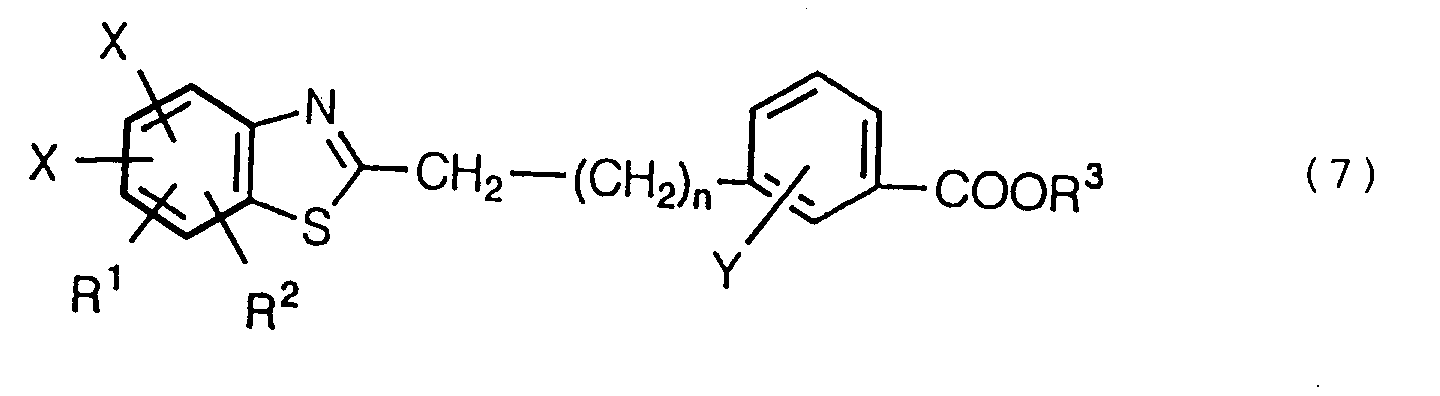
    2. The benzothiazole derivative compound according to Claim 1, wherein -B-COOR3 is a group represented by the following formula (2):
      Figure 00590001
      wherein R3 is hydrogen or C1 to C3 alkyl, Y is hydrogen, halogen, C1 to C3 lower alkyl, carboxyl or di-C1 to C3 alkylamino and n is an integer of 1 to 3,
      or a pharmaceutically acceptable salt thereof.
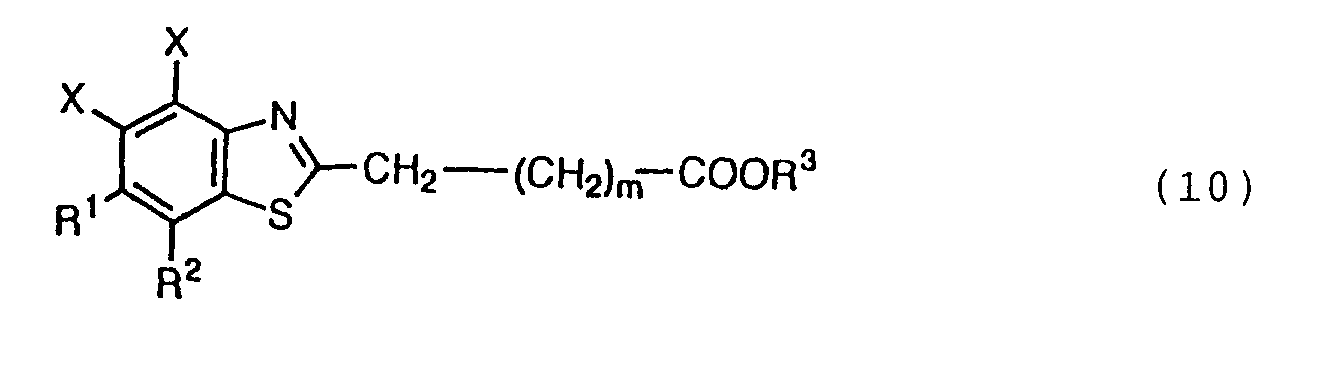
    3. The benzothiazole derivative compound according to Claim 2, which is a compound represented by the following formula (6):
      Figure 00600001
      wherein X is halogen, R1 and R2, which are the same or different, are each independently hydrogen or halogen, R3 is hydrogen or C1 to C3 alkyl, Y is hydrogen, halogen, C1 to C3 alkyl, carboxyl or di-C1 to C3 alkylamino and n is an integer of 1 to 3,
      or a pharmaceutically acceptable salt thereof.
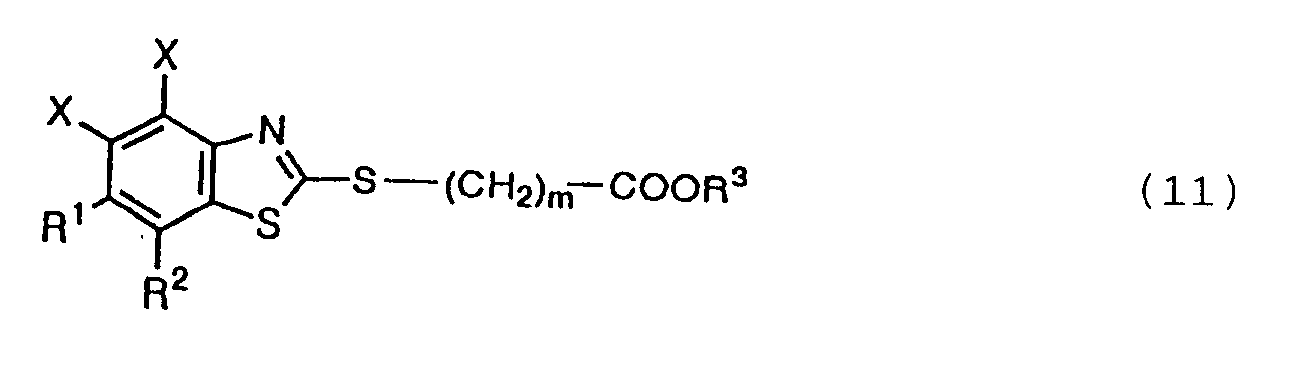
    4. The benzothiazole derivative compound according to Claim 3, wherein X is fluorine,
      or a pharmaceutically acceptable salt thereof.
    5. The benzothiazole derivative compound according to Claim 4, wherein n is 1,
      or a pharmaceutically acceptable salt thereof.
    6. The benzothiazole derivative compound according to Claim 1, wherein -B-COOR3 is a group represented by the following formula (3):
      Figure 00600002
      wherein R3 is hydrogen or C1 to C3 alkyl, Y is hydrogen, halogen, C1 to C3 alkyl, carboxyl or di-C1 to C3 alkylamino and n is an integer of 1 to 3,
      or a pharmaceutically acceptable salt thereof.
    7. The benzothiazole derivative compound according to Claim 6, which is a compound represented by the following formula (7):
      Figure 00610001
      wherein X is halogen, R1 and R2, which are the same or different, are each independently hydrogen or halogen, R3 is hydrogen or C1 to C3 alkyl, Y is hydrogen, halogen, C1 to C3 alkyl, carboxyl or di-C1 to C3 alkylamino and n is an integer of 1 to 3,
      or a pharmaceutically acceptable salt thereof.
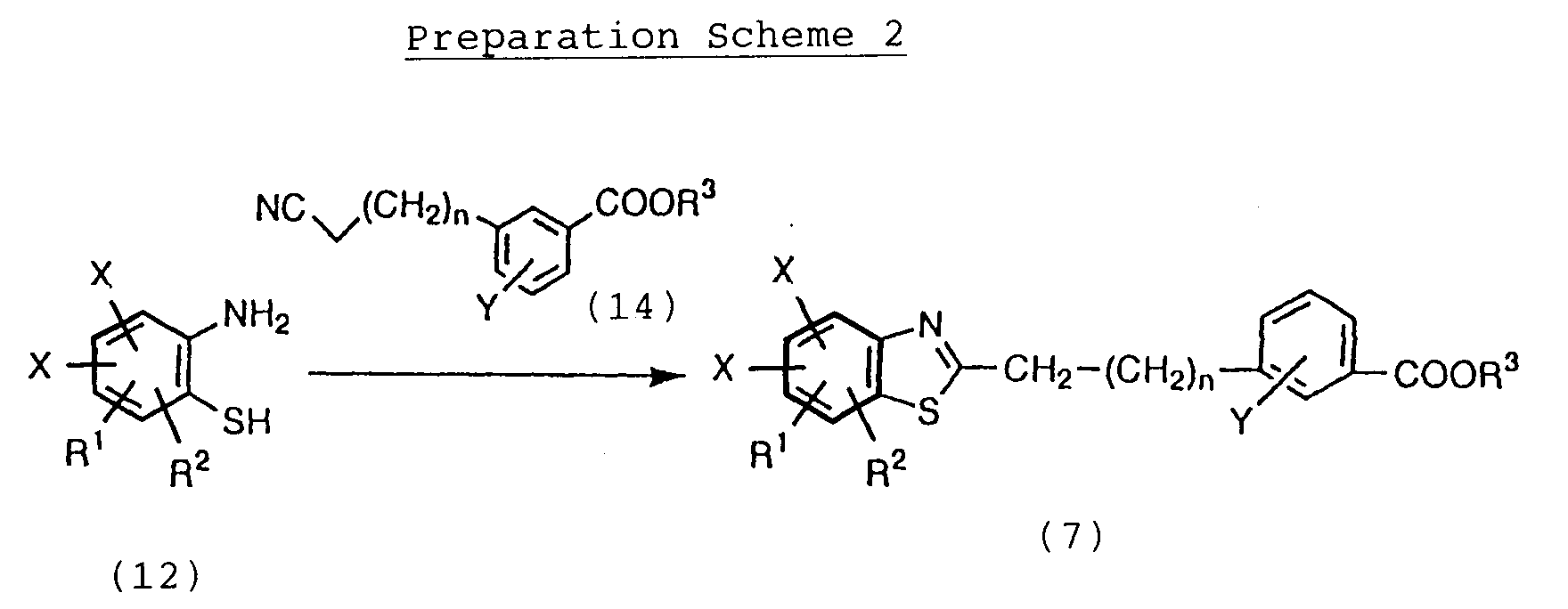
    8. The benzothiazole derivative compound according to Claim 7, wherein X is fluorine,
      or a pharmaceutically acceptable salt thereof.
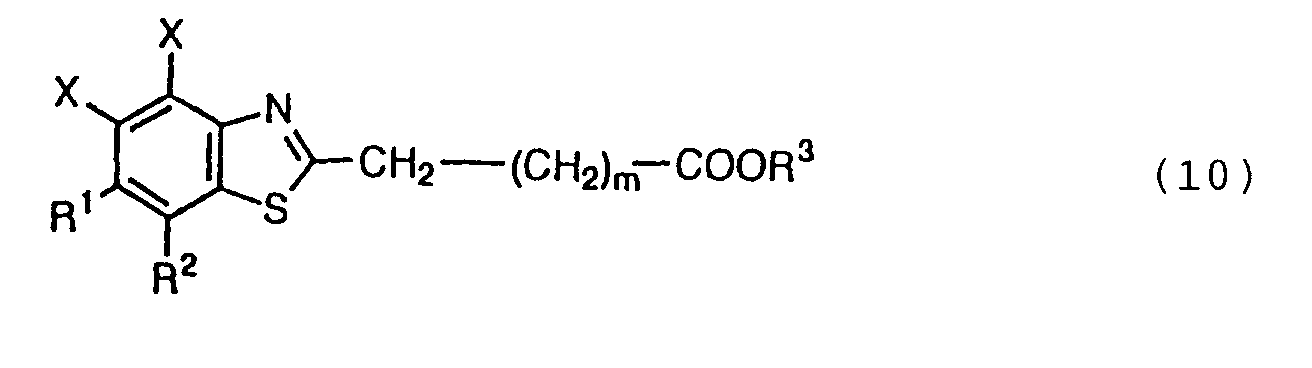
    9. The benzothiazole derivative compound according to Claim 8, wherein n is 1,
      or a pharmaceutically acceptable salt thereof.
    10. The benzothiazole derivative compound according to Claim 1, wherein -B-COOR3 is a group represented by the following formula: ―(CH2)m―COOR3 wherein R3 is hydrogen or C1 to C3 alkyl, and m is an integer of 2 to 5, provided that A is methylene,
      or a pharmaceutically acceptable salt thereof.
    11. The benzothiazole derivative compound according to Claim 10 which is a compound represented by the following formula (10):
      Figure 00630001
      wherein X is halogen, R1 and R2, which are the same or different, are each independently hydrogen or halogen, R3 is hydrogen or C1 to C3 alkyl, and m is an integer of 2 to 5,
      or a pharmaceutically acceptable salt thereof.
    12. The benzothiazole derivative compound according to Claim 11, wherein X is fluorine and m is 4,
      or a pharmaceutically acceptable salt thereof.
    13. A pharmaceutical composition which comprises an effective amount of a compound according to Claim 1 or a pharmaceutically acceptable salt thereof in admixture with a pharmaceutically acceptable carrier.
    14. The pharmaceutical composition according to Claim 13, which is an aldose reductase inhibitor.
    15. The pharmaceutical composition according to Claim 13, which is a prophylactic or therapeutic agent for the treatment of diabetic complications.
    EP95118523A 1994-11-29 1995-11-24 2-substituted benzothiazole derivatives useful in the treatment of diabetic complications Expired - Lifetime EP0714893B1 (en)

    Applications Claiming Priority (2)

    Application Number Priority Date Filing Date Title
    JP317809/94 1994-11-29
    JP31780994 1994-11-29

    Publications (2)

    Publication Number Publication Date
    EP0714893A1 EP0714893A1 (en) 1996-06-05
    EP0714893B1 true EP0714893B1 (en) 1998-10-21

    Family

    ID=18092290

    Family Applications (1)

    Application Number Title Priority Date Filing Date
    EP95118523A Expired - Lifetime EP0714893B1 (en) 1994-11-29 1995-11-24 2-substituted benzothiazole derivatives useful in the treatment of diabetic complications

    Country Status (4)

    Country Link
    US (1) US5700819A (en)
    EP (1) EP0714893B1 (en)
    CA (1) CA2163950A1 (en)
    DE (1) DE69505484T2 (en)

    Cited By (1)

    * Cited by examiner, † Cited by third party
    Publication number Priority date Publication date Assignee Title
    CN108034476A (en) * 2017-12-15 2018-05-15 东莞理工学院 Benzothiazole xanthate derivative multifunctional lubricating oil additive and preparation method and application thereof

    Families Citing this family (13)

    * Cited by examiner, † Cited by third party
    Publication number Priority date Publication date Assignee Title
    ATE297900T1 (en) * 1997-03-25 2005-07-15 Kowa Co ANILIDE COMPOUNDS AND MEDICATIONS CONTAINING SAME
    SK7522001A3 (en) * 1998-03-31 2002-02-05 Inst For Pharm Discovery Inc Substituted indolealkanoic acids
    US6121300A (en) * 1998-11-10 2000-09-19 Wagle; Dilip R. Reversing advanced glycosylation cross-links using heterocyclic-substituted thiazolium salts
    TNSN99224A1 (en) 1998-12-01 2005-11-10 Inst For Pharm Discovery Inc METHODS OF REDUCING GLUCOSE AND TRIGLYCERIDE LEVELS IN SERUM AND FOR ANTIGENESIS SUPPRESSION USING INDOLEALKANOIC ACIDS
    US6436489B1 (en) 1999-03-24 2002-08-20 Clariant International Ltd. Fluorine-containing benzothiazoles, and their use in liquid-crystalline mixtures
    BR0308537A (en) * 2002-03-20 2005-02-09 Metabolex Inc Compound, composition, and methods for treating type 2 diabetes and hyperuricemia, modulating insulin resistance and alleviating hyperlipidemia in an individual and prodrug agent
    KR20050026002A (en) * 2002-07-26 2005-03-14 디 인스티튜트스 포 파마슈티컬 디스커버리, 엘엘씨 Substituted indolealkanoic acids derivative and formulations containing same for use in treatment of diabetic complications
    US7199259B2 (en) * 2003-06-20 2007-04-03 Metabolex, Inc. Resolution of α-(phenoxy)phenylacetic acid derivatives
    AU2005247473A1 (en) * 2004-05-25 2005-12-08 Metabolex, Inc. Substituted triazoles as modulators of PPAR and methods of their preparation
    WO2005115384A2 (en) * 2004-05-25 2005-12-08 Metabolex, Inc. Bicyclic, substituted triazoles as modulators of ppar and methods of their preparation
    US7714131B2 (en) * 2005-09-23 2010-05-11 Metabolex, Inc. Process for the stereoselective preparation of (−)-halofenate and derivatives thereof
    EP2739612B1 (en) 2011-08-01 2017-06-21 Yissum Research Development Company of The Hebrew University of Jerusalem Ltd. Compounds and compositions for use in augmentation of glucose uptake and insulin secretion
    CN114163396B (en) * 2021-12-14 2022-10-04 北京阳光诺和药物研究股份有限公司 Preparation method of epalrestat intermediate

    Family Cites Families (11)

    * Cited by examiner, † Cited by third party
    Publication number Priority date Publication date Assignee Title
    US4325959A (en) * 1979-08-09 1982-04-20 The Dow Chemical Company Hypoglycemic 4-(((1,3,4, thiadiazolyl)thio)methyl)benzoic acids, ester and amides
    GB8313322D0 (en) * 1983-05-14 1983-06-22 Ciba Geigy Ag Heterocyclic-(cyclo)aliphatic carboxylic acids
    US5347008A (en) * 1983-05-14 1994-09-13 Ciba-Geigy Corporation Thio(cyclo) alkanepolycarboxylic acids containing heterocyclic substituents
    ES2032749T3 (en) * 1985-11-07 1993-03-01 Pfizer Inc. OXOFTALAZINYL-HETERO-CYCLIC ACIDS.
    JPH0676391B2 (en) * 1987-06-09 1994-09-28 フアイザー・インコーポレイテツド Process for producing oxophthalazinyl acetic acid having heterocyclic side chain such as benzothiazole
    EP0322153A3 (en) * 1987-12-21 1990-08-16 Pfizer Inc. Heterocyclic oxophtalazinyl acetic acids
    IE914455A1 (en) * 1990-12-27 1992-07-01 Green Cross Corp 1,4-benzothiazine-2-acetic acid derivatives, processes for production thereof
    JPH06172353A (en) * 1992-09-21 1994-06-21 Senju Pharmaceut Co Ltd 1,4-benzoxazine-2-acetic acid derivative and therapeutic agent for diabetic complication containing the same
    JP3195455B2 (en) * 1993-01-06 2001-08-06 ウェルファイド株式会社 Quinoline-3-acetic acid derivatives, their production and use
    JP3126541B2 (en) * 1993-03-26 2001-01-22 千寿製薬株式会社 Benzothiazole derivatives, their preparation and their use
    JPH06279453A (en) * 1993-03-29 1994-10-04 Green Cross Corp:The Pyridothiazineacetic acid derivative, its production method and its use

    Cited By (2)

    * Cited by examiner, † Cited by third party
    Publication number Priority date Publication date Assignee Title
    CN108034476A (en) * 2017-12-15 2018-05-15 东莞理工学院 Benzothiazole xanthate derivative multifunctional lubricating oil additive and preparation method and application thereof
    CN108034476B (en) * 2017-12-15 2021-02-26 东莞理工学院 Benzothiazole xanthate derivative multifunctional lubricating oil additive and preparation method and application thereof

    Also Published As

    Publication number Publication date
    DE69505484T2 (en) 1999-05-12
    US5700819A (en) 1997-12-23
    CA2163950A1 (en) 1996-05-30
    DE69505484D1 (en) 1998-11-26
    EP0714893A1 (en) 1996-06-05

    Similar Documents

    Publication Publication Date Title
    US4714762A (en) Antiarteriosclerotic substituted benzimidazol-2-yl-and 3H-imidazo[4,5-b]pyridin-2-yl-phenoxy-alkanoic acids and salts and esters thereof
    EP1180519B1 (en) Hydrochloride of fused-heterocycle compound
    US5700819A (en) 2-substituted benzothiazole derivatives and prophylactic and therapeutic agents for the treatment of diabetic complications
    US4879301A (en) Antiallergic and antiinflammatory benzothiazolinone derivatives
    RU2095354C1 (en) Thiazolidine compounds, method of preparation thereof, method of reducing sugar content in blood of mammals
    JPS6035350B2 (en) dextrorotatory spirohydantoin
    EP0243018B1 (en) Thiolactam-n-acetic acid derivatives, their production and use
    EP0017379B1 (en) Phenyl or phenoxy substituted spiro-imidazolidinedione derivatives, pharmaceutical compositions thereof and process for their preparation
    US4734421A (en) Anti-inflammatory substituted 2-benzyl-mercapto-imidazole and pyrimidine derivatives compositions and method of use therefor
    FI93013C (en) A process for the preparation of therapeutically useful pyridopyridazinone derivatives
    JP2007502824A (en) Compounds for treating metabolic disorders
    KR100299558B1 (en) Benzothiazole compound, preparation method thereof and use
    US4604406A (en) N-[6-methoxy-5-(perfluoroalkyl)-1-naphtholyl]-N-methylglycines and their thionaphthoyl analogs
    DK170201B1 (en) 5-Alkylsulfonamido-2- (N-alkylsulfonamidoheterocyclylmethyl-N-methylamino) indane compounds, these compounds for use as drugs, use of the compounds for the preparation of antiarrhythmic drugs and pharmaceutical compositions containing the compounds, and 2- (N-methylamino) ) indan compounds useful as intermediates
    US5681843A (en) Parabanic acid derivatives
    EP0298134B1 (en) Aromatic heterocyclic carboxylic acid amide derivatives, process for their preparation, and pharmaceutical composition containing same
    JP3798836B2 (en) 2-Substituted benzothiazole derivatives and prophylactic / therapeutic agents for diabetic complications containing the same
    US4312869A (en) Monosubstituted piperazines
    EP0633261B1 (en) Quinoline-3-acetic acid derivative, process for producing the same, and use thereof
    WO1995007898A1 (en) Succinamic acid compound, process for producing the same, and use thereof
    US5677300A (en) Pyridothiazineacetic acid compound, production thereof and use thereof
    US5635505A (en) 1,4-benzoxazine-2-acetic acid compound, method for production thereof and use thereof
    JPH06279453A (en) Pyridothiazineacetic acid derivative, its production method and its use
    KR20020025091A (en) Benzimidazole compounds and drugs containing the same
    KR100298003B1 (en) 1,4-benzoxazine-2-acetic acid compound, preparation method thereof and use

    Legal Events

    Date Code Title Description
    PUAI Public reference made under article 153(3) epc to a published international application that has entered the european phase

    Free format text: ORIGINAL CODE: 0009012

    AK Designated contracting states

    Kind code of ref document: A1

    Designated state(s): BE CH DE DK ES FR GB IE IT LI NL SE

    17P Request for examination filed

    Effective date: 19961024

    17Q First examination report despatched

    Effective date: 19961128

    GRAG Despatch of communication of intention to grant

    Free format text: ORIGINAL CODE: EPIDOS AGRA

    GRAG Despatch of communication of intention to grant

    Free format text: ORIGINAL CODE: EPIDOS AGRA

    GRAG Despatch of communication of intention to grant

    Free format text: ORIGINAL CODE: EPIDOS AGRA

    GRAH Despatch of communication of intention to grant a patent

    Free format text: ORIGINAL CODE: EPIDOS IGRA

    GRAH Despatch of communication of intention to grant a patent

    Free format text: ORIGINAL CODE: EPIDOS IGRA

    GRAA (expected) grant

    Free format text: ORIGINAL CODE: 0009210

    AK Designated contracting states

    Kind code of ref document: B1

    Designated state(s): BE CH DE DK ES FR GB IE IT LI NL SE

    PG25 Lapsed in a contracting state [announced via postgrant information from national office to epo]

    Ref country code: NL

    Free format text: LAPSE BECAUSE OF FAILURE TO SUBMIT A TRANSLATION OF THE DESCRIPTION OR TO PAY THE FEE WITHIN THE PRESCRIBED TIME-LIMIT

    Effective date: 19981021

    Ref country code: IT

    Free format text: LAPSE BECAUSE OF FAILURE TO SUBMIT A TRANSLATION OF THE DESCRIPTION OR TO PAY THE FEE WITHIN THE PRE;WARNING: LAPSES OF ITALIAN PATENTS WITH EFFECTIVE DATE BEFORE 2007 MAY HAVE OCCURRED AT ANY TIME BEFORE 2007. THE CORRECT EFFECTIVE DATE MAY BE DIFFERENT FROM THE ONE RECORDED.SCRIBED TIME-LIMIT

    Effective date: 19981021

    Ref country code: ES

    Free format text: THE PATENT HAS BEEN ANNULLED BY A DECISION OF A NATIONAL AUTHORITY

    Effective date: 19981021

    REG Reference to a national code

    Ref country code: CH

    Ref legal event code: EP

    REF Corresponds to:

    Ref document number: 69505484

    Country of ref document: DE

    Date of ref document: 19981126

    PG25 Lapsed in a contracting state [announced via postgrant information from national office to epo]

    Ref country code: IE

    Free format text: LAPSE BECAUSE OF NON-PAYMENT OF DUE FEES

    Effective date: 19981221

    REG Reference to a national code

    Ref country code: IE

    Ref legal event code: FG4D

    PG25 Lapsed in a contracting state [announced via postgrant information from national office to epo]

    Ref country code: SE

    Free format text: LAPSE BECAUSE OF FAILURE TO SUBMIT A TRANSLATION OF THE DESCRIPTION OR TO PAY THE FEE WITHIN THE PRESCRIBED TIME-LIMIT

    Effective date: 19990121

    Ref country code: DK

    Free format text: LAPSE BECAUSE OF FAILURE TO SUBMIT A TRANSLATION OF THE DESCRIPTION OR TO PAY THE FEE WITHIN THE PRESCRIBED TIME-LIMIT

    Effective date: 19990121

    ET Fr: translation filed
    NLV1 Nl: lapsed or annulled due to failure to fulfill the requirements of art. 29p and 29m of the patents act
    PLBE No opposition filed within time limit

    Free format text: ORIGINAL CODE: 0009261

    STAA Information on the status of an ep patent application or granted ep patent

    Free format text: STATUS: NO OPPOSITION FILED WITHIN TIME LIMIT

    REG Reference to a national code

    Ref country code: IE

    Ref legal event code: MM4A

    26N No opposition filed
    PGFP Annual fee paid to national office [announced via postgrant information from national office to epo]

    Ref country code: CH

    Payment date: 19991119

    Year of fee payment: 5

    PGFP Annual fee paid to national office [announced via postgrant information from national office to epo]

    Ref country code: BE

    Payment date: 19991123

    Year of fee payment: 5

    PGFP Annual fee paid to national office [announced via postgrant information from national office to epo]

    Ref country code: GB

    Payment date: 20001110

    Year of fee payment: 6

    PGFP Annual fee paid to national office [announced via postgrant information from national office to epo]

    Ref country code: FR

    Payment date: 20001116

    Year of fee payment: 6

    PG25 Lapsed in a contracting state [announced via postgrant information from national office to epo]

    Ref country code: LI

    Free format text: LAPSE BECAUSE OF NON-PAYMENT OF DUE FEES

    Effective date: 20001130

    Ref country code: CH

    Free format text: LAPSE BECAUSE OF NON-PAYMENT OF DUE FEES

    Effective date: 20001130

    Ref country code: BE

    Free format text: LAPSE BECAUSE OF NON-PAYMENT OF DUE FEES

    Effective date: 20001130

    PGFP Annual fee paid to national office [announced via postgrant information from national office to epo]

    Ref country code: DE

    Payment date: 20001214

    Year of fee payment: 6

    BERE Be: lapsed

    Owner name: GRELAN PHARMACEUTICAL CO. LTD

    Effective date: 20001130

    REG Reference to a national code

    Ref country code: CH

    Ref legal event code: PL

    PG25 Lapsed in a contracting state [announced via postgrant information from national office to epo]

    Ref country code: GB

    Free format text: LAPSE BECAUSE OF NON-PAYMENT OF DUE FEES

    Effective date: 20011124

    REG Reference to a national code

    Ref country code: GB

    Ref legal event code: IF02

    PG25 Lapsed in a contracting state [announced via postgrant information from national office to epo]

    Ref country code: DE

    Free format text: LAPSE BECAUSE OF NON-PAYMENT OF DUE FEES

    Effective date: 20020702

    GBPC Gb: european patent ceased through non-payment of renewal fee

    Effective date: 20011124

    PG25 Lapsed in a contracting state [announced via postgrant information from national office to epo]

    Ref country code: FR

    Free format text: LAPSE BECAUSE OF NON-PAYMENT OF DUE FEES

    Effective date: 20020730

    REG Reference to a national code

    Ref country code: FR

    Ref legal event code: ST

    REG Reference to a national code

    Ref country code: FR

    Ref legal event code: ST