EP0713916A2 - A recombinant beta-amylase - Google Patents
A recombinant beta-amylase Download PDFInfo
- Publication number
- EP0713916A2 EP0713916A2 EP95115255A EP95115255A EP0713916A2 EP 0713916 A2 EP0713916 A2 EP 0713916A2 EP 95115255 A EP95115255 A EP 95115255A EP 95115255 A EP95115255 A EP 95115255A EP 0713916 A2 EP0713916 A2 EP 0713916A2
- Authority
- EP
- European Patent Office
- Prior art keywords
- amylase
- recombinant
- enzyme
- dna
- dna molecules
- Prior art date
- Legal status (The legal status is an assumption and is not a legal conclusion. Google has not performed a legal analysis and makes no representation as to the accuracy of the status listed.)
- Granted
Links
Images


Classifications
-
- C—CHEMISTRY; METALLURGY
- C12—BIOCHEMISTRY; BEER; SPIRITS; WINE; VINEGAR; MICROBIOLOGY; ENZYMOLOGY; MUTATION OR GENETIC ENGINEERING
- C12N—MICROORGANISMS OR ENZYMES; COMPOSITIONS THEREOF; PROPAGATING, PRESERVING, OR MAINTAINING MICROORGANISMS; MUTATION OR GENETIC ENGINEERING; CULTURE MEDIA
- C12N9/00—Enzymes; Proenzymes; Compositions thereof; Processes for preparing, activating, inhibiting, separating or purifying enzymes
- C12N9/14—Hydrolases (3)
- C12N9/24—Hydrolases (3) acting on glycosyl compounds (3.2)
- C12N9/2402—Hydrolases (3) acting on glycosyl compounds (3.2) hydrolysing O- and S- glycosyl compounds (3.2.1)
- C12N9/2405—Glucanases
- C12N9/2408—Glucanases acting on alpha -1,4-glucosidic bonds
- C12N9/2411—Amylases
- C12N9/2425—Beta-amylase (3.2.1.2)
Definitions
- This invention relates to a ⁇ -amylase with an improved thermostability as well as an improved enzyme stability in the alkaline pH region, DNA molecules coding the enzyme and an expression vector containing the gene.
- Barley ⁇ -amylase is a ⁇ -amylase (1,4- ⁇ -D-glucan maltohydrolase [EC 3.2.1.2]) obtained from barley seeds and is well known along with soybean ⁇ -amylase, as a useful enzyme for the industrial maltose production used for transfusional solutions and foodstuffs.
- barley is one of the principal agricultural products for the production of livestock feeds and beverages (such as beer and whisky), from the viewpoint of the global food situation in the future it is not advisable to consume the harvested barley as a source of ⁇ -amylase.
- the barley ⁇ -amylase gene As to the barley ⁇ -amylase gene, the cDNA consisting of 1754 base pairs of cultivar Hiproly has been reported, and also the amino acid sequence consisting of 535 residues has been deduced (Eur. J. Biochem., 169, 517 (1987)). In addition, the cDNA consisting of 1775 base pairs of cultivar Haruna Nijo has been reported, and also the amino acid sequence consisting of 535 residues has been established (J. Biochem., 115, 47 (1994)).
- ⁇ -amylase To further improve the utility value of recombinant ⁇ -amylase, it is necessary to construct ⁇ -amylase with a further improved thermostability by protein engineering.
- the present invention aims to construct DNA molecules encoding recombinant ⁇ -amylase with a further improved thermostability by site-directed mutagenesis, provide recombinant vectors containing said DNA molecules, get microorganisms transformed by the vector and eventually provide recombinant ⁇ -amylase with a further improved thermostability.
- thermostability As a result of ardent studies to further improve the thermostability of ⁇ -amylase without changing the enzymatic function thereof, the inventors of the present invention have found that a sevenfold-mutant enzyme comprising the substitutions of Met181 by Leu, Ile293 by Val, Ser347 by Pro, Gln348 by Asp and Ala372 by Ser in addition to those of Ser291 by Ala and Ser346 by Pro (JP Hei6-126151) was much superior to the double-mutant enzyme in thermostability accomplishing the present invention.
- ⁇ -Amylase is a recombinant ⁇ -amylase which acts on polysaccharides having ⁇ -1,4-glucoside linkages such as soluble starch, amylose and amylopectin in addition to maltooligosaccharides with a degree of polymerization higher than 3 by liberating successively a ⁇ -maltose unit from the non-reducing ends thereof, shows more than 80% of the maximum enzymatic activity at the optimum pH range from pH 3.5 to 7.0 (37°C), retains more than 80% remaining activity after the treatment for 1 h at pH 3.5 to 12.5 (37°C), shows the maximum activity toward soluble starch at 65°C and 87% of the maximum activity at 70°c (pH 7.0), and is stable after treatment for 30 min at temperatures up to 62.5°C in the absence of substrate at pH 7.0.
- polysaccharides having ⁇ -1,4-glucoside linkages such as soluble starch, amylose and amylopectin in addition
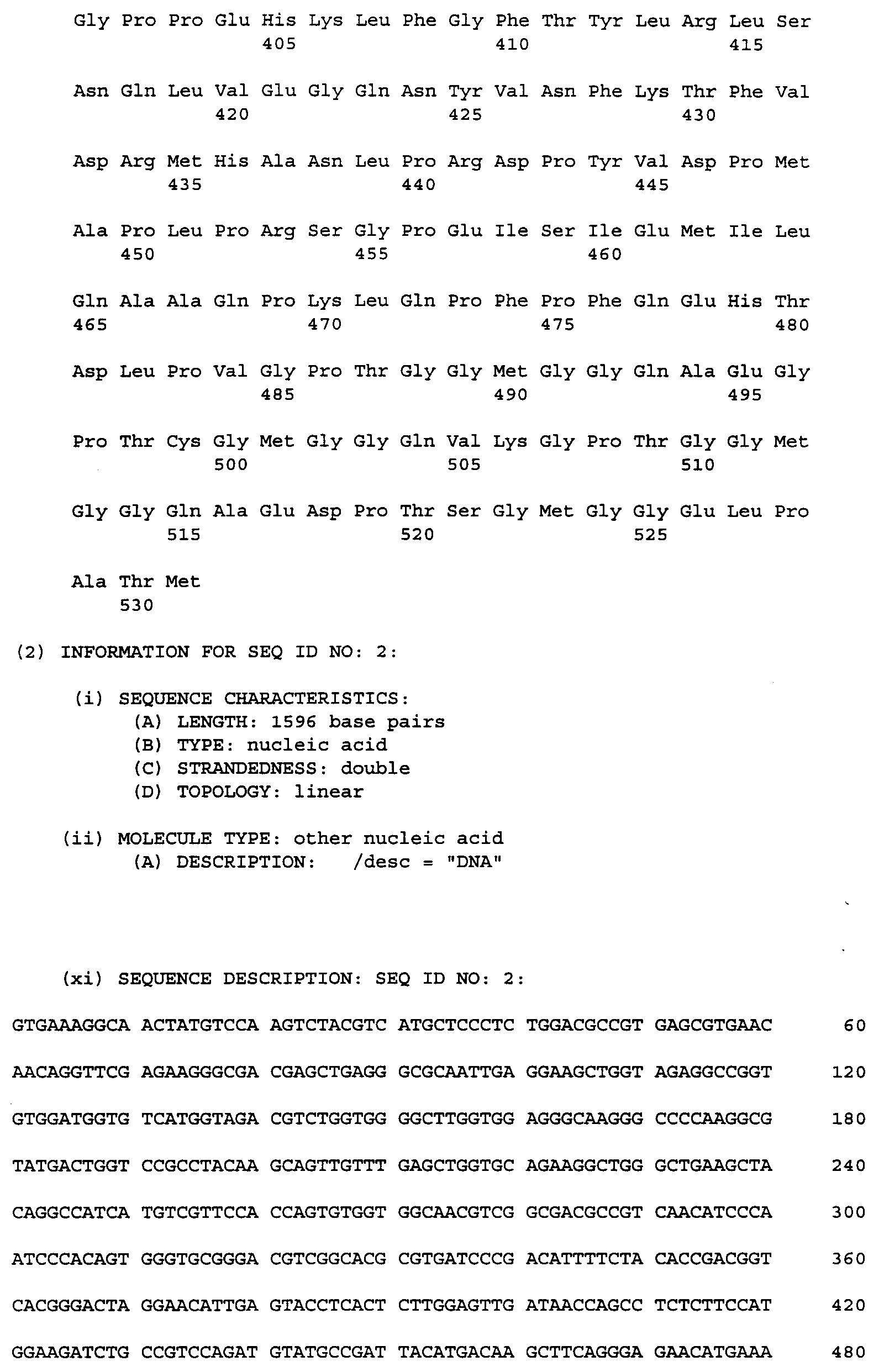
- the present invention relates to DNA molecules encoding a recombinant ⁇ -amylase having the above described enzymatic characteristics and which has the amino acid sequence as depicted in SEQ ID NO:1.
- this enzyme is encoded by a DNA molecule having the nucleotide sequence given in SEQ ID NO:2.
- the present invention relates also to DNA molecules coding for recombinant ⁇ -amylase with the above described enzymatic characteristics and which is derived from a DNA molecule encoding wild type barley ⁇ -amylase by modifying the coding sequence in order to replace in the encoded protein amino acid residues Met181 by Leu, Ile293 by Val, Ser347 by Pro, Gln348 by Asp, Ala372 by Ser, Ser291 by Ala and Ser346 by Pro.
- the present invention relates to DNA molecules which encode a ⁇ -amylase with the above described enzymatic characteristics and the nucleotide sequences of which differ from the sequences of the above described DNA molecules due to the degeneracy of the genetic code.
- the present invention also relates to DNA molecules encoding the above described ⁇ -amylase and which hybridise with one of the above described DNA molecules.
- Such DNA molecules embrace, for example, fragments, modifications, derivatives and allelic variants of the above described DNA molecules.
- hybridisation in this context means hybridisation under conventional hybridisation conditions, preferably under stringent conditions such as described by, for example, Sambrook et al. (Molecular Cloning, A Laboratory Manual, 2nd Edition, Cold Spring Harbor Laboratory Press, Cold Spring Harbor (1989), NY).
- the present invention relates to vectors containing a DNA molecule according to the invention.
- the DNA molecule encoding the recombinant ⁇ -amylase is linked to regulatory DNA elements which allow expression of the ⁇ -amylase in procaryotic host cells.
- An expression vector of this sort is exemplified by the expression vector having the sequence as shown in SEQ ID NO:3.
- the present invention relates to host cells containing a vector according to the invention.
- These can be cells of any procaryotic organism, preferably of bacteria and most preferably of the species Escherichia coli.
- the present invention also relates to methods for the production of the above described recombinant ⁇ -amylase comprising culturing a host cell according to the invention under conditions allowing expression of the ⁇ -amylase and isolating the produced ⁇ -amylase from the cells and/or culture medium.
- the present invention relates to proteins which are encoded by the above described DNA molecules and which have the enzymatic activity of a ⁇ -amylase.
- the present invention relates to the use of a ⁇ -amylase according to the invention for the production of maltose.
- the base substitution at the specific site of the gene sequence of ⁇ -amylase expression vector pBETA92 can be achieved by site-directed mutagenesis (Anal. Biochem., 200, 81 (1992)).
- Any microorganisms can be used as the host cell so far as the expression vector for ⁇ -amylase with the improved thermostability can proliferate stably and autonomously therein.
- any published method for example, the competent cell method (J. Mol. Biol., 58, 159 (1970)) may be used in the case where the host microorganism is Escherichia coli.
- DNA sequence can be performed by the chemical modification method according to Maxam-Gilbert (Methods in Enzymology, 65, 499 (1980)) or the dideoxynucleotide chain termination method (Gene, 19, 269 (1982)) or the like.
- amino acid sequence of ⁇ -amylase according to the present invention can be deduced from the DNA sequence.
- the pure preparation of recombinant ⁇ -amylase can be obtained by cell lysis, if necessary, followed by a combination of ammonium sulfate fractionation and various chromatographies such as gel filtration or ion exchange.
- ⁇ -Amylase activity may be assayed using 2.4-dichlorophenyl ⁇ -maltopentaoside (Ono Pharmaceutical) as the substrate.
- one unit of enzyme is defined as the amount of enzyme which produces 1 ⁇ mol of dichlorophenol per min at 37°C.
- Soybean ⁇ -amylase used as a control is one purchased from Amano Pharmaceutical (trade name, Biozyme M-5). The enzyme preparation was diluted using a solution of 50 mM Good's buffer (pH 7.0)/1% bovine serum albumin.
- the reaction mixture 0.4 ml of 1% soluble starch solution, 0.2 ml of various buffers (described below) and 0.2 ml of enzyme preparation, was incubated at 37°C.
- the amount of reducing sugars produced was measured by the dinitrosalicylic acid method, and results were expressed as the value relative to the maximum activity (100%).
- the optimum pH at which the enzyme shows more than 80% of the maximum activity was found to be in the range of 3.5 to 7.0.
- FIG. 1 is a drawing showing the optimum temperature of each preparation.
- ( ⁇ ... ⁇ ) indicates sevenfold-mutant ⁇ -amylase according to the present invention, ( ⁇ ) barley ⁇ -amylase, ( ⁇ ) original recombinant ⁇ -amylase and ( ⁇ ... ⁇ ) soybean ⁇ -amylase.
- FIG. 2 is a drawing showing the thermostability of each preparation.
- ( ⁇ ... ⁇ ) indicates sevenfold-mutant ⁇ -amylase according to the present invention, ( ⁇ ) barley ⁇ -amylase, ( ⁇ ) original recombinant ⁇ -amylase and ( ⁇ ... ⁇ ) soybean ⁇ -amylase.
- FIG. 3 is a drawing showing the pH stability of each preparation.
- ( ⁇ ... ⁇ ) indicates sevenfold-mutant ⁇ -amylase according to the present invention, ( ⁇ ) barley ⁇ -amylase and ( ⁇ ) original recombinant ⁇ -amylase.
- the site-directed mutagenesis was done using a Transfer Site-directed Mutagenesis kit (Clontech Laboratories).
- DNA sequence confirmed that, as shown in SEQ ID NO: 2 in the sequence list, A541 was substituted with T, T871 with G, A877 with G, AG1036 ⁇ 1037 with CC, T1039 with C, C1042 with G, G1044 with C and G1114 with T. Consequently, it was confirmed that the expression vector pBETA92/sevenfold-mutant is coding the recombinant ⁇ -amylase as shown in SEQ ID NO: 1 of the sequence list.
- Escherichia coli JM109 harboring the expression vector pBETA92/sevenfold-mutant was grown in a liquid medium (containing 1% Tryptone, 0.5% yeast extract, 1% NaCl, 0.005% Ampicillin Na and 0.1 mM isopropyl ⁇ -D-thiogalactopyranoside in 400 ml of water, pH 7.0) at 37°C for 24 h.
- a liquid medium containing 1% Tryptone, 0.5% yeast extract, 1% NaCl, 0.005% Ampicillin Na and 0.1 mM isopropyl ⁇ -D-thiogalactopyranoside in 400 ml of water, pH 7.0
- lysozyme solution 0.1% lysozyme, 20 mM Tris-HCl and 30 mM NaCl, pH 7.5
- sonication 50 W, 30 sec
- the active fractions which were eluted with 15 mM Tris-HCl (pH 8.0)/50 mM NaCl were collected, and added solid ammonium sulfate to 70% saturation.
- the precipitate formed were collected by centrifugation, dissolved in 50 mM acetate buffer (pH 5.5) and then dialyzed against the same buffer. Then the dialyzed solution was loaded onto a Toyopearl HW-50S (Toso) column (1.5 x 48.5 cm).
- the active fractions which were eluted with 50 mM acetate buffer (pH 5.5) were combined as the purified preparation of the recombinant ⁇ -amylase.
- SDS-polyacrylamide gel electrophoresis the purified preparation showed a single protein band at an apparent molecular weight of 56,000 which migrated to almost the same position as the original recombinant ⁇ -amylase.
- thermostability A great deal improvement of the sevenfold-mutant ⁇ -amylase in the thermostability was confirmed by the fact that, while the original recombinant ⁇ -amylase was almost completely inactivated by treatment at 62.5°C for 30 min, the sevenfold-mutant ⁇ -amylase was not inactivated at all by the same treatment.
- the present invention has made it possible to produce a recombinant ⁇ -amylase with improved thermostability as well as improved enzyme stability in the alkaline pH range.
Landscapes
- Life Sciences & Earth Sciences (AREA)
- Chemical & Material Sciences (AREA)
- Health & Medical Sciences (AREA)
- Genetics & Genomics (AREA)
- Organic Chemistry (AREA)
- Zoology (AREA)
- Engineering & Computer Science (AREA)
- Bioinformatics & Cheminformatics (AREA)
- Wood Science & Technology (AREA)
- Microbiology (AREA)
- Biotechnology (AREA)
- Biomedical Technology (AREA)
- Molecular Biology (AREA)
- Biochemistry (AREA)
- General Engineering & Computer Science (AREA)
- General Health & Medical Sciences (AREA)
- Medicinal Chemistry (AREA)
- Micro-Organisms Or Cultivation Processes Thereof (AREA)
- Enzymes And Modification Thereof (AREA)
- Saccharide Compounds (AREA)
Abstract
Description
- This invention relates to a β-amylase with an improved thermostability as well as an improved enzyme stability in the alkaline pH region, DNA molecules coding the enzyme and an expression vector containing the gene.
- Barley β-amylase is a β-amylase (1,4-α-D-glucan maltohydrolase [EC 3.2.1.2]) obtained from barley seeds and is well known along with soybean β-amylase, as a useful enzyme for the industrial maltose production used for transfusional solutions and foodstuffs.
- However, since barley is one of the principal agricultural products for the production of livestock feeds and beverages (such as beer and whisky), from the viewpoint of the global food situation in the future it is not advisable to consume the harvested barley as a source of β-amylase.
- Therefore, the method for producing β-amylase in microorganisms using genetic engineering techniques has been given attention as another source of this enzyme than the barley. If the efficient expression of the barley β-amylase gene in a microorganism is accomplished, the steady supply of inexpensive β-amylase will become possible, obviously contributing a great deal to the maltose production.
- As to the barley β-amylase gene, the cDNA consisting of 1754 base pairs of cultivar Hiproly has been reported, and also the amino acid sequence consisting of 535 residues has been deduced (Eur. J. Biochem., 169, 517 (1987)). In addition, the cDNA consisting of 1775 base pairs of cultivar Haruna Nijo has been reported, and also the amino acid sequence consisting of 535 residues has been established (J. Biochem., 115, 47 (1994)).
- In studies on β-amylase of cultivar Haruna Nijo, the expression vector (pBETA92) was already constructed by inserting a DNA fragment, which was prepared by deleting 55 base pairs of a full-length cDNA from its 5'-terminus and linking a SmaI linker, into the SmaI site of plasmid pKK223-3 (Pharmacia Biotech). Also the production of recombinant β-amylase has been accomplished by transforming Escherichia coli JM109 (Toyobo) with said expression vector and expressing the recombinant β-amylase gene therein. Furthermore, it was reported that the recombinant β-amylase comprising 531 amino acids showed almost the same properties as barley β-amylase (JP Hei6-58119; JP Hei6-303988).
- However, a production of recombinant β-amylase in microorganisms which shows almost the same properties to those of β-amylase from barley seeds is not sufficient for the purpose. It is because of the fact that, since soybean β-amylase is superior a little more to barley β-amylase with respect to thermostability, soybean β-amylase is more widely used in practice. Therefore, in order to improve the utility value of the barley β-amylase, it is necessary to provide it at least with the similar function (thermostability) to that of soybean β-amylase.
- As to the barley recombinant β-amylases with improved thermostability by protein engineering, it has been proved that double-mutant β-amylase wherein Ser₂₉₁ of the enzyme is replaced with Ala and Ser₃₄₆ with Pro by site-directed mutagenesis is superior to the original recombinant β-amylase (JP Hei6-126151).
- To further improve the utility value of recombinant β-amylase, it is necessary to construct β-amylase with a further improved thermostability by protein engineering.
- The present invention aims to construct DNA molecules encoding recombinant β-amylase with a further improved thermostability by site-directed mutagenesis, provide recombinant vectors containing said DNA molecules, get microorganisms transformed by the vector and eventually provide recombinant β-amylase with a further improved thermostability.
- As a result of ardent studies to further improve the thermostability of β-amylase without changing the enzymatic function thereof, the inventors of the present invention have found that a sevenfold-mutant enzyme comprising the substitutions of Met₁₈₁ by Leu, Ile₂₉₃ by Val, Ser₃₄₇ by Pro, Gln₃₄₈ by Asp and Ala₃₇₂ by Ser in addition to those of Ser₂₉₁ by Ala and Ser₃₄₆ by Pro (JP Hei6-126151) was much superior to the double-mutant enzyme in thermostability accomplishing the present invention.
- That is, the recombinant β-amylase according to the present invention is that comprising the amino acid sequence denoted by SEQ ID NO: 1.
- β-Amylase according to the present invention is a recombinant β-amylase which acts on polysaccharides having α-1,4-glucoside linkages such as soluble starch, amylose and amylopectin in addition to maltooligosaccharides with a degree of polymerization higher than 3 by liberating successively a β-maltose unit from the non-reducing ends thereof, shows more than 80% of the maximum enzymatic activity at the optimum pH range from pH 3.5 to 7.0 (37°C), retains more than 80% remaining activity after the treatment for 1 h at pH 3.5 to 12.5 (37°C), shows the maximum activity toward soluble starch at 65°C and 87% of the maximum activity at 70°c (pH 7.0), and is stable after treatment for 30 min at temperatures up to 62.5°C in the absence of substrate at pH 7.0.
- Furthermore, the present invention relates to DNA molecules encoding a recombinant β-amylase having the above described enzymatic characteristics and which has the amino acid sequence as depicted in SEQ ID NO:1. In a preferred embodiment this enzyme is encoded by a DNA molecule having the nucleotide sequence given in SEQ ID NO:2. The present invention relates also to DNA molecules coding for recombinant β-amylase with the above described enzymatic characteristics and which is derived from a DNA molecule encoding wild type barley β-amylase by modifying the coding sequence in order to replace in the encoded protein amino acid residues Met₁₈₁ by Leu, Ile₂₉₃ by Val, Ser₃₄₇ by Pro, Gln₃₄₈ by Asp, Ala₃₇₂ by Ser, Ser₂₉₁ by Ala and Ser₃₄₆ by Pro.
- Furthermore, the present invention relates to DNA molecules which encode a β-amylase with the above described enzymatic characteristics and the nucleotide sequences of which differ from the sequences of the above described DNA molecules due to the degeneracy of the genetic code. The present invention also relates to DNA molecules encoding the above described β-amylase and which hybridise with one of the above described DNA molecules. Such DNA molecules embrace, for example, fragments, modifications, derivatives and allelic variants of the above described DNA molecules. The term "hybridisation" in this context means hybridisation under conventional hybridisation conditions, preferably under stringent conditions such as described by, for example, Sambrook et al. (Molecular Cloning, A Laboratory Manual, 2nd Edition, Cold Spring Harbor Laboratory Press, Cold Spring Harbor (1989), NY).
- Furthermore, the present invention relates to vectors containing a DNA molecule according to the invention. In a preferred embodiment the DNA molecule encoding the recombinant β-amylase is linked to regulatory DNA elements which allow expression of the β-amylase in procaryotic host cells. An expression vector of this sort is exemplified by the expression vector having the sequence as shown in SEQ ID NO:3.
- In another aspect the present invention relates to host cells containing a vector according to the invention. These can be cells of any procaryotic organism, preferably of bacteria and most preferably of the species Escherichia coli.
- The present invention also relates to methods for the production of the above described recombinant β-amylase comprising culturing a host cell according to the invention under conditions allowing expression of the β-amylase and isolating the produced β-amylase from the cells and/or culture medium.
- Furthermore, the present invention relates to proteins which are encoded by the above described DNA molecules and which have the enzymatic activity of a β-amylase.
- In another aspect the present invention relates to the use of a β-amylase according to the invention for the production of maltose.
- In the following, there will be described the practical method for preparing recombinant β-amylase according to the present invention, a gene coding the enzyme and an expression vector containing the gene.
- The base substitution at the specific site of the gene sequence of β-amylase expression vector pBETA92 can be achieved by site-directed mutagenesis (Anal. Biochem., 200, 81 (1992)).
- Any microorganisms can be used as the host cell so far as the expression vector for β-amylase with the improved thermostability can proliferate stably and autonomously therein.
- As to the method to transform the host microorganism with the expression vector for recombinant β-amylase, any published method, for example, the competent cell method (J. Mol. Biol., 58, 159 (1970)) may be used in the case where the host microorganism is Escherichia coli.
- DNA sequence can be performed by the chemical modification method according to Maxam-Gilbert (Methods in Enzymology, 65, 499 (1980)) or the dideoxynucleotide chain termination method (Gene, 19, 269 (1982)) or the like.
- Furthermore, the amino acid sequence of β-amylase according to the present invention can be deduced from the DNA sequence.
- After growing the host microorganism harboring the β-amylase expression vector for a certain period, the pure preparation of recombinant β-amylase can be obtained by cell lysis, if necessary, followed by a combination of ammonium sulfate fractionation and various chromatographies such as gel filtration or ion exchange.
- β-Amylase activity may be assayed using 2.4-dichlorophenyl β-maltopentaoside (Ono Pharmaceutical) as the substrate. In this case, one unit of enzyme is defined as the amount of enzyme which produces 1 µmol of dichlorophenol per min at 37°C.
- Aliquot of enzyme preparation (30 µl each) in 1.5-ml Eppendorf tubes was incubated at 50 to 72.5°C (with 2.5°C-intervals) in a water bath for 30 min. The remaining activity was assayed using 20 µl aliquot withdrawn from the tube. The remaining activity versus temperature curves were used to determine the temperature curves of enzyme relative at which 50% of the initial activity was lost during 30-min heating period and half-inactivation temperature values provided a parameter for the ranking of thermal stabilities of the enzyme.
- Soybean β-amylase used as a control is one purchased from Amano Pharmaceutical (trade name, Biozyme M-5). The enzyme preparation was diluted using a solution of 50 mM Good's buffer (pH 7.0)/1% bovine serum albumin.
- Studies of effects of temperature and pH on β-amylase activity were done by reacting the enzyme with soluble starch at pH 7.0. The amount of the reducing sugar produced was measured by the dinitrosalicylic acid method (Denpun Kagaku Handbook, Asakurashoten, p. 188-139 (1977)), and 1 unit of the enzyme was defined as the amount which liberates 1 µmol of maltose per min.
- The reaction mixture, 0.4 ml of 1% soluble starch solution, 0.2 ml of various buffers (described below) and 0.2 ml of enzyme preparation, was incubated at 37°C. The amount of reducing sugars produced was measured by the dinitrosalicylic acid method, and results were expressed as the value relative to the maximum activity (100%). As a result of measuring the optimum pH in this manner, the optimum pH at which the enzyme shows more than 80% of the maximum activity was found to be in the range of 3.5 to 7.0.
- Buffers used were as follows:
- pH 2.5 to 3.0
- ----- Citrate buffer
- pH 3.5 to 5.5
- ----- Acetate buffer
- pH 6.0 to 8.0
- ----- Good's buffer
- pH 8.5
- ----- Tris-maleate buffer
- pH 9.0 to 11.0
- ----- Glycine buffer
- To the enzyme preparation (50 µl) was added 100 mM various buffers (50 µl) and the mixture was incubated at 37°C for 1 h. Then 0.9 ml of 500 mM Good's buffer (pH 7.0)/1% bovine serum albumin solution was added. To 0.4 ml aliquot withdrawn was added 0.4 ml of 1% soluble starch solution (pH 7.0), and the mixture was incubated at 37°C and the remaining enzymatic activity was measured. As a result of measuring pH stability in this manner, the pH range where more than 80% of the original activity was stably retained was found to be 3.5 to 12.5.
- Buffers used were as follows:
- pH 3.0
- ----- Citrate buffer
- pH 3.5 to 5.5
- ----- Acetate buffer
- pH 6.0 to 8.0
- ----- Good's buffer
- pH 8.5
- ----- Tris-maleate buffer
- pH 9.0 to 11.5
- ----- Glycine buffer
- pH 12.0 to 13.0
- ----- KCl-NaOH buffer
- Fig. 1 is a drawing showing the optimum temperature of each preparation. In the figure, ( □...□ ) indicates sevenfold-mutant β-amylase according to the present invention, ( ●―● ) barley β-amylase, ( ○―○ ) original recombinant β-amylase and ( ■...■ ) soybean β-amylase.
- Fig. 2 is a drawing showing the thermostability of each preparation. In the figure, ( □...□ ) indicates sevenfold-mutant β-amylase according to the present invention, ( ●―● ) barley β-amylase, ( ○―○ ) original recombinant β-amylase and ( ■...■ ) soybean β-amylase.
- Fig. 3 is a drawing showing the pH stability of each preparation. In the figure, ( □...□ ) indicates sevenfold-mutant β-amylase according to the present invention, ( ●―● ) barley β-amylase and ( ○―○ ) original recombinant β-amylase.
- The invention will now be described in further detail with reference to specific examples, however, it is understood that the scope of the present invention is not to be construed as being limited to them in any way.
- The site-directed mutagenesis was done using a Transfer Site-directed Mutagenesis kit (Clontech Laboratories).
- Using the following four mutagenesis primers 5'-AGCTGGAGAGTTGAGGTACCC-3' (for Met₁₈₁ to Leu; SEQ ID NO: 4), 5'-AATCAAGATCGCTGGCGTTCACTGGTG-3' (for Ser₂₉₁ to Ala and Ile₂₉₃ to Val; SEQ ID NO: 5), 5'-TTCGGAGCAACCCCCGGACGCGATGAGCGCA-3' (for Ser₃₄₆ to Pro, Ser₃₄₇ to Pro and Gln₃₄₈ to Asp; SEQ ID NO: 6) and 5'-CCTAAATGTGTCATGCGAAAA-3' (for Ala₃₇₂ to Ser; SEQ ID NO: 7) and the selection primer 5'-GGTTGAGTATTCACCAGTC-3' (SEQ ID NO: 8), the site-directed mutagenesis was done according to the manual provided with the kit to obtain the recombinant β-amylase (sevenfold-mutant β-amylase) expression vector (pBETA92/sevenfold-mutant) as shown in SEQ ID NO: 3.
- DNA sequence confirmed that, as shown in SEQ ID NO: 2 in the sequence list, A₅₄₁ was substituted with T, T₈₇₁ with G, A₈₇₇ with G, AG₁₀₃₆₋₁₀₃₇ with CC, T₁₀₃₉ with C, C₁₀₄₂ with G, G₁₀₄₄ with C and G₁₁₁₄ with T. Consequently, it was confirmed that the expression vector pBETA92/sevenfold-mutant is coding the recombinant β-amylase as shown in SEQ ID NO: 1 of the sequence list.
- Escherichia coli JM109 harboring the expression vector pBETA92/sevenfold-mutant was grown in a liquid medium (containing 1% Tryptone, 0.5% yeast extract, 1% NaCl, 0.005% Ampicillin Na and 0.1 mM isopropyl β-D-thiogalactopyranoside in 400 ml of water, pH 7.0) at 37°C for 24 h. After centrifugation to remove the culture medium, packed cells were suspended in a lysozyme solution (0.025% lysozyme, 20 mM Tris-HCl and 30 mM NaCl, pH 7.5) for 30 min on ice, and disrupted by sonication (50 W, 30 sec) followed by centrifugation.
- To the above crude extract was added solid ammonium sulfate to 30% saturation. After the precipitate was removed by centrifugation, the supernatant was loaded onto a Butyl Toyopearl 650S (Toso) column (2.5 x 18.5 cm). The active fractions which were eluted with 50 mM acetate buffer (pH 5.5) were collected and dialyzed against 15 mM Tris-HCl (pH 8.0). The dialyzed solution was centrifuged to remove insoluble materials and then loaded onto a DEAE-Toyopearl 650S (Toso) column (2.5 x 18.5 cm). The active fractions which were eluted with 15 mM Tris-HCl (pH 8.0)/50 mM NaCl were collected, and added solid ammonium sulfate to 70% saturation. The precipitate formed were collected by centrifugation, dissolved in 50 mM acetate buffer (pH 5.5) and then dialyzed against the same buffer. Then the dialyzed solution was loaded onto a Toyopearl HW-50S (Toso) column (1.5 x 48.5 cm). The active fractions which were eluted with 50 mM acetate buffer (pH 5.5) were combined as the purified preparation of the recombinant β-amylase. On SDS-polyacrylamide gel electrophoresis the purified preparation showed a single protein band at an apparent molecular weight of 56,000 which migrated to almost the same position as the original recombinant β-amylase.
- Comparison of the enzymatic properties of the sevenfold-mutant β-amylase with those of the original recombinant β-amylase revealed that both enzymes were almost similar except for the optimum temperature, thermostability and pH stability.
- Results of studies on the optimum temperature are shown in Fig. 1. In contrast to the barley β-amylase and the original recombinant β-amylase which showed the maximum activity at 55°C and almost no activity at 65 to 70°C, the sevenfold-mutant β-amylase was found to show the maximum activity at 65°C and a significant activity even at 70°C. It was also confirmed that the sevenfold-mutant β-amylase was significantly improved in thermostability as compared with the soybean β-amylase which showed the maximum activity at 60°C.
- From heat-inactivation curves shown in Fig. 2, temperatures at which 50% of the initial activity was lost during a 30 min heating time were found as follows:
- barley β-amylase
- → 56.8°C
- original recombinant β-amylase
- → 57.4°C
- sevenfold-mutant β-amylase
- → 69.0°C
- soybean β-amylase
- → 63.2°C
- A great deal improvement of the sevenfold-mutant β-amylase in the thermostability was confirmed by the fact that, while the original recombinant β-amylase was almost completely inactivated by treatment at 62.5°C for 30 min, the sevenfold-mutant β-amylase was not inactivated at all by the same treatment.
- As to the pH stability, as shown in Fig. 3, while the barley β-amylase and the original recombinant β-amylase were stable in the pH range of 3.5 to 9.5, the sevenfold-mutant β-amylase was stable in the pH range of 3.5 to 12.5, indicating a significant improvement in the stability of the latter β-amylase in the alkaline pH range.
- The present invention has made it possible to produce a recombinant β-amylase with improved thermostability as well as improved enzyme stability in the alkaline pH range.




Claims (8)
- A recombinant β-amylase having the following enzymatic characteristics:- activity to liberate successively a β-maltose unit from the non-reducing ends when acting on α-1,4-glucans;- substrate specificity to hydrolyse polysaccharides having α-1,4-glucoside linkages such as soluble starch, amylose and amylopectin as well as maltooligosaccharides with a degree of polymerisation higher than 3;- optimum pH ranging from 3.5 to 7.0 where said enzyme shows more than 80% of the maximum activity at 37°C;- pH range for the enzyme stability of 3.5 to 12.5 where said enzyme retains more than 80% of the maximum activity after the treatment at 37°C for 1 hour;- optimum temperature indicating that said enzyme shows the maximum activity towards soluble starch as substrate at 65°C and 87% of the maximum activity at 70°C (pH 7.0); and- temperature for the enzyme stability indicating that in the absence of substrate, said enzyme is stable for 30 minutes at temperatures of up to 62.5°C (pH 7.0).
- A DNA molecule encoding a recombinant β-amylase having the enzymatic characteristics as defined in claim 1, selected from the group consisting of:(a) DNA molecules encoding a β-amylase having the amino acid sequence as depicted in SEQ ID NO:1;(b) DNA molecules having the nucleotide sequence as depicted in SEQ ID NO:2;(c) DNA molecules which are derived from a DNA molecule encoding wild type barley β-amylase by modifying the coding sequence in order to replace in the encoded protein amino acid residues Met₁₈₁ by Leu, Ile₂₉₃ by Val, Ser₃₄₇ by Pro, Gln₃₄₈ by Asp, Ala₃₇₂ by Ser, Ser₂₉₁ by Ala and Ser₃₄₆ by Pro;(d) DNA molecules the sequence of which differs from that of the molecules as defined in (a), (b) or (c) due to the degeneracy of the genetic code; and(e) DNA molecules hybridising with DNA molecules as defined in (a), (b), (c) or (d).
- A vector comprising a DNA molecule of claim 2.
- A vector of claim 3 in which the DNA molecule is linked to regulatory DNA elements which allow expression of the β-amylase in procaryotic host cells.
- A host cell containing a vector of claim 3 or 4.
- A method for producing β-amylase which comprises culturing a host cell of claim 5 under conditions allowing expression of the β-amylase and isolating the produced β-amylase from the cells and/or culture medium.
- A protein having the enzymatic activity of a β-amylase which is encoded by a DNA molecule of claim 2.
- Use of the β-amylase of claim 1 or 7 for the production of maltose.
Applications Claiming Priority (3)
| Application Number | Priority Date | Filing Date | Title |
|---|---|---|---|
| JP23308694 | 1994-09-28 | ||
| JP233086/94 | 1994-09-28 | ||
| JP23308694A JP3471916B2 (en) | 1994-09-28 | 1994-09-28 | Recombinant β-amylase |
Publications (3)
| Publication Number | Publication Date |
|---|---|
| EP0713916A2 true EP0713916A2 (en) | 1996-05-29 |
| EP0713916A3 EP0713916A3 (en) | 1996-10-23 |
| EP0713916B1 EP0713916B1 (en) | 1999-06-23 |
Family
ID=16949577
Family Applications (1)
| Application Number | Title | Priority Date | Filing Date |
|---|---|---|---|
| EP95115255A Expired - Lifetime EP0713916B1 (en) | 1994-09-28 | 1995-09-27 | A recombinant beta-amylase |
Country Status (5)
| Country | Link |
|---|---|
| US (2) | US5688684A (en) |
| EP (1) | EP0713916B1 (en) |
| JP (1) | JP3471916B2 (en) |
| DE (1) | DE69510430T2 (en) |
| DK (1) | DK0713916T3 (en) |
Cited By (2)
| Publication number | Priority date | Publication date | Assignee | Title |
|---|---|---|---|---|
| WO1999000514A1 (en) | 1997-06-26 | 1999-01-07 | Sapporo Breweries Ltd. | A method for identifying a barley variety and a barley having a brewing property |
| EP0769556A4 (en) * | 1995-03-27 | 1999-06-02 | Sapporo Breweries | BARLEY -g(b)-AMYLASE STRUCTURAL GENE |
Families Citing this family (4)
| Publication number | Priority date | Publication date | Assignee | Title |
|---|---|---|---|---|
| JP2644912B2 (en) | 1990-08-29 | 1997-08-25 | 株式会社日立製作所 | Vacuum processing apparatus and operating method thereof |
| KR950020658A (en) * | 1993-12-07 | 1995-07-24 | 새끼자와 다다시 | Magnetic disk device |
| US20030229922A1 (en) * | 1998-10-13 | 2003-12-11 | Genesis Research And Development Corporation Ltd. | Materials and methods for the modification of plant cell wall polysaccharides |
| US20040063184A1 (en) | 2002-09-26 | 2004-04-01 | Novozymes North America, Inc. | Fermentation processes and compositions |
Citations (3)
| Publication number | Priority date | Publication date | Assignee | Title |
|---|---|---|---|---|
| JPH0558119A (en) | 1991-09-06 | 1993-03-09 | Bridgestone Corp | Pneumatic radial tire for heavy duty service |
| JPH06126151A (en) | 1992-10-16 | 1994-05-10 | Ohtsu Tire & Rubber Co Ltd :The | Particle filling device of glass pipe |
| JPH06303988A (en) | 1993-04-20 | 1994-11-01 | Asahi Chem Ind Co Ltd | Method for producing edible cellulose |
Family Cites Families (4)
| Publication number | Priority date | Publication date | Assignee | Title |
|---|---|---|---|---|
| US5188956A (en) * | 1988-07-01 | 1993-02-23 | Showa Denka K.K. | Thermostable amylase |
| US5273762A (en) * | 1988-09-27 | 1993-12-28 | Suomen Sokeri Oy | Method for the fermentation of beer |
| US5312739A (en) * | 1992-05-28 | 1994-05-17 | National Science Council | Production of high-maltose syrup and high-protein byproduct from materials that contain starch and protein by enzymatic process |
| JPH08256779A (en) * | 1995-03-27 | 1996-10-08 | Sapporo Breweries Ltd | Barley β-amylase structural gene |
-
1994
- 1994-09-28 JP JP23308694A patent/JP3471916B2/en not_active Expired - Fee Related
-
1995
- 1995-09-21 US US08/531,601 patent/US5688684A/en not_active Expired - Lifetime
- 1995-09-27 DK DK95115255T patent/DK0713916T3/en active
- 1995-09-27 DE DE69510430T patent/DE69510430T2/en not_active Expired - Lifetime
- 1995-09-27 EP EP95115255A patent/EP0713916B1/en not_active Expired - Lifetime
-
1997
- 1997-05-20 US US08/859,032 patent/US5863784A/en not_active Expired - Lifetime
Patent Citations (3)
| Publication number | Priority date | Publication date | Assignee | Title |
|---|---|---|---|---|
| JPH0558119A (en) | 1991-09-06 | 1993-03-09 | Bridgestone Corp | Pneumatic radial tire for heavy duty service |
| JPH06126151A (en) | 1992-10-16 | 1994-05-10 | Ohtsu Tire & Rubber Co Ltd :The | Particle filling device of glass pipe |
| JPH06303988A (en) | 1993-04-20 | 1994-11-01 | Asahi Chem Ind Co Ltd | Method for producing edible cellulose |
Non-Patent Citations (8)
| Title |
|---|
| ANAL. BIOCHEM., vol. 200, 1992, pages 81 |
| ASAKURASHOTEN: "Denpun Kagaku Handbook", 1977, pages: 188 - 189 |
| EUR. J. BIOCHEM., vol. 169, 1987, pages 517 |
| GENE, vol. 19, 1982, pages 269 |
| J. BIOCHEM., vol. 115, 1994, pages 47 |
| J. MOL. BIOL., vol. 58, 1970, pages 159 |
| MAXAM-GILBERT, METHODS IN ENZYMOLOGY, vol. 65, 1980, pages 499 |
| SAMBROOK ET AL.: "Molecular Cloning, A Laboratory Manual, 2nd Edition", 1989, COLD SPRING HARBOR LABORATORY PRESS, COLD SPRING HARBOR, NY |
Cited By (4)
| Publication number | Priority date | Publication date | Assignee | Title |
|---|---|---|---|---|
| EP0769556A4 (en) * | 1995-03-27 | 1999-06-02 | Sapporo Breweries | BARLEY -g(b)-AMYLASE STRUCTURAL GENE |
| WO1999000514A1 (en) | 1997-06-26 | 1999-01-07 | Sapporo Breweries Ltd. | A method for identifying a barley variety and a barley having a brewing property |
| AU746726B2 (en) * | 1997-06-26 | 2002-05-02 | Sapporo Breweries Limited | A method for identifying a barley variety and a barley having a brewing property |
| US6492576B2 (en) | 1997-06-26 | 2002-12-10 | Sapporo Breweries Ltd. | Method for identifying a barley variety and a barley having a brewing property |
Also Published As
| Publication number | Publication date |
|---|---|
| EP0713916B1 (en) | 1999-06-23 |
| DE69510430T2 (en) | 1999-12-16 |
| DK0713916T3 (en) | 1999-12-13 |
| JPH0889245A (en) | 1996-04-09 |
| US5688684A (en) | 1997-11-18 |
| EP0713916A3 (en) | 1996-10-23 |
| JP3471916B2 (en) | 2003-12-02 |
| US5863784A (en) | 1999-01-26 |
| DE69510430D1 (en) | 1999-07-29 |
Similar Documents
| Publication | Publication Date | Title |
|---|---|---|
| US7816113B2 (en) | Starch debranching enzymes | |
| JP3557289B2 (en) | Recombinant thermostable enzyme that releases trehalose from non-reducing carbohydrates | |
| Kato et al. | Purification and characterization of new trehalose-producing enzymes isolated from the hyperthermophilic archae, Sulfolobus solfataricus KM1 | |
| EP1092014A2 (en) | Starch debranching enzymes | |
| JP3810457B2 (en) | Recombinant thermostable enzyme that converts maltose to trehalose | |
| JP3557288B2 (en) | Recombinant thermostable enzyme that produces non-reducing carbohydrates with terminal trehalose structure from reducing starch sugars | |
| JP2000228980A5 (en) | ||
| EP0713916B1 (en) | A recombinant beta-amylase | |
| Fang et al. | Characterization of the trehalosyl dextrin-forming enzyme from the thermophilic archaeon Sulfolobus solfataricus ATCC 35092 | |
| US5550046A (en) | DNA encoding α-glucosidase and method of producing same by genetic engineering | |
| EP0402092A2 (en) | Alpha-amylase-pullulanase enzyme | |
| JPH09173077A (en) | Ultra thermostable acid α-amylase and DNA fragment containing the α-amylase producing gene | |
| JPH10150986A (en) | Hyperthermostable 4-α-glucanotransferase | |
| KR0133727B1 (en) | Polypeptide having isoamylase activity and preparation method thereof | |
| KR100637314B1 (en) | Super heat-resistant cyclodextrin glucanotransferase and production method thereof | |
| JPH0565157B2 (en) | ||
| EP0769556B1 (en) | Gene coding for a heat stable beta-amylase from barley | |
| KR100319539B1 (en) | Novel trehalose synthase fusion gene and fusion protein and process for preparation of trehalose therefrom | |
| KR100370882B1 (en) | Recombinant enzyme from Thermus caldophilus GK24 and process for preparation of α-1,4-amylose using the same | |
| KR20060065811A (en) | Novel ultra-heat-resistant amylase derived from Pyrococcus puriosus having catalytic properties of alpha-amylase and cyclodextrin-hydrolase and its production method | |
| JPH1014580A (en) | Thermostable phosphorylase and method for producing the same | |
| CN116064480A (en) | A cyclization mutant of α-glucosidase with improved thermostability and its construction method | |
| JP2004173650A (en) | Recombinant vector containing α-glucosidase gene, transformant and method for producing α-glucosidase using the same | |
| EP0959130B9 (en) | Cloning and expression of a new glucoamylase gene from endomyces fibuliger | |
| KR100349932B1 (en) | α-glucosidase from extreme thermophile, Thermus caldophilus GK24 and its production |
Legal Events
| Date | Code | Title | Description |
|---|---|---|---|
| PUAI | Public reference made under article 153(3) epc to a published international application that has entered the european phase |
Free format text: ORIGINAL CODE: 0009012 |
|
| AK | Designated contracting states |
Kind code of ref document: A2 Designated state(s): DE DK FR GB NL |
|
| PUAL | Search report despatched |
Free format text: ORIGINAL CODE: 0009013 |
|
| AK | Designated contracting states |
Kind code of ref document: A3 Designated state(s): DE DK FR GB NL |
|
| 17P | Request for examination filed |
Effective date: 19961111 |
|
| 17Q | First examination report despatched |
Effective date: 19970217 |
|
| GRAG | Despatch of communication of intention to grant |
Free format text: ORIGINAL CODE: EPIDOS AGRA |
|
| GRAG | Despatch of communication of intention to grant |
Free format text: ORIGINAL CODE: EPIDOS AGRA |
|
| GRAG | Despatch of communication of intention to grant |
Free format text: ORIGINAL CODE: EPIDOS AGRA |
|
| GRAH | Despatch of communication of intention to grant a patent |
Free format text: ORIGINAL CODE: EPIDOS IGRA |
|
| GRAH | Despatch of communication of intention to grant a patent |
Free format text: ORIGINAL CODE: EPIDOS IGRA |
|
| GRAA | (expected) grant |
Free format text: ORIGINAL CODE: 0009210 |
|
| AK | Designated contracting states |
Kind code of ref document: B1 Designated state(s): DE DK FR GB NL |
|
| REF | Corresponds to: |
Ref document number: 69510430 Country of ref document: DE Date of ref document: 19990729 |
|
| ET | Fr: translation filed | ||
| REG | Reference to a national code |
Ref country code: DK Ref legal event code: T3 |
|
| PLBE | No opposition filed within time limit |
Free format text: ORIGINAL CODE: 0009261 |
|
| STAA | Information on the status of an ep patent application or granted ep patent |
Free format text: STATUS: NO OPPOSITION FILED WITHIN TIME LIMIT |
|
| 26N | No opposition filed | ||
| REG | Reference to a national code |
Ref country code: GB Ref legal event code: IF02 |
|
| PGFP | Annual fee paid to national office [announced via postgrant information from national office to epo] |
Ref country code: NL Payment date: 20130810 Year of fee payment: 19 Ref country code: DK Payment date: 20130910 Year of fee payment: 19 Ref country code: DE Payment date: 20130925 Year of fee payment: 19 |
|
| PGFP | Annual fee paid to national office [announced via postgrant information from national office to epo] |
Ref country code: GB Payment date: 20130925 Year of fee payment: 19 Ref country code: FR Payment date: 20130910 Year of fee payment: 19 |
|
| REG | Reference to a national code |
Ref country code: DE Ref legal event code: R119 Ref document number: 69510430 Country of ref document: DE |
|
| REG | Reference to a national code |
Ref country code: DK Ref legal event code: EBP Effective date: 20140930 |
|
| GBPC | Gb: european patent ceased through non-payment of renewal fee |
Effective date: 20140927 |
|
| REG | Reference to a national code |
Ref country code: DE Ref legal event code: R119 Ref document number: 69510430 Country of ref document: DE Effective date: 20150401 |
|
| REG | Reference to a national code |
Ref country code: FR Ref legal event code: ST Effective date: 20150529 |
|
| PG25 | Lapsed in a contracting state [announced via postgrant information from national office to epo] |
Ref country code: NL Free format text: LAPSE BECAUSE OF NON-PAYMENT OF DUE FEES Effective date: 20150401 |
|
| PG25 | Lapsed in a contracting state [announced via postgrant information from national office to epo] |
Ref country code: DE Free format text: LAPSE BECAUSE OF NON-PAYMENT OF DUE FEES Effective date: 20150401 Ref country code: GB Free format text: LAPSE BECAUSE OF NON-PAYMENT OF DUE FEES Effective date: 20140927 |
|
| PG25 | Lapsed in a contracting state [announced via postgrant information from national office to epo] |
Ref country code: FR Free format text: LAPSE BECAUSE OF NON-PAYMENT OF DUE FEES Effective date: 20140930 |
|
| PG25 | Lapsed in a contracting state [announced via postgrant information from national office to epo] |
Ref country code: DK Free format text: LAPSE BECAUSE OF NON-PAYMENT OF DUE FEES Effective date: 20140930 |