EP0709408A1 - Amine containing polymers and products therefrom - Google Patents
Amine containing polymers and products therefrom Download PDFInfo
- Publication number
- EP0709408A1 EP0709408A1 EP95116795A EP95116795A EP0709408A1 EP 0709408 A1 EP0709408 A1 EP 0709408A1 EP 95116795 A EP95116795 A EP 95116795A EP 95116795 A EP95116795 A EP 95116795A EP 0709408 A1 EP0709408 A1 EP 0709408A1
- Authority
- EP
- European Patent Office
- Prior art keywords
- group
- carbon atoms
- polymer
- functionalized polymer
- alkylene
- Prior art date
- Legal status (The legal status is an assumption and is not a legal conclusion. Google has not performed a legal analysis and makes no representation as to the accuracy of the status listed.)
- Granted
Links
- 229920000642 polymer Polymers 0.000 title claims abstract description 149
- 150000001412 amines Chemical class 0.000 title claims description 30
- 125000004432 carbon atom Chemical group C* 0.000 claims abstract description 41
- 125000000217 alkyl group Chemical group 0.000 claims abstract description 39
- 125000000524 functional group Chemical group 0.000 claims abstract description 30
- 125000002947 alkylene group Chemical group 0.000 claims abstract description 29
- 125000000753 cycloalkyl group Chemical group 0.000 claims abstract description 21
- 125000003710 aryl alkyl group Chemical group 0.000 claims abstract description 16
- 125000001570 methylene group Chemical group [H]C([H])([*:1])[*:2] 0.000 claims abstract description 8
- 239000000203 mixture Substances 0.000 claims description 80
- 229920001971 elastomer Polymers 0.000 claims description 66
- 239000005060 rubber Substances 0.000 claims description 49
- 239000000178 monomer Substances 0.000 claims description 39
- RWRDLPDLKQPQOW-UHFFFAOYSA-N Pyrrolidine Chemical compound C1CCNC1 RWRDLPDLKQPQOW-UHFFFAOYSA-N 0.000 claims description 33
- 239000003795 chemical substances by application Substances 0.000 claims description 33
- 239000002904 solvent Substances 0.000 claims description 26
- 239000006229 carbon black Substances 0.000 claims description 24
- 125000003118 aryl group Chemical group 0.000 claims description 22
- KWYHDKDOAIKMQN-UHFFFAOYSA-N N,N,N',N'-tetramethylethylenediamine Chemical compound CN(C)CCN(C)C KWYHDKDOAIKMQN-UHFFFAOYSA-N 0.000 claims description 21
- 150000001993 dienes Chemical class 0.000 claims description 19
- 239000007795 chemical reaction product Substances 0.000 claims description 15
- 150000001875 compounds Chemical class 0.000 claims description 14
- ZSIQJIWKELUFRJ-UHFFFAOYSA-N azepane Chemical compound C1CCCNCC1 ZSIQJIWKELUFRJ-UHFFFAOYSA-N 0.000 claims description 13
- 239000003505 polymerization initiator Substances 0.000 claims description 13
- 150000002900 organolithium compounds Chemical class 0.000 claims description 11
- NQRYJNQNLNOLGT-UHFFFAOYSA-N Piperidine Chemical compound C1CCNCC1 NQRYJNQNLNOLGT-UHFFFAOYSA-N 0.000 claims description 10
- 125000001997 phenyl group Chemical group [H]C1=C([H])C([H])=C(*)C([H])=C1[H] 0.000 claims description 9
- 230000008878 coupling Effects 0.000 claims description 8
- 238000010168 coupling process Methods 0.000 claims description 8
- 238000005859 coupling reaction Methods 0.000 claims description 8
- 125000001424 substituent group Chemical group 0.000 claims description 8
- UFADJPZTTUWZMP-UHFFFAOYSA-N azacyclotridecane Chemical compound C1CCCCCCNCCCCC1 UFADJPZTTUWZMP-UHFFFAOYSA-N 0.000 claims description 7
- 125000002619 bicyclic group Chemical group 0.000 claims description 7
- 239000007822 coupling agent Substances 0.000 claims description 6
- NENLYAQPNATJSU-UHFFFAOYSA-N 1,2,3,4,4a,5,6,7,8,8a-decahydroisoquinoline Chemical compound C1NCCC2CCCCC21 NENLYAQPNATJSU-UHFFFAOYSA-N 0.000 claims description 5
- PDELQDSYLBLPQO-UHFFFAOYSA-N 2,3,3a,4,5,6,7,7a-octahydro-1h-indole Chemical compound C1CCCC2NCCC21 PDELQDSYLBLPQO-UHFFFAOYSA-N 0.000 claims description 5
- YBRAVTNTXVZNMD-UHFFFAOYSA-N 3,3,5-trimethylazepane Chemical compound CC1CCNCC(C)(C)C1 YBRAVTNTXVZNMD-UHFFFAOYSA-N 0.000 claims description 5
- ATJFFYVFTNAWJD-UHFFFAOYSA-N Tin Chemical compound [Sn] ATJFFYVFTNAWJD-UHFFFAOYSA-N 0.000 claims description 5
- QXNDZONIWRINJR-UHFFFAOYSA-N azocane Chemical compound C1CCCNCCC1 QXNDZONIWRINJR-UHFFFAOYSA-N 0.000 claims description 5
- 238000005096 rolling process Methods 0.000 claims description 5
- SMPZWMIKAASJFW-UHFFFAOYSA-N 1-azacycloheptadec-10-ene Chemical compound C1CCCCC=CCCCCCCNCCC1 SMPZWMIKAASJFW-UHFFFAOYSA-N 0.000 claims description 4
- RZZQBVWWFNXAME-UHFFFAOYSA-N 1-azacycloheptadec-9-ene Chemical compound C1CCCNCCCCCCCC=CCCC1 RZZQBVWWFNXAME-UHFFFAOYSA-N 0.000 claims description 4
- FRAKHUZTNLUGPB-UHFFFAOYSA-N 3,3,5-trimethyl-7-azabicyclo[3.2.1]octane Chemical compound C1C2NCC1(C)CC(C)(C)C2 FRAKHUZTNLUGPB-UHFFFAOYSA-N 0.000 claims description 4
- CURLTUGMZLYLDI-UHFFFAOYSA-N Carbon dioxide Chemical compound O=C=O CURLTUGMZLYLDI-UHFFFAOYSA-N 0.000 claims description 4
- 150000001335 aliphatic alkanes Chemical class 0.000 claims description 4
- 125000005037 alkyl phenyl group Chemical group 0.000 claims description 4
- TZMYTBFJOAVOHS-UHFFFAOYSA-N azacycloheptadecane Chemical compound C1CCCCCCCCNCCCCCCC1 TZMYTBFJOAVOHS-UHFFFAOYSA-N 0.000 claims description 4
- 150000001602 bicycloalkyls Chemical class 0.000 claims description 4
- 229920001519 homopolymer Polymers 0.000 claims description 4
- 150000004040 pyrrolidinones Chemical class 0.000 claims description 4
- 150000005671 trienes Chemical class 0.000 claims description 4
- WKBOTKDWSSQWDR-UHFFFAOYSA-N Bromine atom Chemical group [Br] WKBOTKDWSSQWDR-UHFFFAOYSA-N 0.000 claims description 3
- 229920001400 block copolymer Polymers 0.000 claims description 3
- GDTBXPJZTBHREO-UHFFFAOYSA-N bromine Chemical group BrBr GDTBXPJZTBHREO-UHFFFAOYSA-N 0.000 claims description 3
- 229910052794 bromium Chemical group 0.000 claims description 3
- 239000000460 chlorine Substances 0.000 claims description 3
- 229910052801 chlorine Inorganic materials 0.000 claims description 3
- 125000001309 chloro group Chemical group Cl* 0.000 claims description 3
- 230000003247 decreasing effect Effects 0.000 claims description 3
- 239000000945 filler Substances 0.000 claims description 3
- 229920005604 random copolymer Polymers 0.000 claims description 3
- 229910052710 silicon Inorganic materials 0.000 claims description 3
- 239000010703 silicon Substances 0.000 claims description 3
- 239000011324 bead Substances 0.000 claims description 2
- 229910002092 carbon dioxide Inorganic materials 0.000 claims description 2
- 239000001569 carbon dioxide Substances 0.000 claims description 2
- 230000000379 polymerizing effect Effects 0.000 claims description 2
- VLKZOEOYAKHREP-UHFFFAOYSA-N n-Hexane Chemical compound CCCCCC VLKZOEOYAKHREP-UHFFFAOYSA-N 0.000 description 121
- 239000003999 initiator Substances 0.000 description 70
- KFZMGEQAYNKOFK-UHFFFAOYSA-N Isopropanol Chemical compound CC(C)O KFZMGEQAYNKOFK-UHFFFAOYSA-N 0.000 description 63
- KAKZBPTYRLMSJV-UHFFFAOYSA-N Butadiene Chemical compound C=CC=C KAKZBPTYRLMSJV-UHFFFAOYSA-N 0.000 description 50
- 238000006116 polymerization reaction Methods 0.000 description 48
- PPBRXRYQALVLMV-UHFFFAOYSA-N Styrene Chemical compound C=CC1=CC=CC=C1 PPBRXRYQALVLMV-UHFFFAOYSA-N 0.000 description 40
- -1 lithium amine Chemical class 0.000 description 38
- 239000004568 cement Substances 0.000 description 34
- WYURNTSHIVDZCO-UHFFFAOYSA-N Tetrahydrofuran Chemical compound C1CCOC1 WYURNTSHIVDZCO-UHFFFAOYSA-N 0.000 description 32
- IJGRMHOSHXDMSA-UHFFFAOYSA-N Atomic nitrogen Chemical compound N#N IJGRMHOSHXDMSA-UHFFFAOYSA-N 0.000 description 28
- 239000000243 solution Substances 0.000 description 23
- 235000019241 carbon black Nutrition 0.000 description 21
- 238000000034 method Methods 0.000 description 20
- MZRVEZGGRBJDDB-UHFFFAOYSA-N N-Butyllithium Chemical compound [Li]CCCC MZRVEZGGRBJDDB-UHFFFAOYSA-N 0.000 description 19
- 229910052744 lithium Inorganic materials 0.000 description 19
- 229910021627 Tin(IV) chloride Inorganic materials 0.000 description 18
- WHXSMMKQMYFTQS-UHFFFAOYSA-N Lithium Chemical compound [Li] WHXSMMKQMYFTQS-UHFFFAOYSA-N 0.000 description 17
- 238000012512 characterization method Methods 0.000 description 17
- 239000000806 elastomer Substances 0.000 description 17
- 239000000047 product Substances 0.000 description 17
- HPGGPRDJHPYFRM-UHFFFAOYSA-J tin(iv) chloride Chemical compound Cl[Sn](Cl)(Cl)Cl HPGGPRDJHPYFRM-UHFFFAOYSA-J 0.000 description 17
- 238000002474 experimental method Methods 0.000 description 16
- YLQBMQCUIZJEEH-UHFFFAOYSA-N tetrahydrofuran Natural products C=1C=COC=1 YLQBMQCUIZJEEH-UHFFFAOYSA-N 0.000 description 16
- 229910052757 nitrogen Inorganic materials 0.000 description 15
- 238000002360 preparation method Methods 0.000 description 13
- 238000006243 chemical reaction Methods 0.000 description 12
- 229930195733 hydrocarbon Natural products 0.000 description 12
- 150000002430 hydrocarbons Chemical class 0.000 description 12
- RTZKZFJDLAIYFH-UHFFFAOYSA-N Diethyl ether Chemical compound CCOCC RTZKZFJDLAIYFH-UHFFFAOYSA-N 0.000 description 10
- 230000003381 solubilizing effect Effects 0.000 description 10
- 238000012360 testing method Methods 0.000 description 10
- 229920002554 vinyl polymer Polymers 0.000 description 10
- 239000003963 antioxidant agent Substances 0.000 description 9
- 235000006708 antioxidants Nutrition 0.000 description 9
- 150000002170 ethers Chemical class 0.000 description 9
- 238000010539 anionic addition polymerization reaction Methods 0.000 description 8
- 230000003078 antioxidant effect Effects 0.000 description 8
- 230000000977 initiatory effect Effects 0.000 description 8
- 229910001220 stainless steel Inorganic materials 0.000 description 8
- 239000010935 stainless steel Substances 0.000 description 8
- 238000013329 compounding Methods 0.000 description 7
- 229920001577 copolymer Polymers 0.000 description 7
- TZRHLKRLEZJVIJ-UHFFFAOYSA-N parecoxib Chemical compound C1=CC(S(=O)(=O)NC(=O)CC)=CC=C1C1=C(C)ON=C1C1=CC=CC=C1 TZRHLKRLEZJVIJ-UHFFFAOYSA-N 0.000 description 7
- 229960004662 parecoxib Drugs 0.000 description 7
- YXFVVABEGXRONW-UHFFFAOYSA-N Toluene Chemical compound CC1=CC=CC=C1 YXFVVABEGXRONW-UHFFFAOYSA-N 0.000 description 6
- 239000003153 chemical reaction reagent Substances 0.000 description 6
- 238000009826 distribution Methods 0.000 description 6
- 238000011156 evaluation Methods 0.000 description 6
- 238000002347 injection Methods 0.000 description 6
- 239000007924 injection Substances 0.000 description 6
- 125000002496 methyl group Chemical group [H]C([H])([H])* 0.000 description 6
- 125000001979 organolithium group Chemical group 0.000 description 6
- 230000009467 reduction Effects 0.000 description 6
- 238000003756 stirring Methods 0.000 description 6
- 239000004215 Carbon black (E152) Substances 0.000 description 5
- 239000005062 Polybutadiene Substances 0.000 description 5
- 125000001495 ethyl group Chemical group [H]C([H])([H])C([H])([H])* 0.000 description 5
- DLEDOFVPSDKWEF-UHFFFAOYSA-N lithium butane Chemical compound [Li+].CCC[CH2-] DLEDOFVPSDKWEF-UHFFFAOYSA-N 0.000 description 5
- FJDQVJUXXNIHNB-UHFFFAOYSA-N lithium;pyrrolidin-1-ide Chemical compound [Li+].C1CC[N-]C1 FJDQVJUXXNIHNB-UHFFFAOYSA-N 0.000 description 5
- 239000003921 oil Substances 0.000 description 5
- 229920002857 polybutadiene Polymers 0.000 description 5
- 238000010926 purge Methods 0.000 description 5
- NLZUEZXRPGMBCV-UHFFFAOYSA-N Butylhydroxytoluene Chemical compound CC1=CC(C(C)(C)C)=C(O)C(C(C)(C)C)=C1 NLZUEZXRPGMBCV-UHFFFAOYSA-N 0.000 description 4
- OKTJSMMVPCPJKN-UHFFFAOYSA-N Carbon Chemical compound [C] OKTJSMMVPCPJKN-UHFFFAOYSA-N 0.000 description 4
- 239000004594 Masterbatch (MB) Substances 0.000 description 4
- IMNFDUFMRHMDMM-UHFFFAOYSA-N N-Heptane Chemical compound CCCCCCC IMNFDUFMRHMDMM-UHFFFAOYSA-N 0.000 description 4
- 125000003277 amino group Chemical group 0.000 description 4
- 125000004122 cyclic group Chemical group 0.000 description 4
- 125000000113 cyclohexyl group Chemical group [H]C1([H])C([H])([H])C([H])([H])C([H])(*)C([H])([H])C1([H])[H] 0.000 description 4
- 239000008241 heterogeneous mixture Substances 0.000 description 4
- 239000004615 ingredient Substances 0.000 description 4
- 230000008569 process Effects 0.000 description 4
- CYSGHNMQYZDMIA-UHFFFAOYSA-N 1,3-Dimethyl-2-imidazolidinon Chemical compound CN1CCN(C)C1=O CYSGHNMQYZDMIA-UHFFFAOYSA-N 0.000 description 3
- 229910014276 N-Li Inorganic materials 0.000 description 3
- 229910014326 N—Li Inorganic materials 0.000 description 3
- NINIDFKCEFEMDL-UHFFFAOYSA-N Sulfur Chemical compound [S] NINIDFKCEFEMDL-UHFFFAOYSA-N 0.000 description 3
- 239000006236 Super Abrasion Furnace Substances 0.000 description 3
- 238000013019 agitation Methods 0.000 description 3
- 150000001408 amides Chemical class 0.000 description 3
- 239000002585 base Substances 0.000 description 3
- 235000013361 beverage Nutrition 0.000 description 3
- 125000000484 butyl group Chemical group [H]C([*])([H])C([H])([H])C([H])([H])C([H])([H])[H] 0.000 description 3
- 229910052799 carbon Inorganic materials 0.000 description 3
- 238000009472 formulation Methods 0.000 description 3
- 230000003993 interaction Effects 0.000 description 3
- LCGLNKUTAGEVQW-UHFFFAOYSA-N methyl monoether Natural products COC LCGLNKUTAGEVQW-UHFFFAOYSA-N 0.000 description 3
- 238000002156 mixing Methods 0.000 description 3
- 239000012299 nitrogen atmosphere Substances 0.000 description 3
- 230000000704 physical effect Effects 0.000 description 3
- 239000011414 polymer cement Substances 0.000 description 3
- 238000012545 processing Methods 0.000 description 3
- 229910052717 sulfur Inorganic materials 0.000 description 3
- 239000011593 sulfur Substances 0.000 description 3
- 125000000391 vinyl group Chemical group [H]C([*])=C([H])[H] 0.000 description 3
- ORGHESHFQPYLAO-UHFFFAOYSA-N vinyl radical Chemical class C=[CH] ORGHESHFQPYLAO-UHFFFAOYSA-N 0.000 description 3
- XLYOFNOQVPJJNP-UHFFFAOYSA-N water Substances O XLYOFNOQVPJJNP-UHFFFAOYSA-N 0.000 description 3
- SDJHPPZKZZWAKF-UHFFFAOYSA-N 2,3-dimethylbuta-1,3-diene Chemical compound CC(=C)C(C)=C SDJHPPZKZZWAKF-UHFFFAOYSA-N 0.000 description 2
- GXDHCNNESPLIKD-UHFFFAOYSA-N 2-methylhexane Natural products CCCCC(C)C GXDHCNNESPLIKD-UHFFFAOYSA-N 0.000 description 2
- LZZYPRNAOMGNLH-UHFFFAOYSA-M Cetrimonium bromide Chemical compound [Br-].CCCCCCCCCCCCCCCC[N+](C)(C)C LZZYPRNAOMGNLH-UHFFFAOYSA-M 0.000 description 2
- LFQSCWFLJHTTHZ-UHFFFAOYSA-N Ethanol Chemical compound CCO LFQSCWFLJHTTHZ-UHFFFAOYSA-N 0.000 description 2
- 239000006238 High Abrasion Furnace Substances 0.000 description 2
- RRHGJUQNOFWUDK-UHFFFAOYSA-N Isoprene Chemical compound CC(=C)C=C RRHGJUQNOFWUDK-UHFFFAOYSA-N 0.000 description 2
- SECXISVLQFMRJM-UHFFFAOYSA-N N-Methylpyrrolidone Chemical compound CN1CCCC1=O SECXISVLQFMRJM-UHFFFAOYSA-N 0.000 description 2
- 229920000459 Nitrile rubber Polymers 0.000 description 2
- OFBQJSOFQDEBGM-UHFFFAOYSA-N Pentane Chemical compound CCCCC OFBQJSOFQDEBGM-UHFFFAOYSA-N 0.000 description 2
- ATUOYWHBWRKTHZ-UHFFFAOYSA-N Propane Chemical compound CCC ATUOYWHBWRKTHZ-UHFFFAOYSA-N 0.000 description 2
- 239000006242 Semi-Reinforcing Furnace Substances 0.000 description 2
- 235000021355 Stearic acid Nutrition 0.000 description 2
- 239000000654 additive Substances 0.000 description 2
- 125000003342 alkenyl group Chemical group 0.000 description 2
- XYLMUPLGERFSHI-UHFFFAOYSA-N alpha-Methylstyrene Chemical compound CC(=C)C1=CC=CC=C1 XYLMUPLGERFSHI-UHFFFAOYSA-N 0.000 description 2
- 230000008901 benefit Effects 0.000 description 2
- UAHWPYUMFXYFJY-UHFFFAOYSA-N beta-myrcene Chemical compound CC(C)=CCCC(=C)C=C UAHWPYUMFXYFJY-UHFFFAOYSA-N 0.000 description 2
- 239000003054 catalyst Substances 0.000 description 2
- 230000000052 comparative effect Effects 0.000 description 2
- 230000007423 decrease Effects 0.000 description 2
- HQQADJVZYDDRJT-UHFFFAOYSA-N ethene;prop-1-ene Chemical group C=C.CC=C HQQADJVZYDDRJT-UHFFFAOYSA-N 0.000 description 2
- 239000005038 ethylene vinyl acetate Substances 0.000 description 2
- 230000001747 exhibiting effect Effects 0.000 description 2
- 239000003446 ligand Substances 0.000 description 2
- ZYRTXHRHSCYNSA-UHFFFAOYSA-N lithium;3,3,5-trimethyl-azanidacycloheptane Chemical compound [Li+].CC1CC[N-]CC(C)(C)C1 ZYRTXHRHSCYNSA-UHFFFAOYSA-N 0.000 description 2
- 239000000463 material Substances 0.000 description 2
- 239000003607 modifier Substances 0.000 description 2
- 125000004108 n-butyl group Chemical group [H]C([H])([H])C([H])([H])C([H])([H])C([H])([H])* 0.000 description 2
- QIQXTHQIDYTFRH-UHFFFAOYSA-N octadecanoic acid Chemical compound CCCCCCCCCCCCCCCCCC(O)=O QIQXTHQIDYTFRH-UHFFFAOYSA-N 0.000 description 2
- OQCDKBAXFALNLD-UHFFFAOYSA-N octadecanoic acid Natural products CCCCCCCC(C)CCCCCCCCC(O)=O OQCDKBAXFALNLD-UHFFFAOYSA-N 0.000 description 2
- TVMXDCGIABBOFY-UHFFFAOYSA-N octane Chemical compound CCCCCCCC TVMXDCGIABBOFY-UHFFFAOYSA-N 0.000 description 2
- 125000002347 octyl group Chemical group [H]C([*])([H])C([H])([H])C([H])([H])C([H])([H])C([H])([H])C([H])([H])C([H])([H])C([H])([H])[H] 0.000 description 2
- 229920001200 poly(ethylene-vinyl acetate) Polymers 0.000 description 2
- 229920001195 polyisoprene Polymers 0.000 description 2
- 238000001556 precipitation Methods 0.000 description 2
- 238000004321 preservation Methods 0.000 description 2
- 239000000376 reactant Substances 0.000 description 2
- 230000035484 reaction time Effects 0.000 description 2
- 150000003839 salts Chemical class 0.000 description 2
- 239000008117 stearic acid Substances 0.000 description 2
- 125000005504 styryl group Chemical group 0.000 description 2
- 229920003051 synthetic elastomer Polymers 0.000 description 2
- 125000000999 tert-butyl group Chemical group [H]C([H])([H])C(*)(C([H])([H])[H])C([H])([H])[H] 0.000 description 2
- AHAREKHAZNPPMI-AATRIKPKSA-N (3e)-hexa-1,3-diene Chemical compound CC\C=C\C=C AHAREKHAZNPPMI-AATRIKPKSA-N 0.000 description 1
- PMJHHCWVYXUKFD-SNAWJCMRSA-N (E)-1,3-pentadiene Chemical compound C\C=C\C=C PMJHHCWVYXUKFD-SNAWJCMRSA-N 0.000 description 1
- DEVSOMFAQLZNKR-RJRFIUFISA-N (z)-3-[3-[3,5-bis(trifluoromethyl)phenyl]-1,2,4-triazol-1-yl]-n'-pyrazin-2-ylprop-2-enehydrazide Chemical compound FC(F)(F)C1=CC(C(F)(F)F)=CC(C2=NN(\C=C/C(=O)NNC=3N=CC=NC=3)C=N2)=C1 DEVSOMFAQLZNKR-RJRFIUFISA-N 0.000 description 1
- OPCMVVKRCLOEDQ-UHFFFAOYSA-N 1-(4-chlorophenyl)-2-(methylamino)pentan-1-one Chemical compound ClC1=CC=C(C=C1)C(C(CCC)NC)=O OPCMVVKRCLOEDQ-UHFFFAOYSA-N 0.000 description 1
- NFDXQGNDWIPXQL-UHFFFAOYSA-N 1-cyclooctyldiazocane Chemical compound C1CCCCCCC1N1NCCCCCC1 NFDXQGNDWIPXQL-UHFFFAOYSA-N 0.000 description 1
- JUHXTONDLXIGGK-UHFFFAOYSA-N 1-n,4-n-bis(5-methylheptan-3-yl)benzene-1,4-diamine Chemical compound CCC(C)CC(CC)NC1=CC=C(NC(CC)CC(C)CC)C=C1 JUHXTONDLXIGGK-UHFFFAOYSA-N 0.000 description 1
- IGGDKDTUCAWDAN-UHFFFAOYSA-N 1-vinylnaphthalene Chemical compound C1=CC=C2C(C=C)=CC=CC2=C1 IGGDKDTUCAWDAN-UHFFFAOYSA-N 0.000 description 1
- ZFFMLCVRJBZUDZ-UHFFFAOYSA-N 2,3-dimethylbutane Chemical group CC(C)C(C)C ZFFMLCVRJBZUDZ-UHFFFAOYSA-N 0.000 description 1
- VKIDPFUHXWSYIO-UHFFFAOYSA-N 2-(2-ethylhexyl)pyrrolidine Chemical compound CCCCC(CC)CC1CCCN1 VKIDPFUHXWSYIO-UHFFFAOYSA-N 0.000 description 1
- SBASXUCJHJRPEV-UHFFFAOYSA-N 2-(2-methoxyethoxy)ethanol Chemical compound COCCOCCO SBASXUCJHJRPEV-UHFFFAOYSA-N 0.000 description 1
- DGPBVJWCIDNDPN-UHFFFAOYSA-N 2-(dimethylamino)benzaldehyde Chemical compound CN(C)C1=CC=CC=C1C=O DGPBVJWCIDNDPN-UHFFFAOYSA-N 0.000 description 1
- RKKZOHYVIAAMEJ-UHFFFAOYSA-N 2-methyl-1-azacycloheptadec-9-ene Chemical compound CC1CCCCCCC=CCCCCCCCN1 RKKZOHYVIAAMEJ-UHFFFAOYSA-N 0.000 description 1
- 125000003903 2-propenyl group Chemical group [H]C([*])([H])C([H])=C([H])[H] 0.000 description 1
- XQSILGRWEHVKGC-UHFFFAOYSA-N 3,3-dimethyl-azacyclotetradecane Chemical compound CC1(C)CCCCCCCCCCCNC1 XQSILGRWEHVKGC-UHFFFAOYSA-N 0.000 description 1
- UUPBAJZXTCZDOI-UHFFFAOYSA-N 3,5-bis(2-ethylhexyl)piperidine Chemical compound CCCCC(CC)CC1CNCC(CC(CC)CCCC)C1 UUPBAJZXTCZDOI-UHFFFAOYSA-N 0.000 description 1
- MVFXEGZAQBATDY-UHFFFAOYSA-N 3-(2-methylpropyl)-azacyclododecane Chemical compound CC(C)CC1CCCCCCCCCNC1 MVFXEGZAQBATDY-UHFFFAOYSA-N 0.000 description 1
- QFHZPMOJWIBZCS-UHFFFAOYSA-N 3-propan-2-ylpyrrolidine Chemical compound CC(C)C1CCNC1 QFHZPMOJWIBZCS-UHFFFAOYSA-N 0.000 description 1
- VVBLNCFGVYUYGU-UHFFFAOYSA-N 4,4'-Bis(dimethylamino)benzophenone Chemical compound C1=CC(N(C)C)=CC=C1C(=O)C1=CC=C(N(C)C)C=C1 VVBLNCFGVYUYGU-UHFFFAOYSA-N 0.000 description 1
- PBKKZCSHRXLYIQ-UHFFFAOYSA-N 4,4,8a-trimethyl-1,2,3,4a,5,6,7,8-octahydroisoquinoline Chemical compound C1CCCC2C(C)(C)CNCC21C PBKKZCSHRXLYIQ-UHFFFAOYSA-N 0.000 description 1
- UJWBJLWEWLGONU-UHFFFAOYSA-N 4-(2-phenylbutyl)azocane Chemical compound C=1C=CC=CC=1C(CC)CC1CCCCNCC1 UJWBJLWEWLGONU-UHFFFAOYSA-N 0.000 description 1
- CSDQQAQKBAQLLE-UHFFFAOYSA-N 4-(4-chlorophenyl)-4,5,6,7-tetrahydrothieno[3,2-c]pyridine Chemical compound C1=CC(Cl)=CC=C1C1C(C=CS2)=C2CCN1 CSDQQAQKBAQLLE-UHFFFAOYSA-N 0.000 description 1
- WWFHLEDCJPJEGT-UHFFFAOYSA-N 4-(5-anilinopent-1-enyl)-N,N-dimethylaniline Chemical compound CN(C)C1=CC=C(C=CCCCNC2=CC=CC=C2)C=C1 WWFHLEDCJPJEGT-UHFFFAOYSA-N 0.000 description 1
- MNFZZNNFORDXSV-UHFFFAOYSA-N 4-(diethylamino)benzaldehyde Chemical compound CCN(CC)C1=CC=C(C=O)C=C1 MNFZZNNFORDXSV-UHFFFAOYSA-N 0.000 description 1
- JLBJTVDPSNHSKJ-UHFFFAOYSA-N 4-Methylstyrene Chemical compound CC1=CC=C(C=C)C=C1 JLBJTVDPSNHSKJ-UHFFFAOYSA-N 0.000 description 1
- CXWNFROUUFLOJZ-UHFFFAOYSA-N 4-dodecylazocane Chemical compound CCCCCCCCCCCCC1CCCCNCC1 CXWNFROUUFLOJZ-UHFFFAOYSA-N 0.000 description 1
- PCYZCNYYWMOUQW-UHFFFAOYSA-N 4-hexylazepane Chemical compound CCCCCCC1CCCNCC1 PCYZCNYYWMOUQW-UHFFFAOYSA-N 0.000 description 1
- UTBULQCHEUWJNV-UHFFFAOYSA-N 4-phenylpiperidine Chemical compound C1CNCCC1C1=CC=CC=C1 UTBULQCHEUWJNV-UHFFFAOYSA-N 0.000 description 1
- DXKUFPNCQTXGDT-UHFFFAOYSA-N 5-butyl-7-azabicyclo[3.2.1]octane Chemical compound C1C2NCC1(CCCC)CCC2 DXKUFPNCQTXGDT-UHFFFAOYSA-N 0.000 description 1
- VIRUNQPTADFWTF-UHFFFAOYSA-N 5-cyclohexyl-3-ethylazepane Chemical compound C1C(CC)CNCCC1C1CCCCC1 VIRUNQPTADFWTF-UHFFFAOYSA-N 0.000 description 1
- GFIDOPLJNCQUIS-UHFFFAOYSA-N 5-nonylazecane Chemical compound CCCCCCCCCC1CCCCCNCCC1 GFIDOPLJNCQUIS-UHFFFAOYSA-N 0.000 description 1
- SCPAKJNEITYWDT-UHFFFAOYSA-N 5-propyl-3-azabicyclo[3.2.2]nonane Chemical compound C1CC2CCC1(CCC)CNC2 SCPAKJNEITYWDT-UHFFFAOYSA-N 0.000 description 1
- CHKWWJXLCKXKLB-UHFFFAOYSA-N 5-tert-butyl-2,3,3a,4,5,6,7,7a-octahydro-1h-indole Chemical compound C1C(C(C)(C)C)CCC2NCCC21 CHKWWJXLCKXKLB-UHFFFAOYSA-N 0.000 description 1
- ZYMXCKXGPYLYNE-UHFFFAOYSA-N 6-(4-methylphenyl)-4-pentyl-2,3,4,5,5a,6,7,8,9,9a-decahydro-1h-benzo[c]azepine Chemical compound C12CC(CCCCC)CNCC2CCCC1C1=CC=C(C)C=C1 ZYMXCKXGPYLYNE-UHFFFAOYSA-N 0.000 description 1
- OXGPLKGZOBYTPF-UHFFFAOYSA-N 7-decyl-azacyclotridecane Chemical compound CCCCCCCCCCC1CCCCCCNCCCCC1 OXGPLKGZOBYTPF-UHFFFAOYSA-N 0.000 description 1
- QUHDYCHPGUQPJP-UHFFFAOYSA-N 7-tert-butyl-2-methyl-azacyclododecane Chemical compound CC1CCCCC(C(C)(C)C)CCCCCN1 QUHDYCHPGUQPJP-UHFFFAOYSA-N 0.000 description 1
- NLHHRLWOUZZQLW-UHFFFAOYSA-N Acrylonitrile Chemical compound C=CC#N NLHHRLWOUZZQLW-UHFFFAOYSA-N 0.000 description 1
- 229920002943 EPDM rubber Polymers 0.000 description 1
- OTMSDBZUPAUEDD-UHFFFAOYSA-N Ethane Chemical compound CC OTMSDBZUPAUEDD-UHFFFAOYSA-N 0.000 description 1
- 244000043261 Hevea brasiliensis Species 0.000 description 1
- 239000006057 Non-nutritive feed additive Substances 0.000 description 1
- 239000004793 Polystyrene Substances 0.000 description 1
- 239000002262 Schiff base Substances 0.000 description 1
- 150000004753 Schiff bases Chemical class 0.000 description 1
- 239000004809 Teflon Substances 0.000 description 1
- 229920006362 Teflon® Polymers 0.000 description 1
- 229920006172 Tetrafluoroethylene propylene Polymers 0.000 description 1
- GCTFWCDSFPMHHS-UHFFFAOYSA-M Tributyltin chloride Chemical compound CCCC[Sn](Cl)(CCCC)CCCC GCTFWCDSFPMHHS-UHFFFAOYSA-M 0.000 description 1
- FKCMADOPPWWGNZ-YUMQZZPRSA-N [(2r)-1-[(2s)-2-amino-3-methylbutanoyl]pyrrolidin-2-yl]boronic acid Chemical compound CC(C)[C@H](N)C(=O)N1CCC[C@H]1B(O)O FKCMADOPPWWGNZ-YUMQZZPRSA-N 0.000 description 1
- SMNRFWMNPDABKZ-WVALLCKVSA-N [[(2R,3S,4R,5S)-5-(2,6-dioxo-3H-pyridin-3-yl)-3,4-dihydroxyoxolan-2-yl]methoxy-hydroxyphosphoryl] [[[(2R,3S,4S,5R,6R)-4-fluoro-3,5-dihydroxy-6-(hydroxymethyl)oxan-2-yl]oxy-hydroxyphosphoryl]oxy-hydroxyphosphoryl] hydrogen phosphate Chemical compound OC[C@H]1O[C@H](OP(O)(=O)OP(O)(=O)OP(O)(=O)OP(O)(=O)OC[C@H]2O[C@H]([C@H](O)[C@@H]2O)C2C=CC(=O)NC2=O)[C@H](O)[C@@H](F)[C@@H]1O SMNRFWMNPDABKZ-WVALLCKVSA-N 0.000 description 1
- 230000002730 additional effect Effects 0.000 description 1
- HSFWRNGVRCDJHI-UHFFFAOYSA-N alpha-acetylene Natural products C#C HSFWRNGVRCDJHI-UHFFFAOYSA-N 0.000 description 1
- VYBREYKSZAROCT-UHFFFAOYSA-N alpha-myrcene Natural products CC(=C)CCCC(=C)C=C VYBREYKSZAROCT-UHFFFAOYSA-N 0.000 description 1
- 125000006294 amino alkylene group Chemical group 0.000 description 1
- 238000004458 analytical method Methods 0.000 description 1
- 239000000010 aprotic solvent Substances 0.000 description 1
- 239000010692 aromatic oil Substances 0.000 description 1
- QVGXLLKOCUKJST-UHFFFAOYSA-N atomic oxygen Chemical compound [O] QVGXLLKOCUKJST-UHFFFAOYSA-N 0.000 description 1
- 239000012965 benzophenone Substances 0.000 description 1
- 125000001797 benzyl group Chemical group [H]C1=C([H])C([H])=C(C([H])=C1[H])C([H])([H])* 0.000 description 1
- 230000015572 biosynthetic process Effects 0.000 description 1
- VYHBFRJRBHMIQZ-UHFFFAOYSA-N bis[4-(diethylamino)phenyl]methanone Chemical compound C1=CC(N(CC)CC)=CC=C1C(=O)C1=CC=C(N(CC)CC)C=C1 VYHBFRJRBHMIQZ-UHFFFAOYSA-N 0.000 description 1
- MTAZNLWOLGHBHU-UHFFFAOYSA-N butadiene-styrene rubber Chemical compound C=CC=C.C=CC1=CC=CC=C1 MTAZNLWOLGHBHU-UHFFFAOYSA-N 0.000 description 1
- 229920005549 butyl rubber Polymers 0.000 description 1
- 235000013877 carbamide Nutrition 0.000 description 1
- 150000001718 carbodiimides Chemical class 0.000 description 1
- 230000008859 change Effects 0.000 description 1
- 229920006235 chlorinated polyethylene elastomer Polymers 0.000 description 1
- 230000015271 coagulation Effects 0.000 description 1
- 238000005345 coagulation Methods 0.000 description 1
- 238000007796 conventional method Methods 0.000 description 1
- 238000001816 cooling Methods 0.000 description 1
- 238000007334 copolymerization reaction Methods 0.000 description 1
- 150000003950 cyclic amides Chemical class 0.000 description 1
- 230000001419 dependent effect Effects 0.000 description 1
- 150000001983 dialkylethers Chemical class 0.000 description 1
- 239000012973 diazabicyclooctane Substances 0.000 description 1
- 229920003244 diene elastomer Polymers 0.000 description 1
- SBZXBUIDTXKZTM-UHFFFAOYSA-N diglyme Chemical compound COCCOCCOC SBZXBUIDTXKZTM-UHFFFAOYSA-N 0.000 description 1
- 125000000118 dimethyl group Chemical group [H]C([H])([H])* 0.000 description 1
- 239000012971 dimethylpiperazine Substances 0.000 description 1
- 239000006185 dispersion Substances 0.000 description 1
- 238000002036 drum drying Methods 0.000 description 1
- 238000001035 drying Methods 0.000 description 1
- KSCFJBIXMNOVSH-UHFFFAOYSA-N dyphylline Chemical group O=C1N(C)C(=O)N(C)C2=C1N(CC(O)CO)C=N2 KSCFJBIXMNOVSH-UHFFFAOYSA-N 0.000 description 1
- 230000000694 effects Effects 0.000 description 1
- 238000005516 engineering process Methods 0.000 description 1
- 229920005558 epichlorohydrin rubber Polymers 0.000 description 1
- 125000005677 ethinylene group Chemical group [*:2]C#C[*:1] 0.000 description 1
- 229920006229 ethylene acrylic elastomer Polymers 0.000 description 1
- 238000001125 extrusion Methods 0.000 description 1
- 229920001973 fluoroelastomer Polymers 0.000 description 1
- 239000006232 furnace black Substances 0.000 description 1
- 239000011521 glass Substances 0.000 description 1
- 230000009477 glass transition Effects 0.000 description 1
- GNOIPBMMFNIUFM-UHFFFAOYSA-N hexamethylphosphoric triamide Chemical compound CN(C)P(=O)(N(C)C)N(C)C GNOIPBMMFNIUFM-UHFFFAOYSA-N 0.000 description 1
- 125000004435 hydrogen atom Chemical group [H]* 0.000 description 1
- 150000002483 hydrogen compounds Chemical class 0.000 description 1
- 229920002681 hypalon Polymers 0.000 description 1
- 238000011065 in-situ storage Methods 0.000 description 1
- 238000010348 incorporation Methods 0.000 description 1
- 125000000959 isobutyl group Chemical group [H]C([H])([H])C([H])(C([H])([H])[H])C([H])([H])* 0.000 description 1
- 239000012948 isocyanate Substances 0.000 description 1
- 150000002513 isocyanates Chemical class 0.000 description 1
- 125000001449 isopropyl group Chemical group [H]C([H])([H])C([H])(*)C([H])([H])[H] 0.000 description 1
- 238000003760 magnetic stirring Methods 0.000 description 1
- 230000007246 mechanism Effects 0.000 description 1
- 238000012986 modification Methods 0.000 description 1
- 230000004048 modification Effects 0.000 description 1
- 229920003052 natural elastomer Polymers 0.000 description 1
- 229920001194 natural rubber Polymers 0.000 description 1
- IOMMMLWIABWRKL-WUTDNEBXSA-N nazartinib Chemical compound C1N(C(=O)/C=C/CN(C)C)CCCC[C@H]1N1C2=C(Cl)C=CC=C2N=C1NC(=O)C1=CC=NC(C)=C1 IOMMMLWIABWRKL-WUTDNEBXSA-N 0.000 description 1
- QJGQUHMNIGDVPM-UHFFFAOYSA-N nitrogen group Chemical group [N] QJGQUHMNIGDVPM-UHFFFAOYSA-N 0.000 description 1
- 125000001400 nonyl group Chemical group [H]C([*])([H])C([H])([H])C([H])([H])C([H])([H])C([H])([H])C([H])([H])C([H])([H])C([H])([H])C([H])([H])[H] 0.000 description 1
- 239000001301 oxygen Substances 0.000 description 1
- 229910052760 oxygen Inorganic materials 0.000 description 1
- 125000001037 p-tolyl group Chemical group [H]C1=C([H])C(=C([H])C([H])=C1*)C([H])([H])[H] 0.000 description 1
- 150000002978 peroxides Chemical class 0.000 description 1
- PMJHHCWVYXUKFD-UHFFFAOYSA-N piperylene Natural products CC=CC=C PMJHHCWVYXUKFD-UHFFFAOYSA-N 0.000 description 1
- 239000004014 plasticizer Substances 0.000 description 1
- 239000002798 polar solvent Substances 0.000 description 1
- 229920001084 poly(chloroprene) Polymers 0.000 description 1
- 229920002223 polystyrene Polymers 0.000 description 1
- 229920006216 polyvinyl aromatic Polymers 0.000 description 1
- HJWLCRVIBGQPNF-UHFFFAOYSA-N prop-2-enylbenzene Chemical compound C=CCC1=CC=CC=C1 HJWLCRVIBGQPNF-UHFFFAOYSA-N 0.000 description 1
- 239000001294 propane Substances 0.000 description 1
- 125000000719 pyrrolidinyl group Chemical group 0.000 description 1
- 238000010074 rubber mixing Methods 0.000 description 1
- 125000002914 sec-butyl group Chemical group [H]C([H])([H])C([H])([H])C([H])(*)C([H])([H])[H] 0.000 description 1
- 150000003335 secondary amines Chemical class 0.000 description 1
- 238000007493 shaping process Methods 0.000 description 1
- 229920002379 silicone rubber Polymers 0.000 description 1
- 239000004945 silicone rubber Substances 0.000 description 1
- 239000000126 substance Substances 0.000 description 1
- 238000003786 synthesis reaction Methods 0.000 description 1
- 239000005061 synthetic rubber Substances 0.000 description 1
- 230000009897 systematic effect Effects 0.000 description 1
- 150000003512 tertiary amines Chemical class 0.000 description 1
- 125000003718 tetrahydrofuranyl group Chemical group 0.000 description 1
- 150000003606 tin compounds Chemical class 0.000 description 1
- IMFACGCPASFAPR-UHFFFAOYSA-N tributylamine Chemical compound CCCCN(CCCC)CCCC IMFACGCPASFAPR-UHFFFAOYSA-N 0.000 description 1
- 238000001291 vacuum drying Methods 0.000 description 1
- 230000035899 viability Effects 0.000 description 1
- 238000004073 vulcanization Methods 0.000 description 1
- 238000004260 weight control Methods 0.000 description 1
Classifications
-
- C—CHEMISTRY; METALLURGY
- C08—ORGANIC MACROMOLECULAR COMPOUNDS; THEIR PREPARATION OR CHEMICAL WORKING-UP; COMPOSITIONS BASED THEREON
- C08C—TREATMENT OR CHEMICAL MODIFICATION OF RUBBERS
- C08C19/00—Chemical modification of rubber
- C08C19/30—Addition of a reagent which reacts with a hetero atom or a group containing hetero atoms of the macromolecule
- C08C19/42—Addition of a reagent which reacts with a hetero atom or a group containing hetero atoms of the macromolecule reacting with metals or metal-containing groups
- C08C19/44—Addition of a reagent which reacts with a hetero atom or a group containing hetero atoms of the macromolecule reacting with metals or metal-containing groups of polymers containing metal atoms exclusively at one or both ends of the skeleton
-
- B—PERFORMING OPERATIONS; TRANSPORTING
- B60—VEHICLES IN GENERAL
- B60C—VEHICLE TYRES; TYRE INFLATION; TYRE CHANGING; CONNECTING VALVES TO INFLATABLE ELASTIC BODIES IN GENERAL; DEVICES OR ARRANGEMENTS RELATED TO TYRES
- B60C1/00—Tyres characterised by the chemical composition or the physical arrangement or mixture of the composition
-
- B—PERFORMING OPERATIONS; TRANSPORTING
- B60—VEHICLES IN GENERAL
- B60C—VEHICLE TYRES; TYRE INFLATION; TYRE CHANGING; CONNECTING VALVES TO INFLATABLE ELASTIC BODIES IN GENERAL; DEVICES OR ARRANGEMENTS RELATED TO TYRES
- B60C1/00—Tyres characterised by the chemical composition or the physical arrangement or mixture of the composition
- B60C1/0016—Compositions of the tread
-
- B—PERFORMING OPERATIONS; TRANSPORTING
- B60—VEHICLES IN GENERAL
- B60C—VEHICLE TYRES; TYRE INFLATION; TYRE CHANGING; CONNECTING VALVES TO INFLATABLE ELASTIC BODIES IN GENERAL; DEVICES OR ARRANGEMENTS RELATED TO TYRES
- B60C1/00—Tyres characterised by the chemical composition or the physical arrangement or mixture of the composition
- B60C1/0025—Compositions of the sidewalls
-
- B—PERFORMING OPERATIONS; TRANSPORTING
- B60—VEHICLES IN GENERAL
- B60C—VEHICLE TYRES; TYRE INFLATION; TYRE CHANGING; CONNECTING VALVES TO INFLATABLE ELASTIC BODIES IN GENERAL; DEVICES OR ARRANGEMENTS RELATED TO TYRES
- B60C15/00—Tyre beads, e.g. ply turn-up or overlap
- B60C15/06—Flipper strips, fillers, or chafing strips and reinforcing layers for the construction of the bead
-
- C—CHEMISTRY; METALLURGY
- C08—ORGANIC MACROMOLECULAR COMPOUNDS; THEIR PREPARATION OR CHEMICAL WORKING-UP; COMPOSITIONS BASED THEREON
- C08F—MACROMOLECULAR COMPOUNDS OBTAINED BY REACTIONS ONLY INVOLVING CARBON-TO-CARBON UNSATURATED BONDS
- C08F36/00—Homopolymers and copolymers of compounds having one or more unsaturated aliphatic radicals, at least one having two or more carbon-to-carbon double bonds
- C08F36/02—Homopolymers and copolymers of compounds having one or more unsaturated aliphatic radicals, at least one having two or more carbon-to-carbon double bonds the radical having only two carbon-to-carbon double bonds
- C08F36/04—Homopolymers and copolymers of compounds having one or more unsaturated aliphatic radicals, at least one having two or more carbon-to-carbon double bonds the radical having only two carbon-to-carbon double bonds conjugated
Definitions
- the subject invention relates to anionic polymerizations resulting in diene polymer and copolymer elastomers. More particularly, the present invention relates to polymerization employing a solubilized amine initiator. Specifically, the invention relates to a solubilized lithium amine initiator which is soluble in acyclic alkane solvents, and which will reproducibly polymerize monomers in a controllable and narrow molecular weight distribution range.
- elastomeric compounds exhibiting reduced hysteresis characteristics.
- Such elastomers when compounded to form articles such as tires, power belts and the like, will show an increase in rebound, a decrease in rolling resistance and will have less heat build-up when mechanical stresses are applied.
- Polar solvents have heretofore been employed including the polar organic ethers such as dimethyl or diethyl ether, tetrahydrofuran, tetramethylethylenediamine, or diethylene glycol methyl ether (diglyme).
- the present invention provides novel initiators for anionic polymerization, which are soluble in acyclic alkanes.
- the invention provides for the incorporation of a functionality from the initiator to be incorporated at the head and tail of the polymer chain.
- the invention provides for efficient, controllable and reproducible polymerizations, with the preparation of well defined end-products of a relatively narrow molecular weight range distribution.
- an object of the present invention to provide an anionic polymerization initiator which is soluble in acyclic alkanes.
- Still another object of the present invention is to provide an improved tire formed from an elastomer as described hereinabove.
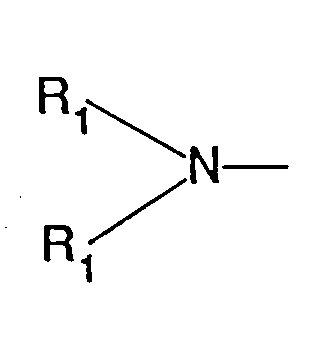
- an anionic polymerization initiator which is soluble in acyclic alkane solvents, comprises a solubilized lithio amine having the general formula (A)Li(SOL) y where y is from about 1 to about 3; SOL is a solubilizing component selected from the group consisting of hydrocarbons, ethers, amines or mixtures thereof; and, A is selected from the group consisting of alkyl, dialkyl and cycloalkyl amine radicals having the general formula and cyclic amines having the general formula where R1 is selected from the group consisting of alkyls, cycloalkyls or aralkyls having from 1 to about 12 carbon atoms, and R2 is selected from the group consisting of an alkylene, substituted alkylene, oxy- or N-alkylamino-alkylene group having from about 3 to about 16 methylene groups.
- A is selected from the group consisting of alkyl, dialkyl and cycloalky
- an anionic polymerization initiator which method comprises the steps of reacting an organolithium compound with a functionalizing agent in the presence of a solubilizing agent; the functionalizing agent being selected from the group consisting of alkyl, dialkyl and cycloalkyl amine radicals having the general formula and cyclic amines having the general formula where R1 and R2 are as defined hereinabove; and, the solubilizing agent is selected from the group consisting of hydrocarbons, ethers, amines or mixtures thereof.
- a method of preparing an anionic polymerization initiator comprises the steps of reacting an organolithium compound with a functionalizing agent to form a reaction product.
- the functionalizing agent is selected from the group consisting of alkyl, dialkyl and cycloalkyl amine radicals having the general formula and cyclic amines having the general formula where R1 and R2 are as defined hereinabove.
- the method also comprises the step of reacting the reaction product with a solubilizing agent selected from the group consisting of hydrocarbons, ethers, amines or mixtures thereof.
- a functionalized polymer comprises a polymer chain carrying at least one functional group A wherein A is derived from a polymerization initiator having the general formula (A)Li(SOL) y where y is of from about 1 to about 3; SOL is a solubilizing component selected from the group consisting of hydrocarbons, ethers, amines or mixtures thereof; and, A is selected from the group consisting of alkyl, dialkyl and cycloalkyl amine radicals having the general formula and cyclic amines having the general formula where R1 and R2 are as defined hereinabove.
- A is derived from a polymerization initiator having the general formula (A)Li(SOL) y where y is of from about 1 to about 3; SOL is a solubilizing component selected from the group consisting of hydrocarbons, ethers, amines or mixtures thereof; and, A is selected from the group consisting of alkyl, dialkyl and cycloalkyl amine radicals having
- a method of forming a functionalized polymer comprises the steps of forming a solution of one or more anionically polymerizable monomers in an alkane solvent; and, polymerizing the monomers in the presence of an initiator which is soluble in the alkane solvent.
- the initiator comprises a solubilized lithio amine having the general formula (A)Li(SOL) y where y is from about 1 to about 3; SOL is a solubilizing component selected from the group consisting of hydrocarbons, ethers, amines or mixtures thereof; and, A is selected from the group consisting of alkyl, dialkyl and cycloalkyl amine radicals having the general formula and cyclic amines having the general formula where R1 and R2 are as defined hereinabove.
- A is selected from the group consisting of alkyl, dialkyl and cycloalkyl amine radicals having the general formula and cyclic amines having the general formula where R1 and R2 are as defined hereinabove.
- a vulcanizable elastomeric compound having reduced hysteresis properties comprises an elastomeric polymer having chains carrying at least one functional group A, wherein A is derived from a polymerization initiator having the general formula (A)Li(SOL) y where y is of from about 1 to about 3; SOL is a solubilizing component selected from the group consisting of hydrocarbons, ethers, amines or mixtures thereof; and, A is selected from the group consisting of alkyl, dialkyl and cycloalkyl amine radicals having the general formula and cyclic amines having the general formula where R1 and R2 are as defined hereinabove; and from about 5 to 80 parts by weight of carbon black, per 100 parts of the polymer.
- A is derived from a polymerization initiator having the general formula (A)Li(SOL) y where y is of from about 1 to about 3; SOL is a solubilizing component selected from the group consisting of hydrocarbon
- the present invention also provides a tire having decreased rolling resistance resulting from a treadstock containing a vulcanizable elastomeric composition which comprises an elastomeric polymer having chains carrying at least one functional group A wherein A is derived from a polymerization initiator having the general formula (A)Li(SOL) y where y is of from about 1 to about 3; SOL is a solubilizing component selected from the group consisting of hydrocarbons, ethers, amines or mixtures thereof; and, A is selected from the group consisting of alkyl, dialkyl and cycloalkyl amine radicals having the general formula and cyclic amines having the general formula where R1 and R2 are as defined hereinabove; and from about 5 to 80 parts by weight of carbon black, per 100 parts by weight of said polymer.
- A is derived from a polymerization initiator having the general formula (A)Li(SOL) y where y is of from about 1 to about 3
- SOL is
- a vulcanizable rubber composition comprises a polymer carrying at least one amine functional group A, wherein A is derived from the reaction product of an organolithium compound and an amine; and a tin-carbon bond.
- a multifunctional polymer comprises at least one functional group A, wherein A is derived from the reaction product of an organolithium compound and an amine; and, a tin-carbon bond.
- a vulcanizable rubber composition comprises a polymer carrying at least one amine functional group A, wherein A is derived from the reaction product of an organolithium compound and an amine; and a second functional group selected and derived from the group consisting of terminating agents, coupling agents and linking agents.
- a tire having at least one vulcanizable elastomeric component comprises a multifunctional polymer having at least one functional group A, wherein A is derived from a polymerization initiator which is the reaction product of an organolithium compound and an amine, wherein the multifunctional polymer has a tin-carbon bond, and from about 5 to 80 parts by weight of carbon black, per 100 parts of the polymer.
- a multifunctional polymer comprises at least one functional group A, wherein A is derived from the reaction product of an organolithium compound and an amine; and a second functional group selected and derived from the group consisting of terminating agents, coupling agents and linking agents.
- a tire having at least one vulcanizable elastomeric component is also provided, which component comprises a multifunctional polymer having at least one functional group A, wherein A is derived from a polymerization initiator which is the reaction product of an organolithium compound and an amine; the polymer having a second functional group selected and derived from the group consisting of terminating agents, coupling agents and linking agents; and from about 5 to 80 parts by weight of carbon black, per 100 parts of said polymer.
- a functionalized polymer according to the invention comprises a polymer chain carrying at least one functional group selected from the group consisting of alkyl, dialkyl and cycloalkyl amine radicals having the general formula and cyclic amine radicals having the general formula where R1 and R2 are as defined hereinabove.
- a functionalized polymer according to the invention also comprises a polymer chain having the general formula AYLi; wherein A is a functional group selected from the group consisting of alkyl, dialkyl and cycloalkyl amine radicals having the general formula and cyclic amine radicals having the general formula where R1 and R2 are as defined hereinabove; and wherein Y is a divalent polymer radical selected from the group consisting of diene homopolymer radicals, monovinyl aromatic polymer radicals, diene/monovinyl aromatic random copolymer and block copolymer radicals.
- the present invention provides novel polymerization initiators which are soluble in acyclic alkanes, including normal alkanes such as hexane, pentane, heptane, isoheptane, octane, their alkylated derivatives, mixtures thereof, and the like. It has also been discovered herein that certain rubber compositions, vulcanizable elastomeric compositions and articles thereof based upon polymers formed using such initiators, exhibit useful properties, such as for example, reproducible relatively narrow molecular weight ranges. Furthermore, the polymers according to the invention also contain a functionality from the initiator, which functionality is useful for example, in reducing hysteresis properties.
- the preferred initiator is the reaction product of an amine, an organo lithium and a solubilizing component.
- the organo lithium and the amine may be reacted in the presence of the solubilizing component or agent, or they may be reacted first and the reaction product thereof subsequently treated with the solubilizing component.
- the preferred initiator is therefore, a solubilized lithio amine having the general formula (A)Li(SOL) y where y is from about 1 to about 3.
- the parentheses of this general formula connote that the formula may include A-Li-SOL y ; SOL y -A-Li; or, A-SOL y -Li.
- (SOL) is a solubilizing component and may be a hydrocarbon, ether, amine or a mixture thereof. It has been discovered that by the presence of the (SOL) component, the initiator is soluble in acyclic alkanes.
- Exemplary (SOL) groups include dienyl or vinyl aromatic polymers or copolymers having from 3 to about 300 polymerization units. Such polymers include polybutadiene, polystyrene, polyisoprene and copolymers thereof. Other examples of (SOL) include polar ligands, such as tetrahydrofuran (THF) and tetramethylethylenediamine (TMEDA).
- THF tetrahydrofuran
- TMEDA tetramethylethylenediamine
- the (A) component represents the amine functionality, at least one of which is carried by the resulting polymer, such as by being incorporated at the initiation site or head thereof.
- (A) may be a dialkyl or dicycloalkyl amine radical having the general formula or a cyclic amine radical having the general formula
- R1 is an alkyl, cycloalkyl or aralkyl having from 1 to about 20 carbon atoms, where both R1 groups may be the same or different
- R2 is an alkylene, substituted alkylene, oxy- or N-alkylamino-alkylene group having from about 3 to about 16 methylene groups.
- the amino-alkylene group can be an N-alkylamino alkylene.
- substituted alkylene it is understood that the alkylene has a substituent thereon.
- Preferred substituted alkylenes include mono- to octa-substituted alkylenes.
- the preferred substituents are linear or branched alkyls, cycloalkyls, bicycloalkyls, aryls and aralkyls having from 1 to about 12 carbon atoms.
- R1 groups include methyl, ethyl, butyl, octyl, cyclohexyl, 3-phenyl-1-propyl, isobutyl and the like.
- R2 groups include tetramethylene, hexamethylene, oxydiethylene, N-alkylazadiethylene, dodecamethylene, hexadecamethylene and the like.
- (A) may be derivative or radical of pyrrolidine; piperidine; monoalkyl-piperazine; perhydroazepine such as 3,3,5-trimethylhexahydoazepine and hexamethyleneimine; 1-azacyclooctane; azacyclotridecane, also known as dodecamethyleneimine; azacycloheptadecane, also known as hexadecamethyleneimine; 1-azacycloheptadec-9-ene; or, 1-azacycloheptadec-8-ene; including bicyclics such as perhydroisoquinoline, perhydroindole, 1,3,3-trimethyl-6-azabicyclo [3.2.1] octane and the like.
- Pyrrolidine, perhydroazepine, 1-azacyclooctane and azacyclotridecane are preferred.
- a preferred pyrrolidine derivative is perhydroindole and a preferred piperidine is perhydroisoquinoline.
- alkyl, cycloalkyl, aryl and aralkyl substituents of the cyclic and bicyclic amines of the invention including, but not limited to 2-(2-ethylhexyl)pyrrolidine; 3-(2-propyl)pyrrolidine; 3,5-bis(2-ethylhexyl) piperidine; 4-phenylpiperidine; 7-decyl-1-azacyclotridecane; 3,3-dimethyl-1-azacyclotetradecane; 4-dodecyl-1-azacyclooctane; 4-(2-phenylbutyl)-1-azacyclooctane; 3-ethyl-5-cyclohexyl-1-azacycloheptane; 4-hexyl-1-azacycloheptane;9-isoamyl-1-azacycloheptadecane;2-methyl-1-azacycloheptadec-9-ene; 3-isobut
- R1 and R2 are each branched in the alkyl position, such as di-t-butyl, diisopropyl, tertiary butyl or the like, the resulting polymerizations are slow, presumably due to hinderance around the nitrogen at the initiation site.
- the carbon atoms in R1 and R2 which are bonded to the nitrogen in the amine are also bonded to a total of at least three hydrogen atoms.
- the initiator according to the present invention can be formed by preparing a solution of the amine component (A), in an anhydrous, aprotic solvent, such as hexane, preferably in the presence of the solubilizing agent or component (SOL), if (SOL) is an ether or an amino compound. To this solution is then added an organolithium catalyst in the same or a similar solvent.
- aprotic solvent such as hexane
- the organolithium compound has the general formula RLi where R is selected from the group consisting of alkyls, cycloalkyls, alkenyls, aryls and aralkyls having from 1 to about 20 carbon atoms and short chain length low molecular weight polymers from diolefin and vinyl aryl monomers having up to about 25 units.
- Typical alkyls include n-butyl, s-butyl, methyl, ethyl, isopropyl and the like.
- the cycloalkyls include cyclohexyl, menthyl and the like.
- the alkenyls include allyl, vinyl and the like.
- the aryl and aralkyl groups include phenyl, benzyl, oligo(styryl) and the like.
- Exemplary short chain length polymers include the oligo(butadienyls), oligo(isoprenyls), oligo(styryls) and the like.
- (SOL) is a short chain length polymer
- the monomers used to form (SOL) are added after the amine and the organolithium are mixed, as will be addressed hereinbelow.
- the initiator can also be formed by mixing the organolithium and the amine in the presence of the monomer.
- SOL solubilizing component
- the three components are allowed to react for up to about one hour at ambient temperature (25° to 30° C), or elevated temperatures up to about 100°C preferably at less than 50°C, and more preferably at less than 38°C, following which the catalyst is ready for use.
- the initiators according to the present invention are considered to be soluble if they remain in solution within an excess of an acyclic alkane solvent for about 3 or more days.
- the initiator thus formed may be employed as an initiator to prepare any anionically-polymerized elastomer, e.g., polybutadiene, polyisoprene and the like, and copolymers thereof with monovinyl aromatics such as styrene, alpha methyl styrene and the like, or trienes such as myrcene.
- the elastomers include diene homopolymers and copolymers thereof with monovinyl aromatic polymers. Suitable monomers include conjugated dienes having from about 4 to about 12 carbon atoms and monovinyl aromatic monomers having 8 to 18 carbon atoms and trienes.
- conjugated diene monomers and the like useful in the present invention include 1,3-butadiene, isoprene, 1,3-pentadiene, 2,3-dimethyl-1,3-butadiene and 1,3-hexadiene, and aromatic vinyl monomers include styrene, alpha-methylstyrene, p-methylstyrene, vinyltoluene and vinylnaphthalene.
- the conjugated diene monomer and aromatic vinyl monomer are normally used at the weight ratios of 95-50:5-50, preferably 95-65:5-35.
- Polymerization is conducted in an acyclic alkane solvent, such as the various hexanes, heptanes, octanes, mixtures thereof, and the like.
- a polar coordinator may be added to the polymerization ingredients. Amounts range between 0 and 90 or more equivalents per equivalent of lithium. The amount depends on the amount of vinyl desired, the level of styrene employed and the temperature of the polymerization, as well as the nature of the specific polar coordinator (modifier) employed.
- Compounds useful as polar coordinators are organic and include tetrahydrofuran (THF), linear and cyclic oligomeric oxolanyl alkanes such as 2-2'-di(tetrahydrofuryl) propane, di-pi-peridyl ethane, hexamethylphosphoramide, N-N'-dimethylpiperazine, diazabicyclooctane, dimethyl ether, diethyl ether, tributylamine and the like.
- THF tetrahydrofuran
- linear and cyclic oligomeric oxolanyl alkanes such as 2-2'-di(tetrahydrofuryl) propane, di-pi-peridyl ethane, hexamethylphosphoramide, N-N'-dimethylpiperazine, diazabicyclooctane, dimethyl ether, diethyl ether, tributylamine and the like.
- Compounds useful as polar coordinators include those having an oxygen or nitrogen hetero-atom and a non-bonded pair of electrons.
- Other examples include dialkyl ethers of mono and oligo alkylene glycols; "crown" ethers; tertiary amines such as tetramethylethylene diamine (TMEDA); linear THF oligomers and the like.
- a batch polymerization is usually begun by charging a blend of monomer(s) and an acyclic alkane solvent to a suitable reaction vessel, followed by the addition of the polar coordinator (if employed) and the initiator compound previously described.
- the reactants are heated to a temperature of from about 20 to about 200°C, and the polymerization is allowed to proceed for from about 0.1 to about 24 hours.
- a functional amine group is derived from the initiator compound and attaches at the initiation site.
- substantially every resulting polymer chain, or the predominance of the chains has the following general formula AYLi where A is as described above, and Y is a divalent polymer radical which is derived from any of the foregoing diene homopolymers, monovinyl aromatic polymers, diene/monovinyl aromatic random copolymers and block copolymers.
- A is as described above
- Y is a divalent polymer radical which is derived from any of the foregoing diene homopolymers, monovinyl aromatic polymers, diene/monovinyl aromatic random copolymers and block copolymers.
- the monomer addition at the lithium end causes the molecular weight of the polymer to increase as the polymerization continues.
- terminating agents may provide the resulting polymer with a multifunctionality. That is, the polymers initiated according to the present invention, may carry at least one amine functional group A as discussed hereinabove, and may also carry a second functional group selected and derived from the group consisting of terminating agents, coupling agents and linking agents.
- Useful terminating, coupling or linking agents include active hydrogen compounds such as water or alcohol; carbon dioxide; N,N,N',N'-tetradialkyldiamino-benzophenone (such as tetramethyldiaminobenzophenone or the like); N,N-dialkylamino-benzaldehyde (such as dimethylaminobenzaldehyde or the like); 1,3-dialkyl-2-imidazolidinones (such as 1,3-dimethyl-2-imidazolidinone or the like); 1-alkyl substituted pyrrolidinones; 1-aryl substituted pyrrolidinones; dialkyl- and dicycloalkyl-carbodiimides having from about 5 to about 20 carbon atoms; (R3) a ZX b ; where Z is tin or silicon. It is preferred that Z is tin.
- active hydrogen compounds such as water or alcohol; carbon dioxide; N,N,N',N'-tetradial
- R3 is an alkyl having from about 1 to about 20 carbon atoms; a cycloalkyl having from about 3 to about 20 carbon atoms; an aryl having from about 6 to about 20 carbon atoms; or, an aralkyl having from about 7 to about 20 carbon atoms.
- R3 may include methyl, ethyl, n-butyl, neophyl, phenyl, cyclohexyl or the like.
- X is chlorine or bromine
- "a” is from 0 to 3
- Each R4 is the same or different and is an alkyl, cycloalkyl or aryl, having from about 1 to about 12 carbon atoms.
- R4 may include methyl, ethyl, nonyl, t-butyl, phenyl or the like.
- R5 is an alkyl, phenyl, alkylphenyl or N,N-dialkylaminophenyl, having from about 1 to about 20 carbon atoms.
- R5 may include t-butyl, 2-methyl-4-pentene-2-yl, phenyl, p-tolyl, p-butylphenyl, p-dodecylphenyl, p-diethylaminophenyl, p-(pyrrolidino)phenyl, and the like.
- Each R6 is the same or different, and is an alkyl or cycloalkyl having from about 1 to about 12 carbon atoms. Two of the R6 groups may together form a cyclic group.
- R6 may include methyl, ethyl, octyl, tetramethylene, pentamethylene, cyclohexyl or the like.
- R7 may include alkyls, phenyls, alkylphenyls or N,N-dialkylaminophenyls, having from about 1 to about 20 carbon atoms.
- R7 may include methyl, butyl, phenyl, p-butylphenyl, p-nonylphenyl, p-dimethylaminophenyl, p-diethylaminophenyl, p-(piperidino)phenyl, or the like.
- useful terminating agents include tin tetrachloride, (R1)3SnCl, (R1)2SnCl2, R1SnCl3, carbodiimides, N-methylpyrrolidinone, cyclic amides, cyclic ureas, isocyanates, Schiff bases, 4,4'-bis(diethylamino) benzophenone, and the like, where R1 is as described hereinabove.
- One preferred polymer according to the present invention is a polymer which includes at least one functional group A as discussed hereinabove, wherein A is derived from the reaction product of an amine and an organolithium compound as also discussed hereinabove. Furthermore, a preferred polymer is multifunctional wherein the polymer also carries a tin-carbon bond, such as may be derived from the terminating, coupling or linking agent.
- a rubber composition or a vulcanizable rubber composition according to the present invention may include such a polymer.
- the terminating, coupling or linking agent is added to the reaction vessel, and the vessel is agitated for about 1 to about 1000 minutes.
- an elastomer is produced having an even greater affinity for compounding materials such as carbon black, and hence, even further reduced hysteresis.
- Additional examples of terminating agents include those found in U.S. Patent No. 4,616,069 which is herein incorporated by reference.
- the polymer may be separated from the solvent by conventional techniques. These include steam or alcohol coagulation, thermal desolventization, or any other suitable method. Additionally, solvent may be removed from the resulting polymer by drum drying, extruder drying, vacuum drying or the like.
- the elastomers of the present invention comprise a plurality of polymers, having a functional group at both the head and tail of the resulting polymer. Such compounding may result in products exhibiting reduced hysteresis, which means a product having increased rebound, decreased rolling resistance and has less heat build-up when subjected to mechanical stress.
- polymers formed using the initiators of the invention are reproducibly formable in a relatively narrow range of molecular weights, such that substantially consistently reproducible polymers are possible with a molecular weight range of about 20,000 to about 250,000.
- the polymers of the present invention can be used alone or in combination with other elastomers to prepare a product such as a tire treadstock, sidewall stock or other tire component stock compound.
- a product such as a tire treadstock, sidewall stock or other tire component stock compound.
- Such stocks are useful for forming tire components such as treads, subtreads, black sidewalls, body ply skims, bead fillers and the like.
- At least one such component stock is produced from a vulcanizable elastomeric or rubber composition.
- the polymers according to the invention can be blended with any conventionally employed treadstock rubber which includes natural rubber, synthetic rubber and blends thereof.
- Such rubbers are well known to those skilled in the art and include synthetic polyisoprene rubber, styrene/butadiene rubber (SBR), polybutadiene, butyl rubber, Neoprene, ethylene/propylene rubber, ethylene/propylene/diene rubber (EPDM), acrylonitrile/butadiene rubber (NBR), silicone rubber, the fluoroelastomers, ethylene acrylic rubber, ethylene vinyl acetate copolymer (EVA), epichlorohydrin rubbers, chlorinated polyethylene rubbers, chlorosulfonated polyethylene rubbers, hydrogenated nitrile rubber, tetrafluoroethylene/propylene rubber and the like.
- the amounts can vary widely such as between 10 and 99 percent by weight.
- the polymers can be compounded with carbon black in amounts ranging from about 5 to about 100 parts by weight, per 100 parts of rubber (phr), with about 5 to about 80 parts being preferred and from about 40 to about 70 phr being more preferred.
- the carbon blacks may include any of the commonly available, commercially-produced carbon blacks but those having a surface area (EMSA) of at least 20 m2/g and more preferably at least 35 m2/g up to 200 m2/g or higher are preferred.
- SMA surface area
- Surface area values used in this application are those determined by ASTM test D-1765 using the cetyltrimethyl-ammonium bromide (CTAB) technique.
- CTAB cetyltrimethyl-ammonium bromide
- the useful carbon blacks are furnace black, channel blacks and lamp blacks.
- examples of the carbon blacks include super abrasion furnace (SAF) blacks, high abrasion furnace (HAF) blacks, fast extrusion furnace (FEF) blacks, fine furnace (FF) blacks, intermediate super abrasion furnace (ISAF) blacks, semi-reinforcing furnace (SRF) blacks, medium processing channel blacks, hard processing channel blacks and conducting channel blacks.
- SAF super abrasion furnace
- HAF high abrasion furnace
- FEF fast extrusion furnace
- FF fine furnace
- ISRF intermediate super abrasion furnace
- SRF semi-reinforcing furnace
- the carbon blacks utilized in the preparation of the rubber compounds of the invention may be in pelletized form or an unpelletized flocculent mass. Preferably, for more uniform mixing, unpelletized carbon black is preferred.
- the reinforced rubber compounds can be cured in a conventional manner with known vulcanizing agents at about 0.5 to about 4 phr. For example, sulfur or peroxide-based curing systems may be employed.
- suitable vulcanizing agents one can refer to Kirk-Othmer, Encyclopedia of Chemical Technology, 3rd ed., Wiley Interscience, N.Y. 1982, Vol. 20, pp. 365-468, particularly "Vulcanization Agents and Auxiliary Materials" pp. 390-402. Vulcanizing agents may be used alone or in combination.
- Vulcanizable elastomeric or rubber compositions of the invention can be prepared by compounding or mixing the polymers thereof with carbon black and other conventional rubber additives such as fillers, plasticizers, antioxidants, curing agents and the like, using standard rubber mixing equipment and procedures and conventional amounts of such additives.
- the initiator mixture made in the above manner was transferred by syringe to each of two small bottles which were also fitted with a seal as above.
- the bottles each contained a 75/25 weight percent monomer blend of butadiene/styrene, at 25 weight percent in hexane and a level of 1.0 meq Li/100 grams of monomer.
- the bottles also contained 0.6 mol of N,N,N',N'-tetramethylethylenediamine (TMEDA) per mol of lithium.
- TEDA N,N,N',N'-tetramethylethylenediamine
- the first bottle of cement, EXAMPLE 1 was then quenched by injection of 1.5 milliliters (ml) of isopropyl alcohol (i-PrOH), and the second bottle of cement, EXAMPLE 2, was treated for an additional 90 minutes at 50° C with 1.15 mol of 4-(N,N-diethylamino) benzaldehyde per mol of lithium.
- the cement of EXAMPLE 2 was then quenched with 1.5 ml of i-PrOH.
- Both cements from EXAMPLE 1 and EXAMPLE 2 were treated with an antioxidant, namely, 2 ml of a mixture containing 2.0 weight percent of dibutyl paracresol (DBPC) and 0.7 weight percent of UOP-88, available from Universal Oil Products Co., in hexane.
- the cements were then coagulated in i-PrOH and drum dried.
- the resulting polymers were analyzed, and the characteristics thereof are reported in TABLE II hereinbelow.
- a second non-solubilized initiator was prepared.
- a clean, stirred, one gallon stainless steel reactor which had been dried and preconditioned, and then nitrogen purged, was placed 1.22 pounds of anhydrous hexanes, and 5.4 ml of a 0.77 M solution of pyrrolidine in hexanes (4.16 meq). This was treated with 2.69 ml of a 1.58 M solution of n-butyllithium in hexanes (4.25 meq), stirring at room temperature overnight. The resulting heterogeneous mixture was used in situ for the subsequent polymerization.
- the reactor containing the above initiator mixture was charged with 0.76 pounds of a 34 weight percent blend of styrene and hexanes, 1.28 mmol of TMEDA, and 3.06 pounds of a 25.5 weight percent blend of 1,3-butadiene in hexanes.
- the reactor was heated to 46°C and controlled at that temperature for three hours.
- EXAMPLE 7 A portion of EXAMPLE 7 was treated with 1.25 mole of 4-(N,N-dimethylamino)benzylidene butylaniline per mole of lithium to produce EXAMPLE 8.
- the order of addition of polymerization reagents for the run producing EXAMPLE 7 and 8 were as follows: (1) TMEDA, (2) butadiene blend, (3) styrene blend.
- the polymeric products were worked up as described for EXAMPLES 3 and 4. Results of their characterization and compounded evaluation are given in TABLE V hereinbelow.
- EXAMPLES 3, 4 and 7, 8 resulted in polymers of such high molecular weight that they were not processable for formulation in the low oil recipe of TABLE III, but were formulated according to the recipe of TABLE VI, which contains 27 parts per 100 rubber of oil for better processing.
- the results of the evaluations in TABLE V indicate that these polymers show reduced tan ⁇ , but the 13-16 percent reduction relative to the unmodified SBR elastomers is small compared to that demonstrated in the EXAMPLES 5 and 6. Little change in viscosity occurred upon attempting end-linking with SnCl4, indicating that there was little active C-Li remaining at the chain ends after polymerization in these polymers.
- the SnCl4-treated polymers (EXAMPLES 4 and 8) exhibited tan ⁇ 's which were about 75 percent of that of the unmodified samples.
- a dried, stainless steel one gallon reactor under a nitrogen atmosphere was charged with 1.22 pounds of hexane, and then with 5.4 ml of 0.77 M pyrrolidine in hexane (4.16 meq) followed by 2.7 ml of 1.58 M n-butyllithium in hexane (4.27 meq).
- the mixture was stirred overnight at 90°F (32°C).
- the reactor was then charged with 90 grams of 25.4 weight percent 1,3-butadiene in a hexane solution (423 mmol of butadiene), and the mixture was heated at 110 to 120°F (43 to 49°C) for one hour. This effectively places a SOL group on the pyrrolidine moiety consisting on average of about 100 parts of 1,3-butadiene.
- EXAMPLE 9 The cements in two of the bottles, EXAMPLE 9, were quenched by injection with 1.5 ml of i-PrOH, while the cements in the other two bottles, EXAMPLE 10, were treated for an additional two hours at 50°C with 1.2 mol of tributyltin chloride per mol of lithium.
- the cement of EXAMPLE 10 was then quenched with 1.5 ml of i-PrOH, and both cement portions were treated with an anti-oxidant as in Experiment III hereinabove.
- Both EXAMPLES 9 and 10 were coagulated separately in i-PrOH and drum dried. Suitable characterizations were performed, and the results are summarized in TABLE VII hereinbelow.
- a dried, stainless steel five gallon reactor under a nitrogen atmosphere was charged with 8.53 pounds of hexane, 3.17 pounds of 33 weight percent styrene in hexane, 8.78 mmol of TMEDA, followed immediately by 17.89 pounds of a 25.4 weight percent butadiene/hexane blend, and the initiator prepared hereinabove, contained 25.1 meq of lithium.
- the polymerization was run for 2.25 hours at 110 to 120°F (43 to 49°C) and the live cement was collected through a twelve gauge stainless steel needle into five small beverage bottles, fitted and purged as described in the previous examples, and through a 1/2 inch pipe into two dried and purged large containers under a nitrogen purge.
- the procedure used to polymerize the base cement of EXAMPLES 11-13 was repeated.
- the live product cement was collect through a twelve gauge stainless steel needle into five small beverage bottles, fitted and purged as described in the preceding examples and through a 1/2 inch pipe into two dried and purged large containers under a nitrogen purge.
- a five gallon stainless steel reactor was then charged with 6.42 pounds of hexane, 28.6 mol equivalent of the above 0.56 M initiator, and 1.25 pounds of a 24.2 weight percent blend of butadiene and hexane, and the mixture was heated at 100°F (35°C) for one hour.
- a five gallon stainless steel reactor was then charged with 6.55 pounds of hexane, 47.1 ml (26.7 meq) of the above 0.57 M initiator, and 1.0 pound of a 24.2 weight percent blend of butadiene in hexane, and the mixture was heated at 100°F (38°C) for 30 minutes.
- EXAMPLES 6, 10, 12, 13, 17 and 19 also exhibit the advantageous combination of N-Li initiation and end-linking or termination with a tin compound, such as R3SnCl or SnCl4.
- Dodecamethyleneimine (“DDMI”) was vacuum distilled from calcium hydride and transferred under nitrogen to a dried, nitrogen-urged bottle.
- the N-lithio salt of DDMI was prepared by treating 10 ml of a 0.4 M solution of DDMI in hexanes with 2 ml of a 4.0 M solution of THF in hexanes, followed by the slow addition of 2.35 ml of a 1.7M solution of n-butyllithium in hexanes, with gentle swirling. Swirling was continued at room temperature overnight. The resulting 0.28M solution was a clear, pale yellow.
- the product polymers were compounded and tested as indicated in the test recipe shown in Table I and cured 20 minutes at 165°C. Results of physical tests are summarized in Table X.
- the carbon-bound rubber content of the uncured, final compounded stocks of Examples 20 and 21 were 33 percent and 49 percent, respectively. This indicates an enhanced interaction between the polymer and carbon black in these cases, compared to unmodified rubber, which typically exhibits less than 23 percent carbon-bound rubber, and butyllithium-initiated, Sn-coupled rubber, which typically exhibits less than 35 percent carbon-bound rubber.
- the results of this test provided good evidence for reduced hysteresis in this polymer.
- Elastomers containing head-bound (3,3,5-trimethyl) hexahydroazepine (THMI) were prepared using N-lithio(3,3,5-trimethyl) hexahydroazepine initiator.
- Samples with and without end-linking with SnCl4 were prepared from the same living polymer in a manner similar to that described in the examples above. Characterizations and evaluations of the dynamic mechanical properties are summarized in TABLE XI below.
- a tire that was prepared with treadstock containing an elastomer as described in this invention exhibited a reduced level of rolling loss, compared to an identical tire prepared with a treadstock containing a conventional elastomer.
- a vessel such as a small bottle containing a Teflon or glass-clad magnetic stirring bar, is dried, sealed, and purged with nitrogen. The following is added by syringe while stirring:
- Initiator reagents can be stored under positive nitrogen pressures for periods of up to several weeks at room temperature (25-27°C).
- N-Lithio pyrrolidine ⁇ 2THF solutions prepared and stored in this manner at about 0.5M - 1.5M in hexanes are stable for periods of about three to four weeks, and are effective initiators for diene and/or vinylaromatic (co)polymerizations, giving polymers with excellent properties.
- N-Lithio perhydroazepine ⁇ 2THF solutions prepared and stored in this manner at about 0.3M - 0.9M in hexanes are stable for at least several days, and can also be used with good results in polymerizations.
- initiators according to the present invention are useful for the anionic polymerization of diene monomers. Reproducible polymerization of such polymers within a relatively narrow molecular weight range is achieved, and the resulting polymers also exhibit good preservation of live C-Li ends, when compared to the non-solubilized initiators heretofore known in the art.
Landscapes
- Chemical & Material Sciences (AREA)
- Engineering & Computer Science (AREA)
- Mechanical Engineering (AREA)
- Organic Chemistry (AREA)
- Health & Medical Sciences (AREA)
- Chemical Kinetics & Catalysis (AREA)
- Medicinal Chemistry (AREA)
- Polymers & Plastics (AREA)
- General Chemical & Material Sciences (AREA)
- Addition Polymer Or Copolymer, Post-Treatments, Or Chemical Modifications (AREA)
- Compositions Of Macromolecular Compounds (AREA)
- Polymerization Catalysts (AREA)
- Macromolecular Compounds Obtained By Forming Nitrogen-Containing Linkages In General (AREA)
- Polyethers (AREA)
- Graft Or Block Polymers (AREA)
- Tires In General (AREA)
Abstract
and cyclic amine radicals having the general formula

where R₁ is an alkyl, cycloalkyl or aralkyl having from 1 to about 12 carbon atoms, and R₂ is an alkylene, substituted alkylene, oxy- or N-alkylamino-alkylene group having from about 3 to about 16 methylene groups. The invention also provides products based upon such polymers.
Description
- This Application is a Continuation-In-Part of currently pending U.S. Pat. App. Ser. No. 08/065,791.
- The subject invention relates to anionic polymerizations resulting in diene polymer and copolymer elastomers. More particularly, the present invention relates to polymerization employing a solubilized amine initiator. Specifically, the invention relates to a solubilized lithium amine initiator which is soluble in acyclic alkane solvents, and which will reproducibly polymerize monomers in a controllable and narrow molecular weight distribution range.
- When conducting polymerizations on a commercial basis, it is important to utilize process conditions and components which will allow the molecular weight of the end products to be narrowly and reproducibly defined. The characteristics of a given polymer and its usefulness are dependent, among other things, upon its molecular weight. Hence, it is desirable to be able to predict with some certainty the molecular weight of the end product of the polymerization. When the molecular weight is not narrowly definable, or is not reproducible on a systematic basis, the process is not commercially viable.
- In the art, it is desirable to produce elastomeric compounds exhibiting reduced hysteresis characteristics. Such elastomers, when compounded to form articles such as tires, power belts and the like, will show an increase in rebound, a decrease in rolling resistance and will have less heat build-up when mechanical stresses are applied.
- A major source of hysteretic power loss has been established to be due to the section of the polymer chain from the last cross link of the vulcanizate to the end of the polymer chain. This free end cannot be involved in an efficient elastically recoverable process, and as a result, any energy transmitted to this section of the cured sample is lost as heat. It is known in the art that this type of mechanism can be reduced by preparing higher molecular weight polymers which will have fewer end groups. However, this procedure is not useful because processability of the rubber with compounding ingredients and during shaping operations decreases rapidly with increasing molecular weight.
- It is difficult to obtain consistent properties, such as a reduction in hysteresis properties, if the polymer cannot be controllably reproduced in a narrow molecular weight range distribution. See, for example, U.S. Pat. No. 4,935,471, in which some polymers are prepared with a heterogeneous mixture of certain secondary amines, including lithium pyrrolidide. Polymers made in this manner have widely variable molecular weights, broad polydispersities, and their functional terminations tend to reproduce erratically, giving rise to poorly reproducible hysteresis reduction results.
- A major drawback with many of these known initiators, is that they are not soluble in acyclic alkanes, such as hexane. Polar solvents have heretofore been employed including the polar organic ethers such as dimethyl or diethyl ether, tetrahydrofuran, tetramethylethylenediamine, or diethylene glycol methyl ether (diglyme).
- The present invention provides novel initiators for anionic polymerization, which are soluble in acyclic alkanes. The invention provides for the incorporation of a functionality from the initiator to be incorporated at the head and tail of the polymer chain. The invention provides for efficient, controllable and reproducible polymerizations, with the preparation of well defined end-products of a relatively narrow molecular weight range distribution.
- It is therefore, an object of the present invention to provide an anionic polymerization initiator which is soluble in acyclic alkanes.
- It is a further object of the present invention to provide a method of preparing such an anionic polymerization initiator.
- It is still a further object of the invention to provide an initiator which will reproducibly result in a polymer within a narrow, predictable molecular weight range.
- It is another object of the present invention to provide elastomers formed with such a polymerization initiator.
- It is also an object of certain embodiments of the present invention to provide diene polymers and copolymers having reduced hysteresis characteristics.
- It is a further object of the present invention to provide vulcanizable elastomeric compounds of diene polymers and copolymers having reduced hysteresis characteristics.
- Still another object of the present invention is to provide an improved tire formed from an elastomer as described hereinabove.
- At least one or more of these objects together with the advantages thereof over the existing art, which shall become apparent from the specification which follows, are accomplished by the invention as hereinafter described and claimed.
- In general, according to the present invention, an anionic polymerization initiator which is soluble in acyclic alkane solvents, comprises a solubilized lithio amine having the general formula
(A)Li(SOL)y
where y is from about 1 to about 3; SOL is a solubilizing component selected from the group consisting of hydrocarbons, ethers, amines or mixtures thereof; and, A is selected from the group consisting of alkyl, dialkyl and cycloalkyl amine radicals having the general formula
and cyclic amines having the general formula
where R₁ is selected from the group consisting of alkyls, cycloalkyls or aralkyls having from 1 to about 12 carbon atoms, and R₂ is selected from the group consisting of an alkylene, substituted alkylene, oxy- or N-alkylamino-alkylene group having from about 3 to about 16 methylene groups. - There is also provided a method of preparing an anionic polymerization initiator, which method comprises the steps of reacting an organolithium compound with a functionalizing agent in the presence of a solubilizing agent; the functionalizing agent being selected from the group consisting of alkyl, dialkyl and cycloalkyl amine radicals having the general formula

and cyclic amines having the general formula
where R₁ and R₂ are as defined hereinabove; and, the solubilizing agent is selected from the group consisting of hydrocarbons, ethers, amines or mixtures thereof. - A method of preparing an anionic polymerization initiator comprises the steps of reacting an organolithium compound with a functionalizing agent to form a reaction product. The functionalizing agent is selected from the group consisting of alkyl, dialkyl and cycloalkyl amine radicals having the general formula

and cyclic amines having the general formula
where R₁ and R₂ are as defined hereinabove. The method also comprises the step of reacting the reaction product with a solubilizing agent selected from the group consisting of hydrocarbons, ethers, amines or mixtures thereof. - A functionalized polymer comprises a polymer chain carrying at least one functional group A wherein A is derived from a polymerization initiator having the general formula
(A)Li(SOL)y
where y is of from about 1 to about 3; SOL is a solubilizing component selected from the group consisting of hydrocarbons, ethers, amines or mixtures thereof; and, A is selected from the group consisting of alkyl, dialkyl and cycloalkyl amine radicals having the general formula
and cyclic amines having the general formula
where R₁ and R₂ are as defined hereinabove. - A method of forming a functionalized polymer, according to the invention, comprises the steps of forming a solution of one or more anionically polymerizable monomers in an alkane solvent; and, polymerizing the monomers in the presence of an initiator which is soluble in the alkane solvent. The initiator comprises a solubilized lithio amine having the general formula
(A)Li(SOL)y
where y is from about 1 to about 3; SOL is a solubilizing component selected from the group consisting of hydrocarbons, ethers, amines or mixtures thereof; and, A is selected from the group consisting of alkyl, dialkyl and cycloalkyl amine radicals having the general formula
and cyclic amines having the general formula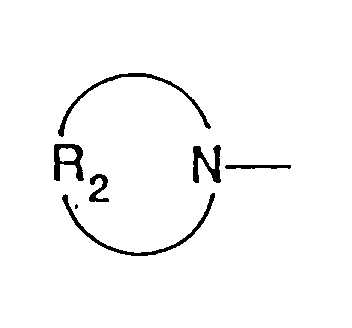
where R₁ and R₂ are as defined hereinabove. - A vulcanizable elastomeric compound having reduced hysteresis properties comprises an elastomeric polymer having chains carrying at least one functional group A, wherein A is derived from a polymerization initiator having the general formula
(A)Li(SOL)y
where y is of from about 1 to about 3; SOL is a solubilizing component selected from the group consisting of hydrocarbons, ethers, amines or mixtures thereof; and, A is selected from the group consisting of alkyl, dialkyl and cycloalkyl amine radicals having the general formula
and cyclic amines having the general formula
where R₁ and R₂ are as defined hereinabove; and from about 5 to 80 parts by weight of carbon black, per 100 parts of the polymer. - The present invention also provides a tire having decreased rolling resistance resulting from a treadstock containing a vulcanizable elastomeric composition which comprises an elastomeric polymer having chains carrying at least one functional group A wherein A is derived from a polymerization initiator having the general formula
(A)Li(SOL)y
where y is of from about 1 to about 3; SOL is a solubilizing component selected from the group consisting of hydrocarbons, ethers, amines or mixtures thereof; and, A is selected from the group consisting of alkyl, dialkyl and cycloalkyl amine radicals having the general formula
and cyclic amines having the general formula
where R₁ and R₂ are as defined hereinabove; and from about 5 to 80 parts by weight of carbon black, per 100 parts by weight of said polymer. - A vulcanizable rubber composition comprises a polymer carrying at least one amine functional group A, wherein A is derived from the reaction product of an organolithium compound and an amine; and a tin-carbon bond.
- A multifunctional polymer comprises at least one functional group A, wherein A is derived from the reaction product of an organolithium compound and an amine; and, a tin-carbon bond.
- A vulcanizable rubber composition comprises a polymer carrying at least one amine functional group A, wherein A is derived from the reaction product of an organolithium compound and an amine; and a second functional group selected and derived from the group consisting of terminating agents, coupling agents and linking agents.
- A tire having at least one vulcanizable elastomeric component comprises a multifunctional polymer having at least one functional group A, wherein A is derived from a polymerization initiator which is the reaction product of an organolithium compound and an amine, wherein the multifunctional polymer has a tin-carbon bond, and from about 5 to 80 parts by weight of carbon black, per 100 parts of the polymer.
- A multifunctional polymer comprises at least one functional group A, wherein A is derived from the reaction product of an organolithium compound and an amine; and a second functional group selected and derived from the group consisting of terminating agents, coupling agents and linking agents.
- A tire having at least one vulcanizable elastomeric component is also provided, which component comprises a multifunctional polymer having at least one functional group A, wherein A is derived from a polymerization initiator which is the reaction product of an organolithium compound and an amine; the polymer having a second functional group selected and derived from the group consisting of terminating agents, coupling agents and linking agents; and from about 5 to 80 parts by weight of carbon black, per 100 parts of said polymer.
- A functionalized polymer according to the invention comprises a polymer chain carrying at least one functional group selected from the group consisting of alkyl, dialkyl and cycloalkyl amine radicals having the general formula

and cyclic amine radicals having the general formula
where R₁ and R₂ are as defined hereinabove. - A functionalized polymer according to the invention also comprises a polymer chain having the general formula AYLi; wherein A is a functional group selected from the group consisting of alkyl, dialkyl and cycloalkyl amine radicals having the general formula

and cyclic amine radicals having the general formula
where R₁ and R₂ are as defined hereinabove; and wherein Y is a divalent polymer radical selected from the group consisting of diene homopolymer radicals, monovinyl aromatic polymer radicals, diene/monovinyl aromatic random copolymer and block copolymer radicals. - As will become apparent from the description which follows, the present invention provides novel polymerization initiators which are soluble in acyclic alkanes, including normal alkanes such as hexane, pentane, heptane, isoheptane, octane, their alkylated derivatives, mixtures thereof, and the like. It has also been discovered herein that certain rubber compositions, vulcanizable elastomeric compositions and articles thereof based upon polymers formed using such initiators, exhibit useful properties, such as for example, reproducible relatively narrow molecular weight ranges. Furthermore, the polymers according to the invention also contain a functionality from the initiator, which functionality is useful for example, in reducing hysteresis properties.
- While the initiators of the present invention are soluble in acyclic alkane solvents, it will be appreciated that the use of the initiators in other solvents is also within the scope of the invention.
- The preferred initiator according to the invention, is the reaction product of an amine, an organo lithium and a solubilizing component. The organo lithium and the amine may be reacted in the presence of the solubilizing component or agent, or they may be reacted first and the reaction product thereof subsequently treated with the solubilizing component. The preferred initiator is therefore, a solubilized lithio amine having the general formula
(A)Li(SOL)y
where y is from about 1 to about 3. The parentheses of this general formula connote that the formula may include A-Li-SOLy; SOLy-A-Li; or, A-SOLy-Li. - (SOL) is a solubilizing component and may be a hydrocarbon, ether, amine or a mixture thereof. It has been discovered that by the presence of the (SOL) component, the initiator is soluble in acyclic alkanes.
- Exemplary (SOL) groups include dienyl or vinyl aromatic polymers or copolymers having from 3 to about 300 polymerization units. Such polymers include polybutadiene, polystyrene, polyisoprene and copolymers thereof. Other examples of (SOL) include polar ligands, such as tetrahydrofuran (THF) and tetramethylethylenediamine (TMEDA).
- The (A) component represents the amine functionality, at least one of which is carried by the resulting polymer, such as by being incorporated at the initiation site or head thereof. For example, (A) may be a dialkyl or dicycloalkyl amine radical having the general formula

or a cyclic amine radical having the general formula
In these formulas, R₁ is an alkyl, cycloalkyl or aralkyl having from 1 to about 20 carbon atoms, where both R₁ groups may be the same or different, and R₂ is an alkylene, substituted alkylene, oxy- or N-alkylamino-alkylene group having from about 3 to about 16 methylene groups. The amino-alkylene group can be an N-alkylamino alkylene. By "substituted alkylene" it is understood that the alkylene has a substituent thereon. Preferred substituted alkylenes include mono- to octa-substituted alkylenes. The preferred substituents are linear or branched alkyls, cycloalkyls, bicycloalkyls, aryls and aralkyls having from 1 to about 12 carbon atoms. - Exemplary R₁ groups include methyl, ethyl, butyl, octyl, cyclohexyl, 3-phenyl-1-propyl, isobutyl and the like. Exemplary R₂ groups include tetramethylene, hexamethylene, oxydiethylene, N-alkylazadiethylene, dodecamethylene, hexadecamethylene and the like.
- For example, (A) may be derivative or radical of pyrrolidine; piperidine; monoalkyl-piperazine; perhydroazepine such as 3,3,5-trimethylhexahydoazepine and hexamethyleneimine; 1-azacyclooctane; azacyclotridecane, also known as dodecamethyleneimine; azacycloheptadecane, also known as hexadecamethyleneimine; 1-azacycloheptadec-9-ene; or, 1-azacycloheptadec-8-ene; including bicyclics such as perhydroisoquinoline, perhydroindole, 1,3,3-trimethyl-6-azabicyclo [3.2.1] octane and the like. Pyrrolidine, perhydroazepine, 1-azacyclooctane and azacyclotridecane are preferred. A preferred pyrrolidine derivative is perhydroindole and a preferred piperidine is perhydroisoquinoline.
- There are many useful examples of the alkyl, cycloalkyl, aryl and aralkyl substituents of the cyclic and bicyclic amines of the invention, including, but not limited to 2-(2-ethylhexyl)pyrrolidine; 3-(2-propyl)pyrrolidine; 3,5-bis(2-ethylhexyl) piperidine; 4-phenylpiperidine; 7-decyl-1-azacyclotridecane; 3,3-dimethyl-1-azacyclotetradecane; 4-dodecyl-1-azacyclooctane; 4-(2-phenylbutyl)-1-azacyclooctane; 3-ethyl-5-cyclohexyl-1-azacycloheptane; 4-hexyl-1-azacycloheptane;9-isoamyl-1-azacycloheptadecane;2-methyl-1-azacycloheptadec-9-ene; 3-isobutyl-1-azacyclododecane; 2-methyl-7-t-butyl-1-azacyclododecane; 5-nonyl-1-azacyclodecane; 8-(4'-methylphenyl)-5-pentyl-3-azabicyclo[5.4.0]undecane; 1-butyl-6-azabicyclo[3.2.1]octane; 8-ethyl-3-azabicyclo[3.2.1.]octane; 1-propyl-3-azabicyclo[3.2.2]nonane; 3-(t-butyl)-7-azabicyclo[4.3.0]nonane; 1,5,5-trimethyl-3-azabicyclo[4.4.0]decane; and the like.
- It has been found that when R₁ and R₂ are each branched in the alkyl position, such as di-t-butyl, diisopropyl, tertiary butyl or the like, the resulting polymerizations are slow, presumably due to hinderance around the nitrogen at the initiation site. Hence, in a preferred embodiment of the invention, the carbon atoms in R₁ and R₂ which are bonded to the nitrogen in the amine, are also bonded to a total of at least three hydrogen atoms.
- The initiator according to the present invention can be formed by preparing a solution of the amine component (A), in an anhydrous, aprotic solvent, such as hexane, preferably in the presence of the solubilizing agent or component (SOL), if (SOL) is an ether or an amino compound. To this solution is then added an organolithium catalyst in the same or a similar solvent. The organolithium compound has the general formula RLi where R is selected from the group consisting of alkyls, cycloalkyls, alkenyls, aryls and aralkyls having from 1 to about 20 carbon atoms and short chain length low molecular weight polymers from diolefin and vinyl aryl monomers having up to about 25 units. Typical alkyls include n-butyl, s-butyl, methyl, ethyl, isopropyl and the like. The cycloalkyls include cyclohexyl, menthyl and the like. The alkenyls include allyl, vinyl and the like. The aryl and aralkyl groups include phenyl, benzyl, oligo(styryl) and the like. Exemplary short chain length polymers include the oligo(butadienyls), oligo(isoprenyls), oligo(styryls) and the like.
- If (SOL) is a short chain length polymer, the monomers used to form (SOL) are added after the amine and the organolithium are mixed, as will be addressed hereinbelow. The initiator can also be formed by mixing the organolithium and the amine in the presence of the monomer.
- To the solution of the amine and the organolithium, is added a solution of the monomers of the solubilizing component (SOL) in the same or similar solvent, if (SOL) is a polydiene or a polyvinyl aromatic. The three components are allowed to react for up to about one hour at ambient temperature (25° to 30° C), or elevated temperatures up to about 100°C preferably at less than 50°C, and more preferably at less than 38°C, following which the catalyst is ready for use. The initiators according to the present invention are considered to be soluble if they remain in solution within an excess of an acyclic alkane solvent for about 3 or more days.
- As stated above, the initiator thus formed may be employed as an initiator to prepare any anionically-polymerized elastomer, e.g., polybutadiene, polyisoprene and the like, and copolymers thereof with monovinyl aromatics such as styrene, alpha methyl styrene and the like, or trienes such as myrcene. Thus, the elastomers include diene homopolymers and copolymers thereof with monovinyl aromatic polymers. Suitable monomers include conjugated dienes having from about 4 to about 12 carbon atoms and monovinyl aromatic monomers having 8 to 18 carbon atoms and trienes. Examples of conjugated diene monomers and the like useful in the present invention include 1,3-butadiene, isoprene, 1,3-pentadiene, 2,3-dimethyl-1,3-butadiene and 1,3-hexadiene, and aromatic vinyl monomers include styrene, alpha-methylstyrene, p-methylstyrene, vinyltoluene and vinylnaphthalene. The conjugated diene monomer and aromatic vinyl monomer are normally used at the weight ratios of 95-50:5-50, preferably 95-65:5-35.
- Polymerization is conducted in an acyclic alkane solvent, such as the various hexanes, heptanes, octanes, mixtures thereof, and the like. In order to promote randomization in copolymerization and to control vinyl content, a polar coordinator may be added to the polymerization ingredients. Amounts range between 0 and 90 or more equivalents per equivalent of lithium. The amount depends on the amount of vinyl desired, the level of styrene employed and the temperature of the polymerization, as well as the nature of the specific polar coordinator (modifier) employed.
- Compounds useful as polar coordinators are organic and include tetrahydrofuran (THF), linear and cyclic oligomeric oxolanyl alkanes such as 2-2'-di(tetrahydrofuryl) propane, di-pi-peridyl ethane, hexamethylphosphoramide, N-N'-dimethylpiperazine, diazabicyclooctane, dimethyl ether, diethyl ether, tributylamine and the like. The linear and cyclic oligomeric oxolanyl alkane modifiers are described in U.S. Pat. No. 4,429,091, owned by the Assignee of record, the subject matter of which is incorporated herein by reference. Compounds useful as polar coordinators include those having an oxygen or nitrogen hetero-atom and a non-bonded pair of electrons. Other examples include dialkyl ethers of mono and oligo alkylene glycols; "crown" ethers; tertiary amines such as tetramethylethylene diamine (TMEDA); linear THF oligomers and the like.
- A batch polymerization is usually begun by charging a blend of monomer(s) and an acyclic alkane solvent to a suitable reaction vessel, followed by the addition of the polar coordinator (if employed) and the initiator compound previously described. The reactants are heated to a temperature of from about 20 to about 200°C, and the polymerization is allowed to proceed for from about 0.1 to about 24 hours. A functional amine group is derived from the initiator compound and attaches at the initiation site. Thus, substantially every resulting polymer chain, or the predominance of the chains, has the following general formula
AYLi
where A is as described above, and Y is a divalent polymer radical which is derived from any of the foregoing diene homopolymers, monovinyl aromatic polymers, diene/monovinyl aromatic random copolymers and block copolymers. The monomer addition at the lithium end causes the molecular weight of the polymer to increase as the polymerization continues. - To terminate the polymerization, and thus further control polymer molecular weight, a terminating agent, coupling agent or linking agent may be employed, all of these agents being collectively referred to herein as "terminating agents". Certain of these agents may provide the resulting polymer with a multifunctionality. That is, the polymers initiated according to the present invention, may carry at least one amine functional group A as discussed hereinabove, and may also carry a second functional group selected and derived from the group consisting of terminating agents, coupling agents and linking agents.
- Useful terminating, coupling or linking agents include active hydrogen compounds such as water or alcohol; carbon dioxide; N,N,N',N'-tetradialkyldiamino-benzophenone (such as tetramethyldiaminobenzophenone or the like); N,N-dialkylamino-benzaldehyde (such as dimethylaminobenzaldehyde or the like); 1,3-dialkyl-2-imidazolidinones (such as 1,3-dimethyl-2-imidazolidinone or the like); 1-alkyl substituted pyrrolidinones; 1-aryl substituted pyrrolidinones; dialkyl- and dicycloalkyl-carbodiimides having from about 5 to about 20 carbon atoms; (R₃)aZXb;
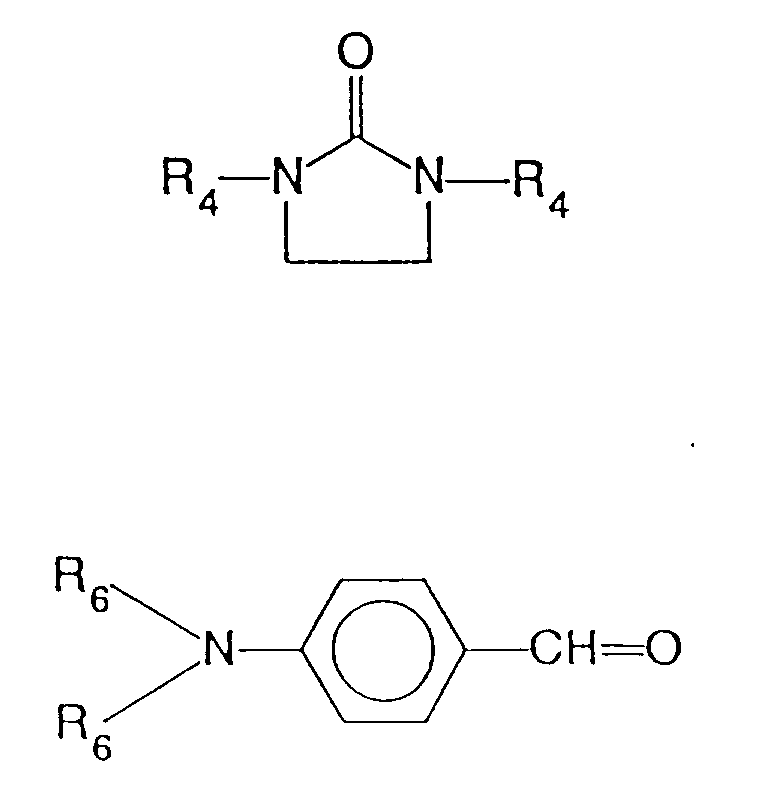

where Z is tin or silicon. It is preferred that Z is tin. - R₃ is an alkyl having from about 1 to about 20 carbon atoms; a cycloalkyl having from about 3 to about 20 carbon atoms; an aryl having from about 6 to about 20 carbon atoms; or, an aralkyl having from about 7 to about 20 carbon atoms. For example, R₃ may include methyl, ethyl, n-butyl, neophyl, phenyl, cyclohexyl or the like.
- X is chlorine or bromine, "a" is from 0 to 3, and "b" is from about 1 to 4, where a + b = 4.
- Each R₄ is the same or different and is an alkyl, cycloalkyl or aryl, having from about 1 to about 12 carbon atoms. For example, R₄ may include methyl, ethyl, nonyl, t-butyl, phenyl or the like.
- R₅ is an alkyl, phenyl, alkylphenyl or N,N-dialkylaminophenyl, having from about 1 to about 20 carbon atoms. For example, R₅ may include t-butyl, 2-methyl-4-pentene-2-yl, phenyl, p-tolyl, p-butylphenyl, p-dodecylphenyl, p-diethylaminophenyl, p-(pyrrolidino)phenyl, and the like.
- Each R₆ is the same or different, and is an alkyl or cycloalkyl having from about 1 to about 12 carbon atoms. Two of the R₆ groups may together form a cyclic group. For example, R₆ may include methyl, ethyl, octyl, tetramethylene, pentamethylene, cyclohexyl or the like.
- R₇ may include alkyls, phenyls, alkylphenyls or N,N-dialkylaminophenyls, having from about 1 to about 20 carbon atoms. For example, R₇ may include methyl, butyl, phenyl, p-butylphenyl, p-nonylphenyl, p-dimethylaminophenyl, p-diethylaminophenyl, p-(piperidino)phenyl, or the like.
- Other examples of useful terminating agents include tin tetrachloride, (R₁)₃SnCl, (R₁)₂SnCl₂, R₁SnCl₃, carbodiimides, N-methylpyrrolidinone, cyclic amides, cyclic ureas, isocyanates, Schiff bases, 4,4'-bis(diethylamino) benzophenone, and the like, where R₁ is as described hereinabove.
- One preferred polymer according to the present invention, is a polymer which includes at least one functional group A as discussed hereinabove, wherein A is derived from the reaction product of an amine and an organolithium compound as also discussed hereinabove. Furthermore, a preferred polymer is multifunctional wherein the polymer also carries a tin-carbon bond, such as may be derived from the terminating, coupling or linking agent. A rubber composition or a vulcanizable rubber composition according to the present invention, may include such a polymer.
- The terminating, coupling or linking agent is added to the reaction vessel, and the vessel is agitated for about 1 to about 1000 minutes. As a result, an elastomer is produced having an even greater affinity for compounding materials such as carbon black, and hence, even further reduced hysteresis. Additional examples of terminating agents include those found in U.S. Patent No. 4,616,069 which is herein incorporated by reference.
- The polymer may be separated from the solvent by conventional techniques. These include steam or alcohol coagulation, thermal desolventization, or any other suitable method. Additionally, solvent may be removed from the resulting polymer by drum drying, extruder drying, vacuum drying or the like.
- The elastomers of the present invention comprise a plurality of polymers, having a functional group at both the head and tail of the resulting polymer. Such compounding may result in products exhibiting reduced hysteresis, which means a product having increased rebound, decreased rolling resistance and has less heat build-up when subjected to mechanical stress.
- It has also been found, as will be exemplified hereinbelow, that polymers formed using the initiators of the invention, are reproducibly formable in a relatively narrow range of molecular weights, such that substantially consistently reproducible polymers are possible with a molecular weight range of about 20,000 to about 250,000.
- The polymers of the present invention can be used alone or in combination with other elastomers to prepare a product such as a tire treadstock, sidewall stock or other tire component stock compound. Such stocks are useful for forming tire components such as treads, subtreads, black sidewalls, body ply skims, bead fillers and the like. At least one such component stock is produced from a vulcanizable elastomeric or rubber composition. For example, the polymers according to the invention can be blended with any conventionally employed treadstock rubber which includes natural rubber, synthetic rubber and blends thereof. Such rubbers are well known to those skilled in the art and include synthetic polyisoprene rubber, styrene/butadiene rubber (SBR), polybutadiene, butyl rubber, Neoprene, ethylene/propylene rubber, ethylene/propylene/diene rubber (EPDM), acrylonitrile/butadiene rubber (NBR), silicone rubber, the fluoroelastomers, ethylene acrylic rubber, ethylene vinyl acetate copolymer (EVA), epichlorohydrin rubbers, chlorinated polyethylene rubbers, chlorosulfonated polyethylene rubbers, hydrogenated nitrile rubber, tetrafluoroethylene/propylene rubber and the like. When the polymers of the present invention are blended with conventional rubbers, the amounts can vary widely such as between 10 and 99 percent by weight.
- The polymers can be compounded with carbon black in amounts ranging from about 5 to about 100 parts by weight, per 100 parts of rubber (phr), with about 5 to about 80 parts being preferred and from about 40 to about 70 phr being more preferred. The carbon blacks may include any of the commonly available, commercially-produced carbon blacks but those having a surface area (EMSA) of at least 20 m²/g and more preferably at least 35 m²/g up to 200 m²/g or higher are preferred. Surface area values used in this application are those determined by ASTM test D-1765 using the cetyltrimethyl-ammonium bromide (CTAB) technique. Among the useful carbon blacks are furnace black, channel blacks and lamp blacks. More specifically, examples of the carbon blacks include super abrasion furnace (SAF) blacks, high abrasion furnace (HAF) blacks, fast extrusion furnace (FEF) blacks, fine furnace (FF) blacks, intermediate super abrasion furnace (ISAF) blacks, semi-reinforcing furnace (SRF) blacks, medium processing channel blacks, hard processing channel blacks and conducting channel blacks. Other carbon blacks which may be utilized include acetylene blacks. Mixtures of two or more of the above blacks can be used in preparing the carbon black products of the invention. Typical values for surface areas of usable carbon blacks are summarized in the following TABLE I.
TABLE I CARBON BLACKS ASTM Designation (D-1765-82a) Surface Area (m²/g) (D-3765) N-110 126 N-220 111 N-339 95 N-330 83 N-550 42 N-660 35 - The carbon blacks utilized in the preparation of the rubber compounds of the invention may be in pelletized form or an unpelletized flocculent mass. Preferably, for more uniform mixing, unpelletized carbon black is preferred. The reinforced rubber compounds can be cured in a conventional manner with known vulcanizing agents at about 0.5 to about 4 phr. For example, sulfur or peroxide-based curing systems may be employed. For a general disclosure of suitable vulcanizing agents one can refer to Kirk-Othmer, Encyclopedia of Chemical Technology, 3rd ed., Wiley Interscience, N.Y. 1982, Vol. 20, pp. 365-468, particularly "Vulcanization Agents and Auxiliary Materials" pp. 390-402. Vulcanizing agents may be used alone or in combination.
- Vulcanizable elastomeric or rubber compositions of the invention can be prepared by compounding or mixing the polymers thereof with carbon black and other conventional rubber additives such as fillers, plasticizers, antioxidants, curing agents and the like, using standard rubber mixing equipment and procedures and conventional amounts of such additives.
- In order to demonstrate the preparation and properties of the initiators and elastomers according to the present invention, a number of such initiators and elastomers were prepared. A solution of styrene and butadiene monomers in hexane was prepared and was polymerized with the above-described initiators. To further show the effectiveness of the invention, a number of similar monomer solutions were polymerized with a heterogenous mixture of non-solubilized lithium pyrrolidide as an initiator to provide comparative control examples. The non-solubilized lithium pyrrolidides will be discussed first hereinbelow, followed by examples of initiators and elastomers made according to the present invention. As noted above, various techniques known in the art for carrying out polymerizations may be employed without departing from the scope of the present invention.
- The following examples are included for comparison to the initiators and elastomers prepared according to the invention, which will be exemplified hereinbelow.
- In a small dried and nitrogen purged bottle, 20 ml of a 0.5 M solution of pyrrolidine in hexanes (10 milliequivalent or "meq") was treated with 6.36 ml of a 1.65 M solution of n-butyllithium in hexanes (10.5 meq). The bottle was fitted with a perforated crown seal having a rubber liner. The resulting heterogeneous mixture was agitated gently at room temperature for 16 hours, after which the product was drawn off for use as an initiator. The mixture was shaken vigorously before and while drawing off the samples.
- The initiator mixture made in the above manner was transferred by syringe to each of two small bottles which were also fitted with a seal as above. The bottles each contained a 75/25 weight percent monomer blend of butadiene/styrene, at 25 weight percent in hexane and a level of 1.0 meq Li/100 grams of monomer. The bottles also contained 0.6 mol of N,N,N',N'-tetramethylethylenediamine (TMEDA) per mol of lithium. The mixtures were agitated at 50° C for 2.5 hours. The reaction resulted in approximately 100 percent conversion of monomer to polymer.
- The first bottle of cement, EXAMPLE 1, was then quenched by injection of 1.5 milliliters (ml) of isopropyl alcohol (i-PrOH), and the second bottle of cement, EXAMPLE 2, was treated for an additional 90 minutes at 50° C with 1.15 mol of 4-(N,N-diethylamino) benzaldehyde per mol of lithium. The cement of EXAMPLE 2 was then quenched with 1.5 ml of i-PrOH.
- Both cements from EXAMPLE 1 and EXAMPLE 2 were treated with an antioxidant, namely, 2 ml of a mixture containing 2.0 weight percent of dibutyl paracresol (DBPC) and 0.7 weight percent of UOP-88, available from Universal Oil Products Co., in hexane. The cements were then coagulated in i-PrOH and drum dried. The resulting polymers were analyzed, and the characteristics thereof are reported in TABLE II hereinbelow.
TABLE II ANALYSIS OF POLYMERS FROM EXAMPLES 1 AND 2 HNMR Example 1 24% styrene (0% block styrene) Example 2 24.8% styrene (0% block styrene) Percent of butadiene portion as 1,2 linkages 51.9% 49.4% GPC (THF solvent) Mn 136365 136697 Mw/Mn 1.35 1.40 Tga -36.5°C -38.8°C a) glass transition temperature at onset - The polymers of EXAMPLES 1 and 2 were compounded using the rubber recipe reported in TABLE III hereinbelow.
TABLE III COMPOUNDING RECIPE Ingredient Mix Order Parts per Hundred Parts Rubber Polymer 1 100 Naphthenic oil 2 10 Masterbatch Carbon black, N-351 3 55 145-155°C, 60 RPM ZnO 4 3 Antioxidant 5 1 Wax blend 6 2 Total Masterbatch: 
Stearic acid 2 Final Sulfur 1.5 77-93°C, 40 RPM Accelerator 1 Total Final: 
- The compounded polymers were then cured using 1.5 inch x 4 inch x 0.040 inch tensile plaques, for 45 minutes at 300°F (149°C); Dynastat buttons, 50 minutes at 300°F (149°C). The results of ensuing physical tests are reported in TABLE IV.

- The test results reported in TABLE IV, show that the compounded polymer of EXAMPLE 1 has a tan δ value about 30 percent below the value expected for an unmodified polymer of this molecular weight, prepared using a typical alkyllithium initiator. However, the polymer of EXAMPLE 2 fails to show any significant reduction in tan δ beyond this, despite its having been additionally treated at the tail with a reagent which is known to be effective for reducing tan δ. The lack of additional effect was also noted in the bound rubber results, where the result for EXAMPLE 2 was not significantly different from that of EXAMPLE 1.
- It was concluded that the polymer cement prepared in this manner, besides having somewhat broadened molecular weight distribution, also did not have sufficient live C-Li chain ends after polymerization to allow for significant reaction with a chain-end functionalizing reagent. Therefore, this method was not highly desirable for synthesis of polymers with optimum properties.
- A second non-solubilized initiator was prepared. In a clean, stirred, one gallon stainless steel reactor, which had been dried and preconditioned, and then nitrogen purged, was placed 1.22 pounds of anhydrous hexanes, and 5.4 ml of a 0.77 M solution of pyrrolidine in hexanes (4.16 meq). This was treated with 2.69 ml of a 1.58 M solution of n-butyllithium in hexanes (4.25 meq), stirring at room temperature overnight. The resulting heterogeneous mixture was used in situ for the subsequent polymerization.
- The reactor containing the above initiator mixture was charged with 0.76 pounds of a 34 weight percent blend of styrene and hexanes, 1.28 mmol of TMEDA, and 3.06 pounds of a 25.5 weight percent blend of 1,3-butadiene in hexanes. The reactor was heated to 46°C and controlled at that temperature for three hours.
- A portion of the polymer cement made in this manner was transferred by needle into three small bottles sealed as in Experiment 1 hereinabove. The remainder of the cement was collected in a large glass container, under a nitrogen purge. The cement in the large container, EXAMPLE 3 was quenched by injection with 1.5 ml of isopropyl alcohol (i-PrOH), while the cement in the small bottles, EXAMPLE 4 was treated for an additional 2 hours at 50°C with 1.25 mol of 1,3-dimethylimidazolidin-2-one (1,3-DMI) per mol of lithium. The cement of EXAMPLE 4 was then quenched with 1.5 ml of i-PrOH, and both cement portions were treated with an antioxidant (2 ml of a mixture containing 2.0 wt. percent DBPC in hexane). The contents of the bottles were combined, and both EXAMPLES 3 and 4 were coagulated separately in i-PrOH and drum dried. Suitable characterizations were performed, and the results are summarized in TABLE V hereinbelow.
- Repeat experiments were run using the same reactor as in Experiment No. 2, employing the same amount of reagents, reaction times, and temperatures from those of EXAMPLES 3 and 4. The resulting cement was compounded in the recipe of TABLE III hereinabove, and is reported as EXAMPLE 5 hereinbelow. A portion of EXAMPLE 5 was end-linked by reaction with one equivalent of SnCl₄ per equivalent of lithium, to produce EXAMPLE 6. A cement was also prepared as for EXAMPLE 5, except that the initiator was allowed to form in the reactor for three (3) days instead of overnight. Also, the resulting polymer was compounded in the recipe of TABLE VI hereinabove, and is reported herein as EXAMPLE 7. A portion of EXAMPLE 7 was treated with 1.25 mole of 4-(N,N-dimethylamino)benzylidene butylaniline per mole of lithium to produce EXAMPLE 8. The order of addition of polymerization reagents for the run producing EXAMPLE 7 and 8 were as follows: (1) TMEDA, (2) butadiene blend, (3) styrene blend. The polymeric products were worked up as described for EXAMPLES 3 and 4. Results of their characterization and compounded evaluation are given in TABLE V hereinbelow.
- The product polymers were cured using 1.5 inch x 4 inch x 0.040 tensile plaques, for 20 minutes at 165°C; and Dynastat buttons, for 25 minutes and 165°C. TABLE V hereinbelow lists the characterizations and compounded properties of Examples 5 to 8.
TABLE V SUMMARY OF CHARACTERIZATION AND COMPOUNDED PHYSICAL PROPERTIES OF EXAMPLES 3-8 Example No. 5 6 3 4 7 8 3,4,7,8 Control a NMR % VINYL b 52.9 52.9 70.0 70.0 63.6 63.6 ca.40 % STY 22.4 22.4 22.0 22.0 26.6 26.6 ca.20 DSC Tg,°Cc -42 -42 -24 -24 -24 -24 ca.-40 GPC (THF) Mn x 10⁻³ 95.8 221 254 228 201 197 ca.200 Mw/Mn 1.1 2.2 2.5 2.3 1.4 1.2 ca.2-4 Coupling - 78% - - - - - ML/4/100°C Raw 8 67 108 109 77 72 ca.140 Compound 34 71 94 101 72 75 74 Test Recipe, TABLE NO. III III VI VI VI VI VI STRESS M300d 2116 2780 1361 1547 1520 1556 1276 -STRAIN, TBe 3115 2728 2373 2667 2649 2631 3551 23°C % EBf 455 344 503 497 507 491 653 % BOUND RUBBERg 21 37 34 40 27 37 32 DYNASTAT 1 HZ, tan δ 50°C 0.144 0.078 0.156 0.138 0.162 0.143 0.186 tan δ 23°C 0.167 0.109 0.180 0.219 0.231 0.219 0.227 a) Blend of unmodified SBR's run in comparison with EXAMPLES 3, 4, 7, 8 in formulation of TABLE VI b) Mol% of butadiene content as 1,2-linkages c) Onset of Tg d) Average ring stress-strain, 300% modulus, psi e) Average ring stress-strain, tensile modulus, psi f) Average percent elongation at break g) Weight percentage of rubber content in C-black filled compound found insoluble in toluene after 2 days at room temperature, with no agitation -
TABLE VI MEDIUM-OIL COMPOUNDING FORMULATION Ingredient Mix Order Parts per Hundred Parts Rubber Polymer 1 100 Masterbatch 145° - 185°C 60 RPM Carbon black 2 54 ZnO 3 3 Stearic acid 4 2 Antioxidant/Processing aids 5 4.25 Aromatic oil 6 27.6 Total Masterbatch: 
Final 77° - 93°C 40 RPM Sulfur 2.25 Accelerator blend 2.15 Total Final: 
- The results in TABLE V show the shortcomings of polymerization with N-lithiopyrrolidide initiators. Although the initiator/monomers charged in runs 3,5 and 7 were the same (1.0 meq of lithium per 100 grams of monomer), the molecular weight of the products ranged from 96,000 to 254,000, which is evidence of the highly erratic initiator. The high molecular weight products are indicative of slow initiation relative to propagation, presumably due to the heterogenous nature of the system. EXAMPLE 5 exhibited a tan δ reduction at 50°C about 31% lower than that of an unmodified polymer of similar microstructure and molecular weight. The result of end-linking of the live cement of EXAMPLE 5, via SnCl₄, leading to EXAMPLE 6 was a further reduction in tan δ, to about 40% of that of an unmodified polymer of the same base (uncoupled) molecular weight. The bound rubber content, which is indicative of the extent of interaction with carbon black, increased appreciably while the GPC showed that 78 percent of the polymer chains were end-linked, an indication that an appreciable fraction of "live" chain-ends were still available for linking.
- EXAMPLES 3, 4 and 7, 8 resulted in polymers of such high molecular weight that they were not processable for formulation in the low oil recipe of TABLE III, but were formulated according to the recipe of TABLE VI, which contains 27 parts per 100 rubber of oil for better processing. The results of the evaluations in TABLE V indicate that these polymers show reduced tan δ, but the 13-16 percent reduction relative to the unmodified SBR elastomers is small compared to that demonstrated in the EXAMPLES 5 and 6. Little change in viscosity occurred upon attempting end-linking with SnCl₄, indicating that there was little active C-Li remaining at the chain ends after polymerization in these polymers. The SnCl₄-treated polymers (EXAMPLES 4 and 8) exhibited tan δ's which were about 75 percent of that of the unmodified samples.
- In summary, the results of polymerizations which were initiated using N-lithiopyrrolidide as described hereinabove, were highly erratic, both with respect to the nature and composition of the product as well as to other characteristics thereof.
- A dried, stainless steel one gallon reactor under a nitrogen atmosphere, was charged with 1.22 pounds of hexane, and then with 5.4 ml of 0.77 M pyrrolidine in hexane (4.16 meq) followed by 2.7 ml of 1.58 M n-butyllithium in hexane (4.27 meq). The mixture was stirred overnight at 90°F (32°C). The reactor was then charged with 90 grams of 25.4 weight percent 1,3-butadiene in a hexane solution (423 mmol of butadiene), and the mixture was heated at 110 to 120°F (43 to 49°C) for one hour. This effectively places a SOL group on the pyrrolidine moiety consisting on average of about 100 parts of 1,3-butadiene.
- There was then charged to the reactor, 0.76 pounds of 33 weight percent styrene in hexane, containing 1.06 mmol of TMEDA, followed immediately by 2.89 pounds of the 25.4 weight percent butadiene/hexane blend. This provided for an initiator to monomer charged ratio of 1.0 meq of lithium per 100 grams of monomer (1.0 meq Li phgm). The polymerization was allowed to continue for 2 hours at 120°F (49°C) and the live cement was collected through a twelve gauge stainless steel needle into four small beverage bottles, fitted and purged as described in the preceding examples.
- The cements in two of the bottles, EXAMPLE 9, were quenched by injection with 1.5 ml of i-PrOH, while the cements in the other two bottles, EXAMPLE 10, were treated for an additional two hours at 50°C with 1.2 mol of tributyltin chloride per mol of lithium. The cement of EXAMPLE 10 was then quenched with 1.5 ml of i-PrOH, and both cement portions were treated with an anti-oxidant as in Experiment III hereinabove. Both EXAMPLES 9 and 10 were coagulated separately in i-PrOH and drum dried. Suitable characterizations were performed, and the results are summarized in TABLE VII hereinbelow.
- A mixture of 25.1 meq of pyrrolidine and 25.1 meq of n-butyllithium in hexane was stirred under nitrogen over a weekend at room temperature. This was treated with 50.2 meq of THF in hexane, and the resulting mixture was used to initiate the polymerization.
- A dried, stainless steel five gallon reactor under a nitrogen atmosphere, was charged with 8.53 pounds of hexane, 3.17 pounds of 33 weight percent styrene in hexane, 8.78 mmol of TMEDA, followed immediately by 17.89 pounds of a 25.4 weight percent butadiene/hexane blend, and the initiator prepared hereinabove, contained 25.1 meq of lithium. The polymerization was run for 2.25 hours at 110 to 120°F (43 to 49°C) and the live cement was collected through a twelve gauge stainless steel needle into five small beverage bottles, fitted and purged as described in the previous examples, and through a 1/2 inch pipe into two dried and purged large containers under a nitrogen purge.
- The cements in the large containers, EXAMPLE 11, were quenched by injection with i-PrOH, while the cements in the bottles, EXAMPLE 12, were treated first for an additional 0.5 hours at 50°C with 0.3 equivalents of tin tetrachloride per mol of lithium, followed by treatment for 2 hours at 50°C with 0.84 mols of 1,3-dimethyl-2-imidazolidinone (1,3-DMI) per mol of lithium. The cement remaining in the reactor, EXAMPLE 13, was treated for about 2 hours at 50°C with 0.8 equivalents of SnCl₄ per equivalent of lithium. The polymeric products were worked up as described for EXAMPLES 9 and 10 hereinabove. Results of their characterizations and compounded evaluations are given in TABLE VII hereinbelow.
- A separate portion of the same initiator used in EXAMPLES 11, 12 and 13 was set aside and used two days later as follows, with an estimated concentration of 0.6 meq/ml.
- The procedure used to polymerize the base cement of EXAMPLES 11-13 was repeated. The live product cement was collect through a twelve gauge stainless steel needle into five small beverage bottles, fitted and purged as described in the preceding examples and through a 1/2 inch pipe into two dried and purged large containers under a nitrogen purge.
- The cements in the large containers in EXAMPLE 14, were quenched by injection with i-PrOH while the cements in the bottle, EXAMPLE 15, were treated first for an additional 0.5 hours at 50°C with 0.3 equivalents of tin tetrachloride per mol of lithium, followed by treatment for 2 hours at 50°C with 0.85 mol of 1,3-DMI per mol of lithium. The polymeric products were worked up as described for EXAMPLES 9 and 10, results of their characterizations and compounded evaluations are given in TABLE VII hereinbelow.
TABLE VII SUMMARY OF CHARACTERIZATION AND COMPOUNDED PHYSICAL PROPERTIES OF EXAMPLES 9-15 EXAMPLE No. 9 10 11 12 13 14 15 NMR % VINYLb 42.7 42.7 53.3 53.3 53.3 50.1 50.1 % STY 19.4 19.4 20.6 20.6 20.6 20.6 20.6 DSC Tg,°Cc -45 -45 -38 -38 -38 -43 -43 GPC (THF) Mn x 10⁻⁵ 1.45 1.44 1.30 2.42 2.45 1.13 2.09 Mw/Mn 1.15 1.17 1.14 1.79 2.09 1.15 1.94 Coupling - - - 53% 64% - 54% ML/4/100°C Raw 24 24 29 78 94 19 76 Compound 70 90 82 103 114 76 107 Test Recipe, TABLE NO. III III III III III III III STRESS-STRAIN M300c 2125 2514 2177 2374 2903 2903 2706 STRESS-STRAIN, TBd 2832 3275 2982 2956 3445 3418 3451 23°C % EBe 419 409 431 403 387 395 409 % BOUND RUBBERf 28.4 49.5 31.3 42.0 42.3 -g -g DYNASTAT 1 HZ, tan δ +50°C 0.079 0.056 0.080 0.076 0.078 0.129 0.103 tan δ -20°C 0.374 0.389 0.675 0.684 0.431 0.541 0.563 a) Mol% of butadiene content as 1,2-linkages b) Onset of Tg c) Average ring stress-strain, 300% modulus, psi d) Average ring stress-strain, tensile modulus, psi e) Average percent elongation at break f) Weight percentage of rubber content in C-black filled compound found insoluble in toluene after 2 days at room temperature, with no agitation g) Not tested - A mixture of 28.6 meq of pyrrolidine, 57.2 mmol of THF, and 29.15 meq of n-butylithium in hexane, was stirred under a nitrogen atmosphere overnight at room temperatures. An aliquot from the resulting mixture (about 0.56 milliequivalent (meq) per ml) was used to initiate the polymerization.
- A five gallon stainless steel reactor was then charged with 6.42 pounds of hexane, 28.6 mol equivalent of the above 0.56 M initiator, and 1.25 pounds of a 24.2 weight percent blend of butadiene and hexane, and the mixture was heated at 100°F (35°C) for one hour.
- There was then charged to the reactor, 3.53 pounds of 34 weight percent styrene in hexane, 9.7 mmol of TMEDA, and 17.85 pounds of the butadiene/hexane blend. This provided for an initiator to monomer charge ratio of 1.05 meq Li phgm, and a monomer ratio of approximately 20 weight percent styrene/80 weight percent butadiene. The polymerization was run for 1.75 hours at 110 to 115°F (43 to 46°C). The reactor was finally charged with 0.3 pounds of the butadiene/hexane blend, and a 4.1 pound sample of the cement was immediately collected in a large container and quenched by adding i-PrOH, EXAMPLE 16. The contents remaining in the reactor were treated by stirring with 22.2 ml of 1.0 N SnCl₄ for 1.5 hours at 100 to 110°F (43 to 46°C), and the cement was dropped under a nitrogen purge into a five gallon canister containing a small amount of i-PrOH EXAMPLE 17.
- The cements from EXAMPLES 16 and 17 were treated with an antioxidant as in the immediately preceding experiment, and both samples were coagulated in i-PrOH and drum dried. Suitable characterizations were performed and the results are summarized in TABLE VIII hereinbelow.
- A mixture of 88.8 meq of pyrrolidine, 177.8 mmol of THF, and 89.8 meq of n-butylithium in hexane was stirred under nitrogen overnight at room temperature. An aliquot from the resulting mixture (approximately 0.57 meq per ml) was used to initiate polymerization.
- A five gallon stainless steel reactor was then charged with 6.55 pounds of hexane, 47.1 ml (26.7 meq) of the above 0.57 M initiator, and 1.0 pound of a 24.2 weight percent blend of butadiene in hexane, and the mixture was heated at 100°F (38°C) for 30 minutes.
- There was then charged into the reactor, 4.41 pounds of 34 weight percent styrene in hexane, 9.08 mmol of TMEDA, and 17.1 pounds of the butadiene/hexane blend. This provided for an initiator to monomer charge ratio of 0.98 meq Li phgm, and a monomer ratio of approximately 25 weight percent styrene/75 weight percent butadiene. The polymerization was run 2.3 hours at 110 to 115° F (43 to 46°C). The reactor was finally charged with 0.5 pounds of the butadiene/hexane blend, and a 3.5 pound sample of the cement was immediately collected in a large container and quenched by adding i-PrOH, EXAMPLE 18. The contents remaining in the reactor were treated by stirring with 21.0 ml of 1.0 N SnCl₄ at 115°F (46°C). After reaction, the cement was dropped under a nitrogen purge into a five gallon canister containing a small amount of i-PrOH, EXAMPLE 19. The cements were treated with an antioxidant as in the immediately preceding example and both cements from EXAMPLES 18 and 19 were coagulated separately in i-PrOH and then drum dried. Suitable characterizations were performed and the results are summarized in TABLE VIII hereinbelow.
TABLE VIII SUMMARY OF CHARACTERIZATION AND COMPOUNDED PHYSICAL PROPERTIES OF EXAMPLES 16-19 Example No. 16 17 18 19 NMR % VINYL b 42.7 43.1 43.4 43.4 % STY 20.4 20.1 24.9 24.9 DSC Tg, °Cc -47 -46 -45 -45 GPC (THF) Mn x 10⁻⁵ 1.00 2.41 1.22 - Mw/Mn 1.10 1.48 1.26 - Coupling - 86% - 69% ML/4/100°C Raw 7 82 20 113 Compound 47 94 61 98 Test Recipe, TABLE NO. III III III III STRESS-STRAIN M300c 2165 2525 2643 2903 STRESS-STRAIN,TBd 3167 3452 3283 3714 23°C % EBe 447 423 405 409 DYNASTAT 1 HZ, tan δ +50°C 0.100 0.079 0.098 0.092 tan δ -20°C 0.289 0.312 0.495 0.548 a) Mol% of butadiene content as 1,2-linkages b) Onset of Tg c) Ring stress-strain, 300% modulus, psi d) Ring stress-strain, tensile modulus, psi e) % Elongation at break - The product polymers were compounded and tested as indicated in the test recipes show in TABLE III, and cured as above. TABLE VII lists the characterizations and properties of the polymers from EXAMPLES 9-15. TABLE VIII lists the characterizations and compounded properties of EXAMPLES 16-19.
- The results in TABLES VII and VIII show the advantages and the desirable results obtained from polymerization with the initiators according to the present invention. In contrast to the results in TABLE V, EXAMPLES 9-19 demonstrate the consistency of diene polymerizations employing these initiators. Namely, the polymerizations show relatively reproducible and predictable molecular weights, with narrow molecular weight distributions, and the polymer cements exhibit better viability of the living C-Li chains for further reactions. The dicapped polymers of EXAMPLES 10, 12, 13 and 17 show exceptionally low hysteresis, at about 40 percent to 50 percent of the values expected for comparable unmodified polymers of the same base molecular weight.
- EXAMPLES 6, 10, 12, 13, 17 and 19 also exhibit the advantageous combination of N-Li initiation and end-linking or termination with a tin compound, such as R₃SnCl or SnCl₄.
- The results of polymerizations which were initiated in acyclic alkane solvents using the lithium pyrrolidide as described in the comparative EXAMPLES 1-8, were highly erratic both with respect to the nature and composition of the products as well as their hysteresis behavior. However, when formulated as the N-lithiohydrocarbon amide with near-equivalent amounts of polar ligand or with monomer extension, as exemplified hereinabove, reproducible polymerizations with good molecular weight control, narrow molecular weight distributions, and good preservation of living C-Li ends for further reactions are achieved.
- Dodecamethyleneimine ("DDMI") was vacuum distilled from calcium hydride and transferred under nitrogen to a dried, nitrogen-urged bottle. The N-lithio salt of DDMI was prepared by treating 10 ml of a 0.4 M solution of DDMI in hexanes with 2 ml of a 4.0 M solution of THF in hexanes, followed by the slow addition of 2.35 ml of a 1.7M solution of n-butyllithium in hexanes, with gentle swirling. Swirling was continued at room temperature overnight. The resulting 0.28M solution was a clear, pale yellow. If the DDMI were treated by rapid addition of n-butyllithium, or in the absence of at least about 2 equivalents of the THF, cloudiness and/or precipitation occurred right away. The C₁₂H₂₄NLi·2THF solution was stable for at least several days at room temperature. Samples were drawn from it by syringe for use in initiating polymerization.
- A 0.28 M solution of the above initiator was added to sealed bottles containing an 80%/20% by weight blend of butadiene and styrene in hexanes, at a level of 1.0 meq Li/100 grams monomer, and N,N,N',N-tetramethylethylenediamine ("TMEDA") was added at 0.45 TMEDA/Li (mol/mol). The mixtures were agitated at 50°C for 2.5 hr, proceeding to approximately 90-100% conversion to polymer. In practice, there is considerable leeway in the reaction times and temperatures, much the same as there is leeway in the reaction vessels, type of agitation, etc., used. The treated cements then were quenched by injection with 1 ml of i-PrOH, treated with an antioxidant (3 ml of a mixture containing 1.6 wt% DBPC in hexane), coagulated in i-PrOH, air-dried at room temperature, then drum-dried. Suitable characterizations were performed. Characterizations are summarized in Table IX. Table IX also contains data for polymers prepared with n-butyllithium in the same way, in the absence of DDMI or THF. These were prepared as a comparison, to show the type of hysteresis behavior obtained in the absence of the initiator compositions of this invention. The relative hysteresis behavior is typical of that of nonfunctional polymers.
- The above procedure was followed exactly, except that after 1.5 hour of polymerization at 50°C, the polymerization mixture was treated with 0.8 equivalent of SnCl₄ per equivalent of Li charged. The products were worked up in the same manner as above, and the characterizations are also summarized in Table IX.
- The product polymers were compounded and tested as indicated in the test recipe shown in Table I and cured 20 minutes at 165°C. Results of physical tests are summarized in Table X. In addition, the carbon-bound rubber content of the uncured, final compounded stocks of Examples 20 and 21 were 33 percent and 49 percent, respectively. This indicates an enhanced interaction between the polymer and carbon black in these cases, compared to unmodified rubber, which typically exhibits less than 23 percent carbon-bound rubber, and butyllithium-initiated, Sn-coupled rubber, which typically exhibits less than 35 percent carbon-bound rubber. The results of this test provided good evidence for reduced hysteresis in this polymer. The Dynastat tanδ (50°C) = 0.091-0.094 is about 50 percent below the value expected for an unmodified polymer of this microstructure and molecular weight, such as would be prepared using a typical alkyllithium initiator.
TABLE IX CHARACTERIZATIONS OF POLYMERS FROM C₁₂H₂₄NLi·2THF INITIATORS Example No. Conditions T g, °C %Sty %1,2 ML/4 M n M w /M n %Coupl 20 C₁₂H₂₄NLi·2THF 50°C -31.4 20.9 56.2 26.2 127724 1.25 (6% HMW) 21 C₁₂H₂₄NLi·2THF 50°C - SnCl₄-coupled -34.4 21.0 53.7 86.1 215628 1.71 74 22 n-BuLi only, 50°C -39.9 20.8 49.1 5.8 89631 1.17 - 23 n-BuLi only, 50°C SnCl₄-coupled -38.2 20.6 50.2 65.9 217335 1.51 82 TABLE X COMPOUNDED EVALUATIONS OF POLYMERS PREPARED USING C₁₂H₂₄NLi·2THF INITIATOR Example No. Tensile Strength, psi % Elong. at break ML/4-Cpd Dispersion Index, % % Bound Rubber Dynastat, 1Hz, tan δ, 50°C 20 3306 441 74 91 33.0 0.091 21 3673 426 104 92 48.9 0.094 22 2375 427 30 96 9.2 0.186 23 3024 449 66 97 12.6 0.120 - Elastomers containing head-bound (3,3,5-trimethyl) hexahydroazepine (THMI) were prepared using N-lithio(3,3,5-trimethyl) hexahydroazepine initiator. Samples with and without end-linking with SnCl₄ were prepared from the same living polymer in a manner similar to that described in the examples above. Characterizations and evaluations of the dynamic mechanical properties are summarized in TABLE XI below.
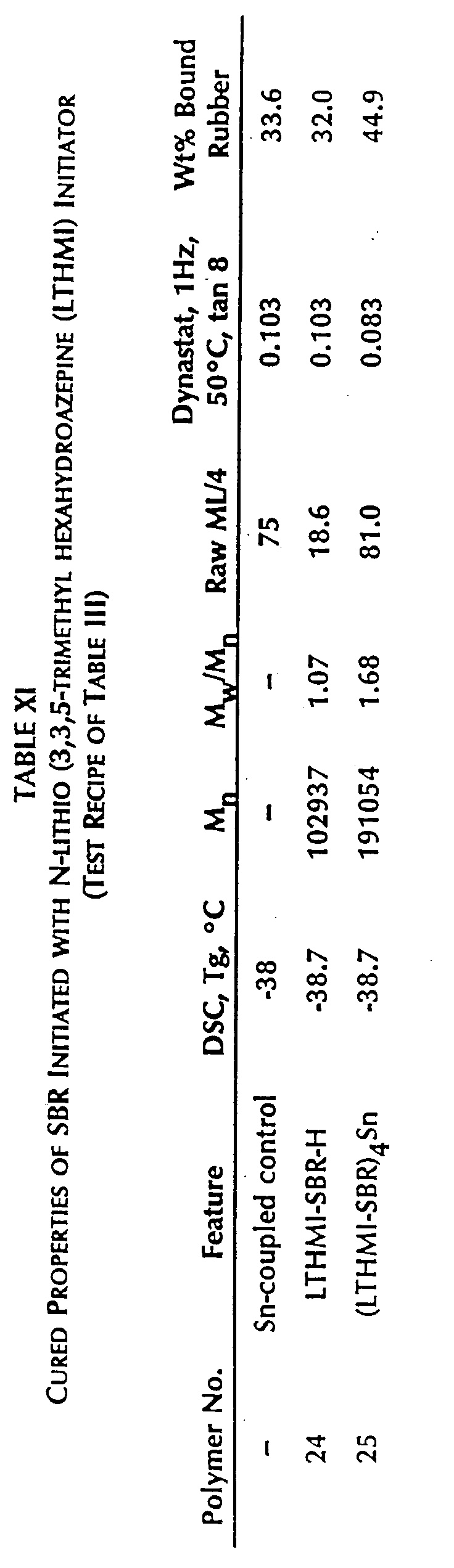
- The data of TABLE XI show that the polymer of Example 24, initiated with the N-Li salt of the substituted cyclic amine, had the same level of hysteresis and about the same amount of bound rubber as a low-hysteresis control polymer that had been end-linked with SnCl₄. The polymer of Example 25 that combined initiation by the substituted cyclic amine and end-linking with SnCl₄ had a level of hysteresis about 20 percent lower than the control polymer with end-linking only. Furthermore, the levels of bound rubber that were measured for both of these N-Li amide-initiated examples indicated that there is a strong interaction between the polymers and the carbon black of the compounding recipe, especially in the polymer that combined amino-initiation and end-linking by Sn.
- A tire that was prepared with treadstock containing an elastomer as described in this invention exhibited a reduced level of rolling loss, compared to an identical tire prepared with a treadstock containing a conventional elastomer.
- A preferred method of preparing the initiators according to the invention, will now be described. A vessel, such as a small bottle containing a Teflon or glass-clad magnetic stirring bar, is dried, sealed, and purged with nitrogen. The following is added by syringe while stirring:
- 1. 30 mmol anhydrous 2° amine in hydrocarbon solvent, and
- 2. 60 mmol anhydrous polar solubilizer in hydrocarbon solvent.
- 3. 30.1 mmol of alkyl lithium in hydrocarbon solvent is added by syringe at once, with stirring, while taking precaution for back-pressures (the larger ring amides may tend to precipitate if the alkyllithium is added too rapidly).
- The solution will heat and develop pressure immediately, but will soon begin to cool back down. When larger amounts of reagent are prepared, e.g. 250-300 mmol in large bottles or 0.5-1.5 mol in reactors, best results are obtained when chilled or cold water cooling is used to keep the peak temperature at about 38°C or below. The normal procedure has been to allow the mixture to stir overnight at room temperature before using. However, the reaction is essentially complete within minutes. The mixture should be clear, straw-yellow, without significant precipitation. Light-to-moderate haziness or cloudiness does not appear to affect activity. Anhydrous conditions are required. (SOL)/hydrocarbon solvent solutions with less than 30 ppm of water give best results. Initiator reagents can be stored under positive nitrogen pressures for periods of up to several weeks at room temperature (25-27°C). N-Lithio pyrrolidine·2THF solutions prepared and stored in this manner at about 0.5M - 1.5M in hexanes are stable for periods of about three to four weeks, and are effective initiators for diene and/or vinylaromatic (co)polymerizations, giving polymers with excellent properties. N-Lithio perhydroazepine·2THF solutions prepared and stored in this manner at about 0.3M - 0.9M in hexanes are stable for at least several days, and can also be used with good results in polymerizations.
- It should now be clear from the foregoing examples and specification disclosure, that initiators according to the present invention are useful for the anionic polymerization of diene monomers. Reproducible polymerization of such polymers within a relatively narrow molecular weight range is achieved, and the resulting polymers also exhibit good preservation of live C-Li ends, when compared to the non-solubilized initiators heretofore known in the art.
- It is to be understood that the invention is not limited to the specific initiator reactants, monomers, terminators, polar coordinators or solvents disclosed herein, except as otherwise stated in the specification. Similarly, the examples have been provided merely to demonstrate practice of the subject invention and do not constitute limitations of the invention. Those skilled in the art may readily select other monomers and process conditions, according to the disclosure made hereinabove.
- Thus, it is believed that any of the variables disclosed herein can readily be determined and controlled without departing from the scope of the invention herein disclosed and described. Moreover, the scope of the invention shall include all modifications and variations that fall within the scope of the attached claims.
Claims (36)
- A functionalized polymer comprising:
a polymer chain carrying at least one functional group selected from the group consisting of alkyl, dialkyl and cycloalkyl amine radicals having the general formula

- A functionalized polymer as in claim 1, wherein said polymer chain comprises at least one monomer selected from the group consisting of conjugated dienes having from about 4 to about 12 carbon atoms, monovinyl aromatic monomers having 8 to 18 carbon atoms and trienes.
- A functionalized polymer as in claim 1, wherein said functional group is selected from the group consisting of radicals of pyrrolidine; piperidine; monoalkyl-piperazine; perhydroazepine, 1-azacyclooctane; azacyclotridecane; azacycloheptadecane; 1-azacycloheptadec-9-ene; and, 1-azacycloheptadec-8-ene.
- A functionalized polymer as in claim 3, wherein said perhydroazepine is selected from the group consisting of 3,3,5-trimethylhexahydroazepine and hexamethyleneimine.
- A functionalized polymer as in claim 3, wherein said functional group is bicyclic.
- A functionalized polymer as in claim 5, wherein said bicyclic functional group is selected from the group consisting of perhydroisoquinoline, perhydroindole and 1,3,3-trimethyl-6-azabicyclo [3.2.1] octane.
- A functionalized polymer as in claim 1, wherein said substituted alkylene is a mono- to octa-substituted alkylene.
- A functionalized polymer as in claim 7, wherein the substituent of said substituted alkylene is linear or branched and has from 1 to about 12 carbon atoms.
- A functionalized polymer as in claim 8, wherein said substituent is selected from the group consisting of alkyls, cycloalkyls, bicycloalkyls, aryls, and aralkyls.
- A functionalized polymer, as set forth in claim 1, prepared by the steps of forming a solution of one or more anionically polymerizable monomers in an alkane solvent; and, polymerizing said monomers in the presence of a polymerization initiator containing said functional group.
- A functionalized polymer, as set forth in claim 9, comprising the further step of reacting said polymer with a second functional group selected and derived from the group consisting of terminating agents, coupling agents and linking agents, such that the resulting polymer is multifunctional.
- A functionalized polymer, as set forth in claim 10, wherein said terminating agent, coupling and linking agents are selected from the group consisting of carbon dioxide; N,N,N',N'-tetraalkyldiaminobenzophenones;N,N-dialkylaminobenzaldehydes;1,3-dialkylimidazolidinones; 1-alkyl substituted pyrrolidinones; 1-aryl substituted pyrrolidinones; dialkyl- and dicycloalkyl-carbodiimides having from about 5 to about 20 carbon atoms; (R₃)aZXb;


- A functionalized polymer, as set forth in claim 1, wherein said alkylene, substituted alkylene, oxy- and N-alkylamino-alkylene groups have from about 6 to about 16 methylene groups.
- A vulcanizable elastomeric compound having reduced hysteresis properties formed from a functionalized polymer as in claim 1 and from about 5 to 80 parts by weight of carbon black, per 100 parts of said functionalized polymer.
- A tire having decreased rolling resistance and having at least one structural element selected from the group consisting of treads, subtreads, black sidewalls, body ply skims and bead fillers, wherein said structural element results from a vulcanizable elastomeric compound as set forth in claim 14.
- A vulcanizable rubber composition comprising:
a polymer carrying at least one functional group A, wherein A is derived from the reaction product of an organolithium compound and an amine; and also carrying at least one tin-carbon bond derived from a terminating, coupling or linking agent (R₃)aZXb, where Z is tin or silicon; R₃ is selected from the group consisting of alkyls having from about 1 to about 20 carbon atoms, cycloalkyls having from about 3 to about 20 carbon atomes, aryls having from about 6 to about 20 carbon atoms and aralkyls having from about 7 to about 20 carbon atoms; X is chlorine or bromine; and, a is from 0 to 3 and b is from about 1 to 4 where a + b = 4. - A vulcanizable rubber composition, as set forth in claim 16, where Z is tin.
- A vulcanizable rubber composition, as set forth in claim 16, wherein A is selected from the group consisting of alkyl, dialkyl and cycloalkyl amine radicals having the general formula


- A vulcanizable rubber composition as in claim 18, wherein said polymer comprises at least one monomer selected from the group consisting of conjugated dienes having from about 4 to about 12 carbon atoms, monovinyl aromatic monomers having 8 to 18 carbon atoms and trienes.
- A vulcanizable rubber composition as in claim 18, wherein said functional group A is selected from the group consisting of radicals of pyrrolidine; piperidine; monoalkyl-piperazine; perhydroazepine, 1-azacyclooctane; azacyclotridecane; azacycloheptadecane; 1-azacycloheptadec-9-ene; and, 1-azacycloheptadec-8-ene.
- A vulcanizable rubber composition as in claim 20, wherein said perhydroazepine is selected from the group consisting of 3,3,5-trimethylhexahydroazepine and hexamethyleneimine.
- A vulcanizable rubber composition as in claim 20, wherein said functional group is bicyclic.
- A vulcanizable rubber composition as in claim 22, wherein said bicyclic functional group is selected from the group consisting of perhydroisoquinoline, perhydroindole and 1,3,3-trimethyl-6-azabicyclo [3.2.1] octane.
- A vulcanizable rubber composition as in claim 18, wherein said substituted alkylene is a mono- to octa-substituted alkylene.
- A vulcanizable rubber composition as in claim 24, wherein the substituent of said substituted alkylene is linear or branched and has from 1 to about 12 carbon atoms.
- A vulcanizable rubber composition as in claim 25, wherein said substituent is selected from the group consisting of alkyls, cycloalkyls, bicycloalkyls, aryls, and aralkyls.
- A tire formed from the vulcanizable rubber composition of claim 16 and from about 5 to 80 parts by weight of carbon black, per 100 parts of said polymer.
- A tire, as set forth in claim 27, wherein A is selected from the group consisting of alkyl, dialkyl and cycloalkyl amine radicals having the general formula


- A functionalized polymer comprising:
a polymer chain having the general formula AYLi; wherein A is a functional group selected from the group consisting of alkyl, dialkyl and cycloalkyl amine radicals having the general formula

- A functionalized polymer as in claim 29, wherein said functional group A is selected from the group consisting of radicals of pyrrolidine; piperidine; monoalkyl-piperazine; perhydroazepine, 1-azacyclooctane; azacyclotridecane; azacycloheptadecane; 1-azacycloheptadec-9-ene; and, 1-azacycloheptadec-8-ene.
- A functionalized polymer as in claim 30, wherein said perhydroazepine is selected from the group consisting of 3,3,5-trimethylhexahydroazepine and hexamethyleneimine.
- A functionalized polymer as in claim 30, wherein said functional group A is bicyclic.
- A functionalized polymer as in claim 32, wherein said bicyclic functional group is selected from the group consisting of perhydroisoquinoline, perhydroindole and 1,3,3-trimethyl-6-azabicyclo [3.2.1] octane.
- A functionalized polymer as in claim 29, wherein said substituted alkylene is a mono- to octa-substituted alkylene.
- A functionalized polymer as in claim 34, wherein the substituent of said substituted alkylene is linear or branched and has from 1 to about 12 carbon atoms.
- A functionalized polymer as in claim 35, wherein said substituent is selected from the group consisting of alkyls, cycloalkyls, bicycloalkyls, aryls, and aralkyls.
Applications Claiming Priority (2)
| Application Number | Priority Date | Filing Date | Title |
|---|---|---|---|
| US32898594A | 1994-10-25 | 1994-10-25 | |
| US328985 | 1994-10-25 |
Publications (2)
| Publication Number | Publication Date |
|---|---|
| EP0709408A1 true EP0709408A1 (en) | 1996-05-01 |
| EP0709408B1 EP0709408B1 (en) | 2001-08-22 |
Family
ID=23283339
Family Applications (1)
| Application Number | Title | Priority Date | Filing Date |
|---|---|---|---|
| EP19950116795 Expired - Lifetime EP0709408B1 (en) | 1994-10-25 | 1995-10-25 | Amine containing polymers and products therefrom |
Country Status (5)
| Country | Link |
|---|---|
| EP (1) | EP0709408B1 (en) |
| JP (1) | JPH08231658A (en) |
| CA (1) | CA2161385C (en) |
| DE (1) | DE69522290T2 (en) |
| ES (1) | ES2160136T3 (en) |
Cited By (6)
| Publication number | Priority date | Publication date | Assignee | Title |
|---|---|---|---|---|
| WO2004041870A3 (en) * | 2002-10-30 | 2005-01-27 | Bridgestone Corp | The use of sulfur containing initiators for anionic polymerization of monomers |
| EP1612240A4 (en) * | 2003-03-28 | 2009-07-01 | Bridgestone Corp | Rubber composition containing modified conjugated diene polymer and tire |
| WO2010072761A1 (en) | 2008-12-23 | 2010-07-01 | Societe De Technologie Michelin | Novel initiation system for the anionic polymerisation of conjugated dienes, and method for preparing diene elastomers |
| US7868110B2 (en) | 2005-05-20 | 2011-01-11 | Bridgestone Corporation | Anionic polymerization initiators and polymers therefrom |
| US8633272B2 (en) | 2008-10-01 | 2014-01-21 | Bridgestone Corporation | Rubber composition and pneumatic tire produced using same |
| CN107614506A (en) * | 2015-11-02 | 2018-01-19 | Lg化学株式会社 | Organolithium compound, method for preparing modified conjugated diene-based polymer using same, and modified conjugated diene-based polymer |
Families Citing this family (5)
| Publication number | Priority date | Publication date | Assignee | Title |
|---|---|---|---|---|
| EP1018521A1 (en) * | 1999-01-06 | 2000-07-12 | Société de Technologie Michelin | Process for preparation of diene polymers having amino groups, the polymers, rubber compositions and treads thereof |
| JP2008509254A (en) * | 2004-08-05 | 2008-03-27 | ファイヤーストーン ポリマーズ エルエルシー | Single-step synthesis of functional multi-block polymers |
| US7868081B2 (en) | 2005-03-04 | 2011-01-11 | Bridgestone Corporation | Rubber composition and tire using same |
| JP5350577B2 (en) | 2005-09-15 | 2013-11-27 | 株式会社ブリヂストン | Rubber composition and tire using the same |
| JP2019001922A (en) | 2017-06-16 | 2019-01-10 | 株式会社ブリヂストン | Rubber composition for tire tread and tire |
Citations (1)
| Publication number | Priority date | Publication date | Assignee | Title |
|---|---|---|---|---|
| EP0590490A1 (en) * | 1992-10-02 | 1994-04-06 | Bridgestone Corporation | Solubilized anionic polymerization initiators and products therefrom |
-
1995
- 1995-10-25 CA CA 2161385 patent/CA2161385C/en not_active Expired - Fee Related
- 1995-10-25 ES ES95116795T patent/ES2160136T3/en not_active Expired - Lifetime
- 1995-10-25 DE DE1995622290 patent/DE69522290T2/en not_active Expired - Lifetime
- 1995-10-25 JP JP7300747A patent/JPH08231658A/en active Pending
- 1995-10-25 EP EP19950116795 patent/EP0709408B1/en not_active Expired - Lifetime
Patent Citations (1)
| Publication number | Priority date | Publication date | Assignee | Title |
|---|---|---|---|---|
| EP0590490A1 (en) * | 1992-10-02 | 1994-04-06 | Bridgestone Corporation | Solubilized anionic polymerization initiators and products therefrom |
Cited By (14)
| Publication number | Priority date | Publication date | Assignee | Title |
|---|---|---|---|---|
| WO2004041870A3 (en) * | 2002-10-30 | 2005-01-27 | Bridgestone Corp | The use of sulfur containing initiators for anionic polymerization of monomers |
| US7153919B2 (en) | 2002-10-30 | 2006-12-26 | Bridgestone Corporation | Use of sulfur containing initiators for anionic polymerization of monomers |
| US7319123B2 (en) | 2002-10-30 | 2008-01-15 | Bridgestone Corporation | Use of sulfur containing initiators for anionic polymerization of monomers |
| EP2266993A3 (en) * | 2002-10-30 | 2011-07-06 | Bridgestone Corporation | The use of sulfur containing initiators for anionic polymerization of monomers |
| EP1612240A4 (en) * | 2003-03-28 | 2009-07-01 | Bridgestone Corp | Rubber composition containing modified conjugated diene polymer and tire |
| US7718728B2 (en) | 2003-03-28 | 2010-05-18 | Bridgestone Corporation | Rubber composition containing modified conjugated diene polymer and tire |
| US7868110B2 (en) | 2005-05-20 | 2011-01-11 | Bridgestone Corporation | Anionic polymerization initiators and polymers therefrom |
| US8633272B2 (en) | 2008-10-01 | 2014-01-21 | Bridgestone Corporation | Rubber composition and pneumatic tire produced using same |
| WO2010072761A1 (en) | 2008-12-23 | 2010-07-01 | Societe De Technologie Michelin | Novel initiation system for the anionic polymerisation of conjugated dienes, and method for preparing diene elastomers |
| US8394903B2 (en) | 2008-12-23 | 2013-03-12 | Compagnie Generale Des Etablissements Michelin | Initiation system for the anionic polymerization of conjugated dienes, and method for preparing diene elastomers |
| CN107614506A (en) * | 2015-11-02 | 2018-01-19 | Lg化学株式会社 | Organolithium compound, method for preparing modified conjugated diene-based polymer using same, and modified conjugated diene-based polymer |
| EP3255052A4 (en) * | 2015-11-02 | 2018-02-28 | LG Chem, Ltd. | Organolithium compound, method for production of modified conjugated diene-based polymer using same, and modified conjugated diene-based polymer |
| US10059149B2 (en) | 2015-11-02 | 2018-08-28 | Lg Chem, Ltd. | Organolithium compound, method for preparing modified conjugated diene-based polymer using the same, and modified conjugated diene-based polymer |
| CN107614506B (en) * | 2015-11-02 | 2019-09-06 | Lg化学株式会社 | Organolithium compounds and their uses |
Also Published As
| Publication number | Publication date |
|---|---|
| CA2161385C (en) | 2007-06-05 |
| ES2160136T3 (en) | 2001-11-01 |
| DE69522290D1 (en) | 2001-09-27 |
| DE69522290T2 (en) | 2002-05-02 |
| CA2161385A1 (en) | 1996-04-26 |
| EP0709408B1 (en) | 2001-08-22 |
| JPH08231658A (en) | 1996-09-10 |
Similar Documents
| Publication | Publication Date | Title |
|---|---|---|
| US6025450A (en) | Amine containing polymers and products therefrom | |
| EP0590490B1 (en) | Solubilized anionic polymerization initiators and products therefrom | |
| US5616704A (en) | Solubilized anionic polymerization initiators | |
| EP0600208B1 (en) | Soluble anionic polymerization initiators and products therefrom | |
| CA2107621C (en) | Soluble anionic polymerization initiators and products therefrom | |
| US5552499A (en) | Process of preparing reduced hysteresis products using anionic polymerization initiators | |
| EP0593049B1 (en) | Anionic polymerization initiators and reduced hysteresis products therefrom | |
| CA2124144C (en) | Solubilized anionic polymerization initiators and products therefrom | |
| EP0725069A1 (en) | Alkyllithium compounds containing cyclic amines and their use in polymerization | |
| EP0622381A1 (en) | Anionic polymerization initiators and reduced hysteresis products therefrom | |
| EP0725085A1 (en) | Aminoalkylithium compounds containing cyclic amines and polymers therefrom | |
| US5959048A (en) | Soluble anionic polymerization initiators for preparing functionalized polymer | |
| EP0709408B1 (en) | Amine containing polymers and products therefrom |
Legal Events
| Date | Code | Title | Description |
|---|---|---|---|
| PUAI | Public reference made under article 153(3) epc to a published international application that has entered the european phase |
Free format text: ORIGINAL CODE: 0009012 |
|
| AK | Designated contracting states |
Kind code of ref document: A1 Designated state(s): DE ES FR GB IT |
|
| 17P | Request for examination filed |
Effective date: 19961010 |
|
| 17Q | First examination report despatched |
Effective date: 19970115 |
|
| GRAG | Despatch of communication of intention to grant |
Free format text: ORIGINAL CODE: EPIDOS AGRA |
|
| GRAG | Despatch of communication of intention to grant |
Free format text: ORIGINAL CODE: EPIDOS AGRA |
|
| GRAH | Despatch of communication of intention to grant a patent |
Free format text: ORIGINAL CODE: EPIDOS IGRA |
|
| GRAH | Despatch of communication of intention to grant a patent |
Free format text: ORIGINAL CODE: EPIDOS IGRA |
|
| GRAA | (expected) grant |
Free format text: ORIGINAL CODE: 0009210 |
|
| AK | Designated contracting states |
Kind code of ref document: B1 Designated state(s): DE ES FR GB IT |
|
| REF | Corresponds to: |
Ref document number: 69522290 Country of ref document: DE Date of ref document: 20010927 |
|
| REG | Reference to a national code |
Ref country code: ES Ref legal event code: FG2A Ref document number: 2160136 Country of ref document: ES Kind code of ref document: T3 |
|
| ET | Fr: translation filed | ||
| REG | Reference to a national code |
Ref country code: GB Ref legal event code: IF02 |
|
| PLBE | No opposition filed within time limit |
Free format text: ORIGINAL CODE: 0009261 |
|
| STAA | Information on the status of an ep patent application or granted ep patent |
Free format text: STATUS: NO OPPOSITION FILED WITHIN TIME LIMIT |
|
| 26N | No opposition filed | ||
| PGFP | Annual fee paid to national office [announced via postgrant information from national office to epo] |
Ref country code: GB Payment date: 20101020 Year of fee payment: 16 Ref country code: IT Payment date: 20101021 Year of fee payment: 16 |
|
| PGFP | Annual fee paid to national office [announced via postgrant information from national office to epo] |
Ref country code: ES Payment date: 20111021 Year of fee payment: 17 |
|
| GBPC | Gb: european patent ceased through non-payment of renewal fee |
Effective date: 20121025 |
|
| PG25 | Lapsed in a contracting state [announced via postgrant information from national office to epo] |
Ref country code: GB Free format text: LAPSE BECAUSE OF NON-PAYMENT OF DUE FEES Effective date: 20121025 |
|
| PG25 | Lapsed in a contracting state [announced via postgrant information from national office to epo] |
Ref country code: IT Free format text: LAPSE BECAUSE OF NON-PAYMENT OF DUE FEES Effective date: 20121025 |
|
| REG | Reference to a national code |
Ref country code: ES Ref legal event code: FD2A Effective date: 20140116 |
|
| PG25 | Lapsed in a contracting state [announced via postgrant information from national office to epo] |
Ref country code: ES Free format text: LAPSE BECAUSE OF NON-PAYMENT OF DUE FEES Effective date: 20121026 |
|
| REG | Reference to a national code |
Ref country code: DE Ref legal event code: R082 Ref document number: 69522290 Country of ref document: DE Representative=s name: KRAUS & WEISERT PATENTANWAELTE PARTGMBB, DE |
|
| REG | Reference to a national code |
Ref country code: FR Ref legal event code: CA Effective date: 20140812 |
|
| REG | Reference to a national code |
Ref country code: DE Ref legal event code: R082 Ref document number: 69522290 Country of ref document: DE Representative=s name: KRAUS & WEISERT PATENTANWAELTE PARTGMBB, DE Effective date: 20140828 Ref country code: DE Ref legal event code: R081 Ref document number: 69522290 Country of ref document: DE Owner name: BRIDGESTONE CORPORATION, JP Free format text: FORMER OWNER: BRIDGESTONE CORP., TOKIO/TOKYO, JP Effective date: 20140828 |
|
| PGFP | Annual fee paid to national office [announced via postgrant information from national office to epo] |
Ref country code: FR Payment date: 20141022 Year of fee payment: 20 Ref country code: DE Payment date: 20141022 Year of fee payment: 20 |
|
| REG | Reference to a national code |
Ref country code: DE Ref legal event code: R071 Ref document number: 69522290 Country of ref document: DE |