EP0698091B1 - Process for the preparation of immunogens or diagnostic reagents, and immunogens or diagnostic reagents thereby obtainable - Google Patents

Process for the preparation of immunogens or diagnostic reagents, and immunogens or diagnostic reagents thereby obtainable Download PDF

Info

Publication number
EP0698091B1
EP0698091B1 EP94916385A EP94916385A EP0698091B1 EP 0698091 B1 EP0698091 B1 EP 0698091B1 EP 94916385 A EP94916385 A EP 94916385A EP 94916385 A EP94916385 A EP 94916385A EP 0698091 B1 EP0698091 B1 EP 0698091B1
Authority
EP
European Patent Office
Prior art keywords
seq
phage
antigen
immunogens
disease
Prior art date
Legal status (The legal status is an assumption and is not a legal conclusion. Google has not performed a legal analysis and makes no representation as to the accuracy of the status listed.)
Expired - Lifetime
Application number
EP94916385A
Other languages
German (de)
French (fr)
Other versions
EP0698091A1 (en
Inventor
Franco Felici
Alessandra Luzzago
Alfredo Nicosia
Paolo Monaci
Riccardo Cortese
Current Assignee (The listed assignees may be inaccurate. Google has not performed a legal analysis and makes no representation or warranty as to the accuracy of the list.)
Istituto di Ricerche di Biologia Molecolare P Angeletti SpA
Original Assignee
Istituto di Ricerche di Biologia Molecolare P Angeletti SpA
Priority date (The priority date is an assumption and is not a legal conclusion. Google has not performed a legal analysis and makes no representation as to the accuracy of the date listed.)
Filing date
Publication date
Family has litigation
First worldwide family litigation filed litigation Critical https://patents.darts-ip.com/?family=11401749&utm_source=google_patent&utm_medium=platform_link&utm_campaign=public_patent_search&patent=EP0698091(B1) "Global patent litigation dataset” by Darts-ip is licensed under a Creative Commons Attribution 4.0 International License.
Application filed by Istituto di Ricerche di Biologia Molecolare P Angeletti SpA filed Critical Istituto di Ricerche di Biologia Molecolare P Angeletti SpA
Publication of EP0698091A1 publication Critical patent/EP0698091A1/en
Application granted granted Critical
Publication of EP0698091B1 publication Critical patent/EP0698091B1/en
Anticipated expiration legal-status Critical
Expired - Lifetime legal-status Critical Current

Links

Images

Classifications

    • CCHEMISTRY; METALLURGY
    • C40COMBINATORIAL TECHNOLOGY
    • C40BCOMBINATORIAL CHEMISTRY; LIBRARIES, e.g. CHEMICAL LIBRARIES
    • C40B40/00Libraries per se, e.g. arrays, mixtures
    • C40B40/02Libraries contained in or displayed by microorganisms, e.g. bacteria or animal cells; Libraries contained in or displayed by vectors, e.g. plasmids; Libraries containing only microorganisms or vectors
    • CCHEMISTRY; METALLURGY
    • C07ORGANIC CHEMISTRY
    • C07KPEPTIDES
    • C07K14/00Peptides having more than 20 amino acids; Gastrins; Somatostatins; Melanotropins; Derivatives thereof
    • C07K14/005Peptides having more than 20 amino acids; Gastrins; Somatostatins; Melanotropins; Derivatives thereof from viruses
    • CCHEMISTRY; METALLURGY
    • C07ORGANIC CHEMISTRY
    • C07KPEPTIDES
    • C07K14/00Peptides having more than 20 amino acids; Gastrins; Somatostatins; Melanotropins; Derivatives thereof
    • C07K14/435Peptides having more than 20 amino acids; Gastrins; Somatostatins; Melanotropins; Derivatives thereof from animals; from humans
    • C07K14/46Peptides having more than 20 amino acids; Gastrins; Somatostatins; Melanotropins; Derivatives thereof from animals; from humans from vertebrates
    • C07K14/47Peptides having more than 20 amino acids; Gastrins; Somatostatins; Melanotropins; Derivatives thereof from animals; from humans from vertebrates from mammals
    • C07K14/4701Peptides having more than 20 amino acids; Gastrins; Somatostatins; Melanotropins; Derivatives thereof from animals; from humans from vertebrates from mammals not used
    • C07K14/4713Autoimmune diseases, e.g. Insulin-dependent diabetes mellitus, multiple sclerosis, rheumathoid arthritis, systemic lupus erythematosus; Autoantigens
    • CCHEMISTRY; METALLURGY
    • C07ORGANIC CHEMISTRY
    • C07KPEPTIDES
    • C07K16/00Immunoglobulins [IG], e.g. monoclonal or polyclonal antibodies
    • C07K16/18Immunoglobulins [IG], e.g. monoclonal or polyclonal antibodies against material from animals or humans
    • C07K16/32Immunoglobulins [IG], e.g. monoclonal or polyclonal antibodies against material from animals or humans against translation products of oncogenes
    • CCHEMISTRY; METALLURGY
    • C12BIOCHEMISTRY; BEER; SPIRITS; WINE; VINEGAR; MICROBIOLOGY; ENZYMOLOGY; MUTATION OR GENETIC ENGINEERING
    • C12NMICROORGANISMS OR ENZYMES; COMPOSITIONS THEREOF; PROPAGATING, PRESERVING, OR MAINTAINING MICROORGANISMS; MUTATION OR GENETIC ENGINEERING; CULTURE MEDIA
    • C12N15/00Mutation or genetic engineering; DNA or RNA concerning genetic engineering, vectors, e.g. plasmids, or their isolation, preparation or purification; Use of hosts therefor
    • C12N15/09Recombinant DNA-technology
    • C12N15/10Processes for the isolation, preparation or purification of DNA or RNA
    • C12N15/1034Isolating an individual clone by screening libraries
    • C12N15/1037Screening libraries presented on the surface of microorganisms, e.g. phage display, E. coli display
    • AHUMAN NECESSITIES
    • A61MEDICAL OR VETERINARY SCIENCE; HYGIENE
    • A61KPREPARATIONS FOR MEDICAL, DENTAL OR TOILETRY PURPOSES
    • A61K39/00Medicinal preparations containing antigens or antibodies
    • CCHEMISTRY; METALLURGY
    • C07ORGANIC CHEMISTRY
    • C07KPEPTIDES
    • C07K2319/00Fusion polypeptide
    • C07K2319/40Fusion polypeptide containing a tag for immunodetection, or an epitope for immunisation
    • CCHEMISTRY; METALLURGY
    • C07ORGANIC CHEMISTRY
    • C07KPEPTIDES
    • C07K2319/00Fusion polypeptide
    • C07K2319/70Fusion polypeptide containing domain for protein-protein interaction
    • C07K2319/735Fusion polypeptide containing domain for protein-protein interaction containing a domain for self-assembly, e.g. a viral coat protein (includes phage display)
    • CCHEMISTRY; METALLURGY
    • C12BIOCHEMISTRY; BEER; SPIRITS; WINE; VINEGAR; MICROBIOLOGY; ENZYMOLOGY; MUTATION OR GENETIC ENGINEERING
    • C12NMICROORGANISMS OR ENZYMES; COMPOSITIONS THEREOF; PROPAGATING, PRESERVING, OR MAINTAINING MICROORGANISMS; MUTATION OR GENETIC ENGINEERING; CULTURE MEDIA
    • C12N2730/00Reverse transcribing DNA viruses
    • C12N2730/00011Details
    • C12N2730/10011Hepadnaviridae
    • C12N2730/10111Orthohepadnavirus, e.g. hepatitis B virus
    • C12N2730/10122New viral proteins or individual genes, new structural or functional aspects of known viral proteins or genes
    • CCHEMISTRY; METALLURGY
    • C12BIOCHEMISTRY; BEER; SPIRITS; WINE; VINEGAR; MICROBIOLOGY; ENZYMOLOGY; MUTATION OR GENETIC ENGINEERING
    • C12NMICROORGANISMS OR ENZYMES; COMPOSITIONS THEREOF; PROPAGATING, PRESERVING, OR MAINTAINING MICROORGANISMS; MUTATION OR GENETIC ENGINEERING; CULTURE MEDIA
    • C12N2770/00MICROORGANISMS OR ENZYMES; COMPOSITIONS THEREOF; PROPAGATING, PRESERVING, OR MAINTAINING MICROORGANISMS; MUTATION OR GENETIC ENGINEERING; CULTURE MEDIA ssRNA viruses positive-sense
    • C12N2770/00011Details
    • C12N2770/24011Flaviviridae
    • C12N2770/24211Hepacivirus, e.g. hepatitis C virus, hepatitis G virus
    • C12N2770/24222New viral proteins or individual genes, new structural or functional aspects of known viral proteins or genes
    • YGENERAL TAGGING OF NEW TECHNOLOGICAL DEVELOPMENTS; GENERAL TAGGING OF CROSS-SECTIONAL TECHNOLOGIES SPANNING OVER SEVERAL SECTIONS OF THE IPC; TECHNICAL SUBJECTS COVERED BY FORMER USPC CROSS-REFERENCE ART COLLECTIONS [XRACs] AND DIGESTS
    • Y10TECHNICAL SUBJECTS COVERED BY FORMER USPC
    • Y10STECHNICAL SUBJECTS COVERED BY FORMER USPC CROSS-REFERENCE ART COLLECTIONS [XRACs] AND DIGESTS
    • Y10S436/00Chemistry: analytical and immunological testing
    • Y10S436/811Test for named disease, body condition or organ function

Definitions

  • the subject of the present invention is a process for the preparation of immunogens or diagnostic reagents that mimic an antigen or a pathogenic organism specific to a disease, even if this is uncharacterized or even unknown (thereby including auto-immune diseases whose etiology and/or pathogenesis is known or unknown).
  • This process is based on the existence and availability of antibodies, both monoclonal or polyclonal, or of serum containing antibodies, which react specifically with the organism causing the infection.
  • Antibodies suitable for use in this process can be specific for any antigen of interest for which an immunogen or diagnostic reagent that mimics the antigen is sought.
  • the antigen can be a protein or peptide whether synthetic, derived from a natural source, or produced recombinantly; carbohydrate; polysaccharide; glycoprotein; hormone; receptor; antibody; virus; substrate; metabolite; transition state analog; cofactor; drug; dye; nutrient; growth factor; cellular component; oncogene product; bacteria and their extracellular products; mammalian cells and extracts therefrom including tumor cells, virus infected cells and normal cells; parasites; protozoa; malarial antigens; helminths; fungi; rickettsia; or an allergen including but not limited to pollens, dusts, danders or extracts of the same; or a venom, poison, toxin, or toxoid; nucleic acids including DNA; or any other antigen without limitation.
  • Antigens of viruses which are suitable for use in the present invention include antigens from the viruses including but not limited to polio virus, influenza virus, HIV, HTLV, papilloma virus, adeno virus, parainfluenza virus, measles virus, mumps virus, respiratory syncytial virus, shipping fever virus, Western and Eastern encephalomyelitis virus, Japanese B encephalomyelitis virus, Russian spring-summer encephalomyelitis virus, hog cholera virus, hepatitis virus, pox virus, rabies, virus, distemper virus, herpes virus, cytomegalo virus, foot and mouth disease virus, rhinovirus, Newcastle disease virus, vaccinia virus; and pseudorabies virus.
  • the mime can be an immunogen, a vaccine, an inhibitor or activator, etc. without limitation.
  • a key feature of the present invention is a novel strategy for the selection of antigenic and immunogenic mimics, based on the use, as reagents, of serum samples from patients and a counter-selection step utilizing serum samples from healthy individuals.
  • a process for the preparation of immunogens or diagnostic reagents that mimic an antigen or a pathogenic organism specific to a disease using a procedure which can be implemented without any information on the nature and/or identity of the antigen(s) of the pathogenic organism specific for the disease, and without any information on the nature and/or structure and/or properties of the specific antibodies, comprising the following operations:
  • phage libraries can be advantageously performed using the filamentous phages M13, F1 and Fd, or derivatives thereof.
  • the reasons for this are the following:
  • the antibodies that can be used in the process for the preparation of immunogens and diagnostic reagents according to the present invention are antibodies contained in sera. This is of particular interest, because it provides for the first time a reproducible experimental strategy to identify novel antigenic and immunogenic mimics in absence of any information on the structure and properties of the natural and pathological antigen.
  • the gene coding for the phage capsid, with random sequence oligonucleotidic inserts, can be the gene coding for the protein VIII of the phage capsid or the gene coding for the protein III of said capsid.
  • the process according to the invention can be applied without restriction to any antibody or organism responsible for illness. Good results have been obtained using sera specific for the surface antigen of the human hepatitis B virus (HBsAg).
  • the antigenic oligopeptides recognized by the antibodies used can be obtained by expression from random sequence oligonucleotidic inserts, using as a vector, for example, the plasmid pC89.
  • the plasmids pC89 contains, wholely or in part, a nucleotidic sequence chosen from the group comprising the sequences SEQ ID NO: 4, SEQ ID NO: 5, SEQ ID NO: 6 and SEQ ID NO:8.
  • Oligopeptides obtained by the above process which react with pathological sera from individuals affected by the same disease affecting the patients whose sera have been used for the selection and screening of phage displaying said oligopeptides and which do not react with sera from individual not affected by the same disease, are capable for instance of eliciting in a living organism an immune response against the natural antigene or antibodies against HCV or antibodies against HBV.
  • oligopeptides can be used as immunogens to elicit an antibody response against specific pathological antigens, such as for instance infectious pathogens, in the case said elicited antibodies also being protective or neutralizing, to formulate a vaccine against said specific pathogenic agents.
  • the immunogens obtainable from the process of the present invention are useful as vaccines or immunizing agents as well as being useful as diagnostic reagents.
  • the vaccines or immunizing agents are administered to a patient in need of such treatment according to standard methods known in the art.
  • the vaccine or immunizing agents can be administered and used either singly or in combination.
  • the vaccines and immunogens of the present invention can comprise the phage or protein and peptides isolated therefrom.
  • Kits containing the immunogens obtained from the process of the present invention may be prepared. Such kits are used to detect the presence of the antigen in a sample. Such characterization is useful for a variety of purposes including but not limited to forensic analyses and epidemiological studies.
  • a kit would comprise a compartmentalized carrier suitable to hold in close confinement at least one container.
  • the carrier would further comprise reagents such as the immunogens, and antibodies suitable for detecting the antigens.
  • the carrier may also contain a means for detection such as labeled antigen or enzyme substrates or the like.
  • compositions comprising the immunogens and vaccines obtainable by the process of the present invention, may be formulated according to known methods such as by the admixture of a pharmaceutically acceptable carrier.
  • compositions suitable for effective administration will contain an effective amount of the vaccine or immunogen of the present invention.
  • compositions of the invention are administered to an individual in amounts sufficient to treat or diagnose the relevant disorders.
  • the effective amount may vary according to a variety of factors such as the individual's condition, weight, sex and age. Other factors include the mode of administration.
  • the pharmaceutical compositions may be provided to the individual by a variety of routes such as subcutaneous, topical, oral and intramuscular.
  • the present invention also has the objective of providing suitable topical, oral systemic and parenteral pharmaceutical formulations for use in the novel methods of treatment of the present invention.
  • the compositions containing vaccine or immunogens identified according to this invention as the active ingredient can be administered in a wide variety of therapeutic dosage forms in conventional vehicles for administration.
  • the vaccines and immunogens can be administered in such oral dosage forms as tablets, capsules (each including timed release and sustained release formulations), pills, powders, granules, elixirs, tinctures, solutions, suspensions, syrups and emulsions, or by injection.
  • they may also be administered in intravenous (both bolus and infusion), intraperitoneal, subcutaneous, topical with or without occlusion, or intramuscular form, all using forms well known to those of ordinary skill in the pharmaceutical arts.
  • intravenous both bolus and infusion
  • intraperitoneal subcutaneous
  • topical with or without occlusion
  • intramuscular form all using forms well known to those of ordinary skill in the pharmaceutical arts.
  • An effective but non-toxic amount of the vaccines and immunogens can be employed.
  • the daily dosage of the vaccines and immunogens may be varied over a wide range from 0,01 to 1000 mg per adult human/per day.
  • the vaccines and immunogens are preferably provided in the form of scored or unscored tablets containin 0,01, 0,05, 0,1, 0,5, 1,0, 2,5, 5,0, 10,0, 15,0, 25,0, and 50,0 milligrams of the active ingredient for the symptomatic adjustment of the dosage to the patient to be treated.
  • An effective amount of the vaccines and immunogens is ordinarily supplied at a dosage level of from about 0,0001 mg/kg to about 100 mg/kg of body weight per day. The range is more particularly from about 0,001 mg/kg to 10 mg/kg of body weight per day.
  • dosages of the vaccines and immunogens are adjusted when combined to achieve desired effects.
  • dosages of these various agents may be independently optimized and combined to achieve a synergistic result wherein the pathology is reduced more than it would be if either agent were used alone.
  • vaccine or immunogens of the present invention may be administered in a single dose, or a single daily dose, or the total daily dosage may be administered in divided doses of two, three or four times daily.
  • vaccine or immunogens for the present invention can be administered in intranasal form via topical use of suitable intranasal vehicles, or via transdermal routes, using those forms of transdermal skin patches well known to those of ordinary skill in that art.
  • the dosage administration will, of course, be continuous rather than intermittent throughout the dosage regimen.
  • the active agents can be administered concurrently, or they each can be administered at separately staggered times.
  • the dosage regimen utilizing the vaccine or immunogens of the present invention is selected in accordance with a variety of factors including type, species, age, weight, sex and medical condition of the patient; the severity of the condition to be treated; the route of administration; the renal and hepatic function of the patient; and the particular vaccine or immunogen thereof employed.
  • a physician or veterinarian of ordinary skill can readily determine and prescribe the effective amount of the vaccine or immunogens of the present invention required to prevent, counter or arrest the progress of the condition.
  • Optimal precision in achieving concentrations of the vaccine or immunogens of the present invention within the range that yields efficacy without toxicity requires a regimen based on the kinetics of the vaccine or immunogens of the present invention availibility to target sites. This involves a consideration of the distribution, equilibrium, and elimination of the vaccine or immunogens of the present invention.
  • the vaccine or immunogens herein described in detail can form the active ingredient, and are typically administered in admixture with suitable pharmaceutical diluents, excipients or carriers (collectively referred to herein as "carrier” materials) suitably selected with respect to the intended form of administration, that is, oral tablets, capsules, elixirs, syrups and the like, and consistent with conventional pharmaceutical practices.
  • carrier suitable pharmaceutical diluents, excipients or carriers
  • the active vaccine or immunogen component can be combined with an oral, non-toxic pharmaceutically acceptable inert carrier such as ethanol, glycerol, water and the like.
  • suitable binders, lubricants, disintegrating agents and coloring agents can also be incorporated into the mixture.
  • suitable binders include, without limitation, starch, gelatin, natural sugars such as glucose or beta-lactose, corn sweeteners, natural and synthetic gums such as acacia, tragacanth or sodium alginate, carboxymethylcellulose, polyethylene glycol, waxes and the like.
  • Lubricants used in these dosage forms include, without limitation, sodium oleate, sodium stearate, magnesium stearate, sodium benzoate, sodium acetate, sodium chloride and the like.
  • Disintegrators include, without limitation, starch, methylcellulose, agar bentonite, xanthan gum and the like.
  • the active vaccine or immunogen component can be combined in suitably flavored suspending or dispersing agents such as the synthetic and natural gums, for example, tragacanth, acacia, methylcellulose and the like.
  • suspending or dispersing agents such as the synthetic and natural gums, for example, tragacanth, acacia, methylcellulose and the like.
  • Other dispersing agents which may be employed include glycerin and the like.
  • sterile suspensions and solutions are desired.
  • Isotonic preparations which generally contain suitable preservatives are employed when intravenous administration is desired.
  • Topical preparations containing the active vaccine or immunogen component can be admixed with a variety of carrier materials well known in the art, such as, e.g. alcohols, aloe vera gel, allantoin, glycerine, vitamin A and E oils, mineral oil,PPG2 myristyl propionate, and the like to form,e.g. alcoholic solutions, topical cleansers, cleansing creams, skin gels, skin lotions, and shampoos in cream or gel formulations.
  • carrier materials well known in the art, such as, e.g. alcohols, aloe vera gel, allantoin, glycerine, vitamin A and E oils, mineral oil,PPG2 myristyl propionate, and the like to form,e.g. alcoholic solutions, topical cleansers, cleansing creams, skin gels, skin lotions, and shampoos in cream or gel formulations.
  • the vaccine or immunogens of the present invention can also be administered in the form of liposome delivery systems, such as small unilamellar vesicles, large unilamellar vesicles and multilamellar vesicles.
  • Liposomes can be formed from a variety of phospholipids, such as cholesterol, stearylamine or phosphatidylcholines.
  • Vaccine or immunogens of the present invention may also be delivered by the use of monoclonal antibodies as individual carriers to which the vaccine or immunogen molecules are coupled.
  • the vaccine or immunogens of the present invention may also be coupled with soluble polymers as targetable vaccine or immunogen carriers.
  • Such polymers can include polyvinyl-pyrrolidone, pyran copolymer, polyhydroxypropylmethacryl-amidephenol, polyhydroxyethylaspartamidephenol, or polyethyl-eneoxidepolylysine substituted with palmitoyl residues.
  • the vaccine or immunogens of the present invention may be coupled to a class of biodegradable polymers useful in achieving controlled release of a vaccine or immunogen, for example, polyactic acid, polyepsilon caprolactone, polyhydroxy butyric acid, polyorthoesters, polyacetals, polydihydro-pyrans, polycyanoacrylates and cross-linked or amphipathic block copolymers of hydrogels.
  • biodegradable polymers useful in achieving controlled release of a vaccine or immunogen, for example, polyactic acid, polyepsilon caprolactone, polyhydroxy butyric acid, polyorthoesters, polyacetals, polydihydro-pyrans, polycyanoacrylates and cross-linked or amphipathic block copolymers of hydrogels.
  • the following examples refer, respectively, to embodiments of the process for the preparation of immunogens and diagnostic reagents against a specific pathogenic agent, according to the present invention; to a demonstration of the effectiveness of the clones selected for preparation of immunogens based on the effects produced by samples of serum from test animals immunized using the single clones; and to a demonstration of the effectiveness of the clones selected for preparation of diagnostic reagents, based on their specific reaction with the serum of individuals immunized with HBsAg.
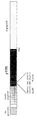
  • the single figure enclosed shows a portion of the genetic map of the plasmid pC89 engineered for the purposes of the invention.
  • the nucleotidic sequence for the restriction sites and the corresponding aminoacidic sequence are illustrated below the portion of the above mentioned genetic map.
  • the wild-type aminoacidic sequence of the amino-terminal end of mature pVIII has been modified in order to introduce single EcoRI and BamHI sites.
  • HBV Hepatitis B virus
  • a first "library" of epitopes was prepared, made up of phages having oligopeptides with 9 amino acids displayed on the surface of the capsid, expressed by random sequence oligonucleotidic inserts introduced into the gene coding for the protein VIII of the phage capsid.
  • the plasmid pC89 was used, engineered as described in F. Felici et al., Selection of Antibody Ligands from a Large Library of Oligopeptides Expressed on a Multivalent Exposition Vector, J. Mol. Biol. (1991), 222, 301-310, of which a portion of the genetic map is shown in the figure.
  • a second epitope "library” was prepared in the same way as the first, with the difference that two cysteine residues are present at the two ends of the insert, as described in A. Luzzago et al., Mimicking of discontinuous epitopes by phage displayed peptides, I. Epitope mapping of human H Ferritin using a phage library of contrained peptides, Gene (1993), 128, 51-57.
  • HBV surface antigen HBsAg
  • the antibodies contained in these sera were immobilized on a solid matrix and incubated with the phage libraries.
  • the phages specifically retained by these antibodies were then eluted and amplified.
  • Bacteria infected by the phages selected as above were plated on a solid culture medium and transferred onto nitrocellulose filters. Subsequently, these filters were incubated with sera from individuals immunized against HBsAg different from the serum used for the first enrichment. The phages specifically recognized by antibodies present in these sera were identified and isolated.
  • the phages identified as above were counter-selected for reactivity to antibodies present in the sera of individuals not immune to HBsAg, using the ELISA test.
  • the phages resulting from this counter-selection were checked for specificity of reaction to anti-HBsAg antibodies by means of competition in the ELISA test.
  • nucleotidic sequence coding for the epitopes identified in this manner was subsequently determined (SEQ ID NO: 4, 5, 6, 8).
  • the phages selected as described above, were amplified and purified.
  • the purified phages were injected into test animals (mice, rats and rabbits), according to the process described by V.F. de la Cruz et al., Immunogenicity and Epitope Mapping of Foreign Sequences via Genetically Engineered Filamentous Phage, J. Biol. Chem. (1988) 263, 9, 4318-4322, and by J. Greenwood et al., Multiple Display of Foreign Peptides on a Filamentous Bacteriophage, J. Mol. Biol. (1991) 220, 821-827.
  • HCV Hepatitis C virus
  • a first "library” of epitopes was prepared, made up of phages having oligopeptides with 9 amino acids displayed on the surface of the capsid, expressed by random sequence oligonucleotidic inserts introduced into the gene coding for the protein VIII of the phage capsid.
  • the plasmid pC89 was used, engineered as described in F. Felici et al., Selection of Antibody Ligands from a Large Library of Oligopeptides Expressed on a Multivalent Exposition Vector, J. Mol. Biol. (1991), 222, 301-310, of which a portion of the genetic map is shown in the figure.
  • a second epitope "library” was prepared in the same way as the first, with the difference that two cysteine residues are present at the two ends of the insert, as described in A. Luzzago et al., Mimicking of discontinuous epitopes by phage displayed peptides, I. Epitope mapping of human H Ferritin using a phage library of contrained peptides, Gene (1993), 128, 51-57.
  • Sera from patients clinically characterized by being infected with the hepatitis C virus were then used.
  • the antibodies contained in these sera were immobilized on a solid matrix and incubated with the phage libraries.
  • the phages specifically retained by these antibodies were then eluted and amplified.
  • Bacteria infected by the phages selected as above were plated on a solid culture medium and transferred onto nitrocellulose filters. Subsequently, these filters were incubated with serums from patients infected with HCV, different from the serum used for the initial enrichment. The phages specifically recognized by antibodies present in these sera were identified and isolated.
  • the phages identified as above were counter-selected for reactivity to antibodies present in the sera of individuals not infected with HCV, using the ELISA test.
  • the reaction specificity of the above phages with anti-HCV antibodies is evaluated statistically as follows. The frequency with which a significant number of sera from patients infected with HCV recognize the phage clones is determined in an ELISA test. In parallel, again using the ELISA test, absence of recognition of the same phage clones by a significant number of sera from individuals not infected with HCV is tested. For each phage clone, the specificity is evaluated by comparison of the frequence of recognition by sera from patients infected with HCV with that of sera from non-infected individuals.
  • the epitope peptidic sequence identified in this manner was subsequently determined (SEQ ID from NO: 9 to NO: 30).
  • sequences selected give an effective indication of the presence of anti-HCV antibodies in the blood of all patients examined, and do not react with blood from non-infected individuals. These data show that the group of phage clones selected forms a reliable system for the diagnosis of infection by the hepatitis C virus.
  • HCV Hepatitis C virus
  • a first "library" of epitopes was prepared, made up of phages displaying oligopeptides with 9 amino acids on the surface of the capsid, expressed by random sequence oligonucleotidic inserts introduced into the gene coding for the protein VIII of the phage capsid.
  • the plasmid pC89 was used, engineered as described in F. Felici et al., Selection of Antibody Ligands from a Large Library of Oligopeptides Expressed on a Multivalent Exposition Vector, J. Mol. Biol. (1991), 222, 301-310, of which a portion of the genetic map is shown in the figure.
  • a second epitope "library” was prepared in the same way as the first, with the difference that two cysteine residues are present at the two ends of the insert, as described in A. Luzzago et al., Mimicking of discontinuous epitopes by phage displayed peptides, I. Epitope mapping of human H Ferritin using a phage library of contrained peptides, Gene (1993), 128, 51-57.
  • Samples of antibodies from individuals suffering from type II Cryoglobulinemia caused by and/or associated with the human hepatitis C virus (HCV) were immobilized on a solid matrix and incubated with the phage libraries. The phages specifically retained by said antibody were then eluted and amplified.
  • HCV human hepatitis C virus
  • Bacteria infected by the phages selected as above were plated on a solid culture medium and transferred onto nitrocellulose filters. Subsequently, these filters were incubated with sera from patients suffering from type II Cryoglobulinemia caused by and/or associated with human hepatitis C virus (HCV), different from the serum used for the first enrichment. The phages specifically recognized by antibodies present in these serums were identified and isolated.
  • HCV human hepatitis C virus
  • the phages identified as above were counter-selected for reactivity to antibodies present in the serums of individuals not infected with type II Cryoglobulinemia caused by and/or associated with human hepatitis C virus (HCV), using the ELISA test.
  • HCV hepatitis C virus
  • the reaction specificity of the phages resulting from this counter-selection with antibodies specific for Type II Cryoglobulinemia caused by and/or associated with the human hepatitis C virus is evaluated statistically as follows.
  • the frequency with which a significant number of sera from patients suffering from type II Cryoglobulinemia caused by and/or associated with the human hepatitis C virus (HCV) recognize the phage clones is determined in an ELISA test.
  • absence of recognition of the same phage clones by a significant number of sera from individuals not suffering from the disease is tested.
  • the specificity is evaluated by comparison of the frequency of recognition by sera from patients suffering from the disease with that of sera from healthy individuals.
  • the epitope peptidic sequence identified in this manner was subsequently determined (SEQ ID from NO: 31 to NO: 42).
  • sequences selected give an effective indication of the presence of antibodies specific for type II Cryoglobulinemia, caused by and/or associated with the human hepatitis C virus (HCV), in the blood of all patients examined, and do not react with blood from individuals not suffering from the disease.
  • HCV human hepatitis C virus
  • the sequences selected show significant homology with the human LAG-3 gene sequence, which is specifically expressed by T lymphocytes and "natural killer" cells.
  • the same antibodies used to select the phage clones react with the portion of the protein LAG-3 that is homologous with the sequence of the selected phage clones. This recognition can be abolished by competition with the selected phage clones. These results indicate that the selected phage clones can be used to block the autoantibody binding to the protein LAG-3.
  • a first "library" of epitopes was prepared, made up of phages having oligopeptides with 9 amino acids displayed on the surface of the capsid, expressed by random sequence oligonucleotidic inserts introduced into the gene coding for the protein VIII of the phage capsid.
  • the plasmid pC89 was used, engineered as described in F. Felici et al., Selection of Antibody Ligands from a Large Library of Oligopeptides Expressed on a Multivalent Exposition Vector, J. Mol. Biol. (1991), 222, 301-310.
  • a second epitope "library” was prepared in the same way as the first, with the difference that two cysteine residues are present at the two ends of the insert, as described in A. Luzzago et al., Mimicking of discontinuous epitopes by phage displayed peptides, I. Epitope mapping of human H. Ferritin using a phage library of constrained peptides, Gene (1993), 128, 51-57.
  • a sample of sera from diabetic patients at the beginning of their type I diabetes clinical history was tested for the presence of antibodies specific for certain known markers characteristic of the disease, such as anti-insulin and ICA antibodies, or antibodies against the pancreatic islets.
  • a serum with a high antibody content was then used for selection.
  • the antibodies contained in this serum were immobilized on a solid matrix and incubated with the phage libraries.
  • the phages specifically retained by these antibodies were then eluted and amplified.
  • Bacteria infected by the phages selected as above were plated on a solid culture medium and transferred onto nitrocellulose filters. Subsequently, these filters were incubated with sera from diabetic individuals different from the serum used for the first enrichment. The phages specifically recognized by antibodies present in these sera were identified and isolated.
  • the phages identified as above were counter-selected for reactivity to antibodies present in the sera of individuals not suffering from type I diabetes, using the ELISA test.
  • the phages resulting from this counter-selection were checked for specificity of reaction by means of large scale screening using sera from diabetic patients at different stages of the disease.
  • the nucleotidic sequence coding for the epitopes identified in this manner was then determined.
  • the phage clones were analyzed using the following process:

Landscapes

  • Chemical & Material Sciences (AREA)
  • Health & Medical Sciences (AREA)
  • Life Sciences & Earth Sciences (AREA)
  • Organic Chemistry (AREA)
  • Genetics & Genomics (AREA)
  • Biochemistry (AREA)
  • Molecular Biology (AREA)
  • General Health & Medical Sciences (AREA)
  • Medicinal Chemistry (AREA)
  • Biophysics (AREA)
  • Engineering & Computer Science (AREA)
  • Zoology (AREA)
  • Proteomics, Peptides & Aminoacids (AREA)
  • Immunology (AREA)
  • Microbiology (AREA)
  • Virology (AREA)
  • Wood Science & Technology (AREA)
  • Bioinformatics & Cheminformatics (AREA)
  • General Engineering & Computer Science (AREA)
  • Biotechnology (AREA)
  • Gastroenterology & Hepatology (AREA)
  • Biomedical Technology (AREA)
  • Rheumatology (AREA)
  • Diabetes (AREA)
  • Physics & Mathematics (AREA)
  • Chemical Kinetics & Catalysis (AREA)
  • Toxicology (AREA)
  • Rehabilitation Therapy (AREA)
  • General Chemical & Material Sciences (AREA)
  • Plant Pathology (AREA)
  • Hematology (AREA)
  • Crystallography & Structural Chemistry (AREA)
  • Oncology (AREA)
  • Medicines Containing Antibodies Or Antigens For Use As Internal Diagnostic Agents (AREA)
  • Peptides Or Proteins (AREA)
  • Medicines That Contain Protein Lipid Enzymes And Other Medicines (AREA)
  • Measuring Or Testing Involving Enzymes Or Micro-Organisms (AREA)
  • Micro-Organisms Or Cultivation Processes Thereof (AREA)
  • Preparation Of Compounds By Using Micro-Organisms (AREA)

Abstract

A process for the preparation of immunogens or diagnostic reagents that mimic an antigen or a pathogenic organism specific to a disease, essentially characterized by the following operations: identification of at least one antibody that reacts with the antigen or pathogenic organism specific to the disease; construction of phage libraries which display on the surface of the capsid oligopeptides, expressed from random sequence oligonucleotidic inserts introduced into a gene coding for a phage capsid protein using genetic manipulation techniques (for example, using a plasmid engineered for the purposes of the invention, the genetic map of which is shown in the figure); selection of the phages that display on the surfaces of the capsid antigenic oligopeptides recognized by said antibody; optional use of the selected phages and/or fragments thereof and/or their derivatives for the formulation of diagnostic kits for the specific pathogenic agent, or in general for the disease, including immunological disorders typical of so-called autoimmune diseases, with known or unknown etiology and/or pathogenesis; optional use of the selected phages and/or fragments thereof and/or their derivatives to induce a tolerance of the phenomena of hypersensitivity and/or allergy to compounds and/or natural or synthetic preparations; optional immunization of an organism by means of the selected phages and/or fragments thereof and/or their derivatives; and optional verification of the presence, in the serum of the immunized organism, of antibodies that recognize the above antigen or organism specific to the disease.

Description

The subject of the present invention is a process for the preparation of immunogens or diagnostic reagents that mimic an antigen or a pathogenic organism specific to a disease, even if this is uncharacterized or even unknown (thereby including auto-immune diseases whose etiology and/or pathogenesis is known or unknown). This process is based on the existence and availability of antibodies, both monoclonal or polyclonal, or of serum containing antibodies, which react specifically with the organism causing the infection.
Antibodies suitable for use in this process can be specific for any antigen of interest for which an immunogen or diagnostic reagent that mimics the antigen is sought. The antigen can be a protein or peptide whether synthetic, derived from a natural source, or produced recombinantly; carbohydrate; polysaccharide; glycoprotein; hormone; receptor; antibody; virus; substrate; metabolite; transition state analog; cofactor; drug; dye; nutrient; growth factor; cellular component; oncogene product; bacteria and their extracellular products; mammalian cells and extracts therefrom including tumor cells, virus infected cells and normal cells; parasites; protozoa; malarial antigens; helminths; fungi; rickettsia; or an allergen including but not limited to pollens, dusts, danders or extracts of the same; or a venom, poison, toxin, or toxoid; nucleic acids including DNA; or any other antigen without limitation. Antigens of viruses which are suitable for use in the present invention include antigens from the viruses including but not limited to polio virus, influenza virus, HIV, HTLV, papilloma virus, adeno virus, parainfluenza virus, measles virus, mumps virus, respiratory syncytial virus, shipping fever virus, Western and Eastern encephalomyelitis virus, Japanese B encephalomyelitis virus, Russian spring-summer encephalomyelitis virus, hog cholera virus, hepatitis virus, pox virus, rabies, virus, distemper virus, herpes virus, cytomegalo virus, foot and mouth disease virus, rhinovirus, Newcastle disease virus, vaccinia virus; and pseudorabies virus. The mime can be an immunogen, a vaccine, an inhibitor or activator, etc. without limitation.
As is known, all vaccines and diagnostic reagents currently. on sale or undergoing clinical tests are conventionally obtained by means of processes based on the manipulation, modification and/or adaptation of pathogenic organisms or components thereof. Of particular relevance to the present invention is the teaching by Perham et al. (WO 92/07077) of how to engineer filamentous bacteriophage to express on their capsid surface peptides epitopes derived from pathogens, to derive vaccines and diagnostic reagents These methods have given good results, but are not without problems. The greatest limitation associated with these methods is connected with the fact that they depend upon the availability of information and/or material directly deriving from pathogenic organisms or components thereof.
The ability to prepare large collection of random peptides expressed as a part of bacteriophage coat proteins and the development of method for their screening with homogeneous receptor, has led several experts in this field to speculate that protective antibodies known to be present in human sera could be used to select peptide mimicking epitopes of pathogens (WO 91/19818).
Previous attempts to overcome the above described limitation have so far failed for a lack of an efficient and reproducible experimental protocol; in particular, these attempts did not provide sufficient information in order to identify and characterize immunogenic mimics to be used for diagnosis and vaccine therapy. It must be emphasized that the present invention is focused on the development of a new technology aimed at overcoming conceptual and technical inadequancies of previously proposed protocols.
A key feature of the present invention is a novel strategy for the selection of antigenic and immunogenic mimics, based on the use, as reagents, of serum samples from patients and a counter-selection step utilizing serum samples from healthy individuals.
Use of the process for preparation according to the present invention allows this limitation to be overcome, furthermore offering additional advantages which will be clear from the following description.
A process for the preparation of immunogens or diagnostic reagents that mimic an antigen or a pathogenic organism specific to a disease, using a procedure which can be implemented without any information on the nature and/or identity of the antigen(s) of the pathogenic organism specific for the disease, and without any information on the nature and/or structure and/or properties of the specific antibodies, comprising the following operations:
  • identification of at least two sera that contain uncharacterized antibodies reacting with an antigen or a pathogenic organism specific for a disease, even if such antigen and/or pathogenic organism is uncharacterized or unknown;
  • construction of phage libraries which display on the surface of the capsid oligopeptides, expressed from random sequence oligonucleotidic inserts introduced into a gene coding for a phage capsid protein using genetic manipulation techniques;
  • selection of the phages that display on the surfaces of the capsid antigenic oligopeptides with a first pathologic serum, subsequent screening with additional pathological sera, different from the previous one, from individuals that have been immunized against the same disease, in order to identify phage that display oligopeptides that react with all or most of the sera tested, and counterscreening with a panel of sera from another set of healthy individuals, or anyway not affected by the same disease, taken as a control in order to identify oligopeptides that do not react with all or most sera from controlled individuals.
The construction of phage libraries, according to the present invention, can be advantageously performed using the filamentous phages M13, F1 and Fd, or derivatives thereof. The reasons for this are the following:
  • filamentous phages are commonly used as molecular vectors in the field of molecular biology and genetic engineering. For example, by taking advantage of their feature to contain a genome with a single DNA helix, they have been particularly used in DNA sequencing experiments, in direct site mutagenesis experiments and for the expression of proteins and peptides;
  • the information required and sufficient for encapsidation of a single chain DNA genome has been well characterized and can be transferred to other molecular vectors;
  • it has likewise been demonstrated that at least two proteins of the capsid of filamentous phages can be modified by means of the addition or insertion of additional amino acid sequences. The resulting phages are encapsidated, maintain their ability to replicate and, in most cases, to infect bacterial cells. The foreign amino acid sequences are displayed on the surface of the phage, and can be recognized by interaction with antibodies or with other specific molecules according to the case.
The antibodies that can be used in the process for the preparation of immunogens and diagnostic reagents according to the present invention are antibodies contained in sera. This is of particular interest, because it provides for the first time a reproducible experimental strategy to identify novel antigenic and immunogenic mimics in absence of any information on the structure and properties of the natural and pathological antigen.
The gene coding for the phage capsid, with random sequence oligonucleotidic inserts, can be the gene coding for the protein VIII of the phage capsid or the gene coding for the protein III of said capsid.
The process according to the invention can be applied without restriction to any antibody or organism responsible for illness. Good results have been obtained using sera specific for the surface antigen of the human hepatitis B virus (HBsAg).
The antigenic oligopeptides recognized by the antibodies used can be obtained by expression from random sequence oligonucleotidic inserts, using as a vector, for example, the plasmid pC89.
In the process for the preparation of immunogens and diagnostic reagents according to the present invention, it is possible to select phages containing in their capsid from the site identifying the restriction enzyme EcoRI (GAATTC) to that identifying the restriction enzyme BamHI (GGATCC), one of the aminoacidic sequences SEQ ID NO: 1, SEQ ID NO: 2, SEQ ID NO: 3, SEQ ID NO:7 and SEQ ID NO: 9 to 47.
The plasmids pC89 contains, wholely or in part, a nucleotidic sequence chosen from the group comprising the sequences SEQ ID NO: 4, SEQ ID NO: 5, SEQ ID NO: 6 and SEQ ID NO:8.
Oligopeptides obtained by the above process which react with pathological sera from individuals affected by the same disease affecting the patients whose sera have been used for the selection and screening of phage displaying said oligopeptides and which do not react with sera from individual not affected by the same disease, are capable for instance of eliciting in a living organism an immune response against the natural antigene or antibodies against HCV or antibodies against HBV.
The above oligopeptides can be used as immunogens to elicit an antibody response against specific pathological antigens, such as for instance infectious pathogens, in the case said elicited antibodies also being protective or neutralizing, to formulate a vaccine against said specific pathogenic agents.
The immunogens obtainable from the process of the present invention are useful as vaccines or immunizing agents as well as being useful as diagnostic reagents. The vaccines or immunizing agents are administered to a patient in need of such treatment according to standard methods known in the art. The vaccine or immunizing agents can be administered and used either singly or in combination. The vaccines and immunogens of the present invention can comprise the phage or protein and peptides isolated therefrom.
Kits containing the immunogens obtained from the process of the present invention may be prepared. Such kits are used to detect the presence of the antigen in a sample. Such characterization is useful for a variety of purposes including but not limited to forensic analyses and epidemiological studies. Such a kit would comprise a compartmentalized carrier suitable to hold in close confinement at least one container. The carrier would further comprise reagents such as the immunogens, and antibodies suitable for detecting the antigens. The carrier may also contain a means for detection such as labeled antigen or enzyme substrates or the like.
Pharmaceutically useful compositions comprising the immunogens and vaccines obtainable by the process of the present invention, may be formulated according to known methods such as by the admixture of a pharmaceutically acceptable carrier.
Examples of such carriers and methods of formulation may be found in Remington's Pharmaceutical Sciences. To form a pharmaceutically acceptable composition suitable for effective administration, such compositions will contain an effective amount of the vaccine or immunogen of the present invention.
Therapeutic or diagnostic compositions of the invention are administered to an individual in amounts sufficient to treat or diagnose the relevant disorders. The effective amount may vary according to a variety of factors such as the individual's condition, weight, sex and age. Other factors include the mode of administration. The pharmaceutical compositions may be provided to the individual by a variety of routes such as subcutaneous, topical, oral and intramuscular.
The present invention also has the objective of providing suitable topical, oral systemic and parenteral pharmaceutical formulations for use in the novel methods of treatment of the present invention. The compositions containing vaccine or immunogens identified according to this invention as the active ingredient can be administered in a wide variety of therapeutic dosage forms in conventional vehicles for administration. For example, the vaccines and immunogens can be administered in such oral dosage forms as tablets, capsules (each including timed release and sustained release formulations), pills, powders, granules, elixirs, tinctures, solutions, suspensions, syrups and emulsions, or by injection. Likewise, they may also be administered in intravenous (both bolus and infusion), intraperitoneal, subcutaneous, topical with or without occlusion, or intramuscular form, all using forms well known to those of ordinary skill in the pharmaceutical arts. An effective but non-toxic amount of the vaccines and immunogens can be employed.
The daily dosage of the vaccines and immunogens may be varied over a wide range from 0,01 to 1000 mg per adult human/per day. For oral administration, the vaccines and immunogens are preferably provided in the form of scored or unscored tablets containin 0,01, 0,05, 0,1, 0,5, 1,0, 2,5, 5,0, 10,0, 15,0, 25,0, and 50,0 milligrams of the active ingredient for the symptomatic adjustment of the dosage to the patient to be treated. An effective amount of the vaccines and immunogens is ordinarily supplied at a dosage level of from about 0,0001 mg/kg to about 100 mg/kg of body weight per day. The range is more particularly from about 0,001 mg/kg to 10 mg/kg of body weight per day. The dosages of the vaccines and immunogens are adjusted when combined to achieve desired effects. On the other hand, dosages of these various agents may be independently optimized and combined to achieve a synergistic result wherein the pathology is reduced more than it would be if either agent were used alone.
Advantageously, vaccine or immunogens of the present invention may be administered in a single dose, or a single daily dose, or the total daily dosage may be administered in divided doses of two, three or four times daily. Furthermore, vaccine or immunogens for the present invention can be administered in intranasal form via topical use of suitable intranasal vehicles, or via transdermal routes, using those forms of transdermal skin patches well known to those of ordinary skill in that art. To be administered in the form of a transdermal delivery system, the dosage administration will, of course, be continuous rather than intermittent throughout the dosage regimen.
For combination treatment with more than one active agent, where the active agents are in separate dosage formulations, the active agents can be administered concurrently, or they each can be administered at separately staggered times.
The dosage regimen utilizing the vaccine or immunogens of the present invention is selected in accordance with a variety of factors including type, species, age, weight, sex and medical condition of the patient; the severity of the condition to be treated; the route of administration; the renal and hepatic function of the patient; and the particular vaccine or immunogen thereof employed. A physician or veterinarian of ordinary skill can readily determine and prescribe the effective amount of the vaccine or immunogens of the present invention required to prevent, counter or arrest the progress of the condition. Optimal precision in achieving concentrations of the vaccine or immunogens of the present invention within the range that yields efficacy without toxicity requires a regimen based on the kinetics of the vaccine or immunogens of the present invention availibility to target sites. This involves a consideration of the distribution, equilibrium, and elimination of the vaccine or immunogens of the present invention.
In the methods of the present invention, the vaccine or immunogens herein described in detail can form the active ingredient, and are typically administered in admixture with suitable pharmaceutical diluents, excipients or carriers (collectively referred to herein as "carrier" materials) suitably selected with respect to the intended form of administration, that is, oral tablets, capsules, elixirs, syrups and the like, and consistent with conventional pharmaceutical practices.
For instance, for oral administration in the form of a tablet or capsule, the active vaccine or immunogen component can be combined with an oral, non-toxic pharmaceutically acceptable inert carrier such as ethanol, glycerol, water and the like. Moreover, when desired or necessary, suitable binders, lubricants, disintegrating agents and coloring agents can also be incorporated into the mixture. Suitable binders include, without limitation, starch, gelatin, natural sugars such as glucose or beta-lactose, corn sweeteners, natural and synthetic gums such as acacia, tragacanth or sodium alginate, carboxymethylcellulose, polyethylene glycol, waxes and the like. Lubricants used in these dosage forms include, without limitation, sodium oleate, sodium stearate, magnesium stearate, sodium benzoate, sodium acetate, sodium chloride and the like. Disintegrators include, without limitation, starch, methylcellulose, agar bentonite, xanthan gum and the like.
For liquid forms the active vaccine or immunogen component can be combined in suitably flavored suspending or dispersing agents such as the synthetic and natural gums, for example, tragacanth, acacia, methylcellulose and the like. Other dispersing agents which may be employed include glycerin and the like. For parenteral administration, sterile suspensions and solutions are desired. Isotonic preparations which generally contain suitable preservatives are employed when intravenous administration is desired.
Topical preparations containing the active vaccine or immunogen component can be admixed with a variety of carrier materials well known in the art, such as, e.g. alcohols, aloe vera gel, allantoin, glycerine, vitamin A and E oils, mineral oil,PPG2 myristyl propionate, and the like to form,e.g. alcoholic solutions, topical cleansers, cleansing creams, skin gels, skin lotions, and shampoos in cream or gel formulations.
The vaccine or immunogens of the present invention can also be administered in the form of liposome delivery systems, such as small unilamellar vesicles, large unilamellar vesicles and multilamellar vesicles. Liposomes can be formed from a variety of phospholipids, such as cholesterol, stearylamine or phosphatidylcholines.
Vaccine or immunogens of the present invention may also be delivered by the use of monoclonal antibodies as individual carriers to which the vaccine or immunogen molecules are coupled. The vaccine or immunogens of the present invention may also be coupled with soluble polymers as targetable vaccine or immunogen carriers. Such polymers can include polyvinyl-pyrrolidone, pyran copolymer, polyhydroxypropylmethacryl-amidephenol, polyhydroxyethylaspartamidephenol, or polyethyl-eneoxidepolylysine substituted with palmitoyl residues. Furthermore, the vaccine or immunogens of the present invention may be coupled to a class of biodegradable polymers useful in achieving controlled release of a vaccine or immunogen, for example, polyactic acid, polyepsilon caprolactone, polyhydroxy butyric acid, polyorthoesters, polyacetals, polydihydro-pyrans, polycyanoacrylates and cross-linked or amphipathic block copolymers of hydrogels.
Up to this point a general description has been given of the subjects of the present invention. With the assistance of the following examples, a more detailed description will now be given of specific embodiments of the invention, aimed at giving a better understanding of the objects, characteristics, advantages and methods of application thereof. The following examples refer, respectively, to embodiments of the process for the preparation of immunogens and diagnostic reagents against a specific pathogenic agent, according to the present invention; to a demonstration of the effectiveness of the clones selected for preparation of immunogens based on the effects produced by samples of serum from test animals immunized using the single clones; and to a demonstration of the effectiveness of the clones selected for preparation of diagnostic reagents, based on their specific reaction with the serum of individuals immunized with HBsAg.
The single figure enclosed shows a portion of the genetic map of the plasmid pC89 engineered for the purposes of the invention. The nucleotidic sequence for the restriction sites and the corresponding aminoacidic sequence are illustrated below the portion of the above mentioned genetic map. The wild-type aminoacidic sequence of the amino-terminal end of mature pVIII has been modified in order to introduce single EcoRI and BamHI sites.
Example 1 Process for the preparation of specific diagnostic reagents and immunogens for the disease caused by the human Hepatitis B virus (HBV)
The following process was used according to the invention:
A first "library" of epitopes was prepared, made up of phages having oligopeptides with 9 amino acids displayed on the surface of the capsid, expressed by random sequence oligonucleotidic inserts introduced into the gene coding for the protein VIII of the phage capsid. For expression of the recombinant proteins containing the epitope, the plasmid pC89 was used, engineered as described in F. Felici et al., Selection of Antibody Ligands from a Large Library of Oligopeptides Expressed on a Multivalent Exposition Vector, J. Mol. Biol. (1991), 222, 301-310, of which a portion of the genetic map is shown in the figure.
A second epitope "library" was prepared in the same way as the first, with the difference that two cysteine residues are present at the two ends of the insert, as described in A. Luzzago et al., Mimicking of discontinuous epitopes by phage displayed peptides, I. Epitope mapping of human H Ferritin using a phage library of contrained peptides, Gene (1993), 128, 51-57.
A sample of sera from individuals immunized using a recombinant form of the HBV surface antigen (HBsAg) was tested for the presence of specific antibodies against HBsAg. The sera with a high antibody content against HBsAg were then used.
The antibodies contained in these sera were immobilized on a solid matrix and incubated with the phage libraries. The phages specifically retained by these antibodies were then eluted and amplified.
Bacteria infected by the phages selected as above were plated on a solid culture medium and transferred onto nitrocellulose filters. Subsequently, these filters were incubated with sera from individuals immunized against HBsAg different from the serum used for the first enrichment. The phages specifically recognized by antibodies present in these sera were identified and isolated.
The phages identified as above were counter-selected for reactivity to antibodies present in the sera of individuals not immune to HBsAg, using the ELISA test.
The phages resulting from this counter-selection were checked for specificity of reaction to anti-HBsAg antibodies by means of competition in the ELISA test.
The nucleotidic sequence coding for the epitopes identified in this manner was subsequently determined (SEQ ID NO: 4, 5, 6, 8).
EXAMPLE 2 Demonstration of the effectiveness of the selected phages as specific immunogens for the disease caused by the human hepatitis virus (HBV)
The following process was used:
The phages, selected as described above, were amplified and purified.
The purified phages were injected into test animals (mice, rats and rabbits), according to the process described by V.F. de la Cruz et al., Immunogenicity and Epitope Mapping of Foreign Sequences via Genetically Engineered Filamentous Phage, J. Biol. Chem. (1988) 263, 9, 4318-4322, and by J. Greenwood et al., Multiple Display of Foreign Peptides on a Filamentous Bacteriophage, J. Mol. Biol. (1991) 220, 821-827.
The sera of animals immunized as above were tested for the presence of antibodies capable of interacting with HBsAg, using the ELISA test. This method underlined the presence of a high level of anti- HBsAg antibodies in the serum of test animals immunized as above.
The same immunization process was adopted, using as immunogens synthetic oligopeptides reproducing the amino acid sequence (SEQ ID from NO: 1 to NO: 3 and NO:7) of the epitopes identified according to the procedure given above. This method underlined the presence of a high level of anti-HBsAg antibodies in the serum of test animals immunized as above.
The same immunization process was adopted, using as immunogens recombinant forms produced in bacteria of the heavy chain of human ferritin displaying on their surface the synthetic oligopeptides reproducing the amino acid sequence of the epitopes identified according to the procedure given above. This method underlined the presence of a high level of anti-HBsAg antibodies in the serum of test animals immunized as above.
EXAMPLE 3 Demonstration of the effectiveness of the selected phages as diagnostic reagents for determination of the presence of anti-HBsAg antibodies in serum.
A process comprising the following operations was used:
20 human sera from individuals vaccinated against HBsAg were analyzed in an ELISA test for their ability to recognize specifically the phage clones, identified as described in example 1, showing the peptide sequences described (SEQ ID from NO: 1 to NO: 3 and NO: 7). The results show that 80% of the sera specifically recognize at least one of the four sequences selected.
16 human serums from patients suffering from hepatitis B and containing anti-HBsAg antibodies were analyzed in an ELISA test for their ability to recognize specifically the phage clones, identified as described in example 1, showing the peptide sequences described (SEQ ID from NO: 1 to NO: 3 and NO:7). The results show that 44% of the sera specifically recognize at least one of the four sequences selected.
20 human sera from individuals not vaccinated against HBsAg were analyzed in an ELISA test for their ability to recognize specifically the phage clones, identified as described in example 1, displaying the peptide sequences described (SEQ ID from NO: 1 to NO:3 and NO:7). The results show that none of the sera specifically recognize any of the four sequences selected.
Example 4 Process for the reparation of specific diagnostic reagents and immunogens for the disease caused by the human Hepatitis C virus (HCV)
The following process was used according to the invention:
A first "library" of epitopes was prepared, made up of phages having oligopeptides with 9 amino acids displayed on the surface of the capsid, expressed by random sequence oligonucleotidic inserts introduced into the gene coding for the protein VIII of the phage capsid. For the expression of the recombinant proteins containing the epitope, the plasmid pC89 was used, engineered as described in F. Felici et al., Selection of Antibody Ligands from a Large Library of Oligopeptides Expressed on a Multivalent Exposition Vector, J. Mol. Biol. (1991), 222, 301-310, of which a portion of the genetic map is shown in the figure.
A second epitope "library" was prepared in the same way as the first, with the difference that two cysteine residues are present at the two ends of the insert, as described in A. Luzzago et al., Mimicking of discontinuous epitopes by phage displayed peptides, I. Epitope mapping of human H Ferritin using a phage library of contrained peptides, Gene (1993), 128, 51-57.
Sera from patients clinically characterized by being infected with the hepatitis C virus were then used.
The antibodies contained in these sera were immobilized on a solid matrix and incubated with the phage libraries. The phages specifically retained by these antibodies were then eluted and amplified.
Bacteria infected by the phages selected as above were plated on a solid culture medium and transferred onto nitrocellulose filters. Subsequently, these filters were incubated with serums from patients infected with HCV, different from the serum used for the initial enrichment. The phages specifically recognized by antibodies present in these sera were identified and isolated.
The phages identified as above were counter-selected for reactivity to antibodies present in the sera of individuals not infected with HCV, using the ELISA test.
The reaction specificity of the above phages with anti-HCV antibodies is evaluated statistically as follows. The frequency with which a significant number of sera from patients infected with HCV recognize the phage clones is determined in an ELISA test. In parallel, again using the ELISA test, absence of recognition of the same phage clones by a significant number of sera from individuals not infected with HCV is tested. For each phage clone, the specificity is evaluated by comparison of the frequence of recognition by sera from patients infected with HCV with that of sera from non-infected individuals.
The epitope peptidic sequence identified in this manner was subsequently determined (SEQ ID from NO: 9 to NO: 30).
EXAMPLE 5 Demonstration of the effectiveness of the selected hages as diagnostic reagents for determination of the resence of anti-HCV antibodies in serum.
A process comprising the following operations was used:
40 human sera from individuals not infected with HCV were analyzed in an ELISA test for their ability to recognize specifically the phage clones, identified as described in example 4, displaying the peptide sequences described (SEQ ID from NO: 9 to NO: 23). The results show that none of the sera recognizes the sequences selected.
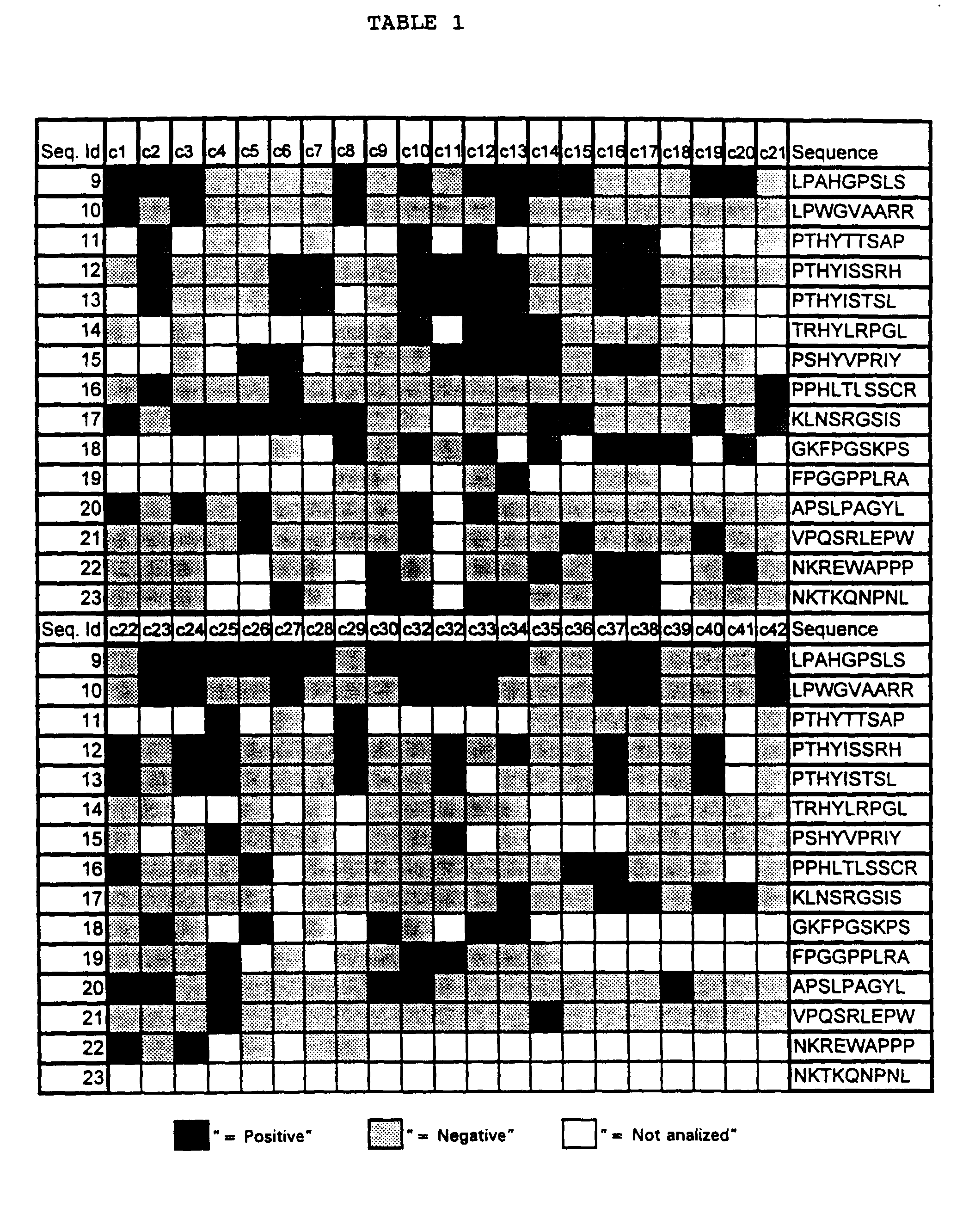
42 human sera from patients infected with HCV were analyzed in an ELISA test for their ability to recognize specifically the phage clones, identified as described in example 4, displaying the peptide sequences described (SEQ ID from NO: 9 to NO: 23). The results show that each phage clone is recognized specifically by the sera selected, with a frequency varying from 15 to 65% (see table I). The same results also show that each of the 42 sera tested specifically recognizes at least one of the sequences selected.
The sequences selected give an effective indication of the presence of anti-HCV antibodies in the blood of all patients examined, and do not react with blood from non-infected individuals. These data show that the group of phage clones selected forms a reliable system for the diagnosis of infection by the hepatitis C virus.
Figure 00200001
Example 6 Process for the reparation of specific diagnostic reagents and immunogens for the disease type II Cryoglobulinemia caused by and/or associated with the human Hepatitis C virus (HCV)
The following process was used according to the invention:
A first "library" of epitopes was prepared, made up of phages displaying oligopeptides with 9 amino acids on the surface of the capsid, expressed by random sequence oligonucleotidic inserts introduced into the gene coding for the protein VIII of the phage capsid. For expression of the recombinant proteins containing the epitope, the plasmid pC89 was used, engineered as described in F. Felici et al., Selection of Antibody Ligands from a Large Library of Oligopeptides Expressed on a Multivalent Exposition Vector, J. Mol. Biol. (1991), 222, 301-310, of which a portion of the genetic map is shown in the figure.
A second epitope "library" was prepared in the same way as the first, with the difference that two cysteine residues are present at the two ends of the insert, as described in A. Luzzago et al., Mimicking of discontinuous epitopes by phage displayed peptides, I. Epitope mapping of human H Ferritin using a phage library of contrained peptides, Gene (1993), 128, 51-57.
Samples of antibodies from individuals suffering from type II Cryoglobulinemia caused by and/or associated with the human hepatitis C virus (HCV) were immobilized on a solid matrix and incubated with the phage libraries. The phages specifically retained by said antibody were then eluted and amplified.
Bacteria infected by the phages selected as above were plated on a solid culture medium and transferred onto nitrocellulose filters. Subsequently, these filters were incubated with sera from patients suffering from type II Cryoglobulinemia caused by and/or associated with human hepatitis C virus (HCV), different from the serum used for the first enrichment. The phages specifically recognized by antibodies present in these serums were identified and isolated.
The phages identified as above were counter-selected for reactivity to antibodies present in the serums of individuals not infected with type II Cryoglobulinemia caused by and/or associated with human hepatitis C virus (HCV), using the ELISA test.
The reaction specificity of the phages resulting from this counter-selection with antibodies specific for Type II Cryoglobulinemia caused by and/or associated with the human hepatitis C virus is evaluated statistically as follows. The frequency with which a significant number of sera from patients suffering from type II Cryoglobulinemia caused by and/or associated with the human hepatitis C virus (HCV) recognize the phage clones is determined in an ELISA test. In parallel, again using the ELISA test, absence of recognition of the same phage clones by a significant number of sera from individuals not suffering from the disease is tested. For each phage clone, the specificity is evaluated by comparison of the frequency of recognition by sera from patients suffering from the disease with that of sera from healthy individuals.
The epitope peptidic sequence identified in this manner was subsequently determined (SEQ ID from NO: 31 to NO: 42).
EXAMPLE 7 Demonstration of the effectiveness of the selected phages as diagnostic reagents for determination of the presence in the serum of antibodies specific for the disease type II Cryoglobulinemia caused by and/or associated with the human hepatitis C virus (HCV).
A process comprising the following operations was used:
16 human sera from individuals not suffering from type II Cryoglobulinemia, caused by and/or associated with the human hepatitis C virus (HCV), were analyzed in an ELISA test for their ability to recognize specifically the phage clones, identified as described in example 6, showing the peptide sequences described (SEQ ID from NO: 31 to NO: 42). The results show that none of the serums recognizes the sequences selected.
80 human sera from patients suffering from type II Cryoglobulinemia, caused by and/or associated with the human hepatitis C virus (HCV), were analyzed in an ELISA test for their ability to recognize specifically the phage clones, identified as described in example 6, displaying the peptide sequences described (SEQ ID from NO: 31 to NO: 42). The results show that each phage clone is recognized specifically by the sera selected, with a frequency varying from 15 to 60%.
The sequences selected give an effective indication of the presence of antibodies specific for type II Cryoglobulinemia, caused by and/or associated with the human hepatitis C virus (HCV), in the blood of all patients examined, and do not react with blood from individuals not suffering from the disease. These data show that the group of phage clones selected forms a reliable system for diagnosis of the disease type II Cryoglobulinemia caused by and/or associated with the human hepatitis C virus (HCV).
The sequences selected show significant homology with the human LAG-3 gene sequence, which is specifically expressed by T lymphocytes and "natural killer" cells. The same antibodies used to select the phage clones react with the portion of the protein LAG-3 that is homologous with the sequence of the selected phage clones. This recognition can be abolished by competition with the selected phage clones. These results indicate that the selected phage clones can be used to block the autoantibody binding to the protein LAG-3.
Example 8 Process for the preparation of diagnostic reagents for Type I Diabetes autoimmune disease and demonstration of the effectiveness of the selected phages as diagnostic reagents for determination of the presence in the blood of autoantibodies characterizing autoimmune diseases.
The following process was used according to the invention:
A first "library" of epitopes was prepared, made up of phages having oligopeptides with 9 amino acids displayed on the surface of the capsid, expressed by random sequence oligonucleotidic inserts introduced into the gene coding for the protein VIII of the phage capsid. For expression of the recombinant proteins containing the epitope, the plasmid pC89 was used, engineered as described in F. Felici et al., Selection of Antibody Ligands from a Large Library of Oligopeptides Expressed on a Multivalent Exposition Vector, J. Mol. Biol. (1991), 222, 301-310.
A second epitope "library" was prepared in the same way as the first, with the difference that two cysteine residues are present at the two ends of the insert, as described in A. Luzzago et al., Mimicking of discontinuous epitopes by phage displayed peptides, I. Epitope mapping of human H. Ferritin using a phage library of constrained peptides, Gene (1993), 128, 51-57.
A sample of sera from diabetic patients at the beginning of their type I diabetes clinical history was tested for the presence of antibodies specific for certain known markers characteristic of the disease, such as anti-insulin and ICA antibodies, or antibodies against the pancreatic islets. A serum with a high antibody content was then used for selection.
The antibodies contained in this serum were immobilized on a solid matrix and incubated with the phage libraries. The phages specifically retained by these antibodies were then eluted and amplified.
Bacteria infected by the phages selected as above were plated on a solid culture medium and transferred onto nitrocellulose filters. Subsequently, these filters were incubated with sera from diabetic individuals different from the serum used for the first enrichment. The phages specifically recognized by antibodies present in these sera were identified and isolated.
The phages identified as above were counter-selected for reactivity to antibodies present in the sera of individuals not suffering from type I diabetes, using the ELISA test.
The phages resulting from this counter-selection were checked for specificity of reaction by means of large scale screening using sera from diabetic patients at different stages of the disease. The nucleotidic sequence coding for the epitopes identified in this manner was then determined.
The phage clones were analyzed using the following process:
25 human sera taken from individuals at the time of the first clinical appearance of type I diabetes were analyzed using an ELISA test for their ability to recognize specifically the phage clones, identified as described and displaying the peptide sequences described (SEQ ID NO: 43, SEQ ID NO: 44, SEQ ID NO: 45, SEQ ID NO: 46, SEQ ID NO: 47). The results show that 36% of the sera recognized specifically at least one of the 5 sequences selected.
16 human sera taken from individuals with autoimmune pathologies other than diabetes were analyzed using an ELISA test for their ability to recognize specifically the phage clones, identified as described in example 8, and displaying the peptide sequences described (SEQ ID NO: 43, SEQ ID NO: 44, SEQ ID NO: 45, SEQ ID NO: 46, SEQ ID NO: 47). The results show that 18% of the sera recognized specifically at least one of the 5 sequences selected.
50 human sera taken from individuals not suffering from diabetes or from other autoimmune pathologies were analyzed using an ELISA test for their ability to recognize specifically the phage clones, identified as described in example 8, and displaying the peptide sequences described (SEQ ID NO: 43, SEQ ID NO: 44, SEQ ID NO: 45, SEQ ID NO: 46, SEQ ID NO: 47). The results show that none of the sera recognized specifically any of the 5 sequences selected.
SEQUENCE LISTING GENERAL INFORMATION:
  • (i) APPLICANT: ISTITUTO DI RICERCHE DI BIOLOGIA
          MOLECOLARE P. ANGELETTI S.p.A.
  • (ii) TITLE OF INVENTION: Process for the preparation of immunogens and diagnostic reagents, and immunogens and diagnostic reagents thereby obtainable
  • (iii) NUMBER OF SEQUENCES: 47
  • (iv) CORRESPONDENCE ADDRESS:
  • (A) ADDRESSEE: Società Italiana Brevetti
  • (B) STREET: Piazza di Pietra, 39
  • (C) CITY: Rome
  • (D) COUNTRY: Italy
  • (E) POSTAL CODE: I-00186
  • (viii) ATTORNEY INFORMATION
  • (A) NAME: DI CERBO, Mario (Dr.)
  • (B) REFERENCE: RM/X88179/DC
  • (ix) TELECOMMUNICATION INFORMATION
  • (A) TELEPHONE: 06/6785941
  • (B) TELEFAX: 06/6794692
  • (C) TELEX: 612287 ROPAT
    • (1) INFORMATION FOR SEQ ID NO: 1:
    • (i) SEQUENCE CHARACTERISTICS
    • (A) LENGTH: 15 amino acids
    • (B) TYPE: amino acid
    • (C) STRANDEDNESS: single
    • (D) TOPOLOGY: linear
  • (ii) MOLECULE TYPE: recombinant protein
  • (iii) HYPOTHETICAL: yes
  • (v) FRAGMENT TYPE: internal
  • (vii) IMMEDIATE SOURCE
  • (A) LIBRARY: of recombinant peptides on phage
  • (B) CLONE: phagic
  • (ix) FEATURE
  • (A) NAME: polypeptide
  • (B) IDENTIFICATION METHOD: selection with specific antibodies
  • (xi) SEQUENCE DESCRIPTION: SEQ ID NO: 1:
    Figure 00280001
  • (2) INFORMATION FOR SEQ ID NO: 2:
  • (i) SEQUENCE CHARACTERISTICS
  • (A) LENGTH: 15 amino acid
  • (B) TYPE: amino acid
  • (C) STRANDEDNESS: single
  • (D) TOPOLOGY: linear
  • (ii) MOLECULE TYPE: recombinant protein
  • (iii) HYPOTHETICAL: yes
  • (v) FRAGMENT TYPE: internal
  • (vii) IMMEDIATE SOURCE
  • (A) LIBRARY: of recombinant peptides on phage
  • (B) CLONE: phagic
  • (ix) FEATURE
  • (A) NAME: polypeptide
  • (B) IDENTIFICATION METHOD: selection with specific antibodies
  • (xi) SEQUENCE DESCRIPTION: SEQ ID NO: 2:
    Figure 00280002
  • (3) INFORMATION FOR SEQ ID NO: 3:
  • (i) SEQUENCE CHARACTERISTICS
  • (A) LENGTH: 15 amino acids
  • (B) TYPE: amino acid
  • (C) STRANDEDNESS: single
  • (D) TOPOLOGY: linear
  • (ii) MOLECULE TYPE: recombinant protein
  • (iii) HYPOTHETICAL: yes
  • (v) FRAGMENT TYPE: internal
  • (vii) IMMEDIATE SOURCE
  • (A) LIBRARY: of recombinant peptides on phage
  • (B) CLONE: phagic
  • (ix) FEATURE
  • (A) NAME: polypeptide
  • (B) IDENTIFICATION METHOD: selection with specific antibodies
  • (xi) SEQUENCE DESCRIPTION: SEQ ID NO: 3:
    Figure 00290001
  • (4) INFORMATION FOR SEQ ID NO: 4:
  • (i) SEQUENCE CHARACTERISTICS
  • (A) LENGTH: 47 base pairs
  • (B) TYPE: nucleic acid
  • (C) STRANDEDNESS: single
  • (D) TOPOLOGY: linear
  • (ii) MOLECULE TYPE: DNA
  • (iii) HYPOTHETICAL: no
  • (iv) ANTISENSE: no
  • (v) FRAGMENT TYPE: internal
  • (vii) IMMEDIATE SOURCE
  • (A) LIBRARY: of recombinant peptides on phage
  • (ix) FEATURE
  • (A) NAME: polynucleotide
  • (B) IDENTIFICATION METHOD: selection with specific antibodies
  • (xi) SEQUENCE DESCRIPTION: SEQ ID NO: 4:
    Figure 00290002
  • (5) INFORMATION FOR SEQ ID NO: 5:
  • (i) SEQUENCE CHARACTERISTICS
  • (A) LENGTH: 47 base pairs
  • (B) TYPE: nucleic acid
  • (C) STRANDEDNESS: single
  • (D) TOPOLOGY: linear
  • (ii) MOLECULE TYPE: DNA
  • (iii) HYPOTHETICAL: no
  • (iv) ANTISENSE: no
  • (v) FRAGMENT TYPE: internal
  • (vii) IMMEDIATE SOURCE
  • (A) LIBRARY: of recombinant peptides on phage
  • (ix) FEATURE
  • (A) NAME: polynucleotide
  • (B) IDENTIFICATION METHOD: selection with . specific antibodies
  • (xi) SEQUENCE DESCRIPTION: SEQ ID NO: 5:
    Figure 00300001
  • (6) INFORMATION FOR SEQ ID NO: 6:
  • (i) SEQUENCE CHARACTERISTICS
  • (A) LENGTH: 47 base pairs
  • (B) TYPE: nucleic acid
  • (C) STRANDEDNESS: single
  • (D) TOPOLOGY: linear

  • (ii) MOLECULE TYPE: DNA
  • (iii) HYPOTHETICAL: no
  • (iv) ANTISENSE: no
  • (v) FRAGMENT TYPE: internal
  • (vii) IMMEDIATE SOURCE
  • (A) LIBRARY: of recombinant peptides on phage
  • (ix) FEATURE
  • (A) NAME: polynucleotide
  • (B) IDENTIFICATION METHOD: selection with specific antibodies
  • (xi) SEQUENCE DESCRIPTION: SEQ ID NO: 6:
    Figure 00300002
  • (7) INFORMATION FOR SEQ ID NO: 7:
  • (i) SEQUENCE CHARACTERISTICS
  • (A) LENGTH: 15 amino acids
  • (B) TYPE: amino acid
  • (C) STRANDEDNESS: single
  • (D) TOPOLOGY: linear
  • (ii) MOLECULE TYPE: recombinant protein
  • (iii) HYPOTHETICAL: yes
  • (v) FRAGMENT TYPE: internal
  • (vii) IMMEDIATE SOURCE
  • (A) LIBRARY: of recombinant peptides on phage
  • (B) CLONE: phagic
  • (ix) FEATURE
  • (A) NAME: polypeptide
  • (B) IDENTIFICATION METHOD: selection with specific antibodies
  • (xi) SEQUENCE DESCRIPTION: SEQ ID NO: 7:
    Figure 00310001
  • (8) INFORMATION FOR SEQ ID NO: 8:
  • (i) SEQUENCE CHARACTERISTICS
  • (A) LENGTH: 47 base pairs
  • (B) TYPE: nucleic acid
  • (C) STRANDEDNESS: single
  • (D) TOPOLOGY: linear

  • (ii) MOLECULE TYPE: DNA
  • (iii) HYPOTHETICAL: no
  • (iv) ANTISENSE: no
  • (v) FRAGMENT TYPE: internal
  • (vii) IMMEDIATE SOURCE
  • (A) LIBRARY: of recombinant peptides on phage
  • (ix) FEATURE
  • (A) NAME: polynucleotide
  • (B) IDENTIFICATION METHOD: selection with specific antibodies
  • (xi) SEQUENCE DESCRIPTION: SEQ ID NO: 8:
    Figure 00310002
  • (9) INFORMATION FOR SEQ ID NO: 9:
  • (i) SEQUENCE CHARACTERISTICS
  • (A) LENGTH: 15 amino acids
  • (B) TYPE: amino acid
  • (C) STRANDEDNESS: single
  • (D) TOPOLOGY: linear

  • (ii) MOLECULE TYPE: recombinant protein
  • (iii) HYPOTHETICAL: yes
  • (v) FRAGMENT TYPE: internal
  • (vii) IMMEDIATE SOURCE
  • (A) LIBRARY: of recombinant peptides on phage
  • (B) CLONE: phagic
  • (ix) FEATURE
  • (A) NAME: polypeptide
  • (B) IDENTIFICATION METHOD: selection with specific antibodies
  • (xi) SEQUENCE DESCRIPTION: SEQ ID NO: 9:
    Figure 00320001
  • (10) INFORMATION FOR SEQ ID NO: 10:
  • (i) SEQUENCE CHARACTERISTICS
  • (A) LENGTH: 15 amino acids
  • (B) TYPE: amino acid
  • (C) STRANDEDNESS: single
  • (D) TOPOLOGY: linear
  • (ii) MOLECULE TYPE: recombinant protein
  • (iii) HYPOTHETICAL: yes
  • (v) FRAGMENT TYPE: internal
  • (vii) IMMEDIATE SOURCE
  • (A) LIBRARY: of recombinant peptides on phage
  • (B) CLONE: phagic
  • (ix) FEATURE
  • (A) NAME: polypeptide
  • (B) IDENTIFICATION METHOD: selection with specific antibodies
  • (xi) SEQUENCE DESCRIPTION: SEQ ID NO: 10:
    Figure 00320002
  • (11) INFORMATION FOR SEQ ID NO: 11:
  • (i) SEQUENCE CHARACTERISTICS
  • (A) LENGTH: 15 amino acids
  • (B) TYPE: amino acid
  • (C) STRANDEDNESS: single
  • (D) TOPOLOGY: linear
  • (ii) MOLECULE TYPE: recombinant protein
  • (iii) HYPOTHETICAL: yes
  • (v) FRAGMENT TYPE: internal
  • (vii) IMMEDIATE SOURCE
  • (A) LIBRARY: of recombinant peptides on phage
  • (B) CLONE: phagic
  • (ix) FEATURE
  • (A) NAME: polypeptide
  • (B) IDENTIFICATION METHOD: selection with specific antibodies
  • (xi) SEQUENCE DESCRIPTION: SEQ ID NO: 11:
    Figure 00330001
  • (12) INFORMATION FOR SEQ ID NO: 12:
  • (i) SEQUENCE CHARACTERISTICS
  • (A) LENGTH: 15 amino acids
  • (B) TYPE: amino acid
  • (C) STRANDEDNESS: single
  • (D) TOPOLOGY: linear
  • (ii) MOLECULE TYPE: recombinant protein
  • (iii) HYPOTHETICAL: yes
  • (v) FRAGMENT TYPE: internal
  • (vii) IMMEDIATE SOURCE
  • (A) LIBRARY: of recombinant peptides on phage
  • (B) CLONE: phagic
  • (ix) FEATURE
  • (A) NAME: polypeptide
  • (B) IDENTIFICATION METHOD: selection with specific antibodies
  • (xi) SEOUENCE DESCRIPTION: SEQ ID NO: 12:
    Figure 00330002
  • (13) INFORMATION FOR SEQ ID NO: 13:
  • (i) SEQUENCE CHARACTERISTICS
  • (A) LENGTH: 15 amino acids
  • (B) TYPE: amino acid
  • (C) STRANDEDNESS: single
  • (D) TOPOLOGY: linear

  • (ii) MOLECULE TYPE: recombinant protein
  • (iii) HYPOTHETICAL: yes
  • (v) FRAGMENT TYPE: internal
  • (vii) IMMEDIATE SOURCE
  • (A) LIBRARY: of recombinant peptides on phage
  • (B) CLONE: phagic
  • (ix) FEATURE
  • (A) NAME: polypeptide
  • (B) IDENTIFICATION METHOD: selection with specific antibodies
  • (xi) SEQUENCE DESCRIPTION: SEQ ID NO: 13:
    Figure 00340001
  • (14) INFORMATION FOR SEQ ID NO: 14:
  • (i) SEQUENCE CHARACTERISTICS
  • (A) LENGTH: 15 amino acids
  • (B) TYPE: amino acid
  • (C) STRANDEDNESS: single
  • (D) TOPOLOGY: linear
  • (ii) MOLECULE TYPE: recombinant protein
  • (iii) HYPOTHETICAL: yes
  • (v) FRAGMENT TYPE: internal
  • (vii) IMMEDIATE SOURCE
  • (A) LIBRARY: of recombinant peptides on phage
  • (B) CLONE: phagic
  • (ix) FEATURE
  • (A) NAME: polypeptide
  • (B) IDENTIFICATION METHOD: selection with specific antibodies
  • (xi) SEQUENCE DESCRIPTION: SEQ ID NO: 14:
    Figure 00340002
  • (15) INFORMATION FOR SEQ ID NO: 15:
  • (i) SEQUENCE CHARACTERISTICS
  • (A) LENGTH: 15 amino acids
  • (B) TYPE: amino acid
  • (C) STRANDEDNESS: single
  • (D) TOPOLOGY: linear
  • (ii) MOLECULE TYPE: recombinant protein
  • (iii) HYPOTHETICAL: yes
  • (v) FRAGMENT TYPE: internal
  • (vii) IMMEDIATE SOURCE
  • (A) LIBRARY: of recombinant peptides on rage
  • (B) CLONE: phagic
  • (ix) FEATURE
  • (A) NAME: polypeptide
  • (B) IDENTIFICATION METHOD: selection with specific antibodies
  • (xi) SEQUENCE DESCRIPTION: SEQ ID NO: 15:
    Figure 00350001
  • (16) INFORMATION FOR SEQ ID NO: 16:
  • (i) SEQUENCE CHARACTERISTICS
  • (A) LENGTH: 15 amino acids
  • (B) TYPE: amino acid
  • (C) STRANDEDNESS: single
  • (D) TOPOLOGY: linear
  • (ii) MOLECULE TYPE: recombinant protein
  • (iii) HYPOTHETICAL: yes
  • (v) FRAGMENT TYPE: internal
  • (vii) IMMEDIATE SOURCE
  • (A) LIBRARY: of recombinant peptides on phage
  • (B) CLONE: phagic
  • (ix) FEATURE
  • (A) NAME: polypeptide
  • (B) IDENTIFICATION METHOD: selection with specific antibodies
  • (xi) SEQUENCE DESCRIPTION: SEQ ID NO: 16:
    Figure 00350002
  • (17) INFORMATION FOR SEQ ID NO: 17:
  • (i) SEQUENCE CHARACTERISTICS
  • (A) LENGTH: 15 amino acids
  • (B) TYPE: amino acid
  • (C) STRANDEDNESS: single
  • (D) TOPOLOGY: linear

  • (ii) MOLECULE TYPE: recombinant protein
  • (iii) HYPOTHETICAL: yes
  • (v) FRAGMENT TYPE: internal
  • (vii) IMMEDIATE SOURCE
  • (A) LIBRARY: of recombinant peptides on phage
  • (B) CLONE: phagic
  • (ix) FEATURE
  • (A) NAME: polypeptide
  • (B) IDENTIFICATION METHOD: selection with specific antibodies
  • (xi) SEQUENCE DESCRIPTION: SEO ID NO: 17:
    Figure 00360001
  • (18) INFORMATION FOR SEQ ID NO: 18:
  • (i) SEQUENCE CHARACTERISTICS
  • (A) LENGTH: 15 amino acids
  • (B) TYPE: amino acid
  • (C) STRANDEDNESS: single
  • (D) TOPOLOGY: linear

  • (ii) MOLECULE TYPE: recombinant protein
  • (iii) HYPOTHETICAL: yes
  • (v) FRAGMENT TYPE: internal
  • (vii) IMMEDIATE SOURCE
  • (A) LIBRARY: of recombinant peptides on phage
  • (B) CLONE: phagic
  • (ix) FEATURE
  • (A) NAME: polypeptide
  • (B) IDENTIFICATION METHOD: selection with specific antibodies
  • (xi) SEQUENCE DESCRIPTION: SEQ ID NO: 18:
    Figure 00360002
  • (19) INFORMATION FOR SEQ ID NO: 19:
  • (i) SEQUENCE CHARACTERISTICS
  • (A) LENGTH: 15 amino acids
  • (B) TYPE: amino acid
  • (C) STRANDEDNESS: single
  • (D) TOPOLOGY: linear

  • (ii) MOLECULE TYPE: recombinant protein
  • (iii) HYPOTHETICAL: yes
  • (v) FRAGMENT TYPE: internal
  • (vii) IMMEDIATE SOURCE
  • (A) LIBRARY: of recombinant peptides on phage
  • (B) CLONE: phagic
  • (ix) FEATURE
  • (A) NAME: polypeptide
  • (B) IDENTIFICATION METHOD: selection with specific antibodies
  • (xi) SEQUENCE DESCRIPTION: SEQ ID NO: 19:
    Figure 00370001
  • (20) INFORMATION FOR SEQ ID NO: 20:
  • (i) SEQUENCE CHARACTERISTICS
  • (A) LENGTH: 15 amino acids
  • (B) TYPE: amino acid
  • (C) STRANDEDNESS: single
  • (D) TOPOLOGY: linear

  • (ii) MOLECULE TYPE: recombinant protein
  • (iii) HYPOTHETICAL: yes
  • (v) FRAGMENT TYPE: internal
  • (vii) IMMEDIATE SOURCE
  • (A) LIBRARY: of recombinant peptides on phage
  • (B) CLONE: phagic
  • (ix) FEATURE
  • (A) NAME: polypeptide
  • (B) IDENTIFICATION METHOD: selection with specific antibodies
  • (xi) SEQUENCE DESCRIPTION: SEQ ID NO: 20:
    Figure 00370002
  • (21) INFORMATION FOR SEQ ID NO: 21:
  • (i) SEQUENCE CHARACTERISTICS
  • (A) LENGTH: 15 amino acids
  • (B) TYPE: amino acid
  • (C) STRANDEDNESS: single
  • (D) TOPOLOGY: linear

  • (ii) MOLECULE TYPE: recombinant protein
  • (iii) HYPOTHETICAL: yes
  • (v) FRAGMENT TYPE: internal
  • (vii) IMMEDIATE SOURCE
  • (A) LIBRARY: of recombinant peptides on phage
  • (B) CLONE: phagic
  • (ix) FEATURE
  • (A) NAME: polypeptide
  • (B) IDENTIFICATION METHOD: selection with specific antibodies
  • (xi) SEQUENCE DESCRIPTION: SEQ ID NO: 21:
    Figure 00380001
  • (22) INFORMATION FOR SEQ ID NO: 22:
  • (i) SEQUENCE CHARACTERISTICS
  • (A) LENGTH: 12 amino acids
  • (B) TYPE: amino acid
  • (C) STRANDEDNESS: single
  • (D) TOPOLOGY: linear
  • (ii) MOLECULE TYPE: recombinant protein
  • (iii) HYPOTHETICAL: yes
  • (v) FRAGMENT TYPE: internal
  • (vii) IMMEDIATE SOURCE
  • (A) LIBRARY: of recombinant peptides on phage
  • (B) CLONE: phagic
  • (ix) FEATURE
  • (A) NAME: polypeptide
  • (B) IDENTIFICATION METHOD: selection with specific antibodies
  • (xi) SEQUENCE DESCRIPTION: SEQ ID NO: 22:
    Figure 00380002
  • (23) INFORMATION FOR SEQ ID NO: 23:
  • (i) SEQUENCE CHARACTERISTICS
  • (A) LENGTH: 12 amino acids
  • (B) TYPE: amino acid
  • (C) STRANDEDNESS: single
  • (D) TOPOLOGY: linear
  • (ii) MOLECULE TYPE: recombinant protein
  • (iii) HYPOTHETICAL: yes
  • (v) FRAGMENT TYPE: internal
  • (vii) IMMEDIATE SOURCE
  • (A) LIBRARY: of recombinant peptides on phage
  • (B) CLONE: phagic
  • (ix) FEATURE
  • (A) NAME: polypeptide
  • (B) IDENTIFICATION METHOD: selection with specific antibodies
  • (xi) SEQUENCE DESCRIPTION: SEQ ID NO: 23:
    Figure 00390001
  • (24) INFORMATION FOR SEQ ID NO: 24:
  • (i) SEQUENCE CHARACTERISTICS
  • (A) LENGTH: 12 amino acids
  • (B) TYPE: amino acid
  • (C) STRANDEDNESS: single
  • (D) TOPOLOGY: linear
  • (ii) MOLECULE TYPE: recombinant protein
  • (iii) HYPOTHETICAL: yes
  • (v) FRAGMENT TYPE: internal
  • (vii) IMMEDIATE SOURCE
  • (A) LIBRARY: of recombinant peptides on phage
  • (B) CLONE: phagic
  • (ix) FEATURE
  • (A) NAME: polypeptide
  • (B) IDENTIFICATION METHOD: selection with specific antibodies
  • (xi) SEQUENCE DESCRIPTION: SEQ ID NO: 24:
    Figure 00390002
  • (25) INFORMATION FOR SEQ ID NO: 25:
  • (i) SEQUENCE CHARACTERISTICS
  • (A) LENGTH: 12 amino acids
  • (B) TYPE: amino acid
  • (C) STRANDEDNESS: single
  • (D) TOPOLOGY: linear
  • (ii) MOLECULE TYPE: recombinant protein
  • (iii) HYPOTHETICAL: yes
  • (v) FRAGMENT TYPE: internal
  • (vii) IMMEDIATE SOURCE
  • (A) LIBRARY: of recombinant peptides on phage
  • (B) CLONE: phagic
  • (ix) FEATURE
  • (A) NAME: polypeptide
  • (B) IDENTIFICATION METHOD: selection with specific antibodies
  • (xi) SEQUENCE DESCRIPTION: SEQ ID NO: 25:
    Figure 00400001
  • (26) INFORMATION FOR SEQ ID NO: 26:
  • (i) SEQUENCE CHARACTERISTICS
  • (A) LENGTH: 12 amino acids
  • (B) TYPE: amino acid
  • (C) STRANDEDNESS: single
  • (D) TOPOLOGY: linear
  • (ii) MOLECULE TYPE: recombinant protein
  • (iii) HYPOTHETICAL: yes
  • (v) FRAGMENT TYPE: internal
  • (vii) IMMEDIATE SOURCE
  • (A) LIBRARY: of recombinant peptides on phage
  • (B) CLONE: phagic
  • (ix) FEATURE
  • (A) NAME: polypeptide
  • (B) IDENTIFICATION METHOD: selection with specific antibodies
  • (xi) SEQUENCE DESCRIPTION: SEQ ID NO: 26:
    Figure 00400002
  • (27) INFORMATION FOR SEQ ID NO: 27:
  • (i) SEQUENCE CHARACTERISTICS
  • (A) LENGTH: 12 amino acids
  • (B) TYPE: amino acid
  • (C) STRANDEDNESS: single
  • (D) TOPOLOGY: linear
  • (ii) MOLECULE TYPE: recombinant protein
  • (iii) HYPOTHETICAL: yes
  • (v) FRAGMENT TYPE: internal
  • (vii) IMMEDIATE SOURCE
  • (A) LIBRARY: of recombinant peptides on phage
  • (B) CLONE: phagic
  • (ix) FEATURE
  • (A) NAME: polypeptide
  • (B) IDENTIFICATION METHOD: selection with specific antibodies
  • (xi) SEQUENCE DESCRIPTION: SEQ ID NO: 27:
    Figure 00410001
  • (28) INFORMATION FOR SEQ ID NO: 28:
  • (i) SEQUENCE CHARACTERISTICS
  • (A) LENGTH: 12 amino acids
  • (B) TYPE: amino acid
  • (C) STRANDEDNESS: single
  • (D) TOPOLOGY: linear
  • (ii) MOLECULE TYPE: recombinant protein
  • (iii) HYPOTHETICAL: yes
  • (v) FRAGMENT TYPE: internal
  • (vii) IMMEDIATE SOURCE
  • (A) LIBRARY: of recombinant peptides on phage
  • (B) CLONE: phagic
  • (ix) FEATURE
  • (A) NAME: polypeptide
  • (B) IDENTIFICATION METHOD: selection with specific antibodies
  • (xi) SEQUENCE DESCRIPTION: SEQ ID NO: 28:
    Figure 00410002
  • (29) INFORMATION FOR SEQ ID NO: 29:
  • (i) SEQUENCE CHARACTERISTICS
  • (A) LENGTH: 12 amino acids
  • (B) TYPE: amino acid
  • (C) STRANDEDNESS: single
  • (D) TOPOLOGY: linear
  • (ii) MOLECULE TYPE: recombinant protein
  • (iii) HYPOTHETICAL: yes
  • (v) FRAGMENT TYPE: internal
  • (vii) IMMEDIATE SOURCE
  • (A) LIBRARY: of recombinant peptides on phage
  • (B) CLONE: phagic
  • (ix) FEATURE
  • (A) NAME: polypeptide
  • (B) IDENTIFICATION METHOD: selection with specific antibodies
  • (xi) SEQUENCE DESCRIPTION: SEQ ID NO: 29:
    Figure 00420001
  • (30) INFORMATION FOR SEQ ID NO: 30:
  • (i) SEQUENCE CHARACTERISTICS
  • (A) LENGTH: 12 amino acids
  • (B) TYPE: amino acid
  • (C) STRANDEDNESS: single
  • (D) TOPOLOGY: linear
  • (ii) MOLECULE TYPE: recombinant protein
  • (iii) HYPOTHETICAL: yes
  • (v) FRAGMENT TYPE: internal
  • (vii) IMMEDIATE SOURCE
  • (A) LIBRARY: of recombinant peptides on phage
  • (B) CLONE: phagic
  • (ix) FEATURE
  • (A) NAME: polypeptide
  • (B) IDENTIFICATION METHOD: selection with specific antibodies
  • (xi) SEQUENCE DESCRIPTION: SEQ ID NO: 30:
    Figure 00420002
  • (31) INFORMATION FOR SEQ ID NO: 31:
  • (i) SEQUENCE CHARACTERISTICS
  • (A) LENGTH: 15 amino acids
  • (B) TYPE: amino acid
  • (C) STRANDEDNESS: single
  • (D) TOPOLOGY: linear
  • (ii) MOLECULE TYPE: recombinant protein
  • (iii) HYPOTHETICAL: yes
  • (v) FRAGMENT TYPE: internal
  • (vii) IMMEDIATE SOURCE
  • (A) LIBRARY: of recombinant peptides on phage
  • (B) CLONE: phagic
  • (ix) FEATURE
  • (A) NAME: polypeptide
  • (B) IDENTIFICATION METHOD: selection with specific antibodies
  • (xi) SEQUENCE DESCRIPTION: SEQ ID NO: 31:
    Figure 00430001
  • (32) INFORMATION FOR SEQ ID NO: 32:
  • (i) SEQUENCE CHARACTERISTICS
  • (A) LENGTH: 14 amino acids
  • (B) TYPE: amino acid
  • (C) STRANDEDNESS: single
  • (D) TOPOLOGY: linear
  • (ii) MOLECULE TYPE: recombinant protein
  • (iii) HYPOTHETICAL: yes
  • (v) FRAGMENT TYPE: internal
  • (vii) IMMEDIATE SOURCE
  • (A) LIBRARY: of recombinant peptides on phage
  • (B) CLONE: phagic
  • (ix) FEATURE
  • (A) NAME: polypeptide
  • (B) IDENTIFICATION METHOD: selection with specific antibodies
  • (xi) SEQUENCE DESCRIPTION: SEQ ID NO: 32:
    Figure 00430002
  • (33) INFORMATION FOR SEQ ID NO: 33:
  • (i) SEQUENCE CHARACTERISTICS
  • (A) LENGTH: 15 amino acids
  • (B) TYPE: amino acid
  • (C) STRANDEDNESS: single
  • (D) TOPOLOGY: linear
  • (ii) MOLECULE TYPE: recombinant protein
  • (iii) HYPOTHETICAL: yes
  • (v) FRAGMENT TYPE: internal
  • (vii) IMMEDIATE SOURCE
  • (A) LIBRARY: of recombinant peptides on phage
  • (B) CLONE: phagic
  • (ix) FEATURE
  • (A) NAME: polypeptide
  • (B) IDENTIFICATION METHOD: selection with specific antibodies
  • (xi) SEQUENCE DESCRIPTION: SEO ID NO: 33:
    Figure 00440001
  • (34) INFORMATION FOR SEQ ID NO: 34:
  • (i) SEQUENCE CHARACTERISTICS
  • (A) LENGTH: 15 amino acids
  • (B) TYPE: amino acid
  • (C) STRANDEDNESS: single
  • (D) TOPOLOGY: linear
  • (ii) MOLECULE TYPE: recombinant protein
  • (iii) HYPOTHETICAL: yes
  • (v) FRAGMENT TYPE: internal
  • (vii) IMMEDIATE SOURCE
  • (A) LIBRARY: of recombinant peptides on phage
  • (B) CLONE: phagic
  • (ix) FEATURE
  • (A) NAME: polypeptide
  • (B) IDENTIFICATION METHOD: selection with specific antibodies
  • (xi) SEQUENCE DESCRIPTION: SEQ ID NO: 34:
    Figure 00440002
  • (35) INFORMATION FOR SEQ ID NO: 35:
  • (i) SEQUENCE CHARACTERISTICS
  • (A) LENGTH: 15 amino acids
  • (B) TYPE: amino acid
  • (C) STRANDEDNESS: single
  • (D) TOPOLOGY: linear
  • (ii) MOLECULE TYPE: recombinant protein
  • (iii) HYPOTHETICAL: yes
  • (v) FRAGMENT TYPE: internal
  • (vii) IMMEDIATE SOURCE
  • (A) LIBRARY: of recombinant peptides on phage
  • (B) CLONE: phagic
  • (ix) FEATURE
  • (A) NAME: polypeptide
  • (B) IDENTIFICATION METHOD: selection with specific antibodies
  • (xi) SEQUENCE DESCRIPTION SEQ ID NO : 35
    Figure 00450001
  • (36) INFORMATION FOR SEQ ID NO: 36:
  • (i) SEQUENCE CHARACTERISTICS
  • (A) LENGTH: 15 amino acids
  • (B) TYPE: amino acid
  • (C) STRANDEDNESS: single
  • (D) TOPOLOGY: linear
  • (ii) MOLECULE TYPE: recombinant protein
  • (iii) HYPOTHETICAL: yes
  • (v) FRAGMENT TYPE: internal
  • (vii) IMMEDIATE SOURCE
  • (A) LIBRARY: of recombinant peptides on phage
  • (B) CLONE: phagic
  • (ix) FEATURE
  • (A) NAME: polypeptide
  • (B) IDENTIFICATION METHOD: selection with specific antibodies
  • (xi) SEQUENCE DESCRIPTION: SEQ ID NO: 36:
    Figure 00450002
  • (37) INFORMATION FOR SEQ ID NO: 37:
  • (i) SEQUENCE CHARACTERISTICS
  • (A) LENGTH: 15 amino acids
  • (B) TYPE: amino acid
  • (C) STRANDEDNESS: single
  • (D) TOPOLOGY: linear
  • (ii) MOLECULE TYPE; recombinant protein
  • (iii) HYPOTHETICAL: yes
  • (v) FRAGMENT TYPE: internal
  • (vii) IMMEDIATE SOURCE
  • (A) LIBRARY: of recombinant peptides on phage
  • (B) CLONE: phagic
  • (ix) FEATURE
  • (A) NAME: polypeptide
  • (B) IDENTIFICATION METHOD: selection with specific antibodies
  • (xi) SEQUENCE DESCRIPTION: SEQ ID NO: 37:
    Figure 00460001
  • (38) INFORMATION FOR SEQ ID NO: 38:
  • (i) SEQUENCE CHARACTERISTICS
  • (A) LENGTH: 15 amino acids
  • (B) TYPE: amino acid
  • (C) STRANDEDNESS: single
  • (D) TOPOLOGY: linear
  • (ii) MOLECULE TYPE: recombinant protein
  • (iii) HYPOTHETICAL: yes
  • (v) FRAGMENT TYPE: internal
  • (vii) IMMEDIATE SOURCE
  • (A) LIBRARY: of recombinant peptides on phage
  • (B) CLONE: phagic
  • (ix) FEATURE
  • (A) NAME: polypeptide
  • (B) IDENTIFICATION METHOD: selection with specific antibodies
  • (xi) SEQUENCE DESCRIPTION: SEQ ID NO: 38:
    Figure 00460002
  • (39) INFORMATION FOR SEQ ID NO: 39:
  • (i) SEQUENCE CHARACTERISTICS
  • (A) LENGTH: 15 amino acids
  • (B) TYPE: amino acid
  • (C) STRANDEDNESS: single
  • (D) TOPOLOGY: linear
  • (ii) MOLECULE TYPE: recombinant protein
  • (iii) HYPOTHETICAL: yes
  • (v) FRAGMENT TYPE: internal
  • (vii) IMMEDIATE SOURCE
  • (A) LIBRARY: of recombinant peptides on phage
  • (B) CLONE: phagic
  • (ix) FEATURE
  • (A) NAME: polypeptide
  • (B) IDENTIFICATION METHOD: selection with specific antibodies
  • (xi) SEQUENCE DESCRIPTION: SEQ ID NO: 39:
    Figure 00470001
  • (40) INFORMATION FOR SEQ ID NO: 40:
  • (i) SEQUENCE CHARACTERISTICS
  • (A) LENGTH: 15 amino acids
  • (B) TYPE: amino acid
  • (C) STRANDEDNESS: single
  • (D) TOPOLOGY: linear
  • (ii) MOLECULE TYPE: recombinant protein
  • (iii) HYPOTHETICAL: yes
  • (v) FRAGMENT TYPE: internal
  • (vii) IMMEDIATE SOURCE
  • (A) LIBRARY: of recombinant peptides on phage
  • (B) CLONE: phagic
  • (ix) FEATURE
  • (A) NAME: polypeptide
  • (B) IDENTIFICATION METHOD: selection with specific antibodies
  • (xi) SEQUENCE DESCRIPTION: SEQ ID NO: 40:
    Figure 00480001
  • (41) INFORMATION FOR SEQ ID NO: 41:
  • (i) SEQUENCE CHARACTERISTICS
  • (A) LENGTH: 15 amino acids
  • (B) TYPE: amino acid
  • (C) STRANDEDNESS: single
  • (D) TOPOLOGY: linear
  • (ii) MOLECULE TYPE: recombinant protein
  • (iii) HYPOTHETICAL: yes
  • (v) FRAGMENT TYPE: internal
  • (vii) IMMEDIATE SOURCE
  • (A) LIBRARY: of recombinant peptides on phage
  • (B) CLONE: phagic
  • (ix) FEATURE
  • (A) NAME: polypeptide
  • (B) IDENTIFICATION METHOD: selection with specific antibodies
  • (xi) SEQUENCE DESCRIPTION: SEQ ID NO: 41:
    Figure 00480002
  • (42) INFORMATION FOR SEQ ID NO: 42:
  • (i) SEQUENCE CHARACTERISTICS
  • (A) LENGTH: 15 amino acids
  • (B) TYPE: amino acid
  • (C) STRANDEDNESS: single
  • (D) TOPOLOGY: linear
  • (ii) MOLECULE TYPE: recombinant protein
  • (iii) HYPOTHETICAL: yes
  • (v) FRAGMENT TYPE: internal
  • (vii) IMMEDIATE SOURCE
  • (A) LIBRARY: of recombinant peptides on phage
  • (B) CLONE: phagic
  • (ix) FEATURE
  • (A) NAME: polypeptide
  • (B) IDENTIFICATION METHOD: selection with specific antibodies
  • (xi) SEQUENCE DESCRIPTION: SEQ ID NO: 42:
    Figure 00490001
  • (43) INFORMATION FOR SEQ ID NO: 43:
  • (i) SEQUENCE CHARACTERISTICS
  • (A) LENGTH: 15 amino acids
  • (B) TYPE: amino acid
  • (C) STRANDEDNESS: single
  • (D) TOPOLOGY: linear
  • (ii) MOLECULE TYPE: recombinant protein
  • (iii) HYPOTHETICAL: yes
  • (v) FRAGMENT TYPE: internal
  • (vii) IMMEDIATE SOURCE
  • (A) LIBRARY: of recombinant peptides on phage
  • (B) CLONE: phagic
  • (ix) FEATURE
  • (A) NAME: polypeptide
  • (B) IDENTIFICATION METHOD: selection with specific antibodies
  • (xi) SEQUENCE DESCRIPTION: SEQ ID NO: 43:
    Figure 00490002
  • (44) INFORMATION FOR SEQ ID NO: 44:
  • (i) SEQUENCE CHARACTERISTICS
  • (A) LENGTH: 15 amino acids
  • (B) TYPE: amino acid
  • (C) STRANDEDNESS: single
  • (D) TOPOLOGY: linear
  • (ii) MOLECULE TYPE: recombinant protein
  • (iii) HYPOTHETICAL: yes
  • (v) FRAGMENT TYPE: internal
  • (vii) IMMEDIATE SOURCE
  • (A) LIBRARY: of recombinant peptides on phage
  • (B) CLONE: phagic
  • (ix) FEATURE
  • (A) NAME: polypeptide
  • (B) IDENTIFICATION METHOD: selection with specific antibodies
  • (xi) SEQUENCE DESCRIPTION: SEQ ID NO: 44:
    Figure 00500001
  • (45) INFORMATION FOR SEQ ID NO: 45:
  • (i) SEQUENCE CHARACTERISTICS
  • (A) LENGTH: 15 amino acids
  • (B) TYPE: amino acid
  • (C) STRANDEDNESS: single
  • (D) TOPOLOGY: linear
  • (ii) MOLECULE TYPE: recombinant protein
  • (iii) HYPOTHETICAL: yes
  • (v) FRAGMENT TYPE: internal
  • (vii) IMMEDIATE SOURCE
  • (A) LIBRARY: of recombinant peptides on phage
  • (B) CLONE: phagic
  • (ix) FEATURE
  • (A) NAME: polypeptide
  • (B) IDENTIFICATION METHOD: selection with specific antibodies
  • (xi) SEQUENCE DESCRIPTION: SEQ ID NO: 45:
    Figure 00500002
  • (46) INFORMATION FOR SEQ ID NO: 46:
  • (i) SEQUENCE CHARACTERISTICS
  • (A) LENGTH: 15 amino acids
  • (B) TYPE: amino acid
  • (C) STRANDEDNESS: single
  • (D) TOPOLOGY: linear
  • (ii) MOLECULE TYPE: recombinant protein
  • (iii) HYPOTHETICAL: yes
  • (v) FRAGMENT TYPE: internal
  • (vii) IMMEDIATE SOURCE
  • (A) LIBRARY: of recombinant peptides on phage
  • (B) CLONE: phagic
  • (ix) FEATURE
  • (A) NAME: polypeptide
  • (B) IDENTIFICATION METHOD: selection with specific antibodies
  • (xi) SEQUENCE DESCRIPTION: SEQ ID NO: 46:
    Figure 00510001
  • (47) INFORMATION FOR SEQ ID NO: 47:
  • (i) SEQUENCE CHARACTERISTICS
  • (A) LENGTH: 15 amino acids
  • (B) TYPE: amino acid
  • (C) STRANDEDNESS: single
  • (D) TOPOLOGY: linear
  • (ii) MOLECULE TYPE: recombinant protein
  • (iii) HYPOTHETICAL: yes
  • (v) FRAGMENT TYPE: internal
  • (vii) IMMEDIATE SOURCE
  • (A) LIBRARY: of recombinant peptides on phage
  • (B) CLONE: phagic
  • (ix) FEATURE
  • (A) NAME: polypeptide
  • (B) IDENTIFICATION METHOD: selection with specific antibodies
  • (xi) SEQUENCE DESCRIPTION: SEQ ID NO: 47:
    Figure 00510002
  • Claims (8)

    1. A process for the preparation of immunogens or diagnostic reagents that mimic an antigen or a pathogenic organism specific to a disease, using a procedure which can be implemented without any information on the nature and/or identity of the antigen(s) of the pathogenic organism specific for the disease, and without any information on the nature and/or structure and/or properties of the specific antibodies, comprising the following operations:
      identification of at least two sera that contain uncharacterized antibodies reacting with an antigen or a pathogenic organism specific for a disease, even if such antigen and/or pathogenic organism is uncharacterized or unknown;
      construction of phage libraries which display on the surface of the capsid oligopeptides, expressed from random sequence oligonucleotidic inserts introduced into a gene coding for a phage capsid protein using genetic manipulation techniques;
      selection of the phages that display on the surfaces of the capsid antigenic oligopeptides with a first pathologic serum, subsequent screening with additional pathological sera, different from the previous one, from individuals that have been immunized against the same disease, in order to identify phage that display oligopeptides that react with all or most of the sera tested, and counterscreening with a panel of sera from another set of healthy individuals, or anyway not affected by the same disease, taken as a control in order to identify oligopeptides that do not react with all or most sera from controlled individuals.
    2. The process for the preparation of immunogens and diagnostic reagents mimicking an antigen or a pathogenic organism specific to a disease according to claim 1, in which the construction of phage libraries is performed using filamentous phages chosen from the group comprising M13, F1, Fd, and derivatives thereof.
    3. The process for the preparation of immunogens and diagnostic reagents mimicking an antigen or a pathogenic organism specific to a disease according to any one of the preceding claims, in which the gene coding for the phage capsid, with random sequence oligonucleotidic inserts, is the gene coding for the protein VIII of the phage capsid.
    4. The process for the preparation of immunogens and diagnostic reagents mimicking an antigen or a pathogenic organism specific to a disease according to claims 1 to 2, in which the gene coding for the phage capsid, with random sequence oligonucleotidic inserts, is the gene coding for the protein III in the phage capsid.
    5. The process for the preparation of immunogens and diagnostic reagents mimicking an antigen or a pathogenic organism specific to a disease according to any one of the preceding claims, in which the pathogenic agent is selected from the group comprising the surface antigen of the virus of human hepatitis B (HBsAg), the virus of human hepatitis C, and antigens pathogenically linked to autoimmune diseases such as diabetes.
    6. The process for the preparation of immunogens and diagnostic reagents mimicking an antigen or a pathogenic organism specific to a disease according to claim 5, in which the antibody with neutralizing or protective activity in the face of the pathogenic reagent is contained in the serum of individuals immunized using the surface antigen of the virus of human hepatitis b (HBsAg), or in the serum of individuals infected with the virus of human hepatitis C.
    7. The process for the preparation of immunogens and diagnostic reagents mimicking an antigen or a pathogenic organism specific to a disease according to any one of the preceding claims, in which the antigenic oligopeptides recognized by the antibody used are obtained from the expression of random sequence oligonucleotidic inserts using the plasmid pC89 as a vector.
    8. The process for the preparation of immunogens and diagnostic reagents mimicking an antigen or a pathogenic organism specific to a disease according to any one of the preceding claims, in which the filamentous phages containing in their capsid, in the protein VIII or in the protein III, from the site identifying the restriction enzyme EcoRI (GAATTC) to that identifying the BamHI restriction enzyme (GGATCC), an amino acid sequence chosen from the group comprising the sequences SEQ ID NO:1, SEQ ID NO:2, SEQ ID NO:3, SEQ ID NO:7, and SEQ ID NO:9 to 47.
    EP94916385A 1993-05-11 1994-05-05 Process for the preparation of immunogens or diagnostic reagents, and immunogens or diagnostic reagents thereby obtainable Expired - Lifetime EP0698091B1 (en)

    Applications Claiming Priority (3)

    Application Number Priority Date Filing Date Title
    ITRM930301 1993-05-11
    ITRM930301A IT1270939B (en) 1993-05-11 1993-05-11 PROCEDURE FOR THE PREPARATION OF IMMUNOGEN AND DIAGNOSTIC REAGENTS, AND IMMUNOGEN AND DIAGNOSTIC REAGENTS SO OBTAINABLE.
    PCT/IT1994/000054 WO1994026886A2 (en) 1993-05-11 1994-05-05 Process for the preparation of immunogens or diagnostic reagents, and immunogens or diagnostic reagents thereby obtainable

    Publications (2)

    Publication Number Publication Date
    EP0698091A1 EP0698091A1 (en) 1996-02-28
    EP0698091B1 true EP0698091B1 (en) 1998-09-02

    Family

    ID=11401749

    Family Applications (1)

    Application Number Title Priority Date Filing Date
    EP94916385A Expired - Lifetime EP0698091B1 (en) 1993-05-11 1994-05-05 Process for the preparation of immunogens or diagnostic reagents, and immunogens or diagnostic reagents thereby obtainable

    Country Status (14)

    Country Link
    US (2) US5994083A (en)
    EP (1) EP0698091B1 (en)
    JP (1) JP2813468B2 (en)
    CN (1) CN1093881C (en)
    AT (1) ATE170558T1 (en)
    AU (1) AU685121B2 (en)
    BR (1) BR9406595A (en)
    CA (1) CA2160486C (en)
    DE (1) DE69413024T2 (en)
    DK (1) DK0698091T3 (en)
    ES (1) ES2120046T3 (en)
    IT (1) IT1270939B (en)
    RU (1) RU2136697C1 (en)
    WO (1) WO1994026886A2 (en)

    Families Citing this family (43)

    * Cited by examiner, † Cited by third party
    Publication number Priority date Publication date Assignee Title
    US5492807A (en) 1993-11-19 1996-02-20 Santi; Daniel V. Method of obtaining diagnostic reagents, assays and therapeutics based on clinical manifestations of a disease
    EP1281718A3 (en) * 1995-11-10 2005-01-19 ELAN CORPORATION, Plc Peptides which enhance transport across tissues
    US6361938B1 (en) 1996-11-08 2002-03-26 Elan Corporation, Plc Peptides which enhance transport across tissues and methods of identifying and using the same
    US6696545B1 (en) * 1997-04-11 2004-02-24 Sangstat Medical Corporation Cytomodulating lipophilic peptides for modulating immune system activity and inhibiting inflammation
    FR2762601B3 (en) 1997-04-29 1999-06-04 Bio Merieux POLYPEPTIDE CAPABLE OF RESPONDING TO ANTIBODIES OF PATIENTS WITH MULTIPLE SCLEROSIS AND USES
    IT1291913B1 (en) * 1997-05-22 1999-01-21 Angeletti P Ist Richerche Bio METHOD INVOLVING THE USE OF BACTERIOPHAGES FOR THE DETECTION OF THE PRESENCE OF MOLECULES OF INTEREST IN BIOLOGICAL SAMPLES
    US20080050367A1 (en) 1998-04-07 2008-02-28 Guriq Basi Humanized antibodies that recognize beta amyloid peptide
    US7790856B2 (en) 1998-04-07 2010-09-07 Janssen Alzheimer Immunotherapy Humanized antibodies that recognize beta amyloid peptide
    US7588766B1 (en) 2000-05-26 2009-09-15 Elan Pharma International Limited Treatment of amyloidogenic disease
    US6787523B1 (en) * 1997-12-02 2004-09-07 Neuralab Limited Prevention and treatment of amyloidogenic disease
    TWI239847B (en) 1997-12-02 2005-09-21 Elan Pharm Inc N-terminal fragment of Abeta peptide and an adjuvant for preventing and treating amyloidogenic disease
    US7964192B1 (en) 1997-12-02 2011-06-21 Janssen Alzheimer Immunotherapy Prevention and treatment of amyloidgenic disease
    US6761888B1 (en) 2000-05-26 2004-07-13 Neuralab Limited Passive immunization treatment of Alzheimer's disease
    WO1999033969A1 (en) * 1997-12-31 1999-07-08 Pincus Seth H A method of isolating a peptide which immunologically mimics microbial carbohydrates including group b streptococcal carbohydrates and the use thereof in a vaccine
    GB9810756D0 (en) 1998-05-19 1998-07-15 Angeletti P Ist Richerche Bio Mimotopes of hypervariable region 1 of the e2 glycoprotein of hcv and uses thereof
    US6413721B1 (en) * 1998-07-24 2002-07-02 Her Majesty the Queen in Right of Canada, as represented by the “Canadian Food Inspection Agency” Methods of isolating common and specific antigens from excretory-secretory products of protostrongylidae
    SE9803993D0 (en) * 1998-11-23 1998-11-23 Bjoern Carlsson New reagent and use thereof
    GB9827228D0 (en) * 1998-12-10 1999-02-03 Univ Nottingham Cancer detection method and reagents
    US20030092145A1 (en) * 2000-08-24 2003-05-15 Vic Jira Viral vaccine composition, process, and methods of use
    US9974847B2 (en) * 2000-08-24 2018-05-22 Immunitor USA, Inc. Treatment and prevention of tuberculosis
    GB0024200D0 (en) * 2000-10-03 2000-11-15 Smithkline Beecham Sa Component vaccine
    US7700751B2 (en) 2000-12-06 2010-04-20 Janssen Alzheimer Immunotherapy Humanized antibodies that recognize β-amyloid peptide
    TWI255272B (en) 2000-12-06 2006-05-21 Guriq Basi Humanized antibodies that recognize beta amyloid peptide
    ATE467680T1 (en) 2001-10-11 2010-05-15 Merck Sharp & Dohme HEPATITIS C VIRUS VACCINE
    CN1880457B (en) 2001-10-11 2010-05-26 麦克公司 Ad6 recombinant nucleic acid
    CA2465731A1 (en) * 2001-11-09 2003-05-15 Istituto Di Ricerche Di Biologia Molecolare P. Angeletti S.P.A. Screening for hepatitis c virus entry inhibitors
    US8088569B2 (en) * 2002-03-01 2012-01-03 Applied Immune Technologies Immunogens for treatment of neoplastic and infectious disease
    MY139983A (en) 2002-03-12 2009-11-30 Janssen Alzheimer Immunotherap Humanized antibodies that recognize beta amyloid peptide
    WO2004098529A2 (en) * 2003-04-30 2004-11-18 Emory University Therapeutic compositions and vaccines by glycosyl-phosphatidylinositol (gpi)-anchored cytokines and immunostimulatory molecules
    PE20050627A1 (en) 2003-05-30 2005-08-10 Wyeth Corp HUMANIZED ANTIBODIES THAT RECOGNIZE THE BETA AMYLOID PEPTIDE
    PE20061329A1 (en) 2004-12-15 2006-12-08 Neuralab Ltd HUMANIZED AB ANTIBODIES TO IMPROVE COGNITION
    ES2396555T3 (en) 2004-12-15 2013-02-22 Janssen Alzheimer Immunotherapy Antibodies that recognize beta amyloid peptide
    JP5475279B2 (en) 2005-06-17 2014-04-16 イステイチユート・デイ・リチエルケ・デイ・ビオロジア・モレコラーレ・ピ・アンジエレツテイ・エツセ・エルレ・エルレ Hepatitis C virus nucleic acid vaccine
    WO2007087758A2 (en) * 2006-01-31 2007-08-09 Centro De Ingenieria Genetica Y Biotecnologia Mimotopes of capsular polysaccharides of neisseria meningitidis and pharmaceutical formulations
    US8784810B2 (en) 2006-04-18 2014-07-22 Janssen Alzheimer Immunotherapy Treatment of amyloidogenic diseases
    FR2910492B1 (en) * 2006-12-20 2013-02-15 Bio Modeling Systems Ou Bmsystems PROCESS FOR THE PREPARATION OF MODIFIED BACTERIOPHAGES BY INSERTION OF RANDOM SEQUENCES IN THE TARGETING PROTEINS OF SAID BACTERIOPHAGES
    US8003097B2 (en) 2007-04-18 2011-08-23 Janssen Alzheimer Immunotherapy Treatment of cerebral amyloid angiopathy
    PL3241842T3 (en) * 2007-06-26 2024-06-10 F-Star Therapeutics Limited Display of binding agents
    SI2182983T1 (en) 2007-07-27 2014-09-30 Janssen Alzheimer Immunotherapy Treatment of amyloidogenic diseases with humanised anti-abeta antibodies
    JO3076B1 (en) 2007-10-17 2017-03-15 Janssen Alzheimer Immunotherap Immunotherapy regimes dependent on apoe status
    US9067981B1 (en) 2008-10-30 2015-06-30 Janssen Sciences Ireland Uc Hybrid amyloid-beta antibodies
    CN114230632B (en) * 2021-09-18 2023-01-24 华南农业大学 A kind of acrylamide derivative mimetic epitope peptide and its application
    CN119859168B (en) * 2025-03-21 2025-09-02 中国海洋大学 A bifunctional active peptide with both ACE and DPP-IV inhibitory activity and its preparation method and application

    Family Cites Families (16)

    * Cited by examiner, † Cited by third party
    Publication number Priority date Publication date Assignee Title
    US4575495A (en) * 1983-05-12 1986-03-11 New York Blood Center, Inc. Synthetic antigenic peptide derived from Hepatitis B surface antigen
    DE3586772T2 (en) * 1984-07-24 1993-03-04 Coselco Mimotopes Pty Ltd METHOD FOR DETERMINING MIMOTOPES.
    US4751181A (en) * 1984-12-31 1988-06-14 Duke University Methods and compositions useful in the diagnosis and treatment of autoimmune diseases
    WO1986006487A1 (en) * 1985-04-22 1986-11-06 Commonwealth Serum Laboratories Commission Method for determining mimotopes
    US5010175A (en) * 1988-05-02 1991-04-23 The Regents Of The University Of California General method for producing and selecting peptides with specific properties
    US5223409A (en) * 1988-09-02 1993-06-29 Protein Engineering Corp. Directed evolution of novel binding proteins
    SU1612264A1 (en) * 1989-03-01 1990-12-07 Институт биоорганической химии им.М.М.Шемякина Method of solid-phase immuno-ferment determination of antibodies to virus of manъs immunodefficiency and synthetic peptide labeled with biotin for effecting same
    US5182366A (en) * 1990-05-15 1993-01-26 Huebner Verena D Controlled synthesis of peptide mixtures using mixed resins
    DK0600866T3 (en) * 1990-06-01 1998-03-09 Chiron Corp Preparations and Methods for Identifying Biologically Active Molecules
    US5723286A (en) * 1990-06-20 1998-03-03 Affymax Technologies N.V. Peptide library and screening systems
    IL99552A0 (en) * 1990-09-28 1992-08-18 Ixsys Inc Compositions containing procaryotic cells,a kit for the preparation of vectors useful for the coexpression of two or more dna sequences and methods for the use thereof
    IL99553A0 (en) * 1990-09-28 1992-08-18 Ixsys Inc Compositions containing oligonucleotides linked to expression elements,a kit for the preparation of vectors useful for the expression of a diverse population of random peptides and methods utilizing the same
    GB9022190D0 (en) * 1990-10-12 1990-11-28 Perham Richard N Immunogenic material
    DE4122599C2 (en) * 1991-07-08 1993-11-11 Deutsches Krebsforsch Phagemid for screening antibodies
    US5270170A (en) * 1991-10-16 1993-12-14 Affymax Technologies N.V. Peptide library and screening method
    US5492807A (en) * 1993-11-19 1996-02-20 Santi; Daniel V. Method of obtaining diagnostic reagents, assays and therapeutics based on clinical manifestations of a disease

    Also Published As

    Publication number Publication date
    DE69413024T2 (en) 1999-02-04
    CN1093881C (en) 2002-11-06
    AU685121B2 (en) 1998-01-15
    WO1994026886A2 (en) 1994-11-24
    RU2136697C1 (en) 1999-09-10
    DK0698091T3 (en) 1999-06-07
    ITRM930301A1 (en) 1994-11-11
    AU6806994A (en) 1994-12-12
    IT1270939B (en) 1997-05-26
    JPH08506493A (en) 1996-07-16
    ES2120046T3 (en) 1998-10-16
    US6541210B1 (en) 2003-04-01
    JP2813468B2 (en) 1998-10-22
    EP0698091A1 (en) 1996-02-28
    WO1994026886A3 (en) 1995-03-16
    CA2160486A1 (en) 1994-11-24
    DE69413024D1 (en) 1998-10-08
    CN1122613A (en) 1996-05-15
    ITRM930301A0 (en) 1993-05-11
    ATE170558T1 (en) 1998-09-15
    HK1011710A1 (en) 1999-07-16
    BR9406595A (en) 1996-01-02
    CA2160486C (en) 2001-02-13
    US5994083A (en) 1999-11-30

    Similar Documents

    Publication Publication Date Title
    CA2160486C (en) Process for the preparation of immunogens or diagnostic reagents, and immunogens or diagnostic reagents thereby obtainable
    US6984488B1 (en) Determination and control of bimolecular interactions
    US6165722A (en) Representations of bimolecular interactions
    Kaumaya et al. Peptide vaccines incorporating a ‘promiscuous’ T‐cell epitope bypass certain haplotype restricted immune responses and provide broad spectrum immunogenicity
    RU2275379C2 (en) Methods and composition for inhibition of hiv-1 multiplication
    CA2027317A1 (en) Vaccine composition with non-immunosuppressive t-cell epitope component
    WO1994026886B1 (en) Process for the preparation of immunogens or diagnostic reagents, and immunogens or diagnostic reagents thereby obtainable
    Neurath et al. Viral structural components as immunogens of prophylactic value
    NZ544362A (en) A method of testing for the presence of cancer using aglyco products
    US4810492A (en) Flavivirus antigen
    JPH07503362A (en) Recombitope peptide
    US20060240030A1 (en) Anti-hiv immunogenic formulation and process for preparation thereof
    AU611457B2 (en) Synthetic peptides related to hiv-env proteins
    WO2024055273A1 (en) Rabies mrna vaccine and preparation and use thereof
    EP0306219A2 (en) Novel HIV proteins and peptides useful in the diagnosis, prophylaxis or therapy of AIDS
    JPH07505365A (en) Peptides useful for inducing resistance
    JP2002515249A (en) Mimotope of hypervariable region 1 of E2 glycoprotein of HCV and use thereof
    JPH0967397A (en) Anti-jc virus antibody
    HK1011710B (en) Process for the preparation of immunogens or diagnostic reagents, and immunogens or diagnostic reagents thereby obtainable
    US7354714B2 (en) Production and applications for polyvalent vaccines against diseases caused by papilloma viruses
    US20260053900A1 (en) Use of virus-like particles in vaccination
    CN110759975B (en) A polypeptide and antibody with strong ADCC effect and application
    Khudyakov et al. A small open reading frame of the hepatitis delta virus antigenomic RNA encodes a protein that elicits antibodies in some infected patients
    US20250177514A1 (en) Coronavirus antigen variants
    CN100368436C (en) Molecular design and preparation method of human chorionic gonadotropin recombinant multi-epitope chimeric peptide CP22 antigen

    Legal Events

    Date Code Title Description
    PUAI Public reference made under article 153(3) epc to a published international application that has entered the european phase

    Free format text: ORIGINAL CODE: 0009012

    17P Request for examination filed

    Effective date: 19951011

    AK Designated contracting states

    Kind code of ref document: A1

    Designated state(s): AT BE CH DE DK ES FR GB GR IE IT LI LU MC NL PT SE

    17Q First examination report despatched

    Effective date: 19960322

    GRAG Despatch of communication of intention to grant

    Free format text: ORIGINAL CODE: EPIDOS AGRA

    GRAG Despatch of communication of intention to grant

    Free format text: ORIGINAL CODE: EPIDOS AGRA

    GRAG Despatch of communication of intention to grant

    Free format text: ORIGINAL CODE: EPIDOS AGRA

    GRAH Despatch of communication of intention to grant a patent

    Free format text: ORIGINAL CODE: EPIDOS IGRA

    GRAH Despatch of communication of intention to grant a patent

    Free format text: ORIGINAL CODE: EPIDOS IGRA

    GRAA (expected) grant

    Free format text: ORIGINAL CODE: 0009210

    AK Designated contracting states

    Kind code of ref document: B1

    Designated state(s): AT BE CH DE DK ES FR GB GR IE IT LI LU MC NL PT SE

    REF Corresponds to:

    Ref document number: 170558

    Country of ref document: AT

    Date of ref document: 19980915

    Kind code of ref document: T

    REG Reference to a national code

    Ref country code: CH

    Ref legal event code: NV

    Representative=s name: HUG INTERLIZENZ AG

    Ref country code: CH

    Ref legal event code: EP

    REF Corresponds to:

    Ref document number: 69413024

    Country of ref document: DE

    Date of ref document: 19981008

    REG Reference to a national code

    Ref country code: ES

    Ref legal event code: FG2A

    Ref document number: 2120046

    Country of ref document: ES

    Kind code of ref document: T3

    REG Reference to a national code

    Ref country code: IE

    Ref legal event code: FG4D

    REG Reference to a national code

    Ref country code: PT

    Ref legal event code: SC4A

    Free format text: AVAILABILITY OF NATIONAL TRANSLATION

    Effective date: 19981007

    ET Fr: translation filed
    REG Reference to a national code

    Ref country code: DK

    Ref legal event code: T3

    PLBQ Unpublished change to opponent data

    Free format text: ORIGINAL CODE: EPIDOS OPPO

    PLBI Opposition filed

    Free format text: ORIGINAL CODE: 0009260

    PLBF Reply of patent proprietor to notice(s) of opposition

    Free format text: ORIGINAL CODE: EPIDOS OBSO

    26 Opposition filed

    Opponent name: SANTI DANIEL V.

    Effective date: 19990602

    PLBF Reply of patent proprietor to notice(s) of opposition

    Free format text: ORIGINAL CODE: EPIDOS OBSO

    REG Reference to a national code

    Ref country code: GB

    Ref legal event code: IF02

    PLBP Opposition withdrawn

    Free format text: ORIGINAL CODE: 0009264

    PLBL Opposition procedure terminated

    Free format text: ORIGINAL CODE: EPIDOS OPPC

    PLBM Termination of opposition procedure: date of legal effect published

    Free format text: ORIGINAL CODE: 0009276

    STAA Information on the status of an ep patent application or granted ep patent

    Free format text: STATUS: OPPOSITION PROCEDURE CLOSED

    27C Opposition proceedings terminated

    Effective date: 20030124

    NLR2 Nl: decision of opposition

    Effective date: 20030124

    PGFP Annual fee paid to national office [announced via postgrant information from national office to epo]

    Ref country code: ES

    Payment date: 20120511

    Year of fee payment: 19

    PGFP Annual fee paid to national office [announced via postgrant information from national office to epo]

    Ref country code: AT

    Payment date: 20120426

    Year of fee payment: 19

    PGFP Annual fee paid to national office [announced via postgrant information from national office to epo]

    Ref country code: IE

    Payment date: 20130510

    Year of fee payment: 20

    Ref country code: DK

    Payment date: 20130424

    Year of fee payment: 20

    Ref country code: DE

    Payment date: 20130531

    Year of fee payment: 20

    Ref country code: LU

    Payment date: 20130605

    Year of fee payment: 20

    Ref country code: SE

    Payment date: 20130507

    Year of fee payment: 20

    Ref country code: MC

    Payment date: 20130429

    Year of fee payment: 20

    Ref country code: GB

    Payment date: 20130425

    Year of fee payment: 20

    Ref country code: CH

    Payment date: 20130426

    Year of fee payment: 20

    PGFP Annual fee paid to national office [announced via postgrant information from national office to epo]

    Ref country code: FR

    Payment date: 20130531

    Year of fee payment: 20

    Ref country code: IT

    Payment date: 20130520

    Year of fee payment: 20

    Ref country code: NL

    Payment date: 20130514

    Year of fee payment: 20

    Ref country code: PT

    Payment date: 20130429

    Year of fee payment: 20

    Ref country code: GR

    Payment date: 20130426

    Year of fee payment: 20

    PGFP Annual fee paid to national office [announced via postgrant information from national office to epo]

    Ref country code: BE

    Payment date: 20130604

    Year of fee payment: 20

    REG Reference to a national code

    Ref country code: DE

    Ref legal event code: R071

    Ref document number: 69413024

    Country of ref document: DE

    REG Reference to a national code

    Ref country code: DE

    Ref legal event code: R071

    Ref document number: 69413024

    Country of ref document: DE

    REG Reference to a national code

    Ref country code: DK

    Ref legal event code: EUP

    Effective date: 20140505

    REG Reference to a national code

    Ref country code: PT

    Ref legal event code: MM4A

    Free format text: MAXIMUM VALIDITY LIMIT REACHED

    Effective date: 20140505

    REG Reference to a national code

    Ref country code: NL

    Ref legal event code: V4

    Effective date: 20140505

    REG Reference to a national code

    Ref country code: CH

    Ref legal event code: PL

    REG Reference to a national code

    Ref country code: GB

    Ref legal event code: PE20

    Expiry date: 20140504

    BE20 Be: patent expired

    Owner name: ISTITUTO DI RICERCHE DI BIOLOGIA MOLECOLARE P. *AN

    Effective date: 20140505

    REG Reference to a national code

    Ref country code: IE

    Ref legal event code: MK9A

    REG Reference to a national code

    Ref country code: AT

    Ref legal event code: MK07

    Ref document number: 170558

    Country of ref document: AT

    Kind code of ref document: T

    Effective date: 20140505

    REG Reference to a national code

    Ref country code: SE

    Ref legal event code: EUG

    PG25 Lapsed in a contracting state [announced via postgrant information from national office to epo]

    Ref country code: GB

    Free format text: LAPSE BECAUSE OF EXPIRATION OF PROTECTION

    Effective date: 20140504

    Ref country code: IE

    Free format text: LAPSE BECAUSE OF EXPIRATION OF PROTECTION

    Effective date: 20140505

    REG Reference to a national code

    Ref country code: GR

    Ref legal event code: MA

    Ref document number: 980402868

    Country of ref document: GR

    Effective date: 20140506

    PG25 Lapsed in a contracting state [announced via postgrant information from national office to epo]

    Ref country code: DE

    Free format text: LAPSE BECAUSE OF EXPIRATION OF PROTECTION

    Effective date: 20140506

    Ref country code: PT

    Free format text: LAPSE BECAUSE OF EXPIRATION OF PROTECTION

    Effective date: 20140513

    REG Reference to a national code

    Ref country code: ES

    Ref legal event code: FD2A

    Effective date: 20140926

    PG25 Lapsed in a contracting state [announced via postgrant information from national office to epo]

    Ref country code: ES

    Free format text: LAPSE BECAUSE OF EXPIRATION OF PROTECTION

    Effective date: 20140506