EP0693067B1 - Fibrinogen receptor antagonists - Google Patents
Fibrinogen receptor antagonists Download PDFInfo
- Publication number
- EP0693067B1 EP0693067B1 EP94913969A EP94913969A EP0693067B1 EP 0693067 B1 EP0693067 B1 EP 0693067B1 EP 94913969 A EP94913969 A EP 94913969A EP 94913969 A EP94913969 A EP 94913969A EP 0693067 B1 EP0693067 B1 EP 0693067B1
- Authority
- EP
- European Patent Office
- Prior art keywords
- alkyl
- aryl
- alkyloxy
- hydroxy
- hydrogen
- Prior art date
- Legal status (The legal status is an assumption and is not a legal conclusion. Google has not performed a legal analysis and makes no representation as to the accuracy of the status listed.)
- Expired - Lifetime
Links
- 0 NCC1CC*CC1 Chemical compound NCC1CC*CC1 0.000 description 2
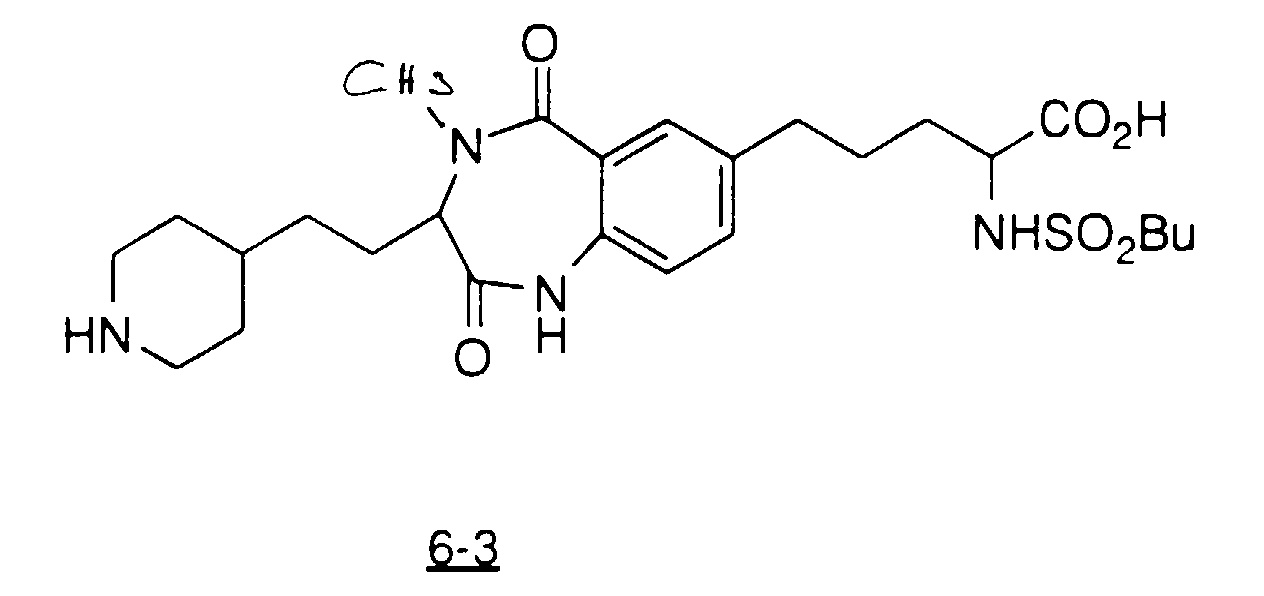
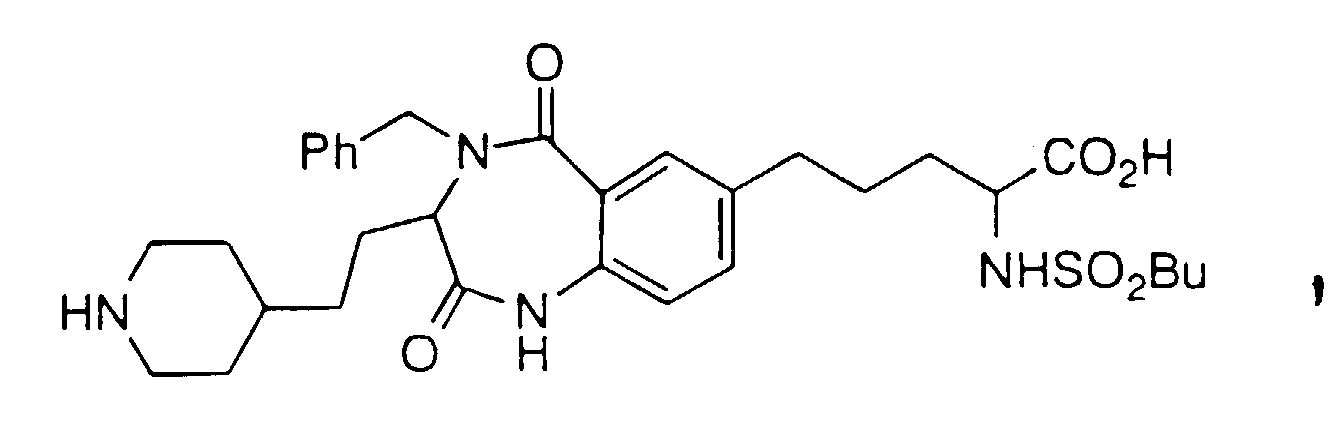
- FVRWCIKBTJOFCH-UHFFFAOYSA-N CCCCS(NC(CCCc(cc1)cc(C(N(C)C2CCC3CCNCC3)=O)c1NC2=O)C(O)=O)(=O)=O Chemical compound CCCCS(NC(CCCc(cc1)cc(C(N(C)C2CCC3CCNCC3)=O)c1NC2=O)C(O)=O)(=O)=O FVRWCIKBTJOFCH-UHFFFAOYSA-N 0.000 description 1
Classifications
-
- C—CHEMISTRY; METALLURGY
- C07—ORGANIC CHEMISTRY
- C07D—HETEROCYCLIC COMPOUNDS
- C07D401/00—Heterocyclic compounds containing two or more hetero rings, having nitrogen atoms as the only ring hetero atoms, at least one ring being a six-membered ring with only one nitrogen atom
- C07D401/02—Heterocyclic compounds containing two or more hetero rings, having nitrogen atoms as the only ring hetero atoms, at least one ring being a six-membered ring with only one nitrogen atom containing two hetero rings
- C07D401/06—Heterocyclic compounds containing two or more hetero rings, having nitrogen atoms as the only ring hetero atoms, at least one ring being a six-membered ring with only one nitrogen atom containing two hetero rings linked by a carbon chain containing only aliphatic carbon atoms
-
- A—HUMAN NECESSITIES
- A61—MEDICAL OR VETERINARY SCIENCE; HYGIENE
- A61P—SPECIFIC THERAPEUTIC ACTIVITY OF CHEMICAL COMPOUNDS OR MEDICINAL PREPARATIONS
- A61P7/00—Drugs for disorders of the blood or the extracellular fluid
- A61P7/02—Antithrombotic agents; Anticoagulants; Platelet aggregation inhibitors
Definitions
- This invention relates to the discovery of fibrinogen receptor antagonists of Formula I for use in inhibiting the binding of fibrinogen to blood platelets and inhibiting the aggregation of blood platelets when administered to mammals, preferably humans.
- the interaction of platelets with the coagulation and fibrinolytic systems in the maintenance of hemostasis may become pathogenic, requiring prevention and treatment.
- the fibrinogen receptor antagonists of Formula I are useful in treating various diseases related to platelet aggregation and fibrin formation.
- Platelets are cell-like anucleated fragments, found in the blood of all mammals which participate in blood coagulation. Fibrinogen is a glycoprotein present as a normal component of blood plasma. Fibrinogen participates in platelet aggregation and fibrin formation in the blood clotting mechanism. Platelets are deposited at sites of vascular injury where multiple physiological agonists act to initiate platelet aggregation culminating in the formation of a platelet plug to minimize blood loss. If the platelet plug occurs in the lumen of a blood vessel, normal blood flow is impaired.
- Platelet membrane receptors are essential in the process of platelet adhesion and aggregation. Interaction of fibrinogen with a receptor on the platelet membrane complex IIb/IIIa is known to be essential for normal platelet function.
- Zimmerman et al. U.S. Patent No. 4,683,291
- the peptides are described as having utility where it is desirable to retard or prevent formation of a thrombus or clot in the blood.
- the general formula for the peptides includes an Arg-Gly-Asp sequence.
- platelet aggregation inhibitors which antagonize interactions between fibrinogen and/or extracellular matrix proteins and the platelet gpIIb/IIIa receptor, including 8-guanido-octanoyl-Asp-2-(4-methoxyphenyl)ethyl amide.
- Alig et al. , EP 372,486, describe N-aryl beta-amino acids which inhibit fibrinogen, fibronectin and von Willebrand factor to the blood platelet fibrinogen receptor (glycoprotein IIb/IIIa).
- Alig et al. , EP 381,033, describe di-aryl or heteroaryl substituted alkanoic acid derivatives of a defined formula which inhibit binding of proteins to their specific receptors on cell surfaces, including fibrinogen.
- Alig et al. , EP 384,362 describe glycine peptides of a specified formula containing an amidine group which inhibit binding of fibrinogen to platelet fibrinogen receptors.
- WO-A-9300095 discloses bicyclicfibrinogen antagonists wherein the bicyclic portion of the molecule consists of fused 6- and 7-membered rings forming an 11- or 12-membered bicyclic system.
- Fire members of the 7-membered ring which may be saturated or unsaturated, and which may contain up to 2 heteroatoms, are variables defined to include C, O, N or S.
- Four members of the 6-membered ring, which may contain up to 2 N atoms, are variables defined as C or N.
- the present invention provides fibrinogen receptor antagonist compounds for use in inhibiting the binding of fibrinogen to blood platelets and for inhibiting the aggregation of blood platelets.
- the above-mentioned compounds can be used in a method of acting upon a fibrinogen receptor which comprises administering a therapeutically effective but non-toxic amount of such compound to a mammal, preferably a human.
- a pharmaceutical composition comprising a pharmaceutically acceptable carrier and, dispersed therein, an effective but non-toxic amount of such compound is another feature of this invention.
- Fibrinogen receptor antagonist compounds of Formula II are useful in a method of inhibiting the binding of fibrinogen to blood platelets and for inhibiting the aggregation of blood platelets. Fibrinogen receptor antagonists of this invention are illustrated by compounds having the formula: wherein:
- a more preferred embodiment of the present invention is wherein:
- Especially preferred compounds of the invention are:
- An ADP-stimulated platelet aggregation assay was used to determine inhibition associated with compounds of the invention.
- Human platelets were isolated from fresh blood, collected into acid citrate/dextrose by differential centrifugation followed by gel filtration on Sepharose 2B in divalent ion-free Tyrode's buffer (pH 7.4) containing 2% bovine serum albumin. Platelet aggregation was measured at 37°C in a Chronolog aggregometer.
- the reaction mixture contained gel-filtered human platelets (2 x 10 8 per ml), fibrinogen (100 ⁇ g/ml), Ca 2+ (1 mM), and the compound to be tested. Aggregation was initiated by adding 10 uM ADP 1 minute after the other components had been added. The reaction was allowed to proceed for at least 2 minutes. The extent of inhibition of aggregation was expressed as the percentage of the rate of aggregation observed in the absence of inhibitor.
- the IC 50 is the dose of a particular compound inhibiting aggregation by 50% relative to a control lacking the compound.
- Bn benzyl
- NMM N-methylmorpholine
- HOBt 1 -hydroxybenzotriazole
- EDC 1-(3-dimethylaminopropyl)-3-ethylcarbodiimide hydrochloride
- DMF dimethylformamide
- Pib 4-(4-piperidyl)butanoyl
- pTSA paratoluenesulfonic acid
- DMS dimethylsulfide
- TFA trifluoroacetic acid
- THF tetrahydrofuran
- DIBAL diisobutylaluminumhydride
- Boc or BOC
- Cbz benzyloxycarbonyl
- Suc succinoyl; alpine borane, ⁇ -isopinocamphenyl-9-borabicyclo[3.3.
- TBDMS tertbutyldimethylsilyl
- Jones reagent chromic acid
- NBS N-Bromosuccinimide
- BPO Benzoyl peroxide
- PPh 3 triphenyl phosphine
- DMSO Dimethylsulfoxide
- Et 3 N triethylamine
- Tf 2 O triflicanhydride
- DMAP 4-dimethylaminopyridine
- BOP benzotriazol-1 yloxytris-(dimethylamino)-phosphonium hexafluorophosphate
- PhCHO benzaldehyde
- Boc 2 O di-t-butyldicarbonate
- dppp 1,3-bis(diphenylphosphino)propane
- ETOH ethyl acetate
- CH 2 Cl 2 methylene chloride
- HOAc acetic acid
- CH 3 OH methanol
- CHC 1,3-bis(diphenylpho
- the pharmaceutically acceptable salts of the compounds of Formula I include the conventional non-toxic salts or the quaternary ammonium salts of the compounds of Formula I formed, e.g., from non-toxic inorganic or organic acids.
- such conventional non-toxic salts include those derived from inorganic acids such as hydrochloric, hydrobromic, sulfuric, sulfamic, phosphoric, nitric and the like; and the salts prepared from organic acids such as acetic, propionic, succinic, glycolic, stearic, lactic, malic, tartaric, citric, ascorbic, pamoic, maleic, hydroxymaleic, phenylacetic, glutamic, benzoic, salicylic, sulfanilic, 2-acetoxybenzoic, fumaric, toluenesulfonic, methanesulfonic, ethane disulfonic, oxalic, isethionic, and the like.
- the pharmaceutically acceptable salts of the present invention can be synthesized from the compounds of Formula I which contain a basic or acidic moiety by conventional chemical methods. Generally, the salts are prepared by reacting the free base or acid with stoichiometric amounts or with an excess of the desired salt-forming inorganic or organic acid or base in a suitable solvent or various combinations of solvents.
- the pharmaceutically acceptable salts of the acids of Formula I are also readily prepared by conventional procedures such as treating an acid of Formula I with an appropriate amount of a base, such as an alkali or alkaline earth metal hydroxide e.g. sodium, potassium, lithium, calcium, or magnesium, or an organic base such as an amine, e.g., dibenzylethylene-diamine, trimethylamine, piperidine, pyrrolidine, benzylamine and the like, or a quaternary ammonium hydroxide such as tetramethylammonium hydroxide and the like.
- a base such as an alkali or alkaline earth metal hydroxide e.g. sodium, potassium, lithium, calcium, or magnesium
- an organic base such as an amine, e.g., dibenzylethylene-diamine, trimethylamine, piperidine, pyrrolidine, benzylamine and the like, or a quaternary ammonium hydroxide such as tetramethylammonium hydrox
- the compounds of Formula I are useful in inhibiting the binding of fibrinogen to blood platelets, inhibiting aggregation of blood platelets, treatment of thrombus formation or embolus formation, and in the prevention of thrombus formation or embolus formation. These compounds are useful as pharmaceutical agents for mammals, especially for humans.
- the compounds of this invention may be administered to patients where prevention of thrombosis by inhibiting binding of fibrinogen to the platelet membrane glycoprotein complex IIb/IIIa receptor is desired.
- Compounds of this invention may also be used to prevent or modulate the progress of myocardial infarction, unstable angina and thrombotic stroke, in either acute or chronic settings.
- peripheral arteries arterial grafts, carotid endarterectomy
- cardiovascular surgery where manipulation of arteries and organs, and/or the interaction of platelets with artificial surfaces, leads to platelet aggregation and consumption.
- the aggregated platelets may form thrombi and thromboemboli.
- Compounds of this invention may be administered to surgical patients to prevent the formation of thrombi and thromboemboli.
- Extracorporeal circulation is routinely used for cardiovascular surgery in order to oxygenate blood. Platelets adhere to surfaces of the extracorporeal circuit. Adhesion is dependent on the interaction between GPIIb/IIIa on the platelet membranes and fibrinogen adsorbed to the surface of the circuit. (Gluszko et al. , Amer. J. Physiol., 1987, 252:H, pp 615-621). Platelets released from artificial surfaces show impaired hemostatic function. Compounds of this invention may be administered to prevent adhesion.
- the compounds of Formula I may be administered to mammals, preferably in combination with pharmaceutically acceptable carriers or diluents, optionally with known adjuvants such as alum, in a pharmaceutical composition which is non-toxic and in a therapeutically effective amount, according to standard pharmaceutical practice.
- the compounds can be administered orally or parenterally, including intravenous, intramuscular, intraperitoneal, trans-dermal, subcutaneous and topical administration.
- the selected compounds may be administered, for example, in the form of tablets or capsules, or as an aqueous solution or suspension.
- carriers which are commonly used include lactose and corn starch, and lubricating agents, such as magnesium stearate, are commonly added.
- useful diluents include lactose and dried corn starch.
- aqueous suspensions are required for oral use, the active ingredient is combined with emulsifying and suspending agents. If desired, certain sweetening and/or flavoring agents may be added.
- sterile solutions of the active ingredient are usually prepared, and the pH of the solutions should be suitably adjusted and buffered.
- the total concentration of solutes should be controlled in order to render the preparation isotonic.
- the present invention also encompasses a pharmaceutical composition useful in the treatment and prevention of diseases related to platelet aggregation, fibrin formation, and thrombus and embolus formation, comprising the administration of a therapeutically effective but non-toxic amount of the compounds of Formula I, with or without pharmaceutically acceptable carriers or diluents.
- compositions of this invention include fibrinogen receptor antagonist compounds of this invention in combination with pharmacologically acceptable carriers, e.g. saline, at a pH level e.g. 7.4, suitable for achieving inhibition of platelet aggregation.
- pharmacologically acceptable carriers e.g. saline
- the compositions may also be combined with anticoagulants such as heparin or warfarin.
- anticoagulants such as heparin or warfarin.
- thrombolytic agents such as plasminogen activators or streptokinase in order to inhibit platelet aggregation in more acute settings.
- the composition may further be combined with antiplatelet agents such as aspirin.
- the compositions are soluble in an aqueous medium, and may therefore be effectively administered in solution.
- the daily dosage will normally be determined by the prescribing physician with the dosage generally varying according to the age, weight, and response of the individual patient, as well as the severity of the patients symptoms.
- a suitable amount of compound is administered orally to a heart attack victim subsequent to angioplasty.
- Administration occurs subsequent to angioplasty, and is in an amount sufficient to inhibit platelet aggregation, e.g. an amount which achieves a steady state plasma concentration of between about 0.01-50 mM preferably between about 0.01-10 mM.
- the present invention also includes a pharmaceutical composition comprising compounds of the present invention in combination with tissue type plasminogen activator or streptokinase.
- the invention also includes a method for promoting thrombolysis and preventing reocclusion in a patient which comprises administering to the patient an effective amount of compositions of the invention.
- the present invention provides a method of inhibiting the binding of fibrinogen to blood platelets, inhibiting aggregation of blood platelets, treating thrombus formation or embolus formation, and in preventing thrombus formation or embolus formation in a mammal, comprising the administration of a therapeutically effective but non-toxic amount of the compounds of this invention, with or without pharmaceutically acceptable carriers or diluents.
- the present invention still further provides a method of inhibiting the binding of fibrinogen to blood platelets, inhibiting aggregation of blood platelets, treating thrombus formation or embolus formation, and in preventing thrombus formation or embolus formation in a mammal, comprising the administration of a therapeutically effective but non-toxic amounts of the compounds of this invention in combination with thrombolytic agents, such as tissue plasminogen activators or streptokinase, anticoagulants such as heparin or warfarin, or antiplatelet agents such as aspirin, with or without pharmaceutically acceptable carriers or diluents.
- thrombolytic agents such as tissue plasminogen activators or streptokinase, anticoagulants such as heparin or warfarin, or antiplatelet agents such as aspirin, with or without pharmaceutically acceptable carriers or diluents.
- Boc-4-piperidine-2-ethanol ( 1-5 ) (10.42 g, 0.048 mole was dissolved in 400 ml benzene and imidazole (4.66 g, 0.068 moles) and triphenylphosphine (15.24 g, 0.05 moles) were added at room temperature. After 6 hours the reaction mixture was filtered and the filtrate was evaporated to give a dark residue. This was purified by flash chromatography on silica gel eluting with 10% EtOAc-hexanes to give 1-6 as a yellow oil.
- reaction mixture was concentrated to 50% of volume, poured into ice cold saturated NH 4 Cl and extracted with ether. The organic phase was washed with brine, dried (MgSO 4 ) and the solvent evaporated. 1 g of the resulting oil was dissolved in 10 ml of methanol, cooled to 0°C and 100 mg of sodium borohydride added in portions over 5 mins. After an additional 10 min., the reaction was concentrated, poured into water and extracted with ether. The organic extracts were washed with brine, dried (MgSO 4 ) and solvent evaporated to give crude product purified by flash column chromatography (5:1 ⁇ 2:1 hexane:EtOAc) to afford 410 mg of 4-1.
- Amine 4-1 (1.3 g, 3.2 mmol) was dissolved in 25 ml of methanol and 37% formaldehyde solution (0.3 mL) added, followed by 300 mg of sodium cyanoborohydride. The reaction mixture was stirred at r.t. overnight, poured into water and extracted with water and brine, dried (MgSO 4 ) and the solvent evaporated to give 6-1 .
Landscapes
- Organic Chemistry (AREA)
- Chemical & Material Sciences (AREA)
- Health & Medical Sciences (AREA)
- Medicinal Chemistry (AREA)
- General Chemical & Material Sciences (AREA)
- Diabetes (AREA)
- Chemical Kinetics & Catalysis (AREA)
- Life Sciences & Earth Sciences (AREA)
- Pharmacology & Pharmacy (AREA)
- Nuclear Medicine, Radiotherapy & Molecular Imaging (AREA)
- Engineering & Computer Science (AREA)
- Bioinformatics & Cheminformatics (AREA)
- Hematology (AREA)
- Animal Behavior & Ethology (AREA)
- General Health & Medical Sciences (AREA)
- Public Health (AREA)
- Veterinary Medicine (AREA)
- Pharmaceuticals Containing Other Organic And Inorganic Compounds (AREA)
- Medicines That Contain Protein Lipid Enzymes And Other Medicines (AREA)
- Peptides Or Proteins (AREA)
- Plural Heterocyclic Compounds (AREA)
- Hydrogenated Pyridines (AREA)
- Acyclic And Carbocyclic Compounds In Medicinal Compositions (AREA)
Abstract
Description
- This invention relates to the discovery of fibrinogen receptor antagonists of Formula I for use in inhibiting the binding of fibrinogen to blood platelets and inhibiting the aggregation of blood platelets when administered to mammals, preferably humans.
- The interaction of platelets with the coagulation and fibrinolytic systems in the maintenance of hemostasis may become pathogenic, requiring prevention and treatment. The fibrinogen receptor antagonists of Formula I are useful in treating various diseases related to platelet aggregation and fibrin formation.
- An interest in platelet inhibitors has reemerged as a result of a better understanding of the role of platelets and thrombosis in the pathogenesis of vascular disease, including unstable angina, acute myocardial infarction and stroke.
- Platelets are cell-like anucleated fragments, found in the blood of all mammals which participate in blood coagulation. Fibrinogen is a glycoprotein present as a normal component of blood plasma. Fibrinogen participates in platelet aggregation and fibrin formation in the blood clotting mechanism. Platelets are deposited at sites of vascular injury where multiple physiological agonists act to initiate platelet aggregation culminating in the formation of a platelet plug to minimize blood loss. If the platelet plug occurs in the lumen of a blood vessel, normal blood flow is impaired.
- Platelet membrane receptors are essential in the process of platelet adhesion and aggregation. Interaction of fibrinogen with a receptor on the platelet membrane complex IIb/IIIa is known to be essential for normal platelet function.
- Zimmerman et al., U.S. Patent No. 4,683,291, describes peptides having utility in the study of fibrinogen-platelet, platelet-platelet, and cell-cell interactions. The peptides are described as having utility where it is desirable to retard or prevent formation of a thrombus or clot in the blood. The general formula for the peptides includes an Arg-Gly-Asp sequence.
- Tjoeng et al., EP 352,249, describe platelet aggregation inhibitors which antagonize interactions between fibrinogen and/or extracellular matrix proteins and the platelet gpIIb/IIIa receptor, including 8-guanido-octanoyl-Asp-2-(4-methoxyphenyl)ethyl amide.
- Alig et al., EP 372,486, describe N-aryl beta-amino acids which inhibit fibrinogen, fibronectin and von Willebrand factor to the blood platelet fibrinogen receptor (glycoprotein IIb/IIIa).
- Alig et al., EP 381,033, describe di-aryl or heteroaryl substituted alkanoic acid derivatives of a defined formula which inhibit binding of proteins to their specific receptors on cell surfaces, including fibrinogen.
- Alig et al., EP 384,362, describe glycine peptides of a specified formula containing an amidine group which inhibit binding of fibrinogen to platelet fibrinogen receptors.
- Horwell et al., EP 405,537, describe N-substituted cycloalkyl and polycycloalkyl alpha-substituted Trp-Phe- and phenethylamine derivatives which are useful for treating obesity, hypersecretion of gastric acid in the gut, gastrin-dependent tumors, or as antipsychotics.
- WO-A-9300095 discloses bicyclicfibrinogen antagonists wherein the bicyclic portion of the molecule consists of fused 6- and 7-membered rings forming an 11- or 12-membered bicyclic system. Fire members of the 7-membered ring, which may be saturated or unsaturated, and which may contain up to 2 heteroatoms, are variables defined to include C, O, N or S. Four members of the 6-membered ring, which may contain up to 2 N atoms, are variables defined as C or N.
- It is an object of the present invention to provide fibrinogen receptor antagonists for use in inhibiting the binding of fibrinogen to blood platelets and inhibiting the aggregation of blood platelets. Another aspect of the present invention is to provide novel fibrinogen receptor antagonist compounds. Other objects of the present invention are to provide methods of inhibiting the binding of fibrinogen to blood platelets and inhibiting the aggregation of blood platelets, through the administration of novel fibrinogen receptor antagonist compounds. The above and other objects are accomplished by the present invention in the manner described below.
- The present invention provides fibrinogen receptor antagonist compounds for use in inhibiting the binding of fibrinogen to blood platelets and for inhibiting the aggregation of blood platelets. The above-mentioned compounds can be used in a method of acting upon a fibrinogen receptor which comprises administering a therapeutically effective but non-toxic amount of such compound to a mammal, preferably a human. A pharmaceutical composition comprising a pharmaceutically acceptable carrier and, dispersed therein, an effective but non-toxic amount of such compound is another feature of this invention.
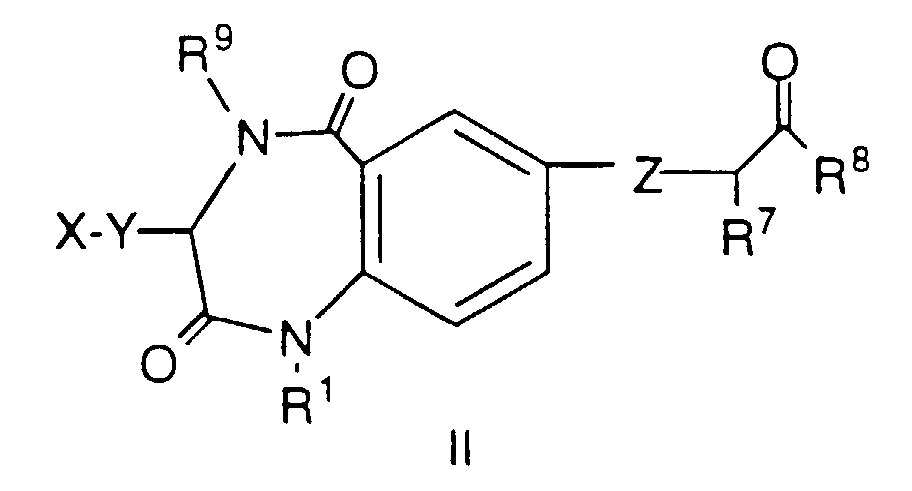
- Fibrinogen receptor antagonist compounds of Formula II are useful in a method of inhibiting the binding of fibrinogen to blood platelets and for inhibiting the aggregation of blood platelets. Fibrinogen receptor antagonists of this invention are illustrated by compounds having the formula:wherein:

- X is
- -NR1R2 or a 4- to 10-membered mono- or polycyclic
aromatic or non-aromatic ring system containing 0, 1 or 2
heteroatoms chosen from N or O and either
unsubstituted or substituted with R1 and R2, wherein
R1 and R2 are independently chosen from:
hydrogen,
C1-6 alkyl,
aryl C0-6 alkyl,
carboxy C0-6 alkyl,
hydroxy C0-6 alkyl,
C1-3 alkyloxy C0-6 alkyl, or
amino C0-6 alkyl; - Y is
- C0-6 alkyl,
C1-6 alkyl-CO-C0-6 alkyl, or
C0-6 alkyl-NR3-CO-C0-6 alkyl, wherein
R3 is hydrogen,
C1-6 alkyl,
aryl C0-6 alkyl,
carboxy C0-6 alkyl,
hydroxy C0-6 alkyl,
C1-3 alkyloxy C0-6 alkyl, or
amino C0-6 alkyl; - Z is
- -(CH2)m- , or -O≡C-CH2- ;
wherein m is 0-6; - R3 is
- hydrogen,
C1-6 alkyl,
aryl C0-6 alkyl,
carboxy C0-6 alkyl,
hydroxy C0-6 alkyl,
C1-3 alkyloxy C0-6 alkyl, or
amino C0-6 alkyl; - R7 is
- hydrogen, fluorine,
C1-8 alkyl,
C3-8 cycloalkyl,
aryl C0-6 alkyl,
C0-6 alkylamino C0-6 alkyl,
C0-6 dialkylamino C0-6 alkyl,
C1-8 alkylsulfonylamino C0-6 alkyl,
aryl C0-6 alkylsulfonylamino C0-6 alkyl,
C1-8 alkyloxycarbonylamino C0-8 alkyl,
aryl C0-8 alkyloxycarbonylamino C0-8 alkyl,
C1-8 alkylcarbonylamino C0-6 alkyl,
aryl C0-6 alkylcarbonylamino C0-6 alkyl,
C0-8 alkylaminocarbonylamino C0-6 alkyl,
aryl C0-8 alkylaminocarbonylamino C0-6 alkyl,
C1-6 alkylsulfonyl C0-6 alkyl,
aryl C0-6 alkylsulfonyl C0-6 alkyl,
C1-6 alkylcarbonyl C0-6 alkyl,
aryl C0-6 alkylcarbonyl C0-6 alkyl,
C1-6 alkylthiocarbonylamino C0-6 alkyl, or aryl C0-6 alkylthiocarbonylamino C0-6 alkyl wherein groups may be unsubstituted or substituted with one or more substituents selected from R1 and R2, and provided that when two R7 groups are attached to the same carbon atom, they may be the same or different; - R8 is
- hydroxy,
C1-6 alkyloxy,
aryl C1-4 alkyloxy, or
C1-6 alkylcarbonyloxy C1-4 alkyloxy; and - R9 is
- C1-3 alkyl or -W-V, wherein W is C1-3 alkyl and V is 6-membered monocyclic aromatic ring system containing 0, 1, 2, 3 or 4 heteroatoms selected from N, O and S.
- A more preferred embodiment of the present invention iswherein:
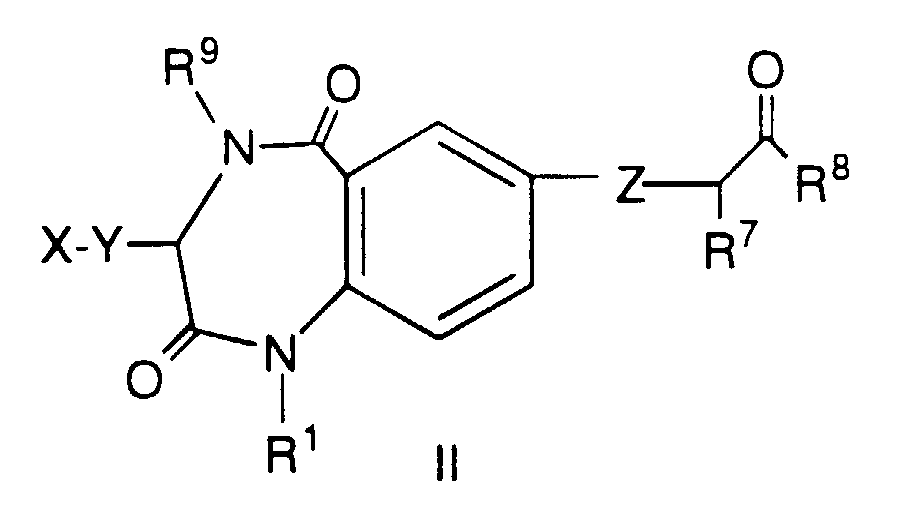
- X is
- -NR1 R2 or a 4- to 10-membered mono- or polycyclic
aromatic or non-aromatic ring system containing 0, 1 or 2
heteroatoms chosen from N or O and either
unsubstituted or substituted with R1 and R2, wherein
R1 and R2 are independently chosen from:
hydrogen,
C1-6 alkyl,
aryl C0-6 alkyl,
carboxy C0-6 alkyl,
hydroxy C0-6 alkyl,
C1-3 alkyloxy C0-6 alkyl, or
amino C0-6 alkyl; - Y is
- C0-6 alkyl,
C1-6 alkyl-CO-C0-6 alkyl, or
C0-6 alkyl-NR3-CO-C0-6 alkyl wherein
R3 is hydrogen,
C1-6 alkyl,
aryl C0-6 alkyl,
carboxy C0-6 alkyl,
hydroxy C0-6 alkyl,
C1-3 alkyloxy C0-6 alkyl, or
amino C0-6 alkyl; - Z is
- -(CH2)m- , or -C≡C-CH2-;
wherein m is 0-3; - R3 is
- hydrogen,
C1-6 alkyl,
aryl C0-6 alkyl,
carboxy C0-6 alkyl,
hydroxy C0-6 alkyl,
C1-3 alkyloxy C0-6 alkyl, or
amino C0-6 alkyl; - R7 is
- hydrogen, fluorine,
C1-8 alkyl,
C3-8 cycloalkyl,
C0-6 alkylamino C0-6 alkyl,
C0-6 dialkylamino C0-6 alkyl,
C1-8 alkylsulfonylamino C0-6 alkyl, or
C1-8 alkylcarbonylamino C0-6 alkyl,
wherein groups may be unsubstituted or substituted with one or more substituents selected from R1 and R2, and provided that when two R7 groups are attached to the same carbon atom, they may be the same or different; - R8 is
- hydroxy,
C1-6 alkyloxy,
aryl C1-4 alkyloxy, or
C1-6 alkylcarbonyloxy C1-4 alkyloxy; and - R9 is
- methyl or methylphenyl.
- Especially preferred compounds of the invention are:


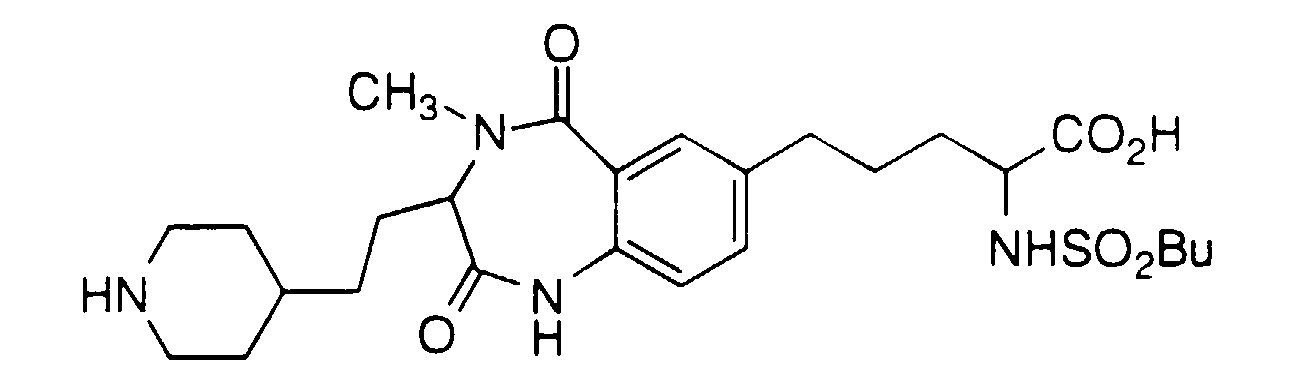
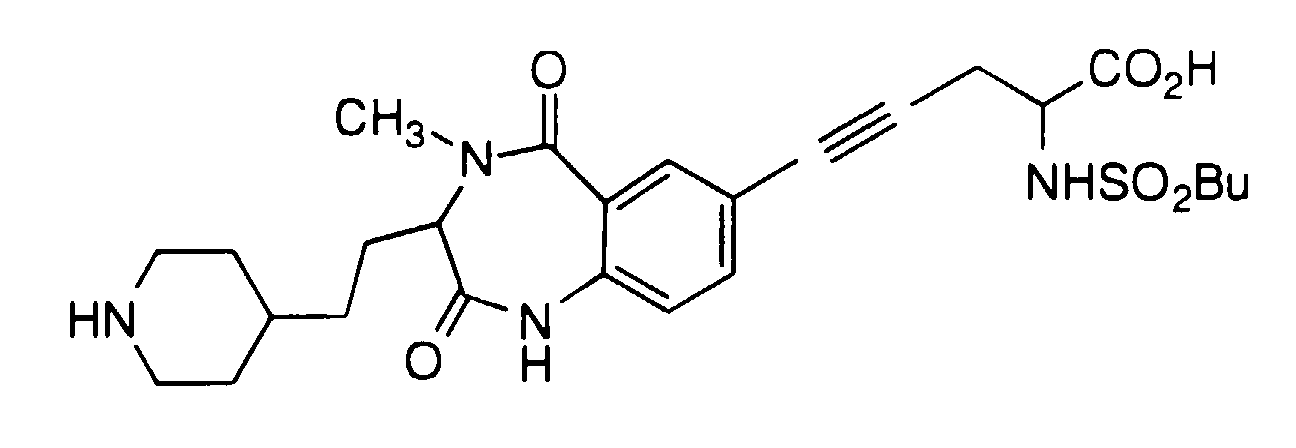
- The portion of certain structures represented by
" ― ≡ ― " , which appears above and throughout the application, means " ― C ≡ C ― " . - An ADP-stimulated platelet aggregation assay was used to determine inhibition associated with compounds of the invention.
- Human platelets were isolated from fresh blood, collected into acid citrate/dextrose by differential centrifugation followed by gel filtration on Sepharose 2B in divalent ion-free Tyrode's buffer (pH 7.4) containing 2% bovine serum albumin. Platelet aggregation was measured at 37°C in a Chronolog aggregometer. The reaction mixture contained gel-filtered human platelets (2 x 10⁸ per ml), fibrinogen (100 µg/ml), Ca2+ (1 mM), and the compound to be tested. Aggregation was initiated by adding 10 uM ADP 1 minute after the other components had been added. The reaction was allowed to proceed for at least 2 minutes. The extent of inhibition of aggregation was expressed as the percentage of the rate of aggregation observed in the absence of inhibitor. The IC50 is the dose of a particular compound inhibiting aggregation by 50% relative to a control lacking the compound.
- The abbreviations listed below are defined as Bn, benzyl; NMM, N-methylmorpholine; HOBt, 1 -hydroxybenzotriazole; EDC, 1-(3-dimethylaminopropyl)-3-ethylcarbodiimide hydrochloride; DMF, dimethylformamide; Pib, 4-(4-piperidyl)butanoyl; pTSA, paratoluenesulfonic acid; DMS, dimethylsulfide; TFA, trifluoroacetic acid; THF, tetrahydrofuran; DIBAL, diisobutylaluminumhydride; Boc (or BOC), tert-butoxycarbonyl; Cbz, benzyloxycarbonyl; Suc, succinoyl; alpine borane, β-isopinocamphenyl-9-borabicyclo[3.3. 1]-nonane; TBDMS, tertbutyldimethylsilyl; Jones reagent, chromic acid; NBS, N-Bromosuccinimide; BPO, Benzoyl peroxide; PPh3, triphenyl phosphine; DMSO, Dimethylsulfoxide; Et3N, triethylamine; Tf2O, triflicanhydride; DMAP, 4-dimethylaminopyridine; BOP, benzotriazol-1 yloxytris-(dimethylamino)-phosphonium hexafluorophosphate; PhCHO, benzaldehyde; and Boc2O, di-t-butyldicarbonate; dppp, 1,3-bis(diphenylphosphino)propane; ETOH, ethyl acetate; CH2Cl2, methylene chloride; HOAc, acetic acid; CH3OH, methanol; CHCl3, chloroform.
- Unless otherwise indicated, all degree values are Celsius.
- The pharmaceutically acceptable salts of the compounds of Formula I include the conventional non-toxic salts or the quaternary ammonium salts of the compounds of Formula I formed, e.g., from non-toxic inorganic or organic acids. For example, such conventional non-toxic salts include those derived from inorganic acids such as hydrochloric, hydrobromic, sulfuric, sulfamic, phosphoric, nitric and the like; and the salts prepared from organic acids such as acetic, propionic, succinic, glycolic, stearic, lactic, malic, tartaric, citric, ascorbic, pamoic, maleic, hydroxymaleic, phenylacetic, glutamic, benzoic, salicylic, sulfanilic, 2-acetoxybenzoic, fumaric, toluenesulfonic, methanesulfonic, ethane disulfonic, oxalic, isethionic, and the like.
- The pharmaceutically acceptable salts of the present invention can be synthesized from the compounds of Formula I which contain a basic or acidic moiety by conventional chemical methods. Generally, the salts are prepared by reacting the free base or acid with stoichiometric amounts or with an excess of the desired salt-forming inorganic or organic acid or base in a suitable solvent or various combinations of solvents.
- The pharmaceutically acceptable salts of the acids of Formula I are also readily prepared by conventional procedures such as treating an acid of Formula I with an appropriate amount of a base, such as an alkali or alkaline earth metal hydroxide e.g. sodium, potassium, lithium, calcium, or magnesium, or an organic base such as an amine, e.g., dibenzylethylene-diamine, trimethylamine, piperidine, pyrrolidine, benzylamine and the like, or a quaternary ammonium hydroxide such as tetramethylammonium hydroxide and the like.
- The compounds of Formula I are useful in inhibiting the binding of fibrinogen to blood platelets, inhibiting aggregation of blood platelets, treatment of thrombus formation or embolus formation, and in the prevention of thrombus formation or embolus formation. These compounds are useful as pharmaceutical agents for mammals, especially for humans. The compounds of this invention may be administered to patients where prevention of thrombosis by inhibiting binding of fibrinogen to the platelet membrane glycoprotein complex IIb/IIIa receptor is desired. Compounds of this invention may also be used to prevent or modulate the progress of myocardial infarction, unstable angina and thrombotic stroke, in either acute or chronic settings. In addition, they may be useful in surgery on peripheral arteries (arterial grafts, carotid endarterectomy) and in cardiovascular surgery where manipulation of arteries and organs, and/or the interaction of platelets with artificial surfaces, leads to platelet aggregation and consumption. The aggregated platelets may form thrombi and thromboemboli. Compounds of this invention may be administered to surgical patients to prevent the formation of thrombi and thromboemboli.
- Extracorporeal circulation is routinely used for cardiovascular surgery in order to oxygenate blood. Platelets adhere to surfaces of the extracorporeal circuit. Adhesion is dependent on the interaction between GPIIb/IIIa on the platelet membranes and fibrinogen adsorbed to the surface of the circuit. (Gluszko et al., Amer. J. Physiol., 1987, 252:H, pp 615-621). Platelets released from artificial surfaces show impaired hemostatic function. Compounds of this invention may be administered to prevent adhesion.
- Other applications of these compounds include prevention of platelet thrombosis, thromboembolism, reocclusion, and restenosis during and after thrombolytic therapy and prevention of platelet thrombosis, thromboembolism, reocclusion and restenosis after angioplasty of coronary and other arteries and after coronary artery bypass procedures.
- The compounds of Formula I may be administered to mammals, preferably in combination with pharmaceutically acceptable carriers or diluents, optionally with known adjuvants such as alum, in a pharmaceutical composition which is non-toxic and in a therapeutically effective amount, according to standard pharmaceutical practice. The compounds can be administered orally or parenterally, including intravenous, intramuscular, intraperitoneal, trans-dermal, subcutaneous and topical administration.
- For oral use of a fibrinogen receptor antagonist according to this invention, the selected compounds may be administered, for example, in the form of tablets or capsules, or as an aqueous solution or suspension. In the case of tablets for oral use, carriers which are commonly used include lactose and corn starch, and lubricating agents, such as magnesium stearate, are commonly added. For oral administration in capsule form, useful diluents include lactose and dried corn starch. When aqueous suspensions are required for oral use, the active ingredient is combined with emulsifying and suspending agents. If desired, certain sweetening and/or flavoring agents may be added.
- For intramuscular, intraperitoneal, subcutaneous, and intravenous use, sterile solutions of the active ingredient are usually prepared, and the pH of the solutions should be suitably adjusted and buffered. For intravenous use, the total concentration of solutes should be controlled in order to render the preparation isotonic.
- The present invention also encompasses a pharmaceutical composition useful in the treatment and prevention of diseases related to platelet aggregation, fibrin formation, and thrombus and embolus formation, comprising the administration of a therapeutically effective but non-toxic amount of the compounds of Formula I, with or without pharmaceutically acceptable carriers or diluents.
- Compositions of this invention include fibrinogen receptor antagonist compounds of this invention in combination with pharmacologically acceptable carriers, e.g. saline, at a pH level e.g. 7.4, suitable for achieving inhibition of platelet aggregation. The compositions may also be combined with anticoagulants such as heparin or warfarin. The compositions may also be combined with thrombolytic agents such as plasminogen activators or streptokinase in order to inhibit platelet aggregation in more acute settings. The composition may further be combined with antiplatelet agents such as aspirin. The compositions are soluble in an aqueous medium, and may therefore be effectively administered in solution.
- When a compound according to Formula I is used as a fibrinogen receptor antagonist in a human subject, the daily dosage will normally be determined by the prescribing physician with the dosage generally varying according to the age, weight, and response of the individual patient, as well as the severity of the patients symptoms.
- In one exemplary application, a suitable amount of compound is administered orally to a heart attack victim subsequent to angioplasty. Administration occurs subsequent to angioplasty, and is in an amount sufficient to inhibit platelet aggregation, e.g. an amount which achieves a steady state plasma concentration of between about 0.01-50 mM preferably between about 0.01-10 mM.
- The present invention also includes a pharmaceutical composition comprising compounds of the present invention in combination with tissue type plasminogen activator or streptokinase. The invention also includes a method for promoting thrombolysis and preventing reocclusion in a patient which comprises administering to the patient an effective amount of compositions of the invention.
- The present invention provides a method of inhibiting the binding of fibrinogen to blood platelets, inhibiting aggregation of blood platelets, treating thrombus formation or embolus formation, and in preventing thrombus formation or embolus formation in a mammal, comprising the administration of a therapeutically effective but non-toxic amount of the compounds of this invention, with or without pharmaceutically acceptable carriers or diluents.
- The present invention still further provides a method of inhibiting the binding of fibrinogen to blood platelets, inhibiting aggregation of blood platelets, treating thrombus formation or embolus formation, and in preventing thrombus formation or embolus formation in a mammal, comprising the administration of a therapeutically effective but non-toxic amounts of the compounds of this invention in combination with thrombolytic agents, such as tissue plasminogen activators or streptokinase, anticoagulants such as heparin or warfarin, or antiplatelet agents such as aspirin, with or without pharmaceutically acceptable carriers or diluents.
- The compounds of Formula I are prepared according to the reaction schemes set forth below.
-
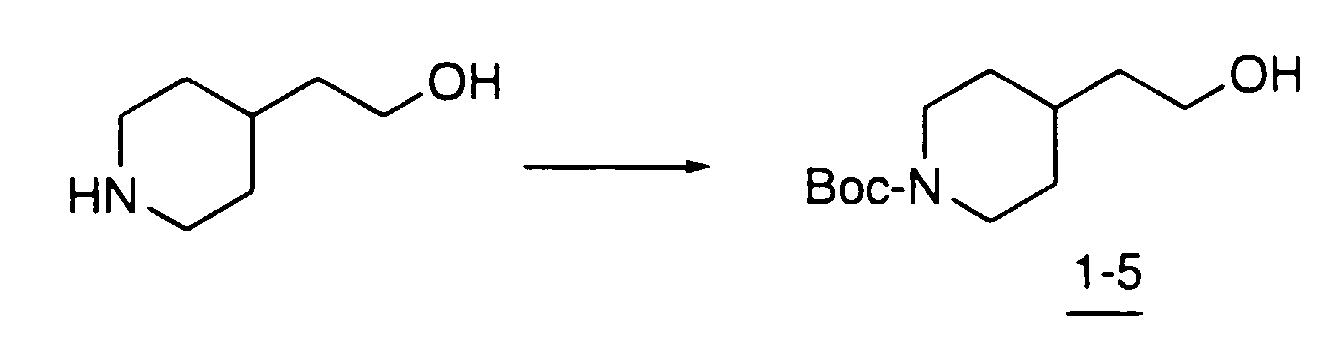
- 4-Piperidine-2-ethanol (Aldrich) (130 g, 1.0 mole) was dissolved in 700 mL dioxane, cooled to 0°C and treated with 3 N NaOH (336 mL, 1.0 mole), and di-t-butyldicarbonate (221.8 g, 1.0 mole). The ice bath was removed and the reaction stirred overnight. The reaction was concentrated, diluted with water and extracted with ether. The ether layers were combined, washed with brine, dried over MgSO4, filtered and evaporated to give 1-5 Rf = 0.37 in 1:1 EtOAc/Hexanes, ninhydrin stain.
1H NMR (300MHz, CDCl3) δ 4.07 (bs, 2H), 3.7 (bs, 2H), 2.7 (t, J = 12.5 Hz, 2H), 1.8-1.6 (m, 6H), 1.51 (s, 9H), 1.1 (ddd, J = 4.3, 12.5, 12 Hz, 2H). - Boc-4-piperidine-2-ethanol (1-5) (10.42 g, 0.048 mole was dissolved in 400 ml benzene and imidazole (4.66 g, 0.068 moles) and triphenylphosphine (15.24 g, 0.05 moles) were added at room temperature. After 6 hours the reaction mixture was filtered and the filtrate was evaporated to give a dark residue. This was purified by flash chromatography on silica gel eluting with 10% EtOAc-hexanes to give 1-6 as a yellow oil.
-
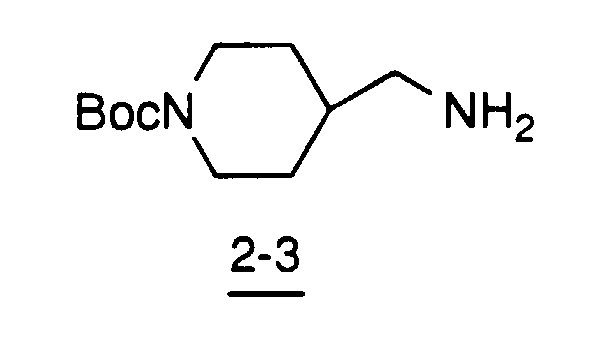
- A solution of 4-(piperidinyl)methylamine (22.8 g, 0.2 mmoles) in toluene (250 ml) was treated with benzaldehyde (21.2 g, 0.2 mmoles) at room temperature and the resulting mixture was heated at reflux for 3 hours with the aid of a Dean-Stark trap for water removal. The cooled reaction mixture containing the desired Schiffs base was treated portionwise with di-t-butyl dicarbonate (47.96 g, 0.22 moles) and the resulting solution was stirred at room temperature for 16 hours. The solvent was then removed and the residue was cooled to 0-5°C and treated with 1N KHSO4 (220 ml) with stirring for 3 hours. The resulting reaction mixture was extracted with ether (3 x 200 ml) and then made basic with 1N KOH solution and extracted with CHCl3 (4 x 75 ml). The combined organic extract was washed with brine, dried (Na2SO4) filtered through celite, and the solvent removed to provide pure 2-3 as a clear oil.
1H NMR (300 MHz, CDCl3) δ 1.13 (2H, m), 1.45 (9H, s), 1.60 (1H, m), 1.74 (2H, d), 2.68 (4H, m), 4.15 (2H, bd). -

- A solution of propargylglycine ethyl ester hydrochloride (from treatment of 2.0 g (17.7 mmol) of propargylglycine with EtOH/HCl at reflux) in CH2Cl2 (30 ml) and 10 ml (57 mmol) diisopropylethylamine was cooled to 0°C and 35 ml of butanesulfonyl chloride added dropwise. After 30 minutes, the reaction mixture was poured into cold 10% citric acid solution and extracted with ether. The organic phase was washed with NaHCO3 solution, brine and dried (MgSO4). The crude product was purified by flash column chromatography to afford 2.6 g of 3-1. NMR (300 MHz, CDCl3): 5.12 (d, 1H), 4.27 (m, 3H), 3.06 (m, 2H), 2.68 (m, 2H), 2.09 (t, 1H), 1.83 (m, 2H), 1.45 (m, 2H), 1.31 (t, 3H), 0.95 (t, 1H).
-
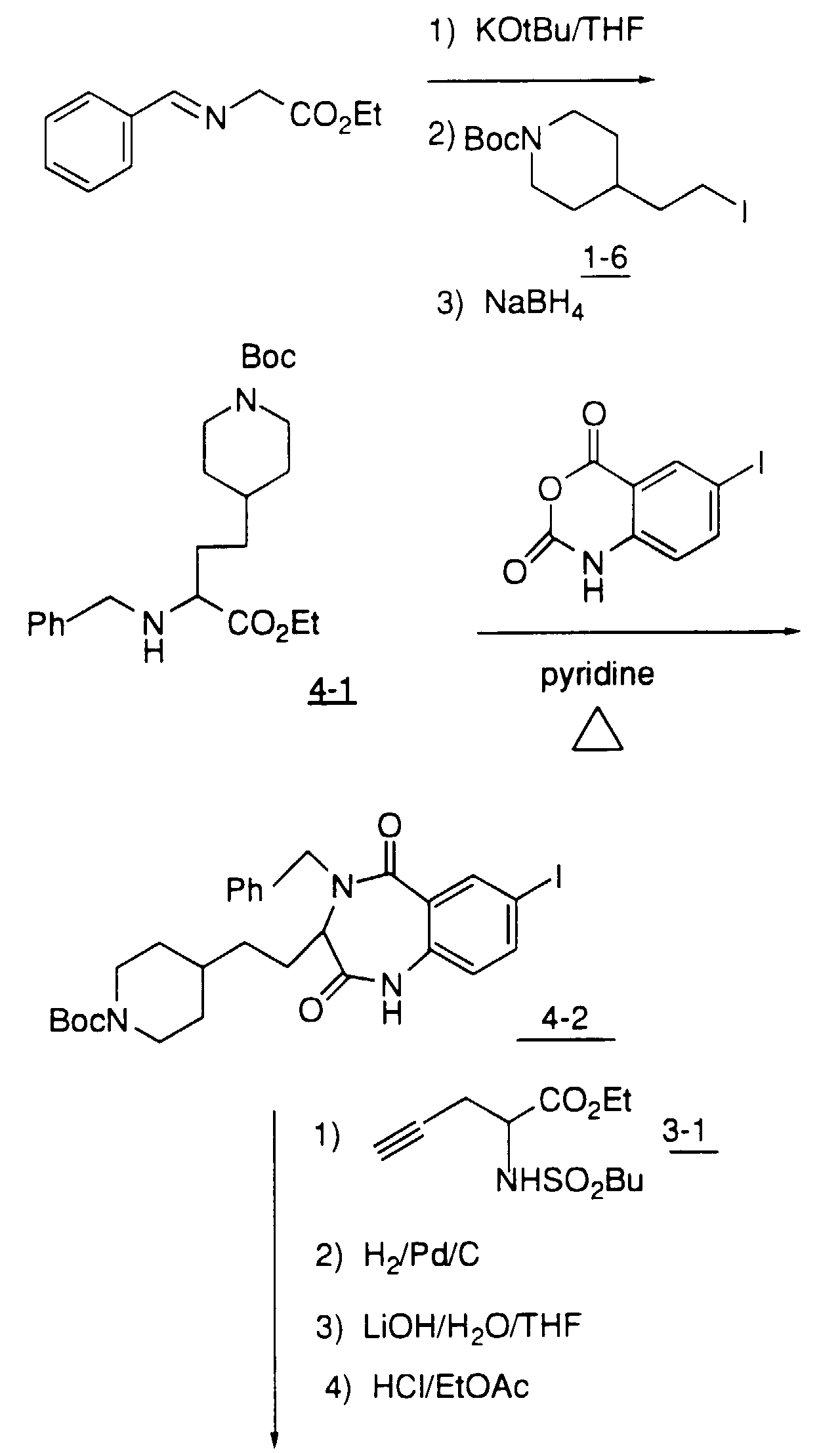

- A solution of glycine benzaldehyde imine (10.2 g, 53 mmol) in 100 ml of THF was added dropwise to a cooled (-78°C) and stirred solution of potassium t-butoxide (5.8 g, 52 mmol) in 300 ml THF over 20 min. After 15 min. a solution of Boc-4-(2-iodoethyl) piperidine (1-6) (18.2 g, 52 mmol) was added and stirring continued at -78°C for 2 h. followed by standing at -20°C for 18 h. After stirring 2 h. at r.t., the reaction mixture was concentrated to 50% of volume, poured into ice cold saturated NH4Cl and extracted with ether. The organic phase was washed with brine, dried (MgSO4) and the solvent evaporated. 1 g of the resulting oil was dissolved in 10 ml of methanol, cooled to 0°C and 100 mg of sodium borohydride added in portions over 5 mins. After an additional 10 min., the reaction was concentrated, poured into water and extracted with ether. The organic extracts were washed with brine, dried (MgSO4) and solvent evaporated to give crude product purified by flash column chromatography (5:1 → 2:1 hexane:EtOAc) to afford 410 mg of 4-1.
NMR (300 MHz, CDCl3) δ 7.2-7.4 (m, 5H), 4.17 (g, 2H), 4.05 (brs, 2H), 3.80 (d, 1/2 of AB, 1H), 3 and 2 (d, 1/2 of AB, 1H), 3.22 (t, 1H), 2.63 (brt, 2H), 0.95-1.9 (m, 22H).
- A mixture of 4-iodoisatoic anhydride (3.5 g, 12.1 mmol) (Ann. Chim. (Rome) vol. 57, no. 6 (1967) pp. 607-615) and amino ester 4-1 (5.0 g, 12-3 mmol) in 35 ml of pyridine was heated to reflux for 40 h. The solvent was evaporated and the residue purified by flash chromatography (EtOAc → 20% EtOH/EtOAc) to afford 4.0 g of 4-2 as a foam.
NMR (300 MHz, CD3OD) 8.4 (brs, 1H), 7.85 (d, 1H), 6.95-7.5 (m, 6H), 4.45-4.8 (m, 2H), 3.9-4.3 (m, 3H), 2.6 (brs, 2H), 0.7-2.0 (m, 18H).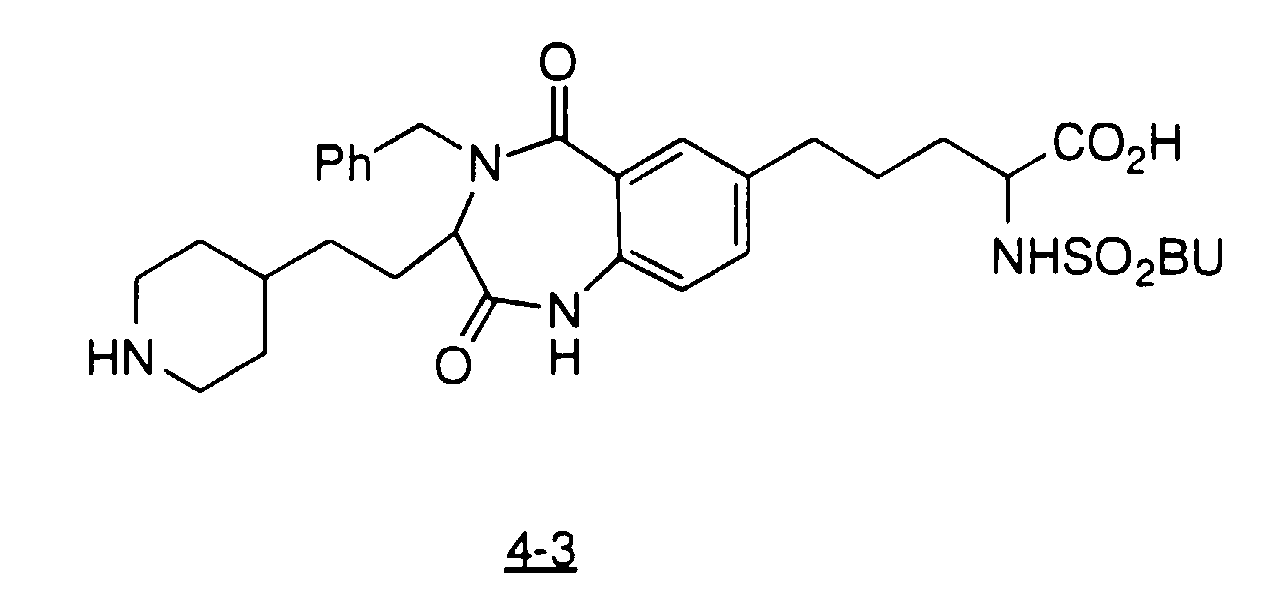
- A mixture of iodide (975 mg, 1.61 mmol), acetylene (3-1), (500 mg, 1.91 mmol), bis(triphenylphosphine) palladium (II) chloride (80 mg, 0.11 mmol) and copper (I) iodide (40 mg, 0.21 mmol) in diethylamine (12 ml) was stirred in the dark at room temperature for 3 hours, under argon. The volatiles were evaporated and the residue partitioned between 10% citric acid solution and ethyl acetate. The organic phase was washed with water, saturated NaHCO3, brine and dried (MgSO4). The solvent was evaporated to give 930 mg of a yellow foam.
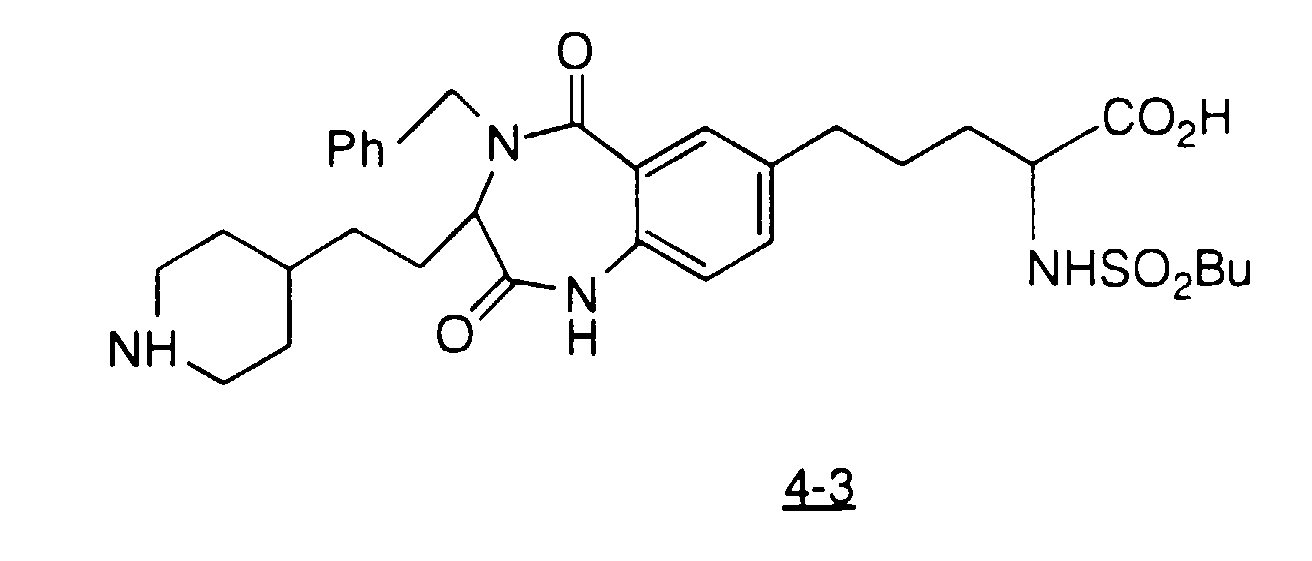
- 150 mg of this was dissolved in 25 ml of EtOAc and hydrogenated at 50 psi over 10% palladium charcoal, for 18 hours to give, after filtration and evaporation, 150 mg of a gum. This was dissolved in THF (3 ml) and 1M NaOH (3 ml) aded, followed by 1 ml methanol. The reaction mixture was stirred for 18 hours, concentrated and partitioned between EtOAc and water. The organic phase was washed with water and brine, dried (MgSO4) and the solvent evaporated to give a foam which partially dissolved in 3 ml of CH2Cl2. After cooling to -10°C, trifluoroacetic acid (3 ml) was added and stirring continued for 15 minutes before evaporation of volatiles. The resulting gum was purified by reverse phase preparative HPLC to give 4-3. M.S. (POS FAB) 657 (M++CO2+1).
NMR (300 MHz), 8.0 (d, 1H), 7.57 (d, 1H), 7.2-7.46 (m, 6H), 4.1-4.7 (m, 3H), 4.02 (dd, 1H), 3.02 (t, 2H), 2.7-2.95 (m, 4H), 1.65-2.0 (m, 10H), 1.1-1.5 (m, 7H), 0.94 (t, 3H). -

- Iodide 4-2 was coupled with acetylene 3-1 and deprotected as described in 4-3 to provide 5. M.S. (POS FAB) 653 M++CO2+1.
C H N Analysis calculated for 1.8 CF3CO2H 52.53 5.18 6.88 Obs 52.58 5.14 6.81 -

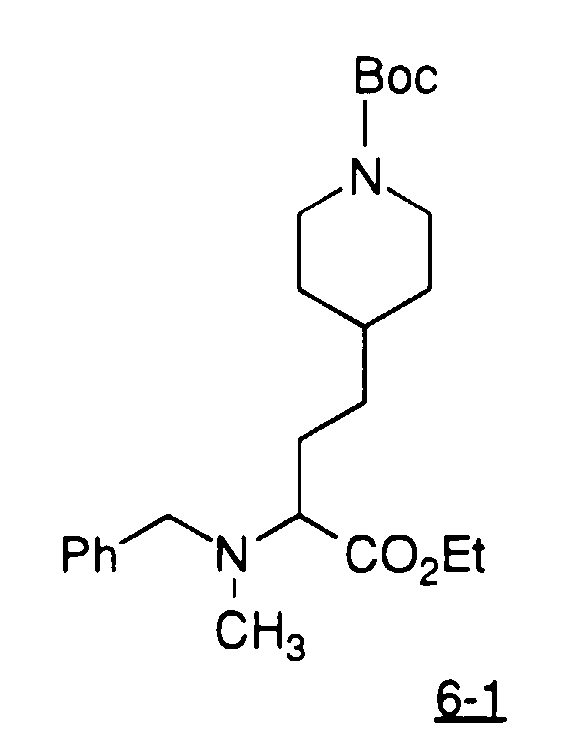
- Amine 4-1 (1.3 g, 3.2 mmol) was dissolved in 25 ml of methanol and 37% formaldehyde solution (0.3 mL) added, followed by 300 mg of sodium cyanoborohydride. The reaction mixture was stirred at r.t. overnight, poured into water and extracted with water and brine, dried (MgSO4) and the solvent evaporated to give 6-1.
NMR (300 MHz, CDCl2) 7.2-7.35 (m, 5H), 3.9-4.3 (m, 4H), 3.78 (1/2 of AB 1H), 3.57 (1/2 of AB 1H), 3.23 (t, 2H), 2.63 (brt, 2H), 2.26 (3 s, 3H), 1.6-1.8 (m, 5H), 1.44 (s, 9H), 1.31 (t, 3H), 1.0-1.4 (m, 4H).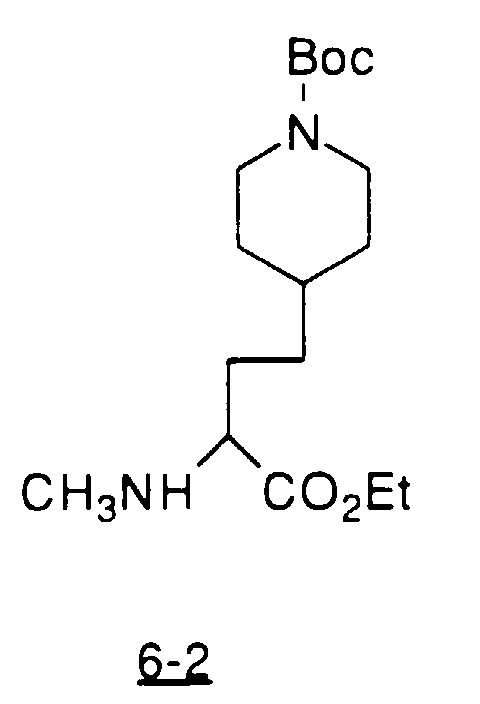
- A solution of amine 6-1 (1.2 g, 2.87 mmol) in 50 ml EtOH was hydrogenated at 50 psi over 100 mg of 10% palladium hydroxide on charcoal for 18h. The catalyst was removed by filtration and the filtrate evaporated to give methylamine 6-2.
NMR (300 MHz, CDCl3) δ 4.19 (q, 2H), 4.04 (brs, 2H), 3.1 (t, 1H), 2.69 (brt, 2H), 2.37 (s, 3H), 1.0-1.7 (m, 21H).
- Using the same procedure as described for the preparation of 4, but replacing benzylamine 4-1 with methylamine 6-2 afforded 6-3. (saturated)
NMR (300 MHz, D2O) δ 7.76, (d, 1H), 7.40 (d, 1H), 7.23 (m, 1H), 4.22 (m, 1H), 3.82 (m, 1H), 3.22 (brd, 2H), 2.95 (t, 2H), 2.83 (s, 3H), 2.76 (m, 2H), 2.56 (m, 2H), 1.0-2.0 (m, 17H), 0.67 (t, 3H). -
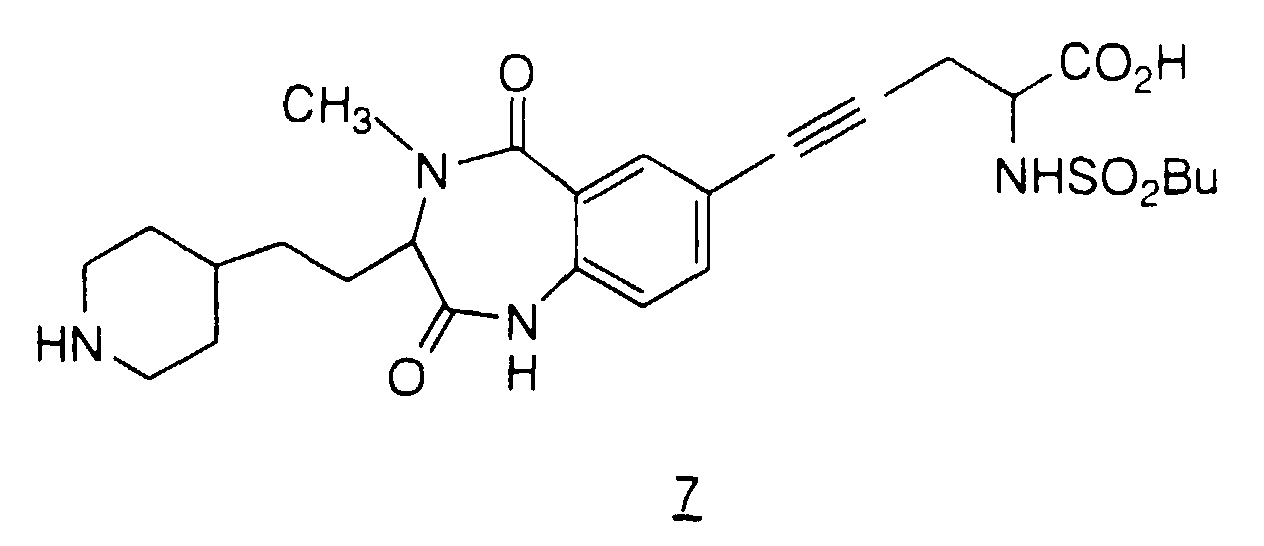
- Utilizing the same scheme described for preparation of 5, but using methylamine 6-2 in place of benzylenene 4-1, afforded acetylene 7.
NMR (300 MHz, D2O) δ 7.93 (brs, 1H), 7.58 (d, 1H), 7.20 (m, 1H), 4.23 (brs, 1H), 4.16 (dd, 1H), 3.94 (q, 1H), 3.23 (brd, 2H), 3.04 (m, 2H), 2.6-2.9 (m, 8H), 0.95-2 (m, 17H), 0.59 (t, 3H).
Claims (6)
- A fibrinogen receptor antagonist having the formula:wherein:

- X is
- -NR1 R2 or a 4- to 10-membered mono- or polycyclic
aromatic or non-aromatic ring system containing 0, 1 or 2
heteroatoms chosen from N or O and either
unsubstituted or substituted with R1 and R2, wherein
R1 and R2 are independently chosen from:
hydrogen,
C1-6 alkyl,
aryl C0-6 alkyl,
carboxy C0-6 alkyl,
hydroxy C0-6 alkyl,
C1-3 alkyloxy C0-6 alkyl, or
amino C0-6 alkyl; - Y is
- C0-6 alkyl,
C1-6 alkyl-CO-C0-6 alkyl, or
C0-6 alkyl-NR3-CO-C0-6 alkyl, wherein
R3 is hydrogen,
C1-6 alkyl,
aryl C0-6 alkyl,
carboxy C0-6 alkyl,
hydroxy C0-6 alkyl,
C1-3 alkyloxy C0-6 alkyl, or
amino C0-6 alkyl; - Z is
- -(CH2)m- , or -C≡C-CH2- ;
wherein m is 0-6; - R3 is
- hydrogen,
C1-6 alkyl,
aryl C0-6 alkyl,
carboxy C0-6 alkyl,
hydroxy C0-6 alkyl,
C1-3 alkyloxy C0-6 alkyl, or
amino C0-6 alkyl; - R7 is
- hydrogen, fluorine,
C1-8 alkyl,
C3-8 cycloalkyl,
aryl C0-6 alkyl,
C0-6 alkylamino C0-6 alkyl,
C0-6 dialkylamino C0-6 alkyl,
C1-8 alkylsulfonylamino C0-6 alkyl,
aryl C0-6 alkylsulfonylamino C0-6 alkyl,
C1-8 alkyloxycarbonylamino C0-8-alkyl,
aryl C0-8 alkyloxycarbonylamino C0-8 alkyl,
C1-8 alkylcarbonylamino C0-6 alkyl,
aryl C0-6 alkylcarbonylamino C0-6 alkyl,
C0-8 alkylaminocarbonylamino C0-6 alkyl,
aryl C0-8 alkylaminocarbonylamino C0-6 alkyl, C1-6 alkylsulfonyl C0-6 alkyl,
aryl C0-6 alkylsulfonyl C0-6 alkyl,
C1-6 alkylcarbonyl C0-6 alkyl
aryl C0-6 alkylcarbonyl C0-6 alkyl,
C1-6 alkylthiocarbonylamino C0-6 alkyl, or aryl C0-6 alkylthiocarbonylamino C0-6 alkyl wherein groups may be unsubstituted or substituted with one or more substituents selected from R1 and R2, and provided that when two R7 groups are attached to the same carbon atom,
they may be the same or different; - R8 is
- hydroxy,
C1-6 alkyloxy,
aryl C1-4 alkyloxy, or
C1-6 alkylcarbonyloxy C1-4 alkyloxy; and - R9 is
- C1-3 alkyl or -W-V, wherein W is C1-3 alkyl and V is 6-membered monocyclic aromatic ring system containing 0, 1, 2, 3 or 4 heteroatoms selected from N, O and S.
- A compound of Claim 1, having the formula:wherein:
- X is
- -NR1R2 or a 4- to 10-membered mono- or polycyclic
aromatic or non-aromatic ring system containing 0, 1 or 2
heteroatoms chosen from N or O and either
unsubstituted or substituted with R1 and R2, wherein
R1 and R2 are independently chosen from:
hydrogen,
C1-6 alkyl,
aryl C0-6 alkyl,
carboxy C0-6 alkyl,
hydroxy C0-6 alkyl,
C1-3 alkyloxy C0-6 alkyl, or
amino C0-6 alkyl; - Y is
- C0-6 alkyl,
C1-6 alkyl-CO-C0-6 alkyl, or
C0-6 alkyl-NR3-CO-C0-6 alkyl wherein
R3 is hydrogen,
C1-6 alkyl,
aryl C0-6 alkyl,
carboxy C0-6 alkyl,
hydroxy C0-6 alkyl,
C1-3 alkyloxy C0-6 alkyl, or
amino C0-6 alkyl; - Z is
- -(CH2)m- , or -C≡C-CH2- ;
wherein m is 0-3; - R3 is
- hydrogen,
C1-6 alkyl,
aryl C0-6 alkyl,
carboxy C0-6 alkyl,
hydroxy C0-6 alkyl,
C1-3 alkyloxy C0-6 alkyl, or
amino C0-6 alkyl; - R7 is
- hydrogen, fluorine,
C1-8 alkyl,
C3-8 cycloalkyl,
C0-6 alkylamino C0-6 alkyl,
C0-6 dialkylamino C0-6 alkyl,
C1-8 alkylsulfonylamino C0-6 alkyl, or
C1-8 alkylcarbonylamino C0-6 alkyl,
wherein groups may be unsubstituted or substituted with one or more substituents selected from R1 and R2, and provided that when two R7 groups are attached to the same carbon atom, they may be the same or different; - R8 is
- hydroxy,
C1-6 alkyloxy,
aryl C1-4 alkyloxy, or
C1-6 alkylcarbonyloxy C1-4 alkyloxy; and - R9 is
- methyl or methylphenyl.
- A compound of Claim 2 selected from
 and
and

- A compound of anyone of Claims 1 to 3 for use in a method of treatment of the human or animal body.
- A composition comprising a compound of anyone of Claims 1 to 3 and a pharmaceutically acceptable carrier.
- Use of a compound of any one of Claims 1 to 3 for the manufacture of a medicament for inhibiting the binding of fibrinogen to blood platelets, inhibiting the aggregation of blood platelets, treating thrombus formation or embolus formation, or preventing thrombus or embolus formation.
Applications Claiming Priority (3)
| Application Number | Priority Date | Filing Date | Title |
|---|---|---|---|
| US08/042,963 US5441952A (en) | 1993-04-05 | 1993-04-05 | Fibrinogen receptor antagonists |
| PCT/US1994/003400 WO1994022825A1 (en) | 1993-04-05 | 1994-03-29 | Fibrinogen receptor antagonists |
| US42963 | 2002-01-09 |
Publications (3)
| Publication Number | Publication Date |
|---|---|
| EP0693067A4 EP0693067A4 (en) | 1995-12-12 |
| EP0693067A1 EP0693067A1 (en) | 1996-01-24 |
| EP0693067B1 true EP0693067B1 (en) | 2000-01-12 |
Family
ID=21924701
Family Applications (1)
| Application Number | Title | Priority Date | Filing Date |
|---|---|---|---|
| EP94913969A Expired - Lifetime EP0693067B1 (en) | 1993-04-05 | 1994-03-29 | Fibrinogen receptor antagonists |
Country Status (8)
| Country | Link |
|---|---|
| US (1) | US5441952A (en) |
| EP (1) | EP0693067B1 (en) |
| JP (1) | JPH08508501A (en) |
| AT (1) | ATE188692T1 (en) |
| AU (1) | AU683882B2 (en) |
| CA (1) | CA2159482A1 (en) |
| DE (1) | DE69422615T2 (en) |
| WO (1) | WO1994022825A1 (en) |
Families Citing this family (11)
| Publication number | Priority date | Publication date | Assignee | Title |
|---|---|---|---|---|
| EP0796252A4 (en) * | 1994-12-09 | 1998-02-04 | Smithkline Beecham Corp | Bicyclic fibrinogen antagonists |
| WO1997011940A1 (en) | 1995-09-29 | 1997-04-03 | Eli Lilly And Company | Spiro compounds as inhibitors of fibrinogen-dependent platelet aggregation |
| US6011029A (en) * | 1996-02-26 | 2000-01-04 | Bristol-Myers Squibb Company | Inhibitors of farnesyl protein transferase |
| CN1478472A (en) * | 1996-07-25 | 2004-03-03 | ¸ | cell adhesion inhibitor |
| US6686350B1 (en) | 1996-07-25 | 2004-02-03 | Biogen, Inc. | Cell adhesion inhibitors |
| JP4019157B2 (en) * | 1997-07-31 | 2007-12-12 | 宇部興産株式会社 | N-acylamino acid amide compound and production intermediate thereof |
| US6623981B2 (en) * | 1998-01-27 | 2003-09-23 | Bristol-Myers Squibb Company | Detection of patients at risk for developing integrin antagonist/agonist mediated disease states |
| ES2309209T3 (en) | 2001-11-13 | 2008-12-16 | Ortho-Mcneil-Janssen Pharmaceuticals, Inc. | 1,4-BENZODIAZEPINAS SUBSTITUTED AND USE OF THE SAME FOR THE TREATMENT OF CANCER. |
| CA2514547A1 (en) * | 2003-01-28 | 2004-08-12 | Takeda Pharmaceutical Company Limited | Receptor agonists |
| EP2734205B1 (en) | 2011-07-21 | 2018-03-21 | Tolero Pharmaceuticals, Inc. | Heterocyclic protein kinase inhibitors |
| AU2020221247B2 (en) | 2019-02-12 | 2024-12-12 | Sumitomo Pharma America, Inc. | Formulations comprising heterocyclic protein kinase inhibitors |
Family Cites Families (13)
| Publication number | Priority date | Publication date | Assignee | Title |
|---|---|---|---|---|
| US4313947A (en) * | 1974-06-24 | 1982-02-02 | Otsuka Pharmaceutical Co., Ltd. | Platelet aggregation inhibiting 2-oxyindoles, their compositions and method of use |
| DE2549999A1 (en) * | 1975-11-07 | 1977-05-12 | Boehringer Mannheim Gmbh | PIPERIDINE DERIVATIVES AND THE PROCESS FOR THEIR PRODUCTION |
| US4064125A (en) * | 1976-10-29 | 1977-12-20 | E. R. Squibb And Sons, Inc. | Substituted amides having antiinflammatory activity |
| IL60129A0 (en) * | 1979-05-23 | 1980-07-31 | Wuelfing J Kg | Phenylsulphonamide derivatives,their preparation and pharmaceutical compositions containing them |
| DK623586A (en) * | 1985-12-27 | 1987-06-28 | Eisai Co Ltd | PIPERIDE INGREDIENTS OR SALTS THEREOF AND PHARMACEUTICAL COMPOSITIONS CONTAINING THE COMPOUNDS |
| KR880007441A (en) * | 1986-12-11 | 1988-08-27 | 알렌 제이.스피겔 | Spiro-Substituted Glutaramide Diuretics |
| US4879313A (en) * | 1988-07-20 | 1989-11-07 | Mosanto Company | Novel platelet-aggregation inhibitors |
| US5039805A (en) * | 1988-12-08 | 1991-08-13 | Hoffmann-La Roche Inc. | Novel benzoic and phenylacetic acid derivatives |
| US5084466A (en) * | 1989-01-31 | 1992-01-28 | Hoffmann-La Roche Inc. | Novel carboxamide pyridine compounds which have useful pharmaceutical utility |
| CA2008116C (en) * | 1989-02-23 | 2001-11-20 | Thomas Weller | Glycine derivatives |
| NZ234264A (en) * | 1989-06-29 | 1993-05-26 | Warner Lambert Co | N-substituted cycloalkyl and polycycloalkyl alpha-substituted trp-phe- and phenethylamine derivatives, and pharmaceutical compositions |
| NZ239846A (en) * | 1990-09-27 | 1994-11-25 | Merck & Co Inc | Sulphonamide derivatives and pharmaceutical compositions thereof |
| AU666318B2 (en) * | 1991-06-28 | 1996-02-08 | Smithkline Beecham Corporation | Bicyclic fibrinogen antagonists |
-
1993
- 1993-04-05 US US08/042,963 patent/US5441952A/en not_active Expired - Fee Related
-
1994
- 1994-03-29 JP JP6522292A patent/JPH08508501A/en active Pending
- 1994-03-29 AU AU66218/94A patent/AU683882B2/en not_active Ceased
- 1994-03-29 DE DE69422615T patent/DE69422615T2/en not_active Expired - Fee Related
- 1994-03-29 CA CA002159482A patent/CA2159482A1/en not_active Abandoned
- 1994-03-29 AT AT94913969T patent/ATE188692T1/en not_active IP Right Cessation
- 1994-03-29 WO PCT/US1994/003400 patent/WO1994022825A1/en not_active Ceased
- 1994-03-29 EP EP94913969A patent/EP0693067B1/en not_active Expired - Lifetime
Also Published As
| Publication number | Publication date |
|---|---|
| DE69422615T2 (en) | 2000-08-03 |
| CA2159482A1 (en) | 1994-10-13 |
| ATE188692T1 (en) | 2000-01-15 |
| WO1994022825A1 (en) | 1994-10-13 |
| US5441952A (en) | 1995-08-15 |
| DE69422615D1 (en) | 2000-02-17 |
| EP0693067A1 (en) | 1996-01-24 |
| EP0693067A4 (en) | 1995-12-12 |
| JPH08508501A (en) | 1996-09-10 |
| AU683882B2 (en) | 1997-11-27 |
| AU6621894A (en) | 1994-10-24 |
Similar Documents
| Publication | Publication Date | Title |
|---|---|---|
| EP0512829B1 (en) | Fibrinogen receptor antagonists | |
| US5272158A (en) | Fibrinogen receptor antagonists | |
| EP0664792B1 (en) | Fibrinogen receptor antagonists | |
| US5281585A (en) | Fibrinogen receptor antagonists for inhibiting aggregation of blood platelets | |
| EP0478362B1 (en) | Fibrinogen receptor antagonists | |
| US5416099A (en) | Fibrinogen receptor antagonists | |
| US5389631A (en) | Fibrinogen receptor antagonists | |
| US5264420A (en) | Fibrinogen receptor antagonists | |
| HUT60751A (en) | Process for producing fibrinogen receptor antagonists and pharmaceutical compositions comprising same as active ingredient | |
| BG61810B1 (en) | NEW SULPHONAMIDES - FIBRINOGENERGOPTERNARY ANTAGONISTS | |
| US5441952A (en) | Fibrinogen receptor antagonists | |
| JPH08507072A (en) | Fibrinogen receptor antagonist | |
| US5612369A (en) | Thrombin inhibitors | |
| US5753667A (en) | 1-oxo-2- (phenylsulphonylamino) pentylpiperidine derivatives, their preparation and their therapeutic application | |
| JPH08295668A (en) | Piperidine derivative and medicinal preparation containing the same | |
| JPH08113594A (en) | Aspartic acid derivative and medicinal preparation containing the same | |
| JP2000001480A (en) | 2-piperazinone-1-acetic acid derivative, its production and use | |
| LV10425B (en) | Fibrinogen receptor antagonists |
Legal Events
| Date | Code | Title | Description |
|---|---|---|---|
| A4 | Supplementary search report drawn up and despatched | ||
| AK | Designated contracting states |
Kind code of ref document: A4 Designated state(s): AT BE CH DE DK ES FR GB GR IE IT LI LU NL PT SE |
|
| PUAI | Public reference made under article 153(3) epc to a published international application that has entered the european phase |
Free format text: ORIGINAL CODE: 0009012 |
|
| 17P | Request for examination filed |
Effective date: 19951106 |
|
| AK | Designated contracting states |
Kind code of ref document: A1 Designated state(s): AT BE CH DE DK ES FR GB GR IE IT LI LU NL PT SE |
|
| 17Q | First examination report despatched |
Effective date: 19980907 |
|
| GRAG | Despatch of communication of intention to grant |
Free format text: ORIGINAL CODE: EPIDOS AGRA |
|
| GRAG | Despatch of communication of intention to grant |
Free format text: ORIGINAL CODE: EPIDOS AGRA |
|
| GRAH | Despatch of communication of intention to grant a patent |
Free format text: ORIGINAL CODE: EPIDOS IGRA |
|
| GRAH | Despatch of communication of intention to grant a patent |
Free format text: ORIGINAL CODE: EPIDOS IGRA |
|
| GRAA | (expected) grant |
Free format text: ORIGINAL CODE: 0009210 |
|
| AK | Designated contracting states |
Kind code of ref document: B1 Designated state(s): AT BE CH DE DK ES FR GB GR IE IT LI LU NL PT SE |
|
| PG25 | Lapsed in a contracting state [announced via postgrant information from national office to epo] |
Ref country code: SE Free format text: THE PATENT HAS BEEN ANNULLED BY A DECISION OF A NATIONAL AUTHORITY Effective date: 20000112 Ref country code: NL Free format text: LAPSE BECAUSE OF FAILURE TO SUBMIT A TRANSLATION OF THE DESCRIPTION OR TO PAY THE FEE WITHIN THE PRESCRIBED TIME-LIMIT Effective date: 20000112 Ref country code: LI Free format text: LAPSE BECAUSE OF FAILURE TO SUBMIT A TRANSLATION OF THE DESCRIPTION OR TO PAY THE FEE WITHIN THE PRESCRIBED TIME-LIMIT Effective date: 20000112 Ref country code: GR Free format text: LAPSE BECAUSE OF NON-PAYMENT OF DUE FEES Effective date: 20000112 Ref country code: ES Free format text: THE PATENT HAS BEEN ANNULLED BY A DECISION OF A NATIONAL AUTHORITY Effective date: 20000112 Ref country code: CH Free format text: LAPSE BECAUSE OF FAILURE TO SUBMIT A TRANSLATION OF THE DESCRIPTION OR TO PAY THE FEE WITHIN THE PRESCRIBED TIME-LIMIT Effective date: 20000112 Ref country code: BE Free format text: LAPSE BECAUSE OF FAILURE TO SUBMIT A TRANSLATION OF THE DESCRIPTION OR TO PAY THE FEE WITHIN THE PRESCRIBED TIME-LIMIT Effective date: 20000112 Ref country code: AT Free format text: LAPSE BECAUSE OF FAILURE TO SUBMIT A TRANSLATION OF THE DESCRIPTION OR TO PAY THE FEE WITHIN THE PRESCRIBED TIME-LIMIT Effective date: 20000112 |
|
| REF | Corresponds to: |
Ref document number: 188692 Country of ref document: AT Date of ref document: 20000115 Kind code of ref document: T |
|
| REG | Reference to a national code |
Ref country code: CH Ref legal event code: EP |
|
| REF | Corresponds to: |
Ref document number: 69422615 Country of ref document: DE Date of ref document: 20000217 |
|
| REG | Reference to a national code |
Ref country code: IE Ref legal event code: FG4D |
|
| ET | Fr: translation filed | ||
| ITF | It: translation for a ep patent filed | ||
| PG25 | Lapsed in a contracting state [announced via postgrant information from national office to epo] |
Ref country code: LU Free format text: LAPSE BECAUSE OF NON-PAYMENT OF DUE FEES Effective date: 20000329 Ref country code: IE Free format text: LAPSE BECAUSE OF NON-PAYMENT OF DUE FEES Effective date: 20000329 |
|
| PG25 | Lapsed in a contracting state [announced via postgrant information from national office to epo] |
Ref country code: PT Free format text: LAPSE BECAUSE OF FAILURE TO SUBMIT A TRANSLATION OF THE DESCRIPTION OR TO PAY THE FEE WITHIN THE PRESCRIBED TIME-LIMIT Effective date: 20000412 Ref country code: DK Free format text: LAPSE BECAUSE OF FAILURE TO SUBMIT A TRANSLATION OF THE DESCRIPTION OR TO PAY THE FEE WITHIN THE PRESCRIBED TIME-LIMIT Effective date: 20000412 |
|
| NLV1 | Nl: lapsed or annulled due to failure to fulfill the requirements of art. 29p and 29m of the patents act | ||
| REG | Reference to a national code |
Ref country code: CH Ref legal event code: PL |
|
| PLBE | No opposition filed within time limit |
Free format text: ORIGINAL CODE: 0009261 |
|
| STAA | Information on the status of an ep patent application or granted ep patent |
Free format text: STATUS: NO OPPOSITION FILED WITHIN TIME LIMIT |
|
| 26N | No opposition filed | ||
| PGFP | Annual fee paid to national office [announced via postgrant information from national office to epo] |
Ref country code: GB Payment date: 20001229 Year of fee payment: 8 Ref country code: FR Payment date: 20001229 Year of fee payment: 8 |
|
| REG | Reference to a national code |
Ref country code: IE Ref legal event code: MM4A |
|
| PGFP | Annual fee paid to national office [announced via postgrant information from national office to epo] |
Ref country code: DE Payment date: 20010223 Year of fee payment: 8 |
|
| REG | Reference to a national code |
Ref country code: GB Ref legal event code: IF02 |
|
| PG25 | Lapsed in a contracting state [announced via postgrant information from national office to epo] |
Ref country code: GB Free format text: LAPSE BECAUSE OF NON-PAYMENT OF DUE FEES Effective date: 20020329 |
|
| PG25 | Lapsed in a contracting state [announced via postgrant information from national office to epo] |
Ref country code: DE Free format text: LAPSE BECAUSE OF NON-PAYMENT OF DUE FEES Effective date: 20021001 |
|
| GBPC | Gb: european patent ceased through non-payment of renewal fee |
Effective date: 20020329 |
|
| PG25 | Lapsed in a contracting state [announced via postgrant information from national office to epo] |
Ref country code: FR Free format text: LAPSE BECAUSE OF NON-PAYMENT OF DUE FEES Effective date: 20021129 |
|
| REG | Reference to a national code |
Ref country code: FR Ref legal event code: ST |
|
| PG25 | Lapsed in a contracting state [announced via postgrant information from national office to epo] |
Ref country code: IT Free format text: LAPSE BECAUSE OF NON-PAYMENT OF DUE FEES Effective date: 20050329 |