The present invention relates to therapeutically active 2,6-diaminopurine-β-D-ribofuranuronamide
derivatives, processes for the manufacture of said
compounds, pharmaceutical formulations containing said compounds and the
use of said compounds in chemotherapy. In particular, we have found a group
of novel compounds which are effective in treating inflammatory diseases.
Inflammation is a primary response to tissue injury or microbial invasion and
is characterised by circulating leukocytes binding to and extravasion through
vascular endothelium. Circulating leukocytes include neutrophils, eosinophils,
basophils, monocytes and lymphocytes. Different forms of inflammation involve
different types of infiltrating leukocytes, the particular profile being regulated by
gene expression in vascular endothelium in response to a variety of
inflammatory mediators.
The primary function of leukocytes is to defend the host from invading
organisms such as bacteria and parasites. Once a tissue is injured or infected a
series of events occurs which causes the local recruitment of leukocytes from
the circulation into the affected tissue. Leukocyte recruitment is controlled to
allow for the orderly destruction and phagocytosis of foreign or dead cells,
followed by tissue repair and resolution of the inflammatory infiltrate. However
in chronic inflammatory states, recruitment and resolution are not adequately
controlled and the inflammatory reaction causes tissue destruction.
EP 0277917 and EP 0222330 describe certain adenosine 5'-carboxamide
derivatives and N6-substituted-5'-oxidised adenosine derivatives respectfully.
The compounds described therein are claimed to have utility in cardiovascular
and CNS applications.
We have now found a novel group of compounds with broad anti-inflammatory
properties which inhibit leukocyte recruitment and activation. The
compounds are therefore of potential therapeutic benefit in providing protection
from leukocyte-induced tissue damage in diseases where leukocytes are
implicated at the site of inflammation. The compounds of the invention may also
represent a safer alternative to corticosteroids in the treatment of inflammatory
diseases, whose uses are severely limited by their side-effect profiles.
Thus, according to one aspect of this invention, we provide a compound of
general formula (I)
and salts and solvates thereof, wherein:
Suitable salts of the compounds of formula (I) include physiologically
acceptable salts such as acid addition salts derived from inorganic or organic
acids, for example hydrochlorides, hydrobromides, sulphates, phosphates,
acetates, benzoates, citrates, succinates, lactates, tartrates, fumarates and
maleates, and, if appropriate, inorganic base salts such as alkali metal salts, for
example sodium salts. Other salts of the compounds of formula (I) include salts
which are not physiologically acceptable but may be useful in the preparation of
compounds of formula (I) and physiologically acceptable salts thereof.
Examples of such salts include trifluoroacetates.
Examples of suitable solvates of the compounds of formula (I) include
hydrates.
It will be appreciated that when R2 in compounds of formula (I) contains one
or more asymmetric carbon atoms the invention includes all diastereoisomers of
compounds of formula (I) and mixtures thereof. Otherwise, the stereochemical
configuration of compounds of the invention is as depicted in formula (I) above.
It is to be understood that all tautomeric forms of the compounds of formula
(I) are included within the scope of this invention.
The cycloalkyl group within R1 or R2 may be a monocyclic or bridged cyclic
ring. Particular examples of suitable cycloalkyl ring systems include
C3-8 monocyclic cycloalkyl groups such as cyclopropyl, cyclopentyl and
cyclohexyl. Within R2 the C3-8 cycloalkyl group may particularly represent
cyclopentyl or cyclohexyl.
The term 'aryl' as part of an arylC1-6alkyl group may represent, for example,
a phenyl group optionally substituted by one or more substituents (e.g. 1, 2 or 3
substituents) which may be the same or different and are selected from halogen,
hydroxyl, C1-3alkoxy and C1-3alkyl.
The term 'alkyl' as a group or part of a group means a straight or branched
chain alkyl group. Particular examples of suitable alkyl groups include methyl,
ethyl, n-propyl, i-propyl, n-butyl, s-butyl and t-butyl.
The term 'alkylene' as part of a group means a straight or branched alkylene
chain. Particular examples of suitable alkylene chains include -CH2-,
-CH2CH2-, -CH2CH2CH2-, -CHCH3CH2- and -CH2C(CH3)2CH2-.
When R2 represents a group -Alk1Y the C2-6alkylene group may
particularly represent -CH2CH2-, -CH2CH2CH2- or -CH2C(CH3)2CH2-.
When R2 represents a group -(CHR5)m(Alk2)nZ the chain
-(CHR5)m(Alk2)n- may particularly represent a bond, -CH2-, -CH2CH2-,
-CHR5CHCH3CH2- or -CHR5CH2- (where R5 is a group CH2R6 and R6 is as
defined previously).
The term 'C2-7acylamino' within R2 means a C2-7alkanoylamino group
wherein the C1-6alkyl portion thereof is a straight or branched alkyl group as
previously defined and may be optionally substituted by one or more halogen
atoms such as fluorine. Examples of suitable C2-7alkanoylamino groups within
R2 include acetamido and trifluoroacetamido.
Within Z, the term 'pyridyl' means a 2-, 3- or 4-pyridyl group; the term
'pyrimidinyl' means a 2-, 4- or 5-pyrimidinyl group; the term 'imidazolyl' means a
1-,2-,4- or 5-imidazolyl group; and the term 'triazolyl' means a 1, 2, 4-triazolyl
group (e.g. 1, 2, 4triazol-1-yl or 1, 2, 4-triazol-3-yl).
R1 preferably represents a C1-3alkyl group, especially ethyl.
Compounds of formula (I) in which Q represents an oxygen atom are
generally preferred.
Compounds of formula (I) in which R1 NHC(=Q)- represents
ethylaminocarbonyl are particularly preferred.
A preferred group of compounds of the invention are compounds of formula
(I) in which R2 represents a substituted cyclopentyl or cyclohexyl group wherein
the ring is substituted by one or two groups, especially one or two groups
selected from hydroxy, NH2, methylamino, dimethylamino, acetamido or
trifluoroacetamido. Preferred substituents include hydroxy, dihydroxy, NH2 and
dimethylamino.
A further preferred group of compounds of the invention are compounds of
formula (I) in which R2 represents a pyrrolidin-3-yl or piperidin-3-yl group in
which the ring nitrogen atom is substituted by hydrogen, C1-3alkyl (e.g. ethyl) or
benzyl.
Another preferred group of compounds of the invention are compounds of
formula (I) in which R2 represents (CHR5)m(Alk2)nZ where R5, m and n are as
defined previously and Z is an optionally substituted imidazolyl group.
Particularly preferred are those compounds in which -(CH2R5)m(Alk2)n-represents
-CH2CH2-.
It is to be understood that the present invention covers all combinations of
particular and preferred groups referred to hereinabove.
Specific compounds of the present invention include:
and physiologically acceptable salts and solvates thereof.
Particular compounds of the present invention include:
and physiologically acceptable salts and solvates thereof.
A particularly preferred compound of formula (I) is:
(trans)-1-[2-[(4-aminocyclohexyl)amino]-6-[(2,2-diphenylethyl)amino]-9H-purin-9-yl]-1-deoxy-N-ethyl-β-D-ribofuranuronamide;
and physiologically acceptable
salts and solvates thereof, including the hydrochloride salt.
The potential for compounds of formula (I) to inhibit leukocyte function may
be demonstrated, for example, by their ability to inhibit superoxide (O2 -)
generation from neutrophils stimulated with chemoattractants such as N-formylmethionyl-leucyl-phenylalanine
(fMLP). Accordingly, compounds of
formula (I) are of potential therapeutic benefit in providing protection from
leukocyte-induced tissue damage in diseases where leukocytes are implicated
at the site of inflammation.
Examples of disease states in which the compounds of the invention have
potentially beneficial anti-inflammatory effects include diseases of the
respiratory tract such as adult respiratory distress syndrome (ARDS), bronchitis
(including chronic bronchitis), cystic fibrosis, asthma (including allergen-induced
asthmatic reactions), emphysema, rhinitis and septic shock. Other relevant
disease states include diseases of the gastrointestinal tract such as intestinal
inflammatory diseases including inflammatory bowel disease (e.g. Crohn's
disease or ulcerative colitis), Helicobacter-pylori induced gastritis and intestinal
inflammatory diseases secondary to radiation exposure or allergen exposure,
and non-steroidal anti-inflammatory drug-induced gastropathy. Furthermore,
compounds of the invention may be used to treat skin diseases such as
psoriasis, allergic dermatitis and hypersensitivity reactions.
Further examples of disease states in which compounds of the invention
have potentially beneficial effects include cardiac conditions such as peripheral
vascular disease, post-ischaemic reperfusion injury and idiopathic
hypereosinophilic syndrome.
Compounds of the invention which inhibit lymphocyte function also have use
in the treatment of auto-immune diseases such as rheumatoid arthritis and
diabetes.
Compounds of the invention may also be useful in inhibiting metastasis.
It will be appreciated by those skilled in the art that reference herein to
treatment extends to prophylaxis as well as the treatment of established
conditions.
As mentioned above, compounds of formula (I) are useful in human or
veterinary medicine, in particular as anti-inflammatory agents.
There is thus provided as a further aspect of the invention a compound of
formula (I) or a physiologically acceptable salt or solvate thereof for use in
human or veterinary medicine, particularly in the treatment of patients with
inflammatory conditions who are susceptible to leukocyte-induced tissue
damage.
According to another aspect of the invention, there is provided the use of a
compound of formula (I) or a physiologically acceptable salt or solvate thereof
for the manufacture of a medicament for the treatment of patients with
inflammatory conditions who are susceptible to leukocyte-induced tissue
damage.
The compounds according to the invention may be used for the treatment of
a human or animal subject with an inflammatory condition who is susceptible to
leukocyte-induced tissue damage, which method comprises administering to
said human or animal subject an effective amount of a compound of formula (I)
or a physiologically acceptable salt or solvate thereof.
The compounds according to the invention may be formulated for
administration in any convenient way, and the invention therefore also includes
within its scope pharmaceutical compositions for use in anti-inflammatory
therapy, comprising a compound of formula (I) or a physiologically acceptable
salt or solvate thereof together, if desirable, with one or more physiologically
acceptable carriers or excipients.
The compounds according to the invention may, for example, be
formulated for oral, buccal, parenteral, topical or rectal administration, preferably
for parenteral or topical (e.g. by aerosol) administration.
Tablets and capsules for oral administration may contain conventional
excipients such as binding agents, for example syrup, acacia, gelatin, sorbitol,
tragacanth, mucilage of starch, cellulose or polyvinyl pyrrolidone; fillers, for
example, lactose, microcrystalline cellulose, sugar, maize- starch, calcium
phosphate or sorbitol; lubricants, for example, magnesium stearate, stearic acid,
talc, polyethylene glycol or silica; disintegrants, for example, potato starch,
croscarmellose sodium or sodium starch glycollate; or wetting agents such as
sodium lauryl sulphate. The tablets may be coated according to methods well
known in the art. Oral liquid preparations may be in the form of, for example,
aqueous or oily suspensions, solutions, emulsions, syrups or elixirs, or may be
presented as a dry product for constitution with water or other suitable vehicle
before use. Such liquid preparations may contain conventional additives such
as suspending agents, for example, sorbitol syrup, methyl cellulose,
glucose/sugar syrup, gelatin, hydroxymethyl cellulose, carboxymethyl cellulose,
aluminium stearate gel or hydrogenated edible fats; emulsifying agents, for
example, lecithin, sorbitan mono-oleate or acacia; non-aqueous vehicles (which
may include edible oils), for example almond oil, fractionated coconut oil, oily
esters, propylene glycol or ethyl alcohol; or preservatives, for example, methyl
or propyl p- hydroxybenzoates or sorbic acid. The preparations may also
contain buffer salts, flavouring, colouring and/or sweetening agents (e.g.
mannitol) as appropriate.
For buccal administration the compositions may take the form of tablets or
lozenges formulated in conventional manner.
The compounds may also be formulated as suppositories, e.g. containing
conventional suppository bases such as cocoa butter or other glycerides.
The compounds according to the invention may also be formulated for
parenteral administration by bolus injection or continuous infusion and may be
presented in unit dose form, for instance as ampoules, vials, small volume
infusions or prefilled syringes, or in multi-dose containers with an added
preservative. The compositions may take such forms as solutions, suspensions,
or emulsions in aqueous or non-aqueous vehicles, and may contain formulatory
agents such as anti-oxidants, buffers, antimicrobial agents and/or tonicity
adjusting agents. Altematively, the active ingredient may be in powder form for
constitution with a suitable vehicle, e.g. sterile, pyrogen-free water, before use.
The dry solid presentation may be prepared by filling a sterile powder
aseptically into individual sterile containers or by filling a sterile solution
aseptically into each container and freeze-drying.
By topical administration as used herein, we include administration by
insufflation and inhalation. Examples of various types of preparation for topical
administration include ointments, creams, lotions, powders, pessaries, sprays,
aerosols, capsules or cartridges for use in an inhaler or insufflator, solutions for
nebulisation or drops (e.g. eye or nose drops).
Ointments and creams may, for example, be formulated with an aqueous or
oily base with the addition of suitable thickening and/or gelling agents and/or
solvents. Such bases may thus, for example, include water and/or an oil such as
liquid paraffin or a vegetable oil such as arachis oil or castor oil or a solvent
such as a polyethylene glycol. Thickening agents which may be used include
soft paraffin, aluminium stearate, cetostearyl alcohol, polyethylene glycols,
microcrystalline wax and beeswax.
Lotions may be formulated with an aqueous or oily base and will in general
also contain one or more emulsifying agents, stabilising agents, dispersing
agents, suspending agents or thickening agents.
Powders for extemal application may be formed with the aid of any suitable
powder base, for example, talc, lactose or starch. Drops may be formulated with
an aqueous or non-aqueous base also comprising one or more dispersing
agents, solubilising agents or suspending agents.
Spray compositions may be formulated, for example, as aqueous solutions
or suspensions or as aerosols delivered from pressurised packs, with the use of
a suitable propellant, e.g. dichlorodifluoromethane, trichlorofluoromethane,
dichlorotetra-fluoroethane, 1,1,1,2,3,3,3-heptafluoropropane, 1,1,1,2-tetrafluorethane,
carbon dioxide or other suitable gas.
Intranasal sprays may be formulated with aqueous or non-aqueous vehicles
with the addition of agents such as thickening agents, buffer salts or acid or
alkali to adjust the pH, isotonicity adjusting agents or anti-oxidants.
Capsules and cartridges of for example gelatin, or blisters of for example
laminated aluminium foil, for use in an inhaler or insufflator may be formulated
containing a powder mix of a compound of the invention and a suitable powder
base such as lactose or starch.
Solutions for inhalation by nebulation may be formulated with an aqueous
vehicle with the addition of agents such as acid or alkali, buffer salts, isotonicity
adjusting agents or antimicrobials. They may be sterilised by filtration or heating
in an autoclave, or presented as a non-sterile product.
The pharmaceutical compositions according to the invention may also be
used in combination with other therapeutic agents, for example anti-inflammatory
agents such as corticosteroids or NSAIDs.
Thus, there is provided, a combination comprising a compound of formula (I)
or a physiologically acceptable salt or solvate thereof together with another
therapeutically active agent, for example an anti-inflammatory agent such as a
corticosteroid or NSAID.
The combination referred to above may conveniently be presented for use in
the form of a pharmaceutical formulation and thus pharmaceutical formulations
comprising a combination as defined above together with a pharmaceutically
acceptable carrier thereof represent a further aspect of the invention.
The individual components of such combinations may be administered either
sequentially or simultaneously in separate or combined pharmaceutical
formulations. Appropriate doses of known therapeutic agents will be readily
appreciated by those skilled in the art.
Compounds of the invention may conveniently be administered in amounts
of, for example, 0.01 to 500mg/kg body weight, preferably 0.01 to 100mg/kg
body weight, 1 to 4 times daily. The precise dose will of course depend on the
age and condition of the patient and the particular route of administration
chosen.
The compounds of formula (I) and salts and solvates thereof may be
prepared by the methodology described hereinafter, constituting a further
aspect of this invention. In the following procedures, the groups R1, R2 and Q
are as defined for compounds of formula (I) unless otherwise stated.
Thus, according to first process (A), a compound of formula (I) may be
prepared by treating a compound of formula (II)
(wherein R
a and R
b each represent a hydrogen atom or together form an
alkylidene group such as isopropylidene) with an amine R
2aNH
2 (wherein R
2a
is a group R
2 or is a protected derivative thereof), followed, where necessary,
by the removal of any protecting groups present.
The displacement reaction to introduce the amine moiety may be carried out
by heating the reagents at a temperature in the range of 50° to 150°C
optionally in the presence of a solvent such as dimethylsulphoxide.
A compound of formula (II) in which Q represents a sulphur atom may be
prepared from a compound of formula (II) in which Q represents an oxygen atom
and Ra and Rb together form an alkylidene group such as isopropylidene by
thianation followed, if appropriate, by the removal of the alkylidene group.
The thianation reaction may be conveniently effected using known thianation
agents such as hydrogen sulphide, phosphorus pentasulphide or Lawesson's
reagent (p-methoxyphenylthiophosphine sulphide dimer). The reaction may be
carried out in a known manner. For example when hydrogen sulphide is used
an acid such as hydrochloric acid may conveniently be added in catalytic
amounts and the reaction carried out in a polar solvent such as acetic acid or
ethanol. When using Lawesson's reagent, the reaction may conveniently be
carried out in a dry solvent such as toluene or methylene chloride.
A compound of formula (II) in which Q represents an oxygen atom may be
prepared by treating a compound of formula (III)
(wherein R
a and R
b are as defined previously) with 2,2-diphenylethylamine,
preferably in the presence of a base such as an amine base (e.g.
diisopropylethylamine) and in a solvent such as an alcohol (e.g. isopropanol) at
an elevated temperature (e.g. reflux), followed if desired by removing any
protecting groups present.
A compound of formula (II) in which Q represents an oxygen atom may also
be prepared by treatiny a compound of formula (IV)
(wherein R
a and R
b are as defined previously) or an active derivative thereof
such as the corresponding acid halide with an amine R
1 NH
2, followed if desired
by removing any protecting groups present.
The amination reaction may be effected in known manner, for example by
adding the amine in a solvent such as a halogenated hydrocarbon (e.g.
methylene chloride) at about 0° to 20°C to the compound (IV) or, more
particularly, the corresponding acid chloride. The acid chloride may be
prepared by treating compound (IV) with thionyl chloride, conveniently at an
elevated temperature.
A compound of formula (IV) may be prepared by oxidising a compound of
formula (V)
or a salt thereof (wherein R
a and R
b together form an alkylidene group such as
isopropylidene), followed if desired by removing the alkylidene group. The
oxidation reaction may be effected in known manner using an oxidising agent
such as potassium permanganate or pyridinium dichromate.
A compound of formula (V) or a salt thereof may be prepared by treating a
compound of formula (VI)
with a ketone such as acetone and/or with 2,2-dimethoxypropane in the
presence of an acid, for example p-toluenesulphonic acid, conveniently at about
room temperature.
A compound of formula (VI) may be prepared by deprotecting a compound of
formula (VII)
(wherein R
P is a suitable hydroxyl protecting group). Suitable methods of
deprotection are described hereinafter.
A compound of formula (VII) may be prepared by treating a compound of
formula (VIII)
(wherein R
P is as defined previously) with 2,2-diphenylethylamine under the
conditions described previously for preparing compounds of formula (II) from
compounds of formula (III).
The compounds of formulae (III) and (VIII) are either known compounds or
may be prepared by methods analogous to those described in the art for
preparing the known compounds of formulae (III) and (VIII).
The amines R2aNH2 are either known in the art or may be prepared by the
methods described in the Examples Section hereinafter or by methods
analogous to such methods hereinafter.
Compounds of formulae (II) and (IV) are novel intermediates. Compounds of
formula (II) in which Ra and Rb represent hydrogen atoms are also active
compounds in their own right.
It will be appreciated that in addition to 2',3'-diol groups, groups present
within R2 may need to be protected, and deprotection may be required as an
intermediate or final step to yield the desired compound. Thus, according to
another general process (B), a compound of formula (I) may be prepared by
subjecting a protected derivative of a compound of formula (I) to reaction to
remove the protecting group or groups. Protection and deprotection of
functional groups may be effected using conventional means. Thus, for
example, amino groups may be protected by a group selected from aralkyl (e.g.
benzyl), acyl (e.g. benzyloxycarbonyl or t-butoxycarbonyl) or sulphonyl (e.g.
allysulphonyl or tosyl); subsequent removal of the protecting group being
effected when desired by hydrolysis or hydrogenolysis as appropriate using
standard conditions. Hydroxyl groups may be protected using any conventional
hydroxyl protecting group, for example, as described in "Protective Groups in
Organic Chemistry", Ed. J.F.W. McOmie (Plenum Press, 1973) or "Protective
Groups in Organic Synthesis" by Theodora W. Greene (John Wiley and Sons,
1991). Examples of suitable hydroxyl protecting groups include groups selected
from alkyl (e.g. methyl, t-butyl or methoxymethyl), aralkyl (e.g. benzyl,
diphenylmethyl or triphenylmethyl), heterocyclic groups such as
tetrahydropyranyl, acyl (e.g. acetyl or benzoyl) and silyl groups such as
trialkylsilyl (e.g. t-butyldimethylsilyl). The hydroxyl protecting groups mav be
removed by conventional techniques. Thus, for example alkyl, silyl, acyl and
heterocyclic groups may be removed by solvolysis, e.g. by hydrolysis underacidic
or basic conditions. Aralkyl groups such as triphenylmethyl may similarly
be removed by solvolysis, e.g. by hydrolysis under acidic conditions. Aralkyl
groups such as benzyl may be cleaved by hydrogenolysis in the presence of a
Noble metal catalyst such as palladium-on-charcoal. Silyl groups may also
conveniently be removed using a source of fluoride ions such as tetra-n-butylammonium
fluoride. Carboxyl protecting groups may conveniently be
represented by appropriate hydroxyl protecting groups above with deprotection
effected according to the methods described above. An example of such a
group is an alkyl (e.g. methyl or t-butyl) group which can be removed by acid
hydrolysis (e.g. using trifluoroacetic or hydrochloric acid) or an aralkyl (e.g.
benzyl) group which can be removed by catalytic hydrogenolysis.
Particularly suitable hydroxyl protecting groups represented by RP include
acyl groups such as acetyl or benzoyl. An alkylidene protecting group may
conveniently be removed by acid-catalysed hydrolysis, for example using
trifluoroacetic, sulphuric or hydrochloric acid.
Compounds of formula (I) may also be prepared from other compounds of
formula (I) or protected derivatives thereof using conventional interconversion
procedures, including N-acylation, N-debenzylation and oxidation of a hydroxyl
group to a ketone, followed, if necessary, by the removal of any protecting
groups present.
Individual isomers of formula (I) may either be prepared from starting
materials having the desired stereochemistry or by epimerisation, resolution or
chromatography (e.g. HPLC separation) at an appropriate stage in the synthesis
of the required compounds of formula (I) using conventional means.
When it is desired to prepare an acid addition salt of a compound of formula
(I) the product of the above procedure may be converted into a salt by treatment
of the resulting free base with a suitable acid using conventional methods.
Physiologically acceptable acid addition salts of the compounds of formula
(I) may be prepared by reacting a compound of formula (I) in the form of a free
base with an appropriate acid optionally in the presence of a suitable solvent
such as an ester (e.g. ethyl acetate) or an alcohol (e.g. methanol, ethanol or
isopropanol).
Inorganic basic salts may be prepared by reacting the free base of a
compound of formula (I) using conventional methods.
Solvates (e.g. hydrates) of a compound of formula (I) may be formed during
the work-up procedure of one of the aforementioned process steps.
The following Examples illustrate the invention but do not limit the invention
in any way. All temperatures are in °C. Hereinafter the term DMSO means
dimethylsulphoxide.
EXAMPLES
General
Where products were purified by column chromatography, 'silica' refers to silica
gel for chromatography, 0.063 to 0.20mm mesh (e.g. Merck Art 7735); 'flash
silica' refers to silica gel for chromatography, 0.040 to 0.063mm mesh (e.g.
Merck Art 9385). In this latter case column elution was accelerated by an
applied pressure of nitrogen at up to 5 p.s.i.
Where products were purified by preparative HPLC, this was carried out on a
C18-reversed-phase column (1" Dynamax), eluting with a gradient of acetonitrile
(containing 0.1% trifluoroacetic acid) in water (containing 0.1% trifluoroacetic
acid) and the compounds isolated as their trifluoroacetate salts unless
otherwise specified.
PREPARATION 1
2-Chloro-N-(2,2-diphenylethyl)-adenosine 2',3',5'-triacetate
A solution of 2,6-dichloro-9-(2,3,5-tri-O-acetyl-β-D-ribofuranosyl)-9H-purine1
(6.68g,14.9mmol) in 2-propanol (300ml) was stirred and heated at reflux with
2,2-diphenylethylamine (4.3g,21.8mmol) in the presence of
diisopropylethylamine (3.8ml) for 3.5h. The cooled mixture was reduced in
volume by evaporation in vacuo and the residue was diluted with ethyl acetate
(200ml). This mixture was washed with water (100ml), 10% citric acid solution
(2x100ml) and water (100ml) then dried (MgSO4) and evaporated to give the
title compound (9.01g) as a pale yellow froth. A sample (500 mg) was purified
by column chromatography on flash silica eluting with ethyl acetate:cyclohexane
(1:2). The product (0.34g) was obtained as a white froth [α]D -20° (CHCl3
c=1%).
1. M.J.Robins and B.Uznanski, Canad.J.Chem., 1981, 59(17), 2608.
PREPARATION 2
2-Chloro-N-(2,2-diphenylethyl)-adenosine
2-Chloro-N-(2,2-diphenylethyl)-adenosine 2',3',5'-triacetate (2.0g,3.29mmol)
was dissolved in methanol (120ml) and the solution was stirred at room
temperature with 2M aqueous sodium carbonate solution (10ml). After 2h the
mixture was diluted with water (350ml) and extracted with ethyl acetate
(2x100ml). The extract was washed with water (100ml) and dried (MgSO4) then
evaporated to leave a froth (1.42g). A sample (0.42g) was purified by column
chromatography on flash silica eluting with ethyl acetate:cyclohexane (3:1).
Evaporation of appropriate fractions gave an oil which was treated with ether
(20 ml) to give a solid, which was collected by filtration, washed with ether and
dried in vacuo to give the title compound (0.177g) as a solid [α]D -39° (CHCl3
c=1%).
PREPARATION 3
2-Chloro-N-(2,2-diphenylethyl)-2,3-O-(1-methylethylidene)-adenosine toluene-4-sulphonate
salt
Toluene-4-sulphonic acid (7.0g,37mmol) was added to a stirred solution of 2-chloro-N-(2,2-diphenylethyl)-adenosine
(6.85g,14mmol) in acetone (300ml) and
2,2-dimethoxypropane (90ml). After a few minutes a precipitate formed which
dissolved within 0.5h. The reaction was stirred for 3 days and the precipitate
formed was collected by filtration and washed with acetone (50ml) and dried to
give the title compound (4.64g) [α]D -38° (1,4-dioxan c=1%). A second crop
(2.7g) was obtained from the mother liquors.
PREPARATION 4
1-[2-Chloro-6-[(2,2-diphenylethyl)amino]-9H-purin-9-yl]-1-deoxy-2,3-O-(1-methylethylidene)-β-D-ribofuranuronic
acid
A solution of 2-chloro-N-(2,2-diphenylethyl)-2,3-O-(1-methylethylidene)-adenosine
toluene-4-sulphonate salt (6.94g,10mmol) in 1,4-dioxan (200ml) was
added to a cold (4°C) solution of potassium permanganate (8.85g,56.1mmol)
and potassium hydroxide (2.71g,48.4mmol) in water (200mi) keeping the
temperature below 10°C. On complete addition the mixture was stirred for 3.5h
between 5°C and room temperature. A 5% aqueous solution of sodium
metabisulphite was added in portions until all colouration had been discharged.
The pH was then adjusted to pH 3 with concentrated hydrochloric acid and the
mixture was extracted with ethyl acetate (3x200ml). The extract was washed
with water (200ml) and dried (MgSO4) and evaporated to leave a waxy solid
(5.45g) which was dried in vacuo. The majority of this solid (4.1g) was stirred
with ether (100ml) and 5% aqueous sodium bicarbonate solution (100ml) until
solution was obtained. The aqueous phase was washed with ether (2x100ml)
then brought to pH3 with 10% citric acid solution to give a precipitate which was
collected by filtration, washed with water (100ml) and dried. The resulting solid
(6.1g) was stirred with water (500ml) for 2h then collected by filtration, washed
with water (50ml) and dried in vacuo over phosphorus pentoxide to give the title
compound (3.52g) [α]D +53° (CHCl3 c=1%).
PREPARATION 5
1-[2-Chloro-6-[(2,2-diphenylethyl)amino]-9H-purin-9-yl]-1-deoxy-N-ethyl-2,3-O-(1-methylethylidene)-β-D-ribofuranuronamide
A solution of 1-[2-chloro-6-[(2,2-diphenylethyl)amino]-9H-purin-9-yl]-1-deoxy-2,3-O-(1-methylethylidene)-β-D-ribofuranuronic
acid (3.3g,6.16mmol) in thionyl
chloride (10ml) was heated at 70°C for 1.5h. The mixture was evaporated to
leave a pale brown froth which was azeotroped with toluene twice. The resulting
froth was dissolved in dichloromethane (50ml) and the solution was cooled to
5°C. A solution of ethylamine (6ml) in dichloromethane (20ml) was added in
portions and the mixture was left at 5°C for 30 min then poured into water
(100ml). The aqueous phase was extracted with dichloromethane (3x50ml), the
extract was washed with water and dried (MgSO4) then evaporated to leave a
froth (3.37g) which was purified by column chromatography on flash silica
eluting with ethyl acetate:cyclohexane (1:1) to give the title compound (2.74g)
as a pale yellow froth [α]D -18.9° (CHCl3 c=0.9%).
PREPARATION 6
2-Chloro-N-(2,2-diphenylethyl)-adenosine 2',3',5'-tribenzoate
A mixture of 2,6-dichloro-9-(2,3,5-tri-O-benzoyl-β-D-ribofuranosyl)-9H-purine1
(67.69g), 2,2-diphenylethylamine (27.67g) and diisopropylethylamine (75.5g) in
2-propanol (2200ml) was heated under reflux for 2.5h. The cooled mixture was
evaporated, and the residual orange foam purified on flash silica (1.5 kg) eluting
with ethyl acetate:cyclohexane (1:2) to yield the title compound (71.2g) as a
pale brown foam, nmr(δ,CDCl3) 4.2 to 4.4 and 4.6 to 4.95 (2m,6H), 5.97
(br.s,1H),6.14 (q,2H), 6.43 (d,1H), 7.15 to 7.65 (m, ca 19H), 7.79 (s,1H), 7.9 to
8.15 (m,6H).
1. K.Imai, et al., Chem. Pharm. Bull., 1966, 14, 1377.
PREPARATION 7
2-Chloro-N-(2,2-diphenylethyl)-adenosine
2-Chloro-N-(2,2-diphenylethyl)-adenosine 2',3',5'-tribenzoate (71.2g) in
methanol (980ml) was treated with potassium carbonate (52.1g). The
suspension was stirred at 22°C for 2h. It was then acidified to pH 8 with
concentrated hydrochloric acid, evaporated and purified on flash silica (2kg)
eluting with dichloromethane:ethanol:0.880 ammonia (90:10:1) to give the title
compound (40.2g) as a white solid, nmr(δ,DMSO-d6) 3.58 (m,1H), 3.65 (m,1H),
3.84 (br.s,1H), 4.0 to 4.2 and 4.4 to 4.65 (2m,5H), 5.04 (t,1H), 5.22 (d,1H), 5.48
(d,1H), 5.82 (m,1H), 7.1 to 7.4 (m,10H), 8.33 (s,1H), 8.42 (t,1H).
PREPARATION 8
2-Chloro-N-(2,2-diphenylethyl)-2,3-O-(1-methylethylidene)-adenosine
2-Chloro-N-(2,2-diphenylethyl)-adenosine (40g) in acetone (970ml) was treated
with 2,2-dimethoxypropane (49ml) and toluene-4-sulphonic acid (4.97g). The
mixture was stirred at ca 22°C for 67h, then the slurry was evaporated and
chromatographed on flash silica eluting with dichloromethane:methanol (19:1) to
give the title compound (39.6g) as a white solid. A portion (1.5g) was
recrystallised from ethyl acetate to give an analytically pure sample, 1.27g, m.p.
185 to 187°, [α]D -86°(c,0.8%, CHCl3).
PREPARATION 9
1-[2-Chloro-6-[(2,2-diphenylethyl)amino]-9H-purin-9-yl]-1-deoxy-N-ethyl-2,3-O-(1-methylethylidene)-β-D-ribofuranuronamide
1-(2,6-Dichloro-9H-purin-9-yl)-1-deoxy-N-ethyl-2,3-O-(1-methylethylidene)-β-D-ribofuranumnamide1
(5.66g, 14.07mmol) was heated at reflux in 2-propanol
(300ml) with 2,2-diphenylethylamine (3.62g, 18.3mmol) in the presence of N,N-diisopropylethylamine
(13.2ml) for 6h. The cooled solution was evaporated to a
brown foam which was purified on silica eluting with ethyl acetate to give the
title compound (7.31g) as a pale yellow foam, nmr(δ,DMSO-d6) 0.62(t,3H),
1.34(s,3H), 1.53(s,3H), 2.82(m,2H), 4.05(m,1.5H), 4.54(m,2.5H), 5.40(m,2H),
6,18(s,1H), 7.1 to 7.4(m,10H), 7.50(t,1H), 8.22(s,1H), 8.40(m,1H).
1.R.R.Schmidt et al., Chem.Ber., 1980, 113, 2891.
PREPARATION 10
1-[2-Chloro-6-[(2,2-diphenylethyl)amino]-9H-purin-9-yl]-1-deoxy-N-ethyl-β-D-ribofuranuronamide
1-[2-Chloro-6-[(2,2-diphenylethyl)amino]-9H-purin-9-yl]-1-deoxy-N-ethyl-2,3-O(1-methylethylidene)-β-D-ribofuranuronamide
(2.02g) was treated with
trifluoroacetic acid (10ml) and water (1.1ml), and the resulting solution was
stirred at 20°C for 2h. The mixture was evaporated and the residue was treated
with sodium hydrogen carbonate (3.75g) and ethanol (30ml) and stirred for 1h.
The mixture was filtered and the solid was washed with ethanol. The total filtrate
and washings were evaporated and the residue was purified on flash silica
eluting with ethyl acetate:methanol (19:1) to give the title compound (1.96g) as
a white solid, nmr(δ,DMSO-d6) 1.05(t,3H), 3.22(m,2H), 4.0 to 4.2(m,2.5H),
4.30(m,1H), 4.45 to 4.65(m,2.5H), 5.58(d,1H), 5.72(d,1H), 5.90(d,1H), 7.14 to
7.40(m,10H), 8.36(t,1H), 8.43(s, 1H), 8.52(t, 1H).
PREPARATION 11
[cis-(+/-)]-[3-[(Methylsulphonyl)oxy]cyclopentyl]carbamic acid phenylmethyl
ester
Methanesulphonyl chloride (0.163ml,2.1mmol) was added to a stirred mixture of
[cis-(+/-)]-(3-hydroxycyclopentyl )carbamic acid phenylmethyl ester1
(0.47g,2mmol) and triethylamine (0.293ml,2mmol) in acetone (10ml). After 2h
more reagents as above were added and the reaction was left for a further 1h.
Water (70ml) and ethyl acetate (70ml) were added and the organic phase was
washed with water (20ml), dried (MgSO4) and evaporated to leave a solid
(0.71g) which was purified by column chromatography on flash silica eluting
with 50% ethyl acetate in cyclohexane to give the title compound (0.532g),
m.p.84-86°C (from ether).
1. Published European Patent Application EP-A-322242.
PREPARATION 12
[trans-(+/-)]-[3-(N,N-Dimethylamino)cyclopentyl]carbamic acid phenylmethyl
ester
A solution of [cis-(+/-)]-[3-[(methylsulphonyl)oxy]cyclopentyl]carbamic
acid phenylmethyl ester (2g,6.38mmol) in 33% dimethylamine in ethanol (30ml) was
heated at reflux for 4h. The cooled mixture was diluted with water (250ml) and
extracted into ethyl acetate (3x70ml). The extract was dried (MgSO4) and
evaporated to leave an oil which crystallised from ether/cyclohexane to give the
title compound (1.28g) m.p. 85-86°C.
PREPARATION 13
[trans-(+/-)]-3-(N,N-Dimethylamino)cyclopentylamine
A solution of [trans-(+/-)]-[3-(N,N-dimethylamino)cyclopentyl]carbamic acid
phenylmethyl ester (1.4g,5.34mmol) in tetrahydrofuran (100ml) was
hydrogenated over 10% palladium-on-carbon (0.17g) for 3 days. The catalyst
was removed by filtration, washed with tetrahydrofuran (20ml) and the combined
organic phases were evaporated with a stream of nitrogen to leave the title
compound (0.412g) as an oil, nmr(δ,CDCl3) includes 1.25-1.65(m,3H), 1.7-1.85(m,1H),
1.85-2.1(m, 2H), 2.25(s,6H), 2.65(m, 1H), 3.48(m, 1H).
PREPARATION 14
[trans-(+/-)]-(3-Azidocyclopentyl)carbamic acid phenylmethyl ester
A solution of sodium azide (0.5g, 7.69mmol) in water (2ml) was added to a
solution of [cis-(+/-)]-[3-[(methanesulphonyl)oxy]cyclopentyl]carbamic acid
phenylmethyl ester (1.74g, 5.55mmol) in dimethylformamide (12ml) and the
mixture was heated at 100°C for 0.5h.The cooled reaction mixture was diluted
with water (150ml) and extracted into ethyl acetate (3x50ml). The extract was
washed with water (50ml), dried (MgSO4) and evaporated to leave the title
compound (1.41g) as an oil which solidified on drying, nmr(δ,CDCl3) includes
1.4-1.55(m,1H), 1.6-1.85(m,2H), 1.95-2.3(m,3H), 4.05(m, 1H), 4.17(m, 1H),
4.72(bs, 1H), 5.1 (s,2H), 7.45(s,5H).
PREPARATION 15
[trans-(+/-)]-(3-Aminocyclopentyl)carbamic acid phenylmethyl ester
A solution of [trans-(+/-)]-(3-azidocyclopentyl)carbamic acid phenylmethyl esters
(4.65g,0.0179mmol) in ethanol (230ml) was hydrogenated over 10% palladium-on-carbon
(0.5g) by bubbling hydrogen through the stirred solution for 40min.
The mixture was filtered through celite and the pad was washed with ethanol
(50ml). The combined ethanolic solution was-evaporated to leave an oil (4.2g)
which was partitioned between 2M hydrochloric acid (50ml) and ethyl acetate
(50ml). The organic phase was extracted with 2M hydrochloric acid (2x20ml)
and the combined aqueous phase was brought to pH 8 with sodium carbonate
solution and extracted with ethyl acetate (3x70ml). The extract was dried
(MgSO4) and evaporated to leave the title compound (0.32g) as a solid,
nmr(δ,CDCl3) includes 125-1.45(m,4H), 1.75(t,2H), 1.9-2.1 (m,1 H), 2.1-2.3(m,1H),
3.47(m, 1H), 4.2(m,1H), 4.72(bs, 1H), 5.1(s,2H), 7.47(s,5H).
PREPARATION 16
[trans-(+/-)]-[3-[(Methylsulphonyl)oxy]cyclopentyl]carbamic acid phenylmethyl
ester
Methanesulphonyl chloride (1.42ml,18.35mmol) was added to a stirred solution
of [trans-(+/-)]-(3-hydroxycyclopentyl)carbamic acid phenylmethyl ester1
(2.16g,9.19mmol) and triethylamine (2.54ml, 18.35mmol) in acetone (100ml).
The mixture was stirred for 2h then diluted with water (500ml) and extracted into
ethyl acetate (3x100ml). The extract was washed with water (100ml), dried
(MgSO4) and evaporated to leave the title compound (2.75g) as a solid,
nmr(δ,CDCl3) includes 1.45-1.6(m,1H), 1.77-1.9(m,1H), 1.9-2.1(m,1H), 2.1-2.3(m,2H),
2.3-2.45(m,1H), 3.0(s,3H), 4.25(m,1H), 4.73(bs,1H), 5.1(s,2H),
5.2(m,1H), 7.35(s,5H).
1. Published European Patent Application EP-A-322242.
PREPARATION 17
[cis-(+/-)]-(3-Azidocyclopentyl)carbamic acid phenylmethyl ester
Sodium azide (0.74g, 10.4mmol) was dissolved in water (4ml) and the solution
was added to a solution of [trans-(+/-)]-[3-[(methylsulphonyl)oxy]cyclopentyl]carbamic
acid phenylmethyl ester (2.35g,
7.25mmol) in dimethylformamide (15ml). The mixture was heated at 100°C for
2h, cooled and partitioned between ethyl acetate (50ml) and water (50ml). The
aqueous phase was extracted with ethyl acetate (2x50ml) and the combined
extract was washed with water (2x50ml), dried (MgSO4) and evaporated to
leave the title compound (1.92g) as an oil, nmr(δ,CDCl3) includes 1.55-1.7(m,2H),
1.85(m,2H), 2.0-2.27(m,2H), 4.05(m,1H), 4.17(m,1H), 5.0(m,1H),
5.1(s,2H), 7.35(s,5H).
PREPARATION 18
[cis-(+/-)]-(3-Aminocyclopentyl)carbamic acid phenylmethyl ester
A solution of [cis-(+/-)]-(3-azidocyclopentyl)carbamic acid phenylmethyl ester
(1.46g, 5.61mmol) in ethanol (60ml) was hydrogenated over 10% palladium-on-carbon
(0.2g) by bubbling hydrogen through the solution for 30min. The catalyst
was removed by filtration, washed with ethanol (20ml) and the combined organic
solution was evaporated to leave an oil (1.41g). A portion (1g) was partitioned
between 2M hydrochloric acid (5ml) and ethyl acetate (10ml). Water was added
and the aqueous phase was washed with ethyl acetate (2x10ml), brought to pH
9 with sodium carbonate solution and extracted with ethyl acetate (3x25ml). The
extract was washed with water (2x20ml), dried (MgSO4) and evaporated to
leave the title compound (0.37g) as an oil, nmr(δ,CDCl3) includes 1.25-1.55(m,2H),
1.65-1.95(m,2H), 1.95-2.1(m,2H), 3.52(m,1H), 4.15(m,1H),
5.1(s,2H), 5.33(m, 1H), 7.35-7.45(m,5H).
PREPARATION 19
2,5-Dihydro-1H-pyrrole-1-carboxylic acid 1,1-dimethylethyl ester
Di-t-butyl pyrocarbonate (84.29, 0.386mole) was added to an ice-cold solution
of 70% pure 3-pyrroline (25g, 0.253mole) in 1,4-dioxan (150ml). After 3 days the
mixture was diluted with ethyl acetate (200ml) and washed with water
(5x200ml). The aqueous phase was extracted with ethyl acetate (100ml) and the
combined organic solution was washed with water (100ml), dried (MgSO4) and
evaporated to leave an oil which was purified by column chromatography on
flash silica eluting with 30% ethyl acetate in cyclohexane to give the title
compound (48.6g) as an oil, nmr(δ,CDCl3) includes 1.45(s,9H), 4.12(dd, 4H),
5.77(m,2H).
PREPARATION 20
3-[(1,1-Dimethylethoxy)carbonyl]-6-oxa-3-azabicyclo[3.1.0]hexane
80% m-Chloroperbenzoic acid (3.9g, 0.0226mole) was added to a solution of
2,5-dihydro-1H-pyrrole-1-carboxylic acid 1,1-dimethylethyl ester (3.55g
0.021 mole) in dichloromethane (70ml) and the mixture was stirred for 24h when
more peracid (0.27g,0.00156mole) was added and the stirring continued for a
further 4h. Ethyl acetate was added and the mixture was washed with 10%
sodium carbonate solution. The aqueous phase was extracted with ethyl acetate
(50ml) and the combined organic solution washed with water, dried (MgSO4)
and evaporated to leave an oil which was purified by column chromatography
on flash silica eluting with 30% ethyl acetate in cyclohexane to give the title
compound (1.52g) as an oil, nmr(δ,CDCl3) includes 1.45(s,9H), 3.42(dd,2H),
3.67(s,2H), 3.78(dd,2H).
PREPARATION 21
[trans-(+/-)]-3-Hydroxy-4-[(phenylmethyl)amino]-1-pyrrolidinecarboxylic acid 1,1-dimethylethyl
ester
A solution of 3-[(1,1-dimethylethoxy)carbonyl]-6-oxa-3-azabicyclo[3.1.0]hexane
(1.32g, 7.13mmol) and benzylamine (2ml) in 1,4-dioxan (5ml) and water (5ml)
was heated at 85°C for 5h. The reaction was allowed to cool over 18h and the
solid formed was collected by filtration and crystallised from ethyl
acetate/cyclohexane to give the title compound (1.3g) nmr(δ,DMSO-d6) includes
1.4(s,9H), 2.32(bs,1H), 2.93(bs,1H), 3.1(bt,2H), 3.4(m,1H), 3.7(bs,2H),
3.97(bs,1h), 5.0(d, 1H), 7.15-7.35(m,5H).
PREPARATION 22
[trans-(+/-)]-3-Amino-4-hydroxy-1-pyrrolidinecarboxylic acid 1,1-dimethylethyl
ester
A solution of [trans-(+/-)]-3-hydroxy-4-[(phenylmethyl)amino]-1-pyrrolidinecarboxylic
acid 1,1-dimethylethyl ester (1.1g, 3.76mmol) in ethanol
(150ml) was hydrogenated over 10% palladium-on-carbon (0.05g) for 3.5h. The
catalyst was removed by filtration, washed with ethanol (50ml) and the
combined ethanolic solution was evaporated to leave an oil which was taken up
in ethyl acetate (75ml). The solution was filtered and the filtrate evaporated to
leave a solid which was crystallised from ethyl acetate/cyclohexane to give the
title compound (0.643g), nmr(δ,CDCl3) 1.45(s, 9H), 1.6-2.2(bm, 3H), 3,1(m,1H),
3.3(m,2H), 3.68(m,2H), 3.98(m,1H).
PREPARATION 23
1-Amino-cyclopropanemethanol
A slurry of lithium borohydride (0.771g,35.4mmol) in tetrahydrofuran (20ml) was
stirred during the addition of chlorotrimethylsilane (9ml,70.8mmol) and the
mixture was stirred for 5min on complete addition. 1-amino-1-cyclopropanecarboxylic
acid (1.95g, 17.7mmol) was then added in portions over
5min and the mixture was stirred for 18h at room temperature. Methanol (30ml)
was added dropwise over 10min then the mixture was concentrated to leave a
gum which was treated with 20% potassium hydroxide solution(50ml) and
extracted with dichloromethane (4x75ml). The combined extract was dried
(Na2SO4) and evaporated to give the title compound (0.286g) as a solid,
nmr(δ,CDCl3) includes 0.5-0.6 and 0.6-0.7(m,4H), 1.8(s,3H), 3.47(s,2H).
PREPARATION 24
(+/-)-4-Trimethylsilyloxy-1H-pyrrolidin-2-one
(+/-)-4-Amino-3-hydroxybutyric acid (1.0g,8.39mmol), xylene (110ml),
hexamethyldisilazane (12.4ml,58.7mmol) and chlorotrimethylsilane (2 drops)
were heated at reflux for 4h then the cooled mixture was poured into ethanol
(250ml).The resulting solution was evaporated to leave a solid which was taken
up in chloroform (150ml) and filtered through celite. The filtrate was evaporated
to dryness and the residue was purified by column chromatography on flash
silica eluting with 5-25% methanol in chloroform to give the title comoound
(0.757g) as a solid, nmr(δ,CDCl3) 0.1-0.2(m,9H), 2.28 and 2.55(dd and dd,2H),
3.25 and 3.6(dd and dd,2H), 4.5-4.6(m,1H), 5.6-5.7(m,1H).
PREPARATION 25
(+/-)-4-[(Methylsulphonyl)oxy]-1H-pyrrolidin-2-one
(+/-)-4-Trimethylsilyloxy-1H-pyrrolidin-2-one (2.0g,11.5mmol) in acetonitrile
(30ml) was treated with 4M HCl (2.9ml,11.5mmol) and the mixture was stirred
for 45min before evaporating to leave a brown oil. This oil was azeotroped with
toluene (2x10ml) then taken up in acetone (40ml) and stirred with
methanesulphonyl chloride (1.8ml,23mmol) and triethylamine (3.2ml,23mmol)
for 2.5h. More methanesulphonyl chloride (0.9ml,11.5mmol) and triethylamine
(1.6ml,11.5mmol) were added and the reaction was left for 16h. More
methanesulphonyl chloride (1.35ml,17.3mmol) and triethylamine
(2.4ml,17.3mmol) were added and the mixture was stirred for another 2h before
evaporating to leave a solid which was purified by column chromatography on
flash silica eluting with 5-10% methanol in chloroform to give the title compound
(0.813g) as a solid which can be crystallised from ethyl acetate/cyclohexane,
nmr(δ,CDCl3) includes 2.59 and 2.78(dd and dd,2H), 3.09(s,3H), 3.68 and
3.81(bd and dd,2H), 5.37-5.45(m, 1H), 5.5-5.7(m,1H).
PREPARATION 26
(+/-)-4-Amino-1H-pyrrolidin-2-one hydrochloride
A solution of (+/-)-4-[(methylsulphonyl)oxy]-1H-pyrrolidin-2-one (0.8g,4.9mmol)
and sodium azide (0.348g,5.39mmol) in dimethylformamide (15ml) was stirred at
room temperature for 65h then heated at 50°C for 6h. Water was added to the
cooled reaction and the product was extracted into ethyl acetate (8x20ml) and
the combined extract was dried (Na2SO4) and concentrated to 15ml. This
solution was hydrogenated in ethanol (25ml) over 10% palladium-on-carbon
(0.165g) by bubbling hydrogen through the solution for 1h. The mixture was
filtered through celite and the filtrate was concentrated to 10ml and this was
stirred with 4M hydrochloric acid (0.88ml,4.9mmol). After 3h the mixture was
evaporated and dried to give a solid which was stirred in ethanol for 0.5h and
collected by filtration to give the title compound (0:402g,60%) nmr(δ, DMSO-d6)
includes 2.2-2.58(2xdd,2H), 3.24 and 3.55(2xdd,2H), 3.85-3.96(m,1H), 7.82-7.87(bs,1H),
8.3-8.5(bs,3H).
PREPARATION 27
[cis-(+/-)]-(2-Hydroxycyclopentyl)carbamic acid phenylmethyl ester
A solution of [cis-(+/-)]-2-aminocyclopentanol1 (6.0g, 58.4mmol) in 1,4-dioxan
(100ml) and water (50ml) was treated with sodium carbonate (30.9g, 292mmol)
and benzyl chloroformate (8.34ml, 58.4mmol). The resulting mixture was stirred
at 21°C ovemight. It was then poured into 2N-hydrochloric acid (300ml) and
extracted with ethyl acetate (3 x 100ml). The total organic solution was washed
(brine,200ml), dried (Na2SO4) and evaporated to an oil (17.13g) which was
purified on silica, eluting with cyclohexane: ethyl acetate (2:1) to give the title
compound (6.089g) as a white solid, nmr(δ,CDCl3) 1.4 to 2.1(m,7H),
3.88(m,1H), 4.18(m,1H), 5.11(br,s,3H), 7.35(m,5H).
1.R.A B. Bannard et al., Canad.J.Chem.,1971,49,2064.
PREPARATION 28
[cis-(+/-)]-[2-[(Methylsulphonyl)oxy]cyclopentyl]carbamic acid phenylmethyl
ester
Methanesulphonyl chloride (1.85ml, 23.9mmol) was added to a stirred mixture
of [cis-(+/-)]-(2-hydroxycyclopentyl)carbamic acid phenylmethyl ester (2.50g,
10.6mmol) and triethylamine (3.35ml, 23.9mmol) in dichloromethane (125ml) at
21°C. The resulting yellow solution was stirred at 21°C overnight. It was then
washed (water,100ml, then brine,100ml), dried (Na2SO4) and evaporated to a
yellow oil (4.20g). The oil was purified on silica, eluting with cyclohexane:ethyl
acetate (3:2) to give the title compound (3.29g) as a yellow oil which crystallised
on standing, m.p. 74 to 76°C.
PREPARATION 29
[trans-(+/-)]-(2-Azidocyclopentyl)carbamic acid phenylmethyl ester
A solution of [cis-(+/-)]-[2-[(methylsulphonyl)oxy]cyclopentyl]carbamic acid
phenylmethyl ester (3.23g, 10.3mmol) in N,N-dimethylformamide (50ml) and
water (10ml) was stirred and treated with sodium azide (0.823g, 12.66mmol).
The resulting solution was then stirred and heated in an oil-bath at 100°C for
2.5h, and was then left to cool to 21°C. The mixture was diluted with water
(200ml) and extracted with ethyl acetate (3 x 100ml). The total organic solution
was washed (water,2 x 100ml, then brine,200ml), dried (Na2SO4) and
evaporated to a yellow oil (2.63g) which was purified on silica, eluting with
cyclohexane: ethyl acetate (4:1) to give the title compound (2.00g) as a pale
yellow oil, nmr(δ,CDCl3) 1.4 to 1.55(m,1H), 1.6 to 1.8(m,3H), 1.9 to 2.05(m,1H),
2.05 to 2.2(m,1H), 3.72(m,1 H), 3.90(m,1H), 4.70(br.s, 1H), 5.12(s,2H),
7.35(m,5H); ir (CHBr3) 2101cm-1 (N3).
PREPARATION 30
[trans-(+/-)]-(2-Aminocyclopentyl)carbamic acid phenylmethyl ester
A solution of [trans-(+/-)]-(2-azidocyclopentyl)carbamic acid phenylmethyl ester
(0.25g) in ethanol (20ml) was added slowly to a suspension of 10% palladium-on-carbon
catalyst (0.025g) in ethanol (2ml) under nitrogen. Hydrogen was
bubbled through the suspension for 20min and the mixture was then
immediately purged with nitrogen and filtered through celite. The filtrate was
evaporated to an oil (0.17g). The oil was dissolved in ethyl acetate (20ml) and
extracted with 2N-hydrochloric acid (2 x 25ml). The total aqueous solution was
covered with ethyl acetate (25ml) and basified with solid sodium carbonate. The
aqueous layer was extracted with more ethyl acetate (25ml) and the total
organic solution was washed (brine,30ml), dried (Na2SO4) and evaporated to
give the title compound (0.104g) as a yellow oil, nmr (δ,CDCl3) includes 1.3 to
1.5(m,2H), 1.55 to 1.85(m,2H), 1.9 to 2.25(m,2H), 3.03(q,1H), 3.60(m,1H),
4.75(br.s,1H), 5.10(s,2H), 7.35(m,5H).
PREPARATION 31
[(3aα,4α,6aα)-(+/-)]-N-[Tetrahyfro-2,2-dimethyl-4H-cyclopenta-1,3-dioxol-4-yl]-N-(phenylmethyl)amine
and (1α,2β,3α)-2-(phenylmethyl)amino-1,3-cyclopentanediol
A mixture of [(1α,2β,5α)-(+/-)]-6-oxabicyclo[3.1.0]hexan-2-ol1 (2.5g,25mmol),
benzylamine (2.75ml,25.2mmol) and water (15ml) was stirred and heated at
reflux for 5h. The solution was evaporated to a brown oil which was dissolved in
acetone (30ml) and treated with 2,2-dimethoxypropane (14ml) and 4-toluenesulphonic
acid monohydrate (4.7g). The mixture was stirred and heated
under reflux ovemight and was then left to cool. The mixture was partitioned
between 5% sodium hydrogen carbonate solution (200ml) and methyl acetate
(200ml). The aqueous layer was extracted with more ethyl acetate (2 x 100ml),
and the aqueous and organic solutions were retained. The total organic solution
was washed (brine,50ml), dried (Na2SO4) and evaporated to a brown oil which
was purified on flash silica eluting with ethyl acetate:cyclohexane (3:1) to give
[(3aα,4α,6aα)-(+/-)]-N-[tetrahydro-2,2-dimethyl-4H-cyclopenta-1,3-dioxol-4-yl]-N-(phenylmethyl)amine
(3.41g) as a pale brown oil, nmr(δ,CDCl3) includes
1.30(s,3H), 1.42(s,3H), 1.5, 1.8, 2.0 (ms,4H), 3.80(br.s,2H), 4.24(d,1H),
4.74(t,1H), 7.2 to 7.45 (m,5H).
The combined aqueous layers were evaporated to a wet solid which was
shaken with ethyl acetate (3 x 200ml). The organic solution was filtered, dried
(Na2SO4) and evaporated to a white solid which was purified on flash silica
eluting with dichloromethane:ethanol:0.880ammonia (50:8:1) to give (1α,2β,3α)-2-(phenylmethyl)amino-1,3-cyclopentanediol
(0.410g) as an off-white solid
nmr(δ,DMSO-d6) includes 1.4 to 1.6, 1.65 to 1.85(ms,4H), 2.05(br,s,1H),
2.61(t,1H), 3.6 to 3.75(m,2H), 3.81(s,2H), 4.67(d,2H), 7.15 to 7.4(m,5H).
1.T.Itoh et al., J.Am.Chem.Soc., 1979, 101, 159
PREPARATION 32
[(3aα,4α,6aα)-(+/-)]-Tetrahydro-2,2-dimethyl-4H-cyclopenta-1,3-dioxol-4-amine
[(3aα,4α,6aα)-(+/-)]-N-[Tetrahydro-2,2-dimethyl-4H-cyclopenta-1,3-dioxol-4-yl]-N-(phenylmethyl)amine
(3.2g,12.9mmol) in ethanol (80ml) was hydrogenated
over 10% palladium-on-carbon catalyst (1.0g) for 5.5h. The catalyst was filtered
off and the filtrate evaporated to give the title compound (2.02g) as a pale grey
liquid, nmr(δ,DMSO-d6) 1.18(s,3H), 1.30(s,3H), 1.5 to 1.6, 1.65 to 2.0(ms,4H),
3.19(d,1H), 4,12(d,1H), 4.61(t,1H).
PREPARATION 33
(1α,2β,3α)-2-Amino-1,3-cyclopentanediol
(1α,2β,3α)-2-(Phenylmethyl)amino-1,3-cyclopentanediol (0.380g) in ethanol
(20ml) was hydrogenated over 10% palladium-on-carbon catalyst (0.125g) for
7h. The catalyst was filtered off and the filtrate was evaporated to give the title
compound (0.220g) as a pale-brown oil which solidified on storage at 4°C;
nmr(δ,DMSO-d6) 1.45(m,2H), 1.75(m,2H), 3.2 to 3.55(m,3H), 4.7(m,2H).
PREPARATION 34
[1R-(exo,exo)]-5,6-Dihydroxy-2-azabicyclo[2.2.1]heptan-3-one
N-Methylmorpholine (12.67g,108mmol) in water (39ml) was stirred and treated
with osmium tetroxide (2.5% solution in t-butanol) (4ml) and t-butanol (16ml). A
slurry of [1R-(exo,exo)]-2-azabicyclo[2.2.1]hept-5-en-3-one1 (10g,91.6mmol) in
t-butanol (50ml) was added. The resulting brown-black solution was stirred at
70°C for 30 min and then as it cooled to 55°C over 25 min. Sodium
hydrosulphite (0.900g) was added, and the mixture was cooled to 30°C and
stirred at 30°C for 30 min. Activated charcoal (4g) was added and the mixture
was stirred at 25 to 30°C for 30 min. The mixture was filtered through celite, and
the residue washed with methanol (3 x 20ml). The total filtrate and washings
were evaporated and azeotroped to dryness by evaporation from toluene (3 x
20ml). The residue in methanol (100ml) was heated to reflux, then filtered whilst
hot and evaporated down to ca 35ml and left at 4°C ovemight. The solid was
filtered off, washed with cold methylated spirit (2 x 10ml) and dried to give the
title compound (7.69g) as a brown solid, [α]D -99° -H2O, c=1.4%)
1. S.J.C.Taylor et al., J.Chem.Soc.,Chem.Commun., 1990, 1120.
PREPARATION 35
[1S-(1α,2β,3β,4α)]-4-Amino-2,3-dihydroxycyclopentanecarboxylic acid, methyl
ester, hydrochloride salt
A solution of [1R-(exo,exo)]-5,6-dihydroxy-2-azabicyclo[2.2.1]heptan-3-one
(11.815g) in 3N-hydrochloric acid (85ml) was stirred and heated at reflux for 1h.
The reaction mixture was evaporated in vacuo and was then evaporated from
methanol (2 x 40ml) and then from toluene (6 x 40ml). The residue was treated
with 1N methanolic HCI (70ml) and then heated at reflux for 2h. The cooled
mixture was then concentrated by evaporation in vacuo and 2-propanol (100ml)
was added and the mixture was stirred for 1h. The suspension was filtered and
the residue dried to give the title compound (16.095g) as a grey solid,
nmr(δ,DMSO-d6) 1.70(m,1H), 2.25(m,1H), 2.75(m,1H), 3.30(m,1H), 3.65(s,3H),
3.75(t,1H), 4.05(t,1H), 4.15(m,2H), 8.25(s,3H).
PREPARATION 36
[1S-(1α,2β,3β,4α)]-2,3-Dihydroxy-4-[[(phenylmethoxy)carbonyl]amino]-cyclopentanecarboxylic
acid, methyl ester
A solution of [1S-(1α,2β,3β,4α)]-4-amino-2,3-dihydroxycyclopentanecarboxylic
acid, methyl ester, hydrochloride salt (2.054g) in water (35ml) was cooled to
0°C and was treated with sodium carbonate (3.19g). The mixture was stirred for
10 min. then a solution of benzyl chloroformate (1.52ml) in 1,4-dioxan (60ml)
was added dropwise. The reaction was stirred at 0° to 5°C for 30 min. then
allowed to warm to 21°C and stirred for 2.5h. The suspension was diluted with
ethyl acetate and washed with 2N-hydrochloric acid and the aqueous layer was
extracted twice with fresh ethyl acetate. The combined organic layers were
washed with brine, dried over sodium sulphate and evaporated to give the title
compound (2.702g) as a white solid. A small amount (0.7g) was recrystallised
from 2-propanol to give an analytical sample (0.058g) as white needles.
Analysis found C,58.4, H,6.25, N,4.45%; C15H19NO6 requires C,58.25, H,6.2,
N,4.5%.
PREPARATION 37
[3aR-(3aα,4α,6α,6aα)]-Tetrahydro-2,2-dimethyl-6-[[(phenylmethoxylcarbonyl)amino]-4H-cyclopenta-1,3-dioxole-4-carboxylic
acid,
methyl ester
A solution of [1S-(1α,2β,3β,4α)]-2,3-dihydroxy-4-[[(phenylmethoxy)carbonyl]amino]-cyclopentanecarboxylic
acid, methyl ester
(21.385g) in acetone (400ml) was treated with 2,2-dimethoxypropane (75ml)
and toluene-4-sulphonic acid (1.58g), and the solution was stirred at 21°C
ovemight. The reaction mixture was evaporated and the residue was partitioned
between ethyl acetate and 8% sodium hydrogen carbonate solution. The
aqueous layer was separated and extracted twice with ethyl acetate. The
combined organic layers were washed with brine, dried over sodium sulphate
and evaporated to a fawn solid which was recrystallised from di-isopropyl ether
to give the title compound (18.452g) as white crystals, nmr(δ,CDCl3) 1.30(s,3H),
1.45(s,3H), 1.95(d,1H), 2.45(m,1H), 3.00(d,1H), 3.70(s,3H), 4.15(t,1H),
4.50(d,1H), 4.80(d,1H), 5.10(t,2H), 5.70(m,1H), 7.35(m,5H).
PREPARATION 38
[3aR-(3aα,4α,6α,6aα)]-6-Amino-tetrahydro-2,2-dimethyl-4H-cyclopenta-1,3-dioxole-4-carboxylic
acid, methyl ester
A solution of [3aR-(3aα,4α,6α,6aα)]-tetrahydro-2,2-dimethyl-6-[[(phenylmethoxy)carbonyl]amino)-4H-cyclopenta-1,3-dioxole-4-carboxylic
acid,
methyl ester (18.4g,52.67mmol) in ethanol (400ml) was added to a suspension
of 10% palladium-on-carbon catalyst (1.87g) in ethanol (100ml) under nitrogen.
The mixture was then hydrogenated for 6.5h. The reaction mixture was filtered
through celite and the filtrate evaporated to give the title compound (11.304g)
as a pale yellow oil, nmr(δ,CDCl3) 1.30(s,3H), 1.35(s,2H), 1.45(s,3H),
1.95(dt,1H), 2.30(dt,1H), 2.90(m,1H), 3.45(m,1H), 3.70(s,3H), 4.25(d,1H),
5.10(d,1H).
PREPARATION 39
[3aR-(3aα,4α,6α,6aα)]-Tetrahydro-6-(formylamino)-2,2-dimethyl-4H-cyclopenta-1,3-dioxole-4-carboxylic
acid, methyl ester
Formic acetic anhydride (3.2g, 36.37mmol) was prepared from formic acid
(1.37ml) and acetic anhydride (3.46ml) at 50°C for 2h. It was then added slowly
in dry tetrahydrofuran (50ml) to a stirred solution of [3aR-(3aα,4α,6α,6aα)]-6-aminotetrahydro-2,2-dimethyl-4H-cyclopenta-1,3-dioxole-4-carboxylic
acid
methyl ester (6.062g, 28.16mmol) in ether (100ml). The mixture was stirred at
21°C for 2h and then evaporated to dryness. The residue was recrystallised
from isopropyl ether to give the title compound (4.2434g) as pale pink crystals,
nmr(δ,CDCl3) 1.30(s,3H), 1.45(s,3H), 1.95(d,1H), 2.50(m,1H), 3.10(m,1H),
3.75(s,3H), 4.50(m,2H), 4.80(d,1H), 6.80(m,1H), 8,15(s,1H).
The mother liquors were evaporated and the residue was purified on silica
eluting with dichloromethane:methanol 25:1 to give a further 1.762g of the title
compound.
PREPARATION 40
[3aR-(3aα,4α,6aα)]-Tetrahydro-2,2-dimethyl-4H-cyclopenta-1,3-dioxole-4-carboxylic
acid, methyl ester
A solution of [3aR-(3aα,4α,6α,6aα)]-tetrahydro-6-(formylamino)-2,2-dimethyl-4H-cyclopenta-1,3-dioxole-4-carboxylic
acid, methyl ester (6.014g, 24.72mmol)
in dichloromethane (50ml) at -40°C was treated dropwise with triethylamine
(8.27ml, 59.33mmol) and phosphoryl chloride (2.31ml, 24.72mmol). The
reaction was stirred at -40°C for 20min., then allowed to warm to 21°C and
stirred for 5h. The mixture was poured into ice/water (300ml) containing sodium
carbonate (25g) and extracted with dichloromethane (2 x 100ml). The combined
organic phases were washed with brine(200ml), dried (Na2SO4) and
evaporated and azeotroped with toluene (2 x 50ml). The residue was stored at
4°C overnight. A solution of tri-n-butyltin hydride (9.31ml, 34.61mmol) in dry
toluene (400ml) was heated at 100°C under nitrogen and treated dropwise over
20min. with a solution of the above residue in dry toluene (150ml). 2,2'-Azobis-(2-methylpropionitrile)
(0.279) was added at the same time. The reaction was
stirred at 110°C for 2h, then allowed to cool to 21°C and evaporated in vacuo.
The residue was purified on silica eluting with cyclohexane:ethyl acetate (2:1) to
give the title compound (2.709g) as a clear oil, nmr(δ,CDCl3) 1.30(s,3H),
1.45(s,3H), 1.70 to 1.95(m,3H), 2,10(m,1H), 2.90(d,1H), 3.70(s3H), 4.70(t,1H),
4.85(d,1H).
PREPARATION 41
[3aR-(3aα,4α,6aα)]-Tetrahydro-2,2-dimethyl-4H-cyclopenta-1,3-dioxole-4-carboxylic
acid
[3aR-(3aα,4α,6aα)]-Tetrahydro-2,2-dimethyl-4H-cyclopenta-1,3-dioxole-4-carboxylic
acid, methyl ester(2.492g, 12.45mmol) in water (50ml) and methanol
(5ml) was treated with potassium hydroxide (2.10g 37.35mmol), and the mixture
was stirred briskly at 21°C for 2.5h. The reaction mixture was then washed with
ethyl acetate (50ml), then cooled in ice and covered with ethyl acetate (50ml).
The mixture was acidified to pH 2 with 2N-hydrochloric acid and the aqueous
layer was extracted with more ethyl acetate (2 x 25ml). The combined organic
layers were washed with brine (50ml), dried (Na2SO4) and evaporated to give
the title compound (2.318g) as white crystals. A small amount was recrystallised
from hexane to give an analytical sample (0.13g), m.p.72 to 73°C. Analysis
found C,58.1, H,7.7%; C9H14O4 requires C,58.05, H,7.6%.
PREPARATION 42
[3aR-(3aα,4α,6aα)]-(Tetrahydro-2,2-dimethyl-4H-cyclopenta-1,3-dioxol-4-yl)carbamic
acid, phenylmethyl ester
A solution of [3aR-(3aα,4α,6aα)]-tetrahydro-2,2-dimethyl-4H-cyclopenta-1,3-dioxole-4-carboxylic
acid (4.27g,22.9mmol) in dry 1,4-dioxan (100ml) under
nitrogen was treated with benzyl alcohol (4.75ml,45.88mmol), triethylamine
(3.20ml,22.94mmol) and diphenylphosphoryl azide (4.94ml,22.94mmol). The
resulting solution was stirred and heated at 90°C overnight, then allowed to
cool to 21°C, concentrated in vacuo and the residue dissolved in ethyl acetate
(100ml) and washed with 1N-hydrochloric acid. The aqueous layer was
extracted with ethyl acetate (100ml) and the combined organic extracts were
washed with brine, dried (Na2SO4), and evaporated to an oil. In order to
remove excess benzyl alcohol as benzyl acetate, the oil was dissolved in
dichloromethane (150ml), cooled to 5 to 10°C and treated with 4-dimethylaminopyridine
(5.6g,45.9mmol) and acetic anhydride
(4.33ml,45.9mmol). The resulting solution was stirred at 21°C for 1.5h, then
washed with 2N-hydrochloric acid (100ml). The aqueous layer was extracted
with dichloromethane (2 x 100ml) and the combined organic extracts were
washed (brine,200ml), dried (Na2SO4) and evaporated to an oil which was
purified on silica eluting with ether:cyclohexane 2:1 to give the title compound
(4.588g) as a white solid, nmr(δ,CDCl3) 1.30(s,3H), 1.45(s,3H), 1.55(m,1H),
1.75(m,1H), 1.90(dd,1H), 2,10(m,1H), 3.95(t,1 H), 4.45(d,1H), 4.60(m,1H),
4.70(t,1H), 5.10(s,2H), 7.35(s,5H).
PREPARATION 43
[3aR-(3aα,4α,6aα)]-Tetrahydro-2,2-dimethyl-4H-cyclopenta-1,3-dioxol-4-amine
A solution of [3aR-(3aα,4α,6aα)]-(tetrahydro-2,2-dimethyl-4H-cyclopenta-1,3-dioxol-4-yl)carbamic
acid, phenylmethyl ester (2.0g, 6.86mmol) in ethanol
(80ml) was added dropwise to a stirred suspension of 10%-palladium-on-carbon
catalyst (0.20g) in ethanol under nitrogen. The suspension was hydrogenated at
21°C for 4.5h, then filtered through celite. The filtrate was evaporated to give
the title compound (1.053g) as a clear oil, nmr(δ,CDCl3) 1.25 to 1.45(m,9H),
1.75 to 2.10(m,3H), 3.40(d,1H), 4.20(d,1H), 4.75(t,1H).
PREPARATION 44
(S)-3-[[(1,1-Dimethylethoxy)carbonyl]amino]-hexanedioic acid 1-methyl 6-(phenylmethyl)
ester
4-Methylmorpholine (2ml) was added to a solution of t-butoxycarbonyl-L-glutamic
acid 5-benzyl ester (6.75g,20mmol) in ethyl acetate (60ml) at 0°C. 1-Butyl
chloroformate (2.61ml,20mmol) was then added to give a precipitate and
the mixture was stirred for 15min at 0°C before filtering through celite into a
flask at 0°C. The pad was washed with precooled ethyl acetate. The combined
filtrate and wash was treated with diazomethane in ether (30mmol in 100ml)
over 5min and the reaction left at 0°C for 3h before warming to room
temperature. Excess diazomethane was removed by bubbling nitrogen through
the solution which was then concentrated to give a yellow gum. The gum was
dissolved in methanol (100ml), treated with silver benzoate (1g, 4.4mmol) and
triethylamine (10ml,70mmol) then stirred for 2.5h at room temperature. The
black solution was concentrated under reduced pressure and the residue taken
up in ethyl acetate (100ml) then washed with saturated aqueous sodium
bicarbonate solution (100ml), water (100ml), 1M aqueous potassium hydrogen
sulphate solution (2x100ml) and brine (100ml). The dried (MgSO4) organic
phase was evaporated to leave a yellow oil which was purified by column
chromatography on flash silica eluting with a gradient of 15-50% ethyl acetate in
cyclohexane to give the title compound (1.972g) as a white solid which
crystallised from cyclohexane m.p.60 61°C, [α]D -21° (CHCl3 c=1 %).
PREPARATION 45
(S)-(3-Oxocyclopentyl)carbamic acid 1,1-dimethylethyl ester
2.5M n-Butyllithium in hexane (5.83ml) was added dropwise to a stirred solution
of 1,1,1,3,3,3-hexamethyldisilazane (3,16ml,15mmol) in tetrahydrofuran (30ml)
at 4°C. After 20min the solution was cooled to -60°C and (S)-3-[[(1,1-dimethylethoxy)carbonyl]amino]-hexanedioic
acid 1-methyl 6-(phenylmethyl)
ester (1.522g,4,16mmol) in tetrahydrofuran (10ml ) was added dropwise over
5min. The solution was stirred for 10min before the addition of pH7 buffer (5ml)
and the mixture was then diluted with dichloromethane (200ml) and pH7 buffer
(300ml). The aqueous phase was adjusted to pH6.5 with 2M hydrochloric acid
and then the organic phase was separated. The aqueous phase was extracted
with dichloromethane (2x200ml) and the combined organic phase was dried
(MgSO4) then evaporated to leave a solid.The solid was dissolved in ethanol
(45ml) and hydrogenated over 10% palladium-on-carbon (0.5g) for 4h. The
hydrogen was replaced by nitrogen and the reaction was stirred for a further
18h then filtered through celite and the pad was washed with ethanol. The
filtrate and washings were combined and evaporated to leave a solid which was
purified by column chromatography on flash silica eluting with 25-40% ethyl
acetate in cyclohexane to give the title compound (0.437g) as a white solid
which crystallised from isopropyl ether, m.p. 97-98°C, [α]D -48° (CHCl3
c=0.52%).
PREPARATION 46
(1S-trans)-(3-Hydroxycyclopentyl)carbamic acid 1,1-dimethylethyl ester
A 1M solution of lithium tris(1,2-dimethylpropyl)borohydride in tetrahydrofuran
(1.99ml) was diluted with tetrahydrofuran (3ml), cooled to -78°C and treated
dropwise with a solution of (S)-(3- oxocyclopentyl)carbamic acid 1,1-dimethylethyl
ester (0.38g,1.66mmol) in dry tetrahydrofuran (2ml) at 0°C. The
reaction was stirred for 2h at -78°C then allowed to warm to room temperature
over 1h. Water (2ml) was added dropwise then the mixture was diluted with
water (20ml) and ethyl acetate (30ml). The organic phase was washed with
water (20ml), dried (MgSO4) and evaporated to give impure product which was
purified by chromatography on flash silica eluting initially with 15% ethyl acetate
in cyclohexane and progressing to neat ethyl acetate. Early fractions gave (1S-cis)-(3-hydroxycyclopentyl)carbamic
acid 1,1-dimethylethyl ester (0,16g) as anoil,
nmr (d,CDCl3) 1.43(s,9H), 1.50-2,10(m,6H), 3.97-4,10(m,1H), 4.32-4.40(m,1∼H),
5.00-5.12(m,1H).
Later fractions gave the title compound (0.124g) as a solid which was
crystallised from diisopropyl ether m.p. 83-85°C, [α]D +1.4° (CHCl3 c=0.54%).
PREPARATION 47
(1S-trans)-[3-(Formyloxy)cyclopentyl]carbamic acid 1,1-dimethylethyl ester
Diethyl azodicarboxylate (0.164ml, 1.23mmol) was added dropwise to a stirred
solution of (1S-cis)-(3-hydroxycyclopentyl)carbamic acid 1,1-dimethylethyl ester
(0.124g, 0.61mmol), triphenylphosphine (0.323g, 1.23mmol) and formic acid
(0.046ml, 1.23mmol) and the solution was stirred at room temperature for 2h.
The solution was then concentrated and purified by column chromatography on
flash silica eluting with 10-30% ethyl acetate in cyclohexane to give the title
compound (0.07g) as white needles from diisopropyl ether m.p.84-85°C, [α]D -
12.7° (CHCl3 c=0.55%).
PREPARATION 48
(1S-trans)-(3-Hydroxycyclopentyl)carbamic acid 1,1-dimethylethyl ester
A solution of (1S-trans)-[3-(formyloxy)cyclopentyl]carbamic acid 1,1-dimethylethyl
ester (0.081g, 0.35mmol) in methanol (3ml) was treated with a
slurry of potassium hydrogen carbonate (0.707g, 7.06mmol) in water (1.5ml)
and stirred at room temperature for 2h. The mixture was then diluted with water
(20ml) and ethyl acetate (20ml) and the aqueous phase was extracted with ethyl
acetate (2x20ml). The combined organic phase was dried (MgSO4) and
evaporated to leave a solid which was purified by column chromatography on
flash silica eluting with 30-40% ethyl acetate in cyclohexane to give the title
compound (0.037g) from diisopropyl ether m.p. 83-85°C, [α]D 0.0° (CHCl3
c=0.55%).
PREPARATION 49
(S)-[1-[[(Methylsulphonyl)oxy]methyl]-2-phenylethyl]carbamic acid phenylmethyl
ester
Methanesulphonyl chloride (6.45ml) was added to a stirred solution of (S)-[1-(hydroxymethyl)-2-phenylethyl]carbamic
acid phenylmethyl ester1
(12,0g,0.042mole) and triethylamine (11.7ml) in acetone (190ml). On complete
addition the mixture was stirred for 0.5h then diluted with water (700ml) and
ethyl acetate (600ml). The aqueous phase was extracted with ethyl acetate
(2x500ml) and the combined organic solution was washed with water (2x500ml),
dried (MgSO4) and evaporated to leave a solid which was purified by flash
chromatography using 40-60% ethyl acetate in cyclohexane to give the title
compound (13.95g), MH+=364.
1. A. Correa et al., Synth.Commun., 1991, 21(1), 1.
PREPARATION 50
(S)-[1-(Azidomethyl)-2-phenylethyl]carbamic acid phenylmethyl ester
A solution of (S)-[1-[[(methylsulphonyl)oxy]methyl]-2-phenylethyl]carbamic acid
phenylmethyl ester (2.0g,5.5mmol) in dimethylformamide (35ml) was heated
with sodium azide (0.43g,6.6mmol) at 80°C for 4.5h. The reaction was then
cooled and poured into iced water (100ml) and ethyl acetate (70ml). The
aqueous phase was extracted with ethyl acetate (2x70ml) and the combined
extract was washed with water (50ml), dried (MgSO4) and evaporated to leave
an oil which was purified by flash chromatography eluting with 20% ethyl
acetate in cyclohexane to give the title compound (1.51g) as an oil, MH+=312.
PREPARATION 51
(S)-[1-(Aminomethyl)-2-phenylethyl]carbamic acid phenylmethyl ester
A solution of (S)-[1-[(azidomethyl)-2-phenylethyl]carbamic acid phenylmethyl
ester (0.104g,0.323mmol) in ethanol (5ml) was hydrogenated over 10%
palladium-on-carbon (0.019g) by bubbling hydrogen through for 20min. The
catalyst was removed by filtration and the filtrate was evaporated to leave an oil
which was taken up in ethyl acetate (15ml) and the solution was filtered. The
filtrate was evaporated to give the title compound (0.102g) as an oil which
solidified on standing, MH+=284.
PREPARATION 52
(S)-[1-[[[(1,1-Dimethylethoxyl)carbonyl]amino]methyl]-2-phenylethyl]carbamic
acid phenylmethyl ester
Water (80ml), sodium carbonate (3.91g,3.69mmol) and di-t-butyl pyrocarbonate
(8.05g,3.69mmol) were added to a solution of (S)-[1-(aminomethyl)-2-phenylethyl]carbamic
acid phenylmethyl ester (3.5g, 12.3mmol) in 1,4-dioxan
(80ml) and the mixture was stirred for 3.3h. Ethyl acetate (500ml) and water
(500ml) were added and the aqueous phase was extracted with ethyl acetate
(2x500ml). The combined organic phase was dried (MgSO4) and evaporated to
leave a solid which was purified by column chromatography on flash silica
eluting with 10-27% ethyl acetate in cyclohexane to give the title compound
(3.093g) as a solid, nmr(δ,CDCl3) includes 1.42(s,9H), 2.76 and 2.82-2.93(dd
and m,2H), 3.1-3.3(m,2H), 3.87-4.0(m,1H), 5.08(s,2H), 7,1-7.4(m,10H).
PREPARATION 53
(S)-(2-Amino-3-phenylpropyl)carbamic acid 1,1-dimethylethyl ester
A mixture of (S)-[1-[[[(1,1-dimethylethoxy)carbonyl]amino]methyl]-2-phenylethyl]carbamic
acid phenylmethyl ester (2.89g,7.51mmol) and 10% Pd-C
(0.171g) in ethanol (70ml) was stirred under hydrogen for 2 days. The reaction
mixture was filtered through celite and the filtrate was evaporated to leave the
title compound (2.18g) as a solid, nmr(δ,CDCl3) includes 1.43(s,9H), 2.5-2.62
and 2.83(m and dd,2H), 3.0 and 3.1-3.25(m,2H), 3.25-3.4(m,1H), 5.0-5.15(m,1H),
7.15-7.35(m,5H).
PREPARATION 54
(S)-[1-(Hydroxymethyl)-2-(3-pyridinyl)ethyl]carbamic acid 1,1-dimethylethyl
ester
A mixture of (S)-[2-[[(1,1-dimethylethoxy)carbonyl]amino]-3-(3-pyridinyl)]propionic
acid (1.804g,6.77mmol) in dry tetrahydrofuran (30ml) was
cooled to -10°C and treated dropwise with 4-methylmorpholine
(0.74ml,6.77mmol) and after 5min with ethyl chloroformate (0.65ml,6.77mmol).
The solution was stirred for 25 min then added in portions after filtration to a
stirred solution of sodium borohydride (0.64g,16,lmmol) in water (25ml) at 0°C.
The reaction was stirred for 25min then allowed to warm to room temperature
over 3h. The pH of the solution was adjusted to pH3 with 2M hydrochloric acid
and stirred for 0.7h before bringing the pH to 7 with sodium hydrogen carbonate
solution. The mixture was extracted with ethyl acetate (3x150ml) and the extract
was dried (MgSO4) and evaporated to dryness. The residue was purified by
column chromatography on flash silica eluting with
dichloromethane:ethanol:0.880 ammonia (100:8:1). Impure fractions from this
column were Tepurified and added to the pure fractions from the column to give
the title compound (1.274g) as a solid, nmr(δ, CDCl3) includes 1.4(s,9H), 2.8-2.95(m,2H),
3.61(m,2H), 3.8-3.9(m,1H), 4.8-4.9(m,1H), 7.2-7.3,7.6 and 8.45-8.52(m,d,m,4H).
PREPARATION 55
(S)-β-Amino-3-pyridinepropanol dihydrochloride
To a solution of (S)-[1-(hydroxymethyl)-2-(3-pyridinyl)ethyl]carbamic acid 1,1-dimethylethyl
ester (1.27g,5.03mmol) in 1,4-dioxan (3ml) was added 1,4-dioxan
saturated with HCI gas (10ml) followed by a further portion of 1,4-dioxan (10ml).
After 2h at room temperature the precipitated solid was collected by filtration,
washed with 1,4-dioxan (5ml) and ether then dried in vacuo to give the title
compound (0.928g) as a solid, nmr(δ,DMSO-d6) includes 3.11(bd,2H), 3,4-3.7(m,3H),
7.86(dd,1H), 8.1-8.3(bs,3H), 8.45(d, 1H), 8.81(d, 1H), 8.9(s,1H).
PREPARATION 56
(3aα, 5α,6aα)-(Tetrahydro-2,2-dimethyl)-4H-cyclopenta-1,3-dioxol-5-yl)carbamic
acid, phenylmethyl ester
A solution of (3aα,5α,6aα)-tetrahydro-2,2-dimethyl-4H-cyclopenta-1,3-dioxole-5-carboxylic
acid1 (2.00g,10.74mmol) in dry 1,4-dioxan under nitrogen was
treated with benzyl alcohol (2.22ml, 21.5mmol), triethylamine (1.50ml,
10.74mmol) and diphenylphosphoryl azide (2.31ml, 10.74mmol). The resulting
solution was stirred in an oil-bath at 90°C overnight and was then allowed to
cool. to 21°C. The mixture was evaporated, and the residue was partitioned
between ethyl acetate (80ml) and 1N hydrochloric acid (80ml). The aqueous
layer was extracted with fresh ethyl acetate (50ml) and the total organic solution
was washed (brine, 100ml), dried (Na2SO4) and evaporated to a pale yellow oil
(7.24g). The oil was purified on silica, eluting with diethyl ether cyclohexane
(2:1) to give the title compound (2.055g) as a white solid, nmr(δ,CDCl3)
1.25(s,3H), 1.3 to 1.5(m,2H), 1.45(s,3H), 2.25(dd,2H), 4.25(m,1H), 4.5 to
4.7(m,3H), 5.10(s,2H), 7.3 to 7.4(m,5H).
1W.H.Rastetter and D.P.Phillion, J.Org.Chem., 1981, 46, 3204
PREPARATION 57
(3aα,5α,6α)-Tetrahydro-2,2-dimethyl-4H-cyclopenta-1,3-dioxol-5-amine
A solution of (3aα,5α,6aα)-(tetrahydro-2,2-dimethyl-4H-cyclopenta-1,3-dioxol-5-yl)carbamic
acid, phenylmethyl ester (205g,7,06mmol) in ethanol (50ml) was
added dropwise to a stirred suspension of 10% palladium-on-carbon (0.210g) in
ethanol under nitrogen. The mixture was then stirred and hydrogenated
ovemight. The mixture was filtered through celite and the filtrate was
evaporated to give the title compound (1.24g) as a pale yellow oil which
solidified on standing at 4°C, m.p. 55 to 57°C, nmr(δ,CDCl3) includes
1.25(s,3H), 1.2 to 1.5(m,2H), 1.45(s,3H), 2,10(dd,2H), 3.60(m,1H), 4.52(m,2H).
PREPARATION 58
(1α,2α,4β)-4-Amino-1,2-cyclopentanediol, hydrochloride
A solution of (3aα,5α,6aα)-(tetrahydro-2,2-dimethyl-4H-cyclopenta-1,3-dioxol-5-yl)carbamic
acid, phenylmethyl ester (Preparation 56) in ethanol (70ml) was
added dropwise to 10% palladium-on-carbon (0,190g) under dry nitrogen. The
mixture was hydrogenated at 21°C ovemight and then filtered through celite.
The filtrate was treated with 2.5M hydrogen chloride in ethanol (20ml) and
water (2ml),and the mixture was heated at 65°C for 3.5h. The mixture was
evaporated and the residue was treated with more 2.5M hydrogen chloride in
ethanol (15ml) and water (1 ml). The solution was heated at 65°C for 2h, then it
was evaporated to a white solid (0.995g). The solid was recrystallised from
methanol/ethyl acetate to give the title compound (0.373g) as white crystals,
nmr(δ,DMSO-d6) 1.6 to 1.8(m,2H), 1.8 to 2.0(m,2H), 3.60(m,1H), 4.00(s,2H),
4.60(br.s,1H), 8.05(br.s,3H).
PREPARATION 59
5-Amino-1H-tetrazoleethanamine
A mixture of 5-aminotetrazole (6.0g, 58.2mmol) and solid sodium hydroxide
(8.36g, 208mmol) in acetonitrile (30ml) was stirred for 0.5h. 2-Chloroethylamine
hydrochloride (7.26g, 62.4mmol) and tetrabutylammonium hydrogen sulphate
(0.788g, 2.32mmol) were added and the reaction was heated at reflux for 18h.
The mixture was filtered and the filtrate was evaporated to leave an oil which
was taken up in 48% aqueous HBr. The solution was diluted with ethanol
(150ml) and then evaporated to leave an oil which soon solidified. The solid was
leached with hot ethanol leaving a brown gum which was dissolved in water and
the solution was evaporated to dryness to give a solid (1.62g) after drying. The
methanol was reduced in volume and allowed to crystallise. The resulting solid(0.879g)
and the.solid from the aqueous solution were combined and stirred in
ethanol with a slight excess of sodium hydroxide until a clear solution was
obtained. This solution was preabsorbed onto flash silica and purified by elution
with dichloromethane:ethanol:0.88 ammonia (100:8:1) to (30:8:1). Fractions
with product were evaporated to leave the title compound (0.217g) as an oil.
MH+=129.
PREPARATION 60
(trans)-(4-Aminocyclohexyl)carbamic acid phenylmethyl ester
A solution of trans 1,4-cyclohexanediamine (22.8g, 200mmol) in dry dioxan
(100ml) was cooled to 5-10° and treated dropwise with 1-[[(phenylmethoxy)carbonyl]oxy]-2,5-pyrrolidinedione
(4.98g, 20mmol) in dioxan
(50ml) over 3h. The mixture was warmed to 21° then stirred for a further 2h and
filtered. The filtrate was evaporated to give a solid which was purified on silica
eluted with dichloromethane:ethanol:0.88 ammonia (30:8:1) to give the title
compound (2.58g) as a white solid. MH+=249.
PREPARATION 61
trans-(4-N,N-Dimethylaminocyclohexyl)carbamic acid phenylmethyl ester
A solution of (trans)-(4-amino-cyclohexyl)carbamic acid phenylmethyl ester
(0.2g, 0.805mmol) in formaldehyde (5ml) and formic acid (0.1 ml) was heated at
reflux for 1.5h. More formaldehyde (2.5ml) was added and the reaction
continued for a further 2.5h. The cooled mixture was poured into saturated
sodium bicarbonate solution (50ml) and extracted with ethyl acetate (3x30ml).
The combined organic extract was washed with water (2x30ml), dried (MgSO4)
and evaporated to give an oil which was purified on silica eluted with
dichloromethane:ethanol:0.88 ammonia (30:8:1) to give the title compound as
an oil. MH+=279.
PREPARATION 62
trans-(4-N,N-Dimethylamino)cyclohexylamine
A solution of trans-(4-N,N-dimethylaminocyclohexyl)carbamic acid phenylmethyl
ester (0.245g, 0.887mmol) in ethanol (10ml) was hydrogenated over 10%
palladium-on-carbon (0.03g) for 50h with two further changes of catalyst (0.05g
each). The reaction mixture was filtered and the catalyst was washed with
ethanol. Evaporation of the filtrate and wash gave the title compound (0.097g)
as an oil, nmr(δ,CDCl3) includes 1.0-1.05(m,2H), 1.1-1.4(m,2H), 1.4-1.8(m,2H),
1.8-2.05(m,4H), 2.052.25(m, 1H), 2.27(s,6H), 2.58-2.72(m,1H).
PREPARATION 63
(1S-cis)-[3-[(methylsulphonyl)oxy]cyclopentyl]carbamic acid 1,1-dimethylethyl
ester
Methanesulphonyl chloride (0.98ml, 12.6 mmol) was added to a stirred mixture
of (1S-cis)-(3-hydroxycyclopentyl)carbamic acid 1,1-dimethylethyl ester (1.41g,
7.01mmol) and triethylamine (1.76ml, 12.6mmol) in acetone(55ml) at 4°C. The
resulting mixture, containing a white precipitate, was stirred at 4°C for one hour,
then at 21°C for a further 2.25h, after which it was diluted with water(150ml) and
extracted with ethyl acetate (3 x 100ml). The total organic solution was washed
with water (50ml), dried (MgSO4) and evaporated to a white solid. This was
dissolved in hot diethyl ether(25ml) and cooled to 4°C for 2h, after which time,
cyclohexane(25ml) was added which caused a precipitate to form immediately.
The mixture was left to stand at 4°C for a further 3h, after which the solid was
filtered off, washed with cold cyclohexane/diethyl ether(2:1), then dried to give
the title compound (1.202g) as a white solid, m.p. 88-89°C, [α]D -11.11°
(CHCl3 c=0.54%).
PREPARATION 64
(1S-trans)-[3-N,N-Dimethylamino)cyclopentyl]carbamic acid 1,1-dimethylethyl
ester
(1S-cis)-[3-[(Methylsulphonyl)oxy]cyclopentyl]carbamic acid 1,1-dimethylethyl
ester (1.452g, 5.20mmol) in a solution of dimethylamine (33% in ethanol, 25ml)
was heated at reflux for 3.75h, then allowed to cool. The solution was diluted
with water(100ml) and extracted with ethyl acetate(3 x 100ml). The total organic
solution was dried (Na2SO4) and evaporated to a yellow gum. This was
purified on silica, eluting with dichloromethane:ethanol:0.88 ammonia (100:8:1)
changing to (30:8:1) to give a brown film (0.988g, 83%). A portion of this was
evaporated from a solution in isopropyl ether to give the title compound (0.139g)
as a brown solid, m.p. 65-67°C, [α]D-40.35° (CHCl3 c=0.57%).
PREPARATION 65
(1S-trans)-3-(N,N-Dimethylamino)cyclopentylamine dihydrochloride salt.
(1S-trans)-[3-(N,N-Dimethylamino)cyclopentyl]carbamic acid 1,1-dimethylethyl
ester (0.537g, 2.35mmol) in 1,4-dioxan (4ml) was treated with a saturated
solution of hydrogen chloride in 1,4-dioxan (15ml) and additional 1,4 dioxan
(8ml). After 50 minutes at 21°C, another portion of a saturated solution of
hydrogen chloride in 1,4-dioxan (5ml) was added, and after a further 2.5h, the
opaque solution was concentrated by evaporation to give the title compound as
a beige solid, which was used without characterisation.
PREPARATION 66
6-Amino-2-pyridinemethanamine
A solution of 6-acetylaminopyridine-2-carboxaldehyde1 (0.65g, 3.96mmole) in
ethanol (150ml) was saturated with ammonia and hydrogenated over 10% Pd-C
(0.32g) for 24h. The catalyst was removed by filtration through kieselguhr and
the catalyst was washed with ethanol (2x50ml). The filtrate and wash were
evaporated to leave a solid which was taken up in 2M sodium hydroxide solution
(20ml) and heated at 60° for 2h. The cooled mixture was evaporated to low bulk
(∼1.5ml) and extracted with dichloromethane (5x20ml). The extract was dried
(MgSO4) and evaporated to leave the crude title compound as an oil which was
used without further purification.
1.Abarca, B.,et al., Tetrahedron,1989, 45(22), 7041.
EXAMPLE 1
(1S-trans)-1-Deoxy-1-[6-[2,2-diphenylethyl)amino]-2-[(3-hydroxycyclopentyl)amino]-9H-purin-9-yl]-N-ethyl-2,3-O-(1-methylethylidene)-β
-D-ribofuranuronamide
(1S-trans)-N-(3-Hydroxycyclopentyl)carbamic acid 1,1-dimethylethyl ester
(0,138g, 0.69mmol) in 1,4-dioxan (2ml) was treated with a saturated solution of
hydrogen chloride in 1,4-dioxan (2ml) for 0.5h. The solution was evaporated to
dryness, azeotroped with methanol (2x5ml), then dissolved in methanol (4ml)
and added to a solution of sodium hydroxide (0.011g, 0.65mmol) in methanol
(4ml). The methanol was blown off with nitrogen and the resulting film was
dissolved in dimethylsulphoxide (0.5ml). This solution was added to 1-[2-chloro-6-[(2,2-diphenylethyl)amino]-9H-purin-9-yl]-1-deoxy-N-ethyl-2,3-O-(1-methylethylidene)-β-D-ribofuranuronamide
(0.127g, 0.69mmol) and the mixture
was heated at 140°C for 27h. The cooled mixture was diluted with ethyl acetate
(40ml) and water (40ml) and the organic phase was washed with water (30ml),
dried (MgSO4) and evaporated to leave an oil which was purified by column
chromatography on flash silica eluting initially with 60% ethyl acetate in
cyclohexane and progressing to neat ethyl acetate to give the title compound
(0.029g) which crystallised from ethyl acetate/cyclohexane MH+=628,
[α]D+1.9°(CHCl3 c=0.53%).
EXAMPLE 2
(1S-trans)-1-Deoxy-1-[6-[(2,2-diphenylethyl)amino]-2-[(3-hydroxycyclopentyl)amino]-9H-purin-9-yl]-N-ethyl-β-D-ribofuranuronamide
hydrochloride salt
A solution of (1S-trans)-1-deoxy-1-[6-[(2,2-diphenylethyl)amino]-2-[(3hydroxycyclopentyl)amino]-9H-purin-9-yl]-N-ethyl-2,3-O-(1-methylethylidene)-β-D-ribofuranuronamide
(0.01g, 0.02mmol) in 1,4-dioxan(1.5ml) was treated with
6M-aqueous hydrochloric acid (3ml) and the solution was left to stand for 4 days
before evaporating to leave the title compound (0.029g) as a glassy solid,
MH+=588, nmr(δ,CDCl3) includes 1.02(t,3H),1.4-1.6, 1.6-1.8, 1.85-2.05, 2.1-2.25(ms,6H),
3.1-3.2(m,2H), 4.35(s,1H), 5.85-5.9(m,1H), 7.1-7.4(m,10H).
EXAMPLE 3
[trans-(+/-)]-1-Deoxy-1-[6-[(2,2-diphenylethyl)amino]-2-[(3-hydroxycyclopentyl)amino]-9H-purin-9-yl]-N-ethyl-2,3-O-(1-methylethylidene)-β
-D-ribofuranuronamide
A solution of 1-[2-chloro-6-[(2,2-diphenylethyl)amino]-9H-purin-9-yl]-1-deoxy-N-ethyl-2,3-O-(methylethylidene)-β-D-ribofuranuronamide(0.7g,
1.24mmol) and
trans-(+/-)-3-aminocyclopentanol1 (0.844g, 7.23mmol) in dimethylsulphoxide
(3ml) was heated at 140°C for 24h. The solution was diluted with ethyl acetate
(90ml), washed with water (3x100ml) then dried (MgSO4) and evaporated to
leave a froth which was purified by column chromatography on flash silica
initially eluting with 65% ethyl acetate in cyclohexane and progressing to neat
ethyl acetate to give the title compound (0.498g) as a froth MH+=628,
nmr(δ,CDCl3) includes 0.705-0.715(ts,3H), 1.4(s,3H) and 1.59(s,3H), 1.55-2.3(ms,6H),
2.9-3.05(m,2H), 4.1 5-4.55(ms,5H); 4.65(bd, 1H), 5.5-5.6(m, 1H),
5.6-5.7(m,1H), 5.99(d,1H), 7.2-7.4(m,10H), 7,41(s,1H).
1.Published European Application EP-A-322242.
EXAMPLE 4
[trans-(+/-)]-1-Deoxy-1-[6-[2,2-diphenylethyl)amino]-2-[(3-hydroxycyclopentyl)amino]-9H-purin-9-yl]-N-ethyl-β-D-ribofuranuronamide
A solution of [trans-(+/-)]-1-deoxy-1-[6-[(2,2-diphenylethyl)amino]-2-[(3-hydroxycyclopentyl)amino]-9H-purin-9-yl]-N-ethyl-2,3-O-(1-methylethylidene)-β-D-ribofuranuronamide
(0,137g,0.218mmol ) in 95:5 trifluoroacetic acid:water
(5ml) was kept at room temperature for 4h then the solvent was removed by
evaporation. The residue was purified by preparative HPLC (30-70%
acetonitrile) to give the title compound (0.033g), nmr(δ,DMSO-d6) includes
1.0(t,3H), 1.5(m,2H), 1.6-1.8(m,1H), 1.8(m,2H), 2.0-2.3(m,1H), 3.15(m,2H), 4.0-4.4(m,6H),
4.4-4.7(m,3H), 5.85(d,1H), 7.1-7.4(m,10H), 8.1-8.4(m,2H).
EXAMPLE 5
(1R-trans)-1-Deoxy-1-[6-[(2,2-diphenylethyl)amino]-2-[(3hydroxycyclopentyl)amino]-9H-purin-9-yl]-N-ethyl-β-D-ribofuranuronamide
and
(1S-trans)-1-deoxy-1-[6-[(2,2-diphenylethyl)amino]-2-[(3-hydroxycyclopentyl)amino]-9H-purin-9-yl]-N-ethyl-β-D-ribofuranuronamide
A solution of [trans-(+/-)]-1-deoxy-1-[6-[(2,2-diphenylethyl)amino]-2-[(3-hydroxycyclopentyl)amino]-9H-purin-9-yl]-N-ethyl-2,3-O-(1-methylethylidene)-β-D-ribofuranuronamide
(0.433g, 0.69mmol) in 1,4-dioxan (9ml) was stirred with
2M hydrochloric acid (11ml) for 25h. More acid (4M,2ml) was added and the
mixture was kept at 3° for 65h before evaporating to leave a solid which was
purified by preparative HPLC (39% acetonitrile for 16min then up to 42% over
5min and up to 45% over 1min) to give the (1R) isomer (0.142g) as a solid from
ether MH+=588, nmr(d,1DMSO-d6) includes 1.01 (t,3H), 1.41.6,1.6-1.8,1.8-2.0,
2.1-2.25(ms,6H) 3.1-3.25(m,2H), 4.3(s,1H), 5.85(bd,1H), 7.1-7.4(m,10H),
8.15(bs,1H), then the (1S) isomer (0.14g) as a solid from ether MH+=588,
nmr(δ,DMSO-d6) includes 1.01(t,3H), 1.4-1.6, 1.6-1.8, 1.8-2.0, 2,1-2.25(ms,6H),3.1-3.25(m,2H),
4.3(s,1H), 5.84(bd,1H), 7,15-7.4(m,10H),
8.03(bs,1H).
EXAMPLE 6
[3aR-(3aα,4α,6aα)]-1-Deoxy-1-[6-[(2,2-diphenylethyl)amino]-2-(tetrahydro-2,2-dimethyl-4H-cyclopenta-1,3-dioxol-4-amino)-9H-purin-9-yl]-N-ethyl-2,3-O-(1-
methylethylidene)-β-D-ribofuranuronamide
A mixture of 1-[2-chloro-6-[(2,2-diphenylethyl)amino]-9H-purin-9-yl]-1-deoxy-N-ethyl-2,3-O-(1-methylethylidene)-β-D-ribofuranuronamide
(0.346g, 0.614mmol)
and [3aR-(3aα,4α,6aα)]-tetrahydro-2,2-dimethyl-4H-cyclopenta-1,3-dioxol-4-amine
(0.965g, 6.14mmol) was dissolved in dimethylsulphoxide (1.8ml), and the
solution was stirred and heated at 140°C under nitrogen for 11h. The mixture
was allowed to cool to 21°C and was then partitioned between ethyl acetate
(50ml) and water (50ml). The organic layer was washed with water and the
combined aqueous layers were extracted with ethyl acetate (2 x 30ml). The
combined organic extracts were washed (brine), dried (Na2SO4) and
evaporated. The residue was purified on silica eluting with ethyl
acetate:cyclohexane (9:1), and then repurified on silica eluting with ethyl
acetate:cyclohexane (3:1) to give the title compound (0.302g) as a cream foam,
MH+= 684.
Similarly prepared was:
[(3aα,4α,6aα)-(+/-)]-1-deoxy-1-[6-[(2,2-diphenylethyl)amino]-2-(tetrahydro-2,2-dimethyl-4H-cyclopenta-1,3-dioxol-4-amino)-9H-purin-9-yl]-N-ethyl-2,3-O-(1
-methylethylidene)-β-D-ribofuranuronamide
from the 2-chloropurine (0.269g) and
[(3aα,4α,6aα)-(+/-)]-tetrahydro-2,2-dimethyl-4H-cyclopenta-1,3-dioxol-4-amine
(0.7.5g) in dimethylsulphoxide (1.5ml) at 140°C for 20h. The product was
purified on silica eluting with ethyl acetate:cyclohexane 9:1, MH+= 684.
EXAMPLE 7
[1S-(1α,2β,3β)]-1-Deoxy-1-[2-[(2,3-dihydroxycyclopentyl)amino]-6-[(2,2-diphenylethyl)amino]-9H-purin-9-yl]-N-ethyl-β-D-ribofuranuronamide
[3aR-(3aα,4α,6aα)]-1-Deoxy-1-[6-[(2,2-diphenylethyl)amino]-2-(tetrahydro-2,2-dimethyl-4H-cyclopenta-1,3-dioxol-4-amino)-9H-purin-9-yl]-N-ethyl-2,3-O-(1-methylethylidene)-β-D-ribfuranuronamide
(0.13g, 0,19mmol) was treated with
trifluoroacetic acid (1 ml) and water (0.25ml), and the resulting solution was left
to stand at 21°C for 1.5h. The reaction mixture was evaporated, and the residue
was purified on silica eluting with dichloromethane:methanol (9:1) to give the
title compound (0.080g) as a cream foam, MH+=604 (δ,DMSO-d6) 1.00(t,3H)
1.35(m,1H), 1.55(m,1H), 1.85(m,1H), 2.20(m,1H), 3.15(m,1H),3.75(m,1H), 3.90
to 4.25(m,6H), 4.40(m,1H), 4.65(m,2H), 5.50(d,1H), 5.60(d,1H), 5.80(d,1H),
6.35(m,1H), 7.10 to 7.45(m,11H), 7.95(s,1H), 8,15(m,1H).
EXAMPLE 8
[(1α,2β,3β)-(+/-)]-1-Deoxy-1-[2-[(2,3-dihydroxycyclopentyl)amino]-6-[(2,2-diphenylethyl)amino]-9H-purin-9-yl]-N-ethyl-β-D-ribofuranuronamide,
[1R-(1α,2β,3β)]-1-deoxy-1-[2-[(2,3-dihydroxycyclopentyl)amino]-6-[(2,2-diphenylethyl)amino]-9H-purin-9-yl]-N-ethyl-β-D-ribofuranuronamide,
and
[1S-(1α,2β,3β)]-1-deoxy-1-[2-[(2,3-dihydroxycyclopentyl)amino]-6-[(2,2-diphenylethyl)amino]-9H-purin-9-yl]-N-ethyl-β-D-ribofuranuronamide
[(3aα,4α,6aα)-(+/-)]-1-Deoxy-1-[6-[(2,2-diphenylethyl)amino]-2-(tetrahydro-2,2-dimethyl-4H-cyclopenta-1,3-dioxol-4-amino)-9H-purin-9-yl]-N-ethyl-2,3-O-(1-methylethylidene)-β-D-ribofuranuronamide
(0.222g) was treated with
trifluoroacetic acid (2.5ml) and water (0.25ml), and the resulting solution was left
to stand at 20°C for 3h. The reaction mixture was evaporated, and the residue
was stirred with sodium hydrogen carbonate (2.4g) in ethanol (6ml) at 20°C for
1h. The total filtrate and washings were evaporated and the residue was purified
on flash silica eluting with dichloromethane:ethanol:0.880 ammonia (30:8:1) to
give the first title compound (0.089g) as a pale brown solid, MH+= 604, Analysis
found: C,59.05, H,6.1, N,15.5%; C31H37N7O6.1.5H2O requires C,59.05, H,6.4,
N,15.55%.
A portion (0.060g) of a product from a similar reaction was purified by
preparative HPLC isocratically at 35% acetonitrile. The faster-running
component gave the second (IR) title compound (0.015g) as an off-white solid,
MH+=604, nmr(δ,DMSO-d6;400MHz) includes 1:35(m,1H), 1.55(m,1H),
1.90(m,1H), 2.25(m, 1H), 4.30(s,1H), 4.60(br.s,1H), 4.65(m,1H), 5.85(d, 1H).
The slower-running component gave the third (1S) title compound (0.015g)
as an off-white solid, MH+=604, nmr(δ,DMSO-d6;400MHz) includes 1.35(m, 1H),
1.55(m,1H), 1.90(m,1H), 2.25(m,1H), 4.30(s,1H), 4.60(br.s,1H), 4.65(m,1H),
5.85(d,1H).
EXAMPLE 9
[cis-(+/-)]-1-Deoxy-1-[6-[(2,2-diphenylethyl)amino]-2-[[3-[[(phenylmethoxy)carbonyl]amino]cyclopentyl]amino]-N-ethyl-2,3-O-(1
-methylethylidene)-9H-purin-9-yl]-β-D-ribofuranuronamide
A mixture of 1-[2-chloro-6-[2,2-(diphenylethyl)amino]-9H-purin-9-yl]-1-deoxy-N-ethyl-2,3-O-(1-methylethylidene)-β-D-ribofuranuronamide
(0.3g,0.533mmol) and
[cis-(+/-)]-(3-aminocyclopentyl)carbamic acid phenylmethyl ester (0.41g) was
heated at 140°C for 4 days. The cooled mixture was dissolved in
dichloromethane and purified by column chromatography on flash silica with
50% ethyl acetate in cyclohexane to give the title compound (0.214g) as a froth,
nmr(δ,DMSO-d6) includes 0.55(m,3H), 0.8-1.1 (m,2H), 1.1-1.35(m,2H),
1,45(s,3H), 1.5(s,3H), 1.45-1.75(m,2H), 1.75-2.0(m,1H), 2.6-2.95(m,2H), 3.8-4.0(m,1H),
3.95-4.15(m,2H), 4.1-4.3(m,1H), 4.45(s,1H), 4.5-4.65(m,1H),
5.03(m,2H), 5.3-5.5(m,2H), 6.2(bs,1H), 6.45(m, 1H), 7.1-7.5(m,15H),
7.78(bs,1 H).
EXAMPLE 10
[cis-(+/-)]1-[2-[(3-Aminocyclopentyl)amino]-6-[(2,2-diphenylethyl)amino]]-9H-purin-9-yl]-1-deoxy-N-ethyl-β-D-ribofuranuronamide
A solution of [cis-(+/-)]-1-deoxy-1-[6-[(2,2-diphenylethyl)amino]-2-[[3-[[(phenylmethoxy)carbonyl]amino]cyclopentyl]amino]-N-ethyl-2,3-O-(1-methylethylidene)-9H-purin-9-yl]-β-D-ribofuranuronamide
(0.15g, 0.197mmol) in
ethanol (30ml) was hydrogenated over 10% palladium-on-carbon for 8h. The
catalyst was removed by filtration and washed with ethanol (20ml) and the
combined ethanolic solution was evaporated to leave an oil. The oil was
dissolved in ethyl acetate and the solution was filtered before evaporating to an
oil. This oil was taken up in trifluoroacetic acid:water (9:1, 5ml) and the solution
was left for 3h when the solution was evaporated td leave an oil which was
purified by reverse phase HPLC(20-60% acetonitrile) to give the title compound
(0.073g) MH+=587, nmr(δ,DMSO-d6) includes 1.02(t,2H), 1.4-1.65(m,1H), 1.6-1.85(m,2H),
1.85-2.1(m,2H), 3.05-3.25(m,2H), 3.4-3.6(m,1H), 4.0-4.15(m,2H),
4.15-4.22(m,1H), 4.28(s,1H), 4.55-4.7(m,2H), 5.83(d,1H), 7.15-7.4(m,10H),
7.9(bs,3H), 8.15(m,2H).
EXAMPLE 11
[trans-(+/-)]-1-Deoxy-1-[6-[(2,2-diphenylethyl)amino]-2-[[2-[[(phenylmethoxy)carbonyl]amino]cyclopentyl]amino]-N-ethyl-2,3-O-(1
-methylethylidene)-9H-purin-9-yl]-β-D-ribofuranuronamide,
and separation of the
diastereoisomers
A mixture of 1-[2-chloro-6-[2,2-(diphenylethyl)amino]-9H-purin-9-yl]-1-deoxy-N-ethyl-2,3-O-(1-methylethylidene)-β-D-ribofuranuronamide
(0.31g, 0.55mmol)
and [trans-(+/-)]-2-aminocyclopentyl)carbamic acid phenylmethyl ester (0.77g,
3.28mmol) was heated at 140°C for 24h. More amine (0.51g, 2.18mmol) was
added and the heating continued for a further 17h, then more amine (0.30g,
1.28mmol) was added and the heating (140°C) continued for a further 24h. The
cooled mixture was purified by column chromatography on silica with 20% ethyl
acetate in cyclohexane, and then by preparative HPLC (50 to 90% acetonitrile)
to give the title compound (isomer 1) (0.067g) as a grey foam, MH+=761, and as
the slower-running component, isomer 2 (0.062g) as a grey foam, MH+=761.
EXAMPLE 12
(trans)-1-[2-[(2-Aminocyclopentyl)amino]-6-[(2,2-diphenylethyl)amino]]-9H-purin-9-yl]-1-deoxy-N-ethyl-β-D-ribofuranuronamide,
isomer 1
A solution of [trans-(+/-)]-1-deoxy-1-[6-[(2,2-diphenylethyl)amino)]-2-[[2-[[(phenylmethoxy)carbonyl]amino]cyclopentyl]amino]-N-ethyl-2,3-O-(1-methylethylidene)-9H-purin-9-yl]-β-D-ribofuranuronamide,
isomer 1 (0.075g,
0.098mmol) in ethanol (10ml) was hydrogenated over 10% palladium-on-carbon
(10mg) for 2 days. The catalyst was removed by filtration and washed with
ethanol and the combined ethanolic solution was evaporated to leave a foam
(62mg). The foam (0.058g) was treated with trifluoroacetic acid (0.75ml) and
water (0.25ml) and the solution was left for 1.5h. It was then evaporated to a
yellow foam (0.076g) which was purified by preparative HPLC(20-60%
acetonitrile) to give the title compound (0.030g), MH+=587, nmr(δ,DMSO-d6)
1.00(t,3H), 1.65(m,4H), 2.15(m,2H), 3.15(m,2H), 3.45(m,1H), 4.00 to
4.35(m,5H), 4.55(m,2H), 5.85(d,1H), 7.00(m,1H), 7.15 to 7.40(m,10H), 7.90 to
8.25(m,5H).
Similarly prepared was:
(trans)-1-[2-[(2-aminocyclopentyl)amino]-6-[(2,2-diphenylethyl)amino]]-9H-purin-9-yl]-1-deoxy-N-ethyl-β-D-ribofuranuronamide,
isomer 2, from the isomer 2
product of Example 11 (0.072g), which gave 0.065g of product from
hydrogenolysis. 0.058g of this was treated with aqueous trifluoroacetic acid as
above to give 0.031g of required product, MH+=587, nmr(δ,DMSO-d6)
1.00(t,3H), 1.65(m,4H), 2.15(m,2H), 3.15(m,2H), 3.45(m,1H), 4.00 to
4.30(m,5H), 4.55(m,2H), 5.90(d,1H),7.15 to 7.40(m,10H), 7.65(m,1H),
8.00(m,2H), 8.20(m,2H).
EXAMPLE 13
[trans-(+/-)]1-[2-[(3-Aminocyclopentyl)amino]-6-[(2,2-diphenylethyl)amino]]-9H-purin-9-yl]-1-deoxy-N-ethyl-β-D-ribofuranuronamide
A mixture of 1-[2-chloro-6-[2,2-(diphenylethyl)amino]-9H-purin-9-yl]-1-deoxy-N-ethyl-2,3-O-(1-methylethylidene)-β-D-ribofuranuronamide
(0.25g,0.44mmol) and
[trans-(+/-)]-(3-aminocyclopentyl)carbamic acid phenylmethyl ester (0.29g)
were heated for 2 days at 135°C. More amine (0.376g) was then added and the
heating was continued for a further 24h. Dichloromethane was added to the
cooled mixture which was then purified by column chromatography on flash
silica eluting with dichloromethane:ethanol:0.880 ammonia (100:8:1) to give
[trans-(+/-)]-1-deoxy-1-[6-[(2,2-diphenylethyl)amino]-2-[(3-[[(phenylmethoxy)carbonyl]amino]cyclopentyl]amino]-9H-purin-9-yl]-N-ethyl-2,3
-O-(1-methylethylidene)-β-D-ribofuranuronamide
(0.101g). This compound
(0.101g, 0.133mmol) in ethanol (10ml) was hydrogenated over 10% palladium-on-carbon
(0.05g) for 6h. The catalyst was removed by filtration, washed with
ethanol (20ml) and the combined ethanolic solution was evaporated to leave an
oil (0.081g) which was dissolved in trifluoroacetic acid:water (95:5, 5ml) and the
solution was left for 3h before evaporating to an oil. The oil was purified by
reverse phase HPLC (30-70% acetonitrile) to give the title compound (0.042g)
as a solid from ether MH+=587, nmr(δ,DMSO-d6) includes 1.02(t,2H), 1.47-1.7(m,2H),
1.85-2.05(m,1H), 2.0-2.25(m,2H), 3.05-3.25(m,2H), 3.6-3.75(m,1H),
4.0-4.15(m,2H), 4.18(bs,2H), 4.25(s,1H), 5.85(d,1H), 7.15-7.4(m,12H),
7.82(m,3H), 8.15(m,2H).
EXAMPLE 14
[1S-trans]-1-[2-[(3-Aminocyclopentyl)amino]-6-[(2,2-diphenylethyl)amino]]-9H-purin-9-yl]-1-deoxy-N-ethyl-β-D-ribofuranuronamide
and
[1R-trans]-1-[2-[(3-aminocyclopentyl)amino]-6-[(2,2-diphenylethyl)amino]]-9H-purin-9-yl]-1-deoxy-N-ethyl-β-D-ribofuranuronamide
A solution of [trans-(+/-)]-1-deoxy-1-[6-[(2,2-diphenylethyl)amino]-2-[[3-[[(phenylmethoxy)carbonyl]amino]cyclopentyl]amino]-9H-purin-9-yl]-N-ethyl-2,3-O-(1-methylethylidene)-β-D-ribofuranumnamide
(0.601g,0.79mmol) in methanol
(50ml) was stirred under nitrogen and heated at reflux with ammonium formate
(0.25g). After 3h the cooled mixture was filtered and the filtrate was
evaporated to leave [trans-(+/-)]-1[2-[(3-aminocyclopentyl)amino]-6-[2,2-diphenylethyl)amino]]-9H-purin-9-yl]-1-deoxy-N-ethyl-2,3-O-(1
-methylethylidene)-β-D-ribofuranuronamide
(0.511g) as a solid.
A portion (0.31g) was purified by reverse phase HPLC (38% acetonitrile) and
the two products were collected and evaporated to leave Isomer I (0.1g) and
Isomer II (0.103g). These were separately treated with trifluoroacetic acid/water
9/1 (5ml) and left for 2.5h. The resulting solutions were evaporated to dryness
and the residues were purified by reverse phase HPLC (20-60% acetonitrile) to
give the title compounds as solids from ether: Isomer I (0.065g) MH+=587,
nmr(δ,DMSO-d6) includes 1.02(t,3H), 1.45-1.7(m,2H), 1.85-2.25(m,3H), 3.05-3.25(m,2H),
4.15(m,1H), 4.27(s,1H), 4.63(m,2H), 5.84(d,1H), 7.15-7.4(m,10H),
7.84(m,2H), 8.05-8.2(m,2H). Isomer II (0.61g) MH+=587, nmr(δ, DMSO-d6)
1.02(t,3H), 1.5-1.7(m,2H),, 1.85-2.25(m,3H), 3.05-3.25(m,2H), 4.17(bs, 1H),
4.25(s,1H), 4.62(m,2H), 5.84(d,1H), 7.15-7.4(m,10H), 7.84(m,2H), 8.05-8.2(m,2H).
EXAMPLE 15
[trans-(+/-)]-1-Deoxy-1-[6-[(2,2-diphenylethyl)amino]-2-[[3-[(trifluoroacetyl)amino]cyclopentyl]amino]-N-ethyl-9H-purin-9-yl]-β-D
-ribofuranuronamide
Trifluoroacetic anhydride (3 x 0.047ml) was added in three portions over 2h to a
stirred mixture of [trans-(+/-)]-1-[2-[(3-aminocyclopentyl)amino]-6-[(2,2-diphenylethyl)amino]]-9H-purin-9-yl]-1-deoxy-N-ethyl-2,3-O-(1-methylethylidene)-β-D-ribofuranuronamide
(the initially formed product from
Example 14) (0.2g,0.32mmol) and triethylamine (0.15ml) in dichloromethane
(10ml). After a further 0.5h the reaction was diluted with ethyl acetate (50ml)
and washed with water (3x20ml), dried (MgSO4) and evaporated to leave an oil
which was dissolved in trifluoroacetic acid:water (9:1, 10ml). The solution was
left for 2.5h then evaporated to leave an oil which was purified by reverse phase
HPLC (30-70% acetonitrile) to give the title compound (0.04g) MH+=683,
nmr(δ,DMSO-d6) includes 1.05(t,3H), 1.41.7(m,2H), 1.7-2.0(m,1H), 1.9-2.3(m,3H),
3.1-3.3(m,2H), 4.05-4.3(m,2H), 4.32(m,1H), 4.5-4.7(m,2H),
5.87(d,1H), 7.15-7.4(m,10H), 7.95(s,1H).
EXAMPLE 16
[(trans)-(+/-)]-1-Deoxy-1-[2-[[3-[N,N-dimethylamino)cyclopentyl]amino]-6-[(2,2-diphenylethyl)amino]-9H-purin-9-yl]-N-ethyl-2,6-O-(1-methylethylidene)-β-D
-ribofuranuronamide
A solution of 1-[2-chloro-6-[2,2-(diphenylethyl)amino]-9H-purin-9-yl]-1-deoxy-N-ethyl-2,3-O-(1-methylethylidene)-β-D-ribofuranuronamide
(0.28g,0.5mmol) and
[trans-(+/-)]-3-(N,N-dimethylamino)cyclopentylamine (0.36g,2.81 mmol) in
dimethylsulphoxide (2ml) was heated at 130°C using a reflux condenser. After
24h the mixture was cooled and partitioned between ethyl acetate (50ml) and
water (50ml). The aqueous phase was extracted with ethyl acetate (20ml) and
the combined organic solution was evaporated to leave an oil (0.592g) which
was purified by column chromatography on flash silica eluting with
dichloromethane:ethanol:0.880 ammonia (100:8:1) to give the title compound
(0.163g) as a solid, nmr(δ,CDCl3) includes 0.7(t,3H), 1.48(s,3H), 1.6(s,3H),1.2-1.4(m,1H),
1.45-1.7(m,2H), 1.95(m,2H), 2.05(m,2H), 2.3(s,3H), 2.4(s,3H), 2.75-3.0(m,2H),
2.85-3.1(m, 1H ), 4.1-4.3(m, 1H), 2.25-4.5(m,2H), 4.63(s, 1H),
4.78(m, 1H), 5.5(m,2H), 5,6(d,1H), 6.0(bs,2H), 7.15-7.35(m,10H), 7.4(s,1H).
EXAMPLE 17
[(trans)-(+/-)]-1-Deoxy-1-[2-[[3-(N,N-dimethylamino)cyclopentyl]amino]-6-[(2,2-diphenylethyl)amino]-9H-purin-9-yl]-N-ethyl-β-D-ribofuranuronamide
A solution of [(trans)-(+/-)]-1-deoxy-1-[2-[[3-(N,N-dimethylamino)cyclopentyl]amino]-6-[(2,2-diphenylethyl)amino]-9H-purin-9-yl]-N-ethyl-2,3-O-(1-methylethylidene)-β-D-ribofuranuronamide
(0.15g,0.23mmol)
in trifluoroacetic acid:water (9:1, 10ml) was left at room temperature for 2.5h
then evaporated to leave an oil which was purified by reverse phase HPLC (30-70%
acetonitrile) to give the title compound (0.12g) as a solid from ether,
MH+=615, nmr(δ,DMSO-d6) includes 1.0(t,3H), 1.55-1.7(m,2H), 1.95-2.25(m,4H),
2.78(s,6H), 3.12(m,2H), 3.7(m,1H), 4.1(m,2H), 4.18(m,1H),
4.28(s,1H), 4.4(m,1H), 4.6(m,2H), 5.85(d,1H), 7.15-7.4(m,10H), 7.72(m,1H),
8.15(bs,2H), 9.62(m, 1H).
EXAMPLE 18
1-Deoxy-1-[6-[(2,2-diphenylethyl)amino]-2-[[2-(1H-imidazol-4-yl)ethyl]amino]-9H-purin-9-yl]-N-ethyl-2,3-O-(1-methylethylidene-β-D-ribofuranuronamide
A solution of 1-[2-chloro-6-[(2,2-diphenylethyl)amino]-9H-purin-9-yl]-1-deoxy-N-ethyl-2,3-O-(1-methylethylidene)-β-D-ribofuranuronamide
(0.25g,0.444mmol)
and histamine (0.35g,3.15mmol) in dimethylsulphoxide (2ml) was heated at
130°C for 18h under nitrogen. The cooled mixture was diluted with ethyl acetate
(50ml) and washed with water (2x50ml), dried (MgSO4) and evaporated to leave
a froth which was purified by column chromatography on flash silica eluting
with dichloromethane:ethanol:0.880 ammonia (100:8:1) to give the title
compound (0.176g) as a solid from ether, nmr(δ,CDCl3) includes 0.4(t,3H),
1.35(s,3H), 1.6(s,3H), 2.65-2.9(m,1H), 2.8-3.05(m,3H), 3.4-3.8(m,3H), 4.05-4.3(bs,2H),
4.32(t,1H), 4.7(s,1H), 4 95(m,1H), 4.98(m,1H), 5.5(d,1H),
5.72(dd,1H), 5.97(m,1H), 6.02(s,1H), 6.9(s,1H), 7.15-7.45(m,10H), 7.43(s, 1H),
7.62(s,1H).
EXAMPLE 19
1-Deoxy-1-[6-[(2,2-diphenylethyl)amino]-2-[[2-(1H-imidazol-4-yl)ethyl]amino]-9H-purin-9-yl]-N-ethyl-β-D-ribofuranuronamide
A solution of 1-deoxy-1-[6-[(2,2-diphenylethyl)amino]-2-[[2-(1H-imidazol-4-yl)ethyl]amino]-9H-purin-9-yl]-N-ethyl-2,3-O-(1-methylethylidene)-β-D-ribofuranuronamide
(0.126g,0.198mmol) in trifluoroacetic acid:water (9:1, 8ml)
was left for 3h at room temperature before evaporating to dryness. The resulting
oil was treated with ether (20ml) to give the title compound (0.147g) as a solid
MH+=598, nmr(δ,DMSO-d6) includes 0.98(t,3H), 2.9-3.05(m,2H), 3.05-3.25(m,2H),
4.3(s,1H), 4.5-4.65(m,2H), 5.84(d,1H), 7.15-7.35(m,10H),
7.42(s,1H), 8.1(s,1H), 9.0(s,1H), 14.0-14.2(m,2H).
EXAMPLE 20
(1S)-1-Deoxy-1-[6-[(2,2-diphenylethyl)amino]-2-[[1-(hydroxymethyl)-2-phenylethyl]amino]-9H-purin-9-yl]-N-ethyl-2,3-O-(1-methylethylidene)-β-D
-ribofuranuronamide
(S)-Phenylalaninol (0.403g,2.67mmol) and 1-[2-chloro-6-[(2,2-diphenylethyl)amino]-9H-purin-9-yl]-1-deoxy-N-ethyl-2,3-O-(1-methylethylidene)-β-D-ribofuranuronamide
(0.25g,0.44mmol) were heated
together for 40h at 130°C. The cooled mixture was purified by column
chromatography on flash silica eluting with 10-85% ethyl acetate in cyclohexane
to give
the title compound (0.136g) as a froth, nmr(δ,CDCl
3) includes 0.6(t,3H),
1.4(s,3H) and 1.58(s,3H), 2.7-2.85(m,2H), 2.85-3.0(m,2H), 3.47(dd,1H),
3.81(dd,1H), 4.1-4.5(m,3H), 4.62(s,1H), 5.3(d,1H), 5.69(d,1H), 5.94(s,1H), 7.1-7.4(m,16H).
Similarly prepared were:
1. R.A.B.Bannard et al., Canad.J.Chem., 1971, 49, 2064 2) [trans-(+/-)]-2-[[6-[(2,2-Diphenylethyl)amino]-9-[N-ethyl-2,3-O-(1-methylethylidene)-β-D-ribofuranuronamidosyl]-9H-purin-2
-yl]amino]cyclopentanecarboxylic
acid 2,2-dimethylethyl ester, using (+/-)-trans-2-aminocyclopentanecarboxylic
acid 1,1-dimethylethyl ester1 as the nucleophile
as in entry 2 in Table 1 below. The product was purified on silica eluting with
ethyl acetate:cyclohexane (4:1).
1. J.Xie, et al., Int J.Pept.Protein Res., 1989, 34, 246 3) (trans)-1-deoxy-1-[6-[(2,2-diphenylethyl)amino]-2-[(4-hydroxycyclohexyl)amino]-9H-purin-9-yl]-N-ethyl-2,3-O-(1-methylethylidene)-β
-D-ribofuranuronamide,
using trans-4-aminocyclohexanol (prepared by
basification of the hydrochloride salt) as the nucleophile as in entry 3 in Table 1
below. The product was purified on silica eluting with ethyl acetate:methanol
25:1.MH+=642. 4) (cis)-1-deoxy-1-[6-[(2,2-diphenylethyl)amino]-2-[(4-hydroxycyclohexyl)amino]-9H-purin-9-yl]-N-ethyl-2,3-O-(1-methylethylidene)-β-D-ribofuranuronamide,
using cis-4-aminocyclohexanol1 (prepared by basification of the hydrochloride
salt) as the nucleophile as in entry 4 in Table 1 below. The product was purified
on silica eluting with ethyl acetate.MH+=642.
1.A. G.Renwick and R.T.Williams, Biochem.J., 1972, 129, 857 5) 1-deoxy-N-ethyl-1-[2-[(3-hydroxypropyl)amino]-6-[(2,2-diphenylethyl)amino]-9H-purin-9-yl]-2,3-O-(1-methylethylidene)-β-D-ribofuranuronamide,
using 3-aminopropanol
as the nucleophile as in entry 5 in Table 1 below. The product
was purified on silica eluting with dichloromethane:methanol (19:1).MH+=642. 6) 1-[2-[(4-aminophenyl)amino]-6-[(2,2-diphenylethyl)amino]]-9H-purin-9-yl]-1-deoxy-N-ethyl-2,3-O-(1-methylethylidene)-β-D-ribofuranuronamide,
using 1,4-phenylenediamine
as the nucleophile as in entry 6 in Table 1 below. The
product was purified (twice) on flash silica eluting with ethyl acetate:ethanol
(24:1) and then with dichloromethane:methanol (24:1) to give a still impure
product nmr(δ,CDCl3) includes 6.60(d,2H), 6.70(br.s,2H). 7) 1-deoxy-1-[2-[[4-(dimethylamino)phenyl]amino]-6-[(2,2-diphenylethyl)amino]]-9H-purin-9-yl]-N-ethyl-2,3-O-(1-methylethylidene)-β-D-ribofuranuronamide,
using 4-amino-N,N-dimethylaniline as the nucleophile as in entry 7 in Table 1
below. The product was purified on flash silica eluting with
dichloromethane:methanol (24:1), nmr(δ,CDCl3) includes 2.80(s), 2.90(s), 6.60
to 6.70(m). 8) (1α,2β,5β)-1-deoxy-1-[2-[[2,5-dihydroxycyclopentyl]amino]-6-[(2,2-diphenylethyl)amino]]-9H-purin-9-yl]-N-ethyl-2,3-O-(1-methylethylidene)-β-D
-ribofuranuronamide,
using [(1α,2β,3α)-(+/-)]-2-amino-1,3-cyclopentanediol
(Preparation 33) as the nucleophile as in entry 8 in Table 1 below. The product
was purified on flash silica eluting with dichloromethane:methanol (9:1),
nmr(δ,DMSO-d6) includes 1.60(br.s), 1.85(br.s), 3.8 to 4.2(2m). 9) (1R-trans)-1-[2-[(2-aminocyclohexyl)amino]-6-[(2,2-diphenylethyl)amino]]-9H-purin-9-yl]-1-deoxy-N-ethyl-2,3-O-(1-methylethylidene)-β-D-ribofuranuronamide,
using (1R-trans)-1,2-diaminocyclohexane as the nucleophile as in entry 9 in
Table 1 below. The product was purified on flash silica eluting with
dichloromethane:methanol (9:1). MH+=641.3. 10) (1S-trans)-1-[2-[(2-aminocyclohexyl)amino]-6-[(2,2-diphenylethyl)amino]]-9H-purin-9-yl]-1-deoxy-N-ethyl-2,3-O-(1-methylethylidene)-β-D-ribofuranuronamide,
using (1S-trans)-1,2-diaminocyclohexane as the nucleophile as in entry 10 in
Table 1 below. The product was purified on flash silica eluting with
dichloromethane:methanol (9:1). MH+=641. 11) [trans-(+/-)]-1-deoxy-1-[6-[(2,2-diphenylethyl)amino]-2-[4-hydroxy-1-[(1,1-dimethylethoxy)carbonyl]pyrrolidin-3-yl]amino]-9H-purin-9-yl]-N-ethyl-2,3-O-(1
-methylethylidene)-β-D-ribofuranuronamide,
using [trans-(+/-)]-3-amino-4-hydroxy-1-pyrrolidinecarboxylic
acid 1,1-dimethylethyl ester as the nucleophile
as in entry 11 in Table 1 below. The product was purified on flash silica eluting
with dichloromethane:ethanol:0.88ammonia (100:8:1). nmr(δ,DMSO-d6)
includes 0.55(t,3H), 1.35(s,3H), 1.42(s,9H), 1.5(s,3H), 2.75(m,2H), 3.2(m,1H)
3.4-3.7(m,3H), 3.9-4.3(4H) 4.45(s,1H), 4.6(m,1H), 5.1-5.6(m,4H), 6.15(m,1H),
7.1-7.4(m,12H)7.8(bs, 1H). 12) (+/-)-1-deoxy-1-[6-[(2,2-diphenylethyl)amino]-2-[(N-ethylpiperidin-3-yl)amino]-9H-purin-9-yl]-N-ethyl-2,3-O-(1-methylethylidene)-β-D
-ribofuranuronamide,
using (+/-)-1-ethyl-3-piperidinamine as the nucleophile as
in entry 12 in Table 1 below. The product was purified on flash silica eluting with
dichloromethane:ethanol:0.88ammonia (100:8:1). nmr(δ,CDCl3) includes
0.75(m,3H), 1.05(m,3H), 2.2-2.6(m,6H), 2.75-3.2(m,3H), 4.0-4.25(m,1H),
4.2(m,2H), 4.35(m,1H), 4.63(s,1H), 5.5(m,3H), 5.95(m,1H), 7.1 5-7.4(m, 10H),
7.4(s,1H). 13) 1-deoxy-1-[6-[(2,2-diphenylethyl)amino]-2-[[2-(1-piperidinyl)ethyl]amino]-9H-purin-9-yl]-N-ethyl-2,3-O-(1-methylethylidene)-β-D-ribofuranuronamide,
using 1-(2-aminoethyl)piperidine
as the nucleophile as in entry 13 in Table 1 below. The
product was purified on flash silica eluting with
dichloromethane:ethanol:0.88ammonia (100:8:1). nmr(δ, CDCl3) includes
0.7(t,3H), 1.4(s,3H), 1.6(s,3H), 1.6-1.9(m,2H), 2.8-3.1(m,2H), 3.12(t,2H),
3.8(m,2H), 4.22(m,2H), 4.85(t,1H), 4.65(s,1H), 5.38(m,1H), 5.0(m,1H),
5.1 (m,1H), 5.97(s,1H), 7.1-7.35(m,12H), 7.4(s,1H), 7.6(dt,1H), 8.58(d,1H). 14) 1-deoxy-1-[6-[(2,2-diphenylethyl)amino]-2-[[2-(4-morpholinyl)ethyl]amino]-9H-purin-9-yl]-N-ethyl-2,3-O-(1-methylethylidene)-β-D-ribofuranuronamide,
using 4-(2-aminoethyl)morpholine as the nucleophile as in entry 14 in Table 1
below. The product was purified on flash silica eluting with 0-2% ethanol in ethyl
acetate. nmr(δ,CDCl3) includes 0.7(t,3H), 1.4(s,3H), 1.6(s,3H), 2.5(m,4H),
2.6(t,2H), 2.8-3.05(m,2H), 3.4-3.55(m,2H), 3.73(m,4H), 4.15-4.25(m,2H),
4.33(t,1H), 4.63(bs,1H), 5.27(m,1H), 5.48(m,1H), 5.6(m,1H), 5.98(s,1H), 7.15-7.35(m,10H),
7.4(s,1H). 15) 1-deoxy-1-[6-[(2,2-diphenylethyl)amino]-2-[[2-(2-pyridinyl)ethyl]amino]-9H-purin-9-yl]-N-ethyl-2,3-O-(1-methylethylidene)-β-D-ribofuranuronamide,
using 2-(2-aminoethyl)pyridine
as the nucleophile as in entry 15 in Table 1 below. The
product was purified on flash silica eluting with ethyl acetate. nmr(δ,CDCl3)
includes 0.68(t,3H), 1.37(s,3H), 1.6(s,3H), 1.6-1.9(m,2H), 2.75-3,1(m,2H),
3.13(t,2H), 3.7-3.95(m,2H), 4.0-4.4(m,2H), 4.38(t,1H), 4.65(s,1H), 5.28(m,1H),
5.5(m,2H), 5.6(m,1H), 5.98(s, 1H), 6.12(m,1H), 7.1-7.4(m, 12H), 7.4(s, 1H),
7.6(dt,1H), 8.57(d, 1H). 16) 1-deoxy-1-[6-[(2,2-diphenylethyl)amino]-2-[[2-(pyrrolidin-1-yl)ethyl]amino]-9H-purin-9-yl]-N-ethyl-2,3-O-(1-methylethylidene)-β-D-ribofuranuronamide,
using 1-(2-aminoethyl)pyrrolidine as the nucleophile as in entry 16 in Table 1
below. The product was purified on flash silica eluting with
dichloromethane:ethanol:0.88ammonia (100:8:1). nmr(δ,CDCl3) includes
0.63(t,3H), 1.4(s,3H), 1.6(s,3H), 2.0(m,4H), 2.7-3.0(m,2H), 2.9-3.5(m,4H), 3.6-3.9(m,2H),
4.1-4.3(m,2H), 4.32(t,1H), 4.63(s,1H), 5.4-5.65(m,4H), 5.8-6.1(m,1H),
6.05(s,1H), 7.15-7.4(m,10H), 7.45(s,1H). 17) 1-deoxy-1-[6-[(2,2-diphenylethyl)amino]-2-[[2-(2-pyridinyl)methyl]amino]-9H-purin-9-yl]-N-ethyl-2,3-O-(1-methylethylidene)-β-D-ribofuranuronamide,
using 2-(aminomethyl)pyridine
as the nucleophile as in entry 17 in Table 1 below. The
product was purified on flash silica eluting with ethyl acetate. nmr(δ,DMSO-d6)
includes 0.52(t,3H), 1.12(bs,3H), 1.45(s,3H), 2.6-2.9(m,2H), 3.8-4.1(m,2H), 4.3-4.6(m,3H),
4.42(s,1H), 4.75-4.9(m,1H), 5.12(m,1H), 5.88(m, 1H), 6.15(s,1H), 7.0-7.5(m,12H),
7.6-7.9(m,3H), 8.5(d,1H). 18) 1-deoxy-1-[6-[(2,2-diphenylethyl)amino]-2-[[2-(4-pyridinyl)methyl]amino]-9H-purin-9-yl]-N-ethyl-2,3-O-(1-methylethylidene)-β-D-ribofuranuronamide,
using 4-(aminomethyl)pyridine
as the nucleophile as in entry 18 in Table 1 below. The
product was purified on flash silica eluting with ethyl acetate. nmr(δ,CDCl3)
includes 0.65(t,3H), 1.35(s,3H); 1.52(s,3H), 1.8-2.1(m,2H), 2.75-3.05(m,2H),
4.0-4.25(m,2H), 4.38(t,1H), 4.35-4.5(dd,1H), 4.6(s,1H), 4.75-4.95(dd,1H),
5.17(d,1H), 5.3-5.5(m,2H), 5.55-5.7(m,1H), 5.92(m,1H), 5.94(s,1H), 7.15-7.35(m,12H),
7.4(s,1H), 8.5(m,2H). 19) 1-deoxy-1-[6-[(2,2-diphenylethyl)amino]-2-[[(1H-imidazol-2-yl)methyl]amino]-9H-purin-9-yl]-N-ethyl-2,3-O-(1-methylethylidene)-β-D-ribofuranuronamide,
using 2-(aminomethyl)imidazole1 (prepared by basification of the hydrochloride
salt) as the nucleophile as in entry 19 in Table 1 below. The product was
purified on flash silica eluting with dichloromethane:ethanol:0.880 ammonia
(200:8:2) to (150:8:1.5). nmr(δ,CDCl3) includes 0.54(t,3H), 1.4(s,3H),
1.59(s,3H), 2.55-2.95(m,2H), 4.05-4.2(m,2H), 4.25-4.34(m,1H), 4.4-4.5(m,1H),
4.9-5.1(m,1H), 4.7(s,1H), 5.61(d,1H), 5.78(dd,1H), 6.03(s,1H), 7.02(s,2H), 7.15-7.35(m,
10H), 7.45(s, 1H).
1. L.A.M.Bastiaansen and E.F.Godefroi, J.Org.Chem., 1978, 43(8), 1603 20) 4-[2-[[6-[(2,2-diphenylethyl)amino]-9-[N-ethyl-2,3-O-(1-methylethylidene)-β-D-ribofuranuronamidosyl]-9H-purin-2-yl]amino]ethyl]benzenepropanoic
acid 1,1-dimethylethyl
ester, using 3-[4-(2-aminoethyl)phenyl]propionic acid 1,1-dimethylethyl
ester1 as the nucleophile as in entry 20 in Table 1 below. The
product was purified on flash silica eluting with 20-40% ethyl acetate in
cyclohexane. nmr(δ,CDCl3) includes 0.67(t,3H), 1.38(s,3H), 1.43(s,9H),
1.6(s,3H), 2.52(t,2H), 2.75-3.05(m,6H), 3.5-3.8(m,2H), 4.1 -4.3(m,2H),
4.35(t,1H), 4.63(s,1H), 4.9(m,1H), 5.48(m,2H), 5.6(d,1H), 5.97(s,1H),
7.12(m,4H), 7.15-7.35(m,10H),7.4(s,1H).
1.AJ.Hutchison et al., J.Med.Chem., 1990, 33, 1919 21) (1S)-1-deoxy-1-[6-[(2,2-diphenylethyl)amino]-2-[[1-(hydroxymethyl)-2-(3-pyridinyl)ethyl]amino]-9H-purin-9-yl]-N-ethyl-2,3-O-(1-methylethylidene)-β-D-ribofuranuronamide,
using (S)-β-amino-3-pyridinepropanol (prepared by
basification of the dihydrochloride salt) as the nucleophile as in entry 21 in
Table 1 below. The product was purified on flash silica eluting with
dichloromethane:ethanol:0.88ammonia (200:8:2). MH+=679. 22) (1S)-1-deoxy-1-[6-[(2,2-diphenylethyl)amino]-2-[[1-(hydroxymethyl)-2-(methyl)propyl]amino]-9H-purin-9-yl]-N-ethyl-2,3-O-(1-methylethylidene)-β-D-ribofuranuronamide
using (S)-(+)-2-amino-3-methyl-1-butanol as the
nucleophile as in entry 22 in Table 1 below. The product was purified on flash
silica eluting with 50% ethyl acetate in cyclohexane to neat ethyl acetate.
MH+=630. 23) [cis-(+/-)]-1-deoxy-1-[6-[(2,2-diphenylethyl)amino]-2-[(3-hydroxycyclopentyl)amino]-9H-purin-9-yl]-N-ethyl-2,3-O-(1-methylethylidene)-β-D-ribofuranuronamide using [cis-(+/-)]-3-aminocyclopentanol1 as the
nucleophile as in entry 23 in Table 1 below. The product was purified by column
chromatography on flash silica eluting with dichloromethane:ethanol:0.880
ammonia (100:8:1). nmr(δ,CDCl3) includes 0.68 and 0.7(t,3H), 1.38(s,3H),
1.6(s,3H), 1.65-1.85(m,4H), 1.8-2.0(m,2H), 1.9-2.3(m,2H), 2.7-2.95 and 2.9-3.1(m,2H),
4.1-4.35(m,2H), 4.3-4.5(m,3H), 4.6(m,1H), 5.25 and 5.37(d,1H),
5.45-5.6(m,2H), 5.97(s, 1H), 7.15-7.35(m,10H), 7.4(s,1H).
1. R.A.B.Bannard,et al., Canad.J.Chem., 1971, 49, 2064 24) (1S)-1-deoxy-1-[2-[1-[[[(1,1-dimethylethoxy)carbonyl]amino]methyl]-2-phenylethyl]amino]-6-[(2,2-diphenylethyl)amino]-9H-purin-9-yl]-N-ethyl-2,3-O-(1
-methylethylidene)-β-D-ribofuranuronamide
using (S)-(2-amino-3-phenylpropyl)carbamic
acid 1,1-dimethylethyl ester (Preparation 53) as the
nucleophile as in entry 24 in Table 1 below. The product was purified on flash
silica eluting with 40-45% ethyl acetate in toluene. MH+=777. 25) 1-deoxy-1-[2-[[2-(N,N-dimethylamino)ethyl]amino]-6-[(2,2-diphenylethyl)amino]-9H-purin-9-yl]-N-ethyl-2,3-O-(1-methylethylidene)-β-D
-ribofuranuronamide
using 2-(N,N-dimethylamino)ethylamine as the nucleophile
as in entry 25 in Table 1 below. The product was purified on flash silica eluting
with dichloromethane:ethanol:0.88ammonia (100:8:1). MH+=615. 26) 1-deoxy-1-[2-[[3-(N,N-dimethylamino)propyl]amino]-6-[(2,2-diphenylethyl)amino]-9H-purin-9-yl]-N-ethyl-2,3-O-(1-methylethylidene)-β-D
-ribofuranuronamide
using 3-(N,N-dimethylamino)propylamine as the nucleophile
as in entry 26 in Table 1 below. The product was purified on flash silica eluting
with dichloromethane:ethanol:0.880 ammonia (100:8:1). MH+=629. 27) (+1-)-1-deoxy-1-[6-[(2,2-diphenylethyl)amino]-2-[(5-oxo-3-pyrrolidinyl)amino]-9H-purin-9-yl]-N-ethyl-2,3-O-(1-methylethylidene)-β-D-ribofuranuronamide
using
(+/-)-4-amino-1H-pyrrolidin-2-one (prepared by basification of the hydrochloride
salt) (Preparation 26) as the nucleophile as in entry 27 in Table 1 below. The
product was purified on flash silica eluting with dichloromethane:ethanol:0.880
ammonia (200:8:1) to (100:8:1). nmr(δ,CDCl3) includes 0.6-0.7(m,3H),
1.4(s,6H), 2.8-3.0(m,2H), 3.3-3.4 and 3.75-3.9(m,22H), 4.0-4.35(m,3H),
4.65(s,1H), 4.7-4.8(m,1H), 5.4-5.7(m,2H), 6.01(d,1H), 7.2-7.4(m,10H), 7.45-7.5(bs,1H). 28) 1-deoxy-1-[6-[(2,2-diphenylethyl)amino]-2-[[1-hydroxymethyl)cyclopropyl]amino]-9H-purin-9-yl]-N-ethyl-2,3-O-(1
-methylethylidene)-β-D-ribofuranuronamide
using 1-aminocyclopropanemethanol
(Preparation 23) as the nucleophile as in entry 28 in
Table 1 below. The product was purified on flash silica eluting with 50% ethyl
acetate in cyclohexane to neat ethyl acetate. MH+=614. 29) 1-deoxy-1-[6-[(2,2-diphenylethyl)amino]-2-[[2-(1-piperazinyl)ethyl]amino]-9H-purin-9-yl]-N-ethyl-2,3-O-(1-methylethylidene)-β-D-ribofuranuronamide
using 1-(2-aminoethyl)piperazine
as the nucleophile as in entry 29 in Table 1 below.
The product was purified on flash silica eluting with
dichloromethane:ethanol:0.88ammonia (100:8:1). nmr(δ,CDCl3) includes
0.7(t,3H), 1.35(s,3H), 1.6(s,3H), 2.4-2.7(m,6H), 2.87(t,2H), 2.8-3.1(m,2H), 3.25-3.6(m,2H),
3.65-3.9(m,4H), 4.1-4.3(m,2H), 4.35(m,1H), 4.62(s,1H), 5.4-5.7(m,1H),
5.55(s,2H), 5.85-6.05(m,1H), 6.0(s,1H), 7.15-7.35(m,10H), 7.4(s,1H). 30) [trans-(+/-)]-1-deoxy-1-[6-[(2,2-diphenylethyl)amino]-2-[(2-hydroxycyclohexyl)amino]-9H-purin-9-yl]-N-ethyl-2,3-O-(1-methylethylidene-β
-D-ribofuranuronamide,
using [trans-(+/-)] 2-aminocyclohexanol (prepared by
basification of the hydrochloride salt) as the nucleophile as in entry 30 in Table
1 below. The product was purified on silica eluting with ethyl
acetate:cyclohexane (2:1).MH+=642. 31) (1α,3β,4β)-1-deoxy-1-[2-[(3,4-dihydroxycyclopentyl)amino]-6-[(2,2-diphenylethyl)amino]]-9H-purin-9-yl]-N-ethyl-2,3-O-(1-methylethylidene)-β-D
-ribofuranuronamide,
using (1α,2α,4β) 4-amino-1,2-cyclopentanediol (prepared
by basification of the hydrochloride salt) as the nucleophile as in entry 31 in
Table 1 below. The product was purified on silica eluting with ethyl
acetate:methanol (24:1). nmr(δ,DMSO-d6) includes 1.60(br.s,2H), 1.82(br.s,2H),
4.0(br.s). 32) 1-[2-[(-2-cyclohexylethyl)amino]-6-[(2,2-diphenylethyl)amino]-9H-purin-9-yl]-1-deoxy-N-ethyl-2,3-O-(1-methylethylidene)-β-D-ribofuranuronamide,
using 2-cyclohexylethylamine
as the nucleophile as in entry 32 in Table 1 below. The
product was purified on silica eluting with ethyl acetate:cyclohexane (1:1).
nmr(δ,CDCl3) includes 0.7(t,3H), 0.8-1.1(m,2H), 1 1-1.5(m,4H), 1.4(s,3H), 1.45-1.55(m,1H),
1.6(s,3H), 1.5-1.8(m,6H), 2.8-3.1(m,2H), 3.2-3.45(m,1H), 3.35-3.6(m,1H),
4.1-4.3(m,2H), 4.35(t,1H), 4.63(s,1H), 4.8(m,1H), 5.5(m,1H),
5.6(d,1H), 5.97(s,1H), 6.05(m,1H), 7.15-7.35(m,10H), 7.4(s,1H). 33) (1R)-1-deoxy-1-[6-[(2,2-diphenylethyl)amino]-2-[[1-(hydroxymethyl)-2-phenylethyl]amino]-9H-purin-9-yl]-N-ethyl-2,3-O-(1-methylethylidene)-β-D
-ribofuranuronamide,
using (R)-2-amino-3-phenyl-1-propanol as the nucleophile
as in entry 33 in Table 1 below. The product was purified on silica eluting with
50% ethyl acetate in cyclohexane to neat ethyl acetate. MH+=678. 34) (1S)-1-deoxy-1-[6-[(2,2-diphenylethyl)amino]-2-[[1-(methoxymethyl)-2-phenylethyl]amino]-9H-purin-9-yl]-N-ethyl-2,3-O-(1-methylethylidene)-β-D
-ribofuranuronamide,
using (S)-2-amino-1-methoxy-3-phenylpropane (prepared
by basification of the hydrochloride salt) as the nucleophile as in entry 34 in
Table 1 below. The product was purified on silica eluting with 50-70% ethyl
acetate in cyclohexane. MH+=692. 35)1-deoxy-1-[6-[(2,2-diphenylethyl)amino]-2-[[2-(2-methyl-1H-imidazol-1-yl)ethyl]amino]-9H-purin-9-yl]-N-ethyl-2,3-O-(1-methylethylidene)-β-D
-ribofuranuronamide,
using 2-(2-methyl-1H-imidazol-1-yl)ethylamine (prepared
by basification of the hydrochloride salt1) as the nucleophile as in entry 35 in
Table 1 below. The product was purified on silica with gradient elution of 1 - 8%
methanol in dichloromethane and addition of ether to the resulting oil gave a
solid. nmr(δ,CDCl3) includes 0.65(t,3H), 1.4(s,3H), 1.6(s,3H), 2.35(s,3H), 2.7-3.05(m,2H),
3.6-3.8(m,2H), 4.05-4.25(m,3H), 4.3(t,1H), 4.67(s, 1H), 4.85-5.0(m,1H),
5.43(d,,1H), 5.45-5.15(m,1H), 5.63(dd,1H), 5.9-6.0(m,1H),
6.03(s,1H), 6.86(bs,1H), 7.15-7.4(m,10H), 7.45(s, 1H).
1. Shikoku Kaken Kogyo K.K., Japanese Patent 62,198,668. 36) [(1S)-trans)-1-deoxy-1-[6-[(2,2-diphenylethyl)amino]-2-[(3-N,N-dimethylamino)cyclopentylamino]-9H-purin-9-yl]-N-ethyl-2,3-O-(1
-methylethylidene)-β-D-ribofuranuronamide,
using (S)-3-(N,N-dimethylaminocyclopentyl)amine
(prepared by basification of the hydrochloride
salt) as the nucleophile as in entry 36 in Table 1 below. The product was
purified on silica eluting with dichloromethane:ethanol:0.88 ammonia (100:8:1)
to (50:8:1) and preparative HPLC (30-90% acetonitrile). MH+=655. 37) 1-[2-[[(6-Amino-2-pyridinyl)methyl]amino]-6-[(2,2-diphenylethyl)amino]-9H-purin-9-yl]-1-deoxy-N-ethyl-2,3-O-(1-methylethylidene)-β-D-ribofuranuronamide
using 6-amino-2-pyridinemethanamine as the nucleophile as in entry 37 in
Table 1 below. The product was purified on silica eluted with ethyl acetate and
the addition of ether to the resulting oil gave a solid. nmr (δ, CDCl3) includes
0.7 (t,3H), 1.35 (s,3H), 1.58 (s,3H), 2.85 - 3.15 (m,2H), 4.1 - 4.3 (m,2H), 4.3 -
4.4 (t,1H), 4.45 (bs,2H), 4.45 - 4.6 (m,2H), 4.65 (d,1H), 5.4 (d,1H), 5.56 (d, 1H),
5.95 (s,1H), 6.36 (d,1H), 6.7 (d,1H), 7.15 - 7.35 (m,10H), 7.35 (t,1H), 7.42
(s,1H).
| Entry | 2-chloropurine g. | nucleophile g. | DMSO ml | temp. °C | reaction time |
| 1 | 0.239 | 0.43 | nil | 140 | 18h |
| 2 | 0.061 | 0.10 | 0.40 | 140 | 48h |
| 3 | 0.371 | 1.0 (HCI salt) | nil | 140 | 8h |
| 4 | 0.180 | 0.48(HCl salt) | 0.5 | 140 | 7h |
| 5 | 0.30 | 0.398 | 1.5 | 140 | 1.5h |
| 6 | 0.2275 | 0.510 | nil | 140 | 48h |
| 7 | 0.200 | 0.440 | 0.8 | 140 | 24h |
| 8 | 0.185 | 0.185 | nil | 140 | 48h |
| 9 | 0.105 | 0.226 | nil | 140 | 3h |
| 10 | 0.104 | 0.213 | nil | 140 | 4.5h |
| 11 | 0.32 | 0.4 | 1.5 | 135 | 48h |
| 12 | 0.26 | 0.577 | nil | 120 | 18h |
| 13 | 0.261 | 0.577 | nil | 120 | 18h |
| 14 | 0.286 | 1.03 | nil | 120 | 4.5h |
| 15 | 0.257 | 0.42 | 2.0 | 130 | 18h |
| 16 | 0.284 | 0.82 | nil | 120 | 4.5h |
| 17 | 0.2 | 0.2 | nil | 130 | 18h |
| 18 | 0.202 | 0.192 | nil | 120 | 26h |
| 19 | 0.321 | 0.58(HCl salt) | nil | 130 | 48h |
| 20 | 0.252 | 0.623 | 2.0 | 130 | 18h |
| 21 | 0.25 | 0.3(HCl salt) | 1.0 | 140 | 312h |
| 22 | 0.322 | 0.354 | 1.0 | 120 | 77h |
| 23 | 0.250 | 0.13 | nil | 135 | 72h |
| 24 | 0.3 | 0.8 | 1.0 | 125 | 156h |
| 25 | 0.304 | 0.286 | 1.0 | 130 | 4h |
| 26 | 0.304 | 0.331 | 1.0 | 130 | 4h |
| 27 | 0.3 | 0.36(HCl salt) | 1.0 | 140 | 192h |
| 28 | 0.3 | 0.232 | 1.0 | 140 | 207h |
| 29 | 0.27 | 1.0 | 2.0 | 130 | 18h |
| 30 | 0.249 | 1.31(HCl salt) | nil | 140 | 44h |
| 31 | 0.083 | 0.113 | nil | 120 | 18h |
| 32 | 0.252 | 0.340 | 2.0 | 130 | 48h |
| 33 | 0.250 | 0.403 | nil | 130 | 73h |
| 34 | 0.325 | 0.75(HCI salt) | 1.0 | 130 | 96h |
| 35 | 0.320 | 0.88(HCl salt) | 2.5 | 130 | 41h |
| 36 | 1.306 | 0.47(HCl salt) | 4.0 | 130 | 47h |
| 37 | 0.260 | 0.32 | 2.0 | 110 | 60h |
EXAMPLE 21
(1S)-1-Deoxy-1-[6-[(2,2-diphenylethyl)amino]-2-[[1-(hydroxymethyl)-2-phenylethyl]amino]-9H-purin-9-yl]-N-ethyl-β-D-ribofuranuronamide
A solution of (1S)-1-deoxy-1-[6-[(2,2-diphenylethyl)amino]-2-[[1-(hydroxymethyl)-2-phenylethyl]amino]-9H-purin-9-yl]-N-ethyl-2,3-O-(1-methylethylidene)-β-D-ribofuranuronamide
(0.104g,0.16mmol) in trifluoroacetic
acid (4.7ml) and water (0.3ml) was stirred for 3.5h then evaporated to dryness.
The residue was dissolved in ethanol (10ml) and the solution was stirred with
sodium carbonate (1g) for 0.7h. The mixture was filtered and the filtrate was
evaporated to leave a froth which was dissolved in ethyl acetate (50ml) and
washed with water (40ml), dried (MgSO
4) and evaporated to give
the title
compound (0.082g) as a solid MH
+=638, nmr(δ, DMSO-d6) includes 0.98(t,3H),
2.88(m,2H), 3.05-3.25(m,2H), 3.4-3.5(m,2H), 4.23(s,1H), 5.48(d,1H), 5.6(d,1H),
5.8(d,1H), 7.1-7.4(m,15H)
Similarly prepared were:
| Entry | starting material g. | trifluoroacetic acid, ml | water ml | reaction time |
| 1 | 0.114 | 1.0 | 0.5 | 3h |
| 2 | 0.042 | 0.5 | 0.1 | 3h |
| 3 | 0.161 | 2.0 | 0.5 | 1h |
| 4 | 0.081 | 1.0 | 0.3 | 1.5h |
| 5 | 0.197 | 2.0 | 0.5 | 2h |
| 6 | 0.081 | 0.9 | 0.1 | 2h |
| 7 | 0.210 | 2.7 | 0.3 | 1h |
| 8 | 0.154 | 1.8 | 0.2 | 3h |
| 9 | 0.069 | 1.0 | 0.1 | 2.75h |
| 10 | 0.033 | 1.0 | 0.1 | 4.75h |
| 11 | 0.150 | 9.0 | 1.0 | 3.5h |
| 12 | 0.085 | 9.0 | 1.0 | 3.0h |
| 13 | 0.120 | 9.0 | 1.0 | 3.0h |
| 14 | 0.145 | 9.0 | 1.0 | 3.0h |
| 15 | 0.149 | 9.0 | 1.0 | 3.0h |
| 16 | 0.160 | 9.0 | 1.0 | 3.0h |
| 17 | 0.121 | 11.4 | 0.6 | 3.5h |
| 18 | 0.190 | 11.4 | 0.6 | 5.0h |
| 19 | 0.117 | 4.5 | 0.5 | 2.0h |
| 20 | 0.210 | 9.0 | 1.0 | 2.5h |
| 21 | 0.026 | 5.0(HCl) | 1.0(dioxan) | 22h |
| 22 | 0.111 | 7.0(HCl) | 15(dioxan) | 96h |
| 23 | 0.152 | 4.5 | 0.5 | 3.3h |
| 24 | 0.126 | 5.0 | 0.5 | 1.0h |
| 25 | 0.200 | 9.0 | 1.0 | 3.0h |
| 26 | 0.200 | 9.0 | 1.0 | 3.0h |
| 27 | 0.054 | 2.5 | 0.5 | 1.0h |
| 28 | 0.023 | 5.0(HCl) | 3.0(dioxan) | 46h |
| 29 | 0.082 | 9.0 | 1.0 | 3.0h |
| 30 | 0.042 | 1.0 | 0.1 | 5.75h |
| 31 | 0.052 | 0.7 | 0.35 | 3.5h |
| 32 | 0.140 | 9.0 | 1.0 | 2.5h |
| 33 | 0.122 | 4.75 | 0.25 | 2.5h |
| 34 | 0.153 | 5.0 | 0.5 | 2.0h |
| 35 | 0.221 | 4.5 | 0.5 | 3.5h |
| 36 | 0.038 | 2.0 | 0.4 | 2.0h |
| 37 | 0.150 | 8.0 | 2.0 | 0.6h |
EXAMPLE 22
1-Deoxy-1-[6-[(2,2-diphenylethyl)amino]-2-[(-4-oxocyclohexyl)amino]-9H-purin-9-yl]-N-ethyl-2,3-O-(1-methylethylidene)-β-D-ribofuranuronamide
A solution of (trans)-1-deoxy-1-[6-[(2,2-diphenylethyl)amino]-2-[(4-hydroxycyclohexyl)amino]-9H-purin-9-yl]-N-ethyl-2,3-O-(1-methylethylidene)-β-D-ribofuranuronamide
(Example 20 and Table 1, entry no.3)
(0.158g,0.246mmol) in acetone (15ml) was treated dropwise with Jones' reagent
(ca 0.5ml) until the red-brown colour persisted, and the reaction was stirred for a
further 30 min. at 21°C. 2-Propanol (0.5ml) was then added dropwise to
disperse the colour. The mixture was basified to pH 9 with 2N-sodium hydroxide
solution, and it was then diluted with water (10ml) and extracted with ethyl
acetate (4 x 15ml). The combined organic layers were washed (brine), dried
(Na2SO4) and evaporated to a foam which was purified on silica eluting with
ethyl acetate:cyclohexane (9:1) to give the title compound (102mg) as a white
foam, MH+=640.
EXAMPLE 23
1-Deoxy-1-[6-[(2,2-diphenylethyl)amino]-2-[(4-oxocyclohexyl)amino]-9H-purin-9-yl]-N-ethyl-β-D-ribofuranuronamide
1-Deoxy-1-[6-[(2,2-diphenylethyl)amino]-2-[(4-oxocyclohexyl)amino]-9H-purin-9-yl]-N-ethyl-2,3-O-(1-methylethylidene)-β-D-ribofuranuronamide
(0.133g,
0.128mmol) was treated with trifluoroacetic acid (1.95ml) and water (0.5ml). The
mixture was swirled until a solution had formed, and it was then left to stand at
21°C for 1.5h. The solution was evaporated and the residue was purified by
preparative HPLC (30 to 70% acetonitrile) to give the title compound (0.088g)
as a white foam, MH+=600, nmr(δ,DMSO-d6) 1.00(t,3H), 1.80(m,2H),
2.20(m,2H), 2.35(m,4H), 3.15(m,2H), 4.60(m,4H), 5.90(d,1H), 7.15 to
7.40(m,10H), 8.25(m,3H).
EXAMPLE 24
(3S)-1-Deoxy-1-[6-[(2,2-diphenylethyl)amino]-2-[[1-(phenylmethyl)-3-pyrrolidinyl]amino]-9H-purin-9-yl]-N-ethyl-2,3-O-(1-methylethylidene)-β-D
-ribofuranuronamide
A mixture of 1-[2-chloro-6-[(2,2-diphenylethyl)amino]-9H-purin-9-yl]-1-deoxy-N-ethyl-2,3-O-(1-methylethylidene)-β-D-ribofuranuronamide
(0.4g) and (3S)-(+)-1-benzyl-3-aminopyrrolidine
(1.23ml) was dissolved in dimethylsulphoxide (2ml)
and heated and stirred at 140°C under nitrogen for 8h. The reaction was
allowed to cool to 20°, then partitioned between ethyl acetate and water. The
organic layer was washed with water, and the combined aqueous layers
extracted with ethyl acetate. The combined organic layers were washed with
brine, dried over sodium sulphate and evaporated to a residue which was
purified on a column of silica eluting with ethyl acetate:methanol (50:1) to give
the title compound (0.336g) as a white foam, nmr(δ,DMSO-d6) 0.55(m,3H),
1.35(s,3H), 1.50(.s,3H), 1.70(m,1H), 2.20(m,1H), 2.55 to 2.95(m,4H), 3.60(s,2H),
4.00 (m,2H), 4.40(m,2H), 4.55(m,1H), 5.40(m,2H), 6.15(s,1H), 6.45(m,1H), 7.10
to 7.35(m,17H), 7.75(s, 1H).
Similarly prepared were:
(+/-)-1-deoxy-1-[6-[(2,2-diphenylethyl)amino]-2-[[1-(phenylmethyl)-3-pyrrolidinyl]amino]-9H-purin-9-yl]-N-ethyl-2,3-O-(1-methylethylidene)-β-D
-ribofuranuronamide
from the 2-chloropurine
(0.200g) and (+/-)-1-benzyl-3 aminopyrrolidine (0.614ml) in DMSO (1ml) at
140°C for 24h. The product was purified on silica eluting with ethyl
acetate:methanol 50:1, MH+=703.
1-deoxy-1-[6-[(2,2-diphenylethyl)amino]-2-[[1-(phenylmethyl)-4-piperidinyl]amino]-9H-purin-9-yl]-N-ethyl-2,3-O-(1-methylethylidene)-β-D
-ribofuranuronamide
from the 2-chloropurine (0.4g) and 1-benzyl-4-aminopiperidine
(1.5g) at 135° for 24h. The product was purified on flash silica
eluting with 1% methanol in ethyl acetate and dichloromethane:ethanol:0.880
ammonia (100:8:1), nmr(δ,CDCl3) 0.7(t,3H), 1.35(s,3H), 1.4-1.65(m,2H),
1.6(s,3H), 1.95-2.3(m,4H), 2.8-3.1(m,4H), 3.5(s,2H), 3.7-3.95(m,1H), 4.1-4.3(m,2H),
4.34(t,1H), 4.65(s,1H), 4.77(d,1H), 5.4-5.6(m,3H), 5.97(s,2H), 7.15-7.35(m,15H),
7.4(s,1H).
EXAMPLE 25
(3R)-1-Deoxy-1-[6-[(2,2-diphenylethyl)amino]-2-[[1-(phenylmethyl-3-pyrrolidinyl]amino]-9H-purin-9-yl]-N-ethyl-2,3-O-(1-methylethylidene)-β-D
-ribofuranuronamide
A mixture of 1-[2-chloro-6-[(2,2-diphenylethyl)amino]-9H-purin-9-yl]-1-deoxy-N-ethyl-2,3-O-(1-methylethylidene)-β-D-ribofuranuronamide
(0.4g) and (3R)-(-)-1-benzyl-3-aminopyrrolidine
(1.23ml) was dissolved in dimethylsulphoxide (2ml)
and heated and stirred at 140°C under nitrogen for 5h. The reaction was
allowed to cool to 20°, then partitioned between ethyl acetate and water. The
organic layer was washed with water, and the combined aqueous layers
extracted twice with ethyl acetate. The combined organic layers were washed
with brine, dried over sodium sulphate and evaporated to a residue which was
purified on a column of silica eluting with ethyl acetate:methanol (50:1) to give
the title compound (0.335g) as a white foam, nmr(δ,DMSO-d6) 0.5(m,3H),
1.30(s,3H), 1.50(s,3H), 1.75 to 2.25(m,2H), 2.75(m;4H), 3.57(s,2H), 3.85 to
4.65(m,6H), 5.35(m,1H), 5.50(m,1H), 6.20(s,1H), 6.50(m,1H), 7.05 to
7.40(m,18H), 7.75(s,1H).
EXAMPLE 26
(3S)-1-Deoxy-1-[6-[(2,2-diphenylethyl)amino]-2-[3-pyrrolidinyl)amino]-9H-purin-9-yl]-N-ethyl-2,3-O-(1-methylethylidene)-β-D-ribofuranuronamide
A solution of (3S)-1-doexy-1-[6-[(2,2-diphenylethyl)amino]-2-[[1-(phenylmethyl)-3-pyrrolidinyl]amino]-9H-purin-9-yl]-N-ethyl-2,3-O-(1-methylethylidene)-β-D-ribofuranuronamide
(0.18g) in methanol (20ml) was added dropwise to a stirred
suspension of 10% Palladium-on-carbon catalyst (0.027g) in methanol (10ml)
under nitrogen . The mixture was treated with ammonium formate (0.08g) and
the reaction mixture was stirred and heated at reflux for 2.5h. The cooled
mixture was then filtered through Celite and the filtrate was evaporated to give a
white foam which was purified by preparative HPLC (30 to 70% acetonitrile) to
give the title compound as a white foam (0.166g), MH+= 613.
Similarly prepared were:
(+/-)-1-deoxy-1-[6-[(2,2-diphenylethyl)amino]-2-[(3-pyrrolidinyl)amino]-9H-purin-9-yl]-N-ethyl-2,3-O-(1-methylethylidene)-β-D-ribofuranuronamide from (+/-)-1-deoxy-1-[6-[(2,2-diphenylethyl)amino]-2-[[1-(phenylmethyl)-3-pyrrolidinyl]amino]-9H-purin-9-yl]-N-ethyl-2,3-O-(1-methylethylidene)-β-D-ribofuranuronamide
under identical conditions. The filtered reaction mixture was evaporated to give
the product directly, MH+=613.
(3R)-1-deoxy-1-[6-[(2,2-diphenylethyl)amino]-2-[(3-pyrrolidinyl)amino]-9H-purin-9-yl]-N-ethyl-2,3-O-(1-methylethylidene)-β-D-ribofuranuronamide
from (3R)-1-deoxy-1-[6-[(2,2-diphenylethyl)amino]-2-[[1-(phenylmethyl)-3-pyrrolidinyl]amino]-9H-purin-9-yl]-N-ethyl-2,3-O-(1-methylethylidene)-β-D-ribofuranuronamide
under identical conditions, except that 0.070g of catalyst was used and the
reaction time was 2h. The filtered reaction mixture was evaporated, and the
residue purified by preparative HPLC (30 to 70% acetonitrile) to give the
product, MH+=613.
EXAMPLE 27
(3S)-1-Deoxy-1-[6-[(2,2-diphenylethyl)amino]-2-[(3-pyrrolidinyl)amino]-9H-purin-9-yl]-N-ethyl-β-D-ribofuranuronamide
(3S)-1-Deoxy-1-[6-[(2,2-diphenylethyl)amino]-2-[(3-pyrrolidinyl)amino]-9H-purin-9-yl]-N-ethyl-2,3-O-(1-methylethylidene)-β-D-ribofuranuronamide
(0.1 39g) was
treated with trifluoroacetic acid (1.5ml) and water (0.4ml). The mixture was
swirled until a solution had formed and it was then left to stand at 21°C for 1.5h.
The reaction mixture was evaporated to a residue which was purified by
preparative HPLC (20 to 60% acetonitrile) to give the title compound as a white
foam (0.116g). Analysis found, C,47.4, H,4.5, F,17,1, N,12.15, H2O,1.95%;
C30H36N8O4.2C2F3HO2.H2O requires C,47.0, H,4.5, F,17.5, N,12.3,
H2O,2.0%. nmr(δ,DMSO-d6) 1.00(t,3H), 1.95 to 2.30(m,2H), 3.05 to 3.50(m,6H),
4.05(m,2H), 4.20(m,1H), 4.25(s,1H), 4.60(m,4H), 5.85(d,1H), 6.95(m,1H), 7.15
to 7.40(m,10H), 7.65(m,1H), 8.15(m,2H), 8.80(m,2H).
Simi!arly prepared were:
(+/-)-1-deoxy-1-[6-[(2,2-diphenylethyl)amino]-2-[(3-pyrrolidinyl)amino]-9H-purin-9-yl]-N-ethyl-β-D-ribofuranuronamide
from (+/-)-1-deoxy-N-ethyl-2,3-O-(1-methylethylidene)-1-[6[(2,2-diphenylethyl)amino]-2-[(3-pyrrolidinyl)amino]-9H-purin-9-yl]-β-D-ribofuranuronamide
(0.186g), trifluoracetic acid (2.6ml) and
water (0.65ml) at 21°C for 1h. Purification by preparative HPLC (30 to 70%
acetonitrile) gave the product, MH+=573. nmr(δ,DMSO-d6) 1.00(t,3H),
2.10(m,2H), 3.25(m,6H), 4.00 to 4.20(m,3H), 4.25(s,1H), 4.55(m,3H),
5.85(d,1H), 6.95(m,1H), 7.15 to 7.40(m,10H), 7.65(m,1H), 8.10(m,1H),
8.20(s,1H), 8.80(m,2H).
(3R)-1-deoxy-1-[6-[(2,2-diphenylethyl)amino]-2-[(3-pyrrolidinyl)amino]-9H-purin-9-yl]-N-ethyl-β-D-ribofuranuronamide
from (3S)-1-deoxy-1-[6-[(2,2-diphenylethyl)amino]-2-[(3-pyrrolidinyl)amino]-9H-purin-9-yl]-N-ethyl-2,3-O-(1-methylethylidene)-β-D-ribofuranuronamide
(0.112g), trifluoracetic acid (1.5ml)
and water (0.4ml) at 21°C for 1.25h. Purification by preparative HPLC (20 to
60% acetonitrile) gave the product, MH+=573. Analysis found, C,46.9, H,4.3,
F, 17.1, N,12.2; C30H36N8O4.2C2F3HO2.0.8H2O requires C,47.3, H,4.5,
F,17.4, N,12.45.
1-deoxy-N-ethyl-1-[6-[(2,2-diphenylethyl)amino]-2-[(4-piperidinyl)amino]-9H-purin-9-yl]-β-D-ribofuranuronamide
from 1-deoxy-1-[6-[(2,2-diphenylethyl)amino]-2-[[1-(phenylmethyl)-4-piperidinyl]amino]-9H-purin-9-yl]-N-ethyl-2,3-O-(1-methylethylidene)-β-D-ribofuranuronamide
(0.15g) by
hydrogenation in ethyl acetate over 10% palladium-in-carbon for 14 days then
deprotection with trifluoroacetic acid (9ml) and water (1ml) at 21°C for 2.5h.
Purification by preparative HPLC(20-60% acetonitrile) gave the product,
MH+=587, nmr(δ, DMSO-d6) includes 1.02(t,3H), 1.55-1.8(m,2H ), 1.95-2.2(m,2H),
2.8-3.1 (m,2H), 3.0-3.3(m,2H), 3.9-4.15(m,3H), 4.15-4.3(m,1H),
4.25(s,1H), 4.55(t,1H), 4.63(m,1H), 5.53(bm,1H), 5.83(d,1H), 7.1-7.4(m,10H),
8.05(s,1H), 8.0-8.2(m,1H), 8.2-8.4(m,1H), 8.4-8.6(m,1H).
EXAMPLE 28
(3R)-1-Deoxy-1-[6-[(2,2-diphenylethyl)amino]-2-[[1-(phenylmethyl)-3-pyrrolidinyl]amino]-9H-purin-9-yl]-N-ethyl-2,3-O-(1-methylethylidene)-β-D
-ribofuranuronamide
A mixture of 1-[2-chloro-6-[(2,2-diphenylethyl)amino]-9H-purin-9-yl]-1-deoxy-Nethyl-2,3-O-(1-methylethylidene)-β-D-ribofuranuronamide
(0.4g) and (3R)-(-)-1-benzyl-3aminopyrrolidine
(1.23ml) was dissolved in dimethylsulphoxide (2ml)
and heated and stirred at 140°C under nitrogen for 5h. The reaction was
allowed to cool to 20°, then partitioned between ethyl acetate and water. The
organic layer was washed with water, and the combined aqueous layers
extracted twice with ethyl acetate. The combined organic layers were washed
with brine, dried over sodium sulphate and evaporated to a residue which was
purified on a column of silica eluting with ethyl acetate:methanol (50:1) to give
the title compound (0.335g) as a white foam, nmr(δ,DMSO-d6) 0.5(m,3H),
1.30(s,3H), 1.50(s,3H), 1.75 to 2.25(m,2H), 2.75(m,4H), 3.57(s,2H), 3.85 to
4.65(m,6H), 5.35(m,1H), 5.50(m,1H), 6.20(s,1H), 6.50(m,1H), 7.05 to
7.40(m,18H), 7.75(s,1H).
EXAMPLE 29
(3R)-1-Deoxy-1-[6-[(2,2-diphenylethyl)amino]-2-[[1-(phenylmethyl)-3-pyrrolidinyl]amino]-9H-purin-9-yl]-N-ethyl-β-D-ribofuranuronamide
(3R)-1-Deoxy-1-[6-[(2,2-diphenylethyl)amino]-2-[[1-(phenylmethyl)-3-pyrrolidinyl]amino]-9H-purin-9-yl]-N-ethyl-2,3-O-(1-methylethylidene)-β-D-ribofuranuronamide
(0.125g) was treated with trifluoroacetic acid (1.5ml) and
water (0.4ml). The mixture was swirled until a solution had formed then it was
left to stand at 21°C for 1h. The reaction mixture was evaporated to give a
residue which was purified by column chromatography on silica eluting with
dichloromethane:methanol (9:1) to give the title compound (0.173g) as a white
foam, MH+ 663; nmr(δ,DMSO-d6) 1.00(t.3H), 1.80 to 2.20(m,2H), 3.15(m,2H),
3.60(m,2H), 4.00(m,2H), 4.15(m,1H), 4.25(s,1H), 4.45(m,1H), 4;60(m,2H),
5.50(d,1H), 5.60(d,1H), 5.80(d,1H), 6.45(m,1H), 7.10 to 7.40(m,15H),
7.95(s,1H), 8.15(m,1H).
Similarly prepared were:
(+/-)-1-deoxy-1-[6-[[(2,2-diphenylethyl)amino]-2-[[1-phenylmethyl)-3-pyrrolidinyl]amino]-9H-purin-9-yl]-N-ethyl-β-D-ribofuranuronamide from (+/-)-1-deoxy-1-[6-[2,2-diphenylethyl)amino]-2-[[1-(phenylmethyl)-3-pyrrolidinyl]amino]-9H-purin-9-yl]-N-ethyl-2,3-O-(1-methylethylidene)-β-D-ribofuranuronamide
(0.071g) with trifluoroacetic acid (0.5ml) and water (0.1ml) for 2.5h. The product
was purified by preparative HPLC (30 to 70% acetonitrile),MH+=663. Analysis
found C,52.8, H,4.8, N,11.35, F,14.5%; C37H42N8O4.2.5CF3CO2H.0.9H2O
requires C,52.4, H,4.85, N,11.6, F,14.8%.
(3S)-1-deoxy-1-[6-[(2,2-diphenylethyl)amino]-2-[[1-phenylmethyl-3-pyrrolidinyl]amino]-9H-purin-9-yl]-N-ethyl-β-D-ribofuranuronamide
from (3S)-1-deoxy-1-[6-[(2,2-diphenylethyl)amino]-2-[[1-(phenylmethyl)-3-pyrrolidinyl]amino]-9H-purin-9-yl]-N-ethyl-2,3-O-(1-methylethylidene)-β-D-ribofuranuronamide
(0.125g) with trifluoroacetic acid (1.5ml) and water (0.4ml) for 1.5h. The product
was purified by preparative HPLC (30 to 70% acetonitrile) to give 0.172g,
MH+=663. nmr(δ,DMSO-d6) 1.00(t.3H), 1.75(m,1H), 2.25(m,1H), .2.60 to
3.00(m,2H), 3.15(m,2H), 3.60(m,2H), 3.90 to 4.70(m,7H), 5.50(d,1H),
5.60(d,1H), 5.80(d,1H), 6.45(m,1H), 7.10 to 7.40(m,15H), 7.95(s,1H),
8.15(m,1H).
1-deoxy-1-[6-[(2,2-diphenylethyl)amino]-2-[[1-(phenylmethyl)-4-piperidinyl]amino]-9H-purin-9-yl]-N-ethyl-β-D-ribofuranuronamide
from 1-deoxy-1-[6-[(2,2-diphenylethyl)amino]-2-[[1-(phenylmethyl)-4-piperidinyl]amino]-9H-purin-9-yl]-N-ethyl-2,3-O-(1-methylethylidene)-β-D-ribofuranuronamide
(0.07g) in
trifluoroacetic acid (9.5ml) and water (0.5ml) for 3h. The mixture was evaporated
to dryness and the residue purified by reverse phase HPLC (20-60%
acetonitrile). MH+=677, nmr(δ,DMSO-d6) includes 1.0(t,3H), 1.55-1.8(m,2H),
1.85-2.15(m,1H), 2.05-2.3(m,2H), 2.8-3.15(m,1H),3.05-3.3(m,3H),
3.353.55(m,2H), 4.0-4.15(m,2H), 4.2(m,1H), 4.28(m,3H), 4.5(t,1H), 4.6(m,1H),
5.83(m;1H), 7.1-7.4(m,10H), 7.5(s,5H), 8.12(bs,2H).
EXAMPLE 30
(+/-)-1-Deoxy-1-[6-[(2,2-diphenylethyl)amino]-2-[(1-ethyl-3-(pyrrolidinyl)amino]-9H-purin-9-yl]-N-ethyl-2,3-O-(1-methylethylidene)-β-D-ribofuranuronamide
A solution of (+/-)-1-deoxy-1-[6-[(2,2-diphenylethyl)amino]-2-[[1-(phenylmethyl)-3-pyrrolidinyl]amino]-9H-purin-9-yl]-N-ethyl-2,3-O-(1-methylethylidene)-β-D-ribofuranuronamide
(0.123g, 0.175mmol) in ethanol (analytical reagent grade)
(10ml) was added slowly to a stirred suspension of 10% palladium-on-carbon
catalyst (45mg) in ethanol (2ml). The mixture was then hydrogenated over
2.5days. The filtered solution was then evaporated and the residue was again
hydrogenated in ethanol (12ml) over 10% palladium-on-carbon (40mg) for 2
weeks, but there was still no apparent reaction (tlc). The filtered mixture was
evaporated and the residue was again hydrogenated over 10% palladium-in-carbon
in ethanol at 250 p.s.i. pressure for 5days. The filtered mixture was
evaporated and the residue was purified by preparative HPLC (30 to 70%
acetonitrile) to give the title compound (0.068g) as a white foam, MH+=641.
EXAMPLE 31
(+/-)-1-Deoxy-1-[6-[(2,2-diphenylethyl)amino]-2-[(1-ethyl-3-pyrrolidinyl)amino]-9H-purin-9-yl]-N-ethyl-β-D-ribofuranuronamide
(+/-)-1-Deoxy-1-[6-[(2,2-diphenylethyl)amino]-2-[(1-ethyl-3-pyrrolidinyl)amino]-9H-purin-9-yl]-N-ethyl-2,3-O-(1-methylethylidene)-β-D-ribofuranuronamide
(0.060g) was treated with trifluoroacetic acid (0.5ml) and water (0.1ml), and the
resulting solution was left to stand at 21°C for 1h. The solution was evaporated
and the residue was purified by preparative HPLC (30 to 70% acetonitrile) to
give the title compound (0.053g) as a white foam, MH+=601, nmr(δ,DMSO-d6)
1.00(t,3H), 1.20(m,3H), 2.10(m,2H), 3.15(m,5H), 4.05(m,1H), 4.25(m,2H),
4.55(m,4H), 5.85(d,1H), 7.15 to 7.40(m,10H), 8.15(m,2H), 9.70(m, 1H).
Prepared by a similar method to Examples 30 and 31 was:
1-deoxy-1-[6-[(2,2-diphenylethyl)amino]-2-[(1-ethyl-4-piperidinyl)amino]-9H-purin-9-yl]-N-ethyl-β-D-ribofuranuronamide
from 1-deoxy-1-[6-[(2,2-diphenylethyl)amino]-2-[[1-(phenylmethyl)-4-piperidinyl]amino]-9H-purin-9-yl]-N-ethyl-2,3-O-(1-methylethylidene)-β-D-ribofuranuronamide
(0.14g) by
hydrogenation in ethanol and deprotection with trifluoroacetic add:water. The
product was purified on reversed phase HPLC(20-60% acetonitrile). MH+=587,
nmr(δ,CDCl3) includes 1.0(t,3H), 1 .23(t,3H), 1.55-1.7(m,1H), 1.85-2.2(m,1H),
2.1-2.3(m,1H), 2.75-3.05(m,1H), 3.0-3.25(m,4H), 3.52(bd,1H), 4.25(s,1H),
4.53(t, 1H), 4.6(m,1H), 5.85(d,1H), 7.15-7.4(m,10H), 8.13(bs,2H).
EXAMPLE 32
(trans)-1-[2-[(4-Aminocyclohexyl)amino]6-[(2,2-diphenylethyl)amino]-9H-purin-9-yl]-1-deoxy-N-ethyl-2,3-O-(1-methylethylidene)-β-D-ribofuranuronamide
A mixture of 1-[2-chloro-6-[(2,2-diphenylethyl)amino]-9H-purin-9-yl]-1-deoxy-N-ethyl-2,3-O-(1-methylethylidene)-β-D-ribofuranuronamide
(0.4g) and trans-1,4-diaminocyclohexane
(0.811g) was dissolved in dimethylsulphoxide (2.0ml) and
heated and stirred at 140°C under nitrogen for 4h. The reaction mixture was
allowed to cool to 21° and was then partitioned between (1:1) ethyl acetate and
water (40ml). The organic layer was separated and washed with water. The
combined aqueous layers were extracted twice with ethyl acetate, and the total
organic solution was washed with brine, dried over sodium sulphate and
evaporated in vacuo to a residue which was purified by preparative HPLC (30 to
70% acetonitrile) to give the title compound (0.342g) as a white foam , MH+=
641.
1) 1-[2-[(3-aminopropyl)amino]-6-[(2,2-diphenylethyl)amino]-9H-purin-9-yl]-1-deoxy-N-ethyl-2,3-O-(1-methylethylidene)-β-D-ribofuranuronamide,
using 1,3-diaminopropane
as the nucleophile as in entry 1 in Table 3 below. The product
had MH+= 601. 2) 1-deoxy-[2-[(2,2-dimethyl-3-aminopropyl)amino]-6-[(2,2-diphenylethyl)amino]-9H-purin-9-yl]-N-ethyl-2,3-O-(1-methylethylidene)-β-D-ribofuranuronamide,
using 2,2-dimethyl-1,3-propanediamine as the nucleophile as in entry 2 in Table
3 below. The product had MH+= 629. 3) [(1α,2β,3β)-(+/-)]-[2-[(3-acetylamino-2-hydroxycyclopentyl)amino]-6-[(2,2-diphenylethyl)amino]-9H-purin-9-yl]-1-deoxy-N-ethyl-2,3-O-(1
-methylethylidene)-β-D-ribofuranuronamide,
using [(1α,2β,3β)-(+/-)]-3-acetylamino-2-hydroxycyclopentylamine1
as the nucleophile as in entry 3 in
Table 3 below, MH+=685.
1. R.Vince and S.Daluge, J.Med.Chem., 1974, 17, 578
| Entry | 2-chloropurine g. | nucleophile g. | DMSO ml | temp. °C | reaction time |
| 1 | 0.30 | 0.395 | 1.5 | 140 | 1.5h |
| 2 | 0.30 | 0.54 | 1.5 | 140 | 1.5h |
| 3 | 0.20 | 0.25 | 0.8 | 140 | 18h |
EXAMPLE 33
(trans)-1-[2-[(4-Aminocyclohexyl)amino]-6-[(2,2-diphenylethyl)amino]-9H-purin-9-yl]-1-deoxy-N-ethyl-β-D-ribofuranuronamide
(trans)-1-[2-[(4-Aminocyclohexyl)amino]6-[(2,2-diphenylethyl)amino]-9H-purin-9-yl]-1-deoxy-N-ethyl-2,3-O-(1-methylethylidene)-β-D-ribofuranuronamide
(0.277g) was treated with trifluoroacetic acid (2.0ml) and water(0.5ml). The
mixture was swirled until a solution had formed, then it was left to stand at 21°C
for 2h. The reaction mixture was evaporated in vacuo to a residue which was
purified by preparative HPLC (30 to 70% acetonitrile) to give the title compound
(0.24g) as a white foam, MH+=601; nmr(δ,DMSO-d6) 1.00(t,3H), 1.40(m,4H),
2.00(m,4H), 3.10(m,3H), 3.70(m,1H), 4.15(m,3H), 4.30(s,1H), 4.55(m,5H),
5.80(d,1H), 7.15 to 7.40(m,10H), 7.80(m,3H), 8.15(m,2H).
1) 1-[2-[(3-Aminopropyl)amino]-6-[(2,2-diphenylethyl)amino]-9H-purin-9-yl]-1-deoxy-N-ethyl-β-D-ribofuranuronamide,
from the product from entry 1 in Table 3
above, as in entry 1 in Table 4 below. The product had MH+=561, nmr(δ,DMSO-d6)
includes 1.90(m,2H), 2.85(m,2H), 3.15(m,2H). 2) 1-deoxy-[2-[(2,2-dimethyl-3-aminopropyl)amino]-6-[(2,2-diphenylethyl)amino]-9H-purin-9-yl]-N-ethyl-β-D-ribofuranuronamide,
from the product from entry 2 in
Table 3 above, as in entry 2 in Table 4 below. The product had MH+=589,
nmr(δ,DMSO-d6) includes 0.95(m,9H), 2.70(m,2H), 3.05 to 3.45(m,4H). 3) [(1α,2β,3β)-(+/-)]-1-[2-[(3-Acetylamino-2-hydroxycyclopentyl)amino]-6-[(2,2-diphenylethyl)amino]-9H-purin-9-yl]-1-deoxy-N-ethyl-β-D-ribofuranuronamide
from the product from entry 3 in Table 3 above, as in entry 3 in Table 4. below,
MH+=645; nmr(δ,DMSO-d6) includes 1.32 to 1.62(m,2H), 1.78 to 1.98(m,1H),
1.82(s,3H), 2.07 to 2.28(m,1H), 3.89(br.s,1H), 4.1(m,1H), 4.65(br.s,1H),
4.92(br.s,1H), 6.51(br.s,1H), 7.57(d,1H), the last three signals being
exchangeable with D2O.
| Entry | starting material g. | trifluoroacetic acid, ml | water ml | reaction time |
| 1 | 0.2275 | 2.0 | 0.5 | 1.5h |
| 2 | 0.2644 | 2.0 | 0.5 | 1.5h |
| 3 | 0.098 | 1.0 | 0.1 | 2h |
EXAMPLE 34
1-[2-(Cyclopentylamino)-6-[(2,2-diphenylethyl)amino]-9H-purin-9-yl]-1-deoxy-N-ethyl-β-D-ribofuranuronamide
A mixture of 1-[2-chloro-6-[(2,2-diphenylethyl)amino]-9H-purin-9-yl]-1-deoxy-N-ethyl-β-D-ribofuranuronamide
(0.407g, 0.78mmol) and cyclopentylamine (6ml)
was stirred and refluxed under nitrogen for 26h. Sodium hydrogen carbonate
(0.600g) was added and the mixture was stirred at 21°C for 0.5h. The mixture
was evaporated and purified on flash silica eluting with
dichloromethane:ethanol:0.880 ammonia (75:8:1) to give an impure product
which was purified on flash silica eluting with 2 to 5% methanol in ethyl acetate
to give a product which was triturated with ether to give the title compound
(0.205g) as a white solid, m.p. 122 to 128°C. Found C,64.8, H,6.7, N,17.0%.
C51H37N7O4 requires C,65.1, H,6.5, N, 17.15%.
Similarly prepared was:
(1R-trans)-1-deoxy-1-[6-[(2,2-diphenylethyl)amino]-2-[(2-hydroxycyclopentyl)amino]-9H-purin-9-yl]-N-ethyl-β-D-ribofuranuronamide,
from
the 2-chloropurine (0.35g) and (R)-(trans)-2-aminocyclopentanol1 (1.0g) at
130°C for 10h. The product was purified on silica eluting with ethyl
acetate:methanol 19:1 and then on silica eluting with
dichloromethane:methanol:0.880 ammonia (100:8:1). The product had m.p. 122
to 130°C. Analysis found C,62.6, H,6.2, N,16.2%; C31H37N7O5.0.4H2O
requires C,62.6, H,6.4, N,16.5%.
1. L.E.Overman and S.Sugai, J.Org.Chem., 1985, 50, 4154
EXAMPLE 35
1-Deoxy-1-[6-[(2,2-diphenylethyl)amino]-2-[(2-hydroxyphenyl)amino]-9H-purin-9-yl]-N-ethyl-β-D-ribofuranuronamide
A mixture of 1-[2-chloro-6-[(2,2-diphenylethyl)amino]-9H-purin-9-yl]-1-deoxy-N-ethyl-β-D-ribofuranuronamide
(0.20g, 0.38mmol), 2-aminophenol (0.20g,
1.83mmol), 1,8-diazabicyclo[5.4.0]undec-7-ene (0.052ml, DBU) and
dimethylsulphoxide (1 ml) was stirred and heated at 140°C under nitrogen for
6h, and then left at 21°C ovemight. The mixture was partitioned between ethyl
acetate (200ml) and water (40ml). The aqueous layer was extracted with more
ethyl acetate (50ml) and the total organic solution was washed (water, 20ml),
dried (Na2SO4) and evaporated. The residue was purified on flash silica eluting
with dichloromethane:methanol (19:1), and then by preparative TLC (20 x 20cm
plate with 2mm layer of Kieselgel 60 F254; Art 5717) in dichloromethane:ethyl
acetate:ethanol 9:9:2, and then by preparative HPLC (30 to 70% acetonitrile) to
give the title compound (0.018g) as a scream foam, MH+= 596. Analysis found:
C,52.2, H,4.3, N,11.8; C32H33N7O5.2CF3CO2H requires C,52.5, H,4.3,
N,11.9%.
Similarly prepared was:
1-deoxy-1-[6-[(2,2-diphenylethyl)amino]-2-[(4-hydroxyphenyl)amino]-9H-purin-9-yl]-N-ethyl-β-D-ribofuranuronamide
from the 2-chloropurine (0.135g), 4-aminophenol
(0.135g), DBU (0.035ml) and DMSO (0.6ml) at 140°C for 10h. The
product was extracted into dichloromethane, and purification was by preparative
TLC and preparative HPLC (same system as above). The product had MH+=
596 and nmr(δ,DMSO-d6) including 7.09(d,2H) and 7.27(d,2H).
EXAMPLE 36
1-Deoxy-1-[6-[(2,2-diphenylethyl)amino]-2-[[2-(1H-imidazol-4-yl)ethyl]amino]-9H-purin-9-yl]-N-ethyl-β-D-ribofuranuronamide
hydrochloride salt
A solution of 1-[2-chloro-6-[(2,2-diphenylethyl)amino]-9H-purin-9-yl]-1-deoxy-N-ethyl-β-D-ribofuranuronamide
(0.155g,0.296mmol) and histamine (0.22g) in
dimethylsulphoxide (1.5ml) was heated at 120°C for 16h. The mixture was
cooled and diluted with ethyl acetate (50ml) then washed with water (50ml). The
aqueous phase was extracted with ethyl acetate (50ml) and the combined
organic phase was washed with water (50ml), dried (MgSO4) and evaporated to
leave a solid which was treated with 2N hydrochlaric acid (2ml) in methanol
(30ml) and the solution was evaporated to leave the title compound (0.15g,80%)
as a solid. MH+=598, nmr(δ,DMSO-d6) includes 1.02(t,3H), 3.0(m,2H),
3.13(m,2H), 3.7(m,2H), 4.2(m,2H), 4.85(s,1H), 4.55(m,3H), 5.9(d,1H), 7.1-7.6(m,12H),
8.45(s,1H), 9.05(.s,1H), 14.3(m,1H).
EXAMPLE 37
N-[6-[(2,2-Diphenylethyl)amino]-9-[N-ethyl-2,3-O-(1-methylethylidene)-β-D-ribofuranuronamidosyl]-9H-purin-2-yl]-L-phenylalanine,
1,1-dimethylethyl ester
and
N-[6-[(2,2-diphenylethyl)amino]-9-[N-ethyl-2,3-O-(1-methylethylidene)-β-D-ribofuranuronamidosyl]-9H-purin-2-yl]-D-phenylalanine
1,1-dimethylethyl ester
A mixture of 1-[2-chloro-6-[(2,2-diphenylethyl)amino]-9H-purin-9-yl]-1-deoxy-N-ethyl-2,3-O-(1-methylethylidene)-β-D-ribofuranuronamide
(0.402g,0.714mmol)
and L-phenylalanine 1,1-dimethylethyl ester (0.3g) was heated at 130°C for 17h
when more amine (0.4g) was added. Heating was continued for a further 29h
then more amine (0.37g then 0.4g after 3h) was added and the reaction left for a
further 74h at 130°C. The cooled residue was purified by flash chromatography
using 70% ethyl acetate in cyclohexane and preparative HPLC (70-100%
acetonitrile) and the resultant solution brought to pH 8 with sodium hydrogen
carbonate. The mixture was reduced in volume and the product was extracted
with ethyl acetate(3x75ml) in the presence of salt solution. The extract was dried
and evaporated to give the mixture of title compounds (0.2g) as a solid,
MH+=748.
EXAMPLE 38
N-[6-[(2,2-Diphenylethyl)amino]-9-(N-ethyl-β-D-ribofuranuronamidosyl-9H-purin-2-yl]-L-phenylalanine
and
N-[6-[(2,2-diphenylethyl)amino]-9-(N-ethyl-β-D-ribofuranuronamidosyl)-9H-purin-2-yl]-D-phenylalanine
A solution of N-[6-[(2,2-diphenylethyl)amino]-9-[N-ethyl-2,3-O-(1-methylethylidene)-β-D-ribofuranuronamidosyl]-9H-purin-2-yl]-L-phenylalanine,
1,1-dimethylethyl ester and N-[6-[(2,2-diphenylethyl)amino]-9(-N-ethyl-2,3-O-(1-methylethylidene)-β-D-ribofuranuronamidosyl]-9H-purin-2-yl]-D-phenylalanine,
1,1-dimethylethyl ester (0.152g,0.203mmol) in 9:1 trifluoroacetic acid:water
(5ml) was kept at room temperature for 3.5h then evaporated to give a solid
which was purified by preparative HPLC (48% acetonitrile isocratic).
EXAMPLE 39
(trans)-1-[2-[(4-(Aminocyclohexyl)amino]-6-[(2,2-diphenylethyl)amino]-9H-purin-9-yl]-1-deoxy-N-ethyl-β-D-ribofuranuronamide
A solution of 1-[2-chloro-6-[(2,2-diphenylethyl)amino]-9H-purin-9-yl]-1-deoxy-N-ethyl-β-D-ribofuranuronamide
(18.0g,0.0344mole) in dimethylsulphoxide
(100ml) was heated at 120° under nitrogen with trans-cyclohexane-1,4-diamine
(29.5g, 0.258mole) for 48h. The cooled mixture was diluted with ethyl acetate
(II) and water (500ml). The aqueous phase, which contained a considerable
amount of oil, was separated from the ethyl acetate. The water was decanted
from the oil and then extracted with ethyl acetate (100ml) and the ethyl acetate
solutions were combined, dried (MgSO4) and evaporated to leave a froth (9.2g).
The oil was dissolved in ethanol (500ml) and the solution was evaporated to
leave a solid which was dried in vacuo. The solid was leached with ethanol
(3x200ml) and the filtered solution was evaporated in vacuo to leave a froth
(11.1g). The two product fractions were combined and purified by column
chromatography on flash silica eluted with dichloromethane:ethanol:0.88
ammoniac (30:8:1) to give the title compound (17.11g). The product had
nmr(δ,CDCl3) including 1.1(t,3H), 1.1-1.35(m,4H),1.75-1.95(m,2H), 1.95-2.2(m,2H),
3.05-3.25(m,1H), 3.2-3.5(m,1H), 4.5-4.8(m,1H), 4.1-4.3(m,2H),
4.35(t,1H), 4.5(d,1H), 4.67(d,1H), 4.8(m,2H), 5.7-5.9(m,1H), 5.8(d,1H), 7.1-7.4(m,10H),
7.47(s,1H).
EXAMPLE 40
(trans)-1-[2-[(4-Aminocyclohexyl)amino]-6-[(2,2-diphenylethyl)amino]-9H-purin-9-yl]-1-deoxy-N-ethyl-β-D-ribofuranuronamide
hydrochloride
A solution of (trans)-1-[2-[(4-Aminocyclohexyl)amino]-6-[(2,2-diphenylethyl)amino]-9H-purin-9-yl]-1-deoxy-N-ethyl-β-D-ribofuranuronamide
(11.05g, 0.0184mole) in ethanol (120ml) was stirred during the addition of 1M
hydrogen chloride in ether (18.4ml, 0.0184mole). An initial precipitate
redissolved on complete addition and the mixture was stirred for 15 min before
ether (400ml) was added. The resulting precipitate was stirred for a further 15
min then collected by filtration under nitrogen and dried in vacuo at 60° over
phosphorus pentoxide. The solid (10.1g) was crystallised from isopropanol
(120ml) to give the title compound (7.95g). The product had MH+=601,
nmr(δ,DMSO-d6) includes 1.0(t,3H), 1.2-1.5(m,4H), 1.9-2.1 (m,4H), 2.9-3.1(m,1H),
3.0-3.3(m,2H), 3.6-3.8(m,1H), 3.9-4.2(m,2H), 4.1-4.2(m,1H),
4.25(s,1H), 4.5-4.6(m,1H), 4.6-4.7(m,1H), 5.4-5.7(m,2H), 5.8(d,1H), 6.2-6.4(m,1H),
7.1-7.4(m,10H), 7.95(bs,1H), 7.8-8.2(m,3H).
EXAMPLE 41
1-Deoxy-1-[6-[(2,2-diphenylethyl)amino]-2-[[2-(1-methyl-1H-imidazol-4-yl)ethyl]amino]-N-ethyl-9H-purin-9-yl]-β-D-ribofuranuronamide
A solution of sodium hydroxide (242mg, 6.05mmol) in methanol (20ml) was
added to a suspension of 1-methylhistamine dihydrochloride (600mg,
3.029mmol) in methanol (10ml). The mixture was stirred for 0.5h to give a fine
precipitate. The mixture was blown dry with nitrogen. A solution of 1-[2-chloro-6-[(2,2-diphenylethyl)amino]-9H-purin-9-yl]-1-deoxy-N-ethyl-β-D-ribofuranuronamide
(253mg, 0.484mmol) in dimethylsulphoxide (2ml) was
added and the mixture was heated at 125° for 24h under nitrogen. The cooled
mixture was partitioned between ethyl acetate (50ml) and water (20ml). The
aqueous phase was extracted with ethyl acetate (20ml) and the combined
organic phase was washed with water (50ml), dried (MgSO4) and evaporated to
leave a solid which was purified by preparative HPLC (30-70% acetonitrile) to
give the title compound (251mg). The product had MH+=612, nmr(δ,DMSO-d6)
includes 1.0(t,3H), 2.95-3.05(m,2H), 3.05-3.25(m,2H), 3.5-3.85(m,2H),
3.8(s,3H), 4.38(s,1H), 4.5-4.65(m,2H), 5.85(d,1H), 7.15-7.4(m,10H), 7.45(s,1H),
8.13(s,1H), 8.1-8.3(m,1H), 8.95(s, 1H).
1) 1-deoxy-1-[6-[(2,2-diphenylethyl)amino]-2-[[2-(3-methyl-3H-imidazol-4-yl)ethyl]amino]-9H-purin-9-yl]-N-ethyl-β-D-ribofuranuronamide
using 3-methylhistamine
(prepared by basification of the dihydrochloride) as the
nucleophile as in entry 1 in Table 5 below. The product was purified by
preparative HPLC (30 to 70% acetonitrile). The product had MH+=612,
nmr(δ,DMSO-d6) includes 1.0(t,3H), 2.85-3.05(m,2H), 3.05-3.25(m,2H), 3.55-3.85(m,2H),
3.78(s,3H), 3.95-4.15(m,2H), 4.18 and 4.3 (bs,3H), 4.45-4.65(m,2H),
5.85(d,1H), 7.15-7.4(m,10H), 7.48(s, 1H), 8,1-8.3(m,2H), 9.0(s,1H). 2) 1-deoxy-1-[6-[(2,2-diphenylethyl)amino]-2-[[2-(1H-imidazol-2-yl)ethyl]amino]-9H-purin-9-yl]-N-ethyl-β-D-ribofuranuronamide
using 2- (1H-imidazol-2-yl)ethylamine1
(prepared by basification of the dihydrochloride) as the
nucleophile as in entry 2 in Table 5 below. The product was purified by
preparative HPLC (25 to 56% acetonitrile over 14 min. then to 90% at 16 min.).
The product had MH+= 598, nmr(δ,DMSO-d6) includes 0.91(t,3H), 3.90-4.05(m,2H),
4.10-4.16(m,1H), 4.45-4.55(m,2H), 5.77(d,1H), 7,10-7.30(m,12H),
7.40-7.50(m,2H), 8.00-8.10(m,2H).
1.Durant, G. J. et al, Chem. Comm., 1968, (2), 108-110. 3) 1-deoxy-1-[6-[-(2,2-diphenylethyl)amino]-2-[[(1H-imidazol-4-yl)methyl]amino]-9H-purin-9-yl]N-ethyl-β-D-ribofuranuronamide
using (1H-imidazol-4-yl)methylamine1
(prepared by basification of the dihydrochloride) as the
nucleophile as in entry 3 in Table 5 below. The product was purified by
preparative HPLC (25 to 56% acetonitrile over 14 min. then to 90% at 16 min.).
The product had MH+= 584, nmr(δ,DMSO-d6) includes 1.07(t,3H), 3.10-3.30(m,2H),
4.00-4.10(m,2H), 4.22-4.27(m,1H), 4.34(bs,1H), 4.50-4.70(m,4H),
5.92(d, 1H), 7.20-7.40(m,14H), 7.51(s,1H), 8.20(bs,1H), 9.05(bs, 1H).
1.Tumer, R. A, Huebner, C. F. and Scholz, C. R., J. Am. Chem. Soc., 1949,
71, 2801-2803. 4) 1-deoxy-1-[6-[(2,2-diphenylethyl)amino]-2-[[3-(1H-imidazol-4-yl)propyl]amino]-9H-purin-9-yl]-N-ethyl-β-D-ribofuranuronamide
using 3-(1H-imidazol-4-yl)propylamine1
(prepared by basification of the dihydrochloride) as
the nucleophile as in entry 4 in Table 5 below. The product was purified by
preparative HPLC (25 to 56% acetonitrile over 14 min. then to 90% at 16 min.).
The product had MH+= 612, nmr(δ,DMSO-d6) includes 1.01(t,3H), 1.90-2.00(m,2H),
2.70(bt,4H), 3.10-3.25(m,2H), 4.00-4.10(m,2H), 4.15-4.24(m,1H),
4.30(s,1H), 4.55-4.65(m,4H), 5.84(d,1H), 7.1-7.35(m, 10H), 7.42(s, 1H),
8.12(s,1H), 8.15-8.25(m,1H), 8.98(s,1H).
1. Adger, B. M. and Surtees, J., Synth. Comm., 1987, 17(2), 223-227. 5) 1-deoxy-1-[6-[(2,2-diphenylethyl)amino]-2-[[(1H-imidazol-1-yl)ethyl]amino]-9H-purin-9-yl]-N-ethyl-β-D-ribofuranuronamide
using 2-(1H-imidazol-1-yl)ethylamine1
(prepared by basification of the dihydrobromide) as the
nucleophile as in entry 5 in Table 5 below. The product was purified by
preparative HPLC (27 to 54% acetonitrile over 14.5 min.). The product had
MH+= 598, nmr(δ,DMSO-d6) includes 0.98(t,3H), 3.05-3.20(m,2H), 4.00-4.10(2H),
4.15-4.25(m,1H), 4.27(bs,1H), 4.384.48(m,2H), 4.50-4.62(m,2H),
5.83(d, 1H), 6.74-6.85(m, 1 H), 7.15-7.40(10H), 7.60-7.70(m,2H), 7.72(s, 1H),
8.10-8.20(m,2H), 9.05(bs,1H).
1. Cuadro, A. M. et al., Synth. Comm., 1991, 21(4), 535-544. 6) 1-deoxy-1-[6-[(2,2-diphenylethyl)amino]-2-[[2-(pyrid-3-yl)ethyl]amino]-9H-purin-9-yl]-N-ethyl-β-D-ribofuranuronamide
using 3-(2-aminoethyl)pyridine1 as
the nucleophile as in entry 6 in Table 5 below. The product was purified by
preparative HPLC (20 to 60% acetonitrile). The product had MH+= 609,
nmr(δ,DMSO-d6) includes 1.0(t,3H), 2.95-3.25(m,4H), 3.55-3.8(m,2H),
5.87(d, 1 H), 7.15-7.4(m, 10H), 7.8(dd, 1H), 8.0-8.5(m,3H), 8.65-8.8(m,2H).
1. Soeda, Y. and Yamamoto, I., Agr. Biol. Chem. (Tokyo), 1968, 32(6), 747-752. 7) 1-deoxy-1-[6-[(2,2-diphenylethyl)amino]-2-[[2-(pyrid-4-yl)ethyl]amino]-9H-purin-9-yl]-N-ethyl-β-D-ribofuranuronamide
using 4-(2-aminoethyl)pyridine1 as
the nucleophile as in entry 7 in Table 5 below. The product was purified by
preparative HPLC (25 to 47.5% acetonitrile). The product had MH+= 609,
nmr(δ,DMSO-d6) includes 1.09(t,3H), 3.00-3.22(m,4H), 4.00-4.10(m,2H), 4.15-4.21(m,1H),
4.30(bs,1H), 4.52-4.62(m,2H), 5.83(d,1H), 7.15-7.35(m,10H),
7.81(d,2H), 8.10-8.25(m,2H), 8.71(d,2H).
1. Magnus, G. and Levine, R., J. Am. Chem. Soc., 1956, 78, 4127-4130. 8) 1-deoxy-1-[6-[(2,2-diphenylethyl)amino]-2-[[(pyrid-3-yl)methyl]amino]-9H-purin-9-yl]-N-ethyl-β-D-ribofuranuronamide
using 3-aminomethylpyridine as the
nucleophile as in entry 8 in Table 5 below. The product was purified by
preparative HPLC (25 to 56% acetonitrile over 14 min. then to 90% at 16 min.).
The product had MH+= 595, nmr(δ,DMSO-d6) includes 1.01(t,3H), 3.10-3.25(m,2H),
4.29(d,1H), 4.40-4.56(m,3H), 4.65-4.72(bs,2H), 5.83(d, 1H), 7.10-7,30(m,10H),
7.75-7.81(m,2H), 8.13-8.30(m,3H), 8.68(d,1H), 8.75(bs, 1H). 9) 1-deoxy-1-[6-[(2,2-diphenylethyl)amino]-2-[[2-(1H-1,2,4-triazol-3-yl)ethyl]amino]-9H-purin-9-yl]-N-ethyl-β-D-ribofuranuronamide
using 3-(2-aminoethyl)-1,2,4-triazole1
(prepared by basification of the dihydrochloride) as
the nucleophile as in entry 9 in Table 5 below. The product was purified by
preparative HPLC (20 to 65% acetonitrile). The product had MH+= 599,
nmr(δ,DMSO-d6) includes 1.01(t,3H), 3.00-3.20(m,4H), 4.35(d,1H),4.50-4.65(m,3H),
5.87(d, 1H), 7.110-7.40(m,10H), 8.20-8.50(m,3H).
1. Ainsworth, C. and Jones, R., J. Am. Chem. Soc., 1953, 75, 4915-4918. 10) 1-deoxy-1-[6-[(2,2-diphenylethyl)amino]-2-[[2-(1H-1,2,4-triazol-1-yl)ethyl]amino]-9H-purin-9-yl]-N-ethyl-β-D-ribofuranuronamide
using 1-(2-aminoethyl)-1,2,4-triazole1
(prepared by basification of the dihydrobromide) as
the nucleophile as in entry 10 in Table 5 below. The product was purified by
preparative HPLC (29 to 51% acetonitrile). The product had MH+= 599,
nmr(δ,DMSO-d6) includes 1.00(t,3H), 3.10-3.20(m,2H), 5.85(d,1H), 6.80-6.95(m,1H),
7.10-7.40(m,10H), 8.00(bs,1H), 8.16(m,2H), 8.47(bs, 1H).
1.Cuadro, A. M. et al., Synth. Comm., 1991, 21(4), 535-544. 11) 1-deoxy-1-[2-[[(5-amino-1H-tetrazol-1-yl)ethyl]amino]-6-[(2,2-diphenylethyl)amino]-9H-purin-9-yl]-N-ethyl-β-D-ribofuranuronamide
using 1-(2-aminoethyl)-5-amino-1H-tetrazole
(prepared by basification of the
dihydrobromide) as the nucleophile as in entry 11 in Table 5 below. The product
was purified by preparative HPLC (40 to 60% acetonitrile). The product had
MH+= 615, nmr(δ,DMSO-d6) includes 1.03(t,3H), 3.05-3.25(m,2H), 4.0-4.3(m,2H),
4.38(bs,1H), 4.45-4.6(m,1H), 4.55-4.75(m,2H), 5.87(d,1H), 7.1-7.4(m,10H),
8.3(bs,1H). 12) (trans)-1-deoxy-1-[2-[(4-N,N-dimethylaminocyclohexyl)amino]6-[(2,2-diphenylethyl)amino]-9H-purin-9-yl]-N-ethyl-β-D-ribofuranuronamide
using 4-(N,N-dimethylamino)cyclohexylamine
as the nucleophile as in entry 12 in Table
5 below. The product was purified by column chromatography on silica eluted
with dichloromethane:ethanol:0.88 ammonia (30:8:1) then preparative HPLC (30
to 70% acetonitrile). The product had MH+= 629, nmr(δ,DMSO-d6) includes
1.0(t,3H), 1.2-1.6(m,4H), 1.95-2.25(m,4H), 2.75(s,6H), 3.05-3.3(m,3H), 3.6-3.85(m,1H),
4.0-4.15(m,2H), 4.15-4.25(m,1H), 4.3(s,1H), 4.4-4.75(m,2H),
5.85(d, 1H), 7.15-7.45(m,10H), 8.2(bs,1H), 9.5(m,1H). 13)1-deoxy-1-[2-[[(4-amino-pyrimidin-5-yl)methyl]amino]6-[(2,2-diphenylethyl)amino]-9H-purin-9-yl]-N-ethyl-β-D-ribofuranuronamide
using 4-amino-5-aminomethyl-pyrimidine1
as the nucleophile as in entry 13 in Table 5
below. The product was purified by column chromatography on silica eluted with
dichloromethane:ethanol:0.88 ammonia (30:8:1) then preparative HPLC (20 to
60% acetonitrile). The product had MH+= 611, nmr(δ,DMSO-d6) includes
1.0(t,3H), 3.05-3.25(m,2H), 4.17(m,1H), 4.3(s,1H), 4.35-4.45(m,1H), 4.45-4.6(m,2H),
5.85(d, 1H), 7.0-7.4(m,10H), 8.05-8.2(3H), 8.7(s,1H).
1. Neef, H., Kohnert, K. D., Schellenberger, A., J. Prakt. Chem., 1973, 315(4),
701. 14) 1-deoxy-1-[6-[(2,2-diphenylethyl)amino]-2-[[2-(2-methyl-1H-imidazol-4-yl)ethyl]amino]-9H-purin-9-yl]-N-ethyl-β-D-ribofuranuronamide
using 2-(2-methyl-1H-imidazol-4-yl)ethylamine1
as the nucleophile as in entry 14 in Table
5 below. The product was purified by preparative HPLC (25 to 46% acetonitrile
over 11.5 min.). The product had MH+= 612, nmr(δ,DMSO-d6) includes
1.0(t,3H), 2.85-3.0(m,2H), 3.1-3.25(m,2H), 3.5-3.7(m,2H), 4.0-4.15(m,2H), 4.15-4.25(m,1H),
4.3(s,11H), 5.82(d,1H), 6.8-7.05(m,1 H), 7.1-7.4(m, 10H), 7.8-8.0(m,1H),
8.1-8.3(m,2H), 13.7-13.8(bs,1H), 13.85-14.0(bs,1H).
1. Dziuron, P. and Schunack, W. Eur. J. Med. Chem.-Chimica Therapeutica,
1975, 10(2)129.
| Entry | 2-chloropurine g. | nucleophile g. | DMSO ml | temp. °C | reaction time |
| 1 | 0.253 | 0.6 (HCl salt) | 2.0 | 130 | 24h |
| 2 | 0.250 | 0.439(HCl salt) | 1.0 | 130 | 20h |
| 3 | 0.203 | 0.45(HCl salt) | 1.5 | 130 | 25h |
| 4 | 0.117 | 0.230(HCl salt) | 1.0 | 120 | 24h |
| 5 | 0.250 | 0.655(HBr salt) | 0.5 | 130 | 19h |
| 6 | 0.254 | 0.3 | 2.0 | 120 | 24h |
| 7 | 0.250 | 0.292 | 1.0 | 130 | 22h |
| 8 | 0.200 | 0.154 ml | 1.0 | 125 | 20h |
| 9 | 0.200 | 0.318(HCI salt) | 1.0 | 130 | 20h |
| 10 | 0.250 | 0.655(HBr salt) | 0.5 | 130 | 42h |
| 11 | 0.171 | 0.209 | 0.7 | 120 | 24h |
| 12 | 0.368 | 0.5 | 1.5 | 145 | 16h |
| 13 | 0.275 | 1.0 | 2.0 | 120 | 20h |
| 14 | 0.350 | 0.42 | 1.5 | 130 | 16.5h |
EXAMPLE 42
1-Deoxy-1-[2-[[2-[(aminoiminomethyl)amino]ethyl]amino]-6-[(2,2-diphenylethyl)amino]-9H-purin-9-yl]-N-ethyl-β-D-ribofuranuronamide
A solution of 1-[2-chloro-6-[(2,2-diphenylethyl)amino]-9H-purin-9-yl]-1-deoxy-N-ethyl-β-D-ribofuranuronamide
(0.382g, 0.73mmol) in dimethylsulphoxide (2.5ml)
was heated at 125° for 18h with ethylenediamine (1.15g, 19.2mmol) under
nitrogen. The cooled mixture was partitioned between ethyl acetate (50ml) and
water (50 ml) and the aqueous phase was separated, extracted with ethyl
acetate (20ml) and the extract was combined with the organic phase from the
partitioning. The organic solution was dried (MgSO4) and evaporatea to leave a
brown froth (0.373g). This froth (0.353g) was dissolved in 50% aqueous
methanol (20ml) and the solution was heated at 50° with pyrazole-1-carboxamidine
hydrochloride (0.099g, 0.675mmol) for 18h. More pyrazole-1-carboxamidine
hydrochloride (0.099g, 0.675mmol) and imidazole (0.048g,
0.705mmol) were added and the reaction was heated at 50° for a further 18h.
The mixture was evaporated to leave a red oil which was purified by preparative
HPLC (20-60% acetonitrile) to give the title compound (0.23g) as a solid from
ether. The product had MH+=589, nmr(δ,DMSO-d6) includes 1.02(t,3H), 3.05-3.25(m,2H)
3.3-3.5(m,2H), 3.4-3.6(m,1H), 4.8(s,1H), 4.5-4.7(m,2H), 5.85(d,1H),
7.15-7.4(m,10H), 7.57(m,1H), 8.12(s,1H), 8.1-8.25(m,1H).
EXAMPLE 43
1-Deoxy-1-[2-[[3-[(aminoiminomethyl)amino]propyl]amino]-6-[2,2-diphenylethyl)amino]-9H-purin-9-yl]-N-ethyl-β-D-ribofuranuronamide
A solution of 1-[2-chloro-6-[(2,2-diphenylethyl)amino]-9H-purin-9-yl]-1-deoxy-N-ethyl-β-D-ribofuranuronamide
(0.310, 0.592mmol) in dimethylsulphoxide (2ml)
was heated with 1,3-diaminopropane (0.542g, 7.31mmol) at 120° for 24h. The
cooled mixture was partitioned between ethyl acetate (50ml) and water (50ml)
and the aqueous phase was separated and extracted with ethyl acetate (20ml).
The combined ethyl acetate solution was washed with water (20ml), dried
(MgSO4) and evaporated to leave a froth (0.302g). This froth (0.3g)was
dissolved in 50% aqueous methanol (20ml) and the solution was heated at
reflux with pyrazole-1-carboxamidine hydrochloride (0.099g, 0.675mmol) and
imidazole (0.05g, 0.734mmol) for 18h. More pyrazole-1-carboxamidine
hydrochloride (0.099g, 0.675mmol) was added and heating was continued for a
further 24h. The mixture was evaporated to leave a solid which was purified by
preparative HPLC (20-60% acetonitrile) to give the title compound (0.202g) as a
solid from ether. The product had MH+= 603, nmr(δ,DMSO-d6) includes
1.02(t,3H), 1.7-1.9(m,2H), 3.05-3.25(m,4H), 3.3-3.5(m,2H), 4.15-4.25(m,lH),
4.8(s,1H), 4.5-4.7(m,2H), 5.85(d,1H), 7.15-7.4(m,10H), 7.5-7.65(m, 1H),
8,12(s,1H), 8.1-8.25(m,1H).
EXAMPLE 44
The effects of compounds of the invention on fMLP activation of O2 - generation
The potential for compounds of formula (I) to inhibit leukocyte function was
examined by measuring the ability of the compounds to inhibit superoxide (O2 -)
generation from neutrophils stimulated with fMLP following the procedure
described by W. Busse et al. in J. Allergy Clin. Immunology, 83(2) Part 1, 400-405
(1989). In this test the deprotected compounds of the specific examples
were shown to inhibit O2 - generation. Thus, for example, compounds of
Examples 2, 5, 7, 10, 12, 14, 15, 19, 21, 21(3), 21(4), 21(5), 21(6), 21(7), 21(8),
21(11), 21(12), 21(13), 21(14), 21(15), 21(16), 21(21), 21(22), 21(23), 21(25),
21(26), 21(31), 21(36), 21(37), 27, 27(2), 29, 31, 31 (1), 33, 33(3), 34(1), 41,
41(2), 41(4), 41(9), 41(12), 41(14), 42 and 43 were at least as active as NECA
in this study. Indeed, the compound of Example 33 is 25 times more potent than
NECA in this study.
Antigen-induced lung eosinophil accumulation in sensitised guinea pigs
Ovalbumin-sensitised guinea pigs were dosed with mepyramine (1mg/kg ip) to
protect against anaphylactic bronchospasm. A compound of the invention was
then given ip 30 minutes before ovalbumin challenge (30 minutes breathing of
an aerosol generated from a 50µg/ml solution of ovalbumin). A second dose of
test compound was administered 6 hours after the first dose. Twenty-four hours
after challenge, the guinea pigs were killed and bronchoalveolar lavage
performed. Total and differential cell counts were then made and the dose of
test compound giving a 50% reduction of cell accumulation (ED50) was
calculated.
Results
In the above test, the compound of Example 33 has an average ED50 of
10µg/kg.
Administration of the compound of Example 33 to guinea pigs ip produced no
visible toxic effects at single doses up to 100µg/kg.
The following are examples of suitable formulations of compounds of the
invention. The term "active ingredient" is used herein to represent a compound
of the invention and can be, for example, the compound of Example 33.
1. Injection for Intravenous Administration
| |
mg/ml |
| Active ingredient |
0.5mg |
| Sodium Chloride BP |
as required |
| Water for Injection BP to |
1.0ml |
Sodium chloride may be added to adjust the tonicity of the solution and the
pH may be adjusted, using acid or alkali, to that of optimum stability and/or
facilitate solution of the active ingredient. Altematively suitable buffer salts may
be used.
The solution is prepared, clarified and filled into appropriate size ampoules
sealed by fusion of the glass. The injection is sterilised by heating in an
autoclave using one of the acceptable cycles. Altematively the solution may be
sterilised by filtration and filled into sterile ampoules under aseptic conditions.
The solution may be packed under an inert atmosphere of nitrogen or other
suitable gas.
2. Inhalation Cartridges
| |
mg/cartridge |
| Active ingredient micronised |
0.200 |
| Lactose BP to |
25.0 |
The active ingredient is micronised in a fluid energy mill to a fine particle
size range prior to blending with normal tabletting grade lactose in a high
energy mixer. The powder blend is filled into No. 3 hard gelatin capsules on a
suitable encapsulating machine. The contents of the cartridges are
administered using a powder inhaler such as the Glaxo Rotahaler.
3. Metered Dose Pressurised Aerosol
| A. Suspension Aerosol |
| |
mg/metered dose |
per can |
| Active ingredient micronised |
0.100 |
26.40mg |
| Oleic Acid BP |
0.010 |
2.64mg |
| Trichlorofluoromethane BP |
23.64 |
5.67g |
| Dichlorodifluoromethane BP |
61.25 |
14.70g |
The active ingredient is micronised in a fluid energy mill to a fine particle
size range. The Oleic Acid is mixed with the Trichlorofluoromethane at a
temperature of 10 - 15°C and the micronised drug is mixed into the solution with
a high shear mixer. The suspension is metered into aluminium aerosol cans
and suitable metering valves, delivering 85mg of suspension, are crimped onto
the cans and the Dichlorodifluoromethane is pressure filled into the cans
through the valves.
| B. Solution Aerosol |
| | mg/metered dose | per can |
| Active ingredient | 0.100 | 24.0mg |
| Ethanol BP | 7.500 | 1.80mg |
| Trichlorofluoromethane BP | 18.875 | 4.53g |
| Dichlorodifluoromethane BP | 48.525 | 11.65g |
Oleic acid BP, or a suitable surfactant, e.g. Span 85 (sorbitan trioleate) may
also be included.
The active ingredient is dissolved in the ethanol together with the oleic acid
or surfactant if used. The alcoholic solution is metered into suitable aerosol
containers followed by the trichlorofluoromethane. Suitable metering valves are
crimped onto the containers and dichlorodifluoromethane is pressure filled into
them through the valves.
| C. Alternative Suspension Aerosol |
| | mg/metered dose | per can |
| Active ingredient | 0.100 | 24.0mg |
| 1,1,1,2-tetrafluoroethane | 75.0 | 18.0g |
Oleic acid BP or a suitable surfactant may also be included.
The active ingredient is dispersed in the propellant held as a liquid at high
pressure and/or low temperature. The resulting dispersion is then metered into
suitable containers either at low temperatures prior to crimping a metering valve
or by pressure filling through a pre-crimped metering valve.
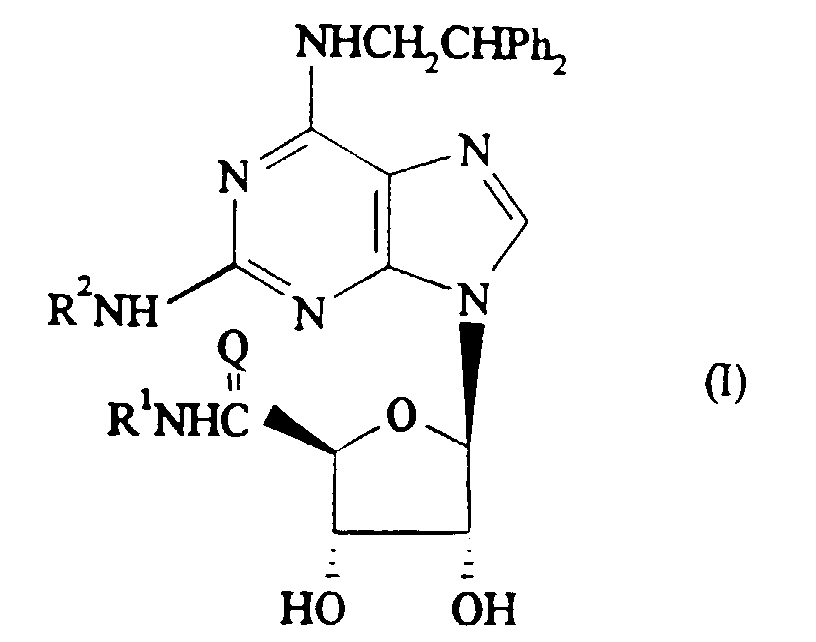
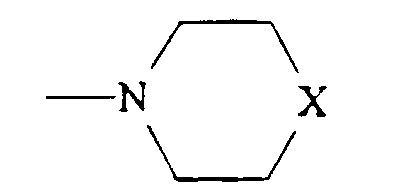


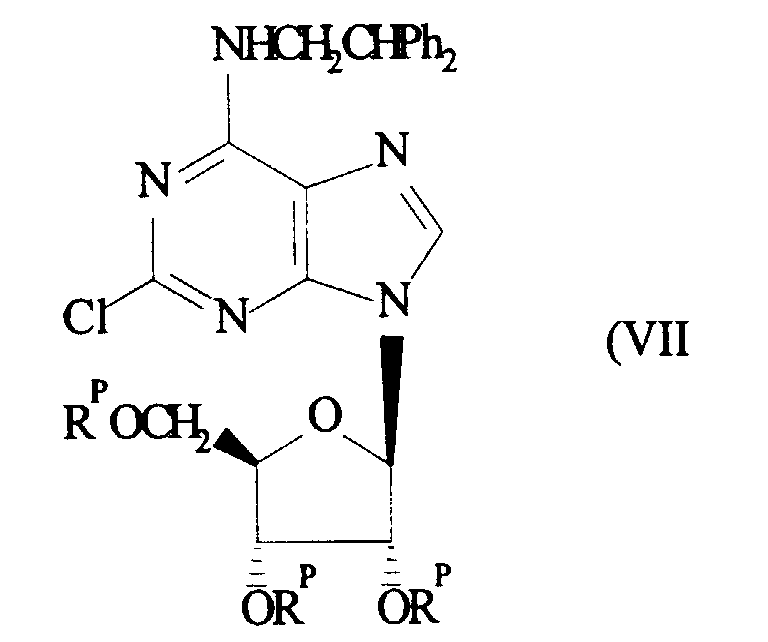

 R1 represents a hydrogen atom or a C3-8cycloalkyl or C1-6alkyl group;R2 represents a group selected from(i) C3-8cycloalkyl(ii) C3-8cycloalkyl substituted by one or more groups (e.g. 1, 2 or 3 groups) which may be the same or different and are selected from C2-7acylamino, guanidino, carboxyl, oxo and (CH2)pR3 (where p is zero or 1 and R3 is hydroxy, NH2, C1-6alkylamino or diC1-6alkylamino)(iii) pyrrolidin-3-yl, 2-oxopyrrolidin-4-yl, 2-oxopyrrolidin-5-yl, piperidin-3-yl or piperidin-4-yl in which the ring nitrogen atom is substituted by hydrogen, C1-6alkyl or arylC1-6alkyl (e.g. benzyl)(iv) pyrrolidin-3-yl, piperidin-3-yl or piperidin-4-yl in which the ring nitrogen atom is substituted by hydrogen, C1-6alkyl or arylC1-6alkyl (e.g. benzyl) and one or more of the ring carbon atoms (e.g. 1, 2 or 3 ring carbon atoms) is substituted by the same or different groups selected from C2-7acylamino, guanidino, oxo and (CH2)pR3 (where p and R3 are as defined previously)(v) C3-8cycloalkylC1-6alkyl(vi) C3-8cycloalkylC1-6alkyl in which one or more of the ring carbon atoms (e.g. 1, 2 or 3 ring carbon atoms) is substituted by the same or different groups selected from C2-7acylamino, guanidino, carboxyl, oxo and (CH2)pR3 (where p and R3 are as defined previously)(vii) -Alk1Y where Alk1 is a C2-6 alkylene group and Y is a group selected from C2-7acylamino, guanidino, hydroxyl, NH2, C1-6alkylamino, diC1-6alkylamino or(where X is a bond, O, CH2 or NR4 in which R4 is hydrogen, C1-6alkyl or arylC1-6alkyl) and
 (viii) -(CHR5)m(Alk2)nZ where m and n each independently represent zero or 1 except that when m is 1 then n must also represent 1, R5 is a hydrogen atom or a carboxy group or a group CH2R6 (where R6 is C2-7acylamino, guanidino, hydroxy, methoxy, NH2, C1-6alkylamino or diC1-6alkylamino), Alk2 is a C1-5alkylidene group and Z is a hydrogen atom or an optionally substituted aromatic ring selected from phenyl, pyridyl, pyrimidinyl, imidazolyl, triazolyl, tetrazolyl and benzimidazolyl where the ring is optionally substituted by one or more groups (e.g. 1, 2 or 3 groups) which may be the same or different and are selected from C1-6alkyl, C2-7-acylamino, guanidino, carboxyethyl, hydroxy, NH2, C1-6alkylamino or diC1-6alkylamino;Q represents an oxygen or sulphur atom; andPh represents phenyl.
 (B) deprotecting a protected derivative of a compound of formula (I),