EP0672032B1 - Novel phenylethyl and phenylpropylamines - Google Patents
Novel phenylethyl and phenylpropylamines Download PDFInfo
- Publication number
- EP0672032B1 EP0672032B1 EP94929066A EP94929066A EP0672032B1 EP 0672032 B1 EP0672032 B1 EP 0672032B1 EP 94929066 A EP94929066 A EP 94929066A EP 94929066 A EP94929066 A EP 94929066A EP 0672032 B1 EP0672032 B1 EP 0672032B1
- Authority
- EP
- European Patent Office
- Prior art keywords
- compound
- general formula
- amino
- ethyl
- halogen
- Prior art date
- Legal status (The legal status is an assumption and is not a legal conclusion. Google has not performed a legal analysis and makes no representation as to the accuracy of the status listed.)
- Expired - Lifetime
Links
- 0 CC(CC1C(C*CC2)C2C1C)C1*C1 Chemical compound CC(CC1C(C*CC2)C2C1C)C1*C1 0.000 description 4
Classifications
-
- C—CHEMISTRY; METALLURGY
- C07—ORGANIC CHEMISTRY
- C07D—HETEROCYCLIC COMPOUNDS
- C07D207/00—Heterocyclic compounds containing five-membered rings not condensed with other rings, with one nitrogen atom as the only ring hetero atom
- C07D207/02—Heterocyclic compounds containing five-membered rings not condensed with other rings, with one nitrogen atom as the only ring hetero atom with only hydrogen or carbon atoms directly attached to the ring nitrogen atom
- C07D207/30—Heterocyclic compounds containing five-membered rings not condensed with other rings, with one nitrogen atom as the only ring hetero atom with only hydrogen or carbon atoms directly attached to the ring nitrogen atom having two double bonds between ring members or between ring members and non-ring members
- C07D207/34—Heterocyclic compounds containing five-membered rings not condensed with other rings, with one nitrogen atom as the only ring hetero atom with only hydrogen or carbon atoms directly attached to the ring nitrogen atom having two double bonds between ring members or between ring members and non-ring members with hetero atoms or with carbon atoms having three bonds to hetero atoms with at the most one bond to halogen, e.g. ester or nitrile radicals, directly attached to ring carbon atoms
- C07D207/36—Oxygen or sulfur atoms
- C07D207/40—2,5-Pyrrolidine-diones
- C07D207/404—2,5-Pyrrolidine-diones with only hydrogen atoms or radicals containing only hydrogen and carbon atoms directly attached to other ring carbon atoms, e.g. succinimide
- C07D207/408—Radicals containing only hydrogen and carbon atoms attached to ring carbon atoms
-
- A—HUMAN NECESSITIES
- A61—MEDICAL OR VETERINARY SCIENCE; HYGIENE
- A61P—SPECIFIC THERAPEUTIC ACTIVITY OF CHEMICAL COMPOUNDS OR MEDICINAL PREPARATIONS
- A61P25/00—Drugs for disorders of the nervous system
- A61P25/18—Antipsychotics, i.e. neuroleptics; Drugs for mania or schizophrenia
-
- A—HUMAN NECESSITIES
- A61—MEDICAL OR VETERINARY SCIENCE; HYGIENE
- A61P—SPECIFIC THERAPEUTIC ACTIVITY OF CHEMICAL COMPOUNDS OR MEDICINAL PREPARATIONS
- A61P25/00—Drugs for disorders of the nervous system
- A61P25/20—Hypnotics; Sedatives
-
- A—HUMAN NECESSITIES
- A61—MEDICAL OR VETERINARY SCIENCE; HYGIENE
- A61P—SPECIFIC THERAPEUTIC ACTIVITY OF CHEMICAL COMPOUNDS OR MEDICINAL PREPARATIONS
- A61P25/00—Drugs for disorders of the nervous system
- A61P25/24—Antidepressants
-
- A—HUMAN NECESSITIES
- A61—MEDICAL OR VETERINARY SCIENCE; HYGIENE
- A61P—SPECIFIC THERAPEUTIC ACTIVITY OF CHEMICAL COMPOUNDS OR MEDICINAL PREPARATIONS
- A61P25/00—Drugs for disorders of the nervous system
- A61P25/26—Psychostimulants, e.g. nicotine, cocaine
-
- C—CHEMISTRY; METALLURGY
- C07—ORGANIC CHEMISTRY
- C07C—ACYCLIC OR CARBOCYCLIC COMPOUNDS
- C07C233/00—Carboxylic acid amides
- C07C233/57—Carboxylic acid amides having carbon atoms of carboxamide groups bound to carbon atoms of rings other than six-membered aromatic rings
- C07C233/62—Carboxylic acid amides having carbon atoms of carboxamide groups bound to carbon atoms of rings other than six-membered aromatic rings having the nitrogen atom of at least one of the carboxamide groups bound to a carbon atom of a hydrocarbon radical substituted by amino groups
-
- C—CHEMISTRY; METALLURGY
- C07—ORGANIC CHEMISTRY
- C07C—ACYCLIC OR CARBOCYCLIC COMPOUNDS
- C07C237/00—Carboxylic acid amides, the carbon skeleton of the acid part being further substituted by amino groups
- C07C237/02—Carboxylic acid amides, the carbon skeleton of the acid part being further substituted by amino groups having the carbon atoms of the carboxamide groups bound to acyclic carbon atoms of the carbon skeleton
- C07C237/04—Carboxylic acid amides, the carbon skeleton of the acid part being further substituted by amino groups having the carbon atoms of the carboxamide groups bound to acyclic carbon atoms of the carbon skeleton the carbon skeleton being acyclic and saturated
- C07C237/06—Carboxylic acid amides, the carbon skeleton of the acid part being further substituted by amino groups having the carbon atoms of the carboxamide groups bound to acyclic carbon atoms of the carbon skeleton the carbon skeleton being acyclic and saturated having the nitrogen atoms of the carboxamide groups bound to hydrogen atoms or to acyclic carbon atoms
-
- C—CHEMISTRY; METALLURGY
- C07—ORGANIC CHEMISTRY
- C07C—ACYCLIC OR CARBOCYCLIC COMPOUNDS
- C07C255/00—Carboxylic acid nitriles
- C07C255/49—Carboxylic acid nitriles having cyano groups bound to carbon atoms of six-membered aromatic rings of a carbon skeleton
- C07C255/58—Carboxylic acid nitriles having cyano groups bound to carbon atoms of six-membered aromatic rings of a carbon skeleton containing cyano groups and singly-bound nitrogen atoms, not being further bound to other hetero atoms, bound to the carbon skeleton
-
- C—CHEMISTRY; METALLURGY
- C07—ORGANIC CHEMISTRY
- C07D—HETEROCYCLIC COMPOUNDS
- C07D209/00—Heterocyclic compounds containing five-membered rings, condensed with other rings, with one nitrogen atom as the only ring hetero atom
- C07D209/02—Heterocyclic compounds containing five-membered rings, condensed with other rings, with one nitrogen atom as the only ring hetero atom condensed with one carbocyclic ring
- C07D209/44—Iso-indoles; Hydrogenated iso-indoles
- C07D209/48—Iso-indoles; Hydrogenated iso-indoles with oxygen atoms in positions 1 and 3, e.g. phthalimide
-
- C—CHEMISTRY; METALLURGY
- C07—ORGANIC CHEMISTRY
- C07D—HETEROCYCLIC COMPOUNDS
- C07D221/00—Heterocyclic compounds containing six-membered rings having one nitrogen atom as the only ring hetero atom, not provided for by groups C07D211/00 - C07D219/00
- C07D221/02—Heterocyclic compounds containing six-membered rings having one nitrogen atom as the only ring hetero atom, not provided for by groups C07D211/00 - C07D219/00 condensed with carbocyclic rings or ring systems
- C07D221/20—Spiro-condensed ring systems
-
- C—CHEMISTRY; METALLURGY
- C07—ORGANIC CHEMISTRY
- C07D—HETEROCYCLIC COMPOUNDS
- C07D223/00—Heterocyclic compounds containing seven-membered rings having one nitrogen atom as the only ring hetero atom
- C07D223/02—Heterocyclic compounds containing seven-membered rings having one nitrogen atom as the only ring hetero atom not condensed with other rings
- C07D223/06—Heterocyclic compounds containing seven-membered rings having one nitrogen atom as the only ring hetero atom not condensed with other rings with hetero atoms or with carbon atoms having three bonds to hetero atoms with at the most one bond to halogen, e.g. ester or nitrile radicals, directly attached to ring carbon atoms
- C07D223/08—Oxygen atoms
- C07D223/10—Oxygen atoms attached in position 2
-
- C—CHEMISTRY; METALLURGY
- C07—ORGANIC CHEMISTRY
- C07C—ACYCLIC OR CARBOCYCLIC COMPOUNDS
- C07C2601/00—Systems containing only non-condensed rings
- C07C2601/02—Systems containing only non-condensed rings with a three-membered ring
-
- C—CHEMISTRY; METALLURGY
- C07—ORGANIC CHEMISTRY
- C07C—ACYCLIC OR CARBOCYCLIC COMPOUNDS
- C07C2601/00—Systems containing only non-condensed rings
- C07C2601/12—Systems containing only non-condensed rings with a six-membered ring
- C07C2601/14—The ring being saturated
-
- C—CHEMISTRY; METALLURGY
- C07—ORGANIC CHEMISTRY
- C07C—ACYCLIC OR CARBOCYCLIC COMPOUNDS
- C07C2602/00—Systems containing two condensed rings
- C07C2602/36—Systems containing two condensed rings the rings having more than two atoms in common
- C07C2602/44—Systems containing two condensed rings the rings having more than two atoms in common the bicyclo ring system containing eight carbon atoms
-
- C—CHEMISTRY; METALLURGY
- C07—ORGANIC CHEMISTRY
- C07C—ACYCLIC OR CARBOCYCLIC COMPOUNDS
- C07C2603/00—Systems containing at least three condensed rings
- C07C2603/56—Ring systems containing bridged rings
- C07C2603/58—Ring systems containing bridged rings containing three rings
- C07C2603/70—Ring systems containing bridged rings containing three rings containing only six-membered rings
- C07C2603/74—Adamantanes
Definitions
- the present invention relates to novel, phenylethylamines and phenylpropylamines, and processes for their preparation, pharmaceutical compositions containing the phenylethylamines and phenylpropylamines and the use of said compounds in therapy.
- the object of the present invention is to provide novel compounds that will be useful in the treatment of psychiatric disorders such as schizophrenia and other psychoses, anxiety, depression and manic-depressive psychosis.
- the compounds have neurosedative and spasmolytic effects.
- each of R 1 and R 2 is one or more groups independently selected from hydrido, hydroxyalkyl, haloalkyl acyl, cykloalkyl, cycloalkylalkyl, haloalkylsulfonyl, alkylcarbonyl, halo, alkylthio, phenylalkyl, phenylalkylthio, cyano, nitro, amino, alkylamino, sulfono, alkylaminosulfonyl, amido, alkylamido, hydroxyimino, hydroxyiminoalkyl, carboxyl, carboxylalkyl, carboxylalkenyl, thiazolyl, methylthiazolyl, alkoxycarbonylamino, alkylaminosulfonylamino, aminocarbonyliminoalkyl, haloalkylcarbonyl, morpholinoalkylcarbonyl, aminothiazoly
- the compounds have effect on the prevention of neurodegenerative consequences associated with conditions of hypoxia or ischemia.
- a carbocyclic ring(s) in the definition above is preferably a mono, bi or polycyclic ring(s) having 5-10 carbon atoms, such as cyclopentyl, cyclohexyl, or cycloheptyl.
- the substituents on the carbocyclic ring(s) in the definition above are preferably a hydrogen atom or a straight or branched C 1-4 alkyl group(s).
- a cycloalkyl group in the definition above is preferably a C 3 -C 12 mono, bi or polycylic ring(s) such as adamantyl, cycloheptyl, cyclohexyl, cyclopentyl, bicyclooctyl, bicycloheptyl, bicyclononyl, bicycloheptenyl, bicyclooctenyl, bicyclononenyl.
- the substituents on the methylene group in the definition above are preferably a hydrogen atom or a C 1-4 alkyl group(s).
- the compounds of the formula I will normally be administered orally, rectally or by injection, in the form of pharmaceutical preparations comprising the active ingredient either as a free base or a pharmaceutically acceptable non-toxic, acid addition salt, e.g. the hydrochloride, hydrobromide, lactate, acetate, phosphate, sulfate, sulfamate, citrate, tartrate, oxalate and the like in association with a pharmaceutically acceptable dosage form.
- the dosage form may be a solid, semisolid or liquid preparation.
- the active substance will constitute between 0.1 and 99 % by weight of the preparation, more specifically between 0.5 and 20 % by weight for preparations intended for injection and between 0.2 and 50 % by weight for preparations suitable for oral administration.
- the selected compound may be mixed with a solid excipient, e.g. lactose, saccharose, sorbitol, mannitol, starches such as potato starch, corn starch or amylopectin, cellulose derivatives, a binder such as gelatine or polyvinylpyrrolidone, and a lubricant such as magnesium stearate, calcium stearate, polyethylene glycol, waxes, paraffin and the like, and then compressed into tablets. If coated tablets are required, the cores, prepared as described above, may be coated with a concentrated sugar solution which may contain, e.g.
- the tablet can be coated with a polymer well known in the art, dissolved in a readily volatile organic solvent or mixture of organic solvents or in water. Dyestuffs may be added to these coatings in order to readily distinguish between tablets containing different active substances or different amounts of the active compounds.
- the active substance may be admixed with e.g. a vegetable oil or polyethylene glycol.
- Hard gelatine capsules may contain granules of the active substance using either the above mentioned excipients for tablets e.g. saccharose, sorbitol, mannitol, starches (e.g. potato starch, corn starch or amuylopectin), cellulose derivatives or gelatine. Also liquids or semisolids of the drug can be filled into hard gelatine capsules.
- Dosage units for rectal application can be solutions or suspensions or can be prepared in the form of suppositories comprising the active substance in admixture with a neutral fatty base, or gelatine rectal capsules comprising the active substance in admixture with vegetable oil or paraffin oil.
- Liquid preparations for oral application may be in the form of syrups or suspensions, for example, solutions containing from about 0.2 % to about 20 % by weight of the active substance herein described, the balance being sugar and mixture of ethanol, water, glycerol, and propylene glycol.
- Such liquid preparations may contain colouring agents, flavouring agents, saccharin and carboxymethylcellulose as a thickening agent or other excipients well known in the art.
- Solutions for parenteral applications can be prepared in an aqueous solution of a water-soluble pharmaceutically acceptable salt of the active substance preferably in a concentration of from about 0.5 % to about 10 % by weight. These solutions may also contain stabilizing agents and/or buffering agents and may conveniently be provided in various dosage unit ampoules.
- Suitable daily doses of the compounds of the invention in the therapeutic treatment of humans are 50 - 500 mg by oral administration and up to 100 mg via parenteral administration.
- a solution of paraformaldehyde (72 mg, 2.4 mmol) and adamantyl-1-carboxylic acid propargylamide (440 mg, 2.0 mmol) in 3 ml dioxan is heated to 50°C for 1 h.
- a catalytic amount of copper acetate and N-isopropyl-2-methoxyphenylethylamine (390 mg, 2.0 mmol) are added and the mixture heated at 80°C for 3 h.
- composition 1 Compound according to Example 1 50 g Lactose 85 g Potato starch 40 g Polyvinylpyrrolidone 5 g Microcrystalline cellulose 18 g Magnesium stearate 2 g Composition 2 Compound according to Example 1 100 g Lactose 90 g Potato starch 50 g Polyvinylpyrrolidone 5 g Microcrystalline cellulose 23 g Magnesium stearate 2 g
- compositions 1 000 tablets can be made, containing 50 mg and 100 mg of active substance, respectively. If desired, the obtained tablets can be film coated with e.g. hydroxypropyl methyl cellulose in an organic solvent or using water.
- drugs that bind to dopamine D2 receptors and are antagonists at these receptors will be clinically effective as antipsychotic agents (for example in schizophrenia). It is also believed that a serotoninergic (5HT1A) receptor affinity as an agonist can be a useful property by reducing the incidence of extrapyramidal side effects and by increasing the efficacy of the substance in psychoses. These substances by having a certain ratio of D2 and 5HT1A binding will retain an antipsychotic effect at the same time as having a reduced incidence of side effects and improved efficacy.
- 5HT1A serotoninergic
- the compounds of the invention exhibit an affinity for D 3 receptors.
- D 3 receptors are concentrated in limbic parts of the brain, which means that drugs that have affinity for these receptors may have lower side effect.
- Some of the compounds also exhibit affinity for 5-HT 1A and D 2 receptors.
- Mouse fibroblast LTK - cells expressing human D 2(long) receptors were kindly supplied by Dr. O. Civelli (Oregon Health Sciences University) and are grown in Dulbecco's Modified Eagle's Medium (DMEM) supplemented with 10 mM HEPES, 10 % fetal calf serum (FCS) in 225 cm 2 flasks with ventilated caps (Costar) in 5 % CO 2 in air at 37°C.
- DMEM Dulbecco's Modified Eagle's Medium
- FCS 10 % fetal calf serum
- CO 2 ventilated caps
- the cells are detached with 0.05% trypsin and 0.02% EDTA in PBS (phosphate-buffered saline), centrifuged for 10 min at 300 g, washed in DMEM two additional times and homogenized with a Dounce homogenizer in 10 mM Tris-HCl and 5 mM MgSO 4 , pH 7.4.
- the homogenate is washed twice in binding buffer (50 mM Tris-HCl, pH 7.4 with 1mM EDTA, 5 mM KCl, 1.5 mM CaCl 2 , 4 mM MgCl 2 , 120 mM NaCl) by centrifugation for 10 min at 43500 g and stored in aliquots at -70°C.
- Receptor binding assay The frozen cell membranes are thawed, homogenized with a Branson 450 sonifier and suspended in binding buffer to a final receptor concentration of 100 pM. Various concentrations of the test compound, the radioligand (1 nM 3 H-Raclopride) and the cell homogenate are incubated for 60 min at room temperature. Nonspecific binding is determined by the addition of 1 ⁇ M (+)-Butaclamol. The incubation is terminated by rapid filtration through glass fiber filter (Whatman GF/B, pretreated with 0.05% polyethyleneimine) and washed with cold 50 mM Tris-HCl (pH 7.4) using Brandel cell harvest equipment.
- the radioactivity of the filters is measured in a Liquid Scintillation Analyzer (Packard 2200CA or 2500TR) at an efficiency of about 50% after addition of scintillation cocktail (Packard Ultima Gold, 3 ml). Data is analysed by non-linear regression using the LIGAND program, and presented as K i values.
- the rats are decapitated and the hippocampi are dissected out on ice.
- the hippocampi are homogenized using an Ultra Turrax in 50 mM Tris-HCl buffer containing 10 mM EDTA, pH 7.4.
- the homogenate is centrifuged (using Sorvall RC-5B) for ten minutes at 19,500 rpm (43,500 x g) and 4°C.
- the pellet is resuspended in 50 mM Tris-HCl buffer, pH 7.4 and recentrifuged.
- the final pellet is suspended in 0.32 M sucrose and frozen at -20°C until use.
- the frozen homogenate is thawed and suspended in binding buffer (50 mM Tris-HCl buffer, pH 7.4 containing 2 mM CaCl 2 , 1 mM MgCl 2 ) corresponding to 2.5 mg original wet weight per test tube.
- binding buffer 50 mM Tris-HCl buffer, pH 7.4 containing 2 mM CaCl 2 , 1 mM MgCl 2
- the homogenate is preincubated for ten minutes at 37°C to remove endogenous serotonin whereafter pargylin is added to give a final concentration of 10 ⁇ M.
- Receptor binding assay Various concentrations of the test compound (diluted in 0.1% ascorbic acid), the radioligand (1nM 3 H-8-OH-DPAT diluted in binding buffer) and the homogenate are incubated at 37°C for 45 minutes in a final volume of 0.5 ml. The nonspecific binding is obtained as that bound in presence of 100 ⁇ M unlabelled serotonin. The incubation is stopped by rapid filtration through glass fiber filters (Whatman GF/B) and subsequent washing with cold 50 mM Tris-HCl buffer pH 7.4, using a cell harvester (Brandel). The radioactivity of the filters is measured in a liquid scintillation spectrometer (Beckman LS5000TD or Packard 2500 TR). Data is analysed by non-linear regression using the LIGAND program, and presented as Ki values.
- CHO cells expressing human D 3 receptors purchased from Insern Institute, Paris, France are grown in Dulbecco's Modified Eagle's Medium (DMEM) supplemented with 10 mM HEPES, 10 % dialysed fetal calf serum (FCS) and PeSt (70 ⁇ g/ml benzylpencillin K and 10 ⁇ g/ml streptomycin sulphate) in 225 cm 2 flasks with ventilated caps (Costar) in 5 % CO 2 in air at 37°C.
- DMEM Dulbecco's Modified Eagle's Medium
- FCS dialysed fetal calf serum
- PeSt 70 ⁇ g/ml benzylpencillin K and 10 ⁇ g/ml streptomycin sulphate
- the cells are detached with 0.05 % trypsin and 0.02 % EDTA in PBS (phosphatebuffered saline), centrifuged for 10 min at 300 g, washed in DMEM two additional times and homogenized with a Dounce homogenizer in 10 mM Tris-HCl and 5 mM MgSO 4 , pH 7.4.
- the homogenate is washed twice in binding buffer (50 mM Tris-HCl, pH 7.4 with lmM EDTA, 5 mM KCl, 1.5 mM CaCl 2 , 4 mM MgCl 2 , 120 mM NaCl) by centrifugation for 10 min at 43500 g and stored in aliquots at -70°C.
- Receptor binding assay The frozen cell membranes are thawed, homogenized with a Branson 450 sonifier and suspended in binding buffer to a final receptor concentration of 100 pM. Various concentrations of the test compound, the radioligand (1 nM 3 H-Raclopride) and the cellhomogenate are incubated for 60 min at room temperature. Nonspecific binding is determined by the addition of 1 ⁇ M (+)-Butaclamol. The incubation is terminated by rapid filtration through glass fiber filter (Whatman GF/B, pretreated with 0.05 % polyethyleneimine) and washed with cold 50 mM Tris-HCl (pH 7.4) using Brandel cell harvest equipment.
- the radioactivity of the filters is measured in a Liguid Scintillation Analyzer (Packard 2200CA or 2500TR) at an efficiency of about 50 % after addition of scintillation cocktail (Packard Ultima Gold, 3 ml). Data is analysed by non-linear regression using the LIGAND program, and presented as K i values.
Landscapes
- Organic Chemistry (AREA)
- Chemical & Material Sciences (AREA)
- Health & Medical Sciences (AREA)
- Bioinformatics & Cheminformatics (AREA)
- Engineering & Computer Science (AREA)
- Life Sciences & Earth Sciences (AREA)
- General Health & Medical Sciences (AREA)
- Neurology (AREA)
- Neurosurgery (AREA)
- Chemical Kinetics & Catalysis (AREA)
- General Chemical & Material Sciences (AREA)
- Medicinal Chemistry (AREA)
- Nuclear Medicine, Radiotherapy & Molecular Imaging (AREA)
- Pharmacology & Pharmacy (AREA)
- Veterinary Medicine (AREA)
- Animal Behavior & Ethology (AREA)
- Biomedical Technology (AREA)
- Public Health (AREA)
- Psychiatry (AREA)
- Anesthesiology (AREA)
- Pain & Pain Management (AREA)
- Organic Low-Molecular-Weight Compounds And Preparation Thereof (AREA)
- Pharmaceuticals Containing Other Organic And Inorganic Compounds (AREA)
- Acyclic And Carbocyclic Compounds In Medicinal Compositions (AREA)
- Luminescent Compositions (AREA)
- Other In-Based Heterocyclic Compounds (AREA)
- Pyrrole Compounds (AREA)
- Indole Compounds (AREA)
Abstract
Description













M.p. 83-86°C.
1H NMR (CDCl3) δ 7.15 (dd, 2 H), 6.84 (dd, 2 H), 5.55 (bs, 1 H), 3.81 (s, 3 H), 3.18 (lm, 2 H), 2.98 (m, 1 H), 2.71 (m, 2 H), 2.57 (m, 2 H), 2.45 (t, 2 H), 1.67 (m, 6 H), 1.60 (m, 7 H), 1.45 (m, 4 H), 0.99 (d, 6 H).
1H NMR (CDCl3) δ 7.19-7.13 (m, 2 H), 6.91-6.84 (m, 2 H), 5.7 (s, 1 H), 4.00-4.03 (m, 2 H), 3.83 (s, 3 H), 3.50-3.46 (m, 2 H), 3.04 (sept. 1 H), 2.78-2.71 (m, 4 H), 2.07-2.03 (m, 3 H), 1.84-1.83 (m, 6 H), 1.72-1.69 (m, 6 H), 1.07 (d, 6 H).
| Composition 1 | |
| Compound according to Example 1 | 50 g |
| Lactose | 85 g |
| Potato starch | 40 g |
| Polyvinylpyrrolidone | 5 g |
| Microcrystalline cellulose | 18 g |
| Magnesium stearate | 2 g |
| Composition 2 | |
| Compound according to Example 1 | 100 g |
| Lactose | 90 g |
| Potato starch | 50 g |
| Polyvinylpyrrolidone | 5 g |
| Microcrystalline cellulose | 23 g |
| Magnesium stearate | 2 g |
On the day of the assay the frozen homogenate is thawed and suspended in binding buffer (50 mM Tris-HCl buffer, pH 7.4 containing 2 mM CaCl2, 1 mM MgCl2) corresponding to 2.5 mg original wet weight per test tube.
The homogenate is preincubated for ten minutes at 37°C to remove endogenous serotonin whereafter pargylin is added to give a final concentration of 10 µM.
Claims (15)
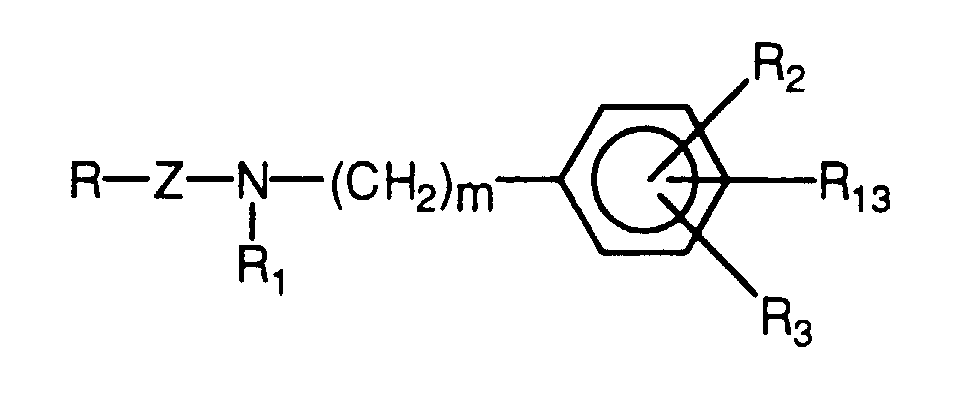
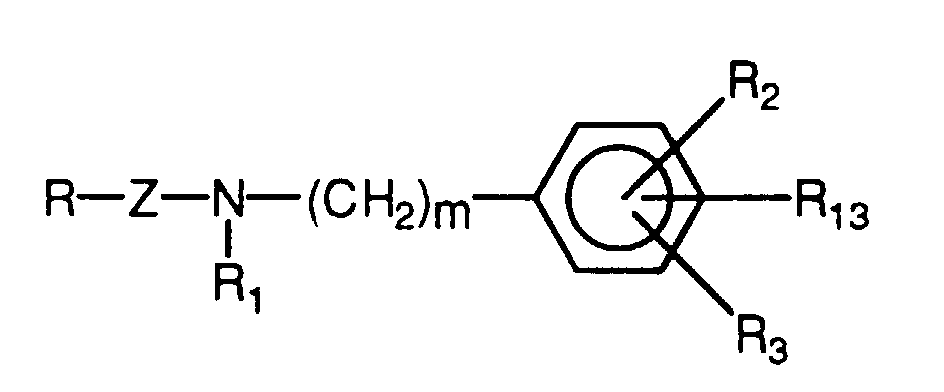
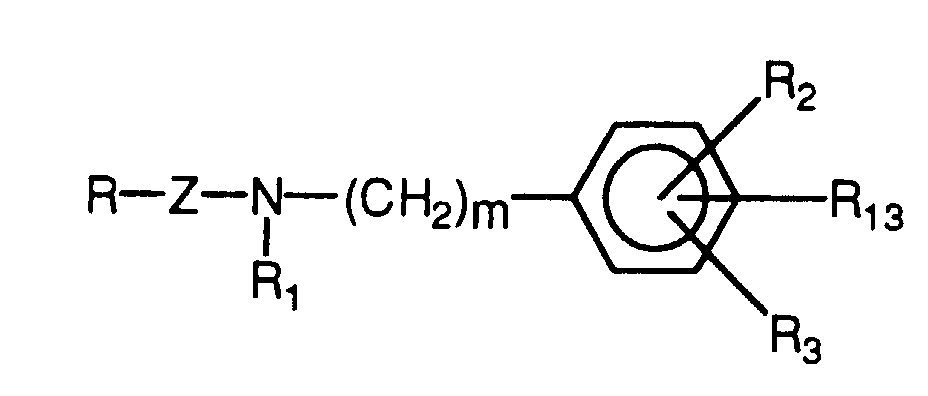
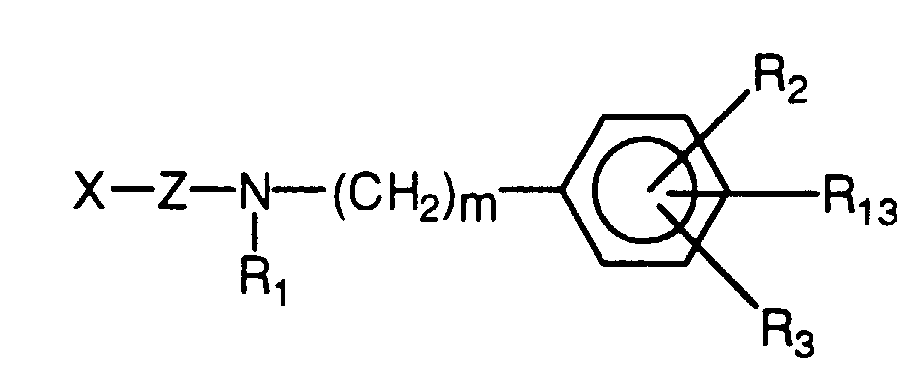
- A compound of general formula (I)or pharmaceutically acceptable salts thereof, wherein Z is a saturated or unsaturated 3 to 6 carbon chain, m is 2 or 3,
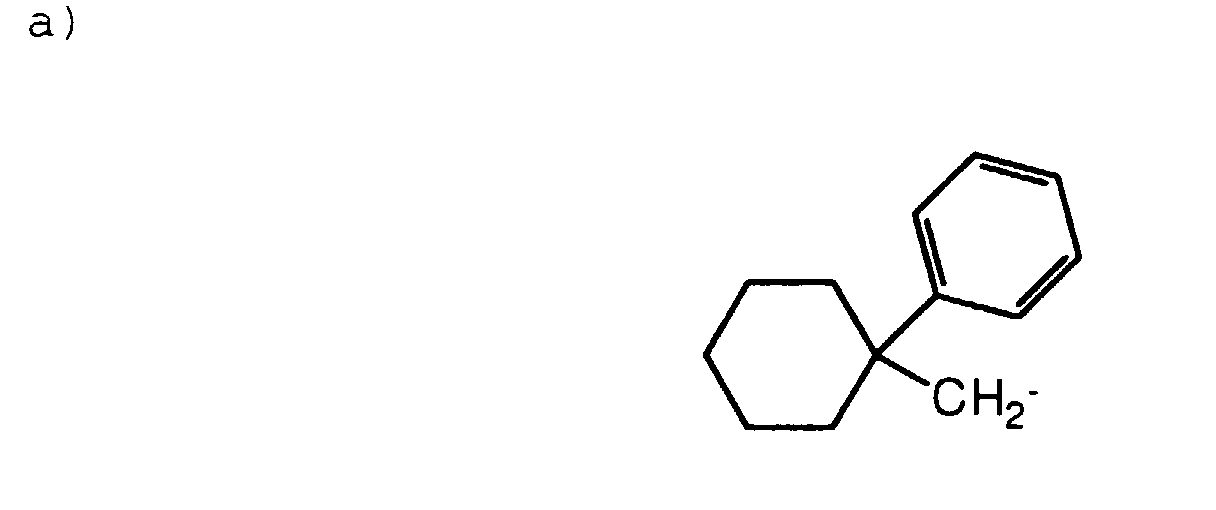
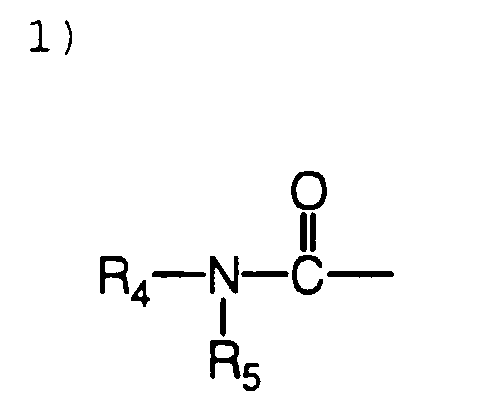
 in racemic or optically active form.R1 is a hydrogen atom, or a straight or branched C1-4 alkyl group,R2, R3 and R13 are situated in the ortho, meta, or para position of the phenyl ring and are the same or different and are selected from the following groups: H, OH, OR14, halogen, CO2R9, CN, CF3, NO2, NH2,COCH3, OSO2CF3, OSO2CH3, CONR10R11 and OCOR12, wherein R9, R12 and R14 are the same or different and are a straight or branched C1-4 alkyl group and R10 and R11 are the same or different and represent hydrogen or a straight or branched C1-6 alkyl group,R iswherein R4 and R5 are the same or different, and, when different represent a hydrogen atom, a straight or branched C1-5 alkyl group or a substituted or unsubstituted cycloalkyl group, and, when the same, represent a straight or branched C1-5 alkyl group, or R4 and R5 are together -(CH2)n1-, wherein n1 is 3 to 7, or
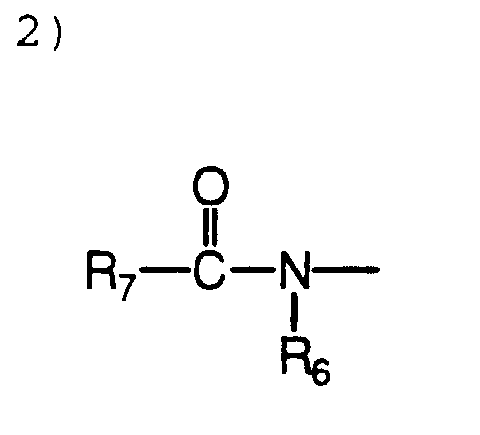
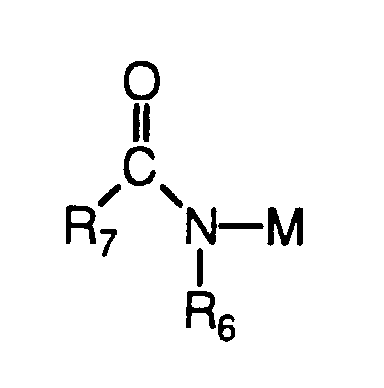
 wherein R6 is a hydrogen atom or a straight or branched C1-6 alkyl group, and R7 is a substituted or unsubstituted cycloalkyl group or R6 and R7 are together -(CH2)n2-, wherein n2 is 3 to 6, or
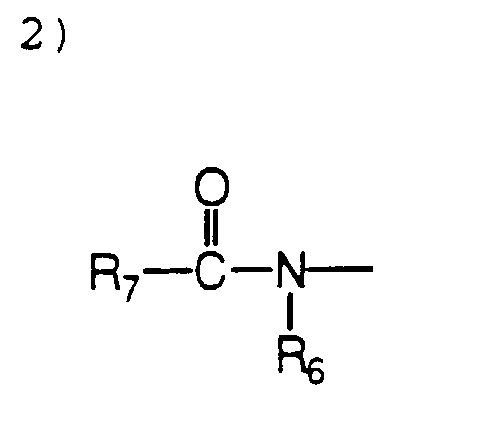 wherein W is an optionally substituted saturated carbocyclic ring(s) or an optionally substituted methylene group, and R8 is a straight or branched C1-5 alkyl group or a phenyl group and n3 is 0 to 2, or
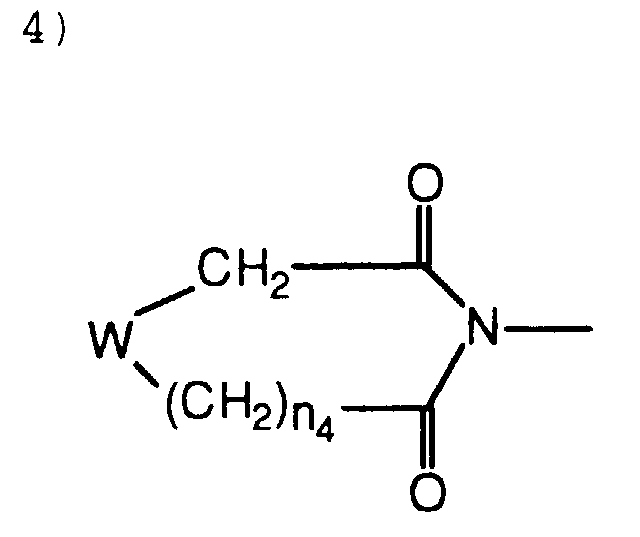
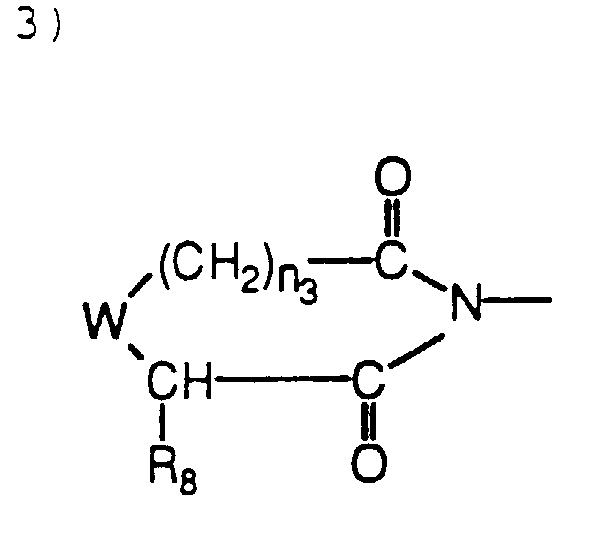 wherein W is an optionally substituted saturated carbocyclic ring(s), or an optionally substituted methylene group and n4 is 1 or 2,
- A compound of formula (I) according to claim 1, whereinR is
 R2 is hydrogen, methoxy, ethoxy, halogen, CN, CONR10R11, CF3 nitro or amino,R3 is methoxy, ethoxy, halogen, CN, CONR10R11, CF3, nitro or amino,R4 is a straight or branched C1-4 alkyl group,R5 is a straight or branched C1-4 alkyl group or R4 and R5 are together -(CH2)n1,R13 is hydrogen methoxy, ethoxy, halogen, CN, CONR10R11, CF3, nitro or amino,Z is, when saturated a 3-6 carbon chain, when unsaturated a 4-6 carbon chain, and R1, R10, R11, m and n1 are as defined in Claim 1.
 - A Compound of formula (I) according to claim 1, whereinR is
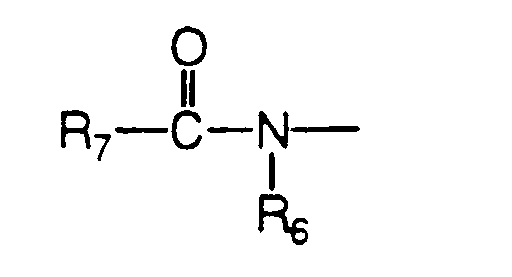 R2 is hydrogen, methoxy, ethoxy, halogen, CN, CONR10R11, CF3, nitro or amino,R3 is methoxy, ethoxy, halogen, CN, CONR10R11, CF3, nitro or aminoR13 is hydrogen, methoxy, ethoxy, halogen, CN, CONR10R11, CF3, nitro or amino,Z is, when saturated a 3-6 carbon chain, when unsaturated a 4-6 carbon chain, and R1, R6, R7, R10, R11, m and n2 are as defined in Claim 1.
 - A compound of formula (I) according to claim 1, whereinR is
 R2 is hydrogen, methoxy, ethoxy, halogen, CN, CONR10R11, CF3, nitro or amino,R3 is methoxy, ethoxy, halogen, CN, CONR10R11, CF3, nitro or amino,R13 is hydrogen, methoxy, ethoxy, halogen, CN, CONR10R11, CF3, nitro or amino,Z is, when saturated a 3-6 carbon chain, when unsaturated a 4-6 carbon chain, andR1, R8, R10, R11, W, m and n3 are as defined in Claim 1.
 - A compound of formula (I) according to claim 1, whereinR is
 R2 is hydrogen, methoxy, ethoxy, halogen, CN, CONR10R11, CF3, nitro or amino,R3 is methoxy, ethoxy, halogen, CN, CONR10R11, CF3, nitro or amino,R13 is hydrogen, methoxy, ethoxy, halogen, CN, CONR10R11, CF3, nitro or amino,Z is, when saturated a 3-6 carbon chain, when unsaturated a 4-6 carbon chain, andR1, R10, R11, W, m and n4 are as defined in Claim 1.
 - A compound according to any one of claims 1 to 5 which is selected from:Cyclohexanecarboxylic acid (4-{[2-(4-amino-3-cyanophenyl)ethyl]propylamino)butyl)amide8-(4-([2-(4-Amino-3-trifluoromethylphenyl)ethyl]methylamino)butyl)-8-aza-spiro[4.5]decane-7,9-dione oxalateCyclohexanecarboxylic acid (4-{[2-(3,4-dimethoxyphenyl)ethyl]propylamino}butyl)amideCyclohexanecarboxylic acid (4-{[2-(5-bromo-2-methoxyphenyl)ethyl]propylamino}butyl)amide oxalateBicyclo[2.2.2]octane-1-carboxylic acid (6-{[2-(4-amino-3-trifluoromethylphenyl)ethyl]methylamino}-hexyl)amide hydrochlorideBicyclo[2.2.2]octane-1-carboxylic acid (4-{isopropyl-[2-(2-methoxyphenyl)ethyl]amino}butyl)amideAdamantane-1-carboxylic acid (4-{[2-(3-methoxyphenyl)ethyl]propylamino}butyl)amide oxalateCyclohexanecarboxylic acid (4-{[2-(2-chloro-4-methoxyphenyl)ethyl]propylamino}butyl)amide oxalate andAdamantane-1-carboxylic acid (4-{[2-(2,4-dimethoxyphenyl)ethyl]propylamino)butyl)amide oxalate
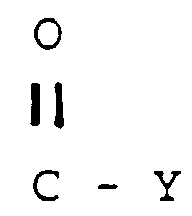
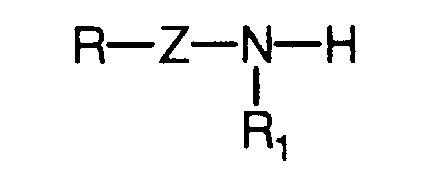
- A process for the preparation of a compound of general formula (I) as defined in any one of claims 1 to 6, characterized byA. reaction of a compound of the general formula IIwherein Y is hydrogen, hydroxy, halogen or alkoxy, with a compound of the general formula III
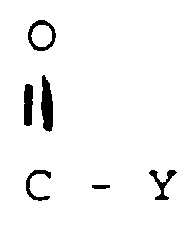 wherein R1, R2, R3, R13 and m are as defined in claim 1, or
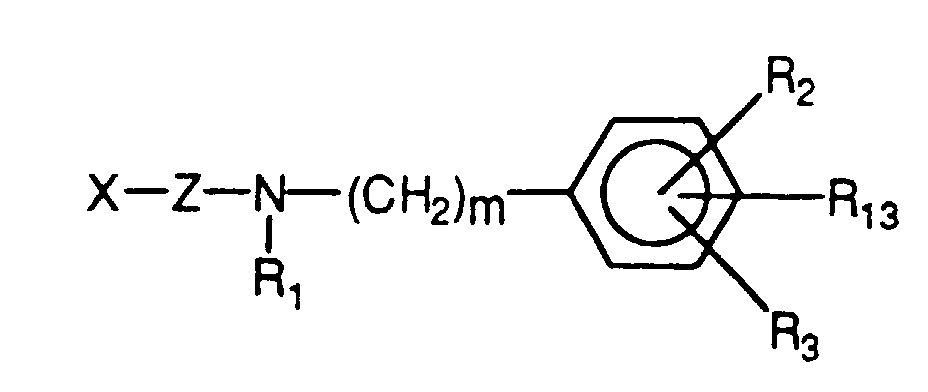
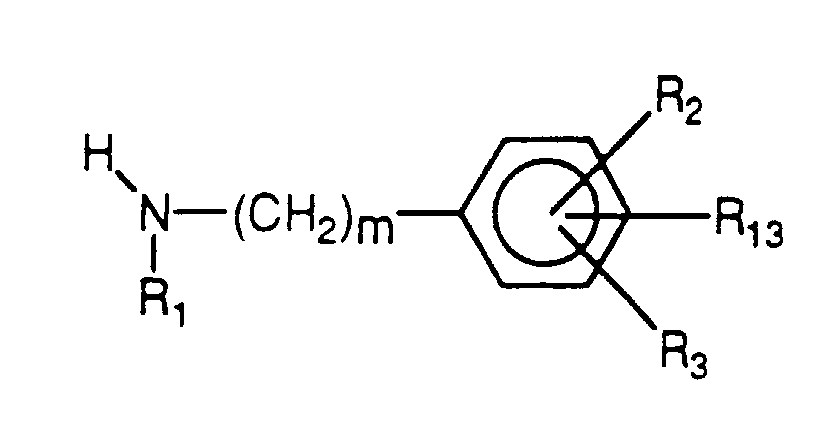 B. reaction of a compound of the general formula IVwherein R, Z and R1 are as defined in claim 1 with a compound of the general formula V
 wherein X is as defined above and m, R2, R3 and R13 are as defined in claim 1, or
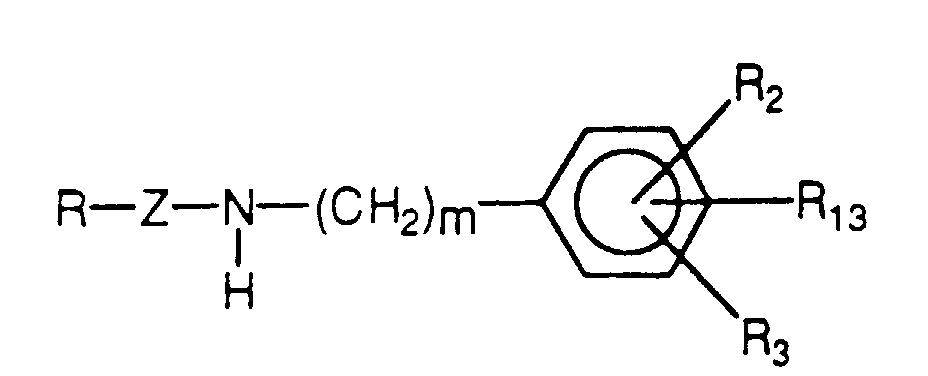
 C. reaction of a compound of the general formula VIwherein R, Z, m, R2, R3 and R13 are as defined in claim 1 with a compound of the general formula VII
 D. reaction of a compound of the general formula VIIIwherein R7 is as defined in claim 1 and T represents an acid derivative, or a compound of the general formula IX
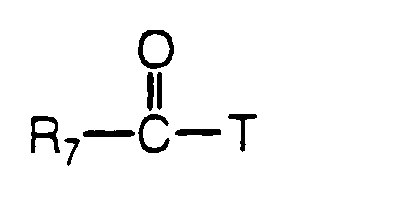 wherein W, n3 and n4 are as defined in claim 1, with a compound of the general formula X
 wherein Z, R1, R2, R3, R13 and m are as defined in claim 1, or
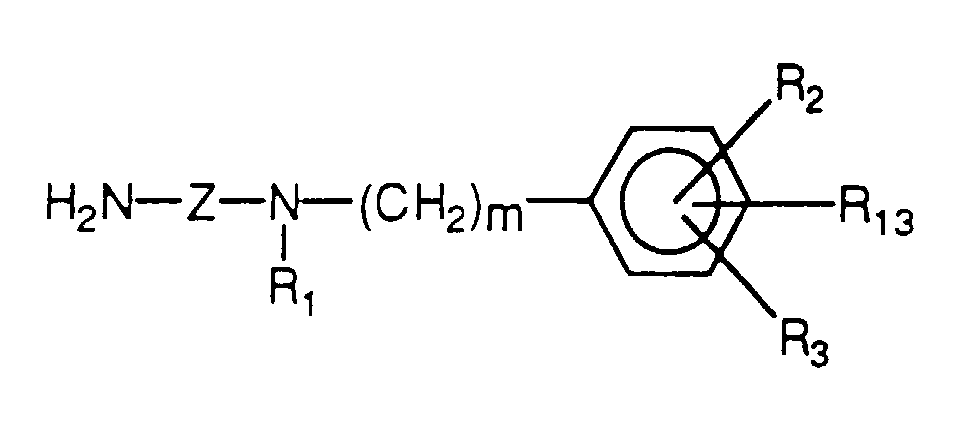 E. conversion of a compound of the general formula XIwherein R, R1, R2, R3, R13 and m are as defined in claim 1 and Z1 represents an unsaturated 3-6 carbon chain to a compound of the general formula I
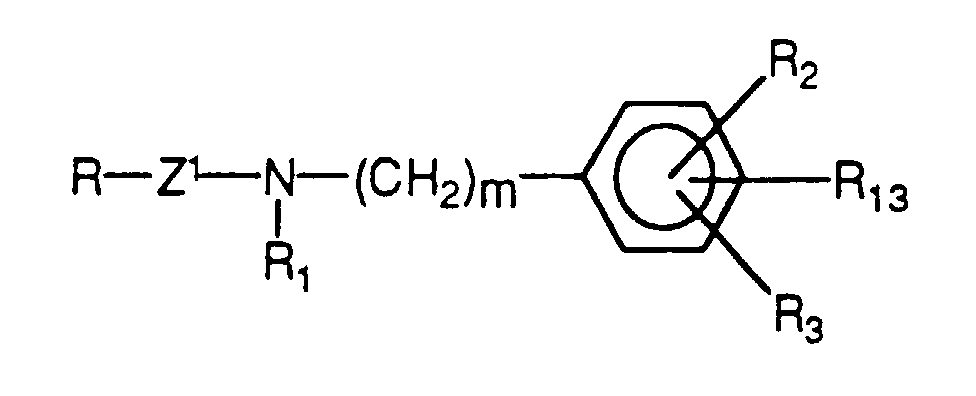 wherein Z, R, R1, R2, R3, R13, and m are as defined in claim 1 by use of a reducing agent, or
 F. conversion of a compound of the general formula XIIwherein R, R1, Z and m are as defined in claim 1 and R1 2 R1 3 and R1 13 represent substituents that can be modified by reactions such as reduction, hydrogenation, hydrolysis, demethylation, nitration, esterification, halogenation, acetylation, carbonylation (C=O)or dehydration to a compound of the general formula I
 wherein R, R1, R2, R3, R13, Z and m are as defined in claim 1, or
 G. reaction of a compound of the general formula XIIIwherein R6 and R7 are as defined in claim 1 and M represents an alkali metal or reaction of a compound of the general formula XIV
 wherein M is as defined above and W, n3 and n4 are as defined in claim 1 with a compound of the general formula XV
 wherein X is as defined above and Z, R1, R2, R3, R13 and m are as defined in claim 1 in the presence of a base, or,
 H. reaction of a compound of the general formula XVIwherein R1, R2 R3, R13 and m are as defined in claim 1, whereafter, if so desired the compound obtained by any of the processes A - H is converted to a pharmaceutically acceptable salt thereof or to an optically active form.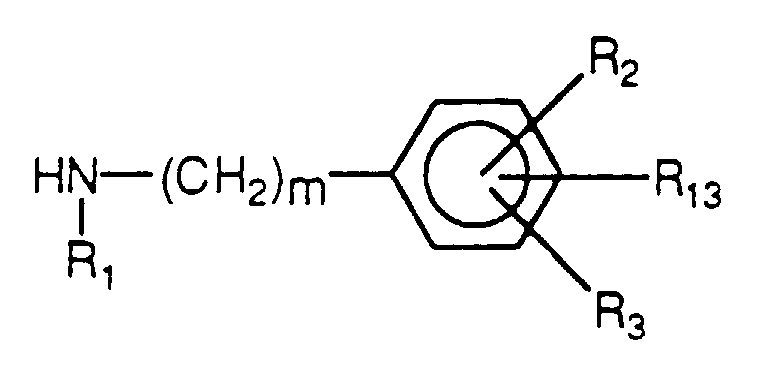
- A process according to claim 7 characterized by the preparation of a compound according to any one of claims 2 to 6.
- A pharmaceutical preparation comprising as active ingredient a compound according to any one of claims 1 to 6.
- A pharmaceutical preparation according to claim 9 in dosage unit form.
- A pharmaceutical preparation according to claims 9 or 10 comprising the active ingredient in association with a pharmaceutically acceptable carrier.
- A compound according to any one of claims 1 to 6 for use as a therapeutically active substance.
- Use of a compound according to any one of claims 1 to 6 for the preparation of medicaments with effect against psychiatric disorders.
- A pharmaceutical preparation for use in the treatment of psychiatric disorders wherein the active ingredient is a compound according to claims 1-6.
- Use of a compound according to any one of Claims 1 to 6 for the preparation of medicaments with effect against disorders associated with a malfunction of D3 receptor expression.
Applications Claiming Priority (3)
| Application Number | Priority Date | Filing Date | Title |
|---|---|---|---|
| SE9303274A SE9303274D0 (en) | 1993-10-07 | 1993-10-07 | Novel phenylethyl and phenylproplamines |
| SE9303274 | 1993-10-07 | ||
| PCT/SE1994/000860 WO1995009835A1 (en) | 1993-10-07 | 1994-09-16 | Novel phenylethyl and phenylpropylamines |
Publications (2)
| Publication Number | Publication Date |
|---|---|
| EP0672032A1 EP0672032A1 (en) | 1995-09-20 |
| EP0672032B1 true EP0672032B1 (en) | 1998-01-07 |
Family
ID=20391336
Family Applications (1)
| Application Number | Title | Priority Date | Filing Date |
|---|---|---|---|
| EP94929066A Expired - Lifetime EP0672032B1 (en) | 1993-10-07 | 1994-09-16 | Novel phenylethyl and phenylpropylamines |
Country Status (31)
| Country | Link |
|---|---|
| US (1) | US5693630A (en) |
| EP (1) | EP0672032B1 (en) |
| JP (1) | JPH08504835A (en) |
| KR (1) | KR950704236A (en) |
| CN (1) | CN1048718C (en) |
| AT (1) | ATE161823T1 (en) |
| AU (1) | AU680303B2 (en) |
| BR (1) | BR9405632A (en) |
| CA (1) | CA2150005A1 (en) |
| CZ (1) | CZ148595A3 (en) |
| DE (1) | DE69407751T2 (en) |
| DK (1) | DK0672032T3 (en) |
| EE (1) | EE03214B1 (en) |
| ES (1) | ES2111959T3 (en) |
| FI (1) | FI952772A7 (en) |
| GR (1) | GR3026484T3 (en) |
| HU (1) | HUT73774A (en) |
| IL (1) | IL111133A (en) |
| IS (1) | IS4204A (en) |
| LT (1) | LT3920B (en) |
| LV (1) | LV10862B (en) |
| NO (1) | NO305947B1 (en) |
| NZ (1) | NZ274273A (en) |
| PL (1) | PL179011B1 (en) |
| RU (1) | RU2133735C1 (en) |
| SE (1) | SE9303274D0 (en) |
| SI (1) | SI9420007A (en) |
| SK (1) | SK67295A3 (en) |
| TW (1) | TW338036B (en) |
| WO (1) | WO1995009835A1 (en) |
| ZA (1) | ZA947209B (en) |
Families Citing this family (5)
| Publication number | Priority date | Publication date | Assignee | Title |
|---|---|---|---|---|
| EP1289965B1 (en) * | 2000-05-25 | 2005-10-26 | F. Hoffmann-La Roche Ag | Substituted 1-aminoalkyl-lactams and their use as muscarinic receptor antagonists |
| KR100886185B1 (en) | 2001-09-12 | 2009-02-27 | 메르크 파텐트 게엠베하 | Novel use of substituted aminomethyl chroman for the treatment of motor disorders and for the treatment of side effects induced by drugs administered for the treatment of motor disorders extrapyramidal |
| IL147953A (en) | 2002-02-01 | 2008-04-13 | Meir Bialer | Derivatives and pharmaceutical compositions of n-hydroxymethyl tetramethylcyclopropyl- |
| IL157751A0 (en) | 2003-02-28 | 2004-03-28 | Yissum Res Dev Co | New amide derivatives of 2,2,3,3-tetramethylcyclopropane carboxylic acid, a method for their synthesis and pharmaceutical compositions containing them |
| IL156203A0 (en) * | 2003-05-29 | 2003-12-23 | Yissum Res Dev Co | Use of 2,2,3,3, tetramethylcyclopropane carboxylic acid derivatives for treating psychiatric disorders |
Family Cites Families (14)
| Publication number | Priority date | Publication date | Assignee | Title |
|---|---|---|---|---|
| FR7644E (en) | 1903-08-11 | 1907-09-17 | Chappee Et Fils Soc | New urban sanitation system |
| DE1518375A1 (en) * | 1965-06-08 | 1969-08-14 | Thomae Gmbh Dr K | Process for the preparation of new 2-amino-halobenzylamines |
| FR7644M (en) * | 1968-06-24 | 1970-02-02 | ||
| DE2345123A1 (en) * | 1973-09-07 | 1975-03-20 | Basf Ag | MASS COLORS OF POLYAMIDES |
| AT330777B (en) * | 1973-09-08 | 1976-07-26 | Thomae Gmbh Dr K | PROCESS FOR THE PREPARATION OF NEW ISOCHINOLINE DERIVATIVES AND THEIR SALTS |
| DE2345423A1 (en) * | 1973-09-08 | 1975-03-20 | Thomae Gmbh Dr K | N-Substd.-4,4-dimethyl-isoquinolin-1,3-diones - as hypotensive agents also showing bradycardisant, antiarythmic and sedative effects |
| US4021558A (en) * | 1973-09-08 | 1977-05-03 | Boehringer Ingelheim Gmbh | 1,3-Dioxo-2-[(methoxyphenethyl-amino)-alkyl]-4,4-dimethyl-isoquinolines and salts thereof useful as hypotensive agents |
| JPS5414956A (en) * | 1977-07-04 | 1979-02-03 | Sumitomo Chem Co Ltd | Novel 3-amino-4-homoisotwistan derivative |
| US4490369A (en) * | 1981-05-19 | 1984-12-25 | Dr. Karl Thomae Gesellschaft Mit Beschrankter Haftung | Benzazepine derivatives, their pharmaceutical compositions and method of use |
| DE3119874A1 (en) * | 1981-05-19 | 1982-12-09 | Dr. Karl Thomae Gmbh, 7950 Biberach | "BENZAZEPINE DERIVATIVES, THEIR PRODUCTION AND THEIR USE AS MEDICINAL PRODUCTS" |
| FR2608157B1 (en) * | 1986-12-11 | 1989-09-08 | Roussel Uclaf | NOVEL AZASPIRODECANE DERIVATIVES, SALTS THEREOF, PROCESS FOR THEIR PREPARATION, APPLICATION AS MEDICAMENTS AND COMPOSITIONS CONTAINING AND INTERMEDIATES THEREOF |
| DE3769955D1 (en) | 1986-12-12 | 1991-06-13 | Sediver | METHOD FOR PRODUCING A LIGHTNING ARMOR AND LIGHTNING ARMOR PRODUCED BY THIS METHOD. |
| US4833138A (en) * | 1987-10-23 | 1989-05-23 | Washington University | Phenothiazinealkaneamines for treatment of neurotoxic injury |
| IL94466A (en) * | 1989-05-25 | 1995-01-24 | Erba Carlo Spa | Pharmaceutical compositions containing n-phenylalkyl substituted alpha-amino carboxamide derivatives, some such novel compounds and their preparation |
-
1993
- 1993-10-07 SE SE9303274A patent/SE9303274D0/en unknown
-
1994
- 1994-09-13 IS IS4204A patent/IS4204A/en unknown
- 1994-09-15 TW TW083108521A patent/TW338036B/en active
- 1994-09-16 JP JP7510746A patent/JPH08504835A/en active Pending
- 1994-09-16 AU AU78256/94A patent/AU680303B2/en not_active Ceased
- 1994-09-16 CN CN94190765A patent/CN1048718C/en not_active Expired - Fee Related
- 1994-09-16 PL PL94309189A patent/PL179011B1/en unknown
- 1994-09-16 ZA ZA947209A patent/ZA947209B/en unknown
- 1994-09-16 BR BR9405632A patent/BR9405632A/en not_active Application Discontinuation
- 1994-09-16 SI SI9420007A patent/SI9420007A/en unknown
- 1994-09-16 RU RU95112451A patent/RU2133735C1/en active
- 1994-09-16 AT AT94929066T patent/ATE161823T1/en not_active IP Right Cessation
- 1994-09-16 NZ NZ274273A patent/NZ274273A/en unknown
- 1994-09-16 ES ES94929066T patent/ES2111959T3/en not_active Expired - Lifetime
- 1994-09-16 US US08/325,279 patent/US5693630A/en not_active Expired - Fee Related
- 1994-09-16 KR KR1019950702278A patent/KR950704236A/en not_active Ceased
- 1994-09-16 WO PCT/SE1994/000860 patent/WO1995009835A1/en not_active Ceased
- 1994-09-16 CA CA002150005A patent/CA2150005A1/en not_active Abandoned
- 1994-09-16 FI FI952772A patent/FI952772A7/en unknown
- 1994-09-16 SK SK672-95A patent/SK67295A3/en unknown
- 1994-09-16 EE EE9500046A patent/EE03214B1/en unknown
- 1994-09-16 CZ CZ951485A patent/CZ148595A3/en unknown
- 1994-09-16 DK DK94929066.2T patent/DK0672032T3/en active
- 1994-09-16 DE DE69407751T patent/DE69407751T2/en not_active Expired - Fee Related
- 1994-09-16 HU HU9501643A patent/HUT73774A/en unknown
- 1994-09-16 EP EP94929066A patent/EP0672032B1/en not_active Expired - Lifetime
- 1994-10-03 IL IL11113394A patent/IL111133A/en not_active IP Right Cessation
-
1995
- 1995-06-05 LV LVP-95-156A patent/LV10862B/en unknown
- 1995-06-05 LT LT95-059A patent/LT3920B/en not_active IP Right Cessation
- 1995-06-06 NO NO952232A patent/NO305947B1/en not_active IP Right Cessation
-
1998
- 1998-03-30 GR GR980400670T patent/GR3026484T3/en unknown
Also Published As
Similar Documents
| Publication | Publication Date | Title |
|---|---|---|
| EP0576357B1 (en) | Pyrazole derivatives, process for their preparation and pharmaceutical compositions containing them | |
| CA2092794C (en) | Naphthylalkylamines, process for their preparation and pharmaceutical compositions that contain them | |
| CA2036876C (en) | Derivatives having a naphthalenic structure; process for preparing the same and pharmaceutical compositions containing them | |
| US6172091B1 (en) | 1,2-Disubstituted cyclopropanes | |
| EP0372466A2 (en) | 2-Amino-4 or 5-methoxycyclohexyl amides useful as analgesics | |
| US5708020A (en) | Arylalkyl(thio)amides | |
| KR920701131A (en) | N-phenylalkyl substituted α-amino carboxamide derivatives and methods for preparing the same | |
| FR2742149A1 (en) | NOVEL 2-NAPHTHAMIDE DERIVATIVES AND THEIR THERAPEUTIC APPLICATIONS | |
| AU680303B2 (en) | Novel phenylethyl and phenylpropylamines | |
| CA2663080A1 (en) | Derivatives of pyrrolizine, indolizine and quinolizine, preparation thereof and therapeutic use thereof | |
| BG62349B2 (en) | N-substituted derivatives of 3-azabicyclo [3.2.0] heptane as neuroleptics | |
| TW200846328A (en) | GlyT1 transporter inhibitors and uses thereof in treatment of neurological and neuropsychiatric disorders | |
| FR2514353A2 (en) | Antidepressant 4-benzyloxy-piperidine derivs. - prepd. by react-ng piperidine deriv. with benzyl deriv. | |
| SK2002001A3 (en) | New 4-amino-1-aryl-pyridine-2-ones with anticonvulsive action and method for producing same | |
| DE69609707T2 (en) | PHENOXYETHYLAMINE DERIVATIVES WITH HIGH AFFINITY FOR THE 5-HT1A RECEPTOR, METHOD FOR THE PRODUCTION THEREOF, THEIR USE AS MEDICAMENTS AND THE PHARMACEUTICAL COMPOSITIONS CONTAINING THE SAME | |
| JP2003507323A (en) | 1,4-diazacycloheptane compound, method for producing the same and use thereof as a drug | |
| CH625219A5 (en) | Process for the manufacture of an aromatic amide N-substituted by heterocyclic groups | |
| AU2024376801A1 (en) | Therapeutic alkaloid compounds | |
| MXPA01003846A (en) | 1,2-disubstituted cyclopropanes | |
| JPH02160775A (en) | Thiophen derivative, production thereof, and medicament | |
| CA2019464A1 (en) | Bis (benzylpyrrolidine) derivatives as dopamine agonists |
Legal Events
| Date | Code | Title | Description |
|---|---|---|---|
| PUAI | Public reference made under article 153(3) epc to a published international application that has entered the european phase |
Free format text: ORIGINAL CODE: 0009012 |
|
| 17P | Request for examination filed |
Effective date: 19950523 |
|
| AK | Designated contracting states |
Kind code of ref document: A1 Designated state(s): AT BE CH DE DK ES FR GB GR IE IT LI LU MC NL PT SE |
|
| 17Q | First examination report despatched |
Effective date: 19960514 |
|
| GRAG | Despatch of communication of intention to grant |
Free format text: ORIGINAL CODE: EPIDOS AGRA |
|
| GRAH | Despatch of communication of intention to grant a patent |
Free format text: ORIGINAL CODE: EPIDOS IGRA |
|
| GRAH | Despatch of communication of intention to grant a patent |
Free format text: ORIGINAL CODE: EPIDOS IGRA |
|
| GRAH | Despatch of communication of intention to grant a patent |
Free format text: ORIGINAL CODE: EPIDOS IGRA |
|
| GRAA | (expected) grant |
Free format text: ORIGINAL CODE: 0009210 |
|
| AK | Designated contracting states |
Kind code of ref document: B1 Designated state(s): AT BE CH DE DK ES FR GB GR IE IT LI LU MC NL PT SE |
|
| REF | Corresponds to: |
Ref document number: 161823 Country of ref document: AT Date of ref document: 19980115 Kind code of ref document: T |
|
| ITF | It: translation for a ep patent filed | ||
| REG | Reference to a national code |
Ref country code: CH Ref legal event code: EP |
|
| ET | Fr: translation filed | ||
| REF | Corresponds to: |
Ref document number: 69407751 Country of ref document: DE Date of ref document: 19980212 |
|
| REG | Reference to a national code |
Ref country code: ES Ref legal event code: FG2A Ref document number: 2111959 Country of ref document: ES Kind code of ref document: T3 |
|
| REG | Reference to a national code |
Ref country code: PT Ref legal event code: SC4A Free format text: AVAILABILITY OF NATIONAL TRANSLATION Effective date: 19980122 |
|
| REG | Reference to a national code |
Ref country code: DK Ref legal event code: T3 |
|
| REG | Reference to a national code |
Ref country code: IE Ref legal event code: FG4D Free format text: 78242 |
|
| PLBE | No opposition filed within time limit |
Free format text: ORIGINAL CODE: 0009261 |
|
| STAA | Information on the status of an ep patent application or granted ep patent |
Free format text: STATUS: NO OPPOSITION FILED WITHIN TIME LIMIT |
|
| 26N | No opposition filed | ||
| PGFP | Annual fee paid to national office [announced via postgrant information from national office to epo] |
Ref country code: DK Payment date: 20000614 Year of fee payment: 7 |
|
| PGFP | Annual fee paid to national office [announced via postgrant information from national office to epo] |
Ref country code: NL Payment date: 20000620 Year of fee payment: 7 |
|
| PGFP | Annual fee paid to national office [announced via postgrant information from national office to epo] |
Ref country code: PT Payment date: 20000630 Year of fee payment: 7 |
|
| PGFP | Annual fee paid to national office [announced via postgrant information from national office to epo] |
Ref country code: IE Payment date: 20000712 Year of fee payment: 7 |
|
| PGFP | Annual fee paid to national office [announced via postgrant information from national office to epo] |
Ref country code: GR Payment date: 20000726 Year of fee payment: 7 |
|
| PGFP | Annual fee paid to national office [announced via postgrant information from national office to epo] |
Ref country code: LU Payment date: 20000803 Year of fee payment: 7 |
|
| PGFP | Annual fee paid to national office [announced via postgrant information from national office to epo] |
Ref country code: GB Payment date: 20000807 Year of fee payment: 7 Ref country code: AT Payment date: 20000807 Year of fee payment: 7 |
|
| PGFP | Annual fee paid to national office [announced via postgrant information from national office to epo] |
Ref country code: SE Payment date: 20000901 Year of fee payment: 7 |
|
| PGFP | Annual fee paid to national office [announced via postgrant information from national office to epo] |
Ref country code: FR Payment date: 20000905 Year of fee payment: 7 |
|
| PGFP | Annual fee paid to national office [announced via postgrant information from national office to epo] |
Ref country code: ES Payment date: 20000925 Year of fee payment: 7 |
|
| PGFP | Annual fee paid to national office [announced via postgrant information from national office to epo] |
Ref country code: MC Payment date: 20000926 Year of fee payment: 7 |
|
| PGFP | Annual fee paid to national office [announced via postgrant information from national office to epo] |
Ref country code: DE Payment date: 20000928 Year of fee payment: 7 |
|
| PGFP | Annual fee paid to national office [announced via postgrant information from national office to epo] |
Ref country code: BE Payment date: 20001010 Year of fee payment: 7 |
|
| PGFP | Annual fee paid to national office [announced via postgrant information from national office to epo] |
Ref country code: CH Payment date: 20001013 Year of fee payment: 7 |
|
| PG25 | Lapsed in a contracting state [announced via postgrant information from national office to epo] |
Ref country code: MC Free format text: LAPSE BECAUSE OF NON-PAYMENT OF DUE FEES Effective date: 20010916 Ref country code: LU Free format text: LAPSE BECAUSE OF NON-PAYMENT OF DUE FEES Effective date: 20010916 Ref country code: GB Free format text: LAPSE BECAUSE OF NON-PAYMENT OF DUE FEES Effective date: 20010916 Ref country code: DK Free format text: LAPSE BECAUSE OF NON-PAYMENT OF DUE FEES Effective date: 20010916 Ref country code: AT Free format text: LAPSE BECAUSE OF NON-PAYMENT OF DUE FEES Effective date: 20010916 |
|
| PG25 | Lapsed in a contracting state [announced via postgrant information from national office to epo] |
Ref country code: SE Free format text: LAPSE BECAUSE OF NON-PAYMENT OF DUE FEES Effective date: 20010917 Ref country code: IE Free format text: LAPSE BECAUSE OF NON-PAYMENT OF DUE FEES Effective date: 20010917 Ref country code: ES Free format text: LAPSE BECAUSE OF NON-PAYMENT OF DUE FEES Effective date: 20010917 |
|
| PG25 | Lapsed in a contracting state [announced via postgrant information from national office to epo] |
Ref country code: LI Free format text: LAPSE BECAUSE OF NON-PAYMENT OF DUE FEES Effective date: 20010930 Ref country code: GR Free format text: LAPSE BECAUSE OF NON-PAYMENT OF DUE FEES Effective date: 20010930 Ref country code: CH Free format text: LAPSE BECAUSE OF NON-PAYMENT OF DUE FEES Effective date: 20010930 Ref country code: BE Free format text: LAPSE BECAUSE OF NON-PAYMENT OF DUE FEES Effective date: 20010930 |
|
| REG | Reference to a national code |
Ref country code: GB Ref legal event code: IF02 |
|
| BERE | Be: lapsed |
Owner name: ASTRA A.B. Effective date: 20010930 |
|
| PG25 | Lapsed in a contracting state [announced via postgrant information from national office to epo] |
Ref country code: PT Free format text: LAPSE BECAUSE OF NON-PAYMENT OF DUE FEES Effective date: 20020331 |
|
| PG25 | Lapsed in a contracting state [announced via postgrant information from national office to epo] |
Ref country code: NL Free format text: LAPSE BECAUSE OF NON-PAYMENT OF DUE FEES Effective date: 20020401 |
|
| PG25 | Lapsed in a contracting state [announced via postgrant information from national office to epo] |
Ref country code: DE Free format text: LAPSE BECAUSE OF NON-PAYMENT OF DUE FEES Effective date: 20020501 |
|
| EUG | Se: european patent has lapsed |
Ref document number: 94929066.2 |
|
| GBPC | Gb: european patent ceased through non-payment of renewal fee |
Effective date: 20010916 |
|
| REG | Reference to a national code |
Ref country code: CH Ref legal event code: PL |
|
| PG25 | Lapsed in a contracting state [announced via postgrant information from national office to epo] |
Ref country code: FR Free format text: LAPSE BECAUSE OF NON-PAYMENT OF DUE FEES Effective date: 20020531 |
|
| NLV4 | Nl: lapsed or anulled due to non-payment of the annual fee |
Effective date: 20020401 |
|
| REG | Reference to a national code |
Ref country code: DK Ref legal event code: EBP |
|
| REG | Reference to a national code |
Ref country code: FR Ref legal event code: ST |
|
| REG | Reference to a national code |
Ref country code: IE Ref legal event code: MM4A |
|
| REG | Reference to a national code |
Ref country code: PT Ref legal event code: MM4A Free format text: LAPSE DUE TO NON-PAYMENT OF FEES Effective date: 20020331 |
|
| NLV4 | Nl: lapsed or anulled due to non-payment of the annual fee |
Effective date: 20020401 |
|
| REG | Reference to a national code |
Ref country code: ES Ref legal event code: FD2A Effective date: 20021011 |
|
| PG25 | Lapsed in a contracting state [announced via postgrant information from national office to epo] |
Ref country code: IT Free format text: LAPSE BECAUSE OF NON-PAYMENT OF DUE FEES;WARNING: LAPSES OF ITALIAN PATENTS WITH EFFECTIVE DATE BEFORE 2007 MAY HAVE OCCURRED AT ANY TIME BEFORE 2007. THE CORRECT EFFECTIVE DATE MAY BE DIFFERENT FROM THE ONE RECORDED. Effective date: 20050916 |