EP0667397B1 - Mediators suitable for the electrochemical regeneration of NADH, NADPH or analogs thereof - Google Patents
Mediators suitable for the electrochemical regeneration of NADH, NADPH or analogs thereof Download PDFInfo
- Publication number
- EP0667397B1 EP0667397B1 EP95100849A EP95100849A EP0667397B1 EP 0667397 B1 EP0667397 B1 EP 0667397B1 EP 95100849 A EP95100849 A EP 95100849A EP 95100849 A EP95100849 A EP 95100849A EP 0667397 B1 EP0667397 B1 EP 0667397B1
- Authority
- EP
- European Patent Office
- Prior art keywords
- electrode
- mediator
- nadh
- nadph
- enzyme
- Prior art date
- Legal status (The legal status is an assumption and is not a legal conclusion. Google has not performed a legal analysis and makes no representation as to the accuracy of the status listed.)
- Expired - Lifetime
Links
- 229930027945 nicotinamide-adenine dinucleotide Natural products 0.000 title claims abstract description 36
- BOPGDPNILDQYTO-NNYOXOHSSA-N nicotinamide-adenine dinucleotide Chemical compound C1=CCC(C(=O)N)=CN1[C@H]1[C@H](O)[C@H](O)[C@@H](COP(O)(=O)OP(O)(=O)OC[C@@H]2[C@H]([C@@H](O)[C@@H](O2)N2C3=NC=NC(N)=C3N=C2)O)O1 BOPGDPNILDQYTO-NNYOXOHSSA-N 0.000 title claims abstract description 24
- 230000008929 regeneration Effects 0.000 title claims abstract description 9
- 238000011069 regeneration method Methods 0.000 title claims abstract description 9
- ACFIXJIJDZMPPO-NNYOXOHSSA-N NADPH Chemical compound C1=CCC(C(=O)N)=CN1[C@H]1[C@H](O)[C@H](O)[C@@H](COP(O)(=O)OP(O)(=O)OC[C@@H]2[C@H]([C@@H](OP(O)(O)=O)[C@@H](O2)N2C3=NC=NC(N)=C3N=C2)O)O1 ACFIXJIJDZMPPO-NNYOXOHSSA-N 0.000 title claims abstract 3
- 150000001875 compounds Chemical class 0.000 claims abstract description 20
- BOPGDPNILDQYTO-NNYOXOHSSA-L NADH(2-) Chemical compound C1=CCC(C(=O)N)=CN1[C@H]1[C@H](O)[C@H](O)[C@@H](COP([O-])(=O)OP([O-])(=O)OC[C@@H]2[C@H]([C@@H](O)[C@@H](O2)N2C3=NC=NC(N)=C3N=C2)O)O1 BOPGDPNILDQYTO-NNYOXOHSSA-L 0.000 claims abstract description 6
- 229910019142 PO4 Inorganic materials 0.000 claims abstract description 4
- IZDRECMDDKEFLF-UHFFFAOYSA-N 9h-acridin-2-one Chemical compound C1=CC=C2CC3=CC(=O)C=CC3=NC2=C1 IZDRECMDDKEFLF-UHFFFAOYSA-N 0.000 claims abstract description 3
- NBIIXXVUZAFLBC-UHFFFAOYSA-K phosphate Chemical compound [O-]P([O-])([O-])=O NBIIXXVUZAFLBC-UHFFFAOYSA-K 0.000 claims abstract description 3
- 239000010452 phosphate Substances 0.000 claims abstract description 3
- OKTJSMMVPCPJKN-UHFFFAOYSA-N Carbon Chemical compound [C] OKTJSMMVPCPJKN-UHFFFAOYSA-N 0.000 claims description 9
- 108090000790 Enzymes Proteins 0.000 claims description 9
- 102000004190 Enzymes Human genes 0.000 claims description 9
- 125000000217 alkyl group Chemical group 0.000 claims description 7
- 239000010439 graphite Substances 0.000 claims description 7
- 229910002804 graphite Inorganic materials 0.000 claims description 7
- 101710088194 Dehydrogenase Proteins 0.000 claims description 6
- 125000003118 aryl group Chemical group 0.000 claims description 6
- 239000005515 coenzyme Substances 0.000 claims description 6
- 238000000034 method Methods 0.000 claims description 6
- -1 nitro, substituted amino Chemical group 0.000 claims description 6
- BASFCYQUMIYNBI-UHFFFAOYSA-N platinum Chemical compound [Pt] BASFCYQUMIYNBI-UHFFFAOYSA-N 0.000 claims description 6
- 125000001424 substituent group Chemical group 0.000 claims description 6
- BKIKFYRTTUYTJZ-UHFFFAOYSA-N 7-hydroxy-9,9-dimethylacridin-2-one Chemical compound C1=C(O)C=C2C(C)(C)C3=CC(=O)C=CC3=NC2=C1 BKIKFYRTTUYTJZ-UHFFFAOYSA-N 0.000 claims description 5
- 125000004432 carbon atom Chemical group C* 0.000 claims description 3
- 229910021397 glassy carbon Inorganic materials 0.000 claims description 3
- PCHJSUWPFVWCPO-UHFFFAOYSA-N gold Chemical compound [Au] PCHJSUWPFVWCPO-UHFFFAOYSA-N 0.000 claims description 3
- 229910052737 gold Inorganic materials 0.000 claims description 3
- 239000010931 gold Substances 0.000 claims description 3
- 229910052697 platinum Inorganic materials 0.000 claims description 3
- 239000002296 pyrolytic carbon Substances 0.000 claims description 3
- 229930194542 Keto Natural products 0.000 claims description 2
- 125000003545 alkoxy group Chemical group 0.000 claims description 2
- 125000004453 alkoxycarbonyl group Chemical group 0.000 claims description 2
- 125000004104 aryloxy group Chemical group 0.000 claims description 2
- 125000003178 carboxy group Chemical group [H]OC(*)=O 0.000 claims description 2
- 125000000468 ketone group Chemical group 0.000 claims description 2
- 239000000446 fuel Substances 0.000 claims 2
- 239000003054 catalyst Substances 0.000 claims 1
- 125000001475 halogen functional group Chemical group 0.000 claims 1
- 229910052739 hydrogen Inorganic materials 0.000 claims 1
- 239000001257 hydrogen Substances 0.000 claims 1
- 125000004435 hydrogen atom Chemical class [H]* 0.000 claims 1
- 125000002924 primary amino group Chemical group [H]N([H])* 0.000 claims 1
- XJLXINKUBYWONI-DQQFMEOOSA-N [[(2r,3r,4r,5r)-5-(6-aminopurin-9-yl)-3-hydroxy-4-phosphonooxyoxolan-2-yl]methoxy-hydroxyphosphoryl] [(2s,3r,4s,5s)-5-(3-carbamoylpyridin-1-ium-1-yl)-3,4-dihydroxyoxolan-2-yl]methyl phosphate Chemical compound NC(=O)C1=CC=C[N+]([C@@H]2[C@H]([C@@H](O)[C@H](COP([O-])(=O)OP(O)(=O)OC[C@@H]3[C@H]([C@@H](OP(O)(O)=O)[C@@H](O3)N3C4=NC=NC(N)=C4N=C3)O)O2)O)=C1 XJLXINKUBYWONI-DQQFMEOOSA-N 0.000 description 11
- XEKOWRVHYACXOJ-UHFFFAOYSA-N Ethyl acetate Chemical compound CCOC(C)=O XEKOWRVHYACXOJ-UHFFFAOYSA-N 0.000 description 9
- 239000000243 solution Substances 0.000 description 9
- HEDRZPFGACZZDS-UHFFFAOYSA-N Chloroform Chemical compound ClC(Cl)Cl HEDRZPFGACZZDS-UHFFFAOYSA-N 0.000 description 8
- HEDRZPFGACZZDS-MICDWDOJSA-N Trichloro(2H)methane Chemical compound [2H]C(Cl)(Cl)Cl HEDRZPFGACZZDS-MICDWDOJSA-N 0.000 description 8
- 238000006243 chemical reaction Methods 0.000 description 8
- CSCPPACGZOOCGX-UHFFFAOYSA-N Acetone Chemical compound CC(C)=O CSCPPACGZOOCGX-UHFFFAOYSA-N 0.000 description 6
- ZMXDDKWLCZADIW-UHFFFAOYSA-N N,N-Dimethylformamide Chemical compound CN(C)C=O ZMXDDKWLCZADIW-UHFFFAOYSA-N 0.000 description 6
- 230000003647 oxidation Effects 0.000 description 6
- 238000007254 oxidation reaction Methods 0.000 description 6
- 230000035945 sensitivity Effects 0.000 description 6
- VLKZOEOYAKHREP-UHFFFAOYSA-N n-Hexane Chemical compound CCCCCC VLKZOEOYAKHREP-UHFFFAOYSA-N 0.000 description 5
- BAWFJGJZGIEFAR-NNYOXOHSSA-N NAD zwitterion Chemical compound NC(=O)C1=CC=C[N+]([C@H]2[C@@H]([C@H](O)[C@@H](COP([O-])(=O)OP(O)(=O)OC[C@@H]3[C@H]([C@@H](O)[C@@H](O3)N3C4=NC=NC(N)=C4N=C3)O)O2)O)=C1 BAWFJGJZGIEFAR-NNYOXOHSSA-N 0.000 description 4
- BAWFJGJZGIEFAR-NNYOXOHSSA-O NAD(+) Chemical compound NC(=O)C1=CC=C[N+]([C@H]2[C@@H]([C@H](O)[C@@H](COP(O)(=O)OP(O)(=O)OC[C@@H]3[C@H]([C@@H](O)[C@@H](O3)N3C4=NC=NC(N)=C4N=C3)O)O2)O)=C1 BAWFJGJZGIEFAR-NNYOXOHSSA-O 0.000 description 4
- 229910021607 Silver chloride Inorganic materials 0.000 description 4
- UIIMBOGNXHQVGW-UHFFFAOYSA-M Sodium bicarbonate Chemical compound [Na+].OC([O-])=O UIIMBOGNXHQVGW-UHFFFAOYSA-M 0.000 description 4
- 230000015572 biosynthetic process Effects 0.000 description 4
- 235000019439 ethyl acetate Nutrition 0.000 description 4
- 229950006238 nadide Drugs 0.000 description 4
- HKZLPVFGJNLROG-UHFFFAOYSA-M silver monochloride Chemical compound [Cl-].[Ag+] HKZLPVFGJNLROG-UHFFFAOYSA-M 0.000 description 4
- 239000000758 substrate Substances 0.000 description 4
- 238000003786 synthesis reaction Methods 0.000 description 4
- IPFDTWHBEBJTLE-UHFFFAOYSA-N 2h-acridin-1-one Chemical class C1=CC=C2C=C3C(=O)CC=CC3=NC2=C1 IPFDTWHBEBJTLE-UHFFFAOYSA-N 0.000 description 3
- QTBSBXVTEAMEQO-UHFFFAOYSA-N Acetic acid Chemical compound CC(O)=O QTBSBXVTEAMEQO-UHFFFAOYSA-N 0.000 description 3
- WQZGKKKJIJFFOK-GASJEMHNSA-N Glucose Natural products OC[C@H]1OC(O)[C@H](O)[C@@H](O)[C@@H]1O WQZGKKKJIJFFOK-GASJEMHNSA-N 0.000 description 3
- 108010050375 Glucose 1-Dehydrogenase Proteins 0.000 description 3
- OKKJLVBELUTLKV-UHFFFAOYSA-N Methanol Chemical compound OC OKKJLVBELUTLKV-UHFFFAOYSA-N 0.000 description 3
- 238000004458 analytical method Methods 0.000 description 3
- 239000013078 crystal Substances 0.000 description 3
- 238000002474 experimental method Methods 0.000 description 3
- 239000008103 glucose Substances 0.000 description 3
- 239000000203 mixture Substances 0.000 description 3
- 239000002904 solvent Substances 0.000 description 3
- 238000001644 13C nuclear magnetic resonance spectroscopy Methods 0.000 description 2
- 238000005160 1H NMR spectroscopy Methods 0.000 description 2
- VDJKJPMLWJWQIH-UHFFFAOYSA-M 5-ethylphenazin-5-ium;ethyl sulfate Chemical compound CCOS([O-])(=O)=O.C1=CC=C2[N+](CC)=C(C=CC=C3)C3=NC2=C1 VDJKJPMLWJWQIH-UHFFFAOYSA-M 0.000 description 2
- RXGJTUSBYWCRBK-UHFFFAOYSA-M 5-methylphenazinium methyl sulfate Chemical compound COS([O-])(=O)=O.C1=CC=C2[N+](C)=C(C=CC=C3)C3=NC2=C1 RXGJTUSBYWCRBK-UHFFFAOYSA-M 0.000 description 2
- DCGZOPWSBCHKSS-UHFFFAOYSA-N 7-methoxy-9,9-dimethylacridin-2-one Chemical compound C1=CC(=O)C=C2C(C)(C)C3=CC(OC)=CC=C3N=C21 DCGZOPWSBCHKSS-UHFFFAOYSA-N 0.000 description 2
- 108020005199 Dehydrogenases Proteins 0.000 description 2
- DFPAKSUCGFBDDF-UHFFFAOYSA-N Nicotinamide Chemical compound NC(=O)C1=CC=CN=C1 DFPAKSUCGFBDDF-UHFFFAOYSA-N 0.000 description 2
- OFBQJSOFQDEBGM-UHFFFAOYSA-N Pentane Chemical compound CCCCC OFBQJSOFQDEBGM-UHFFFAOYSA-N 0.000 description 2
- KFSLWBXXFJQRDL-UHFFFAOYSA-N Peracetic acid Chemical compound CC(=O)OO KFSLWBXXFJQRDL-UHFFFAOYSA-N 0.000 description 2
- VYPSYNLAJGMNEJ-UHFFFAOYSA-N Silicium dioxide Chemical compound O=[Si]=O VYPSYNLAJGMNEJ-UHFFFAOYSA-N 0.000 description 2
- 238000006911 enzymatic reaction Methods 0.000 description 2
- 229920000642 polymer Polymers 0.000 description 2
- 239000000741 silica gel Substances 0.000 description 2
- 229910002027 silica gel Inorganic materials 0.000 description 2
- 229910000030 sodium bicarbonate Inorganic materials 0.000 description 2
- 239000000126 substance Substances 0.000 description 2
- 239000012085 test solution Substances 0.000 description 2
- RFTDSROCIOTWSP-UHFFFAOYSA-N (3-amino-2-methylphenyl)-naphthalen-2-ylmethanone Chemical compound C1=C(C=CC2=CC=CC=C12)C(=O)C1=C(C(N)=CC=C1)C RFTDSROCIOTWSP-UHFFFAOYSA-N 0.000 description 1
- PVPBBTJXIKFICP-UHFFFAOYSA-N (7-aminophenothiazin-3-ylidene)azanium;chloride Chemical compound [Cl-].C1=CC(=[NH2+])C=C2SC3=CC(N)=CC=C3N=C21 PVPBBTJXIKFICP-UHFFFAOYSA-N 0.000 description 1
- WOAHJDHKFWSLKE-UHFFFAOYSA-N 1,2-benzoquinone Chemical compound O=C1C=CC=CC1=O WOAHJDHKFWSLKE-UHFFFAOYSA-N 0.000 description 1
- TZMSYXZUNZXBOL-UHFFFAOYSA-N 10H-phenoxazine Chemical class C1=CC=C2NC3=CC=CC=C3OC2=C1 TZMSYXZUNZXBOL-UHFFFAOYSA-N 0.000 description 1
- LBBGQVDQCQRMTI-UHFFFAOYSA-N 10h-phenoxazine-3,7-diamine Chemical class C1=C(N)C=C2OC3=CC(N)=CC=C3NC2=C1 LBBGQVDQCQRMTI-UHFFFAOYSA-N 0.000 description 1
- FCSKOFQQCWLGMV-UHFFFAOYSA-N 5-{5-[2-chloro-4-(4,5-dihydro-1,3-oxazol-2-yl)phenoxy]pentyl}-3-methylisoxazole Chemical compound O1N=C(C)C=C1CCCCCOC1=CC=C(C=2OCCN=2)C=C1Cl FCSKOFQQCWLGMV-UHFFFAOYSA-N 0.000 description 1
- LSPPDHPVCAXGQM-UHFFFAOYSA-N 7-hydroxy-9,9-dimethyl-10-oxidoacridin-10-ium-2-one Chemical compound C1=C(O)C=C2C(C)(C)C3=CC(=O)C=CC3=[N+]([O-])C2=C1 LSPPDHPVCAXGQM-UHFFFAOYSA-N 0.000 description 1
- QOADSGNMRDCHEO-UHFFFAOYSA-N 7-hydroxy-9h-acridin-2-one Chemical compound C1=CC(=O)C=C2CC3=CC(O)=CC=C3N=C21 QOADSGNMRDCHEO-UHFFFAOYSA-N 0.000 description 1
- 229940126062 Compound A Drugs 0.000 description 1
- 229910004373 HOAc Inorganic materials 0.000 description 1
- NLDMNSXOCDLTTB-UHFFFAOYSA-N Heterophylliin A Natural products O1C2COC(=O)C3=CC(O)=C(O)C(O)=C3C3=C(O)C(O)=C(O)C=C3C(=O)OC2C(OC(=O)C=2C=C(O)C(O)=C(O)C=2)C(O)C1OC(=O)C1=CC(O)=C(O)C(O)=C1 NLDMNSXOCDLTTB-UHFFFAOYSA-N 0.000 description 1
- 239000007832 Na2SO4 Substances 0.000 description 1
- PMZURENOXWZQFD-UHFFFAOYSA-L Sodium Sulfate Chemical compound [Na+].[Na+].[O-]S([O-])(=O)=O PMZURENOXWZQFD-UHFFFAOYSA-L 0.000 description 1
- 229960000583 acetic acid Drugs 0.000 description 1
- 230000002411 adverse Effects 0.000 description 1
- PNEYBMLMFCGWSK-UHFFFAOYSA-N aluminium oxide Inorganic materials [O-2].[O-2].[O-2].[Al+3].[Al+3] PNEYBMLMFCGWSK-UHFFFAOYSA-N 0.000 description 1
- 125000003368 amide group Chemical group 0.000 description 1
- HWYNRVXFYFQSID-UHFFFAOYSA-M benzo[a]phenoxazin-9-ylidene(dimethyl)azanium;chloride Chemical compound [Cl-].C1=CC=C2C(N=C3C=CC(C=C3O3)=[N+](C)C)=C3C=CC2=C1 HWYNRVXFYFQSID-UHFFFAOYSA-M 0.000 description 1
- 238000009835 boiling Methods 0.000 description 1
- 239000012267 brine Substances 0.000 description 1
- 125000001246 bromo group Chemical group Br* 0.000 description 1
- 239000000872 buffer Substances 0.000 description 1
- 229910052799 carbon Inorganic materials 0.000 description 1
- 230000003197 catalytic effect Effects 0.000 description 1
- 238000006555 catalytic reaction Methods 0.000 description 1
- 125000001309 chloro group Chemical group Cl* 0.000 description 1
- 230000000052 comparative effect Effects 0.000 description 1
- 230000008878 coupling Effects 0.000 description 1
- 238000010168 coupling process Methods 0.000 description 1
- 238000005859 coupling reaction Methods 0.000 description 1
- 238000002484 cyclic voltammetry Methods 0.000 description 1
- 238000001514 detection method Methods 0.000 description 1
- 125000004663 dialkyl amino group Chemical group 0.000 description 1
- 231100000673 dose–response relationship Toxicity 0.000 description 1
- 239000007772 electrode material Substances 0.000 description 1
- 238000011156 evaluation Methods 0.000 description 1
- 238000001914 filtration Methods 0.000 description 1
- 125000001153 fluoro group Chemical group F* 0.000 description 1
- 238000009472 formulation Methods 0.000 description 1
- 108010029645 galactitol 2-dehydrogenase Proteins 0.000 description 1
- 239000007789 gas Substances 0.000 description 1
- 239000012362 glacial acetic acid Substances 0.000 description 1
- 125000005843 halogen group Chemical group 0.000 description 1
- 125000005842 heteroatom Chemical group 0.000 description 1
- UFVKGYZPFZQRLF-UHFFFAOYSA-N hydroxypropyl methyl cellulose Chemical compound OC1C(O)C(OC)OC(CO)C1OC1C(O)C(O)C(OC2C(C(O)C(OC3C(C(O)C(O)C(CO)O3)O)C(CO)O2)O)C(CO)O1 UFVKGYZPFZQRLF-UHFFFAOYSA-N 0.000 description 1
- 235000010979 hydroxypropyl methyl cellulose Nutrition 0.000 description 1
- 229920003088 hydroxypropyl methyl cellulose Polymers 0.000 description 1
- 239000001866 hydroxypropyl methyl cellulose Substances 0.000 description 1
- 235000019239 indanthrene blue RS Nutrition 0.000 description 1
- 239000011261 inert gas Substances 0.000 description 1
- INQOMBQAUSQDDS-UHFFFAOYSA-N iodomethane Chemical compound IC INQOMBQAUSQDDS-UHFFFAOYSA-N 0.000 description 1
- 150000002500 ions Chemical class 0.000 description 1
- 239000000463 material Substances 0.000 description 1
- 125000002496 methyl group Chemical group [H]C([H])([H])* 0.000 description 1
- 229960003966 nicotinamide Drugs 0.000 description 1
- 235000005152 nicotinamide Nutrition 0.000 description 1
- 239000011570 nicotinamide Substances 0.000 description 1
- 239000012074 organic phase Substances 0.000 description 1
- 239000002245 particle Substances 0.000 description 1
- 239000012071 phase Substances 0.000 description 1
- 125000001484 phenothiazinyl group Chemical class C1(=CC=CC=2SC3=CC=CC=C3NC12)* 0.000 description 1
- FIZIRKROSLGMPL-UHFFFAOYSA-N phenoxazin-1-one Chemical class C1=CC=C2N=C3C(=O)C=CC=C3OC2=C1 FIZIRKROSLGMPL-UHFFFAOYSA-N 0.000 description 1
- 239000008363 phosphate buffer Substances 0.000 description 1
- 238000005498 polishing Methods 0.000 description 1
- 239000011541 reaction mixture Substances 0.000 description 1
- 230000009257 reactivity Effects 0.000 description 1
- 238000009877 rendering Methods 0.000 description 1
- 238000010405 reoxidation reaction Methods 0.000 description 1
- 230000027756 respiratory electron transport chain Effects 0.000 description 1
- 238000012552 review Methods 0.000 description 1
- 229910052709 silver Inorganic materials 0.000 description 1
- 239000004332 silver Substances 0.000 description 1
- 229910052938 sodium sulfate Inorganic materials 0.000 description 1
- HPALAKNZSZLMCH-UHFFFAOYSA-M sodium;chloride;hydrate Chemical compound O.[Na+].[Cl-] HPALAKNZSZLMCH-UHFFFAOYSA-M 0.000 description 1
- 239000007858 starting material Substances 0.000 description 1
- 238000003756 stirring Methods 0.000 description 1
- 239000000725 suspension Substances 0.000 description 1
- 229950003937 tolonium Drugs 0.000 description 1
- XLYOFNOQVPJJNP-UHFFFAOYSA-N water Substances O XLYOFNOQVPJJNP-UHFFFAOYSA-N 0.000 description 1
Images
Classifications
-
- H—ELECTRICITY
- H01—ELECTRIC ELEMENTS
- H01M—PROCESSES OR MEANS, e.g. BATTERIES, FOR THE DIRECT CONVERSION OF CHEMICAL ENERGY INTO ELECTRICAL ENERGY
- H01M4/00—Electrodes
- H01M4/86—Inert electrodes with catalytic activity, e.g. for fuel cells
- H01M4/90—Selection of catalytic material
- H01M4/9008—Organic or organo-metallic compounds
-
- C—CHEMISTRY; METALLURGY
- C12—BIOCHEMISTRY; BEER; SPIRITS; WINE; VINEGAR; MICROBIOLOGY; ENZYMOLOGY; MUTATION OR GENETIC ENGINEERING
- C12Q—MEASURING OR TESTING PROCESSES INVOLVING ENZYMES, NUCLEIC ACIDS OR MICROORGANISMS; COMPOSITIONS OR TEST PAPERS THEREFOR; PROCESSES OF PREPARING SUCH COMPOSITIONS; CONDITION-RESPONSIVE CONTROL IN MICROBIOLOGICAL OR ENZYMOLOGICAL PROCESSES
- C12Q1/00—Measuring or testing processes involving enzymes, nucleic acids or microorganisms; Compositions therefor; Processes of preparing such compositions
- C12Q1/001—Enzyme electrodes
- C12Q1/004—Enzyme electrodes mediator-assisted
-
- H—ELECTRICITY
- H01—ELECTRIC ELEMENTS
- H01M—PROCESSES OR MEANS, e.g. BATTERIES, FOR THE DIRECT CONVERSION OF CHEMICAL ENERGY INTO ELECTRICAL ENERGY
- H01M8/00—Fuel cells; Manufacture thereof
- H01M8/16—Biochemical fuel cells, i.e. cells in which microorganisms function as catalysts
-
- Y—GENERAL TAGGING OF NEW TECHNOLOGICAL DEVELOPMENTS; GENERAL TAGGING OF CROSS-SECTIONAL TECHNOLOGIES SPANNING OVER SEVERAL SECTIONS OF THE IPC; TECHNICAL SUBJECTS COVERED BY FORMER USPC CROSS-REFERENCE ART COLLECTIONS [XRACs] AND DIGESTS
- Y02—TECHNOLOGIES OR APPLICATIONS FOR MITIGATION OR ADAPTATION AGAINST CLIMATE CHANGE
- Y02E—REDUCTION OF GREENHOUSE GAS [GHG] EMISSIONS, RELATED TO ENERGY GENERATION, TRANSMISSION OR DISTRIBUTION
- Y02E60/00—Enabling technologies; Technologies with a potential or indirect contribution to GHG emissions mitigation
- Y02E60/30—Hydrogen technology
- Y02E60/50—Fuel cells
Definitions
- NAD and NADP nicotinamide co-enzymes
- dehydrogenases which selectively catalyze the conversion of different substrates into products.
- the coenzymes NAD + and NADP + are reduced to NADH and NADPH respectively.
- NAD + and NADP + are expensive chemicals making their regeneration by reoxidation to their original state imperative if they are to be economically used in low cost, disposable, analytical devices.
- NADH is oxidized directly at different base electrode materials only with high overvoltages on the order of 1 volt. However, a decrease in this overvoltage can be obtained by the immobilization of functionalities on the electrode surface which mediate the electron transfer from NADH to the electrode.
- mediators are typically selected from materials which may be reoxidized electrochemically without excessive overvoltages rendering them useful as an auxiliary system for electrochemical regeneration.
- mediator compounds suitable for this purpose are known.
- U.S. Patent 5,264,092 discloses electrodes for the electrochemical regeneration of the coenzymes NADH, NADPH or analogs thereof.
- the electrodes are coated with mediators capable of accepting the electrons of the reduced form of these coenzymes.
- this reference describes the electron exchange with the co-enzyme or analog thereof by structural elements comprising one of either alkyl phenazinium ions, phenazinium ions, phenazinones, phenoxazinium ions, phenoxazinones, phenothiazinium ions or phenothiazinones.
- the present invention involves an electrode suitable for the electrochemical regeneration of the co-enzymes dihydronicotinamide adenine dinucleotide (NADH), dihydronicotinamide adenine dinucleotide phosphate (NADPH) or analogs thereof, said electrode having imputed on its surface a mediator function comprising one or more substituted or unsubstituted 9- H -acridin-2-one or 11 H -dibenz-[b,f][1,4]oxazepine-8-one compounds.
- NADH dihydronicotinamide adenine dinucleotide
- NADPH dihydronicotinamide adenine dinucleotide phosphate
- This invention is predicated on the discovery that 7-hydroxy-9,9-dimethyl-9 H -acridin-2-one ( I ) and its derivatives are useful mediators for the electrochemical regeneration (oxidation) of NADH at an electrode.
- Nicotinamide adenine dinucleotide (oxidized form, NAD + ; reduced form, NADH) is the cofactor providing chemical redox function for many dehydrogenase enzymes. This cofactor is reduced during the course of the enzymatic reaction as the substrate molecule is oxidized. Amperometric biosensors seeking to use these enzymes as a means to measure substrate concentration correlate this concentration with the current generated as the cofactor is electrochemically re-oxidized.
- the NADH can be electrochemically re-oxidized on graphite, pyrolytic carbon, glassy carbon, platinum or gold electrodes without a mediator, but this reaction occurs with several difficulties including a large overpotential and electrode fouling.
- the present invention describes the first use of the acridinone class of chromogens in the electrochemical regeneration of NADH and NADPH coenzymes or their derivatives and accordingly, encompasses a wide variety of acridinone derivatives.
- Derivatives of NADH and NADPH such as in the case where the coenzyme is attached to a polymer are described by Dolabdjian, et al in Enzyme Engineering Vol. 4, G. B. Brown and G. Manecke, eds., Plenum Press, New York, 1978, Pp. 399-400 or covalently attached to the dehydrogenase enzyme as described by M. Persson, et al in Biotechnology 9 , Pp. 280-284 (1991) or synthetic analogs bearing other substituents so long as they function as a cofactor for the dehydrogenase enzyme.
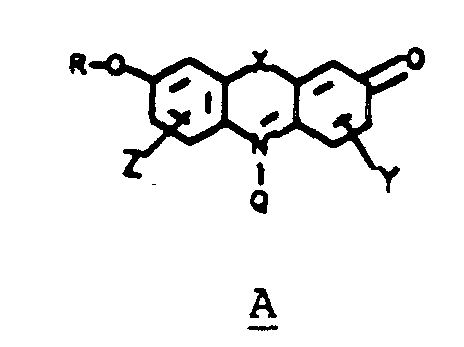
- acridinones preferred for use as mediators in the present invention can be represented by the following formula (A): These compounds are prepared by known methods which are more fully described hereinafter.
- R R' and R" are independently lower alkyl of 1 to 6 carbon atoms or with R' being as defined above
- Y and Z are independently H or another monovalent substituent
- the aromatic rings can bear a variety of substituent groups, which do not adversely affect their electron transport properties, without departing from the scope of the present invention.
- substituent groups are limited only by the ability of one of ordinary skill in this art to prepare stable compounds which have the electrochemical properties necessary for electron transport and include such groups as substituted or unsubstituted aryl, alkoxy, aryloxy, halo (e.g. fluoro, chloro, bromo), nitro, substituted amino, such as dialkylamino, keto, carboxy, alkoxycarbonyl and amido.
- reaction was evaporated to dryness in vacuo and the residue chromatographed on 100 g silica gel (230-400 mesh ASTM) packed in a 3 cm ID column and developed with acetone/CHCl 3 (4:96, v/v) solvent.
- the major product band was collected, freed of solvent in vacuo and crystallized from a minimum of boiling EtOAc to afford 28.4 mg (10.5%) of the title compound as shiny black crystals.
- Graphite rod electrodes (3 mm in diameter from Johnson Matthey Electronics, Ward Hill, MA) were prepared by polishing the electrode's surface using first a fine grit sandpaper and then a suspension of ⁇ 1 micron alumina particles. A 1 mM methanolic solution of the mediator was prepared and the electrode was soaked in this solution for 2 minutes. The electrodes were then rinsed with water and soaked for a short time in 0.25 M phosphate buffer (pH 7). At this point a current -vs- voltage profile was run to determine the cathodic and anodic peak positions -vs- Ag/AgCl reference electrodes.
- the relative sensitivity of the listed compounds can be interpreted as a gauge of the reactivity of the mediator with NADH or NADPH. The higher the value that is reported the more reactive the mediator is towards NADH or NADPH. All of these compounds would be useful as mediators in the previously described biosensor system because they provide sensitivity above the lower limit for such utility of 0.0009 ⁇ A/ ⁇ M. This is the lower limit because at lower levels the response to NADH cannot be distinguished from the background.
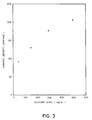
- the current density as a function of glucose level is graphically illustrated in Fig. 3 from which it can be determined that the sensor prepared using the mediator of the present invention provides a suitable dose response relationship when used in a biosensor system of the type under consideration.
Landscapes
- Chemical & Material Sciences (AREA)
- Life Sciences & Earth Sciences (AREA)
- Engineering & Computer Science (AREA)
- Organic Chemistry (AREA)
- Wood Science & Technology (AREA)
- Zoology (AREA)
- Proteomics, Peptides & Aminoacids (AREA)
- Microbiology (AREA)
- Chemical Kinetics & Catalysis (AREA)
- Electrochemistry (AREA)
- General Chemical & Material Sciences (AREA)
- Biochemistry (AREA)
- Health & Medical Sciences (AREA)
- Immunology (AREA)
- General Engineering & Computer Science (AREA)
- Analytical Chemistry (AREA)
- Physics & Mathematics (AREA)
- Biotechnology (AREA)
- Materials Engineering (AREA)
- Molecular Biology (AREA)
- Sustainable Energy (AREA)
- Sustainable Development (AREA)
- Manufacturing & Machinery (AREA)
- Bioinformatics & Cheminformatics (AREA)
- Biophysics (AREA)
- General Health & Medical Sciences (AREA)
- Genetics & Genomics (AREA)
- Saccharide Compounds (AREA)
- Preparation Of Compounds By Using Micro-Organisms (AREA)
- Measuring Or Testing Involving Enzymes Or Micro-Organisms (AREA)
- Electrolytic Production Of Non-Metals, Compounds, Apparatuses Therefor (AREA)
- Inert Electrodes (AREA)
- Other In-Based Heterocyclic Compounds (AREA)
- Heterocyclic Carbon Compounds Containing A Hetero Ring Having Nitrogen And Oxygen As The Only Ring Hetero Atoms (AREA)
- Electrodes For Compound Or Non-Metal Manufacture (AREA)
- Pyridine Compounds (AREA)
Abstract
Description
- Analytical methods that combine the selectivity of enzymes with the sensitivity of amperometric detection are of interest to the diagnostic industry. The reduction of the nicotinamide co-enzymes (NAD and NADP) is particularly important because they are produced in reactions catalyzed by dehydrogenases. Dehydrogenase catalyzed reactions according to the equation:play an important role in biological cells and analytical reactions. Several hundred different dehydrogenases are known which selectively catalyze the conversion of different substrates into products. When the substrate is oxidized, the coenzymes NAD+ and NADP+ are reduced to NADH and NADPH respectively. These co-enzymes are a necessary element in the reaction due to their ability to act with the enzymes to form an energy-transferring redox couple.

- The co-enzymes NAD+ and NADP+ are expensive chemicals making their regeneration by reoxidation to their original state imperative if they are to be economically used in low cost, disposable, analytical devices. NADH is oxidized directly at different base electrode materials only with high overvoltages on the order of 1 volt. However, a decrease in this overvoltage can be obtained by the immobilization of functionalities on the electrode surface which mediate the electron transfer from NADH to the electrode. Such mediators are typically selected from materials which may be reoxidized electrochemically without excessive overvoltages rendering them useful as an auxiliary system for electrochemical regeneration. Various mediator compounds suitable for this purpose are known.
- U.S. Patent 5,264,092 discloses electrodes for the electrochemical regeneration of the coenzymes NADH, NADPH or analogs thereof. The electrodes are coated with mediators capable of accepting the electrons of the reduced form of these coenzymes.
- In U.S. patent 4,490,464 there are mentioned, by way of background, mediators such as phenazine methosulphate (PMS); phenazine ethosulphate (PES); thionine and 1,2-benzoquinone. This patent goes on to describe electrodes which are modified to catalyze the oxidation of NADH, NADPH or analogs thereof by imparting to the electrode surface as mediator a condensed aromatic ring system comprising at least three and preferably four or more condensed aromatic rings with or without heteroatoms. More particularly, this reference describes the electron exchange with the co-enzyme or analog thereof by structural elements comprising one of either alkyl phenazinium ions, phenazinium ions, phenazinones, phenoxazinium ions, phenoxazinones, phenothiazinium ions or phenothiazinones.
- Fulty et al provide a literature review of various mediators, which they describe as "electron shuttles", which provide redox coupling between the electrode and the redox center of the co-enzyme in Analytical Chimica Acta. 140 (1982) Pp. 1-18. Perhaps the best known mediators for use on graphite electrodes are phenothiazinium and phenoxazinium salts such as Meldola's Blue (II):

- In J. Electroanal. Chem., 287 (1990) Pp. 61-80, there is described a chemically modified graphite electrode for oxidation of reduced NAD based on the phenothiazine derivative 3-β-naphthoyl-toluidine blue O (III):

- Persson et al have published a comparative study of some 3,7-diaminophenoxazine derivatives for the electrocatalytic oxidation of NADH in J. Electroanal Chem., 292 (1990) 115-138.
- In United States Patent 4,810,636 there are described 7-hydroxy-9H-acridin-2-one chromagens which have been derivatized at the 7-hydroxy position with an enzymatically cleavable group and substituted at the 9-position with alkyl or aryl groups.
- The present invention involves an electrode suitable for the electrochemical regeneration of the co-enzymes dihydronicotinamide adenine dinucleotide (NADH), dihydronicotinamide adenine dinucleotide phosphate (NADPH) or analogs thereof, said electrode having imputed on its surface a mediator function comprising one or more substituted or unsubstituted 9-H-acridin-2-one or 11H-dibenz-[b,f][1,4]oxazepine-8-one compounds.
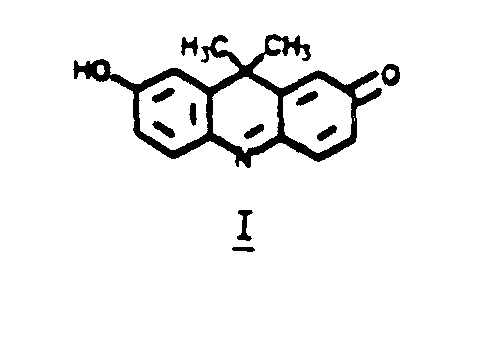
- This invention is predicated on the discovery that 7-hydroxy-9,9-dimethyl-9H-acridin-2-one (I) and its derivatives are useful mediators for the electrochemical regeneration (oxidation) of NADH at an electrode.
- Nicotinamide adenine dinucleotide (oxidized form, NAD+; reduced form, NADH) is the cofactor providing chemical redox function for many dehydrogenase enzymes. This cofactor is reduced during the course of the enzymatic reaction as the substrate molecule is oxidized. Amperometric biosensors seeking to use these enzymes as a means to measure substrate concentration correlate this concentration with the current generated as the cofactor is electrochemically re-oxidized. The NADH can be electrochemically re-oxidized on graphite, pyrolytic carbon, glassy carbon, platinum or gold electrodes without a mediator, but this reaction occurs with several difficulties including a large overpotential and electrode fouling.
- The present invention describes the first use of the acridinone class of chromogens in the electrochemical regeneration of NADH and NADPH coenzymes or their derivatives and accordingly, encompasses a wide variety of acridinone derivatives. Derivatives of NADH and NADPH such as in the case where the coenzyme is attached to a polymer are described by Dolabdjian, et al in Enzyme Engineering Vol. 4, G. B. Brown and G. Manecke, eds., Plenum Press, New York, 1978, Pp. 399-400 or covalently attached to the dehydrogenase enzyme as described by M. Persson, et al in Biotechnology 9, Pp. 280-284 (1991) or synthetic analogs bearing other substituents so long as they function as a cofactor for the dehydrogenase enzyme.
- The acridinones preferred for use as mediators in the present invention can be represented by the following formula (A):These compounds are prepared by known methods which are more fully described hereinafter. In the above formula, X represents
 where R' and R" are independently lower alkyl of 1 to 6 carbon atoms or
 with R' being as defined above, Y and Z are independently H or another monovalent substituent and Q is (→O)n where n = O or 1 and R is H or alkyl. It will be evident that the aromatic rings can bear a variety of substituent groups, which do not adversely affect their electron transport properties, without departing from the scope of the present invention. Such substituent groups are limited only by the ability of one of ordinary skill in this art to prepare stable compounds which have the electrochemical properties necessary for electron transport and include such groups as substituted or unsubstituted aryl, alkoxy, aryloxy, halo (e.g. fluoro, chloro, bromo), nitro, substituted amino, such as dialkylamino, keto, carboxy, alkoxycarbonyl and amido.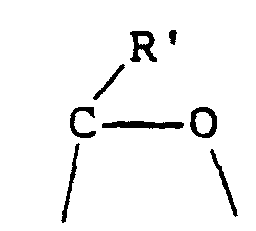
- The synthesis of 7 analogs of compound A whose structures are set out as formulae I and IV-IX is described in the following examples:

- Synthetic procedures or references to synthesis of the present compounds are as follows:
- The synthesis of these compounds is described in U.S. patent 4,810,636.
- The synthesis of this compound, known in the literature as "Methyl Purple", is described by Hill et al in New Phytology 77, 1-9 (1976).
- Initially, 0.88 g of 60% NaH in oil (22 m mol, 1.1 eq.) was washed twice with 20 mL portions of n-pentane. The oil free NaH was suspended at room temperature in 50 mL of anhydrous dimethylformamide (DMF) and treated portionwise with 4.78 g (20 m mol, 1.0 eq.) of 7-hydroxy-9,9-dimethyl-9H-acridin-2-one (I) under an inert gas atmosphere. During this addition the mixture turned dark blue in color, evolved gas and became somewhat turbid. After about 10 minutes, 1.6 mL of CH3I (25 m mol, 1.25 eq.) was added whereupon the reaction was allowed to stir at room temperature for 70 minutes. The reaction mixture was then blended into 500 mL of H2O and 100 mL ethyl acetate (EtOAc), basified with 5% aqueous NaHCO3 and the phases separated. The organic phase was washed twice with 5% aqueous NaHCO3 and twice with brine, then dried (Na2SO4) and concentrated in vacuo until crystals began to form. The mixture was then heated to a boil, diluted with an equal volume of n-hexane (≃ 20 mL) and allowed to cool. The crystals that were deposited were isolated by filtration, washed with EtOAc/hexane (1:1) and vacuum dried to give the title compound (4.8 g, 94% yield) as rusty-red chunky prisms in two crops, with mp=140-1°C.
- IR (CHCl3) cm-1 1632, 1614, 1569, 1504, 1462, 1431, 1315, 1290, 1243, 1037, 898, 818; 1H NMR (CDCl3) δ 7.64 (d, J=8.7Hz, 1H), 7.39 (d, J=7.9Hz, 1H), 7.03 (d, J=2.7Hz, 1H), 6.91 (d of d, JA= 2.7Hz and JB=8.7Hz, 1H), 6.60 - 6.67 (m, 2H), 3.90 (s, 3H), 1.54 (s, 6H); 13C NMR (CDCl3) ppm 187.1, 161.9, 150.4, 147.6, 141.7, 139.6, 136.8, 133.8, 131.0, 127.3, 112.4, 112.3, 55.6, 37.4, 32.4.
Anal. Calcd. for C16H15NO2 C, 75.87; H, 5.97; N, 5.53. Found C, 75.91; H, 6.07; N, 5.47. - A solution of 0.2533 g (1 m mol) 7-methoxy-9,9-dimethyl-9H-acridin-2-one (VII) in 4.0 mL glacial acetic acid (HOAc) was treated with an excess of 37% peracetic acid and warmed in a 60°C bath. The reaction was followed by tlc (silica gel plates developed with acetone/CHCl3 [15:85, v/v] solvent) and was cooled when the starting material had been consumed. The reaction was evaporated to dryness in vacuo and the residue chromatographed on 100 g silica gel (230-400 mesh ASTM) packed in a 3 cm ID column and developed with acetone/CHCl3 (4:96, v/v) solvent. The major product band was collected, freed of solvent in vacuo and crystallized from a minimum of boiling EtOAc to afford 28.4 mg (10.5%) of the title compound as shiny black crystals.
- IR (CHCl3) cm-1 3001, 1611, 1594, 1488, 1468, 1445, 1411, 1371, 1294, 1248; 1H NMR (CDCl3) δ 8.27 (d, J=9.1Hz, 1H), 8.23 (d, J=9.7Hz, 1H), 7.05 (d, J=2.6Hz, 1H), 7.00 (d of d, JA=9.1Hz and JB=2.6Hz, 1H), 6.68-6.77 (m, 2H), 3.94 (s, 3H), 1.69 (s, 6H); 13C NMR (CDCl3) ppm 185.9, 162.6, 147.2, 141.4, 136.1, 132.7, 130.7, 128.5, 123.7, 123.1, 113.1, 111.6, 55.8, 36.2, 32.9.
- Graphite rod electrodes (3 mm in diameter from Johnson Matthey Electronics, Ward Hill, MA) were prepared by polishing the electrode's surface using first a fine grit sandpaper and then a suspension of ≤1 micron alumina particles. A 1 mM methanolic solution of the mediator was prepared and the electrode was soaked in this solution for 2 minutes. The electrodes were then rinsed with water and soaked for a short time in 0.25 M phosphate buffer (pH 7). At this point a current -vs- voltage profile was run to determine the cathodic and anodic peak positions -vs- Ag/AgCl reference electrodes. Currents were then measured in pH=7 solutions containing NADH in concentrations from 20 to 200 µM, using a potential that was typically 100 mv more positive than the oxidation peak, and the slope of the line obtained from a least squares fit of the current -vs- NADH concentration data gave the relative sensitivity of each mediator in µA/µM NADH. These relative sensitivities are listed in Table I.
Mediator Relative Sensitivity µA/µM NADH III (3-NTBO) 0.0095 I 0.0032 IV 0.0027 V 0.002 VI 0.0012 VII 0.0009 VIII 0.0022 IX 0.0030 - The relative sensitivity of the listed compounds can be interpreted as a gauge of the reactivity of the mediator with NADH or NADPH. The higher the value that is reported the more reactive the mediator is towards NADH or NADPH. All of these compounds would be useful as mediators in the previously described biosensor system because they provide sensitivity above the lower limit for such utility of 0.0009 µA/µM. This is the lower limit because at lower levels the response to NADH cannot be distinguished from the background.
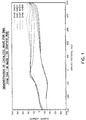
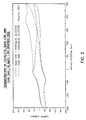
- Compound I, 7-hydroxy-9,9-dimethyl-9H-acridin-2-one (DMA) was absorbed onto a graphite electrode of the type used in Example I from its 2 mM methanolic solution. Two test solutions containing a 2 mM methanolic solution of DMA were prepared whereupon the electrode was placed into the solution and scanned using cyclic voltammetry at 100 mV/sec. to find the catalytic wave. In the first test solution, NADH was introduced in increasing amounts up to a concentration of 3 mM. A wave between 300-400 mV versus Ag/AgCl appears. This wave which represents the oxidation of the reduced mediator is represented in Fig. 1. In a second experiment, 4 mM NAD + 400 mg/dL glucose were used as a control. A small amount of glucose dehydrogenase (GDH) (1 mg/ml) was then introduced. The same wave that appeared in the NADH only experiment also is observed (Fig. 2). This confirms the utility of DMA as a mediator because NADH produced via the enzymatic reaction is present in a high enough concentration to be detected.
- Experiments involving printed electrodes comprising a printed sensor card with a graphite/carbon working electrode and a silver/silver chloride reference electrode were carried out. The working electrode was treated with GDH enzyme by way of a 75 mg GDH per gram of polymer solution formulation (2% hydroxypropylmethylcellulose in H2O) from a pipette and dunked in a bath of 5 mM DMA in methanol for 4 minutes to introduce the mediator to the electrode whereupon it was removed and dried. The electrode was assembled in a format having a small capillary gap, treated with a 1 mM NAD+/glucose solution in buffer (100 mM PO4=/100 mM KCl) and the current was measured with a potential of +0.6V versus Ag/AgCl. The current density as a function of glucose level is graphically illustrated in Fig. 3 from which it can be determined that the sensor prepared using the mediator of the present invention provides a suitable dose response relationship when used in a biosensor system of the type under consideration.
Claims (10)
- An electrode suitable for the electrochemical regeneration of the coenzymes dihydronicotinamide adenine dinucleotide (NADH), dihydronicotinamide adenine dinucleotide phosphate (NADPH) or analogs thereof characterized in that there has been imparted to the electrode surface a mediator function comprising one or more mediator compounds selected from the group consisting of substituted or unsubstituted 9H-acridin-2-ones and 11H-dibenz [b,e] [1,4] oxazepin-2-ones.
- An electrode as characterized by Claim 1 wherein the mediator is characterized by the formula:wherein X is
 where R' and R" are lower alkyl of 1 to 6 carbon atoms or
 with R' being defined as above, Y and Z are independently H or another monovalent substituent, Q is (→O)n where n=0 or 1 and R is H or alkyl.
- The electrode of Claim 2 wherein Y and Z are independently hydrogen, substituted or unsubstituted aryl, alkoxy, aryloxy, halo, nitro, substituted amino, keto, carboxy, alkoxycarbonyl or amino.
- The electrode of Claim 1 wherein one or more enzyme is present at the electrode surface.
- The electrode of Claim 4 wherein the enzyme is a dehydrogenase.
- The electrode of Claim 1 wherein the electrode is comprised of graphite, pyrolytic carbon, glassy carbon, platinum or gold.
- The electrode of Claim 1 wherein the mediator compound is 7-hydroxy9,9-dimethyl-9H-acridin-2-one.
- A method of improving the performance of a biochemical fuel cell which operates with dehydrogenase as a catalyst and a co-enzyme as an energy-transferring redox couple, which method involves using the electrode described in Claim 1 as an anode in said fuel cell.
- The method of Claim 8 wherein the mediator compound is:wherein X is
 where R' and R" are lower alkyl of 1 to 6 carbon atoms or
 with R' being defined as above, Y and Z are independently H or another monovalent substituent Q is (→O)n where n=0 or 1 and R is H or alkyl.
- The method of Claim 8 wherein the electrode is comprised of graphite, pyrolytic carbon, glassy carbon, platinum or gold and the mediator compound is 7-hydroxy-9,9-dimethyl-9H-acridinin-2-one.
Applications Claiming Priority (2)
| Application Number | Priority Date | Filing Date | Title |
|---|---|---|---|
| US08/190,855 US5393615A (en) | 1994-02-03 | 1994-02-03 | Mediators suitable for the electrochemical regeneration of NADH, NADPH or analogs thereof |
| US190855 | 1994-02-03 |
Publications (2)
| Publication Number | Publication Date |
|---|---|
| EP0667397A1 EP0667397A1 (en) | 1995-08-16 |
| EP0667397B1 true EP0667397B1 (en) | 2001-10-04 |
Family
ID=22703075
Family Applications (1)
| Application Number | Title | Priority Date | Filing Date |
|---|---|---|---|
| EP95100849A Expired - Lifetime EP0667397B1 (en) | 1994-02-03 | 1995-01-23 | Mediators suitable for the electrochemical regeneration of NADH, NADPH or analogs thereof |
Country Status (8)
| Country | Link |
|---|---|
| US (1) | US5393615A (en) |
| EP (1) | EP0667397B1 (en) |
| JP (1) | JP3585552B2 (en) |
| AT (1) | ATE206466T1 (en) |
| AU (1) | AU674463B2 (en) |
| CA (1) | CA2141494C (en) |
| DE (1) | DE69522975T2 (en) |
| ES (1) | ES2161787T3 (en) |
Families Citing this family (41)
| Publication number | Priority date | Publication date | Assignee | Title |
|---|---|---|---|---|
| GB9416002D0 (en) * | 1994-08-08 | 1994-09-28 | Univ Cranfield | Fluid transport device |
| US5498542A (en) * | 1994-09-29 | 1996-03-12 | Bayer Corporation | Electrode mediators for regeneration of NADH and NADPH |
| US5520786A (en) * | 1995-06-06 | 1996-05-28 | Bayer Corporation | Mediators suitable for the electrochemical regeneration of NADH, NADPH or analogs thereof |
| US5866353A (en) * | 1996-12-09 | 1999-02-02 | Bayer Corporation | Electro chemical biosensor containing diazacyanine mediator for co-enzyme regeneration |
| US6500571B2 (en) * | 1998-08-19 | 2002-12-31 | Powerzyme, Inc. | Enzymatic fuel cell |
| GB0120698D0 (en) * | 2001-08-24 | 2001-10-17 | Isis Innovations Ltd | Fuel cell |
| US7163616B2 (en) * | 2001-09-14 | 2007-01-16 | Bayer Corporation | Reagents and methods for detecting analytes, and devices comprising reagents for detecting analytes |
| CA2466133A1 (en) * | 2001-11-02 | 2003-05-15 | Rice University | Recycling system for manipulation of intracellular nadh availability |
| US20050186652A1 (en) * | 2002-02-22 | 2005-08-25 | Wong Luet L. | Electrochemical detection |
| GB0204232D0 (en) * | 2002-02-22 | 2002-04-10 | Isis Innovation | Assay |
| US7638228B2 (en) * | 2002-11-27 | 2009-12-29 | Saint Louis University | Enzyme immobilization for use in biofuel cells and sensors |
| US8859151B2 (en) * | 2003-11-05 | 2014-10-14 | St. Louis University | Immobilized enzymes in biocathodes |
| US7244610B2 (en) * | 2003-11-14 | 2007-07-17 | Rice University | Aerobic succinate production in bacteria |
| US7709134B2 (en) * | 2004-03-15 | 2010-05-04 | St. Louis University | Microfluidic biofuel cell |
| SG155923A1 (en) * | 2004-09-16 | 2009-10-29 | Applied Biosystems Llc | Fluorescent dye compounds, conjugates and uses thereof |
| WO2007084249A2 (en) * | 2005-11-02 | 2007-07-26 | St.Louis University | Direct electron transfer using enzymes in bioanodes, biocathodes, and biofuel cells |
| CA2627614A1 (en) * | 2005-11-02 | 2007-05-18 | St. Louis University | Enzymes immobilized in hydrophobically modified polysaccharides |
| US20090305089A1 (en) * | 2006-07-14 | 2009-12-10 | Akermin, Inc. | Organelles in bioanodes, biocathodes, and biofuel cells |
| EP3543348B1 (en) * | 2006-09-22 | 2020-11-18 | Ascensia Diabetes Care Holdings AG | Biosensor system having enhanced stability and hematocrit performance |
| EP3753481B1 (en) | 2006-10-24 | 2024-07-17 | Ascensia Diabetes Care Holdings AG | Transient decay amperometry device |
| WO2008058165A2 (en) * | 2006-11-06 | 2008-05-15 | Akermin, Inc. | Bioanode and biocathode stack assemblies |
| CA2700507C (en) | 2007-09-24 | 2018-05-29 | Bayer Healthcare Llc | Multi-region and potential test sensors, methods, and systems |
| EP2056383A1 (en) * | 2007-11-02 | 2009-05-06 | Tsing Hua University | Membrane electrode assembly and method for making the same |
| JP5856371B2 (en) | 2007-12-10 | 2016-02-09 | バイエル・ヘルスケア・エルエルシーBayer HealthCareLLC | Reagent and method for detecting an analyte |
| WO2009076268A1 (en) * | 2007-12-10 | 2009-06-18 | Bayer Healthcare Llc | Process of making 3-phenylimino-3h-phenothiazine or 3-phenylimino-3h-phenoxazine mediator |
| EP3369825B1 (en) | 2007-12-10 | 2021-07-28 | Ascensia Diabetes Care Holdings AG | Porous particle reagent compositions and devices for biosensors |
| WO2009113101A2 (en) * | 2008-02-20 | 2009-09-17 | Nagarjuna Fertilizers And Chemicals Limited | Genetically transformed microorganisms with simultaneous enhancement of reduction potential and reductive enzyme activities for biomass fermentation |
| US8008037B2 (en) | 2008-03-27 | 2011-08-30 | Roche Diagnostics Operations, Inc. | Matrix composition with alkylphenazine quaternary salt and a nitrosoaniline |
| CN105353013B (en) | 2008-07-10 | 2020-01-14 | 安晟信医疗科技控股公司 | Method for identifying ionized species in a sample |
| JP5773883B2 (en) | 2008-12-08 | 2015-09-02 | バイエル・ヘルスケア・エルエルシーBayer HealthCareLLC | Low total salt reagent compositions and systems for biosensors |
| US8283347B2 (en) * | 2009-06-01 | 2012-10-09 | Bayer Healthcare Llc | Redox molecules and methods of making the same |
| WO2011059670A1 (en) | 2009-11-10 | 2011-05-19 | Bayer Healthcare Llc | Underfill recognition system for a biosensor |
| WO2011075575A1 (en) | 2009-12-17 | 2011-06-23 | Bayer Healthcare Llc | Transdermal systems, devices, and methods to optically analyze an analyte |
| WO2011084607A1 (en) | 2009-12-17 | 2011-07-14 | Bayer Healthcare Llc | Transdermal systems, devices, and methods for biological analysis |
| US9233788B2 (en) | 2010-01-22 | 2016-01-12 | Bayer Healthcare Llc | Biosensor desiccant system having enhanced measurement performance |
| WO2011150155A1 (en) | 2010-05-28 | 2011-12-01 | Bayer Healthcare Llc | Polymer bonded redox molecules and methods of making the same |
| CN103597093A (en) | 2010-12-29 | 2014-02-19 | 生命技术公司 | Ddao compounds as fluorescent reference standards |
| TWI565943B (en) | 2011-07-22 | 2017-01-11 | 拜耳保健公司 | Biosensor desiccant system having enhanced measurement performance |
| JP6427110B2 (en) | 2013-01-28 | 2018-11-21 | エフ ホフマン−ラ ロッシュ アクチェン ゲゼルシャフト | A novel glucose oxidase from Aspergillus niger |
| CA3035874C (en) | 2016-10-05 | 2025-09-09 | F. Hoffmann-La Roche Ag | Detection reagents and electrode arrangements for multi-analyte diagnostic test elements, as well as methods of using the same |
| RU2706117C1 (en) * | 2019-09-03 | 2019-11-14 | Федеральное государственное бюджетное образовательное учреждение высшего образования «Национальный исследовательский Мордовский государственный университет им. Н.П. Огарёва» | Use of material based on a nonmetallic electrocatalyst to obtain molecular hydrogen from water in the presence of organic salts |
Family Cites Families (3)
| Publication number | Priority date | Publication date | Assignee | Title |
|---|---|---|---|---|
| EP0076266B1 (en) * | 1981-04-08 | 1988-11-09 | GORTON, Lo | Electrode for the electrochemical regeneration of co-enzyme, a method of making said electrode, and the use thereof |
| US4810636A (en) * | 1986-12-09 | 1989-03-07 | Miles Inc. | Chromogenic acridinone enzyme substrates |
| US5264092A (en) * | 1991-10-02 | 1993-11-23 | Moltech Corporation | Redox polymer modified electrode for the electrochemical regeneration of coenzyme |
-
1994
- 1994-02-03 US US08/190,855 patent/US5393615A/en not_active Expired - Lifetime
- 1994-12-07 AU AU80280/94A patent/AU674463B2/en not_active Ceased
-
1995
- 1995-01-23 EP EP95100849A patent/EP0667397B1/en not_active Expired - Lifetime
- 1995-01-23 DE DE69522975T patent/DE69522975T2/en not_active Expired - Lifetime
- 1995-01-23 AT AT95100849T patent/ATE206466T1/en not_active IP Right Cessation
- 1995-01-23 ES ES95100849T patent/ES2161787T3/en not_active Expired - Lifetime
- 1995-01-31 CA CA002141494A patent/CA2141494C/en not_active Expired - Fee Related
- 1995-02-01 JP JP01502595A patent/JP3585552B2/en not_active Expired - Lifetime
Also Published As
| Publication number | Publication date |
|---|---|
| ES2161787T3 (en) | 2001-12-16 |
| CA2141494C (en) | 2003-01-14 |
| AU8028094A (en) | 1995-08-10 |
| DE69522975T2 (en) | 2002-04-04 |
| CA2141494A1 (en) | 1995-08-04 |
| EP0667397A1 (en) | 1995-08-16 |
| DE69522975D1 (en) | 2001-11-08 |
| JPH07310194A (en) | 1995-11-28 |
| ATE206466T1 (en) | 2001-10-15 |
| US5393615A (en) | 1995-02-28 |
| JP3585552B2 (en) | 2004-11-04 |
| AU674463B2 (en) | 1996-12-19 |
Similar Documents
| Publication | Publication Date | Title |
|---|---|---|
| EP0667397B1 (en) | Mediators suitable for the electrochemical regeneration of NADH, NADPH or analogs thereof | |
| CA2152410C (en) | Mediators suitable for the electrochemical regeneration of nadh, nadph or analogs thereof | |
| EP0747984B1 (en) | Mediators suitable for the electrochemical regeneration of NADH, NADPH or analogs thereof | |
| EP0846948B1 (en) | Mediators useful in an electrochemical biosensor | |
| Scheller et al. | Second generation biosensors | |
| US7544438B2 (en) | Electron mediator, electron mediator immobilized electrode, and biofuel cell using the electrode | |
| US5846702A (en) | Reagent including an osmium-containing redox mediator | |
| US5264092A (en) | Redox polymer modified electrode for the electrochemical regeneration of coenzyme | |
| Kulys et al. | Biocatalysis and electrocatalysis at carbon paste electrodes doped by diaphorase‐methylene green and diaphorase‐meldola blue | |
| EP0289345A1 (en) | Amperometric method for the quantitative determination of 1,4-dihydronicotinamide adenine in solution | |
| Saleh et al. | Development of a dehydrogenase-based glucose anode using a molecular assembly composed of nile blue and functionalized SWCNTs and its applications to a glucose sensor and glucose/O2 biofuel cell | |
| Smolander et al. | Mediated amperometric determination of xylose and glucose with an immobilized aldose dehydrogenase electrode | |
| Kulys et al. | Employing heterocyclic dihydropolyazines for amperometric glucose sensing | |
| JP2000515767A (en) | Method and apparatus for measuring the use of a substrate in a reaction catalyzed by a microorganism | |
| Narasimhan et al. | Immobilization of flavins on electrode surfaces: part I. attachment of riboflavin through 8-methyl to glassy carbon | |
| Fukaya et al. | Self-driven coulometry of ethanol, D-glucose and D-fructose using ubiquinone-dependent dehydrogenase reactions | |
| Schubert et al. | Microsomal electrodes for reduced nicotinamide adenine dinucleotide and its phosphate, glucose-6-phosphate and ascorbate | |
| EP4083043A1 (en) | Novel organic electron transfer mediator and device comprising same | |
| Andersson et al. | Evaluation of electron mediators for the electromicrobial reduction of chloropyruvate by Proteus vulgaris cells | |
| JPS6346377B2 (en) | ||
| JPS5853863B2 (en) | Enzyme electrode system | |
| JPH08322582A (en) | Oxidation or reduction of nicotinamide adenine dinucleotide and production of amino acid using the same | |
| CN117820243A (en) | A phenazine derivative and its preparation method, electron mediator and sensor | |
| JP2008059800A (en) | Enzyme electrode and fuel cell and enzyme sensor provided with the same | |
| Yokoyama et al. | Electrochemically mediated enzyme reaction of polyethyleneglycol-modified galactose oxidase in organic solvents |
Legal Events
| Date | Code | Title | Description |
|---|---|---|---|
| PUAI | Public reference made under article 153(3) epc to a published international application that has entered the european phase |
Free format text: ORIGINAL CODE: 0009012 |
|
| AK | Designated contracting states |
Kind code of ref document: A1 Designated state(s): AT BE CH DE DK ES FR GB GR IE IT LI LU NL PT SE |
|
| 17P | Request for examination filed |
Effective date: 19960208 |
|
| RAP1 | Party data changed (applicant data changed or rights of an application transferred) |
Owner name: BAYER CORPORATION |
|
| 17Q | First examination report despatched |
Effective date: 19981016 |
|
| GRAG | Despatch of communication of intention to grant |
Free format text: ORIGINAL CODE: EPIDOS AGRA |
|
| GRAG | Despatch of communication of intention to grant |
Free format text: ORIGINAL CODE: EPIDOS AGRA |
|
| GRAH | Despatch of communication of intention to grant a patent |
Free format text: ORIGINAL CODE: EPIDOS IGRA |
|
| GRAH | Despatch of communication of intention to grant a patent |
Free format text: ORIGINAL CODE: EPIDOS IGRA |
|
| GRAA | (expected) grant |
Free format text: ORIGINAL CODE: 0009210 |
|
| AK | Designated contracting states |
Kind code of ref document: B1 Designated state(s): AT BE CH DE DK ES FR GB GR IE IT LI LU NL PT SE |
|
| PG25 | Lapsed in a contracting state [announced via postgrant information from national office to epo] |
Ref country code: LI Free format text: LAPSE BECAUSE OF FAILURE TO SUBMIT A TRANSLATION OF THE DESCRIPTION OR TO PAY THE FEE WITHIN THE PRESCRIBED TIME-LIMIT Effective date: 20011004 Ref country code: CH Free format text: LAPSE BECAUSE OF FAILURE TO SUBMIT A TRANSLATION OF THE DESCRIPTION OR TO PAY THE FEE WITHIN THE PRESCRIBED TIME-LIMIT Effective date: 20011004 Ref country code: BE Free format text: LAPSE BECAUSE OF FAILURE TO SUBMIT A TRANSLATION OF THE DESCRIPTION OR TO PAY THE FEE WITHIN THE PRESCRIBED TIME-LIMIT Effective date: 20011004 Ref country code: AT Free format text: LAPSE BECAUSE OF FAILURE TO SUBMIT A TRANSLATION OF THE DESCRIPTION OR TO PAY THE FEE WITHIN THE PRESCRIBED TIME-LIMIT Effective date: 20011004 |
|
| REF | Corresponds to: |
Ref document number: 206466 Country of ref document: AT Date of ref document: 20011015 Kind code of ref document: T |
|
| REG | Reference to a national code |
Ref country code: CH Ref legal event code: EP |
|
| REF | Corresponds to: |
Ref document number: 69522975 Country of ref document: DE Date of ref document: 20011108 |
|
| REG | Reference to a national code |
Ref country code: IE Ref legal event code: FG4D |
|
| REG | Reference to a national code |
Ref country code: ES Ref legal event code: FG2A Ref document number: 2161787 Country of ref document: ES Kind code of ref document: T3 |
|
| ET | Fr: translation filed | ||
| REG | Reference to a national code |
Ref country code: GB Ref legal event code: IF02 |
|
| PGFP | Annual fee paid to national office [announced via postgrant information from national office to epo] |
Ref country code: SE Payment date: 20020103 Year of fee payment: 8 |
|
| PG25 | Lapsed in a contracting state [announced via postgrant information from national office to epo] |
Ref country code: SE Free format text: LAPSE BECAUSE OF FAILURE TO SUBMIT A TRANSLATION OF THE DESCRIPTION OR TO PAY THE FEE WITHIN THE PRESCRIBED TIME-LIMIT Effective date: 20020104 Ref country code: PT Free format text: LAPSE BECAUSE OF FAILURE TO SUBMIT A TRANSLATION OF THE DESCRIPTION OR TO PAY THE FEE WITHIN THE PRESCRIBED TIME-LIMIT Effective date: 20020104 Ref country code: DK Free format text: LAPSE BECAUSE OF FAILURE TO SUBMIT A TRANSLATION OF THE DESCRIPTION OR TO PAY THE FEE WITHIN THE PRESCRIBED TIME-LIMIT Effective date: 20020104 |
|
| PG25 | Lapsed in a contracting state [announced via postgrant information from national office to epo] |
Ref country code: GR Free format text: LAPSE BECAUSE OF FAILURE TO SUBMIT A TRANSLATION OF THE DESCRIPTION OR TO PAY THE FEE WITHIN THE PRESCRIBED TIME-LIMIT Effective date: 20020105 |
|
| PGFP | Annual fee paid to national office [announced via postgrant information from national office to epo] |
Ref country code: DK Payment date: 20020107 Year of fee payment: 8 |
|
| PGFP | Annual fee paid to national office [announced via postgrant information from national office to epo] |
Ref country code: LU Payment date: 20020117 Year of fee payment: 8 |
|
| PGFP | Annual fee paid to national office [announced via postgrant information from national office to epo] |
Ref country code: BE Payment date: 20020124 Year of fee payment: 8 |
|
| PGFP | Annual fee paid to national office [announced via postgrant information from national office to epo] |
Ref country code: IE Payment date: 20020131 Year of fee payment: 8 |
|
| REG | Reference to a national code |
Ref country code: CH Ref legal event code: PL |
|
| PLBE | No opposition filed within time limit |
Free format text: ORIGINAL CODE: 0009261 |
|
| STAA | Information on the status of an ep patent application or granted ep patent |
Free format text: STATUS: NO OPPOSITION FILED WITHIN TIME LIMIT |
|
| 26N | No opposition filed | ||
| PG25 | Lapsed in a contracting state [announced via postgrant information from national office to epo] |
Ref country code: LU Free format text: LAPSE BECAUSE OF NON-PAYMENT OF DUE FEES Effective date: 20030123 Ref country code: IE Free format text: LAPSE BECAUSE OF NON-PAYMENT OF DUE FEES Effective date: 20030123 |
|
| REG | Reference to a national code |
Ref country code: IE Ref legal event code: MM4A |
|
| PGFP | Annual fee paid to national office [announced via postgrant information from national office to epo] |
Ref country code: ES Payment date: 20090126 Year of fee payment: 15 |
|
| PGFP | Annual fee paid to national office [announced via postgrant information from national office to epo] |
Ref country code: NL Payment date: 20090124 Year of fee payment: 15 |
|
| PGFP | Annual fee paid to national office [announced via postgrant information from national office to epo] |
Ref country code: GB Payment date: 20090129 Year of fee payment: 15 |
|
| PGFP | Annual fee paid to national office [announced via postgrant information from national office to epo] |
Ref country code: IT Payment date: 20090129 Year of fee payment: 15 |
|
| PGFP | Annual fee paid to national office [announced via postgrant information from national office to epo] |
Ref country code: FR Payment date: 20090119 Year of fee payment: 15 |
|
| REG | Reference to a national code |
Ref country code: NL Ref legal event code: V1 Effective date: 20100801 |
|
| GBPC | Gb: european patent ceased through non-payment of renewal fee |
Effective date: 20100123 |
|
| REG | Reference to a national code |
Ref country code: FR Ref legal event code: ST Effective date: 20100930 |
|
| PG25 | Lapsed in a contracting state [announced via postgrant information from national office to epo] |
Ref country code: NL Free format text: LAPSE BECAUSE OF NON-PAYMENT OF DUE FEES Effective date: 20100801 Ref country code: FR Free format text: LAPSE BECAUSE OF NON-PAYMENT OF DUE FEES Effective date: 20100201 |
|
| PG25 | Lapsed in a contracting state [announced via postgrant information from national office to epo] |
Ref country code: GB Free format text: LAPSE BECAUSE OF NON-PAYMENT OF DUE FEES Effective date: 20100123 |
|
| REG | Reference to a national code |
Ref country code: ES Ref legal event code: FD2A Effective date: 20110328 |
|
| PG25 | Lapsed in a contracting state [announced via postgrant information from national office to epo] |
Ref country code: IT Free format text: LAPSE BECAUSE OF NON-PAYMENT OF DUE FEES Effective date: 20100123 |
|
| PG25 | Lapsed in a contracting state [announced via postgrant information from national office to epo] |
Ref country code: ES Free format text: LAPSE BECAUSE OF NON-PAYMENT OF DUE FEES Effective date: 20110315 |
|
| PG25 | Lapsed in a contracting state [announced via postgrant information from national office to epo] |
Ref country code: ES Free format text: LAPSE BECAUSE OF NON-PAYMENT OF DUE FEES Effective date: 20100124 |
|
| PGFP | Annual fee paid to national office [announced via postgrant information from national office to epo] |
Ref country code: DE Payment date: 20140129 Year of fee payment: 20 |
|
| REG | Reference to a national code |
Ref country code: DE Ref legal event code: R071 Ref document number: 69522975 Country of ref document: DE |