EP0660323B1 - Verfahren und Vorrichtung zur Datenspeicherung - Google Patents
Verfahren und Vorrichtung zur Datenspeicherung Download PDFInfo
- Publication number
- EP0660323B1 EP0660323B1 EP94308953A EP94308953A EP0660323B1 EP 0660323 B1 EP0660323 B1 EP 0660323B1 EP 94308953 A EP94308953 A EP 94308953A EP 94308953 A EP94308953 A EP 94308953A EP 0660323 B1 EP0660323 B1 EP 0660323B1
- Authority
- EP
- European Patent Office
- Prior art keywords
- record
- current
- ckd
- sector
- sectors
- Prior art date
- Legal status (The legal status is an assumption and is not a legal conclusion. Google has not performed a legal analysis and makes no representation as to the accuracy of the status listed.)
- Expired - Lifetime
Links
Images

Classifications
-
- G—PHYSICS
- G06—COMPUTING OR CALCULATING; COUNTING
- G06F—ELECTRIC DIGITAL DATA PROCESSING
- G06F3/00—Input arrangements for transferring data to be processed into a form capable of being handled by the computer; Output arrangements for transferring data from processing unit to output unit, e.g. interface arrangements
- G06F3/06—Digital input from, or digital output to, record carriers, e.g. RAID, emulated record carriers or networked record carriers
- G06F3/0601—Interfaces specially adapted for storage systems
-
- G—PHYSICS
- G06—COMPUTING OR CALCULATING; COUNTING
- G06F—ELECTRIC DIGITAL DATA PROCESSING
- G06F3/00—Input arrangements for transferring data to be processed into a form capable of being handled by the computer; Output arrangements for transferring data from processing unit to output unit, e.g. interface arrangements
- G06F3/06—Digital input from, or digital output to, record carriers, e.g. RAID, emulated record carriers or networked record carriers
- G06F3/0601—Interfaces specially adapted for storage systems
- G06F3/0602—Interfaces specially adapted for storage systems specifically adapted to achieve a particular effect
- G06F3/0608—Saving storage space on storage systems
-
- G—PHYSICS
- G06—COMPUTING OR CALCULATING; COUNTING
- G06F—ELECTRIC DIGITAL DATA PROCESSING
- G06F3/00—Input arrangements for transferring data to be processed into a form capable of being handled by the computer; Output arrangements for transferring data from processing unit to output unit, e.g. interface arrangements
- G06F3/06—Digital input from, or digital output to, record carriers, e.g. RAID, emulated record carriers or networked record carriers
- G06F3/0601—Interfaces specially adapted for storage systems
- G06F3/0602—Interfaces specially adapted for storage systems specifically adapted to achieve a particular effect
- G06F3/061—Improving I/O performance
- G06F3/0611—Improving I/O performance in relation to response time
-
- G—PHYSICS
- G06—COMPUTING OR CALCULATING; COUNTING
- G06F—ELECTRIC DIGITAL DATA PROCESSING
- G06F3/00—Input arrangements for transferring data to be processed into a form capable of being handled by the computer; Output arrangements for transferring data from processing unit to output unit, e.g. interface arrangements
- G06F3/06—Digital input from, or digital output to, record carriers, e.g. RAID, emulated record carriers or networked record carriers
- G06F3/0601—Interfaces specially adapted for storage systems
- G06F3/0628—Interfaces specially adapted for storage systems making use of a particular technique
- G06F3/0638—Organizing or formatting or addressing of data
- G06F3/064—Management of blocks
-
- G—PHYSICS
- G06—COMPUTING OR CALCULATING; COUNTING
- G06F—ELECTRIC DIGITAL DATA PROCESSING
- G06F3/00—Input arrangements for transferring data to be processed into a form capable of being handled by the computer; Output arrangements for transferring data from processing unit to output unit, e.g. interface arrangements
- G06F3/06—Digital input from, or digital output to, record carriers, e.g. RAID, emulated record carriers or networked record carriers
- G06F3/0601—Interfaces specially adapted for storage systems
- G06F3/0628—Interfaces specially adapted for storage systems making use of a particular technique
- G06F3/0655—Vertical data movement, i.e. input-output transfer; data movement between one or more hosts and one or more storage devices
- G06F3/0661—Format or protocol conversion arrangements
-
- G—PHYSICS
- G06—COMPUTING OR CALCULATING; COUNTING
- G06F—ELECTRIC DIGITAL DATA PROCESSING
- G06F3/00—Input arrangements for transferring data to be processed into a form capable of being handled by the computer; Output arrangements for transferring data from processing unit to output unit, e.g. interface arrangements
- G06F3/06—Digital input from, or digital output to, record carriers, e.g. RAID, emulated record carriers or networked record carriers
- G06F3/0601—Interfaces specially adapted for storage systems
- G06F3/0668—Interfaces specially adapted for storage systems adopting a particular infrastructure
- G06F3/0671—In-line storage system
- G06F3/0683—Plurality of storage devices
- G06F3/0689—Disk arrays, e.g. RAID, JBOD
-
- G—PHYSICS
- G11—INFORMATION STORAGE
- G11B—INFORMATION STORAGE BASED ON RELATIVE MOVEMENT BETWEEN RECORD CARRIER AND TRANSDUCER
- G11B20/00—Signal processing not specific to the method of recording or reproducing; Circuits therefor
- G11B20/10—Digital recording or reproducing
- G11B20/12—Formatting, e.g. arrangement of data block or words on the record carriers
- G11B20/1262—Formatting, e.g. arrangement of data block or words on the record carriers with more than one format/standard, e.g. conversion from CD-audio format to R-DAT format
Definitions
- the present invention relates generally to data storage systems, and more particularly, to a data storage system and method for mapping count-key-data (CKD) records to a data medium characterized by a fixed-block architecture (FBA).
- CKD count-key-data
- FBA fixed-block architecture
- Providing an ability to store large amounts of data (or records), which data can be quickly accessed, modified, and re-stored, is typically a mandatory requirement for large, intermediate and even small computing systems.
- These computing systems take the form of a host processor, such as an IBM System/360 or IBM System/370 processor for computing and manipulating data, attached to an IBM 3990 storage controller, which is further connected to a group of direct access storage devices (DASDs) such as IBM 3380 or 3390 DASDs.
- DASDs direct access storage devices
- the storage controller provides the necessary functions to efficiently transfer, stage/destage, convert and generally access large databases.
- DASD storage for example, magnetic or optical disks, stores bits of data as micrometer sized magnetic or optical altered spots on a disk surface for representing the "ones" and “zeros" that make up those bits of the data.
- Magnetic DASD includes one or more disks that are coated with remnant magnetic material. The disks are rotatably mounted within a protected environment. Each disk is divided into many concentric tracks, or closely spaced circles. The data is stored serially, bit by bit, along each track.
- An access mechanism known as a head disk assembly (HDA), typically includes one or more read/write heads, and is provided in each DASD for moving across the tracks to transfer the data to and from the surface of the disks as the disks are rotated past the read/write heads.
- HDA head disk assembly
- Data or records are generally stored in DASD in count-key-data (CKD) format or in fixed-block architecture (FBA) format.
- CKD record storage is desirable because the records are stored efficiently, that is, wasted disk space is minimized.
- Records stored in the CKD format include a count area, a key area, and a data area.
- the count area is typically an n-byte field that identifies the record by describing the physical address (track number), an identifier (including a cylinder number, a head number, and a record number), a record format, and the length of the record (how many bytes of data make up the record, and a key length (how many bytes make up the following key area).
- the key area can be many bytes long, for example from one to 256 bytes, for uniquely identifying the record.
- the key could be a part number, employee identification number, an account number or other useful identifier.
- the data area is the actual data and can vary from a few bytes to millions of bytes.
- CKD records in addition to efficient storage, conveniently provide an ability to find a record based upon the key. Also, because the CKD record length is defined and known, the CKD record can be written contiguously, with another record written at the end of the previous record without wasting disk space between records. A drawback to the CKD record format is that an entire track may need to be searched to find the key for accessing the record.
- FBA record storage advantageously provides simpler processing and faster access at a reduced storage efficiency cost. Furthermore, FBA type DASDs are available at lower cost.
- DASDs having FBA record storage capability divide the tracks into many sectors, with each sector having a predetermined number of bytes. As an example, each track might be divided into seventy two sectors, with each sector capable of storing 512 bytes of data. Each sector provides both location or address identification and data storage. In the current example, if a record contains less than 512 bytes, then the area in the sector following the data is unused and typically padded (filled to the end with "zeros").
- FBA type devices generally offer better performance than the CKD type devices. Additionally, FBA type devices are widely available offering small form factor packaging with storage capacities exceeding one gigabytes. Due to the proliferation of FBA devices, not surprisingly, users desire to store previously written CKD records in the FBA format. Writing a CKD record to an FBA device requires mapping the CKD record and sometimes converting the CKD record format. Several different conversion techniques are known for modifying such CKD records formats.
- One method of converting CKD records into FBA records involves placing each area of the CKD record into separate sectors. Thus, the count field is written to a first sector, the key field is written to a second sector, and the data field is written to one or more additional sectors.
- the efficiency of this conversion format is dependent upon both the size of the records and the size of the sectors. The worst case scenario occurs with small records and large sectors, where substantial disk space is wasted in unused areas of the sectors in the count and key fields, as well as unused area in the data fields. On the other hand, this conversion may be quite efficient for cases of smaller sector sizes coupled with generally large data fields since the overhead of sectors for count and key fields is minimized. Writing CKD records to FBA devices in this manner is very fast since additional mapping computations are minimal.
- Another method for providing CKD record to FBA record conversion involves packing the CKD records, as disclosed for instance by EP-A-0 559 142.
- a first CKD record is written to the FBA device contiguously (the count, key and data areas are not separated by sector boundaries).
- the second CKD record is written starting where the first CKD record finished, which location could be in the middle of a sector.
- Writing CKD records in this manner provides excellent packing density. Larger sector sizes, however, tends to degrade system performance since data must be read starting from the beginning of a sector and much of that data may be of the record preceding the desired record.
- Yet another CKD record to FBA record format conversion involves storing the count and key areas of the CKD records in one area or table of the FBA device (and copying such table to electronic memory for improving read response time), and storing the data fields contiguously in the remaining sectors of the device.
- the tables in memory can then be used to more quickly determine the location of data field. Additionally, the data fields can be stored efficiently since they are stored contiguously.
- a drawback of the described conversion is that in cases of very large numbers of records, increasingly larger electronic memories for storing the tables are required.
- mapping all types of records in a single format regardless of record or sector size does not provide optimum conversion for the different environments.
- the present invention provides an apparatus and method for improved mapping of count-key-data (CKD) records to a fixed-block architecture (FBA) storage device.
- CKD count-key-data
- FBA fixed-block architecture
- the present invention provides a packing method as defined in claim 1.
- the present invention provides a data storage system as defined in claim 8.
- FIG. 1 a mapping diagram illustrates packed, unpacked, and fuzzy packed count-key-data (CKD) to fixed-block architecture (FBA) mapping.
- Each disk of an FBA device (not shown), for example, as may be provided in a magnetic disk drive, has each disk not only divided into concentric tracks, but further divided into sectors. Several hundred or thousands of sectors can exist on a single side of a disk. Each sector is capable of storing a predetermined number of bytes, typically 512 of bytes, but the number of bytes per sector can vary. For purposes of illustration, Sectors S1 to S5 are shown in FIG. 1.
- Fuzzy record packing takes into account record size, sector size, and the amount of space available in a current sector to determine whether to pack the record or store the record unpacked for the best tradeoffs between packing density and system response time.
- records R1-R4 use the same number of sectors as the packed format (though this may not hold true for an entire disk), and two of the four records begin at sector boundaries.
- a record should be started at a new sector boundary if a large portion of a previous sector would have to be read to retrieve the record (such as with record R3).
- CKD record should be packed if a large portion of the previous record would otherwise be padded or wasted, or stated in the alternative, only a small portion of the sector would contain a previous record (such as with record R2).
- the placement of records, determined during format operations, should be fast in order to deal with large numbers of records without undue processing overhead.
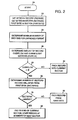
- FIG. 2 diagrams steps taken to fuzzy pack CKD records on an FBA device. Fuzzy packing starts at step 20 when a CKD record is identified to be mapped to an FBA device. At step 22 that information needed to make the mapping determination is retrieved, including getting a number of bytes that make up the CKD record (RecSize), getting a number of bytes that make up each sector of the FBA device (SectSize), and getting a next available location of the current sector (the end of the last record) where the CKD record would be written if packed (FirstByte).
- Step 24 involves determining how many sectors would be required to write the current CKD record if the current CKD record is written unpacked (this is the fewest sectors that the current CKD record could physically be written to, MinSect).
- Minsect is equal to Integer(600/512) or 2.
- the "Integer" command can be accomplished, for example, by truncating the value returned from within the parentheses and incrementing (i.e., rounding up to the next integer value).
- step 26 whether the current CKD record will fit into a remaining portion of a current sector or whether the current CKD record will overflow into an adjacent sector is determined.
- Eq. 2 has two parts, first, a remaining area of a current sector, or pad, is determined simply as SectSize - FirstByte. If the current CKD record is smaller than the pad, OvrFlw will return a negative result (no overflow) and the CKD record, in its entirety, can be written in the remaining area of the current sector. If, on the other hand, the pad is smaller than the current CKD record, OvrFlw will return a positive result, and the current CKD record will not fit entirely within the current sector.
- the OvrFlw value determined at step 26 is tested at step 28 to determine whether to pack the current CKD record. If OvrFlw is negative, or less than zero, then at step 30 the current CKD record is packed starting at FirstByte of the current sector, and no further processing of the current CKD record is required for fuzzy packing purposes and a next CKD record can be assessed (starting again at step 20). If OvrFlw is positive, or greater than zero, the process continues on to step 32.
- Step 32 includes determining a number of sectors the current CKD record will span if written starting at the first available byte of the current sector, SectSpan.
- SectSpan thus returns the number of sectors, including the remaining portion of the current sector as one sector, and that portion of a last sector, required for storing the current CKD record. For example, given 512 byte sectors, and an OvrFlw of 700, then three sectors would be required to store the current CKD record if packed (the remaining portion of the current sector (increment portion of Eq. 3), 512 bytes of the next sector, and 188 bytes of a last sector (rounded up to the next integer)).
- Step 34 compares a magnitude of SectSpan to a magnitude of MinSect. If SectSpan is equal to MinSect, then the current CKD record can be stored more effectively by packing starting at FirstByte and step 36 packs the current CKD record. When SectSpan is greater than MinSect, it is more effective to map the current CKD record unpacked and thus step 38 will be performed for padding the current sector and writing the current CKD record at the beginning of the next sector.
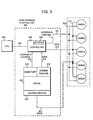
- a host processor or central processing unit (CPU) 200 for example an IBM system/360 or system/370, operating on an IBM multiple virtual storage (MVS) operating system, provides general data processing as is well known.
- the CPU 200 sends host commands or chains of channel command words (CCWs) via a channel 202 to a direct access storage device (DASD) storage control unit 204 for interpretation therein.
- DASD direct access storage device
- the DASD storage control unit 204 is shown separately from the plurality of DASDs 209, it is known that the DASD storage control unit 204 can be an integral part of the DASDs 209, as in a DASD drawer for example. Furthermore, the DASDs 209 may be arranged in many different configurations, including a redundant array of inexpensive devices (RAID) configuration, as is known in the art. Several configuration variations of RAID may be used in the present invention without departing from the teachings herein.
- RAID redundant array of inexpensive devices
- the CPU 200 establishes communication with the DASDs 209 by issuing a START I/O instruction for connecting to an addressed DASD device(s) and starting a channel program within the device(s). Thereafter, control is under the CCWs sent over the channel 202, wherein the CCWs are interpreted by a controller 203 for selecting and accessing the DASDs 209 via the controller 203, directory 219, cache 205, access circuits 218 and 223, and address and control paths 211 and 215. Data stored in, or to be stored in, the DASDs 209 is thus moved to and from the CPU 200 by the controller 203, cache 205 and data path 217, or by the controller 203 and a data path 212.
- Each channel program includes a sequential list of operations residing in CPU 200 main memory (not shown). Transmission to and execution at the DASD storage control unit 204 of CCWs occurs only after initial connection between the CPU 200 and the DASD storage control unit 204 takes place. For each operation in the channel program, one or more counterpart operations are required either at the DASD storage control unit 204 or at the DASDs 209 device level over an active connection.
- the CCW sequence need not be continuous but may be segmented. Some CCWs, for example, SEEK and SET SECTOR, allow the DASD storage control unit 204 to operate while electronically disconnected from the CPU 200 while a DASD access mechanism positions over a track and the disk rotates the desired sector over the access mechanism.
- a READ CCW would require a path connection between the DASD storage control unit 204 and the CPU 200 to transfer data therebetween.
- the controller 203 performs many data or record manipulation functions, for example, data may be read from the CPU 200 over the channel in bytes, and the controller 209 then serializes that data into bit streams for transmission to the DASDs 209 and vice versa.
- a CKD record is received by the controller 203, that CKD record is analyzed in the controller 203 for mapping the CKD record to the DASDs 209.
- microcode comprising instructions for instructing the fuzzy packing of CKD records may initially be stored in the DASDs 209 and loaded into control store 206 located in the controller 203 at initial microcode load (IML).
- the fuzzy mapping microcode could be loaded from another source, resident in the controller 203, or take the form of firmware.
- the microcode once in the controller 203, provides the directions necessary for mapping CKD records received at the controller 203 for storage onto the DASDs 209 according to the present invention.
- the controller 203 determines the RecSize of the received CKD record and gets the FirstByte and SectSize from the DASDs 209 (and/or directory 219).
- the mapped CKD records may move to and from the DASDs 209 directly via data bus 212, or through electronic memory such as the cache 205 (or through non-volatile memory).
- mapping the CKD records can vary in several respects.
- the entire CKD record can be considered and used for determining RecSize, and then contiguously written to the DASDs 209.
- the count and/or key portions of the CKD record can be considered separately from the data portion, and may be written to separate portions of the DASDs 209 relative to the data portions. Such count and key fields could be written to electronic memory for faster access to the data.
- the order of steps performed may vary according to the relationship of record size to sector size. For example, if it is known that the records are small relative to the sector size, then performing the overflow determination may be done before determining MinSect since many records will be packed. Alternatively, the order of calculations for record mapping may be adjusted continuously by statistically tracking recent packed to unpacked ratios.
- a storage system is coupled to a host processor by a channel such that the storage system receives commands and CKD records from the host processor for mapping the CKD records in a fixed-block architecture (FBA) format, wherein a current CKD record is assessed to determine whether to map the current CKD record as a packed or unpacked record.
- the storage system includes a direct access storage device (DASD) logically divided into sectors for storing records at cylindrically addressable locations.
- a controller receives the CKD records and responds to host commands for staging the CKD records.
- a cache memory is coupled between the DASD and the controller for moving records therebetween.
- a control store receives CKD record mapping microcode instructions at initial microcode load (IML), wherein the microcode instructions direct the controller to: (a) determine a next available starting location for mapping the current CKD record to the DASD; (b) determine a record size of the current CKD record; (c) determine a minimum number of sectors required to pack the current CKD record; (d) determine a number of sectors the current CKD record will span if mapped unpacked; and (e) mapping the current CKD record packed if packing the current CKD record spans fewer sectors than if the current CKD record is packed, otherwise padding a remaining area of the current sector and mapping the current CKD record unpacked.
- IML initial microcode load
Landscapes
- Engineering & Computer Science (AREA)
- Theoretical Computer Science (AREA)
- Human Computer Interaction (AREA)
- Physics & Mathematics (AREA)
- General Engineering & Computer Science (AREA)
- General Physics & Mathematics (AREA)
- Multimedia (AREA)
- Signal Processing (AREA)
- Information Retrieval, Db Structures And Fs Structures Therefor (AREA)
Claims (9)
- Ein Packungsverfahren zum Abbilden von count-key-data-Datensätzen, nachfolgend CKD-Datensätze genannt, auf einen Direktzugriffsspeicher mit Festblockarchitektur, nachfolgend DASD genannt, umfassend ein Speichermedium mit einer vorher festgelegten Anzahl von Sektoren, wobei jeder Sektor eine vorher festgelegte Anzahl von Bytes speichern kann (SectSize) und das Verfahren die folgenden Schritte umfaßt:Bestimmen der Datensatzgröße (RecSize) eines CKD-Datensatzes, der in die DASD geschrieben werden soll;Bestimmen des ersten verfügbaren Bytes (FirstByte), das als Startplatz für das Schreiben von Daten in einem aktuellen Sektor der DASD zur Verfügung steht; undPacken des CKD-Datensatzes, beginnend an dem ersten verfügbaren Byte (FirstByte) in dem aktuellen Sektor, wenn der CKD-Datensatz komplett in einen verbleibenden verfügbaren Bereich des aktuellen Sektors paßt;Packen des CKD-Datensatzes, beginnend an dem ersten Byte, das in dem aktuellen Sektor verfügbar ist, und Verteilen des CKD-Datensatzes über einen oder mehrere zusätzliche Sektoren, wenn der so gepackte CKD-Datensatz eine Anzahl von Sektoren in Anspruch nehmen würde, die nicht größer ist, als wenn er beginnend am ersten Byte geschrieben worden wäre, um Daten in den nächsten Sektor zu schreiben, undSchreiben des CKD-Datensatzes, beginnend am ersten Byte zum Schreiben von Daten nach einer Sektorgrenze des nächsten Sektors, wenn der CKD-Datensatz dadurch weniger Sektoren in Anspruch nehmen würde, als wenn er gepackt und beginnend am ersten in dem aktuellen Sektor verfügbaren Byte geschrieben worden wäre.
- Ein Verfahren nach Anspruch 1, weiter umfassend die folgenden Schritte:Bestimmen der Mindestanzahl von Sektoren (MinSect), die zum Schreiben des aktuellen CKD-Datensatzes erforderlich sind;Bestimmen der Anzahl der Sektoren (SectSpan), die der aktuelle CKD-Datensatz in Anspruch nimmt, wenn er beginnend am ersten in dem aktuellen Sektor verfügbaren Byte geschrieben wird;Bestimmen, ob die Anzahl der Sektoren (SectSpan), die der aktuelle CKD-Datensatz in Anspruch nimmt, wenn er beginnend am ersten in dem aktuellen Sektor verfügbaren Byte geschrieben wird, der genannten Mindestanzahl von Sektoren (MinSect) entspricht.
- Ein Verfahren nach einem jeden der vorangehenden Ansprüche, bei dem der aktuelle Sektor aufgefüllt wird, wenn der CKD-Datensatz beginnend an dem ersten Byte zum Schreiben von Daten nach einer Sektorgrenze des nächsten Sektors geschrieben wird.
- Ein Verfahren nach Anspruch 3, bei dem die Größe des Auffüllbereichs berechnet wird durch Subtrahieren des ersten als Startplatz für das Schreiben von Daten verfügbaren Bytes (FirstByte) von der vorher festgesetzten Anzahl von Bytes (SectSize).
- Eine Verfahren nach Anspruch 2, bei dem der Schritt des Bestimmens der Mindestanzahl von Sektoren (MinSect), die zum Schreiben des aktuellen CKD-Datensatzes benötigt werden, ein Teilen der Datensatzgröße (RecSize) des CKD-Datensatzes, der in die DASD geschrieben werden soll, durch eine vorher festgelegte Anzahl von Bytes (SectSize) und das Aufrunden auf den nächsten ganzzahligen Wert umfaßt.
- Ein Verfahren nach Anspruch 4, bei dem der Schritt des Bestimmens der Anzahl von Sektoren (SectSpan), die der aktuelle CKD-Datensatz in Anspruch nimmt, wenn er beginnend am ersten in dem aktuellen Sektor verfügbaren Byte (FirstByte) geschrieben wird, das Subtrahieren der genannten Auffüllbereichsgröße von der Datensatzgröße (RecSize) des CKD-Datensatzes umfaßt, der in die DASD geschrieben werden soll und das Teilen des Ergebnisses durch die vorher festgelegte Anzahl von Bytes und Inkrementieren um Eins.
- Ein Verfahren nach einem der vorangehenden Ansprüche, bei dem die Zähl-, Schlüssel- und Datenabschnitte des CKD-Datensatzes zusammenhängend geschrieben werden.
- Ein Datenspeichersystem zum Empfangen von Hostbefehlen von einem Prozessor und zum unscharfen Packen der countkey-data-Datensätze, nachstehend CKD-Datensätze genannt, in ein Festblockarchitekturformat, wobei das Datenspeichersystem folgendes umfaßt:das genannte System gekennzeichnet ist durch:einen Direktzugriffsspeicher, nachfolgend DASD genannt, der logisch in Sektoren zum Speichern von Datensätzen an zylindrisch adressierfähigen Speicherplätzen unterteilt ist;einen Controller (204), der die CKD-Datensätze empfängt und auf die Hostbefehle reagiert, zum Abbilden der CKD-Datensätze; undeinen Steuerspeicher (203), der die Befehle speichert, mit denen der Controller angewiesen wird, einen aktuellen CKD-Datensatz auf der DASD in einem gepackten Format zu speichern, wenn der aktuelle CKD-Datensatz, beginnend an einer aktuell verfügbaren adressierfähigen Speicherstelle, gespeichert werden kann unter Ausnutzung derselben oder einer kleineren Anzahl von Sektoren, als wenn der aktuelle CKD-Datensatz ungepackt gespeichert würde, andernfalls Abbilden des aktuellen CKD-Datensatzes im ungepackten Format, beginnend an dem nächsten verfügbaren Sektor.
- Ein Datenspeichersystem nach Anspruch 8, weiter umfassend:Mittel zum Bestimmen eines nächsten verfügbaren Startplatzes (FirstByte) zum Abbilden des aktuellen CKD-Datensatzes auf die DASD;Mittel zum Bestimmen der Datensatzgröße (RecSize) des aktuellen CKD-Datensatzes;Mittel zum Bestimmen der Anzahl von Sektoren (SectSpan), die zum Packen des aktuellen CKD-Datensatzes an der genannten nächsten verfügbaren Speicherstelle des aktuellen Sektors benötigt werden;Mittel zum Bestimmen der Mindestanzahl von Sektoren (MinSect), die der aktuelle CKD-Datensatz bei ungepackter Abbildung in Anspruch nimmt.
Applications Claiming Priority (2)
| Application Number | Priority Date | Filing Date | Title |
|---|---|---|---|
| US17303993A | 1993-12-27 | 1993-12-27 | |
| US173039 | 1993-12-27 |
Publications (3)
| Publication Number | Publication Date |
|---|---|
| EP0660323A2 EP0660323A2 (de) | 1995-06-28 |
| EP0660323A3 EP0660323A3 (de) | 1997-08-06 |
| EP0660323B1 true EP0660323B1 (de) | 1999-10-27 |
Family
ID=22630273
Family Applications (1)
| Application Number | Title | Priority Date | Filing Date |
|---|---|---|---|
| EP94308953A Expired - Lifetime EP0660323B1 (de) | 1993-12-27 | 1994-12-02 | Verfahren und Vorrichtung zur Datenspeicherung |
Country Status (6)
| Country | Link |
|---|---|
| US (1) | US5581743A (de) |
| EP (1) | EP0660323B1 (de) |
| JP (1) | JP2557203B2 (de) |
| CN (1) | CN1077305C (de) |
| DE (1) | DE69421370T2 (de) |
| SG (1) | SG43740A1 (de) |
Families Citing this family (26)
| Publication number | Priority date | Publication date | Assignee | Title |
|---|---|---|---|---|
| US5778411A (en) * | 1995-05-16 | 1998-07-07 | Symbios, Inc. | Method for virtual to physical mapping in a mapped compressed virtual storage subsystem |
| EP0785500B1 (de) | 1996-01-19 | 2004-03-03 | Hitachi, Ltd. | Speichergerät und Verfahren zur gemeinsamen Benutzung von Daten |
| US5802557A (en) * | 1996-03-18 | 1998-09-01 | Emc Corp | System and method for caching information in a digital data storage subsystem |
| JP3781212B2 (ja) * | 1996-06-04 | 2006-05-31 | 株式会社日立製作所 | サブシステム |
| US6735676B1 (en) | 1996-09-02 | 2004-05-11 | Hitachi, Ltd. | Method and system for sharing storing device via mutually different interfaces |
| JP3245364B2 (ja) * | 1996-09-02 | 2002-01-15 | 株式会社日立製作所 | 互いに異なるインタフェースを介して記憶装置を共用する方法及びシステム |
| US6304940B1 (en) * | 1997-08-14 | 2001-10-16 | International Business Machines Corporation | Shared direct access storage system for MVS and FBA processors |
| US6112277A (en) * | 1997-09-25 | 2000-08-29 | International Business Machines Corporation | Method and means for reducing device contention by random accessing and partial track staging of records according to a first DASD format but device mapped according to a second DASD format |
| US5893159A (en) * | 1997-10-22 | 1999-04-06 | International Business Machines Corporation | Methods and apparatus for managing scratchpad memory in a multiprocessor data processing system |
| US6173360B1 (en) * | 1998-01-09 | 2001-01-09 | International Business Machines Corporation | Apparatus and method for allowing existing ECKD MVS DASD using an ESCON interface to be used by an open storage using SCSI-type interface |
| US6041386A (en) * | 1998-02-10 | 2000-03-21 | International Business Machines Corporation | Data sharing between system using different data storage formats |
| US6324604B1 (en) | 1998-07-07 | 2001-11-27 | Emc Corporation | Magnetic disk storage for storing data in disk block size from fixed length of host block in non-integer multiple of the disk block size |
| GB2339368A (en) * | 1998-07-08 | 2000-01-19 | Ibm | Data communications protocol with efficient packing of datagrams |
| JP2000047972A (ja) * | 1998-07-29 | 2000-02-18 | Hitachi Ltd | 入出力制御方式 |
| US6496901B1 (en) | 1999-09-22 | 2002-12-17 | Storage Technology Corporation | Mapping variable size data blocks into a fixed block structure |
| US6636942B2 (en) | 2001-10-05 | 2003-10-21 | International Business Machines Corporation | Storage structure for storing formatted data on a random access medium |
| US7000083B2 (en) * | 2003-06-06 | 2006-02-14 | International Business Machines Corp. | Resynchronization of count key data with its corresponding meta data |
| US7136974B2 (en) | 2003-06-19 | 2006-11-14 | Pillar Data Systems, Inc. | Systems and methods of data migration in snapshot operations |
| WO2007040428A1 (en) * | 2005-10-04 | 2007-04-12 | Telefonaktiebolaget Lm Ericsson (Publ) | Method for providing messaging using appropriate communication protocol |
| US9032154B2 (en) * | 2007-12-13 | 2015-05-12 | Sandisk Technologies Inc. | Integration of secure data transfer applications for generic IO devices |
| US8910031B1 (en) * | 2011-03-29 | 2014-12-09 | Emc Corporation | DIF-CRC based fast hashing |
| US10509707B1 (en) * | 2016-12-15 | 2019-12-17 | EMC IP Holding Company LLC | Selective data mirroring |
| US10734016B2 (en) | 2018-08-21 | 2020-08-04 | Marvell Asia Pte, Ltd. | Pulse-based writing for magnetic storage media |
| US11450348B2 (en) | 2019-01-31 | 2022-09-20 | Marvell Asia Pte, Ltd. | Health management for magnetic storage media |
| US12197738B2 (en) | 2019-01-31 | 2025-01-14 | Marvell Asia Pte, Ltd. | Health management for magnetic storage media |
| EP3931828A1 (de) * | 2019-02-26 | 2022-01-05 | Marvell Asia Pte, Ltd. | Codewort-verschachtelung für magnetische speichermedien |
Family Cites Families (15)
| Publication number | Priority date | Publication date | Assignee | Title |
|---|---|---|---|---|
| US4223390A (en) * | 1976-02-02 | 1980-09-16 | International Business Machines Corporation | System and method for attaching magnetic storage devices having dissimilar track capacities and recording formats |
| DE3228359A1 (de) * | 1982-07-29 | 1984-02-09 | Siemens AG, 1000 Berlin und 8000 München | Schaltungsanordnung zum adressieren eines plattenspeichers in einer datensignale verarbeitenden anlage, insbesondere fernschreib- und datenvermittlungsanlage |
| US5455926A (en) * | 1988-04-05 | 1995-10-03 | Data/Ware Development, Inc. | Virtual addressing of optical storage media as magnetic tape equivalents |
| US5301304A (en) * | 1988-05-20 | 1994-04-05 | International Business Machines Corporation | Emulating records in one record format in another record format |
| US5274772A (en) * | 1989-06-28 | 1993-12-28 | International Business Machines Corporation | Data processing systems having means for selectively combining records into signal blocks for recording in a record medium |
| US5200864A (en) * | 1989-06-28 | 1993-04-06 | International Business Machines Corporation | Combining small records into a single record block for recording on a record media |
| US5210660A (en) * | 1990-01-17 | 1993-05-11 | International Business Machines Corporation | Sectored servo independent of data architecture |
| US5247638A (en) * | 1990-06-18 | 1993-09-21 | Storage Technology Corporation | Apparatus for compressing data in a dynamically mapped virtual data storage subsystem |
| US5157770A (en) * | 1990-08-31 | 1992-10-20 | International Business Machines Corporation | Nonsynchronous dasd control |
| US5206939A (en) * | 1990-09-24 | 1993-04-27 | Emc Corporation | System and method for disk mapping and data retrieval |
| US5202799A (en) * | 1991-06-24 | 1993-04-13 | Ibm Corporation | Logical data tracks extending among a plurality of zones of physical tracks of one or more disk devices |
| JP3175371B2 (ja) * | 1992-03-06 | 2001-06-11 | 三菱電機株式会社 | データ記憶フォーマット変換方式及びその変換方法及びアクセス制御装置及びデータアクセス方法 |
| JP2851982B2 (ja) * | 1992-04-17 | 1999-01-27 | インターナショナル・ビジネス・マシーンズ・コーポレイション | 情報処理装置 |
| US5394534A (en) * | 1992-09-11 | 1995-02-28 | International Business Machines Corporation | Data compression/decompression and storage of compressed and uncompressed data on a same removable data storage medium |
| US5459853A (en) * | 1992-11-23 | 1995-10-17 | International Business Machines Corporation | Efficient variable-block data storage system employing a staggered fixed-block-architecture array |
-
1994
- 1994-10-18 JP JP6251985A patent/JP2557203B2/ja not_active Expired - Fee Related
- 1994-11-25 CN CN94119802A patent/CN1077305C/zh not_active Expired - Lifetime
- 1994-12-02 DE DE69421370T patent/DE69421370T2/de not_active Expired - Fee Related
- 1994-12-02 SG SG1996000402A patent/SG43740A1/en unknown
- 1994-12-02 EP EP94308953A patent/EP0660323B1/de not_active Expired - Lifetime
-
1995
- 1995-03-27 US US08/411,068 patent/US5581743A/en not_active Expired - Lifetime
Also Published As
| Publication number | Publication date |
|---|---|
| EP0660323A2 (de) | 1995-06-28 |
| DE69421370D1 (de) | 1999-12-02 |
| CN1077305C (zh) | 2002-01-02 |
| US5581743A (en) | 1996-12-03 |
| CN1122926A (zh) | 1996-05-22 |
| DE69421370T2 (de) | 2000-05-11 |
| SG43740A1 (en) | 1997-11-14 |
| EP0660323A3 (de) | 1997-08-06 |
| JP2557203B2 (ja) | 1996-11-27 |
| JPH07210322A (ja) | 1995-08-11 |
Similar Documents
| Publication | Publication Date | Title |
|---|---|---|
| EP0660323B1 (de) | Verfahren und Vorrichtung zur Datenspeicherung | |
| US5983309A (en) | Autonomous high speed address translation with defect management for hard disc drives | |
| US8898383B2 (en) | Apparatus for reallocating logical to physical disk devices using a storage controller and method of the same | |
| US4476526A (en) | Cache buffered memory subsystem | |
| US6938123B2 (en) | System and method for raid striping | |
| US5551002A (en) | System for controlling a write cache and merging adjacent data blocks for write operations | |
| US5584018A (en) | Information memory apparatus having a plurality of disk drives and calculating and re-allocating data according to access frequency | |
| US6360300B1 (en) | System and method for storing compressed and uncompressed data on a hard disk drive | |
| US6324604B1 (en) | Magnetic disk storage for storing data in disk block size from fixed length of host block in non-integer multiple of the disk block size | |
| US6449689B1 (en) | System and method for efficiently storing compressed data on a hard disk drive | |
| US5864655A (en) | Managing removable media in raid and rail environments | |
| US4811280A (en) | Dual mode disk controller | |
| JPH0551928B2 (de) | ||
| JPH0317141B2 (de) | ||
| US5787461A (en) | High speed optical disk drive caching executable and non-executable data | |
| US20030037019A1 (en) | Data storage and retrieval apparatus and method of the same | |
| JP2851982B2 (ja) | 情報処理装置 | |
| US6693754B2 (en) | Method and apparatus for a disc drive adaptive file system | |
| US5872955A (en) | Method and apparatus for reading and writing data in a disk drive system | |
| US8244975B2 (en) | Command queue ordering by flipping active write zones | |
| US8321379B2 (en) | System method and apparatus for optimal performance scaling of storage media | |
| US20020087783A1 (en) | Low cost, high performance tape drive | |
| US20080059708A1 (en) | Command queue ordering by positionally pushing access commands | |
| US20090164719A1 (en) | Storage performance improvement using data replication on a disk | |
| WO2000013180A1 (en) | Improved method for providing variable sector-format operation to a computer system |
Legal Events
| Date | Code | Title | Description |
|---|---|---|---|
| PUAI | Public reference made under article 153(3) epc to a published international application that has entered the european phase |
Free format text: ORIGINAL CODE: 0009012 |
|
| AK | Designated contracting states |
Kind code of ref document: A2 Designated state(s): DE FR GB |
|
| 17P | Request for examination filed |
Effective date: 19951024 |
|
| PUAL | Search report despatched |
Free format text: ORIGINAL CODE: 0009013 |
|
| AK | Designated contracting states |
Kind code of ref document: A3 Designated state(s): DE FR GB |
|
| GRAG | Despatch of communication of intention to grant |
Free format text: ORIGINAL CODE: EPIDOS AGRA |
|
| 17Q | First examination report despatched |
Effective date: 19990128 |
|
| GRAG | Despatch of communication of intention to grant |
Free format text: ORIGINAL CODE: EPIDOS AGRA |
|
| GRAH | Despatch of communication of intention to grant a patent |
Free format text: ORIGINAL CODE: EPIDOS IGRA |
|
| GRAH | Despatch of communication of intention to grant a patent |
Free format text: ORIGINAL CODE: EPIDOS IGRA |
|
| GRAA | (expected) grant |
Free format text: ORIGINAL CODE: 0009210 |
|
| AK | Designated contracting states |
Kind code of ref document: B1 Designated state(s): DE FR GB |
|
| REF | Corresponds to: |
Ref document number: 69421370 Country of ref document: DE Date of ref document: 19991202 |
|
| PGFP | Annual fee paid to national office [announced via postgrant information from national office to epo] |
Ref country code: FR Payment date: 19991217 Year of fee payment: 6 |
|
| ET | Fr: translation filed | ||
| PLBE | No opposition filed within time limit |
Free format text: ORIGINAL CODE: 0009261 |
|
| STAA | Information on the status of an ep patent application or granted ep patent |
Free format text: STATUS: NO OPPOSITION FILED WITHIN TIME LIMIT |
|
| 26N | No opposition filed | ||
| PG25 | Lapsed in a contracting state [announced via postgrant information from national office to epo] |
Ref country code: FR Free format text: LAPSE BECAUSE OF NON-PAYMENT OF DUE FEES Effective date: 20010831 |
|
| REG | Reference to a national code |
Ref country code: FR Ref legal event code: ST |
|
| REG | Reference to a national code |
Ref country code: GB Ref legal event code: IF02 |
|
| PGFP | Annual fee paid to national office [announced via postgrant information from national office to epo] |
Ref country code: DE Payment date: 20031117 Year of fee payment: 10 |
|
| PGFP | Annual fee paid to national office [announced via postgrant information from national office to epo] |
Ref country code: GB Payment date: 20031202 Year of fee payment: 10 |
|
| PG25 | Lapsed in a contracting state [announced via postgrant information from national office to epo] |
Ref country code: GB Free format text: LAPSE BECAUSE OF NON-PAYMENT OF DUE FEES Effective date: 20041202 |
|
| PG25 | Lapsed in a contracting state [announced via postgrant information from national office to epo] |
Ref country code: DE Free format text: LAPSE BECAUSE OF NON-PAYMENT OF DUE FEES Effective date: 20050701 |
|
| GBPC | Gb: european patent ceased through non-payment of renewal fee |
Effective date: 20041202 |