EP0659083B1 - Prevention and treatment of peripheral neuropathy - Google Patents
Prevention and treatment of peripheral neuropathy Download PDFInfo
- Publication number
- EP0659083B1 EP0659083B1 EP93915178A EP93915178A EP0659083B1 EP 0659083 B1 EP0659083 B1 EP 0659083B1 EP 93915178 A EP93915178 A EP 93915178A EP 93915178 A EP93915178 A EP 93915178A EP 0659083 B1 EP0659083 B1 EP 0659083B1
- Authority
- EP
- European Patent Office
- Prior art keywords
- igf
- neuropathy
- vincristine
- iii
- insulin
- Prior art date
- Legal status (The legal status is an assumption and is not a legal conclusion. Google has not performed a legal analysis and makes no representation as to the accuracy of the status listed.)
- Expired - Lifetime
Links
- 208000033808 peripheral neuropathy Diseases 0.000 title claims abstract description 36
- 230000002265 prevention Effects 0.000 title 1
- 108090000723 Insulin-Like Growth Factor I Proteins 0.000 claims abstract description 77
- 102000004218 Insulin-Like Growth Factor I Human genes 0.000 claims abstract description 75
- 241000124008 Mammalia Species 0.000 claims abstract description 11
- 101710155565 Insulin-like growth factor III Proteins 0.000 claims abstract description 6
- OGWKCGZFUXNPDA-XQKSVPLYSA-N vincristine Chemical compound C([N@]1C[C@@H](C[C@]2(C(=O)OC)C=3C(=CC4=C([C@]56[C@H]([C@@]([C@H](OC(C)=O)[C@]7(CC)C=CCN([C@H]67)CC5)(O)C(=O)OC)N4C=O)C=3)OC)C[C@@](C1)(O)CC)CC1=C2NC2=CC=CC=C12 OGWKCGZFUXNPDA-XQKSVPLYSA-N 0.000 claims description 44
- 201000001119 neuropathy Diseases 0.000 claims description 33
- 229960004528 vincristine Drugs 0.000 claims description 33
- OGWKCGZFUXNPDA-UHFFFAOYSA-N vincristine Natural products C1C(CC)(O)CC(CC2(C(=O)OC)C=3C(=CC4=C(C56C(C(C(OC(C)=O)C7(CC)C=CCN(C67)CC5)(O)C(=O)OC)N4C=O)C=3)OC)CN1CCC1=C2NC2=CC=CC=C12 OGWKCGZFUXNPDA-UHFFFAOYSA-N 0.000 claims description 33
- 230000007823 neuropathy Effects 0.000 claims description 31
- 229930012538 Paclitaxel Natural products 0.000 claims description 23
- 229960001592 paclitaxel Drugs 0.000 claims description 23
- RCINICONZNJXQF-MZXODVADSA-N taxol Chemical compound O([C@@H]1[C@@]2(C[C@@H](C(C)=C(C2(C)C)[C@H](C([C@]2(C)[C@@H](O)C[C@H]3OC[C@]3([C@H]21)OC(C)=O)=O)OC(=O)C)OC(=O)[C@H](O)[C@@H](NC(=O)C=1C=CC=CC=1)C=1C=CC=CC=1)O)C(=O)C1=CC=CC=C1 RCINICONZNJXQF-MZXODVADSA-N 0.000 claims description 23
- 239000002246 antineoplastic agent Substances 0.000 claims description 20
- 229940127089 cytotoxic agent Drugs 0.000 claims description 14
- 231100000167 toxic agent Toxicity 0.000 claims description 14
- 239000003440 toxic substance Substances 0.000 claims description 14
- NOESYZHRGYRDHS-UHFFFAOYSA-N insulin Chemical compound N1C(=O)C(NC(=O)C(CCC(N)=O)NC(=O)C(CCC(O)=O)NC(=O)C(C(C)C)NC(=O)C(NC(=O)CN)C(C)CC)CSSCC(C(NC(CO)C(=O)NC(CC(C)C)C(=O)NC(CC=2C=CC(O)=CC=2)C(=O)NC(CCC(N)=O)C(=O)NC(CC(C)C)C(=O)NC(CCC(O)=O)C(=O)NC(CC(N)=O)C(=O)NC(CC=2C=CC(O)=CC=2)C(=O)NC(CSSCC(NC(=O)C(C(C)C)NC(=O)C(CC(C)C)NC(=O)C(CC=2C=CC(O)=CC=2)NC(=O)C(CC(C)C)NC(=O)C(C)NC(=O)C(CCC(O)=O)NC(=O)C(C(C)C)NC(=O)C(CC(C)C)NC(=O)C(CC=2NC=NC=2)NC(=O)C(CO)NC(=O)CNC2=O)C(=O)NCC(=O)NC(CCC(O)=O)C(=O)NC(CCCNC(N)=N)C(=O)NCC(=O)NC(CC=3C=CC=CC=3)C(=O)NC(CC=3C=CC=CC=3)C(=O)NC(CC=3C=CC(O)=CC=3)C(=O)NC(C(C)O)C(=O)N3C(CCC3)C(=O)NC(CCCCN)C(=O)NC(C)C(O)=O)C(=O)NC(CC(N)=O)C(O)=O)=O)NC(=O)C(C(C)CC)NC(=O)C(CO)NC(=O)C(C(C)O)NC(=O)C1CSSCC2NC(=O)C(CC(C)C)NC(=O)C(NC(=O)C(CCC(N)=O)NC(=O)C(CC(N)=O)NC(=O)C(NC(=O)C(N)CC=1C=CC=CC=1)C(C)C)CC1=CN=CN1 NOESYZHRGYRDHS-UHFFFAOYSA-N 0.000 claims description 12
- 208000037265 diseases, disorders, signs and symptoms Diseases 0.000 claims description 9
- 102000004877 Insulin Human genes 0.000 claims description 7
- 108090001061 Insulin Proteins 0.000 claims description 7
- 201000010099 disease Diseases 0.000 claims description 7
- 208000010693 Charcot-Marie-Tooth Disease Diseases 0.000 claims description 6
- DQLATGHUWYMOKM-UHFFFAOYSA-L cisplatin Chemical compound N[Pt](N)(Cl)Cl DQLATGHUWYMOKM-UHFFFAOYSA-L 0.000 claims description 6
- 229960004316 cisplatin Drugs 0.000 claims description 6
- 239000003814 drug Substances 0.000 claims description 6
- 229940125396 insulin Drugs 0.000 claims description 6
- BXZVVICBKDXVGW-NKWVEPMBSA-N Didanosine Chemical compound O1[C@H](CO)CC[C@@H]1N1C(NC=NC2=O)=C2N=C1 BXZVVICBKDXVGW-NKWVEPMBSA-N 0.000 claims description 4
- LFQSCWFLJHTTHZ-UHFFFAOYSA-N Ethanol Chemical compound CCO LFQSCWFLJHTTHZ-UHFFFAOYSA-N 0.000 claims description 4
- 230000002159 abnormal effect Effects 0.000 claims description 4
- 239000000356 contaminant Substances 0.000 claims description 4
- 229960002656 didanosine Drugs 0.000 claims description 4
- 235000013305 food Nutrition 0.000 claims description 4
- 238000002360 preparation method Methods 0.000 claims description 4
- 230000009885 systemic effect Effects 0.000 claims description 4
- 208000010366 Postpoliomyelitis syndrome Diseases 0.000 claims description 3
- 229940079593 drug Drugs 0.000 claims description 3
- 102000013275 Somatomedins Human genes 0.000 claims description 2
- 229910052751 metal Inorganic materials 0.000 claims description 2
- 239000002184 metal Substances 0.000 claims description 2
- 239000003053 toxin Substances 0.000 claims description 2
- 231100000765 toxin Toxicity 0.000 claims description 2
- 239000011782 vitamin Substances 0.000 claims description 2
- 235000013343 vitamin Nutrition 0.000 claims description 2
- 229940088594 vitamin Drugs 0.000 claims description 2
- 229930003231 vitamin Natural products 0.000 claims description 2
- 238000004519 manufacturing process Methods 0.000 claims 1
- 150000003722 vitamin derivatives Chemical class 0.000 claims 1
- 238000000034 method Methods 0.000 abstract description 13
- 101000599951 Homo sapiens Insulin-like growth factor I Proteins 0.000 description 18
- 102100037852 Insulin-like growth factor I Human genes 0.000 description 17
- 101001055320 Myxine glutinosa Insulin-like growth factor Proteins 0.000 description 17
- 238000012360 testing method Methods 0.000 description 14
- 230000000694 effects Effects 0.000 description 13
- QTBSBXVTEAMEQO-UHFFFAOYSA-N Acetic acid Chemical compound CC(O)=O QTBSBXVTEAMEQO-UHFFFAOYSA-N 0.000 description 12
- 206010029350 Neurotoxicity Diseases 0.000 description 12
- 206010044221 Toxic encephalopathy Diseases 0.000 description 12
- 231100000228 neurotoxicity Toxicity 0.000 description 12
- 230000007135 neurotoxicity Effects 0.000 description 12
- 108090000765 processed proteins & peptides Proteins 0.000 description 11
- 210000005036 nerve Anatomy 0.000 description 10
- 102000004196 processed proteins & peptides Human genes 0.000 description 10
- 241000699670 Mus sp. Species 0.000 description 9
- 230000001953 sensory effect Effects 0.000 description 9
- 241001465754 Metazoa Species 0.000 description 8
- 150000001413 amino acids Chemical class 0.000 description 8
- 239000012634 fragment Substances 0.000 description 8
- 229920001184 polypeptide Polymers 0.000 description 8
- 150000001875 compounds Chemical class 0.000 description 6
- 230000006870 function Effects 0.000 description 5
- 238000005259 measurement Methods 0.000 description 5
- 239000002581 neurotoxin Substances 0.000 description 5
- 208000027232 peripheral nervous system disease Diseases 0.000 description 5
- 239000000126 substance Substances 0.000 description 5
- 241000699666 Mus <mouse, genus> Species 0.000 description 4
- 206010034620 Peripheral sensory neuropathy Diseases 0.000 description 4
- 238000000540 analysis of variance Methods 0.000 description 4
- 238000010171 animal model Methods 0.000 description 4
- 230000003542 behavioural effect Effects 0.000 description 4
- 230000000973 chemotherapeutic effect Effects 0.000 description 4
- 231100000189 neurotoxic Toxicity 0.000 description 4
- 230000002887 neurotoxic effect Effects 0.000 description 4
- 210000000578 peripheral nerve Anatomy 0.000 description 4
- 102000004169 proteins and genes Human genes 0.000 description 4
- 108090000623 proteins and genes Proteins 0.000 description 4
- 238000011084 recovery Methods 0.000 description 4
- 230000002829 reductive effect Effects 0.000 description 4
- 201000005572 sensory peripheral neuropathy Diseases 0.000 description 4
- 230000004083 survival effect Effects 0.000 description 4
- 210000002972 tibial nerve Anatomy 0.000 description 4
- 208000016192 Demyelinating disease Diseases 0.000 description 3
- 206010012305 Demyelination Diseases 0.000 description 3
- 108010025020 Nerve Growth Factor Proteins 0.000 description 3
- 108010033276 Peptide Fragments Proteins 0.000 description 3
- 102000007079 Peptide Fragments Human genes 0.000 description 3
- FAPWRFPIFSIZLT-UHFFFAOYSA-M Sodium chloride Chemical compound [Na+].[Cl-] FAPWRFPIFSIZLT-UHFFFAOYSA-M 0.000 description 3
- 125000000539 amino acid group Chemical group 0.000 description 3
- 230000002567 autonomic effect Effects 0.000 description 3
- 230000004071 biological effect Effects 0.000 description 3
- 239000000872 buffer Substances 0.000 description 3
- 239000003795 chemical substances by application Substances 0.000 description 3
- 230000007850 degeneration Effects 0.000 description 3
- 239000000203 mixture Substances 0.000 description 3
- 210000000653 nervous system Anatomy 0.000 description 3
- 210000002569 neuron Anatomy 0.000 description 3
- 210000001590 sural nerve Anatomy 0.000 description 3
- 210000001519 tissue Anatomy 0.000 description 3
- 208000030507 AIDS Diseases 0.000 description 2
- XKJMBINCVNINCA-UHFFFAOYSA-N Alfalone Chemical compound CON(C)C(=O)NC1=CC=C(Cl)C(Cl)=C1 XKJMBINCVNINCA-UHFFFAOYSA-N 0.000 description 2
- 201000008992 Charcot-Marie-Tooth disease type 1B Diseases 0.000 description 2
- 201000006868 Charcot-Marie-Tooth disease type 3 Diseases 0.000 description 2
- 208000015943 Coeliac disease Diseases 0.000 description 2
- 208000024720 Fabry Disease Diseases 0.000 description 2
- 208000010055 Globoid Cell Leukodystrophy Diseases 0.000 description 2
- 208000006411 Hereditary Sensory and Motor Neuropathy Diseases 0.000 description 2
- 208000028226 Krabbe disease Diseases 0.000 description 2
- 201000011442 Metachromatic leukodystrophy Diseases 0.000 description 2
- 102000015336 Nerve Growth Factor Human genes 0.000 description 2
- 208000005587 Refsum Disease Diseases 0.000 description 2
- 206010067722 Toxic neuropathy Diseases 0.000 description 2
- 231100000126 Toxic neuropathy Toxicity 0.000 description 2
- 206010047115 Vasculitis Diseases 0.000 description 2
- 208000004622 abetalipoproteinemia Diseases 0.000 description 2
- 208000030597 adult Refsum disease Diseases 0.000 description 2
- 229940041181 antineoplastic drug Drugs 0.000 description 2
- 238000003556 assay Methods 0.000 description 2
- 230000003376 axonal effect Effects 0.000 description 2
- 210000004027 cell Anatomy 0.000 description 2
- 210000003169 central nervous system Anatomy 0.000 description 2
- 238000012217 deletion Methods 0.000 description 2
- 230000037430 deletion Effects 0.000 description 2
- 238000011161 development Methods 0.000 description 2
- 230000018109 developmental process Effects 0.000 description 2
- 208000035475 disorder Diseases 0.000 description 2
- 210000000548 hind-foot Anatomy 0.000 description 2
- 238000001727 in vivo Methods 0.000 description 2
- 238000002347 injection Methods 0.000 description 2
- 239000007924 injection Substances 0.000 description 2
- 230000004048 modification Effects 0.000 description 2
- 238000012986 modification Methods 0.000 description 2
- 230000007659 motor function Effects 0.000 description 2
- 210000003205 muscle Anatomy 0.000 description 2
- 230000007830 nerve conduction Effects 0.000 description 2
- 229940053128 nerve growth factor Drugs 0.000 description 2
- 230000002035 prolonged effect Effects 0.000 description 2
- 230000008929 regeneration Effects 0.000 description 2
- 238000011069 regeneration method Methods 0.000 description 2
- 230000037152 sensory function Effects 0.000 description 2
- 238000010254 subcutaneous injection Methods 0.000 description 2
- 239000007929 subcutaneous injection Substances 0.000 description 2
- 238000006467 substitution reaction Methods 0.000 description 2
- 229940126585 therapeutic drug Drugs 0.000 description 2
- 210000003932 urinary bladder Anatomy 0.000 description 2
- 206010000599 Acromegaly Diseases 0.000 description 1
- 201000011452 Adrenoleukodystrophy Diseases 0.000 description 1
- 208000018126 Adrenomyeloneuropathy Diseases 0.000 description 1
- 208000003130 Alcoholic Neuropathy Diseases 0.000 description 1
- 208000003808 Amyloid Neuropathies Diseases 0.000 description 1
- 206010003591 Ataxia Diseases 0.000 description 1
- 206010003594 Ataxia telangiectasia Diseases 0.000 description 1
- 206010003694 Atrophy Diseases 0.000 description 1
- 206010061666 Autonomic neuropathy Diseases 0.000 description 1
- 208000000412 Avitaminosis Diseases 0.000 description 1
- 208000037157 Azotemia Diseases 0.000 description 1
- 208000008439 Biliary Liver Cirrhosis Diseases 0.000 description 1
- 208000033222 Biliary cirrhosis primary Diseases 0.000 description 1
- 201000009030 Carcinoma Diseases 0.000 description 1
- 206010008635 Cholestasis Diseases 0.000 description 1
- 206010057645 Chronic Inflammatory Demyelinating Polyradiculoneuropathy Diseases 0.000 description 1
- 208000006545 Chronic Obstructive Pulmonary Disease Diseases 0.000 description 1
- 208000030939 Chronic inflammatory demyelinating polyneuropathy Diseases 0.000 description 1
- 108010005939 Ciliary Neurotrophic Factor Proteins 0.000 description 1
- 102100031614 Ciliary neurotrophic factor Human genes 0.000 description 1
- 208000031972 Dejerine-Sottas syndrome Diseases 0.000 description 1
- 206010014952 Eosinophilia myalgia syndrome Diseases 0.000 description 1
- 206010053487 Exposure to toxic agent Diseases 0.000 description 1
- 208000001730 Familial dysautonomia Diseases 0.000 description 1
- 208000024412 Friedreich ataxia Diseases 0.000 description 1
- 208000009119 Giant Axonal Neuropathy Diseases 0.000 description 1
- 206010072579 Granulomatosis with polyangiitis Diseases 0.000 description 1
- 208000035895 Guillain-Barré syndrome Diseases 0.000 description 1
- 206010066476 Haematological malignancy Diseases 0.000 description 1
- 206010069382 Hereditary neuropathy with liability to pressure palsies Diseases 0.000 description 1
- 208000007514 Herpes zoster Diseases 0.000 description 1
- 208000017604 Hodgkin disease Diseases 0.000 description 1
- 102000008100 Human Serum Albumin Human genes 0.000 description 1
- 108091006905 Human Serum Albumin Proteins 0.000 description 1
- 208000031226 Hyperlipidaemia Diseases 0.000 description 1
- 208000003623 Hypoalbuminemia Diseases 0.000 description 1
- 208000013016 Hypoglycemia Diseases 0.000 description 1
- 206010021135 Hypovitaminosis Diseases 0.000 description 1
- 208000005531 Immunoglobulin Light-chain Amyloidosis Diseases 0.000 description 1
- 206010022031 Inherited neuropathies Diseases 0.000 description 1
- 206010024229 Leprosy Diseases 0.000 description 1
- 208000034624 Leukocytoclastic Cutaneous Vasculitis Diseases 0.000 description 1
- 208000032514 Leukocytoclastic vasculitis Diseases 0.000 description 1
- 208000016604 Lyme disease Diseases 0.000 description 1
- 206010025323 Lymphomas Diseases 0.000 description 1
- KDXKERNSBIXSRK-UHFFFAOYSA-N Lysine Natural products NCCCCC(N)C(O)=O KDXKERNSBIXSRK-UHFFFAOYSA-N 0.000 description 1
- 239000004472 Lysine Substances 0.000 description 1
- 206010025476 Malabsorption Diseases 0.000 description 1
- 208000004155 Malabsorption Syndromes Diseases 0.000 description 1
- 206010049567 Miller Fisher syndrome Diseases 0.000 description 1
- 208000003250 Mixed connective tissue disease Diseases 0.000 description 1
- 208000010190 Monoclonal Gammopathy of Undetermined Significance Diseases 0.000 description 1
- 206010027918 Mononeuropathy multiplex Diseases 0.000 description 1
- 206010061296 Motor dysfunction Diseases 0.000 description 1
- 208000034486 Multi-organ failure Diseases 0.000 description 1
- 208000010718 Multiple Organ Failure Diseases 0.000 description 1
- 208000034578 Multiple myelomas Diseases 0.000 description 1
- 208000010428 Muscle Weakness Diseases 0.000 description 1
- 206010028372 Muscular weakness Diseases 0.000 description 1
- 206010028980 Neoplasm Diseases 0.000 description 1
- 102000007072 Nerve Growth Factors Human genes 0.000 description 1
- 208000012902 Nervous system disease Diseases 0.000 description 1
- 206010073310 Occupational exposures Diseases 0.000 description 1
- 206010031127 Orthostatic hypotension Diseases 0.000 description 1
- 206010033296 Overdoses Diseases 0.000 description 1
- 229930182555 Penicillin Natural products 0.000 description 1
- JGSARLDLIJGVTE-MBNYWOFBSA-N Penicillin G Chemical compound N([C@H]1[C@H]2SC([C@@H](N2C1=O)C(O)=O)(C)C)C(=O)CC1=CC=CC=C1 JGSARLDLIJGVTE-MBNYWOFBSA-N 0.000 description 1
- 206010035226 Plasma cell myeloma Diseases 0.000 description 1
- 208000007452 Plasmacytoma Diseases 0.000 description 1
- 206010036105 Polyneuropathy Diseases 0.000 description 1
- 206010036106 Polyneuropathy alcoholic Diseases 0.000 description 1
- 241000097929 Porphyria Species 0.000 description 1
- 208000010642 Porphyrias Diseases 0.000 description 1
- 208000012654 Primary biliary cholangitis Diseases 0.000 description 1
- 208000004756 Respiratory Insufficiency Diseases 0.000 description 1
- 201000001638 Riley-Day syndrome Diseases 0.000 description 1
- 206010039491 Sarcoma Diseases 0.000 description 1
- 206010039710 Scleroderma Diseases 0.000 description 1
- 206010040037 Sensory neuropathy hereditary Diseases 0.000 description 1
- 206010040047 Sepsis Diseases 0.000 description 1
- 208000021386 Sjogren Syndrome Diseases 0.000 description 1
- 238000000692 Student's t-test Methods 0.000 description 1
- 229920006328 Styrofoam Polymers 0.000 description 1
- 208000004732 Systemic Vasculitis Diseases 0.000 description 1
- 208000001163 Tangier disease Diseases 0.000 description 1
- JXLYSJRDGCGARV-WWYNWVTFSA-N Vinblastine Natural products O=C(O[C@H]1[C@](O)(C(=O)OC)[C@@H]2N(C)c3c(cc(c(OC)c3)[C@]3(C(=O)OC)c4[nH]c5c(c4CCN4C[C@](O)(CC)C[C@H](C3)C4)cccc5)[C@@]32[C@H]2[C@@]1(CC)C=CCN2CC3)C JXLYSJRDGCGARV-WWYNWVTFSA-N 0.000 description 1
- 208000033559 Waldenström macroglobulinemia Diseases 0.000 description 1
- 230000005856 abnormality Effects 0.000 description 1
- 230000021736 acetylation Effects 0.000 description 1
- 238000006640 acetylation reaction Methods 0.000 description 1
- 208000017733 acquired polycythemia vera Diseases 0.000 description 1
- 230000009471 action Effects 0.000 description 1
- 230000036982 action potential Effects 0.000 description 1
- 230000001154 acute effect Effects 0.000 description 1
- 230000032683 aging Effects 0.000 description 1
- 208000020701 alcoholic polyneuropathy Diseases 0.000 description 1
- 230000000172 allergic effect Effects 0.000 description 1
- 230000004075 alteration Effects 0.000 description 1
- 238000003277 amino acid sequence analysis Methods 0.000 description 1
- 210000002226 anterior horn cell Anatomy 0.000 description 1
- 239000003242 anti bacterial agent Substances 0.000 description 1
- 229940088710 antibiotic agent Drugs 0.000 description 1
- 229940034982 antineoplastic agent Drugs 0.000 description 1
- 208000010668 atopic eczema Diseases 0.000 description 1
- 230000037444 atrophy Effects 0.000 description 1
- 208000021018 autosomal dominant inheritance Diseases 0.000 description 1
- 210000003050 axon Anatomy 0.000 description 1
- 238000009227 behaviour therapy Methods 0.000 description 1
- 230000008901 benefit Effects 0.000 description 1
- 102000023732 binding proteins Human genes 0.000 description 1
- 108091008324 binding proteins Proteins 0.000 description 1
- 210000004556 brain Anatomy 0.000 description 1
- 239000007853 buffer solution Substances 0.000 description 1
- -1 but not limited to Chemical compound 0.000 description 1
- 238000004364 calculation method Methods 0.000 description 1
- 208000035269 cancer or benign tumor Diseases 0.000 description 1
- 230000021523 carboxylation Effects 0.000 description 1
- 238000006473 carboxylation reaction Methods 0.000 description 1
- 208000003295 carpal tunnel syndrome Diseases 0.000 description 1
- 208000015114 central nervous system disease Diseases 0.000 description 1
- 239000003638 chemical reducing agent Substances 0.000 description 1
- 238000002512 chemotherapy Methods 0.000 description 1
- 229960005091 chloramphenicol Drugs 0.000 description 1
- WIIZWVCIJKGZOK-RKDXNWHRSA-N chloramphenicol Chemical compound ClC(Cl)C(=O)N[C@H](CO)[C@H](O)C1=CC=C([N+]([O-])=O)C=C1 WIIZWVCIJKGZOK-RKDXNWHRSA-N 0.000 description 1
- 230000001684 chronic effect Effects 0.000 description 1
- 238000011260 co-administration Methods 0.000 description 1
- 238000004590 computer program Methods 0.000 description 1
- 238000011109 contamination Methods 0.000 description 1
- 210000003618 cortical neuron Anatomy 0.000 description 1
- 201000003278 cryoglobulinemia Diseases 0.000 description 1
- 208000018261 cutaneous leukocytoclastic angiitis Diseases 0.000 description 1
- 230000007812 deficiency Effects 0.000 description 1
- 230000006735 deficit Effects 0.000 description 1
- 230000003412 degenerative effect Effects 0.000 description 1
- 230000003210 demyelinating effect Effects 0.000 description 1
- 206010061811 demyelinating polyneuropathy Diseases 0.000 description 1
- 238000001212 derivatisation Methods 0.000 description 1
- 108700001680 des-(1-3)- insulin-like growth factor 1 Proteins 0.000 description 1
- LOKCTEFSRHRXRJ-UHFFFAOYSA-I dipotassium trisodium dihydrogen phosphate hydrogen phosphate dichloride Chemical compound P(=O)(O)(O)[O-].[K+].P(=O)(O)([O-])[O-].[Na+].[Na+].[Cl-].[K+].[Cl-].[Na+] LOKCTEFSRHRXRJ-UHFFFAOYSA-I 0.000 description 1
- 238000001647 drug administration Methods 0.000 description 1
- 230000004064 dysfunction Effects 0.000 description 1
- 230000002708 enhancing effect Effects 0.000 description 1
- 230000007613 environmental effect Effects 0.000 description 1
- 239000003344 environmental pollutant Substances 0.000 description 1
- AEUTYOVWOVBAKS-UWVGGRQHSA-N ethambutol Natural products CC[C@@H](CO)NCCN[C@@H](CC)CO AEUTYOVWOVBAKS-UWVGGRQHSA-N 0.000 description 1
- 210000003414 extremity Anatomy 0.000 description 1
- 230000037406 food intake Effects 0.000 description 1
- 210000002683 foot Anatomy 0.000 description 1
- 108020001507 fusion proteins Proteins 0.000 description 1
- 102000037865 fusion proteins Human genes 0.000 description 1
- 210000001035 gastrointestinal tract Anatomy 0.000 description 1
- 230000013595 glycosylation Effects 0.000 description 1
- 238000006206 glycosylation reaction Methods 0.000 description 1
- 239000003102 growth factor Substances 0.000 description 1
- BCQZXOMGPXTTIC-UHFFFAOYSA-N halothane Chemical compound FC(F)(F)C(Cl)Br BCQZXOMGPXTTIC-UHFFFAOYSA-N 0.000 description 1
- 229960003132 halothane Drugs 0.000 description 1
- 208000006454 hepatitis Diseases 0.000 description 1
- 231100000283 hepatitis Toxicity 0.000 description 1
- 208000037584 hereditary sensory and autonomic neuropathy Diseases 0.000 description 1
- 201000006847 hereditary sensory neuropathy Diseases 0.000 description 1
- 102000044162 human IGF1 Human genes 0.000 description 1
- 230000002218 hypoglycaemic effect Effects 0.000 description 1
- 208000003532 hypothyroidism Diseases 0.000 description 1
- 230000002989 hypothyroidism Effects 0.000 description 1
- 230000001771 impaired effect Effects 0.000 description 1
- 230000006872 improvement Effects 0.000 description 1
- 238000000338 in vitro Methods 0.000 description 1
- 230000002757 inflammatory effect Effects 0.000 description 1
- 238000001802 infusion Methods 0.000 description 1
- 238000003780 insertion Methods 0.000 description 1
- 230000037431 insertion Effects 0.000 description 1
- 230000008991 intestinal motility Effects 0.000 description 1
- 238000001990 intravenous administration Methods 0.000 description 1
- 230000000670 limiting effect Effects 0.000 description 1
- 239000007788 liquid Substances 0.000 description 1
- 208000019423 liver disease Diseases 0.000 description 1
- 230000002101 lytic effect Effects 0.000 description 1
- 201000000564 macroglobulinemia Diseases 0.000 description 1
- 238000012423 maintenance Methods 0.000 description 1
- 231100000663 medical toxicology Toxicity 0.000 description 1
- 230000028161 membrane depolarization Effects 0.000 description 1
- 150000002739 metals Chemical class 0.000 description 1
- 238000002156 mixing Methods 0.000 description 1
- 201000005328 monoclonal gammopathy of uncertain significance Diseases 0.000 description 1
- 201000005518 mononeuropathy Diseases 0.000 description 1
- 230000004899 motility Effects 0.000 description 1
- 210000002161 motor neuron Anatomy 0.000 description 1
- 208000018731 motor weakness Diseases 0.000 description 1
- 208000029744 multiple organ dysfunction syndrome Diseases 0.000 description 1
- 230000032405 negative regulation of neuron apoptotic process Effects 0.000 description 1
- 230000001613 neoplastic effect Effects 0.000 description 1
- 208000020469 nerve plexus disease Diseases 0.000 description 1
- 230000001537 neural effect Effects 0.000 description 1
- 208000015122 neurodegenerative disease Diseases 0.000 description 1
- 230000007472 neurodevelopment Effects 0.000 description 1
- 230000014511 neuron projection development Effects 0.000 description 1
- 238000010606 normalization Methods 0.000 description 1
- 230000001473 noxious effect Effects 0.000 description 1
- 230000007310 pathophysiology Effects 0.000 description 1
- 229940049954 penicillin Drugs 0.000 description 1
- 210000001428 peripheral nervous system Anatomy 0.000 description 1
- 230000000144 pharmacologic effect Effects 0.000 description 1
- 239000002953 phosphate buffered saline Substances 0.000 description 1
- 230000026731 phosphorylation Effects 0.000 description 1
- 238000006366 phosphorylation reaction Methods 0.000 description 1
- 239000002504 physiological saline solution Substances 0.000 description 1
- HWLDNSXPUQTBOD-UHFFFAOYSA-N platinum-iridium alloy Chemical compound [Ir].[Pt] HWLDNSXPUQTBOD-UHFFFAOYSA-N 0.000 description 1
- 201000006380 plexopathy Diseases 0.000 description 1
- 231100000719 pollutant Toxicity 0.000 description 1
- 201000006292 polyarteritis nodosa Diseases 0.000 description 1
- 208000037244 polycythemia vera Diseases 0.000 description 1
- 230000007824 polyneuropathy Effects 0.000 description 1
- 208000022256 primary systemic amyloidosis Diseases 0.000 description 1
- 230000008569 process Effects 0.000 description 1
- 230000009467 reduction Effects 0.000 description 1
- 230000011514 reflex Effects 0.000 description 1
- 201000004193 respiratory failure Diseases 0.000 description 1
- 230000002441 reversible effect Effects 0.000 description 1
- 206010039073 rheumatoid arthritis Diseases 0.000 description 1
- 201000000306 sarcoidosis Diseases 0.000 description 1
- 210000003497 sciatic nerve Anatomy 0.000 description 1
- 210000002027 skeletal muscle Anatomy 0.000 description 1
- 239000011780 sodium chloride Substances 0.000 description 1
- 239000007921 spray Substances 0.000 description 1
- 230000004936 stimulating effect Effects 0.000 description 1
- 230000000638 stimulation Effects 0.000 description 1
- 239000008261 styrofoam Substances 0.000 description 1
- 230000002889 sympathetic effect Effects 0.000 description 1
- 201000000596 systemic lupus erythematosus Diseases 0.000 description 1
- 238000012353 t test Methods 0.000 description 1
- 210000002435 tendon Anatomy 0.000 description 1
- 229940124597 therapeutic agent Drugs 0.000 description 1
- 230000001225 therapeutic effect Effects 0.000 description 1
- 238000002560 therapeutic procedure Methods 0.000 description 1
- 230000008542 thermal sensitivity Effects 0.000 description 1
- 108700012359 toxins Proteins 0.000 description 1
- 201000011296 tyrosinemia Diseases 0.000 description 1
- 208000009852 uremia Diseases 0.000 description 1
- 229960003048 vinblastine Drugs 0.000 description 1
- JXLYSJRDGCGARV-XQKSVPLYSA-N vincaleukoblastine Chemical compound C([C@@H](C[C@]1(C(=O)OC)C=2C(=CC3=C([C@]45[C@H]([C@@]([C@H](OC(C)=O)[C@]6(CC)C=CCN([C@H]56)CC4)(O)C(=O)OC)N3C)C=2)OC)C[C@@](C2)(O)CC)N2CCC2=C1NC1=CC=CC=C21 JXLYSJRDGCGARV-XQKSVPLYSA-N 0.000 description 1
- AQTQHPDCURKLKT-JKDPCDLQSA-N vincristine sulfate Chemical compound OS(O)(=O)=O.C([C@@H](C[C@]1(C(=O)OC)C=2C(=CC3=C([C@]45[C@H]([C@@]([C@H](OC(C)=O)[C@]6(CC)C=CCN([C@H]56)CC4)(O)C(=O)OC)N3C=O)C=2)OC)C[C@@](C2)(O)CC)N2CCC2=C1NC1=CC=CC=C21 AQTQHPDCURKLKT-JKDPCDLQSA-N 0.000 description 1
- 229960002110 vincristine sulfate Drugs 0.000 description 1
- 235000019155 vitamin A Nutrition 0.000 description 1
- 239000011719 vitamin A Substances 0.000 description 1
- 235000019158 vitamin B6 Nutrition 0.000 description 1
- 239000011726 vitamin B6 Substances 0.000 description 1
- 235000019166 vitamin D Nutrition 0.000 description 1
- 239000011710 vitamin D Substances 0.000 description 1
- 208000030401 vitamin deficiency disease Diseases 0.000 description 1
- 238000005303 weighing Methods 0.000 description 1
Images



Classifications
-
- A—HUMAN NECESSITIES
- A61—MEDICAL OR VETERINARY SCIENCE; HYGIENE
- A61K—PREPARATIONS FOR MEDICAL, DENTAL OR TOILETRY PURPOSES
- A61K38/00—Medicinal preparations containing peptides
- A61K38/16—Peptides having more than 20 amino acids; Gastrins; Somatostatins; Melanotropins; Derivatives thereof
- A61K38/17—Peptides having more than 20 amino acids; Gastrins; Somatostatins; Melanotropins; Derivatives thereof from animals; from humans
- A61K38/22—Hormones
- A61K38/30—Insulin-like growth factors, i.e. somatomedins, e.g. IGF-1, IGF-2
-
- A—HUMAN NECESSITIES
- A61—MEDICAL OR VETERINARY SCIENCE; HYGIENE
- A61P—SPECIFIC THERAPEUTIC ACTIVITY OF CHEMICAL COMPOUNDS OR MEDICINAL PREPARATIONS
- A61P25/00—Drugs for disorders of the nervous system
- A61P25/02—Drugs for disorders of the nervous system for peripheral neuropathies
-
- A—HUMAN NECESSITIES
- A61—MEDICAL OR VETERINARY SCIENCE; HYGIENE
- A61P—SPECIFIC THERAPEUTIC ACTIVITY OF CHEMICAL COMPOUNDS OR MEDICINAL PREPARATIONS
- A61P43/00—Drugs for specific purposes, not provided for in groups A61P1/00-A61P41/00
-
- Y—GENERAL TAGGING OF NEW TECHNOLOGICAL DEVELOPMENTS; GENERAL TAGGING OF CROSS-SECTIONAL TECHNOLOGIES SPANNING OVER SEVERAL SECTIONS OF THE IPC; TECHNICAL SUBJECTS COVERED BY FORMER USPC CROSS-REFERENCE ART COLLECTIONS [XRACs] AND DIGESTS
- Y02—TECHNOLOGIES OR APPLICATIONS FOR MITIGATION OR ADAPTATION AGAINST CLIMATE CHANGE
- Y02A—TECHNOLOGIES FOR ADAPTATION TO CLIMATE CHANGE
- Y02A50/00—TECHNOLOGIES FOR ADAPTATION TO CLIMATE CHANGE in human health protection, e.g. against extreme weather
- Y02A50/30—Against vector-borne diseases, e.g. mosquito-borne, fly-borne, tick-borne or waterborne diseases whose impact is exacerbated by climate change
Definitions
- This invention relates to using an insulin-like growth factor-I to prevent or treat peripheral neuropathy.
- Insulin like growth factor-I (IGF-I; somatomedin C) is a member of a family of structurally and functionally related polypeptides which also includes insulin, and insulin like growth factors II (IGF-II) and III (IGF-III). All of these protein factors may play a role in neuronal development and maintenance (Recio-Pinto, E., et al., 1988, Neurochem. Int. 12 :397-414). In addition, there is evidence that the levels of IGF-I and IGF-II increase substantially during regeneration after sciatic nerve transection (Hansson, H.A., et al., 1986, Acta Physiol. Scand., 126 :609-614).
- IGF-I and IGF-II promote motor neuron survival and neurite outgrowth (Caroni, P., et al., 1990, J. Cell Biol., 110 :1307-1317).
- WO-A-90148338 relates to a method of enhancing survival of neuronal cells in a mammals, said cells being at risk of dying because of aging or various degenerative diseases.
- This method comprises the administration of IGF-1 to said mammal, but it is limited to nervous tissues of the central nervous system.
- US-A-5068224 discloses the use of IGF-1 for improving the regeneration of transected peripheral nerves, but does not disclose or suggest the use of this compound for reducing peripheral neuropathy.
- Peripheral neuropathy generally refers to a disorder that affects the peripheral nerves, most often manifested as one or a combination of motor, sensory, sensorimotor, or autonomic neural dysfunction.
- the wide variety of morphologies exhibited by peripheral neuropathies can each be uniquely attributed to an equally wide variety of causes.
- peripheral neuropathies can be genetically acquired, can result from a systemic disease, or can be induced by a toxic agent.
- Some toxic agents that cause neurotoxicities are therapeutic drugs, antineoplastic agents, contaminants in foods or medicinals, and environmental and industrial pollutants.
- chemotherapeutic agents known to cause sensory and/or motor neuropathies include vincristine, an antineoplastic drug used to treat haematological malignancies and sarcomas.
- the neurotoxicity is dose-related, and exhibits as reduced intestinal motility and peripheral neuropathy, especially in the distal muscles of the hands and feet, postural hypotension, and atony of the urinary bladder. Similar problems have been documented with taxol and cisplatin (Mollman, J.E., 1990, New Eng Jour Med. 322:126-127), although cisplatin-related neurotoxicity can be alleviated with nerve growth factor (NGF) (Apfel, S.C. et al., 1992, Annals of Neurology 31 :76-80).
- NGF nerve growth factor
- peripheral neuropathies There are a number of inherited peripheral neuropathies, including: Refsum's disease, Abetalipoproteinemia, Tangier disease, Krabbe's disease, Metachromatic leukodystrophy, Fabry's disease, Dejerine-Sottas syndrome, and others. Of all the inherited neuropathies, the most common by far is Charcot-Marie-Tooth Disease.
- CMT Disease also known as Peroneal Muscular Atrophy, or Hereditary Motor Sensory Neuropathy (HMSN)
- CMT Charcot-Marie-Tooth
- HMSN Hereditary Motor Sensory Neuropathy
- Type II There are two primary tons of CMT Disease. Type I (70% of cases) was believed to have demyelination as its initial pathophysiology, but distal clinical involvement suggests a primary axonal degeneration, as in Type II. Type II (30% of cases) is primarily an axonal degeneration without demyelination, and may not be as severe as Type I. Nerve conduction impairment is often present at birth, though this is not a predictor of the possible age of onset or severity of progression. There are also very rare, Type III and Type IV froms, which are recessively-linked.
- the invention features a method of reducing a peripheral neuropathy that is not caused by an abnormal insulin level in a mammal.
- the method involves administering a neuropathy-reducing amount of insulin-like growth factor-I (IGF-I) or insulin-like growth factor-III (IGF-III) to the mammal.
- IGF-I insulin-like growth factor-I
- IGF-III insulin-like growth factor-III
- the mammal is a human, or an agricultural or domestic mammal that develops a neuropathy, e.g., as a result of treatment of a neoplasm with a chemotherapeutic agent.
- IGF-I or IGF-III can be administered in a manner deemed effective by one skilled in the art; preferred modes of administration are intravenous administration and subcutaneous injection.
- peripheral neuropathy refers to a disorder affecting a segment of the peripheral nervous system.
- the invention involves using IGF-I or IGF-III, members of the insulin family of growth factors, to reduce a neurotoxicity that is not obviously or directly caused by an abnormal level of insulin, including, but not limited to, distal sensorimotor neuropathy, or autonomic neuropathies such as reduced motility of the gastrointestinal tract or atony of the urinary bladder.
- Preferred neuropathies that can be effectively treated with IGF-I or IGF-III include neuropathies associated with systemic disease, e.g., post-polio syndrome; genetically acquired neuropathies, e.g., Charcot-Marie-Tooth disease; and neuropathies caused by a toxic agent, e.g., a chemotherapeutic agent, preferably vincristine.
- a toxic agent e.g., a chemotherapeutic agent, preferably vincristine.
- IGF-I or IGF-III is used to treat a neuropathy induced by a toxic agent, it can be administered before, simultaneously with, or after exposure to the toxic agent, or before, during or after administration of a chemotherapeutic.
- the IGF-I and the chemotherapeutic agent are each administered at effective time intervals, during an overlapping period of treatment.
- the IGF-I or IGF-III can be administered to the mammal following exposure to the neurotoxic agent, or following chemotherapy, to restore at least a portion of the neurofunction destroyed by the neurotoxic agent or chemotherapeutic.
- the chemotherapeutic can be any chemotherapeutic agent that causes neurotoxicity, preferably vincristine, taxol, dideoxyinosine, or cisplatin.
- the weight to weight ratio of IGF-I or IGF-III (des-(1-3)IGF-I), to vincristine is between 1:400 and 75:1, preferably between 1:40 and 8:1.
- the invention features a composition that includes a substantially pure IGF-I and a chemotherapeutic agent, in a weight to weight ratio of between 1:400 and 75:1.
- the chemotherapeutic agent is preferably vincristine, cisplatin, dideoxyinosine, or taxol.
- substantially pure refers to IGF-I or IGF-III which, prior to mixing with another component of the composition, is at least 50% (by weight) of the protein present in the preparation.
- At least 75%, more preferably at least 90%, and most preferably at least 99% (by weight) of the protein present in the preparation is IGF-I or IGF-III.
- the IGF-I or IGF-III used in the composition of the invention is pure as judged by amino-terminal amino acid sequence analysis.
- toxic agent or neurotoxic agent
- the list of neurotoxic agents that cause neuropathies is lengthy, and includes, but is not limited to, neoplastic agents such as vincristine, vinblastine, cisplatin, taxol, or dideoxy- compounds, e.g., dideoxyinosine; alcohol; metals; industrial toxins involved in occupational or environmental exposure; contaminants of food or medicinals; or over-doses of vitamins or therapeutic drugs, e.g., antibiotics such as penicillin or chloramphenicol, or megadoses of vitamins A, D, or B6.
- neoplastic agents such as vincristine, vinblastine, cisplatin, taxol, or dideoxy- compounds, e.g., dideoxyinosine
- alcohol metals
- industrial toxins involved in occupational or environmental exposure contaminants of food or medicinals
- Exposure to a toxic agent is meant that the toxic agent is made available to, or comes into contact with, a mammal of the invention. Exposure to a toxic agent can occur by direct administration, e.g., by ingestion or administration of a food, medicinal, or therapeutic agent, e.g., a chemotherapeutic agent, by accidental contamination, or by environmental exposure, e.g., aerial or aqueous exposure.
- IGF-I and IGF-III include fragments or analogs thereof that exhibit the biological activity of the invention, i.e., the ability to reduce a neuropathy induced by a toxic agent. Methods of determining whether an IGF-I or IGF-III fragment or analog possesses the biological activity of the invention are described below. Generally, suitable analogs and fragments will share at least 65% homology with naturally occurring IGF-I or IGF-III.
- the fragment polypeptides of IGF-I or IGF-III are subsets of the IGF-I, or IGF-III molecules (respectively), containing fewer amino acid residues than the native molecules.
- a fragment of IGF-I or IGF-III can ordinarily be at least about 5 contiguous amino acids, and can be at least about 30-40 amino acids in length, and preferably about 50-65 amino acids in length.
- Preferred sequences are of 6-25 residues.
- a portion of the amino acids of the fragment may be substituted with conservative replacements or deletions which improve the chemical or biological stability of the product peptides.
- no more than 35%, and more preferably no more than 20%, of the amino acid residues are replaced or deleted.
- the following examples of preferred IGF-I sequences fall within the scope of the invention: 1) IGF-I (55-70)(SEQ ID NO:1), described in a co-assigned patent application by Lewis et al.
- IGF-I Long R 3 IGF-I, which is a fusion protein that consists of human IGF-I with a 13 amino acid extension peptide at the N-terminus and the substitution of Arg for Glu at position 3
- Arg Long R 3 IGF-I
- the peptide fragments listed herein are examples only, and do not limit the scope of IGF-I peptide fragments useful in the invention.
- “Homology”, as used herein, refers to the sequence similarity between two polypeptide molecules. When a position in both of the two compared sequences is occupied by the same amino acid monomeric subunit, e.g., if a position in each of two polypeptide molecules is occupied by lysine, then the molecules are homologous at that position.
- the homology between two sequences is a function of the number of matching or homologous positions shared by the two sequences. For example, if 6 of 10 of the positions in two sequences are matched or homologous, then the two sequences are 60% homologous.
- the amino acid sequences LTVSFR and LPVSAT share 50% homology.
- IGF-I or IGF-III can differ from a naturally occurring IGF-I or IGF-III by conservative amino acid sequence differences or by modifications that do not affect sequence, or by both. Modifications include chemical derivatization of polypeptides, e.g., acetylation, carboxylation, glycosylation, or phosphorylation; substitution or deletion of amino acid residues that alter the binding protein affinity but do not substantially alter the receptor affinity and/or alter the biological activity of the polypeptide; or chemical alterations to the polypeptide that increase polypeptide stability.
- Modifications include chemical derivatization of polypeptides, e.g., acetylation, carboxylation, glycosylation, or phosphorylation; substitution or deletion of amino acid residues that alter the binding protein affinity but do not substantially alter the receptor affinity and/or alter the biological activity of the polypeptide; or chemical alterations to the polypeptide that increase polypeptide stability.
- IGF-I can be an effective means of preventing or treating such neuropathies in a mammal, despite the fact that these neuropathies can not be directly or obviously linked to a deficiency in, or otherwise abnormal level of, insulin.
- a drug with neurotoxic side effects i.e., the anti-tumor drug vincristine
- This finding not only alleviates the neurotoxic side-effect, but could also substantially increase the use of vincristine as an anti-tumor agent.
- IGF-I insulin growth factor-I
- IGF-I related proteins and peptides might promote the functioning and/or survival of neurons otherwise at risk of losing function and/or dying due to exposure to toxic agents.
- IGF-I administration is capable of preventing the neurotoxicity resulting from administration of the anti-tumor agent vincristine in an animal model.
- the usefulness of vincristine is limited by the occurrence of polyneuropathy with prominent motor dysfuntion, as well as sensory and autonomic abnormalities (Legha, S.S., supra ).
- IGF-I administration is capable of preventing this debilitating and dose-limiting side effect of vincristine.
- Vincristine sulfate (Sigma Chemical, St. Louis, MO) was administered at a dose of 2 mg/kg intraperitoneally twice a week for six consecutive weeks. It was formulated at a concentration of 0.16 mg/ml normal saline.
- rhIGF-I Recombinant IGF-I for experimental use was provided by Cephalon Inc. (West Chester, PA), and it is also commercially available from RD Systems, Inc. (Minneapolis, MN), U.B.I. (Lake Placid, NY), and Kabi Pharmacia AS (Stockholm, Sweden).
- the rhIGF-I was formulated for the high dose group at a concentration of 1 mg/ml, and for the low dose group at a concentration of 0.3mg/ml, in an acetic acid buffer solution with a pH of 6.0.
- the high dose groups (Groups 4 and 6) received 1.0mg/kg IGF-I three times a week subcutaneously for six consecutive weeks.
- the low dose treated groups (Groups 3 and 5) received 0.3mg/kg IGF-I three times a week subcutaneously for the same period of time.
- Groups not receiving IGF-I received subcutaneous injections of the acetic acid buffer vehicle in the same volume per weight, and according to the same schedule, as the animals receiving IGF-I.
- CD1 male mice weighing between 15-20 g at the outset were selected for this study. They were randomly distributed, 12 animals to each of the following treatment groups:
- Incline test After 6 weeks of treatment, the mice were tested in a blinded fashion. For this test each mouse was placed individually on a styrofoam board, which was then raised to a vertical position. The animals were timed for how long they could maintain their grip on the board without falling. The test was arbitrarily stopped after 30 seconds. The best time out of three trials was recorded.
- mice After behavioral testing, the mice underwent electrophysiological testing. Each mouse was anesthetized with halothane before recording. Compound amplitudes and distal latencies were measured in the caudal nerve of the tail. The tails were restrained and platinum-iridium needle surface electrodes were placed along the distal section of the caudal nerve. The active recording electrode was positioned at a fixed distance of 40mm distal to the stimulating cathode. Brief pulses of constant voltage stimulation were delivered through an anode-cathode pair positioned overlying a proximal section of the caudal nerve. Motor recordings were conducted orthodromically from the tibial nerve with electrode placement over the distal insertion of the gastrocnemius muscle.
- Sensory recordings were conducted orthodromically from the sural nerve with a distance of 10mm between electrodes. For each recording five to ten stimuli were averaged, and the procedure was repeated. Latency was determined from the onset of the initial depolarization and was measured to the nearest 0.1 msec. Amplitude was measured from the baseline to peak and was measured to the nearest 0.1 ⁇ V. Rectal temperature of each mouse was monitored and maintained within 0.5°C.
- vincristine causes a mixed sensory-motor neuropathy, with distal motor weakness as the most prominent early sign.
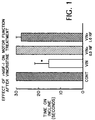
- the data from the incline test are summarized in Table 1 and Fig. 1.
- the animals treated with vincristine alone were able to maintain their grip for only about half the maximal time.
- the other groups tested were all able to maintain their grips for approximately the full 30 seconds allowed.
- the vincristine alone treated group differed from the other groups with a p ⁇ 0.0001 by ANOVA.
- mice On the last day of rhIGF-I vehicle or rhIGF-I administration, the ability of mice to sense and respond to a noxious stimulus was assessed by determining hot-plate (55°C) and tail-flick latencies (D'Amour et al. J. Pharmacol . Exp. Ther. 72 :74-79, 1941; Eddy et al. J. Pharmacol . Exp. Ther . 107 :385-393, 1953; Vaught et al. Life Sci . 48 :2233-2241, 1991). Hot-plate and tail-flick latencies were determined twice for each mouse.
- the cutoff time to lick one hindpaw or shake a hindpaw three times in the hot-plate assay was 20 sec and to move its tail from a heated coil in the tail-flick assay was 10 sec.
- Significant differences between vehicle and taxol-treatment groups were determined by Dunnett's t-test (Tallarida et al. Manual of Pharmacologic Calculation with Computer Programs , 2nd ed. Springer-Verlag, NY, pp. 145-148, 1987) and differences between all groups by a Newman-Keul's test (Tallarida et al. supra , pp. 121-125).
- any of the IGF-I neuropathy-reducing agents described herein can be administered to a patient in a pharmaceutically-acceptable buffer (e.g., physiological saline or acetic acid buffer).
- a pharmaceutically-acceptable buffer e.g., physiological saline or acetic acid buffer
- the therapeutic preparation is administered in accordance with the condition to be treated.
- An appropriate dosage is an amount of an insulin-like growth factor-I, fragment or analog which effects a reduction in the extent of neuropathy.
- IGF-I for example, can be administered at dosages of .03-10 mg/kg/unit dose, as a bolus or by infusion, administered either daily, intermittently, or according to need. This dosage corresponds approximately to the weight to weight ratio of IGF-I to vincristine of between 1:400 and 75:1, preferably 1:40 to 8:1. Dosages of other insulin-like growth factor-I's, fragments or analogs, or their weight to weight ratios relative to the toxic agent of instance, can be determined by one skilled in the art, according to the methods described herein.
- the effectiveness of treating neuropathies with IGF-I can be evaluated by the following signs of recovery: 1) Recovery of normal sensory function, which can be assessed by thermal sensitivity of the extremities; 2) Recovery of normal motor function, which can be assessed by measures of muscle weakness, fine motor control, and deep tendon reflexes; and 3) Normalization of nerve conduction velocity, which is assessed electrophysiologically.
- Methods for assessing peripheral neuropathy are described by Asbury et al. (Asbury et al., 1992, in Diseases of the Nervous System, Clinical Neurobiology , eds. Asbury et al. W.B. Saunders Inc. Philadelphia, PA. 1 :252-269) and can be employed by those skilled in the art to determine the effectiveness of an insulin-like growth factor-I in alleviating neuropathy.
- agents useful in reducing toxic neuropathy can include any of the family of insulin-like growth factor-I's and related neurotrophins, nerve growth factor-enhancing molecules, ciliary neurotrophic factor, IGF-I derived peptide fragments, analogs of an insulin-like growth factor-I, or combinations of these agents.
- the method of the invention can also be used to reduce other toxic neuropathies, e.g., neuropathies of the autonomic or cranial nervous systems, and can be used to mitigate the effects of other toxic agents.
- the invention further includes neuropathies associated with systemic diseases: uremia, childhood cholestatic liver disease, chronic respiratory insufficiency, alcoholic polyneuropathy, multiple organ failure, sepsis, hypoalbuminemia, eosinophilia-myalgia syndrome, hepatitis, porphyria, hypoglycemia, vitamin deficiency, chronic liver disease, primary biliary cirrhosis, hyperlipidemia, leprosy, Lyme disease, herpes zoster, Guillain-Barre syndrome, chronic inflammatory demyelinating polyradiculoneuropathy, sensory perineuritis, acquired immunodeficiency syndrome (AIDS)-associated neuropathy, Sjogren's syndrome, primary vasculitis (such as polyarteritis nodosa), allergic granulomatous angiftis (Churg-Strauss), hypersensitivity angiitis, Wegener's granulomatosis, rheumatoid arthritis, systemic lup
- the invention also includes genetically acquired neuropathies: peroneal muscular atrophy (Charcot-Marie-Tooth Disease, types I, II, and X),hereditary amyloid neuropathies, hereditary sensory neuropathy (type I and type II), porphyric neuropathy, hereditary liability to pressure palsy, Fabry's disease, adrenomyeloneuropathy, Riley-Day syndrome, Dejerine-Sottas neuropathy (hereditary motor-sensory neuropathy-III), Refsum's disease, ataxia-telangiectasia, hereditary tyrosinemia, anaphalipoproteinemia, abetalipoproteinemia, giant axonal neuropathy, metachromatic leukodystrophy, globoid cell leukodystrophy, and Friedrich's ataxia (Asbury et al.
Landscapes
- Health & Medical Sciences (AREA)
- Life Sciences & Earth Sciences (AREA)
- Animal Behavior & Ethology (AREA)
- Bioinformatics & Cheminformatics (AREA)
- Chemical & Material Sciences (AREA)
- Veterinary Medicine (AREA)
- Public Health (AREA)
- Medicinal Chemistry (AREA)
- Engineering & Computer Science (AREA)
- General Health & Medical Sciences (AREA)
- Pharmacology & Pharmacy (AREA)
- Nuclear Medicine, Radiotherapy & Molecular Imaging (AREA)
- Immunology (AREA)
- General Chemical & Material Sciences (AREA)
- Chemical Kinetics & Catalysis (AREA)
- Diabetes (AREA)
- Molecular Biology (AREA)
- Endocrinology (AREA)
- Zoology (AREA)
- Gastroenterology & Hepatology (AREA)
- Organic Chemistry (AREA)
- Proteomics, Peptides & Aminoacids (AREA)
- Epidemiology (AREA)
- Biomedical Technology (AREA)
- Neurology (AREA)
- Neurosurgery (AREA)
- Medicines That Contain Protein Lipid Enzymes And Other Medicines (AREA)
- Surgical Instruments (AREA)
- External Artificial Organs (AREA)
- Pharmaceuticals Containing Other Organic And Inorganic Compounds (AREA)
- Apparatus For Radiation Diagnosis (AREA)
Abstract
Description
- This invention relates to using an insulin-like growth factor-I to prevent or treat peripheral neuropathy.
- Insulin like growth factor-I (IGF-I; somatomedin C) is a member of a family of structurally and functionally related polypeptides which also includes insulin, and insulin like growth factors II (IGF-II) and III (IGF-III). All of these protein factors may play a role in neuronal development and maintenance (Recio-Pinto, E., et al., 1988, Neurochem. Int. 12:397-414). In addition, there is evidence that the levels of IGF-I and IGF-II increase substantially during regeneration after sciatic nerve transection (Hansson, H.A., et al., 1986, Acta Physiol. Scand., 126:609-614). They have been shown to promote the survival of cultured sensory and sympathetic neurons (Ishii, D.N., et al., 1987, In: Insulin, IGFs and Their Receptors in the Central Nervous System, eds., Raizada, M.K., et al., Plenum Press, NY, pp. 315-348) and, in the case of IGF-I, to promote the survival of cortical neurons (Aizenman, Y., et al., 1987, Brain Res., 406:32-42). Finally, studies both in-vitro and in-vivo have demonstrated that IGF-I and IGF-II promote motor neuron survival and neurite outgrowth (Caroni, P., et al., 1990, J. Cell Biol., 110:1307-1317).
- WO-A-90148338 relates to a method of enhancing survival of neuronal cells in a mammals, said cells being at risk of dying because of aging or various degenerative diseases. This method comprises the administration of IGF-1 to said mammal, but it is limited to nervous tissues of the central nervous system. US-A-5068224 discloses the use of IGF-1 for improving the regeneration of transected peripheral nerves, but does not disclose or suggest the use of this compound for reducing peripheral neuropathy.
- Peripheral neuropathy generally refers to a disorder that affects the peripheral nerves, most often manifested as one or a combination of motor, sensory, sensorimotor, or autonomic neural dysfunction. The wide variety of morphologies exhibited by peripheral neuropathies can each be uniquely attributed to an equally wide variety of causes. For instance, peripheral neuropathies can be genetically acquired, can result from a systemic disease, or can be induced by a toxic agent. Some toxic agents that cause neurotoxicities are therapeutic drugs, antineoplastic agents, contaminants in foods or medicinals, and environmental and industrial pollutants.
- In particular, chemotherapeutic agents known to cause sensory and/or motor neuropathies include vincristine, an antineoplastic drug used to treat haematological malignancies and sarcomas. The neurotoxicity is dose-related, and exhibits as reduced intestinal motility and peripheral neuropathy, especially in the distal muscles of the hands and feet, postural hypotension, and atony of the urinary bladder. Similar problems have been documented with taxol and cisplatin (Mollman, J.E., 1990, New Eng Jour Med. 322:126-127), although cisplatin-related neurotoxicity can be alleviated with nerve growth factor (NGF) (Apfel, S.C. et al., 1992, Annals of Neurology 31:76-80). Although the neurotoxicity is sometimes reversible after removal of the neurotoxic agent, recovery can be a very slow process (Legha, S., 1986, Medical Toxicology 1:421-427; Olesen, et al., 1991, Drug Safety 6:302-314).
- There are a number of inherited peripheral neuropathies, including: Refsum's disease, Abetalipoproteinemia, Tangier disease, Krabbe's disease, Metachromatic leukodystrophy, Fabry's disease, Dejerine-Sottas syndrome, and others. Of all the inherited neuropathies, the most common by far is Charcot-Marie-Tooth Disease.
- Charcot-Marie-Tooth (CMT) Disease (also known as Peroneal Muscular Atrophy, or Hereditary Motor Sensory Neuropathy (HMSN)) is the most common hereditary neurological disorder. It is characterized by weakness and atrophy, primarily of the peroneal muscles, due to segmental demyelination of peripheral nerves and associated degeneration of axons and anterior horn cells. Autosomal dominant inheritance is usual, and associated degenerative CNS disorders, such as Friedreich's ataxia, are common.
- There are two primary tons of CMT Disease. Type I (70% of cases) was believed to have demyelination as its initial pathophysiology, but distal clinical involvement suggests a primary axonal degeneration, as in Type II. Type II (30% of cases) is primarily an axonal degeneration without demyelination, and may not be as severe as Type I. Nerve conduction impairment is often present at birth, though this is not a predictor of the possible age of onset or severity of progression. There are also very rare, Type III and Type IV froms, which are recessively-linked.
- The invention features a method of reducing a peripheral neuropathy that is not caused by an abnormal insulin level in a mammal. The method involves administering a neuropathy-reducing amount of insulin-like growth factor-I (IGF-I) or insulin-like growth factor-III (IGF-III) to the mammal.
- In various preferred embodiments, the mammal is a human, or an agricultural or domestic mammal that develops a neuropathy, e.g., as a result of treatment of a neoplasm with a chemotherapeutic agent. IGF-I or IGF-III can be administered in a manner deemed effective by one skilled in the art; preferred modes of administration are intravenous administration and subcutaneous injection.
- As used herein, "peripheral neuropathy" refers to a disorder affecting a segment of the peripheral nervous system. The invention involves using IGF-I or IGF-III, members of the insulin family of growth factors, to reduce a neurotoxicity that is not obviously or directly caused by an abnormal level of insulin, including, but not limited to, distal sensorimotor neuropathy, or autonomic neuropathies such as reduced motility of the gastrointestinal tract or atony of the urinary bladder. Preferred neuropathies that can be effectively treated with IGF-I or IGF-III include neuropathies associated with systemic disease, e.g., post-polio syndrome; genetically acquired neuropathies, e.g., Charcot-Marie-Tooth disease; and neuropathies caused by a toxic agent, e.g., a chemotherapeutic agent, preferably vincristine.
- Where IGF-I or IGF-III is used to treat a neuropathy induced by a toxic agent, it can be administered before, simultaneously with, or after exposure to the toxic agent, or before, during or after administration of a chemotherapeutic. Preferably, the IGF-I and the chemotherapeutic agent are each administered at effective time intervals, during an overlapping period of treatment. The IGF-I or IGF-III can be administered to the mammal following exposure to the neurotoxic agent, or following chemotherapy, to restore at least a portion of the neurofunction destroyed by the neurotoxic agent or chemotherapeutic. The chemotherapeutic can be any chemotherapeutic agent that causes neurotoxicity, preferably vincristine, taxol, dideoxyinosine, or cisplatin. In a preferred example, the weight to weight ratio of IGF-I or IGF-III (des-(1-3)IGF-I), to vincristine is between 1:400 and 75:1, preferably between 1:40 and 8:1.
- Where IGF-I and a chemotherapeutic agent are administered simultaneously, the invention features a composition that includes a substantially pure IGF-I and a chemotherapeutic agent, in a weight to weight ratio of between 1:400 and 75:1. The chemotherapeutic agent is preferably vincristine, cisplatin, dideoxyinosine, or taxol. The term "substantially pure", as used herein, refers to IGF-I or IGF-III which, prior to mixing with another component of the composition, is at least 50% (by weight) of the protein present in the preparation. In preferred embodiments, at least 75%, more preferably at least 90%, and most preferably at least 99% (by weight) of the protein present in the preparation is IGF-I or IGF-III. Most preferably, the IGF-I or IGF-III used in the composition of the invention is pure as judged by amino-terminal amino acid sequence analysis.
- By "toxic agent", or neurotoxic agent, is meant a substance that through its chemical action injures, impairs, or inhibits the activity of a component of the nervous system. The list of neurotoxic agents that cause neuropathies is lengthy, and includes, but is not limited to, neoplastic agents such as vincristine, vinblastine, cisplatin, taxol, or dideoxy- compounds, e.g., dideoxyinosine; alcohol; metals; industrial toxins involved in occupational or environmental exposure; contaminants of food or medicinals; or over-doses of vitamins or therapeutic drugs, e.g., antibiotics such as penicillin or chloramphenicol, or megadoses of vitamins A, D, or B6. An extensive, although not complete, list of chemical compounds with neurotoxic side-effects is found in Table 5. Although this list provides examples of neurotoxic compounds, it is intended to exemplify, not limit, the scope of the invention. Other toxic agents can cause neuropathies, and can be characterized by methods known to one skilled in the art. By "exposure to a toxic agent" is meant that the toxic agent is made available to, or comes into contact with, a mammal of the invention. Exposure to a toxic agent can occur by direct administration, e.g., by ingestion or administration of a food, medicinal, or therapeutic agent, e.g., a chemotherapeutic agent, by accidental contamination, or by environmental exposure, e.g., aerial or aqueous exposure.
- The terms IGF-I and IGF-III include fragments or analogs thereof that exhibit the biological activity of the invention, i.e., the ability to reduce a neuropathy induced by a toxic agent. Methods of determining whether an IGF-I or IGF-III fragment or analog possesses the biological activity of the invention are described below. Generally, suitable analogs and fragments will share at least 65% homology with naturally occurring IGF-I or IGF-III. The fragment polypeptides of IGF-I or IGF-III are subsets of the IGF-I, or IGF-III molecules (respectively), containing fewer amino acid residues than the native molecules. As used herein, a fragment of IGF-I or IGF-III can ordinarily be at least about 5 contiguous amino acids, and can be at least about 30-40 amino acids in length, and preferably about 50-65 amino acids in length. Preferred sequences are of 6-25 residues. A portion of the amino acids of the fragment may be substituted with conservative replacements or deletions which improve the chemical or biological stability of the product peptides. Preferably, no more than 35%, and more preferably no more than 20%, of the amino acid residues are replaced or deleted. The following examples of preferred IGF-I sequences fall within the scope of the invention: 1) IGF-I (55-70)(SEQ ID NO:1), described in a co-assigned patent application by Lewis et al. USSN 07/869,913); and 2) Long R3 IGF-I, which is a fusion protein that consists of human IGF-I with a 13 amino acid extension peptide at the N-terminus and the substitution of Arg for Glu at position 3 (Francis, G.L, et al. 1992. Art to Sci. in Tissue Culture. HyClone Laboratories, Inc. 11:3-7; GROPEP PTY.LTD. PCT Appl. WO89/05822; US Patent No. 5,164,370; PCT /AU90/00210). The peptide fragments listed herein are examples only, and do not limit the scope of IGF-I peptide fragments useful in the invention.
- "Homology", as used herein, refers to the sequence similarity between two polypeptide molecules. When a position in both of the two compared sequences is occupied by the same amino acid monomeric subunit, e.g., if a position in each of two polypeptide molecules is occupied by lysine, then the molecules are homologous at that position. The homology between two sequences is a function of the number of matching or homologous positions shared by the two sequences. For example, if 6 of 10 of the positions in two sequences are matched or homologous, then the two sequences are 60% homologous. By way of example, the amino acid sequences LTVSFR and LPVSAT share 50% homology.
- An analog of IGF-I or IGF-III can differ from a naturally occurring IGF-I or IGF-III by conservative amino acid sequence differences or by modifications that do not affect sequence, or by both. Modifications include chemical derivatization of polypeptides, e.g., acetylation, carboxylation, glycosylation, or phosphorylation; substitution or deletion of amino acid residues that alter the binding protein affinity but do not substantially alter the receptor affinity and/or alter the biological activity of the polypeptide; or chemical alterations to the polypeptide that increase polypeptide stability.
- Despite the widely disparate morphologies and causes attributed to peripheral neuropathies in vivo, applicants have hypothesized that IGF-I can be an effective means of preventing or treating such neuropathies in a mammal, despite the fact that these neuropathies can not be directly or obviously linked to a deficiency in, or otherwise abnormal level of, insulin. To illustrate this, applicants have shown that administering IGF-I to animals given a drug with neurotoxic side effects, i.e., the anti-tumor drug vincristine, reduces the associated neurotoxicity. This finding not only alleviates the neurotoxic side-effect, but could also substantially increase the use of vincristine as an anti-tumor agent. The use of vincristine, an otherwise effective chemotherapeutic, has heretofore been limited by accompanying neurotoxicity. This finding could also similarly increase the use of other compounds limited by neurotoxicity problems. Coadministration of IGF-I or IGF-III can decrease the occurrence of these accompanying peripheral neuropathies.
- Other features and advantages of the invention will be apparent from the following description of the preferred embodiments and from the claims.
- The drawings will first be described.
-
- Fig. 1 is a bar graph showing the effect of rhIGF-I on motor function after vincristine treatment.
- Fig. 2 is a bar graph showing the effect of rhIGF-I on tibial nerve function after vincristine treatment.
- Fig. 3 is a bar graph showing the effect of rhIGF-I on caudal nerve function after vincristine treatment.
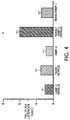
- Fig. 4 is a bar graph showing the effect of taxol and rhIGF-1 on tail-flick latencies.
- Fig. 5 is a bar graph showing the effect of taxol and rhIGF-I on hot plate latencies.
-
- It occurred to applicants that IGF-I, as well as IGF-I related proteins and peptides, might promote the functioning and/or survival of neurons otherwise at risk of losing function and/or dying due to exposure to toxic agents. To specifically test this idea, applicants have investigated whether IGF-I administration is capable of preventing the neurotoxicity resulting from administration of the anti-tumor agent vincristine in an animal model. Clinically, the usefulness of vincristine is limited by the occurrence of polyneuropathy with prominent motor dysfuntion, as well as sensory and autonomic abnormalities (Legha, S.S., supra). To date, there is no effective means of preventing this neuropathy short of limiting the dose of vincristine. Applicants have demonstrated that IGF-I administration is capable of preventing this debilitating and dose-limiting side effect of vincristine.
- In a second test of this idea, applicants have investigated whether IGF-I administration is capable of preventing the neurotoxicity resulting from administration of the antitumor agent taxol in an animal model.
- Vincristine sulfate (Sigma Chemical, St. Louis, MO) was administered at a dose of 2 mg/kg intraperitoneally twice a week for six consecutive weeks. It was formulated at a concentration of 0.16 mg/ml normal saline.
- Recombinant IGF-I (rhIGF-I) for experimental use was provided by Cephalon Inc. (West Chester, PA), and it is also commercially available from RD Systems, Inc. (Minneapolis, MN), U.B.I. (Lake Placid, NY), and Kabi Pharmacia AS (Stockholm, Sweden). The rhIGF-I was formulated for the high dose group at a concentration of 1 mg/ml, and for the low dose group at a concentration of 0.3mg/ml, in an acetic acid buffer solution with a pH of 6.0. The high dose groups (Groups 4 and 6) received 1.0mg/kg IGF-I three times a week subcutaneously for six consecutive weeks. The low dose treated groups (
Groups 3 and 5) received 0.3mg/kg IGF-I three times a week subcutaneously for the same period of time. Groups not receiving IGF-I received subcutaneous injections of the acetic acid buffer vehicle in the same volume per weight, and according to the same schedule, as the animals receiving IGF-I. - CD1 male mice weighing between 15-20 g at the outset were selected for this study. They were randomly distributed, 12 animals to each of the following treatment groups:
- Group #1: Control, vehicle injections only.
- Group #2: Vincristine plus IGF-I vehicle.
- Group #3: Vincristine plus low dose IGF-I.
- Group #4: Vincristine plus high dose IGF-I.
- Group #5: Low dose IGF-I alone.
- Group #6: High dose IGF-I alone.
-
- Incline test: After 6 weeks of treatment, the mice were tested in a blinded fashion. For this test each mouse was placed individually on a styrofoam board, which was then raised to a vertical position. The animals were timed for how long they could maintain their grip on the board without falling. The test was arbitrarily stopped after 30 seconds. The best time out of three trials was recorded.
- After behavioral testing, the mice underwent electrophysiological testing. Each mouse was anesthetized with halothane before recording. Compound amplitudes and distal latencies were measured in the caudal nerve of the tail. The tails were restrained and platinum-iridium needle surface electrodes were placed along the distal section of the caudal nerve. The active recording electrode was positioned at a fixed distance of 40mm distal to the stimulating cathode. Brief pulses of constant voltage stimulation were delivered through an anode-cathode pair positioned overlying a proximal section of the caudal nerve. Motor recordings were conducted orthodromically from the tibial nerve with electrode placement over the distal insertion of the gastrocnemius muscle. Sensory recordings were conducted orthodromically from the sural nerve with a distance of 10mm between electrodes. For each recording five to ten stimuli were averaged, and the procedure was repeated. Latency was determined from the onset of the initial depolarization and was measured to the nearest 0.1 msec. Amplitude was measured from the baseline to peak and was measured to the nearest 0.1µV. Rectal temperature of each mouse was monitored and maintained within 0.5°C.
- Data were analyzed using an analysis of variance (ANOVA) in all cases.
- Clinically, vincristine causes a mixed sensory-motor neuropathy, with distal motor weakness as the most prominent early sign. We therefore made use of a simple behavioral test to ascertain the motor strength of the animals in each group. The data from the incline test are summarized in Table 1 and Fig. 1. The animals treated with vincristine alone were able to maintain their grip for only about half the maximal time. The other groups tested were all able to maintain their grips for approximately the full 30 seconds allowed. The vincristine alone treated group differed from the other groups with a p < 0.0001 by ANOVA.
- Motor conduction was measured from the tibial nerve, and the results are summarized in Table 2 and Fig. 2. The group treated with vincristine alone had a prolonged latency and a significantly reduced action potential amplitude as compared to the control group (p < 0.02 by ANOVA). The groups co-treated with IGF-I did not differ significantly from the control group.
- Compound recordings were conducted from the caudal nerve in the tail and the results are summarized in Table 3 and Fig. 3. Here too, the vincristine alone treated group had significantly prolonged latencies and reduced amplitudes (p<0.001 and p<0.05 respectively). In each case IGF-I administration partially though not completely improved upon these values.
- Sensory recordings were conducted from the sural nerve and the values summarized in Table 4. There were no statistically significant differences between any of the groups as determined by this measurement of purely sensory function.
- The data presented indicate that co-administration of IGF-I with vincristine can prevent the manifestations of vincristine neuropathy seen in this animal model. Applicants have demonstrated the presence of neuropathy using both behavioral and electrophysiological measurements. This animal model of vincristine neuropathy appears to correlate well with the human clinical condition in that motor dysfunction is the most prominent manifestation. Wherever vincristine administration impaired the function of the peripheral nerve, IGF-I administration resulted in a significant improvement.
- To assess whether rhIGF-I could prevent development of a sensory neuropathy caused by taxol administration, male CD-1 mice were dosed daily with taxol (21.6 mg/kg) administered intraperitoneally for 6 days in taxol-vehicle (12% chromophore EL (Sigma, St. Louis MO), 76% phosphate-buffered saline, 12% ethanol). rhIGF-I vehicle (100 mM acetic acid, 50 mM NaCl, 1% human serum albumin) or rhIGF-I (1 mg/kg) was administered subcutaneously for 10 days beginning one day prior to the start of the taxol injections. On the last day of rhIGF-I vehicle or rhIGF-I administration, the ability of mice to sense and respond to a noxious stimulus was assessed by determining hot-plate (55°C) and tail-flick latencies (D'Amour et al. J. Pharmacol. Exp. Ther. 72:74-79, 1941; Eddy et al. J. Pharmacol. Exp. Ther. 107:385-393, 1953; Vaught et al. Life Sci. 48:2233-2241, 1991). Hot-plate and tail-flick latencies were determined twice for each mouse. The cutoff time to lick one hindpaw or shake a hindpaw three times in the hot-plate assay was 20 sec and to move its tail from a heated coil in the tail-flick assay was 10 sec. Significant differences between vehicle and taxol-treatment groups were determined by Dunnett's t-test (Tallarida et al. Manual of Pharmacologic Calculation with Computer Programs, 2nd ed. Springer-Verlag, NY, pp. 145-148, 1987) and differences between all groups by a Newman-Keul's test (Tallarida et al. supra, pp. 121-125).
- Only the mice treated with taxol/rhIGF-I vehicle had tail-flick and hot plate latencies that were significantly greater than that of vehicle-treated mice. Taxol significantly increased tail-flick and hot-plate latencies 43% and 37%, respectively. In addition, the tail-flick and hot-plate latencies for the taxol-treated mice were also significantly greater than that of mice treated with rhIGF-I or taxol/rhIGF-I. Thus, rhIGF-I prevented the development of a sensory neuropathy as measured by changes in tail-flick and hot-plate latencies.
- The effect of rhIGF-1 administration on preventing taxol-induced neuropathy is shown in Table 6, in Fig. 4 (tail-flick latencies) and in Fig. 5 (hot plate latencies). Results are presented as mean + S.E.M. The symbol * denotes that the value is significantly different from both vehicles rhIGF-I alone, and taxol/rhIGF-I-treated groups p<0.05.
- Any of the IGF-I neuropathy-reducing agents described herein can be administered to a patient in a pharmaceutically-acceptable buffer (e.g., physiological saline or acetic acid buffer). Although it may be convenient to administer IGF-I or IGF-III subcutaneously, orally, nasally, or topically, e.g., as a liquid or spray, the therapeutic preparation is administered in accordance with the condition to be treated. For example, it may be necessary to administer IGF-I intravenously, or surgically to the appropriate tissue, or via a catheter.
- An appropriate dosage is an amount of an insulin-like growth factor-I, fragment or analog which effects a reduction in the extent of neuropathy. IGF-I, for example, can be administered at dosages of .03-10 mg/kg/unit dose, as a bolus or by infusion, administered either daily, intermittently, or according to need. This dosage corresponds approximately to the weight to weight ratio of IGF-I to vincristine of between 1:400 and 75:1, preferably 1:40 to 8:1. Dosages of other insulin-like growth factor-I's, fragments or analogs, or their weight to weight ratios relative to the toxic agent of instance, can be determined by one skilled in the art, according to the methods described herein.
- The effectiveness of treating neuropathies with IGF-I can be evaluated by the following signs of recovery: 1) Recovery of normal sensory function, which can be assessed by thermal sensitivity of the extremities; 2) Recovery of normal motor function, which can be assessed by measures of muscle weakness, fine motor control, and deep tendon reflexes; and 3) Normalization of nerve conduction velocity, which is assessed electrophysiologically. Methods for assessing peripheral neuropathy are described by Asbury et al. (Asbury et al., 1992, in Diseases of the Nervous System, Clinical Neurobiology, eds. Asbury et al. W.B. Saunders Inc. Philadelphia, PA. 1:252-269) and can be employed by those skilled in the art to determine the effectiveness of an insulin-like growth factor-I in alleviating neuropathy.
- Other embodiments are within the following claims. For example, agents useful in reducing toxic neuropathy can include any of the family of insulin-like growth factor-I's and related neurotrophins, nerve growth factor-enhancing molecules, ciliary neurotrophic factor, IGF-I derived peptide fragments, analogs of an insulin-like growth factor-I, or combinations of these agents.
- While vincristine neurotoxicity most typically is manifested as a peripheral neuropathy, the method of the invention can also be used to reduce other toxic neuropathies, e.g., neuropathies of the autonomic or cranial nervous systems, and can be used to mitigate the effects of other toxic agents.
- The invention further includes neuropathies associated with systemic diseases: uremia, childhood cholestatic liver disease, chronic respiratory insufficiency, alcoholic polyneuropathy, multiple organ failure, sepsis, hypoalbuminemia, eosinophilia-myalgia syndrome, hepatitis, porphyria, hypoglycemia, vitamin deficiency, chronic liver disease, primary biliary cirrhosis, hyperlipidemia, leprosy, Lyme disease, herpes zoster, Guillain-Barre syndrome, chronic inflammatory demyelinating polyradiculoneuropathy, sensory perineuritis, acquired immunodeficiency syndrome (AIDS)-associated neuropathy, Sjogren's syndrome, primary vasculitis (such as polyarteritis nodosa), allergic granulomatous angiftis (Churg-Strauss), hypersensitivity angiitis, Wegener's granulomatosis, rheumatoid arthritis, systemic lupus erythematosis, mixed connective tissue disease, scleroderma, sarcoidosis, vasculitis, systemic vasculitides, acute inflammatory demyelinating polyneuropathy, post-polio syndrome, carpal tunnel syndrome, pandysautonomia, primary systemic amyloidosis, hypothyroidism, chronic obstructive pulmonary disease, acromegaly, malabsorption (sprue, celiac disease), carcinomas (sensory, sensorimotor, late and demyelinating), lymphoma (including Hodgkin's), polycythemia vera, multiple myeloma (lytic type, osteosclerotic, or solitary plasmacytoma), benign monoclonal gammopathy, macroglobulinemia, and cryoglobulinemia, as described by Asbury et al. supra,
- The invention also includes genetically acquired neuropathies: peroneal muscular atrophy (Charcot-Marie-Tooth Disease, types I, II, and X),hereditary amyloid neuropathies, hereditary sensory neuropathy (type I and type II), porphyric neuropathy, hereditary liability to pressure palsy, Fabry's disease, adrenomyeloneuropathy, Riley-Day syndrome, Dejerine-Sottas neuropathy (hereditary motor-sensory neuropathy-III), Refsum's disease, ataxia-telangiectasia, hereditary tyrosinemia, anaphalipoproteinemia, abetalipoproteinemia, giant axonal neuropathy, metachromatic leukodystrophy, globoid cell leukodystrophy, and Friedrich's ataxia (Asbury et al. supra). Also included in the invention are mononeuropathy multiplex, plexopathy, and pure motor neuropathy, as described by Asbury et al. supra.
INCLINE TEST (sec) GROUP MEANS S.E.M. CONTROL 27.6 2.4 VIN ALONE 15.4 6.5 VIN + IGF LOW 30 0 VIN + IGF HIGH 27.7 2.3 IGF LOW 30 0 IGF HIGH 27 3 Data from the incline test. Values represent the time the animals could remain suspended from a verticle incline, with a maximum set at 30 seconds. TIBIAL - MOTOR NERVE LATENCY (msec) AMPLITUDE (mV) GROUP MEAN S.E.M. MEAN S.E.M. CONTROL 1.21 0.03 22.98 1.06 VIN ALONE 1.35 0.05 13.94 2.11 VIN + IGF LOW 1.38 0.05 17.12 1.53 VIN + IGF HIGH 1.43 0.08 18.48 1.89 IGF LOW 1.21 0.02 19.8 1.81 IGF HIGH 1.23 0.03 20.76 1.47 Electrophysiological measurements from the tibial nerve. CAUDAL - COMPOUND NERVE LATENCY (msec) AMPLITUDE (mV) GROUP MEAN S.E.M. MEAN S.E.M. CONTROL 1.39 0.03 57.32 3.47 VIN ALONE 1.74 0.09 30.66 8.56 VIN + IGF LOW 1.55 0.03 37.01 2.59 VIM + IGF HIGH 1.58 0.03 36.05 1.65 IGF LOW 1.46 0.03 55.93 5.68 IGF HIGH 1.45 0.03 51.96 4.25 Electrophysiological measurements from the caudal nerve. SURAL - SENSORY NERVE LATENCY (msec) AMPLITUDE (mV) GROUP MEAN S.E.M. MEAN S.E.M. CONTROL 0.54 0.01 35.29 3.55 VIN ALONE 0.62 0.04 55.66 7.46 VIN + IGF LOW 0.61 0.02 44.49 7.09 VIN + IGF HIGH 0.57 0.03 37.27 5.4 IGF LOW 0.55 0.02 30.52 3.34 IGF HIGH 0.5 0.02 43.06 7.73 Electrophysiological measurements from the sural nerve. There were no statistically significant differences among groups. 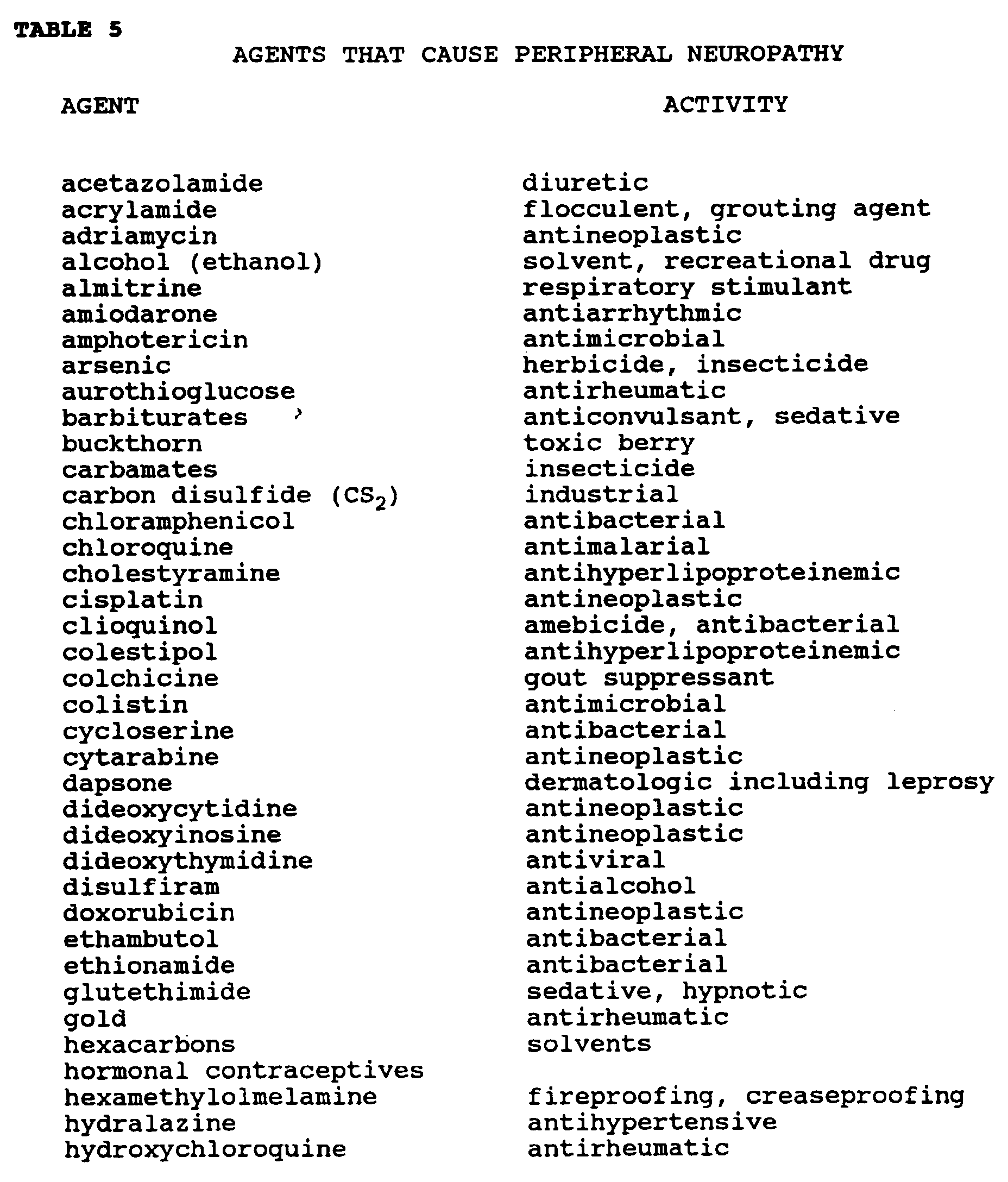

EFFECT OF TAXOL AND rhIGF-I ON TAIL-FLICK AND HOT-PLATE LATENCIES Treatment , Tail-Flick Latency (sec) Hot-Plate Latency (sec) rhIGF-I Vehicle 3.49 ± 0.15 8.72 ± 0.40 Taxol Vehicle 3.70 ± 0.30 7.34 ± 0.44 rhIGF-I (1mg/kg) 3.43 ± 0.14 8.10 ± 0.39 Taxol/rhIGF-I Vehicle 4.99 ± 0.15 11.96 ± 0.54 Taxol/rhIGF-I 3.70 ± 0.19 7.74 ± 0.61 

Claims (9)
- Use of insulin-like growth factor-I (IGF-I) or insulin-like growth factor-III (IGF-III) for the manufacture of a medicament for reducing a peripheral neuropathy that is not caused by an abnormal insulin level in a mammal.
- The use of claim 1, wherein the medicament is adapted to be administered intravenously or subcutaneously.
- The use of claim 1 or claim 2, wherein the neuropathy is associated with a systemic disease, or is post-polio syndrome, hereditary neuropathy or Charcot-Marie-Tooth Disease, or is caused by a toxic agent, such as a chemotherapeutic agent, alcohol, a metal, an industrial toxin, a drug, a vitamin, a contaminant of a food, or a contaminant of a medicinal.
- The use of claim 3, wherein the neuropathy is associated with a chemotherapeutic agent selected from vincristine, cisplatin, taxol, or dideoxyinosine.
- The use of any preceding claim, wherein a chemotherapeutic agent is used simultaneously in a combined preparation.
- The use of claim 5, wherein the IGF-I or IGF-III, and the chemotherapeutic agent, are in a ratio of between 1:400 and 75:1 w/w.
- The use of claim 6, wherein the chemotherapeutic agent is vincristine.
- The use of claim 7, wherein the ratio is between 1:40 and 8:1 w/w.
- The use of any preceding claim, wherein the insulin-like growth factor is IGF-I.
Applications Claiming Priority (5)
| Application Number | Priority Date | Filing Date | Title |
|---|---|---|---|
| US89907092A | 1992-06-12 | 1992-06-12 | |
| US899070 | 1992-06-12 | ||
| US51191 | 1993-04-16 | ||
| US08/051,191 US5420112A (en) | 1992-06-12 | 1993-04-16 | Prevention and treatment of peripheral neuropathy |
| PCT/US1993/005203 WO1993025219A1 (en) | 1992-06-12 | 1993-06-01 | Prevention and treatment of peripheral neuropathy |
Publications (3)
| Publication Number | Publication Date |
|---|---|
| EP0659083A1 EP0659083A1 (en) | 1995-06-28 |
| EP0659083A4 EP0659083A4 (en) | 1996-03-20 |
| EP0659083B1 true EP0659083B1 (en) | 1999-12-22 |
Family
ID=26729153
Family Applications (1)
| Application Number | Title | Priority Date | Filing Date |
|---|---|---|---|
| EP93915178A Expired - Lifetime EP0659083B1 (en) | 1992-06-12 | 1993-06-01 | Prevention and treatment of peripheral neuropathy |
Country Status (16)
| Country | Link |
|---|---|
| US (3) | US5633228A (en) |
| EP (1) | EP0659083B1 (en) |
| JP (1) | JP3623502B2 (en) |
| AT (1) | ATE187889T1 (en) |
| AU (1) | AU683215B2 (en) |
| CA (1) | CA2136969C (en) |
| DE (1) | DE69327402T2 (en) |
| DK (1) | DK0659083T3 (en) |
| ES (1) | ES2140463T3 (en) |
| FI (1) | FI945840A0 (en) |
| GR (1) | GR3032844T3 (en) |
| HU (1) | HU217543B (en) |
| NO (1) | NO309705B1 (en) |
| NZ (2) | NZ253867A (en) |
| PT (1) | PT659083E (en) |
| WO (1) | WO1993025219A1 (en) |
Families Citing this family (69)
| Publication number | Priority date | Publication date | Assignee | Title |
|---|---|---|---|---|
| AU693489B2 (en) * | 1993-11-15 | 1998-07-02 | Celtrix Pharmaceuticals, Inc. | Method of treating neurological disorders |
| US5712249A (en) * | 1994-09-08 | 1998-01-27 | Ciba-Geigy Corporation | Use of insulin-like growth factors I and II for inhibition of inflammatory response |
| US5741776A (en) * | 1995-05-22 | 1998-04-21 | Genentech, Inc. | Method of administration of IGF-I |
| US6121416A (en) * | 1997-04-04 | 2000-09-19 | Genentech, Inc. | Insulin-like growth factor agonist molecules |
| US6420518B1 (en) | 1997-04-04 | 2002-07-16 | Genetech, Inc. | Insulin-like growth factor agonist molecules |
| AU746423B2 (en) * | 1997-05-05 | 2002-05-02 | Mayo Foundation For Medical Education And Research | Treatment of osteoporosis |
| US6548482B1 (en) | 1997-05-05 | 2003-04-15 | Mayo Foundation For Medical Education And Research | Treatment of osteoporosis |
| US6916790B2 (en) | 1997-05-05 | 2005-07-12 | Mayo Foundation For Medical Education And Research | Treatment of osteoporosis |
| US6417160B1 (en) | 1997-10-14 | 2002-07-09 | Nadine A. Tatton | Methods for increasing schwann cell survival |
| DK1047449T3 (en) * | 1997-10-28 | 2004-01-26 | Univ British Columbia | Immunological preparations and their use for transient alteration of mammalian central nervous system to promote neuronal regeneration |
| ES2146530B1 (en) * | 1997-12-26 | 2001-04-16 | Consejo Superior Investigacion | USE OF THE IGF-I GROWTH FACTOR IN THE MANUFACTURE OF USEFUL COMPOSITIONS IN THE TREATMENT OF CEREBELAR ATAXY. |
| US6043259A (en) * | 1998-07-09 | 2000-03-28 | Medicure Inc. | Treatment of cardiovascular and related pathologies |
| AU762351B2 (en) | 1999-01-06 | 2003-06-26 | Genentech Inc. | Insulin-like growth factor (IGF) I mutant variants |
| JP2002539127A (en) | 1999-03-08 | 2002-11-19 | メディキュア インコーポレーテッド | Pyridoxal analogs for vitamin B-6 disorders |
| US20050008641A1 (en) * | 1999-04-28 | 2005-01-13 | University Of British Columbia | Composition for neuronal regeneration comprising myelin-specific antibodies and complement proteins |
| US6489345B1 (en) | 1999-07-13 | 2002-12-03 | Medicure, Inc. | Treatment of diabetes and related pathologies |
| WO2001013900A2 (en) | 1999-08-24 | 2001-03-01 | Medicure International Inc. | Compositions for the treatment of cardiovascular diseases containing pyridoxal compounds and cardiovascular compounds |
| US6770468B1 (en) | 1999-09-14 | 2004-08-03 | Genzyme Glycobiology Research Institute, Inc. | Phosphodiester-α-GlcNAcase of the lysosomal targeting pathway |
| US6534300B1 (en) * | 1999-09-14 | 2003-03-18 | Genzyme Glycobiology Research Institute, Inc. | Methods for producing highly phosphorylated lysosomal hydrolases |
| US6632429B1 (en) * | 1999-12-17 | 2003-10-14 | Joan M. Fallon | Methods for treating pervasive development disorders |
| US7442689B2 (en) * | 2000-02-29 | 2008-10-28 | Medicure International Inc. | Cardioprotective phosphonates and malonates |
| WO2001064692A1 (en) | 2000-02-29 | 2001-09-07 | Medicure International Inc. | Cardioprotective phosphonates and malonates |
| AU784840B2 (en) | 2000-03-28 | 2006-07-06 | Medicure International Inc. | Treatment of cerebrovascular disease |
| AU2001263215A1 (en) | 2000-05-16 | 2001-11-26 | Genentech Inc. | Method for treating cartilage disorders |
| US6548519B1 (en) | 2001-07-06 | 2003-04-15 | Medicure International Inc. | Pyridoxine and pyridoxal analogues: novel uses |
| US6897228B2 (en) * | 2000-07-07 | 2005-05-24 | Medicure International Inc. | Pyridoxine and pyridoxal analogues: new uses |
| JP2004502757A (en) | 2000-07-07 | 2004-01-29 | メディキュア インターナショナル インコーポレイテッド | Pyridoxine and pyridoxal analogs: Cardiovascular therapeutics |
| US6660831B2 (en) | 2000-08-14 | 2003-12-09 | Joan M. Fallon | Method for diagnosing and treating dysautonomia and other dysautonomic conditions |
| US20070053895A1 (en) | 2000-08-14 | 2007-03-08 | Fallon Joan M | Method of treating and diagnosing parkinsons disease and related dysautonomic disorders |
| US8030002B2 (en) | 2000-11-16 | 2011-10-04 | Curemark Llc | Methods for diagnosing pervasive development disorders, dysautonomia and other neurological conditions |
| CA2847458C (en) | 2000-12-13 | 2019-11-12 | Baylor College Of Medicine | Defects in periaxin associated with myelinopathies |
| DE60217066T4 (en) | 2001-02-09 | 2010-07-01 | Genentech, Inc., South San Francisco | CRYSTALLIZATION OF IGF-1 |
| US20040121988A1 (en) * | 2001-03-28 | 2004-06-24 | Medicure International Inc. | Treatment of cerebrovascular disease |
| US20070004641A1 (en) * | 2001-05-24 | 2007-01-04 | Neuren Pharmaceuticals Limited | Cognitive enhancement and cognitive therapy using glycyl-L-2-methylprolyl-L-glutamate |
| US7605177B2 (en) * | 2001-05-24 | 2009-10-20 | Neuren Pharmaceuticals Limited | Effects of glycyl-2 methyl prolyl glutamate on neurodegeneration |
| US7714020B2 (en) * | 2001-05-24 | 2010-05-11 | Neuren Pharmaceuticals Limited | Treatment of non-convulsive seizures in brain injury using G-2-methyl-prolyl glutamate |
| EP1401808B1 (en) | 2001-05-24 | 2009-07-08 | Neuren Pharmaceuticals Limited | Gpe analogs and peptidomimetics |
| US20030124652A1 (en) * | 2001-12-21 | 2003-07-03 | Novazyme Pharmaceuticals, Inc. | Methods of producing high mannose glycoproteins in complex carbohydrate deficient cells |
| US6800472B2 (en) | 2001-12-21 | 2004-10-05 | Genzyme Glycobiology Research Institute, Inc. | Expression of lysosomal hydrolase in cells expressing pro-N-acetylglucosamine-1-phosphodiester α-N-acetyl glucosimanidase |
| US6905856B2 (en) | 2001-12-21 | 2005-06-14 | Genzyme Glycobiology Research Institute, Inc. | Soluble GlcNAc phosphotransferase |
| ES2207387B1 (en) * | 2002-02-28 | 2005-07-16 | Consejo Sup. Investig. Cientificas | CHEMICAL COMPOSITION OF IGF-I FOR THE TREATMENT AND PREVENTION OF NEURODEGENERATIVE DISEASES. |
| US20040186077A1 (en) * | 2003-03-17 | 2004-09-23 | Medicure International Inc. | Novel heteroaryl phosphonates as cardioprotective agents |
| CA2570048A1 (en) * | 2004-07-07 | 2006-01-12 | Medicure International Inc. | Combination therapies employing platelet aggregation drugs |
| US20070060549A1 (en) * | 2004-08-10 | 2007-03-15 | Friesen Albert D | Combination therapies employing ace inhibitors and uses thereof for the treatment of diabetic disorders |
| JP2008511838A (en) * | 2004-08-30 | 2008-04-17 | テルシカ・インク | Methods and apparatus for diagnosis and treatment of insulin-like growth factor deficiency diseases |
| US20060198838A1 (en) * | 2004-09-28 | 2006-09-07 | Fallon Joan M | Combination enzyme for cystic fibrosis |
| US20060094749A1 (en) * | 2004-10-28 | 2006-05-04 | Medicure International Inc. | Substituted pyridoxines as anti-platelet agents |
| US7459468B2 (en) * | 2004-10-28 | 2008-12-02 | Medicure International, Inc. | Aryl sulfonic pyridoxines as antiplatelet agents |
| CA2585165A1 (en) * | 2004-10-28 | 2006-05-18 | Medicure International Inc. | Dual antiplatelet/anticoagulant pyridoxine analogs |
| US20080058282A1 (en) | 2005-08-30 | 2008-03-06 | Fallon Joan M | Use of lactulose in the treatment of autism |
| US20070116695A1 (en) * | 2005-09-21 | 2007-05-24 | Fallon Joan M | Pharmaceutical preparations for attention deficit disorder, attention deficit hyperactivity disorder and other associated disorders |
| JP2009517411A (en) * | 2005-11-28 | 2009-04-30 | メディキュア インターナショナル インコーポレーテッド | Formulations for the treatment of cardiovascular and related medical conditions |
| US8658163B2 (en) | 2008-03-13 | 2014-02-25 | Curemark Llc | Compositions and use thereof for treating symptoms of preeclampsia |
| US8084025B2 (en) | 2008-04-18 | 2011-12-27 | Curemark Llc | Method for the treatment of the symptoms of drug and alcohol addiction |
| US9320780B2 (en) * | 2008-06-26 | 2016-04-26 | Curemark Llc | Methods and compositions for the treatment of symptoms of Williams Syndrome |
| PL2318035T3 (en) * | 2008-07-01 | 2019-10-31 | Curemark Llc | Methods and compositions for treating the symptoms of neurological disorders and mental health disorders |
| US10776453B2 (en) * | 2008-08-04 | 2020-09-15 | Galenagen, Llc | Systems and methods employing remote data gathering and monitoring for diagnosing, staging, and treatment of Parkinsons disease, movement and neurological disorders, and chronic pain |
| US20100092447A1 (en) | 2008-10-03 | 2010-04-15 | Fallon Joan M | Methods and compositions for the treatment of symptoms of prion diseases |
| CA2747703C (en) | 2009-01-06 | 2021-06-15 | Curemark Llc | Compositions and methods for the treatment or the prevention of infections by e. coli |
| JP5684725B2 (en) | 2009-01-06 | 2015-03-18 | キュレロン リミテッド ライアビリティ カンパニー | Compositions and methods for the treatment or prevention of S. aureus infections and compositions and methods for the eradication or reduction of S. aureus on the surface |
| US9056050B2 (en) | 2009-04-13 | 2015-06-16 | Curemark Llc | Enzyme delivery systems and methods of preparation and use |
| US9511125B2 (en) | 2009-10-21 | 2016-12-06 | Curemark Llc | Methods and compositions for the treatment of influenza |
| WO2011109448A1 (en) * | 2010-03-05 | 2011-09-09 | Baylor Research Institute | Involvement of androgen/androgen receptor pathway in fabry disease |
| CA2823505A1 (en) * | 2011-01-26 | 2012-08-02 | Megmilk Snow Brand Co., Ltd. | Agent for improving peripheral sensitivity of skin |
| DK2701733T3 (en) | 2011-04-21 | 2019-05-27 | Curemark Llc | CONNECTIONS FOR TREATMENT OF NEUROPSYCIATRIC DISORDERS |
| US9221890B2 (en) | 2011-10-25 | 2015-12-29 | Indiana University Research And Technology Corporation | Gigaxonin fusion protein and methods for treating giant axonal neuropathy |
| US10350278B2 (en) | 2012-05-30 | 2019-07-16 | Curemark, Llc | Methods of treating Celiac disease |
| WO2018191233A1 (en) | 2017-04-10 | 2018-10-18 | Curemark, Llc | Compositions for treating addiction |
| US11541009B2 (en) | 2020-09-10 | 2023-01-03 | Curemark, Llc | Methods of prophylaxis of coronavirus infection and treatment of coronaviruses |
Family Cites Families (6)
| Publication number | Priority date | Publication date | Assignee | Title |
|---|---|---|---|---|
| CA1275922C (en) * | 1985-11-28 | 1990-11-06 | Harunobu Amagase | Treatment of cancer |
| SE8703625D0 (en) * | 1987-09-18 | 1987-09-18 | Kabivitrum Ab | NEW MEDICAL USE |
| EP0346429B1 (en) * | 1987-12-24 | 1994-12-28 | Gropep Pty. Ltd. | Peptide analogues of insulin-like growth factor 1 (igf-1) or factor 2 (igf-2) |
| US5093317A (en) * | 1989-06-05 | 1992-03-03 | Cephalon, Inc. | Treating disorders by application of insulin-like growth factor |
| ES2101865T3 (en) * | 1991-08-01 | 1997-07-16 | Genentech Inc | IGF-1 TO IMPROVE THE NEURAL STATE. |
| US5420112A (en) * | 1992-06-12 | 1995-05-30 | Lewis; Michael E. | Prevention and treatment of peripheral neuropathy |
-
1993
- 1993-06-01 EP EP93915178A patent/EP0659083B1/en not_active Expired - Lifetime
- 1993-06-01 WO PCT/US1993/005203 patent/WO1993025219A1/en not_active Ceased
- 1993-06-01 DK DK93915178T patent/DK0659083T3/en active
- 1993-06-01 PT PT93915178T patent/PT659083E/en unknown
- 1993-06-01 CA CA002136969A patent/CA2136969C/en not_active Expired - Lifetime
- 1993-06-01 JP JP50154894A patent/JP3623502B2/en not_active Expired - Lifetime
- 1993-06-01 DE DE69327402T patent/DE69327402T2/en not_active Expired - Lifetime
- 1993-06-01 ES ES93915178T patent/ES2140463T3/en not_active Expired - Lifetime
- 1993-06-01 NZ NZ253867A patent/NZ253867A/en not_active IP Right Cessation
- 1993-06-01 HU HU9403544A patent/HU217543B/en unknown
- 1993-06-01 AT AT93915178T patent/ATE187889T1/en active
- 1993-06-01 NZ NZ280523A patent/NZ280523A/en not_active IP Right Cessation
- 1993-06-01 AU AU45262/93A patent/AU683215B2/en not_active Expired
-
1994
- 1994-12-09 NO NO944780A patent/NO309705B1/en not_active IP Right Cessation
- 1994-12-12 FI FI945840A patent/FI945840A0/en not_active Application Discontinuation
- 1994-12-29 US US08/366,049 patent/US5633228A/en not_active Expired - Lifetime
- 1994-12-29 US US08/365,796 patent/US5569648A/en not_active Expired - Lifetime
-
1996
- 1996-06-04 US US08/658,198 patent/US5648335A/en not_active Expired - Lifetime
-
2000
- 2000-03-03 GR GR20000400536T patent/GR3032844T3/en unknown
Non-Patent Citations (2)
| Title |
|---|
| Book no., 1992, "MERCK MANUAL OF DIAGNOSIS AND THERAPY", MERCK RESEARCH LAB., RAHWAY, NJ [USA] * |
| Book no.,1984, "ROCHE LEXIKON MEDIZIN", URBAN UND SCHWARZENBERG, GERMANY * |
Also Published As
| Publication number | Publication date |
|---|---|
| GR3032844T3 (en) | 2000-07-31 |
| NO944780L (en) | 1994-12-09 |
| NZ280523A (en) | 1997-07-27 |
| HU9403544D0 (en) | 1995-02-28 |
| AU683215B2 (en) | 1997-11-06 |
| EP0659083A4 (en) | 1996-03-20 |
| HUT70450A (en) | 1995-10-30 |
| DE69327402T2 (en) | 2000-05-04 |
| AU4526293A (en) | 1994-01-04 |
| PT659083E (en) | 2000-05-31 |
| FI945840A0 (en) | 1994-12-12 |
| HU217543B (en) | 2000-02-28 |
| US5633228A (en) | 1997-05-27 |
| US5569648A (en) | 1996-10-29 |
| NO309705B1 (en) | 2001-03-19 |
| US5648335A (en) | 1997-07-15 |
| NO944780D0 (en) | 1994-12-09 |
| JPH07507799A (en) | 1995-08-31 |
| JP3623502B2 (en) | 2005-02-23 |
| ATE187889T1 (en) | 2000-01-15 |
| DK0659083T3 (en) | 2000-06-13 |
| CA2136969C (en) | 2009-03-24 |
| WO1993025219A1 (en) | 1993-12-23 |
| CA2136969A1 (en) | 1993-12-23 |
| DE69327402D1 (en) | 2000-01-27 |
| NZ253867A (en) | 1996-08-27 |
| ES2140463T3 (en) | 2000-03-01 |
| EP0659083A1 (en) | 1995-06-28 |
Similar Documents
| Publication | Publication Date | Title |
|---|---|---|
| CA2136969C (en) | Prevention and treatment of peripheral neuropathy | |
| US5420112A (en) | Prevention and treatment of peripheral neuropathy | |
| Apfel | Nerve growth factor for the treatment of diabetic neuropathy: what went wrong, what went right, and what does the future hold? | |
| US5604202A (en) | Use of NGF growth factors to treat drug-induced neuropathy | |
| AU693489B2 (en) | Method of treating neurological disorders | |
| US6680295B1 (en) | Method and pharmaceutical composition for prevention and treatment of brain damage | |
| WO1996009318A1 (en) | Method and pharmaceutical composition for prevention and treatment of brain damage | |
| EP0388226B1 (en) | Means for the treatment of senile dementia, memory disorders and related conditions | |
| US20030027755A1 (en) | Compositions and methods for the rescue of white matter | |
| Li et al. | Somatostatin inhibits pancreatic enzyme secretion at a central vagal site | |
| US5567682A (en) | Method of treating Alzheimer's disease | |
| AU755897B2 (en) | Methods of Increasing Sex Hormone Binding Globulin (SHBG) in a Subject | |
| AU2006341375B2 (en) | Amylin and amylin agonists for treating psychiatric diseases and disorders | |
| JP2008516994A (en) | Growth hormone secretagogue and use thereof | |
| US5948757A (en) | High dose IGF-1 therapy | |
| US20220111012A1 (en) | Methods of promoting remyelination | |
| TW202410918A (en) | Compositions and methods for treatment of neurological disorders | |
| EP2114439A1 (en) | Use of somatostatin analogs in cluster headache |
Legal Events
| Date | Code | Title | Description |
|---|---|---|---|
| PUAI | Public reference made under article 153(3) epc to a published international application that has entered the european phase |
Free format text: ORIGINAL CODE: 0009012 |
|
| AK | Designated contracting states |
Kind code of ref document: A1 Designated state(s): AT BE CH DE DK ES FR GB GR IE IT LI LU NL PT SE |
|
| 17P | Request for examination filed |
Effective date: 19950331 |
|
| RHK1 | Main classification (correction) |
Ipc: A61K 38/00 |
|
| RHK1 | Main classification (correction) |
Ipc: A61K 37/24 |
|
| A4 | Supplementary search report drawn up and despatched | ||
| AK | Designated contracting states |
Kind code of ref document: A4 Designated state(s): AT BE CH DE DK ES FR GB GR IE IT LI LU NL PT SE |
|
| 17Q | First examination report despatched |
Effective date: 19970701 |
|
| GRAG | Despatch of communication of intention to grant |
Free format text: ORIGINAL CODE: EPIDOS AGRA |
|
| GRAG | Despatch of communication of intention to grant |
Free format text: ORIGINAL CODE: EPIDOS AGRA |
|
| GRAH | Despatch of communication of intention to grant a patent |
Free format text: ORIGINAL CODE: EPIDOS IGRA |
|
| GRAH | Despatch of communication of intention to grant a patent |
Free format text: ORIGINAL CODE: EPIDOS IGRA |
|
| GRAA | (expected) grant |
Free format text: ORIGINAL CODE: 0009210 |
|
| AK | Designated contracting states |
Kind code of ref document: B1 Designated state(s): AT BE CH DE DK ES FR GB GR IE IT LI LU NL PT SE |
|
| REF | Corresponds to: |
Ref document number: 187889 Country of ref document: AT Date of ref document: 20000115 Kind code of ref document: T |
|
| REG | Reference to a national code |
Ref country code: CH Ref legal event code: NV Representative=s name: ISLER & PEDRAZZINI AG Ref country code: CH Ref legal event code: EP |
|
| REF | Corresponds to: |
Ref document number: 69327402 Country of ref document: DE Date of ref document: 20000127 |
|
| ITF | It: translation for a ep patent filed | ||
| REG | Reference to a national code |
Ref country code: ES Ref legal event code: FG2A Ref document number: 2140463 Country of ref document: ES Kind code of ref document: T3 |
|
| REG | Reference to a national code |
Ref country code: IE Ref legal event code: FG4D |
|
| ET | Fr: translation filed | ||
| REG | Reference to a national code |
Ref country code: PT Ref legal event code: SC4A Free format text: AVAILABILITY OF NATIONAL TRANSLATION Effective date: 20000223 |
|
| REG | Reference to a national code |
Ref country code: DK Ref legal event code: T3 |
|
| PLBE | No opposition filed within time limit |
Free format text: ORIGINAL CODE: 0009261 |
|
| STAA | Information on the status of an ep patent application or granted ep patent |
Free format text: STATUS: NO OPPOSITION FILED WITHIN TIME LIMIT |
|
| 26N | No opposition filed | ||
| REG | Reference to a national code |
Ref country code: GB Ref legal event code: IF02 |
|
| REG | Reference to a national code |
Ref country code: CH Ref legal event code: PCAR Free format text: ISLER & PEDRAZZINI AG;POSTFACH 1772;8027 ZUERICH (CH) |
|
| PGFP | Annual fee paid to national office [announced via postgrant information from national office to epo] |
Ref country code: LU Payment date: 20110706 Year of fee payment: 19 |
|
| PGFP | Annual fee paid to national office [announced via postgrant information from national office to epo] |
Ref country code: CH Payment date: 20120625 Year of fee payment: 20 Ref country code: DE Payment date: 20120627 Year of fee payment: 20 Ref country code: DK Payment date: 20120625 Year of fee payment: 20 Ref country code: NL Payment date: 20120626 Year of fee payment: 20 Ref country code: IE Payment date: 20120626 Year of fee payment: 20 |
|
| PGFP | Annual fee paid to national office [announced via postgrant information from national office to epo] |
Ref country code: SE Payment date: 20120627 Year of fee payment: 20 Ref country code: GR Payment date: 20120628 Year of fee payment: 20 Ref country code: GB Payment date: 20120625 Year of fee payment: 20 Ref country code: FR Payment date: 20120705 Year of fee payment: 20 |
|
| PGFP | Annual fee paid to national office [announced via postgrant information from national office to epo] |
Ref country code: IT Payment date: 20120622 Year of fee payment: 20 |
|
| PGFP | Annual fee paid to national office [announced via postgrant information from national office to epo] |
Ref country code: BE Payment date: 20120625 Year of fee payment: 20 |
|
| PGFP | Annual fee paid to national office [announced via postgrant information from national office to epo] |
Ref country code: ES Payment date: 20120626 Year of fee payment: 20 |
|
| PGFP | Annual fee paid to national office [announced via postgrant information from national office to epo] |
Ref country code: PT Payment date: 20120521 Year of fee payment: 20 |
|
| PGFP | Annual fee paid to national office [announced via postgrant information from national office to epo] |
Ref country code: AT Payment date: 20120521 Year of fee payment: 20 |
|
| REG | Reference to a national code |
Ref country code: CH Ref legal event code: PL |
|
| REG | Reference to a national code |
Ref country code: DE Ref legal event code: R071 Ref document number: 69327402 Country of ref document: DE |
|
| REG | Reference to a national code |
Ref country code: DK Ref legal event code: EUP |
|
| REG | Reference to a national code |
Ref country code: DE Ref legal event code: R071 Ref document number: 69327402 Country of ref document: DE |
|
| REG | Reference to a national code |
Ref country code: PT Ref legal event code: MM4A Free format text: MAXIMUM VALIDITY LIMIT REACHED Effective date: 20130601 |
|
| REG | Reference to a national code |
Ref country code: NL Ref legal event code: V4 Effective date: 20130601 |
|
| REG | Reference to a national code |
Ref country code: GB Ref legal event code: PE20 Expiry date: 20130531 |
|
| BE20 | Be: patent expired |
Owner name: *CEPHALON INC. Effective date: 20130601 Owner name: ALBERT *EINSTEIN COLLEGE OF MEDICINE OF YESHIVA UN Effective date: 20130601 |
|
| REG | Reference to a national code |
Ref country code: AT Ref legal event code: MK07 Ref document number: 187889 Country of ref document: AT Kind code of ref document: T Effective date: 20130601 |
|
| PG25 | Lapsed in a contracting state [announced via postgrant information from national office to epo] |
Ref country code: GB Free format text: LAPSE BECAUSE OF EXPIRATION OF PROTECTION Effective date: 20130531 Ref country code: DE Free format text: LAPSE BECAUSE OF EXPIRATION OF PROTECTION Effective date: 20130604 |
|
| PG25 | Lapsed in a contracting state [announced via postgrant information from national office to epo] |
Ref country code: PT Free format text: LAPSE BECAUSE OF EXPIRATION OF PROTECTION Effective date: 20130611 |
|
| REG | Reference to a national code |
Ref country code: GR Ref legal event code: MA Ref document number: 20000400536 Country of ref document: GR Effective date: 20130602 |
|
| REG | Reference to a national code |
Ref country code: IE Ref legal event code: MK9A |
|
| PG25 | Lapsed in a contracting state [announced via postgrant information from national office to epo] |
Ref country code: IE Free format text: LAPSE BECAUSE OF EXPIRATION OF PROTECTION Effective date: 20130601 |
|
| REG | Reference to a national code |
Ref country code: ES Ref legal event code: FD2A Effective date: 20140828 |
|
| PG25 | Lapsed in a contracting state [announced via postgrant information from national office to epo] |
Ref country code: ES Free format text: LAPSE BECAUSE OF EXPIRATION OF PROTECTION Effective date: 20130602 |