EP0644771B1 - Erythropoietin drug delivery system - Google Patents
Erythropoietin drug delivery system Download PDFInfo
- Publication number
- EP0644771B1 EP0644771B1 EP93916466A EP93916466A EP0644771B1 EP 0644771 B1 EP0644771 B1 EP 0644771B1 EP 93916466 A EP93916466 A EP 93916466A EP 93916466 A EP93916466 A EP 93916466A EP 0644771 B1 EP0644771 B1 EP 0644771B1
- Authority
- EP
- European Patent Office
- Prior art keywords
- protein
- microspheres
- polymer
- solvent
- epo
- Prior art date
- Legal status (The legal status is an assumption and is not a legal conclusion. Google has not performed a legal analysis and makes no representation as to the accuracy of the status listed.)
- Expired - Lifetime
Links
- 102000003951 Erythropoietin Human genes 0.000 title claims abstract description 89
- 108090000394 Erythropoietin Proteins 0.000 title claims abstract description 89
- 229940105423 erythropoietin Drugs 0.000 title claims abstract description 87
- OXCMYAYHXIHQOA-UHFFFAOYSA-N potassium;[2-butyl-5-chloro-3-[[4-[2-(1,2,4-triaza-3-azanidacyclopenta-1,4-dien-5-yl)phenyl]phenyl]methyl]imidazol-4-yl]methanol Chemical compound [K+].CCCCC1=NC(Cl)=C(CO)N1CC1=CC=C(C=2C(=CC=CC=2)C2=N[N-]N=N2)C=C1 OXCMYAYHXIHQOA-UHFFFAOYSA-N 0.000 title claims abstract description 87
- 238000012377 drug delivery Methods 0.000 title description 4
- 239000004005 microsphere Substances 0.000 claims abstract description 155
- 229920000642 polymer Polymers 0.000 claims abstract description 93
- 229920000747 poly(lactic acid) Polymers 0.000 claims abstract description 12
- 235000018102 proteins Nutrition 0.000 claims description 126
- 102000004169 proteins and genes Human genes 0.000 claims description 126
- 108090000623 proteins and genes Proteins 0.000 claims description 126
- 239000002904 solvent Substances 0.000 claims description 65
- 238000000034 method Methods 0.000 claims description 47
- 239000000203 mixture Substances 0.000 claims description 37
- RWRDLPDLKQPQOW-UHFFFAOYSA-N Pyrrolidine Chemical compound C1CCNC1 RWRDLPDLKQPQOW-UHFFFAOYSA-N 0.000 claims description 24
- 239000007788 liquid Substances 0.000 claims description 18
- -1 poly(lactide) Polymers 0.000 claims description 17
- 150000001413 amino acids Chemical class 0.000 claims description 15
- 235000001014 amino acid Nutrition 0.000 claims description 12
- 239000004094 surface-active agent Substances 0.000 claims description 11
- 150000003839 salts Chemical class 0.000 claims description 10
- 150000001720 carbohydrates Chemical class 0.000 claims description 9
- 235000014633 carbohydrates Nutrition 0.000 claims description 9
- 239000003381 stabilizer Substances 0.000 claims description 9
- 150000002632 lipids Chemical class 0.000 claims description 6
- 239000012460 protein solution Substances 0.000 claims description 6
- 239000003937 drug carrier Substances 0.000 claims description 5
- 230000002209 hydrophobic effect Effects 0.000 claims description 5
- 229920001059 synthetic polymer Polymers 0.000 claims description 5
- 229920001606 poly(lactic acid-co-glycolic acid) Polymers 0.000 claims description 4
- 239000011877 solvent mixture Substances 0.000 claims description 4
- DQXBYHZEEUGOBF-UHFFFAOYSA-N but-3-enoic acid;ethene Chemical compound C=C.OC(=O)CC=C DQXBYHZEEUGOBF-UHFFFAOYSA-N 0.000 claims description 3
- 239000005038 ethylene vinyl acetate Substances 0.000 claims description 3
- 238000007911 parenteral administration Methods 0.000 claims description 3
- 229920001308 poly(aminoacid) Polymers 0.000 claims description 3
- 229920001200 poly(ethylene-vinyl acetate) Polymers 0.000 claims description 3
- 229920001610 polycaprolactone Polymers 0.000 claims description 3
- 229920002635 polyurethane Polymers 0.000 claims description 3
- 239000004814 polyurethane Substances 0.000 claims description 3
- 229940124272 protein stabilizer Drugs 0.000 claims description 3
- 102000011632 Caseins Human genes 0.000 claims description 2
- 108010076119 Caseins Proteins 0.000 claims description 2
- 102000008186 Collagen Human genes 0.000 claims description 2
- 108010035532 Collagen Proteins 0.000 claims description 2
- 102000011782 Keratins Human genes 0.000 claims description 2
- 108010076876 Keratins Proteins 0.000 claims description 2
- 229920003171 Poly (ethylene oxide) Polymers 0.000 claims description 2
- 239000004952 Polyamide Substances 0.000 claims description 2
- 229920002732 Polyanhydride Polymers 0.000 claims description 2
- 229920001710 Polyorthoester Polymers 0.000 claims description 2
- 239000004793 Polystyrene Substances 0.000 claims description 2
- 150000001408 amides Chemical class 0.000 claims description 2
- 239000005018 casein Substances 0.000 claims description 2
- BECPQYXYKAMYBN-UHFFFAOYSA-N casein, tech. Chemical compound NCCCCC(C(O)=O)N=C(O)C(CC(O)=O)N=C(O)C(CCC(O)=N)N=C(O)C(CC(C)C)N=C(O)C(CCC(O)=O)N=C(O)C(CC(O)=O)N=C(O)C(CCC(O)=O)N=C(O)C(C(C)O)N=C(O)C(CCC(O)=N)N=C(O)C(CCC(O)=N)N=C(O)C(CCC(O)=N)N=C(O)C(CCC(O)=O)N=C(O)C(CCC(O)=O)N=C(O)C(COP(O)(O)=O)N=C(O)C(CCC(O)=N)N=C(O)C(N)CC1=CC=CC=C1 BECPQYXYKAMYBN-UHFFFAOYSA-N 0.000 claims description 2
- 235000021240 caseins Nutrition 0.000 claims description 2
- 229920001436 collagen Polymers 0.000 claims description 2
- 229920002006 poly(N-vinylimidazole) polymer Polymers 0.000 claims description 2
- 229940065514 poly(lactide) Drugs 0.000 claims description 2
- 229920000058 polyacrylate Polymers 0.000 claims description 2
- 229920002647 polyamide Polymers 0.000 claims description 2
- 229920000515 polycarbonate Polymers 0.000 claims description 2
- 239000004417 polycarbonate Substances 0.000 claims description 2
- 229920002721 polycyanoacrylate Polymers 0.000 claims description 2
- 229920006324 polyoxymethylene Polymers 0.000 claims description 2
- 229920002223 polystyrene Polymers 0.000 claims description 2
- 229920000915 polyvinyl chloride Polymers 0.000 claims description 2
- 239000004800 polyvinyl chloride Substances 0.000 claims description 2
- 229920002620 polyvinyl fluoride Polymers 0.000 claims description 2
- 238000013268 sustained release Methods 0.000 claims 2
- 239000012730 sustained-release form Substances 0.000 claims 2
- 229920000331 Polyhydroxybutyrate Polymers 0.000 claims 1
- 229920001577 copolymer Polymers 0.000 claims 1
- 239000006185 dispersion Substances 0.000 claims 1
- 238000003505 heat denaturation Methods 0.000 claims 1
- 239000005015 poly(hydroxybutyrate) Substances 0.000 claims 1
- 229920002627 poly(phosphazenes) Polymers 0.000 claims 1
- 229920000098 polyolefin Polymers 0.000 claims 1
- 229920002494 Zein Polymers 0.000 abstract description 38
- 239000005019 zein Substances 0.000 abstract description 38
- 229940093612 zein Drugs 0.000 abstract description 38
- 241000282693 Cercopithecidae Species 0.000 abstract description 7
- 210000001995 reticulocyte Anatomy 0.000 abstract description 7
- 241000282472 Canis lupus familiaris Species 0.000 abstract description 6
- 238000001727 in vivo Methods 0.000 abstract description 6
- 229920002988 biodegradable polymer Polymers 0.000 abstract description 3
- 239000004621 biodegradable polymer Substances 0.000 abstract description 3
- 230000036765 blood level Effects 0.000 abstract description 2
- LFQSCWFLJHTTHZ-UHFFFAOYSA-N Ethanol Chemical compound CCO LFQSCWFLJHTTHZ-UHFFFAOYSA-N 0.000 description 48
- 108010055615 Zein Proteins 0.000 description 36
- 239000000243 solution Substances 0.000 description 20
- 239000012071 phase Substances 0.000 description 19
- 150000001875 compounds Chemical class 0.000 description 18
- 239000002245 particle Substances 0.000 description 18
- IJGRMHOSHXDMSA-UHFFFAOYSA-N Atomic nitrogen Chemical compound N#N IJGRMHOSHXDMSA-UHFFFAOYSA-N 0.000 description 16
- 230000015556 catabolic process Effects 0.000 description 15
- 238000006731 degradation reaction Methods 0.000 description 15
- 229940079593 drug Drugs 0.000 description 15
- 239000003814 drug Substances 0.000 description 15
- 230000008569 process Effects 0.000 description 15
- XLYOFNOQVPJJNP-UHFFFAOYSA-N water Substances O XLYOFNOQVPJJNP-UHFFFAOYSA-N 0.000 description 15
- 230000015572 biosynthetic process Effects 0.000 description 12
- 239000011859 microparticle Substances 0.000 description 12
- 239000003960 organic solvent Substances 0.000 description 12
- 239000013543 active substance Substances 0.000 description 11
- 238000000576 coating method Methods 0.000 description 11
- 239000000463 material Substances 0.000 description 11
- 229940024606 amino acid Drugs 0.000 description 10
- 238000009792 diffusion process Methods 0.000 description 10
- CSCPPACGZOOCGX-UHFFFAOYSA-N Acetone Chemical compound CC(C)=O CSCPPACGZOOCGX-UHFFFAOYSA-N 0.000 description 9
- 210000004369 blood Anatomy 0.000 description 9
- 239000008280 blood Substances 0.000 description 9
- 239000011159 matrix material Substances 0.000 description 9
- VLKZOEOYAKHREP-UHFFFAOYSA-N n-Hexane Chemical compound CCCCCC VLKZOEOYAKHREP-UHFFFAOYSA-N 0.000 description 9
- 210000002966 serum Anatomy 0.000 description 9
- 229920000954 Polyglycolide Polymers 0.000 description 8
- 239000007789 gas Substances 0.000 description 8
- 239000003094 microcapsule Substances 0.000 description 8
- 229910052757 nitrogen Inorganic materials 0.000 description 8
- 102000004196 processed proteins & peptides Human genes 0.000 description 8
- 108090000765 processed proteins & peptides Proteins 0.000 description 8
- 239000003795 chemical substances by application Substances 0.000 description 7
- 239000011248 coating agent Substances 0.000 description 7
- 239000003921 oil Substances 0.000 description 7
- 235000019198 oils Nutrition 0.000 description 7
- 238000005191 phase separation Methods 0.000 description 7
- YMWUJEATGCHHMB-UHFFFAOYSA-N Dichloromethane Chemical compound ClCCl YMWUJEATGCHHMB-UHFFFAOYSA-N 0.000 description 6
- RTZKZFJDLAIYFH-UHFFFAOYSA-N Diethyl ether Chemical compound CCOCC RTZKZFJDLAIYFH-UHFFFAOYSA-N 0.000 description 6
- 241001465754 Metazoa Species 0.000 description 6
- OKKJLVBELUTLKV-UHFFFAOYSA-N Methanol Chemical compound OC OKKJLVBELUTLKV-UHFFFAOYSA-N 0.000 description 6
- 238000004132 cross linking Methods 0.000 description 6
- 230000006240 deamidation Effects 0.000 description 6
- 238000002347 injection Methods 0.000 description 6
- 239000007924 injection Substances 0.000 description 6
- JVTAAEKCZFNVCJ-UHFFFAOYSA-N lactic acid Chemical class CC(O)C(O)=O JVTAAEKCZFNVCJ-UHFFFAOYSA-N 0.000 description 6
- 239000000546 pharmaceutical excipient Substances 0.000 description 6
- 238000001694 spray drying Methods 0.000 description 6
- FAPWRFPIFSIZLT-UHFFFAOYSA-M Sodium chloride Chemical compound [Na+].[Cl-] FAPWRFPIFSIZLT-UHFFFAOYSA-M 0.000 description 5
- 239000002253 acid Substances 0.000 description 5
- 239000011162 core material Substances 0.000 description 5
- 230000000694 effects Effects 0.000 description 5
- 239000000839 emulsion Substances 0.000 description 5
- JJTUDXZGHPGLLC-UHFFFAOYSA-N lactide Chemical compound CC1OC(=O)C(C)OC1=O JJTUDXZGHPGLLC-UHFFFAOYSA-N 0.000 description 5
- 230000004048 modification Effects 0.000 description 5
- 238000012986 modification Methods 0.000 description 5
- 238000002360 preparation method Methods 0.000 description 5
- 239000007787 solid Substances 0.000 description 5
- 238000000638 solvent extraction Methods 0.000 description 5
- 239000000126 substance Substances 0.000 description 5
- RKDVKSZUMVYZHH-UHFFFAOYSA-N 1,4-dioxane-2,5-dione Chemical compound O=C1COC(=O)CO1 RKDVKSZUMVYZHH-UHFFFAOYSA-N 0.000 description 4
- QGZKDVFQNNGYKY-UHFFFAOYSA-N Ammonia Chemical compound N QGZKDVFQNNGYKY-UHFFFAOYSA-N 0.000 description 4
- VEXZGXHMUGYJMC-UHFFFAOYSA-M Chloride anion Chemical compound [Cl-] VEXZGXHMUGYJMC-UHFFFAOYSA-M 0.000 description 4
- 102000004190 Enzymes Human genes 0.000 description 4
- 108090000790 Enzymes Proteins 0.000 description 4
- AEMRFAOFKBGASW-UHFFFAOYSA-N Glycolic acid Chemical compound OCC(O)=O AEMRFAOFKBGASW-UHFFFAOYSA-N 0.000 description 4
- 241000700159 Rattus Species 0.000 description 4
- 150000001298 alcohols Chemical class 0.000 description 4
- 239000002585 base Substances 0.000 description 4
- 210000004027 cell Anatomy 0.000 description 4
- 239000002131 composite material Substances 0.000 description 4
- 238000000502 dialysis Methods 0.000 description 4
- 235000014113 dietary fatty acids Nutrition 0.000 description 4
- 239000003623 enhancer Substances 0.000 description 4
- 229940088598 enzyme Drugs 0.000 description 4
- 230000003628 erosive effect Effects 0.000 description 4
- 238000001704 evaporation Methods 0.000 description 4
- 230000008020 evaporation Effects 0.000 description 4
- 239000000194 fatty acid Substances 0.000 description 4
- 229930195729 fatty acid Natural products 0.000 description 4
- 210000001035 gastrointestinal tract Anatomy 0.000 description 4
- 238000003304 gavage Methods 0.000 description 4
- ZDXPYRJPNDTMRX-UHFFFAOYSA-N glutamine Natural products OC(=O)C(N)CCC(N)=O ZDXPYRJPNDTMRX-UHFFFAOYSA-N 0.000 description 4
- 150000008282 halocarbons Chemical class 0.000 description 4
- 230000007062 hydrolysis Effects 0.000 description 4
- 238000006460 hydrolysis reaction Methods 0.000 description 4
- 238000010348 incorporation Methods 0.000 description 4
- 239000007791 liquid phase Substances 0.000 description 4
- 238000011068 loading method Methods 0.000 description 4
- 210000004324 lymphatic system Anatomy 0.000 description 4
- 230000008018 melting Effects 0.000 description 4
- 238000002844 melting Methods 0.000 description 4
- 239000000725 suspension Substances 0.000 description 4
- 239000007762 w/o emulsion Substances 0.000 description 4
- ZWEHNKRNPOVVGH-UHFFFAOYSA-N 2-Butanone Chemical compound CCC(C)=O ZWEHNKRNPOVVGH-UHFFFAOYSA-N 0.000 description 3
- LYCAIKOWRPUZTN-UHFFFAOYSA-N Ethylene glycol Chemical compound OCCO LYCAIKOWRPUZTN-UHFFFAOYSA-N 0.000 description 3
- ZDXPYRJPNDTMRX-VKHMYHEASA-N L-glutamine Chemical compound OC(=O)[C@@H](N)CCC(N)=O ZDXPYRJPNDTMRX-VKHMYHEASA-N 0.000 description 3
- DNIAPMSPPWPWGF-UHFFFAOYSA-N Propylene glycol Chemical compound CC(O)CO DNIAPMSPPWPWGF-UHFFFAOYSA-N 0.000 description 3
- 102000007327 Protamines Human genes 0.000 description 3
- 108010007568 Protamines Proteins 0.000 description 3
- 239000004365 Protease Substances 0.000 description 3
- 108060008539 Transglutaminase Proteins 0.000 description 3
- 230000002378 acidificating effect Effects 0.000 description 3
- 125000002252 acyl group Chemical group 0.000 description 3
- 208000007502 anemia Diseases 0.000 description 3
- 239000008346 aqueous phase Substances 0.000 description 3
- 239000007864 aqueous solution Substances 0.000 description 3
- 230000008901 benefit Effects 0.000 description 3
- 230000000975 bioactive effect Effects 0.000 description 3
- 238000007385 chemical modification Methods 0.000 description 3
- KRKNYBCHXYNGOX-UHFFFAOYSA-N citric acid Chemical compound OC(=O)CC(O)(C(O)=O)CC(O)=O KRKNYBCHXYNGOX-UHFFFAOYSA-N 0.000 description 3
- 235000005687 corn oil Nutrition 0.000 description 3
- 239000002285 corn oil Substances 0.000 description 3
- 238000000605 extraction Methods 0.000 description 3
- 150000004665 fatty acids Chemical class 0.000 description 3
- 238000009472 formulation Methods 0.000 description 3
- 238000007710 freezing Methods 0.000 description 3
- 230000008014 freezing Effects 0.000 description 3
- 238000010438 heat treatment Methods 0.000 description 3
- 235000014655 lactic acid Nutrition 0.000 description 3
- 238000005259 measurement Methods 0.000 description 3
- 230000007246 mechanism Effects 0.000 description 3
- 210000004379 membrane Anatomy 0.000 description 3
- 239000012528 membrane Substances 0.000 description 3
- 238000003127 radioimmunoassay Methods 0.000 description 3
- 229920002545 silicone oil Polymers 0.000 description 3
- 239000011780 sodium chloride Substances 0.000 description 3
- 238000000935 solvent evaporation Methods 0.000 description 3
- 238000007920 subcutaneous administration Methods 0.000 description 3
- 102000003601 transglutaminase Human genes 0.000 description 3
- HZAXFHJVJLSVMW-UHFFFAOYSA-N 2-Aminoethan-1-ol Chemical compound NCCO HZAXFHJVJLSVMW-UHFFFAOYSA-N 0.000 description 2
- DLFVBJFMPXGRIB-UHFFFAOYSA-N Acetamide Chemical compound CC(N)=O DLFVBJFMPXGRIB-UHFFFAOYSA-N 0.000 description 2
- 102000009027 Albumins Human genes 0.000 description 2
- 108010088751 Albumins Proteins 0.000 description 2
- NLXLAEXVIDQMFP-UHFFFAOYSA-N Ammonia chloride Chemical compound [NH4+].[Cl-] NLXLAEXVIDQMFP-UHFFFAOYSA-N 0.000 description 2
- XKRFYHLGVUSROY-UHFFFAOYSA-N Argon Chemical compound [Ar] XKRFYHLGVUSROY-UHFFFAOYSA-N 0.000 description 2
- DCXYFEDJOCDNAF-UHFFFAOYSA-N Asparagine Natural products OC(=O)C(N)CC(N)=O DCXYFEDJOCDNAF-UHFFFAOYSA-N 0.000 description 2
- VTYYLEPIZMXCLO-UHFFFAOYSA-L Calcium carbonate Chemical compound [Ca+2].[O-]C([O-])=O VTYYLEPIZMXCLO-UHFFFAOYSA-L 0.000 description 2
- HEDRZPFGACZZDS-UHFFFAOYSA-N Chloroform Chemical compound ClC(Cl)Cl HEDRZPFGACZZDS-UHFFFAOYSA-N 0.000 description 2
- SXRSQZLOMIGNAQ-UHFFFAOYSA-N Glutaraldehyde Chemical compound O=CCCCC=O SXRSQZLOMIGNAQ-UHFFFAOYSA-N 0.000 description 2
- DHMQDGOQFOQNFH-UHFFFAOYSA-N Glycine Chemical compound NCC(O)=O DHMQDGOQFOQNFH-UHFFFAOYSA-N 0.000 description 2
- 102000003886 Glycoproteins Human genes 0.000 description 2
- 108090000288 Glycoproteins Proteins 0.000 description 2
- HTTJABKRGRZYRN-UHFFFAOYSA-N Heparin Chemical compound OC1C(NC(=O)C)C(O)OC(COS(O)(=O)=O)C1OC1C(OS(O)(=O)=O)C(O)C(OC2C(C(OS(O)(=O)=O)C(OC3C(C(O)C(O)C(O3)C(O)=O)OS(O)(=O)=O)C(CO)O2)NS(O)(=O)=O)C(C(O)=O)O1 HTTJABKRGRZYRN-UHFFFAOYSA-N 0.000 description 2
- KFZMGEQAYNKOFK-UHFFFAOYSA-N Isopropanol Chemical compound CC(C)O KFZMGEQAYNKOFK-UHFFFAOYSA-N 0.000 description 2
- DCXYFEDJOCDNAF-REOHCLBHSA-N L-asparagine Chemical compound OC(=O)[C@@H](N)CC(N)=O DCXYFEDJOCDNAF-REOHCLBHSA-N 0.000 description 2
- IMNFDUFMRHMDMM-UHFFFAOYSA-N N-Heptane Chemical compound CCCCCCC IMNFDUFMRHMDMM-UHFFFAOYSA-N 0.000 description 2
- 108091005804 Peptidases Proteins 0.000 description 2
- 102000006010 Protein Disulfide-Isomerase Human genes 0.000 description 2
- CDBYLPFSWZWCQE-UHFFFAOYSA-L Sodium Carbonate Chemical compound [Na+].[Na+].[O-]C([O-])=O CDBYLPFSWZWCQE-UHFFFAOYSA-L 0.000 description 2
- 229910021529 ammonia Inorganic materials 0.000 description 2
- 229960001230 asparagine Drugs 0.000 description 2
- 235000009582 asparagine Nutrition 0.000 description 2
- 230000004071 biological effect Effects 0.000 description 2
- 208000020832 chronic kidney disease Diseases 0.000 description 2
- CCGSUNCLSOWKJO-UHFFFAOYSA-N cimetidine Chemical compound N#CNC(=N/C)\NCCSCC1=NC=N[C]1C CCGSUNCLSOWKJO-UHFFFAOYSA-N 0.000 description 2
- 229960001380 cimetidine Drugs 0.000 description 2
- 238000004090 dissolution Methods 0.000 description 2
- SNRUBQQJIBEYMU-UHFFFAOYSA-N dodecane Chemical compound CCCCCCCCCCCC SNRUBQQJIBEYMU-UHFFFAOYSA-N 0.000 description 2
- 239000002552 dosage form Substances 0.000 description 2
- 230000002255 enzymatic effect Effects 0.000 description 2
- 210000000981 epithelium Anatomy 0.000 description 2
- 210000003743 erythrocyte Anatomy 0.000 description 2
- 238000002474 experimental method Methods 0.000 description 2
- 150000002191 fatty alcohols Chemical class 0.000 description 2
- 238000004108 freeze drying Methods 0.000 description 2
- 230000002496 gastric effect Effects 0.000 description 2
- 229960004275 glycolic acid Drugs 0.000 description 2
- 229960002897 heparin Drugs 0.000 description 2
- 229920000669 heparin Polymers 0.000 description 2
- 229940088597 hormone Drugs 0.000 description 2
- 239000005556 hormone Substances 0.000 description 2
- 238000010255 intramuscular injection Methods 0.000 description 2
- 239000007927 intramuscular injection Substances 0.000 description 2
- 238000001990 intravenous administration Methods 0.000 description 2
- 150000002576 ketones Chemical class 0.000 description 2
- 229960000448 lactic acid Drugs 0.000 description 2
- 238000004519 manufacturing process Methods 0.000 description 2
- 239000002609 medium Substances 0.000 description 2
- 239000002480 mineral oil Substances 0.000 description 2
- 235000010446 mineral oil Nutrition 0.000 description 2
- 238000002156 mixing Methods 0.000 description 2
- 239000007764 o/w emulsion Substances 0.000 description 2
- 230000037361 pathway Effects 0.000 description 2
- 230000035515 penetration Effects 0.000 description 2
- 210000004303 peritoneum Anatomy 0.000 description 2
- 239000003208 petroleum Substances 0.000 description 2
- 210000001539 phagocyte Anatomy 0.000 description 2
- 239000000902 placebo Substances 0.000 description 2
- 229940068196 placebo Drugs 0.000 description 2
- 230000036470 plasma concentration Effects 0.000 description 2
- 229920002959 polymer blend Polymers 0.000 description 2
- 229920001184 polypeptide Polymers 0.000 description 2
- BWHMMNNQKKPAPP-UHFFFAOYSA-L potassium carbonate Chemical compound [K+].[K+].[O-]C([O-])=O BWHMMNNQKKPAPP-UHFFFAOYSA-L 0.000 description 2
- 238000012545 processing Methods 0.000 description 2
- NARVIWMVBMUEOG-UHFFFAOYSA-N prop-1-en-2-ol Chemical compound CC(O)=C NARVIWMVBMUEOG-UHFFFAOYSA-N 0.000 description 2
- 229940048914 protamine Drugs 0.000 description 2
- 108020003519 protein disulfide isomerase Proteins 0.000 description 2
- 238000011160 research Methods 0.000 description 2
- 239000012266 salt solution Substances 0.000 description 2
- 239000001488 sodium phosphate Substances 0.000 description 2
- PFNFFQXMRSDOHW-UHFFFAOYSA-N spermine Chemical compound NCCCNCCCCNCCCN PFNFFQXMRSDOHW-UHFFFAOYSA-N 0.000 description 2
- 230000002459 sustained effect Effects 0.000 description 2
- 230000008685 targeting Effects 0.000 description 2
- LWIHDJKSTIGBAC-UHFFFAOYSA-K tripotassium phosphate Chemical compound [K+].[K+].[K+].[O-]P([O-])([O-])=O LWIHDJKSTIGBAC-UHFFFAOYSA-K 0.000 description 2
- RYFMWSXOAZQYPI-UHFFFAOYSA-K trisodium phosphate Chemical compound [Na+].[Na+].[Na+].[O-]P([O-])([O-])=O RYFMWSXOAZQYPI-UHFFFAOYSA-K 0.000 description 2
- 235000015112 vegetable and seed oil Nutrition 0.000 description 2
- 239000008158 vegetable oil Substances 0.000 description 2
- OORRCVPWRPVJEK-UHFFFAOYSA-N 2-oxidanylethanoic acid Chemical compound OCC(O)=O.OCC(O)=O OORRCVPWRPVJEK-UHFFFAOYSA-N 0.000 description 1
- WSSSPWUEQFSQQG-UHFFFAOYSA-N 4-methyl-1-pentene Chemical compound CC(C)CC=C WSSSPWUEQFSQQG-UHFFFAOYSA-N 0.000 description 1
- JJTUDXZGHPGLLC-IMJSIDKUSA-N 4511-42-6 Chemical compound C[C@@H]1OC(=O)[C@H](C)OC1=O JJTUDXZGHPGLLC-IMJSIDKUSA-N 0.000 description 1
- 208000030507 AIDS Diseases 0.000 description 1
- QTBSBXVTEAMEQO-UHFFFAOYSA-M Acetate Chemical compound CC([O-])=O QTBSBXVTEAMEQO-UHFFFAOYSA-M 0.000 description 1
- GUBGYTABKSRVRQ-XLOQQCSPSA-N Alpha-Lactose Chemical compound O[C@@H]1[C@@H](O)[C@@H](O)[C@@H](CO)O[C@H]1O[C@@H]1[C@@H](CO)O[C@H](O)[C@H](O)[C@H]1O GUBGYTABKSRVRQ-XLOQQCSPSA-N 0.000 description 1
- ATRRKUHOCOJYRX-UHFFFAOYSA-N Ammonium bicarbonate Chemical compound [NH4+].OC([O-])=O ATRRKUHOCOJYRX-UHFFFAOYSA-N 0.000 description 1
- 239000004475 Arginine Substances 0.000 description 1
- CIWBSHSKHKDKBQ-JLAZNSOCSA-N Ascorbic acid Natural products OC[C@H](O)[C@H]1OC(=O)C(O)=C1O CIWBSHSKHKDKBQ-JLAZNSOCSA-N 0.000 description 1
- UXVMQQNJUSDDNG-UHFFFAOYSA-L Calcium chloride Chemical compound [Cl-].[Cl-].[Ca+2] UXVMQQNJUSDDNG-UHFFFAOYSA-L 0.000 description 1
- 108090000317 Chymotrypsin Proteins 0.000 description 1
- XZMCDFZZKTWFGF-UHFFFAOYSA-N Cyanamide Chemical compound NC#N XZMCDFZZKTWFGF-UHFFFAOYSA-N 0.000 description 1
- FBPFZTCFMRRESA-KVTDHHQDSA-N D-Mannitol Chemical compound OC[C@@H](O)[C@@H](O)[C@H](O)[C@H](O)CO FBPFZTCFMRRESA-KVTDHHQDSA-N 0.000 description 1
- 229920002307 Dextran Polymers 0.000 description 1
- MYMOFIZGZYHOMD-UHFFFAOYSA-N Dioxygen Chemical compound O=O MYMOFIZGZYHOMD-UHFFFAOYSA-N 0.000 description 1
- 108010061711 Gliadin Proteins 0.000 description 1
- 108010068370 Glutens Proteins 0.000 description 1
- 239000004471 Glycine Substances 0.000 description 1
- 102000001554 Hemoglobins Human genes 0.000 description 1
- 108010054147 Hemoglobins Proteins 0.000 description 1
- 206010021143 Hypoxia Diseases 0.000 description 1
- XUJNEKJLAYXESH-REOHCLBHSA-N L-Cysteine Chemical compound SC[C@H](N)C(O)=O XUJNEKJLAYXESH-REOHCLBHSA-N 0.000 description 1
- ONIBWKKTOPOVIA-BYPYZUCNSA-N L-Proline Chemical compound OC(=O)[C@@H]1CCCN1 ONIBWKKTOPOVIA-BYPYZUCNSA-N 0.000 description 1
- ODKSFYDXXFIFQN-BYPYZUCNSA-P L-argininium(2+) Chemical compound NC(=[NH2+])NCCC[C@H]([NH3+])C(O)=O ODKSFYDXXFIFQN-BYPYZUCNSA-P 0.000 description 1
- AYFVYJQAPQTCCC-GBXIJSLDSA-N L-threonine Chemical compound C[C@@H](O)[C@H](N)C(O)=O AYFVYJQAPQTCCC-GBXIJSLDSA-N 0.000 description 1
- GUBGYTABKSRVRQ-QKKXKWKRSA-N Lactose Natural products OC[C@H]1O[C@@H](O[C@H]2[C@H](O)[C@@H](O)C(O)O[C@@H]2CO)[C@H](O)[C@@H](O)[C@H]1O GUBGYTABKSRVRQ-QKKXKWKRSA-N 0.000 description 1
- 241000282567 Macaca fascicularis Species 0.000 description 1
- 229930195725 Mannitol Natural products 0.000 description 1
- 229910019142 PO4 Inorganic materials 0.000 description 1
- 108090000526 Papain Proteins 0.000 description 1
- 102000035195 Peptidases Human genes 0.000 description 1
- 239000004743 Polypropylene Substances 0.000 description 1
- ONIBWKKTOPOVIA-UHFFFAOYSA-N Proline Natural products OC(=O)C1CCCN1 ONIBWKKTOPOVIA-UHFFFAOYSA-N 0.000 description 1
- 102100037486 Reverse transcriptase/ribonuclease H Human genes 0.000 description 1
- CZMRCDWAGMRECN-UGDNZRGBSA-N Sucrose Chemical compound O[C@H]1[C@H](O)[C@@H](CO)O[C@@]1(CO)O[C@@H]1[C@H](O)[C@@H](O)[C@H](O)[C@@H](CO)O1 CZMRCDWAGMRECN-UGDNZRGBSA-N 0.000 description 1
- 229930006000 Sucrose Natural products 0.000 description 1
- 239000004473 Threonine Substances 0.000 description 1
- AYFVYJQAPQTCCC-UHFFFAOYSA-N Threonine Natural products CC(O)C(N)C(O)=O AYFVYJQAPQTCCC-UHFFFAOYSA-N 0.000 description 1
- GSEJCLTVZPLZKY-UHFFFAOYSA-N Triethanolamine Chemical compound OCCN(CCO)CCO GSEJCLTVZPLZKY-UHFFFAOYSA-N 0.000 description 1
- FMRLDPWIRHBCCC-UHFFFAOYSA-L Zinc carbonate Chemical compound [Zn+2].[O-]C([O-])=O FMRLDPWIRHBCCC-UHFFFAOYSA-L 0.000 description 1
- 238000010521 absorption reaction Methods 0.000 description 1
- 239000003929 acidic solution Substances 0.000 description 1
- 230000010933 acylation Effects 0.000 description 1
- 238000005917 acylation reaction Methods 0.000 description 1
- 239000000654 additive Substances 0.000 description 1
- 239000002671 adjuvant Substances 0.000 description 1
- 230000002776 aggregation Effects 0.000 description 1
- 238000004220 aggregation Methods 0.000 description 1
- 238000013019 agitation Methods 0.000 description 1
- 229940050528 albumin Drugs 0.000 description 1
- 150000001299 aldehydes Chemical class 0.000 description 1
- 125000003368 amide group Chemical group 0.000 description 1
- 239000001099 ammonium carbonate Substances 0.000 description 1
- 235000012501 ammonium carbonate Nutrition 0.000 description 1
- 235000019270 ammonium chloride Nutrition 0.000 description 1
- BFNBIHQBYMNNAN-UHFFFAOYSA-N ammonium sulfate Chemical compound N.N.OS(O)(=O)=O BFNBIHQBYMNNAN-UHFFFAOYSA-N 0.000 description 1
- 229910052921 ammonium sulfate Inorganic materials 0.000 description 1
- 235000011130 ammonium sulphate Nutrition 0.000 description 1
- 150000008064 anhydrides Chemical class 0.000 description 1
- 239000012736 aqueous medium Substances 0.000 description 1
- 239000002152 aqueous-organic solution Substances 0.000 description 1
- ODKSFYDXXFIFQN-UHFFFAOYSA-N arginine Natural products OC(=O)C(N)CCCNC(N)=N ODKSFYDXXFIFQN-UHFFFAOYSA-N 0.000 description 1
- 229910052786 argon Inorganic materials 0.000 description 1
- 238000000149 argon plasma sintering Methods 0.000 description 1
- 150000004945 aromatic hydrocarbons Chemical class 0.000 description 1
- 235000010323 ascorbic acid Nutrition 0.000 description 1
- 229960005070 ascorbic acid Drugs 0.000 description 1
- 239000011668 ascorbic acid Substances 0.000 description 1
- QVGXLLKOCUKJST-UHFFFAOYSA-N atomic oxygen Chemical compound [O] QVGXLLKOCUKJST-UHFFFAOYSA-N 0.000 description 1
- 239000003637 basic solution Substances 0.000 description 1
- 235000010233 benzoic acid Nutrition 0.000 description 1
- 150000001559 benzoic acids Chemical class 0.000 description 1
- 239000003833 bile salt Substances 0.000 description 1
- 229940093761 bile salts Drugs 0.000 description 1
- 229920013641 bioerodible polymer Polymers 0.000 description 1
- 230000002051 biphasic effect Effects 0.000 description 1
- 238000004820 blood count Methods 0.000 description 1
- 238000009835 boiling Methods 0.000 description 1
- 210000001185 bone marrow Anatomy 0.000 description 1
- BTANRVKWQNVYAZ-UHFFFAOYSA-N butan-2-ol Chemical compound CCC(C)O BTANRVKWQNVYAZ-UHFFFAOYSA-N 0.000 description 1
- 239000006227 byproduct Substances 0.000 description 1
- 229910000019 calcium carbonate Inorganic materials 0.000 description 1
- 239000001110 calcium chloride Substances 0.000 description 1
- 229910001628 calcium chloride Inorganic materials 0.000 description 1
- 239000002775 capsule Substances 0.000 description 1
- 150000001718 carbodiimides Chemical class 0.000 description 1
- 239000000969 carrier Substances 0.000 description 1
- 239000003054 catalyst Substances 0.000 description 1
- 229920002301 cellulose acetate Polymers 0.000 description 1
- 230000008859 change Effects 0.000 description 1
- 238000012512 characterization method Methods 0.000 description 1
- 238000006243 chemical reaction Methods 0.000 description 1
- 239000013626 chemical specie Substances 0.000 description 1
- 150000008280 chlorinated hydrocarbons Chemical class 0.000 description 1
- OEYIOHPDSNJKLS-UHFFFAOYSA-N choline Chemical compound C[N+](C)(C)CCO OEYIOHPDSNJKLS-UHFFFAOYSA-N 0.000 description 1
- 229960001231 choline Drugs 0.000 description 1
- 230000001684 chronic effect Effects 0.000 description 1
- 208000022831 chronic renal failure syndrome Diseases 0.000 description 1
- 229960002376 chymotrypsin Drugs 0.000 description 1
- 239000008139 complexing agent Substances 0.000 description 1
- 238000013270 controlled release Methods 0.000 description 1
- 239000000599 controlled substance Substances 0.000 description 1
- 150000004292 cyclic ethers Chemical class 0.000 description 1
- 125000004122 cyclic group Chemical group 0.000 description 1
- XUJNEKJLAYXESH-UHFFFAOYSA-N cysteine Natural products SCC(N)C(O)=O XUJNEKJLAYXESH-UHFFFAOYSA-N 0.000 description 1
- 235000018417 cysteine Nutrition 0.000 description 1
- 230000003247 decreasing effect Effects 0.000 description 1
- 230000007812 deficiency Effects 0.000 description 1
- 230000003413 degradative effect Effects 0.000 description 1
- 230000003111 delayed effect Effects 0.000 description 1
- 230000001419 dependent effect Effects 0.000 description 1
- 238000000151 deposition Methods 0.000 description 1
- ZBCBWPMODOFKDW-UHFFFAOYSA-N diethanolamine Chemical compound OCCNCCO ZBCBWPMODOFKDW-UHFFFAOYSA-N 0.000 description 1
- 229940043237 diethanolamine Drugs 0.000 description 1
- 238000000113 differential scanning calorimetry Methods 0.000 description 1
- 230000004069 differentiation Effects 0.000 description 1
- 239000000539 dimer Substances 0.000 description 1
- LOKCTEFSRHRXRJ-UHFFFAOYSA-I dipotassium trisodium dihydrogen phosphate hydrogen phosphate dichloride Chemical compound P(=O)(O)(O)[O-].[K+].P(=O)(O)([O-])[O-].[Na+].[Na+].[Cl-].[K+].[Cl-].[Na+] LOKCTEFSRHRXRJ-UHFFFAOYSA-I 0.000 description 1
- 238000009826 distribution Methods 0.000 description 1
- 238000001647 drug administration Methods 0.000 description 1
- 239000003995 emulsifying agent Substances 0.000 description 1
- 208000028208 end stage renal disease Diseases 0.000 description 1
- 201000000523 end stage renal failure Diseases 0.000 description 1
- 230000007071 enzymatic hydrolysis Effects 0.000 description 1
- 238000006047 enzymatic hydrolysis reaction Methods 0.000 description 1
- 230000009144 enzymatic modification Effects 0.000 description 1
- 210000000267 erythroid cell Anatomy 0.000 description 1
- 230000032050 esterification Effects 0.000 description 1
- 238000005886 esterification reaction Methods 0.000 description 1
- 150000002148 esters Chemical class 0.000 description 1
- 229940031098 ethanolamine Drugs 0.000 description 1
- 239000002360 explosive Substances 0.000 description 1
- 239000012467 final product Substances 0.000 description 1
- 238000010353 genetic engineering Methods 0.000 description 1
- 150000004676 glycans Chemical class 0.000 description 1
- 150000002334 glycols Chemical class 0.000 description 1
- 229940093915 gynecological organic acid Drugs 0.000 description 1
- 239000012456 homogeneous solution Substances 0.000 description 1
- 229920001519 homopolymer Polymers 0.000 description 1
- 150000002433 hydrophilic molecules Chemical class 0.000 description 1
- 230000001146 hypoxic effect Effects 0.000 description 1
- 230000003053 immunization Effects 0.000 description 1
- 238000002649 immunization Methods 0.000 description 1
- 239000007943 implant Substances 0.000 description 1
- 230000006698 induction Effects 0.000 description 1
- 150000007529 inorganic bases Chemical class 0.000 description 1
- 210000004347 intestinal mucosa Anatomy 0.000 description 1
- 238000007918 intramuscular administration Methods 0.000 description 1
- 238000007912 intraperitoneal administration Methods 0.000 description 1
- 230000001788 irregular Effects 0.000 description 1
- FZWBNHMXJMCXLU-BLAUPYHCSA-N isomaltotriose Chemical compound O[C@@H]1[C@@H](O)[C@H](O)[C@@H](CO)O[C@@H]1OC[C@@H]1[C@@H](O)[C@H](O)[C@@H](O)[C@@H](OC[C@@H](O)[C@@H](O)[C@H](O)[C@@H](O)C=O)O1 FZWBNHMXJMCXLU-BLAUPYHCSA-N 0.000 description 1
- 210000003734 kidney Anatomy 0.000 description 1
- TYQCGQRIZGCHNB-JLAZNSOCSA-N l-ascorbic acid Chemical compound OC[C@H](O)[C@H]1OC(O)=C(O)C1=O TYQCGQRIZGCHNB-JLAZNSOCSA-N 0.000 description 1
- 239000004310 lactic acid Substances 0.000 description 1
- 239000008101 lactose Substances 0.000 description 1
- 230000002045 lasting effect Effects 0.000 description 1
- 239000008176 lyophilized powder Substances 0.000 description 1
- 210000002540 macrophage Anatomy 0.000 description 1
- 239000000594 mannitol Substances 0.000 description 1
- 235000010355 mannitol Nutrition 0.000 description 1
- 238000010907 mechanical stirring Methods 0.000 description 1
- 239000000155 melt Substances 0.000 description 1
- 150000007522 mineralic acids Chemical class 0.000 description 1
- 102000035118 modified proteins Human genes 0.000 description 1
- 108091005573 modified proteins Proteins 0.000 description 1
- 239000000178 monomer Substances 0.000 description 1
- 229920005615 natural polymer Polymers 0.000 description 1
- 210000000056 organ Anatomy 0.000 description 1
- 150000007524 organic acids Chemical class 0.000 description 1
- 235000005985 organic acids Nutrition 0.000 description 1
- 150000007530 organic bases Chemical class 0.000 description 1
- 230000003647 oxidation Effects 0.000 description 1
- 238000007254 oxidation reaction Methods 0.000 description 1
- 239000001301 oxygen Substances 0.000 description 1
- 229910052760 oxygen Inorganic materials 0.000 description 1
- 229940055729 papain Drugs 0.000 description 1
- 235000019834 papain Nutrition 0.000 description 1
- NBIIXXVUZAFLBC-UHFFFAOYSA-K phosphate Chemical compound [O-]P([O-])([O-])=O NBIIXXVUZAFLBC-UHFFFAOYSA-K 0.000 description 1
- 239000010452 phosphate Substances 0.000 description 1
- 239000008363 phosphate buffer Substances 0.000 description 1
- 239000002953 phosphate buffered saline Substances 0.000 description 1
- 150000003904 phospholipids Chemical class 0.000 description 1
- 239000003495 polar organic solvent Substances 0.000 description 1
- 229920001432 poly(L-lactide) Polymers 0.000 description 1
- 229920005597 polymer membrane Polymers 0.000 description 1
- 229920005862 polyol Polymers 0.000 description 1
- 150000003077 polyols Chemical class 0.000 description 1
- 229920001155 polypropylene Polymers 0.000 description 1
- 229920001282 polysaccharide Polymers 0.000 description 1
- 239000005017 polysaccharide Substances 0.000 description 1
- 229920002451 polyvinyl alcohol Polymers 0.000 description 1
- 239000011148 porous material Substances 0.000 description 1
- 229910000027 potassium carbonate Inorganic materials 0.000 description 1
- 229910000160 potassium phosphate Inorganic materials 0.000 description 1
- 235000011009 potassium phosphates Nutrition 0.000 description 1
- 239000000843 powder Substances 0.000 description 1
- 238000004321 preservation Methods 0.000 description 1
- 239000000047 product Substances 0.000 description 1
- 230000035755 proliferation Effects 0.000 description 1
- 229950008679 protamine sulfate Drugs 0.000 description 1
- 235000019419 proteases Nutrition 0.000 description 1
- 230000035484 reaction time Effects 0.000 description 1
- 230000009257 reactivity Effects 0.000 description 1
- 238000005070 sampling Methods 0.000 description 1
- 238000004626 scanning electron microscopy Methods 0.000 description 1
- 230000028327 secretion Effects 0.000 description 1
- 230000035945 sensitivity Effects 0.000 description 1
- 239000002002 slurry Substances 0.000 description 1
- 229910001467 sodium calcium phosphate Inorganic materials 0.000 description 1
- 229910000029 sodium carbonate Inorganic materials 0.000 description 1
- 229910000162 sodium phosphate Inorganic materials 0.000 description 1
- 229940063675 spermine Drugs 0.000 description 1
- 239000012798 spherical particle Substances 0.000 description 1
- 230000002269 spontaneous effect Effects 0.000 description 1
- 238000012453 sprague-dawley rat model Methods 0.000 description 1
- 238000005507 spraying Methods 0.000 description 1
- 239000007858 starting material Substances 0.000 description 1
- 210000000130 stem cell Anatomy 0.000 description 1
- 238000010254 subcutaneous injection Methods 0.000 description 1
- 239000007929 subcutaneous injection Substances 0.000 description 1
- 239000005720 sucrose Substances 0.000 description 1
- 235000000346 sugar Nutrition 0.000 description 1
- 150000008163 sugars Chemical class 0.000 description 1
- 238000003786 synthesis reaction Methods 0.000 description 1
- 238000010257 thawing Methods 0.000 description 1
- 238000006276 transfer reaction Methods 0.000 description 1
- 229960004418 trolamine Drugs 0.000 description 1
- 210000002700 urine Anatomy 0.000 description 1
- 239000011667 zinc carbonate Substances 0.000 description 1
- 235000004416 zinc carbonate Nutrition 0.000 description 1
- 229910000010 zinc carbonate Inorganic materials 0.000 description 1
- UGZADUVQMDAIAO-UHFFFAOYSA-L zinc hydroxide Chemical compound [OH-].[OH-].[Zn+2] UGZADUVQMDAIAO-UHFFFAOYSA-L 0.000 description 1
- 229940007718 zinc hydroxide Drugs 0.000 description 1
- 229910021511 zinc hydroxide Inorganic materials 0.000 description 1
Images
Classifications
-
- A—HUMAN NECESSITIES
- A61—MEDICAL OR VETERINARY SCIENCE; HYGIENE
- A61K—PREPARATIONS FOR MEDICAL, DENTAL OR TOILETRY PURPOSES
- A61K9/00—Medicinal preparations characterised by special physical form
- A61K9/48—Preparations in capsules, e.g. of gelatin, of chocolate
- A61K9/50—Microcapsules having a gas, liquid or semi-solid filling; Solid microparticles or pellets surrounded by a distinct coating layer, e.g. coated microspheres, coated drug crystals
- A61K9/51—Nanocapsules; Nanoparticles
- A61K9/5107—Excipients; Inactive ingredients
- A61K9/513—Organic macromolecular compounds; Dendrimers
- A61K9/5146—Organic macromolecular compounds; Dendrimers obtained otherwise than by reactions only involving carbon-to-carbon unsaturated bonds, e.g. polyethylene glycol, polyamines, polyanhydrides
- A61K9/5153—Polyesters, e.g. poly(lactide-co-glycolide)
-
- A—HUMAN NECESSITIES
- A61—MEDICAL OR VETERINARY SCIENCE; HYGIENE
- A61K—PREPARATIONS FOR MEDICAL, DENTAL OR TOILETRY PURPOSES
- A61K38/00—Medicinal preparations containing peptides
- A61K38/16—Peptides having more than 20 amino acids; Gastrins; Somatostatins; Melanotropins; Derivatives thereof
- A61K38/17—Peptides having more than 20 amino acids; Gastrins; Somatostatins; Melanotropins; Derivatives thereof from animals; from humans
- A61K38/18—Growth factors; Growth regulators
- A61K38/1816—Erythropoietin [EPO]
-
- A—HUMAN NECESSITIES
- A61—MEDICAL OR VETERINARY SCIENCE; HYGIENE
- A61K—PREPARATIONS FOR MEDICAL, DENTAL OR TOILETRY PURPOSES
- A61K9/00—Medicinal preparations characterised by special physical form
- A61K9/0012—Galenical forms characterised by the site of application
- A61K9/0019—Injectable compositions; Intramuscular, intravenous, arterial, subcutaneous administration; Compositions to be administered through the skin in an invasive manner
-
- A—HUMAN NECESSITIES
- A61—MEDICAL OR VETERINARY SCIENCE; HYGIENE
- A61K—PREPARATIONS FOR MEDICAL, DENTAL OR TOILETRY PURPOSES
- A61K9/00—Medicinal preparations characterised by special physical form
- A61K9/14—Particulate form, e.g. powders, Processes for size reducing of pure drugs or the resulting products, Pure drug nanoparticles
- A61K9/16—Agglomerates; Granulates; Microbeadlets ; Microspheres; Pellets; Solid products obtained by spray drying, spray freeze drying, spray congealing,(multiple) emulsion solvent evaporation or extraction
- A61K9/1605—Excipients; Inactive ingredients
- A61K9/1611—Inorganic compounds
-
- A—HUMAN NECESSITIES
- A61—MEDICAL OR VETERINARY SCIENCE; HYGIENE
- A61K—PREPARATIONS FOR MEDICAL, DENTAL OR TOILETRY PURPOSES
- A61K9/00—Medicinal preparations characterised by special physical form
- A61K9/14—Particulate form, e.g. powders, Processes for size reducing of pure drugs or the resulting products, Pure drug nanoparticles
- A61K9/16—Agglomerates; Granulates; Microbeadlets ; Microspheres; Pellets; Solid products obtained by spray drying, spray freeze drying, spray congealing,(multiple) emulsion solvent evaporation or extraction
- A61K9/1605—Excipients; Inactive ingredients
- A61K9/1629—Organic macromolecular compounds
- A61K9/1641—Organic macromolecular compounds obtained otherwise than by reactions only involving carbon-to-carbon unsaturated bonds, e.g. polyethylene glycol, poloxamers
- A61K9/1647—Polyesters, e.g. poly(lactide-co-glycolide)
-
- A—HUMAN NECESSITIES
- A61—MEDICAL OR VETERINARY SCIENCE; HYGIENE
- A61K—PREPARATIONS FOR MEDICAL, DENTAL OR TOILETRY PURPOSES
- A61K9/00—Medicinal preparations characterised by special physical form
- A61K9/14—Particulate form, e.g. powders, Processes for size reducing of pure drugs or the resulting products, Pure drug nanoparticles
- A61K9/16—Agglomerates; Granulates; Microbeadlets ; Microspheres; Pellets; Solid products obtained by spray drying, spray freeze drying, spray congealing,(multiple) emulsion solvent evaporation or extraction
- A61K9/1605—Excipients; Inactive ingredients
- A61K9/1629—Organic macromolecular compounds
- A61K9/1658—Proteins, e.g. albumin, gelatin
-
- A—HUMAN NECESSITIES
- A61—MEDICAL OR VETERINARY SCIENCE; HYGIENE
- A61K—PREPARATIONS FOR MEDICAL, DENTAL OR TOILETRY PURPOSES
- A61K9/00—Medicinal preparations characterised by special physical form
- A61K9/48—Preparations in capsules, e.g. of gelatin, of chocolate
- A61K9/50—Microcapsules having a gas, liquid or semi-solid filling; Solid microparticles or pellets surrounded by a distinct coating layer, e.g. coated microspheres, coated drug crystals
- A61K9/5005—Wall or coating material
- A61K9/5021—Organic macromolecular compounds
- A61K9/5031—Organic macromolecular compounds obtained otherwise than by reactions only involving carbon-to-carbon unsaturated bonds, e.g. polyethylene glycol, poly(lactide-co-glycolide)
-
- A—HUMAN NECESSITIES
- A61—MEDICAL OR VETERINARY SCIENCE; HYGIENE
- A61K—PREPARATIONS FOR MEDICAL, DENTAL OR TOILETRY PURPOSES
- A61K9/00—Medicinal preparations characterised by special physical form
- A61K9/48—Preparations in capsules, e.g. of gelatin, of chocolate
- A61K9/50—Microcapsules having a gas, liquid or semi-solid filling; Solid microparticles or pellets surrounded by a distinct coating layer, e.g. coated microspheres, coated drug crystals
- A61K9/5005—Wall or coating material
- A61K9/5021—Organic macromolecular compounds
- A61K9/5052—Proteins, e.g. albumin
-
- A—HUMAN NECESSITIES
- A61—MEDICAL OR VETERINARY SCIENCE; HYGIENE
- A61K—PREPARATIONS FOR MEDICAL, DENTAL OR TOILETRY PURPOSES
- A61K9/00—Medicinal preparations characterised by special physical form
- A61K9/48—Preparations in capsules, e.g. of gelatin, of chocolate
- A61K9/50—Microcapsules having a gas, liquid or semi-solid filling; Solid microparticles or pellets surrounded by a distinct coating layer, e.g. coated microspheres, coated drug crystals
- A61K9/51—Nanocapsules; Nanoparticles
- A61K9/5107—Excipients; Inactive ingredients
- A61K9/513—Organic macromolecular compounds; Dendrimers
- A61K9/5169—Proteins, e.g. albumin, gelatin
-
- A—HUMAN NECESSITIES
- A61—MEDICAL OR VETERINARY SCIENCE; HYGIENE
- A61K—PREPARATIONS FOR MEDICAL, DENTAL OR TOILETRY PURPOSES
- A61K47/00—Medicinal preparations characterised by the non-active ingredients used, e.g. carriers or inert additives; Targeting or modifying agents chemically bound to the active ingredient
- A61K47/02—Inorganic compounds
-
- A—HUMAN NECESSITIES
- A61—MEDICAL OR VETERINARY SCIENCE; HYGIENE
- A61K—PREPARATIONS FOR MEDICAL, DENTAL OR TOILETRY PURPOSES
- A61K47/00—Medicinal preparations characterised by the non-active ingredients used, e.g. carriers or inert additives; Targeting or modifying agents chemically bound to the active ingredient
- A61K47/06—Organic compounds, e.g. natural or synthetic hydrocarbons, polyolefins, mineral oil, petrolatum or ozokerite
- A61K47/26—Carbohydrates, e.g. sugar alcohols, amino sugars, nucleic acids, mono-, di- or oligo-saccharides; Derivatives thereof, e.g. polysorbates, sorbitan fatty acid esters or glycyrrhizin
-
- A—HUMAN NECESSITIES
- A61—MEDICAL OR VETERINARY SCIENCE; HYGIENE
- A61K—PREPARATIONS FOR MEDICAL, DENTAL OR TOILETRY PURPOSES
- A61K9/00—Medicinal preparations characterised by special physical form
- A61K9/14—Particulate form, e.g. powders, Processes for size reducing of pure drugs or the resulting products, Pure drug nanoparticles
- A61K9/16—Agglomerates; Granulates; Microbeadlets ; Microspheres; Pellets; Solid products obtained by spray drying, spray freeze drying, spray congealing,(multiple) emulsion solvent evaporation or extraction
- A61K9/1682—Processes
- A61K9/1694—Processes resulting in granules or microspheres of the matrix type containing more than 5% of excipient
Definitions
- Erythropoietin is a 34 to 38 kda glycoprotein of 165 amino acids, with approximately 40% of its molecular weight provided by carbohydrate, originally isolated from urine, but subsequently produced by recombinant genetic engineering, that is used to increase red blood cell counts.
- EPO Erythropoietin
- carbohydrate originally isolated from urine, but subsequently produced by recombinant genetic engineering, that is used to increase red blood cell counts.
- Normal production of human red blood cells requires the secretion of erythropoietin by the kidney, apparently as the mature glycoprotein. In the steady state this hormone circulates in the blood at a concentration of 10 to 18 milliunits (128-230 picograms) per milliliter.
- the hormone triggers proliferation and differentiation of a population of receptive stem cells in the bone marrow, stimulates hemoglobin synthesis in maturing erythroid cells, and accelerates release of red cells from the marrow into circulation, thereby increasing the red cell mass and ameliorating the hypoxic conditions.
- EPO is used to treat patients with anemia associated with chronic renal failure, including patients on dialysis (end stage renal disease) and patients not on dialysis, as well as anemia associated with AIDS.
- EPO is administered as an intravenous bolus three times a week for patients on dialysis and as a subcutaneous injection three times a week for patients not on dialysis.
- the frequent injections result in peak and valley plasma levels as well as problems with patient compliance.
- An oral formulation would be a significant advance in drug administration.
- An oral formulation would require significant enteric protection from the degradative pathways in the gastrointestinal tract.
- Microencapsulation of EPO in a suitable polymeric system could protect the incorporated protein from the harsh environment of the intestinal tract. Any microencapsulation process would require mild formulation conditions such as low temperature, physiological pH, and a compatible solvent system for preservation of the biological activity of the EPO.
- Biodegradable polymer microspheres preferably formed of zein, are used for in vivo release of erythropoietin (EPO).
- EPO erythropoietin
- the microspheres are preferably administered enterally, but can be administered by other routes, for subsequent release.
- By selecting particular size ranges and the specific polymer to be used to form the microsphere it is possible to target the microspheres to a cell type such as macrophages, or to effect localized absorption of the microspheres to regions such as the mucosal membranes of the mouth, gastrointestinal tract, or urogenital areas.
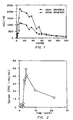
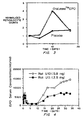
- Examples demonstrate administration of the EPO in zein and polymer microspheres to dogs and monkeys, with appropriate increases in blood levels and an increase in reticulocyte counts.
- a method of delivery of EPO is described in which polymer microspheres containing the EPO are administered to a human or animal, so that the EPO is released by diffusion from and/or degradation of, the microspheres.
- the microspheres are formed of biodegradable polymers, most preferably protein polymers such as prolamines or polylactides. A particularly preferred protein is zein. As used herein, polymer refers both to synthetic polymers and proteins.
- the microspheres are administered orally or by injection, and release the EPO by diffusion and degradation of the microsphere.
- the prolamine microspheres have several advantages.
- the prolamine matrix is a natural, biodegradable substance, which metabolizes in the body to peptides and/or amino acids.
- the prolamines can be modified, chemically or enzymatically, to endow them with desirable properties, such as a selected degradation rate.
- the process for making the microspheres from a prolamine solution does not require high temperature heating or cross-linking which could degrade material to be incorporated.
- the microspheres can be designed to be absorbed through the intestinal epithelium into the bloodstream and/or lymphatic system, or targeted to specific organs or phagocytic cells.
- microspheres thereby have at least three distinct advantages for controlled delivery: protection of agents that would be attacked and/or degraded by the harsh conditions of the alimentary tract or enzymes in the blood; targeting of a site for release (such as phagocytic cells, mucosal membranes, or the blood); and controlled time and rate of release of agent.
- EPO containing microspheres are made by incorporating the EPO into a biocompatible polymeric microsphere, wherein the microsphere containing the EPO is characterized by sustained controlled release of the EPO, preferably over a period of at least 24 hours up to a period of one to two months.
- the polymer is biodegradable
- the microspheres have a diameter of less than one hundred eighty microns, most preferably less than seventy microns, and are suitable for administration by injection subcutaneously or intramuscularly (a size suitable for injection through a 23-gauge needle would be less than 180 ⁇ m in diameter), and the microspheres contain from 0.01% by weight up to approximately 20% by weight EPO.
- micro refers to a particle having a diameter of from nanometers to micrometers.
- Microspheres are solid spherical particles; microparticles are particles of irregular or non-spherical shape.
- a microsphere may have an outer coating of a different composition than the material originally used to form the microsphere.
- microspheres can be used to encompass microcapsules, and the term microparticles can be used to encompass microparticles, microspheres, and microcapsules.
- Microparticulates are specifically referred to when describing irregularly shaped polymer or polymer-drug particles.
- Microcapsules are spherical shaped polymer devices having a non-polymer core or a core of a different polymer than the outer shell.
- a "composite microsphere” is a microsphere formed of at least two different materials, either a protein and a polymer or two proteins.
- a “composite” is an aggregation of microspheres made as described herein, bound by materials known to those skilled in the art for this purpose.
- sustained or extended release of the EPO can be continuous or discontinuous, linear or non-linear. This can be accomplished using one or more types of polymer compositions, drug loadings, selections of excipients or degradation enhancers, or other modifications, administered alone, in combination or sequentially to produce the desired effect.
- EPO can be incorporated in (1) the polymer matrix forming the microspheres, (2) microparticle(s) surrounded by the polymer which forms the microspheres, (3) a polymer core within a protein microsphere, (4) a polymer coating around a polymer microsphere, (5) mixed in with microspheres aggregated into a larger form, or a combination thereof.
- EPO can be incorporated as particulates or by codissolving the EPO with the polymer.
- Bulk EPO has a specific activity of 120,000 to 180,000 units/mg. It is incorporated into polymer to a concentration of between 50 and 40,000 units/mg polymer.
- EPO is dissolved with zein in an aqueous mixture of ethanol. Zein is dissolved in an aqueous organic solution in a concentration range of 3-15% (w/v) with the preferred concentration of 5-8%.
- Stabilizers can be incorporated by addition of the stabilizers to the EPO solution prior to lyophilization.
- Spray drying In spray drying, the polymer and EPO are mixed together in a solvent for the polymer, then the solvent is evaporated by spraying the solution, leaving polymeric droplets containing the active agent.
- Spray drying is reviewed in detail by K. Masters in “Spray Drying Handbook” (John Wiley & Sons, New York 1984); and Patrick B. Deasy in “Microencapsulation and Related Drug Processes” (Marcel Dekker, Inc., New York 1984). Spray drying is not preferred since it may result in some loss of activity due to the heat generated in the process as well as in loss of considerable amounts of the material due to sticking of the polymer to the large surface area on the sides of the chamber.
- Solvent evaporation techniques can be used to form microspheres. These techniques involve dissolving the polymer in an organic solvent which contains either dissolved or dispersed active agent. The polymer/active agent solution is then added to an agitated continuous phase which is usually aqueous. Emulsifiers are included in the aqueous phase to stabilize the oil-in-water emulsion. The organic solvent is then evaporated over a period of several hours or more, thereby depositing the polymer around the core material. Solvent can be removed from the microspheres in a single step, as described in U.S. Patent No. 3,737,337 and U.S. Patent No. 3,523,906, or in U.S. Patent No.
- Solvent evaporation works reasonably well but is not preferred since the amount of incorporated material is usually lower than the theoretical values due to loss of drug to the aqueous phase, as reported by Benita, et al., in "Characterization of Drug Loaded Poly(d,1-lactide) Microspheres," J. Pharm. Sci. 73, 1721-1724 (1984).
- Phase separation techniques can also be used to form microspheres. These techniques involve the formation of a water-in-oil emulsion or oil in water emulsion.
- the polymer is precipitated from the continuous phase onto the active agent by a change in temperature, pH, ionic strength or the addition of precipitants.
- U.S. Patent No. 4,675,800, et al. describes the formation of poly(lactic-co-glycolic) acid microspheres containing active proteins.
- the protein is first dissolved in the aqueous phase of a water-in-oil emulsion or dispersed as a solid in the polymer phase.
- Microcapsules contain a core material surrounded by a polymer membrane capsule. Microcapsules are not the preferred embodiment for delivery of EPo, however, since the release kinetics of active agents from these devices can be difficult to control.
- phase separation techniques result in the formation of microspheres containing active agents, active agent is often lost during the solvent extraction process.
- biologically active proteins may be denatured during the process.
- Polymer and agent to be encapsulated in solution are atomized using an ultrasonic device into a liquified gas.
- the atomized particles freeze when they contact the liquified gas (liquid nitrogen), forming frozen spheres. These sink to the surface of the frozen non-solvent (ethanol).
- the liquid gas is evaporated and the spheres begin to sink into the non-solvent as the non-solvent thaws.
- the solvent in the spheres is extracted into the non-solvent to form microspheres containing the agent to be encapsulated.
- non-solvents such as hexane are added to the non-solvent (ethanol) to increase the rate of solvent extraction from certain polymers, where appropriate, for example, when spheres are formed of polylactide-co-glycolide polymers.
- the liquified gas can be liquid argon (-185.6°C), liquid nitrogen (-195.8°C), liquid oxygen (-182.9°C) or any other gas that results in the immediate freezing of the atomized particles into frozen spheres. Oxygen is not preferred since it is explosive and may cause oxidation of the protein.
- a cold non-solvent for the polymer can be substituted for the combination of liquified gas-frozen no-solvent, provided the temperature of the non-solvent is below the freezing temperature of the polymer/active agent solution.
- the polymer/active agent freeze immediately upon contacting the cold liquid, and then be slowly thawed and the polymer solvent extracted from the microspheres.
- the thawing rate is dependent on the choice of solvents and non-solvents. It is important to select a solvent for the polymer having a higher melting point than the non-solvent for the polymer so that the non-solvent melts first, allowing the frozen microspheres to sink into the liquid where they later thaw. If a cold liquid non-solvent system for making the polymeric microspheres is used, the microspheres will sink immediately into the non-solvent. As the solvent in the microsphere thaws, it is extracted into the non-solvent. The solvent for the polymer and the non-solvent for the polymer must be miscible to allow extraction of the solvent from the microspheres.
- Table 1 shows some polymer/solvent/non-solvent systems that can be used in this process along with their melting points. Polymers and Appropriate Solvents and Non-Solvents systems, with Solvent and Non-Solvent Melting Points °C POLYMER SOLVENT NON-SOLVENT Poly(lactide Methylene Ethanol (-114.5) Chloride (-95.1) Chloroform (-63.5) Methanol (-97.5) Poly(lactide-co-glycolide acid) Ethyl Ethanol (-114.5) Acetate (-83.6) Ethyl ether (-116.3) Acetone (-95.4) Methylene Isopentane (-130) Chloride (-95.1) Poly(caprolactone) Methylene Ethanol (-114.5) Chloride (-95.1) Poly (vinyl alcohol) Water (0) Acetone (-95.4) Ethylene-vinyl acetate Methylene Ethanol (-114.5) Chloride (-95.0)
- the polymer/active agent/solvent mixture can be sprayed into the cold liquid, either the liquified gas or the cold non-solvent, using a variety of devices which can be used to form small particles, including sonic nozzles, pressure nozzles, pneumatic nozzles and rotary atomizers.
- a wide range of sizes of microspheres can be made by varying the droplet size, for example, by changing the nozzle diameter. If very large spheres are desired, the spheres can be extruded through a syringe directly into the cold liquid. Increasing the inherent viscosity of the polymer solution can also result in an increasing microspheres size.
- the size of the spheres produced by this process can range from greater than 1000 to 5 microns in diameter.
- a preferred size range for injectable microspheres is from 30 to 180 microns in diameter.
- the microspheres made by this technique are spherical in shape.
- a polymer solution is prepared containing between 1% polymer and 30% polymer, preferably 5-10% polymer.
- bioerodible or “biodegradable”, as used herein refers to materials which are enzymatically or chemically degraded in vivo into simpler chemical species.
- Polysaccharides are examples of natural polymers.
- Synthetic polymers that can be used to form the microspheres include bioerodible polymers such as poly(lactide), poly(lactide-co-glycolide), poly(caprolactone), polycarbonates, polyamides, polyanhydrides, polyamino acids, polyortho esters, polyacetals, polycyanoacrylates and degradable polyurethanes, and non-erodible polymers such as polyacrylates, ethylene-vinyl acetate polymers and other acyl substituted cellulose acetates and derivatives thereof, non-erodible polyurethanes, polystyrenes, polyvinyl chloride, polyvinyl fluoride, poly(vinyl imidazole), chlorosulphonated polyolifins, and polyethylene oxide.
- the microspheres can be formed of protein, polymer or protein-polymer mixtures.
- PLA, PGA and PLA/PGA copolymers are particularly useful for forming prolamine composite microspheres.
- PLA polymers are usually prepared from the cyclic esters of lactic acids. Both L(+) and D(-) forms of lactic acid can be used to prepare the PLA polymers, as well as the optically inactive DL-lactic acid mixture of D(-) and L(+) lactic acids. Methods of preparing polylactides are well documented in the patent literature. The following U.S.
- Patents describe in detail suitable polylactides, their properties and their preparation: 1,995,970 to Dorough; 2,703,316 to Schneider; 2,758,987 to Salzberg; 2,951,828 to Zeile; 2,676,945 to Higgins; and 2,683,136; 3,531,561 to Trehu.
- PGA is the homopolymer of glycolic acid (hydroxyacetic acid).
- glycolic acid hydroxyacetic acid
- glycolic acid is initially reacted with itself to form the cyclic ester glycolide, which in the presence of heat and a catalyst is converted to a high molecular weight linear-chain polymer.
- PGA polymers and their properties are described in more detail in Cyanamid Research Develops World's First Synthetic Absorbable Suture", Chemistry and Industry, 905 (1970).
- Both the release of the incorporated compound and the bioerosion of the matrix are related to the molecular weights of PLA, PGA or PLA/PGA.
- the release of the EPO from these polymeric systems can occur by two different mechanisms.
- the drug can be released by diffusion through aqueous filled channels generated in the dosage form by the dissolution of the drug or by voids created by the removal of the polymer solvent during the original microencapsulation.
- the second mechanism is enhanced release due to the degradation of the polymer. With time the polymer begins to erode and generates increased porosity and microstructure within the device. This creates additional pathways for drug release.
- the degradation of the polymers occurs by spontaneous hydrolysis of the ester linkages on the backbone.
- the rate can be controlled by changing polymer properties influencing water uptake. These include the monomer ratio (lactide to glycolide), the use of L-Lactide as opposed to D/L Lactide, and the polymer molecular weight. These factors determine the hydrophilicity and crystallinity which ultimately govern the rate of water penetration. Hydrophilic excipients such as salts, carbohydrates and surfactants can also be incorporated to increase water penetration into the devices and thus accelerate the erosion of the polymer.
- the release rate can also be controlled by varying the loading of EPO within the microspheres. Increasing the loading will increase the network of interconnecting channels formed upon the dissolution of the drug and enhance the release of drug from the microspheres.
- the preferred range of EPO loadings is in the range of 40 to 40,000 Units/mg, with the most preferred range being 50 to 20,000 Units/mg.
- Polymer hydrolysis is accelerated at acidic or basic pH's and thus the inclusion of acidic or basic excipients can be used to modulate the polymer erosion rate.
- the excipients can be added as particulates, can be mixed with the incorporated EPo or can be dissolved within the polymer.
- Degradation enhancers are based on weight relative to the polymer weight. They can be added to the protein phase, added as a separate phase (i.e., as particulates) or can be codissolved in the polymer phase depending on the compound. In all cases the amount should be between 0.1 and thirty percent (w/w, polymer).
- Types of degradation enhancers include inorganic acids such as ammonium sulfate and ammonium chloride, organic acids such as citric acid, benzoic acids, heparin, and ascorbic acid, inorganic bases such as sodium carbonate, potassium carbonate, calcium carbonate, zinc carbonate, and zinc hydroxide, and organic bases such as protamine sulfate, spermine, choline, ethanolamine, diethanolamine, and triethanolamine and surfactants such as TweenTM and PluronicTM.
- inorganic acids such as ammonium sulfate and ammonium chloride
- organic acids such as citric acid, benzoic acids, heparin, and ascorbic acid
- inorganic bases such as sodium carbonate, potassium carbonate, calcium carbonate, zinc carbonate, and zinc hydroxide
- organic bases such as protamine sulfate, spermine, choline, ethanolamine, diethanolamine, and triethanolamine and surfactants such as TweenTM and Pl
- Pore forming agents to add microstructure to the matrices i.e., water soluble compounds such as inorganic salts and sugars. They are added as particulates.
- the range should be between one and thirty percent (w/w, polymer).
- Excipients can be also added to the EPO to maintain its potency depending on the duration of release.
- Stabilizers include carbohydrates, amino acids, fatty acids, and surfactants and are known to those skilled in the art.
- excipients which modify the solubility of EPO such as salts, complexing agents (albumin, protamine) can be used to control the release rate of the protein from the microspheres.
- Stabilizers for the EPO are based on ratio to the protein on a weight basis.
- examples include carbohydrate such as sucrose, lactose, mannitol, dextran, and heparin, proteins such as albumin and protamine, amino acids such as arginine, glycine, and threonine, surfactants such as TweenTM and PluronicTM, salts such as calcium chloride and sodium phosphate, and lipids such as fatty acids, phospholipids, and bile salts.
- the ratios are generally 1:10 to 4:1, carbohydrate to protein, amino acids to protein, protein stabilizer to protein, and salts to protein; 1:1000 to 1:20, surfactant to protein; and 1:20 to 4:1, lipids to protein.
- protein microspheres are prepared by a phase separation, solvent removal process.
- the formation of the microspheres depends upon the differential solubility of proteins in water-miscible organic solvents, salt solutions, or acidic or basic solutions, as compared to their solubility in an immiscible phase, such as a nonpolar organic solvent or an oil. Most proteins are not soluble in oils. Accordingly, protein is dissolved in a first solvent which is a water-miscible organic, organic/aqueous, or binary organic solvent, acid, base or salt solution (the encapsulating phase). The compound to be incorporated, in the form of a suspension, emulsion, solution or particles, is added to the protein solution.
- the continuous phase is preferably an oil, such as vegetable oil, silicone oil or mineral oil. Vigorous agitation is applied, and the first solvent is removed under conditions sufficient to form microspheres, usually by evaporation or extraction.
- Coatings can also be made onto microparticles made of protein or non-protein polymers.
- protein is first dissolved in a solvent; (2) the particles or microparticles to be coated are added to the solution; (3) the protein/microparticle mixture is added to a second liquid phase which is immiscible with the first solvent and a non-solvent for the protein coating; (4) the mixture is agitated; and (5) the first solvent is removed (usually by evaporation or extraction) under conditions sufficient to cause the particles or microparticles to be coated with a protein coating.
- microspheres having a diameter of between nanometers and micrometers, with an average diameter between 0.01 micron to less than about 100 microns, having incorporated therein a compound to be delivered or released at a desired time and/or site.
- the microspheres are stored frozen to enhance the stability of incorporated compounds over extended periods of time.
- Proteins useful for forming the microspheres are Proteins useful for forming the microspheres.
- the proteins are hydrophobic proteins such as prolamines, preferably zein.
- proteins can be a single type of protein, a combination of proteins, or a combination of protein with polymer. Proteins are used to make the microspheres since they are natural, offer a diversity of properties and are degraded in vivo into innocuous amino acids or small peptides.
- Hydrophobic proteins have limited solubility in water and are soluble in organic solvents, aqueous mixtures of organic solvents, and binary mixtures of organic solvents. Examples of other useful proteins besides prolamines are collagen, casein, and keratin.
- Prolamines are characterized by having a large number of hydrophobic amino acids, such as glutamine, asparagine and proline. Prolamines are water-insoluble, but are soluble in many organic solvents, particularly alcohols, containing at least one percent (1%) water, but no more than sixty percent water, or a polar organic solvent.
- Prolamines are readily available and inexpensive, for example, as the by-products of grain processing.
- Representative prolamines include gliadin, kafirin, zein and hordein.
- a preferred prolamine for use in making microspheres is zein. Both commercially available grades and purified forms of zein can be used. The properties of zein are described in detail by L.C. Swallen in: "Zein - A New Industrial Protein", Ind. and Eng. Chem. , 33:394-398 (1941).
- the protein is dissolved in an appropriate solvent.
- the protein is "soluble” if more than 0.5% (w/v) of the protein dissolves in the solvent to form a visually transparent solution at room temperature (about 20-25°C).
- Prolamines are soluble, for example, in alcohols (ethanol), some ketones (e.g., methyl ethyl ketone, acetone) and amide solvents (e.g., acetamide), containing between 5% and 60% water; in extremely high (e.g., pH 10 or greater) or extremely low (pH 2 or less) pH solutions; and in aqueous solutions of from about 1.0 to about 6 N inorganic salts (e.g., NaCl, KBr).
- alcohols ethanol
- ketones e.g., methyl ethyl ketone, acetone
- amide solvents e.g., acetamide
- binary solvent systems for zein are known, in which the primary components are polyols, especially lower aliphatic alcohols, ketones, or glycols, and the secondary components are water, aromatic hydrocarbons, halogenated hydrocarbons, especially chlorinated hydrocarbons, nitroparaffins, aldehydes and cyclic ethers. Specific examples include mixtures of alcohols and halogenated hydrocarbons and mixtures of alcohols and propylene glycol with ethylene glycol.
- Binary solvent systems for prolamines such as zein are reported by Manley and Evans, Industrial and Engineering Chemistry 36, 661-665 (1943).
- the compound to be incorporated is added to the . protein solution.
- the compound can be in the form of a suspension, solution (in oil, organic solvent or water), emulsion, or particles.
- the compound/protein mixture is then introduced into a second liquid phase, the continuous phase, which (1) is immiscible or of limited miscibility with the protein solvent and (2) does not dissolve the protein.
- Solvents are "immiscible” if they will not mix with each other to form a stable homogeneous solution at the operating temperature without mixing. Immiscible phases tend to form separate layers under these conditions. Oils such as mineral oil, silicone oil, or vegetable oil are useful immiscible phases. Others include hexane, heptane, dodecane, and high boiling point petroleum ether.
- One or more surfactants can be added to the protein/first solvent mixture or to the continuous phase to reduce the size of the protein microspheres. Suitable surfactants, and methods of use thereof, are known to those skilled in the art.
- the protein solution was added to the continuous phase, and the first solvent removed, for example, preferably by evaporation, or by solvent extraction, under conditions forming microspheres.
- Efficient mixing can be achieved by fast mechanical stirring using a homogenizer and/or by using a baffled reactor to prevent laminar flow.
- the mixture can be heated to a temperature of from between 22°C and about 45°C for a period of between about 15 minutes to 45 minutes. If heated, the mixture is first cooled to room temperature, then the microspheres incorporating the compound are washed, separated from the mixture, and dried. If the hydrophilic drug incorporated is unstable in aqueous media, the microspheres can be lyophilized.
- a double emulsion technique is employed.
- the compound to be incorporated is first dissolved in an aqueous solution.
- the zein is dissolved in a suitable binary organic mixture with low aqueous miscibility.
- suitable binary organic solvents for zein are known, for example, mixtures of an alcohol, such as methanol, ethanol or isopropanol, with a halogenated hydrocarbon, with the halogenated hydrocarbon as the primary component.
- the aqueous solution is added to the organic solution of zein and a water in oil emulsion is created.
- This emulsion is then added to a second organic liquid phase, the continuous phase, which is immiscible or of limited miscibility with the organic solvent for zein, such as an oil, to form a double water in oil emulsion.
- This solvent is then removed, as described previously, to form microspheres.
- the properties of the microspheres can be modified for a given application, for example, by chemically and/or enzymatically altering the starting protein prior to forming the microspheres. Such modifications can produce a protein having enhanced or altered thermal stability, surface reactivity, lipophilicity, molecular weight, charge, shear stability and resistance to proteases.
- the functionality, surface properties and molecular weight distribution of the protein can be modified by enzymatic treatment.
- enzymatic hydrolysis of zein, having a dimer molecular weight of about 38,000 daltons, in 90% ethanol using a protease, such as papain or chymotrypsin yields polypeptides with a molecular weight of about 1,000 daltons which retain the solubility characteristics of the intact protein, i.e., the polypeptides are still insoluble in water but soluble in 90% ethanol.
- the degree of hydrolysis can be controlled by varying the amount of enzyme used or the reaction time during which the protein is exposed to the enzyme.
- the stability of the protein can be enhanced by crosslinking the protein prior to use in the phase separation process by the addition of an enzyme which catalyzes intra- and/or intermolecular crosslinking of the protein, such as transglutaminase, or protein disulfide isomerase.
- Transglutaminase and protein disulfide isomerase cause inter- and intramolecular crosslinking of the protein through the amino acids glutamine and cysteine, respectively.
- Transglutaminase catalyzes an acyl transfer reaction, in which the amide group of the amino acid glutamine is the acyl donor.
- Other enzymatic processes are known which alter the properties of proteins, before or after formation of the microspheres.
- the properties of the microspheres can also be altered by chemical modification of the proteins used in their preparation, either before or after formation of the microspheres.
- modifications can include treating the proteins with an acid, base or other agent which alters the structure of one or more amino acid side chains, which in turn alters the character of the protein.
- the high glutamine and asparagine content of prolamines, particularly zein provides a means for manipulating the charge characteristics of the protein, and therefore the hydrophobicity, by deamidation.
- the preferred deamidation method involves mild acid-catalyzed deamidation (at a pH of about 1) at elevated temperatures (between 25°C and 65°C) for a period of time sufficient to accomplish the desired level of deamidation.
- the deamidation process may be followed by measuring the release of ammonia with an ammonia electrode. Deamidation can be terminated by the addition of ammonium carbonate or other base.
- zein or zein peptides can be deamidated as described above, then the deamidated zein reacted with a fatty acid to form the fatty acid ester of the protein.
- Non-deamidated or deamidated zein peptides can also be reacted with fatty alcohols to form fatty acylated zein or zein peptides.
- These fatty acid-modified proteins or peptides can then be used as starting material to form the microspheres.
- the charge on the protein can also be modified by crosslinking amino acids or polyamino acids to the protein, using glutaraldehyde or carbodiimide.
- Proteins can be modified before or after formation of the microspheres.
- an advantage of the phase separation process is that harsh chemical or heat treatment of the protein after formation of the microspheres is not required. Accordingly, when modification of the protein using agents such as glutaraldehyde for crosslinking of the protein is desirable, the protein is treated prior to incorporation of the compound to be delivered and formation of the microspheres.
- the same degradation enhancers and stabilizers described with respect to the synthetic polymers can be added to the polymers for the formation of the protein-EPO microspheres.
- Matrices made of either a protein mixture or a protein-polymer mixture, such as prolamine/PLA, prolamine/PGA or prolamine/ PLA-PGA can be designed with a variety of degradation and diffusion rates.
- degradation is a function of the protein and polymer composition.
- Diffusion is a function of the matrix composition, form, and the nature of the incorporated material.
- Matrices can be synthesized to degrade over periods of time shorter than, equal to or longer than the period of release of incorporated compound. The compound can be released by diffusion, degradation of matrix, or a combination of diffusion through the matrix and release as the matrix degrades.
- composite matrices can take one of several forms: protein microspheres with a polymer coating; polymer microparticles or microcapsules encapsulated by protein; bioactive compounds and protein microspheres encapsulated by polymer; or protein microspheres with or without incorporated bioactive compound and bioactive compound encapsulated by polymer.
- microspheres can be produced in a variety of sizes, ranging from nanometer-sized microspheres up to an average size of about 100 microns. Microspheres having an average particle size of from about 50 to 100 nm to about 20 microns are more preferred for enteral administration or targeting to cells. Microspheres having an average particle size of from about 100 nm to about 5 microns are particularly preferred for use in drug delivery because microspheres in this size range may be absorbed into the bloodstream and/or lymphatic system or phagocytized.
- the size and other characteristics of the microspheres can be determined using scanning electron microscopy (SEM), light scattering and differential scanning calorimetry (DSC).
- Protein coatings are made using a variation of the method to make microspheres.
- Particles (including particles of non-uniform shape, microspheres and microcapsules) to be coated can be made from any polymeric substance, usually non-protein substances or modified proteins, or material to be released.
- the protein is dissolved, the particles to be coated added to the protein solution, the protein/microparticle mixture added to the continuous phase, the mixture agitated and the solvent removed, preferably by evaporation, or by solvent extraction, under conditions causing the particles to be coated with a protein coating.
- microspheres can be administered topically, locally or systemically by parenteral administration or enteral administration.
- the preferred route is oral for microspheres made from protein polymers.
- Microspheres containing EPO are preferably administered orally. These microspheres, depending on the chemical nature and size, will either be absorbed to, or passed through, the epithelial lining of the gastrointestinal tract into the bloodstream or lymphatic system.
- the EPO is released from the microspheres by diffusion, degradation, or a combination of degradation and diffusion, in the blood stream, lymphatic system, epithelium, or at the surface of the epithelium.
- Microspheres of less than 180 microns readily pass through a needle for intravenous administration.
- Suitable pharmaceutical carriers for example, a phosphate buffered saline, are known and commercially available.
- Microspheres produced as described above are small enough to be injected through a standard gauge needle under the skin or into the peritoneum for subsequent release of incorporated drug. Adhesion of the microspheres to the peritoneum aids in localizing release of the incorporated drug. Microspheres can also be implanted or injected intramuscularly for immunization or other purposes where slower release into the bloodstream is desirable. Carriers such as phosphate buffer saline, or an adjuvant such as an oil, can be used as a carrier for the microspheres. Pharmaceutically acceptable carriers are known to those skilled in the art.
- Example 1 Preparation of Prolamine microspheres containing EPO.
- EPO 1.0 mg/ml EPO in 400 mM sodium chloride, 8.0 mM sodium phosphate and 1.5 mM potassium phosphate
- the lyophilized powder had a specific activity of 60,000 units/mg total solids.
- Lyophilized EPO (2.0 mg) was dissolved in 200 ⁇ l water.
- 200 mg zein (Type F5000, Freeman Industries, Tucahoe, NY) was dissolved in 3.8 ml of an aqueous ethanol mixture (200 ⁇ l water and 3.6 ml 100% ethanol).
- the zein solution was then added to the EPO solution and gently mixed.
- the zein EPO solution was then emulsified for 20 seconds with 120 ml corn oil using a Virtishear homogenizer and an ultrafine generator. This emulsion was then added to 250 ml corn oil preheated to 60°C and mixed with an overhead mixer at 1800 rpm. The resulting mixture had a temperature of 50°C.
- the temperature was maintained in the range 45 to 50°C with a heating block for twenty minutes, after which the microspheres were cooled to room temperature.
- the resulting microspheres were washed with petroleum ether to remove the corn oil and filtered.
- the microspheres were dried overnight under vacuum at room temperature.
- Example 2 In vivo : release of EPO from Prolamine microspheres administered subcutaneously to dogs.
- the zein microspheres formed in example 1 were tested in a subcutaneous administration model in beagle dogs.
- Blood samples for the measurement of EPO were taken for 96 hours post injection.
- Serum was prepared and assayed for EPO by radioimmunoassay (Incstar, Stillwater, MN).
- Example 3 In vivo release of EPO from Prolamine microspheres administered orally to monkeys.
- Example 1 The zein EPO microspheres formed in Example 1 were tested in an enteral administration model in cynomolgus monkeys.
- Each monkey received a single intramuscular injection of 20 mg of cimetidine to raise gastric pH.
- the microspheres were resuspended in 8 ml of a phosphate buffered resuspension medium.
- the gavage tube was subsequently flushed with 4 ml of resuspension medium.
- Each animal also underwent a control experiment in which a single dose of blank microspheres without any active drug was fed by gavage on days one, two and three of the study. One hour before dosing each monkey received a single intramuscular injection of 20 mg of cimetidine to raise gastric pH. Each animal was rested for two months between the placebo and active experiments.
- Blood samples for measurement of EPO were taken prior to each gavage and then two, four, and six hours after dosing. Blood samples were also taken on the day after the last dose, on the tenth day after dosing, and on the twenty-second day after dosing. Blood samples were taken at the same sampling times for both studies. Serum was prepared and was assayed for EPO using a radioimmunoassay (INCSTAR, Stillwater, MN).
- the increase in mean serum EPO level is shown in Figure 2.
- the EPO level increases to a maximum of 50 mU/ml after day 5, and returns to baseline after 22 days.
- the normalized reticulocyte counts are shown in Figure 3. The count peaks at day 10 at 3.5 times the baseline reticulocyte count. The increase in reticulocyte counts demonstrates that the absorbed EPO has biological activity.
- Example 4 Preparation of Polymer microspheres containing EPO.
- This solution was frozen in liquid nitrogen and covered with 500 ml of liquid nitrogen.
- the polymer protein mixture was pumped from the syringe via a syringe pump at 2 ml/min, into an ultrasonic nozzle (Mode, Sonics and Material, Danbury, CT) that was placed above the container of liquid nitrogen and frozen ethanol.
- the nozzle atomized the suspension into droplets which froze upon contact with the liquid nitrogen and formed microspheres which sank onto the frozen ethanol.
- the container was placed at -80°C where the liquid nitrogen evaporated and the ethanol melted with time. As the ethanol thaws, the microspheres settle into the liquid where the methylene chloride is extracted. After 24 hours, an additional 200 ml of hexane prechilled to -80°C was added to the container. After three days, the slurry of microspheres and ethanol was filtered using a one micron DuraporeTM membrane (Millipore, Bedford, MA). The filtered microspheres were then lyophilized.
- microspheres formed in example 4 were tested in a subcutaneous administration model in Sprague Dawley rats.
- Blood samples for the measurement of EPO were taken for several weeks post injection. Serum was prepared and was assayed by EPO by radioimmunoassay (Incstar, Stillwater, MN).
- the increase in serum EPO (mU/ml) for each of the animals is shown in Figure 4.
- the plasma profile is biphasic with the first phase lasting for three days which is followed by an induction period of one week after which the levels remain above baseline for at least three weeks.
Landscapes
- Health & Medical Sciences (AREA)
- Bioinformatics & Cheminformatics (AREA)
- Engineering & Computer Science (AREA)
- Chemical & Material Sciences (AREA)
- Life Sciences & Earth Sciences (AREA)
- Medicinal Chemistry (AREA)
- Pharmacology & Pharmacy (AREA)
- Epidemiology (AREA)
- Animal Behavior & Ethology (AREA)
- General Health & Medical Sciences (AREA)
- Public Health (AREA)
- Veterinary Medicine (AREA)
- Biomedical Technology (AREA)
- Optics & Photonics (AREA)
- Physics & Mathematics (AREA)
- Nanotechnology (AREA)
- Immunology (AREA)
- Zoology (AREA)
- Gastroenterology & Hepatology (AREA)
- Dermatology (AREA)
- Proteomics, Peptides & Aminoacids (AREA)
- Inorganic Chemistry (AREA)
- Medicines That Contain Protein Lipid Enzymes And Other Medicines (AREA)
- Medicinal Preparation (AREA)
- Pharmaceuticals Containing Other Organic And Inorganic Compounds (AREA)
- Plural Heterocyclic Compounds (AREA)
- Feedback Control In General (AREA)
- Steroid Compounds (AREA)
Abstract
Description
- Erythropoietin (EPO) is a 34 to 38 kda glycoprotein of 165 amino acids, with approximately 40% of its molecular weight provided by carbohydrate, originally isolated from urine, but subsequently produced by recombinant genetic engineering, that is used to increase red blood cell counts. Normal production of human red blood cells requires the secretion of erythropoietin by the kidney, apparently as the mature glycoprotein. In the steady state this hormone circulates in the blood at a concentration of 10 to 18 milliunits (128-230 picograms) per milliliter. The hormone triggers proliferation and differentiation of a population of receptive stem cells in the bone marrow, stimulates hemoglobin synthesis in maturing erythroid cells, and accelerates release of red cells from the marrow into circulation, thereby increasing the red cell mass and ameliorating the hypoxic conditions.
- Patients with deficiencies of EPO often suffer severe anemia. EPO is used to treat patients with anemia associated with chronic renal failure, including patients on dialysis (end stage renal disease) and patients not on dialysis, as well as anemia associated with AIDS. EPO is administered as an intravenous bolus three times a week for patients on dialysis and as a subcutaneous injection three times a week for patients not on dialysis. For patients who are receiving EPO on a chronic basis subcutaneously, the frequent injections result in peak and valley plasma levels as well as problems with patient compliance.
- It is desirable to find a method and means for oral or parenteral delivery of EPO that is economical, safe and effective.
- An oral formulation would be a significant advance in drug administration. An oral formulation would require significant enteric protection from the degradative pathways in the gastrointestinal tract. Microencapsulation of EPO in a suitable polymeric system could protect the incorporated protein from the harsh environment of the intestinal tract. Any microencapsulation process would require mild formulation conditions such as low temperature, physiological pH, and a compatible solvent system for preservation of the biological activity of the EPO.
- It is therefore an object of the present invention to provide a method for controlled, delayed release of EPO when administered orally or parenterally.
- Biodegradable polymer microspheres, preferably formed of zein, are used for in vivo release of erythropoietin (EPO). The microspheres are preferably administered enterally, but can be administered by other routes, for subsequent release. By selecting particular size ranges and the specific polymer to be used to form the microsphere, it is possible to target the microspheres to a cell type such as macrophages, or to effect localized absorption of the microspheres to regions such as the mucosal membranes of the mouth, gastrointestinal tract, or urogenital areas.
- Examples demonstrate administration of the EPO in zein and polymer microspheres to dogs and monkeys, with appropriate increases in blood levels and an increase in reticulocyte counts.
-
- Figure 1 is a graph of the blood serum levels of EPO (mU/ml) over time (hours) in dogs subcutaneously administered EPO in zein microspheres.
- Figure 2 is a graph of serum levels of EPO (mU/ml) over time (days) in monkeys enterally administered EPO in zein microspheres.
- Figure 3 is a graph of normalized reticulocyte counts over time (days) in monkeys enterally administered EPO in zein microspheres or placebo zein microspheres.
- Figure 4 is a graph of serum levels of EPO (mU/ml) over time (days) in rats subcutaneously administered EPO in PLGA microspheres (squares, rat U10 (5.8 mg), dark squares, rat U11 (2.5 mg)).
-
- A method of delivery of EPO is described in which polymer microspheres containing the EPO are administered to a human or animal, so that the EPO is released by diffusion from and/or degradation of, the microspheres. The microspheres are formed of biodegradable polymers, most preferably protein polymers such as prolamines or polylactides. A particularly preferred protein is zein. As used herein, polymer refers both to synthetic polymers and proteins. The microspheres are administered orally or by injection, and release the EPO by diffusion and degradation of the microsphere.
- The prolamine microspheres have several advantages. The prolamine matrix is a natural, biodegradable substance, which metabolizes in the body to peptides and/or amino acids. The prolamines can be modified, chemically or enzymatically, to endow them with desirable properties, such as a selected degradation rate. The process for making the microspheres from a prolamine solution does not require high temperature heating or cross-linking which could degrade material to be incorporated. Moreover, the microspheres can be designed to be absorbed through the intestinal epithelium into the bloodstream and/or lymphatic system, or targeted to specific organs or phagocytic cells. The microspheres thereby have at least three distinct advantages for controlled delivery: protection of agents that would be attacked and/or degraded by the harsh conditions of the alimentary tract or enzymes in the blood; targeting of a site for release (such as phagocytic cells, mucosal membranes, or the blood); and controlled time and rate of release of agent.
- EPO containing microspheres are made by incorporating the EPO into a biocompatible polymeric microsphere, wherein the microsphere containing the EPO is characterized by sustained controlled release of the EPO, preferably over a period of at least 24 hours up to a period of one to two months. In the preferred embodiment, the polymer is biodegradable, the microspheres have a diameter of less than one hundred eighty microns, most preferably less than seventy microns, and are suitable for administration by injection subcutaneously or intramuscularly (a size suitable for injection through a 23-gauge needle would be less than 180 µm in diameter), and the microspheres contain from 0.01% by weight up to approximately 20% by weight EPO.
- As used herein, "micro" refers to a particle having a diameter of from nanometers to micrometers. Microspheres are solid spherical particles; microparticles are particles of irregular or non-spherical shape. A microsphere may have an outer coating of a different composition than the material originally used to form the microsphere. Unless otherwise noted, the term microspheres can be used to encompass microcapsules, and the term microparticles can be used to encompass microparticles, microspheres, and microcapsules. Microparticulates are specifically referred to when describing irregularly shaped polymer or polymer-drug particles. Microcapsules are spherical shaped polymer devices having a non-polymer core or a core of a different polymer than the outer shell. A "composite microsphere" is a microsphere formed of at least two different materials, either a protein and a polymer or two proteins. A "composite" is an aggregation of microspheres made as described herein, bound by materials known to those skilled in the art for this purpose.
- As used herein, "sustained" or "extended" release of the EPO can be continuous or discontinuous, linear or non-linear. This can be accomplished using one or more types of polymer compositions, drug loadings, selections of excipients or degradation enhancers, or other modifications, administered alone, in combination or sequentially to produce the desired effect.
- EPO can be incorporated in (1) the polymer matrix forming the microspheres, (2) microparticle(s) surrounded by the polymer which forms the microspheres, (3) a polymer core within a protein microsphere, (4) a polymer coating around a polymer microsphere, (5) mixed in with microspheres aggregated into a larger form, or a combination thereof.
- EPO can be incorporated as particulates or by codissolving the EPO with the polymer. Bulk EPO has a specific activity of 120,000 to 180,000 units/mg. It is incorporated into polymer to a concentration of between 50 and 40,000 units/mg polymer. In the preferred embodiment for oral delivery, EPO is dissolved with zein in an aqueous mixture of ethanol. Zein is dissolved in an aqueous organic solution in a concentration range of 3-15% (w/v) with the preferred concentration of 5-8%. Stabilizers can be incorporated by addition of the stabilizers to the EPO solution prior to lyophilization.
- A variety of techniques are known by which active agents can be incorporated into synthetic polymeric microspheres.
- In spray drying, the polymer and EPO are mixed together in a solvent for the polymer, then the solvent is evaporated by spraying the solution, leaving polymeric droplets containing the active agent. Spray drying is reviewed in detail by K. Masters in "Spray Drying Handbook" (John Wiley & Sons, New York 1984); and Patrick B. Deasy in "Microencapsulation and Related Drug Processes" (Marcel Dekker, Inc., New York 1984). Spray drying is not preferred since it may result in some loss of activity due to the heat generated in the process as well as in loss of considerable amounts of the material due to sticking of the polymer to the large surface area on the sides of the chamber.
- Solvent evaporation techniques can be used to form microspheres. These techniques involve dissolving the polymer in an organic solvent which contains either dissolved or dispersed active agent. The polymer/active agent solution is then added to an agitated continuous phase which is usually aqueous. Emulsifiers are included in the aqueous phase to stabilize the oil-in-water emulsion. The organic solvent is then evaporated over a period of several hours or more, thereby depositing the polymer around the core material. Solvent can be removed from the microspheres in a single step, as described in U.S. Patent No. 3,737,337 and U.S. Patent No. 3,523,906, or in U.S. Patent No. 3,691,090 (under reduced pressure), or by the application of heat, as shown in U.S. Patent No. 3,891,570. A two-step technique is described in U.S. Patent No. 4,389,330. Freeze drying has also been used to remove the solvent from microspheres, as reported by Sato, et al, in "Porous Biodegradable Microspheres for Controlled Drug Delivery. I. Assessment of Processing Conditions and Solvent Removal Techniques,"
Pharmaceutical Research 5, 21-30 (1988). - Solvent evaporation works reasonably well but is not preferred since the amount of incorporated material is usually lower than the theoretical values due to loss of drug to the aqueous phase, as reported by Benita, et al., in "Characterization of Drug Loaded Poly(d,1-lactide) Microspheres," J. Pharm. Sci. 73, 1721-1724 (1984).
- Phase separation techniques can also be used to form microspheres. These techniques involve the formation of a water-in-oil emulsion or oil in water emulsion. The polymer is precipitated from the continuous phase onto the active agent by a change in temperature, pH, ionic strength or the addition of precipitants. For example, U.S. Patent No. 4,675,800, et al., describes the formation of poly(lactic-co-glycolic) acid microspheres containing active proteins. The protein is first dissolved in the aqueous phase of a water-in-oil emulsion or dispersed as a solid in the polymer phase. Polymer is then precipitated around the aqueous droplets or drug particles by addition of a non-solvent for the polymer such as silicone oil. The final product, as with most phase separation techniques, is in the form of a microcapsule. Microcapsules contain a core material surrounded by a polymer membrane capsule. Microcapsules are not the preferred embodiment for delivery of EPo, however, since the release kinetics of active agents from these devices can be difficult to control.
- Although these phase separation techniques result in the formation of microspheres containing active agents, active agent is often lost during the solvent extraction process. In addition, as with spray drying, biologically active proteins may be denatured during the process.
- A method for making EPO microspheres having the desired characteristics is described in U.S. Patent No. 5,019,400 to Gombotz, et al.
- There are two principal embodiments of the system for making microspheres: a combination liquified gas - frozen non-solvent system and a frozen non-solvent system.
- Polymer and agent to be encapsulated in solution are atomized using an ultrasonic device into a liquified gas. The atomized particles freeze when they contact the liquified gas (liquid nitrogen), forming frozen spheres. These sink to the surface of the frozen non-solvent (ethanol). The liquid gas is evaporated and the spheres begin to sink into the non-solvent as the non-solvent thaws. The solvent in the spheres is extracted into the non-solvent to form microspheres containing the agent to be encapsulated. Other non-solvents such as hexane are added to the non-solvent (ethanol) to increase the rate of solvent extraction from certain polymers, where appropriate, for example, when spheres are formed of polylactide-co-glycolide polymers. The liquified gas can be liquid argon (-185.6°C), liquid nitrogen (-195.8°C), liquid oxygen (-182.9°C) or any other gas that results in the immediate freezing of the atomized particles into frozen spheres. Oxygen is not preferred since it is explosive and may cause oxidation of the protein.
- Alternatively, a cold non-solvent for the polymer can be substituted for the combination of liquified gas-frozen no-solvent, provided the temperature of the non-solvent is below the freezing temperature of the polymer/active agent solution.
- In both embodiments, it is important that the polymer/active agent freeze immediately upon contacting the cold liquid, and then be slowly thawed and the polymer solvent extracted from the microspheres.
- The thawing rate is dependent on the choice of solvents and non-solvents. It is important to select a solvent for the polymer having a higher melting point than the non-solvent for the polymer so that the non-solvent melts first, allowing the frozen microspheres to sink into the liquid where they later thaw. If a cold liquid non-solvent system for making the polymeric microspheres is used, the microspheres will sink immediately into the non-solvent. As the solvent in the microsphere thaws, it is extracted into the non-solvent. The solvent for the polymer and the non-solvent for the polymer must be miscible to allow extraction of the solvent from the microspheres. Table 1 shows some polymer/solvent/non-solvent systems that can be used in this process along with their melting points.
Polymers and Appropriate Solvents and Non-Solvents systems, with Solvent and Non-Solvent Melting Points °C POLYMER SOLVENT NON-SOLVENT Poly(lactide Methylene Ethanol (-114.5) Chloride (-95.1) Chloroform (-63.5) Methanol (-97.5) Poly(lactide-co-glycolide acid) Ethyl Ethanol (-114.5) Acetate (-83.6) Ethyl ether (-116.3) Acetone (-95.4) Methylene Isopentane (-130) Chloride (-95.1) Poly(caprolactone) Methylene Ethanol (-114.5) Chloride (-95.1) Poly (vinyl alcohol) Water (0) Acetone (-95.4) Ethylene-vinyl acetate Methylene Ethanol (-114.5) Chloride (-95.0) - The polymer/active agent/solvent mixture can be sprayed into the cold liquid, either the liquified gas or the cold non-solvent, using a variety of devices which can be used to form small particles, including sonic nozzles, pressure nozzles, pneumatic nozzles and rotary atomizers.
- A wide range of sizes of microspheres can be made by varying the droplet size, for example, by changing the nozzle diameter. If very large spheres are desired, the spheres can be extruded through a syringe directly into the cold liquid. Increasing the inherent viscosity of the polymer solution can also result in an increasing microspheres size. The size of the spheres produced by this process can range from greater than 1000 to 5 microns in diameter. A preferred size range for injectable microspheres is from 30 to 180 microns in diameter. The microspheres made by this technique are spherical in shape.
- Almost any type of polymer can be used provided the appropriate solvent and non-solvent are found which have the desired melting points. In general, a polymer solution is prepared containing between 1% polymer and 30% polymer, preferably 5-10% polymer.
- The term "bioerodible", or "biodegradable", as used herein refers to materials which are enzymatically or chemically degraded in vivo into simpler chemical species.
- Polysaccharides are examples of natural polymers. Synthetic polymers that can be used to form the microspheres include bioerodible polymers such as poly(lactide), poly(lactide-co-glycolide), poly(caprolactone), polycarbonates, polyamides, polyanhydrides, polyamino acids, polyortho esters, polyacetals, polycyanoacrylates and degradable polyurethanes, and non-erodible polymers such as polyacrylates, ethylene-vinyl acetate polymers and other acyl substituted cellulose acetates and derivatives thereof, non-erodible polyurethanes, polystyrenes, polyvinyl chloride, polyvinyl fluoride, poly(vinyl imidazole), chlorosulphonated polyolifins, and polyethylene oxide.
- The microspheres can be formed of protein, polymer or protein-polymer mixtures. PLA, PGA and PLA/PGA copolymers are particularly useful for forming prolamine composite microspheres. PLA polymers are usually prepared from the cyclic esters of lactic acids. Both L(+) and D(-) forms of lactic acid can be used to prepare the PLA polymers, as well as the optically inactive DL-lactic acid mixture of D(-) and L(+) lactic acids. Methods of preparing polylactides are well documented in the patent literature. The following U.S. Patents, describe in detail suitable polylactides, their properties and their preparation: 1,995,970 to Dorough; 2,703,316 to Schneider; 2,758,987 to Salzberg; 2,951,828 to Zeile; 2,676,945 to Higgins; and 2,683,136; 3,531,561 to Trehu.
- PGA is the homopolymer of glycolic acid (hydroxyacetic acid). In the conversion of glycolic acid to poly(glycolic acid), glycolic acid is initially reacted with itself to form the cyclic ester glycolide, which in the presence of heat and a catalyst is converted to a high molecular weight linear-chain polymer. PGA polymers and their properties are described in more detail in Cyanamid Research Develops World's First Synthetic Absorbable Suture", Chemistry and Industry, 905 (1970).
- Both the release of the incorporated compound and the bioerosion of the matrix are related to the molecular weights of PLA, PGA or PLA/PGA. The higher molecular weights, weight average molecular weights of 90,000 or higher, result in polymer matrices which retain their structural integrity for longer periods of time; while lower molecular weights, weight average molecular weights of 30,000 or less, result in both slower release and shorter matrix lives.
- The release of the EPO from these polymeric systems can occur by two different mechanisms. The drug can be released by diffusion through aqueous filled channels generated in the dosage form by the dissolution of the drug or by voids created by the removal of the polymer solvent during the original microencapsulation. The second mechanism is enhanced release due to the degradation of the polymer. With time the polymer begins to erode and generates increased porosity and microstructure within the device. This creates additional pathways for drug release.
- The degradation of the polymers occurs by spontaneous hydrolysis of the ester linkages on the backbone. Thus the rate can be controlled by changing polymer properties influencing water uptake. These include the monomer ratio (lactide to glycolide), the use of L-Lactide as opposed to D/L Lactide, and the polymer molecular weight. These factors determine the hydrophilicity and crystallinity which ultimately govern the rate of water penetration. Hydrophilic excipients such as salts, carbohydrates and surfactants can also be incorporated to increase water penetration into the devices and thus accelerate the erosion of the polymer.
- By altering the properties of the polymer and the properties of the dosage form, one can control the contribution of each of these release mechanisms and alter the release rate of EPO. Slowly eroding polymers such as poly L-lactide or high molecular weight poly(lactide-co-glycolide) with low glycolide compositions will cause the release to become diffusion controlled. Increasing the glycolide composition and decreasing the molecular weight enhances both water uptake and the hydrolysis of the polymer and adds an erosion component to the release kinetics.
- The release rate can also be controlled by varying the loading of EPO within the microspheres. Increasing the loading will increase the network of interconnecting channels formed upon the dissolution of the drug and enhance the release of drug from the microspheres. The preferred range of EPO loadings is in the range of 40 to 40,000 Units/mg, with the most preferred range being 50 to 20,000 Units/mg.
- Polymer hydrolysis is accelerated at acidic or basic pH's and thus the inclusion of acidic or basic excipients can be used to modulate the polymer erosion rate. The excipients can be added as particulates, can be mixed with the incorporated EPo or can be dissolved within the polymer.
- Degradation enhancers are based on weight relative to the polymer weight. They can be added to the protein phase, added as a separate phase (i.e., as particulates) or can be codissolved in the polymer phase depending on the compound. In all cases the amount should be between 0.1 and thirty percent (w/w, polymer). Types of degradation enhancers include inorganic acids such as ammonium sulfate and ammonium chloride, organic acids such as citric acid, benzoic acids, heparin, and ascorbic acid, inorganic bases such as sodium carbonate, potassium carbonate, calcium carbonate, zinc carbonate, and zinc hydroxide, and organic bases such as protamine sulfate, spermine, choline, ethanolamine, diethanolamine, and triethanolamine and surfactants such as Tween™ and Pluronic™.
- Pore forming agents to add microstructure to the matrices (i.e., water soluble compounds such as inorganic salts and sugars). They are added as particulates. The range should be between one and thirty percent (w/w, polymer).
- Excipients can be also added to the EPO to maintain its potency depending on the duration of release. Stabilizers include carbohydrates, amino acids, fatty acids, and surfactants and are known to those skilled in the art. In addition, excipients which modify the solubility of EPO such as salts, complexing agents (albumin, protamine) can be used to control the release rate of the protein from the microspheres.
- Stabilizers for the EPO are based on ratio to the protein on a weight basis. Examples include carbohydrate such as sucrose, lactose, mannitol, dextran, and heparin, proteins such as albumin and protamine, amino acids such as arginine, glycine, and threonine, surfactants such as Tween™ and Pluronic™, salts such as calcium chloride and sodium phosphate, and lipids such as fatty acids, phospholipids, and bile salts.
- The ratios are generally 1:10 to 4:1, carbohydrate to protein, amino acids to protein, protein stabilizer to protein, and salts to protein; 1:1000 to 1:20, surfactant to protein; and 1:20 to 4:1, lipids to protein.
- Using the method described herein, protein microspheres are prepared by a phase separation, solvent removal process. The formation of the microspheres depends upon the differential solubility of proteins in water-miscible organic solvents, salt solutions, or acidic or basic solutions, as compared to their solubility in an immiscible phase, such as a nonpolar organic solvent or an oil. Most proteins are not soluble in oils. Accordingly, protein is dissolved in a first solvent which is a water-miscible organic, organic/aqueous, or binary organic solvent, acid, base or salt solution (the encapsulating phase). The compound to be incorporated, in the form of a suspension, emulsion, solution or particles, is added to the protein solution. This mixture is then contacted with a second liquid phase (the continuous phase) which does not dissolve the proteins and has limited miscibility with the first solvent. The continuous phase is preferably an oil, such as vegetable oil, silicone oil or mineral oil. Vigorous agitation is applied, and the first solvent is removed under conditions sufficient to form microspheres, usually by evaporation or extraction.
- Coatings can also be made onto microparticles made of protein or non-protein polymers. To make the coatings, (1) protein is first dissolved in a solvent; (2) the particles or microparticles to be coated are added to the solution; (3) the protein/microparticle mixture is added to a second liquid phase which is immiscible with the first solvent and a non-solvent for the protein coating; (4) the mixture is agitated; and (5) the first solvent is removed (usually by evaporation or extraction) under conditions sufficient to cause the particles or microparticles to be coated with a protein coating.
- The process described herein yields protein microspheres having a diameter of between nanometers and micrometers, with an average diameter between 0.01 micron to less than about 100 microns, having incorporated therein a compound to be delivered or released at a desired time and/or site. In the preferred method, the microspheres are stored frozen to enhance the stability of incorporated compounds over extended periods of time.
- In the preferred embodiments, the proteins are hydrophobic proteins such as prolamines, preferably zein. As used herein, proteins can be a single type of protein, a combination of proteins, or a combination of protein with polymer. Proteins are used to make the microspheres since they are natural, offer a diversity of properties and are degraded in vivo into innocuous amino acids or small peptides. Hydrophobic proteins have limited solubility in water and are soluble in organic solvents, aqueous mixtures of organic solvents, and binary mixtures of organic solvents. Examples of other useful proteins besides prolamines are collagen, casein, and keratin.
- Prolamines are characterized by having a large number of hydrophobic amino acids, such as glutamine, asparagine and proline. Prolamines are water-insoluble, but are soluble in many organic solvents, particularly alcohols, containing at least one percent (1%) water, but no more than sixty percent water, or a polar organic solvent.
- Prolamines are readily available and inexpensive, for example, as the by-products of grain processing. Representative prolamines include gliadin, kafirin, zein and hordein. A preferred prolamine for use in making microspheres is zein. Both commercially available grades and purified forms of zein can be used. The properties of zein are described in detail by L.C. Swallen in: "Zein - A New Industrial Protein", Ind. and Eng. Chem., 33:394-398 (1941).
- The protein is dissolved in an appropriate solvent. The protein is "soluble" if more than 0.5% (w/v) of the protein dissolves in the solvent to form a visually transparent solution at room temperature (about 20-25°C). Prolamines are soluble, for example, in alcohols (ethanol), some ketones (e.g., methyl ethyl ketone, acetone) and amide solvents (e.g., acetamide), containing between 5% and 60% water; in extremely high (e.g.,
pH 10 or greater) or extremely low (pH 2 or less) pH solutions; and in aqueous solutions of from about 1.0 to about 6 N inorganic salts (e.g., NaCl, KBr). - Many binary solvent systems for zein are known, in which the primary components are polyols, especially lower aliphatic alcohols, ketones, or glycols, and the secondary components are water, aromatic hydrocarbons, halogenated hydrocarbons, especially chlorinated hydrocarbons, nitroparaffins, aldehydes and cyclic ethers. Specific examples include mixtures of alcohols and halogenated hydrocarbons and mixtures of alcohols and propylene glycol with ethylene glycol. Binary solvent systems for prolamines such as zein are reported by Manley and Evans, Industrial and Engineering Chemistry 36, 661-665 (1943).
- The compound to be incorporated is added to the . protein solution. The compound can be in the form of a suspension, solution (in oil, organic solvent or water), emulsion, or particles. The compound/protein mixture is then introduced into a second liquid phase, the continuous phase, which (1) is immiscible or of limited miscibility with the protein solvent and (2) does not dissolve the protein. Solvents are "immiscible" if they will not mix with each other to form a stable homogeneous solution at the operating temperature without mixing. Immiscible phases tend to form separate layers under these conditions. Oils such as mineral oil, silicone oil, or vegetable oil are useful immiscible phases. Others include hexane, heptane, dodecane, and high boiling point petroleum ether.
- One or more surfactants can be added to the protein/first solvent mixture or to the continuous phase to reduce the size of the protein microspheres. Suitable surfactants, and methods of use thereof, are known to those skilled in the art.
- The protein solution was added to the continuous phase, and the first solvent removed, for example, preferably by evaporation, or by solvent extraction, under conditions forming microspheres. Efficient mixing can be achieved by fast mechanical stirring using a homogenizer and/or by using a baffled reactor to prevent laminar flow. If necessary, the mixture can be heated to a temperature of from between 22°C and about 45°C for a period of between about 15 minutes to 45 minutes. If heated, the mixture is first cooled to room temperature, then the microspheres incorporating the compound are washed, separated from the mixture, and dried. If the hydrophilic drug incorporated is unstable in aqueous media, the microspheres can be lyophilized.
- In an alternative embodiment used when hydrophilic compounds are to be incorporated into the microspheres other than as particulates, a double emulsion technique is employed. For example, the compound to be incorporated is first dissolved in an aqueous solution. The zein is dissolved in a suitable binary organic mixture with low aqueous miscibility. Many binary organic solvents for zein are known, for example, mixtures of an alcohol, such as methanol, ethanol or isopropanol, with a halogenated hydrocarbon, with the halogenated hydrocarbon as the primary component. The aqueous solution is added to the organic solution of zein and a water in oil emulsion is created. This emulsion is then added to a second organic liquid phase, the continuous phase, which is immiscible or of limited miscibility with the organic solvent for zein, such as an oil, to form a double water in oil emulsion. This solvent is then removed, as described previously, to form microspheres.
- The properties of the microspheres can be modified for a given application, for example, by chemically and/or enzymatically altering the starting protein prior to forming the microspheres. Such modifications can produce a protein having enhanced or altered thermal stability, surface reactivity, lipophilicity, molecular weight, charge, shear stability and resistance to proteases.
- The functionality, surface properties and molecular weight distribution of the protein can be modified by enzymatic treatment. For example, enzymatic hydrolysis of zein, having a dimer molecular weight of about 38,000 daltons, in 90% ethanol using a protease, such as papain or chymotrypsin, yields polypeptides with a molecular weight of about 1,000 daltons which retain the solubility characteristics of the intact protein, i.e., the polypeptides are still insoluble in water but soluble in 90% ethanol. The degree of hydrolysis can be controlled by varying the amount of enzyme used or the reaction time during which the protein is exposed to the enzyme.
- The stability of the protein can be enhanced by crosslinking the protein prior to use in the phase separation process by the addition of an enzyme which catalyzes intra- and/or intermolecular crosslinking of the protein, such as transglutaminase, or protein disulfide isomerase. Transglutaminase and protein disulfide isomerase cause inter- and intramolecular crosslinking of the protein through the amino acids glutamine and cysteine, respectively.
Transglutaminase catalyzes an acyl transfer reaction, in which the amide group of the amino acid glutamine is the acyl donor. Other enzymatic processes are known which alter the properties of proteins, before or after formation of the microspheres. - The properties of the microspheres can also be altered by chemical modification of the proteins used in their preparation, either before or after formation of the microspheres. Such modifications can include treating the proteins with an acid, base or other agent which alters the structure of one or more amino acid side chains, which in turn alters the character of the protein. For example, the high glutamine and asparagine content of prolamines, particularly zein, provides a means for manipulating the charge characteristics of the protein, and therefore the hydrophobicity, by deamidation. The preferred deamidation method involves mild acid-catalyzed deamidation (at a pH of about 1) at elevated temperatures (between 25°C and 65°C) for a period of time sufficient to accomplish the desired level of deamidation. The deamidation process may be followed by measuring the release of ammonia with an ammonia electrode. Deamidation can be terminated by the addition of ammonium carbonate or other base.
- Other examples of chemical modification include esterification of the protein with fatty alcohols, or acylation of the protein with fatty anhydrides, which can alter the acid (or base) sensitivity of the protein product. For example, zein or zein peptides can be deamidated as described above, then the deamidated zein reacted with a fatty acid to form the fatty acid ester of the protein. Non-deamidated or deamidated zein peptides can also be reacted with fatty alcohols to form fatty acylated zein or zein peptides. These fatty acid-modified proteins or peptides can then be used as starting material to form the microspheres.
- The charge on the protein can also be modified by crosslinking amino acids or polyamino acids to the protein, using glutaraldehyde or carbodiimide.
- Proteins can be modified before or after formation of the microspheres. However, an advantage of the phase separation process is that harsh chemical or heat treatment of the protein after formation of the microspheres is not required. Accordingly, when modification of the protein using agents such as glutaraldehyde for crosslinking of the protein is desirable, the protein is treated prior to incorporation of the compound to be delivered and formation of the microspheres.
- The same degradation enhancers and stabilizers described with respect to the synthetic polymers can be added to the polymers for the formation of the protein-EPO microspheres.
- Matrices made of either a protein mixture or a protein-polymer mixture, such as prolamine/PLA, prolamine/PGA or prolamine/ PLA-PGA, can be designed with a variety of degradation and diffusion rates. In general, degradation is a function of the protein and polymer composition. Diffusion is a function of the matrix composition, form, and the nature of the incorporated material. Matrices can be synthesized to degrade over periods of time shorter than, equal to or longer than the period of release of incorporated compound. The compound can be released by diffusion, degradation of matrix, or a combination of diffusion through the matrix and release as the matrix degrades.
- These composite matrices can take one of several forms: protein microspheres with a polymer coating; polymer microparticles or microcapsules encapsulated by protein; bioactive compounds and protein microspheres encapsulated by polymer; or protein microspheres with or without incorporated bioactive compound and bioactive compound encapsulated by polymer.
- The microspheres can be produced in a variety of sizes, ranging from nanometer-sized microspheres up to an average size of about 100 microns. Microspheres having an average particle size of from about 50 to 100 nm to about 20 microns are more preferred for enteral administration or targeting to cells. Microspheres having an average particle size of from about 100 nm to about 5 microns are particularly preferred for use in drug delivery because microspheres in this size range may be absorbed into the bloodstream and/or lymphatic system or phagocytized.
- The size and other characteristics of the microspheres can be determined using scanning electron microscopy (SEM), light scattering and differential scanning calorimetry (DSC).
- Protein coatings are made using a variation of the method to make microspheres. Particles (including particles of non-uniform shape, microspheres and microcapsules) to be coated can be made from any polymeric substance, usually non-protein substances or modified proteins, or material to be released. To form the coating, the protein is dissolved, the particles to be coated added to the protein solution, the protein/microparticle mixture added to the continuous phase, the mixture agitated and the solvent removed, preferably by evaporation, or by solvent extraction, under conditions causing the particles to be coated with a protein coating.
- The microspheres can be administered topically, locally or systemically by parenteral administration or enteral administration. The preferred route is oral for microspheres made from protein polymers.
- Microspheres containing EPO are preferably administered orally. These microspheres, depending on the chemical nature and size, will either be absorbed to, or passed through, the epithelial lining of the gastrointestinal tract into the bloodstream or lymphatic system. The EPO is released from the microspheres by diffusion, degradation, or a combination of degradation and diffusion, in the blood stream, lymphatic system, epithelium, or at the surface of the epithelium.
- Microspheres of less than 180 microns readily pass through a needle for intravenous administration. Suitable pharmaceutical carriers, for example, a phosphate buffered saline, are known and commercially available.
- Microspheres produced as described above are small enough to be injected through a standard gauge needle under the skin or into the peritoneum for subsequent release of incorporated drug. Adhesion of the microspheres to the peritoneum aids in localizing release of the incorporated drug. Microspheres can also be implanted or injected intramuscularly for immunization or other purposes where slower release into the bloodstream is desirable. Carriers such as phosphate buffer saline, or an adjuvant such as an oil, can be used as a carrier for the microspheres. Pharmaceutically acceptable carriers are known to those skilled in the art.
- The methods are further described with reference to specific embodiments demonstrating incorporation and release of biologically active EPO.
- A solution of EPO (1.0 mg/ml EPO in 400 mM sodium chloride, 8.0 mM sodium phosphate and 1.5 mM potassium phosphate) was quick frozen in liquid nitrogen and lyophilized for 48 hours. The lyophilized powder had a specific activity of 60,000 units/mg total solids.
- Lyophilized EPO (2.0 mg) was dissolved in 200 µl water. 200 mg zein (Type F5000, Freeman Industries, Tucahoe, NY) was dissolved in 3.8 ml of an aqueous ethanol mixture (200 µl water and 3.6
ml 100% ethanol). The zein solution was then added to the EPO solution and gently mixed. The zein EPO solution was then emulsified for 20 seconds with 120 ml corn oil using a Virtishear homogenizer and an ultrafine generator. This emulsion was then added to 250 ml corn oil preheated to 60°C and mixed with an overhead mixer at 1800 rpm. The resulting mixture had a temperature of 50°C. The temperature was maintained in the range 45 to 50°C with a heating block for twenty minutes, after which the microspheres were cooled to room temperature. The resulting microspheres were washed with petroleum ether to remove the corn oil and filtered. The microspheres were dried overnight under vacuum at room temperature. - The zein microspheres formed in example 1 were tested in a subcutaneous administration model in beagle dogs. The dogs (N=2) were injected subcutaneously with a single dose of zein microspheres (30 mg) with 1% EPO solids. Blood samples for the measurement of EPO were taken for 96 hours post injection. Serum was prepared and assayed for EPO by radioimmunoassay (Incstar, Stillwater, MN).
- The increase in serum EPO for each of the animals in shown in Figure 1. The plasma levels peak at ten hours and return to baseline by 120 hours after administration.
- The zein EPO microspheres formed in Example 1 were tested in an enteral administration model in cynomolgus monkeys. the animals (N=6) were fed by gavage a single dose of 200 mg zein microspheres with 1% EPO solids on days one, two and three of the study. One hour before dosing, each monkey received a single intramuscular injection of 20 mg of cimetidine to raise gastric pH. The microspheres were resuspended in 8 ml of a phosphate buffered resuspension medium. The gavage tube was subsequently flushed with 4 ml of resuspension medium.
- Each animal also underwent a control experiment in which a single dose of blank microspheres without any active drug was fed by gavage on days one, two and three of the study. One hour before dosing each monkey received a single intramuscular injection of 20 mg of cimetidine to raise gastric pH. Each animal was rested for two months between the placebo and active experiments.
- Blood samples for measurement of EPO were taken prior to each gavage and then two, four, and six hours after dosing. Blood samples were also taken on the day after the last dose, on the tenth day after dosing, and on the twenty-second day after dosing. Blood samples were taken at the same sampling times for both studies. Serum was prepared and was assayed for EPO using a radioimmunoassay (INCSTAR, Stillwater, MN).
- Samples for reticulocyte counts were collected on study day 1, prior to microsphere administration, and on
days - The increase in mean serum EPO level is shown in Figure 2. The EPO level increases to a maximum of 50 mU/ml after
day 5, and returns to baseline after 22 days. The normalized reticulocyte counts are shown in Figure 3. The count peaks atday 10 at 3.5 times the baseline reticulocyte count. The increase in reticulocyte counts demonstrates that the absorbed EPO has biological activity. - 0.25 grams of poly D/L lactide (Boehringer Ingelheim, Resomer R104) and 0.25 grams of poly D/L lactide co-glycolide (Birmingham Polymer Inc., Lactel 50:50) was dissolved in 5.0 ml of methylene chloride. To this polymer solution was added 15 mg of desalted lyophilized EPO powder containing 1% w/w Pluronics™ F68 (BASF). The lyophilized EPO had particle sizes in the range of one to six microns. The suspension was placed in a ten ml gas tight syringe. A 200 ml amount of 100% ethanol was added to a round polypropylene container (17 cm diameter, 8 cm deep). This solution was frozen in liquid nitrogen and covered with 500 ml of liquid nitrogen. The polymer protein mixture was pumped from the syringe via a syringe pump at 2 ml/min, into an ultrasonic nozzle (Mode, Sonics and Material, Danbury, CT) that was placed above the container of liquid nitrogen and frozen ethanol. The nozzle atomized the suspension into droplets which froze upon contact with the liquid nitrogen and formed microspheres which sank onto the frozen ethanol.
- The container was placed at -80°C where the liquid nitrogen evaporated and the ethanol melted with time. As the ethanol thaws, the microspheres settle into the liquid where the methylene chloride is extracted. After 24 hours, an additional 200 ml of hexane prechilled to -80°C was added to the container. After three days, the slurry of microspheres and ethanol was filtered using a one micron Durapore™ membrane (Millipore, Bedford, MA). The filtered microspheres were then lyophilized.
- The microspheres formed in example 4 were tested in a subcutaneous administration model in Sprague Dawley rats. The rats (N=2) were injected subcutaneously with a single dose of microspheres (2.5 mg or 5.8 mg). Blood samples for the measurement of EPO were taken for several weeks post injection. Serum was prepared and was assayed by EPO by radioimmunoassay (Incstar, Stillwater, MN).
- The increase in serum EPO (mU/ml) for each of the animals is shown in Figure 4. The plasma profile is biphasic with the first phase lasting for three days which is followed by an induction period of one week after which the levels remain above baseline for at least three weeks.
Claims (16)
- A method for making a sustained release composition for biologically active erythropoietin for administration to a patient comprising incorporating the erythropoietin into a biodegradable polymeric microsphere so that said erythropoietin is incorporated into the polymer of said microsphere, wherein the erythropoietin is in a concentration of between 0.01 to 20% by weight, and in combination with a stabilizing agent selected from the group consisting of carbohydrates, proteins, amino acids, surfactants, salts, and lipids, wherein the ratio of stabilizing agent to erythropoietin protein is between 1:10 and 4:1 for carbohydrate to protein, amino acids to protein, protein stabilizer to protein, and salt to protein, between 1:1000 and 1:20 for surfactant to protein, and between 1:20 and 4:1 for lipids to protein.
- The method of claim 1 wherein the microsphere is a protein microsphere produced bywherein the protein microsphere has a diameter between 50 nm and 100 microns and the microsphere is not formed by amide linkages or heat denaturation of the protein.a) contacting a protein solution containing at least one type of protein with a second liquid, which is of limited miscibility with the protein solvent and does not dissolve the protein, to form a protein-non-solvent mixture;b) agitating the protein-non-solvent mixture to form a dispersion of the protein solution in the second liquid; andc) removing the protein solvent to form protein microspheres,
- The method of claim 2 wherein the protein is a hydrophobic protein.
- The method of claim 3 wherein the hydrophobic protein is selected from the group consisting of prolamine, collagen, casein, and keratin.
- The method of claim 1 wherein the microsphere is formed of a synthetic polymer selected from the group consisting of poly(lactide), poly(lactide-co-glycolide), poly(caprolactone), polycarbonates, polyamides, polyanhydrides, polyamino acids, polyortho esters, polyacetals, polycyanoacrylates, polyurethanes, polyacrylates, ethylene-vinyl acetate polymers, polystyrenes, polyvinyl chloride, polyvinyl fluoride, poly(vinyl imidazole), chlorosulphonated polyolefins, polyethylene oxide, polyphosphazene, polyhydroxybutyrate, blends and copolymers thereof.
- The method of claim 1 wherein the microsphere is formed of a non-protein polymer in combination with a protein.
- The method of claim 1 wherein the microspheres are in a pharmaceutical carrier for enteral administration to a patient.
- The method of claim 1 wherein the microspheres are in a pharmaceutical carrier for parenteral administration to a patient.
- A sustained release composition for biologically active erythropoietin composition comprising erythropoietin incorporated into the polymer of a biodegradable polymeric microsphere, wherein the erythropoietin is in a concentration of between 0.01 to 20% by weight, containing between 50 and 40,000 Units/mg, and in combination with a stabilizing agent selected from the group consisting of carbohydrates, proteins, amino acids, surfactants, salts, and lipids, wherein the ratio of stabilizing agent to erythropoietin protein is between 1:10 and 4:1 for carbohydrate to protein, amino acids to protein, protein stabilizer to protein, and salt to protein, between 1:1000 and 1:20 for surfactant to protein, and between 1:20 and 4:1 for lipids to protein.
- The composition of claim 9 wherein the biodegradable polymeric microsphere is as defined in any one of claims 3 to 6.
- The composition of claims 9 or 10 wherein the microspheres are in a pharmaceutically acceptable carrier.
Applications Claiming Priority (3)
| Application Number | Priority Date | Filing Date | Title |
|---|---|---|---|
| US88530792A | 1992-06-11 | 1992-06-11 | |
| US885307 | 1992-06-11 | ||
| PCT/US1993/005497 WO1993025221A1 (en) | 1992-06-11 | 1993-06-09 | Erythropoietin drug delivery system |
Publications (3)
| Publication Number | Publication Date |
|---|---|
| EP0644771A1 EP0644771A1 (en) | 1995-03-29 |
| EP0644771B1 true EP0644771B1 (en) | 2002-08-21 |
| EP0644771B2 EP0644771B2 (en) | 2006-12-06 |
Family
ID=25386613
Family Applications (1)
| Application Number | Title | Priority Date | Filing Date |
|---|---|---|---|
| EP93916466A Expired - Lifetime EP0644771B2 (en) | 1992-06-11 | 1993-06-09 | Erythropoietin drug delivery system |
Country Status (10)
| Country | Link |
|---|---|
| EP (1) | EP0644771B2 (en) |
| JP (1) | JPH07507806A (en) |
| AT (1) | ATE222500T1 (en) |
| AU (2) | AU680422B2 (en) |
| CA (1) | CA2136434C (en) |
| DE (1) | DE69332222T3 (en) |
| DK (1) | DK0644771T4 (en) |
| ES (1) | ES2181691T5 (en) |
| PT (1) | PT644771E (en) |
| WO (1) | WO1993025221A1 (en) |
Cited By (4)
| Publication number | Priority date | Publication date | Assignee | Title |
|---|---|---|---|---|
| US8034450B2 (en) | 2005-01-21 | 2011-10-11 | Ocean Nutrition Canada Limited | Microcapsules and emulsions containing low bloom gelatin and methods of making and using thereof |
| WO2017027474A1 (en) * | 2015-08-10 | 2017-02-16 | The Trustees Of Princetion University | Nano-encapsulation using gras materials and applications thereof |
| US9968120B2 (en) | 2006-05-17 | 2018-05-15 | Dsm Nutritional Products Ag | Homogenized formulations containing microcapsules and methods of making and using thereof |
| US10166196B2 (en) | 2007-01-10 | 2019-01-01 | Dsm Nutritional Products Ag | Vegetarian microcapsules |
Families Citing this family (66)
| Publication number | Priority date | Publication date | Assignee | Title |
|---|---|---|---|---|
| US5912015A (en) * | 1992-03-12 | 1999-06-15 | Alkermes Controlled Therapeutics, Inc. | Modulated release from biocompatible polymers |
| US5674534A (en) * | 1992-06-11 | 1997-10-07 | Alkermes, Inc. | Composition for sustained release of non-aggregated erythropoietin |
| US5711968A (en) * | 1994-07-25 | 1998-01-27 | Alkermes Controlled Therapeutics, Inc. | Composition and method for the controlled release of metal cation-stabilized interferon |
| US6514533B1 (en) | 1992-06-11 | 2003-02-04 | Alkermas Controlled Therapeutics, Inc. | Device for the sustained release of aggregation-stabilized, biologically active agent |
| US5716644A (en) * | 1992-06-11 | 1998-02-10 | Alkermes, Inc. | Composition for sustained release of non-aggregated erythropoietin |
| DK0674506T3 (en) * | 1992-12-02 | 2001-01-08 | Alkermes Inc | Controlled release growth hormone-containing microspheres |
| GB9310030D0 (en) * | 1993-05-15 | 1993-06-30 | Scras | Dry processed particles and process for the preparation of the same |
| US5449720A (en) * | 1993-05-24 | 1995-09-12 | Biotech Australia Pty Limited | Amplification of the VB12 uptake system using polymers |
| US5548064A (en) * | 1993-05-24 | 1996-08-20 | Biotech Australia Pty Limited | Vitamin B12 conjugates with EPO, analogues thereof and pharmaceutical compositions |
| US5830851A (en) * | 1993-11-19 | 1998-11-03 | Affymax Technologies N.V. | Methods of administering peptides that bind to the erythropoietin receptor |
| US5773569A (en) * | 1993-11-19 | 1998-06-30 | Affymax Technologies N.V. | Compounds and peptides that bind to the erythropoietin receptor |
| WO1995024929A2 (en) | 1994-03-15 | 1995-09-21 | Brown University Research Foundation | Polymeric gene delivery system |
| FR2718642B1 (en) * | 1994-04-15 | 1996-07-12 | Pf Medicament | Biodegradable controlled release microspheres and their preparation process. |
| US5783214A (en) * | 1994-06-13 | 1998-07-21 | Buford Biomedical, Inc. | Bio-erodible matrix for the controlled release of medicinals |
| US5869451A (en) * | 1995-06-07 | 1999-02-09 | Glaxo Group Limited | Peptides and compounds that bind to a receptor |
| EA001220B1 (en) | 1995-06-07 | 2000-12-25 | Глаксо Груп Лимитед | Peptides or peptidemimetics bound to thrombopoietin receptor, pharmaceutical composition and method of treatment |
| US6251864B1 (en) | 1995-06-07 | 2001-06-26 | Glaxo Group Limited | Peptides and compounds that bind to a receptor |
| AU710347B2 (en) * | 1995-08-31 | 1999-09-16 | Alkermes Controlled Therapeutics, Inc. | Composition for sustained release of an agent |
| US5874064A (en) | 1996-05-24 | 1999-02-23 | Massachusetts Institute Of Technology | Aerodynamically light particles for pulmonary drug delivery |
| US20020052310A1 (en) | 1997-09-15 | 2002-05-02 | Massachusetts Institute Of Technology The Penn State Research Foundation | Particles for inhalation having sustained release properties |
| US5985309A (en) * | 1996-05-24 | 1999-11-16 | Massachusetts Institute Of Technology | Preparation of particles for inhalation |
| US7091311B2 (en) | 1996-06-07 | 2006-08-15 | Smithkline Beecham Corporation | Peptides and compounds that bind to a receptor |
| GB2316316A (en) * | 1996-08-23 | 1998-02-25 | Int Centre Genetic Eng & Bio | Sustained release of erythropoietin from microspheres |
| US5952226A (en) * | 1996-11-05 | 1999-09-14 | Modex Therapeutiques | Hypoxia responsive EPO producing cells |
| IT1293088B1 (en) * | 1997-07-10 | 1999-02-11 | Isi Ist Sierovaccinogeno Ital | MICROPARTICLES FOR THE CONTROLLED RELEASE OF BIOLOGICALLY ACTIVE MOLECULES AND THEIR USE IN THERAPY, PROPHYLAXIS AND DIAGNOSTICS IN VITRO AND IN |
| US7052678B2 (en) | 1997-09-15 | 2006-05-30 | Massachusetts Institute Of Technology | Particles for inhalation having sustained release properties |
| GB9817470D0 (en) * | 1998-08-11 | 1998-10-07 | Andaris Ltd | Pharmaceutical formulation |
| US6956021B1 (en) | 1998-08-25 | 2005-10-18 | Advanced Inhalation Research, Inc. | Stable spray-dried protein formulations |
| DE19856432A1 (en) * | 1998-12-08 | 2000-06-15 | Basf Ag | Nanoparticulate core-shell systems and their use in pharmaceutical and cosmetic preparations |
| US20010008627A1 (en) | 1999-01-22 | 2001-07-19 | Soll David R. | Hiv-encoded chemoattractant |
| US6284283B1 (en) | 1999-10-21 | 2001-09-04 | Alkermes Controlled Therapeutics, Inc. | Method of producing sub-micron particles of biologically active agents and uses thereof |
| EP1230349B1 (en) | 1999-11-18 | 2007-06-13 | Dendreon Corporation | Nucleic acids encoding endotheliases, endotheliases and uses thereof |
| US6703480B1 (en) | 1999-11-24 | 2004-03-09 | Palani Balu | Peptide dimers as agonists of the erythropoientin (EPO) receptor, and associated methods of synthesis and use |
| US7700341B2 (en) | 2000-02-03 | 2010-04-20 | Dendreon Corporation | Nucleic acid molecules encoding transmembrane serine proteases, the encoded proteins and methods based thereon |
| US8637077B2 (en) | 2000-12-28 | 2014-01-28 | Takeda Pharmaceutical Company Limited | Sustained-release preparation |
| JP2005504715A (en) | 2000-12-29 | 2005-02-17 | アドバンスト インハレーション リサーチ,インコーポレイテッド | Inhalable particles with sustained release characteristics |
| AU2002305052A1 (en) | 2001-03-13 | 2002-09-24 | Corvas International, Inc. | Nucleic acid molecules encoding a transmembrane serine protease 7, the encoded polypeptides and methods based thereon |
| EP1383884A4 (en) | 2001-03-22 | 2004-12-15 | Dendreon Corp | Nucleic acid molecules encoding serine protease cvsp14, the encoded polypeptides and methods based thereon |
| NZ527971A (en) | 2001-03-27 | 2006-03-31 | Dendreon Corp | Nucleic acid molecules encoding a transmembrane serine protease 9, the encoded polypeptides and methods based thereon |
| WO2002092841A2 (en) | 2001-05-14 | 2002-11-21 | Dendreon San Diego Llc | Nucleic acid molecules encoding a transmembrane serine protease 10, the encoded polypeptides and methods based thereon |
| JP4368198B2 (en) | 2001-11-20 | 2009-11-18 | アルカーメス,インコーポレイテッド | Improved particulate composition for pulmonary delivery |
| US6974592B2 (en) | 2002-04-11 | 2005-12-13 | Ocean Nutrition Canada Limited | Encapsulated agglomeration of microcapsules and method for the preparation thereof |
| US7432342B2 (en) | 2002-05-03 | 2008-10-07 | Sequenom, Inc. | Kinase anchor protein muteins, peptides thereof and related documents |
| CA2499625A1 (en) | 2002-09-18 | 2004-04-01 | Ortho-Mcneil Pharmaceutical, Inc. | Methods of increasing platelet and hematopoietic stem cell production |
| EP1852441B1 (en) | 2002-09-24 | 2012-03-28 | The Burnham Institute | Agents that modulate EPH receptor activity |
| JP4833553B2 (en) | 2002-11-04 | 2011-12-07 | オーシャン・ニュートリション・カナダ・リミテッド | Microcapsules having a plurality of shells and methods for their preparation |
| DE10303584A1 (en) * | 2003-01-30 | 2004-08-12 | Stauss, Robert, Dr. | Erythropoietin is applied as a coating material to medical implants to improve the acceptance behavior of relevant body tissues |
| UA82710C2 (en) | 2003-08-28 | 2008-05-12 | Орто-Макнейл Фармацевтикал, Инк. | Peptide that binds the thrombopoietin receptor (variants) and method for treatment of thrombocytopenia (variants) |
| US7723295B2 (en) | 2003-08-28 | 2010-05-25 | Ortho-Mcneil Pharmaceutical, Inc. | Peptides and compounds that bind to a receptor |
| US20050069591A1 (en) * | 2003-09-30 | 2005-03-31 | Howard Bernstein | Injectable, oral, or topical sustained release pharmaceutical formulations |
| US7772182B2 (en) | 2004-08-05 | 2010-08-10 | Alza Corporation | Stable suspension formulations of erythropoietin receptor agonists |
| CA2654031C (en) | 2006-06-05 | 2016-05-24 | Ocean Nutrition Canada Limited | Microcapsules with improved shells |
| NZ596269A (en) | 2006-07-05 | 2012-12-21 | Catalyst Biosciences Inc | Protease screening methods and proteases identified thereby |
| WO2009083203A2 (en) * | 2007-12-28 | 2009-07-09 | Heraeus Kulzer Gmbh | Topical application and formulation of erythropoietin for skin wound healing |
| EP2807187B1 (en) | 2012-01-26 | 2017-07-26 | Christopher J. Soares | Peptide antagonists of the calcitonin cgrp family of peptide hormones and their use |
| US20140350087A9 (en) | 2012-03-22 | 2014-11-27 | Halozyme, Inc. | Oncovector Nucleic Acid Molecules and Methods of Use |
| US10105410B2 (en) | 2014-03-10 | 2018-10-23 | Rambam Med-Tech Ltd. | Heparanase inhibitory peptides and use thereof for treating clinical pathologies |
| US20180050005A1 (en) | 2016-08-16 | 2018-02-22 | Janssen Pharmaceutica Nv | Concentrated Solution of 17-Hydroxydocosahexaenoic Acid |
| EP3506925B1 (en) | 2016-09-02 | 2023-09-06 | Christopher J. Soares | Use of cgrp receptor antagonists in treating glaucoma |
| BR112020001367A2 (en) | 2017-07-26 | 2020-08-11 | Janssen Pharmaceutica N.V. | methods of protecting vascular integrity induced by targeted radiation therapy |
| CA3127458A1 (en) | 2019-01-25 | 2020-07-30 | Janssen Pharmaceutica Nv | Methods of enhancing protection against organ and vascular injury, hematopoietic recovery and survival in response to total body radiation/chemical exposure |
| JP2022523295A (en) | 2019-01-25 | 2022-04-22 | ヤンセン ファーマシューティカ エヌ.ベー. | How to mitigate the toxic effects of blisters and caustic gases |
| WO2020154585A1 (en) | 2019-01-25 | 2020-07-30 | Janssen Pharmaceutica Nv | Methods for mitigating liver injury and promoting liver hypertrophy, regeneration and cell engraftment in conjunction with radiation and/or radiomimetic treatments |
| JP2024536246A (en) | 2021-10-01 | 2024-10-04 | ヤンセン ファーマシューティカ エヌ.ベー. | Methods for increasing progenitor cell production |
| WO2023168426A1 (en) | 2022-03-03 | 2023-09-07 | Enosi Therapeutics Corporation | Compositions and cells containing mixtures of oligo-trap fusion proteins (ofps) and uses thereof |
| WO2024186690A2 (en) | 2023-03-03 | 2024-09-12 | Enosi Therapeutics Corporation | Oligo-trap fusion proteins (ofps) and uses thereof |
Family Cites Families (9)
| Publication number | Priority date | Publication date | Assignee | Title |
|---|---|---|---|---|
| JPS6197229A (en) † | 1984-10-18 | 1986-05-15 | Chugai Pharmaceut Co Ltd | Stable erythropoietin preparation |
| SE459005B (en) † | 1985-07-12 | 1989-05-29 | Aake Rikard Lindahl | SET TO MANUFACTURE SPHERICAL POLYMER PARTICLES |
| US5057317A (en) † | 1987-03-24 | 1991-10-15 | Chugai Seiyaku Kabushiki Kaisha | Slow-release pharmaceutical agent |
| WO1989003678A1 (en) * | 1987-10-30 | 1989-05-05 | Stolle Research & Development Corporation | Low residual solvent microspheres and microencapsulation process |
| US4990336A (en) * | 1989-02-08 | 1991-02-05 | Biosearch, Inc. | Sustained release dosage form |
| FR2658432B1 (en) * | 1990-02-22 | 1994-07-01 | Medgenix Group Sa | MICROSPHERES FOR THE CONTROLLED RELEASE OF WATER-SOLUBLE SUBSTANCES AND PREPARATION METHOD. |
| JPH04124127A (en) * | 1990-09-14 | 1992-04-24 | Chugai Pharmaceut Co Ltd | Microcapsule type sustained releasable preparation and its production |
| AU653771B2 (en) * | 1991-01-03 | 1994-10-13 | Alkermes Controlled Therapeutics, Inc. | Stabilization of proteins by cationic biopolymers |
| US5288502A (en) * | 1991-10-16 | 1994-02-22 | The University Of Texas System | Preparation and uses of multi-phase microspheres |
-
1993
- 1993-06-09 ES ES93916466T patent/ES2181691T5/en not_active Expired - Lifetime
- 1993-06-09 WO PCT/US1993/005497 patent/WO1993025221A1/en not_active Ceased
- 1993-06-09 DE DE69332222T patent/DE69332222T3/en not_active Expired - Fee Related
- 1993-06-09 AT AT93916466T patent/ATE222500T1/en not_active IP Right Cessation
- 1993-06-09 EP EP93916466A patent/EP0644771B2/en not_active Expired - Lifetime
- 1993-06-09 PT PT93916466T patent/PT644771E/en unknown
- 1993-06-09 CA CA002136434A patent/CA2136434C/en not_active Expired - Fee Related
- 1993-06-09 DK DK93916466T patent/DK0644771T4/en active
- 1993-06-09 AU AU46308/93A patent/AU680422B2/en not_active Ceased
- 1993-06-09 JP JP6501683A patent/JPH07507806A/en active Pending
-
1997
- 1997-10-21 AU AU42755/97A patent/AU698016B2/en not_active Ceased
Cited By (5)
| Publication number | Priority date | Publication date | Assignee | Title |
|---|---|---|---|---|
| US8034450B2 (en) | 2005-01-21 | 2011-10-11 | Ocean Nutrition Canada Limited | Microcapsules and emulsions containing low bloom gelatin and methods of making and using thereof |
| US9968120B2 (en) | 2006-05-17 | 2018-05-15 | Dsm Nutritional Products Ag | Homogenized formulations containing microcapsules and methods of making and using thereof |
| US10166196B2 (en) | 2007-01-10 | 2019-01-01 | Dsm Nutritional Products Ag | Vegetarian microcapsules |
| WO2017027474A1 (en) * | 2015-08-10 | 2017-02-16 | The Trustees Of Princetion University | Nano-encapsulation using gras materials and applications thereof |
| US10940119B2 (en) | 2015-08-10 | 2021-03-09 | The Trustees Of Princeton University | Nano-encapsulation using GRAS materials and applications thereof |
Also Published As
| Publication number | Publication date |
|---|---|
| AU680422B2 (en) | 1997-07-31 |
| PT644771E (en) | 2002-12-31 |
| AU4275597A (en) | 1998-01-15 |
| WO1993025221A1 (en) | 1993-12-23 |
| DK0644771T4 (en) | 2006-12-27 |
| EP0644771B2 (en) | 2006-12-06 |
| DE69332222D1 (en) | 2002-09-26 |
| AU4630893A (en) | 1994-01-04 |
| CA2136434C (en) | 2008-12-02 |
| AU698016B2 (en) | 1998-10-22 |
| ATE222500T1 (en) | 2002-09-15 |
| DE69332222T3 (en) | 2007-05-10 |
| EP0644771A1 (en) | 1995-03-29 |
| JPH07507806A (en) | 1995-08-31 |
| DK0644771T3 (en) | 2002-12-16 |
| ES2181691T5 (en) | 2007-10-01 |
| DE69332222T2 (en) | 2003-03-20 |
| ES2181691T3 (en) | 2003-03-01 |
| CA2136434A1 (en) | 1993-12-23 |
Similar Documents
| Publication | Publication Date | Title |
|---|---|---|
| EP0644771B2 (en) | Erythropoietin drug delivery system | |
| AU670168B2 (en) | Controlled release growth hormone containing microspheres | |
| EP0424516B1 (en) | Very low temperature casting of controlled release microspheres | |
| EP0630234B1 (en) | Controlled release acth containing microspheres | |
| US6455074B1 (en) | Methods for fabricating polymer-based controlled release devices | |
| US6444223B1 (en) | Method of producing submicron particles of a labile agent and use thereof | |
| US5674534A (en) | Composition for sustained release of non-aggregated erythropoietin | |
| US5716644A (en) | Composition for sustained release of non-aggregated erythropoietin | |
| JPH0853369A (en) | Method for production of protein microsphere | |
| JPH07502990A (en) | Production and use of multiphase microspheres | |
| KR100452752B1 (en) | Preparation Method of sustained release dosage forms of protein drugs and the drugs prepared by that method | |
| US20030035845A1 (en) | Composition for sustained release of non-aggregated erythropoietin |
Legal Events
| Date | Code | Title | Description |
|---|---|---|---|
| PUAI | Public reference made under article 153(3) epc to a published international application that has entered the european phase |
Free format text: ORIGINAL CODE: 0009012 |
|
| 17P | Request for examination filed |
Effective date: 19950106 |
|
| AK | Designated contracting states |
Kind code of ref document: A1 Designated state(s): AT BE CH DE DK ES FR GB GR IE IT LI LU MC NL PT SE |
|
| 17Q | First examination report despatched |
Effective date: 19960123 |
|
| GRAG | Despatch of communication of intention to grant |
Free format text: ORIGINAL CODE: EPIDOS AGRA |
|
| GRAG | Despatch of communication of intention to grant |
Free format text: ORIGINAL CODE: EPIDOS AGRA |
|
| GRAG | Despatch of communication of intention to grant |
Free format text: ORIGINAL CODE: EPIDOS AGRA |
|
| GRAH | Despatch of communication of intention to grant a patent |
Free format text: ORIGINAL CODE: EPIDOS IGRA |
|
| RAP1 | Party data changed (applicant data changed or rights of an application transferred) |
Owner name: ALKERMES CONTROLLED THERAPEUTICS, INC. |
|
| GRAH | Despatch of communication of intention to grant a patent |
Free format text: ORIGINAL CODE: EPIDOS IGRA |
|
| RIC1 | Information provided on ipc code assigned before grant |
Free format text: 7A 61K 38/00 A, 7A 61K 9/16 B, 7A 61K 9/50 B, 7A 61K 9/51 B |
|
| GRAA | (expected) grant |
Free format text: ORIGINAL CODE: 0009210 |
|
| AK | Designated contracting states |
Kind code of ref document: B1 Designated state(s): AT BE CH DE DK ES FR GB GR IE IT LI LU MC NL PT SE |
|
| REF | Corresponds to: |
Ref document number: 222500 Country of ref document: AT Date of ref document: 20020915 Kind code of ref document: T |
|
| REG | Reference to a national code |
Ref country code: GB Ref legal event code: FG4D |
|
| REG | Reference to a national code |
Ref country code: CH Ref legal event code: EP |
|
| REF | Corresponds to: |
Ref document number: 69332222 Country of ref document: DE Date of ref document: 20020926 |
|
| REG | Reference to a national code |
Ref country code: IE Ref legal event code: FG4D |
|
| REG | Reference to a national code |
Ref country code: CH Ref legal event code: NV Representative=s name: KIRKER & CIE SA |
|
| REG | Reference to a national code |
Ref country code: DK Ref legal event code: T3 |
|
| REG | Reference to a national code |
Ref country code: GR Ref legal event code: EP Ref document number: 20020403845 Country of ref document: GR |
|
| REG | Reference to a national code |
Ref country code: PT Ref legal event code: SC4A Free format text: AVAILABILITY OF NATIONAL TRANSLATION Effective date: 20021113 |
|
| ET | Fr: translation filed | ||
| REG | Reference to a national code |
Ref country code: ES Ref legal event code: FG2A Ref document number: 2181691 Country of ref document: ES Kind code of ref document: T3 |
|
| PLBI | Opposition filed |
Free format text: ORIGINAL CODE: 0009260 |
|
| PLBF | Reply of patent proprietor to notice(s) of opposition |
Free format text: ORIGINAL CODE: EPIDOS OBSO |
|
| 26 | Opposition filed |
Opponent name: SKYEPHARMA AG Effective date: 20030520 |
|
| NLR1 | Nl: opposition has been filed with the epo |
Opponent name: SKYEPHARMA AG |
|
| PLAX | Notice of opposition and request to file observation + time limit sent |
Free format text: ORIGINAL CODE: EPIDOSNOBS2 |
|
| PLAX | Notice of opposition and request to file observation + time limit sent |
Free format text: ORIGINAL CODE: EPIDOSNOBS2 |
|
| PLBB | Reply of patent proprietor to notice(s) of opposition received |
Free format text: ORIGINAL CODE: EPIDOSNOBS3 |
|
| APBP | Date of receipt of notice of appeal recorded |
Free format text: ORIGINAL CODE: EPIDOSNNOA2O |
|
| APAH | Appeal reference modified |
Free format text: ORIGINAL CODE: EPIDOSCREFNO |
|
| APBU | Appeal procedure closed |
Free format text: ORIGINAL CODE: EPIDOSNNOA9O |
|
| PUAH | Patent maintained in amended form |
Free format text: ORIGINAL CODE: 0009272 |
|
| STAA | Information on the status of an ep patent application or granted ep patent |
Free format text: STATUS: PATENT MAINTAINED AS AMENDED |
|
| 27A | Patent maintained in amended form |
Effective date: 20061206 |
|
| AK | Designated contracting states |
Kind code of ref document: B2 Designated state(s): AT BE CH DE DK ES FR GB GR IE IT LI LU MC NL PT SE |
|
| REG | Reference to a national code |
Ref country code: DK Ref legal event code: T4 |
|
| REG | Reference to a national code |
Ref country code: CH Ref legal event code: AEN Free format text: MAINTIEN DU BREVET DONT L'ETENDUE A ETE MODIFIEE |
|
| NLR2 | Nl: decision of opposition |
Effective date: 20061206 |
|
| NLR3 | Nl: receipt of modified translations in the netherlands language after an opposition procedure | ||
| REG | Reference to a national code |
Ref country code: GR Ref legal event code: EP Ref document number: 20070400257 Country of ref document: GR |
|
| REG | Reference to a national code |
Ref country code: SE Ref legal event code: RPEO |
|
| ET3 | Fr: translation filed ** decision concerning opposition | ||
| REG | Reference to a national code |
Ref country code: ES Ref legal event code: DC2A Date of ref document: 20070423 Kind code of ref document: T5 |
|
| PGFP | Annual fee paid to national office [announced via postgrant information from national office to epo] |
Ref country code: LU Payment date: 20080618 Year of fee payment: 16 Ref country code: ES Payment date: 20080626 Year of fee payment: 16 Ref country code: DK Payment date: 20080612 Year of fee payment: 16 Ref country code: CH Payment date: 20080611 Year of fee payment: 16 |
|
| PGFP | Annual fee paid to national office [announced via postgrant information from national office to epo] |
Ref country code: AT Payment date: 20080521 Year of fee payment: 16 |
|
| PGFP | Annual fee paid to national office [announced via postgrant information from national office to epo] |
Ref country code: MC Payment date: 20080520 Year of fee payment: 16 Ref country code: PT Payment date: 20080527 Year of fee payment: 16 Ref country code: IT Payment date: 20080625 Year of fee payment: 16 |
|
| PGFP | Annual fee paid to national office [announced via postgrant information from national office to epo] |
Ref country code: SE Payment date: 20080609 Year of fee payment: 16 Ref country code: NL Payment date: 20080603 Year of fee payment: 16 Ref country code: IE Payment date: 20080613 Year of fee payment: 16 Ref country code: DE Payment date: 20080612 Year of fee payment: 16 |
|
| PGFP | Annual fee paid to national office [announced via postgrant information from national office to epo] |
Ref country code: FR Payment date: 20080617 Year of fee payment: 16 |
|
| PGFP | Annual fee paid to national office [announced via postgrant information from national office to epo] |
Ref country code: GB Payment date: 20080611 Year of fee payment: 16 |
|
| PGFP | Annual fee paid to national office [announced via postgrant information from national office to epo] |
Ref country code: BE Payment date: 20080730 Year of fee payment: 16 |
|
| PGFP | Annual fee paid to national office [announced via postgrant information from national office to epo] |
Ref country code: GR Payment date: 20080515 Year of fee payment: 16 |
|
| REG | Reference to a national code |
Ref country code: PT Ref legal event code: MM4A Free format text: LAPSE DUE TO NON-PAYMENT OF FEES Effective date: 20091209 |
|
| BERE | Be: lapsed |
Owner name: *ALKERMES CONTROLLED THERAPEUTICS INC. Effective date: 20090630 |
|
| PG25 | Lapsed in a contracting state [announced via postgrant information from national office to epo] |
Ref country code: MC Free format text: LAPSE BECAUSE OF NON-PAYMENT OF DUE FEES Effective date: 20090630 |
|
| REG | Reference to a national code |
Ref country code: CH Ref legal event code: PL |
|
| REG | Reference to a national code |
Ref country code: DK Ref legal event code: EBP |
|
| GBPC | Gb: european patent ceased through non-payment of renewal fee |
Effective date: 20090609 |
|
| NLV4 | Nl: lapsed or anulled due to non-payment of the annual fee |
Effective date: 20100101 |
|
| REG | Reference to a national code |
Ref country code: FR Ref legal event code: ST Effective date: 20100226 |
|
| PG25 | Lapsed in a contracting state [announced via postgrant information from national office to epo] |
Ref country code: PT Free format text: LAPSE BECAUSE OF NON-PAYMENT OF DUE FEES Effective date: 20091209 |
|
| REG | Reference to a national code |
Ref country code: IE Ref legal event code: MM4A |
|
| PG25 | Lapsed in a contracting state [announced via postgrant information from national office to epo] |
Ref country code: LI Free format text: LAPSE BECAUSE OF NON-PAYMENT OF DUE FEES Effective date: 20090630 Ref country code: IE Free format text: LAPSE BECAUSE OF NON-PAYMENT OF DUE FEES Effective date: 20090609 Ref country code: FR Free format text: LAPSE BECAUSE OF NON-PAYMENT OF DUE FEES Effective date: 20090630 Ref country code: CH Free format text: LAPSE BECAUSE OF NON-PAYMENT OF DUE FEES Effective date: 20090630 |
|
| PG25 | Lapsed in a contracting state [announced via postgrant information from national office to epo] |
Ref country code: GB Free format text: LAPSE BECAUSE OF NON-PAYMENT OF DUE FEES Effective date: 20090609 |
|
| PG25 | Lapsed in a contracting state [announced via postgrant information from national office to epo] |
Ref country code: DE Free format text: LAPSE BECAUSE OF NON-PAYMENT OF DUE FEES Effective date: 20100101 Ref country code: BE Free format text: LAPSE BECAUSE OF NON-PAYMENT OF DUE FEES Effective date: 20090630 Ref country code: AT Free format text: LAPSE BECAUSE OF NON-PAYMENT OF DUE FEES Effective date: 20090609 |
|
| PG25 | Lapsed in a contracting state [announced via postgrant information from national office to epo] |
Ref country code: NL Free format text: LAPSE BECAUSE OF NON-PAYMENT OF DUE FEES Effective date: 20100101 Ref country code: DK Free format text: LAPSE BECAUSE OF NON-PAYMENT OF DUE FEES Effective date: 20090630 |
|
| REG | Reference to a national code |
Ref country code: ES Ref legal event code: FD2A Effective date: 20090610 |
|
| PG25 | Lapsed in a contracting state [announced via postgrant information from national office to epo] |
Ref country code: GR Free format text: LAPSE BECAUSE OF NON-PAYMENT OF DUE FEES Effective date: 20100107 Ref country code: ES Free format text: LAPSE BECAUSE OF NON-PAYMENT OF DUE FEES Effective date: 20090610 |
|
| PG25 | Lapsed in a contracting state [announced via postgrant information from national office to epo] |
Ref country code: IT Free format text: LAPSE BECAUSE OF NON-PAYMENT OF DUE FEES Effective date: 20090609 |
|
| PG25 | Lapsed in a contracting state [announced via postgrant information from national office to epo] |
Ref country code: LU Free format text: LAPSE BECAUSE OF NON-PAYMENT OF DUE FEES Effective date: 20090609 |
|
| PG25 | Lapsed in a contracting state [announced via postgrant information from national office to epo] |
Ref country code: SE Free format text: LAPSE BECAUSE OF NON-PAYMENT OF DUE FEES Effective date: 20090610 |