EP0642798B1 - Chemically-defined non-polymeric valency platform molecules and conjugates thereof - Google Patents
Chemically-defined non-polymeric valency platform molecules and conjugates thereof Download PDFInfo
- Publication number
- EP0642798B1 EP0642798B1 EP93309720A EP93309720A EP0642798B1 EP 0642798 B1 EP0642798 B1 EP 0642798B1 EP 93309720 A EP93309720 A EP 93309720A EP 93309720 A EP93309720 A EP 93309720A EP 0642798 B1 EP0642798 B1 EP 0642798B1
- Authority
- EP
- European Patent Office
- Prior art keywords
- conjugate
- polynucleotide
- valency platform
- platform molecule
- compound
- Prior art date
- Legal status (The legal status is an assumption and is not a legal conclusion. Google has not performed a legal analysis and makes no representation as to the accuracy of the status listed.)
- Expired - Lifetime
Links
- 108091033319 polynucleotide Proteins 0.000 claims abstract description 57
- 102000040430 polynucleotide Human genes 0.000 claims abstract description 57
- 239000002157 polynucleotide Substances 0.000 claims abstract description 57
- 230000027455 binding Effects 0.000 claims abstract description 7
- 206010025135 lupus erythematosus Diseases 0.000 claims abstract description 4
- 239000000203 mixture Substances 0.000 claims description 73
- 238000000034 method Methods 0.000 claims description 25
- -1 polyethylene Polymers 0.000 claims description 10
- 241001465754 Metazoa Species 0.000 claims description 8
- 239000002773 nucleotide Substances 0.000 claims description 8
- 125000003729 nucleotide group Chemical group 0.000 claims description 8
- 238000000137 annealing Methods 0.000 claims description 6
- 230000000295 complement effect Effects 0.000 claims description 5
- 230000001268 conjugating effect Effects 0.000 claims description 4
- 229910052736 halogen Inorganic materials 0.000 claims description 4
- 150000002367 halogens Chemical class 0.000 claims description 4
- 150000001412 amines Chemical class 0.000 claims description 3
- 239000008365 aqueous carrier Substances 0.000 claims description 3
- 125000001495 ethyl group Chemical group [H]C([H])([H])C([H])([H])* 0.000 claims description 3
- 239000008194 pharmaceutical composition Substances 0.000 claims description 3
- 201000000596 systemic lupus erythematosus Diseases 0.000 claims description 2
- 238000002560 therapeutic procedure Methods 0.000 claims description 2
- WKBOTKDWSSQWDR-UHFFFAOYSA-N Bromine atom Chemical compound [Br] WKBOTKDWSSQWDR-UHFFFAOYSA-N 0.000 claims 2
- 239000004698 Polyethylene Substances 0.000 claims 2
- GDTBXPJZTBHREO-UHFFFAOYSA-N bromine Substances BrBr GDTBXPJZTBHREO-UHFFFAOYSA-N 0.000 claims 2
- 229910052794 bromium Inorganic materials 0.000 claims 2
- 229920000573 polyethylene Polymers 0.000 claims 2
- 239000000126 substance Substances 0.000 abstract description 6
- OKKJLVBELUTLKV-UHFFFAOYSA-N Methanol Chemical compound OC OKKJLVBELUTLKV-UHFFFAOYSA-N 0.000 description 72
- 239000000243 solution Substances 0.000 description 69
- XEKOWRVHYACXOJ-UHFFFAOYSA-N Ethyl acetate Chemical compound CCOC(C)=O XEKOWRVHYACXOJ-UHFFFAOYSA-N 0.000 description 65
- FAPWRFPIFSIZLT-UHFFFAOYSA-M Sodium chloride Chemical compound [Na+].[Cl-] FAPWRFPIFSIZLT-UHFFFAOYSA-M 0.000 description 62
- YMWUJEATGCHHMB-UHFFFAOYSA-N Dichloromethane Chemical compound ClCCl YMWUJEATGCHHMB-UHFFFAOYSA-N 0.000 description 59
- KFZMGEQAYNKOFK-UHFFFAOYSA-N Isopropanol Chemical compound CC(C)O KFZMGEQAYNKOFK-UHFFFAOYSA-N 0.000 description 37
- 235000019439 ethyl acetate Nutrition 0.000 description 31
- 239000011780 sodium chloride Substances 0.000 description 30
- XLYOFNOQVPJJNP-UHFFFAOYSA-N water Substances O XLYOFNOQVPJJNP-UHFFFAOYSA-N 0.000 description 26
- 239000007787 solid Substances 0.000 description 24
- 241000699670 Mus sp. Species 0.000 description 23
- 238000005160 1H NMR spectroscopy Methods 0.000 description 21
- UIIMBOGNXHQVGW-UHFFFAOYSA-M Sodium bicarbonate Chemical compound [Na+].OC([O-])=O UIIMBOGNXHQVGW-UHFFFAOYSA-M 0.000 description 19
- VLKZOEOYAKHREP-UHFFFAOYSA-N n-Hexane Chemical class CCCCCC VLKZOEOYAKHREP-UHFFFAOYSA-N 0.000 description 19
- 239000003921 oil Substances 0.000 description 17
- 235000019198 oils Nutrition 0.000 description 17
- 239000010410 layer Substances 0.000 description 15
- XKRFYHLGVUSROY-UHFFFAOYSA-N Argon Chemical compound [Ar] XKRFYHLGVUSROY-UHFFFAOYSA-N 0.000 description 14
- 108020004414 DNA Proteins 0.000 description 14
- LFQSCWFLJHTTHZ-UHFFFAOYSA-N Ethanol Chemical compound CCO LFQSCWFLJHTTHZ-UHFFFAOYSA-N 0.000 description 14
- CSNNHWWHGAXBCP-UHFFFAOYSA-L Magnesium sulfate Chemical compound [Mg+2].[O-][S+2]([O-])([O-])[O-] CSNNHWWHGAXBCP-UHFFFAOYSA-L 0.000 description 14
- 150000001875 compounds Chemical class 0.000 description 13
- 239000000047 product Substances 0.000 description 13
- 210000002966 serum Anatomy 0.000 description 13
- JUJWROOIHBZHMG-UHFFFAOYSA-N Pyridine Chemical compound C1=CC=NC=C1 JUJWROOIHBZHMG-UHFFFAOYSA-N 0.000 description 12
- 229920001223 polyethylene glycol Polymers 0.000 description 12
- 229910000162 sodium phosphate Inorganic materials 0.000 description 12
- ZMANZCXQSJIPKH-UHFFFAOYSA-N Triethylamine Chemical compound CCN(CC)CC ZMANZCXQSJIPKH-UHFFFAOYSA-N 0.000 description 11
- 230000015572 biosynthetic process Effects 0.000 description 11
- 238000003786 synthesis reaction Methods 0.000 description 11
- 238000006243 chemical reaction Methods 0.000 description 10
- 239000008188 pellet Substances 0.000 description 9
- 230000009467 reduction Effects 0.000 description 9
- 238000002835 absorbance Methods 0.000 description 8
- 238000000746 purification Methods 0.000 description 8
- 239000001488 sodium phosphate Substances 0.000 description 8
- RYFMWSXOAZQYPI-UHFFFAOYSA-K trisodium phosphate Chemical compound [Na+].[Na+].[Na+].[O-]P([O-])([O-])=O RYFMWSXOAZQYPI-UHFFFAOYSA-K 0.000 description 8
- 238000001644 13C nuclear magnetic resonance spectroscopy Methods 0.000 description 7
- ZMXDDKWLCZADIW-UHFFFAOYSA-N N,N-Dimethylformamide Chemical compound CN(C)C=O ZMXDDKWLCZADIW-UHFFFAOYSA-N 0.000 description 7
- YXFVVABEGXRONW-UHFFFAOYSA-N Toluene Chemical compound CC1=CC=CC=C1 YXFVVABEGXRONW-UHFFFAOYSA-N 0.000 description 7
- 229910052786 argon Inorganic materials 0.000 description 7
- 238000003556 assay Methods 0.000 description 7
- 238000004587 chromatography analysis Methods 0.000 description 7
- 230000021615 conjugation Effects 0.000 description 7
- 239000001307 helium Substances 0.000 description 7
- 229910052734 helium Inorganic materials 0.000 description 7
- SWQJXJOGLNCZEY-UHFFFAOYSA-N helium atom Chemical compound [He] SWQJXJOGLNCZEY-UHFFFAOYSA-N 0.000 description 7
- 229910052943 magnesium sulfate Inorganic materials 0.000 description 7
- 238000002360 preparation method Methods 0.000 description 7
- 238000010898 silica gel chromatography Methods 0.000 description 7
- IJGRMHOSHXDMSA-UHFFFAOYSA-N Atomic nitrogen Chemical compound N#N IJGRMHOSHXDMSA-UHFFFAOYSA-N 0.000 description 6
- IAZDPXIOMUYVGZ-UHFFFAOYSA-N Dimethylsulphoxide Chemical compound CS(C)=O IAZDPXIOMUYVGZ-UHFFFAOYSA-N 0.000 description 6
- HEMHJVSKTPXQMS-UHFFFAOYSA-M Sodium hydroxide Chemical compound [OH-].[Na+] HEMHJVSKTPXQMS-UHFFFAOYSA-M 0.000 description 6
- 239000000706 filtrate Substances 0.000 description 6
- 238000001914 filtration Methods 0.000 description 6
- 239000002953 phosphate buffered saline Substances 0.000 description 6
- UMJSCPRVCHMLSP-UHFFFAOYSA-N pyridine Natural products COC1=CC=CN=C1 UMJSCPRVCHMLSP-UHFFFAOYSA-N 0.000 description 6
- 229910000030 sodium bicarbonate Inorganic materials 0.000 description 6
- RYHBNJHYFVUHQT-UHFFFAOYSA-N 1,4-Dioxane Chemical compound C1COCCO1 RYHBNJHYFVUHQT-UHFFFAOYSA-N 0.000 description 5
- QTBSBXVTEAMEQO-UHFFFAOYSA-N Acetic acid Chemical compound CC(O)=O QTBSBXVTEAMEQO-UHFFFAOYSA-N 0.000 description 5
- 241000699666 Mus <mouse, genus> Species 0.000 description 5
- 239000002202 Polyethylene glycol Substances 0.000 description 5
- 239000000969 carrier Substances 0.000 description 5
- 210000004027 cell Anatomy 0.000 description 5
- 229940125810 compound 20 Drugs 0.000 description 5
- JAXFJECJQZDFJS-XHEPKHHKSA-N gtpl8555 Chemical compound OC(=O)C[C@H](N)C(=O)N[C@@H](CCC(O)=O)C(=O)N[C@@H](C(C)C)C(=O)N[C@@H](C(C)C)C(=O)N1CCC[C@@H]1C(=O)N[C@H](B1O[C@@]2(C)[C@H]3C[C@H](C3(C)C)C[C@H]2O1)CCC1=CC=C(F)C=C1 JAXFJECJQZDFJS-XHEPKHHKSA-N 0.000 description 5
- 238000004128 high performance liquid chromatography Methods 0.000 description 5
- 239000000463 material Substances 0.000 description 5
- 239000002777 nucleoside Substances 0.000 description 5
- 230000004044 response Effects 0.000 description 5
- 239000000725 suspension Substances 0.000 description 5
- 125000002103 4,4'-dimethoxytriphenylmethyl group Chemical group [H]C1=C([H])C([H])=C(C([H])=C1[H])C(*)(C1=C([H])C([H])=C(OC([H])([H])[H])C([H])=C1[H])C1=C([H])C([H])=C(OC([H])([H])[H])C([H])=C1[H] 0.000 description 4
- XFJBGINZIMNZBW-CRAIPNDOSA-N 5-chloro-2-[4-[(1r,2s)-2-[2-(5-methylsulfonylpyridin-2-yl)oxyethyl]cyclopropyl]piperidin-1-yl]pyrimidine Chemical compound N1=CC(S(=O)(=O)C)=CC=C1OCC[C@H]1[C@@H](C2CCN(CC2)C=2N=CC(Cl)=CN=2)C1 XFJBGINZIMNZBW-CRAIPNDOSA-N 0.000 description 4
- WEVYAHXRMPXWCK-UHFFFAOYSA-N Acetonitrile Chemical compound CC#N WEVYAHXRMPXWCK-UHFFFAOYSA-N 0.000 description 4
- QGZKDVFQNNGYKY-UHFFFAOYSA-N Ammonia Chemical compound N QGZKDVFQNNGYKY-UHFFFAOYSA-N 0.000 description 4
- KDXKERNSBIXSRK-RXMQYKEDSA-N D-lysine Chemical compound NCCCC[C@@H](N)C(O)=O KDXKERNSBIXSRK-RXMQYKEDSA-N 0.000 description 4
- 102000053602 DNA Human genes 0.000 description 4
- RTZKZFJDLAIYFH-UHFFFAOYSA-N Diethyl ether Chemical compound CCOCC RTZKZFJDLAIYFH-UHFFFAOYSA-N 0.000 description 4
- JGFZNNIVVJXRND-UHFFFAOYSA-N N,N-Diisopropylethylamine (DIPEA) Chemical compound CCN(C(C)C)C(C)C JGFZNNIVVJXRND-UHFFFAOYSA-N 0.000 description 4
- 229920005654 Sephadex Polymers 0.000 description 4
- 239000012507 Sephadex™ Substances 0.000 description 4
- VYPSYNLAJGMNEJ-UHFFFAOYSA-N Silicium dioxide Chemical compound O=[Si]=O VYPSYNLAJGMNEJ-UHFFFAOYSA-N 0.000 description 4
- SPXSEZMVRJLHQG-XMMPIXPASA-N [(2R)-1-[[4-[(3-phenylmethoxyphenoxy)methyl]phenyl]methyl]pyrrolidin-2-yl]methanol Chemical compound C(C1=CC=CC=C1)OC=1C=C(OCC2=CC=C(CN3[C@H](CCC3)CO)C=C2)C=CC=1 SPXSEZMVRJLHQG-XMMPIXPASA-N 0.000 description 4
- LNUFLCYMSVYYNW-ZPJMAFJPSA-N [(2r,3r,4s,5r,6r)-2-[(2r,3r,4s,5r,6r)-6-[(2r,3r,4s,5r,6r)-6-[(2r,3r,4s,5r,6r)-6-[[(3s,5s,8r,9s,10s,13r,14s,17r)-10,13-dimethyl-17-[(2r)-6-methylheptan-2-yl]-2,3,4,5,6,7,8,9,11,12,14,15,16,17-tetradecahydro-1h-cyclopenta[a]phenanthren-3-yl]oxy]-4,5-disulfo Chemical compound O([C@@H]1[C@@H](COS(O)(=O)=O)O[C@@H]([C@@H]([C@H]1OS(O)(=O)=O)OS(O)(=O)=O)O[C@@H]1[C@@H](COS(O)(=O)=O)O[C@@H]([C@@H]([C@H]1OS(O)(=O)=O)OS(O)(=O)=O)O[C@@H]1[C@@H](COS(O)(=O)=O)O[C@H]([C@@H]([C@H]1OS(O)(=O)=O)OS(O)(=O)=O)O[C@@H]1C[C@@H]2CC[C@H]3[C@@H]4CC[C@@H]([C@]4(CC[C@@H]3[C@@]2(C)CC1)C)[C@H](C)CCCC(C)C)[C@H]1O[C@H](COS(O)(=O)=O)[C@@H](OS(O)(=O)=O)[C@H](OS(O)(=O)=O)[C@H]1OS(O)(=O)=O LNUFLCYMSVYYNW-ZPJMAFJPSA-N 0.000 description 4
- 230000003172 anti-dna Effects 0.000 description 4
- 229910021538 borax Inorganic materials 0.000 description 4
- 239000000872 buffer Substances 0.000 description 4
- 230000001413 cellular effect Effects 0.000 description 4
- 229940125773 compound 10 Drugs 0.000 description 4
- 229940126214 compound 3 Drugs 0.000 description 4
- 229940127271 compound 49 Drugs 0.000 description 4
- HGCIXCUEYOPUTN-UHFFFAOYSA-N cyclohexene Chemical compound C1CCC=CC1 HGCIXCUEYOPUTN-UHFFFAOYSA-N 0.000 description 4
- ZLVXBBHTMQJRSX-VMGNSXQWSA-N jdtic Chemical compound C1([C@]2(C)CCN(C[C@@H]2C)C[C@H](C(C)C)NC(=O)[C@@H]2NCC3=CC(O)=CC=C3C2)=CC=CC(O)=C1 ZLVXBBHTMQJRSX-VMGNSXQWSA-N 0.000 description 4
- 229910052757 nitrogen Inorganic materials 0.000 description 4
- 239000012299 nitrogen atmosphere Substances 0.000 description 4
- 231100000252 nontoxic Toxicity 0.000 description 4
- 230000003000 nontoxic effect Effects 0.000 description 4
- 238000002264 polyacrylamide gel electrophoresis Methods 0.000 description 4
- 102000004169 proteins and genes Human genes 0.000 description 4
- 108090000623 proteins and genes Proteins 0.000 description 4
- 239000011541 reaction mixture Substances 0.000 description 4
- AJPJDKMHJJGVTQ-UHFFFAOYSA-M sodium dihydrogen phosphate Chemical compound [Na+].OP(O)([O-])=O AJPJDKMHJJGVTQ-UHFFFAOYSA-M 0.000 description 4
- 235000010339 sodium tetraborate Nutrition 0.000 description 4
- 210000000952 spleen Anatomy 0.000 description 4
- 239000006228 supernatant Substances 0.000 description 4
- FPGGTKZVZWFYPV-UHFFFAOYSA-M tetrabutylammonium fluoride Chemical compound [F-].CCCC[N+](CCCC)(CCCC)CCCC FPGGTKZVZWFYPV-UHFFFAOYSA-M 0.000 description 4
- TUQOTMZNTHZOKS-UHFFFAOYSA-N tributylphosphine Chemical compound CCCCP(CCCC)CCCC TUQOTMZNTHZOKS-UHFFFAOYSA-N 0.000 description 4
- DTQVDTLACAAQTR-UHFFFAOYSA-N trifluoroacetic acid Substances OC(=O)C(F)(F)F DTQVDTLACAAQTR-UHFFFAOYSA-N 0.000 description 4
- BSVBQGMMJUBVOD-UHFFFAOYSA-N trisodium borate Chemical compound [Na+].[Na+].[Na+].[O-]B([O-])[O-] BSVBQGMMJUBVOD-UHFFFAOYSA-N 0.000 description 4
- YJLIKUSWRSEPSM-WGQQHEPDSA-N (2r,3r,4s,5r)-2-[6-amino-8-[(4-phenylphenyl)methylamino]purin-9-yl]-5-(hydroxymethyl)oxolane-3,4-diol Chemical compound C=1C=C(C=2C=CC=CC=2)C=CC=1CNC1=NC=2C(N)=NC=NC=2N1[C@@H]1O[C@H](CO)[C@@H](O)[C@H]1O YJLIKUSWRSEPSM-WGQQHEPDSA-N 0.000 description 3
- VIJSPAIQWVPKQZ-BLECARSGSA-N (2s)-2-[[(2s)-2-[[(2s)-2-[[(2s)-2-[[(2s)-2-[[(2s)-2-acetamido-5-(diaminomethylideneamino)pentanoyl]amino]-4-methylpentanoyl]amino]-4,4-dimethylpentanoyl]amino]-4-methylpentanoyl]amino]propanoyl]amino]-5-(diaminomethylideneamino)pentanoic acid Chemical compound NC(=N)NCCC[C@@H](C(O)=O)NC(=O)[C@H](C)NC(=O)[C@H](CC(C)C)NC(=O)[C@H](CC(C)(C)C)NC(=O)[C@H](CC(C)C)NC(=O)[C@H](CCCNC(N)=N)NC(C)=O VIJSPAIQWVPKQZ-BLECARSGSA-N 0.000 description 3
- STBLNCCBQMHSRC-BATDWUPUSA-N (2s)-n-[(3s,4s)-5-acetyl-7-cyano-4-methyl-1-[(2-methylnaphthalen-1-yl)methyl]-2-oxo-3,4-dihydro-1,5-benzodiazepin-3-yl]-2-(methylamino)propanamide Chemical compound O=C1[C@@H](NC(=O)[C@H](C)NC)[C@H](C)N(C(C)=O)C2=CC(C#N)=CC=C2N1CC1=C(C)C=CC2=CC=CC=C12 STBLNCCBQMHSRC-BATDWUPUSA-N 0.000 description 3
- IWZSHWBGHQBIML-ZGGLMWTQSA-N (3S,8S,10R,13S,14S,17S)-17-isoquinolin-7-yl-N,N,10,13-tetramethyl-2,3,4,7,8,9,11,12,14,15,16,17-dodecahydro-1H-cyclopenta[a]phenanthren-3-amine Chemical compound CN(C)[C@H]1CC[C@]2(C)C3CC[C@@]4(C)[C@@H](CC[C@@H]4c4ccc5ccncc5c4)[C@@H]3CC=C2C1 IWZSHWBGHQBIML-ZGGLMWTQSA-N 0.000 description 3
- MPDDTAJMJCESGV-CTUHWIOQSA-M (3r,5r)-7-[2-(4-fluorophenyl)-5-[methyl-[(1r)-1-phenylethyl]carbamoyl]-4-propan-2-ylpyrazol-3-yl]-3,5-dihydroxyheptanoate Chemical compound C1([C@@H](C)N(C)C(=O)C2=NN(C(CC[C@@H](O)C[C@@H](O)CC([O-])=O)=C2C(C)C)C=2C=CC(F)=CC=2)=CC=CC=C1 MPDDTAJMJCESGV-CTUHWIOQSA-M 0.000 description 3
- KQZLRWGGWXJPOS-NLFPWZOASA-N 1-[(1R)-1-(2,4-dichlorophenyl)ethyl]-6-[(4S,5R)-4-[(2S)-2-(hydroxymethyl)pyrrolidin-1-yl]-5-methylcyclohexen-1-yl]pyrazolo[3,4-b]pyrazine-3-carbonitrile Chemical compound ClC1=C(C=CC(=C1)Cl)[C@@H](C)N1N=C(C=2C1=NC(=CN=2)C1=CC[C@@H]([C@@H](C1)C)N1[C@@H](CCC1)CO)C#N KQZLRWGGWXJPOS-NLFPWZOASA-N 0.000 description 3
- FMKGJQHNYMWDFJ-CVEARBPZSA-N 2-[[4-(2,2-difluoropropoxy)pyrimidin-5-yl]methylamino]-4-[[(1R,4S)-4-hydroxy-3,3-dimethylcyclohexyl]amino]pyrimidine-5-carbonitrile Chemical compound FC(COC1=NC=NC=C1CNC1=NC=C(C(=N1)N[C@H]1CC([C@H](CC1)O)(C)C)C#N)(C)F FMKGJQHNYMWDFJ-CVEARBPZSA-N 0.000 description 3
- NPRYCHLHHVWLQZ-TURQNECASA-N 2-amino-9-[(2R,3S,4S,5R)-4-fluoro-3-hydroxy-5-(hydroxymethyl)oxolan-2-yl]-7-prop-2-ynylpurin-8-one Chemical compound NC1=NC=C2N(C(N(C2=N1)[C@@H]1O[C@@H]([C@H]([C@H]1O)F)CO)=O)CC#C NPRYCHLHHVWLQZ-TURQNECASA-N 0.000 description 3
- LFOIDLOIBZFWDO-UHFFFAOYSA-N 2-methoxy-6-[6-methoxy-4-[(3-phenylmethoxyphenyl)methoxy]-1-benzofuran-2-yl]imidazo[2,1-b][1,3,4]thiadiazole Chemical compound N1=C2SC(OC)=NN2C=C1C(OC1=CC(OC)=C2)=CC1=C2OCC(C=1)=CC=CC=1OCC1=CC=CC=C1 LFOIDLOIBZFWDO-UHFFFAOYSA-N 0.000 description 3
- HCCNBKFJYUWLEX-UHFFFAOYSA-N 7-(6-methoxypyridin-3-yl)-1-(2-propoxyethyl)-3-(pyrazin-2-ylmethylamino)pyrido[3,4-b]pyrazin-2-one Chemical compound O=C1N(CCOCCC)C2=CC(C=3C=NC(OC)=CC=3)=NC=C2N=C1NCC1=CN=CC=N1 HCCNBKFJYUWLEX-UHFFFAOYSA-N 0.000 description 3
- CSCPPACGZOOCGX-UHFFFAOYSA-N Acetone Chemical compound CC(C)=O CSCPPACGZOOCGX-UHFFFAOYSA-N 0.000 description 3
- 241000283707 Capra Species 0.000 description 3
- QOSSAOTZNIDXMA-UHFFFAOYSA-N Dicylcohexylcarbodiimide Chemical compound C1CCCCC1N=C=NC1CCCCC1 QOSSAOTZNIDXMA-UHFFFAOYSA-N 0.000 description 3
- 241000283973 Oryctolagus cuniculus Species 0.000 description 3
- 239000004743 Polypropylene Substances 0.000 description 3
- 229920001213 Polysorbate 20 Polymers 0.000 description 3
- DKGAVHZHDRPRBM-UHFFFAOYSA-N Tert-Butanol Chemical compound CC(C)(C)O DKGAVHZHDRPRBM-UHFFFAOYSA-N 0.000 description 3
- YQVISGXICTVSDQ-UHFFFAOYSA-O [c-]1nn[nH]n1.CC(C)[NH2+]C(C)C Chemical group [c-]1nn[nH]n1.CC(C)[NH2+]C(C)C YQVISGXICTVSDQ-UHFFFAOYSA-O 0.000 description 3
- PNEYBMLMFCGWSK-UHFFFAOYSA-N aluminium oxide Inorganic materials [O-2].[O-2].[O-2].[Al+3].[Al+3] PNEYBMLMFCGWSK-UHFFFAOYSA-N 0.000 description 3
- 239000003855 balanced salt solution Substances 0.000 description 3
- 230000000903 blocking effect Effects 0.000 description 3
- PFKFTWBEEFSNDU-UHFFFAOYSA-N carbonyldiimidazole Chemical compound C1=CN=CN1C(=O)N1C=CN=C1 PFKFTWBEEFSNDU-UHFFFAOYSA-N 0.000 description 3
- 229940125877 compound 31 Drugs 0.000 description 3
- 229940125878 compound 36 Drugs 0.000 description 3
- 229940126545 compound 53 Drugs 0.000 description 3
- 229940127113 compound 57 Drugs 0.000 description 3
- UAOMVDZJSHZZME-UHFFFAOYSA-N diisopropylamine Chemical compound CC(C)NC(C)C UAOMVDZJSHZZME-UHFFFAOYSA-N 0.000 description 3
- 238000010790 dilution Methods 0.000 description 3
- 239000012895 dilution Substances 0.000 description 3
- 125000000524 functional group Chemical group 0.000 description 3
- GFMIDCCZJUXASS-UHFFFAOYSA-N hexane-1,1,6-triol Chemical compound OCCCCCC(O)O GFMIDCCZJUXASS-UHFFFAOYSA-N 0.000 description 3
- RAXXELZNTBOGNW-UHFFFAOYSA-N imidazole Natural products C1=CNC=N1 RAXXELZNTBOGNW-UHFFFAOYSA-N 0.000 description 3
- 230000028993 immune response Effects 0.000 description 3
- 238000002347 injection Methods 0.000 description 3
- 239000007924 injection Substances 0.000 description 3
- 238000002844 melting Methods 0.000 description 3
- 230000008018 melting Effects 0.000 description 3
- IOMMMLWIABWRKL-WUTDNEBXSA-N nazartinib Chemical compound C1N(C(=O)/C=C/CN(C)C)CCCC[C@H]1N1C2=C(Cl)C=CC=C2N=C1NC(=O)C1=CC=NC(C)=C1 IOMMMLWIABWRKL-WUTDNEBXSA-N 0.000 description 3
- 150000003833 nucleoside derivatives Chemical class 0.000 description 3
- 239000012044 organic layer Substances 0.000 description 3
- 150000008300 phosphoramidites Chemical class 0.000 description 3
- 239000000256 polyoxyethylene sorbitan monolaurate Substances 0.000 description 3
- 235000010486 polyoxyethylene sorbitan monolaurate Nutrition 0.000 description 3
- 229920001155 polypropylene Polymers 0.000 description 3
- 239000000523 sample Substances 0.000 description 3
- 210000004989 spleen cell Anatomy 0.000 description 3
- BCNZYOJHNLTNEZ-UHFFFAOYSA-N tert-butyldimethylsilyl chloride Chemical compound CC(C)(C)[Si](C)(C)Cl BCNZYOJHNLTNEZ-UHFFFAOYSA-N 0.000 description 3
- ZIBGPFATKBEMQZ-UHFFFAOYSA-N triethylene glycol Chemical compound OCCOCCOCCO ZIBGPFATKBEMQZ-UHFFFAOYSA-N 0.000 description 3
- 239000011534 wash buffer Substances 0.000 description 3
- ASGMFNBUXDJWJJ-JLCFBVMHSA-N (1R,3R)-3-[[3-bromo-1-[4-(5-methyl-1,3,4-thiadiazol-2-yl)phenyl]pyrazolo[3,4-d]pyrimidin-6-yl]amino]-N,1-dimethylcyclopentane-1-carboxamide Chemical compound BrC1=NN(C2=NC(=NC=C21)N[C@H]1C[C@@](CC1)(C(=O)NC)C)C1=CC=C(C=C1)C=1SC(=NN=1)C ASGMFNBUXDJWJJ-JLCFBVMHSA-N 0.000 description 2
- 238000004679 31P NMR spectroscopy Methods 0.000 description 2
- 238000011740 C57BL/6 mouse Methods 0.000 description 2
- 241000700199 Cavia porcellus Species 0.000 description 2
- HEDRZPFGACZZDS-UHFFFAOYSA-N Chloroform Chemical compound ClC(Cl)Cl HEDRZPFGACZZDS-UHFFFAOYSA-N 0.000 description 2
- 229940126639 Compound 33 Drugs 0.000 description 2
- 229940127007 Compound 39 Drugs 0.000 description 2
- WHUUTDBJXJRKMK-GSVOUGTGSA-N D-glutamic acid Chemical compound OC(=O)[C@H](N)CCC(O)=O WHUUTDBJXJRKMK-GSVOUGTGSA-N 0.000 description 2
- 229930182847 D-glutamic acid Natural products 0.000 description 2
- OKKJLVBELUTLKV-MZCSYVLQSA-N Deuterated methanol Chemical compound [2H]OC([2H])([2H])[2H] OKKJLVBELUTLKV-MZCSYVLQSA-N 0.000 description 2
- KCXVZYZYPLLWCC-UHFFFAOYSA-N EDTA Chemical compound OC(=O)CN(CC(O)=O)CCN(CC(O)=O)CC(O)=O KCXVZYZYPLLWCC-UHFFFAOYSA-N 0.000 description 2
- 238000002965 ELISA Methods 0.000 description 2
- 108010010803 Gelatin Proteins 0.000 description 2
- NYHBQMYGNKIUIF-UUOKFMHZSA-N Guanosine Chemical compound C1=NC=2C(=O)NC(N)=NC=2N1[C@@H]1O[C@H](CO)[C@@H](O)[C@H]1O NYHBQMYGNKIUIF-UUOKFMHZSA-N 0.000 description 2
- 229910004373 HOAc Inorganic materials 0.000 description 2
- 108060003951 Immunoglobulin Proteins 0.000 description 2
- 206010062016 Immunosuppression Diseases 0.000 description 2
- 239000005909 Kieselgur Substances 0.000 description 2
- 238000005481 NMR spectroscopy Methods 0.000 description 2
- 108091034117 Oligonucleotide Proteins 0.000 description 2
- KDLHZDBZIXYQEI-UHFFFAOYSA-N Palladium Chemical compound [Pd] KDLHZDBZIXYQEI-UHFFFAOYSA-N 0.000 description 2
- NBIIXXVUZAFLBC-UHFFFAOYSA-N Phosphoric acid Chemical compound OP(O)(O)=O NBIIXXVUZAFLBC-UHFFFAOYSA-N 0.000 description 2
- PNUZDKCDAWUEGK-CYZMBNFOSA-N Sitafloxacin Chemical compound C([C@H]1N)N(C=2C(=C3C(C(C(C(O)=O)=CN3[C@H]3[C@H](C3)F)=O)=CC=2F)Cl)CC11CC1 PNUZDKCDAWUEGK-CYZMBNFOSA-N 0.000 description 2
- VMHLLURERBWHNL-UHFFFAOYSA-M Sodium acetate Chemical compound [Na+].CC([O-])=O VMHLLURERBWHNL-UHFFFAOYSA-M 0.000 description 2
- QAOWNCQODCNURD-UHFFFAOYSA-N Sulfuric acid Chemical compound OS(O)(=O)=O QAOWNCQODCNURD-UHFFFAOYSA-N 0.000 description 2
- IQFYYKKMVGJFEH-XLPZGREQSA-N Thymidine Chemical compound O=C1NC(=O)C(C)=CN1[C@@H]1O[C@H](CO)[C@@H](O)C1 IQFYYKKMVGJFEH-XLPZGREQSA-N 0.000 description 2
- 230000002378 acidificating effect Effects 0.000 description 2
- 239000012190 activator Substances 0.000 description 2
- OIRDTQYFTABQOQ-KQYNXXCUSA-N adenosine Chemical compound C1=NC=2C(N)=NC=NC=2N1[C@@H]1O[C@H](CO)[C@@H](O)[C@H]1O OIRDTQYFTABQOQ-KQYNXXCUSA-N 0.000 description 2
- 239000011543 agarose gel Substances 0.000 description 2
- 229910021529 ammonia Inorganic materials 0.000 description 2
- 238000010533 azeotropic distillation Methods 0.000 description 2
- WPYMKLBDIGXBTP-UHFFFAOYSA-N benzoic acid Chemical compound OC(=O)C1=CC=CC=C1 WPYMKLBDIGXBTP-UHFFFAOYSA-N 0.000 description 2
- PASDCCFISLVPSO-UHFFFAOYSA-N benzoyl chloride Chemical compound ClC(=O)C1=CC=CC=C1 PASDCCFISLVPSO-UHFFFAOYSA-N 0.000 description 2
- 238000005119 centrifugation Methods 0.000 description 2
- 239000003153 chemical reaction reagent Substances 0.000 description 2
- 229940125904 compound 1 Drugs 0.000 description 2
- 229940125782 compound 2 Drugs 0.000 description 2
- 239000012141 concentrate Substances 0.000 description 2
- 239000013078 crystal Substances 0.000 description 2
- OPTASPLRGRRNAP-UHFFFAOYSA-N cytosine Chemical compound NC=1C=CNC(=O)N=1 OPTASPLRGRRNAP-UHFFFAOYSA-N 0.000 description 2
- 238000000502 dialysis Methods 0.000 description 2
- 230000000694 effects Effects 0.000 description 2
- 230000008030 elimination Effects 0.000 description 2
- 238000003379 elimination reaction Methods 0.000 description 2
- 238000010828 elution Methods 0.000 description 2
- 238000011067 equilibration Methods 0.000 description 2
- 239000002024 ethyl acetate extract Substances 0.000 description 2
- 239000008273 gelatin Substances 0.000 description 2
- 229920000159 gelatin Polymers 0.000 description 2
- 235000019322 gelatine Nutrition 0.000 description 2
- 235000011852 gelatine desserts Nutrition 0.000 description 2
- 238000009396 hybridization Methods 0.000 description 2
- 230000006058 immune tolerance Effects 0.000 description 2
- 230000002163 immunogen Effects 0.000 description 2
- 102000018358 immunoglobulin Human genes 0.000 description 2
- 230000001506 immunosuppresive effect Effects 0.000 description 2
- 238000001727 in vivo Methods 0.000 description 2
- 238000004255 ion exchange chromatography Methods 0.000 description 2
- 238000011068 loading method Methods 0.000 description 2
- 244000005700 microbiome Species 0.000 description 2
- 238000005497 microtitration Methods 0.000 description 2
- 210000003739 neck Anatomy 0.000 description 2
- 229910000489 osmium tetroxide Inorganic materials 0.000 description 2
- 229920000642 polymer Polymers 0.000 description 2
- 238000003752 polymerase chain reaction Methods 0.000 description 2
- 239000002244 precipitate Substances 0.000 description 2
- 238000001953 recrystallisation Methods 0.000 description 2
- 150000003839 salts Chemical class 0.000 description 2
- 239000001632 sodium acetate Substances 0.000 description 2
- 235000017281 sodium acetate Nutrition 0.000 description 2
- 239000001509 sodium citrate Substances 0.000 description 2
- NLJMYIDDQXHKNR-UHFFFAOYSA-K sodium citrate Chemical compound O.O.[Na+].[Na+].[Na+].[O-]C(=O)CC(O)(CC([O-])=O)C([O-])=O NLJMYIDDQXHKNR-UHFFFAOYSA-K 0.000 description 2
- 239000002904 solvent Substances 0.000 description 2
- 238000003756 stirring Methods 0.000 description 2
- 239000000758 substrate Substances 0.000 description 2
- FYSNRJHAOHDILO-UHFFFAOYSA-N thionyl chloride Chemical compound ClS(Cl)=O FYSNRJHAOHDILO-UHFFFAOYSA-N 0.000 description 2
- UMGDCJDMYOKAJW-UHFFFAOYSA-N thiourea Chemical compound NC(N)=S UMGDCJDMYOKAJW-UHFFFAOYSA-N 0.000 description 2
- 230000003614 tolerogenic effect Effects 0.000 description 2
- RBNSZWOCWHGHMR-UHFFFAOYSA-N (2-iodoacetyl) 2-iodoacetate Chemical compound ICC(=O)OC(=O)CI RBNSZWOCWHGHMR-UHFFFAOYSA-N 0.000 description 1
- HVNXGOPARVAZNX-UHFFFAOYSA-N (4-nitrophenyl) 2-bromoacetate Chemical compound [O-][N+](=O)C1=CC=C(OC(=O)CBr)C=C1 HVNXGOPARVAZNX-UHFFFAOYSA-N 0.000 description 1
- JBWYRBLDOOOJEU-UHFFFAOYSA-N 1-[chloro-(4-methoxyphenyl)-phenylmethyl]-4-methoxybenzene Chemical compound C1=CC(OC)=CC=C1C(Cl)(C=1C=CC(OC)=CC=1)C1=CC=CC=C1 JBWYRBLDOOOJEU-UHFFFAOYSA-N 0.000 description 1
- NCMVOABPESMRCP-SHYZEUOFSA-N 2'-deoxycytosine 5'-monophosphate Chemical compound O=C1N=C(N)C=CN1[C@@H]1O[C@H](COP(O)(O)=O)[C@@H](O)C1 NCMVOABPESMRCP-SHYZEUOFSA-N 0.000 description 1
- NGNBDVOYPDDBFK-UHFFFAOYSA-N 2-[2,4-di(pentan-2-yl)phenoxy]acetyl chloride Chemical compound CCCC(C)C1=CC=C(OCC(Cl)=O)C(C(C)CCC)=C1 NGNBDVOYPDDBFK-UHFFFAOYSA-N 0.000 description 1
- IFOIGJKHVZBFPR-UHFFFAOYSA-N 2-[2-(2-carbonochloridoyloxyethoxy)ethoxy]ethyl carbonochloridate Chemical compound ClC(=O)OCCOCCOCCOC(Cl)=O IFOIGJKHVZBFPR-UHFFFAOYSA-N 0.000 description 1
- 125000001731 2-cyanoethyl group Chemical group [H]C([H])(*)C([H])([H])C#N 0.000 description 1
- UENRXLSRMCSUSN-UHFFFAOYSA-N 3,5-diaminobenzoic acid Chemical compound NC1=CC(N)=CC(C(O)=O)=C1 UENRXLSRMCSUSN-UHFFFAOYSA-N 0.000 description 1
- QWTBDIBOOIAZEF-UHFFFAOYSA-N 3-[chloro-[di(propan-2-yl)amino]phosphanyl]oxypropanenitrile Chemical compound CC(C)N(C(C)C)P(Cl)OCCC#N QWTBDIBOOIAZEF-UHFFFAOYSA-N 0.000 description 1
- WYFCZWSWFGJODV-MIANJLSGSA-N 4-[[(1s)-2-[(e)-3-[3-chloro-2-fluoro-6-(tetrazol-1-yl)phenyl]prop-2-enoyl]-5-(4-methyl-2-oxopiperazin-1-yl)-3,4-dihydro-1h-isoquinoline-1-carbonyl]amino]benzoic acid Chemical compound O=C1CN(C)CCN1C1=CC=CC2=C1CCN(C(=O)\C=C\C=1C(=CC=C(Cl)C=1F)N1N=NN=C1)[C@@H]2C(=O)NC1=CC=C(C(O)=O)C=C1 WYFCZWSWFGJODV-MIANJLSGSA-N 0.000 description 1
- BTJIUGUIPKRLHP-UHFFFAOYSA-N 4-nitrophenol Chemical compound OC1=CC=C([N+]([O-])=O)C=C1 BTJIUGUIPKRLHP-UHFFFAOYSA-N 0.000 description 1
- XVMSFILGAMDHEY-UHFFFAOYSA-N 6-(4-aminophenyl)sulfonylpyridin-3-amine Chemical compound C1=CC(N)=CC=C1S(=O)(=O)C1=CC=C(N)C=N1 XVMSFILGAMDHEY-UHFFFAOYSA-N 0.000 description 1
- RXQDBVWDABAAHL-UHFFFAOYSA-N 6-(phenylmethoxycarbonylamino)hexanoic acid Chemical compound OC(=O)CCCCCNC(=O)OCC1=CC=CC=C1 RXQDBVWDABAAHL-UHFFFAOYSA-N 0.000 description 1
- JNTPTNNCGDAGEJ-UHFFFAOYSA-N 6-chlorohexan-1-ol Chemical compound OCCCCCCCl JNTPTNNCGDAGEJ-UHFFFAOYSA-N 0.000 description 1
- 108091092742 A-DNA Proteins 0.000 description 1
- 208000023275 Autoimmune disease Diseases 0.000 description 1
- 239000005711 Benzoic acid Substances 0.000 description 1
- DWRXFEITVBNRMK-UHFFFAOYSA-N Beta-D-1-Arabinofuranosylthymine Natural products O=C1NC(=O)C(C)=CN1C1C(O)C(O)C(CO)O1 DWRXFEITVBNRMK-UHFFFAOYSA-N 0.000 description 1
- 241000283690 Bos taurus Species 0.000 description 1
- 239000002126 C01EB10 - Adenosine Substances 0.000 description 1
- OYPRJOBELJOOCE-UHFFFAOYSA-N Calcium Chemical compound [Ca] OYPRJOBELJOOCE-UHFFFAOYSA-N 0.000 description 1
- 241000282472 Canis lupus familiaris Species 0.000 description 1
- OKTJSMMVPCPJKN-UHFFFAOYSA-N Carbon Chemical group [C] OKTJSMMVPCPJKN-UHFFFAOYSA-N 0.000 description 1
- MIKUYHXYGGJMLM-GIMIYPNGSA-N Crotonoside Natural products C1=NC2=C(N)NC(=O)N=C2N1[C@H]1O[C@@H](CO)[C@H](O)[C@@H]1O MIKUYHXYGGJMLM-GIMIYPNGSA-N 0.000 description 1
- CMSMOCZEIVJLDB-UHFFFAOYSA-N Cyclophosphamide Chemical compound ClCCN(CCCl)P1(=O)NCCCO1 CMSMOCZEIVJLDB-UHFFFAOYSA-N 0.000 description 1
- FBPFZTCFMRRESA-KVTDHHQDSA-N D-Mannitol Chemical compound OC[C@@H](O)[C@@H](O)[C@H](O)[C@H](O)CO FBPFZTCFMRRESA-KVTDHHQDSA-N 0.000 description 1
- NYHBQMYGNKIUIF-UHFFFAOYSA-N D-guanosine Natural products C1=2NC(N)=NC(=O)C=2N=CN1C1OC(CO)C(O)C1O NYHBQMYGNKIUIF-UHFFFAOYSA-N 0.000 description 1
- 230000004543 DNA replication Effects 0.000 description 1
- RPNUMPOLZDHAAY-UHFFFAOYSA-N Diethylenetriamine Chemical compound NCCNCCN RPNUMPOLZDHAAY-UHFFFAOYSA-N 0.000 description 1
- 238000012286 ELISA Assay Methods 0.000 description 1
- 241001125671 Eretmochelys imbricata Species 0.000 description 1
- 241000282326 Felis catus Species 0.000 description 1
- WQZGKKKJIJFFOK-GASJEMHNSA-N Glucose Chemical compound OC[C@H]1OC(O)[C@H](O)[C@@H](O)[C@@H]1O WQZGKKKJIJFFOK-GASJEMHNSA-N 0.000 description 1
- 241000282412 Homo Species 0.000 description 1
- 206010020751 Hypersensitivity Diseases 0.000 description 1
- 102000003996 Interferon-beta Human genes 0.000 description 1
- 108090000467 Interferon-beta Proteins 0.000 description 1
- 102000000588 Interleukin-2 Human genes 0.000 description 1
- 108010002350 Interleukin-2 Proteins 0.000 description 1
- 102000004889 Interleukin-6 Human genes 0.000 description 1
- 108090001005 Interleukin-6 Proteins 0.000 description 1
- FYYHWMGAXLPEAU-UHFFFAOYSA-N Magnesium Chemical compound [Mg] FYYHWMGAXLPEAU-UHFFFAOYSA-N 0.000 description 1
- 229930195725 Mannitol Natural products 0.000 description 1
- 101001095311 Mus musculus Periostin Proteins 0.000 description 1
- LVDRREOUMKACNJ-BKMJKUGQSA-N N-[(2R,3S)-2-(4-chlorophenyl)-1-(1,4-dimethyl-2-oxoquinolin-7-yl)-6-oxopiperidin-3-yl]-2-methylpropane-1-sulfonamide Chemical compound CC(C)CS(=O)(=O)N[C@H]1CCC(=O)N([C@@H]1c1ccc(Cl)cc1)c1ccc2c(C)cc(=O)n(C)c2c1 LVDRREOUMKACNJ-BKMJKUGQSA-N 0.000 description 1
- POFVJRKJJBFPII-UHFFFAOYSA-N N-cyclopentyl-5-[2-[[5-[(4-ethylpiperazin-1-yl)methyl]pyridin-2-yl]amino]-5-fluoropyrimidin-4-yl]-4-methyl-1,3-thiazol-2-amine Chemical compound C1(CCCC1)NC=1SC(=C(N=1)C)C1=NC(=NC=C1F)NC1=NC=C(C=C1)CN1CCN(CC1)CC POFVJRKJJBFPII-UHFFFAOYSA-N 0.000 description 1
- 235000019502 Orange oil Nutrition 0.000 description 1
- 229910019142 PO4 Inorganic materials 0.000 description 1
- 241001494479 Pecora Species 0.000 description 1
- 201000005702 Pertussis Diseases 0.000 description 1
- 239000004372 Polyvinyl alcohol Substances 0.000 description 1
- 241000288906 Primates Species 0.000 description 1
- 239000012614 Q-Sepharose Substances 0.000 description 1
- 229910006124 SOCl2 Inorganic materials 0.000 description 1
- 239000012506 Sephacryl® Substances 0.000 description 1
- NINIDFKCEFEMDL-UHFFFAOYSA-N Sulfur Chemical compound [S] NINIDFKCEFEMDL-UHFFFAOYSA-N 0.000 description 1
- XSQUKJJJFZCRTK-UHFFFAOYSA-N Urea Natural products NC(N)=O XSQUKJJJFZCRTK-UHFFFAOYSA-N 0.000 description 1
- 108091027569 Z-DNA Proteins 0.000 description 1
- PSLUFJFHTBIXMW-WYEYVKMPSA-N [(3r,4ar,5s,6s,6as,10s,10ar,10bs)-3-ethenyl-10,10b-dihydroxy-3,4a,7,7,10a-pentamethyl-1-oxo-6-(2-pyridin-2-ylethylcarbamoyloxy)-5,6,6a,8,9,10-hexahydro-2h-benzo[f]chromen-5-yl] acetate Chemical compound O([C@@H]1[C@@H]([C@]2(O[C@](C)(CC(=O)[C@]2(O)[C@@]2(C)[C@@H](O)CCC(C)(C)[C@@H]21)C=C)C)OC(=O)C)C(=O)NCCC1=CC=CC=N1 PSLUFJFHTBIXMW-WYEYVKMPSA-N 0.000 description 1
- JLCPHMBAVCMARE-UHFFFAOYSA-N [3-[[3-[[3-[[3-[[3-[[3-[[3-[[3-[[3-[[3-[[3-[[5-(2-amino-6-oxo-1H-purin-9-yl)-3-[[3-[[3-[[3-[[3-[[3-[[5-(2-amino-6-oxo-1H-purin-9-yl)-3-[[5-(2-amino-6-oxo-1H-purin-9-yl)-3-hydroxyoxolan-2-yl]methoxy-hydroxyphosphoryl]oxyoxolan-2-yl]methoxy-hydroxyphosphoryl]oxy-5-(5-methyl-2,4-dioxopyrimidin-1-yl)oxolan-2-yl]methoxy-hydroxyphosphoryl]oxy-5-(6-aminopurin-9-yl)oxolan-2-yl]methoxy-hydroxyphosphoryl]oxy-5-(6-aminopurin-9-yl)oxolan-2-yl]methoxy-hydroxyphosphoryl]oxy-5-(6-aminopurin-9-yl)oxolan-2-yl]methoxy-hydroxyphosphoryl]oxy-5-(6-aminopurin-9-yl)oxolan-2-yl]methoxy-hydroxyphosphoryl]oxyoxolan-2-yl]methoxy-hydroxyphosphoryl]oxy-5-(5-methyl-2,4-dioxopyrimidin-1-yl)oxolan-2-yl]methoxy-hydroxyphosphoryl]oxy-5-(4-amino-2-oxopyrimidin-1-yl)oxolan-2-yl]methoxy-hydroxyphosphoryl]oxy-5-(5-methyl-2,4-dioxopyrimidin-1-yl)oxolan-2-yl]methoxy-hydroxyphosphoryl]oxy-5-(5-methyl-2,4-dioxopyrimidin-1-yl)oxolan-2-yl]methoxy-hydroxyphosphoryl]oxy-5-(6-aminopurin-9-yl)oxolan-2-yl]methoxy-hydroxyphosphoryl]oxy-5-(6-aminopurin-9-yl)oxolan-2-yl]methoxy-hydroxyphosphoryl]oxy-5-(4-amino-2-oxopyrimidin-1-yl)oxolan-2-yl]methoxy-hydroxyphosphoryl]oxy-5-(4-amino-2-oxopyrimidin-1-yl)oxolan-2-yl]methoxy-hydroxyphosphoryl]oxy-5-(4-amino-2-oxopyrimidin-1-yl)oxolan-2-yl]methoxy-hydroxyphosphoryl]oxy-5-(6-aminopurin-9-yl)oxolan-2-yl]methoxy-hydroxyphosphoryl]oxy-5-(4-amino-2-oxopyrimidin-1-yl)oxolan-2-yl]methyl [5-(6-aminopurin-9-yl)-2-(hydroxymethyl)oxolan-3-yl] hydrogen phosphate Polymers Cc1cn(C2CC(OP(O)(=O)OCC3OC(CC3OP(O)(=O)OCC3OC(CC3O)n3cnc4c3nc(N)[nH]c4=O)n3cnc4c3nc(N)[nH]c4=O)C(COP(O)(=O)OC3CC(OC3COP(O)(=O)OC3CC(OC3COP(O)(=O)OC3CC(OC3COP(O)(=O)OC3CC(OC3COP(O)(=O)OC3CC(OC3COP(O)(=O)OC3CC(OC3COP(O)(=O)OC3CC(OC3COP(O)(=O)OC3CC(OC3COP(O)(=O)OC3CC(OC3COP(O)(=O)OC3CC(OC3COP(O)(=O)OC3CC(OC3COP(O)(=O)OC3CC(OC3COP(O)(=O)OC3CC(OC3COP(O)(=O)OC3CC(OC3COP(O)(=O)OC3CC(OC3COP(O)(=O)OC3CC(OC3COP(O)(=O)OC3CC(OC3CO)n3cnc4c(N)ncnc34)n3ccc(N)nc3=O)n3cnc4c(N)ncnc34)n3ccc(N)nc3=O)n3ccc(N)nc3=O)n3ccc(N)nc3=O)n3cnc4c(N)ncnc34)n3cnc4c(N)ncnc34)n3cc(C)c(=O)[nH]c3=O)n3cc(C)c(=O)[nH]c3=O)n3ccc(N)nc3=O)n3cc(C)c(=O)[nH]c3=O)n3cnc4c3nc(N)[nH]c4=O)n3cnc4c(N)ncnc34)n3cnc4c(N)ncnc34)n3cnc4c(N)ncnc34)n3cnc4c(N)ncnc34)O2)c(=O)[nH]c1=O JLCPHMBAVCMARE-UHFFFAOYSA-N 0.000 description 1
- 239000011358 absorbing material Substances 0.000 description 1
- 229960005305 adenosine Drugs 0.000 description 1
- 239000002671 adjuvant Substances 0.000 description 1
- 208000026935 allergic disease Diseases 0.000 description 1
- 230000007815 allergy Effects 0.000 description 1
- 229940037003 alum Drugs 0.000 description 1
- 238000004458 analytical method Methods 0.000 description 1
- 239000000538 analytical sample Substances 0.000 description 1
- 230000005875 antibody response Effects 0.000 description 1
- 210000000628 antibody-producing cell Anatomy 0.000 description 1
- 239000000427 antigen Substances 0.000 description 1
- 102000036639 antigens Human genes 0.000 description 1
- 108091007433 antigens Proteins 0.000 description 1
- 239000012300 argon atmosphere Substances 0.000 description 1
- QVGXLLKOCUKJST-UHFFFAOYSA-N atomic oxygen Chemical compound [O] QVGXLLKOCUKJST-UHFFFAOYSA-N 0.000 description 1
- 235000010233 benzoic acid Nutrition 0.000 description 1
- 125000003236 benzoyl group Chemical group [H]C1=C([H])C([H])=C(C([H])=C1[H])C(*)=O 0.000 description 1
- IQFYYKKMVGJFEH-UHFFFAOYSA-N beta-L-thymidine Natural products O=C1NC(=O)C(C)=CN1C1OC(CO)C(O)C1 IQFYYKKMVGJFEH-UHFFFAOYSA-N 0.000 description 1
- 230000008033 biological extinction Effects 0.000 description 1
- 210000004369 blood Anatomy 0.000 description 1
- 239000008280 blood Substances 0.000 description 1
- 230000037396 body weight Effects 0.000 description 1
- NNTOJPXOCKCMKR-UHFFFAOYSA-N boron;pyridine Chemical compound [B].C1=CC=NC=C1 NNTOJPXOCKCMKR-UHFFFAOYSA-N 0.000 description 1
- 239000012267 brine Substances 0.000 description 1
- 239000011575 calcium Substances 0.000 description 1
- 229910052791 calcium Inorganic materials 0.000 description 1
- 150000001718 carbodiimides Chemical class 0.000 description 1
- 229910052799 carbon Inorganic materials 0.000 description 1
- 239000006285 cell suspension Substances 0.000 description 1
- 238000001311 chemical methods and process Methods 0.000 description 1
- 239000013599 cloning vector Substances 0.000 description 1
- 239000012230 colorless oil Substances 0.000 description 1
- 239000005289 controlled pore glass Substances 0.000 description 1
- 238000001816 cooling Methods 0.000 description 1
- 229920001577 copolymer Polymers 0.000 description 1
- 230000008878 coupling Effects 0.000 description 1
- 238000010168 coupling process Methods 0.000 description 1
- 238000005859 coupling reaction Methods 0.000 description 1
- 229960004397 cyclophosphamide Drugs 0.000 description 1
- 229940104302 cytosine Drugs 0.000 description 1
- 239000005547 deoxyribonucleotide Substances 0.000 description 1
- 125000002637 deoxyribonucleotide group Chemical group 0.000 description 1
- 229940043279 diisopropylamine Drugs 0.000 description 1
- 239000003085 diluting agent Substances 0.000 description 1
- LOKCTEFSRHRXRJ-UHFFFAOYSA-I dipotassium trisodium dihydrogen phosphate hydrogen phosphate dichloride Chemical compound P(=O)(O)(O)[O-].[K+].P(=O)(O)([O-])[O-].[Na+].[Na+].[Cl-].[K+].[Cl-].[Na+] LOKCTEFSRHRXRJ-UHFFFAOYSA-I 0.000 description 1
- 201000010099 disease Diseases 0.000 description 1
- 208000037265 diseases, disorders, signs and symptoms Diseases 0.000 description 1
- 238000004821 distillation Methods 0.000 description 1
- 239000003814 drug Substances 0.000 description 1
- 238000001962 electrophoresis Methods 0.000 description 1
- 239000003480 eluent Substances 0.000 description 1
- 238000005516 engineering process Methods 0.000 description 1
- 230000002255 enzymatic effect Effects 0.000 description 1
- 210000003743 erythrocyte Anatomy 0.000 description 1
- WBJINCZRORDGAQ-UHFFFAOYSA-N ethyl formate Chemical compound CCOC=O WBJINCZRORDGAQ-UHFFFAOYSA-N 0.000 description 1
- 230000029142 excretion Effects 0.000 description 1
- 238000004992 fast atom bombardment mass spectroscopy Methods 0.000 description 1
- 239000013020 final formulation Substances 0.000 description 1
- 239000011888 foil Substances 0.000 description 1
- 235000013305 food Nutrition 0.000 description 1
- 238000009472 formulation Methods 0.000 description 1
- 238000005194 fractionation Methods 0.000 description 1
- 239000007789 gas Substances 0.000 description 1
- 239000000499 gel Substances 0.000 description 1
- 239000011521 glass Substances 0.000 description 1
- 229940029575 guanosine Drugs 0.000 description 1
- 230000002949 hemolytic effect Effects 0.000 description 1
- UIZVMOZAXAMASY-UHFFFAOYSA-N hex-5-en-1-ol Chemical compound OCCCCC=C UIZVMOZAXAMASY-UHFFFAOYSA-N 0.000 description 1
- 229920001519 homopolymer Polymers 0.000 description 1
- 230000002209 hydrophobic effect Effects 0.000 description 1
- 230000003053 immunization Effects 0.000 description 1
- 238000002649 immunization Methods 0.000 description 1
- 230000005847 immunogenicity Effects 0.000 description 1
- 230000016784 immunoglobulin production Effects 0.000 description 1
- 229940072221 immunoglobulins Drugs 0.000 description 1
- 230000002637 immunotoxin Effects 0.000 description 1
- 229940051026 immunotoxin Drugs 0.000 description 1
- 239000002596 immunotoxin Substances 0.000 description 1
- 231100000608 immunotoxin Toxicity 0.000 description 1
- 238000000338 in vitro Methods 0.000 description 1
- 229940100601 interleukin-6 Drugs 0.000 description 1
- 239000007788 liquid Substances 0.000 description 1
- 239000011777 magnesium Substances 0.000 description 1
- 229910052749 magnesium Inorganic materials 0.000 description 1
- 230000014759 maintenance of location Effects 0.000 description 1
- 239000000594 mannitol Substances 0.000 description 1
- 235000010355 mannitol Nutrition 0.000 description 1
- 238000004519 manufacturing process Methods 0.000 description 1
- 239000011159 matrix material Substances 0.000 description 1
- 238000002156 mixing Methods 0.000 description 1
- 230000004048 modification Effects 0.000 description 1
- 238000012986 modification Methods 0.000 description 1
- 238000010369 molecular cloning Methods 0.000 description 1
- 125000003835 nucleoside group Chemical group 0.000 description 1
- 239000010502 orange oil Substances 0.000 description 1
- 230000003647 oxidation Effects 0.000 description 1
- 238000007254 oxidation reaction Methods 0.000 description 1
- 239000001301 oxygen Substances 0.000 description 1
- 229910052760 oxygen Inorganic materials 0.000 description 1
- 239000012188 paraffin wax Substances 0.000 description 1
- 230000002572 peristaltic effect Effects 0.000 description 1
- NBIIXXVUZAFLBC-UHFFFAOYSA-K phosphate Chemical compound [O-]P([O-])([O-])=O NBIIXXVUZAFLBC-UHFFFAOYSA-K 0.000 description 1
- 239000010452 phosphate Substances 0.000 description 1
- 238000006366 phosphorylation reaction Methods 0.000 description 1
- 229920002401 polyacrylamide Polymers 0.000 description 1
- 229920005862 polyol Polymers 0.000 description 1
- 150000003077 polyols Chemical class 0.000 description 1
- 229920002451 polyvinyl alcohol Polymers 0.000 description 1
- 229920000036 polyvinylpyrrolidone Polymers 0.000 description 1
- 239000001267 polyvinylpyrrolidone Substances 0.000 description 1
- 235000013855 polyvinylpyrrolidone Nutrition 0.000 description 1
- 238000001556 precipitation Methods 0.000 description 1
- 238000002953 preparative HPLC Methods 0.000 description 1
- 229920005604 random copolymer Polymers 0.000 description 1
- 238000010188 recombinant method Methods 0.000 description 1
- 230000003252 repetitive effect Effects 0.000 description 1
- 230000010076 replication Effects 0.000 description 1
- 108091008146 restriction endonucleases Proteins 0.000 description 1
- 102200128058 rs753161833 Human genes 0.000 description 1
- 230000035945 sensitivity Effects 0.000 description 1
- 238000010008 shearing Methods 0.000 description 1
- 239000000741 silica gel Substances 0.000 description 1
- 229910002027 silica gel Inorganic materials 0.000 description 1
- JVBXVOWTABLYPX-UHFFFAOYSA-L sodium dithionite Chemical compound [Na+].[Na+].[O-]S(=O)S([O-])=O JVBXVOWTABLYPX-UHFFFAOYSA-L 0.000 description 1
- JQWHASGSAFIOCM-UHFFFAOYSA-M sodium periodate Chemical compound [Na+].[O-]I(=O)(=O)=O JQWHASGSAFIOCM-UHFFFAOYSA-M 0.000 description 1
- 239000012064 sodium phosphate buffer Substances 0.000 description 1
- HPALAKNZSZLMCH-UHFFFAOYSA-M sodium;chloride;hydrate Chemical compound O.[Na+].[Cl-] HPALAKNZSZLMCH-UHFFFAOYSA-M 0.000 description 1
- 239000011343 solid material Substances 0.000 description 1
- 239000012265 solid product Substances 0.000 description 1
- 241000894007 species Species 0.000 description 1
- 238000001228 spectrum Methods 0.000 description 1
- 229910052717 sulfur Inorganic materials 0.000 description 1
- 239000011593 sulfur Substances 0.000 description 1
- 230000001629 suppression Effects 0.000 description 1
- 208000011580 syndromic disease Diseases 0.000 description 1
- 230000002194 synthesizing effect Effects 0.000 description 1
- 150000003536 tetrazoles Chemical class 0.000 description 1
- 229940124597 therapeutic agent Drugs 0.000 description 1
- 230000001225 therapeutic effect Effects 0.000 description 1
- 229940104230 thymidine Drugs 0.000 description 1
- 125000002088 tosyl group Chemical group [H]C1=C([H])C(=C([H])C([H])=C1C([H])([H])[H])S(*)(=O)=O 0.000 description 1
- 230000009466 transformation Effects 0.000 description 1
- 230000007704 transition Effects 0.000 description 1
- JBWKIWSBJXDJDT-UHFFFAOYSA-N triphenylmethyl chloride Chemical compound C=1C=CC=CC=1C(C=1C=CC=CC=1)(Cl)C1=CC=CC=C1 JBWKIWSBJXDJDT-UHFFFAOYSA-N 0.000 description 1
- UCPYLLCMEDAXFR-UHFFFAOYSA-N triphosgene Chemical compound ClC(Cl)(Cl)OC(=O)OC(Cl)(Cl)Cl UCPYLLCMEDAXFR-UHFFFAOYSA-N 0.000 description 1
- 125000002221 trityl group Chemical group [H]C1=C([H])C([H])=C([H])C([H])=C1C([*])(C1=C(C(=C(C(=C1[H])[H])[H])[H])[H])C1=C([H])C([H])=C([H])C([H])=C1[H] 0.000 description 1
- 238000005292 vacuum distillation Methods 0.000 description 1
- 238000003828 vacuum filtration Methods 0.000 description 1
- 239000013598 vector Substances 0.000 description 1
- 239000003643 water by type Substances 0.000 description 1
- 229920003169 water-soluble polymer Polymers 0.000 description 1
- 230000003442 weekly effect Effects 0.000 description 1
Images



Classifications
-
- A—HUMAN NECESSITIES
- A61—MEDICAL OR VETERINARY SCIENCE; HYGIENE
- A61K—PREPARATIONS FOR MEDICAL, DENTAL OR TOILETRY PURPOSES
- A61K39/00—Medicinal preparations containing antigens or antibodies
- A61K39/35—Allergens
-
- A—HUMAN NECESSITIES
- A61—MEDICAL OR VETERINARY SCIENCE; HYGIENE
- A61K—PREPARATIONS FOR MEDICAL, DENTAL OR TOILETRY PURPOSES
- A61K47/00—Medicinal preparations characterised by the non-active ingredients used, e.g. carriers or inert additives; Targeting or modifying agents chemically bound to the active ingredient
- A61K47/50—Medicinal preparations characterised by the non-active ingredients used, e.g. carriers or inert additives; Targeting or modifying agents chemically bound to the active ingredient the non-active ingredient being chemically bound to the active ingredient, e.g. polymer-drug conjugates
- A61K47/51—Medicinal preparations characterised by the non-active ingredients used, e.g. carriers or inert additives; Targeting or modifying agents chemically bound to the active ingredient the non-active ingredient being chemically bound to the active ingredient, e.g. polymer-drug conjugates the non-active ingredient being a modifying agent
- A61K47/56—Medicinal preparations characterised by the non-active ingredients used, e.g. carriers or inert additives; Targeting or modifying agents chemically bound to the active ingredient the non-active ingredient being chemically bound to the active ingredient, e.g. polymer-drug conjugates the non-active ingredient being a modifying agent the modifying agent being an organic macromolecular compound, e.g. an oligomeric, polymeric or dendrimeric molecule
- A61K47/59—Medicinal preparations characterised by the non-active ingredients used, e.g. carriers or inert additives; Targeting or modifying agents chemically bound to the active ingredient the non-active ingredient being chemically bound to the active ingredient, e.g. polymer-drug conjugates the non-active ingredient being a modifying agent the modifying agent being an organic macromolecular compound, e.g. an oligomeric, polymeric or dendrimeric molecule obtained otherwise than by reactions only involving carbon-to-carbon unsaturated bonds, e.g. polyureas or polyurethanes
- A61K47/60—Medicinal preparations characterised by the non-active ingredients used, e.g. carriers or inert additives; Targeting or modifying agents chemically bound to the active ingredient the non-active ingredient being chemically bound to the active ingredient, e.g. polymer-drug conjugates the non-active ingredient being a modifying agent the modifying agent being an organic macromolecular compound, e.g. an oligomeric, polymeric or dendrimeric molecule obtained otherwise than by reactions only involving carbon-to-carbon unsaturated bonds, e.g. polyureas or polyurethanes the organic macromolecular compound being a polyoxyalkylene oligomer, polymer or dendrimer, e.g. PEG, PPG, PEO or polyglycerol
-
- A—HUMAN NECESSITIES
- A61—MEDICAL OR VETERINARY SCIENCE; HYGIENE
- A61P—SPECIFIC THERAPEUTIC ACTIVITY OF CHEMICAL COMPOUNDS OR MEDICINAL PREPARATIONS
- A61P37/00—Drugs for immunological or allergic disorders
- A61P37/02—Immunomodulators
- A61P37/06—Immunosuppressants, e.g. drugs for graft rejection
-
- A—HUMAN NECESSITIES
- A61—MEDICAL OR VETERINARY SCIENCE; HYGIENE
- A61K—PREPARATIONS FOR MEDICAL, DENTAL OR TOILETRY PURPOSES
- A61K39/00—Medicinal preparations containing antigens or antibodies
- A61K2039/60—Medicinal preparations containing antigens or antibodies characteristics by the carrier linked to the antigen
- A61K2039/6093—Synthetic polymers, e.g. polyethyleneglycol [PEG], Polymers or copolymers of (D) glutamate and (D) lysine
Definitions
- the column was eluted with 500 mL of a linear gradient (2 mM NaCl, pH 12 to mL 1.3 M NaCl, pH 12), then washed with 1.3 M NaCl, pH 12 until all U.V. absorbing material came off. Fractions which absorbed at 260 nm were further analyzed by polyacrylamide electrophoresis and those containing pure product were pooled. The pool (120 mL) was treated with 240 mL of cold isopropanol and stored for 30 minutes at - 20°C.
- This conjugate may be represented by the formula KLH-[NH(CH 2 ) 5 OPO 2 , O-(CA) 25 : (TG) 25 ] -5 (assuming a molecular weight of 10 5 for KLH) and is designated "PN-KLH.”
- Conjugate 3-II was tested for its ability to tolerize mice that had been immunized with an immunogenic form of the polynucleotide.
- mice C57BL/6 female mice 6 weeks of age were purchased from Jackson Laboratories, Bar Harbor, ME. The mice were housed and cared for by NIH approved methods.
- One neck of the flask had an argon gas inlet while the other two necks were stoppered.
- the total volume was adjusted to 7.7 mL with H 2 O and 0.87 mL of helium sparged 1M sodium phosphate buffer, pH 7.8, and 0.97 mL of MeOH.
- 1.9 mL (33.63 mg, 0.025 mmol) of a 17.7 mg/mL solution of compound 20 in MeOH was added to the mixture.
- the resulting mixture was stirred under argon for 20 hours and then diluted to 100 mL with a solution comprising 0.1 M NaCl, 0.05 M sodium phosphate, pH 7.5, and 10% MeOH.
- the concentration was determined to be 17.7 mg/mL by absorbance at 260 nm (0.050 mg/absorbance unit); transition melt temperature 67.5°C; hyperchromicity 27%; osmolality 346; pH 7.2.
- the solution was diluted to a final concentration of 12.7 mg/mL and an osmolality of 299 by adding 7.23 mL of pH 7.2 1 ⁇ 2 X PBS and filtering through a 0.22 ⁇ filter.
- the methodology is essentially the same as that described above except that annealing is done at 70°C instead of 90°C.
- the mixture was then placed in a freezer at -20°C for 2 hours, centrifuged at 3000 rpm for 20 minutes and then from at -20°C for 11 hours. The supernatant was decanted and the pellet was dried under vacuum for 12 hours to give a solid.
- a solution of the solid was prepared in 110 mL of Ar sparged 100 mM pH 10 sodium borate buffer. 406 mg of compound 20 as a solution in 4.4 mL of 9/1 MeOH/H 2 O was added to the mixture. The mixture was stirred at room temperature for 2 hours.
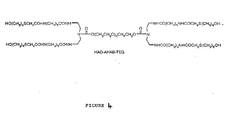
- mice C57BL/6 mice were immunized with PN-KLH and A&P. After three weeks, groups of 5 mice/group were treated with either different doses of Conjugate 20-II or 4.5 nM HAD-AHAB-TEG (linker, HAD, attached to derivatized valency platform molecule, AHAB-TEG, see Figure 4), or 1,8 nM (4 X 4.5) (CA) 10 : (TG) 10 , or a mixture of 4.5 nM HAD-AHAB-TEG plus 18 nM (CA) 10 : (TG) 10 , i.p.; and one group was not treated. The groups were given booster injections and the sera were collected and assayed as described in Reference Example 2.
- Conjugate 20-II or 4.5 nM HAD-AHAB-TEG linker, HAD, attached to derivatized valency platform molecule, AHAB-TEG, see Figure 4
- Conjugate 20-II causes a Reduction in the Number of PN-specific Antibody Producing Cells
- BXSB mice Six to 9 week old male BXSB mice (Jackson Laboratory, Bar Harbor, Me) were housed at the La Jolla Pharmaceutical facility. Food and water were provided as libitum. Animals were rested one week prior to use. Initial blood samples and weights were obtained prior to the first conjugate treatment. Conjugate treatment was initiated at 7 to 9 weeks of age and was administered intravenously twice weekly from day 59 to day 150. Animals were bled periodically and their anti-DNA antibody titers were determined.
- a serum sample taken from each mouse was assessed for the presence of anti-DNA antibody by ELISA.
- Falcon Probind 96 well microtitration assay plates (Becton Dickerson, Oxnard, CA) were coated with 100 ⁇ L/well of (PN) 50 - D -EK (a co-polymer of D-glutamic acid and D-lysine) at a concentration of 50 ⁇ g/mL overnight at 4°C.
- the plates were washed twice with PBS without calcium and magnesium and 0.05% Tween 20 (wash buffer) using a M96V plate washer (ICN Biomedical, Inc., Irvine, CA).
Landscapes
- Health & Medical Sciences (AREA)
- Immunology (AREA)
- Life Sciences & Earth Sciences (AREA)
- Bioinformatics & Cheminformatics (AREA)
- Animal Behavior & Ethology (AREA)
- Chemical & Material Sciences (AREA)
- Engineering & Computer Science (AREA)
- Veterinary Medicine (AREA)
- Medicinal Chemistry (AREA)
- Public Health (AREA)
- General Health & Medical Sciences (AREA)
- Pharmacology & Pharmacy (AREA)
- Epidemiology (AREA)
- Chemical Kinetics & Catalysis (AREA)
- Organic Chemistry (AREA)
- Nuclear Medicine, Radiotherapy & Molecular Imaging (AREA)
- General Chemical & Material Sciences (AREA)
- Microbiology (AREA)
- Mycology (AREA)
- Transplantation (AREA)
- Pharmaceuticals Containing Other Organic And Inorganic Compounds (AREA)
- Addition Polymer Or Copolymer, Post-Treatments, Or Chemical Modifications (AREA)
- Medicines That Contain Protein Lipid Enzymes And Other Medicines (AREA)
- Saccharide Compounds (AREA)
- Medicinal Preparation (AREA)
- Polyesters Or Polycarbonates (AREA)
- Other Resins Obtained By Reactions Not Involving Carbon-To-Carbon Unsaturated Bonds (AREA)
Abstract
Description
- This invention relates to conjugates comprising chemically-defined valency platform molecules coupled to polynucleotides for treating disease such as the autoimmune disease systemic lupus erythematosus (SLE or "lupus"). The invention also relates to the chemically-defined valency platform molecules.
- A number of compounds have been employed as carriers for biologically useful molecules in preparing conjugates that are alleged to be tolerogenic. For example, Benacerraf, Katz, and their colleagues investigated and described the use of conjugates of the random co-polymer D-glutamic acid/D-lysine, referred to as D-GL in earlier literature (hereinafter D-EK) with haptens and various antigens to induce specific immune tolerance. See US Pats. Nos. 4,191,668 and 4,220,565.
- Other investigators have studied conjugates of nucleosides or DNA with other carriers. Borel et al. (Science (1973) 182:76) evaluated the ability of isogenic mouse IgG-nucleoside conjugates to reduce the antibody response to denatured DNA in young animals of the NZB mouse strain. In separate studies Parker et al. (J. Immunol. (1974) 113:292) evaluated the effect of denatured DNA conjugate to poly-D-lysine and/or cyclophosphamide on the progression of the above-described syndrome in NZB mice.
- In a later article (Ann NY Acad Sci (1986) 475:296-306) Borel et al. describe oligonucleotide-immunoglobulin conjugates. Borel et al. (J. Clin Invest (1988) 82:1901-1907 or US Patent No. 4,650,675) have described in vitro studies using conjugates of human immunoglobulin linked to DNA. US Patent No. 5,126,131 (Dintzis et al.) also relates to conjugates comprising carriers and molecules involved in immune responses.
- Other references describe conjugates of nonimmunogenic polymers and immunogens (Saski et al., Scand. J. Immun. (1982) 16:191-200; Sehon, Prog. Allergy (1982) 32:161-202; Wilkinson et al., J. Immunol. (987) 139:326-331, and Borel et al., J. Immunol. Methods (1990) 126:159-168).
- In commonly-owned US Application Serial No. 07/914,869 (US Patent No. 5,276,013), US Patent No. 5,162,515 and US Application Serial No. 07/652,648 (US Patent No. 5,268,454) and in EP-A-0438259, conjugates comprising polymeric carriers such as D-EK, polyethylene glycol, poly-D-lysine, polyvinyl alcohol, polyvinyl pyrrolidone and immunoglobulins are described.
- Efimov et al, Bioorganicheskaya Khimiya, vol. 19, no. 8, 800-804, 1993 discloses a method for the synthesis of 3'-, 5'- and 3', 5'-PEG-oligonucleotide conjugate molecules. WO 88/09810 discloses oligonucleotide conjugates where oligonucleotides are joined through a linking arm to a hydrophobic moiety. EP-A-0442724 discloses PEGylated interleukin-6 derivatives.
- WO 87/00056 describes pharmaceutical compositions comprising a non-toxic inert pharmaceutically acceptable aqueous carrier medium in which is dissolved a conjugate of a protein selected from β-interferon, interleukin-2 and an immunotoxin wherein the protein is covalently conjugated to a water-soluble polymer selected from polyethylene glycol homopolymers and polyexyethylated polyols.
- In sum, it is believed that the prior art shows only ill-defined chemical compounds or compounds with numerous non-specific attachment sites employed as valency platform molecules in conjugates. Because the valency of such compounds, the specific location of the attachment sites and the number of attachment sites are unpredictable and fluctuate widely, prior art conjugates comprising such compounds cannot be made reproducibly and show wide ranges in their reported activity.
- In contrast to the above-described art, conjugates have now been developed which comprise chemically-defined valency platform molecules wherein the valency of the platform molecules is predetermined and wherein each attachment site is available for binding of a biological or chemical molecule. Valency platform molecules within the present invention are defined with respect to their chemical structure, valency, homogeneity and a defined chemistry which is amenable to effective conjugation with the polynucleotide.
- Accordingly the present invention provides a conjugate comprising a polynucleotide coupled to a valency platform molecule, which conjugate has the general formula (I):

- The invention further provides:
- a method of making a conjugate of formula (I) wherein the polynucleotide is a polynucleotide duplex of at least 20 base pairs, which method comprises:
- (a) conjugating a polynucleotide-linker of general formula (II):


- (b) annealing complementary single-stranded polynucleotides to each said single-stranded polynucleotide ssPN;
- (a) conjugating a polynucleotide-linker of general formula (II):
- a pharmaceutical composition comprising a conjugate of the invention and a pharmaceutically acceptable vehicle; and
- a valency platform molecule of the general formula (III):

- In a further preferred embodiment for treating lupus, the conjugate comprises the chemically-defined valency platform molecule and a multiplicity of polynucleotide duplexes of at least about 20 base pairs each bound to the platform molecule, and having significant binding activity for human SLE anti-dsDNA autoantibodies. In these preferred embodiments, the polynucleotide duplexes are substantially homogenous in length and one strand of the duplex is conjugated to the valency platform molecule either directly or via a linker molecule. Usually synthetic polynucleotides are coupled to a linker molecule before being coupled to a valency platform molecule. Usually the linker containing strand of the duplex is coupled at or proximate (i.e. within about 5 base pairs) one of its ends such that each strand forms a pendant chain of at least about 20 base pairs measured from the site of attachment of the strand to the linker molecule. The second strand is then annealed to the first strand to form a duplex.
- A suitable linker molecule within the present invention is the 6 carbon thiol HAD, a thio-6 carbon chain phosphate. Chemically-defined valency platform molecules within the present invention are formed, for example, by reacting PEG-bis-chloroformate with N,N-di(2-[6'-N'-carbobenzyloxyaminohexanoamido]ethyl)amine (hereinafter "AHAB").
- Surprisingly unexpected results of at least approximately ten fold up to more than one-hundred fold increase in immunosuppression are achieved using conjugates comprising the chemically-defined valency platform molecules of the instant invention and a polynucleotide when compared to the polymeric carriers described in the prior art. For example, at least a one hundred-fold increase in the immunosuppression of anti-dsDNA autoantibodies was achieved as described herein using conjugates within the present invention comprising chemically-defined valency platform molecules when compared to conjugates comprising an ill-defined carrier described in the prior art.
- Still another aspect of the invention is a conjugate of (a) the chemically-defined valency platform molecule and (b) a multiplicity of polynucleotide duplexes each and all of which is bound to the valency platform by a functional group located at or proximate a terminus of one of the strands of the duplex, said conjugate being a human SLE tolerogen.
- The conjugates of the invention can thus be used in a method of treatment of the human or animal body by therapy, An individual can thus be treated for SLE by administering to the individual an effective amount of the above-described conjugates.
- The conjugates of the invention are made by a method comprising: covalently bonding a polynucleotide to a chemically-defined valency platform molecule to form a conjugate. Thus, the conjugates for treating SLE described above can be made by a method comprising: reacting a multiplicity of single-stranded polynucleotides each of which is at least about 20 nucleotides in length and has a functional group at or proximate one of its termini that reacts with functional groups on the chemically-defined valency platform molecule to form a conjugate, and annealing complementary single-stranded polynucleotides to the single-stranded polynucleotides conjugated to the chemically-defined valency platform molecule to form pendant chains of double-stranded DNA.
-
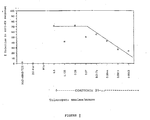
- Figure 1 shows the anti-PN response in mice primed with PN-KLH, treated with (PN)20-HAD-AHAB-TEG, Conjugate 20-II, in the doses shown or with HAD-ARAB only, or the PN only or a mixture of each, then boosted with PN-KLH and bled 5 days later. Sera were tested by the Farr assay using radiolabeled PN at a concentration of 10-8 M. The percent reduction was calculated and the data are presented. There were 5 mice per group.
- Figures 2 and 3 show the structure of the derivatized valency platform molecule and the linker coupling the polynucleotide to the platform molecule for Conjugates 3-I and 3-II (Figure 2) and 20-I and 20-II (Figure 3).
- Figure 4 shows the structures of the derivatized valency platform molecule "HAD-AHAB-TEG".
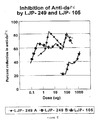
- Figure 5 illustrates the increase in the percentage of reduction in anti-dsPN antibody achieved by conjugates LJP-249A and LJP-249B, which are Conjugate 3-II, compared to a prior art conjugate (LJF-105) comprising D-EK and (PN)50.
- Figure 6 illustrates the suppression of serum circulating IgG anti-DNA antibodies in male BXSB mice treated with LJP-394, Conjugate 20-II. An ELISA assay was used to measure IgG antibodies to (PN)50 conjugated to D-EK. The serum from each of eight individual mice in each group was assayed.
- As used herein "valency platform molecule" means a chemically-defined nonimmunogenic molecule containing sites which facilitate the attachment of a discreet number of biological and/or chemical molecules.
- "Nonimmunogenic" is used to describe the valency platform molecule and means that the valency platform molecule elicits substantially no immune response when it is administered by itself to an individual.
- As used herein "individual" denotes a member of the mammalian species and includes humans, primates, mice and domestic animals such as cattle and sheep, sports animals such as horses, and pets such as dogs and cats.
- The valency of a chemically-defined valency platform molecule within the present invention is predetermined by the number of branching groups added to the platform molecule. A conjugate within the instant invention is biologically stabilized; that is, it exhibits an in vivo excretion half-life of hours to days to months to confer therapeutic efficacy. The chemically-defined valency platform molecules of the instant invention are also substantially nonimmunogenic (i.e., they exhibit no or only mild immunogenicity when administered to animals), non-toxic at the doses given (i.e., they are sufficiently non-toxic to be useful as therapeutic agents) and are preferably composed of a defined chemical structure. They provide a non-immunogenic, non-toxic polyfunctional substrate to which polynucleotide duplexes may be attached covalently. They will normally have an average molecular weight in the range of about 200 to about 200,000, usually about 200 to about 20,000, and are homogeneous as compared to the prior art polymers which were a mixture of compounds of widely fluctuating molecular weight. Examples of particularly preferred, homogenous valency platform molecules within the present invention are derivatized triethylene glycol (TEG) and polyethylene glycols (PEGs) having a molecular weight of about 200 to about 8,000.
- The synthetic polynucleotide duplexes that are coupled to the valency platform molecule are composed of at least 20 bp and preferably 20-50 bp. Polynucleotides described herein are deoxyribonucleotides unless otherwise indicated and are set forth in 5' to 3' orientation. Preferably the duplexes are substantially homogeneous in length; that is, the variation in length in the population will not normally exceed ±20%, preferably ±10%, of the average duplex length in base pairs. They are also preferably substantially homogeneous in nucleotide composition; that is, their base composition and sequence will not vary from duplex to duplex more than 10%. Most preferably they are entirely homogeneous in nucleotide composition from duplex to duplex.
- Based on circular dichroic (CD) spectra interpretation, the duplexes that are useful in the invention assume a B-DNA type helical structure. It should be understood that it is not intended that the invention be limited by this belief and that the duplexes may, upon more conclusive analysis assume Z-DNA and/or A-DNA type helical structures.
- These polynucleotide duplexes may be synthesized from native DNA or synthesized by chemical or recombinant techniques. Naturally occurring or recombinantly produced dsDNA of longer length may be digested (e.g., enzymatically, chemically or by mechanical shearing) and fractionated (e.g., by agarose gel or Sephadex® column) to obtain polynucleotides of the desired length.
- Alternatively, pairs of complementary single-stranded polynucleotide chains up to 70 bases in length are readily prepared using commercially available DNA synthesizers and then annealed to form duplexes by conventional procedures. Synthetic dsDNA of longer length may be obtained by enzymatic extension (5'-phosphorylation followed by ligation) of the chemically produced shorter chains.
- The polynucleotides may also be made by molecular cloning. For instance, polynucleotides of desired length and sequence are synthesized as above. These polynucleotides may be designed to have appropriate termini for ligation into specific restriction sites. Multiple iterations of these oligomers may be ligated in tandem to provide for multicopy replication. The resulting construct is inserted into a standard cloning vector and the vector is introduced into a suitable microorganism/cell by transformation. Transformants are identified by standard markers and are grown under conditions that favor DNA replication. The polynucleotides may be isolated from the other DNA of the cell/microorganism by treatment with restriction enzymes and conventional size fractionation (e.g., agarose gel, Sephadex® column).
- Alternatively, the polynucleotides may be replicated by the polymerase chain reaction (PCR) technology. Saiki, R.K, et al., Science (1985) 230:1350; Sacki, et al., Science (1988) 239:487; Sambrook, et al., In Molecular Cloning Techniques: A Laboratory Manual, Vol. 12, p 14.1-14.35 Cold Spring Harbor Press (1989).
- Polynucleotides may be screened for binding activity with SLE antisera by the assays described in the examples. The modified Farr assay in which binding activity may be expressed as I50 (the polynucleotide concentration in molar nucleotides resulting in half-maximal inhibition) is a preferred assay. Polynucleotide duplexes having an I50 of less than about 500 nM, preferably less than 50 nM, are deemed to have significant binding activity and are, therefore, useful for making the conjugates of this invention.
- The polynucleotides are conjugated to the chemically-defined valency platform molecule in a manner that preserves their antibody binding activity. This is done by conjugating the polynucleotide to the valency platform molecule at a predetermined site on the polynucleotide chain such that the polynucleotide forms a pendant chain of at least 20 base pairs measured from the conjugating site to the free (unattached) end of the chain.
- In a particularly preferred embodiment, the polynucleotides of the invention conjugates are coupled to a linker molecule at or proximate one of their ends. The linker molecule is then coupled to the chemically-defined valency platform molecule. For example, a defined double-stranded PN can be conjugated to a valency platform molecule by first providing a single chain consisting of 20 alternating cytosine (C) and adenosine (A) nucleotides. Four CA chains can then be covalently conjugated through linkers such as HAD to four reactive sites on a derivatized platform molecule such as triethylene glycol. The valency platform molecule is synthesized to include groups such as bromoacetyl. During the conjugation, a leaving group is displaced by sulfur. A second single nucleotide chain consisting of 20 alternating thymidine (T) and guanosine (G) nucleotides can then be annealed to the CA strand to form a double-stranded PN conjugate of the formula, [(PN)20-linker]4-valency platform molecule.
- The conjugates will normally be formulated for administration by injection, (e.g., intraperitoneally, intramuscularly, intravenously etc.). Accordingly, they will typically be combined with pharmaceutically acceptable aqueous carriers such as saline, Ringer's solution, dextrose solution, and the like. The conjugate will normally constitute about 0.01% to 10% by weight of the formulation. The conjugate is administered to an individual in amounts sufficient to at least partially reestablish tolerance to the autoantigens causing SLE. Such amounts are sometimes herein referred to as "therapeutically effective" amounts. The particular dosage regimen i.e., dose, timing and repetition, will depend upon the particular individual, and that individual's medical history. Normally a dose of about 1 to 1000 µg conjugate/kg body weight will be given. Repetitive administrations may be required to achieve and/or maintain a state of immune tolerance.
- The following examples further illustrate the invention and its unexpectedness relative to the prior art.
- The following reaction schemes illustrate methods of synthesizing derivatized chemically-defined valency platform molecules within the present invention. In this example, DMTr=4,4'-dimethoxytriphenylmethyl; Tr=trityl; Bz=benzoyl; Cp=deoxycytidine monophosphate, CE=cyanoethyl; CPG=controlled pore glass, DMF = dimethyl formamide, DCC = dicyclohexylcarbodiimide, TFA = trifluoroacetic acid, CDI = carbonyl diimidazole, Ts = tosyl (para-toluene sulfonyl), DIPAT = diisopropyl ammonium tetraazolide, TBDMSCl = tertbutyl dimethyl silyl chloride, TBAF = tetrabutyl ammonium fluoride, IA-DABA = 3,5-bis-(iodoacetamide)-benzoyl.


- synthesis of reagents used to modify (CA)8,(CA)10, (CA)12 and (CA)16 with disulfide linkers is described in Reaction Scheme 4 below:

- Synthesis of a reagent used to modify (CA)25 with vicinal diol linkers is described in Reaction Scheme 5 below:

- Reference Compound 1 - [3,5-Bis-(iodoacetamido)benzoic acid]: 2.93 g (8.28 mmol, 2.2 eq) of iodoacetic anhydride was added to a stirred suspension of 572 mg (3.76 mmol) of 3,5-diaminobenzoic acid in 19 mL of dioxane at room temperature under N2 atmosphere. The mixture was stirred, covered with foil for 20 hours and partitioned between 50 mL of EtOAc and 50 mL of 1N HCl solution. The EtOAc layer was washed with brine, dried over MgSO4, filtered, and concentrated on a rotary evaporator to give 3.3 g of tan solid. The material was purified by silica gel chromatography (94/5/1 CH2Cl2/MeOH/HOAc) to yield 992 mg (54%) of
compound 1 as a white solid: NMR (DMSO) 3.84 (s, 4H), 7.91 (s, 2H), 8.14 (s, 1H), 10.56 (s, 2H). - Reference Compound 2 - [3,5-Bis-(iodoacetamido)benzoyl chloride]: 117 µL (1.6 mmol, 190 mg) of SOCl2 was added to a solution of 390 mg (0.8 mmol) of 1 in 34 mL of THF. The mixture was refluxed under N2 atmosphere until all solids had dissolved (approximately 30 minutes) to give a clear red-brown solution. The mixture was concentrated on the rotary evaporator and placed under vacuum to provide
crude compound 2 as a foamy solid which was used directly in the next step. - Reference Compound 3 - [N,N'-Bis-(3,5-Bis-(iodoacetamido)benzoyl) derivative of α,ω-bis-(N-2-aminoethylcarbamoyl)polyethyleneglycol]: 570 mg of α,ω-bis-(N-2-aminoethylcarbamoyl)polyethyleneglycol (0.16 mmol, 3350 g/mol, Sigma) was placed in a tared flask.
- Toluene (20 mL) was added and water was removed by azeotropic distillation. The residue was dried under vacuum to give 549 mg of solid and dissolved in 4 mL THF with 89 µL (0.64 mmol) of diisopropylethylamine. The crude acid chloride was dissolved in 4 mL anhydrous THF and added to the mixture over 30 seconds under N2. The mixture was stirred for 16 hours at room temperature and partitioned between 25 mL of 0.1 N HCl and 25 mL of CH2Cl2. The aqueous layer was again extracted with CH2Cl2 and the organic layers were combined, washed with 25 mL of H2O, followed by 50 mL, of at NaHCO3 solution. The organic layers were dried with Na2SO4, filtered, and concentrated to give 784 mg of orange oil. Silica gel chromatography (9/1 CH2Cl2/MeOH) yielded 190 mg of colorless oil which was crystallized from hot EtOH/Et2O, collected on sintered glass filter under N2 pressure, and dried under vacuum to provide 177 mg of
compound 3 as a white solid: NMR (CDCl3) 3.40 (bd m, 8H), 3.59 (bd s, (CH2CH2O)n, integral too large to integrate in relation to other integrals), 3.91 (s, 8H), 4.21 (m, 4H), 6.04 (bd m, 2H), 7.55 (bd m, 2H), 7.78 (bd s, 4H), 8.10 (bd s, 2H), 9.30 (bd m, 4H): iodoacetyl determination (European Journal of Biochemistry (1984) 140:63-71): Calculated, 0.92 mmol/g; Found, 0.96 mmol/g. - Compound 10 - [4-Nitrophenylbromoactate]: 9.28 g (45 mmol) of dicyclohexylcarbodiimide was added to a stirred solution of 5.0 g (35.9 mmol) of bromoacetic acid and 8.50 g (61.1 mmol) of 4-nitrophenol in 180 mL of EtOAc at 0°. The mixture was stirred for 16 hours at 5° and 1 mL of acetic acid was added. The mixture was stirred for 20 minutes at room temperature and then placed in a freezer for 20 minutes. The solid material was removed by filtration, and the filtrate was concentrated to a viscous oil and crystallized from Et2O/hexanes to provide 7.73 g (83%) of
compound 10 as flakes: m.p. 86-87°; TLC Rf = 0.63 (50/50/1 hexanes/EtOAc/HOAc); 1H NMR (CDCl3) d 4.13 (s, 2H), 7.36 (d, J=12 Hz, 2H), 8.32 (d, J=12 Hz, 2H); 13C NMR (CDCl3) d 24.9, 122.1, 125.3, 155.5 164.9; Anal. calc'd for C8H6BrNO4: C, 36.95; H, 2.33; N, 5.39. Found: C, 37.24; H, 2.33; N, 5.42. - Compound 18 - [1,5-Bis(N-carbobenzyloxy-6-aminohexanoamido)-3-azapentanel: 3.09 g (19.0 mmol) of carbonyldiimidazole was added to a solution of 5.05 g (19.0 mmol) of N-carbobenzyloxy-6-aminohexanoic acid in 25 mL of EtOAc at room temperature. The mixture was stirred for 15 hours and 1.02 mL (982 mg, 9.52 mmol) of diethylenetriamine was then added followed by 2.65 mL (1.93 g, 19.0 mmol) of Et3N. The resulting mixture was stirred for 4 hours, and the solid product was collected by filtration. Recrystallization (MeOH/EtOAc) gave 4.27 g (75%) of compound 18 as a fine grainy solid: m.p. 132-133°; 1H NMR (CDCl3) d 1.33 (m, 4H), 1.52 (m, 4H), 1.64 (m, 4H), 2.18 (t, 4H), 2.73 (t, 4H), 3.16 (m, 4H), 3.35 (m, 4H), 4.96 (bd s, 2H), 5.09 (s, 4H), 6.13 (bd s, 2H), 7.33 (s, 10H); Anal. calc'd for C32H47N5O6: C, 64.29; H, 7.50; N, 11.72. Found: C, 63.54; H, 7.75; N, 11.91.
- Compound 19: 657 µL (880 mg, 3.2 mmol) of triethyleneglycol-bis-chloroformate (Aldrich) was added to a solution of 4.86 g (8.1 mmol) of compound 18 in 162 mL of pyridine in a 20° water bath. The mixture immediately formed a precipitate. The mixture was stirred for 16 hours and the resulting cloudy yellow solution was concentrated under vacuum. The concentrate was partitioned between 150 mL of EtOAc and two 150 mL portions of 1 N HCl (making sure the aqueous layer was acidic). The aqueous layers were combined and extracted with a second 150 mL portion of EtOAc. The EtOAc layers were combined, dried (MgSO4), filtered, and concentrated. The resulting residue was crystallized (EtOAc/hexanes/CHCl3) to provide 1.92 g (43%) of compound 19 as fine yellow tinted crystals: m.p. 86-91°; 1H NMR (CDCl3) 1.31 (m, 8H), 1.52 (m, 8H), 1.62 (m, 8H), 2.20 (m, 8H), 3.20 (m, 8H), 3.39 (s, 16H), 3.62 (s, 4H), 3.68 (m, 4H), 4.26 (m, 4H), 5.08 (s, 8H), 5.32 (bd s, 4H), 7.31 (bd s, 4H), 7.37 (s, 20H); 13C NMR (CDCl3) d 25.1, 26.2, 26.4, 29.6, 36.0, 36.2, 38.5, 38.8, 40.8, 64.5, 66.4, 69.1, 70.3, 128.0, 128.4, 136.7, 156.5, 156.9, 173.6; Anal. calc'd for C72H104N10O18: C, 61.87; H, 7.50; N, 10.02. Found: C, 61.68; H, 7.63; N, 9.95.
- Compound 36: 3.5 mL of cyclohexene was added to a solution of 800 mg (0.57 mmol) of compound 19 in 5 mL of absolute EtOH. The solution was placed under nitrogen, 500 mg of 10% Pd on carbon was added, and the resulting mixture was refluxed with stirring for 2 hours. When cool, the mixture was filtered through diatomaceous earth and concentrated to give 500 mg (100%) of compound 36 as an oil: 1H NMR (50/50 CDCl3/CD3OD) d 1.21 (m, 8H), 1.49 (m, 8H), 1.62 (m, 8H), 2.19 (t, J = 7.4 Hz, 8H), 2.67 (t, J = 7.4 Hz, 8H), 3.36 (bd s, 16H), 3.67 (s, 4H), 3.71 (m, 4H), 4.21 (m, 4H).
- Compound 20: 3.9 g (46.4 mmol) of NaHCO3 was added to a solution of 5.0 g (5.8 mmol) of compound 36 in 37.5 mL of dioxane and 12.5 mL of H2O. The mixture was cooled to 0° in an ice bath and 8.7 g (34.8 mmol) of 4-nitrophenylbromoacetate,
compound 10, was added. The mixture was stirred at 0° for 1 hour and 50 mL of 1 N H2SO4 was slowly added. The mixture was extracted with three, 50 mL portions of EtOAc. The EtOAc extracts were discarded and the aqueous layer was extracted with six, 50 mL portions of 20/80 MeOH/CH2Cl2. The combined MeOH/CH7Cl2 layers were dried (Na2SO4), filtered, and concentrated. The residue was purified by silica gel chromatography (step gradient 9/1 CH2Cl2/MeOH then 85/15/5 CH2Cl2/MeOH/THF) to provide 3.62 g (46%) ofcompound 20 as a white solid: melting point 66.0-70.5°. An analytical sample was prepared by preparative HPLC (C18 reversed phase column, gradient 25/75/0.1 to 35/65/0.1 CH3CN/H2O/CF3CO2H over 50 minutes, 225 nm) to give a clear oil which solidified on standing under vacuum to give a white solid: melting point 87-89°; 1H NMR (CDCl3) d 1.35 (m, 8H), 1.55 (m, 8H), 1.64 (m, 8H), 2.26 (m, 8H), 3.28 (m, 8H), 3.42 (bd s, 16H), 3.66 (s, 4H), 3.70 (m, 4H), 3.89 (s, 8H), 4.19 (m, 4H); 13C NMR (CDCl3) d 25.1, 26.2, 28.8, 29.0, 38.5, 39.1, 40.0, 47.8, 48.3, 64.7, 69.1, 70.3, 157.0, 166.3, 174.9; MS (FAB) m/e (relative intensity) MH+ [1341(25), 1343(60), 1345(70), 1347(56), 1349(21)], 705.6(100); Anal. calc'd for C48H84N10O14Br4: C, 42.86; H, 6.29; N, 9.27; Br, 23.77. Found: C, 42.15; H, 6.28; N, 9.87; Br, 25.33. - Compound 31 - [PEG 3350 -bis-chloroformate]: Two drops of dry pyridine, followed by 125 mg (0.418 mmol) of triphosgene, was added to a solution of 1.0 gram (0.249 mmol) of polyethylene glycol (J.T. Baker, average molecular weight 3350 g per mol) which had been dried by azeotropic distillation (toluene) in 12 mL of CH2Cl2. The mixture was stirred at room temperature for 20 hours and the solvent was evaporated under vacuum to give 1.0 g (100%) of compound 31 as a white solid: 1H NMR (CDCl3) d 3.40-3.65 (m, approx. 300H, integral too large to be accurate), 3.77 (m, 4H), 4.46 (m, 4H).
- Compound 32: A solution of 1.0 g (0.25 mmol) of compound 31 in 12 mL of 5:1 CH2Cl2/dioxane was added dropwise to a 50° solution of 600 mg (1.0 mmol) of compound 18 in 10 mL of dioxane and 1.5 mL of pyridine. The resulting cloudy solution was stirred for 72 hours. 25 mL of CH2Cl2 was added and the mixture was then filtered. The filtrate was evaporated and the semi-solid residue was purified by chromatography on G-10 Sephadex®. The resulting solid was crystallized (CH2Cl2/Et2O) to give 829 mg (75%) of compound 32 as a faintly yellow solid: 1H NMR (CDCl3) d 1.30 (m, 8H), 1.40 (m, 8H), 1.61 (m, 8H), 2.18 (m, 8H), 3.17 (m, 8H), 3.40 (m, 16H), 3.62 (m, approx. 300H, integral too large to be accurate), 4.15 (m, 4H), 5.07 (s, 8H), 7.33 (m, 20H).
- Compound 39: 100 mg of 10% Pd/C was added to a solution of 300 mg (0.065 mmol) of compound 32 in 5 mL of absolute EtOH and 2 mL of cyclohexene under nitrogen. This mixture was refluxed under nitrogen for 2 hours. The mixture was filtered through diatomaceous earth and the solvent was evaporated to give 237 mg (90%) of compound 39 as a white solid: 1H NMR (CDCl3) d 1.37 (m, 8H), 1.48 (m, 8H), 1.65 (m, 8H), 2.21 (m, 8H), 2.50 (m, 8H), 3.39 (m, 16H), 3.64 (m, approx. 300H, integral too large to be accurate), 4.19 (m, 4H).
- Compound 33: 125 mg (0.67 mmol) of NaHCO3 and 115 mg (0.44 mmol) of
compound 10 was added to a solution of 225 mg (0.055 mmol) of 39 in 5 mL of dioxane and 5 mL of water. The resulting yellow solution was stirred at room temperature for 12 hours. The solution was then extracted with three 30 mL portions of CH2Cl2. The aqueous layer was acidified with 1 N H2SO4 and extracted with three, 30 mL portions of CH2Cl2. The combined CH2Cl2 layers were dried (MgSO4), filtered, and concentrated to provide a yellow oil. Purification by chromatography on G-10 Sephadex® (MeOH) and recrystallization of the resulting oil (EtOH/Et2O) provided 182 mg (73%) of compound 33 as a white solid: 1H NMR (CDCl3) d 1.35 (m, 8H), 1.55 (m, 8H), 1.65 (m, 8H), 2.22 (m, 8H), 3.28 (m, 8H), 3.42 (m, 16H), 3.50-364 (m, approx. 300H, integral too large to be accurate), 3.87 (s, 8H), 4.18 (m, 4H); bromoacetyl determination (European Journal ofBiochemistry 1984, 140, 63-71): Calculated, 0.87 mmol/g; Found, 0.73 mmol/g. Anal Calcd. for C191H375O87N10Br4: C, 50.84; H, 8.33; N, 3.09; Br, 7.05. Found: C, 51.98; H, 8.34; N, 2.45; Br, 10.19. - compound 47 - S-(6-hydroxyhexyl)isothiuronium chloride: 11.1 g (146 mmol) of thiourea was added to a solution of 16.6 mL (20.0 g, 146 mmol) of 6-chlorohexanol in 49 mL of ethanol and the mixture was refluxed for 24 hours. The mixture was cooled to 0° and the product crystallized. The crystals were collected by vacuum filtration and dried to give 28.4 g (92%) of compound 47 as a white solid: mp 122-124°; 1H-NMR (DMSO) 1.40 (m, 4H), 1.65 (m, 2H), 3.21 (t, 2H), 3.41 (t, 2H), 9.27 and 9.33 (overlapping broad singlets, 4H); Anal. Calc'd for C7H17ClN2OS: C, 39.51; H, 8.06; N, 13.17; S, 15.07. Found: C, 39.69; H, 8.00; N, 13.01; S, 15.16.
- Compound 48 - 6-Mercaptohexan-1-ol: 9.25 g of NaOH pellets was added to a solution of 17.8 mg (83.6 mmol) of compound 47 in 120 mL of H2O and 120 mL of EtOH. The mixture was refluxed for 4 hours. The mixture was carefully concentrated to approximately 75 mL and the concentrate was purified by vacuum distillation to provide 7.4 g (66%) of compound 48: bp 95-105° @ 5 mm Hg; 1H NMR (CDCl3) 1.41 (m, 9H), 2.59 (dt, 2H), 3.69 (t with underlying brd s, 3H); 13C NMR (CDCl3) d 24.5, 25.2, 28.0, 32.5, 33.9, 62.7; Anal. calc'd for C6H14OS: C, 53.68, H, 10.51; S, 23.89. Found: C, 53.35; H, 10.72; S, 23.60.
- Compound 49 - Bis-(6-hydroxyhexyl)disulfide: A solution of 4.02 g (15.8 mmol) of I2 in 90 mL of MeOH was added dropwise over a period of 10 minutes to a solution of 4.26 g (31.7 mmol) of compound 48 in 10 mL of MeOH and 13.7 mL (9.97 g, 98.5 mmol) of Et3N under N2 atmosphere and cooled in an ice bath. The cooling bath was removed and the mixture was stirred at ambient temperature for 4 hours. The mixture was concentrated on the rotary evaporator and purified by silica gel chromatography (1:1 hexane/EtOAc) to provide 3.12 g (73%) of compound 49 as a pale yellow solid: TLC Rf .18 (1:1 hexane/EtOAc); mp 38-48°; 1H NMR (CDCl3) 1.15-2.20 (m, 16H), 2.73 (t, 4H), 3.70 (t, 4H); Anal. calc'd for C12H26S2O2: C, 54.09; H, 9.84; S, 24.06. Found: C, 54.85, H, 9.86; S, 24.11.
- Compound 50 - Mono-O-(4',4"-dimethoxytriphenylmethyl)-bis-(6-hydroxyhexyl)disulfide: 3.97 g (11.7 mmol) of 4,4'-dimethoxytriphenylmethyl chloride was added to a solution of 3.12 g (11.7 mmol) of compound 49 and 45 mL of pyridine. The mixture was stirred at ambient temperature for 16 hours. Most of the pyridine was removed on the rotary evaporator and the residue was partitioned between 100 mL of saturated NaHCO3 solution and 100 mL of EtOAc. The EtOAc layer was washed with 50 mL of saturated NaCl solution, dried (Na2SO4), filtered and concentrated to an oil. Purification by silica gel chromatography (9:1 CH2Cl2/EtOAc) yielded 2.84 g (43%) of compound 50 as a viscous oil: TLC Rf .35 (9:1 CH2Cl2/EtOAc); 1H NMR (CDCl3) 1.41 (m, 8H), 1.65 (m, 8H), 2.70 (two overlapping triplets, 4H), 3.08 (t, 2H), 3.65 (t, 2H), 3.81 (s, 6H), 6.85 (d, 4H), 7.32 (m, 7H), 7.47 (d, 2H); HRMS (FAB, M+), calc'd for C33H4O4S2: 568.2681. Found: 568.2665.
- Compound 51- O-[14-(4',4"-Dimethyoxytriphenylmethoxy)-7,8-dithiotetradecyl]-O-(2-cyanoethyl)-N,N-diisopropylphosphoramidite: 458 mg (1.52 mmol) of O-cyanoethyl-N,N,N',N'-tetra-isopropylphosphorodiamidite in 0.5 mL of CH2Cl2 was added to a solution of 771 mg (1.36 mmol) of compound 50 and 116 mg (0.68 mmol) of diisopropylammonium tetrazolide in 6.8 mL of CH2Cl2 under N2 atmosphere. The mixture was stirred for 4 hours and partitioned between 25 mL of NaHCO3 and 3 x 25 mL of CH2Cl2. The combined CH2Cl2 layers were washed with saturated NaCl solution, dried (Na2CO3), filtered and concentrated to an oil. Purification by filtration through a 2" plug of basic alumina in a 25 mm column, eluting with 9:1 CH2Cl2/Et3N provided 831 mg (80%) of compound 51 as a viscous oil: 1H NMR (CDCl3) d 1.25 (m, 12H), 1.45 (m, 8H), 1.70 (m, 8H), 2.72 (m, 6H), 3.09 (t, 2H), 3.65 (m, 4H), 3.87 (s, 6H), 3.91 (m, 2H), 6.89 (d, 4H), 7.35 (m, 7H), 7.49 (d, 2H); 31P NMR (CDCl3 with 15% H3PO4 internal standard) 147.69; HRMS (FAB, MH+) calc'd for C42H62N2O5PS2 769.3839, found 769.3853.
- Compound 52 - Trityl-HAD alcohol: 60 g (0.21 mol) of trityl chloride was added to a solution of 57 g (0.21 mole) of
compound 49 and 60 mL of pyridine. This mixture was stirred at 100°C for 19 hours. The reaction mixture was cooled to room temperature and filtered. The filtrate was diluted with 300 mL of methylene chloride and extracted by 200 mL of saturated sodium bicarbonate. The organic layer was dried over Na2SO4, filtered and concentrated to an oil. Purification by silica gel chromatography (gradient 9:1 hexanes: ethyl acetate 3:1 hexanes:ethyl acetate) yielded 55 g of compound 52 (50%); 1H NMR (CDCl3) δ 1.38 (m, 8H), 1.63 (m, 8H), 2.66 (m, 4H), 3.04 (t, 2H), 3.62 (t, 2H), 7.25 (m, 9H), 7.42 (m, 6H). HRMS (FAB, M+) calc'd for C31H40O2S 508.2470, found 508.2482. - Compound 53 - Trityl HAD Phosphoramidite: To a solution of 10 g (19.7 mmol) of compound 52 and 6.3 mL (36.2 mmol) of diisopropylethylamine in 90 mL of methylene chloride at 0°C under argon was slowly added 4.5 mL (20.2 mmol) of 2-cyanoethyl-N,N-diisopropylchlorophosphoramidite. After stirring for 90 minutes, the reaction mixture was extracted twice with 100 mL of saturated sodium bicarbonate. The methylene chloride solution was dried over Na2SO4, filtered and concentrated to an oil. Purification by basic alumina chromatography (75:24:1, hexanes:ethyl acetate:triethylamine) provided 11.3 g (81%) of compound 53 as an oil: 1H NMR (CDCl3) δ 1.18 (m, 12H), 1.37 (m, 8H), 1.62 (m, 8H), 2.6 (m, 6H), 3.04 (t, 2H), 3.60 (m, 4H), 3.82 (m, 2H), 7.26 (m, 6H), 7.44 (m, 9H). HRMS (FAB, MH+) calc'd for C40H58N2O3PS2 709.3626, found 709.3621.
- Compound 54 - O-(tert-butyldimethylsilyl)-5-hexenol: 15.66 g (230 mmol) of imidazole and 20.0 g (130 mmol) of tert-butyldimethylsilyl chloride were added to a solution of 12.47 mL (10.4 g, 104 mmol) of 5-hexene-1-ol in 104 mL of DMF. The mixture was stirred at ambient temperature for 4 hours and partitioned between 200 mL of EtOAc and 100 mL of saturated NaHCO3 solution. The EtOAc layer was washed with 100 mL of saturated NaHCO3 solution, 100 mL of saturated NaCl solution, dried (MgSO4), filtered, and concentrated to a volume of approximately 100 mL. Distillation under vacuum provided 70.07 g (90%) of compound 54: bp 130-143° @ 100 mm Hg; 1H NMR (CDCl3) 0.11 (s, 6H), 0.95 (s, 9H), 1.48 (m, 2H), 1.57 (m, 2H), 2.11 (dt, 2H), 3.66 (t, 2H), 5.03 (m, 2H), 5.86 (m, 1H); 13C NMR (CDCl3) -5.25, 18.40, 25.21, 26.01, 32.35, 33.60, 63.09, 114.40, 138.92; Anal. calc'd for C12H26OSi: C, 67.22; H, 12.22. Found: C, 66.96; H, 12.16.
- Compound 55 - 1-O-(tert-butyrldimethylsilyl)-1,5,6-hexanetriol: To a solution of 9.86 g (46.0 mmol) of compound 54 in 92 mL of acetone was added a solution of 6.46 g (55.2 mmol) of N-methylmorphoholine oxide in 23 mL of H2O. To the mixture was added 443 µl of a 2.5% solution of OsO4 in tert-butyl alcohol (360 mg of solution, 9.0 mg of OsO4, 35 µmol) and 50 µL of 30% H2O2. The mixture was stirred for 16 h and a solution of 474 mg of sodium dithionite in 14 mL of H2O was added. After another 0.5 h the mixture was filtered through celite. The filtrate was dried with MgSO4 and filtered through 1" of silica gel in a 150 mL Buchner funnel using 250 mL portions of EtOAc to elute. Fractions containing product were concentrated to provide 11.0 g (96%) of 55 as a viscous oil: TLC Rf 0.2 (1:1 hexane/EtOAc); 1H NMR (CDCl3) 0.05 (s, 6H), 0.89 (s, 9H), 1.25 (m, 4H), 1.55 (m, 2H), 3.41 (dd, 2H), 3.62 (t, 2H), 3.71 (m, 1H); 13C NMR (CDCl3) -5.23, 18.42, 21.91, 26.02, 32.68, 32.81, 63.16, 66.74, 72.24; HRMS (FAB, MH+), calc'd for C12H29O3Si : 249.1886. Found : 249.1889.
- Compound 56 - 5,6-(bis-O-benzoyl)-1-O-(tert-butyldimethylsilyl)-1,5,6-hexanetriol: 6.18 mL (7.48 g, 53.2 mmol) of benzoyl chloride was added to a solution of 5.29 g (21.3 mmol) of 55 in 106 mL of pyridine. The mixture was stirred for 18 hours and concentrated on the rotary evaporator. The mixture was partitioned between 100 mL of cold 1 N HCl and 100 mL of EtOAc. The pH of the aqueous layer was checked to make sure it was acidic. The EtOAc layer was washed successively with 100 mL of H2O and 100 mL of saturated NaCl, dried (MgSO4), filtered, and concentrated to provide 10.33 g (99%) of compound 56 as a viscous yellow oil: TLC Rf 0.45 (1:4 EtOAc/hexanes); 1H NMR (CDCl3) d 0.05 (s, 6H), 0.88 (s, 9H), 1.59 (m, 4H), 1.85 (m, 2H), 3.14 (t, 2H), 4.49 (dd, 1H), 4.59 (dd, 1H), 5.54 (m, 1H), 7.45 (m, 4H), 7.58 (m, 2H), 8.05 (m, 4H).
- Compound 57 - 5,6-(bis-O-benzoyl)-1,5,6-hexanetriol: 10.7 mL (10.7 mmol) of 1 N tetrabutylammonium fluoride in THF was added to a solution of 2.62 g (5.36 mmol) of compound 56 in 10.9 mL of THF. The mixture was stirred for 16 hours. The mixture was partitioned between 25 mL of saturated NaHCO3 solution and 3 x 25 mL of EtOAc. The combined EtOAc extracts were washed with saturated NaCl solution, dried (MgSO4), filtered and concentrated to a viscous oil which was purified by silica gel chromatography (1:1 hexane/EtOAc) to provide 823 mg (41%) of compound 57 as a viscous oil; Rf 0.14 (1:1 hexane/EtOAc); 1H NMR (CDCl3) d 1.58 (m, 2H), 1.68 (m, 2H), 1.88 (m, 2H), 3.68 (t, 2H), 4.52 (dd, 1H), 4.62 (dd, 1H), 5.56 (m, 1H), 7.46 (m, 4H), 7.58 (m, 2H), 8.05 (m, 4H); 13C NMR (CDCl3) d 22.08, 31.20, 31.30, 32.88, 62.92, 66.17, 72.63, 128.93, 130.19, 130.57, 133.62, 166.72, 166.86; HRMS (FAB MH+), calc'd for C20H23O5; 343.1545. Found: 343.1553.
- Compound 58 - O-[5,6-(bis-O-benzoyloxy)-hexyl]-O-(2-cyanoethyl)-N,N-diisopropylphosphoramidite: A solution of 989 mg (3.28 mmol) of O-cyanoethyl-N,N,N', N'-tetraisopropylphosphorodiamidite in 2.0 mL of CH2Cl2 was added to a solution of 1.02 g (2.98 mmol) of compound 57 and 255 mg (1.49 mmol) of diisopropylammonium tetrazolide (prepared by mixing acetonitrile solutions of diisopropylamine and tetrazole in a one-to-one mole ratio and concentrating to a white solid) in 14.9 mL of CH2Cl2. The mixture was stirred for 4 hours and then partitioned between 25 mL of CH2Cl2 and 25 mL of chilled saturated NaHCO3 solution. The CH2Cl2 layer was washed with saturated NaCl solution, dried (Na2SO4), filtered, and concentrated. Purification by filtration through a 2" plug of basic alumina in a 25 mm column, eluting with 9:1 EtOAc/Et3N, provided 1.5 g (93%) of compound 58 as a viscous oil: 1H NMR (CDCl3) d 1.19 (m, 12H), 1.62 (m, 2H), 1.73 (m, 2H), 1.90 (m, 2H), 2.62 (dd, 2H), 3.53-3.92 (m, 6H), 4.53 (dd, 1H), 4.62 (dd, 1H), 5.58 (m, 1H), 7.48 (m, 4H), 7.60 (m, 2H), 8.09 (m, 4H); 31P NMR (CDCl3 with 15% H3PO4 internal standard) d 148.2; HRMS (FAB, MH+), calc'd for C29H40O6N2P 543.2624. Found, 543.2619.

- The polynucleotide d-[DMTr-(bzCp(CE)bzA)10] was prepared on a Milligen 8800 Prep Scale DNA synthesizer following the manufacturer's protocols for DNA phosphoramidite synthesis. The synthesis was carried out on 10 g of DMTr-d-bzA-CPG support with a nucleoside loading of 30.0 µmol/g. The final DMTr blocking group was removed using the machine protocol. Milligen activator solution, Cat. No. MBS 5040 (45 mL) and 0.385 g of compound 51 (see Reaction Scheme 4) were added to the reaction and the suspension was mixed for 8 minutes by argon ebullition. The mixture was oxidized by the usual machine protocol and the support-bound polynucleotide was collected by filtration, air dried and treated with 100 mL of concentrated ammonia for 16 hours at 55°C. When cool, the mixture was filtered through a Gelman 10µ polypropylene filter. The filter was washed with 200 mL of 2 mM NaCl adjusted to
pH 12 with NaOH. The filtrate was then applied to a Amicon chromatography column (0.45 x 9.4 cm, 150 mL) which had been packed with Q-Sepharose (Pharmacia) equilibrated first with 3M NaCl and then with 2 mM NaCl,pH 12. The column was eluted with 500 mL of a linear gradient (2 mM NaCl,pH 12 to mL 1.3 M NaCl, pH 12), then washed with 1.3 M NaCl,pH 12 until all U.V. absorbing material came off. Fractions which absorbed at 260 nm were further analyzed by polyacrylamide electrophoresis and those containing pure product were pooled. The pool (120 mL) was treated with 240 mL of cold isopropanol and stored for 30 minutes at - 20°C. The precipitate was collected by centrifugation in a Sorvall RC 3B centrifuge using a model H-6000A rotor for 15 minutes at 3000 rpm and 4° C to yield DMTr-5'-modified (CA)10 (14946 A260 units, 498 mg, 62.2 µM, 20% based on 300 µM CPG nucleoside.)
- The synthesis of Tr-5'-modified (CA)10 was carried out as described above for the synthesis of DMTr-5'-modified (CA)10 (prepared as described in Reaction Scheme 4) by substituting compound 53 for compound 51.
- In the conjugation procedures that follow, all the buffers and solutions employed were thoroughly sparged with helium and all reaction vessels were purged with argon before use. A solution of 11,568 A260 units (48.2 µmol, assume molar extinction at 260 nm = 240,000) of the DMTr-5'-modified (CA)10 in 7.7 mL water was treated with 1 mL of 0.1 M NaHCO3 and 210 µL (876 µmol, 18 times molar excess) tributylphosphine for 0.5 hour at room temperature. The suspension was shaken from time to time. The suspension was treated with 0.8 mL of 3M NaCl and 16 mL of cold isopropanol. After 30 minutes at -20°C, the material was centrifuged at 3000 rpm for 20 minutes. The pellet was redissolved in 2 mL of water, 0.2 mL of 3M NaCl, treated with 4 mL isopropanol and recentrifuged. The pellet was briefly dried under vacuum and dissolved in 2.8 mL of water and 1 mL of 0.1 N NaHCO3 which had been sparged with helium. 6.7 mg of compound 3 (IA-DABA-PEG) was added, and the mixture was kept for 16 hours at room temperature in the dark. The reaction mixture in a final volume of 6 mL was applied to a 5 x 91 (1800 Ml) Pharmacia column which was packed with Sephacryl 200 (Pharmacia). The column was eluted with 0.5 M NaCl, 0.1 M sodium borate, pH 8.3. A peristaltic pump was used and set to give a flow rate of approximately 2 mL per min., and fractions of 15 ml were collected. The absorbance of the fractions at 260 nm was measured. The fractions were also analyzed by polyacrylamide gel electrophoresis and those containing pure conjugate were pooled.
- The pooled fractions from above contained 726 A260 units. The equivalent amount of (TG)10 was added and the tube was heated at 90°C for ten minutes and then allowed to cool to room temperature over 1.5 hours. An equal amount of isopropanol was added and the mixture kept for 3 hours at -20°C. After centrifugation at 3000 rpm for 20 minutes, the pellet was dissolved in 0.15 M NaCl, 0.01 M sodium citrate, pH 6.8. 53 mg of the hybrid was obtained. An aliquot of the material was diluted in the above buffer and the melting temperature of the duplex was determined in a carey 3E spectrophotometer. The material had a Tm of 73.4°C. and 24.3% hyperchromicity. A 10 A260 unit aliquot of the product was annealed with excess (TG)10 as described above. This as well as unannealed conjugate and a (TG)10 standard were analyzed by gel permeation HPLC on a Shodex Protein KW 8025 column on a Rainin HPLC instrument. The column was eluted isocratically with 0.05M NaH2PO4, pH 6.5, 0.5M NaCl. The run time was 12 minutes. The product had a retention time of 6.9 minutes and (TG)10 9.2 minutes. Comparison of the area under the peaks showed that 98.09% of the product was double stranded DNA. The conjugate is represented by the structure designated "Conjugate 3-II" in Figure 2.

- Compound 58 was coupled to (CA)25 as the final step of automated synthesis. Forty-nine sequential steps were carried out using alternating dC and dA phosphoramidites beginning with 10 g of DMT-d-bzA-CPG support with a nucleoside loading of 30 µmol/g. The DMTr blocking group was removed from the resulting d-[DMTr-(bzCp(CE)bzA)25], and 40 mL of activator solution (Milligen, Cat. No. MBS 5040) and 800 mg of compound 58 were added to the reaction mixture. The suspension was mixed for 8 minutes by argon ebullition and subjected to a conventional oxidation step. The support bound polynucleotide was removed from the reaction vessel, air dried, and treated with 100 mL of concentrated ammonia for 40 hours at 55°. When cool, the mixture was filtered through a
Gelman 10 µm polypropylene filter and the filtrate was then purified by conventional ion exchange chromatography. Fractions which absorbed at 260 nm were further analyzed by polyacrylamide gel electrophoresis and those containing pure product were combined and precipitated with isopropanol to provide 510 mg (31.9 µmol, 10%) of the ACT-modified (CA)25. - To a solution of 100 mg (2.5 µmol) of NaIO4-treated, ACT-modified (CA)25 in 1.33 mL of 50 mM sodium borate pH 8.0 was added 31.3 mg (0.208 µmol) of KLH and 2.0 mg (31.8 µmol) of pyridine-borane. The mixture was kept at 37°C for 72 h, and the product was purified by chromatography on S-200.
- The equivalent amount of (TG)25 was added to the single-stranded PN-KLH conjugate and the tube was heated at 90°C for ten minutes and then allowed to cool to room temperature over an hour and a half. Precipitation with isopropyl alcohol yielded 53 mg of product, PN-KLH; Tm (0.15 M NaCl, 0.01 M sodium citrate, pH 6.8) 73.4°, 31.1% hyperchromicity; 98% double stranded as determined by HPLC comparison to standards consisting of sample annealed with excess (TG)10, unannealed conjugate, and unannealed (TG)10 (Shodex Protein KW 8025 column, 0.05 M NaH2PO4, pH 6.5, 0.5 M NaCl). This conjugate may be represented by the formula
KLH-[NH(CH2)5OPO2, O-(CA)25: (TG)25]-5
(assuming a molecular weight of 105 for KLH) and is designated "PN-KLH." - Conjugate 3-II was tested for its ability to tolerize mice that had been immunized with an immunogenic form of the polynucleotide.
- Mice: C57BL/6 female mice 6 weeks of age were purchased from Jackson Laboratories, Bar Harbor, ME. The mice were housed and cared for by NIH approved methods.
- Immunization: The mice were primed, according to the method of Iverson (Assay for in vivo Adoptive Immune Response in Handbook of Experimental Immunology, Vol. 2 Cellular Immunology, Eds. D.M. Weir, L.A. Herzenberg, C. Blackwell and A. Herzenberg, 4th Edition, Blackwell Scientific Publications, Oxford) by injecting the mice, i.p., with 100 µg of PN-KLH precipitated on alum and with 2 x 10⁹ formalin fixed pertussis organisms as an adjuvant. The mice were boosted with 50 µg of PN-KLH, in saline, i.p.
- Coupling of PN to SRBC: Sheep Red Blood Cells (SRBC) in Alsevers were purchased from Colorado Serum Co., Denver, CO, and used within two weeks. The SRBC were coated with (CA)25:(TG)25 (a 50 mer of CA:GT) by the method of Kipp and Miller ("Preparation of Protein-Conjugated Red Blood Cells with ECDI (Modification)" in Selected Methods in Cellular Immunology, (1980), Eds. B.B. Mishell and S.M. Shiigi, W.H. Freemen and Co., San Francisco, p. 103). Briefly, the SRBC were washed 4 times in cold saline, mixed with 2 mg of (CA)25:(TG)25 coupled to D-EK in 0.35M mannitol, 0.01 M NaCl containing 10 mg of carbodiimide and incubated for 30 minutes at 4°C. The coated SRBC were washed twice with cold Balanced Salt Solution and resuspended to 10% (v/v).
- Plaque assay: The number of anti-PN plaque forming cells (pfc) was determined using the Cunningham technique (Marbrook, J., "Liquid Matrix (Slide Method)", in Selected Methods in Cellular Immunology, (1980), Eds. B.B. Mishell and S.M. Shiigi, W.H. Freemen and Co., San Francisco, p. 86.) The number of IgG pfc were determined by elimination of IgM plaques using rabbit and anti-mouse IgG as described by Henry ("Estimation of IgG responses by Elimination of IgM Plaques" in Selected Methods in Cellular Immunology, (1980), Eds. B.B. Mishell and S.M. Shiigi, W.H. Freemen and Co., San Francisco, p. 91). Briefly, spleens were harvested and single cell suspensions made in balanced salt solution (BSS). Guinea pig serum was added to polynucleotide coated SRBC to give a final dilution of 1:9 guinea pig serum, and enough rabbit anti-mouse IgG was added to give a final dilution of 1:100 rabbit anti-mouse IgG. Equal volumes of the SRBC mixture and diluted spleen cells were mixed in microtiter wells and transferred to Cunningham chambers. Each spleen was tested individually and in triplicate. The edges of the chambers were sealed with paraffin and the chambers were incubated at 37°C for 1 hour. The number of plaques were enumerated by viewing the chambers under an inverted microscope. The percentage reduction of anti-dsDNA antibodies is illustrated in Figure 5.
- Mice were primed with PN-KLH precipitated on alum with pertussis as an adjuvant (A&P) and seven weeks later divided into groups of 3 mice each. The mice were treated, i.p., with doubling dilutions of PN-DABA-PEG, Conjugate 3-II five days later all of the mice, including the control, were boosted with 50 µg of PN-KLH, in saline, i.p. Four days later, the spleens were harvested and the number of IgG pfc determined. As shown in Table 1, all doses of Conjugate 3-II tested showed a significant reduction in the number of pfc as compared to the control group.
Table 1 Tolerogenic Activity of Conjugate 3-II (PN-DABA-PEG) Dose (µg/mouse) pfc/106 spleen cells Mean (S.D.) % Reduction Mean None 12865 (2846) 62.5 2868 (6809) 77.7 125 3331 (939) 74.1 250 3044 (1929) 76.3 500 1809 (759) 85.9 1000 2814 (554) 78.1 - 969 µL (789 mg, 3.89 mmol) of tri-n-butylphosphine was added to a solution of 918 mg (0.14 mmol) of 5'-modified (CA)10 in 30 mL of H2O under argon atmosphere. The mixture was stirred for 1 hour and then 2.4 mL of a 3M NaCl solution was added followed by 42 mL of isopropanol which had been sparged with helium to remove oxygen. The mixture was placed in a freezer at - 20°C for 1 hour and then centrifuged at 3000 rpm for 30 minutes. The supernatant was removed and the oily residue was dissolved in 15.5 mL of helium sparged H2O. 1.24 mL of 3M NaCl and 21.7 mL of helium sparged isopropanol was added to the mixture. The resulting mixture was then placed in a freezer at -20°C for 1 hour and centrifuged at 3000 rpm for 20 minutes. The oily pellet was dried under vacuum for 18 hours to yield a solid. The solid was dissolved in 6 mL of helium sparged H2O to give a total volume of 6.4 mL. The amount of DNA was 863 mg as determined by UV absorbance at 260 nm (0.033 mg per unit of absorbance in pH 7.5 phosphate buffered saline). The solution was transferred to a 50 mL three-neck flask under argon. One neck of the flask had an argon gas inlet while the other two necks were stoppered. The total volume was adjusted to 7.7 mL with H2O and 0.87 mL of helium sparged 1M sodium phosphate buffer, pH 7.8, and 0.97 mL of MeOH. 1.9 mL (33.63 mg, 0.025 mmol) of a 17.7 mg/mL solution of
compound 20 in MeOH was added to the mixture. The resulting mixture was stirred under argon for 20 hours and then diluted to 100 mL with a solution comprising 0.1 M NaCl, 0.05 M sodium phosphate, pH 7.5, and 10% MeOH. Purification was accomplished by chromatography on Fraatogel® (equilibration: 0.1 M NaCl, 0.05 M sodium phosphate, pH 7.5, 10% MeOH: elution gradient 0.5 M NaCl, 0.05 M sodium phosphate, pH 7.5, 10% MeOH to 0.8 NaCl, 0.05 M sodium phosphate, pH 7.5, 10% MeOH). Fractions containing pure conjugate 20-I as evidenced by HPLC and polyacrylamide gel electrophoresis were collected in 232 mL of eluent. The product and salts were precipitated by adding an equal volume of isopropanol and placing same in a freezer at -20°C for 1 hour. Dialysis against H2O (2 x 100 vol) gave 335 mg of conjugate 20-I (32 mL of 10.47 mg/mL, 0.033 mg/absorbance unit at 260 nm). - 150 mg (14.33 mL of 10.47 mg/mL based on 0.033 mg/absorbance unit at 260 nm) of conjugate 20-I and 157.5 mg (1.50 mL of 104.6 mg/mL based on 0.033 mg/absorbance unit at 260 nm) of (TG)10 were placed into a 50 mL polypropylene centrifuge tube. The concentration was adjusted to 15 mg/mL by adding 2.0 mL of pH 7.2 10X PBS and 2.17 mL of H2O. The mixture was placed in a 90°C water bath and allowed to cool to room temperature over 1.5 hours. The concentration was determined to be 17.7 mg/mL by absorbance at 260 nm (0.050 mg/absorbance unit); transition melt temperature 67.5°C; hyperchromicity 27%; osmolality 346; pH 7.2. For final formulation of conjugate 20-II, the solution was diluted to a final concentration of 12.7 mg/mL and an osmolality of 299 by adding 7.23 mL of pH 7.2 ½ X PBS and filtering through a 0.22 µ filter.
- 10 equivalents of tri-n-butylphosphine are added to a 10 mg/mL solution of 5'-modified (CA)10 in He sparged with 100 mM pH 5 sodium acetate. The mixture is stirred for 1 hour and then precipitated with 1.4 volumes of isopropyl alcohol (IPA). The mixture is placed in the freezer at -20°C for 1 hour and centrifuged at 3000 rpm for 20 minutes. The supernatant is removed and the pellet is dissolved to 10 mg/mL in He sparged IPA. The mixture is placed in the freezer at -20°C for 1 hour and centrifuged at 3000 rpm for 20 minutes. The pellet is dried under vacuum for 18 hours to give a solid. A 50 mg/mL solution of the solid is prepared in He sparged 100
mM pH 10 sodium borate buffer. 0.25 equivalents ofcompound 20 as a 40 mg/mL solution in 9/1 MeOH/H2O is added to the mixture. The mixture is stirred at room temperature for 3-20 hours and diluted (0.1 M NaCl, 0.05 sodium phosphate, pH 7.5, 10% MeOH). Purification is accomplished by chromatography on Factogel (equilibration; 0.1 M NaCl, 0.05 M sodium phosphate, pH 7.5, 10% MeOH: elution gradient; 0.5 M NaCl, 0.05 M sodium phosphate, pH 7.5, 10% MeOH to 0.8 M NaCl, 0.05 sodium phosphate, pH 7.5, 10% MeOH). Fractions containing pure 20-I, as evidenced by HPLC and polyacrylamide gel electrophoresis, were collected. The product and salts are precipitated by adding an equal volume of IPA and standing in the freezer at -20°C for 1 hour. Dialysis against H2O (2 X 10 vol) give 20-I. - The methodology is essentially the same as that described above except that annealing is done at 70°C instead of 90°C.
- 4.8 mL of tri-n-butylphosphine was added to a solution of 7.75 g of 5'-modified (CA)10 in 104 mL of Ar sparged 100 mM pH 5 sodium acetate under N2. The mixture was stirred for 1 hour and then precipitated with 232.5 mL of IPA. The mixture was placed in a freezer for -20°C for 1.5 hours, centrifuged at 3000 rpm for 20 minutes and then frozen at -20°C for 24 hours. The supernatant was removed and the pellet was dissolved in 170 mL He sparged 0.3 M NaCl solution. The mixture was again precipitated with 232 mL of Ar sparged IPA. The mixture was then placed in a freezer at -20°C for 2 hours, centrifuged at 3000 rpm for 20 minutes and then from at -20°C for 11 hours. The supernatant was decanted and the pellet was dried under vacuum for 12 hours to give a solid. A solution of the solid was prepared in 110 mL of Ar sparged 100
mM pH 10 sodium borate buffer. 406 mg ofcompound 20 as a solution in 4.4 mL of 9/1 MeOH/H2O was added to the mixture. The mixture was stirred at room temperature for 2 hours. The product mixture contained 62% of 20-I by high-pressure ion chromatography, Waters Gen Pak Fax column (100 X 4 mm), 60°C, linear gradient from 65%A/35%B to 18%A/82%B; A=0.05 M NaH2PO4, pH 7.5, 1 mM EDTA, 10% MeOH (v/v); B=0.05 M NaH2PO4, pH 7.5, 1 M NaCl, 1 mM EDTA, 10% MeOH (v/v), eluting at 19.5 minutes. - C57BL/6 mice were immunized with PN-KLH and A&P. After three weeks, groups of 5 mice/group were treated with either different doses of Conjugate 20-II or 4.5 nM HAD-AHAB-TEG (linker, HAD, attached to derivatized valency platform molecule, AHAB-TEG, see Figure 4), or 1,8 nM (4 X 4.5) (CA)10: (TG)10, or a mixture of 4.5 nM HAD-AHAB-TEG plus 18 nM (CA)10: (TG)10, i.p.; and one group was not treated. The groups were given booster injections and the sera were collected and assayed as described in Reference Example 2. The percent reduction of the anti-PN response is shown in Figure 1. The anti-KLH responses of these mice was normal. The results clearly show that the anti-PN response was not affected by (i) the valency platform molecule alone, (ii) the PN alone, or (iii) a mixture of the two. The PN must be coupled to the nonimmunogenic valency platform molecule in order to induce tolerance.
- C57B1/6 mice were immunized with PN-KLH, A&P. After three weeks, groups of 3 mice/group were treated with different doses of Conjugate 20-II, i.p; one group was not treated. After five days, all of the mice were given a booster injection of PN-KLH in saline, i.p., and then 4 days later their spleens were harvested and assayed for the number of PN-specific, IgG-producing cells using the hemolytic plaque assay. The results, shown in Table 2, clearly show that this conjugate reduced the number of PN-specific IgG-producing cells.
TABLE 2 REDUCTION IN THE NUMBER OF pfc BY Conjugate 20-II Group# Dose µg/mouse PN-specific pfc per 106 spleen cells (Mean & S.E.) % Reduction 1 None 5562 (2570) 2 274 982 (1871) 82.3 3 91 1867 (1335) 66.4 4 30 2247 (1606) 59.6 5 10 6109 (2545) 0 6 3 4045 (1411) 27.3 7 1 4578 (2475) 17.7 8 0.4 5930 (897) 0 - Six to 9 week old male BXSB mice (Jackson Laboratory, Bar Harbor, Me) were housed at the La Jolla Pharmaceutical facility. Food and water were provided as libitum. Animals were rested one week prior to use. Initial blood samples and weights were obtained prior to the first conjugate treatment. Conjugate treatment was initiated at 7 to 9 weeks of age and was administered intravenously twice weekly from day 59 to day 150. Animals were bled periodically and their anti-DNA antibody titers were determined.
- A serum sample taken from each mouse was assessed for the presence of anti-DNA antibody by ELISA. Falcon Probind 96 well microtitration assay plates (Becton Dickerson, Oxnard, CA) were coated with 100 µL/well of (PN)50-D-EK (a co-polymer of D-glutamic acid and D-lysine) at a concentration of 50 µg/mL overnight at 4°C. The plates were washed twice with PBS without calcium and magnesium and 0.05% Tween 20 (wash buffer) using a M96V plate washer (ICN Biomedical, Inc., Irvine, CA). Plates were blocked for 1 hour at room temperature in PBS containing 1% gelatin (Norland Products, Inc., New Brunswick, NJ) and 0.05
% Tween 20. Plates were washed twice with wash buffer before the addition of serum samples or standards. Serum samples and standards were prepared in a diluent containing PBS with 1% gelatin, 0.05% Tween
Claims (22)
- A conjugate comprising a polynucleotide coupled to a valency platform molecule, which conjugate has the general formula (I):

- A conjugate according to claim 1, wherein G[2] is:
-CH2CH2OCH2CH2OCH2CH2-
- A conjugate according to claim 1 or 2, wherein the polynucleotide is DNA.
- A conjugate according to any one of the preceding claims, wherein the polynucleotide is a polynucleotide duplex of at least 20 base pairs.
- A conjugate according to claim 4, wherein the duplex is 20 to 50 base pairs in length.
- A conjugate according to claim 4, wherein the polynucleotide is (CA)10:(TG)10.
- A conjugate according to any one of claims 4 to 6, wherein the polynucleotide duplexes are bound to the valency platform molecule at or proximate one of the ends of each duplex.
- A conjugate according to any one of claims 4 to 7, wherein the polynucleotide duplex has a significant binding activity for human systemic lupus erythematosus anti-dsDNA autoantibodies.
- A conjugate according to claim 1, which has the formula:

- A conjugate according to claim 1, wherein the valency platform molecule is obtainable by reacting polyethylene glycol-bis-chloroformate with N,N-di(2-[6'-N'-carbobenzyloxyaminohexanoamido]ethyl)amine.
- A method for making a conjugate as defined in claim 4, which method comprises:(a) conjugating a polynucleotide-linker of general formula (II):

 (b) annealing complementary single-stranded polynucleotides to each said single-stranded polynucleotide ssPN.
 - A method according to claim 11, wherein Rg is bromine.
- A method according to claim 11 or 12, wherein the single-stranded polynucleotide is (CA)10 and the complementary single-stranded polynucleotide annealed thereto is (TG)10, such that the conjugate comprises the double-stranded polynucleotide:

- A pharmaceutical composition comprising a conjugate as defined in any one of claims 1 to 10 and a pharmaceutically acceptable vehicle.
- A composition according to claim 14 wherein the vehicle is a pharmaceutically acceptable injectable aqueous carrier.
- A conjugate as defined in any one claims 1 to 10 for use in a method of treatment of the human or animal body by therapy.
- A conjugate as defined in claim 8 or 9 for use in a method of treating lupus.
- A valency platform molecule of the general formula (III):

- A valency platform molecule according to claim 18, wherein G[2] is:
-CH2CH2OCH2CH2OCH2CH2-.
- A valency platform molecule according to claim 18 or 19, wherein Rg is bromine.
- A valency platform molecule according to claim 18, which has the formula:

- A valency platform molecule according to claim 18, which is obtainable by reacting polyethylene glycol-bis-chloroformate with N,N-di(2-[6'-N'-carbobenzyloxyaminohexanoamido]ethyl)amine.
Priority Applications (2)
| Application Number | Priority Date | Filing Date | Title |
|---|---|---|---|
| EP07004965A EP1808183A3 (en) | 1993-09-08 | 1993-12-03 | Chemically-defined non-polymeric valency platform molecules and conjugates thereof |
| EP93309720A EP0642798B1 (en) | 1993-09-08 | 1993-12-03 | Chemically-defined non-polymeric valency platform molecules and conjugates thereof |
Applications Claiming Priority (9)
| Application Number | Priority Date | Filing Date | Title |
|---|---|---|---|
| US08/118,055 US6060056A (en) | 1991-02-08 | 1993-09-08 | Composition for inducing humoral anergy to an immunogen comprising a T cell epitope-deficient analog of the immunogen conjugated to a nonimmunogenic valency platform molecule |
| US118055 | 1993-09-08 | ||
| US14259893A | 1993-10-22 | 1993-10-22 | |
| US142598 | 1993-10-22 | ||
| US08/152,506 US5552391A (en) | 1990-01-16 | 1993-11-15 | Chemically-defined non-polymeric valency platform molecules and conjugates thereof |
| US152506 | 1993-11-15 | ||
| EP93309288 | 1993-11-22 | ||
| EP93309288 | 1993-11-22 | ||
| EP93309720A EP0642798B1 (en) | 1993-09-08 | 1993-12-03 | Chemically-defined non-polymeric valency platform molecules and conjugates thereof |
Related Child Applications (1)
| Application Number | Title | Priority Date | Filing Date |
|---|---|---|---|
| EP07004965A Division EP1808183A3 (en) | 1993-09-08 | 1993-12-03 | Chemically-defined non-polymeric valency platform molecules and conjugates thereof |
Publications (3)
| Publication Number | Publication Date |
|---|---|
| EP0642798A2 EP0642798A2 (en) | 1995-03-15 |
| EP0642798A3 EP0642798A3 (en) | 1998-09-16 |
| EP0642798B1 true EP0642798B1 (en) | 2007-04-18 |
Family
ID=38015477
Family Applications (2)
| Application Number | Title | Priority Date | Filing Date |
|---|---|---|---|
| EP93309720A Expired - Lifetime EP0642798B1 (en) | 1993-09-08 | 1993-12-03 | Chemically-defined non-polymeric valency platform molecules and conjugates thereof |
| EP07004965A Withdrawn EP1808183A3 (en) | 1993-09-08 | 1993-12-03 | Chemically-defined non-polymeric valency platform molecules and conjugates thereof |
Family Applications After (1)
| Application Number | Title | Priority Date | Filing Date |
|---|---|---|---|
| EP07004965A Withdrawn EP1808183A3 (en) | 1993-09-08 | 1993-12-03 | Chemically-defined non-polymeric valency platform molecules and conjugates thereof |
Country Status (5)
| Country | Link |
|---|---|
| EP (2) | EP0642798B1 (en) |
| AT (1) | ATE359830T1 (en) |
| DE (1) | DE69334133T2 (en) |
| DK (1) | DK0642798T3 (en) |
| ES (1) | ES2282988T3 (en) |
Cited By (2)
| Publication number | Priority date | Publication date | Assignee | Title |
|---|---|---|---|---|
| US7351855B2 (en) | 1992-07-15 | 2008-04-01 | La Jolla Pharmaceutical Company | Chemically defined non-polymeric valency platform molecules and conjugates thereof |
| EP1808183A3 (en) * | 1993-09-08 | 2009-07-01 | La Jolla Pharmaceutical Company | Chemically-defined non-polymeric valency platform molecules and conjugates thereof |
Families Citing this family (14)
| Publication number | Priority date | Publication date | Assignee | Title |
|---|---|---|---|---|
| US5552391A (en) * | 1990-01-16 | 1996-09-03 | La Jolla Pharmaceutical Company | Chemically-defined non-polymeric valency platform molecules and conjugates thereof |
| US5874409A (en) * | 1995-06-07 | 1999-02-23 | La Jolla Pharmaceutical Company | APL immunoreactive peptides, conjugates thereof and methods of treatment for APL antibody-mediated pathologies |
| US6410775B1 (en) | 1995-06-07 | 2002-06-25 | La Jolla Pharmaceutical Company | APL immunoreactive peptides, conjugates thereof and methods of treatment for APL antibody-mediated pathologies |
| WO1997006166A1 (en) * | 1995-08-03 | 1997-02-20 | Dade Chemistry Systems Inc. | Quinidine conjugates and their use in immunoassays |
| KR20000016414A (en) * | 1996-06-06 | 2000-03-25 | 와이즈먼 앤드루 | a PL IMMUNOREACTIVE PEPTIDES, CONJUGATES THEREOF AND METHODS OF TREATMENT FOR a PL ANTIBODY-MEDIATED PATHOLOGIES |
| EP0855403A1 (en) * | 1996-06-10 | 1998-07-29 | Laboratory of Molecular Biophotonics | Photocleavable cyclic oligonucleotide |
| US7094943B2 (en) * | 1998-04-27 | 2006-08-22 | Hubert Köster | Solution phase biopolymer synthesis |
| US6858210B1 (en) | 1998-06-09 | 2005-02-22 | La Jolla Pharmaceutical Co. | Therapeutic and diagnostic domain 1 β2GPI polypeptides and methods of using same |
| US6458953B1 (en) | 1998-12-09 | 2002-10-01 | La Jolla Pharmaceutical Company | Valency platform molecules comprising carbamate linkages |
| US6399578B1 (en) * | 1998-12-09 | 2002-06-04 | La Jolla Pharmaceutical Company | Conjugates comprising galactose α1,3 galactosyl epitopes and methods of using same |
| CA2376057A1 (en) * | 1999-06-08 | 2000-12-14 | La Jolla Pharmaceutical Company | Valency platform molecules comprising aminooxy groups |
| CN1399562A (en) * | 1999-11-28 | 2003-02-26 | 拉卓拉药物公司 | Methods of treating lupus based on antibody affinity and screening methods and compositions using such methods |
| CA2414076A1 (en) * | 2000-06-08 | 2001-12-13 | La Jolla Pharmaceutical Company | Multivalent platform molecules comprising high molecular weight polyethylene oxide |
| CN103037903A (en) * | 2010-05-18 | 2013-04-10 | 天蓝制药公司 | Compositions and methods for treating autoimmune or other diseases |
Family Cites Families (6)
| Publication number | Priority date | Publication date | Assignee | Title |
|---|---|---|---|---|
| DE3676670D1 (en) * | 1985-06-26 | 1991-02-07 | Cetus Corp | SOLUBILIZATION OF PROTEINS FOR PHARMACEUTICAL COMPOSITIONS BY POLYMER CONJUGATION. |
| US4904582A (en) * | 1987-06-11 | 1990-02-27 | Synthetic Genetics | Novel amphiphilic nucleic acid conjugates |
| US5552391A (en) * | 1990-01-16 | 1996-09-03 | La Jolla Pharmaceutical Company | Chemically-defined non-polymeric valency platform molecules and conjugates thereof |
| US5162515A (en) * | 1990-01-16 | 1992-11-10 | La Jolla Pharmaceutical Company | Conjugates of biologically stable polymers and polynucleotides for treating systemic lupus erythematosus |
| JPH04218000A (en) * | 1990-02-13 | 1992-08-07 | Kirin Amgen Inc | Modified polypeptide |
| ATE359830T1 (en) * | 1993-09-08 | 2007-05-15 | Jolla Pharma | CHEMICALLY DEFINED NON-POLYMERIC PLATFORM MOLOCULES AND THEIR CONJUGATES |
-
1993
- 1993-12-03 AT AT93309720T patent/ATE359830T1/en not_active IP Right Cessation
- 1993-12-03 DK DK93309720T patent/DK0642798T3/en active
- 1993-12-03 ES ES93309720T patent/ES2282988T3/en not_active Expired - Lifetime
- 1993-12-03 EP EP93309720A patent/EP0642798B1/en not_active Expired - Lifetime
- 1993-12-03 EP EP07004965A patent/EP1808183A3/en not_active Withdrawn
- 1993-12-03 DE DE69334133T patent/DE69334133T2/en not_active Expired - Fee Related
Non-Patent Citations (1)
| Title |
|---|
| None * |
Cited By (2)
| Publication number | Priority date | Publication date | Assignee | Title |
|---|---|---|---|---|
| US7351855B2 (en) | 1992-07-15 | 2008-04-01 | La Jolla Pharmaceutical Company | Chemically defined non-polymeric valency platform molecules and conjugates thereof |
| EP1808183A3 (en) * | 1993-09-08 | 2009-07-01 | La Jolla Pharmaceutical Company | Chemically-defined non-polymeric valency platform molecules and conjugates thereof |
Also Published As
| Publication number | Publication date |
|---|---|
| DE69334133T2 (en) | 2007-12-27 |
| ATE359830T1 (en) | 2007-05-15 |
| HK1014240A1 (en) | 1999-09-24 |
| DE69334133D1 (en) | 2007-05-31 |
| DK0642798T3 (en) | 2007-09-10 |
| EP1808183A3 (en) | 2009-07-01 |
| EP0642798A2 (en) | 1995-03-15 |
| EP0642798A3 (en) | 1998-09-16 |
| ES2282988T3 (en) | 2007-10-16 |
| EP1808183A2 (en) | 2007-07-18 |
Similar Documents
| Publication | Publication Date | Title |
|---|---|---|
| CA2171434C (en) | Chemically-defined non-polymeric valency platform molecules and conjugates thereof | |
| US5276013A (en) | Conjugates of biologically stable polyfunctional molecules and polynucleotides for treating systemic lupus erythematosus | |
| ES2282988T3 (en) | VALENCIA PLATFORM MOLECULES NOT POLYMERICAS ,. | |
| US7115581B2 (en) | Chemically-defined non-polymeric valency platform molecules and conjugates thereof | |
| Jones et al. | Conjugates of double-stranded oligonucleotides with poly (ethylene glycol) and keyhole limpet hemocyanin: a model for treating systemic lupus erythematosus | |
| US4904582A (en) | Novel amphiphilic nucleic acid conjugates | |
| KR950003921B1 (en) | Long chain carboxylic acid imide ester | |
| JPH08506131A (en) | Cyclic imidothione activated polyalkylene oxide | |
| HK1014240B (en) | Chemically-defined non-polymeric valency platform molecules and conjugates thereof | |
| JP3836888B2 (en) | Chemically defined non-polymeric bond-hand platform molecules and their complexes | |
| PT642798E (en) | Chemically-defined non-polymeric valency platform molecules and conjugates thereof | |
| HK1101061A (en) | Chemically-defined non-polymeric valency platform molecules and conjugates thereof |
Legal Events
| Date | Code | Title | Description |
|---|---|---|---|
| PUAI | Public reference made under article 153(3) epc to a published international application that has entered the european phase |
Free format text: ORIGINAL CODE: 0009012 |
|
| AK | Designated contracting states |
Kind code of ref document: A2 Designated state(s): AT BE CH DE DK ES FR GB GR IE IT LI LU NL PT SE |
|
| RHK1 | Main classification (correction) |
Ipc: A61K 48/00 |
|
| PUAL | Search report despatched |
Free format text: ORIGINAL CODE: 0009013 |
|
| AK | Designated contracting states |
Kind code of ref document: A3 Designated state(s): AT BE CH DE DK ES FR GB GR IE IT LI LU NL PT SE |
|
| 17P | Request for examination filed |
Effective date: 19990224 |
|
| 17Q | First examination report despatched |
Effective date: 20020212 |
|
| GRAP | Despatch of communication of intention to grant a patent |
Free format text: ORIGINAL CODE: EPIDOSNIGR1 |
|
| GRAS | Grant fee paid |
Free format text: ORIGINAL CODE: EPIDOSNIGR3 |
|
| GRAA | (expected) grant |
Free format text: ORIGINAL CODE: 0009210 |
|
| AK | Designated contracting states |
Kind code of ref document: B1 Designated state(s): AT BE CH DE DK ES FR GB GR IE IT LI LU NL PT SE |
|
| REG | Reference to a national code |
Ref country code: CH Ref legal event code: EP |
|
| REG | Reference to a national code |
Ref country code: IE Ref legal event code: FG4D |
|
| REF | Corresponds to: |
Ref document number: 69334133 Country of ref document: DE Date of ref document: 20070531 Kind code of ref document: P |
|
| REG | Reference to a national code |
Ref country code: PT Ref legal event code: SC4A Free format text: AVAILABILITY OF NATIONAL TRANSLATION Effective date: 20070517 |
|
| REG | Reference to a national code |
Ref country code: SE Ref legal event code: TRGR |
|
| REG | Reference to a national code |
Ref country code: GR Ref legal event code: EP Ref document number: 20070402016 Country of ref document: GR |
|
| REG | Reference to a national code |
Ref country code: CH Ref legal event code: NV Representative=s name: R. A. EGLI & CO. PATENTANWAELTE |
|
| REG | Reference to a national code |
Ref country code: DK Ref legal event code: T3 |
|
| ET | Fr: translation filed | ||
| REG | Reference to a national code |
Ref country code: HK Ref legal event code: GR Ref document number: 1014240 Country of ref document: HK |
|
| REG | Reference to a national code |
Ref country code: ES Ref legal event code: FG2A Ref document number: 2282988 Country of ref document: ES Kind code of ref document: T3 |
|
| PGFP | Annual fee paid to national office [announced via postgrant information from national office to epo] |
Ref country code: DK Payment date: 20071218 Year of fee payment: 15 |
|
| PLBE | No opposition filed within time limit |
Free format text: ORIGINAL CODE: 0009261 |
|
| STAA | Information on the status of an ep patent application or granted ep patent |
Free format text: STATUS: NO OPPOSITION FILED WITHIN TIME LIMIT |
|
| 26N | No opposition filed |
Effective date: 20080121 |
|
| PGFP | Annual fee paid to national office [announced via postgrant information from national office to epo] |
Ref country code: SE Payment date: 20071220 Year of fee payment: 15 |
|
| PG25 | Lapsed in a contracting state [announced via postgrant information from national office to epo] |
Ref country code: IT Free format text: LAPSE BECAUSE OF NON-PAYMENT OF DUE FEES Effective date: 20071203 |
|
| PGFP | Annual fee paid to national office [announced via postgrant information from national office to epo] |
Ref country code: GR Payment date: 20071228 Year of fee payment: 15 |
|
| PGFP | Annual fee paid to national office [announced via postgrant information from national office to epo] |
Ref country code: LU Payment date: 20080604 Year of fee payment: 15 Ref country code: ES Payment date: 20080530 Year of fee payment: 15 Ref country code: DE Payment date: 20080529 Year of fee payment: 15 |
|
| PGFP | Annual fee paid to national office [announced via postgrant information from national office to epo] |
Ref country code: AT Payment date: 20080529 Year of fee payment: 15 |
|
| PGFP | Annual fee paid to national office [announced via postgrant information from national office to epo] |
Ref country code: IE Payment date: 20080603 Year of fee payment: 15 Ref country code: NL Payment date: 20080526 Year of fee payment: 15 |
|
| PGFP | Annual fee paid to national office [announced via postgrant information from national office to epo] |
Ref country code: FR Payment date: 20080526 Year of fee payment: 15 |
|
| PGRI | Patent reinstated in contracting state [announced from national office to epo] |
Ref country code: IT Effective date: 20081001 |
|
| PGFP | Annual fee paid to national office [announced via postgrant information from national office to epo] |
Ref country code: GB Payment date: 20080521 Year of fee payment: 15 |
|
| PGFP | Annual fee paid to national office [announced via postgrant information from national office to epo] |
Ref country code: BE Payment date: 20080701 Year of fee payment: 15 |
|
| REG | Reference to a national code |
Ref country code: PT Ref legal event code: MM4A Free format text: LAPSE DUE TO NON-PAYMENT OF FEES Effective date: 20090603 |
|
| BERE | Be: lapsed |
Owner name: LA JOLLA PHARMACEUTICAL CY Effective date: 20081231 |
|
| REG | Reference to a national code |
Ref country code: DK Ref legal event code: EBP |
|
| EUG | Se: european patent has lapsed | ||
| GBPC | Gb: european patent ceased through non-payment of renewal fee |
Effective date: 20081203 |
|
| PG25 | Lapsed in a contracting state [announced via postgrant information from national office to epo] |
Ref country code: PT Free format text: LAPSE BECAUSE OF NON-PAYMENT OF DUE FEES Effective date: 20090603 Ref country code: AT Free format text: LAPSE BECAUSE OF NON-PAYMENT OF DUE FEES Effective date: 20081203 |
|
| NLV4 | Nl: lapsed or anulled due to non-payment of the annual fee |
Effective date: 20090701 |
|
| PG25 | Lapsed in a contracting state [announced via postgrant information from national office to epo] |
Ref country code: BE Free format text: LAPSE BECAUSE OF NON-PAYMENT OF DUE FEES Effective date: 20081231 |
|
| REG | Reference to a national code |
Ref country code: FR Ref legal event code: ST Effective date: 20090831 |
|
| PG25 | Lapsed in a contracting state [announced via postgrant information from national office to epo] |
Ref country code: IE Free format text: LAPSE BECAUSE OF NON-PAYMENT OF DUE FEES Effective date: 20081203 Ref country code: DE Free format text: LAPSE BECAUSE OF NON-PAYMENT OF DUE FEES Effective date: 20090701 |
|
| PG25 | Lapsed in a contracting state [announced via postgrant information from national office to epo] |
Ref country code: NL Free format text: LAPSE BECAUSE OF NON-PAYMENT OF DUE FEES Effective date: 20090701 Ref country code: GB Free format text: LAPSE BECAUSE OF NON-PAYMENT OF DUE FEES Effective date: 20081203 |
|
| PG25 | Lapsed in a contracting state [announced via postgrant information from national office to epo] |
Ref country code: DK Free format text: LAPSE BECAUSE OF NON-PAYMENT OF DUE FEES Effective date: 20090105 |
|
| PG25 | Lapsed in a contracting state [announced via postgrant information from national office to epo] |
Ref country code: GR Free format text: LAPSE BECAUSE OF NON-PAYMENT OF DUE FEES Effective date: 20090703 |
|
| REG | Reference to a national code |
Ref country code: ES Ref legal event code: FD2A Effective date: 20081204 |
|
| PG25 | Lapsed in a contracting state [announced via postgrant information from national office to epo] |
Ref country code: FR Free format text: LAPSE BECAUSE OF NON-PAYMENT OF DUE FEES Effective date: 20081231 Ref country code: ES Free format text: LAPSE BECAUSE OF NON-PAYMENT OF DUE FEES Effective date: 20081204 |
|
| REG | Reference to a national code |
Ref country code: PT Ref legal event code: NF4A Free format text: RESTITUTIO IN INTEGRUM Effective date: 20100615 |
|
| PG25 | Lapsed in a contracting state [announced via postgrant information from national office to epo] |
Ref country code: LU Free format text: LAPSE BECAUSE OF NON-PAYMENT OF DUE FEES Effective date: 20081203 |
|
| PG25 | Lapsed in a contracting state [announced via postgrant information from national office to epo] |
Ref country code: SE Free format text: LAPSE BECAUSE OF NON-PAYMENT OF DUE FEES Effective date: 20081204 |
|
| PGFP | Annual fee paid to national office [announced via postgrant information from national office to epo] |
Ref country code: PT Payment date: 20100615 Year of fee payment: 17 |
|
| PGRI | Patent reinstated in contracting state [announced from national office to epo] |
Ref country code: PT Effective date: 20100615 |
|
| PGFP | Annual fee paid to national office [announced via postgrant information from national office to epo] |
Ref country code: CH Payment date: 20100628 Year of fee payment: 17 |
|
| REG | Reference to a national code |
Ref country code: PT Ref legal event code: MM4A Free format text: LAPSE DUE TO NON-PAYMENT OF FEES Effective date: 20110603 |
|
| PG25 | Lapsed in a contracting state [announced via postgrant information from national office to epo] |
Ref country code: PT Free format text: LAPSE BECAUSE OF NON-PAYMENT OF DUE FEES Effective date: 20110603 |
|
| PGFP | Annual fee paid to national office [announced via postgrant information from national office to epo] |
Ref country code: IT Payment date: 20100628 Year of fee payment: 16 |
|
| PGRI | Patent reinstated in contracting state [announced from national office to epo] |
Ref country code: IT Effective date: 20110616 |
|
| REG | Reference to a national code |
Ref country code: CH Ref legal event code: PL |
|
| PG25 | Lapsed in a contracting state [announced via postgrant information from national office to epo] |
Ref country code: CH Free format text: LAPSE BECAUSE OF NON-PAYMENT OF DUE FEES Effective date: 20101231 Ref country code: LI Free format text: LAPSE BECAUSE OF NON-PAYMENT OF DUE FEES Effective date: 20101231 |
|
| PGRI | Patent reinstated in contracting state [announced from national office to epo] |
Ref country code: IT Effective date: 20110616 |