EP0640604B2 - In fine particles cyansubstituted diketopyrrolopyrrol pigments and their use - Google Patents
In fine particles cyansubstituted diketopyrrolopyrrol pigments and their use Download PDFInfo
- Publication number
- EP0640604B2 EP0640604B2 EP94810431A EP94810431A EP0640604B2 EP 0640604 B2 EP0640604 B2 EP 0640604B2 EP 94810431 A EP94810431 A EP 94810431A EP 94810431 A EP94810431 A EP 94810431A EP 0640604 B2 EP0640604 B2 EP 0640604B2
- Authority
- EP
- European Patent Office
- Prior art keywords
- acid
- pigment
- ester
- formula
- alcohol
- Prior art date
- Legal status (The legal status is an assumption and is not a legal conclusion. Google has not performed a legal analysis and makes no representation as to the accuracy of the status listed.)
- Expired - Lifetime
Links
- 239000000049 pigment Substances 0.000 title claims description 42
- 239000010419 fine particle Substances 0.000 title 1
- 239000002245 particle Substances 0.000 claims description 10
- QKWILNTYPDJSME-UHFFFAOYSA-N pyrrolo[3,4-c]pyrrole-3,6-dione Chemical compound C1=NC(=O)C2=C1C(=O)N=C2 QKWILNTYPDJSME-UHFFFAOYSA-N 0.000 claims description 10
- 239000011368 organic material Substances 0.000 claims description 4
- 238000004040 coloring Methods 0.000 claims description 2
- OKKJLVBELUTLKV-UHFFFAOYSA-N Methanol Chemical compound OC OKKJLVBELUTLKV-UHFFFAOYSA-N 0.000 description 27
- LFQSCWFLJHTTHZ-UHFFFAOYSA-N Ethanol Chemical compound CCO LFQSCWFLJHTTHZ-UHFFFAOYSA-N 0.000 description 26
- 239000000203 mixture Substances 0.000 description 22
- XLYOFNOQVPJJNP-UHFFFAOYSA-N water Substances O XLYOFNOQVPJJNP-UHFFFAOYSA-N 0.000 description 22
- -1 cyano-substituted diketopyrrolopyrrole Chemical class 0.000 description 19
- MSXVEPNJUHWQHW-UHFFFAOYSA-N 2-methylbutan-2-ol Chemical compound CCC(C)(C)O MSXVEPNJUHWQHW-UHFFFAOYSA-N 0.000 description 18
- 150000002148 esters Chemical class 0.000 description 16
- 238000000034 method Methods 0.000 description 12
- 239000008096 xylene Substances 0.000 description 12
- 239000002585 base Substances 0.000 description 11
- 150000005690 diesters Chemical class 0.000 description 11
- DGAQECJNVWCQMB-PUAWFVPOSA-M Ilexoside XXIX Chemical compound C[C@@H]1CC[C@@]2(CC[C@@]3(C(=CC[C@H]4[C@]3(CC[C@@H]5[C@@]4(CC[C@@H](C5(C)C)OS(=O)(=O)[O-])C)C)[C@@H]2[C@]1(C)O)C)C(=O)O[C@H]6[C@@H]([C@H]([C@@H]([C@H](O6)CO)O)O)O.[Na+] DGAQECJNVWCQMB-PUAWFVPOSA-M 0.000 description 10
- CTQNGGLPUBDAKN-UHFFFAOYSA-N O-Xylene Chemical compound CC1=CC=CC=C1C CTQNGGLPUBDAKN-UHFFFAOYSA-N 0.000 description 10
- 239000002253 acid Substances 0.000 description 10
- 150000001875 compounds Chemical class 0.000 description 10
- 229910052708 sodium Inorganic materials 0.000 description 10
- 239000011734 sodium Substances 0.000 description 10
- 125000000217 alkyl group Chemical group 0.000 description 9
- 230000007062 hydrolysis Effects 0.000 description 9
- 238000006460 hydrolysis reaction Methods 0.000 description 9
- VEXZGXHMUGYJMC-UHFFFAOYSA-N Hydrochloric acid Chemical compound Cl VEXZGXHMUGYJMC-UHFFFAOYSA-N 0.000 description 8
- LRHPLDYGYMQRHN-UHFFFAOYSA-N N-Butanol Chemical compound CCCCO LRHPLDYGYMQRHN-UHFFFAOYSA-N 0.000 description 8
- QAOWNCQODCNURD-UHFFFAOYSA-N Sulfuric acid Chemical compound OS(O)(=O)=O QAOWNCQODCNURD-UHFFFAOYSA-N 0.000 description 8
- 150000002825 nitriles Chemical class 0.000 description 8
- QTBSBXVTEAMEQO-UHFFFAOYSA-N Acetic acid Chemical compound CC(O)=O QTBSBXVTEAMEQO-UHFFFAOYSA-N 0.000 description 7
- LYCAIKOWRPUZTN-UHFFFAOYSA-N Ethylene glycol Chemical compound OCCO LYCAIKOWRPUZTN-UHFFFAOYSA-N 0.000 description 7
- 125000004432 carbon atom Chemical group C* 0.000 description 7
- 238000006243 chemical reaction Methods 0.000 description 7
- 238000007639 printing Methods 0.000 description 7
- 239000002904 solvent Substances 0.000 description 7
- IJGRMHOSHXDMSA-UHFFFAOYSA-N Atomic nitrogen Chemical compound N#N IJGRMHOSHXDMSA-UHFFFAOYSA-N 0.000 description 6
- DKGAVHZHDRPRBM-UHFFFAOYSA-N Tert-Butanol Chemical compound CC(C)(C)O DKGAVHZHDRPRBM-UHFFFAOYSA-N 0.000 description 6
- YXFVVABEGXRONW-UHFFFAOYSA-N Toluene Chemical compound CC1=CC=CC=C1 YXFVVABEGXRONW-UHFFFAOYSA-N 0.000 description 6
- 229910052783 alkali metal Inorganic materials 0.000 description 6
- 150000001447 alkali salts Chemical class 0.000 description 6
- 239000000976 ink Substances 0.000 description 6
- 239000004922 lacquer Substances 0.000 description 6
- 125000001997 phenyl group Chemical group [H]C1=C([H])C([H])=C(*)C([H])=C1[H] 0.000 description 6
- 238000002360 preparation method Methods 0.000 description 6
- 230000005588 protonation Effects 0.000 description 6
- 150000003839 salts Chemical class 0.000 description 6
- UHOVQNZJYSORNB-UHFFFAOYSA-N Benzene Chemical compound C1=CC=CC=C1 UHOVQNZJYSORNB-UHFFFAOYSA-N 0.000 description 5
- 230000003750 conditioning effect Effects 0.000 description 5
- 239000003973 paint Substances 0.000 description 5
- 239000004800 polyvinyl chloride Substances 0.000 description 5
- 229920000915 polyvinyl chloride Polymers 0.000 description 5
- 239000000843 powder Substances 0.000 description 5
- 239000000243 solution Substances 0.000 description 5
- KFZMGEQAYNKOFK-UHFFFAOYSA-N Isopropanol Chemical compound CC(C)O KFZMGEQAYNKOFK-UHFFFAOYSA-N 0.000 description 4
- 229920000877 Melamine resin Polymers 0.000 description 4
- 239000003513 alkali Substances 0.000 description 4
- 150000001340 alkali metals Chemical class 0.000 description 4
- 238000004458 analytical method Methods 0.000 description 4
- 229920006217 cellulose acetate butyrate Polymers 0.000 description 4
- MVPPADPHJFYWMZ-UHFFFAOYSA-N chlorobenzene Chemical compound ClC1=CC=CC=C1 MVPPADPHJFYWMZ-UHFFFAOYSA-N 0.000 description 4
- 125000001495 ethyl group Chemical group [H]C([H])([H])C([H])([H])* 0.000 description 4
- 238000001914 filtration Methods 0.000 description 4
- ZXEKIIBDNHEJCQ-UHFFFAOYSA-N isobutanol Chemical compound CC(C)CO ZXEKIIBDNHEJCQ-UHFFFAOYSA-N 0.000 description 4
- 125000001449 isopropyl group Chemical group [H]C([H])([H])C([H])(*)C([H])([H])[H] 0.000 description 4
- 238000004519 manufacturing process Methods 0.000 description 4
- BDAGIHXWWSANSR-UHFFFAOYSA-N methanoic acid Natural products OC=O BDAGIHXWWSANSR-UHFFFAOYSA-N 0.000 description 4
- 125000002496 methyl group Chemical group [H]C([H])([H])* 0.000 description 4
- BDERNNFJNOPAEC-UHFFFAOYSA-N propan-1-ol Chemical compound CCCO BDERNNFJNOPAEC-UHFFFAOYSA-N 0.000 description 4
- 229920005989 resin Polymers 0.000 description 4
- 239000011347 resin Substances 0.000 description 4
- 239000000725 suspension Substances 0.000 description 4
- 150000003509 tertiary alcohols Chemical class 0.000 description 4
- RSWGJHLUYNHPMX-UHFFFAOYSA-N Abietic-Saeure Natural products C12CCC(C(C)C)=CC2=CCC2C1(C)CCCC2(C)C(O)=O RSWGJHLUYNHPMX-UHFFFAOYSA-N 0.000 description 3
- WEVYAHXRMPXWCK-UHFFFAOYSA-N Acetonitrile Chemical compound CC#N WEVYAHXRMPXWCK-UHFFFAOYSA-N 0.000 description 3
- XEKOWRVHYACXOJ-UHFFFAOYSA-N Ethyl acetate Chemical compound CCOC(C)=O XEKOWRVHYACXOJ-UHFFFAOYSA-N 0.000 description 3
- 239000004640 Melamine resin Substances 0.000 description 3
- ZMXDDKWLCZADIW-UHFFFAOYSA-N N,N-Dimethylformamide Chemical compound CN(C)C=O ZMXDDKWLCZADIW-UHFFFAOYSA-N 0.000 description 3
- MUBZPKHOEPUJKR-UHFFFAOYSA-N Oxalic acid Chemical compound OC(=O)C(O)=O MUBZPKHOEPUJKR-UHFFFAOYSA-N 0.000 description 3
- 239000004698 Polyethylene Substances 0.000 description 3
- 150000007513 acids Chemical class 0.000 description 3
- JFDZBHWFFUWGJE-UHFFFAOYSA-N benzonitrile Chemical compound N#CC1=CC=CC=C1 JFDZBHWFFUWGJE-UHFFFAOYSA-N 0.000 description 3
- KRKNYBCHXYNGOX-UHFFFAOYSA-N citric acid Chemical compound OC(=O)CC(O)(C(O)=O)CC(O)=O KRKNYBCHXYNGOX-UHFFFAOYSA-N 0.000 description 3
- MTHSVFCYNBDYFN-UHFFFAOYSA-N diethylene glycol Chemical compound OCCOCCO MTHSVFCYNBDYFN-UHFFFAOYSA-N 0.000 description 3
- YPLYFEUBZLLLIY-UHFFFAOYSA-N dipropan-2-yl butanedioate Chemical compound CC(C)OC(=O)CCC(=O)OC(C)C YPLYFEUBZLLLIY-UHFFFAOYSA-N 0.000 description 3
- 150000007522 mineralic acids Chemical class 0.000 description 3
- 229910052757 nitrogen Inorganic materials 0.000 description 3
- 150000007524 organic acids Chemical class 0.000 description 3
- 229920003023 plastic Polymers 0.000 description 3
- 239000004033 plastic Substances 0.000 description 3
- 229920000573 polyethylene Polymers 0.000 description 3
- 239000011541 reaction mixture Substances 0.000 description 3
- 150000003333 secondary alcohols Chemical class 0.000 description 3
- 238000006277 sulfonation reaction Methods 0.000 description 3
- 125000000999 tert-butyl group Chemical group [H]C([H])([H])C(*)(C([H])([H])[H])C([H])([H])[H] 0.000 description 3
- 125000004191 (C1-C6) alkoxy group Chemical group 0.000 description 2
- 125000004169 (C1-C6) alkyl group Chemical group 0.000 description 2
- RFFLAFLAYFXFSW-UHFFFAOYSA-N 1,2-dichlorobenzene Chemical compound ClC1=CC=CC=C1Cl RFFLAFLAYFXFSW-UHFFFAOYSA-N 0.000 description 2
- WFRBDWRZVBPBDO-UHFFFAOYSA-N 2-methyl-2-pentanol Chemical compound CCCC(C)(C)O WFRBDWRZVBPBDO-UHFFFAOYSA-N 0.000 description 2
- FRDAATYAJDYRNW-UHFFFAOYSA-N 3-methyl-3-pentanol Chemical compound CCC(C)(O)CC FRDAATYAJDYRNW-UHFFFAOYSA-N 0.000 description 2
- OSWFIVFLDKOXQC-UHFFFAOYSA-N 4-(3-methoxyphenyl)aniline Chemical compound COC1=CC=CC(C=2C=CC(N)=CC=2)=C1 OSWFIVFLDKOXQC-UHFFFAOYSA-N 0.000 description 2
- FERIUCNNQQJTOY-UHFFFAOYSA-N Butyric acid Chemical compound CCCC(O)=O FERIUCNNQQJTOY-UHFFFAOYSA-N 0.000 description 2
- 229920003270 Cymel® Polymers 0.000 description 2
- RTZKZFJDLAIYFH-UHFFFAOYSA-N Diethyl ether Chemical compound CCOCC RTZKZFJDLAIYFH-UHFFFAOYSA-N 0.000 description 2
- 239000004129 EU approved improving agent Substances 0.000 description 2
- VZCYOOQTPOCHFL-OWOJBTEDSA-N Fumaric acid Chemical compound OC(=O)\C=C\C(O)=O VZCYOOQTPOCHFL-OWOJBTEDSA-N 0.000 description 2
- WHXSMMKQMYFTQS-UHFFFAOYSA-N Lithium Chemical compound [Li] WHXSMMKQMYFTQS-UHFFFAOYSA-N 0.000 description 2
- 229920003264 Maprenal® Polymers 0.000 description 2
- AMQJEAYHLZJPGS-UHFFFAOYSA-N N-Pentanol Chemical compound CCCCCO AMQJEAYHLZJPGS-UHFFFAOYSA-N 0.000 description 2
- 239000000020 Nitrocellulose Substances 0.000 description 2
- NBIIXXVUZAFLBC-UHFFFAOYSA-N Phosphoric acid Chemical compound OP(O)(O)=O NBIIXXVUZAFLBC-UHFFFAOYSA-N 0.000 description 2
- ZLMJMSJWJFRBEC-UHFFFAOYSA-N Potassium Chemical compound [K] ZLMJMSJWJFRBEC-UHFFFAOYSA-N 0.000 description 2
- JUJWROOIHBZHMG-UHFFFAOYSA-N Pyridine Chemical compound C1=CC=NC=C1 JUJWROOIHBZHMG-UHFFFAOYSA-N 0.000 description 2
- SMWDFEZZVXVKRB-UHFFFAOYSA-N Quinoline Chemical compound N1=CC=CC2=CC=CC=C21 SMWDFEZZVXVKRB-UHFFFAOYSA-N 0.000 description 2
- KHPCPRHQVVSZAH-HUOMCSJISA-N Rosin Natural products O(C/C=C/c1ccccc1)[C@H]1[C@H](O)[C@@H](O)[C@@H](O)[C@@H](CO)O1 KHPCPRHQVVSZAH-HUOMCSJISA-N 0.000 description 2
- KDYFGRWQOYBRFD-UHFFFAOYSA-N Succinic acid Natural products OC(=O)CCC(O)=O KDYFGRWQOYBRFD-UHFFFAOYSA-N 0.000 description 2
- WYURNTSHIVDZCO-UHFFFAOYSA-N Tetrahydrofuran Chemical compound C1CCOC1 WYURNTSHIVDZCO-UHFFFAOYSA-N 0.000 description 2
- XSQUKJJJFZCRTK-UHFFFAOYSA-N Urea Chemical compound NC(N)=O XSQUKJJJFZCRTK-UHFFFAOYSA-N 0.000 description 2
- 235000011054 acetic acid Nutrition 0.000 description 2
- 125000001931 aliphatic group Chemical group 0.000 description 2
- RDOXTESZEPMUJZ-UHFFFAOYSA-N anisole Chemical compound COC1=CC=CC=C1 RDOXTESZEPMUJZ-UHFFFAOYSA-N 0.000 description 2
- 150000004945 aromatic hydrocarbons Chemical class 0.000 description 2
- 125000003118 aryl group Chemical group 0.000 description 2
- WPYMKLBDIGXBTP-UHFFFAOYSA-N benzoic acid Chemical compound OC(=O)C1=CC=CC=C1 WPYMKLBDIGXBTP-UHFFFAOYSA-N 0.000 description 2
- 239000004305 biphenyl Substances 0.000 description 2
- 239000000872 buffer Substances 0.000 description 2
- BTANRVKWQNVYAZ-UHFFFAOYSA-N butan-2-ol Chemical compound CCC(C)O BTANRVKWQNVYAZ-UHFFFAOYSA-N 0.000 description 2
- 125000000484 butyl group Chemical group [H]C([*])([H])C([H])([H])C([H])([H])C([H])([H])[H] 0.000 description 2
- 229920002678 cellulose Polymers 0.000 description 2
- 239000003795 chemical substances by application Substances 0.000 description 2
- 238000000576 coating method Methods 0.000 description 2
- 238000001816 cooling Methods 0.000 description 2
- XBDQKXXYIPTUBI-UHFFFAOYSA-N dimethylselenoniopropionate Natural products CCC(O)=O XBDQKXXYIPTUBI-UHFFFAOYSA-N 0.000 description 2
- 238000009826 distribution Methods 0.000 description 2
- UKMSUNONTOPOIO-UHFFFAOYSA-N docosanoic acid Chemical compound CCCCCCCCCCCCCCCCCCCCCC(O)=O UKMSUNONTOPOIO-UHFFFAOYSA-N 0.000 description 2
- ZITKDVFRMRXIJQ-UHFFFAOYSA-N dodecane-1,2-diol Chemical compound CCCCCCCCCCC(O)CO ZITKDVFRMRXIJQ-UHFFFAOYSA-N 0.000 description 2
- 230000000694 effects Effects 0.000 description 2
- 238000001704 evaporation Methods 0.000 description 2
- 230000008020 evaporation Effects 0.000 description 2
- 230000002349 favourable effect Effects 0.000 description 2
- 235000019253 formic acid Nutrition 0.000 description 2
- 125000005843 halogen group Chemical group 0.000 description 2
- LAQPNDIUHRHNCV-UHFFFAOYSA-N isophthalonitrile Chemical compound N#CC1=CC=CC(C#N)=C1 LAQPNDIUHRHNCV-UHFFFAOYSA-N 0.000 description 2
- 229910052744 lithium Inorganic materials 0.000 description 2
- JDSHMPZPIAZGSV-UHFFFAOYSA-N melamine Chemical compound NC1=NC(N)=NC(N)=N1 JDSHMPZPIAZGSV-UHFFFAOYSA-N 0.000 description 2
- 125000004108 n-butyl group Chemical group [H]C([H])([H])C([H])([H])C([H])([H])C([H])([H])* 0.000 description 2
- FUZZWVXGSFPDMH-UHFFFAOYSA-N n-hexanoic acid Natural products CCCCCC(O)=O FUZZWVXGSFPDMH-UHFFFAOYSA-N 0.000 description 2
- 125000000740 n-pentyl group Chemical group [H]C([H])([H])C([H])([H])C([H])([H])C([H])([H])C([H])([H])* 0.000 description 2
- LQNUZADURLCDLV-UHFFFAOYSA-N nitrobenzene Chemical compound [O-][N+](=O)C1=CC=CC=C1 LQNUZADURLCDLV-UHFFFAOYSA-N 0.000 description 2
- 229920001220 nitrocellulos Polymers 0.000 description 2
- GLDOVTGHNKAZLK-UHFFFAOYSA-N octadecan-1-ol Chemical compound CCCCCCCCCCCCCCCCCCO GLDOVTGHNKAZLK-UHFFFAOYSA-N 0.000 description 2
- 239000003960 organic solvent Substances 0.000 description 2
- 229920001225 polyester resin Polymers 0.000 description 2
- 239000004645 polyester resin Substances 0.000 description 2
- 229910052700 potassium Inorganic materials 0.000 description 2
- 239000011591 potassium Substances 0.000 description 2
- 239000000047 product Substances 0.000 description 2
- FYNROBRQIVCIQF-UHFFFAOYSA-N pyrrolo[3,2-b]pyrrole-5,6-dione Chemical compound C1=CN=C2C(=O)C(=O)N=C21 FYNROBRQIVCIQF-UHFFFAOYSA-N 0.000 description 2
- 229920002545 silicone oil Polymers 0.000 description 2
- 239000001384 succinic acid Substances 0.000 description 2
- 150000003900 succinic acid esters Chemical class 0.000 description 2
- JOXIMZWYDAKGHI-UHFFFAOYSA-N toluene-4-sulfonic acid Chemical compound CC1=CC=C(S(O)(=O)=O)C=C1 JOXIMZWYDAKGHI-UHFFFAOYSA-N 0.000 description 2
- VZCYOOQTPOCHFL-UHFFFAOYSA-N trans-butenedioic acid Natural products OC(=O)C=CC(O)=O VZCYOOQTPOCHFL-UHFFFAOYSA-N 0.000 description 2
- KHPCPRHQVVSZAH-UHFFFAOYSA-N trans-cinnamyl beta-D-glucopyranoside Natural products OC1C(O)C(O)C(CO)OC1OCC=CC1=CC=CC=C1 KHPCPRHQVVSZAH-UHFFFAOYSA-N 0.000 description 2
- 238000001291 vacuum drying Methods 0.000 description 2
- 239000002966 varnish Substances 0.000 description 2
- 150000003738 xylenes Chemical class 0.000 description 2
- 0 *C(NC(C1=C(*)N2)=O)=C1C2=O Chemical compound *C(NC(C1=C(*)N2)=O)=C1C2=O 0.000 description 1
- HMXQIFUGFZEJEO-UHFFFAOYSA-N 1,2-dihydropyrrol-3-one Chemical class O=C1CNC=C1 HMXQIFUGFZEJEO-UHFFFAOYSA-N 0.000 description 1
- RYHBNJHYFVUHQT-UHFFFAOYSA-N 1,4-Dioxane Chemical compound C1COCCO1 RYHBNJHYFVUHQT-UHFFFAOYSA-N 0.000 description 1
- ITAMCOCNZJPJDF-UHFFFAOYSA-N 1-(6-aminopurin-9-yl)propan-2-yloxymethyl-phenoxyphosphinic acid Chemical compound C1=NC2=C(N)N=CN=C2N1CC(C)OCP(O)(=O)OC1=CC=CC=C1 ITAMCOCNZJPJDF-UHFFFAOYSA-N 0.000 description 1
- BSYJHYLAMMJNRC-UHFFFAOYSA-N 2,4,4-trimethylpentan-2-ol Chemical compound CC(C)(C)CC(C)(C)O BSYJHYLAMMJNRC-UHFFFAOYSA-N 0.000 description 1
- 125000004201 2,4-dichlorophenyl group Chemical group [H]C1=C([H])C(*)=C(Cl)C([H])=C1Cl 0.000 description 1
- SBASXUCJHJRPEV-UHFFFAOYSA-N 2-(2-methoxyethoxy)ethanol Chemical compound COCCOCCO SBASXUCJHJRPEV-UHFFFAOYSA-N 0.000 description 1
- NQBXSWAWVZHKBZ-UHFFFAOYSA-N 2-butoxyethyl acetate Chemical compound CCCCOCCOC(C)=O NQBXSWAWVZHKBZ-UHFFFAOYSA-N 0.000 description 1
- ZNQVEEAIQZEUHB-UHFFFAOYSA-N 2-ethoxyethanol Chemical compound CCOCCO ZNQVEEAIQZEUHB-UHFFFAOYSA-N 0.000 description 1
- KRIMXCDMVRMCTC-UHFFFAOYSA-N 2-methylhexan-2-ol Chemical compound CCCCC(C)(C)O KRIMXCDMVRMCTC-UHFFFAOYSA-N 0.000 description 1
- BSKHPKMHTQYZBB-UHFFFAOYSA-N 2-methylpyridine Chemical compound CC1=CC=CC=N1 BSKHPKMHTQYZBB-UHFFFAOYSA-N 0.000 description 1
- WLJVXDMOQOGPHL-PPJXEINESA-N 2-phenylacetic acid Chemical compound O[14C](=O)CC1=CC=CC=C1 WLJVXDMOQOGPHL-PPJXEINESA-N 0.000 description 1
- XKIRHOWVQWCYBT-UHFFFAOYSA-N 3-ethylpentan-3-ol Chemical compound CCC(O)(CC)CC XKIRHOWVQWCYBT-UHFFFAOYSA-N 0.000 description 1
- BTXXTMOWISPQSJ-UHFFFAOYSA-N 4,4,4-trifluorobutan-2-one Chemical compound CC(=O)CC(F)(F)F BTXXTMOWISPQSJ-UHFFFAOYSA-N 0.000 description 1
- XISIEQIDFFXZCP-UHFFFAOYSA-N 4-oxo-4-phenoxybutanoic acid Chemical compound OC(=O)CCC(=O)OC1=CC=CC=C1 XISIEQIDFFXZCP-UHFFFAOYSA-N 0.000 description 1
- BQACOLQNOUYJCE-FYZZASKESA-N Abietic acid Natural products CC(C)C1=CC2=CC[C@]3(C)[C@](C)(CCC[C@@]3(C)C(=O)O)[C@H]2CC1 BQACOLQNOUYJCE-FYZZASKESA-N 0.000 description 1
- QTBSBXVTEAMEQO-UHFFFAOYSA-M Acetate Chemical compound CC([O-])=O QTBSBXVTEAMEQO-UHFFFAOYSA-M 0.000 description 1
- 239000004925 Acrylic resin Substances 0.000 description 1
- 229920000178 Acrylic resin Polymers 0.000 description 1
- 235000021357 Behenic acid Nutrition 0.000 description 1
- 239000005711 Benzoic acid Substances 0.000 description 1
- DKPFZGUDAPQIHT-UHFFFAOYSA-N Butyl acetate Natural products CCCCOC(C)=O DKPFZGUDAPQIHT-UHFFFAOYSA-N 0.000 description 1
- WWZKQHOCKIZLMA-UHFFFAOYSA-N Caprylic acid Natural products CCCCCCCC(O)=O WWZKQHOCKIZLMA-UHFFFAOYSA-N 0.000 description 1
- OKTJSMMVPCPJKN-UHFFFAOYSA-N Carbon Chemical compound [C] OKTJSMMVPCPJKN-UHFFFAOYSA-N 0.000 description 1
- ZAMOUSCENKQFHK-UHFFFAOYSA-N Chlorine atom Chemical compound [Cl] ZAMOUSCENKQFHK-UHFFFAOYSA-N 0.000 description 1
- XZMCDFZZKTWFGF-UHFFFAOYSA-N Cyanamide Chemical compound NC#N XZMCDFZZKTWFGF-UHFFFAOYSA-N 0.000 description 1
- MQIUGAXCHLFZKX-UHFFFAOYSA-N Di-n-octyl phthalate Natural products CCCCCCCCOC(=O)C1=CC=CC=C1C(=O)OCCCCCCCC MQIUGAXCHLFZKX-UHFFFAOYSA-N 0.000 description 1
- LCGLNKUTAGEVQW-UHFFFAOYSA-N Dimethyl ether Chemical compound COC LCGLNKUTAGEVQW-UHFFFAOYSA-N 0.000 description 1
- MUXOBHXGJLMRAB-UHFFFAOYSA-N Dimethyl succinate Chemical compound COC(=O)CCC(=O)OC MUXOBHXGJLMRAB-UHFFFAOYSA-N 0.000 description 1
- SNRUBQQJIBEYMU-UHFFFAOYSA-N Dodecane Natural products CCCCCCCCCCCC SNRUBQQJIBEYMU-UHFFFAOYSA-N 0.000 description 1
- ZZSNKZQZMQGXPY-UHFFFAOYSA-N Ethyl cellulose Chemical compound CCOCC1OC(OC)C(OCC)C(OCC)C1OC1C(O)C(O)C(OC)C(CO)O1 ZZSNKZQZMQGXPY-UHFFFAOYSA-N 0.000 description 1
- 239000001856 Ethyl cellulose Substances 0.000 description 1
- FXHOOIRPVKKKFG-UHFFFAOYSA-N N,N-Dimethylacetamide Chemical compound CN(C)C(C)=O FXHOOIRPVKKKFG-UHFFFAOYSA-N 0.000 description 1
- SECXISVLQFMRJM-UHFFFAOYSA-N N-Methylpyrrolidone Chemical compound CN1CCCC1=O SECXISVLQFMRJM-UHFFFAOYSA-N 0.000 description 1
- 229910019142 PO4 Inorganic materials 0.000 description 1
- 241000170793 Phalaris canariensis Species 0.000 description 1
- 239000004952 Polyamide Substances 0.000 description 1
- 239000004743 Polypropylene Substances 0.000 description 1
- 239000004793 Polystyrene Substances 0.000 description 1
- 229920002125 Sokalan® Polymers 0.000 description 1
- 235000021355 Stearic acid Nutrition 0.000 description 1
- GSEJCLTVZPLZKY-UHFFFAOYSA-N Triethanolamine Chemical compound OCCN(CCO)CCO GSEJCLTVZPLZKY-UHFFFAOYSA-N 0.000 description 1
- 229920001807 Urea-formaldehyde Polymers 0.000 description 1
- QCWXUUIWCKQGHC-UHFFFAOYSA-N Zirconium Chemical compound [Zr] QCWXUUIWCKQGHC-UHFFFAOYSA-N 0.000 description 1
- 150000001298 alcohols Chemical class 0.000 description 1
- 150000001338 aliphatic hydrocarbons Chemical class 0.000 description 1
- 125000003545 alkoxy group Chemical group 0.000 description 1
- 229920000180 alkyd Polymers 0.000 description 1
- 229910052782 aluminium Inorganic materials 0.000 description 1
- XAGFODPZIPBFFR-UHFFFAOYSA-N aluminium Chemical compound [Al] XAGFODPZIPBFFR-UHFFFAOYSA-N 0.000 description 1
- 229910000147 aluminium phosphate Inorganic materials 0.000 description 1
- 150000001408 amides Chemical class 0.000 description 1
- 229920003180 amino resin Polymers 0.000 description 1
- 239000000010 aprotic solvent Substances 0.000 description 1
- 239000011324 bead Substances 0.000 description 1
- 229940116226 behenic acid Drugs 0.000 description 1
- BHXFKXOIODIUJO-UHFFFAOYSA-N benzene-1,4-dicarbonitrile Chemical compound N#CC1=CC=C(C#N)C=C1 BHXFKXOIODIUJO-UHFFFAOYSA-N 0.000 description 1
- 150000001555 benzenes Chemical class 0.000 description 1
- SRSXLGNVWSONIS-UHFFFAOYSA-N benzenesulfonic acid Chemical compound OS(=O)(=O)C1=CC=CC=C1 SRSXLGNVWSONIS-UHFFFAOYSA-N 0.000 description 1
- 229940092714 benzenesulfonic acid Drugs 0.000 description 1
- 235000010233 benzoic acid Nutrition 0.000 description 1
- 229960004365 benzoic acid Drugs 0.000 description 1
- GONOPSZTUGRENK-UHFFFAOYSA-N benzyl(trichloro)silane Chemical compound Cl[Si](Cl)(Cl)CC1=CC=CC=C1 GONOPSZTUGRENK-UHFFFAOYSA-N 0.000 description 1
- 235000010290 biphenyl Nutrition 0.000 description 1
- 125000006267 biphenyl group Chemical group 0.000 description 1
- RSOILICUEWXSLA-UHFFFAOYSA-N bis(1,2,2,6,6-pentamethylpiperidin-4-yl) decanedioate Chemical compound C1C(C)(C)N(C)C(C)(C)CC1OC(=O)CCCCCCCCC(=O)OC1CC(C)(C)N(C)C(C)(C)C1 RSOILICUEWXSLA-UHFFFAOYSA-N 0.000 description 1
- BJQHLKABXJIVAM-UHFFFAOYSA-N bis(2-ethylhexyl) phthalate Chemical compound CCCCC(CC)COC(=O)C1=CC=CC=C1C(=O)OCC(CC)CCCC BJQHLKABXJIVAM-UHFFFAOYSA-N 0.000 description 1
- WRMFBHHNOHZECA-UHFFFAOYSA-N butan-2-olate Chemical compound CCC(C)[O-] WRMFBHHNOHZECA-UHFFFAOYSA-N 0.000 description 1
- 239000004202 carbamide Substances 0.000 description 1
- 229910052799 carbon Inorganic materials 0.000 description 1
- 239000005018 casein Substances 0.000 description 1
- BECPQYXYKAMYBN-UHFFFAOYSA-N casein, tech. Chemical compound NCCCCC(C(O)=O)N=C(O)C(CC(O)=O)N=C(O)C(CCC(O)=N)N=C(O)C(CC(C)C)N=C(O)C(CCC(O)=O)N=C(O)C(CC(O)=O)N=C(O)C(CCC(O)=O)N=C(O)C(C(C)O)N=C(O)C(CCC(O)=N)N=C(O)C(CCC(O)=N)N=C(O)C(CCC(O)=N)N=C(O)C(CCC(O)=O)N=C(O)C(CCC(O)=O)N=C(O)C(COP(O)(O)=O)N=C(O)C(CCC(O)=N)N=C(O)C(N)CC1=CC=CC=C1 BECPQYXYKAMYBN-UHFFFAOYSA-N 0.000 description 1
- 235000021240 caseins Nutrition 0.000 description 1
- 239000001913 cellulose Substances 0.000 description 1
- 229920001727 cellulose butyrate Polymers 0.000 description 1
- 229920003086 cellulose ether Polymers 0.000 description 1
- 239000007795 chemical reaction product Substances 0.000 description 1
- 239000000460 chlorine Substances 0.000 description 1
- 229910052801 chlorine Inorganic materials 0.000 description 1
- 239000011248 coating agent Substances 0.000 description 1
- 238000009833 condensation Methods 0.000 description 1
- 230000005494 condensation Effects 0.000 description 1
- 239000013078 crystal Substances 0.000 description 1
- 125000002704 decyl group Chemical group [H]C([H])([H])C([H])([H])C([H])([H])C([H])([H])C([H])([H])C([H])([H])C([H])([H])C([H])([H])C([H])([H])C([H])([H])* 0.000 description 1
- WWQSMJYMCWMODI-UHFFFAOYSA-N dicyclohexyl butanedioate Chemical compound C1CCCCC1OC(=O)CCC(=O)OC1CCCCC1 WWQSMJYMCWMODI-UHFFFAOYSA-N 0.000 description 1
- 235000014113 dietary fatty acids Nutrition 0.000 description 1
- XXJWXESWEXIICW-UHFFFAOYSA-N diethylene glycol monoethyl ether Chemical compound CCOCCOCCO XXJWXESWEXIICW-UHFFFAOYSA-N 0.000 description 1
- 229940075557 diethylene glycol monoethyl ether Drugs 0.000 description 1
- YDPPRPIIZGLGCJ-UHFFFAOYSA-N diphenyl butanedioate Chemical class C=1C=CC=CC=1OC(=O)CCC(=O)OC1=CC=CC=C1 YDPPRPIIZGLGCJ-UHFFFAOYSA-N 0.000 description 1
- 239000002270 dispersing agent Substances 0.000 description 1
- 125000003438 dodecyl group Chemical group [H]C([H])([H])C([H])([H])C([H])([H])C([H])([H])C([H])([H])C([H])([H])C([H])([H])C([H])([H])C([H])([H])C([H])([H])C([H])([H])C([H])([H])* 0.000 description 1
- 238000001035 drying Methods 0.000 description 1
- 229920001971 elastomer Polymers 0.000 description 1
- 238000005516 engineering process Methods 0.000 description 1
- 150000002170 ethers Chemical class 0.000 description 1
- 229920001249 ethyl cellulose Polymers 0.000 description 1
- 235000019325 ethyl cellulose Nutrition 0.000 description 1
- 229930195729 fatty acid Natural products 0.000 description 1
- 239000000194 fatty acid Substances 0.000 description 1
- 150000004665 fatty acids Chemical class 0.000 description 1
- 239000000835 fiber Substances 0.000 description 1
- 239000001530 fumaric acid Substances 0.000 description 1
- 210000001035 gastrointestinal tract Anatomy 0.000 description 1
- 150000002334 glycols Chemical class 0.000 description 1
- 238000000227 grinding Methods 0.000 description 1
- 229910052736 halogen Chemical group 0.000 description 1
- 150000002367 halogens Chemical group 0.000 description 1
- 125000004051 hexyl group Chemical group [H]C([H])([H])C([H])([H])C([H])([H])C([H])([H])C([H])([H])C([H])([H])* 0.000 description 1
- 125000003707 hexyloxy group Chemical group [H]C([H])([H])C([H])([H])C([H])([H])C([H])([H])C([H])([H])C([H])([H])O* 0.000 description 1
- 235000003642 hunger Nutrition 0.000 description 1
- WGCNASOHLSPBMP-UHFFFAOYSA-N hydroxyacetaldehyde Natural products OCC=O WGCNASOHLSPBMP-UHFFFAOYSA-N 0.000 description 1
- 238000011065 in-situ storage Methods 0.000 description 1
- 239000004611 light stabiliser Substances 0.000 description 1
- VZCYOOQTPOCHFL-UPHRSURJSA-N maleic acid Chemical compound OC(=O)\C=C/C(O)=O VZCYOOQTPOCHFL-UPHRSURJSA-N 0.000 description 1
- 229910052751 metal Chemical class 0.000 description 1
- 239000002184 metal Chemical class 0.000 description 1
- 125000000956 methoxy group Chemical group [H]C([H])([H])O* 0.000 description 1
- UZKWTJUDCOPSNM-UHFFFAOYSA-N methoxybenzene Substances CCCCOC=C UZKWTJUDCOPSNM-UHFFFAOYSA-N 0.000 description 1
- 238000013508 migration Methods 0.000 description 1
- 230000005012 migration Effects 0.000 description 1
- 238000002156 mixing Methods 0.000 description 1
- 229910000403 monosodium phosphate Inorganic materials 0.000 description 1
- 235000019799 monosodium phosphate Nutrition 0.000 description 1
- 125000001421 myristyl group Chemical group [H]C([*])([H])C([H])([H])C([H])([H])C([H])([H])C([H])([H])C([H])([H])C([H])([H])C([H])([H])C([H])([H])C([H])([H])C([H])([H])C([H])([H])C([H])([H])C([H])([H])[H] 0.000 description 1
- GOQYKNQRPGWPLP-UHFFFAOYSA-N n-heptadecyl alcohol Natural products CCCCCCCCCCCCCCCCCO GOQYKNQRPGWPLP-UHFFFAOYSA-N 0.000 description 1
- 125000004123 n-propyl group Chemical group [H]C([H])([H])C([H])([H])C([H])([H])* 0.000 description 1
- 239000000025 natural resin Substances 0.000 description 1
- 125000003261 o-tolyl group Chemical group [H]C1=C([H])C(*)=C(C([H])=C1[H])C([H])([H])[H] 0.000 description 1
- QIQXTHQIDYTFRH-UHFFFAOYSA-N octadecanoic acid Chemical compound CCCCCCCCCCCCCCCCCC(O)=O QIQXTHQIDYTFRH-UHFFFAOYSA-N 0.000 description 1
- OQCDKBAXFALNLD-UHFFFAOYSA-N octadecanoic acid Natural products CCCCCCCC(C)CCCCCCCCC(O)=O OQCDKBAXFALNLD-UHFFFAOYSA-N 0.000 description 1
- 238000007645 offset printing Methods 0.000 description 1
- 235000005985 organic acids Nutrition 0.000 description 1
- 150000002894 organic compounds Chemical class 0.000 description 1
- 239000012860 organic pigment Substances 0.000 description 1
- 235000006408 oxalic acid Nutrition 0.000 description 1
- 229940116315 oxalic acid Drugs 0.000 description 1
- 125000003854 p-chlorophenyl group Chemical group [H]C1=C([H])C(*)=C([H])C([H])=C1Cl 0.000 description 1
- 125000001037 p-tolyl group Chemical group [H]C1=C([H])C(=C([H])C([H])=C1*)C([H])([H])[H] 0.000 description 1
- 229920001568 phenolic resin Polymers 0.000 description 1
- ZUOUZKKEUPVFJK-UHFFFAOYSA-N phenylbenzene Natural products C1=CC=CC=C1C1=CC=CC=C1 ZUOUZKKEUPVFJK-UHFFFAOYSA-N 0.000 description 1
- NBIIXXVUZAFLBC-UHFFFAOYSA-K phosphate Chemical compound [O-]P([O-])([O-])=O NBIIXXVUZAFLBC-UHFFFAOYSA-K 0.000 description 1
- 239000010452 phosphate Substances 0.000 description 1
- 239000004014 plasticizer Chemical class 0.000 description 1
- 239000004584 polyacrylic acid Substances 0.000 description 1
- 229920002239 polyacrylonitrile Polymers 0.000 description 1
- 229920002647 polyamide Polymers 0.000 description 1
- 229920000515 polycarbonate Polymers 0.000 description 1
- 239000004417 polycarbonate Substances 0.000 description 1
- 229920000728 polyester Polymers 0.000 description 1
- 238000006116 polymerization reaction Methods 0.000 description 1
- 229920000098 polyolefin Polymers 0.000 description 1
- 229920001155 polypropylene Polymers 0.000 description 1
- 229920001296 polysiloxane Polymers 0.000 description 1
- 229920002223 polystyrene Polymers 0.000 description 1
- 229920002635 polyurethane Polymers 0.000 description 1
- 239000004814 polyurethane Substances 0.000 description 1
- BDAWXSQJJCIFIK-UHFFFAOYSA-N potassium methoxide Chemical compound [K+].[O-]C BDAWXSQJJCIFIK-UHFFFAOYSA-N 0.000 description 1
- WQKGAJDYBZOFSR-UHFFFAOYSA-N potassium;propan-2-olate Chemical compound [K+].CC(C)[O-] WQKGAJDYBZOFSR-UHFFFAOYSA-N 0.000 description 1
- 150000003138 primary alcohols Chemical class 0.000 description 1
- 235000019260 propionic acid Nutrition 0.000 description 1
- 125000001436 propyl group Chemical group [H]C([*])([H])C([H])([H])C([H])([H])[H] 0.000 description 1
- UMJSCPRVCHMLSP-UHFFFAOYSA-N pyridine Natural products COC1=CC=CN=C1 UMJSCPRVCHMLSP-UHFFFAOYSA-N 0.000 description 1
- 150000003233 pyrroles Chemical class 0.000 description 1
- YKPJEYXZEBLYCI-UHFFFAOYSA-N pyrrolo[3,4-c]pyrrole Chemical class C1=NC=C2C=NC=C21 YKPJEYXZEBLYCI-UHFFFAOYSA-N 0.000 description 1
- IUVKMZGDUIUOCP-BTNSXGMBSA-N quinbolone Chemical compound O([C@H]1CC[C@H]2[C@H]3[C@@H]([C@]4(C=CC(=O)C=C4CC3)C)CC[C@@]21C)C1=CCCC1 IUVKMZGDUIUOCP-BTNSXGMBSA-N 0.000 description 1
- 239000000376 reactant Substances 0.000 description 1
- 239000012429 reaction media Substances 0.000 description 1
- 238000010992 reflux Methods 0.000 description 1
- LMHHRCOWPQNFTF-UHFFFAOYSA-N s-propan-2-yl azepane-1-carbothioate Chemical compound CC(C)SC(=O)N1CCCCCC1 LMHHRCOWPQNFTF-UHFFFAOYSA-N 0.000 description 1
- 229920002050 silicone resin Polymers 0.000 description 1
- 239000000344 soap Substances 0.000 description 1
- AJPJDKMHJJGVTQ-UHFFFAOYSA-M sodium dihydrogen phosphate Chemical compound [Na+].OP(O)([O-])=O AJPJDKMHJJGVTQ-UHFFFAOYSA-M 0.000 description 1
- 238000009987 spinning Methods 0.000 description 1
- 239000007921 spray Substances 0.000 description 1
- 238000001256 steam distillation Methods 0.000 description 1
- 125000004079 stearyl group Chemical group [H]C([*])([H])C([H])([H])C([H])([H])C([H])([H])C([H])([H])C([H])([H])C([H])([H])C([H])([H])C([H])([H])C([H])([H])C([H])([H])C([H])([H])C([H])([H])C([H])([H])C([H])([H])C([H])([H])C([H])([H])C([H])([H])[H] 0.000 description 1
- 238000003756 stirring Methods 0.000 description 1
- 239000011550 stock solution Substances 0.000 description 1
- KDYFGRWQOYBRFD-UHFFFAOYSA-L succinate(2-) Chemical compound [O-]C(=O)CCC([O-])=O KDYFGRWQOYBRFD-UHFFFAOYSA-L 0.000 description 1
- 150000003460 sulfonic acids Chemical class 0.000 description 1
- 230000000475 sunscreen effect Effects 0.000 description 1
- 239000000516 sunscreening agent Substances 0.000 description 1
- 229920003002 synthetic resin Polymers 0.000 description 1
- 239000000057 synthetic resin Substances 0.000 description 1
- YLQBMQCUIZJEEH-UHFFFAOYSA-N tetrahydrofuran Natural products C=1C=COC=1 YLQBMQCUIZJEEH-UHFFFAOYSA-N 0.000 description 1
- 238000011282 treatment Methods 0.000 description 1
- 238000005406 washing Methods 0.000 description 1
- 239000001993 wax Chemical class 0.000 description 1
- 238000001238 wet grinding Methods 0.000 description 1
- 229910052726 zirconium Inorganic materials 0.000 description 1
Classifications
-
- C—CHEMISTRY; METALLURGY
- C07—ORGANIC CHEMISTRY
- C07D—HETEROCYCLIC COMPOUNDS
- C07D487/00—Heterocyclic compounds containing nitrogen atoms as the only ring hetero atoms in the condensed system, not provided for by groups C07D451/00 - C07D477/00
- C07D487/02—Heterocyclic compounds containing nitrogen atoms as the only ring hetero atoms in the condensed system, not provided for by groups C07D451/00 - C07D477/00 in which the condensed system contains two hetero rings
- C07D487/04—Ortho-condensed systems
-
- C—CHEMISTRY; METALLURGY
- C08—ORGANIC MACROMOLECULAR COMPOUNDS; THEIR PREPARATION OR CHEMICAL WORKING-UP; COMPOSITIONS BASED THEREON
- C08K—Use of inorganic or non-macromolecular organic substances as compounding ingredients
- C08K5/00—Use of organic ingredients
- C08K5/16—Nitrogen-containing compounds
- C08K5/315—Compounds containing carbon-to-nitrogen triple bonds
-
- C—CHEMISTRY; METALLURGY
- C08—ORGANIC MACROMOLECULAR COMPOUNDS; THEIR PREPARATION OR CHEMICAL WORKING-UP; COMPOSITIONS BASED THEREON
- C08K—Use of inorganic or non-macromolecular organic substances as compounding ingredients
- C08K5/00—Use of organic ingredients
- C08K5/16—Nitrogen-containing compounds
- C08K5/34—Heterocyclic compounds having nitrogen in the ring
- C08K5/3412—Heterocyclic compounds having nitrogen in the ring having one nitrogen atom in the ring
- C08K5/3415—Five-membered rings
-
- C—CHEMISTRY; METALLURGY
- C09—DYES; PAINTS; POLISHES; NATURAL RESINS; ADHESIVES; COMPOSITIONS NOT OTHERWISE PROVIDED FOR; APPLICATIONS OF MATERIALS NOT OTHERWISE PROVIDED FOR
- C09B—ORGANIC DYES OR CLOSELY-RELATED COMPOUNDS FOR PRODUCING DYES, e.g. PIGMENTS; MORDANTS; LAKES
- C09B57/00—Other synthetic dyes of known constitution
- C09B57/004—Diketopyrrolopyrrole dyes
-
- C—CHEMISTRY; METALLURGY
- C09—DYES; PAINTS; POLISHES; NATURAL RESINS; ADHESIVES; COMPOSITIONS NOT OTHERWISE PROVIDED FOR; APPLICATIONS OF MATERIALS NOT OTHERWISE PROVIDED FOR
- C09B—ORGANIC DYES OR CLOSELY-RELATED COMPOUNDS FOR PRODUCING DYES, e.g. PIGMENTS; MORDANTS; LAKES
- C09B67/00—Influencing the physical, e.g. the dyeing or printing properties of dyestuffs without chemical reactions, e.g. by treating with solvents grinding or grinding assistants, coating of pigments or dyes; Process features in the making of dyestuff preparations; Dyestuff preparations of a special physical nature, e.g. tablets, films
- C09B67/006—Preparation of organic pigments
Definitions
- the present invention relates to new, finely divided, characterized by certain particle size distribution cyano-substituted diketopyrrolopyrrole pigments of exceptional color purity and transparency, high Gloss, good dispersibility and good rheological behavior and a process for their preparation.
- 1,4-diketopyrrolo [3,4-c] pyrrole pigments have been known for some years and are e.g. in U.S. Patent 4 415,685 and U.S. Patent 4,579,949. Some of them have proven themselves as high quality pigments. Younger Time is the demand for highly transparent pigment forms, especially for the production of metallic effect coatings or printing inks, increased significantly. The problem therefore arose even from those so highly praised Pigments a pure, highly transparent form with good dispersibility and gloss properties as well with good rheological behavior.
- U.S. Patent 4,579,949 discloses the preparation of 1,4-diketopyrrolo- [3,4-c] pyrroles by reacting a Dialkyl succinate with nitriles in the presence of a strong base and subsequent hydrolysis of the resulting Salt described. It is stated that the hydrolysis in water, an alcohol with 1 to 4 carbon atoms or preferably an acid to be carried out and that more transparent pigment forms arise when the Hydrolysis is carried out below 80 ° C (hydrolysis is the transfer of the pigment alkali salts into the corresponding pigment, i.e. protonation of pigment alkali salts).
- U.S. Patent 4,659,775 discloses methods of making special alkyl diketopyrrolo pyrroles and more asymmetrical Diketopyrrolopyrrole known from enamine diesters or pyrrolinones. From this later publication shows that the hydrolysis should preferably be carried out in water. Regarding transparent shapes, will the implementation of the hydrolysis below 80 ° C proposed. The same applies to the US patent, which was also published later 4,720,305 reports the preparation of diketo-pyrrolo-pyrrole pigment mixtures from succinic diesters and two different nitriles. According to this publication too, hydrolysis is preferred in Water performed. Subsequent comminution, e.g. by aqueous wet grinding, recommended.
- US Patent 4,931,566 describes a process for the preparation of particularly pure pyrrolo- [3,4-c] pyrroles, which characterized in that the hydrolysis is carried out sequentially in at least two steps.
- the Hydrolysis takes place with an inorganic and / or organic acid, with water and alcohol or with one inorganic or organic acid, water and / or alcohol, preferably between 50 and 100 ° C.
- About transparency nothing is mentioned.
- the specifically mentioned products are all opaque pigments.
- the present invention accordingly relates to finely divided 1,4-diketopyrrolo [3,4-c] pyrroles of the formula wherein A is a radical of the formula means, wherein R 1 3-CN, 4-CN or means, and the radicals A in formula (I) are identical, characterized in that at least 84% by weight of the pigment particles have a Stokes-equivalent diameter of ,40 0.40 ⁇ m.
- 1,4-Diketopyrrolo- [3,4-c] -pyrroles of the formula I are preferred, characterized in that at least 84 % By weight of the pigment particles have a Stokes-equivalent diameter of 0 0.30 ⁇ m.
- the 1,4-diketopyrrolo- [3,4-c] pyrrole of the formula I is particularly preferred, characterized in that R 1 is 3-CN and at least 84% by weight of the pigment particles have a Stokes-equivalent diameter of 0 0. Have 25 ⁇ m.
- Another object of the present invention is the process for the preparation of the 1,4-diketopyrrolo [3,4-c] pyrroles of the formula I just described, by reacting 1 mole of a succinic acid dicyclohexyl ester, dialkyl ester, monoalkyl monophenyl ester or diphenyl esters, where in the succinic acid residue alkyl is C 1 -C 18 alkyl and phenyl is unsubstituted or phenyl substituted by one or two halogen atoms, one or two C 1 -C 6 alkyl or C 1 -C 6 alkoxy groups, with 2 Moles of a nitrile of the formula A-CN where A has the meaning given above, in an inert organic solvent in the presence of an alkali metal or an alkali alcoholate as a strong base at elevated temperature to give a pigment alkali metal salt and then releasing a compound of formula I by protonation of the pigment alkali metal salt formed and subsequent
- C 1 -C 18 alkyl is, for example, methyl, ethyl, n-propyl, isopropyl, n-butyl, tert-butyl, amyl, hexyl, decyl, dodecyl, tetradecyl or octadecyl and C 1 -C 6 alkoxy, for example Methoxy, ethoxy, n-propoxy, isopropoxy, butoxy or hexyloxy.
- the acid can be added before or together with the pigment salt suspension.
- a buffer during protonation such as a phosphate, Acetate, citric acid or triethanolamine buffers.
- R is C 1 -C 4 alkyl, for example methyl, ethyl, propyl, isopropyl, n-butyl, tert-butyl. R is preferably methyl or ethyl.
- the acids used as protonating agents are e.g. around inorganic acids, e.g. Hydrochloric acid, phosphoric acid and especially sulfuric acid or aliphatic or aromatic carbon or Sulfonic acids, e.g. Formic acid, acetic acid, propionic acid, butyric acid, hexanoic acid, oxalic acid, benzoic acid, Phenylacetic acid, benzenesulfonic acid or p-toluenesulfonic acid or mixtures of the acids mentioned.
- preferred organic acids are acetic acid and formic acid.
- Protonation and conditioning are preferably carried out at a temperature between 100 ° and 140 ° C. 1 to 8 hours.
- R 1 is preferably 3-CN.
- the dialkyl or diphenyl succinates to be used can be symmetrical or asymmetrical diesters. However, preference is given to using symmetric succinic diesters, in particular symmetrical dialkyl succinates. If a succinic acid diphenyl or monophenyl monoalkyl ester is present, phenyl can, for example, be unsubstituted or by one or two halogen atoms, such as chlorine, C 1 -C 6 alkyl groups, such as methyl, ethyl, isopropyl or tert-butyl, or C 1 -C 6 alkoxy groups , such as methoxy or ethoxy, substituted phenyl.
- halogen atoms such as chlorine, C 1 -C 6 alkyl groups, such as methyl, ethyl, isopropyl or tert-butyl, or C 1 -C 6 alkoxy groups , such as methoxy or ethoxy, substitute
- Phenyl preferably means unsubstituted phenyl. If it is a dialkyl or monoalkyl monophenyl succinate, alkyl can be unbranched or branched, preferably branched, and preferably contain 1 to 12, in particular 1 to 8 and particularly preferably 1 to 5, carbon atoms. Branched alkyl is preferably secondary or tertiary alkyl, such as isopropyl, secondary butyl, tertiary butyl and tertiary amyl. It is very preferred to use symmetrical branched dialkyl succinates, in which each alkyl radical in the succinic ester radical has 3 to 5 carbon atoms.
- succinic diesters are dimethyl succinate, diethyl ester, dipropyl ester, dibutyl ester, -dipentyl ester, -dihexyl ester, -diheptyl ester, -dioctyl ester, -diiso-propyl ester, -di-sec.-butyl ester, -di-tert.-butyl ester, -di-tert.-amyl ester, -di [1,1-dimethylbutyl] ester, -di [1,1,3,3-tetramethylbutyl] ester, -di [1,1-dimethylpentyl] esters, -di- [1-methyl-1-ethyl-butyl] ester, -di- [1,1-diethylpropyl] ester, -diphenyl ester, -di- [4-methyl-methyl
- succinic diesters listed above and the nitriles of the formula III are known compounds and can be produced by known methods.
- Suitable solvents are, for example, primary, secondary or tertiary alcohols with 1 to 10 carbon atoms, such as methanol, ethanol, n-propanol, isopropanol, n-butanol, sec-butanol, tert-butanol, n-pentanol, 2-methyl-2-butanol, 2-methyl-2-pentanol, 3-methyl-3-pentanol, 2-methyl-2-hexanol, 3-ethyl-3-pentanol and 2,4,4-trimethyl-2- pentanol, Glycols, such as ethylene glycol or diethylene glycol, furthermore ethers, such as tetrahydrofuran or dioxane, or glycol ethers, such as ethylene glycol mono- or di-methyl ether, ethylene glycol mono- or di-ethyl
- An alcohol in particular, is preferably used as the solvent in the process according to the invention a secondary or tertiary alcohol.
- Preferred tertiary alcohols are tert-butanol and tert-amyl alcohol. there are also mixtures thereof, or mixtures of these preferred solvents with aromatic hydrocarbons, such as toluene or xylenes, or with halogen-substituted benzenes, such as chlorobenzene or o-dichlorobenzene, of great interest.
- alkali metals such as lithium, sodium and potassium
- alkali alcoholates which are particularly of primary, secondary or tertiary aliphatic alcohols with 1 to 10 carbon atoms derive such as Lithium, sodium or potassium methylate, ethylate, n-propylate, isopropylate, n-butylate, sec-butoxide, -tert.- butylate, -2-methyl-2-butylate, -2-methyl-2-pentylate, -3-methyl-3-pentylate and -3-ethyl-3-pentylate.
- alkali metals such as lithium, sodium and potassium
- alkali alcoholates which are particularly of primary, secondary or tertiary aliphatic alcohols with 1 to 10 carbon atoms derive such as Lithium, sodium or potassium methylate, ethylate, n-propylate, isopropylate, n-butylate, sec-butoxide, -tert.- butylate,
- Alkaline alcoholates are preferably used, where alkali means in particular sodium or potassium, and the alcoholate is preferably a secondary or tertiary alcohol.
- Particularly preferred strong bases are therefore e.g. Sodium or potassium isopropylate, -sec.-butylate, -tert.-butylate and -tert-amylate.
- the alkali metal alcoholates can also be prepared in situ by the corresponding alcohol is reacted with the alkali metal.
- the strong base can be used, for example, in an amount of 0.1 to 10 Mol, preferably 1.9 to 4.0 mol, based on 1 mol of the succinic diester. Although basically stoichiometric amounts of base are sufficient, in many cases an excess of base has a favorable effect on the yield.
- the reaction can, for example, at a temperature of 60 to 140 ° C, but preferably from 80 to 120 ° C, are carried out.
- succinic diesters with lower alkyl radicals and alcoholates which are derived from lower Derive alcohols e.g. Methanol, ethanol, n-propanol, isopropanol or tert-butanol
- lower Derive alcohols e.g. Methanol, ethanol, n-propanol, isopropanol or tert-butanol
- an alcohol is used as the solvent and an alcoholate is used as the base, it can be advantageous to use one To choose alcohol and an alcoholate with the same alkyl parts. It can also be just as advantageous if the Succinic diester also contains such alkyl groups.
- either the pigment alkali salt for the inventive protonating agent consisting of the water and / or alcohol and the acid or the pigment alkali salt and add the acid to the water and / or alcohol at the same time.
- the water and / or alcohol can be in any mixing ratios of 5 to 20 parts by weight to 1 part of the resulting pigment alkali salt become.
- the acid is expediently used in an amount of 0.5 to 3 equivalents, based on the base, at most in sufficient quantity to reach pH ⁇ 9 at the end of protonation.
- the compounds of formula I can be used as pigments for high molecular weight organic materials become.
- the pigments can usually be used directly in the pigment form as they are according to the invention Procedure. Their crystal morphology can vary depending on the intended use and if necessary one of the numerous usual subsequent treatments can still be optimized.
- mixtures of compounds of the formula can be prepared, for example, by using different reaction solutions prepared independently of one another mixes before protonation, protonates them together and then isolates the product obtained.
- High molecular weight organic materials that are colored or pigmented with the compounds of formula I. can be e.g. Cellulose ethers and esters, such as ethyl cellulose, nitrocellulose, cellulose acetate and cellulose butyrate, natural resins and synthetic resins such as polymerization resins or condensation resins, e.g.
- Aminoplasts in particular Urea and melamine formaldehyde resins, alkyd resins, phenoplasts, polycarbonates, polyolefins, such as polyethylene and polypropylene, polystyrene, polyvinyl chloride, polyacrylonitrile, polyacrylic acid esters, polyamides, polyurethanes, Polyester, rubber, casein, silicone and silicone resins, individually or in mixtures.
- the compounds mentioned are plastic Bulk, melt or in the form of spinning solutions, lacquers, paints or printing inks. Depending on Intended use, it has proven to be advantageous to use the compounds of the formula I as toners or in the form of preparations use.
- the compounds can be of formula 1 in an amount of 0.01 to 30 wt .-%, preferably 0.1 to 10 wt .-%, use.
- fatty acids with at least 18 carbon atoms for example stearic or behenic acid, come as such or their amides or metal salts, in particular Mg salts, and plasticizers, waxes, resin acids, such as abietic acid, rosin soap, alkylphenols or aliphatic alcohols, such as stearyl alcohol or aliphatic 1,2-dihydroxy compounds with 8 to 22 carbon atoms, such as 1,2-dodecanediol, and also modified rosin maleate resins or fumaric acid rosins.
- the texture-improving agents are preferably used in quantities of 1.0-50% by weight, in particular 5-40% by weight, based on the end product.
- the above-mentioned 1,2-dihydroxy compounds, especially 1,2-dodecanediol, also serve to improve the filtration of the suspended Pigment composition.
- the colorations obtained stand out due to a high color purity, high color strength, high transparency, good overpainting, migration, heat, light and Weather resistance, as well as a good shine.
- the compounds of the formula I according to the invention are particularly noteworthy due to excellent color purity, high transparency, good dispersibility, good rheological behavior and from a high gloss of the colorations obtained with it. Accordingly, they are preferably suitable for Coloring of plastics, aqueous and / or solvent-based paints, in particular automotive paints or Printing inks. Their use in printing inks is very particularly preferred.
- Example 1 1150 ml of tert-amyl alcohol are placed in a sulfonation flask under nitrogen. After adding 38.4 g of sodium, the mixture is warmed to 95-102 ° C. The molten sodium is now stirred vigorously at 100-105 ° C overnight. After the solution has cooled to 85 ° C., 145.6 g of 3-cyanobenzonitrile are added, rinsed with 30 ml of tert-amyl alcohol and then 127.8 g of diisopropyl succinate are added dropwise at 80-85 ° C. for 2 hours.
- reaction mixture is stirred for a further 4 hours at this temperature and then poured onto a mixture of 462 ml of water, 1738 ml of methanol and 190.3 g of concentrated hydrochloric acid, stirred at 130 ° C. for 6 hours (pH ⁇ 7), cooled and filtered , washed with methanol / water and again with water.
- the pigment obtained is dried at 80 ° C. in a vacuum cabinet. This gives 168.5 g of an orange powder which, when incorporated into PVC, gives a pure, transparent, orange color. analysis C H N Calculated 71.00% 2.98% 16.56% Found 70.01% 3.08% 16.42%
- EXAMPLE 2 The procedure is as in Example 1, but the methanol / water / hydrochloric acid mixture is replaced with 2560 ml of water and 83.0 g of 96% sulfuric acid and, after stirring for 6 hours at 140 ° C., steam distillation is carried out. After filtering, washing with water and drying, 178.9 g of an orange powder are obtained, which gives a pure, transparent orange color in PVC.
- analysis C H N Calculated 71.00% 2.98% 16.56% Gefundenz 70.50% 3.15% 16.16%
- Example 3 700 ml of tert-amyl alcohol are placed in a sulfonation flask under nitrogen and heated to 80.degree. After adding 24.2 g of sodium, the mixture is heated to about 95-110 ° C. The molten sodium is stirred vigorously at 100-110 ° C overnight. After cooling to 80 ° C., 89.7 g of 3-cyanobenzonitrile are added, then 80.9 g of diisopropyl succinate are added dropwise at 80 ° C. over 2 hours and the mixture is stirred overnight at the same temperature.
- reaction mixture is then refluxed simultaneously with 60% sulfuric acid over a period of about 3 hours to a mixture of 600 ml of water, 600 ml of methanol and 8.2 g of sodium dihydrogen phosphate. So much sulfuric acid is added dropwise that the pH is kept between 6 and 8.
- the mixture is stirred under reflux for 4 hours and then 6 hours at 100 ° C., then cooled, filtered off, the residue is washed with methanol / water and then with water and dried at 80 ° C. in a vacuum drying cabinet. 104.4 g of an orange powder are obtained, which gives a pure, transparent, orange color in PVC. analysis C H N Calculated 71.00% 2.98% 16.56% Found 68.80% 3.07% 16.01%
- Example 4 160 ml of tert-amyl alcohol are placed in a sulfonation flask under nitrogen. After the addition of 6.9 g of sodium, the mixture is heated to about 95-108 ° C and the molten sodium is stirred vigorously at 100-105 ° C overnight. After cooling to 80 ° C., 25.6 g of 4-cyanobenzonitrile are added, then 22.2 g of diisopropyl succinate are added dropwise at the same temperature in the course of 2 hours, and the mixture is then stirred at 80 ° C. for 22 hours.
- reaction mixture is then poured onto a mixture of 30.5 ml of 36% hydrochloric acid, 345 ml of methanol and 115 ml of water and stirred at 130 ° C. for 6 hours. After filtration, the residue is washed with methanol and water and dried at 80 ° C. in a vacuum drying cabinet. This gives 32.4 g of a readily dispersible dark powder which gives a dark red transparent color in PVC. analysis C H N Calculated 71.00% 2.98% 16.58% Found 69.59% 3.05% 16.20%
- Example 5 5 g of the pigment from Example 1, 56.56 g of Alkydharz® ALKYDAL F310 (Bayer), 60% in xylene, 21.70 g of xylene, 0.94 g of silicone oil (1% in xylene) and 13, 55 g Melaminharz® CYMEL 327 (cyanamid). 90% in isobutanol are dispersed together in a shaker (® Skandex-Disperser BA-520, based on DIN 53238, part 10) to level 6 (DIN 53238, part 24).
- a shaker ® Skandex-Disperser BA-520, based on DIN 53238, part 10) to level 6 (DIN 53238, part 24).
- the solid-color lacquer obtained in this way can be diluted for the determination of the particle size distribution by photosedimentometry (see Herbst & Hunger, Industrielle organic Pigments, VCH 1987, pp. 32-34 and 40-43 and K. Brugger, Powder Technology 13, 215-221 ( 1976)) can be used.
- photosedimentometry see Herbst & Hunger, Industrielle organic Pigments, VCH 1987, pp. 32-34 and 40-43 and K. Brugger, Powder Technology 13, 215-221 ( 1976)
- at least 84% by weight of the pigment particles have a Stokes-equivalent diameter of 0,2 0.25 ⁇ m.
- the full-tone lacquer obtained can also be applied to a polyethylene transparent film using a spiral knife (100 ⁇ m wet film). The paint is then allowed to evaporate at room temperature for 15 minutes and then baked at 115 ° C. for 30 minutes.
- Example 6 7.5 g of the pigment from Example 1, 98.9 g of CAB solution consisting of 41.0 g Cellulose Acetobutyrate® CAB 531.1, 20% in Butanol / Xylene 2: 1 (Eastman Chem.) 1.5 g Zirconium octoat, 18.5 g ® SOLVESSO 150 (ESSO), 21.5 g Butyl acetate and 17.5 g xylene, 36.5 g of polyester resin ® DYNAPOL H700 (Dynamit Nobel), 4.6 g of melamine resin MAPRENAL MF650 (Hoechst) and 2.5 g of dispersing agent ® DISPERBYK 160 (Byk Chemie) are dispersed together with a shaker for 90 minutes (total lacquer 150 g ; 5% pigment).
- CAB solution consisting of 41.0 g Cellulose Acetobutyrate® CAB 531.1, 20% in Butanol / Xylene 2: 1 (East
- 27.69 g of the full-tone lacquer thus obtained are composed of 17.31 g of Al stock solution (8%) for the base coat coating 12.65 g ® SILBERLINE SS 3334AR, 60% (Silberline Ltd.) 56.33 g CAB solution (composition as above) 20.81 g Polyester resin ® DYNAPOL H700 2.60 g Melamine resin ® MAPRENAL MF650 7.59 g ® SOLVESSO 150 mixed and spray applied onto an aluminum sheet (wet film approx. 20 ⁇ m). After an evaporation time of 30 minutes at room temperature, a TSA varnish is made up of 29.60 g Acrylic resin ® URACRON 2263 XB, 50% in xylene / butanol (Chem.
- Example 7 Production of a gravure / flexographic printing ink.
Landscapes
- Chemical & Material Sciences (AREA)
- Organic Chemistry (AREA)
- Chemical Kinetics & Catalysis (AREA)
- Health & Medical Sciences (AREA)
- Medicinal Chemistry (AREA)
- Polymers & Plastics (AREA)
- Compositions Of Macromolecular Compounds (AREA)
- Nitrogen Condensed Heterocyclic Rings (AREA)
- Inks, Pencil-Leads, Or Crayons (AREA)
- Paints Or Removers (AREA)
Description
Die vorliegende Erfindung betrifft neue, durch bestimmte Partikelgrössenverteilung gekennzeichnete feinteilige cyansubstituierte Diketopyrrolopyrrolpigmente von ausserordentlicher Farbton-Reinheit und Transparenz, hohem Glanz, guter Dispergierbarkeit und gutem rheologischem Verhalten sowie ein Verfahren zu deren Herstellung.The present invention relates to new, finely divided, characterized by certain particle size distribution cyano-substituted diketopyrrolopyrrole pigments of exceptional color purity and transparency, high Gloss, good dispersibility and good rheological behavior and a process for their preparation.
1,4-Diketopyrrolo-[3,4-c]-pyrrolpigmente sind seit einigen Jahren bekannt und werden z.B. in US-Patent 4 415 685 und US-Patent 4 579 949 beschrieben. Einige davon haben sich als hochwertige Pigmente bewährt. In jüngerer Zeit ist die Nachfrage nach hochtransparenten Pigmentformen, insbesondere für die Herstellung von Metalleffektlakkierungen oder Druckfarben, erheblich gestiegen. Es stellte sich deshalb das Problem auch von bereits so hochgepriesenen Pigmenten eine reine hochtransparente Form mit guter Dispergierbarkeit und Glanzeigenschaften sowie mit gutem rheologischem Verhalten herzustellen.1,4-diketopyrrolo [3,4-c] pyrrole pigments have been known for some years and are e.g. in U.S. Patent 4 415,685 and U.S. Patent 4,579,949. Some of them have proven themselves as high quality pigments. Younger Time is the demand for highly transparent pigment forms, especially for the production of metallic effect coatings or printing inks, increased significantly. The problem therefore arose even from those so highly praised Pigments a pure, highly transparent form with good dispersibility and gloss properties as well with good rheological behavior.
Im US-Patent 4 579 949 wird die Herstellung von 1,4-Diketopyrrolo-[3,4-c]-pyrrolen durch Umsetzung eines Bernsteinsäuredialkylesters mit Nitrilen in Gegenwart einer starken Base und anschliessende Hydrolyse des entstandenen Salzes beschrieben. Es wird ausgeführt, dass die Hydrolyse in Wasser, einem Alkohol mit 1 bis 4 C-Atomen oder bevorzugt einer Säure durchgeführt werden soll und, dass transparentere Pigmentformen entstehen, wenn die Hydrolyse unter 80°C vorgenommen wird (unter Hydrolyse versteht man dabei die Ueberführung der Pigmentalkalisalze in das entsprechende Pigment, d.h. die Protonierung der Pigmentalkalisalze).U.S. Patent 4,579,949 discloses the preparation of 1,4-diketopyrrolo- [3,4-c] pyrroles by reacting a Dialkyl succinate with nitriles in the presence of a strong base and subsequent hydrolysis of the resulting Salt described. It is stated that the hydrolysis in water, an alcohol with 1 to 4 carbon atoms or preferably an acid to be carried out and that more transparent pigment forms arise when the Hydrolysis is carried out below 80 ° C (hydrolysis is the transfer of the pigment alkali salts into the corresponding pigment, i.e. protonation of pigment alkali salts).
Aus US-Patent 4 659 775 sind Verfahren zur Herstellung spezieller Alkyl-diketopyrrolo-pyrrole und unsymmetrischer Diketopyrrolopyrrole ausgehend von Enamindiestern bzw. Pyrrolinonen bekannt. Aus dieser späteren Publikation geht hervor, dass die Hydrolyse bevorzugt in Wasser durchzuführen ist. Bezüglich transparente Formen, wird auch die Durchführung der Hydrolyse unter 80°C vorgeschlagen. Ähnliches wird im ebenso später erschienenen US-Patent 4 720 305 berichtet, welches die Herstellung von Diketo-pyrrolo-pyrrol-Pigmentgemischen aus Bernsteinsäurediestern und zwei verschiedenen Nitrilen betrifft. Auch gemäss dieser Publikation wird die Hydrolyse bevorzugt in Wasser durchgeführt. Zur Herstellung transparenter Formen wird hier jedoch eine nachträgliche Zerkleinerung, z.B. durch wässrige Nassmahlung, empfohlen.U.S. Patent 4,659,775 discloses methods of making special alkyl diketopyrrolo pyrroles and more asymmetrical Diketopyrrolopyrrole known from enamine diesters or pyrrolinones. From this later publication shows that the hydrolysis should preferably be carried out in water. Regarding transparent shapes, will the implementation of the hydrolysis below 80 ° C proposed. The same applies to the US patent, which was also published later 4,720,305 reports the preparation of diketo-pyrrolo-pyrrole pigment mixtures from succinic diesters and two different nitriles. According to this publication too, hydrolysis is preferred in Water performed. Subsequent comminution, e.g. by aqueous wet grinding, recommended.
US-Patent 4 931 566 beschreibt ein Verfahren zur Herstellung besonders reiner Pyrrolo-[3,4-c]-pyrrole, welches dadurch gekennzeichnet ist, dass die Hydrolyse sequentiell in mindestens zwei Schritten durchgeführt wird. Die Hydrolyse erfolgt dabei mit einer anorganischen und/oder organischen Säure, mit Wasser und Alkohol oder mit einer anorganischen oder organischen Säure, Wasser oder/und Alkohol, bevorzugt zwischen 50 und 100°C. Über Transparenz wird nichts erwähnt. Bei den spezifisch erwähnten Produkten handelt es sich durchwegs um deckende Pigmente.US Patent 4,931,566 describes a process for the preparation of particularly pure pyrrolo- [3,4-c] pyrroles, which characterized in that the hydrolysis is carried out sequentially in at least two steps. The Hydrolysis takes place with an inorganic and / or organic acid, with water and alcohol or with one inorganic or organic acid, water and / or alcohol, preferably between 50 and 100 ° C. About transparency nothing is mentioned. The specifically mentioned products are all opaque pigments.
Es ist nun gefunden worden, dass bei der Herstellung von cyansubstituierten Diketopyrrolopyrrolen die spezielle Kombination dreier Massnahmen bei der Herstellung und der darauffolgenden Konditionierung, nämlich
- Austragen der Pigmentsalz-Suspension auf Wasser und/oder Alkohol,
- Anwesenheit einer Säure und pH < 9 und insbesondere
- Temperaturen über 90°C
- Discharge of the pigment salt suspension onto water and / or alcohol,
- Presence of an acid and pH <9 and in particular
- Temperatures over 90 ° C
Die vorliegende Erfindung betrifft demnach feinteilige 1,4-Diketopyrrolo-[3,4-c]-pyrrole der Formel


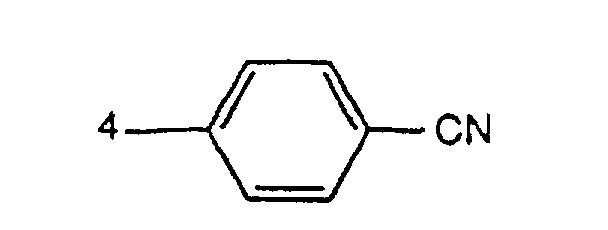
Bevorzugt sind 1,4-Diketopyrrolo-[3,4-c]-pyrrole der Formel I, dadurch gekennzeichnet, dass mindestens 84 Gew.% der Pigmentteilchen einen Stokes-äquivalenten Durchmesser von ≤ 0,30 µm aufweisen.1,4-Diketopyrrolo- [3,4-c] -pyrroles of the formula I are preferred, characterized in that at least 84 % By weight of the pigment particles have a Stokes-equivalent diameter of 0 0.30 μm.
Besonders bevorzugt ist das 1,4-Diketopyrrolo-[3,4-c]-pyrrol der Formel I, dadurch gekennzeichnet, dass R1 3-CN bedeutet und mindestens 84 Gew.% der Pigmentteilchen einen Stokes-äquivalenten Durchmesser von ≤ 0,25 µm aufweisen.The 1,4-diketopyrrolo- [3,4-c] pyrrole of the formula I is particularly preferred, characterized in that R 1 is 3-CN and at least 84% by weight of the pigment particles have a Stokes-equivalent diameter of 0 0. Have 25 µm.
Ein weiterer Gegenstand der vorliegenden Erfindung ist das Verfahren zur Herstellung der eben beschriebenen
1,4-Diketopyrrolo-[3,4-c]-pyrrole der Formel I, durch Umsetzung von 1 Mol eines Bernsteinsäure-dicyclohexylesters,
-dialkylesters, -monoalkylmonophenyl-esters oder -diphenylesters, wobei im Bernsteinsäureesterrest Alkyl C1-C18-Alkyl
und Phenyl unsubstituiertes oder durch ein oder zwei Halogenatome, eine oder zwei C1-C6-Alkyl- oder C1-C6-Alkoxygruppen
substituiertes Phenyl bedeuten, mit 2 Mol eines Nitrils der Formel
in einem inerten organischen Lösungsmittel in Gegenwart eines Alkalimetalls oder eines Alkali-alkoholates als starke
Base bei erhöhter Temperatur zu einem Pigmentalkalimetallsalz und anschliessende Freisetzung einer Verbindung
der Formel I durch Protonierung des entstandenen Pigmentalkalimetallsalzes und nachfolgende Konditionierung, dadurch
gekennzeichnet, dass die Pigmentalkalisalz-Suspension in Wasser und/oder einem Alkohol ROH, worin R C1-C4-Alkyl
ist, in Gegenwart einer Säure in genügender Menge, um den pH <9 zu halten, kontinuierlich ausgetragen wird
und 30 Minuten bis 24 Stunden bei einer Temperatur über 90°C behandelt wird.Another object of the present invention is the process for the preparation of the 1,4-diketopyrrolo [3,4-c] pyrroles of the formula I just described, by reacting 1 mole of a succinic acid dicyclohexyl ester, dialkyl ester, monoalkyl monophenyl ester or diphenyl esters, where in the succinic acid residue alkyl is C 1 -C 18 alkyl and phenyl is unsubstituted or phenyl substituted by one or two halogen atoms, one or two C 1 -C 6 alkyl or C 1 -C 6 alkoxy groups, with 2 Moles of a nitrile of the formula
in an inert organic solvent in the presence of an alkali metal or an alkali alcoholate as a strong base at elevated temperature to give a pigment alkali metal salt and then releasing a compound of formula I by protonation of the pigment alkali metal salt formed and subsequent conditioning, characterized in that the pigment alkali salt suspension in water and / or an alcohol ROH, in which RC is C 1 -C 4 -alkyl, is continuously discharged in the presence of an acid in an amount sufficient to maintain the pH <9 and is treated at a temperature above 90 ° C. for 30 minutes to 24 hours becomes.
C1-C18-Alkyl steht z.B. für Methyl, Ethyl, n-Propyl, Isopropyl, n-Butyl, tert.-Butyl, Amyl, Hexyl, Decyl, Dodecyl, Tetradecyl oder Octadecyl und C1-C6-Alkoxy z.B. für Methoxy, Ethoxy, n-Propoxy, Isopropoxy, Butoxy oder Hexyloxy.C 1 -C 18 alkyl is, for example, methyl, ethyl, n-propyl, isopropyl, n-butyl, tert-butyl, amyl, hexyl, decyl, dodecyl, tetradecyl or octadecyl and C 1 -C 6 alkoxy, for example Methoxy, ethoxy, n-propoxy, isopropoxy, butoxy or hexyloxy.
Die Säure kann vor oder zusammen mit der Pigmentsalz-Suspension zugegeben werden.The acid can be added before or together with the pigment salt suspension.
Es kann von Vorteil sein, ein Puffer während der Protonierung zu verwenden, wie beispielsweise ein Phosphat-, Acetat-, Citronensäure- oder Triethanolamin-Puffer.It may be advantageous to use a buffer during protonation, such as a phosphate, Acetate, citric acid or triethanolamine buffers.
R bedeutet als C1-C4-Alkyl z.B. Methyl, Ethyl, Propyl, Isopropyl, n-Butyl, tert.-Butyl. R ist bevorzugt Methyl oder Ethyl.R is C 1 -C 4 alkyl, for example methyl, ethyl, propyl, isopropyl, n-butyl, tert-butyl. R is preferably methyl or ethyl.
Bei den als Protonierungsmittel eingesetzten Säuren handelt es sich z.B. um anorganische Säuren, wie z.B. Salzsäure, Phosphorsäure und insbesondere Schwefelsäure oder um aliphatische oder aromatische Carbon- oder Sulfonsäuren, wie z.B. Ameisensäure, Essigsäure, Propionsäure, Buttersäure, Hexansäure, Oxalsäure, Benzoesäure, Phenylessigsäure, Benzolsulfonsäure oder p-Toluolsulfonsäure oder um Gemische der erwähnten Säuren. Bevorzugte organische Säuren sind Essigsäure und Ameisensäure.The acids used as protonating agents are e.g. around inorganic acids, e.g. Hydrochloric acid, phosphoric acid and especially sulfuric acid or aliphatic or aromatic carbon or Sulfonic acids, e.g. Formic acid, acetic acid, propionic acid, butyric acid, hexanoic acid, oxalic acid, benzoic acid, Phenylacetic acid, benzenesulfonic acid or p-toluenesulfonic acid or mixtures of the acids mentioned. preferred organic acids are acetic acid and formic acid.
Protonierung und Konditionierung erfolgen bevorzugt bei einer Temperatur zwischen 100° und 140°C während 1 bis 8 Stunden.Protonation and conditioning are preferably carried out at a temperature between 100 ° and 140 ° C. 1 to 8 hours.
R1 bedeutet vorzugsweise 3-CN.R 1 is preferably 3-CN.
Bei den zu verwendenden Bernsteinsäuredialkyl- oder -diphenylestern kann es sich um symmetrische oder asymmetrische Diester handeln. Bevorzugt verwendet man aber symmetrische Bernsteinsäurediester, insbesondere symmetrische Bernsteinsäuredialkylester. Liegt ein Bernsteinsäurediphenyl-oder-monophenylmonoalkylestervor, so kann Phenyl beispielsweise unsubstituiertes oder durch ein oder zwei Halogenatome, wie Chlor, C1-C6-Alkylgruppen, wie Methyl, Ethyl, Isopropyl odertert.-Butyl, oder C1-C6-Alkoxygruppen, wie Methoxy oder Ethoxy, substituiertes Phenyl bedeuten. Phenyl bedeutet bevorzugt unsubstituiertes Phenyl. Handelt es sich um einen Bemsteinsäuredialkyl- oder -monoalkylmonophenylester, so kann Alkyl unverzweigt oder verzweigt sein, bevorzugt verzweigt, und vorzugsweise 1 bis 12, insbesondere 1 bis 8 und besonders bevorzugt 1 bis 5 C-Atome enthalten. Verzweigtes Alkyl ist bevorzugt sek.- oder tert.-Alkyl, wie z.B. Isopropyl, sek.-Butyl, tert.-Butyl und tert.-Amyl. Ganz bevorzugt verwendet man symmetrische verzweigte Bernsteinsäuredialkylester, worin jeder Alkylrest im Bernsteinsäureesterrest 3 bis 5 C-Atome aufweist.The dialkyl or diphenyl succinates to be used can be symmetrical or asymmetrical diesters. However, preference is given to using symmetric succinic diesters, in particular symmetrical dialkyl succinates. If a succinic acid diphenyl or monophenyl monoalkyl ester is present, phenyl can, for example, be unsubstituted or by one or two halogen atoms, such as chlorine, C 1 -C 6 alkyl groups, such as methyl, ethyl, isopropyl or tert-butyl, or C 1 -C 6 alkoxy groups , such as methoxy or ethoxy, substituted phenyl. Phenyl preferably means unsubstituted phenyl. If it is a dialkyl or monoalkyl monophenyl succinate, alkyl can be unbranched or branched, preferably branched, and preferably contain 1 to 12, in particular 1 to 8 and particularly preferably 1 to 5, carbon atoms. Branched alkyl is preferably secondary or tertiary alkyl, such as isopropyl, secondary butyl, tertiary butyl and tertiary amyl. It is very preferred to use symmetrical branched dialkyl succinates, in which each alkyl radical in the succinic ester radical has 3 to 5 carbon atoms.
Beispiele für Bernsteinsäurediester sind Bernsteinsäuredimethylester, -diethylester, -dipro-pylester, -dibutylester, -dipentylester, -dihexylester, -diheptylester, -dioctylester, -diiso-propylester, -di-sec.-butylester, -di-tert.-butylester, -di-tert.-amylester, -di-[1,1-dimethyl-butyl]-ester, -di-[1,1,3,3-tetramethylbutyl]-ester, -di-[1,1-dimethylpentyl]-ester, -di-[1-methyl-1-ethyl-butyl]-ester, -di-[1,1-diethylpropyl]-ester, -diphenylester, -di-[4-methyl-phenyl]-ester, -di-[2-methylphenyl]-ester, -di-[4-chlorphenyl]-ester, -di-[2,4-dichlor-phenyl]-ester und -monoethyl-monophenylester.Examples of succinic diesters are dimethyl succinate, diethyl ester, dipropyl ester, dibutyl ester, -dipentyl ester, -dihexyl ester, -diheptyl ester, -dioctyl ester, -diiso-propyl ester, -di-sec.-butyl ester, -di-tert.-butyl ester, -di-tert.-amyl ester, -di [1,1-dimethylbutyl] ester, -di [1,1,3,3-tetramethylbutyl] ester, -di [1,1-dimethylpentyl] esters, -di- [1-methyl-1-ethyl-butyl] ester, -di- [1,1-diethylpropyl] ester, -diphenyl ester, -di- [4-methyl-phenyl] ester, -di- [ 2-methylphenyl] ester, -di- [4-chlorophenyl] ester, -di- [2,4-dichlorophenyl] ester and monoethyl monophenyl ester.
Die oben aufgeführten Bernsteinsäurediester und die Nitrile der Formel III sind bekannte Verbindungen und können nach bekannten Verfahren hergestellt werden.The succinic diesters listed above and the nitriles of the formula III are known compounds and can be produced by known methods.
Man führt die Umsetzung des Bernsteinsäurediesters mit dem Nitril der Formel III in einem organischen Lösungsmittel durch. Als Lösungsmittel eignen sich beispielsweise primäre, sekundäre oder tertiäre Alkohole mit 1 bis 10 C-Atomen, wie Methanol, Ethanol, n-Propanol, Isopropanol, n-Butanol, sek.-Butanol, tert.-Butanol, n-Pentanol, 2-Methyl-2-butanol, 2-Methyl-2-pentanol, 3-Methyl-3-pentanol, 2-Methyl-2-hexanol, 3-Ethyl-3-pentanol und 2,4,4-Trimethyl-2-pentanol, Glykole, wie Ethylenglykol oder Diethylenglykol, ferner Ether, wie Tetrahydrofuran oder Dioxan, oder Glykolether, wie Ethylen-glykol-mono- oder -di-methylether, Ethylenglykol-mono- oder -di-ethylether, Diethylenglykol-monomethylether oder Diethylenglykolmonoethylether, ferner dipolar-aprotische Lösungsmittel, wie Acetonitril, Benzonitril, Dimethylformamid, N,N-Dimethylacetamid, Nitrobenzol und N-Methylpyrrolidon, aliphatische oder aromatische Kohlenwasserstoffe, wie Benzol oder durch Alkyl, Alkoxy oder Halogen substituiertes Benzol, wie Toluol, Xylole, Anisol oder Chlorbenzol, oder aromatische N-Heterocyclen, wie Pyridin, Picolin oder Chinolin. Die oben genannten Lösungsmittel können auch als Mischungen eingesetzt werden. Zweckmässigerweise verwendet man 5-20 Gew.-Teile Lösungsmittel auf 1 Gew.-Teil der Reaktionsteilnehmer.The reaction of the succinic diester with the nitrile of the formula III is carried out in an organic solvent by. Suitable solvents are, for example, primary, secondary or tertiary alcohols with 1 to 10 carbon atoms, such as methanol, ethanol, n-propanol, isopropanol, n-butanol, sec-butanol, tert-butanol, n-pentanol, 2-methyl-2-butanol, 2-methyl-2-pentanol, 3-methyl-3-pentanol, 2-methyl-2-hexanol, 3-ethyl-3-pentanol and 2,4,4-trimethyl-2- pentanol, Glycols, such as ethylene glycol or diethylene glycol, furthermore ethers, such as tetrahydrofuran or dioxane, or glycol ethers, such as ethylene glycol mono- or di-methyl ether, ethylene glycol mono- or di-ethyl ether, diethylene glycol monomethyl ether or diethylene glycol monoethyl ether, furthermore dipolar aprotic solvents, such as acetonitrile, Benzonitrile, dimethylformamide, N, N-dimethylacetamide, nitrobenzene and N-methylpyrrolidone, aliphatic or aromatic Hydrocarbons, such as benzene or benzene substituted by alkyl, alkoxy or halogen, such as toluene, xylenes, Anisole or chlorobenzene, or aromatic N-heterocycles such as pyridine, picoline or quinoline. The above Solvents can also be used as mixtures. It is expedient to use 5-20 parts by weight Solvent to 1 part by weight of the reactants.
Im erfindungsgemässen Verfahren verwendet man als Lösungsmittel bevorzugt einen Alkohol, insbesondere einen sekundären oder tertiären Alkohol. Bevorzugte tertiäre Alkohole sind tert.-Butanol und tert.-Amylalkohol. Dabei sind auch Gemische davon, oder Gemische dieser bevorzugten Lösungsmittel mit aromatischen Kohlenwasserstoffen, wie Toluol oder Xylole, oder mit durch Halogen substituierten Benzolen, wie Chlorbenzol oder o-Dichlorbenzol, von grossem Interesse.An alcohol, in particular, is preferably used as the solvent in the process according to the invention a secondary or tertiary alcohol. Preferred tertiary alcohols are tert-butanol and tert-amyl alcohol. there are also mixtures thereof, or mixtures of these preferred solvents with aromatic hydrocarbons, such as toluene or xylenes, or with halogen-substituted benzenes, such as chlorobenzene or o-dichlorobenzene, of great interest.
Anmeldungsgemäss geeignete starke Basen sind Alkalimetalle, wie Lithium, Natrium und Kalium, und Alkalialkoholate, die sich insbesondere von primären, sekundären oder tertiären aliphatischen Alkoholen mit 1 bis 10 C-Atomen ableiten, wie z.B. Lithium-, Natrium- oder Kaliummethylat, -ethylat, -n-propylat, -isopropylat, -n-butylat, -sek.butylat, -tert.- butylat, -2-methyl-2-butylat, -2-methyl-2-pentylat, -3-methyl-3-pentylat und -3-ethyl-3-pentylat. Man kann aber auch ein Gemisch der oben genannten Alkalialkoholate verwenden. Bevorzugt verwendet man Alkalialkoholate, wobei Alkali insbesondere Natrium oder Kalium bedeutet, und das Alkoholat sich bevorzugt von einem sekundären oder tertiären Alkohol ableitet. Besonders bevorzugte starke Basen sind daher z.B. Natrium- oder Kaliumisopropylat, -sek.-butylat, -tert.-butylat und -tert-amylat. Dabei können die Alkalialkoholate auch in situ hergestellt werden, indem man den entsprechenden Alkohol mit dem Alkalimetall umsetzt.Strong bases suitable according to the application are alkali metals, such as lithium, sodium and potassium, and alkali alcoholates, which are particularly of primary, secondary or tertiary aliphatic alcohols with 1 to 10 carbon atoms derive such as Lithium, sodium or potassium methylate, ethylate, n-propylate, isopropylate, n-butylate, sec-butoxide, -tert.- butylate, -2-methyl-2-butylate, -2-methyl-2-pentylate, -3-methyl-3-pentylate and -3-ethyl-3-pentylate. One can but also use a mixture of the above-mentioned alkali alcoholates. Alkaline alcoholates are preferably used, where alkali means in particular sodium or potassium, and the alcoholate is preferably a secondary or tertiary alcohol. Particularly preferred strong bases are therefore e.g. Sodium or potassium isopropylate, -sec.-butylate, -tert.-butylate and -tert-amylate. The alkali metal alcoholates can also be prepared in situ by the corresponding alcohol is reacted with the alkali metal.
Im erfindungsgemässen Verfahren kann man die starke Base beispielsweise in einer Menge von 0,1 bis 10 Mol, bevorzugt 1,9 bis 4,0 Mol, bezogen auf 1 Mol des Bemsteinsäurediesters, einsetzen. Obwohl grundsätzlich stöchiometrische Mengen an Base genügen, beeinflusst in vielen Fällen ein Basenüberschuss die Ausbeute günstig.In the process according to the invention, the strong base can be used, for example, in an amount of 0.1 to 10 Mol, preferably 1.9 to 4.0 mol, based on 1 mol of the succinic diester. Although basically stoichiometric amounts of base are sufficient, in many cases an excess of base has a favorable effect on the yield.
Die Umsetzung kann beispielsweise bei einer Temperatur von 60 bis 140°C, vorzugsweise aber von 80 bis 120°C, durchgeführt werden.The reaction can, for example, at a temperature of 60 to 140 ° C, but preferably from 80 to 120 ° C, are carried out.
Zur Umsetzung des Bemsteinsäurediesters mit dem Nitril der Formel III ist es grundsätzlich möglich, bei tieferer Temperatur alle Komponenten vorzulegen und dann das Gemisch in den Bereich der Reaktionstemperatur zu erwärmen, oder in beliebiger Reihenfolge die einzelnen Komponenten im Bereich der Reaktionstemperatur zuzugeben. Eine bevorzugte Ausführungsform, die sich in der Regel besonders günstig auf die Ausbeute auswirkt, besteht darin, dass man das umzusetzende Nitril zusammen mit der starken Base vorlegt und den Bernsteinsäurediester im Bereiche der Reaktionstemperatur zudosiert. Eine weitere Möglichkeit besteht darin, dass man den Bernsteinsäurediester und das umzusetzende Nitril gleichzeitig zur vorgelegten Base zudosiert. Es ist durchaus möglich, das erfindungsgemässe Verfahren nicht nur batchweise, sondern auch kontinuierlich durchzuführen.To implement the succinic diester with the nitrile of the formula III, it is possible in principle lower temperature to submit all components and then the mixture in the range of the reaction temperature heat, or add the individual components in the order of the reaction temperature in any order. A preferred embodiment, which generally has a particularly favorable effect on the yield, consists in that you put the nitrile to be reacted together with the strong base and the succinic diester in the area metered the reaction temperature. Another option is to use the succinic acid diester and the nitrile to be reacted is metered into the base at the same time. It is quite possible that the invention Process not only batchwise, but also continuously.
Insbesondere bei Bernsteinsäurediestern mit niederen Alkylresten und bei Alkoholaten, die sich aus niederen Alkoholen ableiten, wie z.B. Methanol, Ethanol, n-Propanol, Isopropanol oder tert.-Butanol, kann es sich als vorteilhaft erweisen, den bei der Umsetzung entstehenden niederen Alkohol laufend aus dem Reaktionsmedium zu entfernen, um höhere Ausbeuten zu erzielen.Particularly in the case of succinic diesters with lower alkyl radicals and alcoholates which are derived from lower Derive alcohols, e.g. Methanol, ethanol, n-propanol, isopropanol or tert-butanol, it can be advantageous prove to continuously remove the lower alcohol formed during the reaction from the reaction medium, to achieve higher yields.
Verwendet man als Lösungsmittel einen Alkohol und als Base ein Alkoholat, so kann es vorteilhaft sein, einen Alkohol und ein Alkoholat mit gleichen Alkylteilen zu wählen. Ebenso vorteilhaft kann es sein, wenn zudem noch der Bernsteinsäurediester ebensolche Alkylgruppen enthält.If an alcohol is used as the solvent and an alcoholate is used as the base, it can be advantageous to use one To choose alcohol and an alcoholate with the same alkyl parts. It can also be just as advantageous if the Succinic diester also contains such alkyl groups.
Zur Protonierung des erhaltenen Pigmentsalzes kann man entweder das Pigmentalkalisalz zum erfindungsgemässen, aus dem Wasser und/oder Alkohol und der Säure bestehenden Protonierungsmittel oder das Pigmentalkalisalz und die Säure gleichzeitig zum Wasser und/oder Alkohol zugeben. Das Wasser und/oder der Alkohol kann in beliebigen Mischungsverhältnissen von 5 bis 20 Gew.Teilen auf 1 Teil des entstandenen Pigmentalkalisalzes eingesetzt werden. Die Säure wird zweckmässig in einer Menge von 0,5 bis 3 Aequivalenten, bezogen auf die Base eingesetzt, allenfalls in genügender Menge, um den pH <9 am Ende der Protonierung zu erreichen.To protonate the pigment salt obtained, either the pigment alkali salt for the inventive protonating agent consisting of the water and / or alcohol and the acid or the pigment alkali salt and add the acid to the water and / or alcohol at the same time. The water and / or alcohol can be in any mixing ratios of 5 to 20 parts by weight to 1 part of the resulting pigment alkali salt become. The acid is expediently used in an amount of 0.5 to 3 equivalents, based on the base, at most in sufficient quantity to reach pH <9 at the end of protonation.
Die Verbindungen der Formel l können als Pigmente für hochmolekulare organische Materialien verwendet werden. Dabei lassen sich die Pigmente meistens direkt in der Pigmentform einsetzen, wie sie nach dem erfindungsgemässen Verfahren anfallen. Ihre Kristallmorphologie kann je nach Verwendungszweck, und sofern notwendig, durch eine der zahlreichen üblichen nachträglichen Behandlungen noch optimiert werden.The compounds of formula I can be used as pigments for high molecular weight organic materials become. The pigments can usually be used directly in the pigment form as they are according to the invention Procedure. Their crystal morphology can vary depending on the intended use and if necessary one of the numerous usual subsequent treatments can still be optimized.
Je nach Verwendungszweck kann es vorteilhaft sein, Gemische von Verbindungen der Formel herzustellen. Dies lässt sich beispielsweise dadurch erreichen, dass man unabhängig voneinander hergestellte, verschiedene Reaktionslösungen vor der Protonierung mischt, sie zusammen protoniert und dann das erhaltene Produkt isoliert.Depending on the intended use, it can be advantageous to prepare mixtures of compounds of the formula. This can be achieved, for example, by using different reaction solutions prepared independently of one another mixes before protonation, protonates them together and then isolates the product obtained.
Hochmolekulare organische Materialien, die mit den Verbindungen der Formel I gefärbt bzw. pigmentiert werden können, sind z.B. Celluloseether und -ester, wie Ethylcellulose, Nitrocellulose, Celluloseacetat und Cellulosebutyrat, natürliche Harze und Kunstharze, wie Polymerisationsharze oder Kondensationsharze, z.B. Aminoplaste, insbesondere Harnstoff- und Melamin-Formaldehydharze, Alkydharze, Phenoplaste, Polycarbonate, Polyolefine, wie Polyethylen und Polypropylen, Polystyrol, Polyvinylchlorid, Polyacrylnitril, Polyacrylsäureester, Polyamide, Polyurethane, Polyester, Gummi, Casein, Silikon und Silikonharze, einzeln oder in Mischungen.High molecular weight organic materials that are colored or pigmented with the compounds of formula I. can be e.g. Cellulose ethers and esters, such as ethyl cellulose, nitrocellulose, cellulose acetate and cellulose butyrate, natural resins and synthetic resins such as polymerization resins or condensation resins, e.g. Aminoplasts, in particular Urea and melamine formaldehyde resins, alkyd resins, phenoplasts, polycarbonates, polyolefins, such as polyethylene and polypropylene, polystyrene, polyvinyl chloride, polyacrylonitrile, polyacrylic acid esters, polyamides, polyurethanes, Polyester, rubber, casein, silicone and silicone resins, individually or in mixtures.
Dabei spielt es keine Rolle, ob die erwähnten hochmolekularen organischen Verbindungen als plastische Massen, Schmelzen oder in Form von Spinnlösungen, Lacken, Anstrichstoffen oder Druckfarben vorliegen. Je nach Verwendungszweck erweist es sich als vorteilhaft, die Verbindungen der Formel l als Toner oder in Form von Präparaten einzusetzen. Bezogen auf das zu pigmentierende hochmolekulare organische Material kann man die Verbindungen der Formel 1 in einer Menge von 0,01 bis 30 Gew.-%, vorzugsweise 0,1 bis 10 Gew.-%, einsetzen.It does not matter whether the high molecular organic compounds mentioned are plastic Bulk, melt or in the form of spinning solutions, lacquers, paints or printing inks. Depending on Intended use, it has proven to be advantageous to use the compounds of the formula I as toners or in the form of preparations use. Based on the high-molecular organic material to be pigmented, the compounds can be of formula 1 in an amount of 0.01 to 30 wt .-%, preferably 0.1 to 10 wt .-%, use.
Je nach Konditionierverfahren oder Applikationszweck kann es von Vorteil sein, dem Pigment gewisse Mengen an texturverbessernden Mitteln vor oder nach dem Konditionierprozess zuzufügen, sofern diese keine negative Wirkung bei der Verwendung der erfindungsgemässen Pigmentzusammensetzungen (insbesondere in Polyethylen) haben. Als solche kommen insbesondere Fettsäuren mit mindestens 18 C-Atomen, beispielsweise Stearin- oder Behensäure oder deren Amide oder Metallsalze, insbesondere Mg-Salze, sowie Weichmacher, Wachse, Harzsäuren, wie Abietinsäure, Kolophoniumseife, Alkylphenole oder aliphatische Alkohole, wie Stearylalkohol oder aliphatische 1,2-Dihydroxyverbindungen mit 8 bis 22 C-Atomen, wie 1,2-Dodecandiol, ferner modifizierte Kolophoniummaleinatharze oder Fumarsäurekolophoniumharze in Betracht. Die texturverbessernden Mittel werden vorzugsweise in Mengen von 1,0-50 Gew.%, insbesondere 5-40 Gew.%, bezogen auf das Endprodukt, zugesetzt. Die obenerwähnten 1,2-Dihydroxyverbindungen, insbesondere 1,2-Dodecandiol, dienen auch zur Verbesserung der Filtration der suspendierten Pigmentzusammensetzung.Depending on the conditioning process or application purpose, it may be advantageous to add certain amounts to the pigment add to texture-improving agents before or after the conditioning process, provided these are not negative Effect when using the pigment compositions according to the invention (in particular in polyethylene) to have. In particular, fatty acids with at least 18 carbon atoms, for example stearic or behenic acid, come as such or their amides or metal salts, in particular Mg salts, and plasticizers, waxes, resin acids, such as abietic acid, rosin soap, alkylphenols or aliphatic alcohols, such as stearyl alcohol or aliphatic 1,2-dihydroxy compounds with 8 to 22 carbon atoms, such as 1,2-dodecanediol, and also modified rosin maleate resins or fumaric acid rosins. The texture-improving agents are preferably used in quantities of 1.0-50% by weight, in particular 5-40% by weight, based on the end product. The above-mentioned 1,2-dihydroxy compounds, especially 1,2-dodecanediol, also serve to improve the filtration of the suspended Pigment composition.
Die erhaltenen Ausfärbungen, beispielsweise in Kunststoffen, Fasern, Lacken oder Drucken, zeichnen sich durch eine hohe Farbtonreinheit, hohe Farbstärke, hohe Transparenz, gute Ueberlackier-, Migrations-, Hitze-, Lichtund Wetterbeständigkeit, sowie durch einen guten Glanz, aus.The colorations obtained, for example in plastics, fibers, paints or prints, stand out due to a high color purity, high color strength, high transparency, good overpainting, migration, heat, light and Weather resistance, as well as a good shine.
Die erfindungsgemässen Verbindungen der Formel I zeichnen sich aber, wie bereits erwähnt, ganz besonders durch eine hervorragende Farbton-Reinheit, hohe Transparenz, gute Dispergierbarkeit, gutes rheologisches Verhalten und durch einen hohen Glanz der damit erhaltenen Ausfärbungen aus. Demnach eignen sie sich vorzugsweise zum Färben von Kunststoffen, wässrigen und/oder lösungsmittelhaltigen Lacken, insbesondere Automobillacken oder Druckfarben. Ganz besonders bevorzugt ist ihre Verwendung in Druckfarben.However, as already mentioned, the compounds of the formula I according to the invention are particularly noteworthy due to excellent color purity, high transparency, good dispersibility, good rheological behavior and from a high gloss of the colorations obtained with it. Accordingly, they are preferably suitable for Coloring of plastics, aqueous and / or solvent-based paints, in particular automotive paints or Printing inks. Their use in printing inks is very particularly preferred.
Die nachfolgenden Beispiele dienen zur Erläuterung der Erfindung. Sofern nichts anderes vermerkt, bedeuten Prozente Gewichtsprozente.The following examples serve to explain the invention. Unless otherwise noted, mean Percentages by weight.
Beispiel 1: In einem Sulfierkolben werden unter Stickstoff 1150 ml tert.-Amylalkohol vorgelegt. Nach der Zugabe
von 38,4 g Natrium wird das Gemisch auf 95-102°C aufgewärmt. Das geschmolzene Natrium wird nun über
Nacht bei 100-105°C kräftig gerührt. Nach Abkühlen der Lösung auf 85°C werden 145,6 g 3-Cyanbenzonitril zugegeben,
mit 30 ml tert.-Amylalkohol nachgespült und anschliessend während 2 Stunden bei 80-85°C 127,8 g Bernsteinsäure-diisopropylester
zugetropft. Dann wird das Reaktionsgemisch noch 4 Stunden bei dieser Temperatur gerührt
und danach auf ein Gemisch von 462 ml Wasser, 1738 ml Methanol und 190,3 g konzentrierter Salzsäure ausgetragen,
bei 130°C während 6 Stunden gerührt (pH < 7), abgekühlt, filtriert, mit Methanol/ Wasser und nochmals mit Wasser
gewaschen. Das erhaltene Pigment wird bei 80°C im Vakuumschrank getrocknet. Man erhält 168,5 g eines orangen
Pulvers, das in PVC eingearbeitet eine reine, transparente, orange Ausfärbung ergibt.
Beispiel 2: Man verfährt wie in Beispiel 1, ersetzt jedoch das Methanol/Wasser/Salzsäure-Gemisch mit 2560
ml Wasser und 83,0 g 96 %ige Schwefelsäure und führt nach 6-stündigem Rühren bei 140°C eine Wasserdampfdestillation
durch. Nach dem Abfiltrieren, Waschen mit Wasser und Trocknen erhält man 178,9 g eines orangen Pulvers,
das in PVC eine reine, transparente orange Ausfärbung ergibt.
Beispiel 3: In einem Sulfierkolben werden unter Stickstoff 700 ml tert.-Amylalkohol vorgelegt und auf 80°C
aufgeheizt. Nach der Zugabe von 24,2 g Natrium wird das Gemisch auf etwa 95-110°C erhitzt. Das geschmolzene
Natrium wird über Nacht bei 100-110°C kräftig gerührt. Nach dem Abkühlen auf 80°C werden 89,7 g 3-Cyanbenzonitril
zugegeben, dann innerhalb 2 Stunden bei 80°C 80,9 g Bernsteinsäurediisopropylester zugetropft und über Nacht bei
der gleichen Temperatur gerührt. Das Reaktionsgemisch wird danach gleichzeitig mit 60 %iger Schwefelsäure innerhalb
von etwa 3 Stunden einem Gemisch aus 600 ml Wasser, 600 ml Methanol und 8,2 g Natriumdihydrogenphosphat
unter Rückfluss zugeführt. Es wird so viel Schwefelsäure zugetropft, dass der pH zwischen 6 und 8 gehalten wird. Das
Gemisch wird 4 Stunden unter Rückfluss und anschliessend 6 Stunden bei 100°C gerührt, dann abgekühlt, abfiltriert,
der Rückstand wird mit Methanol/Wasser und danach mit Wasser gewaschen und bei 80°C im Vakuumtrockenschrank
getrocknet. Man erhält 104,4 g eines orangen Pulvers, das in PVC einen reinen, transparenten, orangen Farbton ergibt.
Beispiel 4: In einem Sulfierkolben werden unter Stickstoff 160 ml tert.-Amylalkohol vorgelegt. Nach der Zugabe
von 6,9 g Natrium wird das Gemisch auf etwa 95-108°C erhitzt und das geschmolzene Natrium wird über Nacht bei
100-105°C kräftig gerührt. Nach dem Abkühlen auf 80°C werden 25,6 g 4-Cyanbenzonitril zugegeben, dann innerhalb
von 2 Stunden bei der gleichen Temperatur 22,2 g Bernsteinsäurediisopropylester zugetropft und danach 22 Stunden
bei 80°C gerührt. Das Reaktionsgemisch wird anschliessend auf ein Gemisch aus 30,5 ml 36 %iger Salzsäure, 345
ml Methanol und 115 ml Wasser ausgetragen und 6 Stunden bei 130°C gerührt. Nach Filtration wird der Rückstand
mit Methanol und Wasser gewaschen und im Vakuumtrockenschrank bei 80°C getrocknet. Man erhält 32,4 g eines
gut dispergierbaren dunklen Pulvers, das in PVC eine dunkelrote transparente Ausfärbung ergibt.
Beispiel 5: 5 g des Pigments aus Beispiel 1, 56,56 g Alkydharz® ALKYDAL F310 (Bayer), 60 %ig in Xylol,
21,70 g Xylol, 0,94 g Silikonöl (1 %ig in Xylol) und 13,55 g Melaminharz® CYMEL 327 (Cyanamid). 90 % in Isobutanol
werden zusammen in einer Schüttelmaschine (® Skandex-Disperser BA-520, in Anlehnung an DIN 53238, Teil 10) bis
Stufe 6 (DIN 53238, Teil 24) erreicht wird, dispergiert. Der so erhaltene Volltonlack kann nach Verdünnung für die
Bestimmung der Teilchengrössenverteilung durch Photosedimentometrie (vgl. Herbst & Hunger, Industrielle organische
Pigmente, VCH 1987, S. 32-34 und 40-43 und K. Brugger, Powder Technology 13, 215-221 (1976)) verwendet
werden. Im vorliegenden Fall weisen mindestens 84 Gew.% der Pigmentteilchen einen Stokes-äquivalenten Durchmesser
von ≤ 0,25 µm auf.
Der erhaltene Volltonlack kann auch mit einem Spiralrakel (100 µm Nassfilm) auf eine Polyethylen-Transparentfolie
appliziert werden. Der Lack wird dann 15 Minuten bei Raumtemperatur abdunsten gelassen und anschliessend 30
Minuten bei 115°C eingebrannt. Example 5: 5 g of the pigment from Example 1, 56.56 g of Alkydharz® ALKYDAL F310 (Bayer), 60% in xylene, 21.70 g of xylene, 0.94 g of silicone oil (1% in xylene) and 13, 55 g Melaminharz® CYMEL 327 (cyanamid). 90% in isobutanol are dispersed together in a shaker (® Skandex-Disperser BA-520, based on DIN 53238, part 10) to level 6 (DIN 53238, part 24). The solid-color lacquer obtained in this way can be diluted for the determination of the particle size distribution by photosedimentometry (see Herbst & Hunger, Industrielle organic Pigments, VCH 1987, pp. 32-34 and 40-43 and K. Brugger, Powder Technology 13, 215-221 ( 1976)) can be used. In the present case, at least 84% by weight of the pigment particles have a Stokes-equivalent diameter of 0,2 0.25 μm.
The full-tone lacquer obtained can also be applied to a polyethylene transparent film using a spiral knife (100 µm wet film). The paint is then allowed to evaporate at room temperature for 15 minutes and then baked at 115 ° C. for 30 minutes.
Beispiel 6: 7,5 g des Pigments aus Beispiel 1, 98,9 g CAB-Lösung bestehend aus
27,69 g des so erhaltenen Volltonlacks werden für die Base-coat-Lackierung mit 17,31 g Al-Stammlösung (8
%ig) bestehend aus
Anschliessend wird der Ansatz mit 40 g des oben bereits beschriebenen Klarlacks ergänzt und weitere 5 Minuten mit
dem Dissolver dispergiert. Dieser Mahlansatz wird mittels einer Pumpe mit Grobfiltrierung in eine Perlmühle eingeleitet
und darin feindispergiert. Mit dieser Druckfarbe erhält man sowohl im Tief-/Flexodruck, wie auch im Offsetdruck aussergewöhnliche
Transparenz/Glanz-Eigenschaften.
The batch is then supplemented with 40 g of the clear lacquer already described above and dispersed with the dissolver for a further 5 minutes. This grinding batch is introduced into a bead mill by means of a pump with coarse filtration and finely dispersed therein. This printing ink provides exceptional transparency / gloss properties both in gravure / flexo printing and in offset printing.
Claims (4)
- A finely particulate 1,4-diketopyrrolo[3,4-c]pyrrole of formulain which A is a radical of formula
 in which R1 is 3-CN, 4-CN or
 and the radicals A in formula (I) are identical, wherein at least 84 % of the pigment particles have a Stokes equivalent diameter of ≤ 0.40 µm.
- A 1,4-diketopyrrolo[3,4-c]pyrrole of formula I according to claim 1, wherein at least 84 % of the pigment particles have a Stokes equivalent diameter of ≤ 0.30 µm.
- A 1,4-diketopyrrolo[3,4-c]pyrrole of formula I according to claim 1, wherein R1 is 3-CN and at least 84 % of the pigment particles have a Stokes equivalent diameter of ≤ 0.25 µm.
- Use of a 1,4-diketopyrrolo[3,4-c]pyrrole according to claim 1 as pigment for colouring organic material of high molecular weight.
Applications Claiming Priority (6)
| Application Number | Priority Date | Filing Date | Title |
|---|---|---|---|
| CH229893 | 1993-07-29 | ||
| CH2298/93 | 1993-07-29 | ||
| CH229893 | 1993-07-29 | ||
| CH154394 | 1994-05-18 | ||
| CH154394 | 1994-05-18 | ||
| CH1543/94 | 1994-05-18 |
Publications (3)
| Publication Number | Publication Date |
|---|---|
| EP0640604A1 EP0640604A1 (en) | 1995-03-01 |
| EP0640604B1 EP0640604B1 (en) | 2001-05-16 |
| EP0640604B2 true EP0640604B2 (en) | 2004-06-30 |
Family
ID=25687958
Family Applications (1)
| Application Number | Title | Priority Date | Filing Date |
|---|---|---|---|
| EP94810431A Expired - Lifetime EP0640604B2 (en) | 1993-07-29 | 1994-07-20 | In fine particles cyansubstituted diketopyrrolopyrrol pigments and their use |
Country Status (6)
| Country | Link |
|---|---|
| US (1) | US5502208A (en) |
| EP (1) | EP0640604B2 (en) |
| JP (1) | JP3625075B2 (en) |
| KR (1) | KR100354289B1 (en) |
| CA (1) | CA2128927A1 (en) |
| DE (1) | DE59409750D1 (en) |
Families Citing this family (8)
| Publication number | Priority date | Publication date | Assignee | Title |
|---|---|---|---|---|
| EP0690059B1 (en) * | 1994-06-29 | 1999-09-08 | Ciba SC Holding AG | Two crystal modifications of a diketopyrrolopyrrolepigment |
| DE59707889D1 (en) * | 1996-01-30 | 2002-09-12 | Ciba Sc Holding Ag | Polymerizable diketopyrrolopyrroles and polymers made therewith |
| US6057449A (en) | 1998-06-02 | 2000-05-02 | Ciba Specialty Chemicals Corporation | Direct preparation of pyrrolo[3,4-c]pyrroles |
| US6280395B1 (en) | 2000-01-19 | 2001-08-28 | Mpr Health Systems, Inc. | System and method for determining muscle dysfunction |
| WO2004076457A1 (en) * | 2003-02-27 | 2004-09-10 | Mca Technologies Gmbh | Solvent-free process for the preparation of pyrrolo (3,4c) pyrrole compounds |
| JP2006037060A (en) * | 2004-07-30 | 2006-02-09 | Hitachi Chem Co Ltd | Printing ink composition, method for letterpress reversed offset, method for forming resist pattern, method for producing electronic component and electronic component |
| DE102007011068A1 (en) * | 2007-03-07 | 2008-09-11 | Clariant International Ltd. | Process for the direct preparation of finely divided diketopyrrolopyrrole pigments |
| US20090099481A1 (en) * | 2007-10-10 | 2009-04-16 | Adam Deitz | Devices, Systems and Methods for Measuring and Evaluating the Motion and Function of Joints and Associated Muscles |
Citations (1)
| Publication number | Priority date | Publication date | Assignee | Title |
|---|---|---|---|---|
| EP0190999A2 (en) † | 1985-02-06 | 1986-08-13 | Ciba-Geigy Ag | Process for producing colour-fast pigments |
Family Cites Families (6)
| Publication number | Priority date | Publication date | Assignee | Title |
|---|---|---|---|---|
| EP0061426B1 (en) * | 1981-03-20 | 1985-02-13 | Ciba-Geigy Ag | Process for colouring highly molecular organic material and polycyclic pigments |
| EP0094911B1 (en) * | 1982-05-17 | 1986-09-10 | Ciba-Geigy Ag | Preparation of pyrrolo-(3,4-c) pyrroles |
| DE3584138D1 (en) * | 1984-11-07 | 1991-10-24 | Ciba Geigy Ag | PIGMENT MIXTURES. |
| EP0184982B1 (en) * | 1984-11-07 | 1991-01-23 | Ciba-Geigy Ag | Pyrrolo-[3,4-c]-pyrroles and process for their preparation |
| US4931566A (en) * | 1987-07-31 | 1990-06-05 | Ciba-Geigy Corporation | Process for the preparation of pyrrolo[3,4-c]pyrroles |
| US4931556A (en) * | 1988-10-17 | 1990-06-05 | Eli Lilly And Company | Method of resolving cis 3-amino-4-(2-(2-furyl)eth-1-yl)-methoxycarbonylmethyl-azetidin-2-one and malic acid salts thereof |
-
1994
- 1994-07-20 DE DE59409750T patent/DE59409750D1/en not_active Expired - Lifetime
- 1994-07-20 EP EP94810431A patent/EP0640604B2/en not_active Expired - Lifetime
- 1994-07-21 US US08/278,595 patent/US5502208A/en not_active Expired - Lifetime
- 1994-07-27 CA CA002128927A patent/CA2128927A1/en not_active Abandoned
- 1994-07-28 KR KR1019940018431A patent/KR100354289B1/en not_active Expired - Fee Related
- 1994-07-29 JP JP17858294A patent/JP3625075B2/en not_active Expired - Fee Related
Patent Citations (1)
| Publication number | Priority date | Publication date | Assignee | Title |
|---|---|---|---|---|
| EP0190999A2 (en) † | 1985-02-06 | 1986-08-13 | Ciba-Geigy Ag | Process for producing colour-fast pigments |
Non-Patent Citations (4)
| Title |
|---|
| J.Phys.D:Appl.Phys.26 (1993) B22-B31 † |
| Mol.Cryst. Liq.Cryst, Vol.96, pp.1-17 (1983) † |
| Proc.Natl.Acad.Sci. USA, Vol.84, pp 4737-4738 (1987) † |
| Pure & Appl.Chem.,Vol.58, No 6, pp.947-954, 1986 † |
Also Published As
| Publication number | Publication date |
|---|---|
| DE59409750D1 (en) | 2001-06-21 |
| JPH0790187A (en) | 1995-04-04 |
| KR950003399A (en) | 1995-02-16 |
| KR100354289B1 (en) | 2002-12-16 |
| EP0640604A1 (en) | 1995-03-01 |
| CA2128927A1 (en) | 1995-01-30 |
| US5502208A (en) | 1996-03-26 |
| EP0640604B1 (en) | 2001-05-16 |
| JP3625075B2 (en) | 2005-03-02 |
Similar Documents
| Publication | Publication Date | Title |
|---|---|---|
| EP0640603B1 (en) | In fine particles high transparent diketopyrrolopyrrol pigments | |
| EP0133156B1 (en) | 1,4-diketopyrrolo-(3,4-c) pyrroles | |
| EP0256983B1 (en) | Solid solutions of pyrrolo-[3,4-c]pyrroles | |
| EP0224445B1 (en) | Pyrrolo-pyrrole pigment preparations, their preparation process and their use | |
| EP0485441B1 (en) | New pigment preparations based on perylene compounds | |
| EP0181290B1 (en) | Pigment blends | |
| EP0504923B1 (en) | Process for the preparation of pigment preparations on the basis of C.I. pigment violet 23 | |
| EP0302018B1 (en) | Process for the preparation of pyrrolo [3,4-c] pyrroles | |
| DE60210120T2 (en) | METHOD FOR THE DIRECT PREPARATION OF PYRROL / 3,4-C / PYRROLENE | |
| EP0511165B1 (en) | Dicetopyrrolopyrrole compounds | |
| EP0748851B1 (en) | Pigment compositions based on diketopyrrolopyrroles | |
| DE3833423A1 (en) | CHINACRIDONE PIGMENTS, METHOD FOR THE PRODUCTION THEREOF AND THEIR USE | |
| DE69701232T2 (en) | Ternary solid solutions of 1,4-diketopyrrolopyrroles and quinacridones | |
| EP0690058B1 (en) | Crystal modification of a diketopyrrolopyrrole pigment | |
| EP0640604B2 (en) | In fine particles cyansubstituted diketopyrrolopyrrol pigments and their use | |
| EP0672729B1 (en) | Diketopyrrolopyrrol pigment with a high hue purity | |
| EP0690059B1 (en) | Two crystal modifications of a diketopyrrolopyrrolepigment | |
| EP0662497A1 (en) | Use of fatty acid taurides for dispersing polycyclic pigments | |
| DE60003961T2 (en) | Aqueous process for the production of linear quinacridones with reduced particle size | |
| EP0690057B1 (en) | Crystal modification of a diketopyrrolopyrrole pigment | |
| EP2212386B1 (en) | Diketopyrrolopyrrole cocrystals | |
| DE102007008140A1 (en) | Diketopyrrolopyrrole mixed crystals with high transparency | |
| EP0612747B1 (en) | Nitroxyl groups-containing diketopyrrolopyrroles | |
| DE102015211828A1 (en) | Naphthol AS pigment mixtures | |
| EP0673940B1 (en) | Pyrrolo (3,4-c) pyrroles substituted by cyaniminogroups |
Legal Events
| Date | Code | Title | Description |
|---|---|---|---|
| PUAI | Public reference made under article 153(3) epc to a published international application that has entered the european phase |
Free format text: ORIGINAL CODE: 0009012 |
|
| AK | Designated contracting states |
Kind code of ref document: A1 Designated state(s): CH DE FR GB IT LI |
|
| 17P | Request for examination filed |
Effective date: 19950502 |
|
| RAP1 | Party data changed (applicant data changed or rights of an application transferred) |
Owner name: CIBA SC HOLDING AG |
|
| RAP3 | Party data changed (applicant data changed or rights of an application transferred) |
Owner name: CIBA SPECIALTY CHEMICALS HOLDING INC. |
|
| 17Q | First examination report despatched |
Effective date: 19990325 |
|
| GRAG | Despatch of communication of intention to grant |
Free format text: ORIGINAL CODE: EPIDOS AGRA |
|
| GRAG | Despatch of communication of intention to grant |
Free format text: ORIGINAL CODE: EPIDOS AGRA |
|
| GRAH | Despatch of communication of intention to grant a patent |
Free format text: ORIGINAL CODE: EPIDOS IGRA |
|
| GRAH | Despatch of communication of intention to grant a patent |
Free format text: ORIGINAL CODE: EPIDOS IGRA |
|
| GRAA | (expected) grant |
Free format text: ORIGINAL CODE: 0009210 |
|
| AK | Designated contracting states |
Kind code of ref document: B1 Designated state(s): CH DE FR GB IT LI |
|
| REG | Reference to a national code |
Ref country code: CH Ref legal event code: EP |
|
| REF | Corresponds to: |
Ref document number: 59409750 Country of ref document: DE Date of ref document: 20010621 |
|
| ITF | It: translation for a ep patent filed | ||
| GBT | Gb: translation of ep patent filed (gb section 77(6)(a)/1977) |
Effective date: 20010730 |
|
| ET | Fr: translation filed | ||
| REG | Reference to a national code |
Ref country code: GB Ref legal event code: IF02 |
|
| PLBI | Opposition filed |
Free format text: ORIGINAL CODE: 0009260 |
|
| PLBF | Reply of patent proprietor to notice(s) of opposition |
Free format text: ORIGINAL CODE: EPIDOS OBSO |
|
| 26 | Opposition filed |
Opponent name: CLARIANT GMBH Effective date: 20020131 |
|
| PLBF | Reply of patent proprietor to notice(s) of opposition |
Free format text: ORIGINAL CODE: EPIDOS OBSO |
|
| PLBF | Reply of patent proprietor to notice(s) of opposition |
Free format text: ORIGINAL CODE: EPIDOS OBSO |
|
| PUAH | Patent maintained in amended form |
Free format text: ORIGINAL CODE: 0009272 |
|
| STAA | Information on the status of an ep patent application or granted ep patent |
Free format text: STATUS: PATENT MAINTAINED AS AMENDED |
|
| RTI2 | Title (correction) |
Free format text: IN FINE PARTICLES CYANSUBSTITUTED DIKETOPYRROLOPYRROL PIGMENTS AND THEIR USE |
|
| PGFP | Annual fee paid to national office [announced via postgrant information from national office to epo] |
Ref country code: CH Payment date: 20040617 Year of fee payment: 11 |
|
| 27A | Patent maintained in amended form |
Effective date: 20040630 |
|
| AK | Designated contracting states |
Kind code of ref document: B2 Designated state(s): CH DE FR GB IT LI |
|
| GBTA | Gb: translation of amended ep patent filed (gb section 77(6)(b)/1977) | ||
| REG | Reference to a national code |
Ref country code: CH Ref legal event code: AEN Free format text: AUFRECHTERHALTUNG DES PATENTES IN GEAENDERTER FORM |
|
| ET3 | Fr: translation filed ** decision concerning opposition | ||
| PG25 | Lapsed in a contracting state [announced via postgrant information from national office to epo] |
Ref country code: IT Free format text: LAPSE BECAUSE OF NON-PAYMENT OF DUE FEES;WARNING: LAPSES OF ITALIAN PATENTS WITH EFFECTIVE DATE BEFORE 2007 MAY HAVE OCCURRED AT ANY TIME BEFORE 2007. THE CORRECT EFFECTIVE DATE MAY BE DIFFERENT FROM THE ONE RECORDED. Effective date: 20050720 |
|
| PG25 | Lapsed in a contracting state [announced via postgrant information from national office to epo] |
Ref country code: LI Free format text: LAPSE BECAUSE OF NON-PAYMENT OF DUE FEES Effective date: 20050731 Ref country code: CH Free format text: LAPSE BECAUSE OF NON-PAYMENT OF DUE FEES Effective date: 20050731 |
|
| REG | Reference to a national code |
Ref country code: CH Ref legal event code: PL |
|
| PGFP | Annual fee paid to national office [announced via postgrant information from national office to epo] |
Ref country code: GB Payment date: 20070615 Year of fee payment: 14 |
|
| PGFP | Annual fee paid to national office [announced via postgrant information from national office to epo] |
Ref country code: FR Payment date: 20070515 Year of fee payment: 14 |
|
| GBPC | Gb: european patent ceased through non-payment of renewal fee |
Effective date: 20080720 |
|
| REG | Reference to a national code |
Ref country code: FR Ref legal event code: ST Effective date: 20090331 |
|
| PG25 | Lapsed in a contracting state [announced via postgrant information from national office to epo] |
Ref country code: GB Free format text: LAPSE BECAUSE OF NON-PAYMENT OF DUE FEES Effective date: 20080720 |
|
| PG25 | Lapsed in a contracting state [announced via postgrant information from national office to epo] |
Ref country code: FR Free format text: LAPSE BECAUSE OF NON-PAYMENT OF DUE FEES Effective date: 20080731 |
|
| PGFP | Annual fee paid to national office [announced via postgrant information from national office to epo] |
Ref country code: DE Payment date: 20121001 Year of fee payment: 19 |
|
| PG25 | Lapsed in a contracting state [announced via postgrant information from national office to epo] |
Ref country code: DE Free format text: LAPSE BECAUSE OF NON-PAYMENT OF DUE FEES Effective date: 20140201 |
|
| REG | Reference to a national code |
Ref country code: DE Ref legal event code: R119 Ref document number: 59409750 Country of ref document: DE Effective date: 20140201 |