EP0630403B1 - Methods for the regulation of plant fertility - Google Patents
Methods for the regulation of plant fertility Download PDFInfo
- Publication number
- EP0630403B1 EP0630403B1 EP93907160A EP93907160A EP0630403B1 EP 0630403 B1 EP0630403 B1 EP 0630403B1 EP 93907160 A EP93907160 A EP 93907160A EP 93907160 A EP93907160 A EP 93907160A EP 0630403 B1 EP0630403 B1 EP 0630403B1
- Authority
- EP
- European Patent Office
- Prior art keywords
- pollen
- plant
- germination
- plants
- flavonol
- Prior art date
- Legal status (The legal status is an assumption and is not a legal conclusion. Google has not performed a legal analysis and makes no representation as to the accuracy of the status listed.)
- Expired - Lifetime
Links
- 230000035558 fertility Effects 0.000 title claims abstract description 53
- 238000000034 method Methods 0.000 title claims description 18
- 230000033228 biological regulation Effects 0.000 title description 2
- HVQAJTFOCKOKIN-UHFFFAOYSA-N flavonol Natural products O1C2=CC=CC=C2C(=O)C(O)=C1C1=CC=CC=C1 HVQAJTFOCKOKIN-UHFFFAOYSA-N 0.000 claims abstract description 89
- 235000011957 flavonols Nutrition 0.000 claims abstract description 83
- IYRMWMYZSQPJKC-UHFFFAOYSA-N kaempferol Chemical compound C1=CC(O)=CC=C1C1=C(O)C(=O)C2=C(O)C=C(O)C=C2O1 IYRMWMYZSQPJKC-UHFFFAOYSA-N 0.000 claims abstract description 64
- 230000035784 germination Effects 0.000 claims abstract description 51
- MWDZOUNAPSSOEL-UHFFFAOYSA-N kaempferol Natural products OC1=C(C(=O)c2cc(O)cc(O)c2O1)c3ccc(O)cc3 MWDZOUNAPSSOEL-UHFFFAOYSA-N 0.000 claims abstract description 50
- 230000002950 deficient Effects 0.000 claims abstract description 48
- 150000007946 flavonol Chemical class 0.000 claims abstract description 46
- 230000012010 growth Effects 0.000 claims abstract description 42
- UXOUKMQIEVGVLY-UHFFFAOYSA-N morin Natural products OC1=CC(O)=CC(C2=C(C(=O)C3=C(O)C=C(O)C=C3O2)O)=C1 UXOUKMQIEVGVLY-UHFFFAOYSA-N 0.000 claims abstract description 39
- 230000000694 effects Effects 0.000 claims abstract description 38
- 150000002216 flavonol derivatives Chemical class 0.000 claims abstract description 36
- UBSCDKPKWHYZNX-UHFFFAOYSA-N Demethoxycapillarisin Natural products C1=CC(O)=CC=C1OC1=CC(=O)C2=C(O)C=C(O)C=C2O1 UBSCDKPKWHYZNX-UHFFFAOYSA-N 0.000 claims abstract description 32
- REFJWTPEDVJJIY-UHFFFAOYSA-N Quercetin Chemical compound C=1C(O)=CC(O)=C(C(C=2O)=O)C=1OC=2C1=CC=C(O)C(O)=C1 REFJWTPEDVJJIY-UHFFFAOYSA-N 0.000 claims abstract description 32
- 235000008777 kaempferol Nutrition 0.000 claims abstract description 32
- 150000001875 compounds Chemical class 0.000 claims abstract description 24
- 125000002887 hydroxy group Chemical group [H]O* 0.000 claims abstract description 20
- ZVOLCUVKHLEPEV-UHFFFAOYSA-N Quercetagetin Natural products C1=C(O)C(O)=CC=C1C1=C(O)C(=O)C2=C(O)C(O)=C(O)C=C2O1 ZVOLCUVKHLEPEV-UHFFFAOYSA-N 0.000 claims abstract description 16
- HWTZYBCRDDUBJY-UHFFFAOYSA-N Rhynchosin Natural products C1=C(O)C(O)=CC=C1C1=C(O)C(=O)C2=CC(O)=C(O)C=C2O1 HWTZYBCRDDUBJY-UHFFFAOYSA-N 0.000 claims abstract description 16
- 235000005875 quercetin Nutrition 0.000 claims abstract description 16
- 229960001285 quercetin Drugs 0.000 claims abstract description 16
- VCCRNZQBSJXYJD-UHFFFAOYSA-N galangin Chemical compound C=1C(O)=CC(O)=C(C(C=2O)=O)C=1OC=2C1=CC=CC=C1 VCCRNZQBSJXYJD-UHFFFAOYSA-N 0.000 claims abstract description 14
- 229910052739 hydrogen Inorganic materials 0.000 claims abstract description 12
- 239000001257 hydrogen Substances 0.000 claims abstract description 12
- 125000004435 hydrogen atom Chemical class [H]* 0.000 claims abstract description 12
- GQODBWLKUWYOFX-UHFFFAOYSA-N Isorhamnetin Natural products C1=C(O)C(C)=CC(C2=C(C(=O)C3=C(O)C=C(O)C=C3O2)O)=C1 GQODBWLKUWYOFX-UHFFFAOYSA-N 0.000 claims abstract description 8
- 235000008800 isorhamnetin Nutrition 0.000 claims abstract description 8
- IZQSVPBOUDKVDZ-UHFFFAOYSA-N isorhamnetin Chemical compound C1=C(O)C(OC)=CC(C2=C(C(=O)C3=C(O)C=C(O)C=C3O2)O)=C1 IZQSVPBOUDKVDZ-UHFFFAOYSA-N 0.000 claims abstract description 8
- YXOLAZRVSSWPPT-UHFFFAOYSA-N Morin Chemical compound OC1=CC(O)=CC=C1C1=C(O)C(=O)C2=C(O)C=C(O)C=C2O1 YXOLAZRVSSWPPT-UHFFFAOYSA-N 0.000 claims abstract description 7
- CIPSYTVGZURWPT-UHFFFAOYSA-N galangin Natural products OC1=C(Oc2cc(O)c(O)cc2C1=O)c3ccccc3 CIPSYTVGZURWPT-UHFFFAOYSA-N 0.000 claims abstract description 7
- 235000007708 morin Nutrition 0.000 claims abstract description 7
- SUYJZKRQHBQNCA-UHFFFAOYSA-N pinobanksin Natural products O1C2=CC(O)=CC(O)=C2C(=O)C(O)C1C1=CC=CC=C1 SUYJZKRQHBQNCA-UHFFFAOYSA-N 0.000 claims abstract description 7
- 125000003545 alkoxy group Chemical group 0.000 claims abstract description 6
- 125000004432 carbon atom Chemical group C* 0.000 claims abstract description 6
- 229930003935 flavonoid Natural products 0.000 claims description 73
- 235000017173 flavonoids Nutrition 0.000 claims description 73
- 150000002215 flavonoids Chemical class 0.000 claims description 71
- 108010060641 flavanone synthetase Proteins 0.000 claims description 50
- 108010018087 Flavanone 3-dioxygenase Proteins 0.000 claims description 27
- 238000004519 manufacturing process Methods 0.000 claims description 22
- 230000000903 blocking effect Effects 0.000 claims description 8
- 125000000956 methoxy group Chemical group [H]C([H])([H])O* 0.000 claims description 8
- 230000002401 inhibitory effect Effects 0.000 claims description 3
- 230000001105 regulatory effect Effects 0.000 claims description 3
- 230000007198 pollen germination Effects 0.000 abstract description 20
- 238000000338 in vitro Methods 0.000 abstract description 14
- 230000001771 impaired effect Effects 0.000 abstract description 9
- 238000001727 in vivo Methods 0.000 abstract description 8
- 230000002829 reductive effect Effects 0.000 abstract description 2
- 241000196324 Embryophyta Species 0.000 description 117
- 241000207748 Petunia Species 0.000 description 43
- 235000013339 cereals Nutrition 0.000 description 29
- 239000000284 extract Substances 0.000 description 23
- 230000009261 transgenic effect Effects 0.000 description 21
- 210000004027 cell Anatomy 0.000 description 18
- 240000008042 Zea mays Species 0.000 description 17
- 235000016383 Zea mays subsp huehuetenangensis Nutrition 0.000 description 17
- 235000002017 Zea mays subsp mays Nutrition 0.000 description 17
- 235000009973 maize Nutrition 0.000 description 17
- IAZDPXIOMUYVGZ-UHFFFAOYSA-N Dimethylsulphoxide Chemical compound CS(C)=O IAZDPXIOMUYVGZ-UHFFFAOYSA-N 0.000 description 16
- 230000014509 gene expression Effects 0.000 description 16
- 101000737997 Zea mays Chalcone synthase WHP1 Proteins 0.000 description 15
- 210000001519 tissue Anatomy 0.000 description 14
- 108090000623 proteins and genes Proteins 0.000 description 11
- 239000000725 suspension Substances 0.000 description 11
- SBUJHOSQTJFQJX-NOAMYHISSA-N kanamycin Chemical compound O[C@@H]1[C@@H](O)[C@H](O)[C@@H](CN)O[C@@H]1O[C@H]1[C@H](O)[C@@H](O[C@@H]2[C@@H]([C@@H](N)[C@H](O)[C@@H](CO)O2)O)[C@H](N)C[C@@H]1N SBUJHOSQTJFQJX-NOAMYHISSA-N 0.000 description 10
- 230000004044 response Effects 0.000 description 10
- 230000023753 dehiscence Effects 0.000 description 9
- CXQWRCVTCMQVQX-LSDHHAIUSA-N (+)-taxifolin Chemical compound C1([C@@H]2[C@H](C(C3=C(O)C=C(O)C=C3O2)=O)O)=CC=C(O)C(O)=C1 CXQWRCVTCMQVQX-LSDHHAIUSA-N 0.000 description 8
- 206010021929 Infertility male Diseases 0.000 description 8
- 208000007466 Male Infertility Diseases 0.000 description 8
- OKKJLVBELUTLKV-UHFFFAOYSA-N Methanol Chemical compound OC OKKJLVBELUTLKV-UHFFFAOYSA-N 0.000 description 8
- TWCMVXMQHSVIOJ-UHFFFAOYSA-N Aglycone of yadanzioside D Natural products COC(=O)C12OCC34C(CC5C(=CC(O)C(O)C5(C)C3C(O)C1O)C)OC(=O)C(OC(=O)C)C24 TWCMVXMQHSVIOJ-UHFFFAOYSA-N 0.000 description 7
- PLMKQQMDOMTZGG-UHFFFAOYSA-N Astrantiagenin E-methylester Natural products CC12CCC(O)C(C)(CO)C1CCC1(C)C2CC=C2C3CC(C)(C)CCC3(C(=O)OC)CCC21C PLMKQQMDOMTZGG-UHFFFAOYSA-N 0.000 description 7
- 108090000790 Enzymes Proteins 0.000 description 7
- 102000004190 Enzymes Human genes 0.000 description 7
- 230000007812 deficiency Effects 0.000 description 7
- 229940088598 enzyme Drugs 0.000 description 7
- PFOARMALXZGCHY-UHFFFAOYSA-N homoegonol Natural products C1=C(OC)C(OC)=CC=C1C1=CC2=CC(CCCO)=CC(OC)=C2O1 PFOARMALXZGCHY-UHFFFAOYSA-N 0.000 description 7
- QTBSBXVTEAMEQO-UHFFFAOYSA-N Acetic acid Chemical compound CC(O)=O QTBSBXVTEAMEQO-UHFFFAOYSA-N 0.000 description 6
- 229920000018 Callose Polymers 0.000 description 6
- DQFBYFPFKXHELB-UHFFFAOYSA-N Chalcone Natural products C=1C=CC=CC=1C(=O)C=CC1=CC=CC=C1 DQFBYFPFKXHELB-UHFFFAOYSA-N 0.000 description 6
- WQZGKKKJIJFFOK-VFUOTHLCSA-N beta-D-glucose Chemical compound OC[C@H]1O[C@@H](O)[C@H](O)[C@@H](O)[C@@H]1O WQZGKKKJIJFFOK-VFUOTHLCSA-N 0.000 description 6
- 235000005513 chalcones Nutrition 0.000 description 6
- 238000002474 experimental method Methods 0.000 description 6
- 229930003944 flavone Natural products 0.000 description 6
- 235000011949 flavones Nutrition 0.000 description 6
- 239000002609 medium Substances 0.000 description 6
- 230000019612 pigmentation Effects 0.000 description 6
- 230000010152 pollination Effects 0.000 description 6
- 108700019146 Transgenes Proteins 0.000 description 5
- 238000004458 analytical method Methods 0.000 description 5
- 238000003556 assay Methods 0.000 description 5
- 230000004720 fertilization Effects 0.000 description 5
- 229930027917 kanamycin Natural products 0.000 description 5
- 229960000318 kanamycin Drugs 0.000 description 5
- 229930182823 kanamycin A Natural products 0.000 description 5
- -1 p-coumaroyl Chemical group 0.000 description 5
- 239000000049 pigment Substances 0.000 description 5
- 230000002441 reversible effect Effects 0.000 description 5
- 241000894007 species Species 0.000 description 5
- 238000012360 testing method Methods 0.000 description 5
- FTVWIRXFELQLPI-ZDUSSCGKSA-N (S)-naringenin Chemical compound C1=CC(O)=CC=C1[C@H]1OC2=CC(O)=CC(O)=C2C(=O)C1 FTVWIRXFELQLPI-ZDUSSCGKSA-N 0.000 description 4
- NGSWKAQJJWESNS-UHFFFAOYSA-N 4-coumaric acid Chemical compound OC(=O)C=CC1=CC=C(O)C=C1 NGSWKAQJJWESNS-UHFFFAOYSA-N 0.000 description 4
- 101150058917 CHS gene Proteins 0.000 description 4
- 101150010772 F3H gene Proteins 0.000 description 4
- QIGBRXMKCJKVMJ-UHFFFAOYSA-N Hydroquinone Chemical compound OC1=CC=C(O)C=C1 QIGBRXMKCJKVMJ-UHFFFAOYSA-N 0.000 description 4
- 229930002877 anthocyanin Natural products 0.000 description 4
- 235000010208 anthocyanin Nutrition 0.000 description 4
- 239000004410 anthocyanin Substances 0.000 description 4
- 150000004636 anthocyanins Chemical class 0.000 description 4
- 230000015572 biosynthetic process Effects 0.000 description 4
- 229910052799 carbon Inorganic materials 0.000 description 4
- 150000001789 chalcones Chemical class 0.000 description 4
- 238000006243 chemical reaction Methods 0.000 description 4
- KQNGHARGJDXHKF-UHFFFAOYSA-N dihydrotamarixetin Natural products C1=C(O)C(OC)=CC=C1C1C(O)C(=O)C2=C(O)C=C(O)C=C2O1 KQNGHARGJDXHKF-UHFFFAOYSA-N 0.000 description 4
- XHEFDIBZLJXQHF-UHFFFAOYSA-N fisetin Chemical compound C=1C(O)=CC=C(C(C=2O)=O)C=1OC=2C1=CC=C(O)C(O)=C1 XHEFDIBZLJXQHF-UHFFFAOYSA-N 0.000 description 4
- 229930003949 flavanone Natural products 0.000 description 4
- 235000011981 flavanones Nutrition 0.000 description 4
- 150000002213 flavones Chemical class 0.000 description 4
- 238000004128 high performance liquid chromatography Methods 0.000 description 4
- 238000011534 incubation Methods 0.000 description 4
- 230000003993 interaction Effects 0.000 description 4
- 125000000468 ketone group Chemical group 0.000 description 4
- WGEYAGZBLYNDFV-UHFFFAOYSA-N naringenin Natural products C1(=O)C2=C(O)C=C(O)C=C2OC(C1)C1=CC=C(CC1)O WGEYAGZBLYNDFV-UHFFFAOYSA-N 0.000 description 4
- 235000007625 naringenin Nutrition 0.000 description 4
- 229940117954 naringenin Drugs 0.000 description 4
- 238000003752 polymerase chain reaction Methods 0.000 description 4
- YGSDEFSMJLZEOE-UHFFFAOYSA-N salicylic acid Chemical compound OC(=O)C1=CC=CC=C1O YGSDEFSMJLZEOE-UHFFFAOYSA-N 0.000 description 4
- 239000000243 solution Substances 0.000 description 4
- 239000002904 solvent Substances 0.000 description 4
- YQHMWTPYORBCMF-ZZXKWVIFSA-N 2',4,4',6'-tetrahydroxychalcone Chemical compound C1=CC(O)=CC=C1\C=C\C(=O)C1=C(O)C=C(O)C=C1O YQHMWTPYORBCMF-ZZXKWVIFSA-N 0.000 description 3
- YEDFEBOUHSBQBT-UHFFFAOYSA-N 2,3-dihydroflavon-3-ol Chemical compound O1C2=CC=CC=C2C(=O)C(O)C1C1=CC=CC=C1 YEDFEBOUHSBQBT-UHFFFAOYSA-N 0.000 description 3
- WEVYAHXRMPXWCK-UHFFFAOYSA-N Acetonitrile Chemical compound CC#N WEVYAHXRMPXWCK-UHFFFAOYSA-N 0.000 description 3
- OKTJSMMVPCPJKN-UHFFFAOYSA-N Carbon Chemical compound [C] OKTJSMMVPCPJKN-UHFFFAOYSA-N 0.000 description 3
- 241000218922 Magnoliophyta Species 0.000 description 3
- 230000005856 abnormality Effects 0.000 description 3
- 239000002253 acid Substances 0.000 description 3
- 239000006286 aqueous extract Substances 0.000 description 3
- 230000006696 biosynthetic metabolic pathway Effects 0.000 description 3
- ADRVNXBAWSRFAJ-UHFFFAOYSA-N catechin Natural products OC1Cc2cc(O)cc(O)c2OC1c3ccc(O)c(O)c3 ADRVNXBAWSRFAJ-UHFFFAOYSA-N 0.000 description 3
- 235000005487 catechin Nutrition 0.000 description 3
- 230000018109 developmental process Effects 0.000 description 3
- 229930002879 flavonoid pigment Natural products 0.000 description 3
- 150000004638 flavonoid pigments Chemical class 0.000 description 3
- 239000012869 germination medium Substances 0.000 description 3
- 239000007788 liquid Substances 0.000 description 3
- 230000014759 maintenance of location Effects 0.000 description 3
- 239000000463 material Substances 0.000 description 3
- 239000000401 methanolic extract Substances 0.000 description 3
- 230000023409 microsporogenesis Effects 0.000 description 3
- 239000000203 mixture Substances 0.000 description 3
- 230000008119 pollen development Effects 0.000 description 3
- 239000011148 porous material Substances 0.000 description 3
- 239000002243 precursor Substances 0.000 description 3
- 238000001228 spectrum Methods 0.000 description 3
- 238000006467 substitution reaction Methods 0.000 description 3
- 238000002371 ultraviolet--visible spectrum Methods 0.000 description 3
- 230000035899 viability Effects 0.000 description 3
- XLYOFNOQVPJJNP-UHFFFAOYSA-N water Substances O XLYOFNOQVPJJNP-UHFFFAOYSA-N 0.000 description 3
- PFTAWBLQPZVEMU-DZGCQCFKSA-N (+)-catechin Chemical compound C1([C@H]2OC3=CC(O)=CC(O)=C3C[C@@H]2O)=CC=C(O)C(O)=C1 PFTAWBLQPZVEMU-DZGCQCFKSA-N 0.000 description 2
- 0 *C(CC1)CC=C1C=CC=** Chemical compound *C(CC1)CC=C1C=CC=** 0.000 description 2
- CWVRJTMFETXNAD-FWCWNIRPSA-N 3-O-Caffeoylquinic acid Natural products O[C@H]1[C@@H](O)C[C@@](O)(C(O)=O)C[C@H]1OC(=O)\C=C\C1=CC=C(O)C(O)=C1 CWVRJTMFETXNAD-FWCWNIRPSA-N 0.000 description 2
- NGSWKAQJJWESNS-ZZXKWVIFSA-M 4-Hydroxycinnamate Natural products OC1=CC=C(\C=C\C([O-])=O)C=C1 NGSWKAQJJWESNS-ZZXKWVIFSA-M 0.000 description 2
- MQGPSCMMNJKMHQ-UHFFFAOYSA-N 7-hydroxyflavone Chemical compound C=1C(O)=CC=C(C(C=2)=O)C=1OC=2C1=CC=CC=C1 MQGPSCMMNJKMHQ-UHFFFAOYSA-N 0.000 description 2
- DFYRUELUNQRZTB-UHFFFAOYSA-N Acetovanillone Natural products COC1=CC(C(C)=O)=CC=C1O DFYRUELUNQRZTB-UHFFFAOYSA-N 0.000 description 2
- 241000589158 Agrobacterium Species 0.000 description 2
- 240000001436 Antirrhinum majus Species 0.000 description 2
- 108020005544 Antisense RNA Proteins 0.000 description 2
- PZIRUHCJZBGLDY-UHFFFAOYSA-N Caffeoylquinic acid Natural products CC(CCC(=O)C(C)C1C(=O)CC2C3CC(O)C4CC(O)CCC4(C)C3CCC12C)C(=O)O PZIRUHCJZBGLDY-UHFFFAOYSA-N 0.000 description 2
- 235000007688 Lycopersicon esculentum Nutrition 0.000 description 2
- MZSGWZGPESCJAN-MOBFUUNNSA-N Melitric acid A Natural products O([C@@H](C(=O)O)Cc1cc(O)c(O)cc1)C(=O)/C=C/c1cc(O)c(O/C(/C(=O)O)=C/c2cc(O)c(O)cc2)cc1 MZSGWZGPESCJAN-MOBFUUNNSA-N 0.000 description 2
- IKMDFBPHZNJCSN-UHFFFAOYSA-N Myricetin Chemical compound C=1C(O)=CC(O)=C(C(C=2O)=O)C=1OC=2C1=CC(O)=C(O)C(O)=C1 IKMDFBPHZNJCSN-UHFFFAOYSA-N 0.000 description 2
- CWVRJTMFETXNAD-KLZCAUPSSA-N Neochlorogenin-saeure Natural products O[C@H]1C[C@@](O)(C[C@@H](OC(=O)C=Cc2ccc(O)c(O)c2)[C@@H]1O)C(=O)O CWVRJTMFETXNAD-KLZCAUPSSA-N 0.000 description 2
- 240000007377 Petunia x hybrida Species 0.000 description 2
- 229920001030 Polyethylene Glycol 4000 Polymers 0.000 description 2
- 239000004365 Protease Substances 0.000 description 2
- ZONYXWQDUYMKFB-UHFFFAOYSA-N SJ000286395 Natural products O1C2=CC=CC=C2C(=O)CC1C1=CC=CC=C1 ZONYXWQDUYMKFB-UHFFFAOYSA-N 0.000 description 2
- 240000003768 Solanum lycopersicum Species 0.000 description 2
- GAMYVSCDDLXAQW-AOIWZFSPSA-N Thermopsosid Natural products O(C)c1c(O)ccc(C=2Oc3c(c(O)cc(O[C@H]4[C@H](O)[C@@H](O)[C@H](O)[C@H](CO)O4)c3)C(=O)C=2)c1 GAMYVSCDDLXAQW-AOIWZFSPSA-N 0.000 description 2
- 238000010521 absorption reaction Methods 0.000 description 2
- 230000009471 action Effects 0.000 description 2
- 230000003321 amplification Effects 0.000 description 2
- 210000003484 anatomy Anatomy 0.000 description 2
- 230000000692 anti-sense effect Effects 0.000 description 2
- KZNIFHPLKGYRTM-UHFFFAOYSA-N apigenin Chemical compound C1=CC(O)=CC=C1C1=CC(=O)C2=C(O)C=C(O)C=C2O1 KZNIFHPLKGYRTM-UHFFFAOYSA-N 0.000 description 2
- XADJWCRESPGUTB-UHFFFAOYSA-N apigenin Natural products C1=CC(O)=CC=C1C1=CC(=O)C2=CC(O)=C(O)C=C2O1 XADJWCRESPGUTB-UHFFFAOYSA-N 0.000 description 2
- 235000008714 apigenin Nutrition 0.000 description 2
- 229940117893 apigenin Drugs 0.000 description 2
- 230000008901 benefit Effects 0.000 description 2
- 230000008859 change Effects 0.000 description 2
- CWVRJTMFETXNAD-JUHZACGLSA-N chlorogenic acid Chemical compound O[C@@H]1[C@H](O)C[C@@](O)(C(O)=O)C[C@H]1OC(=O)\C=C\C1=CC=C(O)C(O)=C1 CWVRJTMFETXNAD-JUHZACGLSA-N 0.000 description 2
- 235000001368 chlorogenic acid Nutrition 0.000 description 2
- 229940074393 chlorogenic acid Drugs 0.000 description 2
- FFQSDFBBSXGVKF-KHSQJDLVSA-N chlorogenic acid Natural products O[C@@H]1C[C@](O)(C[C@@H](CC(=O)C=Cc2ccc(O)c(O)c2)[C@@H]1O)C(=O)O FFQSDFBBSXGVKF-KHSQJDLVSA-N 0.000 description 2
- 229950001002 cianidanol Drugs 0.000 description 2
- BMRSEYFENKXDIS-KLZCAUPSSA-N cis-3-O-p-coumaroylquinic acid Natural products O[C@H]1C[C@@](O)(C[C@@H](OC(=O)C=Cc2ccc(O)cc2)[C@@H]1O)C(=O)O BMRSEYFENKXDIS-KLZCAUPSSA-N 0.000 description 2
- 239000002299 complementary DNA Substances 0.000 description 2
- 239000003184 complementary RNA Substances 0.000 description 2
- VEVZSMAEJFVWIL-UHFFFAOYSA-O cyanidin cation Chemical compound [O+]=1C2=CC(O)=CC(O)=C2C=C(O)C=1C1=CC=C(O)C(O)=C1 VEVZSMAEJFVWIL-UHFFFAOYSA-O 0.000 description 2
- 230000006735 deficit Effects 0.000 description 2
- 238000011161 development Methods 0.000 description 2
- 210000005069 ears Anatomy 0.000 description 2
- 230000003511 endothelial effect Effects 0.000 description 2
- SBHXYTNGIZCORC-ZDUSSCGKSA-N eriodictyol Chemical compound C1([C@@H]2CC(=O)C3=C(O)C=C(C=C3O2)O)=CC=C(O)C(O)=C1 SBHXYTNGIZCORC-ZDUSSCGKSA-N 0.000 description 2
- TUJPOVKMHCLXEL-UHFFFAOYSA-N eriodictyol Natural products C1C(=O)C2=CC(O)=CC(O)=C2OC1C1=CC=C(O)C(O)=C1 TUJPOVKMHCLXEL-UHFFFAOYSA-N 0.000 description 2
- 235000011797 eriodictyol Nutrition 0.000 description 2
- SBHXYTNGIZCORC-UHFFFAOYSA-N eriodyctiol Natural products O1C2=CC(O)=CC(O)=C2C(=O)CC1C1=CC=C(O)C(O)=C1 SBHXYTNGIZCORC-UHFFFAOYSA-N 0.000 description 2
- 235000011990 fisetin Nutrition 0.000 description 2
- 150000002207 flavanone derivatives Chemical class 0.000 description 2
- 150000002208 flavanones Chemical class 0.000 description 2
- 150000002212 flavone derivatives Chemical class 0.000 description 2
- GNBHRKFJIUUOQI-UHFFFAOYSA-N fluorescein Chemical compound O1C(=O)C2=CC=CC=C2C21C1=CC=C(O)C=C1OC1=CC(O)=CC=C21 GNBHRKFJIUUOQI-UHFFFAOYSA-N 0.000 description 2
- IXORZMNAPKEEDV-OBDJNFEBSA-N gibberellin A3 Chemical compound C([C@@]1(O)C(=C)C[C@@]2(C1)[C@H]1C(O)=O)C[C@H]2[C@]2(C=C[C@@H]3O)[C@H]1[C@]3(C)C(=O)O2 IXORZMNAPKEEDV-OBDJNFEBSA-N 0.000 description 2
- 229930182470 glycoside Natural products 0.000 description 2
- 150000002338 glycosides Chemical class 0.000 description 2
- 238000009396 hybridization Methods 0.000 description 2
- SEOVTRFCIGRIMH-UHFFFAOYSA-N indole-3-acetic acid Chemical compound C1=CC=C2C(CC(=O)O)=CNC2=C1 SEOVTRFCIGRIMH-UHFFFAOYSA-N 0.000 description 2
- 230000006698 induction Effects 0.000 description 2
- 238000003780 insertion Methods 0.000 description 2
- 230000037431 insertion Effects 0.000 description 2
- 230000003834 intracellular effect Effects 0.000 description 2
- IQPNAANSBPBGFQ-UHFFFAOYSA-N luteolin Chemical compound C=1C(O)=CC(O)=C(C(C=2)=O)C=1OC=2C1=CC=C(O)C(O)=C1 IQPNAANSBPBGFQ-UHFFFAOYSA-N 0.000 description 2
- LRDGATPGVJTWLJ-UHFFFAOYSA-N luteolin Natural products OC1=CC(O)=CC(C=2OC3=CC(O)=CC(O)=C3C(=O)C=2)=C1 LRDGATPGVJTWLJ-UHFFFAOYSA-N 0.000 description 2
- 235000009498 luteolin Nutrition 0.000 description 2
- 210000001161 mammalian embryo Anatomy 0.000 description 2
- 239000003550 marker Substances 0.000 description 2
- 230000007246 mechanism Effects 0.000 description 2
- 230000001404 mediated effect Effects 0.000 description 2
- 108020004999 messenger RNA Proteins 0.000 description 2
- 238000000386 microscopy Methods 0.000 description 2
- 230000035772 mutation Effects 0.000 description 2
- PCOBUQBNVYZTBU-UHFFFAOYSA-N myricetin Natural products OC1=C(O)C(O)=CC(C=2OC3=CC(O)=C(O)C(O)=C3C(=O)C=2)=C1 PCOBUQBNVYZTBU-UHFFFAOYSA-N 0.000 description 2
- 235000007743 myricetin Nutrition 0.000 description 2
- 229940116852 myricetin Drugs 0.000 description 2
- 238000003199 nucleic acid amplification method Methods 0.000 description 2
- FJKROLUGYXJWQN-UHFFFAOYSA-N papa-hydroxy-benzoic acid Natural products OC(=O)C1=CC=C(O)C=C1 FJKROLUGYXJWQN-UHFFFAOYSA-N 0.000 description 2
- 230000037361 pathway Effects 0.000 description 2
- SLCKJKWFULXZBD-ZOTFFYTFSA-O pelargonin Chemical compound O[C@@H]1[C@@H](O)[C@H](O)[C@@H](CO)O[C@H]1OC(C(=[O+]C1=CC(O)=C2)C=3C=CC(O)=CC=3)=CC1=C2O[C@H]1[C@H](O)[C@@H](O)[C@H](O)[C@@H](CO)O1 SLCKJKWFULXZBD-ZOTFFYTFSA-O 0.000 description 2
- 230000008569 process Effects 0.000 description 2
- 239000000047 product Substances 0.000 description 2
- 230000005849 recognition of pollen Effects 0.000 description 2
- 230000036387 respiratory rate Effects 0.000 description 2
- 230000000717 retained effect Effects 0.000 description 2
- 229960004889 salicylic acid Drugs 0.000 description 2
- 239000000523 sample Substances 0.000 description 2
- 230000010153 self-pollination Effects 0.000 description 2
- 230000000392 somatic effect Effects 0.000 description 2
- 238000010186 staining Methods 0.000 description 2
- 239000000126 substance Substances 0.000 description 2
- 125000001424 substituent group Chemical group 0.000 description 2
- 239000013589 supplement Substances 0.000 description 2
- 230000008961 swelling Effects 0.000 description 2
- 229950003937 tolonium Drugs 0.000 description 2
- HNONEKILPDHFOL-UHFFFAOYSA-M tolonium chloride Chemical compound [Cl-].C1=C(C)C(N)=CC2=[S+]C3=CC(N(C)C)=CC=C3N=C21 HNONEKILPDHFOL-UHFFFAOYSA-M 0.000 description 2
- DQFBYFPFKXHELB-VAWYXSNFSA-N trans-chalcone Chemical compound C=1C=CC=CC=1C(=O)\C=C\C1=CC=CC=C1 DQFBYFPFKXHELB-VAWYXSNFSA-N 0.000 description 2
- VHBFFQKBGNRLFZ-UHFFFAOYSA-N vitamin p Natural products O1C2=CC=CC=C2C(=O)C=C1C1=CC=CC=C1 VHBFFQKBGNRLFZ-UHFFFAOYSA-N 0.000 description 2
- XOSXWYQMOYSSKB-LDKJGXKFSA-L water blue Chemical compound CC1=CC(/C(\C(C=C2)=CC=C2NC(C=C2)=CC=C2S([O-])(=O)=O)=C(\C=C2)/C=C/C\2=N\C(C=C2)=CC=C2S([O-])(=O)=O)=CC(S(O)(=O)=O)=C1N.[Na+].[Na+] XOSXWYQMOYSSKB-LDKJGXKFSA-L 0.000 description 2
- SXZYCXMUPBBULW-FORAYFFESA-N (5r)-5-[(1s)-1,2-dihydroxyethyl]-3,4-dihydroxyoxolan-2-one Chemical compound OC[C@H](O)[C@H]1OC(=O)C(O)C1O SXZYCXMUPBBULW-FORAYFFESA-N 0.000 description 1
- CHADEQDQBURGHL-UHFFFAOYSA-N (6'-acetyloxy-3-oxospiro[2-benzofuran-1,9'-xanthene]-3'-yl) acetate Chemical compound O1C(=O)C2=CC=CC=C2C21C1=CC=C(OC(C)=O)C=C1OC1=CC(OC(=O)C)=CC=C21 CHADEQDQBURGHL-UHFFFAOYSA-N 0.000 description 1
- GWNBMLCISLLOAU-UHFFFAOYSA-N 4-oxo-2-phenylchromene-3-carbaldehyde Chemical compound O1C2=CC=CC=C2C(=O)C(C=O)=C1C1=CC=CC=C1 GWNBMLCISLLOAU-UHFFFAOYSA-N 0.000 description 1
- BZTDTCNHAFUJOG-UHFFFAOYSA-N 6-carboxyfluorescein Chemical compound C12=CC=C(O)C=C2OC2=CC(O)=CC=C2C11OC(=O)C2=CC=C(C(=O)O)C=C21 BZTDTCNHAFUJOG-UHFFFAOYSA-N 0.000 description 1
- QTBSBXVTEAMEQO-UHFFFAOYSA-M Acetate Chemical compound CC([O-])=O QTBSBXVTEAMEQO-UHFFFAOYSA-M 0.000 description 1
- 235000016626 Agrimonia eupatoria Nutrition 0.000 description 1
- 241000207875 Antirrhinum Species 0.000 description 1
- JMGZEFIQIZZSBH-UHFFFAOYSA-N Bioquercetin Natural products CC1OC(OCC(O)C2OC(OC3=C(Oc4cc(O)cc(O)c4C3=O)c5ccc(O)c(O)c5)C(O)C2O)C(O)C(O)C1O JMGZEFIQIZZSBH-UHFFFAOYSA-N 0.000 description 1
- 241000195940 Bryophyta Species 0.000 description 1
- 241000218631 Coniferophyta Species 0.000 description 1
- 241001573881 Corolla Species 0.000 description 1
- 241000219104 Cucurbitaceae Species 0.000 description 1
- 239000003155 DNA primer Substances 0.000 description 1
- GCPYCNBGGPHOBD-UHFFFAOYSA-N Delphinidin Natural products OC1=Cc2c(O)cc(O)cc2OC1=C3C=C(O)C(=O)C(=C3)O GCPYCNBGGPHOBD-UHFFFAOYSA-N 0.000 description 1
- 108700003861 Dominant Genes Proteins 0.000 description 1
- 108090000371 Esterases Proteins 0.000 description 1
- 239000005980 Gibberellic acid Substances 0.000 description 1
- SXRSQZLOMIGNAQ-UHFFFAOYSA-N Glutaraldehyde Chemical compound O=CCCCC=O SXRSQZLOMIGNAQ-UHFFFAOYSA-N 0.000 description 1
- 108010031186 Glycoside Hydrolases Proteins 0.000 description 1
- 102000005744 Glycoside Hydrolases Human genes 0.000 description 1
- FVQOMEDMFUMIMO-UHFFFAOYSA-N Hyperosid Natural products OC1C(O)C(O)C(CO)OC1OC1C(=O)C2=C(O)C=C(O)C=C2OC1C1=CC=C(O)C(O)=C1 FVQOMEDMFUMIMO-UHFFFAOYSA-N 0.000 description 1
- 102000004195 Isomerases Human genes 0.000 description 1
- 108090000769 Isomerases Proteins 0.000 description 1
- 108010025815 Kanamycin Kinase Proteins 0.000 description 1
- LTYOQGRJFJAKNA-KKIMTKSISA-N Malonyl CoA Natural products S(C(=O)CC(=O)O)CCNC(=O)CCNC(=O)[C@@H](O)C(CO[P@](=O)(O[P@](=O)(OC[C@H]1[C@@H](OP(=O)(O)O)[C@@H](O)[C@@H](n2c3ncnc(N)c3nc2)O1)O)O)(C)C LTYOQGRJFJAKNA-KKIMTKSISA-N 0.000 description 1
- 241000196323 Marchantiophyta Species 0.000 description 1
- 108010074633 Mixed Function Oxygenases Proteins 0.000 description 1
- 102000008109 Mixed Function Oxygenases Human genes 0.000 description 1
- YQHMWTPYORBCMF-UHFFFAOYSA-N Naringenin chalcone Natural products C1=CC(O)=CC=C1C=CC(=O)C1=C(O)C=C(O)C=C1O YQHMWTPYORBCMF-UHFFFAOYSA-N 0.000 description 1
- 244000061176 Nicotiana tabacum Species 0.000 description 1
- 235000002637 Nicotiana tabacum Nutrition 0.000 description 1
- 108090000526 Papain Proteins 0.000 description 1
- 229930040373 Paraformaldehyde Natural products 0.000 description 1
- 108091005804 Peptidases Proteins 0.000 description 1
- VGEREEWJJVICBM-UHFFFAOYSA-N Phloretin Natural products C1=CC(O)=CC=C1CCC(=O)C1=C(O)C=C(O)C=C1O VGEREEWJJVICBM-UHFFFAOYSA-N 0.000 description 1
- 241000985694 Polypodiopsida Species 0.000 description 1
- QJTYCCFDQWFJHU-UHFFFAOYSA-N Quercetin-5-O-beta-D-glucopyranoside Natural products OC1C(O)C(O)C(CO)OC1OC1=CC(O)=CC2=C1C(=O)C(O)=C(C=1C=C(O)C(O)=CC=1)O2 QJTYCCFDQWFJHU-UHFFFAOYSA-N 0.000 description 1
- 102100037486 Reverse transcriptase/ribonuclease H Human genes 0.000 description 1
- 108010083644 Ribonucleases Proteins 0.000 description 1
- CZMRCDWAGMRECN-UGDNZRGBSA-N Sucrose Chemical compound O[C@H]1[C@H](O)[C@@H](CO)O[C@@]1(CO)O[C@@H]1[C@H](O)[C@@H](O)[C@H](O)[C@@H](CO)O1 CZMRCDWAGMRECN-UGDNZRGBSA-N 0.000 description 1
- 229930006000 Sucrose Natural products 0.000 description 1
- 244000172533 Viola sororia Species 0.000 description 1
- 238000004847 absorption spectroscopy Methods 0.000 description 1
- 238000009825 accumulation Methods 0.000 description 1
- 238000005903 acid hydrolysis reaction Methods 0.000 description 1
- 239000003708 ampul Substances 0.000 description 1
- 230000003042 antagnostic effect Effects 0.000 description 1
- 230000007152 anther development Effects 0.000 description 1
- 230000010165 autogamy Effects 0.000 description 1
- 239000007844 bleaching agent Substances 0.000 description 1
- 238000009835 boiling Methods 0.000 description 1
- 150000001765 catechin Chemical class 0.000 description 1
- 210000000170 cell membrane Anatomy 0.000 description 1
- 230000001413 cellular effect Effects 0.000 description 1
- 239000003795 chemical substances by application Substances 0.000 description 1
- 238000004587 chromatography analysis Methods 0.000 description 1
- 238000010367 cloning Methods 0.000 description 1
- 239000003086 colorant Substances 0.000 description 1
- 238000004891 communication Methods 0.000 description 1
- 230000000295 complement effect Effects 0.000 description 1
- 229940126214 compound 3 Drugs 0.000 description 1
- 239000000470 constituent Substances 0.000 description 1
- 239000006071 cream Substances 0.000 description 1
- 235000007336 cyanidin Nutrition 0.000 description 1
- 210000000805 cytoplasm Anatomy 0.000 description 1
- 230000001086 cytosolic effect Effects 0.000 description 1
- 230000003111 delayed effect Effects 0.000 description 1
- 235000007242 delphinidin Nutrition 0.000 description 1
- JKHRCGUTYDNCLE-UHFFFAOYSA-O delphinidin Chemical compound [O+]=1C2=CC(O)=CC(O)=C2C=C(O)C=1C1=CC(O)=C(O)C(O)=C1 JKHRCGUTYDNCLE-UHFFFAOYSA-O 0.000 description 1
- 230000001419 dependent effect Effects 0.000 description 1
- 238000001514 detection method Methods 0.000 description 1
- 230000004069 differentiation Effects 0.000 description 1
- 230000029087 digestion Effects 0.000 description 1
- 238000006073 displacement reaction Methods 0.000 description 1
- 239000003480 eluent Substances 0.000 description 1
- 230000007613 environmental effect Effects 0.000 description 1
- IVTMALDHFAHOGL-UHFFFAOYSA-N eriodictyol 7-O-rutinoside Natural products OC1C(O)C(O)C(C)OC1OCC1C(O)C(O)C(O)C(OC=2C=C3C(C(C(O)=C(O3)C=3C=C(O)C(O)=CC=3)=O)=C(O)C=2)O1 IVTMALDHFAHOGL-UHFFFAOYSA-N 0.000 description 1
- 238000011156 evaluation Methods 0.000 description 1
- 230000005284 excitation Effects 0.000 description 1
- 238000000605 extraction Methods 0.000 description 1
- 125000004387 flavanoid group Chemical group 0.000 description 1
- 239000011888 foil Substances 0.000 description 1
- 238000009472 formulation Methods 0.000 description 1
- 230000004345 fruit ripening Effects 0.000 description 1
- 230000004927 fusion Effects 0.000 description 1
- 230000006543 gametophyte development Effects 0.000 description 1
- 230000002068 genetic effect Effects 0.000 description 1
- IXORZMNAPKEEDV-UHFFFAOYSA-N gibberellic acid GA3 Natural products OC(=O)C1C2(C3)CC(=C)C3(O)CCC2C2(C=CC3O)C1C3(C)C(=O)O2 IXORZMNAPKEEDV-UHFFFAOYSA-N 0.000 description 1
- 150000004676 glycans Chemical class 0.000 description 1
- 238000010438 heat treatment Methods 0.000 description 1
- 230000007062 hydrolysis Effects 0.000 description 1
- 238000006460 hydrolysis reaction Methods 0.000 description 1
- 229960004337 hydroquinone Drugs 0.000 description 1
- 230000000415 inactivating effect Effects 0.000 description 1
- 230000001939 inductive effect Effects 0.000 description 1
- 208000000509 infertility Diseases 0.000 description 1
- 230000036512 infertility Effects 0.000 description 1
- 208000021267 infertility disease Diseases 0.000 description 1
- 239000003112 inhibitor Substances 0.000 description 1
- 230000005764 inhibitory process Effects 0.000 description 1
- 238000007689 inspection Methods 0.000 description 1
- 230000002452 interceptive effect Effects 0.000 description 1
- 229930013032 isoflavonoid Natural products 0.000 description 1
- 150000003817 isoflavonoid derivatives Chemical class 0.000 description 1
- 235000012891 isoflavonoids Nutrition 0.000 description 1
- GXMWXESSGGEWEM-UHFFFAOYSA-N isoquercitrin Natural products OCC(O)C1OC(OC2C(Oc3cc(O)cc(O)c3C2=O)c4ccc(O)c(O)c4)C(O)C1O GXMWXESSGGEWEM-UHFFFAOYSA-N 0.000 description 1
- 230000000670 limiting effect Effects 0.000 description 1
- LTYOQGRJFJAKNA-DVVLENMVSA-N malonyl-CoA Chemical compound O[C@@H]1[C@H](OP(O)(O)=O)[C@@H](COP(O)(=O)OP(O)(=O)OCC(C)(C)[C@@H](O)C(=O)NCCC(=O)NCCSC(=O)CC(O)=O)O[C@H]1N1C2=NC=NC(N)=C2N=C1 LTYOQGRJFJAKNA-DVVLENMVSA-N 0.000 description 1
- 239000012528 membrane Substances 0.000 description 1
- 239000002207 metabolite Substances 0.000 description 1
- 229910001507 metal halide Inorganic materials 0.000 description 1
- 150000005309 metal halides Chemical class 0.000 description 1
- 238000003808 methanol extraction Methods 0.000 description 1
- GBMDVOWEEQVZKZ-UHFFFAOYSA-N methanol;hydrate Chemical compound O.OC GBMDVOWEEQVZKZ-UHFFFAOYSA-N 0.000 description 1
- 230000005012 migration Effects 0.000 description 1
- 238000013508 migration Methods 0.000 description 1
- 230000000394 mitotic effect Effects 0.000 description 1
- 230000004048 modification Effects 0.000 description 1
- 238000012986 modification Methods 0.000 description 1
- 230000024121 nodulation Effects 0.000 description 1
- 230000009871 nonspecific binding Effects 0.000 description 1
- 210000000056 organ Anatomy 0.000 description 1
- 239000007800 oxidant agent Substances 0.000 description 1
- 230000003647 oxidation Effects 0.000 description 1
- 238000007254 oxidation reaction Methods 0.000 description 1
- 229940055729 papain Drugs 0.000 description 1
- 235000019834 papain Nutrition 0.000 description 1
- 229920002866 paraformaldehyde Polymers 0.000 description 1
- 239000002245 particle Substances 0.000 description 1
- 150000007965 phenolic acids Chemical class 0.000 description 1
- 235000009048 phenolic acids Nutrition 0.000 description 1
- 239000000419 plant extract Substances 0.000 description 1
- 239000005648 plant growth regulator Substances 0.000 description 1
- 230000037039 plant physiology Effects 0.000 description 1
- 238000007747 plating Methods 0.000 description 1
- 238000002264 polyacrylamide gel electrophoresis Methods 0.000 description 1
- 229920000642 polymer Polymers 0.000 description 1
- 229920001282 polysaccharide Polymers 0.000 description 1
- 239000005017 polysaccharide Substances 0.000 description 1
- 230000001737 promoting effect Effects 0.000 description 1
- 235000019419 proteases Nutrition 0.000 description 1
- 102000004169 proteins and genes Human genes 0.000 description 1
- OVSQVDMCBVZWGM-QSOFNFLRSA-N quercetin 3-O-beta-D-glucopyranoside Chemical compound O[C@@H]1[C@@H](O)[C@H](O)[C@@H](CO)O[C@H]1OC1=C(C=2C=C(O)C(O)=CC=2)OC2=CC(O)=CC(O)=C2C1=O OVSQVDMCBVZWGM-QSOFNFLRSA-N 0.000 description 1
- FDRQPMVGJOQVTL-UHFFFAOYSA-N quercetin rutinoside Natural products OC1C(O)C(O)C(CO)OC1OCC1C(O)C(O)C(O)C(OC=2C(C3=C(O)C=C(O)C=C3OC=2C=2C=C(O)C(O)=CC=2)=O)O1 FDRQPMVGJOQVTL-UHFFFAOYSA-N 0.000 description 1
- SZDMSNWMQAMVTJ-UHFFFAOYSA-N quercetin-3-O-glucoside Natural products OC1OC(COC2=C(C(=O)c3cc(O)cc(O)c3O2)c4ccc(O)c(O)c4)C(O)C(O)C1O SZDMSNWMQAMVTJ-UHFFFAOYSA-N 0.000 description 1
- FZKBNCDAGYDHTP-UHFFFAOYSA-N quercetin-3-O-glycoside Natural products OC1C(O)C(O)C(O)OC1COC1=C(C=2C=C(O)C(O)=CC=2)OC2=CC(O)=CC(O)=C2C1=O FZKBNCDAGYDHTP-UHFFFAOYSA-N 0.000 description 1
- JQVBUKIZRGPYHG-UHFFFAOYSA-N quercetin-3-O-rhamnoglucoside Natural products CC1OC(OCC2OC(OC3=C(C(=O)c4cc(O)cc(O)c4C3=O)c5ccc(O)c(O)c5)C(O)C(O)C2O)C(O)C(O)C1O JQVBUKIZRGPYHG-UHFFFAOYSA-N 0.000 description 1
- 230000009467 reduction Effects 0.000 description 1
- 230000001850 reproductive effect Effects 0.000 description 1
- 238000011160 research Methods 0.000 description 1
- 239000011347 resin Substances 0.000 description 1
- 229920005989 resin Polymers 0.000 description 1
- 230000006965 reversible inhibition Effects 0.000 description 1
- IKGXIBQEEMLURG-BKUODXTLSA-N rutin Chemical compound O[C@H]1[C@H](O)[C@@H](O)[C@H](C)O[C@@H]1OC[C@H]1[C@H](O)[C@@H](O)[C@H](O)[C@@H](OC=2C(C3=C(O)C=C(O)C=C3OC=2C=2C=C(O)C(O)=CC=2)=O)O1 IKGXIBQEEMLURG-BKUODXTLSA-N 0.000 description 1
- ALABRVAAKCSLSC-UHFFFAOYSA-N rutin Natural products CC1OC(OCC2OC(O)C(O)C(O)C2O)C(O)C(O)C1OC3=C(Oc4cc(O)cc(O)c4C3=O)c5ccc(O)c(O)c5 ALABRVAAKCSLSC-UHFFFAOYSA-N 0.000 description 1
- 235000005493 rutin Nutrition 0.000 description 1
- 229960004555 rutoside Drugs 0.000 description 1
- 238000012216 screening Methods 0.000 description 1
- 238000005204 segregation Methods 0.000 description 1
- 238000004513 sizing Methods 0.000 description 1
- 238000002415 sodium dodecyl sulfate polyacrylamide gel electrophoresis Methods 0.000 description 1
- WESJNFANGQJVKA-UHFFFAOYSA-M sodium;2,3-dichloro-2-methylpropanoate Chemical compound [Na+].ClCC(Cl)(C)C([O-])=O WESJNFANGQJVKA-UHFFFAOYSA-M 0.000 description 1
- 235000020354 squash Nutrition 0.000 description 1
- 230000000087 stabilizing effect Effects 0.000 description 1
- 239000008223 sterile water Substances 0.000 description 1
- 239000011550 stock solution Substances 0.000 description 1
- 239000000758 substrate Substances 0.000 description 1
- 239000005720 sucrose Substances 0.000 description 1
- 239000006228 supernatant Substances 0.000 description 1
- 230000001629 suppression Effects 0.000 description 1
- 238000003786 synthesis reaction Methods 0.000 description 1
- 230000009466 transformation Effects 0.000 description 1
- 230000007704 transition Effects 0.000 description 1
- 230000003612 virological effect Effects 0.000 description 1
- 229940088594 vitamin Drugs 0.000 description 1
- 239000011782 vitamin Substances 0.000 description 1
- 229930003231 vitamin Natural products 0.000 description 1
- 235000013343 vitamin Nutrition 0.000 description 1
- 150000003722 vitamin derivatives Chemical class 0.000 description 1
- 238000003260 vortexing Methods 0.000 description 1
- 238000005406 washing Methods 0.000 description 1
Images


Classifications
-
- C—CHEMISTRY; METALLURGY
- C12—BIOCHEMISTRY; BEER; SPIRITS; WINE; VINEGAR; MICROBIOLOGY; ENZYMOLOGY; MUTATION OR GENETIC ENGINEERING
- C12N—MICROORGANISMS OR ENZYMES; COMPOSITIONS THEREOF; PROPAGATING, PRESERVING, OR MAINTAINING MICROORGANISMS; MUTATION OR GENETIC ENGINEERING; CULTURE MEDIA
- C12N15/00—Mutation or genetic engineering; DNA or RNA concerning genetic engineering, vectors, e.g. plasmids, or their isolation, preparation or purification; Use of hosts therefor
- C12N15/09—Recombinant DNA-technology
- C12N15/63—Introduction of foreign genetic material using vectors; Vectors; Use of hosts therefor; Regulation of expression
- C12N15/79—Vectors or expression systems specially adapted for eukaryotic hosts
- C12N15/82—Vectors or expression systems specially adapted for eukaryotic hosts for plant cells, e.g. plant artificial chromosomes (PACs)
- C12N15/8241—Phenotypically and genetically modified plants via recombinant DNA technology
- C12N15/8261—Phenotypically and genetically modified plants via recombinant DNA technology with agronomic (input) traits, e.g. crop yield
- C12N15/8287—Phenotypically and genetically modified plants via recombinant DNA technology with agronomic (input) traits, e.g. crop yield for fertility modification, e.g. apomixis
- C12N15/8289—Male sterility
-
- C—CHEMISTRY; METALLURGY
- C12—BIOCHEMISTRY; BEER; SPIRITS; WINE; VINEGAR; MICROBIOLOGY; ENZYMOLOGY; MUTATION OR GENETIC ENGINEERING
- C12N—MICROORGANISMS OR ENZYMES; COMPOSITIONS THEREOF; PROPAGATING, PRESERVING, OR MAINTAINING MICROORGANISMS; MUTATION OR GENETIC ENGINEERING; CULTURE MEDIA
- C12N15/00—Mutation or genetic engineering; DNA or RNA concerning genetic engineering, vectors, e.g. plasmids, or their isolation, preparation or purification; Use of hosts therefor
-
- A—HUMAN NECESSITIES
- A01—AGRICULTURE; FORESTRY; ANIMAL HUSBANDRY; HUNTING; TRAPPING; FISHING
- A01H—NEW PLANTS OR NON-TRANSGENIC PROCESSES FOR OBTAINING THEM; PLANT REPRODUCTION BY TISSUE CULTURE TECHNIQUES
- A01H1/00—Processes for modifying genotypes ; Plants characterised by associated natural traits
- A01H1/02—Methods or apparatus for hybridisation; Artificial pollination ; Fertility
- A01H1/022—Genic fertility modification, e.g. apomixis
- A01H1/023—Male sterility
-
- A—HUMAN NECESSITIES
- A01—AGRICULTURE; FORESTRY; ANIMAL HUSBANDRY; HUNTING; TRAPPING; FISHING
- A01H—NEW PLANTS OR NON-TRANSGENIC PROCESSES FOR OBTAINING THEM; PLANT REPRODUCTION BY TISSUE CULTURE TECHNIQUES
- A01H1/00—Processes for modifying genotypes ; Plants characterised by associated natural traits
- A01H1/02—Methods or apparatus for hybridisation; Artificial pollination ; Fertility
- A01H1/026—Methods or apparatus for hybridisation; Artificial pollination ; Fertility by treatment with chemicals
-
- A—HUMAN NECESSITIES
- A01—AGRICULTURE; FORESTRY; ANIMAL HUSBANDRY; HUNTING; TRAPPING; FISHING
- A01H—NEW PLANTS OR NON-TRANSGENIC PROCESSES FOR OBTAINING THEM; PLANT REPRODUCTION BY TISSUE CULTURE TECHNIQUES
- A01H4/00—Plant reproduction by tissue culture techniques ; Tissue culture techniques therefor
- A01H4/005—Methods for micropropagation; Vegetative plant propagation using cell or tissue culture techniques
-
- C—CHEMISTRY; METALLURGY
- C12—BIOCHEMISTRY; BEER; SPIRITS; WINE; VINEGAR; MICROBIOLOGY; ENZYMOLOGY; MUTATION OR GENETIC ENGINEERING
- C12N—MICROORGANISMS OR ENZYMES; COMPOSITIONS THEREOF; PROPAGATING, PRESERVING, OR MAINTAINING MICROORGANISMS; MUTATION OR GENETIC ENGINEERING; CULTURE MEDIA
- C12N5/00—Undifferentiated human, animal or plant cells, e.g. cell lines; Tissues; Cultivation or maintenance thereof; Culture media therefor
- C12N5/0018—Culture media for cell or tissue culture
- C12N5/0025—Culture media for plant cell or plant tissue culture
-
- Y—GENERAL TAGGING OF NEW TECHNOLOGICAL DEVELOPMENTS; GENERAL TAGGING OF CROSS-SECTIONAL TECHNOLOGIES SPANNING OVER SEVERAL SECTIONS OF THE IPC; TECHNICAL SUBJECTS COVERED BY FORMER USPC CROSS-REFERENCE ART COLLECTIONS [XRACs] AND DIGESTS
- Y10—TECHNICAL SUBJECTS COVERED BY FORMER USPC
- Y10S—TECHNICAL SUBJECTS COVERED BY FORMER USPC CROSS-REFERENCE ART COLLECTIONS [XRACs] AND DIGESTS
- Y10S47/00—Plant husbandry
- Y10S47/01—Methods of plant-breeding and including chromosome multiplication
Definitions
- This invention relates to methods for the regulation of fertility in plants, and more particularly to the creation of flavonoid-deficient, conditionally male fertile plants by, for example, blocking the activity of flavanone-3-hydroxylase in the plants, and to the restoration of fertility in flavonoid-deficient, conditionally male fertile plants by providing fertility restoring flavonols at the plant pollen sites.
- Flavonoids are an abundant class of small molecular weight ( ⁇ 300) plant-specific metabolites which share a common 15 carbon skeletal structure. Modification of the basic structure yields an extensive array of compounds that are classified by the oxidation state and substitution pattern of the various rings. Some classes are pigments (e.g., anthocyanins, chalcones, and particular flavonols and flavones) while other classes are colorless ultraviolet-absorbing compounds. The anthocyanins, particularly pelargonin, cyanidin, and delphinidin, are responsible for the red, blue and violet plant colors. Other pigmented flavonoids, the chalcones, and some flavonols and flavones, contribute significantly to the yellow, ivory and cream colored flowers.
- Pollen flavonoids have been identified in several species where they impart a distinctive yellow color to pollen and can account for a large percentage (2-5%) of the dry weight (R. Zerback, M. Bokel, H. Geiger, D. Hess, 1989, Phytochemistry 28 :897; R. Wierinann and K. Vieth, 1983 Protoplasma 118: 230). There is evidence that the pollen grain is a special environment for flavonoid biosynthesis and/or accumulation as several plant species have unique types of flavonoids in their pollen (O. Ceska and E. D. Styles, 1984, Phytochemistry 23: 1822).
- the present invention provides a method of regulating the fertility of a plant, comprising blocking the production or activity of flavonols at the location of pollen in the plant to obtain a conditionally male fertile plant having inhibited germination and tube growth ability, and contacting the pollen with a fertility restoring flavonol to rescue germination or tube growth ability of the plant, the fertility restoring flavonol being a compound of the formula: wherein R 1 , R 2 , R 3 , R 4 , R 5 , R 7 and R 8 are hydrogen, hydroxyl or alkoxy having from 1 to 3 carbon atoms.
- the production of flavonols in the plant may be blocked by inhibiting the production or activity of F3H.
- F3H activity may be impaired by blocking F3H production in the plants, directly or indirectly, for example, by inactivating F3H naturally produced by the plants or by impairing the activity of a precursor enzyme, such as chalcone synthase (CHS) in the flavonol biosynthetic pathway.
- CHS chalcone synthase
- viable pollen is produced by F3H deficient plants, pollen germination and tube growth are severely reduced both in vivo and in vitro, resulting in plants which are self sterile.
- Particularly preferred flavonols include galangin, kaempferol, iso -rhamnetin, quercetin and morin.
- the invention provides a method of restoring plant fertility to a flavonoid-deficient, conditionally male fertile plant, comprising contacting pollen of the plant with an amount of a fertility restoring flavonol effective to enhance germination or tube growth of the pollen of the plant, wherein the fertility restoring flavonol is a compound of the formula: wherein R 1 , R 2 , R 3 , R 4 , R 5 , R 7 and R 8 are hydrogen, hydroxyl or alkoxy having from 1 to 3 carbon atoms.
- plant fertility in a flavonoid-deficient, conditionally male fertile (CMF) plant is restored by contacting pollen of the plant with certain fertility restoring flavonols to enhance germination and tube growth of the pollen of the plant.
- CMF conditionally male fertile
- flavonoid-deficient, conditionally male fertile or CMF plant is intended to include plants in which the chalcone synthase (CHS) or flavanone-3-hydroxylase (F3H) activity has been impaired, either naturally or transgenetically, to disrupt the natural production of flavonoids in the plant. Accordingly, flavonoid-deficient, conditionally male fertile plants will typically be pigment deficient, resulting in a white or pale coloration, and will typically be self sterile.
- CMF chalcone synthase
- F3H flavanone-3-hydroxylase
- the fertility of plants may be regulated by blocking the activity of flavanone-3-hydroxylase (F3H) to produce a CMF plant that is normally self-sterile, but whose fertility may be rescued or restored by contacting pollen of the plant with a fertility restoring flavonol as described herein.
- F3H flavanone-3-hydroxylase
- chalcone synthase condenses three molecules of malonyl-CoA and one molecule of p -coumaroyl to form chalcononaringenin, which is converted to naringenin spontaneously (at a low rate) and by the action of chalcone-fiavanone isomerase (CHI).
- F3H catalyzes the addition of a hydroxyl group to the 3-position carbon of the C ring to produce a flavonol, which is required for fertility restoring activity in accordance with the present invention.
- the general pathway may be represented as follows:
- F3H is the rate limiting enzyme in the production of flavonols, and has been previously cloned from Antirrhinum majus (Martin, C., Prescott, A., Mackay, S., Baruett, J. and Vrijlandt, E., 1991, "Control of biosynthesis in flowers of Antirrhinum majus ,” The Plant J . 1: 37-39). Since flavonol aglycone compounds are required for male fertility, as described herein, any means which effectively blocks the F3H hydroxlation activity may be employed in the practice of the invention.
- F3H substrates may be removed by blocking production of precursors in the biosynthetic pathway, or the expression of F3H, CHI or CHS may be blocked by interfering with gene expression.
- plants having blocked flavonol production may be produced by expressing an antisense RNA in the plants which hybridizes to mRNA encoding or necessary for the expression of F3H or a precursor enzyme, such as CHI, in the plants.
- a tapetal cell-specific promoter may be fused to the F3H gene in an antisense orientation, and the fusion construct may be introduced into plant cells, such as tobacco, petunia, tomato, or other plant cells, using known techniques, such as Agrobacterium -mediated transformation, particle gun bombardment, direct DNA introduction techniques and the like (see, for example, Napoli C, Lemieux C and Jorgensen R, 1990, "Introduction of a chimeric chalcone synthase gene into petunia results in reversible co-repression of homologous genes in trans ,” Plant Cell 2 :279-289; Mariani, C., De Beuckleer, M., Truettner, J., Leemans, J.
- the tapetum promoter may be isolated by differential cDNA cloning (Goldberg, R.B., 1988, "Plants: novel developmental processes," Science 240: 1460-1467) or by using a hybridization probe generated by polymerase chain reaction (PCR) amplification of genomic sequences (see Saiki, R.K., 1990, "Amplification of genomic DNA,” in PCR Protocols, M.A. Innin, Felfand, D.H., Sninsky, J.J. and White, T.J., eds, Academic Press, San Diego, pp. 13-20) homologous to previously published tapetum-specific promoters.
- PCR polymerase chain reaction
- the F3H gene may be isolated by generating a hybridization probe using PCR oligonucleotide primers (see Saiki, R.K., 1990, supra) based on the published Antirrhinum F3H sequence.
- the gene encoding F3H, CHI or CHS in a plant may be altered, mutated, removed, blocked or otherwise impaired to prevent expression of the F3H enzyme in the plant.
- the gene encoding F3H in a plant may be deleted from the nuclear genome of the plant and replaced with the F3H gene operably linked to an inducible promoter as described in European patent application EP 0465024 published January 8, 1992, to enable controlled unblocking of flavonol production and rescue of plant fertility by externally induced gene expression.
- F3H activity may be blocked with moieties that interact directly with F3H to inactivate or impair its hydroxylase activity.
- the production of flavonols may be impaired by blocking CHI activity; however this alternative is less preferred since the conversion of chalcononaringenin to naringenin proceeds spontaneously at a low rate in the absence of CHI.
- Impairment of male function in plants which lack flavonols as a result of a deficiency in CHS, CHI or F3H activities results in no gross abnormalities in pollen development until immediately prior to dehiscence when the anther morphology deviates from normal in color, shape, and size. At dehiscence the pollen remains clumped within the anther and when viewed microscopically a significant proportion of the grains in a locule appear more shrunken than normal. Although viable pollen is produced and shed, pollen germination and tube growth are greatly impaired both in vivo and in vitro.
- CMF conditional male fertility
- Plants lacking CHS appear normal except for two features: (1) a lack of flavonoid pigmentation and (2) the production of impaired pollen that is entirely dependent on wild pistils (stigma + style) in order to function.
- Bicellular pollen has a low respiratory rate when shed, forms the second sperm cell after shedding, may be on the sigma several hours before germination and has a low initial pollen tube growth rate.
- Tricellular pollen by comparison, undergoes the second mitotic division before anthesis, has a high respiratory rate when shed, germinates within minutes after contact with the stigmatic surface and has a high initial growth rate. Because tricellular pollen is poised to grow rapidly after shedding, maize white pollen tubes grow to a significant length before any mechanism that arrests tube growth is effective.
- the diploid sporophyte produces haploid spores which grow and divide mitotically to produce the gametophyte. Part of the gametophytic life cycle occurs while the developing pollen spore is in intimate contact with surrounding sporophytic tissue. This arrangement has the potential for diploid-haploid interactions. In heterozygous plants this interaction would also include haploid-haploid communication between the two types of gametophytes as represented in Figure 1.
- the fact that the petunia flavonoid-deficient male sterility described here is genetically dominant while the maize white pollen male sterility is genetically recessive leads to an interesting conclusion regarding whether the gametophyte or the sporophyte is responsible for the effect.
- male sterility is expressed only in plants homozygous recessive for both CHS genes, c2 and Whp . Heterozygotes with either a single functional copy of C2 or whp produce 100% yellow, fertile pollen grains (Coe et al. 1981). Thus, in the heterozygote either the CHS-positive sporophyte or the 50% CHS-positive gametophytes influence the expression of fertility in the CHS-negative gametophytes. In the transgenic petunia, male sterility is associated with a dominant trait and pollen produced by the heterozygous plants is 100% male sterile.
- sterility is caused either by inhibition of the CHS-positive gametophytes by the CHS suppressed gametophytes or by CHS deficiency in the transgenic sporophyte ( Figure 1).
- the physiological basis for CHS deficiencies causing male sterility appears to be the same in maize and petunia, and in both species it is the sporophyte that causes the sterile phenotype, rather than the gametophyte.
- the conditional male fertility associated with CHS deficiency in maize and petunia has a common physiological basis.
- conditionally sterile pollen from the flavonol-deficient plants may be used as the basis of an in vitro pollen rescue assay.
- incubating the transgenic pollen in germination solution supplemented with purified flavonoids or plant extracts and assaying for enhanced germination frequency and pollen tube growth specific compounds required for pollen function can be identified.
- the broad family of flavonoid compounds in general, is not uniformly effective in restoring fertility in CMF plants, but rather that a specific group of fertility restoring flavonol aglycones is effective for this purpose.
- the fertility restoring flavonal is a compound of the formula: wherein R 1 , R 2 , R 3 , R 4 , R 5 , R 7 , and R 8 , are hydrogen, hydroxyl or alkoxy having from 1 to 3 carbon atoms. More preferably, not more than two of R 1 -R 5 are hydroxyl or methoxy and the remaining R 1 -R 5 are hydrogen, and R 7 and R 8 are hydrogen, hydroxyl or methoxy.
- Presently particularly preferred and representative fertility restoring flavonol compounds of the invention include galangin, kaempferol, iso -rhamnetin, quercetin, and morin which have the general chemical structure set forth above with the following substituents: Flavonol R 1 R 2 R 3 R 4 R 5 R 7 R 8 galangin H H H H OH H kaempferol H H OH H H OH H iso-rhamnetin H OCH 3 OH H H OH H quercetin H OH OH H H OH H morin OH H OH H H H OH H OH H OH H
- Transgenic and inbred V26 petunia were maintained on a 16/8 hour photoperiod in a glasshouse supplemented with metal halide lights at an intensity of 300-600 ⁇ mol m -2 sec -1 .
- Inbred V26 is a pigmented line of Petunia hybrids which can produce flavonoids in most plant tissues including pollen, anthers and filaments, and pistil (stigma + style) and is fully self-compatible.
- the transgenic material analyzed consisted of the two independent transformed regenerants, 218.38 and 218.41 (Napoli C, Lemieux C and Jorgensen R, 1990, "Introduction of a chimeric chalcone synthase gene into petunia results in reversible co-repression of homologous genes in trans," Plant Cell 2 :279-289) and individuals from the second backcross generations (BC2) to the parental V26 line (population numbers 2425 through 2435).
- the T-DNA insertion in these transformants contains CHS cDNA sequences fused to a viral promoter linked to a neomycin phosphotransferase II gene as a selectable marker (Napoli et al. 1990).
- the transgenic petunia plants 218.38 and 218.41 produce pure white flowers after the introduction of an additional copy of the CHS gene.
- CHS expression was examined in the transgenic petals, a 50-fold induction in mRNA compared to the untransformed V26 parent or somatic revertants was detected in both endogenous and introduced CHS genes.
- the V26 inbred line produces purple anthocyanin pigments in leaves, stems, pedicles, styles and anther filaments, and yellow chalcones in developing anthers.
- the transformed plants have no discernible flavonoid pigments in any of these tissues. The lack of visible pigment was confirmed by HPLC analysis of methanolic extracts, as described in Example 6.
- transgenic pollen Self crosses 0 seeds/pod 1-150 seeds/pod > 150 seeds/pod 0 seeds/pod 02425.1 0 2 0 8 02430.5 0 5 3 6 02430.6 2 1 0 6 02430.8 ND ND ND 6 02432.2 ND ND ND 6 02435.1 0 1 1 6 02435.2 1 4 1 8 02435.3 0 1 1 7 J2425.1 0 1 0 1 J2428.1 ND ND ND 6 J2431.2 2 3 0 6 J2432.3 3 0 0 7 J2430.5 3 2 0 2
- CMF conditional male fertility
- Pollen viability was determined with the fluorochromatic procedure (FCR) (Heslop-Harrison J. and Heslop-Harrison Y., 1970, "Evaluation of pollen viability by enzymatically induced fluorescence; intracellular hydrolysis of fluorescein diacetate," Stain Technol . 45 :115-120) by incubating freshly dehiscent pollen in a solution of carboxyfluoresceine acetate (1mM) in germination media. Epifluorescence was visualized as described above.
- FCR fluorochromatic procedure
- Petunia pollen tubes normally penetrate the stigma about one hour after germination (Herrero and Dickinson, 1980) and grow downward through the styler tissue to deposit the two sperm cells in the embryo sac.
- Callose is a polysaccharide polymer linked in ⁇ (1,3) glycosidic linkages and plugs of this material are normally deposited at regular intervals down the growing pollen tube. Callose is visualized by its distinctive fluorescence after staining with decolorized aniline blue (Currier 1957; Eschrich and Currier 1964). The germination and growth of pollen tubes in self crosses of the CHS-deficient flowers of Example 1 and in backcrosses of the same plants with V26 pollen were examined.
- Pistils were harvested 48 hours after pollination, stained with decolorized aniline blue and examined by fluorescent microscopy. A regular pattern of callose deposits was observed all the way down the style in the squashes of flavonoid-deficient pistils pollinated by V26. On the other hand, no callose was seen in the pistils of the self pollinated petunias even though copious amounts of pollen was present on the stigma.
- FCR fluorochromatic analysis
- pollen development in V26 and CHS deficient plant O2425.1 was compared. Anthers from a developmentally staged series of petunia buds ranging in length from 0.1 to 6 cm were harvested, fixed in 2% paraformaldehyde, 1.25% gluteraldehyde in Pipes, pH 7.2, embedded in Spurrs resin, and 1 ⁇ m sections were stained with toluidine blue. Photomicrographs were made with Kodak technical pan film. Histologically this represents all stages of microsporogenesis, from the earliest evidence of archesporial tissue differentiation to pre-dehiscent anthers filled with mature pollen.
- Maize pollen contains at least 10 glycosides of kaempferol, quercetin, and isorhamnetin (Ceska, O. and Styles, E.D., Phytochemistry 23: 1822-1823)
- Aqueous extractions from both wild type and inbred petunia line V26 were made by mascerating stigmas with forceps or vortexing a pollen suspension in PEG 4000 media (W. Jahnen, W. M. Lush, A. E. Clarke, 1989, Plant Cell 1 :501), hereafter referred to as GM, centrifuging 5 min in a microfuge, and applying aliquots of the supernatant directly to a CMF pollen suspension in GM in a 96 well microtiter plate.
- Methanol extractions were made following the same protocol except the extract was dried under vacuum and resuspended in GM before addition to the pollen suspension.
- the initial rescue experiment elicited a 33% germination rate using 20 ⁇ l (one-fifth total volume) of an aqueous extract prepared from ten V26 stigmas.
- extracts were prepared in a similar manner from stigmas and pollen of the CMF plants.
- pollen germination assays only extracts from V26 stigmas and pollen were able to restore germination and tube growth to the flavonoid-deficient pollen.
- the wild type and CMF pollen and stigma extracts were analyzed as follows.
- Stigmas or pollen were extracted first with 50% methanol, followed by 100% methanol, and the extracts were pooled and concentrated. Aglycones were produced by acid hydrolysis: the extract was mixed v/v with 4N HCl, sealed in a 2 ml ampule and hydrolyzed in boiling water for 40 min. Replicate samples were injected into a reverse-phase C18 column (Phenomenex Spherisorb 5 ODS 2 250 x 4.6mm). Solvent A was 5% acetic acid and solvent B consisted of 5% acetic acid in 80% acetonitrile.
- Each run consisted of a 6 min isocratic gradient (20%B), followed by a 20 min linear gradient to 95% B and terminated isocratically at 95% B for 14 min.
- the solvent flow rate was 0.5 ml/min at room temperature.
- Detection was at 360nm with a Hewlett Packard model 1040A photodiode array detector.
- Kaempferol was detected in the wild type stigma extracts at 60 ng stigma, and quercetin at substantially lower levels.
- Identical extracts from a pool of 150 CMF stigmas or from 500 CMF anthers yielded no peaks giving a typical flavonoid spectra.
- Biochemical complementation of the flavonoid-deficient pollen of Example 1 was achieved by adding a low concentration (1 ⁇ M) of kaempferol, a flavonol aglycone, to a suspension of CMF pollen in germination medium (GM).
- GM germination medium
- side-by-side comparisons made throughout a 12 hour growth period confirmed that germination initiated simultaneously and that tube growth proceeded at the same rate and to the same extent in the rescued CMF pollen (K+) compared to wild type V26 pollen which received no flavonol supplement (C).
- the rescue was nearly complete; the flavonoid-supplemented pollen showed an 80% germination frequency relative to V26 pollen.
- CMF pollen to which only the DMSO solvent was added (K-) showed no significant germination (1-2%) and the pollen tubes, if they germinated at all, never progressed more than 2 pollen grain diameters.
- the amount of kaempferol in a V26 stigma is calculated to be 60 ng/stigma.
- the flavonol concentration in a V26 stigma is about 6 ⁇ M, a level which is capable of eliciting a strong germination response.
- An identical analysis on extracts from a pool of 150 CMF stigmas or from 500 CMF anthers yielded no peaks giving a typical flavonoid spectra (see Figure 5B). Extracts from V26 pollen and anthers produced a chromatogram similar to that shown in Fig.
- Wild type pollen and stigma extracts from petunia contain other compounds in addition to kaempferol which may also stimulate pollen germination and tube growth (see Figure 5A). Therefore representative compounds from all the major classes of flavonoids: flavones, flavanones, flavonols, isoflavonoids, chalcones, anthocyanins, and catechins were assayed for pollen rescue activity, as follows.
- Petunia pollen grains were suspended in PEG 4000 germination medium (GM) at a density of 1-2 x 10 4 /ml, and 100 ⁇ l aliquots of the suspension were placed in wells of a 96 well microtiter plate and were incubated at room temperature with shaking at 150 rpm. Any supplements were added directly to the GM before addition of the pollen.
- Stock solutions of flavonoids and other chemicals were made directly in dimethylsulfoxide (DMSO) and added to each well to the final concentrations indicated in the following Table 3. The concentration of DMSO was held constant in each assay at 1%. Pollen was scored as germinated when the tube was more than 1 pollen grain diameter long.
- the aglycone flavonols successfully restored maximal germination frequency and tube growth capacity to the CMF pollen but among the other classes of flavonoids only the closely related dihydroflavonol, taxifolin, produced a modest ( ⁇ 18%) response at 100 ⁇ M.
- several classes of non-flavonoid compounds were tested including phenolic acids, and-oxidants, and plant growth regulators but none were able to rescue pollen germination. Hence, the ability to rescue pollen function at physiologically relevant concentrations resides in the flavonols.
- flavonoids From the range of flavonoids tested, five general structural characteristics appear to be necessary for maximal pollen germination and tube growth. There are absolute requirements for an unsubstituted hydroxyl group at the 3-carbon position and for a keto group at position 4 in the C ring. A maximal response depends on an unsaturated bond between carbons 2 and 3 in the C ring and the degree of hydroxyl group substitutions in the A and B rings. Most interestingly, flavonols glycosylated through the 3 hydroxyl position are inactive although they are by far the most abundant form of flavonols found in plant tissues, including petunia pollen and stigma. No pollen germination was obtained when quercetin-3- O -glucoside and rutin (quercetin-3- O -rhamnoglucoside) were tested at concentrations up to 100 ⁇ M.
- keto group at position 4 in ring C is indicated by the fact that catechin, which has no keto group, lacks activity.
- a comparison of the relative efficiencies of taxifolin ( ⁇ 18% at 100 ⁇ M) and quercetin ( ⁇ 50% at 10 ⁇ M) shows that a double bond between carbons 2 and 3 in the C ring increases the response by about 30-fold.
- hydroxyl substitutions on the B ring are not necessary for full activity, and in fact increasing the number of groups actually causes a decrease in the activity (compare kaempferol with quercetin and muricetin). This difference could be due to poor uptake or an increase in non-specific binding caused by the more polar nature of the flavonols with numerous hydroxyl groups.
- CMF pollen as described in Example 1, in GM was exposed to inactive compounds at concentrations of 1 and 10 ⁇ M for 30 minutes before adding kaempferol to 1 ⁇ M.
- the experiment was also performed by simultaneously adding both the inactive compound and kaempferol, at 1:1 or 10:1 ratios, to the pollen suspension.
- the pollen germination frequency was scored after 4 hours incubation and no antagonizing action was detected in any of the combinations tested.
- the following inactive compounds were analyzed: apigenin, chalcone, eriodictyol, flavone, flavanone, luteolin, naringenin, catechin, chlorogenic acid, p -coumaric acid, hydroquinone, and salicylic acid.
- flavonoids are postulated to function as UV protectants in plants (W. Jahnen and K. Hahlbroch, 1988, Planta 173 :453 and references therein).
- dark germination experiments were performed with three variations. Pollen was harvested either from (1) flowers that were collected and stored (in water) in complete darkness for 24 hrs or (2) freshly picked flowers. From these two sources pollen suspensions in GM with or without flavonols were prepared in a darkroom using a red safe light.
- the third variation involved preparing the pollen suspension from the freshly harvested flowers in the light but adding the flavonols solution in the dark. All specimens were wrapped in foil and then incubated as described in Example 5. There was no detectable effect of light on germination frequency for either the V26 control or the flavonoid deficient pollen, with or without added flavonols.
- the amount of flavonoid exposure required for complete germination and maximal tube growth was determined by varying the time the germinating pollen was in the presence of flavonol.
- a concentration of kaempferol calculated to give near maximal rescue, yet easily removed by washing (0.5 ⁇ M final) was added to a 60 x 15 mm petri dish containing a suspension of 5 ml of flavonoid-deficient pollen in GM, and the resulting suspension was continuously rotated at 150 rpm.
- 400 ⁇ l aliquots were taken, centrifuged, washed in 1 ml of GM to remove the kaempferol, recentrifuged, resuspended in 400 ⁇ l GM, and split into two portions.
- the dominant CMF trait exhibited by the flavonoid-deficient petunia is tightly linked to a second dominant gene conferring kanamycin resistance (KAN) (Napoli C, Lemieux C and Jorgensen R, 1990, "Introduction of a chimeric chalcone synthase gene into petunia results in reversible co-repression of homologous genes in trans," Plant Cell 2: 279-289).
- KAN kanamycin resistance
- Freshly harvested seeds were surface sterilized in 20% bleach, washed with sterile water and soaked for 30 min in 100 ppm GA3 solution before plating on germination plates (1xMS, 3mM MES [pH 5.6], 1xB vitamin mix, 3% sucrose and 0.2% solidifying agent) containing 100 ⁇ g/ml kanamycin. After growth at 23°C supplemented with a 16/8 hour photoperiod, resistance to kanamycin was scored by screening for the presence of true leaves and lateral roots, neither of which were produced by seedlings sensitive to kanamycin. In the following Table 5, P-value represents the observed level of significance for a one degree of freedom chi-square goodness-of-fit test. Seedlings Pod Total KAN KAN P (3:1) 1 75 58 17 0.74 2 65 50 15 0.83 3 81 59 22 0.75
- the plants were male sterile in self and sibling crosses and produced no visible flavonoid pigments in any tissues, including pollen and seeds. Standard genetic field practices were employed to insure that no contaminating pollen reached the silks of the white pollen plants. In addition, the white pollen block was surrounded with a pigmented kernel variety so that any contaminating kernels would immediately be recognized. Mutant white pollen from 50-100 plants was collected from the tassel bags, pooled, and divided into 2 portions. One portion was used "as is" for crosses and the other was mixed in an approximate 20:1 ratio with dry flavonols (either quercetin, kaempferol, or a 50:50 mixture of the two).
- flavonols are required for pollen function as follows: (i) methanol and aqueous extracts of wild type stigmas and pollen can fully restore germination and tube growth to flavonoid-deficient pollen; (ii) these extracts contain the same flavonols that show activity in the in vitro fertility rescue assay described herein; (iii) the ability to rescue pollen germination and restore full tube growth in vitro and full seed set in vivo is restricted to a specific class of flavonoid, the flavonol aglycones; (iv) the effective concentration of flavonol varies with structural features, but several compounds show a pronounced effect at levels less than 10 ⁇ M, well within physiological concentrations of these compounds.
- Flavonoids are produced by virtually all classes of plants from liverworts, mosses, and ferns to gymnosperms and angiosperms. Past flavonoid surveys often used dried leaf or root tissue from herbarium specimens; consequently, we do not have a good indication of how widespread is the occurrence of pollen flavonoids. Their ubiquitous presence in plant tissues and the fact that flavonoids have been identified in pollen extracts from several widely divergent species, indicate that flavonoids are a universal constituent of pollen. Most plant flavonols occur as the 3-0-glycosylated species (J. B. Harbome and C. A. Williams, 1988, in The Flavonoids, Advances in Research Since 1980 J. B. Harbome, Eds.
- Pollen provides the natural access point to manipulate the fertilization process.
- the loss of flavonol activity resulting in CMF plants acts as a natural gametostat and not a gametocide.
- Full male function can be restored by external application of flavonols to the flavonoid-deficient pollen.
- a significant benefit of the present invention is the development of a reversible male sterile system for the production of hybrid seed.
Landscapes
- Life Sciences & Earth Sciences (AREA)
- Health & Medical Sciences (AREA)
- Genetics & Genomics (AREA)
- Engineering & Computer Science (AREA)
- Biotechnology (AREA)
- Chemical & Material Sciences (AREA)
- Biomedical Technology (AREA)
- General Health & Medical Sciences (AREA)
- Botany (AREA)
- Bioinformatics & Cheminformatics (AREA)
- Developmental Biology & Embryology (AREA)
- Organic Chemistry (AREA)
- Zoology (AREA)
- Wood Science & Technology (AREA)
- Cell Biology (AREA)
- General Engineering & Computer Science (AREA)
- Environmental Sciences (AREA)
- Microbiology (AREA)
- Molecular Biology (AREA)
- Biochemistry (AREA)
- Plant Pathology (AREA)
- Chemical Kinetics & Catalysis (AREA)
- Biophysics (AREA)
- General Chemical & Material Sciences (AREA)
- Physics & Mathematics (AREA)
- Breeding Of Plants And Reproduction By Means Of Culturing (AREA)
- Agricultural Chemicals And Associated Chemicals (AREA)
- Cultivation Of Plants (AREA)
- Enzymes And Modification Thereof (AREA)
Abstract
Description
- This invention relates to methods for the regulation of fertility in plants, and more particularly to the creation of flavonoid-deficient, conditionally male fertile plants by, for example, blocking the activity of flavanone-3-hydroxylase in the plants, and to the restoration of fertility in flavonoid-deficient, conditionally male fertile plants by providing fertility restoring flavonols at the plant pollen sites.
- Successful fertilization in higher plants is central not only to the perpetuation of a species but also provides the large populations that are the source of variation and competition that drive natural selection. In the post-dispersal phase of male gametophyte development, pollen germinates on the stigma and extrudes a tube through a germination pore in the pollen wall. In angiosperms, the growing pollen tube is a conduit for the migration of the two sperm cells through the stylar tissue to the embryo sac where they fuse with the egg and central cells to form the zygote and endosperm, respectively (E. G. Cutter, 1978, Plant Anatomy,
Part 1, Experimentation and Interpretation. E. Arnold, Eds., Addison Wesley, London, chap. 6.). Pollen development takes place within the anther and at maturity each grain is a multi-celled spore containing products of both sporophytic gene expression, arising from the inner layer of the anther wall (tapetum), and haploid gene expression from the vegetative cell within each grain (J. P. Mascarenhas, 1990, Annu. Rev. Plant Physiol. Plant Mol Biol. 41:317; J. P. Mascarenhas, 1989, Plant Cell 1:657). Although the process of microsporogenesis is well documented histologically, little is known of the molecular and biochemical factors that are involved in post-dispersal pollen function. - Flavonoids are an abundant class of small molecular weight (∼300) plant-specific metabolites which share a common 15 carbon skeletal structure. Modification of the basic structure yields an extensive array of compounds that are classified by the oxidation state and substitution pattern of the various rings. Some classes are pigments (e.g., anthocyanins, chalcones, and particular flavonols and flavones) while other classes are colorless ultraviolet-absorbing compounds. The anthocyanins, particularly pelargonin, cyanidin, and delphinidin, are responsible for the red, blue and violet plant colors. Other pigmented flavonoids, the chalcones, and some flavonols and flavones, contribute significantly to the yellow, ivory and cream colored flowers. Pollen flavonoids have been identified in several species where they impart a distinctive yellow color to pollen and can account for a large percentage (2-5%) of the dry weight (R. Zerback, M. Bokel, H. Geiger, D. Hess, 1989, Phytochemistry 28:897; R. Wierinann and K. Vieth, 1983 Protoplasma 118:230). There is evidence that the pollen grain is a special environment for flavonoid biosynthesis and/or accumulation as several plant species have unique types of flavonoids in their pollen (O. Ceska and E. D. Styles, 1984, Phytochemistry 23:1822).
- Plants having modified flavonoid pigmentation have been previously reported in the literature. For example, a maize mutant producing non-functional white rather than yellow pollen has been previously isolated and characterized (Coe E. H., McCormick S. M. and Modena S. A., 1981, "White pollen in maize," J Hered 72:318-320). The white pollen mutant sheds normal amounts of non-pigmented pollen which germinates on the silk, but no seed is set after most pollinations. The condition is sporophytically determined by the expression of stable recessive mutations at the two chalcone synthase (CHS) genes in maize, C2 and Whp. Recently, Agrobacterium-mediated introduction of a CHS transgene into a pigmented inbred petunia stock was reported to suppress the expression of the endogenous CHS gene(s), resulting in flower corollas completely lacking flavonoid pigmentation (Napoli C, Lemieux C and Jorgensen R, 1990, "Introduction of a chimeric chalcone synthase gene into petunia results in reversible co-repression of homologous genes in trans," Plant Cell 2:279-289). Because the expression of the CHS transgene is also suppressed in these plants, the term co-suppression has been used to describe this phenomenon (Jorgensen R, 1990, "Altered gene expression in plants due to trans interactions between homologous genes," Trends Biotech 8:340-344). The integrated transgene acts like an unlinked dominant inhibitor of the endogenous CHS gene(s) and leads to a complete block in the production of visible flavonoid pigments not only in flower petals but also reproductive organs.
- Blockage of CHS gene expression results not only in flavonoid pigmentation deficiencies, but also in plants which are not fertile (Coe et al., 1981; Taylor et al., 1992, "Conditional Male Fertility in Chalcone Synthase Deficient Petunia," J. Hered. 83:11-17). Van der Meer, et al., 1991, PhD Thesis, Free University of Amsterdam, NL, discloses transgenic, male sterile petunia plants with impaired flavonol biosynthesis through antisense CHS constructs. It would be highly desirable to rescue fertility in CHS deficient plants and further to be able to regulate plant fertility through control of an enzyme more closely linked to pollen fertility than CHS.
- It has now been discovered that plants in which flavanone-3-hydroxylase (F3H) activity has been impaired in a manner which procudes a flavonol deficiency are conditionally male fertile (CMF), and that male fertility can be rescued or restored by providing conditions under which pollen of the plants may be contacted with fertility restoring flavonols.
- Thus, in a first aspect, the present invention provides a method of regulating the fertility of a plant, comprising blocking the production or activity of flavonols at the location of pollen in the plant to obtain a conditionally male fertile plant having inhibited germination and tube growth ability, and contacting the pollen with a fertility restoring flavonol to rescue germination or tube growth ability of the plant, the fertility restoring flavonol being a compound of the formula:wherein R1, R2, R3, R4, R5, R7 and R8 are hydrogen, hydroxyl or alkoxy having from 1 to 3 carbon atoms.

- The production of flavonols in the plant may be blocked by inhibiting the production or activity of F3H. F3H activity may be impaired by blocking F3H production in the plants, directly or indirectly, for example, by inactivating F3H naturally produced by the plants or by impairing the activity of a precursor enzyme, such as chalcone synthase (CHS) in the flavonol biosynthetic pathway. Although viable pollen is produced by F3H deficient plants, pollen germination and tube growth are severely reduced both in vivo and in vitro, resulting in plants which are self sterile. However, by providing conditions under which pollen of the plants may be contacted with fertility restoring flavonols, full pollen germination and tube growth ability of the plants may be restored. Particularly preferred flavonols include galangin, kaempferol, iso-rhamnetin, quercetin and morin.
- In a second aspect, the invention provides a method of restoring plant fertility to a flavonoid-deficient, conditionally male fertile plant, comprising contacting pollen of the plant with an amount of a fertility restoring flavonol effective to enhance germination or tube growth of the pollen of the plant, wherein the fertility restoring flavonol is a compound of the formula:wherein R1, R2, R3, R4, R5, R7 and R8 are hydrogen, hydroxyl or alkoxy having from 1 to 3 carbon atoms.
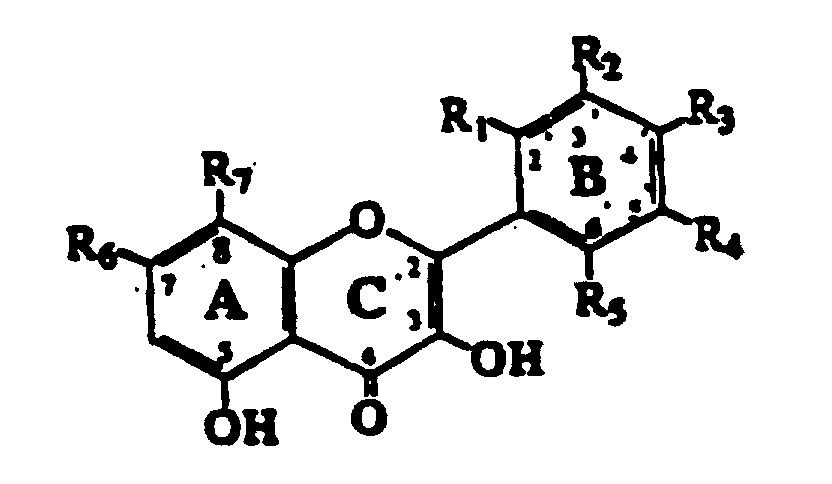
- The foregoing aspects and many of the attendant advantages of this invention will become more readily appreciated as the same becomes better understood by reference to the following detailed description, when taken in conjunction with the accompanying drawings, wherein:
- FIGURE 1 is a schematic representation of sporophytic influence (diagonal lines) on the developing microspores in chalcone synmase (CHS) heterozygous plants. The lack of CHS function in the sporophyte is indicated by a white background (Figure 1A) and the presence of CHS function is represented by a black background (Figure 1B).
- FIGURE 2A and 2B are photographic representations of in vitro germinating pollen from inbred petunia line V26 (Figure 2A) and CHS-deficient plant O2425.1 (Figure 2B), wherein the pollen from freshly dehiscent anthers was suspended in a liquid medium and photographed after growth at room temperature for 6 hours. The bar in Figure 2A represents 25µm. The arrows is Figure 2B indicate pollen tubes attempting to germinate.
- FIGURE 3 are photographic representations of cross sections of developmentally identical anthers from inbred petunia line V26 (left column) and from CHS-deficient plant O2425.1 (right column), which had been harvested, fixed, embedded, transversely sectioned and stained with toluidine blue as described in Example 3. Figure 3A shows whole anther sections immediately before dehiscence when CHS-defident anthers are tan and shrunken. The bar in Figure 3A represents 200 µm. Figure 3B shows anther sections 48 hours before dehiscence when transgenic anthers are plump and white. Figure 3C shows anther sections as Figure 3A at the magnification of the representations of Figure 3B. The bar in Figure 3B represents 50 µm. Figure 3D shows mature pollen at dehiscence. In Figure 3, P represents pollen; E, endothecium; S, stomium; and C, cuticle.
- FIGURE 4 is a photographic representation of the restoration of pollen germination and tube growth to petunia CHS-defident pollen by the fertility restoring flavonol, kaempferol. Pollen was collected from conditionally male fertile anthers, suspended in germinating medium, and kaempferol (K+, Figure 4C) or DMSO (K-, Figure 4B) added to 1 µM final concentration. Representative fields of pollen are pictured after 4 hours of incubation. The germination and tube growth observed in the kaempferol rescued CMF pollen (Figure 4C) is indistinguishable from the wild type V26 control (C, Figure 4A) which received DMSO only. The non-supplemented CMF pollen (Figure 4B) shows swelling at the germination pore in some grains but no pollen tubes are extruded.
- FIGURE 5 is an HPLC profile of methanolic extracts of wild type V26 stigmas (Figure 5A) and CMF stigmas (Figure 5B). Absorption at 360 nm of 100 µl aliquots of extracts prepared from 150 stigmas and fractionated in a methanol-water gradient on a reverse-phase C18 column. The inset of Figure 5A is the UV/visible spectrum of the peak at 33.17 min and is identical to that produced by an authentic kaempferol standard. An HPLC profile and UV/visible spectrum of an acid hydrolyzed V26 stigma extract indicates that the major peaks at retention time 7.43, 10.10, 13.46 and 16.65 are glycosides of kaempferol and quercetin.
- FIGURE 6 is a graphical representation of pollen germination frequency as a function of increasing flavonol aglycone concentration, in which kaempferol (open circles), morin (closed circles), myricetin (open triangles) and 3-hydroxyflavone (closed triangles) were added to germinating medium (GM) at the indicated final concentrations and germination was scored after 4 hours of incubation. The mean germination frequency measured in three separate experiments is plotted with the standard error of the mean (SEM). SEM values < 1.4 are not visible. The germination frequency of the wild type control V26 pollen is typically 75% and the non-rescued DMSO-treated CMF pollen yields between 1-2% pollination.
-
- In accordance with one aspect of the present invention, plant fertility in a flavonoid-deficient, conditionally male fertile (CMF) plant is restored by contacting pollen of the plant with certain fertility restoring flavonols to enhance germination and tube growth of the pollen of the plant.
- As used herein, the term flavonoid-deficient, conditionally male fertile or CMF plant is intended to include plants in which the chalcone synthase (CHS) or flavanone-3-hydroxylase (F3H) activity has been impaired, either naturally or transgenetically, to disrupt the natural production of flavonoids in the plant. Accordingly, flavonoid-deficient, conditionally male fertile plants will typically be pigment deficient, resulting in a white or pale coloration, and will typically be self sterile. Although the invention will be hereinafter described in detail in connection with CMF petunias and maize, other CMF plants may be similarly used in the practice of the invention.
- In one embodiment of the present invention, the fertility of plants may be regulated by blocking the activity of flavanone-3-hydroxylase (F3H) to produce a CMF plant that is normally self-sterile, but whose fertility may be rescued or restored by contacting pollen of the plant with a fertility restoring flavonol as described herein. In the natural flavonol biosynthetic pathway, chalcone synthase (CHS) condenses three molecules of malonyl-CoA and one molecule of p-coumaroyl to form chalcononaringenin, which is converted to naringenin spontaneously (at a low rate) and by the action of chalcone-fiavanone isomerase (CHI). In the next step of the pathway, F3H catalyzes the addition of a hydroxyl group to the 3-position carbon of the C ring to produce a flavonol, which is required for fertility restoring activity in accordance with the present invention. The general pathway may be represented as follows:
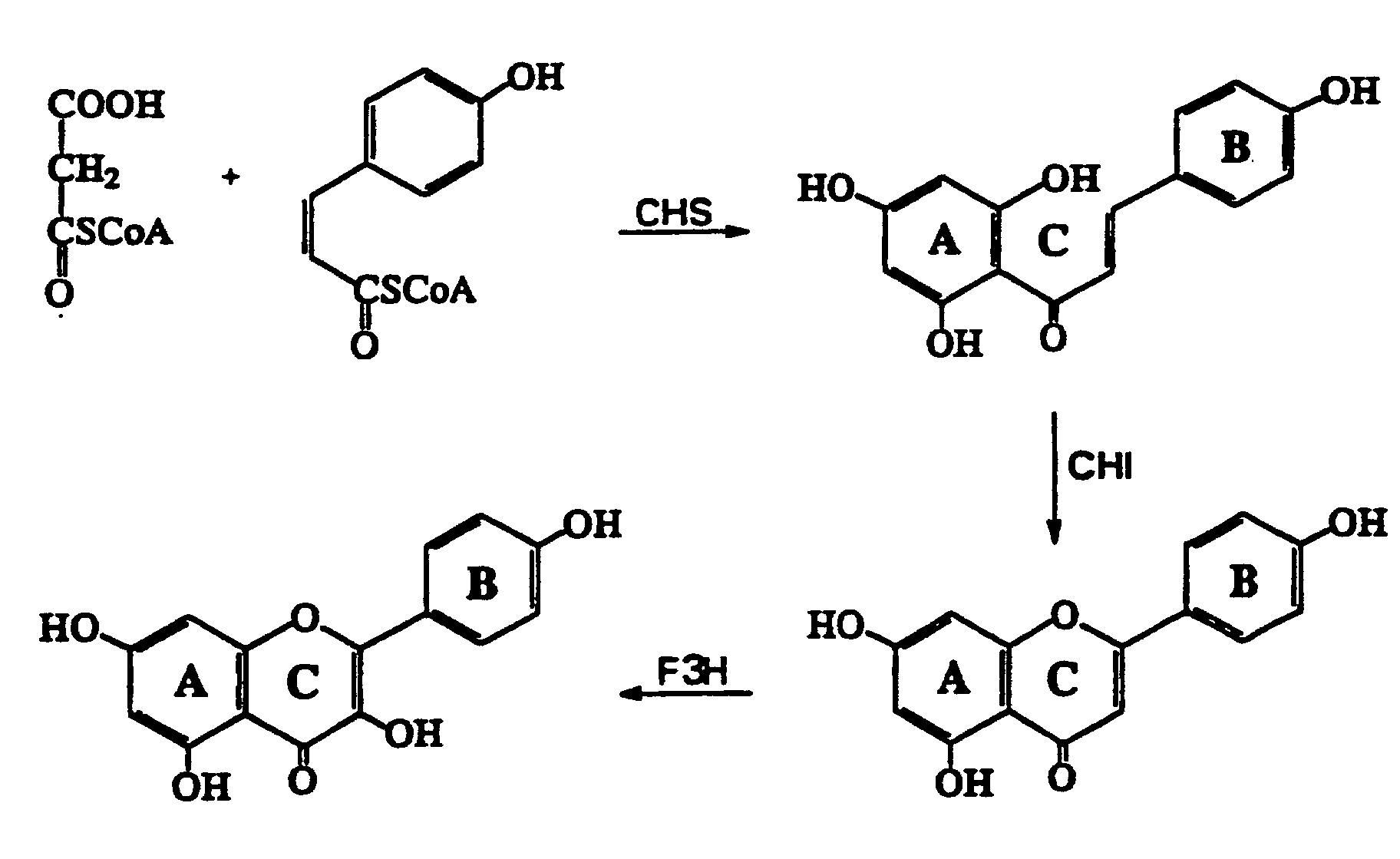
- F3H is the rate limiting enzyme in the production of flavonols, and has been previously cloned from Antirrhinum majus (Martin, C., Prescott, A., Mackay, S., Baruett, J. and Vrijlandt, E., 1991, "Control of biosynthesis in flowers of Antirrhinum majus," The Plant J. 1:37-39). Since flavonol aglycone compounds are required for male fertility, as described herein, any means which effectively blocks the F3H hydroxlation activity may be employed in the practice of the invention. Thus, for example, F3H substrates may be removed by blocking production of precursors in the biosynthetic pathway, or the expression of F3H, CHI or CHS may be blocked by interfering with gene expression. In another illustrative embodiment, plants having blocked flavonol production may be produced by expressing an antisense RNA in the plants which hybridizes to mRNA encoding or necessary for the expression of F3H or a precursor enzyme, such as CHI, in the plants. For example, a tapetal cell-specific promoter may be fused to the F3H gene in an antisense orientation, and the fusion construct may be introduced into plant cells, such as tobacco, petunia, tomato, or other plant cells, using known techniques, such as Agrobacterium-mediated transformation, particle gun bombardment, direct DNA introduction techniques and the like (see, for example, Napoli C, Lemieux C and Jorgensen R, 1990, "Introduction of a chimeric chalcone synthase gene into petunia results in reversible co-repression of homologous genes in trans," Plant Cell 2 :279-289; Mariani, C., De Beuckleer, M., Truettner, J., Leemans, J. and Goldberg, R.B., 1990, "Induction of male sterility in plants by a chimeric ribonuclease gene," Nature 347:737-741; and Oeller, P.W., Min-Wong, L., Taylor, L.P., Pike, D.A., and Theologis, A., "Reversible inhibition of tomato fruit senescence by antisense RNA," Science 254:437-439). The tapetum promoter may be isolated by differential cDNA cloning (Goldberg, R.B., 1988, "Plants: novel developmental processes," Science 240:1460-1467) or by using a hybridization probe generated by polymerase chain reaction (PCR) amplification of genomic sequences (see Saiki, R.K., 1990, "Amplification of genomic DNA," in PCR Protocols, M.A. Innin, Felfand, D.H., Sninsky, J.J. and White, T.J., eds, Academic Press, San Diego, pp. 13-20) homologous to previously published tapetum-specific promoters. Alternatively, the F3H gene may be isolated by generating a hybridization probe using PCR oligonucleotide primers (see Saiki, R.K., 1990, supra) based on the published Antirrhinum F3H sequence. As a further alternative, the gene encoding F3H, CHI or CHS in a plant may be altered, mutated, removed, blocked or otherwise impaired to prevent expression of the F3H enzyme in the plant. For example, the gene encoding F3H in a plant may be deleted from the nuclear genome of the plant and replaced with the F3H gene operably linked to an inducible promoter as described in European patent application EP 0465024 published January 8, 1992, to enable controlled unblocking of flavonol production and rescue of plant fertility by externally induced gene expression. In addition to blocking the synthesis of F3H in vivo, it will also be apparent that F3H activity may be blocked with moieties that interact directly with F3H to inactivate or impair its hydroxylase activity. In addition, the production of flavonols may be impaired by blocking CHI activity; however this alternative is less preferred since the conversion of chalcononaringenin to naringenin proceeds spontaneously at a low rate in the absence of CHI.
- Impairment of male function in plants which lack flavonols as a result of a deficiency in CHS, CHI or F3H activities results in no gross abnormalities in pollen development until immediately prior to dehiscence when the anther morphology deviates from normal in color, shape, and size. At dehiscence the pollen remains clumped within the anther and when viewed microscopically a significant proportion of the grains in a locule appear more shrunken than normal. Although viable pollen is produced and shed, pollen germination and tube growth are greatly impaired both in vivo and in vitro. In addition to functional male sterility, flavonol-deficient plants exhibit some aspects of self-incompatibility, as evidenced by the fact that the pollen can be partially rescued by stigmas of wild type plants, but not by stigmas of flavonol-deficient plants. Although elements of both male sterility and self incompatibility are evident, the features exhibited by pollen from the flavonol-deficient plants clearly constitutes a unique state which is referred to herein as conditional male fertility (CMF).
- Plants lacking CHS (and therefore lacking flavonoids) appear normal except for two features: (1) a lack of flavonoid pigmentation and (2) the production of impaired pollen that is entirely dependent on wild pistils (stigma + style) in order to function.
- While CHS deficient plants share a lack of flavonoid pigmentation and pollen function impairment, some differences are evident between plant species. Maize white pollen germinates on the silks and produces a pollen tube whose growth is arrested in the style. Additionally, the maize mutant pollen germinates in vitro and produces a tube nearly as long as wild-type pollen (L. P. Taylor, unpub. obs.). In contrast, pollen from the flavonoid-deficient petunia does not penetrate the stigma nor produce a tube either in vivo or in vitro. This difference between maize and petunia may be explicable in terms of the physiological differences between tricellular (maize) and bicellular (petunia) pollen. Bicellular pollen has a low respiratory rate when shed, forms the second sperm cell after shedding, may be on the sigma several hours before germination and has a low initial pollen tube growth rate. Tricellular pollen, by comparison, undergoes the second mitotic division before anthesis, has a high respiratory rate when shed, germinates within minutes after contact with the stigmatic surface and has a high initial growth rate. Because tricellular pollen is poised to grow rapidly after shedding, maize white pollen tubes grow to a significant length before any mechanism that arrests tube growth is effective.
- In flowering plants with alternating generations, the diploid sporophyte produces haploid spores which grow and divide mitotically to produce the gametophyte. Part of the gametophytic life cycle occurs while the developing pollen spore is in intimate contact with surrounding sporophytic tissue. This arrangement has the potential for diploid-haploid interactions. In heterozygous plants this interaction would also include haploid-haploid communication between the two types of gametophytes as represented in Figure 1. The fact that the petunia flavonoid-deficient male sterility described here is genetically dominant while the maize white pollen male sterility is genetically recessive leads to an interesting conclusion regarding whether the gametophyte or the sporophyte is responsible for the effect. In maize, male sterility is expressed only in plants homozygous recessive for both CHS genes, c2 and Whp. Heterozygotes with either a single functional copy of C2 or whp produce 100% yellow, fertile pollen grains (Coe et al. 1981). Thus, in the heterozygote either the CHS-positive sporophyte or the 50% CHS-positive gametophytes influence the expression of fertility in the CHS-negative gametophytes. In the transgenic petunia, male sterility is associated with a dominant trait and pollen produced by the heterozygous plants is 100% male sterile. In this case, sterility is caused either by inhibition of the CHS-positive gametophytes by the CHS suppressed gametophytes or by CHS deficiency in the transgenic sporophyte (Figure 1). The physiological basis for CHS deficiencies causing male sterility appears to be the same in maize and petunia, and in both species it is the sporophyte that causes the sterile phenotype, rather than the gametophyte. Thus, the conditional male fertility associated with CHS deficiency in maize and petunia has a common physiological basis.
- The production of conditionally sterile pollen from the flavonol-deficient plants may be used as the basis of an in vitro pollen rescue assay. By incubating the transgenic pollen in germination solution supplemented with purified flavonoids or plant extracts and assaying for enhanced germination frequency and pollen tube growth, specific compounds required for pollen function can be identified. In this manner, it has been determined that the broad family of flavonoid compounds, in general, is not uniformly effective in restoring fertility in CMF plants, but rather that a specific group of fertility restoring flavonol aglycones is effective for this purpose.
- It has been found that most members of the relatively large family of flavonoids are ineffective promoting germination of pollen of a CMF plant. Accordingly, the fertility restoring flavonal is a compound of the formula:wherein R1, R2, R3, R4, R5, R7, and R8, are hydrogen, hydroxyl or alkoxy having from 1 to 3 carbon atoms. More preferably, not more than two of R1-R5 are hydroxyl or methoxy and the remaining R1-R5 are hydrogen, and R7 and R8 are hydrogen, hydroxyl or methoxy. Presently particularly preferred and representative fertility restoring flavonol compounds of the invention include galangin, kaempferol, iso-rhamnetin, quercetin, and morin which have the general chemical structure set forth above with the following substituents:

Flavonol R1 R2 R3 R4 R5 R7 R8 galangin H H H H H OH H kaempferol H H OH H H OH H iso-rhamnetin H OCH3 OH H H OH H quercetin H OH OH H H OH H morin OH H OH H H OH H - The foregoing may be better understood in connection with the following examples, which are presented for purposes of illustration and not by way of limitation.
- Transgenic and inbred V26 petunia were maintained on a 16/8 hour photoperiod in a glasshouse supplemented with metal halide lights at an intensity of 300-600 µmol m-2sec-1. Inbred V26 is a pigmented line of Petunia hybrids which can produce flavonoids in most plant tissues including pollen, anthers and filaments, and pistil (stigma + style) and is fully self-compatible. The transgenic material analyzed consisted of the two independent transformed regenerants, 218.38 and 218.41 (Napoli C, Lemieux C and Jorgensen R, 1990, "Introduction of a chimeric chalcone synthase gene into petunia results in reversible co-repression of homologous genes in trans," Plant Cell 2:279-289) and individuals from the second backcross generations (BC2) to the parental V26 line (population numbers 2425 through 2435). The T-DNA insertion in these transformants contains CHS cDNA sequences fused to a viral promoter linked to a neomycin phosphotransferase II gene as a selectable marker (Napoli et al. 1990). Crosses were performed by emasculating flowers 24 hours prior to the application of pollen. All transgenic flowers used for crosses showed no visible signs of pigment. Pollen donors were selected from plants that had 2 to 3 dehiscent anthers or dissected from plump, pre-dehiscent anthers as noted.
- The transgenic petunia plants 218.38 and 218.41 produce pure white flowers after the introduction of an additional copy of the CHS gene. When CHS expression was examined in the transgenic petals, a 50-fold induction in mRNA compared to the untransformed V26 parent or somatic revertants was detected in both endogenous and introduced CHS genes. The V26 inbred line produces purple anthocyanin pigments in leaves, stems, pedicles, styles and anther filaments, and yellow chalcones in developing anthers. In comparison, the transformed plants have no discernible flavonoid pigments in any of these tissues. The lack of visible pigment was confirmed by HPLC analysis of methanolic extracts, as described in Example 6. Normally, just prior to shedding, petunia anthers filled with mature pollen undergo desiccation. At dehiscence, when the anther case ruptures longitudinally along the stomium, the dehydrated state of the tissue results in the two edges of the anther lobe curling back on one another to expose the pollen grains. Close inspection of the non-pigmented transgenic plants revealed that, in the 48 hours preceding dehiscence, the anthers shrink an average of 40% in length and change in color from creamy-white to tan. In comparison, the anthers of the non-transformed parental line V26 shrank only about 15% and did not undergo a color change, remaining yellow throughout this period. A wide variation in the frequency of dehiscent anthers occurred ranging from 0 to 100% with the higher frequency associated with lowered relative humidity. Although dehiscence may be slightly delayed relative to the V26 parent, the flavonoid-deficient anthers do open to expose normal amounts of pollen which does not appear as light and friable as V26 pollen and remains clumped within the anther case.
- No seeds resulted from numerous attempts at self pollination of the flavonoid-deficient progeny of 218.41 using either: (i) pollen from shrunken, tan, dehiscent anthers or (ii) pollen dissected from white, plump, pre-dehiscent anthers (see Table 2, column 5, "Transgenic self crosses: 0 seeds/pod"). Self crosses of the V26 parent line produced on average 225 seeds per pod. This translates to approximately 17,000 possible seeds in the 75 transgenic petunia self crosses that were attempted. All of the plants listed in Table 2 were tested for female fertility by pollinating stigmas with pollen from inbred line V26. In all cases, pods were produced with the normal complement of seeds, indicating that the CHS deficient plants were female fertile. The reciprocal cross, transgenic flavonoid-deficient pollen onto V26 stigmas resulted in the production of varying quantities of seeds as shown in Table 2.
Seed Production From Transgenic Pollen Crosses NUMBER OF POLLINATIONS Pollen Parent V26 X transgenic pollen Transgenic self crosses 0 seeds/pod 1-150 seeds/pod > 150 seeds/pod 0 seeds/pod 02425.1 0 2 0 8 02430.5 0 5 3 6 02430.6 2 1 0 6 02430.8 ND ND ND 6 02432.2 ND ND ND 6 02435.1 0 1 1 6 02435.2 1 4 1 8 02435.3 0 1 1 7 J2425.1 0 1 0 1 J2428.1 ND ND ND 6 J2431.2 2 3 0 6 J2432.3 3 0 0 7 J2430.5 3 2 0 2 - Of 37 crosses involving 10 different transgenic plants as male parents, 11 produced no pods, 20 produced pods with less than 150 seeds per pod and 6 produced pods with greater than 150 seeds per pod. This averages to approximately 60 seeds per pod or a 70% reduction in seed set. These results indicate that while pollen from the flavonoid-deficient plants is non-functional on flavonoid-deficient stigmas it is partially functional on wild type stigmas, the state we termed herein as conditional male fertility (CMF). The wide variation in the number of seeds set per pollination in these outcrosses is possibly due to environmental and/or developmental factors.
- It is unlikely that CMF is due to the insertion of T-DNA into a gene required for male fertility since two independent transformants, 218.38 and 218.41, both display the same features: a complete lack of flavonoid pigmentation and identical dominant male sterile phenotypes. Additional evidence for this conclusion comes from the observations of Napoli et al. (1990) that the transformed regenerants sometimes revert somatically to fully pigmented plants but retained the transgene, indicating that the presence of the transgene alone does not suppress endogenous CHS expression. Further observation and crosses of these somatic revertants indicate that they are fully male fertile. Given the similarity with white pollen in maize, CMF in petunia appears to be caused by a deficiency in flavonoids, such as that caused by a suppression of CHS or F3H gene expression.
- In vitro germination was performed on freshly collected pollen in simplified Brewbakers medium as described in Mulcahy GB and Mulcahy DL, 1988, "The effect of supplemented media on the growth in vitro of bi- and trinucleate pollen," Plant Science 55:213-216 (hereinafter sometimes referred to as "germinating medium" or "GM"). Pollen from a single anther was placed in a microtiter well with 50 µl of media, rocked at room temperature for 6 to 8 hours and photographed with Kodak technical pan film.
- In vivo pollen tube growth was measured 48 hours post-pollination as described in Herrero M. and Dickinson H.G., 1979, "Pollen-pistil incompatibility in Petunia hybrids: changes in the pistil following compatible and incompatible intraspecific crosses," J Cell Sci 36:1-18. Callose plugs were visualized by epifluorescence generated by excitation at 355-425 nm (D cube) and suppressing wavelength 460 nm from a Leitz Aristoplan. Specimens were photographed with Ektachrome T 160 film and prints made from an internegative.
- Pollen viability was determined with the fluorochromatic procedure (FCR) (Heslop-Harrison J. and Heslop-Harrison Y., 1970, "Evaluation of pollen viability by enzymatically induced fluorescence; intracellular hydrolysis of fluorescein diacetate," Stain Technol. 45:115-120) by incubating freshly dehiscent pollen in a solution of carboxyfluoresceine acetate (1mM) in germination media. Epifluorescence was visualized as described above.
- Petunia pollen tubes normally penetrate the stigma about one hour after germination (Herrero and Dickinson, 1980) and grow downward through the styler tissue to deposit the two sperm cells in the embryo sac. Callose is a polysaccharide polymer linked in β(1,3) glycosidic linkages and plugs of this material are normally deposited at regular intervals down the growing pollen tube. Callose is visualized by its distinctive fluorescence after staining with decolorized aniline blue (Currier 1957; Eschrich and Currier 1964). The germination and growth of pollen tubes in self crosses of the CHS-deficient flowers of Example 1 and in backcrosses of the same plants with V26 pollen were examined. Pistils were harvested 48 hours after pollination, stained with decolorized aniline blue and examined by fluorescent microscopy. A regular pattern of callose deposits was observed all the way down the style in the squashes of flavonoid-deficient pistils pollinated by V26. On the other hand, no callose was seen in the pistils of the self pollinated petunias even though copious amounts of pollen was present on the stigma.
- A microscopic examination of freshly shed pollen from the flavonoid-deficient plants of Example 1 was made and did not reveal any gross abnormalities. Petunia pollen readily germinates and produces a tube when incubated in a simple liquid medium. Germinated pollen from each of the BC2 families (2425 to 2435) to V26 pollen were compared in vitro. A typical representative is shown in Figure 2. As shown in Figure 2, after 6 hours of growth many mutant pollen grains had attempted germination as noted by the pronounced swelling around one of the germination pores (arrows, Figure 2), but at most only 2% of the pollen grains from the flavonoid-deficient plants produced a tube of any length. Of the pollen grains that did produce measurable tubes, the length was less than 20% the length of V26 pollen tubes grown under identical conditions.
- To determine whether the pollen produced and shed by the flavonoid-deficient plants was viable and therefore capable of germination and pollen tube growth, a fluorochromatic analysis (FCR) for viability on freshly shed transgenic and V26 pollen was performed. This test depends on the uptake of a fluorescein diacetate compound into the pollen grain with subsequent conversion to fluorescein by intracellular enzymes. Fluorescein is highly polar and remains sequestered, most likely in the vegetative cell cytoplasm, where it is visualized by fluorescent microscopy. Inbred V26 pollen consists of a high proportion (up to 40%) of abnormally small, FCR negative grains which entirely lack any internal features. Several grains of this type can be seen in Figure 2A, including two in the center of the photograph. This population never germinates and is most likely aborted grains. Of the remaining grains (60%), almost all showed a positive FCR test, indicating the presence of intact plasma membranes and active cytoplasmic esterases. Pollen from the mutant anthers retained the high proportion of shrunken, aborted grains. Of the remaining normal appearing grains, more than 90% were FCR positive. The fact that most of the pollen produced by the flavonoid-deficient plants was viable and metabolically active indicates that some aspect of CHS activity is required for normal pollen germination and tube growth.
- To determine if the lack of CHS activity during microsporogenesis altered the cellular architecture of the developing pollen grains or anther tissues, pollen development in V26 and CHS deficient plant O2425.1 was compared. Anthers from a developmentally staged series of petunia buds ranging in length from 0.1 to 6 cm were harvested, fixed in 2% paraformaldehyde, 1.25% gluteraldehyde in Pipes, pH 7.2, embedded in Spurrs resin, and 1µm sections were stained with toluidine blue. Photomicrographs were made with Kodak technical pan film. Histologically this represents all stages of microsporogenesis, from the earliest evidence of archesporial tissue differentiation to pre-dehiscent anthers filled with mature pollen. Close attention was given to the development and subsequent disintegration of the tapetum, since this tissue is thought to be the source of pollen flavonoids. At all stages the transgenic anther and developing microspores showed no gross histological differences when compared to V26. Additional sections were taken from the flavonoid-deficient anthers during the transition from plump, white to shrunken, tan and compared to similar stages in V26 (Figure 3). Preceding dehiscence the cells of the endothelial layer normally expand radially, thicken, and deposit material which is thought to be involved in the mechanism of anther rupture (Cutter, E.G., 1978, "Plant Anatomy: Experimentation and Interpretation.
Part 1," Cells and Tissues. 2nd ed., London: Arnold). This layer is not continuous, being absent in the area surrounding the stomium. The sections of the shrunken, tan anthers showed no gross abnormalities to the endothelial layer, stomium, or cuticle surrounding the anther. However, when compared to V26 pollen (Figure 3, Column "V26") a higher proportion of shrunken grains devoid of internal features were present in the locules of the transgenic plants and the larger grains appeared more heterogeneous in size, shape, and staining reaction (Figure 3C and 3D). The heterogeneity shown in Figures 3C and 3D may be accounted for by the fact that pollen is normally shed in a highly dehydrated state and undergoes rapid rehydration on the stigma. flavonoid-deficient pollen may be shed in a much more dehydrated state than normal, and when placed in liquid germination medium, appears to rehydrate to a normal appearance. - Analyses of petunia pollen extracts have identified the major flavonoids as 3-O-glycosides of quercetin and kaempferol, 4,2',4',6'-tetrahydroxychalcone, and a dihydroflavonol, taxifolin (Zerback, R., Bokel, M., Geiger, H. and Hess, D., 1989, Phytochemistry 28:897-899; Zerback, R., Dressler, K. and Hess, D., 1989, Plant Science 62:83-91; De Vlaming, P. and Koh, K.F.F., 1976, Phytochemistry 15:348-349). Maize pollen contains at least 10 glycosides of kaempferol, quercetin, and isorhamnetin (Ceska, O. and Styles, E.D., Phytochemistry 23:1822-1823) Aqueous extractions from both wild type and inbred petunia line V26 were made by mascerating stigmas with forceps or vortexing a pollen suspension in PEG 4000 media (W. Jahnen, W. M. Lush, A. E. Clarke, 1989, Plant Cell 1:501), hereafter referred to as GM, centrifuging 5 min in a microfuge, and applying aliquots of the supernatant directly to a CMF pollen suspension in GM in a 96 well microtiter plate. Methanol extractions were made following the same protocol except the extract was dried under vacuum and resuspended in GM before addition to the pollen suspension. The initial rescue experiment elicited a 33% germination rate using 20 µl (one-fifth total volume) of an aqueous extract prepared from ten V26 stigmas. As a control, extracts were prepared in a similar manner from stigmas and pollen of the CMF plants. In pollen germination assays only extracts from V26 stigmas and pollen were able to restore germination and tube growth to the flavonoid-deficient pollen. The wild type and CMF pollen and stigma extracts were analyzed as follows. Stigmas or pollen were extracted first with 50% methanol, followed by 100% methanol, and the extracts were pooled and concentrated. Aglycones were produced by acid hydrolysis: the extract was mixed v/v with 4N HCl, sealed in a 2 ml ampule and hydrolyzed in boiling water for 40 min. Replicate samples were injected into a reverse-phase C18 column (Phenomenex Spherisorb 5 ODS 2 250 x 4.6mm). Solvent A was 5% acetic acid and solvent B consisted of 5% acetic acid in 80% acetonitrile. Each run consisted of a 6 min isocratic gradient (20%B), followed by a 20 min linear gradient to 95% B and terminated isocratically at 95% B for 14 min. The solvent flow rate was 0.5 ml/min at room temperature. Detection was at 360nm with a Hewlett Packard model 1040A photodiode array detector. Kaempferol was detected in the wild type stigma extracts at 60 ng stigma, and quercetin at substantially lower levels. Identical extracts from a pool of 150 CMF stigmas or from 500 CMF anthers yielded no peaks giving a typical flavonoid spectra.
- Treatment of the wild type stigmatic extract with protein digesting enzymes, heat, and passage through molecular sizing membranes indicated that the active compound was a small non-proteinaceous molecule. The molecular weight of the active compound was estimated by passing the extract through a 3000 dalton molecular weight cutoff filter (Centricon-30 filter, Amicon) and establishing that the pollen rescue activity passed through the filter. Aqueous extracts of V26 stigmas and pollen were treated with 0.025 units of papain for 30 min at 37°C in a 100 µl reaction volume. Enzyme activity was verified by treating BSA (0.5 mg/ml) under the same conditions and by examining the digestion products by SDS-polyacrylamide gel electrophoresis (PAGE). Neither the protease nor a heat treatment (100°C, 5 min) eliminated the ability of the extracts to rescue CMF pollen germination and tube growth.
- Collectively, these results indicate that the flavonoids present in wild type pollen play a role in pollen germination and that the wild type stigma contains similar compounds which can compensate for the lack of flavonoids in the CMF pollen.
- Biochemical complementation of the flavonoid-deficient pollen of Example 1 was achieved by adding a low concentration (1µM) of kaempferol, a flavonol aglycone, to a suspension of CMF pollen in germination medium (GM). As shown in Figure 4, side-by-side comparisons made throughout a 12 hour growth period confirmed that germination initiated simultaneously and that tube growth proceeded at the same rate and to the same extent in the rescued CMF pollen (K+) compared to wild type V26 pollen which received no flavonol supplement (C). The rescue was nearly complete; the flavonoid-supplemented pollen showed an 80% germination frequency relative to V26 pollen. CMF pollen to which only the DMSO solvent was added (K-) showed no significant germination (1-2%) and the pollen tubes, if they germinated at all, never progressed more than 2 pollen grain diameters.
- To confirm that wild type stigma extracts which are capable of rescuing pollen germination and tube growth contain kaempferol, unhydrolyzed extract was fractionated by HPLC and analyzed by UV/visible absorption spectroscopy. A peak with a retention time and typical flavonol spectra (absorption maxima around 260 and 360 nm) was detected in the V26 stigma extract (Figure 5A and inset). This putative kaempferol peak was collected, evaporated to dryness, resuspended in DMSO and added to the in vitro GM media where it elicited a full germination and tube growth response from the CMF pollen. Re-chromatography of this active fraction with an authentic kaempferol standard confirmed its purity and identity. From this analysis of 150 stigmas, the amount of kaempferol in a V26 stigma is calculated to be 60 ng/stigma. By assuming a stigma volume of 34 µl (volume displacement), the flavonol concentration in a V26 stigma is about 6 µM, a level which is capable of eliciting a strong germination response. An identical analysis on extracts from a pool of 150 CMF stigmas or from 500 CMF anthers yielded no peaks giving a typical flavonoid spectra (see Figure 5B). Extracts from V26 pollen and anthers produced a chromatogram similar to that shown in Fig. 5A and the eluent peak, with a retention time and UV/visible spectrum indicative of kaempferol, when added to CMF in GM fully stimulated pollen germination. This analysis confirms that kaempferol is present in wild type pollen and anthers.
- Structural features required for pollen rescue activity. Wild type pollen and stigma extracts from petunia contain other compounds in addition to kaempferol which may also stimulate pollen germination and tube growth (see Figure 5A). Therefore representative compounds from all the major classes of flavonoids: flavones, flavanones, flavonols, isoflavonoids, chalcones, anthocyanins, and catechins were assayed for pollen rescue activity, as follows. Petunia pollen grains were suspended in PEG 4000 germination medium (GM) at a density of 1-2
x 104/ml, and 100 µl aliquots of the suspension were placed in wells of a 96 well microtiter plate and were incubated at room temperature with shaking at 150 rpm. Any supplements were added directly to the GM before addition of the pollen. Stock solutions of flavonoids and other chemicals were made directly in dimethylsulfoxide (DMSO) and added to each well to the final concentrations indicated in the following Table 3. The concentration of DMSO was held constant in each assay at 1%. Pollen was scored as germinated when the tube was more than 1 pollen grain diameter long. Practically all grains that germinate go on to produce a tube longer than 5 pollen grain diameters. Petunia V26, as described in Example 1, produces two types of mature pollen; about 25% of the grains are small with no internal features and they never germinate in vitro. Therefore, complete germination in V26 occurs when 75% of the total pollen grains have germinated. The CMF petunia pollen of Example 1 maintains this same ratio. In most rescue experiments the maximum germination frequency was 89% of the viable grains. After 4 hours incubation a minimum of 1000 pollen grains were scored in each assay. The lowest concentration of the tested compounds required to obtain a germination response are set forth in the following Table 3, wherein NR indicates no response. Compounds which caused <20% germination at 100 µM are indicated as > 100 µM. In addition to the compounds listed in Table 3, the non-flavonoids p-coumaric acid, salicylic acid, hydroquinone, chlorogenic acid, dihydroascorbic acid, naphthylphthalmic acid (NPA), 1-napththaleneacetic acid (NAA), indol-3-acetic acid (IAA) and gibberellic acid (GA3) were tested and produce no response.Substituent Carbon Concentration for response (µM) Compound 3 5 7 2' 3' 4' 5' Flavonols (C2=C3) Galangin OH OH OH 1 Kaempferol OH OH OH OH 1 Iso-rhamnetin OH OH OH OCH3 OH 1 Quercetin OH OH OH OH OH 10 Morin OH OH OH OH OH 10 Myricetin OH OH OH OH OH OH 100 Fisetin OH OH OH OH 100 3-hydroxyflavone OH >100 Dihydroflavonol (C2-C3) Taxifolin OH OH OH OH OH >100 Flavones (C2=C3) Flavone NR 7-Hydroxyflavone OH NR Apigenin OH OH OH NR Luteolin OH OH OH OH NR Flavanones (C2-C3) Flavanone NR Naringenin OH OH OH NR Eriodictyol OH OH OH OH NR - As set forth in Table 3, the R-substituent positions correspond to flavanoids of the formula:

- As can be seen from Table 3, the aglycone flavonols successfully restored maximal germination frequency and tube growth capacity to the CMF pollen but among the other classes of flavonoids only the closely related dihydroflavonol, taxifolin, produced a modest (∼18%) response at 100 µM. Additionally, several classes of non-flavonoid compounds were tested including phenolic acids, and-oxidants, and plant growth regulators but none were able to rescue pollen germination. Hence, the ability to rescue pollen function at physiologically relevant concentrations resides in the flavonols.
- From the range of flavonoids tested, five general structural characteristics appear to be necessary for maximal pollen germination and tube growth. There are absolute requirements for an unsubstituted hydroxyl group at the 3-carbon position and for a keto group at position 4 in the C ring. A maximal response depends on an unsaturated bond between carbons 2 and 3 in the C ring and the degree of hydroxyl group substitutions in the A and B rings. Most interestingly, flavonols glycosylated through the 3 hydroxyl position are inactive although they are by far the most abundant form of flavonols found in plant tissues, including petunia pollen and stigma. No pollen germination was obtained when quercetin-3-O-glucoside and rutin (quercetin-3-O-rhamnoglucoside) were tested at concentrations up to 100 µM.
- The requirement for a keto group at position 4 in ring C is indicated by the fact that catechin, which has no keto group, lacks activity. A comparison of the relative efficiencies of taxifolin (∼18% at 100 µM) and quercetin (∼50% at 10 µM) shows that a double bond between carbons 2 and 3 in the C ring increases the response by about 30-fold. A comparison of quercetin with fisetin or with 3-hydroxyflavone, shows that each additional hydroxyl group at either position 5 or 7 on the A ring increases the response approximately 10-fold. This increase may depend largely on the stabilizing effect of a interaction between the 5 hydroxyl group and the adjacent keto group in ring C. Finally, hydroxyl substitutions on the B ring are not necessary for full activity, and in fact increasing the number of groups actually causes a decrease in the activity (compare kaempferol with quercetin and muricetin). This difference could be due to poor uptake or an increase in non-specific binding caused by the more polar nature of the flavonols with numerous hydroxyl groups.
- Some non-active flavonoids have been reported to antagonize active flavonoid-induction of nodulation genes in the Rhizobium-legume system (Djordjevic, M.A., Redmond, J.W., Batley, M. and Rolfe, B.G., 1987, EMBO 6:1173-1179; Peters, N.K. and Long, S.K., 1988, Plant Physiology 88:396-400). The compounds that were non active in rescuing pollen function were tested for their ability to antagonize the action of the flavonol aglycones, as follows. CMF pollen, as described in Example 1, in GM was exposed to inactive compounds at concentrations of 1 and 10 µM for 30 minutes before adding kaempferol to 1 µM. The experiment was also performed by simultaneously adding both the inactive compound and kaempferol, at 1:1 or 10:1 ratios, to the pollen suspension. The pollen germination frequency was scored after 4 hours incubation and no antagonizing action was detected in any of the combinations tested. The following inactive compounds were analyzed: apigenin, chalcone, eriodictyol, flavone, flavanone, luteolin, naringenin, catechin, chlorogenic acid, p-coumaric acid, hydroquinone, and salicylic acid.
- In part because of their UV light absorbing capabilities, flavonoids are postulated to function as UV protectants in plants (W. Jahnen and K. Hahlbroch, 1988, Planta 173:453 and references therein). To determine if the lack of germination in the flavonoid-deficient pollen was due to UV effects, dark germination experiments were performed with three variations. Pollen was harvested either from (1) flowers that were collected and stored (in water) in complete darkness for 24 hrs or (2) freshly picked flowers. From these two sources pollen suspensions in GM with or without flavonols were prepared in a darkroom using a red safe light. The third variation involved preparing the pollen suspension from the freshly harvested flowers in the light but adding the flavonols solution in the dark. All specimens were wrapped in foil and then incubated as described in Example 5. There was no detectable effect of light on germination frequency for either the V26 control or the flavonoid deficient pollen, with or without added flavonols.
- To determine if UV light affected self fertilizations, mature petunia plants were grown for several weeks under a 610 nm filter as described in L P. Taylor and W. R. Briggs, 1990, Plant Cell 2:115. Petunia buds take about 2 weeks to form and mature, therefore only those buds that formed after the plants were placed under the filter, and thus were exposed to no light below 610 nm, were tested and self fertilized. No seed set occurred in any of the CMF self crosses (10 trials) but all V26 control self crosses performed under the same conditions set full seed pods.
- The amount of flavonoid exposure required for complete germination and maximal tube growth was determined by varying the time the germinating pollen was in the presence of flavonol. A concentration of kaempferol calculated to give near maximal rescue, yet easily removed by washing (0.5 µM final), was added to a 60 x 15 mm petri dish containing a suspension of 5 ml of flavonoid-deficient pollen in GM, and the resulting suspension was continuously rotated at 150 rpm. At times indicated in Table 4, 400 µl aliquots were taken, centrifuged, washed in 1 ml of GM to remove the kaempferol, recentrifuged, resuspended in 400 µl GM, and split into two portions. One 100 µl aliquot was again supplemented to 0.5 µM kaempferol (control) but the other portion was allowed to continue growth without additional flavonol exposure (treated). Growth was allowed to proceed for a total elapsed time of 4 hours from the formulation of the original suspension, then germination frequency and tube length were scored in both treated and control germinations. The results are shown in the following Table 4:
Treated Pollen Control Exposure time (min) Germination (%) Tube Length Germination (%) 0 3.7 +/- 1.5 2x 48.3 +/-2.5 10 6.6 +/- 2.7 2x 55.5 +/-8.6 20 15.7 +/-9.2 2-3x 47.9 +/-7.0 30 13.8 +/-1.7 2-3x 44.4 +/-3.7 60 38.9 +/-2.9 3x 48.4 +/-1.3 120 47.3 +/-3.6 >5x 47.7 +/-2.2 - As seen in Table 4, a measurable increase in germination was detected with an exposure time as short as 10 min (Table 1). An exposure time between 1 to 2 hours was required for maximal germination frequency and tube length.
- The ability to restore self fertility to the CMF petunia by supplying a flavonol aglycone to the pollen at the time of pollination was tested by scoring for successful fertilizations resulting from self crosses of the CMF petunia done in the presence of added flavonols. Prior to self pollinating, flavonol aglycones were applied either (i) directly to the stigma or (ii) mixed with the freshly collected pollen. The most successful technique, measured by the quantity of seed set, required application of the flavonol to the stigma 12-16 hours prior to self pollination. 47 self crosses were performed with added kaempferol or quercetin, and nearly 60% (27 out of 47) produced seed pods. The number of seeds per pod varied from 31 to 287, and in germination tests >90% of the seeds in any single pod were viable. All self crosses done without added flavonols (>30 trials) yielded no seed set.
- The dominant CMF trait exhibited by the flavonoid-deficient petunia is tightly linked to a second dominant gene conferring kanamycin resistance (KAN) (Napoli C, Lemieux C and Jorgensen R, 1990, "Introduction of a chimeric chalcone synthase gene into petunia results in reversible co-repression of homologous genes in trans," Plant Cell 2:279-289). The KAN marker was used to test for segregation of the CMF character in the seeds produced by self crossing the flavonoid-deficient plants in the presence of added flavonol. Freshly harvested seeds were surface sterilized in 20% bleach, washed with sterile water and soaked for 30 min in 100 ppm GA3 solution before plating on germination plates (1xMS, 3mM MES [pH 5.6], 1xB vitamin mix, 3% sucrose and 0.2% solidifying agent) containing 100 µg/ml kanamycin. After growth at 23°C supplemented with a 16/8 hour photoperiod, resistance to kanamycin was scored by screening for the presence of true leaves and lateral roots, neither of which were produced by seedlings sensitive to kanamycin. In the following Table 5, P-value represents the observed level of significance for a one degree of freedom chi-square goodness-of-fit test.
Seedlings Pod Total KAN KAN P (3:1) 1 75 58 17 0.74 2 65 50 15 0.83 3 81 59 22 0.75 - As shown in Table 5, seeds germinated in the presence of 100 µg/ml kanamycin segregated in a 3:1 ratio of KAN resistance:sensitive as expected for a heterozygous dominant trait, as shown in Table 5.
- A field trial was performed using a naturally occurring flavonoid-deficient maize mutant, white pollen, defective in CHS activity, which produces white, non-functional pollen, and is self sterile (E. H. Coe, S. M. McCormick, S. A. Modena, 1981, J. Hered. 72:318). The maize white pollen plants used had stable recessive mutations at C2 and Whp introgressed into a W23 inbred background. The white pollen plants (c2/c2 whp/whp) were maintained by crossing with pollen from isogenic plants carrying a single functional copy of CHS (C2/c2 whp/whp). The plants were male sterile in self and sibling crosses and produced no visible flavonoid pigments in any tissues, including pollen and seeds. Standard genetic field practices were employed to insure that no contaminating pollen reached the silks of the white pollen plants. In addition, the white pollen block was surrounded with a pigmented kernel variety so that any contaminating kernels would immediately be recognized. Mutant white pollen from 50-100 plants was collected from the tassel bags, pooled, and divided into 2 portions. One portion was used "as is" for crosses and the other was mixed in an approximate 20:1 ratio with dry flavonols (either quercetin, kaempferol, or a 50:50 mixture of the two). Prepared white pollen silks were pollinated with either the untreated or the flavonol-supplemented white pollen and bagged immediately. The mature ears were harvested 45 days after pollination. White pollen crosses usually set ∼200 kernels per ear and this number was routinely obtained in the biochemically complemented self-crosses. A total of 45 self crosses were performed in the presence of added flavonols and all of them (100%) produced fully filled ears while self crosses (45 trials) done without added flavonoids showed seed set less than 1% of normal.
- The foregoing experiments confirm that flavonols are required for pollen function as follows: (i) methanol and aqueous extracts of wild type stigmas and pollen can fully restore germination and tube growth to flavonoid-deficient pollen; (ii) these extracts contain the same flavonols that show activity in the in vitro fertility rescue assay described herein; (iii) the ability to rescue pollen germination and restore full tube growth in vitro and full seed set in vivo is restricted to a specific class of flavonoid, the flavonol aglycones; (iv) the effective concentration of flavonol varies with structural features, but several compounds show a pronounced effect at levels less than 10 µM, well within physiological concentrations of these compounds.
- Flavonoids are produced by virtually all classes of plants from liverworts, mosses, and ferns to gymnosperms and angiosperms. Past flavonoid surveys often used dried leaf or root tissue from herbarium specimens; consequently, we do not have a good indication of how widespread is the occurrence of pollen flavonoids. Their ubiquitous presence in plant tissues and the fact that flavonoids have been identified in pollen extracts from several widely divergent species, indicate that flavonoids are a universal constituent of pollen. Most plant flavonols occur as the 3-0-glycosylated species (J. B. Harbome and C. A. Williams, 1988, in The Flavonoids, Advances in Research Since 1980 J. B. Harbome, Eds. (Chapman and Hail, London) chaps. 7, 8), and this is the predominant form in petunia pollen (0. Ceska and E. D. Styles, 1984, Phytochemistry 23:1822 ). Only the aglycone form can rescue pollen function which suggests that either low non-detected levels of the aglycone are normally present, or a glycosidase activity is required to produce the aglycones that are necessary for fertilization.
- Pollen provides the natural access point to manipulate the fertilization process. The loss of flavonol activity resulting in CMF plants acts as a natural gametostat and not a gametocide. Full male function can be restored by external application of flavonols to the flavonoid-deficient pollen. In addition to the identification of a factor involved in higher plant fertilization, a significant benefit of the present invention is the development of a reversible male sterile system for the production of hybrid seed.
Claims (8)
- A method of regulating the fertility of a plant, comprising blocking the production or activity of flavonols at the location of pollen in the plant to obtain a conditionally male fertile plant having inhibited germination and tube growth ability, and contacting the pollen with a fertility restoring flavonol to rescue germination or tube growth ability of the plant, the fertility restoring flavonol being a compound of the formula:wherein R1, R2, R3, R4, R5, R7 and R8 are hydrogen, hydroxyl or alkoxy having from 1 to 3 carbon atoms.
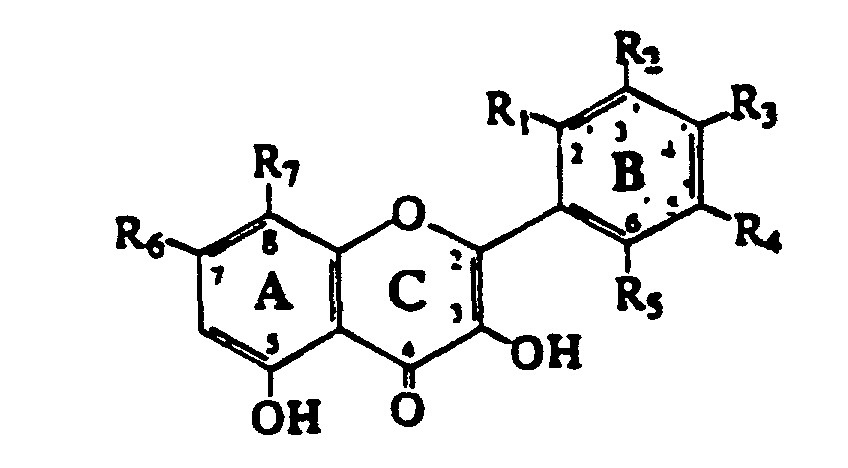
- The method of claim 1, wherein the production of flavonols in the plant is blocked by inhibiting the production or activity of flavanone-3-hydroxylase in the plant.
- The method of claim 1, wherein the production of flavonols in the plant is blocked by inhibiting the production or activity of chalcone synthase in the plant.
- The method of any preceding claim, wherein not more than two of R1-R5 are hydroxyl or methoxy and the remaining R1-R5 are hydrogen, and R7 and R8 are hydrogen, hydroxyl or methoxy.
- The method of claim 4, wherein the fertility restoring flavonol is selected from the group galangin, kaempferol, iso-rhamnetin, quercetin and morin.
- A method of restoring plant fertility to a flavonoid-deficient, conditionally male fertile plant, comprising contacting pollen of the plant with an amount of a fertility restoring flavonol effective to enhance germination or tube growth of the pollen of the plant, wherein the fertility restoring flavonol is a compound of the formula:wherein R1, R2, R3, R4, R5, R7 and R8 are hydrogen, hydroxyl or alkoxy having from 1 to 3 carbon atoms.
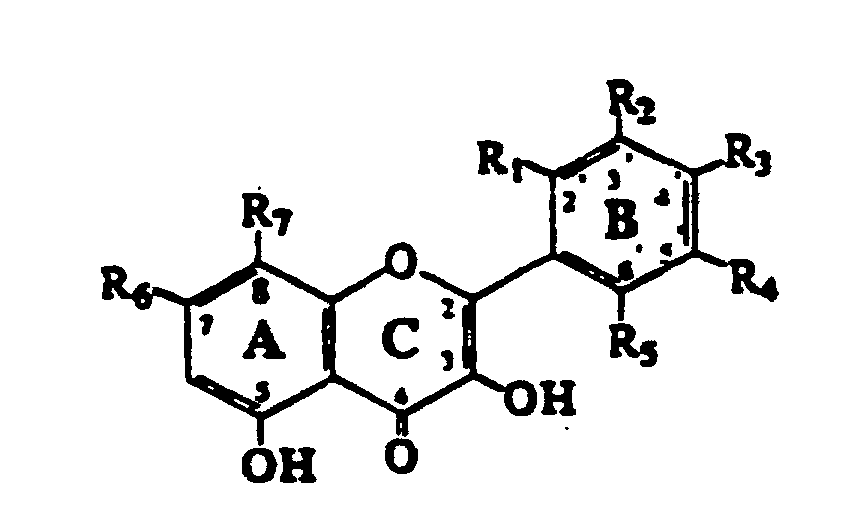
- The method of claim 6, wherein not more than two of R1-R5 are hydroxyl or methoxy and the remaining R1-R5 are hydrogen, and R7 and R8 are hydrogen, hydroxyl or methoxy.
- The method of claim 7, wherein the fertility restoring flavonol is selected from the group galangin, kaempferol, iso-rhamnetin, quercetin and morin.
Applications Claiming Priority (3)
| Application Number | Priority Date | Filing Date | Title |
|---|---|---|---|
| US84790892A | 1992-03-09 | 1992-03-09 | |
| US847908 | 1992-03-09 | ||
| PCT/US1993/001898 WO1993018142A1 (en) | 1992-03-09 | 1993-03-05 | Methods for the regulation of plant fertility |
Publications (3)
| Publication Number | Publication Date |
|---|---|
| EP0630403A1 EP0630403A1 (en) | 1994-12-28 |
| EP0630403A4 EP0630403A4 (en) | 1996-04-17 |
| EP0630403B1 true EP0630403B1 (en) | 2002-10-30 |
Family
ID=25301791
Family Applications (1)
| Application Number | Title | Priority Date | Filing Date |
|---|---|---|---|
| EP93907160A Expired - Lifetime EP0630403B1 (en) | 1992-03-09 | 1993-03-05 | Methods for the regulation of plant fertility |
Country Status (14)
| Country | Link |
|---|---|
| US (1) | US5733759A (en) |
| EP (1) | EP0630403B1 (en) |
| JP (1) | JP3418396B2 (en) |
| KR (1) | KR100292234B1 (en) |
| AT (1) | ATE226981T1 (en) |
| AU (1) | AU668548B2 (en) |
| BG (1) | BG62891B1 (en) |
| BR (1) | BR9306047A (en) |
| CA (1) | CA2131704A1 (en) |
| DE (1) | DE69332451D1 (en) |
| HU (1) | HUT69991A (en) |
| NZ (1) | NZ251069A (en) |
| RO (1) | RO116095B1 (en) |
| WO (1) | WO1993018142A1 (en) |
Families Citing this family (29)
| Publication number | Priority date | Publication date | Assignee | Title |
|---|---|---|---|---|
| US5824524A (en) * | 1990-06-12 | 1998-10-20 | Pioneer Hi-Bred International, Inc. | Nucleotide sequences mediating fertility and method of using same |
| US5478369A (en) * | 1990-06-12 | 1995-12-26 | Pioneer Hi-Bred International, Inc. | Nucleotide sequences mediating male fertility and method of using same |
| US6297426B1 (en) | 1990-06-12 | 2001-10-02 | Pioneer Hi-Bred International, Inc. | Methods of mediating female fertility in plants |
| WO1994029465A1 (en) * | 1993-06-08 | 1994-12-22 | Nunhems Zaden B.V. | Process for generating male sterile plants |
| EP0628635A1 (en) * | 1993-06-08 | 1994-12-14 | Nunhems Zaden Bv | Process for generating male sterile plants |
| EP0778895A1 (en) * | 1994-08-16 | 1997-06-18 | The General Hospital Corporation | Ga4 dna, protein and methods of use |
| DE4440200A1 (en) * | 1994-11-10 | 1996-05-15 | Bayer Ag | DNA sequences and their use |
| US5633438A (en) * | 1994-11-22 | 1997-05-27 | Pioneer Hi-Bred International | Microspore-specific regulatory element |
| AU706527B2 (en) | 1995-09-21 | 1999-06-17 | Washington State University Research Foundation | Conditionally male-fertile plants and methods and compositions for restoring the fertility thereof |
| US7154024B2 (en) | 1997-06-23 | 2006-12-26 | Pioneer Hi-Bred, Inc. | Male tissue-preferred regulatory sequences of Ms45 gene and method of using same |
| US6037523A (en) * | 1997-06-23 | 2000-03-14 | Pioneer Hi-Bred International | Male tissue-preferred regulatory region and method of using same |
| US7129393B1 (en) | 1999-02-22 | 2006-10-31 | Yissum Research Development Company Of The Hebrew University | Transgenic plants and method for transforming carnations |
| WO2000050613A2 (en) * | 1999-02-22 | 2000-08-31 | Yissum Research And Development Company Of The Hebrew University Of Jerusalem | Transgenic plants and method for transforming carnations |
| DE19927574A1 (en) * | 1999-06-17 | 2000-12-21 | Basf Ag | Increasing content of flavonoids and phenols in plants, useful for e.g. preventing cardiovascular disease, by reducing activity of flavanone-3-hydroxylase |
| DE19927568A1 (en) * | 1999-06-17 | 2000-12-21 | Basf Ag | Increasing resistance of crop plants to chemical stress, especially herbicides, by engineering a reduction in activity of flavanone-3-hydroxylase |
| DE19927575A1 (en) * | 1999-06-17 | 2000-12-21 | Basf Ag | Increasing resistance of crop plants to fungal or bacterial pathogens, by engineering a reduction in activity of flavanone-3-hydroxylase |
| WO2001000834A1 (en) * | 1999-06-29 | 2001-01-04 | Pioneer Hi-Bred International, Inc. | Gene affecting male fertility in plants |
| IT1307787B1 (en) * | 1999-07-26 | 2001-11-19 | Univ Firenze | PROCESS TO INCREASE THE MOTILITY OF SPERMATOZOI AND SPERMATOZOIA SUPERIOR MOTILITY SO OBTAINED. |
| EP1330517B1 (en) | 2000-10-30 | 2008-09-10 | Exelixis Plant Sciences, Inc. | Identification and characterization of an anthocyanin mutant (ant1) in tomato |
| US6956118B2 (en) | 2001-02-08 | 2005-10-18 | Pioneer Hi-Bred International, Inc. | Promoter sequences providing male tissue-preferred expression in plants |
| EP1419269A2 (en) * | 2001-05-08 | 2004-05-19 | Paradigm Genetics Inc. | Methods for the identification of inhibitors of flavanone 3-hydroxylase expression or activity in plants |
| US7026298B2 (en) | 2001-06-04 | 2006-04-11 | Abbott Laboratories | Oral rehydration compositions |
| US7304207B2 (en) * | 2001-10-29 | 2007-12-04 | Exelixis, Inc. | Identification and characterization of an Anthocyanin mutant (ANT1) in tomato |
| AU2004235352A1 (en) * | 2003-04-25 | 2004-11-11 | Exelixis Plant Sciences, Inc. | Genes upregulated in a tomato plant having an increased anthocyanin content phenotype |
| KR101586992B1 (en) * | 2009-03-20 | 2016-01-20 | 건국대학교 산학협력단 | Compositions and methods for improving embryonic development using flavonoids as effective components |
| EP2781151A1 (en) | 2013-03-18 | 2014-09-24 | Bayer CropScience AG | Methods of separating hybrid seed from a mixture of seeds |
| CN109496724B (en) * | 2018-12-20 | 2021-10-26 | 广西壮族自治区农业科学院 | Efficient planting method for emilia sonchifolia |
| CN110117316B (en) * | 2019-04-23 | 2020-08-04 | 北京大学 | Application of Os350 protein and coding gene thereof in regulation and control of plant fertility |
| CN115428730B (en) * | 2022-09-30 | 2023-12-19 | 南京农业大学 | Method for improving fruit tree self-flower setting rate by using kaempferol |
Family Cites Families (6)
| Publication number | Priority date | Publication date | Assignee | Title |
|---|---|---|---|---|
| US5034323A (en) * | 1989-03-30 | 1991-07-23 | Dna Plant Technology Corporation | Genetic engineering of novel plant phenotypes |
| WO1990012107A1 (en) * | 1989-03-31 | 1990-10-18 | The Salk Institute Biotechnology/Industrial Associates, Inc. | Recombinant expression system based on satellite tobacco mosaic virus |
| CA2042447C (en) * | 1990-06-12 | 1999-09-28 | Marc C. Albertsen | Control of microsporogenesis by externally inducible promoter sequences |
| US5432068A (en) * | 1990-06-12 | 1995-07-11 | Pioneer Hi-Bred International, Inc. | Control of male fertility using externally inducible promoter sequences |
| BR9205894A (en) * | 1991-04-16 | 1994-09-27 | Mogen Int | Male-sterile plants, method for obtaining male-sterile plants and recombinant DNA for use there. |
| AU674029B2 (en) * | 1992-10-15 | 1996-12-05 | Syngenta Mogen Bv | Genetic moderation or restoration of plant phenotypes |
-
1993
- 1993-03-05 DE DE69332451T patent/DE69332451D1/en not_active Expired - Lifetime
- 1993-03-05 KR KR1019940703155A patent/KR100292234B1/en not_active Expired - Fee Related
- 1993-03-05 AU AU37864/93A patent/AU668548B2/en not_active Ceased
- 1993-03-05 HU HU9402583A patent/HUT69991A/en unknown
- 1993-03-05 BR BR9306047A patent/BR9306047A/en not_active IP Right Cessation
- 1993-03-05 CA CA002131704A patent/CA2131704A1/en not_active Abandoned
- 1993-03-05 AT AT93907160T patent/ATE226981T1/en not_active IP Right Cessation
- 1993-03-05 JP JP51584893A patent/JP3418396B2/en not_active Expired - Fee Related
- 1993-03-05 EP EP93907160A patent/EP0630403B1/en not_active Expired - Lifetime
- 1993-03-05 WO PCT/US1993/001898 patent/WO1993018142A1/en not_active Ceased
- 1993-03-05 RO RO94-01493A patent/RO116095B1/en unknown
-
1994
- 1994-01-11 US US08/179,883 patent/US5733759A/en not_active Expired - Fee Related
- 1994-03-05 NZ NZ251069A patent/NZ251069A/en unknown
- 1994-09-08 BG BG99033A patent/BG62891B1/en unknown
Also Published As
| Publication number | Publication date |
|---|---|
| KR100292234B1 (en) | 2001-06-01 |
| HU9402583D0 (en) | 1994-12-28 |
| WO1993018142A1 (en) | 1993-09-16 |
| JP3418396B2 (en) | 2003-06-23 |
| NZ251069A (en) | 1996-01-26 |
| CA2131704A1 (en) | 1993-09-16 |
| HUT69991A (en) | 1995-09-28 |
| DE69332451D1 (en) | 2002-12-05 |
| EP0630403A1 (en) | 1994-12-28 |
| EP0630403A4 (en) | 1996-04-17 |
| AU668548B2 (en) | 1996-05-09 |
| KR950700407A (en) | 1995-01-16 |
| AU3786493A (en) | 1993-10-05 |
| RO116095B1 (en) | 2000-10-30 |
| JPH07506963A (en) | 1995-08-03 |
| BG62891B1 (en) | 2000-10-31 |
| BR9306047A (en) | 1997-11-18 |
| ATE226981T1 (en) | 2002-11-15 |
| BG99033A (en) | 1995-09-29 |
| US5733759A (en) | 1998-03-31 |
Similar Documents
| Publication | Publication Date | Title |
|---|---|---|
| US5733759A (en) | Methods for the regulation of plant fertility | |
| EP0631630B1 (en) | Control of male fertility using externally inducible promoter sequences | |
| US5850014A (en) | Nucleotide sequences mediating ferility and method of using same | |
| US5824524A (en) | Nucleotide sequences mediating fertility and method of using same | |
| US6297426B1 (en) | Methods of mediating female fertility in plants | |
| Taylor et al. | Conditional male fertility in chalcone synthase-deficient petunia | |
| Ylstra et al. | Flavonols and fertilization in Petunia hybrida: localization and mode of action during pollen tube growth | |
| Ylstra et al. | Flavonols stimulate development, germination, and tube growth of tobacco pollen | |
| Mo et al. | Biochemical complementation of chalcone synthase mutants defines a role for flavonols in functional pollen. | |
| Albert et al. | BANYULS, a novel negative regulator of flavonoid biosynthesis in the Arabidopsis seed coat | |
| Meinke et al. | Embryo-lethal mutants of Arabidopsis thaliana: a model system for genetic analysis of plant embryo development | |
| Lolle et al. | Developmental Regulation of Cell Interactions in theArabidopsis fiddlehead-1Mutant: A Role for the Epidermal Cell Wall and Cuticle | |
| Nielsen et al. | Antisense flavonol synthase alters copigmentation and flower color in lisianthus | |
| Ryan et al. | TIP1 is required for both tip growth and non-tip growth in Arabidopsis | |
| Hernould et al. | Impairment of tapetum and mitochondria in engineered male-sterile tobacco plants | |
| Pollak et al. | Conditional male fertility in maize | |
| Colijn et al. | Synthesis of malvidin and petunidin in pigmented tissue cultures of Petunia hybrida | |
| Van Tunen et al. | Flavonoids and genetic modification of male fertility | |
| Song et al. | Phenolic function in pollen growth in Arabidopsis thaliana | |
| Milyaeva et al. | Development of male reproductive organs in an insertion mutant TPD1 of tobacco characterized by extended flowering |
Legal Events
| Date | Code | Title | Description |
|---|---|---|---|
| PUAI | Public reference made under article 153(3) epc to a published international application that has entered the european phase |
Free format text: ORIGINAL CODE: 0009012 |
|
| 17P | Request for examination filed |
Effective date: 19940913 |
|
| AK | Designated contracting states |
Kind code of ref document: A1 Designated state(s): AT BE CH DE DK ES FR GB GR IE IT LI LU MC NL PT SE |
|
| RHK1 | Main classification (correction) |
Ipc: C12N 15/82 |
|
| A4 | Supplementary search report drawn up and despatched |
Effective date: 19960304 |
|
| AK | Designated contracting states |
Kind code of ref document: A4 Designated state(s): AT BE CH DE DK ES FR GB GR IE IT LI LU MC NL PT SE |
|
| RAP1 | Party data changed (applicant data changed or rights of an application transferred) |
Owner name: WASHINGTON STATE UNIVERSITY RESEARCH FOUNDATION, I |
|
| 17Q | First examination report despatched |
Effective date: 19990210 |
|
| GRAG | Despatch of communication of intention to grant |
Free format text: ORIGINAL CODE: EPIDOS AGRA |
|
| GRAG | Despatch of communication of intention to grant |
Free format text: ORIGINAL CODE: EPIDOS AGRA |
|
| GRAH | Despatch of communication of intention to grant a patent |
Free format text: ORIGINAL CODE: EPIDOS IGRA |
|
| RAP1 | Party data changed (applicant data changed or rights of an application transferred) |
Owner name: WASHINGTON STATE UNIVERSITY RESEARCH FOUNDATION |
|
| GRAH | Despatch of communication of intention to grant a patent |
Free format text: ORIGINAL CODE: EPIDOS IGRA |
|
| GRAA | (expected) grant |
Free format text: ORIGINAL CODE: 0009210 |
|
| AK | Designated contracting states |
Kind code of ref document: B1 Designated state(s): AT BE CH DE DK ES FR GB GR IE IT LI LU MC NL PT SE |
|
| PG25 | Lapsed in a contracting state [announced via postgrant information from national office to epo] |
Ref country code: NL Free format text: LAPSE BECAUSE OF FAILURE TO SUBMIT A TRANSLATION OF THE DESCRIPTION OR TO PAY THE FEE WITHIN THE PRESCRIBED TIME-LIMIT Effective date: 20021030 Ref country code: LI Free format text: LAPSE BECAUSE OF FAILURE TO SUBMIT A TRANSLATION OF THE DESCRIPTION OR TO PAY THE FEE WITHIN THE PRESCRIBED TIME-LIMIT Effective date: 20021030 Ref country code: IT Free format text: LAPSE BECAUSE OF FAILURE TO SUBMIT A TRANSLATION OF THE DESCRIPTION OR TO PAY THE FEE WITHIN THE PRE;WARNING: LAPSES OF ITALIAN PATENTS WITH EFFECTIVE DATE BEFORE 2007 MAY HAVE OCCURRED AT ANY TIME BEFORE 2007. THE CORRECT EFFECTIVE DATE MAY BE DIFFERENT FROM THE ONE RECORDED.SCRIBED TIME-LIMIT Effective date: 20021030 Ref country code: GR Free format text: LAPSE BECAUSE OF FAILURE TO SUBMIT A TRANSLATION OF THE DESCRIPTION OR TO PAY THE FEE WITHIN THE PRESCRIBED TIME-LIMIT Effective date: 20021030 Ref country code: FR Free format text: LAPSE BECAUSE OF FAILURE TO SUBMIT A TRANSLATION OF THE DESCRIPTION OR TO PAY THE FEE WITHIN THE PRESCRIBED TIME-LIMIT Effective date: 20021030 Ref country code: CH Free format text: LAPSE BECAUSE OF FAILURE TO SUBMIT A TRANSLATION OF THE DESCRIPTION OR TO PAY THE FEE WITHIN THE PRESCRIBED TIME-LIMIT Effective date: 20021030 Ref country code: BE Free format text: LAPSE BECAUSE OF FAILURE TO SUBMIT A TRANSLATION OF THE DESCRIPTION OR TO PAY THE FEE WITHIN THE PRESCRIBED TIME-LIMIT Effective date: 20021030 Ref country code: AT Free format text: LAPSE BECAUSE OF FAILURE TO SUBMIT A TRANSLATION OF THE DESCRIPTION OR TO PAY THE FEE WITHIN THE PRESCRIBED TIME-LIMIT Effective date: 20021030 |
|
| REF | Corresponds to: |
Ref document number: 226981 Country of ref document: AT Date of ref document: 20021115 Kind code of ref document: T |
|
| REG | Reference to a national code |
Ref country code: GB Ref legal event code: FG4D |
|
| REG | Reference to a national code |
Ref country code: CH Ref legal event code: EP |
|
| REG | Reference to a national code |
Ref country code: IE Ref legal event code: FG4D |
|
| REF | Corresponds to: |
Ref document number: 69332451 Country of ref document: DE Date of ref document: 20021205 |
|
| PG25 | Lapsed in a contracting state [announced via postgrant information from national office to epo] |
Ref country code: SE Free format text: LAPSE BECAUSE OF FAILURE TO SUBMIT A TRANSLATION OF THE DESCRIPTION OR TO PAY THE FEE WITHIN THE PRESCRIBED TIME-LIMIT Effective date: 20030130 Ref country code: PT Free format text: LAPSE BECAUSE OF FAILURE TO SUBMIT A TRANSLATION OF THE DESCRIPTION OR TO PAY THE FEE WITHIN THE PRESCRIBED TIME-LIMIT Effective date: 20030130 Ref country code: DK Free format text: LAPSE BECAUSE OF FAILURE TO SUBMIT A TRANSLATION OF THE DESCRIPTION OR TO PAY THE FEE WITHIN THE PRESCRIBED TIME-LIMIT Effective date: 20030130 |
|
| PG25 | Lapsed in a contracting state [announced via postgrant information from national office to epo] |
Ref country code: DE Free format text: LAPSE BECAUSE OF FAILURE TO SUBMIT A TRANSLATION OF THE DESCRIPTION OR TO PAY THE FEE WITHIN THE PRESCRIBED TIME-LIMIT Effective date: 20030131 |
|
| PG25 | Lapsed in a contracting state [announced via postgrant information from national office to epo] |
Ref country code: LU Free format text: LAPSE BECAUSE OF NON-PAYMENT OF DUE FEES Effective date: 20030305 Ref country code: IE Free format text: LAPSE BECAUSE OF NON-PAYMENT OF DUE FEES Effective date: 20030305 |
|
| PGFP | Annual fee paid to national office [announced via postgrant information from national office to epo] |
Ref country code: GB Payment date: 20030305 Year of fee payment: 11 |
|
| PG25 | Lapsed in a contracting state [announced via postgrant information from national office to epo] |
Ref country code: MC Free format text: LAPSE BECAUSE OF NON-PAYMENT OF DUE FEES Effective date: 20030331 |
|
| NLV1 | Nl: lapsed or annulled due to failure to fulfill the requirements of art. 29p and 29m of the patents act | ||
| PG25 | Lapsed in a contracting state [announced via postgrant information from national office to epo] |
Ref country code: ES Free format text: LAPSE BECAUSE OF FAILURE TO SUBMIT A TRANSLATION OF THE DESCRIPTION OR TO PAY THE FEE WITHIN THE PRESCRIBED TIME-LIMIT Effective date: 20030429 |
|
| REG | Reference to a national code |
Ref country code: CH Ref legal event code: PL |
|
| EN | Fr: translation not filed | ||
| PLBE | No opposition filed within time limit |
Free format text: ORIGINAL CODE: 0009261 |
|
| STAA | Information on the status of an ep patent application or granted ep patent |
Free format text: STATUS: NO OPPOSITION FILED WITHIN TIME LIMIT |
|
| 26N | No opposition filed |
Effective date: 20030731 |
|
| REG | Reference to a national code |
Ref country code: IE Ref legal event code: MM4A |
|
| PG25 | Lapsed in a contracting state [announced via postgrant information from national office to epo] |
Ref country code: GB Free format text: LAPSE BECAUSE OF NON-PAYMENT OF DUE FEES Effective date: 20040305 |
|
| GBPC | Gb: european patent ceased through non-payment of renewal fee |