EP0629940B1 - Einrichtung zur Entdeckung des Eindringens und verdächtiger Benutzer für eine Datenverarbeitungseinheit und Sicherheitssystem mit dieser Einrichtung - Google Patents
Einrichtung zur Entdeckung des Eindringens und verdächtiger Benutzer für eine Datenverarbeitungseinheit und Sicherheitssystem mit dieser Einrichtung Download PDFInfo
- Publication number
- EP0629940B1 EP0629940B1 EP94401285A EP94401285A EP0629940B1 EP 0629940 B1 EP0629940 B1 EP 0629940B1 EP 94401285 A EP94401285 A EP 94401285A EP 94401285 A EP94401285 A EP 94401285A EP 0629940 B1 EP0629940 B1 EP 0629940B1
- Authority
- EP
- European Patent Office
- Prior art keywords
- behavior
- intrusion
- intrusions
- users
- facility
- Prior art date
- Legal status (The legal status is an assumption and is not a legal conclusion. Google has not performed a legal analysis and makes no representation as to the accuracy of the status listed.)
- Expired - Lifetime
Links
Images


Classifications
-
- G—PHYSICS
- G06—COMPUTING OR CALCULATING; COUNTING
- G06F—ELECTRIC DIGITAL DATA PROCESSING
- G06F21/00—Security arrangements for protecting computers, components thereof, programs or data against unauthorised activity
- G06F21/50—Monitoring users, programs or devices to maintain the integrity of platforms, e.g. of processors, firmware or operating systems
- G06F21/55—Detecting local intrusion or implementing counter-measures
-
- G—PHYSICS
- G06—COMPUTING OR CALCULATING; COUNTING
- G06F—ELECTRIC DIGITAL DATA PROCESSING
- G06F2221/00—Indexing scheme relating to security arrangements for protecting computers, components thereof, programs or data against unauthorised activity
- G06F2221/21—Indexing scheme relating to G06F21/00 and subgroups addressing additional information or applications relating to security arrangements for protecting computers, components thereof, programs or data against unauthorised activity
- G06F2221/2101—Auditing as a secondary aspect
Definitions
- the invention relates to an intrusion detection device and suspicious users and a security system, to computer assembly, comprising such a device.
- the security system is intended to protect an assembly IT, with which it is associated, against actions abnormal computing of users or users intruder, when these actions are likely to directly or indirectly breach of confidentiality, the integrity and / or availability of information and IT services.
- the device is intended to ensure detection of intrusions that are considered to constitute said actions abnormal computer systems of users and a fortiori those of third party intruder, and as a corollary a detection of people involved in these intrusions or suspected of being such, this as part of a security system as mentioned above.
- the invention therefore provides a detection device of intrusions and possibly of suspicious users, to computer system, exploiting data flows from monitoring, relating to the operation of the assembly IT and in particular to user actions on this set, which are established at the level of the latter.
- the device detection according to the invention is likely to include fifth ways to identify using knowledge previously acquired the really responsible users established anomalies, intrusion hypotheses and intrusions by the second, third and / or fourth means, for assess their level of suspicion and to report these users responsible, in cooperation with these means and by through the media.
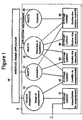
- Figure 1 shows a software architecture of intrusion detection device according to the invention.
- FIG. 2 shows a security system according to the invention in association with an overall machine IT with which this system is associated.
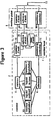
- Figure 3 presents a diagram showing the connections between a local security system monitor, a machine IT it serves and a global monitor which it depends.
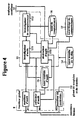
- Figure 4 shows an abstractor-investigator for detection device according to the invention.
- Figure 5 shows a diagram of an analyzer-controller for security system according to the invention.
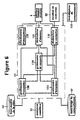
- Figure 6 shows a diagram of a suspicion and reaction for security system according the invention.
- the intrusion detection device whose software architecture is presented in figure 1 is more particularly intended to be associated with a set IT as part of a security system intended to protect this computer system from intrusions by users and / or intruder users, this device being intended to detect both intrusions and attempts of intrusions that the users likely to be involved in these intrusions and intrusion attempts.
- the software architecture proposed here provides for the implementation work of five expert systems, referenced from 01 to 05, which cooperate thanks to a blackboard-type application, referenced 0, and a man-application interface 00 for at least one person responsible for security of the IT system and the functioning of the intrusion detection device.
- a policy for the computer system which, in the embodiment considered, concerns the security of this set, is defined in terms of actions allowed or not to users and therefore extends beyond of the notion of intrusion as defined above, it is planned to take into account, at the device level of detection, rules of behavior including non-compliance constitutes an anomaly, in addition to the safety rules which non-compliance constitutes a de facto intrusion.
- the detection device is responsible for checking whether the successively received streams of monitoring data, here in the form of audit records, from all the IT it serves, allow consider that this set functions normally as planned.
- the expert system 01 receives, at a level input referenced I, audit records from of the computer system and he interprets them to extract a symbolic representation of the state of this computer system, its behavior and that of its users in the form of a semantic network, referenced 06 and at different levels of abstraction in particular in terms of action, activity, etc .; such a network being constituted as it is known by a set of objects used for modeling which are linked together by relationships for this purpose.
- Expert system 02 controls the behavior of IT group 2 and its users so to determine if this behavior is consistent with behavior and safety rules then established.
- An intrusion is considered here as a fault characterized which corresponds for example to a data theft or access by an unauthorized user in the computer system, an anomaly is considered to be a fault index, for example an impression by a user of a data volume greater than the volume which is allocated.
- the detection device is also responsible for managing anomalies to issue, reinforce or confirm intrusion hypotheses and a intrusion management on the one hand to allow the taking of restraint measures, which are security measures aimed at thwarting intrusions to protect all of the IT, and on the other hand try to identify users likely to be involved in an attempt simple or complex intrusion.
- restraint measures which are security measures aimed at thwarting intrusions to protect all of the IT
- the expert system 03 is responsible for interpreting new anomalies from objects, of type anomaly, incorporated into a set of objects, here referenced 07, and connected to the semantic network 06. It uses a specific knowledge base for the interpretation of anomalies and it poses intrusion hypotheses in case interpretation uncertainty. Hypothetical objects of intrusion are produced under these conditions, in order to be incorporated with intrusion-type objects in a set of objects, here referenced 08, these objects being linked to the semantic network 06.
- the reasoning process of this expert system 03 takes into account established rules, which are not considered as fully binding, in order to determine whether the or violation (s) found of one or more rules, translated by the presence of an anomaly or more, may or may not be accepted by all computer safe. Hypothetical objects simple, reinforced or confirmed intrusion are produced according to conditions and risks. A hypothesis of confirmed intrusion is considered an intrusion to full-fledged.
- Expert system 04 is responsible for correlating and interpreting intrusions, from intrusion type objects and intrusion hypotheses incorporated into the set of objects referenced 08, in order to produce new objects, of type intrusion or intrusion hypothesis, and to connect objects of the set 08 between them. He is thus responsible for taking account for complex intrusions, for example those that fall under combined attack involving collusion between users, or those who intervene in cascade and consequently have logical or temporal links uniting.
- Expert system 05 is responsible for user management suspects in order to determine from objects of type anomaly, intrusion and intrusion hypothesis, those of users who are really responsible for it and who are therefore suspected of trespassing and with a view to assigning them in consequence a corresponding characteristic coefficient, here called degree of suspicion. It therefore defines objects of suspect type by reasoning from objects mentioned above that it takes into account and it fills a set of corresponding objects here referenced 09, these objects being connected to the semantic network 06.
- expert systems 01 to 05 share a single inference engine, operating in front chain, which is operated in conjunction with as many knowledge bases that there are expert systems.
- Expert systems 01 to 05 are based on rules here of production of order one, that is to say comprising of variables, as it is known. These systems are governed by the blackboard-type application 0, which allows everyone to communicate to others the facts he has obtained by reasoning and that he classified in order to allow everyone to exploit them. At each event constituted either by the arrival of a stream of surveillance data, under the form of an audit record, either by writing a object, application 0 is responsible for ensuring according to rules that govern it then triggering, for a work cycle, of an expert system possibly chosen by it among several, if more than one of them is likely to take this event into account, like this is known.
- priority is normally given to the system expert 01 responsible for interpreting the behavior of the whole monitored computer, while in the event of writing a object, of type intrusion, priority is given to the system expert 05 responsible for managing suspicious users in the measure where their signaling as well as that of intrusions to the person responsible for the security of the computer system is a priority objective of the device according to the invention.
- the information of this person (s) is made by through the man-application interface 00 which gives access to the knowledge stored in databases data and facts which will be discussed later; this information translated by the interface in a form humanly exploitable is intended to allow an implementation restraint measures at the overall level IT, from the analysis of the situation such that translated by the detection device and with assistance of this system in the choice of measures to take, if need be.
- Reporting of anomalies, intrusion hypotheses, intrusions, users and suspicion of the security officer is essential and a access to information stored at the network level semantics 06 and sets of objects 07 to 09 is given to allow to know and understand the (s) behavior (s) likely to have led to the facts reported.
- the detection device of intrusions described above is here assumed to be intended incorporated in a security system responsible for protecting the computer system that this device monitors.
- Such a security system is shown schematically in Figure 2 it is shown associated with a computer system referenced 1, which is here assumed to consist of several machines 2, organized network.
- each machine 2 is assumed to have a 2A operating system, a basic 2B software, 2C application software and a 2D application interface which is not detailed here insofar as their respective constitutions are without direct relationship with the invention.
- the security system is associated with IT assembly 1 to protect it against abnormal IT actions and more particularly suspicious or malicious, as noted above.
- This security system comprises at least one machine 3, or possibly a network of machines, which is able to communicate with machines 2 of the computer system 1 to ensure the protection of the latter vis-à-vis abnormal computer actions of users after carried out and caused operations to be carried out in order to detect these abnormal actions and their perpetrators.
- the security system also includes at least one interface human-machine 4 of hardware and / or logical access to the machines 3 of the security system in order to allow a supervision of the security system and interventions at minus one person with operational responsibility of this system, this corresponding interface structurally at the man-application interface 00 mentioned in relation to Figure 1.
- Detection of abnormal IT actions is obtained from information provided by sensors perception 5 assigned to each machine 2 of the set computer science.
- the sensors 5 are installed in the software of the machine 2 to which they are assigned, in particular in the operating system, here referenced 2A of this machine, in its basic software 2B, in its software 2C application and in its 2D application interface.
- Some sensors are used to signal actions and events occurring at the level of the elements of the target IT group to which they are respectively affected.
- sensors allow measurements cyclical or punctual, for example because of their own time programming, or on request.
- the information collected by the different sensors of a machine 2 are translated in the form of audit records stamped according to the local clock of the machine they come from and they are gathered and formatted at the level of a monitor room 7 assigned to this machine 2.
- This local monitor 7 is connected to a global machine monitor 8 of the system 3 security, to which it transmits the audit data it has received.
- the global monitor 8 of a machine 3 ensures the collect audit data from local monitors 7 served by this machine 3 and consequently connected to him; it sends them the configuration data and requests and / or orders supplied by the machine 3 comprising it and which are intended for sensors 4 and effectors 5 that these local monitors 7 serve.
- Effectors 6 are processes or other agents allowing to implement restraint measures to thwart intrusion attempts they are provided implanted in the software of machine 2 to which they are affected.
- this implementation concerns the 2A operating system, the 2B core software, 2C application software and the 2D application interface of the machine 2 considered.
- Effectors 6 are for example processes which have special privileges allowing them affect rights or the existence of other processes, this are alternatively agents which correspond by example to pieces of code in software that are capable of affecting the use made of this software.
- the restraint measures they implement are by example of disconnections, changes of rights or priority, process destruction.
- effectors 6 are invoked by the local monitor 7 of the machine 2 to which they are assigned to apply the specific measures of restraint ordered by machine 3 of the safety system with the global monitor 8 of which this local monitor 7 dialogue.
- the size and number of records processed in one lot are chosen such that it is possible to restore the correct order of the records in the audit flow, the stamp of these recordings hitherto based on the clock of machine 2 being translated, at the level of local monitor, in a stamp relating to a clock overall for the security system.
- a local resolution references are also made at this level, it involves ensuring proper labeling of records for example by process and by user as well as investigation data provided following requests machine specific 3 security system which does part the global monitor to which the records are transmitted.
- the filtering mentioned above makes it possible not to forward to this global monitor 8 the records do not satisfying the logical clauses specified by focusing constraints imposed by machine 3 which behaves.
- the global monitor 8 of a safety system machine 3 ensures by means of a main audit collector 80 - see figure 3- collection audit records from machines 2 of the computer unit 1 attached to it and the archiving of these recordings, for the purposes of subsequent consultation in a central database audit 15 - see figure 2 - of machine 3 which behaves.
- This collection is done for example by accumulation ordered in a buffer of records from 70 local audit collectors, buffer size and number of records processed in the same batch being chosen to allow this orderly accumulation.
- the recordings are preferably translated to a object-oriented representation common to all modules of the security system, apart from those located in the computer assembly 1.
- Each global monitor 8 comprises also an audit monitor 81 allowing him to send instructions to local monitors 7 that he serves in order to allow them to calculate the configuration directives for sensors, perform local investigations, and filter at their local collectors 70, respectively, depending on the constraints of determined focus.
- This global monitor 8 also includes a contention 82 ensuring the distribution of the contention to local monitors 7 served by him who have to apply them and with whom it dialogues.
- the global monitor 8 of a machine 3 of a security acts under the control of a detection device 10 to which he communicates the translated records to an object oriented representation that have been obtained at from audit records provided by monitors premises 7 of the machines 2 of the computer assembly 1 which it dessert. It receives and transmits to these local monitors 7 the monitoring instructions intended to ensure the configuration of sensors and implementation of local investigations, the focusing instructions local audit filtering and those relating to restraint to be applied by effectors 6 served by these same local monitors 7.
- the detection device 10 is presented included in a single machine 3 in the diagram in Figure 2, although it can possibly be distributed between several machines if needed. It is structurally produced using components constructed by grouping of functions constituting logical sets of following processing their position and level of abstraction. Each component corresponds to a structural unit intended to be implemented as a process or group of processes sharing common data, as are by elsewhere sensors, effectors and monitors.
- the device for detection 10 essentially comprises an abstractor-investigator 11, an analyzer-controller 12 and a manager of suspicion and reaction 13 to which are associated a plurality of databases.
- the abstractor-investigator 11 corresponds to the expert system of interpretation of behavior 01 mentioned above, it builds a picture of the behavior of the whole IT 1 with which it is associated, from information provided to him.
- the audit abstractor 110 performs a correlation and a interpretation of the recordings, these representing behavioral cues that need to be gathered according to their semantics to infer information relating to the behavior of the entities.
- the interpretation of these indices are based on a model of the computer system target 1 and on application-specific knowledge implemented by this set.
- Abstract 110 also contextualizes the behavior by interpretation of audit records by using context information if necessary, relating to the characterized behavior, which are either possibly present in a fact base 17, called image of the behavior, either sought in a base of data 16, called behavior.
- the abstractor 110 still focuses on the behavior by filtering data before sending to the associated analyzer-controller 12 and recording in the fact base 17, in order to eliminate information that does not do not check the logical clauses specified by focusing constraints relating to behavior.
- the abstractor 110 finally archives the behavior information interpreted in the database behavior data 16 for future reference in particular by the behavior investigator 112 and by himself.
- the abstractor 110 is controlled by the behavior investigator 112 associated with him in the same abstractor-investigator and it is activated either by audit records it receives from global monitor 8 associated, either by investigative data to be processed in provenance of the associated audit investigator 111.
- the image of the IT assembly is built from stored information already mentioned as well as that contained in a database 14 defining a model of the target that constitutes the computer assembly 1, of those directly provided by the audit collector 80 of the global monitor 8 which serves abstractor 110, of those stored in a central database of audit 15 and those provided by investigator 111 associated with this abstracteur 110.
- the results obtained by abstracteur 110 are notably stored in the database of behavior 16 or in the picture fact base of the behavior 17, which is exploited in return by abstractor 110 for its image constructions.
- the essential role of the behavior investigator 112 is to find the information desired by the analyzer-controller 12 and the manager of suspicion and reaction 13 in the behavior database 16 and order their acquisition by sending requests behavior investigation to the audit investigator 111 to which it is linked or their treatment by sending focusing constraints on the abstractor 110 to which it is also connected.
- the behavior investigator 112 ensures a aggregation of behavior investigation requests that it receives in order to see if they complement or complement each other overlap and can therefore be grouped together to factor their salaries.
- Behavioral investigator 112 conducts research in the behavior database 16 by building the requests in order to get the answers to the requests of investigation and to request research at audit level in case of request not satisfied.
- the investigator of behavior 112 commands their research to the investigator 111 to which it is linked so that the latter found in the central audit database 15.
- the audit records found are then interpreted by abstractor 110 to build information from behaviors that constitute the results of the investigation. These results are then transmitted to the behavior investigator 112 for sending to their recipient.
- Behavior investigator 112 is also able to calculate a new focus of the abstractor 110 and at compute new audit control instructions and focus by the audit investigator 111, on request from scan tool 12 for information to come.
- the analyzer-controller 12 of the detection device according to the invention is preferably constituted by a plurality modules which are intended to allow analysis and control of the behavior of the IT unit 1 by reasoning about the image of behavior that has been built to detect anomalies and intrusions likely to affect the safety of this assembly.
- Behavior analysis features take advantage of the constructed model of the computer assembly 1 and of the domain knowledge possessed to infer the behavior at other levels and to check for correspondences between level behaviors different. These features are divided into analysis cognitive behavior of users and in analysis of operating behavior of the computer system, i.e. actions, states and events within this together.
- the cognitive analysis of the user behavior here includes mission analysis of these users, their tasks, their goals, their plans and their cooperation, these analyzes are carried out from corresponding specialized modules referenced from 120 to 124 in Figure 5 where the analyzer-controller is shown 12.
- the mission analyzer referenced 120 is intended to verify that the tasks in progress for a user, then considered, overall IT 1 corresponds to the missions specified by the roles specific to this user and to be inferred new missions from tasks not taken into account account by current missions.
- the target model base in particular 14 uses the behavioral fact base 17, and cooperates with behavior investigator 112 and with some other modules of the analyzer-controller 12, such as a task analyzer module 121 and a task analyzer module cooperation 124. In particular, it informs the suspicion and reaction manager 13.
- the task analyzer 121 which is of abstraction level lower than the previous one is responsible for checking whether the new goals inferred for users may or may not fall within their current tasks and if there are no startups of new tasks when the goals of these tasks remain unexplained.
- the model base of target 14 uses the model base of target 14, the Behavior 17 fact base, and cooperate with the mission analyzer 120, with a module goals 122, as well as with the behavior investigator 112; in particular, it informs the manager of suspicion and reaction 13.
- the goal analyzer 122 is intended to take advantage of the actions, general activities and recognized plans for a user in order to infer his goals, he also ensures a assessment of satisfaction of current goals by plans implemented.
- plan analyzer 123 compares the current plans which have been recognized by the plan analyzer 123 to those who are identified for the current or expected goals of a user, then considered. Plans or actions not corresponding to no modeled goals are abstracted, sent to the analyzer cooperation 124 or even reported as anomalies at suspicion and reaction manager 13.
- the plan analyzer 123 is intended to recognize plans executed by users from their present actions or earlier, based on current plans and goals inferred. It allows to isolate actions which do not correspond not to current plans and which may require a advanced analysis.
- each new action undertaken by a user can continue a current plan, start a new one plan or be an isolated action, it is for example linked by graphs to previous actions that have not yet been forgotten for the plan recognition operation; each graph then represents the occurrence of a plane whose the action is likely to be part.
- An action is here considered to be forgotten according to the terminology used above, when the plan to which it is attached is completed and validated. Unexplained actions are likely to be sent to the cooperation analyzer 124 or reported as anomalies.
- the cooperation analyzer 124 is intended to recognize the occurrence of cooperation, specified or not in the model of the computer assembly 1, based on actions, plans or tasks, unexplained by analysis of plans, tasks and missions; recognition of non-cooperative specified and not corresponding to the structure of the organization or application must result in a fault reporting.
- the target model base 14 and the image fact base of the behavior 17 are exploited by the analyzers of missions, tasks and plans 120, 121, 123; the abstractor 110 and the behavior investigator 112 cooperate with the cooperation analyzer 124 which informs more especially the manager of suspicion and reaction 13.
- Analysis of actions which is ensured by a module analyzer 125, is intended to ensure the detection of abnormal operating procedures in all of IT 1. It is carried out by a control of conformity of the effects of actions with the specifications of operations, by checking the impact of actions to the underlying layers, any action not satisfactory being reported as an anomaly.
- the action analyzer module 125 notably uses the database target model 14 and the image fact base of the behavior 17; he cooperates with the abstractor 110 and behavior investigator 112 and it informs more especially the manager of suspicion and reaction 13.
- Actions are analyzed by protocol control, the receivers and parameters implemented by the actions being analyzed against the operational models executed. It is also carried out by effects control, the states and events following actions being faced with specifying the effects of operations executed. It is still carried out by checking the repercussions, possible secondary actions, at a same level or in an underlying layer, which constitute repercussions of primary actions, being evaluated by report to operations effect specifications executed.
- the analysis of states and events which is ensured by a analyzer module 126, is intended to ensure detection abnormal states and events overall computer 1, being considered abnormal the states and events that do not correspond to their causes or to their specifications and which are inconsistent with each other or compared to the actions performed on the entities.
- the state and event analyzer 126 uses for this purpose the target model base 14 and the image fact base of the behavior 17. He cooperates with the abstractor 110 and the behavior investigator 112. He informs more especially the manager of suspicion and reaction 13.
- a protocol check is carried out by analysis of the states as well as parameters and characteristics of events compared to the event model and the whole IT 1.
- a consistency check is also performed; it checks the correspondence between, on the one hand, states and secondary events following states and events analyzed and, on the other hand, the actions and history of the entities that the agents constitute, IT assembly processes and objects 1.
- Behavior control functions incorporated the analyzer-controller 12 are here provided by a plurality of modules referenced 127, 128, 129A and 129B on Figure 5.
- control functions are intended to verify the compliance of the behavior of the IT unit 1 by compared to here three corresponding repositories which are classified as historic, operational and intrusive. They respectively contain profiles, an expression of behavior security policies and a history of attack scenarios and descriptions of intrusions.
- the purpose of control functions is to verify that the behavior determined by observation is conforms to the profiles, that it respects the policies of established safety and behavior; they must also detect the possible implementation of attack scenarios.
- a module 127 says profile controller.
- Profiles linked to entities denote their usual behavior and those defined for entity classes and groups are considered to be standard or typical behavior references.
- a test of symbolic or digital correspondence and mainly statistic is performed to control the profile of a entity; measures corresponding to its characteristics are performed on behavior and they are compared to the values saved in the archived profile.
- a overall compliance with the archived profile is assessed for example according to the correspondences of the individual measurements, it results in an anomaly signal, if compliance is considered bad.
- Profile controller 127 uses the database for this purpose target model 14 and the image fact base of the behavior 17, a database of profiles 20. It cooperates with the abstractor 110 and the investigator of behavior 112. It more particularly informs the suspicion and reaction manager 13.
- An action is likely to give rise to a verification profile of the actor, user or agent, action and receptors, agents or objects undergoing the action.
- An event, condition, or other information from behavior is also likely to cause the verification of the profile of the units involved.
- the arguments to apply these characteristics are valued and the measurement methods are applied to them, these methods being defined by the classes that represent the types of measured. Requests to the behavior investigator 112 allow to obtain any missing data.
- the determined characteristics are facing for example by statistical test or by symbolic correspondence, with corresponding profile values and compliance overall is estimated from respective matches different characteristics. Deviations are considered as representative of unusual behavior or atypical corresponding to an anomaly.
- Policy control is provided by a 129A module for safety and a 129B module for behavior, these modules check the rules expressed on behavior perceived and inferred from computer system 1 and users, which are for example expressed as constraints by logical clauses or as production rules.
- the 129A security policy control module checks compliance with the security policy both in which relates to active behavior than passive it is here activated by abstractor 110 or by updates to the image of behavior. It operates the model base of the target 14, the behavioral fact base 17 and a security policy database 21 it cooperates with abstractor 110 and with the behavior investigator 112. It is able to issue requests to the behavior investigator when needed and he specifically informs the suspicion manager and reaction 13.
- the 129B behavior policy control module checks compliance with the behavior policy, it is also activated by the abstractor 110 or by updates behavior image day. It operates the model base of target 14, the behavioral fact base 17 and a behavior policy database 22 it cooperates with the abstractor 110 and the investigator of behavior 112. It is able to issue requests to destination of the behavior investigator in the event of need and it specifically informs the manager of suspicion and reaction 13.
- Detection of possible scenarios already known attack is carried out via a identifier module 128. It is based on a account of the actions, states and events involved in a execution. An attack scenario defined for an intrusion data is likely to be recognized if the behavior of entities and the IT set corresponds to specifications it includes. An audit of the effective implementation of the actions specified by a scenario and the states and / or events they lead to is therefore likely to be made. Partial agreement already translates an anomaly which turns into an intrusion if the level of agreement reaches a certainty threshold predetermined.
- the identifier module 128 uses the base model of target 14, the fact base image of the behavior 17 and intrusion databases 23 and of attack scenarios 24, it cooperates with the abstractor 110, with the behavior investigator 112 and with the manager of suspicion and reaction 13 that he informs.
- a new action of an actor, a new state or a new event is likely to be part of an attack scenario current, to start a new attack scenario or to be an isolated behavioral element, so it has to be confronted with the scenarios under review and the beginnings of known scenarios; every scenario possibility is here assumed to be represented by a graph connecting the elements of behavior concerned.
- An evaluation of the graphs likely to be recognized as involved in a scenario is performed to select the most plausible of them, heuristics are used for example for delimitation.
- the degree of compliance with a known attack scenario determines whether the action allows to infer an anomaly or an intrusion.
- the suspected intrusions eventually lead to a planning and attack scenario database 24 is then supplemented by the new attack scenarios that have been obtained.
- the suspicion and reaction manager 13 of the device detection according to the invention is generally intended for act as an intermediary between the analyzer-controller 12 and on the one hand the computer assembly 1, on the other hand the safety manager, via the man-machine interface 4, for the latter. It is intended to allow interpretation anomalies and intrusions which are signaled by the analyzer-controller 12, to assess the degree of suspicion users and to help trigger the restraint necessary, under the supervision of the person in charge security that he assists.
- the suspicion and reaction manager 13 comprises here a plurality of modules referenced 130 to 135, a first of these modules, referenced 130 is an anomaly manager who is responsible for dealing with anomalies reported by the analyzer-controller 12. It identifies among these anomalies those that require triggering alarms or implement restraint measures for intrusion and it infers intrusions or intrusion hypotheses.
- This anomaly manager 130 cooperates with the various analyzers 120 to 127 and controllers 127 and 129B of the analyzer-controller 12, it uses the basic model of the target 14 and the behavioral image fact base 17. It supplies alarm triggers 131 and contention 132, intrusion managers 133 and suspects 134 and the behavioral fact base 17.
- the knowledge base of the anomaly manager expresses heuristics allowing classification of certain anomalies as intrusion symptoms.
- the intrusion hypotheses lead to look for additional anomalies in the image of the behaviour. Intrusions and intrusion hypotheses are reported to the intrusion manager 133.
- the knowledge expresses the criteria for signaling anomalies at suspect manager 134, to the alarm trigger 131 and the contention trigger 112.
- Intrusion manager 133 is responsible for interpreting intrusions and intrusion hypotheses to verify that there is no more global intrusion (s) and / or consecutive. It is likely to be activated by mission 120, task 121 and goal 122 analyzers, by the attack scenario identifier 128, by the 129A and 129B policy controllers and by the manager of anomalies 130. It communicates with the model base of the target 14, alarm triggers 131 and contention 132, the suspect manager 134 and the fact base image of behavior 17.
- the knowledge expressed by the knowledge base of the intrusion manager are exploited to connect the intrusions, to infer new ones and to interpret trespassing as a possible constituent element more global intrusions.
- the intrusion hypotheses of higher level lead to seek information complementary in the image of behavior.
- Intrusions structured in this way are reported to the manager of suspects 134.
- the knowledge base also expresses the criteria for signaling intrusions and hypotheses of intrusion into the alarm trigger 131 and to the contention trigger 132, as already indicated.
- the suspect manager 134 is responsible for identifying the users really responsible for anomalies, intrusion and intrusion hypotheses; he assesses the degree of suspicion assigned to them. It also ensures identifying the users for whom it is necessary trigger alarms or plan to implement restraint measures.
- This suspect manager 134 is here likely to be activated by the 130 anomalies and intrusion managers 133, it communicates with the target model base 14 and the behavioral fact base 17 and it feeds them alarm triggers 131 and contention 132.
- Degrees of suspicion are induced by anomalies, intrusion hypotheses or intrusions including a user or agent computing is responsible they are combined for allow the deduction of a global level of suspicion for the user considered.
- the alarm trigger 131 is responsible for signaling the anomalies, intrusion hypotheses, intrusions and suspicious users determined by managers anomalies 130, intrusions 133 and suspects 134 at security manager. He decides and develops in consequence, from the criteria and knowledge stored in the target model base 14, the alarms which are transmitted to the man-machine interface 4 for presentation to the security manager, these alarms being supplemented by added context, read from image fact base of behavior 17.
- the contention trigger 132 is responsible for proposing restraint measures to the security manager for thwart anomalies, intrusions and suspicious users reported by managers 130, 133 and 134 mentioned above.
- the decision and the development of these restraint is carried out by applying stored criteria in the target 14 model database with information from anomalies, intrusions and suspects managers.
- the measures proposed to the security manager via the man-machine interface 4 are also supplemented by addition of their context obtained from the image fact base of behavior 17.
- the information selector 135 is responsible for signaling events, actions and information concerning the behavior of computer assembly 1 which are likely to be of interest to the person responsible for security.
- the information transmitted by the breeder 135 for report events, actions or information relating to the behavior of the computer assembly 1, are obtained by sorting performed among the data of behavior inferred by the analyzer-controller modules 12 and obtained from the image fact base of behavior 17, according to the criteria defined in its base of knowledge.
- the behavioral investigator 112 allows the security manager to make requests for obtain additional information from the breeder 135, as needed.
Landscapes
- Engineering & Computer Science (AREA)
- Computer Security & Cryptography (AREA)
- Software Systems (AREA)
- Theoretical Computer Science (AREA)
- Computer Hardware Design (AREA)
- Physics & Mathematics (AREA)
- General Engineering & Computer Science (AREA)
- General Physics & Mathematics (AREA)
- Alarm Systems (AREA)
- Management, Administration, Business Operations System, And Electronic Commerce (AREA)
- Burglar Alarm Systems (AREA)
Claims (11)
- Einrichtung zur Entdeckung des Eindringens und eventuell verdächtiger Benutzer für eine Datenverarbeitungseinheit (1), die sich auf das Verhalten der Datenverarbeitungseinheit im Betrieb und insbesondere auf Einwirkungen der Benutzer auf diese Einheit beziehende Überwachungsdatenströme ausnutzt, die in Höhe dieser letzteren aufgebaut werden, dadurch gekennzeichnet, dass sie umfasst:erste Mittel (01), um durch Ausnutzung von Regeln und vorher erlangten Kenntnissen durch eine symbolische Darstellung mit Hilfe eines semantischen Netzes (06) für das Ziel, das diese Datenverarbeitungseinheit (1) und ihre Benutzer sowie ihr jeweiliges Verhalten bilden, ein Modell zu bilden;zweite Mittel (02) zum Vergleichen des modellierten Verhaltens des Systems und seiner Benutzer in Bezug auf das modellierte normale Verhalten, das für die gleichen Bedingungen durch Verhaltensregeln und Sicherheitsregeln vorgesehen ist, die in einer für die zweiten Mittel geeigneten Wissensbasis enthalten sind, und um daraus entweder ein Anomalieobjekt im Falle einer Verletzung wenigstens einer Verhaltensregel oder ein Eindringensobjekt oder eine Hypothese eines Eindringens im Falle einer Verletzung wenigstens einer Sicherheitsregel zu folgern;dritte Mittel (03) zum Interpretieren der durch Ausnutzung von Regeln und vorher erlangten Kenntnissen festgestellten Anomalien, um Hypothesen eines Eindringens in Übereinstimmung auszusenden, zu verstärken oder zu bestätigen;vierte Mittel (04) zum Korrelieren und Interpretieren der Hypothesen eines Eindringens und des durch Ausnutzung von Regeln und vorher erlangten Kenntnissen festgestellten Eindringens, um die verschiedenen Hypothesen eines Eindringens und/oder das Eindringen zu verbinden, um daraus Nachrichten zu folgern;Kommunikationsmittel (00), die mit den verschiedenen oben genannten anderen Mitteln (01 bis 04) zusammenarbeiten, um eine Signalisierung der verschiedenen Informationen, die diese verschiedenen Mittel bezüglich des Verhaltens, der Anomalien, der Hypothesen eines Eindringens oder des Eindringens erzeugen, sicherzustellen.
- Einrichtung zur Entdeckung des Eindringens nach Anspruch 1, dadurch gekennzeichnet, dass sie fünfte Mittel (05) zum Identifizieren der Benutzer, die wirklich für die Anomalien, Hypothesen eines Eindringens und das Eindringen, die von den zweiten, dritten und/oder vierten Mitteln aufgestellt wurden, verantwortlich sind, mit Hilfe von vorher erlangten Kenntnissen umfasst, um die Stärke ihres Verdachts zu bewerten und um diesen verantwortlichen Benutzern in Zusammenarbeit mit diesen anderen Mitteln und über die Kommunikationsmittel (00) ein Signal zu geben.
- Einrichtung zur Entdeckung des Eindringens nach wenigstens einem der Ansprüche 1 und 2, dadurch gekennzeichnet, dass die verschiedenen Mittel (01 bis 04 oder 05), die sie einsetzt, aus Expertensystemen bestehen, die denselben Schlussfolgerungsmotor teilen, wobei dieser Motor in Verbindung mit so vielen Wissensbasen genutzt wird, wie es Expertensysteme gibt.
- Einrichtung zur Entdeckung des Eindringens nach wenigstens einem der Ansprüche 1 bis 3, dadurch gekennzeichnet, dass sie umfasst:eine Abstraktionseinrichtung/Untersuchungseinrichtung (11), die mit Mitteln (110 bis 112) zum Aufbauen eines Bildes des Verhaltens des Ziels, das aus der Datenverarbeitungseinrichtung (1) und aus ihren Nutzern besteht, und zum Durchführen von Untersuchungen in Datenbasen (14 bis 16) und Ereignissen (17) sowie in Höhe der Datenverarbeitungseinheit (1) versehen ist;einen Analysator/Steuereinrichtung (12), der mit Mitteln (120 bis 129) zum Interpretieren des Verhaltens der Datenverarbeitungseinheit und ihrer Benutzer in Bezug auf das Modell des Ziels, das die in Datenbasen (14, 19 bis 24) und Ereignissen (17) enthaltenen Kenntnisse umsetzen, versehen ist, um die Anomalien zu entdecken;einen Verdachts- und Reaktionsverwalter (13), der mit Mitteln (130 bis 135) zum Interpretieren der Anomalien und des entdeckten Eindringens versehen ist, um die wirklich für die Anomalien und das Eindringen verantwortlichen Benutzer zu identifizieren, um wenigstens diesen Benutzern einen Stärke des Verdachts zuzuweisen, so dass entsprechende Signalisierungen, die über eine Schnittstelle Mensch-Maschine (4) übertragen werden sollen, und eventuell Fixierungsmaßnahmen (mesures de contention) ausgelöst werden, die auf die Datenverarbeitungseinheit (1) unter menschlicher Überwachung über die Schnittstelle Mensch-Maschine anwendbar sind.
- Einrichtung zur Entdeckung des Eindringens nach Anspruch 4, dadurch gekennzeichnet, dass sie eine Abstraktionseinrichtung/Untersuchungseinrichtung (11) umfasst, die eine Audit-Abstraktionseinrichtung (110), die den Auftrag hat ein zeitliches und räumliches Bild des Zustands und des Verhaltens des Ziels, das aus der Datenverarbeitungseinheit und ihren Benutzer besteht, zu erzeugen und nach Bedarf Daten zu interpretieren, die sich aus Untersuchungsanforderungen ergeben, eine Audic-Untersuchungseinrichtung (111), die den Auftrag hat Daten in einer zentralen Audit-Datenbasis (15) der Einrichtung zu suchen und bei Bedarf in Höhe der Datenverarbeitungseinheit Übewachungsdaten zu sammeln, und eine Verhaltensuntersuchungseinrichtung (112) verbindet, die den Auftrag hat Informationen für den Analysator/Steuereinrichtung (12) und für den Verdachts- und Reaktionsverwalter (13) in den Datenbasen (14 bis 16) und Ereignissen (17) der Einrichtung in Verbindung mit der Audit-Untersuchungseinrichtung zu suchen, die sie steuert.
- Einrichtung zur Entdeckung des Eindringens nach Anspruch 4, dadurch gekennzeichnet, dass sie einen Analysator/Steuereinrichtung (13) umfasst, der eine Vielzahl von Analysatormodulen (120 bis 126) für das Verhalten des Ziels mit einer Vielzahl von Steuerungsmodulen für das Verhalten dieses Ziels (127 bis 129) verbindet.
- Einrichtung zur Entdeckung des Eindringens nach Anspruch 6, dadurch gekennzeichnet, dass die Analysatormodule sich in Module (120 bis 124), die eine kognitive Analyse des Verhaltes der Benutzer sicherstellen, und Module (125, 126) aufteilen, die eine Analyse des Betriebsverhaltens der Datenverarbeitungseinheit (1) sicherstellen.
- Einrichtung zur Entdeckung des Eindringens nach Anspruch 6, dadurch gekennzeichnet, dass die Steuerungsmodule für das Verhalten eine Steuereinrichtung für Profile (127), die den Auftrag hat die durch Bestimmung mit einem archivierten Profil ermittelte Konformität des Verhaltens zu steuern, einen Angriffsidentifikator (128), der den Auftrag hat die mit bekannten Angriffsszenarien ermittelte Ähnlichkeit des Verhaltens zu suchen, und zwei Politiksteuereinrichtungen verbindet, die eine (129A) für die Sicherheit, die fähig ist die Nichtbeachtung der in einer Sicherheitspolitikdatenbasis (21) gespeicherten Sicherheitsregeln zu ermitteln, um im Falle einer Nichtbeachtung eine Signalisierung eines Eindringens mit Ziel Verdachts- und Reaktionsverwalter (13) auszulösen, und die andere (129B) für das Verhalten, die fähig ist die Nichtbeachtung der in einer Verhaltenspolitikdatenbasis (22) gespeicherten Verhaltensregeln zu ermitteln, um je nach Art eines Signalisierung einer Anomalie oder eines Eindringens mit Ziel Verdachts- und Reaktionsverwalter (13) auszulösen.
- Einrichtung zur Entdeckung des Eindringens nach Anspruch 4, dadurch gekennzeichnet, dass der Verdachts- und Reaktionsverwalter (13) insbesondere Mittel (130, 131, 133) zum Interpretieren der signalisierten Anomalien und des Eindringens, Mittel (134) zum Ermitteln der verdächtigen Benutzer der Implikation in den Anomalien, Hypothesen des Eindringens und dem Eindringen sowie eines Verdachtsniveaus, das diesen Verdächtigen infolgedessen zugewiesen wird, Mittel (131, 132) zum entsprechenden Auslösen der Prozeduren für den Alarm und die Vorbereitung von Fixierungsmaßnahmen zum Nutzen eines Sicherheitsverantwortlichen über die Schnittstelle Mensch-Maschine (4) der Einrichtung.
- Sicherheitssystem für eine Datenverarbeitungseinheit (1), das sich auf das Verhalten der in Betrieb befindlichen Einheit und insbesondere auf Einwirkungen der Nutzer auf diese Einheit beziehende Überwachungsdatenströme ausnutzt, dadurch gekennzeichnet, dass es eine Einrichtung (10) zur Entdeckung des Eindringens gemäß wenigstens einem der Ansprüche 1 bis 9 mit einer Gesamtheit (5) von Sensoren verbindet, die in die Software der Datenverarbeitungseinheit implementiert sind, um die Einwirkungen und Ereignisse, die in ihrer Höhe stattfinden, sowie die Ergebnisse von Maßnahmen, die eventuell bei Bedarf, zu melden, wobei die Sensoren mit der Einrichtung zur Entdeckung des Eindringens über Monitore (7, 8) verbunden sind, die die Ausgabeaufbereitung für von den Sensoren in Form von Überwachungsdatenströmen aufgenommene Daten zur Aufgabe haben, wobei diese Daten jeweils einer Einwirkung, einem Ereignis oder einer Maßnahme entsprechen.
- Sicherheitssystem nach Anspruch 10, dadurch gekennzeichnet, dass es außerdem eine Gesamtheit (6) von Effektoren vom Prozess- oder Agententyp umfasst, die in die Software der Datenverarbeitunaseinheit (1) implantiert sind, um die Durchführung von Fixierungsmaßnahmen in Höhe der Datenverarbeitungseinheit im Hinblick darauf den auf diese Datenverarbeitungseinrichtung zielenden Eindringversuchen entgegenzuwirken, wobei diese Effektoren ausgehend vom Verdachts- und Reaktionsverwalter (13) über Monitore (7, 8) gesteuert werden, die mit dieser Einrichtung (10) und den Maschinen (2) der Datenverarbeitungseinheit verbunden sind.
Applications Claiming Priority (2)
| Application Number | Priority Date | Filing Date | Title |
|---|---|---|---|
| FR9306935 | 1993-06-09 | ||
| FR9306935A FR2706652B1 (fr) | 1993-06-09 | 1993-06-09 | Dispositif de détection d'intrusions et d'usagers suspects pour ensemble informatique et système de sécurité comportant un tel dispositif. |
Publications (2)
| Publication Number | Publication Date |
|---|---|
| EP0629940A1 EP0629940A1 (de) | 1994-12-21 |
| EP0629940B1 true EP0629940B1 (de) | 2001-10-17 |
Family
ID=9447936
Family Applications (1)
| Application Number | Title | Priority Date | Filing Date |
|---|---|---|---|
| EP94401285A Expired - Lifetime EP0629940B1 (de) | 1993-06-09 | 1994-06-08 | Einrichtung zur Entdeckung des Eindringens und verdächtiger Benutzer für eine Datenverarbeitungseinheit und Sicherheitssystem mit dieser Einrichtung |
Country Status (7)
| Country | Link |
|---|---|
| US (1) | US5621889A (de) |
| EP (1) | EP0629940B1 (de) |
| CA (1) | CA2125445A1 (de) |
| DE (1) | DE69428631T2 (de) |
| ES (1) | ES2164091T3 (de) |
| FR (1) | FR2706652B1 (de) |
| NO (1) | NO942108L (de) |
Cited By (9)
| Publication number | Priority date | Publication date | Assignee | Title |
|---|---|---|---|---|
| US8232860B2 (en) | 2005-10-21 | 2012-07-31 | Honeywell International Inc. | RFID reader for facility access control and authorization |
| US8351350B2 (en) | 2007-05-28 | 2013-01-08 | Honeywell International Inc. | Systems and methods for configuring access control devices |
| US8598982B2 (en) | 2007-05-28 | 2013-12-03 | Honeywell International Inc. | Systems and methods for commissioning access control devices |
| US8707414B2 (en) | 2010-01-07 | 2014-04-22 | Honeywell International Inc. | Systems and methods for location aware access control management |
| US8787725B2 (en) | 2010-11-11 | 2014-07-22 | Honeywell International Inc. | Systems and methods for managing video data |
| US8878931B2 (en) | 2009-03-04 | 2014-11-04 | Honeywell International Inc. | Systems and methods for managing video data |
| US9019070B2 (en) | 2009-03-19 | 2015-04-28 | Honeywell International Inc. | Systems and methods for managing access control devices |
| US9280365B2 (en) | 2009-12-17 | 2016-03-08 | Honeywell International Inc. | Systems and methods for managing configuration data at disconnected remote devices |
| US9344684B2 (en) | 2011-08-05 | 2016-05-17 | Honeywell International Inc. | Systems and methods configured to enable content sharing between client terminals of a digital video management system |
Families Citing this family (237)
| Publication number | Priority date | Publication date | Assignee | Title |
|---|---|---|---|---|
| US10361802B1 (en) | 1999-02-01 | 2019-07-23 | Blanding Hovenweep, Llc | Adaptive pattern recognition based control system and method |
| JP3165366B2 (ja) * | 1996-02-08 | 2001-05-14 | 株式会社日立製作所 | ネットワークセキュリティシステム |
| US6453345B2 (en) * | 1996-11-06 | 2002-09-17 | Datadirect Networks, Inc. | Network security and surveillance system |
| US7058822B2 (en) | 2000-03-30 | 2006-06-06 | Finjan Software, Ltd. | Malicious mobile code runtime monitoring system and methods |
| US5991881A (en) * | 1996-11-08 | 1999-11-23 | Harris Corporation | Network surveillance system |
| US8079086B1 (en) | 1997-11-06 | 2011-12-13 | Finjan, Inc. | Malicious mobile code runtime monitoring system and methods |
| US9219755B2 (en) | 1996-11-08 | 2015-12-22 | Finjan, Inc. | Malicious mobile code runtime monitoring system and methods |
| US5796942A (en) * | 1996-11-21 | 1998-08-18 | Computer Associates International, Inc. | Method and apparatus for automated network-wide surveillance and security breach intervention |
| US6029144A (en) * | 1997-08-29 | 2000-02-22 | International Business Machines Corporation | Compliance-to-policy detection method and system |
| JP3351318B2 (ja) * | 1997-11-07 | 2002-11-25 | 株式会社日立製作所 | 計算機システムの監視方法 |
| US6202157B1 (en) | 1997-12-08 | 2001-03-13 | Entrust Technologies Limited | Computer network security system and method having unilateral enforceable security policy provision |
| US6334121B1 (en) * | 1998-05-04 | 2001-12-25 | Virginia Commonwealth University | Usage pattern based user authenticator |
| US6347374B1 (en) | 1998-06-05 | 2002-02-12 | Intrusion.Com, Inc. | Event detection |
| US6735701B1 (en) * | 1998-06-25 | 2004-05-11 | Macarthur Investments, Llc | Network policy management and effectiveness system |
| US6324656B1 (en) | 1998-06-30 | 2001-11-27 | Cisco Technology, Inc. | System and method for rules-driven multi-phase network vulnerability assessment |
| US6282546B1 (en) | 1998-06-30 | 2001-08-28 | Cisco Technology, Inc. | System and method for real-time insertion of data into a multi-dimensional database for network intrusion detection and vulnerability assessment |
| US6711127B1 (en) * | 1998-07-31 | 2004-03-23 | General Dynamics Government Systems Corporation | System for intrusion detection and vulnerability analysis in a telecommunications signaling network |
| DE69817176T2 (de) * | 1998-09-09 | 2004-06-24 | International Business Machines Corp. | Verfahren und Vorrichtung zur Eindringdetektion in Rechnern und Rechnernetzen |
| JP2000148276A (ja) * | 1998-11-05 | 2000-05-26 | Fujitsu Ltd | セキュリティ監視装置,セキュリティ監視方法およびセキュリティ監視用プログラム記録媒体 |
| US6321338B1 (en) | 1998-11-09 | 2001-11-20 | Sri International | Network surveillance |
| US6530024B1 (en) | 1998-11-20 | 2003-03-04 | Centrax Corporation | Adaptive feedback security system and method |
| US6415321B1 (en) | 1998-12-29 | 2002-07-02 | Cisco Technology, Inc. | Domain mapping method and system |
| US6301668B1 (en) | 1998-12-29 | 2001-10-09 | Cisco Technology, Inc. | Method and system for adaptive network security using network vulnerability assessment |
| US6499107B1 (en) | 1998-12-29 | 2002-12-24 | Cisco Technology, Inc. | Method and system for adaptive network security using intelligent packet analysis |
| US6477651B1 (en) | 1999-01-08 | 2002-11-05 | Cisco Technology, Inc. | Intrusion detection system and method having dynamically loaded signatures |
| US6954775B1 (en) | 1999-01-15 | 2005-10-11 | Cisco Technology, Inc. | Parallel intrusion detection sensors with load balancing for high speed networks |
| US6487666B1 (en) | 1999-01-15 | 2002-11-26 | Cisco Technology, Inc. | Intrusion detection signature analysis using regular expressions and logical operators |
| US6578147B1 (en) | 1999-01-15 | 2003-06-10 | Cisco Technology, Inc. | Parallel intrusion detection sensors with load balancing for high speed networks |
| US6484315B1 (en) | 1999-02-01 | 2002-11-19 | Cisco Technology, Inc. | Method and system for dynamically distributing updates in a network |
| US6567917B1 (en) | 1999-02-01 | 2003-05-20 | Cisco Technology, Inc. | Method and system for providing tamper-resistant executable software |
| US6405318B1 (en) | 1999-03-12 | 2002-06-11 | Psionic Software, Inc. | Intrusion detection system |
| US6609205B1 (en) | 1999-03-18 | 2003-08-19 | Cisco Technology, Inc. | Network intrusion detection signature analysis using decision graphs |
| US7096499B2 (en) * | 1999-05-11 | 2006-08-22 | Cylant, Inc. | Method and system for simplifying the structure of dynamic execution profiles |
| US6681331B1 (en) * | 1999-05-11 | 2004-01-20 | Cylant, Inc. | Dynamic software system intrusion detection |
| US7185367B2 (en) | 1999-05-11 | 2007-02-27 | Cylant, Inc. | Method and system for establishing normal software system behavior and departures from normal behavior |
| US6910135B1 (en) * | 1999-07-07 | 2005-06-21 | Verizon Corporate Services Group Inc. | Method and apparatus for an intruder detection reporting and response system |
| US7117532B1 (en) * | 1999-07-14 | 2006-10-03 | Symantec Corporation | System and method for generating fictitious content for a computer |
| US6981155B1 (en) * | 1999-07-14 | 2005-12-27 | Symantec Corporation | System and method for computer security |
| AU6214900A (en) * | 1999-07-14 | 2001-01-30 | Recourse Technologies, Inc. | System and method for preventing detection of a computer connection to an external device |
| US6647400B1 (en) | 1999-08-30 | 2003-11-11 | Symantec Corporation | System and method for analyzing filesystems to detect intrusions |
| US7203962B1 (en) * | 1999-08-30 | 2007-04-10 | Symantec Corporation | System and method for using timestamps to detect attacks |
| US7065657B1 (en) | 1999-08-30 | 2006-06-20 | Symantec Corporation | Extensible intrusion detection system |
| US6826697B1 (en) | 1999-08-30 | 2004-11-30 | Symantec Corporation | System and method for detecting buffer overflow attacks |
| US6996843B1 (en) * | 1999-08-30 | 2006-02-07 | Symantec Corporation | System and method for detecting computer intrusions |
| US7085936B1 (en) | 1999-08-30 | 2006-08-01 | Symantec Corporation | System and method for using login correlations to detect intrusions |
| FR2798490B1 (fr) | 1999-09-13 | 2001-10-26 | Inst Nat Rech Inf Automat | Procede et dispositif de resolution de modeles et utilisation pour la detection des attaques contre les systemes informatiques |
| US6880087B1 (en) | 1999-10-08 | 2005-04-12 | Cisco Technology, Inc. | Binary state machine system and method for REGEX processing of a data stream in an intrusion detection system |
| US6789202B1 (en) * | 1999-10-15 | 2004-09-07 | Networks Associates Technology, Inc. | Method and apparatus for providing a policy-driven intrusion detection system |
| US6671811B1 (en) * | 1999-10-25 | 2003-12-30 | Visa Internation Service Association | Features generation for use in computer network intrusion detection |
| US6769066B1 (en) * | 1999-10-25 | 2004-07-27 | Visa International Service Association | Method and apparatus for training a neural network model for use in computer network intrusion detection |
| IL132916A (en) | 1999-11-14 | 2004-02-08 | Mcafee Inc | Method and system for intercepting an application program interface |
| IL132915A (en) | 1999-11-14 | 2004-05-12 | Networks Assoc Tech Inc | Method for secure function execution by calling address validation |
| US7107347B1 (en) | 1999-11-15 | 2006-09-12 | Fred Cohen | Method and apparatus for network deception/emulation |
| US6859805B1 (en) * | 1999-11-29 | 2005-02-22 | Actuate Corporation | Method and apparatus for generating page-level security in a computer generated report |
| US6772156B1 (en) | 1999-11-29 | 2004-08-03 | Actuate Corporation | Method and apparatus for creating and displaying a table of content for a computer-generated report having page-level security |
| US6597957B1 (en) | 1999-12-20 | 2003-07-22 | Cisco Technology, Inc. | System and method for consolidating and sorting event data |
| US6775657B1 (en) | 1999-12-22 | 2004-08-10 | Cisco Technology, Inc. | Multilayered intrusion detection system and method |
| US6490560B1 (en) * | 2000-03-01 | 2002-12-03 | International Business Machines Corporation | Method and system for non-intrusive speaker verification using behavior models |
| WO2003050799A1 (en) * | 2001-12-12 | 2003-06-19 | International Business Machines Corporation | Method and system for non-intrusive speaker verification using behavior models |
| US6591265B1 (en) * | 2000-04-03 | 2003-07-08 | International Business Machines Corporation | Dynamic behavior-based access control system and method |
| US6772349B1 (en) | 2000-05-03 | 2004-08-03 | 3Com Corporation | Detection of an attack such as a pre-attack on a computer network |
| GB2362076B (en) * | 2000-05-03 | 2002-08-14 | 3Com Corp | Detection of an attack such as a pre-attack on a computer network |
| US7024694B1 (en) * | 2000-06-13 | 2006-04-04 | Mcafee, Inc. | Method and apparatus for content-based instrusion detection using an agile kernel-based auditor |
| US20040073617A1 (en) | 2000-06-19 | 2004-04-15 | Milliken Walter Clark | Hash-based systems and methods for detecting and preventing transmission of unwanted e-mail |
| US6470297B1 (en) | 2000-06-21 | 2002-10-22 | The United States Of America As Represented By The Director Of The National Security Agency | Method of multi-dimensionally accentuating a deviation in information and identifying its cause |
| US7587368B2 (en) * | 2000-07-06 | 2009-09-08 | David Paul Felsher | Information record infrastructure, system and method |
| US20020162017A1 (en) * | 2000-07-14 | 2002-10-31 | Stephen Sorkin | System and method for analyzing logfiles |
| US6907533B2 (en) * | 2000-07-14 | 2005-06-14 | Symantec Corporation | System and method for computer security using multiple cages |
| US6993448B2 (en) | 2000-08-09 | 2006-01-31 | Telos Corporation | System, method and medium for certifying and accrediting requirements compliance |
| US7380270B2 (en) * | 2000-08-09 | 2008-05-27 | Telos Corporation | Enhanced system, method and medium for certifying and accrediting requirements compliance |
| US6901346B2 (en) | 2000-08-09 | 2005-05-31 | Telos Corporation | System, method and medium for certifying and accrediting requirements compliance |
| US7032114B1 (en) | 2000-08-30 | 2006-04-18 | Symantec Corporation | System and method for using signatures to detect computer intrusions |
| US7702806B2 (en) * | 2000-09-07 | 2010-04-20 | Riverbed Technology, Inc. | Statistics collection for network traffic |
| US8010469B2 (en) * | 2000-09-25 | 2011-08-30 | Crossbeam Systems, Inc. | Systems and methods for processing data flows |
| US20110213869A1 (en) * | 2000-09-25 | 2011-09-01 | Yevgeny Korsunsky | Processing data flows with a data flow processor |
| US9525696B2 (en) | 2000-09-25 | 2016-12-20 | Blue Coat Systems, Inc. | Systems and methods for processing data flows |
| US20070192863A1 (en) * | 2005-07-01 | 2007-08-16 | Harsh Kapoor | Systems and methods for processing data flows |
| US20110219035A1 (en) * | 2000-09-25 | 2011-09-08 | Yevgeny Korsunsky | Database security via data flow processing |
| US9800608B2 (en) | 2000-09-25 | 2017-10-24 | Symantec Corporation | Processing data flows with a data flow processor |
| US20110214157A1 (en) * | 2000-09-25 | 2011-09-01 | Yevgeny Korsunsky | Securing a network with data flow processing |
| US20100042565A1 (en) * | 2000-09-25 | 2010-02-18 | Crossbeam Systems, Inc. | Mezzazine in-depth data analysis facility |
| US20020165947A1 (en) * | 2000-09-25 | 2002-11-07 | Crossbeam Systems, Inc. | Network application apparatus |
| US8711217B2 (en) | 2000-10-24 | 2014-04-29 | Objectvideo, Inc. | Video surveillance system employing video primitives |
| US8564661B2 (en) * | 2000-10-24 | 2013-10-22 | Objectvideo, Inc. | Video analytic rule detection system and method |
| US9892606B2 (en) | 2001-11-15 | 2018-02-13 | Avigilon Fortress Corporation | Video surveillance system employing video primitives |
| US20050162515A1 (en) * | 2000-10-24 | 2005-07-28 | Objectvideo, Inc. | Video surveillance system |
| US7058709B2 (en) * | 2000-11-14 | 2006-06-06 | International Business Machines Corporation | Enabling surveillance of network connected device |
| US7213265B2 (en) * | 2000-11-15 | 2007-05-01 | Lockheed Martin Corporation | Real time active network compartmentalization |
| US7225467B2 (en) | 2000-11-15 | 2007-05-29 | Lockheed Martin Corporation | Active intrusion resistant environment of layered object and compartment keys (airelock) |
| US6996845B1 (en) | 2000-11-28 | 2006-02-07 | S.P.I. Dynamics Incorporated | Internet security analysis system and process |
| EP1338130B1 (de) * | 2000-11-30 | 2006-11-02 | Lancope, Inc. | Flussbasierte erfassung eines eindringens in ein netzwerk |
| CA2327847C (en) * | 2000-12-07 | 2010-02-23 | Phasys Limited | System for transmitting and verifying alarm signals |
| WO2002054325A2 (en) * | 2001-01-02 | 2002-07-11 | Trusecure Corporation | Object-oriented method, system and medium for risk management by creating inter-dependency between objects, criteria and metrics |
| US7290283B2 (en) * | 2001-01-31 | 2007-10-30 | Lancope, Inc. | Network port profiling |
| WO2002061510A2 (en) * | 2001-01-31 | 2002-08-08 | Lancope, Inc. | Network port profiling |
| US7181017B1 (en) | 2001-03-23 | 2007-02-20 | David Felsher | System and method for secure three-party communications |
| US7424175B2 (en) | 2001-03-23 | 2008-09-09 | Objectvideo, Inc. | Video segmentation using statistical pixel modeling |
| WO2007126525A2 (en) * | 2006-04-17 | 2007-11-08 | Objectvideo, Inc. | Video segmentation using statistical pixel modeling |
| US7068998B2 (en) * | 2001-04-13 | 2006-06-27 | Northrop Grumman Corp. | Methodology for the detection of intrusion into radio frequency (RF) based networks including tactical data links and the tactical internet |
| WO2002087152A1 (en) * | 2001-04-18 | 2002-10-31 | Caveo Technology, Llc | Universal, customizable security system for computers and other devices |
| US7036148B2 (en) | 2001-05-08 | 2006-04-25 | International Business Machines Corporation | Method of operating an intrusion detection system according to a set of business rules |
| US7234168B2 (en) * | 2001-06-13 | 2007-06-19 | Mcafee, Inc. | Hierarchy-based method and apparatus for detecting attacks on a computer system |
| US6513122B1 (en) | 2001-06-29 | 2003-01-28 | Networks Associates Technology, Inc. | Secure gateway for analyzing textual content to identify a harmful impact on computer systems with known vulnerabilities |
| KR100424723B1 (ko) * | 2001-07-27 | 2004-03-27 | 김상욱 | 미행 메커니즘 기반의 전산망 보안 관리 장치 및 방법 |
| US7299496B2 (en) * | 2001-08-14 | 2007-11-20 | Illinois Institute Of Technology | Detection of misuse of authorized access in an information retrieval system |
| US7571480B2 (en) * | 2001-08-16 | 2009-08-04 | International Business Machines Corporation | Presentation of correlated events as situation classes |
| US7657935B2 (en) | 2001-08-16 | 2010-02-02 | The Trustees Of Columbia University In The City Of New York | System and methods for detecting malicious email transmission |
| US7278160B2 (en) * | 2001-08-16 | 2007-10-02 | International Business Machines Corporation | Presentation of correlated events as situation classes |
| US7039953B2 (en) * | 2001-08-30 | 2006-05-02 | International Business Machines Corporation | Hierarchical correlation of intrusion detection events |
| US20030046583A1 (en) * | 2001-08-30 | 2003-03-06 | Honeywell International Inc. | Automated configuration of security software suites |
| CA2460492A1 (en) * | 2001-09-28 | 2003-04-10 | British Telecommunications Public Limited Company | Agent-based intrusion detection system |
| US20030079140A1 (en) * | 2001-10-24 | 2003-04-24 | Yosuke Ura | Multiple protecting system to protect personal computer data from burglary utilized flash memory drive |
| US20030159060A1 (en) * | 2001-10-31 | 2003-08-21 | Gales George S. | System and method of defining the security condition of a computer system |
| US20030084323A1 (en) * | 2001-10-31 | 2003-05-01 | Gales George S. | Network intrusion detection system and method |
| EP1315066A1 (de) * | 2001-11-21 | 2003-05-28 | BRITISH TELECOMMUNICATIONS public limited company | Rechnersicherheitssystem |
| US7512980B2 (en) * | 2001-11-30 | 2009-03-31 | Lancope, Inc. | Packet sampling flow-based detection of network intrusions |
| US7895326B2 (en) * | 2002-03-25 | 2011-02-22 | Lancope, Inc. | Network service zone locking |
| US10129273B2 (en) | 2001-11-30 | 2018-11-13 | Cisco Technology, Inc. | System and methods for computer network security involving user confirmation of network connections |
| US7644151B2 (en) | 2002-01-31 | 2010-01-05 | Lancope, Inc. | Network service zone locking |
| US7475426B2 (en) * | 2001-11-30 | 2009-01-06 | Lancope, Inc. | Flow-based detection of network intrusions |
| US20040054505A1 (en) * | 2001-12-12 | 2004-03-18 | Lee Susan C. | Hierarchial neural network intrusion detector |
| US8544087B1 (en) | 2001-12-14 | 2013-09-24 | The Trustess Of Columbia University In The City Of New York | Methods of unsupervised anomaly detection using a geometric framework |
| US9306966B2 (en) | 2001-12-14 | 2016-04-05 | The Trustees Of Columbia University In The City Of New York | Methods of unsupervised anomaly detection using a geometric framework |
| US7225343B1 (en) * | 2002-01-25 | 2007-05-29 | The Trustees Of Columbia University In The City Of New York | System and methods for adaptive model generation for detecting intrusions in computer systems |
| US8578480B2 (en) * | 2002-03-08 | 2013-11-05 | Mcafee, Inc. | Systems and methods for identifying potentially malicious messages |
| US20060015942A1 (en) | 2002-03-08 | 2006-01-19 | Ciphertrust, Inc. | Systems and methods for classification of messaging entities |
| EP1488316B1 (de) * | 2002-03-08 | 2017-10-04 | McAfee, LLC | Systeme und verfahren zum verbessern der sicherheit der elektronischen kommunikation |
| US7096498B2 (en) * | 2002-03-08 | 2006-08-22 | Cipher Trust, Inc. | Systems and methods for message threat management |
| US8561167B2 (en) | 2002-03-08 | 2013-10-15 | Mcafee, Inc. | Web reputation scoring |
| US6715084B2 (en) * | 2002-03-26 | 2004-03-30 | Bellsouth Intellectual Property Corporation | Firewall system and method via feedback from broad-scope monitoring for intrusion detection |
| US7203963B1 (en) | 2002-06-13 | 2007-04-10 | Mcafee, Inc. | Method and apparatus for adaptively classifying network traffic |
| US7904955B1 (en) | 2002-06-13 | 2011-03-08 | Mcafee, Inc. | Method and apparatus for detecting shellcode |
| US7788718B1 (en) | 2002-06-13 | 2010-08-31 | Mcafee, Inc. | Method and apparatus for detecting a distributed denial of service attack |
| US8539580B2 (en) * | 2002-06-19 | 2013-09-17 | International Business Machines Corporation | Method, system and program product for detecting intrusion of a wireless network |
| US7017186B2 (en) * | 2002-07-30 | 2006-03-21 | Steelcloud, Inc. | Intrusion detection system using self-organizing clusters |
| US6986161B2 (en) * | 2002-08-12 | 2006-01-10 | Harris Corporation | Mobile ad-hoc network with intrusion detection features and related methods |
| US8407798B1 (en) | 2002-10-01 | 2013-03-26 | Skybox Secutiry Inc. | Method for simulation aided security event management |
| US6952779B1 (en) * | 2002-10-01 | 2005-10-04 | Gideon Cohen | System and method for risk detection and analysis in a computer network |
| US7080094B2 (en) * | 2002-10-29 | 2006-07-18 | Lockheed Martin Corporation | Hardware accelerated validating parser |
| US20070061884A1 (en) * | 2002-10-29 | 2007-03-15 | Dapp Michael C | Intrusion detection accelerator |
| US7146643B2 (en) * | 2002-10-29 | 2006-12-05 | Lockheed Martin Corporation | Intrusion detection accelerator |
| US20040083466A1 (en) * | 2002-10-29 | 2004-04-29 | Dapp Michael C. | Hardware parser accelerator |
| US7370271B2 (en) * | 2002-10-30 | 2008-05-06 | Actuate Corporation | Methods and apparatus for generating a spreadsheet report template |
| US7603711B2 (en) * | 2002-10-31 | 2009-10-13 | Secnap Networks Security, LLC | Intrusion detection system |
| US7359930B2 (en) * | 2002-11-21 | 2008-04-15 | Arbor Networks | System and method for managing computer networks |
| US7779113B1 (en) * | 2002-11-25 | 2010-08-17 | Oracle International Corporation | Audit management system for networks |
| US7421738B2 (en) * | 2002-11-25 | 2008-09-02 | Honeywell International Inc. | Skeptical system |
| US20040103309A1 (en) * | 2002-11-27 | 2004-05-27 | Tracy Richard P. | Enhanced system, method and medium for certifying and accrediting requirements compliance utilizing threat vulnerability feed |
| US6980927B2 (en) * | 2002-11-27 | 2005-12-27 | Telos Corporation | Enhanced system, method and medium for certifying and accrediting requirements compliance utilizing continuous risk assessment |
| US6983221B2 (en) * | 2002-11-27 | 2006-01-03 | Telos Corporation | Enhanced system, method and medium for certifying and accrediting requirements compliance utilizing robust risk assessment model |
| US7389430B2 (en) * | 2002-12-05 | 2008-06-17 | International Business Machines Corporation | Method for providing access control to single sign-on computer networks |
| US7418730B2 (en) * | 2002-12-17 | 2008-08-26 | International Business Machines Corporation | Automatic client responses to worm or hacker attacks |
| US7272565B2 (en) * | 2002-12-17 | 2007-09-18 | Technology Patents Llc. | System and method for monitoring individuals |
| US20040116102A1 (en) * | 2002-12-17 | 2004-06-17 | International Business Machines Corporation | Heuristics for behavior based life support services |
| US8239942B2 (en) * | 2002-12-30 | 2012-08-07 | Cisco Technology, Inc. | Parallel intrusion detection sensors with load balancing for high speed networks |
| DE10300609A1 (de) * | 2003-01-10 | 2004-07-29 | Wincor Nixdorf International Gmbh | Rückwirkungsfreie Geräteschnittstelle |
| US7409721B2 (en) * | 2003-01-21 | 2008-08-05 | Symantac Corporation | Network risk analysis |
| US9818136B1 (en) | 2003-02-05 | 2017-11-14 | Steven M. Hoffberg | System and method for determining contingent relevance |
| CN100470480C (zh) * | 2003-02-28 | 2009-03-18 | 洛克希德马丁公司 | 分析程序加速器装置以及更新其的方法 |
| US7281270B2 (en) * | 2003-04-01 | 2007-10-09 | Lockheed Martin Corporation | Attack impact prediction system |
| US7278162B2 (en) | 2003-04-01 | 2007-10-02 | International Business Machines Corporation | Use of a programmable network processor to observe a flow of packets |
| US8201249B2 (en) * | 2003-05-14 | 2012-06-12 | Northrop Grumman Systems Corporation | Steady state computer intrusion and misuse detection |
| US7308716B2 (en) * | 2003-05-20 | 2007-12-11 | International Business Machines Corporation | Applying blocking measures progressively to malicious network traffic |
| US7464404B2 (en) * | 2003-05-20 | 2008-12-09 | International Business Machines Corporation | Method of responding to a truncated secure session attack |
| US7617526B2 (en) * | 2003-05-20 | 2009-11-10 | International Business Machines Corporation | Blocking of spam e-mail at a firewall |
| WO2004109971A1 (en) * | 2003-05-30 | 2004-12-16 | University Of North Carolina At Charlotte | Systems and methods for dynamic and risk-aware network security |
| US20060206615A1 (en) * | 2003-05-30 | 2006-09-14 | Yuliang Zheng | Systems and methods for dynamic and risk-aware network security |
| US7596807B2 (en) * | 2003-07-03 | 2009-09-29 | Arbor Networks, Inc. | Method and system for reducing scope of self-propagating attack code in network |
| US8869267B1 (en) * | 2003-09-23 | 2014-10-21 | Symantec Corporation | Analysis for network intrusion detection |
| JP2005108099A (ja) * | 2003-10-01 | 2005-04-21 | Hitachi Ltd | 情報セキュリティポリシー評価システム及びその制御方法 |
| US7464158B2 (en) | 2003-10-15 | 2008-12-09 | International Business Machines Corporation | Secure initialization of intrusion detection system |
| US20050086529A1 (en) * | 2003-10-21 | 2005-04-21 | Yair Buchsbaum | Detection of misuse or abuse of data by authorized access to database |
| US8839417B1 (en) * | 2003-11-17 | 2014-09-16 | Mcafee, Inc. | Device, system and method for defending a computer network |
| US20050114658A1 (en) * | 2003-11-20 | 2005-05-26 | Dye Matthew J. | Remote web site security system |
| US8272053B2 (en) | 2003-12-18 | 2012-09-18 | Honeywell International Inc. | Physical security management system |
| WO2005071923A1 (en) * | 2004-01-20 | 2005-08-04 | Intrusic, Inc | Systems and methods for monitoring data transmissions to detect a compromised network |
| US8146160B2 (en) | 2004-03-24 | 2012-03-27 | Arbor Networks, Inc. | Method and system for authentication event security policy generation |
| GB2412979A (en) * | 2004-04-07 | 2005-10-12 | Hewlett Packard Development Co | Computer access control based on user behaviour |
| US7779463B2 (en) * | 2004-05-11 | 2010-08-17 | The Trustees Of Columbia University In The City Of New York | Systems and methods for correlating and distributing intrusion alert information among collaborating computer systems |
| JP2008508805A (ja) * | 2004-07-29 | 2008-03-21 | インテリ7・インコーポレーテッド | 電子トラフィックを特徴づけ、管理するシステムおよび方法 |
| US8176126B2 (en) | 2004-08-26 | 2012-05-08 | International Business Machines Corporation | System, method and program to limit rate of transferring messages from suspected spammers |
| US7925658B2 (en) * | 2004-09-17 | 2011-04-12 | Actuate Corporation | Methods and apparatus for mapping a hierarchical data structure to a flat data structure for use in generating a report |
| US20060075083A1 (en) * | 2004-09-22 | 2006-04-06 | Bing Liu | System for distributing information using a secure peer-to-peer network |
| US8635690B2 (en) | 2004-11-05 | 2014-01-21 | Mcafee, Inc. | Reputation based message processing |
| US20060168193A1 (en) * | 2004-11-23 | 2006-07-27 | Gerald Starling | Methods, computer program products, and systems for detecting incidents within a communications network |
| US7784097B1 (en) * | 2004-11-24 | 2010-08-24 | The Trustees Of Columbia University In The City Of New York | Systems and methods for correlating and distributing intrusion alert information among collaborating computer systems |
| US7610610B2 (en) | 2005-01-10 | 2009-10-27 | Mcafee, Inc. | Integrated firewall, IPS, and virus scanner system and method |
| US7870480B1 (en) | 2005-03-14 | 2011-01-11 | Actuate Corporation | Methods and apparatus for storing and retrieving annotations accessible by a plurality of reports |
| WO2007022111A1 (en) * | 2005-08-17 | 2007-02-22 | Honeywell International Inc. | Physical security management system |
| US8874477B2 (en) | 2005-10-04 | 2014-10-28 | Steven Mark Hoffberg | Multifactorial optimization system and method |
| US7996898B2 (en) * | 2005-10-25 | 2011-08-09 | Webroot Software, Inc. | System and method for monitoring events on a computer to reduce false positive indication of pestware |
| US8468589B2 (en) | 2006-01-13 | 2013-06-18 | Fortinet, Inc. | Computerized system and method for advanced network content processing |
| US20070143842A1 (en) * | 2005-12-15 | 2007-06-21 | Turner Alan K | Method and system for acquisition and centralized storage of event logs from disparate systems |
| US8646025B2 (en) | 2005-12-21 | 2014-02-04 | Mcafee, Inc. | Automated local exception rule generation system, method and computer program product |
| WO2007143011A2 (en) * | 2006-05-31 | 2007-12-13 | The Trustees Of Columbia University In The City Ofnew York | Systems, methods, and media for generating bait information for trap-based defenses |
| US9178907B2 (en) | 2006-06-09 | 2015-11-03 | Mcafee, Inc. | System, method and computer program product for detecting encoded shellcode in network traffic |
| FI20060665A0 (fi) * | 2006-07-07 | 2006-07-07 | Nokia Corp | Poikkeavuuden havaitseminen |
| US8190868B2 (en) | 2006-08-07 | 2012-05-29 | Webroot Inc. | Malware management through kernel detection |
| US7779156B2 (en) | 2007-01-24 | 2010-08-17 | Mcafee, Inc. | Reputation based load balancing |
| US8179798B2 (en) | 2007-01-24 | 2012-05-15 | Mcafee, Inc. | Reputation based connection throttling |
| US8763114B2 (en) | 2007-01-24 | 2014-06-24 | Mcafee, Inc. | Detecting image spam |
| US8214497B2 (en) | 2007-01-24 | 2012-07-03 | Mcafee, Inc. | Multi-dimensional reputation scoring |
| EP1986391A1 (de) * | 2007-04-23 | 2008-10-29 | Mitsubishi Electric Corporation | Erkennung von Anomalien in Signalisierungsflüssen |
| US9009829B2 (en) * | 2007-06-12 | 2015-04-14 | The Trustees Of Columbia University In The City Of New York | Methods, systems, and media for baiting inside attackers |
| US12406111B2 (en) | 2007-08-23 | 2025-09-02 | Management Analytics, Inc. | Cognology and cognometrics system and method |
| US12346638B2 (en) | 2023-05-05 | 2025-07-01 | Management Analytics, Inc. | Cognology and cognometrics system and method |
| US7792770B1 (en) | 2007-08-24 | 2010-09-07 | Louisiana Tech Research Foundation; A Division Of Louisiana Tech University Foundation, Inc. | Method to indentify anomalous data using cascaded K-Means clustering and an ID3 decision tree |
| US8185930B2 (en) | 2007-11-06 | 2012-05-22 | Mcafee, Inc. | Adjusting filter or classification control settings |
| ATE531019T1 (de) | 2008-01-21 | 2011-11-15 | Thales Nederland Bv | Sicherheits- und sicherungssystem gegen mehrfachbedrohung und bestimmungsverfahren dafür |
| US8589503B2 (en) | 2008-04-04 | 2013-11-19 | Mcafee, Inc. | Prioritizing network traffic |
| US8583574B2 (en) * | 2008-08-06 | 2013-11-12 | Delfigo Corporation | Method of and apparatus for combining artificial intelligence (AI) concepts with event-driven security architectures and ideas |
| EP2332386A4 (de) | 2008-09-30 | 2014-07-23 | Honeywell Int Inc | Systeme und verfahren zur interaktion mit zugangssteuerungsgeräten |
| US8769684B2 (en) | 2008-12-02 | 2014-07-01 | The Trustees Of Columbia University In The City Of New York | Methods, systems, and media for masquerade attack detection by monitoring computer user behavior |
| MY151479A (en) * | 2008-12-16 | 2014-05-30 | Secure Corp M Sdn Bhd F | Method and apparatus for detecting shellcode insertion |
| US11489857B2 (en) | 2009-04-21 | 2022-11-01 | Webroot Inc. | System and method for developing a risk profile for an internet resource |
| US20110082723A1 (en) * | 2009-10-02 | 2011-04-07 | National Ict Australia Limited | Rating agents participating in electronic transactions |
| US8528091B2 (en) * | 2009-12-31 | 2013-09-03 | The Trustees Of Columbia University In The City Of New York | Methods, systems, and media for detecting covert malware |
| US8621638B2 (en) | 2010-05-14 | 2013-12-31 | Mcafee, Inc. | Systems and methods for classification of messaging entities |
| DE102011077611A1 (de) | 2011-06-16 | 2012-12-20 | Universität Bremen | Verfahren zum rechnergestützten Erkennen von Angriffen auf ein Computernetz |
| US9894261B2 (en) | 2011-06-24 | 2018-02-13 | Honeywell International Inc. | Systems and methods for presenting digital video management system information via a user-customizable hierarchical tree interface |
| US10038872B2 (en) | 2011-08-05 | 2018-07-31 | Honeywell International Inc. | Systems and methods for managing video data |
| US10362273B2 (en) | 2011-08-05 | 2019-07-23 | Honeywell International Inc. | Systems and methods for managing video data |
| US9038130B2 (en) * | 2013-05-14 | 2015-05-19 | Dell Products, L.P. | Sensor aware security policies with embedded controller hardened enforcement |
| US9172721B2 (en) | 2013-07-16 | 2015-10-27 | Fortinet, Inc. | Scalable inline behavioral DDOS attack mitigation |
| KR101414061B1 (ko) | 2013-08-26 | 2014-07-04 | 한국전자통신연구원 | 침입탐지규칙 간의 유사도 측정 장치 및 그 방법 |
| US9961096B1 (en) | 2013-09-17 | 2018-05-01 | Cisco Technology, Inc. | Distributed behavior based anomaly detection |
| US10523903B2 (en) | 2013-10-30 | 2019-12-31 | Honeywell International Inc. | Computer implemented systems frameworks and methods configured for enabling review of incident data |
| US20160292445A1 (en) | 2015-03-31 | 2016-10-06 | Secude Ag | Context-based data classification |
| US11997123B1 (en) | 2015-07-15 | 2024-05-28 | Management Analytics, Inc. | Scaleable cyber security assessment system and method |
| EP3196798A1 (de) | 2016-01-19 | 2017-07-26 | Secude AG | Kontextsensitiver kopier- und einfügungsblock |
| US10257172B2 (en) | 2016-11-18 | 2019-04-09 | International Business Machines Corporation | Risk-based encryption of communication on a computer system node |
| US10313395B2 (en) | 2016-12-19 | 2019-06-04 | International Business Machines Corporation | Placement of operators and encryption of communication based on risk in a computer system node |
| WO2019018033A2 (en) | 2017-04-14 | 2019-01-24 | The Trustees Of Columbia University In The City Of New York | METHODS, SYSTEMS AND MEDIA FOR TESTING INTERNAL THREAT DETECTION SYSTEMS |
| US10560487B2 (en) * | 2017-07-26 | 2020-02-11 | International Business Machines Corporation | Intrusion detection and mitigation in data processing |
| US11196669B2 (en) | 2018-05-17 | 2021-12-07 | At&T Intellectual Property I, L.P. | Network routing of media streams based upon semantic contents |
| CN111651753A (zh) * | 2019-03-04 | 2020-09-11 | 顺丰科技有限公司 | 用户行为分析系统及方法 |
| US11748473B2 (en) | 2020-10-15 | 2023-09-05 | International Business Machines Corporation | Intrusion detection in micro-services through container telemetry and behavior modeling |
Family Cites Families (3)
| Publication number | Priority date | Publication date | Assignee | Title |
|---|---|---|---|---|
| EP0329415A3 (de) * | 1988-02-17 | 1992-02-26 | Digital Equipment Corporation | Expertensystem für die Sicherheitsuntersuchung eines digitalen Rechnersystems in einer Netzwerkumgebung |
| US5278901A (en) * | 1992-04-30 | 1994-01-11 | International Business Machines Corporation | Pattern-oriented intrusion-detection system and method |
| US5448722A (en) * | 1993-03-10 | 1995-09-05 | International Business Machines Corporation | Method and system for data processing system error diagnosis utilizing hierarchical blackboard diagnostic sessions |
-
1993
- 1993-06-09 FR FR9306935A patent/FR2706652B1/fr not_active Expired - Fee Related
-
1994
- 1994-06-07 NO NO942108A patent/NO942108L/no not_active Application Discontinuation
- 1994-06-08 CA CA002125445A patent/CA2125445A1/fr not_active Abandoned
- 1994-06-08 DE DE69428631T patent/DE69428631T2/de not_active Expired - Lifetime
- 1994-06-08 EP EP94401285A patent/EP0629940B1/de not_active Expired - Lifetime
- 1994-06-08 US US08/257,052 patent/US5621889A/en not_active Expired - Lifetime
- 1994-06-08 ES ES94401285T patent/ES2164091T3/es not_active Expired - Lifetime
Cited By (10)
| Publication number | Priority date | Publication date | Assignee | Title |
|---|---|---|---|---|
| US8232860B2 (en) | 2005-10-21 | 2012-07-31 | Honeywell International Inc. | RFID reader for facility access control and authorization |
| US8941464B2 (en) | 2005-10-21 | 2015-01-27 | Honeywell International Inc. | Authorization system and a method of authorization |
| US8351350B2 (en) | 2007-05-28 | 2013-01-08 | Honeywell International Inc. | Systems and methods for configuring access control devices |
| US8598982B2 (en) | 2007-05-28 | 2013-12-03 | Honeywell International Inc. | Systems and methods for commissioning access control devices |
| US8878931B2 (en) | 2009-03-04 | 2014-11-04 | Honeywell International Inc. | Systems and methods for managing video data |
| US9019070B2 (en) | 2009-03-19 | 2015-04-28 | Honeywell International Inc. | Systems and methods for managing access control devices |
| US9280365B2 (en) | 2009-12-17 | 2016-03-08 | Honeywell International Inc. | Systems and methods for managing configuration data at disconnected remote devices |
| US8707414B2 (en) | 2010-01-07 | 2014-04-22 | Honeywell International Inc. | Systems and methods for location aware access control management |
| US8787725B2 (en) | 2010-11-11 | 2014-07-22 | Honeywell International Inc. | Systems and methods for managing video data |
| US9344684B2 (en) | 2011-08-05 | 2016-05-17 | Honeywell International Inc. | Systems and methods configured to enable content sharing between client terminals of a digital video management system |
Also Published As
| Publication number | Publication date |
|---|---|
| DE69428631T2 (de) | 2002-08-08 |
| NO942108D0 (no) | 1994-06-07 |
| DE69428631D1 (de) | 2001-11-22 |
| ES2164091T3 (es) | 2002-02-16 |
| NO942108L (no) | 1994-12-12 |
| US5621889A (en) | 1997-04-15 |
| FR2706652B1 (fr) | 1995-08-18 |
| EP0629940A1 (de) | 1994-12-21 |
| CA2125445A1 (fr) | 1994-12-10 |
| FR2706652A1 (fr) | 1994-12-23 |
Similar Documents
| Publication | Publication Date | Title |
|---|---|---|
| EP0629940B1 (de) | Einrichtung zur Entdeckung des Eindringens und verdächtiger Benutzer für eine Datenverarbeitungseinheit und Sicherheitssystem mit dieser Einrichtung | |
| Grosse et al. | Machine learning security in industry: A quantitative survey | |
| US8928476B2 (en) | System for advanced security management | |
| Tianfield | Cyber security situational awareness | |
| KR101256507B1 (ko) | 사용자 행위 분석을 통한 자료유출 탐지 시스템 및 그 방법 | |
| CN109299642A (zh) | 基于人像识别的逻辑布控预警系统及方法 | |
| FR3013140A1 (fr) | Systeme et procede de diagnostic de panne aeronef | |
| CN120631638B (zh) | 故障原因的确定方法、装置、存储介质、电子设备、计算机程序产品 | |
| CN112039858A (zh) | 一种区块链服务安全加固系统与方法 | |
| CN121239474A (zh) | 基于人工智能的信息安全自适应防护方法及系统 | |
| CN105955719A (zh) | 机载安全关键系统的安全性需求追踪链建立和维护的方法 | |
| Henriques | Audit compliance and forensics frameworks for improved critical infrastructure protection | |
| Tailhardat et al. | Leveraging knowledge graphs for classifying incident situations in ict systems | |
| CN120851884B (zh) | 一种动态自适应的数据生命周期管理系统及方法 | |
| CN121117518A (zh) | 基于rwkv模型的铁路客票车站级安全运维方法和平台 | |
| Macak et al. | Scenarios for process-aware insider attack detection in manufacturing | |
| Albugmi | Digital Forensics Readiness Framework (DFRF) to Secure Database Systems | |
| Seo et al. | A System for Improving Data Leakage Detection based on Association Relationship between Data Leakage Patterns. | |
| Ouedraogo et al. | Adopting an Agent and Event Driven Approach for Enabling Mutual Auditability and Security Transparency in Cloud based Services. | |
| CN121000525B (zh) | 一种铁路客票智能安全监测预警系统 | |
| CN119941092B (zh) | 一种智能箱锁一体款箱的安全监控管理方法及系统 | |
| CN119473802B (zh) | 可信数据空间中的实时流通监控方法及平台 | |
| Buoni | Fraud detection: from basic techniques to a multi-agent approach | |
| Kulkarni et al. | Enhancing Safety in Autonomous Vehicles through Forensic Analysis and Intrusion Detection Using Transformer Model | |
| CN121786337A (zh) | 异常行为检测方法、装置、设备、介质及程序产品 |
Legal Events
| Date | Code | Title | Description |
|---|---|---|---|
| PUAI | Public reference made under article 153(3) epc to a published international application that has entered the european phase |
Free format text: ORIGINAL CODE: 0009012 |
|
| AK | Designated contracting states |
Kind code of ref document: A1 Designated state(s): BE DE ES FR GB IT NL SE |
|
| 17P | Request for examination filed |
Effective date: 19950515 |
|
| RAP3 | Party data changed (applicant data changed or rights of an application transferred) |
Owner name: ALCATEL |
|
| RAP3 | Party data changed (applicant data changed or rights of an application transferred) |
Owner name: ALCATEL |
|
| GRAG | Despatch of communication of intention to grant |
Free format text: ORIGINAL CODE: EPIDOS AGRA |
|
| 17Q | First examination report despatched |
Effective date: 20001114 |
|
| GRAG | Despatch of communication of intention to grant |
Free format text: ORIGINAL CODE: EPIDOS AGRA |
|
| GRAH | Despatch of communication of intention to grant a patent |
Free format text: ORIGINAL CODE: EPIDOS IGRA |
|
| GRAH | Despatch of communication of intention to grant a patent |
Free format text: ORIGINAL CODE: EPIDOS IGRA |
|
| GRAA | (expected) grant |
Free format text: ORIGINAL CODE: 0009210 |
|
| AK | Designated contracting states |
Kind code of ref document: B1 Designated state(s): BE DE ES FR GB IT NL SE |
|
| PG25 | Lapsed in a contracting state [announced via postgrant information from national office to epo] |
Ref country code: NL Free format text: LAPSE BECAUSE OF FAILURE TO SUBMIT A TRANSLATION OF THE DESCRIPTION OR TO PAY THE FEE WITHIN THE PRESCRIBED TIME-LIMIT Effective date: 20011017 |
|
| GBT | Gb: translation of ep patent filed (gb section 77(6)(a)/1977) |
Effective date: 20011017 |
|
| REF | Corresponds to: |
Ref document number: 69428631 Country of ref document: DE Date of ref document: 20011122 |
|
| REG | Reference to a national code |
Ref country code: GB Ref legal event code: IF02 |
|
| PG25 | Lapsed in a contracting state [announced via postgrant information from national office to epo] |
Ref country code: SE Free format text: LAPSE BECAUSE OF FAILURE TO SUBMIT A TRANSLATION OF THE DESCRIPTION OR TO PAY THE FEE WITHIN THE PRESCRIBED TIME-LIMIT Effective date: 20020117 |
|
| REG | Reference to a national code |
Ref country code: ES Ref legal event code: FG2A Ref document number: 2164091 Country of ref document: ES Kind code of ref document: T3 |
|
| NLV1 | Nl: lapsed or annulled due to failure to fulfill the requirements of art. 29p and 29m of the patents act | ||
| PG25 | Lapsed in a contracting state [announced via postgrant information from national office to epo] |
Ref country code: BE Free format text: LAPSE BECAUSE OF NON-PAYMENT OF DUE FEES Effective date: 20020630 |
|
| PLBE | No opposition filed within time limit |
Free format text: ORIGINAL CODE: 0009261 |
|
| STAA | Information on the status of an ep patent application or granted ep patent |
Free format text: STATUS: NO OPPOSITION FILED WITHIN TIME LIMIT |
|
| 26N | No opposition filed | ||
| BERE | Be: lapsed |
Owner name: *ALCATEL Effective date: 20020630 |
|
| PGFP | Annual fee paid to national office [announced via postgrant information from national office to epo] |
Ref country code: ES Payment date: 20060629 Year of fee payment: 13 |
|
| PGFP | Annual fee paid to national office [announced via postgrant information from national office to epo] |
Ref country code: IT Payment date: 20060630 Year of fee payment: 13 |
|
| REG | Reference to a national code |
Ref country code: FR Ref legal event code: CD |
|
| REG | Reference to a national code |
Ref country code: ES Ref legal event code: FD2A Effective date: 20070609 |
|
| PG25 | Lapsed in a contracting state [announced via postgrant information from national office to epo] |
Ref country code: ES Free format text: LAPSE BECAUSE OF NON-PAYMENT OF DUE FEES Effective date: 20070609 |
|
| PG25 | Lapsed in a contracting state [announced via postgrant information from national office to epo] |
Ref country code: IT Free format text: LAPSE BECAUSE OF NON-PAYMENT OF DUE FEES Effective date: 20070608 |
|
| PGFP | Annual fee paid to national office [announced via postgrant information from national office to epo] |
Ref country code: GB Payment date: 20130619 Year of fee payment: 20 Ref country code: DE Payment date: 20130620 Year of fee payment: 20 |
|
| PGFP | Annual fee paid to national office [announced via postgrant information from national office to epo] |
Ref country code: FR Payment date: 20130703 Year of fee payment: 20 |
|
| REG | Reference to a national code |
Ref country code: GB Ref legal event code: 732E Free format text: REGISTERED BETWEEN 20131114 AND 20131120 |
|
| REG | Reference to a national code |
Ref country code: DE Ref legal event code: R071 Ref document number: 69428631 Country of ref document: DE |
|
| REG | Reference to a national code |
Ref country code: DE Ref legal event code: R071 Ref document number: 69428631 Country of ref document: DE |
|
| REG | Reference to a national code |
Ref country code: GB Ref legal event code: PE20 Expiry date: 20140607 |
|
| PG25 | Lapsed in a contracting state [announced via postgrant information from national office to epo] |
Ref country code: GB Free format text: LAPSE BECAUSE OF EXPIRATION OF PROTECTION Effective date: 20140607 |
|
| REG | Reference to a national code |
Ref country code: FR Ref legal event code: GC Effective date: 20140717 |
|
| PG25 | Lapsed in a contracting state [announced via postgrant information from national office to epo] |
Ref country code: DE Free format text: LAPSE BECAUSE OF EXPIRATION OF PROTECTION Effective date: 20140611 |