EP0629093A1 - Cellular telephone anti-fraud system - Google Patents
Cellular telephone anti-fraud system Download PDFInfo
- Publication number
- EP0629093A1 EP0629093A1 EP93310493A EP93310493A EP0629093A1 EP 0629093 A1 EP0629093 A1 EP 0629093A1 EP 93310493 A EP93310493 A EP 93310493A EP 93310493 A EP93310493 A EP 93310493A EP 0629093 A1 EP0629093 A1 EP 0629093A1
- Authority
- EP
- European Patent Office
- Prior art keywords
- wireless subscriber
- characterizing
- subscriber units
- security pattern
- signal
- Prior art date
- Legal status (The legal status is an assumption and is not a legal conclusion. Google has not performed a legal analysis and makes no representation as to the accuracy of the status listed.)
- Ceased
Links
- 230000001413 cellular effect Effects 0.000 title description 14
- 230000004044 response Effects 0.000 claims abstract description 13
- 238000006243 chemical reaction Methods 0.000 claims abstract description 7
- 238000000034 method Methods 0.000 claims description 28
- 238000012544 monitoring process Methods 0.000 claims 2
- 230000008859 change Effects 0.000 description 31
- 238000012795 verification Methods 0.000 description 25
- 238000003860 storage Methods 0.000 description 14
- 238000010586 diagram Methods 0.000 description 13
- 230000001052 transient effect Effects 0.000 description 9
- 238000012512 characterization method Methods 0.000 description 7
- 230000007704 transition Effects 0.000 description 6
- 238000012935 Averaging Methods 0.000 description 5
- 230000000007 visual effect Effects 0.000 description 4
- 230000005540 biological transmission Effects 0.000 description 3
- 210000001520 comb Anatomy 0.000 description 3
- 238000007562 laser obscuration time method Methods 0.000 description 3
- 238000001514 detection method Methods 0.000 description 2
- 238000005259 measurement Methods 0.000 description 2
- 230000000284 resting effect Effects 0.000 description 2
- 238000005070 sampling Methods 0.000 description 2
- 230000003044 adaptive effect Effects 0.000 description 1
- 238000013475 authorization Methods 0.000 description 1
- 238000007796 conventional method Methods 0.000 description 1
- 238000012937 correction Methods 0.000 description 1
- 238000013016 damping Methods 0.000 description 1
- 230000004069 differentiation Effects 0.000 description 1
- 230000006870 function Effects 0.000 description 1
- 238000009499 grossing Methods 0.000 description 1
- 238000010348 incorporation Methods 0.000 description 1
- 230000001939 inductive effect Effects 0.000 description 1
- 230000003993 interaction Effects 0.000 description 1
- 230000002452 interceptive effect Effects 0.000 description 1
- 230000007794 irritation Effects 0.000 description 1
- 238000004519 manufacturing process Methods 0.000 description 1
- 230000010363 phase shift Effects 0.000 description 1
- 238000000926 separation method Methods 0.000 description 1
- 238000005303 weighing Methods 0.000 description 1
Images



Classifications
-
- H—ELECTRICITY
- H04—ELECTRIC COMMUNICATION TECHNIQUE
- H04W—WIRELESS COMMUNICATION NETWORKS
- H04W12/00—Security arrangements; Authentication; Protecting privacy or anonymity
- H04W12/12—Detection or prevention of fraud
- H04W12/126—Anti-theft arrangements, e.g. protection against subscriber identity module [SIM] cloning
-
- H—ELECTRICITY
- H04—ELECTRIC COMMUNICATION TECHNIQUE
- H04M—TELEPHONIC COMMUNICATION
- H04M15/00—Arrangements for metering, time-control or time indication ; Metering, charging or billing arrangements for voice wireline or wireless communications, e.g. VoIP
-
- H—ELECTRICITY
- H04—ELECTRIC COMMUNICATION TECHNIQUE
- H04W—WIRELESS COMMUNICATION NETWORKS
- H04W12/00—Security arrangements; Authentication; Protecting privacy or anonymity
- H04W12/06—Authentication
-
- H—ELECTRICITY
- H04—ELECTRIC COMMUNICATION TECHNIQUE
- H04W—WIRELESS COMMUNICATION NETWORKS
- H04W12/00—Security arrangements; Authentication; Protecting privacy or anonymity
- H04W12/60—Context-dependent security
- H04W12/69—Identity-dependent
- H04W12/72—Subscriber identity
Definitions
- This invention relates to wireless subscriber systems and, more particularly, the use of devices for granting or denying access to the wireless subscriber system.
- Some wireless subscriber systems utilize identification codes which are transmitted by wireless subscriber units along with other data sent to a receiver/transmitter site, base station, or cell. Electronics associated with the receiver/transmitter site can identify the wireless subscriber unit by the identification code. The identification codes can be used for billing the wireless subscriber unit for "air time" on a subscriber system or telephone exchange in addition to a basic monthly rate.
- identification codes can be intercepted during an authorized user's transmission to the subscriber service or telephone exchange.
- the identification codes can then be programmed into an unauthorized wireless subscriber unit allowing the fraudulent user to gain access to the telephone exchange.
- the use of the subscriber service or telephone exchange by the unauthorized user is usually incorrectly billed to the authorized user and, of course, the operators of the subscriber system or telephone exchange are typically unable to collect the basic monthly rate from the unauthorized user.
- Identification of these wireless subscriber units is desirable when they are interfering with the transmission of other users, when they are being operated in a clandestine manner, or when they are otherwise being misused.
- radio fingerprinting was developed in the 1940's and 1950's. Oscilloscope photos or hand drawings of amplitude or frequency-detected turn-on transients, turn-off transients, and a final resting frequency of received radio transmitter signals were prepared. The photos or drawings reflect the damping factor and natural period of the radio transmitter and were visually compared to previous measurements to identify the radio transmitter.
- radio fingerprinting became more difficult beginning in the 1960's due to an increasing number of radio transmitters and to manufacturing consistency of modern day radio transmitters.
- the turn-on transients, turn-off transients, and final resting frequency of the radio transmitters became far less distinguishable from each other using the radio fingerprinting method.
- the system in Ferrell is simply a computerized version of the radio fingerprinting of the late 40's and 50's and does not meet the needs of modern subscriber systems adequately. Visual comparison is not practical in large subscriber systems due to customer expectations of fast access and due to excessive cost of visual comparison. Additionally, other portions of a transmitter's signal contains information having much greater transmitter discrimination/identification value.
- Cellular telephone systems encounter similar problems as those described above.
- Cellular telephones have an identification code including an electronic serial number (ESN) and a mobile identification number (MIN) assigned to each phone.
- ESN electronic serial number
- MIN mobile identification number assigned to each phone.
- Tampering with the phone to alter the MIN or ESN was supposed to result in an inoperable phone.
- fraudulent persons devised ways to obtain the identification code of an authorized cellular telephone and to input the numbers into an unauthorized cellular telephone.
- the unauthorized cellular telephone could be used for "free" while charges for the calls were billed to the authorized user.
- the unauthorized users also did not pay the basic monthly rates.
- no other provision for user identification was typically built into the cellular telephone system.
- one proposed method includes a request for a user personal identification number (PIN) each time a call is made.
- PIN personal identification number
- the PIN could be transmitted on a different frequency.
- some users will be irritated by the PIN request and change to a different carrier who does not require PIN's.
- PIN systems also presuppose that the authorized user desires to maintain the PIN number in secrecy. Even if PIN systems are made universal, they are still vulnerable to interception by fraudulent persons.
- any proposed solution must allow easy access while still providing protection to the operator of the subscriber service or telephone exchange.
- a transmitter identification device in a first form of the invention, includes a plurality of transmitters each for generating a transmitter signal with internal data traits and external signal traits.
- a receiver located remote from the transmitters receives the transmitter signal.
- a characterizing device connected to the receiver characterizes one of the transmitters and generates a plurality of characterizing signals for the one transmitter.
- the characterizing device generates the plurality of characterizing signals by measuring features of the external signal traits of said one of said transmitters from at least one of a first category including variations of specified parameters of said one of said transmitter, and a second category including variations in non-specified parameters.
- a converter connected to the characterizing device converts the plurality of characterizing signals into a security pattern. The security pattern is used to identify said one of said transmitters.
- a historic security pattern storing device stores historic security patterns for a plurality of transmitters.
- a first comparator connected to the converter and the historic security pattern storing device compares the security pattern of said one of said transmitters to said plurality of historic security patterns stored in said historic security pattern storing device.
- the first comparator generates a confidence level indicating a likelihood that one of said transmitters also generated the historic security pattern.
- the confidence level generated by the first comparator indicates a mismatch condition, a possible mismatch condition, and a match condition.
- apparatus for identifying wireless subscriber units and for granting or denying access to a subscriber service includes a plurality of wireless subscriber units each for generating a wireless subscriber signal including internal data traits and external signal traits and for receiving a receiver/transmitter signal.
- the internal data traits include an identification code.
- a receiver/transmitter is located remote from the wireless subscriber units. The receiver/transmitter receives the wireless subscriber signal and transmits the transmitter/receiver signal.
- a characterizing device is connected to the receiver/transmitter and generates a plurality of characterizing signals for one of said wireless subscriber units.
- the characterizing device generates said plurality of characterizing signals by measuring features of said external signal traits from at least one of a first category inducing variations of specified parameters of said one of said wireless subscriber units, a second category including variations in non-specific parameters, and a third category including variations in reactions or responses to interrogations.
- a converter connected to the characterizing device converts the characterizing signals to a security pattern. The security pattern and the identification code are used to identify said one of said wireless subscriber units.
- the apparatus for identifying wireless subscriber units can further include a device for storing historic security patterns for said one of said wireless subscriber units and a first comparing device connected to the converter and the storing device for comparing the security pattern to the historic security pattern corresponding to the identification code of said one of said wireless subscriber units.
- the first comparing device generates a confidence level indicating a likelihood that said one of said wireless subscriber units also generated the historic security pattern.
- Another feature of the invention is an access device for granting or denying access to one of said wireless subscriber units to said subscriber system based upon said confidence level.
- the confidence level generated by the first comparing device indicates a mismatch condition, a possible mismatch condition, and a match condition.
- a device stores a fraudulent user history for a plurality of fraudulent wireless subscriber units.
- a second comparing device connected to the first comparing device compares the security pattern of said one of said wireless subscriber units to the fraudulent user history when the first comparing means generates the confidence level indicating the possible mismatch condition.
- the second comparing device generates a match signal or a mismatch signal.
- the access device grants access to said one of said wireless subscriber units if the first comparing device generates the confidence level indicating the match condition, or if the first comparing device generates the confidence level indicating the possible mismatch condition and the second comparing device generates the mismatch signal.
- the access device denies access to one of said wireless subscriber units if said first comparing device generates the confidence level indicating the mismatch condition, or if the first comparing device generates the confidence level indicating the possible mismatch condition and the second comparing device generates the match signal.
- the fraudulent user history storing device is updated with the security pattern of one of said wireless subscriber units when the access device denies access.
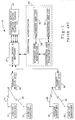
- the wireless subscriber system 10 includes multiple wireless subscriber units 14, 16, 18, 20, which can be cellular telephones or other transmitters. Each wireless subscriber unit 14, 16, 18, 20 transmits a wireless subscriber signal and receives a transmitter/receiver signal (both are identified in Figures 1 and 2 with reference numbers 24, 26, 28, 30, respectively) to one of a plurality of transmit/receive sites 34 and 36 which generate the transmitter/receiver signal and which can be cell stations for the cellular telephones.
- the plurality of transmit/receive sites 34 and 36 are typically spaced throughout a service area.
- the wireless subscriber signals 24 and 26 from the wireless subscriber units 14 and 16 are transmitted to and received by the transmit/receive site 34 due to proximity thereto.
- the wireless subscriber signals and the transmitter/receiver signals each include internal data traits and external signal traits.
- the internal data traits of the wireless subscriber signal can include digitized or analog voice data, video data, subscriber system protocol data, etc. Other types of data will be readily apparent.
- the wireless subscriber signal 28 and 30 from the wireless subscriber units 18 and 20 are transmitted to and received by transmit/receive site 36 due to proximity thereto.
- an access control and switching device 40 "hands off" the wireless subscriber signals 24, 26, 28 and 30 from one transmit/receive site to another. For example, as the wireless subscriber unit 14 travels away from transmit/receive site 34 towards transmit receive site 36, the access control and switching device 40 transfers transmitting and receiving functions from the transmit/receive site 34 to the transmit/receive site 36.
- the internal data traits of the wireless subscriber signals 24, 26, 28 and 30 from the wireless subscriber units 14, 16, 18, 20 can include an identification code which can include a mobile identification number (MIN), an electronic serial number (ESN), a manufacturer's code (MAN), and a station class mark (SCM).
- Identification code as used herein means information in the wireless subscriber signal sent by a wireless subscriber unit to identify itself.
- an authorized user verification device 50 Prior to granting access to a subscriber service or telephone company 46, an authorized user verification device 50 connected to the access control and switching device 40 verifies the identification code to determine if the wireless subscriber unit, for example wireless subscriber unit 14, is an authorized user by comparison with an authorized user list 52.
- the access control and switching device 40 grants access to the subscriber service or telephone company 46. If the wireless subscriber unit is not on the authorized list, the wireless subscriber unit is placed on an unauthorized user list 54. Both the authorized and unauthorized user list 52 and 54 can be stored in memory 58 associated with the authorized user verification device 50.
- the access control and switching device 40 can be located at the same location as the subscriber service or telephone company 46 or remote therefrom.
- a security pattern generation device 102 is connected to modified transmit/receive sites 104 and 106. Note that an unmodified transmit/receive site 108 without the security pattern generation device 102 may also be connected to the access control and switching device 40.
- the security pattern generating device 102 measures a plurality of unique features of the external signal traits of the wireless subscriber unit which is currently transmitting and receiving the wireless subscriber signal to and from the transmit/receive site attached to the security pattern generating device 102.
- the unique features measured by the security pattern generating device 102 identify the wireless subscriber unit from other authorized or unauthorized wireless subscriber units. Such identification of the wireless subscriber unit is hereinafter called “characterizing" (also characterization) and is described further below.
- the security pattern generating device 102 converts the characterization into a security pattern which is typically a multi-digit number.
- the security pattern is combined with the identification code (or parts thereof, for example the MIN or ESN) of the wireless subscriber unit into a combined security code.
- the combined security code is output to the access control and switching device 40 and then to a modified authorized user verification device 110 which can have a memory 114 associated therewith for storing an authorized user list 116 and an unauthorized user list 118.
- the modified authorized user verification device 110 can be designed to accept either the identification codes from the unmodified transmit/receive site 108 or the combined security code from the modified transmit/receive sites 104 and 106.
- the subscriber system Since the subscriber system is already set up for transmitting the identification code (for example, both the ESN and the MIN which can be ten digit numbers) from each transmit/receive site to the access control and switching device 40 and then to the authorized user verification device 50 (or modified authorized user verification device 110), it is desirable to combine the characterization with the identification code to minimize system changes.
- the identification code for example, both the ESN and the MIN which can be ten digit numbers
- the modified authorized user verification device 110 When the modified authorized user verification device 110 receives identification codes from the unmodified transmit/receive sites 108, the modified authorized user verification device 110 looks only for the identification code and performs an identification procedure similar that described above in conjunction with Figure 1. When the modified authorized user verification device 110 receives the combined security code from the modified transmit/receive sites 104, 106, the modified authorized user verification device 110 transmits either the combined security code or the identification code and the security pattern to a confidence level generation device 120 which can be located locally or remote from the modified authorized user verification device 110. The security pattern and identification code can also be combined into the combined security code for the purpose of sending minimum data through the access control and switching device 40 and the modified authorized user verification device 110.
- a separate data link 121 can be provided between the security pattern generating device 102 and the confidence level generating device 120. If the separate data link 121 is provided, the identification code (or parts thereof) need not be combined with the security pattern. The separate data link 121 can transmit the identification code (or parts thereof) and the security pattern to the confidence level generation device 120 separately.
- the confidence level generation device 120 is connected to a security pattern history storage device 124 and a fraudulent user history storage device 125 both of which can be located locally or remote from both the modified user verification device 110 and/or the confidence level generation device 120.
- the confidence level generation device 120 compares the security pattern in the combined security code of the wireless subscriber units 14, 16, 18, 20 to previously recorded security patterns (for each wireless subscriber unit) stored under the identification code, the ESN or the MIN in a security pattern history storage device 124.
- the confidence level generation device 120 Based on the correlation between the recently transmitted security pattern and the historic security patterns, the confidence level generation device 120 generates a confidence level indicating a probability that the wireless subscriber unit generating the security pattern is or is not the same as the wireless subscriber unit which generated the security patterns stored in the security pattern history storage device 124.
- the modified authorized user verification device 110 determines whether the requesting wireless subscriber unit generating the security pattern is or is not an authorized user based upon the confidence level signal and can grant or deny access to a subscriber service or telephone exchange 46.
- the confidence level generation device 120 can include access means for granting or denying access to the subscriber service or telephone exchange 46 based upon the confidence level signal.
- Access can be denied in many different ways. For example, when either the confidence level generation device 120 or the modified authorized user verification device 110 determines that access should be denied, for example because the wireless subscriber unit is fraudulently using a MIN/ESN of another wireless subscriber unit, the confidence level generation device 120 or the modified authorized user verification device 110 can output (internally or via external connection 126) commands to the transmit/receive site.
- the transmit/receive site transmits the ESN/MIN used by the requesting wireless subscriber unit on a forward control channel along with a command to change to a specified voice channel assigned to the wireless subscriber unit.
- the requesting wireless subscriber unit typically dwells in a mode watching the forward control channel for the command to change to the specified voice channel.
- the transmit/receive site and the confidence level generation device or the modified authorized user verification device automatically follows the wireless subscriber unit to the specified voice channel.
- a simulated or actual wireless subscriber unit associated with the confidence level generation device and the modified authorized user verification device can issue a service termination command to the transmit/receive site and service is discontinued to the fraudulent wireless subscriber unit.
- the simulated or actual wireless subscriber unit simulates a command by the fraudulent wireless subscriber unit to hang-up before the transmit/receive site connects the fraudulent wireless subscriber unit to the second wireless subscriber unit.
- Alternate methods of denying access will be readily apparent. For example, if a first wireless subscriber unit having a first MIN/ESN is currently using the subscriber service and moments later the wireless subscriber unit having the first MIN/ESN requests service (e.g. call collision), some modified transmit/receive sites are designed to disconnect service to the first wireless subscriber unit.
- the confidence level generation device 120 or the modified authorized user verification device 110 can deny access to a wireless subscriber unit simply by requesting service at the modified transmit/receive site using the ESN/MIN of the wireless subscriber unit to be denied service.
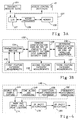
- a block diagram depicts the security pattern generation device 102 which includes an I/O device 127, a microprocessor 128, and memory 130.
- the security pattern generation device 102 can be a program stored and executed by the transmit/receive site 104.
- the confidence level generating device 120 can similarly have an I/O device, a microprocessor, and memory.
- a security pattern algorithm 132 in the memory 130 is shown.
- a characterizing routine controls measurements on the wireless subscriber signal from first, second and third feature categories described in detail below and generates a security pattern, for example a multi-digit number wherein each digit or group of digits represents a measured feature. Each digit or group of digits could also represent deviation of the measured feature from typical values as described below.
- the security pattern generation algorithm 132 determines the identification code of the wireless subscriber unit. In block 139, the security pattern generation algorithm 132 combines the security pattern generated by the characterization routine with the identification code generated by the block 138 into the combined security code. The combined security code is then output by the security pattern generation device 102 and/or the transmit/receive site 104 to the access control and switching device 40 as described above.
- the security pattern and the identification code are sent separately via the separate data link 121 to the confidence level generation device 120. If the separate data link 121 is used, block 139 may be omitted.
- Characterization of a wireless subscriber unit by the characterizing algorithm 132 in the security pattern generation device 102 can be accomplished by measuring features of the external signal traits of the wireless subscriber signal from preferably three feature categories.
- the first feature category includes natural variations of specified parameters of the wireless subscriber unit within or outside specification tolerances.
- the specified parameters of the external signal traits of the wireless subscriber signal can be expected to range up to twice the specified tolerance.
- one specified parameter measured could be bit rate, which typically has a tolerance of ⁇ 1 Hz of a nominal value.
- a second specified parameter could be the transmitting or receiving RF, which typically has a tolerance of ⁇ 2 kHz from channel center.
- a third specified parameter could be RF shift which typically has a tolerance of ⁇ 200 Hz of 16 kHz.
- Other specified parameters will be readily apparent.
- the second feature category includes variations in non-specified parameters.
- the non-specified parameter could be slope of mark or space frequencies.
- Other non-specified parameters will be readily apparent.
- the third feature category includes variations in reactions or responses to interrogations by the security pattern generation device 102.
- the security pattern generation device 102 can request the wireless subscriber unit to make an RF power change.
- the security pattern generation device 102 can then measure the delay in the wireless subscriber unit's response and/or the change in amplitude of the wireless subscriber unit in relation to the change requested.
- Other types of interrogations, commands and responses will be readily apparent.
- FIG 4 a functional block diagram of a RF shift characterizing routine 140 (the first feature category) forming part of the security pattern generating device 102 is shown.
- a double bit sample capture block 144 captures double bit words (e.g. two 0's (space) followed by two 1's (mark)) from the wireless subscriber signal received by the transmit/receive site 104.
- the wireless subscriber signal received by the transmit/receive site 104 can be recorded in memory and thereafter retrieved by the double bit sample capture block 144.
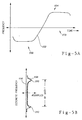
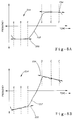
- a time align and averaging block 148 generates a first waveform output 152 (with a channel center at 153) shown in Figure 5A which includes multiple time aligned and averaged double bit words from the wireless subscriber signal 24.
- a frequency histogram block 154 generates a frequency histogram graphically depicted in Figure 5B.
- the frequency histogram block 154 includes a predetermined number of discrete frequency divisions 156 and samples the first waveform output 152 from the time align and averaging circuit 148 at a sample frequency ⁇ .
- the frequency histogram block 154 generates a frequency histogram 158 in Figure 5B which depicts the number of samples at each discrete frequency (captured at each sample frequency ⁇ ). Peaks 160 in the frequency histogram 158 identify a mark frequency 164 and a space frequency 168.
- a mark and space frequency peak locator block 174 determines the frequency of the peaks 160 in the frequency histogram 158 to determine the mark and space frequencies 164, 168.
- An RF shift determining block 178 subtracts the mark and space frequencies 164, 168 to generate a measured RF shift of the wireless subscriber unit.
- a RF shift deviation block 180 compares the measured RF shift with a standard or mean RF shift and generates a number representing deviation.
- expected values of RF shift are typically ⁇ 200 Hz of 16 kHz but can range on a scale between 12 kHz and 20 kHz.
- a RF shift scale for RF shift values is determined. The scale from 12 kHz to 20 Khz can be divided into equal divisions.
- the scale 12 Khz to 20 kHz can be divided into 99 equal divisions. Measured RF shift values less than 12 kHz could be assigned the deviation number 01, values greater than 20 kHz could be assigned the deviation number 99, and values around 16 kHz could be assigned the deviation number 50. Values between 12 kHz and 16 kHz and 16 kHz and 20 kHz can be assigned the deviation numbers between 02-49 and 51-98 respectively. If desired (e.g. to provide better differentiation of the RF shift values) the scale from 12 kHz to 20 kHz can be divided into unequal divisions or skewed. Scales from 1-9, 1-F (hexadecimal), 1-999, etc. can also be used. Other methods of assigning numbers to the range of RF shift values are readily apparent.
- a second waveform output 188 generated by sampling another wireless subscriber unit does not define mark and space frequencies as distinctly as the first waveform output 152 in Figure 4A.
- a frequency histogram smoothing block 192 can be used to further define the mark and space frequencies by generating a modified frequency histogram 194 (see Figure 6B) incorporating dotted line 196.
- FIGs 7, 8A and 8B an alternate method of characterizing RF shift (the first feature category) and a method of characterizing RF mark and space slope (the second feature category) is shown.
- a functional block diagram of alternate RF characterizing routine 210 forming part of the security pattern generation device 102 is shown.
- the alternate RF characterizing routine 210 utilizes the double bit sample capture block 144 and the time align and averaging block 148 of Figure 4.
- a space frequency portion 214 of waveform 216 in Figure 8A and a waveform 217 in Figure 8B is divided into times A, Band C.
- a straight line 220 is rotated about a point at time B and fit to the space frequency portion 214 between time A and time C by a least-means-squared method.
- RF space slope is determined (RF space slope approximately 0 in Figure 8A; RF space slope > 0 in Figure 8B).
- a mark frequency portion 230 of the waveform 216 in Figure 8A and the waveform 217 in Figure 8B is divided into times D, E, and F.
- a straight line 234 is rotated about a point at the time E and fit to the mark frequency portion 230 between the time D and the time F by the least-means-squared method.
- RF mark slope is determined (RF mark slope approximately 0 in Figure 8A; RF mark slope ⁇ 0 in Figure 8B).
- corresponding points time points on lines 220 and 234 are chosen on the waveforms 216 and 217 to determine RF shift.
- time points B and E on the waveform 216 can be chosen and the frequencies at the time points B and E subtracted to determine the RF shift.
- time points A and D or C and F can be chosen to maximize information and discrimination of the wireless subscriber units.
- the RF shift deviation is determined as described above.
- mark and space slopes were determined by the alternate RF characterizing routine 210 at blocks 224 and 226.
- mark and space slope deviation are determined in a manner analogous to the RF shift deviation determination described above.
- a request for power change characterizing routine 260 (the third feature category) forming part of the security pattern generation device 102 is shown.
- a request for RF power change is transmitted by the transmit/receive site 104 to the wireless subscriber unit.
- delay in the wireless subscriber unit's response is measured and power change response time deviation is determined in a manner analogous to the RF shift deviation described above.
- RF amplitude change of the wireless subscriber signal is measured and power change amplitude deviation is determined in a manner analogous to the RF shift deviation described above.
- the characterizing routine combines the deviations into the security pattern 7835617 with the first two digits representing the RF shift deviation, the third and fourth digits representing the mark and space slope deviations, and the fifth, sixth and seventh digits representing the power change time and amplitude deviations.
- the block 138 in the security pattern generation algorithm 132 in Figure 3B determines the identification code, the MIN or the ESN of the wireless subscriber unit, for example a ten digit code 0001212345.
- the block 139 in the security pattern generation algorithm 132 combines the ten digit number (corresponding to the identification code, the MIN or the ESN) with the security pattern into the combined security code.
- the security pattern could be added to the most significant digits of the identification code (or MIN or ESN) (without carry) to generate the ten digit combined security code 7836829345.
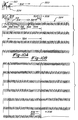
- FIG. 10A-C some of these additional features of the external traits are identified on a typical wireless subscriber signal 300 including a pre-carrier portion 302, a preamble portion 304, a text portion 306 and a post-carrier portion 308.
- Turn-on transient 310 preceding the pre-carrier portion 302 and turn-off transient 312 (Figure 10C) following the post-carrier portion 308 are not used as a characterizing features due to limited wireless subscriber unit discrimination information and other considerations described above.
- a dotting portion 314 with alternating marks 315 and spaces 316 follows a partially formed mark or space portion 317.
- a sync word 318 and a DCC word 320 follow the dotting portion 314.
- a first word 324 is repeated several times and follows the DCC word 320.
- Security patterns can be generated, for example, by comparing the timing of any of the above events with a standard and by generating a number representing deviation. Other characterizing features will be readily apparent.
- a time comb by the least-means-squared method is a fit of uniformly spaced intervals to external signal traits of a wireless subscriber signal to determine phase shift. For example, when the requesting wireless subscriber unit is transmitting the wireless subscriber signal 300, a phase change occurs at line 370 in Figure 11) between the preamble portion 304 and the text portion 306.
- One method of performing the time comb is to use a raster scanning device which scans at a fixed rate. Each time a sampled waveform has a zero-crossing, a dot (generally at 372) is plotted at a location of an invisible raster scan at a time of the zero-crossing.
- the dots will continue to be plotted on at in a similar vertical position.
- the vertical position also changes (at 374).
- the time of the phase change can be measured relative to the PFS 328.
- Time combs can be performed on other signal events, for example see items 13-16. Numerous other time combs can be performed. The above list is meant to be illustrative and not exclusive.
- the security pattern generation device 104 transmits the combined security code to the modified authorized user verification device 110 which can be located at the access control and switching device 40 location or remote therefrom.
- the modified authorized user verification device 110 looks for either the identification code from the transmit/receive site 108 (without the security pattern generation device 102) or the combined security code from the transmit/receive sites 104, 106 (with the security pattern generation device 102).
- the modified authorized user verification device 110 separates the combined security code into the security pattern and the identification code (or the MIN or the ESN) and transmits each to the confidence level generation device 120.
- the modified authorized used verification device 110 could also transmit the combined security code to the confidence level generation device 120 for separation.
- the security pattern and the identification code can be sent directly from the security pattern generation device 102 to the confidence level generation device 120 via the separate data link 121.
- the confidence level generation device 120 compares the security pattern of the requesting wireless subscriber unit to a security pattern stored in the security pattern history storage device 124 under the identification code (the MIN or the ESN) of the requesting wireless subscriber unit. Because the measured features of the same wireless subscriber unit can vary slightly from time to time, the digits in the security pattern representing the characterized features vary slightly. To alleviate this problem, the confidence level generation device 120 generates a confidence factor indicating a likelihood that the wireless subscriber unit generating the security pattern also generated the stored security pattern.
- the confidence level generation device 120 outputs the confidence factor to the modified authorized user verification device 110 which decides whether to authorize access to the subscriber service or telephone company 46.
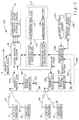
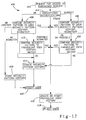
- a logic diagram 400 to be executed by the confidence level generating device 120 and the security pattern history storage device 124 is shown.
- a wireless subscriber unit requests access to the subscriber service 46.
- the security pattern generating device 102 generates the combined security code for the wireless subscriber unit by characterizing features of the external signal traits of the wireless subscriber unit, by generating a security pattern, and by combining the security pattern with the identification code (the MIN or the ESN). Combining the security pattern and the identification code (the MIN or the ESN) need not be done if a separate data link 121 is utilized.
- the modified user authentication device 110 is modified to interact with the confidence level generating device 120. However, the modified authentication device 110 can still perform conventional fraud detection such as profiling and/or other conventional techniques, as depicted in block 404.
- the modified authentication device 110 (or the confidence level generating device 120) separates the combined security code into the security pattern and the identification code (the MIN or the ESN). Note that the security pattern can be obtained from the combined security code simply by subtracting the identification code (the MIN or the ESN). Alternatively, the separate data link 121 can be used.
- the security pattern is compared in block 408 to a security pattern stored in the security pattern history storage device 124 corresponding to the identification code (the MIN or the ESN) of the requesting wireless subscriber unit.
- Each digit or digits of the security pattern correspond to characterizing features of the requesting wireless subscriber unit. Variations in each feature may occur between subsequent characterizations of the same wireless subscriber unit.
- the first matching algorithm associated with block 408 determines a confidence level for the security pattern of the requesting wireless subscriber unit.
- the first matching algorithm could initially determine variations between each feature in the historic security pattern and each feature in the security pattern of the requesting wireless subscriber unit. The matching algorithm could then determine if the entire security pattern is a match, a possible mismatch, or a mismatch from the features tested by generating a confidence level representing probability of mismatch.
- a match could include confidence levels between 0% and 33%
- a possible mismatch could include confidence levels between 34% and 66%
- a mismatch could include confidence levels between 67% and 100%.
- the measured power change time deviation was 61. Assume that this value was previously stored as part of the security pattern in the security pattern history storage device 124 under the identification code (the MIN or ESN) of the requesting wireless subscriber unit. As the power change time deviation of the requesting wireless subscriber unit varies from 61 (the stored value), the confidence level percentage for this feature increases.
- the matching algorithm similarly determines confidence levels for other digits of the security pattern representing other features of the wireless subscriber unit.
- the confidence levels for each of the features could be averaged or otherwise weighted to determine the confidence level for the security pattern of the requesting wireless subscriber unit.
- the weighing given to each feature and the confidence level percentage requirements for match, possible mismatch, and mismatch can be varied as desired.
- the confidence level generation device 120 could include an adaptive algorithm which automatically changes or customizes as a wireless subscriber unit develops a security pattern history.
- the security pattern history can be updated periodically to track changes in the external signal traits as the transmitter ages.
- block 408 determines a possible mismatch between the security pattern of the requesting wireless subscriber unit and the security pattern stored under the identification code (the MIN or the ESN) of the requesting wireless subscriber unit, an additional comparison is performed in block 412 between the security pattern of the requesting wireless subscriber unit and a fraudulent user history which contains characterizing codes of past fraudulent users.
- the security patterns in the fraudulent user history device are not searched by the identification code (the MIN or ESN) of the requesting user since the wireless subscriber unit may be changing the identification code (the MIN or the ESN) to fraudulently obtain access to the subscriber system 46.
- a second matching algorithm performs a weighted comparison between the security pattern of the requesting wireless subscriber unit and the security patterns of multiple suspects stored in the fraudulent user history storage device 125.
- the fraudulent user history storage device contains data organized, for example, in suspect files.
- fraudulent users often change the MIN and ESN for their cellular telephone and obtain free access.
- the fraudulent user simply changes the MIN and ESN of his cellular telephone and obtains free access again.
- the fraudulent users cannot change the features measured by the security pattern generating device 102. Therefore, the fraudulent user history device stores the security pattern of the fraudulent user when the fraudulent user is first detected.
- the fraudulent user history can be updated with a number called by the wireless subscriber unit, the identification code (the MIN or the ESN), the confidence level, and the security pattern of the requesting wireless subscriber unit (block 416).
- the requesting wireless subscriber unit is denied access to the subscriber system (block 418).
- the security pattern history stored under either the MIN or ESN is updated with the security pattern, the confidence level and the number called.
- the requesting wireless subscriber unit is granted access to the subscriber system (block 422).
- the confidence level is stored in the security pattern history storage device 124 for later use. For example, when an authorized user receives his phone bill and realizes that he/she did not make a call, the subscriber service operator can look up the confidence level. If the confidence level is high (e.g., indicating a higher probability of mismatch), the call can be removed from the bill.
- the fraudulent user history device is updated (or started if no prior fraudulent user history is recorded) in block 416 and the user is rejected in block 418.
- the confidence level is generated in block 430 in a manner analogous to the confidence level described above. After comparing each feature in the security pattern of the requesting wireless subscriber unit with the security pattern stored in the security pattern history storage under the identification code (the MIN, or the ESN), possible mismatches and matches are sent to block 432. The security pattern is then compared to suspects in the fraudulent user history device 125 in a manner analogous to block 412
- the security pattern history device 124 is updated and the wireless subscriber unit allowed access to the subscriber service.
- the fraudulent user history device 125 is updated (or started) in block 416.
- the requesting wireless subscriber unit is denied access to the subscriber system in block 418.
- Another method of detecting fraudulent wireless subscriber units can be incorporated in the present invention.
- Use of the subscriber service by a wireless subscriber unit can be monitored by a usage profiling routine executed by a microprocessor (analogous to Fig. 3A) associated with at least one of the access control and switching device 40, the confidence level generation device 120, the modified authorized user verification device 110, or the subscriber service 46 for various usage parameters.
- the usage parameter can include the number of times the monitored wireless subscriber unit requests access per day, the number of minutes the monitored wireless subscriber unit uses the subscriber service each day, the number of requests for access per hour, etc. Limits or thresholds for each usage parameter can be stored in memory for each MIN/ESN.
- a usage history for each MIN/ESN can be stored in the memory.
- the limits or thresholds can be selected by the subscriber service or the owner of a wireless subscriber unit or alternately programmed limits (e.g. based on past usage) can be used. If the user-selected or the programmed limits or thresholds are exceeded, an excess usage signal can be generated by the profiling routine. The excess usage signal is indicative of fraudulent use. As usage by the monitored wireless subscriber unit varies with time, the programmed limit can be updated, for example, on a monthly basis.
- the profiling routine can also monitor additional usage conditions such as wireless subscriber units using multiple MINs with the same ESN, or multiple ESNs with the same MIN.
- the profiling routine can generate a multiple identity signal indicative of fraudulent use by the monitored wireless subscriber unit.
- the profiling routine can sever further access to the subscriber service in the manner described above. Alternatively, the profiling routine can be run in situations where the confidence level generation device determines the possible mismatch condition.
- a plurality of authorized radio transmitters can be operated at a select frequency.
- the authorized radio transmitters can be characterized and security patterns recorded for each radio transmitter in a security pattern history storage device.
- a receiver can intercept transmitter signals from both authorized and unauthorized radio transmitters operating at the select frequency.
- Security patterns generated by the authorized and unauthorized radio transmitters can be compared to the security patterns in the security pattern history storage device. Confidence levels can be generated for each of the authorized and unauthorized radio transmitters indicating a likelihood that a particular radio transmitter is or is not one of the authorized radio transmitters. As such, clandestine operation of the unauthorized radio transmitter may be detected.
Landscapes
- Engineering & Computer Science (AREA)
- Computer Networks & Wireless Communication (AREA)
- Signal Processing (AREA)
- Computer Security & Cryptography (AREA)
- Mobile Radio Communication Systems (AREA)
- Transceivers (AREA)
Applications Claiming Priority (2)
| Application Number | Priority Date | Filing Date | Title |
|---|---|---|---|
| US74083 | 1993-06-08 | ||
| US08/074,083 US5448760A (en) | 1993-06-08 | 1993-06-08 | Cellular telephone anti-fraud system |
Publications (1)
| Publication Number | Publication Date |
|---|---|
| EP0629093A1 true EP0629093A1 (en) | 1994-12-14 |
Family
ID=22117618
Family Applications (1)
| Application Number | Title | Priority Date | Filing Date |
|---|---|---|---|
| EP93310493A Ceased EP0629093A1 (en) | 1993-06-08 | 1993-12-23 | Cellular telephone anti-fraud system |
Country Status (10)
| Country | Link |
|---|---|
| US (3) | US5448760A (da) |
| EP (1) | EP0629093A1 (da) |
| JP (1) | JPH0730965A (da) |
| KR (1) | KR950002349A (da) |
| CN (1) | CN1108832A (da) |
| CA (1) | CA2115796A1 (da) |
| FI (1) | FI940941A7 (da) |
| MY (1) | MY110992A (da) |
| SG (1) | SG54283A1 (da) |
| TW (1) | TW290771B (da) |
Cited By (13)
| Publication number | Priority date | Publication date | Assignee | Title |
|---|---|---|---|---|
| US5555551A (en) * | 1993-06-29 | 1996-09-10 | Airtouch Communications, Inc. | Method and apparatus for fraud control in cellular telephone systems |
| WO1997047152A1 (en) * | 1996-06-07 | 1997-12-11 | Telefonaktiebolaget Lm Ericsson (Publ) | System and method of preventing fraudulent call transfers in a radio telecommunications network |
| WO1998003032A1 (en) * | 1996-07-16 | 1998-01-22 | Cellular Technical Services Company, Inc. | Detection and prevention of channel grabbing in a wireless communications system |
| WO1998012895A1 (en) * | 1996-09-19 | 1998-03-26 | Corsair Communications, Inc. | Transient analysis system for rf transmitters |
| US5819171A (en) * | 1995-08-31 | 1998-10-06 | Cellular Technical Services Co., Inc. | Automated forced call disruption for use with wireless telephone systems |
| EP0822726A3 (en) * | 1996-07-31 | 1999-08-04 | Lucent Technologies Inc. | Subscriber authentication for radio local loop system |
| US5950121A (en) * | 1993-06-29 | 1999-09-07 | Airtouch Communications, Inc. | Method and apparatus for fraud control in cellular telephone systems |
| US6035188A (en) * | 1996-06-27 | 2000-03-07 | Cellular Technical Services Company, Inc. | Active waveform collection for use in transmitter identification |
| WO2007101588A1 (fr) * | 2006-03-08 | 2007-09-13 | Airbus France | Procede et dispositif de detection de tentatives d'intrusion sur une liaison de communication entre un aeronef et une station sol |
| US7340045B2 (en) | 1996-06-05 | 2008-03-04 | Fraud Control System.Com Corporation | Method of billing a communication session conducted over a computer network |
| US7555458B1 (en) | 1996-06-05 | 2009-06-30 | Fraud Control System.Com Corporation | Method of billing a purchase made over a computer network |
| US8229844B2 (en) | 1996-06-05 | 2012-07-24 | Fraud Control Systems.Com Corporation | Method of billing a purchase made over a computer network |
| US8630942B2 (en) | 1996-06-05 | 2014-01-14 | Fraud Control Systems.Com Corporation | Method of billing a purchase made over a computer network |
Families Citing this family (119)
| Publication number | Priority date | Publication date | Assignee | Title |
|---|---|---|---|---|
| US6144859A (en) * | 1993-08-27 | 2000-11-07 | Aeris Communications, Inc. | Wireless cellular communicator system and apparatus |
| US5889474A (en) * | 1992-05-18 | 1999-03-30 | Aeris Communications, Inc. | Method and apparatus for transmitting subject status information over a wireless communications network |
| JPH06261043A (ja) * | 1993-03-05 | 1994-09-16 | Hitachi Ltd | 無線lanシステム及びその制御方法 |
| US5448760A (en) * | 1993-06-08 | 1995-09-05 | Corsair Communications, Inc. | Cellular telephone anti-fraud system |
| US5594740A (en) | 1993-08-27 | 1997-01-14 | Axion Logistics Corporation | Wireless communications application specific enabling method and apparatus |
| DE4336995A1 (de) * | 1993-10-29 | 1995-05-04 | Sel Alcatel Ag | Verfahren und Vorrichtung zur Bestimmung der Zuordnung eines Mobilfunkgerätes zu Geräte-Listen |
| US6122403A (en) | 1995-07-27 | 2000-09-19 | Digimarc Corporation | Computer system linked by using information in data objects |
| US5822436A (en) | 1996-04-25 | 1998-10-13 | Digimarc Corporation | Photographic products and methods employing embedded information |
| JPH07298340A (ja) * | 1994-03-02 | 1995-11-10 | Fujitsu Ltd | 移動通信システムおよび移動局 |
| US6968057B2 (en) | 1994-03-17 | 2005-11-22 | Digimarc Corporation | Emulsion products and imagery employing steganography |
| US5734977A (en) * | 1994-11-10 | 1998-03-31 | Telefonaktiebolaget Lm Ericsson | Fraud detection in radio communications network |
| US6016425A (en) * | 1994-12-29 | 2000-01-18 | Nortel Networks Corporation | Hybrid multizone call delivery system |
| WO1996028948A1 (en) * | 1995-03-15 | 1996-09-19 | Coral Systems, Inc. | Apparatus and method for preventing fraudulent activity in a communication network |
| US5713072A (en) * | 1995-09-12 | 1998-01-27 | Marth; Charles | Cellular fraud deterrent system |
| US5751798A (en) * | 1995-09-12 | 1998-05-12 | At&T Corp. | Passive information access system |
| DE19545508C1 (de) * | 1995-12-05 | 1997-06-05 | Siemens Ag | Verfahren zur Anpassung von adaptiven Funkteilnehmerstationen an Übertragungsnetze und eine entsprechende Funkteilnehmerstation |
| US5999808A (en) * | 1995-12-12 | 1999-12-07 | Aeris Communications, Inc. | Wireless gaming method |
| US5905949A (en) * | 1995-12-21 | 1999-05-18 | Corsair Communications, Inc. | Cellular telephone fraud prevention system using RF signature analysis |
| US5835530A (en) * | 1995-12-21 | 1998-11-10 | Corsair Communications, Inc. | Bit characteristics measurement system for digitally modulated signals |
| US5845203A (en) * | 1996-01-25 | 1998-12-01 | Aertis Cormmunications | Remote access application messaging wireless method |
| US5777558A (en) * | 1996-02-29 | 1998-07-07 | Motorola, Inc. | Method for detecting fraudulent use of a communication system |
| US5715518A (en) * | 1996-03-06 | 1998-02-03 | Cellular Technical Services Company, Inc. | Adaptive waveform matching for use in transmitter identification |
| US6501950B1 (en) | 1996-03-14 | 2002-12-31 | Bellsouth Intellectual Property Corporation | Systems and methods for monitoring data signals on a communications network |
| US6014557A (en) * | 1996-03-14 | 2000-01-11 | Bellsouth Intellectual Property Corporation | Apparatus and methods for providing wireless system fraud and visibility data |
| US5870672A (en) * | 1996-04-05 | 1999-02-09 | Corsair Communications, Inc. | Validation method and apparatus for preventing unauthorized use of cellular phones |
| US7715446B2 (en) * | 1996-04-25 | 2010-05-11 | Digimarc Corporation | Wireless methods and devices employing plural-bit data derived from audio information |
| US5901351A (en) * | 1996-05-22 | 1999-05-04 | Motorola, Inc. | Method and apparatus for detection of fraudulent users in a communication system using signaling-channel phase shift |
| US5893031A (en) * | 1996-06-27 | 1999-04-06 | Cellular Technical Services Company, Inc. | System and method for collection of transmission characteristics |
| US5940751A (en) * | 1996-06-27 | 1999-08-17 | Cellular Technical Services Company, Inc. | System and method for detection of fraud in a wireless telephone system |
| US5745559A (en) * | 1996-07-24 | 1998-04-28 | Weir; Earline Madsen | Restricted access telephones for logical telephone networks |
| US5812636A (en) * | 1996-09-06 | 1998-09-22 | Northern Telecom Limited | System and method for faulty mobile unit isolation |
| US6219793B1 (en) | 1996-09-11 | 2001-04-17 | Hush, Inc. | Method of using fingerprints to authenticate wireless communications |
| FI103469B (fi) * | 1996-09-17 | 1999-06-30 | Nokia Telecommunications Oy | Kopioidun tilaajatunnuksen väärinkäytön estäminen matkaviestinjärjeste lmässä |
| US5924025A (en) * | 1996-10-25 | 1999-07-13 | Cellular Technical Services Company, Inc. | System and method for detection of redial fraud in a cellular telephone system |
| US5826186A (en) * | 1996-10-25 | 1998-10-20 | Motorola, Inc. | Method for terminating a wireless communication of a mobile communication unit |
| US5894593A (en) * | 1996-11-04 | 1999-04-13 | Motorola, Inc. | Method and apparatus for enhancing the detection of the presence of an FM signal using a coded pattern |
| US5940761A (en) * | 1997-01-15 | 1999-08-17 | Qaulcomm Incorporated | Method and apparatus for performing mobile assisted hard handoff between communication systems |
| US5953653A (en) * | 1997-01-28 | 1999-09-14 | Mediaone Group, Inc. | Method and system for preventing mobile roaming fraud |
| US5999807A (en) * | 1997-02-28 | 1999-12-07 | Cellular Technical Services Company, Inc. | System and method for the verification of authentic telephone numbers in a wireless telephone system |
| EP0862344A3 (en) * | 1997-02-28 | 1999-09-01 | Cellular Technical Services Company, Inc. | Distributed system and method of operation for validation of a wireless communication device |
| US5956634A (en) * | 1997-02-28 | 1999-09-21 | Cellular Technical Services Company, Inc. | System and method for detection of fraud in a wireless telephone system |
| US5970405A (en) * | 1997-02-28 | 1999-10-19 | Cellular Technical Services Co., Inc. | Apparatus and method for preventing fraudulent calls in a wireless telephone system using destination and fingerprint analysis |
| US5999806A (en) * | 1997-02-28 | 1999-12-07 | Cellular Technical Services Company, Inc. | Waveform collection for use in wireless telephone identification |
| US6181925B1 (en) | 1997-04-09 | 2001-01-30 | Cellco Partnership | Method and apparatus for fraud control in a cellular telephone switch |
| US5930345A (en) * | 1997-05-20 | 1999-07-27 | Lucent Technology Inc. | Public telephone clip-on fraud prevention system |
| US6097939A (en) * | 1997-07-11 | 2000-08-01 | Compaq Computer Corporation | Method and apparatus for event data maintenance per MIN/ESN pair in a mobile telephone system |
| US6466778B1 (en) * | 1997-07-22 | 2002-10-15 | British Telecommunications Public Limited Company | Monitoring a communication network |
| AU2003204506B2 (en) * | 1997-07-22 | 2005-04-14 | Azure Solutions Limited | Monitoring a communication network |
| US6078807A (en) * | 1997-08-26 | 2000-06-20 | International Business Machines Corporation | Telephony fraud detection using voice recognition techniques |
| US6466780B1 (en) | 1997-09-03 | 2002-10-15 | Interlok Technologies, Llc | Method and apparatus for securing digital communications |
| US6014085A (en) * | 1997-10-27 | 2000-01-11 | Lucent Technologies Inc. | Strengthening the authentication protocol |
| JPH11266476A (ja) * | 1998-03-17 | 1999-09-28 | Fujitsu Ltd | 移動通信における移動体探索システム及び、移動体探索方法 |
| US6157722A (en) * | 1998-03-23 | 2000-12-05 | Interlok Technologies, Llc | Encryption key management system and method |
| US6163604A (en) * | 1998-04-03 | 2000-12-19 | Lucent Technologies | Automated fraud management in transaction-based networks |
| US6157707A (en) * | 1998-04-03 | 2000-12-05 | Lucent Technologies Inc. | Automated and selective intervention in transaction-based networks |
| US6473613B2 (en) * | 1998-12-18 | 2002-10-29 | Conexant Systems, Inc. | Method and system for generating a secure wireless link between a handset and base station |
| US6542729B1 (en) * | 1999-04-27 | 2003-04-01 | Qualcomm Inc. | System and method for minimizing fraudulent usage of a mobile telephone |
| US6810244B2 (en) * | 1999-07-06 | 2004-10-26 | Telcontar | Method for synthesizing mobile identification numbers |
| US7310509B2 (en) * | 2000-04-17 | 2007-12-18 | Decarta Inc. | Software and protocol structure for an automated user notification system |
| US6901253B2 (en) * | 1999-07-06 | 2005-05-31 | Telcontar | Method for synthesizing mobile identification numbers |
| US6377792B1 (en) * | 1999-10-22 | 2002-04-23 | Motorola, Inc. | Method and apparatus for network-to-user verification of communication devices based on time |
| US6996072B1 (en) * | 2000-01-19 | 2006-02-07 | The Phonepages Of Sweden Ab | Method and apparatus for exchange of information in a communication network |
| US6977909B2 (en) * | 2000-01-19 | 2005-12-20 | Phonepages Of Sweden, Inc. | Method and apparatus for exchange of information in a communication network |
| US20070124481A1 (en) * | 2000-01-19 | 2007-05-31 | Sony Ericsson Mobile Communications Ab | System and method for sharing event-triggered, location-related information between communication devices |
| US8400946B2 (en) * | 2000-01-19 | 2013-03-19 | Sony Corporation | System and method for sharing common location-related information between communication devices |
| US6922721B1 (en) * | 2000-10-17 | 2005-07-26 | The Phonepages Of Sweden Ab | Exchange of information in a communication system |
| US20070127645A1 (en) * | 2000-01-19 | 2007-06-07 | Sony Ericsson Mobile Communications Ab | Technique for providing secondary information to a user equipment |
| US20070129074A1 (en) * | 2000-01-19 | 2007-06-07 | Bloebaum L S | System, Method and Device For Providing Secondary Information To A Communication Device |
| US7248862B2 (en) * | 2000-01-19 | 2007-07-24 | Sony Ericsson Mobile Communications Ab | Method and apparatus for retrieving calling party information in a mobile communications system |
| EP1130497B1 (en) * | 2000-02-08 | 2003-07-02 | Ricoh Company, Ltd. | Device management system in a network |
| KR20020015233A (ko) * | 2000-08-21 | 2002-02-27 | 함상천 | 발신자 식별 기능을 가진 통신 단말기 및 그의 제어방법 |
| KR20020015612A (ko) * | 2000-08-22 | 2002-02-28 | 송호림 | 발신자 고유코드 전송 시스템 및 그 통화로 형성 방법 |
| US6826403B1 (en) * | 2000-09-12 | 2004-11-30 | Phonepages Of Sweden Ab | Method and system for identifying a user |
| US7346778B1 (en) * | 2000-11-29 | 2008-03-18 | Palmsource, Inc. | Security method and apparatus for controlling the data exchange on handheld computers |
| GB2372175B (en) * | 2001-02-13 | 2004-06-23 | Vodafone Ltd | Provision of services via a mobile telecommunications network |
| SE0102729D0 (sv) * | 2001-08-15 | 2001-08-15 | Phone Pages Sweden Ab | Method and apparatus for exchange of information in a communication network |
| KR20030020075A (ko) * | 2001-09-01 | 2003-03-08 | 최재영 | 기록매체를 이용한 사용자 인식장치 |
| KR100406114B1 (ko) * | 2001-09-06 | 2003-11-14 | 학교법인 동국학원 | 일반 공중 전화망을 이용한 디지털 유선 전화기 |
| JP2003108297A (ja) * | 2001-09-28 | 2003-04-11 | Canon Inc | 情報提供装置、情報処理方法、制御プログラム及び記憶媒体 |
| US7752135B2 (en) * | 2002-01-16 | 2010-07-06 | International Business Machines Corporation | Credit authorization system and method |
| KR20040091131A (ko) * | 2002-03-14 | 2004-10-27 | 코닌클리즈케 필립스 일렉트로닉스 엔.브이. | 통신 릴리스 방법 및 통신 디바이스 |
| US6970444B2 (en) * | 2002-05-13 | 2005-11-29 | Meshnetworks, Inc. | System and method for self propagating information in ad-hoc peer-to-peer networks |
| US7596692B2 (en) * | 2002-06-05 | 2009-09-29 | Microsoft Corporation | Cryptographic audit |
| US20030236995A1 (en) * | 2002-06-21 | 2003-12-25 | Fretwell Lyman Jefferson | Method and apparatus for facilitating detection of network intrusion |
| US7075482B2 (en) * | 2003-02-24 | 2006-07-11 | Network Fab Corporation | Direction finding method and system using transmission signature differentiation |
| US7505931B2 (en) * | 2003-03-03 | 2009-03-17 | Standard Chartered (Ct) Plc | Method and system for monitoring transactions |
| US7058389B2 (en) * | 2003-03-17 | 2006-06-06 | Lucent Technologies Inc. | Method for processing emergency calls initiated by wireless phones |
| US20040260630A1 (en) * | 2003-06-20 | 2004-12-23 | Benco David S. | Network support for mobile service plan cumulative usage reports |
| US7925291B2 (en) * | 2003-08-13 | 2011-04-12 | Qualcomm Incorporated | User specific downlink power control channel Q-bit |
| KR100576910B1 (ko) * | 2003-09-27 | 2006-05-03 | 엘지전자 주식회사 | 이동통신 시스템에서 불법 복제 단말기의 동시 통화 차단방법 |
| JP4245151B2 (ja) * | 2004-02-26 | 2009-03-25 | 埼玉日本電気株式会社 | 使用制限機能付携帯電話機および該機を使用制限する方法 |
| US7142108B2 (en) * | 2004-08-19 | 2006-11-28 | Cognio, Inc. | System and method for monitoring and enforcing a restricted wireless zone |
| KR100689426B1 (ko) * | 2004-12-16 | 2007-03-08 | 삼성전자주식회사 | 이동통신 단말기의 전화번호 등록을 제어하기 위한 장치및 방법 |
| US20060181394A1 (en) * | 2005-01-28 | 2006-08-17 | Clarke James B | Radio frequency fingerprinting to detect fraudulent radio frequency identification tags |
| KR100742362B1 (ko) * | 2005-10-04 | 2007-07-25 | 엘지전자 주식회사 | 이동통신 네트워크에서 콘텐츠를 안전하게 송수신하기 위한 방법 및 장치 |
| CN101507247A (zh) * | 2005-11-15 | 2009-08-12 | 晟碟以色列有限公司 | 盗话检测方法 |
| EP1816845B1 (de) | 2006-02-06 | 2020-03-04 | Swisscom AG | Verfahren und System zur ortsabhängigen Vergebührung von Dienstleistungen |
| US8195124B2 (en) * | 2006-02-23 | 2012-06-05 | Qualcomm Incorporated | Apparatus and methods for managing time sensitive application privileges on a wireless device |
| US7668544B2 (en) * | 2006-08-25 | 2010-02-23 | Research In Motion Limited | Method and system for handling a faulty registration for a mobile communications device |
| US7539644B2 (en) * | 2007-03-08 | 2009-05-26 | Softroute Corporation | Method of processing online payments with fraud analysis and management system |
| US8032449B2 (en) * | 2007-03-08 | 2011-10-04 | Soft Route Corporation | Method of processing online payments with fraud analysis and management system |
| AU2008251022B2 (en) * | 2007-05-14 | 2012-03-22 | Raytheon Australia Pty Ltd | Detecting unauthorised radio communications devices |
| US20090201133A1 (en) * | 2007-12-03 | 2009-08-13 | Skyetek, Inc. | Method For Enhancing Anti-Cloning Protection of RFID Tags |
| US8385226B2 (en) * | 2008-04-25 | 2013-02-26 | Telefonaktiebolaget Lm Ericsson (Publ) | Radio fingerprint method in a positioning node for providing geographic region data |
| US8606651B2 (en) * | 2008-09-05 | 2013-12-10 | Sony Corporation | Generation of home network use recommendations based on collected metadata of prior connected items |
| US8204833B2 (en) * | 2009-05-27 | 2012-06-19 | Softroute Corporation | Method for fingerprinting and identifying internet users |
| US8600371B2 (en) * | 2009-10-18 | 2013-12-03 | Locus Location Systems Llc | Method and system for diagnosing radio performance during functional over-the-air operation |
| US8565096B2 (en) | 2009-10-18 | 2013-10-22 | Locus Location Systems, Llc | Method and system for analyzing radio performance during over-the-air operation |
| US8977260B1 (en) | 2010-04-14 | 2015-03-10 | Sprint Communication Company L.P. | Preventing clone device registration in a wireless communication system |
| US8825042B2 (en) | 2011-05-12 | 2014-09-02 | Lows Location Systems, LLC | Network diagnostic system for analyzing the performance of a radio network during functional over-the-air operation |
| JP6201835B2 (ja) * | 2014-03-14 | 2017-09-27 | ソニー株式会社 | 情報処理装置、情報処理方法及びコンピュータプログラム |
| US9338658B1 (en) * | 2014-09-25 | 2016-05-10 | Sprint Communications Company L.P. | Telecommunication service provider customer account portal for strategic partners |
| US9572036B2 (en) | 2014-11-20 | 2017-02-14 | At&T Intellectual Property I, L.P. | Detection and blocking of cloned mobile devices |
| US9641680B1 (en) * | 2015-04-21 | 2017-05-02 | Eric Wold | Cross-linking call metadata |
| DE102016106018B4 (de) * | 2016-04-01 | 2017-10-26 | Deutsche Telekom Ag | Telefonie-Kommunikationssystem zur Missbrauchserkennung in einem öffentlichen Telefonnetz |
| JP6412531B2 (ja) * | 2016-09-26 | 2018-10-24 | セコム株式会社 | 無線端末識別装置 |
| US20180131710A1 (en) * | 2016-11-07 | 2018-05-10 | Microsoft Technology Licensing, Llc | Network telephony anomaly detection images |
| CN109257480A (zh) * | 2018-09-03 | 2019-01-22 | 中兴通讯股份有限公司 | 来电处理方法、移动终端及计算机存储介质 |
| CN111047849B (zh) * | 2019-12-30 | 2021-05-18 | 江苏大周基业智能科技有限公司 | 一种联网遥控密码模块及安全遥控系统 |
Citations (4)
| Publication number | Priority date | Publication date | Assignee | Title |
|---|---|---|---|---|
| EP0163358A2 (de) * | 1984-06-01 | 1985-12-04 | Philips Patentverwaltung GmbH | Verfahren zum Erkennen der unerlaubten Benutzung einer, einer beweglichen Funkstation zugeordneten Identifizierung in einem Funkübertragungssystem |
| EP0343570A1 (de) * | 1988-05-26 | 1989-11-29 | Ascom Autophon Ag | Verfahren zur Authentifikation einer Punkt-Punkt-Verbindung in einem Mehrbenützer-Kommunikationssystem |
| US5005210A (en) * | 1987-12-30 | 1991-04-02 | The Boeing Company | Method and apparatus for characterizing a radio transmitter |
| WO1993009640A1 (en) * | 1991-11-08 | 1993-05-13 | Electronic Data Systems Corporation | Apparatus for detecting and preventing subscriber number cloning in a cellular mobile telephone system |
Family Cites Families (40)
| Publication number | Priority date | Publication date | Assignee | Title |
|---|---|---|---|---|
| US3649909A (en) * | 1970-07-08 | 1972-03-14 | Us Navy | Wide band phase lock spectral purity measuring apparatus |
| US4114136A (en) * | 1975-02-25 | 1978-09-12 | The United States Of America As Represented By The Secretary Of The Navy | Determination of variations of wave characteristics |
| US4146892A (en) * | 1977-01-06 | 1979-03-27 | Westinghouse Electric Corp. | Adaptive radar threat detection and tracker verification system |
| US4249257A (en) * | 1977-09-01 | 1981-02-03 | The United States Of America As Represented By The Secretary Of The Navy | Radio frequency signals analyzer |
| US4191860A (en) * | 1978-07-13 | 1980-03-04 | Bell Telephone Laboratories, Incorporated | Data base communication call processing method |
| US4162377A (en) * | 1978-07-13 | 1979-07-24 | Bell Telephone Laboratories, Incorporated | Data base auto bill calling using CCIS direct signaling |
| US4414632A (en) * | 1981-04-07 | 1983-11-08 | Murrell Robert A | Automatic monitoring system for radio signal |
| US4426648A (en) * | 1981-06-09 | 1984-01-17 | The United States Of America As Represented By The Secretary Of The Air Force | Simultaneous signal detection for IFM receivers by detecting intermodulation products |
| US4455678A (en) * | 1981-08-03 | 1984-06-19 | Rockwell International Corporation | Test method and device for FM transmitter |
| US4559602A (en) * | 1983-01-27 | 1985-12-17 | Bates Jr John K | Signal processing and synthesizing method and apparatus |
| US4597107A (en) * | 1983-04-01 | 1986-06-24 | Psr Products, Inc. | Modulation detector and classifier |
| IL74887A (en) * | 1985-04-14 | 1989-06-30 | Dan Manor | Radar warning receiver |
| JPS62204652A (ja) * | 1986-03-04 | 1987-09-09 | Nec Corp | 可聴周波信号識別方式 |
| US4698839A (en) * | 1986-06-03 | 1987-10-06 | Devaney David B | Mobile telephone switching office |
| US4827259A (en) * | 1986-11-04 | 1989-05-02 | Electric Power Research Institute | Circuit for high-frequency sampling and compression of data for high-frequency electrical transient signals superimposed in a low frequency steady-state signal |
| US4843562A (en) * | 1987-06-24 | 1989-06-27 | Broadcast Data Systems Limited Partnership | Broadcast information classification system and method |
| US4797948A (en) * | 1987-07-22 | 1989-01-10 | Motorola, Inc. | Vehicle identification technique for vehicle monitoring system employing RF communication |
| US4811377A (en) * | 1987-07-31 | 1989-03-07 | Motorola, Inc. | Secure transfer of radio specific data |
| US4788718A (en) * | 1987-10-05 | 1988-11-29 | American Telephone And Telegraph Company, At & T Laboratories | Call data collection and modification of received call distribution |
| US5046082A (en) * | 1990-05-02 | 1991-09-03 | Gte Mobile Communications Service Corporation | Remote accessing system for cellular telephones |
| US5230087A (en) * | 1990-09-12 | 1993-07-20 | Belar Electronics Laboratory, Inc. | Device for measuring various characteristics of a radio frequency signal |
| GB9022347D0 (en) * | 1990-10-15 | 1990-11-28 | Smith Myer Communications Limi | System monitoring |
| US5239680A (en) * | 1991-03-26 | 1993-08-24 | Motorola, Inc. | Communication system message authentication |
| US5237612A (en) * | 1991-03-29 | 1993-08-17 | Ericsson Ge Mobile Communications Inc. | Cellular verification and validation system |
| US5204902A (en) * | 1991-09-13 | 1993-04-20 | At&T Bell Laboratories | Cellular telephony authentication arrangement |
| CA2078195C (en) * | 1991-11-27 | 1999-03-09 | Jack Kozik | Arrangement for detecting fraudulently identified mobile stations in a cellular mobile telecommunications network |
| US5335278A (en) * | 1991-12-31 | 1994-08-02 | Wireless Security, Inc. | Fraud prevention system and process for cellular mobile telephone networks |
| US5375244A (en) * | 1992-05-29 | 1994-12-20 | At&T Corp. | System and method for granting access to a resource |
| US5345595A (en) * | 1992-11-12 | 1994-09-06 | Coral Systems, Inc. | Apparatus and method for detecting fraudulent telecommunication activity |
| US5329591A (en) * | 1993-04-23 | 1994-07-12 | Magrill Barry J | Transmitter identification and validation system and method |
| US5448760A (en) * | 1993-06-08 | 1995-09-05 | Corsair Communications, Inc. | Cellular telephone anti-fraud system |
| US5420910B1 (en) * | 1993-06-29 | 1998-02-17 | Airtouch Communications Inc | Method and apparatus for fraud control in cellular telephone systems utilizing rf signature comparison |
| US5517554A (en) * | 1994-07-08 | 1996-05-14 | Motorola, Inc. | Apparatus and method for locking a mobile communication unit |
| US5734977A (en) * | 1994-11-10 | 1998-03-31 | Telefonaktiebolaget Lm Ericsson | Fraud detection in radio communications network |
| US5905949A (en) * | 1995-12-21 | 1999-05-18 | Corsair Communications, Inc. | Cellular telephone fraud prevention system using RF signature analysis |
| US5870672A (en) * | 1996-04-05 | 1999-02-09 | Corsair Communications, Inc. | Validation method and apparatus for preventing unauthorized use of cellular phones |
| US5893031A (en) * | 1996-06-27 | 1999-04-06 | Cellular Technical Services Company, Inc. | System and method for collection of transmission characteristics |
| US5940751A (en) * | 1996-06-27 | 1999-08-17 | Cellular Technical Services Company, Inc. | System and method for detection of fraud in a wireless telephone system |
| US5924025A (en) * | 1996-10-25 | 1999-07-13 | Cellular Technical Services Company, Inc. | System and method for detection of redial fraud in a cellular telephone system |
| US5956634A (en) * | 1997-02-28 | 1999-09-21 | Cellular Technical Services Company, Inc. | System and method for detection of fraud in a wireless telephone system |
-
1993
- 1993-06-08 US US08/074,083 patent/US5448760A/en not_active Expired - Lifetime
- 1993-12-23 EP EP93310493A patent/EP0629093A1/en not_active Ceased
- 1993-12-23 SG SG1996007675A patent/SG54283A1/en unknown
- 1993-12-28 JP JP5334108A patent/JPH0730965A/ja active Pending
-
1994
- 1994-02-16 CA CA002115796A patent/CA2115796A1/en not_active Abandoned
- 1994-02-28 FI FI940941A patent/FI940941A7/fi unknown
- 1994-06-06 CN CN94106543A patent/CN1108832A/zh active Pending
- 1994-06-07 MY MYPI94001443A patent/MY110992A/en unknown
- 1994-06-08 KR KR1019940012798A patent/KR950002349A/ko not_active Withdrawn
- 1994-06-23 TW TW083105731A patent/TW290771B/zh active
-
1995
- 1995-08-30 US US08/520,869 patent/US6157825A/en not_active Expired - Lifetime
-
1998
- 1998-03-02 US US09/033,314 patent/US6047174A/en not_active Expired - Lifetime
Patent Citations (4)
| Publication number | Priority date | Publication date | Assignee | Title |
|---|---|---|---|---|
| EP0163358A2 (de) * | 1984-06-01 | 1985-12-04 | Philips Patentverwaltung GmbH | Verfahren zum Erkennen der unerlaubten Benutzung einer, einer beweglichen Funkstation zugeordneten Identifizierung in einem Funkübertragungssystem |
| US5005210A (en) * | 1987-12-30 | 1991-04-02 | The Boeing Company | Method and apparatus for characterizing a radio transmitter |
| EP0343570A1 (de) * | 1988-05-26 | 1989-11-29 | Ascom Autophon Ag | Verfahren zur Authentifikation einer Punkt-Punkt-Verbindung in einem Mehrbenützer-Kommunikationssystem |
| WO1993009640A1 (en) * | 1991-11-08 | 1993-05-13 | Electronic Data Systems Corporation | Apparatus for detecting and preventing subscriber number cloning in a cellular mobile telephone system |
Cited By (24)
| Publication number | Priority date | Publication date | Assignee | Title |
|---|---|---|---|---|
| US6185416B1 (en) | 1993-06-29 | 2001-02-06 | Cellco Partnership | Method and apparatus for fraud control in cellular telephone systems |
| US5555551A (en) * | 1993-06-29 | 1996-09-10 | Airtouch Communications, Inc. | Method and apparatus for fraud control in cellular telephone systems |
| US6219538B1 (en) | 1993-06-29 | 2001-04-17 | Cellco Partnership | Method and apparatus for fraud control in cellular telephone systems |
| US5950121A (en) * | 1993-06-29 | 1999-09-07 | Airtouch Communications, Inc. | Method and apparatus for fraud control in cellular telephone systems |
| US5819171A (en) * | 1995-08-31 | 1998-10-06 | Cellular Technical Services Co., Inc. | Automated forced call disruption for use with wireless telephone systems |
| US8630942B2 (en) | 1996-06-05 | 2014-01-14 | Fraud Control Systems.Com Corporation | Method of billing a purchase made over a computer network |
| US8229844B2 (en) | 1996-06-05 | 2012-07-24 | Fraud Control Systems.Com Corporation | Method of billing a purchase made over a computer network |
| US8190513B2 (en) | 1996-06-05 | 2012-05-29 | Fraud Control Systems.Com Corporation | Method of billing a purchase made over a computer network |
| US7555458B1 (en) | 1996-06-05 | 2009-06-30 | Fraud Control System.Com Corporation | Method of billing a purchase made over a computer network |
| US7340045B2 (en) | 1996-06-05 | 2008-03-04 | Fraud Control System.Com Corporation | Method of billing a communication session conducted over a computer network |
| GB2330730A (en) * | 1996-06-07 | 1999-04-28 | Ericsson Telefon Ab L M | System and method of preventing fraudulent call transfers in a radio telecommunications network |
| US5903831A (en) * | 1996-06-07 | 1999-05-11 | Telefonaktiebolaget Lm Ericsson (Publ) | System and method of preventing fraudulent call transfers in a radio telecommunications network |
| GB2330730B (en) * | 1996-06-07 | 2000-07-19 | Ericsson Telefon Ab L M | System and method of preventing fraudulent call transfers in a radio telecommunications network |
| WO1997047152A1 (en) * | 1996-06-07 | 1997-12-11 | Telefonaktiebolaget Lm Ericsson (Publ) | System and method of preventing fraudulent call transfers in a radio telecommunications network |
| AU715727B2 (en) * | 1996-06-07 | 2000-02-10 | Telefonaktiebolaget Lm Ericsson (Publ) | System and method of preventing fraudulent call transfers in a radio telecommunications network |
| US6035188A (en) * | 1996-06-27 | 2000-03-07 | Cellular Technical Services Company, Inc. | Active waveform collection for use in transmitter identification |
| EP0820205A3 (en) * | 1996-07-16 | 1998-01-28 | Cellular Technical Services Company, Inc. | Detection and prevention of channel grabbing in a wireless communications system |
| WO1998003032A1 (en) * | 1996-07-16 | 1998-01-22 | Cellular Technical Services Company, Inc. | Detection and prevention of channel grabbing in a wireless communications system |
| US5956635A (en) * | 1996-07-16 | 1999-09-21 | Cellular Technical Services Company, Inc. | Detection and prevention of channel grabbing in a wireless communications system |
| EP0822726A3 (en) * | 1996-07-31 | 1999-08-04 | Lucent Technologies Inc. | Subscriber authentication for radio local loop system |
| WO1998012895A1 (en) * | 1996-09-19 | 1998-03-26 | Corsair Communications, Inc. | Transient analysis system for rf transmitters |
| FR2898445A1 (fr) * | 2006-03-08 | 2007-09-14 | Airbus France Sas | Procede et dispositif de detection de tentatives d'intrusion sur une liaison de communication entre un aeronef et une station sol. |
| WO2007101588A1 (fr) * | 2006-03-08 | 2007-09-13 | Airbus France | Procede et dispositif de detection de tentatives d'intrusion sur une liaison de communication entre un aeronef et une station sol |
| US8350725B2 (en) | 2006-03-08 | 2013-01-08 | Airbus Operations (S.A.S.) | Method and device for detecting attempts at intruding on a communication link between an aircraft and a ground station |
Also Published As
| Publication number | Publication date |
|---|---|
| TW290771B (da) | 1996-11-11 |
| JPH0730965A (ja) | 1995-01-31 |
| KR950002349A (ko) | 1995-01-04 |
| US6157825A (en) | 2000-12-05 |
| MY110992A (en) | 1999-07-31 |
| CA2115796A1 (en) | 1994-12-09 |
| FI940941A0 (fi) | 1994-02-28 |
| US5448760A (en) | 1995-09-05 |
| US6047174A (en) | 2000-04-04 |
| FI940941A7 (fi) | 1994-12-09 |
| SG54283A1 (en) | 1998-11-16 |
| CN1108832A (zh) | 1995-09-20 |
Similar Documents
| Publication | Publication Date | Title |
|---|---|---|
| US5448760A (en) | Cellular telephone anti-fraud system | |
| US5893031A (en) | System and method for collection of transmission characteristics | |
| US6219538B1 (en) | Method and apparatus for fraud control in cellular telephone systems | |
| US6185416B1 (en) | Method and apparatus for fraud control in cellular telephone systems | |
| US5790074A (en) | Automated location verification and authorization system for electronic devices | |
| US6023619A (en) | Method and apparatus for exchanging RF signatures between cellular telephone systems | |
| EP1965595B1 (en) | Wireless communication techniques for controlling access granted by a security device | |
| US5708710A (en) | Method and apparatus for authentication in a communication system | |
| US5483465A (en) | Method for reprogramming duplicated communication units | |
| US5822691A (en) | Method and system for detection of fraudulent cellular telephone use | |
| EP0872151A1 (en) | Management of authentication keys in a mobile communication system | |
| HUP0002064A2 (hu) | Másolt SIM-kártyák kimutatása | |
| JP4202478B2 (ja) | 移動端末及び家庭内基地局間の接続を初期化する方法 | |
| US7251731B2 (en) | Call set-up from a mobile radio telephone terminal with biometric authentication | |
| EP1011285A1 (en) | Personal communication system and communication method thereof for performing a subscriber authenticating process | |
| WO2000024218A1 (en) | A method and a system for authentication | |
| US5999807A (en) | System and method for the verification of authentic telephone numbers in a wireless telephone system | |
| EP0822726B1 (en) | Subscriber authentication for radio local loop system | |
| US7187920B2 (en) | Connection service providing system and connection service providing method | |
| JP2002529032A (ja) | 携帯電話網内のリスク管理方法とシステム | |
| JPH11510019A (ja) | 通信ネットワーク、通信システム及びそのようなシステム用のユニットに対するアクセス制限処理 | |
| KR19990026425A (ko) | 화자 입증을 이용한 pcs 사용자 인증 시스템 및 방법 | |
| US6035188A (en) | Active waveform collection for use in transmitter identification | |
| JPH07264668A (ja) | 移動通信認証方法 | |
| EP0910915B1 (en) | Cordless telephone apparatus with identification of the individual handsets |
Legal Events
| Date | Code | Title | Description |
|---|---|---|---|
| PUAI | Public reference made under article 153(3) epc to a published international application that has entered the european phase |
Free format text: ORIGINAL CODE: 0009012 |
|
| AK | Designated contracting states |
Kind code of ref document: A1 Designated state(s): DE FR GB IT SE |
|
| 17P | Request for examination filed |
Effective date: 19950613 |
|
| RAP1 | Party data changed (applicant data changed or rights of an application transferred) |
Owner name: CORSAIR COMMUNICATIONS, INC |
|
| 17Q | First examination report despatched |
Effective date: 19980303 |
|
| STAA | Information on the status of an ep patent application or granted ep patent |
Free format text: STATUS: THE APPLICATION HAS BEEN REFUSED |
|
| 18R | Application refused |
Effective date: 20010427 |