EP0626385B1 - Tetrahydropyran derivatives - Google Patents
Tetrahydropyran derivatives Download PDFInfo
- Publication number
- EP0626385B1 EP0626385B1 EP94810297A EP94810297A EP0626385B1 EP 0626385 B1 EP0626385 B1 EP 0626385B1 EP 94810297 A EP94810297 A EP 94810297A EP 94810297 A EP94810297 A EP 94810297A EP 0626385 B1 EP0626385 B1 EP 0626385B1
- Authority
- EP
- European Patent Office
- Prior art keywords
- formula
- compound
- hydroxy
- substituents
- group
- Prior art date
- Legal status (The legal status is an assumption and is not a legal conclusion. Google has not performed a legal analysis and makes no representation as to the accuracy of the status listed.)
- Expired - Lifetime
Links
- 0 CC(C)C(C)(C)C[C@](C)[C@@](C)[C@@](C(C)=CC)OC(CNC(*(C)CC[C@]([C@@](*)C1)(O)O[C@]([C@](C[C@@](C)CC(C)=C)OC)[C@]1OC)=O)=O Chemical compound CC(C)C(C)(C)C[C@](C)[C@@](C)[C@@](C(C)=CC)OC(CNC(*(C)CC[C@]([C@@](*)C1)(O)O[C@]([C@](C[C@@](C)CC(C)=C)OC)[C@]1OC)=O)=O 0.000 description 4
Classifications
-
- C—CHEMISTRY; METALLURGY
- C07—ORGANIC CHEMISTRY
- C07D—HETEROCYCLIC COMPOUNDS
- C07D498/00—Heterocyclic compounds containing in the condensed system at least one hetero ring having nitrogen and oxygen atoms as the only ring hetero atoms
- C07D498/12—Heterocyclic compounds containing in the condensed system at least one hetero ring having nitrogen and oxygen atoms as the only ring hetero atoms in which the condensed system contains three hetero rings
- C07D498/18—Bridged systems
-
- A—HUMAN NECESSITIES
- A61—MEDICAL OR VETERINARY SCIENCE; HYGIENE
- A61P—SPECIFIC THERAPEUTIC ACTIVITY OF CHEMICAL COMPOUNDS OR MEDICINAL PREPARATIONS
- A61P29/00—Non-central analgesic, antipyretic or antiinflammatory agents, e.g. antirheumatic agents; Non-steroidal antiinflammatory drugs [NSAID]
-
- A—HUMAN NECESSITIES
- A61—MEDICAL OR VETERINARY SCIENCE; HYGIENE
- A61P—SPECIFIC THERAPEUTIC ACTIVITY OF CHEMICAL COMPOUNDS OR MEDICINAL PREPARATIONS
- A61P35/00—Antineoplastic agents
-
- A—HUMAN NECESSITIES
- A61—MEDICAL OR VETERINARY SCIENCE; HYGIENE
- A61P—SPECIFIC THERAPEUTIC ACTIVITY OF CHEMICAL COMPOUNDS OR MEDICINAL PREPARATIONS
- A61P37/00—Drugs for immunological or allergic disorders
- A61P37/02—Immunomodulators
- A61P37/06—Immunosuppressants, e.g. drugs for graft rejection
-
- C—CHEMISTRY; METALLURGY
- C07—ORGANIC CHEMISTRY
- C07H—SUGARS; DERIVATIVES THEREOF; NUCLEOSIDES; NUCLEOTIDES; NUCLEIC ACIDS
- C07H19/00—Compounds containing a hetero ring sharing one ring hetero atom with a saccharide radical; Nucleosides; Mononucleotides; Anhydro-derivatives thereof
- C07H19/01—Compounds containing a hetero ring sharing one ring hetero atom with a saccharide radical; Nucleosides; Mononucleotides; Anhydro-derivatives thereof sharing oxygen
-
- Y—GENERAL TAGGING OF NEW TECHNOLOGICAL DEVELOPMENTS; GENERAL TAGGING OF CROSS-SECTIONAL TECHNOLOGIES SPANNING OVER SEVERAL SECTIONS OF THE IPC; TECHNICAL SUBJECTS COVERED BY FORMER USPC CROSS-REFERENCE ART COLLECTIONS [XRACs] AND DIGESTS
- Y02—TECHNOLOGIES OR APPLICATIONS FOR MITIGATION OR ADAPTATION AGAINST CLIMATE CHANGE
- Y02P—CLIMATE CHANGE MITIGATION TECHNOLOGIES IN THE PRODUCTION OR PROCESSING OF GOODS
- Y02P20/00—Technologies relating to chemical industry
- Y02P20/50—Improvements relating to the production of bulk chemicals
- Y02P20/55—Design of synthesis routes, e.g. reducing the use of auxiliary or protecting groups
Definitions
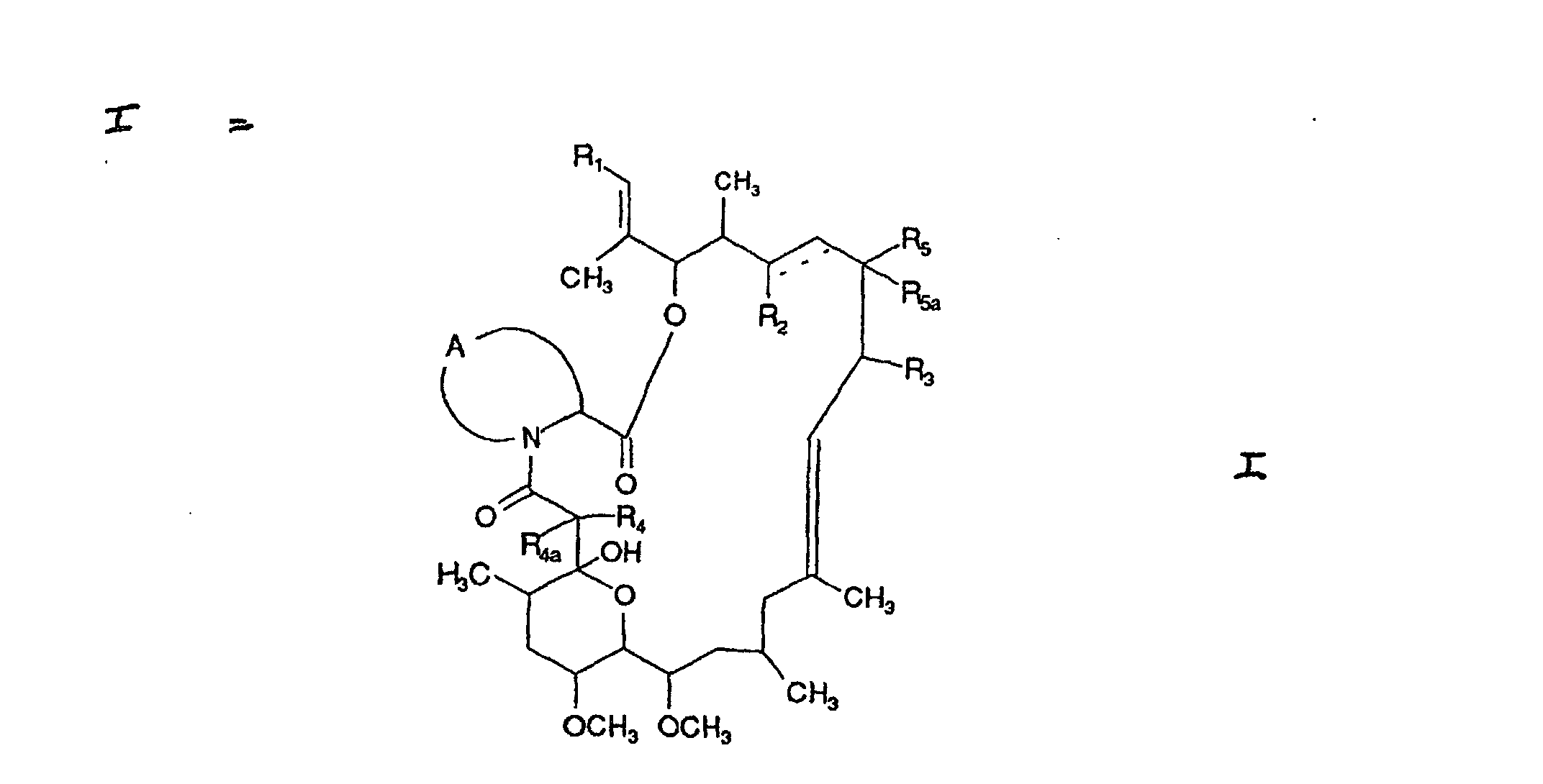
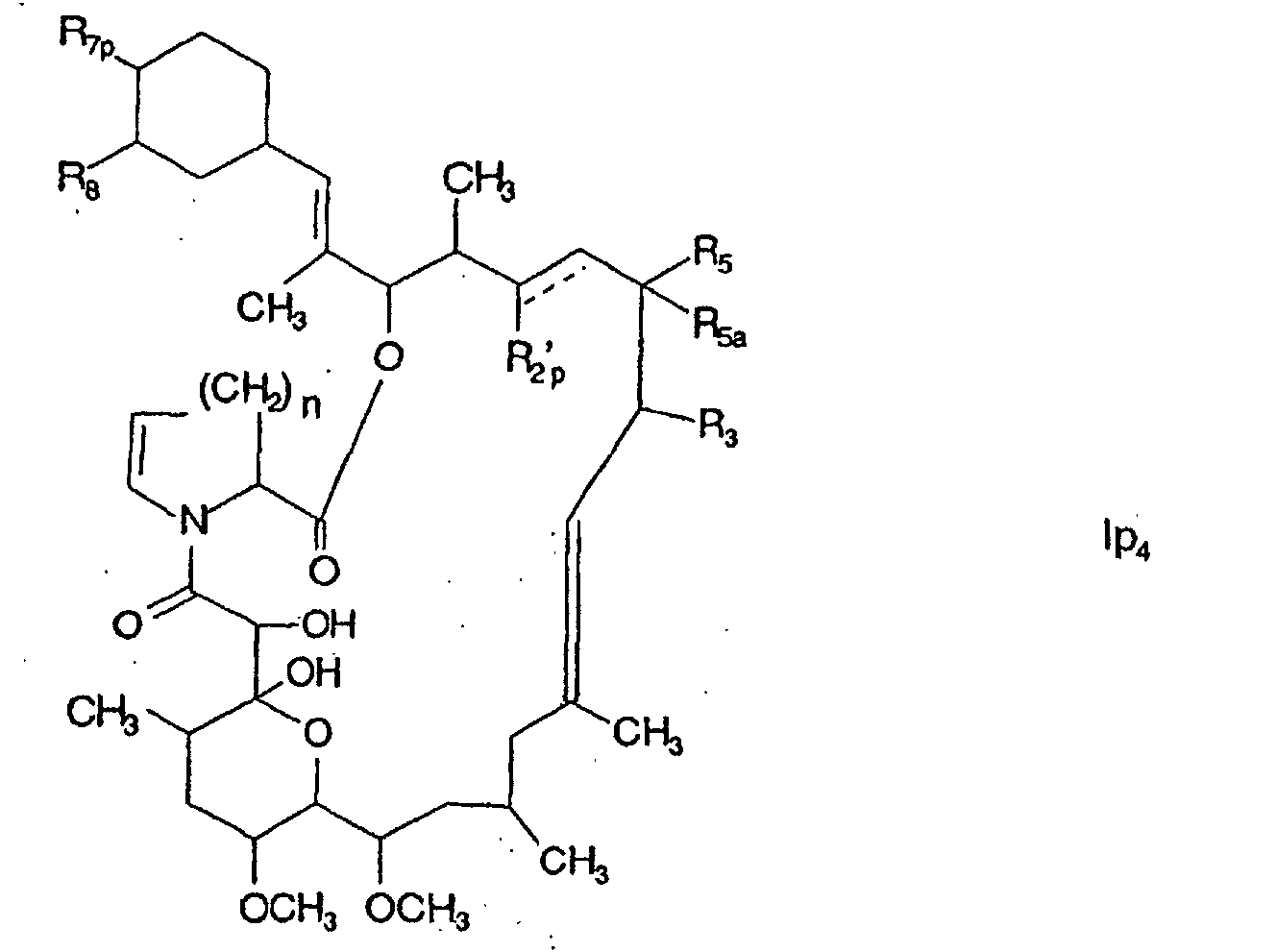
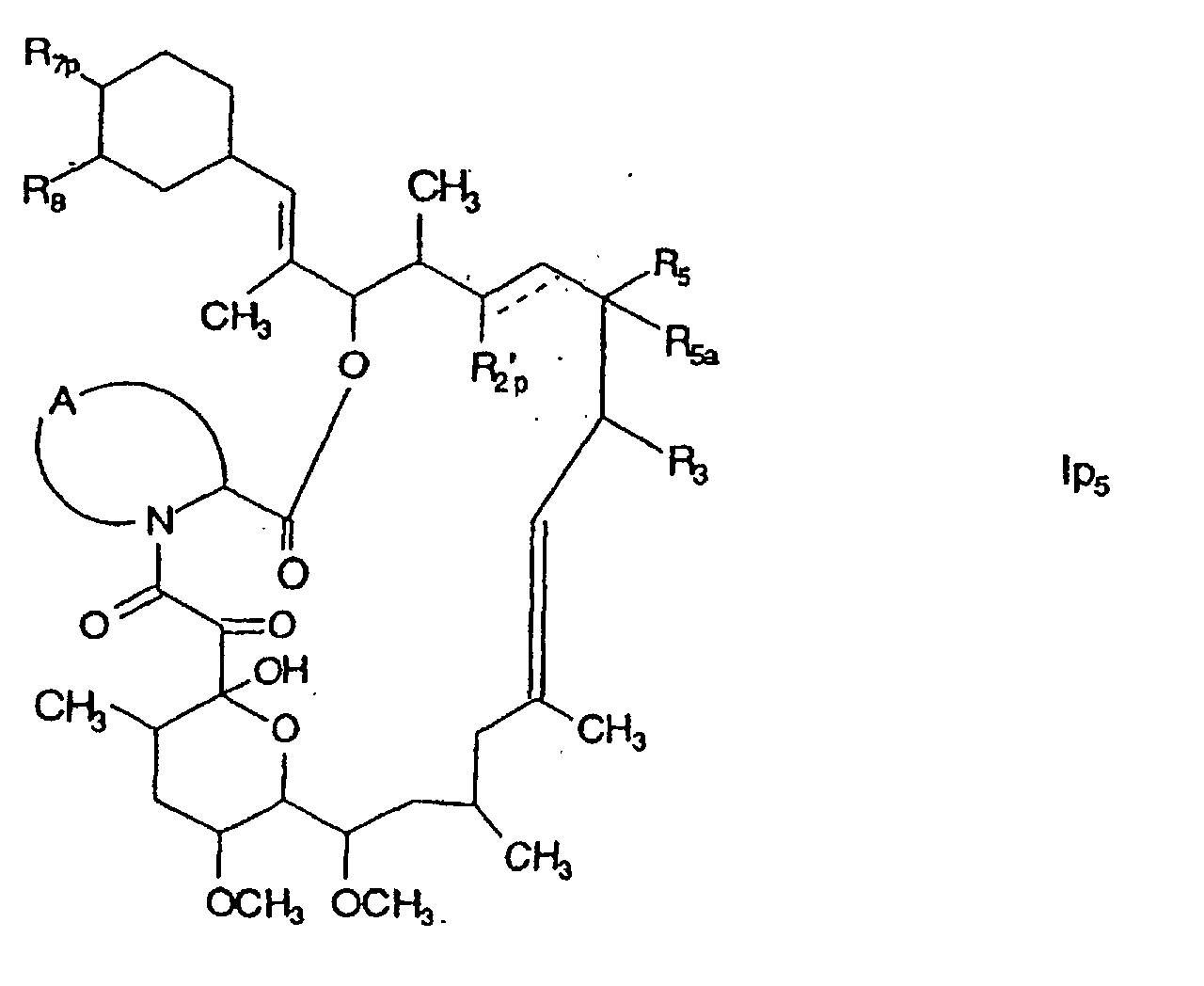
- the present invention relates to the field of macrolides, especially tetrahydropyran derivatives. It concerns more particularly the compounds of formula Ip 1 , Ip 2 , Ip 3 or Ip 4 wherein formula Ip 1 is wherein
- R 2p and R 7p preferably represent hydroxy.
- R 3 preferably represents ethyl or allyl, especially ethyl.
- R 5 preferably represents together with R 5a oxo.
- R 6 preferably represents methyl or ethyl.
- R 8 preferably represents methoxy.
- A preferably represents a group of formula -CH-CH-(CH 2 ) n - .
- Alkyl of 1 to 4 carbon atoms is linear or branched, especially of 1 or 2, particularly 1 carbon atom(s). Hydroxy preferably is free hydroxy, i.e. unprotected.
- the compounds of the invention have a number of chiral centers and may thus exist in a variety of stereoisomers.
- the process variants of the invention result normally in a mixture of such isomers. Depending on the conditions and the type of reaction the process can be steered in such manner that a specific isomer preferably is produced.
- the invention provides all stereo- and optical isomers as well as racemic mixtures. The isomers may be resolved or separated by conventional techniques. The preferred stereochemistry at various chiral carbon atoms is shown in formula Is:
- R 5 is hydroxy it preferably is in the ⁇ -configuration.
- the moiety OR 6 in group A in formula Ip 5 and the moiety -OCH 3 in the pyrrolidino or piperidino moiety in formulae Ip 1 and Ip 2 preferably are in the ⁇ -configuration. This additional chiral center is created in process variant a) for producing the compounds of formula la.
- the ⁇ and ⁇ isomers may be separated in conventional manner, e.g. chromatographically.
- a further subgroup A represents a group of formula -CH(OR 6 )-CH 2 -(CH 2 ) n - as defined above, especially -CH(OCH 3 )-CH 2 -(CH 2 ) n - wherein n is as defined above.
- the compounds of the invention can be prepared by a process which comprises
- the process of the invention can be effected in conventional manner.
- Process variant a) (irradiation) is a light-initiated intramolecular oxidation/reduction reaction. It may be carried out with UV and/or visible light, optionally under an inert gas atmosphere, e.g. with ultraviolet lamps emitting monochromatic or nonmonochromatic UV and/or visible light, e.g. at temperatures between about -78° and about 100° C, preferably between about 0° and about 30° C, preferably employing light filtered through pyrex or a long pass filter, e.g.
- Process variant b) (oxidation) may be carried out in conventional manner, e.g. by reacting a compound of formula Ic with an oxidizing agent which selectively reacts with a hydroxy group adjacent to an oxo group, such as Cu(OAc) 2 , in a solvent, e.g. in an alcohol such as methanol or a cyclic ether such as tetrahydrofuran or water or in a mixture of these solvents, under an O 2 -atmosphere or in the presence of some other oxidizing agent, preferably at temperatures of between about 0° and about 90° C.
- an oxidizing agent which selectively reacts with a hydroxy group adjacent to an oxo group, such as Cu(OAc) 2
- a solvent e.g. in an alcohol such as methanol or a cyclic ether such as tetrahydrofuran or water or in a mixture of these solvents, under an O 2 -atmosphere or in the presence of some other
- Process variant c) (elimination) may be carried out by reacting a compound of formula le e.g. with an acid such as HF, HCI or p-toluenesulfonic acid, preferably in a solvent such as acetonitrile, methanol, tetrahydrofuran, dichloromethane or dimethylformamide or water or a mixture of these solvents, preferably at temperatures between about -30° and about 100° C, or by reacting with a salt, such as NH 4 Cl or NH 4 Br, preferably in a solvent such as dimethylformamide, preferably at from about -30° to about 100° C, preferably under low pressure, whereby deprotection of a protected hydroxy group may be carried out in the same step or in a separate step.
- an acid such as HF, HCI or p-toluenesulfonic acid
- a solvent such as acetonitrile, methanol, tetrahydrofuran, dichlor
- the deprotection for the removal of e.g. tert-butyldimethylsilyl or tert-butoxycarbonyl may be effected e.g. by treatment with hydrofluoric or hydrochloric acid in a solvent such as acetonitrile, methanol, or a mixture of methanol and ether.
- a solvent such as acetonitrile, methanol, or a mixture of methanol and ether.
- the removal can be steered in such a manner that either all or only some protecting groups are eliminated. Partial deprotection is particularly indicated where a definite hydroxy group is to be reacted in a subsequent reaction.
- Suitable protecting groups are conventional hydroxy protecting groups such as tert-butoxycarbonyl or trialkylsilyl, preferably tert-butyldimethylsilyl.
- the separation of resultant stereoisomeric mixtures may be effected e.g. chromatographically.
- a compound of the invention in free form may be converted into a salt form where such forms exist, e.g. an acid addition salt form, in conventional manner and vice-versa.
- a compound of the invention may be isolated and purified from the reaction mixture in conventional manner.
- the compounds used as starting materials are known or can be obtained in conventional manner from known compounds, e.g. starting from appropriate Streptomyces strains such as Streptomyces tsukubaensis No. 9993 described in e.g. Fujisawa EP 184162.
- Samples can be obtained from the Fermentation Research Institute, Tsukuba, Ibaraki 305, Japan under the provisions of the Budapest Treaty e.g. under deposit No. FERM BP-927. This strain has been redeposited on April 27, 1989 with the Agricultural Research Culture Collection International Depository, Peoria, Illinois 61604, USA under the provisions of the Budapest Treaty under deposit No. NRRL 18488.
- the compound of formula IIa can be recovered in conventional manner from a microorganism capable of producing it, e.g. from a mutant strain (ATCC 55087) of Streptomyces hygroscopicus var. ascomycetus according to the procedure described in EP 478235.
- ATCC 55087 has been redeposited on April 13, 1994 with the American Type Culture Collection, Rockville, MD 20852, USA under Deposit Number ATCC 55558, under the provisions of the Budapest Treaty.
- a mixture of 50 mg of the compound of Example 2 and 100 mg of ammonium chloride in 100 ml of dimethylformamide is reacted for 1.5 hours in a rotatory evaporator under vacuum at 78° so that the solvent slowly distills off. Remaining solvent is removed under high vacuum and the residue is partitioned between brine and ethyl acetate. The organic phase is separated, dried (MgSO 4 ), filtered, the solvent removed under vacuum and the residue subjected to flash chromatography over silicagel [pretreated with 2% w/w NaHCO 3 and dried in an oven] using ethyl acetate to give the title compound (foam).
- main component 214.0, 173.1, 170.3, 139.7, 132.6, 130.1, 123.9, 96.9, 84.2, 78.2, 76.9, 75.3, 74.9, 73,52. 73.46, 72.5, 71.1, 63.7, 52.2.
- main component 213.2, 173.3, 170.7, 139.9, 135.7, 131.2, 129.7, 123.3, 116.5, 97.0, 84.2, 80.5, 77.7, 75.2, 52.1.
- agents of the invention possess pharmacological activity. They are thus indicated for use as pharmaceuticals. In particular they possess antiinflammatory, and immunosuppressant and antiproliferative activity.
- the antiinflammatory activity may e.g. be determined in the following test methods:
- Example 8 The compound of Example 8 ("5,6-dehydro-ascomycin"), which may also be designated by the full chemical name 17-ethyl-1,14-dihydroxy-12-[2-(4-hydroxy-3-methoxycyclohexyl)-1 -methylvinyl]-23,25-dimethoxy-13,19,21,27-tetramethyl-11,28-dioxa-4-azatricyclo [22.3.1.0.
- the agents of the invention show less skin atrophy after topical application as compared to potent topical corticosteroids and also less systemic side effects as compared to FK 506, as shown e.g. by evaluating toxicity in rats upon subcutaneous administration.
- agents of the invention are therefore indicated as antiinflammatory agents and as immunosuppressant and antiproliferative agents for topical and systemic use in the prevention and treatment of inflammatory and hyperproliferative conditions and of conditions requiring immunosuppression such as:
- the agents may be administered systemically or topically.
- the appropriate dosage will, of course, vary depending upon, for example, the particular agent employed, the host, the mode of administration and the nature and severity of the condition being treated. However, in general, beneficial results are indicated to be obtained systemically at daily dosages of from about 0.15 mg/kg to about 1.5 mg/kg animal body weight.
- An indicated daily dosage in the larger mammal is in the range of from about 10 mg to about 100 mg, conveniently administered, for example, in divided doses up to four times a day or in retard form.
- satisfactory results are obtained with local administration at a concentration of active substance of about 0.1 % to about 3 % several times daily, e.g. 3 times daily.
- Examples of indicated galenical forms are lotions, gels, creams, sprays and solutions.
- the agents of the invention may be administered by any conventional route, in particular enterally, e.g. orally, e.g. in the form of tablets or capsules, or topically, e.g. in the form of lotions, gels, creams, sprays, ophtalmic or nasal solutions or aerosols for local treatment of skin and mucosal membranes, e.g. the eye, respiratory tract, vagina, oral and nasal cavity.
- enterally e.g. orally, e.g. in the form of tablets or capsules
- topically e.g. in the form of lotions, gels, creams, sprays, ophtalmic or nasal solutions or aerosols for local treatment of skin and mucosal membranes, e.g. the eye, respiratory tract, vagina, oral and nasal cavity.
- compositions e.g. for topical application comprising an agent of the invention in association with at least one pharmaceutically acceptable carrier or diluent may be manufactured in conventional manner by mixing with a pharmaceutically acceptable carrier or diluent.
- Unit dosage forms contain, for example, from about 2.5 mg to about 50 mg of active substance.
- Topical administration is e.g. to the skin.
- a further form of topical administration is to the eye, for the treatment of immune-mediated conditions of the eye, such as: autoimmune diseases, e.g. uveitis, keratoplasty and chronic keratitis; allergic conditions, e.g. vernal conjunctivitis; inflammatory conditions and corneal transplants, by the topical administration to the eye surface of an agent of the invention in a pharmaceutically acceptable ophthalmic vehicle.
- the ophthalmic vehicle is such that the agent is maintained in contact with the ocular surface for a sufficient time period to allow the agent to penetrate the corneal and internal regions of the eye, e.g. the anterior chamber, posterior chamber, vitreous body, aqueous humor, vitreous humor, cornea, iris/ciliary, lens, choroid/retina and sclera.
- the pharmaceutically acceptable ophthalmic vehicle may be e.g. an ointment, vegetable oil, or an encapsulating material.
- Another form of topical treatment is the application of the agents of the invention to bronchial and alveolar epithelia via inhalation of e.g. aerosol or powder in e.g. asthmatic patients.
- the agents of the invention inhibit antigen-induced inflammatory cell infiltration into the airways following topical administration to the airways via the pulmonary route. They are thus indicated for use in the treatment of airways or lung diseases, such as asthma. This activity may be demonstrated in standard test methods, e.g. by measurement of the influence on allergen-induced pulmonary eosinophilia (in vivo), as described in e.g. EP 577544.
- the agents of the invention are accordingly indicated for use in the treatment of diseases or conditions responsive to or requiring topical therapy of the airways or lung, in particular inflammatory or obstructive airways disease. They are especially indicated for use in the treatment of diseases or conditions of the airways or lung associated with or characterized by inflammatory cell infiltration or other inflammatory events accompanied by inflammatory cell, e.g. eosinophil and/or neutrophil, accumulation, most especially in the treatment of asthma. They are also indicated for use in the treatment of bronchitis or for the treatment of chronic or acute airways obstruction associated therewith, of pneumoconiosis and of eosinophil-related disorders of the airways.
- the agents of the invention may be employed in any dosage form appropriate for topical administration to the desired site e.g. via the pulmonary route by inhalation from an appropriate dispenser device, e.g. in any suitable finely dispersed or finely dispersible form capable of administration into the airways or lungs, for example in finely divided dry particulate form or in dispersion or solution in any appropriate (i.e. pulmonarily administrable) solid or liquid carrier medium.
- the agents of the invention may, for example, be employed as such, i.e. in micronised form without any additive materials, in dilution with other appropriate finely divided inert solid carrier or diluent, in coated particulate form or in any other appropriate form as known in the art for the pulmonary administration of finely divided solids.
- Pulmonary administration may be effected using any appropriate system as known in the art for delivering drug substance in dry or liquid form by inhalation, e.g. an atomiser, nebulizer, dry-powder inhaler or like device.
- a metered delivery device i.e. capable of delivering a pre-determined amount of agent of the invention at each actuation, will be employed. Such devices are known in the art.
- Pharmaceutically acceptable diluents or carriers acceptable for topical administration pulmonarily include e.g. dry powder preparations of the active ingredient (i.e. agent of the invention) in substantially pure form, for example as employed in the art for delivery from a dry powder inhalation device.
- Means or devices enabling or facilitating topical administration include, in particular, inhalation devices as well as containers and the like from which the active ingredient may be delivered in a form capable of topical application. Preferred embodiments will be such as permit topical administration within the airways or lungs, e.g. by inhalation.
- Dosages of agent of the invention employed for treating diseases or conditions of the airways or lungs, e.g. for use In treating inflammatory or obstructive airways disease, for example asthma, e.g. by inhalation, are of the order of from 0.1 mg to 10 mg per day, e.g. from about 0.5 mg to about 5 mg, preferably from about 1 mg to about 3 mg per day.
- Dosages will appropriately be administered from a metered delivery system in a series of from 1 to 5 puffs at each administration, with administration performed once to four times daily.
- Dosages at each administration will thus conveniently be of the order of from about 0.0025 mg to about 10 mg, more suitably from about 0.125 mg to about 5 mg, e.g. administered with a metered delivery device, e.g. capable of delivering from about 0.25 mg to about 3 mg agent per actuation.
- the antiinflammatory and the immunosuppressant and antiproliferative activity is the main activity of the agents of the invention, they also possess some degree of activity in increasing sensitivity to, or in increasing the efficacy of, chemotherapeutic drug therapy. This activity may e.g. be determined according to the test methods described in EP 360760.
- the agents of the invention are therefore also indicated for use in reversing chemotherapeutic drug resistance of varying types, e.g. acquired or innate, or in increasing sensitivity to administered drug therapy, e.g. as a means of reducing regular chemotherapeutic dosage levels, for example in the case of anti-neoplastic or cytostatic drug therapy, as a means of decreasing overall drug toxicity and, more especially, as a means of reversing or reducing resistance, including both inherent and acquired resistance, to chemotherapy.
- the invention thus also concerns the use of an agent of the invention for the preparation of a pharmaceutical composition which comprises mixing with at least one pharmaceutically acceptable carrier or diluent; and a process for the preparation of a pharmaceutical composition which comprises mixing an agent of the invention together with at least one pharmaceutically acceptable carrier or diluent. It further provides a pharmaceutical composition comprising an agent of the invention in association with at least one pharmaceutically acceptable carrier or diluent.
Landscapes
- Chemical & Material Sciences (AREA)
- Organic Chemistry (AREA)
- Health & Medical Sciences (AREA)
- General Health & Medical Sciences (AREA)
- Life Sciences & Earth Sciences (AREA)
- Engineering & Computer Science (AREA)
- Veterinary Medicine (AREA)
- Public Health (AREA)
- Medicinal Chemistry (AREA)
- Nuclear Medicine, Radiotherapy & Molecular Imaging (AREA)
- Chemical Kinetics & Catalysis (AREA)
- Pharmacology & Pharmacy (AREA)
- General Chemical & Material Sciences (AREA)
- Animal Behavior & Ethology (AREA)
- Immunology (AREA)
- Genetics & Genomics (AREA)
- Biochemistry (AREA)
- Biotechnology (AREA)
- Molecular Biology (AREA)
- Bioinformatics & Cheminformatics (AREA)
- Transplantation (AREA)
- Pain & Pain Management (AREA)
- Rheumatology (AREA)
- Pharmaceuticals Containing Other Organic And Inorganic Compounds (AREA)
- Saccharide Compounds (AREA)
- Nitrogen And Oxygen Or Sulfur-Condensed Heterocyclic Ring Systems (AREA)
- Steroid Compounds (AREA)
- Nitrogen Condensed Heterocyclic Rings (AREA)
- Organic Low-Molecular-Weight Compounds And Preparation Thereof (AREA)
- Preparation Of Compounds By Using Micro-Organisms (AREA)
- Medicines That Contain Protein Lipid Enzymes And Other Medicines (AREA)
- Color Printing (AREA)
Abstract
Description
- The present invention relates to the field of macrolides, especially tetrahydropyran derivatives. It concerns more particularly the compounds of formula Ip1, Ip2, Ip3 or Ip4 wherein
formula Ip1 iswherein
- R2p and R7p
- are the same or different and represent hydroxy optionally protected by tert-butoxycarbonyl or tri(C1-4)alkylsilyl;
- R3
- represents methyl, ethyl, n-propyl or allyl;
- R8
- represents hydroxy or methoxy; and
- n
- represents the number 1 or 2;
- R2'p
- represents hydrogen or hydroxy optionally protected by tert-butoxycarbonyl or tri(C1-4)alkylsilyl and there is a single or a double bond between the two carbon atoms joined by a dotted line;
- either R5
- represents hydroxy and R5a represents hydrogen,
- or R5 and R5a
- together represent oxo; and
- R3, R7p, R8 and n
- are as defined above ; and
- A
- represents a group of formula -CH(OR6)-CH2-(CH2)n- or -CH=CH-(CH2)n-, whereby the (CH2)n- part thereof is linked to the carbon atom, and
- R6
- represents alkyl of 1 to 4 carbon atoms; and
- R2'p , R3, R5, R5a, R7p, R8 and n
- are as defined above,
- R2p and R7p preferably represent hydroxy. R3 preferably represents ethyl or allyl, especially ethyl. Preferred are the compounds of formula Ip2 and Ip5. R5 preferably represents together with R5a oxo. R6 preferably represents methyl or ethyl. R8 preferably represents methoxy. A preferably represents a group of formula -CH-CH-(CH2)n- .
- Alkyl of 1 to 4 carbon atoms is linear or branched, especially of 1 or 2, particularly 1 carbon atom(s). Hydroxy preferably is free hydroxy, i.e. unprotected.
- Preferably there is a single bond between the two carbon atoms joined by a dotted line.
- The compounds of the invention have a number of chiral centers and may thus exist in a variety of stereoisomers. The process variants of the invention result normally in a mixture of such isomers. Depending on the conditions and the type of reaction the process can be steered in such manner that a specific isomer preferably is produced. The invention provides all stereo- and optical isomers as well as racemic mixtures. The isomers may be resolved or separated by conventional techniques. The preferred stereochemistry at various chiral carbon atoms is shown in formula Is:

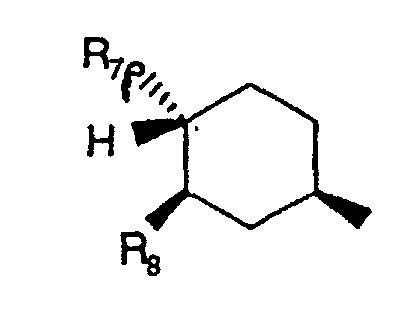
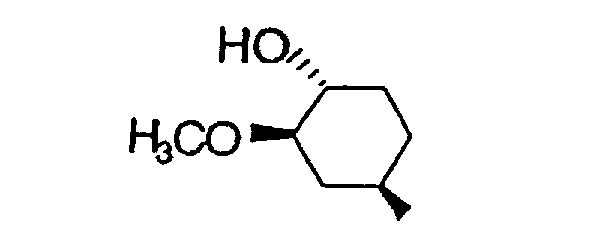
- The preferred stereochemistry at the cyclohexyl moiety is shown by formula
- When R5 is hydroxy it preferably is in the α-configuration.
- The moiety OR6 in group A in formula Ip5 and the moiety -OCH3 in the pyrrolidino or piperidino moiety in formulae Ip1 and Ip2 preferably are in the β-configuration. This additional chiral center is created in process variant a) for producing the compounds of formula la. The α and β isomers may be separated in conventional manner, e.g. chromatographically.
- In a subgroup of compound of formula Ip5 A represents a group of formula -CH=CH-(CH2)n- as defined above. In a further subgroup A represents a group of formula -CH(OR6)-CH2-(CH2)n- as defined above, especially -CH(OCH3)-CH2-(CH2)n- wherein n is as defined above. The compounds of the invention can be prepared by a process which comprises
- a) for producing the compounds of formula Ip1 or Ip4,
appropriately irradiating in the presence of R6OH corresponding compounds of formula IIwherein R1 represents the cyclohexyl moiety carrying R7p and R8 and the other substituents are as defined above, or
- b) for producing the compounds of formula Ip2 or Ip5,
appropriately oxidizing corresponding compounds of formula Icwherein R1 represents the cyclohexyl moiety carrying R7p and R8 and the other substituents are as defined above, or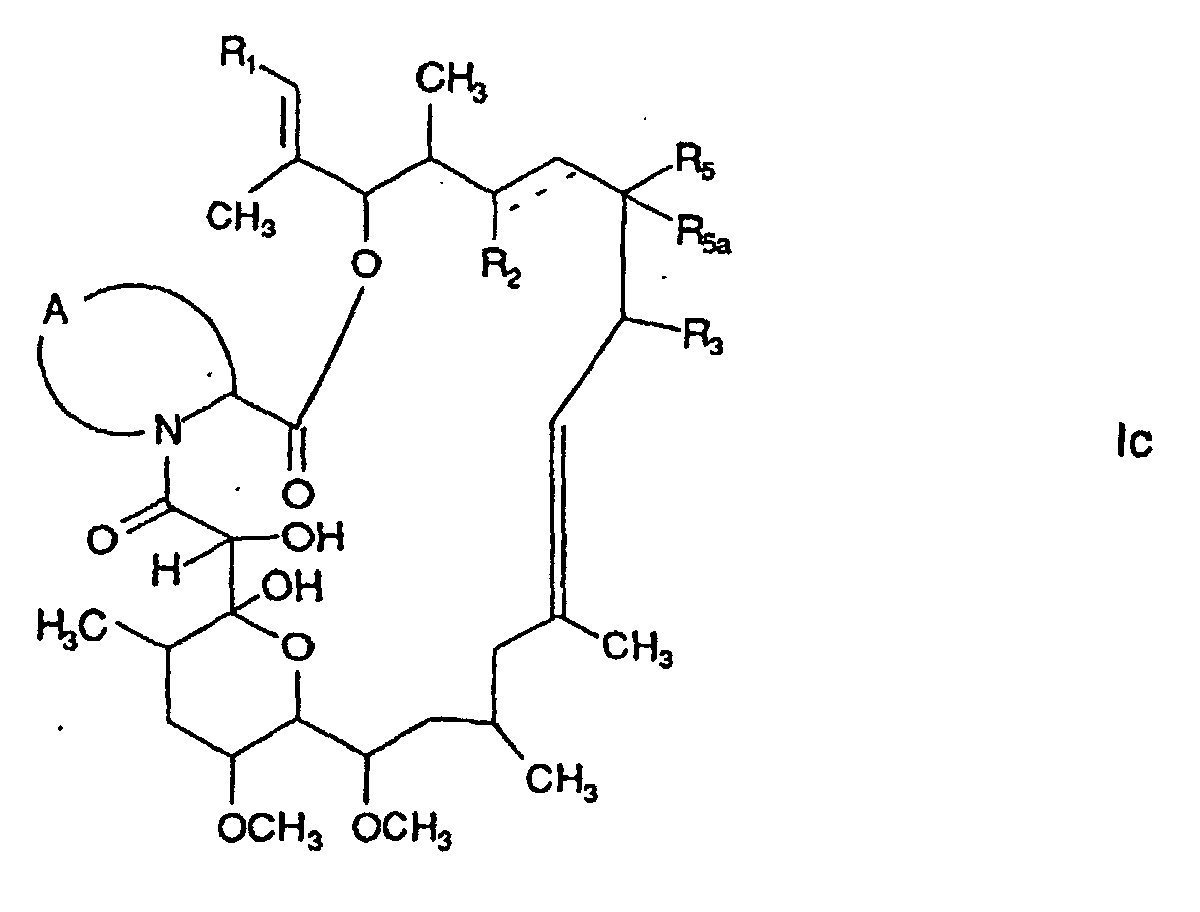
- c) for producing the compounds of formula Ip4, or Ip5 wherein A represents a group of formula
-CH=CH-(CH2)n- as defined above, and the other substituents are as defined above,
appropriately eliminating R6OH from corresponding compounds of formula le
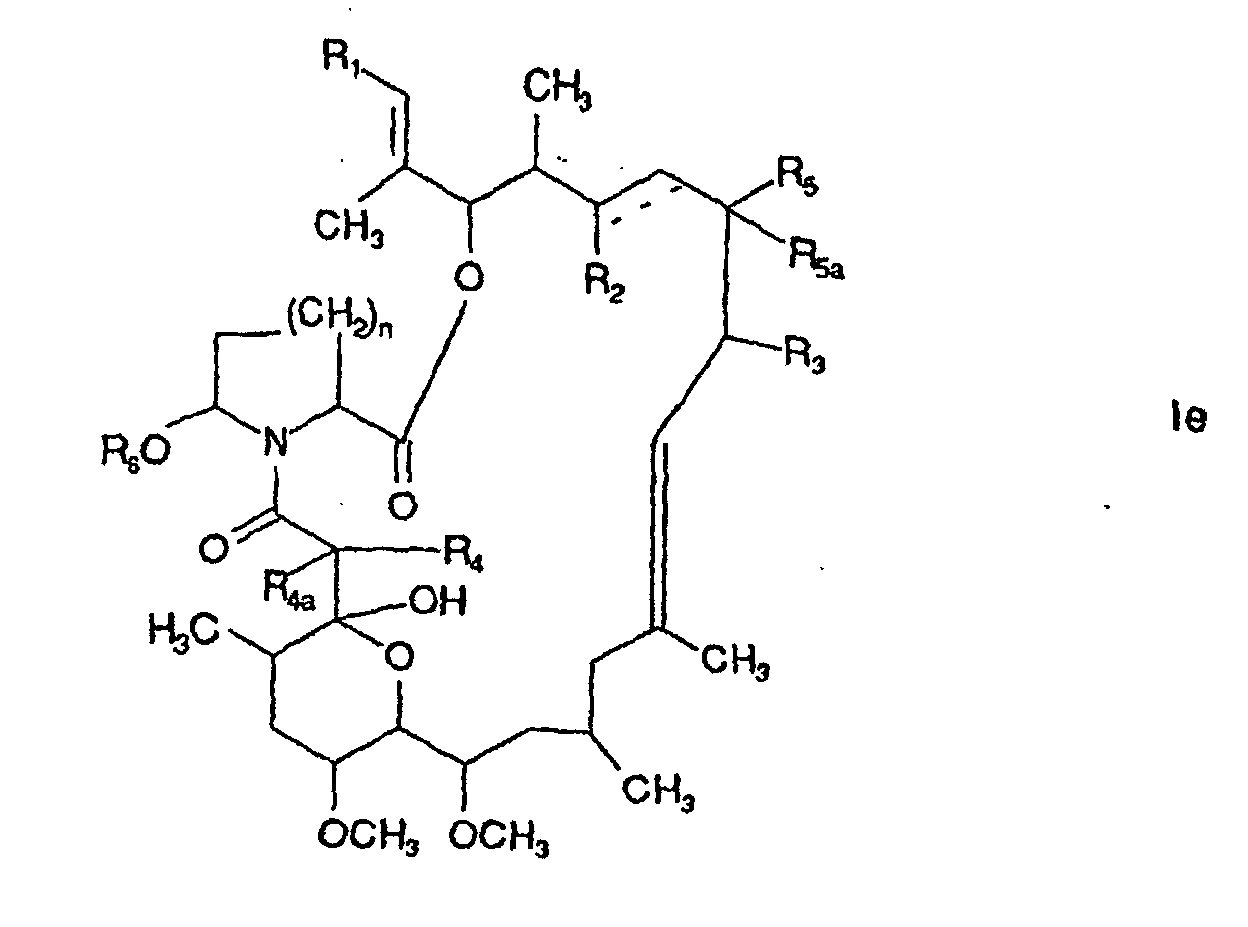 wherein R1 represents the cyclohexyl moiety carrying R7p and R8 as defined above,
either R4 represents hydroxy and R4a represents hydrogen,
wherein R1 represents the cyclohexyl moiety carrying R7p and R8 as defined above,
either R4 represents hydroxy and R4a represents hydrogen, -
- deprotecting one or more hydroxy group(s) in resultant compounds of formula Ip1, Ip2, Ip4 or Ip5 having protected hydroxy group(s); or
- protecting one or more hydroxy group(s) in resultant compounds of formula Ip1, Ip2, Ip4 or Ip5 having free hydroxy group(s); or
- separating resultant stereoisomeric mixtures of compounds of formula I into individual isomers; and
- The process of the invention can be effected in conventional manner.
- Process variant a) (irradiation) is a light-initiated intramolecular oxidation/reduction reaction. It may be carried out with UV and/or visible light, optionally under an inert gas atmosphere, e.g. with ultraviolet lamps emitting monochromatic or nonmonochromatic UV and/or visible light, e.g. at temperatures between about -78° and about 100° C, preferably between about 0° and about 30° C, preferably employing light filtered through pyrex or a long pass filter, e.g. an aqueous solution of NaBr and Pb(NO3)2 in an alcohol R6OH or a mixture of an alcohol R6OH with a saturated or unsaturated hydrocarbon, an ether, a ketone or an ester or a mixture of these solvents, whereby these solvents or components thereof may participate in the reaction or act, e.g. as sensitizer, and optionally in the presence of a further compound, which may participate in the reaction e.g. as a sensitizer or as an electron transfer assisting agent.
- Process variant b) (oxidation) may be carried out in conventional manner, e.g. by reacting a compound of formula Ic with an oxidizing agent which selectively reacts with a hydroxy group adjacent to an oxo group, such as Cu(OAc)2, in a solvent, e.g. in an alcohol such as methanol or a cyclic ether such as tetrahydrofuran or water or in a mixture of these solvents, under an O2-atmosphere or in the presence of some other oxidizing agent, preferably at temperatures of between about 0° and about 90° C.
- Process variant c) (elimination) may be carried out by reacting a compound of formula le e.g. with an acid such as HF, HCI or p-toluenesulfonic acid, preferably in a solvent such as acetonitrile, methanol, tetrahydrofuran, dichloromethane or dimethylformamide or water or a mixture of these solvents, preferably at temperatures between about -30° and about 100° C, or by reacting with a salt, such as NH4Cl or NH4Br, preferably in a solvent such as dimethylformamide, preferably at from about -30° to about 100° C, preferably under low pressure, whereby deprotection of a protected hydroxy group may be carried out in the same step or in a separate step.
- The deprotection for the removal of e.g. tert-butyldimethylsilyl or tert-butoxycarbonyl may be effected e.g. by treatment with hydrofluoric or hydrochloric acid in a solvent such as acetonitrile, methanol, or a mixture of methanol and ether. Depending on the reaction conditions chosen (e.g. duration or temperature) the removal can be steered in such a manner that either all or only some protecting groups are eliminated. Partial deprotection is particularly indicated where a definite hydroxy group is to be reacted in a subsequent reaction.
For the protection of free hydroxy group(s), depending on the reaction conditions chosen the reaction can be steered in such a manner that either all or only some potentially reactive hydroxy groups are protected. Suitable protecting groups are conventional hydroxy protecting groups such as tert-butoxycarbonyl or trialkylsilyl, preferably tert-butyldimethylsilyl.
The separation of resultant stereoisomeric mixtures may be effected e.g. chromatographically. - The above process variants of the invention, e.g. a) and b) or a) and c), may be carried out also in a one pot reaction without isolating the intermediates.
- A compound of the invention in free form may be converted into a salt form where such forms exist, e.g. an acid addition salt form, in conventional manner and vice-versa.
- A compound of the invention may be isolated and purified from the reaction mixture in conventional manner.
- Insofar as their preparation is not specifically described herein, e.g. in the Examples, the compounds used as starting materials are known or can be obtained in conventional manner from known compounds, e.g. starting from appropriate Streptomyces strains such as Streptomyces tsukubaensis No. 9993 described in e.g. Fujisawa EP 184162. Samples can be obtained from the Fermentation Research Institute, Tsukuba, Ibaraki 305, Japan under the provisions of the Budapest Treaty e.g. under deposit No. FERM BP-927. This strain has been redeposited on April 27, 1989 with the Agricultural Research Culture Collection International Depository, Peoria, Illinois 61604, USA under the provisions of the Budapest Treaty under deposit No. NRRL 18488.
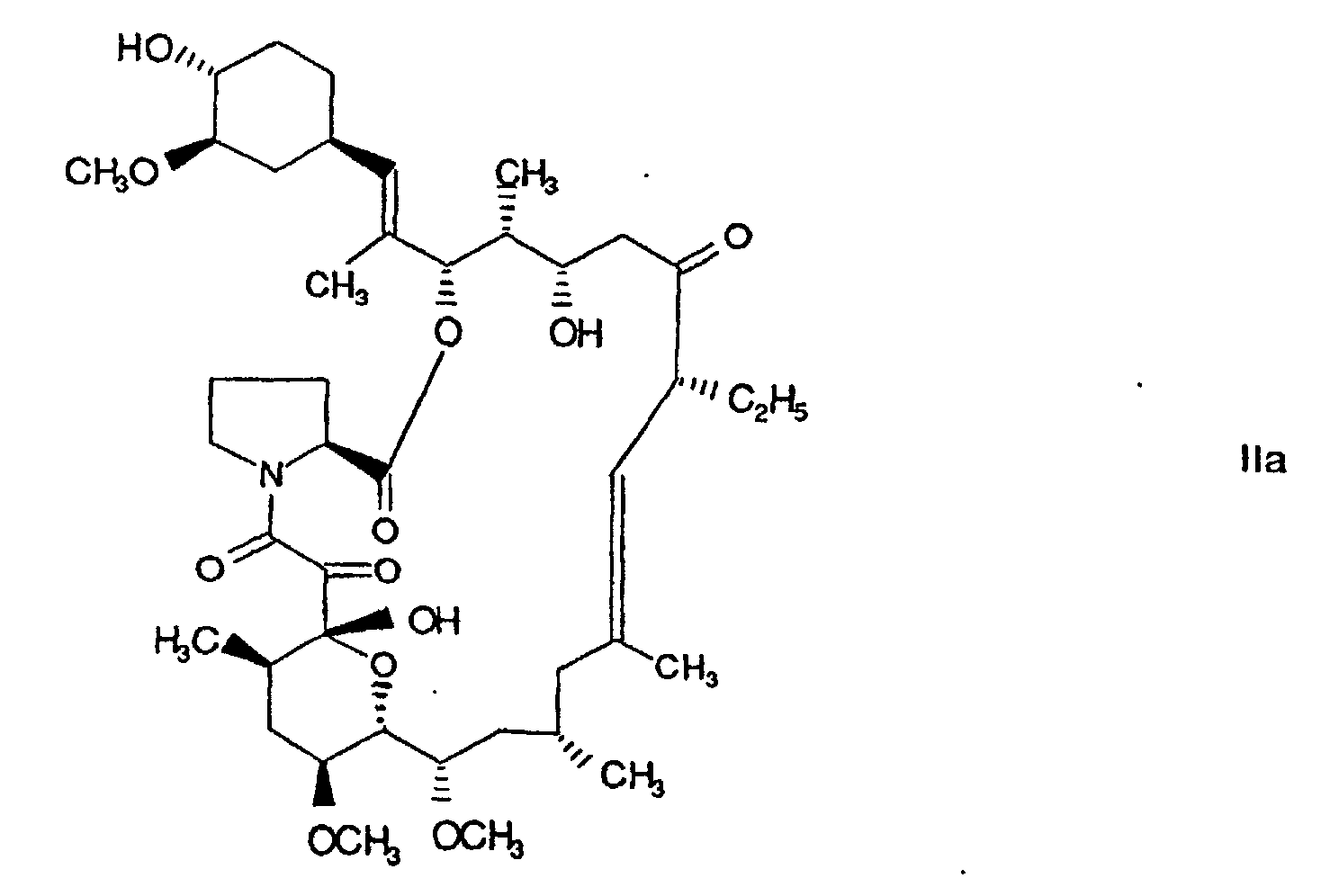
- The compound of formula IIacan be recovered in conventional manner from a microorganism capable of producing it, e.g. from a mutant strain (ATCC 55087) of Streptomyces hygroscopicus var. ascomycetus according to the procedure described in EP 478235. ATCC 55087 has been redeposited on April 13, 1994 with the American Type Culture Collection, Rockville, MD 20852, USA under Deposit Number ATCC 55558, under the provisions of the Budapest Treaty.
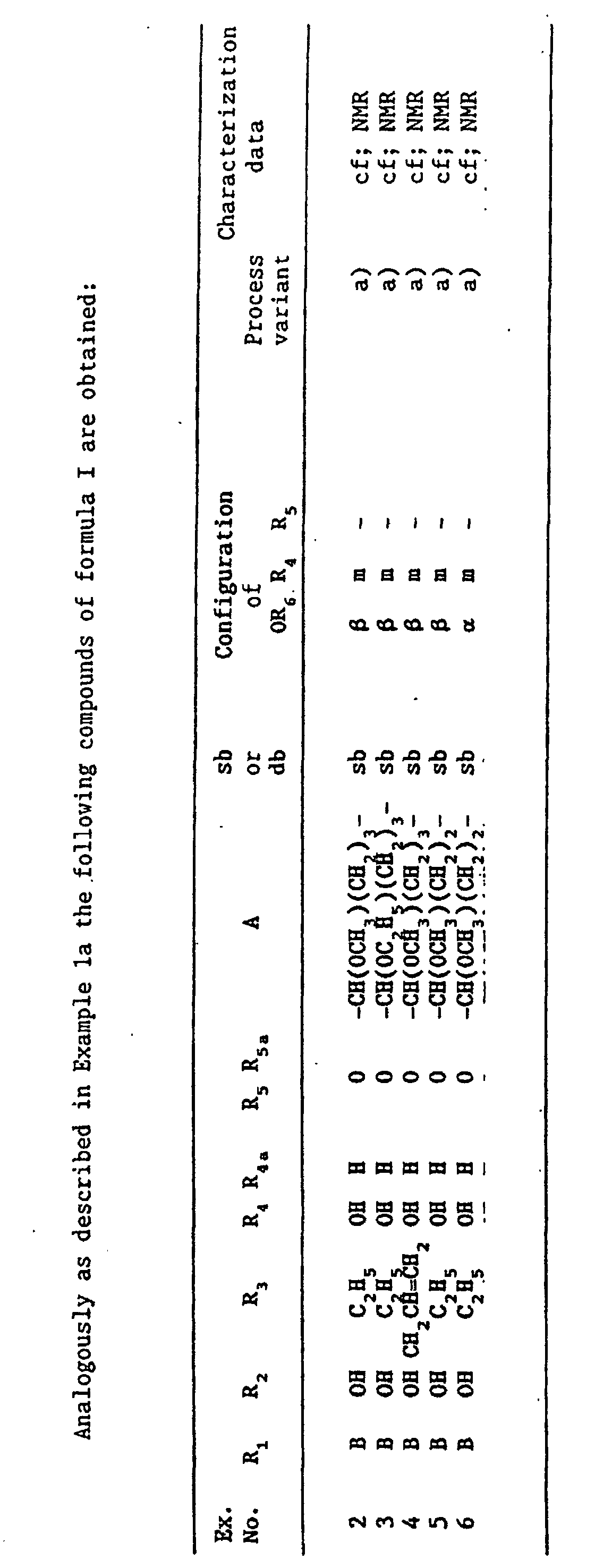
- The following Examples illustrate the invention. They are not limitative. All temperatures are in degrees Centigrade. In the NMR spectra all chemical shift values are in ppm; samples are measured in CDCl3, unless indicated otherwise. The stereochemical configuration at the various carbon atoms is as for FK 506, except as indicated. All compounds are in free form. The following abbreviations are used:
- Ac =
- acetyl
- cf =
- colourless foam
- db =
- double bond between the two carbon atoms joined by a dotted line
- depr. =
- deprotection
- iPr =
- isopropyl
- m =
- mixture of stereoisomers with respect to the position indicated
- m.p. =
- melting point
- O =
- oxo
- OtBDMS =
- tert-butyldimethylsilyloxy
- sb =
- single bond between the two carbon atoms joined by a dotted line
- tBDMS =
- tert-butyldimethylsilyl
- B =
-

- B' =
-
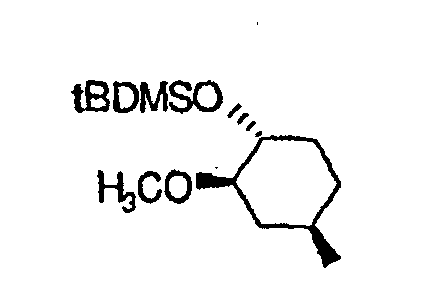
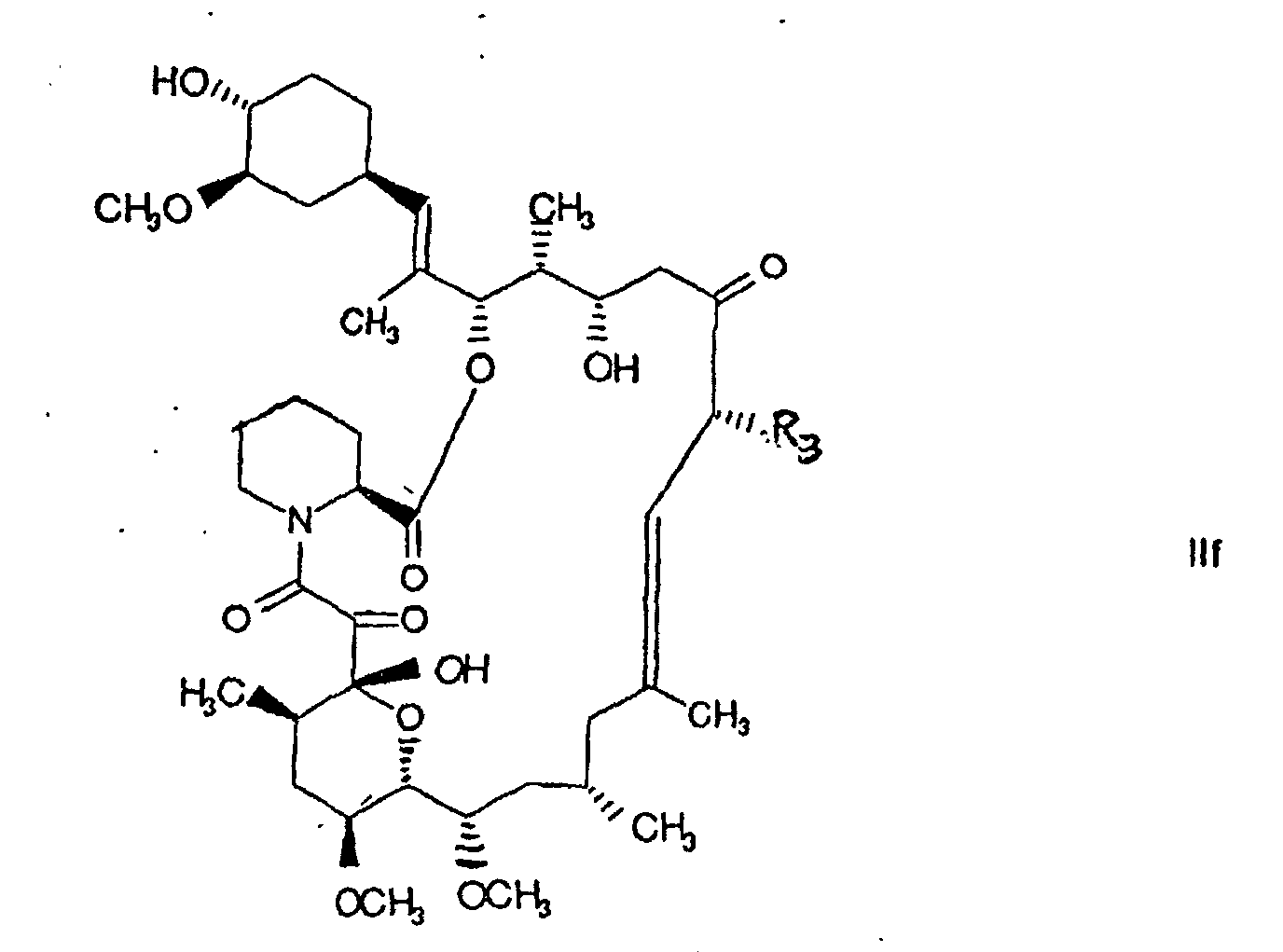
- FK 506 =
- compound of formula IIf wherein R3 = CH2CH=CH2
- FR 520 =
- compound of formula IIf wherein R3 = C2H5
- 250 mg of the compound of Example 1a (see below), 10 ml of methanol and 0.15 ml of ether saturated with dry HCl is stirred in an ice-bath for 2 hours. The mixture is poured into aqueous bicarbonate solution and extracted with ethyl acetate. The organic phase is dried over MgSO4 and the solvent is evaporated. Silicagel chromatography of the residue gives the title compound (cf).
- An argon degassed solution of 3.8 g of the compound of formula II [R1=B'; R2=OH; sb; R3=C2H5; R5=OH(α); R5a=H; n=2] in 1200 ml of methanol is cooled in an ice-bath and irradiated in a well-type reactor for 10 hours using a Hanau TQ-150 lamp and employing a pyrex filter. Three such lots are combined and chromatographed by HPLC employing a polygosyl column using cyclohexane/isopropanol (9/1) to give the title compound (cf).
- A mixture of 5 g of the compound of Example 9 (see below), 1.9 g of Cu(OAc)2.H2O and 500 ml of tetrahydrofuran is stirred at reflux temperature and under an O2-atmosphere for 7 hours. The solvent is removed under vacuum, the residue partitioned between saturated aqueous bicarbonate and ethyl acetate, the organic phase is separated, dried (MgSO4), filtered, the solvent is removed under vacuum and the residue is chromatographed over silicagel (pretreated with aqueous 2% w/w NaHCO3 and dried in an oven) using ethyl acetate to give the title compound (foam). The foam is crystallised by dissolving in diethyl ether and adding n-pentane in small portions and scratching the walls with a spatula to initiate crystallization (m.p. 169°-172°).
- A mixture of 50 mg of the compound of Example 2 and 100 mg of ammonium chloride in 100 ml of dimethylformamide is reacted for 1.5 hours in a rotatory evaporator under vacuum at 78° so that the solvent slowly distills off. Remaining solvent is removed under high vacuum and the residue is partitioned between brine and ethyl acetate. The organic phase is separated, dried (MgSO4), filtered, the solvent removed under vacuum and the residue subjected to flash chromatography over silicagel [pretreated with 2% w/w NaHCO3 and dried in an oven] using ethyl acetate to give the title compound (foam). This foam is crystallized by dissolving in diethylether and adding n-pentane in small portions and scratching the walls with a spatula to initiate crystallization (m.p. 119°-123°).

Ex. Spectra: 1H-NMR - Spectra 1 5.83 (t, J=2.6Hz); 5.29 (br, d, J=4.1 Hz); 4.32 (d, J=8.5Hz); 3.70 (dd, J=1.2 und 9.5Hz); 3.13 (s). 10 (major component): 5.63 (br. d); 3.84 (dd). 11 (major component): 5.69 (br. t); 4.61 (dd, J=2.0, 5.5); 3.21 (s). 17 4.96 (t, J=2.8Hz); 4.19 (dd, J=3.7 and 8.6Hz); 3.92 (m); 3.63 (d, J=9.6Hz); 3.33 (s). 18 (ca. 2:1 mixture of isomers) major isomer: 5.69 (t, J=2.7Hz); 5.21 (d, J=9.0Hz); 5.10 (d, J=1.6Hz); 4.92 (d, J=10.1Hz); 4.46 (dd, J=5.3 and 1.8Hz). 27 (ca. 1:1 mixture of isomers): 7.11 (d, J=8.4); 6.89 (d, J=8.4); 3.03 - 2.96 (m); 2.54 - 2.46 (m); 1.16 - 1.12 (m). 30 6.86 (d, J=8.6 Hz); 7.13 (d, J=8.5Hz). 32c (mixture of isomers): 7.09 (d, J=8.7); 6.52 (d, J=8.5); 5.69 (s); 5.64 (s); 3.07-3.0 (m). 13C-NMR - Spectra 1a 173.8, 170.6, 136.7, 130.4, 129.3, 125.5, 97.3, 84.3, 80.1. 2 (main component): 214.0, 173.3, 170.7, 139.7, 131.1, 129.7, 123.9, 97.0, 80.5, 75.2, 52.1. 3 (main component): 214.0, 173.1, 170.3, 139.7, 132.6, 130.1, 123.9, 96.9, 84.2, 78.2, 76.9, 75.3, 74.9, 73,52. 73.46, 72.5, 71.1, 63.7, 52.2. 4 (main component): 213.2, 173.3, 170.7, 139.9, 135.7, 131.2, 129.7, 123.3, 116.5, 97.0, 84.2, 80.5, 77.7, 75.2, 52.1. 5 (main component): 213.1, 173.2, 169.2, 140.2, 131.9, 130.0, 122.8, 99.6, 88.3, 84.2, 78.5, 77.0, 74.1, 73.5, 71.6, 71.2, 69.3, 59.7, 54.2. 6 (main component):213.0, 173.0, 170.6, 140.0, 132.3, 130.3, 123.6, 99.2, 88.4, 84.1, 79.0, 77.3, 74.2, 73.5, 72.2, 71.2, 69.9, 59.8, 55.8, 54.0. 8 (main component): 213.9, 190.8, 167.7, 162.9, 139.5, 131.9, 129.8, 123.9, 123.2, 109.7, 98.9, 53.0. 9 (main component): 212.9, 171.2, 168.8, 140.3, 132.4, 130.3, 125.4, 123.1, 106.7, 99.5. 12 195.2, 169.5, 187.5, 136.5, 130.6, 129.0, 125.3, 96.5, 84.3, 79.5, 78.2, 53.8, 49.4 13 (main component): 213.6, 195.7, 169.0, 167.3, 138.8, 132.2, 130.3, 123.5, 97.0, 84.2, 63.8, 54.5. 14 (main component): 212.9, 195.4, 169.1, 167.3, 139.0, 135.5, 131.2, 129.9, 123.1, 116.7, 96.9, 84.3, 79.4. 15 214.5, 188,1 168.6, 164.4, 140.2, 132.3, 129.5, 122.8, 98.7, 88.8, 84.2, 78.0, 76.1, 73.5, 71.7, 69.2, 59.0, 57.0, 56.6, 56.3, 55.6, 55.3 16 213.6, 188.0, 168.1, 163.9, 139.9, 131.6, 130.0, 123.1, 99.1, 88.6, 84.2, 78.4, 76.1, 73.6, 71.4, 69.1, 59.0, 55.0. 19 169.8, 169.0, 138.0, 131.7, 128.3, 127.7, 123.4, 109.0, 98.4, 55.4 20 (main component): 211.9, 171.2, 168.9, 140.4, 135.5, 132.4, 130.4, 125.3, 1224, 116.5, 106.7, 99.5, 84.1, 78.7, 69.0. 21 213.4, 170.0, 169.0, 140.3, 132.1, 130.6, 130.4, 122.9, 109.3, 100.0, 84.1, 78.9, 74.1, 73.5, 71.4, 70.5, 69.4, 59.0. 24 (main component): 213.0, 194.5 or 190.9, 167.7, 162.9, 139.6, 135.4, 131.9, 129.8, 123.9, 122.6, 116.7, 109.7, 98.9, 84.2. 25 213.7, 187.0, 167.7, 159.0, 140.3, 132.0, 130.4, 129.4, 122.8, 113.2, 99.2, 84.2, 79.0, 76.5, 73.58, 73.55, 71.5, 69.1, 59.0, 57.7, 56.5, 56.2, 55.4 26 (main component): 195.7, 168.0, 162.8, 135.4, 131.4, 128.3, 127.9, 123.0, 109.5, 99.6, 52.6 29 (ca. 45:40 mixture of isomers): 201.4, 199.4, 194.9, 188.8, 168.4, 167.5, 163.3, 163.1, 148.1, 145.3, 139.1, 138.2, 133.9, 131.4, 129.9, 129.6, 129.5, 127.7, 124.0, 123.7, 123.5, 121.8, 110.9, 110.2, 99.0, 98.1 - The compounds of formula I in free form and, where salt forms exist, in pharmaceutically acceptable salt form, hereinafter briefly named the "agents of the invention", possess pharmacological activity. They are thus indicated for use as pharmaceuticals. In particular they possess antiinflammatory, and immunosuppressant and antiproliferative activity.
- The antiinflammatory activity may e.g. be determined in the following test methods:
- 1. Inhibition of mast cell degranulation in vitro (the test method is as described in e.g. EP 569337): The agents of the invention inhibit in this test degranulation of mast cells (IC50) at concentrations as low as 50 nM.
- 2. Oxazolone-induced allergic contact dermatitis (mouse) in vivo (the test method is as described in e.g. F.M. Dietrich and R. Hess, Int. Arch. Allergy 38 (1970), 246-259): The agents of the invention elicit in this test an activity (inhibition of inflammatory swelling) of up to 50% upon a single topical application as a 0.01 % solution. Hydrocortisone (1.2%) is inactive under these conditions in this model.
- 3. DNFB-induced allergic contact dermatitis (swine) in vivo (the test method is as described in e.g. EP 315 978): Two topical applications of a 0.13% formulation of the agents of the invention result in inhibition of the inflammatory reaction by up to 50%.The immunsuppressant and antiproliferative activity may e.g. be determined in the following test methods:
- 4. Inhibition of proliferative response of lymphocytes to allogen stimulation in the mixed lymphocyte reaction (MLR) in vitro [the test method is as described in e.g. T. Meo, "The MLR in the Mouse", Immunological Methods, L. Lefkovits and B. Pernis, Eds, Academic Press, N.Y. (1979), 227-239]: The agents of the invention suppress in this test lymphocytes proliferation (IC50) at concentrations as low as 1 nM.
- 5. Inhibition of proliferation of human keratinocytes in vitro (the test method is described in e.g. EP 539 326): The agents of the invention are active in this test at concentrations as low as 7 µM, resulting in an inhibition of about 50%.
- 6. Macrophilin-12 binding assay in vitro [the test method is as described in K. Baumann et al., Tetrahedron Letters 34 (1993), 2295-2298]: The agents of the invention bind to macrophilin with an affinity (IC50) comparable to that of rapamycin and of FK 506.
- 7. IL-2 reporter gene assay in vitro [the test method is as described in G. Baumann et al., Transpl. Proc. 24/Suppl. 2(1993), 43-48]: The agents of the invention elicit in this test an IC50 at a concentration as low as 0.2 nM.
-
- The compound of Example 8 ("5,6-dehydro-ascomycin"), which may also be designated by the full chemical name 17-ethyl-1,14-dihydroxy-12-[2-(4-hydroxy-3-methoxycyclohexyl)-1 -methylvinyl]-23,25-dimethoxy-13,19,21,27-tetramethyl-11,28-dioxa-4-azatricyclo [22.3.1.0.4,9]octacosa-5,18-diene-2,3,10,16-tetraone [1R,5Z,9S,12S-[1E(1R,3R,4R)],13R,14S,17R,18E,21S,23S,24R,25S,27R], is the preferred agent for the above indications. It has for example been determined that in the above test 3. this compound in the form of a 0.13% preparation has better activity than a corresponding 0.13% preparation of dexamethasone. It is, therefore, indicated that for the above uses this compound may be administered to larger mammals, for example humans, by similar modes of administration at similar or lower dosages than conventionally employed with dexamethasone.
- The agents of the invention, particularly the compound of Example 8, show less skin atrophy after topical application as compared to potent topical corticosteroids and also less systemic side effects as compared to FK 506, as shown e.g. by evaluating toxicity in rats upon subcutaneous administration.
- The agents of the invention are therefore indicated as antiinflammatory agents and as immunosuppressant and antiproliferative agents for topical and systemic use in the prevention and treatment of inflammatory and hyperproliferative conditions and of conditions requiring immunosuppression such as:
- a) the treatment of inflammatory and hyperproliferative skin diseases, such as psoriasis, atopical dermatitis, contact dermatitis and further eczematous dermatoses, seborrhoeic dermatitis, Lichen planus, Pemphigus, bullous Pemphigoid, Epidermolysis bullosa, vasculitides, erythemas, cutaneous eosinophilias, Lupus erythematosus and acne;
- b) the prevention and treatment of allergic diseases such as extrinsic asthma, rhinitis, conjunctivitis, atopic eczema, urticaria/angioedema, food/drug allergy and anaphylaxis;
- c) the prevention and treatment of
- resistance in situations of organ or tissue transplantation, e.g. of heart, kidney, liver, bone marrow and skin,
- graft-versus-host diseases, such as following bone marrow grafts, and autoimmune deseases such as rheumatoid arthritis, systemic Lupus erythematosus, Hashimoto's thyroidis, multiple sclerosis, Myasthenia gravis, diabetes type I and uveitis,
- skin manifestations of immunologically-mediated disorders; and
- d) Alopecia areata.
-
- The agents may be administered systemically or topically. For use in the above indications the appropriate dosage will, of course, vary depending upon, for example, the particular agent employed, the host, the mode of administration and the nature and severity of the condition being treated. However, in general, beneficial results are indicated to be obtained systemically at daily dosages of from about 0.15 mg/kg to about 1.5 mg/kg animal body weight. An indicated daily dosage in the larger mammal is in the range of from about 10 mg to about 100 mg, conveniently administered, for example, in divided doses up to four times a day or in retard form. For topical use satisfactory results are obtained with local administration at a concentration of active substance of about 0.1 % to about 3 % several times daily, e.g. 3 times daily. Examples of indicated galenical forms are lotions, gels, creams, sprays and solutions.
- The agents of the invention may be administered by any conventional route, in particular enterally, e.g. orally, e.g. in the form of tablets or capsules, or topically, e.g. in the form of lotions, gels, creams, sprays, ophtalmic or nasal solutions or aerosols for local treatment of skin and mucosal membranes, e.g. the eye, respiratory tract, vagina, oral and nasal cavity.
- Pharmaceutical compositions e.g. for topical application comprising an agent of the invention in association with at least one pharmaceutically acceptable carrier or diluent may be manufactured in conventional manner by mixing with a pharmaceutically acceptable carrier or diluent. Unit dosage forms contain, for example, from about 2.5 mg to about 50 mg of active substance.
- Topical administration is e.g. to the skin. A further form of topical administration is to the eye, for the treatment of immune-mediated conditions of the eye, such as: autoimmune diseases, e.g. uveitis, keratoplasty and chronic keratitis; allergic conditions, e.g. vernal conjunctivitis; inflammatory conditions and corneal transplants, by the topical administration to the eye surface of an agent of the invention in a pharmaceutically acceptable ophthalmic vehicle.
- The ophthalmic vehicle is such that the agent is maintained in contact with the ocular surface for a sufficient time period to allow the agent to penetrate the corneal and internal regions of the eye, e.g. the anterior chamber, posterior chamber, vitreous body, aqueous humor, vitreous humor, cornea, iris/ciliary, lens, choroid/retina and sclera. The pharmaceutically acceptable ophthalmic vehicle may be e.g. an ointment, vegetable oil, or an encapsulating material.
- Another form of topical treatment is the application of the agents of the invention to bronchial and alveolar epithelia via inhalation of e.g. aerosol or powder in e.g. asthmatic patients.
- The agents of the invention inhibit antigen-induced inflammatory cell infiltration into the airways following topical administration to the airways via the pulmonary route. They are thus indicated for use in the treatment of airways or lung diseases, such as asthma. This activity may be demonstrated in standard test methods, e.g. by measurement of the influence on allergen-induced pulmonary eosinophilia (in vivo), as described in e.g. EP 577544.
- The agents of the invention are accordingly indicated for use in the treatment of diseases or conditions responsive to or requiring topical therapy of the airways or lung, in particular inflammatory or obstructive airways disease. They are especially indicated for use in the treatment of diseases or conditions of the airways or lung associated with or characterized by inflammatory cell infiltration or other inflammatory events accompanied by inflammatory cell, e.g. eosinophil and/or neutrophil, accumulation, most especially in the treatment of asthma. They are also indicated for use in the treatment of bronchitis or for the treatment of chronic or acute airways obstruction associated therewith, of pneumoconiosis and of eosinophil-related disorders of the airways.
- For the above purposes, the agents of the invention may be employed in any dosage form appropriate for topical administration to the desired site e.g. via the pulmonary route by inhalation from an appropriate dispenser device, e.g. in any suitable finely dispersed or finely dispersible form capable of administration into the airways or lungs, for example in finely divided dry particulate form or in dispersion or solution in any appropriate (i.e. pulmonarily administrable) solid or liquid carrier medium. For administration in dry particulate form, the agents of the invention may, for example, be employed as such, i.e. in micronised form without any additive materials, in dilution with other appropriate finely divided inert solid carrier or diluent, in coated particulate form or in any other appropriate form as known in the art for the pulmonary administration of finely divided solids.
- Pulmonary administration may be effected using any appropriate system as known in the art for delivering drug substance in dry or liquid form by inhalation, e.g. an atomiser, nebulizer, dry-powder inhaler or like device. Preferably a metered delivery device, i.e. capable of delivering a pre-determined amount of agent of the invention at each actuation, will be employed. Such devices are known in the art.
- Pharmaceutically acceptable diluents or carriers acceptable for topical administration pulmonarily include e.g. dry powder preparations of the active ingredient (i.e. agent of the invention) in substantially pure form, for example as employed in the art for delivery from a dry powder inhalation device. Means or devices enabling or facilitating topical administration include, in particular, inhalation devices as well as containers and the like from which the active ingredient may be delivered in a form capable of topical application. Preferred embodiments will be such as permit topical administration within the airways or lungs, e.g. by inhalation.
- Dosages of agent of the invention employed for treating diseases or conditions of the airways or lungs, e.g. for use In treating inflammatory or obstructive airways disease, for example asthma, e.g. by inhalation, are of the order of from 0.1 mg to 10 mg per day, e.g. from about 0.5 mg to about 5 mg, preferably from about 1 mg to about 3 mg per day. Dosages will appropriately be administered from a metered delivery system in a series of from 1 to 5 puffs at each administration, with administration performed once to four times daily. Dosages at each administration will thus conveniently be of the order of from about 0.0025 mg to about 10 mg, more suitably from about 0.125 mg to about 5 mg, e.g. administered with a metered delivery device, e.g. capable of delivering from about 0.25 mg to about 3 mg agent per actuation.
- Whilst the antiinflammatory and the immunosuppressant and antiproliferative activity is the main activity of the agents of the invention, they also possess some degree of activity in increasing sensitivity to, or in increasing the efficacy of, chemotherapeutic drug therapy. This activity may e.g. be determined according to the test methods described in EP 360760.
- The agents of the invention are therefore also indicated for use in reversing chemotherapeutic drug resistance of varying types, e.g. acquired or innate, or in increasing sensitivity to administered drug therapy, e.g. as a means of reducing regular chemotherapeutic dosage levels, for example in the case of anti-neoplastic or cytostatic drug therapy, as a means of decreasing overall drug toxicity and, more especially, as a means of reversing or reducing resistance, including both inherent and acquired resistance, to chemotherapy.
- The invention thus also concerns the use of an agent of the invention for the preparation of a pharmaceutical composition which comprises mixing with at least one pharmaceutically acceptable carrier or diluent; and a process for the preparation of a pharmaceutical composition which comprises mixing an agent of the invention together with at least one pharmaceutically acceptable carrier or diluent. It further provides a pharmaceutical composition comprising an agent of the invention in association with at least one pharmaceutically acceptable carrier or diluent.

or R4 and R4a together represent oxo; and
the other substituents are as defined above; and
optionally:
R1 represents a group of formula B or B' as defined above and the other substituents as as defined above.
Claims (6)
- A compound of formula Ip1, Ip2, Ip4 or Ip5 wherein
formula Ip1 is :wherein
- R2p and R7p
- are the same or different and represent hydroxy optionally protected by tert-butoxycarbonyl or tri(C1-4)alkylsilyl;
- R3
- represents methyl, ethyl, n-propyl or allyl;
- R8
- represents hydroxy or methoxy; and
- n
- represents the number 1 or 2;
wherein the substituents are as defined in this claim; formula Ip4 is : wherein
- R2'p
- represents hydrogen or hydroxy optionally protected by tert-butoxycarbonyl or tri(C1-4)alkylsilyl and there is a single or a double bond between the two carbon atoms joined by a dotted line;
- either R5
- represents hydroxy and R5a represents hydrogen,
- or R5 and R5a
- together represent oxo; and
- R3, R7p, R8 and n
- are as defined in this claim; and
wherein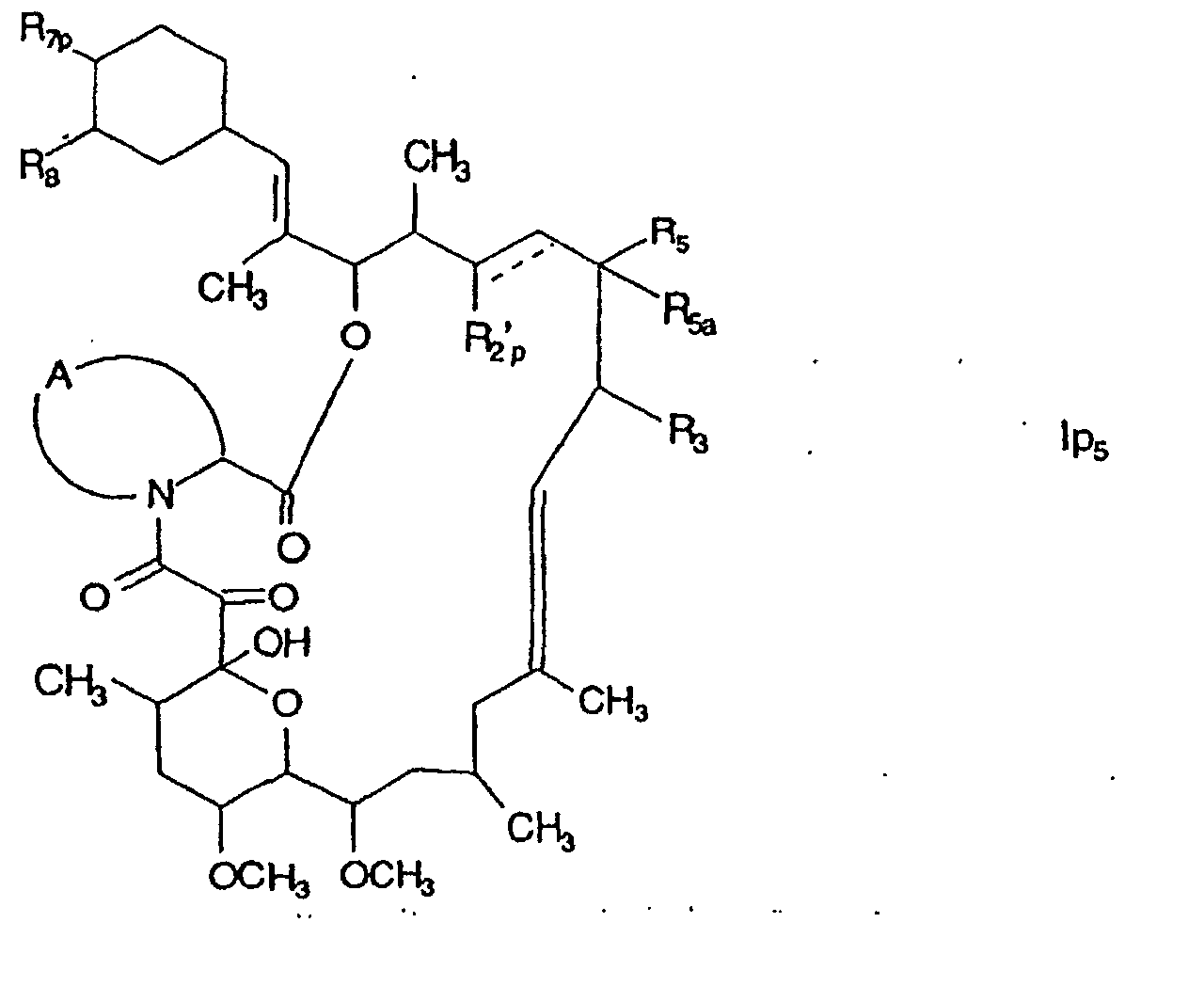
- A
- represents a group of formula -CH(OR6)-CH2-(CH2)n- or -CH=CH-(CH2)n- , whereby the (CH2)n- part thereof is linked to the carbon atom, and
- R6
- represents alkyl of 1 to 4 carbon atoms; and
- R2'p, R3, R5, R5a, R7p, R8 and n
- are as defined in this claim,
- A compound of formula Ip1 or Ip4 as defined in claim 1 wherein the cyclohexyl moiety carrying R7p and R8 represents a group of formula B
- R2p and R2'p
- represent hydroxy and there is a single bond between the two carbon atoms joined by a dotted line,
- R3
- represents ethyl,
- R5
- represents hydroxy in the α-configuration and R5a represents hydrogen, and
in free form or, if such forms exist, in salt form. - The compound of formula Ip5 as defined in claim 1 which is 17-ethyl-1,14-dihydroxy-12-[2-(4-hydroxy-3-methoxycyclohexyl)-1-methylvinyl]-23,25-dimethoxy-13,19,21,27-tetramethyl-11,28-dioxa-4-azatricyclo[22.3.1.0.4,9]-octacosa-5,18-diene-2,3,10,16-tetraone [1R,5Z,9S,12S-[1E(1R,3R,4R)],13R,14S,17R,18E,21S,23S,24R,25S,27R] in free form or, if such forms exist, in salt form.
- A compound according to any one of claims 1 to 3 for use as a pharmaceutical, in particular as an antiinflammatory agent or as an immunosuppressant and antiproliferative agent in the treatment of inflammatory or hyperproliferative conditions or of conditions requiring immunosuppression.
- A process for the preparation of a compound according to claim 1 which compriseswhereina) for producing a compound of formula Ip1, or Ip4 as defined in claim 1,
appropriately irradiating in the presence of R6OH, wherein R6 is as defined in claim 1, a corresponding compound of formula IIwherein R1 represents the cyclohexyl moiety carrying R7p and R8 as defined in claim 1 and the other substituents are as defined in claim 1, or b) for producing a compound of formula Ip2 or Ip5 as defined in claim 1,
appropriately oxidizing a corresponding compound of formula Icwherein R1 represents the cyclohexyl moiety carrying R7p and R8 as defined in claim 1 and the other substituents are as defined in claim 1, or c) for producing a compound of formula Ip4, or Ip5 wherein
A represents a group of formula -CH=CH-(CH2)n- as defined in claim 1, and
the other substituents are as defined in claim 1,
appropriately eliminating R6OH, wherein R6 is as defined in claim 1, from a corresponding compound of formula Ie
R1 represents the cyclohexyl moiety carrying R7p and R8 as defined in claim 1,
either R4 represents hydroxy and R4a represents hydrogen,
or R4 and R4a together represent oxo; and
the other substituents are as defined in claim 1; and optionallyrecovering the compound of formula Ip1, Ip2, Ip4 or Ip5 in free form or, where such forms exist, in salt form.deprotecting one or more hydroxy group(s) in a resultant compound of formula Ip1, Ip2, Ip4 or Ip5 having protected hydroxy group(s), orprotecting one or more hydroxy group(s) in a resultant compound of formula Ip1, Ip2, Ip4 or Ip5 having free hydroxy group(s); orseparating a resultant stereoisomeric mixture of compounds into individual isomers; and - A pharmaceutical composition comprising a compound according to any one of claims 1 to 4 in free form or, where such forms exist, in pharmaceutically acceptable salt form, in association with at least one pharmaceutically acceptable carrier or diluent.
Priority Applications (1)
| Application Number | Priority Date | Filing Date | Title |
|---|---|---|---|
| SI9430457T SI0626385T1 (en) | 1993-05-27 | 1994-05-24 | Tetrahydropyran derivatives |
Applications Claiming Priority (14)
| Application Number | Priority Date | Filing Date | Title |
|---|---|---|---|
| GB9310969 | 1993-05-27 | ||
| GB939310969A GB9310969D0 (en) | 1993-05-27 | 1993-05-27 | Organic compounds |
| GB939310975A GB9310975D0 (en) | 1993-05-27 | 1993-05-27 | Organic compounds |
| GB9310975 | 1993-05-27 | ||
| GB9312590 | 1993-06-18 | ||
| GB939312590A GB9312590D0 (en) | 1993-06-18 | 1993-06-18 | Organic compounds |
| GB9313553 | 1993-07-01 | ||
| GB939313553A GB9313553D0 (en) | 1993-07-01 | 1993-07-01 | Organic compounds |
| GB9319618 | 1993-09-23 | ||
| GB9319617 | 1993-09-23 | ||
| GB939319618A GB9319618D0 (en) | 1993-09-23 | 1993-09-23 | Organic compounds |
| GB939319617A GB9319617D0 (en) | 1993-09-23 | 1993-09-23 | Organic compounds |
| GB939326045A GB9326045D0 (en) | 1993-12-21 | 1993-12-21 | Organic compounds |
| GB9326045 | 1993-12-21 |
Publications (2)
| Publication Number | Publication Date |
|---|---|
| EP0626385A1 EP0626385A1 (en) | 1994-11-30 |
| EP0626385B1 true EP0626385B1 (en) | 2003-10-15 |
Family
ID=27562893
Family Applications (1)
| Application Number | Title | Priority Date | Filing Date |
|---|---|---|---|
| EP94810297A Expired - Lifetime EP0626385B1 (en) | 1993-05-27 | 1994-05-24 | Tetrahydropyran derivatives |
Country Status (23)
| Country | Link |
|---|---|
| US (1) | US5493019A (en) |
| EP (1) | EP0626385B1 (en) |
| JP (1) | JP3076724B2 (en) |
| CN (1) | CN1048495C (en) |
| AT (1) | ATE252105T1 (en) |
| AU (1) | AU682499B2 (en) |
| CA (1) | CA2124260C (en) |
| CY (1) | CY2523B1 (en) |
| CZ (1) | CZ286157B6 (en) |
| DE (1) | DE69433234T2 (en) |
| DK (1) | DK0626385T3 (en) |
| ES (1) | ES2208651T3 (en) |
| FI (1) | FI107159B (en) |
| HU (1) | HU218919B (en) |
| IL (1) | IL109775A (en) |
| MY (1) | MY110603A (en) |
| NO (1) | NO308302B1 (en) |
| NZ (1) | NZ260596A (en) |
| PH (1) | PH30420A (en) |
| PT (1) | PT626385E (en) |
| RU (1) | RU2130460C1 (en) |
| SI (1) | SI0626385T1 (en) |
| SK (1) | SK281541B6 (en) |
Families Citing this family (19)
| Publication number | Priority date | Publication date | Assignee | Title |
|---|---|---|---|---|
| NZ331824A (en) | 1994-10-26 | 2000-01-28 | Novartis Ag | use of an unsaturated fatty alcohol to stabilise a macrolide in a pharmaceutical composition |
| AU748334B2 (en) | 1997-10-16 | 2002-05-30 | Board Of Regents, The University Of Texas System | Models and treatments for cardiac hypertrophy in relation with NF-AT3 function |
| PT2198858E (en) | 1998-03-26 | 2011-09-01 | Astellas Pharma Inc | Sustained release preparation of a macrolide compound like tacrolimus |
| US6300341B1 (en) | 1998-09-30 | 2001-10-09 | The Procter & Gamble Co. | 2-substituted heterocyclic sulfonamides |
| US6307049B1 (en) | 1998-09-30 | 2001-10-23 | The Procter & Gamble Co. | Heterocyclic 2-substituted ketoamides |
| GB9826656D0 (en) | 1998-12-03 | 1999-01-27 | Novartis Ag | Organic compounds |
| US6121257A (en) * | 1999-03-31 | 2000-09-19 | Abbott Laboratories | Sulfamate containing macrocyclic immunomodulators |
| US7063857B1 (en) | 1999-04-30 | 2006-06-20 | Sucampo Ag | Use of macrolide compounds for the treatment of dry eye |
| WO2004009056A1 (en) | 2002-07-23 | 2004-01-29 | Novartis Ag | Ophtalmic ointment composition comprising a drug, an ointment base and a solubiling/dispersing agent |
| JP2007516951A (en) * | 2003-12-30 | 2007-06-28 | アステラス製薬株式会社 | Use of macrolides for the treatment or prevention of airway obstruction |
| GT200500282A (en) | 2004-10-12 | 2006-05-04 | HETEROATOMOS CONTAINING TRICYCLE COMPOUNDS. | |
| EP1688161A1 (en) * | 2004-11-02 | 2006-08-09 | Switch Biotech Aktiengesellschaft | Use of pirlindole for the treatment of diseases which are characterized by proliferation of t-lymphocytes and/or hyperproliferation of keratinocytes in particular atopic dermatitis and psoriasis |
| US9062074B2 (en) * | 2009-07-15 | 2015-06-23 | Cti Biopharma Corp. | (9E)-15-(2-pyrrolidin-1-yl-ethoxy)-7,12,25-trioxa-19,21,24-triaza-tetracyclo[18.3.1.1(2.5).1(14,18)]hexacosa-1(24),2,4,9,14,16,18(26),20,22-nonaene citrate salt |
| ES2898849T3 (en) | 2014-10-28 | 2022-03-09 | Koushi Yamaguchi | Medication to improve pregnancy-induced hypertension syndrome |
| US20210228551A1 (en) | 2018-08-10 | 2021-07-29 | Koushi Yamaguchi | Therapeutic agent for humoral immunity-related diseases in maternofetal relationship |
| CA3123535A1 (en) | 2018-12-18 | 2020-06-25 | Koushi Yamaguchi | Agent for improving infertility, recurrent miscarriage, and state of pregnancy |
| MX2021008824A (en) * | 2019-01-23 | 2021-10-13 | Univ Johns Hopkins | Non-immunosuppressive fk506 analogs and use thereof. |
| WO2021256894A1 (en) * | 2020-06-19 | 2021-12-23 | 서울대학교 산학협력단 | Novel prolylfk506 derivatives having neurite growth and synapse formation activities and uses thereof |
| WO2022139524A1 (en) * | 2020-12-24 | 2022-06-30 | 서울대학교산학협력단 | Novel fk506 derivative and composition comprising same for promoting hair growth |
Citations (2)
| Publication number | Priority date | Publication date | Assignee | Title |
|---|---|---|---|---|
| EP0385936A1 (en) * | 1989-02-27 | 1990-09-05 | Ciba-Geigy Ag | Peptide lactone and derivatives thereof, process for their production and means for carrying out the process |
| JPH05117298A (en) * | 1991-10-28 | 1993-05-14 | Rikagaku Kenkyusho | Depsipeptide a and b, its production, anti-virus agent and antibacterial agent |
Family Cites Families (11)
| Publication number | Priority date | Publication date | Assignee | Title |
|---|---|---|---|---|
| EP0078235A3 (en) * | 1981-10-23 | 1983-06-29 | Ciba-Geigy Ag | Dihalogenated steroids |
| US4894366A (en) * | 1984-12-03 | 1990-01-16 | Fujisawa Pharmaceutical Company, Ltd. | Tricyclo compounds, a process for their production and a pharmaceutical composition containing the same |
| CH677448A5 (en) * | 1987-11-09 | 1991-05-31 | Sandoz Ag | |
| EP0356399A3 (en) * | 1988-08-26 | 1991-03-20 | Sandoz Ag | Substituted 4-azatricyclo (22.3.1.04.9) octacos-18-ene derivatives, their preparation and pharmaceutical compositions containing them |
| US4980466A (en) * | 1988-10-12 | 1990-12-25 | Merck & Co., Inc. | Hydroxide mediated FK-506 rearrangement product |
| US5057608A (en) * | 1989-04-21 | 1991-10-15 | Merck & Co., Inc. | Immunoregulants, immunosuppressants, process to make ring expanded macrolide related to FK-506/FK-520 |
| EP0594600A1 (en) * | 1990-03-13 | 1994-05-04 | FISONS plc | Immunosuppressive macrocyclic compounds |
| CA2051872A1 (en) * | 1990-09-24 | 1992-03-25 | Kevin M. Byrne | Directed biosynthesis process for prolyl-immunomycin |
| GB2249787A (en) * | 1990-11-19 | 1992-05-20 | Fujisawa Pharmaceutical Co | Lactone compounds |
| WO1992013862A1 (en) * | 1991-02-05 | 1992-08-20 | Fujisawa Pharmaceutical Co., Ltd. | Lactone compounds |
| HUT66531A (en) * | 1992-05-07 | 1994-12-28 | Sandoz Ag | Heteroatoms-containing tricyclic compounds, pharmaceutical prepns contg. them and process for producing them |
-
1994
- 1994-05-23 MY MYPI94001314A patent/MY110603A/en unknown
- 1994-05-24 AT AT94810297T patent/ATE252105T1/en not_active IP Right Cessation
- 1994-05-24 PH PH48331A patent/PH30420A/en unknown
- 1994-05-24 EP EP94810297A patent/EP0626385B1/en not_active Expired - Lifetime
- 1994-05-24 DK DK94810297T patent/DK0626385T3/en active
- 1994-05-24 DE DE69433234T patent/DE69433234T2/en not_active Expired - Lifetime
- 1994-05-24 SI SI9430457T patent/SI0626385T1/en unknown
- 1994-05-24 ES ES94810297T patent/ES2208651T3/en not_active Expired - Lifetime
- 1994-05-24 PT PT94810297T patent/PT626385E/en unknown
- 1994-05-25 FI FI942444A patent/FI107159B/en not_active IP Right Cessation
- 1994-05-25 NO NO941936A patent/NO308302B1/en not_active IP Right Cessation
- 1994-05-25 AU AU63317/94A patent/AU682499B2/en not_active Ceased
- 1994-05-25 NZ NZ260596A patent/NZ260596A/en not_active IP Right Cessation
- 1994-05-25 SK SK611-94A patent/SK281541B6/en not_active IP Right Cessation
- 1994-05-25 CA CA002124260A patent/CA2124260C/en not_active Expired - Fee Related
- 1994-05-25 IL IL10977594A patent/IL109775A/en not_active IP Right Cessation
- 1994-05-25 HU HU9401582A patent/HU218919B/en not_active IP Right Cessation
- 1994-05-26 CZ CZ19941295A patent/CZ286157B6/en not_active IP Right Cessation
- 1994-05-26 CN CN94105935A patent/CN1048495C/en not_active Expired - Fee Related
- 1994-05-26 RU RU94018524A patent/RU2130460C1/en not_active IP Right Cessation
- 1994-05-26 US US08/249,911 patent/US5493019A/en not_active Expired - Lifetime
- 1994-05-26 JP JP06112552A patent/JP3076724B2/en not_active Expired - Fee Related
-
2005
- 2005-04-14 CY CY0500023A patent/CY2523B1/en unknown
Patent Citations (2)
| Publication number | Priority date | Publication date | Assignee | Title |
|---|---|---|---|---|
| EP0385936A1 (en) * | 1989-02-27 | 1990-09-05 | Ciba-Geigy Ag | Peptide lactone and derivatives thereof, process for their production and means for carrying out the process |
| JPH05117298A (en) * | 1991-10-28 | 1993-05-14 | Rikagaku Kenkyusho | Depsipeptide a and b, its production, anti-virus agent and antibacterial agent |
Non-Patent Citations (1)
| Title |
|---|
| S. BUDAVARI ET AL. (EDS.): "The Merck Index, 12th edition", 1996, MERCK & CO., INC. * |
Also Published As
Similar Documents
| Publication | Publication Date | Title |
|---|---|---|
| US5493019A (en) | Tetrahydropyran derivatives | |
| CA2029694C (en) | Heteroatoms-containing tricyclic compounds | |
| EP0589703B1 (en) | Proline derivative of rapamycin, production and application thereof | |
| WO1994021635A1 (en) | Macrocyclic immunomodulators | |
| WO1993018042A1 (en) | Desosamino derivatives of macrolides as immunosuppressants and antifungal agents | |
| AU648806B2 (en) | Cyclopentylvinyl substituted macrolides | |
| WO1994021253A1 (en) | Substituted aliphatic amine-containing macrocyclic immunomodulators | |
| US6706727B1 (en) | Macrolides | |
| US5384316A (en) | 4,16-diazatetracyclo[23.3.1.1.Hu 14,17=b . 0 Hu 4,9 triaconta-16,19-diene-2,3,10-trione derivatives | |
| US6121257A (en) | Sulfamate containing macrocyclic immunomodulators | |
| HK1011684B (en) | Tetrahydropyran derivatives | |
| KR100317009B1 (en) | Tetrahydropyran derivative | |
| PL176409B1 (en) | Derivatives of tetrahydropyrane, method of obtaining such derivatives and pharmaceutical composition containing them |
Legal Events
| Date | Code | Title | Description |
|---|---|---|---|
| PUAI | Public reference made under article 153(3) epc to a published international application that has entered the european phase |
Free format text: ORIGINAL CODE: 0009012 |
|
| AK | Designated contracting states |
Kind code of ref document: A1 Designated state(s): AT BE CH DE DK ES FR GB GR IE IT LI LU NL PT SE |
|
| RAX | Requested extension states of the european patent have changed |
Free format text: SI PAYMENT 940526 |
|
| 17P | Request for examination filed |
Effective date: 19950318 |
|
| 17Q | First examination report despatched |
Effective date: 19970213 |
|
| RAP1 | Party data changed (applicant data changed or rights of an application transferred) |
Owner name: SANDOZ ERFINDUNGEN VERWALTUNGSGESELLSCHAFT M.B.H. Owner name: SANDOZ-PATENT-GMBH Owner name: NOVARTIS AG |
|
| RAP1 | Party data changed (applicant data changed or rights of an application transferred) |
Owner name: SANDOZ-ERFINDUNGEN VERWALTUNGSGESELLSCHAFT M.B.H. Owner name: NOVARTIS AG |
|
| RAP1 | Party data changed (applicant data changed or rights of an application transferred) |
Owner name: NOVARTIS-ERFINDUNGEN VERWALTUNGSGESELLSCHAFT M.B. Owner name: NOVARTIS AG |
|
| RAP1 | Party data changed (applicant data changed or rights of an application transferred) |
Owner name: NOVARTIS-ERFINDUNGEN VERWALTUNGSGESELLSCHAFT M.B. Owner name: NOVARTIS AG |
|
| RAP1 | Party data changed (applicant data changed or rights of an application transferred) |
Owner name: NOVARTIS PHARMA GMBH Owner name: NOVARTIS AG |
|
| RAP1 | Party data changed (applicant data changed or rights of an application transferred) |
Owner name: NOVARTIS PHARMA GMBH Owner name: NOVARTIS AG |
|
| GRAH | Despatch of communication of intention to grant a patent |
Free format text: ORIGINAL CODE: EPIDOS IGRA |
|
| GRAS | Grant fee paid |
Free format text: ORIGINAL CODE: EPIDOSNIGR3 |
|
| GRAA | (expected) grant |
Free format text: ORIGINAL CODE: 0009210 |
|
| AK | Designated contracting states |
Kind code of ref document: B1 Designated state(s): AT BE CH DE DK ES FR GB GR IE IT LI LU NL PT SE |
|
| AX | Request for extension of the european patent |
Extension state: SI |
|
| REG | Reference to a national code |
Ref country code: GB Ref legal event code: FG4D Ref country code: CH Ref legal event code: EP |
|
| REG | Reference to a national code |
Ref country code: IE Ref legal event code: FG4D |
|
| REF | Corresponds to: |
Ref document number: 69433234 Country of ref document: DE Date of ref document: 20031120 Kind code of ref document: P |
|
| REG | Reference to a national code |
Ref country code: SE Ref legal event code: TRGR |
|
| REG | Reference to a national code |
Ref country code: DK Ref legal event code: T3 |
|
| REG | Reference to a national code |
Ref country code: GR Ref legal event code: EP Ref document number: 20040400094 Country of ref document: GR |
|
| REG | Reference to a national code |
Ref country code: PT Ref legal event code: SC4A Free format text: AVAILABILITY OF NATIONAL TRANSLATION Effective date: 20040109 |
|
| REG | Reference to a national code |
Ref country code: ES Ref legal event code: FG2A Ref document number: 2208651 Country of ref document: ES Kind code of ref document: T3 |
|
| REG | Reference to a national code |
Ref country code: HK Ref legal event code: GR Ref document number: 1011684 Country of ref document: HK |
|
| ET | Fr: translation filed | ||
| PLBE | No opposition filed within time limit |
Free format text: ORIGINAL CODE: 0009261 |
|
| STAA | Information on the status of an ep patent application or granted ep patent |
Free format text: STATUS: NO OPPOSITION FILED WITHIN TIME LIMIT |
|
| 26N | No opposition filed |
Effective date: 20040716 |
|
| REG | Reference to a national code |
Ref country code: SI Ref legal event code: IF |
|
| PGFP | Annual fee paid to national office [announced via postgrant information from national office to epo] |
Ref country code: GB Payment date: 20100329 Year of fee payment: 17 |
|
| PGFP | Annual fee paid to national office [announced via postgrant information from national office to epo] |
Ref country code: PT Payment date: 20100503 Year of fee payment: 17 Ref country code: LU Payment date: 20100518 Year of fee payment: 17 Ref country code: IE Payment date: 20100514 Year of fee payment: 17 Ref country code: FR Payment date: 20100525 Year of fee payment: 17 Ref country code: ES Payment date: 20100611 Year of fee payment: 17 Ref country code: DK Payment date: 20100512 Year of fee payment: 17 |
|
| PGFP | Annual fee paid to national office [announced via postgrant information from national office to epo] |
Ref country code: NL Payment date: 20100501 Year of fee payment: 17 Ref country code: IT Payment date: 20100519 Year of fee payment: 17 Ref country code: DE Payment date: 20100519 Year of fee payment: 17 Ref country code: AT Payment date: 20100512 Year of fee payment: 17 |
|
| PGFP | Annual fee paid to national office [announced via postgrant information from national office to epo] |
Ref country code: CH Payment date: 20100514 Year of fee payment: 17 Ref country code: BE Payment date: 20100518 Year of fee payment: 17 |
|
| PGFP | Annual fee paid to national office [announced via postgrant information from national office to epo] |
Ref country code: SE Payment date: 20100510 Year of fee payment: 17 |
|
| PGFP | Annual fee paid to national office [announced via postgrant information from national office to epo] |
Ref country code: GR Payment date: 20100415 Year of fee payment: 17 |
|
| BERE | Be: lapsed |
Owner name: *NOVARTIS A.G. Effective date: 20110531 |
|
| REG | Reference to a national code |
Ref country code: DE Ref legal event code: R119 Ref document number: 69433234 Country of ref document: DE |
|
| REG | Reference to a national code |
Ref country code: DE Ref legal event code: R119 Ref document number: 69433234 Country of ref document: DE |
|
| REG | Reference to a national code |
Ref country code: PT Ref legal event code: MM4A Free format text: LAPSE DUE TO NON-PAYMENT OF FEES Effective date: 20111124 |
|
| REG | Reference to a national code |
Ref country code: NL Ref legal event code: V1 Effective date: 20111201 |
|
| REG | Reference to a national code |
Ref country code: CH Ref legal event code: PL |
|
| REG | Reference to a national code |
Ref country code: DK Ref legal event code: EBP |
|
| REG | Reference to a national code |
Ref country code: SE Ref legal event code: EUG |
|
| GBPC | Gb: european patent ceased through non-payment of renewal fee |
Effective date: 20110524 |
|
| PG25 | Lapsed in a contracting state [announced via postgrant information from national office to epo] |
Ref country code: CH Free format text: LAPSE BECAUSE OF NON-PAYMENT OF DUE FEES Effective date: 20110531 Ref country code: PT Free format text: LAPSE BECAUSE OF NON-PAYMENT OF DUE FEES Effective date: 20111124 Ref country code: NL Free format text: LAPSE BECAUSE OF NON-PAYMENT OF DUE FEES Effective date: 20111201 Ref country code: LI Free format text: LAPSE BECAUSE OF NON-PAYMENT OF DUE FEES Effective date: 20110531 |
|
| REG | Reference to a national code |
Ref country code: GR Ref legal event code: ML Ref document number: 20040400094 Country of ref document: GR Effective date: 20111202 |
|
| REG | Reference to a national code |
Ref country code: AT Ref legal event code: MM01 Ref document number: 252105 Country of ref document: AT Kind code of ref document: T Effective date: 20110524 |
|
| REG | Reference to a national code |
Ref country code: FR Ref legal event code: ST Effective date: 20120131 |
|
| PG25 | Lapsed in a contracting state [announced via postgrant information from national office to epo] |
Ref country code: GR Free format text: LAPSE BECAUSE OF NON-PAYMENT OF DUE FEES Effective date: 20111202 Ref country code: IT Free format text: LAPSE BECAUSE OF NON-PAYMENT OF DUE FEES Effective date: 20110524 Ref country code: AT Free format text: LAPSE BECAUSE OF NON-PAYMENT OF DUE FEES Effective date: 20110524 |
|
| REG | Reference to a national code |
Ref country code: IE Ref legal event code: MM4A Ref country code: SI Ref legal event code: KO00 Effective date: 20120105 |
|
| PG25 | Lapsed in a contracting state [announced via postgrant information from national office to epo] |
Ref country code: BE Free format text: LAPSE BECAUSE OF NON-PAYMENT OF DUE FEES Effective date: 20110531 |
|
| PG25 | Lapsed in a contracting state [announced via postgrant information from national office to epo] |
Ref country code: IE Free format text: LAPSE BECAUSE OF NON-PAYMENT OF DUE FEES Effective date: 20110524 Ref country code: FR Free format text: LAPSE BECAUSE OF NON-PAYMENT OF DUE FEES Effective date: 20110531 |
|
| PG25 | Lapsed in a contracting state [announced via postgrant information from national office to epo] |
Ref country code: DK Free format text: LAPSE BECAUSE OF NON-PAYMENT OF DUE FEES Effective date: 20110531 Ref country code: GB Free format text: LAPSE BECAUSE OF NON-PAYMENT OF DUE FEES Effective date: 20110524 |
|
| REG | Reference to a national code |
Ref country code: ES Ref legal event code: FD2A Effective date: 20121116 |
|
| PG25 | Lapsed in a contracting state [announced via postgrant information from national office to epo] |
Ref country code: ES Free format text: LAPSE BECAUSE OF NON-PAYMENT OF DUE FEES Effective date: 20110525 |
|
| PG25 | Lapsed in a contracting state [announced via postgrant information from national office to epo] |
Ref country code: SE Free format text: LAPSE BECAUSE OF NON-PAYMENT OF DUE FEES Effective date: 20110525 |
|
| PG25 | Lapsed in a contracting state [announced via postgrant information from national office to epo] |
Ref country code: LU Free format text: LAPSE BECAUSE OF NON-PAYMENT OF DUE FEES Effective date: 20110524 |
|
| PG25 | Lapsed in a contracting state [announced via postgrant information from national office to epo] |
Ref country code: DE Free format text: LAPSE BECAUSE OF NON-PAYMENT OF DUE FEES Effective date: 20111130 |