EP0625192B1 - Nucleozymes - Google Patents
Nucleozymes Download PDFInfo
- Publication number
- EP0625192B1 EP0625192B1 EP93904752A EP93904752A EP0625192B1 EP 0625192 B1 EP0625192 B1 EP 0625192B1 EP 93904752 A EP93904752 A EP 93904752A EP 93904752 A EP93904752 A EP 93904752A EP 0625192 B1 EP0625192 B1 EP 0625192B1
- Authority
- EP
- European Patent Office
- Prior art keywords
- nucleozyme
- sites
- rna
- nucleic acid
- nucleozymes
- Prior art date
- Legal status (The legal status is an assumption and is not a legal conclusion. Google has not performed a legal analysis and makes no representation as to the accuracy of the status listed.)
- Expired - Lifetime
Links
- 230000003197 catalytic effect Effects 0.000 claims abstract description 35
- 239000005547 deoxyribonucleotide Substances 0.000 claims abstract description 29
- 125000002637 deoxyribonucleotide group Chemical class 0.000 claims abstract description 29
- 150000007523 nucleic acids Chemical class 0.000 claims abstract description 24
- 108020004707 nucleic acids Chemical class 0.000 claims abstract description 23
- 102000039446 nucleic acids Human genes 0.000 claims abstract description 23
- 239000002773 nucleotide Substances 0.000 claims abstract description 17
- 230000015556 catabolic process Effects 0.000 claims abstract description 9
- 238000006731 degradation reaction Methods 0.000 claims abstract description 9
- 229920000642 polymer Polymers 0.000 claims description 58
- 108091032973 (ribonucleotides)n+m Proteins 0.000 claims description 39
- 238000000034 method Methods 0.000 claims description 30
- 108091028664 Ribonucleotide Proteins 0.000 claims description 28
- 239000002336 ribonucleotide Substances 0.000 claims description 28
- 125000002652 ribonucleotide group Chemical group 0.000 claims description 27
- 239000000758 substrate Substances 0.000 claims description 25
- 150000008300 phosphoramidites Chemical class 0.000 claims description 17
- 125000003729 nucleotide group Chemical group 0.000 claims description 15
- 241001430294 unidentified retrovirus Species 0.000 claims description 13
- QGZKDVFQNNGYKY-UHFFFAOYSA-N Ammonia Chemical compound N QGZKDVFQNNGYKY-UHFFFAOYSA-N 0.000 claims description 12
- 108091034117 Oligonucleotide Proteins 0.000 claims description 12
- -1 imidazoyl Chemical group 0.000 claims description 12
- OPTASPLRGRRNAP-UHFFFAOYSA-N cytosine Chemical compound NC=1C=CNC(=O)N=1 OPTASPLRGRRNAP-UHFFFAOYSA-N 0.000 claims description 10
- 238000003776 cleavage reaction Methods 0.000 claims description 9
- UYTPUPDQBNUYGX-UHFFFAOYSA-N guanine Chemical compound O=C1NC(N)=NC2=C1N=CN2 UYTPUPDQBNUYGX-UHFFFAOYSA-N 0.000 claims description 9
- 108090000623 proteins and genes Proteins 0.000 claims description 9
- BWZVCCNYKMEVEX-UHFFFAOYSA-N 2,4,6-Trimethylpyridine Chemical compound CC1=CC(C)=NC(C)=C1 BWZVCCNYKMEVEX-UHFFFAOYSA-N 0.000 claims description 8
- 108090001102 Hammerhead ribozyme Proteins 0.000 claims description 8
- 230000008878 coupling Effects 0.000 claims description 8
- 238000010168 coupling process Methods 0.000 claims description 8
- 238000005859 coupling reaction Methods 0.000 claims description 8
- 201000010099 disease Diseases 0.000 claims description 8
- 208000037265 diseases, disorders, signs and symptoms Diseases 0.000 claims description 8
- 230000007017 scission Effects 0.000 claims description 8
- 125000000217 alkyl group Chemical group 0.000 claims description 7
- 238000004519 manufacturing process Methods 0.000 claims description 7
- 239000000178 monomer Substances 0.000 claims description 7
- ISAKRJDGNUQOIC-UHFFFAOYSA-N Uracil Chemical compound O=C1C=CNC(=O)N1 ISAKRJDGNUQOIC-UHFFFAOYSA-N 0.000 claims description 6
- 229910021529 ammonia Inorganic materials 0.000 claims description 6
- FDGQSTZJBFJUBT-UHFFFAOYSA-N hypoxanthine Chemical compound O=C1NC=NC2=C1NC=N2 FDGQSTZJBFJUBT-UHFFFAOYSA-N 0.000 claims description 6
- 241000725303 Human immunodeficiency virus Species 0.000 claims description 5
- 230000007515 enzymatic degradation Effects 0.000 claims description 5
- GFYHSKONPJXCDE-UHFFFAOYSA-N sym-collidine Natural products CC1=CN=C(C)C(C)=C1 GFYHSKONPJXCDE-UHFFFAOYSA-N 0.000 claims description 5
- AUHZEENZYGFFBQ-UHFFFAOYSA-N 1,3,5-Me3C6H3 Natural products CC1=CC(C)=CC(C)=C1 AUHZEENZYGFFBQ-UHFFFAOYSA-N 0.000 claims description 4
- MCTWTZJPVLRJOU-UHFFFAOYSA-N 1-methyl-1H-imidazole Chemical compound CN1C=CN=C1 MCTWTZJPVLRJOU-UHFFFAOYSA-N 0.000 claims description 4
- MWBWWFOAEOYUST-UHFFFAOYSA-N 2-aminopurine Chemical compound NC1=NC=C2N=CNC2=N1 MWBWWFOAEOYUST-UHFFFAOYSA-N 0.000 claims description 4
- 229930024421 Adenine Natural products 0.000 claims description 4
- GFFGJBXGBJISGV-UHFFFAOYSA-N Adenine Chemical compound NC1=NC=NC2=C1N=CN2 GFFGJBXGBJISGV-UHFFFAOYSA-N 0.000 claims description 4
- 229960000643 adenine Drugs 0.000 claims description 4
- 238000002144 chemical decomposition reaction Methods 0.000 claims description 4
- 229940104302 cytosine Drugs 0.000 claims description 4
- 239000003814 drug Substances 0.000 claims description 4
- 239000003937 drug carrier Substances 0.000 claims description 4
- 230000002255 enzymatic effect Effects 0.000 claims description 4
- 125000000623 heterocyclic group Chemical group 0.000 claims description 4
- 108020004999 messenger RNA Proteins 0.000 claims description 4
- 239000008194 pharmaceutical composition Substances 0.000 claims description 4
- 108091027075 5S-rRNA precursor Proteins 0.000 claims description 3
- UGQMRVRMYYASKQ-UHFFFAOYSA-N Hypoxanthine nucleoside Natural products OC1C(O)C(CO)OC1N1C(NC=NC2=O)=C2N=C1 UGQMRVRMYYASKQ-UHFFFAOYSA-N 0.000 claims description 3
- 125000002015 acyclic group Chemical group 0.000 claims description 3
- 239000003795 chemical substances by application Substances 0.000 claims description 3
- 125000000956 methoxy group Chemical group [H]C([H])([H])O* 0.000 claims description 3
- 229940035893 uracil Drugs 0.000 claims description 3
- 230000000295 complement effect Effects 0.000 claims description 2
- 239000003446 ligand Substances 0.000 claims description 2
- 229910021645 metal ion Inorganic materials 0.000 claims description 2
- 229940124276 oligodeoxyribonucleotide Drugs 0.000 claims description 2
- 108020002230 Pancreatic Ribonuclease Proteins 0.000 claims 2
- 102000005891 Pancreatic ribonuclease Human genes 0.000 claims 2
- LWBXNFOSZMMXKI-UHFFFAOYSA-N 3-[chloro-[2,2-di(propan-2-yl)hydrazinyl]phosphoryl]propanenitrile Chemical compound CC(C)N(C(C)C)NP(Cl)(=O)CCC#N LWBXNFOSZMMXKI-UHFFFAOYSA-N 0.000 claims 1
- 108091092562 ribozyme Proteins 0.000 abstract description 39
- 102000053642 Catalytic RNA Human genes 0.000 description 39
- 108090000994 Catalytic RNA Proteins 0.000 description 38
- 125000006239 protecting group Chemical group 0.000 description 21
- 238000006243 chemical reaction Methods 0.000 description 17
- WEVYAHXRMPXWCK-UHFFFAOYSA-N Acetonitrile Chemical compound CC#N WEVYAHXRMPXWCK-UHFFFAOYSA-N 0.000 description 15
- 238000003786 synthesis reaction Methods 0.000 description 15
- 108020004414 DNA Proteins 0.000 description 12
- XEKOWRVHYACXOJ-UHFFFAOYSA-N Ethyl acetate Chemical compound CCOC(C)=O XEKOWRVHYACXOJ-UHFFFAOYSA-N 0.000 description 12
- 238000001727 in vivo Methods 0.000 description 12
- 241000251131 Sphyrna Species 0.000 description 11
- LFQSCWFLJHTTHZ-UHFFFAOYSA-N Ethanol Chemical compound CCO LFQSCWFLJHTTHZ-UHFFFAOYSA-N 0.000 description 10
- 230000015572 biosynthetic process Effects 0.000 description 10
- 239000000499 gel Substances 0.000 description 9
- 238000003947 neutron activation analysis Methods 0.000 description 9
- XLYOFNOQVPJJNP-UHFFFAOYSA-N water Substances O XLYOFNOQVPJJNP-UHFFFAOYSA-N 0.000 description 9
- 239000003054 catalyst Substances 0.000 description 8
- 238000006317 isomerization reaction Methods 0.000 description 7
- 150000004713 phosphodiesters Chemical class 0.000 description 7
- 230000006870 function Effects 0.000 description 6
- HWCKGOZZJDHMNC-UHFFFAOYSA-M tetraethylammonium bromide Chemical compound [Br-].CC[N+](CC)(CC)CC HWCKGOZZJDHMNC-UHFFFAOYSA-M 0.000 description 6
- OISVCGZHLKNMSJ-UHFFFAOYSA-N 2,6-dimethylpyridine Chemical compound CC1=CC=CC(C)=N1 OISVCGZHLKNMSJ-UHFFFAOYSA-N 0.000 description 5
- 102000004190 Enzymes Human genes 0.000 description 5
- 108090000790 Enzymes Proteins 0.000 description 5
- 239000000969 carrier Substances 0.000 description 5
- 238000006555 catalytic reaction Methods 0.000 description 5
- 230000000694 effects Effects 0.000 description 5
- 230000005012 migration Effects 0.000 description 5
- 238000013508 migration Methods 0.000 description 5
- 230000004048 modification Effects 0.000 description 5
- 238000012986 modification Methods 0.000 description 5
- 238000002360 preparation method Methods 0.000 description 5
- 230000008569 process Effects 0.000 description 5
- 239000000126 substance Substances 0.000 description 5
- 102000040650 (ribonucleotides)n+m Human genes 0.000 description 4
- NYHBQMYGNKIUIF-UUOKFMHZSA-N Guanosine Chemical compound C1=NC=2C(=O)NC(N)=NC=2N1[C@@H]1O[C@H](CO)[C@@H](O)[C@H]1O NYHBQMYGNKIUIF-UUOKFMHZSA-N 0.000 description 4
- 240000004808 Saccharomyces cerevisiae Species 0.000 description 4
- XSQUKJJJFZCRTK-UHFFFAOYSA-N Urea Chemical compound NC(N)=O XSQUKJJJFZCRTK-UHFFFAOYSA-N 0.000 description 4
- 230000001413 cellular effect Effects 0.000 description 4
- 238000010511 deprotection reaction Methods 0.000 description 4
- 239000000284 extract Substances 0.000 description 4
- 238000011534 incubation Methods 0.000 description 4
- 239000000047 product Substances 0.000 description 4
- 239000000243 solution Substances 0.000 description 4
- WFDIJRYMOXRFFG-UHFFFAOYSA-N Acetic anhydride Chemical compound CC(=O)OC(C)=O WFDIJRYMOXRFFG-UHFFFAOYSA-N 0.000 description 3
- NYHBQMYGNKIUIF-UHFFFAOYSA-N D-guanosine Natural products C1=2NC(N)=NC(=O)C=2N=CN1C1OC(CO)C(O)C1O NYHBQMYGNKIUIF-UHFFFAOYSA-N 0.000 description 3
- YMWUJEATGCHHMB-UHFFFAOYSA-N Dichloromethane Chemical compound ClCCl YMWUJEATGCHHMB-UHFFFAOYSA-N 0.000 description 3
- 108091092195 Intron Proteins 0.000 description 3
- 102000003960 Ligases Human genes 0.000 description 3
- 108090000364 Ligases Proteins 0.000 description 3
- OKKJLVBELUTLKV-UHFFFAOYSA-N Methanol Chemical compound OC OKKJLVBELUTLKV-UHFFFAOYSA-N 0.000 description 3
- 102000006382 Ribonucleases Human genes 0.000 description 3
- 108010083644 Ribonucleases Proteins 0.000 description 3
- HEMHJVSKTPXQMS-UHFFFAOYSA-M Sodium hydroxide Chemical compound [OH-].[Na+] HEMHJVSKTPXQMS-UHFFFAOYSA-M 0.000 description 3
- YXFVVABEGXRONW-UHFFFAOYSA-N Toluene Chemical compound CC1=CC=CC=C1 YXFVVABEGXRONW-UHFFFAOYSA-N 0.000 description 3
- 239000003153 chemical reaction reagent Substances 0.000 description 3
- 238000001962 electrophoresis Methods 0.000 description 3
- 239000006260 foam Substances 0.000 description 3
- 239000012634 fragment Substances 0.000 description 3
- RAXXELZNTBOGNW-UHFFFAOYSA-N imidazole Natural products C1=CNC=N1 RAXXELZNTBOGNW-UHFFFAOYSA-N 0.000 description 3
- 238000000338 in vitro Methods 0.000 description 3
- 239000000843 powder Substances 0.000 description 3
- 239000002243 precursor Substances 0.000 description 3
- 102000004169 proteins and genes Human genes 0.000 description 3
- 238000011160 research Methods 0.000 description 3
- 108091008146 restriction endonucleases Proteins 0.000 description 3
- 239000006228 supernatant Substances 0.000 description 3
- GZCWLCBFPRFLKL-UHFFFAOYSA-N 1-prop-2-ynoxypropan-2-ol Chemical compound CC(O)COCC#C GZCWLCBFPRFLKL-UHFFFAOYSA-N 0.000 description 2
- 102000013563 Acid Phosphatase Human genes 0.000 description 2
- 108010051457 Acid Phosphatase Proteins 0.000 description 2
- 108020005544 Antisense RNA Proteins 0.000 description 2
- MIKUYHXYGGJMLM-GIMIYPNGSA-N Crotonoside Natural products C1=NC2=C(N)NC(=O)N=C2N1[C@H]1O[C@@H](CO)[C@H](O)[C@@H]1O MIKUYHXYGGJMLM-GIMIYPNGSA-N 0.000 description 2
- 102000053602 DNA Human genes 0.000 description 2
- 108700024394 Exon Proteins 0.000 description 2
- ZHNUHDYFZUAESO-UHFFFAOYSA-N Formamide Chemical compound NC=O ZHNUHDYFZUAESO-UHFFFAOYSA-N 0.000 description 2
- 108091027874 Group I catalytic intron Proteins 0.000 description 2
- 108091000080 Phosphotransferase Proteins 0.000 description 2
- UIIMBOGNXHQVGW-UHFFFAOYSA-M Sodium bicarbonate Chemical compound [Na+].OC([O-])=O UIIMBOGNXHQVGW-UHFFFAOYSA-M 0.000 description 2
- 241000248384 Tetrahymena thermophila Species 0.000 description 2
- JLCPHMBAVCMARE-UHFFFAOYSA-N [3-[[3-[[3-[[3-[[3-[[3-[[3-[[3-[[3-[[3-[[3-[[5-(2-amino-6-oxo-1H-purin-9-yl)-3-[[3-[[3-[[3-[[3-[[3-[[5-(2-amino-6-oxo-1H-purin-9-yl)-3-[[5-(2-amino-6-oxo-1H-purin-9-yl)-3-hydroxyoxolan-2-yl]methoxy-hydroxyphosphoryl]oxyoxolan-2-yl]methoxy-hydroxyphosphoryl]oxy-5-(5-methyl-2,4-dioxopyrimidin-1-yl)oxolan-2-yl]methoxy-hydroxyphosphoryl]oxy-5-(6-aminopurin-9-yl)oxolan-2-yl]methoxy-hydroxyphosphoryl]oxy-5-(6-aminopurin-9-yl)oxolan-2-yl]methoxy-hydroxyphosphoryl]oxy-5-(6-aminopurin-9-yl)oxolan-2-yl]methoxy-hydroxyphosphoryl]oxy-5-(6-aminopurin-9-yl)oxolan-2-yl]methoxy-hydroxyphosphoryl]oxyoxolan-2-yl]methoxy-hydroxyphosphoryl]oxy-5-(5-methyl-2,4-dioxopyrimidin-1-yl)oxolan-2-yl]methoxy-hydroxyphosphoryl]oxy-5-(4-amino-2-oxopyrimidin-1-yl)oxolan-2-yl]methoxy-hydroxyphosphoryl]oxy-5-(5-methyl-2,4-dioxopyrimidin-1-yl)oxolan-2-yl]methoxy-hydroxyphosphoryl]oxy-5-(5-methyl-2,4-dioxopyrimidin-1-yl)oxolan-2-yl]methoxy-hydroxyphosphoryl]oxy-5-(6-aminopurin-9-yl)oxolan-2-yl]methoxy-hydroxyphosphoryl]oxy-5-(6-aminopurin-9-yl)oxolan-2-yl]methoxy-hydroxyphosphoryl]oxy-5-(4-amino-2-oxopyrimidin-1-yl)oxolan-2-yl]methoxy-hydroxyphosphoryl]oxy-5-(4-amino-2-oxopyrimidin-1-yl)oxolan-2-yl]methoxy-hydroxyphosphoryl]oxy-5-(4-amino-2-oxopyrimidin-1-yl)oxolan-2-yl]methoxy-hydroxyphosphoryl]oxy-5-(6-aminopurin-9-yl)oxolan-2-yl]methoxy-hydroxyphosphoryl]oxy-5-(4-amino-2-oxopyrimidin-1-yl)oxolan-2-yl]methyl [5-(6-aminopurin-9-yl)-2-(hydroxymethyl)oxolan-3-yl] hydrogen phosphate Polymers Cc1cn(C2CC(OP(O)(=O)OCC3OC(CC3OP(O)(=O)OCC3OC(CC3O)n3cnc4c3nc(N)[nH]c4=O)n3cnc4c3nc(N)[nH]c4=O)C(COP(O)(=O)OC3CC(OC3COP(O)(=O)OC3CC(OC3COP(O)(=O)OC3CC(OC3COP(O)(=O)OC3CC(OC3COP(O)(=O)OC3CC(OC3COP(O)(=O)OC3CC(OC3COP(O)(=O)OC3CC(OC3COP(O)(=O)OC3CC(OC3COP(O)(=O)OC3CC(OC3COP(O)(=O)OC3CC(OC3COP(O)(=O)OC3CC(OC3COP(O)(=O)OC3CC(OC3COP(O)(=O)OC3CC(OC3COP(O)(=O)OC3CC(OC3COP(O)(=O)OC3CC(OC3COP(O)(=O)OC3CC(OC3COP(O)(=O)OC3CC(OC3CO)n3cnc4c(N)ncnc34)n3ccc(N)nc3=O)n3cnc4c(N)ncnc34)n3ccc(N)nc3=O)n3ccc(N)nc3=O)n3ccc(N)nc3=O)n3cnc4c(N)ncnc34)n3cnc4c(N)ncnc34)n3cc(C)c(=O)[nH]c3=O)n3cc(C)c(=O)[nH]c3=O)n3ccc(N)nc3=O)n3cc(C)c(=O)[nH]c3=O)n3cnc4c3nc(N)[nH]c4=O)n3cnc4c(N)ncnc34)n3cnc4c(N)ncnc34)n3cnc4c(N)ncnc34)n3cnc4c(N)ncnc34)O2)c(=O)[nH]c1=O JLCPHMBAVCMARE-UHFFFAOYSA-N 0.000 description 2
- 239000002253 acid Substances 0.000 description 2
- 230000002411 adverse Effects 0.000 description 2
- 239000007864 aqueous solution Substances 0.000 description 2
- 229940041514 candida albicans extract Drugs 0.000 description 2
- 239000004202 carbamide Substances 0.000 description 2
- 238000001311 chemical methods and process Methods 0.000 description 2
- 239000003184 complementary RNA Substances 0.000 description 2
- 238000005516 engineering process Methods 0.000 description 2
- 229940029575 guanosine Drugs 0.000 description 2
- 239000007788 liquid Substances 0.000 description 2
- 230000000050 nutritive effect Effects 0.000 description 2
- 238000002515 oligonucleotide synthesis Methods 0.000 description 2
- 239000012074 organic phase Substances 0.000 description 2
- 238000005731 phosphitylation reaction Methods 0.000 description 2
- 102000020233 phosphotransferase Human genes 0.000 description 2
- 238000000746 purification Methods 0.000 description 2
- 230000002285 radioactive effect Effects 0.000 description 2
- 230000009467 reduction Effects 0.000 description 2
- 238000009877 rendering Methods 0.000 description 2
- 239000007787 solid Substances 0.000 description 2
- 208000024891 symptom Diseases 0.000 description 2
- 238000010189 synthetic method Methods 0.000 description 2
- 238000012360 testing method Methods 0.000 description 2
- 229940124597 therapeutic agent Drugs 0.000 description 2
- 150000008648 triflates Chemical class 0.000 description 2
- 238000005406 washing Methods 0.000 description 2
- 239000012138 yeast extract Substances 0.000 description 2
- 0 *C(C(CO)OC1S)C1OI Chemical compound *C(C(CO)OC1S)C1OI 0.000 description 1
- WSLDOOZREJYCGB-UHFFFAOYSA-N 1,2-Dichloroethane Chemical compound ClCCCl WSLDOOZREJYCGB-UHFFFAOYSA-N 0.000 description 1
- KJUGUADJHNHALS-UHFFFAOYSA-N 1H-tetrazole Chemical compound C=1N=NNN=1 KJUGUADJHNHALS-UHFFFAOYSA-N 0.000 description 1
- LKPFWCPZERQLFI-UHFFFAOYSA-N 2,4,6-trimethylpyridine;hydrochloride Chemical class Cl.CC1=CC(C)=NC(C)=C1 LKPFWCPZERQLFI-UHFFFAOYSA-N 0.000 description 1
- QKNYBSVHEMOAJP-UHFFFAOYSA-N 2-amino-2-(hydroxymethyl)propane-1,3-diol;hydron;chloride Chemical compound Cl.OCC(N)(CO)CO QKNYBSVHEMOAJP-UHFFFAOYSA-N 0.000 description 1
- XWKFPIODWVPXLX-UHFFFAOYSA-N 2-methyl-5-methylpyridine Natural products CC1=CC=C(C)N=C1 XWKFPIODWVPXLX-UHFFFAOYSA-N 0.000 description 1
- WPUTZVYSWVREGM-UHFFFAOYSA-N 3-[amino(chloro)phosphoryl]propanenitrile Chemical compound NP(Cl)(=O)CCC#N WPUTZVYSWVREGM-UHFFFAOYSA-N 0.000 description 1
- 208000030507 AIDS Diseases 0.000 description 1
- USFZMSVCRYTOJT-UHFFFAOYSA-N Ammonium acetate Chemical compound N.CC(O)=O USFZMSVCRYTOJT-UHFFFAOYSA-N 0.000 description 1
- 108091092236 Chimeric RNA Proteins 0.000 description 1
- 230000006820 DNA synthesis Effects 0.000 description 1
- KCXVZYZYPLLWCC-UHFFFAOYSA-N EDTA Chemical compound OC(=O)CN(CC(O)=O)CCN(CC(O)=O)CC(O)=O KCXVZYZYPLLWCC-UHFFFAOYSA-N 0.000 description 1
- 241000282326 Felis catus Species 0.000 description 1
- 108090000982 GIR1 ribozyme Proteins 0.000 description 1
- 108010010803 Gelatin Proteins 0.000 description 1
- 241000282412 Homo Species 0.000 description 1
- 101100499979 Human herpesvirus 6A (strain Uganda-1102) DR7R gene Proteins 0.000 description 1
- 241000124008 Mammalia Species 0.000 description 1
- 239000007832 Na2SO4 Substances 0.000 description 1
- 241000283973 Oryctolagus cuniculus Species 0.000 description 1
- 229910019142 PO4 Inorganic materials 0.000 description 1
- 102000045595 Phosphoprotein Phosphatases Human genes 0.000 description 1
- 108700019535 Phosphoprotein Phosphatases Proteins 0.000 description 1
- 241000700159 Rattus Species 0.000 description 1
- PMZURENOXWZQFD-UHFFFAOYSA-L Sodium Sulfate Chemical compound [Na+].[Na+].[O-]S([O-])(=O)=O PMZURENOXWZQFD-UHFFFAOYSA-L 0.000 description 1
- FAPWRFPIFSIZLT-UHFFFAOYSA-M Sodium chloride Chemical class [Na+].[Cl-] FAPWRFPIFSIZLT-UHFFFAOYSA-M 0.000 description 1
- 229930006000 Sucrose Natural products 0.000 description 1
- CZMRCDWAGMRECN-UGDNZRGBSA-N Sucrose Chemical compound O[C@H]1[C@H](O)[C@@H](CO)O[C@@]1(CO)O[C@@H]1[C@H](O)[C@@H](O)[C@H](O)[C@@H](CO)O1 CZMRCDWAGMRECN-UGDNZRGBSA-N 0.000 description 1
- 238000005904 alkaline hydrolysis reaction Methods 0.000 description 1
- 150000001408 amides Chemical class 0.000 description 1
- 125000003277 amino group Chemical group 0.000 description 1
- HOPRXXXSABQWAV-UHFFFAOYSA-N anhydrous collidine Natural products CC1=CC=NC(C)=C1C HOPRXXXSABQWAV-UHFFFAOYSA-N 0.000 description 1
- 238000005349 anion exchange Methods 0.000 description 1
- 239000008346 aqueous phase Substances 0.000 description 1
- 238000010936 aqueous wash Methods 0.000 description 1
- 239000011324 bead Substances 0.000 description 1
- 239000000872 buffer Substances 0.000 description 1
- 239000006227 byproduct Substances 0.000 description 1
- 229910052799 carbon Inorganic materials 0.000 description 1
- 125000004432 carbon atom Chemical group C* 0.000 description 1
- 239000001913 cellulose Substances 0.000 description 1
- 229920002678 cellulose Polymers 0.000 description 1
- 238000005119 centrifugation Methods 0.000 description 1
- UTBIMNXEDGNJFE-UHFFFAOYSA-N collidine Natural products CC1=CC=C(C)C(C)=N1 UTBIMNXEDGNJFE-UHFFFAOYSA-N 0.000 description 1
- 230000000052 comparative effect Effects 0.000 description 1
- 150000001875 compounds Chemical class 0.000 description 1
- 238000011109 contamination Methods 0.000 description 1
- 238000001816 cooling Methods 0.000 description 1
- 238000006642 detritylation reaction Methods 0.000 description 1
- 238000010790 dilution Methods 0.000 description 1
- 239000012895 dilution Substances 0.000 description 1
- HPYNZHMRTTWQTB-UHFFFAOYSA-N dimethylpyridine Natural products CC1=CC=CN=C1C HPYNZHMRTTWQTB-UHFFFAOYSA-N 0.000 description 1
- 150000002009 diols Chemical class 0.000 description 1
- 239000000839 emulsion Substances 0.000 description 1
- 239000011536 extraction buffer Substances 0.000 description 1
- 229920001002 functional polymer Polymers 0.000 description 1
- 239000008273 gelatin Substances 0.000 description 1
- 229920000159 gelatin Polymers 0.000 description 1
- 235000019322 gelatine Nutrition 0.000 description 1
- 235000011852 gelatine desserts Nutrition 0.000 description 1
- 239000011521 glass Substances 0.000 description 1
- 108090001052 hairpin ribozyme Proteins 0.000 description 1
- BHEPBYXIRTUNPN-UHFFFAOYSA-N hydridophosphorus(.) (triplet) Chemical compound [PH] BHEPBYXIRTUNPN-UHFFFAOYSA-N 0.000 description 1
- 150000003951 lactams Chemical class 0.000 description 1
- 230000014759 maintenance of location Effects 0.000 description 1
- 239000000203 mixture Substances 0.000 description 1
- 239000002808 molecular sieve Substances 0.000 description 1
- QJGQUHMNIGDVPM-UHFFFAOYSA-N nitrogen group Chemical group [N] QJGQUHMNIGDVPM-UHFFFAOYSA-N 0.000 description 1
- 231100000252 nontoxic Toxicity 0.000 description 1
- 230000003000 nontoxic effect Effects 0.000 description 1
- 239000003960 organic solvent Substances 0.000 description 1
- 125000001181 organosilyl group Chemical group [SiH3]* 0.000 description 1
- 230000003647 oxidation Effects 0.000 description 1
- 238000007254 oxidation reaction Methods 0.000 description 1
- 239000008188 pellet Substances 0.000 description 1
- 239000012071 phase Substances 0.000 description 1
- NBIIXXVUZAFLBC-UHFFFAOYSA-K phosphate Chemical compound [O-]P([O-])([O-])=O NBIIXXVUZAFLBC-UHFFFAOYSA-K 0.000 description 1
- 239000010452 phosphate Substances 0.000 description 1
- ACVYVLVWPXVTIT-UHFFFAOYSA-N phosphinic acid Chemical compound O[PH2]=O ACVYVLVWPXVTIT-UHFFFAOYSA-N 0.000 description 1
- 125000005642 phosphothioate group Chemical group 0.000 description 1
- 239000002504 physiological saline solution Substances 0.000 description 1
- 239000002244 precipitate Substances 0.000 description 1
- 230000002265 prevention Effects 0.000 description 1
- 238000010791 quenching Methods 0.000 description 1
- 230000000171 quenching effect Effects 0.000 description 1
- 239000002342 ribonucleoside Substances 0.000 description 1
- 229920002477 rna polymer Polymers 0.000 description 1
- 150000003839 salts Chemical class 0.000 description 1
- 210000002966 serum Anatomy 0.000 description 1
- 238000010898 silica gel chromatography Methods 0.000 description 1
- URGAHOPLAPQHLN-UHFFFAOYSA-N sodium aluminosilicate Chemical compound [Na+].[Al+3].[O-][Si]([O-])=O.[O-][Si]([O-])=O URGAHOPLAPQHLN-UHFFFAOYSA-N 0.000 description 1
- 229910000030 sodium bicarbonate Inorganic materials 0.000 description 1
- 239000012064 sodium phosphate buffer Substances 0.000 description 1
- 229910052938 sodium sulfate Inorganic materials 0.000 description 1
- 239000002904 solvent Substances 0.000 description 1
- 125000006850 spacer group Chemical group 0.000 description 1
- 241000894007 species Species 0.000 description 1
- 238000006467 substitution reaction Methods 0.000 description 1
- 239000005720 sucrose Substances 0.000 description 1
- 239000000454 talc Substances 0.000 description 1
- 229910052623 talc Inorganic materials 0.000 description 1
- 230000008685 targeting Effects 0.000 description 1
- FPGGTKZVZWFYPV-UHFFFAOYSA-M tetrabutylammonium fluoride Chemical compound [F-].CCCC[N+](CCCC)(CCCC)CCCC FPGGTKZVZWFYPV-UHFFFAOYSA-M 0.000 description 1
- 150000003536 tetrazoles Chemical class 0.000 description 1
- 238000002560 therapeutic procedure Methods 0.000 description 1
- 238000006276 transfer reaction Methods 0.000 description 1
- 125000002827 triflate group Chemical class FC(S(=O)(=O)O*)(F)F 0.000 description 1
- 125000002221 trityl group Chemical group [H]C1=C([H])C([H])=C([H])C([H])=C1C([*])(C1=C(C(=C(C(=C1[H])[H])[H])[H])[H])C1=C([H])C([H])=C([H])C([H])=C1[H] 0.000 description 1
- 230000003612 virological effect Effects 0.000 description 1
Images

Classifications
-
- C—CHEMISTRY; METALLURGY
- C12—BIOCHEMISTRY; BEER; SPIRITS; WINE; VINEGAR; MICROBIOLOGY; ENZYMOLOGY; MUTATION OR GENETIC ENGINEERING
- C12N—MICROORGANISMS OR ENZYMES; COMPOSITIONS THEREOF; PROPAGATING, PRESERVING, OR MAINTAINING MICROORGANISMS; MUTATION OR GENETIC ENGINEERING; CULTURE MEDIA
- C12N15/00—Mutation or genetic engineering; DNA or RNA concerning genetic engineering, vectors, e.g. plasmids, or their isolation, preparation or purification; Use of hosts therefor
- C12N15/09—Recombinant DNA-technology
- C12N15/11—DNA or RNA fragments; Modified forms thereof; Non-coding nucleic acids having a biological activity
- C12N15/113—Non-coding nucleic acids modulating the expression of genes, e.g. antisense oligonucleotides; Antisense DNA or RNA; Triplex- forming oligonucleotides; Catalytic nucleic acids, e.g. ribozymes; Nucleic acids used in co-suppression or gene silencing
-
- A—HUMAN NECESSITIES
- A61—MEDICAL OR VETERINARY SCIENCE; HYGIENE
- A61P—SPECIFIC THERAPEUTIC ACTIVITY OF CHEMICAL COMPOUNDS OR MEDICINAL PREPARATIONS
- A61P31/00—Antiinfectives, i.e. antibiotics, antiseptics, chemotherapeutics
- A61P31/12—Antivirals
- A61P31/14—Antivirals for RNA viruses
- A61P31/18—Antivirals for RNA viruses for HIV
-
- A—HUMAN NECESSITIES
- A61—MEDICAL OR VETERINARY SCIENCE; HYGIENE
- A61K—PREPARATIONS FOR MEDICAL, DENTAL OR TOILETRY PURPOSES
- A61K38/00—Medicinal preparations containing peptides
-
- C—CHEMISTRY; METALLURGY
- C12—BIOCHEMISTRY; BEER; SPIRITS; WINE; VINEGAR; MICROBIOLOGY; ENZYMOLOGY; MUTATION OR GENETIC ENGINEERING
- C12N—MICROORGANISMS OR ENZYMES; COMPOSITIONS THEREOF; PROPAGATING, PRESERVING, OR MAINTAINING MICROORGANISMS; MUTATION OR GENETIC ENGINEERING; CULTURE MEDIA
- C12N2310/00—Structure or type of the nucleic acid
- C12N2310/10—Type of nucleic acid
- C12N2310/12—Type of nucleic acid catalytic nucleic acids, e.g. ribozymes
- C12N2310/121—Hammerhead
-
- C—CHEMISTRY; METALLURGY
- C12—BIOCHEMISTRY; BEER; SPIRITS; WINE; VINEGAR; MICROBIOLOGY; ENZYMOLOGY; MUTATION OR GENETIC ENGINEERING
- C12N—MICROORGANISMS OR ENZYMES; COMPOSITIONS THEREOF; PROPAGATING, PRESERVING, OR MAINTAINING MICROORGANISMS; MUTATION OR GENETIC ENGINEERING; CULTURE MEDIA
- C12N2310/00—Structure or type of the nucleic acid
- C12N2310/10—Type of nucleic acid
- C12N2310/12—Type of nucleic acid catalytic nucleic acids, e.g. ribozymes
- C12N2310/122—Hairpin
-
- C—CHEMISTRY; METALLURGY
- C12—BIOCHEMISTRY; BEER; SPIRITS; WINE; VINEGAR; MICROBIOLOGY; ENZYMOLOGY; MUTATION OR GENETIC ENGINEERING
- C12N—MICROORGANISMS OR ENZYMES; COMPOSITIONS THEREOF; PROPAGATING, PRESERVING, OR MAINTAINING MICROORGANISMS; MUTATION OR GENETIC ENGINEERING; CULTURE MEDIA
- C12N2310/00—Structure or type of the nucleic acid
- C12N2310/30—Chemical structure
- C12N2310/32—Chemical structure of the sugar
- C12N2310/321—2'-O-R Modification
Definitions
- This invention relates to nucleozymes, mixed nucleic acid polymers having catalytic activity.
- the invention also relates to methods of preparing and using nucleozymes.
- RNA catalysts ribozymes
- the folded structure of a ribozyme catalyses a cleavage reaction on another part of the same molecule (cis-reaction).
- the ribozyme may also act as a catalyst on another RNA or DNA molecule (substrate) by cleaving or ligating pieces of the substrate without changing itself in the process.
- a well-characterized example of a ribozyme is the self-splicing Group I intron from the nuclear rRNA of Tetrahymena thermophila .
- An intron is an intervening sequence in a eukaryotic gene which does not encode a protein or in rare cases encodes a different protein. Introns are transcribed along with coding sequences (exons) to produce precursor RNA. The introns are removed from the precursor RNA and the exons are ligated by RNA cleaving and splicing steps.
- the Group I intron or ribozyme of T. thermophila catalyzes its own removal from the precursor RNA molecule.
- the self-splicing ribozyme catalyzes a variety of phosphodiester transfer reactions.
- the ribozyme can act as a ribonuclease, ligase, phosphotransferase, acid phosphatase, polymerase and RNA restriction endonuclease (Zaug, A.J., et al. , Science 231 :470-475 (1986); Zaug, A.J., et al. , Nature 324 :429-433 (1986); Zaug, A.J., et al.
- the "hammerhead” and “hairpin” ribozymes also have been studied and described (Perreault et al. , Nature 344:565-567 (1990); Perreault et al. Biochemistry 30:4020-25 (1991); Yang et al. Biochemistry 29:11156-60 (1990); Chowrira et al. Biochemistry 30:8518-22 (1991); Uhlenbeck Nature, 328:596-600 (1987)).
- the hammerhead ribozyme forms a stem loop secondary structure to form the catalytically active molecule.
- the hairpin ribozyme has a structure resembling a hairpin.
- Rossi et al. WO91/03162 describe a modified hammerhead ribozyme comprising a ribozyme catalytic centre and deoxyribonucleotides in place of ribonucleotides external to the catalytic centre.
- Pieken et al. Science 253: 314-317 (1991) describe modified hammerhead ribozymes incorporating 2'-fluoro-and 2'-amino- nucleotide analogues which exhibit enhanced stability to degradation in rabbit serum.
- RNAses enzymes
- the present invention is based on the discovery that ribozymes have catalytically critical sites and that it is not necessary to have an all-RNA molecule to have catalytic activity.
- the ribozyme like molecules of the invention or "nucleozymes” have ribonucleotides at catalytically critical sites and nucleic acid analogues (hereinafter NAAs) or deoxyribonucleotides at non-catalytically critical sites.
- NAAs nucleic acid analogues
- Nucleozymes have catalytic activity on the same substrates as their ribozyme counterparts.
- the present invention provides a nucleozyme having catalytic activity comprising a plurality of catalytically critical sites and a plurality of catalytically non-critical sites the nucleozyme having a sequence corresponding to a hammerhead ribozyme, wherein the catalytically critical sites are ribonucleotides and the catalytically non-critical sites are deoxyribonucleotides or nucleic acid analogues, wherein the catalytically critical sites are at the positions corresponding to the nucleotides G9, G12, A13, and A29 of the hammerhead ribozyme as shown in fig 1, the nucleozyme having an increased resistance to degradation compared to an all RNA counterpart
- the nucleozymes of the present invention thus essentially are modified ribozymes having catalytically non-critical ribonucleotides replaced with deoxyribonucleotides or NAAs.
- the nucleozymes are significantly more resistant to degradation than their all-RNA ribozyme counterparts because the chemicals or enzymes present in vivo do not recognize the nucleic acid internucleotide bonds. The resistance can be to either enzymatic or chemical degradation.
- the stability of the nucleozymes allows them to be useful as therapeutic agents whereas ribozymes would be cleaved and rendered inactive by enzymes, e.g. RNAses, present in vivo .
- the nucleozymes of the present invention are chimeric nucleic acid polymers having catalytic activity due to and preferably optimized by the presence of RNA at a catalytically critical site.
- the present invention provides chemistry which allows synthesis of the chimeric polymers and the determination of catalytically critical sites. The sites may be determined by varying the location of deoxyribonucleotides in a chimeric polymer and determining the locations responsible for or related to the chimeric polymer's ability to catalyze.
- the present invention also pertains to a method for making a nucleozyme i.e., a chimeric polymer.
- the polymers are made by phosphitylating protected ribonucleotides or NAAs units under conditions to form substantially pure-protected phosphoramidites or synthons of a single isomer.
- the protected phosphoramidites are coupled to each other forming a protected chimeric nucleic acid chain.
- the protecting groups are removed from the chimeric nucleic acid chain under conditions which completely deprotect the polymer.
- the method of the present invention alleviates problems associated with a known prior art method for preparing chimeric RNA/DNA polymers (Perreault et al. Nature 344:565-567 (1990); Wu et al. Journal of the American Chemical Society 111:8531-33 (1989)).
- the prior art synthetic method for making chimeric, polymers had problems with the migration of the protecting groups during the phosphitylating step, difficulty in removing the protecting groups and also has problems resulting from the process of removing the protecting groups in the deprotection step.
- the former problem results in the production of monomer units having protecting groups in an undesired position.
- the latter problem results, in many cases, in a) nucleotide modification, b) phosphodiester linkage isomerization, and c) to retention of a substantial amount of protecting groups on the polymer resulting in a non-functional polymer.
- the first problem was overcome in the present invention by selecting a catalyst capable of minimizing migration of protecting groups, e.g., a combination of 2,4,6-collidine and N-methylimidazole.
- the problem in removing the protecting groups was eliminated by deprotecting the mixed polymer in the presence of ethanolic ammonia.
- the present invention also pertains to methods of using the nucleozymes.
- the nucleozymes may be used to perform the same catalytic functions as their all-RNA ribozyme counterparts.
- a nucleozyme may be used as a ribonuclease, ligase, phosphotransferase, acid phosphatase, polymerase, or an RNA restriction endonuclease.
- the nucleozymes may be used to selectively cleave and ligate substrates by contacting the substrates with a nucleozyme such that the nucleozyme targets a specific sequence in the substrate for cleavage or ligation.
- the nucleozymes may be used as polymerases to polymerize the production of an oligoribonucleotide or an oligodeoxyribonucleotide.
- the nucleozymes also may be used in place of antisense RNA technology.
- the nucleozymes also may be used as therapeutic agents introduced in vivo due to their resistance to chemical and enzymatic degradation.
- the nucleozymes may be used, for example, in a method for treating a subject for a retrovirus associated disease, e.g., human immunodeficiency virus (HIV).
- the method involves administering a therapeutically effective amount of at least one nucleozyme to the subject such that the nucleozyme cleaves the RNA genome of the retrovirus rendering it inactive.
- a plurality of nucleozymes also may be administered if it is desirable to target more than one sequence in the RNA genome.
- a nucleozyme may be provided in a pharmaceutical composition.
- the pharmaceutical composition would include at least one nucleozyme and a pharmaceutically acceptable carrier.
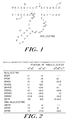
- FIG 1 depicts a structure of a hammerhead nucleozyme.
- FIG 2 is a table listing nucleozymes of the present invention and comparative nucleozymes indicating the positions of ribonucleotides in the nucleozymes. The position designations correspond to the structure depicted in FIG 1.
- FIGS 3 and 4 are photographs of a gel demonstrating the cleavage of a 5' 32 P-labeled RNA substrate.
- the designation "RNA” is the-all-RNA containing ribozyme and the nucleozymes are as abbreviated in FIG 2.
- FIG 5 is a photograph of a gel demonstrating the cleavage of a radioactive RNA substrate by nucleozymes of the present invention containing methoxy substituted NAAs.
- the nucleozymes are abbreviated as in FIG 2.
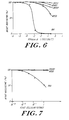
- FIGS 6 and 7 are graphs depicting the stability of nucleozymes compared to the stability of the all-RNA ribozyme counterpart after exposure to both RNAse A (6) and a yeast cellular extract (7).
- nucleozymes of the present invention have catalytic activity.
- Nucleozymes of the present invention essentially are modified ribozymes having ribonucleotides at catalytically critical sites G9, G12, A13, and A29 of the hammerhead ribozyme as shown in fig 1 and deoxyribonucleotides or NAAs at non-critical sites.
- nucleozyme is intended to include catalytic chimeric polymeric chains containing ribonucleotides and deoxyribonucleotides and/or nucleic acid analogues.
- a ribozyme is an all-RNA containing molecule capable of being a biological catalyst. Ribozymes are art recognized and examples of such molecules include the "hammerhead” or "hairpin” ribozymes.
- catalytic activity is intended to include many types of catalysis.
- the catalytic activity could be that of a ribonuclease, ligase, phcsphotransferase acid, phosphatase, polymerase, and RNA restriction endonuclease.
- nucleic acid analogue is intended to include analogues which are structurally similar to ribonucleotides or deoxyribonucleotides and are capable of being monomer units in a polymer capable of hybridizing with DNA or RNA.
- the analogue may impart properties to a polymeric chain which differ from those of a nucleotide but the analogue is capable of being a monomer unit in a polymeric chain.
- the NAA may impart resistance to chemical or enzymatic degradation to the chimeric polymer. NAAs may be selected for their structural conformation if a particular conformation is desired for the polymer.
- a NAA may have a formula as depicted in Formulas I-IV below wherein X is a good coordinating ligand with divalent metal ions, eg., Mg +2 .
- a nucleotide analogue may contain a heterocyclic ring as depicted in the formulae I-IV below or may be acyclic as shown in Formula V below.
- the preferred heterocyclic ring containing analogues of the present invention have three hydroxy substituents. alkoxy substituents or combinations thereof.
- B is a base.
- the base may be substituted or unsubstituted.
- bases include adenine, cytosine, guanine, uracil, 2-aminopurine, hypoxanthine, imidazole, R 1 -SH-, and R 1 -NH 2 -.
- base is art-recognized and one of ordinary skill in the art would know which bases are useful in the present invention.
- X is selected from the group consisting of -OR 1 .
- R 1 is a lower alkyl group and R 2 -R 4 are a lower alkyl hydrocarbon chains.
- R 1 is a lower alkyl group and R 2 -R 4 are a lower alkyl hydrocarbon chains.
- the term "lower alkyl" is intended to include from one to six carbons, more preferably one to three carbons and most preferably a single carbon atom. For example, the most preferred X is methoxy.
- the protecting groups may be the conventional groups typically used in oligonucleotide synthesis processes e.g., N 6 -benzoyl for adenine, N 4 -benzoyl for cytosine, N 2 -isobutyryl for guanine, and N 2 -benzoyl for 2-aminopurine.
- Other useful protecting groups include phenoxyacetyl (PAC) and t-butoxyacetyl (TAC) ..
- PAC phenoxyacetyl
- TAC t-butoxyacetyl
- the catalytically critical sites of a particular ribozyme may be determined by positioning deoxyribonucleotides(s) at various locations within the ribozyme and evaluating the chimeric polymer's catalytic activity.
- nucleic acid analogue is used to describe the units when polymerized as part of a chimeric polymer chain.
- chimeric polymer is intended to include polymers containing at least two different types of monomer units, e.g., RNA, DNA, or NAA.
- a chimeric polymer may include RNA/DNA, RNA/NAA, or DNA/NAA polymeric chains.
- linkages between the building units of the polymeric chain may be linkages capable of bridging the units together for either in vitro or in vivo.
- the linkage may be a phosphorous containing linkage, e.g., phosphodiester or phosphothioate, or may be a nitrogen containing linkage, e.g., amide.
- the chimeric polymer may contain non-nucleotide spacer molecules along with its other nucleotide or analogue units.
- spacer molecules which may be used are described in Nielsen et al. Science , 254:1497-1500 (1991), the contents of which are expressly incorporated by reference.
- the analogues described above may be prepared using synthetic methods capable of attaching the desired moieties at the selected positions. Other possible analogues will be apparent to one of ordinary skill in the art.
- Deoxyribonucleotides are readily available and may be purchased from a variety of sources.
- the alkyl substituted heterocyclic ring containing analogues may be synthesized by first reacting the moiety being modified with arabino triflates (trifluoromethane sulfonates) and second displacing the arabino triflates with an appropriate organotin compound selected on the basis of the desired moiety.
- This synthesis scheme may be used to prepare analogues wherein X is selected from the group consisting of -OR 1 , -R 2 OH, R 2 F, -RBr, and -RNH 2 .
- X is selected from the group consisting of -OR 1 , -R 2 OH, R 2 F, -RBr, and -RNH 2 .
- One of ordinary skill in the art would know how to synthesis the halogenated analogues (X is -F or -Br) and the amino substituted analogues (X is -NH 2 ).
- These analogues may be synthesized as described by Williams et al., Biochemistry , 30:4001-4009 (1991), Doerr et al. , J. Org. Chem. , 32:1462 (1967), Mengel et al. Angew. Chem. , 90:557 (1978), or Coddington et al., J. Org. Chem.,
- the acyclic nucleic acid analogues may be prepared by reacting a protected acyclic molecule with a diol. Reaction processes which may be used are described in Durand et al., Nucleic Acid Research , 18:6353 (1990); Seela et al., Nucleic Acid Research , 15:3113-3124 (1987); Cload et al., JACF, 113:6324-6326 (1991), the contents of each reference is hereby expressly incorporated by reference.
- the nucleozymes have catalytically critical site(s) at which a ribonucleotide or NAA is necessary for the nucleozyme to have the desired level of catalytic activity.
- catalytically critical site is intended to include sites which, if altered from a ribonucleotide or a NAA to a deoxyribonucleotide, substantially reduces or even eliminates catalytic activity. A substantial reduction in catalytic activity would be that reduction which limits the usefulness of the nucleozyme as a catalyst in vitro or in vivo .
- the catalytically critical sites may be determined for each nucleozyme.
- Catalytically critical sites can be determined by preparing a variety of chimeric polymers using the chemical techniques described herein and comparing the catalytic activity of the chimeric test polymers.
- the catalytically critical sites in the all-RNA containing ribozyme counterparts are determined by selecting sites believed to be involved in catalysis and inserting a deoxyribonucleotide at the particular site. If the chimeric polymer does not have the same or substantially the same catalytic activity as the all-RNA counterpart, then the selected site is presumed to be a catalytically critical site.
- the hammerhead nucleozymes of the present invention have four catalytically critical sites which are the G9, G12, A13 and A29 positions for the sequence depicted in FIG 1.
- the nucleozymes of the present invention are of a size capable of being synthesized using the chemistry described herein.
- the nucleozymes Preferably, the nucleozymes have less than about 100 total building units, more preferably, less than about 80 building units, even more preferably, less than about 70 building units, and most preferably less than about 50 building units. Some nucleozymes may even have less than about 20 building units.
- the preferred nucleozyme is modeled after the hammerhead ribozyme, the catalytic portion of which has 35 building units.
- the term "building unit" is intended to include ribonucleotides, deoxyribonucleotides, or synthons.
- the nucleczymes of the present invention are modified ribozymes having the catalytically non-critical ribonucleotides replaced with deoxyribonucleotides or NAAs.
- the modified ribozymes or nucleozymes are significantly more resistant to degradation than the all-RNA counterparts.
- the degradation may be either enzymatic or chemical degradation.
- the language "significantly more resistant to degradation" is that resistance which allows the nucleozyme to remain largely intact for an extended period of time relative to its all-RNA counterpart.
- it has a resistance which allows it to be administered for in vivo applications.
- FIGs. 6 and 4B are graphs depicting the relationship between the percentage of the nucleozyme being intact at a particular RNAse A (FIG. 6) or yeast cellular extract (FIG. 7) concentration.
- the data set forth in FIGS. 6 and 7 was obtained using the following procedure.
- a sample of 0.001 pmol of 5' labeled nucleozyme or ribozyme was incubated with 0.5 mg of carrier TRNA in 50 mM Tris-HCl (pH 7.4) and 10 mM Mg +2 and different concentrations of RNAse A or yeast extract ten minutes for A, thirty minutes for extract. The reactions were stopped by the addition of 20 mM EDTA and loaded and analyzed on 15% PAGE in 7M urea.
- the yeast extract was prepared from a 1 ml culture of yeast strain BWG2-9A grown to late-lag phase, harvested and washed with 25 mM sodium phosphate buffer (pH 7.8). The pellet was suspended in 100 ⁇ l of the same buffer and sonicated for 20 seconds (60W). After centrifugation for five minutes in an Eppendorf centrifuge, the supernatant was used directly after appropriate dilutions and incubations with the nucleozymes and the all-RNA ribozyme.
- the nucleozymes were at least about 75% intact at an RNAse A log concentration of -1.5 and at least about 80% intact at an RNAse A log concentration of -2.5.
- the nucleozyme is at least about 90% intact at both concentrations.
- the difference in stability between the nucleozymes and ribozyme is even more apparent when the enzyme is a yeast cellular extract (FIG. 7).
- the nucleozymes were at least 90% intact at all of the tested concentrations.
- the chemical degradation for purposes of this invention is intended to include resistance to chemicals present in vivo and in vitro .
- the resistance may be to alkaline hydrolysis, e.g., sodium hydroxide and water.
- the nucleozymes of the present invention are modified ribozymes having the catalytically non-critical ribonucleotides replaced with deoxyribonucleotides or NAAs.
- at least one of the units is a deoxyribonucleotide and preferably most of the units are deoxyribonucleotides.
- the nucleozymes more preferably, have at least about 75%, even more preferably at least about 85%, most preferably at least about 90% of their ribonucleotides replaced with deoxyribonucleotides or NAAs.
- the present invention also pertains to a method of making a chimeric polymer.
- the method is similar to that described by Scaringe et al. to produce an all-RNA polymer. ( Nucleics Acid Research Vol. 18, No. 18, 5433-41 (1990)), the contents of which is expressly incorporated by reference.
- the method includes the steps of phosphitylating protected RNA, DNA or NAA units under conditions which minimize migration of the protecting group forming isomerically pure protected phosphoramidites.
- the protected RNA or synthons may have the desired moieties protected with the protecting groups capable of surviving the phosphitylation and coupling steps. Examples of such groups include conventional DNA protecting groups such as 5'-O-DMT, N-Bz (Ade and Cyt), N-iBu (Gua), ⁇ -cyanoethyl for phosphate, TB DMS for 2'-hydroxyl.
- the term "isomerically pure protected phosphoramidites" is intended to include phosphoramidite preparations free of a substantial amount of undesired isomers of the phosphoramidites.
- a substantial amount is that amount which would substantially interfere or impede with the preparation's ability to be used in forming a mixed polymeric chain.
- a consideration in the chemical synthesis of a ribonucleotide phosphoramidite is contamination of the desired 2'-O-protecting group-3'-O phosphoramidite with the undesired 3'-O- protecting group -2'-O-phosphoramidite. Syntheses performed with the latter lead to oligonucleotides having 5'-2' linkages.
- Isomerically pure protected phosphoramidites of the present invention lead to oligonucleotides which are free of such undesired linkages.
- the method of the present invention also involves coupling the protected phosphoramidites together forming a protected chimeric polymeric chain.
- the coupling can be done using well-known chemical techniques known to one of ordinary skill in the art.
- Preferably the coupling is done on an automated synthesizer.
- the protecting groups now can be removed from the chain under conditions which completely deprotect the polymer. Also, nucleotide base modification and/or phosphodiester linkage isomerization of the chain now can be minimized during the deprotection step.
- the prevention of migration of the protecting groups in the phosphitylation step can be accomplished by phosphitylating in the presence of a catalyst selected to minimize migration.
- a catalyst selected to minimize migration.
- An example of such a catalyst is the combination of 2, 4, 6-collidine and N-methylimidazole.
- the invention permits removal of the protecting groups in a manner that is complete and that minimizes nucleotide base modification and/or phosphodiester linkage isomerization.
- Complete removal of protecting groups includes substantially complete removal where a polymeric chain may have a small number of protecting groups still attached which do not effect the polymeric chain's intended catalytic function.
- the deprotection step is accomplished by deprotecting the polymer in the presence of an agent capable of minimizing such effects.
- An example of such an agent is ethanolic ammonia.
- the method also allows the production of a homogeneous RNA/DNA polymer free of undesired isomeric products.
- the term "free” is intended to include substantially free wherein a small amount of protecting groups or undesired isomers are present as long as the amount does not interfere or impede the polymer's function.
- the minimization of nucleotide base modification is intended to include that modification which would effect a polymeric chain's intended catalytic function.
- Minimizing phosphodiester linkage isomerization when used in connection with a molecule, means preventing that degree of isomerization which would, adversely affect the molecule's intended catalytic function.
- Minimizing phosphodiester linkage isomerization when used in connection with a preparation means preventing that degree of isomerization which would substantially affect the preparation's abilities to be used for its intended catalytic functions.
- the present invention also pertains to methods for using the nucleozymes.
- the nucleozymes may be used for any method in which a ribozyme presently may be used.
- the nucleozyme may be used to selectively cleave an RNA substrate or to ligate two pieces of RNA together.
- the RNA substrate is contacted with at least one nucleozyme which targets a specific sequence in the substrate for cleavage.
- a plurality of nucleozymes also may be used in a cleavage process.
- the nucleozymes of the present invention also may be used to polymerize an oligonucleotide molecule.
- the oligonucleotide may contain ribonucleotides, deoxyribonucleotides, and analogues of deoxy- or ribonucleotides.
- a template is contacted with a population of the appropriate nucleotide monomer units and a nucleozyme under conditions which allow an oligonucleotide complementary to the template to form.
- the template preferably is attached to a support.
- the nucleozymes of the present invention also may be used for therapeutic methods due to their stability in vivo .
- the nucleozymes may be used, for example, to treat a subject for a retrovirus associated disease.
- a therapeutically effective amount of at least one nucleozyme is administered to a subject such that the nucleozyme(s) cleaves the RNA genome of the retrovirus or the viral mRNA rendering it inactive.
- a retrovirus associated disease is intended to include diseases involving retroviruses.
- Retroviruses have an RNA genome making them susceptible to cleavage by the at least one nucleozyme or the plurality of nucleozymes.
- An example of such a retrovirus associated disease is AIDS wherein the causative retrovirus is the human immunodeficiency virus (HIV).
- subject is intended to include living organisms susceptible to retroviruses, e.g., mammals. Examples of subjects include humans, cats, and rats.
- therapeutically effective amount is intended to include that amount capable of eliminating or significantly reducing the symptoms associated with retrovirus associated diseases.
- the amount may be determined on an individual basis and will be based, at least in part, on consideration of the severity of symptoms to be treated, the results sought and the size of the subject. Thus, a therapeutically effective amount may be determined by one of ordinary skill in the art employing such factors using no more than routine experimentation.
- the nucleozymes of the present invention also may be used in conjunction with or in place of antisense RNA technology. That is, to control the expression of a gene by targeting an appropriate mRNA.
- a nucleozyme may be selected based on its ability to target a particular mRNA sequence and subsequently an effective amount of the nucleozyme may be administered to a subject. The effective amount would be that amount necessary to target the RNA and control expression of a selected gene.
- the present invention also pertains to pharmaceutical compositions containing at least one nucleozyme and a pharmaceutically acceptable carrier.
- the language pharmaceutically acceptable carrier is intended to include carriers capable of being co-administered with the nucleozyme(s) while not adversely affecting the nucleozyme(s) catalytic activity.
- the carrier may be solid or liquid or a gel.
- liquid carriers include water, an aqueous solution of a non-toxic salt, e.g., sterile physiological saline solutions, or aqueous solutions containing organic solvents, e.g., ethanol.
- emulsions such as oil-in-water.
- Solid carriers may include nutritive carriers, e.g., sucrose or gelatin, or non-nutritive carriers, e.g., cellulose or talc.
- the nucleozymes of the present invention are modeled after the "hammerhead" ribozyme.
- the moderate size of the catalytic hammerhead domains of RNA lends itself to chemical synthesis.
- the all DNA analog of the hammerhead domain is inactive in catalysis. It was determined that nucleozymes containing as few as four ribonucleotides out of a total of thirty five nucleotides have catalytic activity. Active hammerhead nucleozymes according to the present invention require the presence of ribonucleotides in particular at four positions, the G9, G12, A13, and A29 positions shown in FIG. 1.
- FIG. 2 is a table showing the chimeric polymers prepared along with the positions of ribonucleotides within the polymers.
- Nucleozymes are abbreviated as follows: DR and MR designate nucleozymes composed of predominantly deoxyribonucleotides and 2' -methoxynucleotides, respectively. The following number indicates the number of ribonucleotides and the final number refers to a particular combination of ribonucleotides.
- RNA/DNA mixed polymers appear as set forth and designated in the table of FIG 2. As shown in FIGs 3 and 4, the mixed polymer having ribonucleotides at positions 9, 10, 12, 13, 28, 29 and 30 of the ribozyme showed good catalytic activity (FIG 3). The nucleozyme containing the fewest ribonucleotides, DR4R3 and DR4R2, showed at least some activity. In FIGs 3 and 4, S indicates the mobility of the intact substrate and P, the product. RNA is the all-RNA ribozyme and nucleozymes are abbreviated as in FIG 1.
- Lane 1 is a control lacking the added catalytic fragment in FIG 3.
- Lane 1 in FIG 4 is the 4.5 hour incubation of the substrate with neither Mg +2 nor nucleozyme and lane 2 is an incubation control in the presence of Mg +2 but no added nucleozyme.
- the samples were analyzed on 15% PAGE in 7M urea.
- FIG 3 is a photograph showing the cleavage of radioactive substrates by OMe-nucleozymes.
- the S indicates the mobility of the intact substrate and P, the product.
- the reactions were performed as in FIG 2 except that the incubations of the substrate were with the MR5R nucleozyme, for four hours and the (Mg +2 ) was varied.
- Lane 1 contained no Mg +2 , lane 2-10 mM, lane 3-20 mM, lane 4-30 mM and lane 5-50 mM.
- the OMe-nucleozymes are nucleozymes having synthons which are methoxysubstituted in the 2' position.
- the nucleozymes designated MR contain all methoxysubstituted nucleozymes rather than deoxyribonucleotides.
- the catalytic activity of the nucleozymes was further evaluated by determining parameters including K M and K cat for some of the kinetic reactions.
- K Mg , K S and k 3 of nucleozyme reactions were obtained to evaluate how extensive deoxyribonucleotide substitution effects Mg +2 cofactor binding. A summary of these results is presented in Table 1 below.
- the reaction scheme starts with the catalytic species, the substrate and the Mg +2 cofactor, traversing a ternary complex and yielding a product.
- the apparent K m 's and K s 's of the three nucleozymes are virtually identical and approximately five times those of the all-RNA ribozyme acting on an RNA substrate.
- the chimeric polymers were synthesized as follows:
- the reaction was clear at the start but a white precipitate formed within 3 min (this is the collidine hydrochloride salt).
- the reaction was complete after 1-2 hour (determined by TLC).
- the reaction was then placed in an ice bath and diluted with 100 ml (1 volume) ethyl acetate. 150 ml 5% NaHCO 3 was added slowly (the first 10 ml over 5 minutes). (In the case of guanosine the reaction was first quenched with 5 ml of absolute ethanol). Heat was generated by the quenching of excess phosphitylating reagent.
- the CPG-bound mixed polymer was transferred from the synthesis column to a 4 ml glass screw top vial. 1 ml of ethanolic ammonia was added and heated at 55°C for 16 hr. After cooling to -20°C, the ethanolic ammonia was removed from the CPG beads and the CPG was washed with 0.5 ml of 50:50/ethanol:water which was then added to the ethanolic ammonia. The combined supernatants containing the oligoribonucleotide were dried to a white powder.
- the ammonia-deprotected mixed polymer was resuspended in 50 ⁇ l of 50:50/ethanol:water and 600 ⁇ l of 1M TBAF/THF and left at room temperature for about 24 hr.
- the solution was then added directly to 10 ml of 0.1M TEAB and loaded onto a Qiagen 500 anion exchange cartridge (Qiagen Inc., Studio City, CA) prewashed with 10 ⁇ l of 0.05M TEAB, the nucleozyme was eluted with 7 ml of 2M TEAB and dried down to a white powder.
- Qiagen 500 anion exchange cartridge Qiagen Inc., Studio City, CA
- the oligomers were first checked by analytical PAGE (0.75 mm x 20 cm x 45 cm). 1 ODU of oligonucleotide in 5 ⁇ l H 2 O was added to 5 ⁇ l of deionized formamide and the total 10 ⁇ l solution was loaded into a 1 cm wide lane. Following electrophoresis the gels were photographed by placing the gel over a fluorescent TLC plate and illuminating the gel with a UV lamp. The desired sequence was established according to electrophoretic mobility and purified by preparative electrophoresis using 1.5 mm thick gels with a single 12 cm wide lane.
- the desired band was excised, crushed, placed into a sterile 5 ml test tube, and covered with 50 mM NH 4 OAc pH 7.0. The tube was covered and kept at 37°C O/N. The supernatant was then removed and the gel pieces washed with an additional 1 ml of the extraction buffer. The combined washings were filtered through a 0.45 micron filter and loaded onto a 1 gram size Sep-Pak C18 cartridge (Waters-Millipore) prewashed with 5 ml each of acetonitrile, 50% acetonitrile/0.1M TEAB and 0.1M TEAB. After washing the cartridge with 5 ml of 0.1 M TEAB, the RNA was eluted in 5 ml 35:35:30 acetonitrile/methanol/water and dried down to a white powder.
- a 1 gram size Sep-Pak C18 cartridge Waters-Millipore
Landscapes
- Health & Medical Sciences (AREA)
- Life Sciences & Earth Sciences (AREA)
- Genetics & Genomics (AREA)
- Engineering & Computer Science (AREA)
- Biomedical Technology (AREA)
- Molecular Biology (AREA)
- Chemical & Material Sciences (AREA)
- Organic Chemistry (AREA)
- Zoology (AREA)
- Biotechnology (AREA)
- Wood Science & Technology (AREA)
- Bioinformatics & Cheminformatics (AREA)
- General Engineering & Computer Science (AREA)
- General Health & Medical Sciences (AREA)
- Virology (AREA)
- Biophysics (AREA)
- Plant Pathology (AREA)
- Physics & Mathematics (AREA)
- Microbiology (AREA)
- Biochemistry (AREA)
- Chemical Kinetics & Catalysis (AREA)
- Communicable Diseases (AREA)
- Public Health (AREA)
- Animal Behavior & Ethology (AREA)
- Pharmacology & Pharmacy (AREA)
- Nuclear Medicine, Radiotherapy & Molecular Imaging (AREA)
- Medicinal Chemistry (AREA)
- General Chemical & Material Sciences (AREA)
- Oncology (AREA)
- Veterinary Medicine (AREA)
- Tropical Medicine & Parasitology (AREA)
- AIDS & HIV (AREA)
- Pharmaceuticals Containing Other Organic And Inorganic Compounds (AREA)
- Saccharide Compounds (AREA)
- Medicines That Contain Protein Lipid Enzymes And Other Medicines (AREA)
- Compositions Of Macromolecular Compounds (AREA)
- Enzymes And Modification Thereof (AREA)
Abstract
Description
- This invention relates to nucleozymes, mixed nucleic acid polymers having catalytic activity. The invention also relates to methods of preparing and using nucleozymes.
- Proteins were the only known catalysts of cellular reactions until the discovery of RNA catalysts (ribozymes). In some instances, the folded structure of a ribozyme catalyses a cleavage reaction on another part of the same molecule (cis-reaction). In other instances (trans-reaction), the ribozyme may also act as a catalyst on another RNA or DNA molecule (substrate) by cleaving or ligating pieces of the substrate without changing itself in the process. (Zaug et al. Science, Vol. 231, pp. 470-75, 1986; Cech Science, Vol. 236, pp. 1532-39, 1987).
- A well-characterized example of a ribozyme is the self-splicing Group I intron from the nuclear rRNA of Tetrahymena thermophila. An intron is an intervening sequence in a eukaryotic gene which does not encode a protein or in rare cases encodes a different protein. Introns are transcribed along with coding sequences (exons) to produce precursor RNA. The introns are removed from the precursor RNA and the exons are ligated by RNA cleaving and splicing steps. The Group I intron or ribozyme of T. thermophila catalyzes its own removal from the precursor RNA molecule. (Kruger et al. Cell 31:147-157, (1982); Zaug et al. (1986)). The self-splicing ribozyme catalyzes a variety of phosphodiester transfer reactions. The ribozyme can act as a ribonuclease, ligase, phosphotransferase, acid phosphatase, polymerase and RNA restriction endonuclease (Zaug, A.J., et al., Science 231:470-475 (1986); Zaug, A.J., et al., Nature 324:429-433 (1986); Zaug, A.J., et al., Biochemistry 25:4478-4482 (1986); Been, M.D., et al., Science 239:1412-1416 (1988); Doudna et al., Nature 339:519-522 (1989);
- The "hammerhead" and "hairpin" ribozymes also have been studied and described (Perreault et al., Nature 344:565-567 (1990); Perreault et al. Biochemistry 30:4020-25 (1991); Yang et al. Biochemistry 29:11156-60 (1990); Chowrira et al. Biochemistry 30:8518-22 (1991); Uhlenbeck Nature, 328:596-600 (1987)). The hammerhead ribozyme forms a stem loop secondary structure to form the catalytically active molecule. The hairpin ribozyme has a structure resembling a hairpin.
- Rossi et al. WO91/03162 describe a modified hammerhead ribozyme comprising a ribozyme catalytic centre and deoxyribonucleotides in place of ribonucleotides external to the catalytic centre. Pieken et al. Science 253: 314-317 (1991) describe modified hammerhead ribozymes incorporating 2'-fluoro-and 2'-amino- nucleotide analogues which exhibit enhanced stability to degradation in rabbit serum.
- Although ribozymes are intriguing molecules, their use for in vivo applications is limited if not precluded. The all-RNA molecules are susceptible to degradation from enzymes (RNAses) present in vivo. There presently is no way known to inventors for delivering such molecules to the intended site in an active form.
- The present invention is based on the discovery that ribozymes have catalytically critical sites and that it is not necessary to have an all-RNA molecule to have catalytic activity. The ribozyme like molecules of the invention or "nucleozymes" have ribonucleotides at catalytically critical sites and nucleic acid analogues (hereinafter NAAs) or deoxyribonucleotides at non-catalytically critical sites. Nucleozymes have catalytic activity on the same substrates as their ribozyme counterparts. Accordingly the present invention provides a nucleozyme having catalytic activity comprising a plurality of catalytically critical sites and a plurality of catalytically non-critical sites the nucleozyme having a sequence corresponding to a hammerhead ribozyme, wherein the catalytically critical sites are ribonucleotides and the catalytically non-critical sites are deoxyribonucleotides or nucleic acid analogues, wherein the catalytically critical sites are at the positions corresponding to the nucleotides G9, G12, A13, and A29 of the hammerhead ribozyme as shown in fig 1, the nucleozyme having an increased resistance to degradation compared to an all RNA counterpart
- The nucleozymes of the present invention thus essentially are modified ribozymes having catalytically non-critical ribonucleotides replaced with deoxyribonucleotides or NAAs. The nucleozymes are significantly more resistant to degradation than their all-RNA ribozyme counterparts because the chemicals or enzymes present in vivo do not recognize the nucleic acid internucleotide bonds. The resistance can be to either enzymatic or chemical degradation. The stability of the nucleozymes allows them to be useful as therapeutic agents whereas ribozymes would be cleaved and rendered inactive by enzymes, e.g. RNAses, present in vivo.
- The nucleozymes of the present invention are chimeric nucleic acid polymers having catalytic activity due to and preferably optimized by the presence of RNA at a catalytically critical site. The present invention provides chemistry which allows synthesis of the chimeric polymers and the determination of catalytically critical sites. The sites may be determined by varying the location of deoxyribonucleotides in a chimeric polymer and determining the locations responsible for or related to the chimeric polymer's ability to catalyze.
- The present invention also pertains to a method for making a nucleozyme i.e., a chimeric polymer. The polymers are made by phosphitylating protected ribonucleotides or NAAs units under conditions to form substantially pure-protected phosphoramidites or synthons of a single isomer. The protected phosphoramidites are coupled to each other forming a protected chimeric nucleic acid chain. The protecting groups are removed from the chimeric nucleic acid chain under conditions which completely deprotect the polymer.
- The method of the present invention alleviates problems associated with a known prior art method for preparing chimeric RNA/DNA polymers (Perreault et al. Nature 344:565-567 (1990); Wu et al. Journal of the American Chemical Society 111:8531-33 (1989)). The prior art synthetic method for making chimeric, polymers had problems with the migration of the protecting groups during the phosphitylating step, difficulty in removing the protecting groups and also has problems resulting from the process of removing the protecting groups in the deprotection step. The former problem results in the production of monomer units having protecting groups in an undesired position. The latter problem results, in many cases, in a) nucleotide modification, b) phosphodiester linkage isomerization, and c) to retention of a substantial amount of protecting groups on the polymer resulting in a non-functional polymer. The first problem was overcome in the present invention by selecting a catalyst capable of minimizing migration of protecting groups, e.g., a combination of 2,4,6-collidine and N-methylimidazole. The problem in removing the protecting groups was eliminated by deprotecting the mixed polymer in the presence of ethanolic ammonia.
- The present invention also pertains to methods of using the nucleozymes. The nucleozymes may be used to perform the same catalytic functions as their all-RNA ribozyme counterparts. For example, a nucleozyme may be used as a ribonuclease, ligase, phosphotransferase, acid phosphatase, polymerase, or an RNA restriction endonuclease. The nucleozymes may be used to selectively cleave and ligate substrates by contacting the substrates with a nucleozyme such that the nucleozyme targets a specific sequence in the substrate for cleavage or ligation. The nucleozymes may be used as polymerases to polymerize the production of an oligoribonucleotide or an oligodeoxyribonucleotide. The nucleozymes also may be used in place of antisense RNA technology.
- The nucleozymes also may be used as therapeutic agents introduced in vivo due to their resistance to chemical and enzymatic degradation. The nucleozymes may be used, for example, in a method for treating a subject for a retrovirus associated disease, e.g., human immunodeficiency virus (HIV). The method involves administering a therapeutically effective amount of at least one nucleozyme to the subject such that the nucleozyme cleaves the RNA genome of the retrovirus rendering it inactive. A plurality of nucleozymes also may be administered if it is desirable to target more than one sequence in the RNA genome.
- A nucleozyme may be provided in a pharmaceutical composition. The pharmaceutical composition would include at least one nucleozyme and a pharmaceutically acceptable carrier.
- It is an object of the present invention to provide a nucleozyme capable of maintaining its catalytic properties in vivo.
- It is an object of the present invention to provide a chimeric nucleic acid polymer having catalytic activity.
- It is yet another object of the present invention to provide a method for preparing chimeric polymers which are free of protecting groups and undesired isomeric side products.
- It is yet another object of the present invention to provide a homogenous chimeric polymer.
- FIG 1 depicts a structure of a hammerhead nucleozyme.
- FIG 2 is a table listing nucleozymes of the present invention and comparative nucleozymes indicating the positions of ribonucleotides in the nucleozymes. The position designations correspond to the structure depicted in FIG 1.
- FIGS 3 and 4 are photographs of a gel demonstrating the cleavage of a 5' 32P-labeled RNA substrate. The designation "RNA" is the-all-RNA containing ribozyme and the nucleozymes are as abbreviated in FIG 2.
- FIG 5 is a photograph of a gel demonstrating the cleavage of a radioactive RNA substrate by nucleozymes of the present invention containing methoxy substituted NAAs. The nucleozymes are abbreviated as in FIG 2.
- FIGS 6 and 7 are graphs depicting the stability of nucleozymes compared to the stability of the all-RNA ribozyme counterpart after exposure to both RNAse A (6) and a yeast cellular extract (7).
- The nucleozymes of the present invention have catalytic activity. Nucleozymes of the present invention essentially are modified ribozymes having ribonucleotides at catalytically critical sites G9, G12, A13, and A29 of the hammerhead ribozyme as shown in fig 1 and deoxyribonucleotides or NAAs at non-critical sites.
- The term "nucleozyme" is intended to include catalytic chimeric polymeric chains containing ribonucleotides and deoxyribonucleotides and/or nucleic acid analogues.
- A ribozyme is an all-RNA containing molecule capable of being a biological catalyst. Ribozymes are art recognized and examples of such molecules include the "hammerhead" or "hairpin" ribozymes.
- The term "catalytic activity" is intended to include many types of catalysis. For example, the catalytic activity could be that of a ribonuclease, ligase, phcsphotransferase acid, phosphatase, polymerase, and RNA restriction endonuclease.
- The term "nucleic acid analogue" (NAA) is intended to include analogues which are structurally similar to ribonucleotides or deoxyribonucleotides and are capable of being monomer units in a polymer capable of hybridizing with DNA or RNA. The analogue may impart properties to a polymeric chain which differ from those of a nucleotide but the analogue is capable of being a monomer unit in a polymeric chain. The NAA may impart resistance to chemical or enzymatic degradation to the chimeric polymer. NAAs may be selected for their structural conformation if a particular conformation is desired for the polymer.
- A NAA may have a formula as depicted in Formulas I-IV below wherein X is a good coordinating ligand with divalent metal ions, eg., Mg+2.
- A nucleotide analogue may contain a heterocyclic ring as depicted in the formulae I-IV below or may be acyclic as shown in Formula V below. The preferred heterocyclic ring containing analogues of the present invention have three hydroxy substituents. alkoxy substituents or combinations thereof.
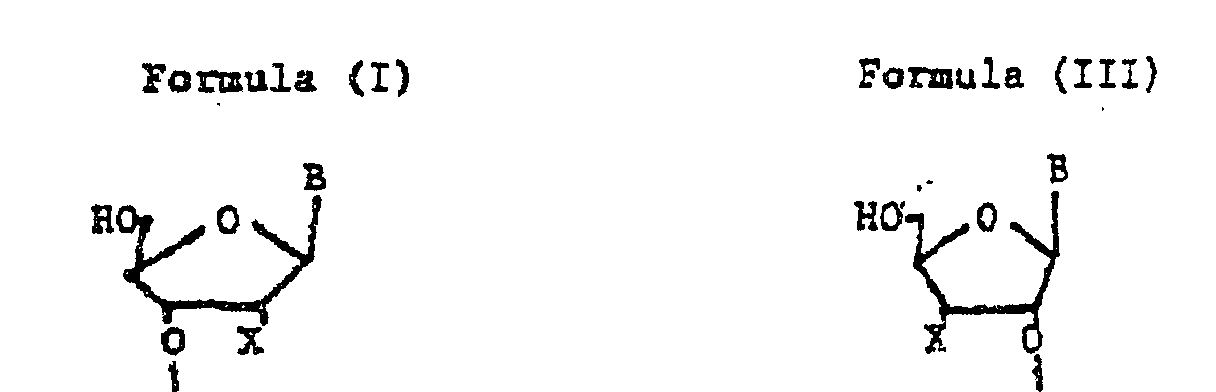

- In the above formulae, B is a base. The base may be substituted or unsubstituted. Examples of bases include adenine, cytosine, guanine, uracil, 2-aminopurine, hypoxanthine, imidazole,R1-SH-, and R1-NH2-. The term "base" is art-recognized and one of ordinary skill in the art would know which bases are useful in the present invention. X is selected from the group consisting of -OR1. F, -R2OH, -NH2, -R2NH2, -Br, -R2Br and -R2F wherein R1 is a lower alkyl group and R2-R4 are a lower alkyl hydrocarbon chains. The term "lower alkyl" is intended to include from one to six carbons, more preferably one to three carbons and most preferably a single carbon atom. For example, the most preferred X is methoxy.
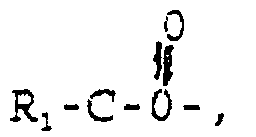
- B may be protected during the synthesis process. The protecting groups may be the conventional groups typically used in oligonucleotide synthesis processes e.g., N6-benzoyl for adenine, N4-benzoyl for cytosine, N2-isobutyryl for guanine, and N2-benzoyl for 2-aminopurine. Other useful protecting groups include phenoxyacetyl (PAC) and t-butoxyacetyl (TAC) .. One of ordinary skill in the art would know which protecting groups are appropriate for a particular base.
- The catalytically critical sites of a particular ribozyme may be determined by positioning deoxyribonucleotides(s) at various locations within the ribozyme and evaluating the chimeric polymer's catalytic activity.
- The term "synthon" is intended to include the fully protected monomer units (phosphoramidites) used to assemble the nucleic acid analogues of a chimeric polymer chain. The term "nucleic acid analogue" is used to describe the units when polymerized as part of a chimeric polymer chain.
- The term "chimeric polymer" is intended to include polymers containing at least two different types of monomer units, e.g., RNA, DNA, or NAA. For example, a chimeric polymer may include RNA/DNA, RNA/NAA, or DNA/NAA polymeric chains. It should be understood that the linkages between the building units of the polymeric chain may be linkages capable of bridging the units together for either in vitro or in vivo. For example, the linkage may be a phosphorous containing linkage, e.g., phosphodiester or phosphothioate, or may be a nitrogen containing linkage, e.g., amide. It should further be understood that the chimeric polymer may contain non-nucleotide spacer molecules along with its other nucleotide or analogue units. Examples of spacer molecules which may be used are described in Nielsen et al. Science, 254:1497-1500 (1991), the contents of which are expressly incorporated by reference.
- The analogues described above may be prepared using synthetic methods capable of attaching the desired moieties at the selected positions. Other possible analogues will be apparent to one of ordinary skill in the art. Deoxyribonucleotides are readily available and may be purchased from a variety of sources. The alkyl substituted heterocyclic ring containing analogues may be synthesized by first reacting the moiety being modified with arabino triflates (trifluoromethane sulfonates) and second displacing the arabino triflates with an appropriate organotin compound selected on the basis of the desired moiety. A schematic of this reaction is depicted below:This synthesis scheme may be used to prepare analogues wherein X is selected from the group consisting of -OR1, -R2OH, R2F, -RBr, and -RNH2. One of ordinary skill in the art would know how to synthesis the halogenated analogues (X is -F or -Br) and the amino substituted analogues (X is -NH2). These analogues may be synthesized as described by Williams et al., Biochemistry, 30:4001-4009 (1991), Doerr et al., J. Org. Chem., 32:1462 (1967), Mengel et al. Angew. Chem., 90:557 (1978), or Coddington et al., J. Org. Chem., 29:558 (1964), the contents of each of the references are hereby expressly incorporated by reference.

- The acyclic nucleic acid analogues may be prepared by reacting a protected acyclic molecule with a diol. Reaction processes which may be used are described in Durand et al., Nucleic Acid Research, 18:6353 (1990); Seela et al., Nucleic Acid Research, 15:3113-3124 (1987); Cload et al., JACF, 113:6324-6326 (1991), the contents of each reference is hereby expressly incorporated by reference.
- The nucleozymes have catalytically critical site(s) at which a ribonucleotide or NAA is necessary for the nucleozyme to have the desired level of catalytic activity. The term "catalytically critical site" is intended to include sites which, if altered from a ribonucleotide or a NAA to a deoxyribonucleotide, substantially reduces or even eliminates catalytic activity. A substantial reduction in catalytic activity would be that reduction which limits the usefulness of the nucleozyme as a catalyst in vitro or in vivo. The catalytically critical sites may be determined for each nucleozyme. Catalytically critical sites can be determined by preparing a variety of chimeric polymers using the chemical techniques described herein and comparing the catalytic activity of the chimeric test polymers. The catalytically critical sites in the all-RNA containing ribozyme counterparts are determined by selecting sites believed to be involved in catalysis and inserting a deoxyribonucleotide at the particular site. If the chimeric polymer does not have the same or substantially the same catalytic activity as the all-RNA counterpart, then the selected site is presumed to be a catalytically critical site. The hammerhead nucleozymes of the present invention have four catalytically critical sites which are the G9, G12, A13 and A29 positions for the sequence depicted in FIG 1.
- The nucleozymes of the present invention are of a size capable of being synthesized using the chemistry described herein. Preferably, the nucleozymes have less than about 100 total building units, more preferably, less than about 80 building units, even more preferably, less than about 70 building units, and most preferably less than about 50 building units. Some nucleozymes may even have less than about 20 building units. The preferred nucleozyme is modeled after the hammerhead ribozyme, the catalytic portion of which has 35 building units. The term "building unit" is intended to include ribonucleotides, deoxyribonucleotides, or synthons.
- The nucleczymes of the present invention are modified ribozymes having the catalytically non-critical ribonucleotides replaced with deoxyribonucleotides or NAAs. The modified ribozymes or nucleozymes are significantly more resistant to degradation than the all-RNA counterparts. The degradation may be either enzymatic or chemical degradation. The language "significantly more resistant to degradation" is that resistance which allows the nucleozyme to remain largely intact for an extended period of time relative to its all-RNA counterpart. Preferably it has a resistance which allows it to be administered for in vivo applications.
- Resistance to enzymatic degradation may be resistance to enzymes present in vivo, e.g. RNAses such as RNAse A. FIGs. 6 and 4B are graphs depicting the relationship between the percentage of the nucleozyme being intact at a particular RNAse A (FIG. 6) or yeast cellular extract (FIG. 7) concentration. The data set forth in FIGS. 6 and 7 was obtained using the following procedure. A sample of 0.001 pmol of 5' labeled nucleozyme or ribozyme was incubated with 0.5 mg of carrier TRNA in 50 mM Tris-HCl (pH 7.4) and 10 mM Mg+2 and different concentrations of RNAse A or yeast extract ten minutes for A, thirty minutes for extract. The reactions were stopped by the addition of 20 mM EDTA and loaded and analyzed on 15% PAGE in 7M urea. The yeast extract was prepared from a 1 ml culture of yeast strain BWG2-9A grown to late-lag phase, harvested and washed with 25 mM sodium phosphate buffer (pH 7.8). The pellet was suspended in 100 µl of the same buffer and sonicated for 20 seconds (60W). After centrifugation for five minutes in an Eppendorf centrifuge, the supernatant was used directly after appropriate dilutions and incubations with the nucleozymes and the all-RNA ribozyme.
- As shown in FIG. 6, the nucleozymes were at least about 75% intact at an RNAse A log concentration of -1.5 and at least about 80% intact at an RNAse A log concentration of -2.5. Preferably, the nucleozyme is at least about 90% intact at both concentrations. The difference in stability between the nucleozymes and ribozyme is even more apparent when the enzyme is a yeast cellular extract (FIG. 7). The nucleozymes were at least 90% intact at all of the tested concentrations.
- The chemical degradation for purposes of this invention is intended to include resistance to chemicals present in vivo and in vitro. The resistance may be to alkaline hydrolysis, e.g., sodium hydroxide and water.
- The nucleozymes of the present invention are modified ribozymes having the catalytically non-critical ribonucleotides replaced with deoxyribonucleotides or NAAs. Preferably, at least one of the units is a deoxyribonucleotide and preferably most of the units are deoxyribonucleotides. The nucleozymes more preferably, have at least about 75%, even more preferably at least about 85%, most preferably at least about 90% of their ribonucleotides replaced with deoxyribonucleotides or NAAs.
- The present invention also pertains to a method of making a chimeric polymer. The method is similar to that described by Scaringe et al. to produce an all-RNA polymer. (Nucleics Acid Research Vol. 18, No. 18, 5433-41 (1990)), the contents of which is expressly incorporated by reference. The method includes the steps of phosphitylating protected RNA, DNA or NAA units under conditions which minimize migration of the protecting group forming isomerically pure protected phosphoramidites. The protected RNA or synthons may have the desired moieties protected with the protecting groups capable of surviving the phosphitylation and coupling steps. Examples of such groups include conventional DNA protecting groups such as 5'-O-DMT, N-Bz (Ade and Cyt), N-iBu (Gua), β-cyanoethyl for phosphate, TB DMS for 2'-hydroxyl.
- The term "isomerically pure protected phosphoramidites" is intended to include phosphoramidite preparations free of a substantial amount of undesired isomers of the phosphoramidites. A substantial amount is that amount which would substantially interfere or impede with the preparation's ability to be used in forming a mixed polymeric chain. For example, a consideration in the chemical synthesis of a ribonucleotide phosphoramidite is contamination of the desired 2'-O-protecting group-3'-O phosphoramidite with the undesired 3'-O- protecting group -2'-O-phosphoramidite. Syntheses performed with the latter lead to oligonucleotides having 5'-2' linkages. Isomerically pure protected phosphoramidites of the present invention lead to oligonucleotides which are free of such undesired linkages.
- The method of the present invention also involves coupling the protected phosphoramidites together forming a protected chimeric polymeric chain. The coupling can be done using well-known chemical techniques known to one of ordinary skill in the art. Preferably the coupling is done on an automated synthesizer.
- After the chimeric polymeric chain is formed, the protecting groups now can be removed from the chain under conditions which completely deprotect the polymer. Also, nucleotide base modification and/or phosphodiester linkage isomerization of the chain now can be minimized during the deprotection step.
- The prevention of migration of the protecting groups in the phosphitylation step can be accomplished by phosphitylating in the presence of a catalyst selected to minimize migration. An example of such a catalyst is the combination of 2, 4, 6-collidine and N-methylimidazole.
- The invention permits removal of the protecting groups in a manner that is complete and that minimizes nucleotide base modification and/or phosphodiester linkage isomerization. Complete removal of protecting groups includes substantially complete removal where a polymeric chain may have a small number of protecting groups still attached which do not effect the polymeric chain's intended catalytic function. The deprotection step is accomplished by deprotecting the polymer in the presence of an agent capable of minimizing such effects. An example of such an agent is ethanolic ammonia.
- The method also allows the production of a homogeneous RNA/DNA polymer free of undesired isomeric products. The term "free" is intended to include substantially free wherein a small amount of protecting groups or undesired isomers are present as long as the amount does not interfere or impede the polymer's function. The minimization of nucleotide base modification is intended to include that modification which would effect a polymeric chain's intended catalytic function. Minimizing phosphodiester linkage isomerization, when used in connection with a molecule, means preventing that degree of isomerization which would, adversely affect the molecule's intended catalytic function. Minimizing phosphodiester linkage isomerization when used in connection with a preparation, means preventing that degree of isomerization which would substantially affect the preparation's abilities to be used for its intended catalytic functions.
- The present invention also pertains to methods for using the nucleozymes. The nucleozymes may be used for any method in which a ribozyme presently may be used. For example, the nucleozyme may be used to selectively cleave an RNA substrate or to ligate two pieces of RNA together. When cleaving a substrate, the RNA substrate is contacted with at least one nucleozyme which targets a specific sequence in the substrate for cleavage. A plurality of nucleozymes also may be used in a cleavage process.
- The nucleozymes of the present invention also may be used to polymerize an oligonucleotide molecule. The oligonucleotide may contain ribonucleotides, deoxyribonucleotides, and analogues of deoxy- or ribonucleotides. A template is contacted with a population of the appropriate nucleotide monomer units and a nucleozyme under conditions which allow an oligonucleotide complementary to the template to form. The template preferably is attached to a support.
- The nucleozymes of the present invention also may be used for therapeutic methods due to their stability in vivo. The nucleozymes may be used, for example, to treat a subject for a retrovirus associated disease. A therapeutically effective amount of at least one nucleozyme is administered to a subject such that the nucleozyme(s) cleaves the RNA genome of the retrovirus or the viral mRNA rendering it inactive.
- A retrovirus associated disease is intended to include diseases involving retroviruses. Retroviruses have an RNA genome making them susceptible to cleavage by the at least one nucleozyme or the plurality of nucleozymes. An example of such a retrovirus associated disease is AIDS wherein the causative retrovirus is the human immunodeficiency virus (HIV).
- The term "subject" is intended to include living organisms susceptible to retroviruses, e.g., mammals. Examples of subjects include humans, cats, and rats.
- The language "therapeutically effective amount" is intended to include that amount capable of eliminating or significantly reducing the symptoms associated with retrovirus associated diseases. The amount may be determined on an individual basis and will be based, at least in part, on consideration of the severity of symptoms to be treated, the results sought and the size of the subject. Thus, a therapeutically effective amount may be determined by one of ordinary skill in the art employing such factors using no more than routine experimentation.
- The nucleozymes of the present invention also may be used in conjunction with or in place of antisense RNA technology. That is, to control the expression of a gene by targeting an appropriate mRNA. A nucleozyme may be selected based on its ability to target a particular mRNA sequence and subsequently an effective amount of the nucleozyme may be administered to a subject. The effective amount would be that amount necessary to target the RNA and control expression of a selected gene.
- The present invention also pertains to pharmaceutical compositions containing at least one nucleozyme and a pharmaceutically acceptable carrier. The language pharmaceutically acceptable carrier is intended to include carriers capable of being co-administered with the nucleozyme(s) while not adversely affecting the nucleozyme(s) catalytic activity. The carrier may be solid or liquid or a gel.
Examples of liquid carriers include water, an aqueous solution of a non-toxic salt, e.g., sterile physiological saline solutions, or aqueous solutions containing organic solvents, e.g., ethanol. Also suitable are emulsions, such as oil-in-water. Solid carriers may include nutritive carriers, e.g., sucrose or gelatin, or non-nutritive carriers, e.g., cellulose or talc. - The nucleozymes of the present invention are modeled after the "hammerhead" ribozyme. The moderate size of the catalytic hammerhead domains of RNA lends itself to chemical synthesis.. As shown in FIG. 1, the conserved hammerhead domain of around fifty ribonucleotides found in naturally occurring=RNA has been petitioned between a thirty-five unit
catalytic fragment 10, the ribozyme, and a fourteennucleotide substrate unit 12. - The all DNA analog of the hammerhead domain is inactive in catalysis. It was determined that nucleozymes containing as few as four ribonucleotides out of a total of thirty five nucleotides have catalytic activity. Active hammerhead nucleozymes according to the present invention require the presence of ribonucleotides in particular at four positions, the G9, G12, A13, and A29 positions shown in FIG. 1.
- FIG. 2 is a table showing the chimeric polymers prepared along with the positions of ribonucleotides within the polymers. Nucleozymes are abbreviated as follows: DR and MR designate nucleozymes composed of predominantly deoxyribonucleotides and 2' -methoxynucleotides, respectively. The following number indicates the number of ribonucleotides and the final number refers to a particular combination of ribonucleotides.
- The all DNA analog of the hammerhead domain is inactive in catalysis. Several RNA/DNA mixed polymers appear as set forth and designated in the table of FIG 2. As shown in FIGs 3 and 4, the mixed polymer having ribonucleotides at
positions Lane 1 is a control lacking the added catalytic fragment in FIG 3.Lane 1 in FIG 4 is the 4.5 hour incubation of the substrate with neither Mg+2 nor nucleozyme andlane 2 is an incubation control in the presence of Mg+2 but no added nucleozyme. The samples were analyzed on 15% PAGE in 7M urea. - FIG 3 is a photograph showing the cleavage of radioactive substrates by OMe-nucleozymes. The S indicates the mobility of the intact substrate and P, the product. The reactions were performed as in FIG 2 except that the incubations of the substrate were with the MR5R nucleozyme, for four hours and the (Mg+2) was varied.
Lane 1 contained no Mg+2, lane 2-10 mM, lane 3-20 mM, lane 4-30 mM and lane 5-50 mM. The OMe-nucleozymes are nucleozymes having synthons which are methoxysubstituted in the 2' position. The nucleozymes designated MR contain all methoxysubstituted nucleozymes rather than deoxyribonucleotides. - The catalytic activity of the nucleozymes was further evaluated by determining parameters including KM and Kcat for some of the kinetic reactions. In addition, the KMg, KS and k3 of nucleozyme reactions were obtained to evaluate how extensive deoxyribonucleotide substitution effects Mg+2 cofactor binding. A summary of these results is presented in Table 1 below.
Kinetic parameters of nucleozyme-catalyzed reactions Substrate/Nucleozyme KM (µM) Kcat (l/min) KS (µM) K3 (l/min) KMg (mM) RS/DR4R3 4.2 0.004 5 0.013 23 RS/DR5R2 4.9 0.013 4 0.040 24 RS/DR7R 4.5 0.067 5 0.21 24 RS/RR 0.7 1.2 0.8 1.8 8.1 - The generalized reaction scheme used to determine the K values is depicted below.

- The reaction scheme starts with the catalytic species, the substrate and the Mg+2 cofactor, traversing a ternary complex and yielding a product. The apparent Km's and Ks's of the three nucleozymes are virtually identical and approximately five times those of the all-RNA ribozyme acting on an RNA substrate.
- The chimeric polymers were synthesized as follows:
- Dry N-Acyl-5'-O-DMT-2'-O-sily-ribonucleoside (10 mmol, 1 eq) was dissolved in 30 ml dry THF in a 300 ml round bottom flask. 2, 4, 6-Collidine (75 mmol, 7.5 eq) was added followed by N-methylimidazole (5 mmol, 0.5 eq). (N,N-dispropylamino) (cyanoethyl) phosphonamidic chloride (20 mmol, 2.0 eq [22 mmol, 2.2 eq in the case of guanosine or other nucleotide bases with reactive lactams]) was then added dropwise over 5 min at room temperature. The reaction was clear at the start but a white precipitate formed within 3 min (this is the collidine hydrochloride salt). The reaction was complete after 1-2 hour (determined by TLC). The reaction was then placed in an ice bath and diluted with 100 ml (1 volume) ethyl acetate. 150
ml 5% NaHCO3 was added slowly (the first 10 ml over 5 minutes). (In the case of guanosine the reaction was first quenched with 5 ml of absolute ethanol). Heat was generated by the quenching of excess phosphitylating reagent. The mixture was then transferred to a separatory funnel and a second volume of ethyl acetate (100 ml) was added after first rinsing out the reaction flask. The aqueous phase was removed and the organic phase washed with saturated NaCl. The combined aqueous washes were back extracted with 50 ml. ethyl acetate and the combined organic phases were dried over Na2SO4. The solvent was removed in vacuo yielding a viscous oil. Coevaporation (x 5) with 50 ml toluene afforded the crude phosphoramidite as an offwhite foam or oil. Excess phosphinic acid and collidine caused it to be oily. After leaving the amidite under high vacuum overnight, resuspension and rotovaping of the amidite with methylene chloride and ethyl acetate usually produced a foam. The phosphoramidites were further purified by silica gel chromatography yielding a white foam in 75-85% yields. This procedure was repeated for the preparation of the other desired phosphoramidites changing the initial protected nucleotide unit. The phosphoramidites were used to synthesize the mixed polymers using automated synthesis techniques commonly used for the synthesis of deoxyribonucleotides. - All syntheses were conducted on either a Gene Assembler Plus (Pharmacia), or a Cyclone (Milligen/Biosearch) synthesizer using standard protocols with an extended 12 min coupling step. A 30 fold excess (150 µl of 0.1 M = 15 mg, ∼ 15 µmol) of the phosphoramidites and a 400 fold excess of tetrazole (400 µl of 0.5M = 200 µmol) relative to CPG bound 5'-hydroxyl was used in each coupling cycle. Synthesis scale was 0.5 µmol. Average coupling yields on the Gene Assembler Plus, monitored by an on-line colorimeter, were ~99.0% and on the Cyclone 97-98%, determined by colorimetric quantitation of the trityl fractions. Reaction columns for 0.5 µmol syntheses were Milligen/Biosearch 1.0 µmol columns. Oligonucleotide synthesis reagents: 1) for GA plus: detritylation solution was 2% TCA in ethylene dichloride; capping was performed with 20% N-Methyl imidazoyl in THF and 10% acetic anhydride/10% 2,6-lutidine in THF; oxidation solution was 0.02 MI2, 1% lutidine, 10% water in tHF. Baker Bio-Analyzed grade acetonitrile was further dried over activated 4 A molecular sieves. Tetrazole solution (0.5 M in acetonitrile was obtained from Applied Biosystems. 2) for Cyclone: all standard DNA synthesis ancillary reagents were used.
- The CPG-bound mixed polymer was transferred from the synthesis column to a 4 ml glass screw top vial. 1 ml of ethanolic ammonia was added and heated at 55°C for 16 hr. After cooling to -20°C, the ethanolic ammonia was removed from the CPG beads and the CPG was washed with 0.5 ml of 50:50/ethanol:water which was then added to the ethanolic ammonia. The combined supernatants containing the oligoribonucleotide were dried to a white powder. To remove the silyl protecting groups, the ammonia-deprotected mixed polymer was resuspended in 50 µl of 50:50/ethanol:water and 600 µl of 1M TBAF/THF and left at room temperature for about 24 hr. The solution was then added directly to 10 ml of 0.1M TEAB and loaded onto a Qiagen 500 anion exchange cartridge (Qiagen Inc., Studio City, CA) prewashed with 10 µl of 0.05M TEAB, the nucleozyme was eluted with 7 ml of 2M TEAB and dried down to a white powder.
- The oligomers were first checked by analytical PAGE (0.75 mm x 20 cm x 45 cm). 1 ODU of oligonucleotide in 5 µl H2O was added to 5 µl of deionized formamide and the total 10 µl solution was loaded into a 1 cm wide lane. Following electrophoresis the gels were photographed by placing the gel over a fluorescent TLC plate and illuminating the gel with a UV lamp. The desired sequence was established according to electrophoretic mobility and purified by preparative electrophoresis using 1.5 mm thick gels with a single 12 cm wide lane. After electrophoresis the desired band was excised, crushed, placed into a sterile 5 ml test tube, and covered with 50 mM NH4OAc pH 7.0. The tube was covered and kept at 37°C O/N. The supernatant was then removed and the gel pieces washed with an additional 1 ml of the extraction buffer. The combined washings were filtered through a 0.45 micron filter and loaded onto a 1 gram size Sep-Pak C18 cartridge (Waters-Millipore) prewashed with 5 ml each of acetonitrile, 50% acetonitrile/0.1M TEAB and 0.1M TEAB. After washing the cartridge with 5 ml of 0.1 M TEAB, the RNA was eluted in 5 ml 35:35:30 acetonitrile/methanol/water and dried down to a white powder.
- The mixed polymers set forth in the Table of FIG 2 ware prepared as described above.
Claims (32)
- A nucleozyme having catalytic activity comprising a plurality of catalytically critical sites and a plurality of catalytically non-critical sites the nucleozyme having a sequence corresponding to a hammerhead ribozyme, wherein the catalytically critical sites are ribonucleotides and the catalytically non-critical sites are deoxyribonucleotides or nucleic acid analogues, wherein the catalytically critical sites are at the positions corresponding to the nucleotides G9, G12, A13, and A29 of the hammerhead ribozyme as shown in fig 1, the nucleozyme having an increased resistance to degradation compared to an all RNA counterpart.
- A nucleozyme according to claim 1 wherein at least one of the sites is a nucleic acid analogue.
- A nucleozyme according to claim 1 or claim 2 wherein at least one of the sites is a nucleic acid analogue and at least one of the catalytically non-critical sites is a deoxyribonucleotide.
- A nucleozyme according to claim 1 wherein all of the catalytically non-critical sites are deoxyribonucleotides.
- A nucleozyme according to any of claims 1 to 3 wherein the nucleic acid analogue is acyclic.
- A nucleozyme according to claim 5 wherein the nucleic acid analogue has the following formula:wherein B is a base and R3 and R4 are each independently lower alkyl groups.

- A nucleozyme according to claim 6 wherein B is selected from the group of adenine, cytosine, guanine, uracil, 2-aminopurine, hypoxanthine, and imidazoyl,R1-SH-, or R1-NH2- wherein R1 is a lower alkyl group.
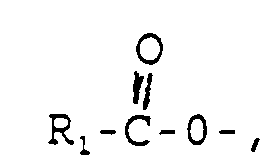
- A nucleozyme according to any of claims 1 to 3 wherein the nucleic acid analogue contains a heterocyclic ring.
- A nucleozyme according to claim 8 wherein the nucleic acid analogue has a formula selected from the group consisting of:
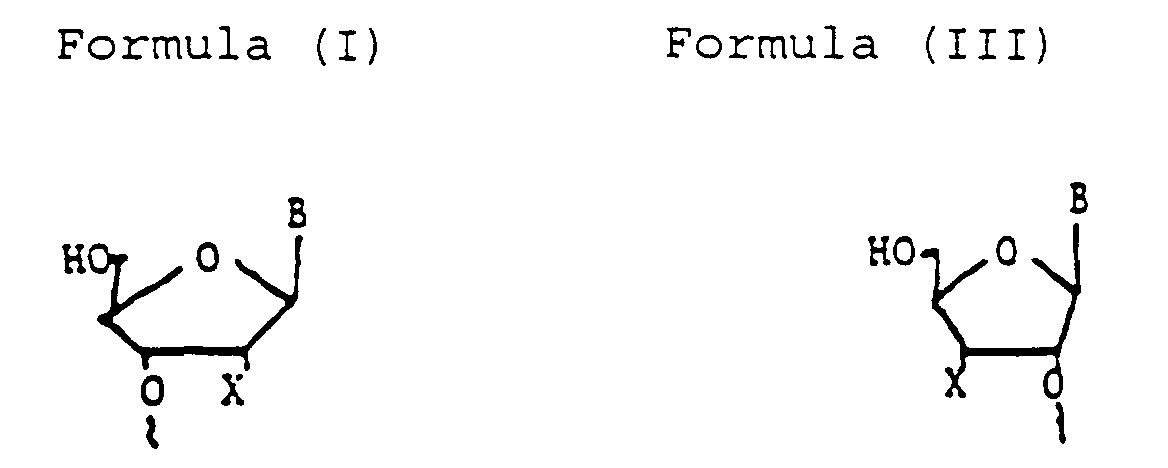 wherein B is a base and X is a coordinating ligand for a divalent metal ion.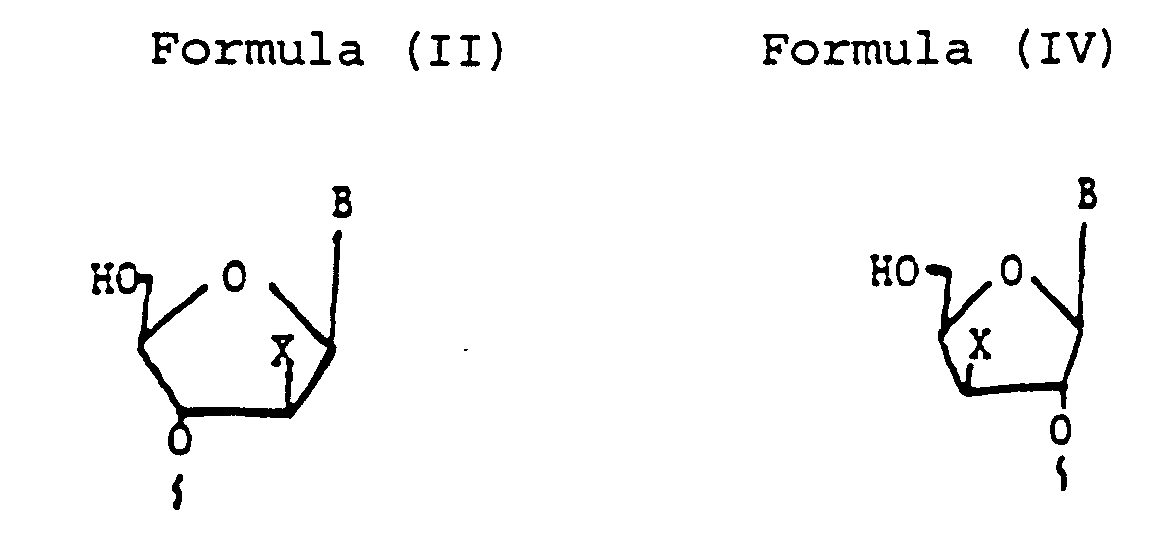
- A nucleozyme according claim 9 wherein B is selected from the group consisting of adenine, cytosine, guanine, uracil, 2-aminopurine, hypoxanthine, and imidazoyl;
and X is selected from the group consisting of -OR1, F, -R2OH, and -CH2F, wherein R1 is a lower alkyl group and R2 is a lower alkyl chain. - A nucleozyme according to claim 9 wherein the nucleic acid analogue has a formula as shown in (I) and X is methoxy.
- A nucleozyme according to any of claims 1 to 11 further comprising at least one non-nucleotide spacer molecule.
- A nucleozyme according to any preceding claim wherein the nucleozyme has less than about 100 total sites preferably less than 80 sites, more preferably less than 70 sites and most preferably less than 50 sites.
- A nucleozyme according to any preceding claim wherein the increased resistance is resistance to enzymatic or chemical degradation.
- A nucleozyme according to claim 14 wherein the resistance is to enzymatic degradation and the nucleozyme is at least 80%, preferably at least 90%, intact at an RNase A log concentration of -2.5.
- A nucleozyme according to claim 14 wherein the resistance is to enzymatic degradation and the nucleozyme us at least 75%, preferably at least 90%, intact at an RNase A log concentration of -1.5.
- A method of making a nucleozyme according to any of claims 1 to 16 comprising:phosphitylating protected RNA, deoxyribonucleotides or nucleic acid analogues under conditions to form substantially pure-protected phosphoramidites of a single isomer;coupling the protected phosphoramidites together forming a protected chimeric polymer chain; anddeprotecting the chimeric polymer chain under conditions which completely deprotect the chimeric polymer.
- The method as claimed in claim 17 wherein the phosphitylating agent in the phosphitylating step is (N,N-diisopropylamino) (cyanoethyl) phosphonamidic chloride.
- A method as claimed in claim 17 or claim 18 wherein the phosphitylating step is conducted in the presence of 2,4,6-collidine and N-methylimidazole.
- A method as claimed in any of claims 17 to 19 wherein the deprotecting step is conducted in the presence of ethanolic ammonia.
- A nucleozyme according to any of claims 1 to 16 which is free of undesired isomeric products.
- A nucleozyme according to any of claims 1 to 16 which is free of isomeric products containing 5'-2' linkages.
- A method for selectively cleaving an RNA substrate, comprising:contacting the substrate with a nucleozyme according to any of claims 1 to 16 which targets a specific sequence in the substrate for cleavage.
- A method according to claim 25 wherein the RNA substrate is a messenger RNA.
- A pharmaceutical composition comprising:
at least one nucleozyme according to any of claims 1 to 16; and
a pharmaceutically acceptable carrier. - The use of a nucleozyme according to any of claims 1 to 16 in the manufacture of a medicament for the treatment of a retrovirus associated disease.
- The use of a nucleozyme according to claim 26 wherein a plurality of nucleozymes according to claims 1 to 16 are used.
- The use of a nucleozyme according to claim 26 or claim 27 wherein the retrovirus associated disease is associated with the human immunodeficiency virus.
- A method of polymerising an oligonucleotide molecule comprising:contacting a template with a population of nucleotide monomer units and a nucleozyme according to any of claims 1 to 16 such that an oligonucleotide complementary to the template is formed.
- A method as claimed in claim 29 wherein the oligonucleotide formed is an oligoribonucleotide.
- A method as claimed in claim 30 wherein the oligonucleotide formed is an oligodeoxyribonucleotide.
- The use of a nucleozyme according to any of claims 1 to 16 in the manufacture of a medicament for controlling the expression of a gene.
Priority Applications (2)
| Application Number | Priority Date | Filing Date | Title |
|---|---|---|---|
| EP01202774A EP1162263A1 (en) | 1992-01-31 | 1993-01-28 | Nucleozymes |
| EP02003575A EP1219709A1 (en) | 1992-01-31 | 1993-01-28 | Nucleozymes |
Applications Claiming Priority (3)
| Application Number | Priority Date | Filing Date | Title |
|---|---|---|---|
| US829729 | 1992-01-31 | ||
| US07/829,729 US5652094A (en) | 1992-01-31 | 1992-01-31 | Nucleozymes |
| PCT/US1993/000833 WO1993015187A1 (en) | 1992-01-31 | 1993-01-28 | Nucleozymes |
Related Child Applications (2)
| Application Number | Title | Priority Date | Filing Date |
|---|---|---|---|
| EP02003575A Division EP1219709A1 (en) | 1992-01-31 | 1993-01-28 | Nucleozymes |
| EP01202774A Division EP1162263A1 (en) | 1992-01-31 | 1993-01-28 | Nucleozymes |
Publications (2)
| Publication Number | Publication Date |
|---|---|
| EP0625192A1 EP0625192A1 (en) | 1994-11-23 |
| EP0625192B1 true EP0625192B1 (en) | 2002-05-22 |
Family
ID=25255389
Family Applications (3)
| Application Number | Title | Priority Date | Filing Date |
|---|---|---|---|
| EP93904752A Expired - Lifetime EP0625192B1 (en) | 1992-01-31 | 1993-01-28 | Nucleozymes |
| EP02003575A Withdrawn EP1219709A1 (en) | 1992-01-31 | 1993-01-28 | Nucleozymes |
| EP01202774A Withdrawn EP1162263A1 (en) | 1992-01-31 | 1993-01-28 | Nucleozymes |
Family Applications After (2)
| Application Number | Title | Priority Date | Filing Date |
|---|---|---|---|
| EP02003575A Withdrawn EP1219709A1 (en) | 1992-01-31 | 1993-01-28 | Nucleozymes |
| EP01202774A Withdrawn EP1162263A1 (en) | 1992-01-31 | 1993-01-28 | Nucleozymes |
Country Status (9)
| Country | Link |
|---|---|
| US (4) | US5652094A (en) |
| EP (3) | EP0625192B1 (en) |
| JP (1) | JPH07503613A (en) |
| AT (1) | ATE217904T1 (en) |
| AU (1) | AU680405B2 (en) |
| CA (1) | CA2129119A1 (en) |
| DE (1) | DE69331946T2 (en) |
| MX (1) | MX9300499A (en) |
| WO (1) | WO1993015187A1 (en) |
Families Citing this family (303)
| Publication number | Priority date | Publication date | Assignee | Title |
|---|---|---|---|---|
| CA1223831A (en) | 1982-06-23 | 1987-07-07 | Dean Engelhardt | Modified nucleotides, methods of preparing and utilizing and compositions containing the same |
| US5646042A (en) * | 1992-08-26 | 1997-07-08 | Ribozyme Pharmaceuticals, Inc. | C-myb targeted ribozymes |
| US5891684A (en) * | 1992-10-15 | 1999-04-06 | Ribozyme Pharmaceuticals, Inc. | Base-modified enzymatic nucleic acid |
| US5658780A (en) | 1992-12-07 | 1997-08-19 | Ribozyme Pharmaceuticals, Inc. | Rel a targeted ribozymes |
| US5837542A (en) | 1992-12-07 | 1998-11-17 | Ribozyme Pharmaceuticals, Inc. | Intercellular adhesion molecule-1 (ICAM-1) ribozymes |
| US5612215A (en) * | 1992-12-07 | 1997-03-18 | Ribozyme Pharmaceuticals, Inc. | Stromelysin targeted ribozymes |
| US5811300A (en) * | 1992-12-07 | 1998-09-22 | Ribozyme Pharmaceuticals, Inc. | TNF-α ribozymes |
| US5616488A (en) * | 1992-12-07 | 1997-04-01 | Ribozyme Pharmaceuticals, Inc. | IL-5 targeted ribozymes |
| WO1995006731A2 (en) * | 1993-09-02 | 1995-03-09 | Ribozyme Pharmaceuticals, Inc. | Non-nucleotide containing enzymatic nucleic acid |
| AU7623194A (en) * | 1993-09-03 | 1995-03-22 | Vpi Holdings Ltd. | Oligonucleotides with rna cleavage activity |
| US5861288A (en) * | 1993-10-18 | 1999-01-19 | Ribozyme Pharmaceuticals, Inc. | Catalytic DNA |
| ES2127948T3 (en) * | 1993-10-27 | 1999-05-01 | Ribozyme Pharm Inc | OLIGONUCLEOTIDES MODIFIED IN THE POSITION 2'-AMIDO AND 2'-PEPTIDE. |
| AU687479B2 (en) * | 1993-11-08 | 1998-02-26 | Ribozyme Pharmaceuticals, Inc. | Base-modified enzymatic nucleic acid |
| US5693532A (en) * | 1994-11-04 | 1997-12-02 | Ribozyme Pharmaceuticals, Inc. | Respiratory syncytial virus ribozymes |
| US5631359A (en) * | 1994-10-11 | 1997-05-20 | Ribozyme Pharmaceuticals, Inc. | Hairpin ribozymes |
| US5639647A (en) * | 1994-03-29 | 1997-06-17 | Ribozyme Pharmaceuticals, Inc. | 2'-deoxy-2'alkylnucleotide containing nucleic acid |
| US5670347A (en) | 1994-05-11 | 1997-09-23 | Amba Biosciences Llc | Peptide-mediated gene transfer |
| US6103890A (en) * | 1994-05-18 | 2000-08-15 | Ribozyme Pharmaceuticals, Inc. | Enzymatic nucleic acids that cleave C-fos |
| US5633133A (en) * | 1994-07-14 | 1997-05-27 | Long; David M. | Ligation with hammerhead ribozymes |
| US5599706A (en) * | 1994-09-23 | 1997-02-04 | Stinchcomb; Dan T. | Ribozymes targeted to apo(a) mRNA |
| US5700923A (en) * | 1994-09-29 | 1997-12-23 | Hybridon, Inc. | Finderons and methods of their preparation and use |
| US5650502A (en) * | 1994-11-09 | 1997-07-22 | Hybridon, Inc. | Ribozyme analogs having rigid non-nucleotidic linkers |
| US5716824A (en) | 1995-04-20 | 1998-02-10 | Ribozyme Pharmaceuticals, Inc. | 2'-O-alkylthioalkyl and 2-C-alkylthioalkyl-containing enzymatic nucleic acids (ribozymes) |
| US5672501A (en) * | 1994-12-23 | 1997-09-30 | Ribozyme Pharmaceuticals, Inc. | Base-modified enzymatic nucleic acid |
| US5545729A (en) * | 1994-12-22 | 1996-08-13 | Hybridon, Inc. | Stabilized ribozyme analogs |
| US5705388A (en) * | 1994-12-23 | 1998-01-06 | Ribozyme Pharmaceuticals, Inc. | CETP Ribozymes |
| US5663064A (en) * | 1995-01-13 | 1997-09-02 | University Of Vermont | Ribozymes with RNA protein binding site |
| US5877021A (en) | 1995-07-07 | 1999-03-02 | Ribozyme Pharmaceuticals, Inc. | B7-1 targeted ribozymes |
| US20030207837A1 (en) * | 1995-07-07 | 2003-11-06 | Ribozyme Pharmaceuticals, Inc. | Method and reagent for the induction of graft tolerance and reversal of immune responses |
| US6346398B1 (en) | 1995-10-26 | 2002-02-12 | Ribozyme Pharmaceuticals, Inc. | Method and reagent for the treatment of diseases or conditions related to levels of vascular endothelial growth factor receptor |
| US7034009B2 (en) | 1995-10-26 | 2006-04-25 | Sirna Therapeutics, Inc. | Enzymatic nucleic acid-mediated treatment of ocular diseases or conditions related to levels of vascular endothelial growth factor receptor (VEGF-R) |
| JP2000501284A (en) * | 1995-11-14 | 2000-02-08 | ビムラックス ホールディングズ,リミテッド | Chimeric oligomer having RNA cleavage activity |
| US5998203A (en) | 1996-04-16 | 1999-12-07 | Ribozyme Pharmaceuticals, Inc. | Enzymatic nucleic acids containing 5'-and/or 3'-cap structures |
| US6274369B1 (en) * | 1996-02-02 | 2001-08-14 | Invitrogen Corporation | Method capable of increasing competency of bacterial cell transformation |
| US5807743A (en) * | 1996-12-03 | 1998-09-15 | Ribozyme Pharmaceuticals, Inc. | Interleukin-2 receptor gamma-chain ribozymes |
| US6248878B1 (en) | 1996-12-24 | 2001-06-19 | Ribozyme Pharmaceuticals, Inc. | Nucleoside analogs |
| DK0971946T3 (en) * | 1997-01-21 | 2006-10-30 | Gen Hospital Corp | Selection of proteins using RNA-protein fusions |
| US6057156A (en) | 1997-01-31 | 2000-05-02 | Robozyme Pharmaceuticals, Inc. | Enzymatic nucleic acid treatment of diseases or conditions related to levels of epidermal growth factor receptors |
| US6159951A (en) * | 1997-02-13 | 2000-12-12 | Ribozyme Pharmaceuticals Inc. | 2'-O-amino-containing nucleoside analogs and polynucleotides |
| US6251666B1 (en) | 1997-03-31 | 2001-06-26 | Ribozyme Pharmaceuticals, Inc. | Nucleic acid catalysts comprising L-nucleotide analogs |
| US5942395A (en) * | 1997-05-09 | 1999-08-24 | Universite De Montreal | Hybrid ribozymes and methods of use |
| US6280936B1 (en) | 1997-06-09 | 2001-08-28 | Ribozyme Pharmaceuticals, Inc. | Method for screening nucleic acid catalysts |
| US6548657B1 (en) | 1997-06-09 | 2003-04-15 | Ribozyme Pharmaceuticals, Inc. | Method for screening nucleic acid catalysts |
| US6183959B1 (en) | 1997-07-03 | 2001-02-06 | Ribozyme Pharmaceuticals, Inc. | Method for target site selection and discovery |
| US6316612B1 (en) | 1997-08-22 | 2001-11-13 | Ribozyme Pharmaceuticals, Inc. | Xylofuranosly-containing nucleoside phosphoramidites and polynucleotides |
| US6656731B1 (en) | 1997-09-22 | 2003-12-02 | Max Planck Gesellschaft Zur Forderung Der Wissenschaften E.V. | Nucleic acid catalysts with endonuclease activity |
| JP2001518292A (en) * | 1997-09-22 | 2001-10-16 | マックス−プランク−ゲゼルシャフト・ツア・フェルデルング・デア・ヴィッセンシャフテン・エー・ファオ | Nucleic acid catalyst having endonuclease activity |
| US6054576A (en) * | 1997-10-02 | 2000-04-25 | Ribozyme Pharmaceuticals, Inc. | Deprotection of RNA |
| US6127535A (en) * | 1997-11-05 | 2000-10-03 | Ribozyme Pharmaceuticals, Inc. | Nucleoside triphosphates and their incorporation into oligonucleotides |
| US6617438B1 (en) | 1997-11-05 | 2003-09-09 | Sirna Therapeutics, Inc. | Oligoribonucleotides with enzymatic activity |
| US20020147143A1 (en) | 1998-03-18 | 2002-10-10 | Corixa Corporation | Compositions and methods for the therapy and diagnosis of lung cancer |
| EP1066312A4 (en) | 1998-03-28 | 2002-01-02 | Univ Utah Res Found | CIRCULAR, HAIRPIN-SHAPED, CIRCULAR / URINAL-SHAPED, LASSO-SHAPED AND HAIRPIN-PINLASSO-SHAPED "HAMMERHEAD" RIBOZYMS |
| WO1999054459A2 (en) | 1998-04-20 | 1999-10-28 | Ribozyme Pharmaceuticals, Inc. | Nucleic acid molecules with novel chemical compositions capable of modulating gene expression |
| US6995259B1 (en) | 1998-10-23 | 2006-02-07 | Sirna Therapeutics, Inc. | Method for the chemical synthesis of oligonucleotides |
| WO2000066780A2 (en) | 1999-04-30 | 2000-11-09 | University Of Florida | Adeno-associated virus-delivered ribozyme compositions and methods of use |
| US6831171B2 (en) | 2000-02-08 | 2004-12-14 | Yale University | Nucleic acid catalysts with endonuclease activity |
| US7491805B2 (en) | 2001-05-18 | 2009-02-17 | Sirna Therapeutics, Inc. | Conjugates and compositions for cellular delivery |
| US8273866B2 (en) | 2002-02-20 | 2012-09-25 | Merck Sharp & Dohme Corp. | RNA interference mediated inhibition of gene expression using chemically modified short interfering nucleic acid (SINA) |
| WO2005041859A2 (en) | 2003-04-30 | 2005-05-12 | Sirna Therapeutics, Inc. | Conjugates and compositions for cellular delivery. |
| US8202979B2 (en) | 2002-02-20 | 2012-06-19 | Sirna Therapeutics, Inc. | RNA interference mediated inhibition of gene expression using chemically modified short interfering nucleic acid |
| US20070026394A1 (en) | 2000-02-11 | 2007-02-01 | Lawrence Blatt | Modulation of gene expression associated with inflammation proliferation and neurite outgrowth using nucleic acid based technologies |
| US7833992B2 (en) | 2001-05-18 | 2010-11-16 | Merck Sharpe & Dohme | Conjugates and compositions for cellular delivery |
| US20040002068A1 (en) | 2000-03-01 | 2004-01-01 | Corixa Corporation | Compositions and methods for the detection, diagnosis and therapy of hematological malignancies |
| EP1319069B1 (en) | 2000-06-28 | 2008-05-21 | Corixa Corporation | Compositions and methods for the therapy and diagnosis of lung cancer |
| US8568766B2 (en) | 2000-08-24 | 2013-10-29 | Gattadahalli M. Anantharamaiah | Peptides and peptide mimetics to treat pathologies associated with eye disease |
| EP1354062A2 (en) * | 2000-09-13 | 2003-10-22 | Archemix Corporation | Target activated nucleic acid biosensor and methods of using same |
| US7125660B2 (en) * | 2000-09-13 | 2006-10-24 | Archemix Corp. | Nucleic acid sensor molecules and methods of using same |
| AU9684601A (en) | 2000-10-12 | 2002-04-22 | Univ Rochester | Compositions that inhibit proliferation of cancer cells |
| WO2002072790A2 (en) | 2001-03-14 | 2002-09-19 | Myriad Genetics, Inc | Tsg101-gag interaction and use thereof |
| CA2446788A1 (en) | 2001-05-09 | 2002-11-14 | Corixa Corporation | Compositions and methods for the therapy and diagnosis of prostate cancer |
| EP1572067A4 (en) | 2001-05-18 | 2009-05-13 | Sirna Therapeutics Inc | CONJUGATES AND COMPOSITIONS FOR CELL DELIVERY |
| US9994853B2 (en) | 2001-05-18 | 2018-06-12 | Sirna Therapeutics, Inc. | Chemically modified multifunctional short interfering nucleic acid molecules that mediate RNA interference |
| US7517864B2 (en) | 2001-05-18 | 2009-04-14 | Sirna Therapeutics, Inc. | RNA interference mediated inhibition of vascular endothelial growth factor and vascular endothelial growth factor receptor gene expression using short interfering nucleic acid (siNA) |
| US20050148530A1 (en) | 2002-02-20 | 2005-07-07 | Sirna Therapeutics, Inc. | RNA interference mediated inhibition of vascular endothelial growth factor and vascular endothelial growth factor receptor gene expression using short interfering nucleic acid (siNA) |
| US7109165B2 (en) | 2001-05-18 | 2006-09-19 | Sirna Therapeutics, Inc. | Conjugates and compositions for cellular delivery |
| US7205399B1 (en) | 2001-07-06 | 2007-04-17 | Sirna Therapeutics, Inc. | Methods and reagents for oligonucleotide synthesis |
| EP1581119B1 (en) | 2001-12-17 | 2013-01-30 | Corixa Corporation | Compositions and methods for the therapy and diagnosis of inflammatory bowel disease |
| US7811992B2 (en) | 2002-02-06 | 2010-10-12 | Stasys Technologies, Inc. | Anti-infarction molecules |
| US20050042632A1 (en) * | 2002-02-13 | 2005-02-24 | Sirna Therapeutics, Inc. | Antibodies having specificity for nucleic acids |
| US9657294B2 (en) | 2002-02-20 | 2017-05-23 | Sirna Therapeutics, Inc. | RNA interference mediated inhibition of gene expression using chemically modified short interfering nucleic acid (siNA) |
| US9181551B2 (en) | 2002-02-20 | 2015-11-10 | Sirna Therapeutics, Inc. | RNA interference mediated inhibition of gene expression using chemically modified short interfering nucleic acid (siNA) |
| AU2003207708A1 (en) | 2002-02-20 | 2003-09-09 | Sirna Therapeutics, Inc. | Rna interference mediated inhibition of map kinase genes |
| EP1534729A2 (en) * | 2002-02-26 | 2005-06-01 | University of Utah Research Foundation | Variants of nedd4l associated with hypertension and viral budding |
| US20030195164A1 (en) * | 2002-04-16 | 2003-10-16 | Veli-Matti Kahari | Novel ribozyme and its use |
| US6989442B2 (en) | 2002-07-12 | 2006-01-24 | Sirna Therapeutics, Inc. | Deprotection and purification of oligonucleotides and their derivatives |
| US7655790B2 (en) | 2002-07-12 | 2010-02-02 | Sirna Therapeutics, Inc. | Deprotection and purification of oligonucleotides and their derivatives |
| EP2116604A1 (en) | 2002-08-05 | 2009-11-11 | University of Rochester | Protein transducing domain/deaminase chimeric proteins, related compounds, and uses thereof |
| US7923547B2 (en) | 2002-09-05 | 2011-04-12 | Sirna Therapeutics, Inc. | RNA interference mediated inhibition of gene expression using chemically modified short interfering nucleic acid (siNA) |
| US20080260744A1 (en) | 2002-09-09 | 2008-10-23 | Omeros Corporation | G protein coupled receptors and uses thereof |
| WO2004050674A2 (en) * | 2002-12-04 | 2004-06-17 | Algos Therapeutics, Inc. | Methods and materials for modulating trpm2 |
| WO2004055198A2 (en) * | 2002-12-12 | 2004-07-01 | Chiron Corporation | Device and method for in-line blood testing using biochips |
| JP2005017116A (en) * | 2003-06-26 | 2005-01-20 | Sharp Corp | Light receiving element for optical encoder |
| US20060019914A1 (en) | 2004-02-11 | 2006-01-26 | University Of Tennessee Research Foundation | Inhibition of tumor growth and invasion by anti-matrix metalloproteinase DNAzymes |
| ES2423060T3 (en) | 2004-03-12 | 2013-09-17 | Alnylam Pharmaceuticals, Inc. | IRNA agents that target VEGF |
| WO2005105157A2 (en) | 2004-04-23 | 2005-11-10 | The Trustees Of Columbia University In The City Ofnew York | INHIBITION OF HAIRLESS PROTEIN mRNA |
| US20060040882A1 (en) | 2004-05-04 | 2006-02-23 | Lishan Chen | Compostions and methods for enhancing delivery of nucleic acids into cells and for modifying expression of target genes in cells |
| US10508277B2 (en) | 2004-05-24 | 2019-12-17 | Sirna Therapeutics, Inc. | Chemically modified multifunctional short interfering nucleic acid molecules that mediate RNA interference |
| AU2005272920B2 (en) | 2004-08-10 | 2011-05-12 | Institute For Multiple Myeloma And Bone Cancer Research | Methods of regulating differentiation and treating of multiple myeloma |
| US7568565B2 (en) * | 2004-08-17 | 2009-08-04 | Nes Technologies, Inc | Device, a system and a method for transferring vibrational energy |
| ES2401285T3 (en) | 2004-12-16 | 2013-04-18 | The Regents Of The University Of California | Drugs with lung as target |
| WO2006083937A2 (en) | 2005-02-02 | 2006-08-10 | The Uab Research Foundation | Agents and methods related to reducing resistance to apoptosis-inducing death receptor agonists |
| EP3312196B1 (en) | 2005-03-23 | 2019-07-17 | Genmab A/S | Antibodies against cd38 for treatment of multiple myeloma |
| US7476733B2 (en) | 2005-03-25 | 2009-01-13 | The United States Of America As Represented By The Department Of Health And Human Services | Development of a real-time PCR assay for detection of pneumococcal DNA and diagnosis of pneumococccal disease |
| ATE541928T1 (en) | 2005-03-31 | 2012-02-15 | Calando Pharmaceuticals Inc | RIBONUCLEOTIDE REDUCTASE SUBUNITY 2 INHIBITORS AND USES THEREOF |
| EP2322657B1 (en) | 2005-06-28 | 2014-11-05 | Medtronic, Inc. | Methods and sequences to preferentially suppress expression of mutated huntingtin gene. |
| EP1934244A2 (en) * | 2005-10-06 | 2008-06-25 | Emthrax LLC | Methods and compositions relating to anthrax spore glycoproteins as vaccines |
| EP2395076A1 (en) | 2005-10-14 | 2011-12-14 | MUSC Foundation For Research Development | Targeting PAX2 for the induction of DEFB1-mediated tumor immunity and cancer therapy |
| US8080534B2 (en) | 2005-10-14 | 2011-12-20 | Phigenix, Inc | Targeting PAX2 for the treatment of breast cancer |
| CA2640423C (en) | 2006-01-27 | 2016-03-15 | Biogen Idec Ma Inc. | Nogo receptor antagonists |
| CA2647728C (en) | 2006-03-31 | 2014-12-09 | Alnylam Pharmaceuticals, Inc. | Compositions and methods for inhibiting expression of eg5 gene |
| CA2648718A1 (en) | 2006-04-07 | 2007-10-18 | The Research Foundation Of State University Of New York | Transcobalamin receptor polypeptides, nucleic acids, and modulators thereof, and related methods of use in modulating cell growth and treating cancer and cobalamin deficiency |
| US8598333B2 (en) | 2006-05-26 | 2013-12-03 | Alnylam Pharmaceuticals, Inc. | SiRNA silencing of genes expressed in cancer |
| WO2008054561A2 (en) | 2006-07-11 | 2008-05-08 | University Of Medicine And Dentistry Of New Jersey | Proteins, nucleic acids encoding the same and associated methods of use |
| EP3034083B1 (en) | 2006-09-21 | 2020-12-09 | University of Rochester | Antisense oligonucleotides for use in treating myotonic dystrophy |
| CN105061580B (en) | 2006-10-03 | 2020-06-05 | 罗格斯新泽西州立大学 | Polypeptides and pharmaceutical compositions and their applications |
| US20100166743A1 (en) | 2006-10-06 | 2010-07-01 | University Of Utah Research Foundation | Method of detecting ocular diseases and pathologic conditions and treatment of same |
| EP2061901A2 (en) | 2006-10-31 | 2009-05-27 | Noxxon Pharma AG | Methods for detection of a single- or double-stranded nucleic acid molecule |
| EP2104516B1 (en) | 2006-11-01 | 2015-01-07 | University of Rochester | Methods and compositions related to the structure and function of apobec3g |
| CN101600451A (en) | 2006-12-11 | 2009-12-09 | 犹他大学研究基金会 | Compositions and methods for treating pathological angiogenesis and vascular permeability |
| US20100129358A1 (en) | 2006-12-22 | 2010-05-27 | University Of Utah Research Foundation | Method of detecting ocular diseases and pathologic conditions and treatment of same |
| LT2494993T (en) | 2007-05-04 | 2018-12-27 | Marina Biotech, Inc. | Amino acid lipids and uses thereof |
| US8557767B2 (en) | 2007-08-28 | 2013-10-15 | Uab Research Foundation | Synthetic apolipoprotein E mimicking polypeptides and methods of use |
| EP2195331B1 (en) | 2007-08-28 | 2013-11-20 | Uab Research Foundation | Synthetic apolipoprotein e mimicking polypeptides and methods of use |
| WO2009033027A2 (en) | 2007-09-05 | 2009-03-12 | Medtronic, Inc. | Suppression of scn9a gene expression and/or function for the treatment of pain |
| CA2706317C (en) * | 2007-12-03 | 2017-06-13 | The United States Of America, As Represented By The Secretary, Department Of Health And Human Services | Doc1 compositions and methods for treating cancer |
| CN102006890A (en) | 2007-12-04 | 2011-04-06 | 阿尔尼拉姆医药品有限公司 | Targeting lipids |
| JP5749494B2 (en) | 2008-01-02 | 2015-07-15 | テクミラ ファーマシューティカルズ コーポレイション | Improved compositions and methods for delivery of nucleic acids |
| US20090233993A1 (en) * | 2008-03-06 | 2009-09-17 | Burnham Institute For Medical Research | Compositions and methods for inhibiting gsk3 activity and uses thereof |
| WO2009123764A2 (en) | 2008-04-04 | 2009-10-08 | Calando Pharmaceuticals, Inc. | Compositions and use of epas1 inhibitors |
| NZ588583A (en) | 2008-04-15 | 2012-08-31 | Protiva Biotherapeutics Inc | Novel lipid formulations for nucleic acid delivery |
| JP2011523401A (en) * | 2008-04-29 | 2011-08-11 | ワイス・エルエルシー | Methods for treating inflammation |
| WO2009137686A1 (en) | 2008-05-08 | 2009-11-12 | University Of Utah Research Foundation | Sensory receptors for chronic fatigue and pain and uses thereof |
| JP2011521649A (en) | 2008-05-30 | 2011-07-28 | イェール ユニバーシティー | Targeted oligonucleotide compositions for modifying gene expression |
| EP2633864A1 (en) | 2008-07-25 | 2013-09-04 | The Regents of the University of Colorado | Clip inhibitors and methods of modulating immune function |
| WO2010039801A2 (en) | 2008-10-02 | 2010-04-08 | The J. David Gladstone Institutes | Methods of treating hepatitis c virus infection |
| JP5777519B2 (en) | 2008-10-09 | 2015-09-09 | テクミラ ファーマシューティカルズ コーポレイション | Improved aminolipid and nucleic acid delivery methods |
| EP2349210B1 (en) | 2008-10-16 | 2015-03-18 | Marina Biotech, Inc. | Processes and compositions for liposomal and efficient delivery of gene silencing therapeutics |
| EP3199553B1 (en) | 2008-10-29 | 2019-04-24 | Circular Commitment Company | Methods and agents for the diagnosis and treatment of hepatocellular carcinoma |
| EP4241767B1 (en) | 2008-11-10 | 2024-10-23 | Arbutus Biopharma Corporation | Novel lipids and compositions for the delivery of therapeutics |
| US20120070443A1 (en) | 2008-12-02 | 2012-03-22 | University Of Utah Research Foundation | Pde1 as a target therapeutic in heart disease |
| US20120101148A1 (en) | 2009-01-29 | 2012-04-26 | Alnylam Pharmaceuticals, Inc. | lipid formulation |
| US20100215660A1 (en) | 2009-02-23 | 2010-08-26 | Sarwar Hashmi | Kruppel-like factors and fat regulation |
| EP2756845B1 (en) | 2009-04-03 | 2017-03-15 | Dicerna Pharmaceuticals, Inc. | Methods and compositions for the specific inhibition of KRAS by asymmetric double-stranded RNA |
| ES2628144T3 (en) | 2009-04-03 | 2017-08-01 | Dicerna Pharmaceuticals, Inc. | Methods and compositions for specific inhibition of KRAS by asymmetric double stranded RNA |
| JP2012523225A (en) | 2009-04-10 | 2012-10-04 | アソシアシオン・アンスティテュ・ドゥ・ミオロジー | Tricyclo-DNA antisense oligonucleotides, compositions and methods for treatment of disease |
| ES2845212T3 (en) | 2009-04-13 | 2021-07-26 | Inst Nat Sante Rech Med | HPV particles and their uses |
| CA2760706C (en) | 2009-05-05 | 2019-08-06 | Alnylam Pharmaceuticals, Inc. | Methods of delivering oligonucleotides to immune cells |
| SG176553A1 (en) | 2009-05-05 | 2012-01-30 | Muthiah Manoharan | Lipid compositions |
| WO2010135207A1 (en) | 2009-05-16 | 2010-11-25 | Agave Pharma, Incorporated | Compositions comprising cationic amphiphiles and colipids for delivering therapeutics molecules |
| TR201811076T4 (en) | 2009-06-10 | 2018-08-27 | Arbutus Biopharma Corp | Improved lipid formulation. |
| US8283333B2 (en) | 2009-07-01 | 2012-10-09 | Protiva Biotherapeutics, Inc. | Lipid formulations for nucleic acid delivery |
| US20110060000A1 (en) | 2009-09-10 | 2011-03-10 | Maurizio Grimaldi | Acridine analogs in the treatment of gliomas |
| WO2011039646A2 (en) | 2009-09-30 | 2011-04-07 | Inserm (Institut National De La Sante Et De La Recherche Medicale) | Papilloma virus -like particles for targeted gene delivery |
| US8450090B2 (en) | 2009-10-06 | 2013-05-28 | The Regents Of The University Of Colorado, A Body Corporate | Compositions and methods for promoting fatty acid production in plants |
| US20120270930A1 (en) | 2009-10-29 | 2012-10-25 | Academisch Ziekenhuis Leiden H.O.D.N. Lumc | Methods and compositions for dysferlin exon-skipping |
| WO2011071860A2 (en) | 2009-12-07 | 2011-06-16 | Alnylam Pharmaceuticals, Inc. | Compositions for nucleic acid delivery |
| EP3494963A1 (en) | 2009-12-18 | 2019-06-12 | The University of British Columbia | Methods and compositions for delivery of nucleic acids |
| AU2011214465A1 (en) | 2010-02-10 | 2012-08-30 | Novartis Ag | Methods and compounds for muscle growth |
| US9714446B2 (en) | 2010-02-11 | 2017-07-25 | Nanostring Technologies, Inc. | Compositions and methods for the detection of small RNAs |
| US20110207789A1 (en) | 2010-02-19 | 2011-08-25 | Ye Fang | Methods related to casein kinase ii (ck2) inhibitors and the use of purinosome-disrupting ck2 inhibitors for anti-cancer therapy agents |
| JP2013529181A (en) | 2010-03-25 | 2013-07-18 | ザ ジェイ. デヴィッド グラッドストーン インスティテューツ | Compositions and methods for treating neurological disorders |
| WO2011120023A1 (en) | 2010-03-26 | 2011-09-29 | Marina Biotech, Inc. | Nucleic acid compounds for inhibiting survivin gene expression uses thereof |
| WO2011133584A2 (en) | 2010-04-19 | 2011-10-27 | Marina Biotech, Inc. | Nucleic acid compounds for inhibiting hras gene expression and uses thereof |
| KR20200047642A (en) | 2010-04-23 | 2020-05-07 | 유니버시티 오브 플로리다 리서치 파운데이션, 인크. | Raav-guanylate cyclase compositions and methods for treating leber's congenital amaurosis-1 (lca1) |
| WO2011139710A1 (en) | 2010-04-26 | 2011-11-10 | Marina Biotech, Inc. | Nucleic acid compounds with conformationally restricted monomers and uses thereof |
| WO2011139842A2 (en) | 2010-04-28 | 2011-11-10 | Marina Biotech, Inc. | Nucleic acid compounds for inhibiting fgfr3 gene expression and uses thereof |
| EP2591105B1 (en) | 2010-07-06 | 2017-05-31 | Dicerna Pharmaceuticals, Inc. | Methods and compositions for the specific inhibition of beta-catenin by double-stranded rna |
| WO2012006506A1 (en) | 2010-07-09 | 2012-01-12 | Massachusetts Institute Of Technology | Metabolic gene, enzyme, and flux targets for cancer therapy |
| WO2012016188A2 (en) | 2010-07-30 | 2012-02-02 | Alnylam Pharmaceuticals, Inc. | Methods and compositions for delivery of active agents |
| US20130323269A1 (en) | 2010-07-30 | 2013-12-05 | Muthiah Manoharan | Methods and compositions for delivery of active agents |
| WO2012027206A1 (en) | 2010-08-24 | 2012-03-01 | Merck Sharp & Dohme Corp. | SINGLE-STRANDED RNAi AGENTS CONTAINING AN INTERNAL, NON-NUCLEIC ACID SPACER |
| SG10201508118WA (en) | 2010-09-30 | 2015-11-27 | Agency Science Tech & Res | Methods and reagents for detection and treatment of esophageal metaplasia |
| EP3766975A1 (en) | 2010-10-29 | 2021-01-20 | Sirna Therapeutics, Inc. | Rna interference mediated inhibition of gene expression using short interfering nucleic acid (sina) |
| WO2012068463A2 (en) | 2010-11-18 | 2012-05-24 | Beth Israel Deaconess Medicall Center, Inc. | Methods of treating obesity by inhibiting nicotinamide n-methyl transferase (nnmt) |
| JP5972283B2 (en) | 2011-01-11 | 2016-08-17 | フェイト セラピューティクス,インコーポレイテッド | Novel Wnt compositions and therapeutic uses of such compositions |
| JP5902197B2 (en) | 2011-01-11 | 2016-04-13 | アルニラム・ファーマシューティカルズ・インコーポレーテッド | PEGylated lipids and their use for drug delivery |
| WO2013066438A2 (en) | 2011-07-22 | 2013-05-10 | President And Fellows Of Harvard College | Evaluation and improvement of nuclease cleavage specificity |
| SG11201401314PA (en) | 2011-09-07 | 2014-09-26 | Marina Biotech Inc | Synthesis and uses of nucleic acid compounds with conformationally restricted monomers |
| EP2760477B1 (en) | 2011-09-27 | 2018-08-08 | Alnylam Pharmaceuticals, Inc. | Di-aliphatic substituted pegylated lipids |
| WO2013055789A1 (en) | 2011-10-14 | 2013-04-18 | Accugenomics, Inc. | Nucleic acid amplification and use thereof |
| MX390891B (en) | 2011-10-14 | 2025-03-19 | Genentech Inc | ANTI-HtrA1 ANTIBODIES AND METHODS OF USE. |
| WO2013090457A2 (en) | 2011-12-12 | 2013-06-20 | Oncoimmunin Inc. | In vivo delivery of oligonucleotides |
| EP2797948B1 (en) | 2011-12-27 | 2019-02-20 | The J. David Gladstone Institutes | Compositions for use in regulating glucose metabolism |
| US9700639B2 (en) | 2012-02-07 | 2017-07-11 | Aura Biosciences, Inc. | Virion-derived nanospheres for selective delivery of therapeutic and diagnostic agents to cancer cells |
| DK2817287T3 (en) | 2012-02-24 | 2019-01-02 | Arbutus Biopharma Corp | TRIALKYL CATIONIC LIPID AND METHODS FOR USING IT |
| EP3553181A1 (en) | 2012-05-25 | 2019-10-16 | Accugenomics, Inc. | Nucleic acid amplification and use thereof |
| KR101520383B1 (en) | 2012-08-02 | 2015-05-15 | 에이비온 주식회사 | Composition for Treating HPV-related Cancers |
| SMT201800538T1 (en) | 2013-03-15 | 2019-01-11 | Univ California | Acyclic nucleoside phosphonate diesters |
| EP3017047A4 (en) | 2013-07-03 | 2017-06-14 | Dicerna Pharmaceuticals Inc. | Methods and compositions for the specific inhibition of alpha-1 antitrypsin by double-stranded rna |
| EP4039278A1 (en) | 2013-07-11 | 2022-08-10 | Alnylam Pharmaceuticals, Inc. | Oligonucleotide-ligand conjugates and process for their preparation |
| US20150044192A1 (en) | 2013-08-09 | 2015-02-12 | President And Fellows Of Harvard College | Methods for identifying a target site of a cas9 nuclease |
| US9388430B2 (en) | 2013-09-06 | 2016-07-12 | President And Fellows Of Harvard College | Cas9-recombinase fusion proteins and uses thereof |
| US9340799B2 (en) | 2013-09-06 | 2016-05-17 | President And Fellows Of Harvard College | MRNA-sensing switchable gRNAs |
| EP4059521A1 (en) | 2013-09-18 | 2022-09-21 | Aura Biosciences, Inc. | Virus-like particle conjugates for diagnosis and treatment of tumors |
| PT3049085T (en) | 2013-09-26 | 2021-10-01 | Beth Israel Deaconess Medical Ct Inc | Inhibition of sgk1 in the treatment of heart conditions |
| NZ720174A (en) | 2013-11-18 | 2018-11-30 | Arcturus Therapeutics Inc | Ionizable cationic lipid for rna delivery |
| WO2015074010A2 (en) | 2013-11-18 | 2015-05-21 | Beth Israel Deaconess Medical Center, Inc. | Compositions and methods for cardiac regeneration |
| US9365610B2 (en) | 2013-11-18 | 2016-06-14 | Arcturus Therapeutics, Inc. | Asymmetric ionizable cationic lipid for RNA delivery |
| CN106061488B (en) | 2013-12-02 | 2021-04-09 | 菲奥医药公司 | Immunotherapy for Cancer |
| US20150166984A1 (en) | 2013-12-12 | 2015-06-18 | President And Fellows Of Harvard College | Methods for correcting alpha-antitrypsin point mutations |
| WO2015095632A1 (en) | 2013-12-20 | 2015-06-25 | Acetylon Pharmaceuticals, Inc. | Histone deacetylase 6 (hdac6) biomarkers in multiple myeloma |
| US9701966B2 (en) | 2013-12-27 | 2017-07-11 | Dicerna Pharmaceuticals, Inc. | Methods and compositions for the specific inhibition of glycolate oxidase (HAO1) by double-stranded RNA |
| US9458464B2 (en) | 2014-06-23 | 2016-10-04 | The Johns Hopkins University | Treatment of neuropathic pain |
| WO2016022363A2 (en) | 2014-07-30 | 2016-02-11 | President And Fellows Of Harvard College | Cas9 proteins including ligand-dependent inteins |
| CA2954475C (en) | 2014-07-31 | 2023-05-16 | Uab Research Foundation | Apoe mimetic peptides and higher potency to clear plasma cholesterol |
| HRP20220651T1 (en) | 2014-09-15 | 2022-08-19 | The Regents Of The University Of California | Nucleotide analogs |
| JP6688292B2 (en) | 2014-10-10 | 2020-04-28 | ダイセルナ ファーマシューティカルズ, インコーポレイテッドDicerna Pharmaceuticals, Inc. | Therapeutic inhibition of lactate dehydrogenase and its drugs |
| WO2016061131A1 (en) | 2014-10-14 | 2016-04-21 | The J. David Gladstone Institutes | Compositions and methods for reactivating latent immunodeficiency virus |
| HK1244479A1 (en) | 2014-11-18 | 2018-08-10 | 阿克丘勒斯治疗公司 | Ionizable cationic lipid for rna delivery |
| ES2747842T3 (en) | 2014-12-15 | 2020-03-11 | Dicerna Pharmaceuticals Inc | Ligand-modified double-stranded nucleic acids |
| WO2017023861A1 (en) | 2015-08-03 | 2017-02-09 | The Regents Of The University Of California | Compositions and methods for modulating abhd2 activity |
| US10377782B2 (en) | 2015-09-15 | 2019-08-13 | The Regents Of The University Of California | Nucleotide analogs |
| SG10202104041PA (en) | 2015-10-23 | 2021-06-29 | Harvard College | Nucleobase editors and uses thereof |
| SG11201803356SA (en) | 2015-10-30 | 2018-05-30 | Genentech Inc | Anti-htra1 antibodies and methods of use thereof |
| CN108473950A (en) | 2015-10-30 | 2018-08-31 | 美国政府卫生与公众服务部 | Targeted cancer therapy |
| US10858656B2 (en) | 2016-04-01 | 2020-12-08 | Avidity Biosciences, Inc. | KRAS nucleic acids and uses thereof |
| MA45469A (en) | 2016-04-01 | 2019-02-06 | Avidity Biosciences Llc | BETA-CATENIN NUCLEIC ACIDS AND THEIR USES |
| MA45349A (en) | 2016-04-01 | 2019-02-06 | Avidity Biosciences Llc | EGFR NUCLEIC ACIDS AND THEIR USES |
| KR102775461B1 (en) | 2016-04-01 | 2025-02-28 | 어비디티 바이오사이언시스 인크. | Nucleic acid-polypeptide compositions and uses thereof |
| US20170283476A1 (en) | 2016-04-01 | 2017-10-05 | Avidity Biosciences Llc | Myc nucleic acids and uses thereof |
| WO2017173325A1 (en) | 2016-04-01 | 2017-10-05 | Avidity Biosciences Llc | Phosphatidylinositol-3-kinase nucleic acids and uses thereof |
| US10905710B2 (en) | 2016-05-24 | 2021-02-02 | Emory University | Particles with RNA cleaving nucleobase polymers and uses for managing inflammatory disorders |
| KR20250103795A (en) | 2016-08-03 | 2025-07-07 | 프레지던트 앤드 펠로우즈 오브 하바드 칼리지 | Adenosine nucleobase editors and uses thereof |
| AU2017306422A1 (en) | 2016-08-03 | 2019-01-31 | H. Lee Moffitt Cancer Center And Research Institute, Inc. | TLR9 targeted therapeutics |
| US11661590B2 (en) | 2016-08-09 | 2023-05-30 | President And Fellows Of Harvard College | Programmable CAS9-recombinase fusion proteins and uses thereof |
| WO2018035141A1 (en) | 2016-08-16 | 2018-02-22 | Bluebird Bio, Inc. | Il-10 receptor alpha homing endonuclease variants, compositions, and methods of use |
| CA3034782A1 (en) | 2016-08-23 | 2018-03-01 | Bluebird Bio, Inc. | Tim3 homing endonuclease variants, compositions, and methods of use |
| WO2018039438A1 (en) | 2016-08-24 | 2018-03-01 | President And Fellows Of Harvard College | Incorporation of unnatural amino acids into proteins using base editing |
| BR112019004629A2 (en) | 2016-09-08 | 2019-10-01 | Bluebird Bio, Inc. | homing pd-1 endonuclease variants, compositions and methods of use |
| MA46717A (en) | 2016-10-11 | 2019-09-11 | Bluebird Bio Inc | HOMING TCRA ENDONUCLEASIS VARIANTS |
| DK3541833T5 (en) | 2016-11-17 | 2024-09-02 | 2Seventy Bio Inc | TGFß signal converter |
| WO2018119163A1 (en) | 2016-12-21 | 2018-06-28 | Payne Joseph E | Ionizable cationic lipid for rna delivery |
| US10526284B2 (en) | 2016-12-21 | 2020-01-07 | Arcturus Therapeutics, Inc. | Ionizable cationic lipid for RNA delivery |
| US10383952B2 (en) | 2016-12-21 | 2019-08-20 | Arcturus Therapeutics, Inc. | Ionizable cationic lipid for RNA delivery |
| WO2018119359A1 (en) | 2016-12-23 | 2018-06-28 | President And Fellows Of Harvard College | Editing of ccr5 receptor gene to protect against hiv infection |
| CN110381980A (en) | 2017-01-06 | 2019-10-25 | 艾维迪提生物科学有限责任公司 | The method that nucleic acid-peptide composition and inducing exon are skipped |
| AU2018221730B2 (en) | 2017-02-15 | 2024-06-20 | Novo Nordisk A/S | Donor repair templates multiplex genome editing |
| EP3592381A1 (en) | 2017-03-09 | 2020-01-15 | President and Fellows of Harvard College | Cancer vaccine |
| US11898179B2 (en) | 2017-03-09 | 2024-02-13 | President And Fellows Of Harvard College | Suppression of pain by gene editing |
| WO2018165629A1 (en) | 2017-03-10 | 2018-09-13 | President And Fellows Of Harvard College | Cytosine to guanine base editor |
| CA3059882A1 (en) | 2017-04-12 | 2018-10-18 | Aura Biosciences, Inc. | Targeted combination therapy |
| GB201711809D0 (en) | 2017-07-21 | 2017-09-06 | Governors Of The Univ Of Alberta | Antisense oligonucleotide |
| CN111801345A (en) | 2017-07-28 | 2020-10-20 | 哈佛大学的校长及成员们 | Methods and compositions for evolutionary base editors using phage-assisted sequential evolution (PACE) |
| EP3676376B1 (en) | 2017-08-30 | 2025-01-15 | President and Fellows of Harvard College | High efficiency base editors comprising gam |
| WO2019046698A1 (en) | 2017-09-01 | 2019-03-07 | Thomas Jefferson University | Compositions and Methods for MYC Messenger RNA Inhibitors |
| WO2019051355A1 (en) | 2017-09-08 | 2019-03-14 | Ohio State Innovation Foundation | Novel microrna inhibitor therapy in systemic lupus erythematosus |
| US11110180B2 (en) | 2017-10-04 | 2021-09-07 | Avidity Biosciences Inc. | Nucleic acid-polypeptide compositions and uses thereof |
| US11795443B2 (en) | 2017-10-16 | 2023-10-24 | The Broad Institute, Inc. | Uses of adenosine base editors |
| CN118638788A (en) | 2017-12-06 | 2024-09-13 | 艾维迪提生物科学公司 | Compositions and methods for treating muscular dystrophy and myotonic dystrophy |
| WO2019118949A1 (en) | 2017-12-15 | 2019-06-20 | The Broad Institute, Inc. | Systems and methods for predicting repair outcomes in genetic engineering |
| US12157760B2 (en) | 2018-05-23 | 2024-12-03 | The Broad Institute, Inc. | Base editors and uses thereof |
| EP3820495A4 (en) | 2018-07-09 | 2022-07-20 | The Broad Institute Inc. | RNA PROGRAMMABLE EPIGENETIC RNA MODIFIERS AND THEIR USES |
| WO2020092453A1 (en) | 2018-10-29 | 2020-05-07 | The Broad Institute, Inc. | Nucleobase editors comprising geocas9 and uses thereof |
| PL3891274T3 (en) | 2018-12-06 | 2024-03-25 | Arcturus Therapeutics, Inc. | Compositions and methods for treating ornithine transcarbamylase deficiency |
| EP3895052A4 (en) | 2018-12-14 | 2022-10-26 | 2seventy bio, Inc. | DIMERIZING AGENT REGULATED IMMUNORECEPTOR COMPLEXES |
| IL319265A (en) | 2018-12-21 | 2025-04-01 | Avidity Biosciences Inc | Anti-transferrin receptor antibodies and uses thereof |
| US12351837B2 (en) | 2019-01-23 | 2025-07-08 | The Broad Institute, Inc. | Supernegatively charged proteins and uses thereof |
| EP3942043A2 (en) | 2019-03-19 | 2022-01-26 | The Broad Institute, Inc. | Methods and compositions for editing nucleotide sequences |
| US20220204975A1 (en) | 2019-04-12 | 2022-06-30 | President And Fellows Of Harvard College | System for genome editing |
| WO2020214842A1 (en) | 2019-04-17 | 2020-10-22 | The Broad Institute, Inc. | Adenine base editors with reduced off-target effects |
| CA3137715A1 (en) | 2019-04-25 | 2020-10-29 | Avidity Biosciences, Inc. | Nucleic acid compositions and methods of multi-exon skipping |
| US12006499B2 (en) | 2019-06-06 | 2024-06-11 | Avidity Biosciences, Inc. | Una amidites and uses thereof |
| CA3142283A1 (en) | 2019-06-06 | 2020-12-10 | Avidity Biosciences, Inc. | Nucleic acid-polypeptide compositions and uses thereof |
| ES2918001B2 (en) | 2019-08-14 | 2026-05-13 | Acuitas Therapeutics Inc | ENHANCED LIPID NANOPARTICLES FOR NUCLEIC ACID DELIVERY |
| US12435330B2 (en) | 2019-10-10 | 2025-10-07 | The Broad Institute, Inc. | Methods and compositions for prime editing RNA |
| EP4706689A2 (en) | 2019-12-19 | 2026-03-11 | Entrada Therapeutics, Inc. | Compositions for delivery of antisense compounds |
| WO2021178510A1 (en) | 2020-03-03 | 2021-09-10 | Arcturus Therapeutics, Inc. | Compositions and methods for the treatment of ornithine transcarbamylase deficiency |
| EP4121018A4 (en) | 2020-03-17 | 2024-07-03 | Genevant Sciences Gmbh | CATIONIC LIPIDS FOR THE DELIVERY OF LIPID NANOPARTICLES OF THERAPEUTIC AGENTS TO HEPATIC STELLAR CELLS |
| WO2021188390A1 (en) | 2020-03-19 | 2021-09-23 | Avidity Biosciences, Inc. | Compositions and methods of treating facioscapulohumeral muscular dystrophy |
| WO2021195469A1 (en) | 2020-03-27 | 2021-09-30 | Avidity Biosciences, Inc. | Compositions and methods of treating muscle dystrophy |
| CA3176844A1 (en) | 2020-05-01 | 2021-11-04 | Carlos G. PEREZ-GARCIA | Nucleic acids and methods of treatment for cystic fibrosis |
| BR112022022603A2 (en) | 2020-05-08 | 2023-01-17 | Broad Inst Inc | METHODS AND COMPOSITIONS FOR SIMULTANEOUS EDITING OF BOTH DUAL-STRANDED NUCLEOTIDE TARGET SEQUENCE STRAINS |
| EP4211247A4 (en) | 2020-09-13 | 2024-11-13 | Arcturus Therapeutics, Inc. | LIPID DNANOPARTICLE ENCAPSULATION OF LARGE RNA |
| KR20230107296A (en) | 2020-11-09 | 2023-07-14 | 1이 테라퓨틱스 엘티디. | Methods for Treating or Preventing Bacterial Infections Based on Catalytic Sequences |
| WO2022130388A2 (en) | 2020-12-18 | 2022-06-23 | Yeda Research And Development Co. Ltd. | Compositions for use in the treatment of chd2 haploinsufficiency and methods of identifying same |
| CN117479963A (en) | 2020-12-18 | 2024-01-30 | 盖纳万科学有限公司 | PEG lipids and lipid nanoparticles |
| IL304068A (en) | 2020-12-28 | 2023-08-01 | 1E Therapeutics Ltd | P21 mrna targeting dnazymes |
| AU2021411103B2 (en) | 2020-12-28 | 2025-04-24 | 1E Therapeutics, Ltd. | P21 mrna target areas for silencing |
| US20250243244A1 (en) | 2021-03-31 | 2025-07-31 | Entrada Therapeutics, Inc. | Cyclic cell penetrating peptides |
| CA3216719A1 (en) | 2021-05-03 | 2022-11-10 | Astellas Institute For Regenerative Medicine | Methods of generating mature corneal endothelial cells |
| AU2022271873A1 (en) | 2021-05-10 | 2024-01-04 | Entrada Therapeutics, Inc. | Compositions and methods for intracellular therapeutics |
| WO2022240721A1 (en) | 2021-05-10 | 2022-11-17 | Entrada Therapeutics, Inc. | Compositions and methods for modulating interferon regulatory factor-5 (irf-5) activity |
| EP4337261A2 (en) | 2021-05-10 | 2024-03-20 | Entrada Therapeutics, Inc. | Compositions and methods for modulating mrna splicing |
| CN117730149A (en) | 2021-06-14 | 2024-03-19 | 2赛文缇生物公司 | Single-stranded RNA purification method |
| GEAP202416440A (en) | 2021-06-23 | 2024-04-25 | Entrada Therapeutics Inc | Antisense compounds and methods for targeting cug repeats |
| US12465647B2 (en) | 2021-08-05 | 2025-11-11 | Sanegene Bio Usa Inc. | 1′-alkyl modified ribose derivatives and methods of use |
| MX2024003266A (en) | 2021-09-16 | 2024-04-03 | Avidity Biosciences Inc | Compositions and methods of treating facioscapulohumeral muscular dystrophy. |
| AU2022352676A1 (en) | 2021-09-22 | 2024-03-14 | Sanegene Bio Usa Inc. | 2'-alkyl or 3'- alkyl modified ribose derivatives for use in the in-vivo delivery of oligonucleotides |
| JP2024542929A (en) | 2021-10-05 | 2024-11-19 | セーンジーン バイオ ユーエスエー インコーポレイティド | Polyhydroxylated cyclopentane derivatives and methods of use |
| CN118922401A (en) | 2022-01-31 | 2024-11-08 | 盖纳万科学有限公司 | Ionizable cationic lipids for lipid nanoparticles |
| CN118900701A (en) | 2022-01-31 | 2024-11-05 | 盖纳万科学有限公司 | Poly(alkyl oxazoline)-lipid conjugate and lipid particles containing the poly(alkyl oxazoline)-lipid conjugate |
| JP2025508785A (en) | 2022-02-22 | 2025-04-10 | セーンジーン バイオ ユーエスエー インコーポレイティド | 5'-Modified Carbocyclic Ribonucleotide Derivatives and Methods of Use |
| US12071621B2 (en) | 2022-04-05 | 2024-08-27 | Avidity Biosciences, Inc. | Anti-transferrin receptor antibody-PMO conjugates for inducing DMD exon 44 skipping |
| US20250313831A1 (en) | 2022-05-13 | 2025-10-09 | Seoul National University R&Db Foundation | Sequence determinants of dsrna processing by dicer |
| WO2024015796A1 (en) | 2022-07-11 | 2024-01-18 | Sanegene Bio Usa Inc. | Optimized 2'- modified ribose derivatives and methods of use |
| JP2025526212A (en) | 2022-07-21 | 2025-08-13 | アンティバ バイオサイエンシズ インコーポレイテッド | Compositions and dosage forms for the treatment of HPV infections and HPV-induced neoplasms |
| KR20260005960A (en) | 2023-05-03 | 2026-01-12 | 사네진 바이오 유에스에이 인크. | Lipid-based conjugates for systemic, central nervous system, peripheral nervous system, and ocular delivery |
| EP4735602A2 (en) | 2023-06-27 | 2026-05-06 | Atrium Therapeutics, Inc. | Compositions and methods of using prkag2-targeting antibody-oligonucleotide conjugates abstract |
| CN121793987A (en) | 2023-06-30 | 2026-04-03 | 艾维迪提生物科学公司 | Compositions and methods using PLN-targeted antibody-oligonucleotide conjugates |
| US20250064939A1 (en) | 2023-07-24 | 2025-02-27 | Sanegene Bio Usa Inc. | Lipid-based enhancement agent for rna delivery and therapy |
| WO2025052278A1 (en) | 2023-09-05 | 2025-03-13 | Genevant Sciences Gmbh | Pyrrolidine based cationic lipids for lipid nanoparticle delivery of therapeutics to hepatic stellate cells |
| WO2025133951A1 (en) | 2023-12-21 | 2025-06-26 | Genevant Sciences Gmbh | Ionizable lipids suitable for lipid nanoparticles |
| WO2025153530A1 (en) | 2024-01-16 | 2025-07-24 | Novo Nordisk A/S | Albumin-targeted endonucleases, compositions, and methods of use |
Family Cites Families (7)
| Publication number | Priority date | Publication date | Assignee | Title |
|---|---|---|---|---|
| US4987071A (en) * | 1986-12-03 | 1991-01-22 | University Patents, Inc. | RNA ribozyme polymerases, dephosphorylases, restriction endoribonucleases and methods |
| US5149796A (en) * | 1989-08-31 | 1992-09-22 | City Of Hope | Chimeric DNA-RNA catalytic sequences |
| AU637800B2 (en) * | 1989-08-31 | 1993-06-10 | City Of Hope | Chimeric dna-rna catalytic sequences |
| ATE150789T1 (en) * | 1990-06-19 | 1997-04-15 | Gene Shears Pty Ltd | ENDONUCLEASIS |
| WO1992007065A1 (en) * | 1990-10-12 | 1992-04-30 | MAX-PLANCK-Gesellschaft zur Förderung der Wissenschaften e.V. | Modified ribozymes |
| DE4216134A1 (en) | 1991-06-20 | 1992-12-24 | Europ Lab Molekularbiolog | SYNTHETIC CATALYTIC OLIGONUCLEOTIDE STRUCTURES |
| US6204027B1 (en) * | 1992-02-26 | 2001-03-20 | University Of Massachusetts Worcester | Ribozymes having 2′-O substituted nucleotides in the flanking sequences |
-
1992
- 1992-01-31 US US07/829,729 patent/US5652094A/en not_active Expired - Fee Related
-
1993
- 1993-01-28 CA CA002129119A patent/CA2129119A1/en not_active Abandoned
- 1993-01-28 EP EP93904752A patent/EP0625192B1/en not_active Expired - Lifetime
- 1993-01-28 EP EP02003575A patent/EP1219709A1/en not_active Withdrawn
- 1993-01-28 WO PCT/US1993/000833 patent/WO1993015187A1/en not_active Ceased
- 1993-01-28 EP EP01202774A patent/EP1162263A1/en not_active Withdrawn
- 1993-01-28 AT AT93904752T patent/ATE217904T1/en not_active IP Right Cessation
- 1993-01-28 AU AU36001/93A patent/AU680405B2/en not_active Ceased
- 1993-01-28 JP JP5513454A patent/JPH07503613A/en active Pending
- 1993-01-28 DE DE69331946T patent/DE69331946T2/en not_active Expired - Fee Related
- 1993-01-29 MX MX9300499A patent/MX9300499A/en unknown
-
1995
- 1995-06-02 US US08/459,340 patent/US6713456B1/en not_active Expired - Fee Related
- 1995-06-02 US US08/458,237 patent/US6140491A/en not_active Expired - Lifetime
-
2002
- 2002-03-19 US US10/102,094 patent/US7074601B2/en not_active Expired - Fee Related
Also Published As
| Publication number | Publication date |
|---|---|
| EP1162263A1 (en) | 2001-12-12 |
| DE69331946D1 (en) | 2002-06-27 |
| CA2129119A1 (en) | 1993-08-05 |
| JPH07503613A (en) | 1995-04-20 |
| US6140491A (en) | 2000-10-31 |
| ATE217904T1 (en) | 2002-06-15 |
| US6713456B1 (en) | 2004-03-30 |
| US7074601B2 (en) | 2006-07-11 |
| EP1219709A1 (en) | 2002-07-03 |
| AU3600193A (en) | 1993-09-01 |
| MX9300499A (en) | 1994-07-29 |
| DE69331946T2 (en) | 2003-01-02 |
| EP0625192A1 (en) | 1994-11-23 |
| AU680405B2 (en) | 1997-07-31 |
| WO1993015187A1 (en) | 1993-08-05 |
| US5652094A (en) | 1997-07-29 |
| US20020137718A1 (en) | 2002-09-26 |
Similar Documents
| Publication | Publication Date | Title |
|---|---|---|
| US6713456B1 (en) | Nucleozymes | |
| EP0736093B1 (en) | ANTISENSE NUCLEIC ACIDS FOR THE PREVENTION AND TREATMENT OF DISORDERS IN WHICH EXPRESSION OF c-erbB-2 PLAYS A ROLL | |
| US6673918B2 (en) | Deprotection of RNA | |
| US6251666B1 (en) | Nucleic acid catalysts comprising L-nucleotide analogs | |
| US6506888B1 (en) | 2′-O-amino-containing nucleoside analogs and polynucleotides | |
| US6379954B1 (en) | Amido and peptido modified catalytic oligonucleotides | |
| US6043352A (en) | 2'-O-Dimethylaminoethyloxyethyl-modified oligonucleotides | |
| JP3058686B2 (en) | Chimeric DNA-RNA catalytically active sequence | |
| EP0748382B1 (en) | Non-nucleotide containing enzymatic nucleic acid | |
| US20020151693A1 (en) | Nucleic acid catalysts with endonuclease activity | |
| US6489465B2 (en) | Xylofuranosly-containing nucleoside phosphoramidites and polynucleotides | |
| EP0948511B1 (en) | Chemical synthesis of nucleosides analogs and their incorporation into polynucleotides | |
| EP0708829B1 (en) | A pharmaceutical composition comprising antisense-nucleic acid for prevention and/or treatment of neuronal injury, degeneration and cell death and for the treatment of neoplasms | |
| US20020102694A1 (en) | Nucleozymes with endonuclease activity | |
| WO1993015194A1 (en) | Enhancement of ribozyme catalytic activity by a neighboring facilitator oligonucleotide | |
| Usman et al. | Nucleozymes | |
| JPH09509323A (en) | Methods and reagents for inhibiting expression of disease-related genes | |
| JP2000509969A (en) | Asymmetric hammerhead ribozyme | |
| Noe et al. | Chemistry of antisense oligonucleotides | |
| Ebel | The synthesis and study of oligo (deoxy) ribo-nucleotides and their analogues |
Legal Events
| Date | Code | Title | Description |
|---|---|---|---|
| PUAI | Public reference made under article 153(3) epc to a published international application that has entered the european phase |
Free format text: ORIGINAL CODE: 0009012 |
|
| 17P | Request for examination filed |
Effective date: 19940831 |
|
| AK | Designated contracting states |
Kind code of ref document: A1 Designated state(s): AT BE CH DE DK ES FR GB GR IE IT LI LU MC NL PT SE |
|
| 17Q | First examination report despatched |
Effective date: 19960618 |
|
| GRAG | Despatch of communication of intention to grant |
Free format text: ORIGINAL CODE: EPIDOS AGRA |
|
| GRAG | Despatch of communication of intention to grant |
Free format text: ORIGINAL CODE: EPIDOS AGRA |
|
| GRAH | Despatch of communication of intention to grant a patent |
Free format text: ORIGINAL CODE: EPIDOS IGRA |
|
| GRAH | Despatch of communication of intention to grant a patent |
Free format text: ORIGINAL CODE: EPIDOS IGRA |
|
| GRAA | (expected) grant |
Free format text: ORIGINAL CODE: 0009210 |
|
| PG25 | Lapsed in a contracting state [announced via postgrant information from national office to epo] |
Ref country code: NL Free format text: LAPSE BECAUSE OF FAILURE TO SUBMIT A TRANSLATION OF THE DESCRIPTION OR TO PAY THE FEE WITHIN THE PRESCRIBED TIME-LIMIT Effective date: 20020522 Ref country code: IT Free format text: LAPSE BECAUSE OF FAILURE TO SUBMIT A TRANSLATION OF THE DESCRIPTION OR TO PAY THE FEE WITHIN THE PRE;WARNING: LAPSES OF ITALIAN PATENTS WITH EFFECTIVE DATE BEFORE 2007 MAY HAVE OCCURRED AT ANY TIME BEFORE 2007. THE CORRECT EFFECTIVE DATE MAY BE DIFFERENT FROM THE ONE RECORDED.SCRIBED TIME-LIMIT Effective date: 20020522 Ref country code: GR Free format text: LAPSE BECAUSE OF FAILURE TO SUBMIT A TRANSLATION OF THE DESCRIPTION OR TO PAY THE FEE WITHIN THE PRESCRIBED TIME-LIMIT Effective date: 20020522 |
|
| REF | Corresponds to: |
Ref document number: 217904 Country of ref document: AT Date of ref document: 20020615 Kind code of ref document: T |
|
| REG | Reference to a national code |
Ref country code: GB Ref legal event code: FG4D |
|
| REG | Reference to a national code |
Ref country code: CH Ref legal event code: EP |
|
| REG | Reference to a national code |
Ref country code: IE Ref legal event code: FG4D |
|
| REF | Corresponds to: |
Ref document number: 69331946 Country of ref document: DE Date of ref document: 20020627 |
|
| ET | Fr: translation filed | ||
| PG25 | Lapsed in a contracting state [announced via postgrant information from national office to epo] |
Ref country code: SE Free format text: LAPSE BECAUSE OF FAILURE TO SUBMIT A TRANSLATION OF THE DESCRIPTION OR TO PAY THE FEE WITHIN THE PRESCRIBED TIME-LIMIT Effective date: 20020822 Ref country code: PT Free format text: LAPSE BECAUSE OF FAILURE TO SUBMIT A TRANSLATION OF THE DESCRIPTION OR TO PAY THE FEE WITHIN THE PRESCRIBED TIME-LIMIT Effective date: 20020822 Ref country code: DK Free format text: LAPSE BECAUSE OF FAILURE TO SUBMIT A TRANSLATION OF THE DESCRIPTION OR TO PAY THE FEE WITHIN THE PRESCRIBED TIME-LIMIT Effective date: 20020822 |
|
| REG | Reference to a national code |
Ref country code: CH Ref legal event code: NV Representative=s name: PATENTANWAELTE SCHAAD, BALASS, MENZL & PARTNER AG |
|
| NLV1 | Nl: lapsed or annulled due to failure to fulfill the requirements of art. 29p and 29m of the patents act | ||
| PG25 | Lapsed in a contracting state [announced via postgrant information from national office to epo] |
Ref country code: ES Free format text: LAPSE BECAUSE OF FAILURE TO SUBMIT A TRANSLATION OF THE DESCRIPTION OR TO PAY THE FEE WITHIN THE PRESCRIBED TIME-LIMIT Effective date: 20021128 |
|
| PGFP | Annual fee paid to national office [announced via postgrant information from national office to epo] |
Ref country code: IE Payment date: 20030115 Year of fee payment: 11 |
|
| PG25 | Lapsed in a contracting state [announced via postgrant information from national office to epo] |
Ref country code: LU Free format text: LAPSE BECAUSE OF NON-PAYMENT OF DUE FEES Effective date: 20030128 |
|
| PG25 | Lapsed in a contracting state [announced via postgrant information from national office to epo] |
Ref country code: MC Free format text: LAPSE BECAUSE OF NON-PAYMENT OF DUE FEES Effective date: 20030131 |
|
| PLBE | No opposition filed within time limit |
Free format text: ORIGINAL CODE: 0009261 |
|
| STAA | Information on the status of an ep patent application or granted ep patent |
Free format text: STATUS: NO OPPOSITION FILED WITHIN TIME LIMIT |
|
| 26N | No opposition filed |
Effective date: 20030225 |
|
| PGFP | Annual fee paid to national office [announced via postgrant information from national office to epo] |
Ref country code: AT Payment date: 20040102 Year of fee payment: 12 |
|
| PGFP | Annual fee paid to national office [announced via postgrant information from national office to epo] |
Ref country code: GB Payment date: 20040121 Year of fee payment: 12 |
|
| PGFP | Annual fee paid to national office [announced via postgrant information from national office to epo] |
Ref country code: FR Payment date: 20040122 Year of fee payment: 12 |
|
| PGFP | Annual fee paid to national office [announced via postgrant information from national office to epo] |
Ref country code: CH Payment date: 20040126 Year of fee payment: 12 |
|
| PG25 | Lapsed in a contracting state [announced via postgrant information from national office to epo] |
Ref country code: IE Free format text: LAPSE BECAUSE OF NON-PAYMENT OF DUE FEES Effective date: 20040128 |
|
| PGFP | Annual fee paid to national office [announced via postgrant information from national office to epo] |
Ref country code: BE Payment date: 20040216 Year of fee payment: 12 |
|
| PGFP | Annual fee paid to national office [announced via postgrant information from national office to epo] |
Ref country code: DE Payment date: 20040301 Year of fee payment: 12 |
|
| REG | Reference to a national code |
Ref country code: IE Ref legal event code: MM4A |
|
| PG25 | Lapsed in a contracting state [announced via postgrant information from national office to epo] |
Ref country code: GB Free format text: LAPSE BECAUSE OF NON-PAYMENT OF DUE FEES Effective date: 20050128 Ref country code: AT Free format text: LAPSE BECAUSE OF NON-PAYMENT OF DUE FEES Effective date: 20050128 |
|
| PG25 | Lapsed in a contracting state [announced via postgrant information from national office to epo] |
Ref country code: LI Free format text: LAPSE BECAUSE OF NON-PAYMENT OF DUE FEES Effective date: 20050131 Ref country code: CH Free format text: LAPSE BECAUSE OF NON-PAYMENT OF DUE FEES Effective date: 20050131 Ref country code: BE Free format text: LAPSE BECAUSE OF NON-PAYMENT OF DUE FEES Effective date: 20050131 |
|
| BERE | Be: lapsed |
Owner name: MASSACHUSETTS *INSTITUTE OF TECHNOLOGY Effective date: 20050131 |
|
| PG25 | Lapsed in a contracting state [announced via postgrant information from national office to epo] |
Ref country code: DE Free format text: LAPSE BECAUSE OF NON-PAYMENT OF DUE FEES Effective date: 20050802 |
|
| GBPC | Gb: european patent ceased through non-payment of renewal fee |
Effective date: 20050128 |
|
| REG | Reference to a national code |
Ref country code: CH Ref legal event code: PL |
|
| PG25 | Lapsed in a contracting state [announced via postgrant information from national office to epo] |
Ref country code: FR Free format text: LAPSE BECAUSE OF NON-PAYMENT OF DUE FEES Effective date: 20050930 |
|
| REG | Reference to a national code |
Ref country code: FR Ref legal event code: ST |
|
| BERE | Be: lapsed |
Owner name: MASSACHUSETTS *INSTITUTE OF TECHNOLOGY Effective date: 20050131 |