EP0622749B1 - Système à réseau neuronal pour le traitement de signaux - Google Patents
Système à réseau neuronal pour le traitement de signaux Download PDFInfo
- Publication number
- EP0622749B1 EP0622749B1 EP94460012A EP94460012A EP0622749B1 EP 0622749 B1 EP0622749 B1 EP 0622749B1 EP 94460012 A EP94460012 A EP 94460012A EP 94460012 A EP94460012 A EP 94460012A EP 0622749 B1 EP0622749 B1 EP 0622749B1
- Authority
- EP
- European Patent Office
- Prior art keywords
- operators
- activity
- input
- vector
- level
- Prior art date
- Legal status (The legal status is an assumption and is not a legal conclusion. Google has not performed a legal analysis and makes no representation as to the accuracy of the status listed.)
- Expired - Lifetime
Links
Images



Classifications
-
- G—PHYSICS
- G06—COMPUTING OR CALCULATING; COUNTING
- G06N—COMPUTING ARRANGEMENTS BASED ON SPECIFIC COMPUTATIONAL MODELS
- G06N3/00—Computing arrangements based on biological models
- G06N3/02—Neural networks
- G06N3/10—Interfaces, programming languages or software development kits, e.g. for simulating neural networks
Definitions
- the invention relates to a signal processing system. using a network of neural operators.
- a particularly promising field of application for this type of system is that of processing images: image analysis for the recognition of shapes or objects, coding and decoding of visible images to perform image compression for example for a television system.
- neural operators which is made up of a set of processing units, called neural operators, arranged in several layers interconnected. The data to be processed is applied to entry of the first layer and processing takes place through the successive layers, the result being displayed by the operators of the last layer.
- weights synaptics by analogy with biology, are modifiable by a learning mechanism defined by an algorithm.
- This algorithm follows for example the rule so-called HEBB, learning can be supervised or no.
- HEBB e.g., HEBB
- HEBB e.g., HEBB
- Neural operators can be analog or digital and perform operations relatively simple. So analog or digital operators are provided to perform multilinear functions, that is to say sums of products and possibly thresholding operations. For operators binary, the functions come back to simple logical operations. Considering all of the input signals of an operator and all of its synaptic weights as a vector of entry activities and a vector of coefficients, the basic operation is brings back for example to a dot product of these two vectors.
- the operator output signal defines its activity which can be interpreted as a measurement of the conformity of the signals received with a state of reference defined after learning by the vector of coefficients.
- the object of the invention is to remedy the drawback previous, by proposing a system allowing a dynamic reconfiguration of connections between network operators.
- the subject of the invention is a system of signal processing as described in claim 1.
- the invention provides according to another characteristic that the network is organized in several levels, each level comprising a group of operators, at least one module of memory allocated to operator memory spaces of said group and at least one first communication bus connecting said operators to said memory module, said network comprising links allowing the communication between the control unit and each of said first communication buses.
- each level includes addressing means capable of addressing the activities of operators of other levels after reading addresses of activity contained in the memory module of said level.
- the function multilinear is the scalar product of said vector input, either by an associated coefficient vector said operator, or by another input vector.
- each said operators planned to carry out the product scalar of an input vector by a vector of coefficients include means of learning for correct said vector of coefficients as a function of its entry vector and other people's activities operators of the same level.
- the system which has just been defined can find many applications, especially to perform image processing. Also, the invention relates also an image analysis system using this system.
- the system input signals are signals representative of an image applied to the input of operators of the first level, the operators of the second level being associated with memory spaces containing the addresses of operator activities. of the first level.
- the control unit activates the different levels successively in ascending order of the levels, said learning means being activated during a learning process preceding an analysis, the result of which can be represented by the values of the coefficients of the operators of any of the levels greater than one.
- This image analysis system will advantageously used during a learning phase to create an image synthesis system.
- the same system can also integrate an analysis system and synthesis of the sound associated with the images.
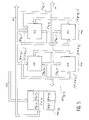
- the system shown as an example in Figure 1 is composed of a network of neural operators H1 to H4 cooperating with a control unit 1 playing the role of supervisor.
- This unit 1 as well as the first level H1 of the network communicate with an MMU memory in which are stored the signals to be processed, by example the pixels of an image.
- Each level H1 to H4 is organized around a bus B1 to B4 and includes a set of operators HOP1 to HOP4, a memory module MU1 to MU4 and a control circuit CU1 to CU4 connected each to buses B1 to B4 of the corresponding level.
- Buses B1 to B4 can be put into communication between them and with control unit 1 via BL1 to BL4 and bus controllers BC1 to BC4.
- This organization therefore distributes the processing memory by levels, which allows a outsourcing of certain operations involving memory access for each level considered.
- the network is controlled so as to activate successively the operators of different levels in ascending order levels and, for an active level, to activate successively in a given order the different operators at this level.
- the invention could be implemented by other structures using other systems physical interconnections between operators, especially those that would allow operation asynchronous and in parallel of at least part of the network operators.
- each level is identified by an index v, a level considered in particular being identified by the index v c .
- the different operators of the same level are identified by a layer index r, the layer of a particular operator being identified by the index r c .
- OPvr an operator belonging to level v and to layer r
- OPv c r an operator considered in particular will be referenced by OPv c r c
- any operator of a particular level v c will be referenced by OPv c r.
- FIG. 3 represents an exemplary embodiment of the constituent elements of one of the Hv levels of the network.
- the bus Bv consisting of data lines DT, AD addresses and CD commands allowing communication between the units of this level with those of the other levels and with the control unit 1.
- the operators OPvr c , .. ., OPvr are each linked to the DT data lines. They are also connected to each other by a second link b which can also be a communication bus.
- the control circuit CUv is essentially composed of a memory controller MCU and an advantageously microprogrammable sequencer MS.
- the sequencer MS receives initialization and control signals, such as clock signals, via the control lines CD and it in turn provides the signals controlling the memory controller MCU and the operators OPvr.
- the memory controller MCU is connected at the input to the data lines DT and at the output to the address lines AD. It is also connected to the control lines CD in order to transmit read or write control signals and to exchange request and acknowledgment signals with the bus controller BCv during the addressing operations.
- the memory controller is able to address a memory module of the same level or another level. He can also read a address in the associated memory module MUv and the place on AD address lines to access data contained in other memory modules levels.
- This realization allows the implementation of a indirection mechanism essential to the invention.
- This mechanism is explained schematically in Figure 4.
- the operator OPvcr of vc level and r layer This operator is associated with a memory space of the MUvc module which contains in particular a vector of coefficients [Gvr], at least one address Ivr as well as the last calculated value of the activity Operator Fvcr.
- An Ivr address defines a memory location of one memory module of another level, for example v, containing a component of a vector of activities [F (Ivr)] which is a value level v and layer r operator activity.
- the calculation of the output activity of the operator OPvcr takes place first by addressing the MUvc module to find Ivr addresses. These addresses provide access to the vector of activities [F (Ivr)] resulting from calculations performed by operators of level v. This vector of activities as well as the vector of coefficients [Gvr] are then applied to the OPvcr operator inputs. The operator then performs the dot product of these two vectors and the result obtained Fvcr is finally loaded in the MUvc module.
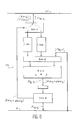
- FIG. 5 is a functional representation of a operator equipped with means of learning and capable of communicate by bus b with other operators of the same level.
- the operator consists of a PE input processor and PS output processor.
- the PE input processor is made up of two modules functional called OE input operator and module input learning AE respectively assigned to activity and learning function calculations by modification of the coefficients.
- the PS output processor consists of modules corresponding functions: an OS output operator and an AS output learning module.
- the input operator OE is connected as input to the lines DT data so that you can load the vector of coefficient [Gvrc] contained in the MUvc module as well as the activity vector [F (Ivrc)] corresponding to Ivrc addresses contained in the MUvc module.
- the operator input OE then calculates the fvcrc activity and this activity is passed to DT data lines for of a load in the MUvc module. It is transmitted on the other hand to bus b bound for the module learning AE and other operators of the same vc level.
- the output operator OS of the PS output processor is connected as input to the DT data lines so that to be able to load its vector of coefficients [gvcr].
- a other of its inputs is connected to bus b so that receive a second activity vector [fvcr] consisting of all the activities of the OE entry operators of the same level vc.
- the Fvcrc activity calculated by the OS output operator is passed to the lines of DT data for loading into the MUvc module as well as the associated AS learning module.
- the learning module AE of the input processor PE is connected at input to bus b to receive the second activity vector [fvcr]. On the other hand, it receives the activity vector [F (Ivrc)]. Depending on these two input vectors, the AE module calculates the correction [dGvrc] of the coefficient vector [Gvrc].
- the output learning module AS receives the coefficient vector [gv c r] from the output operator OS as well as the second activity vector [fv c r] and provides the correction [dgv c r] of the vector of coefficient [gv c r].
- the memory controller MCU places the first activity vector [F (Ivr c )] at the input of the active input operator OE.
- the coefficient vector [Gvr c ] being assumed to be preloaded, the operator OE calculates the activity fv c r c which is the corresponding component of the second activity vector [fv c ], and transmits it to bus b.
- the output operators and the learning modules of each of the operators of the level load this value.
- the second activity vector [fv c r] is completely defined and the output operators of the operators of level v c calculate the activities Fv c r then the modules d learning AS compute the correction values [dgv c r] of the vectors of coefficients of the associated output operators.
- the learning consists in causing a correction of the coefficient vector [Gvr c ] when the activity Fv c r of at least one output processor PS of the same level exceeds a determined threshold. The correction is then proportional to the activity vector [F (Ivr c )].
- Learning the output processor consists for each activity component fv c r of the second activity vector [fv c r] in defining a component of the coefficient vector as the conditional probability for the activity component fv c r and the activity Fv c r c of the output processor each simultaneously exceed a predetermined threshold.
- other learning rules can be chosen depending on the application, in particular to adjust the type of correlation desired between operators of the same level.
- Figures 6 and 7 respectively represent the input and output processors made using microprogrammable circuits integrating the functions of activity and learning calculation. These circuits are controlled respectively by modules of specific firmware executable by the MS microsequencer.
- the circuit of figure 6 represents more precisely the data path of a PE input processor.
- a first bidirectional selector SEL1 is connected to DT data lines.
- the outputs of the selector SEL1 are connected respectively to two banks of registers RA and RB whose outputs are connected to a second selector SEL2.
- the two outputs of the second selector SEL2 are applied to the input of an arithmetic unit and ALU logic whose output is connected to a third selector SEL3 via a register.
- the selector SEL3 has a first output connected to the bus b and a second output connected to a second input of the first selector SEL1.
- a third entry from second selector SEL2 is connected to bus b.
- the ALU arithmetic and logic unit is equipped with classical operators of addition, multiplication, offset and thresholding so that the activity calculations and modifications coefficients.
- the various signals concerned with the input processor were shown in relation to the links where these signals appear.
- the output processor shown in Figure 7 is made up of the same elements. The only differences by compared to the input processor are the absence of a link between the third selector SEL3 and bus b and the signals involved. As before, a proper sequencing of processor components allows to carry out activities calculation functions and coefficients.
- the first treatment to be considered is obviously that of image analysis to provide information synthetic or even abstract as a function of pixels constituting the image to be analyzed.
- Another treatment is the complement of the previous one, that is to say the synthesis an image made from synthetic information of the same nature as those developed by the analysis.
- an analysis system and a system synthesis it is possible to realize a system of coding and decoding of images that can be applied advantageously to a transmission system having a high degree of compression.
- the memory main MMU will be used to store the whole pixels of the image according to an appropriate division.
- the HOP1 operators of the first H1 level are then provided to carry out the first signal processing of images.
- the system has to perform a coding for resynthesis of the original image intended for the human eye, it is wise to choose as operators of the first level of filters predefined and adapted to human vision.
- these filters will be chosen so as to simulate the biological filters of the visual system human, such as those who have been the subject of many studies and publications.
- the article "The Laplacian Pyramid as a Compact Image Code” PETER J. BURT & Al (IEEE Transactions on Communications, Vol. Com-31, N ° 4, April 1983 - Pages 532-540) describes the use of Gaussian functions and Laplaciennes according to a multi-scale organization allowing to code an image by reinforcement of the zones bright and contours.
- the article “Representation issues and local filter models of two-dimensional spatial visual encoding ", J.G. DAUGMAN (Models of the Visual Cortex, D. Rose and V.G. Dobson, 1985 John Wiley & Sons Ltd - Pages 096 to 107) describes the use of generalized two-dimensional GABOR filters allowing to reinforce areas of the image in privileged directions.
- the analysis of the first level can of course be supplemented by other families of filters such as those sensitive to color, texture, curvature, etc.
- the multi-scale filters first perform spatial and possibly temporal convolutions of a generating function of the filter (Gaussian, Laplacienne) by the pixels belonging to a subset of the image. This convolution applies in parallel on all of the subsets constituting the image.
- the results obtained form this which one can call "hyperpixels" which constitute a condensed representation of the initial image. This representation can be interpreted as an image to a reduced scale.
- the hyperpixels thus obtained are again grouped into subsets, each subset undergoing a new convolution by the generating function so as to define a new set of hyperpixels corresponding to a new representation of the image reduced to a second ladder.
- each layer performs a decomposition of the initial image on a functional basis allowing a reconstruction by a succession of accumulations of the as described in the first article cited in reference.
- each layer When the system analyzes an image, each layer provides a set of activities as output whose dimension is a function of the number of pixels of the image and the ratio and the number of scales used in the filters of the first level.
- unity In order to perform image groupings by homogeneous area, unity periodically performs groupings by classes corresponding to adjacent ranges of activity values.
- Each class is associated with a representative value of activities belonging to the class, for example by averaging classroom activities.
- These representative values are then ordered in descending order of their values then stored in the memory space associated with the operator at an address which is the only address operator input activity of the second level of the same layer. The same operation is performed for each of the layers of the first level.
- the system application to perform pattern recognition will therefore consist in presenting to the entry of the system of images containing the forms that we want to be able to recognize and memorize in the control unit the different vector profiles operator coefficients corresponding to these different forms.
- each profile can then be associated with codes allowing to identify and make known to the user the forms recognized by the system.
- Using the system as an image synthesizer consists in taking as representative value a activity class of particular values corresponding to the values that the coefficients take when the areas to be synthesized are contained in the images used for learning.
- the system can also be used to perform a image coding by combining analysis functions and synthesis allowed by the system. This association will indeed allow checking at each level of analysis conformity of the synthesis and therefore to determine to what level it is satisfactory.
- the previous coding system will therefore allow realize a high degree transmission system of compression by providing at the transmitter a analysis and synthesis system and at the level of receiver a synthesis system.
- the sentence learning the analysis system will have the effect of set the operator coefficient values and these values will be transmitted to the synthesis system.
- the transmitter operates in analyzer and transmits the values to the receiver of activities corresponding to the images analyzed.
- the activity values transmitted will be in priority those higher level operators then, depending on the quality sought, those of the lower levels.
- activity received from an operator of a given layer will reconstitute the activities of lower level operators in taking as activity the values of the coefficients of operators whose associated activity is strong.
Landscapes
- Engineering & Computer Science (AREA)
- Computing Systems (AREA)
- Software Systems (AREA)
- Physics & Mathematics (AREA)
- Theoretical Computer Science (AREA)
- Data Mining & Analysis (AREA)
- General Health & Medical Sciences (AREA)
- Biomedical Technology (AREA)
- Biophysics (AREA)
- Computational Linguistics (AREA)
- Life Sciences & Earth Sciences (AREA)
- Evolutionary Computation (AREA)
- Artificial Intelligence (AREA)
- Molecular Biology (AREA)
- General Engineering & Computer Science (AREA)
- General Physics & Mathematics (AREA)
- Mathematical Physics (AREA)
- Health & Medical Sciences (AREA)
- Image Analysis (AREA)
- Complex Calculations (AREA)
Description
lesdits moyens d'apprentissage étant activés au cours d'un processus d'apprentissage précédant une analyse dont le résultat est représentable par les valeurs des coefficients des opérateurs de l'un quelconque des niveaux supérieurs à un.
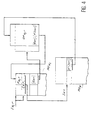
- La Figure 1 est une représentation d'ensemble d'une réalisation particulière du système selon l'invention.
- La Figure 2 est une représentation schématique de l'organisation des opérateurs du réseau selon l'invention.
- La Figure 3 représente un mode de réalisation d'un niveau du réseau selon l'invention.
- La Figure 4 est un schéma expliquant le mécanisme d'adressage dans l'invention.
- La Figure 5 est une représentation fonctionnelle d'un opérateur du réseau.
- Les Figures 6 et 7 représentent des modes de réalisation de processeurs d'entrée et de sortie constituant un opérateur du réseau.
Claims (14)
- Système de traitement de signaux comportant un réseau d'opérateurs neuronaux (OPvr) piloté par une unité de contrôle (1), chaque opérateur neuronal (OPvcr) étant conçu pour effectuer une fonction multilinéaire portant sur au moins un vecteur d'entrée ([F(Ivr)]) constitué de plusieurs variables d'entrée, ladite fonction définissant une activité (Fvcr) dudit opérateur (OPvcr), lesdites variables d'entrée étant représentatives de signaux d'entrée du système ou d'activités d'autres opérateurs du réseau, ledit système comportant des moyens de mémorisation (MU1, ..., MU4) adressables par ladite unité de contrôle (1) et organisés en une pluralité d'espaces mémoires associés respectivement auxdits opérateurs (OPvr), ledit système étant caractérisé en ce que chaque espace mémoire contient à une adresse donnée, appelée adresse d'activité (Ivr), une valeur représentative de l'activité (Fvrc) de l'opérateur associé (OPvrc) et en ce que, pour un sous-ensemble au moins des autres opérateurs du réseau, lesdits espaces mémoires associés contiennent également les adresses (Ivr) des activités qui constituent les vecteurs d'entrée ([F(Ivr)]) des opérateurs (OPvrc) dudit sous-ensemble.
- Système selon la revendication 1, caractérisé en ce que ledit réseau est organisé en plusieurs niveaux (H1, ..., H4), chaque niveau (Hv) comportant un groupe (HOPv) d'opérateurs (OPvr), au moins un module de mémoire (MUv) affecté aux espaces mémoires des opérateurs dudit groupe et au moins un premier bus de communication (Bv) reliant lesdits opérateurs (OPvr) audit module de mémoire et en ce que ledit réseau comprend des liaisons (BL1, ..., BL4) permettant la communication entre l'unité de contrôle (1) et chacun desdits premiers bus de communication (B1, ..., B4).
- Système selon la revendication 2, caractérisé en ce que chaque niveau (Hv) comprend des moyens d'adressage (BCv, CUv) capables d'adresser les activités ([F(Ivr)]) des opérateurs (OPvr) des autres niveaux après lecture des adresses d'activité (Ivr) contenues dans le module mémoire( (MUv) dudit niveau.
- Système selon l'une des revendications 2 ou 3, caractérisé en ce que ladite fonction multilinéaire est le produit scalaire dudit vecteur d'entrée ([F(Ivr)]), soit par un vecteur de coefficients ([Gvrc]) associé audit opérateur (OPvrc), soit par un autre vecteur d'entrée.
- Système selon la revendication 4, caractérisé en ce que les opérateurs (OPvr) dudit sous-ensemble et appartenant au même niveau (Hv) sont reliés entre eux, en ce que chacun desdits opérateurs (OPvcrc) prévus pour effectuer le produit scalaire d'un vecteur d'entrée par un vecteur de coefficients comporte des moyens d'apprentissage (AE, AS) pour corriger ledit vecteur de coefficients ([Gvrc]) en fonction de son vecteur d'entrée ([F(Ivrc)]) et des activités ([fvcr]) des autres opérateurs (OPvcr) du même niveau.
- Système selon la revendication 5, caractérisé en ce que des opérateurs dudit sous-ensemble sont constitués d'un processeur d'entrée (PE) et d'un processeur de sortie (PS), en ce que ledit processeur d'entrée (PE) est relié en entrée au premier bus de communication pour calculer son activité définie comme le produit scalaire (fvcrc) d'un vecteur de coefficients ([Gvrc]) par un premier vecteur d'activité ([F(Ivrc)]) formé des activités d'opérateurs de sortie d'autres niveaux et transmettre ledit produit scalaire à un second bus de communication (b), et en ce que ledit processeur de sortie (PS) est relié en entrée au dit second bus de communication (b) pour calculer son activité définie comme le produit scalaire (Fvcrc) d'un vecteur de coefficients ([gvrc]) par un second vecteur d'activité ([fvcr]) formé des activités d'autres processeurs d'entrée (PE) du même niveau et transmettre ladite somme au premier bus.
- Système selon la revendication 6, caractérisé en ce que l'apprentissage d'un processeur d'entrée (PE) consiste à provoquer une correction ([dGvrc]) de son vecteur de coefficients ([Gvrc]) lorsque l'activité (Fvcr) d'au moins un processeur de sortie (PS) du même niveau dépasse un seuil déterminé, ladite correction étant proportionnelle audit premier vecteur d'activité ([F(IVrc)]).
- Système selon la revendication 7, caractérisé en ce que l'apprentissage d'un processeur de sortie (PS) consiste pour chaque composante d'activité (fvcr) dudit second vecteur d'activité ([fvcr]) à définir une composante du vecteur de coefficient comme la probabilité conditionnelle pour que ladite composante d'activité (fvcr) et l'activité (Fvcrc) dudit processeur de sortie dépassent simultanément chacune un seuil prédéterminé.
- Système selon la revendication 8, caractérisé en ce que lesdits moyens d'apprentissage sont des microprogrammes d'apprentissage commandant le fonctionnement desdits processeurs d'entrée et de sortie.
- Système d'analyse d'images utilisant le système de traitement selon l'une des revendications 5 à 9, caractérisé en ce que lesdits signaux d'entrée du système sont des signaux représentatifs d'une image appliqués à l'entrée des opérateurs du premier niveau (H1), en ce que les opérateurs du second niveau (H2) sont associés à des espaces mémoires contenant les adresses d'activités d'opérateurs du premier niveau (H1),et en ce que l'unité de contrôle (1) active les différents niveaux successivement dans l'ordre croissant des niveaux,lesdits moyens d'apprentissage étant activés au cours d'un processus d'apprentissage précédant une analyse dont le résultat est représentable par les valeurs des coefficients des opérateurs de l'un quelconque des niveaux supérieurs à un.
- Système selon la revendication 10, caractérisé en ce que chaque niveau (Hv) est subdivisé en plusieurs couches, chaque couche étant représentée par un opérateur associé,en ce que chaque opérateur (OP1r) du premier niveau (H1) d'une couche est formé d'un ensemble de filtres de même type traitant l'ensemble des signaux d'image, chaque filtre effectuant un traitement des signaux d'image représentatifs d'un sous-ensemble de l'image,en ce que pour chaque ensemble de filtres d'une même couche, l'unité de contrôle est prévue pour effectuer périodiquement des regroupements par classes des filtres, lesdites classes correspondant à des plages adjacentes de valeurs de sortie des filtres, chaque classe étant associée à une valeur représentative desdites valeurs de sortie, lesdites valeurs représentatives étant ordonnées dans l'ordre décroissant de leurs valeurs puis mémorisées dans l'espace mémoire à une adresse qui est l'adresse d'activité de l'opérateur du second niveau de la même couche.
- Système selon la revendication 11, caractérisé en ce que les filtres de couches différentes sont de types différents pour effectuer des traitements complémentaires prédéfinis.
- Système selon la revendication 12, caractérisé en ce que les différents types de filtres simulent les filtres biologiques du système visuel humain.
- Système de synthèse d'image caractérisé en ce qu'il comporte un système d'analyse selon l'une des revendications 10 à 13, utilisé pendant une phase d'apprentissage précédant une synthèse, ladite synthèse consistant ensuite à effectuer une reconstruction des images en fonction des valeurs des coefficients (Gvrc) d'opérateurs sélectionnés.
Applications Claiming Priority (2)
| Application Number | Priority Date | Filing Date | Title |
|---|---|---|---|
| FR9305266A FR2704669B1 (fr) | 1993-04-29 | 1993-04-29 | Systeme a reseau neuronal pour le traitement de signaux, notamment pour l'analyse et la synthese d'images. |
| FR9305266 | 1993-04-29 |
Publications (2)
| Publication Number | Publication Date |
|---|---|
| EP0622749A1 EP0622749A1 (fr) | 1994-11-02 |
| EP0622749B1 true EP0622749B1 (fr) | 1998-11-18 |
Family
ID=9446705
Family Applications (1)
| Application Number | Title | Priority Date | Filing Date |
|---|---|---|---|
| EP94460012A Expired - Lifetime EP0622749B1 (fr) | 1993-04-29 | 1994-04-28 | Système à réseau neuronal pour le traitement de signaux |
Country Status (4)
| Country | Link |
|---|---|
| US (1) | US5533169A (fr) |
| EP (1) | EP0622749B1 (fr) |
| DE (1) | DE69414636T2 (fr) |
| FR (1) | FR2704669B1 (fr) |
Families Citing this family (7)
| Publication number | Priority date | Publication date | Assignee | Title |
|---|---|---|---|---|
| US5742741A (en) * | 1996-07-18 | 1998-04-21 | Industrial Technology Research Institute | Reconfigurable neural network |
| US5751913A (en) * | 1996-07-29 | 1998-05-12 | Industrial Technology Research Institute | Reconfigurable neural network and difference-square neuron |
| JP3403614B2 (ja) * | 1997-06-13 | 2003-05-06 | 富士通株式会社 | 動的な資源利用機能を備えたデータ処理システム |
| US7555469B2 (en) * | 2006-11-16 | 2009-06-30 | L-3 Communications Integrated Systems L.P. | Reconfigurable neural network systems and methods utilizing FPGAs having packet routers |
| US8081816B1 (en) * | 2008-06-06 | 2011-12-20 | Kevin Maurice Irick | Apparatus and method for hardware implementation of object recognition from an image stream using artificial neural network |
| US8165386B1 (en) * | 2009-08-18 | 2012-04-24 | Hankyu Moon | Apparatus and method for measuring audience data from image stream using dynamically-configurable hardware architecture |
| US8447954B2 (en) * | 2009-09-04 | 2013-05-21 | International Business Machines Corporation | Parallel pipelined vector reduction in a data processing system |
Family Cites Families (9)
| Publication number | Priority date | Publication date | Assignee | Title |
|---|---|---|---|---|
| US4858177A (en) * | 1987-03-27 | 1989-08-15 | Smith Harry F | Minimal connectivity parallel data processing system |
| US5155802A (en) * | 1987-12-03 | 1992-10-13 | Trustees Of The Univ. Of Penna. | General purpose neural computer |
| US5093899A (en) * | 1988-09-17 | 1992-03-03 | Sony Corporation | Neural network with normalized learning constant for high-speed stable learning |
| US4974169A (en) * | 1989-01-18 | 1990-11-27 | Grumman Aerospace Corporation | Neural network with memory cycling |
| JPH0738186B2 (ja) * | 1989-03-13 | 1995-04-26 | シャープ株式会社 | 自己拡張形ニユーラル・ネットワーク |
| US5204938A (en) * | 1989-05-30 | 1993-04-20 | Loral Aerospace Corp. | Method of implementing a neural network on a digital computer |
| EP0476159B1 (fr) * | 1990-09-15 | 1996-12-11 | International Business Machines Corporation | Circuit logique neuronal programmable |
| US5093900A (en) * | 1991-02-13 | 1992-03-03 | At&T Bell Laboratories | Reconfigurable neural network |
| US5371834A (en) * | 1992-08-28 | 1994-12-06 | The United States Of America As Represented By The Administrator Of The National Aeronautics And Space Administration | Adaptive neuron model--an architecture for the rapid learning of nonlinear topological transformations |
-
1993
- 1993-04-29 FR FR9305266A patent/FR2704669B1/fr not_active Expired - Fee Related
-
1994
- 1994-04-28 DE DE69414636T patent/DE69414636T2/de not_active Expired - Fee Related
- 1994-04-28 EP EP94460012A patent/EP0622749B1/fr not_active Expired - Lifetime
- 1994-04-29 US US08/235,302 patent/US5533169A/en not_active Expired - Fee Related
Also Published As
| Publication number | Publication date |
|---|---|
| FR2704669B1 (fr) | 1995-06-30 |
| DE69414636T2 (de) | 1999-05-06 |
| US5533169A (en) | 1996-07-02 |
| EP0622749A1 (fr) | 1994-11-02 |
| FR2704669A1 (fr) | 1994-11-04 |
| DE69414636D1 (de) | 1998-12-24 |
Similar Documents
| Publication | Publication Date | Title |
|---|---|---|
| US11593586B2 (en) | Object recognition with reduced neural network weight precision | |
| CN113191241B (zh) | 一种模型训练方法及相关设备 | |
| EP3449423B1 (fr) | Dispositif et procede de calcul de convolution d'un reseau de neurones convolutionnel | |
| Almosallam et al. | GPz: non-stationary sparse Gaussian processes for heteroscedastic uncertainty estimation in photometric redshifts | |
| EP0521548B1 (fr) | Procédé et dispositif avec un réseau neuronal pour classer des données | |
| EP0624847B1 (fr) | Dispositif et méthode pour générer une fonction d'approximation | |
| EP0322966B1 (fr) | Circuit et structure de réseau de neurones | |
| EP3659072B1 (fr) | Calculateur pour reseau de neurones impulsionnel avec agregation maximale | |
| Hecht-Nielsen | Performance limits of optical, electro-optical, and electronic neurocomputers | |
| EP0552074A1 (fr) | Système de traitement de données multiprocesseur | |
| US20220129924A1 (en) | Electronic device and control method therefor | |
| Anitha et al. | Convolution neural network and auto-encoder hybrid scheme for automatic colorization of grayscale images | |
| TW202514436A (zh) | 使用卷積神經網路及可訓練的編碼器之脈衝神經網路的特徵提取及編碼以用於在神經形態晶片中部署 | |
| EP0681270A1 (fr) | Procédé de trajectographie d'objets et dispositif de mise en oeuvre de ce procédé | |
| EP0622749A1 (fr) | Système à réseau neuronal pour le traitement de signaux, notamment pour l'analyse et la synthèse d'images | |
| FR2690771A1 (fr) | Processeur neuronal muni de moyens pour normaliser des données. | |
| FR3090163A1 (fr) | Processeur de traitement de données, procédé et programme d’ordinateur correspondant | |
| Melchior et al. | A neural network model for online one-shot storage of pattern sequences | |
| US20250086522A1 (en) | Learnable degrees of equivariance for machine learning models | |
| CN118035541A (zh) | 多任务推荐方法、装置、电子设备及可读存储介质 | |
| CN117556917A (zh) | 一种数据处理方法及其装置 | |
| Chan et al. | A roulette wheel-based pruning method to simplify cumbersome deep neural networks | |
| Wang et al. | Toward Better De-Raining Generalization via Rainy Characteristics Memorization and Replay | |
| Arab et al. | Artificial intelligence for diabetes mellitus type II: forecasting and anomaly detection | |
| US20250322232A1 (en) | Method and storage medium for quantion aware retraining for graph-based neural network model |
Legal Events
| Date | Code | Title | Description |
|---|---|---|---|
| PUAI | Public reference made under article 153(3) epc to a published international application that has entered the european phase |
Free format text: ORIGINAL CODE: 0009012 |
|
| AK | Designated contracting states |
Kind code of ref document: A1 Designated state(s): DE GB IT |
|
| 17P | Request for examination filed |
Effective date: 19950406 |
|
| 17Q | First examination report despatched |
Effective date: 19970417 |
|
| GRAG | Despatch of communication of intention to grant |
Free format text: ORIGINAL CODE: EPIDOS AGRA |
|
| GRAG | Despatch of communication of intention to grant |
Free format text: ORIGINAL CODE: EPIDOS AGRA |
|
| GRAH | Despatch of communication of intention to grant a patent |
Free format text: ORIGINAL CODE: EPIDOS IGRA |
|
| GRAH | Despatch of communication of intention to grant a patent |
Free format text: ORIGINAL CODE: EPIDOS IGRA |
|
| GRAA | (expected) grant |
Free format text: ORIGINAL CODE: 0009210 |
|
| AK | Designated contracting states |
Kind code of ref document: B1 Designated state(s): DE GB IT |
|
| GBT | Gb: translation of ep patent filed (gb section 77(6)(a)/1977) |
Effective date: 19981119 |
|
| REF | Corresponds to: |
Ref document number: 69414636 Country of ref document: DE Date of ref document: 19981224 |
|
| ITF | It: translation for a ep patent filed | ||
| PLBE | No opposition filed within time limit |
Free format text: ORIGINAL CODE: 0009261 |
|
| STAA | Information on the status of an ep patent application or granted ep patent |
Free format text: STATUS: NO OPPOSITION FILED WITHIN TIME LIMIT |
|
| 26N | No opposition filed | ||
| REG | Reference to a national code |
Ref country code: GB Ref legal event code: IF02 |
|
| PG25 | Lapsed in a contracting state [announced via postgrant information from national office to epo] |
Ref country code: IT Free format text: LAPSE BECAUSE OF NON-PAYMENT OF DUE FEES Effective date: 20050428 |
|
| PGFP | Annual fee paid to national office [announced via postgrant information from national office to epo] |
Ref country code: DE Payment date: 20070327 Year of fee payment: 14 |
|
| PGFP | Annual fee paid to national office [announced via postgrant information from national office to epo] |
Ref country code: GB Payment date: 20070328 Year of fee payment: 14 |
|
| PGFP | Annual fee paid to national office [announced via postgrant information from national office to epo] |
Ref country code: IT Payment date: 20070621 Year of fee payment: 14 |
|
| PGRI | Patent reinstated in contracting state [announced from national office to epo] |
Ref country code: IT Effective date: 20080301 |
|
| GBPC | Gb: european patent ceased through non-payment of renewal fee |
Effective date: 20080428 |
|
| PG25 | Lapsed in a contracting state [announced via postgrant information from national office to epo] |
Ref country code: DE Free format text: LAPSE BECAUSE OF NON-PAYMENT OF DUE FEES Effective date: 20081101 |
|
| PG25 | Lapsed in a contracting state [announced via postgrant information from national office to epo] |
Ref country code: GB Free format text: LAPSE BECAUSE OF NON-PAYMENT OF DUE FEES Effective date: 20080428 |
|
| PG25 | Lapsed in a contracting state [announced via postgrant information from national office to epo] |
Ref country code: IT Free format text: LAPSE BECAUSE OF NON-PAYMENT OF DUE FEES Effective date: 20080428 |