EP0609045A2 - Vorrichtung und Verfahren zur Verbesserung der Milchabgabe bei Rindvieh - Google Patents
Vorrichtung und Verfahren zur Verbesserung der Milchabgabe bei Rindvieh Download PDFInfo
- Publication number
- EP0609045A2 EP0609045A2 EP94300528A EP94300528A EP0609045A2 EP 0609045 A2 EP0609045 A2 EP 0609045A2 EP 94300528 A EP94300528 A EP 94300528A EP 94300528 A EP94300528 A EP 94300528A EP 0609045 A2 EP0609045 A2 EP 0609045A2
- Authority
- EP
- European Patent Office
- Prior art keywords
- cattle
- feed
- rumen
- cows
- gastric resident
- Prior art date
- Legal status (The legal status is an assumption and is not a legal conclusion. Google has not performed a legal analysis and makes no representation as to the accuracy of the status listed.)
- Granted
Links
Images




Classifications
-
- A—HUMAN NECESSITIES
- A61—MEDICAL OR VETERINARY SCIENCE; HYGIENE
- A61D—VETERINARY INSTRUMENTS, IMPLEMENTS, TOOLS, OR METHODS
- A61D1/00—Surgical instruments for veterinary use
- A61D1/02—Trocars or cannulas for teats; Vaccination appliances
Definitions
- This invention relates to a method for improving the milk secretion of dairy cattle, and a device for administration of a gastric resident object into the rumen of the cattle to improve the milk secretion.
- Fibrous livestock feed rich in crude fiber such as straw, pasture and soiling crop is generally called roughage in contradistinction to concentrate, and has been given as mineral nutrients to dairy cattle.
- the feed of this kind for cattle covers about 50% of calcium and magnesium, and 95% of potassium of the caloric intake that a well-milking cow capable of yielding 9000 kg of milk a year needs per year.
- the nutritious roughage can supply the dairy cattle with as much as 50% of respective protein and energy in the required caloric intake for the cattle.
- the dietary fibers which are cut longer as a feed for cattle intertwine with one another to be formed in a mat in the rumen.
- the mat-like fibers stimulate the rumen, thereby causing the rumen to move peristaltically.
- the fibers grow to feed lumps, giving rise to rumination.
- small granular feed fragments such as cereals are sufficiently affected by the decomposition of the microorganisms parasitic in the rumen under the care of a rumen mat, thus to increase digestibility. Consequently, the suitable volume of the rumen mat is effective in increasing the digestibility of dietary fibers and starch and the cream content in the milk secreted by the dairy cattle and preventing displacement of the abomasum.
- VFA is deterred from being brought forth quickly in large quantities in the rumen.
- the pH value in the rumen can be prevented from being lowered.
- the pH value becomes less than 5.5, the number of microorganisms aiding to the digestion is sharply decreased.
- the indigestible dietary fibers have a function of excreting body wastes produced by metabolism.
- the amount of dry matters that the milking cow ingests generally is 3.5% to 4% of its body weight, but yet a well-milking cow may ingest more.
- the dairy cattle chiefly feeds on roughage.
- the feed for dairy cattle generally contains 63% to 65% of roughage and 37% to 35% of concentrate.
- the feed for beef cattle generally consists of 20% to 10% of roughage and 80% to 90% of concentrate.
- the guidelines of fibrous feed required for raising the dairy cattle according to NRC 1988 are as follows:
- the crude fiber belongs to dietary fibers insoluble in acid and alkali. Since the crude fiber contains the whole of cellulose and parts of hemicellulose and lignin, digestible constituents and indigestible constituents of the dietary fibers cannot be definitely identified. In general, these constituents are distinguished by a detergent analysis or an enzymatic decomposition analysis.
- the microorganisms in the rumen of the milking cow have a function of decomposing particularly carbohydrates in the feed to yield VFA (volatile fatty acid).
- VFA volatile fatty acid
- the VFA is absorbed into the organic system through the stomach walls of the rumen and turned into physical energy of the milking cow.
- the physical energy thus obtained comes to about 60% of the required energy for the milking cow.
- the percentage of VFA produced in the rumen is 40% to 70% of acetic acid, 20% to 30% of propionic acid, 10% to 15% of butyric acid, and 0% to 5% of others.
- the cream content increases as the acetic acid increases. and the milk protein increases as the butyric acid increases. Although the cream content increases with increasing the butyric acid, the yield of butyric acid is generally smaller than that of acetic acid.
- the cream content decreases with increasing the ratio of the acetic acid to the propionic acid (A/P ratio). To keep the cream content at 3.5% or more, it seems that the A/P ratio should be 2 or more.
- feeding of roughage for the dairy cattle is essential to supply nutrition to the cattle, stimulate the rumen and enhance excretion, but involves many problems to be solved.
- the physical energy excreted with excrement comes to 30% to 50% of the total energy (GE) held in the feed.
- the net energy (NE) is expressed as the amount obtained by excluding the excrement, urine, marsh gas, and caloric increment from GE.
- the digestible energy (DE) is given by excluding the excrement from the total energy GE, and the net energy NE is given by excluding urine, marsh gas, and caloric increment from DE.
- the caloric increment is the energy produced by fermentation heat and metabolism of nutriments and amounts to 5 - 10% of GE.
- the increase in fermentation heat becomes conspicuous with increasing the content of dietary fiber in the feed.
- the aforenoted relation between the energy level and the fiber content in the feed results from the composition of the roughage (fibrous feed) consisting of cellulose, hemicellulose and lignin.
- the cellulose and hemicellulose which fulfill a physical function of the roughage are fermentatively decomposed so that physical energy is produced while increasing caloric energy and metabolic calories, thereby causing energy loss.
- the indigestible lignin produces no positive energy, but it turns into negative energy when passing through the alimentary canal, resulting in large energy loss. Accordingly, it is desirable to choose the fibrous feed low in lignin content.
- the suitable roughage to be fed to the milking cow desirably contains more than 17% of crude fiber, and more than 21% of ADF.
- ADF an antinomic relation between the fiber content and the whole energy level of the feed such that the energy level is lowered by increasing the fiber content in the feed, with the result that the yield of milk is decreased.
- the dry matter intake i.e. the total energy intake affords the key to improvement in milk secretion of the milking cow.
- the roughage has a cause of impeding the milk secretion.
- the roughage is subjected to an enzymatic analysis to be classified into digestible fibers referred to as “Class Oa” and indigestible fibers referred to as "Class Ob".
- Class Oa digestible fibers
- Class Ob indigestible fibers
- attempts have been made to chiefly use the roughage rich in Class-Oa fiber as much as possible and take care not to use the roughage rich in Class-Ob fiber, so as to ensure ingestion of feed having sufficient fiber content.
- the dietary fibers are cut as short as possible, or soaked in water to get moist, so that the milking cow ingests lots of dry matters.
- the present invention has an object to improve the milk secretion of ruminant dairy cattle, without contradicting use of dietary fibers of all kinds indispensable to the cattle, by choosing only fibrous feed rich in digestible fibers belonging to "Class Oa” from fibrous feed (roughage), but refraining from using fibrous feed containing plenty of indigestible fibers belonging to "Class Ob".
- the milk secretion of the dairy cattle and the milk content in the milk secreted by the cattle can be increased while reducing the amount of roughage to be fed to the cattle to half of the amount of roughage required conventionally and using a physical substitute for roughage without decreasing energy level of the feed.
- the physical substitute to be admitted into the rumen of the cattle comprises a core, and stimulating elastic members radially extending from the core.
- Figure 1 is a cross sectional view of the gastric resident object according to this invention
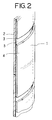
- Figure 2 is an enlarged perspective view showing in part the gastric resident object of Figure 1
- Figure 3 is an exploded perspective view of the gastric resident object of Figure 1, in use
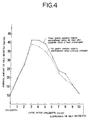
- Figure 4 through Figure 8 are graphs of characteristics of milk secretion improved by use of the gastric resident object according to the invention.
- the roughage has two functional factors.
- One of the factors serves as nutritive elements including vitamins, minerals, cellulose, and hemicellulose.
- the other factor has functions of bringing about rumination by giving physical stimuli to the mucous membrane of the rumen, and forming and preserving ruminal papillae.
- the former functional factor can be substituted by other possible feed.
- different feed was used in place of the roughage as occasion demands when practicing the method of this invention.
- the latter functional factor could be attained by devising a gastric resident object capable of fulfilling the desired physical action. As the result of the experiment the inventor actually conducted, an excellent effect of the method according to the invention could be proved.
- the gastric resident object 7 comprises a core 71 formed by twisting two wires between which a large number of stimulating elastic members 72 are held fixedly.
- the stimulating elastic members 72 are formed of a nylon fiber in this embodiment, but may be made of a natural fiber, synthetic string or other linear materials.
- the stimulating elastic members 72 extend radially from the core 71 into a substantially cylindrical or spherical spiny shape.
- a nylon fiber of about 0.7 mm in diameter can be preferably used as the stimulating elastic member 72.
- the diameter of the stimulating elastic member is not specifically limited, and may be suitably determined in accordance with the stiffness and other conditions of the stimulating elastic member.
- the core 71 in this embodiment is formed of two wires it may be formed by folding one wire into two, or made of synthetic resin by moulding so that the stimulating elastic members 72 are planted radially around the core 71 in one body. It is preferred to determine the length of the core 71 to about 8cm to 12cm.
- the stimulating elastic member 72 needs at least 11cm in length, so that the gastric resident object 7 admitted into the rumen can be positioned in the rumen so as not to be sent backward into the mouth through the cardiac orifice and the gullet, or sent beyond the psalterium. Therefore, the stimulating elastic member should have the length of 11cm or more. However, it have been found from the experiment conducted later that a tolerance of about 3cm in length of the stimulating elastic member can be allowed.
- the gastric resident object 7 Since the gastric resident object 7 cannot be admitted into the rumen as it is, it should be made small in diameter. To make the gastric resident object small in order for permitting the gastric resident object to pass through the gullet smoothly, it may be inserted into a slender paper cylinder 1 with the stimulating elastic members 72 folded elastically along the core 71. The diameter of the paper cylinder 1 may be determined to 2.5cm to 3.5cm.
- the paper cylinder 1 is made by spirally rolling an inner base 2 to form an inside tube and spirally winding an outer strip 4 around the inside tube with defining a gap 5 between the confronting side edges of the strip 4.
- the outer strip 4 wound in a cylinder shape is pasted with an adhesive soluble in gastric juices in the rumen. It is preferable to determine the length of the paper cylinder 1 to about 12cm to 16cm because if the paper cylinder 1 is too long, it cannot easily be admitted into the rumen.
- the paper cylinder 1 is guided into the pharynx by use of a long tube to let the cattle swallow it.
- the paper cylinder 1 accommodating the gastric resident object can be introduced into the rumen.
- the pasted part of the paper cylinder 1 is dissolved within five to ten minutes to break up the paper cylinder, thereby to allow the stimulating elastic members 72 to regain their original spiny shape.
- the gastric resident object moves from place to place in the rumen. At that time, the gastric resident object comes in contact with the mucous membrane of the rumen to stimulate a peripheral part in the reticulum, thus promoting rumination. Simultaneously, the inner wall of the rumen acquires physical stimuli, to stimulate the receptors innumerably distributed under squamous cells in the mucous membrane of the rumen, thus wholesomely preserving ruminal papillae. Furthermore, the stimulating elastic members 72 of the gastric resident object have a function of catching small fragments of the feed in which microorganisms are snug.
- the gastric resident object 7 In order for effectively moving the gastric resident object 7 to encourage rumination, it is necessary to prevent the gastric resident object from rising to the surface of the feed in the rumen and going down to the lower wall portion of the rumen. That is, the gastric resident object should freely move in the rumen. For that purpose, it is desirable to use the gastric resident object 7 with a specific gravity of the order of 0.2 ⁇ 0.5, because the specific gravity of the gastric resident object with the fragments of feed crept in the stimulating elastic members 72 is suitably 1.2 ⁇ 1.3.
- Feed Components TABLE 5 Feeding Amount per day (kg) Testing Cows Comparative Cows Compound Feed Fiber 72 14.5 14.0 Processed Barley Distillers Grain with Soluble (Wet) 6.5 3.5 Beat Pulp 1.0 1.0 Barley 1.0 1.0 Rice Straw 0 2.0 Dry Grass 2.2 4.0 Number of Gastric Resident Objects 3 0 6.
- Gastric Juices / Serums It has been proved from the above that, by using three gastric resident objects admitted into the rumen and increasing the compound feed, the yield of milk secreted and milk contents are little affected even if the amount of the long fibers constituting a rumen mat that the milking cow ingests is reduced by half.
- Remarks 1 Milking cows resemble in age, childbirth experience, date of childbirth, ability and body weight were used in the test and segregated to groups of closely resemble cows as the testing cows and comparative cows. The groups of the testing and comparative cows were each composed of ten cows. The age of the testing cows averaged 4.2 years, and that of the comparative cows averaged 4.3 years. The average number of times of childbirth of them was 2.8.
- Remarks 2 The experimental test was carried out from 1st June 1991 to 31st May 1992. The period for 2 months from the commencement of the test to 1st August 1991 was spared for a preparatory test. Upon termination of the preparatory test, three gastric resident objects were supplied to the respective testing cows.
- Remarks 3 The feed for cattle prepared by the Japanese Agricultual Cooperative Association was used as concentrate. The roughage consisting of timothy hay, alfalfa hay cube and rice straw were used. Further, Sudan grass hay and silage which have the weight calculated on the basis of air dry matter were added to the feed.
- Remarks 4 After applying the gastric resident objects to the testing cows, the fibrous feed except the Sudan grass hay and rice straw was supplied to the testing cows.
- FIG. 4 Comparative results of the yields of milk secreted by milking cows to which the gastric resident objects were administered before and after childbirth are denoted in FIG. 4. (Test conducted at the farm "A" of Higashitayoro-cho, Hokkaido, Japan) FIG. 4, the daily average amount of the milk secreted by three milking cows that were delivered in the same month was recorded by mont h.
- FIG. 5 shows the comparative results of the yields of milk secreted by the milking cows with the gastric resident objects administered before and after childbirth. (Test conducted at the farm "A" of Higashitayoro-cho, Hokkaido, Japan)
- FIG. 6 The results of testing the yields of milk secreted by milking cows with the gastric resident objects administered in hot summer days are shown in FIG. 6. (Test conducted at the Shiokawa farm of Fujinomiya-shi, Shizuoka-ken, Japan) Testing Period : 15th April 1992 to 15th October 1992. In the experimental test, twenty-eight (28) milking cows with the gastric resident objects administered and thirty (30) milking cows with no gastric resident objects administered were respectively segregated into the testing cows and the comparative cows by three cows resemble in age, body build, date of childbirth, childbirth experience, and ability of milk secretion. While recording the yield of milk secreted by the cows, the monthly yield of milk secreted after June was compared with the yield of milk secreted on 5th April 1992, observing the decrease in milk yield (average). (Three gastric resident objects were administered.)
- FIG. 7 The change in milk yield when using the gastric resident objects is depicted in FIG. 7.
- Test for decline in milk yield in summer and endurance against warmth was carried out at the farm "S" of Nozu-cho, Ohno-gun, Oita-ken, Japan for the period from January to February 1991 by use of milking cows after childbirth.
- Three gastric resident objects were administered to the respective cows.
- the experimental test for evaluating the effect of the gastric resident object capable of preventing the decline in milk yield in the scorching heat of summer was conducted at the farm "S" of Nozu-cho, Ohno-gun, Oita-ken, Japan.
- Three cows were chosen as the testing cows from thirty-five (35) cows with the gastric resident objects administered, and three cows were chosen as the comparative cows from thirty-one (31) cows with no gastric resident object administered.
- Individuals thus chosen were further assorted into two groups in pairs resemble in age, body build, ability of milk secretion, date of childbirth (January or February 1991), and childbirth experience.
- the average of the yield of milk secreted by three cows was recorded and depicted in FIG. 8.
- Three gastric resident objects were administered to the respective cows.
- the cows made a gain of 1.25 kg in weight per day on average. This means that a standard milking cow would gain weight by 1.2 kg or more a day.
- the result of the grading test of carcasses shows that the milk-emasculated cows and F1-cows were classified into as 16.2% of B-4, 37.2% of B-3, and 46.6% of B-2.
- the Japanese cattle were classified into 82% of A-5, and 18% of A-4 and B-4.
- the cows raised according to the invention made no great difference in weight increase to the cow raised in an ordinary fatting method, and had no accident due to the gastric resident objects during the test. This sign that the condition of the ruminant stomach could be maintained appropriately.
- the fiber content in feed for cattle can be reduced while increasing the total intake energy the cattle ingests, and the rate of acetic acid in VFA can be preserved, thereby keeping the quality of secreted milk.
- the gastric resident object admitted into the rumen of the cattle which has a function of rough rigidity of roughage for giving physical stimuli to the rumen can be substituted in part for the feed to be given to the cattle, thus promoting rumination.
- the various problems posed in feeding roughage to the dairy cattle can be solved so as to reduce the cost of feeding, let the cattle have dry matters, thus increasing milk secretion and NEp value. Moreover, the volume of excrement can be decreased.
- VFA VFA in the rumen which decreases feed intake thus possibly bringing about a disease of digestive organs can be suppressed by feeding even roughage to the cattle moderately without being partial to decomposable feed, and VFA can be naturally increased.
- prevention of decrease in milk secretion and improvement in milk quality can be achieved at a low cost with remarkable ease without any other troublesome feeding work.
Landscapes
- Health & Medical Sciences (AREA)
- Veterinary Medicine (AREA)
- Life Sciences & Earth Sciences (AREA)
- Zoology (AREA)
- Engineering & Computer Science (AREA)
- Wood Science & Technology (AREA)
- Surgery (AREA)
- Animal Behavior & Ethology (AREA)
- General Health & Medical Sciences (AREA)
- Public Health (AREA)
- Feed For Specific Animals (AREA)
- Fodder In General (AREA)
- Dairy Products (AREA)
- Coloring Foods And Improving Nutritive Qualities (AREA)
- Medicines Containing Material From Animals Or Micro-Organisms (AREA)
Applications Claiming Priority (4)
| Application Number | Priority Date | Filing Date | Title |
|---|---|---|---|
| JP31431/93 | 1993-01-27 | ||
| JP3143193 | 1993-01-27 | ||
| JP5117872A JPH06276879A (ja) | 1993-01-27 | 1993-04-21 | 産乳改善方法及び牛投与器具 |
| JP117872/93 | 1993-04-21 |
Publications (3)
| Publication Number | Publication Date |
|---|---|
| EP0609045A2 true EP0609045A2 (de) | 1994-08-03 |
| EP0609045A3 EP0609045A3 (de) | 1995-02-22 |
| EP0609045B1 EP0609045B1 (de) | 1998-09-09 |
Family
ID=26369907
Family Applications (1)
| Application Number | Title | Priority Date | Filing Date |
|---|---|---|---|
| EP94300528A Expired - Lifetime EP0609045B1 (de) | 1993-01-27 | 1994-01-25 | Vorrichtung und Verfahren zur Verbesserung der Milchabgabe bei Rindvieh |
Country Status (5)
| Country | Link |
|---|---|
| EP (1) | EP0609045B1 (de) |
| JP (1) | JPH06276879A (de) |
| AT (1) | ATE170732T1 (de) |
| DE (1) | DE69413079T2 (de) |
| ES (1) | ES2124840T3 (de) |
Cited By (1)
| Publication number | Priority date | Publication date | Assignee | Title |
|---|---|---|---|---|
| CN110063269A (zh) * | 2019-06-03 | 2019-07-30 | 江苏波杜农牧股份有限公司 | 一种反刍动物人工瘤胃刷及其使用方法 |
Families Citing this family (1)
| Publication number | Priority date | Publication date | Assignee | Title |
|---|---|---|---|---|
| KR100399570B1 (ko) * | 2001-02-16 | 2003-09-29 | 대한민국 | 반추동물용 고분자 합성섬유질 조사료 대체용구 |
Family Cites Families (3)
| Publication number | Priority date | Publication date | Assignee | Title |
|---|---|---|---|---|
| CH140864A (de) * | 1929-06-01 | 1930-06-30 | Stocker Jacob | Blähschlauch. |
| GB2100602B (en) * | 1981-06-24 | 1984-11-14 | May & Baker Ltd | Device for delivering biologically active substances to the digestive tract. |
| JPH072096B2 (ja) * | 1990-10-15 | 1995-01-18 | 正太郎 永守 | 反芻動物の飼育方法及び飼養用具 |
-
1993
- 1993-04-21 JP JP5117872A patent/JPH06276879A/ja active Pending
-
1994
- 1994-01-25 AT AT94300528T patent/ATE170732T1/de not_active IP Right Cessation
- 1994-01-25 DE DE69413079T patent/DE69413079T2/de not_active Expired - Lifetime
- 1994-01-25 ES ES94300528T patent/ES2124840T3/es not_active Expired - Lifetime
- 1994-01-25 EP EP94300528A patent/EP0609045B1/de not_active Expired - Lifetime
Cited By (1)
| Publication number | Priority date | Publication date | Assignee | Title |
|---|---|---|---|---|
| CN110063269A (zh) * | 2019-06-03 | 2019-07-30 | 江苏波杜农牧股份有限公司 | 一种反刍动物人工瘤胃刷及其使用方法 |
Also Published As
| Publication number | Publication date |
|---|---|
| DE69413079T2 (de) | 1999-06-02 |
| JPH06276879A (ja) | 1994-10-04 |
| EP0609045A3 (de) | 1995-02-22 |
| EP0609045B1 (de) | 1998-09-09 |
| ATE170732T1 (de) | 1998-09-15 |
| DE69413079D1 (de) | 1998-10-15 |
| ES2124840T3 (es) | 1999-02-16 |
Similar Documents
| Publication | Publication Date | Title |
|---|---|---|
| Dulphy et al. | Ingestive behaviour and related activities in ruminants | |
| Valk et al. | Effect of fibrous and starchy carbohydrates in concentrates as supplements in a herbage-based diet for high-yielding dairy cows. | |
| AU2018260292B2 (en) | A solid feed combination composition for ruminant calves | |
| Smith et al. | Practical donkey and mule nutrition | |
| Campling et al. | Eating behaviour of housed dairy cows-a review. | |
| Valk | Effects of partial replacement of herbage by maize silage on Nutilization and milk production of dairy cows | |
| Fujihara | The eating and rumination behaviour in sheep fed only grass diets in either the fresh or dried form | |
| Le Liboux et al. | Effect of forage particle size and intake level on fermentation patterns and sites and extent of digestion in dairy cows fed mixed diets | |
| EP0609045B1 (de) | Vorrichtung und Verfahren zur Verbesserung der Milchabgabe bei Rindvieh | |
| Schingoethe et al. | Increased solids intake and feeding frequency for calves in hutches during cold weather | |
| Syrovatko | Influence of feed factors on on com productivity cows | |
| KR100293887B1 (ko) | 산유개선방법및소투여기구 | |
| Linn | Feeding the dairy herd | |
| Van der Vyver | Partial substitution of maize with soybean hulls in a concentrate supplement for grazing dairy cows | |
| Matejević et al. | Basic Principles and Practical Instructions for Proper Feeding of Donkeys | |
| Harland | By-products | |
| Aryanto et al. | Effects of Using Gamal Leaf Flour as a Supplement on Feed Intake, Digestibility and Body Weight Gain of Goats | |
| Yunus et al. | Effects of concentrate supplement on dry matter and water intake, nutrient digestibility and nitrogen balance of N’dama bull calves fed Napier grass basal diet | |
| Pippard | Equine nutrition | |
| Linn et al. | Feeding the dairy herd (revised 1981) | |
| Hutjens et al. | Feeding the dairy herd (revised 1977) | |
| Weichenthal et al. | Beef cattle feeding suggestions | |
| Burns | 14 Large Animal Nutrition and Feeding | |
| Linn et al. | Feeding the dairy herd (reviewed 1996) | |
| Wayne et al. | Feeding the dairy herd (revised 1964) |
Legal Events
| Date | Code | Title | Description |
|---|---|---|---|
| PUAI | Public reference made under article 153(3) epc to a published international application that has entered the european phase |
Free format text: ORIGINAL CODE: 0009012 |
|
| AK | Designated contracting states |
Kind code of ref document: A2 Designated state(s): AT BE CH DE ES FR GB IT LI NL SE |
|
| PUAL | Search report despatched |
Free format text: ORIGINAL CODE: 0009013 |
|
| AK | Designated contracting states |
Kind code of ref document: A3 Designated state(s): AT BE CH DE ES FR GB IT LI NL SE |
|
| 17P | Request for examination filed |
Effective date: 19950203 |
|
| 17Q | First examination report despatched |
Effective date: 19970305 |
|
| GRAG | Despatch of communication of intention to grant |
Free format text: ORIGINAL CODE: EPIDOS AGRA |
|
| GRAG | Despatch of communication of intention to grant |
Free format text: ORIGINAL CODE: EPIDOS AGRA |
|
| GRAH | Despatch of communication of intention to grant a patent |
Free format text: ORIGINAL CODE: EPIDOS IGRA |
|
| GRAH | Despatch of communication of intention to grant a patent |
Free format text: ORIGINAL CODE: EPIDOS IGRA |
|
| GRAA | (expected) grant |
Free format text: ORIGINAL CODE: 0009210 |
|
| AK | Designated contracting states |
Kind code of ref document: B1 Designated state(s): AT BE CH DE ES FR GB IT LI NL SE |
|
| PG25 | Lapsed in a contracting state [announced via postgrant information from national office to epo] |
Ref country code: BE Free format text: LAPSE BECAUSE OF FAILURE TO SUBMIT A TRANSLATION OF THE DESCRIPTION OR TO PAY THE FEE WITHIN THE PRESCRIBED TIME-LIMIT Effective date: 19980909 Ref country code: AT Free format text: LAPSE BECAUSE OF FAILURE TO SUBMIT A TRANSLATION OF THE DESCRIPTION OR TO PAY THE FEE WITHIN THE PRESCRIBED TIME-LIMIT Effective date: 19980909 |
|
| REF | Corresponds to: |
Ref document number: 170732 Country of ref document: AT Date of ref document: 19980915 Kind code of ref document: T |
|
| REG | Reference to a national code |
Ref country code: CH Ref legal event code: EP |
|
| REF | Corresponds to: |
Ref document number: 69413079 Country of ref document: DE Date of ref document: 19981015 |
|
| PG25 | Lapsed in a contracting state [announced via postgrant information from national office to epo] |
Ref country code: SE Free format text: LAPSE BECAUSE OF FAILURE TO SUBMIT A TRANSLATION OF THE DESCRIPTION OR TO PAY THE FEE WITHIN THE PRESCRIBED TIME-LIMIT Effective date: 19981209 |
|
| REG | Reference to a national code |
Ref country code: CH Ref legal event code: NV Representative=s name: PATENTANWALTSBUERO JEAN HUNZIKER |
|
| ET | Fr: translation filed | ||
| REG | Reference to a national code |
Ref country code: ES Ref legal event code: FG2A Ref document number: 2124840 Country of ref document: ES Kind code of ref document: T3 |
|
| PLBE | No opposition filed within time limit |
Free format text: ORIGINAL CODE: 0009261 |
|
| STAA | Information on the status of an ep patent application or granted ep patent |
Free format text: STATUS: NO OPPOSITION FILED WITHIN TIME LIMIT |
|
| 26N | No opposition filed | ||
| REG | Reference to a national code |
Ref country code: GB Ref legal event code: IF02 |
|
| PGFP | Annual fee paid to national office [announced via postgrant information from national office to epo] |
Ref country code: IT Payment date: 20120112 Year of fee payment: 19 |
|
| PGFP | Annual fee paid to national office [announced via postgrant information from national office to epo] |
Ref country code: CH Payment date: 20130114 Year of fee payment: 20 Ref country code: GB Payment date: 20130123 Year of fee payment: 20 Ref country code: FR Payment date: 20130204 Year of fee payment: 20 Ref country code: ES Payment date: 20130207 Year of fee payment: 20 Ref country code: DE Payment date: 20130123 Year of fee payment: 20 |
|
| PGFP | Annual fee paid to national office [announced via postgrant information from national office to epo] |
Ref country code: NL Payment date: 20130110 Year of fee payment: 20 |
|
| REG | Reference to a national code |
Ref country code: DE Ref legal event code: R071 Ref document number: 69413079 Country of ref document: DE |
|
| REG | Reference to a national code |
Ref country code: CH Ref legal event code: PL |
|
| REG | Reference to a national code |
Ref country code: NL Ref legal event code: V4 Effective date: 20140125 |
|
| REG | Reference to a national code |
Ref country code: GB Ref legal event code: PE20 Expiry date: 20140124 |
|
| PG25 | Lapsed in a contracting state [announced via postgrant information from national office to epo] |
Ref country code: GB Free format text: LAPSE BECAUSE OF EXPIRATION OF PROTECTION Effective date: 20140124 Ref country code: DE Free format text: LAPSE BECAUSE OF EXPIRATION OF PROTECTION Effective date: 20140128 |
|
| REG | Reference to a national code |
Ref country code: ES Ref legal event code: FD2A Effective date: 20140925 |
|
| PG25 | Lapsed in a contracting state [announced via postgrant information from national office to epo] |
Ref country code: ES Free format text: LAPSE BECAUSE OF EXPIRATION OF PROTECTION Effective date: 20140126 |